



The human gluteus maximus is the largest muscle in your body for a reason. It is designed to act as a powerful engine for walking, running, and climbing. Yet, for many, this engine is idling in neutral. You spend hours in chairs, driving, or slouching at desks, and those muscles essentially fall asleep. When you finally decide to train them, simply squatting isn’t always enough to bridge the gap between “stiff” and “strong.”
Lunges are the missing link. They are inherently unstable, forcing you to balance while generating force from a single limb. This unilateral nature forces your glutes to fire not just for movement, but for stability. If you want to build real-world strength, symmetry, and muscle definition, you have to get beyond the basic walking lunge. You need movement patterns that challenge your balance, lengthen the muscle fibers under load, and force your glutes to work in all three planes of motion.
Stop treating lunges as a “warm-up” exercise. Treat them as a primary lift. When you load these movements correctly, you will find that your quads stop taking over the entire show, and your glutes—specifically the gluteus medius and maximus—start doing the work they were meant to do.
1. Forward Lunge
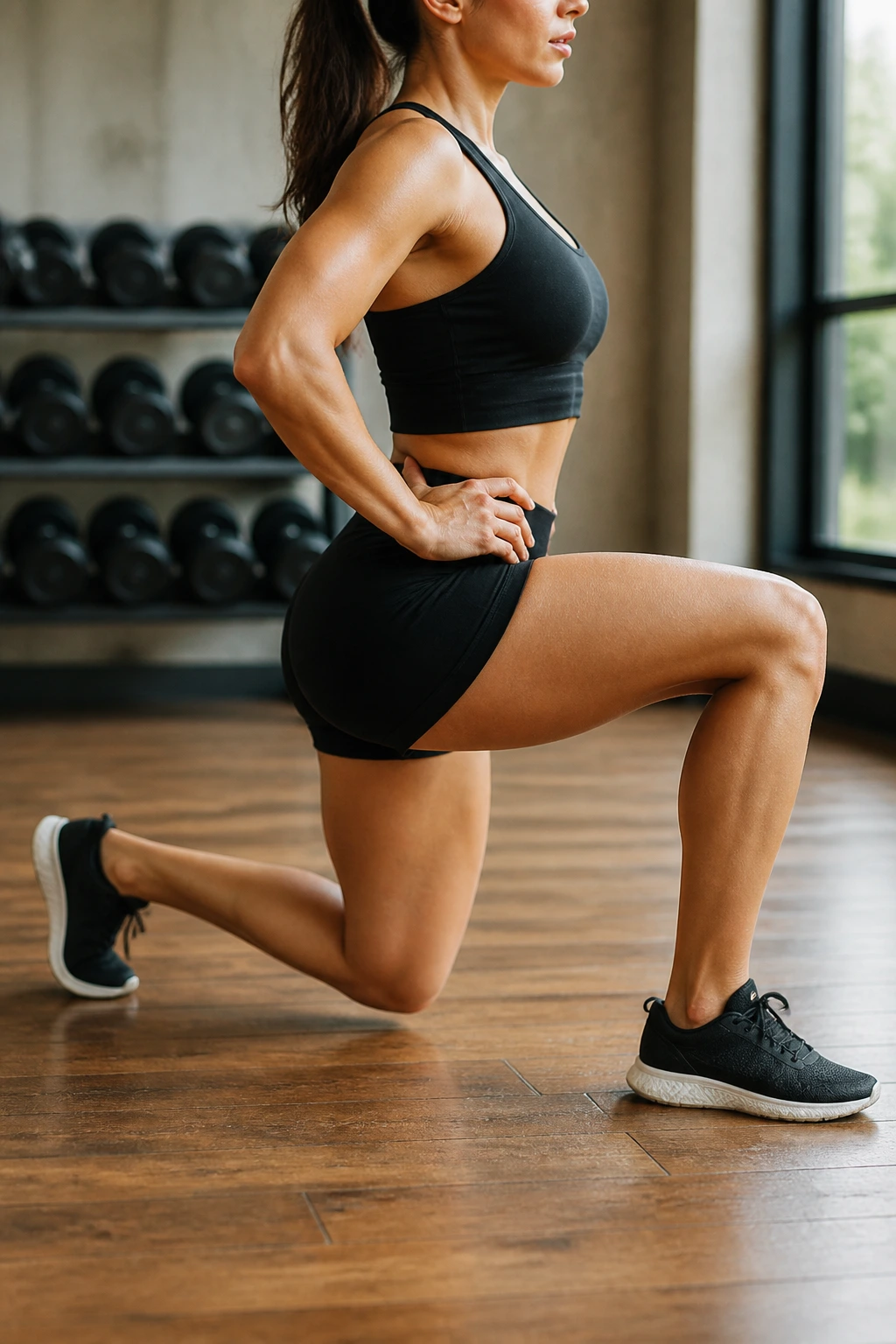
The forward lunge is the classic iteration of the movement, but it is often butchered. Most people rush the transition, letting momentum carry them forward rather than controlling the eccentric (lowering) phase. To target the glutes, you must change your intent. Do not just step forward; pull yourself forward using the heel of your front foot.
The Biomechanics of the Forward Step
When you step forward, your front leg acts as the brake and the driver. Your center of gravity shifts, and your gluteus maximus must fire hard to prevent your knee from caving inward. Focus on keeping your torso upright. If you lean too far forward, you shift the load onto the quads. A vertical torso keeps the hips under the load, maximizing glute recruitment.
Key Cues for Maximum Activation
- The Heel Drive: Imagine you are trying to push the floor away from you with your front heel.
- Controlled Descent: Do not slam your back knee into the floor; tap it gently or stop an inch above the ground.
- Hip Stability: Keep your hips square to the wall in front of you. If they twist, your glutes cannot engage efficiently.
Pro tip: Hold a kettlebell in the hand opposite to your front leg (contralateral loading). This small shift forces your glutes to work overtime to stabilize your pelvis.
2. Reverse Lunge
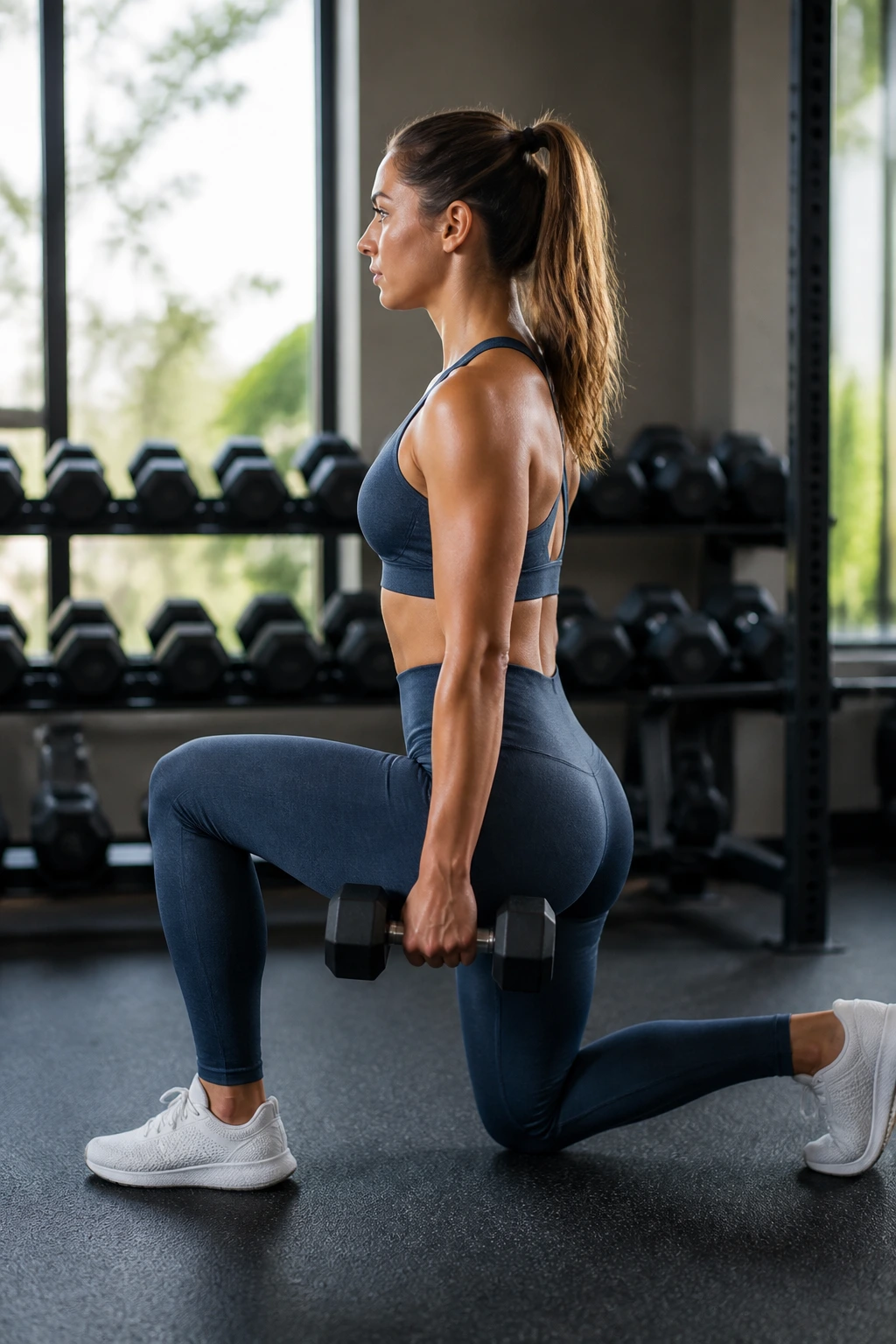
The reverse lunge is the unsung hero of lower-body training. By stepping backward, you inherently keep your weight on the front heel. This simple change in geometry makes it much easier to recruit the posterior chain—your glutes and hamstrings—compared to the forward version.
Many people find the reverse lunge more knee-friendly because the shin stays more vertical. Your knee joint doesn’t have to absorb the forward momentum that it does in a forward lunge. This allows you to load the movement with heavier dumbbells or a barbell, which is exactly what you want for hypertrophy.
Why It Builds Stronger Glutes
The deep hip flexion required at the bottom of a reverse lunge puts the gluteus maximus on a significant stretch. Muscles grow best when they are challenged in their lengthened position. When you step back, sink low, and drive back up, you are forcing that glute to produce force from a fully stretched state. It is an uncomfortable position, but it is the most effective one for growth.
3. Walking Lunge
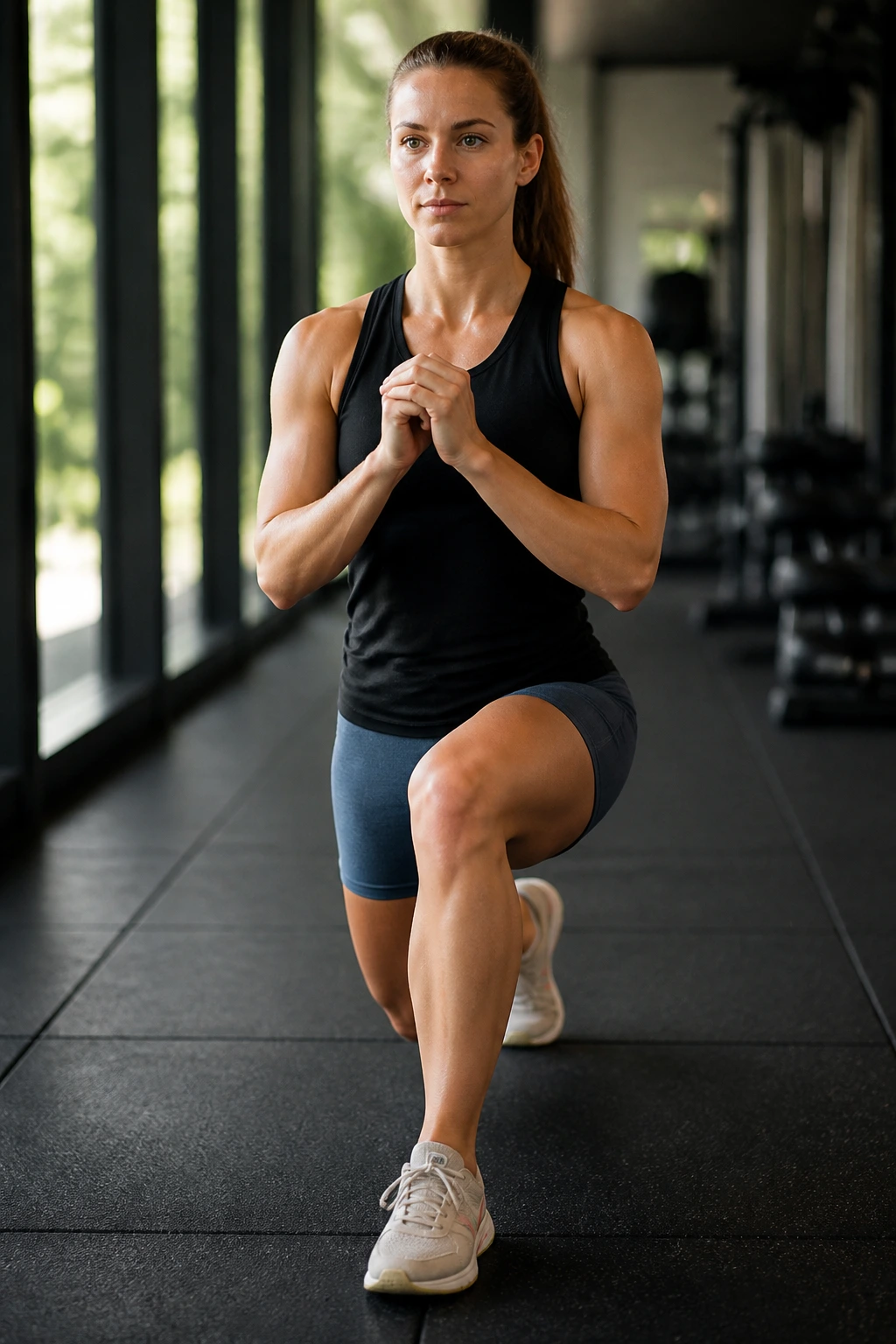
The walking lunge is a dynamic exercise that demands constant stabilization. Because you are constantly transitioning from a split stance into a neutral standing position, your glutes are forced to engage in a rapid, repetitive cycle of tension and relaxation.
Managing the Transition
The most common mistake here is losing your balance between steps. That wobble is actually where the work happens. Your glutes are fighting to keep your femur centered in the hip socket. To get the most out of this, stop moving so fast. Take a deliberate step, sink into the lunge, pause for one second at the bottom, and then explode through the front heel to bring your back leg forward.
Increasing the Challenge
- Walking Lunge with High Knees: As you bring the back leg forward, drive that knee up toward your chest before moving into the next step. This forces the glute of the standing leg to work harder for balance.
- Weighted Overhead: Holding a weight over your head while walking lunging forces your core and glutes to manage the instability of the load.
4. Side (Lateral) Lunge
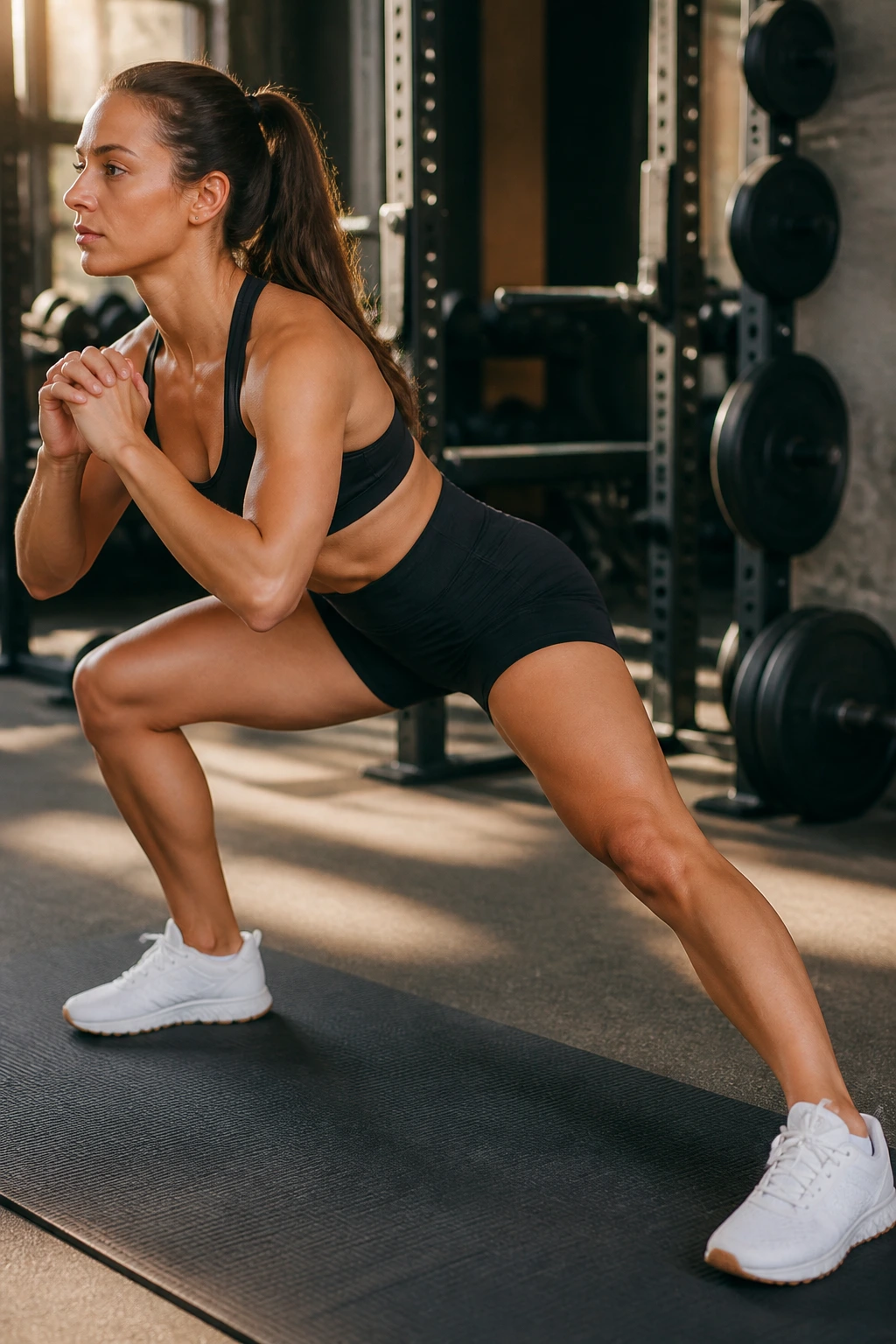
Your glutes are not just for forward propulsion. The gluteus medius and minimus, located on the outer part of your hip, are designed to stabilize the pelvis and move the leg away from the midline of the body. The lateral lunge is the primary movement pattern that targets these oft-neglected muscles.
Execution Technique
Stand with your feet wide apart, much wider than shoulder-width. Shift your weight onto one leg, pushing your hips back as if you were sitting down into a chair placed to your side. Your stationary leg should remain straight. You should feel a deep stretch in the inner thigh of the straight leg and intense activation in the glute of the bent leg.
Why This Matters
If you only train in the sagittal plane (forward and backward), you leave your lateral stability weak. This imbalance is often the root cause of hip and lower back pain. By incorporating side lunges, you are rounding out your movement capabilities and building a rounder, more functionally capable glute structure.
5. Curtsy Lunge
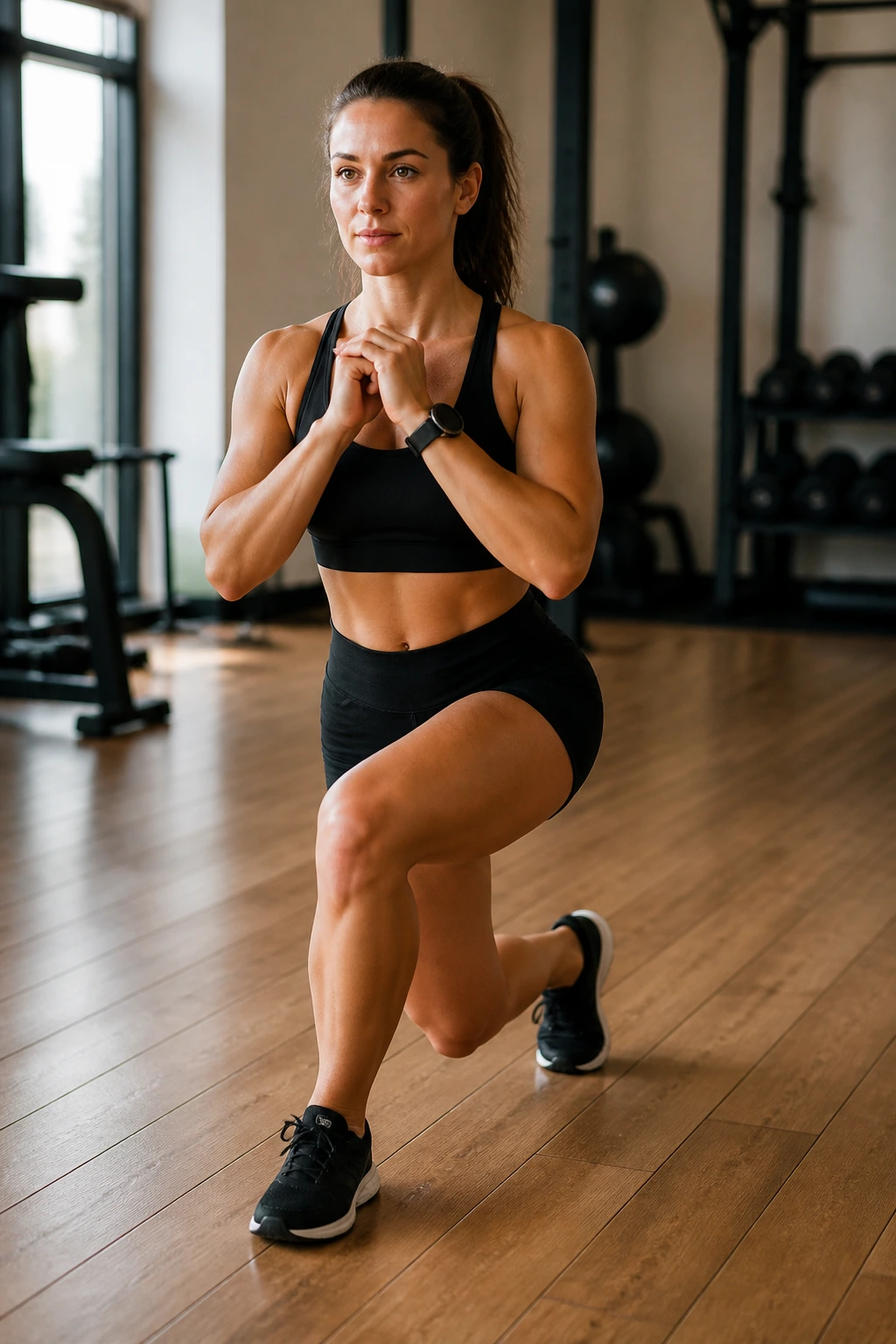
The curtsy lunge—often dismissed as an “aesthetic” move—is actually a brilliant way to isolate the upper glute and target the hip stabilizers. By crossing your back leg behind your front leg, you are putting the gluteus medius in a mechanically disadvantaged position, which forces it to fire harder to keep you upright.
How to Do It Right
Start in a standing position. Step your right foot back and across to the left, as if you were performing a curtsy. Lower your hips until your left thigh is nearly parallel to the floor. Keep your chest up and your weight distributed mostly on that front left heel.
Common Mistakes
- Rounding the Back: Keep your spine neutral. If you hunch over, you lose the connection to your glutes.
- Speed: Do not treat this like a cardio exercise. Move slowly.
- Knee Tracking: Ensure your front knee is not caving inward. It should stay aligned over your second toe.
Pro tip: Use a light resistance band just above your knees. The band will try to pull your knees together, forcing your glutes to push outward against the resistance throughout the entire range of motion.
6. Deficit Reverse Lunge
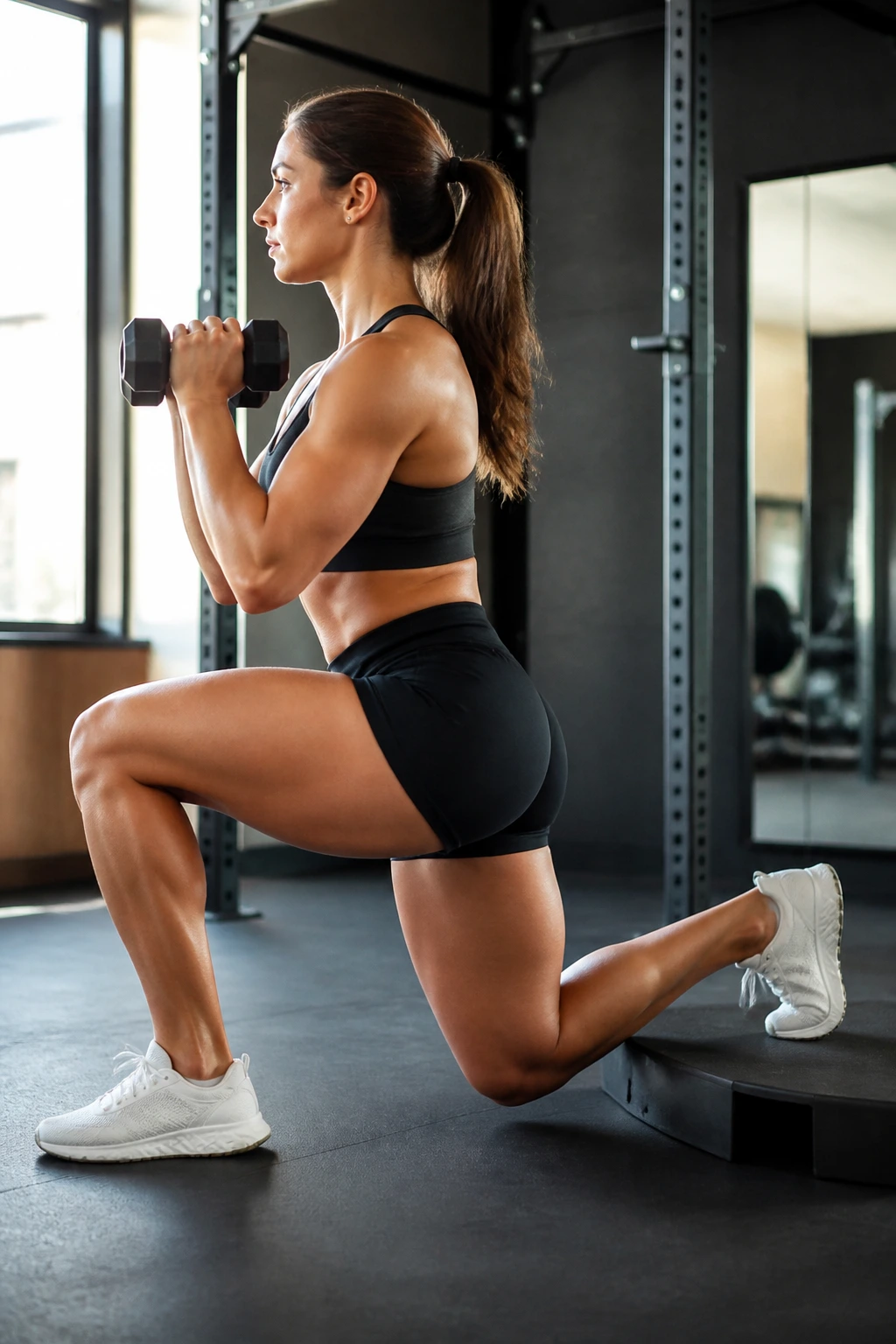
If the standard reverse lunge has become easy for you, it is time to increase the range of motion. By standing on a small platform—a weight plate, a low step, or a box—you allow your back leg to drop lower than the level of the front foot.
The Mechanics of the Deficit
This extra range of motion means your front leg has to work significantly harder to return to a standing position. You are effectively lengthening the lever arm and increasing the duration of the stretch on the gluteal muscles.
Do not try to use heavy weight right away. The deeper stretch is often a shock to the system. Focus on finding a weight that allows you to control the descent for a full two seconds. You will find that you cannot perform as many reps as you can with a standard lunge, which is exactly the point.
7. Bulgarian Split Squat
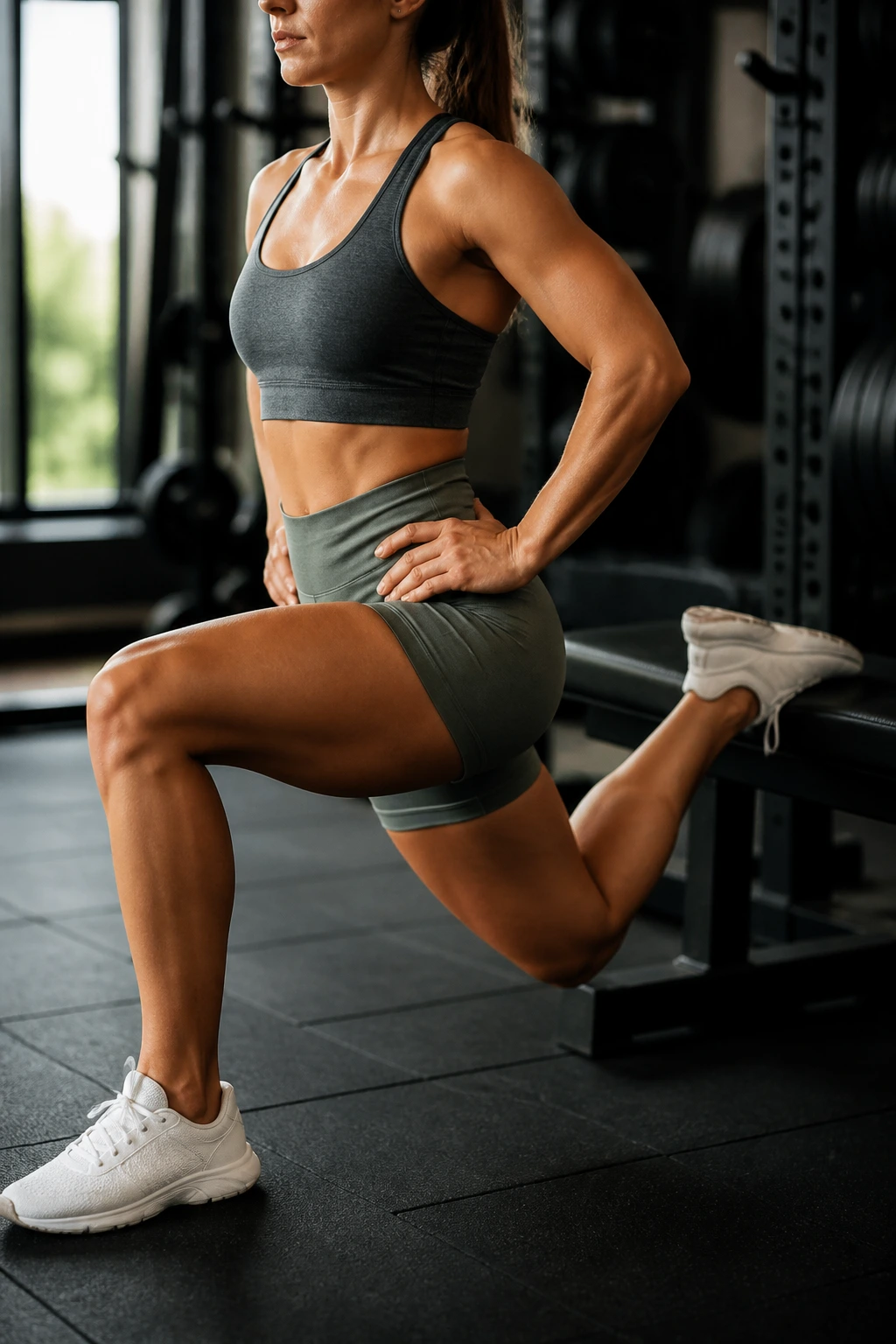
Often called the “king” of single-leg glute exercises, the Bulgarian split squat is essentially a stationary lunge with the back foot elevated. Because your back leg is resting on a bench, you are forced to put almost the entire load on the front leg.
Setting Up for Success
The height of the bench matters. It should be roughly knee-height. If it is too high, it will force your hips into an awkward position. Position your front foot far enough forward that your shin stays vertical when you reach the bottom of the movement. If your front foot is too close to the bench, your knee will travel over your toes, shifting the work toward your quads.
Why It’s Unmatched
There is nowhere to hide in a Bulgarian split squat. You cannot use your back leg to push off. It is pure glute and quad isolation. If you have been struggling to build glute size, start here. Add this to the beginning of your workout when your energy is highest, and you will see results much faster than with standard leg presses or extensions.
8. Elevated Front Foot Lunge
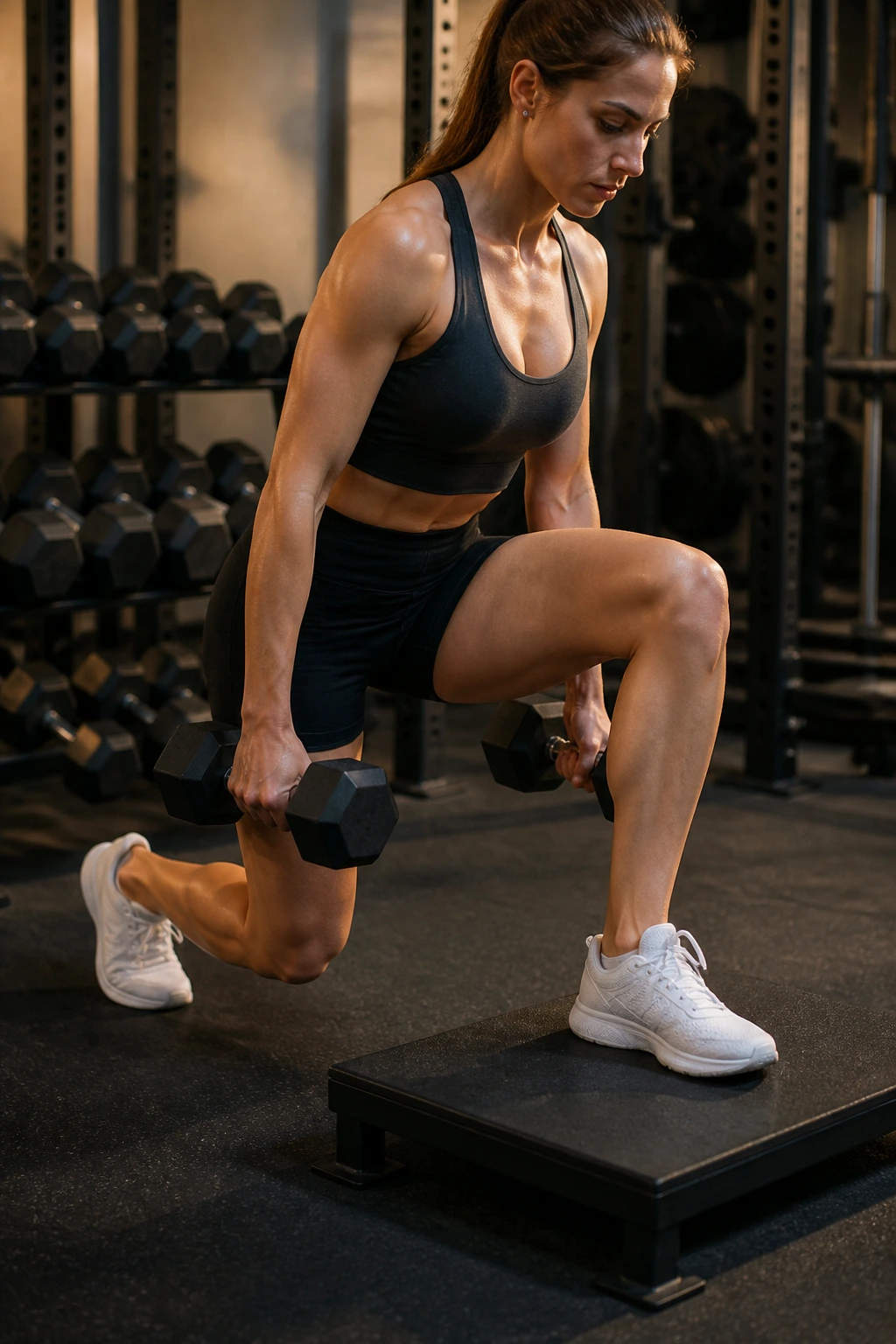
This is the opposite of the deficit lunge. Here, you place your front foot on a small platform. This creates a steeper angle for your knee. While this does recruit more quad activity, it also changes the pelvic tilt, which can place a unique stretch on the gluteus maximus, especially if you lean your torso slightly forward.
Using the Forward Lean
This is a specific technique for glute bias. When you lunge with your front foot elevated, keep your spine straight but hinge your torso forward at the hips about 30 degrees. This “glute-biased” forward lean puts your glutes into a better mechanical position to produce force. It shifts the emphasis away from the knee joint and puts it directly onto the hip joint.
9. Clock Lunge
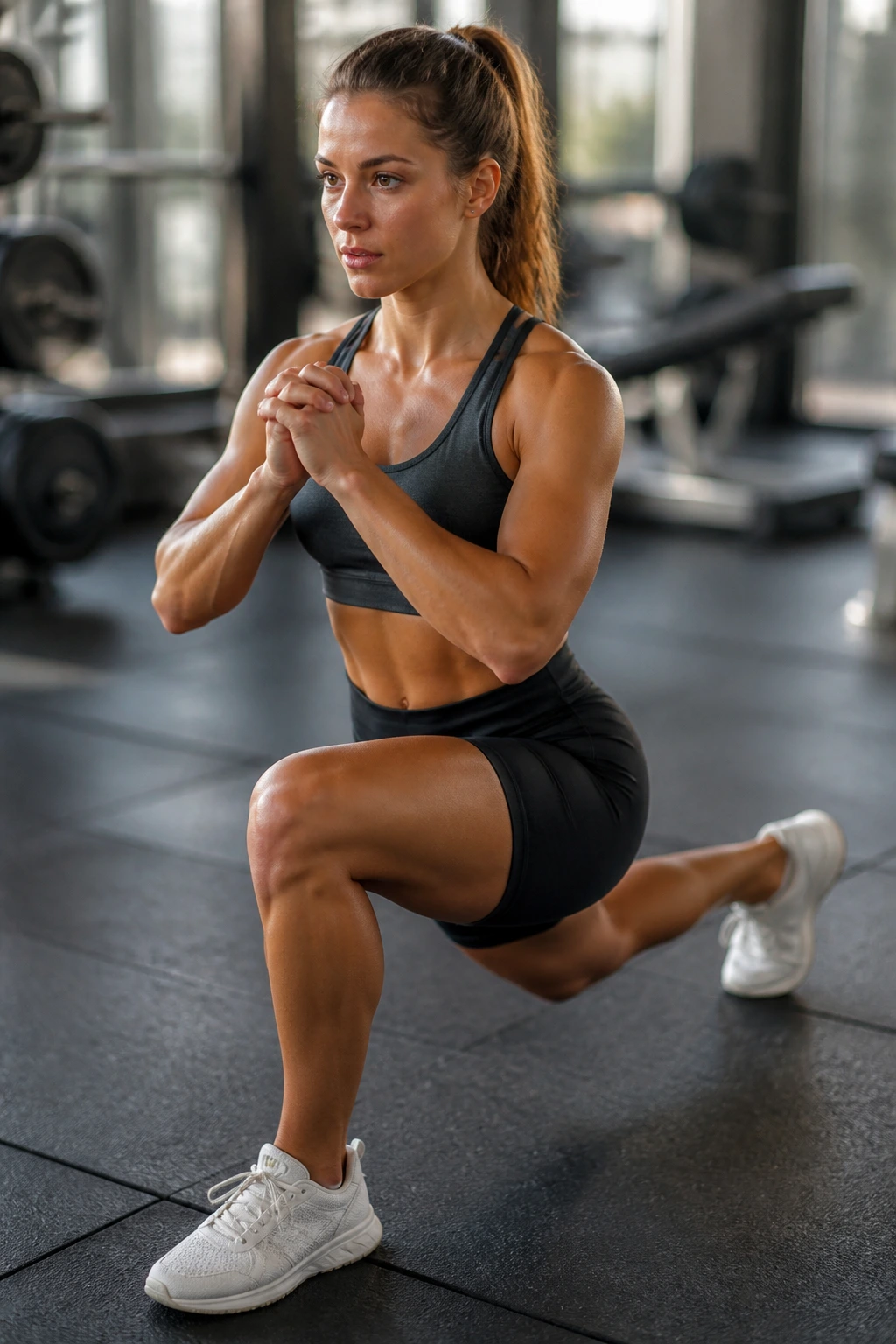
The clock lunge is a multi-directional challenge. Imagine you are standing in the center of a clock face. You will perform a forward lunge at 12:00, a side lunge at 3:00, and a reverse lunge at 6:00. This is an incredible drill for athletic conditioning and hip health.
Why It Works for Glutes
Because you are changing directions, your glutes are constantly recalibrating how to stabilize your weight. The transition between the 12:00 position and the 6:00 position requires massive amounts of eccentric control. It stops the workout from becoming monotonous and prevents “adaptation plateaus” where your muscles stop responding because they are too used to the movement.
Programming Note
Do not try to do this with heavy weights on your first attempt. It is a technical movement. Master the balance first. Use your own body weight until you can perform the full circuit—12, 3, 6—on one leg without putting your foot down.
10. Cossack Squat
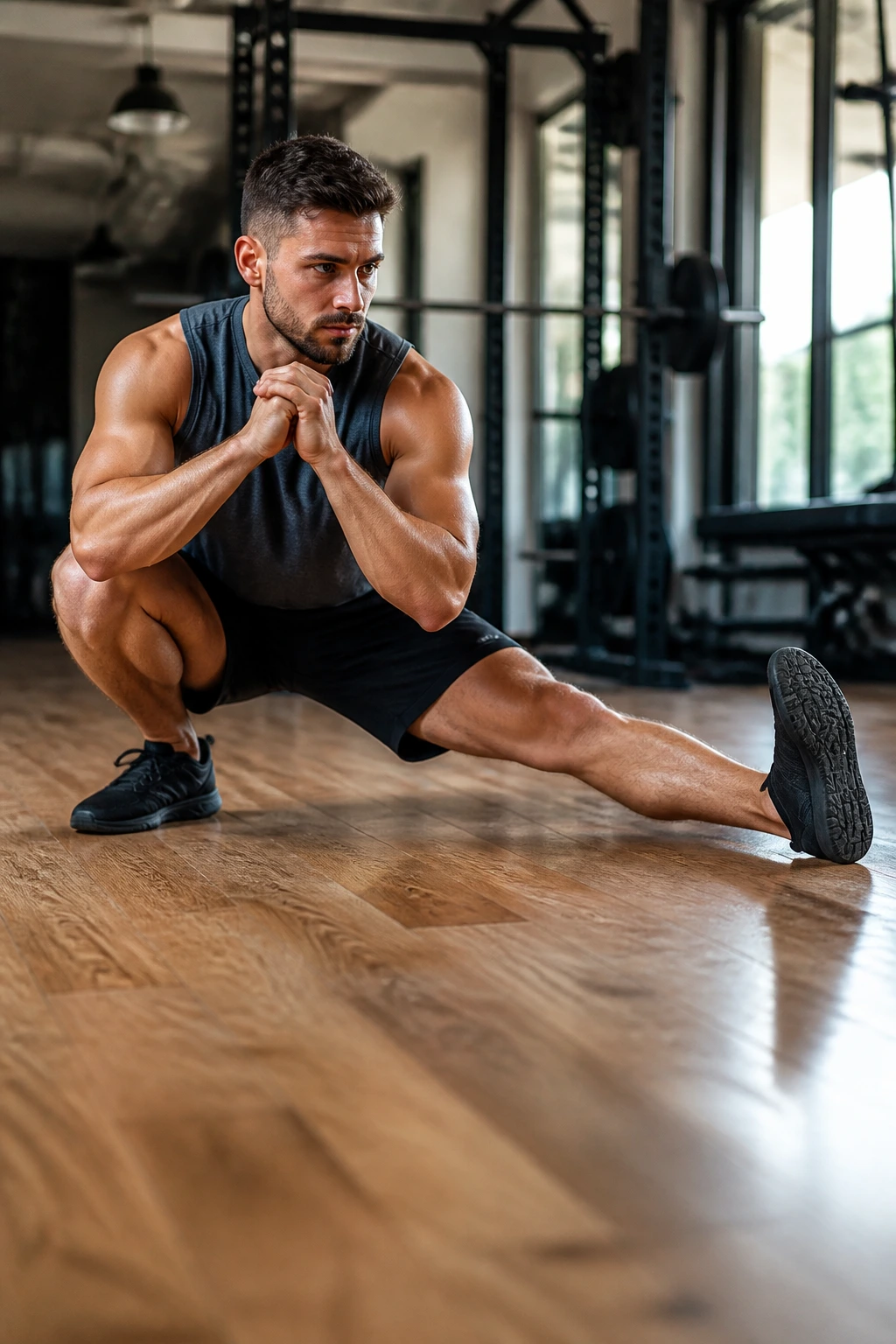
Think of the Cossack squat as a side lunge taken to the extreme. Instead of keeping your straight leg flat on the floor, you rotate your foot so that your toes point up toward the ceiling. You sink your hips as low as possible on the bent leg.
Benefits for Glute Mobility
This is a deep mobility challenge. It requires significant ankle and hip range of motion. Because you are sinking so low, your glute is working through a massive range of motion. It builds strength at the very bottom of the movement, which is often the weakest point for most lifters. If you struggle with hip tightness, the Cossack squat is your best tool for opening up those joints while simultaneously building strength.
11. Static Lunge with Isometric Hold
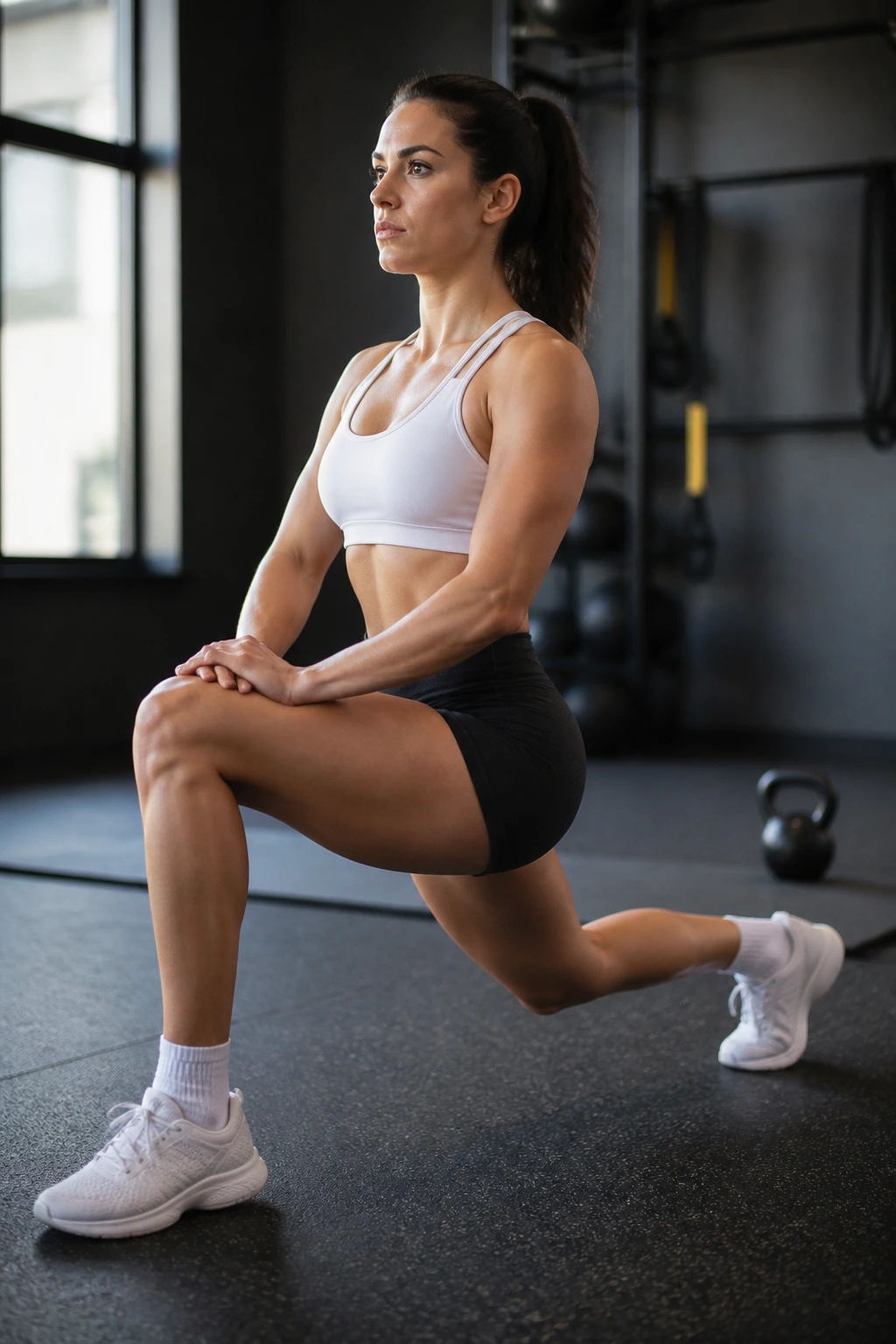
Sometimes, the best way to get stronger is to stop moving entirely. The isometric hold increases “time under tension,” a key factor in muscle fiber recruitment.
The Protocol
Step into a deep lunge position. Lower yourself until your back knee is an inch off the floor. Do not come back up. Hold that position for 30, 45, or 60 seconds. You will feel your glutes and quads begin to shake. That shaking is the recruitment of deep stabilizer muscle fibers that don’t get triggered during standard, fast-paced repetitions.
Why This Works
The isometric hold forces your brain to “talk” to your glutes constantly. There is no momentum to hide behind. You have to consciously squeeze your glutes to stay in that position. It is incredibly effective at burning out the muscle and forcing adaptation.
Pro tip: Pulse at the very bottom of the hold. Once you have held the position for 30 seconds, perform 10 tiny, controlled pulses without coming all the way up. The burn will be intense.
12. Prisoner Lunge
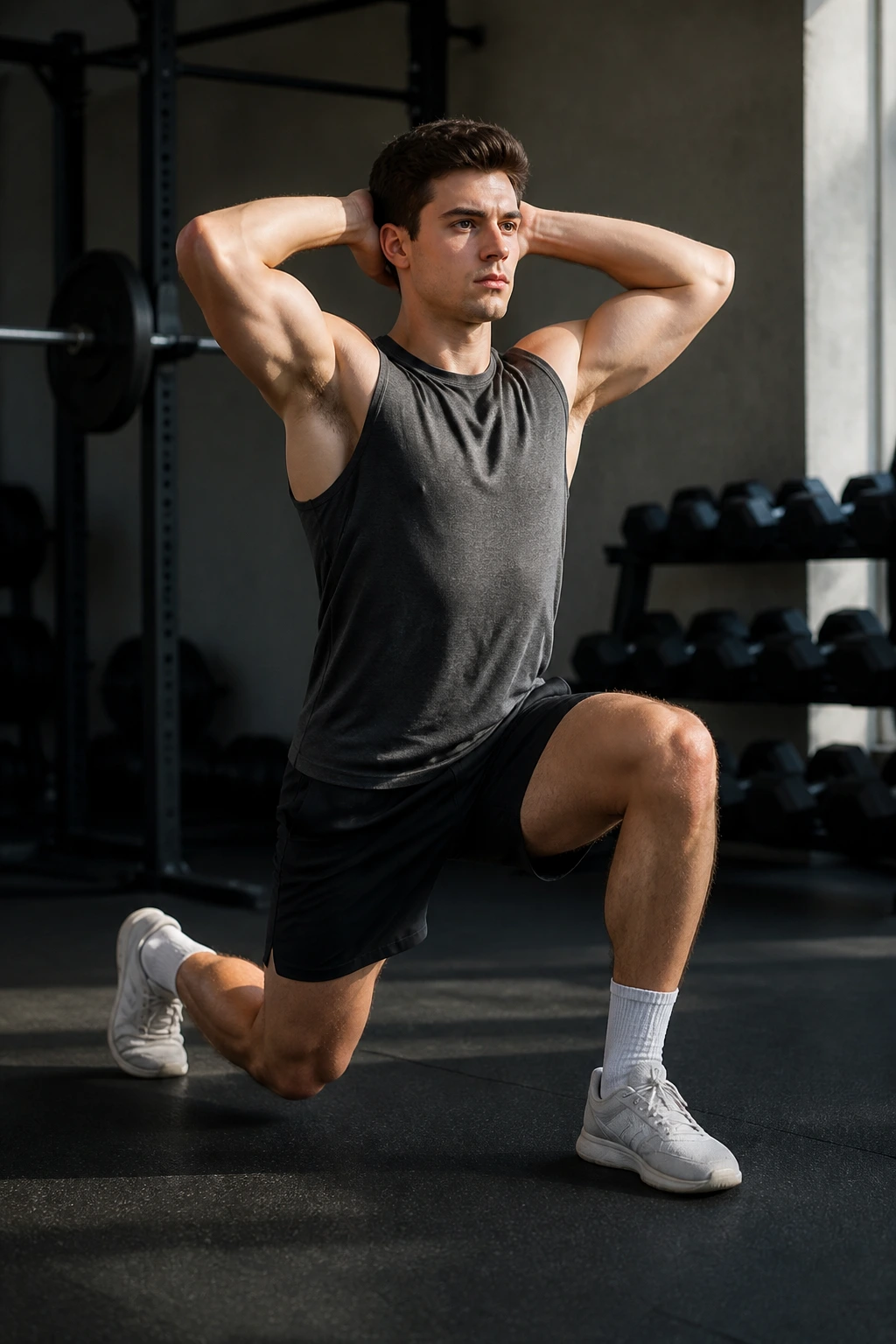
The prisoner lunge is performed with your hands clasped behind your head, elbows flared out. This position makes it impossible to use your arms for balance or momentum. It forces you to maintain an upright, rigid torso, which in turn demands higher core engagement and stricter glute activation.
Focus on Posture
Many people lean forward instinctively to compensate for lack of strength. The prisoner lunge removes that compensation strategy. If you lean forward, you will feel off-balance immediately. This forces you to drive straight up through the heel, ensuring that the work stays on the target muscle groups rather than shifting into the lower back.
13. Walking Lunge with Rotation
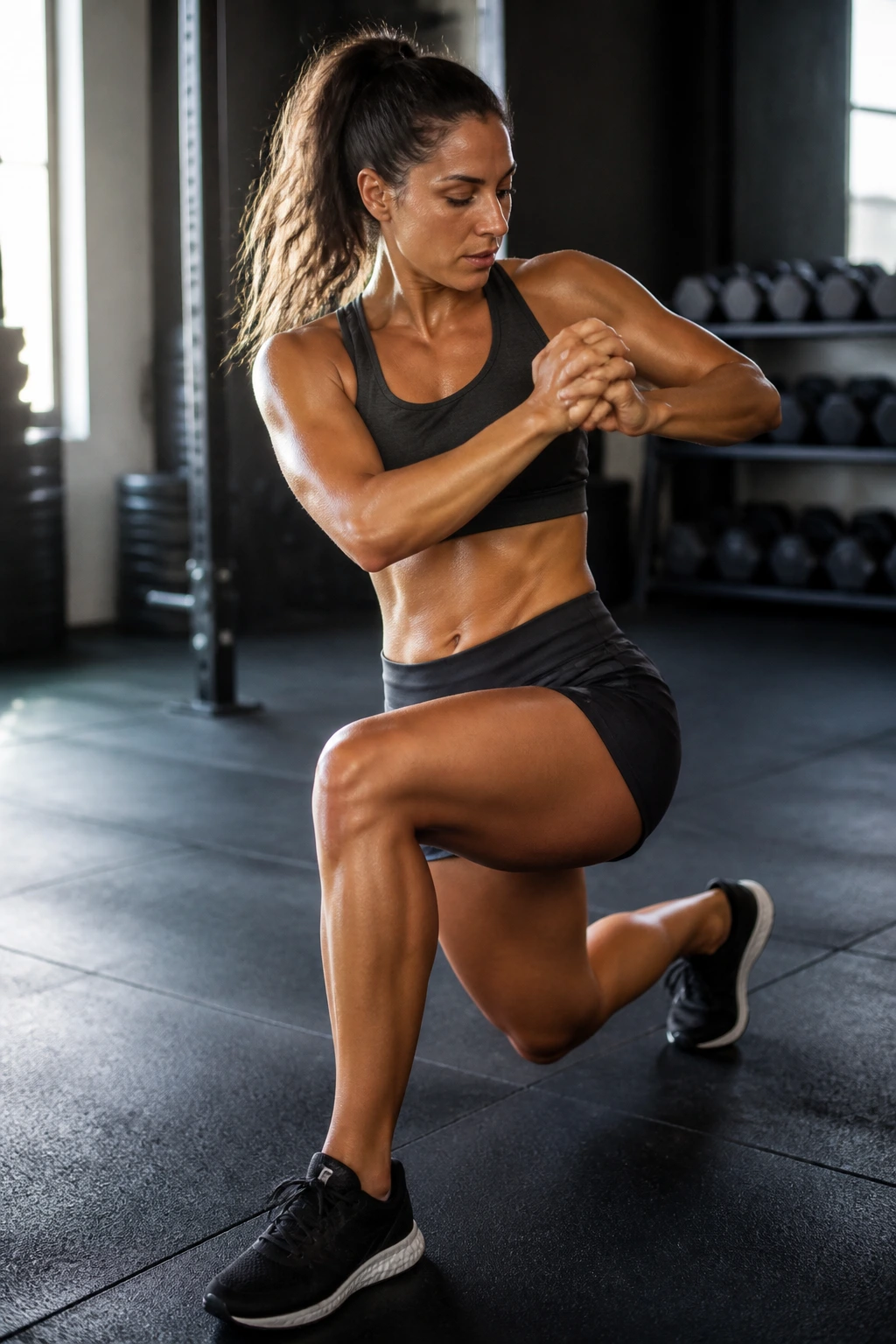
This variation adds a core component to the glute work. As you step into your lunge, rotate your torso toward the side of your front leg. If you step forward with your right leg, rotate your upper body to the right.
The Mechanics of the Twist
Rotation introduces the gluteus medius and obliques to the movement. Because you are twisting, you have to stabilize against that rotational force. Your glute must fire to keep your knee from collapsing inward. This is the ultimate “real world” lunge. It mimics how you move in sports or daily life—turning, stopping, and shifting your weight.
14. Jumping Lunge
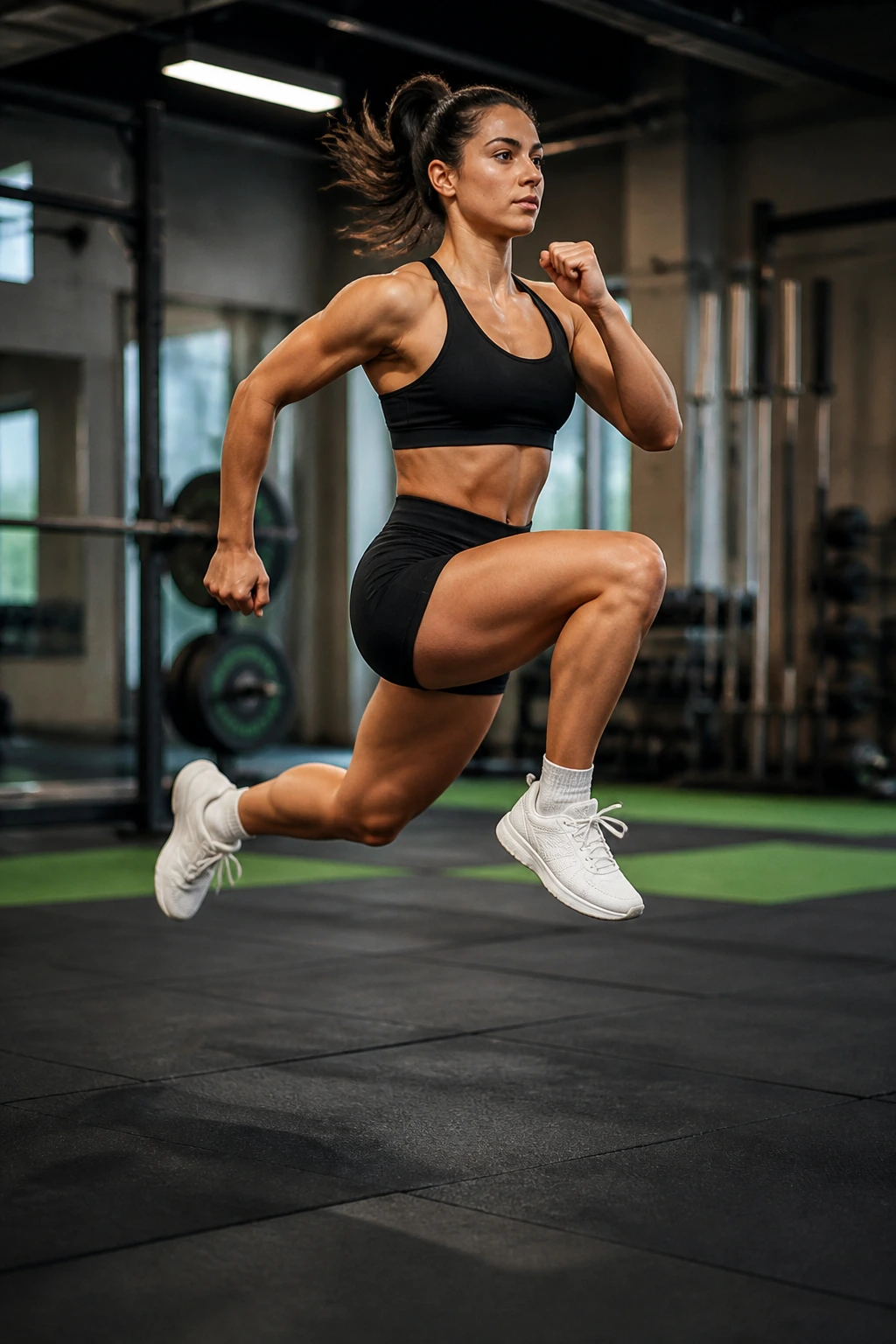
If you want to build power and explosiveness in your glutes, you must incorporate plyometrics. The jumping lunge is essentially a explosive switch of your feet in the air, landing in a deep lunge position.
Safety First
Do not attempt this unless you have mastered the standard lunge. The impact of landing is significant. Ensure you land softly—think “ninja,” not “elephant.” The goal is to absorb the impact using your glute and quad muscles, not by locking your joints.
Why Glutes Love It
Fast-twitch muscle fibers are responsible for explosive movement. These fibers have the highest potential for growth. By training explosively, you recruit these fibers more effectively than you do with slow, heavy lifting. Use this as a finisher at the end of your workout to deplete your energy stores.
15. Slider Lunge
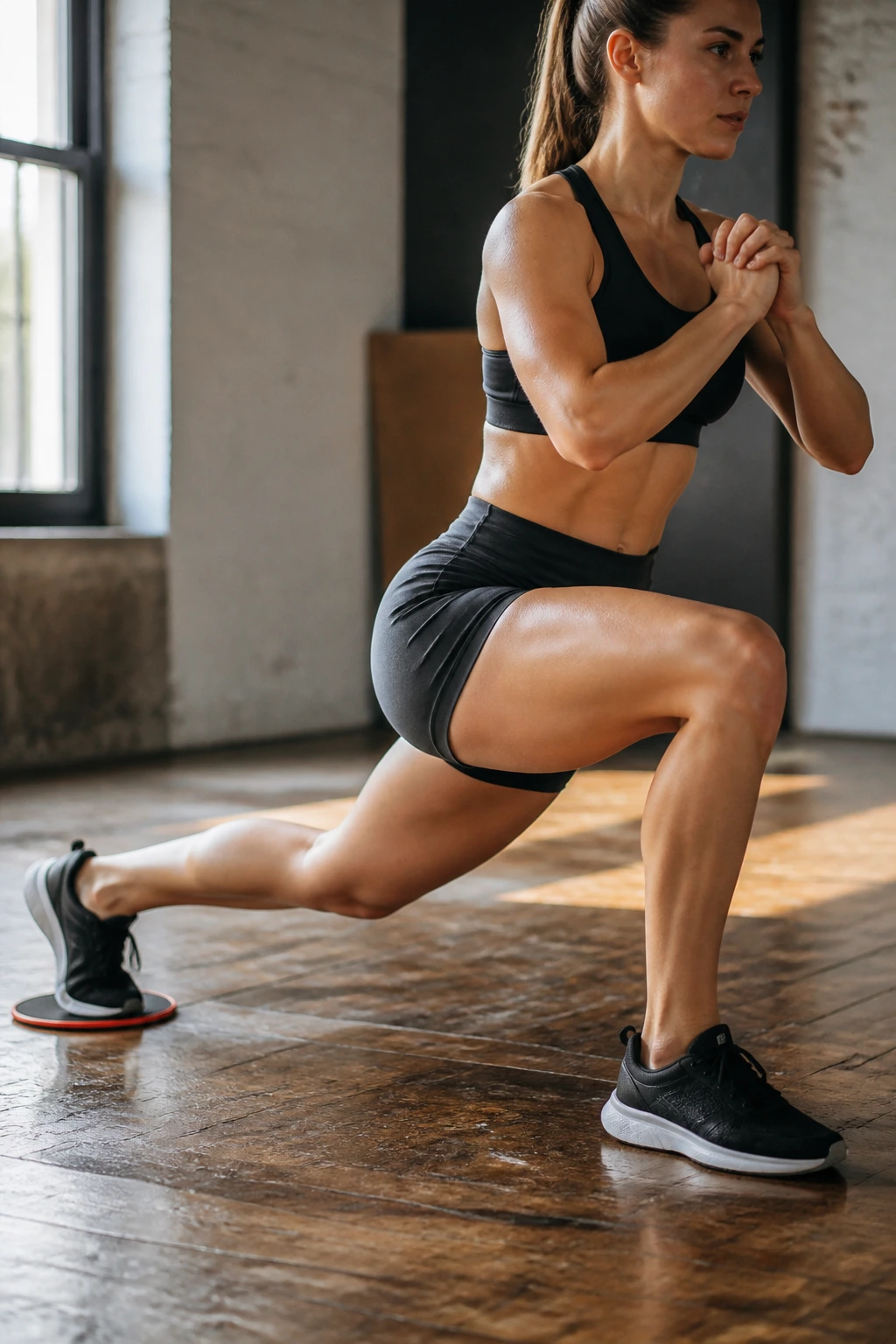
The slider lunge uses a furniture slider or a towel on a slick floor (like hardwood or tile). You place the ball of your back foot on the slider. As you lower into the lunge, you slide the back foot away.
The Eccentric Advantage
The magic of this movement happens on the way back up. Because there is constant friction, you have to actively pull your back leg forward, engaging your glute in a way that is impossible with a standard stepping lunge. This forces a massive amount of “eccentric control”—the lowering phase. Eccentric training is widely regarded by strength coaches as the most effective method for building size and strength.
16. Single-Arm Overhead Lunge
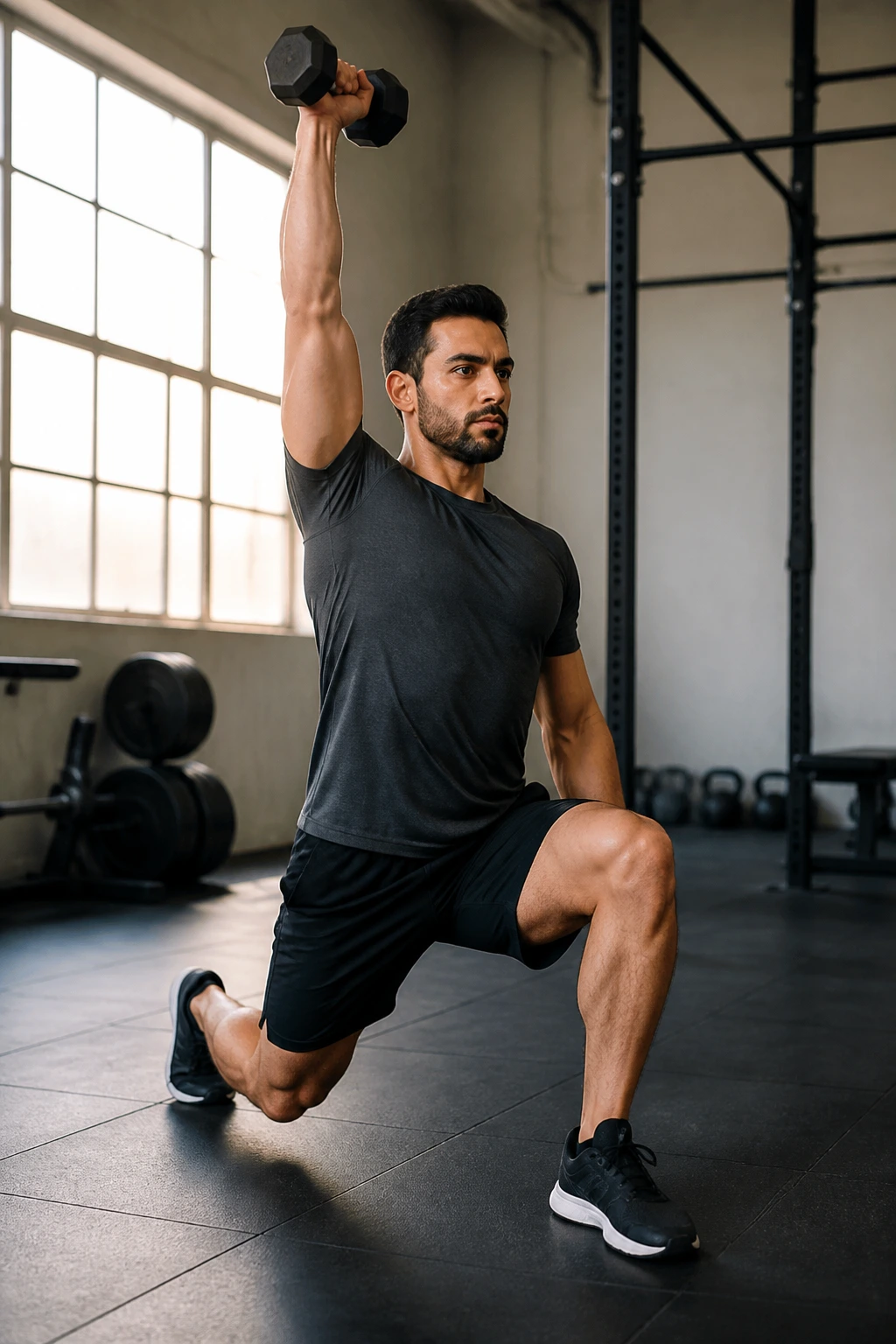
This is an advanced stability movement. Hold a dumbbell or kettlebell in one hand, locked out directly over your head. Perform your lunges while keeping the weight perfectly steady.
Total Body Integration
The weight overhead acts as a destabilizing force. Your core and your glutes must work together to maintain a neutral spine and a balanced stride. If your glute strength is unbalanced, this movement will expose it immediately. You will notice you are much stronger and more stable on one side than the other. Use this to identify and correct those asymmetries.
17. Weighted Lunge with Pulse
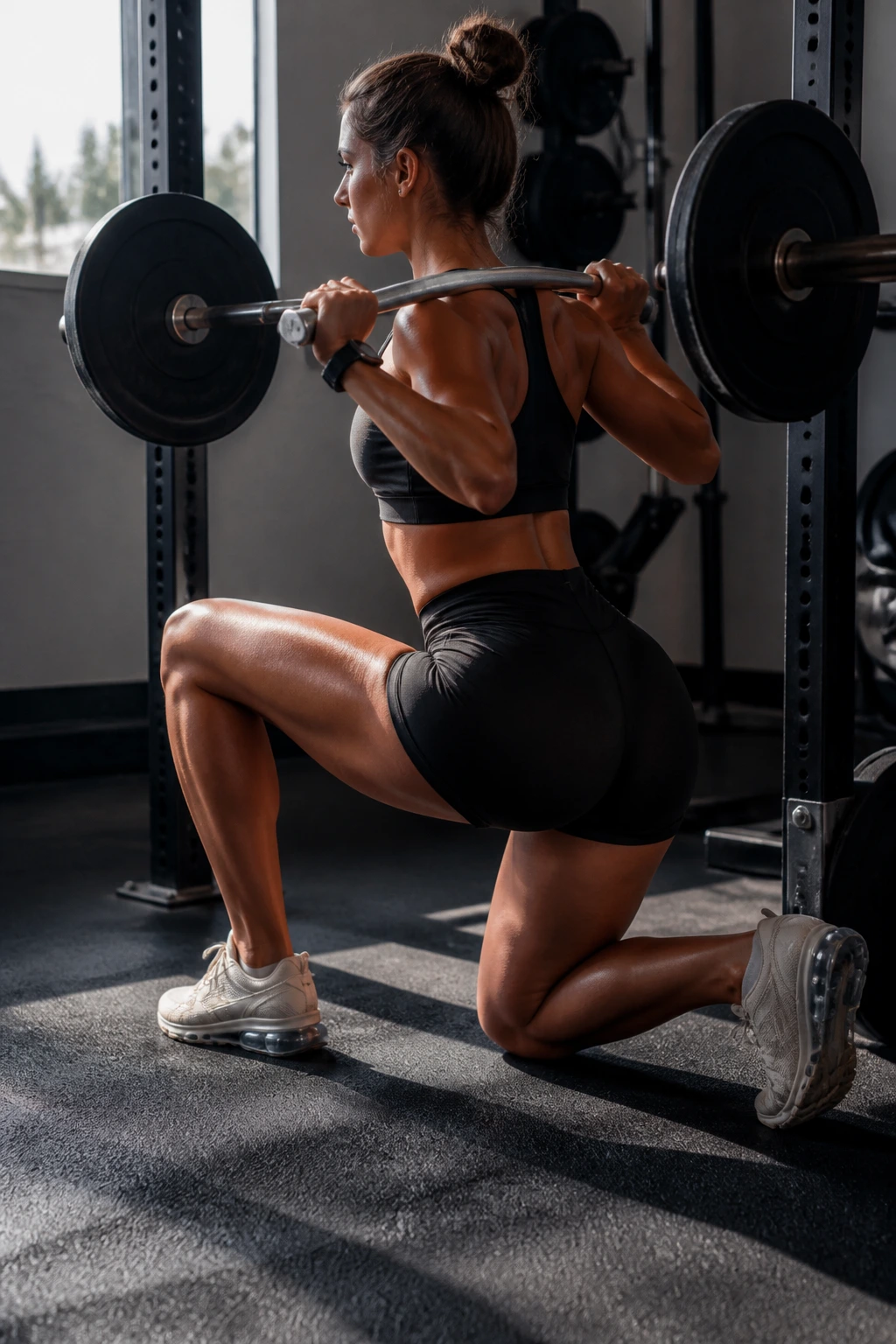
This is for when you want to induce metabolic stress. Take a weight—a barbell on your back, dumbbells at your sides, or a sandbag—and enter a deep lunge. Instead of doing full repetitions, you do three small, controlled pulses at the very bottom of the movement before standing up.
The “Burn” Explained
That burning sensation is lactic acid buildup, which is a signal that your muscle fibers are under significant metabolic load. By staying at the bottom of the lunge, you keep the glute under constant tension. It is never allowed to relax. This is a brutal but highly effective way to stimulate muscle growth without needing to use extremely heavy weights that might tax your lower back.
18. TRX/Suspension Lunge
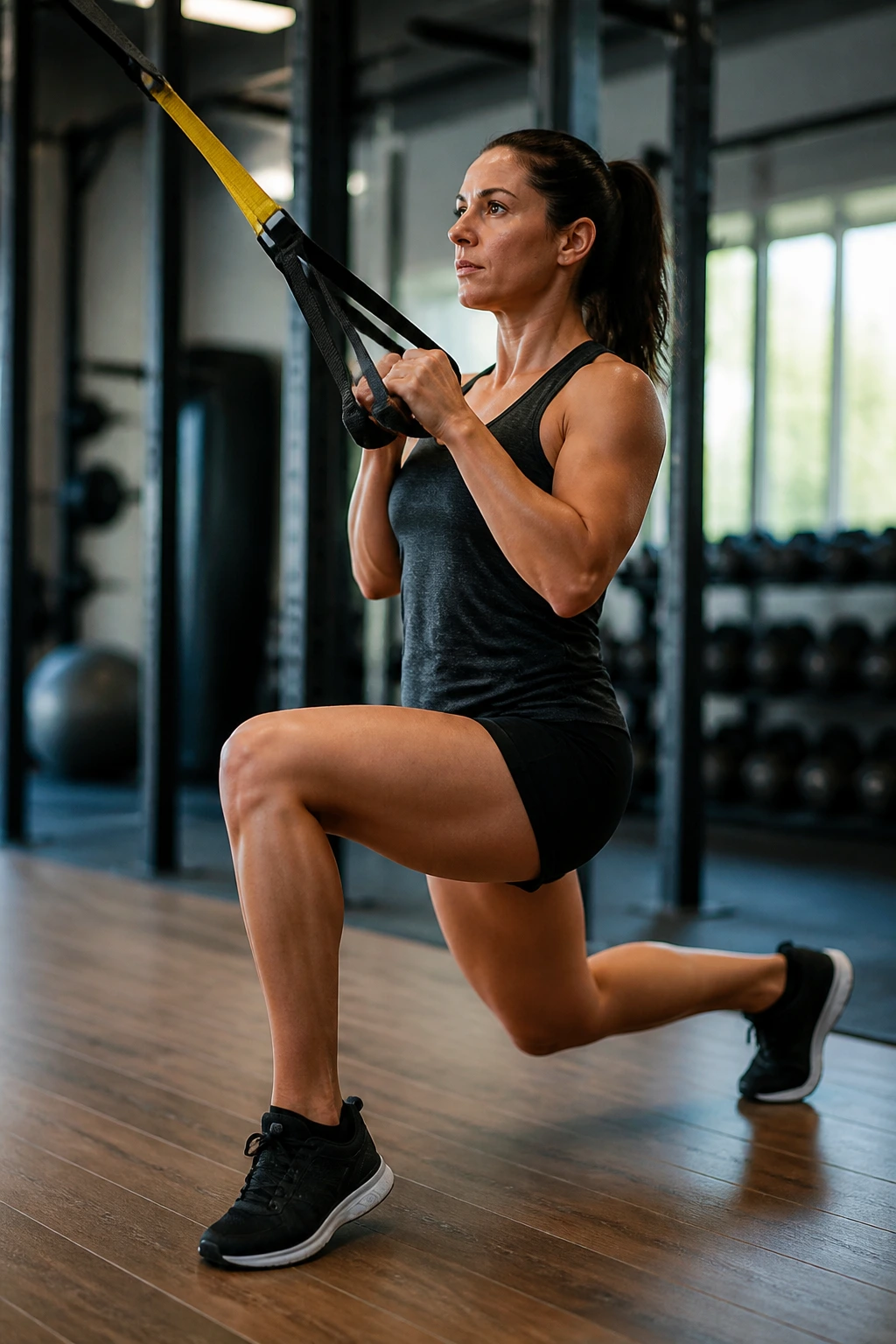
Using suspension straps (like TRX) allows you to use your arms to assist with balance, which means you can push your glutes closer to total failure. You can lean back slightly into the straps, which allows you to sit deeper into the lunge than gravity would normally allow.
The Advantage of Assistance
By reducing the balance requirement, you can focus purely on the muscular contraction. It is almost like a leg press in a lunge position. You can also use the straps to provide a slight “tug” if you get stuck at the bottom, allowing you to perform forced repetitions beyond normal muscle failure. This is excellent for building mind-muscle connection.
Final Thoughts
The key to a stronger glute structure is not about finding the “one best exercise.” It is about understanding the different ways your glutes can be challenged. Forward lunges build base strength. Lateral lunges build stability. Isometrics build endurance. Explosive lunges build power.
If you rotate these 18 variations into your training sessions, you will never face a plateau. You are constantly introducing new variables—new angles of attack, new demands for balance, and new ways to increase time under tension. Remember, the glutes are stubborn muscles. They are accustomed to being ignored. To wake them up and force them to grow, you must challenge them with variety and precision. Keep your form tight, your movements controlled, and your mind connected to the muscle. Consistency over months and years will yield a level of strength that simple repetition never could.
