



Your lower body is the engine of your entire physique. It supports your frame, drives your movement, and houses the largest, most metabolically active muscle groups in your body. When you decide to train your legs with serious intent, you are not just chasing aesthetics or the ability to lift heavy objects; you are building the foundation of your athletic health. Many people avoid intense leg days because they are objectively harder than training the upper body. They require more oxygen, more neurological focus, and they leave you feeling physically depleted for hours afterward. That specific, deep-seated soreness—the kind that makes walking down a flight of stairs a calculated risk—is usually a sign that you have stimulated growth and adaptation.
Building real, lasting lower body strength requires more than just showing up to the gym and guessing. You need a structured approach that respects your anatomy, manages recovery, and keeps the challenge evolving over time. The following eighteen workouts are designed to address different pillars of lower body development, from raw maximal strength to explosive power and metabolic conditioning. Do not attempt to rotate through all of these in a single week; rather, pick a primary focus and integrate these sessions into your training cycle for several weeks at a time. Consistency beats intensity every single time, but the right kind of intensity applied consistently is how you actually move the needle.
1. The Classic Barbell Squat Foundation
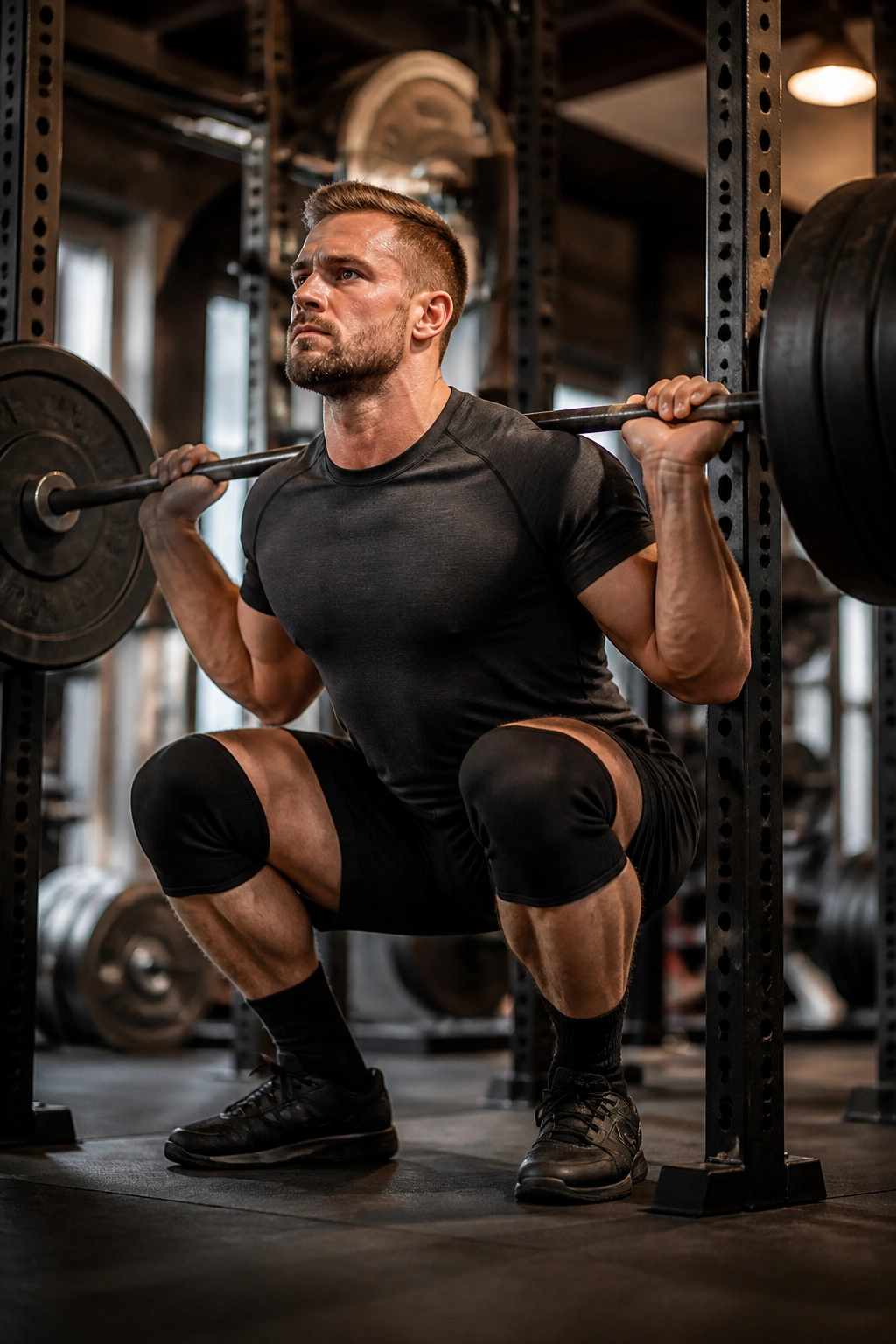
There is no substitute for the barbell back squat when it comes to total leg development. It demands coordination, core stability, and raw force production. Most people overcomplicate it, but the reality is that the basics work better than any fancy variation. This session centers on high-quality, heavy-load back squats, stripping away the distraction of accessory movements to focus entirely on depth and bar path.
The Mechanics of the Lift
Your focus here should be on the descent. Control the weight for three full seconds on the way down. This “eccentric” portion of the lift is where the majority of muscle fiber micro-tearing occurs, leading to strength gains. Do not dive-bomb the weight or rely on the bounce at the bottom to get you out of the hole.
- Warm-up: Three sets of goblet squats with a light kettlebell, focusing on pushing your knees out and keeping your chest up.
- The Main Lift: Five sets of five repetitions. Rest exactly three minutes between sets.
- Load selection: Choose a weight that feels heavy by the third set but allows you to maintain perfect technique. If your form breaks down, the weight is too heavy, regardless of how much it says on the plates.
Pro tip: Record yourself from the side. You might think your thighs are parallel to the floor, but the camera will often reveal you are stopping an inch or two high. Fix that depth, and you will unlock a new level of quad engagement.
2. Traditional Deadlift Strength Block
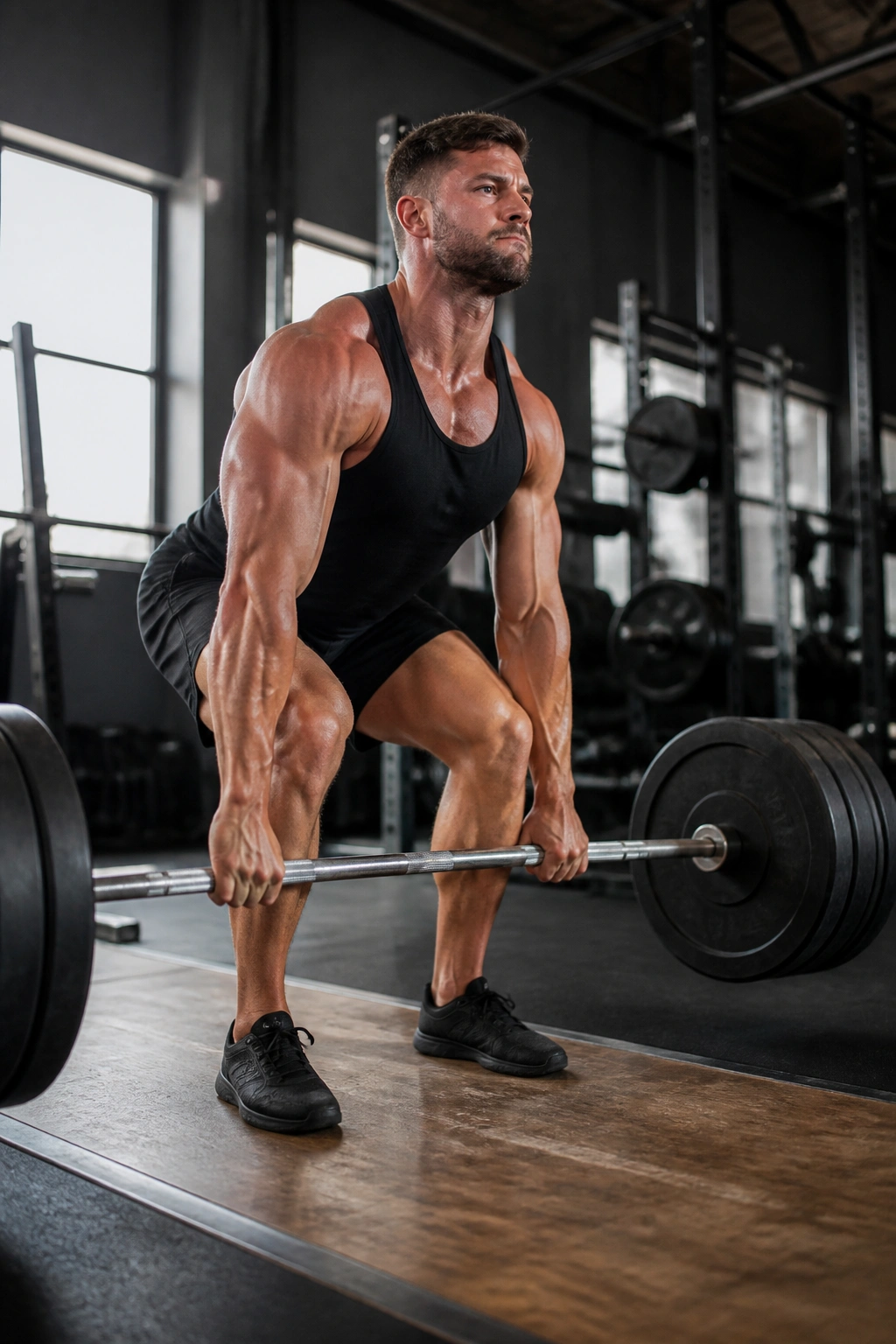
While the squat focuses on the quads, the deadlift is the king of the posterior chain. This workout is dedicated to the hamstrings, glutes, and lower back. Because deadlifts place a high demand on your central nervous system, you should treat this as your primary heavy lift of the week. Do not schedule heavy squats the day after this workout if you are still learning to manage your recovery.
Setting Up Your Deadlift Routine
This session isn’t just about pulling the most weight possible; it is about building a robust hinge pattern. If your back rounds, you are doing it wrong. The setup is everything.
- Approach the bar: Place your mid-foot under the bar.
- The Brace: Inhale deeply into your abdomen—not your chest—to create intra-abdominal pressure that protects your spine.
- The Pull: Think about pushing the floor away with your feet, rather than pulling the bar up with your arms.
After your main deadlift sets, finish with three sets of Romanian Deadlifts (RDLs). Use about 50% of the weight you used for your main deadlifts. Focus on the stretch in your hamstrings. When you feel that deep, tight pull in the back of your legs, squeeze your glutes hard to return to the standing position. Do not rush the RDLs. They are a precision tool, not a contest of ego.
3. Bulgarian Split Squat Focus
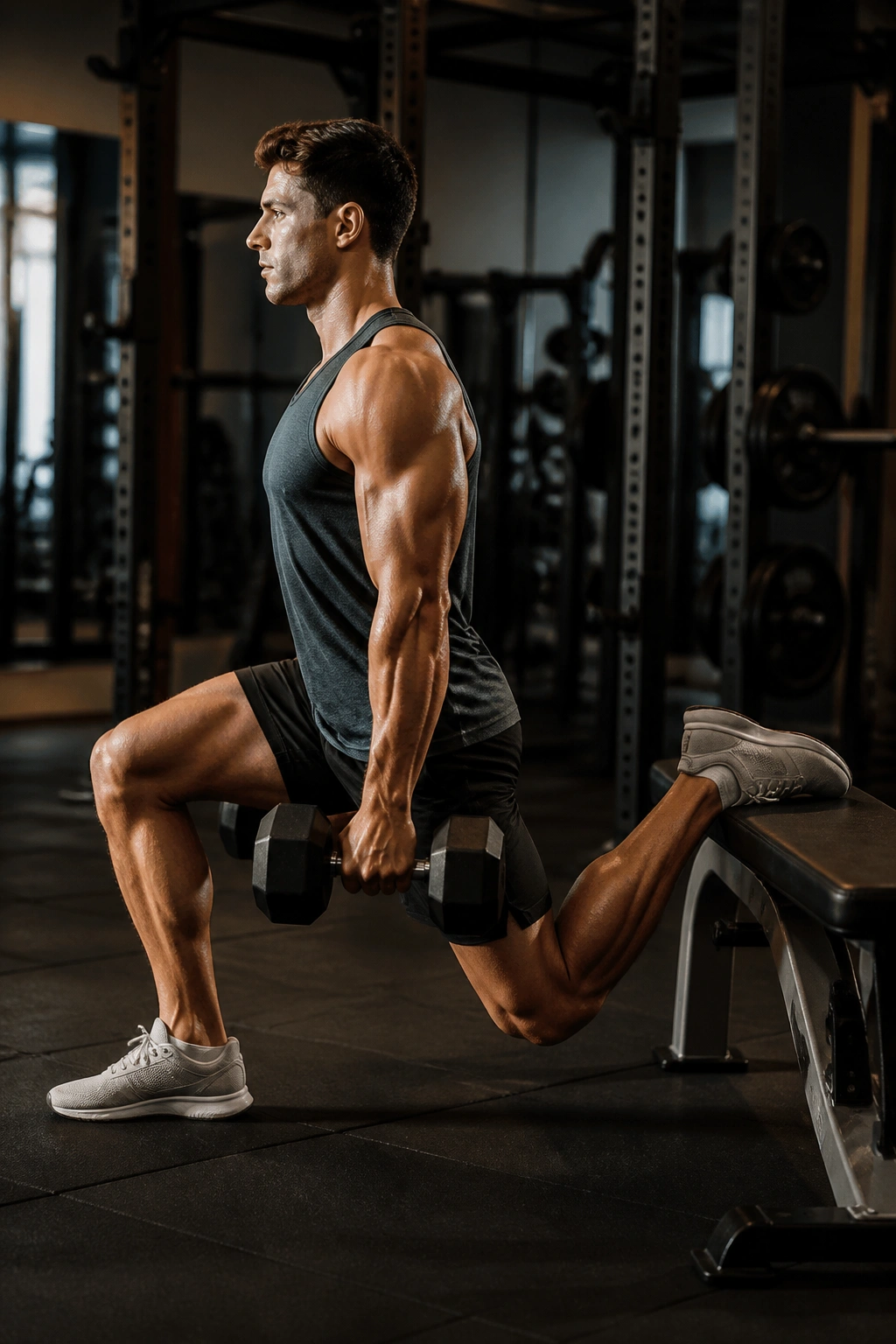
If you want to expose imbalances between your left and right legs, look no further than the Bulgarian split squat. This is a movement that most people avoid because it is uncomfortable, challenging, and requires significant balance. That is exactly why it is one of the most effective exercises for building independent leg strength.
You are effectively squatting with one leg, using the back foot only for stability. This forces your core to work overtime to keep you upright and demands that your lead leg handles almost the entire load. In this workout, we prioritize volume over raw weight. You do not need a 300-pound barbell to get a brutal workout here; a pair of dumbbells will suffice.
Start by performing four sets of ten repetitions per leg. Move directly from the left leg to the right leg with no rest in between. Only after both legs have completed a set do you take a 90-second rest. By the fourth set, your stability will likely falter, and that is where the growth happens. If you find your balance is the limiting factor, try holding onto a wall or a squat rack for the first few sessions until your nervous system adapts to the unilateral demand.
4. Glute-Dominant Hypertrophy Circuit
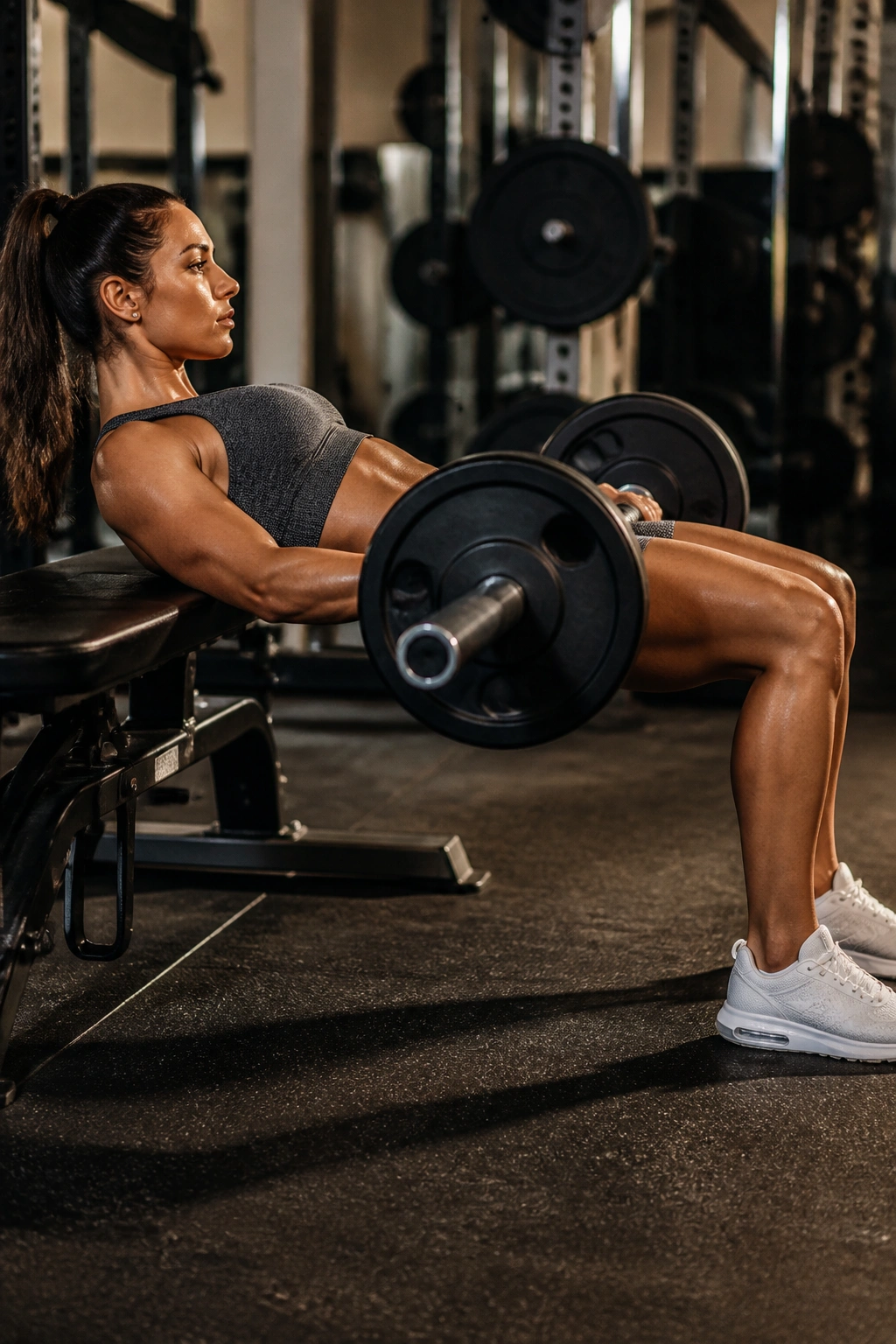
Many lifters ignore the glutes, thinking they are just a “support” muscle. In reality, the gluteus maximus is the most powerful muscle in the human body. This workout is designed to isolate the glutes, minimizing quad involvement to force the posterior chain to do the heavy lifting.
- Hip Thrusts: Start with four sets of eight to twelve reps. This is the cornerstone movement. Use a barbell with a pad. The top of the movement is where the work happens; squeeze your glutes as hard as you can for two seconds at the top of every rep.
- Glute Bridges: Use these as a burnout set at the end. Perform two sets of twenty repetitions with just your body weight, focusing on a slow, controlled tempo.
- Cable Kickbacks: Finish with three sets of fifteen reps on each leg.
Warning: Do not rush the eccentric portion of the hip thrust. If you just drop your hips back down, you lose the tension. Lower the weight with control. You want your glutes to feel like they are on fire by the time you reach the final set.
5. Explosive Plyometric Power
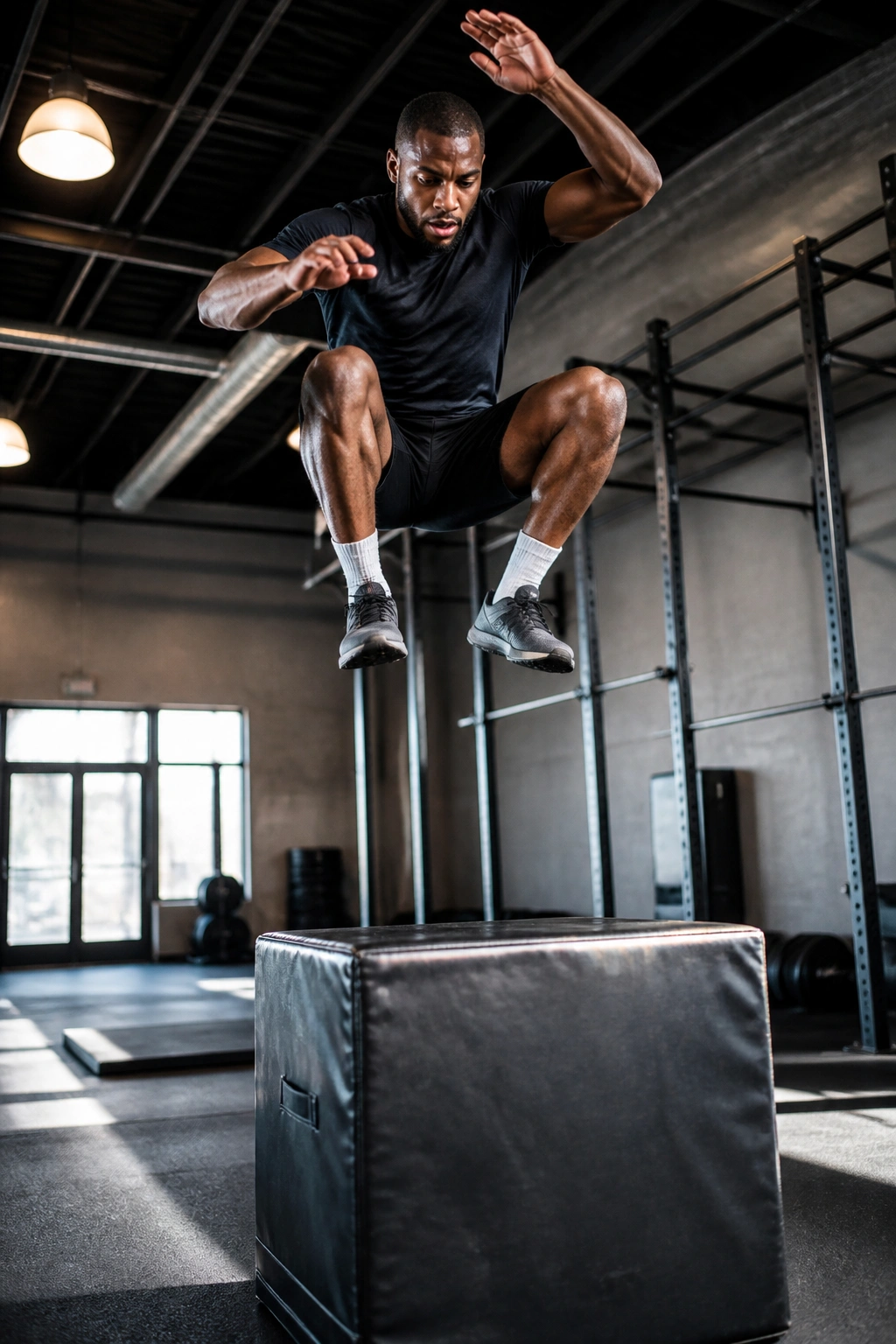
Strength is not just about moving heavy weights slowly; it is about the ability to generate force quickly. Plyometric training, or jump training, teaches your muscles to contract rapidly. This workout is less about muscle size and more about athletic performance and tendon stiffness.
Begin with box jumps. Keep the box height conservative—something that challenges you but doesn’t cause you to crash. Perform five sets of three to five explosive jumps. The key here is quality. If you are tired and your jump height drops, stop the set. You are training your nervous system, not burning calories.
Follow this with broad jumps. Aim for distance, not height. Land softly, absorbing the impact through your midfoot, not your heels or toes. This teaches your body how to decelerate force, which is just as important for injury prevention as it is for performance. Finish with two sets of lateral bounds, hopping side-to-side to build stability in the ankles and hips. This session will make your legs feel “springy” and reactive.
6. Hamstring-Centric Volume
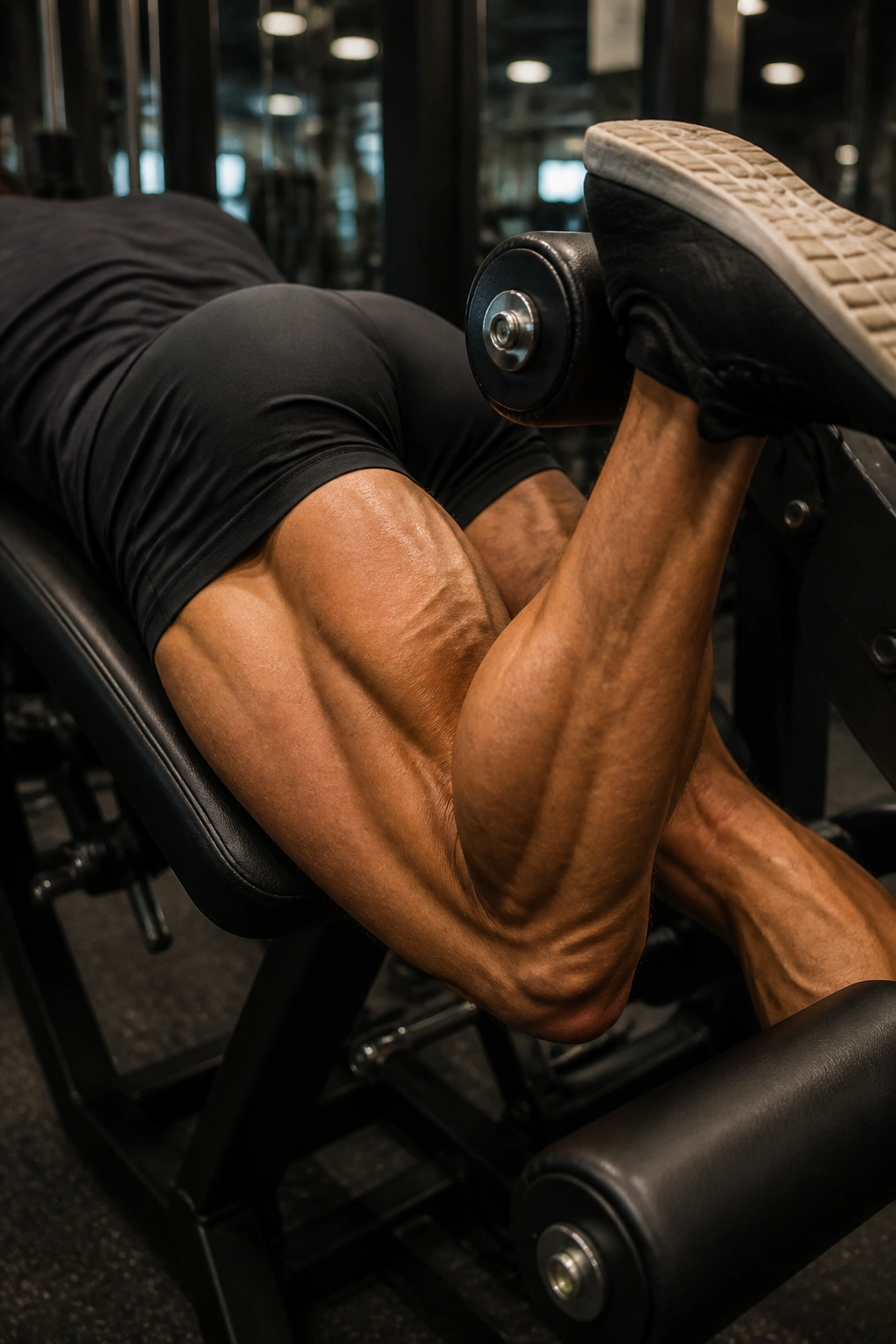
If your squats are strong but your hamstrings are weak, you are setting yourself up for knee pain and potential injury. The hamstrings cross both the hip and the knee, meaning they need to be trained through both hip extension (hinging) and knee flexion (curling). This workout focuses on the latter.
- Lying Leg Curls: This is your primary movement. Perform four sets of twelve reps. Keep your hips glued to the bench—do not let them lift up to help the weight move.
- Seated Leg Curls: Perform three sets of fifteen reps. The seated position puts the hamstrings in a stretched state, which is excellent for growth.
- Nordic Curls: If you are advanced, finish with two sets of eccentric Nordic curls. Kneel on a pad, have someone hold your ankles, and lower your body forward as slowly as possible. If you can’t get back up, that’s fine; the lowering phase is where the magic happens.
Your hamstrings should feel tight and “pumped” after this. It is a completely different sensation than the fatigue you feel after a heavy squat session.
7. Unilateral Stability and Balance
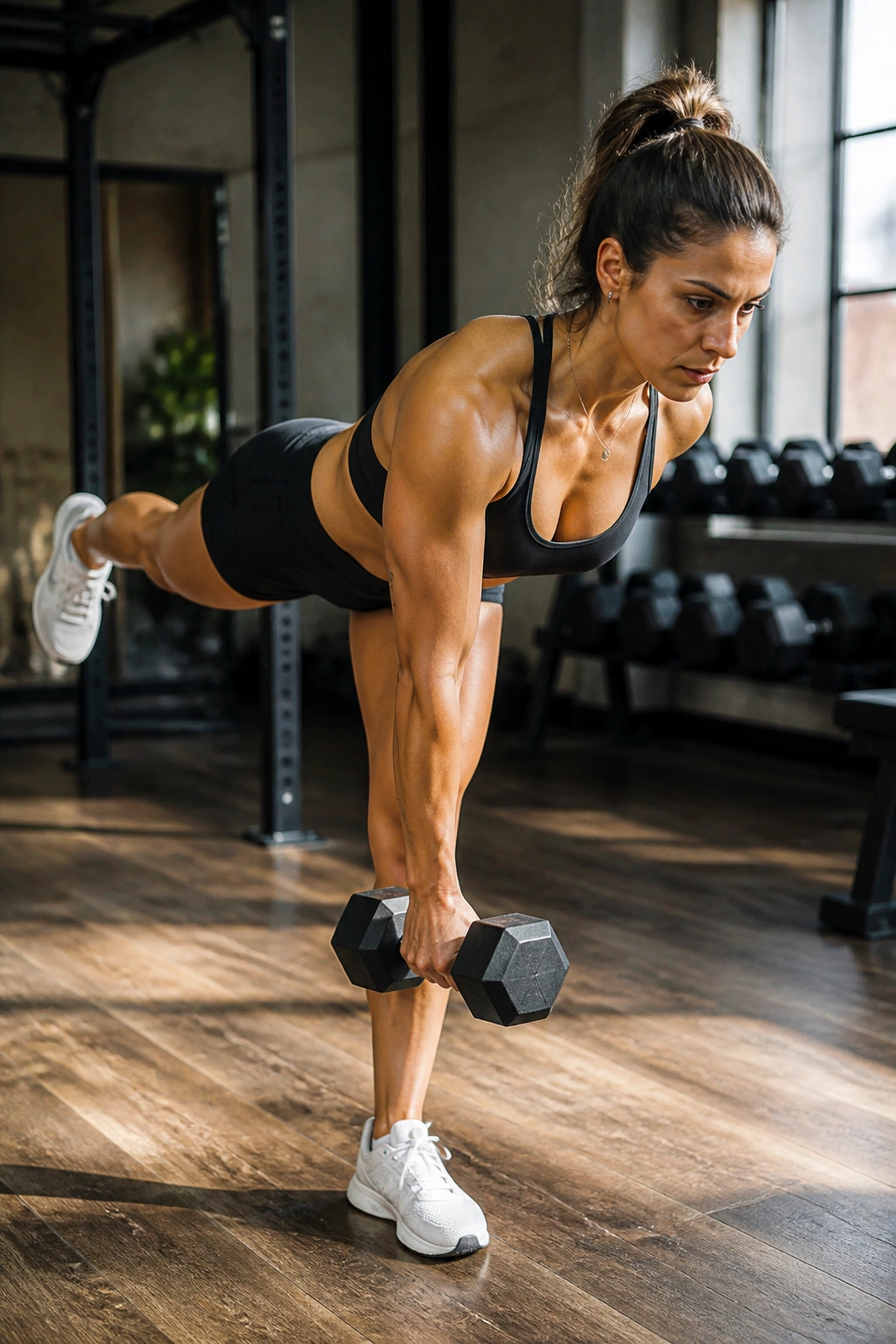
We spend most of our lives moving on two legs, but many of our daily activities—walking, climbing stairs, stepping over things—actually happen on one leg at a time. This workout focuses on single-leg exercises that require you to stabilize your entire body.
The single-leg Romanian deadlift (RDL) is the star here. You can do this with a dumbbell in the opposite hand of the working leg. Focus on keeping your hips square to the floor. Do not let your pelvis rotate open. If you open your hips, you lose the hamstring stretch and the balance challenge.
Perform three sets of ten reps per side. Follow this with step-ups onto a high box. The step-up should be slow. Do not push off with the back foot; pull yourself up using only the lead leg. This is a humbling exercise. You will quickly realize that one leg is often significantly stronger than the other. Dedicate this day to evening out those discrepancies.
8. The Heavy Compound Trifecta
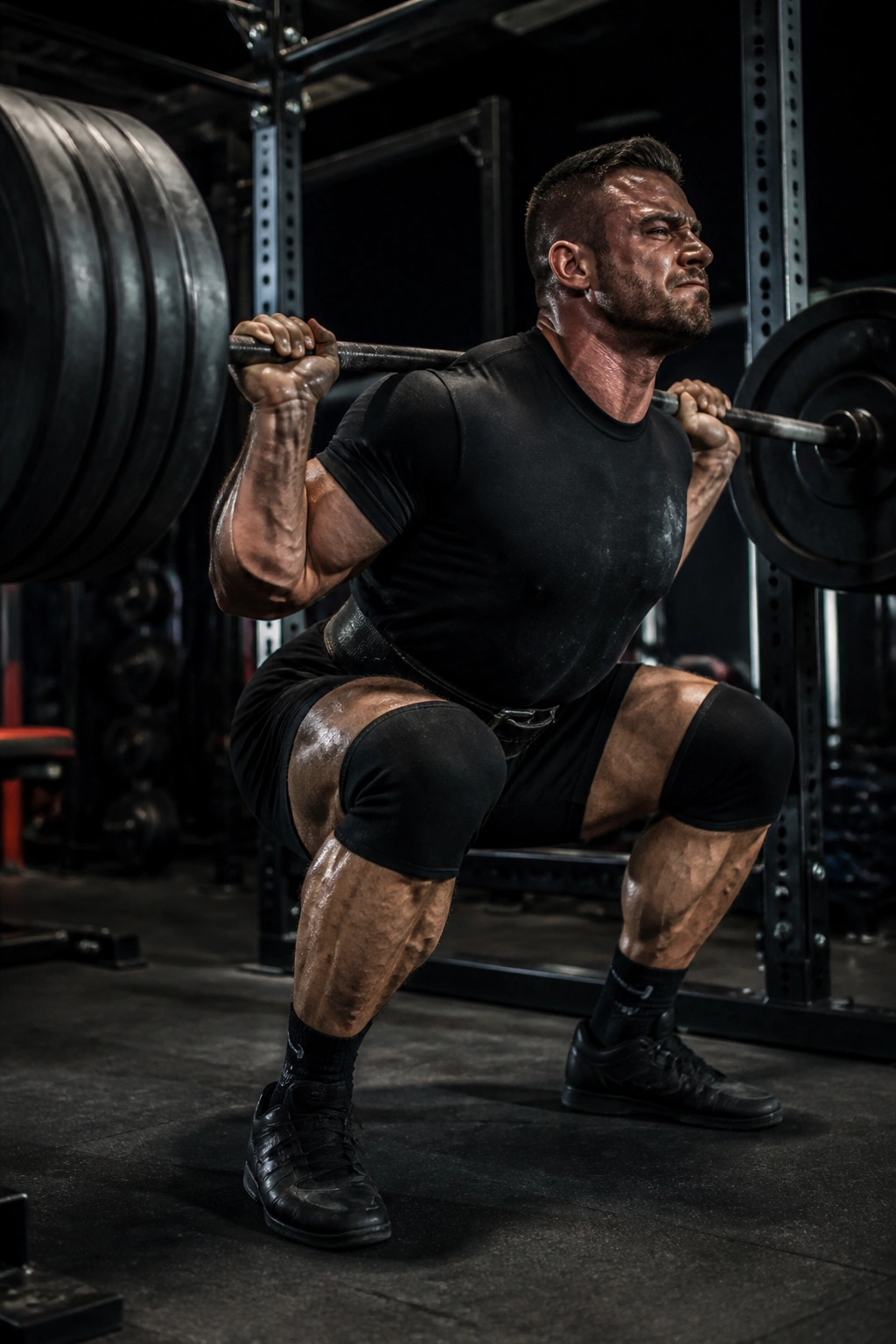
Sometimes, the best workout is the simplest one. This session is designed for the lifter who wants to build dense, thick muscle tissue through high-intensity, compound movements. We are focusing on three main lifts: the squat, the deadlift, and the lunge.
- Back Squat: Three sets of six reps.
- Conventional Deadlift: Three sets of four reps.
- Walking Lunges: Three sets of twenty steps total (ten per leg).
This is a high-demand day. You will need to warm up thoroughly. Do not jump straight to your working weight. Start with an empty bar, then add weight gradually. This workout isn’t about volume; it’s about intensity. You should leave the gym feeling like you’ve moved a significant amount of iron. The recovery demand from this day will be high, so ensure you have adequate protein and sleep scheduled for the next forty-eight hours.
9. Dedicated Calf and Ankle Development
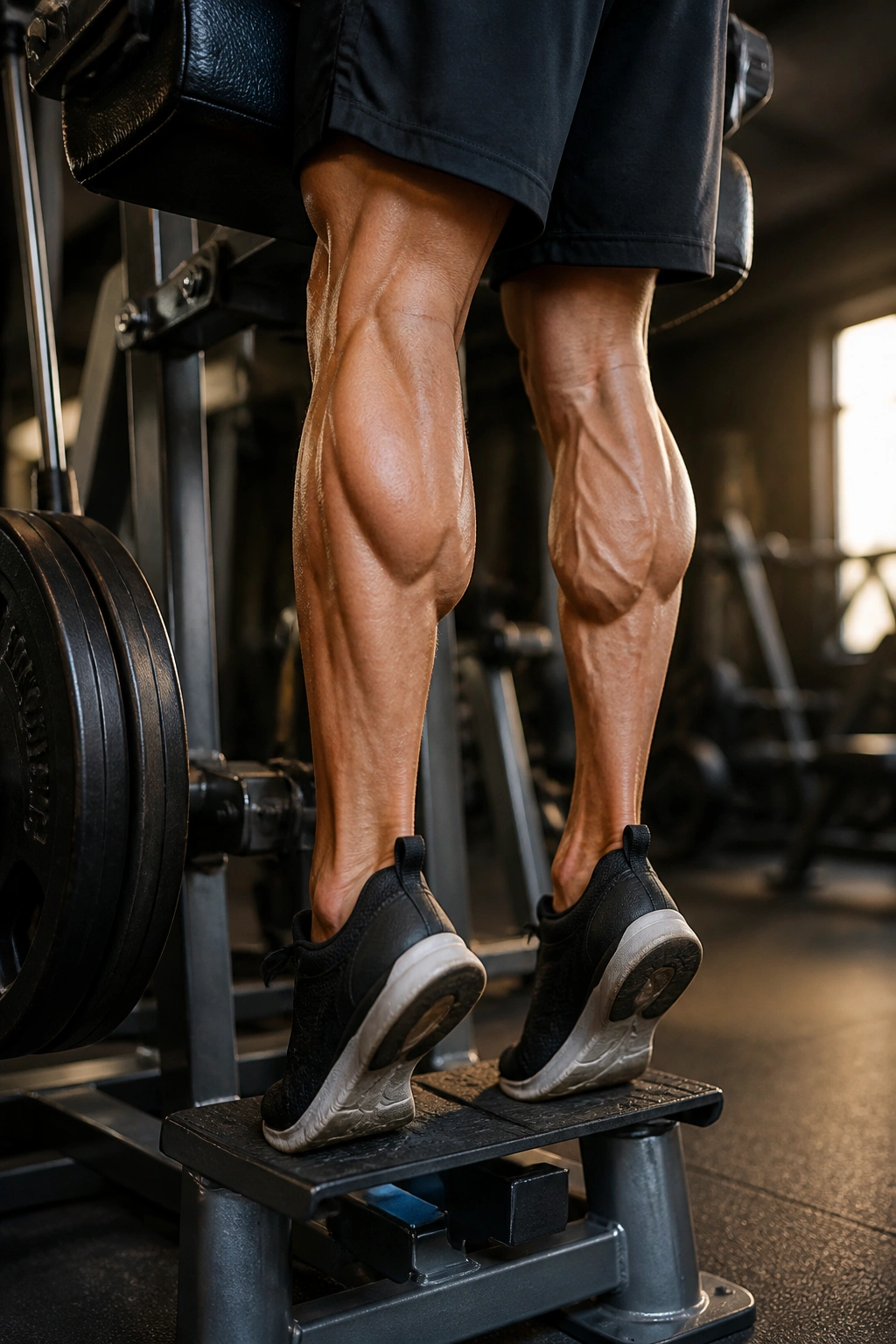
Calves are notorious for being stubborn. If you want them to grow, you need to train them with volume and, surprisingly, weight. Too many people do endless sets of bodyweight calf raises and wonder why their calves don’t change. You need to treat your calves like any other muscle group.
Start with the standing calf raise. You need a machine or a rack that allows for a full range of motion. Lower your heels until you feel a deep stretch in the achilles tendon and the lower calf. Pause for one full second at the bottom. Then, explode up onto the balls of your feet.
Follow this with seated calf raises. The seated position targets the soleus, a muscle deep underneath the gastrocnemius (the “diamond” part of your calf). Perform four sets of fifteen reps for the standing raises and three sets of twenty reps for the seated raises. The burn should be intense—almost uncomfortable. That “pump” is blood being forced into the muscle tissue, and it is a necessary precursor to growth.
10. Kettlebell Hinge and Carry
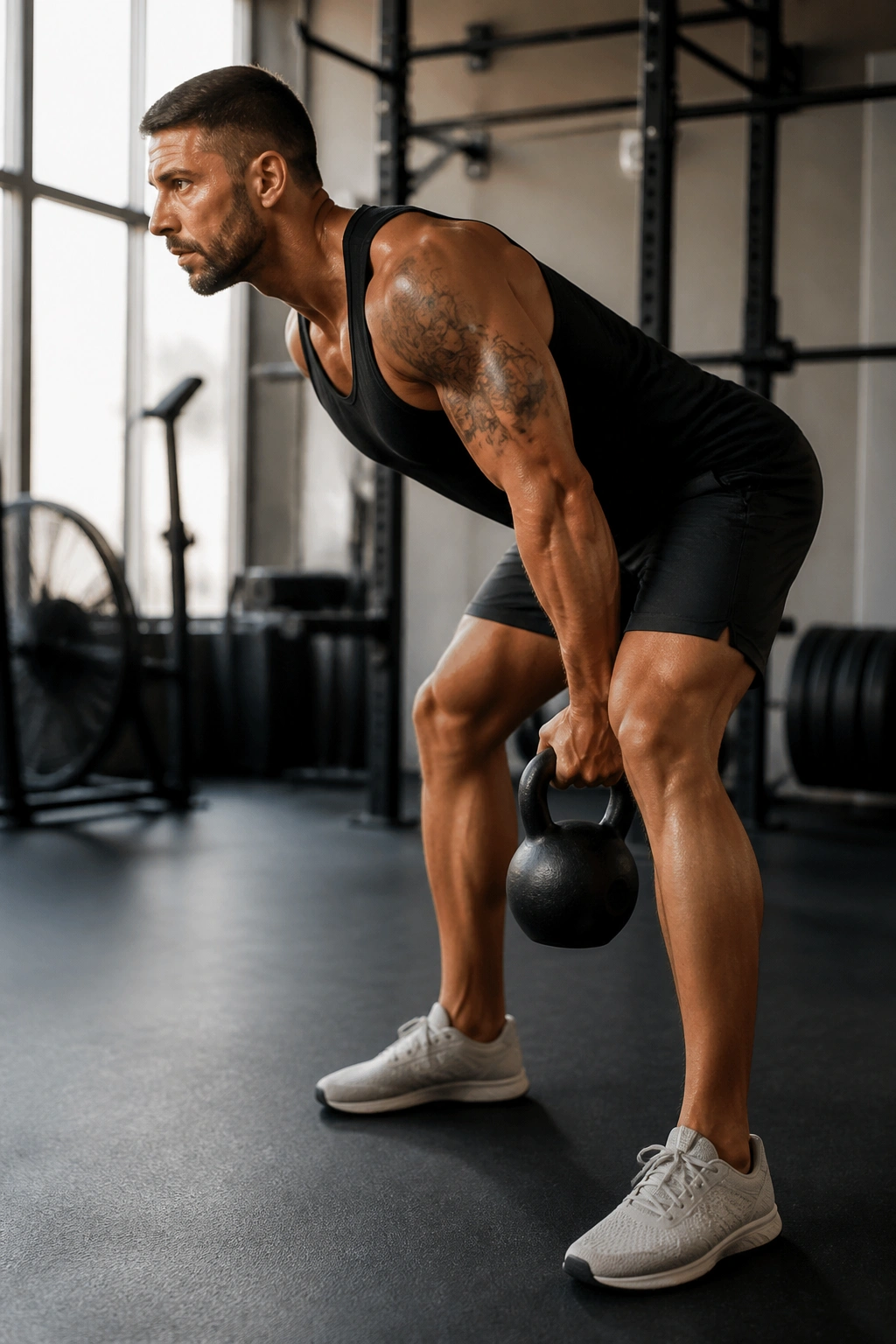
This workout is inspired by athletic conditioning. It moves away from the static, heavy iron of the squat rack and into the world of dynamic, full-body posterior chain work. It is excellent for building functional strength that translates to real-world tasks.
The kettlebell swing is the primary movement. It is a hinge, not a squat. Your knees should bend only slightly. The power comes from the snap of your hips. Perform five sets of twenty swings with a moderate-weight kettlebell.
Follow this with a “suitcase carry.” Hold a heavy kettlebell in one hand and walk for forty yards. Keep your posture tall; do not let the weight pull you to the side. Switch hands and walk back. This forces your obliques and your glute medius (the hip stabilizer) to work incredibly hard to keep you balanced while walking. It is a sneaky way to build lower body stability and core strength simultaneously.
11. Bodyweight Strength Foundations
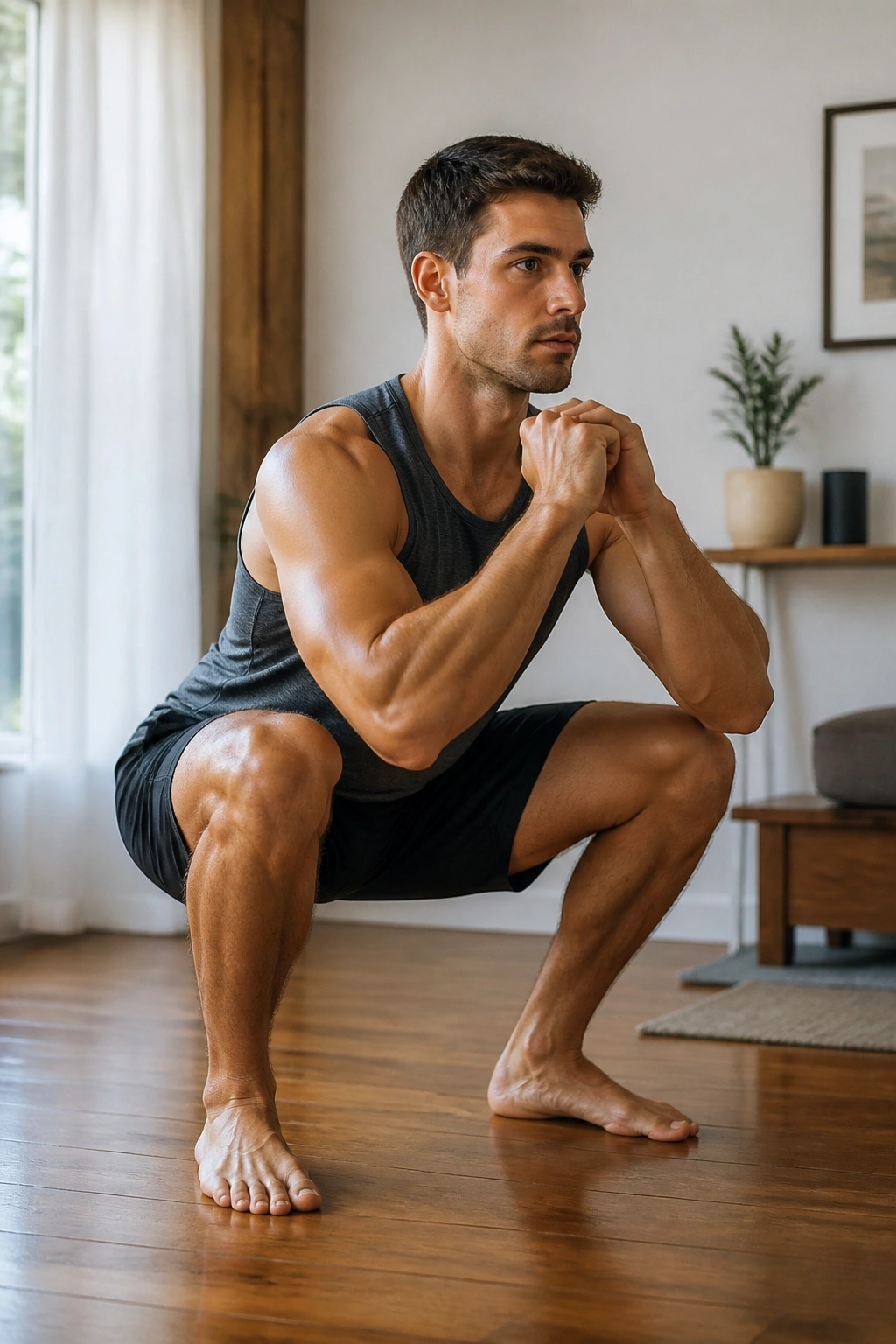
You do not need a commercial gym membership to build strong legs. This workout relies entirely on your own body weight, using tempo and volume to create fatigue. This is perfect for home workouts or when you are traveling and have limited equipment.
- Air Squats: One hundred repetitions, broken into sets of twenty with thirty seconds of rest between.
- Lateral Lunges: Three sets of fifteen per side. Focus on shifting your weight deep into the glute of the working leg.
- Single-Leg Glute Bridges: Four sets of twenty per side.
- Wall Sits: Three sets of sixty seconds.
The key to making bodyweight work effective is the tempo. Perform each squat with a three-second descent and a one-second pause at the bottom. When you slow down the movement, you remove momentum and increase the time your muscles spend under tension. Even without external weight, this volume will leave your legs feeling heavy and shaky.
12. Heavy Dumbbell Leg Press Alternative
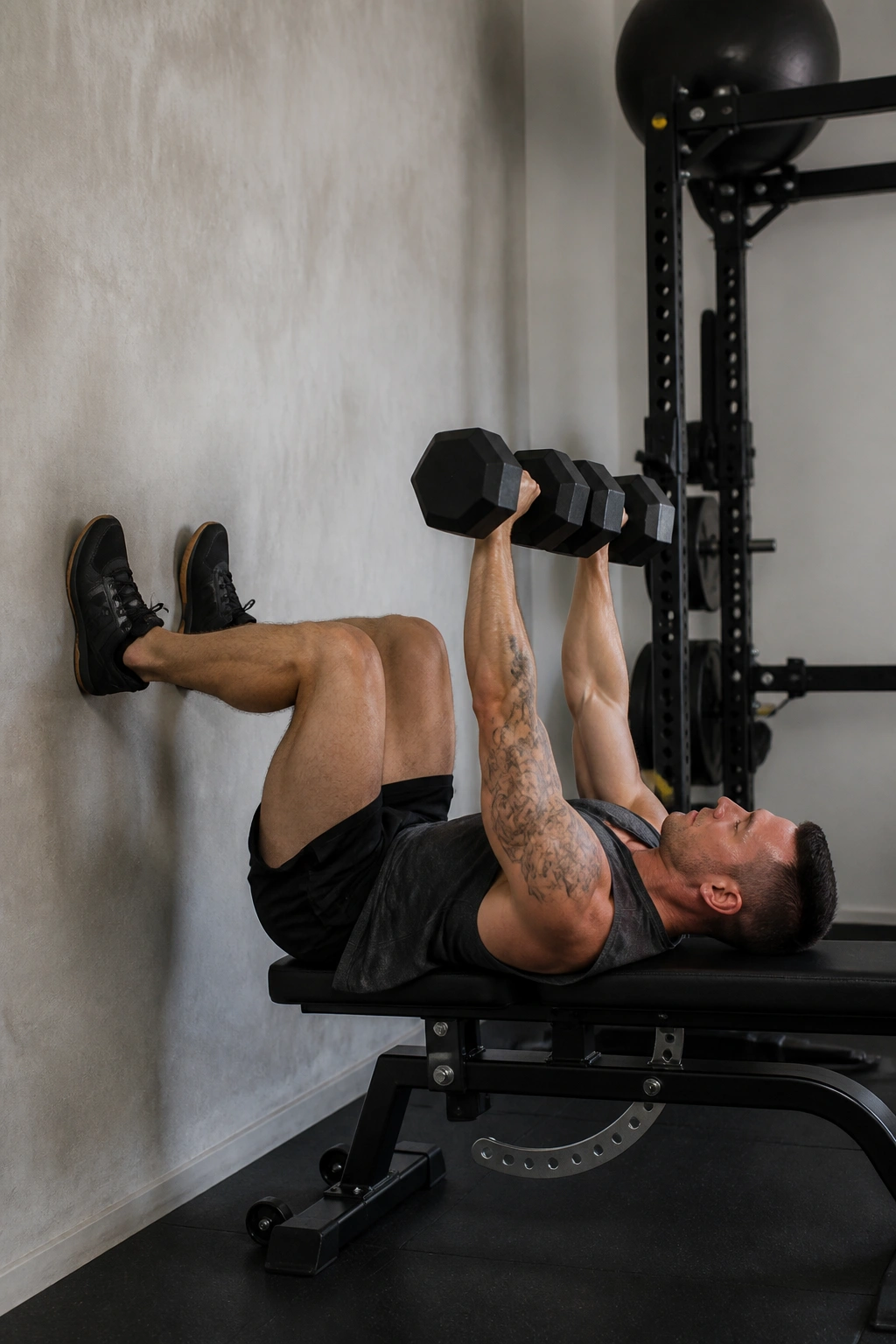
If you do not have a leg press machine, or if you find the machine uncomfortable for your lower back, you can replicate the movement pattern using heavy dumbbells. This workout mimics the “push” pattern of a leg press but with the added stability requirement of holding the weights yourself.
Lie on your back on a bench, but place your feet up against a wall or a stable vertical surface. Hold heavy dumbbells in your hands, pressing them toward the ceiling (a floor press with legs). Alternatively, use a “goblet” setup where you hold a heavy dumbbell at your chest and perform deep, slow squats.
The goal here is heavy load. You want to fatigue the quads without taxing your lower back. By lying on the ground or bench, you take your spine out of the equation. This allows you to push the quads closer to failure than you might feel safe doing with a heavy barbell on your back. Aim for four sets of twelve to fifteen reps with heavy, challenging dumbbells.
13. Tempo-Based Time Under Tension
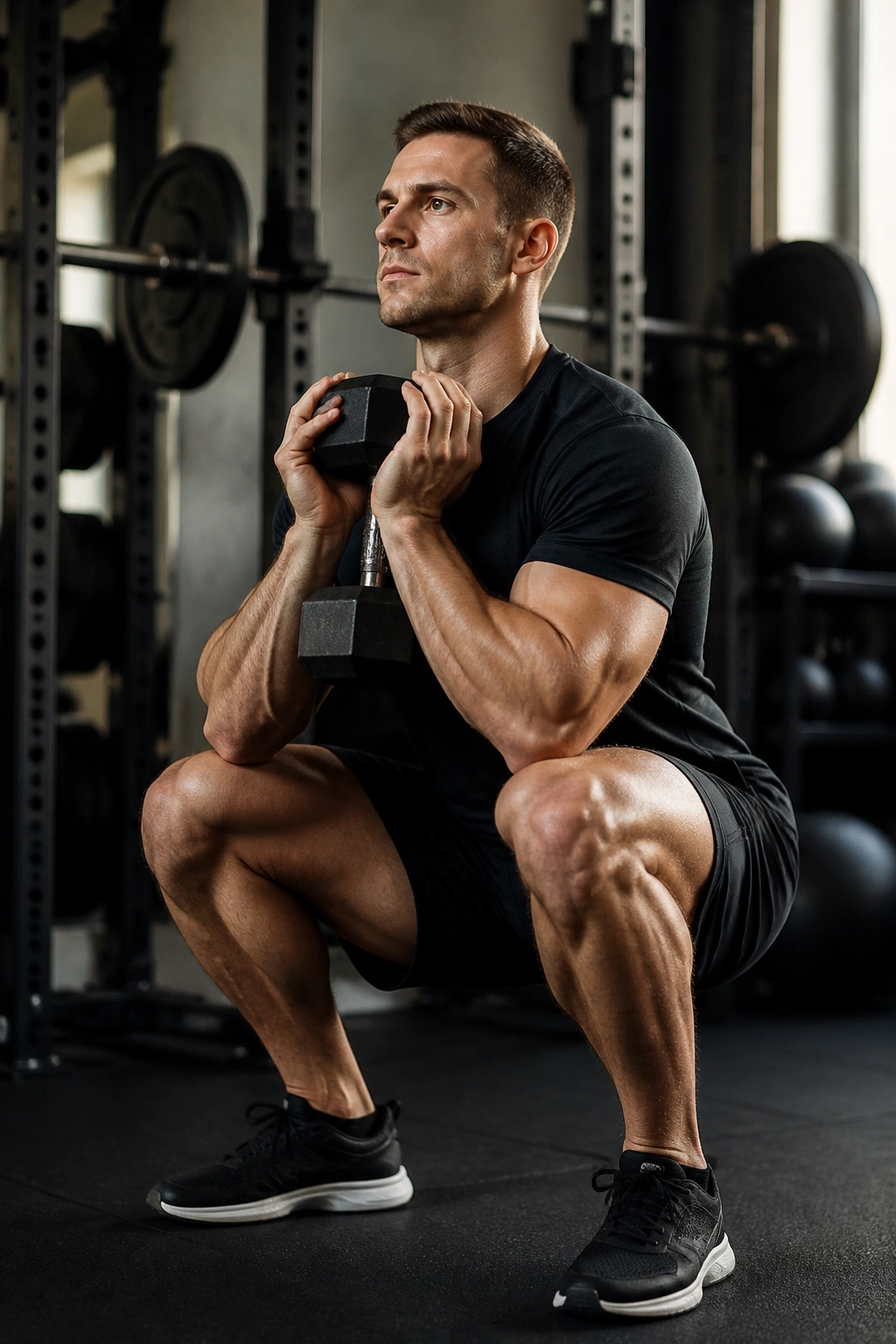
Most lifters perform their reps too fast. They use the momentum of the weight to get from point A to point B. This workout forces you to slow down. By increasing the “time under tension,” you stimulate muscle growth even with lighter weights.
Use a 4-2-1 tempo. This means:
- 4 seconds on the descent (eccentric)
- 2 seconds pause at the bottom (isometrically)
- 1 second to drive back up (concentric)
Pick two movements—for example, goblet squats and Romanian deadlifts. Perform three sets of eight repetitions for each movement, adhering strictly to the 4-2-1 tempo. You will likely need to use 30% to 40% less weight than you usually do. Do not let your ego push you to move faster. The struggle is the point. When you reach the end of the set, your legs should feel as though they are vibrating from the sustained tension.
14. Mobility and Strength Integration
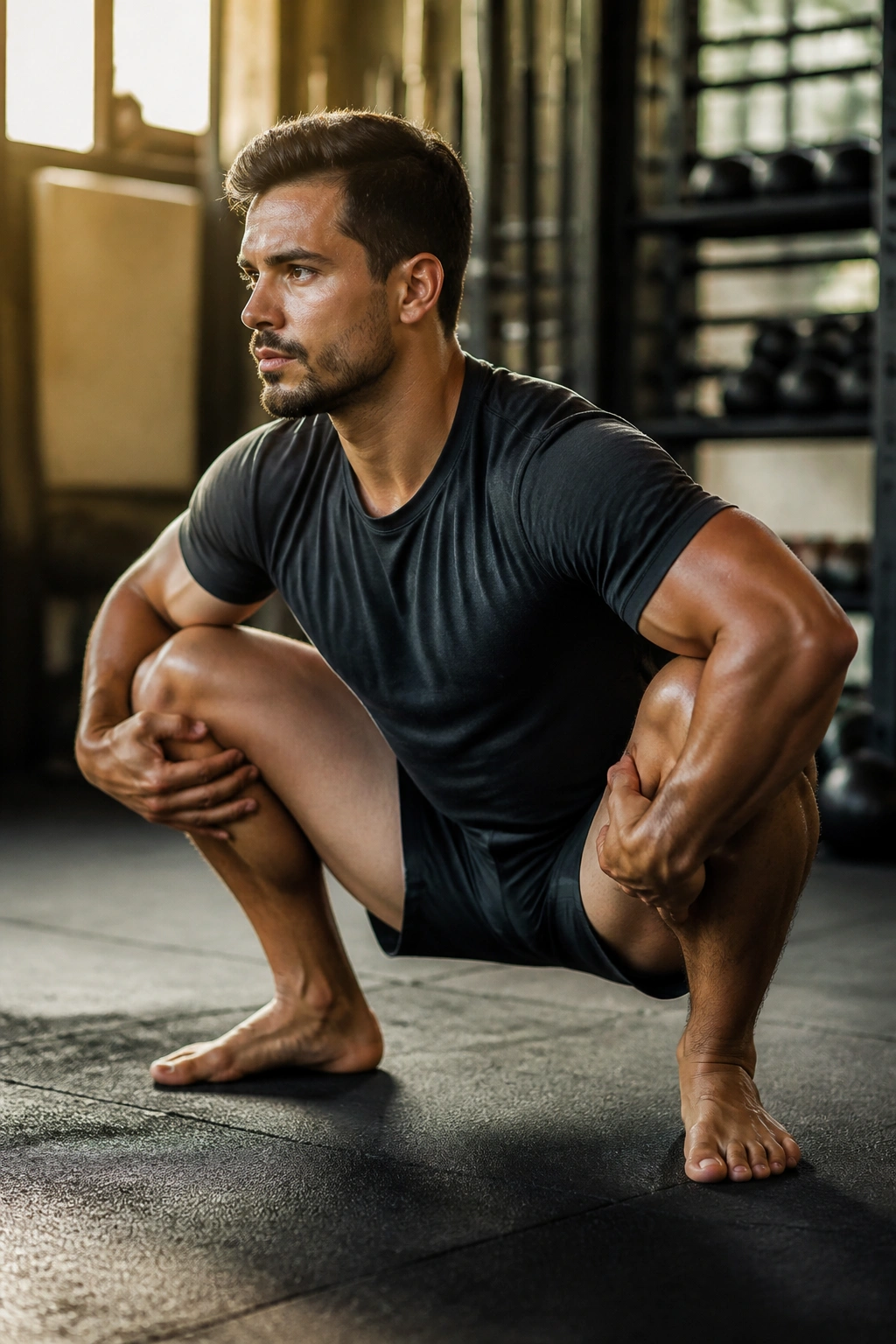
Strength is useless if you cannot move through a full range of motion. This workout pairs strength exercises with mobility drills to ensure you are building “usable” strength. The goal is to open up the hips and ankles so your strength movements become more efficient.
Start with deep squat holds. Sink into a squat and hold it for one minute, using your elbows to push your knees outward. This stretches the adductors and hips. Then, perform lunges, but add a reach overhead to stretch the hip flexors on the trailing leg.
Follow this with goblet squats, focusing on sinking as deep as your mobility allows. End with kettlebell swings. By combining deep stretches with loaded movements, you teach your body to maintain strength even in the deepest, most vulnerable positions. This is the secret to moving heavy weight without getting injured.
15. Leg-Focused Metabolic Conditioning
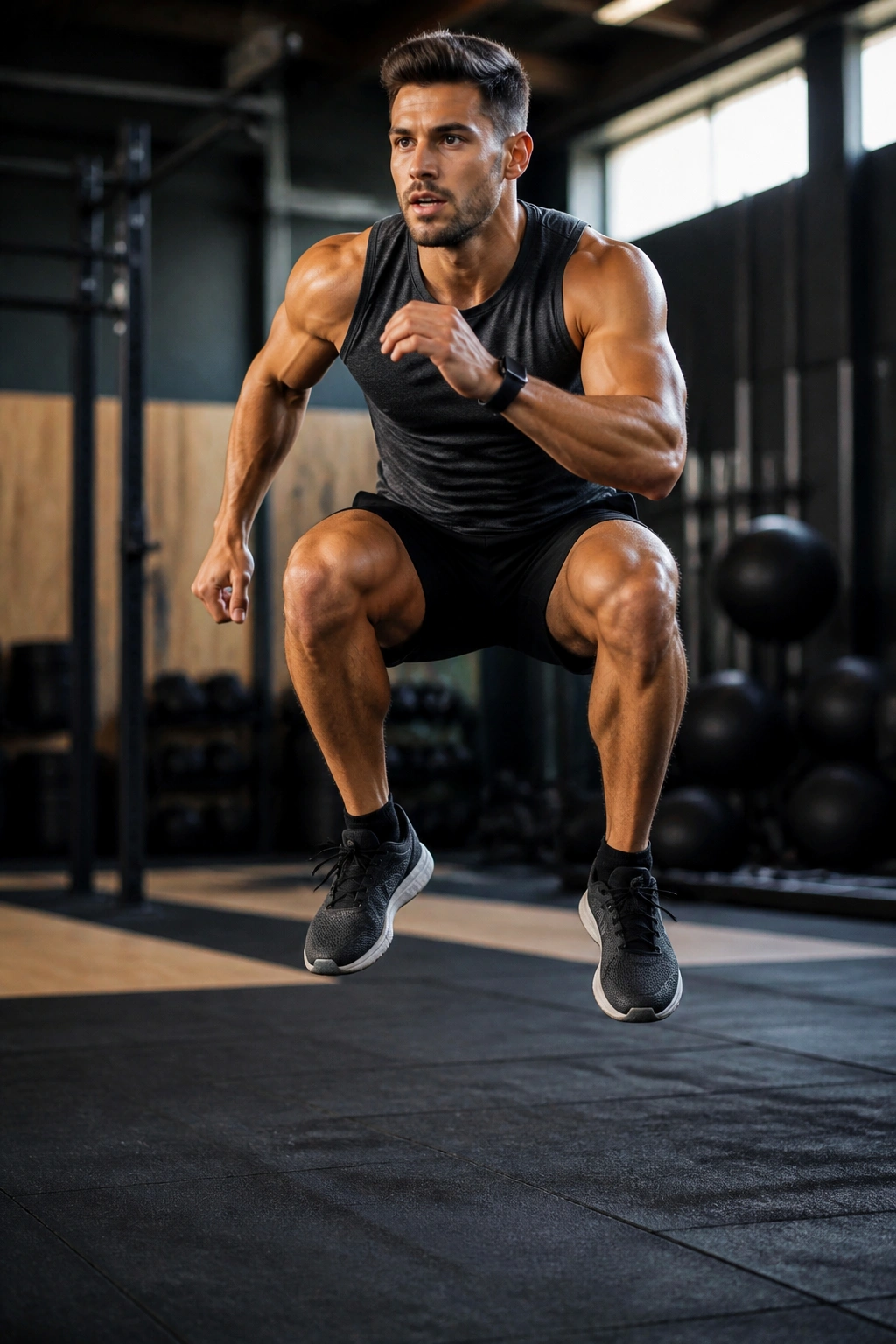
This is the workout to choose when you want to improve your endurance and burn fat, while still hitting the legs hard. It involves minimal rest and high heart rate.
Perform a circuit:
- Jump Squats: 20 reps
- Walking Lunges: 20 steps
- Mountain Climbers: 30 seconds
- Burpees: 10 reps
Do this circuit for four rounds, with only sixty seconds of rest between rounds. This will leave you gasping for air. The goal isn’t to max out your squat; it is to keep moving despite the burning sensation in your quads. This type of training builds mental toughness and increases the capacity of your legs to recover quickly between efforts.
16. Advanced Unilateral Loading
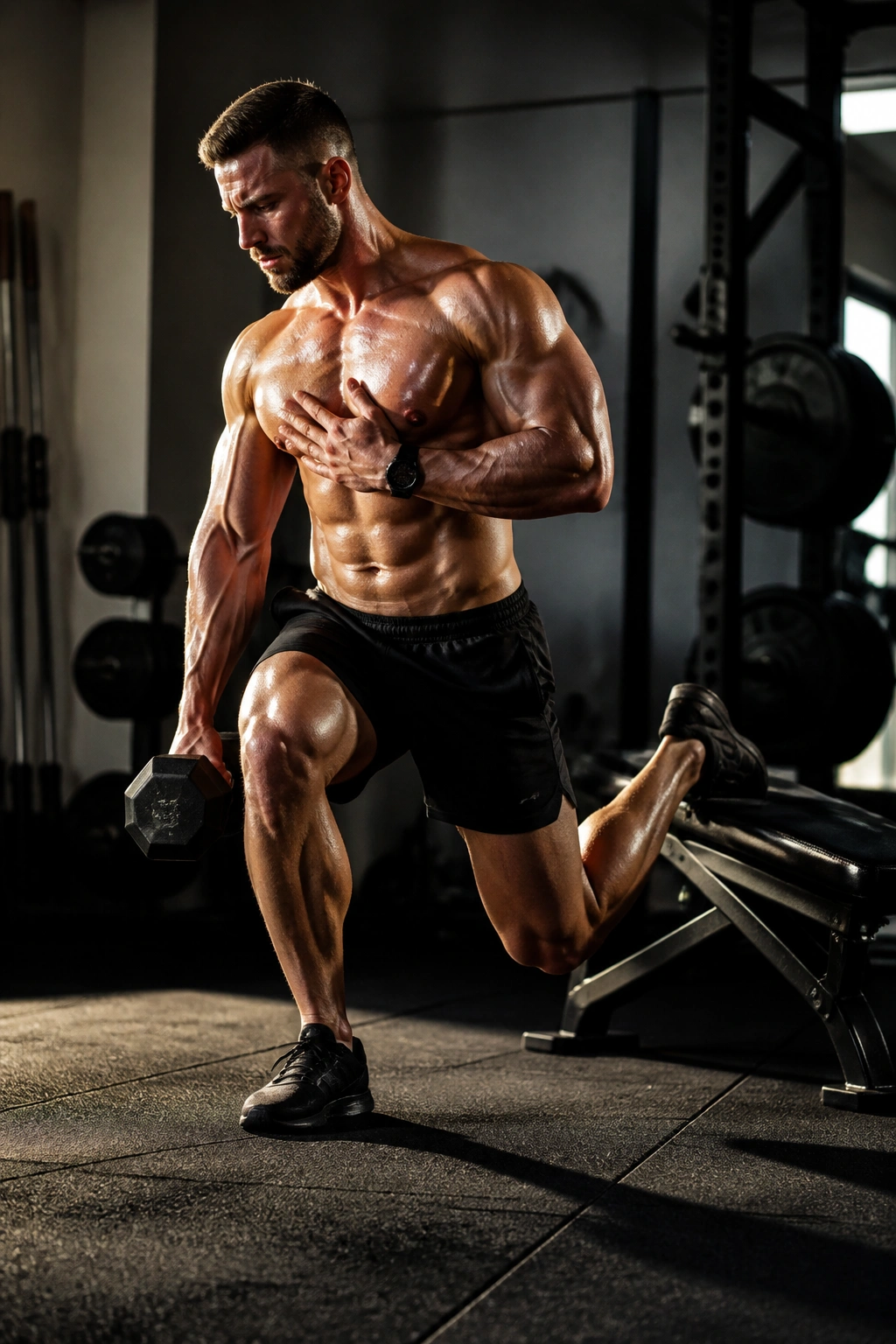
Once you have mastered the basics of single-leg training, you can introduce asymmetrical loading. This is where you hold a weight in only one hand—for example, a heavy dumbbell in your right hand while performing a squat or a lunge with your left leg.
This forces your core to engage to prevent you from tipping over. Your glute medius and obliques have to work twice as hard. It is a fantastic way to overload the legs without needing massive amounts of weight.
Perform split squats while holding a heavy dumbbell in the hand opposite the working leg. Do three sets of eight reps. You will notice that your ability to balance is tested more than your actual strength. This is an advanced technique, so ensure you have a solid foundation in standard unilateral exercises before trying this.
17. The High-Volume Leg Finisher
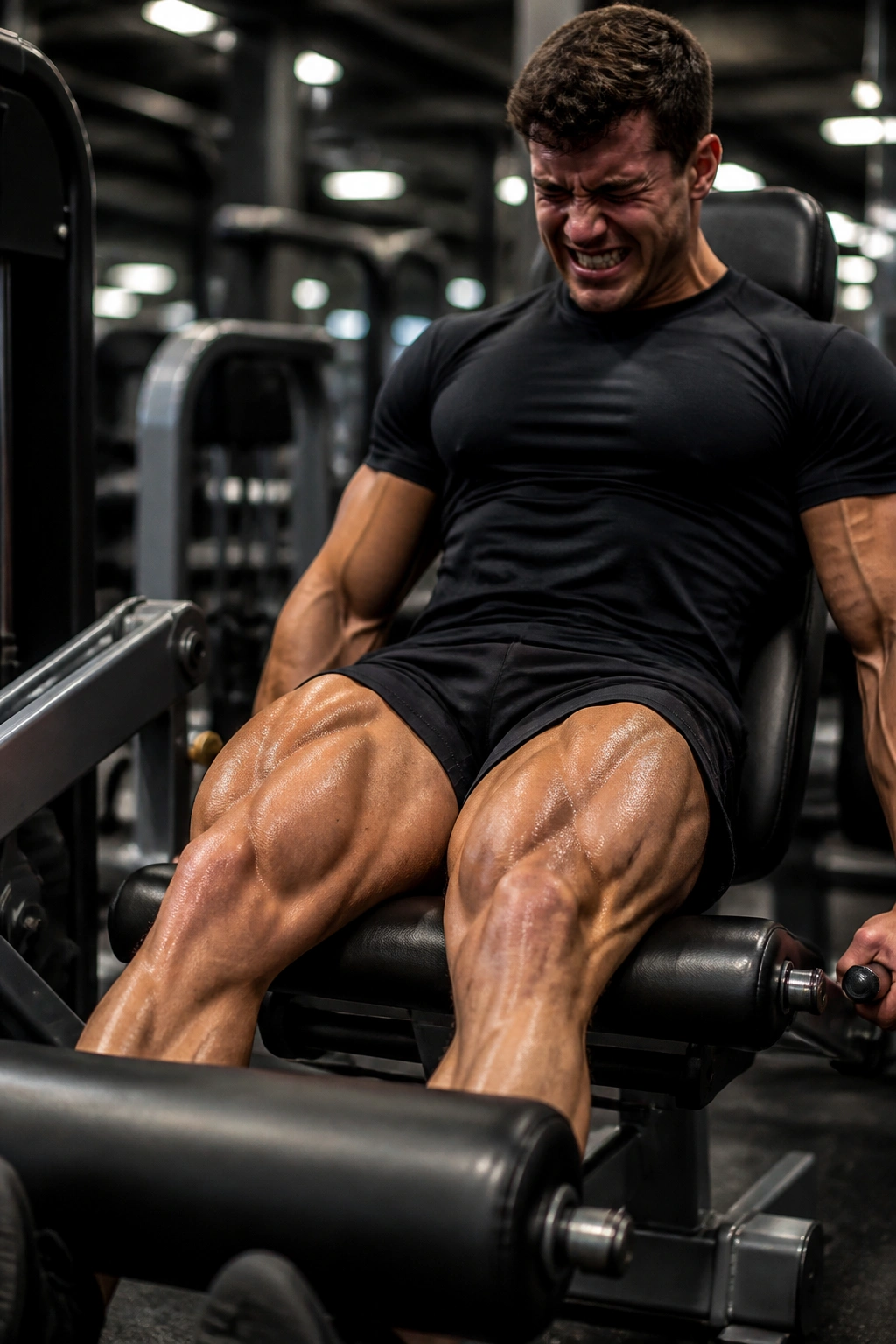
If you have a solid workout plan but want to add an extra spark to your leg development, use this finisher. It is designed to be performed at the very end of your workout, when your legs are already tired. It is pure volume intended to exhaust the remaining muscle fibers.
Use a leg extension machine if available. If not, use bodyweight. Perform a “drop set.” Start with a weight that allows for 10 reps. Immediately reduce the weight by 20% and perform as many reps as you can. Reduce the weight again by another 20% and go to failure.
Do this for three “rounds” of drop sets. You are not looking for heavy weight here; you are looking for the “burn.” By the time you finish, your legs should feel like jelly. It is a brutal but effective way to force muscle growth through sheer metabolic stress.
18. Isometric Strength Holds
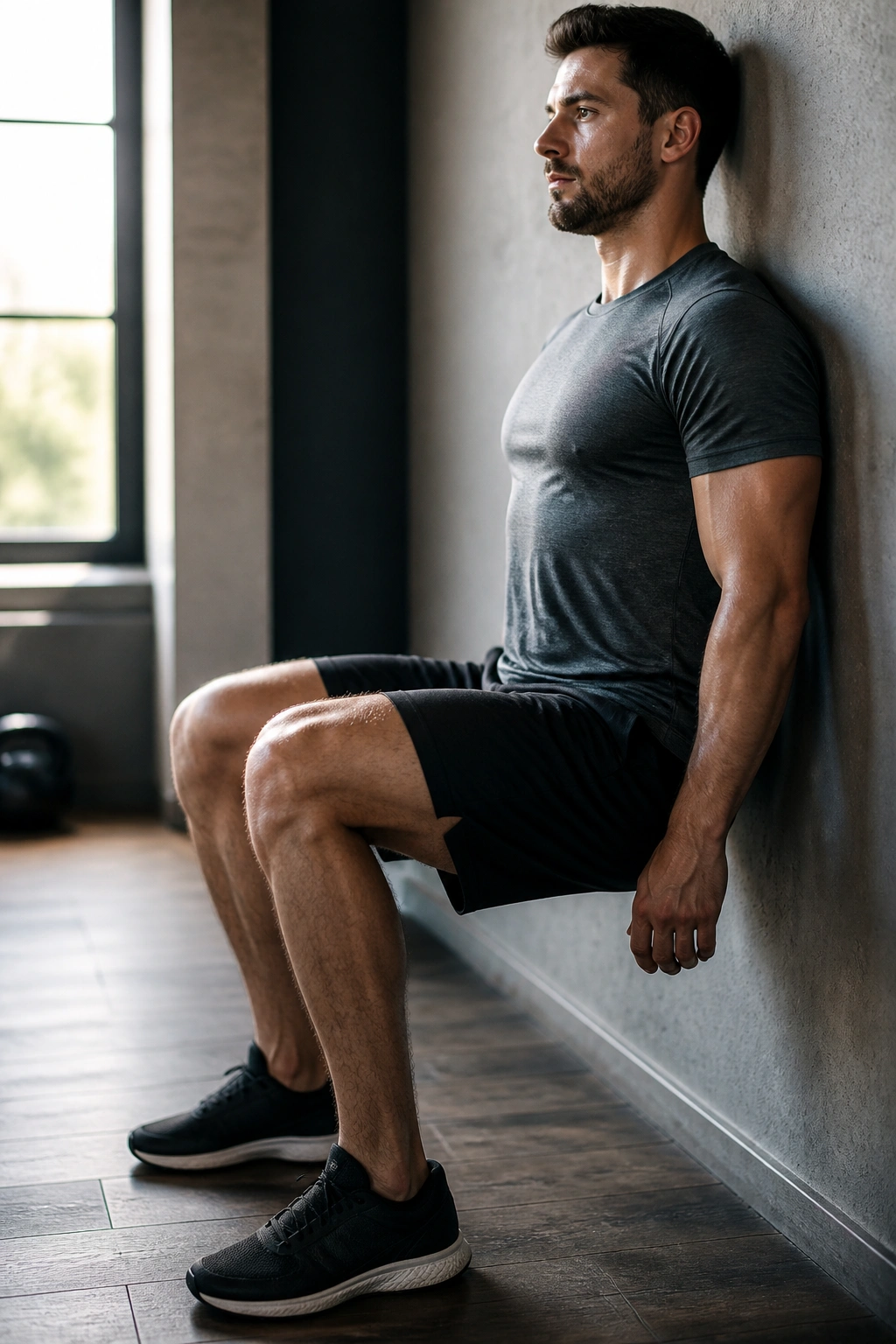
Isometrics are often ignored, but they are a potent tool for strength. An isometric hold involves holding a position under tension without moving. This recruits a high number of motor units and can help you break through plateaus in your main lifts.
The “Wall Sit” is the classic version, but you can also do “Pause Squats.” Descend into your squat, stop halfway down, and hold that position for ten seconds. Then descend to the bottom and hold for another ten seconds. Then drive up.
Perform three sets of these “pause-hold-drive” squats. The hold at the halfway point is usually where people are weakest. By spending time there, you strengthen that specific range of motion, which will make your full-range squat feel significantly easier and more stable.
The Bottom Line
True lower body strength is not built in a single day, nor is it the result of finding the one “perfect” exercise. It is the product of variety, consistency, and the willingness to do the hard work when you would rather be doing something easier. Whether you are focusing on heavy squats to build raw power or using tempo-based movements to force hypertrophy, the principles remain the same.
Respect your recovery. Your legs cannot grow if they are constantly inflamed and broken down. Give yourself at least two, preferably three, days of rest between heavy leg sessions. Listen to your joints—if you feel sharp pain, stop. Discomfort from muscle fatigue is a normal part of the process, but joint pain is a warning signal you should never ignore. Stick to the basics, push your limits safely, and you will build a foundation that supports your strength goals for years to come.
