



Getting up from a low chair shouldn’t feel like a negotiation with your knees. Yet that’s where a lot of strength fades first: not in a dramatic gym moment, but in the small, ordinary tasks that decide whether a day feels easy or annoying.
The best resistance training workouts for seniors are the ones that make real life smoother. Standing up. Reaching overhead. Carrying groceries. Climbing stairs without bracing yourself on the rail like it’s a lifeline. You do not need brutal loads for that. A chair, a wall, a resistance band, a couple of dumbbells, and a machine or two can cover a surprising amount of ground.
Public-health guidance has stayed remarkably consistent here. Muscle-strengthening work belongs in the week, and older adults do well when the exercises are simple enough to repeat safely but challenging enough to matter. The sweet spot is controlled reps, steady breathing, and a level of effort where the last two repetitions feel honest. Not reckless. Honest.
These 25 moves cover the main patterns that matter most: standing, pressing, pulling, hinging, carrying, and rotating. The first one looks almost too plain to count, which is exactly why it deserves a spot at the top.
1. Chair Sit-to-Stand for Older Adults
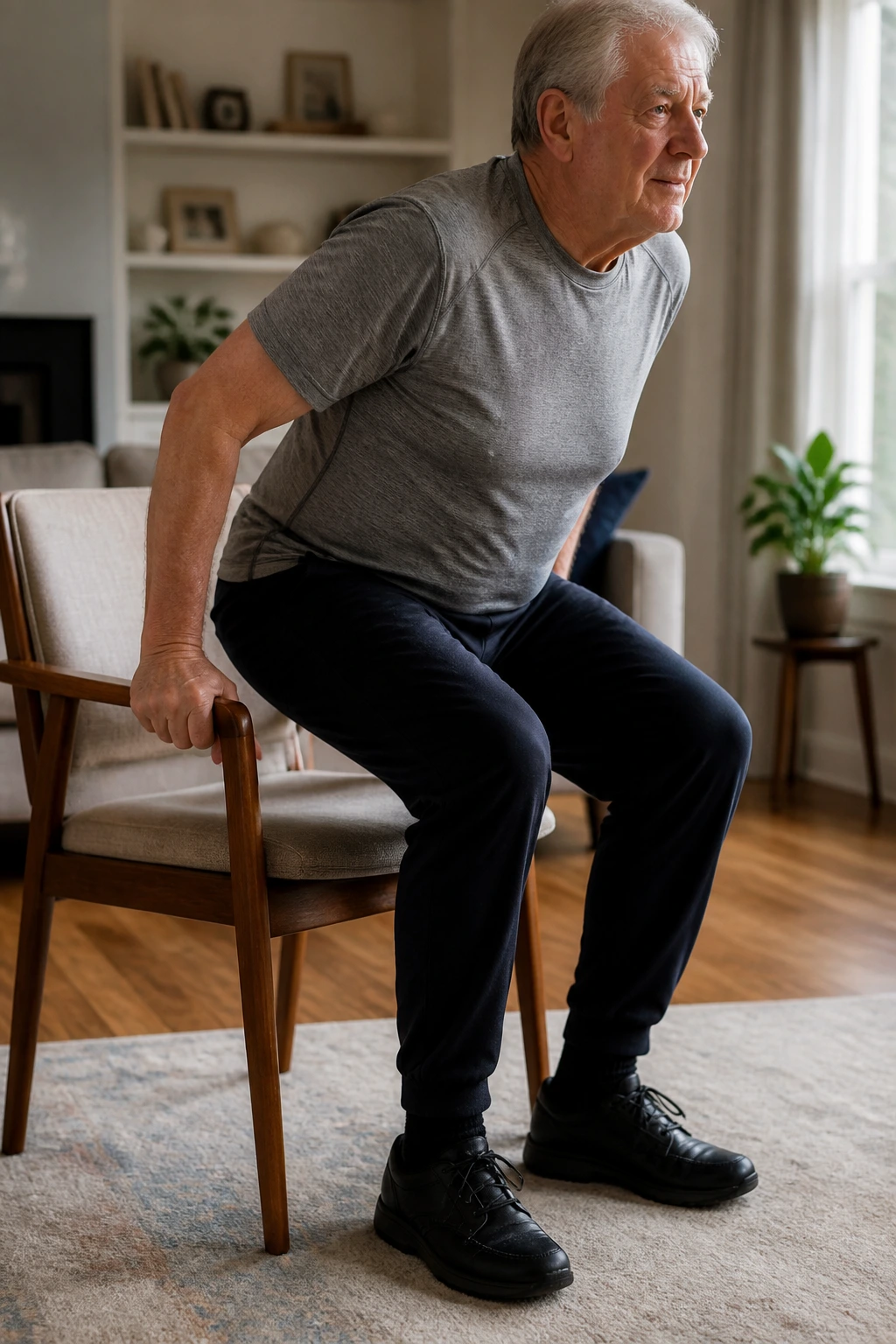
Can you stand up from a chair without using your hands? That question tells you a lot about leg strength, hip control, and balance in one shot.
I like this move because it feels ordinary while quietly doing serious work. It trains the quads, glutes, and trunk together, and that trio is what makes stairs, toilets, car seats, and low couches less annoying. Start with a firm chair, feet about hip-width apart, and drive through the whole foot as you rise. Lower yourself slowly. No dropping.
Aim for 2 to 3 sets of 8 to 12 reps. If that’s too easy, hold a light dumbbell at chest height. If it’s too hard, use a taller chair or a cushion. A smooth stand is the goal, not a dramatic lunge into the air.
2. Wall Push-Up
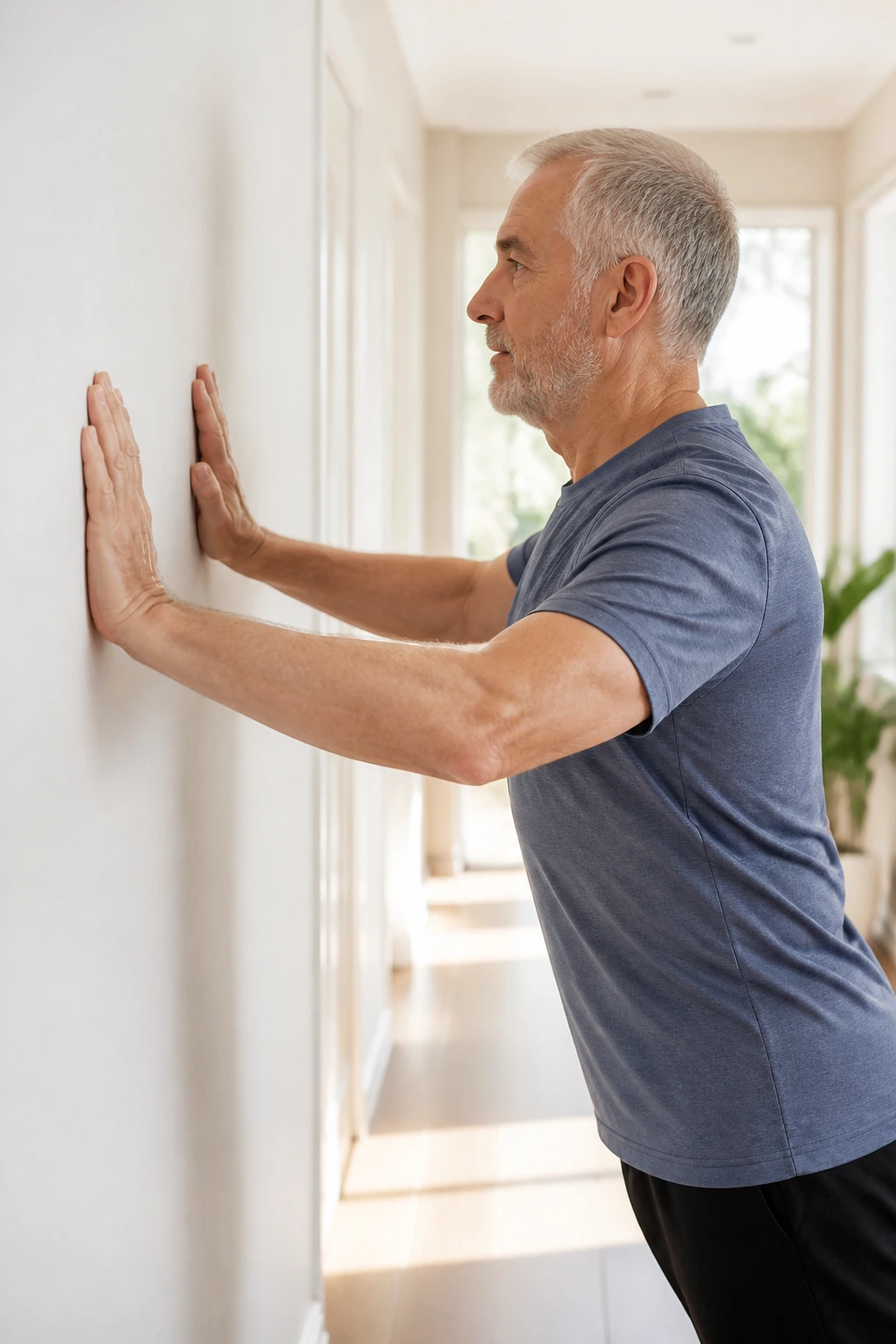
A wall push-up sounds easy until you do 15 of them with real control.
That’s the point. It gives the chest, shoulders, and triceps enough work to matter without putting a big load on the wrists or making the floor part of the equation. Stand about arm’s length from the wall, place your hands just wider than shoulder-width, and keep your body in one long line. Bend the elbows until your nose or chest comes close to the wall, then press away.
Work in 2 to 4 sets of 8 to 15 reps. The closer your feet are to the wall, the easier it gets. Move them back a few inches when you can finish the set cleanly. If your shoulders hunch toward your ears, reset and try again. That little shrug is a common mess-up, and it steals the work from the chest.
3. Resistance Band Row
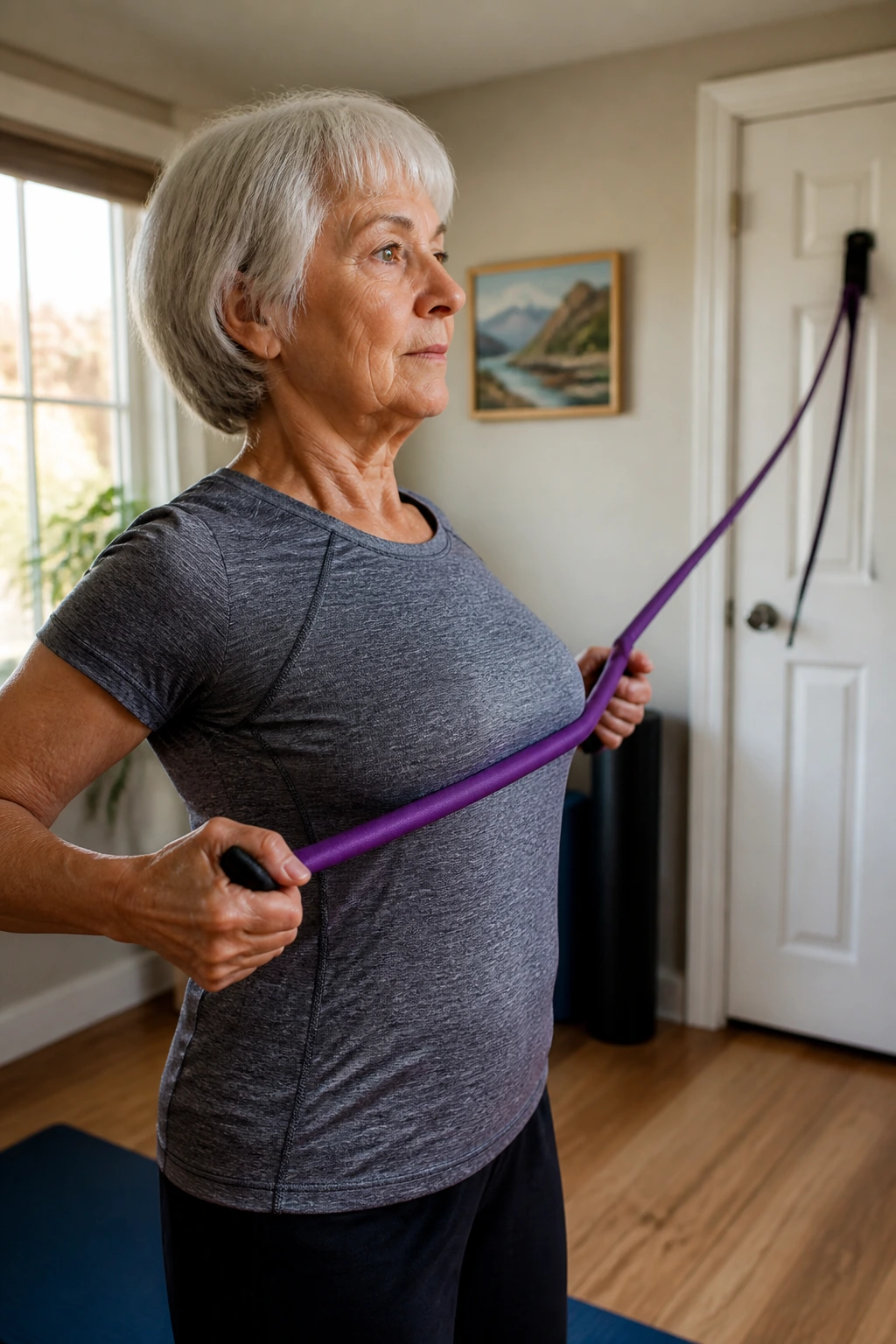
The back of your shirt will feel this one before your arms do.
A band row is one of the best fixes for the rounded posture that creeps in when people sit too much and pull too little. Anchor the band at chest height, sit tall or stand with soft knees, and pull the handles or ends toward the sides of your ribcage. Pause for a beat. Then let the band return under control, not with a snap.
What to Feel
- Shoulder blades sliding back and down, not pinching hard together.
- Elbows staying close to the body.
- A steady pull through the middle back.
Do 2 to 3 sets of 10 to 15 reps. If the band feels floppy, shorten your grip or step farther from the anchor. I’d rather see a lighter band done cleanly than a heavy one that turns the neck into a shrugging contest.
4. Seated Dumbbell Shoulder Press
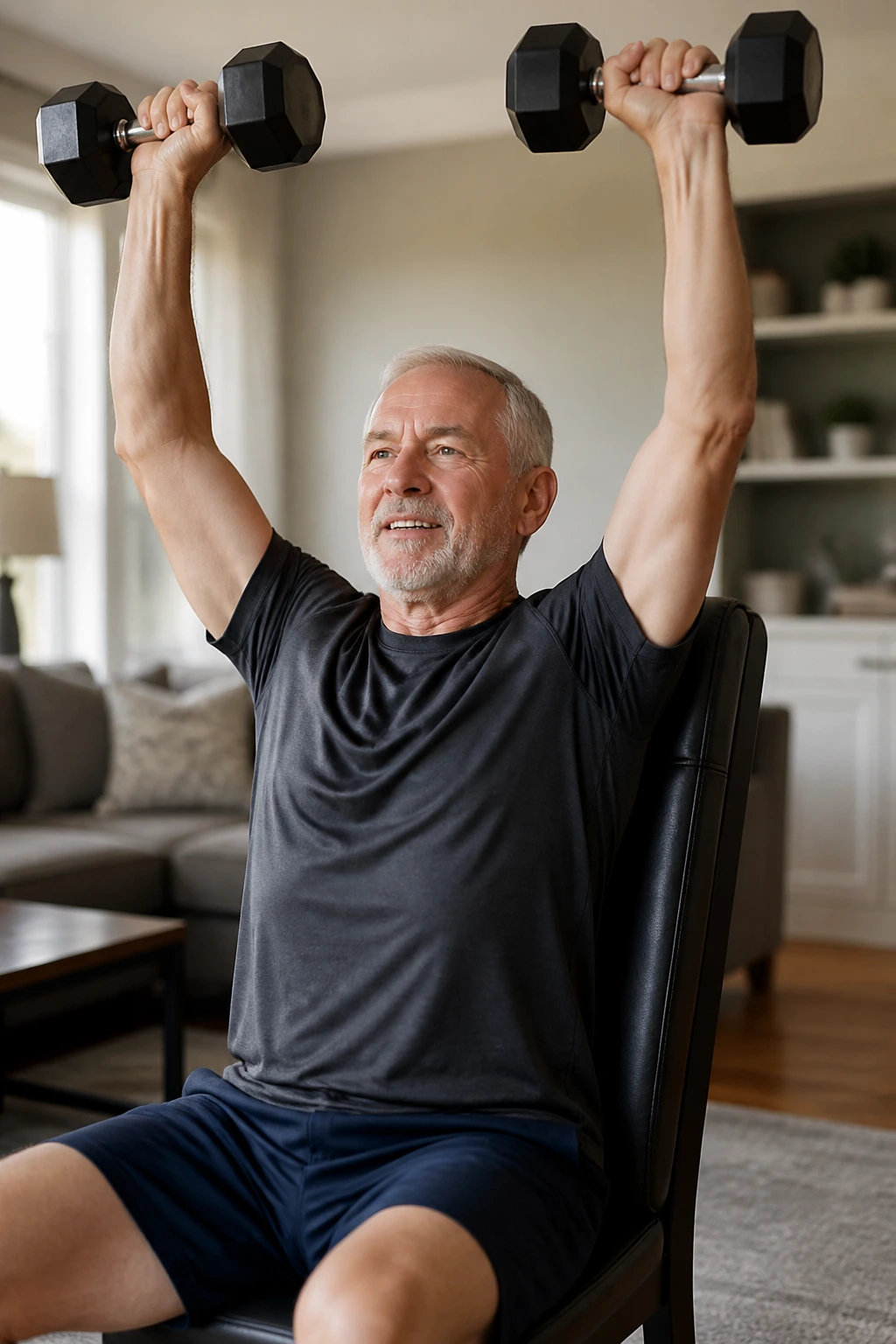
Pressing overhead is still useful, even if you’re not reaching for suitcases in an airplane bin.
The seated version takes some balance pressure off the lift and lets the shoulders do the work more safely. Sit on a sturdy chair with a backrest if you want extra support, hold the dumbbells near shoulder level, and press them up until your arms are straight but not locked hard. Lower them slowly. If the ribs flare up and the lower back arches, the weight is too heavy.
Try 2 sets of 8 to 10 reps to start. Light dumbbells go a long way here—often 3 to 10 pounds is enough for many people, depending on training history. If you’ve got cranky shoulders, press a little in front of the head instead of directly out to the side. That usually feels friendlier.
5. Glute Bridge
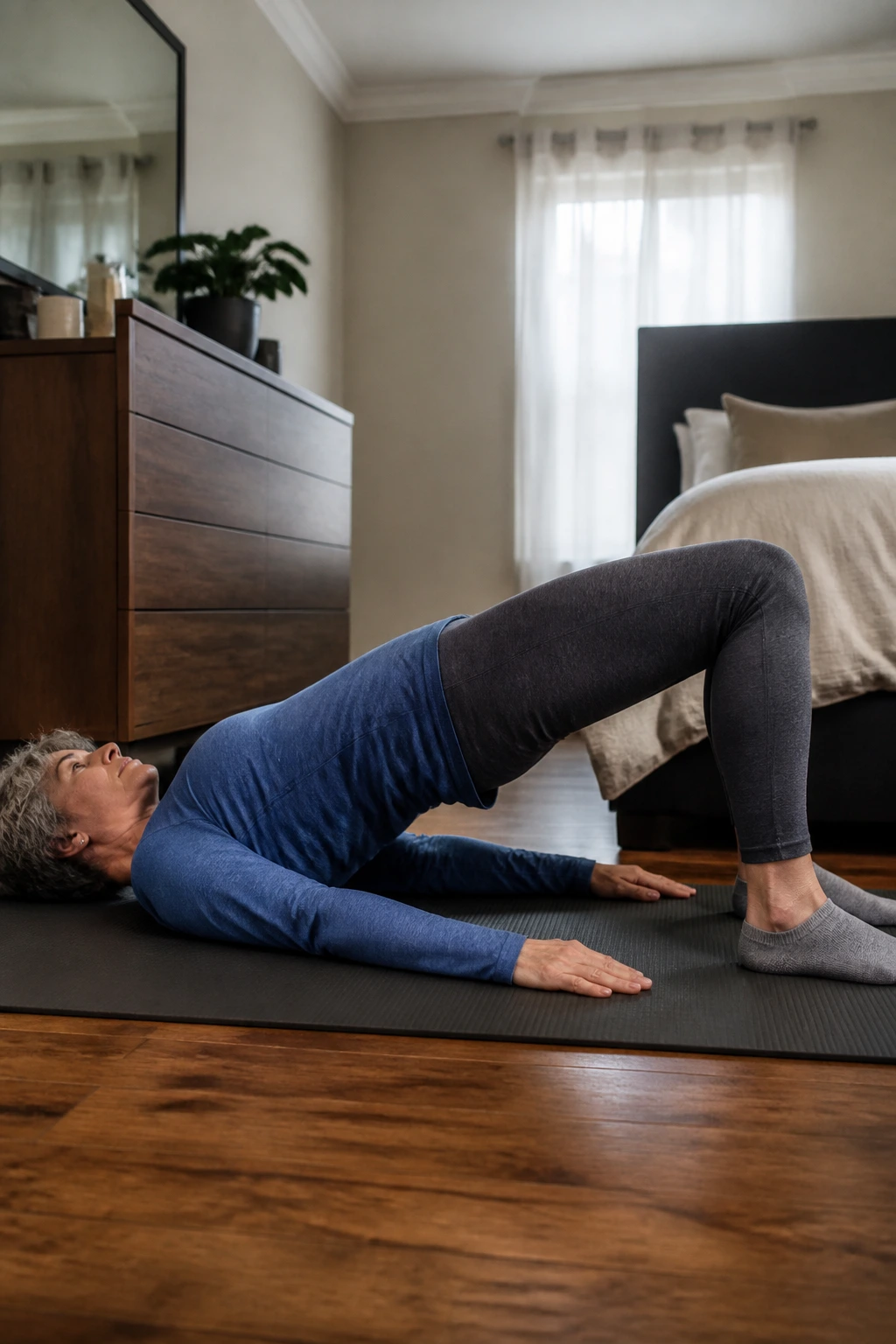
You can feel this one in the back of the hips within the first few reps.
That’s good. Glute bridges wake up the muscles that help you stand, walk, and climb without overloading the knees. Lie on your back with knees bent and feet flat, then squeeze the glutes and lift the hips until your body makes a straight line from shoulders to knees. Don’t crank the lower back. Lift with the hips, not the spine.
Why It Works
The glutes are one of the biggest engines in the body, and they tend to get lazy when people spend long stretches sitting. A bridge gives them a straightforward job with very little joint drama.
- Hold the top for 1 to 2 seconds.
- Use 2 to 4 sets of 10 to 15 reps.
- Add a mini band above the knees once bodyweight feels easy.
A common mistake is pushing through the toes. Keep pressure through the heels and midfoot instead.
6. Step-Up
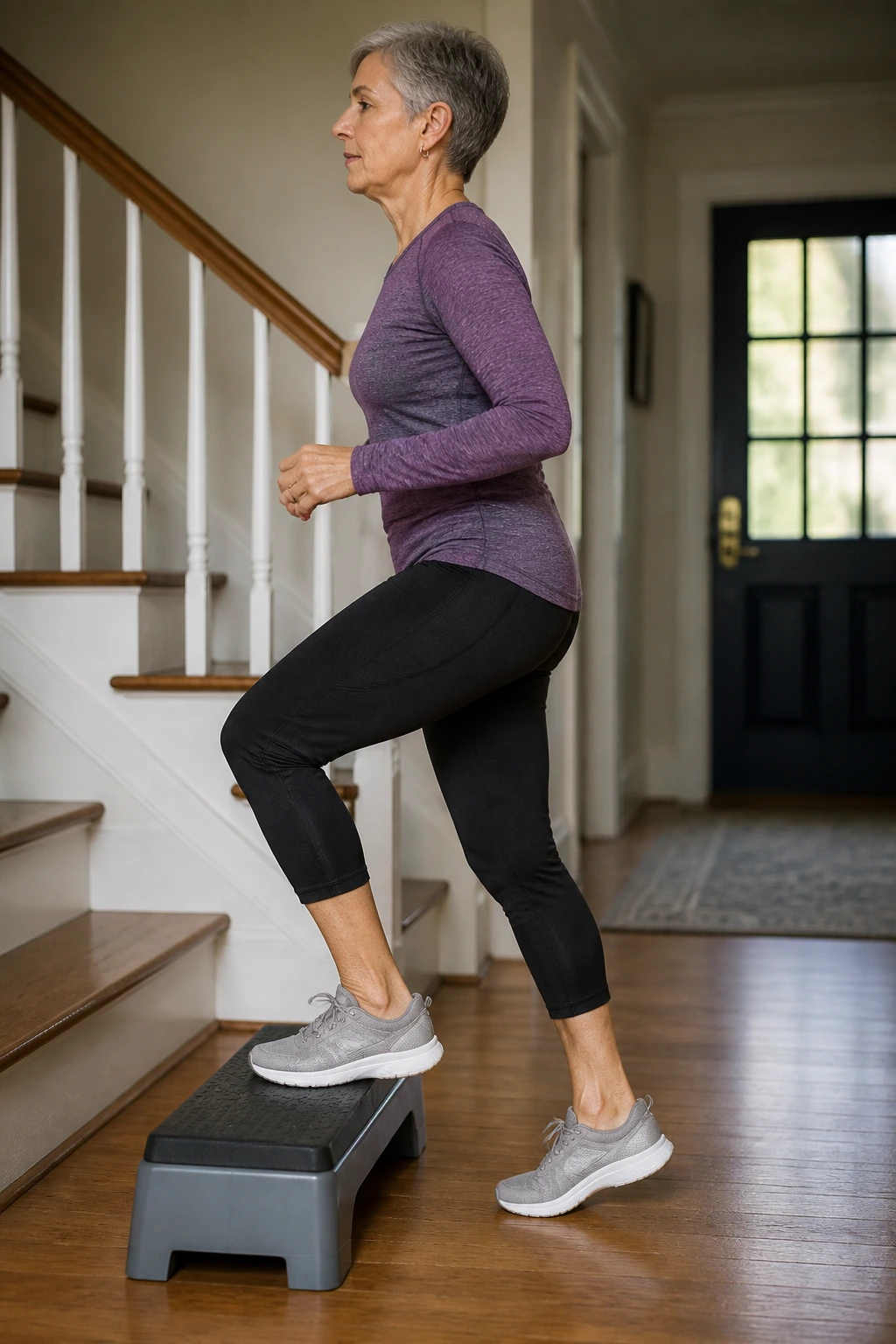
A stair tells the truth fast, and step-ups train that exact skill.
Use a low step, no more than the height you can handle without wobbling. Place one foot fully on the step, lean slightly forward, and stand up by pressing through that front leg. Tap the other foot up, then step back down with control. Switch sides after the set. The movement should feel like climbing, not hopping.
How to Make It Easier
- Start with a 4- to 6-inch step.
- Hold a rail or wall with one hand.
- Keep the torso quiet and avoid bouncing off the back leg.
I like 2 to 3 sets of 6 to 10 reps per leg. Step-ups punish rushing. Slow them down and they become a very honest test of leg strength and balance. They also expose side-to-side differences you might not notice anywhere else.
7. Banded Lateral Walk
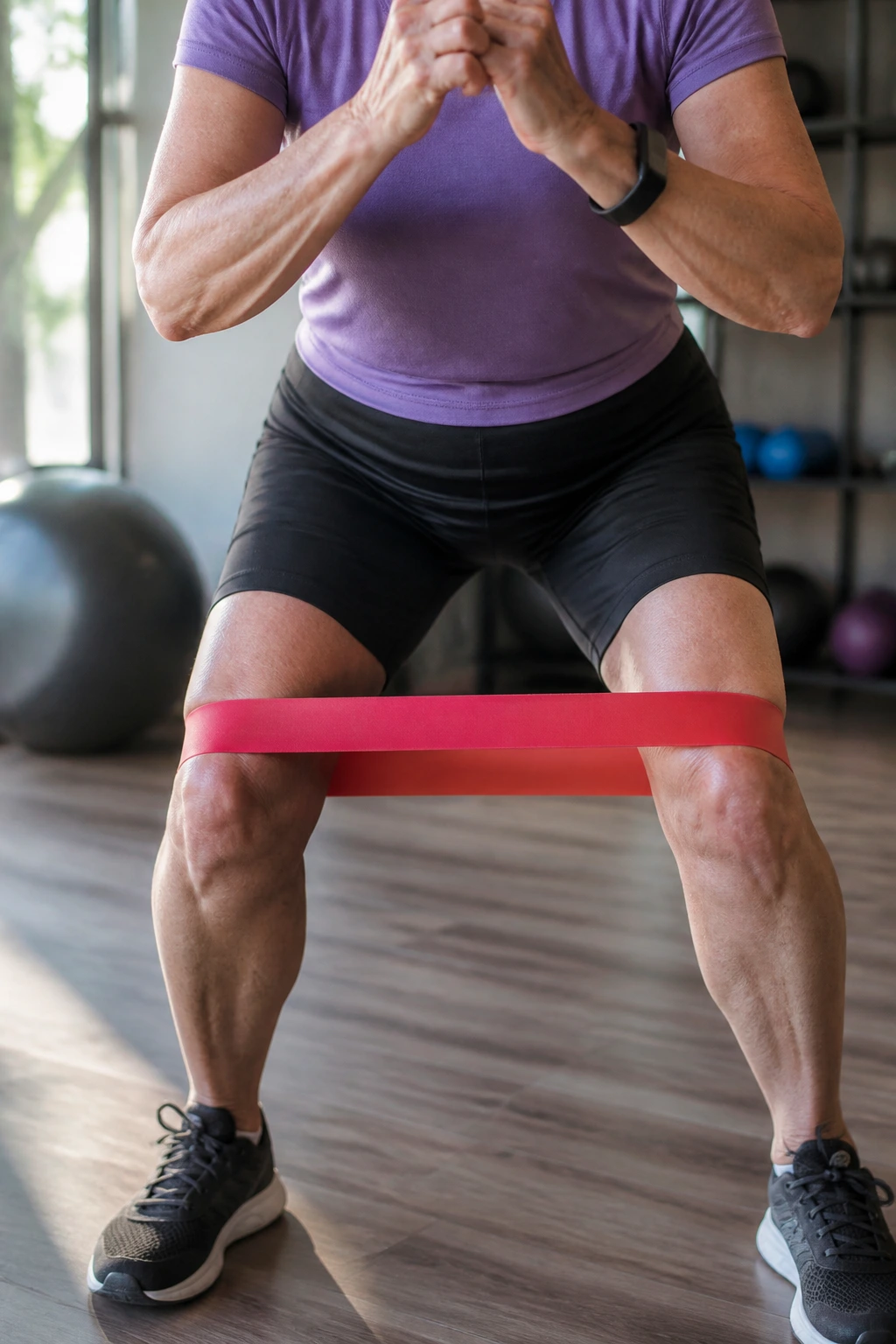
The burn on the side of the hip shows up fast. Good.
A lateral walk trains the glute medius, the muscle that helps keep your pelvis steady when you walk, stand on one leg, or step around a curb. Put a mini band above the knees or around the ankles, soften the knees, and take small side steps without letting the feet drag together. Stay low enough to feel the outer hips working, but not so low that your back starts doing all the work.
Do 2 to 3 rounds of 8 to 12 steps each way. This one is sneaky. A tiny step taken with control is better than a giant lurch that pulls the band loose and cheats the hips. If your knees cave inward, slow down and shorten the step. The outer hips should be doing the heavy lifting here.
8. Farmer Carry
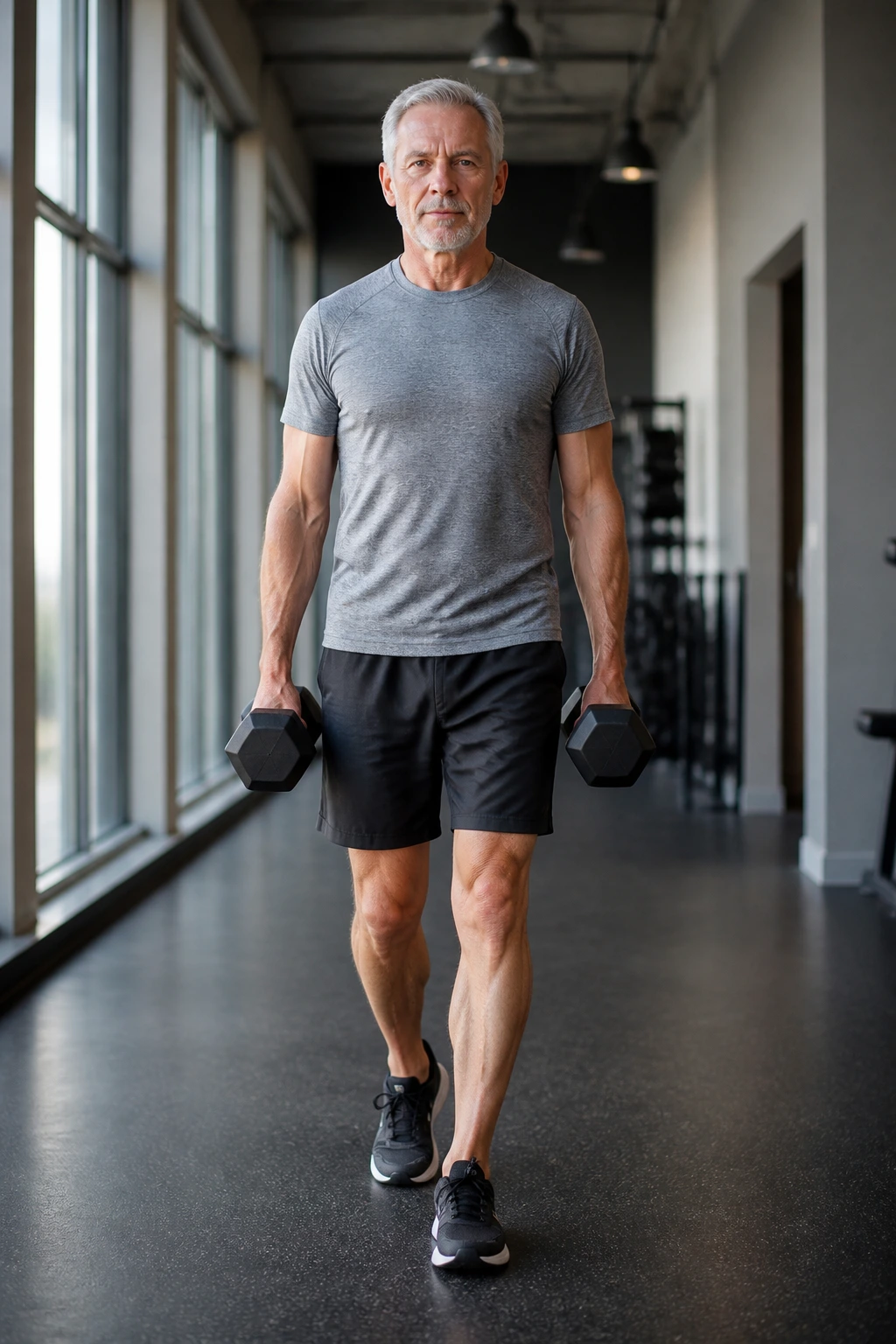
Pick up two weights and walk. That’s the whole deal, and it’s excellent.
Farmer carries build grip, core strength, and posture in a way that looks almost boring from the outside. Hold a dumbbell or kettlebell in each hand, stand tall, and walk for distance or time without leaning, twisting, or shrugging. The load should feel firm but manageable. If your shoulders creep upward, the weight is too heavy.
Quick Setup
- Use 20 to 40 seconds of walking per set.
- Keep the steps normal, not stiff.
- Rest long enough to breathe normally before the next round.
This is one of my favorite choices for seniors who want to feel steadier carrying bags, laundry, or anything awkward. You’ll notice your hands, forearms, and side body all chiming in. That makes it a nice full-body option without a lot of fuss.
9. Standing Calf Raise
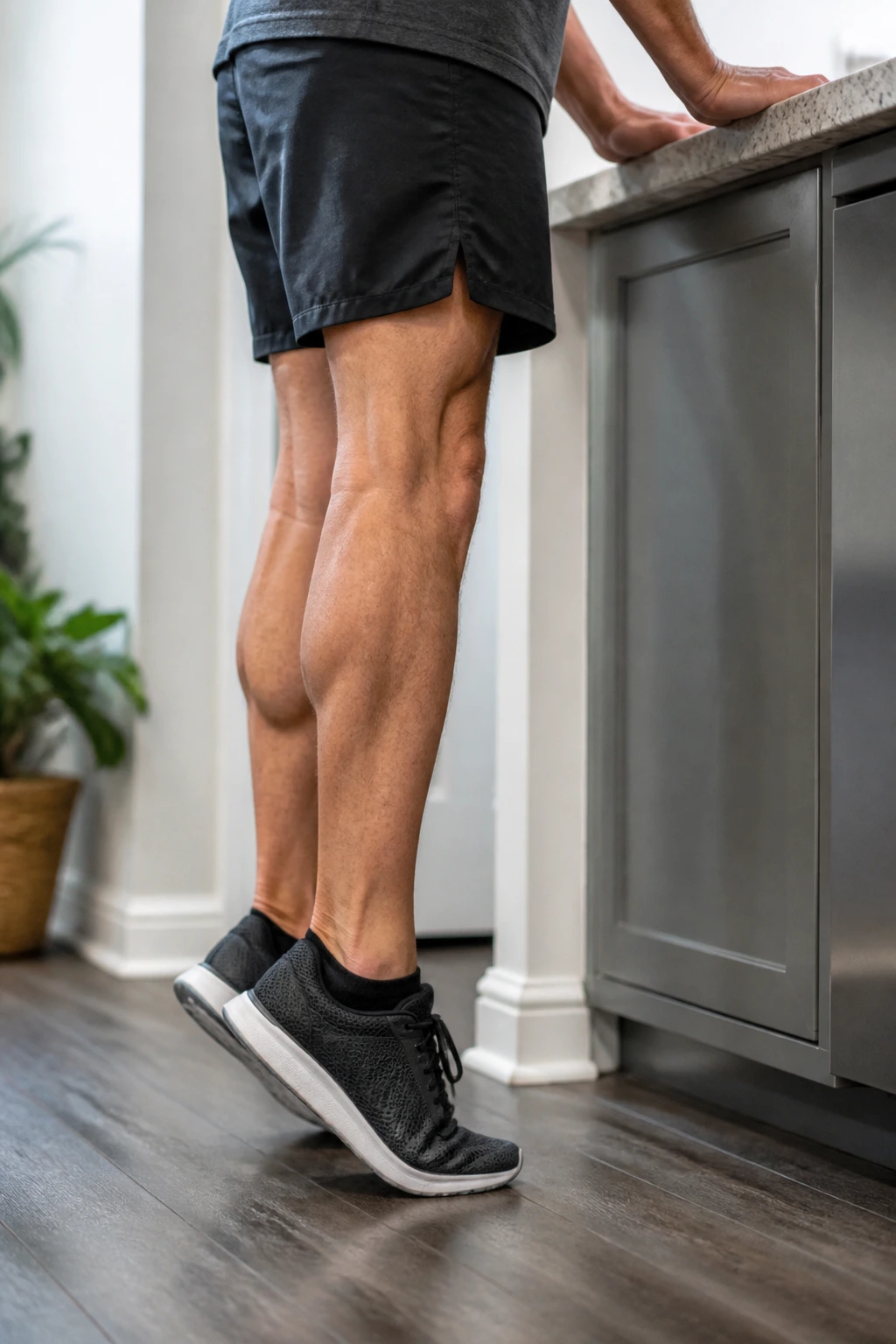
Don’t ignore the calves. They do more than fill out a pant leg.
Standing calf raises help with ankle strength, walking push-off, and balance. Hold onto a counter or chair, rise onto the balls of your feet, pause at the top, and lower down under control until your heels are nearly flat again. The lowering part matters as much as the lift. If you drop fast, you’ve cut the work in half.
I usually suggest 2 to 4 sets of 12 to 20 reps. Use bodyweight first. Then hold light dumbbells. Then try one leg at a time if balance allows. A narrow range of motion is a common mistake here, and it turns the move into a shrug for the ankles. Go all the way up and all the way down.
10. Supported Split Squat
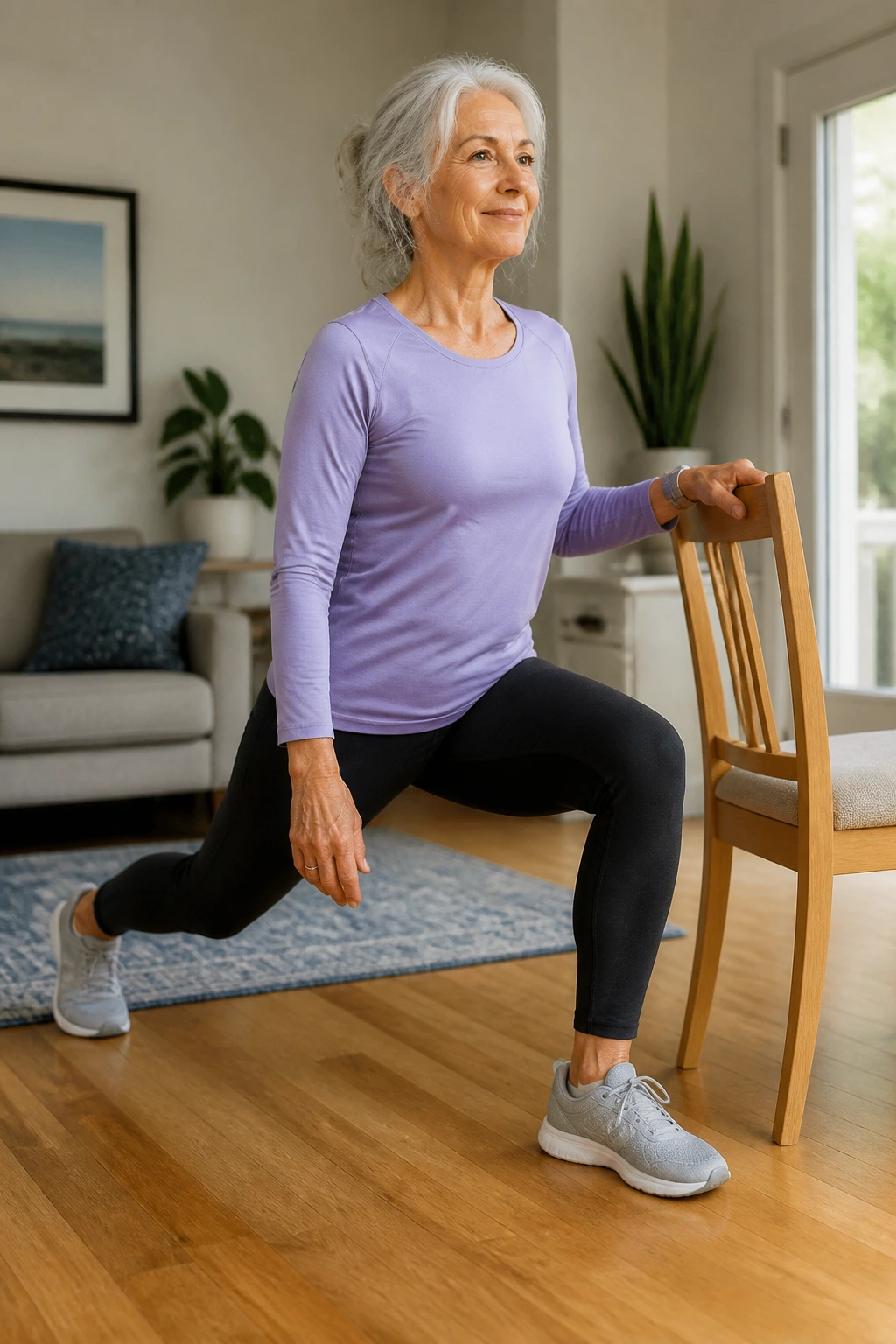
This one looks awkward the first time. Then it starts making sense.
A supported split squat builds single-leg strength without the chaos of a free-standing lunge. One foot stays forward, the other back, and one hand can rest lightly on a chair, wall, or rail. Drop straight down a few inches, then press back up through the front foot. Keep the front knee tracking over the middle toes rather than collapsing inward.
What Makes It Different
Unlike a regular squat, the split stance asks each leg to do more of its own work. That’s useful for stair climbing and for fixing strength gaps between the left and right sides.
Try 2 sets of 6 to 8 reps per side. If the back leg cramps, shorten the stance a bit. If balance is the issue, don’t be shy about using a hand support. The goal is clean strength work, not proving you can wobble without help.
11. Dumbbell Biceps Curl
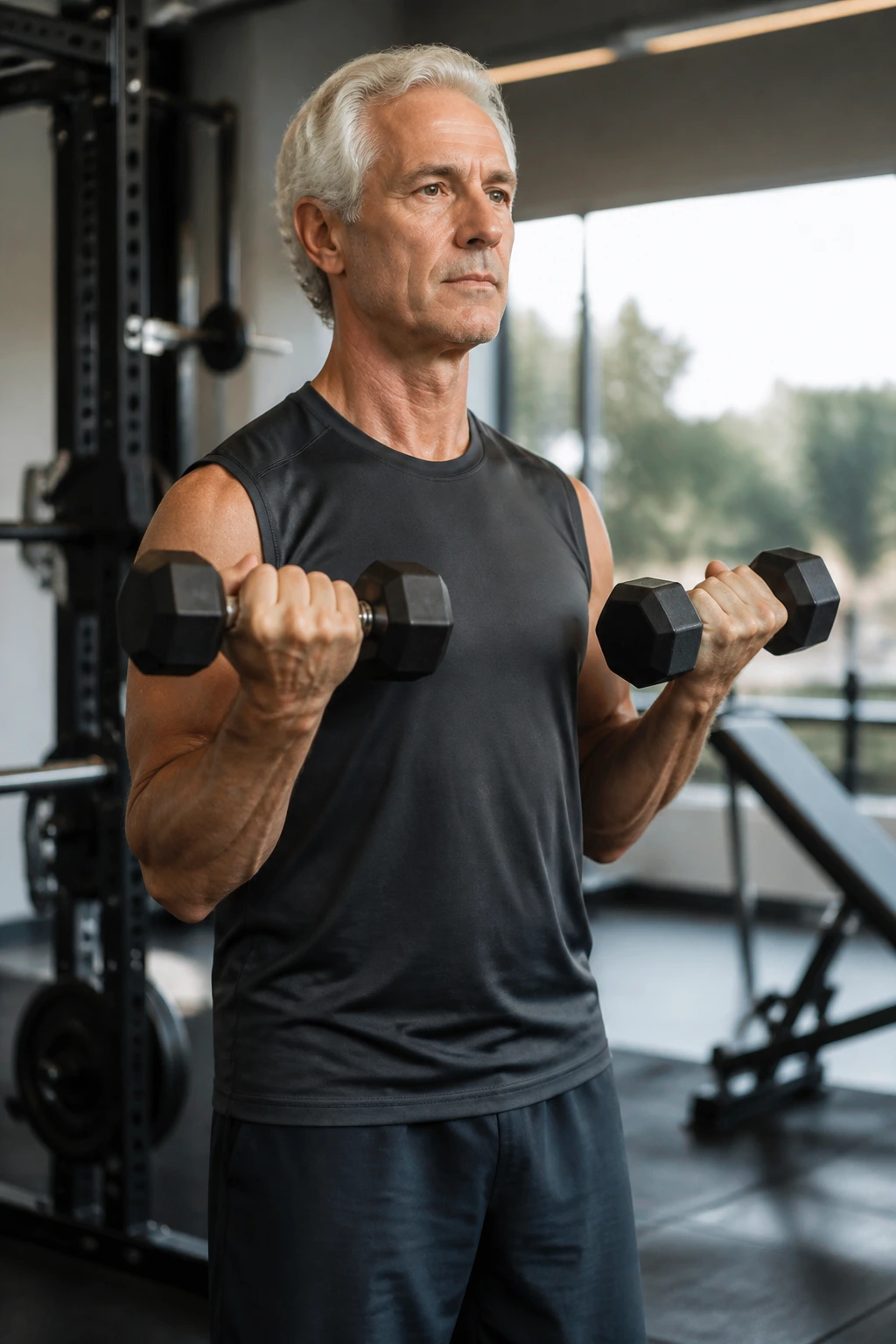
This is the move people love to underestimate.
Biceps curls aren’t just about arm shape. They help with carrying, lifting a grocery bag from the floor to the counter, and doing any task where the elbows bend under load. Stand tall, elbows tucked near your ribs, and curl the weights without swinging the torso. Lower them slowly. That lowering phase builds more control than people think.
A good starting point is 2 to 3 sets of 10 to 15 reps. If the shoulders roll forward or the back arches, the dumbbells are too heavy. I’d rather see a slower curl with a full range than a body English contest. Light-to-moderate weights usually do the job here, especially for beginners.
12. Overhead Triceps Extension
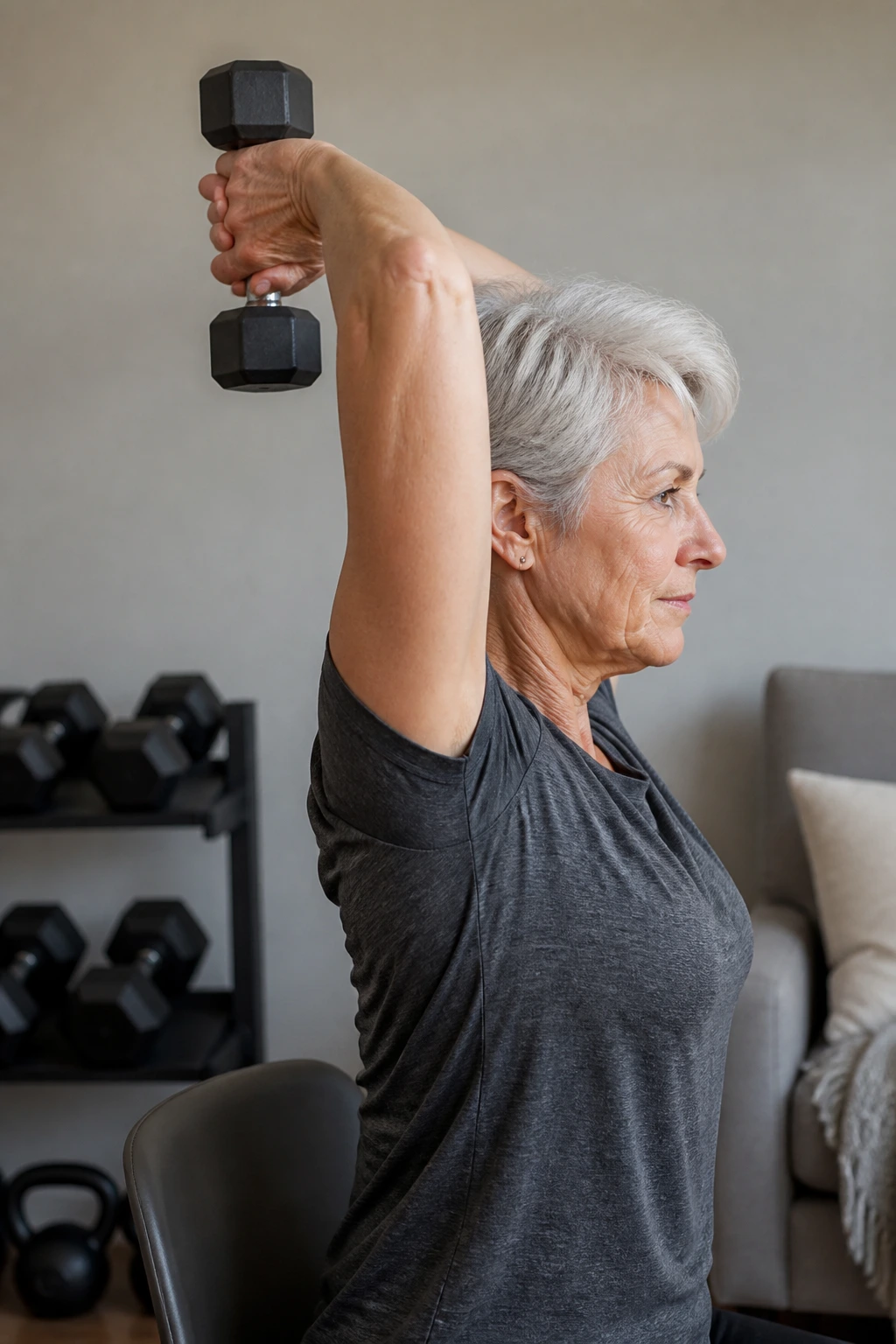
Reaching, pushing, and lifting overhead all use the triceps more than most people realize.
Sit or stand with one light dumbbell held in both hands, or use a single band anchored low. Raise the weight overhead, bend the elbows so the weight moves behind the head, then straighten the arms again. Keep the upper arms fairly still. The elbows should bend and extend like hinges, not flap all over the place.
Make It Shoulder-Friendly
If the overhead position feels pinchy, do the movement one arm at a time or switch to a band pressdown from a high anchor. The triceps still get plenty of work.
Use 2 sets of 8 to 12 reps. This isn’t a move for racing. A smooth, quiet lift is enough. If you hear your lower back taking over, sit down or reduce the load. The arms should be doing the job, not the spine.
13. Dead Bug with Band
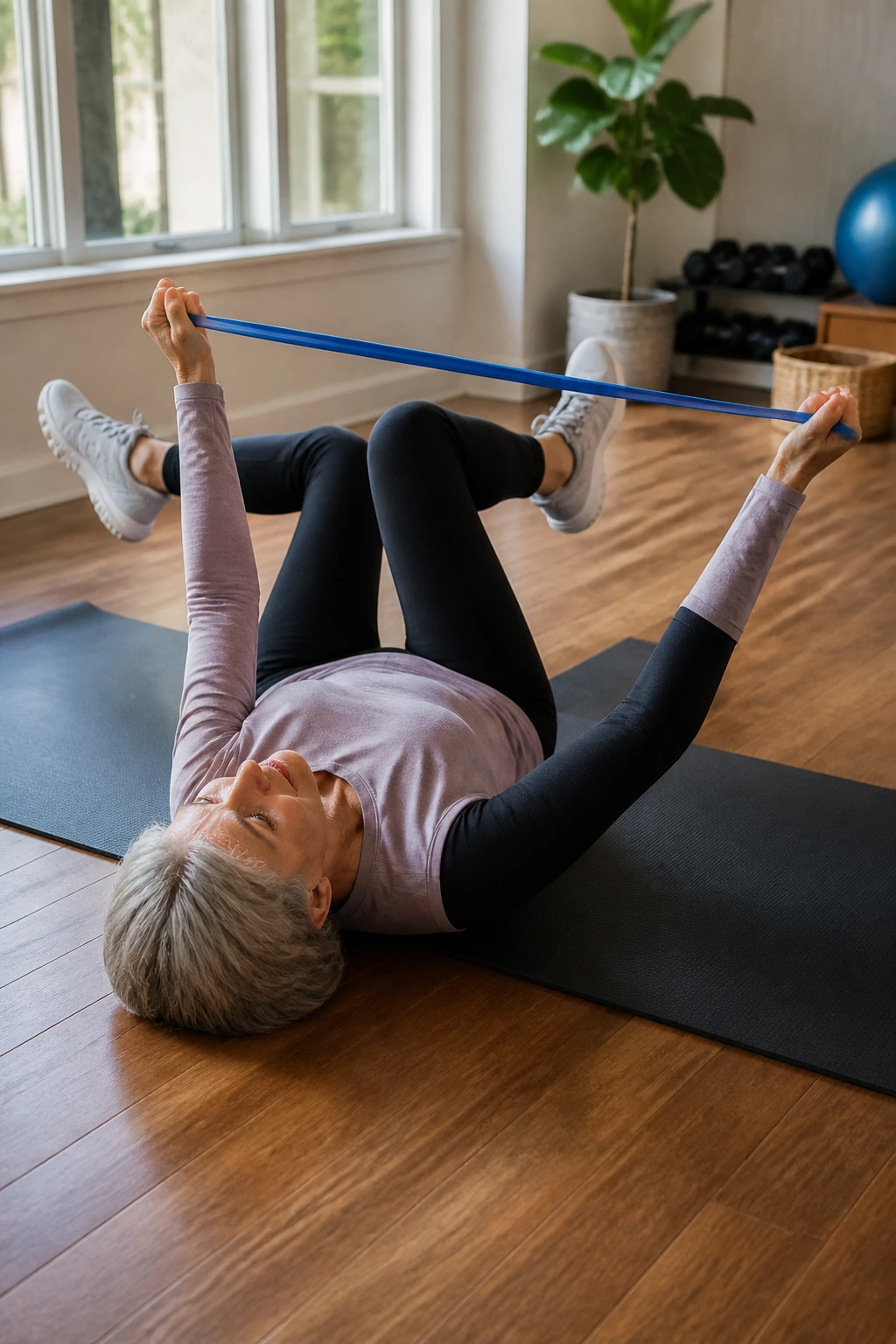
The dead bug looks harmless until your stomach starts arguing with your limbs.
Lie on your back with knees bent over the hips and arms pointing up. If you want more resistance, hold a band in both hands or anchor it overhead and keep gentle tension. Extend one opposite arm and leg without letting the lower back arch, then return and switch sides. The movement should feel slow and controlled. Any loss of back contact means you’ve gone too far.
Do 2 to 3 sets of 6 to 10 reps per side. This is one of the cleanest core drills for older adults because it teaches bracing without crunching the spine. Good form here shows up later in carrying, lifting, and even standing from a chair. Small range. Slow pace. That’s the whole trick.
14. Leg Press Machine
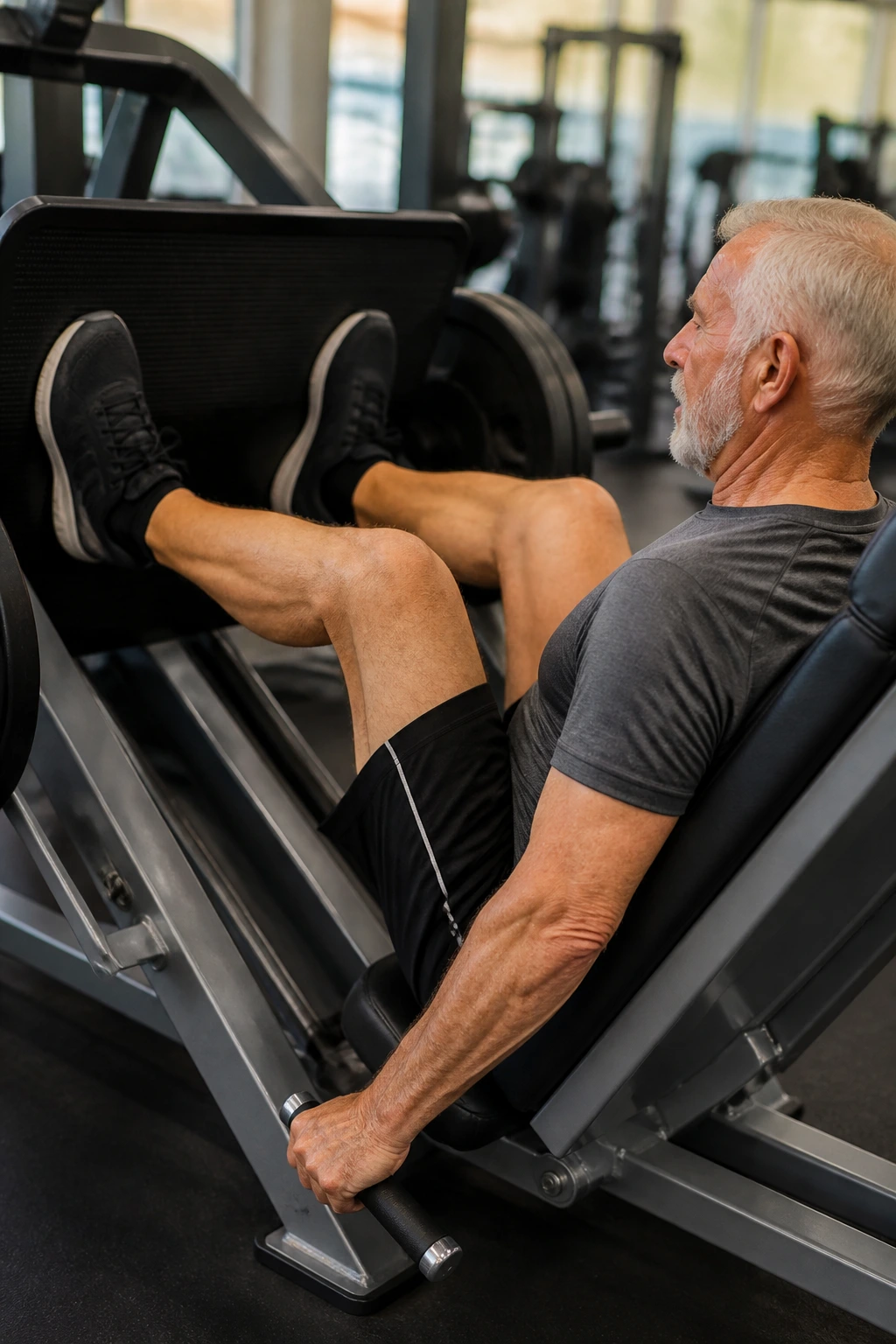
The leg press is a friend to people who want leg work without much balance drama.
Sit in the machine with your feet about shoulder-width apart on the platform, lower the sled until your knees bend comfortably, and press it away without locking the knees hard at the top. Keep your lower back pressed into the pad. If your hips curl up or your heels lift, the load or range is too aggressive.
This one is especially useful for seniors who want quad and glute work with extra support. I’d start with 2 to 4 sets of 8 to 12 reps and keep the movement smooth. The machine should feel challenging in the legs, not brutal on the joints. A moderate depth that you can repeat cleanly beats chasing range you can’t control.
15. Seated Hamstring Curl
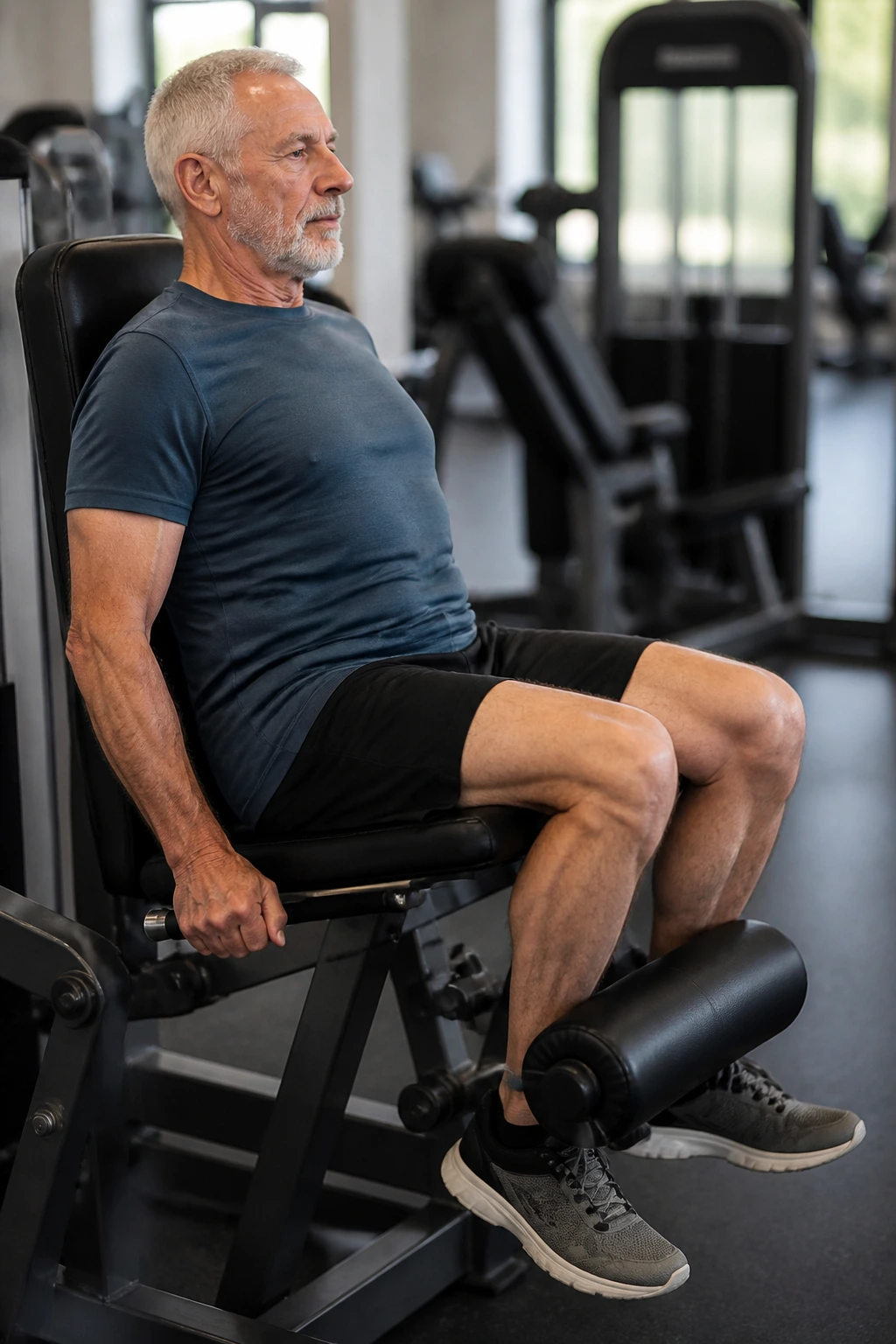
Hamstrings get neglected all the time, and that’s a problem for walking and stair work.
A seated hamstring curl machine lets you train the back of the thighs with the pelvis supported. Adjust the pad so it sits just above the heels, then bend the knees to pull the pad down or back, depending on the machine design. Pause briefly at the end, then return with control. Don’t slam the stack. That’s wasted motion.
Use 2 to 3 sets of 10 to 15 reps. If the machine pinches behind the knee, adjust the seat a notch. Hamstring strength matters more than most people think because it helps stabilize the knee and supports the hips. It’s not flashy. It is useful.
16. Chest Press Machine
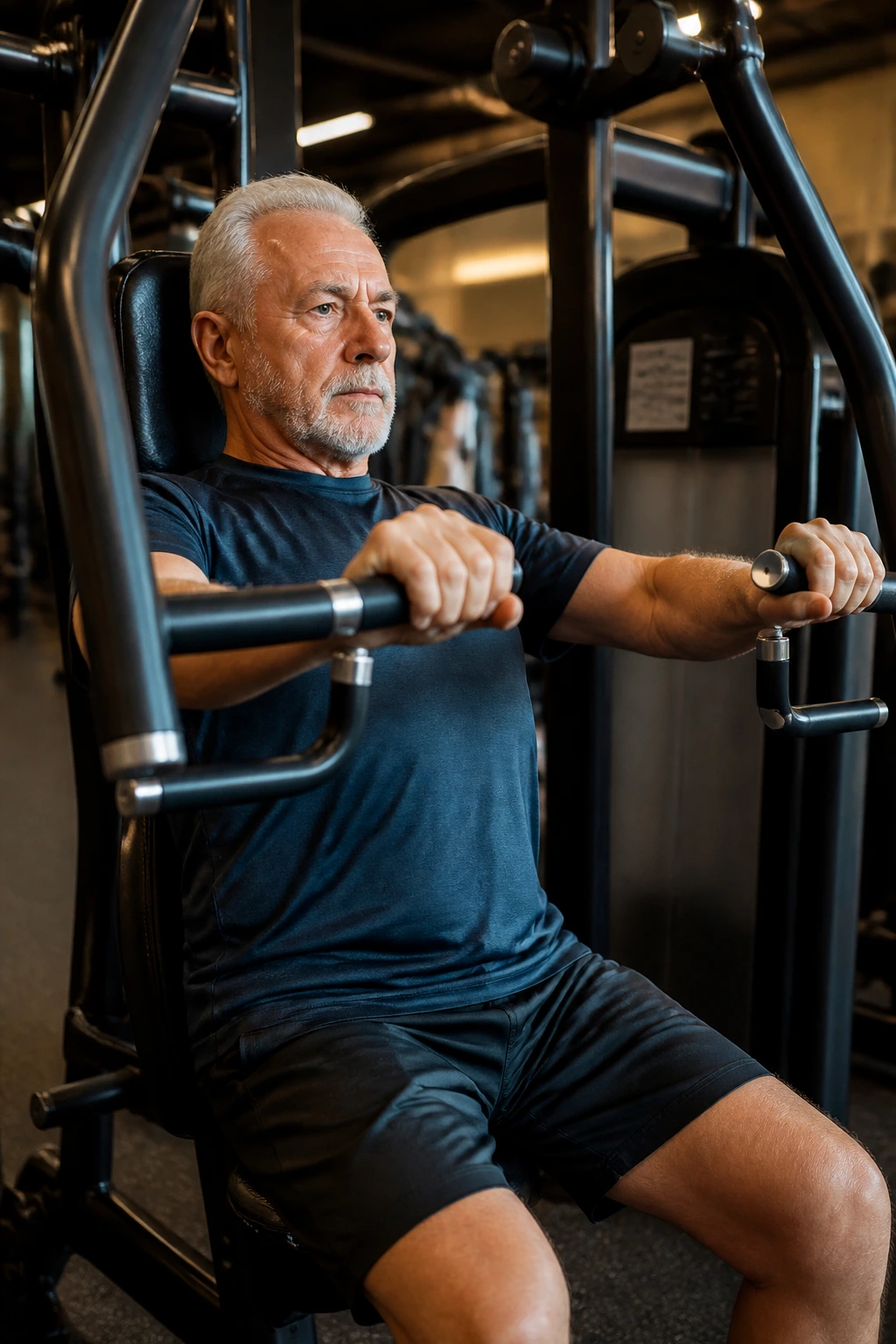
A chest press gives you pressing strength without having to stabilize a dumbbell in space.
Sit with the handles roughly in line with the middle of the chest, plant both feet, and press forward until the elbows are almost straight. Bring the handles back slowly until you feel a stretch across the chest, but do not let the shoulders dump forward. That’s the danger zone for a lot of people. Keep the shoulder blades lightly set.
The machine version is a smart choice for seniors who want predictable resistance and a stable path. Try 2 to 3 sets of 8 to 12 reps. If the weight stack feels easy, slow the lowering phase to 3 seconds before adding more load. That simple tempo change often makes the exercise more useful than adding a random plate.
17. Lat Pulldown Machine
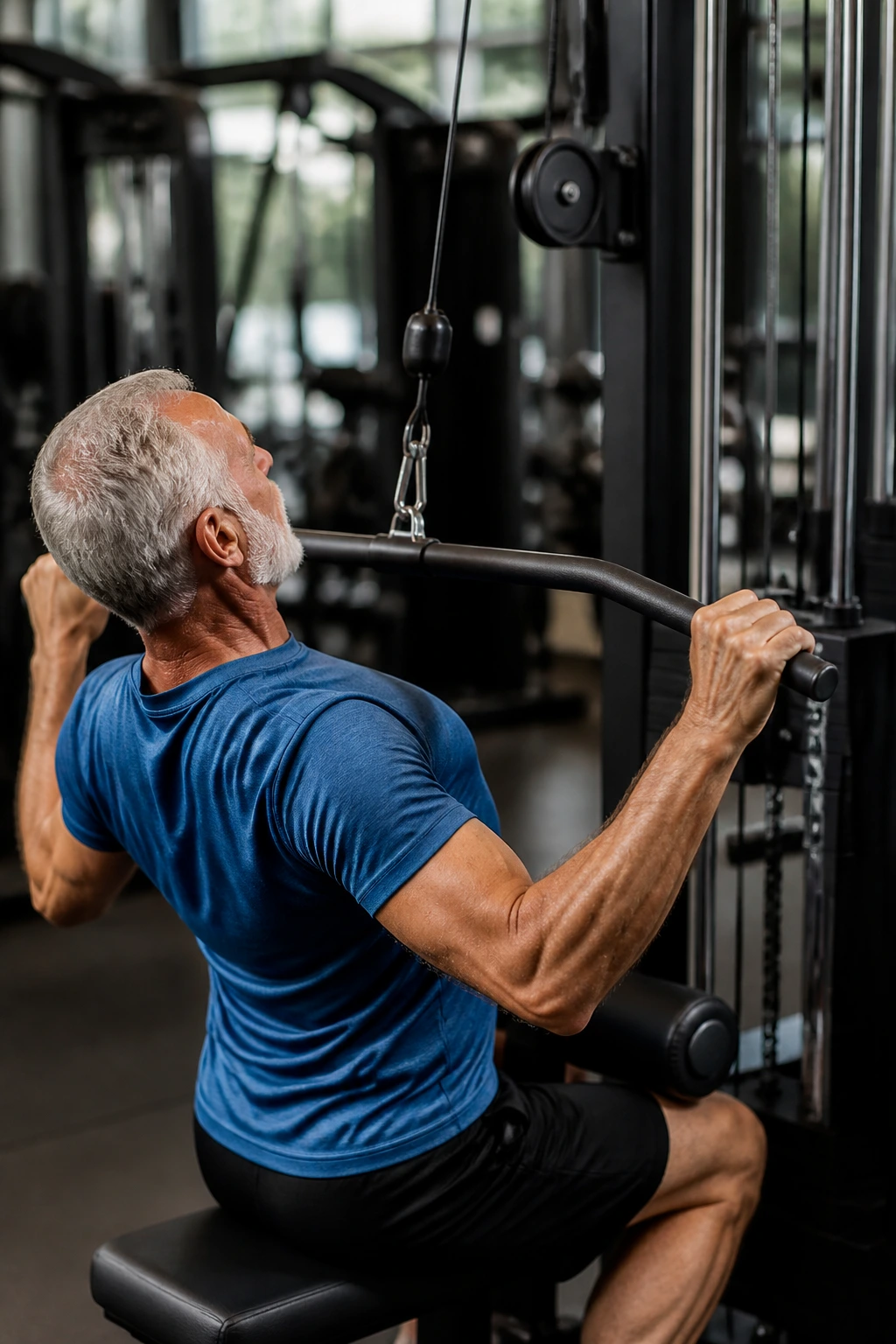
Pulling from overhead helps balance all the pressing most people already do.
Sit with your thighs secured under the pads, grab the bar a little wider than shoulders, and pull it toward the upper chest while keeping the ribs from flaring. The elbows should travel down and in, not straight back behind you like you’re trying to win a rowing contest with the machine. Let the bar rise under control until the arms are long again.
What to Watch For
- Do not yank with momentum.
- Keep the neck relaxed.
- Stop if the bar has to touch the chest by force; it doesn’t need to.
A lot of older adults feel stronger and taller after a few weeks of consistent pulldowns because the upper back starts helping again. 2 to 3 sets of 8 to 12 reps is a solid range. If the grip gets tired first, use straps only if needed. I’d rather see a good back workout than a battle with hand fatigue.
18. Dumbbell Romanian Deadlift
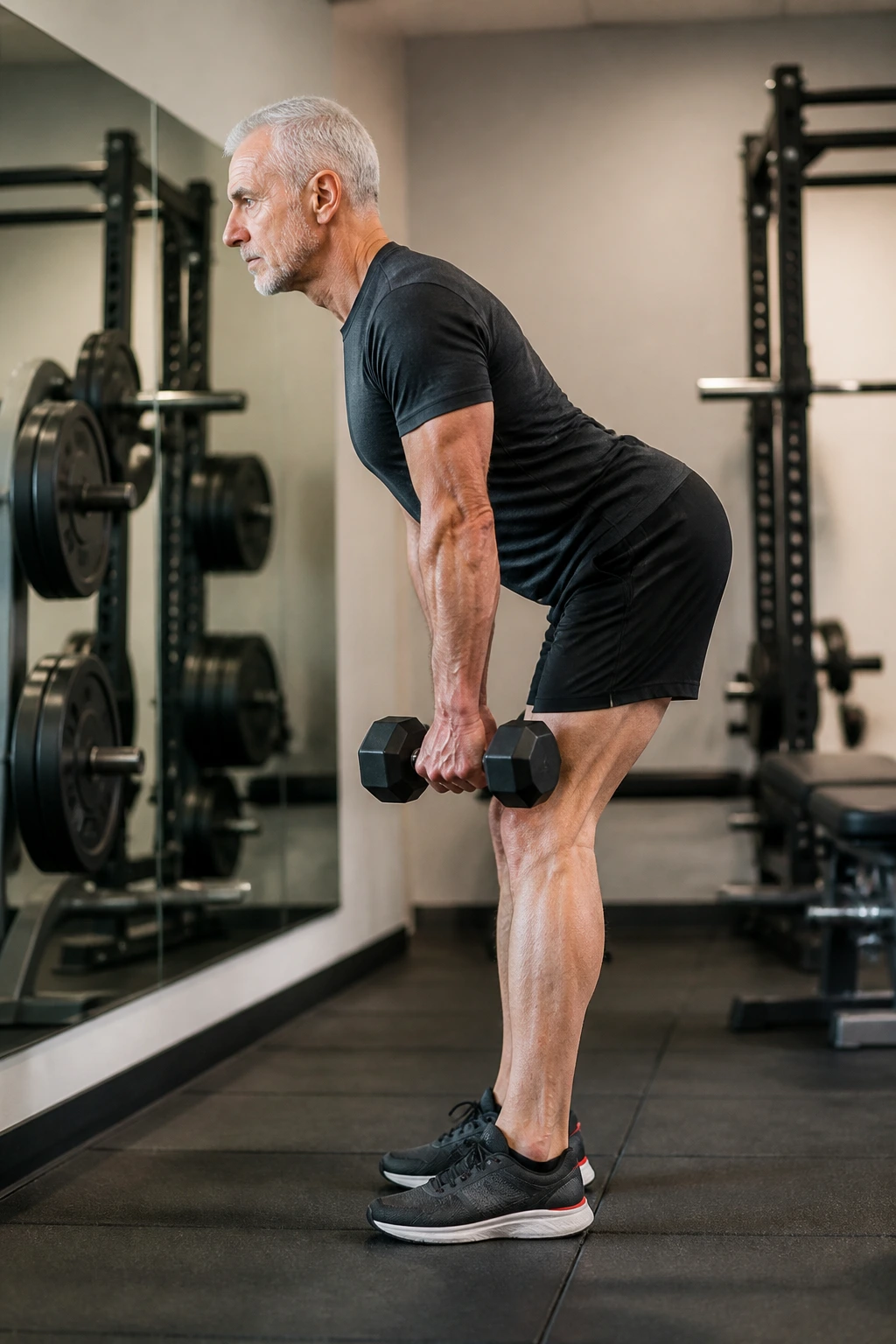
This is the hip hinge, and yes, it matters even if you never touch a barbell.
Hold light dumbbells in front of the thighs, soften the knees, and send the hips back until you feel a stretch along the back of the legs. The spine stays long and the weights slide close to the body. Stand by driving the hips forward, not by yanking with the lower back. The motion should feel like closing a car door with your hips.
People who learn this pattern usually carry and lift better because they stop bending from the waist in a sloppy way. Start with 2 sets of 8 to 10 reps and use a mirror if it helps. If the back rounds, stop sooner and shorten the range. This is one of those movements where less range done well is more useful than chasing depth.
19. Pallof Press
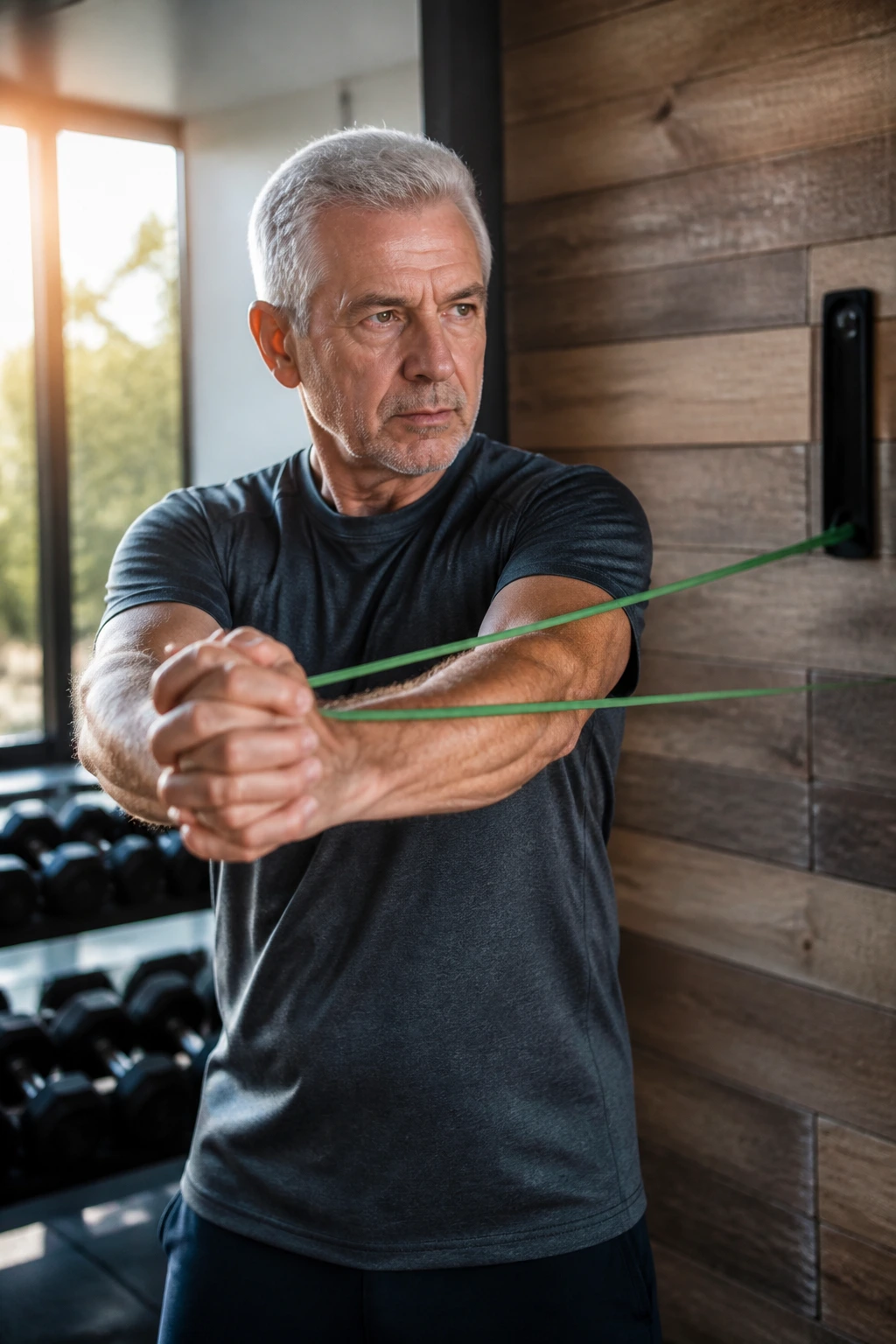
A Pallof press looks simple. It is not. That’s why it’s so good.
Anchor a band at chest height, stand sideways to the anchor point, hold the band at the chest, and press it straight out in front of you without letting your torso twist. Hold for a second, bring it back, and repeat. The band will try to rotate you. Your job is to resist that pull like a sturdy post in the ground.
Why It Stands Out
Most core exercises bend the spine or crunch the abs. This one trains the body to stay still when something is trying to pull it off center. That has obvious carryover to walking, reaching, and holding awkward objects.
Use 2 to 3 sets of 8 to 12 presses per side or a 10- to 20-second hold if you like isometrics better. Keep your feet planted and your knees soft. If the band drags you around, step closer to the anchor. No shame in that. It’s the smart move.
20. Clamshell with Mini Band
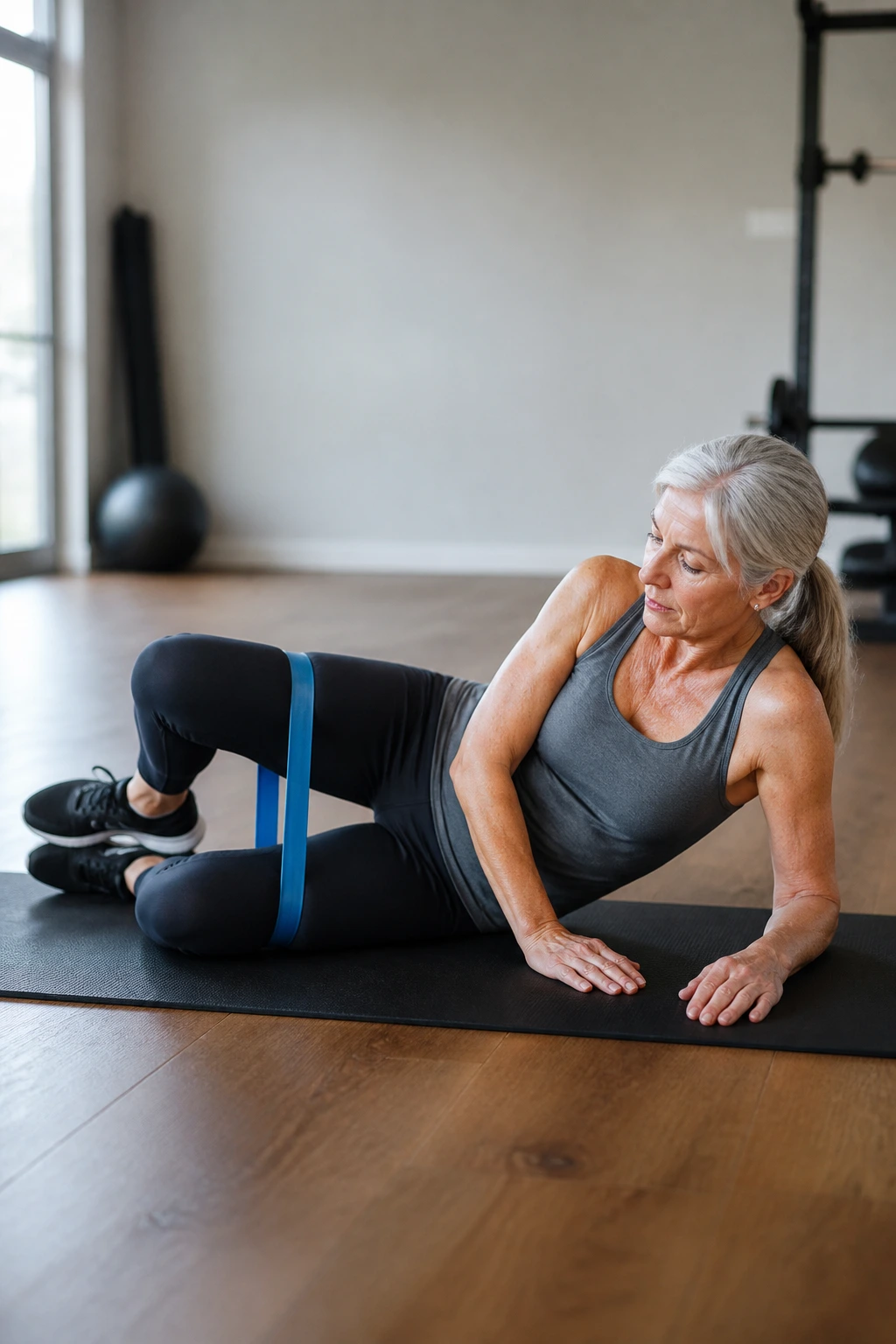
This move looks tiny, but the outer hips light up fast.
Lie on your side with knees bent and a mini band just above the knees. Keep the feet together, then open the top knee like a clamshell without rolling the pelvis backward. You should feel the side of the hip on the top leg working, not the lower back twisting. Slow down if you start cheating.
Clamshells are a quiet hero for knee alignment and walking stability. I’d use 2 to 3 sets of 12 to 20 reps per side. Once bodyweight is easy, a band makes the whole thing more honest. A common mistake is rushing through the reps and turning it into a hip flop. Small, controlled openings win here.
21. Band Pull-Apart
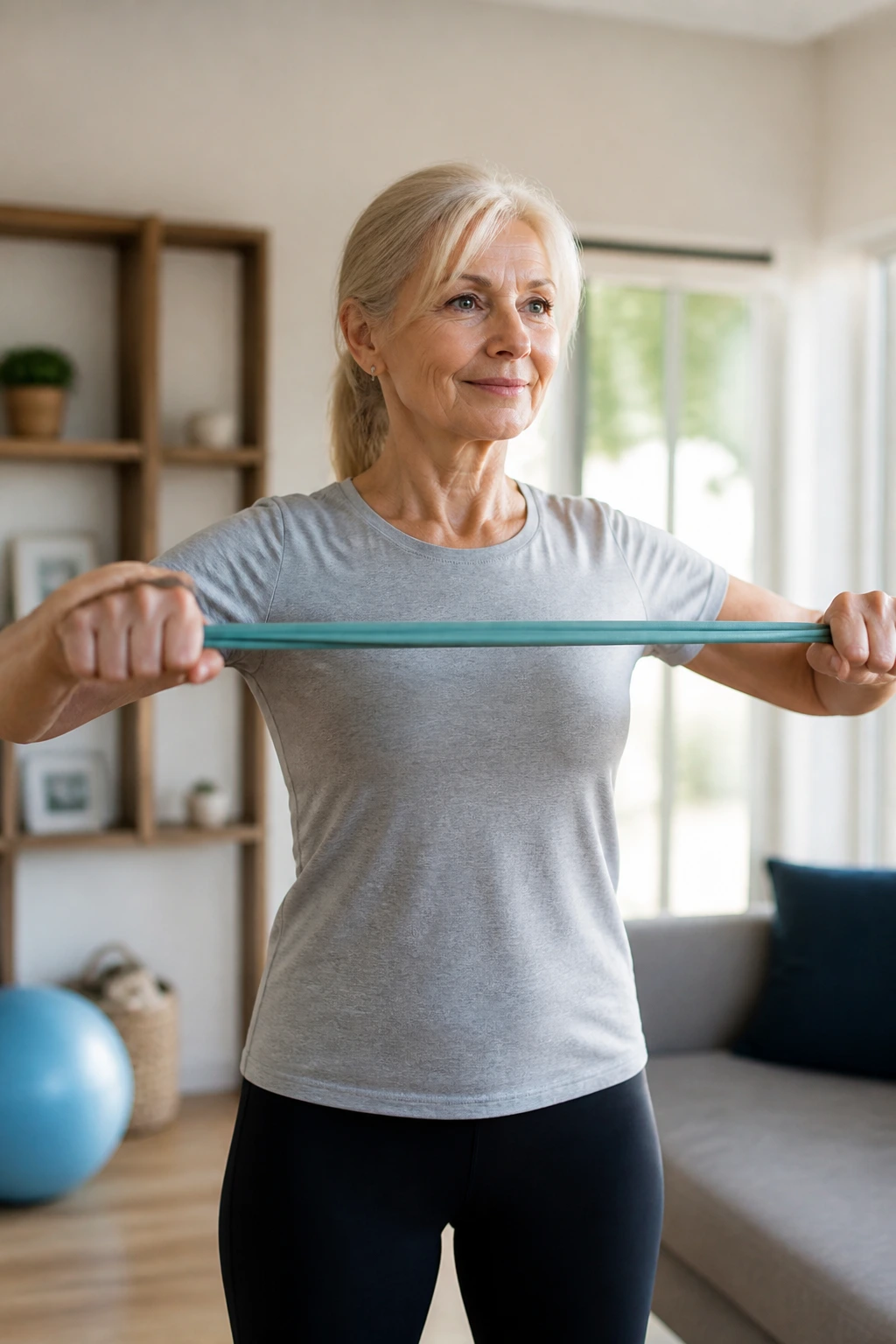
If a desk posture had a nemesis, this would be it.
Hold a light resistance band at shoulder height with straight arms, then pull the band apart until it touches or nearly touches your chest. The arms stay level, the shoulders stay down, and the upper back does the work. Return slowly. If the neck starts to tighten, the band is probably too heavy.
I like this move for people who want a low-friction upper-back drill they can do almost anywhere. Aim for 2 to 4 sets of 12 to 20 reps. The band doesn’t need to be thick; it just needs enough tension to make the last few reps deliberate. This is one of the easiest ways to remind the shoulders where they belong.
22. Incline Counter Push-Up
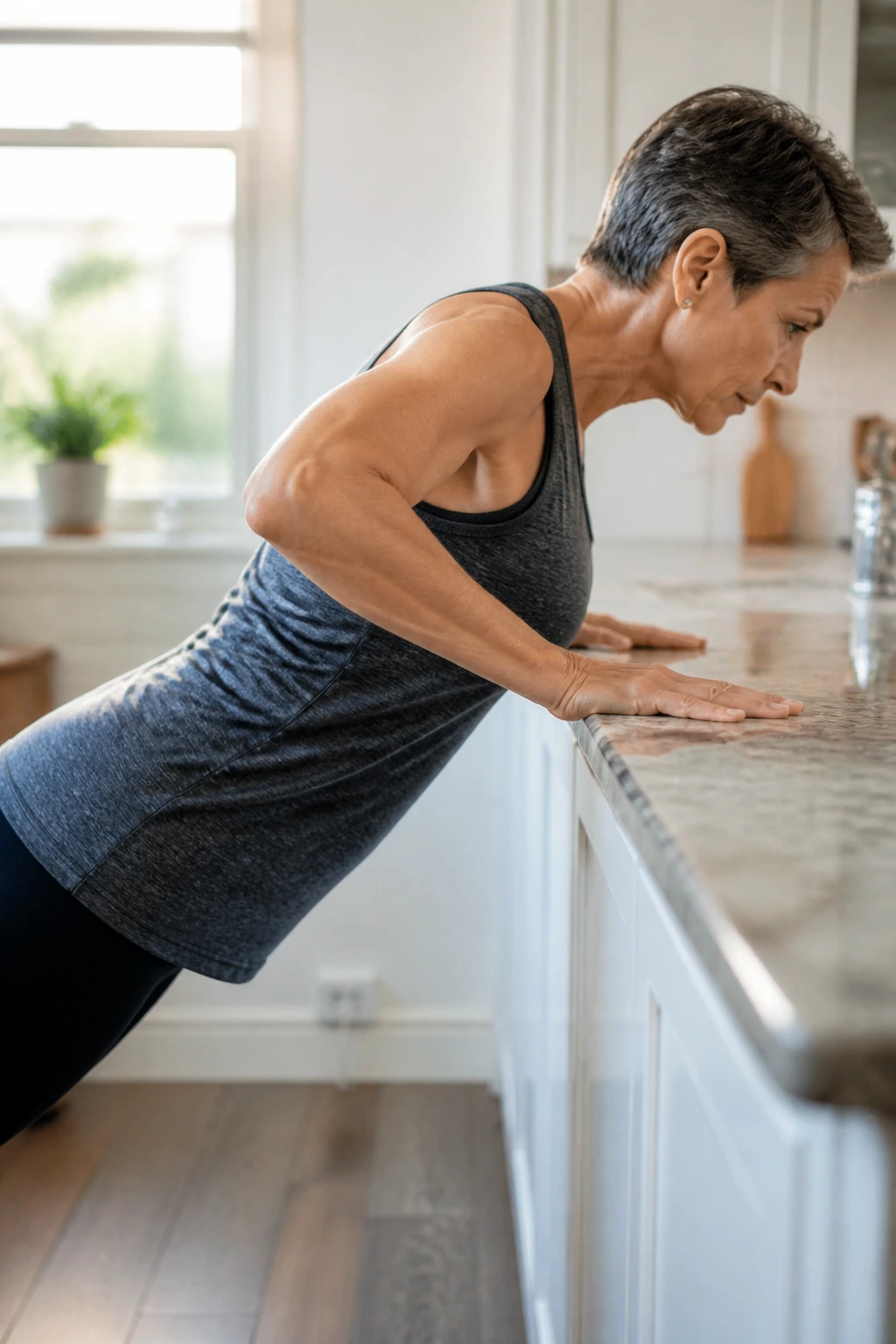
A kitchen counter can do a lot more than hold a coffee mug.
An incline push-up uses the counter, a sturdy table, or a bench to reduce the load compared with the floor. Place your hands just outside shoulder width, keep the body in a straight line, and lower the chest toward the edge before pressing back up. The higher the surface, the easier it is. That makes progress easy to measure.
How to Make It Count
- Lower for 2 to 3 seconds.
- Pause briefly near the bottom.
- Press up without snapping the elbows.
Do 2 to 3 sets of 6 to 12 reps. If the wrists complain, try holding dumbbells as handles. If the shoulders pinch, raise the surface a little and reduce the range. This move is a clean bridge between wall push-ups and floor work, and it often surprises people with how much control it asks for.
23. Suitcase Carry
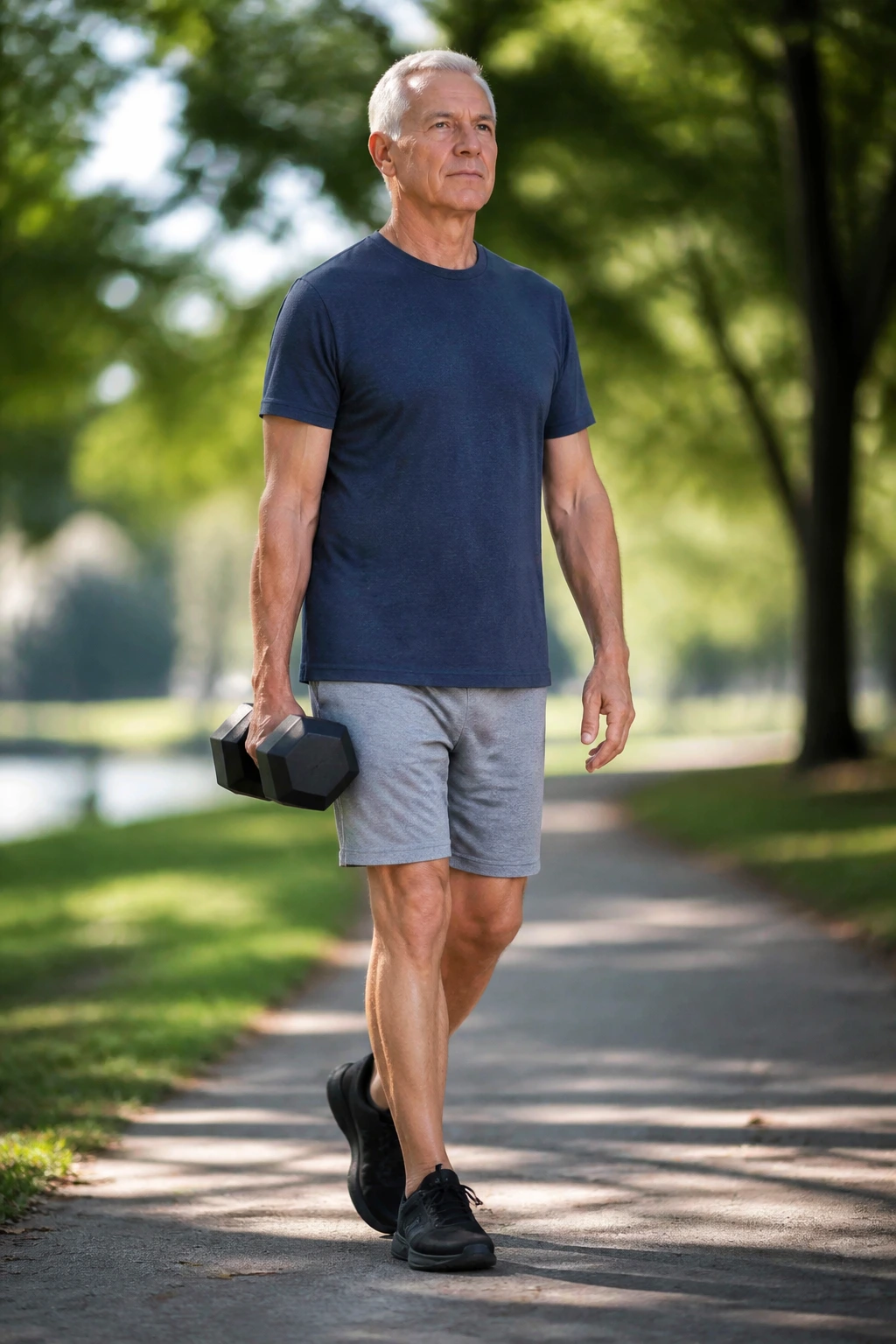
One weight. One side. No leaning.
A suitcase carry trains the obliques, grip, and hip stabilizers by forcing your body to stay upright while one side is loaded. Hold a dumbbell or kettlebell in one hand, stand tall, and walk slowly without letting the weight pull you sideways. Switch hands after the set. The challenge is subtle, which is part of its charm.
Quick Details
- Walk for 20 to 30 seconds per side.
- Keep the shoulders level.
- Use a weight you can control without tipping.
This is especially useful for anyone who wants to feel steadier while carrying a grocery bag, laundry basket, or anything that hangs off one side. The exercise teaches anti-lean strength in a way that feels real, not abstract. If you sway, the load is too heavy or the steps are too fast.
24. Seated Knee Extension
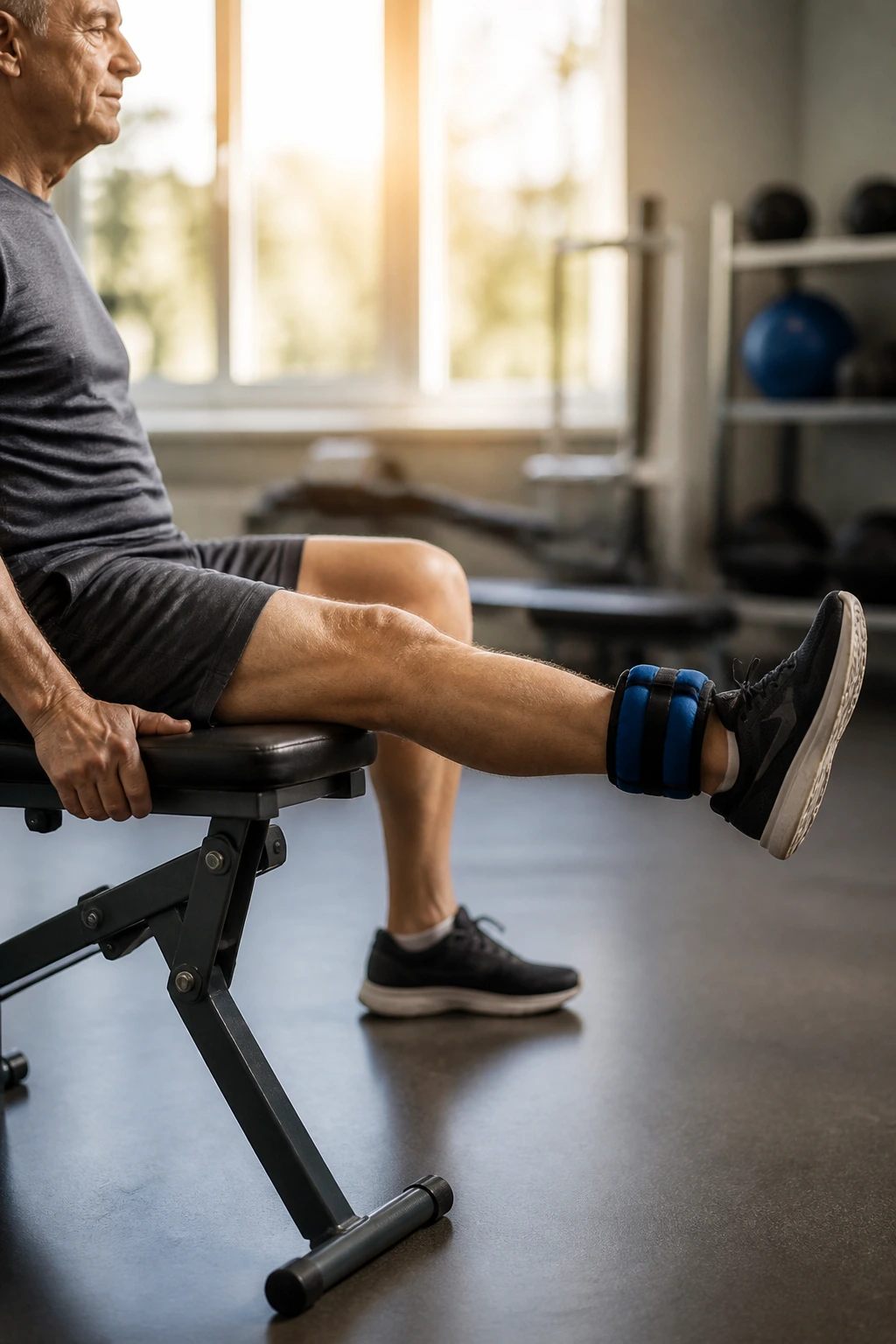
The front of the thigh deserves direct work, especially when standing up starts feeling expensive.
Use a knee extension machine or an ankle weight while seated. Extend the lower leg until the knee straightens, hold for a beat, and lower slowly. The motion should stay smooth, with the thigh anchored in place. If the machine slams or the ankle weight swings, you’re moving too fast.
This is a useful choice for older adults who want more quad strength without a lot of balance demand. Start with 2 to 3 sets of 10 to 15 reps. If the knees ache in the front, shorten the range and reduce the load. There’s no prize for forcing the last inch if the joint complains about it.
25. Band Wood Chop
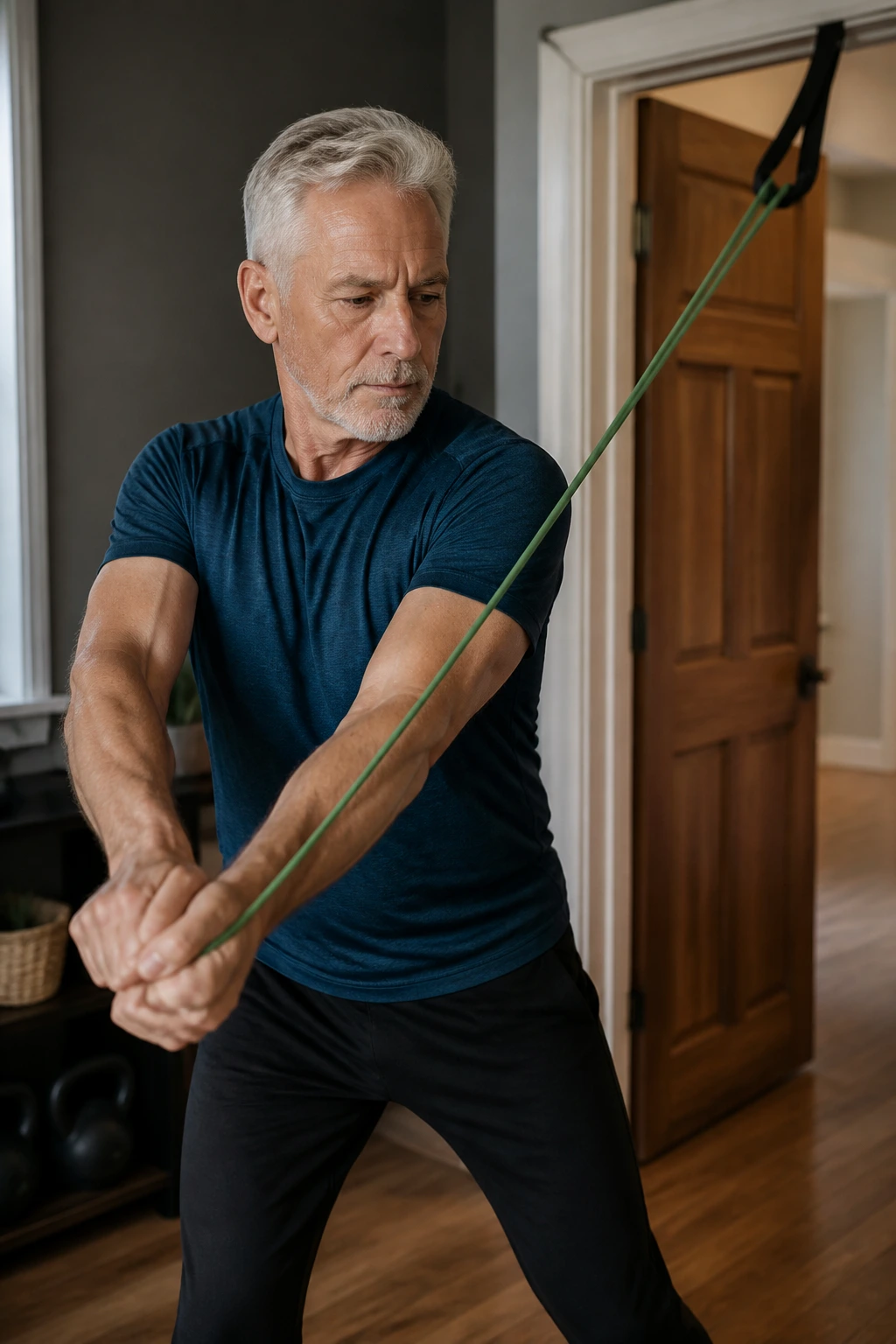
Rotation matters, but not the sloppy kind.
Anchor a band high or low, grab it with both hands, and move it diagonally across the body in a controlled arc, then return. Keep the hips and ribs organized instead of whipping through the torso. The movement should feel like the core is steering the motion, not collapsing under it. A small rotation done well is more useful than a big swing that drags the lower back around.
The Smart Way to Use It
- Do 2 to 3 sets of 8 to 12 reps per side.
- Start with a light band and a short range.
- Keep the knees soft so the spine doesn’t take the whole load.
Wood chops are a nice finish for a senior strength session because they connect the upper and lower body. They also help with the odd angles life throws at you—reaching for a seat belt, turning to set something down, twisting to grab a bag off the car seat. That’s the kind of strength that pays rent.
Final Thoughts
Pick five or six of these and repeat them. That’s the part people skip, and it matters more than chasing novelty. A chair sit-to-stand, a row, a push, a hinge, and one carry or core drill can cover a lot of useful ground in a week.
The best strength work for older adults is the kind you can keep doing without dreading it. Mild soreness is one thing. Joint pain is another. If a movement feels sharp, clunky, or impossible to control, swap it out and keep the pattern.
If standing up from a chair gets easier, if stairs feel less rude, and if carrying groceries stops being a little event, you’re on the right track. That’s the point of resistance training for seniors anyway—more steady days, fewer stupid little struggles.
