



A second-trimester body often feels like it’s asking for a different kind of workout. The worst thing you can do is keep exercising as if nothing changed. The smartest move is to match the work to the new shape of your day: a little more belly room, a little less tolerance for lying flat, and a lot more respect for joints that are getting looser by the week.
Prenatal workouts for the second trimester work best when they stay steady, moderate, and honest. You want to finish feeling warm, a little breathy, and still able to talk in short sentences. That’s the sweet spot most clinicians point toward for uncomplicated pregnancies, and it tends to line up with the old standbys too: walking, cycling, swimming, controlled strength work, and mobility that keeps your back from complaining all afternoon.
The second trimester is also the point where a lot of people start to notice what really helps and what merely looks good on paper. A jumpy cardio class can suddenly feel clumsy. A floor exercise that used to be easy may feel odd once you’re past the halfway mark. And yes, a perfectly good core move can become a bad idea if it has you lying flat on your back too long or holding your breath like you’re about to deadlift a refrigerator.
So the best plan is not flashy. It’s practical. It’s the kind of workout menu that keeps blood flowing, builds a little strength around the hips and upper back, and respects the fact that your center of gravity is already changing. Start with the walking days, the pool days, the short strength sessions, and the mobility work that makes your ribs, hips, and shoulders feel less stiff. Then build from there.
1. Brisk Walking Intervals
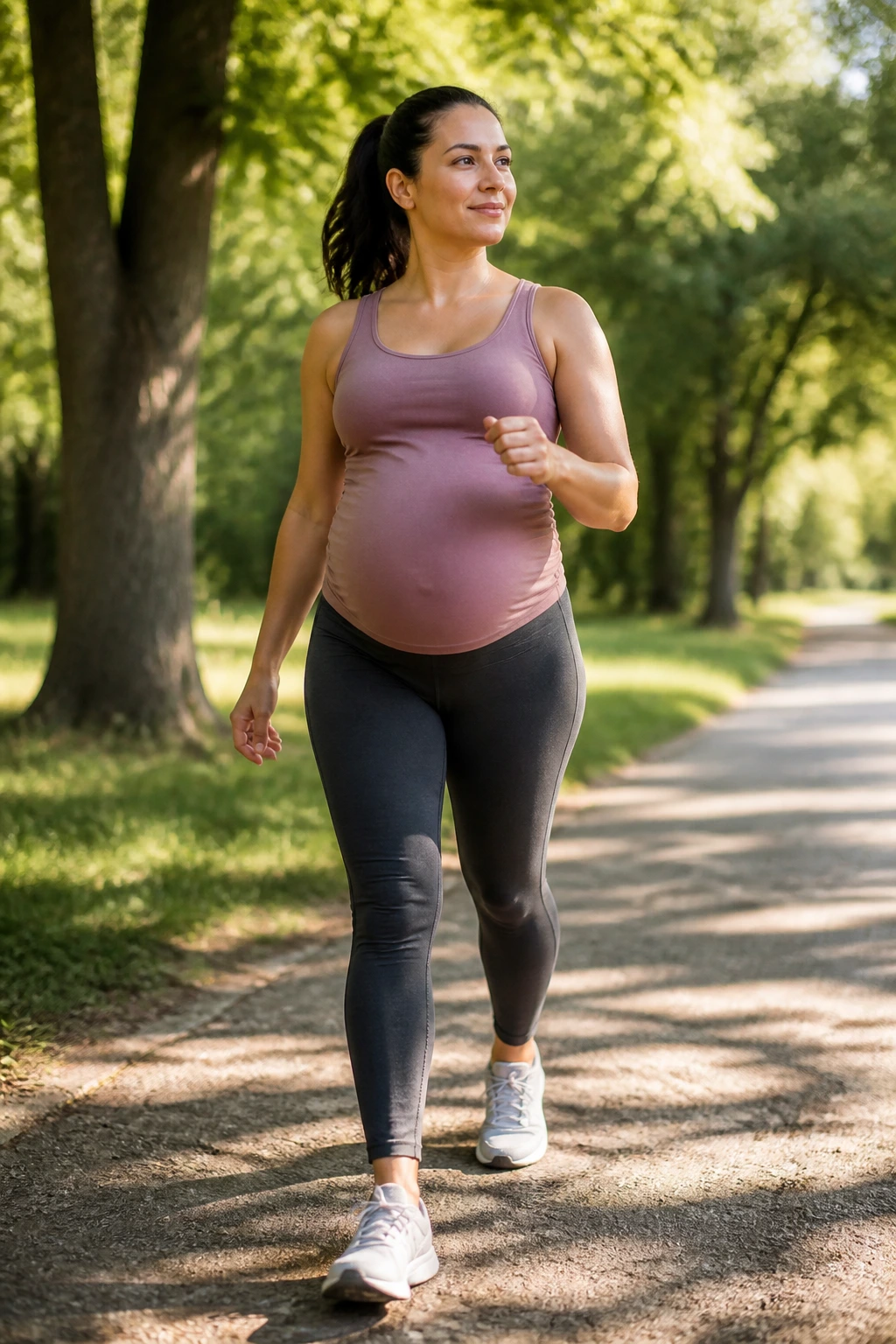
Walking is still the plainest, cleanest prenatal workout there is, and I mean that as a compliment. A decent pair of shoes and a flat route can do more for second-trimester energy than a complicated routine that leaves you guessing about whether you pushed too hard. Brisk intervals make the walk feel like training instead of errands.
How to pace it
Try 5 minutes easy, then alternate 1 minute brisk / 1 minute easy for 10 to 15 rounds. Brisk means your stride is quicker and your breathing is a little deeper, but you can still talk without gasping. If you can sing, you’re probably too relaxed; if you can’t finish a sentence, back off.
A subtle hill is fine if it feels smooth. Uneven sidewalks are not. Watch your footing, keep your arms loose, and shorten your stride if your pelvis feels wobbly.
Best use: low-stress cardio on days when your energy is decent but not heroic.
2. Stationary Cycling
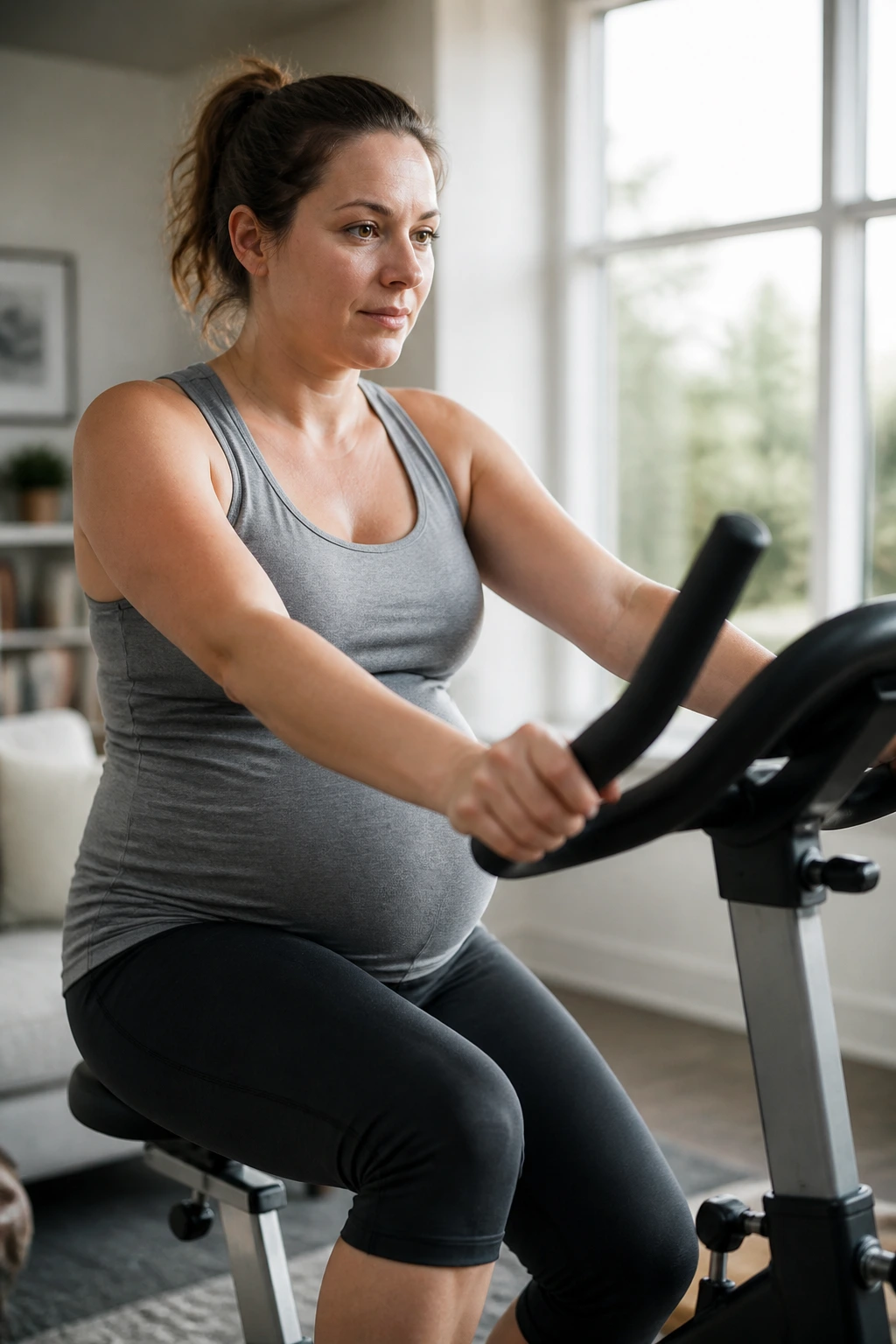
A stationary bike is one of those tools that quietly earns its spot in prenatal exercise. The seat supports some of your weight, the motion is smooth, and you can dial the effort up or down without making your joints angry. It’s especially useful when walking feels fine but your hips don’t want impact.
Keep the resistance light to moderate and aim for 15 to 30 minutes. Your knees should track forward smoothly, not flare out, and the handlebars should be high enough that you’re not folding your belly toward your thighs. If the seat starts feeling like a brick, adjust it. A small change in saddle angle can make a big difference.
What to watch for
- Numb hands or a sore lower back usually mean the setup needs work.
- A wobbling torso means the resistance is too high.
- A smooth cadence is the goal, not a heroic climb.
3. Pool Walking and Easy Water Circuits
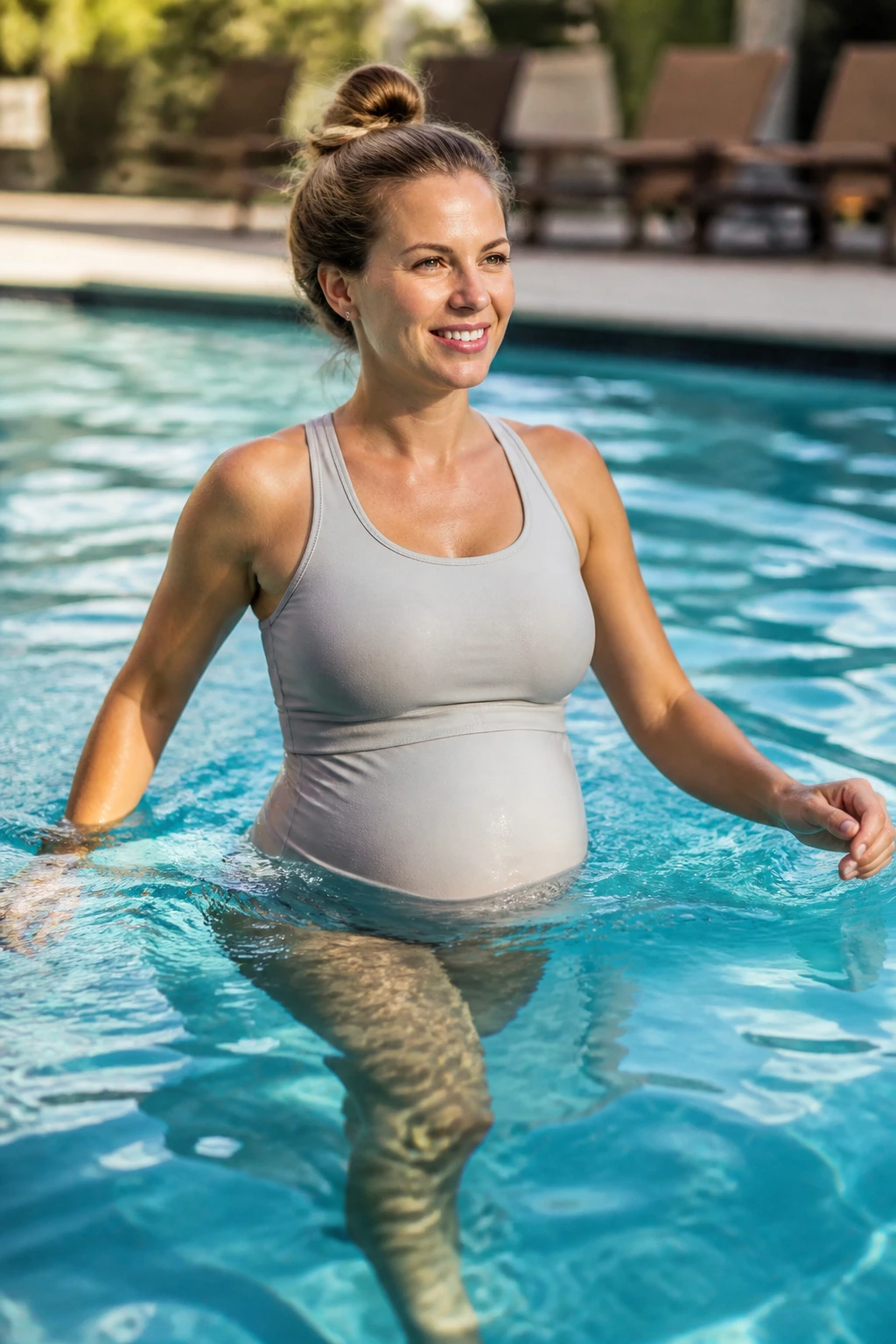
Water changes the whole tone of second-trimester movement. It takes pressure off the pelvis, cools you down fast, and lets you move in a way that feels a little easier than land-based cardio. Pool walking is underrated. So is any simple water circuit that doesn’t require jumping.
Walk forward for 2 minutes, then backward for 1 minute, then do side steps for 1 minute. Repeat that cycle for 15 to 20 minutes. If you have access to a shallow pool, try gentle arm sweeps under the water for an extra bit of resistance. Nothing wild. Just enough to feel the water push back.
The nice part is that you can usually tell right away whether it’s working. Your breathing picks up, your legs feel warm, and your joints stay quieter than they do on pavement.
4. Prenatal Cat-Cow and Side-Body Stretch Flow
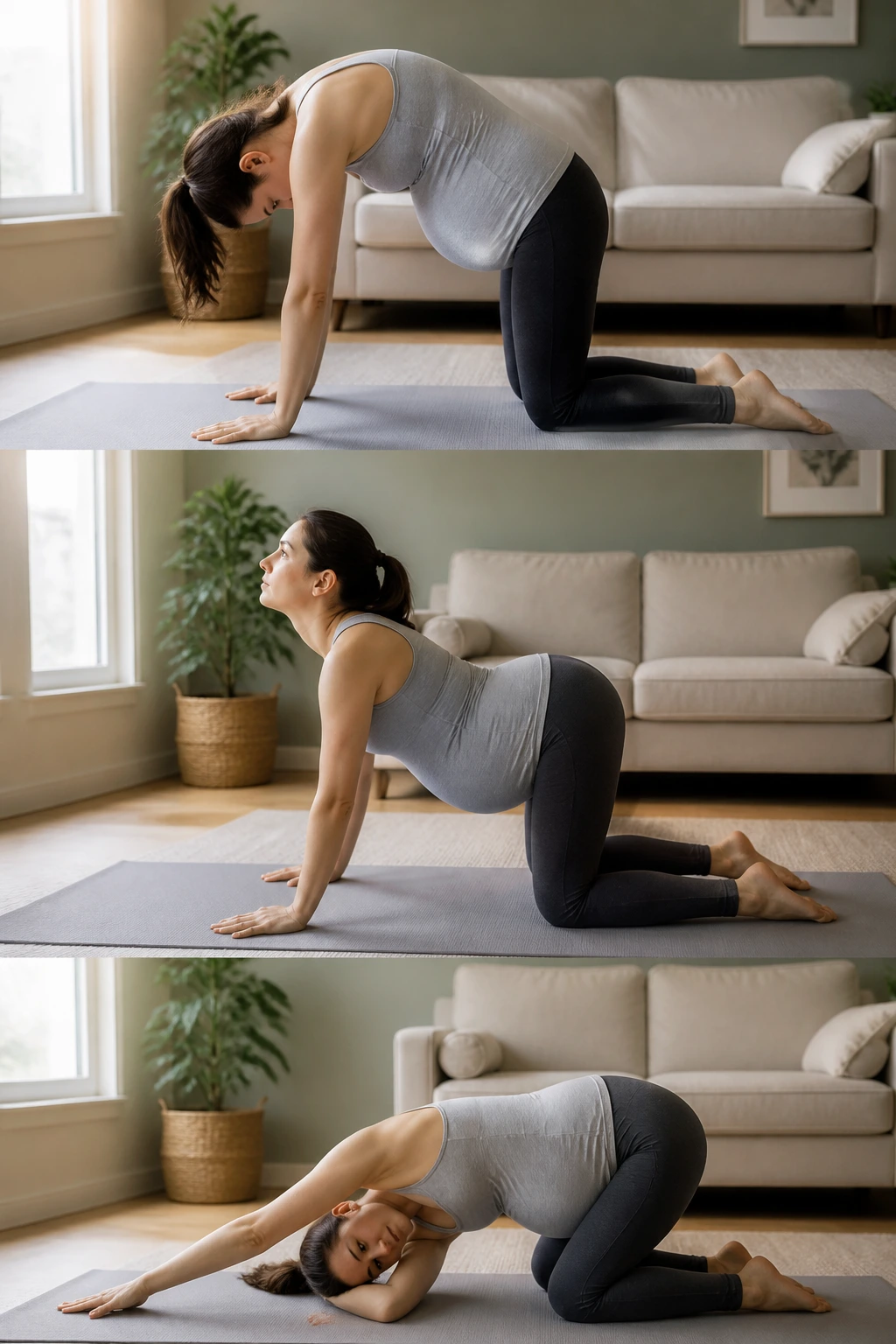
This is the workout people skip because it looks too easy. That’s a mistake. Cat-cow can unclench a stiff back in a way that fancy moves never quite manage, and the side-body stretch is gold when your ribs start feeling crowded.
Come onto hands and knees and move slowly through 6 to 8 rounds of cat-cow. Let your spine round on the exhale and arch gently on the inhale, but do not dump into your low back. After that, shift one hand a little farther forward and reach the opposite arm out or up for a side stretch. Hold each side for 2 to 3 breaths.
A folded blanket under the knees helps if the floor feels hard. If wrists are sore, come down onto fists or forearms for the stretch part. Small fixes. Big payoff.
5. Side-Lying Clamshells
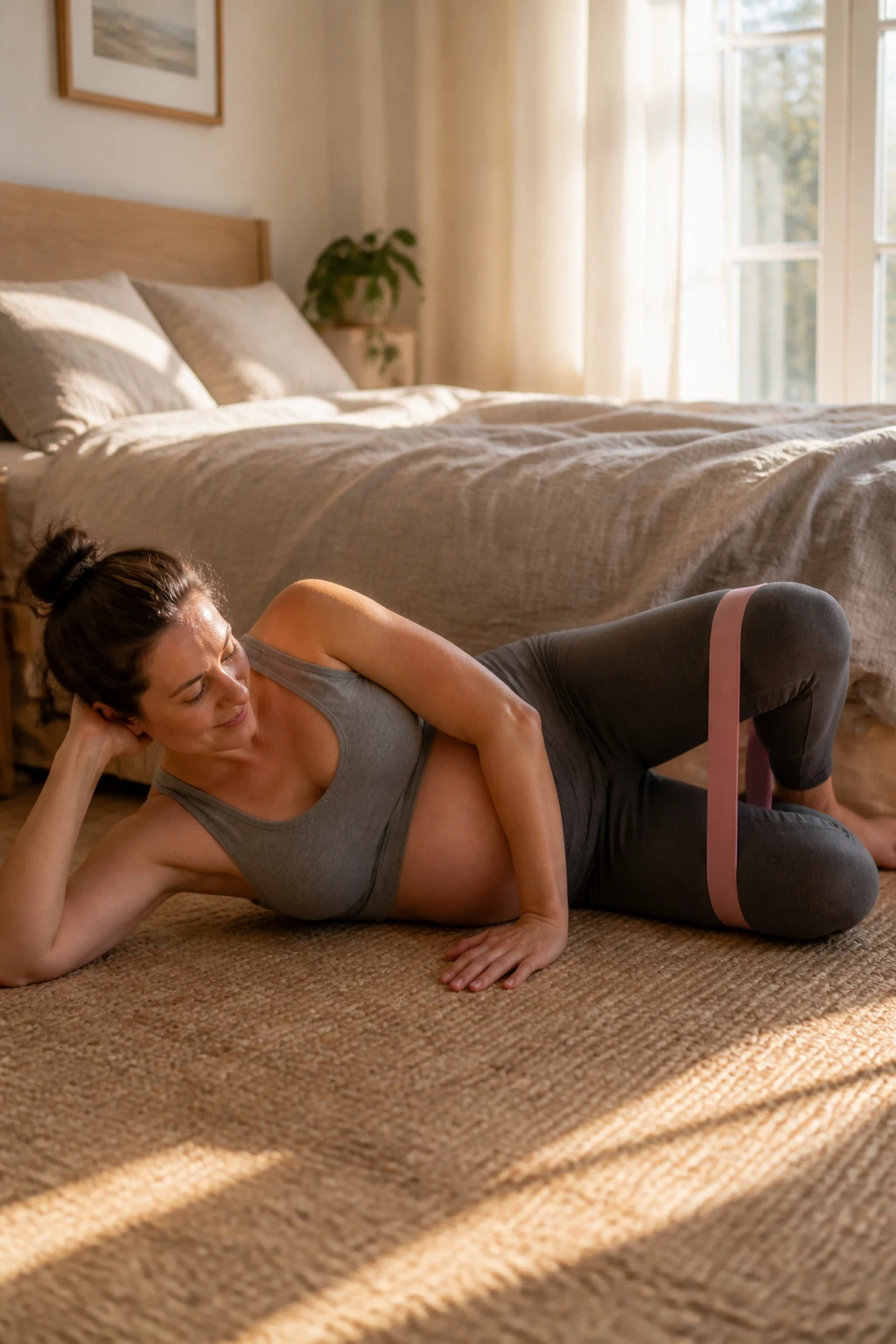
Side-lying clamshells are the kind of boring little exercise that makes hips feel more stable when you stand up, walk up stairs, or shift from one leg to the other. That matters in the second trimester, when a looser pelvis can make everything feel a little less anchored.
Lie on your side with knees bent and feet stacked. Keep your hips still and open the top knee like a clamshell, then lower it with control. Do 2 to 3 sets of 12 to 15 reps per side. A small loop band above the knees makes the exercise harder without making it awkward.
Quick form cues
- Keep your top hip from rolling backward.
- Move slowly enough to feel the side of the glute working.
- Stop short if you feel pinching in the front of the hip.
A pillow under the belly helps if the side-lying position feels strange.
6. Chair Squats
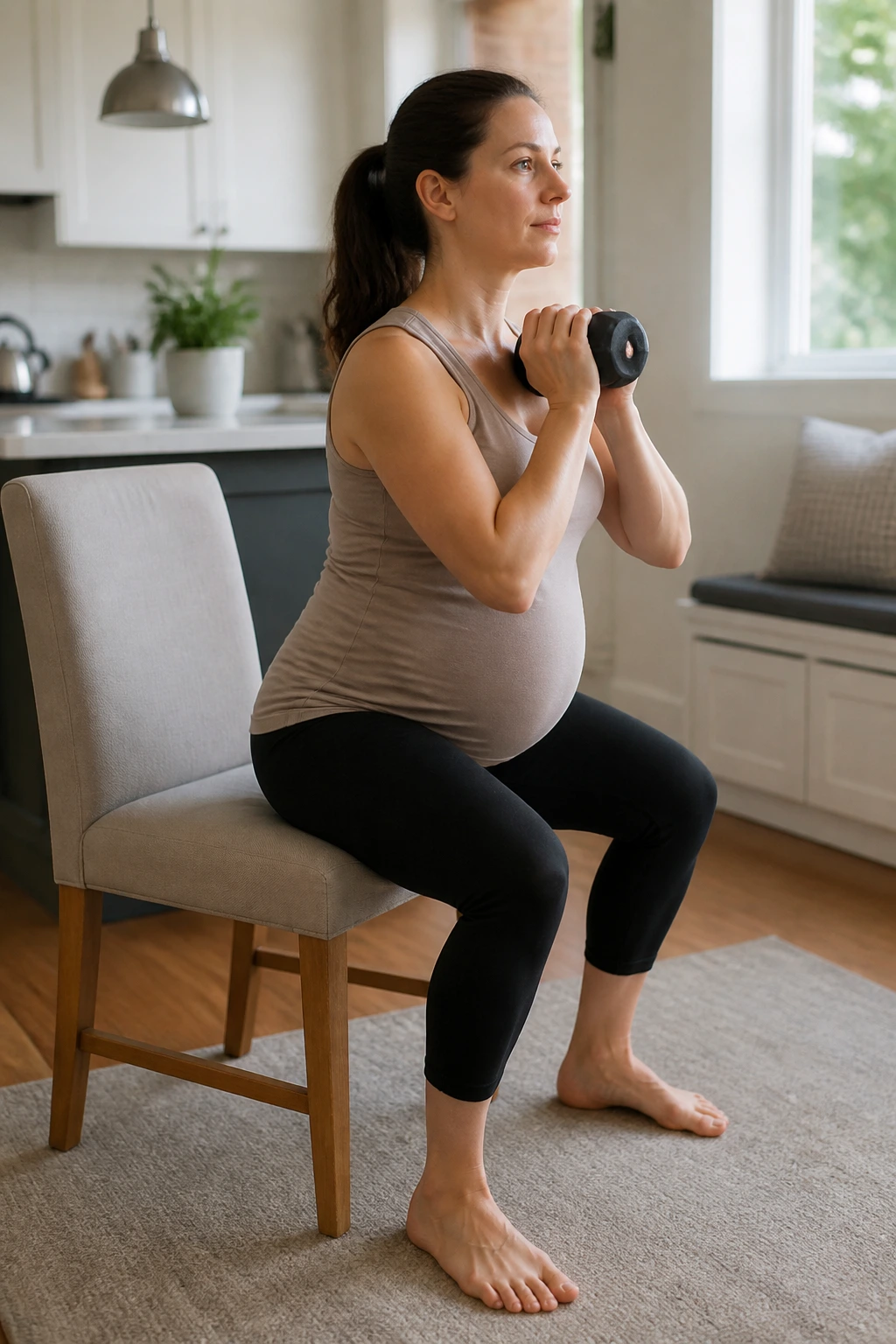
Chair squats are practical, plain, and useful in exactly the way pregnancy exercise should be. They train the legs, teach you to sit and stand with control, and keep the movement pattern familiar for daily life. No drama.
Stand in front of a sturdy chair with feet about hip-width apart. Send the hips back until you lightly touch the seat, then stand again. Start with 2 sets of 8 to 12 reps. If bodyweight feels easy, hold a light dumbbell at your chest. If balance is off, keep one hand on a wall or countertop.
What makes them work
The pause on the chair keeps the squat from getting too deep. That’s useful if your pelvis feels stretched or your balance is off. And if you exhale on the way up, the whole thing feels cleaner. Breath-holding is a bad habit here. Skip it.
7. Wall Push-Ups
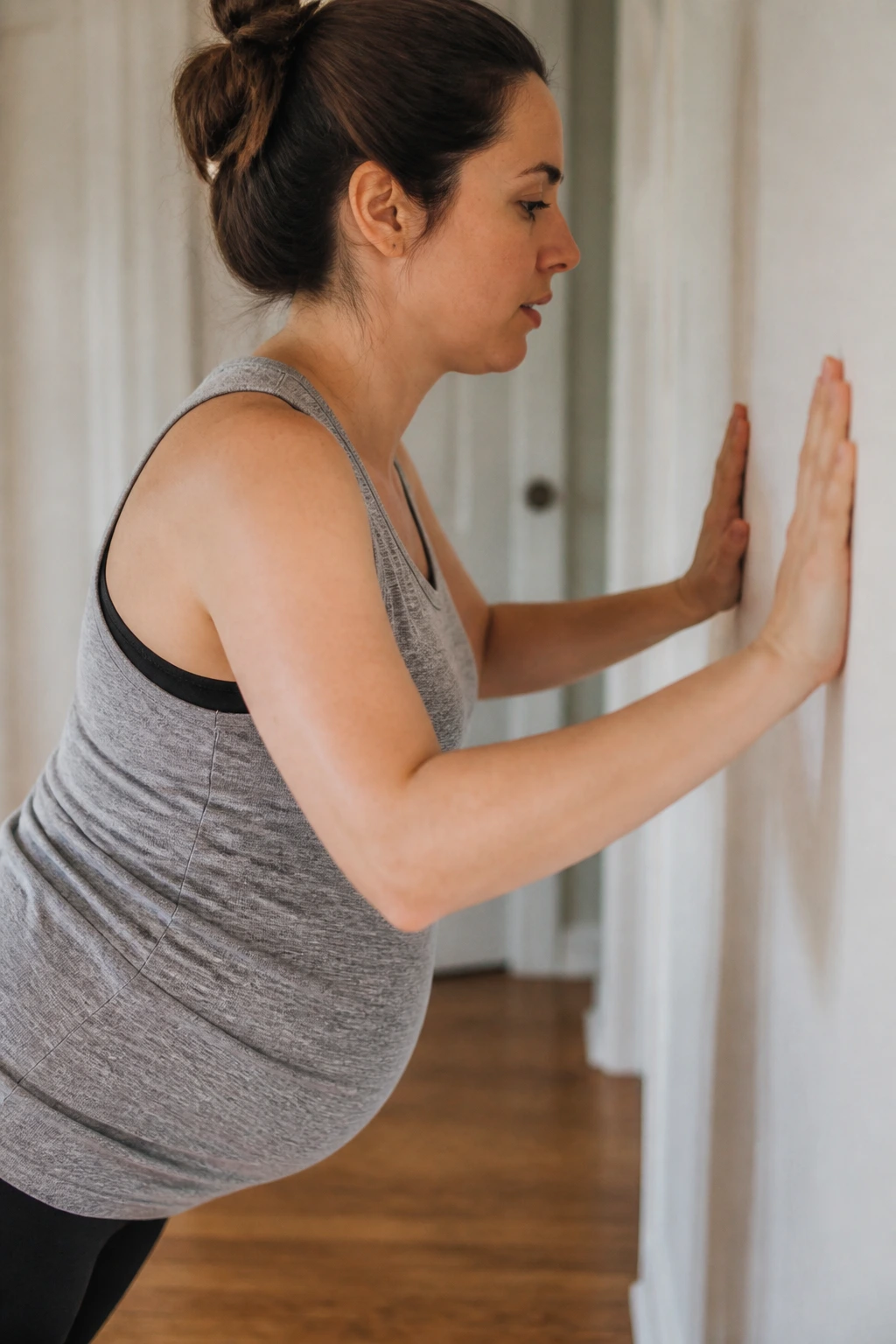
Wall push-ups are one of the best upper-body moves for pregnancy because they train your chest, shoulders, and arms without putting you on the floor or asking for a big core brace. They’re simple, yes. They’re also effective when done with real control.
Stand an arm’s length from a wall, place your hands at chest height, and lower your body toward the wall with bent elbows. Press back to the start for 2 to 3 sets of 10 to 15 reps. Walk your feet farther back to make it harder. Walk them closer to make it easier.
Your body should move as one piece. No sagging hips, no craning neck. If your wrists complain, turn the hands slightly outward or use push-up handles against a stable surface.
8. Seated Dumbbell Shoulder Press
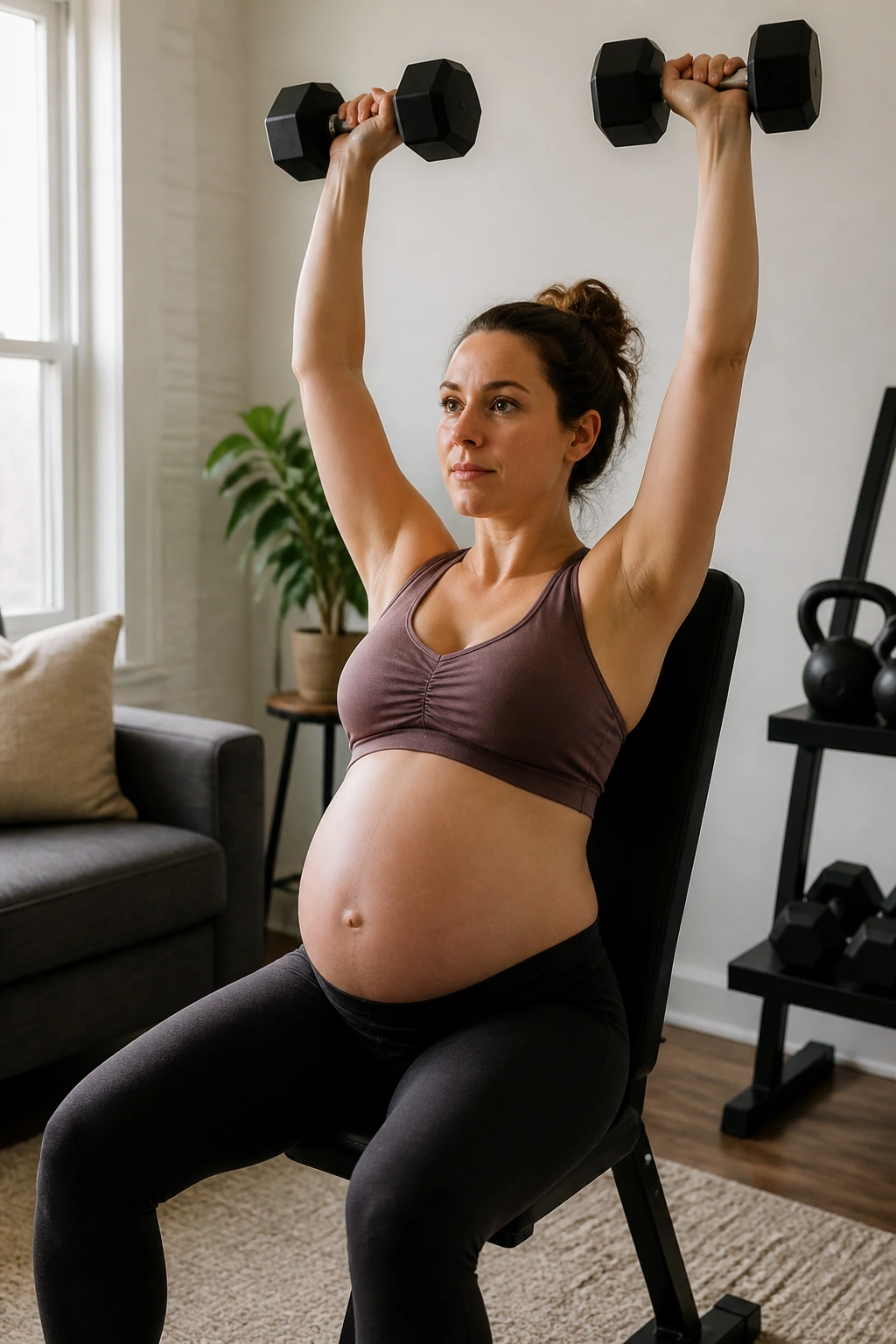
Strong shoulders matter more than people think during pregnancy. Carrying bags, reaching into cabinets, holding a baby later on — all of it gets easier when your upper body isn’t weak and cranky. A seated shoulder press gives you strength without much balance demand.
Sit tall on a bench or sturdy chair with back support. Start with 5 to 12 pound dumbbells, palms facing forward or slightly inward. Press the weights up until your elbows are just short of locking, then lower them under control for 2 to 3 sets of 8 to 12 reps. Keep your ribs from flaring out.
If the weights force you to arch your back, they’re too heavy. Drop down fast. Form matters more than impressing anybody in the room.
9. One-Arm Supported Rows
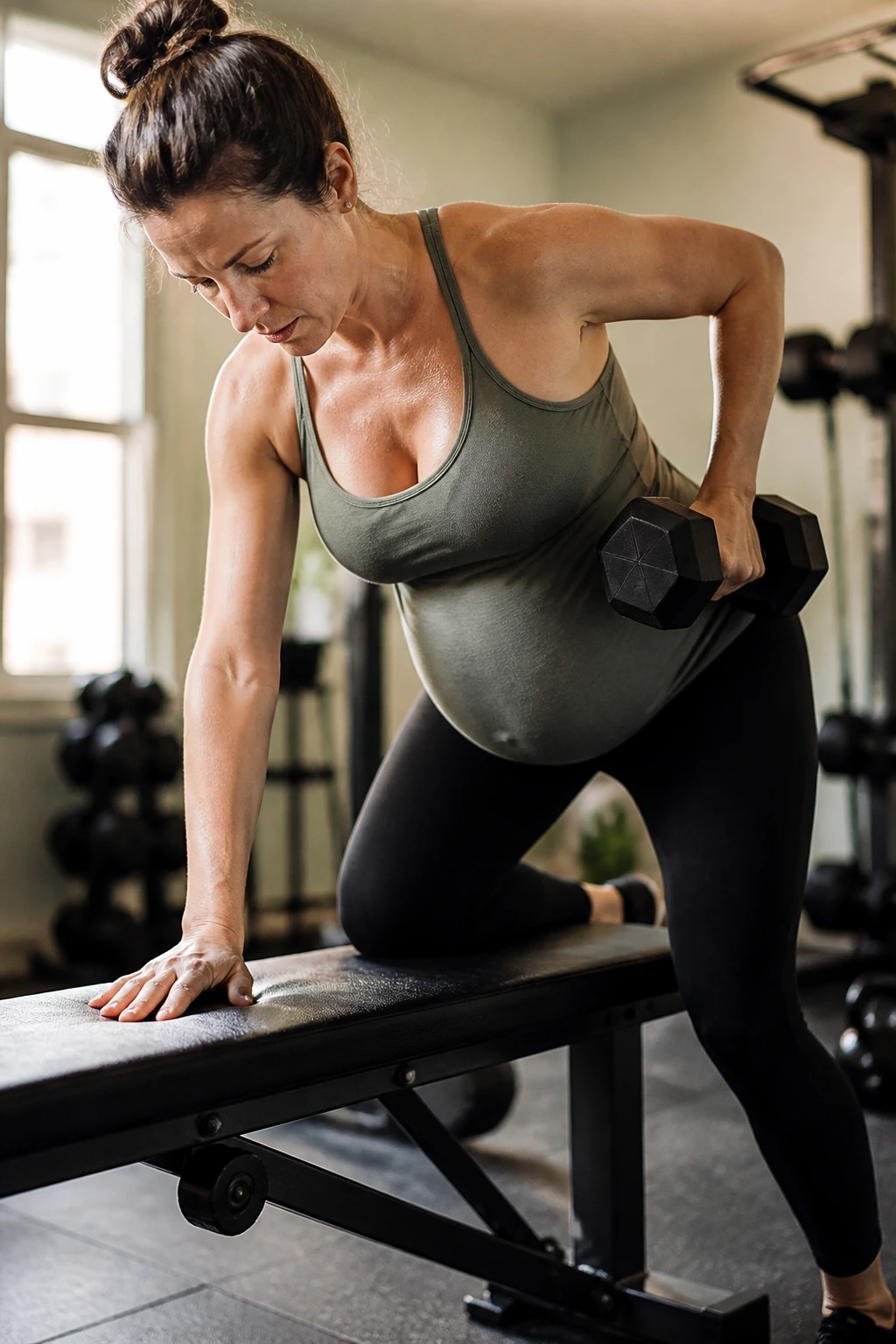
A row sounds simple because it is simple, and that’s why it belongs in a prenatal workout plan. Upper-back strength helps with posture, especially once the belly starts pulling your center forward and your shoulders want to drift inward.
Brace one hand on a bench, countertop, or sturdy chair. Hold a dumbbell in the other hand and pull it toward your ribcage, pausing for a beat at the top. Use 2 to 3 sets of 10 to 12 reps per side. The movement should feel smooth, not yanked. If your torso twists a lot, the weight is too heavy.
A row done well has a nice, quiet feel to it. The shoulder blade slides back, the neck stays calm, and the low back doesn’t try to help.
10. Bird Dog Reaches
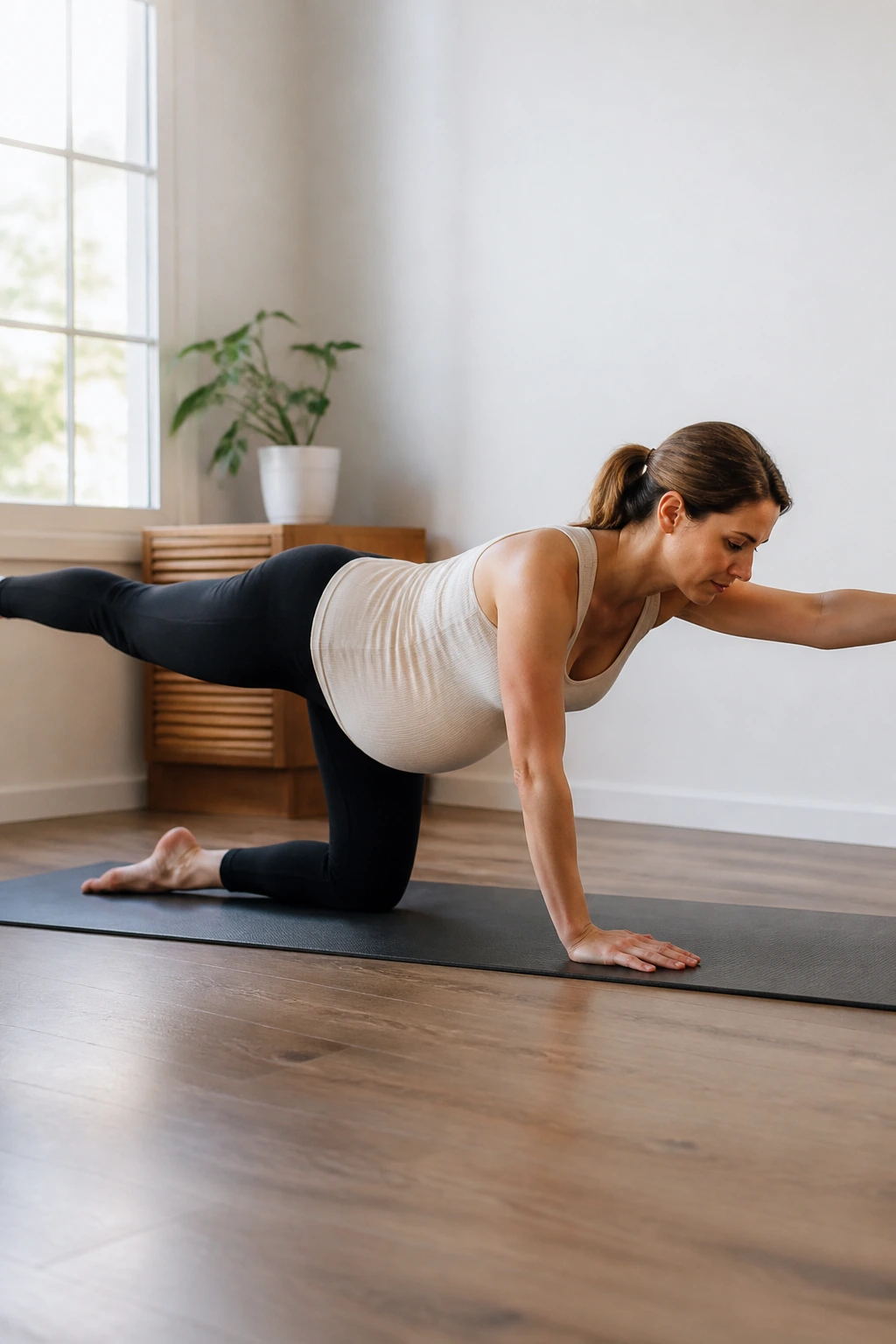
Bird dog is one of the few core exercises that still makes sense when the bump starts to show. It asks for balance, trunk control, and a little patience. You do not need speed. You need steadiness.
Start on hands and knees. Reach one leg back and the opposite arm forward, then hold for 2 to 3 seconds before returning to center. Do 2 sets of 6 to 8 reps per side. If full extension feels shaky, keep the range shorter and focus on staying square through the hips.
The clean version
- Exhale as you reach.
- Keep the belly gently lifted, not sucked in hard.
- Stop if you feel pressure in the pelvis or a pulling sensation that feels wrong.
A folded towel under the knees makes this much friendlier.
11. Banded Side Steps
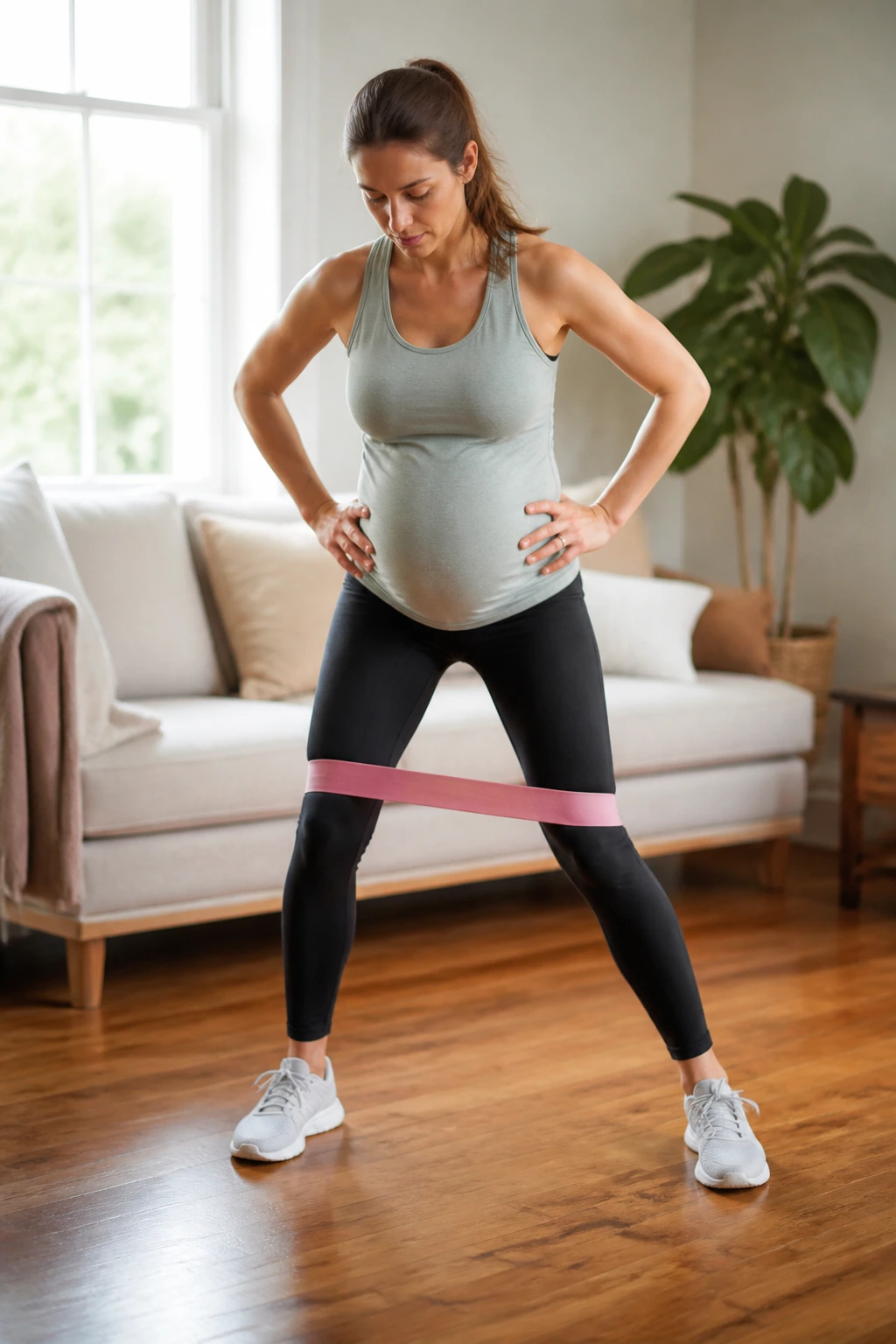
Banded side steps are a blunt little fix for weak hips. They work the outer glutes, which can help with the side-to-side wobble that sometimes shows up when the pelvis loosens and the gait changes. You feel them fast. Sometimes too fast.
Place a loop band above the knees or around the ankles. Sink into a small squat, step sideways for 8 to 12 steps, then return the other way. Do 2 to 3 rounds. Keep the steps controlled, not wide and sloppy. If the band snaps you back together, you’re probably rushing.
The burn should land on the sides of the hips, not in the knees. If the knees ache, use a lighter band and stand a little taller.
12. Supported Split Squats
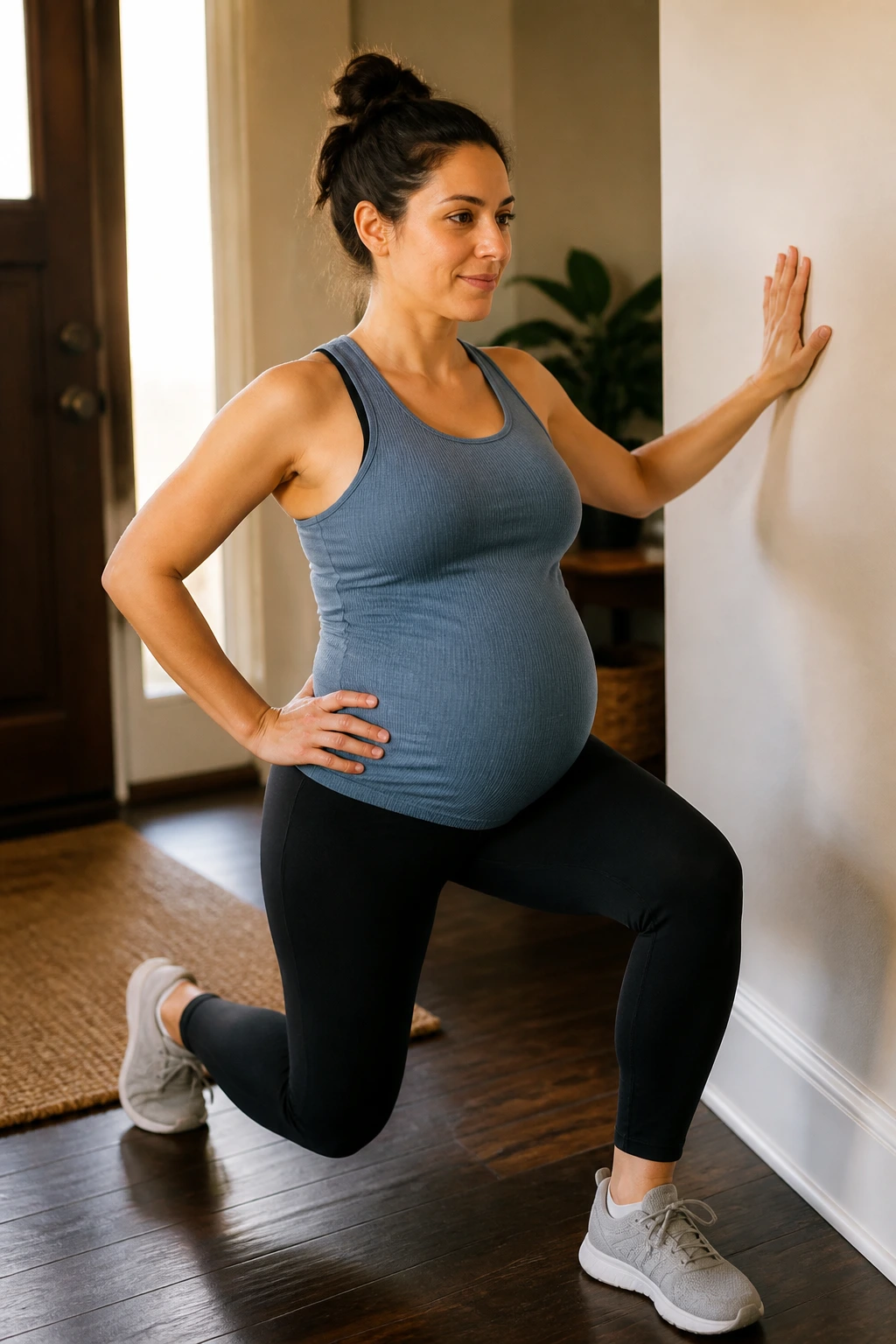
Supported split squats look intimidating until you realize you can hold onto a wall or chair and keep the movement small. Then they become one of the better lower-body strength moves for pregnancy, because they train each leg without needing a deep squat.
Stand in a split stance with one hand lightly on support. Lower straight down a few inches, then press back up. Start with 2 sets of 6 to 10 reps per side. The back heel can stay lifted or slightly down, depending on what feels stable. Don’t force depth.
This exercise rewards calm rhythm. If you rush, your balance will complain. If you keep the movement short and smooth, your quads and glutes do the work without making your pelvis feel jammed.
13. Step-Ups on a Low Platform
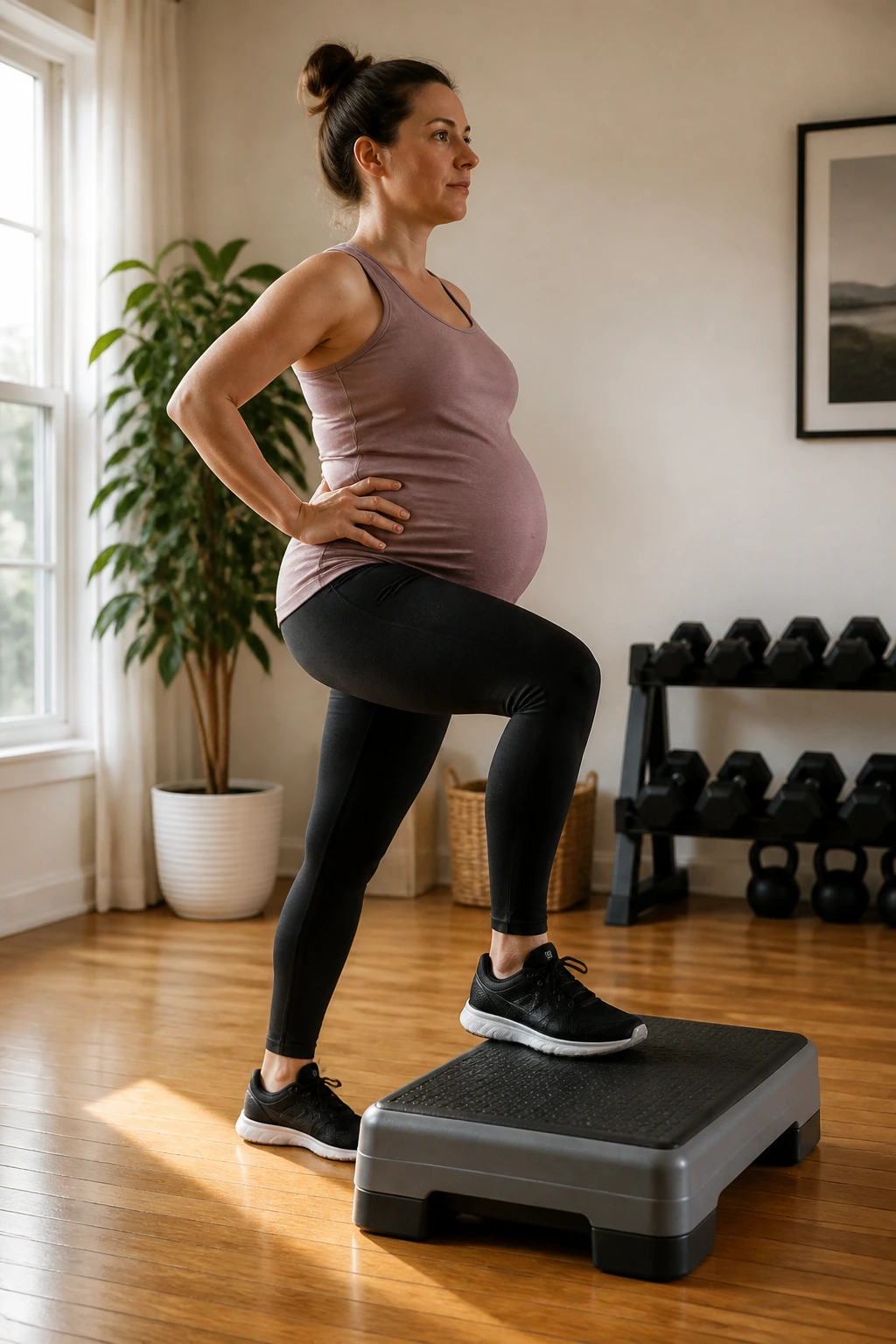
Step-ups are such a practical second-trimester exercise that I almost wish more people used them. They mimic real life: stairs, curbs, getting into a car, climbing into a booth. And they build leg strength without the deep bend that can feel awkward later in pregnancy.
Use a step that’s low enough to keep your knee under control — 4 to 6 inches is plenty for many people. Step up with one foot, stand tall at the top, then step down with control. Do 2 to 3 sets of 8 reps per leg. Hold a rail if balance feels off.
The key is a quiet landing. If you’re stomping or pushing off hard from the floor, slow down. The exercise should look almost plain. That’s usually a good sign.
14. Standing Hip Hinges
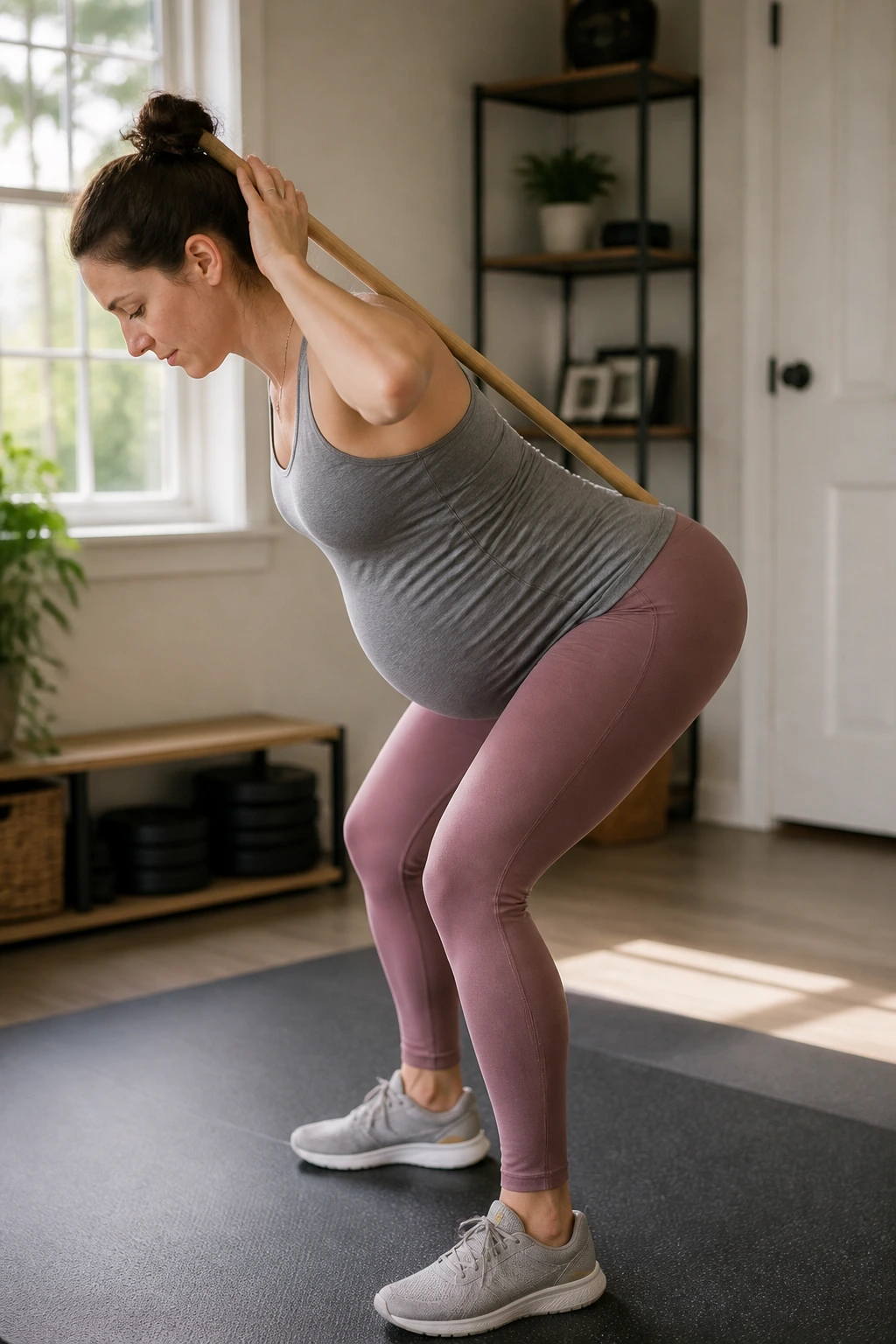
A hip hinge teaches you to bend at the hips while keeping the back long, which matters more and more as the body changes shape. It’s a useful pattern for picking things up, loading groceries, and later, getting down to low drawers without feeling like a folding chair.
Stand with feet hip-width apart and place a dowel or broomstick along your spine if you want feedback. Push your hips back, soften the knees, and tip forward only until you feel the hamstrings wake up. Stand back tall by squeezing the glutes. Try 2 to 3 sets of 10 to 12 reps with bodyweight first. Light dumbbells are fine if the pattern stays clean.
A hinge should feel like the hips are moving back, not the chest collapsing downward. That distinction matters more than people think.
15. Prenatal Pelvic Floor Breathing

Pelvic floor work gets tossed around a lot, and some of the advice is plain sloppy. The goal is not to clench all day like you’re trying to hold everything in with sheer willpower. The goal is coordination: breathe, release, gently contract, release again.
Sit tall or lie propped on pillows if that’s comfortable. Inhale for 4 counts and let the ribs widen. Exhale for 6 counts and gently lift the pelvic floor as if stopping gas and urine at the same time — softly, not forcefully. Do 5 to 8 breaths, then rest. Add 5 gentle contractions afterward, each followed by a full release.
What this should feel like
A light lift. That’s it.
If you feel tension in your jaw, glutes, or inner thighs, you’re gripping too hard. Back off and make the squeeze smaller. This should leave you more connected, not tighter.
16. Seated Shadow Boxing
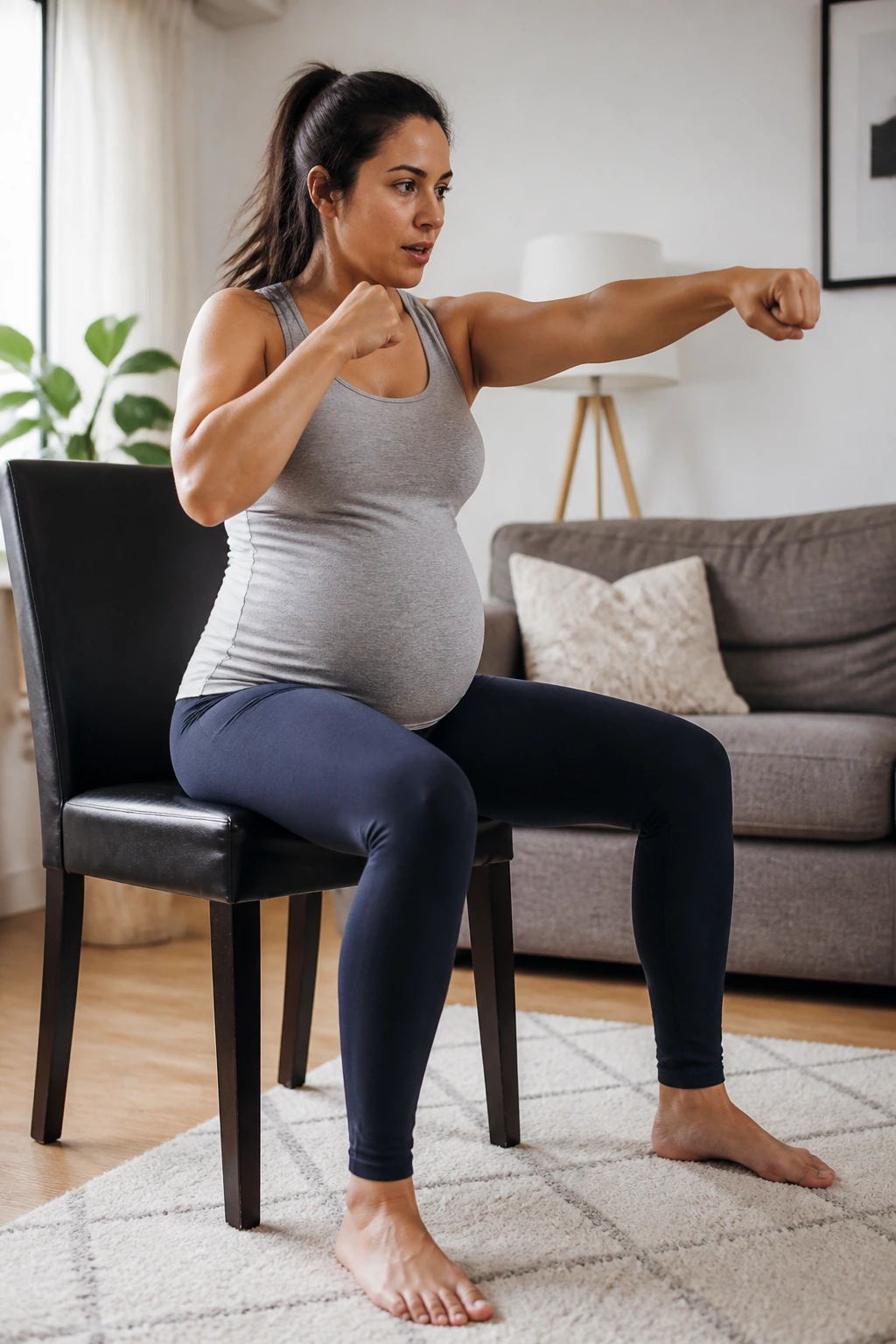
Seated shadow boxing is a sneaky-good cardio option when your balance is weird, your feet are tired, or you simply want to move without pounding your joints. It can be surprisingly sweaty if you keep the tempo honest.
Sit on the edge of a sturdy chair with feet grounded. Throw straight punches, hooks, or light uppercuts for 2 minutes, then rest for 1 minute. Repeat for 3 to 5 rounds. Keep the torso tall and let the shoulders stay loose. No wild twisting. No breath-holding.
The workout gets better when you think about rhythm instead of force. Fast hands, soft knees, steady breathing. That combination is enough to raise your heart rate without making you feel wrecked after.
17. Low-Impact Dance Cardio
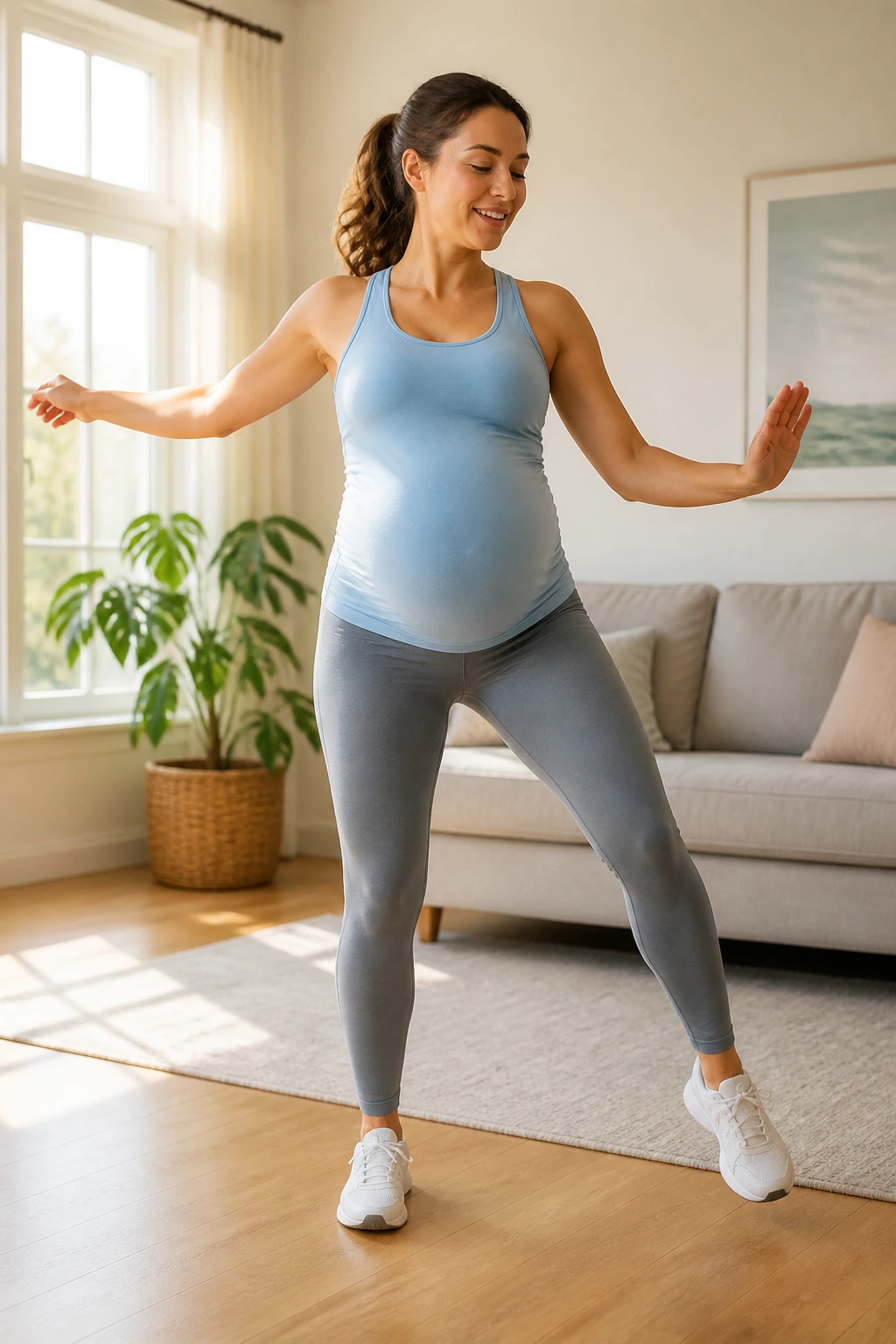
Some days you want movement that feels less like exercise and more like shaking off the stiffness. Low-impact dance cardio fits that mood nicely. No jumps. No hard pivots. Just enough rhythm to make the body feel awake.
Pick music with a steady beat and move for 15 to 20 minutes. March in place, step-touch side to side, add arm sweeps, and keep one foot on the floor at all times. If you start getting sloppy, simplify the pattern. If you’re breathing too hard to speak, slow the pace.
A mirror helps here, but not because you need to look polished. It helps you notice if your ribs are flaring or your steps are getting too wide. A little correction goes a long way.
18. Countertop Plank Holds
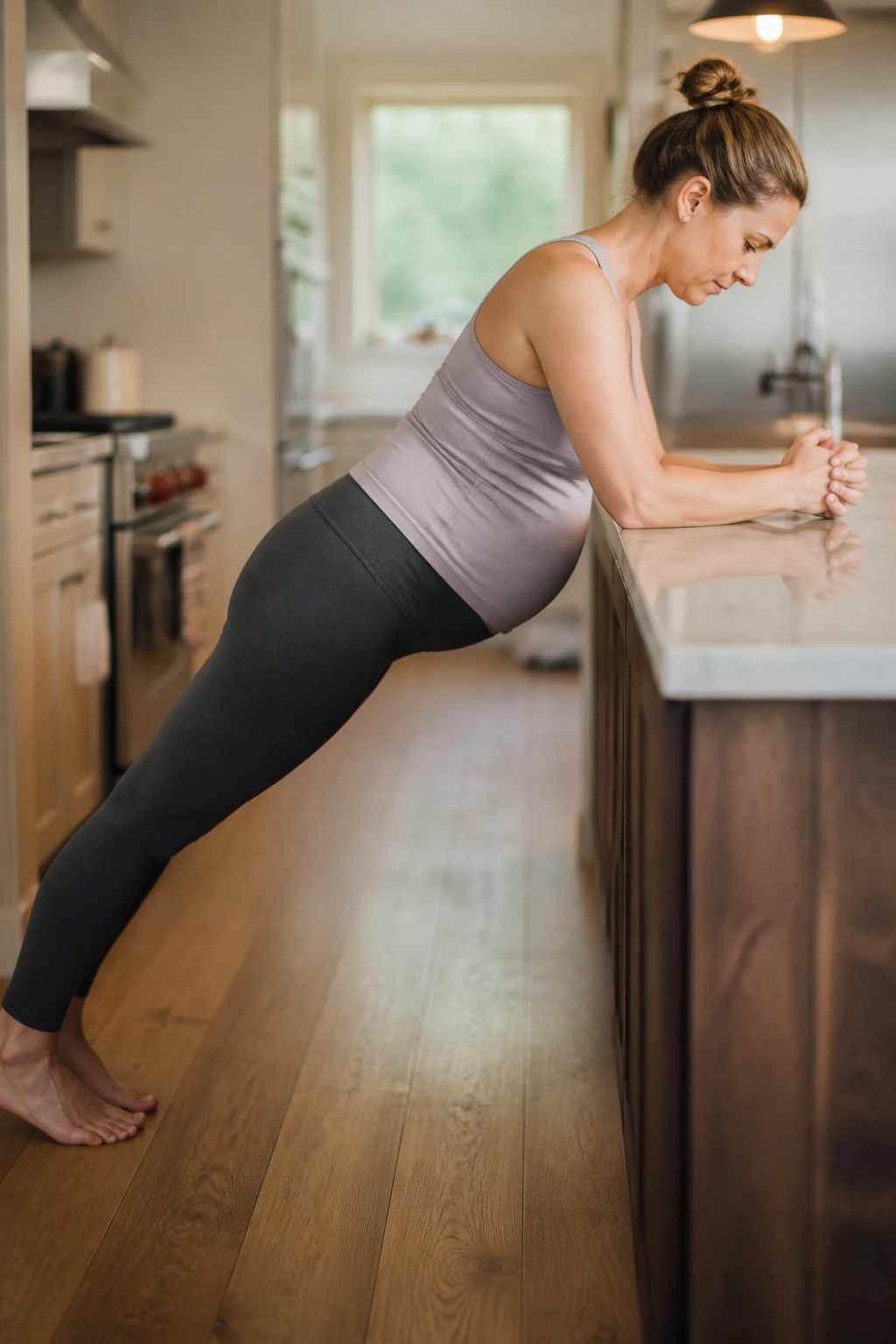
Floor planks can get awkward in pregnancy. Countertop planks are a better bet for many second-trimester bodies because the incline eases pressure and makes breathing easier. You still get shoulder and core work without lying flat or sagging into the middle.
Place your forearms or hands on a sturdy countertop. Step back until your body forms a straight line from head to heels. Hold for 15 to 30 seconds, rest, then repeat for 3 rounds. Keep the belly gently braced and the ribs from popping open.
Good signs
- You can breathe normally.
- The neck feels long.
- The low back stays quiet.
If the hold makes your belly feel coned or your back starts pinching, shorten the hold or move your hands higher onto the wall.
19. Farmer’s Carries
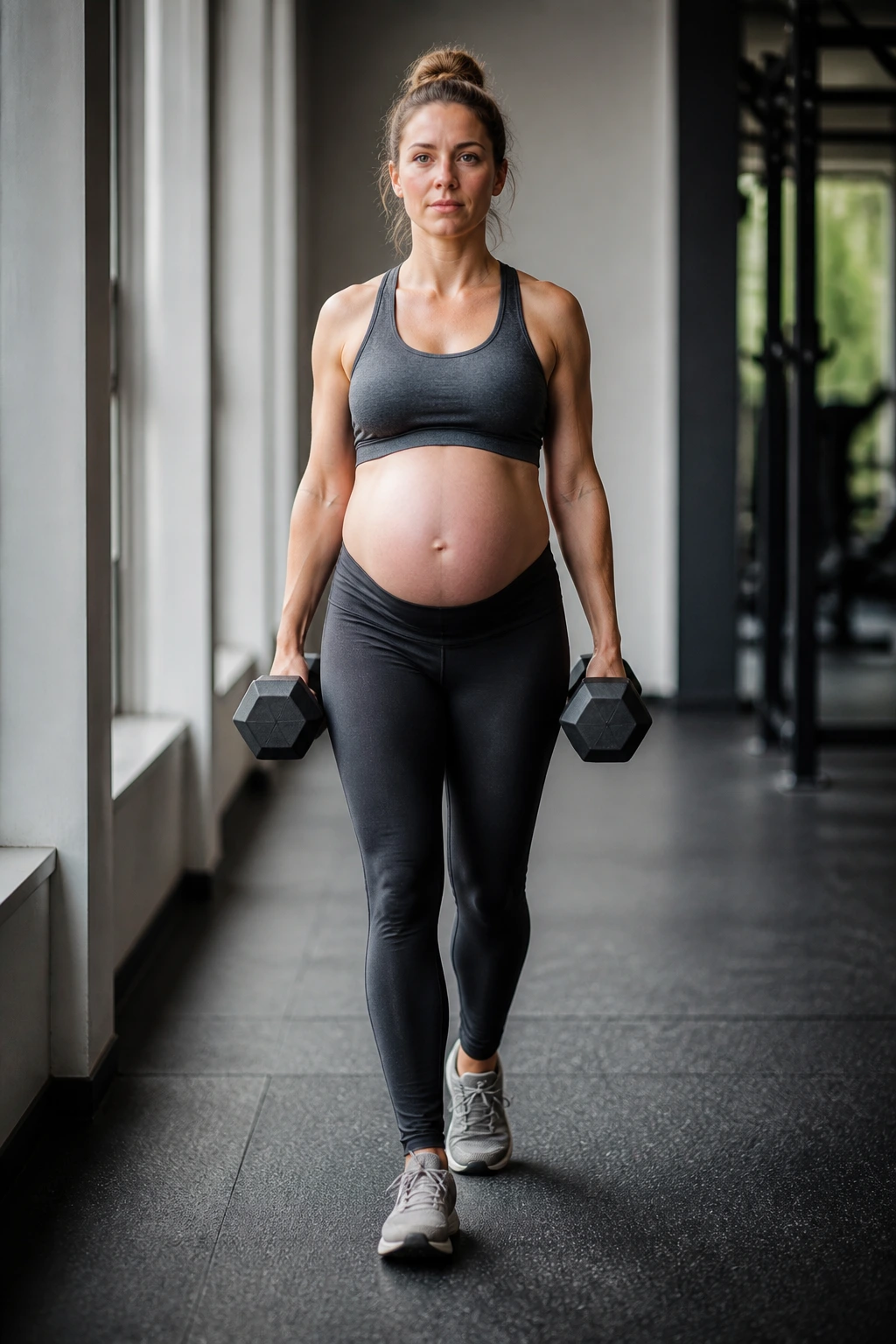
Farmer’s carries look almost too simple to count as exercise, which is exactly why they work. You pick up weights, walk with them, and keep your body tall. That’s it. But the payoff lands in the grip, the shoulders, the trunk, and the posture all at once.
Hold one dumbbell in each hand and walk for 30 to 60 seconds at a time. Start light — maybe 10 to 20 pounds per hand if that feels reasonable — and keep your ribs stacked over your pelvis. Turn around carefully. No rushing the corners.
The temptation is to lean back and let the weight drag the body apart. Don’t. Stay upright, breathe steadily, and imagine the top of your head lifting toward the ceiling. That mental cue sounds silly. It works.
20. Stair Walking
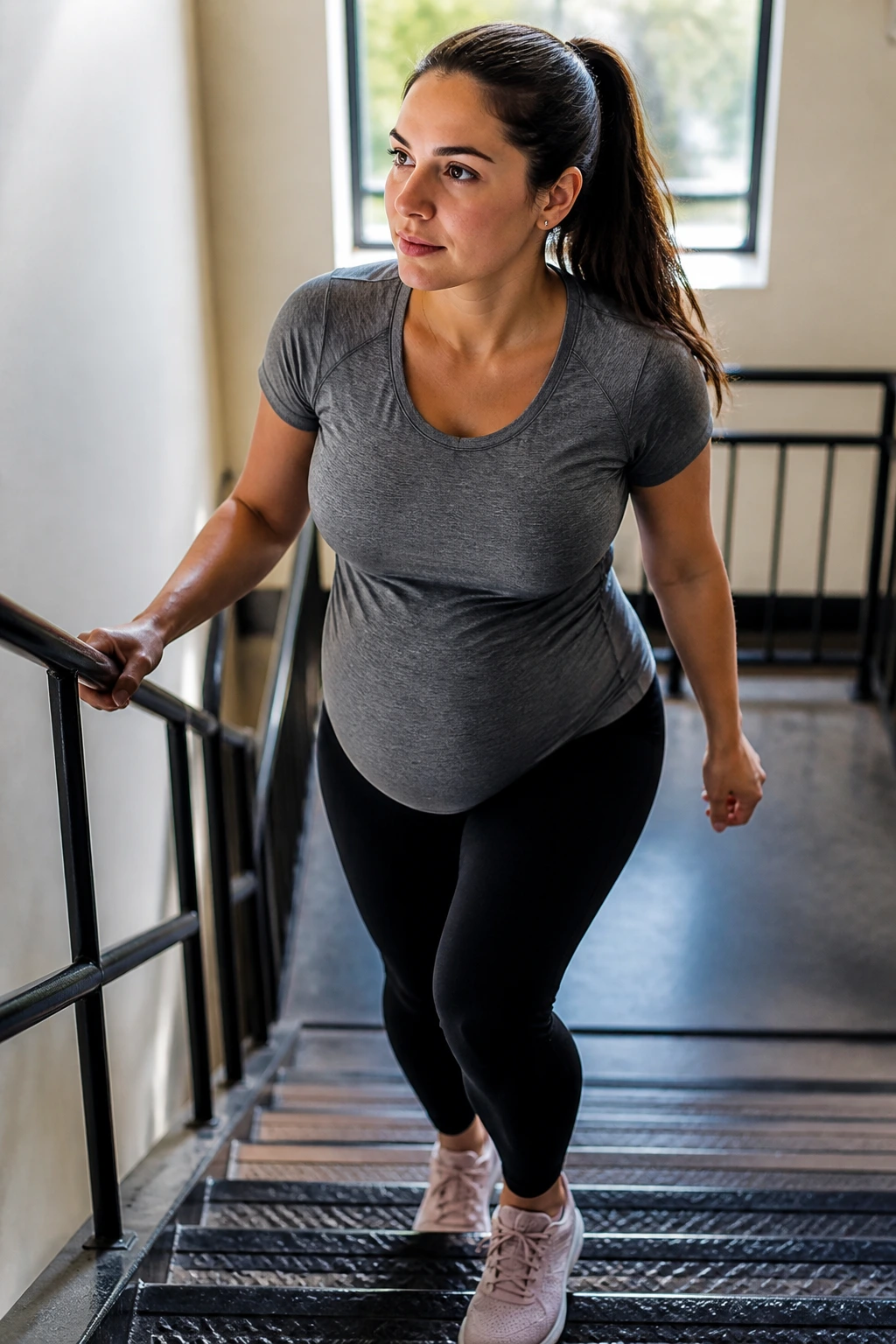
Stairs can be a workout all by themselves, and second trimester is a fine time to use them carefully if your balance and joints are happy with it. The point is not speed. The point is controlled leg work with a little heart-rate bump.
Walk up for 1 to 2 flights, then come down slowly and repeat for 5 to 10 minutes. Use the handrail. Always. If your pelvis feels unstable or your knees are cranky, cut the session short and choose flat walking instead. That is not failure. It’s a smart swap.
The rhythm should be calm enough that you could stop mid-flight without stumbling. If you can’t do that, the pace is too aggressive for the day.
21. Side Leg Lifts with a Loop Band
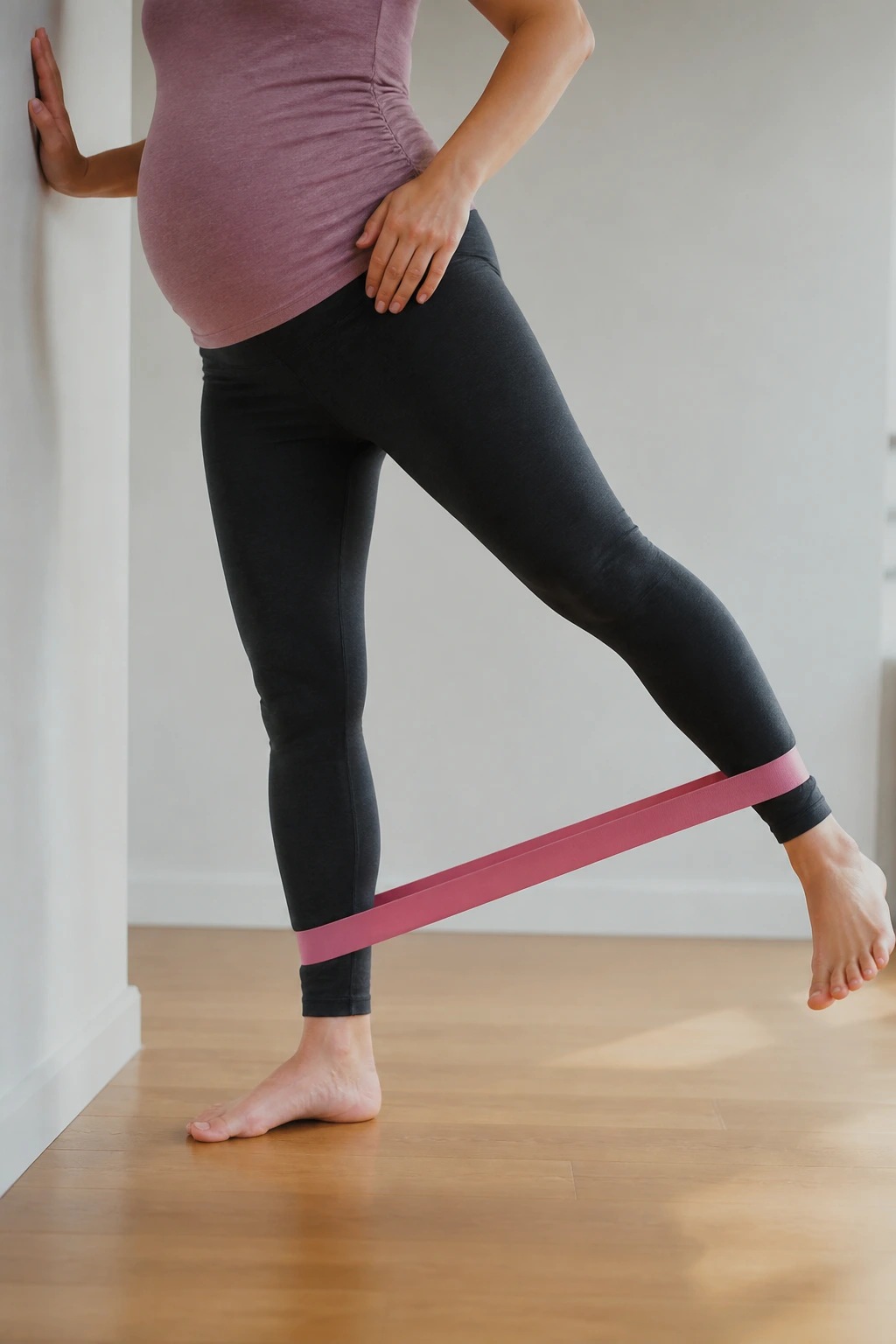
This move is a close cousin of clamshells, but it asks a little more from the standing or side-lying hip muscles. It’s a good choice when the outside of your hips feel sleepy and you want to wake them up without loading the spine much.
With a loop band around the ankles or just above the knees, lift one leg out to the side with control, then lower it slowly. Do 2 sets of 12 to 15 reps per side. Hold onto a wall if you’re standing. If you’re side-lying, keep the hips stacked and the toes pointed forward, not up to the ceiling.
A tiny range of motion is fine. Chasing height usually turns the move into a back exercise, and that’s not the point.
22. Prenatal Pilates Side Series
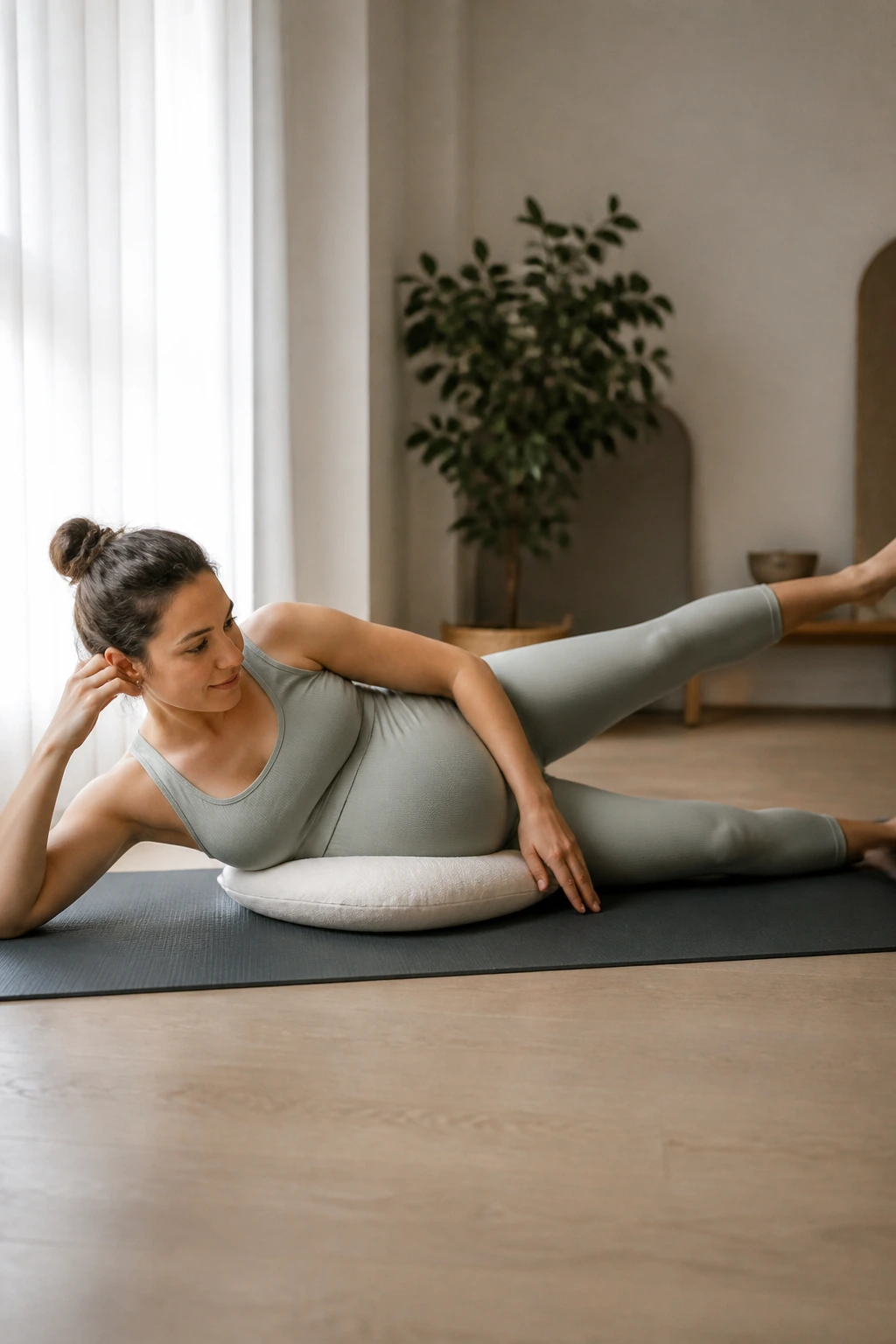
Prenatal Pilates can be excellent in the second trimester when it stays off the back and stays honest about core pressure. A side series is often the best place to live because it trains the hips, the waist, and the deep stabilizers without forcing a flat position.
Try a sequence of side-lying leg lifts, small circles, and knee bends on each side, 8 to 10 reps apiece. Keep the belly supported with a pillow, and slow the tempo enough that you can feel each rep. If a teacher or video cues “pull the navel in hard,” ignore that. Gentle engagement is plenty.
A cleaner cue
Think long through the waist, not tight through the abdomen. That keeps the work more functional and less strained.
23. Elliptical Trainer Intervals
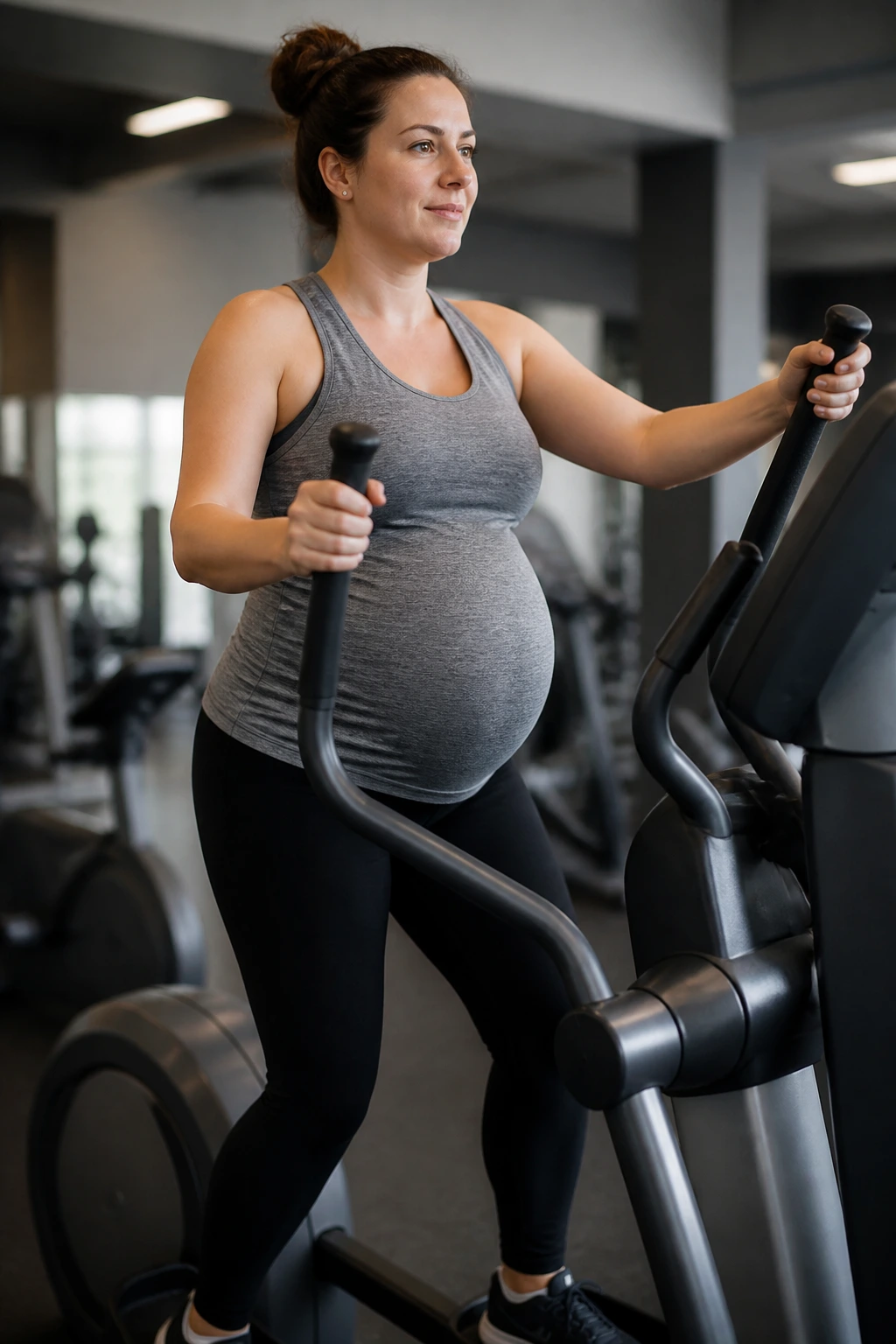
The elliptical is a good middle ground for anyone who wants cardio without the bounce of running. The pedals guide the motion, the foot strikes are soft, and the rhythm can be steady enough to feel almost meditative on a good day.
Use 2 minutes at a moderate pace and 1 minute easier, repeating for 15 to 25 minutes. Keep the resistance low if your knees track better that way. Stand tall rather than leaning on the handles. If the motion feels jerky, shorten the stride and reduce resistance.
One nice thing about the elliptical: it often reveals balance and posture changes early. If you catch yourself gripping the handles for dear life, the session is probably too hard. Ease back before you get sloppy.
24. Mobility Circuit for Hips, Ankles, and Upper Back
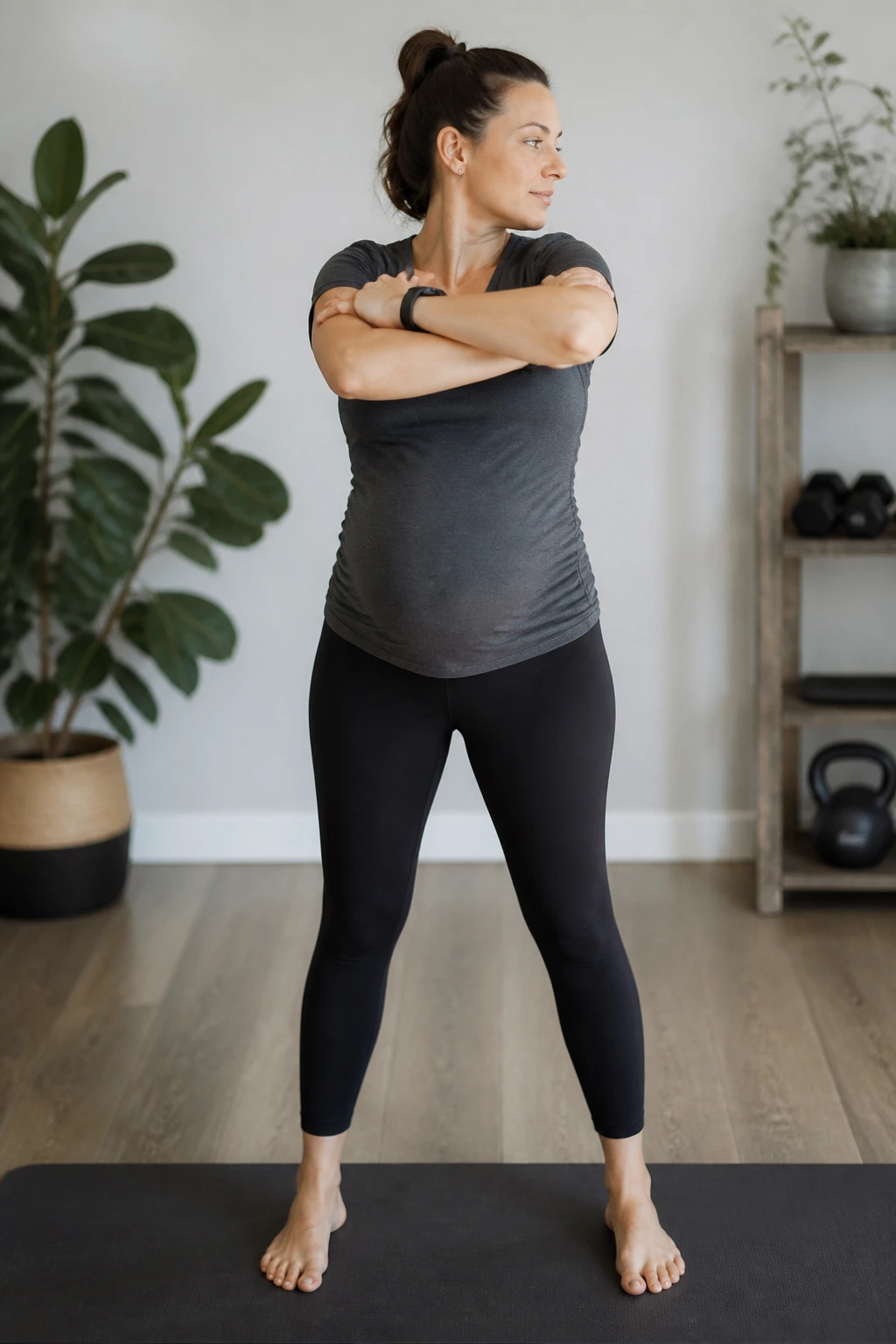
A lot of second-trimester discomfort shows up in places that do not get enough attention: ankles that feel stiff, hips that feel sticky, and an upper back that starts rounding forward under the weight of a changing center of gravity. A short mobility circuit can tidy up all three.
Do 30 seconds each of ankle rocks, hip circles, standing thoracic rotations, and calf raises. Then repeat the circuit 2 to 3 times. Keep the movements smooth and small. This is not a stretching contest. It’s joint maintenance.
A good mobility session leaves you feeling taller and easier to move around in. If you’re forcing range, you’re past the useful point. Back off. There’s a difference between opening something up and yanking it.
25. Cool-Down Walk and Posture Reset
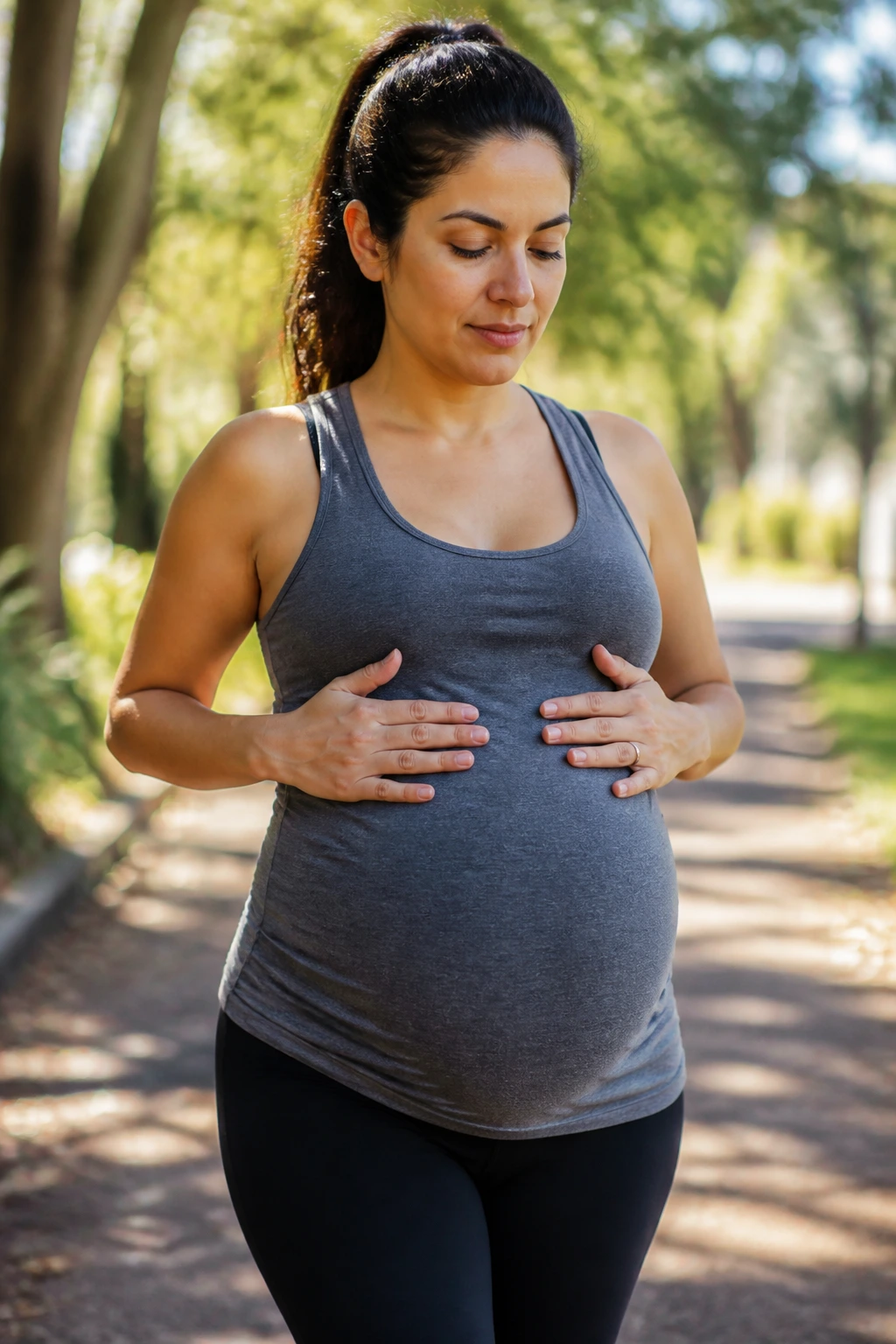
A cool-down walk sounds too basic to matter, and yet it often decides how the rest of the day feels. Ten easy minutes after a strength session or cardio burst can calm your breathing, settle your heart rate, and stop that stiff, backed-up feeling that sometimes shows up if you sit down too fast.
Walk at a relaxed pace for 8 to 10 minutes, then pause for a quick posture reset: feet under hips, ribs over pelvis, shoulders loose, chin slightly tucked. Take 3 slow breaths and let the belly soften on the inhale. That last part matters. A lot of people hold tension long after the workout ends.
If you want a tiny finishing touch, place one hand on your chest and one on your lower ribs while you breathe. It’s a small thing. It helps more than it should.
The Bottom Line
A good second-trimester workout plan does not need to feel aggressive. It needs to feel repeatable. Walking, cycling, pool work, strength training, and mobility all have a place, and the best mix is the one that leaves you steadier rather than flattened.
Pay attention to the signals that matter: breathlessness that goes beyond the talk test, pelvic pain that sharpens instead of easing, dizziness, bleeding, leaking fluid, or contractions that don’t settle. Those are not “push through it” moments.
Keep the work simple, keep the movements clean, and keep the bar low enough that you can come back tomorrow. That’s where the real progress is.
