



A sturdy chair is not a shortcut. It’s the thing that makes movement feel possible when balance is shaky, knees are cranky, or the floor feels like too much of a project.
That’s why senior chair yoga sequences for beginners work so well. The chair gives you a place to land. It lets you breathe, lengthen, twist, and stretch without the full balancing act that can make standing exercise feel like a gamble. Use a plain, stable chair with no wheels if you can. If your feet don’t quite touch the floor, slide a folded towel under them. Small detail. Big difference.
People often think chair yoga is “less than.” I don’t see it that way at all. Done well, it’s smart movement: enough challenge to wake up the spine and joints, enough support to keep the nervous system from clenching, and enough repetition to make stiff mornings less stubborn. The sweet spot is gentle, not sleepy. You should feel worked, but not rattled.
If you’re dealing with dizziness, a recent surgery, sharp joint pain, or numbness that travels down an arm or leg, it makes sense to check with a clinician before you start. Otherwise, keep the movements small at first, breathe a little slower than you think you need to, and let the chair do the heavy lifting. The first sequence starts with the most underrated move in the room: the breath.
1. Senior Chair Yoga Breath Reset and Tall Spine

Start here every single time. It looks almost too simple, and that’s exactly why people skip it. Don’t.
Sit toward the front of the chair with both feet flat, then let your sit bones feel heavy. Place one hand on your belly and one on your ribs. Inhale through the nose for 4 counts, exhale for 6, and let the shoulders drop on the out-breath. Do that for 5 rounds.
- Keep your chin level, not lifted.
- Press both feet into the floor lightly.
- Think “lengthen up” on the inhale, “soften down” on the exhale.
- If your back wants to arch, sit a little farther back in the chair.
Pro tip: this tiny reset works better than people expect, because it gives the body a clean starting line before the rest of the sequence.
2. Neck Softening and Shoulder Rolls

Do your shoulders creep toward your ears the second you sit upright? That’s normal. Annoying, but normal.
Begin with a slow chin nod, as if you’re saying a tiny “yes.” Then let one ear drift toward one shoulder, only halfway, and come back to center. Repeat on the other side. After that, roll both shoulders forward 4 times and back 4 times, keeping the movement small and smooth.
How to Keep It Gentle
Skip big neck circles. They look nice in theory and feel terrible for a lot of older bodies, especially if dizziness is part of the picture.
The better move is small, controlled motion with a long exhale. If one side feels tighter, spend an extra breath there instead of forcing symmetry. This is neck care, not a performance.
3. Seated Cat-Cow for a Stiff Back
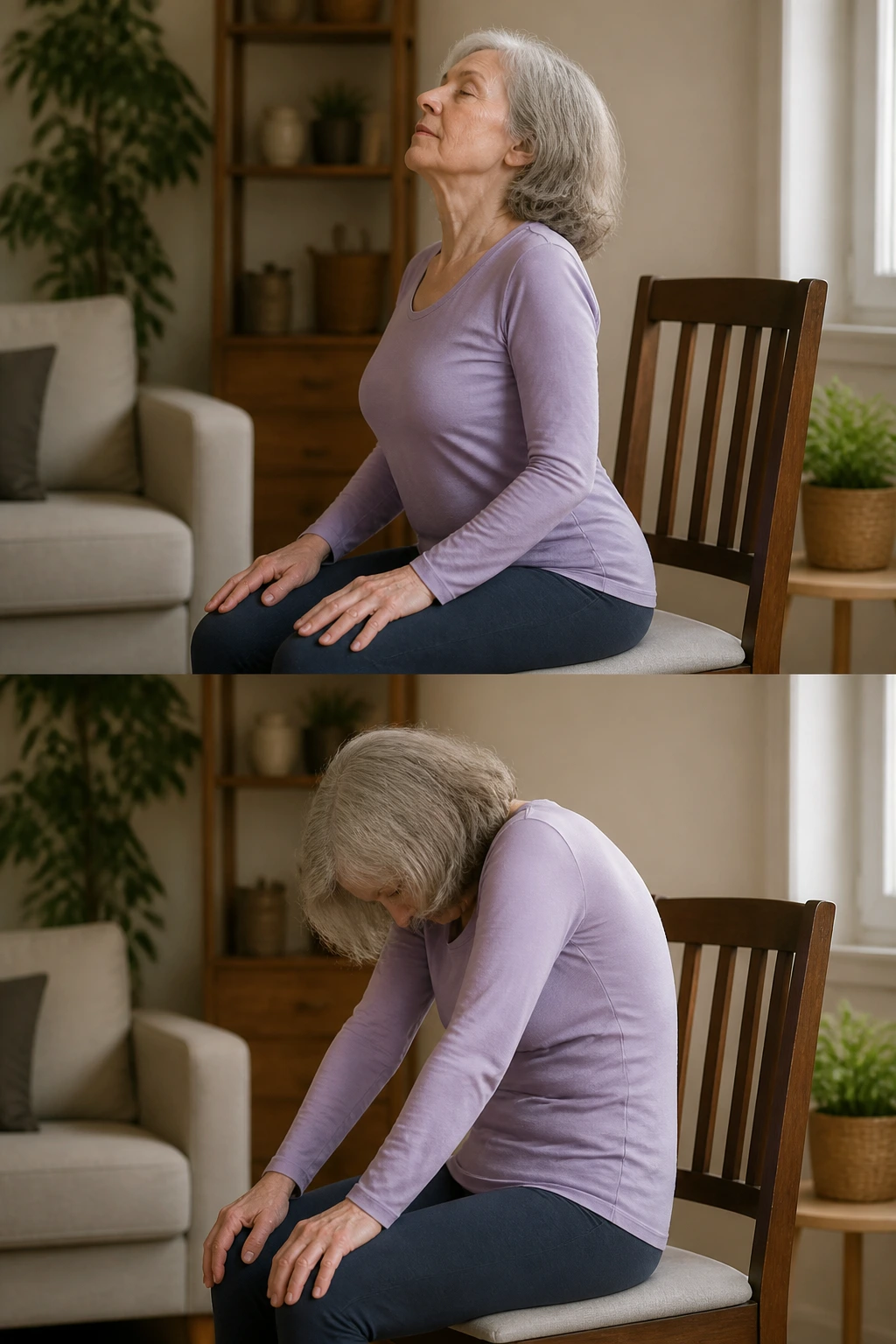
The spine likes motion, even when the rest of the body acts like it doesn’t. Seated cat-cow is one of the cleanest ways to wake up a stiff back without going anywhere near the floor.
Sit tall with hands on your knees. Inhale as you arch gently through the lower back and lift the chest. Exhale as you round the spine, tuck the tailbone, and let the chin drift slightly toward the chest. Move between those two shapes 6 to 8 times, slowly.
- Inhale: chest open, collarbones wide.
- Exhale: belly draws in, back broadens.
- Keep the shoulders away from the ears.
- Stop the motion before it turns into strain.
A lot of beginners move too fast here. Slow wins. Every time.
4. Toe Taps, Heel Lifts, and Ankle Circles
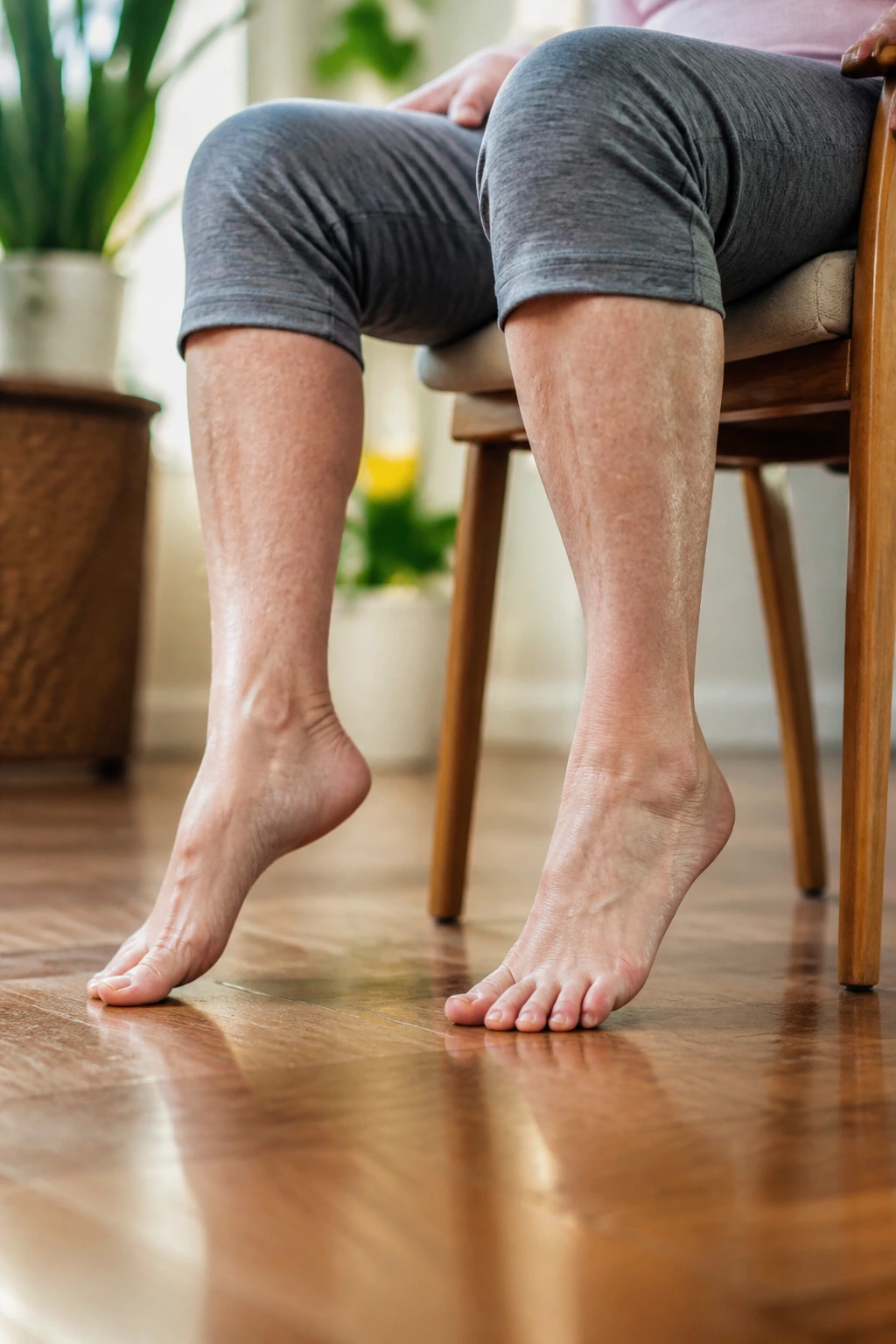
Feet are the forgotten part of chair workouts, which is a shame because they affect balance, circulation, and how steady you feel when you stand.
Lift both toes, then lower them. Lift both heels, then lower them. Do 10 rounds of each. After that, lift one foot at a time and draw 5 ankle circles in each direction. If you’ve been sitting a long time, your calves may feel warm by the end. That’s a good sign.
You do not need big movement here. Small ankle work can wake up sleepy legs without tiring you out. If the circles feel awkward, trace the alphabet with one foot and keep the other planted. Clumsy is fine. Controlled is better.
5. Side Bend Reach for the Ribs
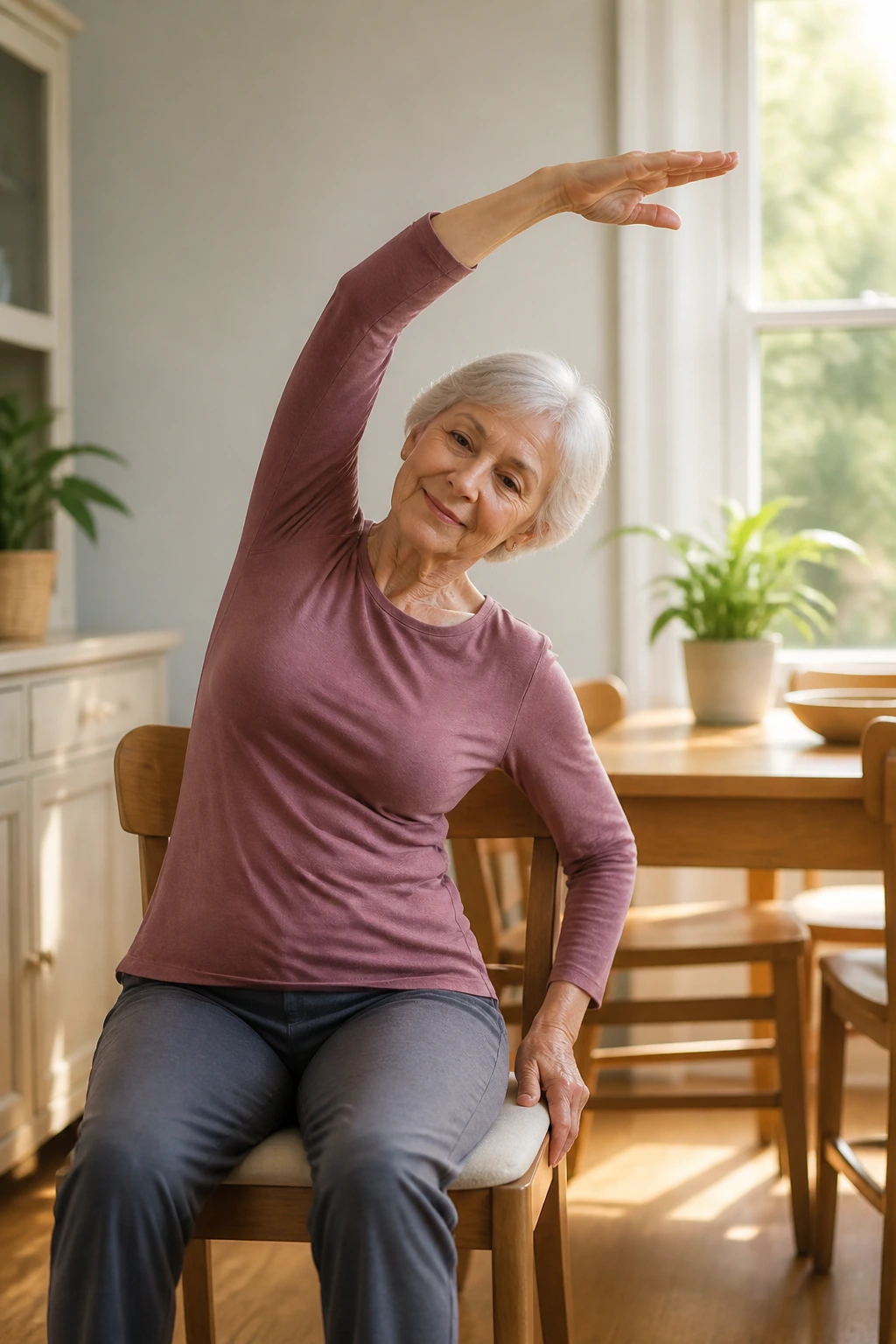
Have you ever noticed how the sides of the body get ignored? Most of us bend forward, twist a little, and call it a day. The ribs and waistline want their turn too.
Sit with both feet grounded. Slide one hand down the chair seat for support and lift the other arm overhead. Reach gently toward the grounded side, keeping both hips heavy. Hold for 2 to 3 breaths, then switch sides.
What to Watch For
The reach should feel long, not collapsed. If the shoulder creeps up by your ear, shorten the range. If your lower back pinches, stop a little sooner and keep the spine taller.
This is one of those shapes that looks mild and sneaks up on tight sides. Good. That means you’re finding the part that actually needs attention.
6. Forward Fold With a Safe Hip Hinge
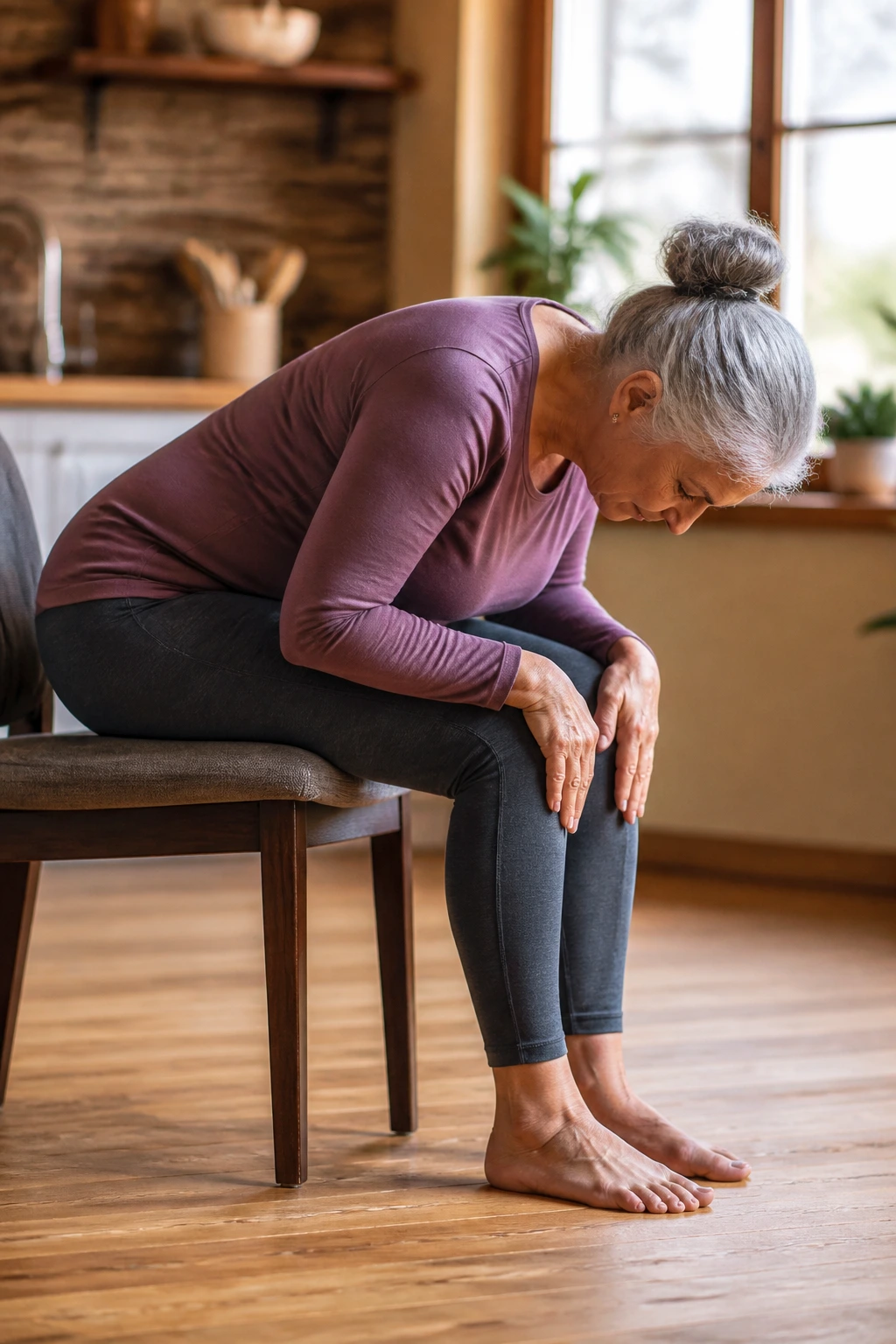
A forward fold can feel fantastic, but only if it stays friendly. The trick is to fold from the hips, not dump the whole torso into the lap like a sack of groceries.
Sit near the front edge of the chair, feet hip-width apart. Inhale tall, then exhale and hinge forward from the hips until your hands rest on your thighs or shins. Let the head hang only if it feels comfortable. Stay there for 3 slow breaths, then roll back up one vertebra at a time.
If hamstrings are tight, keep the fold shallow. If your lower back is fussy, put your elbows on your thighs and make the fold smaller. Simple does the job here. No need to chase depth.
7. Marching Legs With Easy Arm Swings
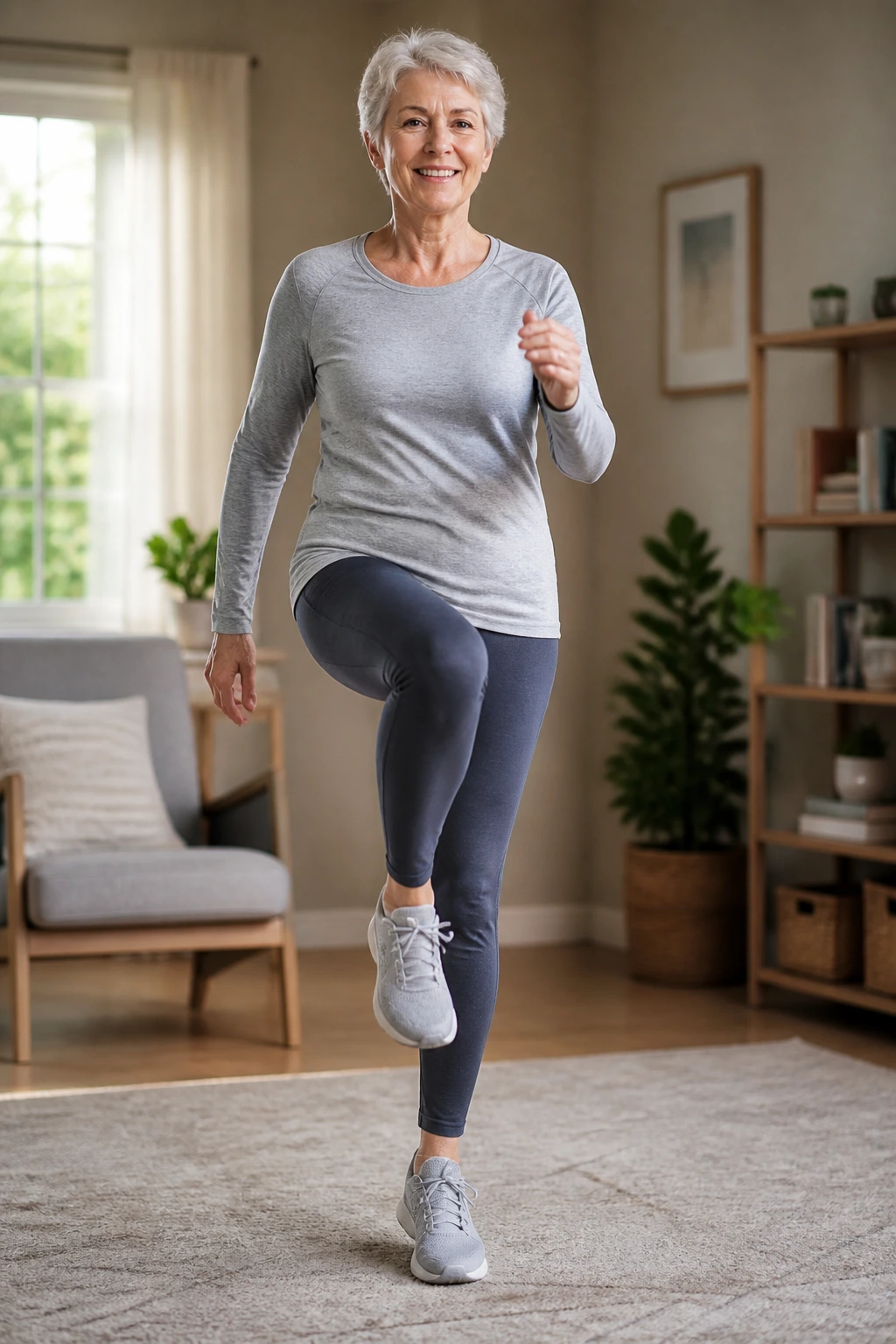
This one wakes up the whole body without asking for balance. It’s a good choice when energy is low but sitting still feels stale.
Lift one knee a few inches, lower it, then switch sides. Keep the pace slow enough that you can add opposite arm swings without losing control. Do 20 total marches, then let both arms float forward and back for another 10 counts.
- Stay upright through the trunk.
- Land the foot softly.
- Keep the knees pointing forward.
- Exhale on each lift.
One thing I like here: it feels like a walk without the logistics of a walk. That matters on days when your body is starting from zero.
8. Half Sun Salutation at the Chair
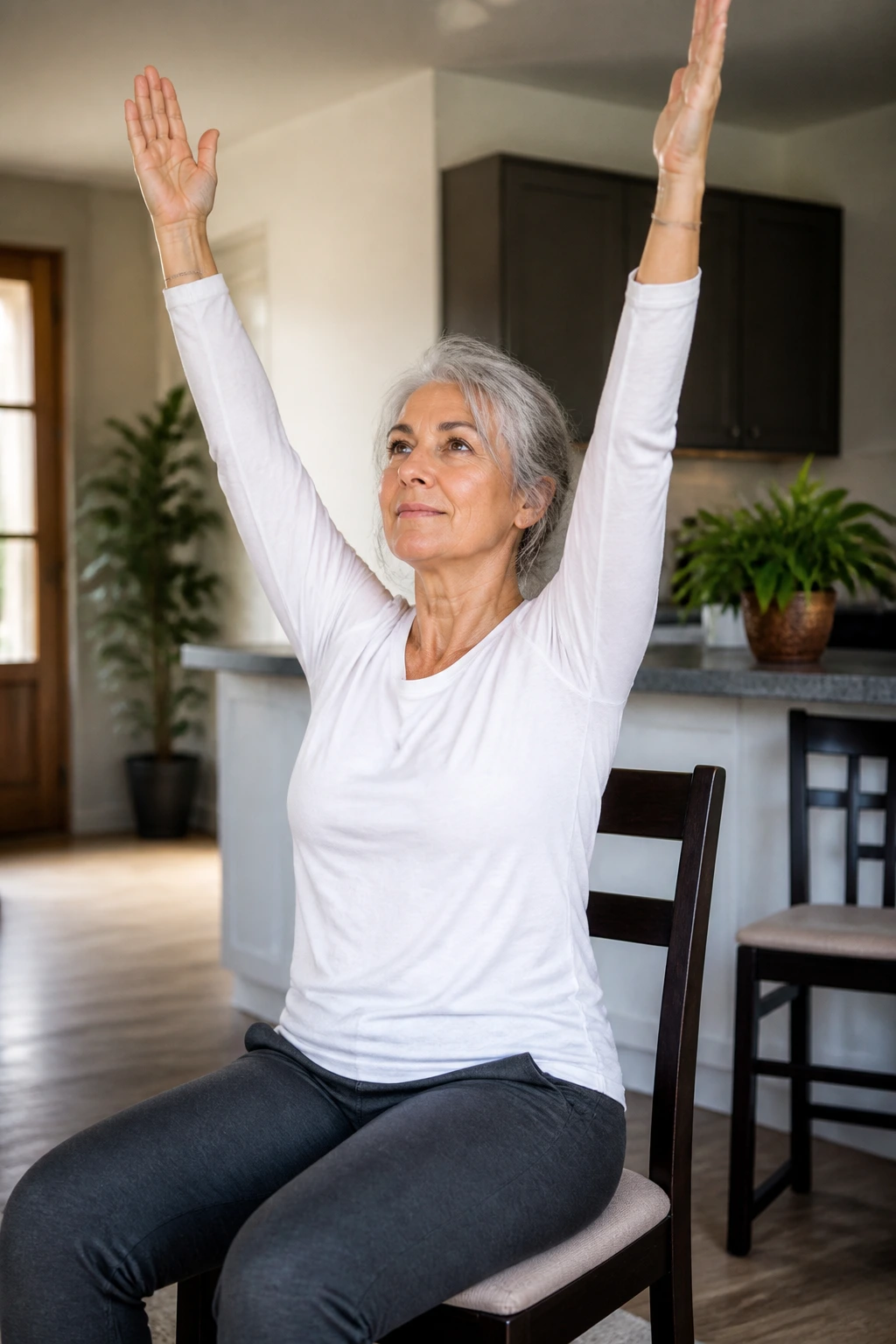
Why do people love this sequence? Because it gives the spine a simple rhythm: lengthen, fold, return, repeat.
Start seated tall. Inhale and sweep both arms overhead only as high as the shoulders like. Exhale and fold forward to your thighs. Inhale and lift halfway, hands sliding up the shins or thighs. Exhale and return to tall sitting. Run through 4 rounds at an easy pace.
A Small Habit That Helps
Try to match the movement to the breath, not the other way around. If the breath gets short, reduce the range. If the shoulders complain overhead, keep the arms in front of the chest instead.
It is not a race. It’s a groove.
9. Gentle Seated Twists for the Waist
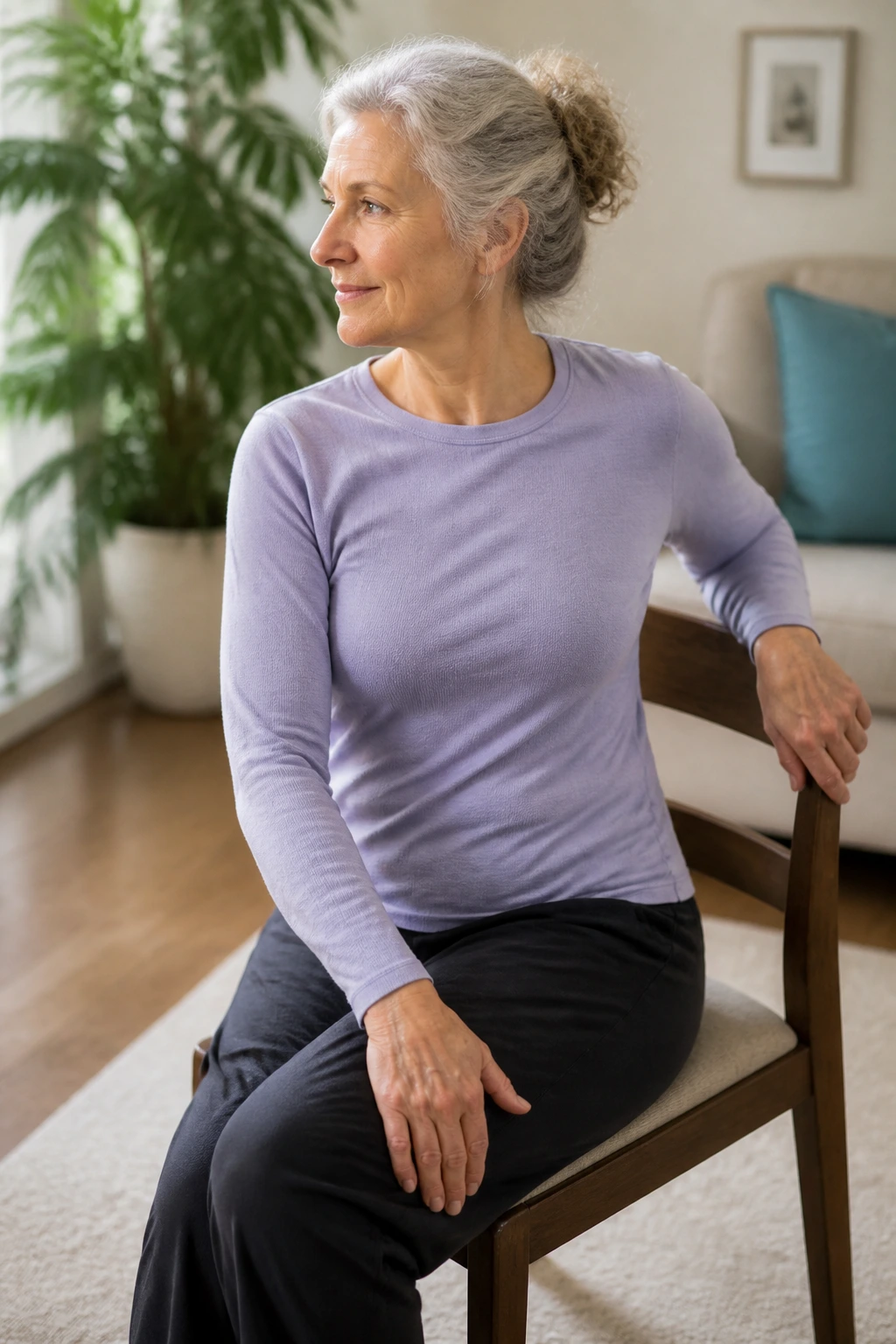
A twist should feel like wringing out stiffness, not forcing the spine into a shape it hates. That’s a fine line, and you can feel it pretty quickly once you stop trying to go far.
Place one hand on the outside of the opposite thigh and the other hand on the back of the chair or seat. Inhale tall. Exhale and turn just enough to feel the ribs shift. Hold for 2 breaths, then come back to center and switch sides.
Keep both hips grounded. Keep the turn even. If your shoulders twist before your ribs do, that’s fine at first. The point is to open, not to impress anyone in the room.
10. Wrist Circles, Finger Spreads, and Palm Stretches
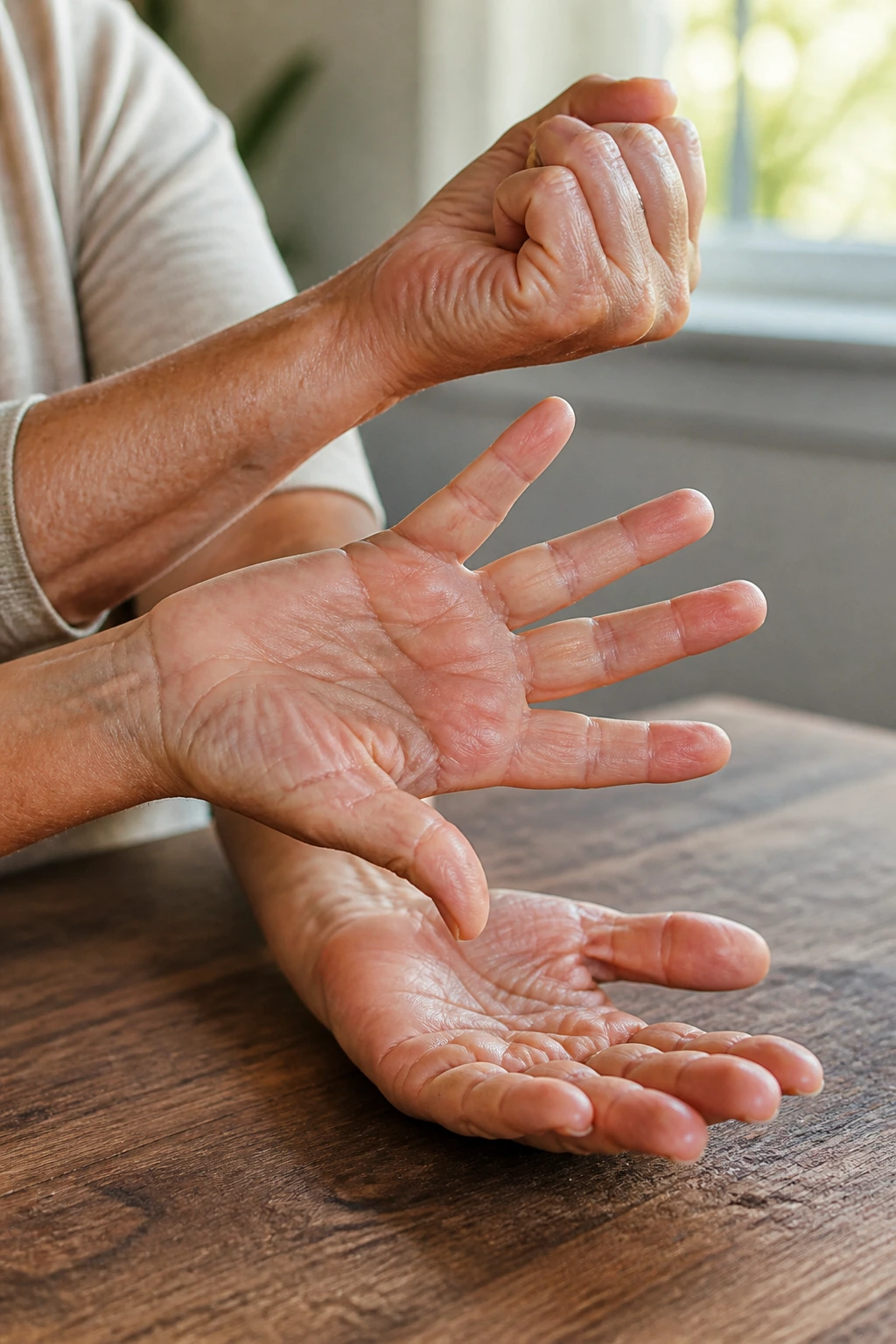
Hands matter more than most people admit. If you grip walkers, gardening tools, canes, or kitchen pans, your wrists and fingers can get sore in a hurry.
Open and close both hands 10 times. Make 5 wrist circles each direction. Then press the palms forward as if you’re saying “stop,” hold for 2 breaths, and flip the hands down for a gentle forearm stretch. If your fingers feel puffy, wiggle them fast for 10 seconds and then slow down.
- Open the hands wide before making a fist.
- Keep the elbows soft.
- Don’t yank on the fingers.
- Move each wrist separately if one side is crankier.
Tiny work. Useful work.
11. Figure-Four Hip Opener for Tight Outer Hips
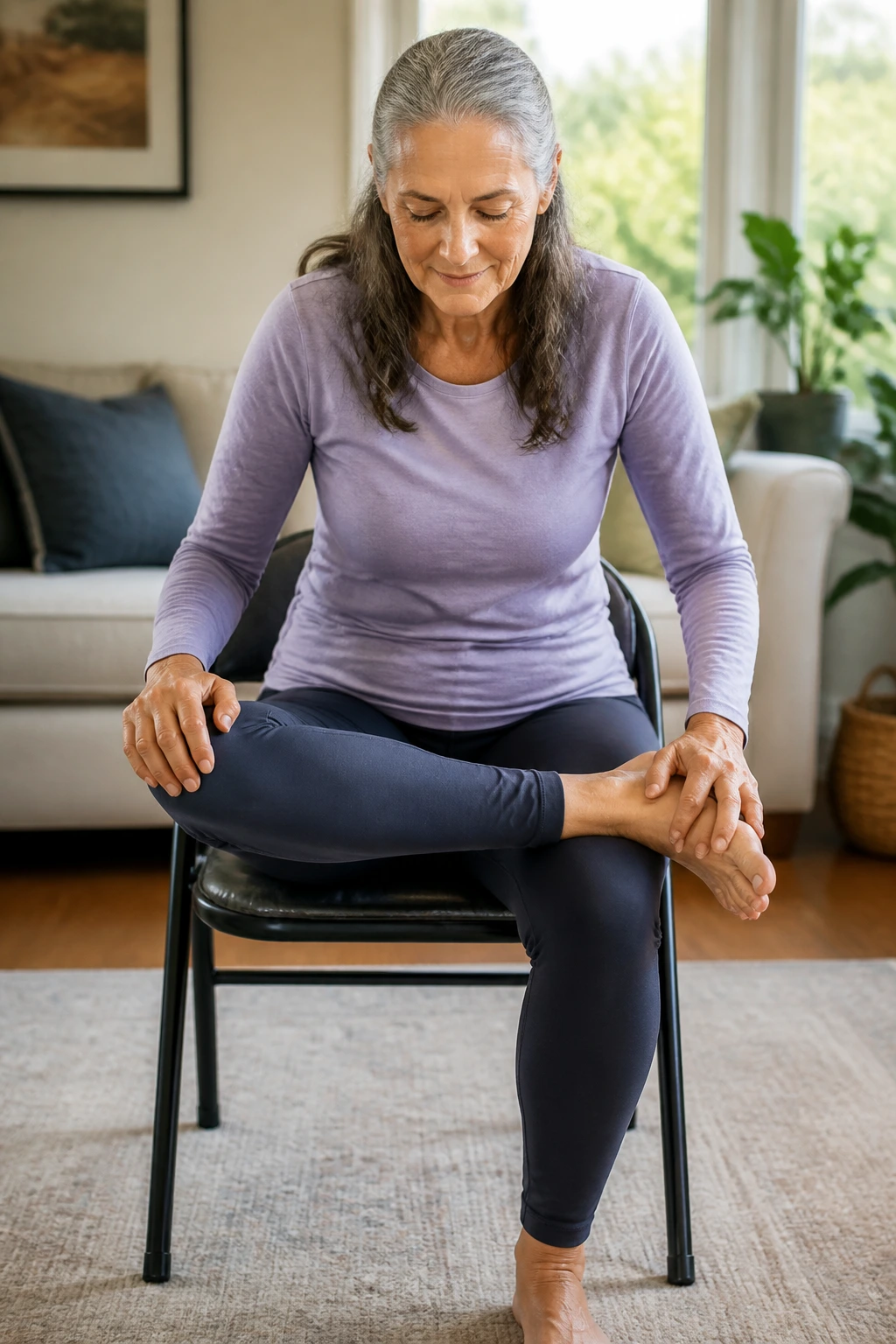
Tight hips love this one, though they may complain a little at first.
Cross one ankle over the opposite thigh so the shin makes a loose figure-four. Sit tall and lean forward only a few inches until you feel a stretch along the outer hip. Stay for 3 breaths, then uncross and switch sides. If the knee lifts too high, keep the foot lower or skip the fold and stay upright.
This is one of those stretches that gets easier after the first breath. If the hip feels pinchy, come out and try a smaller angle. You’re after a stretch across the back pocket area, not a jab in the joint.
12. Leg Extensions for Quads and Knee Comfort
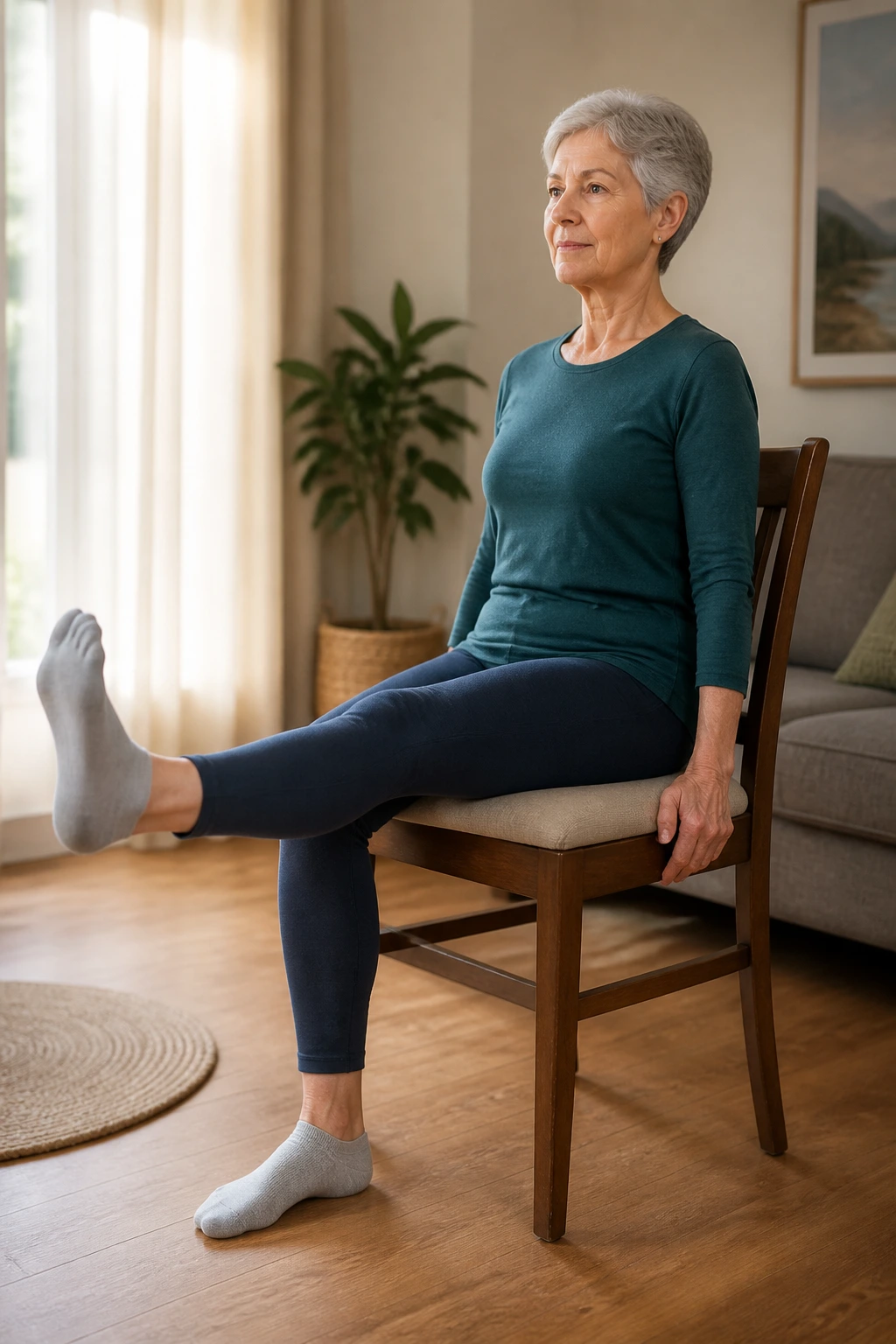
Want a move that helps the front of the thigh without asking much from the knees? This is it.
Sit tall and extend one leg until the heel is level with the chair seat. Flex the foot back toward you, hold for 2 counts, then lower slowly. Repeat 8 times on each side. If that feels easy, add a 3-second hold at the top.
What to Feel
The thigh should work. The knee should not complain.
If locking the knee feels sharp, keep a tiny bend in it. That small bend is often enough to make the move safer and smoother, especially for beginners who are still figuring out their range.
13. Eagle Arms for the Upper Back
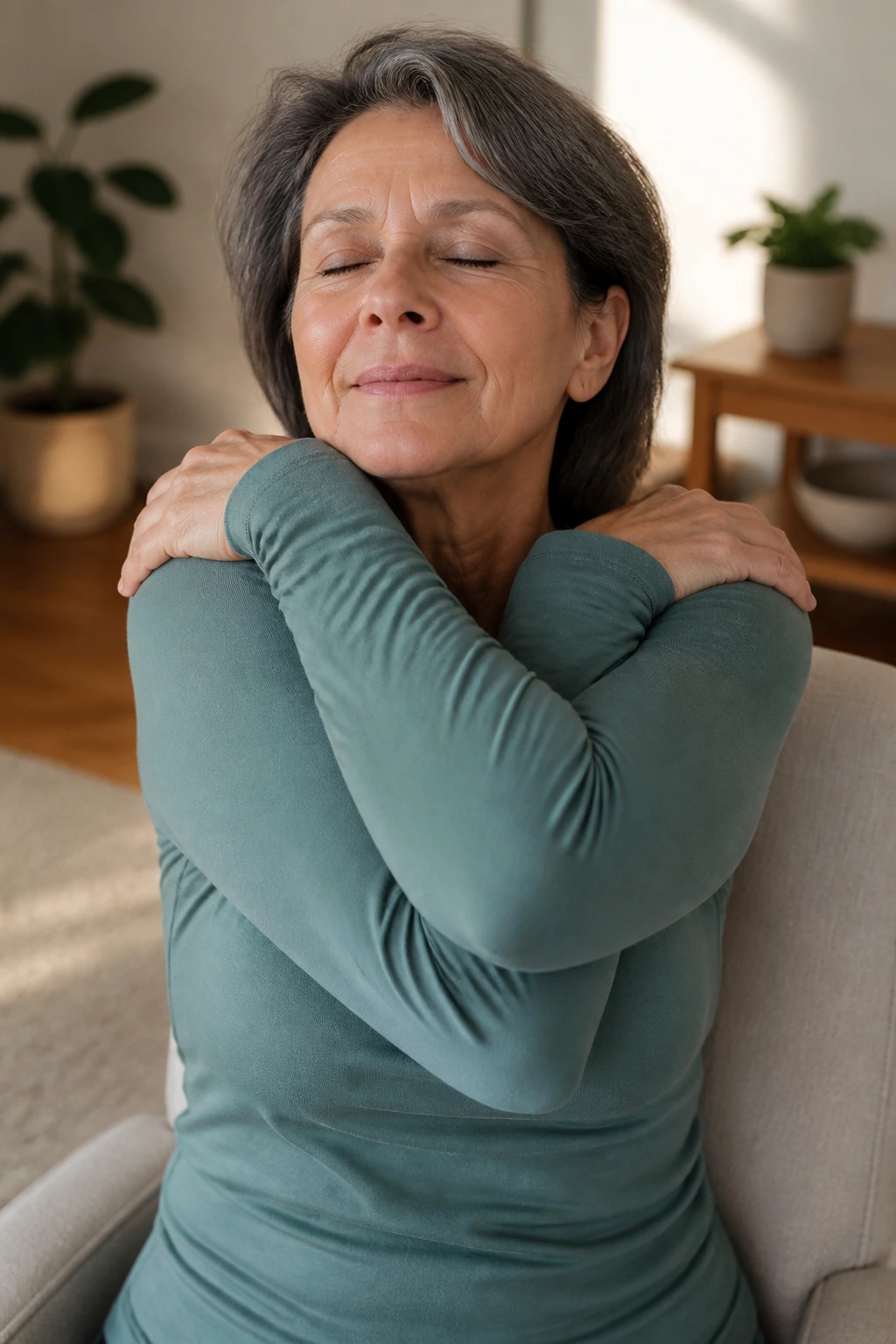
Eagle arms look fussy for about five seconds, then they feel like a relief. The stretch lands between the shoulder blades and across the upper back, which is exactly where a lot of chair-sitters get tight.
Cross one arm under the other, bend the elbows, and bring the backs of the hands together if you can. Lift the elbows a little and breathe into the upper back for 3 breaths. Unwind, then switch the crossing on the other side.
If the hands do not meet, that’s fine. Hook the thumbs or place the hands on opposite shoulders. Same benefit. Less drama.
14. Overhead Side Arc Stretch
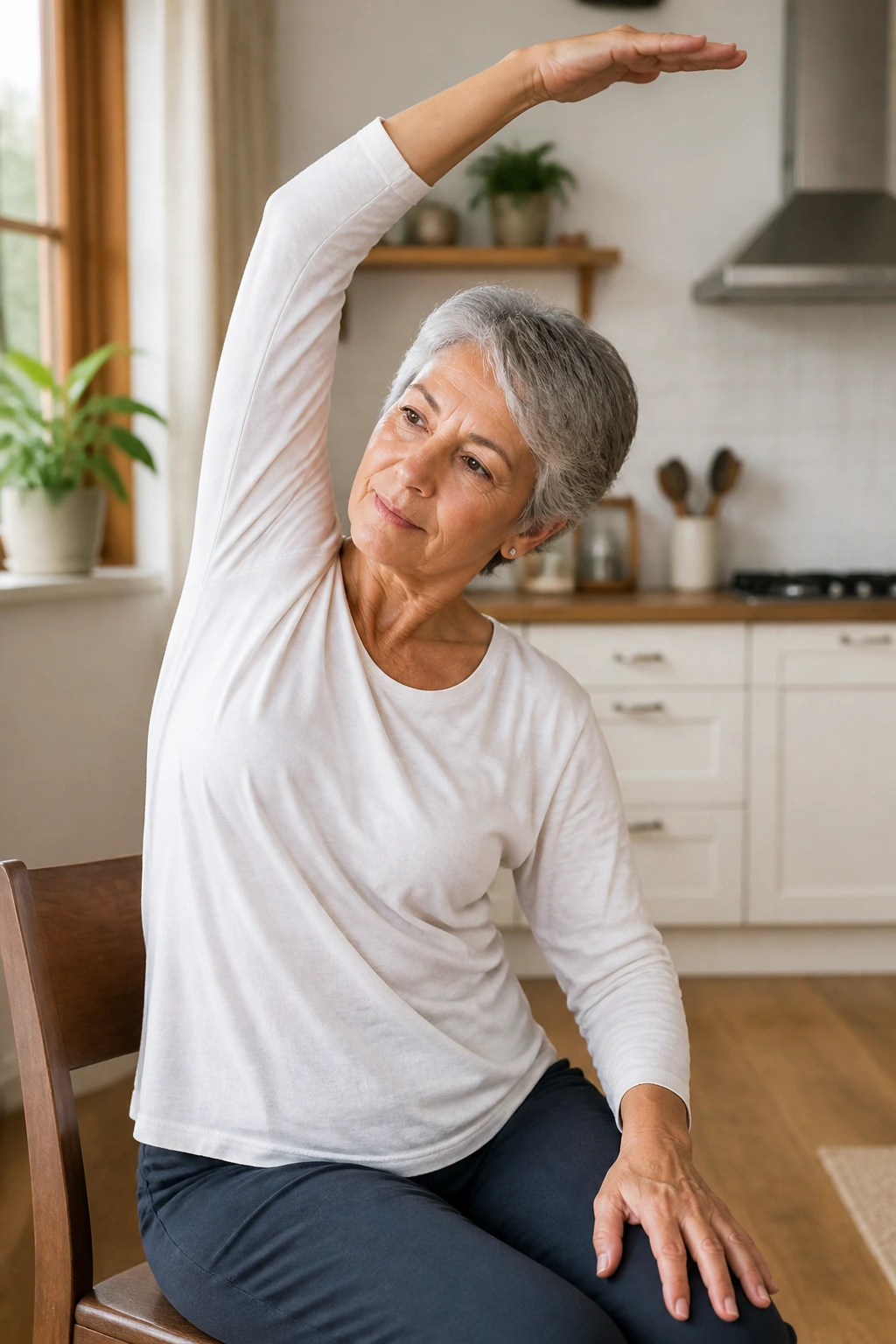
Can you reach overhead without lifting the ribs out of the chair? Good. That’s the target.
Lift one arm up, keep the other hand resting on the thigh, and arc gently to the side. Don’t fold forward. Don’t lean back. Hold for 2 to 3 breaths, then switch sides. Keep the neck long and the lower body quiet.
This stretch does a nice job of opening the waist and shoulder line together. It’s a clean little movement. Not flashy. Very useful.
15. Chest Opener With Hands Behind the Chair
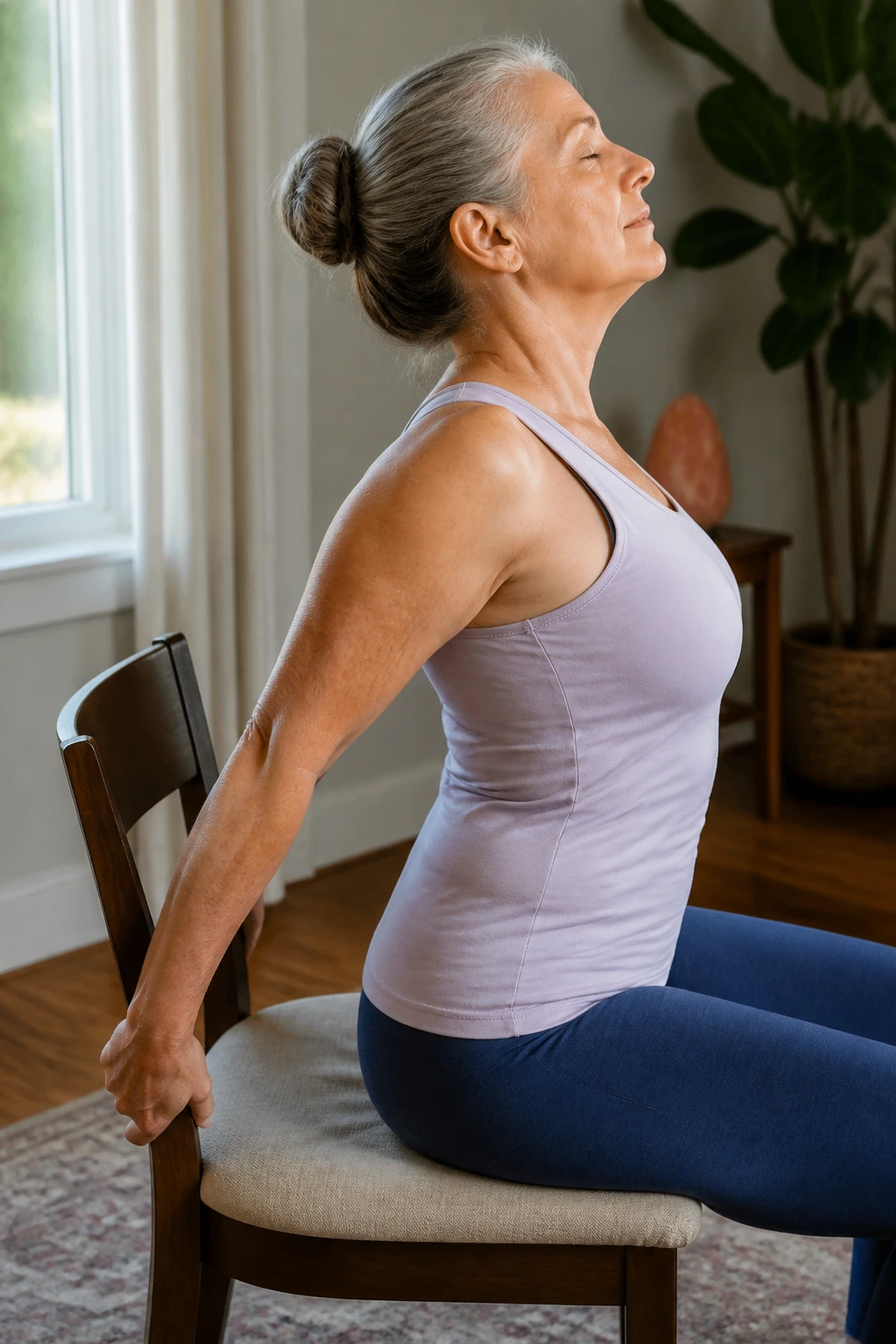
A rounded chest and slumped shoulders love to hide here, especially after a long spell of sitting.
Reach both hands behind your hips and hold the chair seat, or clasp your hands loosely behind you if that works better. Lift the sternum a little, draw the shoulder blades down, and breathe for 3 slow rounds. Release slowly, then repeat once more if it feels good.
If the shoulders are stiff, keep the grip low and mild. If the wrists object, use a towel looped through both hands instead of forcing a clasp. That tiny adjustment can save the whole stretch.
16. Heel Raises and Calf Work for Better Circulation
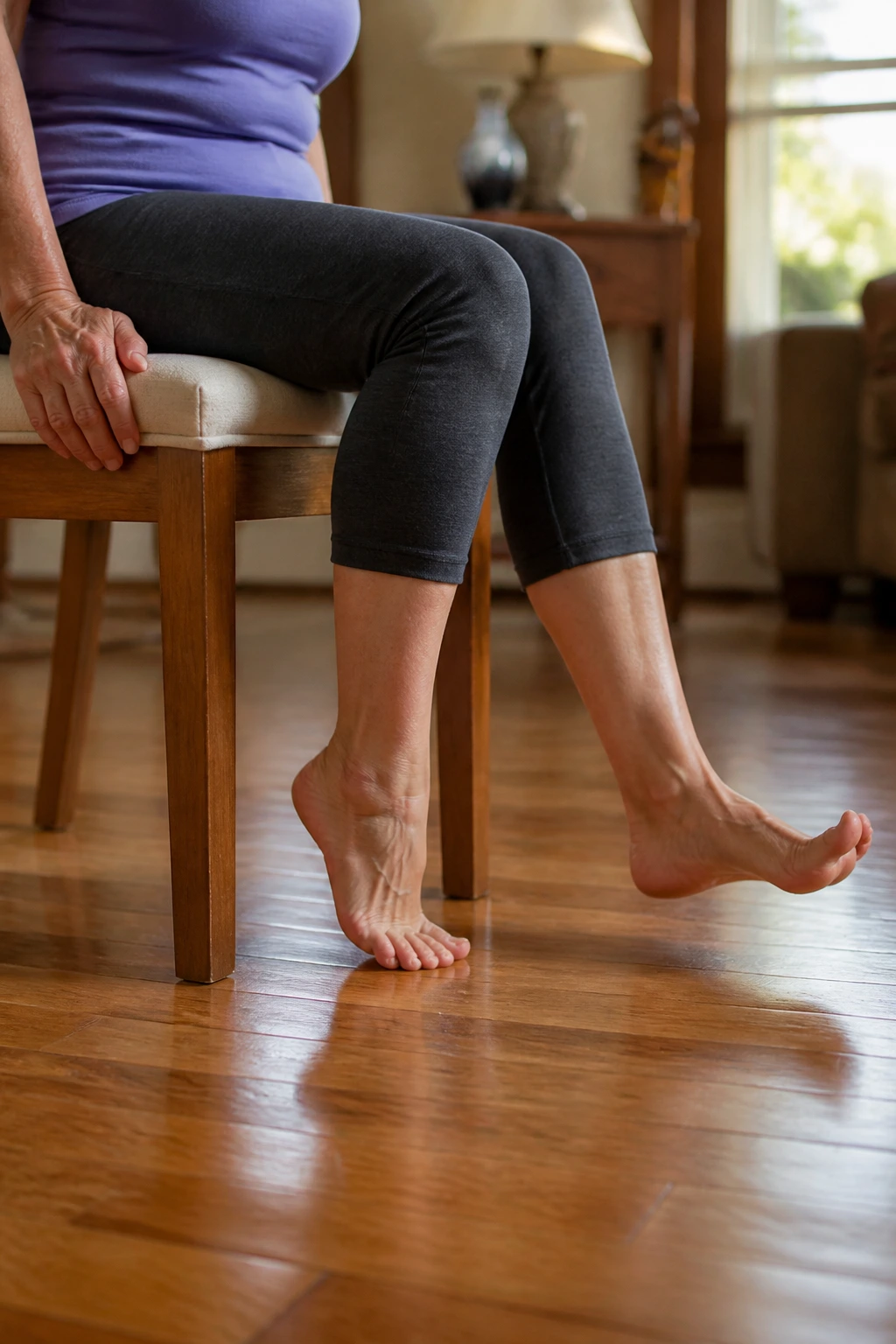
This looks plain. It is plain. And it works.
With both feet flat, lift the heels 10 times, then hold the heels up for 5 seconds on the last round. Lower slowly. After that, keep one foot planted and extend the other leg forward, pointing and flexing the ankle 5 times before switching sides.
- Move from the ankles, not the hips.
- Keep the chair still.
- Exhale as the heels lift.
- Stop if you feel cramping and shake the leg out.
Calves often get overlooked until they start feeling tight on stairs. A few reps here can change that quickly.
17. Open-Book Arm Sweep and Spine Rotation
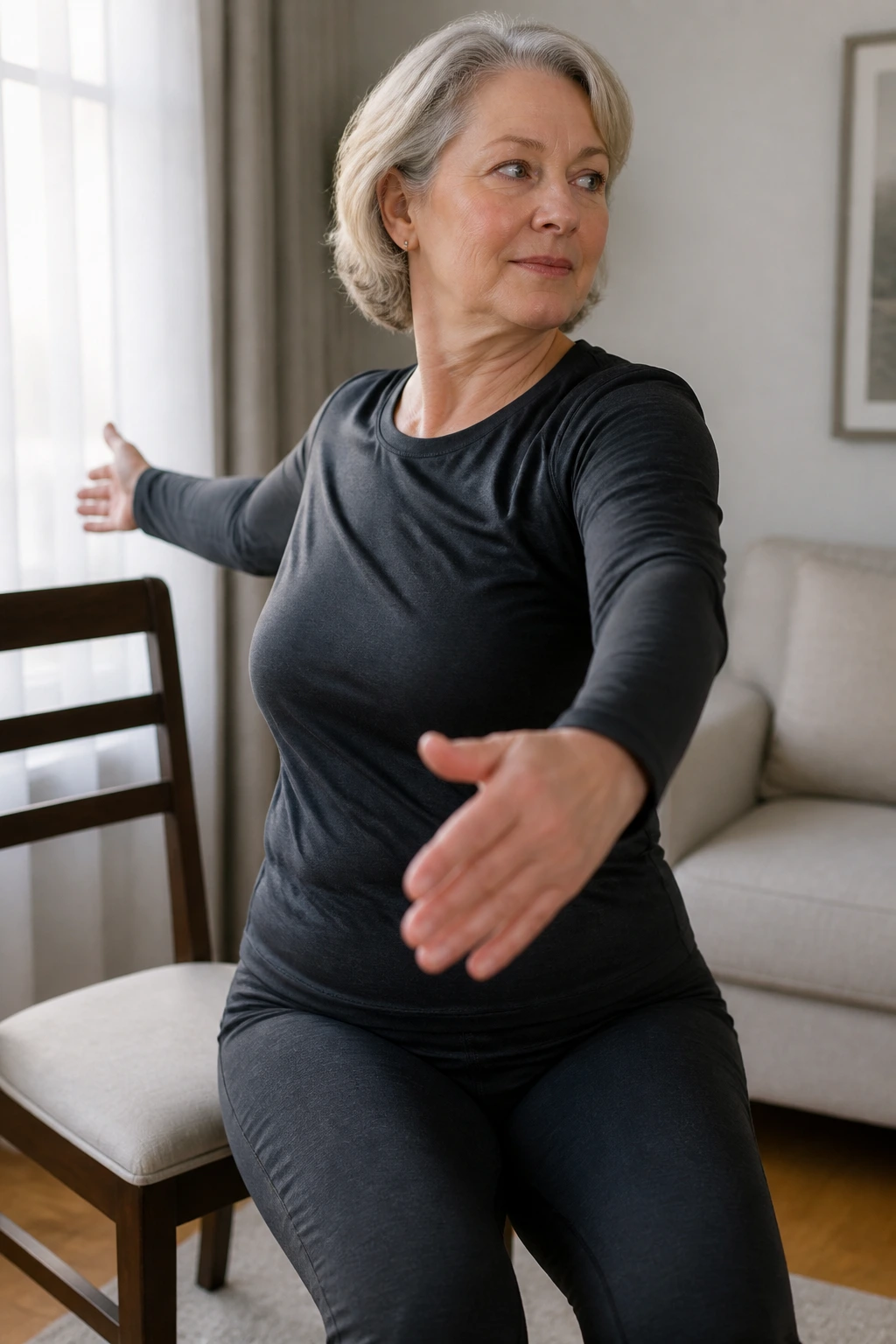
Do you want a twist that feels less like a crank and more like a smooth sweep? Use the arms to guide it.
Start with both arms in front of you. Open one arm out to the side as you rotate the chest gently in that direction, then bring it back to center. Repeat 5 times per side. Keep the movement small enough that the hips stay mostly forward.
The best part is the rhythm. Inhale to open, exhale to return. If the lower back feels strained, shorten the sweep and think of the ribs turning first. Small turn. Clean turn.
18. Supported Core Brace With Breath Counting

Core work does not need to mean crunches. In a chair, it can mean learning how to hold the middle of the body steady while the breath keeps moving.
Sit tall, place both hands over the lower belly, and inhale for 4 counts. On the exhale, gently draw the lower belly inward as if zipping up a snug jacket. Hold that light engagement for 2 counts, then let it release on the next inhale. Repeat 6 times.
Why This Helps
A lot of older adults brace too hard. That makes breathing shallow and movement stiff.
This version asks for a light, honest contraction. If your face tightens, you’re doing too much. Back off until the effort feels subtle. That’s the sweet spot.
19. Hamstring Glide With One Leg Extended
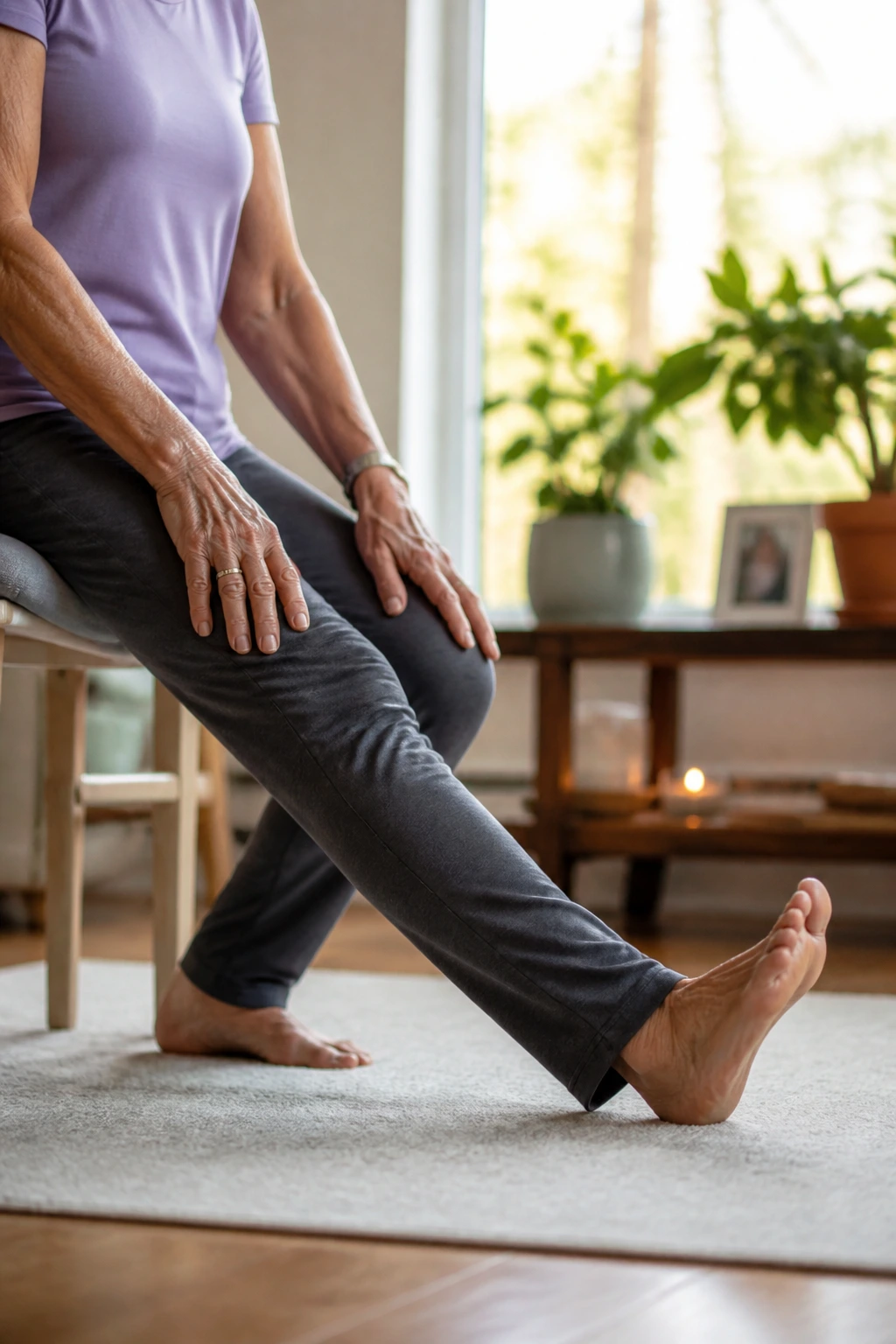
If the back of your legs gets tight, this sequence is a keeper.
Extend one leg forward with the heel on the floor and the toes pointing up. Sit tall, then hinge forward from the hips a few inches until you feel the stretch behind the thigh. Hold for 3 breaths, then come back up and switch sides. Repeat once more if the legs still feel sticky.
The leg should stay long, not locked. Keep the spine lengthened rather than rounded. If the stretch is too sharp, bend the knee slightly and take the edge off. No prize for going deep.
20. Knee Lift, Ankle Cross, and Hip Reset
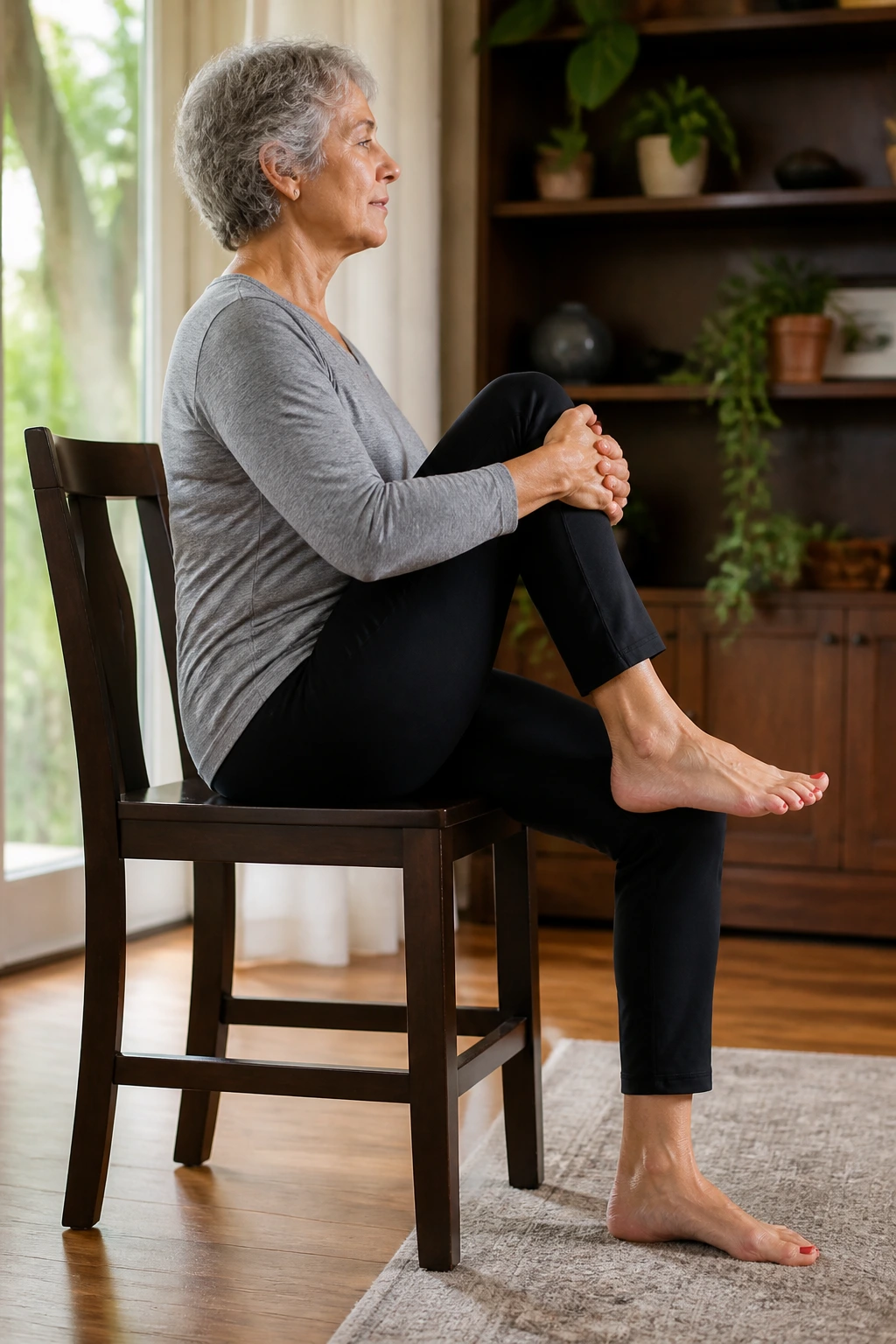
What if one hip feels tighter than the other? Start with the smaller side first and let the body settle there before you move on.
Lift one knee toward the chest a few inches, lower it, then cross the ankle over the opposite thigh if that’s comfortable. Hold for 2 breaths, uncross, and repeat on the other side. Use a hand on the chair seat for support if you need it.
Skip the cross-legged shape if the knee feels pinchy. A simple knee lift may be enough. The point is to wake up the hip, not test its patience.
21. Palm Presses and Breath-Led Strength
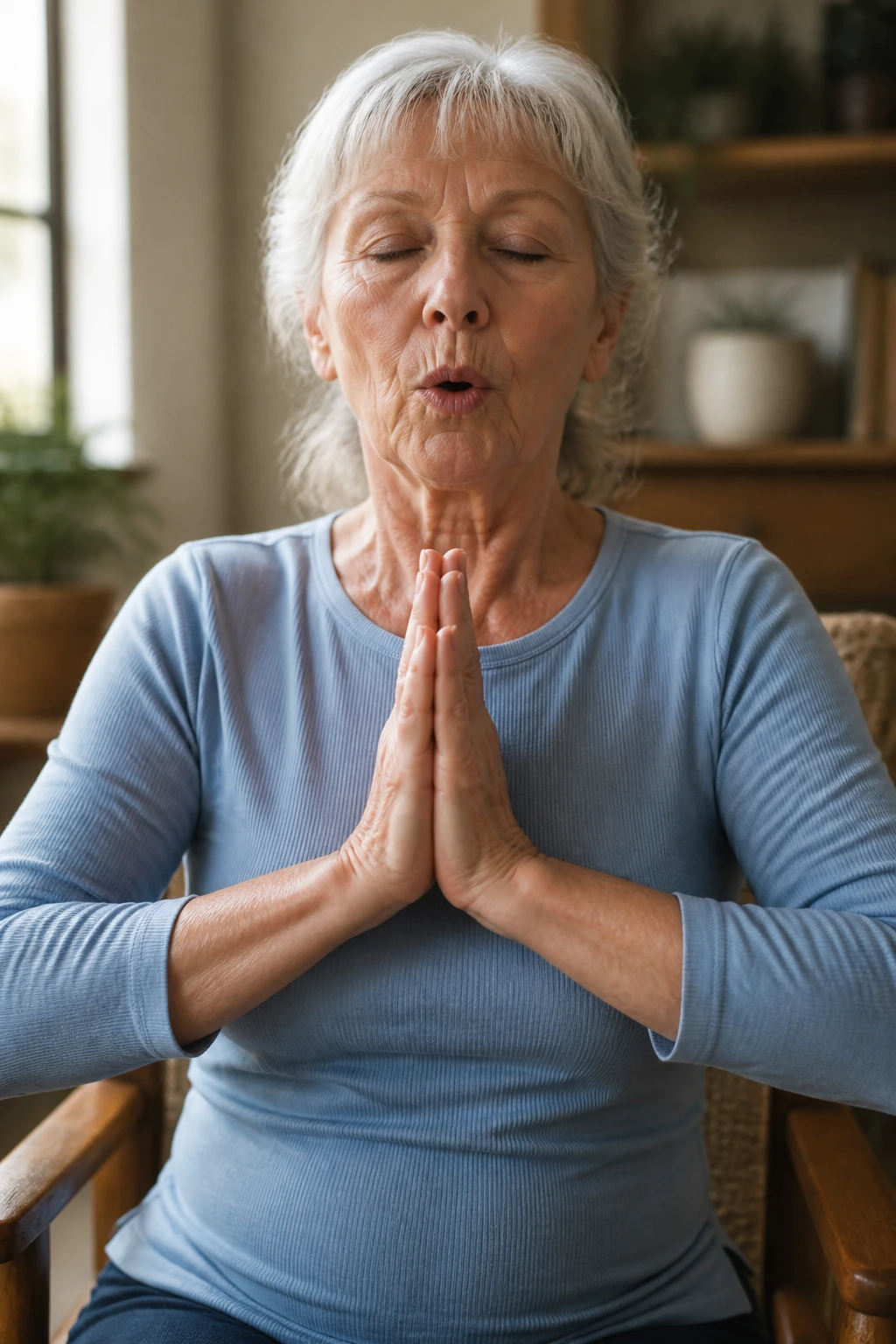
This one feels almost like a secret because it looks so quiet from the outside.
Press the palms together at chest height for 5 seconds while you exhale. Release on the inhale. Repeat 6 times. Then press one palm into the other, switch sides, and keep the shoulders soft the whole time.
- Press at about 30 to 40 percent effort.
- Keep the neck easy.
- Do not hold your breath.
- Finish with both hands open wide.
The body notices isometrics like this more than people think. They’re small, but they wake up the arms, chest, and center without any rough edges.
22. Seated Warrior Arms With Quiet Legs
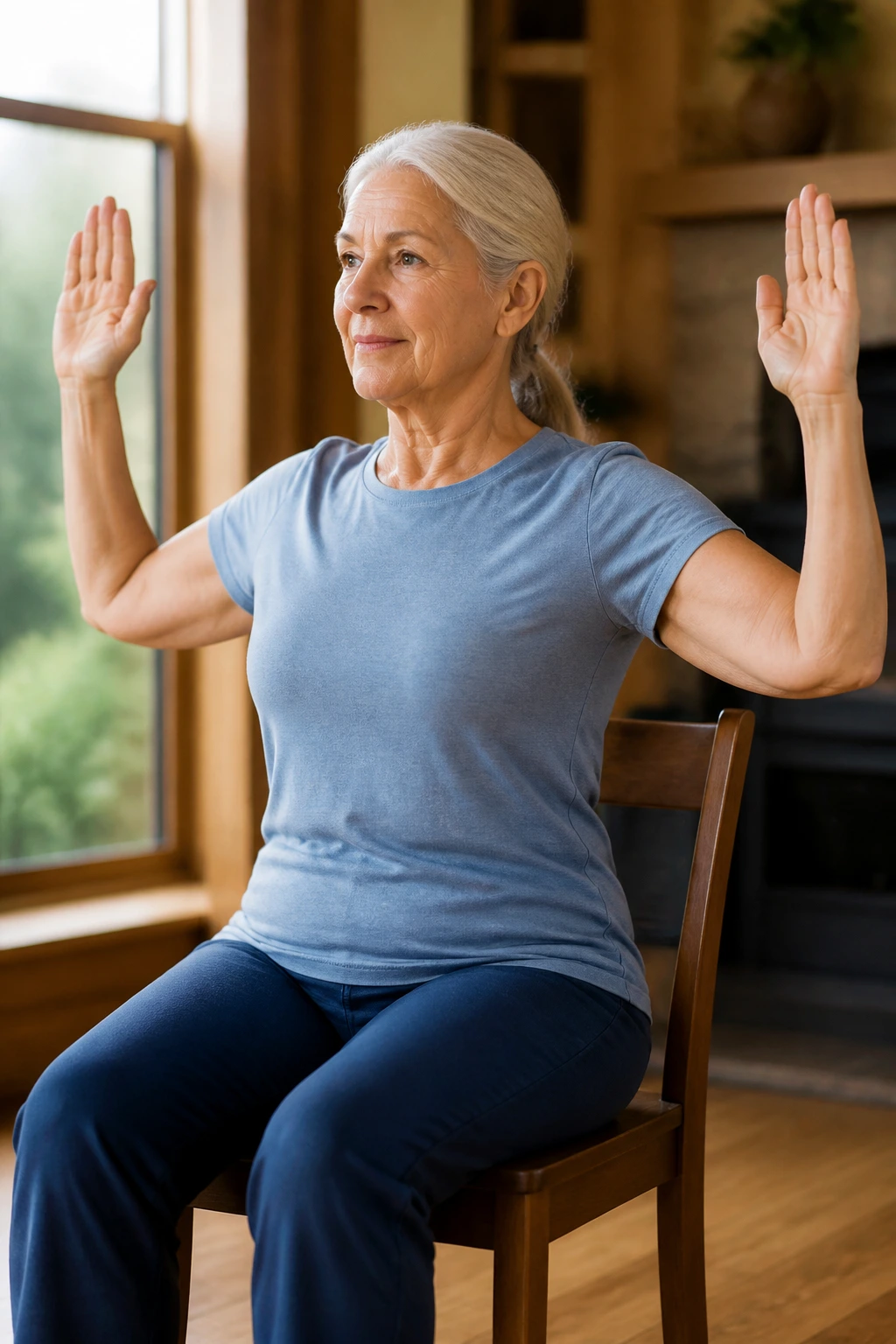
Can you make the arms work while the legs stay calm? That’s the point here.
Sit tall, bend both elbows at 90 degrees, and open the arms wide like a low “goalpost.” Hold for 2 breaths, then reach one arm forward and the other back, switching slowly 4 times. Keep the rib cage from flaring up.
The exercise borrows the feeling of Warrior II without the standing balance part. Nice trade. If the shoulders get tired fast, reduce the arm height and keep the elbows lower than shoulder level.
23. Slow Spinal Circles
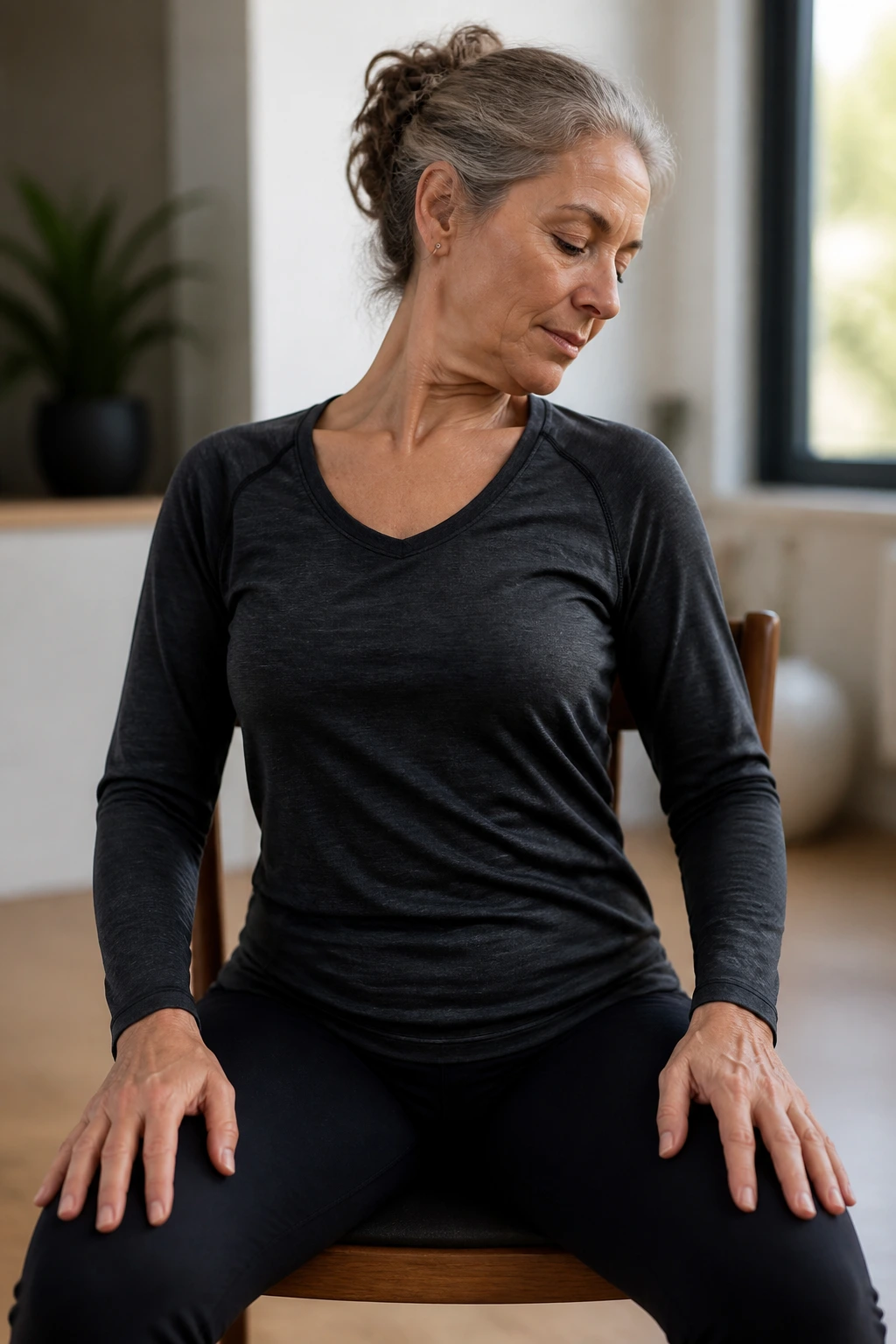
Why do slow circles feel so good after a stiff day? Because they let the spine move in every direction without asking it to choose sides.
Sit on the front half of the chair, hands resting on thighs. Begin to circle the torso small and slow, making a rounded path through the ribs, hips, and lower back. Do 3 circles one way, then 3 the other way. Keep the movement smooth and unhurried.
A Simple Way to Pace It
Think of the circle as the size of a dinner plate, not a hula hoop. If you start wobbling or feeling dizzy, make the shape smaller or stop after one round. Small circles count.
24. Body Scan and Long Exhale Finish

Endings matter. People rush them, then wonder why they still feel wired.
Sit back against the chair and close the eyes if that feels safe. Notice the jaw, the shoulders, the hands, the belly, and the feet. With each exhale, let one area soften. Take 5 slow breaths and make the exhale a little longer than the inhale.
This is not fluff. It tells the nervous system the work is done. If you want, place one hand on the chest and one on the belly to make the breath easier to track. Keep it plain. Keep it quiet.
25. A 10-Minute Beginner Chair Yoga Flow
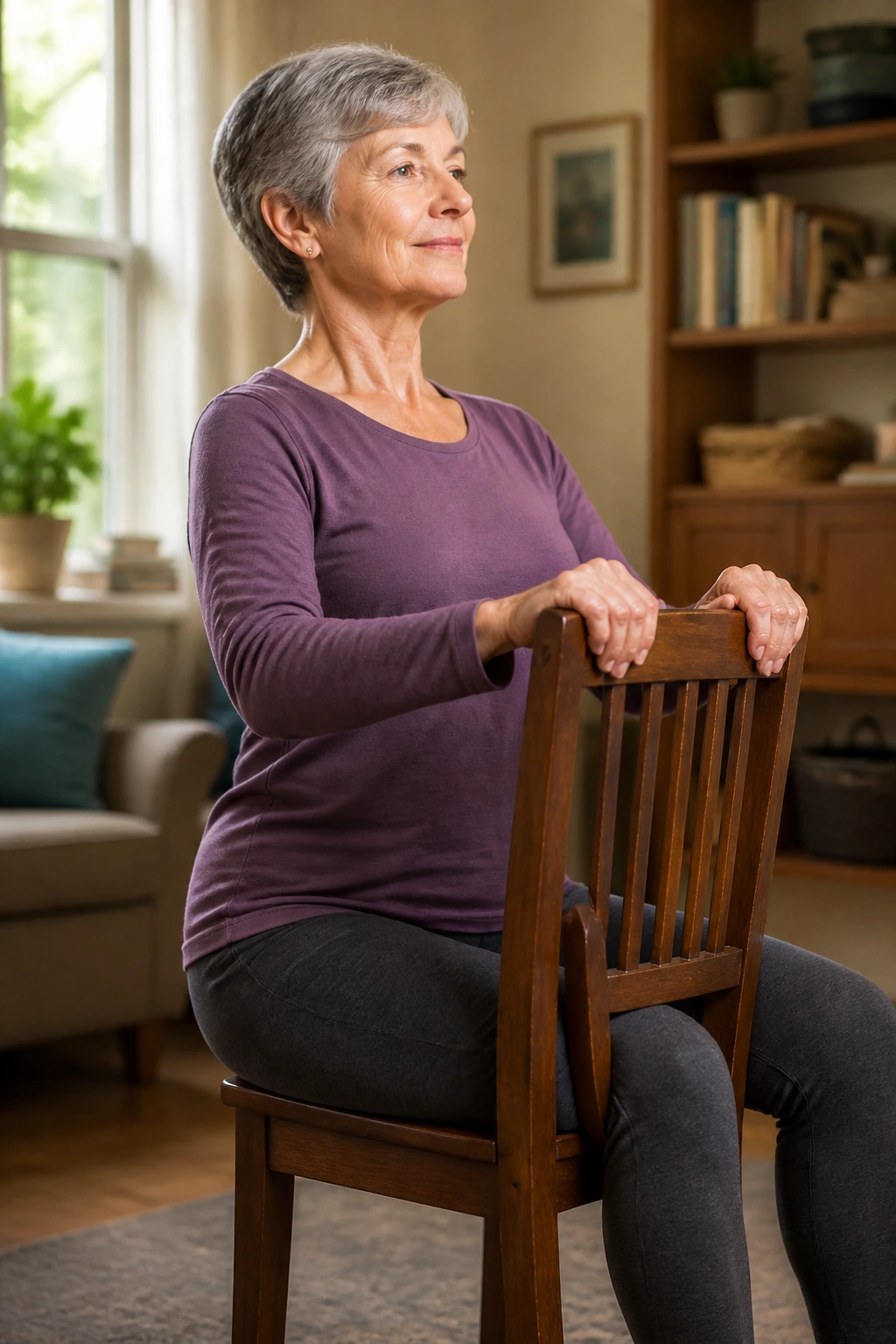
A good beginner routine doesn’t need 25 moves at once. Most days, the body wants a short, clean sequence that gets the joints moving and then stops before fatigue turns the whole thing sloppy.
Try this in order: 3 breaths in the tall-spine reset, 4 shoulder rolls each direction, 6 cat-cows, 8 heel raises, 4 seated twists per side, and 3 long breaths in the finish. If that feels easy, run it once more. If it does not, one round is enough.
- Start slow.
- Stay with the breath.
- Keep the chair steady.
- Finish while you still feel good.
That last point matters. Leave a little in the tank.
Final Thoughts
The best chair yoga for older beginners isn’t fancy. It’s steady, repeatable, and easy to return to on a day when the knees are moody or the back feels like wood. That’s the real win here: a routine you’ll actually do.
If you only remember three things, make them these: sit on a stable chair, move with the breath, and keep the shapes small enough to feel safe. The body opens faster when it trusts what’s coming next.
And if one sequence becomes a favorite, use it twice. No one’s keeping score.
