



Plyo workouts, the jump-heavy kind that teach you to produce force fast, do not need dumbbells or machines. They do need honest landings, a little room, and the willingness to stop before your jumps turn into flailing.
That is the part a lot of people miss. Plyometrics are not about surviving a sweaty mess; they are about crisp contacts with the floor, quick rebound, and enough control that your knees stay lined up instead of wobbling inward.
A flat living-room floor works. So does a driveway, a patch of grass, or a gym mat with some give. Hard concrete is where I’d keep the volume low, because your calves and Achilles will notice the difference fast.
The 18 workouts below move from simple to spicier, and a few of them are sneaky hard. Start with the ones that look boring. Those are usually the ones that teach you the cleanest mechanics.
1. Squat Jump Intervals
If you want one clean starting point, this is it. Squat jump intervals teach the two habits that make every other plyo workout better: a fast dip and a soft landing. Miss either one, and the exercise turns into noisy cardio.
Use 4 rounds of 8 reps, or run 20 seconds on, 40 seconds off for 6 to 8 minutes. Drop into a quarter squat, swing your arms, jump straight up, and land with your feet about hip-width apart. Keep the jump sharp. No lazy little hops.
The landing tells you everything. If your heels slam or your knees cave in, cut the rep count in half and slow down the descent a little. Quiet feet are the goal.
One more thing: don’t chase height so hard that your chest folds forward. A chest that stays proud and a jump that looks modest in the mirror beats a bigger jump that leaks energy everywhere.
2. Skater Hops to Stick
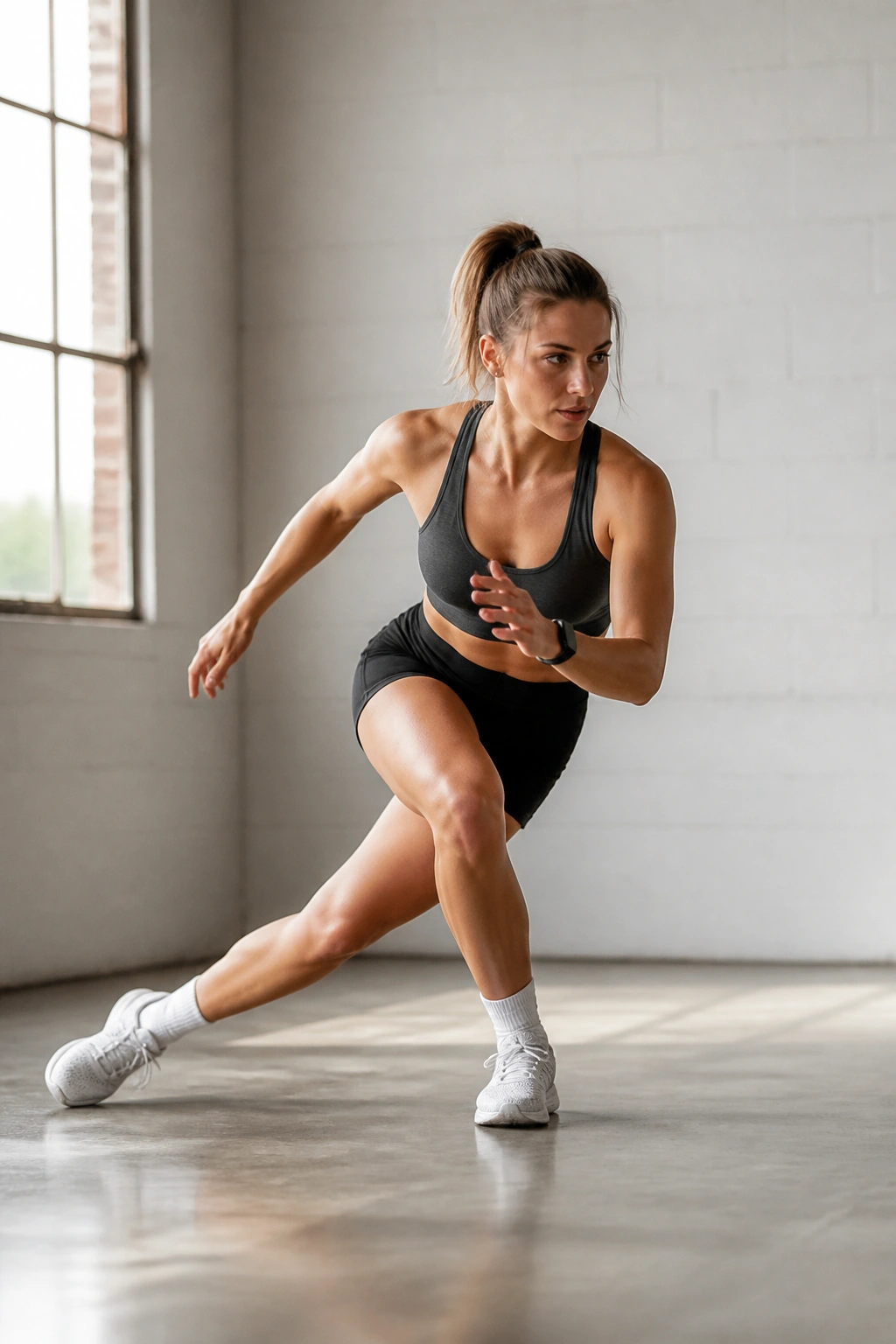
Picture sliding side to side across an invisible line on the floor. That’s the skater hop, and the “stick” at the end is what makes it worth doing. Without the pause, it becomes a sloppy bounce. With the pause, it teaches control in the hips, ankles, and knees.
Why the stick matters
Do 3 to 5 sets of 6 to 8 hops per side, and hold each landing for 2 full seconds. Reach the back leg behind you, then push off the planted foot and travel laterally. The landing leg should bend, but not collapse.
A lot of people make these too small. Don’t. You want a real side-to-side shift, not a tiny ankle wiggle. Think about covering ground, then freezing the body on purpose.
What to watch for
- Keep your chest slightly forward, not upright like a soldier.
- Let the free leg reach behind you for balance.
- Land on the middle of the foot, then lower the heel.
- If the floor gets loud, shorten the set.
The pause is not a break. It is the point.
3. Split Squat Jump Ladders
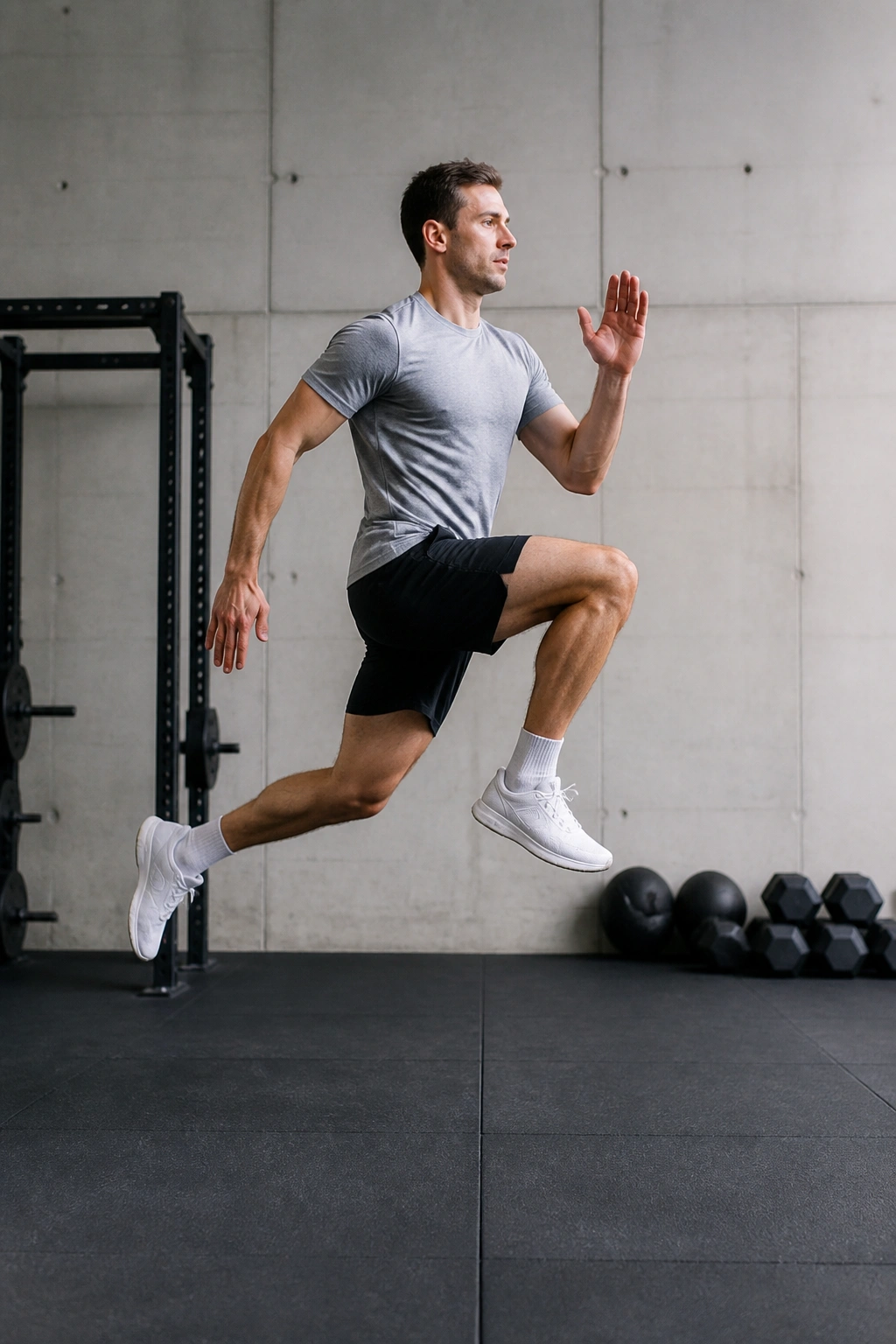
The first set always feels polite. By the third, your quads stop being polite about it. Split squat jump ladders are brutal in the useful way because they load one leg at a time and make your balance honest.
Try a ladder of 2-4-6-8-6-4-2 reps per side, resting 30 to 45 seconds between rungs. Start in a split stance, dip a few inches, and explode upward. Switch legs in the air if you can, then land back in that same split stance.
Keep your torso tall. That matters more than height. If you lean too far forward, the back leg starts doing the work, and the whole drill loses its bite.
I like this workout for people who want power without a huge amount of space. You stay mostly in place, but your legs still get that sharp, springy burn that makes stairs feel rude later.
4. Tuck Jump Bursts
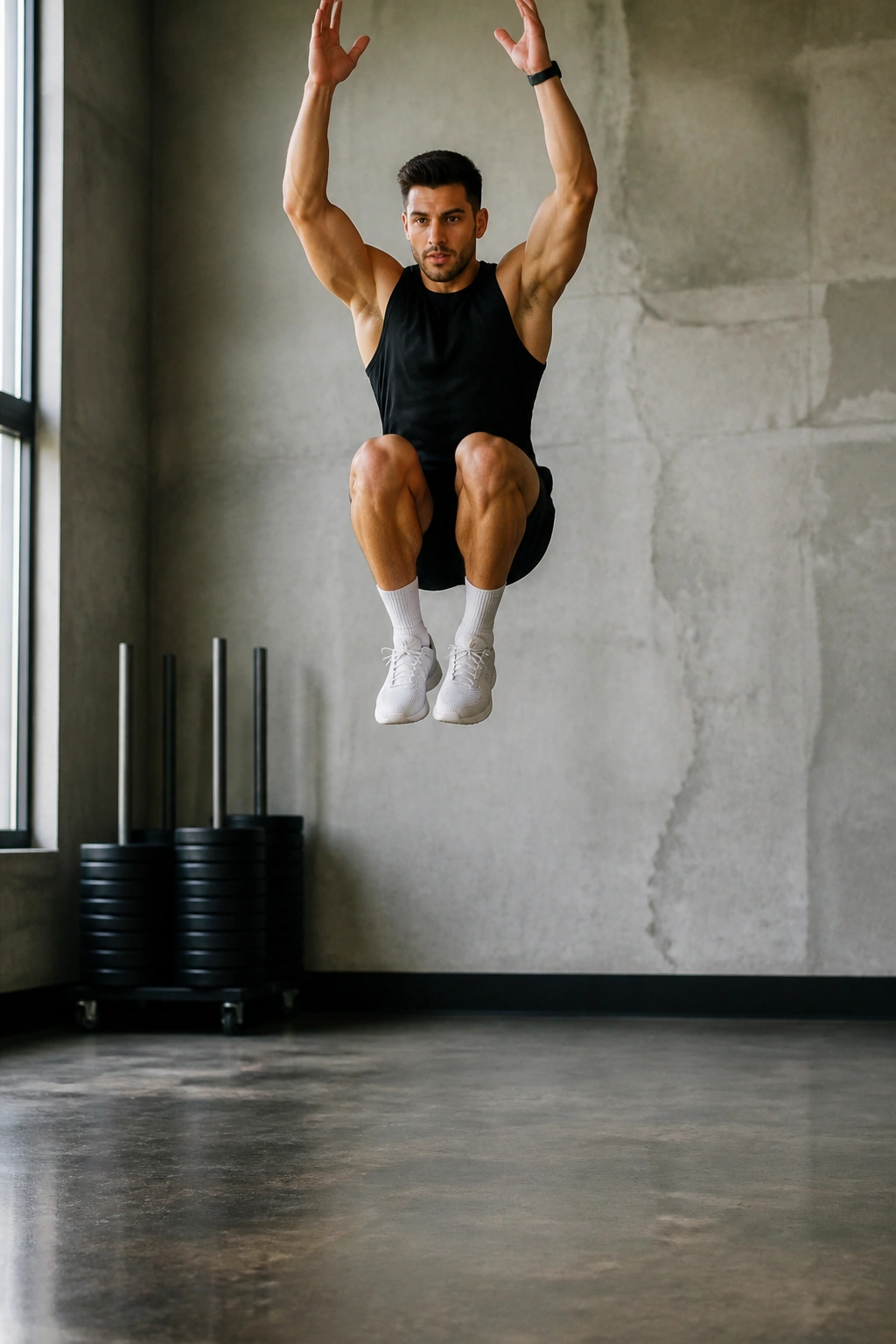
Can you bring your knees high without folding into a ball? That is the real question here. Tuck jumps look flashy, but the useful version is tight, fast, and controlled — not wild.
Run 5 to 8 bursts of 10 seconds, with 50 seconds of rest between them. Jump, pull the knees up just enough to feel the hip flexors fire, and land softly before the next rep. If you start reaching for height by throwing your head back, you’ve gone too far.
How to keep the jump crisp
The arms matter. Swing them down and back, then snap them upward as you leave the floor. That arm drive is not decoration; it helps build the quick force transfer you want from a plyo session.
A clean tuck jump should feel snappy in the hips and springy in the ankles. It should not feel like a crunched-up squat in the air.
Keep the sets short. Seriously. The moment your jump height drops off, end it and move on.
5. Alternating Jump Lunge Pyramids
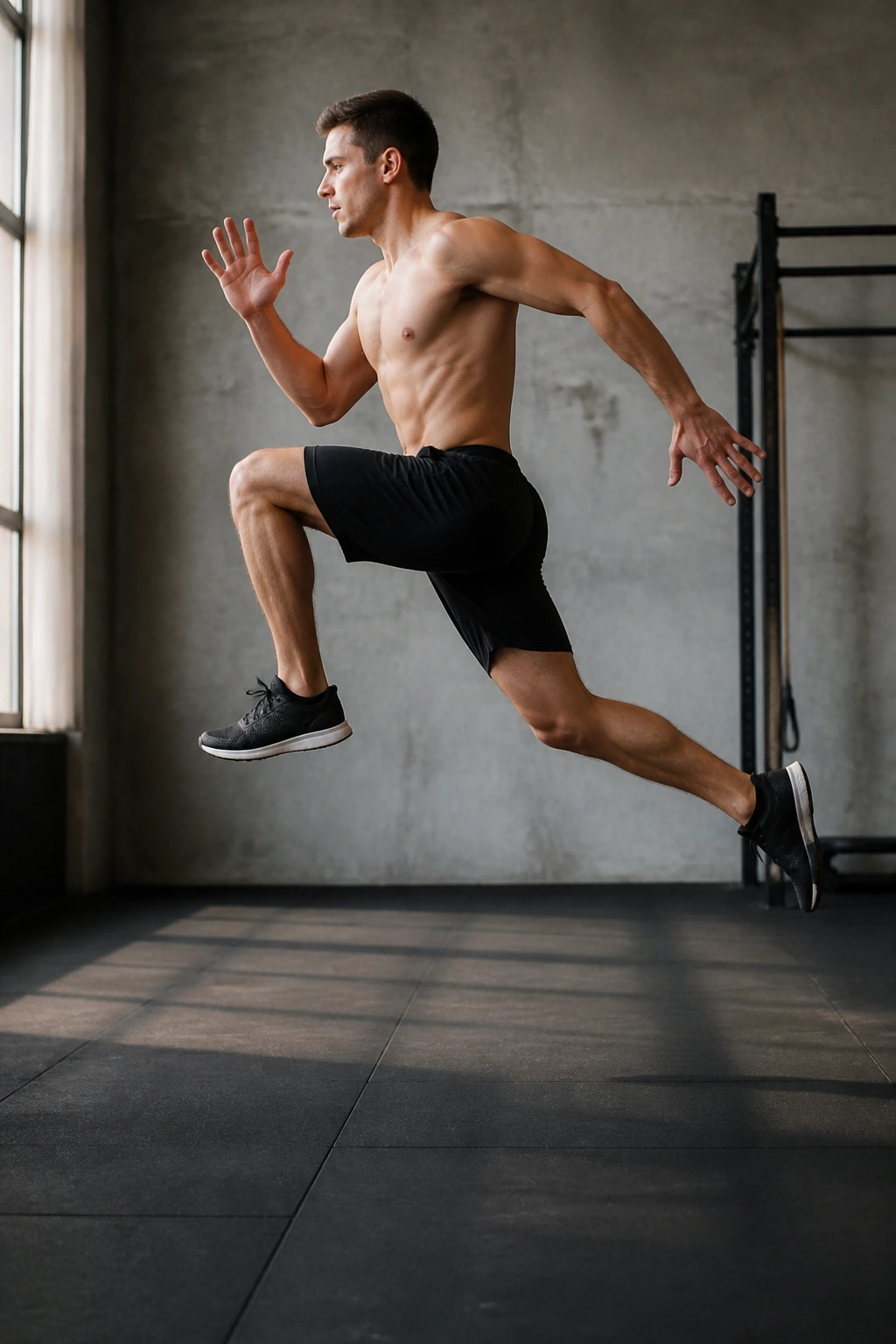
This is the one that makes your lungs work fast and your legs complain in two different languages. Alternating jump lunges ask for power, coordination, and a little nerve, because each rep has to switch cleanly from one split stance to the other.
Use a 2-4-6-8-6-4-2 pyramid, or stick with 30 seconds on, 30 seconds off for 8 rounds. The front knee should track over the middle toes, and the landing should be smooth enough that your upper body barely bobs.
The temptation is to make each jump huge. Don’t. Bigger is not better once your form starts slipping. A smaller, sharper switch usually gives you more usable work and fewer ugly landings.
This is a good lower-body conditioning piece when you want more than squat jumps but less chaos than a full burpee set. Your legs will feel it in the quads and glutes first. Then the calves join the conversation.
6. Standing Broad Jump Repeats

Unlike squat jumps, broad jumps care more about distance than height. That changes the whole feel of the session. You have to load the hips, launch forward, and then arrest your body without face-planting into the next rep.
Do 5 sets of 3 jumps, with 20 to 30 seconds between jumps and 90 seconds between sets. Start with feet just outside hip width, sink into a strong half squat, swing the arms, and drive out at a low angle. You want forward travel, not a skyward hop.
The landing should happen on both feet at once, knees bent, hips back, torso braced. If you need a marker, use the floor itself and judge whether the second landing is farther than the first. No tape required.
Broad jumps reward freshness. If you turn them into a tired, rushed drill, the takeoff gets mushy and the landings get noisy. Keep them crisp, and they’ll teach your body to produce force in one hard burst.
7. Plyo Push-Up Rounds

Upper body plyometrics are underrated because they feel harder to scale. They’re worth learning anyway. A good plyo push-up turns your chest, triceps, and shoulders into a fast, coordinated unit instead of a slow grind.
What makes them different
Use 6 sets of 4 to 6 reps, resting 45 to 60 seconds between sets. Lower yourself under control, then push hard enough that your hands leave the floor. You do not need a full clap if that feels sloppy; a little air time is enough.
What to watch for
- Keep your ribs from flaring.
- Squeeze the glutes so your hips don’t sag.
- Set your hands under the shoulders before each rep.
- Stop the set the moment the push loses speed.
The floor will tell on you fast. If your chest hits early or your elbows flare wildly, the reps are already too tired. Cut the set and protect the quality.
I like this one because it keeps the whole body honest. You cannot fake speed in a push-up. You either drive off the floor, or you don’t.
8. Lateral Line Hop Burners
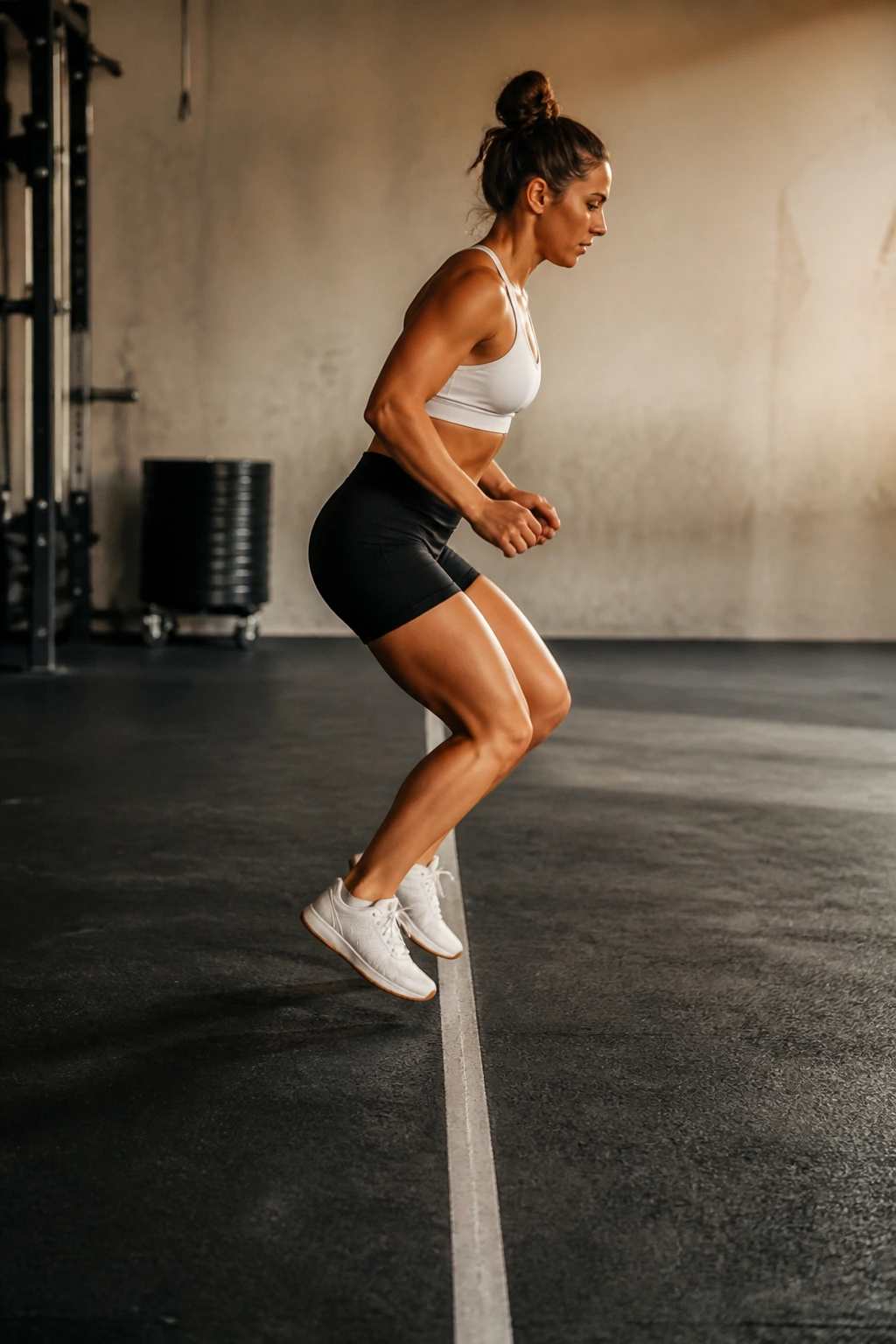
A single line on the floor is enough. Or an imaginary one. Doesn’t matter. What matters is the speed of the feet and the ability to keep the torso still while the ankles chatter underneath you.
Run 4 to 6 rounds of 20 seconds each, resting 20 to 30 seconds between rounds. Jump side to side over the line with both feet together. Keep the jumps small and fast, more like a quick spring than a giant leap.
This is not the most glamorous drill in the bunch. Good. It is the sort of drill that improves foot speed without trashing your knees, which makes it a smart choice on days when you want work but not wreckage.
If the feet start landing behind the rhythm, shorten the hops and speed up the contact time. Think of the floor as a hot skillet. Touch and go.
9. Single-Leg Hop and Hold
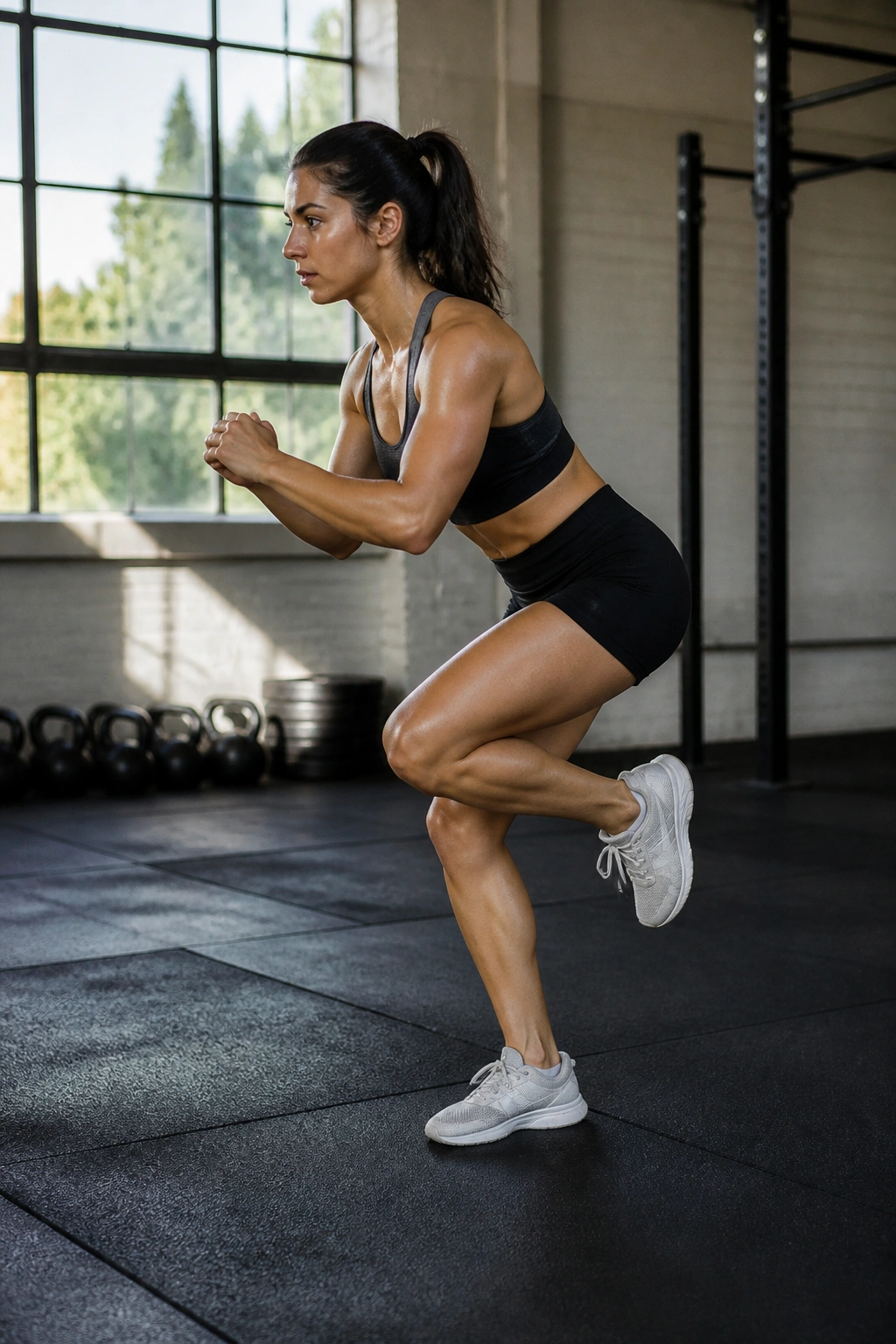
If one side feels shaky, that is the point. Single-leg hop and holds show you exactly where your balance breaks down, and they do it without any equipment, fancy setup, or long explanation.
How to scale it
Start with 3 sets of 5 hops per leg, and hold each landing for 3 seconds. Hop forward a short distance, land on one foot, and freeze. If that is too much, make the hop smaller. If that feels easy, increase the distance a little.
The key is the stillness after the landing. A stable knee, a quiet foot, and a level pelvis tell you the rep was useful. A wobble means the hop was too ambitious.
This drill works well for people coming back from time off because it gives you power and control together. You are not just jumping. You are learning how to own the landing, which is where a lot of injuries happen when people rush.
10. Burpee Broad Jump Combos
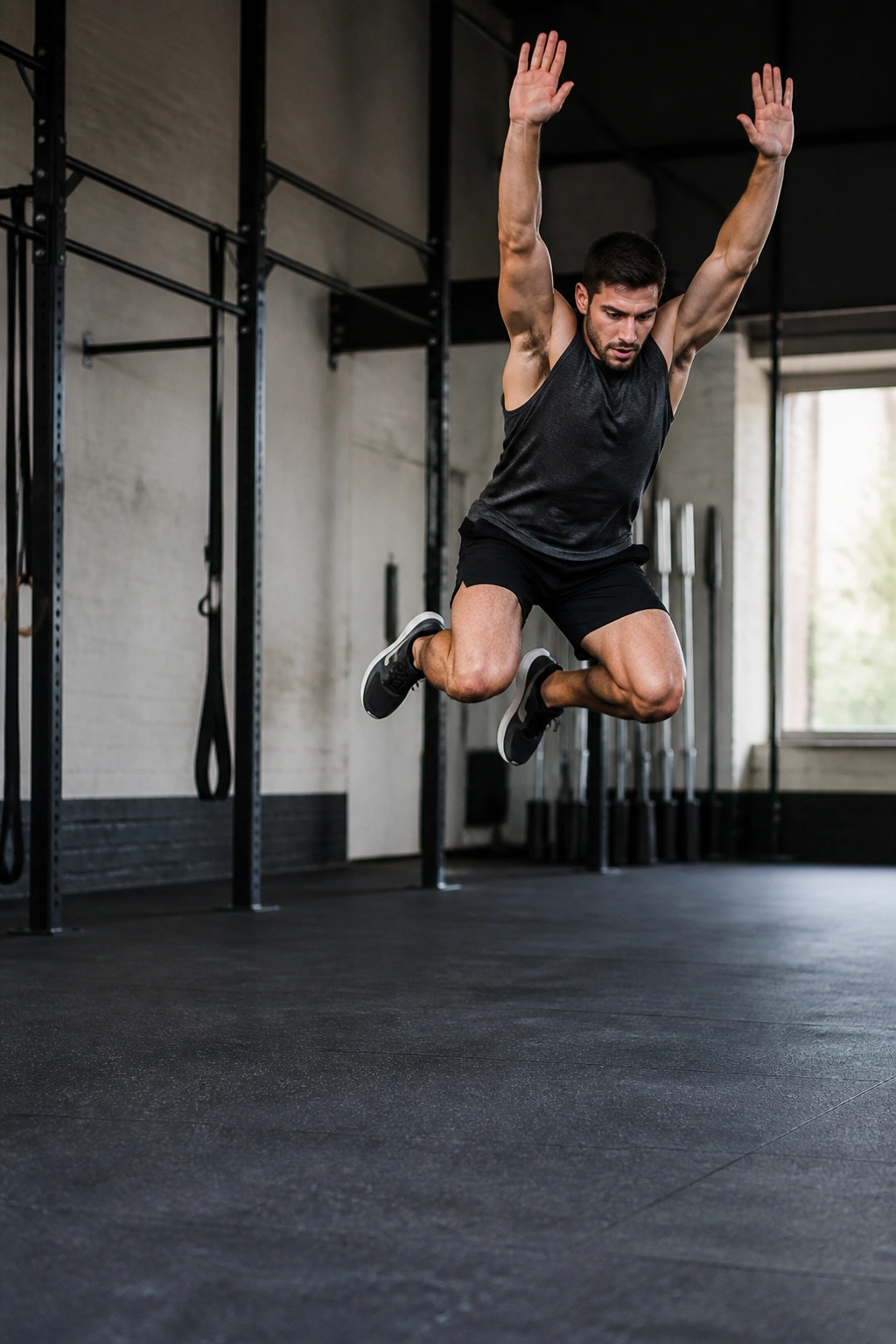
This one is the blunt instrument in the stack. Burpee broad jump combos ask for full-body effort, and they do not care whether you feel charming about it. Good.
Try 4 to 6 rounds of 4 burpees plus 1 broad jump, resting 60 to 90 seconds between rounds. Drop to the floor, pop back up, then launch forward as soon as you stand. If your floor work slows to a crawl, cut the burpee push-up and keep the jump honest.
The trick is not to let the burpee steal the broad jump. If you are too winded to explode forward, reduce the burpee count. Three sharp reps beat five sluggish ones every time.
I reach for this workout when the goal is conditioning with some power left in it. It is messy in the way a hard interval should be, but the broad jump keeps it from turning into random exhaustion.
11. Frog Jump Power Sets
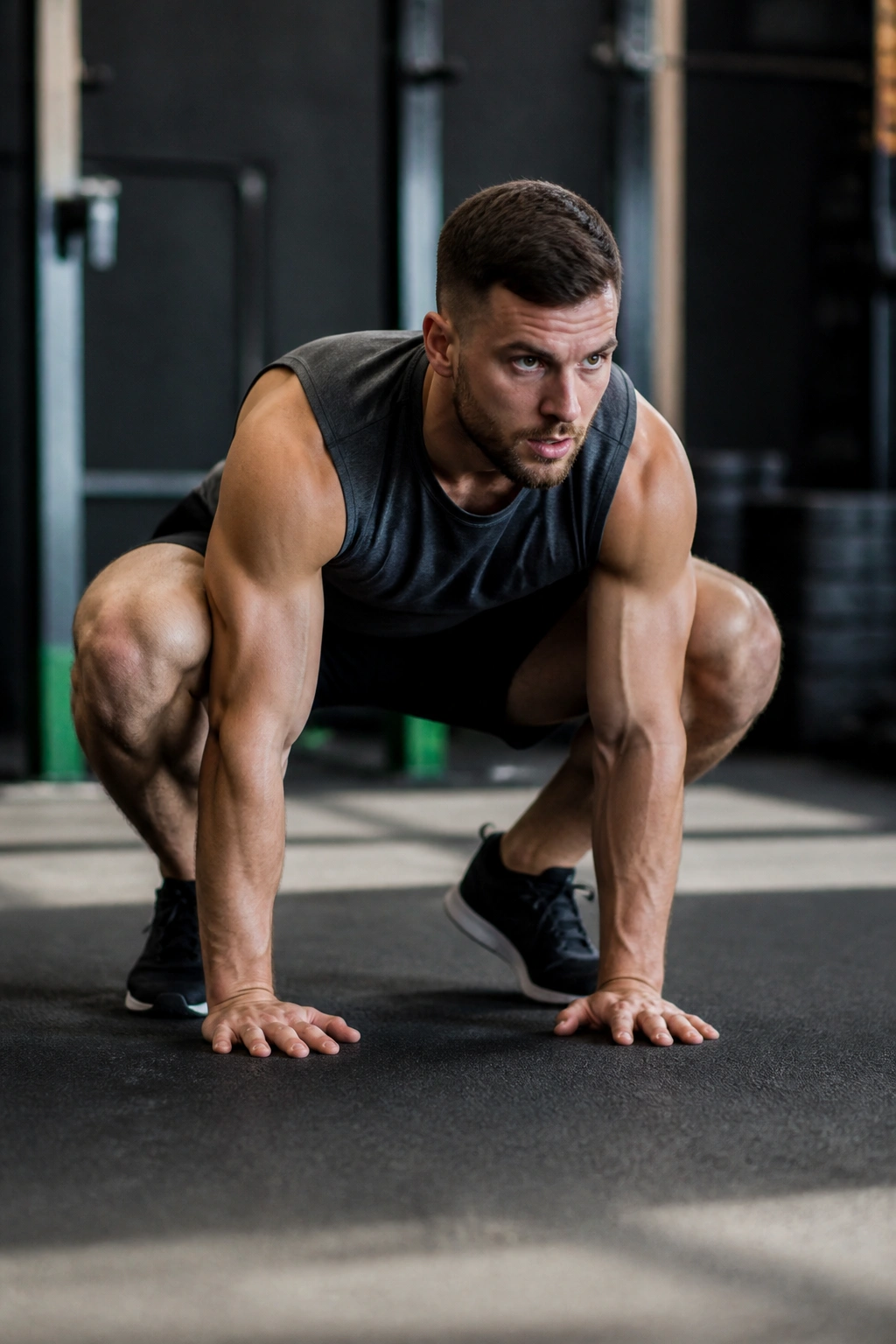
Frog jumps are what happen when a squat jump gets a little more aggressive and a little more grounded. You sit deeper, load the hips harder, and jump forward or in place with a heavy spring through the legs.
Use 4 sets of 5 to 7 jumps, resting 45 to 60 seconds between sets. Start from a deep squat, fingertips near the floor, then explode up and forward. Land softly, reset fully, and do the next rep from scratch.
Unlike squat jumps, frog jumps ask more from the glutes and hamstrings. You feel them in the back side of the body fast, which is one reason coaches love them for athletes who need takeoff power.
Do not force huge distance here. A jump that looks big but folds the spine is junk. A shorter, cleaner hop with a tight torso is the move that actually builds usable power.
12. Star Jump Conditioning Blocks
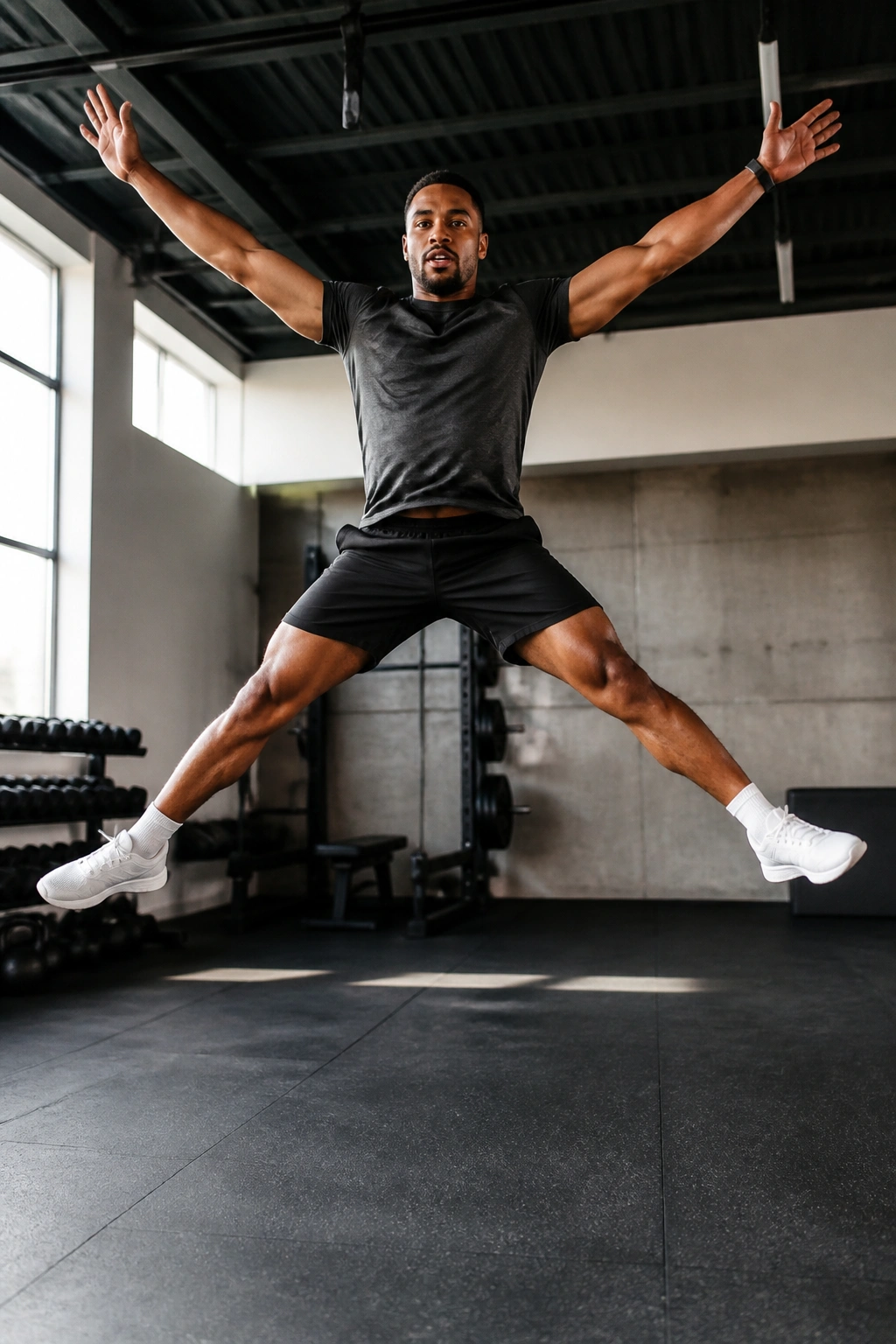
Star jumps are the friendliest-looking drill on this list, which is exactly why people underestimate them. Arms and legs open wide, then snap back in. Simple. Fast. Annoying after a few rounds.
Use 8 rounds of 30 seconds on, 30 seconds off, or keep it shorter with 4 rounds of 45 seconds if you’re already warm. Jump your feet out as the arms sweep wide, then pull everything back together in one quick motion.
When to use them
- Early in a workout, as a wake-up drill.
- Between heavier lower-body days, when you want speed without max effort.
- At the end of a session, if you still have a little spring left.
The nice thing about star jumps is the rhythm. There’s less risk of ugly mechanics than there is with high tuck jumps or hard bounds. You still have to land softly, but the movement stays smooth and repeatable.
They’re not flashy. They work.
13. Pop Squat Speed Rounds

Pop squats sit somewhere between a squat jump and a quick foot drill. You hop the feet out, sink briefly into a squat, then snap them back together. The body stays compact, and the pace can get fast without needing a lot of floor space.
The rhythm to chase
Do 6 rounds of 40 seconds on, 20 seconds off. Land lightly, keep the chest up, and let the knees track over the toes instead of caving in. The reps should look springy, not stompy.
A lot of people make pop squats too deep. That’s the mistake. You only need enough knee bend to load the legs and keep the movement athletic. If the depth slows you down, shave it back.
This drill is a nice bridge between pure plyo and conditioning work. It gets the heart rate moving, but the movement pattern still teaches quick force and fast foot placement.
14. 180-Degree Jump Turns

A hard landing is not the goal here. A clean turn is. The 180-degree jump turn teaches body control in the air, then asks you to stabilize on the other side without wobbling like a newborn deer.
Run 3 to 4 sets of 5 turns each direction, resting 30 to 45 seconds between sets. Start in an athletic stance, dip, jump, rotate half a turn, and land facing the opposite way. Stick the landing for a second before the next rep.
This workout is gold for anyone who plays a sport that demands quick direction changes. You are training power, but you are also teaching your brain to organize space fast.
The first few reps may feel clumsy. Fine. Keep the rotation smooth, keep the eyes level, and don’t chase speed until the landings are solid. Once the turn feels controlled, the drill starts paying off fast.
15. Split-Squat Pulse Jumps
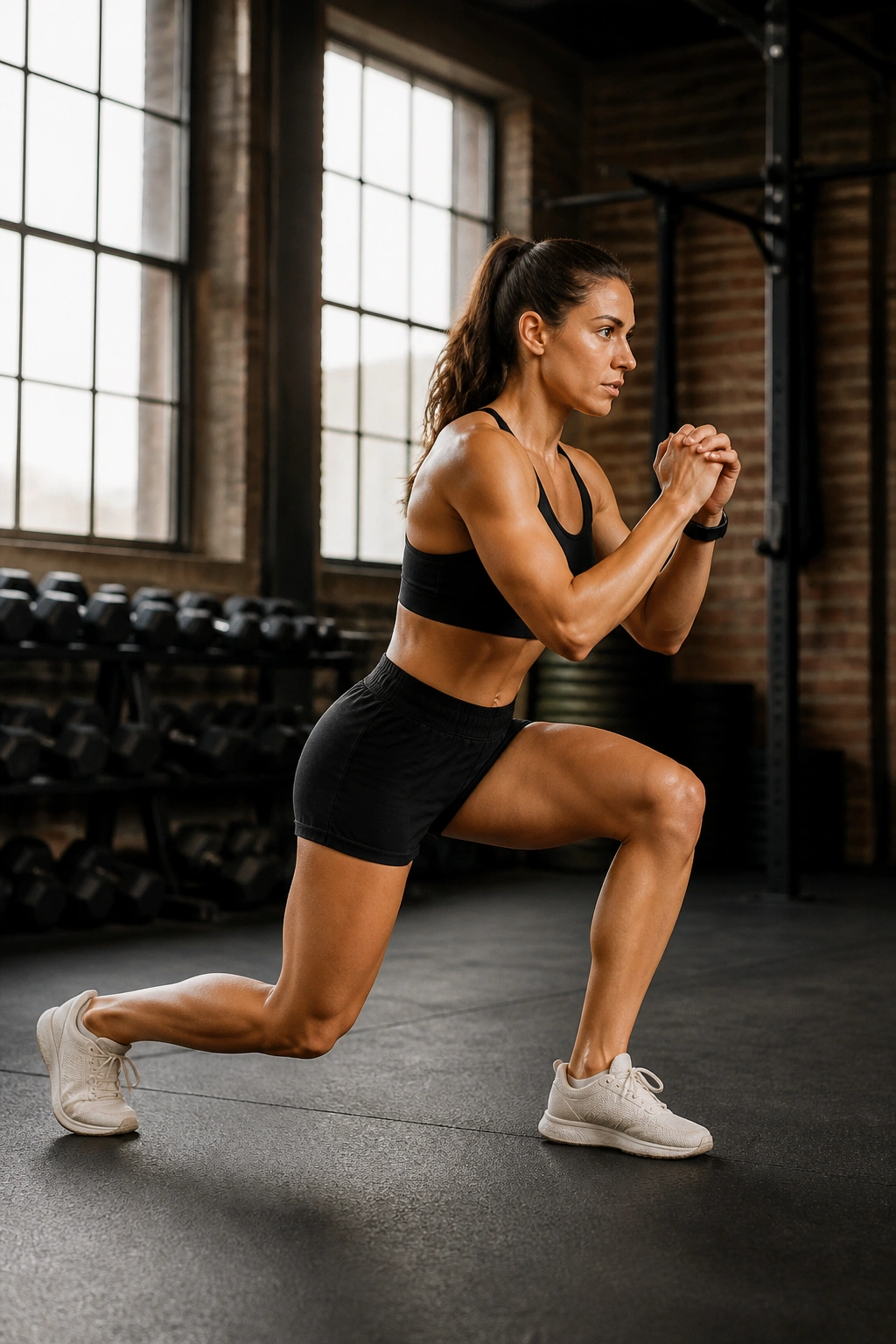
This one looks small and mean, which is exactly why it works. You hold the split stance, pulse a few inches, and then pop upward from that loaded position. No big switch. No giant leap. Just a sharp burn.
Try 4 sets of 8 to 10 pulses per side, followed by 3 explosive jumps from the same stance. Rest 45 seconds between sets. Keep the front knee over the foot and the back heel lifted.
The pulse phase matters because it loads the leg in a short range, and that makes the jump phase feel explosive even though you never leave the setup. It is a nice way to teach force without endless bouncing.
If your hips start swaying side to side, reset the stance width. Too narrow feels unstable; too wide turns the drill into a lunge with no pop. The sweet spot is somewhere in the middle, where you can pulse cleanly and rise without cheating.
16. Diagonal Bound-and-Stick

Forward bounds get all the attention, but diagonal bounds are more interesting. They ask you to push off at an angle, travel into a new line, and then control the landing before the next rep. That shift makes the drill feel athletic in a way straight-line hopping sometimes doesn’t.
Use 3 sets of 4 bounds per side, and hold each landing for 2 seconds. Aim diagonally forward to the right, then diagonally forward to the left. The body should stay tall enough to stay organized, but loose enough to move.
The point here is not speed alone. It’s the combination of direction change and control. Athletes like this because it looks like real movement, not a gym exercise pretending to be movement.
If you don’t have much room, shorten the distance and make the landing sharper. A clean 4-foot diagonal bound beats a messy 8-foot leap every time.
17. Reverse Lunge Knee-Drive Jumps
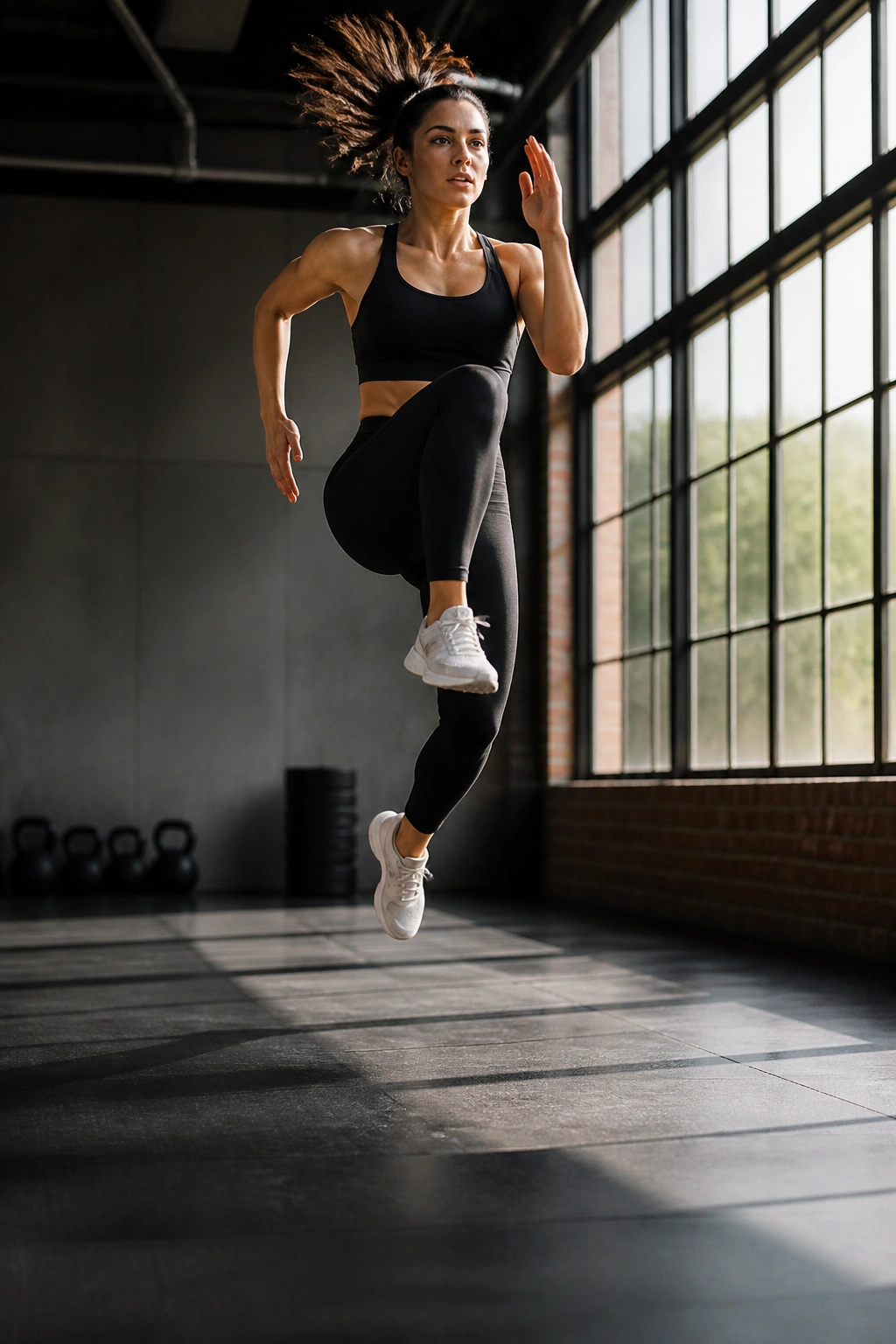
Stand with one foot back in a reverse lunge, then drive the back knee up as you jump. That knee drive is the whole deal. It turns a simple jump into a more forceful hip snap.
Do 3 to 5 sets of 6 reps per side, resting 30 to 60 seconds between sets. Step back into a lunge, lower until both knees are bent, then explode upward and bring the rear knee through the front side of the body.
This drill feels especially good if your stride mechanics are a little rusty. The knee drive gives you a clear target, and the lunge start keeps the movement clean instead of chaotic.
I like the reverse lunge version more than the forward lunge version for most people. It tends to be kinder on the knees and easier to balance, which matters when the point is power, not punishment.
18. Pogo Jump Circuit

Your calves will know about this one. Pogo jumps are tiny, fast, ankle-driven hops with almost no knee bend, and that is exactly why they matter. They teach stiffness through the lower leg, which helps every bigger jump feel snappier.
How to finish strong
Run 5 rounds of 15 to 20 seconds, resting 40 seconds between rounds. Keep the torso tall, let the ankles do the work, and bounce off the floor with minimal pause. If your heels sink too much, the drill loses its edge.
What it should feel like
- Light, springy contacts under the feet.
- Calves that heat up fast.
- A rhythm that stays even from the first rep to the last.
This is not the place to grind. If the bounce slows down, stop. The drill works because the contacts stay quick, and once they don’t, you’re just doing tired jumps.
I like pogo jumps as a finisher because they leave you feeling springy instead of crushed. They are small, yes. Small and useful. That is a rare combination in bodyweight training.
Final Thoughts
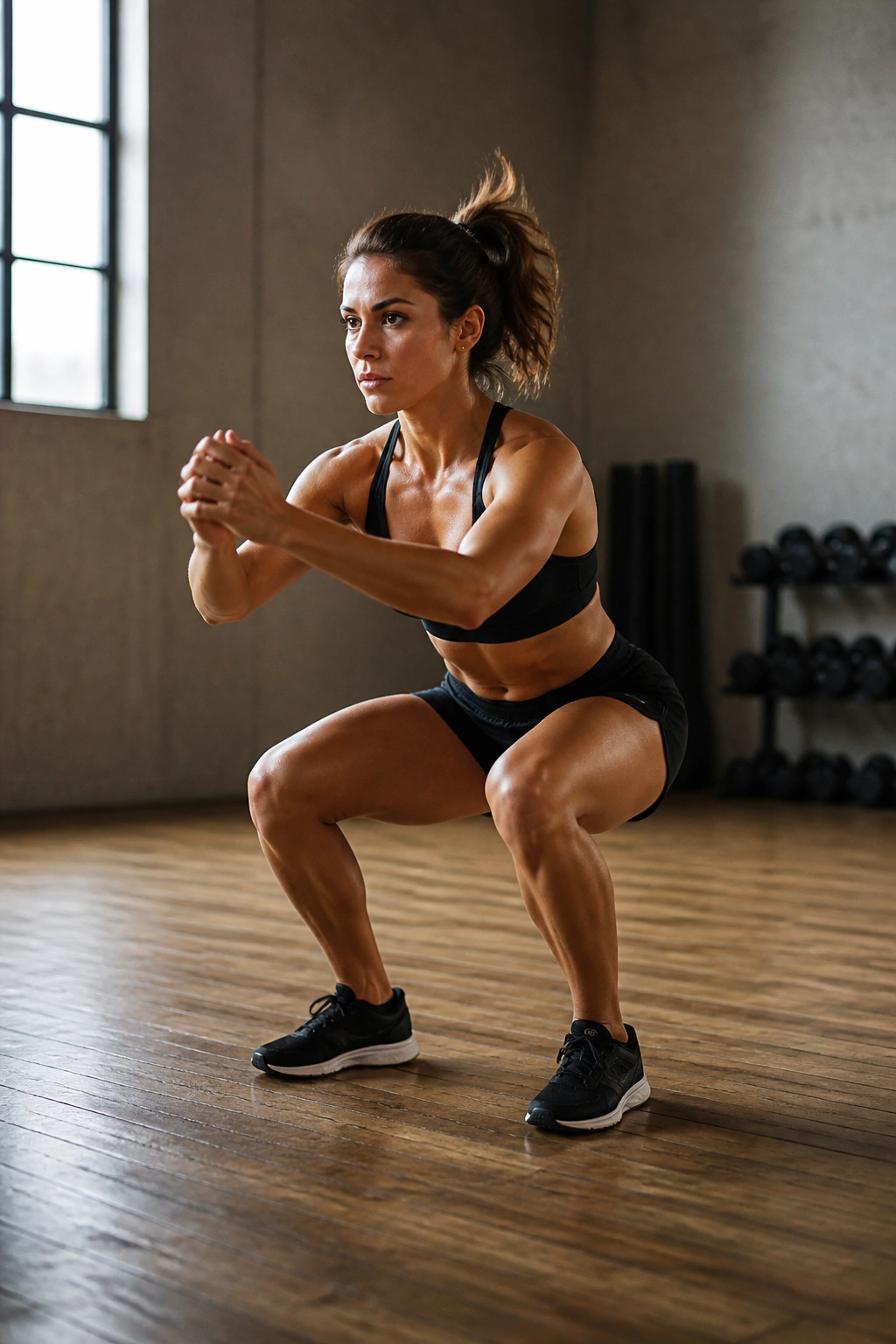
The smartest way to use plyo workouts is not to cram all 18 into one monster session. Pick 2 or 3 drills, keep the total jumping volume modest, and stop while your landings still look clean.
A good rule is simple: if the jump gets noisy, the set is over. A few sharp reps done well will do more for power than a long session of tired, sloppy bouncing ever will.
