



The first time the carriage slides under your feet, reformer Pilates can feel less like exercise and more like a careful conversation with a machine. That’s part of the appeal. The springs give you feedback, the footbar gives you a target, and every small wobble tells you exactly where your control breaks down.
For reformer Pilates workouts for beginners, that feedback is gold. The best starter sessions are not the loud ones with huge range and fast transitions. They’re the quiet ones: slow footwork, deliberate breathing, light arm work, and just enough resistance to make you pay attention.
One thing beginners usually miss is how different the reformer feels from mat work. The carriage can help you, or it can expose you. It depends on how you set the springs, where you place your feet, and whether you can keep your ribs from flaring when things get hard. A machine that looks gentle can get demanding fast.
So start there. Small movements, clean positions, and workouts that make the carriage feel almost boring in the best possible way.
1. Reformer Pilates Footwork on the Footbar
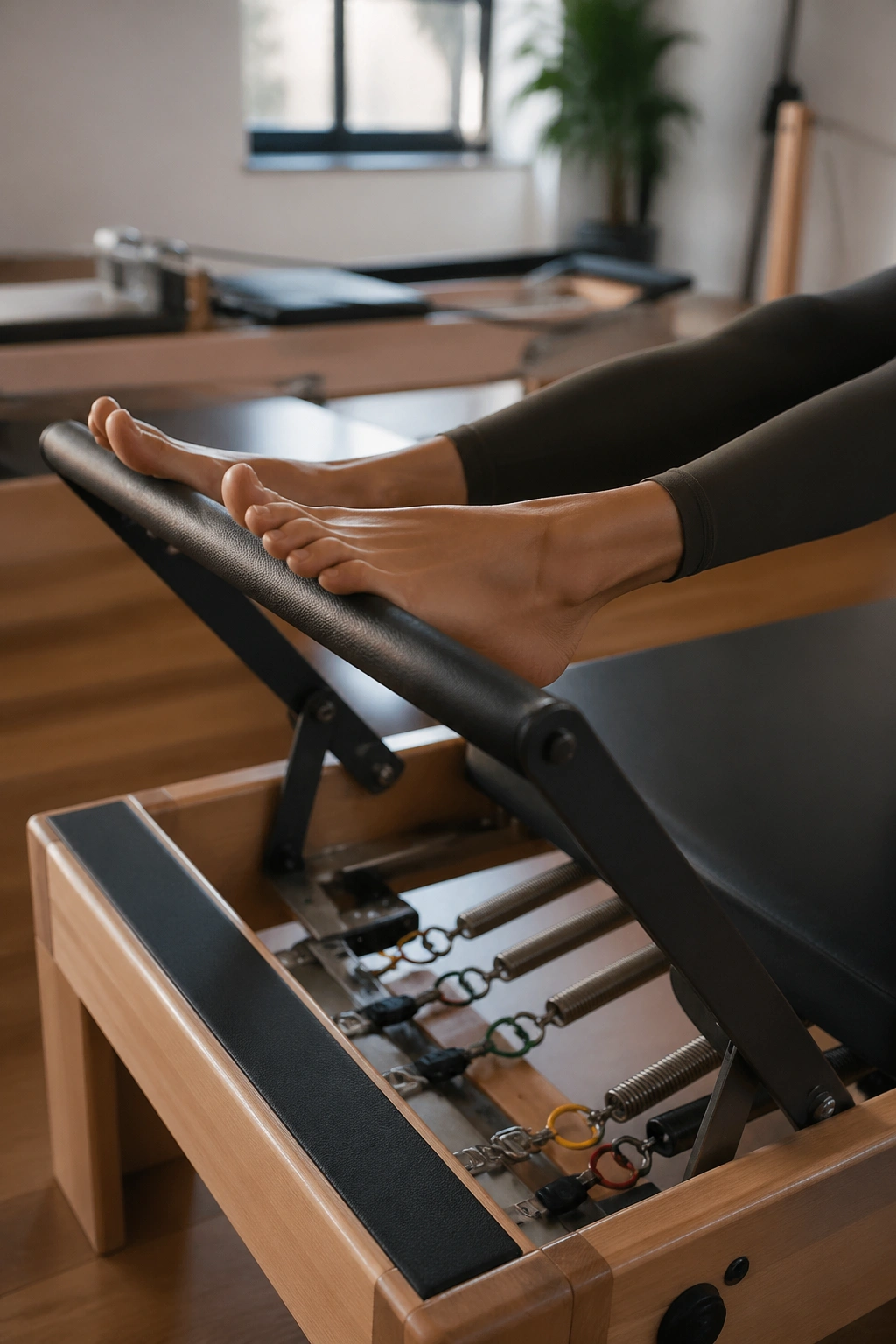
If I had to keep only one beginner reformer Pilates workout, footwork would be the one. It teaches alignment, leg strength, ankle control, and how to keep the carriage quiet under pressure. That sounds plain. It isn’t.
Set up with a spring that feels steady and supportive, then place your feet on the footbar in three positions: parallel heels, parallel toes, and a Pilates V. Press the carriage out only as far as you can keep your knees tracking over your second and third toes. If your arches collapse or your heels peel up early, the range is too big.
Why it works first
The footbar gives you a clean target, which is why this is such a good starting point. You can feel whether the work is landing in the quads, glutes, or just the front of the knees.
- Do 8 slow presses in each foot position.
- Keep your pelvis heavy and your ribs quiet.
- Pause for one breath at full extension.
- Return with control, not a bounce.
Tip: if the carriage feels twitchy, the spring is too light for footwork. Beginners usually do better with a load that keeps the machine calm.
2. Pelvic Curl and Bridge Ladder
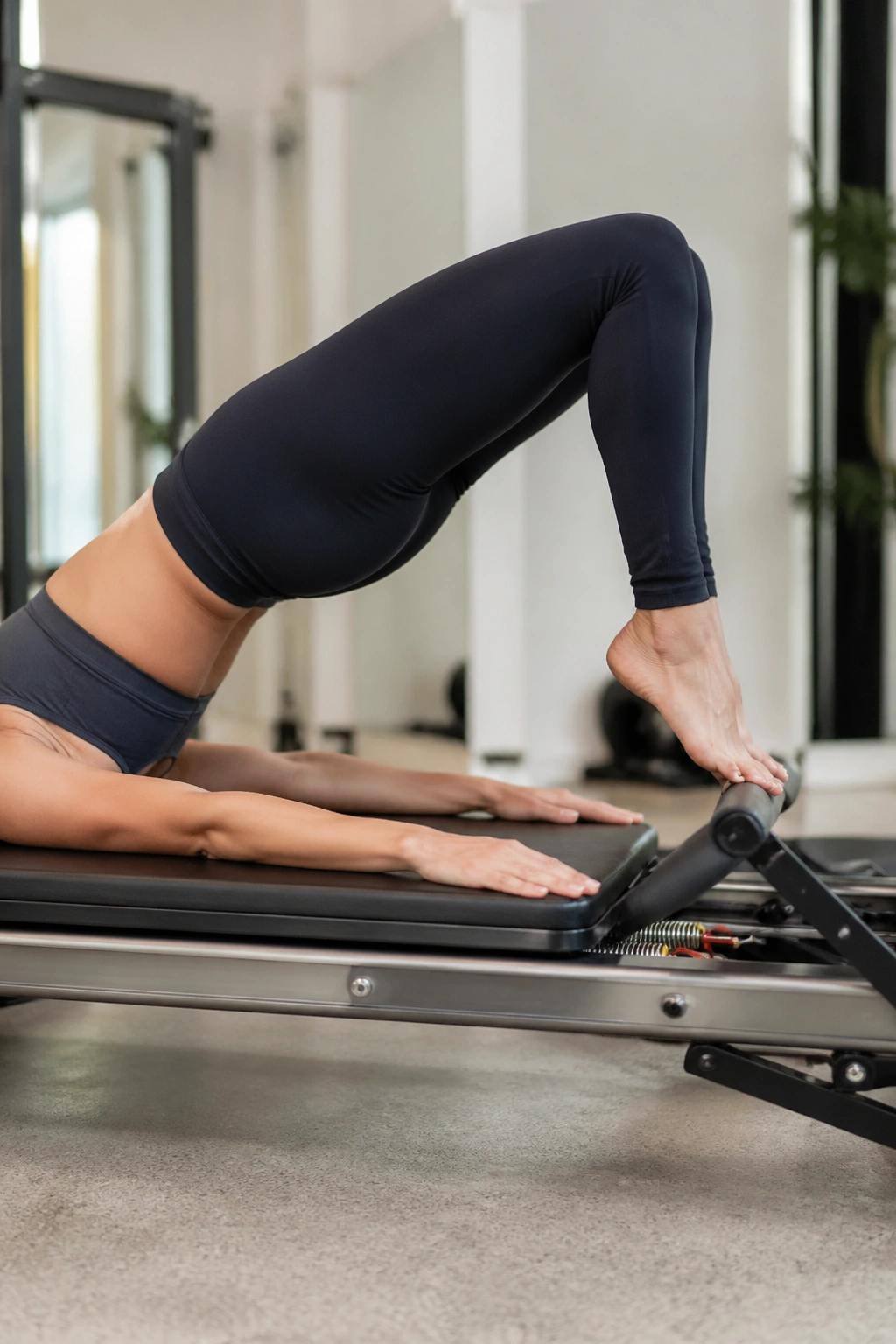
Why does a bridge feel different on a reformer? Because the carriage adds a little uncertainty, and that uncertainty forces your glutes and hamstrings to work without letting your lower back fake the job.
Lie on your back with your feet on the footbar or on the carriage, depending on the class setup, then roll your spine up one vertebra at a time. Exhale to lift, inhale to hold, and exhale again to lower. The best version feels like your tailbone is unrolling off a shelf.
Try 5 to 8 reps, and keep the lift modest. Huge bridges tend to turn into rib flares and hamstring cramps. A small bridge with clean articulation is better, every time.
If your neck gets tight, keep the movement shorter and watch the front of the ribs. They should stay heavy. That little detail matters more than the height of the lift.
3. Arms in Straps Starter
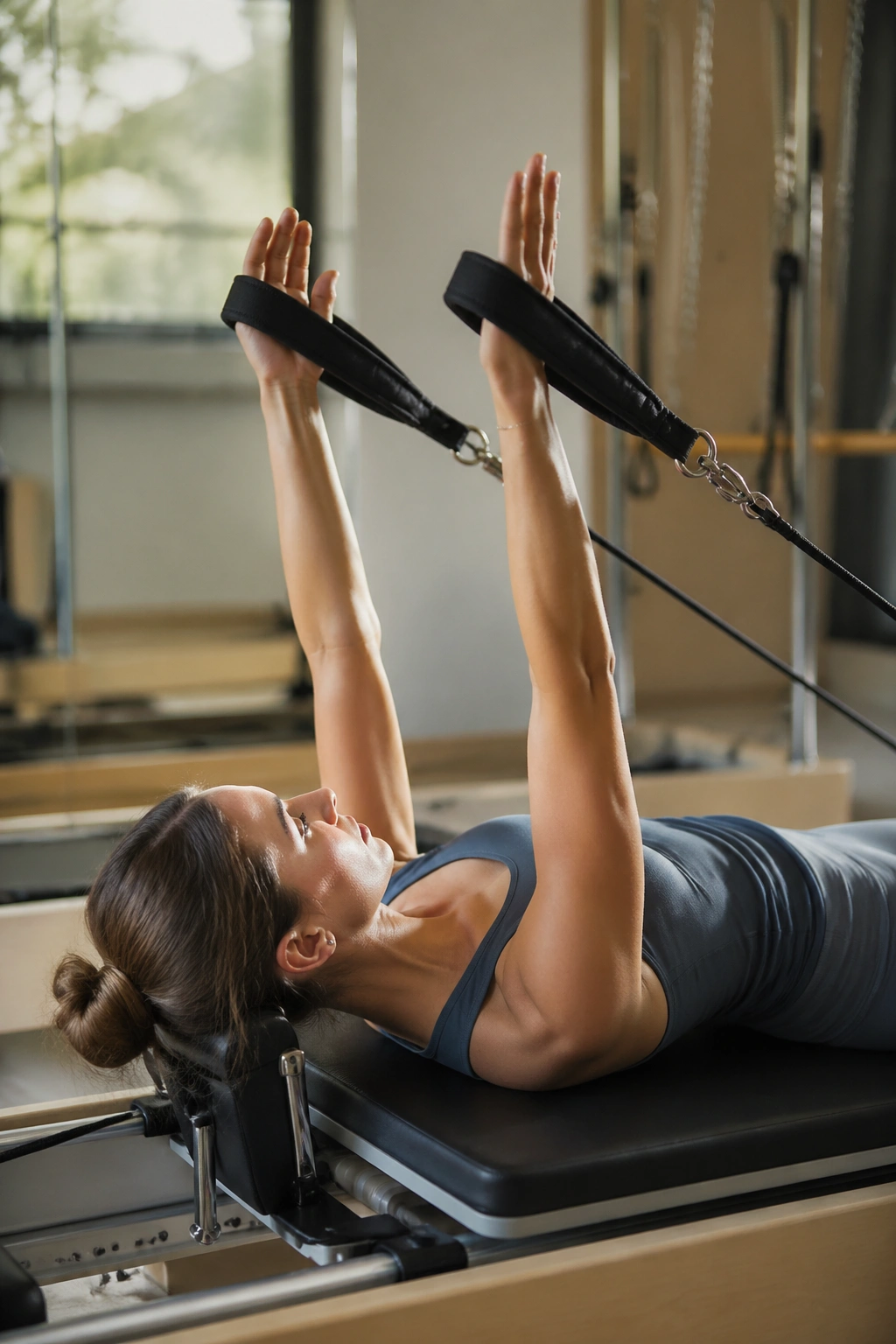
Lie down, pick up the straps, and the whole room gets quieter. Arms in straps looks almost too easy from the outside, but the first few presses tell you a lot about shoulder control, breath, and whether your ribs know how to stay down.
Keep your palms facing in, elbows soft, and shoulders away from your ears. Press the arms down toward your hips, then return with the same control. Most beginners feel this in the back of the shoulders before they feel it in the arms, which is a good sign.
What to keep steady
- Head rest down if your neck feels busy.
- Wrists straight, not bent back.
- Light spring, so the straps do not yank.
- Exhale on the press, inhale on the return.
A smooth carriage matters more than a big range here. If the straps slap or the springs clunk, slow down and shorten the path.
4. Feet in Straps: Frog and Circles
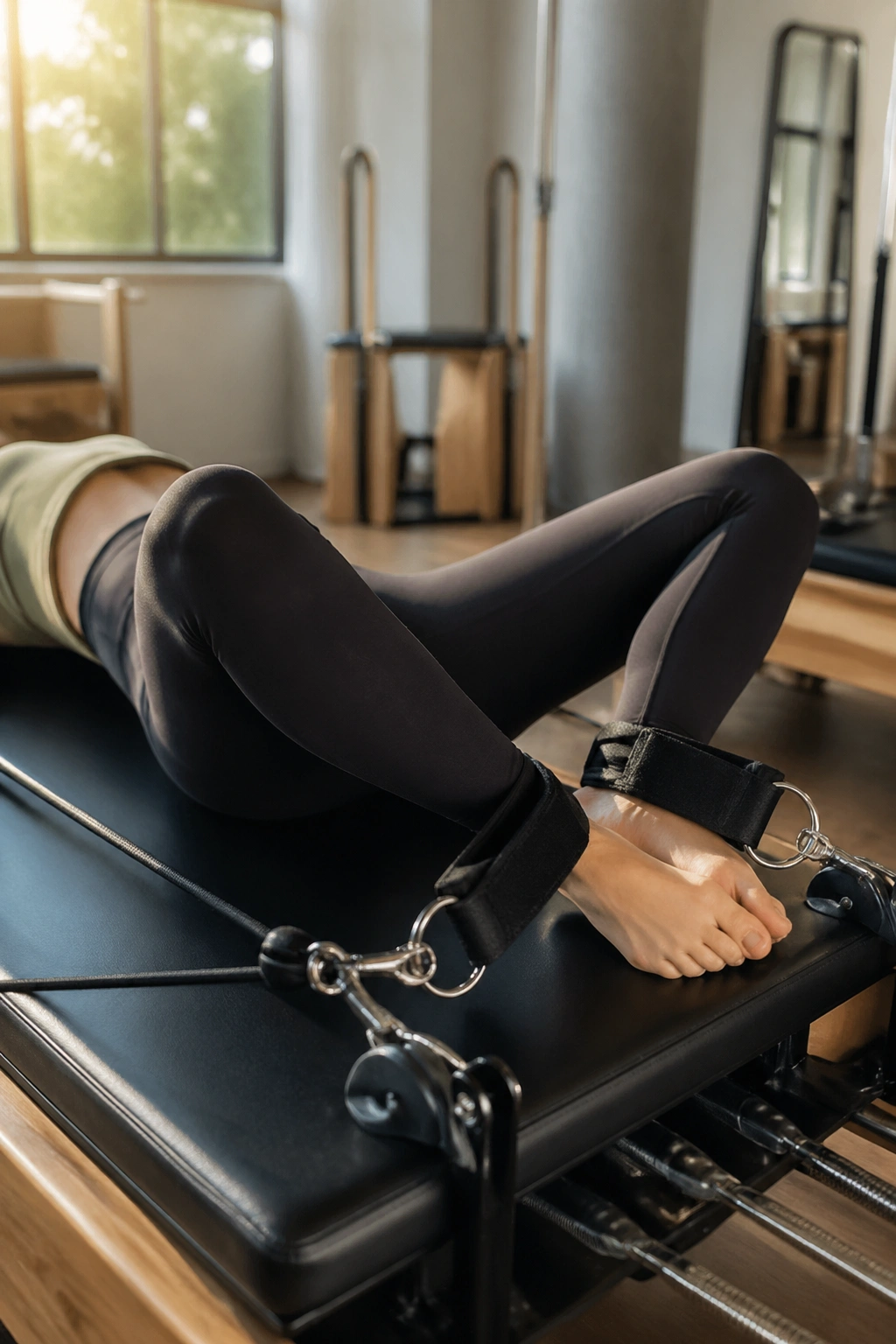
Compared with mat leg circles, feet-in-straps work feels less wobbly and more honest. The straps support the legs, which lets you see exactly how much your pelvis wants to tilt or twist the moment the legs move.
Start with the legs in a frog shape, knees bent and heels together, then press out to a comfortable diagonal. Bring them back in without letting the tailbone lift. After that, try small circles, first outward and then inward. The circles should be no bigger than a dinner plate.
That tiny range is the whole point. Big circles usually invite the lower back to take over, and beginners rarely notice it until the set is over and the hip flexors are cranky.
Keep the movement slow enough that you could talk through it. If the straps start to swing, you’re moving too fast.
5. Hundred Prep with the Carriage
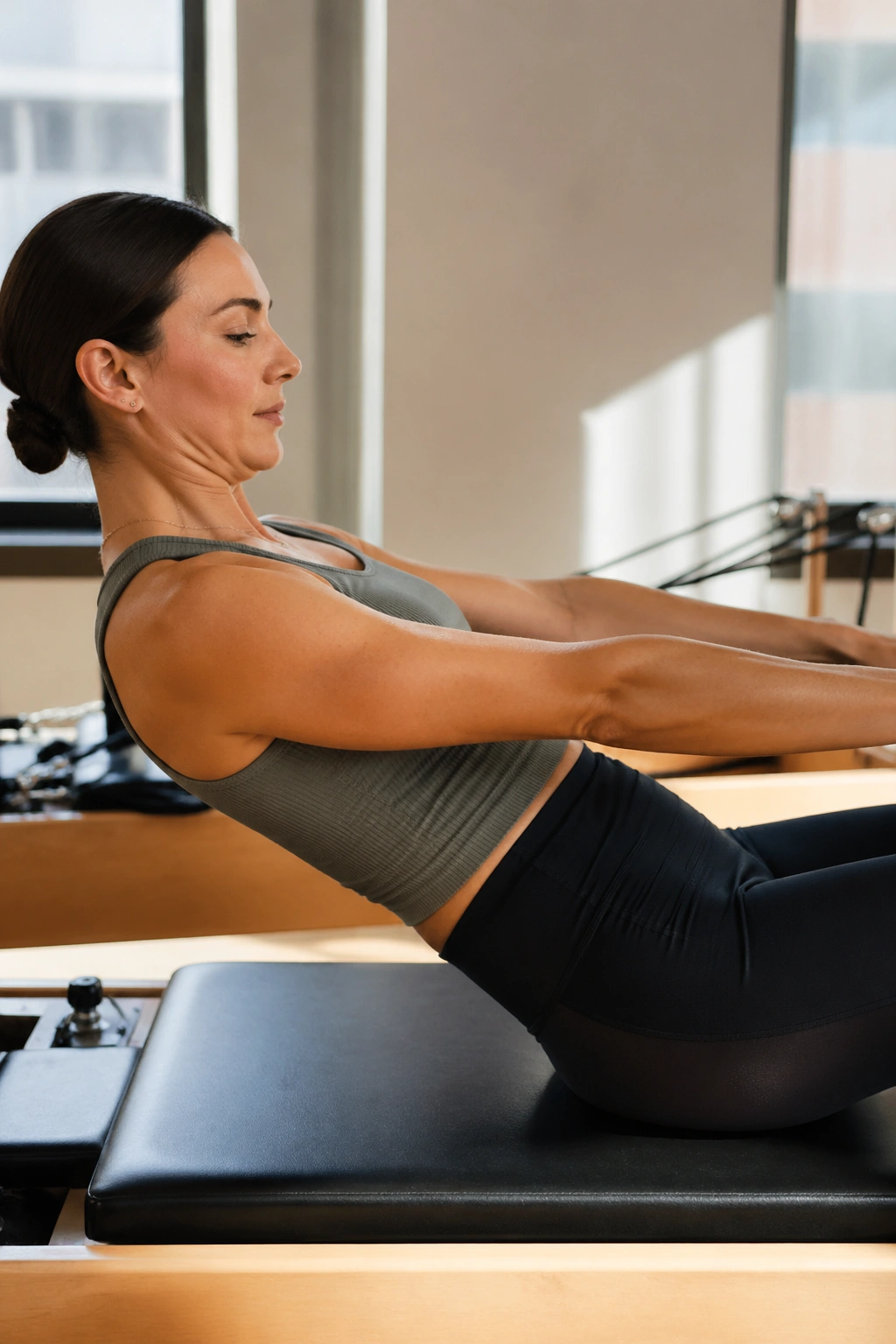
The Hundred does not need to be dramatic to work. A beginner version on the reformer can build breath control and deep core awareness without turning your neck into a complaint department.
Set up supine with the straps in your hands, or keep your feet on the footbar if your teacher prefers that version. Curl the head and shoulders up only if your neck stays quiet. If not, keep the head down and just pump the arms. That’s still a legitimate workout.
The version most beginners should start with
- Arms long by the hips.
- Small, steady arm pumps.
- Legs bent or lightly supported.
- Five-count inhale, five-count exhale.
The magic is in the rhythm. Once the breath gets sloppy, the whole exercise falls apart. If you can keep the carriage still while your arms pulse, you’re doing better than you think.
6. Seated Rowing Basics
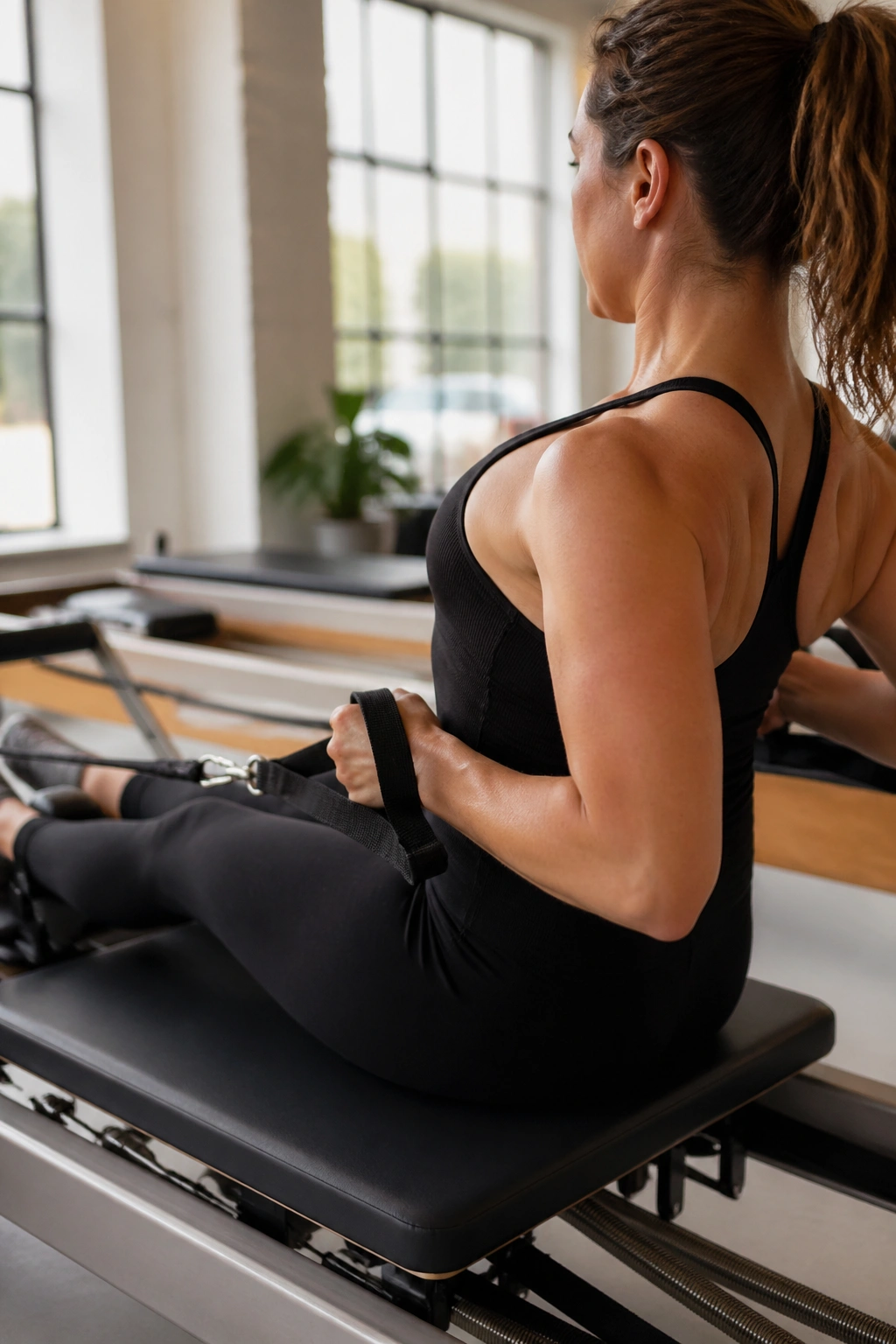
Want a posture exercise that doesn’t feel like a punishment? Seated rowing is the one I keep coming back to. It opens the chest, wakes up the upper back, and teaches the arms to work without shrugging into the ears.
Sit tall on the carriage, on the box, or on the platform depending on the setup, and hold the straps with the elbows bent. Pull the straps toward the ribs, then lengthen the arms forward without letting the spine collapse. The trick is not to lean back and call it “core work.”
What to feel
- Shoulder blades glide down, not pinched together.
- Elbows stay close to the body.
- The neck stays long.
- The sit bones feel heavy.
If sitting upright feels hard, raise your seat slightly or choose a lighter spring. A slouched row is still a row, but it teaches a slouched pattern.
7. Elephant Hinge
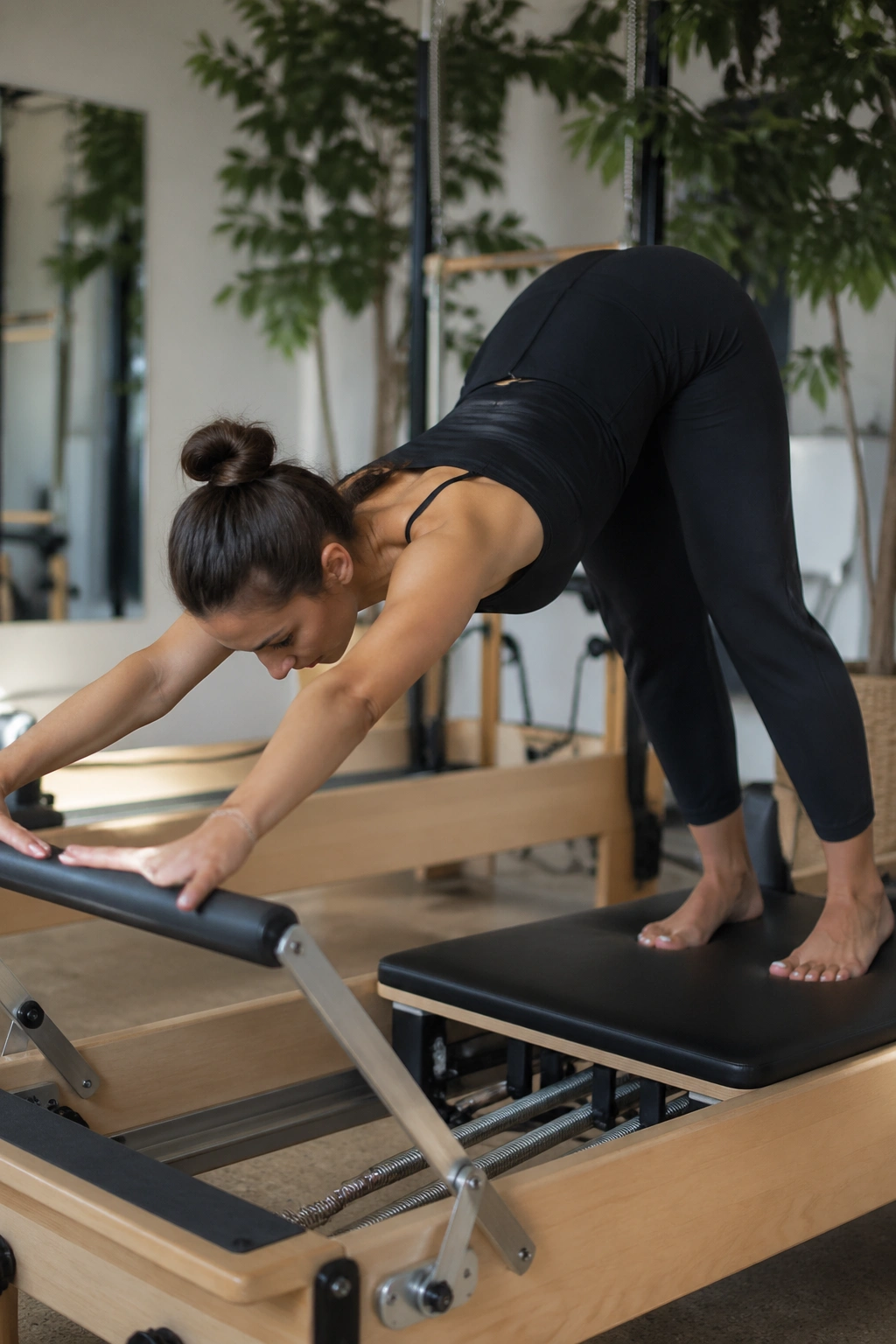
The hamstrings should feel long, not angry. Elephant, done as a beginner drill, is more of a hinge lesson than a strength contest.
Place your hands on the footbar, feet on the carriage, and lift your hips high enough that your spine stays long. Then press the carriage in and out with a small motion, almost like you’re nudging it with your heels. The knees stay soft, the ribs stay quiet, and the belly pulls inward without squeezing the breath out of you.
This one tends to surprise people. It looks like a stretch, but the core is working to keep the shape from folding.
If your shoulders take over, walk the feet back a little. If the hamstrings cramp, shorten the range and slow the tempo. Tiny changes matter here.
8. Round-Back Knee Stretches
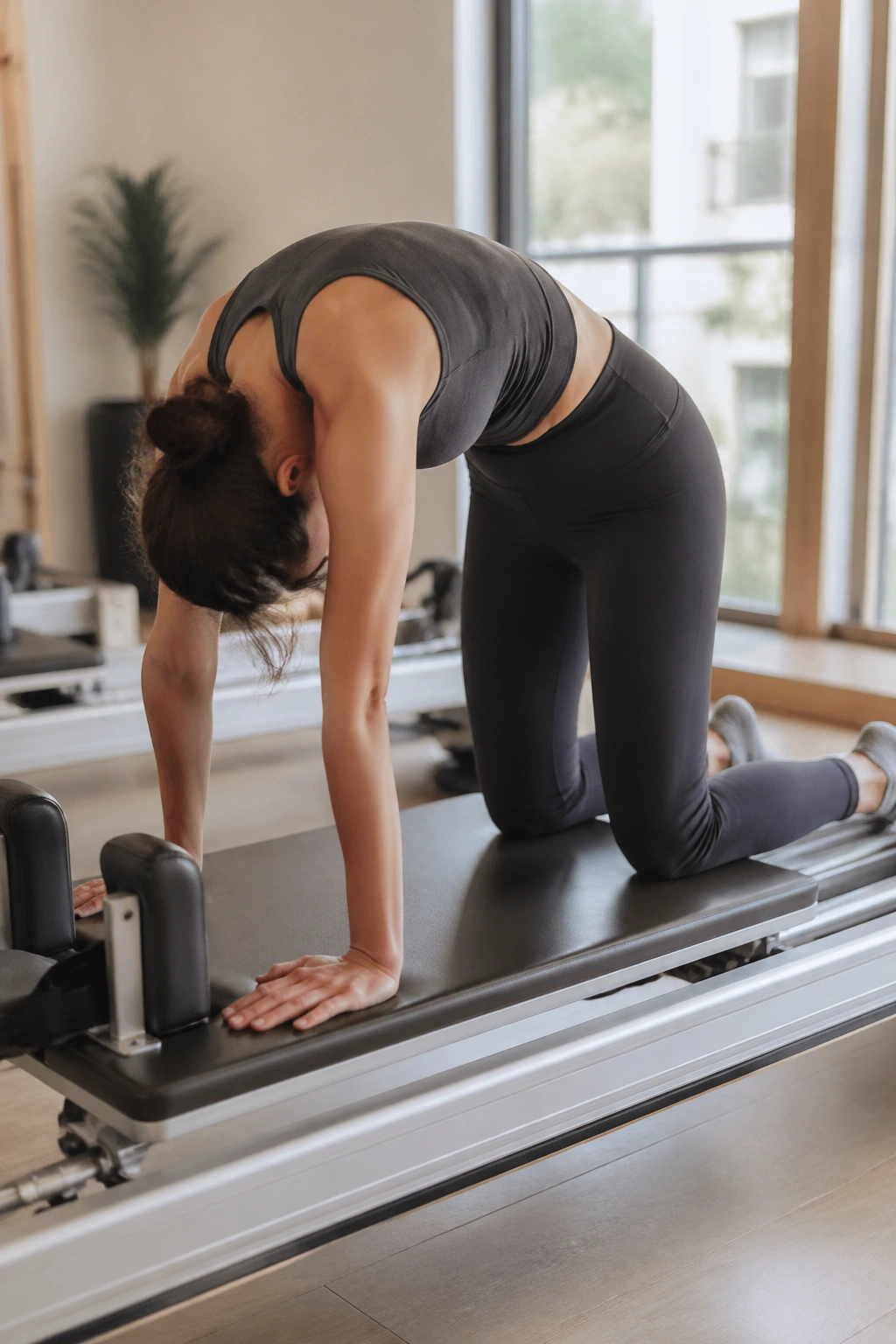
Does a tiny bounce really count as a workout? On a reformer, it absolutely can. Round-back knee stretches teach you how to keep the spine organized while the carriage moves under you.
Start on hands and knees with a rounded upper back and a tucked pelvis, then glide the carriage out just a few inches and pull it back in. The movement comes from the hips and abs, not from throwing your weight around. If the carriage slams home, the set is too fast.
What to watch for
- Shoulders stay away from the ears.
- Hands press evenly into the footbar.
- Knees stay under the hips.
- The lower back does not sag.
Three to five small reps can feel plenty hard for a beginner. The machine gives you a clear answer fast, which is useful, even when it’s humbling.
9. Hands-on-Footbar Plank Prep
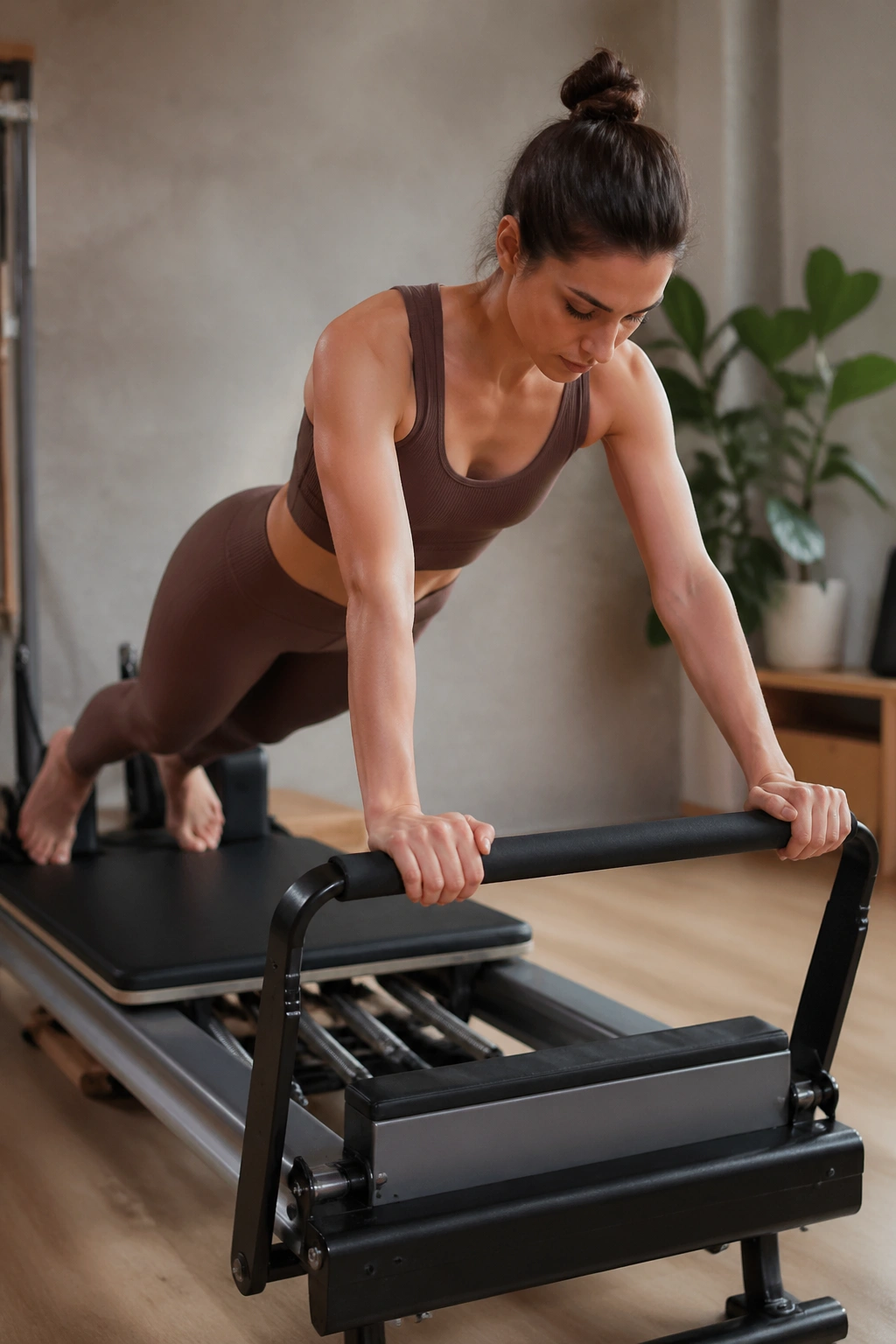
If floor planks make your wrists grumpy, this version is kinder. Hands-on-footbar plank prep lets you build shoulder stability without needing a perfect full-body plank right away.
Set your hands on the footbar and bring your knees or feet into the supported starting position your teacher gives you. Press the carriage a few inches away, then hold. The goal is not a long plank. The goal is a steady plank.
A beginner should care more about the line from head to tailbone than about how far the carriage travels. If the ribs dip, stop. If the shoulders creep forward, reset. Simple.
This is one of those exercises where less really is more. A clean 10-second hold beats a shaky 30-second attempt.
10. Mermaid Side Stretch
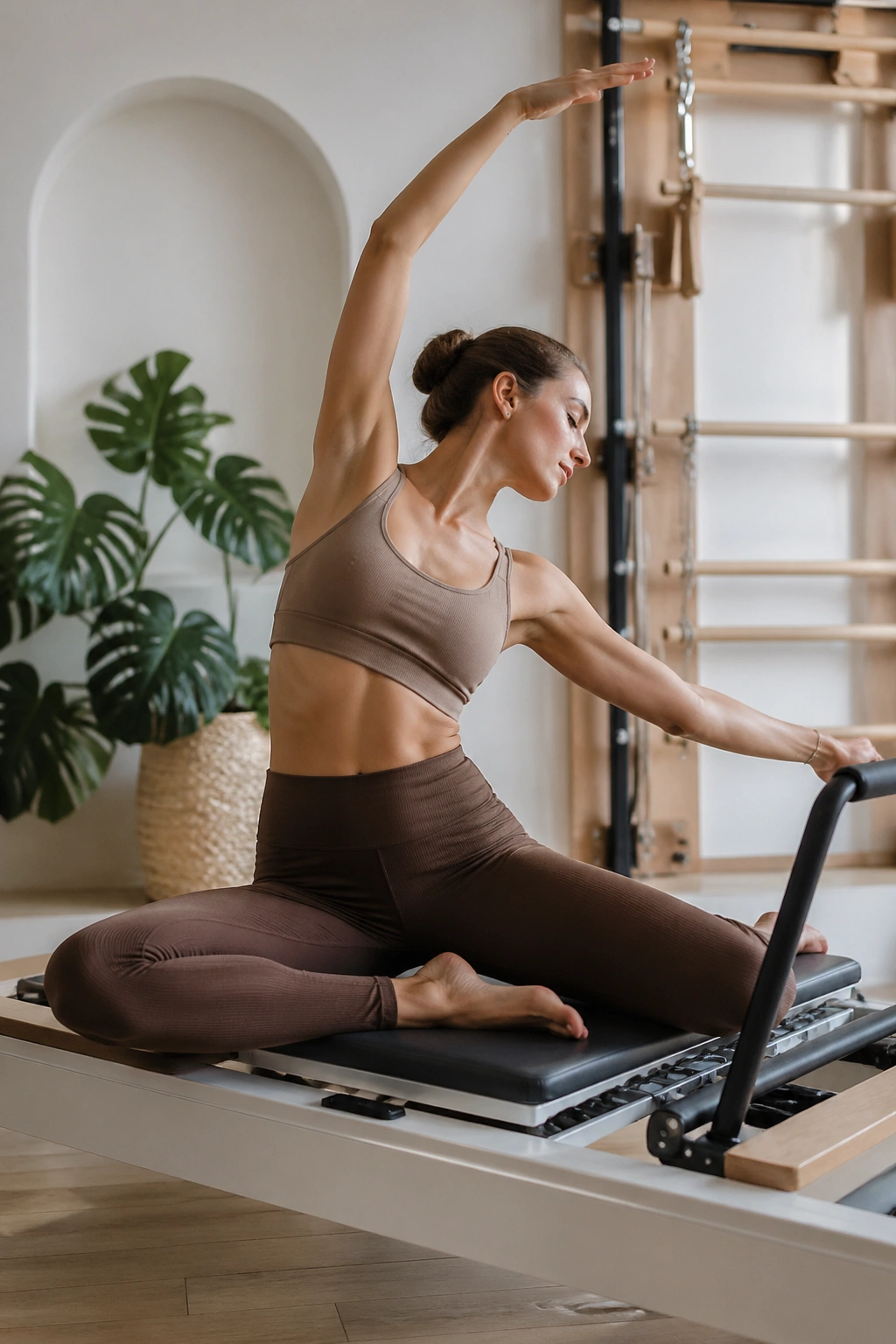
Compared with a mat side bend, mermaid on the reformer gives you a little glide, and that glide makes the stretch feel smoother through the ribs. It’s one of the nicest ways to open the sides of the body after a few strength-focused sets.
Sit sideways on the carriage, one hand on the footbar and the other reaching up. As you exhale, bend away from the bar and let the top ribs open. On the inhale, come back to tall. The carriage should move only a little, almost like it’s helping you breathe deeper.
The best mermaid stretch lands in the space between the waist and the armpit. Not in the lower back. Not in the shoulder joint.
If your shoulder feels jammed, sit a little farther from the bar or keep the top arm lower. Small adjustments change the whole shape.
11. Chest Expansion Kneeling
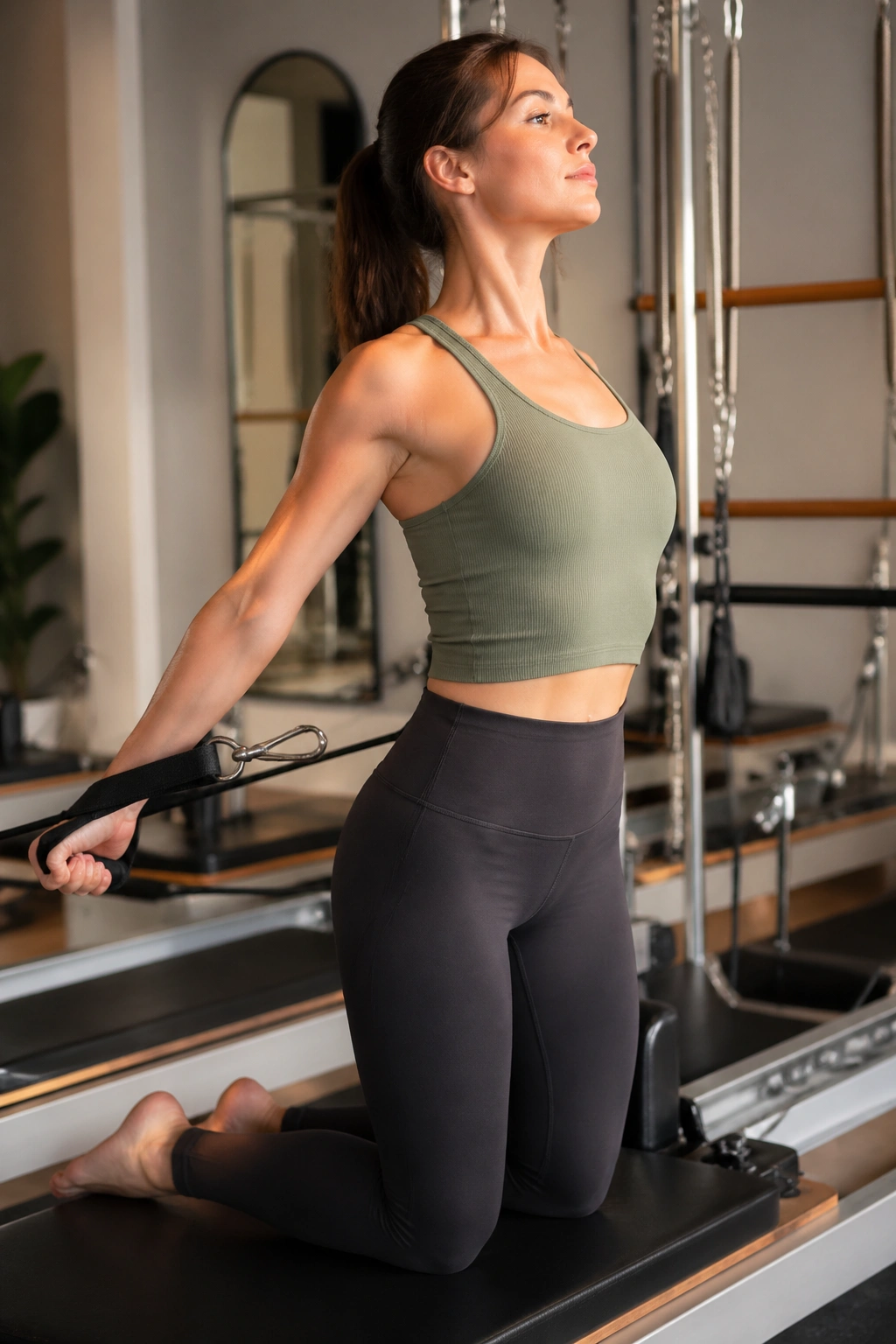
Kneeling chest expansion feels small until your ribs want to flare. Then you find out how much control you actually have.
Kneel tall facing the straps, hold them by your sides, and press the arms slightly behind you before returning to the start. Keep the chest lifted but not thrust forward. The neck stays long, and the pelvis stays stacked over the knees.
The cue that matters
Imagine your sternum floating up while your front ribs stay zipped. That’s the piece most people miss.
Use a light spring and start with 5 to 8 slow reps. If the shoulders roll forward on the return, the load is too heavy or the range is too wide. This one should feel graceful, not heroic.
12. Standing Scooter Series
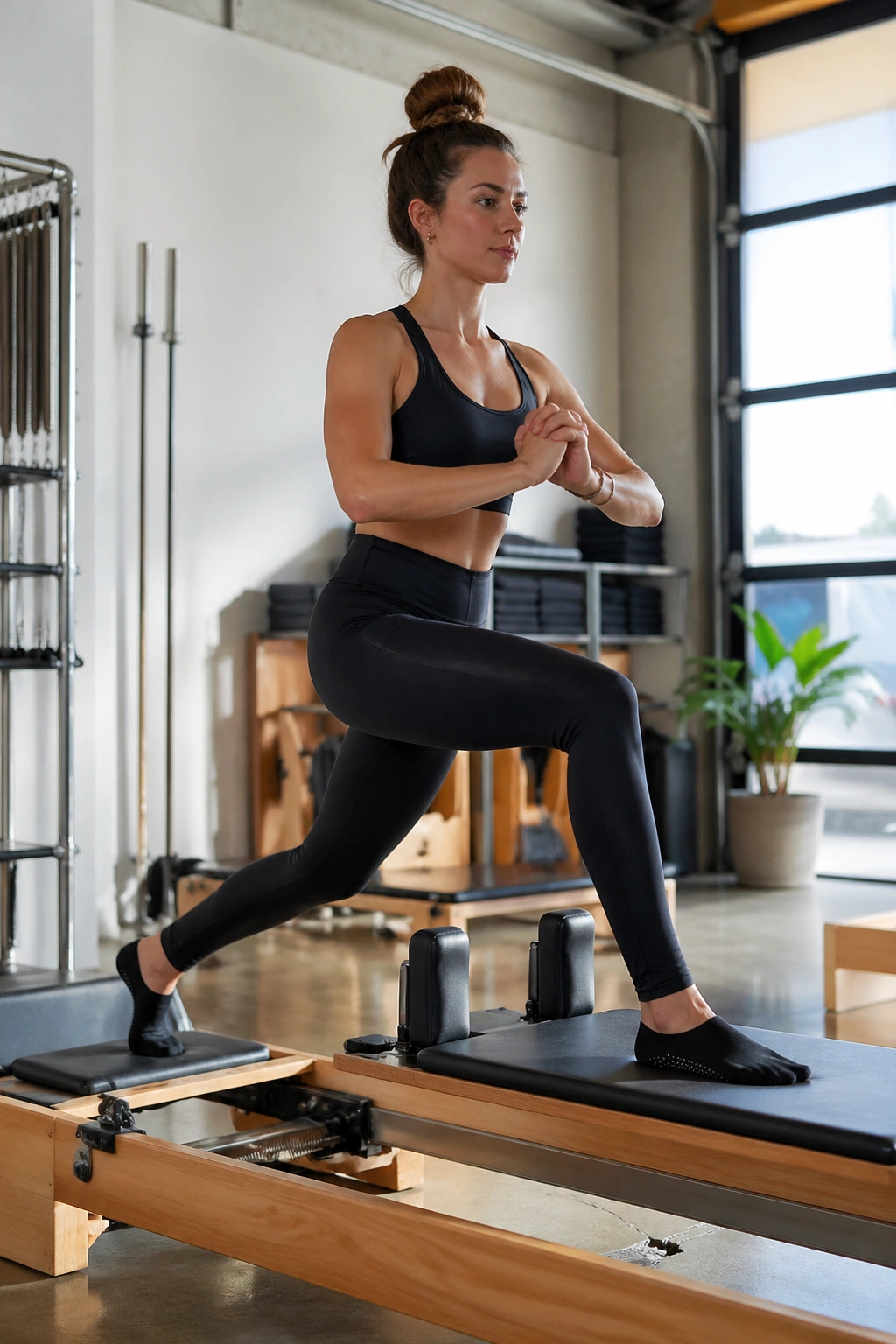
One foot stays planted while the other glides the carriage out a few inches. That simple setup makes scooter one of the best beginner standing drills on the reformer.
Stand in a small lunge or split stance with one foot on the platform and the other on the carriage, then press the carriage out and draw it back in. The working side should feel the outer hip and glute wake up. The torso stays level. No leaning, no twisting, no fancy business.
Quick setup check
- Front knee tracks over the toes.
- Back heel stays grounded if the setup allows it.
- Hips face forward.
- Movement stays short and controlled.
A light spring works best here. If the carriage shoots away, the load is too light or your push is too aggressive. Either way, slow down.
13. Split-Stance Presses at the Footbar
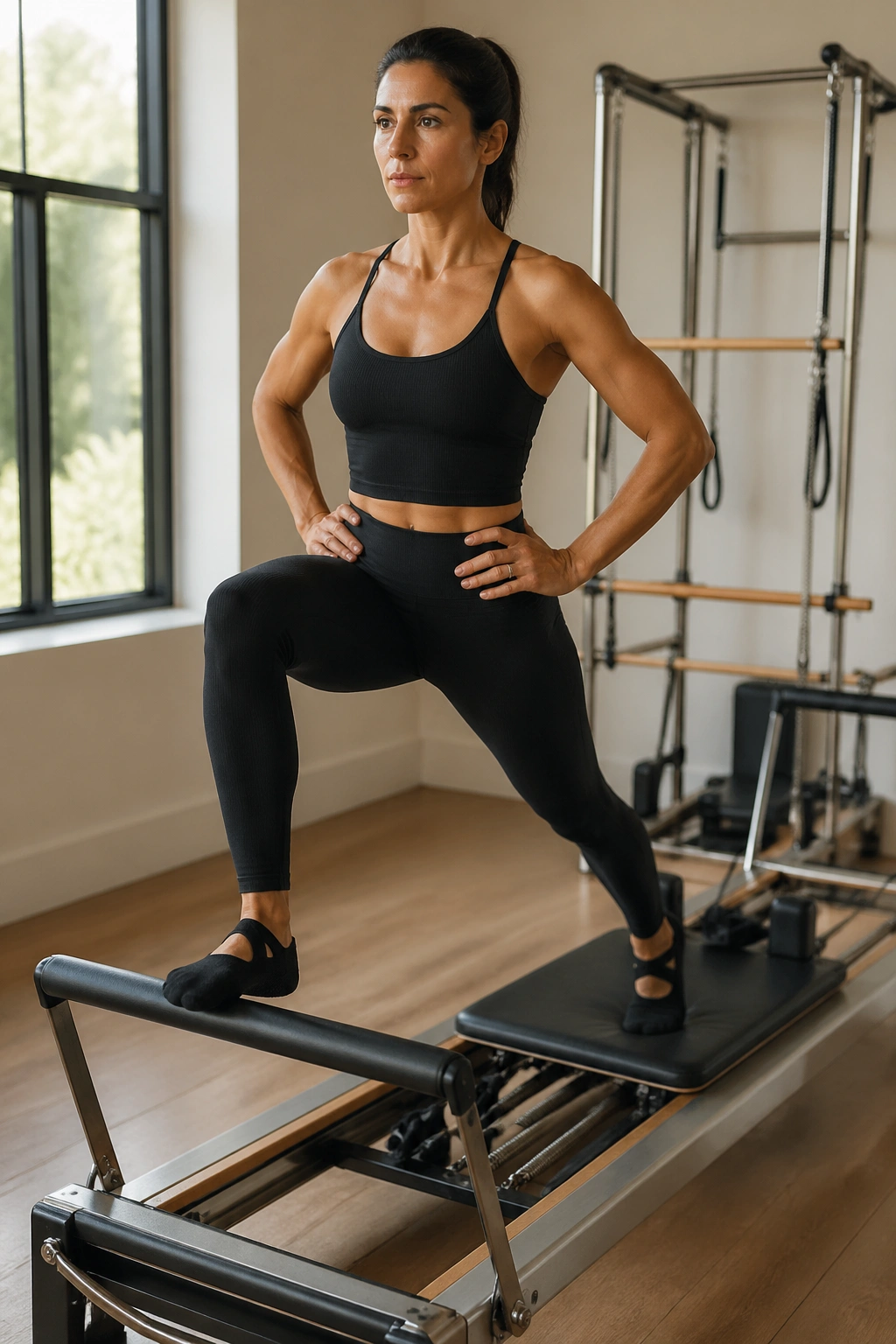
Why do split-stance presses feel so humbling? Because they expose the side-to-side difference you can hide in two-footed work.
Set one foot on the footbar and the other on the carriage, then press the carriage out with a small, even push. This is not a lunge contest. It is a balance drill with a little strength layered in. The front glute should do some of the work, but the standing leg matters just as much.
Keep the torso upright and the pelvis level. If one hip hikes up, shorten the range. If the front knee caves inward, widen the stance a touch.
This is a good place to learn patience. One slow, neat rep teaches more than ten rushed ones.
14. Coordination on the Straps
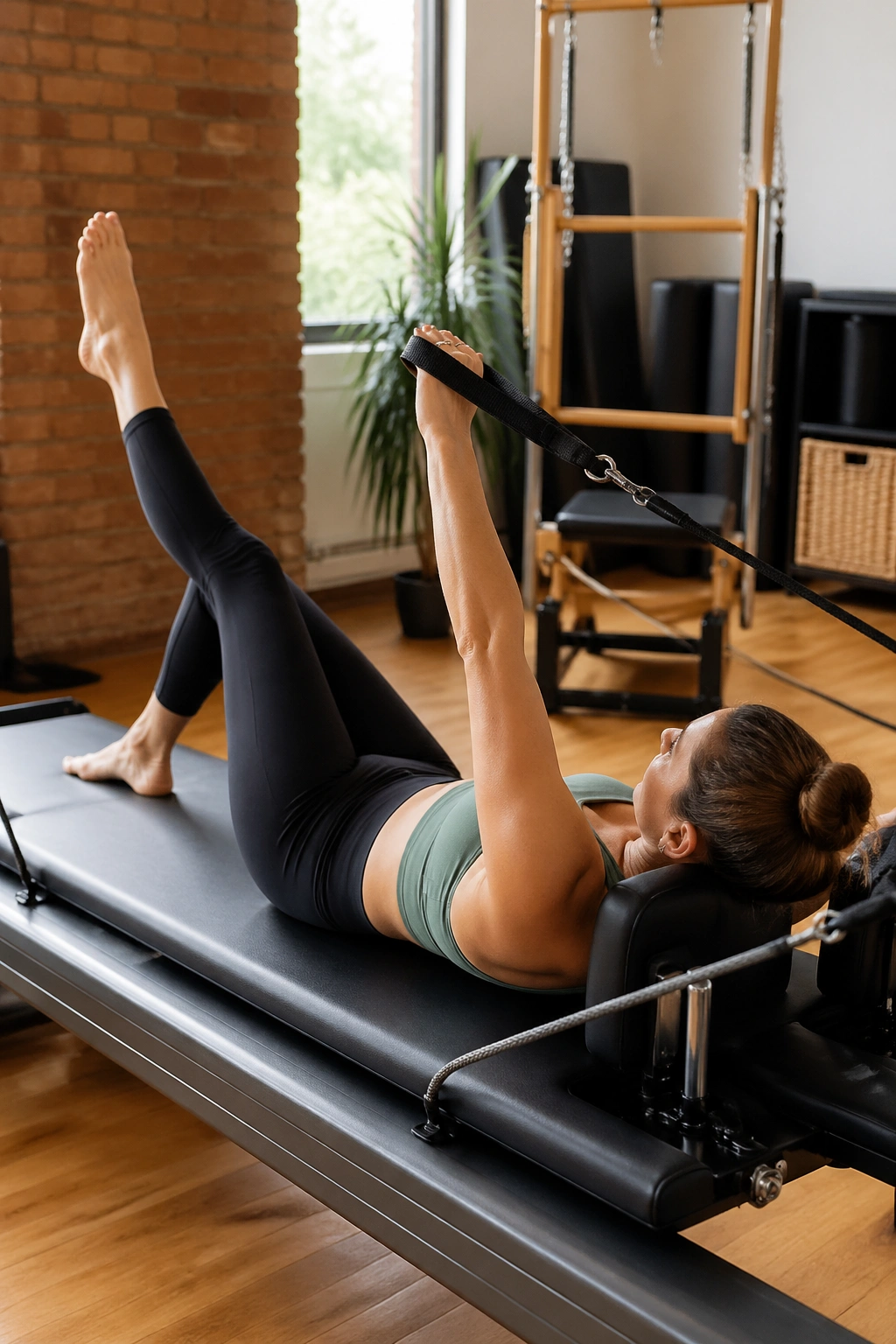
Coordination looks simple until you try to move arms and legs in opposite directions without losing your breath. Then it gets messy fast.
Lie on your back, take the straps, and start with the knees bent. Extend one leg while the opposite arm works, then switch sides in a smooth pattern. The reformer gives you enough resistance to feel the timing, but not so much that you need to fling the carriage around.
A beginner version should stay small. One leg extends low, the other stays bent, and the arms do not have to travel far. The point is rhythm. If your face tightens, you’re probably trying too hard.
There’s a nice little payoff here: once the brain catches the pattern, the movement gets smoother almost on its own. It’s one of the few Pilates exercises that can feel awkward and satisfying in the same minute.
15. Hamstring Stretch in Straps
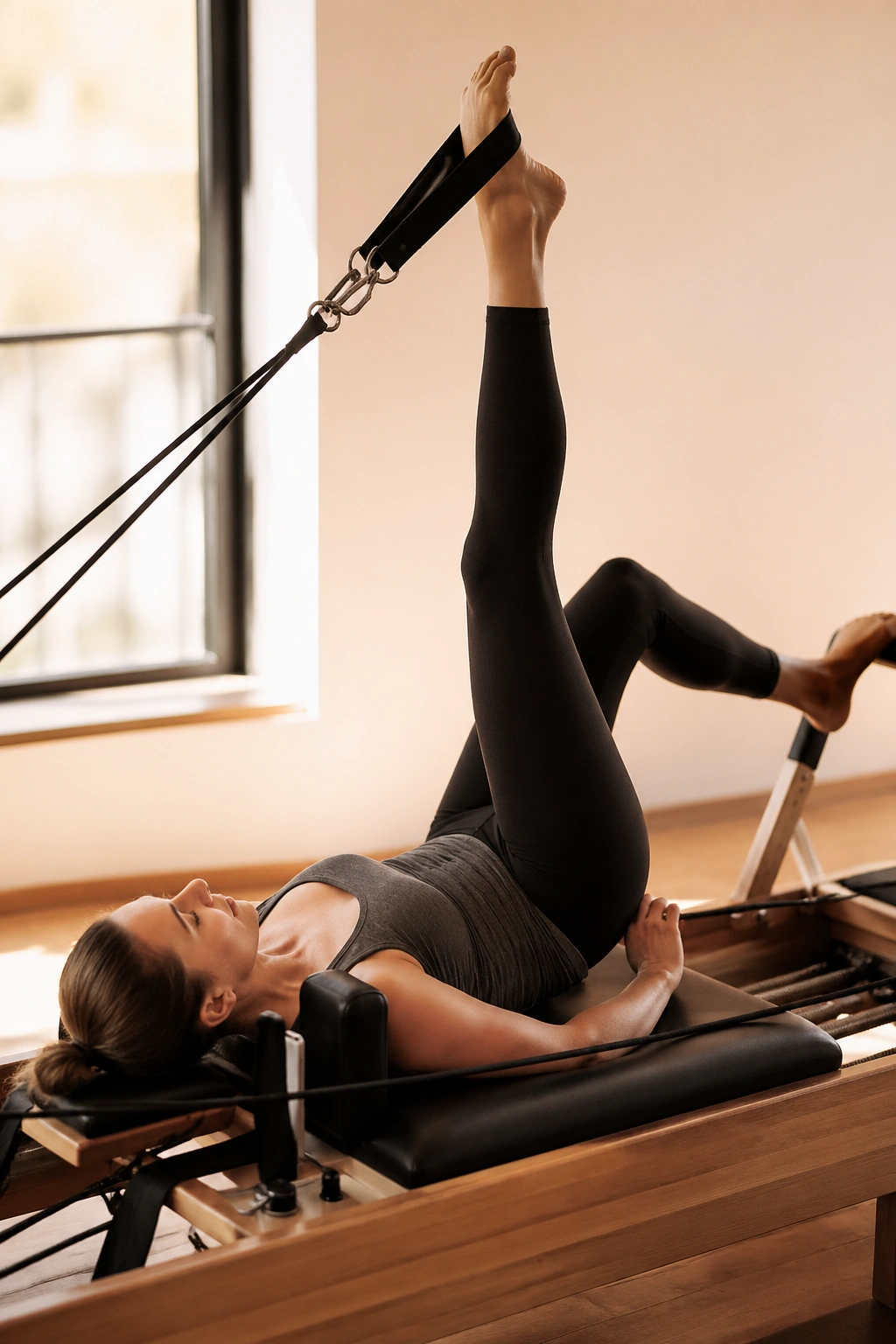
Lie still for a moment and let the straps do some of the work. That’s the mood of this one.
With one foot in a strap and the other leg resting long on the carriage, extend the working leg toward the ceiling and then soften it slightly. The stretch should be in the back of the thigh, not behind the knee. Keep the hip heavy and the foot relaxed enough that you are not gripping the line of the leg.
Some people yank into this stretch and call it mobility. Bad idea. The hamstring responds better to slow breathing and a controlled reach.
Hold each side for a few breaths, then switch. If the low back arches, bend the knee a little. That tiny change often makes the whole thing more useful.
16. Cat Stretch and Pelvic Rock
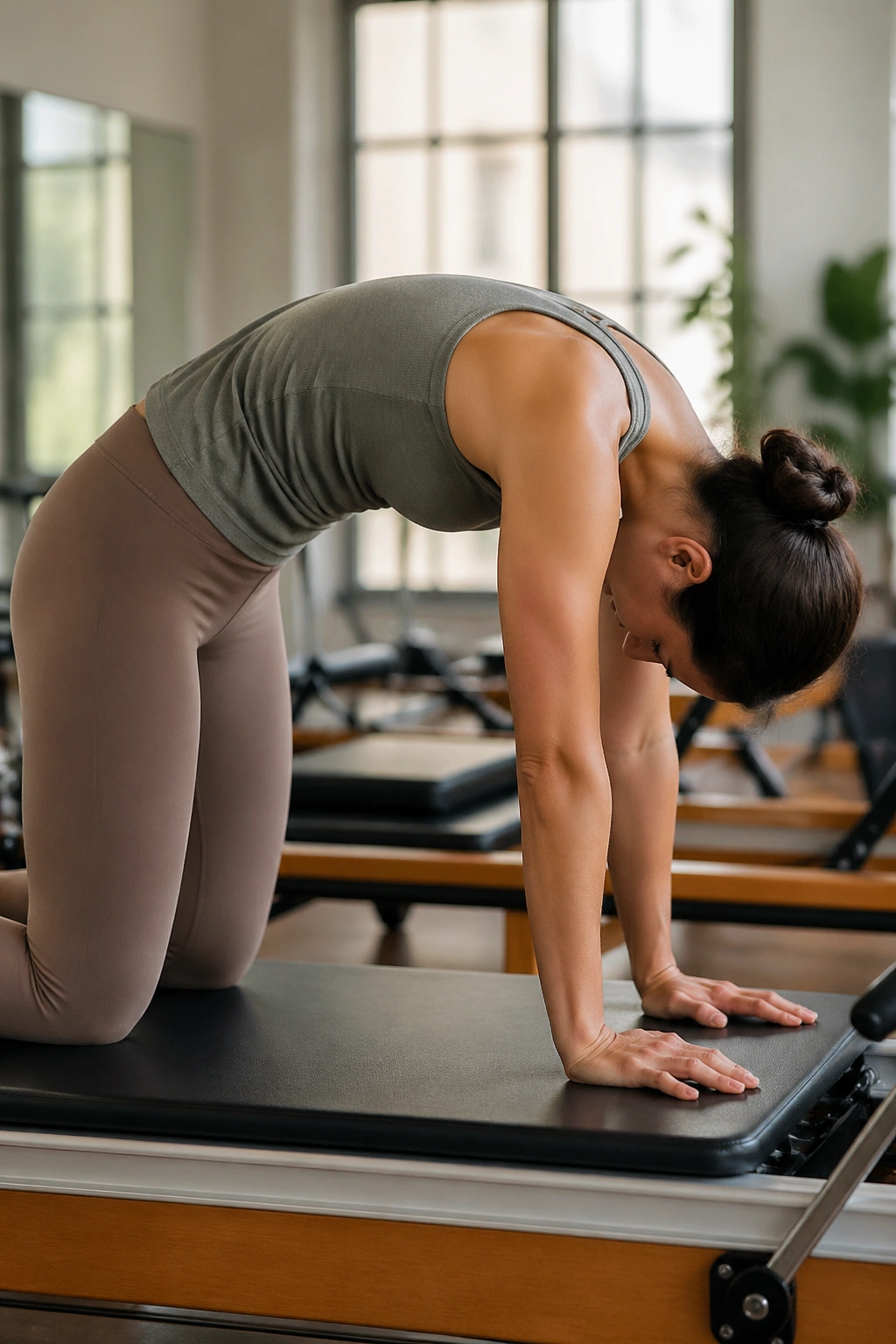
This is the workout you do when your back feels like a folding chair. It’s gentle, but don’t mistake gentle for useless.
Come to hands and knees on the carriage or footbar setup, then alternate between a round back and a long spine. You can also rock the pelvis forward and back in a small range. The movement should feel like the spine is getting oil, one segment at a time.
Move slowly enough that the springs never yank you. That’s the whole lesson. Beginners often rush cat stretch because it seems like a rest. Then the shoulders tighten and the neck does all the work.
I like this one near the end of a session, after the harder footwork and arm sets. The body is warmer, and the spine usually cooperates better.
17. Swan Prep on the Box
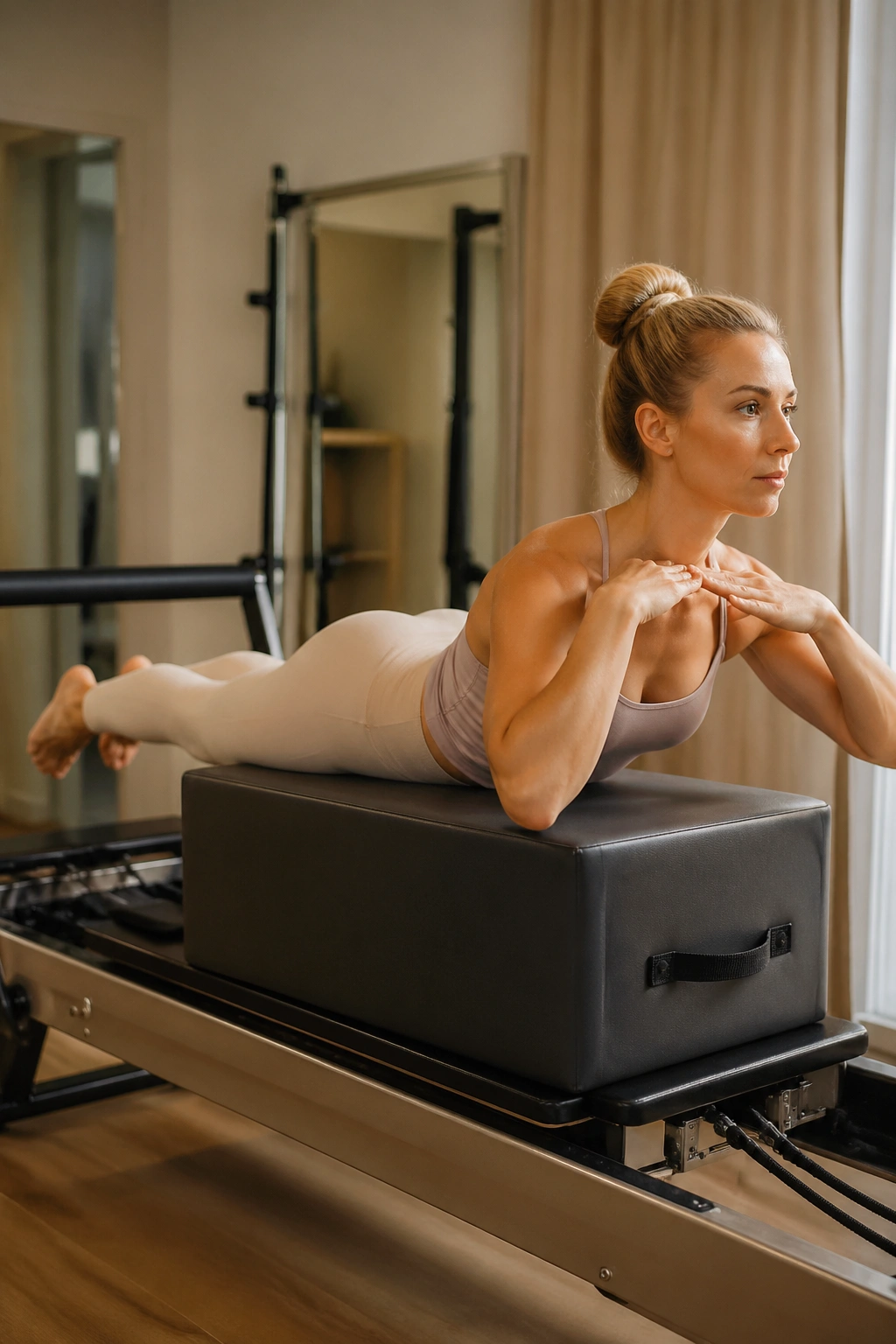
A little back extension goes a long way here. Swan prep on the reformer is not about flinging the chest skyward. It’s about learning how to lift from the upper back without jamming the lower spine.
Lie prone on the box or the carriage, depending on the studio setup, with your hands lightly supporting you. Reach the sternum forward and up first, then peel the chest off the surface a few inches. The back of the neck stays long. If the chin jams upward, back off.
This is a great beginner back exercise because the reformer gives you a clear surface to measure against. You can feel whether the lift comes from the rib cage or from the low back doing all the talking.
Two or three smooth lifts can be plenty. More is not always better, especially if the lumbar spine starts to pinch.
18. Short Box Abs Series
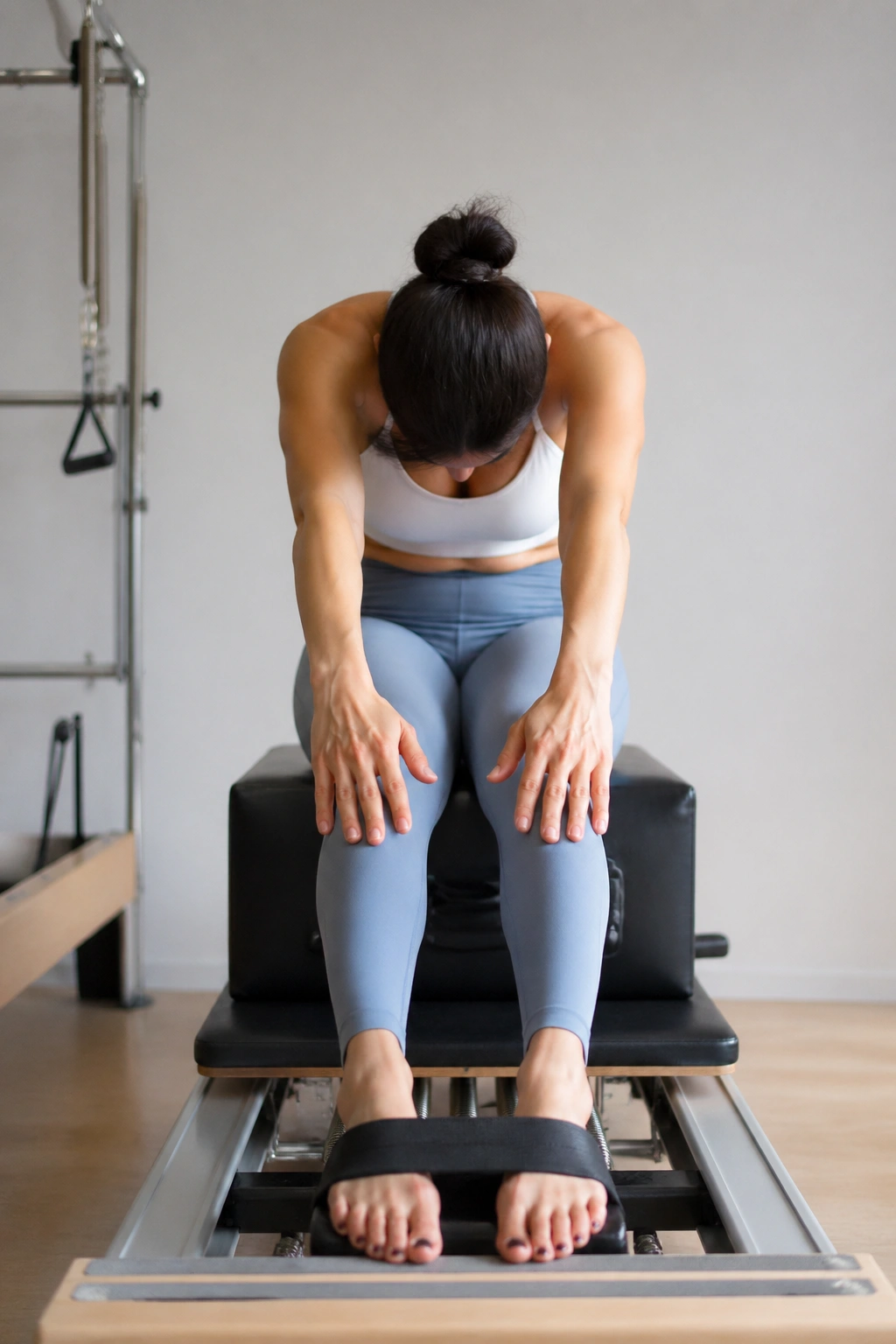
Why do short box abs feel harder than floor crunches? Because the box removes a lot of your cheating options.
Sit on the short box with your feet secured under the strap, then round the spine over the box and come back to tall. Some classes add a flat-back hinge after that. Both versions ask the abs to hold the torso steady while the hips stay anchored.
A beginner-friendly order
- Round back first.
- Keep the movement small.
- Stop before the lower back takes over.
- Breathe out on the hardest part.
The box gives you a clear edge to work against, which is why this series is so useful for beginners who need feedback. If the neck strains, hold the head in line with the spine and reduce the range.
19. Long Box Back Extension
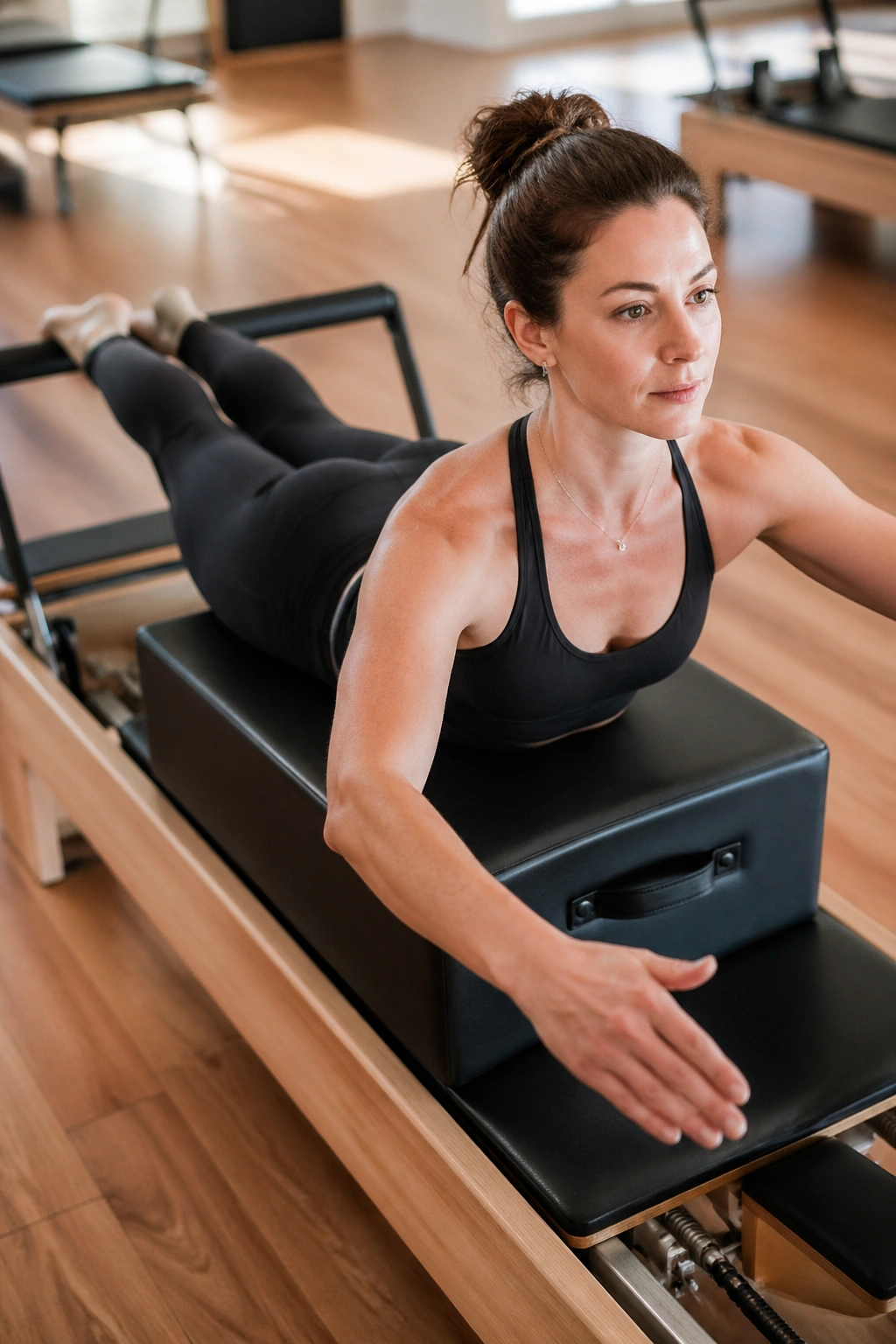
There’s a nice contrast between floor back work and long box back extension: the box gives you room to breathe, but it also asks you to control the lift from a more open position.
Lie prone on the long box with the shoulders supported and the legs anchored. Reach the chest forward, then float it up a little. Keep the ribs from thrusting hard into the box edge. The movement should feel long and clean, not cranked.
This one suits beginners who want back strength without jumping straight into bigger swan work. It’s also a useful reset after a lot of seated or flexed positions.
If the low back pinches, lower the lift. If the shoulders squeeze toward the ears, slide the hands farther forward and lighten the effort.
20. Calf Raise and Tendon Stretch
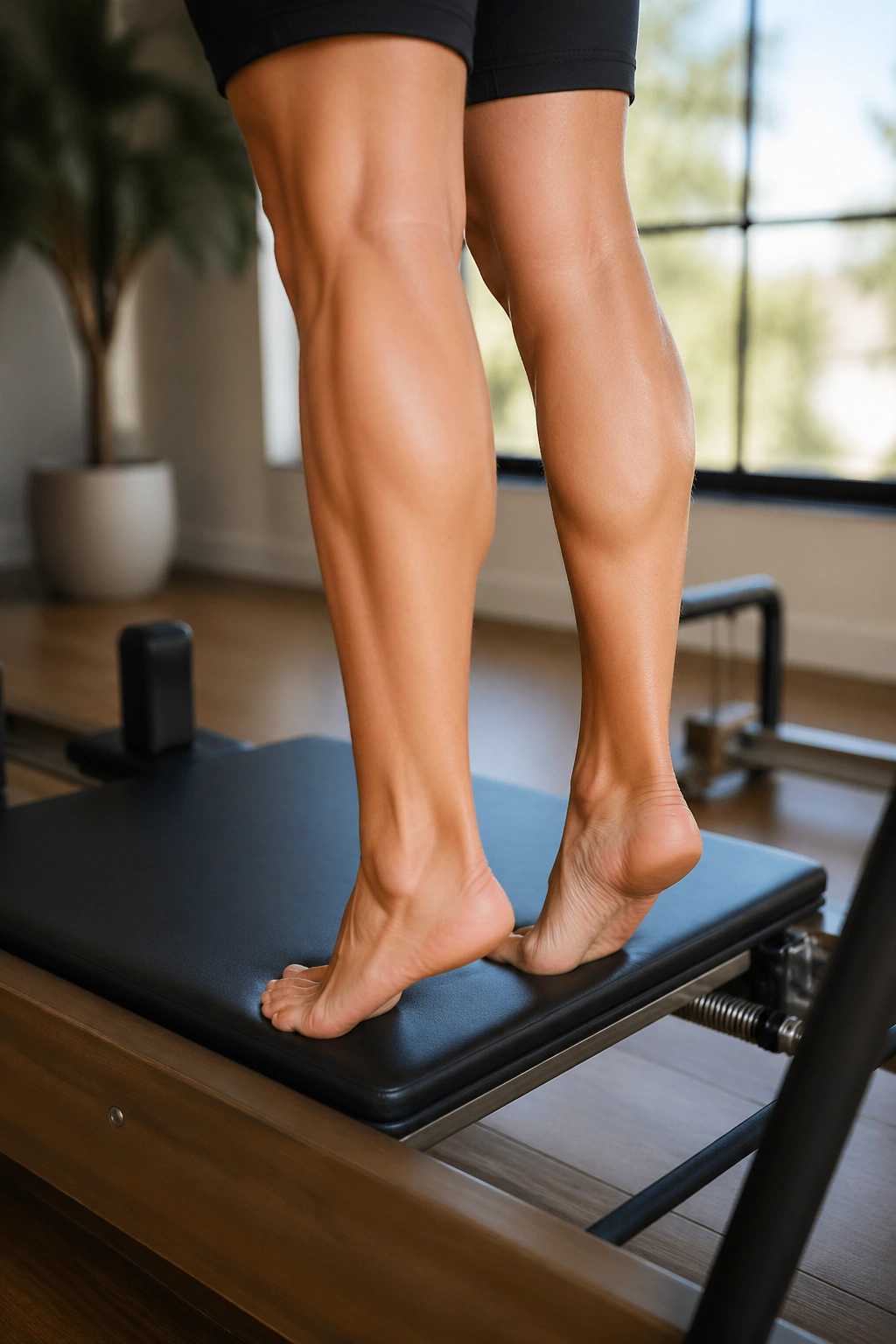
People skip ankle work until the calves start complaining. Then they wonder why the squat, lunge, and footwork all feel off.
Stand on the platform or footbar with a stable setup, rise onto the balls of the feet, and lower with control. After a few reps, change the angle slightly and let the heels drop for a tendon stretch if your studio setup allows it. The movement is tiny. The effect can be bigger than you expect.
What this series usually improves
- Ankle mobility.
- Foot control.
- Balance on standing work.
- Clean pressure through the big toe.
If the arches cramp, shorten the range and slow the tempo. Feet love patience more than force.
21. Inner-Thigh Strap Work
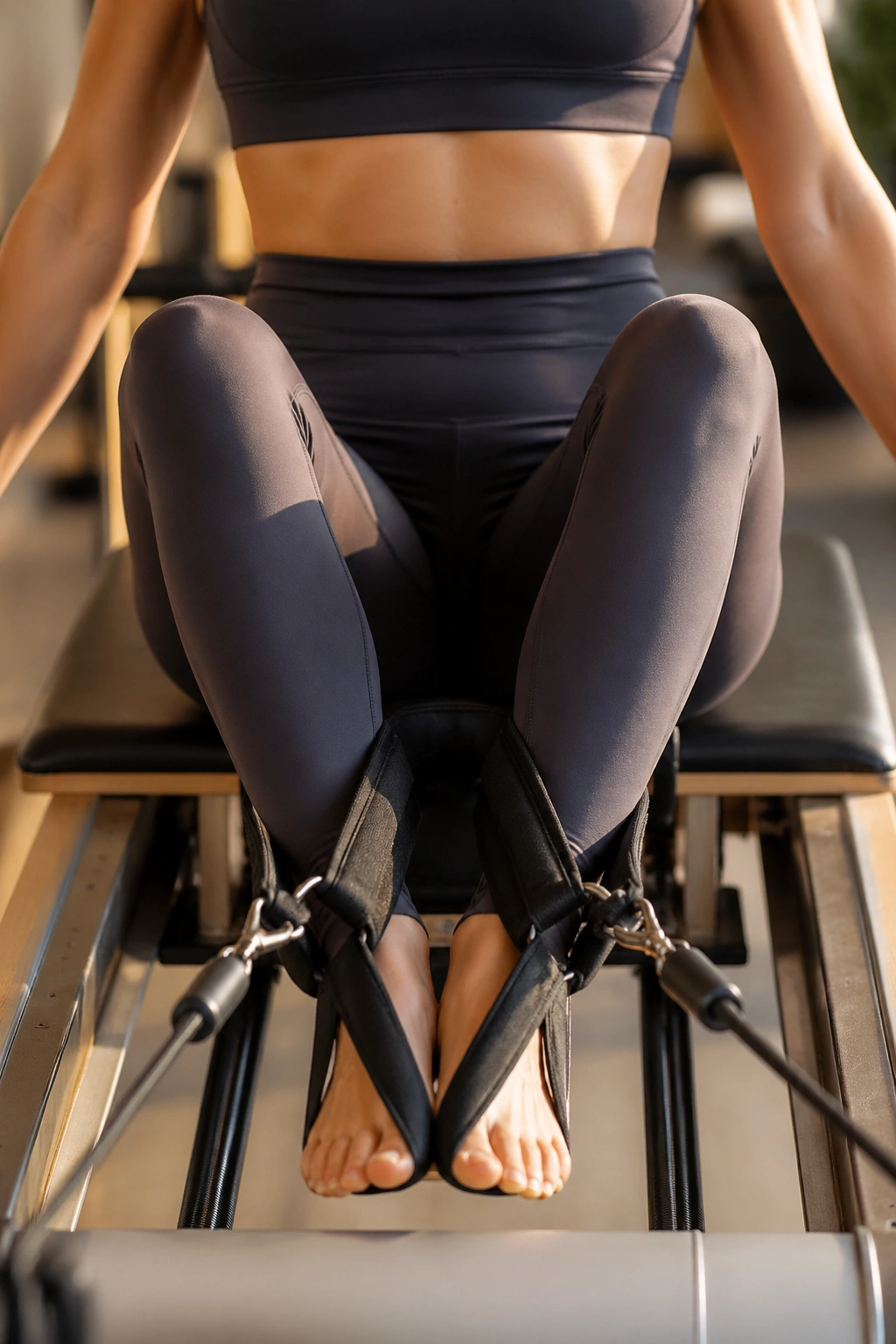
Inner thighs matter more on the reformer than most beginners expect. They help stabilize the pelvis, clean up footwork, and make bridge work feel less sloppy.
One simple option is feet in straps with a narrow V shape. Another is a small ball or cushion between the knees during bridge work. Either way, the goal is the same: a gentle squeeze and release without letting the knees collapse inward.
Keep the pressure modest. If you squeeze too hard, the hip flexors jump in and the work moves away from the adductors. That’s the sneaky part.
This is one of those workouts that feels almost too easy until you notice how steady your pelvis becomes afterward. Then the value clicks.
22. Reverse Knee Stretch Prep
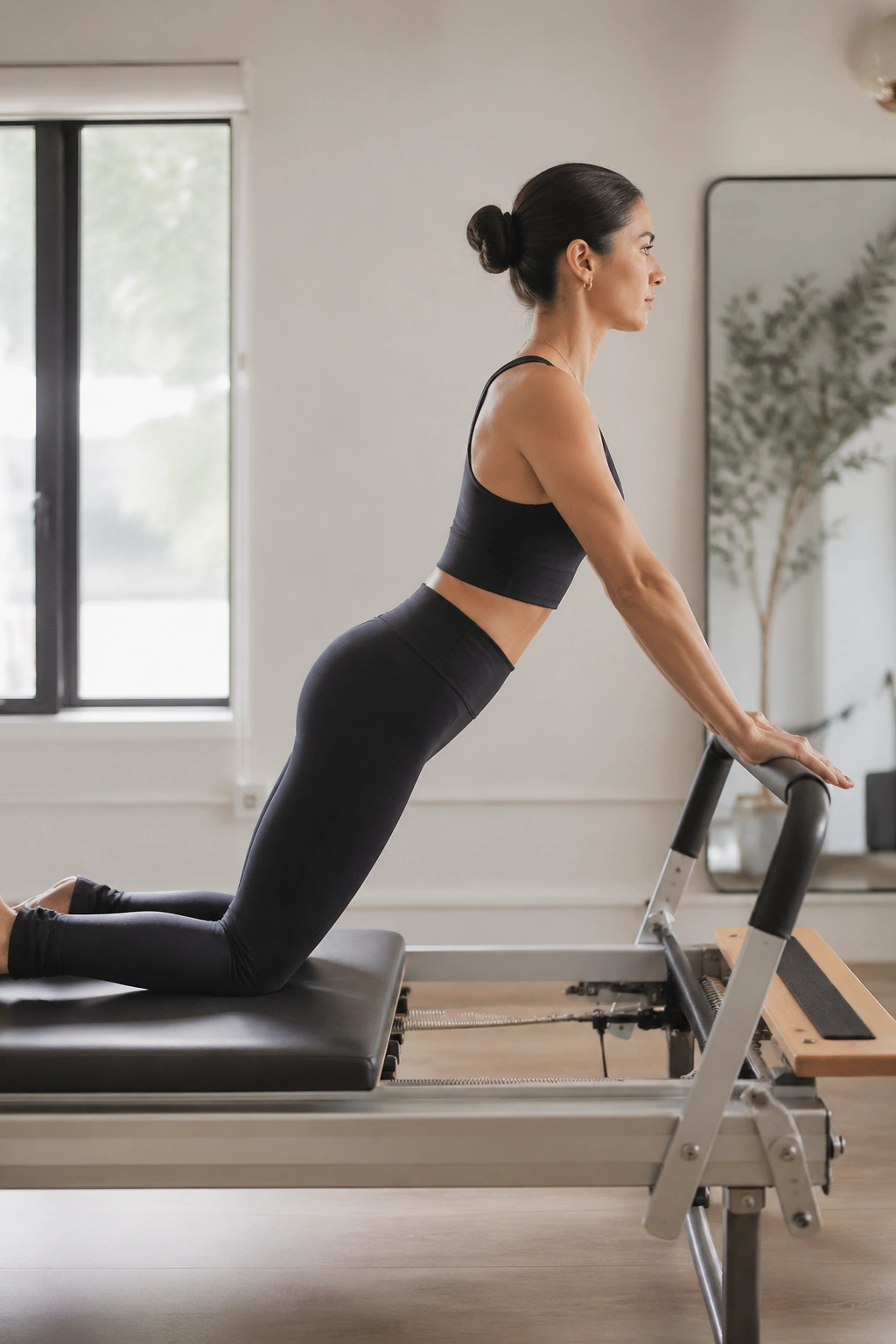
Can a beginner do reverse knee stretch work? In a small, carefully scaled version, yes.
Start in a kneeling setup with a light spring and a very short carriage range. The knees hover or stay supported, the spine stays long, and the press back is tiny. If the shoulders collapse or the wrists hate the angle, stop and choose a different drill.
How to keep it beginner-safe
- Keep the movement under control.
- Use a light spring with smooth return.
- Stop before the hips tip forward.
- Prioritize shape over depth.
This is not the place for ego. The point is to build a taste for the pattern without rushing into a bigger version than your body can hold.
23. Kneeling Shoulder Press
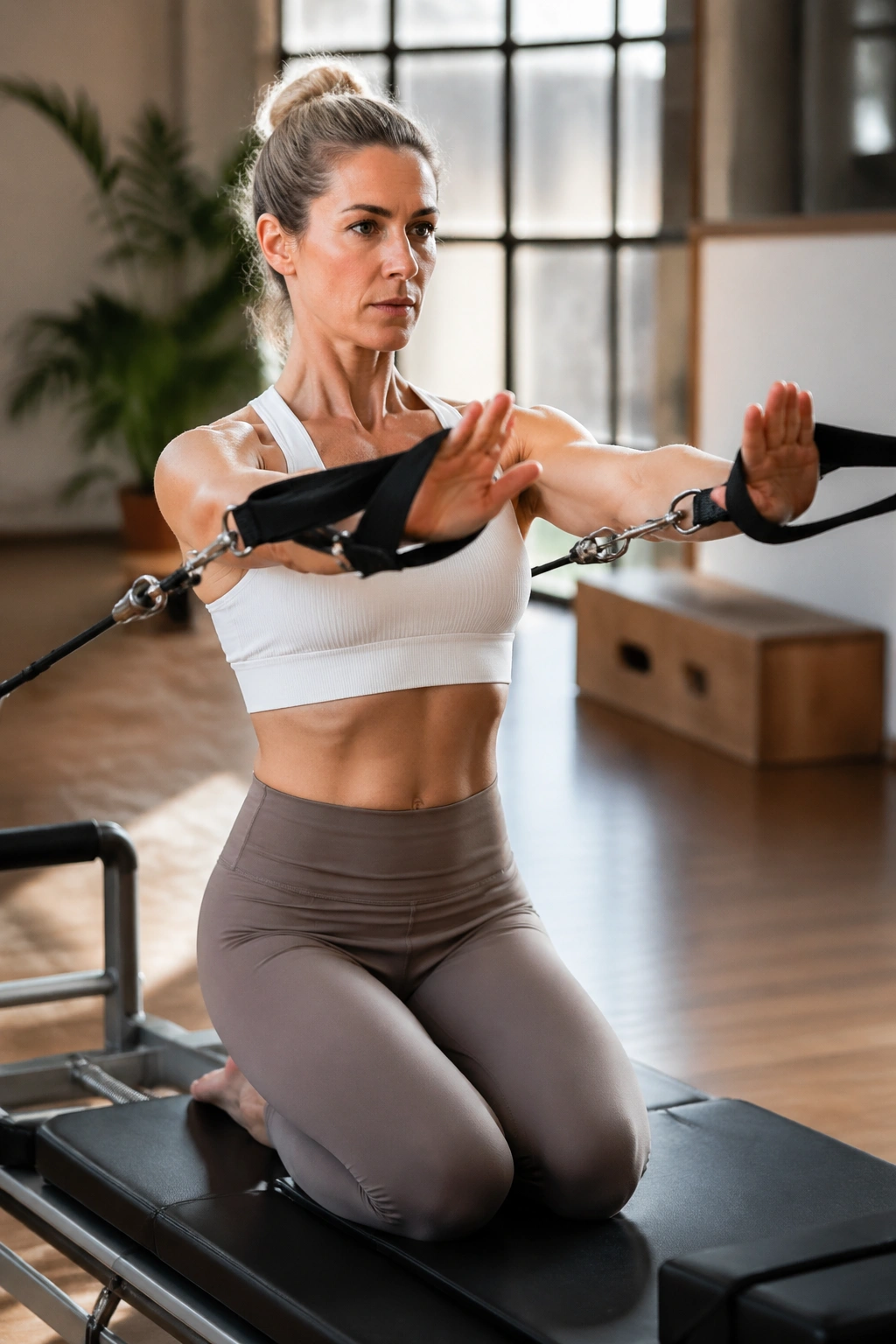
Kneeling shoulder press is one of the cleanest ways to train the upper body without flinging the carriage around. It’s neat, direct, and a little humbling.
Kneel tall, hold the straps, and press the arms forward or overhead depending on the series your teacher uses. The ribs stay heavy, the pelvis stays stacked, and the neck doesn’t get dragged into the effort. If the lower back arches to help the arms, the spring is too much.
A good rep looks calm from the outside. Inside, you’ll feel the shoulders, triceps, and deep core all working together. That’s the real lesson.
Use 6 to 8 controlled presses and keep the breath smooth. If the elbows wobble, reduce the load or shorten the arc.
24. Beginner Reformer Pilates Full-Body Circuit
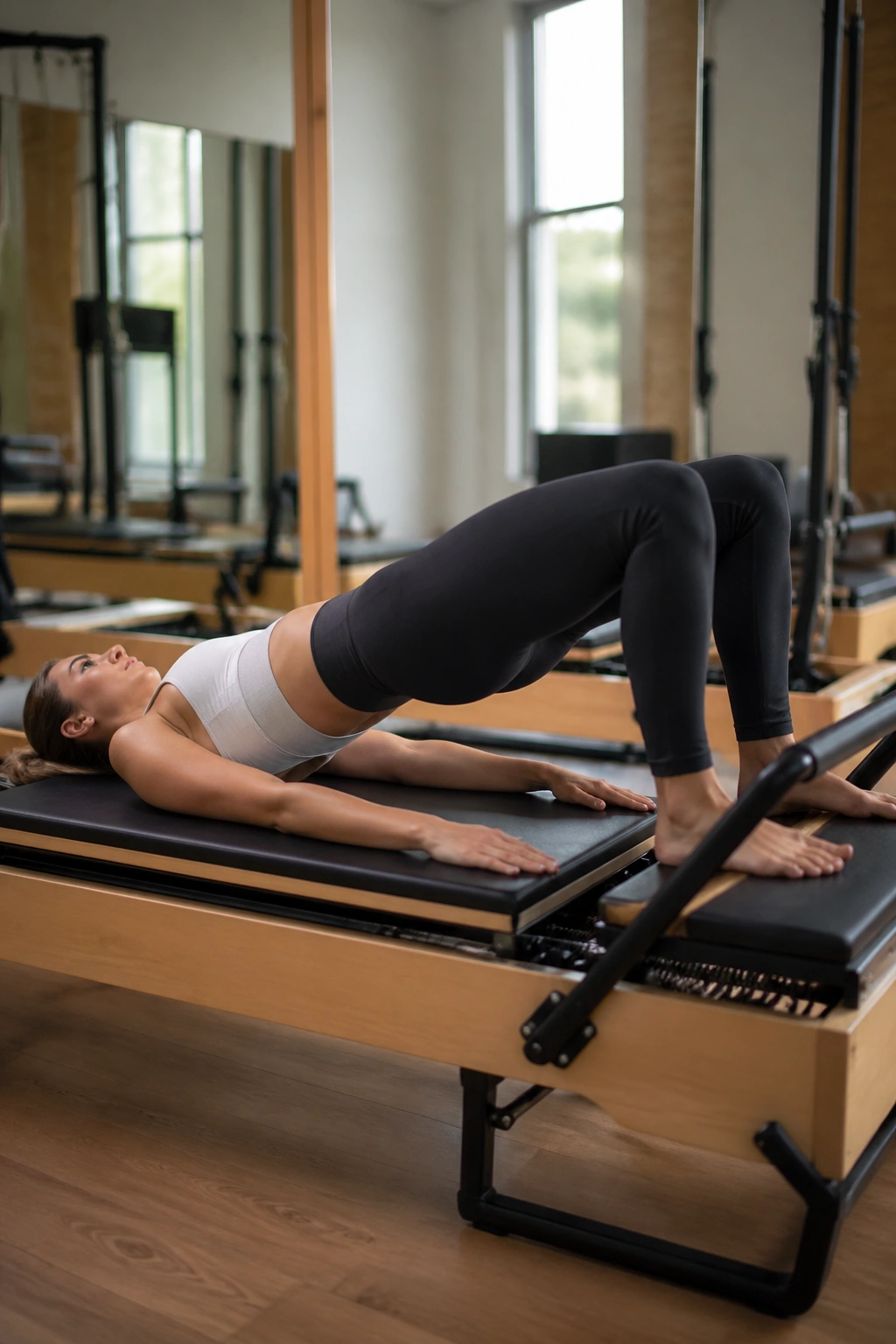
Some days call for a little bit of everything, not a long list of separate drills. A beginner circuit is useful because it strings the basics together without making the class feel random.
Try this shape for a simple session:
- 8 reps of footwork.
- 6 bridges.
- 8 arm presses in straps.
- 6 frog presses in straps.
- 5 rounds of mermaid breathing on each side.
That’s enough to wake up the legs, torso, and shoulders without dragging the workout out forever. The real win is the pacing. You move from supine work to seated work to side bending, and the body gets a clear pattern instead of a jumble.
If you want a longer session, repeat the circuit once. If fatigue makes the carriage noisy, stop there. Neat reps beat sloppy volume.
25. Cooldown and Breathing Reset
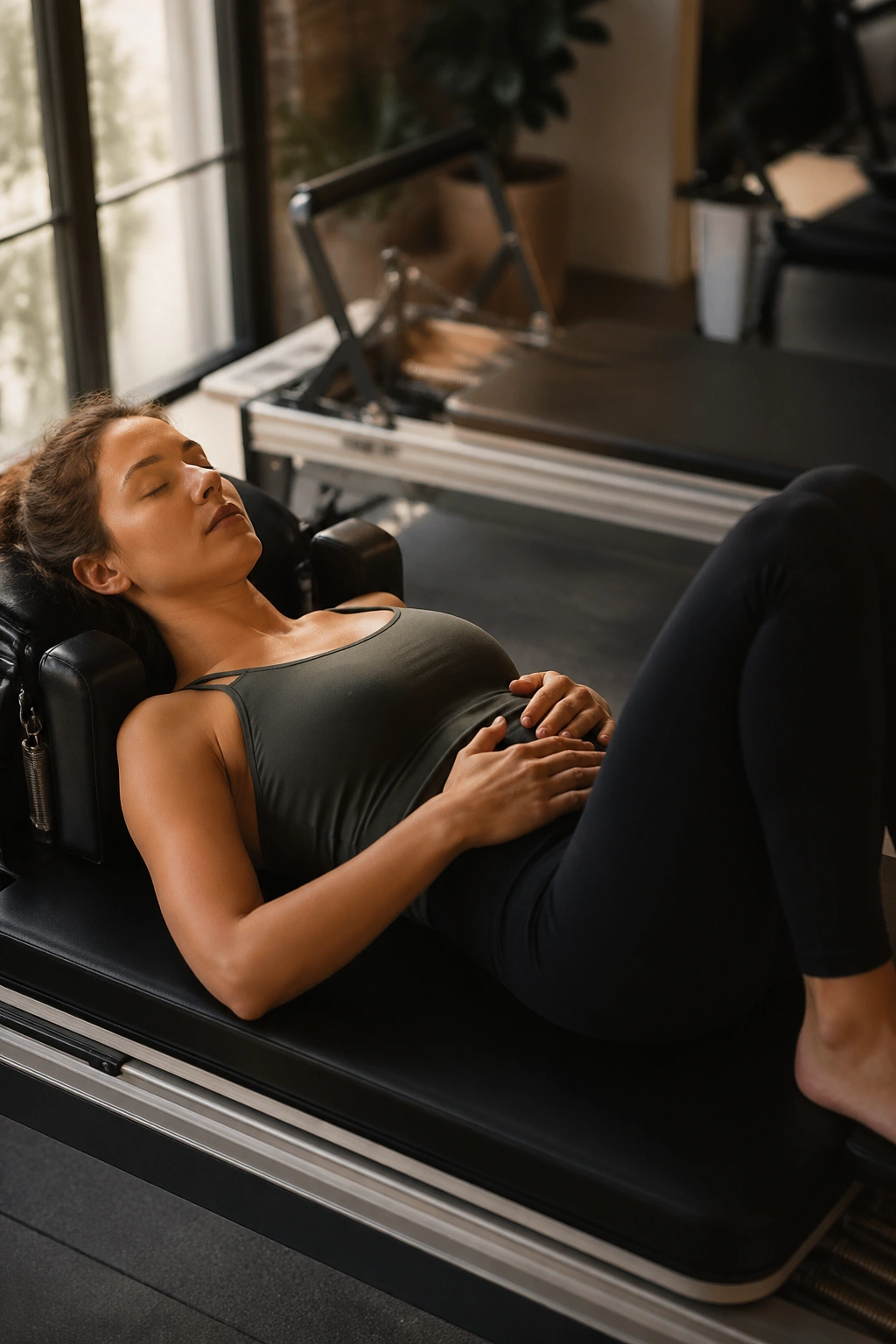
The best beginner sessions do not end with a crash. They end with a slower breath and a body that feels a little quieter than before.
Lie down on the carriage, let the knees rest side to side, or return to a simple hamstring or hip stretch with the straps. Keep the inhale wide through the back ribs and let the exhale soften the jaw and shoulders. Nothing fancy. The machine can stay still for this part.
A short cooldown helps the nervous system settle after all the small stabilizing work. That matters. If the session ends while you’re still gripping the footbar or clenching the glutes, you leave the reformer half-finished.
Finish with a few slow breaths and a long exhale. That’s enough.
Final Thoughts
The strongest beginner reformer Pilates sessions are not the flashiest ones. They’re the ones that teach your body how to stay organized while the carriage moves under load. Footwork, bridges, straps, and slow spinal work build that skill fast.
A smart beginner routine should feel clear, not chaotic. If you finish a workout and your feet feel more awake, your ribs feel a little quieter, and the carriage has stopped slamming around, you’re on the right track.
Pick a few of these workouts, repeat them often, and let the machine become familiar before you try to make it impressive. That’s where the real progress tends to show up.
