



Pilates HIIT workouts work best when they stay honest. Short bursts, clean form, and a little discomfort in the right places—that’s the sweet spot.
A lot of people try to make Pilates harder by making it faster. Bad idea. Speed without control turns a good core session into flailing, and flailing is not cardio in any useful sense. The better version keeps the Pilates part intact: ribs tucked, spine long, hips stable, shoulders out of your ears.
That’s where the interval format earns its keep. Use 20 seconds on and 10 seconds off, or 30 seconds on and 15 seconds off, and the whole thing changes. You still get the heart-rate spike people want from HIIT, but you also get the body awareness, glute work, and deep-core fatigue that make Pilates worth doing in the first place. A mat, a light resistance band, maybe a pair of 2- to 5-pound hand weights—honestly, that’s enough for most of these.
The best sessions feel efficient rather than frantic. You finish sweaty, a little shaky, and aware of muscles you usually ignore. That is the good kind of tired. And if the timing is smart, you can repeat the same workout without your form falling apart halfway through, which matters more than people like to admit.
1. Pilates HIIT Mat Burner
A 20-second effort block is the cleanest way to make mat Pilates feel athletic without turning it sloppy. The short work window keeps your core engaged, but it also forces you to move with intention. That matters. Once the sequence starts drifting into momentum, the whole thing loses its punch.
Why the timing works
Use four moves, 20 seconds each, then rest for 10 seconds between them. Repeat the circuit 4 times. I like pairing hundred pulses, squat pulses, plank shoulder taps, and single-leg bridges because they hit the torso, legs, and glutes without needing fancy setup.
- 20 seconds hundred pulses
- 20 seconds squat pulses
- 20 seconds plank shoulder taps
- 20 seconds single-leg bridge, right side
- 20 seconds single-leg bridge, left side
Keep the effort brisk, not sloppy. If your lower back starts arching during the bridge, raise the working foot and reduce the range. If your shoulders creep up during the plank, widen your feet.
Best tip: stop the set while your form is still crisp. That leaves room to repeat the round without turning the last half into survival mode.
2. Standing Power Intervals
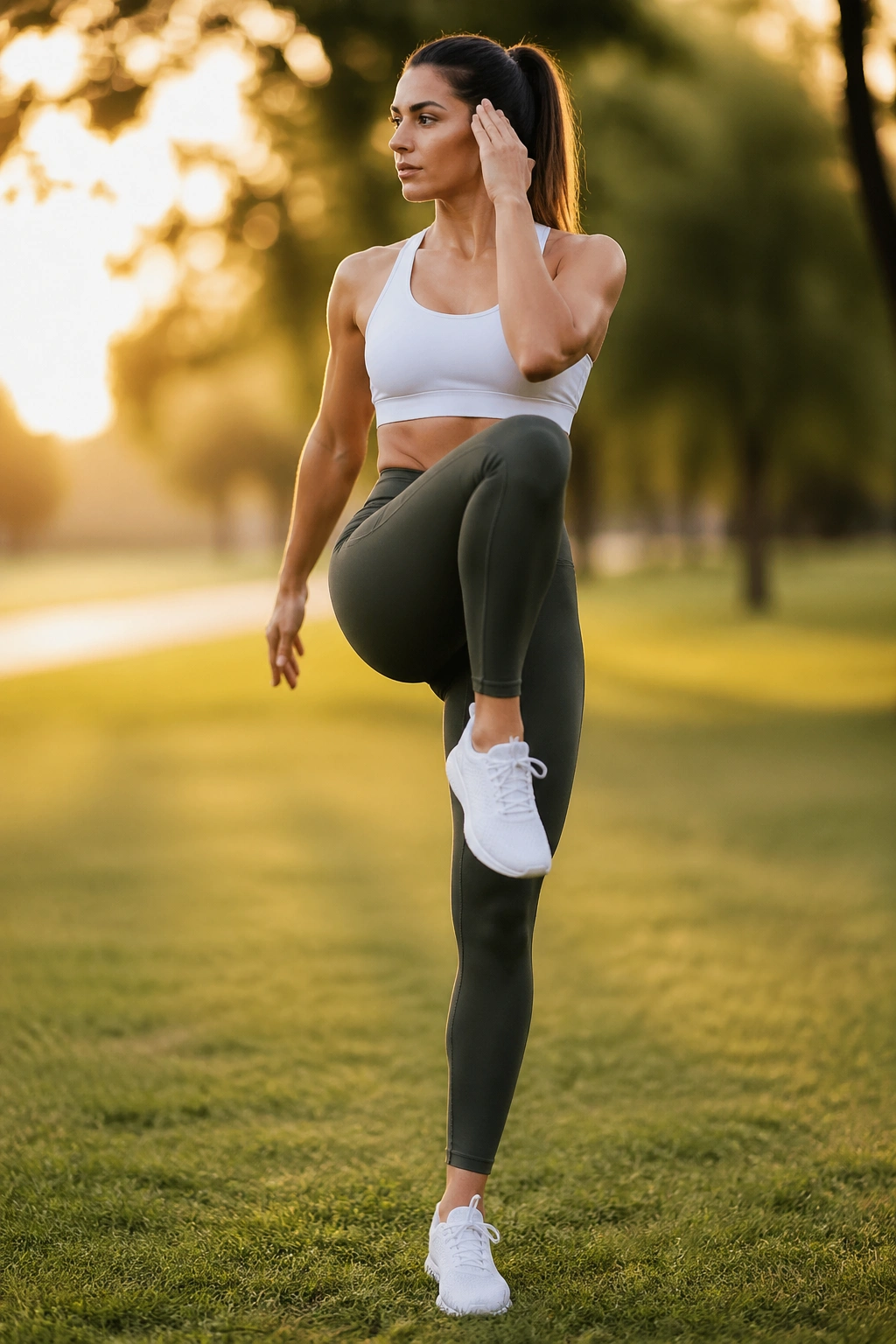
Why do standing Pilates HIIT workouts feel harder than they look? Because balance steals attention, and attention costs energy. Once you ask your body to stay tall, move fast, and keep the ribs closed, the cardio effect shows up fast.
A standing sequence is also kinder on days when you do not want to live on the floor. Use a 40-seconds-on, 20-seconds-off rhythm and move through knee drives, side reaches, squat-to-calf raise combos, and standing kickbacks. Keep the tempo quick enough to raise your heart rate, but not so quick that the standing leg collapses inward.
Best moves for this format
- Knee drive with opposite elbow reach
- Side lunge to overhead sweep
- Squat pulse with calf raise
- Standing kickback with a two-count hold
The magic is in the posture. Tall spine. Soft knees. Ribs stacked over hips. That’s what makes the movement feel like Pilates instead of a random cardio drill.
I reach for this format when I want a workout that looks simple and ends up humbling me anyway. It works fast, and it does not beat up the knees the way jump-heavy routines often do.
3. Reformer Sprint Ladder
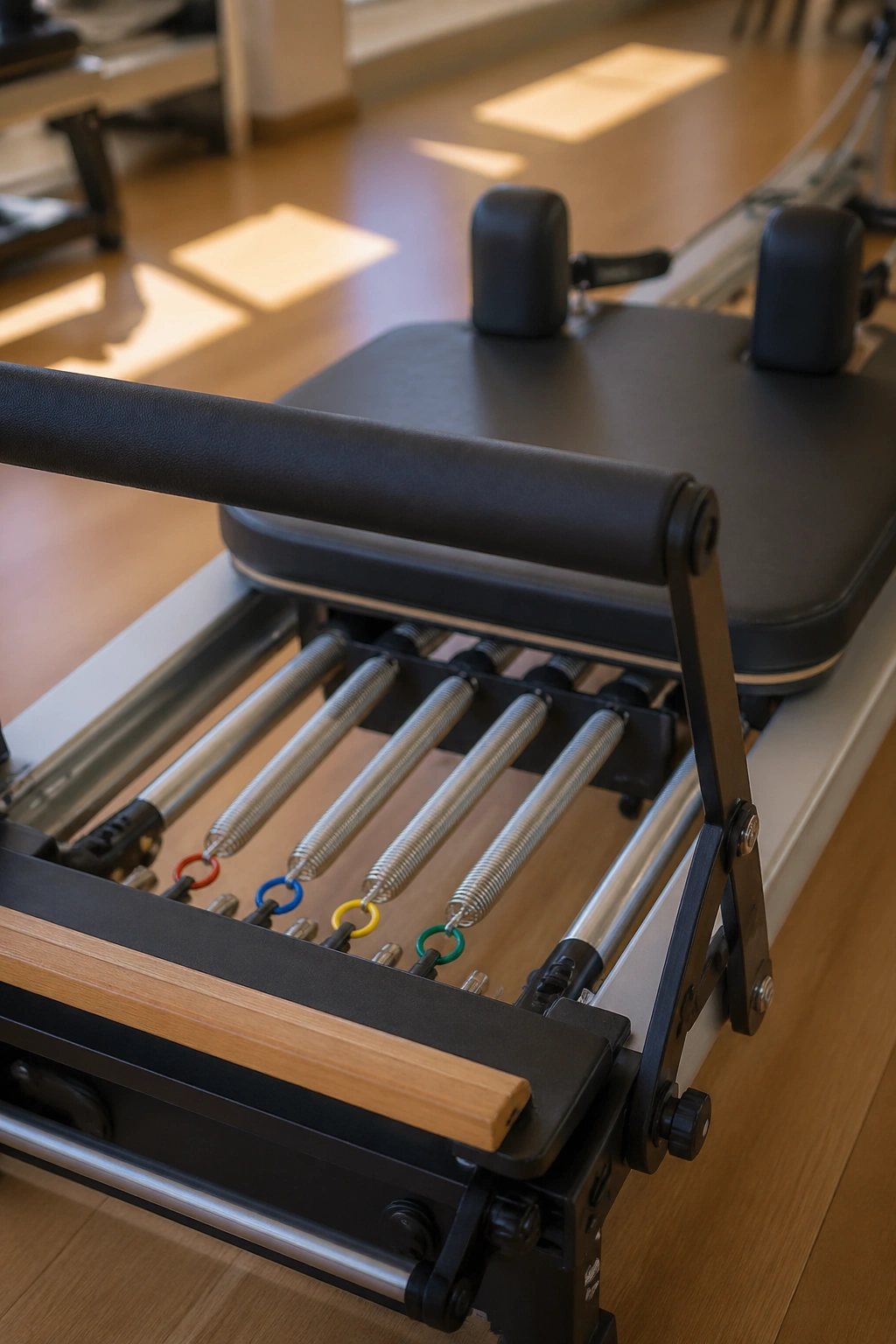
The reformer can be one of the best HIIT tools in Pilates when the spring tension is set with some thought. Too light, and you just zip around. Too heavy, and the carriage turns every rep into a grind. The sweet spot sits right in the middle, where resistance makes you work but still lets you move with speed.
Try a ladder: 30 seconds on, 15 seconds off, then 40 seconds on, 20 seconds off, then back down again. Use footwork, long stretch, knees-in-straps, and mountain-climber variations on the carriage if your setup allows it. The changing tempo keeps the session from going flat.
If you do not have a reformer, a resistance band anchored low can mimic part of the feel. It will not be the same, and that is fine. The point is tension plus speed, not pretending home equipment can copy a studio machine exactly.
A reformer sprint ladder is especially good when you want more load on the legs and less impact on the joints. It can also expose weak spots fast. The carriage tells the truth.
4. Teaser-to-Plank Waves
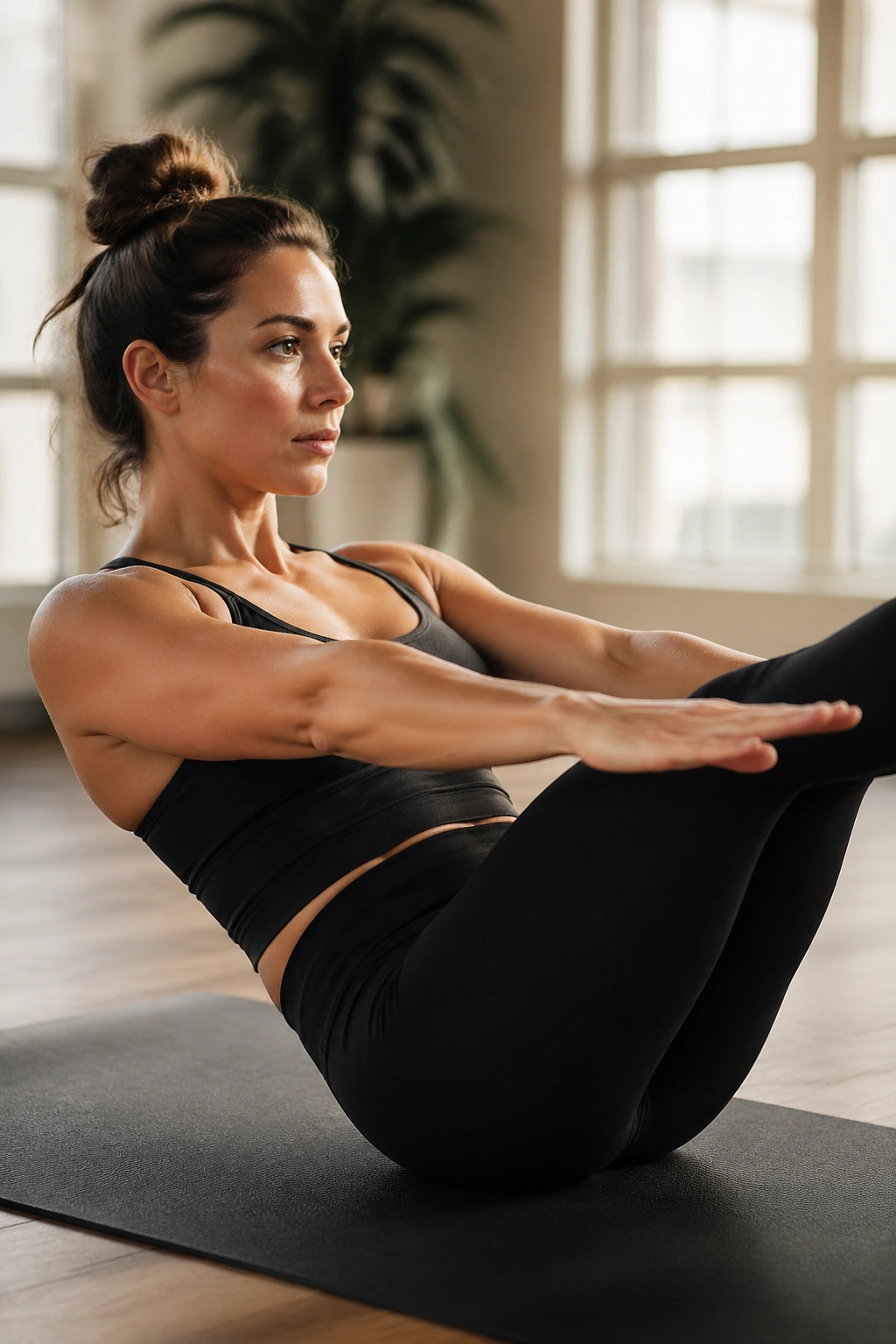
The first time you move from teaser into plank without collapsing halfway down, you feel like you’ve earned a medal. The sequence looks clean on paper. In real life, it tests the line between core control and sheer upper-body grit.
Start with a half-teaser hold, roll through the spine, plant the hands, and step back into plank. From there, do a knee tuck or a small pike, then walk the feet forward and roll back up. Three to five rounds is enough for most people. More than that, and form starts to wobble.
What to watch for
- Keep the chest open during the teaser
- Press through the palms before stepping back
- Avoid dumping into the shoulders
- Roll up slowly instead of snapping up
This one hits the abdominals in a way crunches never do. The transition matters as much as the pose itself.
I like it because it feels dramatic without being gimmicky. Also, your midsection will know you mean business by the second round.
5. Side-Lying Oblique Rush
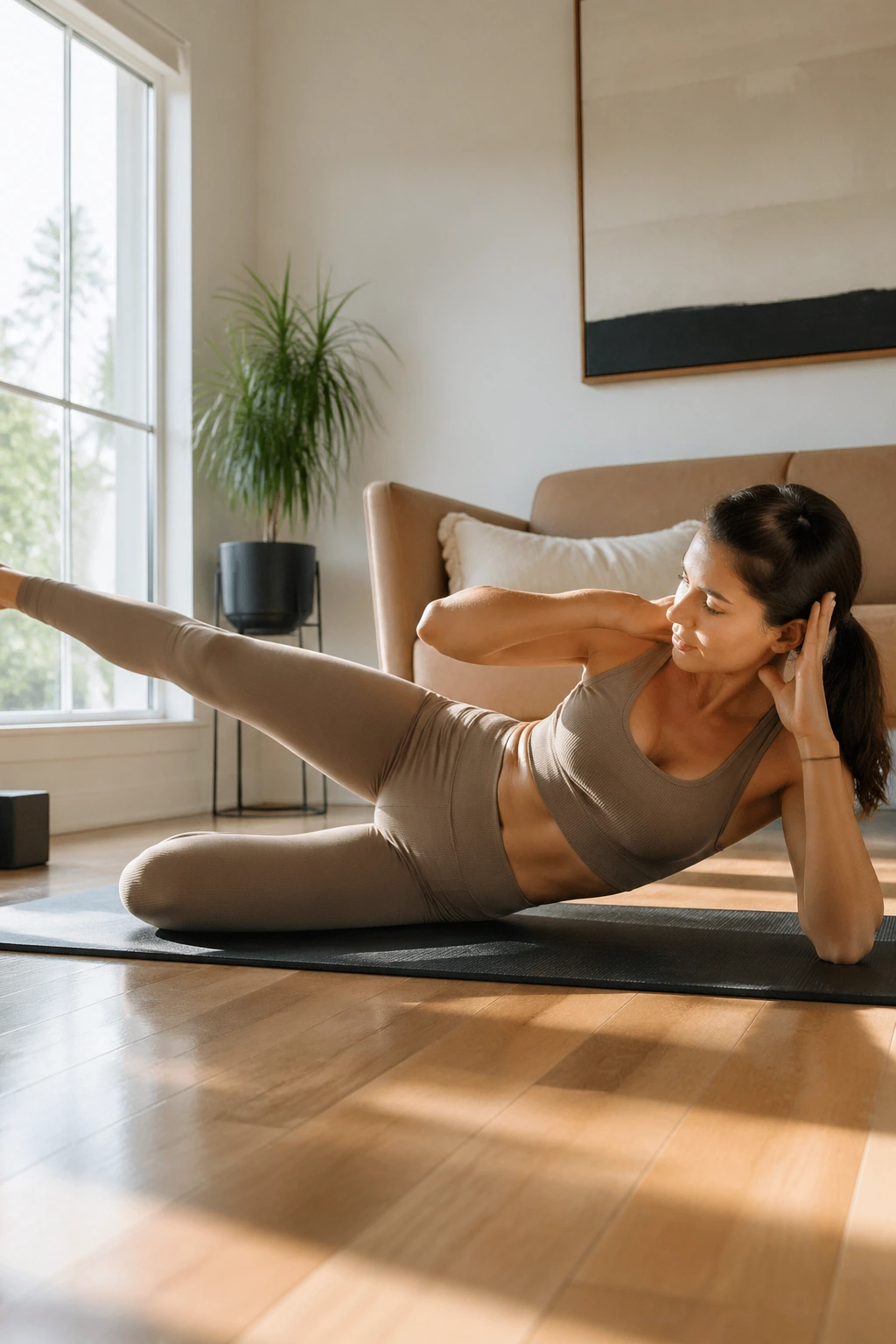
Side-lying work looks gentle right up until your waist starts shaking. Then it stops looking gentle at all. That’s the charm of it, really.
A strong side-lying sequence uses a small range and a steady rhythm. Think side kicks, clamshell pulses, side-lying crunches, and leg lifts with a hover. Set the timer for 30 seconds on, 15 seconds off, and complete 3 rounds per side. If you want a little more heat, add ankle weights, but keep them light. Heavy weights can make the hip flexors take over, and nobody needs that mess.
The real trick is to stack the hips and keep the top shoulder from rolling forward. Once the torso twists, the work shifts away from the obliques and into compensation territory. That’s not the goal.
This format is one of my favorites for people who want a tighter-feeling waistline and better hip stability without jumping around. It also travels well. No machine, no bench, no excuses.
6. Jump-Free Tabata
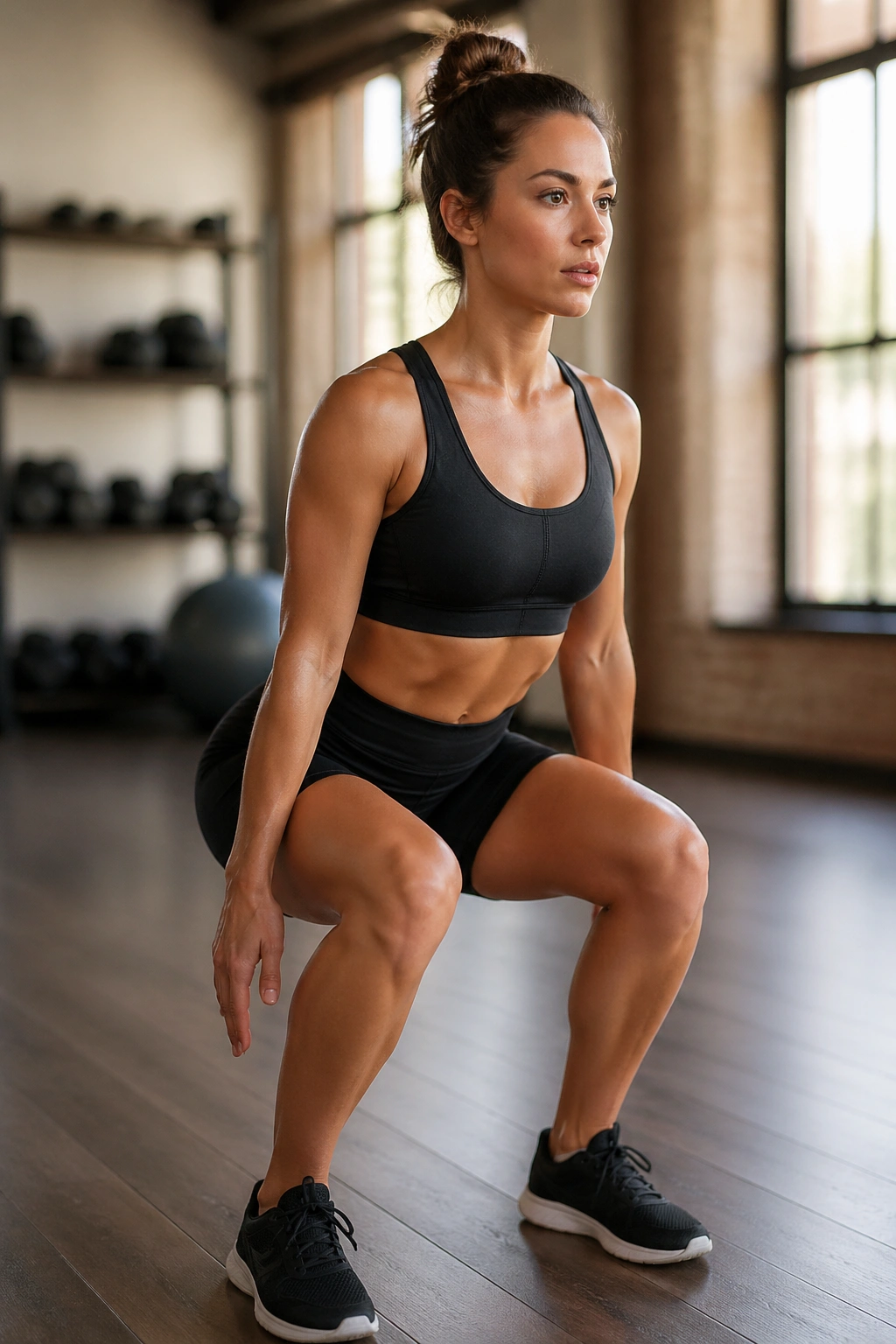
Unlike classic Tabata classes that lean on jumps, this version keeps the feet quiet and the spine happier. Same short intervals. Less pounding. That trade is worth it for a lot of people.
Use 20 seconds of work and 10 seconds of rest for 8 rounds. Rotate through squat pulses, forearm plank knee drives, bridge marches, and standing skaters without the hop. The pace is fast enough to spike your breathing, but controlled enough that your neck and ankles do not mutiny.
If you usually avoid HIIT because your joints hate it, start here. It still feels demanding, but the low-impact structure makes it easier to repeat two or three times a week. That repeatability matters more than a single heroic session.
The nice part is how little setup it needs. One mat. Maybe a wall for balance. Done.
7. Glute Bridge Power Sets
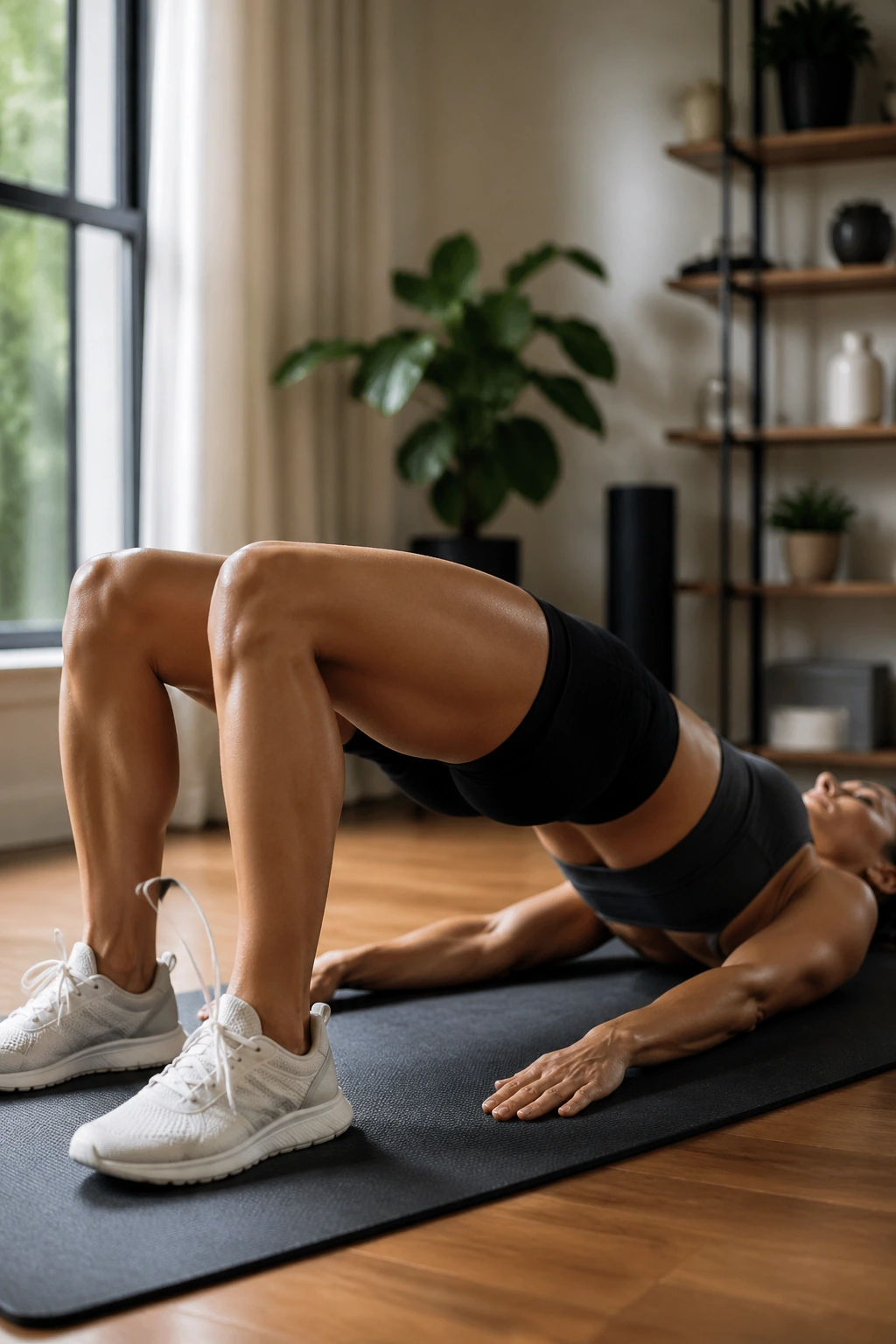
How to build the burn
Glute bridges are not flashy, and I prefer that. They are one of the most reliable ways to light up the backside while keeping the lower back calm.
Run 4 rounds of 40 seconds on and 20 seconds off. Cycle through bridge pulses, bridge marches, single-leg bridges, and frog pumps. The order matters. Start with both feet down, then make the pattern harder as the glutes warm up and the hamstrings wake up.
Use these cues:
- Press through the heels, not the toes
- Keep the ribs heavy
- Stop lifting when the hips hit a straight line
- Squeeze at the top for one beat, not five
A lot of people over-arch the back and call it a bridge. That is not a bridge. That is a backbend with bad intentions.
This workout is excellent when you want lower-body work that does not trash your knees. It also pairs well with a plank set, which is a sneaky nice way to build a full-body session.
8. Plank Reach Intervals
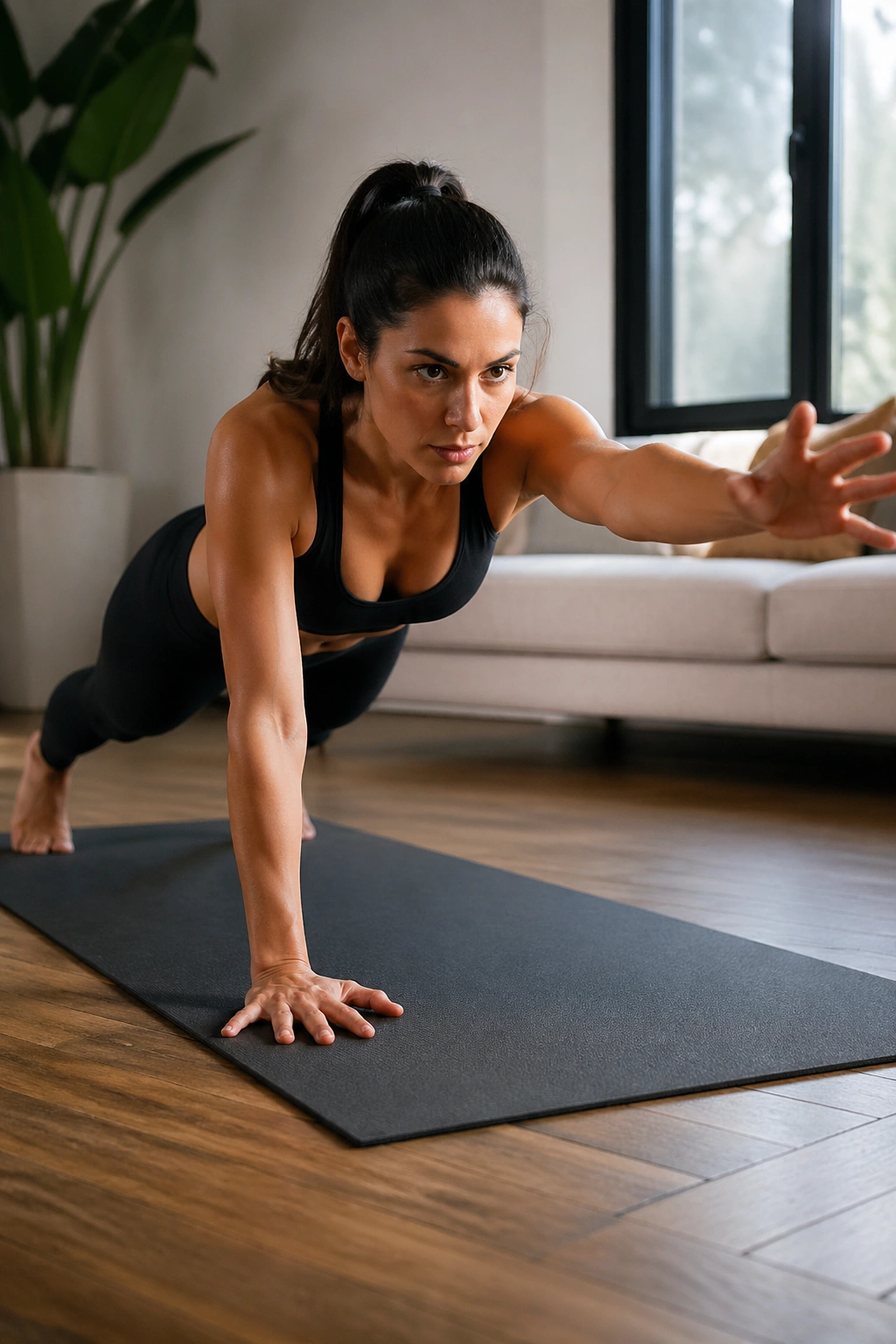
Planks get a bad reputation because people rush them. Slow the reach, and they become a full-body test of shoulder stability, deep core control, and hip honesty.
Use 30 seconds of work and 15 seconds of rest for 6 to 8 rounds. Alternate between plank shoulder taps, alternating arm reaches, plank jacks without the jump, and knee cross-ins. If the low back starts sagging, widen the feet. If the shoulders start burning too early, raise the hands onto a bench or box.
The reach is the part that changes everything. One arm leaves the floor, and suddenly the trunk has to resist rotation instead of just hanging out. That is where the Pilates side of the workout shows up.
A good plank interval leaves your abs tired and your shoulders warm, not wrecked. If your neck is the thing screaming first, the setup is off. Fix that before adding more time.
9. Inner-Thigh Pulse Ladder
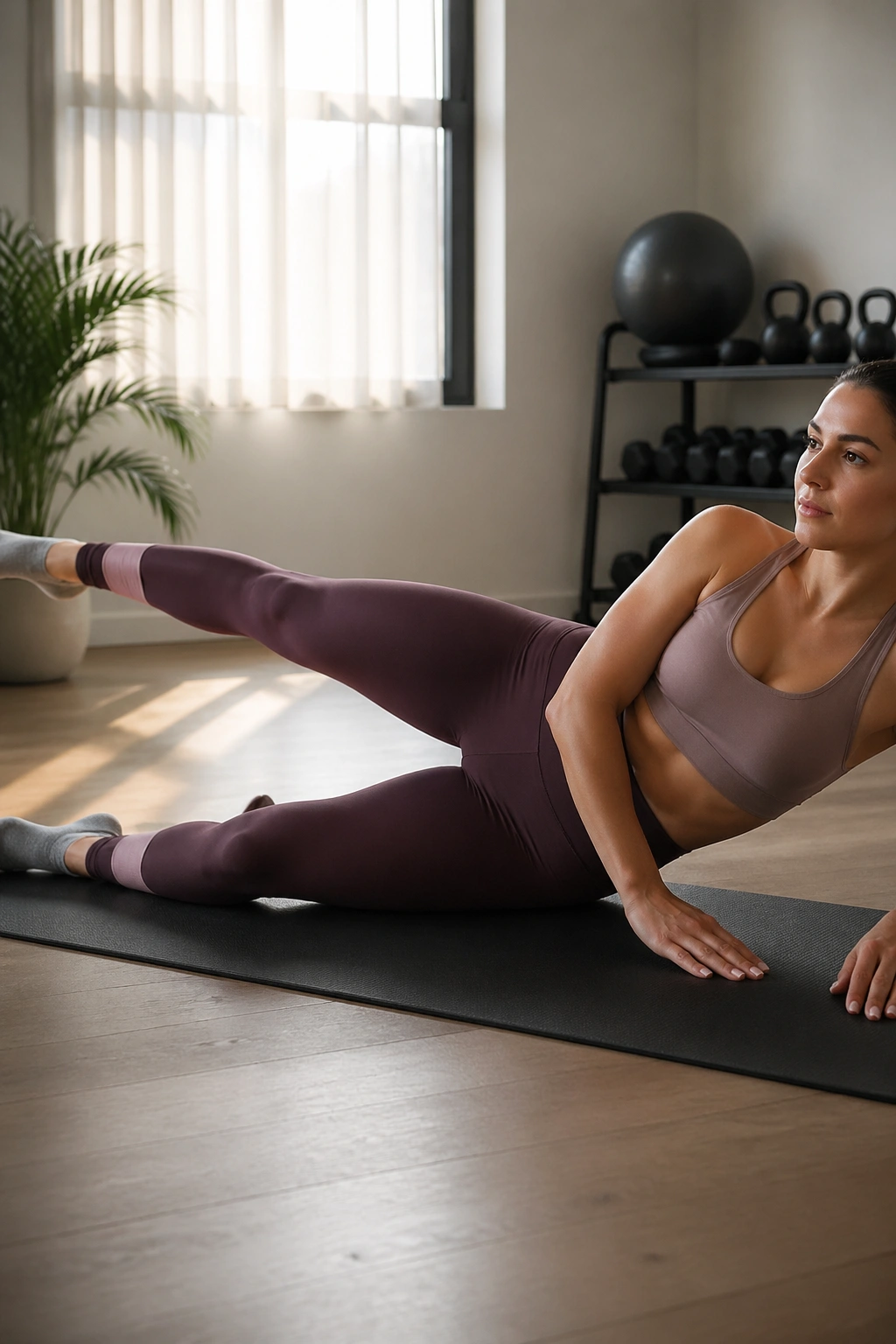
Why bother with inner-thigh work in HIIT? Because adductors help with pelvic control, and pelvic control helps everything else look cleaner. Also, these moves burn in a stubborn, satisfying way.
Build a ladder: 10 seconds, 20 seconds, 30 seconds, then back down. Use sumo squat pulses, ball-squeeze bridges, side-lying inner-thigh lifts, and standing adduction sweeps. Keep the range small and the tempo sharp. The smaller the movement, the more honest your control has to be.
How to use it
Put this circuit between bigger moves like squats or planks. It acts like a reset without becoming a break. A Pilates ball between the knees can make the bridge work better, but a rolled towel works in a pinch.
The mistake I see most often is people swinging the leg through a giant arc. That is not inner-thigh work. That is momentum with a costume on. Keep it tight.
10. Boxer-Pilates Fusion
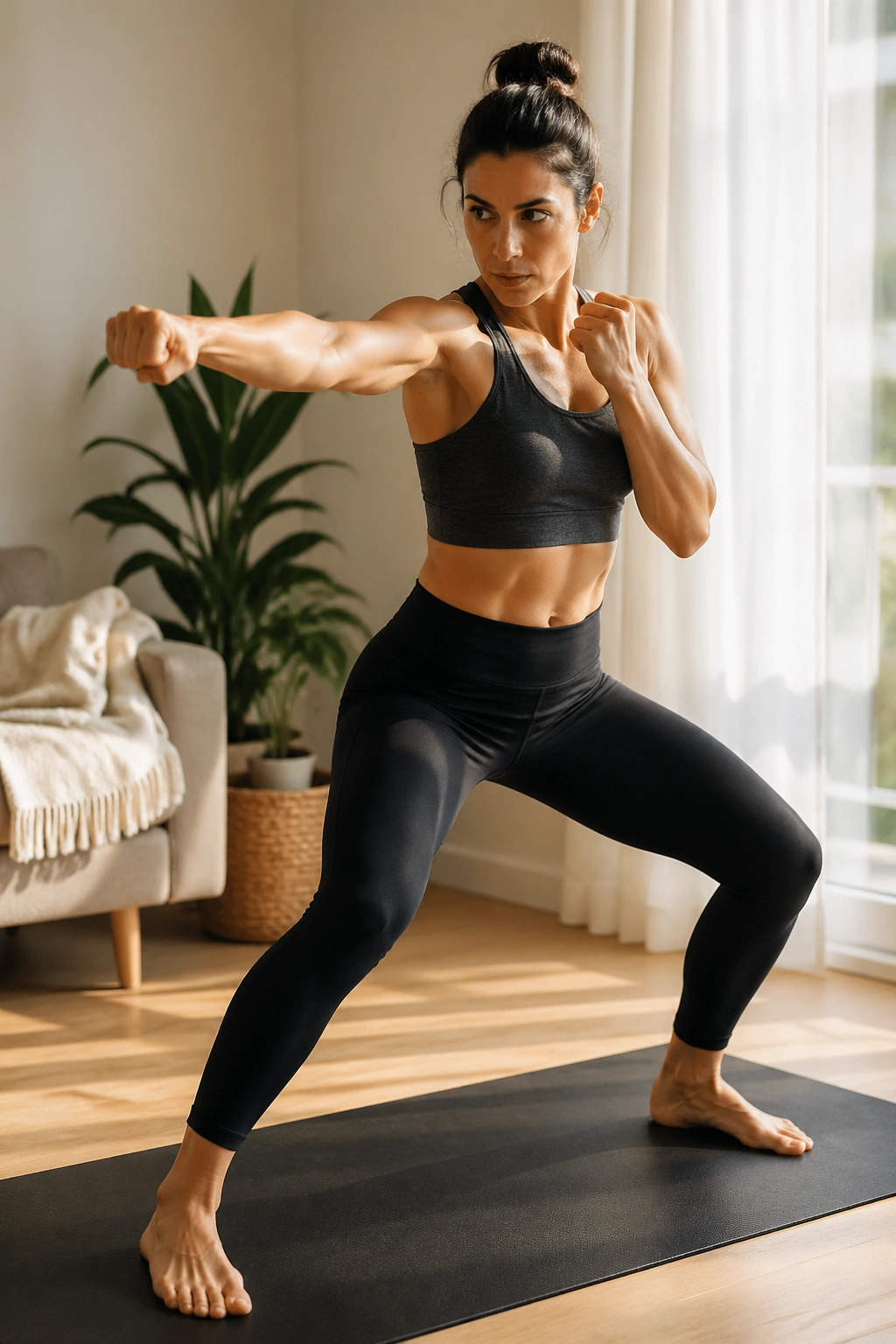
A shadowboxing-Pilates hybrid sounds odd until you try it. Then it makes perfect sense. The punches raise the heart rate, and the Pilates stance keeps the trunk from wobbling all over the place.
Use light hand weights only if your shoulders tolerate them well. Otherwise, go bare-handed and focus on speed. Try cross jabs with a squat pulse, uppercuts with a heel lift, and a twist lunge that stays controlled through the torso. Each round should last 45 seconds, followed by 15 seconds off.
The key is not to fling the arms. Keep the elbows soft, ribs tucked, and rotation coming from the upper back rather than the lower spine. That detail matters more than people think.
- Fast hands, quiet ribs
- Soft landing through the feet
- No locking the knees
- Keep the chin level
This is one of the more fun formats, which counts for something. If a session feels less like homework, you’re more likely to come back to it.
11. Low-Impact Cardio Pyramid
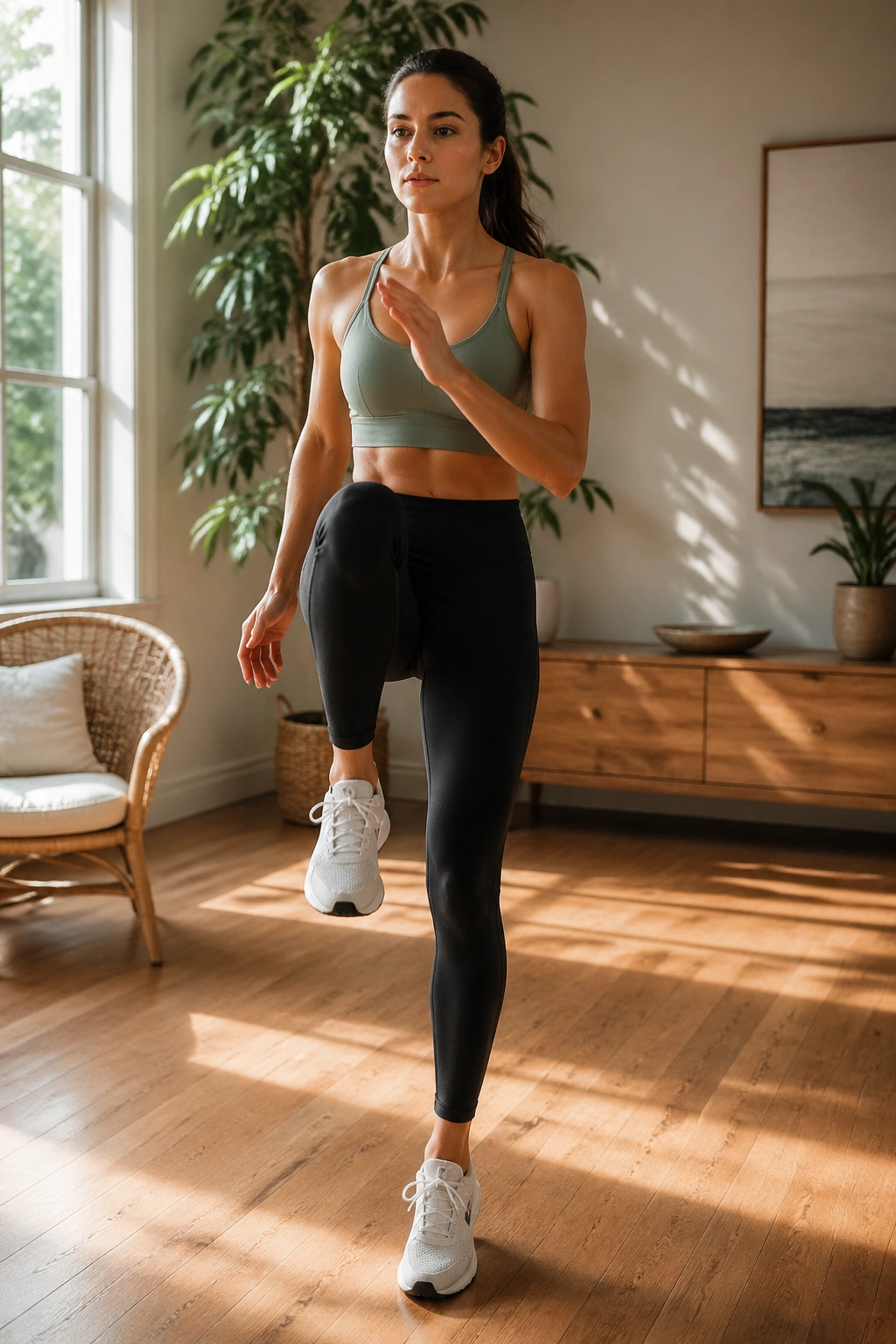
A pyramid format prevents the session from flattening out. You build up, hit a peak, and come back down before your form gets lazy.
Try 30 seconds, 40 seconds, 50 seconds, then descend again. Rotate through fast feet in place, squat-to-reach, plank marches, and standing knee lifts. The rising intervals force your breathing to work harder without needing jumps or burpees. And the descent gives the nervous system a tiny break before the next rise.
I like this one because it has a rhythm you can feel in your legs. By the time you hit the long middle round, you understand exactly where the weak link is. Sometimes it’s the hips. Sometimes it’s the shoulders. Sometimes it’s just your patience running thin.
That’s useful information. Boring, maybe. Useful, definitely.
The pyramid also keeps the workout honest for people who get bored with the same time block repeated again and again. Same moves, different pressure. The body notices.
12. Reverse Lunge and Press
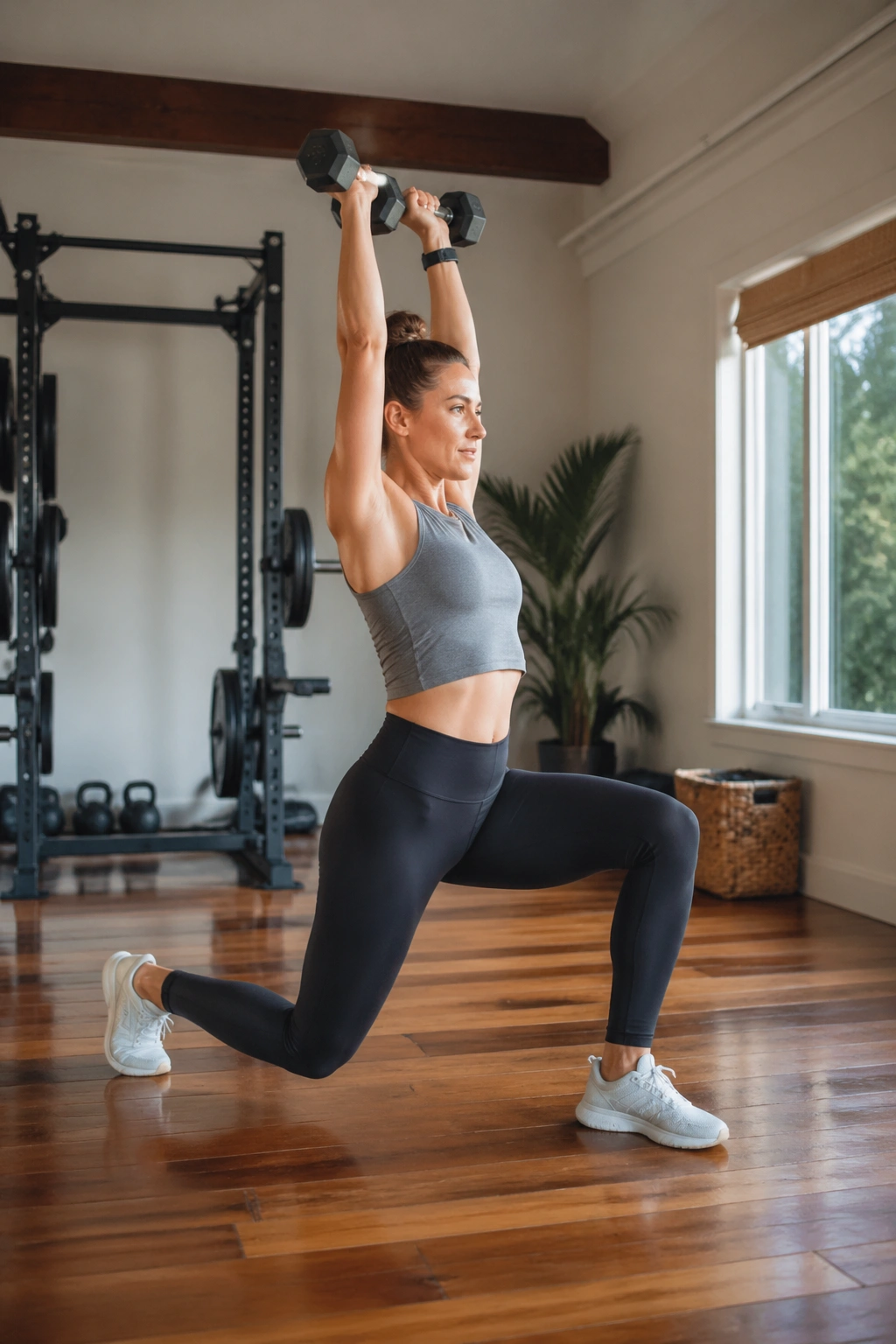
Compared with a front lunge or a squat, the reverse lunge gives you a little more room to stay balanced and a little more glute work on the way back up. Add a press, and the whole thing turns into a full-body interval.
Use two light dumbbells or one kettlebell held at the chest. Step one leg back, lower under control, stand, and press overhead as the front leg finishes the drive. Work for 40 seconds, rest for 20, then switch sides.
This is best for people who want visible leg work and do not mind a bit of coordination. It asks the core to stay tidy while the arms and legs move in different directions. That alone makes it feel more like Pilates than a standard lunge circuit.
If overhead pressing bothers your shoulders, keep the weight at chest height and reach forward instead. No need to force it.
The movement is simple. The feeling is not. Good combination.
13. Mobility-Speed Circuit
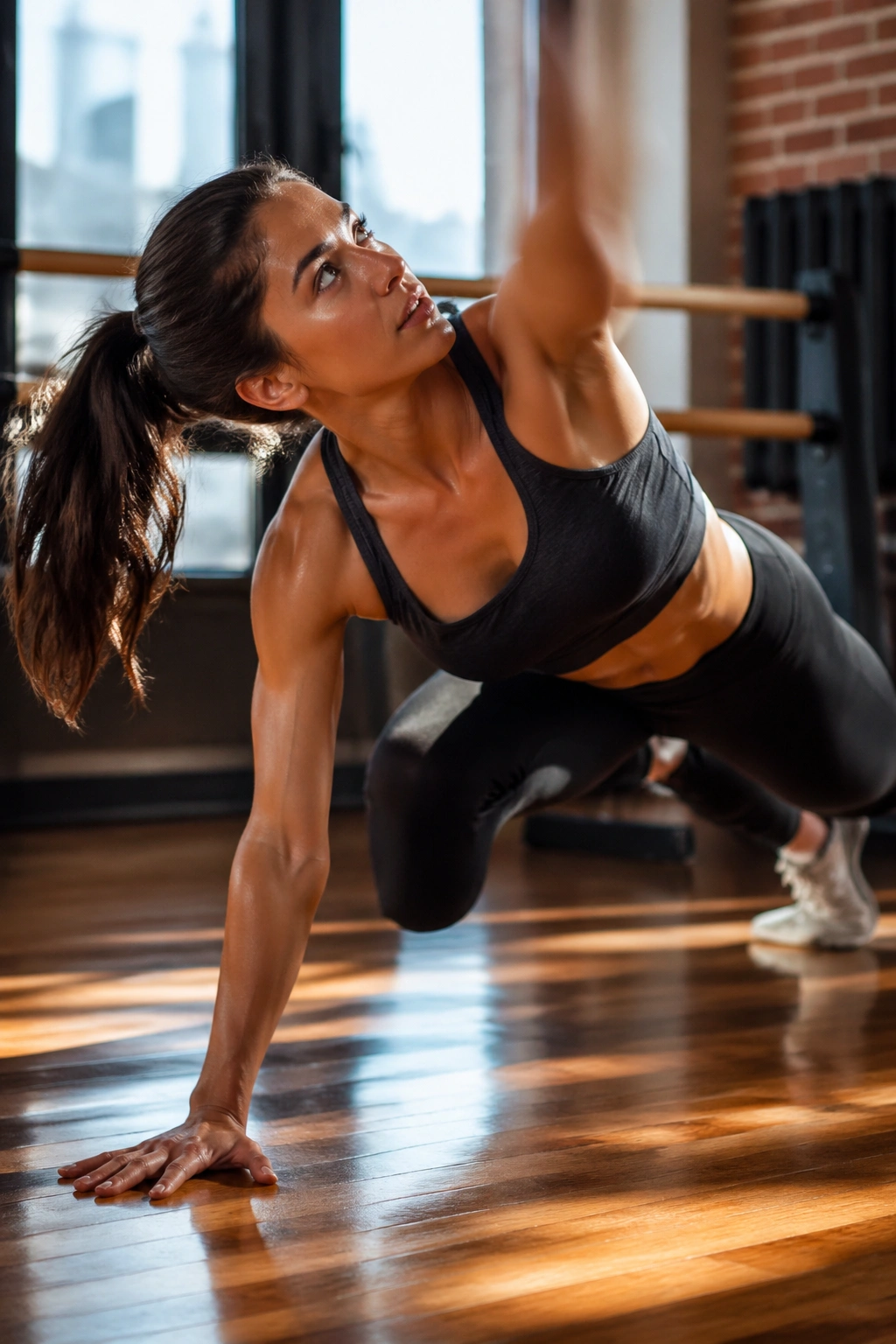
Can mobility count as HIIT? Yes, if you stop treating mobility like a slow stretch break and start moving through it with intent.
Use 20 seconds on and 10 seconds off for world’s-greatest-stretch reaches, kneeling hip openers, thoracic rotations, hamstring scoops, and standing side bends. The goal is not to yank the body into huge ranges. The goal is to move quickly enough that your temperature rises while the joints keep their clean path.
A smart way to run it
Pair each mobility move with a more demanding one. A hip opener followed by a squat pulse. A thoracic rotation followed by a plank hold. That contrast wakes the body up fast.
This format is useful on days when your legs feel flat or your lower back wants a little more room. It also works as a bridge between workouts, which people skip far too often. Not glamorous. Still worth it.
And yes, it can feel sneaky-hard. Mobility work with a clock on it is a different animal.
14. Full-Body EMOM Set
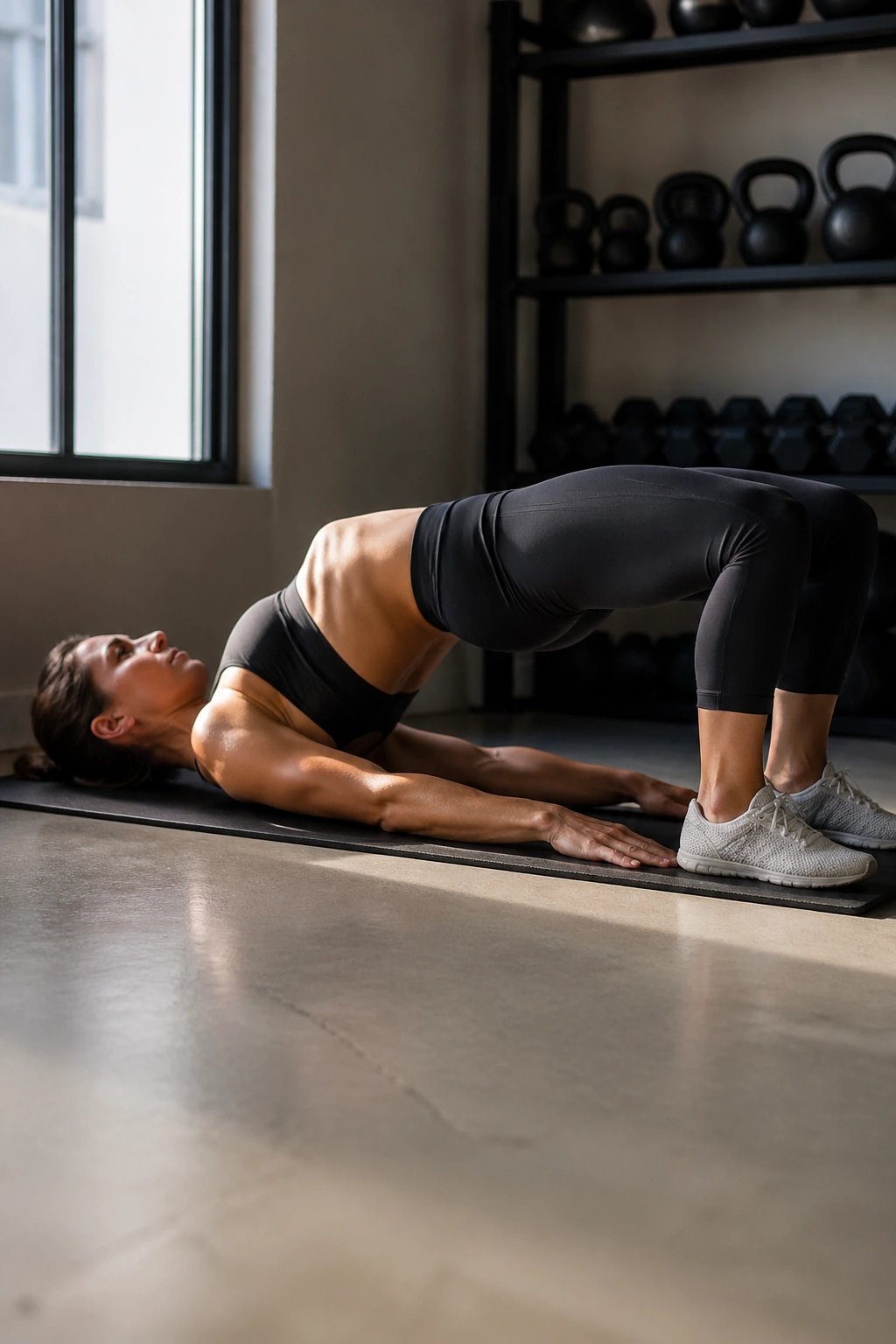
EMOM Pilates HIIT is one of the easiest ways to stop a session from drifting. Every minute on the minute, you do your set, then rest for whatever time is left. That structure keeps you honest.
Set a 12- to 16-minute timer and rotate through four stations: 8 squat pulses, 6 slow push-ups, 10 bridge lifts, and 20 mountain climbers. Finish each station in about 40 seconds, then use the remaining 20 seconds to breathe and reset. If you need the full minute, take it. The point is clean work, not racing the clock like it owes you money.
This format is excellent when you want clear numbers instead of vague “do your best” chaos. People tend to move better when the target is obvious. Four reps left? Easy to understand. Thirty more seconds of random effort? Less clear.
Keep the reps low enough that form survives. That is the whole trick.
15. Standing Balance Burn
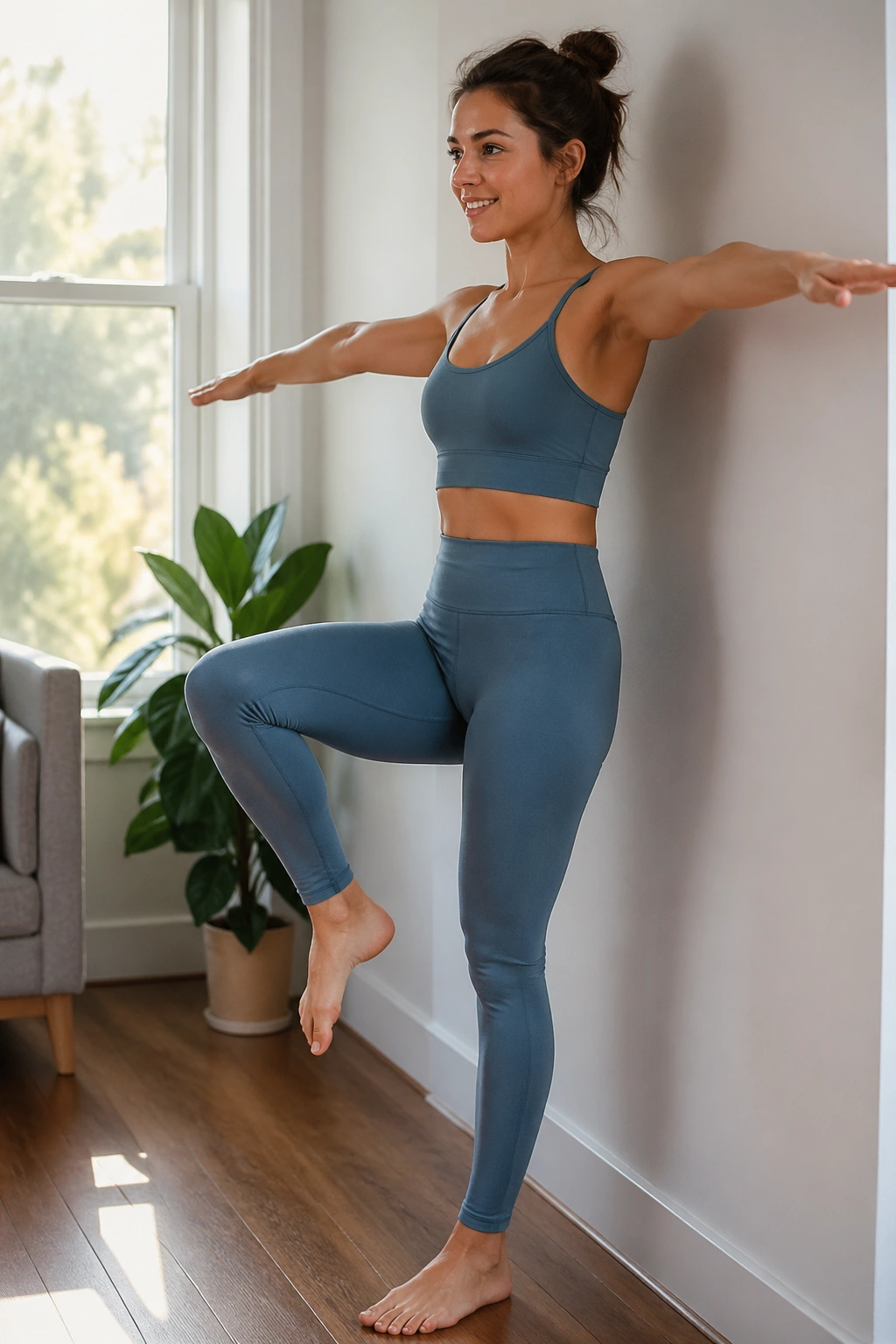
Standing balance work does something sneaky: it turns cardio into coordination training. That makes your heart rate climb, but it also exposes the places where one leg does all the work while the other freeloads.
Use a wall or chair nearby if you need it. Then move through single-leg hinges, arabesque lifts, knee drives, and calf-raise pulses for 30 to 40 seconds at a time. The standing leg should feel steady, the torso should stay long, and the free leg should move with control instead of momentum.
- Use fingertip support at first
- Keep the standing knee softly bent
- Reach the free leg long, not high
- Pause one beat at the top
I like this one for people who hate getting down on the floor. It also sharpens ankle control, which tends to pay off in every other workout. Not exciting. Very useful.
The burn shows up in weird places too—the outer hip, the foot, the lower belly. That is a good sign.
16. Hundred and Hollow Hold Combo
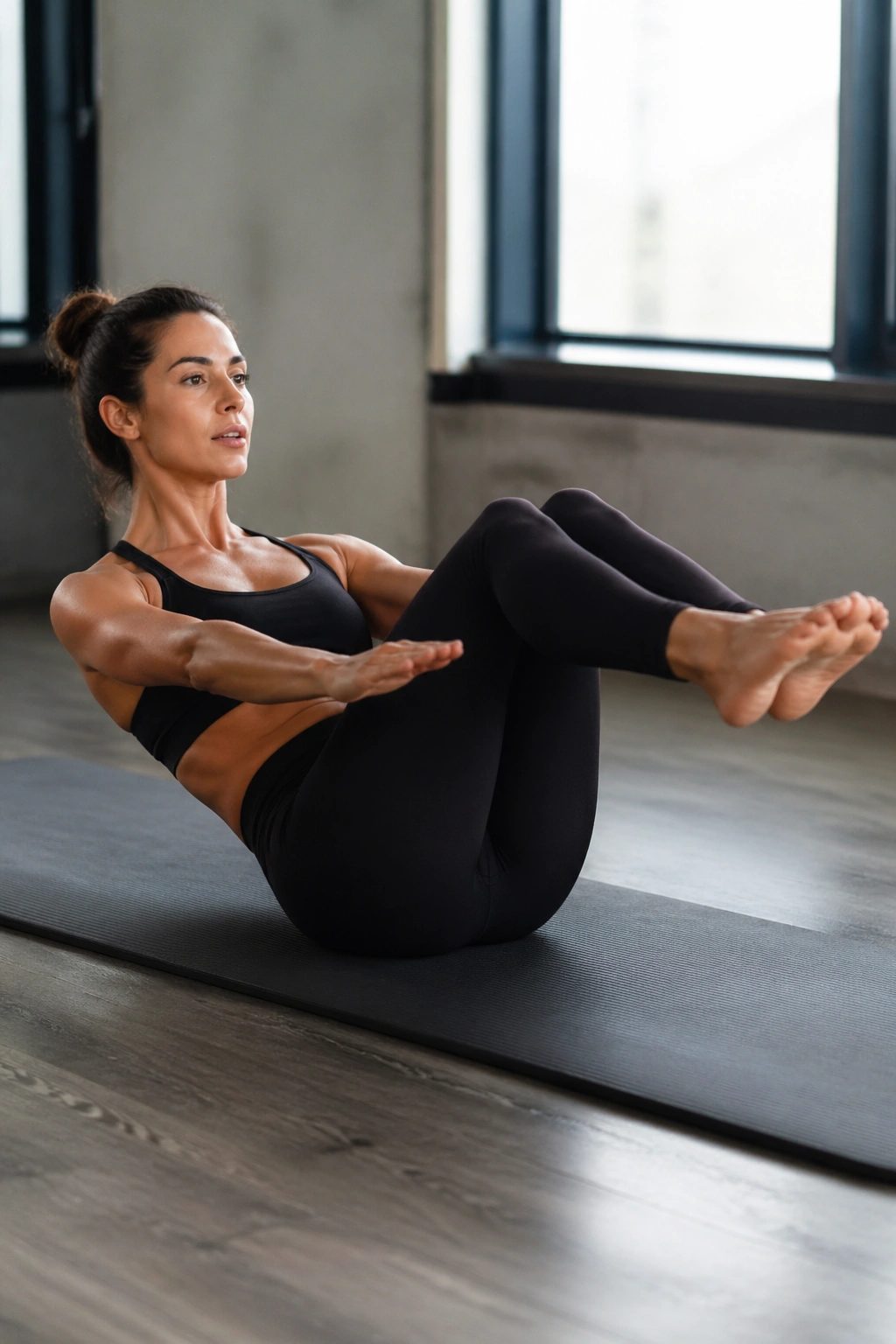
The hundred gets all the attention, but the hollow hold is the part that usually teaches people how to actually brace. Put them together and the midsection works in a way crunches cannot touch.
Try 20 seconds of hundred pulses, 15 seconds of hollow hold, 20 seconds of rest, and repeat for 6 rounds. Keep the low back pressed into the mat. If it lifts, bend the knees. There is no prize for forcing a straight-leg version too soon.
The sensation is direct. Your abs go firm, your breathing turns sharp, and your hips have to stay quiet while your arms pump. That is the whole point. If the neck starts tugging, support the head or cut the pulse range in half.
This is a good finisher when you want your core to feel cooked without adding impact. It is also one of the cleaner ways to build trunk endurance over time, which helps everything from running to carrying groceries upstairs.
17. Waistline Rotation Series
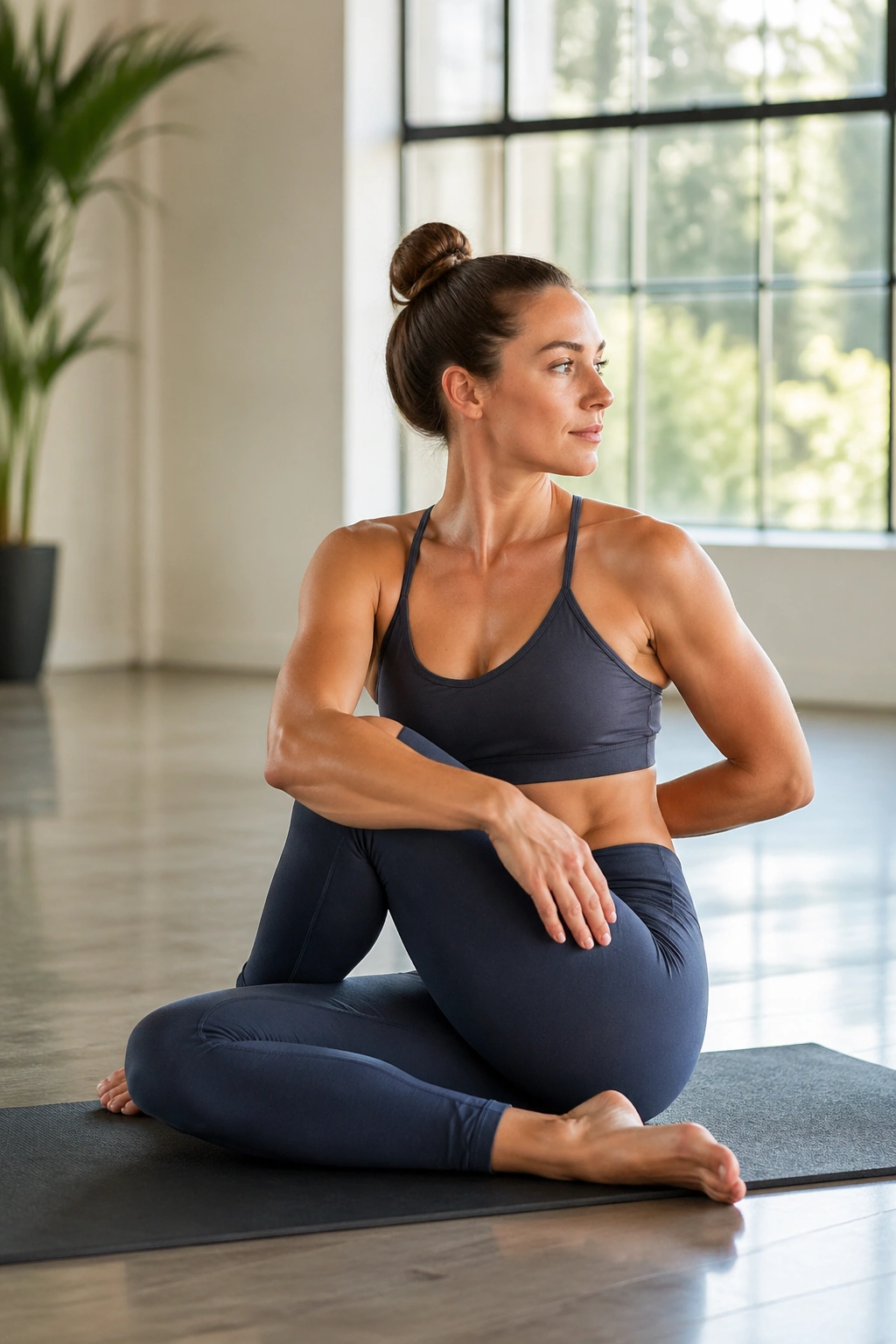
What makes rotation work in Pilates tricky is that people love to crank through it. You do not want cranking. You want control.
Use slow, repeatable reps of seated spine twists, standing cross-body reaches, bicycle pulses, and mermaid rotations. Keep each round to 30 seconds, with a 15-second pause between moves. The motion should come from the ribs and upper back first, with the pelvis staying mostly quiet.
What to avoid
- Jerking the neck
- Letting the shoulders roll forward
- Flaring the ribs
- Wiggling through the lower back to fake range
A controlled rotation series is excellent for obliques and posture, and it can make the torso feel more organized in other workouts. It also pairs well with a plank or bridge set, since rotation and stability tend to balance each other out.
This is not the flashiest workout in the bunch. It may be one of the most useful, though. Quiet work counts.
18. 15-Minute Finisher Flow
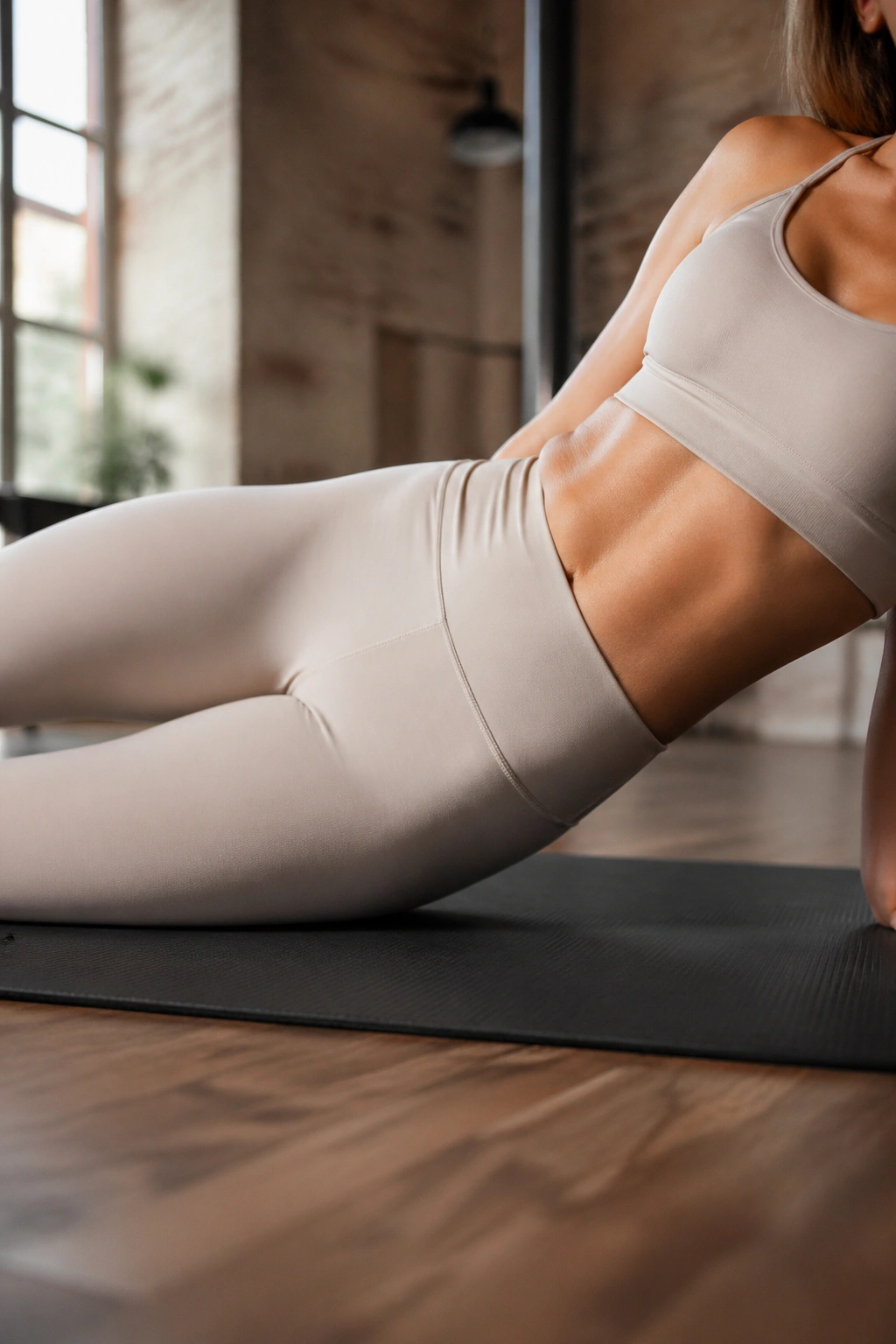
If you want one short workout to repeat, make it this one. It hits the whole body, keeps the pace sharp, and does not require complicated setup. That combination matters when motivation is thin.
Run five moves for 45 seconds each with 15 seconds to switch: squat pulses, plank reach-outs, bridge marches, standing knee drives, and teaser holds. Repeat the circuit twice. If you still have gas, tack on one more round of bridge marches or plank reaches. If form starts leaking, stop there.
The finisher works because it moves from standing to floor, from legs to core, and back again. That shift keeps the workout from feeling stale. It also gives each muscle group just enough time to recover without fully cooling off.
A lot of people think quick results come from doing more. Usually, they come from doing a smarter repeatable session and actually coming back to it. Three times a week beats one heroic mess.
Keep the movements tidy, keep the rests honest, and keep the ego out of the room. That’s the whole game.
