



If your arms shake halfway through a reformer set, that is the machine telling the truth.
Reformer Pilates is sneaky in a good way. A slow strap press, a chest expansion, or a long-box pull can light up the triceps, biceps, shoulders, and the small muscles around the shoulder blades faster than a lot of people expect. The movement looks tidy. The work is not tidy at all.
That is why reformer Pilates moves for toned arms tend to work so well when they are done with control. The carriage gives instant feedback. Shrug the shoulders and your neck takes over. Let the ribs flare and the low back steals the job. Bend the wrists or rush the tempo, and the straps start doing half the work for you. No hiding. That is the point.
A light-to-medium spring is usually enough for most arm work. Too heavy, and momentum sneaks in. Too light, and the straps feel like loose ribbons. Move slowly, keep the shoulder blades settled, and make the last third of each rep honest. Start with the simplest shape and build from there.
1. Supine Arm Presses in Straps
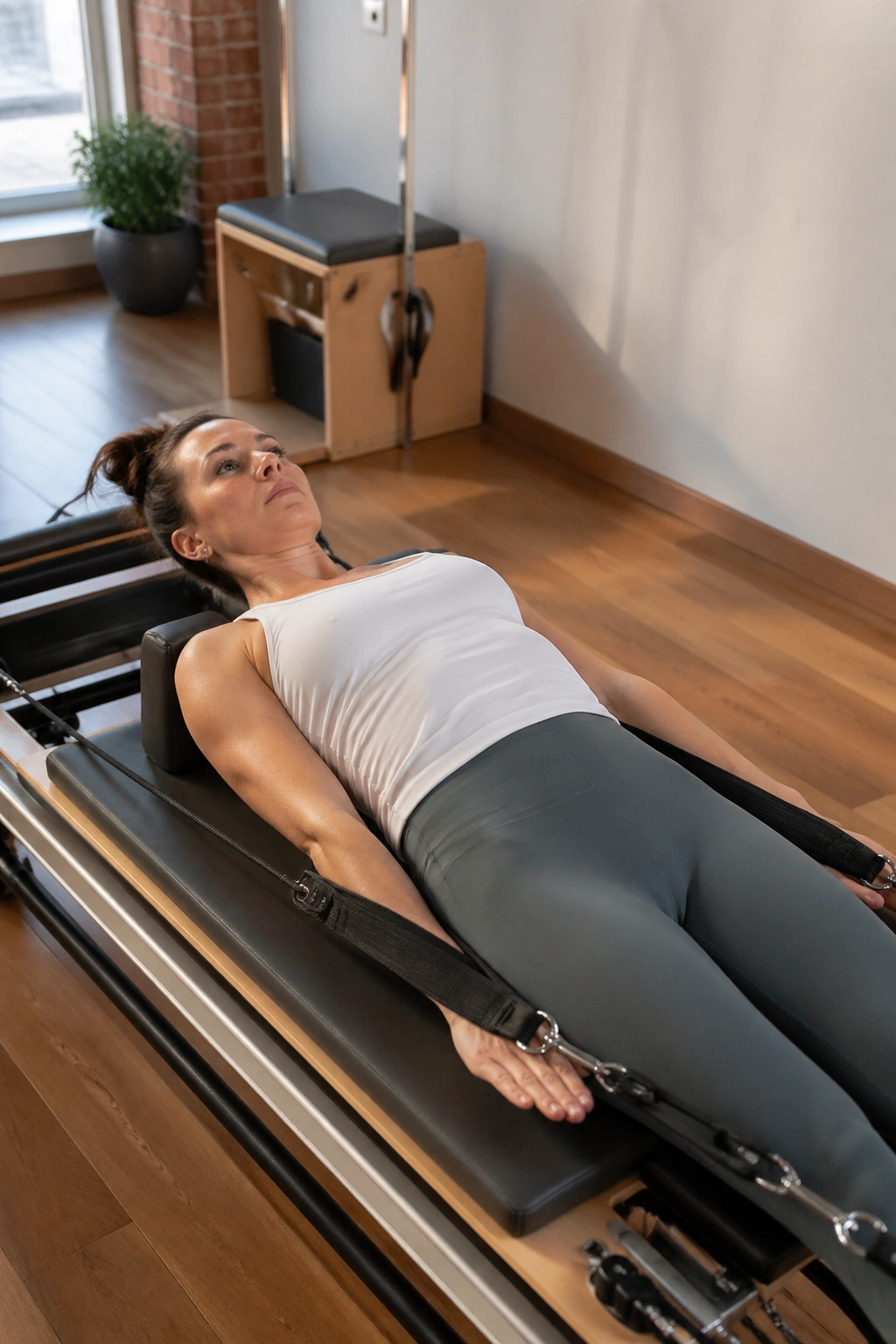
Lying on your back keeps the torso quiet, which is exactly why this move works so well. You get to isolate the arms without all the extra drama that shows up when the body starts leaning, twisting, or bouncing around.
Why It Earns a Place Early in the Sequence
Press the straps down from shoulder height to just beside your thighs, then return with control. The triceps, lats, and lower shoulder stabilizers all have to show up, and they cannot coast if you keep the carriage smooth. The range is small. The burn is not.
- Keep your ribs heavy on the carriage.
- Let the elbows stay soft, not locked.
- Stop the press before the straps yank your shoulders forward.
- Return slowly enough that you can feel the resistance the whole way back.
A lot of people rush this one and miss the point. Don’t.
If the neck starts gripping, the springs are too heavy or the range is too big. Use a lighter load, shorten the press, and make each rep feel like you are pushing water, not yanking a rope.
2. Chest Expansion from Kneeling
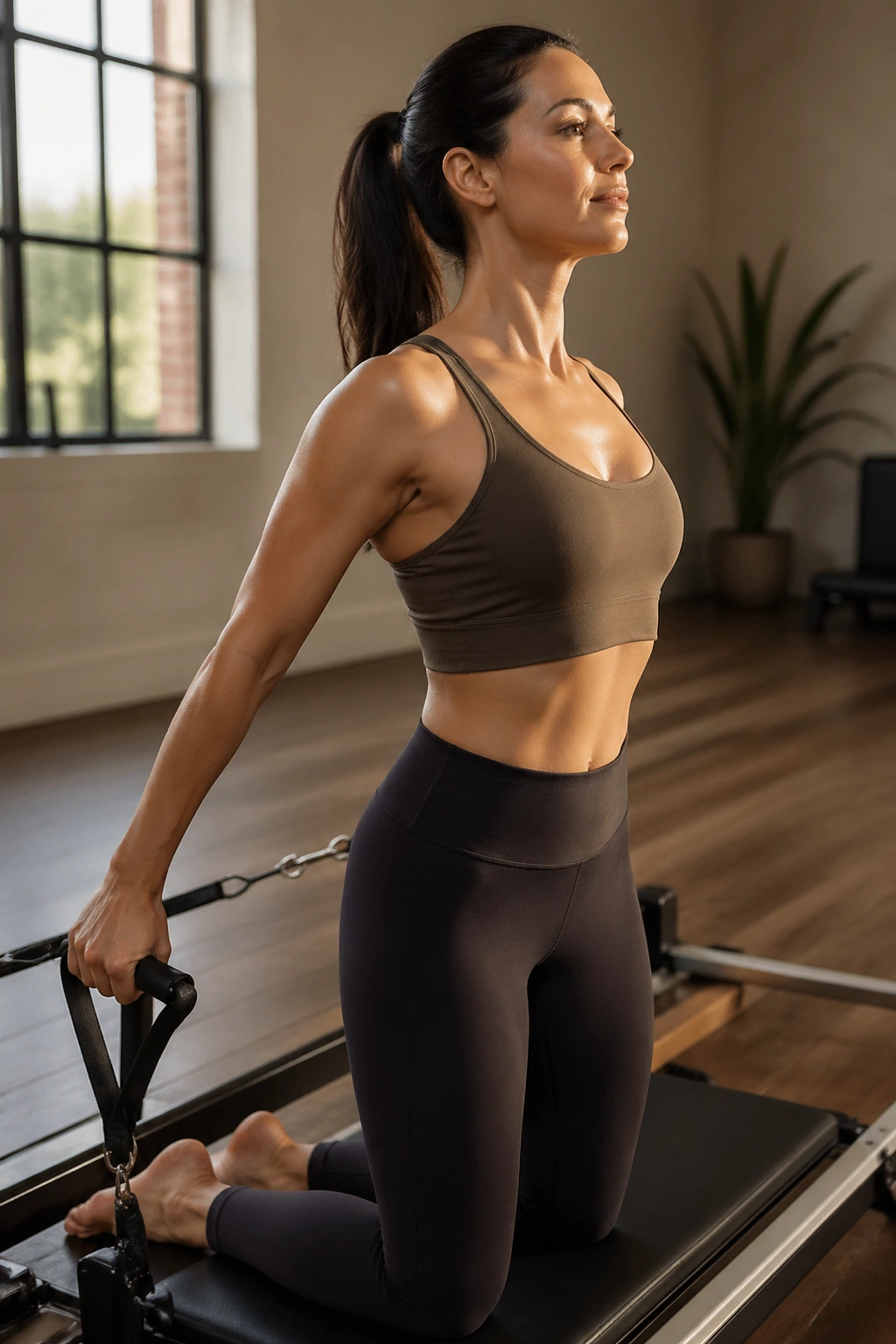
Chest expansion is one of the fastest ways to make the back of the arms feel awake. That sounds dramatic until you try it on a spring that is just heavy enough to make you honest. Then it makes perfect sense.
Kneel tall, hold the straps by your sides, and press the arms straight back until the hands drift behind the hips. The chest stays lifted, but not flung open. The shoulders stay wide. That line from shoulder to fingertips matters more than people think, because it keeps the triceps working instead of letting the upper traps grab everything.
The best version looks almost quiet. There is no sway through the ribs, no lean of the torso, no little bounce at the end of the press. Stillness makes the load harder, and that is why this move builds a cleaner-looking arm line over time.
If the wrists ache, check the grip first. If the ribs pop forward, shorten the range. If the neck feels jammed, your spring is probably too much. The move should feel like a proud posture drill with a serious arm burn hiding underneath.
3. Hug-a-Tree on the Reformer
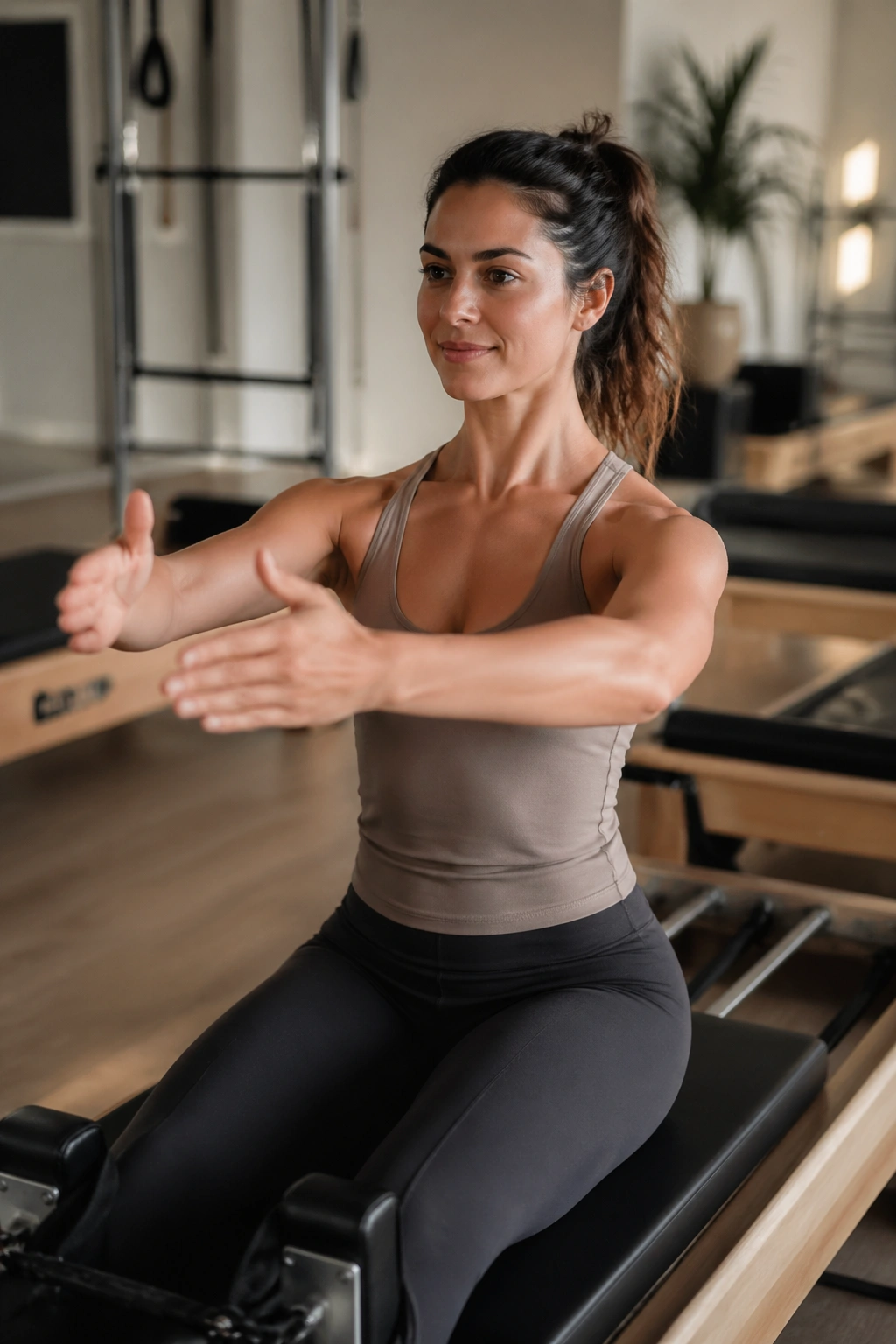
Why does Hug-a-Tree look gentle and still burn? Because the arms are moving through a big rounded shape while the shoulders try to stay calm, and that is harder than it sounds.
Start with the arms open wide as if you are holding a large ball. Then bring the hands together in front of the chest, keeping the elbows softly bent and the shoulders down. The movement hits the chest and front shoulders, but the inner arm and the stabilizers around the shoulder joint keep a quiet, steady load the whole time.
How to Use It for Arm Toning
- Keep the hands in front of the sternum, not up by the chin.
- Press the straps together without letting the wrists collapse inward.
- Breathe out as the arms close, then inhale on the return.
- Use a range that keeps the shoulders from rolling forward.
The mistake here is chasing a giant squeeze. You do not need one. A smaller, controlled arc with a slow return does more for arm endurance and shoulder control than a sloppy, overreached version ever will.
4. Triceps Presses with Elbows Hugged In
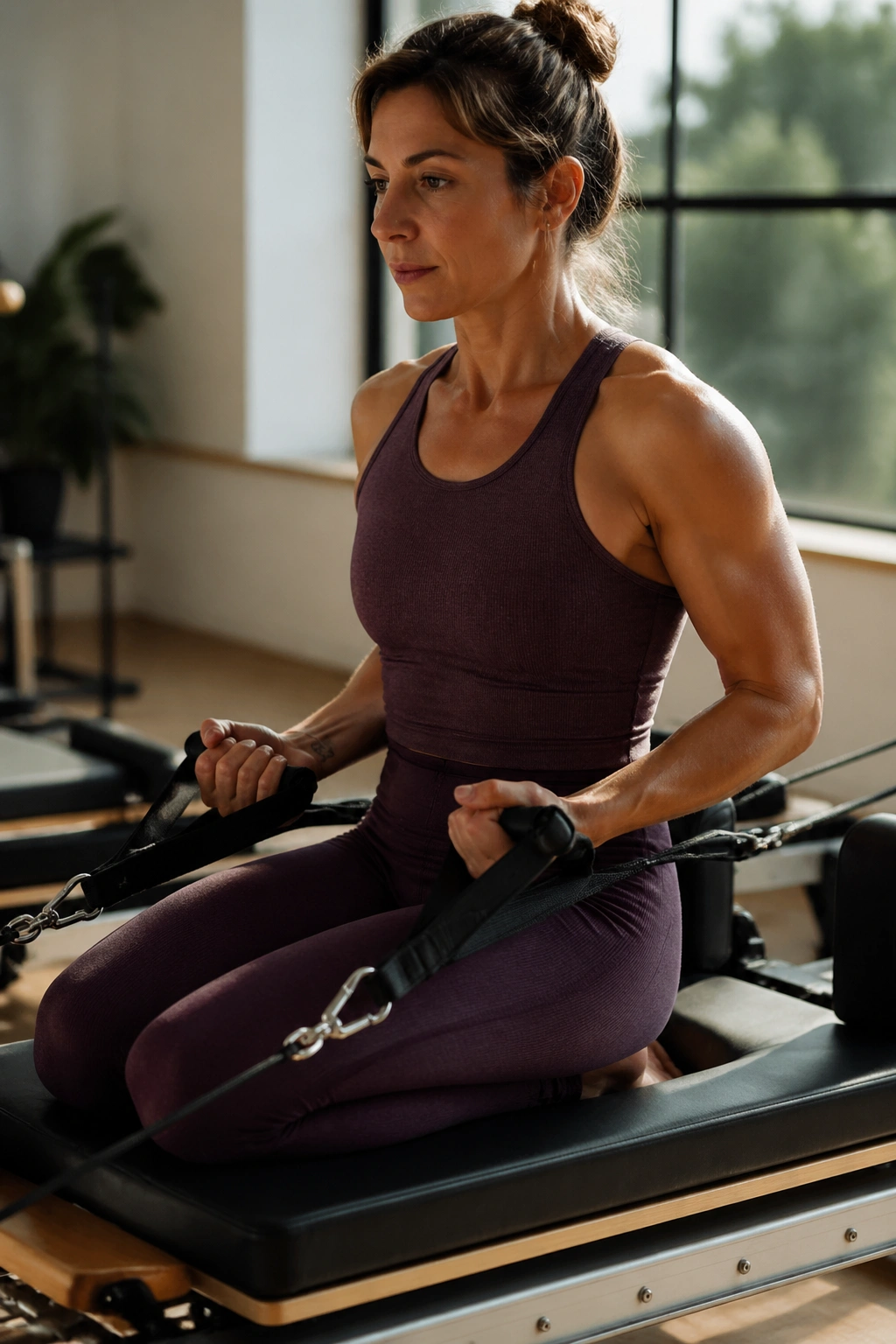
If your elbows drift outward, the triceps stop getting the message. That is the whole trick with this one. Keep the upper arms close to the body, and the back of the arm has nowhere to hide.
Usually I see people turn this into a shoulder move by accident. The fix is simple. Set the upper arms still, draw the ribs down, and press the forearms back until the hands near the hips. The carriage should move smoothly, not slam. If it bangs, the spring is winning.
- Pin the elbows near your sides.
- Press the hands back in a straight line.
- Keep the chest open without leaning.
- Return with the same control you used on the press.
This one is a pure triceps drill, and it earns its reputation. The burn builds fast, especially when the press is slow and the return is even slower. If you only had room for one isolation move in an arm block, I would keep this one near the top of the pile.
5. Biceps Curls in Straps
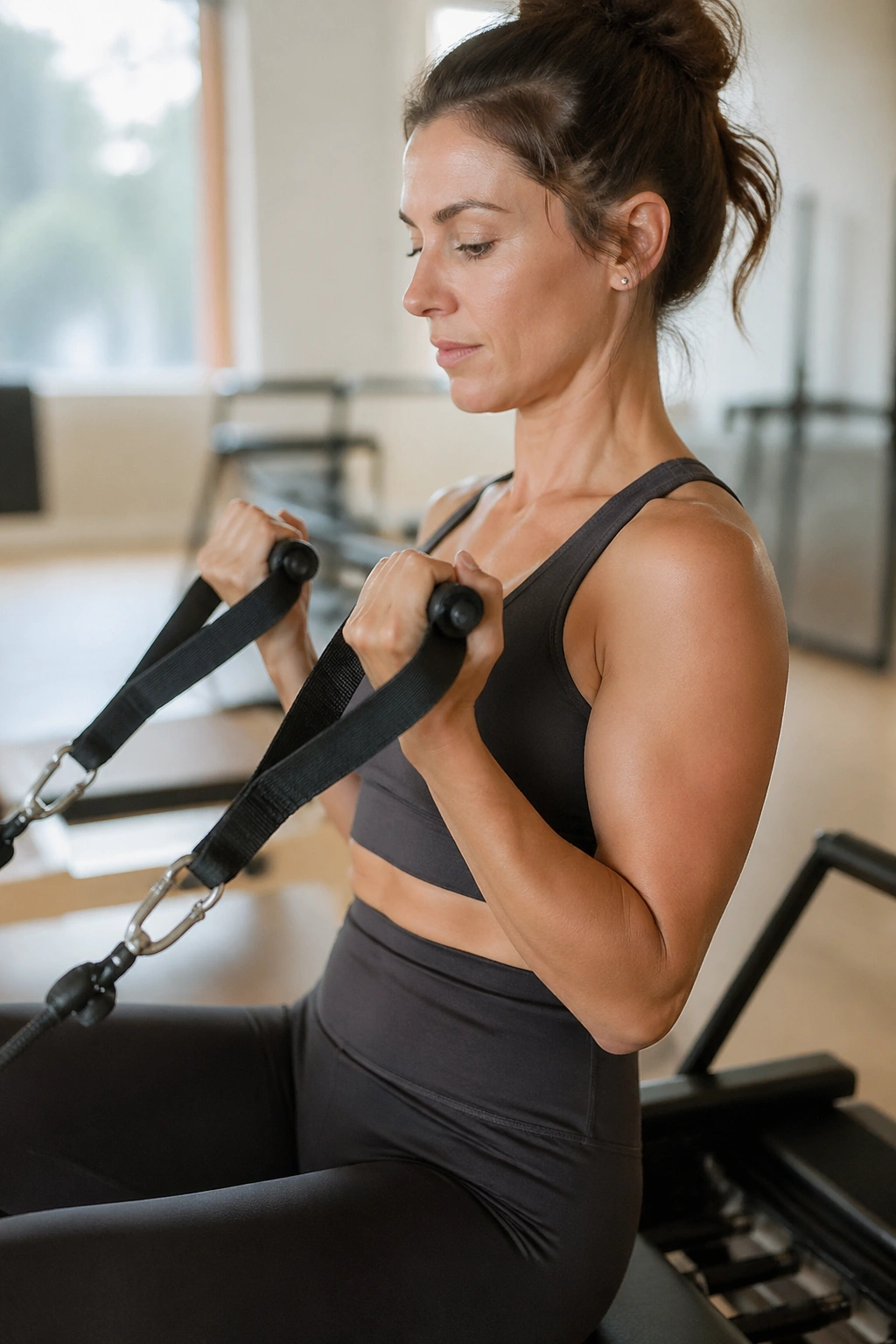
Slow wins here.
Biceps curls on the reformer are not glamorous, but they are one of the cleanest ways to train the front of the upper arm without swinging the body around. Stand or kneel in a stable position, keep the upper arms close to the ribs, and curl the forearms toward the shoulders while the elbows stay almost glued in place. The upper arm should not travel much at all.
That stillness is what makes the move work. The biceps are forced to do the lifting, and the straps keep tension on the way down, which is where a lot of people lose the work. If you drop the hands back too fast, the rep turns into a shrug-and-drop situation. Useless. Keep the descent just as controlled as the curl up.
A good curl feels smooth in the wrist and quiet in the neck. If the elbows drift behind the body, the shoulders took over. If the hands come too close to the ears, the range is too much. Small, honest reps beat big sloppy ones every time.
6. Salute to the Ceiling
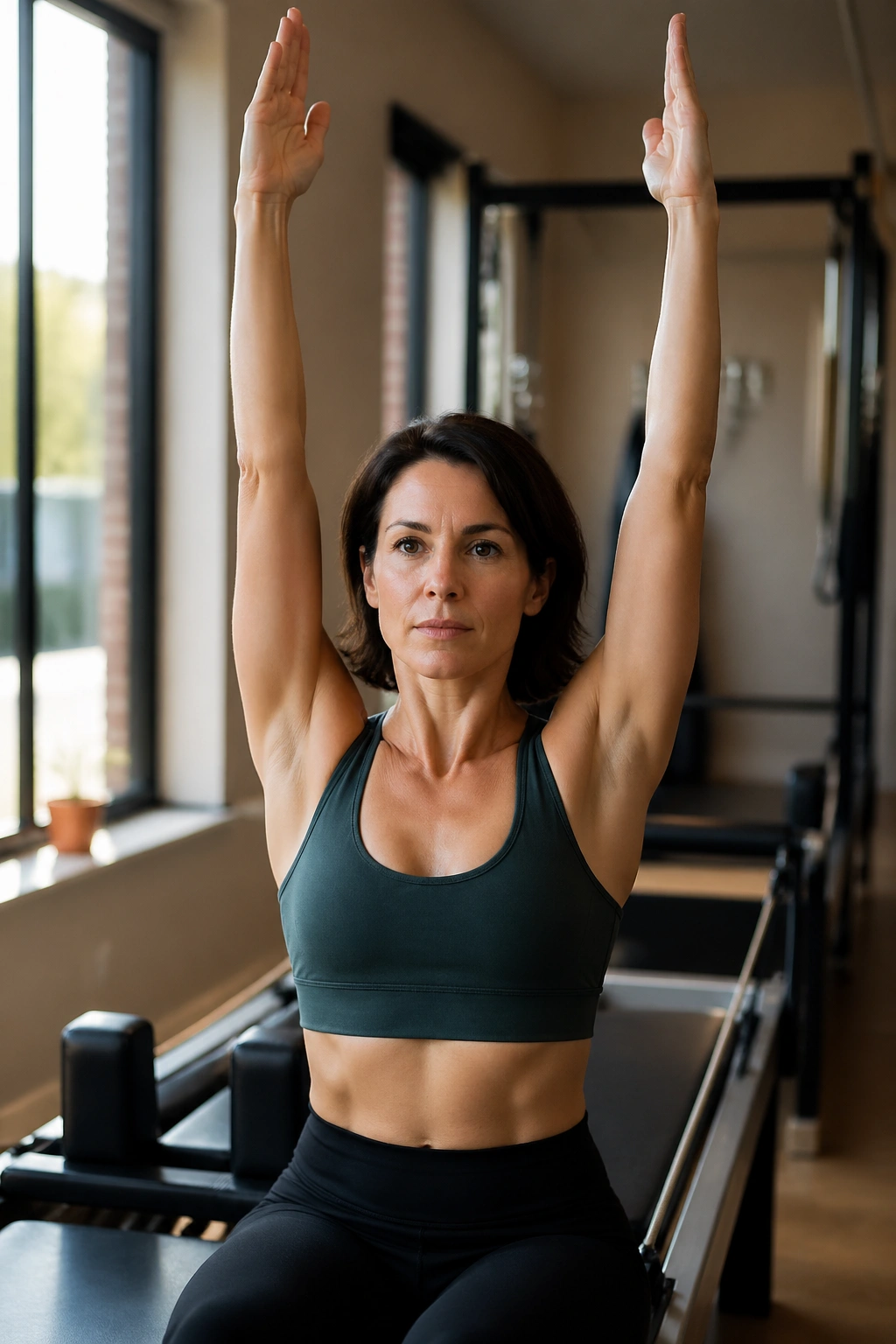
Unlike a basic biceps curl, the salute asks you to keep the shoulder blades settled while the hands travel upward past the face and toward the ceiling. That change sounds small. It is not.
The classic salute pattern wakes up the shoulders, biceps, and upper back at once. You start with the elbows bent and the hands near the temples or forehead, then press upward with control until the arms lengthen overhead. The catch is that the neck wants to help. It will try. Hard. Keep it out of the way.
This is a smart move for anyone who tends to shrug during overhead work. Use a lighter spring than you think you need, and do not chase a huge range if the ribs start to flare. A cleaner half-range rep is better than a full ugly one.
I like this one as a bridge between isolation work and overhead strength. It teaches the arms to move up without turning the shoulders into earrings. That lesson carries into almost everything else on the reformer.
7. Arm Circles in Straps
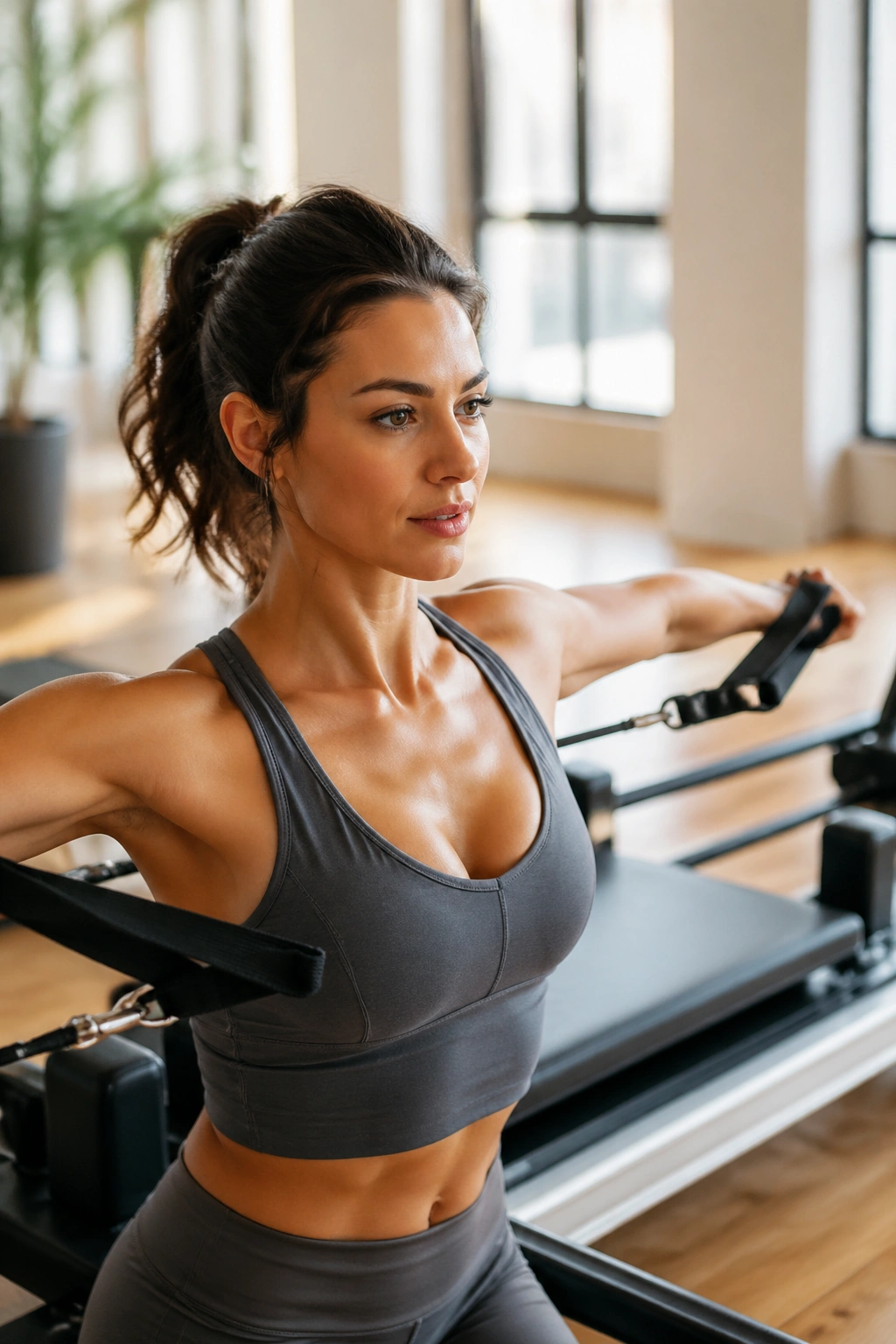
Arm circles look like something you could fake for thirty seconds. Then the shoulders start talking.
The movement is simple enough: reach the arms into a controlled circle, usually from overhead or from a slightly forward angle, then return to the start without losing your posture. The circle is where the work lives. Small circles are often harder than huge ones, because they demand steadier shoulders and more control around the upper arm.
What Makes the Circle Hard
- The arms never fully rest.
- The shoulders have to stay down while the hands travel.
- The chest cannot flare open and steal the movement.
- The circle needs to look smooth, not wobbly.
If you want toned arms, this is one of those deceptively useful drills that belongs in the mix. The triceps and delts stay engaged, but so do the smaller stabilizers that keep the arm looking lifted rather than loose. Keep the circle size modest. You are training control first, then range.
8. Pulling Straps I on the Long Box
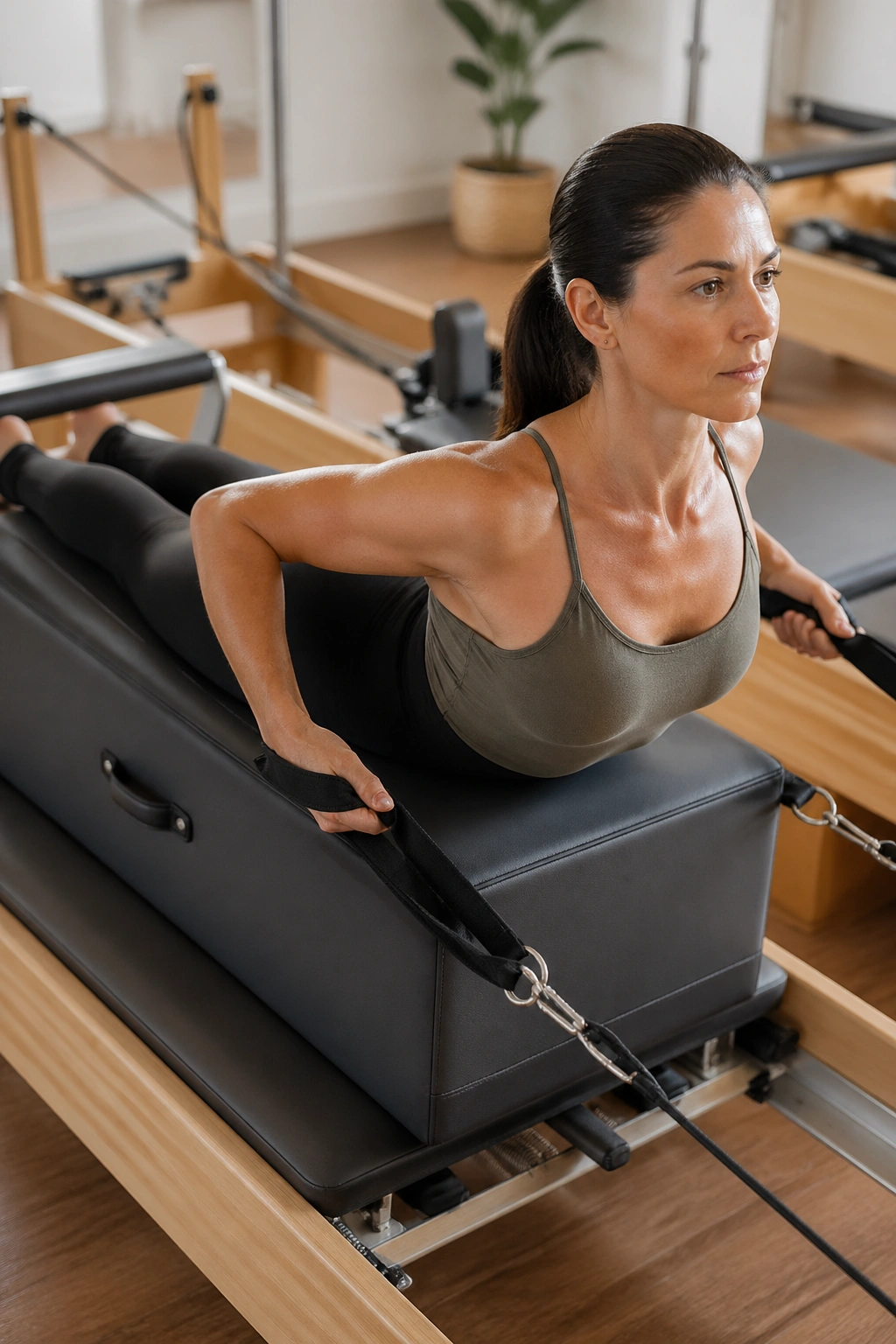
Pulling Straps I is one of the best upper-back and arm builders on the reformer. It looks a lot like a back exercise, and it is, but the arms are doing serious work the whole time.
Lie prone on the long box, grab the straps, and reach the arms long in front of you. Then pull the arms back alongside the body, lifting the chest just enough to feel the shoulder blades glide down and together. The biceps help, but they are not the star. The lats, rear delts, and the muscles between the shoulder blades carry a lot of the load.
The biggest mistake is yanking the chest up too high. That turns the move into a low-back complaint waiting to happen. Keep the neck long and the rib cage heavy against the box. The arms should feel like they are reaching through resistance, not pulling from a place of tension in the neck.
One clean pull with a pause at the top can do more for posture and arm definition than ten rushed reps.
9. Pulling Straps II with Bent Elbows
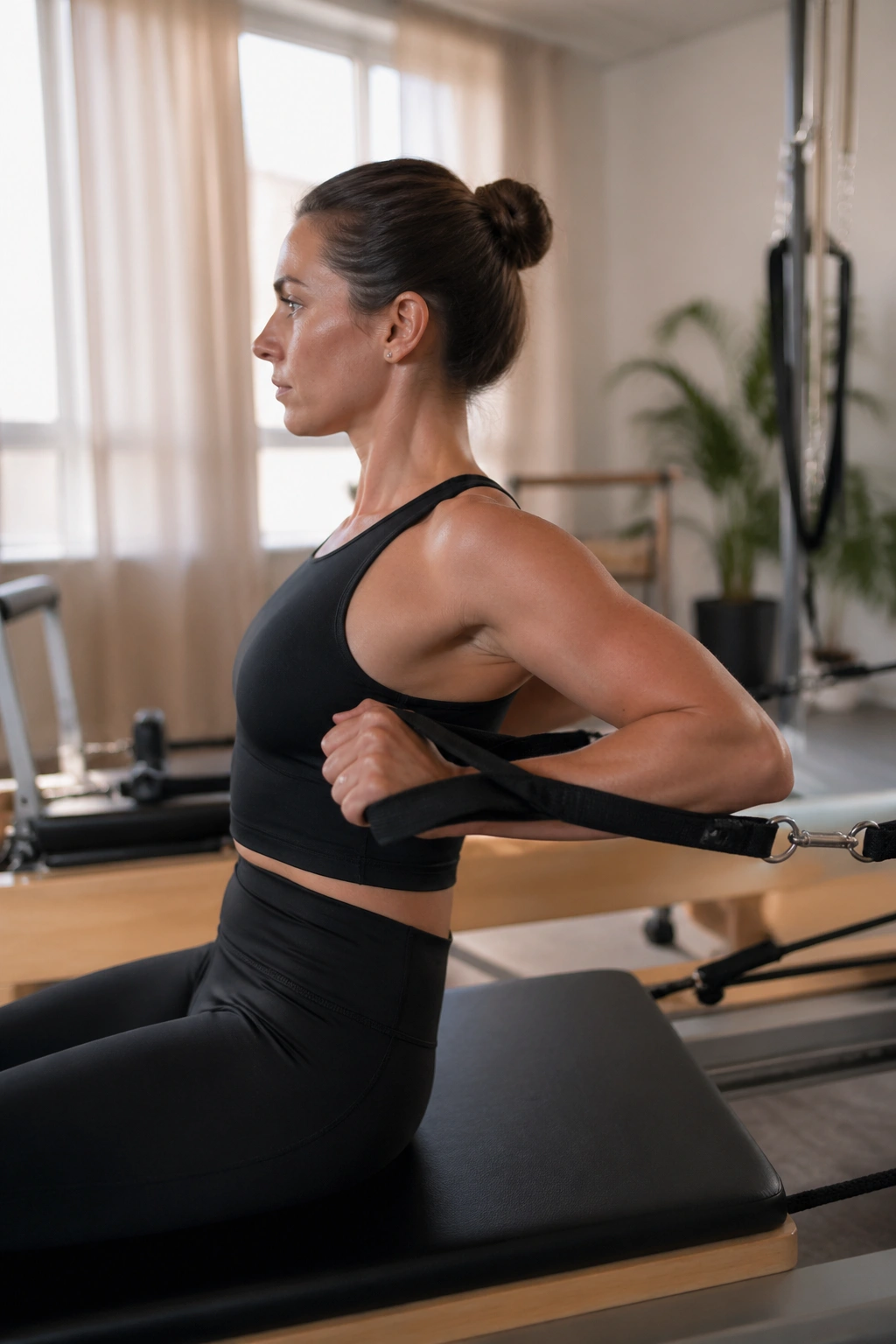
Do you need Pulling Straps II if you already do the first version? Yes, because the bent-elbow shape shifts the work and changes what the arms have to hold together.
In this version, the elbows bend as the arms draw back, so the upper arm and forearm both stay under load. That little adjustment gives the triceps, rear delts, and upper back a different kind of challenge. It also forces the shoulder joints to stay organized, which is where a lot of arm shape is won or lost.
How to Get the Most From It
- Start with the chest hovering low, not cranked high.
- Keep the elbows slightly below shoulder height.
- Pull back in one clean path instead of jerking.
- Pause for a beat before returning to the start.
The return is where people get sloppy. Don’t. Let the straps pull your hands forward slowly, and keep the shoulders broad the whole way. That controlled return keeps the arms working longer, which is what you want if the goal is endurance and shape rather than a quick burn and a messy finish.
10. Long Stretch Plank on the Moving Carriage
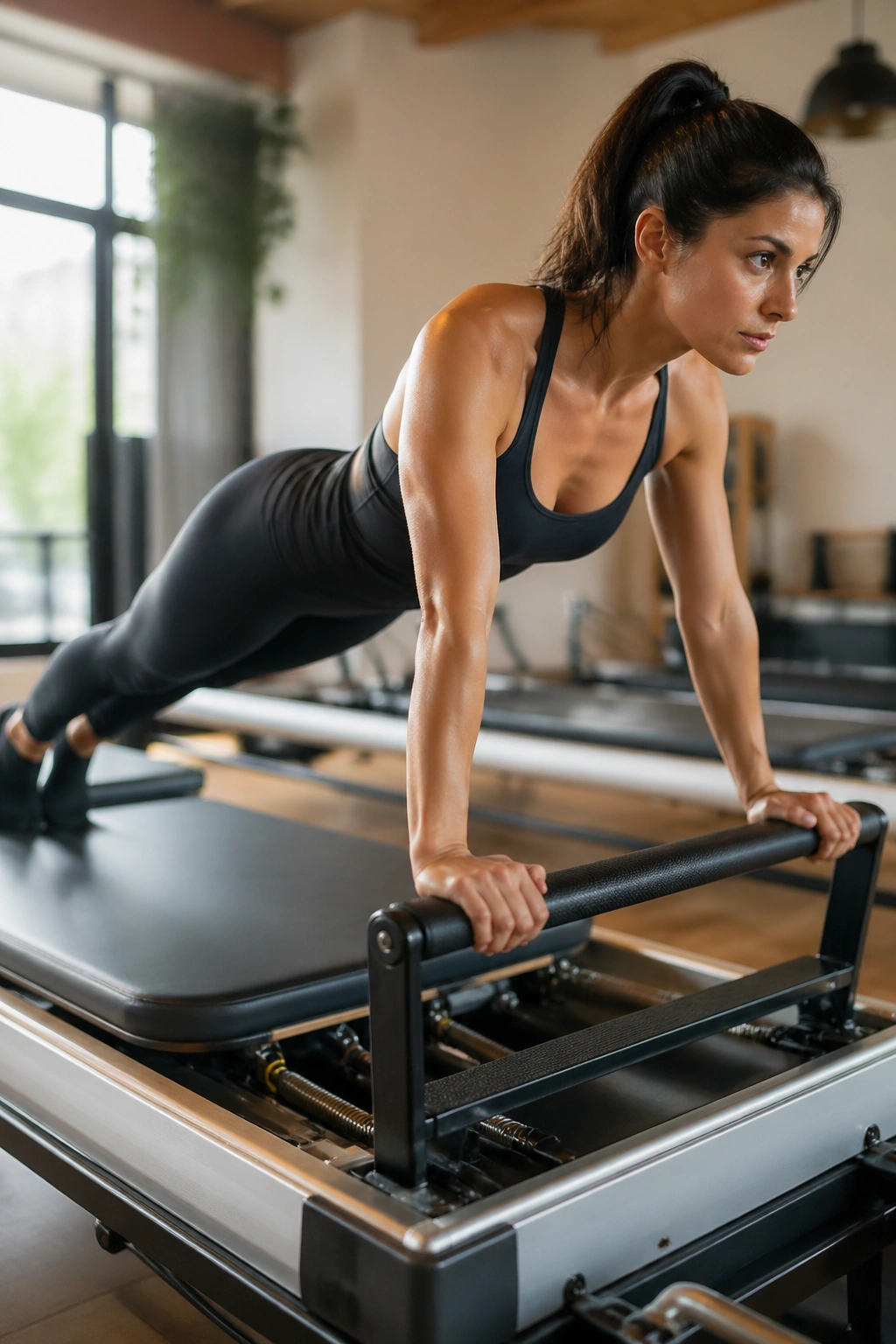
A plank on the reformer is not a floor plank with a fancy accent. The moving carriage changes everything.
Your hands stay planted while the springs try to slide the carriage away, so the shoulders, triceps, and serratus have to keep the whole upper body stable. If the wrists are decent and the shoulders feel solid, this is a brutally effective arm-and-core combo. If not, reduce the load or shorten the hold. No ego here.
The cleanest version is short and sharp. Hold for 5 to 15 seconds, then rest. Three to five good reps beat one shaky hold that looks heroic and feels awful. Keep the neck long, push the floor away through the hands, and keep the carriage quiet. If it rattles, the body has lost its line.
This is not the move to rush. A calm plank on the reformer teaches the arms to support body weight without collapsing, and that skill shows up everywhere else.
11. Elephant with Straight Arms
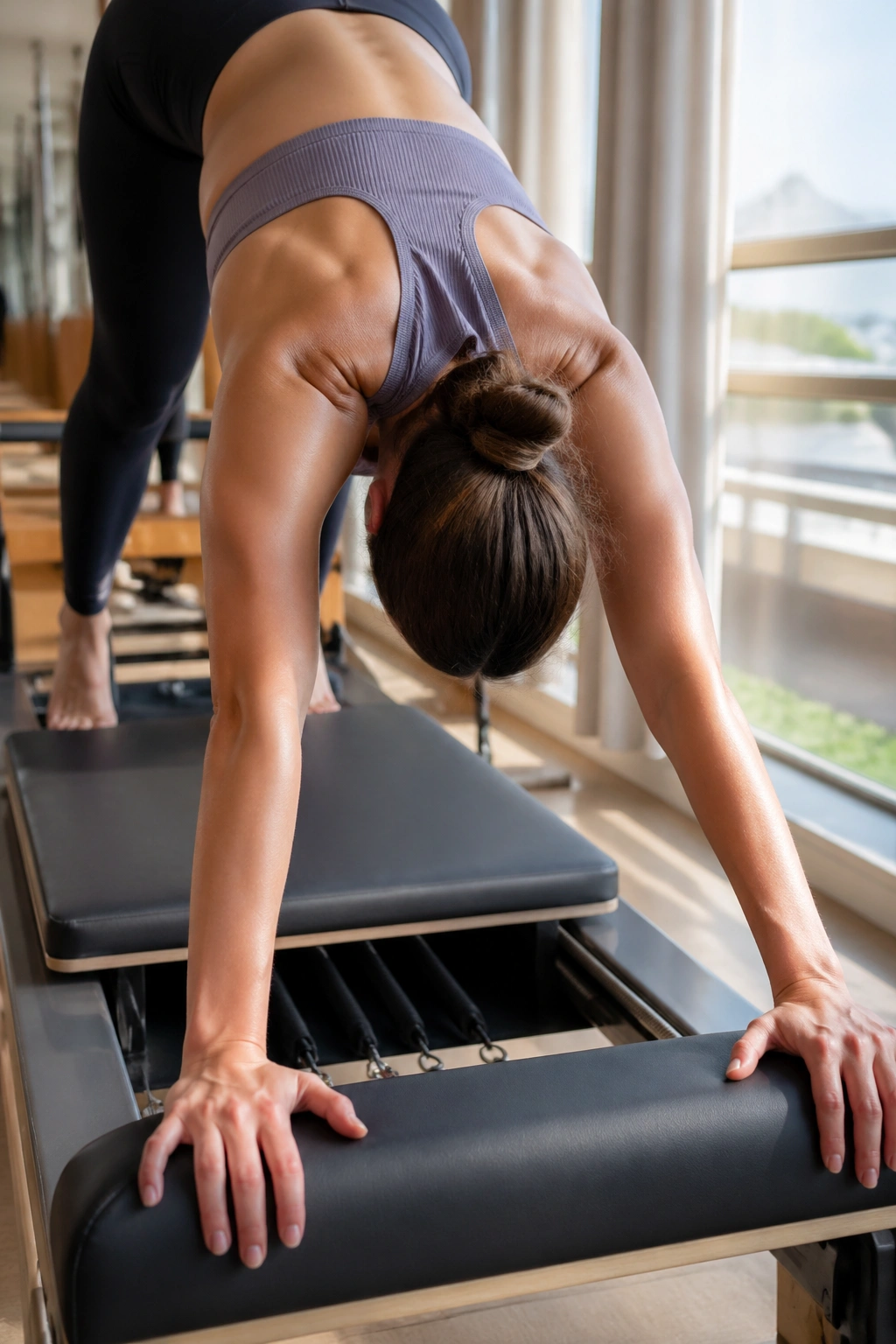
The Elephant looks like a hamstring move, and it is. It also asks the arms to work like anchors, which is why I always keep it in an upper-body list.
Hands on the footbar, hips high, heels down, and arms straight. From there, the carriage draws in and out under control while the shoulders stay steady and the triceps stay awake. The arms are not moving through a big visible range, but they are holding the frame together, and that is a real job.
The burn shows up fast.
If your shoulders sink toward your ears, reset. If the wrists hate the angle, turn the hands slightly out or use a different hand placement that feels kinder. The goal is to keep the shoulder blades broad and the elbows straight without locking them hard. That tiny bit of softness protects the joints and makes the triceps work longer.
I like Elephant for arm toning because it teaches weight-bearing without panic. It is quiet strength. And that counts.
12. Down Stretch on the Reformer
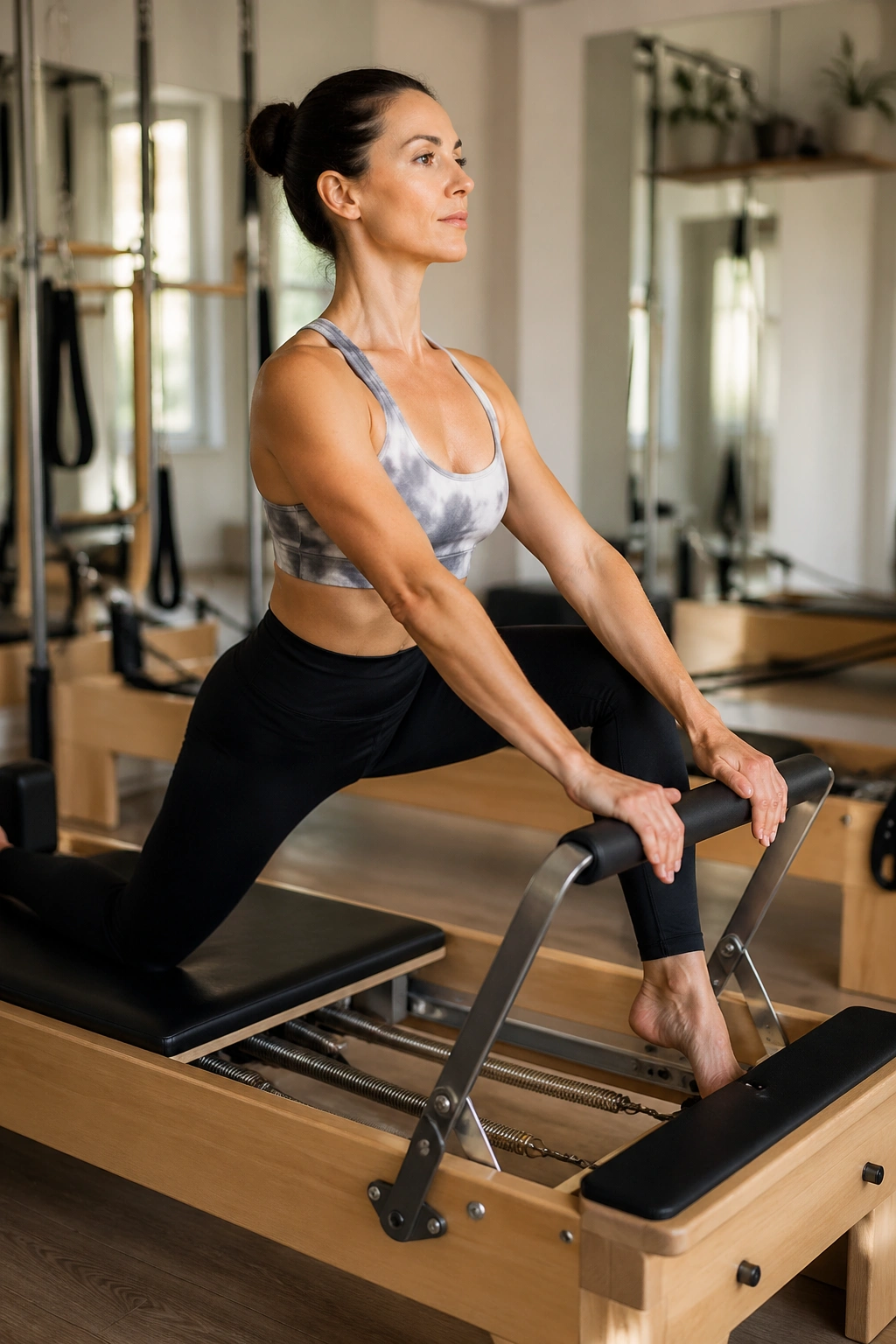
Down Stretch is one of the sneakiest arm toners in the whole apparatus. It looks like a back-body and chest-opening exercise, but the arms and shoulders are under load the entire time.
Start in a kneeling lunge shape with the hands on the footbar, then press the carriage out while the chest stays lifted and the shoulders stay down. The triceps work to support the arms, the chest stays open, and the front of the shoulders learns how to stay strong without collapsing forward. It is not a backbend contest. Keep it controlled.
The temptation here is to dump into the low back and fling the ribs upward. That makes the move feel bigger, but the arms get less useful work. A smaller, smoother range keeps the load where it belongs. The return should feel controlled enough that you could pause anywhere and hold the shape.
If you want a posture drill with real arm carryover, this is one of my favorites. It asks the upper body to stay tall while the springs try to pull everything apart.
13. Backstroke with Overhead Reach
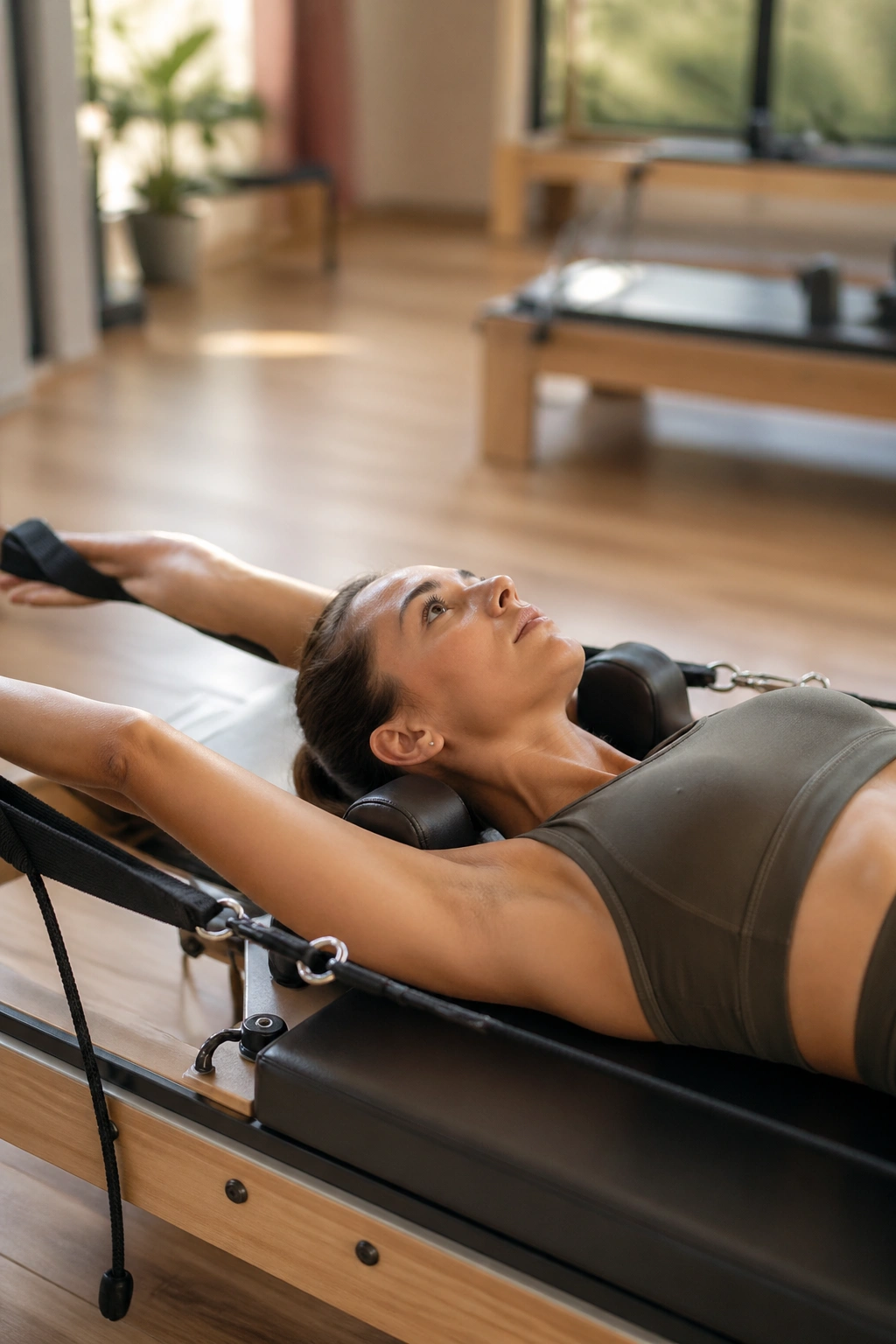
What makes Backstroke harder than it first looks? The arms move through a wide pattern while the trunk has to stay steady, and that combination gets messy fast if the tempo gets loose.
Lie on the carriage, bring the knees in, and send the arms overhead before sweeping them out and around in a controlled arc. The movement has a rhythm to it, but it is not a throwaway rhythm. The shoulders have to stay smooth, the triceps have to finish the reach, and the biceps help control the return. It is an arm circle with a core job attached.
How to Use It
- Keep the lower ribs settled.
- Reach long through the fingertips before bending.
- Move slowly enough to feel the straps at every stage.
- Stop if the shoulders creep toward the ears.
Backstroke is useful because it teaches the arms to move overhead without losing control through the middle of the body. That matters more than people think, especially if you spend any time working with rounded shoulders or a stiff upper back.
14. Mermaid with Strap Press
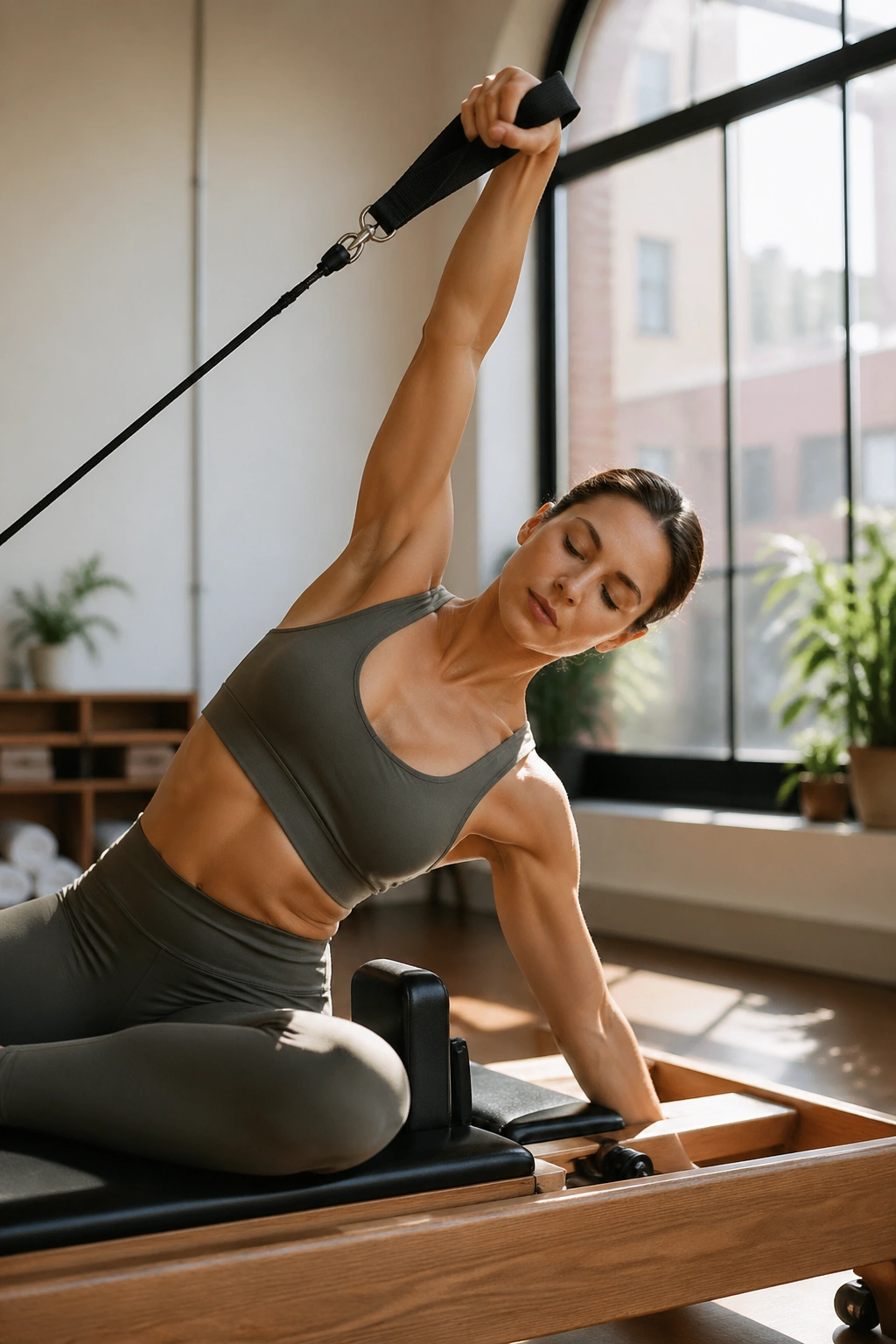
Can a side bend tone the arms? Yes, if the arm holding the strap actually does work instead of hanging there like decoration.
Mermaid on the reformer asks one arm to press, reach, or support as the body bends and lengthens sideways. That pressing arm gets a clean challenge through the shoulder and triceps, while the other side of the body stretches. The best part is that the load changes as you move through the side bend, which keeps the shoulder from settling into one easy position.
Use a smooth press, not a slam. The arm that holds the strap should stay organized through the wrist and elbow, and the shoulder should feel supported rather than jammed. If the neck tightens, the range is too much or the spring is too heavy.
I like this move for people who want arm work without the feeling that they are only doing arm work. It has a nicer shape to it. The side body gets length, the arm gets load, and the whole thing feels more graceful than brute force.
15. Side-Lying Arm Presses
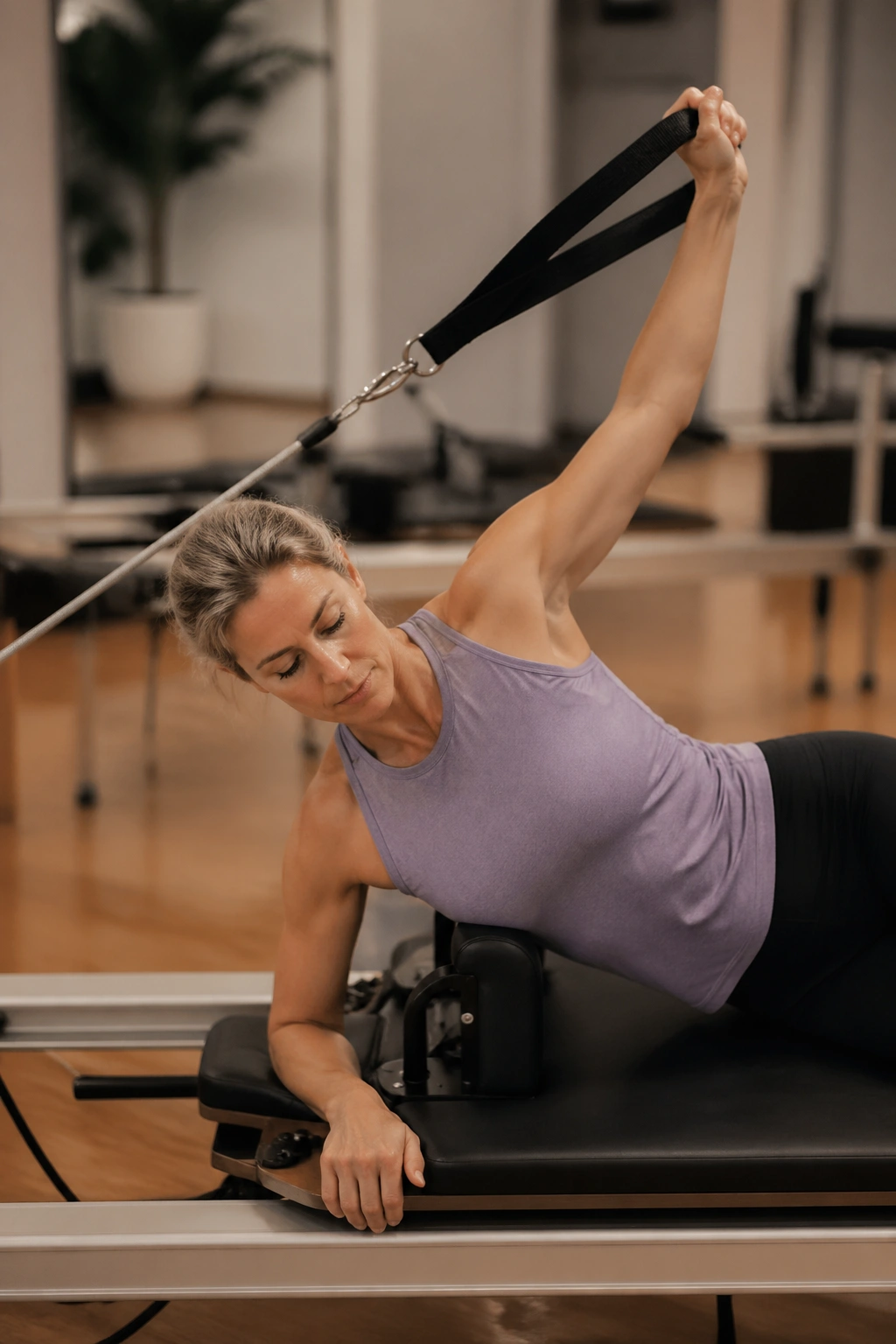
The floor does not let you swivel, and that is why side-lying arm work is so useful.
Lie on your side on the reformer with the straps in hand, stack the hips, and press the arms through the chosen path while the torso stays calm. The side position makes cheating harder. You cannot lean back much. You cannot dump into the ribs as easily. The small muscles around the shoulder and upper arm have to stay engaged the whole time.
This is a clean place to train the delts, triceps, and the stabilizers that keep the shoulder joint feeling tidy. A lot of people are surprised by how hard it gets when the body is fully supported but still forced to hold a line. That surprise usually fades after the third or fourth rep.
One quiet rep is worth more here than a rushed set of ten. Keep the neck long, the ribs stacked, and the hand path smooth. If the carriage starts to slam, stop and lighten the spring. The point is control, not noise.
16. Rowing Back on the Short Box
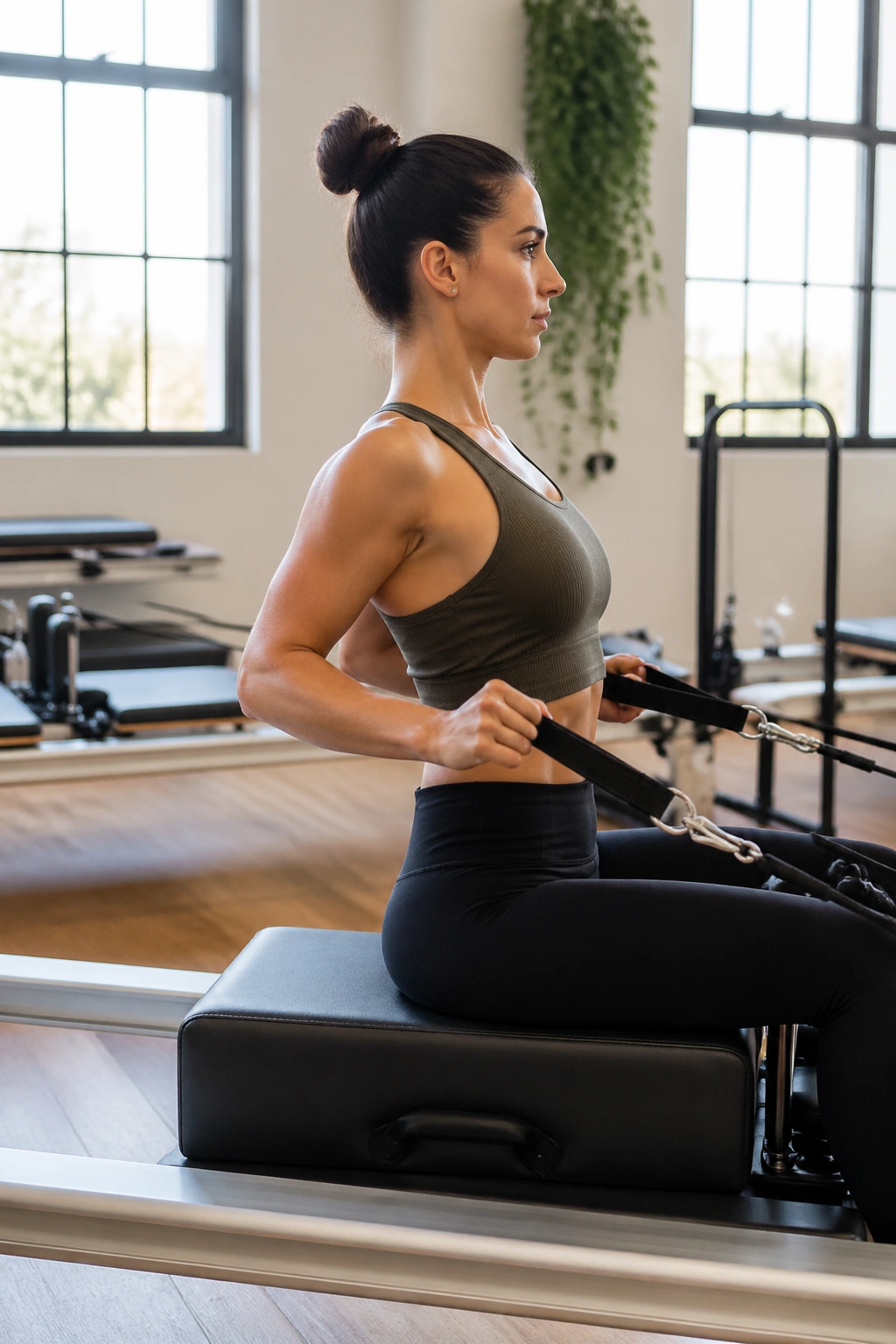
Rowing Back looks graceful from a distance. Up close, it is a test of shoulder control, upper-back strength, and arm endurance.
Sitting on the short box with the feet anchored, you reach the arms back and then draw them in with a controlled pull. The movement asks the biceps to help, but the larger job belongs to the lats and the muscles that hold the shoulder blades in a strong position. That is why the posture payoff is so good. You feel taller after it, which is a nice side effect.
Unlike a standing row with dumbbells, the box puts your body in a more upright, less forgiving position. There is nowhere to hide if the ribs flare or the shoulders roll forward. Keep the head stacked, the pelvis grounded, and the elbows soft as they travel.
If you want arm work that also makes you look more open through the chest, this is a smart one to keep near the middle of a session.
17. Rowing Front on the Short Box
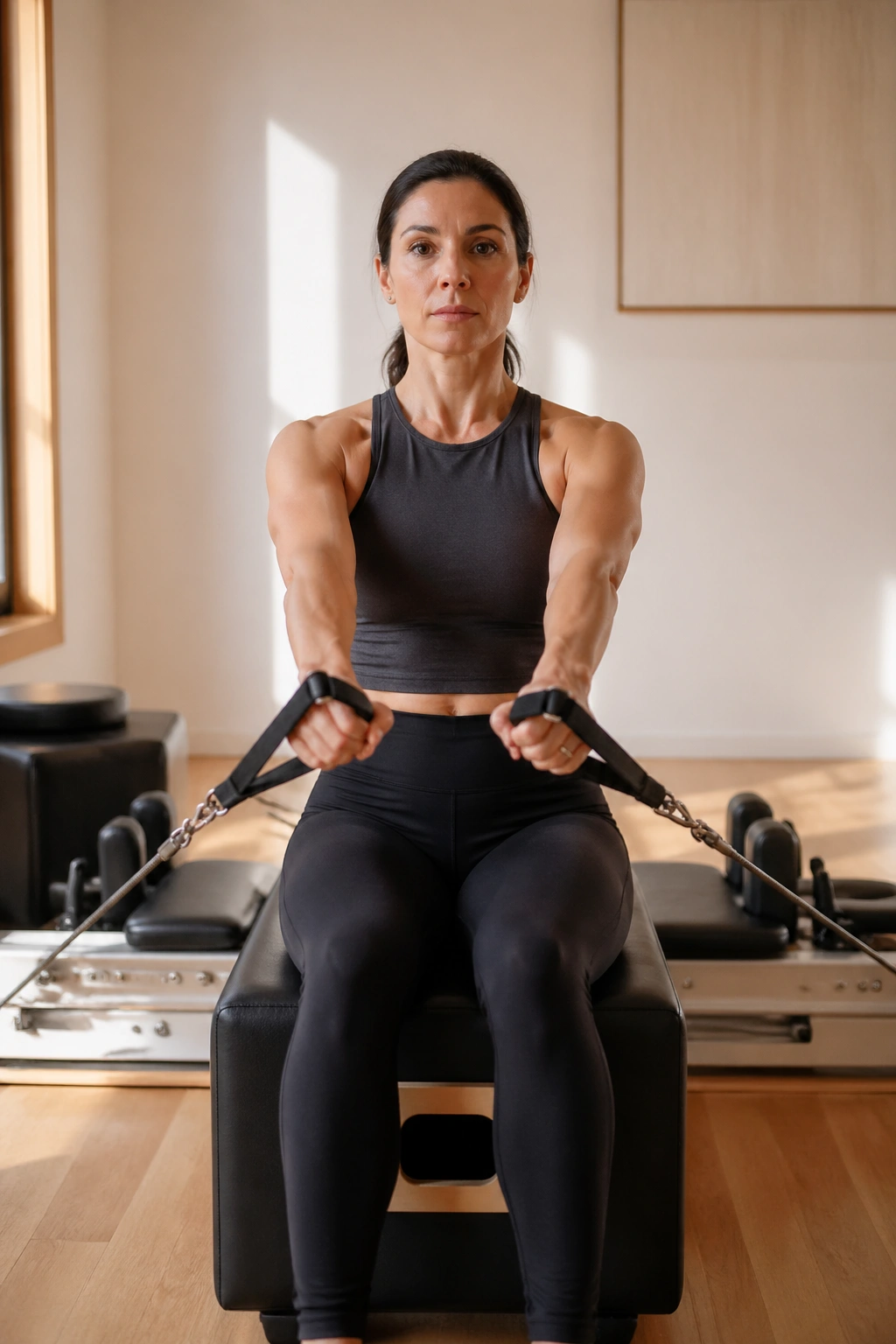
Rowing Front is the cousin of Rowing Back, but the angle changes the feel enough that I would not treat them like the same move.
In the front variation, the arms travel forward and down in a way that asks the shoulders to stay low while the torso remains tall. The biceps and front shoulders get a more obvious role, and the control needed to return to the start is where the real work lives. If the hands snap back, the exercise loses its value fast.
What to Watch For
- Keep the chest open without arching the low back.
- Let the shoulder blades glide, not pinch.
- Move the arms in a path you can control all the way back.
- Use a range that keeps the neck calm.
I like this version for people who want arm definition without a repetitive curl pattern. It feels more athletic than that. It also teaches the shoulders to work forward in a way that still looks organized, which matters if your default posture is slumped over a keyboard.
18. T-Pulls on the Long Box
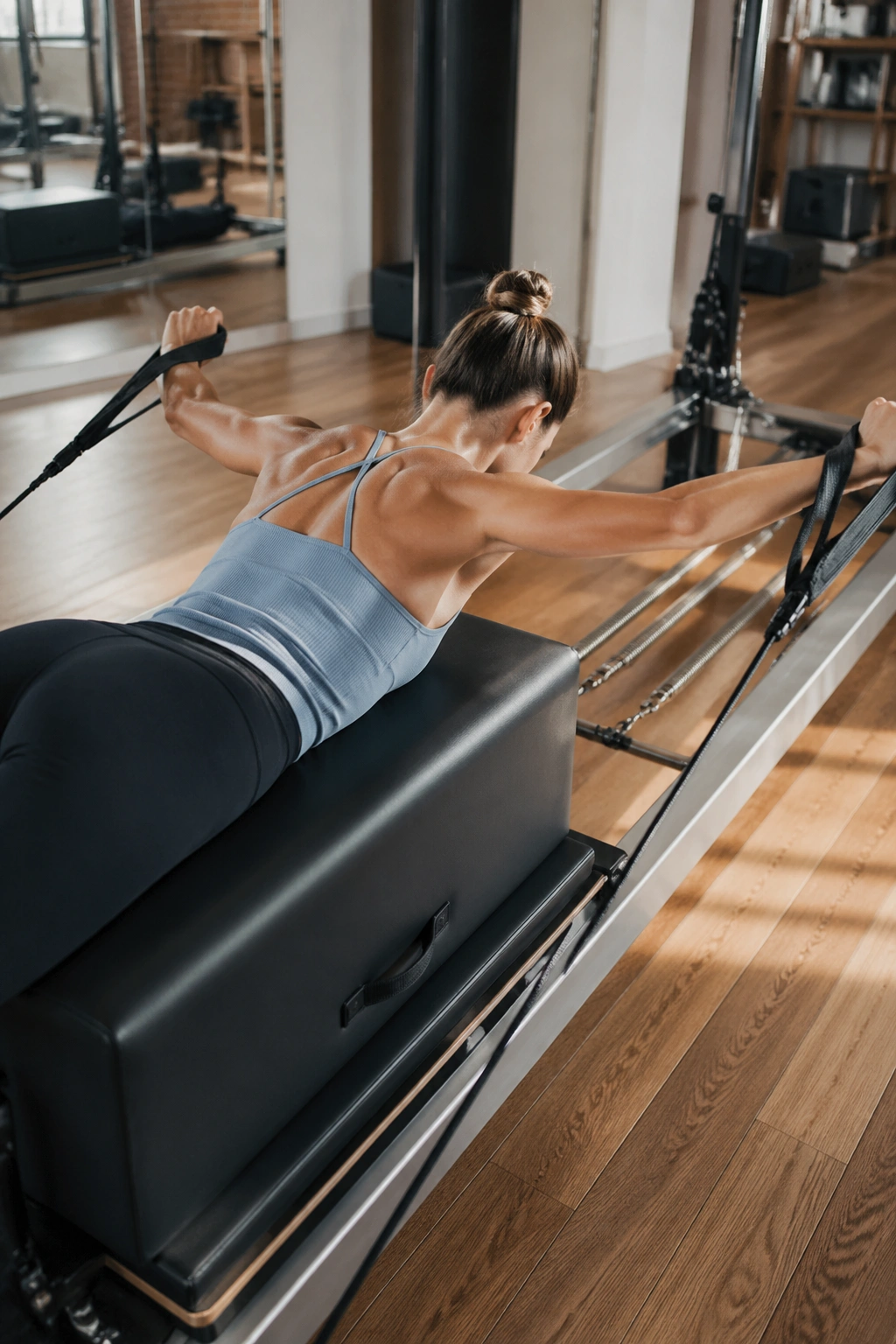
T-Pulls are a back-of-the-arm and rear-shoulder favorite, and the long box gives them enough room to feel crisp.
Lie prone, reach the arms out in a T, and pull them back with control until the shoulders feel broad and the upper back turns on. The move is small if you do it well. That is the part people miss. A tiny pull with a clean pause can hit the rear delts and triceps harder than a giant, loose sweep.
Why the Shape Works
- The arms stay wide, so the upper back has to organize the pull.
- The chest stays heavy enough to keep the low back out of it.
- The pause at the top forces the shoulder stabilizers to stay honest.
- The return should feel controlled, not dropped.
If your neck tightens, the hands are probably lifting too high or the spring is too much. Keep the line long and the elbows soft. This one is excellent for that subtle “arms look firmer from the back” effect people notice in the mirror before they can explain why.
19. Kneeling Triceps Kickbacks
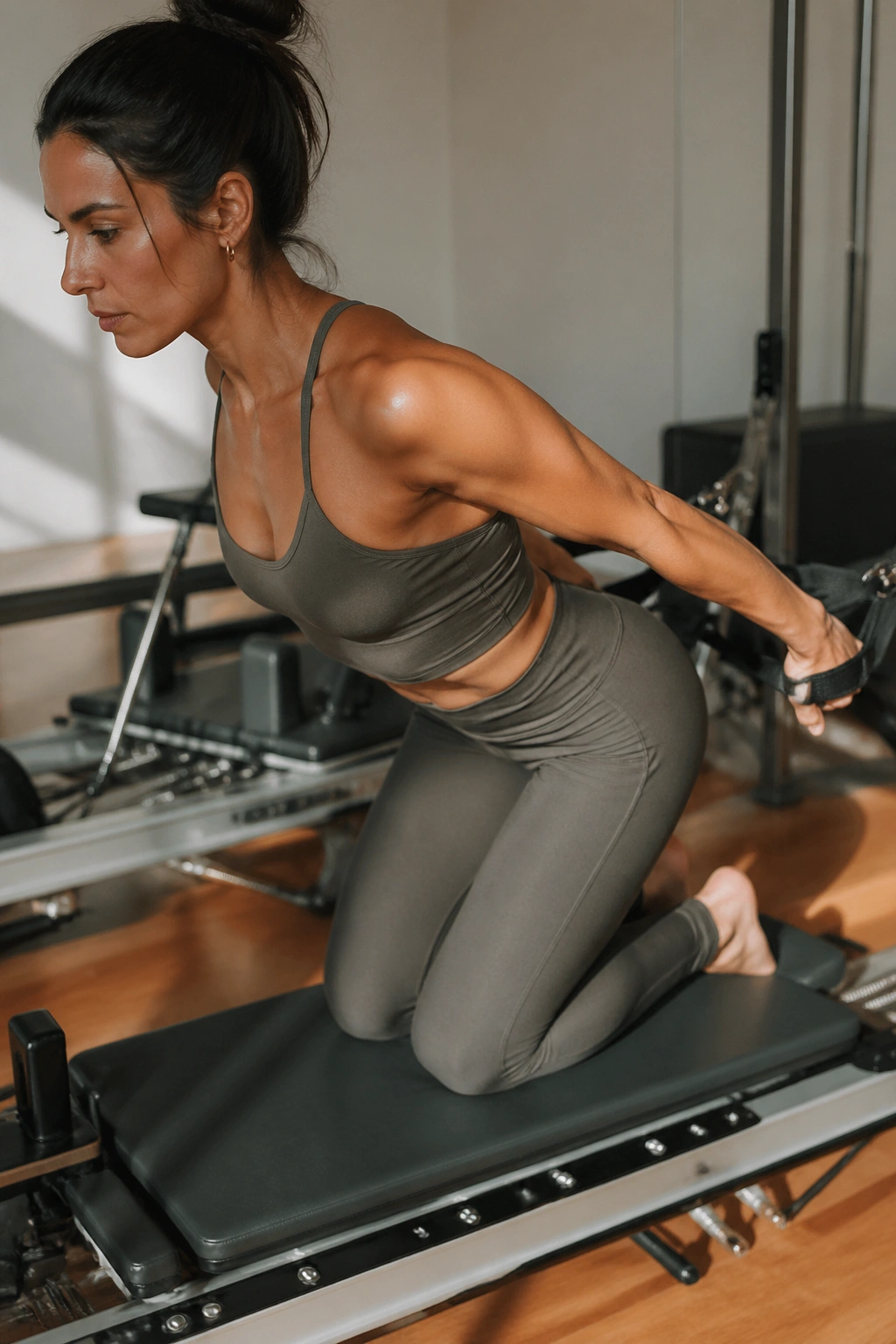
Kneeling triceps kickbacks are one of the cleanest pure triceps moves on the reformer. The set-up looks modest. The back of the arm disagrees.
Get into a stable kneeling position, hinge slightly forward, and hold the upper arms still while the forearms press back. The trick is not the press. The trick is refusing to let the shoulders roll or the torso swing. The upper arm should feel like a fixed post. The forearm does the moving, and the triceps do the complaining.
This is a great choice if you want a straight-up arm burn without a lot of bodyweight loading. The move is sharp, direct, and easy to measure by feel. If the elbow drifts, you know it. If the spring is too heavy, you know that too. The feedback is immediate.
Keep the reps smooth and a little slower than feels natural. Fast kickbacks turn into noise. Controlled kickbacks turn into work.
20. Standing Arm Presses Facing the Footbar
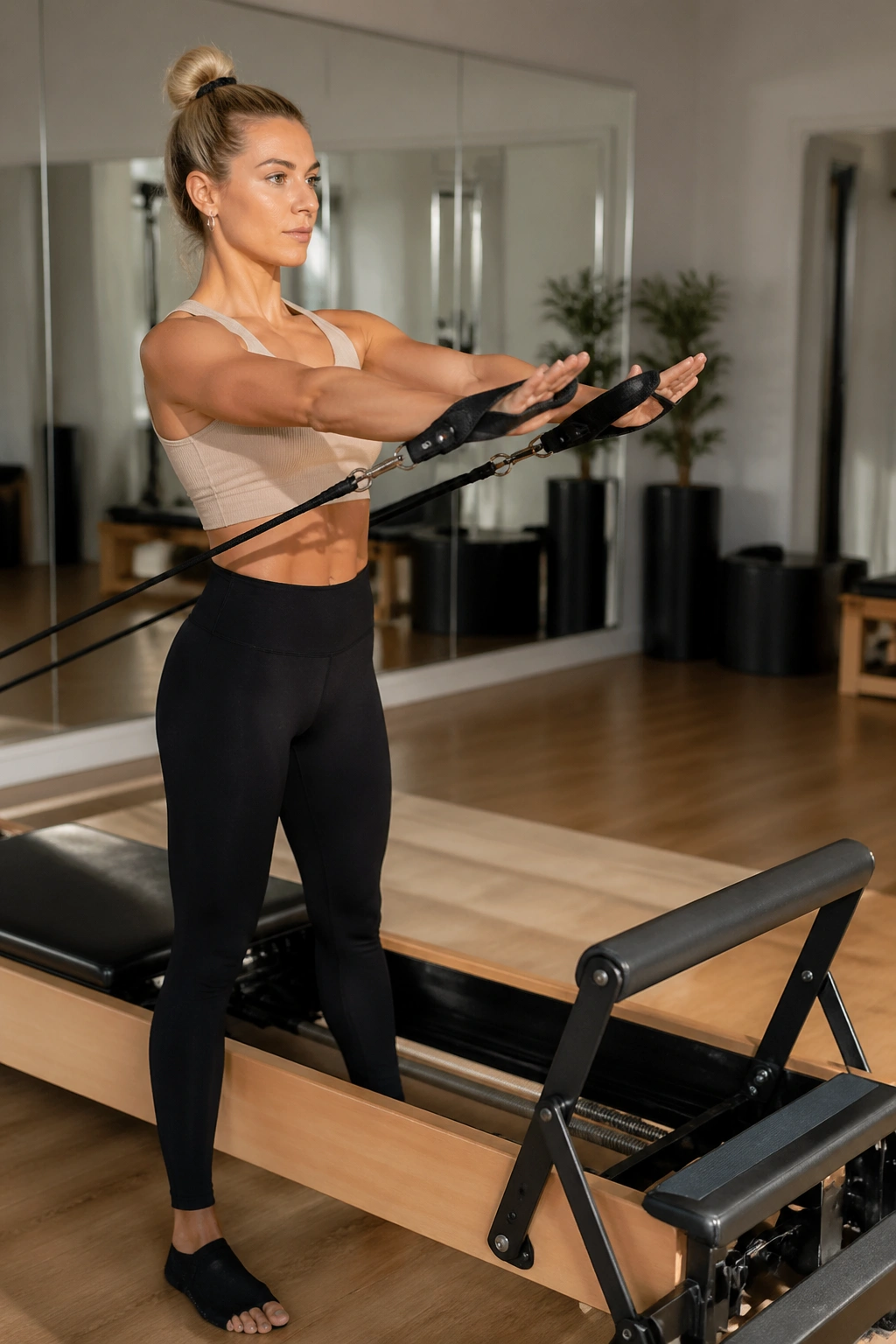
If you want toned arms that show up when you are upright, finish standing.
Facing the footbar with the straps in hand, press the arms forward, down, or slightly out depending on the setup, while the legs and core keep the carriage steady. Standing work makes the arm load feel more real because the whole body has to organize around it. The shoulders cannot slack off. The ribs cannot drift. The glutes often help more than people expect, which is one reason the movement feels so connected.
I like this as a finisher because it carries the arm work into a shape that looks like life, not just a workout. You are not lying down anymore. You are holding posture while the springs try to pull you out of alignment. That matters.
Use a range that keeps the neck soft and the wrists straight. Press with purpose, return with control, and stop the set when the shoulders start climbing. That is the point where the work changes from useful to messy.
