



Pilates bar workouts can look almost too gentle to matter, and that is exactly why they catch people off guard. A few controlled squats, a slow press, a couple of lunges with the band tugging back at you, and suddenly your thighs are hot, your shoulders are awake, and your core has to stop freeloading.
That’s the charm of the bar. You get resistance without a rack of dumbbells, and you get constant tension without needing to bang out frantic reps. The bar stays honest. If you rush, swing, or let your ribs flare, the whole thing gets sloppy fast. If you keep the tempo slow and the form clean, the burn shows up in places you usually ignore: inner thighs, glutes, upper back, the deep muscles around your waist.
A decent Pilates bar session is not about chasing exhaustion for its own sake. It is about stacked joints, controlled range, and enough resistance to make the last third of a set feel like you are moving through warm clay. The best part is how well it fits real life. Small room, limited equipment, noisy downstairs neighbors, tired joints — the bar still works.
The trick is simple. Put the lower body to work, then make the upper body stabilize, then finish with core patterns that force everything to stay connected. Once that rhythm clicks, the whole session feels less like random exercises and more like a smart little gauntlet.
1. Pilates Bar Workouts: Standing Squat to Press Ladder
If you want one move that wakes up the legs, shoulders, and midsection at the same time, this is the easiest place to start. Stand on the bands with feet about hip-width apart, hold the bar at shoulder height, and move through a slow squat before pressing overhead as you rise.
Why It Works
The squat loads the quads and glutes, and the press asks the shoulders to work without letting the torso wobble. That combination is what makes Pilates bar workouts feel so different from a regular strength circuit — the bar gives you a fixed line to control, so you cannot hide bad posture.
Do 8 to 10 reps for 2 to 3 rounds. Lower for a count of 3, pause for 1, and press up on a long exhale. Keep your heels heavy and your ribs from popping forward at the top.
- Feet: planted and even, not rolled to the toes.
- Bar path: straight up, not drifting in front of your face.
- Tempo: slow enough that the bands never snap loose.
Tip: If your shoulders shrug, stop the press at forehead height for a round. That tiny cutback usually saves the form.
2. Reverse Lunge and Biceps Curl Flow
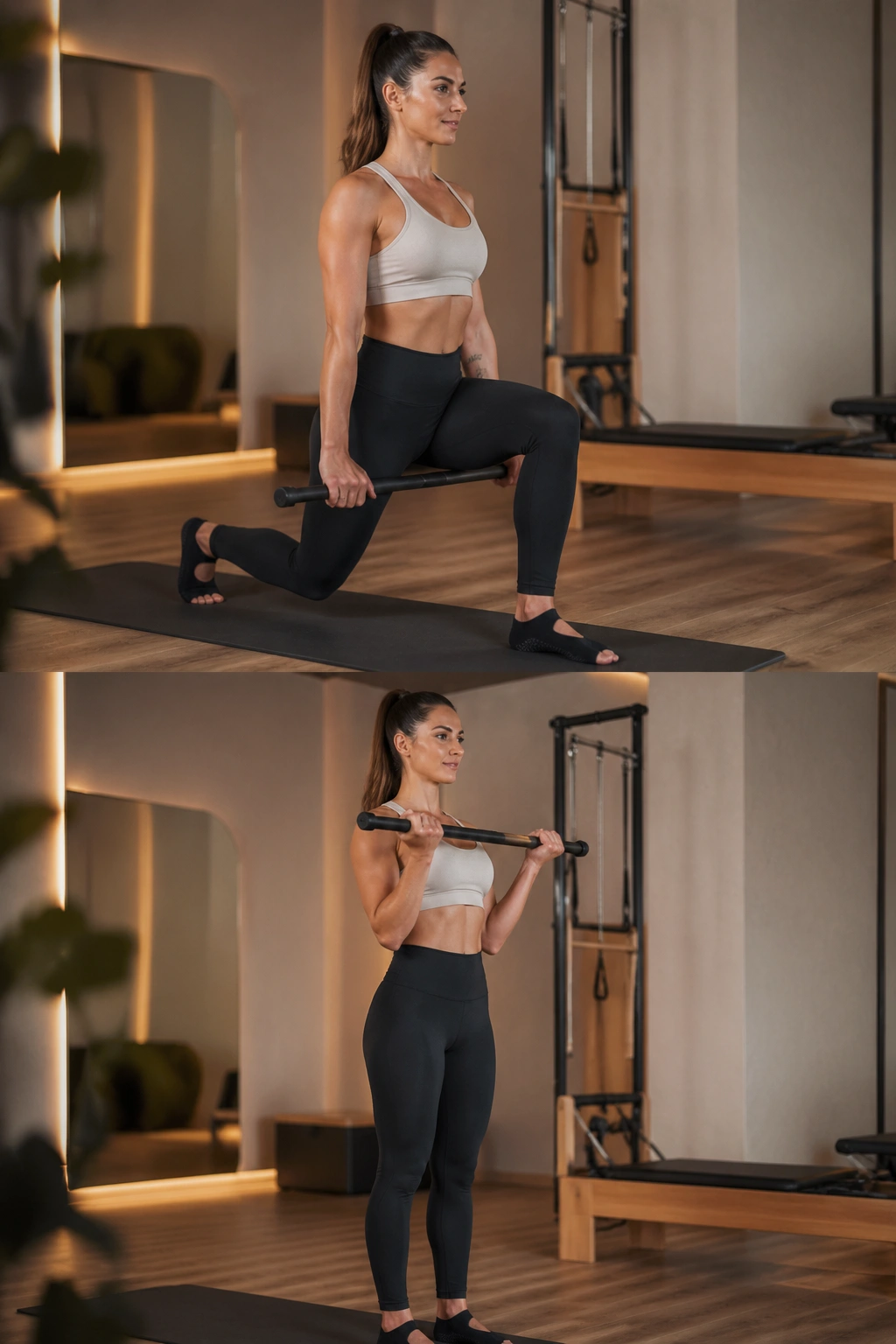
This one feels sneaky. You think you are doing a leg move, then your arms start shaking during the curl and your back foot starts asking questions. Hold the bar at thigh level, step one foot back into a reverse lunge, and curl the bar only after you have come back to standing.
The pause matters. If you curl while you are still sinking into the lunge, the upper body tends to swing and the front knee gets messy. Bring the front heel down, stack the ribs over the hips, then curl with the elbows close to your sides.
Use 6 to 8 reps per side and keep the step long enough that the front shin stays mostly vertical. That takes pressure off the knee and sends more work to the glute. A lot of people shorten the step because it feels safer, then wonder why the front thigh takes over.
Do not rush the return. That is the part where the control lives.
3. Deadlift to Row Combo for the Back of the Body
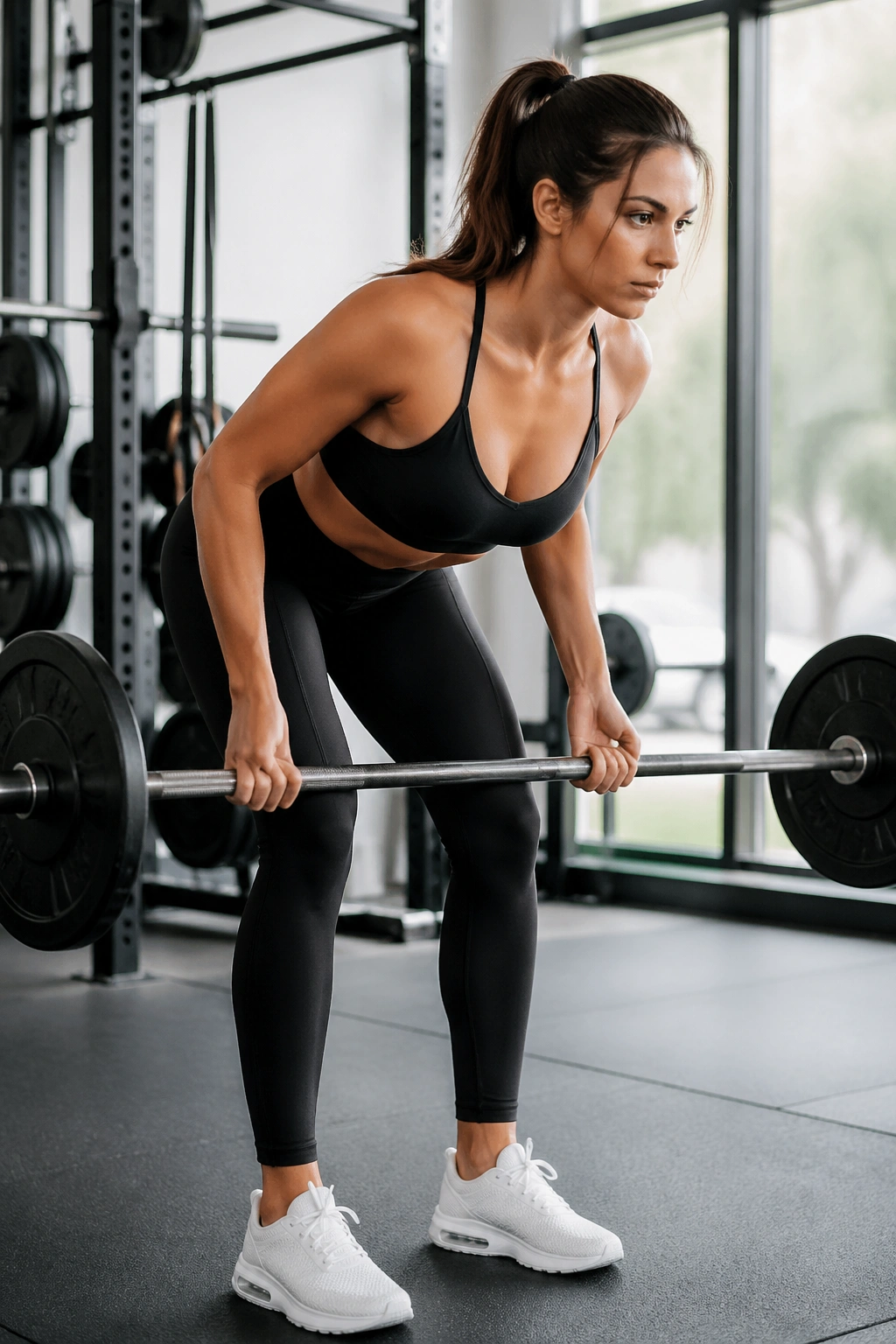
Why does a deadlift-row combo feel so much harder than it looks? Because the hinge and the row ask for different jobs at the same time. Your hamstrings load first, then your upper back has to pull without stealing the work from your low back.
How to Use It
Stand with soft knees and hinge until the bar reaches mid-shin or just below the knees. Keep the bar close to your legs. Then row it toward the lower ribs, pause for a second, and lower it under control.
The cleanest version uses 8 slow reps. Think “hips back, chest long, elbows back.” Not “bend over and yank.” That second version is where people get cranky hamstrings and tired necks.
- Shins: nearly vertical.
- Neck: long, eyes down.
- Shoulders: away from the ears.
If the row turns into a shrug, lighten the resistance or shorten the hinge. A cleaner half-range rep beats a ugly full-range one every time.
4. Glute Bridge Press Sequence
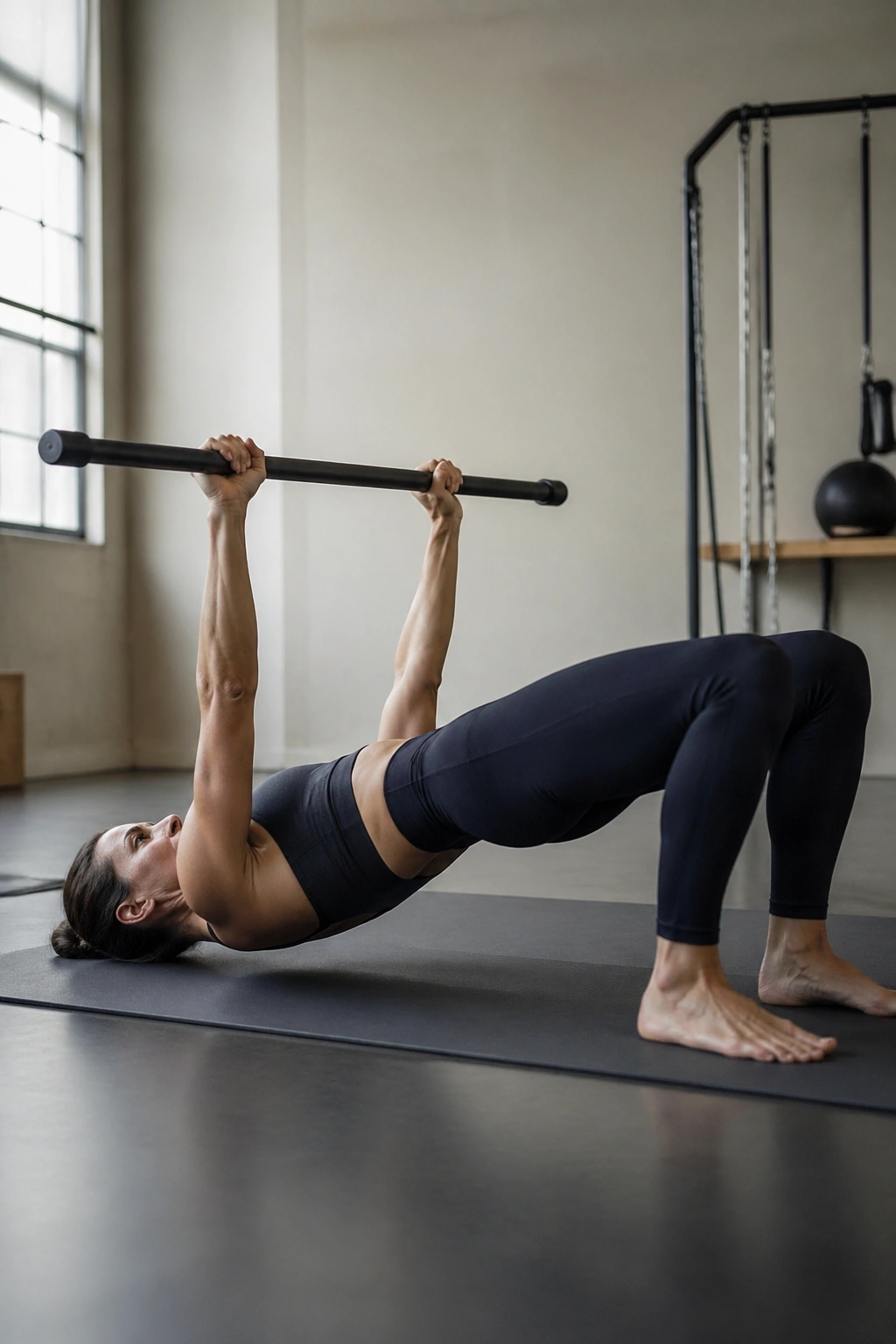
There is a special kind of happiness in lying on a mat after standing work and still finding a way to make your glutes complain. Set up on your back with knees bent, feet flat, and the bar in your hands over the chest. Lift into a bridge, then press the bar up while keeping the hips steady.
That little combination does two things at once. The bridge asks the glutes to hold the pelvis level, and the press asks the upper body to work without letting the ribs flare. It sounds simple. It is not simple once the bands start pulling.
What to Watch For
- Feet: hip-width, about a hand’s length from the glutes.
- Hips: high enough that the front of the thighs feel engaged, not jammed.
- Ribs: quiet, not splayed open.
- Neck: relaxed on the mat.
Try 10 to 12 reps, or hold the bridge for 20 seconds and press in small, slow pulses. If the hamstrings cramp, move the feet a little farther away. That usually gives the glutes back their job.
5. Pilates Bar Workouts for Core: Standing Knee-Drive Burner
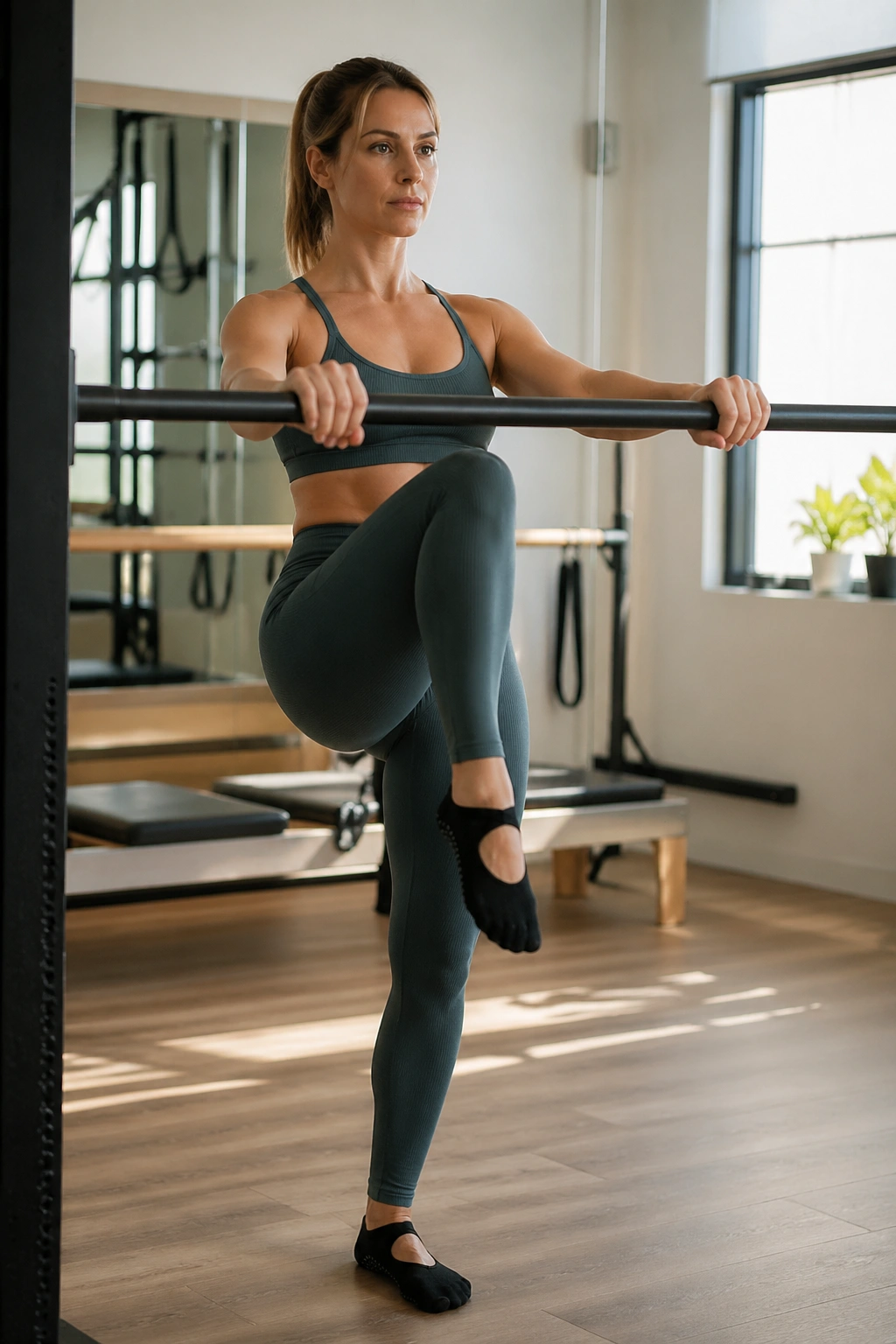
Core training does not have to happen on the floor to be effective. Stand tall, hold the bar at chest height, and shift your weight onto one leg while the opposite knee drives up toward the bar in a controlled crunch. The bar gives your hands a target, and the standing leg has to work like a post.
This move is ugly in the best way when you do it right. The balance challenge lights up the foot and hip on the standing side, while the lifted knee pulls the lower belly into the conversation. If you lean back to fake the rep, the whole thing gets boring fast.
Do 8 to 10 reps per side. Keep the movement small and deliberate. The knee should come up, the ribs should knit in, and the bar should stay steady instead of bouncing around.
One clean rep is worth three sloppy ones.
6. Side Lunge and Reach Pattern
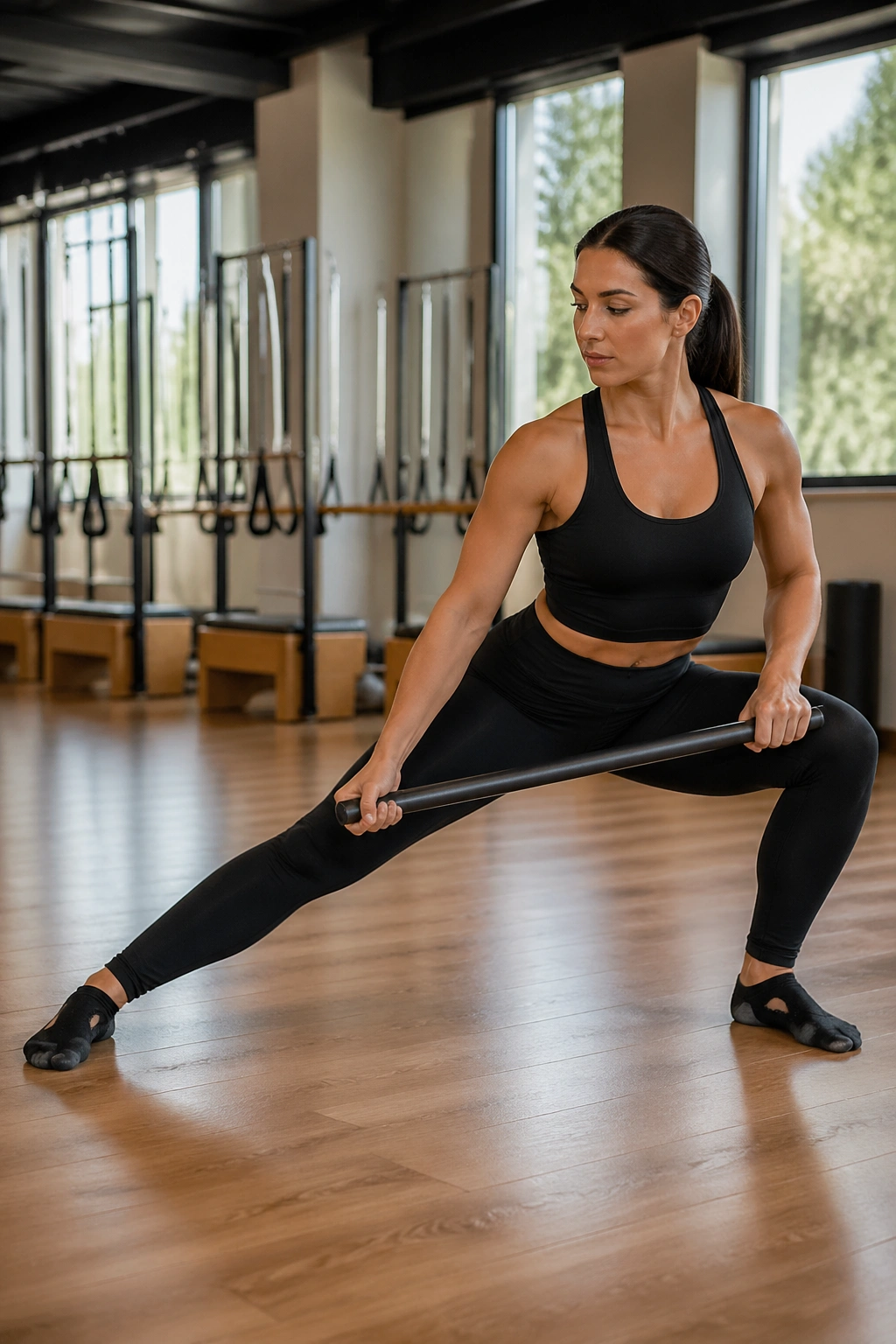
A narrow squat is nice. A side lunge hits different. Step out to the right, sit into the right hip, and let the left leg stay long while the bar reaches across the body or toward the outside of the bent knee. Then push off the planted foot and come back to center.
Unlike forward-and-back patterns, this one asks the adductors, outer hips, and glute med to help. That matters. A lot of people live in straight-ahead movement and never train the side body enough to keep the knees and hips happy.
What Makes It Different
The stretch on the straight leg is part of the point. You want the inner thigh to lengthen while the bent leg loads. That is where the burn comes from, and it is also where the control gets tested.
Use 6 to 8 reps per side and keep the trailing foot flat. If your torso folds forward, make the lunge a little smaller and keep the chest more upright.
7. Overhead Press with Heel Raises
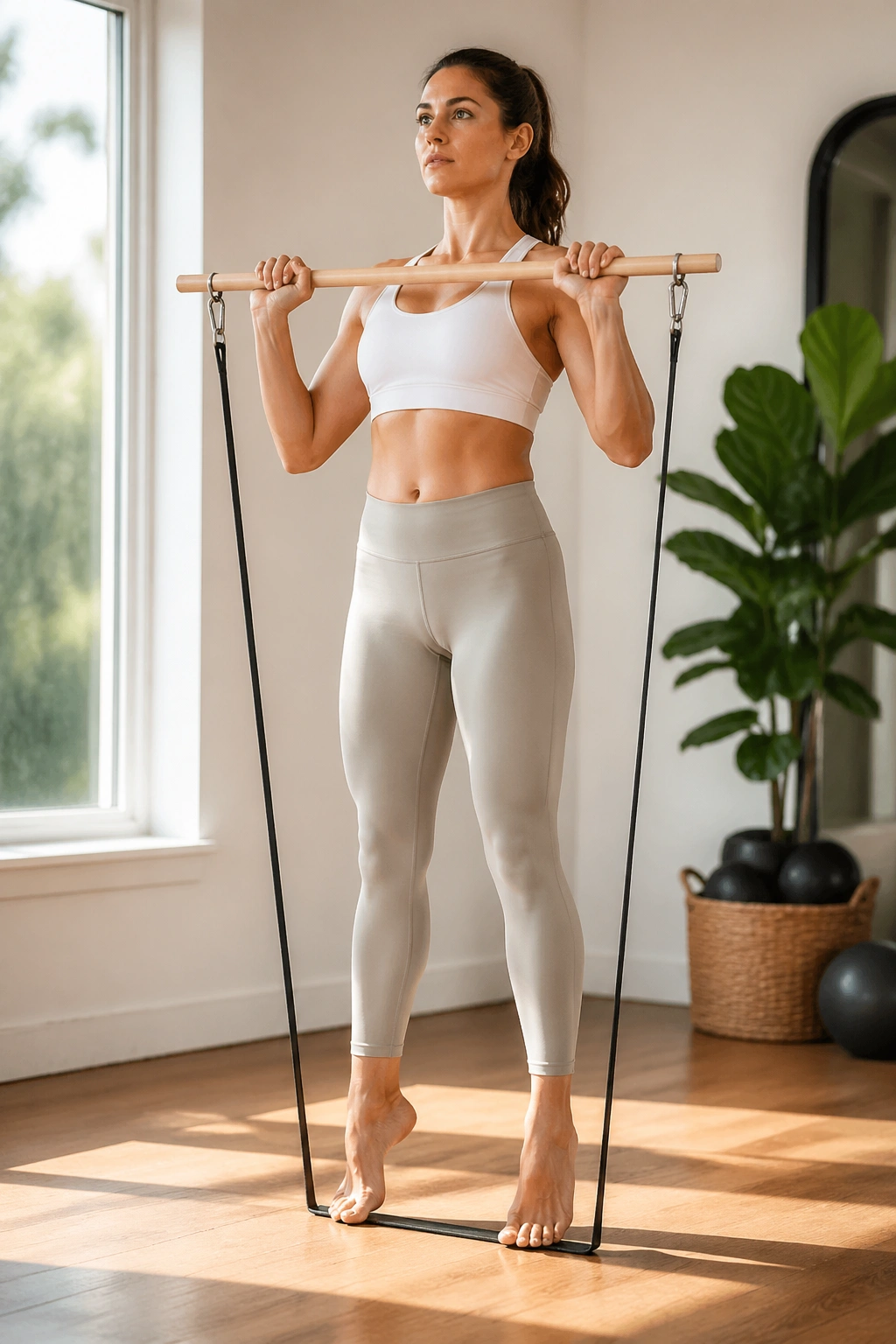
Shoulders plus calves sounds like a weird pairing until you try it. Stand on the bands, hold the bar at the chest, press overhead, and rise onto the balls of the feet as the arms straighten. Then lower both slowly at the same time.
The heel raise turns a standard press into a balance drill. Your ankles have to stabilize, your glutes have to stay lightly on, and your ribs have to stay tucked enough that the lower back does not take over. That is a lot of jobs for one rep.
A good target is 10 controlled reps. If balance is shaky, split the move into two parts: press first, then raise the heels. That is not “easier” in the lazy sense. It is cleaner. And cleaner reps teach your body the pattern faster.
Keep your gaze fixed on one spot. Wandering eyes make wobble worse.
8. Triceps Kickback and Pulse Series
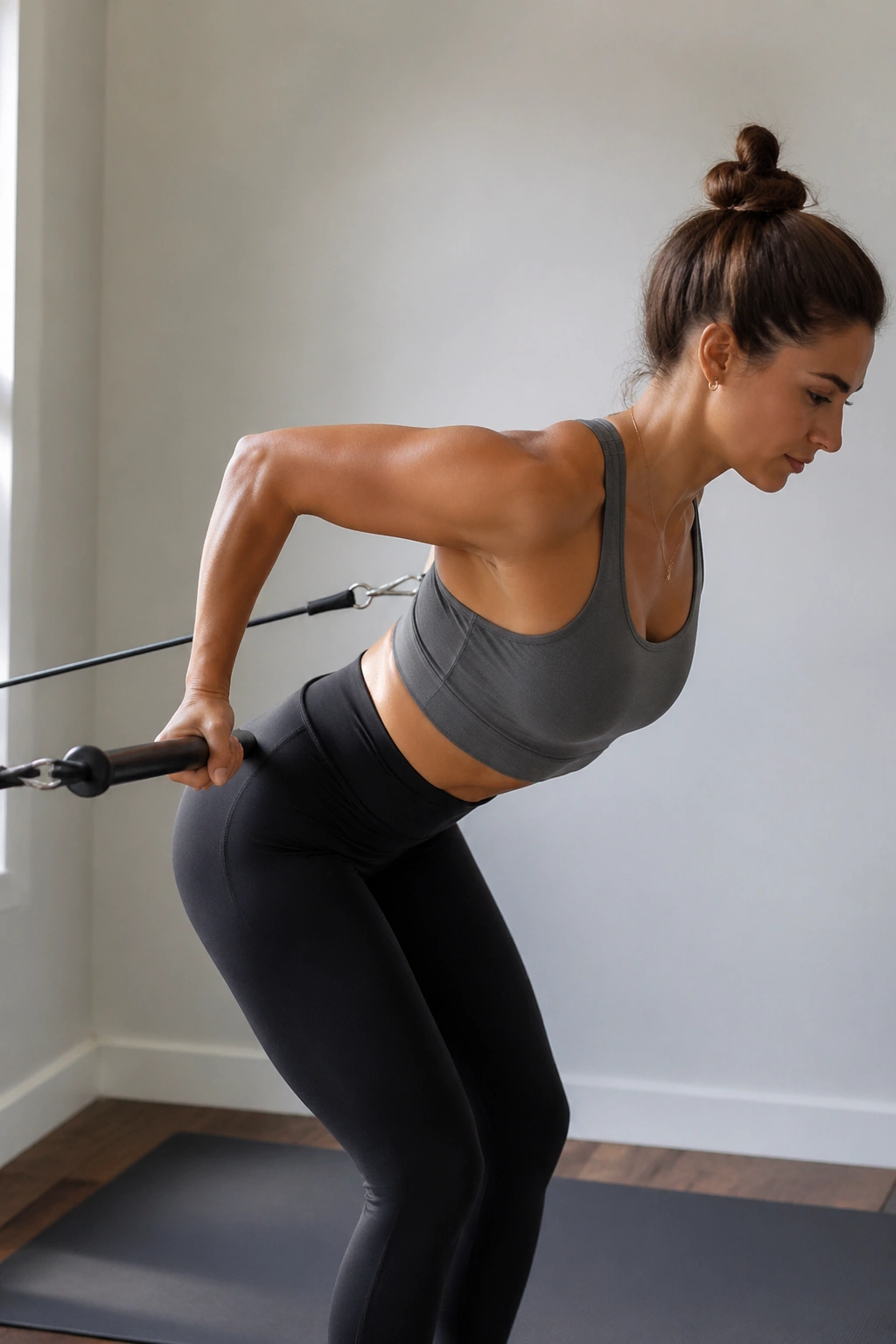
This is the move that makes people mutter under their breath. Hinge forward a little or take a staggered stance, then keep the upper arms still while you extend the bar back behind you. Once you hit the end range, add tiny pulses before you return.
Why the Burn Shows Up Fast
The triceps do not get much help here, and the upper back has to stabilize the shoulder blades so the arms can actually move. If you swing the elbows, the movement turns into a back fling. If you hold the elbows high and quiet, the back of the arms lights up fast.
Try 8 full kickbacks, then 6 small pulses at the end range. Rest for 15 to 20 seconds and repeat for 2 rounds. The pulse is where the grimacing starts, so do not make it huge. Tiny is the point.
Keep the wrists straight. Bent wrists turn the hands into a weak link, and the whole rep feels sloppy.
9. Standing Oblique Twist Circuit
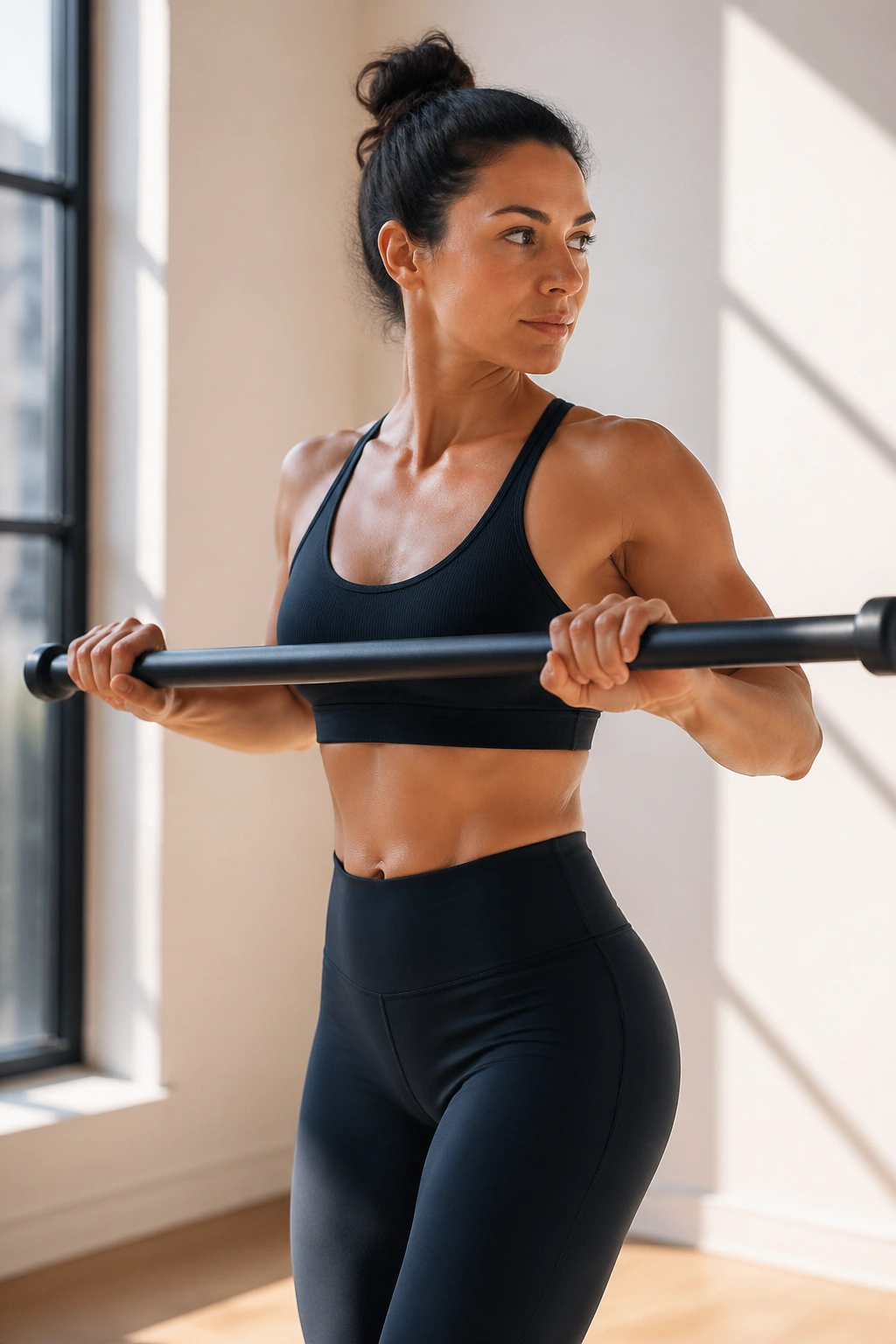
Need waist work without a bunch of crunches? Stand with feet planted, bar held at chest level, and rotate the rib cage a few degrees to one side, then back through center, then to the other side. The hips stay mostly square. The ribs do the moving.
That small twist looks almost too modest to matter. Then the sides of the waist start to burn and the shoulders have to stop helping. The real trick is not to yank through the arms. Let the bar follow the torso; do not swing the torso to chase the bar.
Work for 12 twists per side or 40 seconds total. Keep the knees soft and the belly pulled in on the exhale. If the low back starts to pinch, shorten the turn and slow down.
This is one of those quiet little moves that feels better on the second round than the first.
10. Floor Chest Press and Fly Combo
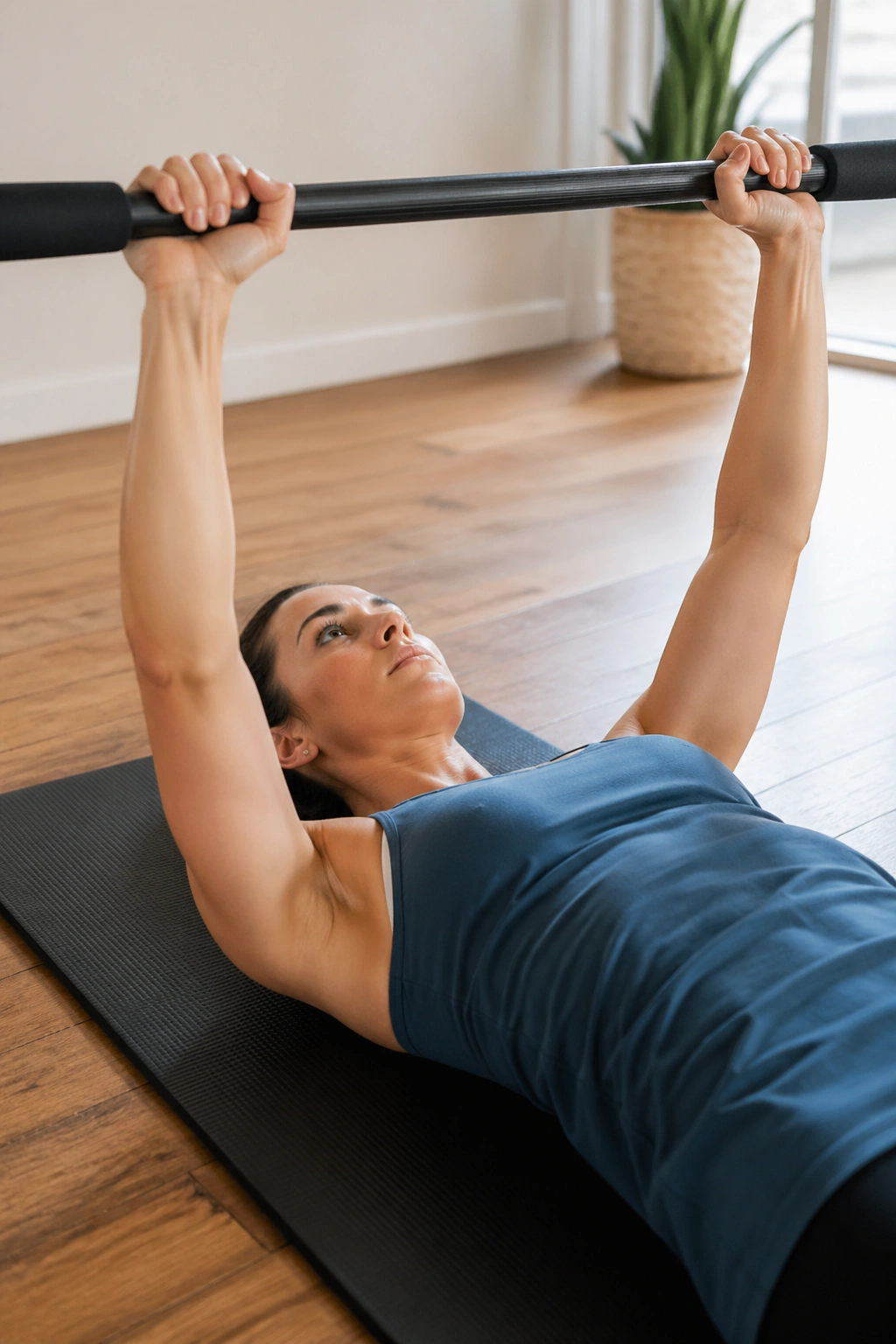
Lie down and the session changes character. The floor removes some cheating, which is rude but useful. With the bar over the chest, press straight up for a chest press, then open the arms slightly into a controlled fly before bringing everything back in.
How to Keep It Clean
The elbows should bend at roughly the same speed on both sides. If one arm takes over, the bar tilts and the bands tug unevenly. Keep your shoulder blades wide against the mat and let the chest do the work without letting the shoulders creep toward your ears.
A good range is 8 to 10 slow reps, with a 2-second lower and a 1-second pause at the bottom. If the fly feels too ambitious, skip that part and keep the press only. There is no prize for making the shoulders unhappy.
Use the bar like a rail. Straight line up, straight line down.
11. Single-Leg RDL Balance Drill
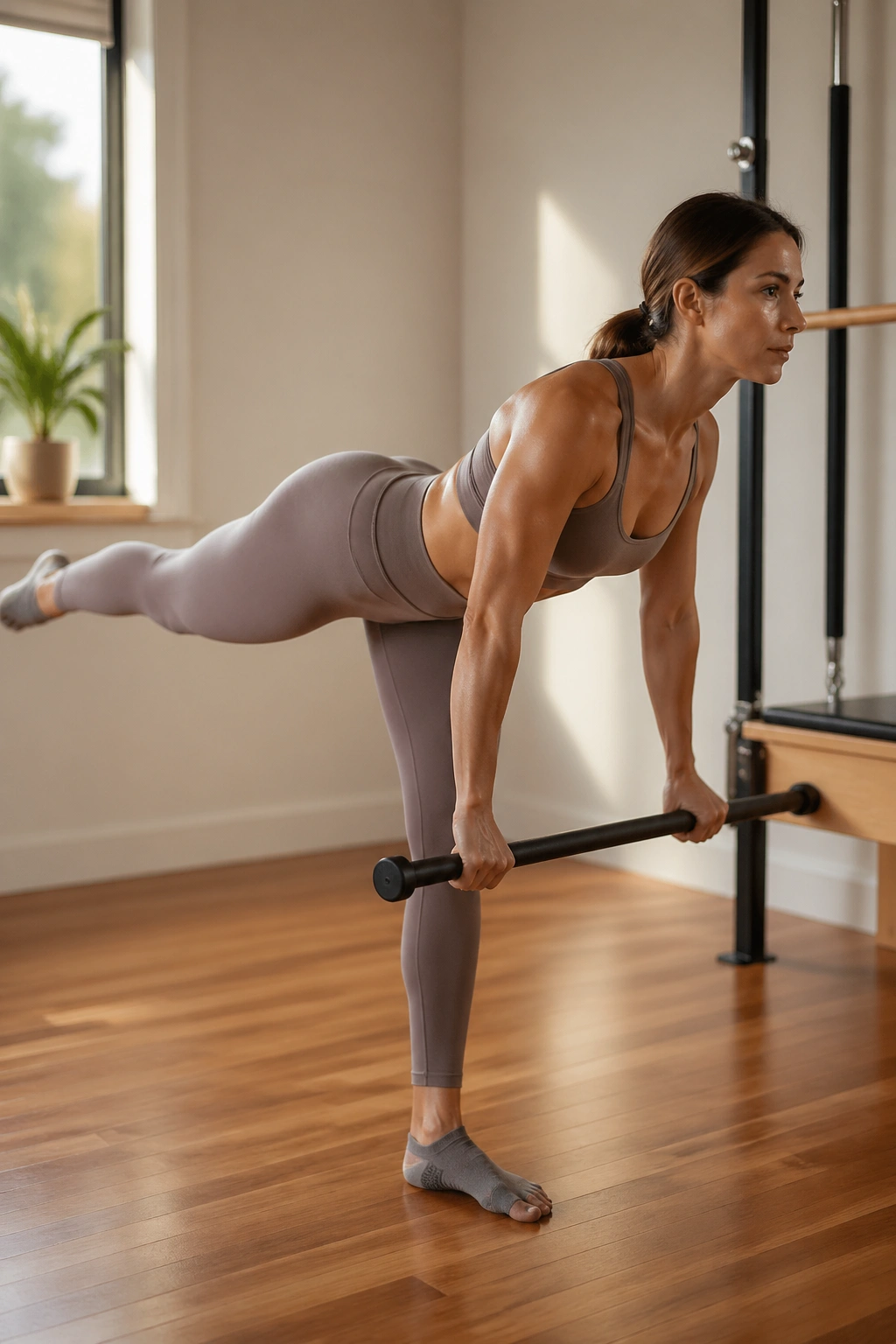
This is where the bar starts acting like a teacher. Stand on one leg, hold the bar in front of your thighs, and hinge the free leg back as the torso tips forward. The bar slides down the front of the standing leg, and then you come back up without twisting open.
The challenge here is not the weight. It is the honesty. Your standing foot has to behave like a tripod, your hip has to stay level, and your ribs need to stay stacked instead of spinning toward the ceiling. That is a lot to manage on one leg.
Do 6 reps per side and move slowly enough that the standing hamstring can load before you rise. If the balance feels sloppy, keep one fingertip on a wall. That is a smart fix, not a cheat.
A smooth single-leg hinge usually tells you more about your body than ten fast squats ever will.
12. Kneeling Lat Pull and Core Hold
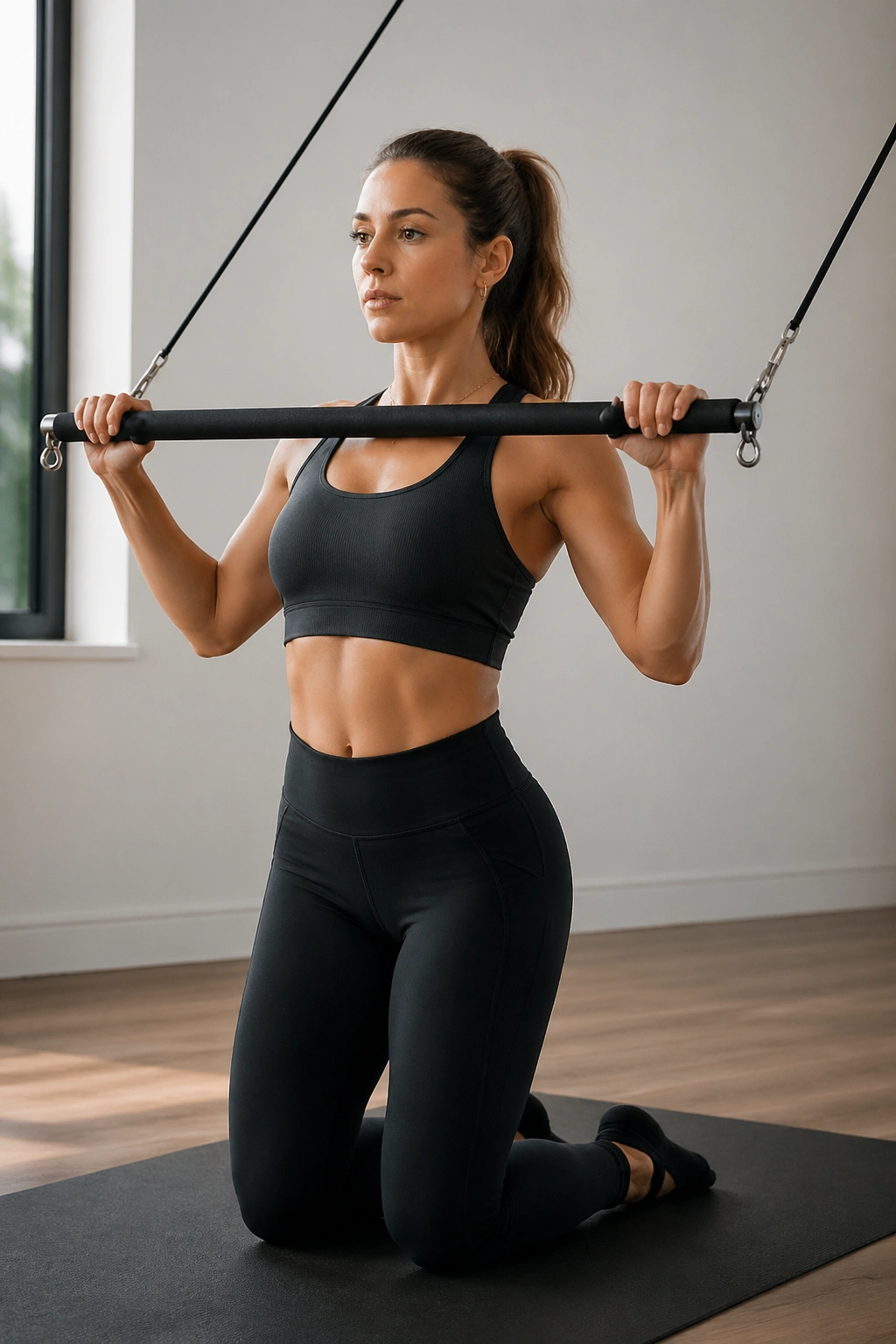
What looks easy on paper often turns into a full-body truth test once you kneel down. Set up in a tall kneel, hold the bar overhead or slightly in front of you, and pull it down toward the upper chest while keeping the pelvis stacked and the glutes lightly squeezed.
The lats should do the heavy lifting here. If the ribs flare and the low back arches, the core loses the fight. If the elbows drive down and the torso stays quiet, the whole midsection starts working harder than most people expect.
How to Keep It Honest
- Knees: hip-width, not splayed wide.
- Hips: tucked under slightly, not dumped back.
- Arms: pull down with control, no snap at the bottom.
- Breath: exhale as the bar comes down.
Aim for 10 reps with a 2-second lower. If your shoulders start creeping up around your ears, pause and reset. That little reset usually fixes more than another cue ever will.
13. Wide-Second Plié Burn
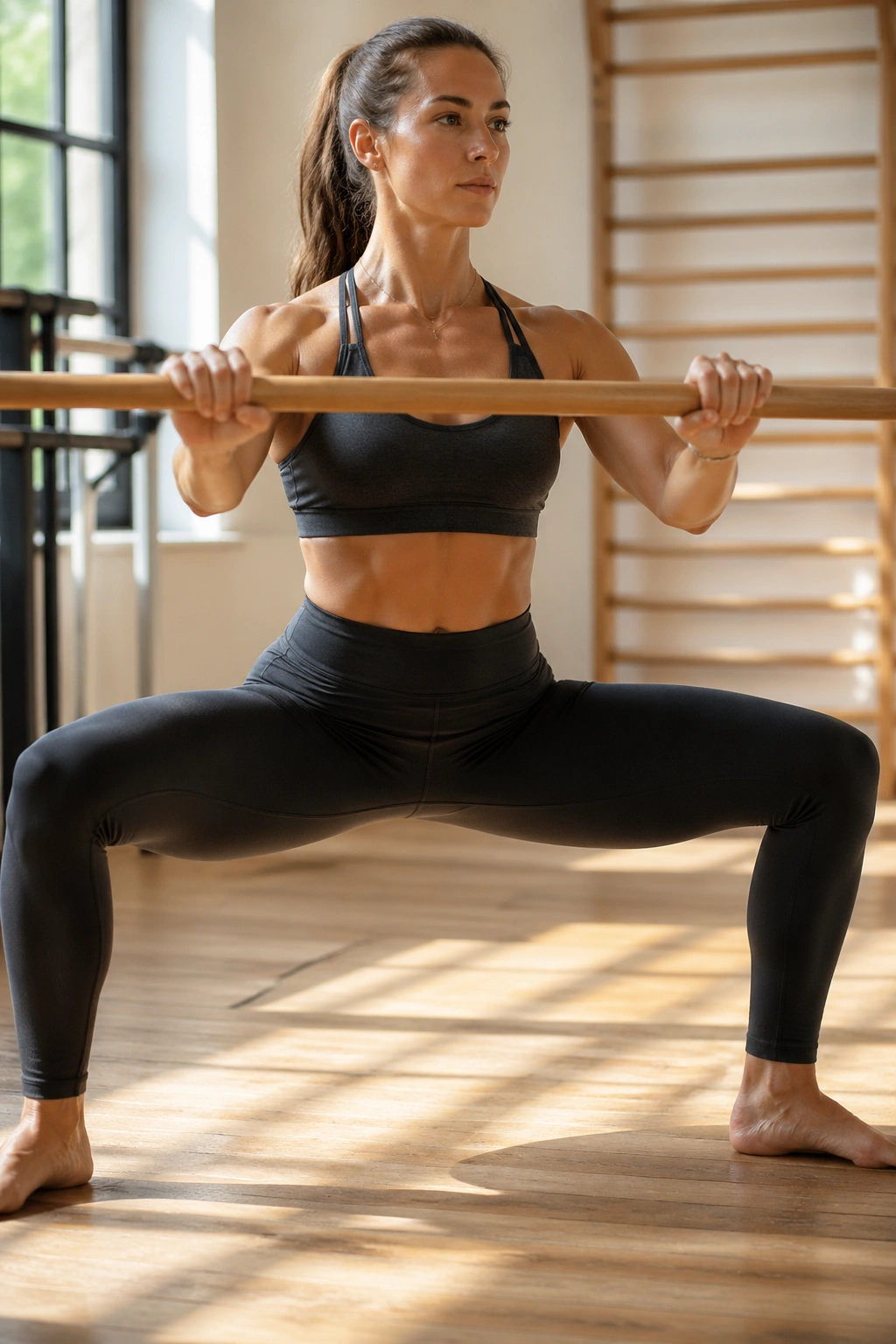
A wide second-position plié has a reputation for being “just legs,” which is funny, because the inner thighs and glutes beg to differ after about thirty seconds. Stand wide, toes turned out, bar held at chest height or pressed slightly forward, and sink into a deep plié before pulsing at the bottom.
The first thing you feel is usually the outer hips. The second thing is the inner thighs. The third thing is the slight tremor in the quads when you stay low long enough to stop caring about your dignity.
Use 12 pulses, rise halfway, then drop back down for 8 more. Keep the knees tracking in the same direction as the toes. If they cave inward, the stance is too wide or the resistance is too much.
This one rewards patience. The deeper you stay in the mechanics, the better the burn.
14. Hamstring Curl Bridge
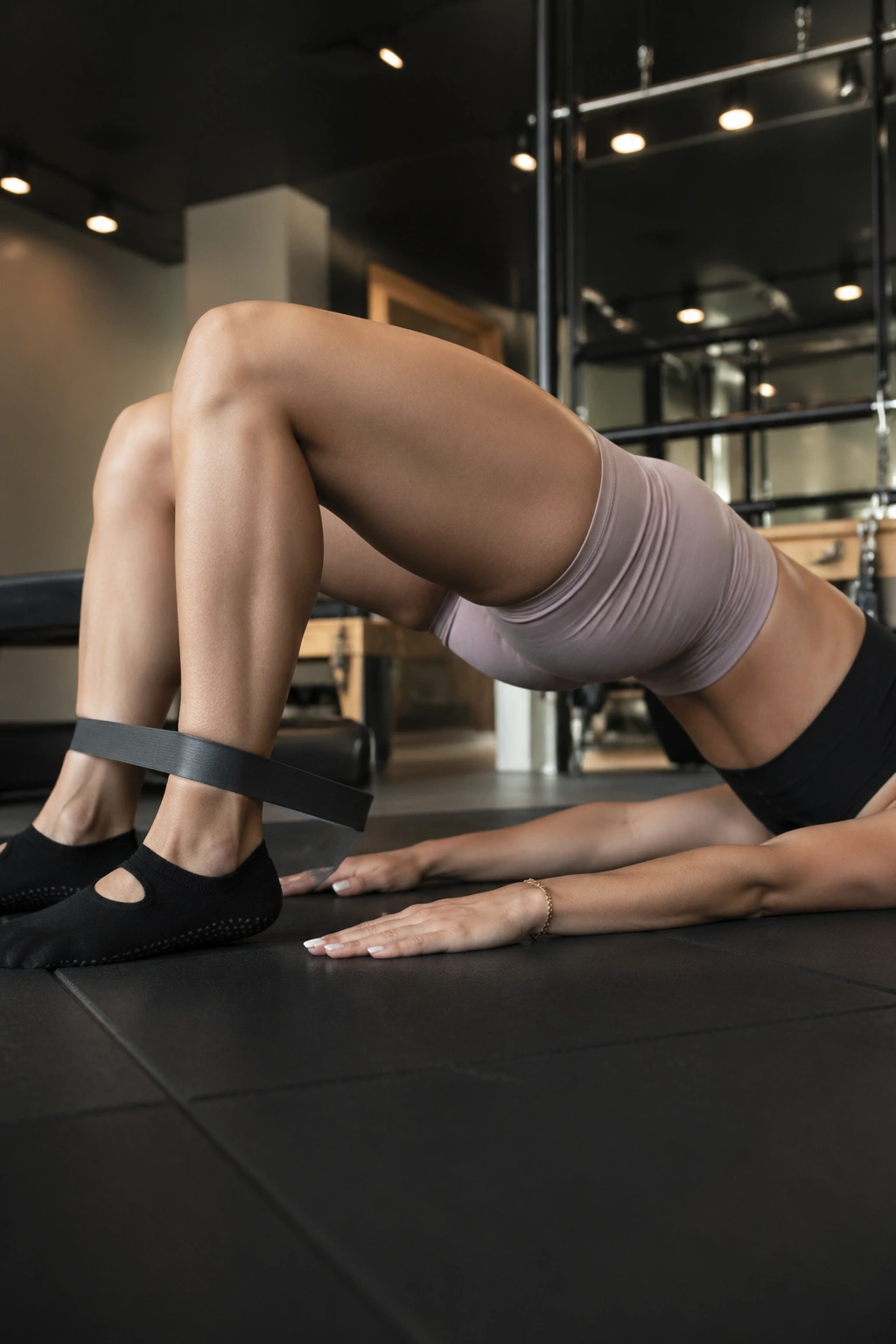
Glutes get attention all the time. Hamstrings deserve their turn. Start in a bridge with the hips lifted, then draw the heels in against the band’s pull, pausing at the bent-knee position before extending back out.
A lot of people rush this and turn it into a sloppy leg fling. Don’t. Keep the pelvis high and level, and let the heels travel only as far as you can control without dropping the hips. The whole move falls apart the moment the bridge starts bobbing.
What to Watch For
If the low back arches, lower the hips a touch and make the curl smaller. If the hamstrings cramp, widen the stance a little and breathe out longer on the curl. A smooth 8 to 10 rep set is enough to make the back of the legs feel awake in a hurry.
This is one of the best quiet builders in the bunch. It looks calm. It is not calm.
15. Curtsy Lunge and Front Raise
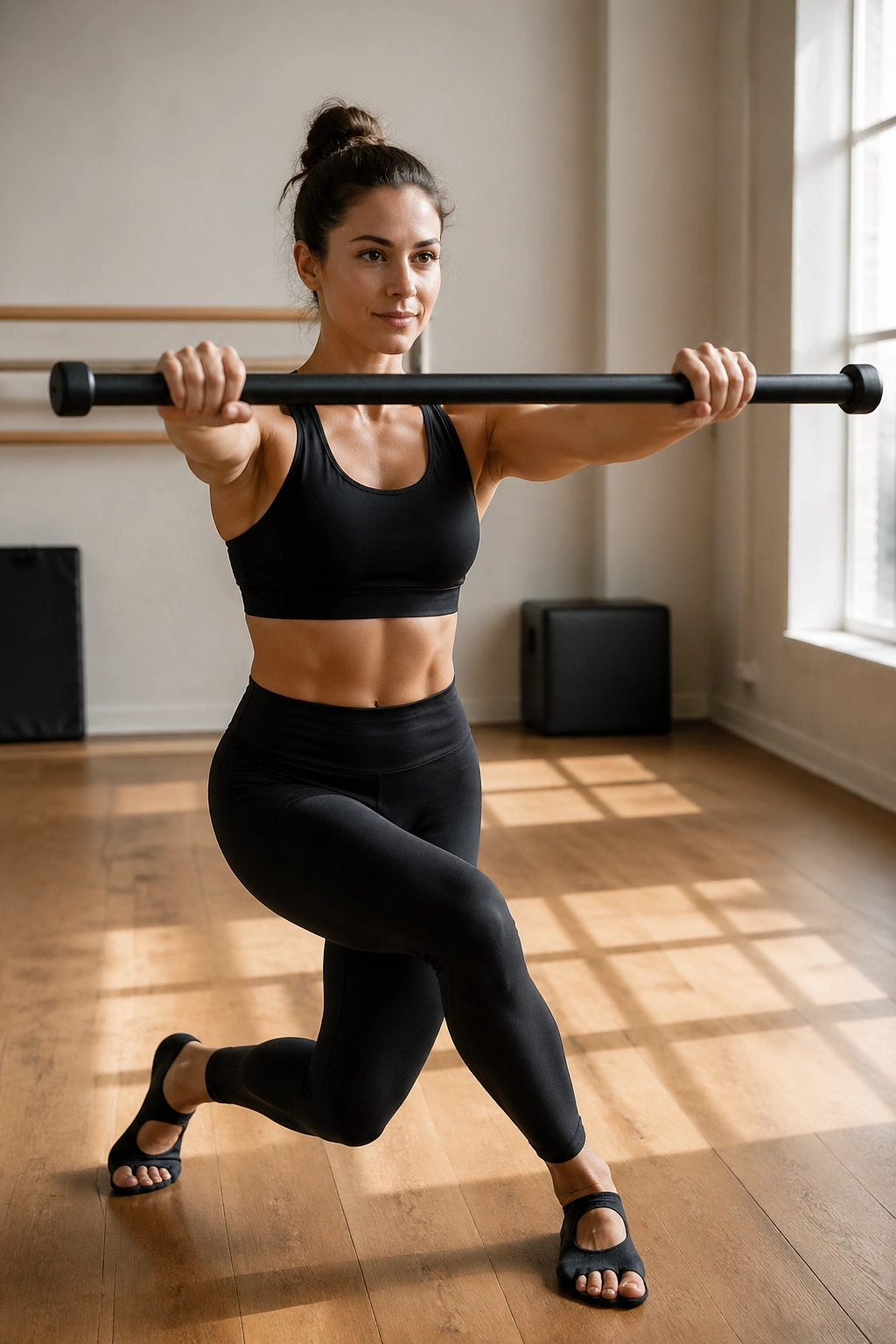
A curtsy lunge can be tricky, and that is why it earns a place here. Step one leg back and across behind you, then stand up while raising the bar to shoulder height in a controlled front raise. The lower body gets the cross-body load; the front of the shoulders get their share too.
Why It Feels So Different
The cross-behind step wakes up the glute med and outer hip in a way a straight lunge does not. Then the arm lift asks the front delts to stay smooth while the legs deal with balance. You get a little bit of everything, and none of it is lazy.
Do 8 reps per side and keep the front knee soft, not locked. If the step behind feels awkward, shorten the range and make the lunge smaller before adding speed. A clean curtsy beats a dramatic one every time.
Keep the bar at about shoulder height. Swinging higher just turns the move into a shoulder shrug.
16. Swimming Arms and Bar Hold
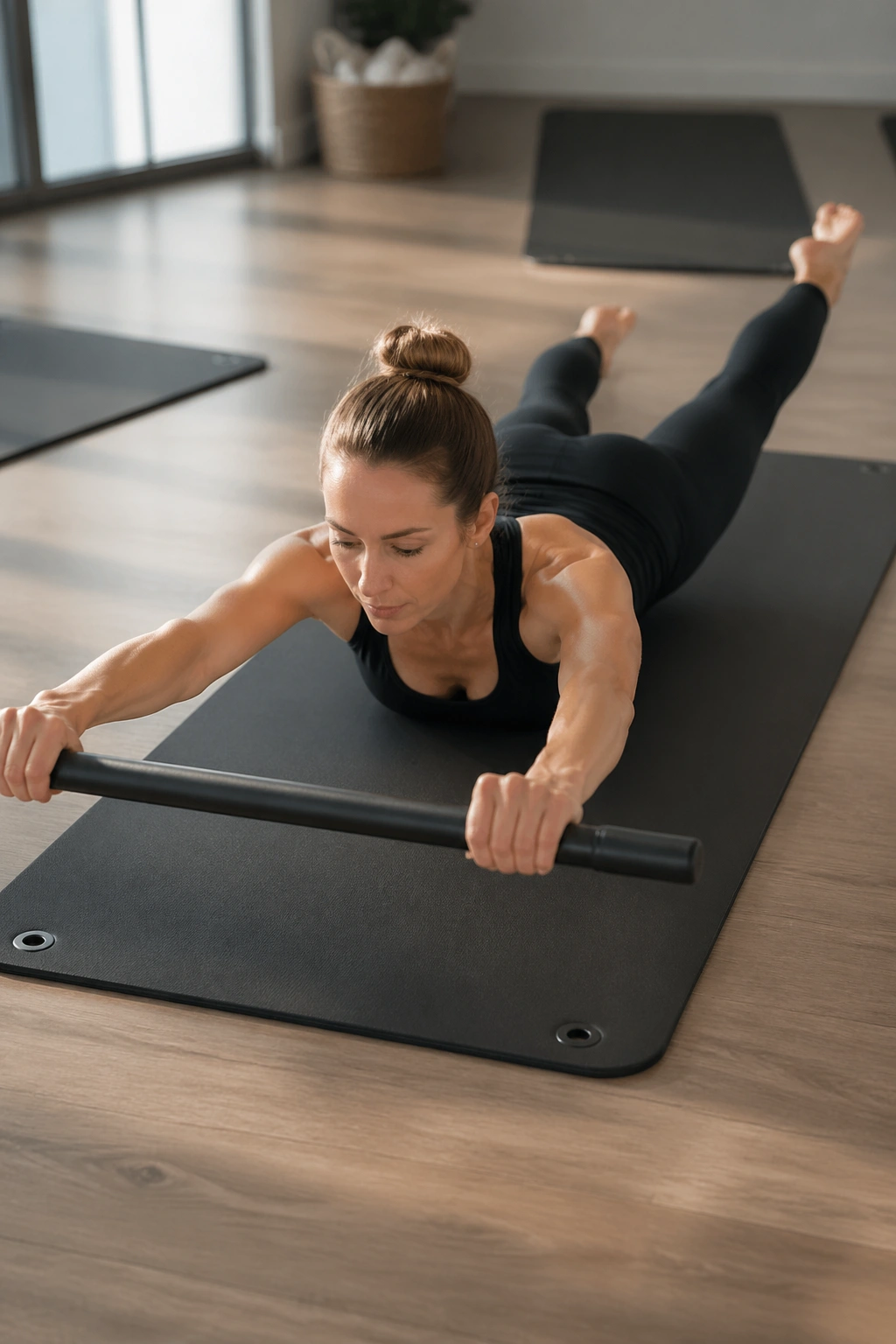
Lie face down and the posture muscles wake up fast. Hold the bar lightly in front of you, lift the chest a little, and alternate small arm and leg lifts in a swimming pattern. Think tiny, controlled, and long through the spine.
This is not a heroic back bend. Good version, bad idea. You want the ribs to stay connected to the mat, the neck long, and the glutes to help just enough that the lower back does not dominate. The bar gives the arms a line to hold while the upper back works to keep everything steady.
Try 20 to 30 seconds for 2 rounds. If that feels too much, keep both legs down and just lift the chest with the bar held low. That still lights up the upper back without making the low back grumpy.
A little lift is enough. You do not need to levitate.
17. Seated Roll-Back Core Burner
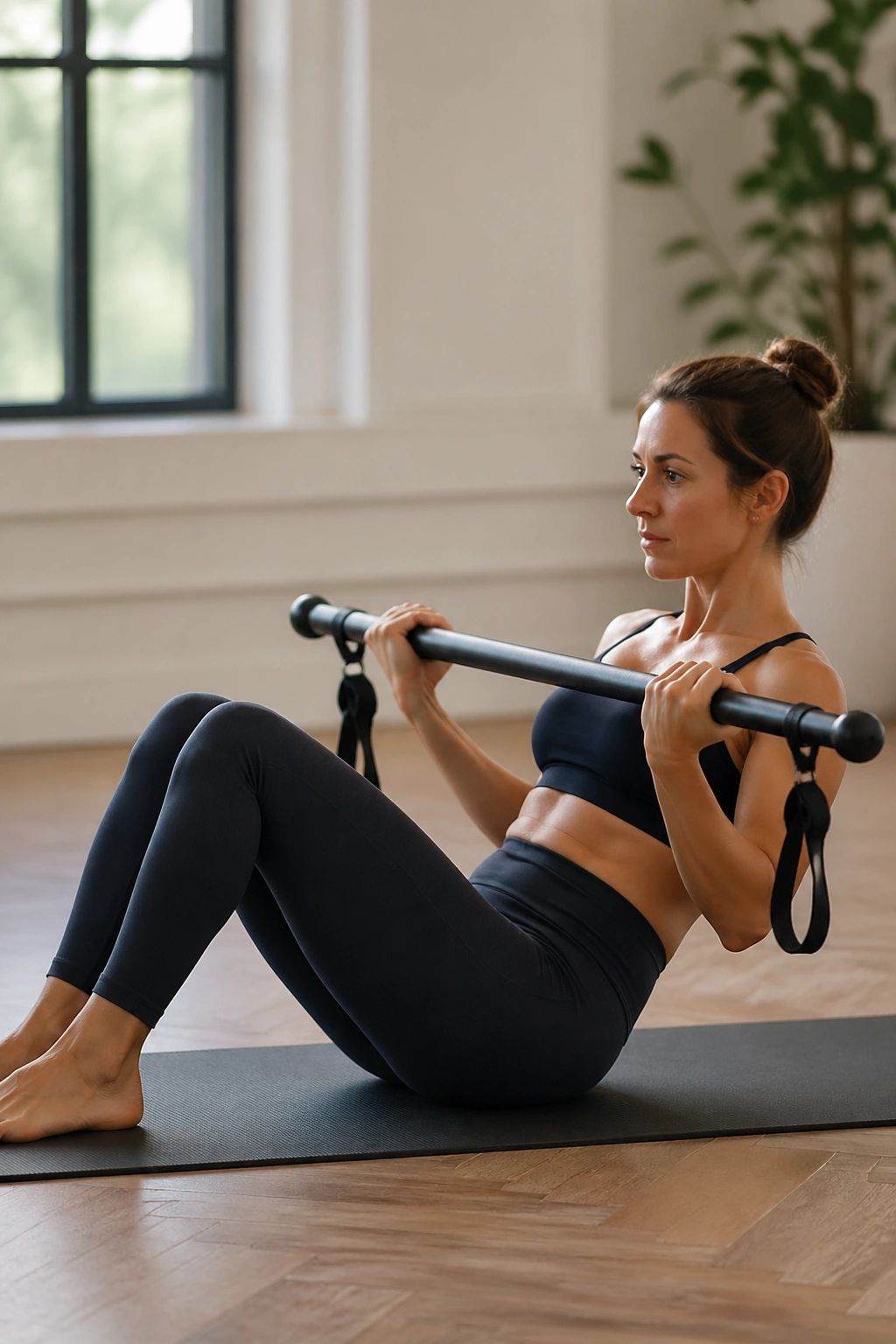
Sit on the mat with knees bent, feet flat, and the bar held close to the chest. Roll back halfway until the abs have to brace, then curl back to upright without yanking on the neck or collapsing the chest.
This move exposes sloppy core control fast. If you dump backward too far, the hip flexors take over and the abs lose the point. If you stay too upright, you miss the deep control that makes Pilates work worth doing. The sweet spot lives in the middle.
Use 8 slow reps and pause for one breath at the backward position. The lower back should feel supported, not strained. If the feet want to pop up, keep them planted and reduce the roll-back depth.
The bar helps by giving your hands a steady anchor. That little anchor matters more than people think.
18. Tall-Kneeling Row Hold
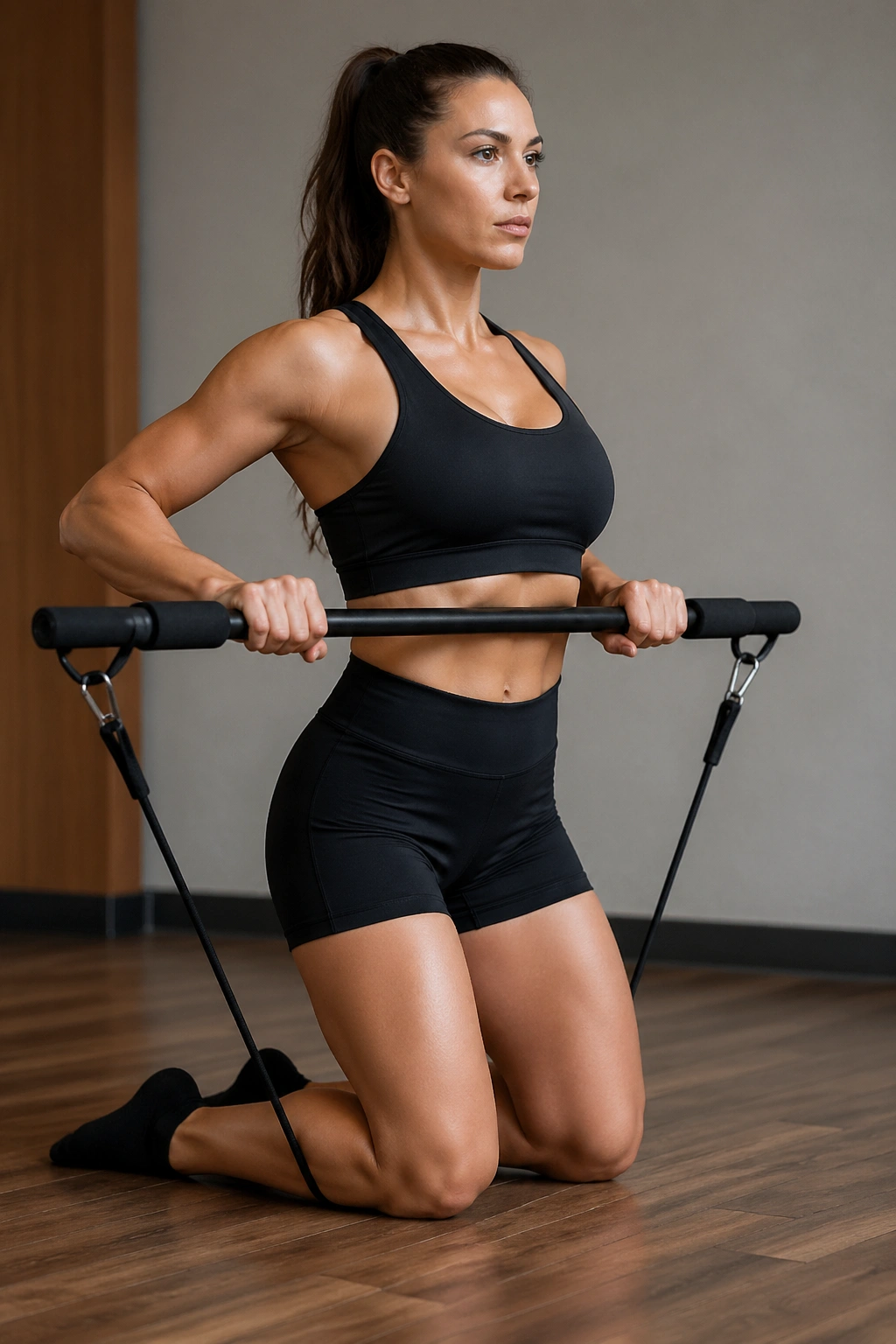
This is one of the cleanest ways to strip momentum out of an upper-body pull. Kneel tall, hold the bar with arms extended, and row the elbows back until the hands are near the ribs. Then hold the end range for a count of 2 before lowering slowly.
The tall kneel removes the easy cheat of swinging through the hips. That means the mid-back has to stay engaged, the triceps have to assist, and the core has to keep the torso from tipping forward. It is a small position with a surprising amount of demand.
What Makes It Work
- Tempo: 2 seconds up, 2 seconds hold, 3 seconds down.
- Elbows: travel close to the sides.
- Chest: proud, but not arched.
- Neck: long and relaxed.
Do 10 reps for 2 rounds. If the shoulders start rounding forward, shorten the range before you lose the back work.
19. Marching Bridge With Arm Press
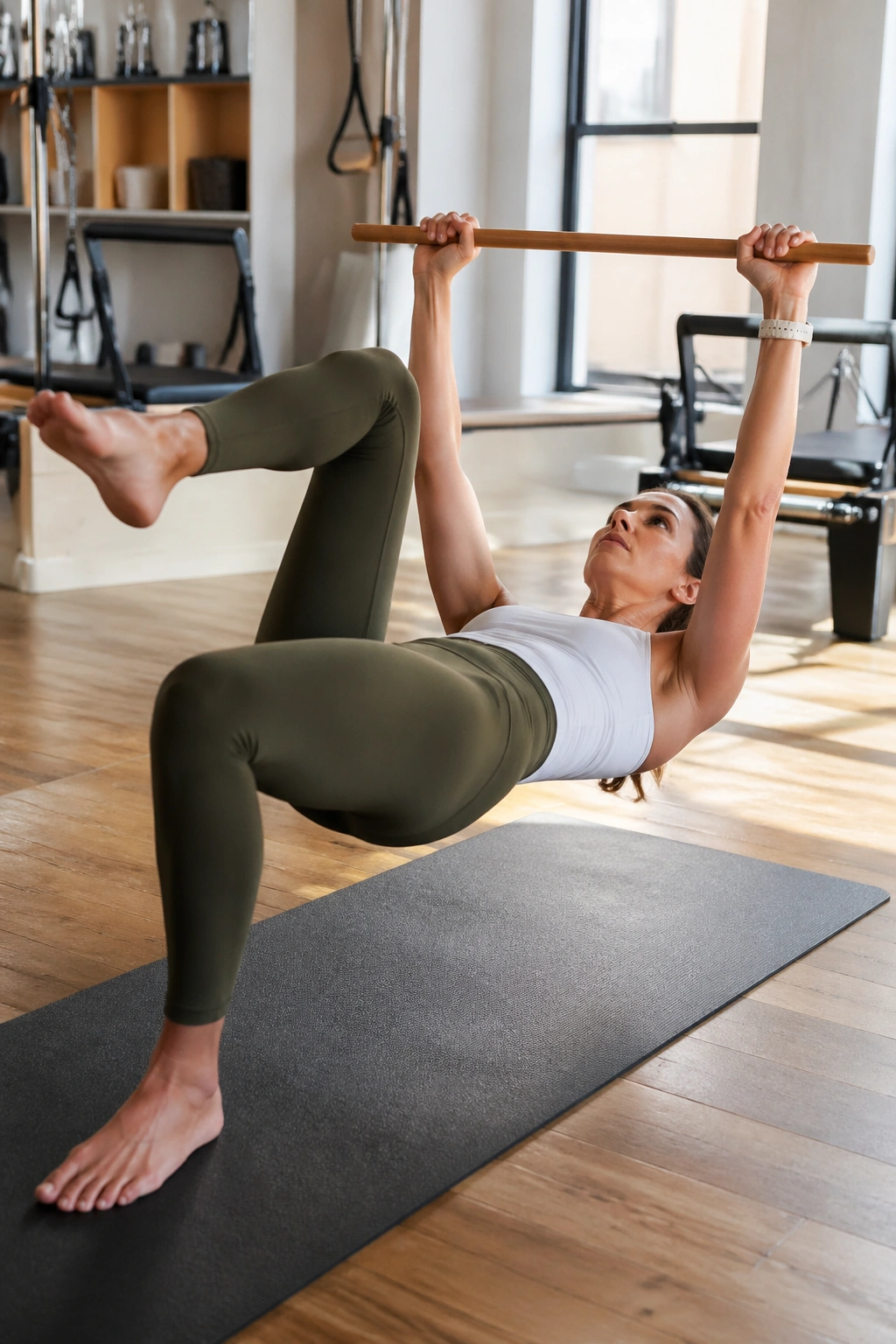
A bridge march is already a balance challenge. Add an arm press and it gets interesting fast. Lift into a glute bridge, keep the hips level, and march one foot at a time while pressing the bar overhead or forward with a slow, even rhythm.
The whole trick is anti-rotation. One side of the body wants to drop when the opposite leg lifts, and the arms want to help by swinging. If you control both, the deep core works hard just to keep you from tilting.
A Simple Setup
Start with 8 marches per side and keep the bridge low enough that you can still feel the glutes instead of your lower back. If the pelvis shifts, widen the feet a little and reduce the arm range. That usually fixes the wobble.
This move looks calm from across the room. Up close, it is a little smug.
20. Skater Step and Side Reach
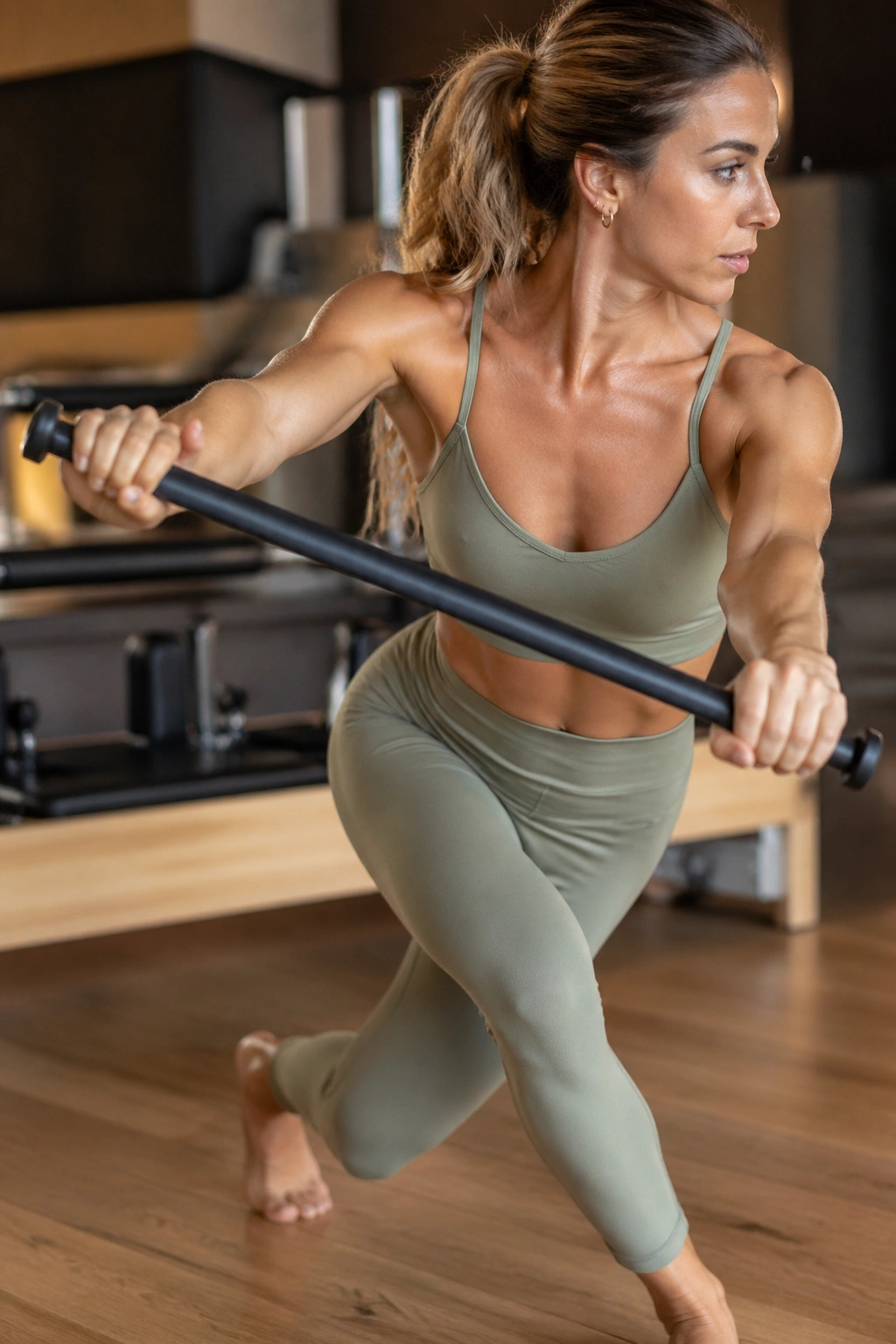
Lateral power matters more than people admit. Step to the right, load the right hip, and sweep the bar across the body toward the right foot before pushing back to center. Then switch sides and keep the movement smooth, not jumpy.
The skater step hits the glute med, outer thigh, and the stabilizers around the ankle in a way that straight-ahead work never quite matches. The reach adds a shoulder and core challenge, which makes the whole pattern feel bigger than a simple side step.
Use 8 reps per side with a light pause at the bottom. Keep the planted foot flat and avoid collapsing the knee inward. If the reach turns into a rounded-back hinge, stand a little taller and make the motion smaller.
This is a good one for people who sit a lot. The side body tends to love it.
21. Mobility Reset and Recovery Flow
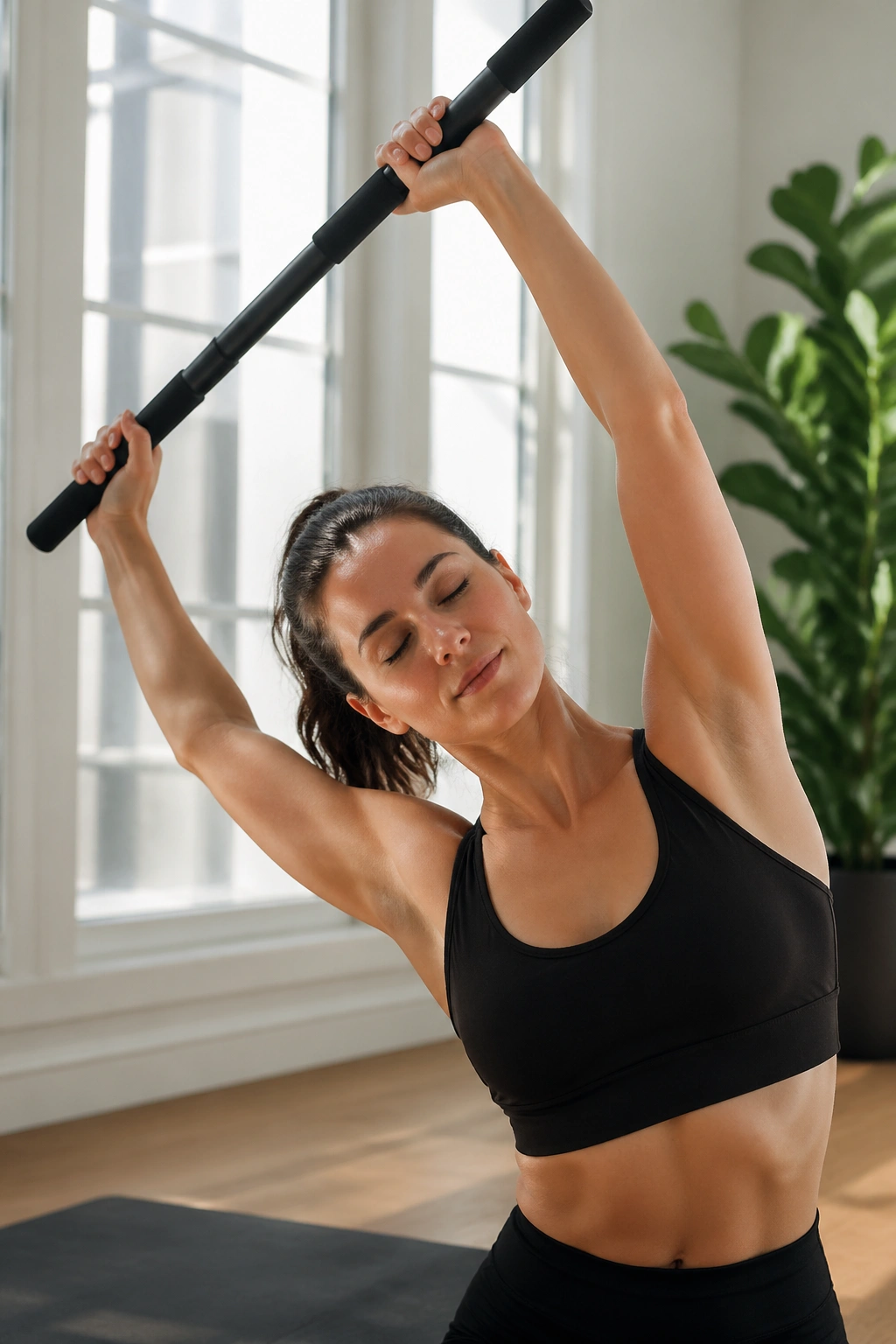
Is a recovery block worth including in Pilates bar workouts? Absolutely. After all the pressing, lunging, and pulsing, a short mobility flow keeps the body from feeling like a crumpled towel the next day.
Start with the bar overhead and do a gentle side bend for 20 seconds per side. Then move into thoracic rotations, keeping the hips mostly still while the rib cage turns. Finish with a supported hip flexor stretch and a chest opener across the front of the body.
How to Set It Up
- Overhead side reach: 2 slow breaths each side.
- Standing rotation: 5 reps per side.
- Hip flexor stretch: 20 to 30 seconds per side.
- Chest opener: 3 deep breaths with the bar behind the back or held low and wide.
The point is not to “work harder” here. The point is to leave the session feeling longer, looser, and ready to move again tomorrow. Skipping this part is tempting. Then the shoulders and hips complain later.
22. Pilates Bar Workouts Finisher for a Full Body Burn
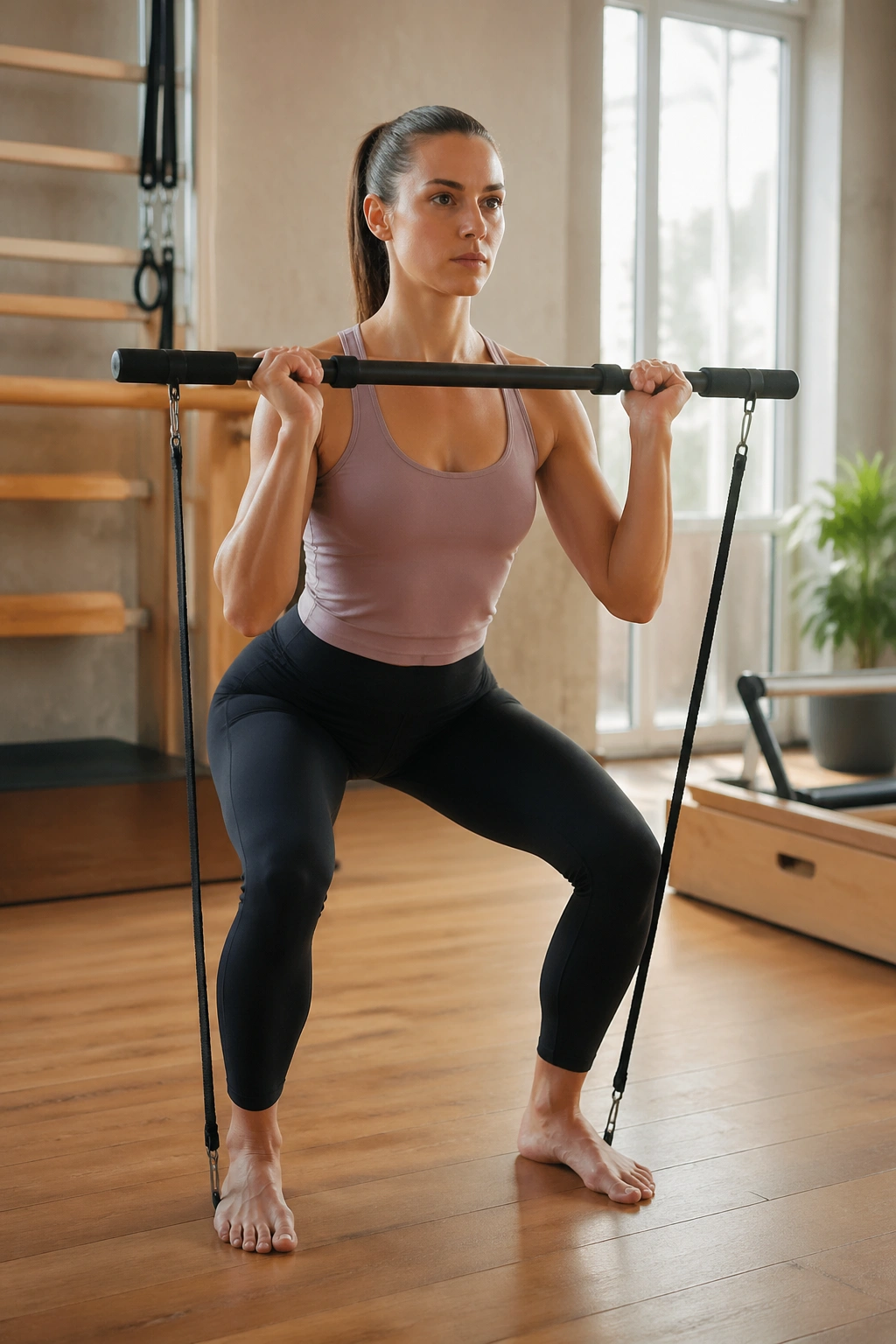
If you want one short finisher that ties the whole session together, use a mixed ladder and keep the rest short. Do 10 squat presses, 8 reverse lunges per side, 12 rows, and 15 bridge pulses. Rest for 30 seconds, then repeat for 2 to 3 rounds.
That mix hits the legs, upper back, shoulders, and core in one clean sweep. The squat press wakes up the front side, the lunge brings in single-leg control, the row reminds the posture muscles to stay useful, and the bridge pulses finish with the glutes doing the honest work. It is a lot in a small package.
If you want to make it harder, slow every lowering phase to 3 full seconds. If you want to keep it lower-impact, cut the reps in half and keep the range modest. Neither choice is wrong. The only bad choice is rushing through the last round with lazy form.
A good Pilates bar workout should leave you warm, not wrecked. That’s the sweet spot. The burn can be loud, but the joints should still feel organized when you stand up.
