



Pilates workouts you can do in bed are not a lazy compromise. Done well, they wake up the deep core, loosen tight hips, and make a cranky lower back feel less stubborn before your feet hit the floor.
A bed changes the rules in a useful way. The mattress gives you feedback, but it also steals some stability, so smaller movements and slower breathing matter more than they do on a mat. That is why a tiny pelvic tilt can be smarter than a full crunch.
Pilates has always liked precision over force. In bed, that idea makes even more sense. You are working with softness, not against it, and that means the best moves are the ones that stay close to the body and stay honest when the surface starts to wobble.
If your mattress swallows your hips, work in the firmest part of the bed or slide closer to the center. If a move makes your neck tense, your ribs flare, or your back pinch, skip the heroics and choose a smaller range. Clean reps beat big sloppy ones every time.
1. Pelvic Tilts for a Quiet Lower Back
If your lower back feels like it slept badly, start here. Pelvic tilts are the bed Pilates move I reach for first because they teach the pelvis how to rock without drama.
Lie on your back with knees bent and feet flat on the mattress. Exhale and gently tip your pelvis so the low back melts toward the bed, then inhale and return to neutral without popping the ribs up. Ten slow reps are enough to warm the area without making it fussy.
Small move. Big payoff. That is the whole point. You are not smashing your spine flat; you are finding the space between a tucked pelvis and an over-arched one.
A few cues make this work better:
- Feel for: lower belly firming, back ribs settling, glutes staying quiet.
- Avoid: squeezing the butt hard, pressing so far that the tailbone lifts, or holding the breath.
- Try this: put one hand on your low belly and one on your ribs so you can tell whether the motion is coming from your pelvis or your chest.
If your mattress is soft, make the motion smaller than you think you need. The softer the bed, the more the body wants to sink and cheat. Keep it tidy.
2. Bent-Knee Breathing to Wake Up Your Core
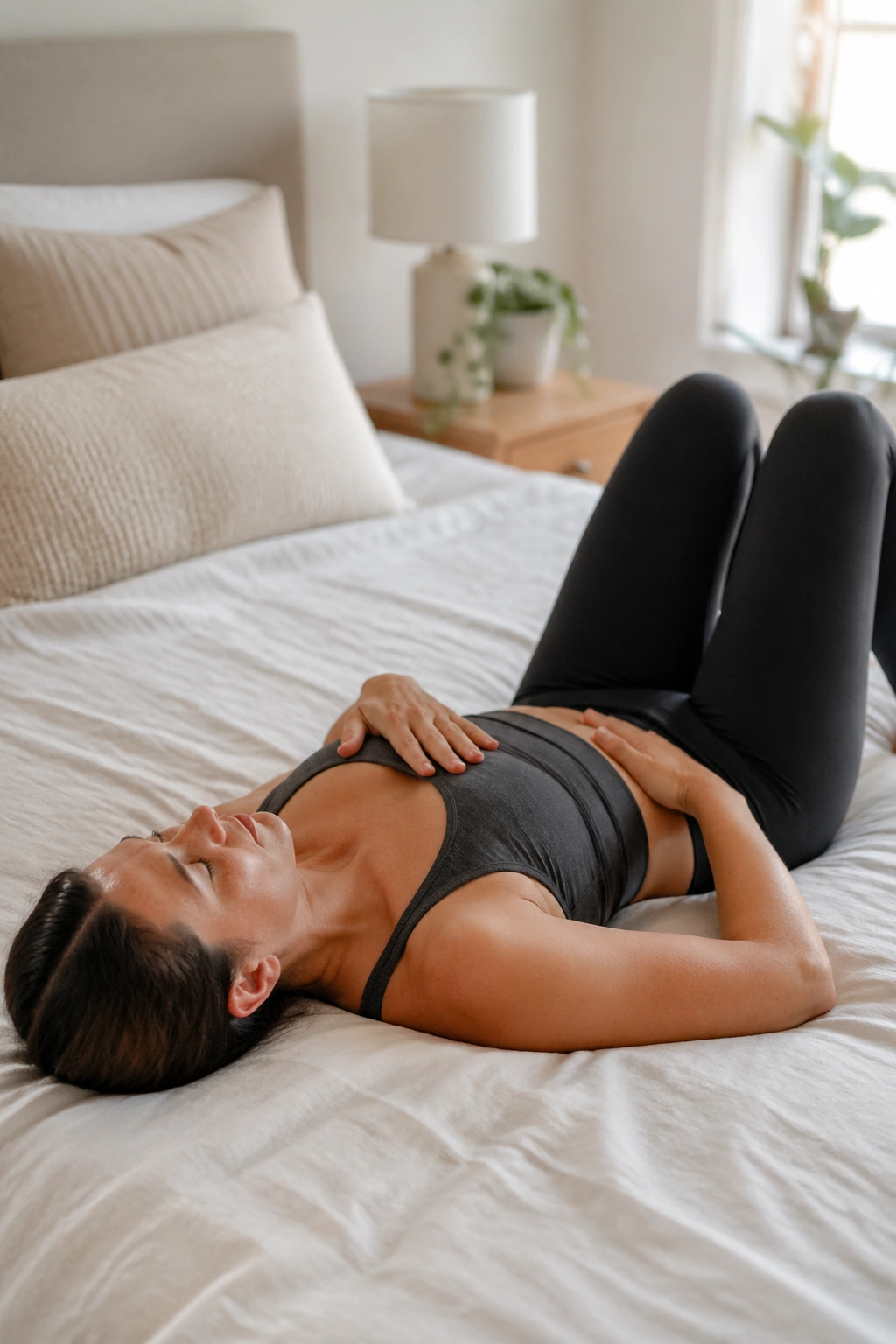
Why does a breathing drill count as a workout? Because in Pilates, breath is not decoration. It helps the ribs move, and that motion changes what the core does underneath.
How to Do It
Lie on your back with both knees bent, or keep your legs long if that feels better. Place one hand on your chest and one hand on the lower ribs. Inhale through the nose for four counts and feel the sides of the ribcage widen into the mattress; exhale for six counts and let the ribs narrow, the waist soften inward, and the shoulders stay heavy.
Do five to eight breaths. Keep the face loose. If you hear your own breath getting noisy and forced, shorten the inhale and exhale until it feels smooth again.
This drill is especially useful if you wake up with a stiff torso or shallow breathing. It does not look like much. It feels more like resetting a switch than doing a workout, and that is exactly why people ignore it until they notice how much easier the next moves feel.
- You want: back ribs widening on the inhale.
- You do not want: the chest lifting first or the shoulders creeping up.
- Good sign: the low belly gently firms on the exhale without bracing hard.
If you want a little more challenge, slide one heel away from you on each exhale and return it on the inhale. Tiny change. Very effective.
3. Marching Tabletop With the Ribs Down
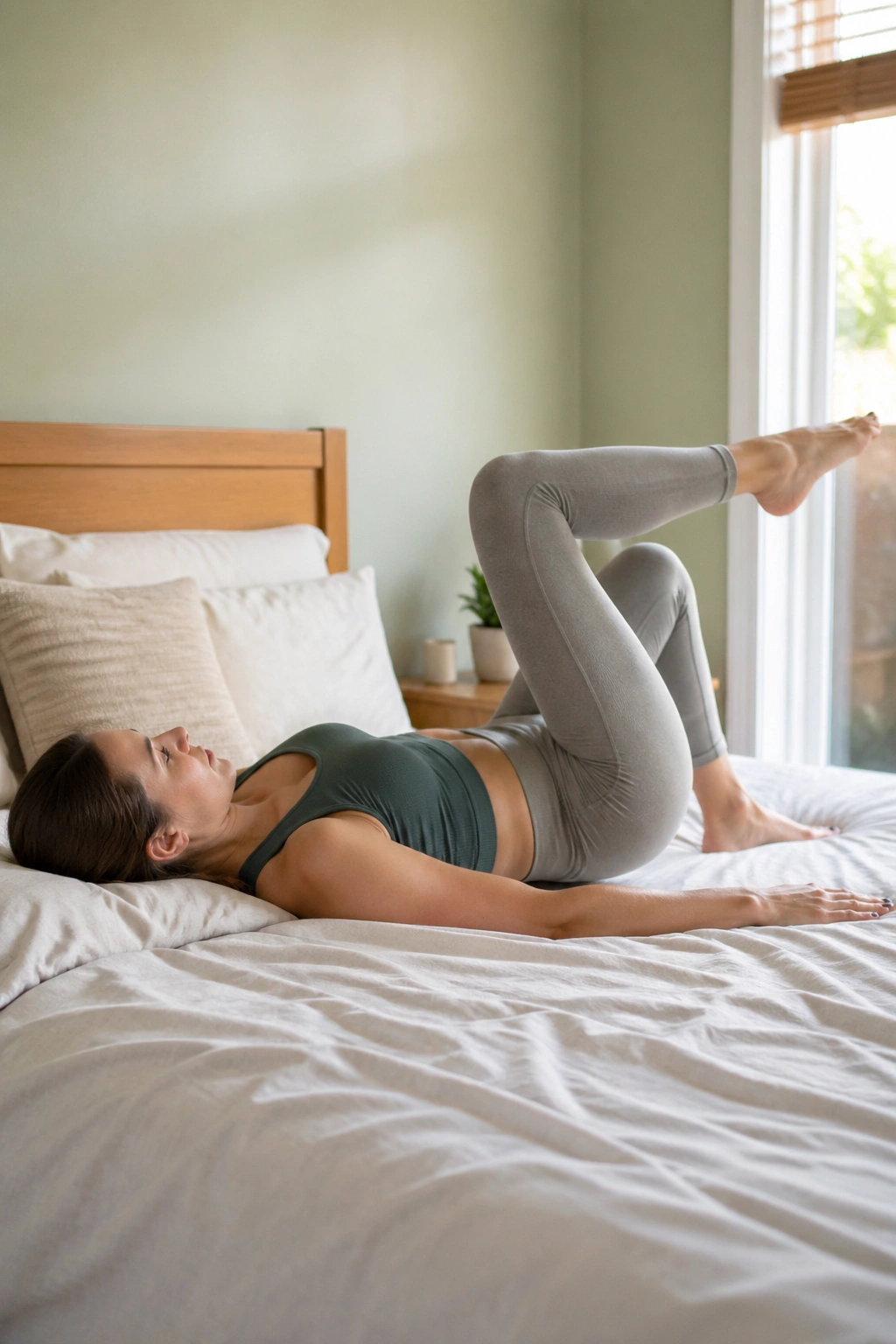
You roll onto your back, lift one knee, then the other, and suddenly the bed feels much less cozy. Good. That tiny bit of instability is what makes marching in tabletop useful.
Lie with knees bent, then lift one leg at a time so the knee stacks over the hip and the shin runs parallel to the mattress. Alternate lifting and lowering one foot at a time, keeping your pelvis as still as possible. Six to ten marches is a solid set, and you can do more if the body stays calm.
The real work here is not in how high the knee comes. It is in how little the torso moves while the legs shift. Put your hands on your hip bones if that helps. If one side starts to wobble, slow down before the wobble gets bigger.
A soft mattress can make this tricky, so shorten the range if needed. You can keep the toes lightly touching the bed between lifts, or even tap one heel down first if tabletop feels too ambitious.
The cleaner this feels, the more it starts to resemble true Pilates control. Not flashy. Useful.
4. Toe Taps That Stay Smooth and Slow
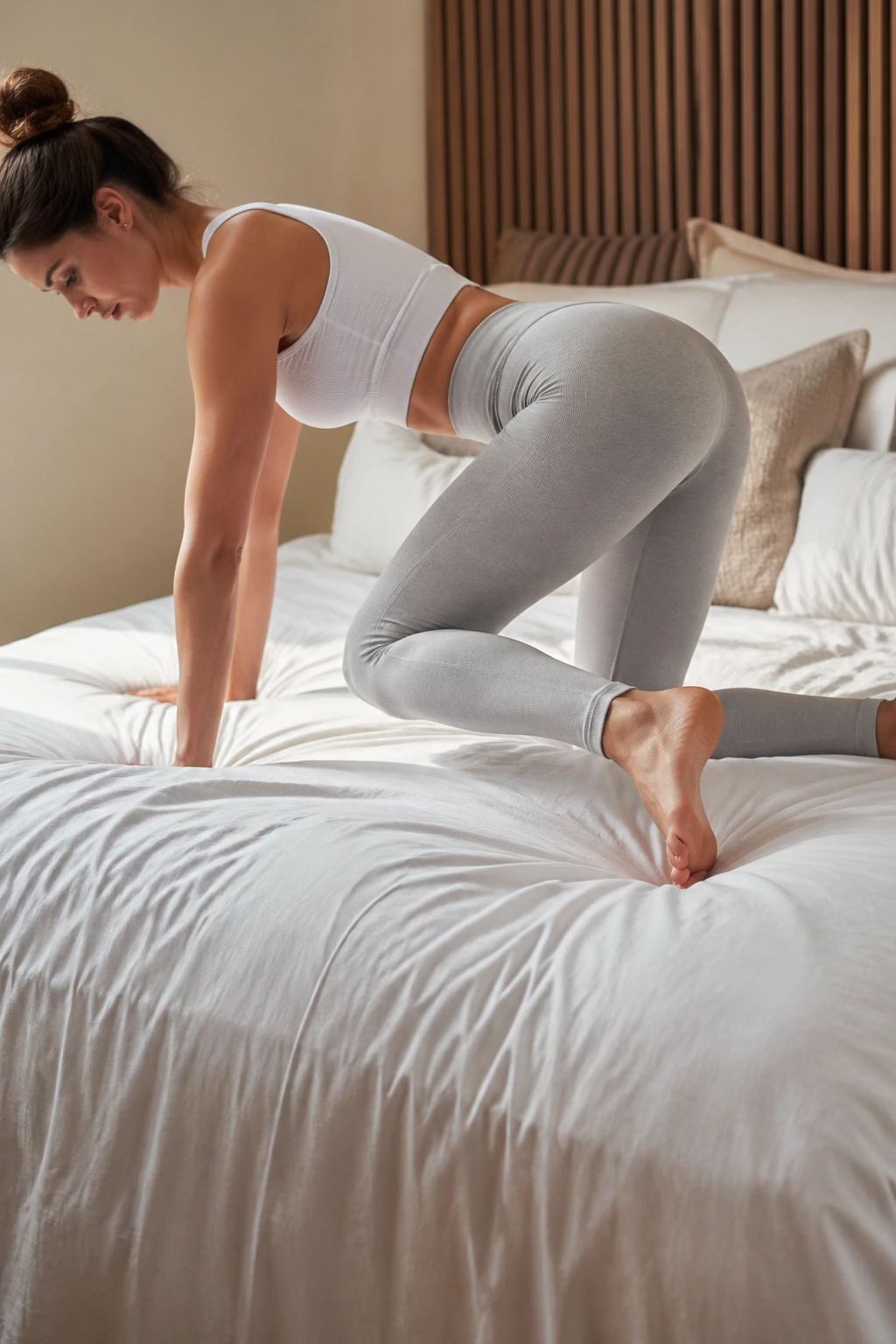
Toe taps are the move people rush, and that is why they stop being useful.
Lie in tabletop, then lower one toe to the mattress with a tiny tap before bringing it back up. The other leg stays frozen. Alternate sides for 8 to 12 total taps, or go slower and do fewer if your lower back wants more attention.
The goal is to keep the pelvis quiet while one leg moves. If the ribs pop or the low back arches, tap the foot higher and shorten the range. A tiny tap that stays controlled gives you more than a low tap that turns into a backbend.
This is a good place to notice how the bed changes the work. On a firmer surface, you get more feedback. On a plush one, your body can sink and pretend it is stable when it is not. Keep your abdominal wall gently active and move like you are trying not to disturb the mattress.
A useful image: imagine the pelvis is carrying a full glass of water. No spills.
If toe taps feel easy, slow them down. Three seconds down, one second up. That alone changes the whole exercise.
5. Glute Bridges That Don’t Jam the Neck
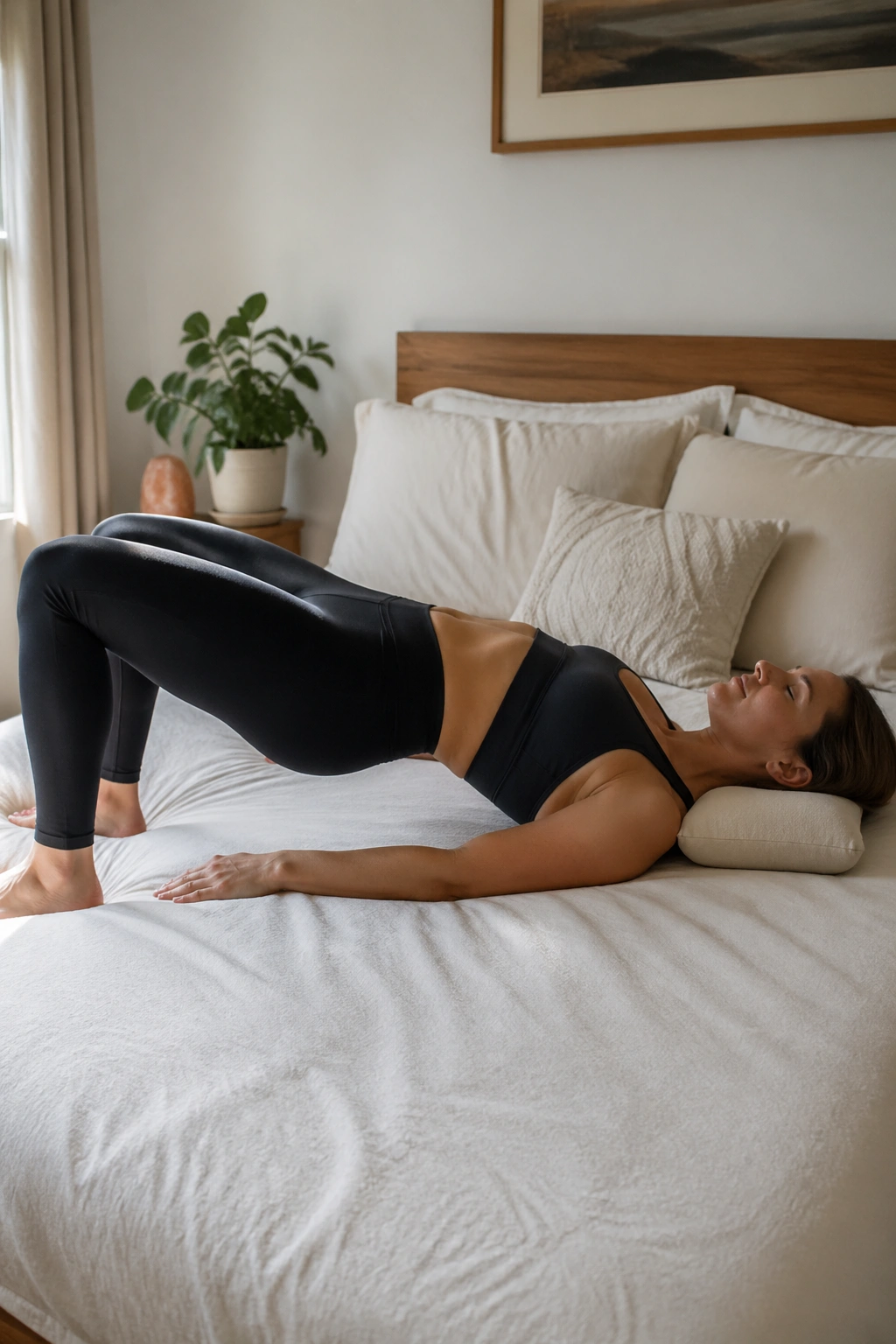
A bridge on a mattress feels softer than a bridge on the floor. That can be helpful, and it can also make people overdo the lift because the surface feels forgiving.
Press your feet into the bed, arms long by your sides, knees bent, feet hip-width apart. Exhale and lift the hips only until the thighs and torso make one long line. Inhale at the top, then roll back down one vertebra at a time. Eight to 12 reps is plenty.
Higher is not better here. If the ribs flare or the neck takes over, you have gone too far. Stop the lift when the front of the hips open and the glutes, not the lower back, feel like they are doing the work.
A few fixes matter:
- Keep the chin slightly nodded, not jammed up toward the ceiling.
- Press through the heels, not the toes.
- If your head feels strained, put a thin pillow under it.
- If the bed is very soft, make the lift smaller and hold the top for two breaths instead of chasing height.
Bridges are one of the easiest ways to wake the backside of the body in bed. They also tell you a lot about how your spine wants to move before the day starts. Pay attention. The pattern shows up fast.
6. Side-Lying Leg Lifts Along the Mattress
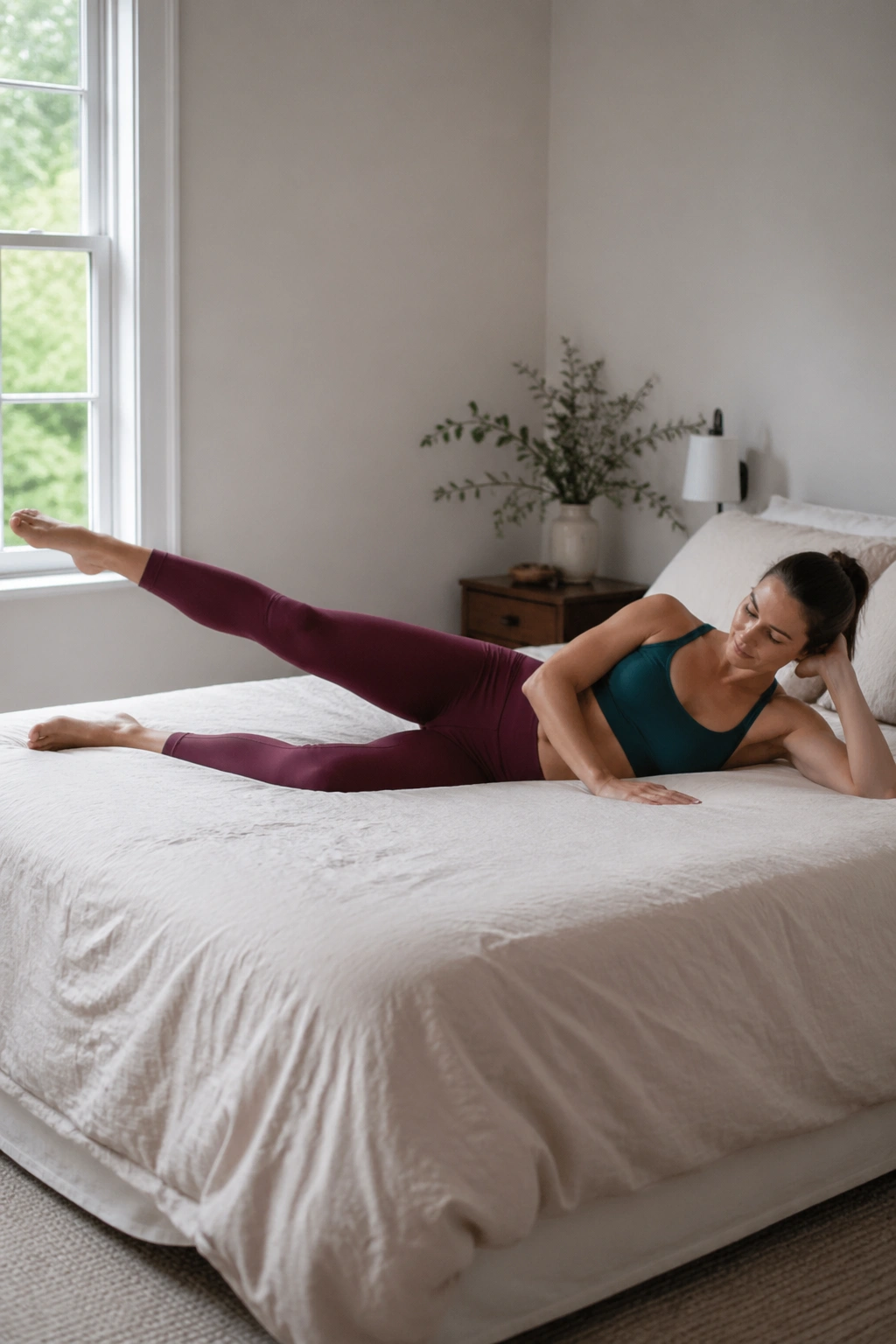
The outer hip starts to burn about six reps in, and that is the moment this move stops feeling innocent.
Lie on one side with the bottom knee bent if you need more support, or keep both legs long if that feels steady. Stack your shoulders and hips, then lift the top leg a few inches without rolling the torso backward. Ten to 15 slow lifts per side is a clean target.
Height is not the goal. A higher leg usually means the waist is collapsing or the hip is cheating. Keep the leg long, the toes pointed forward or slightly down, and the waist lifted away from the mattress.
If your bed is soft and wobbly, move your body a little closer to the edge or brace one hand lightly in front of your chest. That extra feedback helps you keep the movement clean. You should feel the side of the hip working, not the lower back pinching.
This is one of those bed Pilates workouts that looks almost boring from the outside. Then your glute medius starts talking. Loudly.
7. Clamshells for Outer-Hip Stability
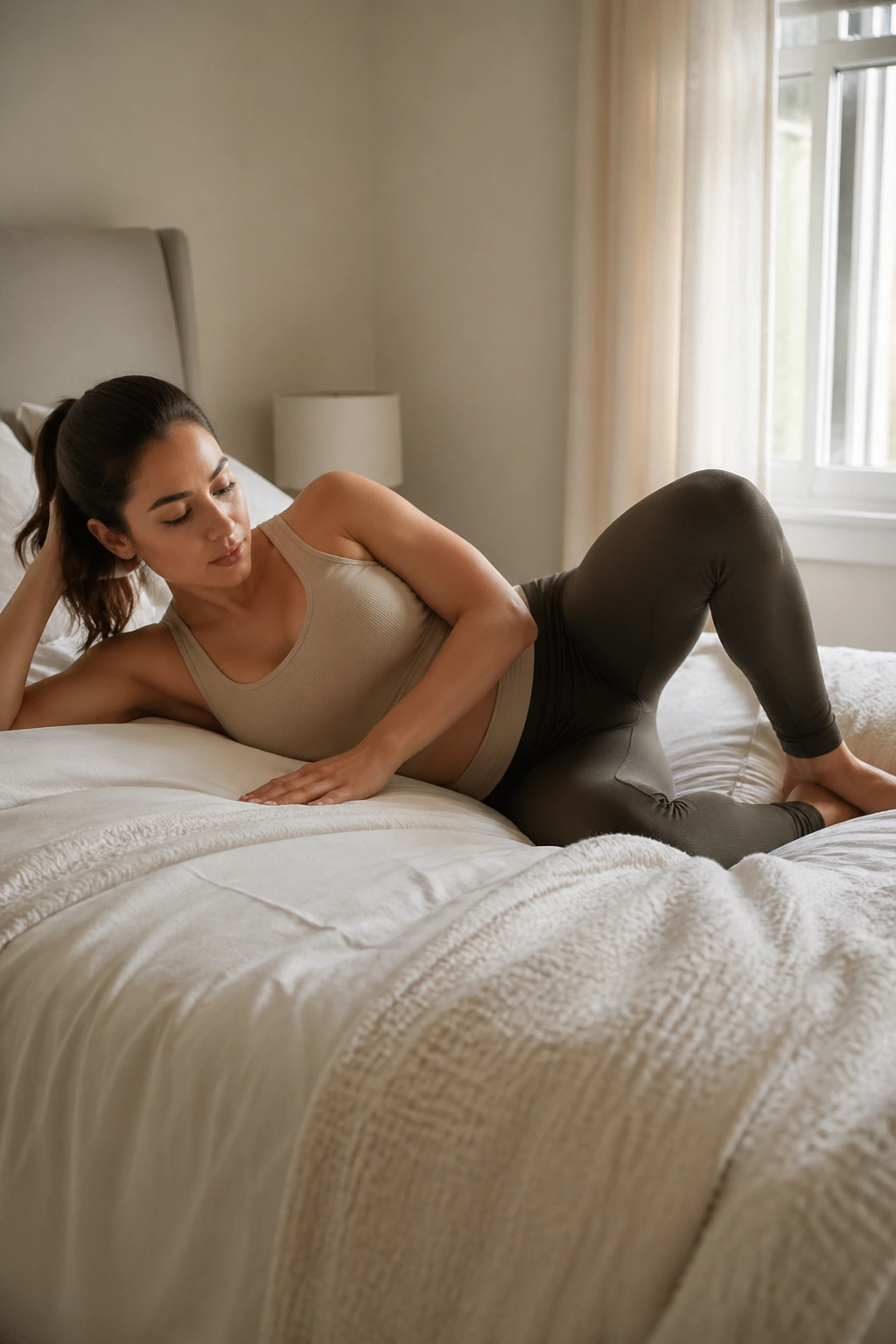
Clamshells are the quieter cousin of side-lying leg lifts. Less range. More control. A lot of people skip them because they look too small to matter, which is usually the sign they matter most.
Lie on your side with knees bent and heels together. Keep the feet touching while you open the top knee like a shell, then close it slowly without letting the pelvis rock backward. Ten to 15 reps on each side is enough to feel the outer hip wake up.
Common Mistakes
- Rolling the top hip backward. Keep the hip bones stacked.
- Opening too wide. A big gap usually means the pelvis moved with the knee.
- Lifting the feet apart. Heels stay together the whole time.
- Rushing the close. The lower half of the movement is where control lives.
This move is especially useful if your knees or hips feel a little wobbly in standing exercises. Stronger outer hips help the pelvis stay steadier, and steadier pelvises make the rest of the Pilates work cleaner.
If your mattress is soft enough to let the pelvis sink, put your back against a firmer spot or do the set a little closer to the edge. Small adjustment. Better result.
8. Single-Leg Stretch With a Pillow Under the Head
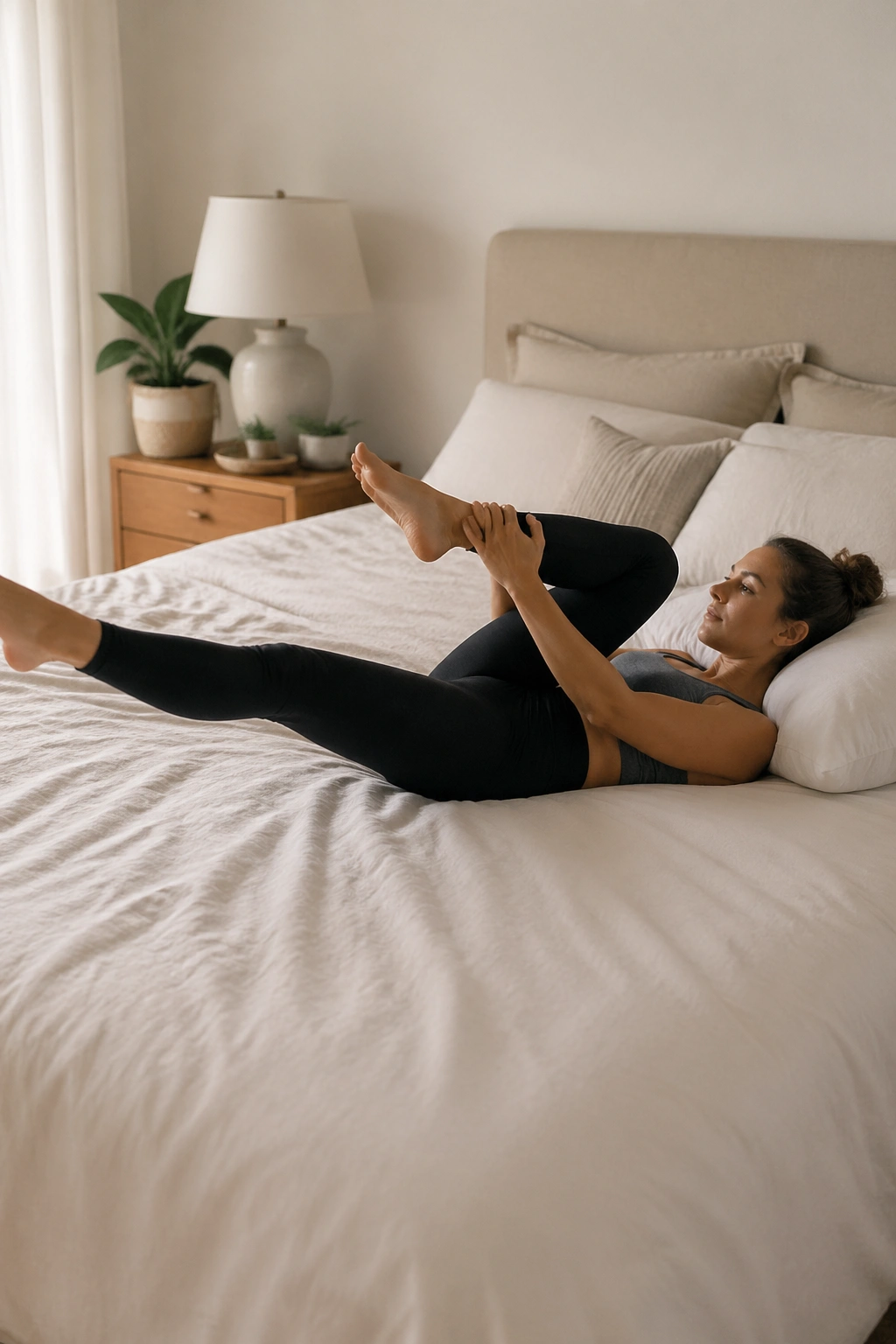
Want an ab move that feels gentler than crunches but still makes the center work? Single-leg stretch is the one I usually point people toward first.
How to Scale It
Lie on your back with one knee drawn in and the other leg extended low over the mattress. Switch sides in a smooth rhythm. Keep the head down with a pillow if your neck wants support, or lift it slightly only if the upper body stays relaxed.
Six to ten switches per side is a good start. If the lower back arches, raise the extended leg a few inches and bring the working knee a little closer to the chest. That change makes the movement easier without turning it into a cheat.
The thing to watch is the hip line. The pelvis should stay level while the legs change position. If the hips start to rock, the legs are reaching too low or the pace is too fast.
One more thing. Do not yank the knee in hard. A gentle draw-in keeps the lower belly engaged without crunching the front of the hip.
This is a neat bed exercise because it can be quiet enough to do before your brain fully wakes up. Very handy. Also a little dangerous if you get greedy with range.
9. Criss-Cross at Half Speed
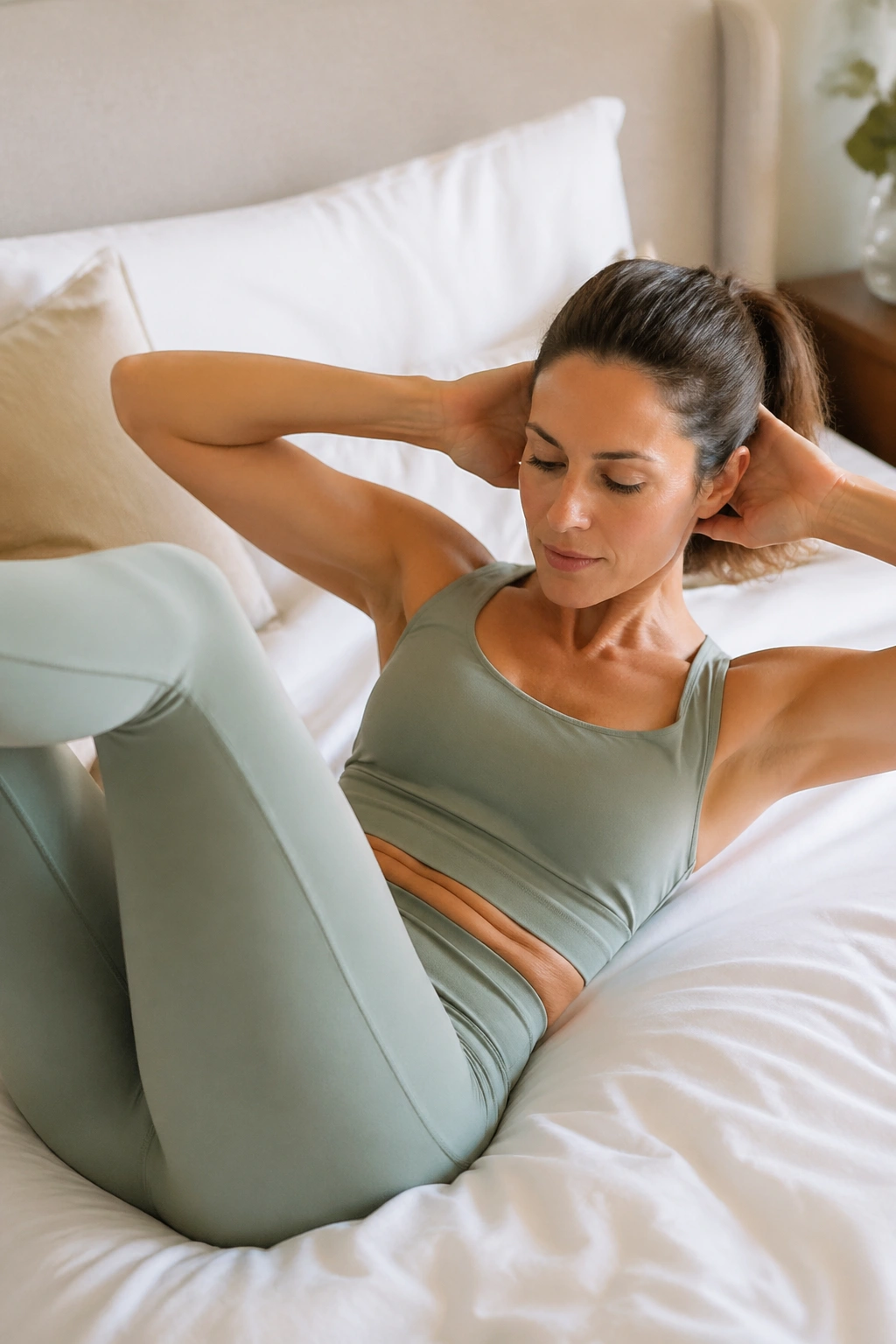
This one tempts people to bicycle fast. Don’t.
Criss-cross works best when you slow it down and keep the twist coming from the ribs instead of the elbows. Lie on your back, bring both knees into tabletop, then lightly support the head with the hands. Rotate the torso so one shoulder blade lifts, the opposite knee comes in, and the other leg extends long but low.
Do six to eight controlled reps per side. Move as if you are trying to keep the mattress from noticing. If the neck starts to feel crowded, make the twist smaller and keep the elbows wide.
A good criss-cross is not a neck workout. It is an oblique workout with a quiet neck. That difference matters more than people think, especially in bed where the head and shoulders can get lazy and tense at the same time.
If the low back arches when the leg extends, keep the extended leg higher or return to single-leg stretch for now. No shame in that. Criss-cross is a sharper move, and the bed makes the mistake more obvious.
Slow version. Better version.
10. Spine Twist Supine With Long Exhales
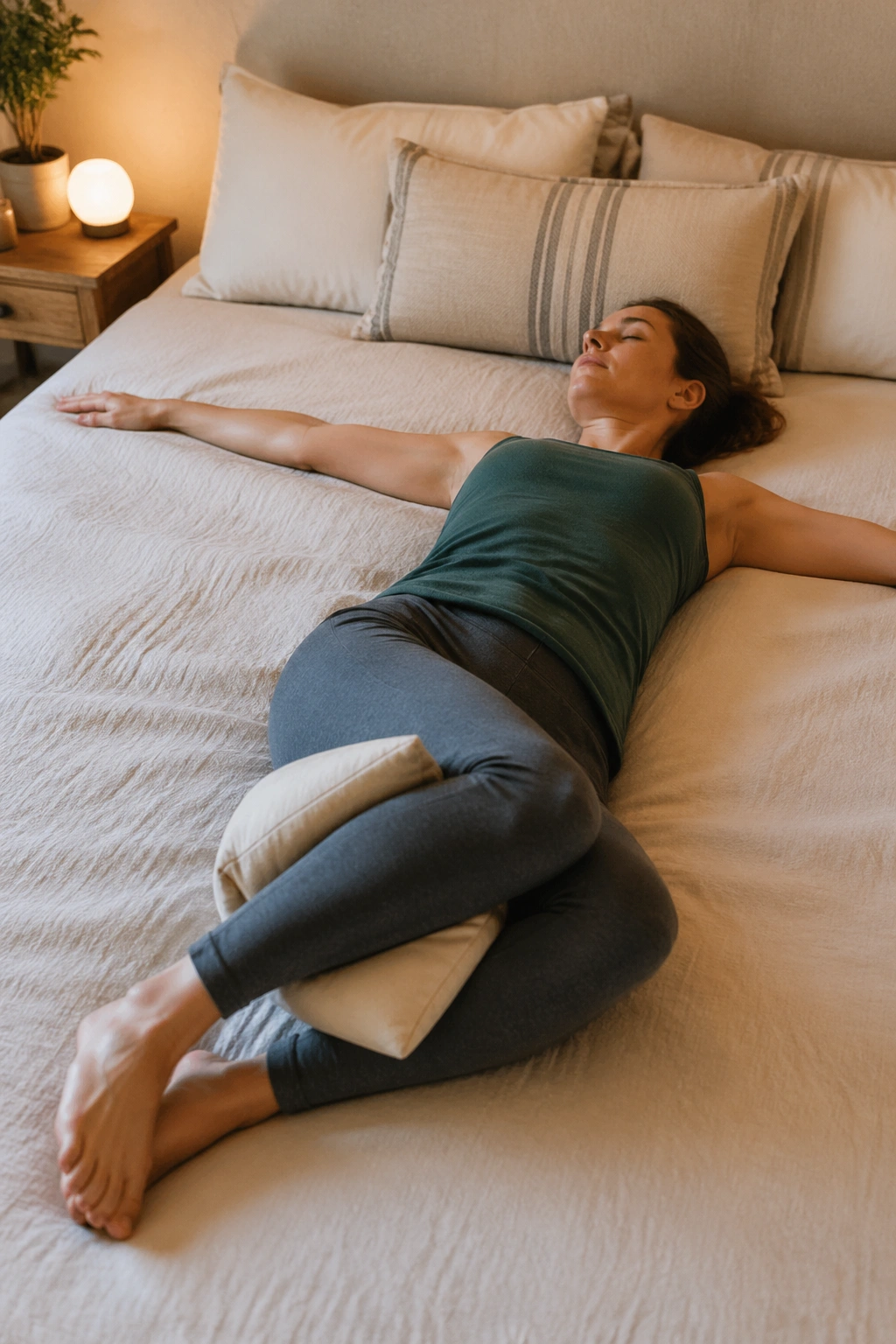
This is the Pilates move I reach for when the body wants a pause.
Lie on your back with your arms stretched out in a T shape and your knees bent. Let both knees fall together to one side while the shoulders stay heavy on the mattress, then bring them through center and over to the other side. Four to six slow reps, or three calm breaths on each side, is enough.
It should feel like a long exhale in motion. The twist comes from the ribs and waist, not from yanking the knees. If the knees do not touch the mattress, that is fine. The bed does not care, and your spine probably won’t either.
A pillow between the knees can make this gentler on tight hips. If the low back complains, shorten the range and keep the feet closer to the bed instead of forcing the legs far over.
This one is less sweaty than the others, which is exactly why I like it near the end of a bed Pilates routine. It helps the body shift gears. You can almost feel the shoulders sink on the exhale.
11. Chest Lift With Neck Support
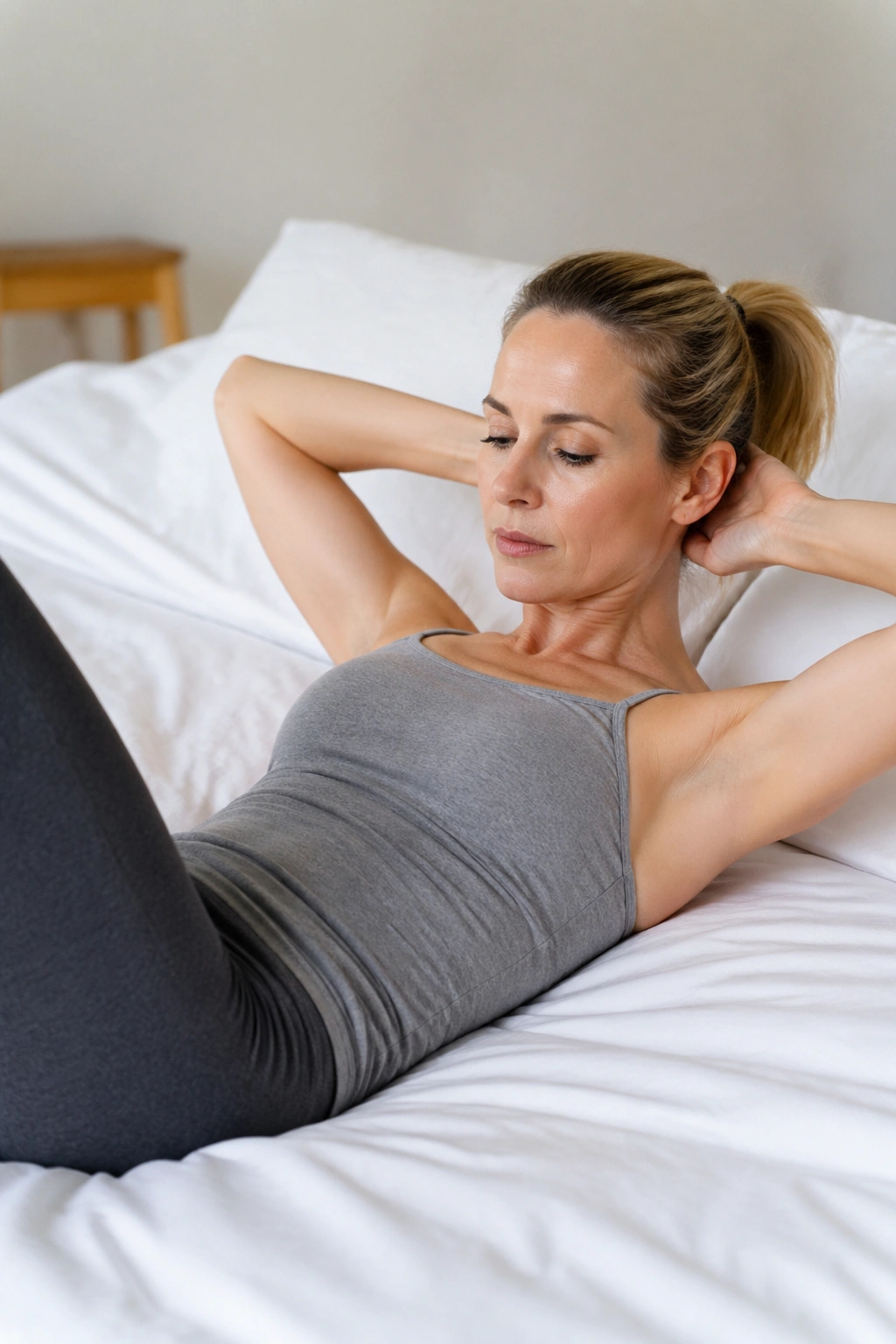
Can you do a crunch in bed without wrecking your neck? Yes, if you stop treating it like a sit-up.
What Makes It Different
Lie on your back with knees bent. Place one hand behind the head for light support, or keep both hands on the thighs if that feels better. Exhale and lift the shoulder blades just an inch or two off the mattress, then inhale and lower with control. Six to eight reps is enough for most people.
The lift is tiny. That is the point. You are not trying to sit all the way up. You are teaching the ribs to stay connected to the pelvis while the front of the torso does a small, precise curl.
A few signs that the form is good:
- The chin stays slightly nodded.
- The neck stays long, not jammed forward.
- The lower ribs do not flare upward.
- The belly stays flat enough to support the lift without hard bracing.
If your bed is very soft, this move can feel sloppier than it does on a mat. Reduce the range even more and think about lengthening the back of the neck as you rise. That usually fixes the worst of the tension.
A clean chest lift in bed should feel more like a controlled nod through the sternum than a full abdominal burn contest.
12. Mermaid Side Stretch on the Edge of the Bed
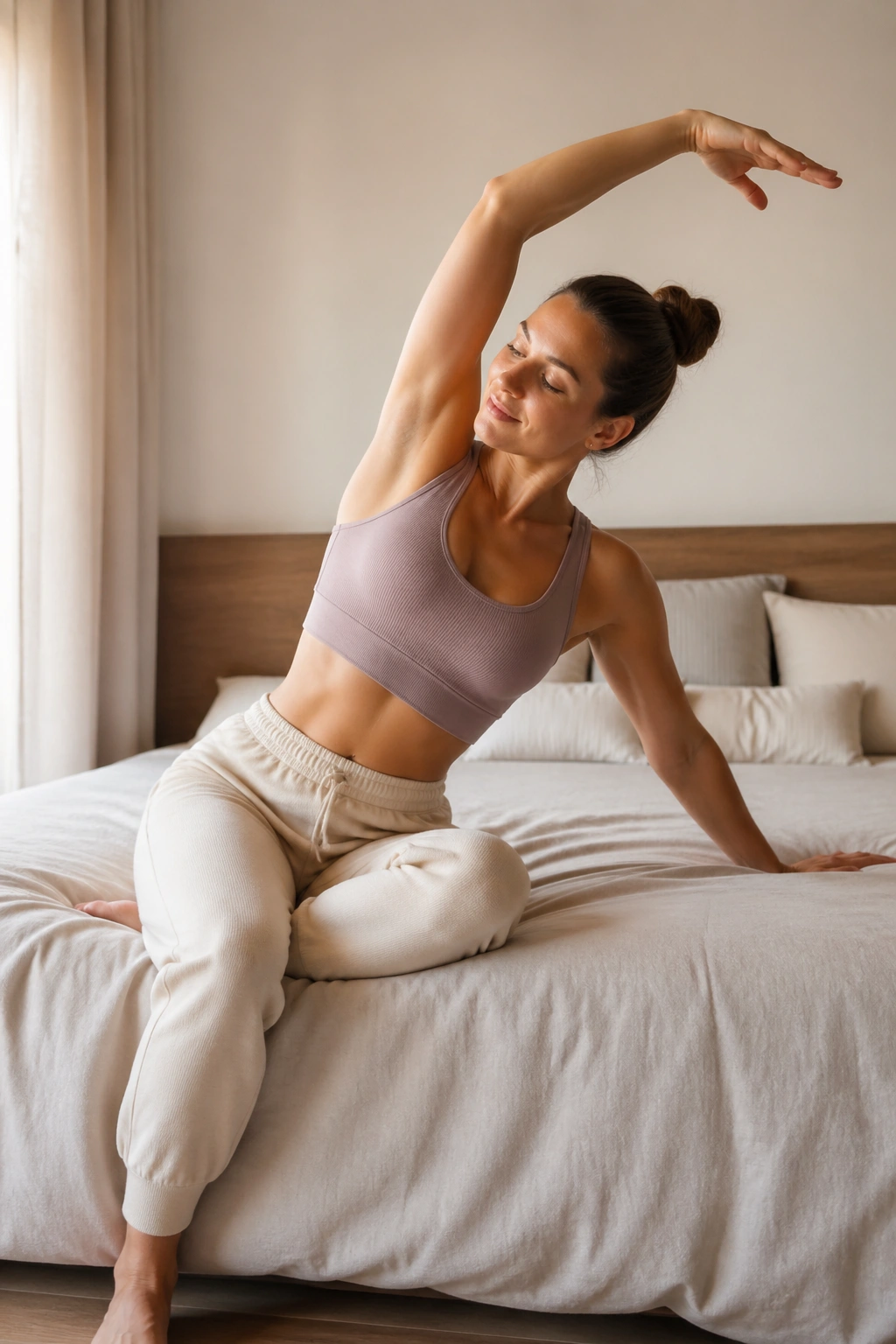
On the floor, mermaid can feel like a hip test. On the edge of the bed, it becomes kinder to tight knees and stiff side bodies.
Sit on the edge of the bed with your legs folded in a comfortable position, or one shin in front if cross-legged feels wrong. Place one hand down for support and reach the other arm overhead, then tip the ribs gently to the side. Hold for two to three breaths, return to center, and switch sides.
The stretch should travel along the side waist, the lats, and the outer ribs. Keep both sit bones heavy so you do not collapse into the low back. If one shoulder creeps up to the ear, soften it. The reach should feel long, not pinchy.
Setup That Helps
- Sit toward the middle of the bed edge so you have room to lean.
- Keep the chest open instead of folding forward.
- Bend the lower elbow slightly if the shoulder feels crowded.
- Use a pillow under the sitting bones if the edge is too hard.
This is one of the better bed Pilates choices for people who wake up feeling short through the sides of the body. It is calm, but it does real work.
13. The Hundred Prep With Bent Knees
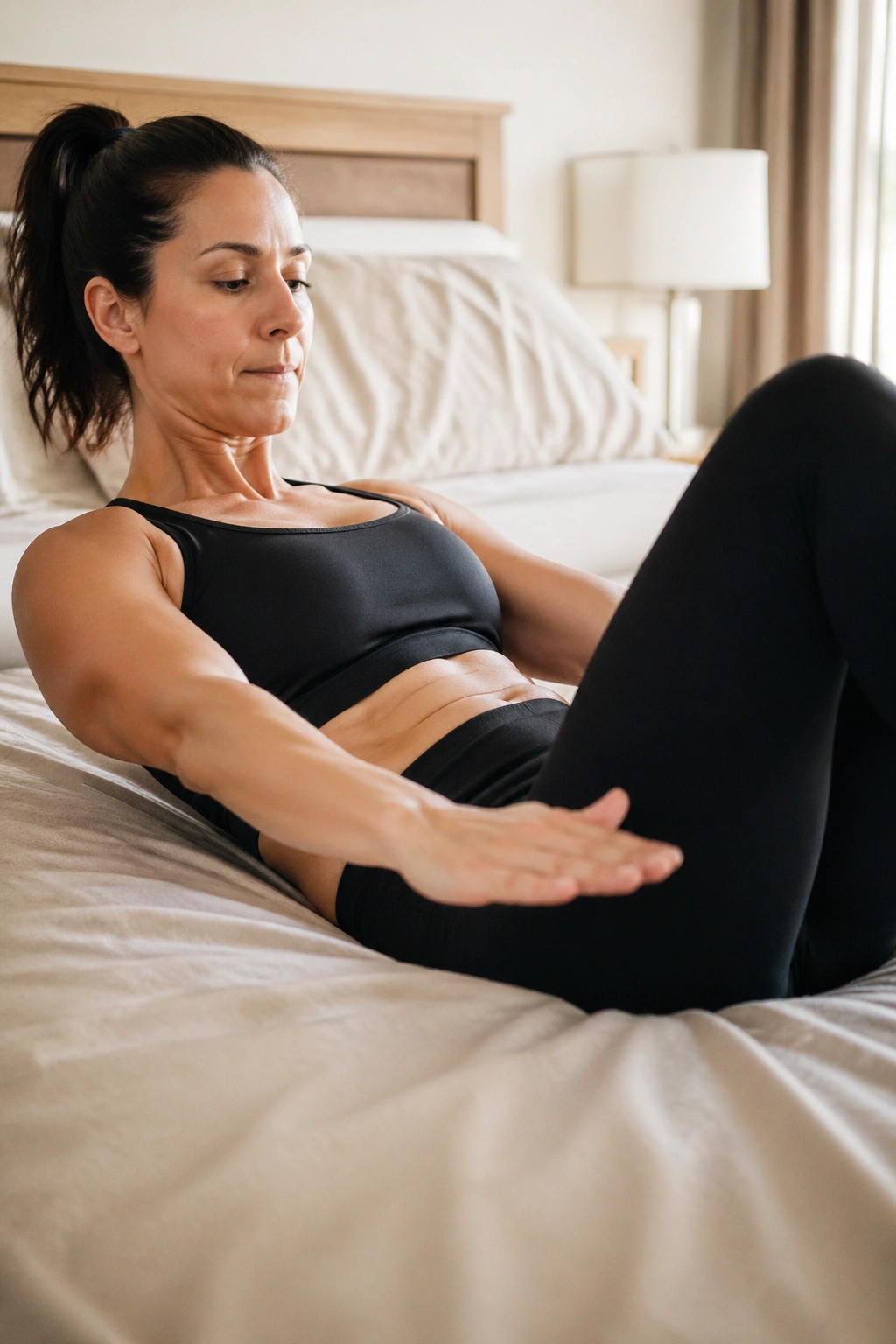
The Hundred is famous for the arm pumps, but bed Pilates asks for the stripped-down version first.
Lie on your back with knees bent and feet down, or lift the legs to tabletop if that feels steady. Curl the head and shoulders up only if the neck feels good, then pump the arms up and down a few inches while breathing in for five counts and out for five counts. Start with 30 to 50 pumps, not some heroic number that leaves the neck cranky.
How to Scale It
- Easiest: feet flat on the mattress, head down, arms pumping.
- Middle ground: tabletop legs, head down or lightly lifted.
- Harder version: legs long and low, only if the low back stays quiet.
The bed changes this move a lot. A soft mattress can make the pelvis tip and the ribcage flare, which is why the prep version matters so much. Keep the lower ribs settled and the arms small. If the shoulders start crawling toward the ears, rest and reset.
A sloppy Hundred is just flailing with breath counts attached. A good prep feels sharp, rhythmic, and strangely calm. That calm is what you want to keep.
14. Hamstring Slides Using Socks or a Pillowcase
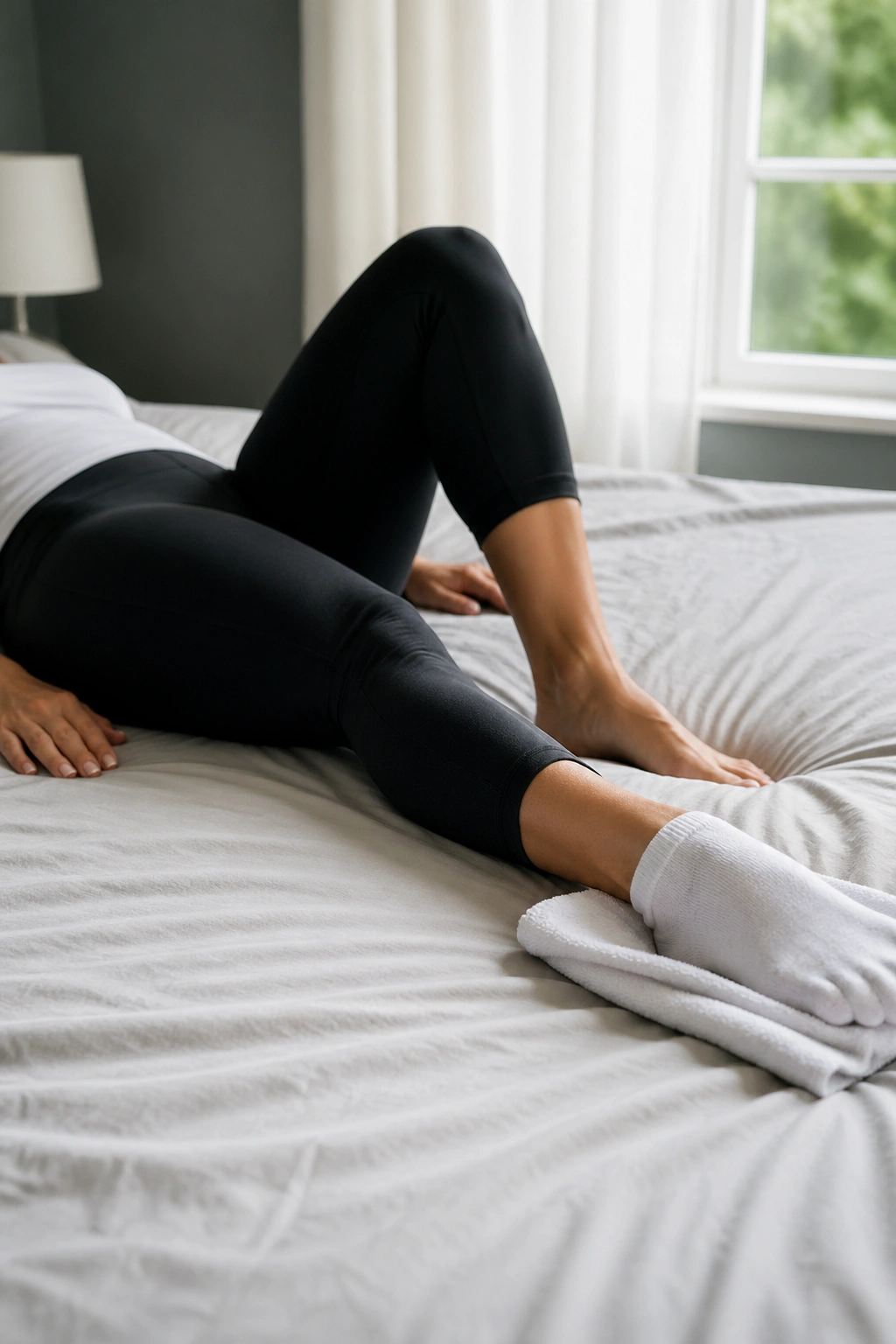
If your sheets are smooth and your hamstrings feel tight, this move can surprise you.
Lie on your back with one heel resting on a folded towel, sock, or pillowcase so it can glide across the mattress. Exhale and slide the heel away until the leg is mostly straight, then inhale and draw it back without letting the pelvis rock. Eight to 10 slides per side is a solid set.
The trick is friction. Less friction means smoother travel, which means the hamstrings and lower abs have to coordinate instead of fight. If the heel catches, swap to a slicker fabric. If the hamstring cramps, shorten the slide and keep the knee a little bent.
A few quick cues help:
- Keep both hip bones heavy.
- Move the heel slowly, not in a snap.
- Stop before the low back arches.
- Keep the toes relaxed unless you need a gentle foot flex for support.
This one is excellent for people who feel stiff in the back of the legs when they wake up. It is also sneaky. It looks harmless until the second or third rep, and then the posterior chain starts to wake up.
15. A Full 10-Minute Bed Pilates Flow
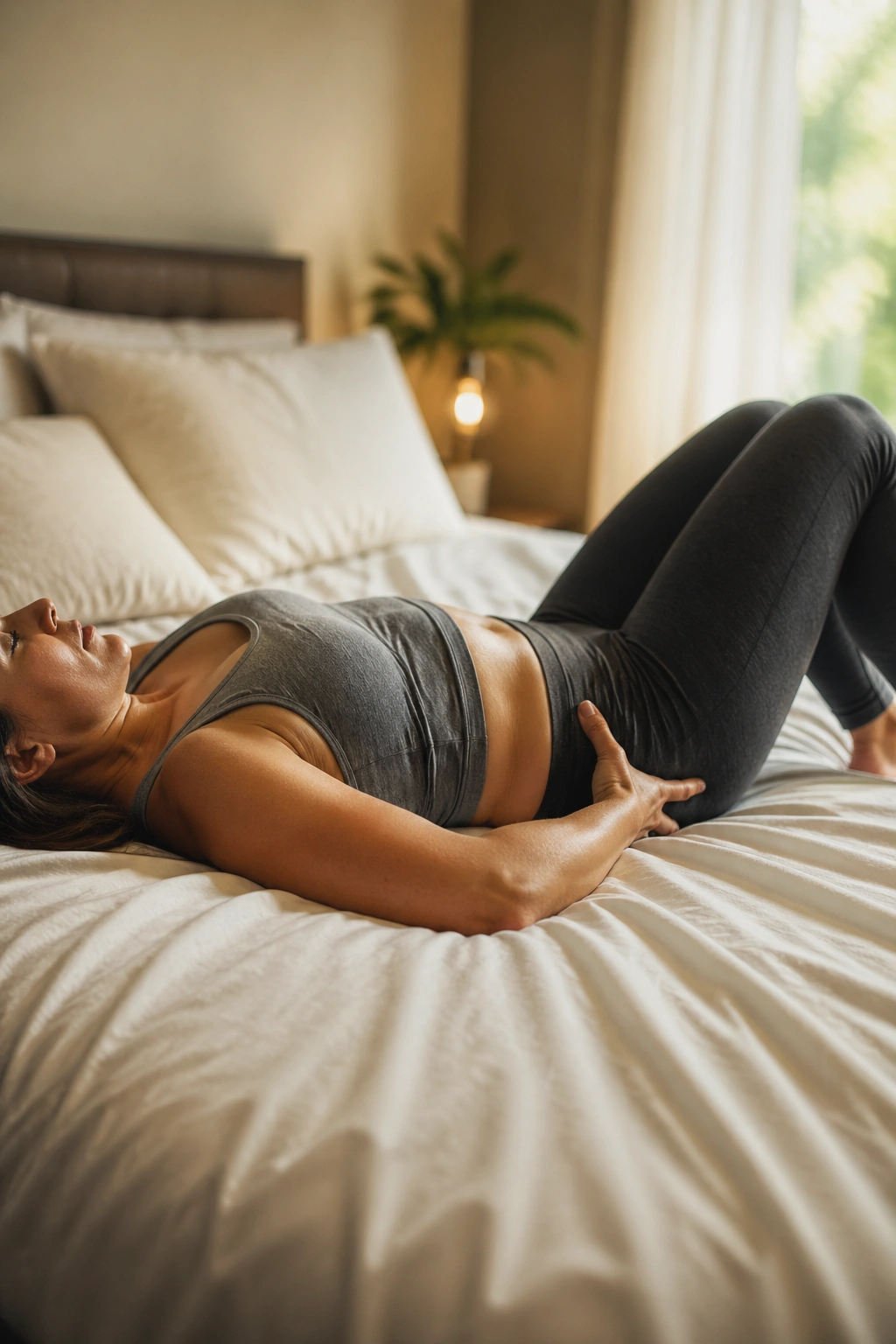
When you do not want to choose, run the whole sequence. That is the nicest thing about bed Pilates: the exercises are small enough to chain together without needing a mat, a reformer, or a lot of motivation.
A Simple Order
-
60 seconds of bent-knee breathing to settle the ribs and jaw.
-
60 seconds of pelvic tilts to loosen the low back.
-
60 seconds of marching tabletop at a slow, even pace.
-
60 seconds of toe taps with the pelvis kept quiet.
-
60 seconds of glute bridges with a small, clean lift.
-
60 seconds of single-leg stretch or 30 seconds per side if the head wants support.
-
60 seconds of spine twist supine to soften the waist and hips.
If you have a little more gas in the tank, repeat the bridge and one core move. If you feel stiff rather than tired, finish with mermaid side stretch on the edge of the bed. That mix gives you a little bit of everything: breath, mobility, core work, glutes, and a gentle cooldown.
A good bed flow does not leave you pumped up and shaky. It should make your body feel more awake and less welded together. That is the sweet spot. If you finish wanting one more deep breath and a sip of water, you probably did it right.
