



The first hard truth about postpartum workout plans is that the best one often looks boring. A ten-minute walk, a few breaths, and some gentle hip work can do more for a brand-new mom than a workout that leaves her shaking and sore.
After birth, the body is doing a lot behind the scenes. The pelvic floor may feel loose or tight, the abdominal wall may still be splitting under pressure, a C-section incision may tug when you stand up, and sleep deprivation can make a ten-minute effort feel like hill repeats. None of that means you are broken. It means the workout has to respect the recovery.
Good postpartum exercise should leave you moving easier, not leakier, heavier, or more swollen. If bleeding ramps up, the pelvis feels heavy, or pain shows up in the incision, backing off is the smart move. A pelvic floor physical therapist can be worth every penny if symptoms stick around.
The plans below start very gentle and build toward strength, cardio, and impact again. Some are five minutes long. Some feel almost too easy. That is usually the point.
1. The 5-Minute Breath Reset
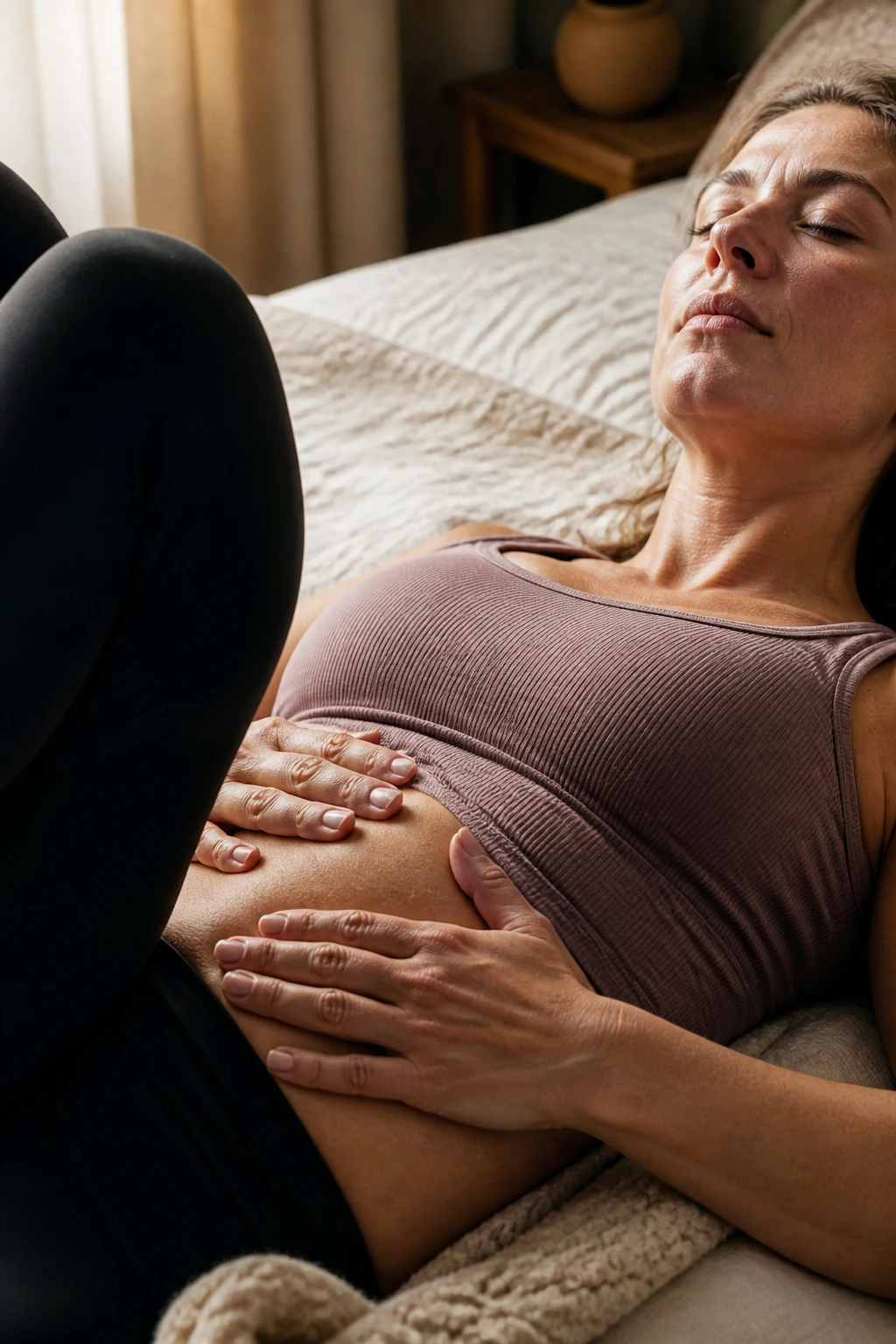
Some days, five minutes is the whole win.
This tiny reset works best when you feel scattered, tight, or pulled apart in a dozen directions. Lie on your back with your knees bent, or sit tall in a chair if the floor is a hassle. Inhale through your nose for 4 counts, let your ribs widen, then exhale slowly for 6 counts and feel your lower belly soften inward.
How it should feel
- 2 minutes of slow breathing
- 5 gentle pelvic floor lifts on the exhale, then a full release
- 6 heel slides, one leg at a time, keeping the belly quiet
- 5 cat-cow rounds if being on hands and knees feels okay
The key is softness. You are not trying to squeeze your way back into fitness. You are teaching your body that pressure can be managed without bracing every muscle in sight.
If you feel bearing down, doming through the midline, or a sharp tug near the incision, stop there. That’s enough for the day.
2. A Gentle 10-Minute Walking Loop
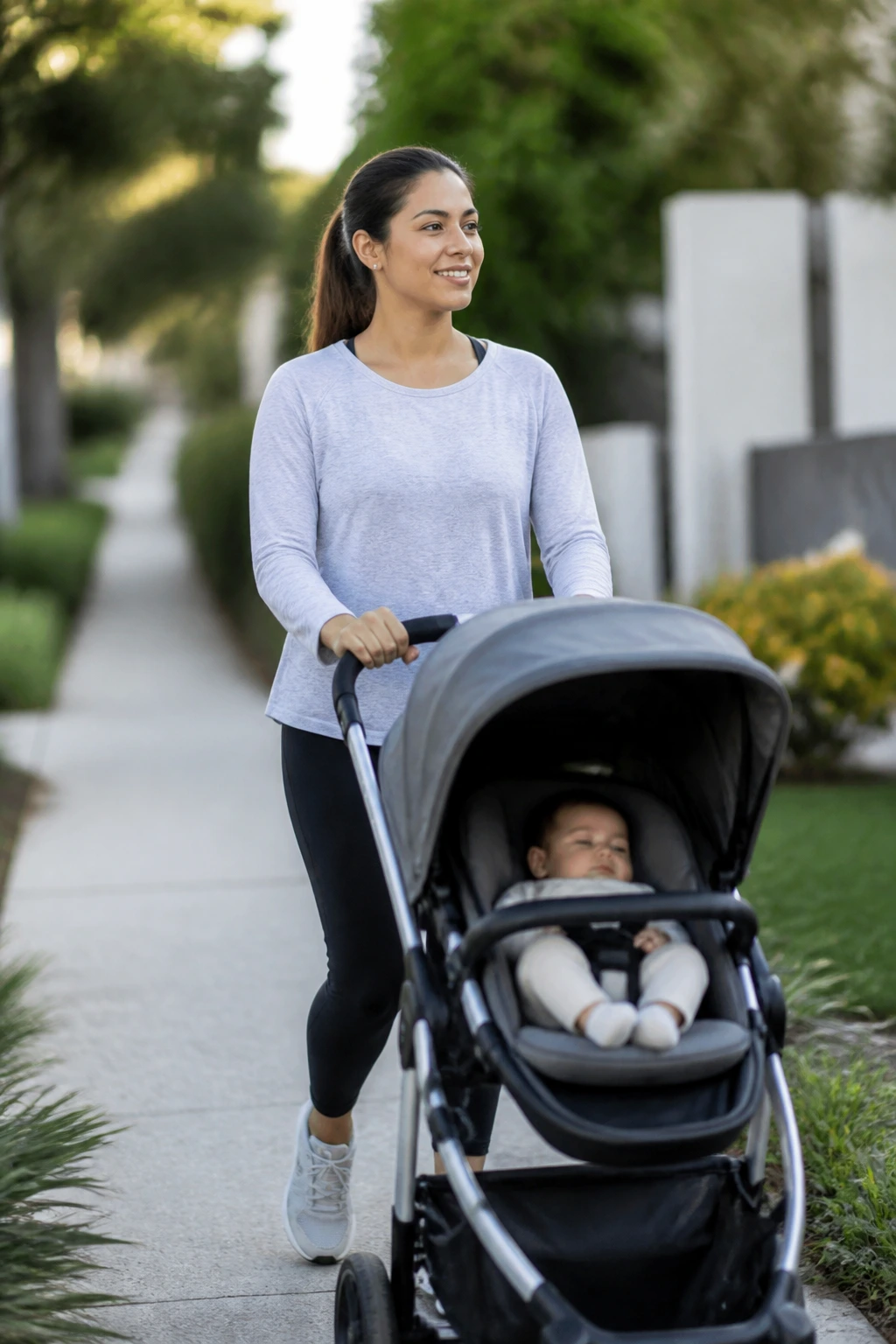
Why does a walk work so well when you’re tempted to do more? Because it hits the sweet spot between movement and recovery. Walking helps blood flow, settles the nervous system, and gives your hips and back a chance to move in a way they haven’t been doing all day.
Keep it easy enough that you can talk in full sentences. Push a stroller if that helps, or take one lap around the block and come back. Ten minutes counts. So does five minutes twice.
A lot of new moms wait for a “real” workout window and never get one. I prefer the boring option here. Walk first, think later.
If you wake up stiff, use the first two minutes as a warm-up and let your stride lengthen a little after that. If the baby only gives you a tiny window, split the loop in half and call it done.
3. Pelvic Floor Connection Without Crunches

Crunches are not a postpartum prize.
What you want here is coordination, not punishment. Lie on your back, exhale gently, and imagine the pelvic floor lifting slightly as the ribs settle. Then relax fully. That lift should be small. If it feels like a hard clamp, you’re doing too much.
A simple set
- 5 breath cycles with a gentle pelvic floor lift on each exhale
- 6 sit-to-stands from a chair, exhaling as you stand
- 5 standing side reaches to each side
- 3 rounds, resting 20 to 30 seconds between moves
This plan is especially useful if you notice leaking, heaviness, or a “not quite connected” feeling in your core. It is also a good reminder that the pelvic floor does not need to be squeezed all day long. Release matters as much as contraction.
If you see doming down the center of the belly, shorten the range of motion and slow the movement down. Smaller can be smarter.
4. Side-Lying Strength for Sore Hips
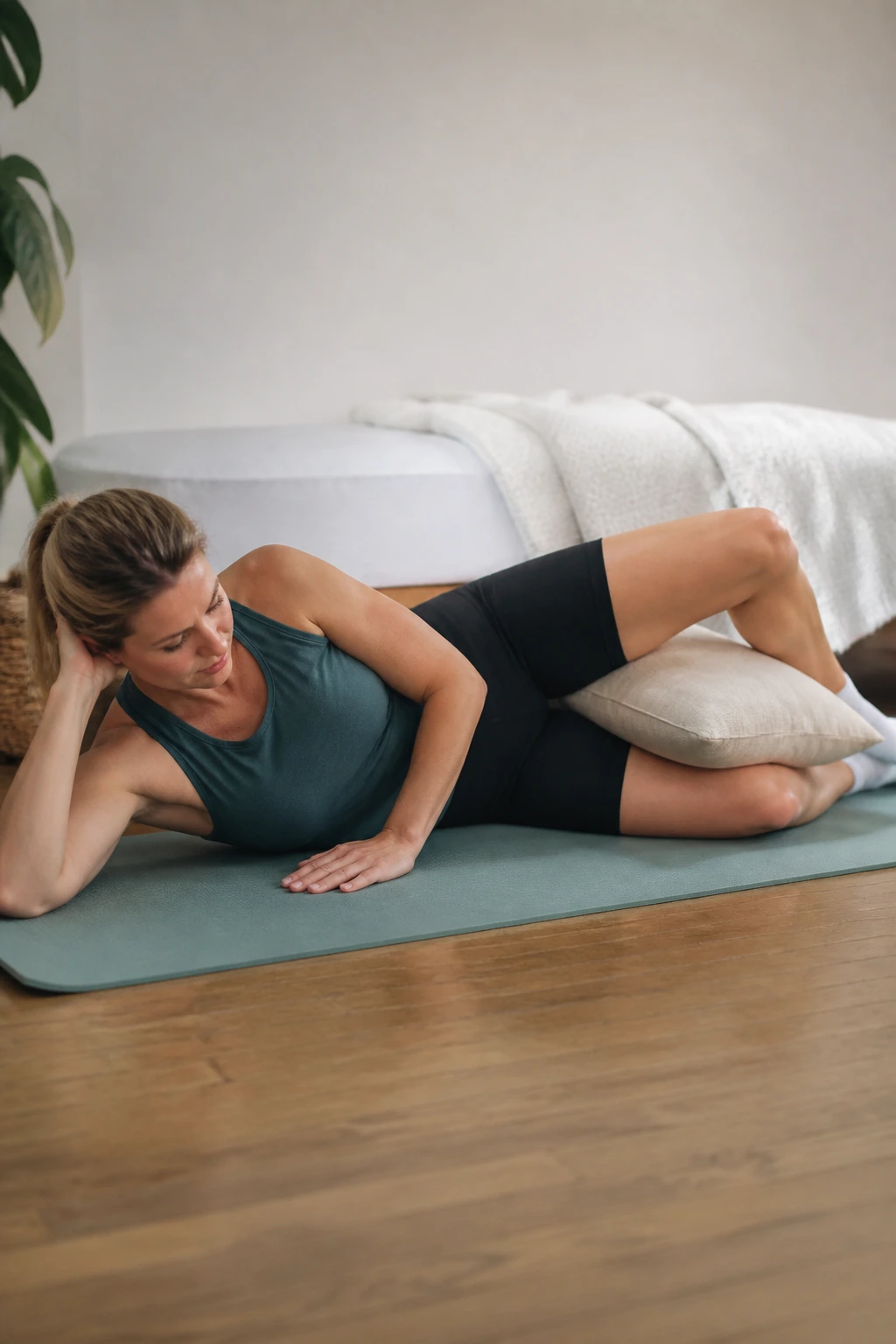
If your hips ache after feeding, carrying, and sleeping in weird positions, side-lying work feels like a relief. You’re taking pressure off the pelvic floor, skipping the floor-to-stand grind, and still waking up the muscles that keep your pelvis steady.
Start with a bent-knee side-lying clam. Then add a small leg lift if that feels smooth. A pillow between the knees helps. Another one behind your back doesn’t hurt either, especially on the rough mornings.
Side-lying thoracic rotations are worth the trouble too. Open the top arm, let the chest turn gently, and breathe into the front ribs. The move sounds tiny. It is tiny. And that’s why it works.
This is a good plan on days when you’re not ready to sweat but don’t want to feel like a crumpled towel either. Quiet, clean, and very repeatable.
5. Stroller Walk Intervals for Busy Days

Short bursts. That’s the whole idea.
Take your stroller, pick a flat route, and walk easy for 2 minutes, then a little faster for 1 minute. Repeat that pattern 5 or 6 times. If the baby is fussy, keep the pace steady and skip the faster parts. You still got outside. That still counts.
These stroller intervals are a nice bridge between a casual stroll and a more focused cardio session. They work because they keep your body awake without asking for a long stretch of uninterrupted time, which new mothers rarely get.
I like this plan on days when I’m mentally fried but physically okay. It gives you a reason to swing your arms a little more, lift your feet, and stop staring at the clock. Nothing fancy. Just enough.
6. Glute Bridge and Clamshell Starter Circuit
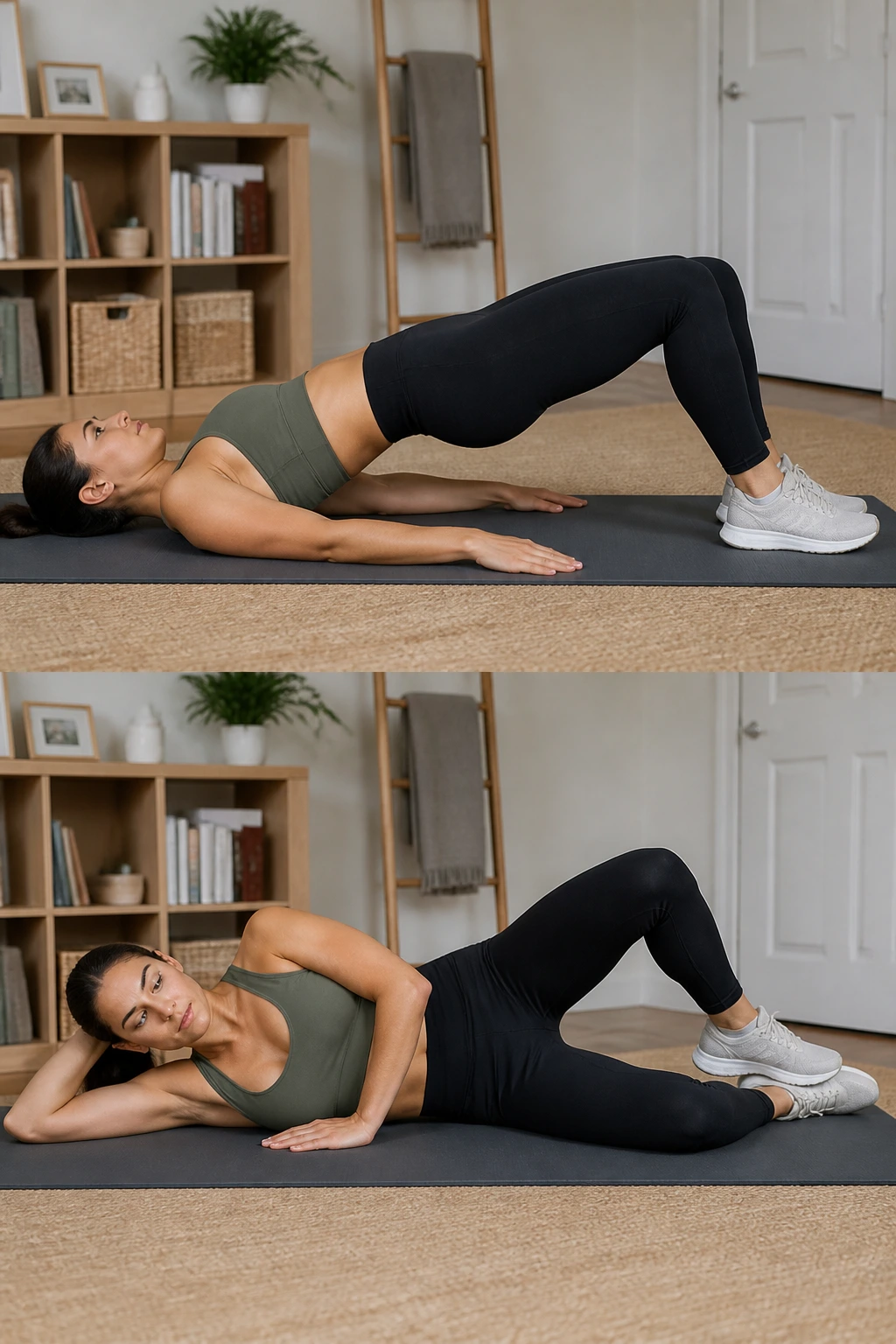
Why start with the back side of the body? Because the glutes do a lot of the work that new moms feel in their lower back and pelvis. If those muscles go quiet, everything else picks up the slack.
Try a bridge, then a clamshell, then a very small bird dog if your wrists and belly feel fine. Keep the reps low and the motion crisp.
What to do
- Glute bridge: 2 sets of 8, pause 2 seconds at the top
- Clamshell: 2 sets of 10 each side
- Modified bird dog: 2 sets of 6 each side
- Wall sit: 20 seconds, 2 rounds
The bridge should feel like your hips are lifting, not your lower back pinching. If your ribs pop up, lower down and try again with less height. That little correction matters more than people think.
This plan is one of my favorites for that “I need to feel my body working again” mood. It gives you effort without drama.
7. Seated Upper-Body Strength at the Kitchen Table
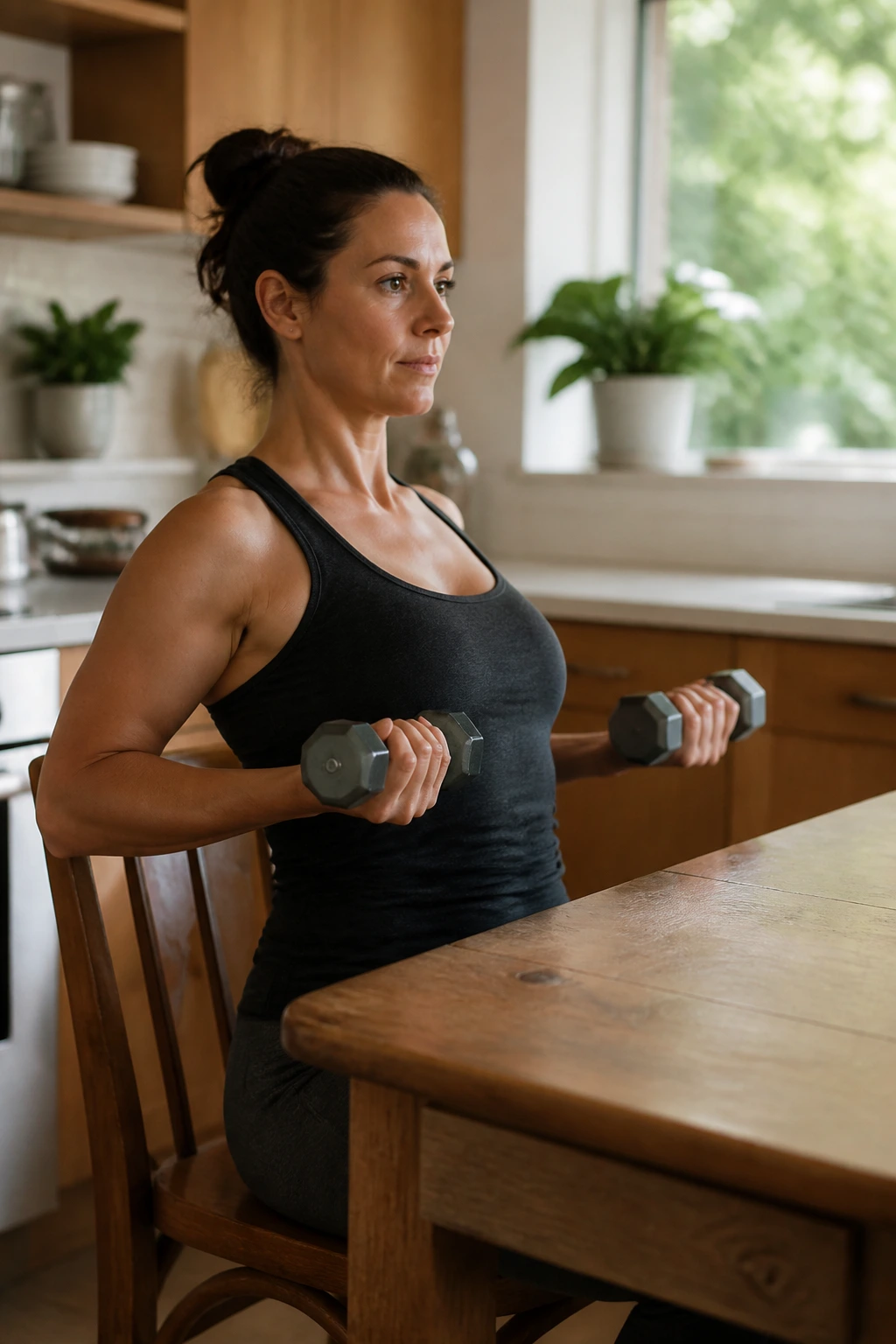
Arms and upper back get ignored fast after birth. Then one day the baby feels heavier, the shoulders are rounded, and holding a laundry basket turns into an event. Seated strength work fixes some of that without asking you to find childcare or floor space.
Grab light dumbbells, water bottles, or canned goods. Do a seated row, shoulder press, biceps curl, and triceps extension. Keep the weights light enough that you can keep your neck loose.
A good rule: finish the set and still feel like you could do two more reps with clean form. If your wrists complain, switch to a neutral grip. If your neck tightens, lower the weight.
This is a plain, practical workout. Not glamorous. Very useful. And your upper back will notice the difference the next time you feed, hold, or rock the baby.
8. Standing Mobility for Tight Backs and Shoulders
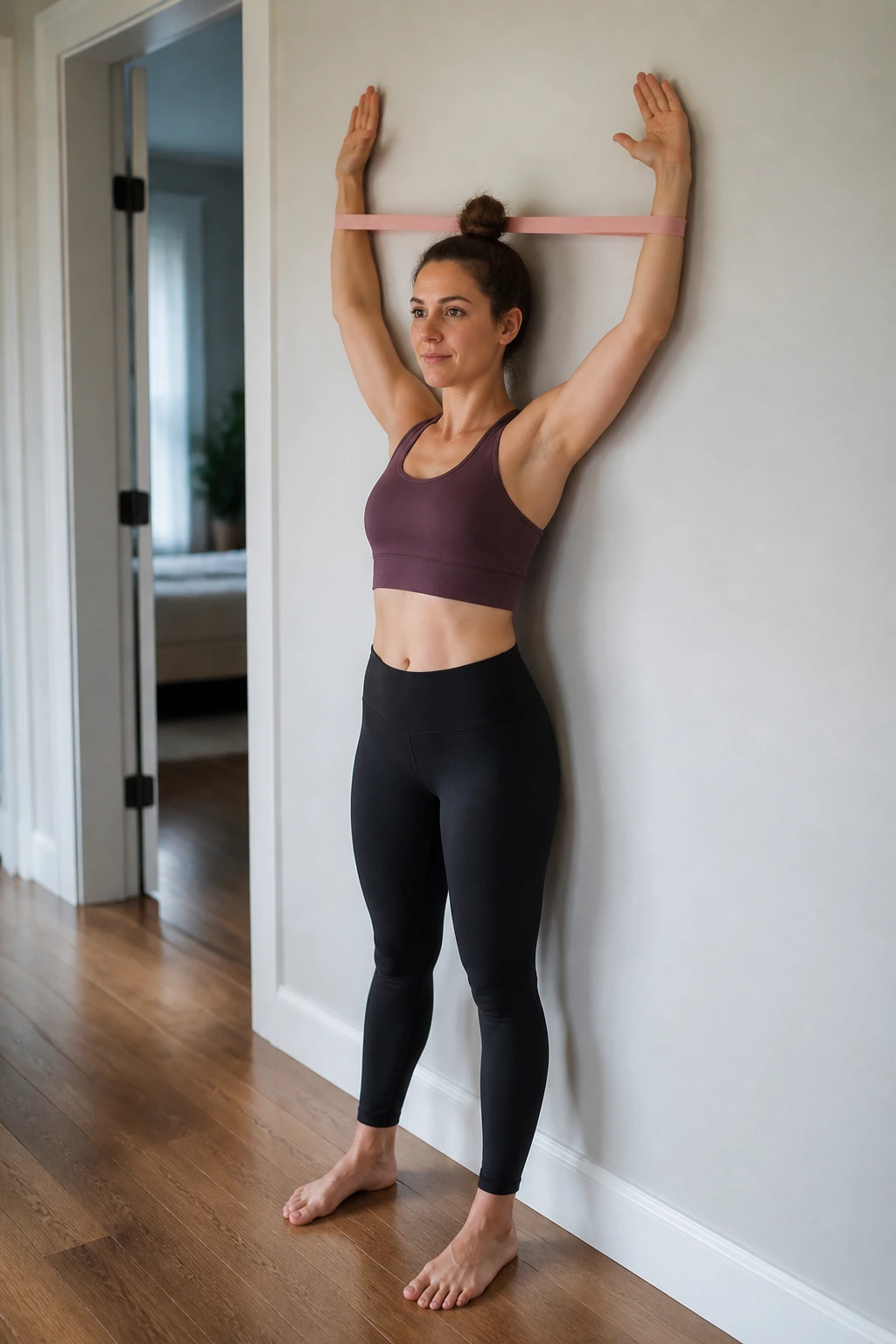
Your upper back can get so stiff that turning to look over your shoulder feels weird. That’s the combo of feeding positions, holding positions, and not moving through a full range all day.
Stand tall and run through wall slides, shoulder rolls, hip circles, and a slow side bend. Add calf raises if you want a little more circulation. Everything stays small and smooth. No rushing.
A short standing flow
- 5 wall slides
- 5 shoulder rolls in each direction
- 5 hip circles each way
- 6 side bends per side
- 10 calf raises
Do the whole thing once in the morning and once later in the day if you can. The second round often feels better than the first because the body is finally awake.
Some workouts build strength. This one buys you room to breathe.
9. Low-Impact Cardio March for Small Spaces
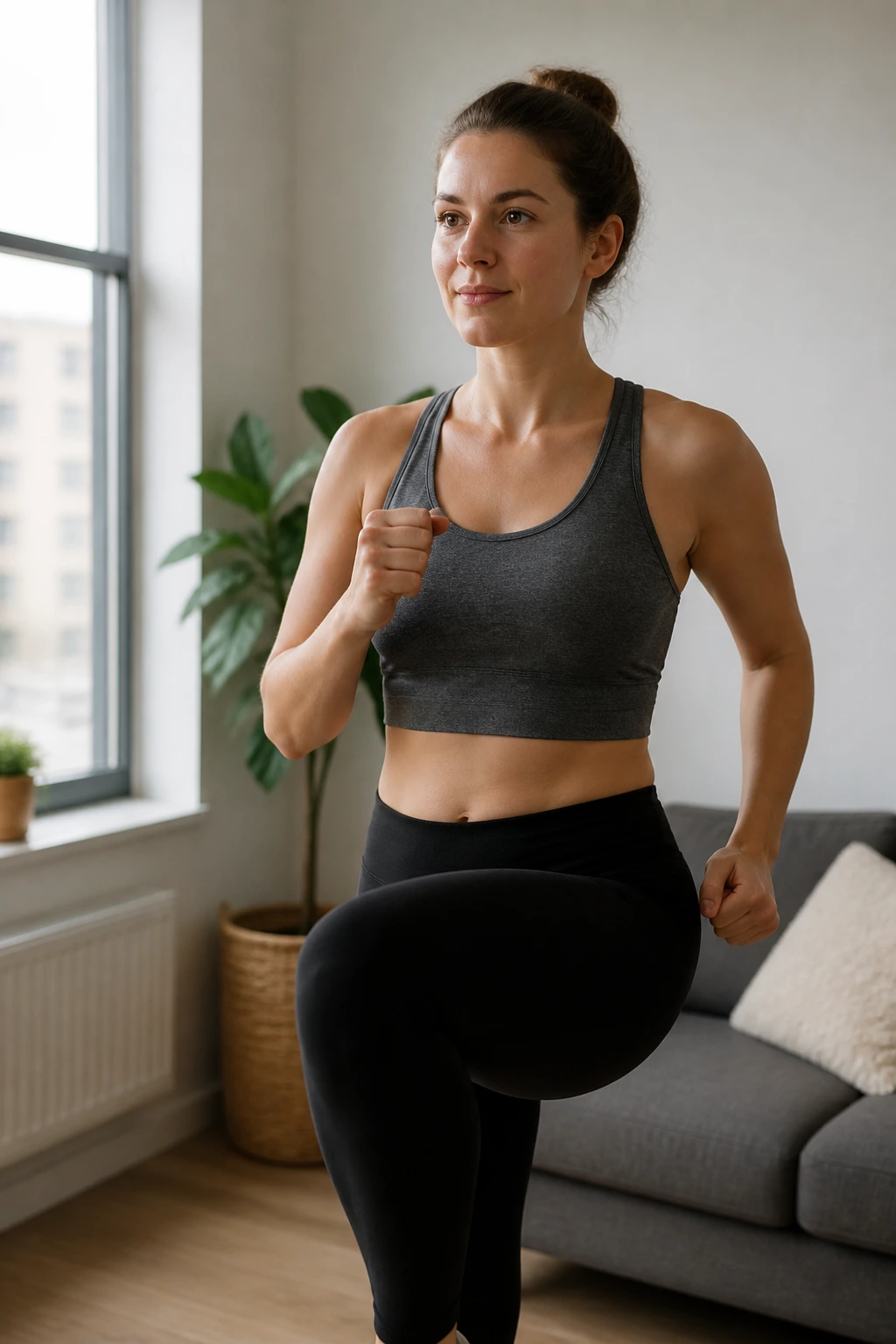
When the baby sleeps and the apartment is tiny, marching in place is not silly. It is efficient.
March for 30 seconds, step-touch for 30 seconds, then rest for 30 seconds. Repeat that cycle 8 times. If you want more intensity, swing your arms higher or lift your knees a little more. If you want less, keep the feet low and the pace smooth.
This plan is gold for moms who don’t want to lug gear, leave the room, or brave the weather. You can do it beside the crib while a monitor hums in the corner. No excuses, but also no pressure.
A small space workout can still give you a decent sweat. The trick is consistency, not spectacle.
10. Recovery Yoga With Breath and Reach
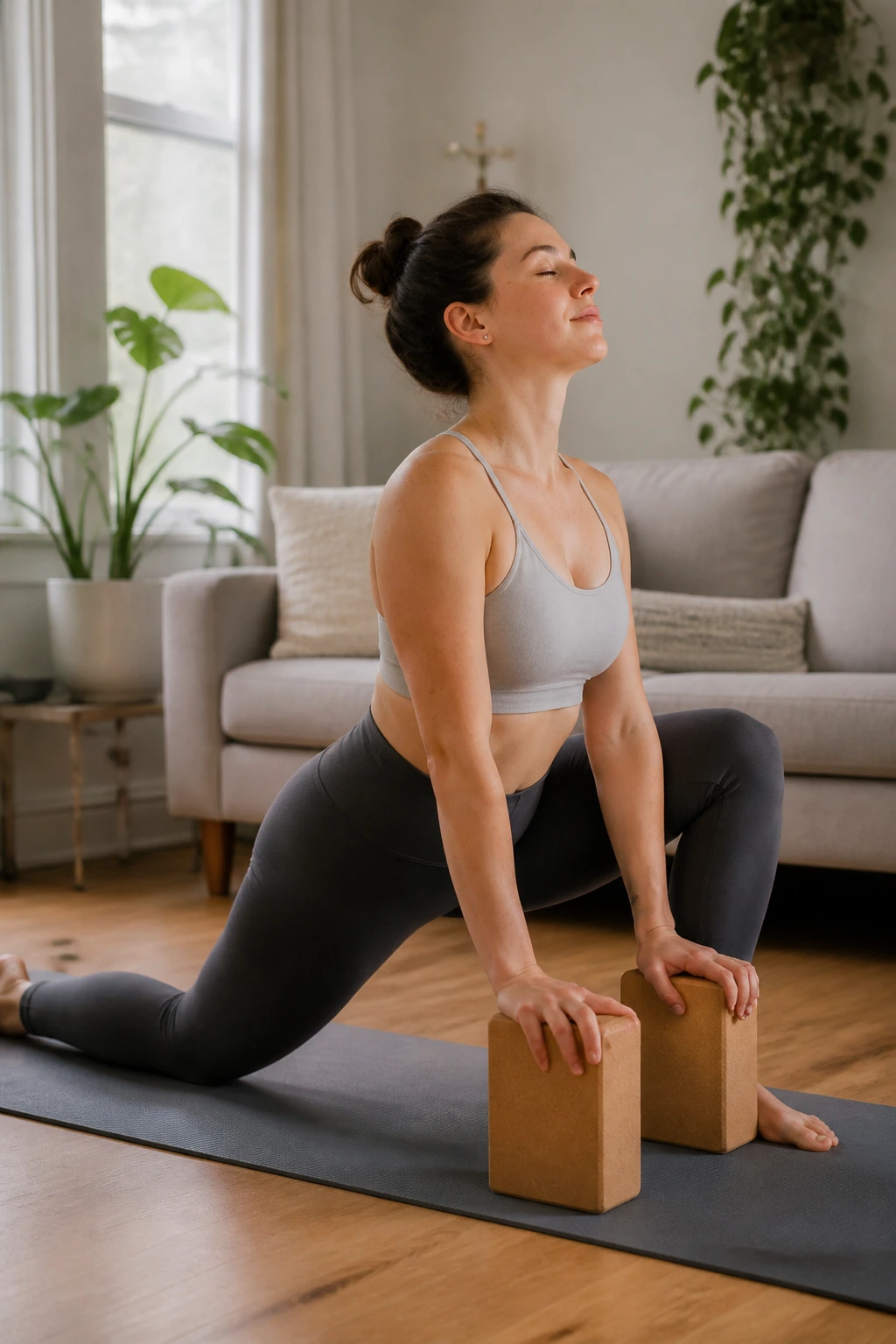
Can yoga be too much after birth? Sure. Deep twists, long planks, and aggressive core work can be a bad fit early on. Gentle floor-based yoga, though, can help you feel less welded together.
Choose shapes that open the chest, lengthen the sides, and don’t load the belly hard. Child’s pose, supported bridge, thread-the-needle, and a low lunge with hands on blocks are good places to start. Skip any pose that causes pressure downward.
What I like here is the slow pace. You’re not trying to stretch hard. You’re trying to breathe into places that have gone stiff from carrying, feeding, and sleeping in half-open positions.
If your wrists hurt, stay off your hands. If the scar feels tuggy, shorten the stance. The best yoga plan after birth is the one that makes you feel looser an hour later, not wrecked.
11. A Core-First Postpartum Workout Plan
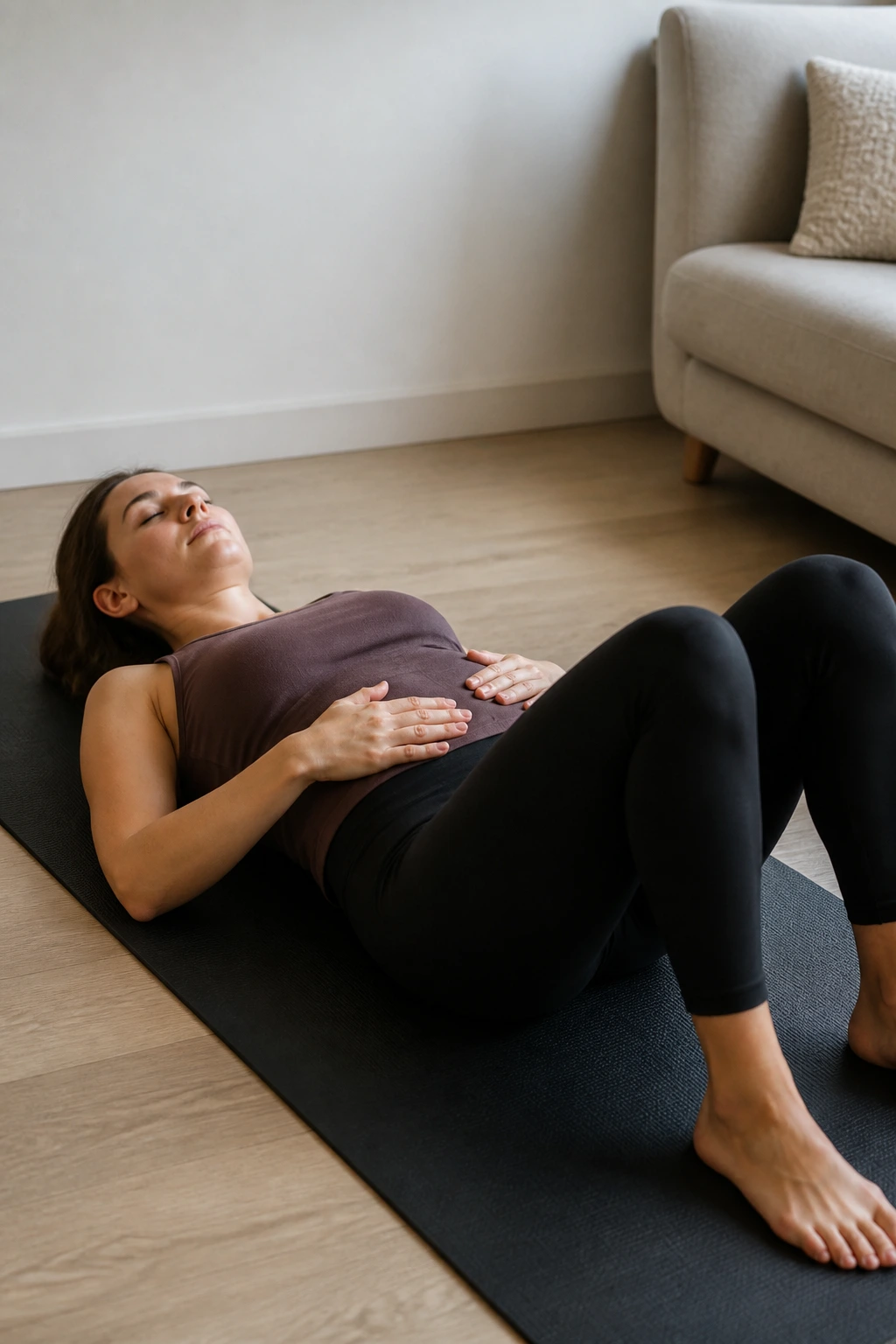
A postpartum core plan should start with control, not crunches.
The goal is to reconnect breathing, rib position, and deep abdominal support before asking for bigger moves. Start on the floor with 90/90 breathing, then move into heel slides, dead bug marches, and a short incline plank against a wall or counter. Keep the exhale slow on the effort part of each rep.
A sample 12-minute session
- 90/90 breathing: 5 slow breaths
- Heel slides: 6 each side
- Dead bug march: 6 each side
- Wall plank hold: 15 to 20 seconds
- Bird dog reach: 5 each side
Doming down the middle of the belly is your cue to scale back. So is any feeling of pressure or heaviness in the pelvis. You want the work to feel smooth and organized, not like you’re forcing the center of your body to hold its breath.
This is the kind of postpartum workout plan that quietly pays off later. It makes every other movement cleaner.
12. Full-Body Dumbbell Circuit for the Middle Ground
Once walking feels easy and your core work feels boring, a short full-body circuit bridges the gap. This is the “I want to train, but I still need to be smart” phase.
Use two light dumbbells and move through a chair squat, one-arm row, incline push-up, Romanian deadlift, and farmer carry. Two rounds is enough for most days. Three rounds if you’re sleeping decently and your body is cooperating.
The deadlift pattern matters more than people think. It teaches your hips to do work without overloading your lower back. The carry is sneaky too; it helps the trunk brace without crunching.
Keep the pace controlled. If your breath gets ragged, lengthen the rest. There’s no bonus prize for racing through it.
13. Stair Walking for Cardio and Legs
Stairs are honest.
Walk up one flight at a time, come down slowly, and repeat 5 to 8 times. If that feels like too much, do two or three flights and stop. If your home has no stairs, a small step or sturdy curb works too.
Make it gentler
- Use the handrail lightly
- Take one step at a time on the way down
- Stop if you feel pelvic heaviness or incision tugging
- Cut the rounds in half on low-energy days
I like stair walking because it sneaks in leg strength without a full gym session. Your glutes, calves, and heart all notice. Your baby probably does not.
It’s also easy to dose. That matters. Postpartum training works better when you can end while you still feel solid.
14. Resistance Band Lower-Body Strength
A resistance band turns the living room into a decent lower-body gym. Not a fancy one. A decent one.
Loop the band above your knees for lateral walks, squats, and glute bridges. Put it around your ankles if you want more challenge, though that can be too spicy early on. Add standing kickbacks if your balance feels steady.
The best part is how little setup it takes. One band, one chair, one patch of floor. Done.
You should feel the outside of the hips working and the knees tracking cleanly. If the lower back takes over, step the feet closer together and shorten the range. Small adjustments make band work much friendlier.
This plan is a nice choice when you want your legs to feel awake but not trashed.
15. C-Section-Friendly Mobility and Scar Care
A C-section adds a different kind of tenderness.
The first rule is simple: don’t rush the scar. Wait for medical clearance before doing scar massage or any deeper work around the incision. Once you are cleared, gentle skin-level mobility can help reduce that tight, pulling feeling many people notice when standing tall or twisting.
Start with diaphragmatic breathing, ankle pumps, and slow trunk rotations with your hands on your ribs. Add supported standing marches if that feels okay. Nothing should tug sharply across the incision line.
What usually helps
- Short walks broken into 3- to 8-minute chunks
- Gentle rib breathing with long exhales
- Supported standing transitions from chair to stand
- Light scar mobility only when fully healed and cleared
This is one of those cases where less really is more. A little regular movement tends to beat one ambitious session that leaves you sore for two days.
16. Jog-Walk Return Plan for Former Runners
Miss running, but your body isn’t ready for a mile? Start with run-walk.
Try 20 seconds of easy jog, then 90 seconds to 2 minutes of walking. Repeat that cycle 5 to 8 times on flat ground. Keep the jog almost laughably slow. You should be able to speak in short sentences without feeling scrambled.
If leaking, heaviness, or a dragging sensation shows up, stop the jogging part and walk home. That isn’t failure. It’s information.
I’m a fan of this plan because it gives runners a real foothold back into the sport without pretending the body has forgotten everything that happened in pregnancy and birth. It hasn’t. Respect that, and you usually get farther.
No speed work. No hills at first. Just a soft return.
17. Dumbbell Split for 3 Days a Week
Three focused sessions beat one heroic one.
Day 1 can be lower body, Day 2 upper body, Day 3 full body. Each session only needs 20 to 30 minutes if the exercise choices are tight. That makes it easier to finish before the baby wakes up, which is half the battle.
A simple lower day might include goblet squats, Romanian deadlifts, and glute bridges. Upper day can be rows, presses, and carries. Full body can mix squats, push-ups at a wall or counter, and split squats.
The beauty of a split is that you never have to cram everything into one nap window. If one session goes sideways, the next one still exists. That helps more than people admit.
18. Baby-Carrier Strength for Real-Life Load
If your baby is in a carrier half the day, your workouts should respect that. The goal is not to out-train the load. The goal is to make the load easier to carry.
Practice suitcase carries, split squats, rows, and counter push-ups. Keep the weights moderate and the reps clean. Your trunk gets the message without a bunch of noisy movement.
A baby carrier already asks your ribs and hips to hold steady. Training around that with controlled unilateral work teaches the body to deal with asymmetry instead of fighting it. That’s useful, because real life is lopsided.
One thing I’d skip on days with a heavy carrier load: anything that makes the shoulders creep toward the ears. You don’t need more tension up there.
19. Impact Prep Plan for Jumping Later
Not sure whether jumping jacks belong yet? Use a prep plan first.
Start with fast marches, calf raises, squat-to-calf-raise combinations, and tiny weight shifts from foot to foot. If those feel clean for a few sessions in a row, add a few very small hops in place. Only a few. Not a full cardio class.
Good prep drills
- 20 fast marches
- 15 calf raises
- 10 squat-to-calf-raise reps
- 10 side-to-side weight shifts
- 5 to 10 tiny hops, only if symptom-free
This stage matters because impact is not just about leg strength. It’s about pressure management. If your pelvis feels heavy or your belly domes easily, stay in prep mode longer.
The quiet truth is that patient prep usually gets you back to jumping faster than rushing does.
20. Backyard Circuit With No Equipment
Grass. A wall. Your own body weight.
That’s enough for a solid workout when you’re short on time and energy. Try sit-to-stands from a bench, incline push-ups on a wall or step, step-ups, and a dead bug variation on a mat or towel. Walk one lap between rounds if you want a built-in breather.
The outdoor air helps more than it should. A change of scenery can make a plain workout feel less like another chore stacked on top of feeding, changing, and cleaning.
Keep the reps in the 6 to 10 range for most moves. Enough to wake the muscles up, not so much that you spend the rest of the afternoon feeling flattened.
21. Treadmill Incline Walking Plan
The treadmill can be boring, and that is why it works.
Set the incline between 2 and 6 percent, keep the speed comfortable, and walk for 15 to 25 minutes. If you want a little more bite, spend 2 minutes on a mild incline, then 2 minutes flat. Repeat the pattern until the session ends.
The incline gets the glutes and calves to do more work without pounding the joints. That makes it a good bridge for moms who want a real cardio session but aren’t ready for running or jumping.
Do not hang on the rails like a tired tourist if you can help it. A light touch is fine. Leaning takes away some of the work and can make the posture worse.
22. Push-Pull Upper-Body Emphasis
Upper-body strength matters because feeding, holding, rocking, and carrying do not stop.
Build a session around one push and one pull: incline push-ups, dumbbell rows, overhead presses, and band pull-aparts. Use 2 to 3 sets of 6 to 10 reps. Keep your ribs stacked over your pelvis instead of flaring out to fake strength.
Best choices here
- Incline push-up for chest and triceps
- One-arm row for the upper back
- Neutral-grip press if shoulders feel fine
- Band pull-apart for posture and shoulder balance
If your wrists are tender, do the push-up on a wall or countertop. If the shoulders feel pinchy overhead, press only to eye level for a while. Nobody needs to force a perfect movement pattern on a tired body.
This plan pays off in ways you notice at home long before you notice them in the mirror.
23. Low-Impact Intervals When You Want a Sweat
You do not need to jump to get winded.
Try 30 seconds of brisk marching, cycling, incline walking, or step-touches, then 60 seconds easy. Repeat that pattern 8 to 12 times. The work should feel brisk, but not chaotic. You’re aiming for breathing that’s elevated, not gasping.
This is the session for the mom who wants a little heat without rattling the pelvic floor. It can live on a bike, a treadmill, or a hallway. Nice and flexible.
I like using intervals when steady cardio feels too flat and a hard workout feels too risky. The middle lane is often the useful one. Not flashy. Useful.
24. Confidence-Building 20-Minute Mixed Session
Some mornings you want a little of everything and don’t want to think.
Start with 5 minutes of walking or marching. Move into 5 minutes of core and pelvic floor work. Finish with 5 minutes of lower-body strength and 5 minutes of upper-body work. That gives you a complete little session without the mental drain of planning.
A simple mix
- 5 minutes easy walk
- 5 heel slides and breathing reps
- 8 chair squats
- 8 rows
- 6 wall push-ups
- 1 minute of easy stretching
The point here is momentum. You get a bit of cardio, a bit of strength, and a bit of rehab-style work in one tidy block. If the baby wakes up early, you still got something meaningful done.
That feeling matters. A lot.
25. The Weekly Rotation That Keeps You Consistent
The best postpartum workout plan is the one you can repeat when sleep is bad, the baby is fussy, and your motivation has packed up and left.
Pick three anchors: one walking day, one strength day, and one recovery or core day. Then add anything else as energy allows. A simple week might look like this: walk on Monday, strength on Wednesday, mobility and breathing on Friday, and a stroller interval or treadmill day somewhere in between.
A simple weekly template
- 2 easy walks
- 1 core-focused session
- 1 upper- or lower-body strength session
- 1 mobility or yoga day
- 1 optional interval day
- 1 full rest day
You do not need to hit every box every week. Some weeks will be messy. Some will be excellent. The win is keeping the pattern alive long enough for your body to trust it again.
If you want one practical rule to keep, use this: finish the workout feeling like you could have done a little more. That extra room is what keeps postpartum training from turning into a recovery setback.
Final Thoughts
Postpartum fitness works best when it respects how much is already being asked of you. The body needs time to heal, but it also likes regular, low-pressure movement. Walking, breathing, strength, and a slow return to impact usually beat random all-out efforts.
A lot of new moms think they need a tougher workout to “get back.” I’d argue the opposite. The steadier plan is the one that gives you energy back instead of taking the last bit you had.
Pick one of these plans, keep it small, and repeat it until it feels ordinary. Ordinary is underrated.
