



Pregnancy changes workouts fast. A move that felt easy before can suddenly make your balance wobble, your breathing get shallow, or your lower back talk back by rep six.
That does not mean you stop training. For many uncomplicated pregnancies, regular movement is still one of the best things you can keep in your week, and the sweet spot is usually simple: steady, supported, low-impact, and repeatable. You want to finish feeling warmed up, not flattened.
A chair helps more than willpower. So does a wall. A pair of light dumbbells, a resistance band, and a few minutes of room to move can carry you a long way when you pick the right pregnancy workouts at home and keep the pace honest.
One rule matters more than all the rest: you should be able to talk in short sentences while you’re working. If you get dizzy, have bleeding, sharp pain, fluid leakage, chest pain, regular contractions, or anything that feels off, stop and check in with your clinician or midwife. And if you have a pregnancy complication or have been told to limit exercise, follow that advice first. Start with support, breathe on purpose, and keep the first workout simple.
1. Chair Squats with Overhead Reach
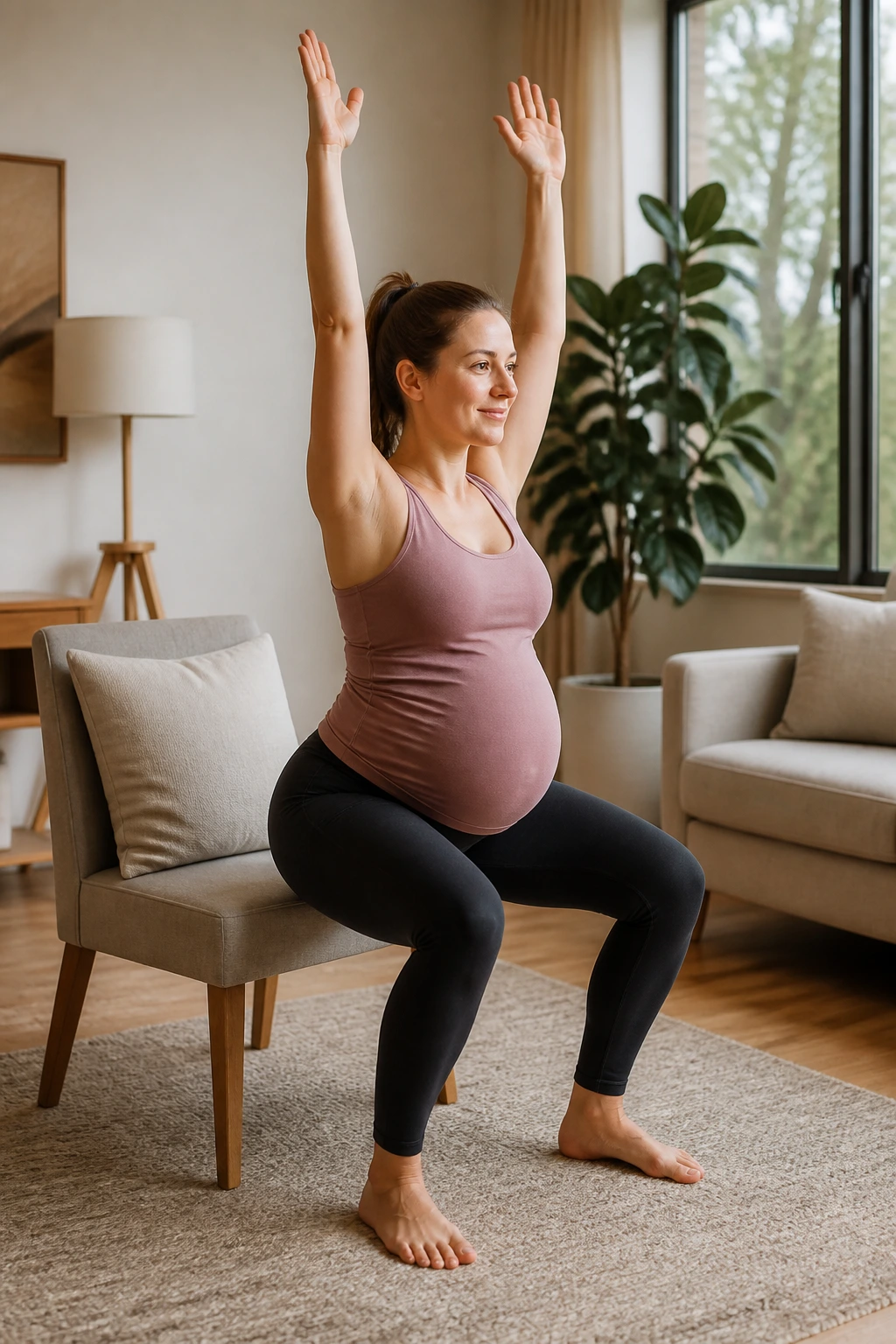
A sturdy chair turns this into a safe, useful full-body move. Chair squats train your legs and glutes first, but the overhead reach wakes up your upper back and shoulders too, which is a nice trade when pregnancy posture starts pulling you forward.
Set your feet hip-width apart, sit back until you lightly tap the chair, then stand and reach both arms overhead if that feels good. If your shoulders are tight or your belly feels crowded, keep the reach at chest height instead. Exhale as you stand. That little breath cue matters more than people think.
How to run it
- 8 to 12 controlled reps
- 2 to 3 rounds
- Hold 2 light dumbbells or use bodyweight only
Keep the chair behind you, not under you. If you drop straight down, your knees do more work than they need to. A smooth sit-back keeps the load where you want it.
2. Wall Push-Ups with Calf Raises
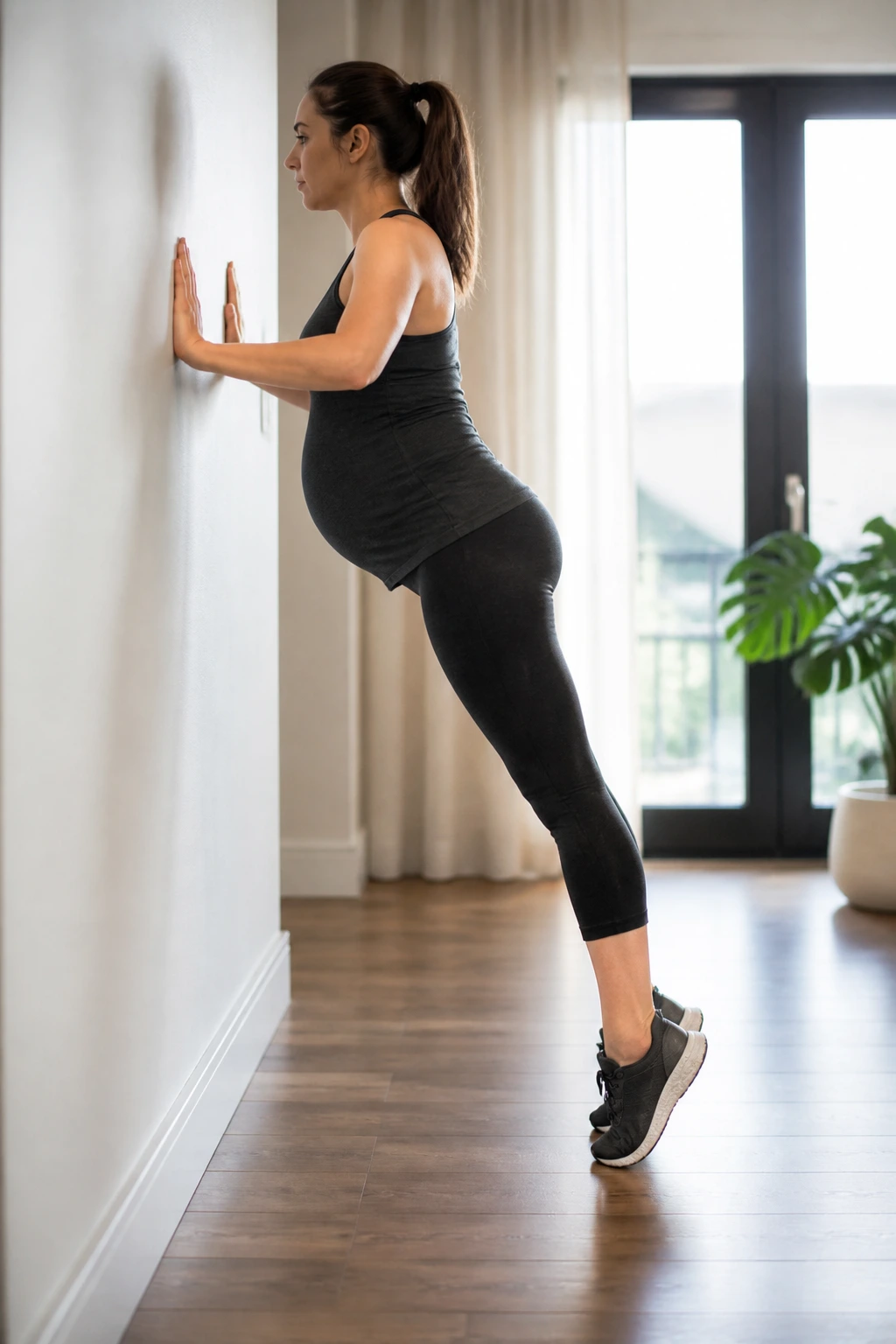
Wall push-ups sound almost too easy, which is exactly why they work. They let you train your chest, shoulders, and triceps without floor pressure, then the calf raise adds a little lower-leg work and a balance check.
Stand a step or two from the wall, hands at shoulder height, body in a straight line. Lower your chest toward the wall, press back, and rise onto your toes at the top. That extra ankle movement helps wake up your whole body, and it keeps the workout from feeling like one tiny upper-body drill.
Use a slower tempo than you think you need. Two seconds down, one second up is enough for most people. If your wrists ache, place your hands a little higher or widen them slightly. Clean reps beat fast reps every time.
3. Reverse Lunges with a Single-Arm Row
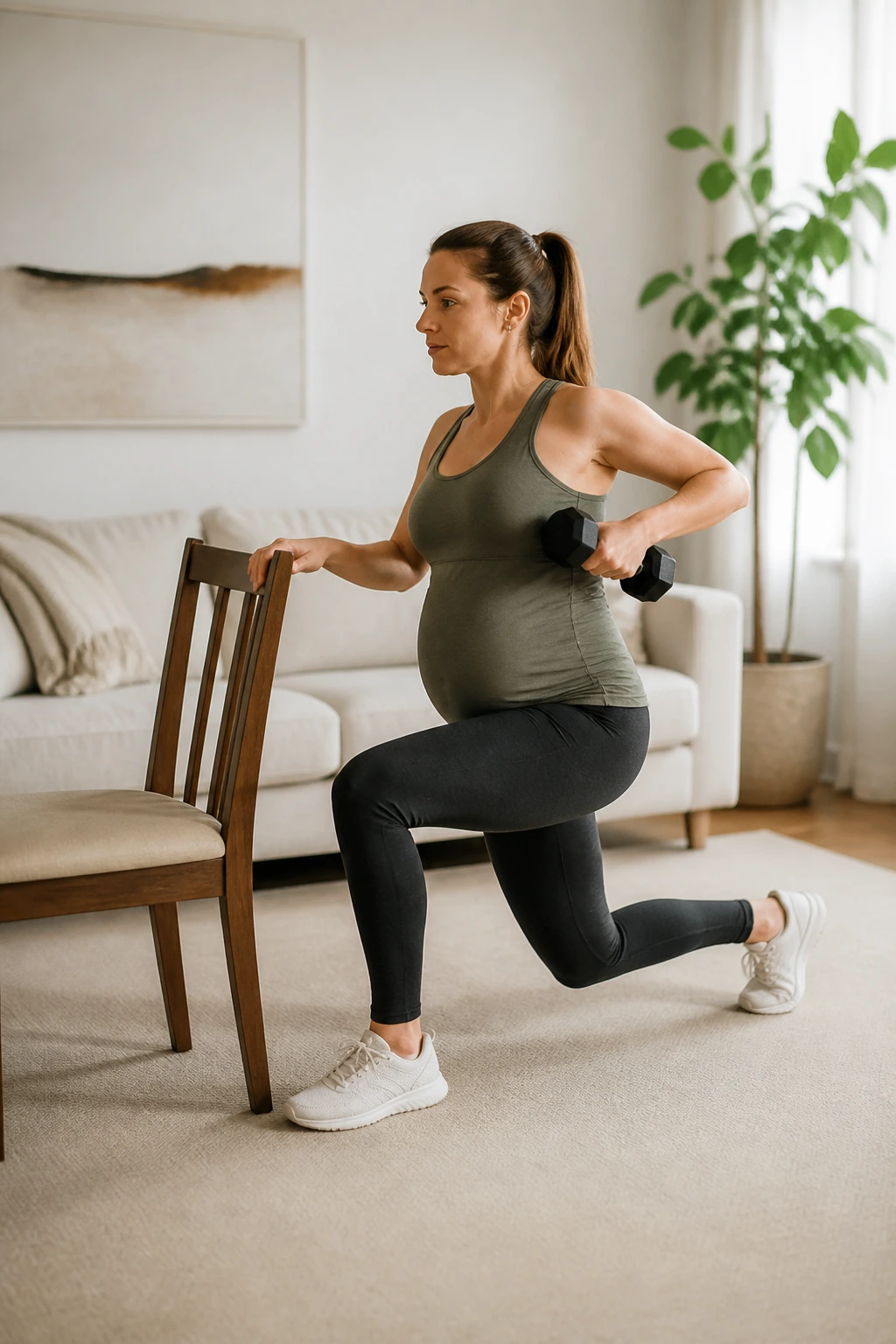
Why this combo? Because one move gives you legs, and the other gives you your back. Reverse lunges are usually kinder than forward lunges when balance is changing, and the row helps fight that rounded-shoulder feeling that shows up fast.
Hold a wall, chair, or countertop with one hand. Step one foot back into a short reverse lunge, then row a dumbbell or band with the opposite arm as you stand. Keep the lunge shallow if your pelvis feels tender. There is no prize for depth.
What to watch for
- Keep the front heel down
- Keep your chest tall
- Use a short step, not a long one
If the motion feels unstable, split the pieces up. Do the lunge first, reset, then do the row. That is not cheating. It is smart.
4. Side-Step Squats with a Mini Band
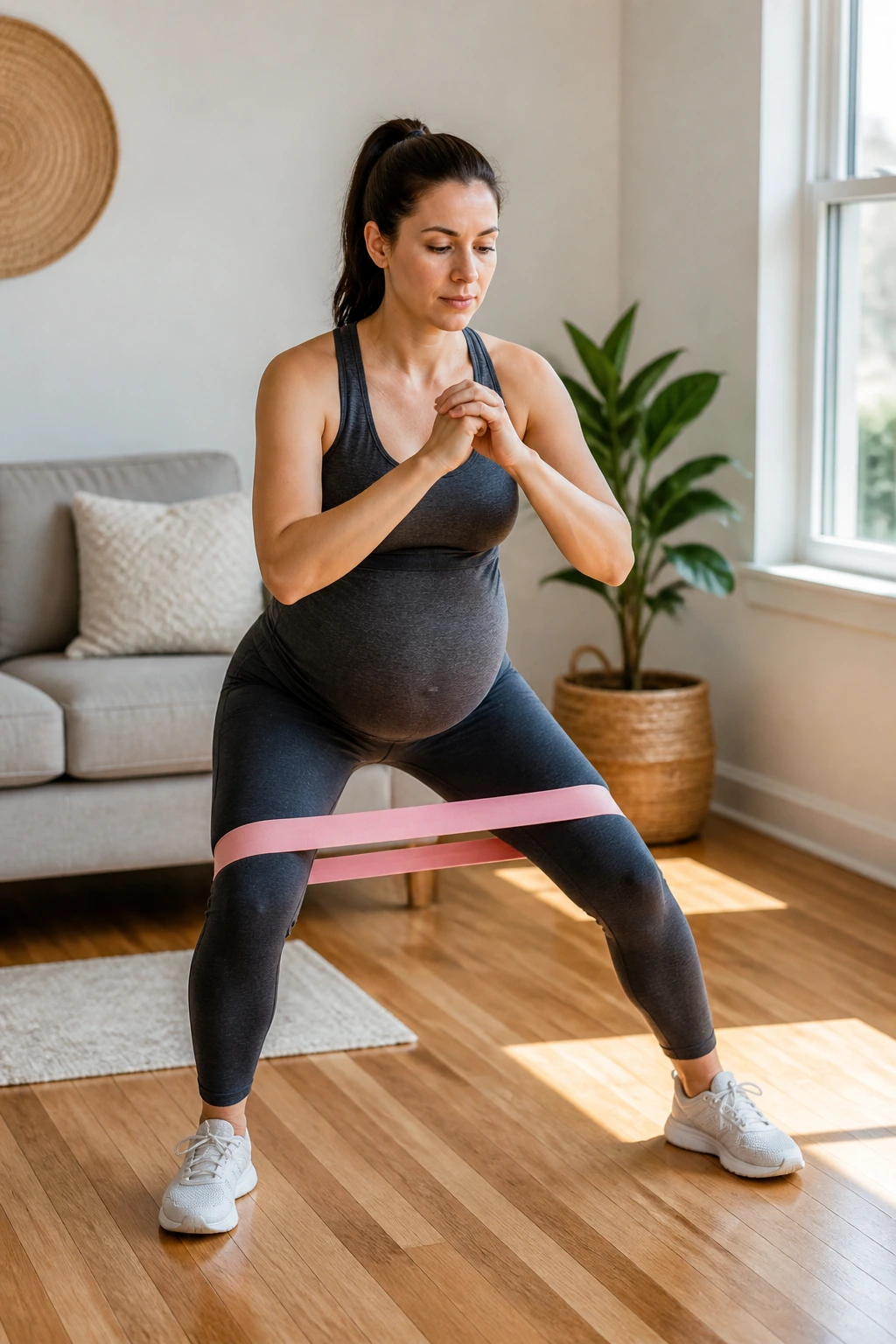
This one looks simple and burns in a sneaky way. A mini band above the knees or at the ankles lights up the hips and outer glutes, which can help with the side-to-side wobble that pregnancy sometimes brings.
Take a small squat, step right, then bring the left foot in without snapping the knees together. Do four or five steps one way, then come back. Add a front raise with light weights if you want the shoulders involved too.
The band should feel snug, not vicious. If it digs into the skin, move it higher. If your knees cave in, shorten the step and slow down. The goal is clean hip work, not a wrestling match with elastic.
5. Step-Ups with a Knee Drive
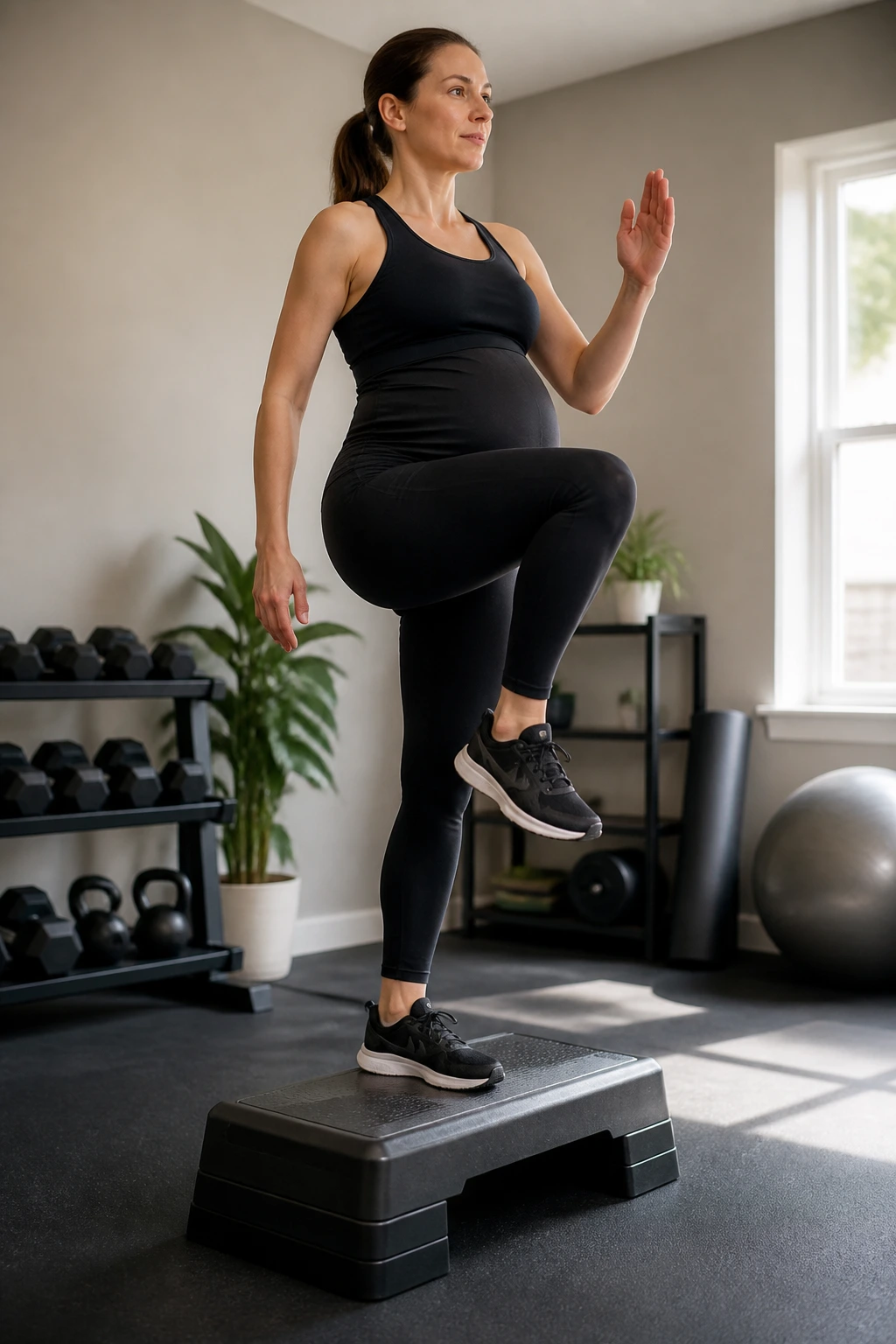
A step, a sturdy stair, or a low box turns into a full-body workout here. Step-ups train the thighs and glutes hard, and the knee drive at the top gives your core and balance a job without asking you to jump.
Place one foot fully on the step, press through the heel, and stand tall with the opposite knee lifted. Lower slowly. Switch sides after 6 to 10 reps. If you want more upper-body work, hold light weights at your sides or add a biceps curl at the top.
Use a step height that feels boring in a good way. Too high, and you start leaning forward or yanking yourself up with momentum. Too low, and you barely feel the work. A low stair is usually enough.
6. Dumbbell Deadlifts with a Row
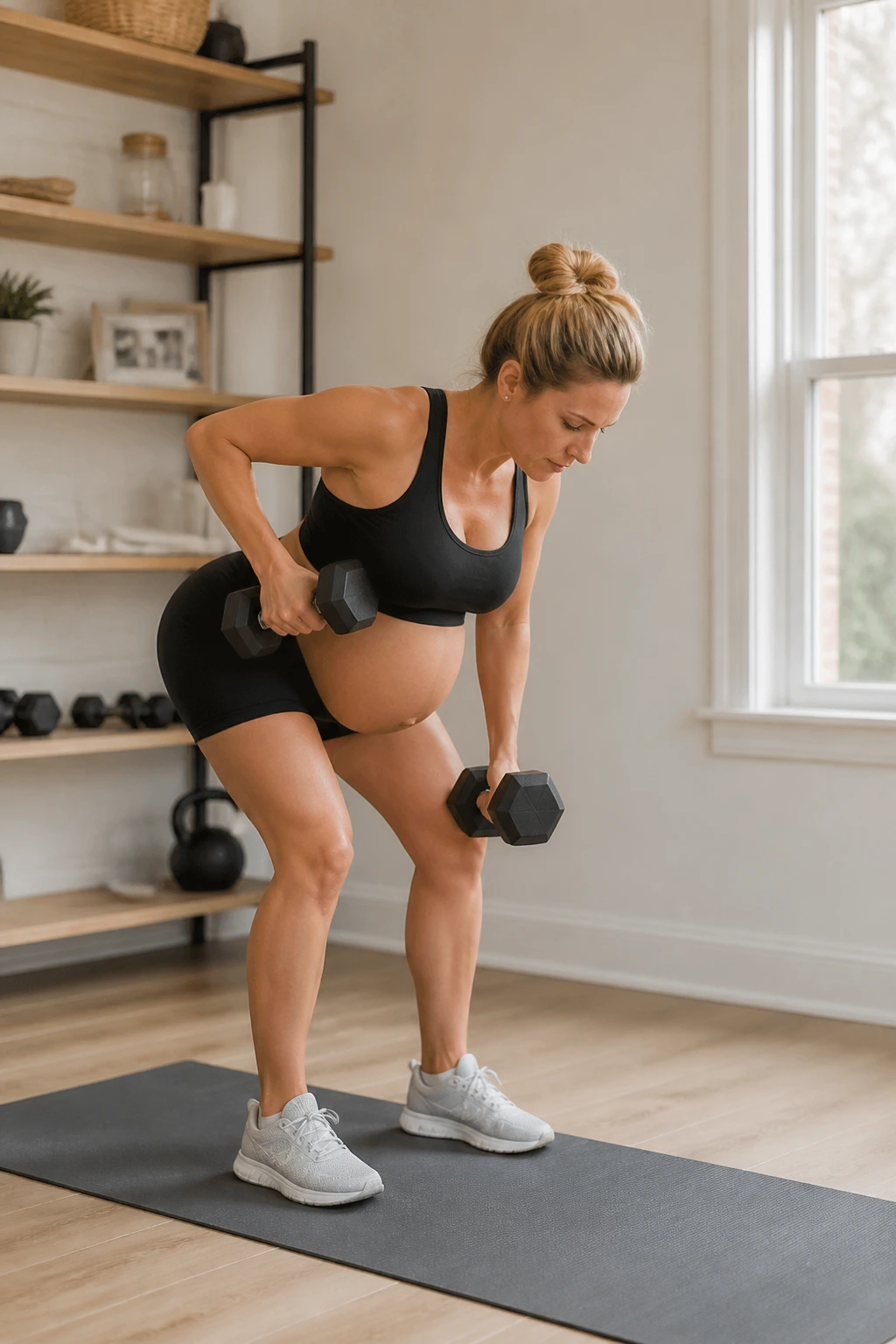
This is one of my favorites because it feels grown-up and useful. Deadlifts train the back of the body — hamstrings, glutes, lower back, and posture muscles — and the row finishes the job by bringing the upper back in.
Hold two dumbbells or even a loaded backpack. Hinge at the hips, keep a soft bend in the knees, lower the weight to mid-shin if that feels fine, then stand and row the weights toward your ribs. The back should stay long. No rounding. No jerking.
Use a mirror if you have one. Not because you need perfect form, but because it helps you see when the hips are drifting too far forward or the shoulders are shrugging. That small check can save your back later.
7. Bird Dog Rows on the Mat
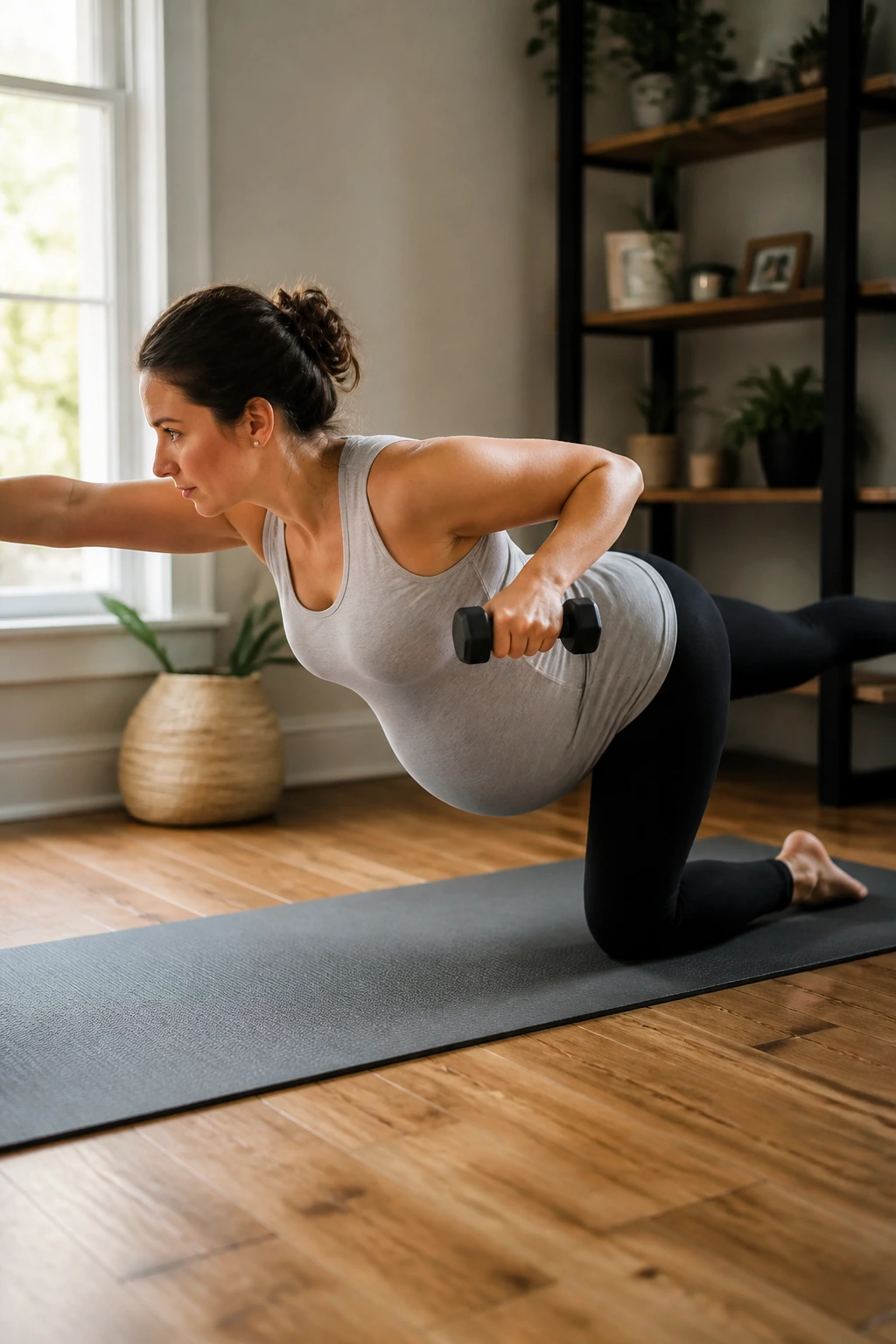
The bird dog is one of those exercises I trust because it respects the belly and the back at the same time. It builds core stability without crunching, and the row makes it feel like a real workout rather than a rehab exercise.
Start on hands and knees. Reach one leg straight back while the opposite arm rows a light dumbbell or band toward your ribs. Hold for a second, then return with control. Keep the hips as level as you can. If your wrists hate the floor, come down onto fists or forearms.
Why it works
The opposite-arm, opposite-leg pattern asks your trunk to stay quiet while the limbs move. That is the whole game in pregnancy core work.
How to get the most from it
- 6 to 8 reps per side
- Slow, steady breathing
- Stop the row if your midsection domes sharply
8. Shadow Boxing with Side Steps
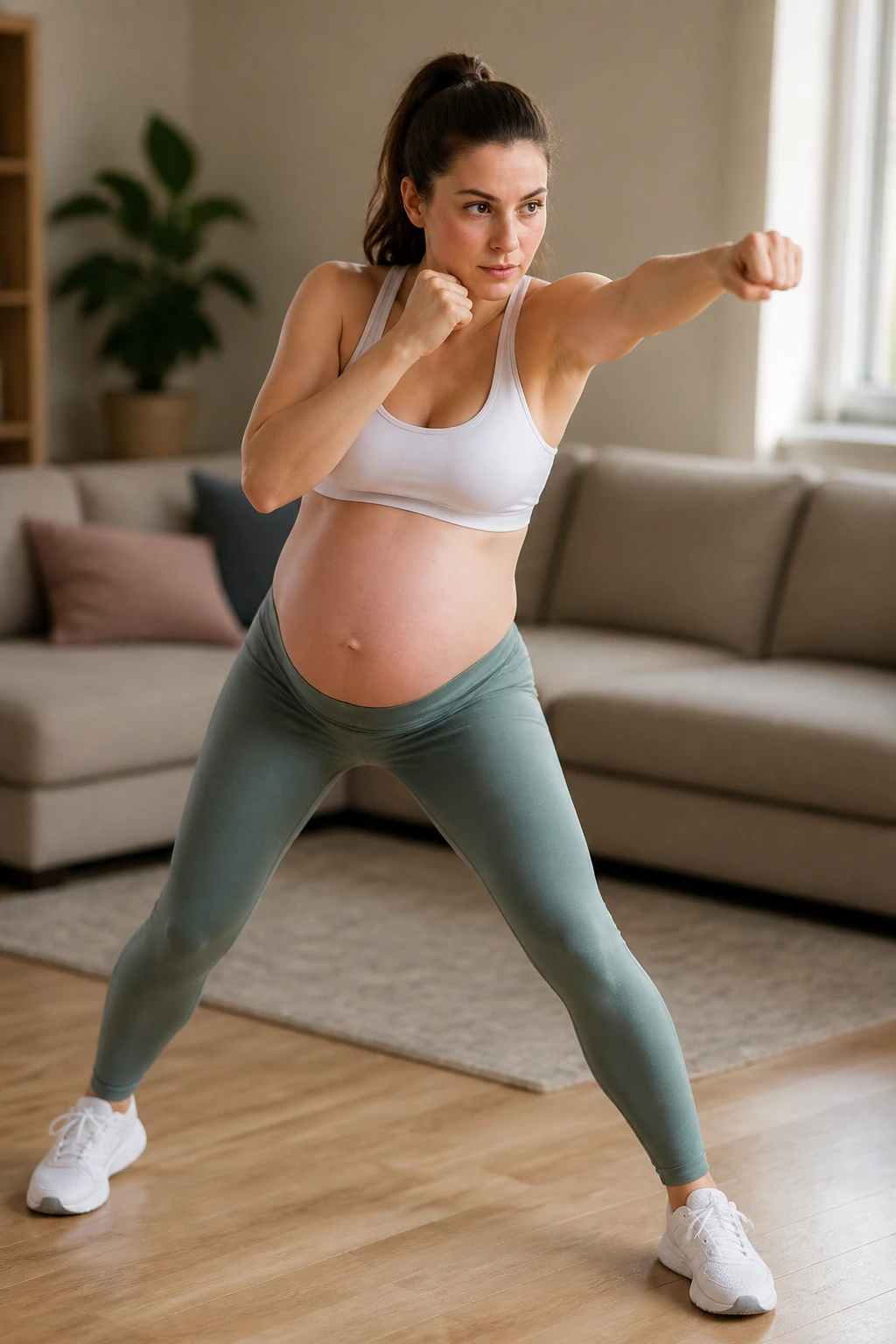
This one is pure practicality. No equipment. No setup. Shadow boxing gives you cardio, shoulder endurance, and a little core work without high impact or awkward floor transitions.
Stand with feet wider than hip-width, knees soft. Jab, cross, maybe add a hook, then take two side steps before the next combo. Keep the punches sharp but the torso controlled. You do not need to twist like you’re in a ring. The feet can do most of the movement.
If you want to push it, work 30 seconds on and 30 seconds off for 6 to 10 rounds. If you feel breathless too quickly, shorten the interval. This is supposed to wake you up, not wipe you out.
9. Farmer Carries with a March
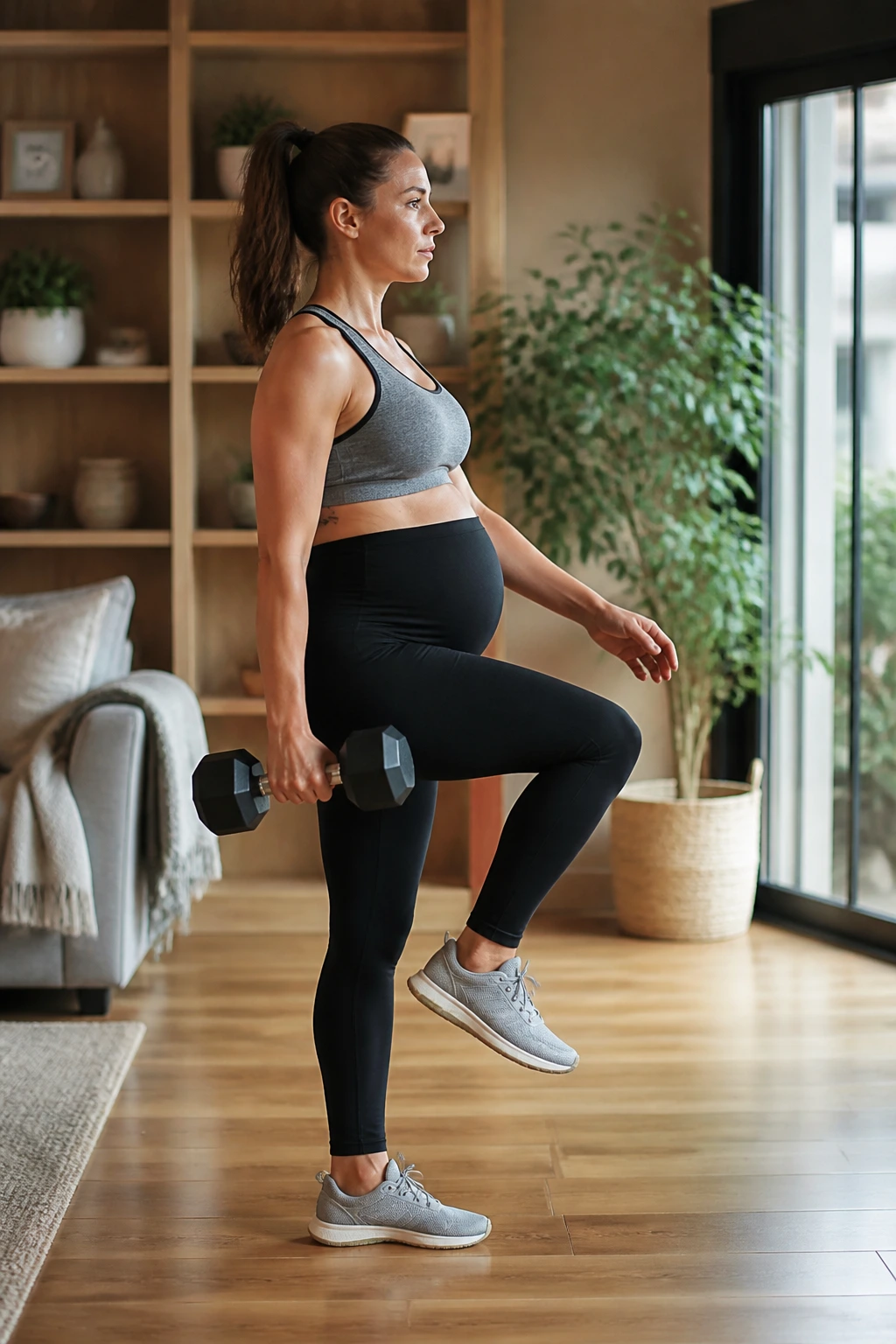
If I had to pick one move that looks almost too ordinary and still matters a lot, it would be this. Farmer carries train grip, posture, and deep core support in a way that carries over into daily life fast.
Hold a dumbbell, kettlebell, or even two grocery bags and walk slowly across the room. Turn around, switch hands, and do it again. If walking space is limited, march in place for 20 to 40 seconds. Tall spine. Quiet ribs. Easy breathing.
A suitcase carry — one weight on one side — adds an extra challenge because your body has to resist tipping. Use it only if it feels steady. If your back starts to lean, the weight is too heavy.
10. Split-Stance Presses and Curls
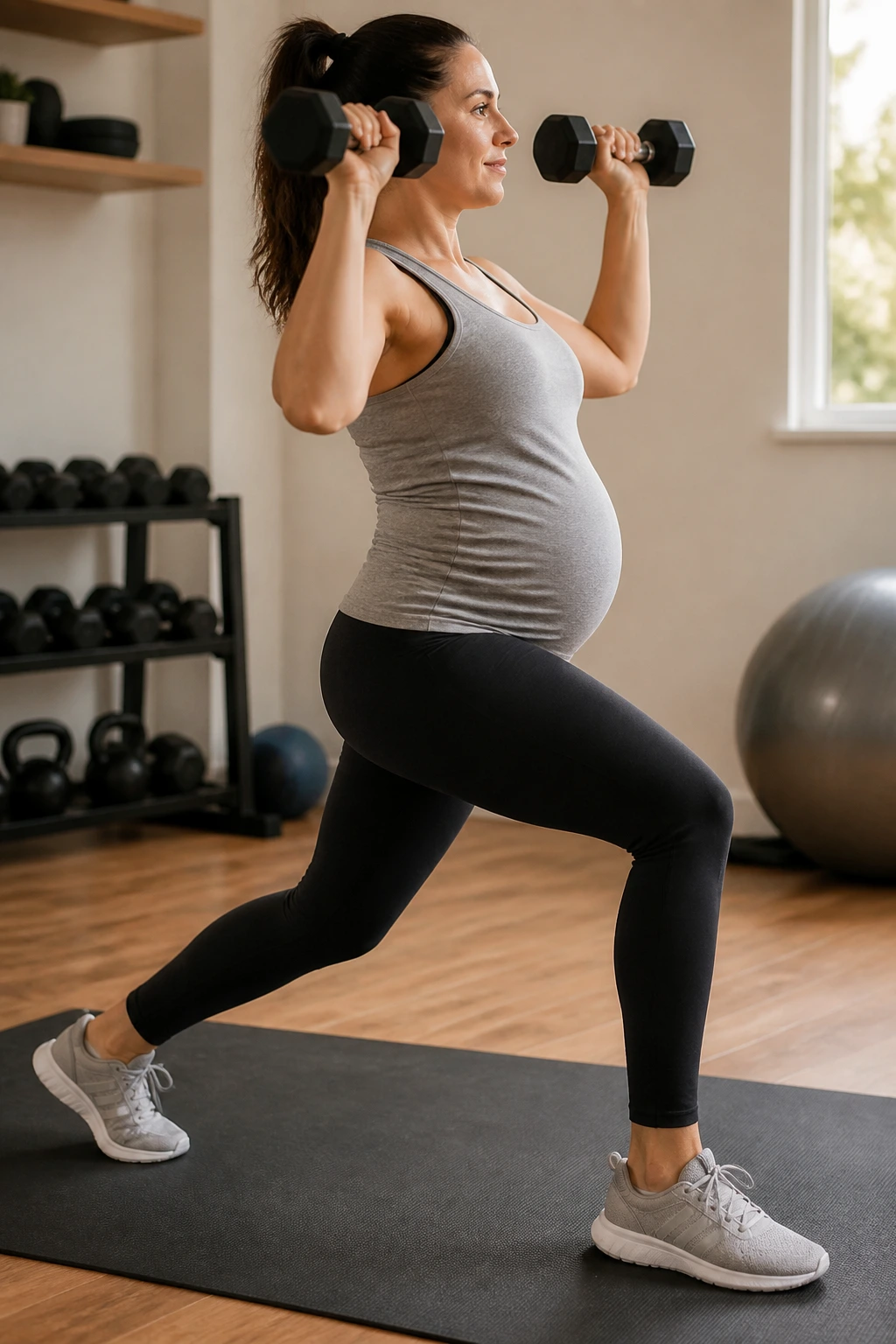
This is a nice choice when standing balance feels a little off. A split stance gives you a wider base, which makes pressing and curling feel more secure than doing them feet together.
Put one foot slightly forward, one back, with both knees soft. Curl the weights up, then press them forward or overhead depending on your shoulders and comfort. Keep the front foot planted. Keep the back heel lightly grounded.
Quick setup
- 8 to 10 reps per side
- Light to moderate weights
- No leaning back when the arms lift
If overhead pressing feels wrong, don’t force it. Press to shoulder height instead. Good pregnancy training respects joints. It doesn’t bully them.
11. Wall Sits with Chest Presses
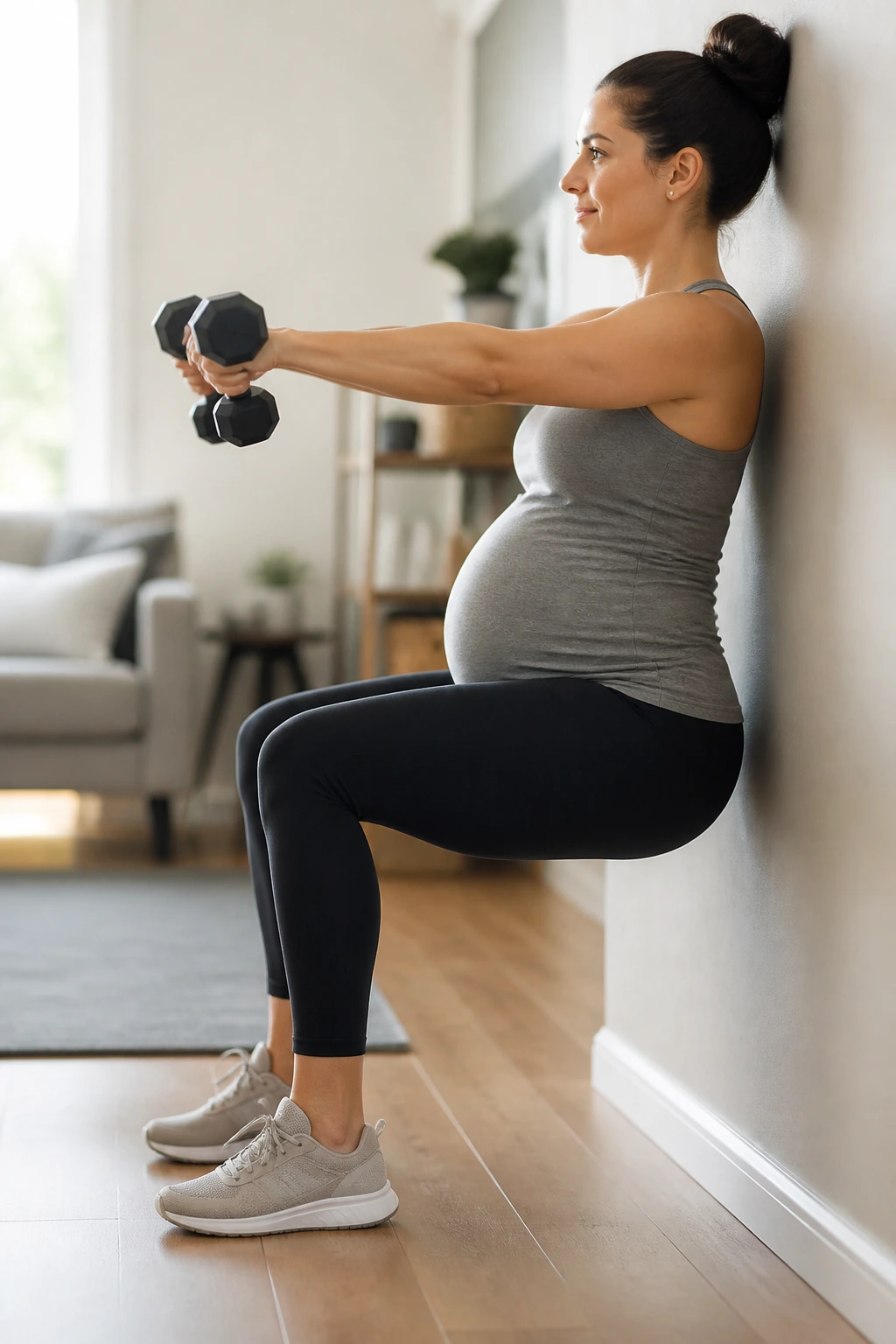
Wall sits can be boring. Fine. Boring works. They’re excellent for the thighs and glutes, and adding a chest press or band squeeze keeps the upper body awake too.
Slide down the wall only as far as feels comfortable — shallow is enough. Hold the position and press a band, dumbbells, or even your palms together in front of the chest for 20 to 30 seconds. Then stand and reset.
If your knees dislike deep bends, move up the wall. If your thighs are strong and you want more, hold a little lower for a shorter time. The best version is the one you can repeat with good form, not the one that makes you swear under your breath halfway through.
12. Lateral Lunges with Reach
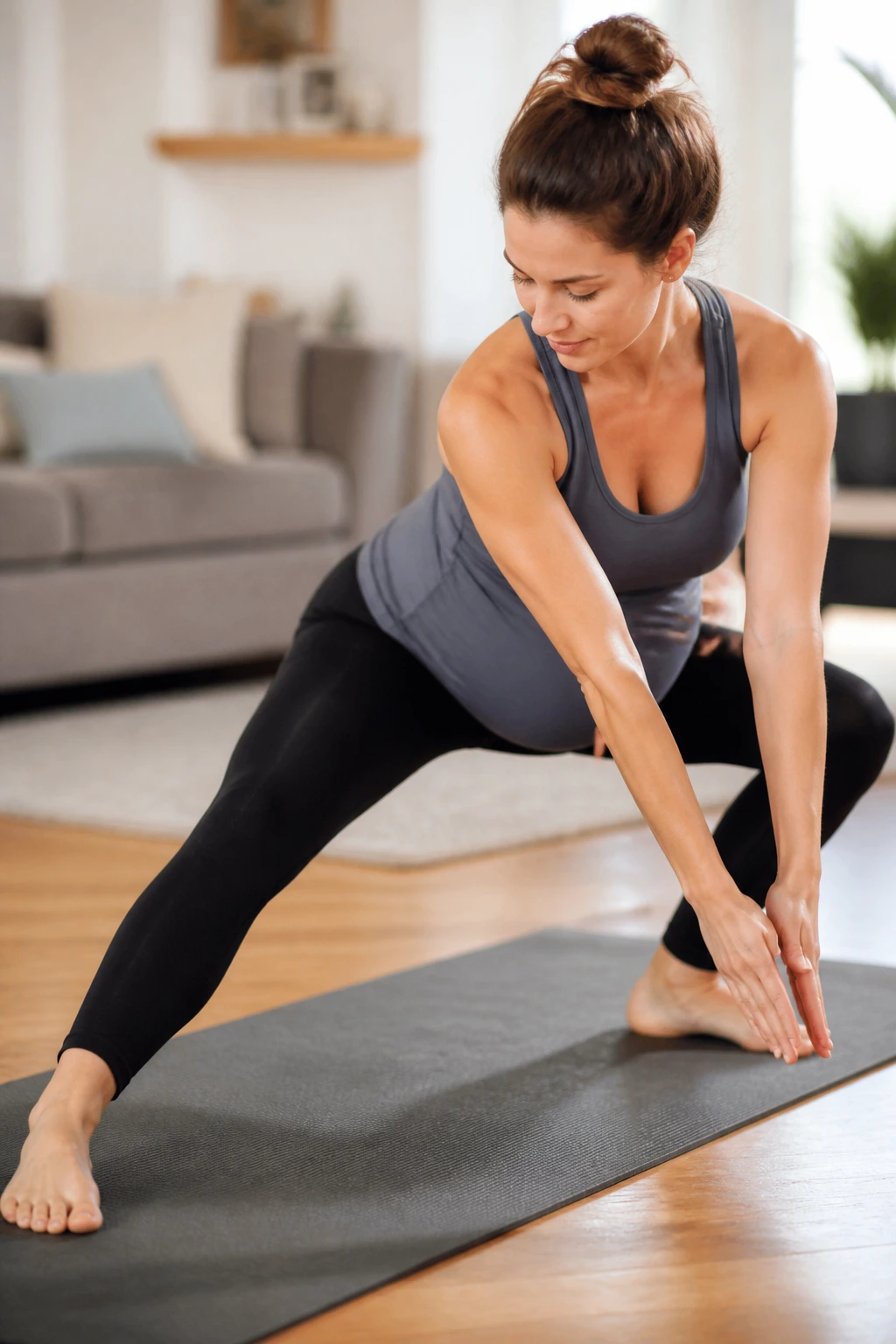
Side lunges are worth the effort because pregnancy often makes the front-and-back plane feel too crowded. Side-to-side work keeps the hips honest and hits the inner thighs in a way many home workouts miss.
Step to the side, bend the stepping knee, and sit the hips back while the other leg stays long. Reach both hands toward the bent foot or take the opposite arm overhead for a bigger stretch. Come back to center with control. Do not rush the return.
Keep the range smaller than your ego wants. A wide lunge looks dramatic, but a controlled medium step usually feels better on the pelvis. If you feel pinching in the groin, shorten the step immediately.
13. Incline Push-Ups with Toe Taps
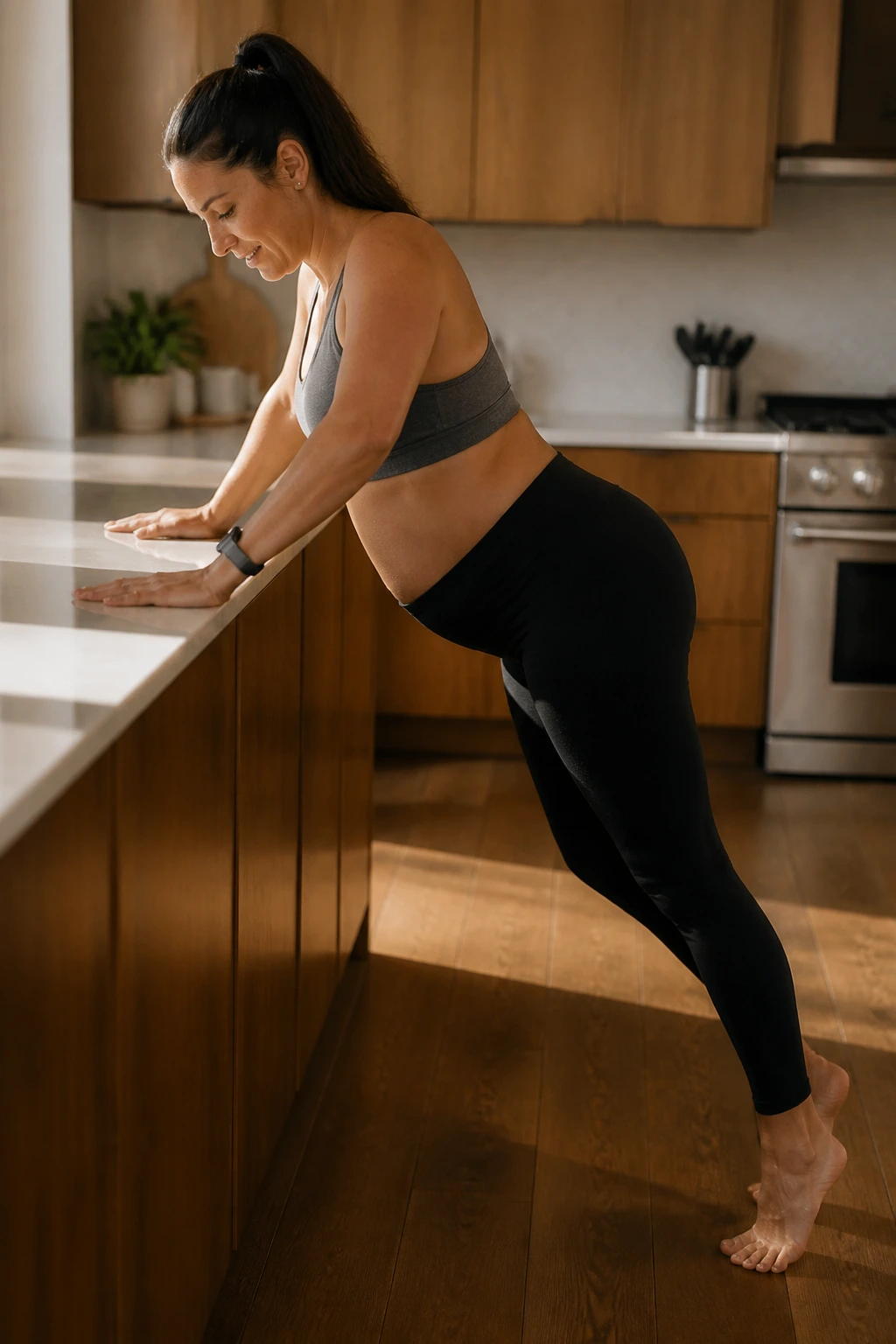
A counter, table, or sturdy bench turns push-ups into a more pregnancy-friendly upper-body drill. The incline takes pressure off the belly and wrists, which makes this one far more usable than floor work for many people.
Do one push-up with hands on the counter. At the top, tap one toe out to the side, then the other. The toe tap brings in a tiny bit of balance and hip work without turning the drill into a circus trick. Keep the hips square. Keep the ribs from flaring.
If the toe tap feels fussy, skip it and simply walk the feet in place between push-ups. That still keeps the blood moving and gives the shoulders a break between reps.
14. Half-Kneeling Presses and Side Bends
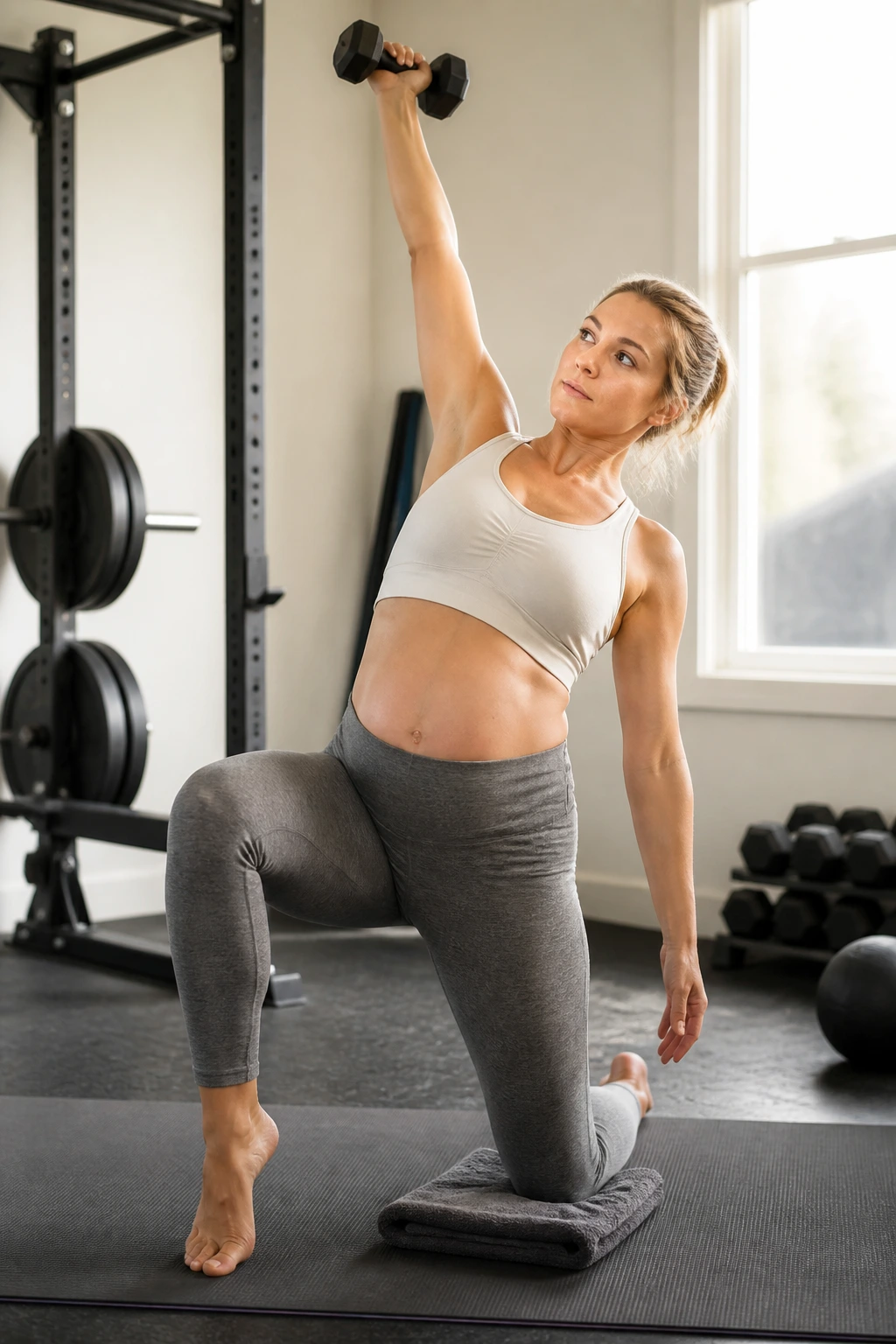
Half-kneeling looks elegant, but the real value is stability. It lets one hip work while the other side gives you a little support, which can feel great when standing balance is changing.
Put one knee on a folded towel or cushion, other foot in front. Press a dumbbell or band overhead, then lean a few degrees away from the working side. Go slow. Come back to center before repeating. If kneeling feels annoying, stand in a split stance and do the same pattern.
What makes this different
The half-kneeling position quietly checks hip flexors, glutes, shoulder strength, and trunk control all at once. That is a lot from one setup.
How to keep it safe
- Pad the knee well
- Avoid a deep side bend
- Exhale on the press
15. Standing Wood Chops and Marches
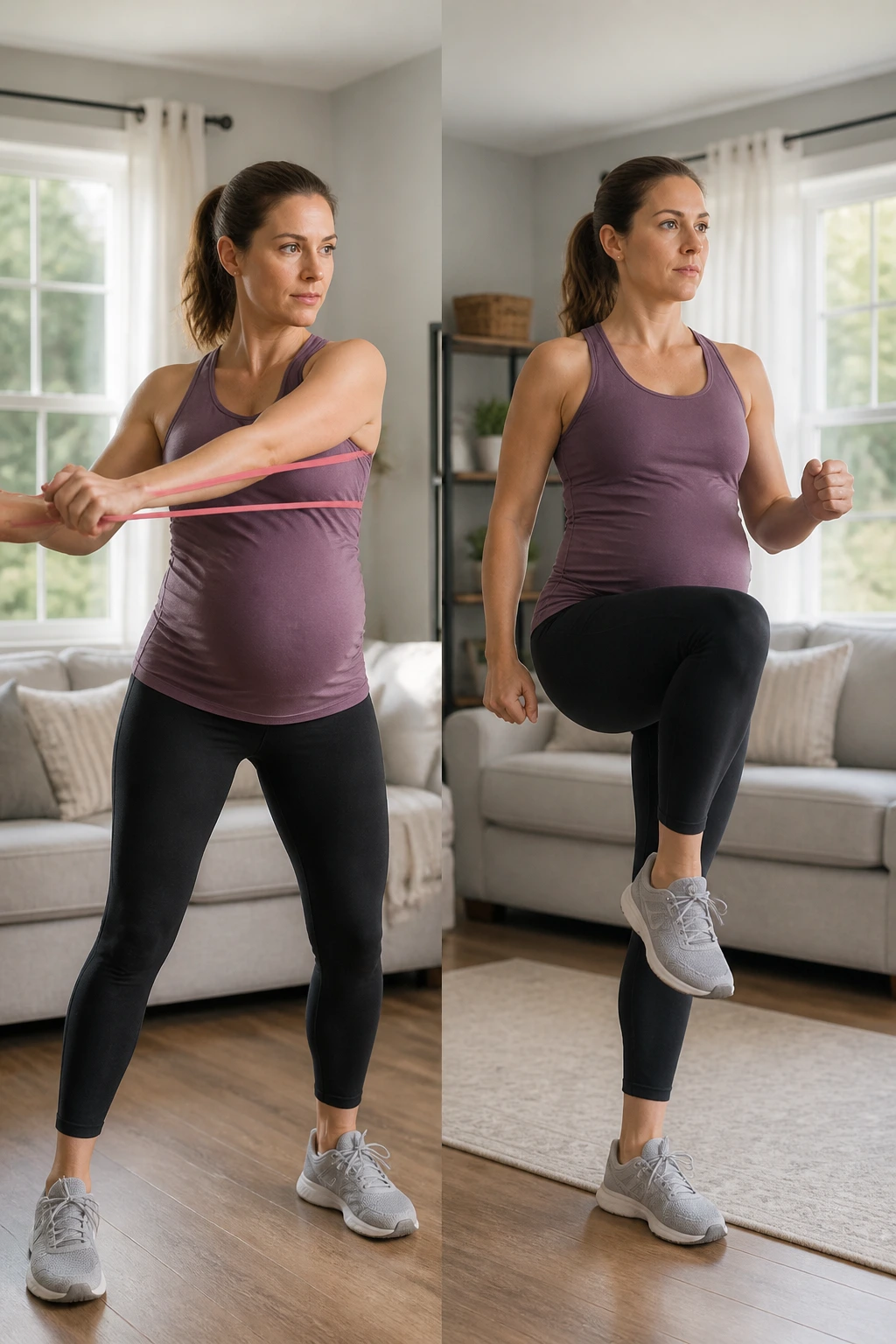
Wood chops bring a little rotation into a pregnancy workout, which is useful because life rarely happens in a straight line. The key is control, not force. You want the torso to turn a little, not whip around.
Hold a band or light weight with both hands and move it diagonally from one shoulder line toward the opposite hip. Then march in place for 20 seconds. The march keeps the heart rate up and gives your core a reset before the next set.
If your belly feels tight or domed during the chop, shorten the range and slow the speed. That is usually the fix. You do not need a huge swing to get the benefits.
16. Quadruped Hip Extensions with Arm Reach
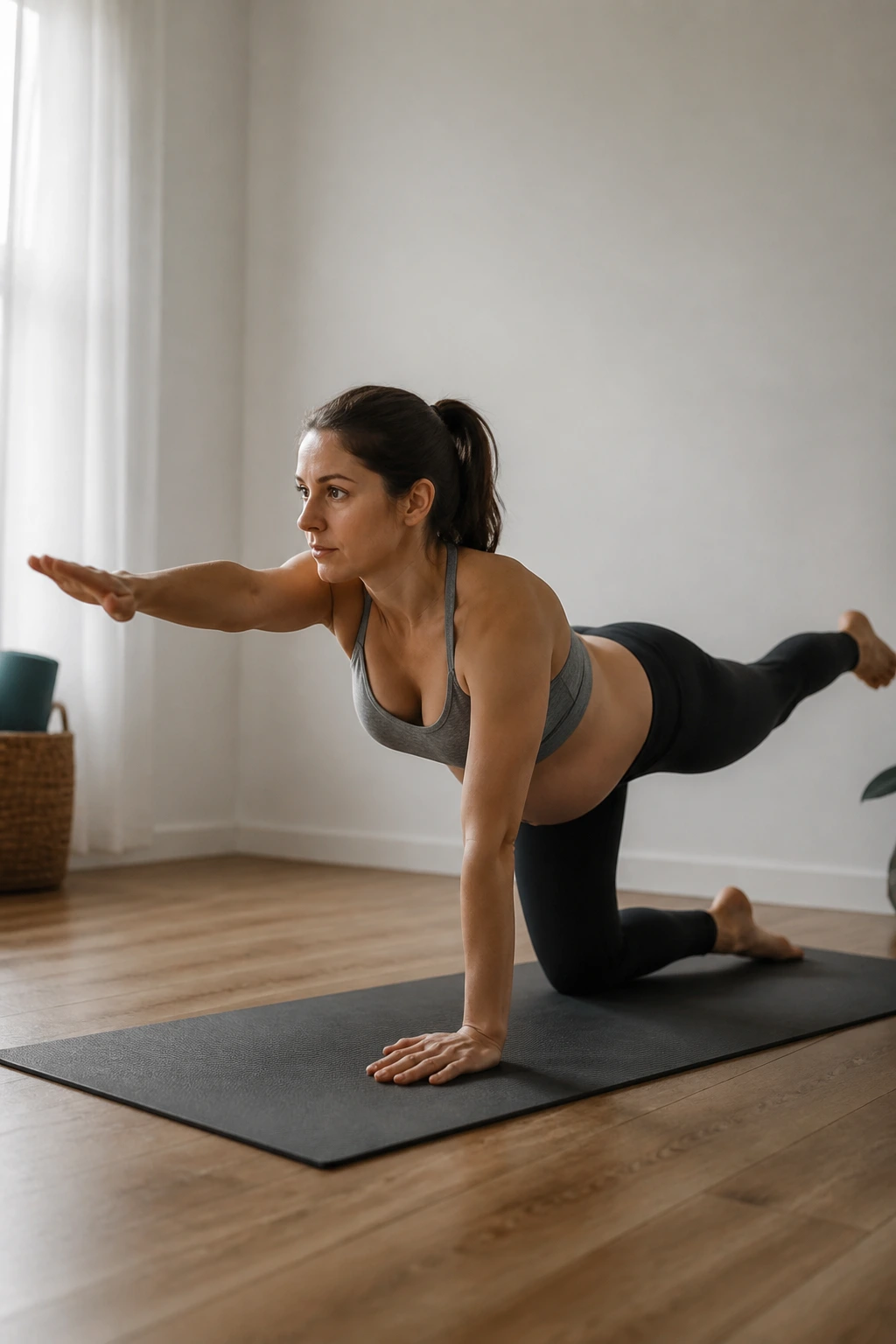
This is a floor-based option that feels friendly even on tired days. It works the glutes, upper back, and core without compressing the belly, which is why I keep coming back to it.
From hands and knees, extend one leg back and the opposite arm forward. You can hold it, pulse it, or move in a slow reach-and-return. Use a folded mat under the knees and a small pillow under the wrists if needed.
If your balance is shaky, keep the arm or leg lower. A tiny lift still counts. The trick is to keep the torso from rocking side to side. Smooth beats high.
17. Stability Ball Squats with Bicep Curls
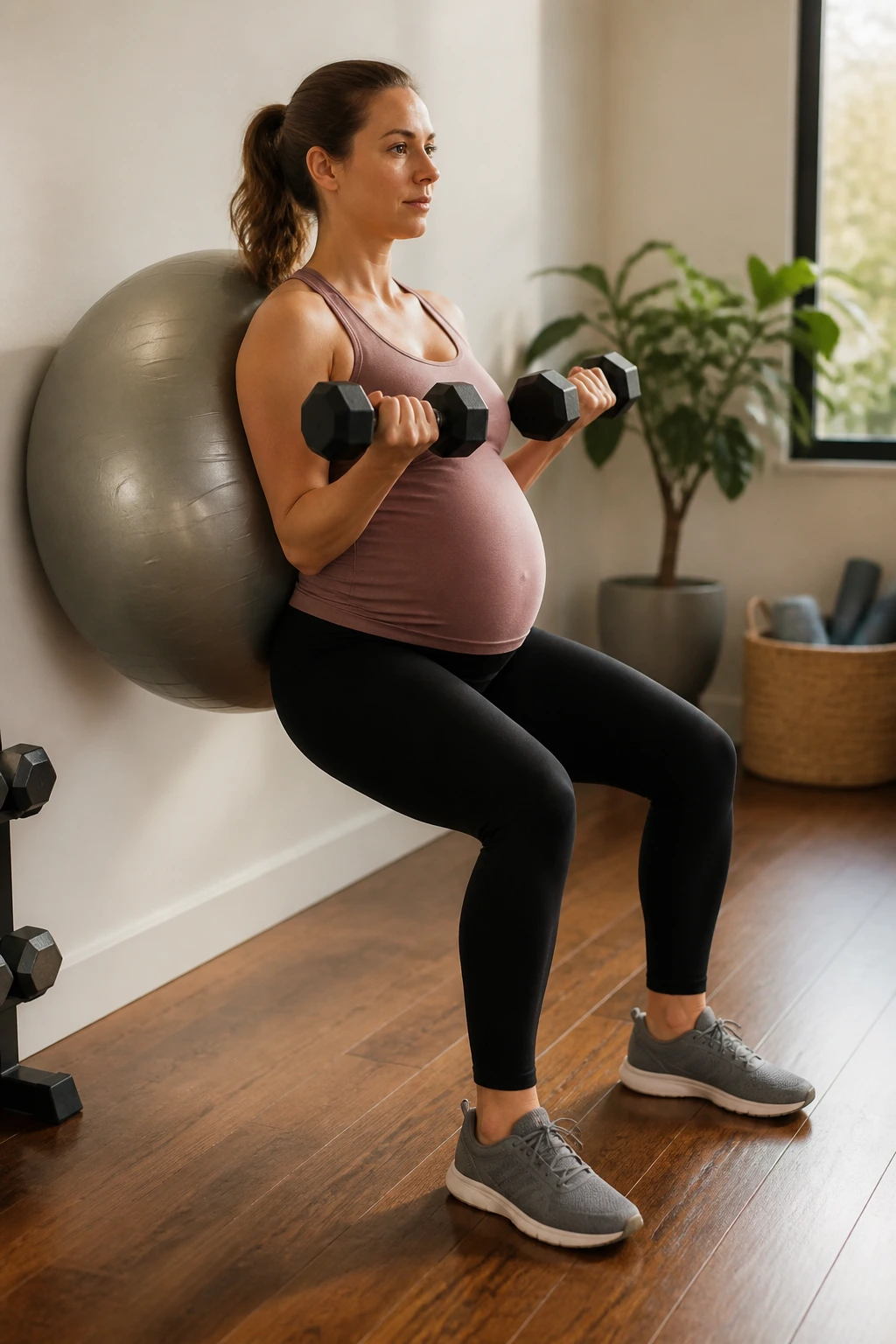
A stability ball against the wall changes the feel of the squat in a nice way. It gives your back a bit of support and makes it easier to keep the chest open while your legs do the work.
Place the ball at mid-back, feet a step forward, and squat down until the thighs feel loaded but not crushed. As you rise, curl the weights. The curl is optional, but it turns the move into a cleaner full-body drill.
Use a shallow squat if you’re early in the set and a deeper one only if your knees and pelvis are fine with it. If the ball slips, stop and reset. A stable setup matters more than a fancy range of motion.
18. Backpack Hinges with Rows
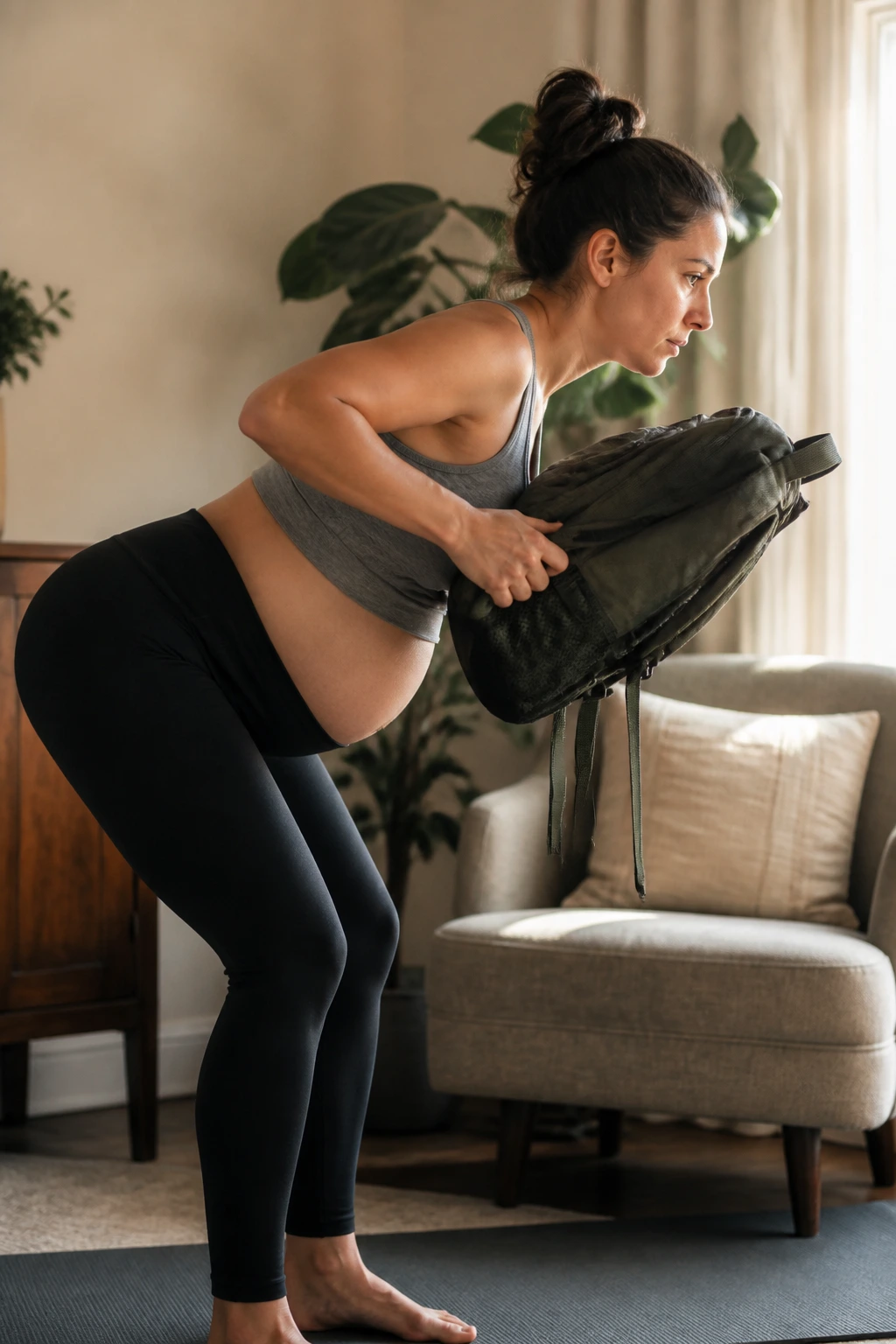
A backpack filled with books can do more than carry snacks. It becomes a useful home-training tool for hinging and rowing when dumbbells are scarce.
Hold the backpack by the top handle or wear it with both hands on the straps. Hinge at the hips, keep your back long, and row the pack toward your lower ribs if you’re holding it. If it feels awkward, set the backpack on a chair between sets and pick it up from there.
This one works well when you want posterior-chain work without a lot of setup. It’s not glamorous. It does the job.
19. Cross-Body Knee Drives with Punches
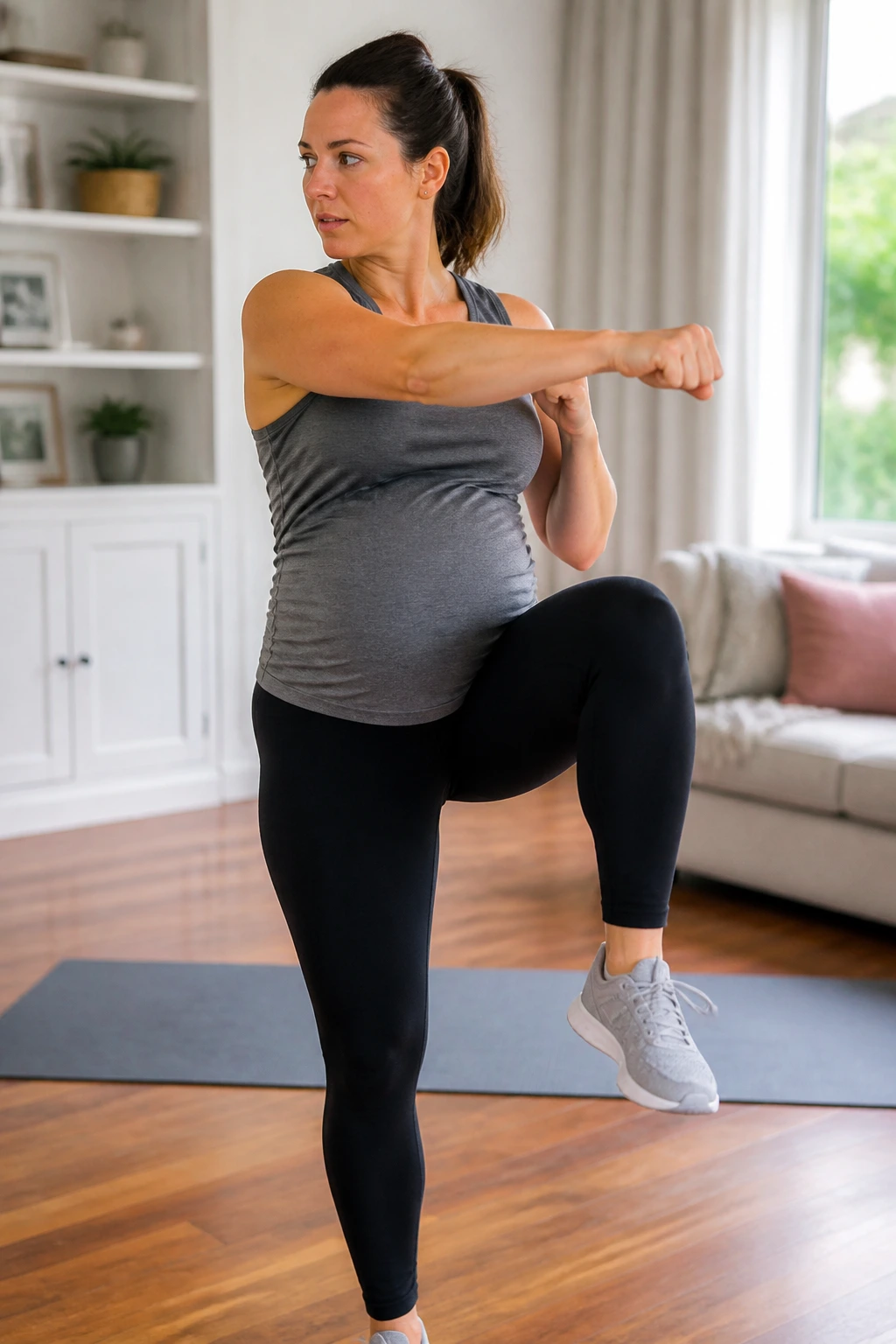
This is a little cardio, a little core, a little coordination. Cross-body knee drives wake up the obliques and hip flexors, while the punches keep the upper body busy.
Stand tall, bring one knee up toward the opposite elbow, then jab or cross with the opposite hand. Switch sides rhythmically. Keep the movement brisk but not sloppy. The torso should stay upright; you are driving, not crunching hard.
If balance feels off, do the knee drive lower and keep one hand on a wall between combinations. That tiny bit of support can make the move feel much better, especially later in pregnancy.
20. Mini-Band Walks with Shoulder Presses
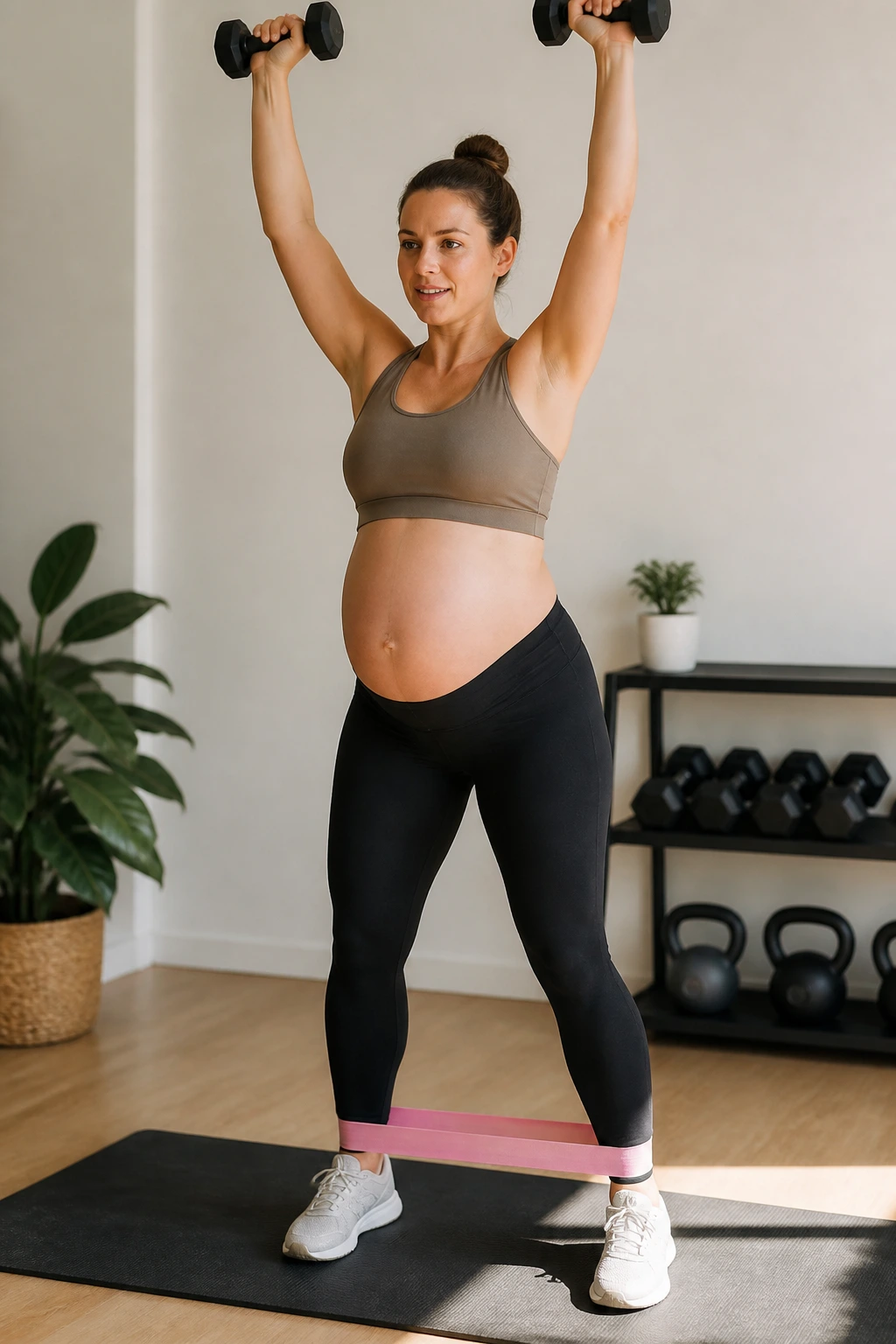
This pairing is one of those quiet workhorses that sneaks up on you. The band walk feeds the glutes, and the shoulder press gives the upper body a separate job so the workout feels balanced.
Take three to five steps right, three to five steps left, then press light weights overhead for 8 to 10 reps. Keep the knees soft and the feet pointed mostly forward. If overhead pressing is too much, press to shoulder height or swap in front raises.
The whole thing should feel crisp. If the band walk turns into a hip wiggle, shorten the steps. If the presses make you lean back, lower the weight. Simple fixes.
21. Chair-Supported Single-Leg Hinges
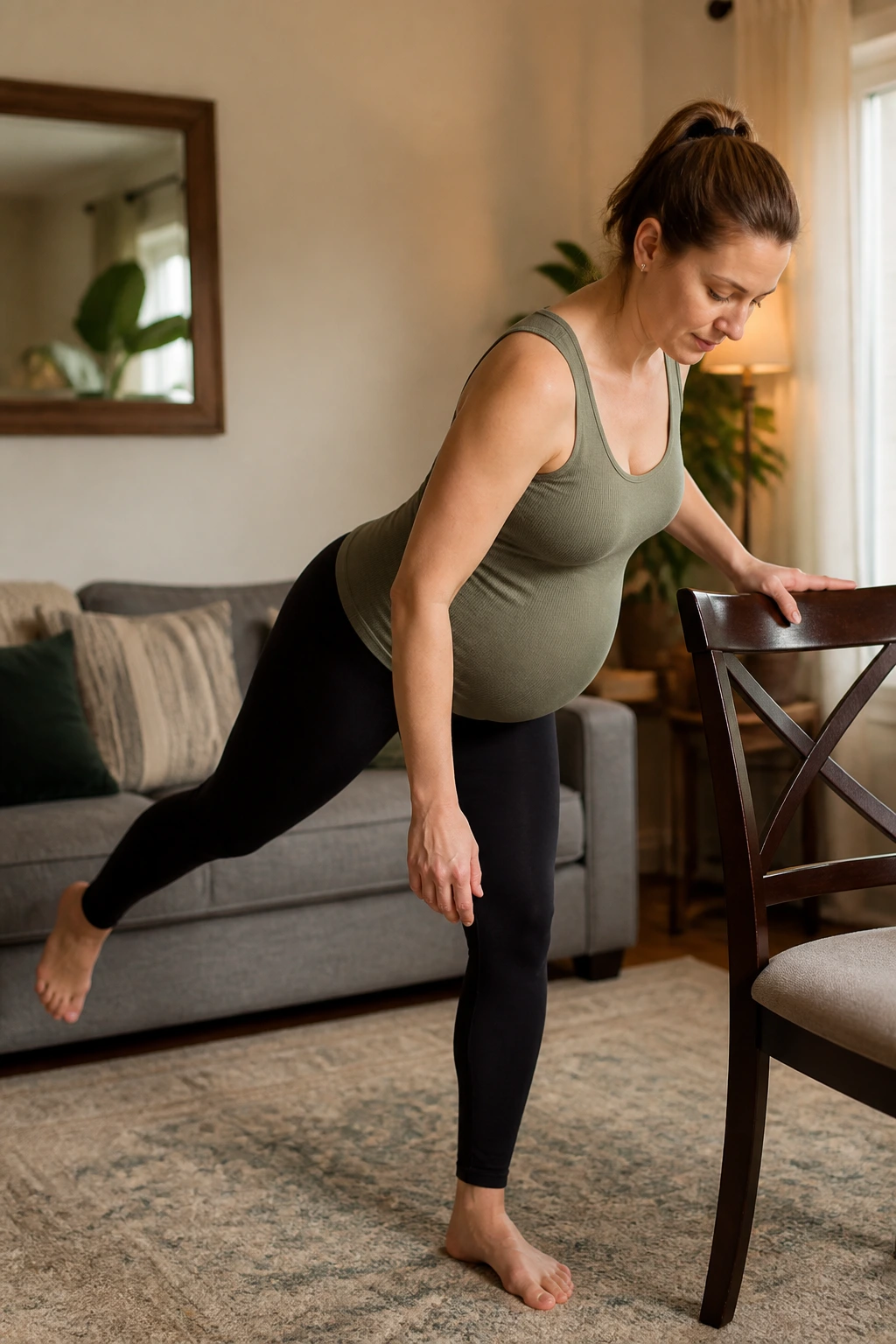
Balance can get weird during pregnancy. That’s normal. A hand on a chair turns a single-leg hinge into a safe strength drill instead of a wobble test.
Stand beside a chair, hold it lightly, and hinge forward on one leg while the other leg floats behind you. Come back to standing with control. The working hamstring and glute should feel it before your lower back does.
Good cues
- Keep the hips square
- Reach long, not low
- Use a shallow hinge at first
If the standing leg shakes, that is fine. If your pelvis twists hard, reduce the range. Stability first. Drama later.
22. Seated Presses with Core Brace
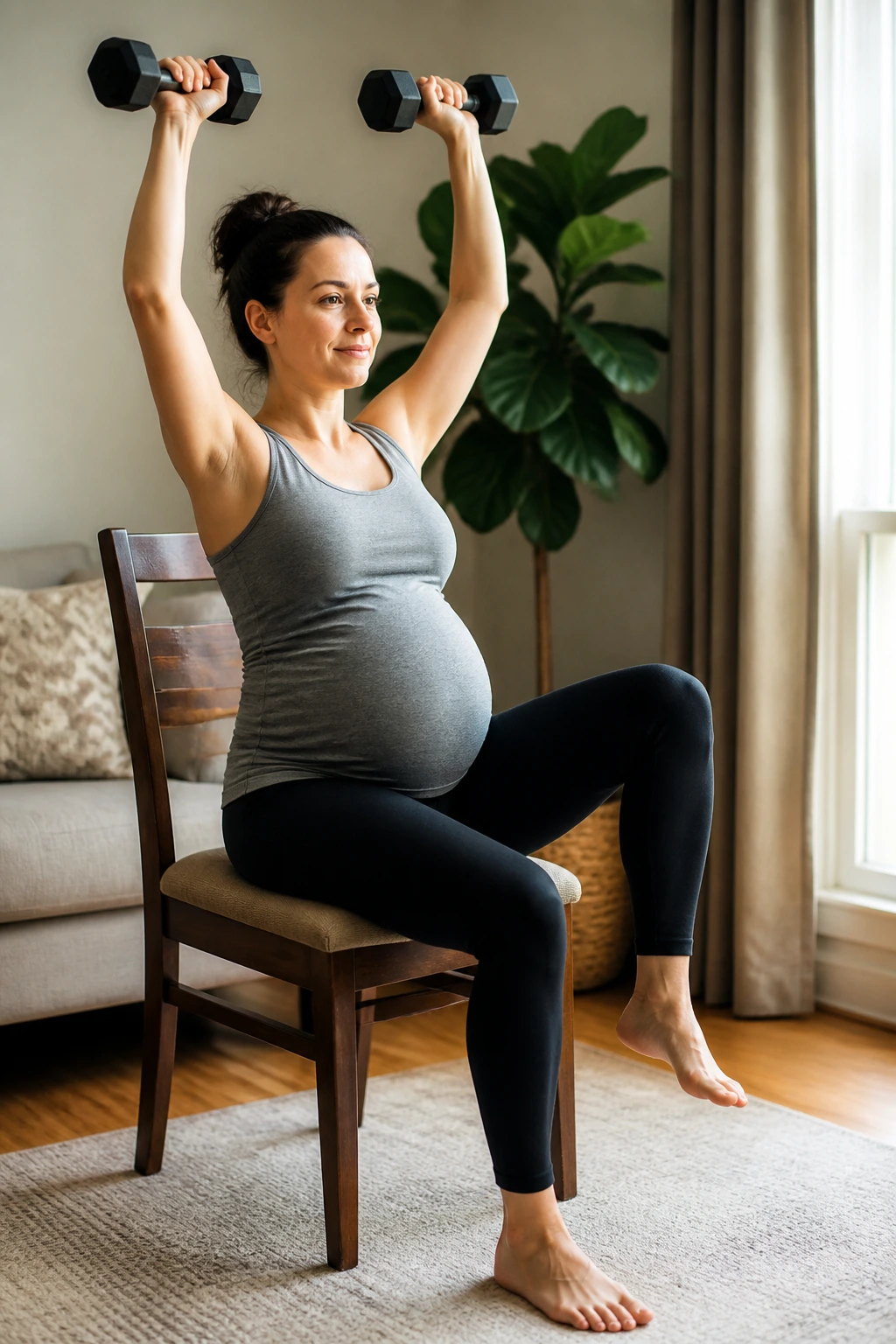
Some days standing feels like too much. A chair gives you a workable plan. Seated presses still train shoulders and trunk control, and a seated march or knee lift can bring the lower body in too.
Sit tall near the front of a chair, feet flat. Press light dumbbells overhead, then lift one knee at a time without slumping. Alternate for 8 to 10 reps each side. Keep the ribs from popping up. Keep the breath smooth.
This is a smart option when your feet are swollen, your back wants a break, or you simply want to train without worrying about balance. There’s nothing lazy about choosing the easier setup. Sometimes it’s the better one.
23. Squat to Side Leg Lift
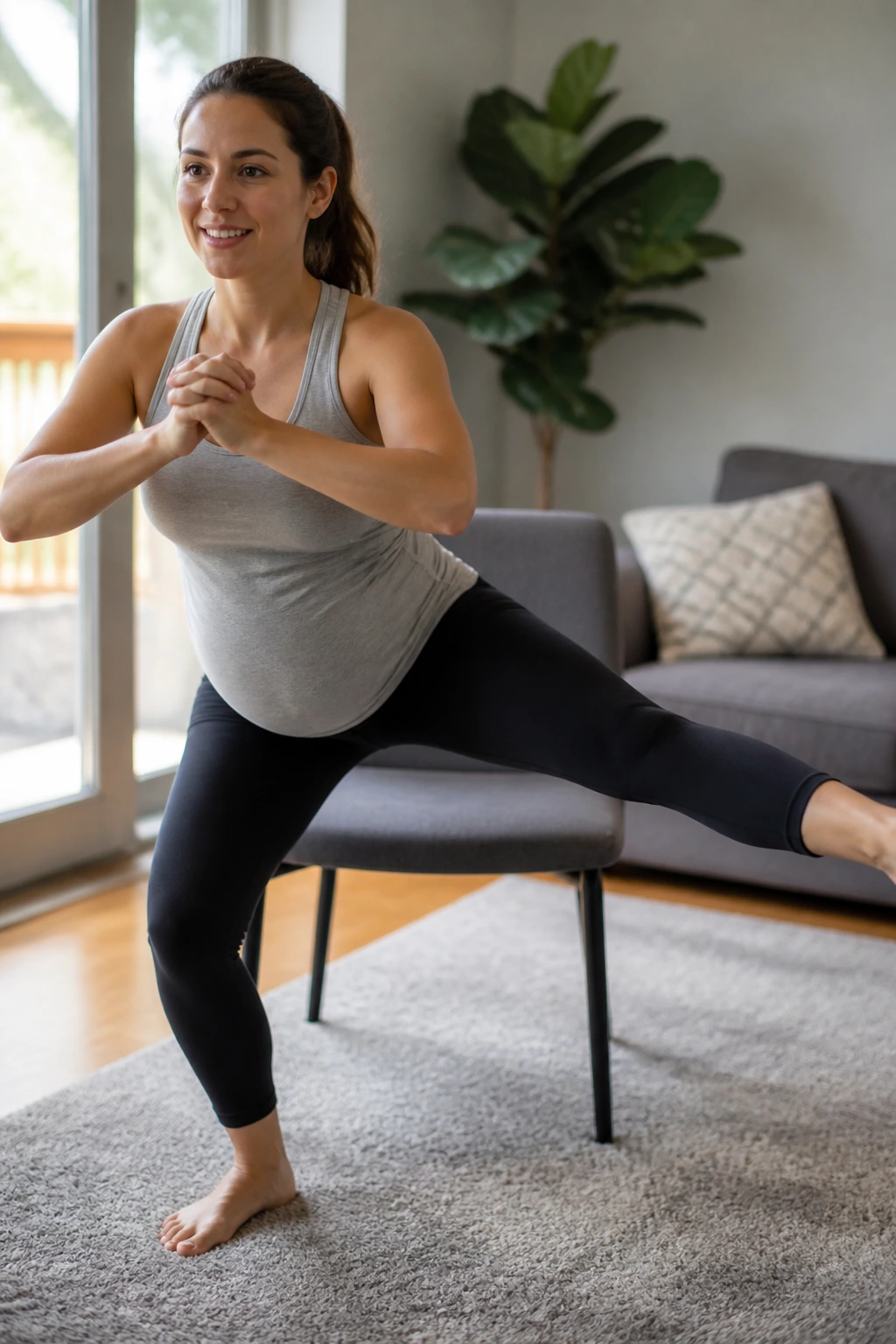
This one looks cheerful and works harder than it seems. The squat handles the lower body, while the side leg lift brings in hips and balance without a big impact cost.
Lower into a comfortable squat, stand, then lift one leg out to the side with a small controlled motion. Reset and repeat on the other side. Keep the torso tall and the lifted foot below hip height. If you swing the leg, you’ve gone too far.
A chair behind you can make this safer. Tap the chair lightly, stand, then lift. That version is often the sweet spot when energy is down or the pelvis feels sensitive.
24. Wall Angels with a March
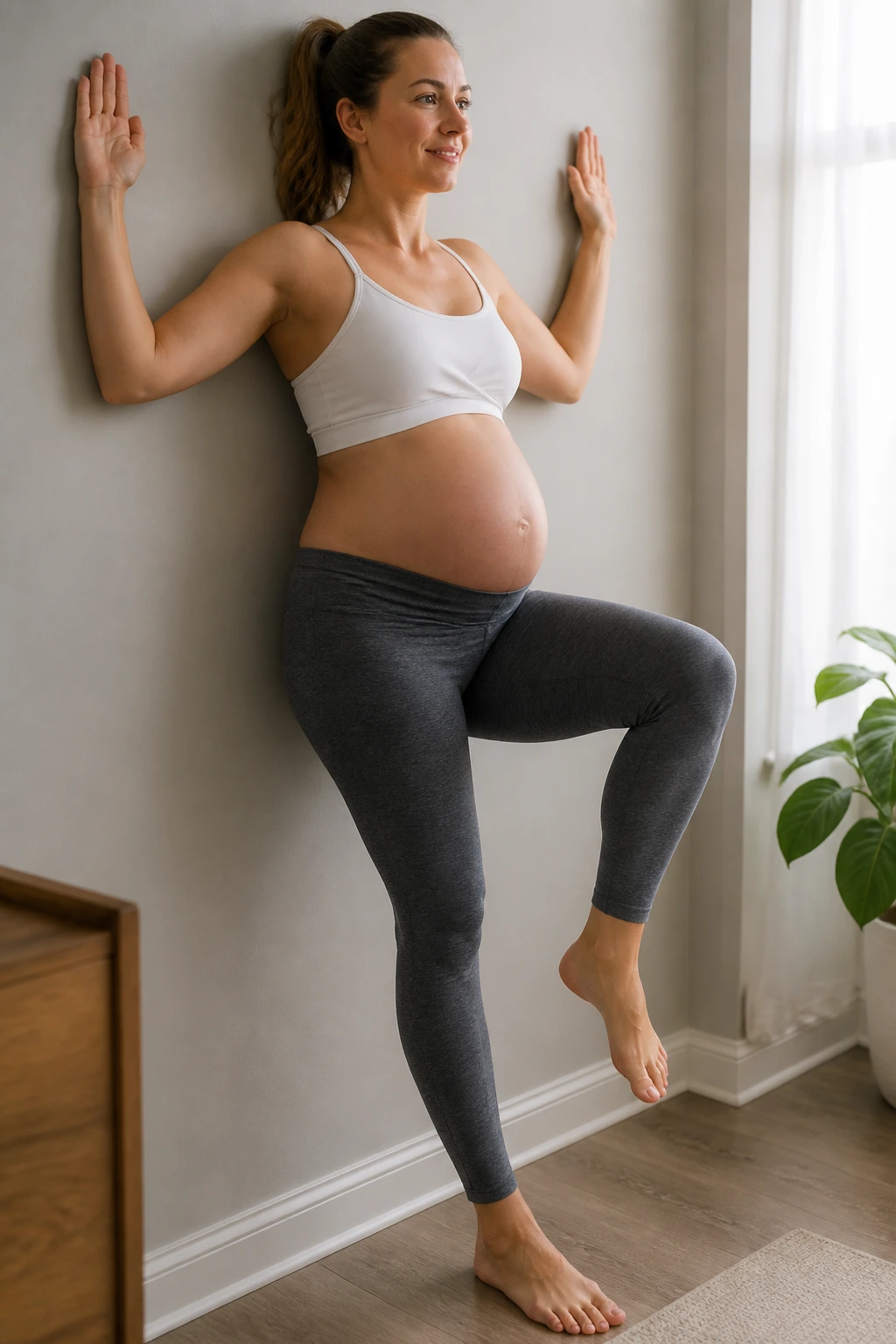
Wall angels are not flashy, and I love them for that. They open the upper back and shoulders, which can feel glorious when the chest is tight from posture shifts and extra front-of-body load.
Stand with your back against a wall if you can, feet a few inches forward. Slide the arms up and down like you’re making a snow angel, then march slowly in place. If your back lifts from the wall, bring the hands a little lower. If the wall feels awkward, do the same arm motion standing away from it.
This is a lower-intensity workout, but it still belongs in the pile. Pregnancy training does not have to be loud to count.
25. Cat-Cow, Hip Circles, and Breathing Reset
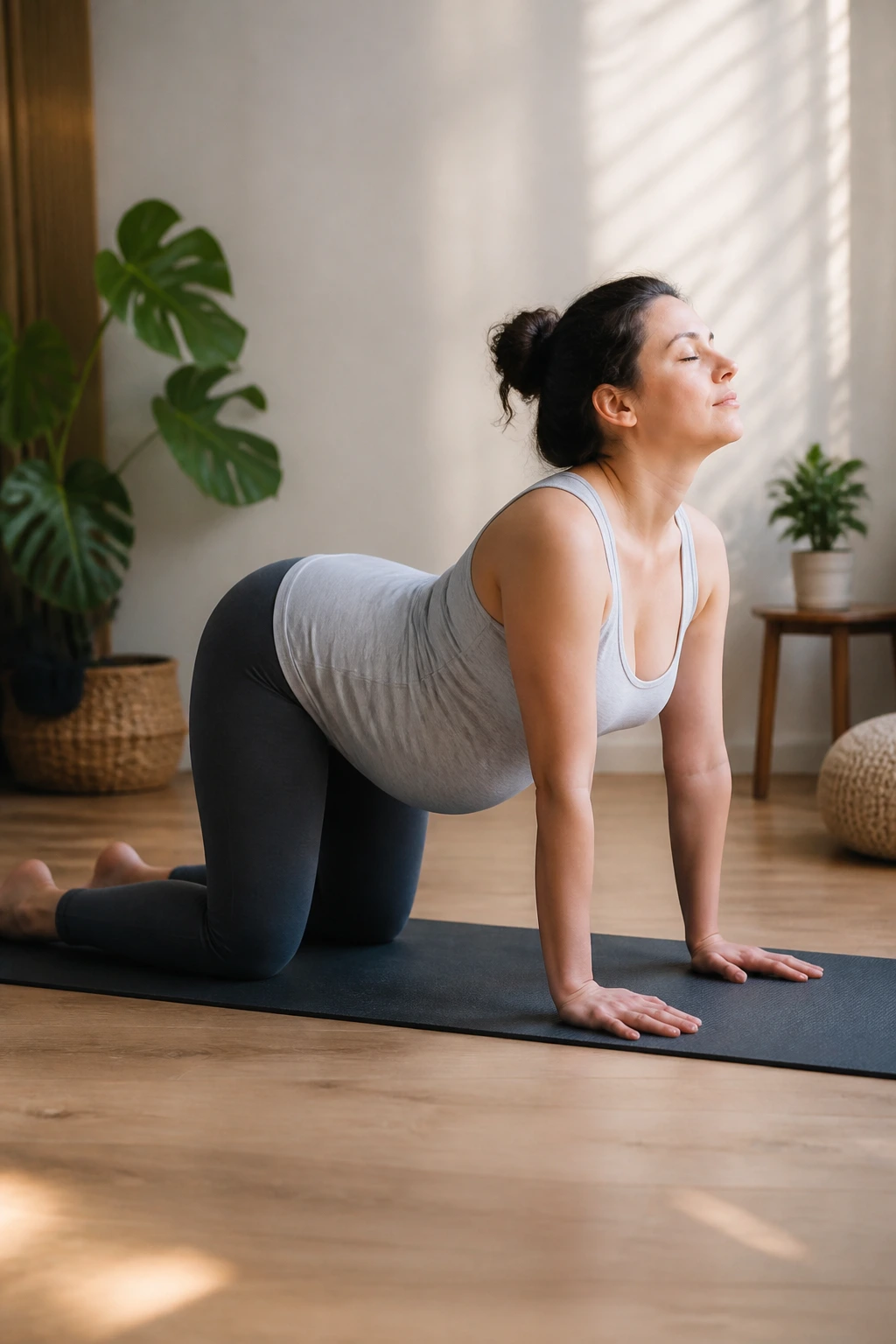
Some workouts should leave you feeling better than when you started. This one does that job beautifully if your back feels tight, your hips feel stiff, or your nervous system has been running hot all day.
Move through cat-cow on hands and knees, circle the hips slowly, then sit back on a chair or against a wall and take five to eight slow breaths with a long exhale. If floor work is uncomfortable, do the cat-cow pattern with your hands on a counter instead.
A simple sequence
- 6 cat-cow rounds
- 5 hip circles each direction
- 5 long breaths with relaxed shoulders
No rush. This is the workout you use when your body wants movement, not effort.
Final Thoughts
The best pregnancy workouts at home are the ones you can repeat without dreading the next set. A chair, a wall, a band, and a little patience can carry you through more than people expect.
If a move makes your belly dome hard, your pelvis ache, or your breathing go ragged, scale it back fast. Shorter range. Less load. More support. That is usually the right move, and it keeps training useful instead of stubborn.
Mix three or four of these into one session, keep the pace conversational, and call it a win when you finish with better energy than you started with. That is the standard I’d trust.
