



Plyometric exercises are not cardio in disguise. They’re the drills that teach your body to load fast and explode faster, which is why a clean set of jumps can make a sprinter quicker off the line, a basketball player springier at the rim, and a field athlete harder to knock off balance.
If you want real athletic power, you need more than sweating through random jumps. You need drills that sharpen the stretch-shortening cycle — that quick dip-and-rebound action your body uses every time you cut, hop, sprint, or change direction. The best reps feel snappy. Quiet. Almost rude in how fast they end.
Soft landings matter.
I’ve always liked plyometrics because they tell the truth. If your knees cave, if your ankles are mushy, if you can’t hold your torso still, the drill exposes it fast. And if you’re doing them right, you don’t need 40 reps to prove anything. A few crisp sets will do more than a tired marathon of sloppy jumps ever will.
1. Pogo Jumps for Plyometric Rhythm
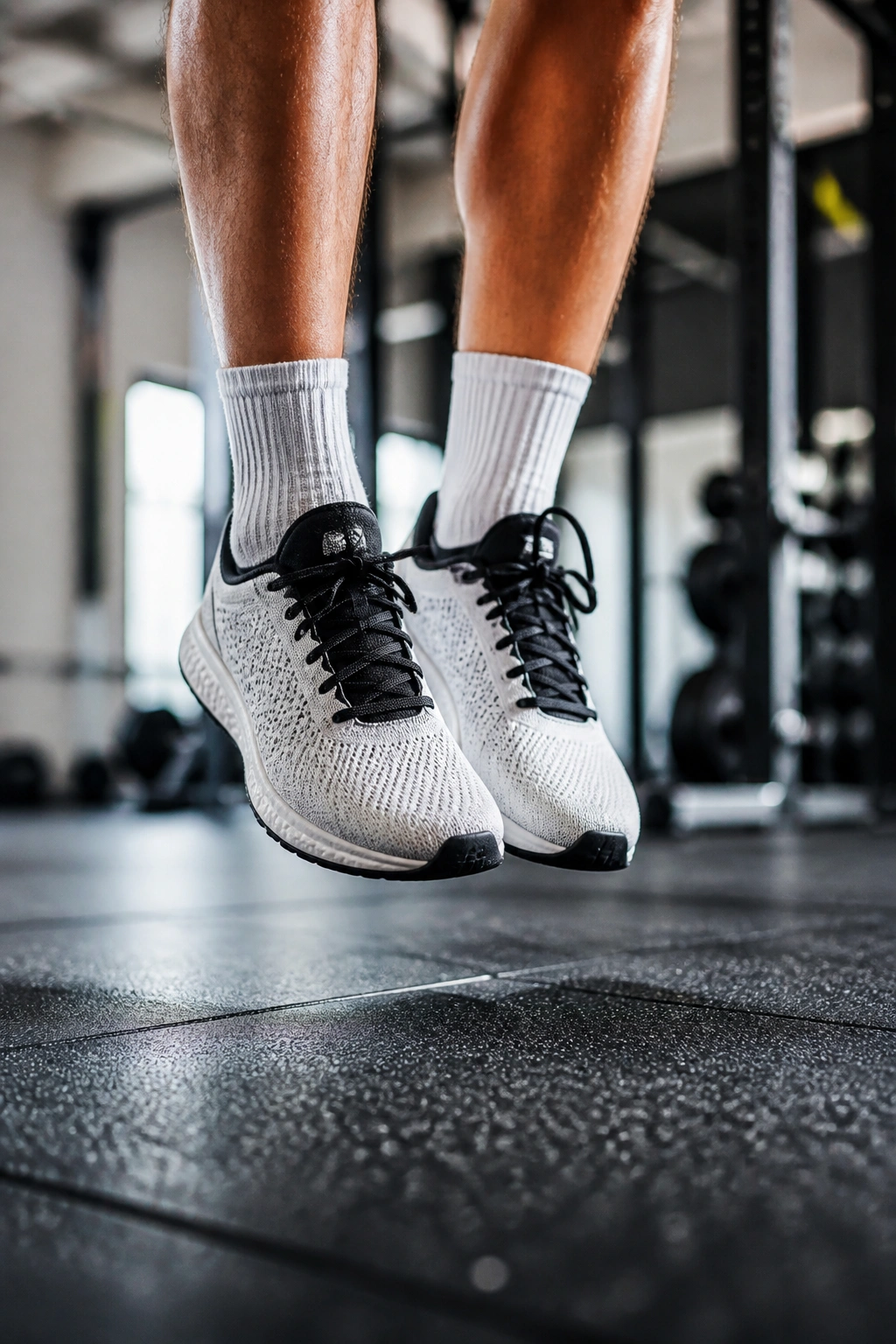
Pogo jumps look tiny, and that’s exactly the point. You stay tall, keep the knees mostly straight but not locked, and bounce through the ankles like the floor has a little spring built into it. For sprinting, tennis, basketball, and any sport that rewards quick feet, this drill is one of the best ways to wake up the lower legs without beating them up.
Why I Put Them First
Pogos teach ankle stiffness and fast ground contact. That matters because power is not only about how high you jump; it’s also about how little time you waste on the ground. If you’ve ever watched a good sprinter, the feet barely seem to touch. That is the feeling you want here.
What Good Reps Feel Like
- Stay on the balls of the feet, with the heels kissing the floor lightly or barely touching.
- Keep the torso tall and the ribs stacked over the hips.
- Use short, quick contacts for 15 to 25 jumps per set.
- Stop when the bounce gets noisy or the knees start bending too much.
Best use: Warm-up, speed days, or the first drill in a lower-body plyometric session.
One set should feel elastic, not exhausting. If your calves are cramping, you’ve gone too far or you’re doing them too late in the workout.
2. Countermovement Jumps for Explosive Takeoff

Why does a tiny dip often beat a deep squat? Because the counter movement lets you load the hips and knees just enough to rebound hard without turning the jump into a slow grind. That quick dip is the whole trick. Use it well, and the jump feels springy. Use it badly, and you just squat, shrug, and leave the floor late.
I like countermovement jumps because they’re brutally honest about timing. The best reps start with a fast but controlled drop into a quarter squat, then a violent extension through the ankles, knees, and hips. Add an arm swing if the goal is vertical height; keep hands on hips if you want to strip away some of the cheating. Both versions have value.
No grinding.
Three to five reps per set is plenty for most athletes. Rest long enough to make each jump sharp again — usually 60 to 90 seconds. If the second rep already looks flat, the set is over. You’re training power, not stamina.
3. Squat Jumps From a Dead Stop
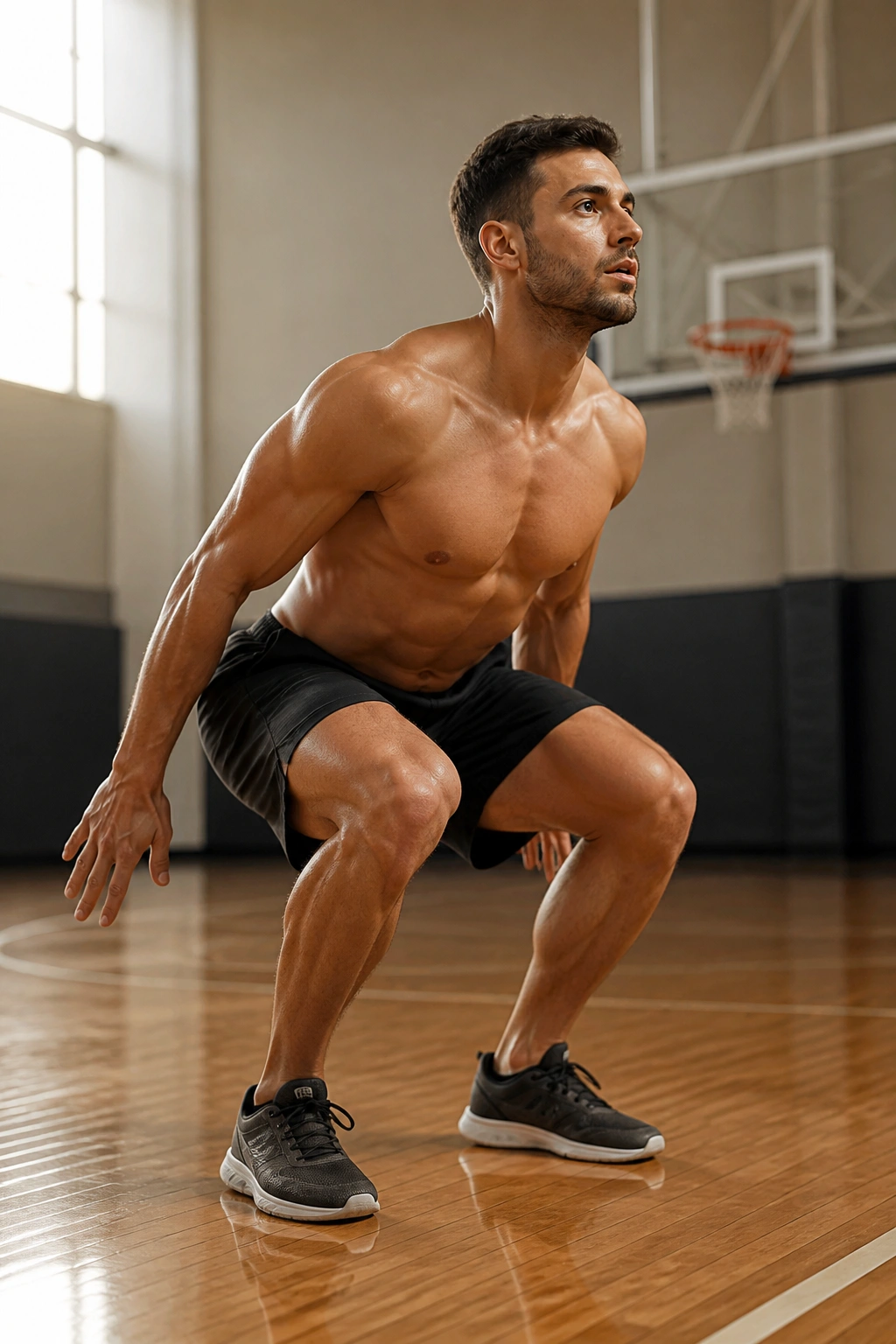
Take away the bounce and the truth shows up fast. Squat jumps start from a still position, usually a shallow squat, and force you to produce force without any elastic help from the previous rep. That makes them a useful contrast to countermovement jumps, especially if you want to know whether your legs can drive hard from a dead stop.
I prefer squat jumps for athletes who need more starting strength. Think wrestlers, linemen, or anyone who has to push through contact before they can move freely. The first rep should feel a little awkward. Good. That means you’re not hiding behind momentum.
Clean Setup Cues
- Sit into a quarter squat, not a deep chair-like position.
- Hold the bottom for one full second before each jump.
- Keep the chest proud and the knees tracking over the toes.
- Land softly and reset before the next rep.
Common mistake: dropping too low and turning the drill into a slow squat. That just steals the explosiveness you were trying to train in the first place.
4. Tuck Jumps That Teach Fast Recoil

Tuck jumps are a stress test, not a starter drill. They demand quick hip flexion, fast torso control, and a landing that doesn’t collapse into a mess of bent knees and thudding feet. Done well, they sharpen the ability to get off the floor and get ready for the next move. Done badly, they turn into a noisy circus.
The visual cue is simple: jump, bring the knees up, land under control, and reset. Don’t chase a giant tuck. Don’t yank the knees toward the chin. Keep the movement tight and clean, with the trunk stable and the feet under you when you come back down.
A set of 3 to 5 reps is usually enough. These are taxing. They belong after a warm-up, not after you’re already cooked. If the landing gets heavy or your knees cave inward, stop. That’s the body telling you the drill is over for the day.
5. Split Squat Jumps for One-Leg Power
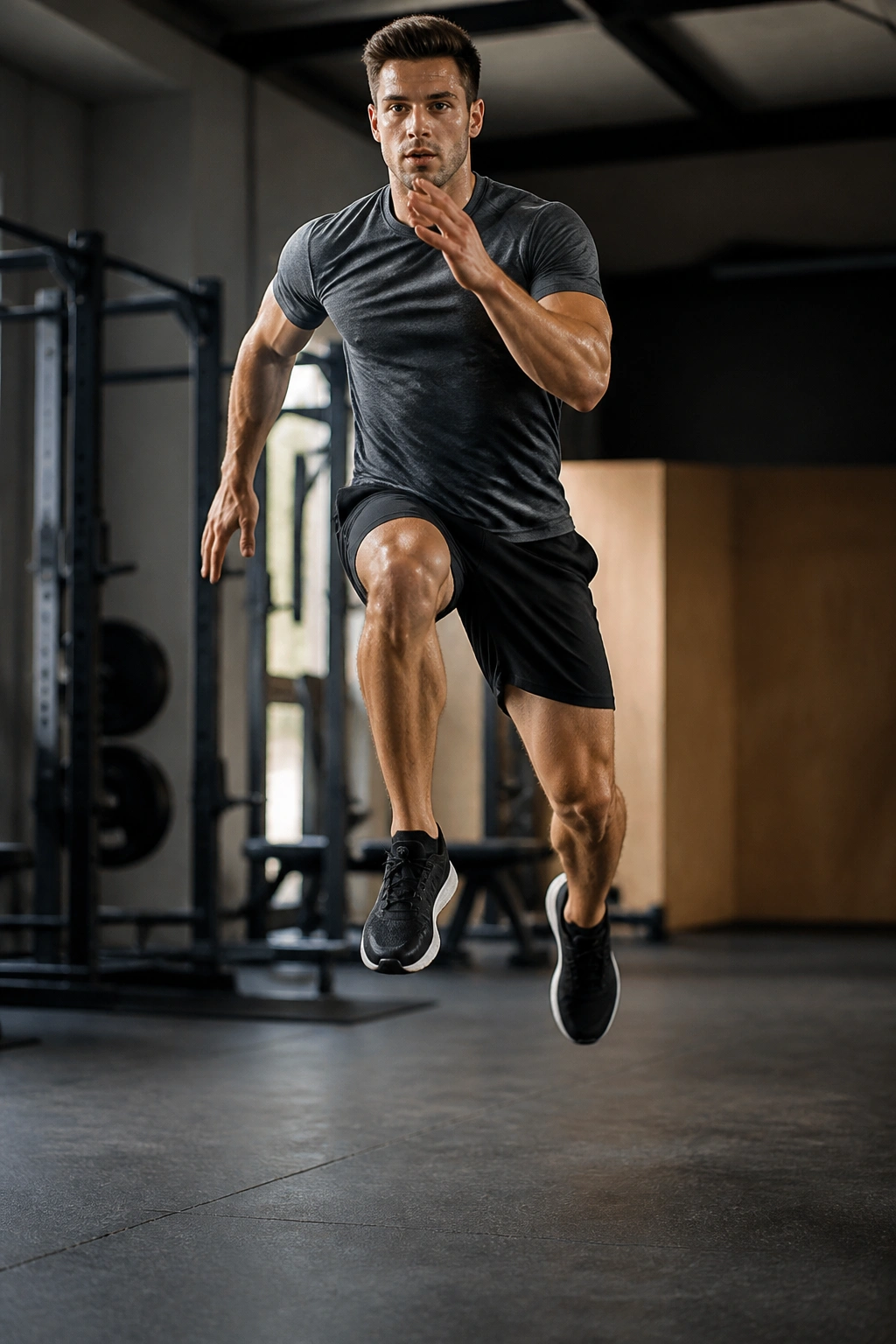
Unlike two-foot jumps, split squat jumps show you which leg is stealing the work. One side usually looks smoother. The other side looks like it paid rent late. That imbalance matters if you run, cut, lunge, or plant off one foot in real sport.
Start in a lunge position, drop a few inches, and switch legs in the air. The goal is not a giant leap; it’s a clean, quick exchange with the torso staying mostly upright. If you twist wildly or fold at the waist, the drill turns into chaos and your hips never get the work they should.
How to Keep the Torso Square
- Keep the front shin roughly vertical at the bottom.
- Land with the feet hip-width apart, not on a tightrope.
- Use the arms to help drive the switch, but don’t swing them like you’re hailing a bus.
- Keep reps low: 4 to 6 switches per side is enough.
This is one of those drills that looks simpler than it feels. That’s a good sign.
6. Lateral Bounds for Side-to-Side Drive

What changes when you move sideways? A lot. The hips have to brake, absorb force, and then fire again in a different direction. Lateral bounds train exactly that skill, which is why they show up so often in programs for court sports, skating sports, and any athlete who has to move off the line of attack fast.
Think of this as a big side jump with a controlled landing. Push off one leg, travel laterally, and stick the landing on the other leg for a beat before bounding back. The pause matters. It teaches control, not just distance.
- Start with a short leap and work out from there.
- Keep the chest over the hips.
- Let the landing leg do the braking, but don’t let the knee cave inward.
- Use 3 sets of 5 reps per side, with full rest between sets.
Pro tip: If your landings sound like dropped furniture, the jump is too big.
7. Skater Hops for Cleaner Change of Direction

Skater hops feel smoother than bounds. The free leg sweeps behind you, the torso leans a little, and the whole drill has a gliding rhythm that looks a lot like the movement you’d use to shuffle or cut on the fly. It’s still explosive. It just has a bit more flow.
I like skater hops for athletes who need lateral power without turning every rep into a maximal effort jump. That includes basketball players, soccer players, and anyone trying to move fast while staying low. The movement should stay springy, not frantic.
The floor should feel quick under your feet. One second you’re on the left leg, the next you’re landing on the right, and there’s barely enough time to think about it. Keep your shoulders level. Keep your gaze forward. If your upper body starts flailing around, the hips are losing the plot.
A good set lasts 10 to 20 seconds. That’s enough. Past that, most people lose the bounce and start muscling the drill instead of training it.
8. Box Jumps for Safe Vertical Reps
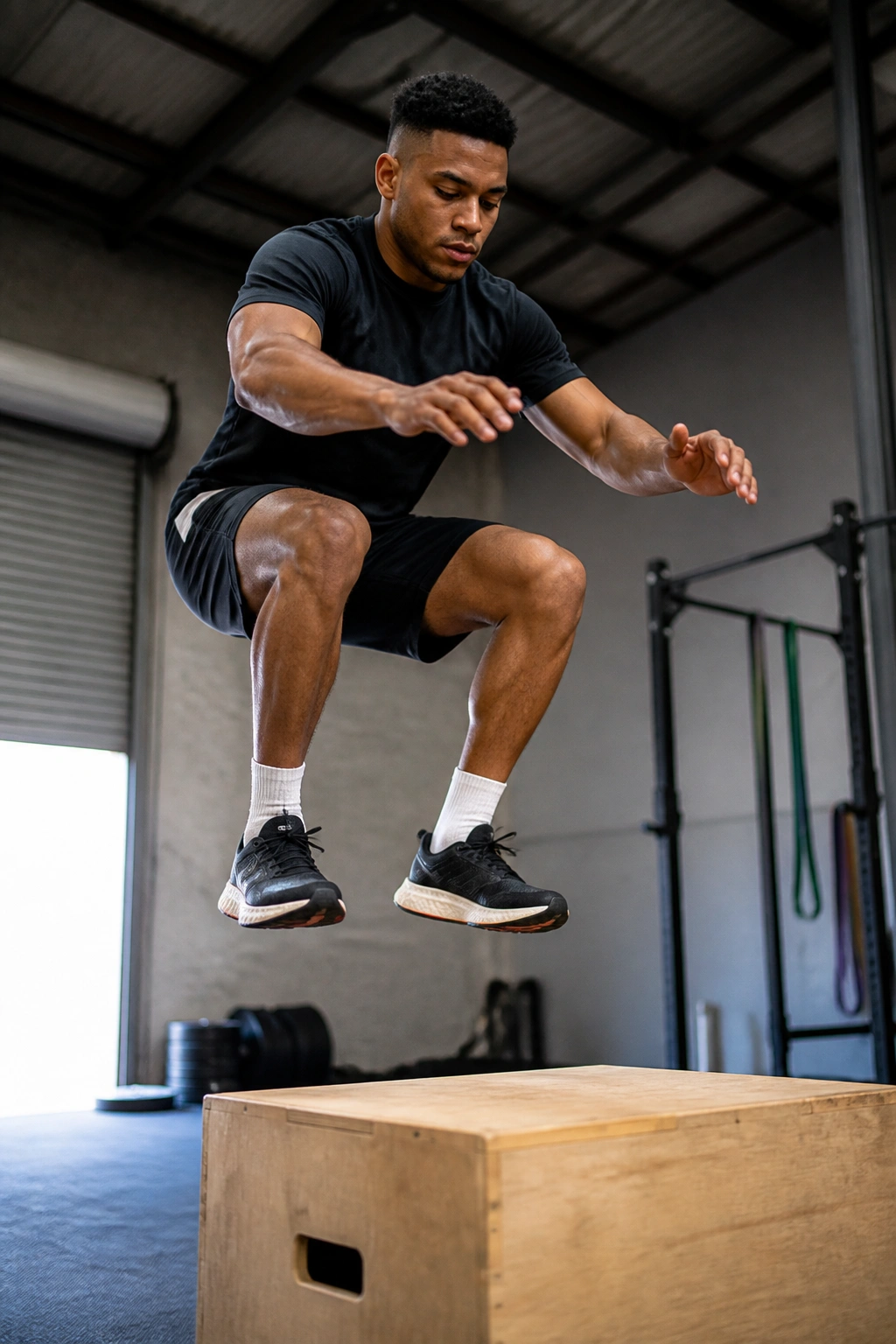
A higher box is not a better jump. I know that irritates people, but it’s true. The box should give you a target that rewards a crisp takeoff and a stable landing, not a desperate knee tuck where you fold yourself into a shape that has nothing to do with athletic power.
Box jumps are useful because they let you train vertical force with a little less landing impact than repeated jump-and-drop work. The box does not make the jump easier in the way people think. It simply gives you a place to land higher than the floor, which can keep the rep cleaner when the goal is speed and coordination.
Pick the Box by the Landing
- Choose a height you can land on with both feet under control.
- Step down after each rep. Do not jump off the box repeatedly.
- Keep the knees soft and the chest stacked over the hips.
- Stop the set when you have to reach for the box with your feet.
One more thing: if the box is so high that you can’t land in an athletic stance, it’s too high. Simple.
9. Depth Jumps for Reactive Plyometric Power

Depth jumps are expensive. Not in money. In nervous-system cost. You step off a box, absorb the landing, and rebound as fast as possible. The drill is built around reactive strength, which is a fancy way of saying your body learns to reverse force with very little wasted time on the ground.
Most people use too much box height and too many reps. That’s sloppy programming. Start low — 12 to 18 inches is enough for plenty of athletes — and keep the volume small. Three to five reps per set, then rest long enough that the next jump is still violent. If you turn depth jumps into conditioning, you’ve missed the point.
- Step, don’t jump, off the box.
- Land stiff but not rigid.
- Rebound the instant you absorb the hit.
- Keep the total contact time short.
Warning: If your knees cave or your feet slap the floor, back off. This drill rewards sharpness, not bravery.
10. Single-Leg Hops for Ground Contact Control

If one leg is the weak link, single-leg hops will show it in two reps. Maybe one ankle collapses. Maybe one knee wobbles. Maybe one side feels powerful and the other side feels like it borrowed someone else’s shoes. Good. That’s useful information.
These hops can be done in place, forward for distance, or in a quick line for repeated contacts. I like them best when the athlete lands and immediately regains posture without wobbling around like they stepped on ice. The free leg should help balance, but the stance leg has to do the real work.
Start small. Five hops on each side is enough for a beginner. Build to sets of 8 or 10 only if the landings stay clean. And if you’ve got a cranky Achilles tendon, be patient. This is one of the best drills for building lower-leg resilience, but it should be earned, not forced.
11. Broad Jumps for Horizontal Force

Why do broad jumps show up in so many good programs? Because horizontal force matters. Sprinting, pushing, accelerating out of a cut — all of that depends on the ability to drive forward, not just up.
A broad jump starts with a quick dip, then a powerful projection through the hips, knees, and ankles. Swing the arms, launch forward, and stick the landing with your chest up and your weight centered. The landing is part of the drill. If you crash forward and have to step to save yourself, the rep wasn’t clean.
How to Make the Landing Useful
- Measure the jump from the starting line to the heel mark.
- Hold the landing for 1 to 2 seconds.
- Keep the feet parallel when you land.
- Reset fully before the next rep.
I like broad jumps as a test and a training tool. They tell you whether your lower body can send force where you actually need it, which is forward, not only vertical.
12. Hurdle Hops for Fast Rhythm

Set three low hurdles or even a row of cones, and the drill gets honest fast. Hurdle hops are all about rhythm, elastic rebound, and staying light while still producing enough force to clear each obstacle. They’re a favorite when I want an athlete to stop overthinking and start moving on instinct.
The height should stay low. Six to twelve inches is enough for most athletes, especially when the goal is speed and clean contacts. Too much height turns the drill into slow, sleepy jumping. That is not what you want.
- Keep the hurdles close enough to encourage quick contacts.
- Stay tall through the torso.
- Land and rebound with minimal pause.
- Finish the set before the jumps get choppy.
The best hurdle hop set feels almost musical. Same beat. Same rhythm. No drama.
13. Bounding for Sprinting Stride Length

Bounding is not just bigger running. It’s a deliberate exaggeration of the running pattern, with long flight phases and forceful push-offs that train the legs to project the body forward. If sprinting is a conversation between speed and ground contact, bounding teaches both sides of it.
I like this drill for athletes who already have some basic jumping skill. The rhythm matters more than raw height. Drive one knee, push off hard, switch legs in the air, and keep moving down the lane for 20 to 30 meters. The arms need to match the legs or the whole thing falls apart. Loose arms make loose legs.
Compared with single-leg hops, bounding is more dynamic and more sprint-like. Compared with broad jumps, it’s more repetitive and rhythmic. That’s why it belongs in the middle ground: demanding, but not maximal.
You should finish a set feeling springy, not wrecked. If you’re gasping, the pace was too hot.
14. Single-Leg Box Jumps for Safer Unilateral Power
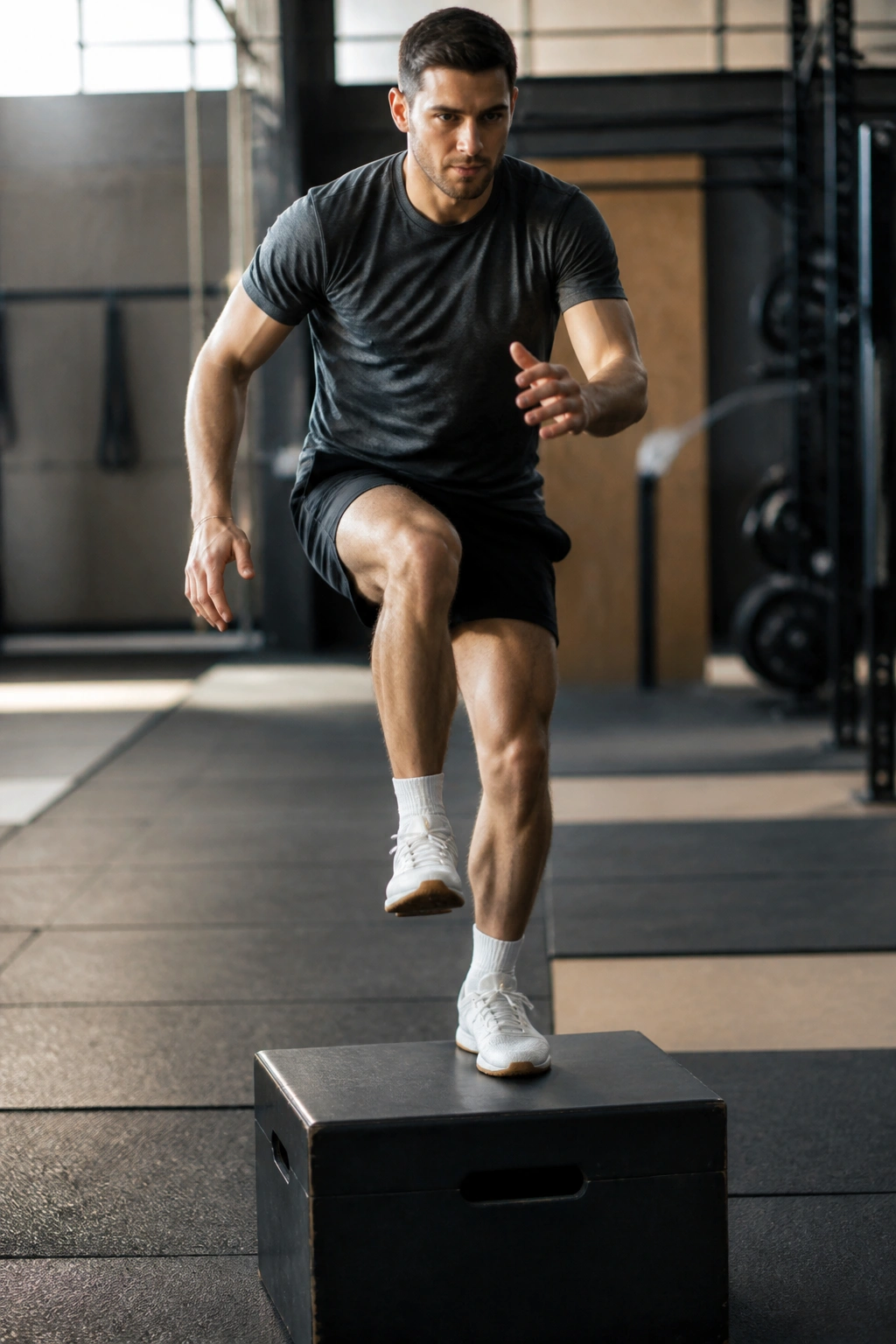
Single-leg box jumps give you unilateral power without asking for a huge landing shock. That makes them useful for athletes who need one-leg force but aren’t ready to hammer repeated single-leg landings on the floor. The box lets you keep the rep crisp.
Use a low box. Lower than you want, probably. The takeoff should be aggressive, but the landing should still look like a controlled athletic position, not a scramble. Step down every time. No heroics. No bouncing off the top.
A Small Box Beats a Heroic One
- Pick a height you can clear without twisting.
- Keep the knee tracking over the second toe.
- Start with 3 to 4 reps per side.
- Rest long enough to make the next jump sharp again.
This drill is a sneaky good bridge between basic hops and more advanced single-leg work. It asks for power and control in the same rep, which is why it earns its place.
15. Medicine Ball Chest Passes for Upper-Body Explosiveness

Can the upper body train plyometrically too? Absolutely. Medicine ball chest passes are one of the cleanest ways to do it. You load the chest and triceps quickly, then fire the ball forward against a wall or to a partner. The movement is simple, but the speed requirement makes it a real power drill, not a casual throw.
Choose a ball that moves fast. For most people, 4 to 8 pounds is a good start. Heavier balls can work for strong athletes, but the throw should still feel snappy. If the ball leaves your hands slowly, it’s too heavy. That rule saves a lot of bad sessions.
- Keep the elbows slightly under the ball.
- Explode straight from the chest.
- Catch the rebound cleanly if you’re using a wall.
- Keep 4 to 6 reps per set.
A good chest pass should sound sharp against the wall. Muffled throws usually mean the load is too high or the intent is too low.
16. Rotational Medicine Ball Scoop Tosses for Hip-to-Shoulder Power
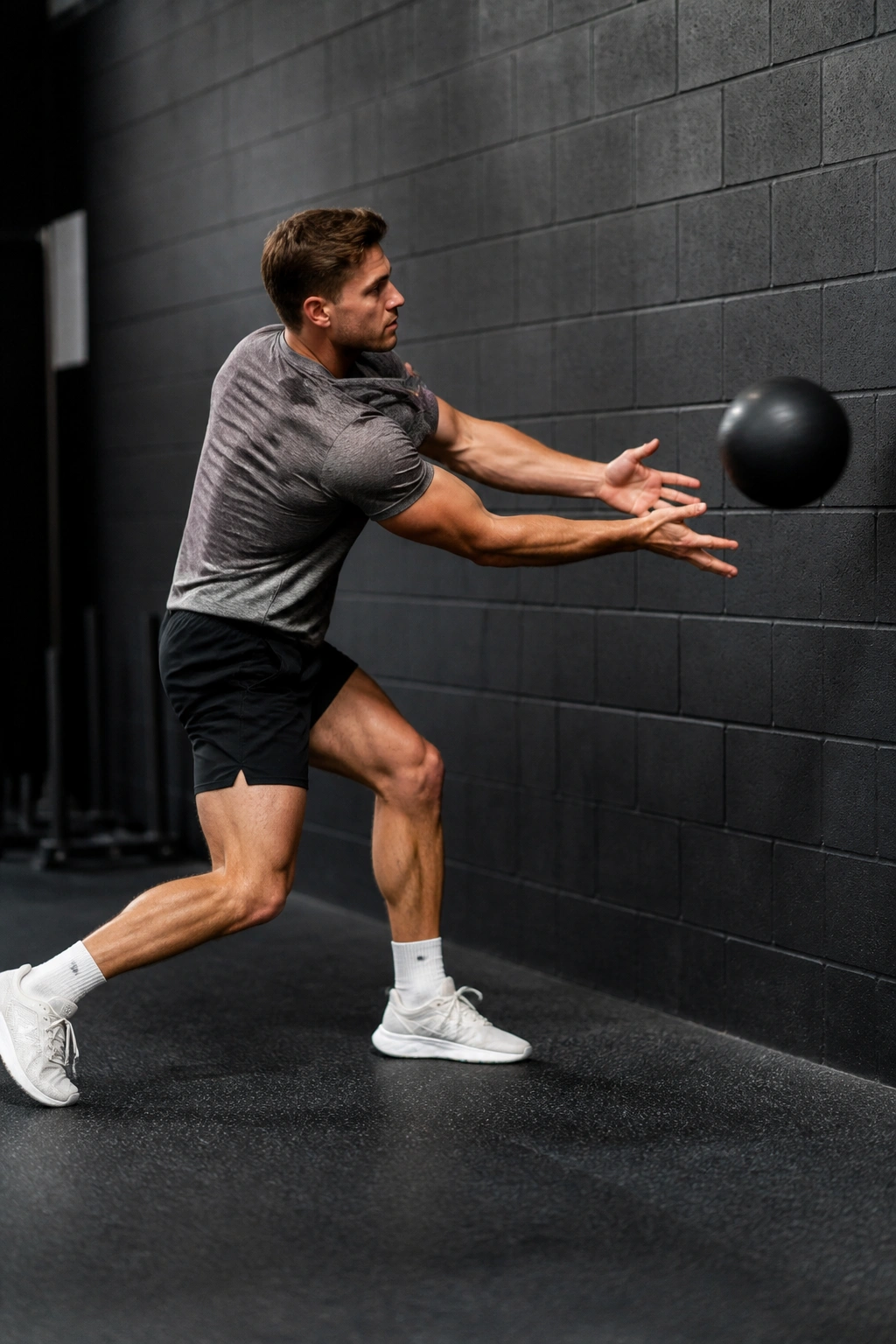
Stand sideways to a wall, load the back hip, and let the throw start from the ground up. That’s the beauty of the rotational scoop toss: it trains the hips, trunk, and shoulders to work in the same sequence you’d use in hitting, throwing, punching, or swinging. It’s one of my favorite drills when I want real transfer, not just a sweaty shoulder pump.
The motion should feel like a coil and release. Lower the ball toward the back hip, pivot through the trail foot, and whip the ball into the wall with enough force that you have to chase the rebound. Keep the knees soft and the spine long. Don’t spin wildly. That’s sloppy and usually slower anyway.
This drill suits baseball players, golfers, racquet-sport athletes, and anyone who needs rotation without losing balance. Four to six throws per side is plenty if the intent stays high. The heavy work is in the hips, not the arms.
17. Plyo Push-Ups for Upper-Body Plyometric Power

The clap is optional. The power is not. Plyo push-ups train the chest, triceps, and shoulders to produce force fast, which matters for contact sports, striking sports, and any athlete who needs upper-body explosiveness without turning every push into a slow grind.
Start on the floor if you can keep your trunk rigid. If not, use an incline bench or a sturdy box and build from there. The body should move as one unit. Hips sagging means the drill has already fallen apart. Don’t chase height with a broken midsection.
Start Where Your Shoulders Stay Happy
- Use 3 to 5 reps per set.
- Keep your hands just outside shoulder width.
- Push hard enough to leave the floor, even if only for a split second.
- Land softly with elbows bent, not locked out.
A clean plyo push-up looks fast and controlled. A sloppy one just looks loud.
18. Medicine Ball Slams for Full-Body Finishers

Medicine ball slams are the closest thing to a full-body exhale in this list. You drive the ball overhead, brace the trunk, and whip it straight into the floor with the hips, lats, and abs all doing their part. It’s a simple drill, but the intent has to stay high or it turns into a weird overhead curl.
I like slams at the end of a session because they let you keep power work in the mix after the legs are already warm. They also punish lazy posture. If the ribs flare and the lower back arches, the slam gets messy fast. Keep the core tight, reach tall, and crack the ball down hard enough that it rebounds with attitude.
Use 5 to 8 reps per set. A lighter ball often works better than a heavy one because speed matters more than load here. If you’re throwing the ball down with violence and still losing shape, cut the weight.
Pick 4 to 6 of these drills for one session, not all 18. That’s the part people keep wanting to ignore. Real athletic power comes from crisp reps, enough rest, and a clean stop before fatigue turns the floor noisy. Keep the quality high, and the jumps will start to feel different in the best way.
