



Your first dumbbell session at home does not need a bench, a rack, or a fancy mirror wall. A pair of weights and a clean patch of floor are enough if the exercises pull their weight, and a lot of beginners waste time with moves that feel busy but don’t teach much.
Beginner dumbbell workouts at home work best when they hit the big patterns: squat, hinge, push, pull, carry, and a little core work. That mix gives you more strength per minute, and it keeps the session from turning into 20 random arm curls while your legs sit there doing nothing.
The mistake I see most is starting with small isolation work because it feels safer. It usually isn’t the best place to start. A simple squat or hinge teaches balance, bracing, and control faster than a dozen light fluff moves, and once those patterns click, everything else gets easier.
1. Goblet Squat
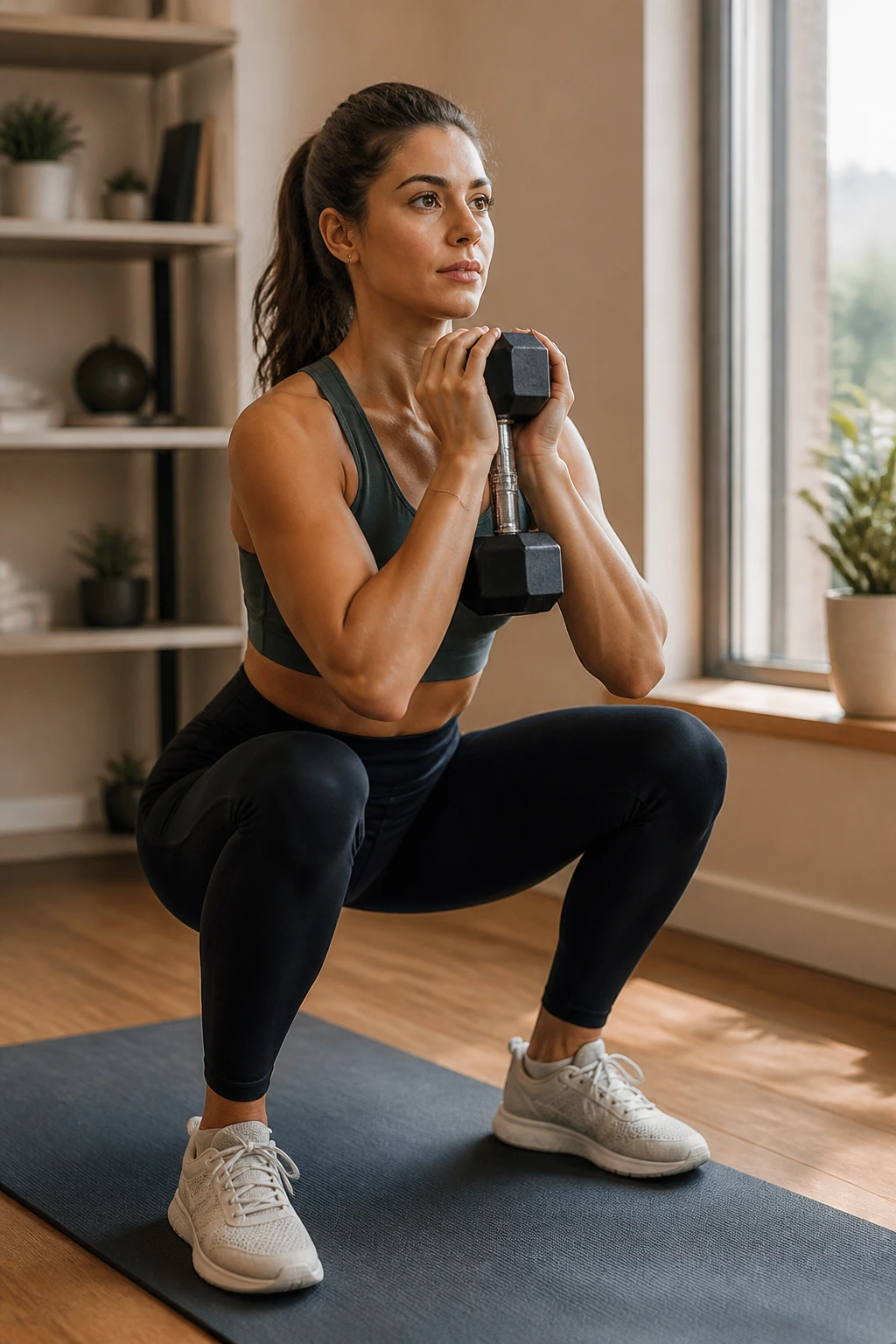
If you learn one squat first, make it this one. The goblet squat gives you a built-in counterweight, which makes it easier to stay upright and feel where your hips and knees are going.
Hold one dumbbell at chest height, grip the top end with both hands, and keep your elbows pointed down. Sit between your heels, not straight down onto your toes. Your heels should stay planted and your chest should stay tall enough that the weight does not drag you forward.
Why it works
The front-loaded position makes beginners more aware of posture. That matters. If you use a dumbbell that is light enough to control and heavy enough to challenge you, 3 sets of 8 to 12 reps usually works well.
Watch for knees caving inward and for the dumbbell drifting away from your chest. That drift makes the whole lift feel awkward. If you want a small but useful cue, think “ribs down, elbows between knees.” It keeps the squat honest.
2. Dumbbell Romanian Deadlift
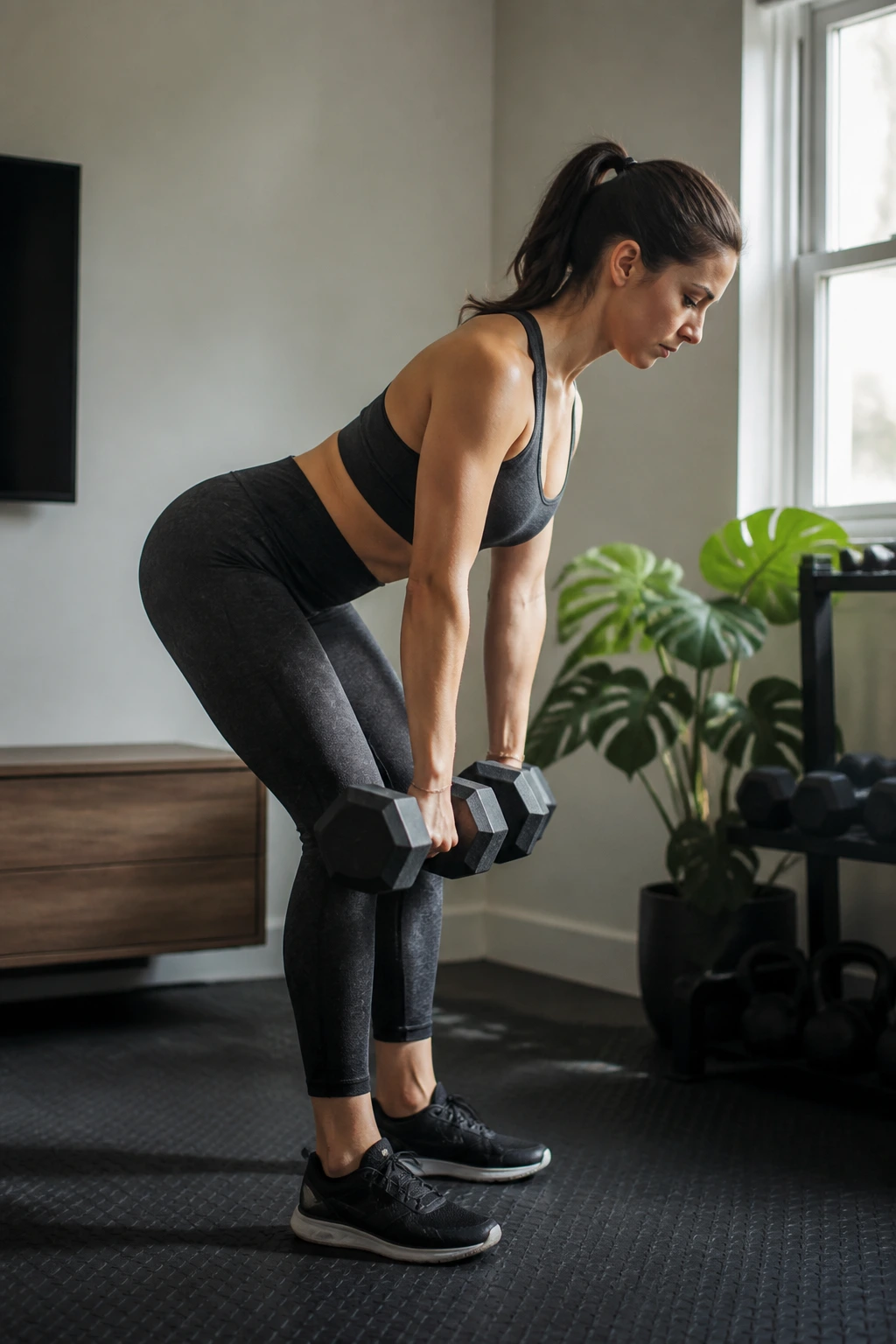
Why does a hinge matter so much? Because it teaches your body to load the hamstrings and glutes without turning every lift into a lower-back tug-of-war.
Stand tall with a dumbbell in each hand, soften the knees, and push your hips straight back. The weights should slide close to your thighs and shins. Stop when your hamstrings feel taut and your back still feels long. Do not chase the floor. Chasing depth usually wrecks the position.
A clean Romanian deadlift is one of the best beginner dumbbell workouts at home for learning control. Start with 3 sets of 8 to 10 reps, move slowly on the way down, and stand up by driving your hips forward rather than yanking with your arms. If your lower back starts doing the job, the weight is probably too heavy or you’ve gone too low.
3. Dumbbell Floor Press
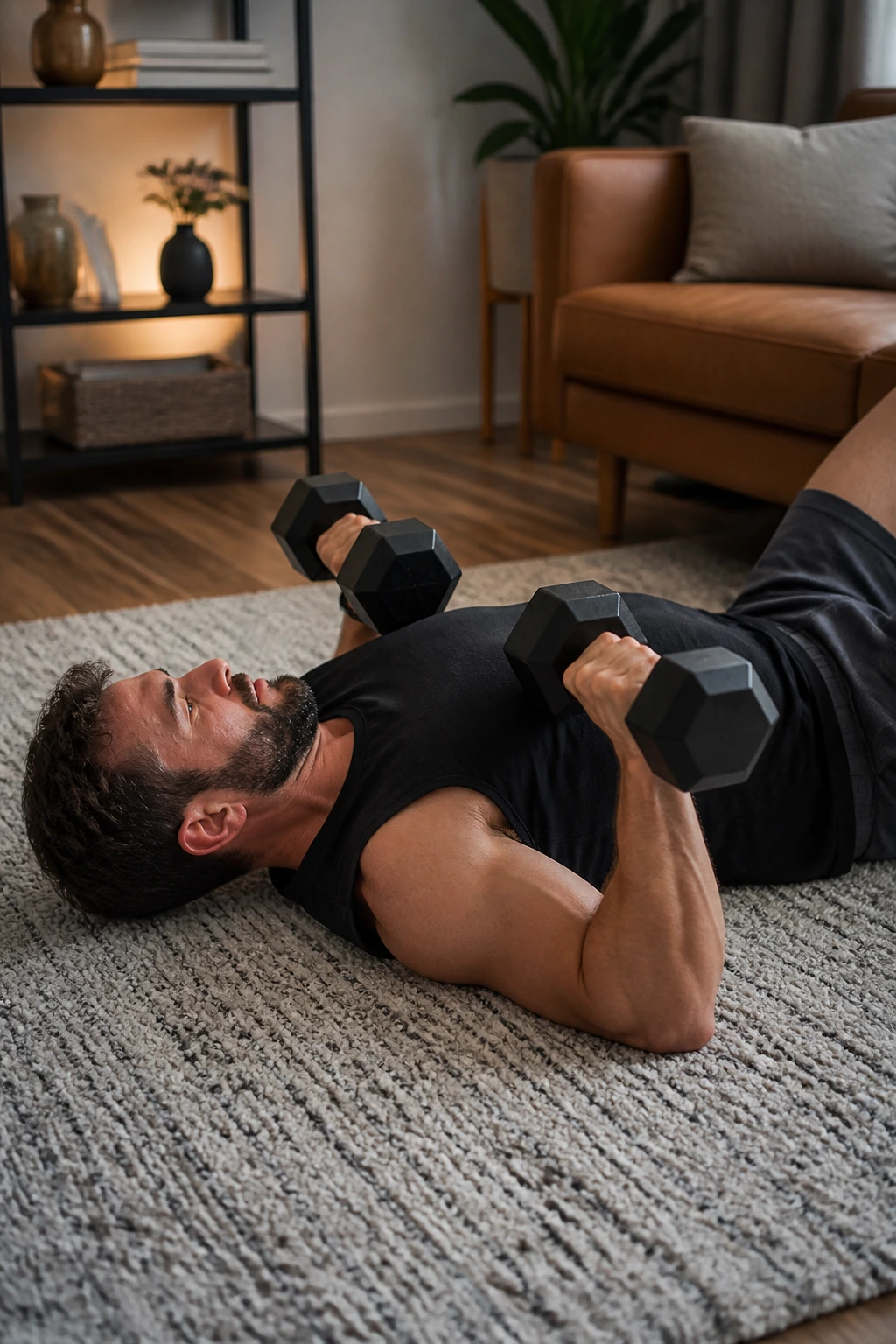
Lying on the floor sounds almost too simple, and that is part of why it works. The floor limits how far your elbows can drop, which keeps the pressing range friendly for beginners and cuts down on sloppy shoulder positions.
Set the dumbbells on your thighs, lie back, and bring them to the starting position with bent elbows. Press them up until your arms are straight, then lower until your upper arms touch the floor softly. That floor tap is your stop sign. No bouncing.
What to feel
You want the chest, triceps, and front shoulders to work together. If the weights wobble, slow down. If your wrists bend back, stack them over your elbows and squeeze the handles harder. Three sets of 8 to 12 reps is a good starting point, and a single dumbbell can work if you only have one.
4. One-Arm Dumbbell Row
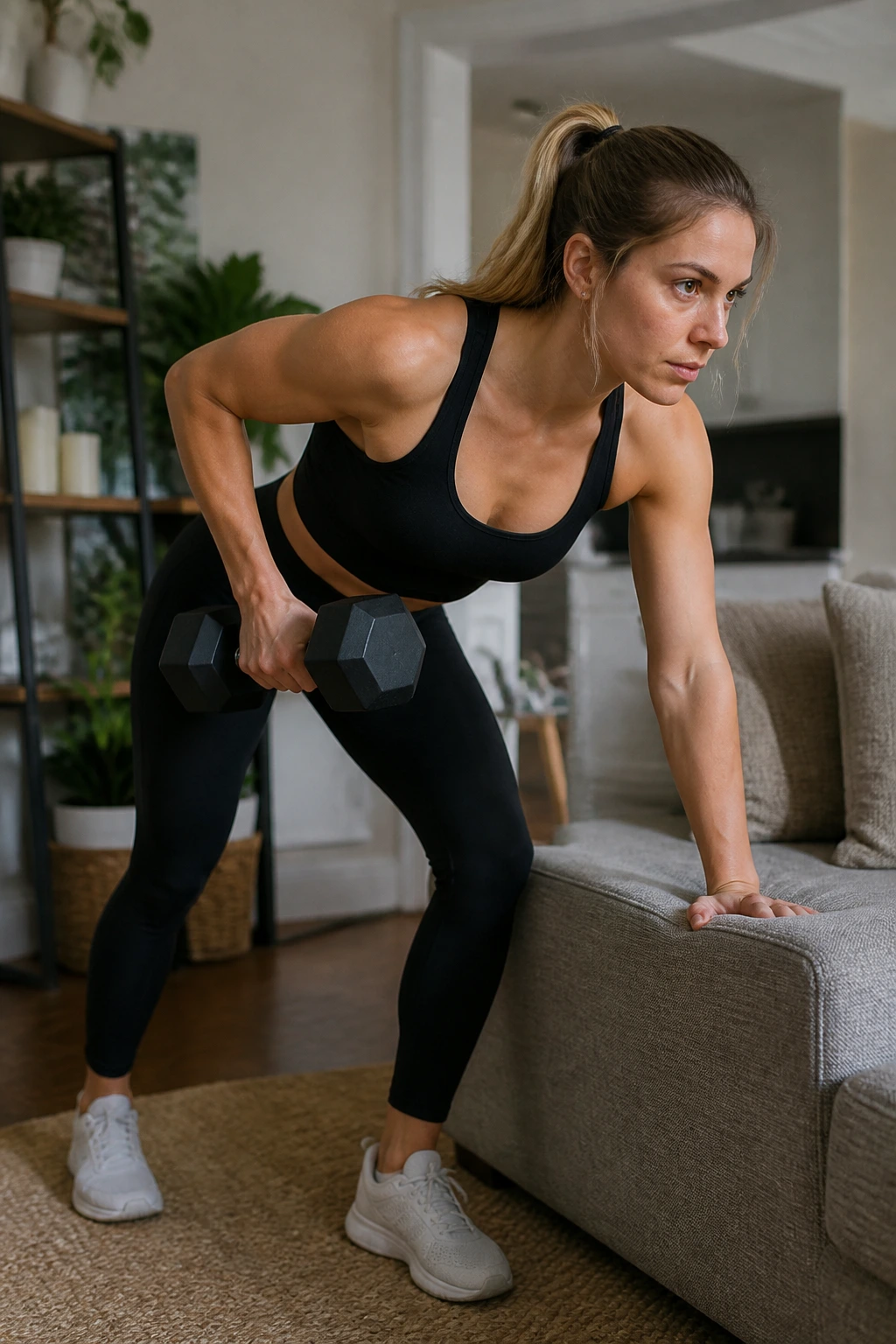
A one-arm row gives you a clean pull without needing a bench. Use a sturdy couch, chair, or coffee table edge for support, and keep the free hand braced so your torso stays quiet.
Pull the dumbbell toward your hip, not your armpit. That tiny detail matters. The elbow path changes where you feel the work, and the hip line usually gives a better back-and-lats hit for beginners. Do not twist the torso to “help.” That turns a solid row into a half-rotation cheat.
If you want a number, 3 sets of 10 to 12 reps per side is a solid place to start. Keep the lowering phase slow for a count of two or three. The weight should feel heavy enough that the last few reps are honest, but not so heavy that your shoulder scrunches up to your ear.
5. Standing Dumbbell Overhead Press
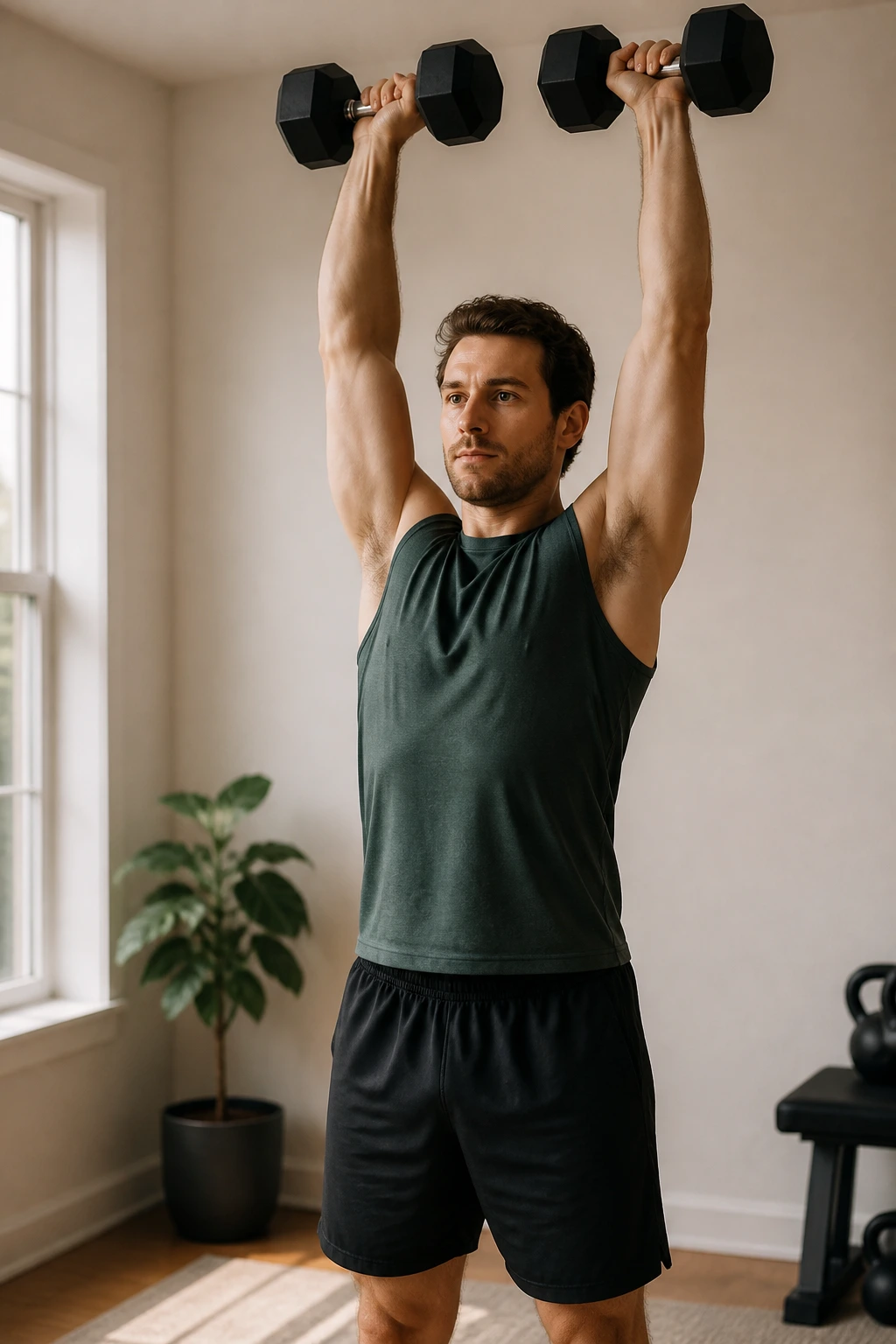
Can you press overhead without turning it into a backbend? Yes, but the setup has to be tidy.
Stand with your feet about hip-width apart and the dumbbells at shoulder height. Squeeze your glutes, keep your ribs from flaring up, and press the weights overhead in a straight line. At the top, your biceps should end up near your ears without your lower back taking over. That last part is the whole game.
A lot of people try to press with their chest poked forward and their pelvis tipped back. That looks strong for about two seconds. Then the low back complains. Use 2 or 3 sets of 6 to 10 reps, and if the last reps turn into a lean, lower the weight.
6. Reverse Lunge
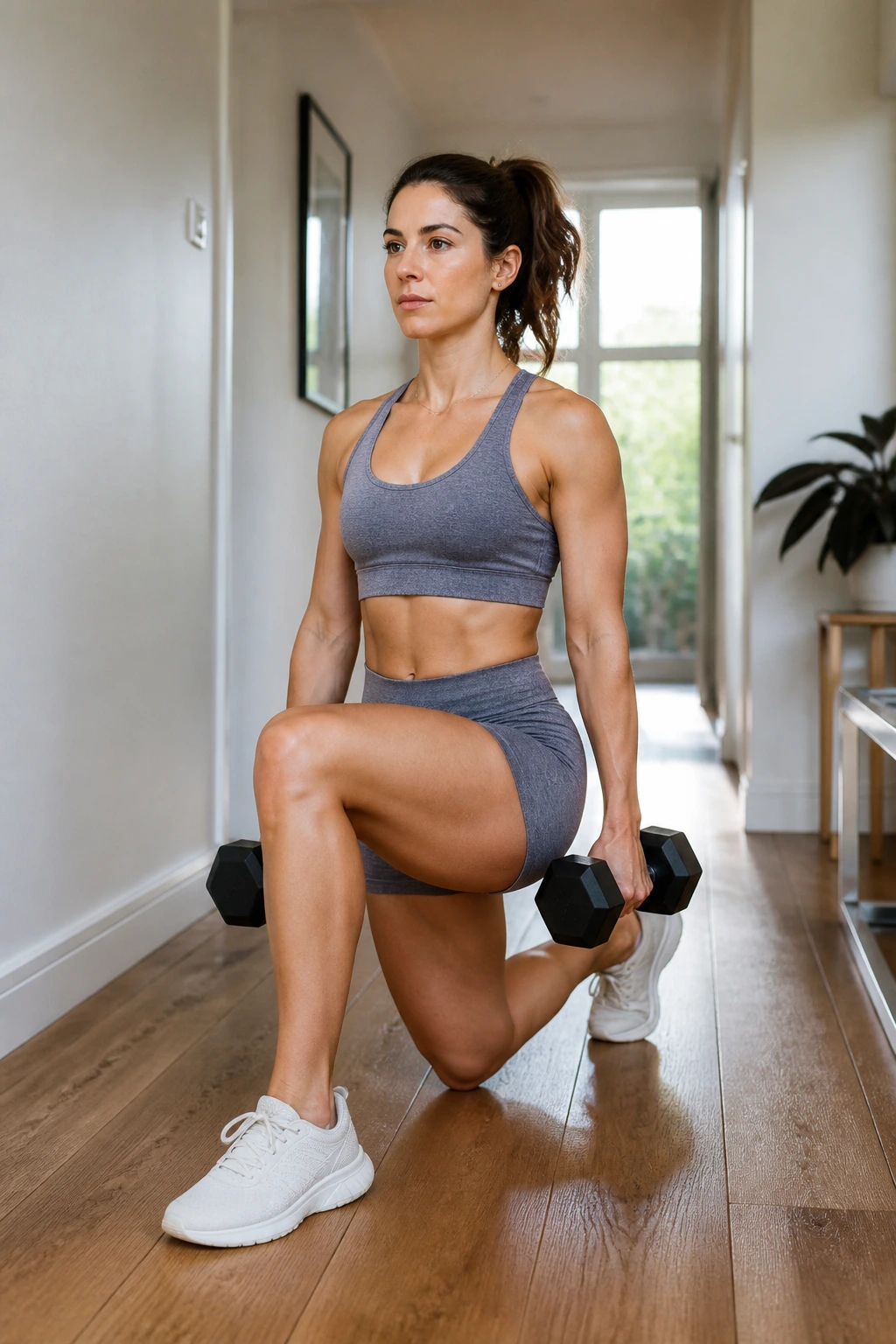
A reverse lunge is kinder to shaky balance than a forward step for many beginners. That alone makes it worth learning early.
Step one foot back, drop the back knee toward the floor, and keep most of your weight on the front leg. Your front shin can move forward a bit, but the foot should stay flat. Push the floor away through the front heel and midfoot when you stand back up.
What to watch for
- Take a short step back if your balance is rough.
- Keep the torso tall instead of folding over.
- Hold the dumbbells at your sides before trying front-rack position.
- Use a wall or chair with one hand if needed.
That trailing foot is there for balance, not power. Start with bodyweight or light dumbbells, then build toward 2 or 3 sets of 6 to 8 reps per side.
7. Dumbbell Glute Bridge
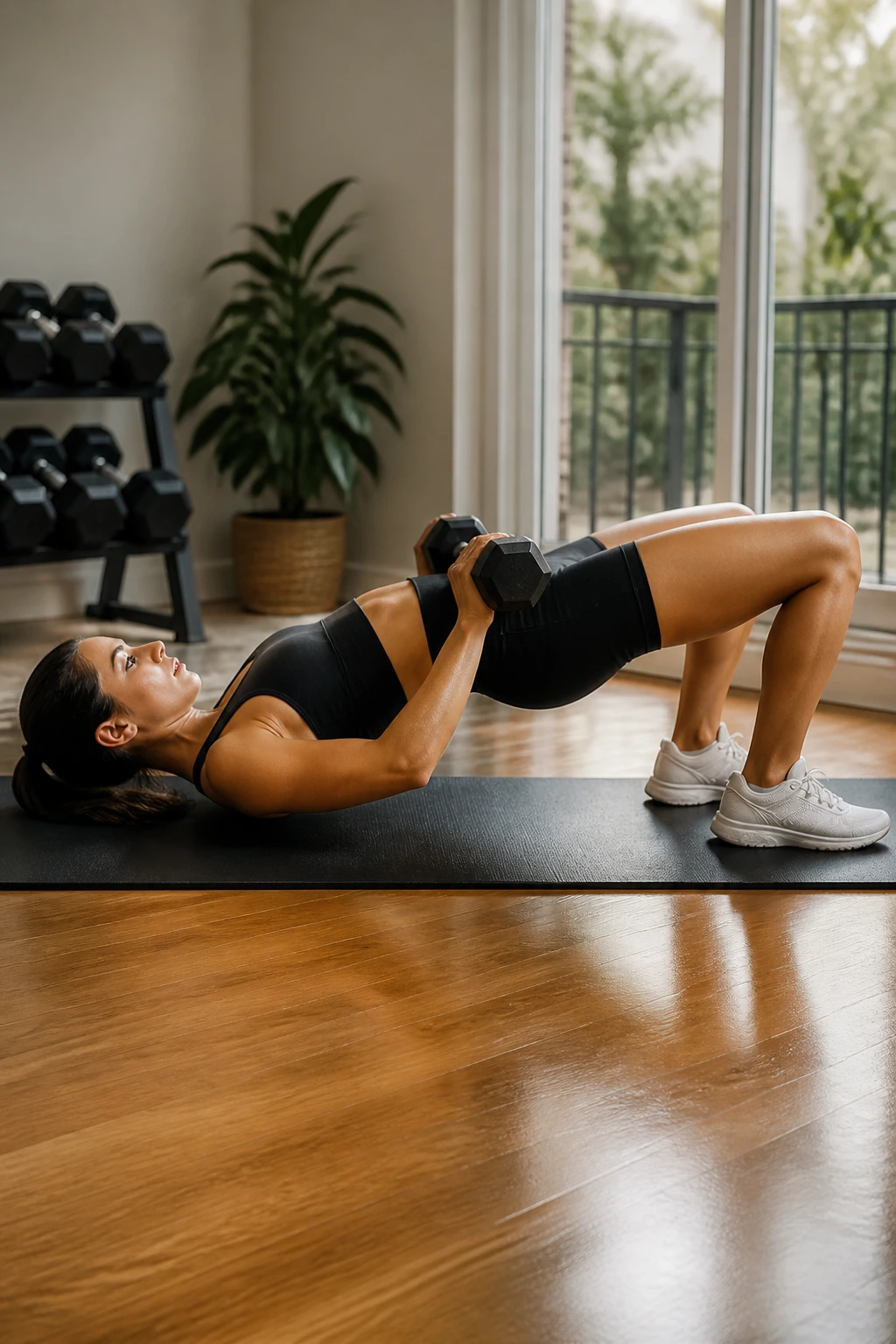
This is one of the few lower-body moves that lets you feel the target muscles almost immediately. Put a dumbbell across your hips, lie on your back, bend your knees, and plant your feet close enough that your shins are near vertical at the top.
Drive through your heels and lift your hips until your body forms a straight line from shoulders to knees. Then pause for a full second or two. The pause matters. It keeps the glutes doing the work instead of letting momentum rush the lift.
If you feel the motion more in your lower back, move your feet a little farther from your hips and tuck your pelvis slightly before lifting. Three sets of 12 to 15 reps works well here. It is a simple exercise, but simple doesn’t mean easy when you do it right.
8. Dumbbell Sumo Deadlift
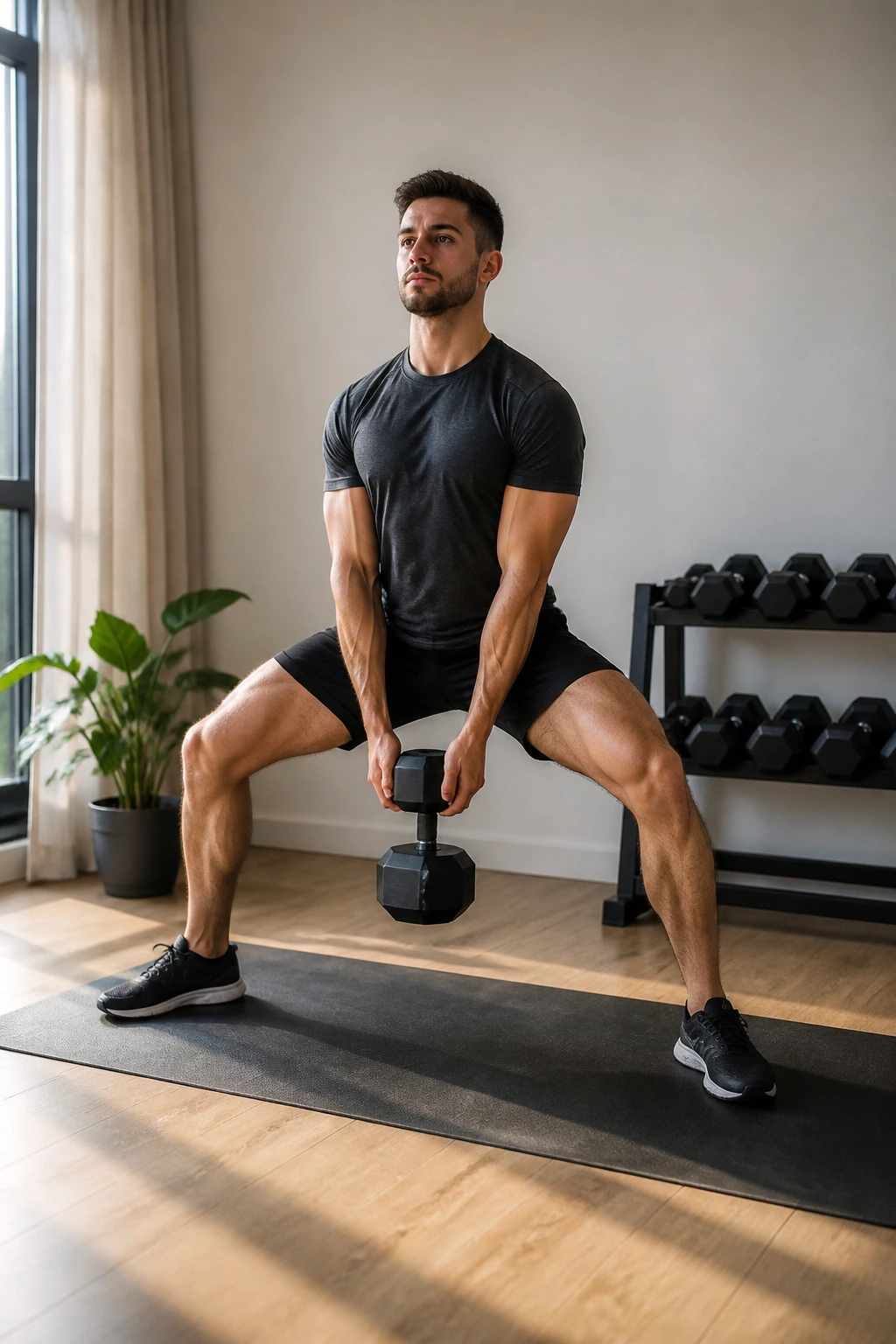
A wider stance changes the whole feel of the lift. Stand with your feet wider than shoulder-width, toes angled out, and a dumbbell held low between your legs. From there, hinge down, keep your chest proud, and stand by driving the floor apart with your feet.
Why the wide stance helps
The sumo deadlift often feels friendlier on the back because the torso stays a little more upright. It also gives the inner thighs and glutes more room to contribute. That can be a nice change if conventional deadlifting feels stiff or hard to learn.
Watch the knees. They should track in the same direction as your toes, not collapse inward. If the dumbbell bangs your shins hard every rep, slow the descent and keep the weight closer to your body. 3 sets of 8 to 10 reps is plenty for a beginner.
9. Dumbbell Step-Up
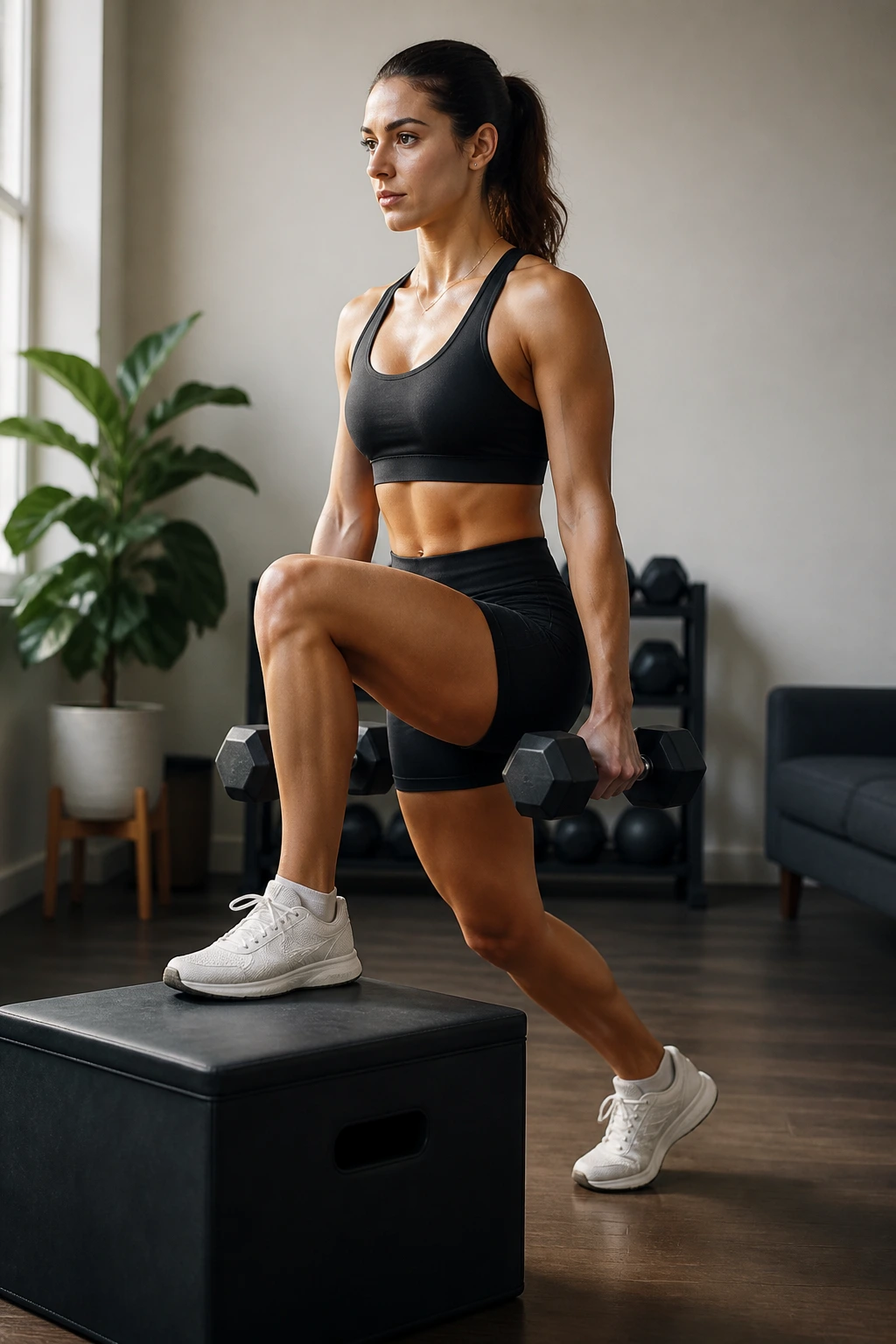
Need a leg move that also teaches balance? Use a step-up. A sturdy stair or low box is enough, and the height should let your whole foot land flat without your knee jamming into your chest.
Hold the dumbbells at your sides, place one foot on the step, and stand by pushing through that front leg. Do not spring off the back leg. The back foot is there to help you balance, not launch you.
A smooth step-up teaches knee control, hip strength, and single-leg balance at the same time. Keep the descent slow and controlled. If the box feels too high, lower it. That sounds boring, but a lower step with good form is far better than a heroic-looking rep that turns messy halfway up. Try 2 to 3 sets of 6 to 8 reps per leg.
10. Two-Arm Bent-Over Row
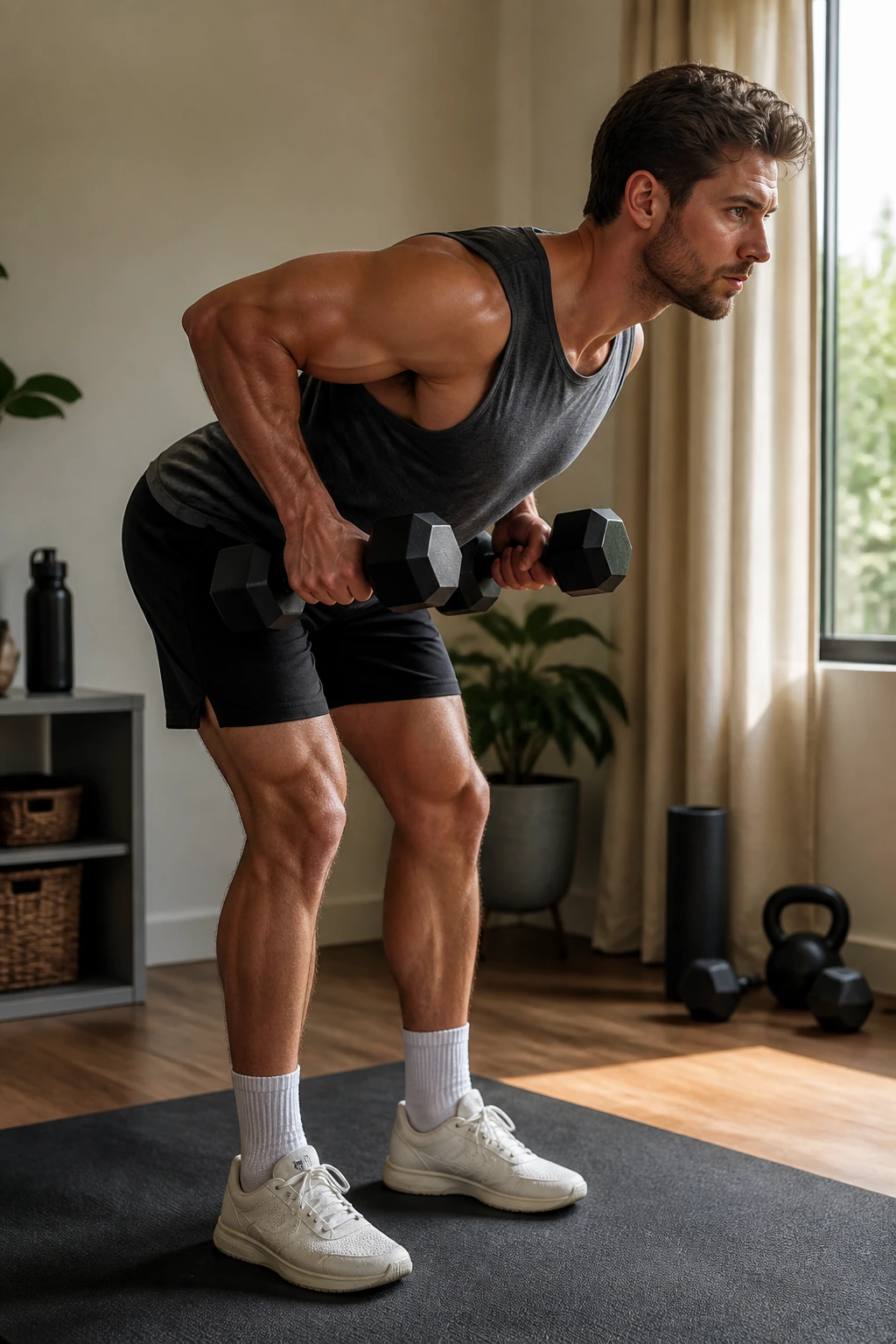
This is the row for days when you want efficiency. Hold a dumbbell in each hand, hinge your hips back, and let your torso tip forward until it feels stable. From there, pull both weights toward your lower ribs and pause for a beat.
Your neck should stay long, not craned upward. Your lower back should feel braced, not squashed. If your torso keeps rising every rep, the weight is too heavy. That little sway is a common beginner cheat and it sneaks in fast.
A good bent-over row builds the upper back, rear shoulders, and the muscles that help keep your posture from folding inward. Use 3 sets of 8 to 12 reps, and keep the lowering phase smooth. No yanking. No shrugging. Just a clean pull and a quiet return.
11. Dumbbell Hammer Curl
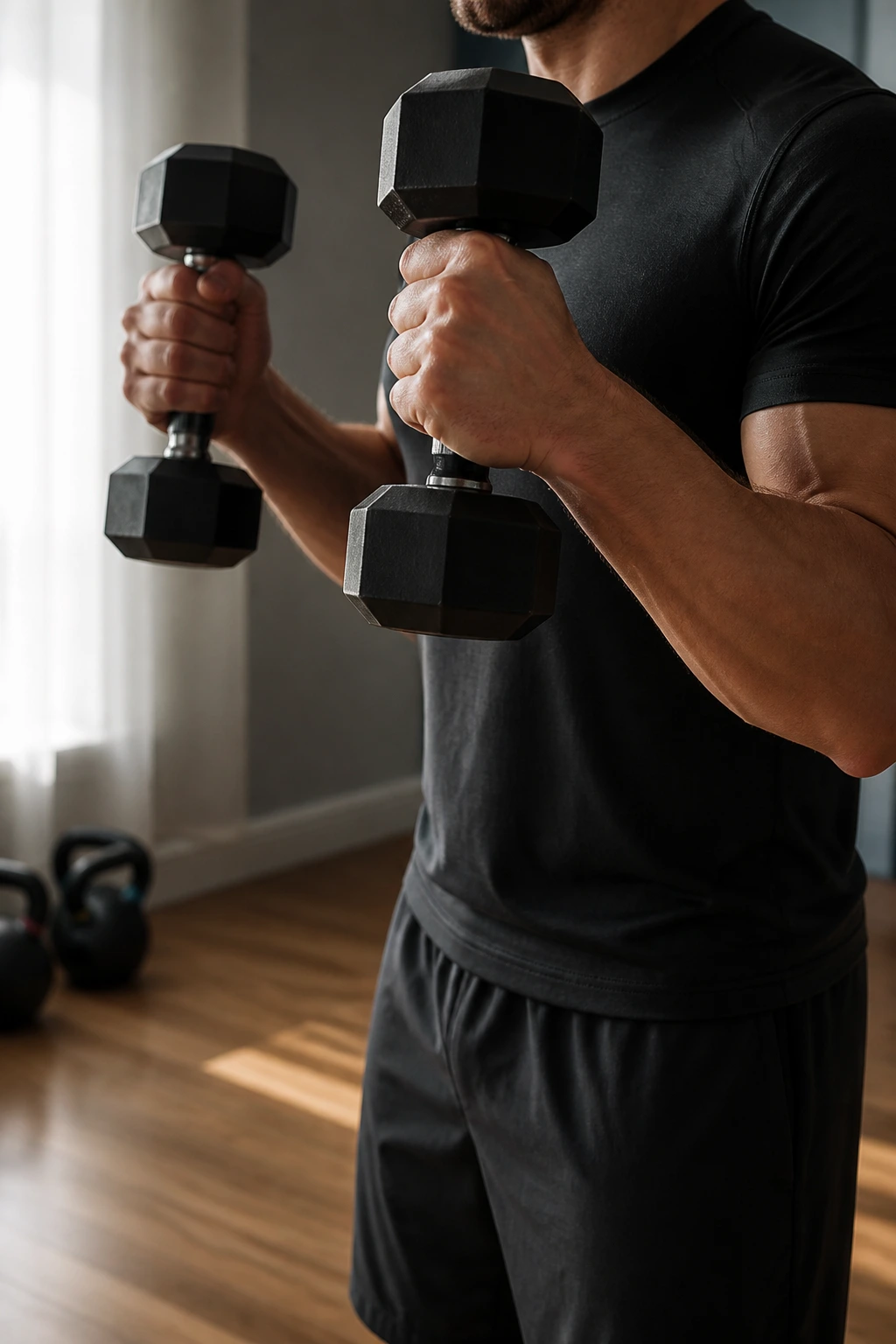
The hammer curl looks small, but the neutral grip changes the feel enough to matter. Palms face each other, elbows stay close to your ribs, and the dumbbells travel up without your shoulders joining the party.
Why the neutral grip helps
A hammer curl is easier on the wrists for many people, and it often hits the forearms more than a classic palm-up curl. That makes it a useful beginner move, especially if straight-bar curling feels clunky.
- Keep your upper arms still.
- Curl only until the dumbbells reach about shoulder height.
- Lower for a slow count of two.
- Stop the swing before it starts.
If you have to lean back to move the weight, it is too heavy. Pick a load you can move cleanly for 10 to 12 reps. A little burn in the forearms is normal. A full-body heave is not.
12. Overhead Dumbbell Triceps Extension
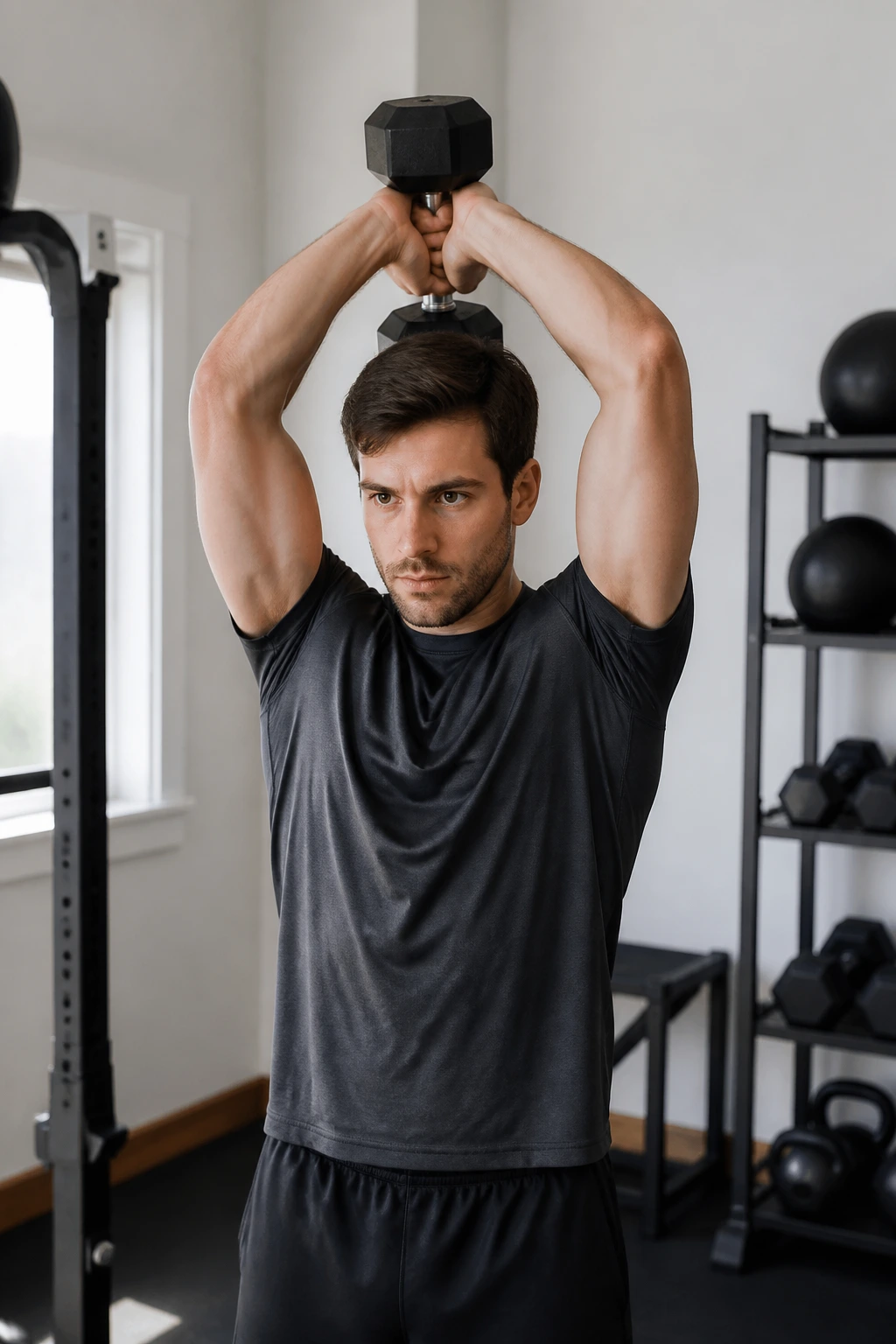
One dumbbell, two hands, and a small amount of patience. That is enough for this move.
Hold one dumbbell overhead with both hands, elbows pointing forward, then bend the elbows to lower the weight behind your head. Press it back up by straightening the arms. Keep your ribs stacked over your hips so the movement stays in the triceps instead of turning into a back arch.
If your shoulders feel tight, do it seated. If that still feels awkward, use one arm at a time and lower the weight only as far as your range allows. A clean half-range rep beats a messy full-range one. Try 2 or 3 sets of 10 to 12 reps.
13. Dumbbell Lateral Raise
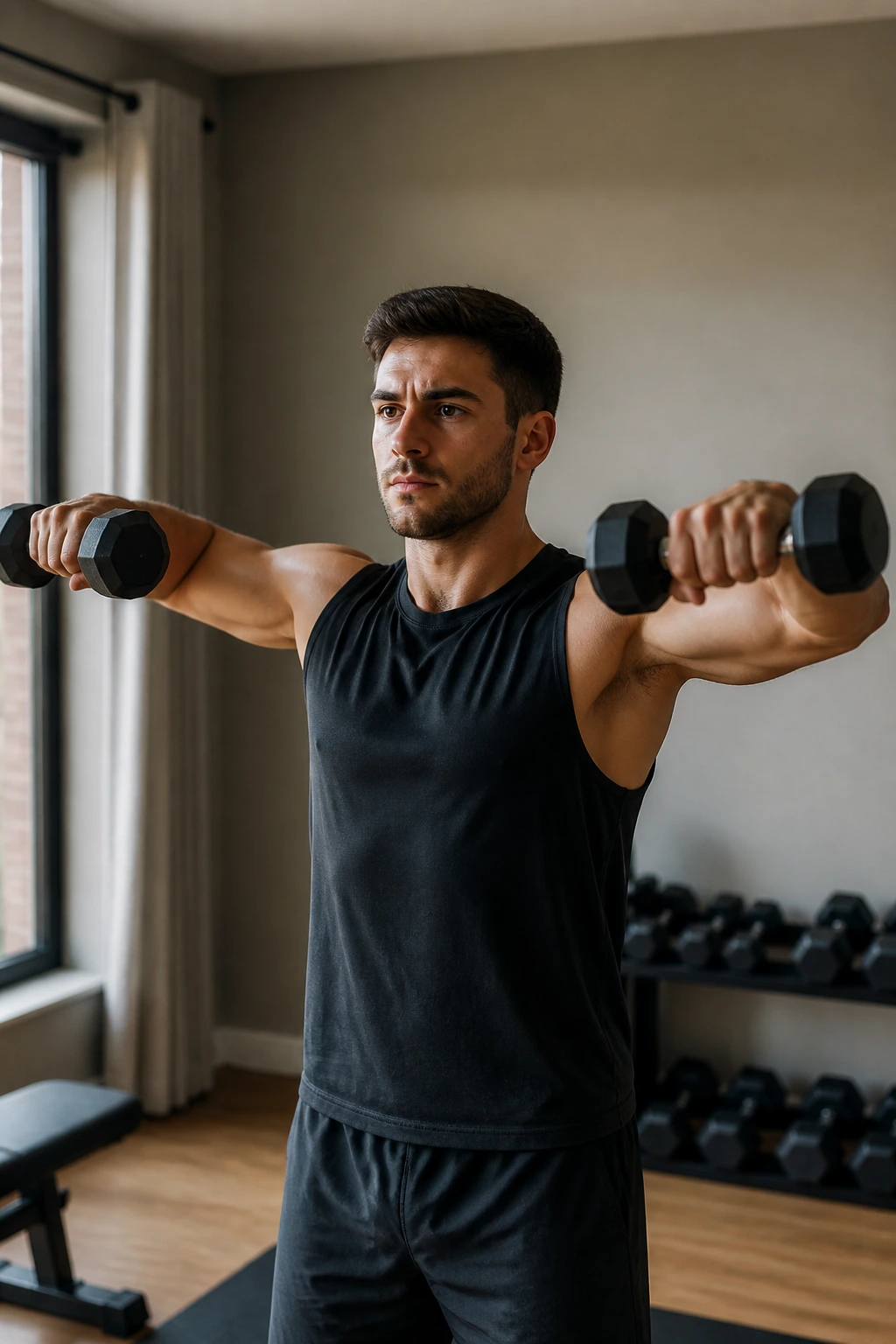
Light weights are not a cop-out here. They are the point.
Raise the dumbbells out to the sides until your arms reach about shoulder height, then lower them with control. Keep a soft bend in the elbows and think about lifting with the sides of the shoulders rather than swinging the hands up. If your traps take over, the weights are too heavy or the lift is too high.
This one usually feels modest at first, then spicy halfway through the set. That is normal. Use 2 to 3 sets of 12 to 15 reps, and stop the set when the form starts to wobble. A little body lean turns this into cheating fast, so stay still and let the shoulders do the job.
14. Dumbbell Chest Fly on the Floor
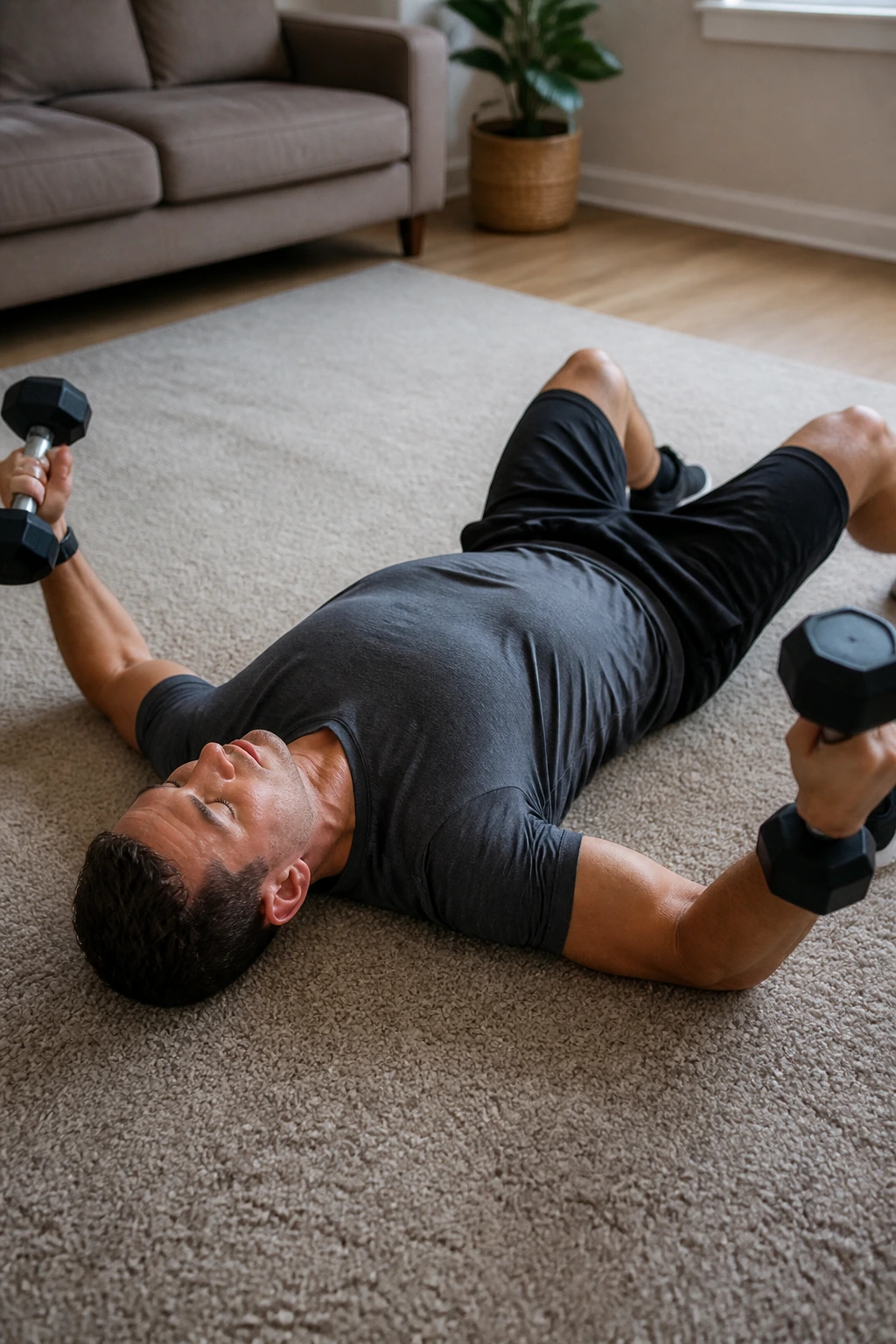
Want chest work without a bench? The floor fly is a good answer, as long as you respect the range.
Lie on your back with a dumbbell in each hand, palms facing each other, and press the weights over your chest. Lower them out to the sides with a slight bend in the elbows until your upper arms tap the floor. Then bring them back together in a smooth arc.
The part that matters
The floor protects you from dropping too deep and overstressing the shoulder. That is good. What you lose in range, you gain in safety and control. Keep the motion slow, especially on the way down, because the lowering phase is where people usually rush.
If the dumbbells feel unstable, reduce the weight before the reps get ugly. Two or 3 sets of 8 to 12 reps is enough. This is not the place to chase a giant stretch.
15. Front Rack March
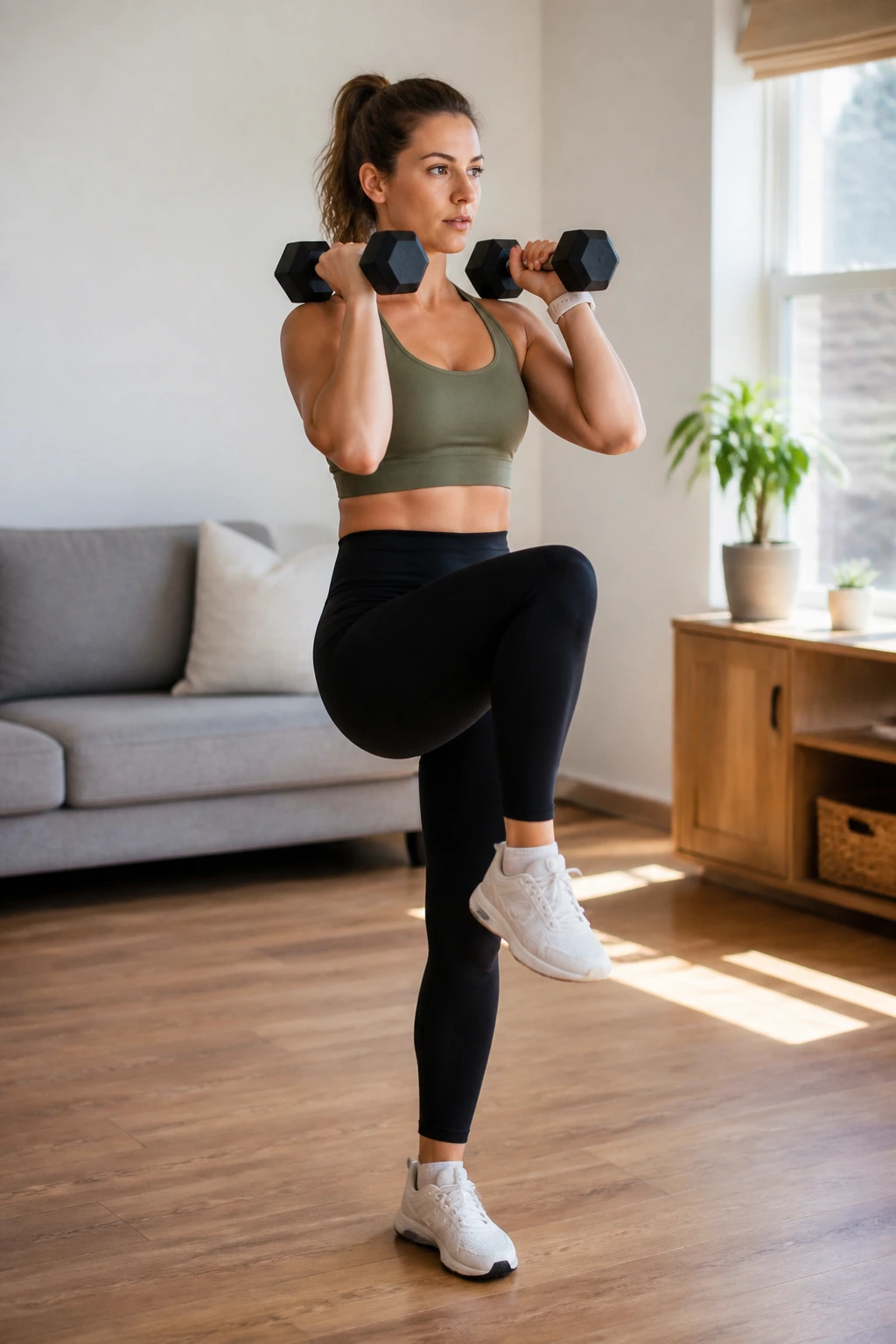
This looks simple and feels sneaky-hard. Hold one dumbbell in each hand at shoulder height, elbows slightly forward, and march in place with small, controlled steps.
The goal is not speed. It is bracing. Keep your torso tall, your ribs tucked, and your hips level as one knee lifts, then the other. No leaning. No swaying. If your trunk moves like a pendulum, lower the weight.
Front rack marching teaches posture, core tension, and grip strength at once. It also makes a good warm-up before a full-body circuit. Try 20 to 40 seconds per round, or 2 to 4 rounds with a short rest. When done well, it feels a bit like balancing a stack of books on your chest while your legs do their own quiet work.
16. Dumbbell Suitcase Carry
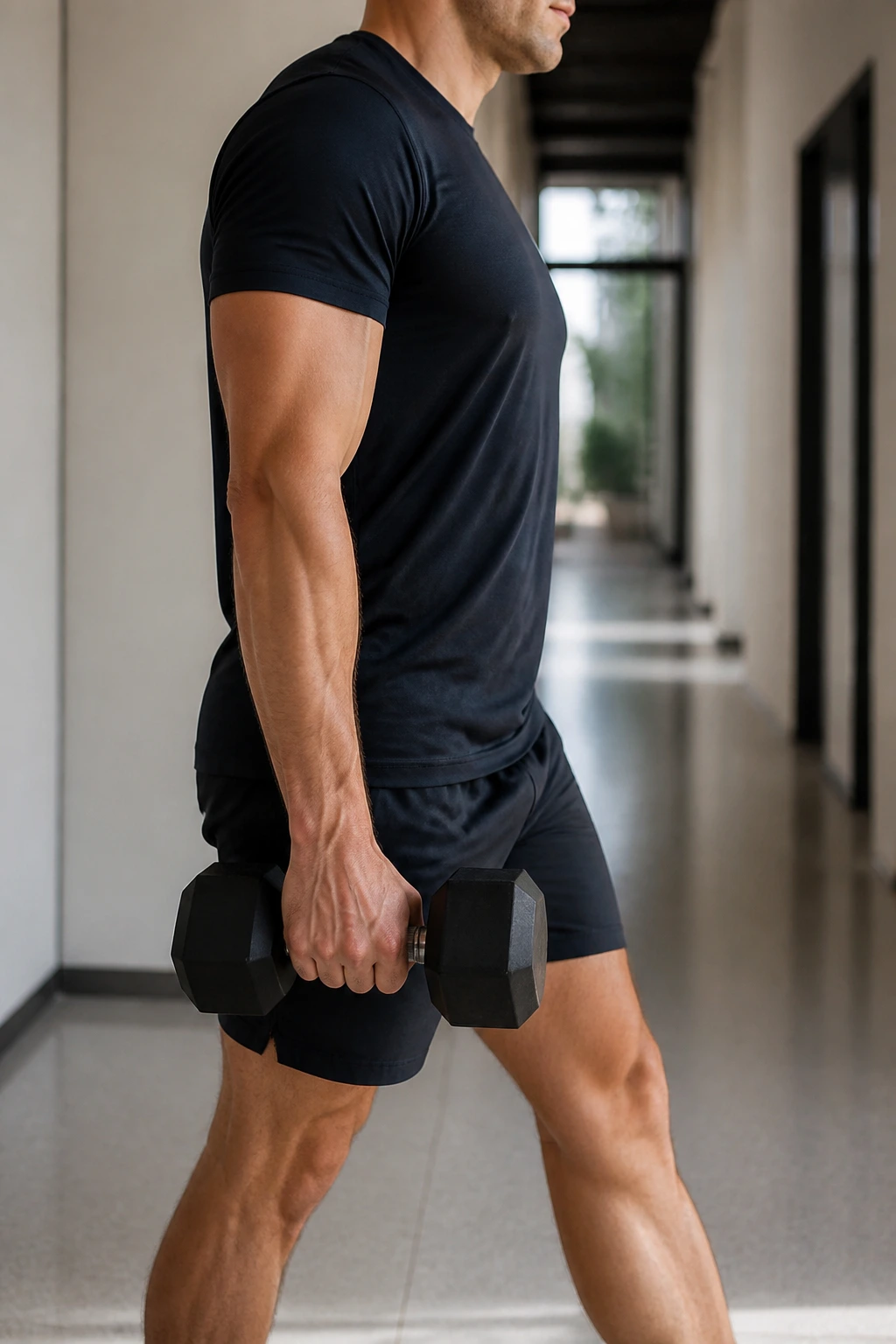
Carrying one weight on one side sounds too basic to matter. Then you try it and realize your obliques and grip were not as ready as you thought.
Hold a dumbbell in one hand, stand tall, and walk slowly across the room or down a hallway. Keep the shoulder on the loaded side from sinking and resist the urge to lean away. Your body should look boring from the outside. That is the win.
- Walk 20 to 40 seconds per side.
- Keep the steps short and quiet.
- Breathe normally.
- Switch hands before your grip fails hard.
This move is especially useful if you sit a lot, because it wakes up the side body and teaches you not to collapse into one hip. It is also one of the simplest home exercises you can do with a single dumbbell.
17. Dumbbell Dead Bug Press
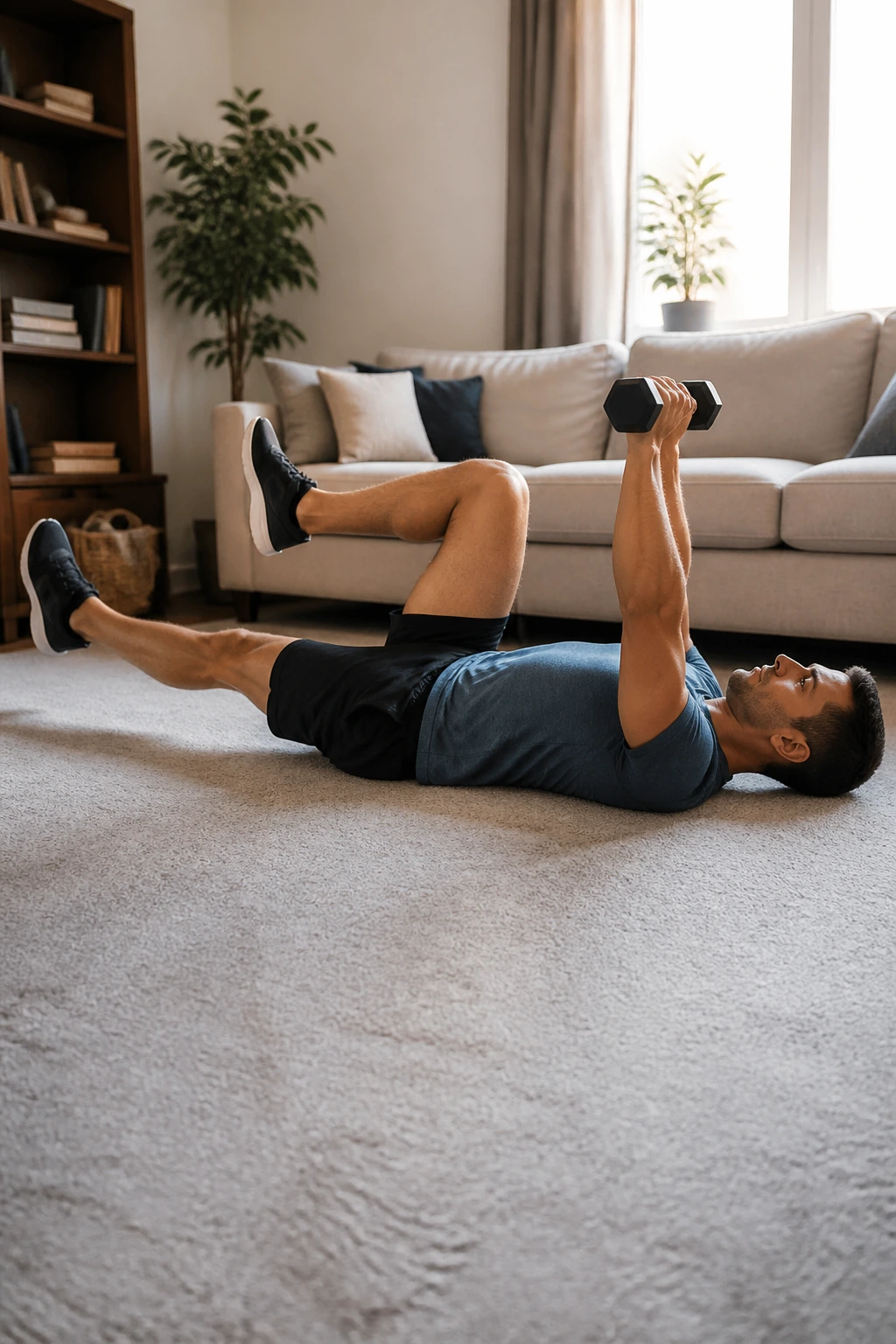
This one is sneaky because it looks like a floor drill, not strength work. Lie on your back, hold one light dumbbell over your chest with both hands, and bring your knees to tabletop position.
From there, lower one leg at a time while pressing the dumbbell upward and keeping your lower back glued to the floor. The moment your back starts arching, shorten the range. That flat back is the whole point. If you lose it, the exercise stops being a core drill and turns into a guess.
A small dumbbell is enough. You do not need much load here, because the challenge comes from coordination and bracing. Move slowly, exhale as the legs extend, and try 6 to 8 controlled reps per side.
18. Dumbbell Russian Twist
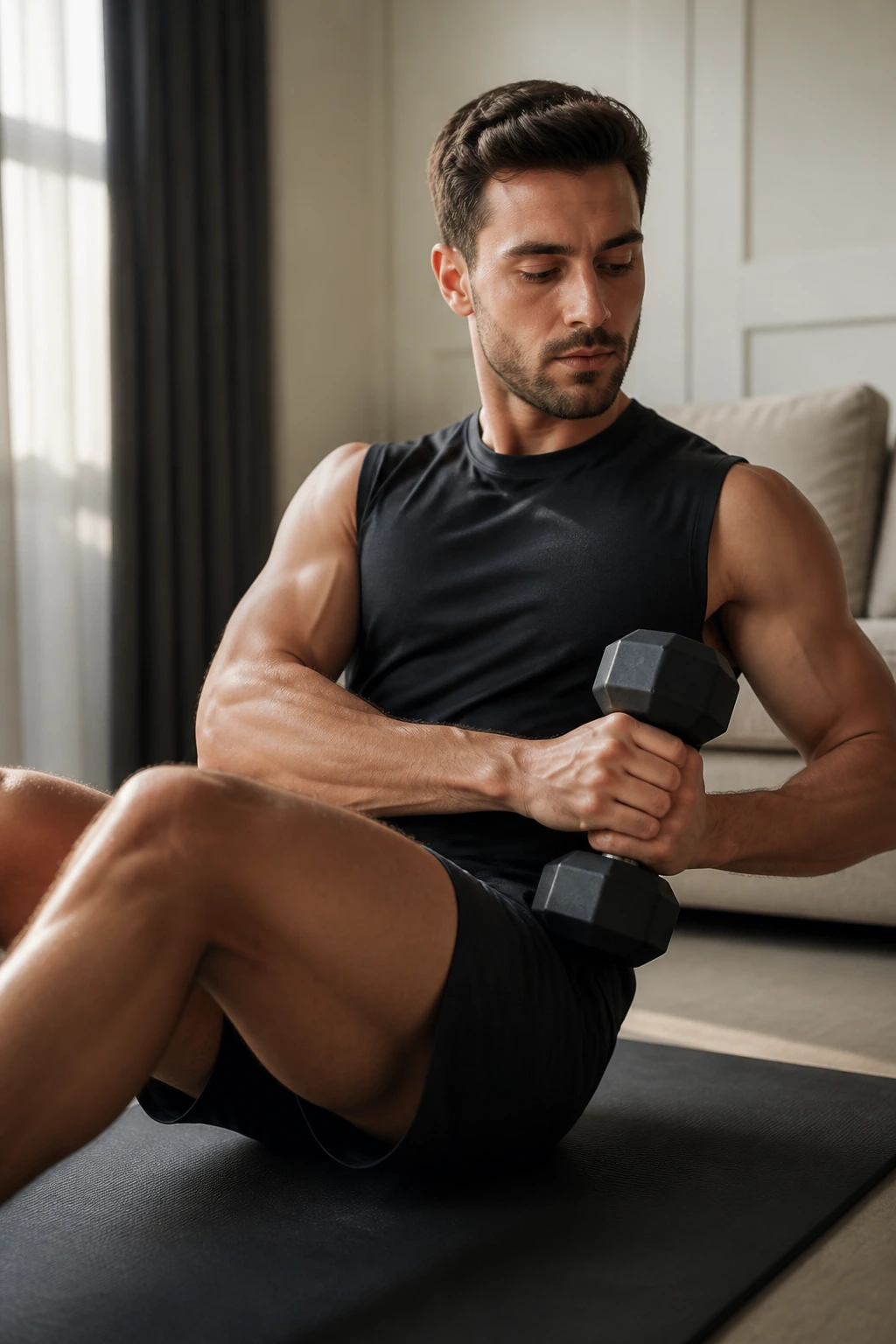
Is it a great move when rushed? No. Is it useful when you keep it slow and controlled? Yes.
Sit with your feet on the floor or lightly lifted, lean back just enough to feel your abs engage, and rotate the dumbbell from side to side. The movement should come from your ribcage and torso, not from whipping the arms around like a steering wheel.
If your lower back rounds, sit taller or put your heels down. If the twist gets sloppy, reduce the range and slow down. Control beats range every time here. A light dumbbell is usually enough. Do 8 to 12 turns per side, and stop before speed ruins the set.
19. Dumbbell Pullover
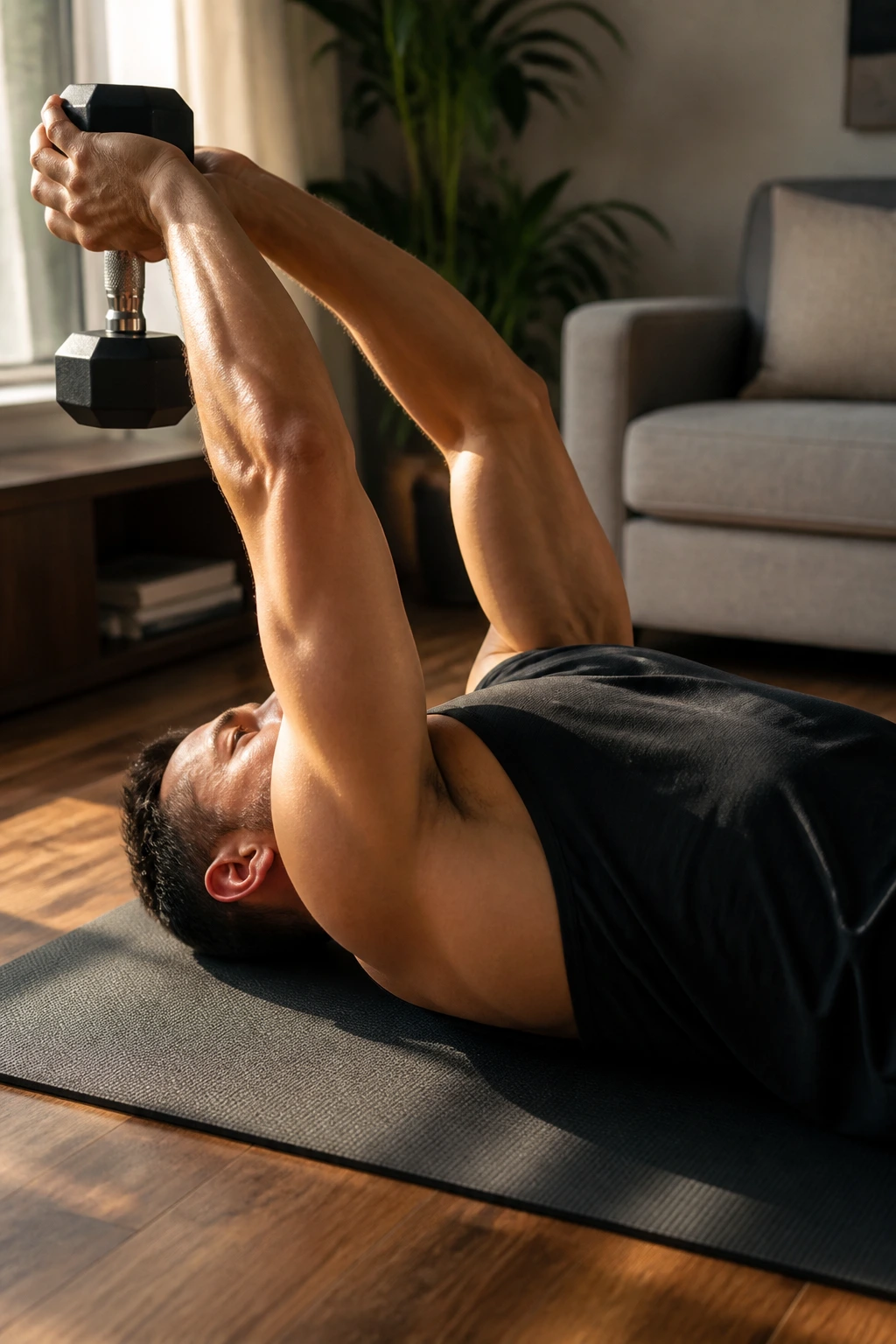
This is a chest-and-lats move that more beginners should try. Lie on the floor and hold one dumbbell with both hands above your chest, then lower it back over your head in a slow arc until your upper arms brush the floor.
What to watch for
The upper body should stay quiet. Do not turn the rep into a giant rib flare. Keep your ribs down, let the shoulders move freely, and stop the descent where you still feel in control. That small stop point protects the shoulders and keeps the exercise useful.
A dumbbell pullover pairs nicely with floor presses if you want a simple upper-body session at home. Use 2 or 3 sets of 8 to 12 reps. The lowering phase should feel smooth and even, almost like you’re tracing a half-circle in the air.
20. Dumbbell Farmer’s Carry
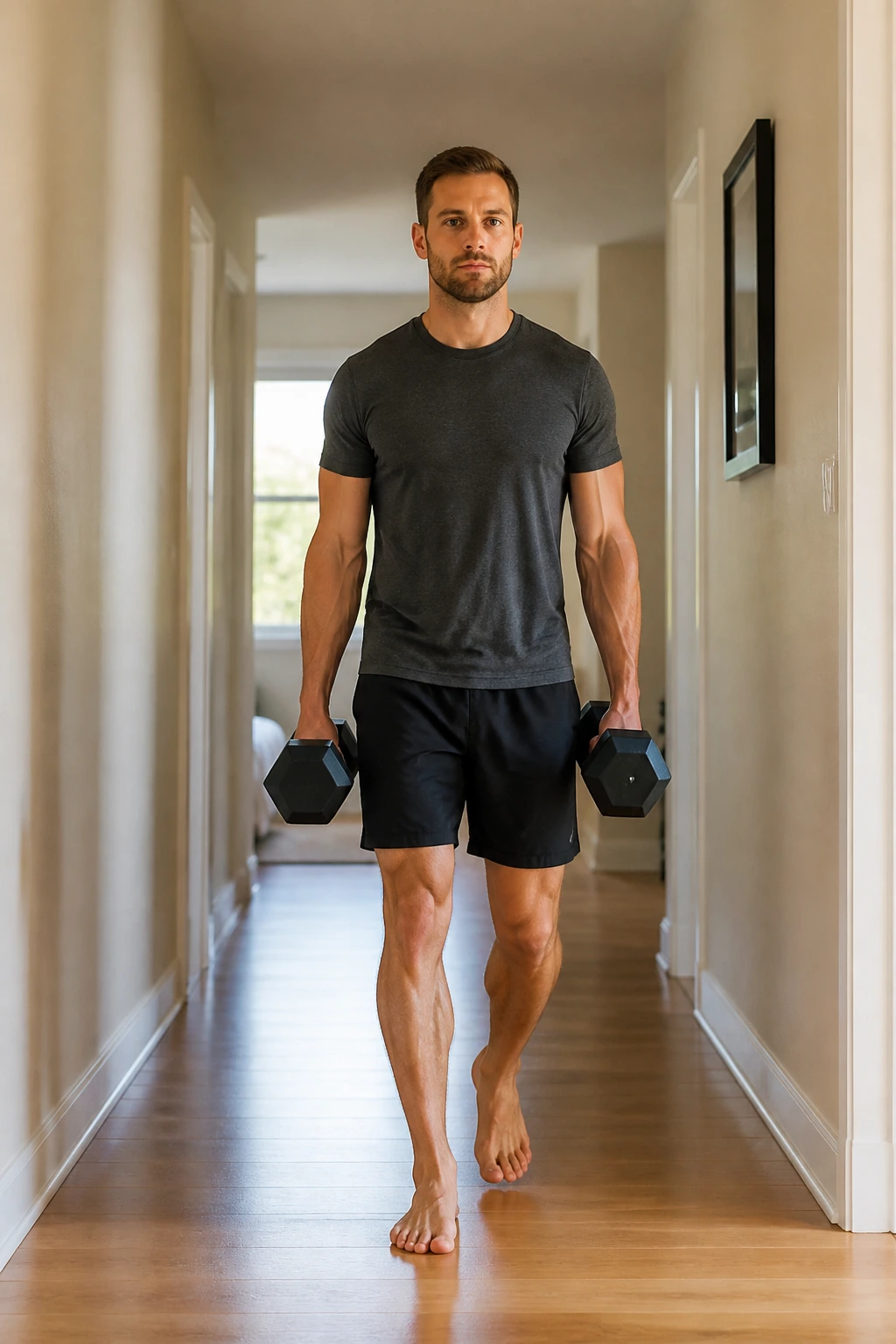
Unlike the suitcase carry, this one uses two weights and asks your whole body to behave at once. Both dumbbells stay at your sides while you walk, stand tall, and resist the urge to hunch or rush.
It is a blunt, honest exercise. Grip, core, posture, breathing — all of it shows up. If the weights bang against your legs, slow the steps a touch and keep your hands quiet. If your shoulders creep upward, lower the weight. Heavy enough to feel, light enough to walk well is the sweet spot.
Try 20 to 60 seconds at a time, depending on the weight. This is one of the easiest ways to finish a beginner dumbbell workout at home without needing much space. A hallway works. A driveway works. A clear kitchen path works, too.
21. Dumbbell Thruster
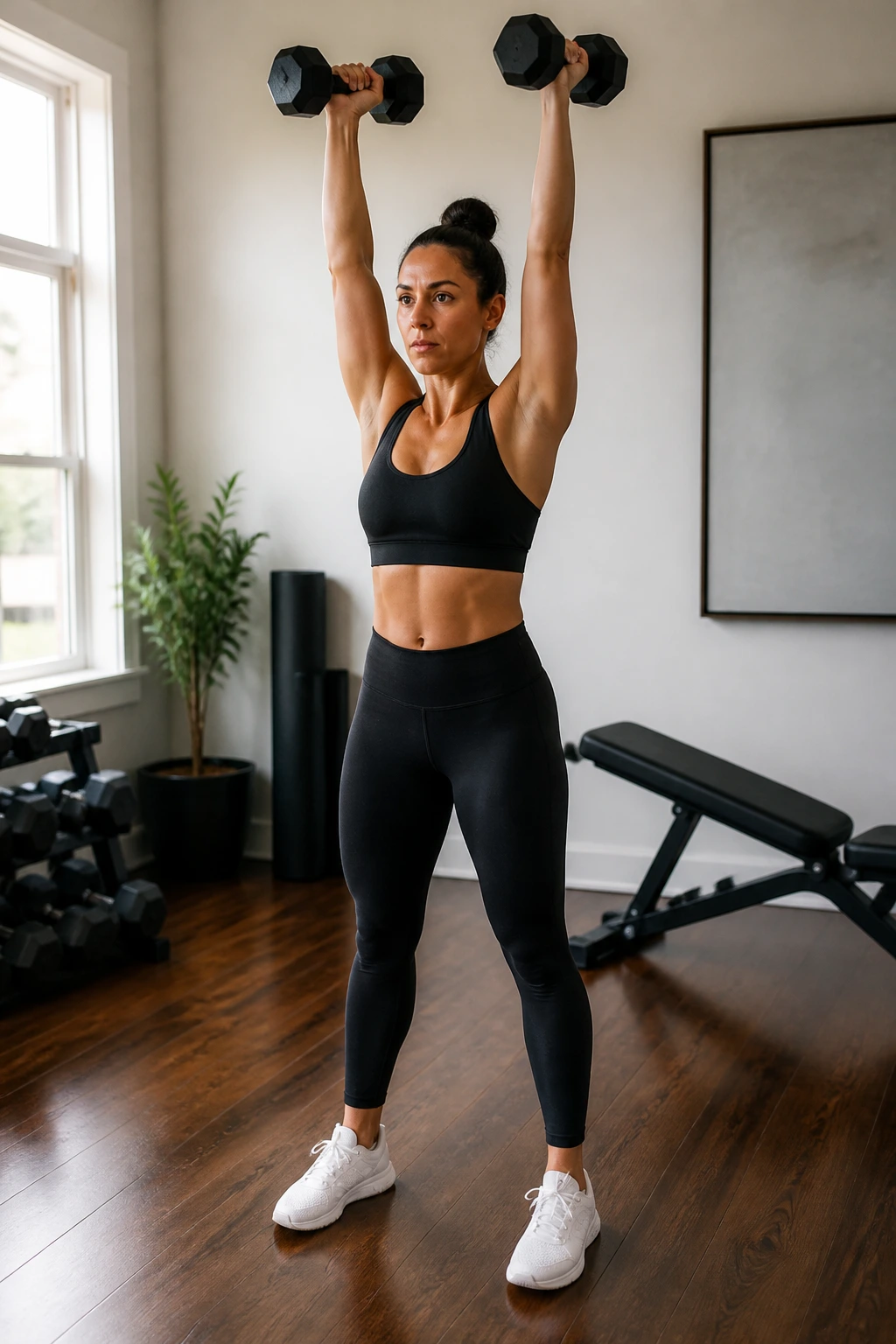
If you want one move that gets the pulse up fast, this is it. The thruster combines a front squat with an overhead press, which means the legs start the work and the shoulders finish it.
Hold the dumbbells at shoulder height, drop into a squat, then stand up and press the weights overhead in one smooth motion. The important part is timing. Drive from the legs first, then press. If the press starts before you finish standing, the whole rep turns choppy.
How to keep it clean
- Keep the squat controlled.
- Let the knees track over the toes.
- Use light to moderate dumbbells.
- Press straight up, not forward.
Thrusters are great in short circuits because they make a small space feel bigger. Three sets of 6 to 10 reps can be plenty.
22. Single-Leg Dumbbell Romanian Deadlift
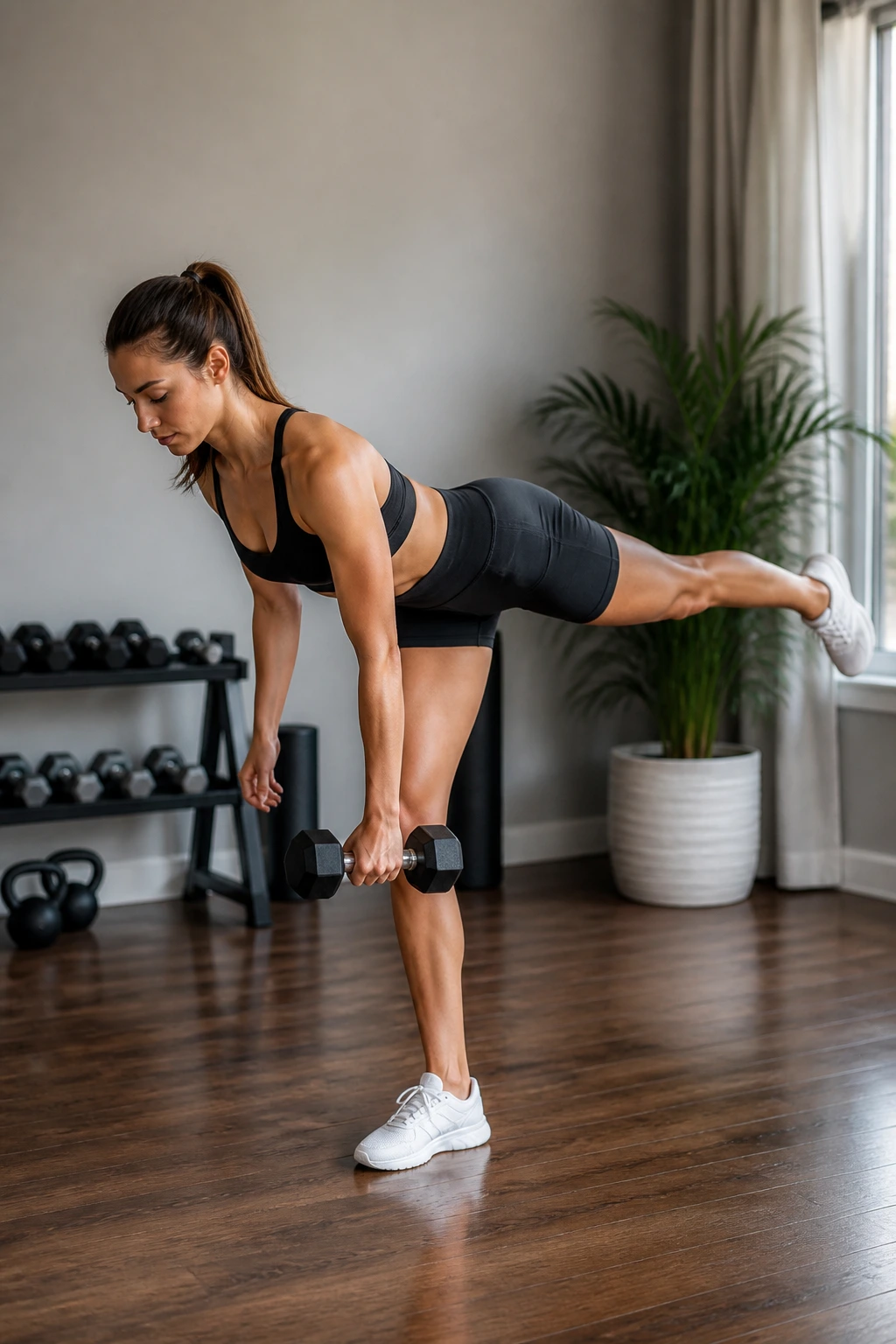
This is where balance gets serious, and that is a good thing. Stand on one leg, hold a dumbbell in the opposite hand, and hinge forward while your free leg reaches back like a counterweight.
The hips should stay square to the floor. That means you do not open the pelvis just to find balance. Keep a soft bend in the standing knee and let the dumbbell travel down close to the standing shin. If you need a finger on the wall, use one. That is smart training, not cheating.
This move lights up the hamstrings and glutes, but it also tells you a lot about side-to-side differences. Start with 2 sets of 6 to 8 reps per leg. The first few reps may feel wobbly. Fine. Wobble less on the next set.
23. Dumbbell Calf Raise
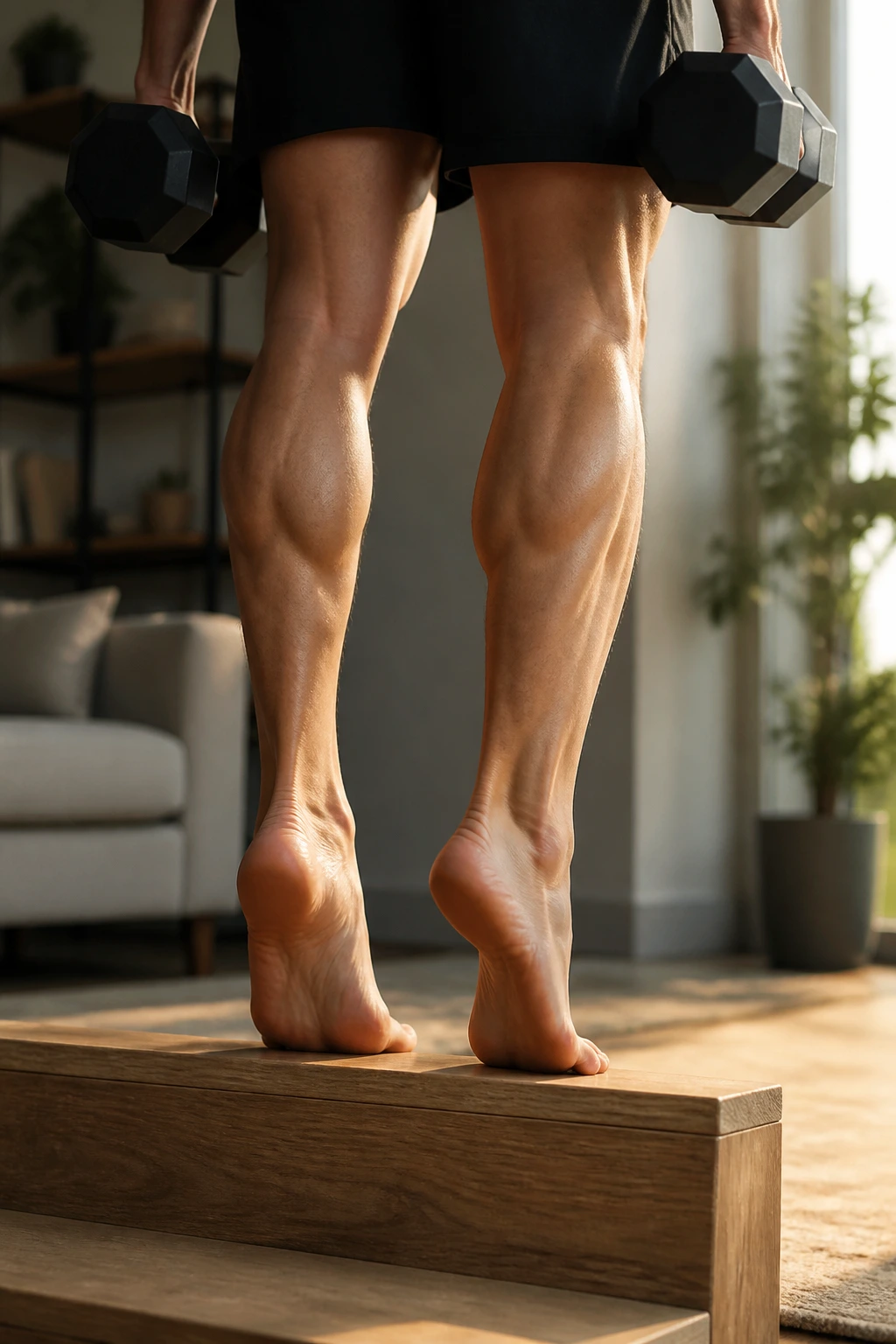
People love to skip calf raises until they notice how much ankle strength they’re missing. Stand with dumbbells at your sides, rise onto the balls of your feet, pause at the top, and lower slowly until you feel a stretch through the calves.
A small step or stair makes the lower position more useful if it feels stable. Use the edge of a step only if you can control the descent cleanly. The slow lowering phase matters more than the bounce. Bouncing looks busy and trains less.
Calf raises are easy to slot at the end of a workout, and they do not need much setup. Try 12 to 20 reps for 2 or 3 rounds. If your ankles are stiff, keep the range smaller at first and earn the full stretch over time.
24. Dumbbell Curl-to-Press
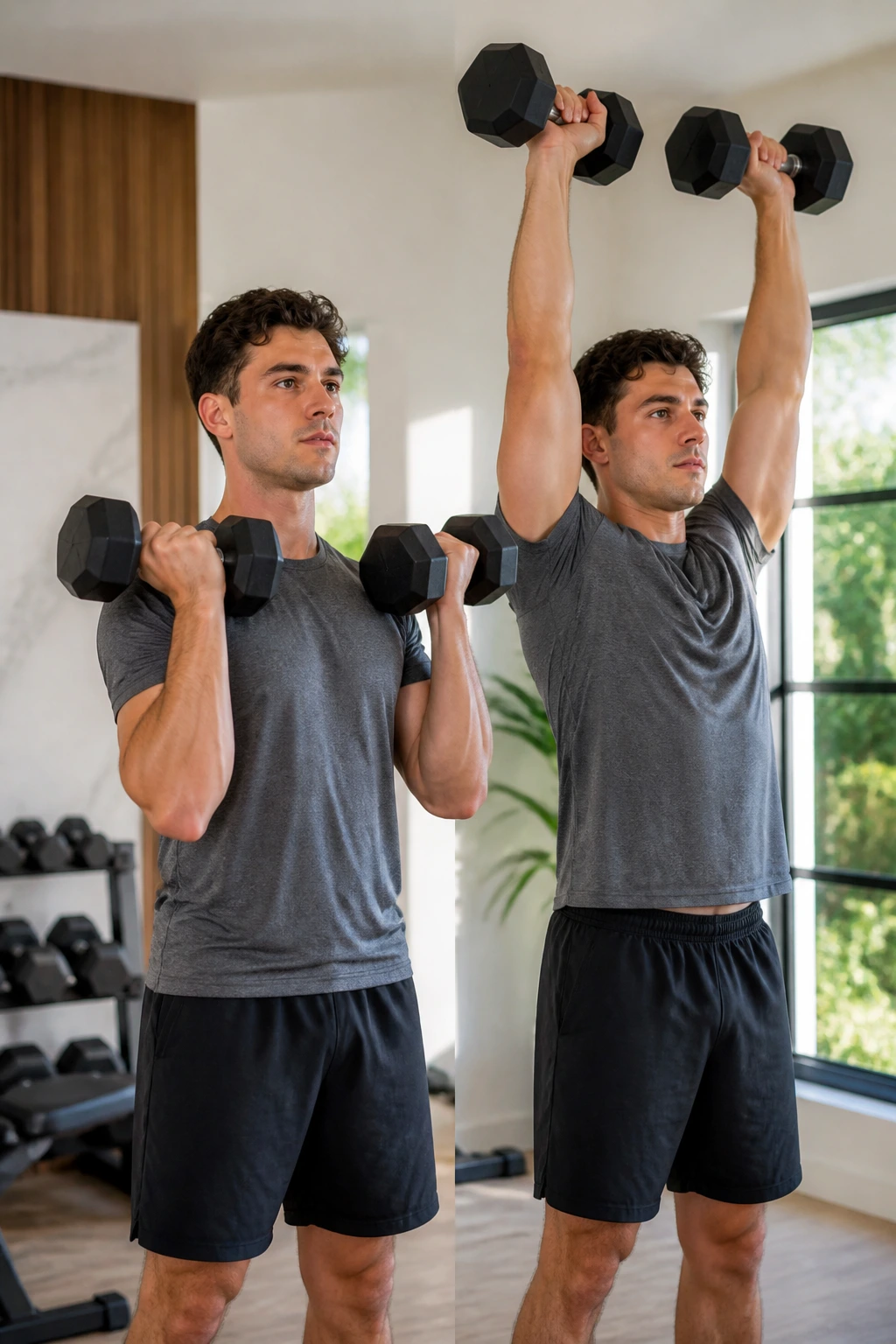
Your arms will complain before your shoulders do. That is part of the appeal.
Start with the dumbbells at your sides, curl them to shoulder height, then press overhead. Lower them back to the shoulders before returning to the start. The move links two familiar patterns, so it feels friendly, but it still asks for control through the middle.
How to keep it clean
Hold your elbows close during the curl so the weights do not swing away from you. Then brace your midsection before the press so your ribs do not flare. If the curl turns into a hip swing, the dumbbells are too heavy. Keep the rep smooth from bottom to top.
This works well in a full-body circuit because it keeps the heart rate moving without needing much floor space. Two or 3 sets of 8 to 10 reps is enough for most beginners.
25. Dumbbell Wood Chop
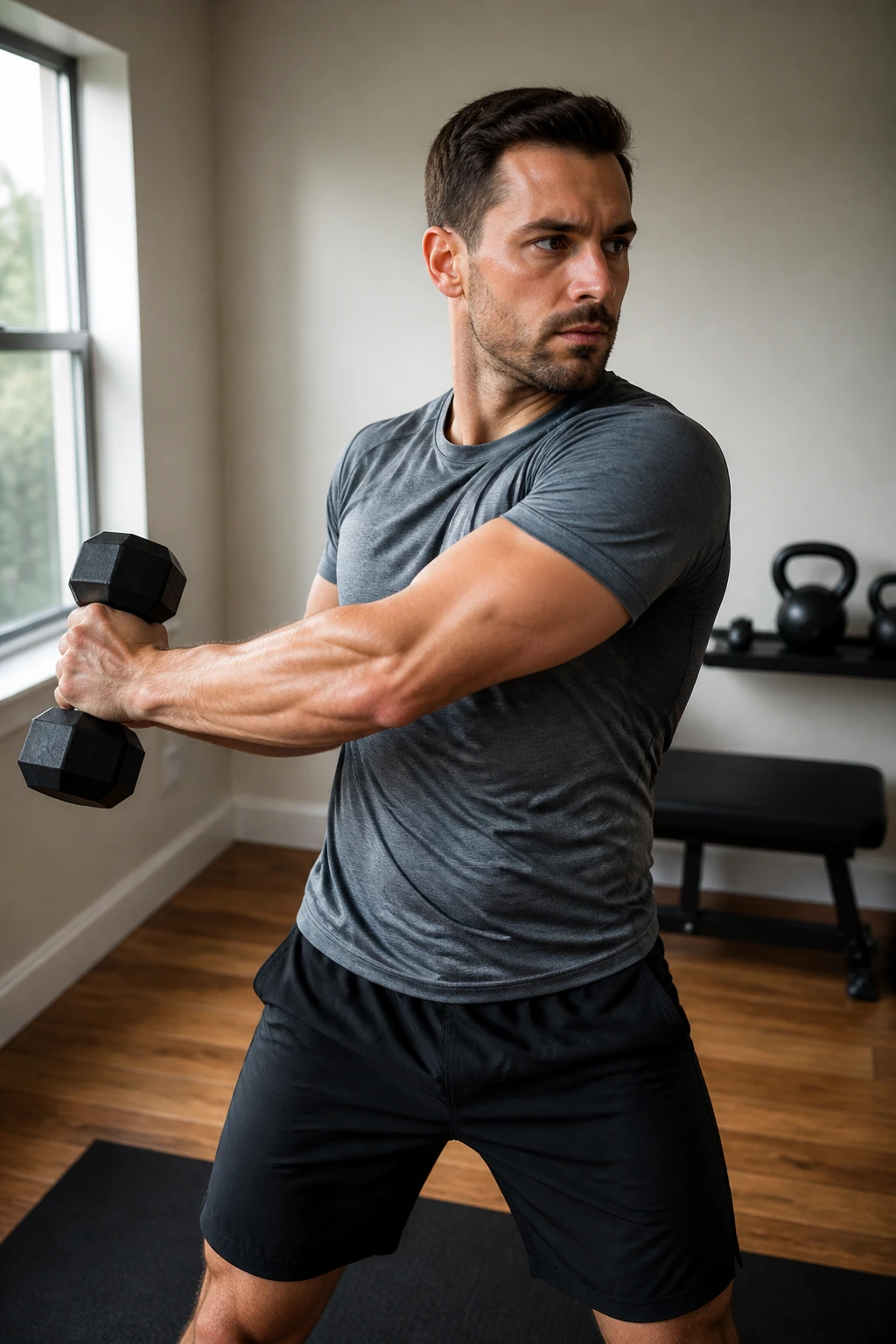
A wood chop gives your core something more useful to do than just hold still. Stand with one dumbbell held near one hip, then bring it diagonally across your body toward the opposite shoulder in a controlled arc.
The power should come from the torso and hips, not from flinging the arms. Keep your feet planted if balance is shaky, or let the back foot pivot a little if the rotation feels tight. Rotate the body as one unit. Do not twist only through the lower back.
This is a smart finisher for a beginner home session because it trains control under a little fatigue. Use a light dumbbell and aim for 8 to 10 reps per side. If the movement gets jerky, slow it down. The slower version usually teaches more.
Final Thoughts
You do not need to do all 25 moves in one session. Pick 4 or 5, arrange them into a simple full-body routine, and get good at them before chasing novelty. That approach beats random variety almost every time.
A clean beginner dumbbell workout at home should feel organized, not chaotic. Squat, hinge, push, pull, carry, repeat. Once those patterns feel steady, the rest of the catalog starts to make sense fast.
Write your reps down. That one habit matters more than people expect. If you can repeat a movement with better control, one extra rep, or a slightly cleaner path, you are moving in the right direction — and the dumbbells on your floor start earning their keep.
