



If your Pilates session only leaves your abs shaking, you’re missing the bigger prize. The best Pilates workouts don’t stop at the midsection; they pull your glutes, upper back, inner thighs, hamstrings, shoulders, and deep core into the same conversation. When that happens, the full body burn feels clean and controlled, not frantic.
That burn is different from what you get in a jump-heavy circuit. You’re not chasing noise. You’re asking your ribs to stay stacked while your legs move, your shoulder blades to glide instead of creep toward your ears, and your hips to stay level while one side of your body works harder than the other. Small motions. Big demand.
I keep coming back to the same truth with Pilates: the moves that look tame on paper are often the ones that humble people fastest. A slow toe tap. A bridge march. A side kick done with the pelvis steady. Three clean reps can tell you more about your strength than thirty messy ones.
Each of these 25 options works like a short workout block. String together three or four, and you’ve got a mat session that lights up your whole body without pounding your joints into the floor.
1. Hundred to Toe Tap Wake-Up Flow
If your core is asleep, the rest of the session gets loose in all the wrong places.
Start with 30 pulses of the Hundred: legs in tabletop, head and shoulders lifted if your neck allows it, arms pumping by your sides. Move straight into 10 alternating toe taps per side, keeping your lower back heavy on the mat. Rest for 20 seconds, then repeat the pair 2 to 3 rounds.
Why this opener works
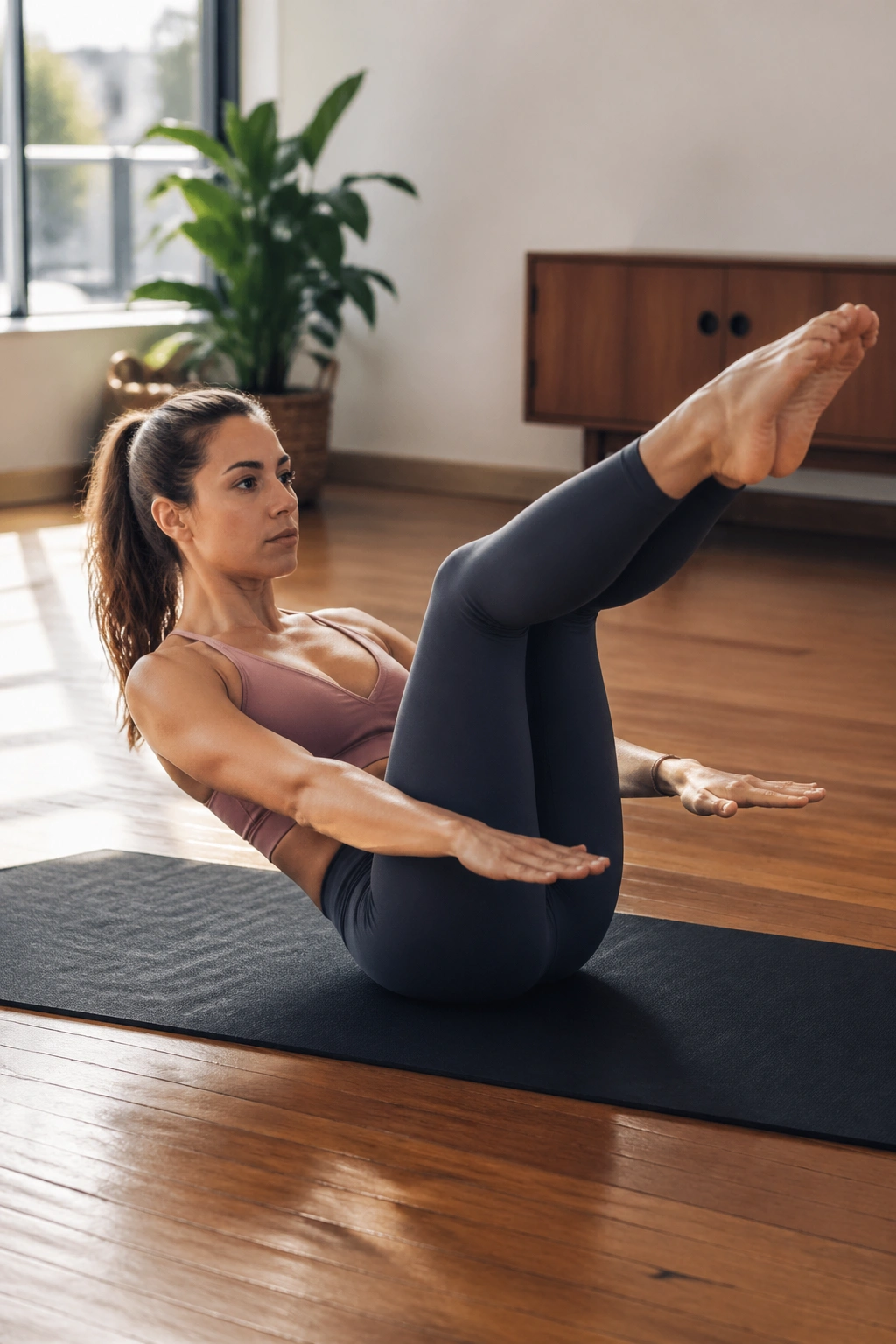
The Hundred turns on breathing and abdominal tension at the same time. The toe taps add control. You’re teaching your trunk to stay still while your legs move away from center, which is where many Pilates workouts either click—or fall apart.
- Time: 3 to 4 minutes
- Rounds: 2 to 3
- Main focus: Deep core, hip flexor control, breath rhythm
- Watch for: Ribs popping up as the legs lower
Tip: If your neck grips, keep your head down for the toe taps and exhale hard each time the foot lowers.
2. Roll-Up and Single-Leg Stretch Ladder
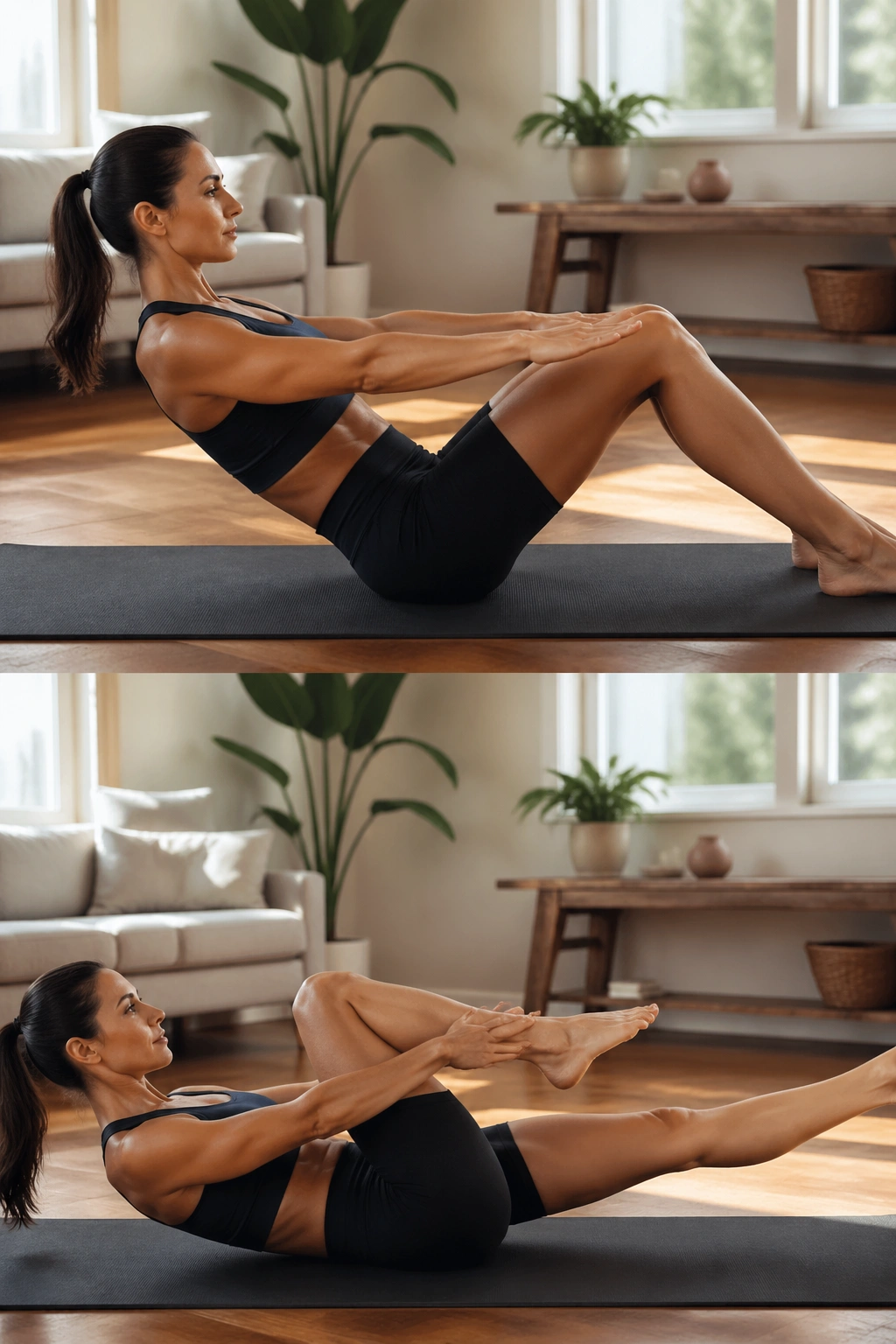
Want a workout block that wakes up both spinal control and front-body endurance? Pair a slow roll-up with single-leg stretch, and do not rush either part.
Do 6 roll-ups, one vertebra at a time, reaching past the thighs without yanking from the shoulders. Then stay down and perform 20 alternating single-leg stretches, drawing one knee in while the other leg reaches out at about a 45-degree angle. Rest long enough to get your breathing back, then repeat once or twice.
This combo works because it asks for two different kinds of abdominal strength. The roll-up is controlled flexion through the whole spine. Single-leg stretch is anti-extension; your abs have to stop the rib cage from flaring while the legs create leverage. That contrast matters.
A small note here, because it trips people up: if your roll-up stalls halfway, bend your knees a little. Pride is useless on a mat. Clean reps beat dramatic reps every time.
3. Plank-to-Pike Slider Burn
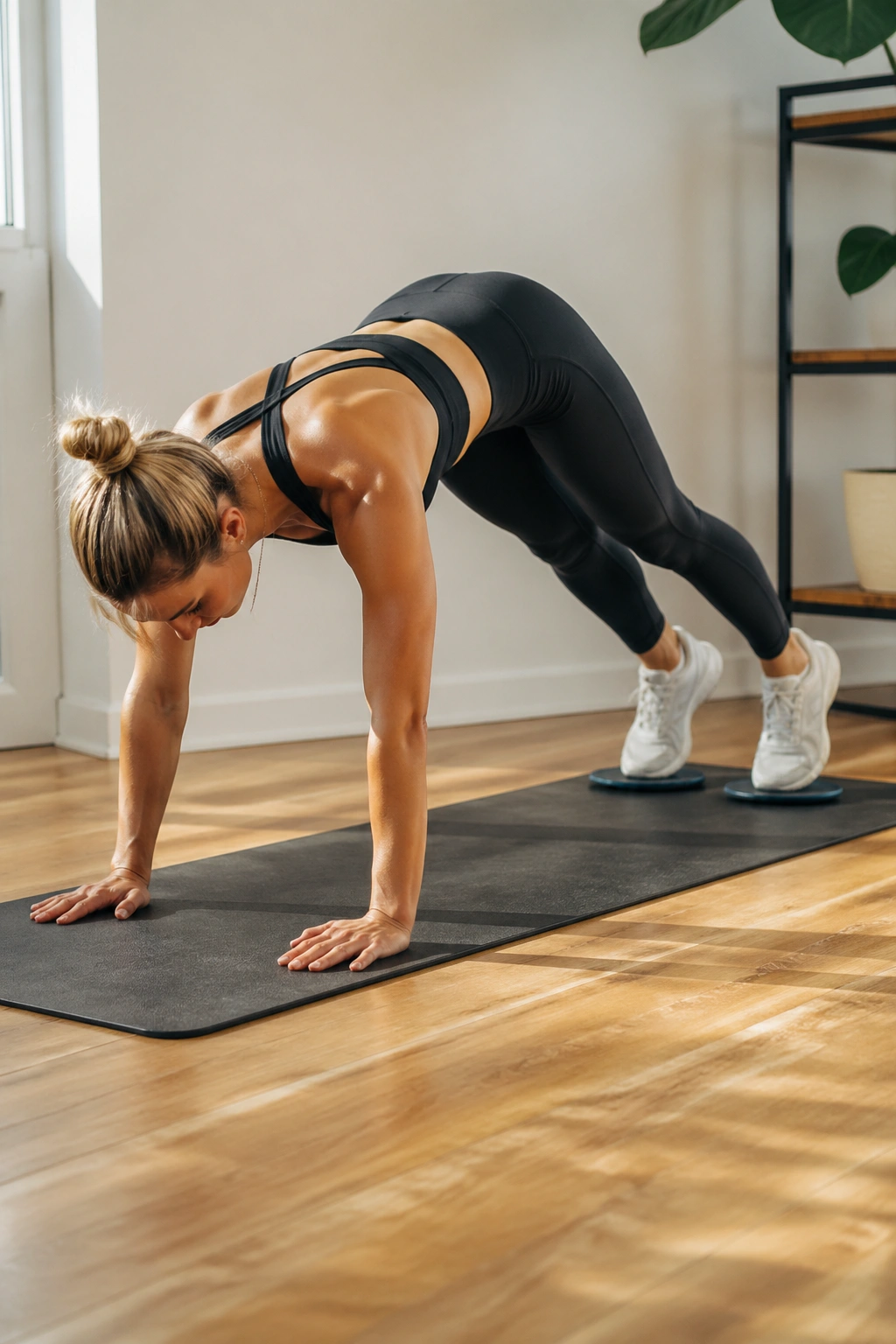
Put a towel under each foot on hardwood—or paper plates on carpet—and this move gets mean fast.
Begin in a high plank with hands under shoulders. Pull your feet toward your hands by lifting the hips into a pike, then slide back to plank with control. Do 8 to 10 reps, rest 30 seconds, and finish 3 rounds. If your wrists complain, drop to forearms and shorten the range.
Where the burn shows up
You’ll feel this in the abs first, but the sneaky load lands in the serratus, shoulders, inner thighs, and hip flexors. The sliders remove friction, which means your trunk cannot coast. Every inch has to be earned.
Make it cleaner
Keep your gaze between your hands, not forward. Press the floor away. As your hips rise, think “ribs in, thighs up” instead of throwing your chest backward. The move should feel sharp and compact, not loose and swingy.
Three rounds are enough for most people. More than that, and form tends to fray.
4. Side-Lying Inner-Thigh Pulse Set
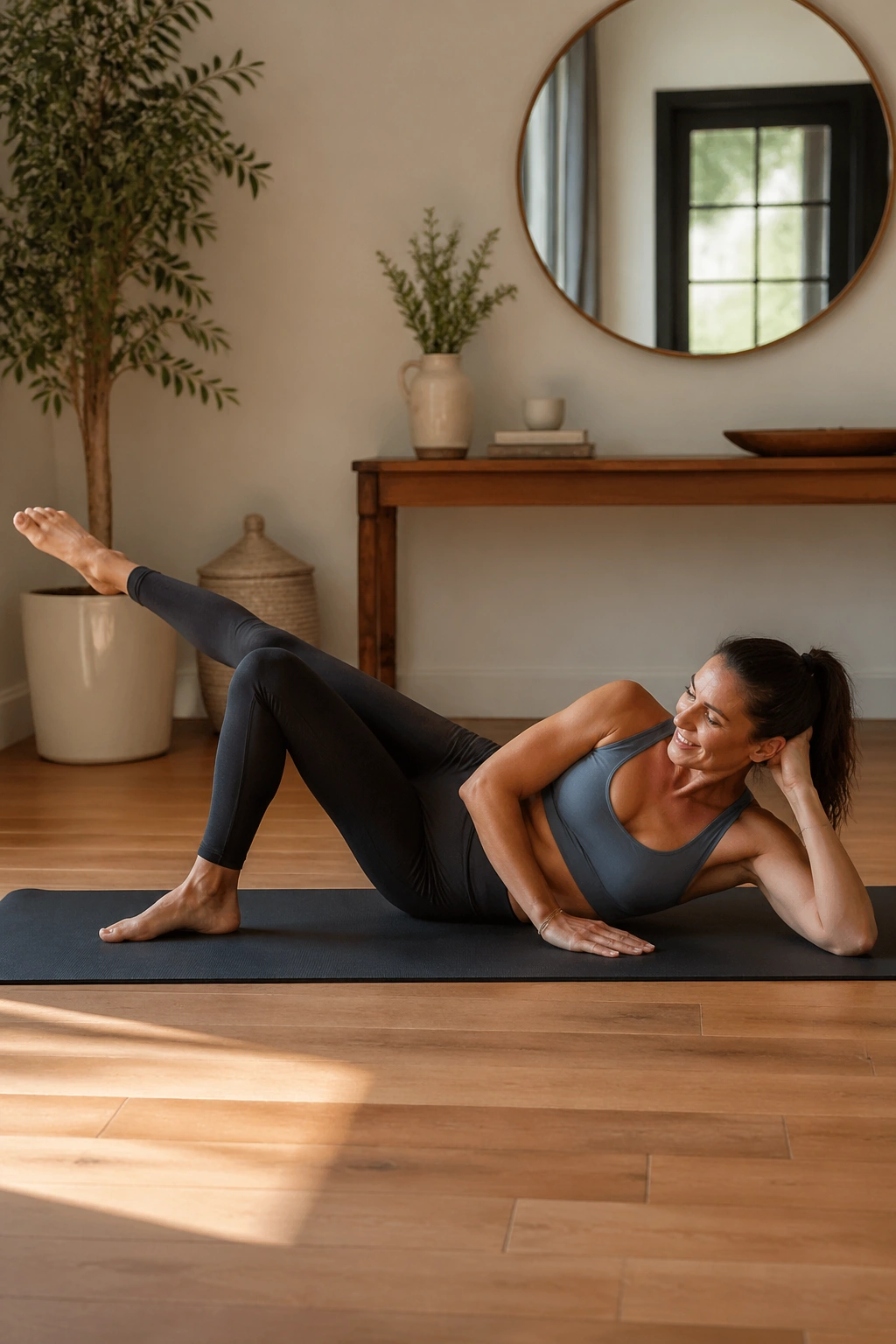
Inner-thigh work has a way of exposing weak links fast. One side-lying block can make your legs feel like they’ve done far more than the clock suggests.
Lie on one side with the bottom leg long and the top foot planted in front of you for support. Lift the bottom leg 12 times, hold it up for 15 seconds, then pulse 20 short reps near the top. Switch sides. Complete 2 rounds.
This is not a flashy sequence, and I like it for that reason. There’s nowhere to hide. If the waist collapses into the mat, or the pelvis rocks back, the adductors stop doing their job and the hip flexors try to grab the work.
- Time: About 4 minutes
- Main focus: Inner thighs, pelvic stability, lower abs
- Common miss: Rolling backward as the leg lifts
- Easy fix: Stack shoulders and hips, and press the floor away with the lower waist
The pulses should feel tight and high, like you’re lifting through a narrow slot.
5. Bridge March With Overhead Reach
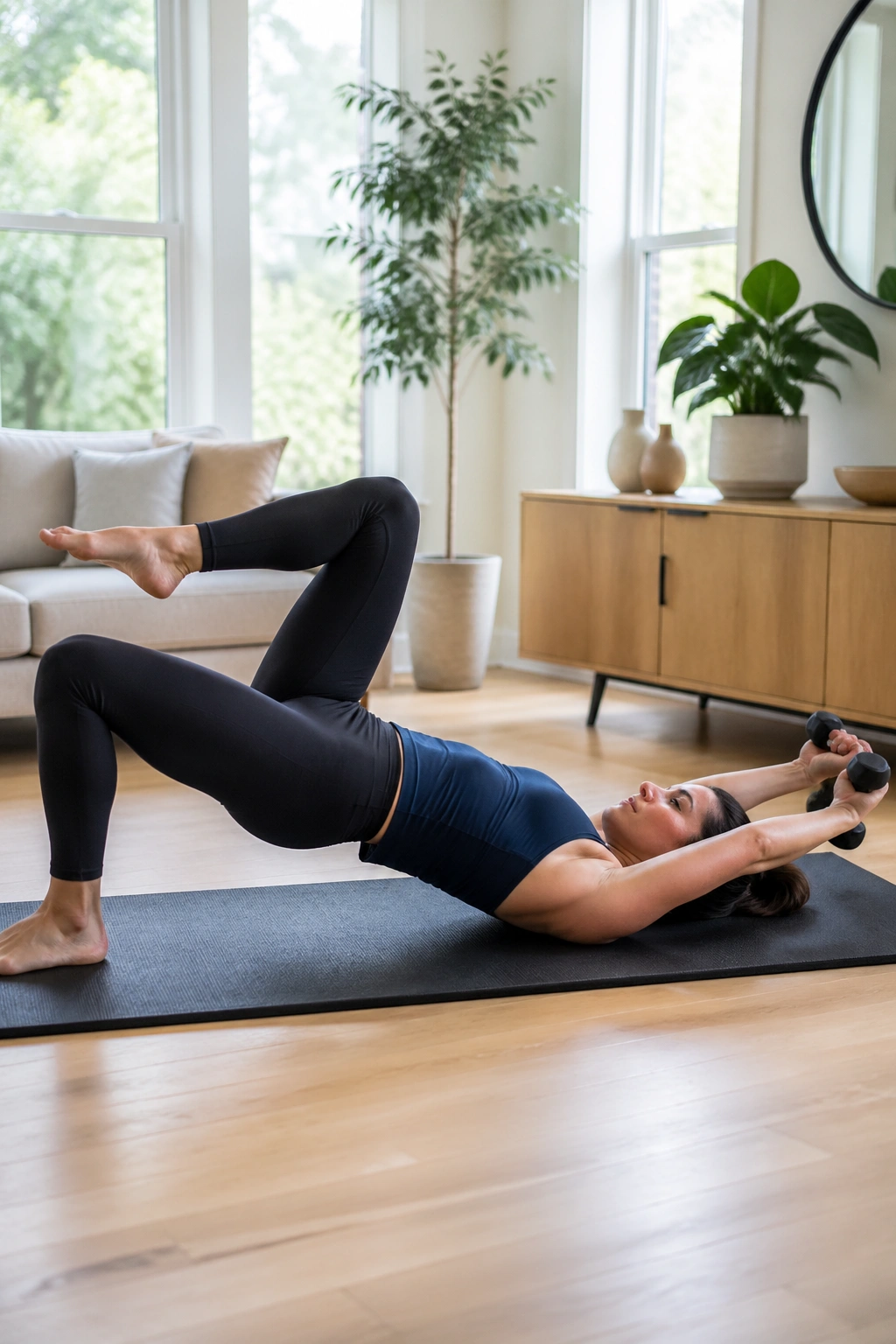
Bridge marches look mild until you try to keep the pelvis level. Then the truth arrives.
Set up on your back with knees bent and feet hip-width apart. Lift into a bridge, hold the hips steady, and march one knee toward the chest without letting the opposite hip drop. After 10 marches total, keep the hips high and add 8 slow overhead arm reaches with light hand weights or no weight at all. Lower, rest, and repeat 3 rounds.
This block hits the glutes and hamstrings first, but the arm reach changes the feel. As the arms travel overhead, your ribs will want to flare and your lower back will try to borrow motion. Resist that. Keep the front ribs heavy and the chest quiet.
You’ll know you’ve got it when the back of the legs lights up and the low back stays calm. If hamstrings cramp, walk the feet a few inches farther from the hips and squeeze through the glutes before you lift.
6. Swan Prep and Pull-Back Posture Series
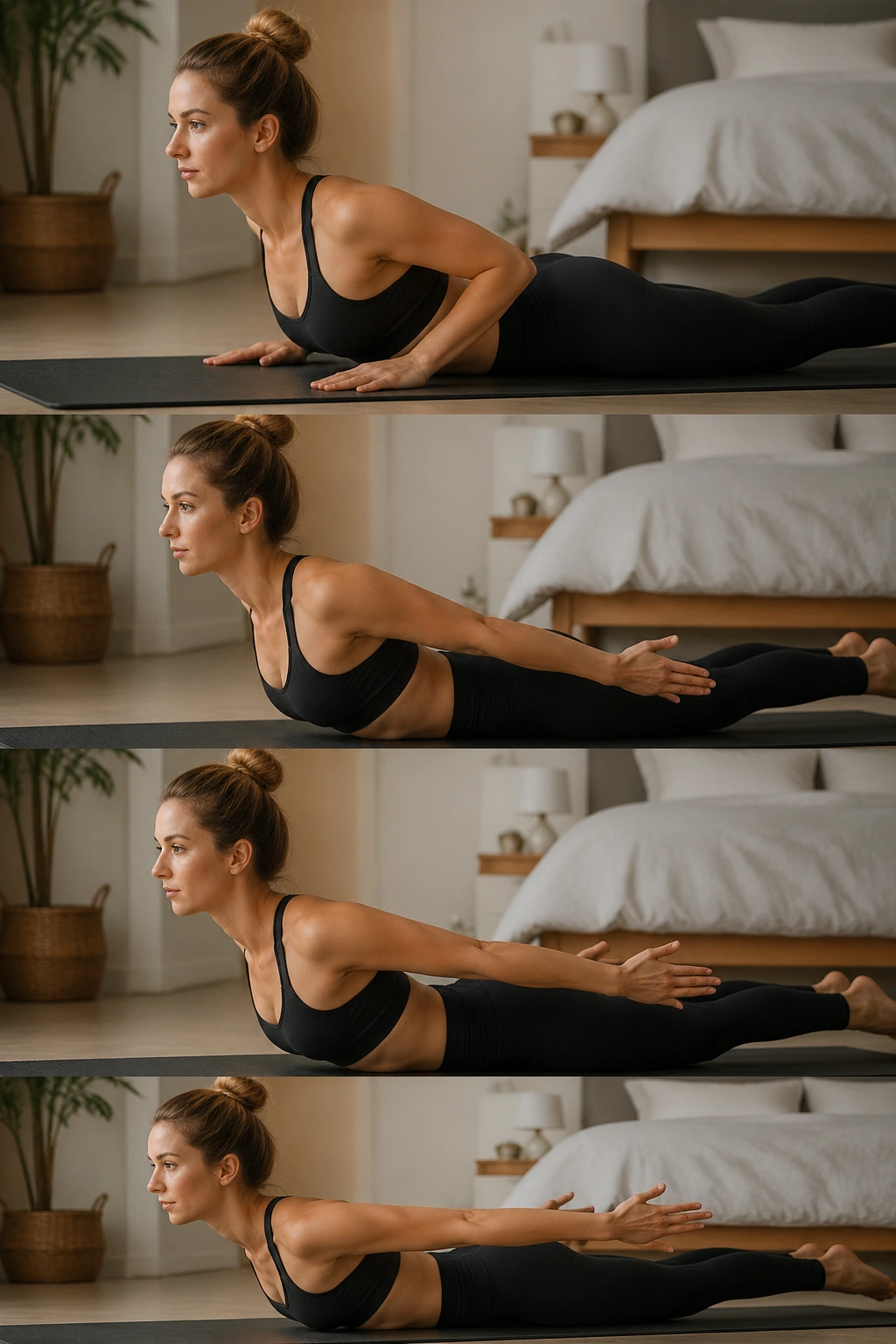
Most mat routines lean hard into flexion. Your body needs extension work too, or the front side starts to dominate everything.
Lie face down with your hands under your shoulders for Swan Prep. Lift the chest a few inches while keeping the back of the neck long, lower with control, and do 8 reps. Slide the arms by your sides and add 10 pull-backs, lifting the chest while drawing the shoulders down and back. Finish with a 20-second hover hold.
Unlike big backbends that dump into the lower spine, this sequence asks for a smaller lift and cleaner muscle use. The work should spread from the upper back down through the glutes, not jam into one crunchy spot near the waistband.
Who needs this block? Desk workers. Cyclists. Anyone who feels their shoulders drifting forward by lunchtime. Keep the gaze down, pubic bone heavy, and think long before high. That cue changes everything.
7. Wall-Supported Pilates Standing Leg and Core Flow
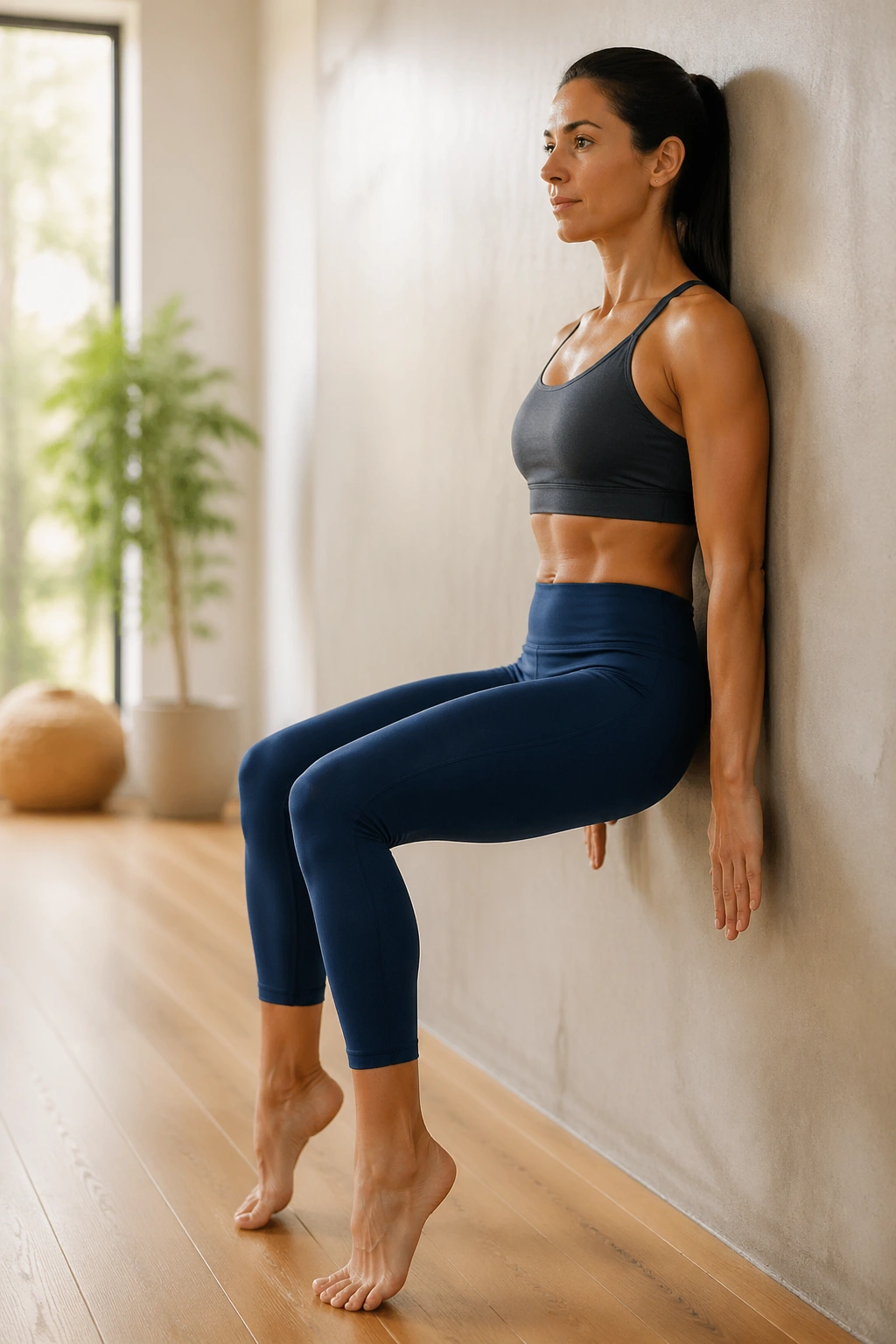
Stand up for this one. A wall can teach body position better than a mirror if you use it well.
Face away from the wall and lean your upper back lightly into it, feet about 10 to 12 inches forward. Hold a mini squat while you do 12 heel lifts, then 10 standing knee drives per side, then 8 slow roll-downs up and down the wall. Rest and repeat 2 rounds.
Why the wall helps
The wall gives you feedback on rib position and spinal alignment. If your low back peels too far away during the knee drives, you’ll feel it. If the head juts forward during the roll-down, you’ll feel that too.
- Time: 5 minutes
- Main focus: Quads, calves, lower abs, postural control
- Best cue: Keep the back of the ribs heavy as the knee lifts
- Extra challenge: Hold light dumbbells during the heel lifts
This block is useful on low-energy days, and I mean that as praise, not a downgrade. It teaches control without asking you to get up and down from the mat every minute.
8. Dead Bug to Double-Leg Lower Core Set
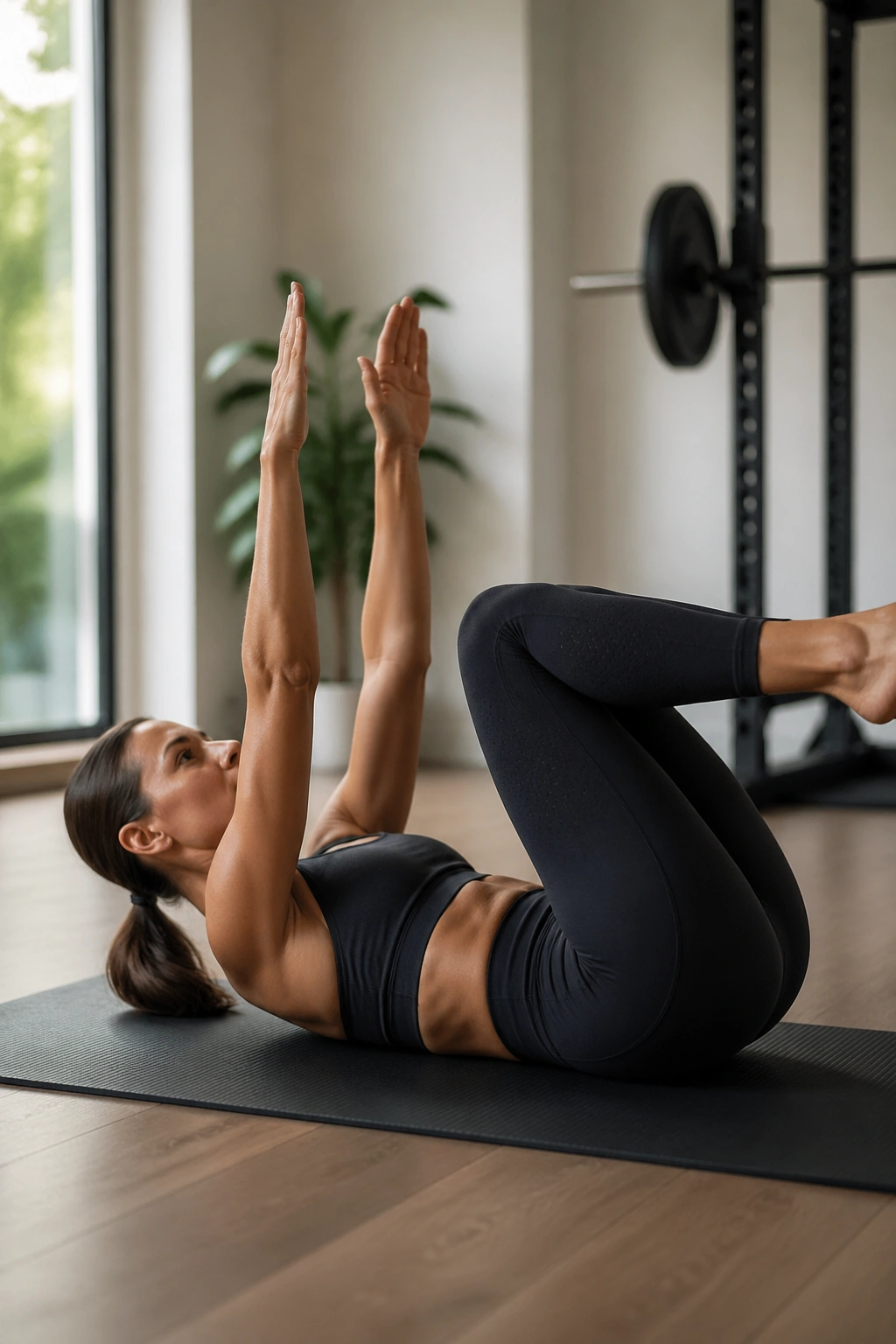
Numbers help here: 8 dead bugs per side, 8 double-leg lowers, 3 rounds. Clean and brutal.
Start on your back with arms reaching to the ceiling and knees in tabletop. Lower the opposite arm and leg away from center for the dead bug, exhaling as they move, then return. After the dead bugs, place both hands behind the head, extend both legs up, and lower them together only as far as you can keep the ribs down. Lift back up with control.
This pairing works because the first move teaches cross-body coordination while the second ramps up the lever length. You can’t fake the second part for long. If the back arches off the floor, the legs have gone too low.
Keep the jaw relaxed. People tense their face when the abs get challenged, and that tension creeps into the neck. It’s a small thing, but small things decide whether Pilates feels sharp or sloppy.
9. Bear Plank Knee Hover Circuit
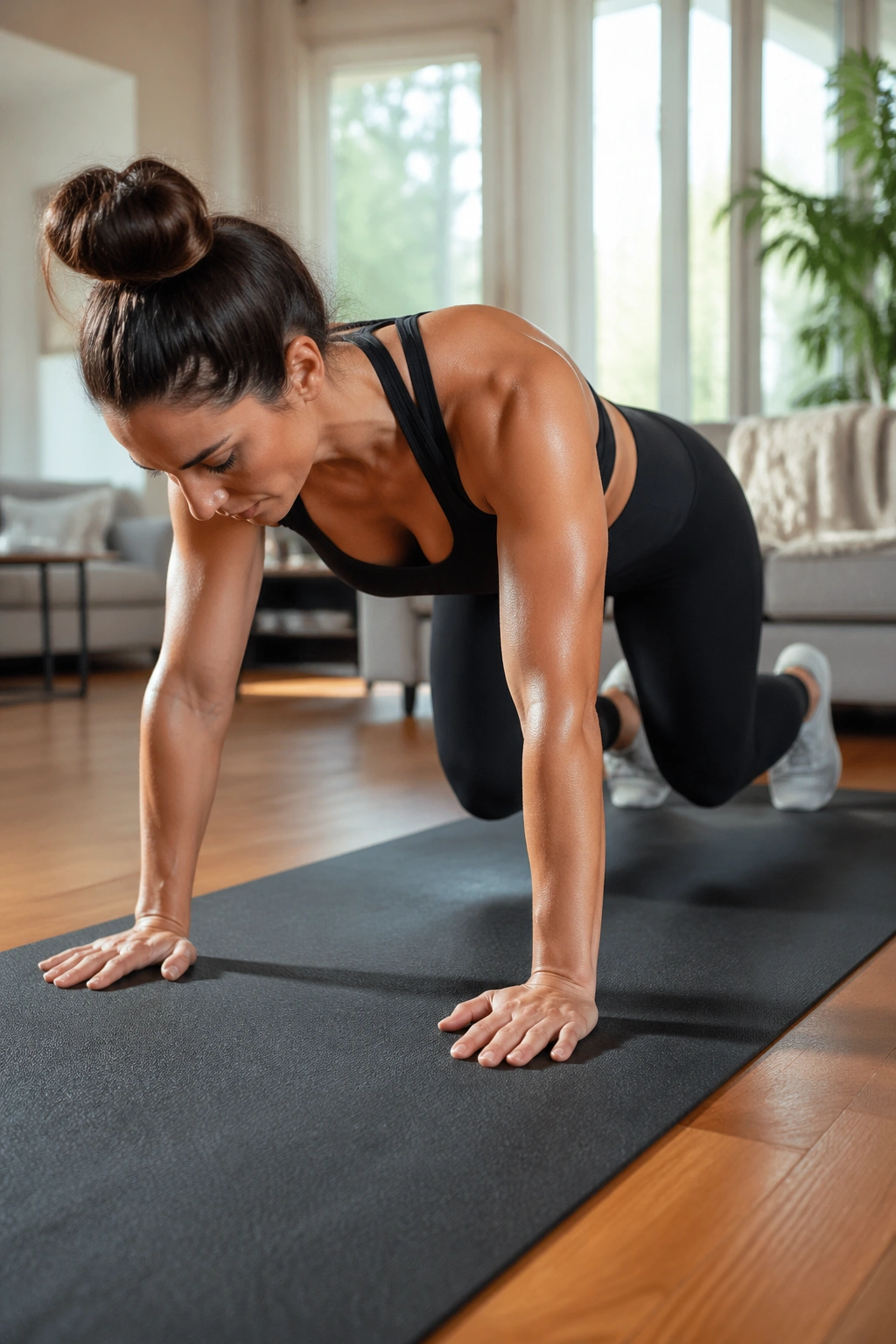
Few things reveal trunk weakness faster than a bear hover done correctly.
Set your hands under shoulders and knees under hips. Lift the knees 1 to 2 inches off the floor and hold for 20 seconds. From there, tap one hand to the opposite shoulder 6 times per side, then rock your body forward and back for 10 slow shifts. Rest 30 seconds. Do 3 rounds.
Why it burns more than it looks
The knees stay low, the spine stays long, and the abs have to brace without pushing the ribs out. Your quads, shoulders, and deep core all get pulled in. The shoulder taps add anti-rotation, so the hips cannot wag side to side.
Keep this from turning ugly
Shorten the hold before you let your back sag. A 10-second crisp hover is worth more than a 30-second wobble. Spread the fingers wide, press evenly through the hands, and breathe out through pursed lips when the shaking starts.
And yes, the shaking is normal.
10. Side Plank Thread-the-Needle Burner
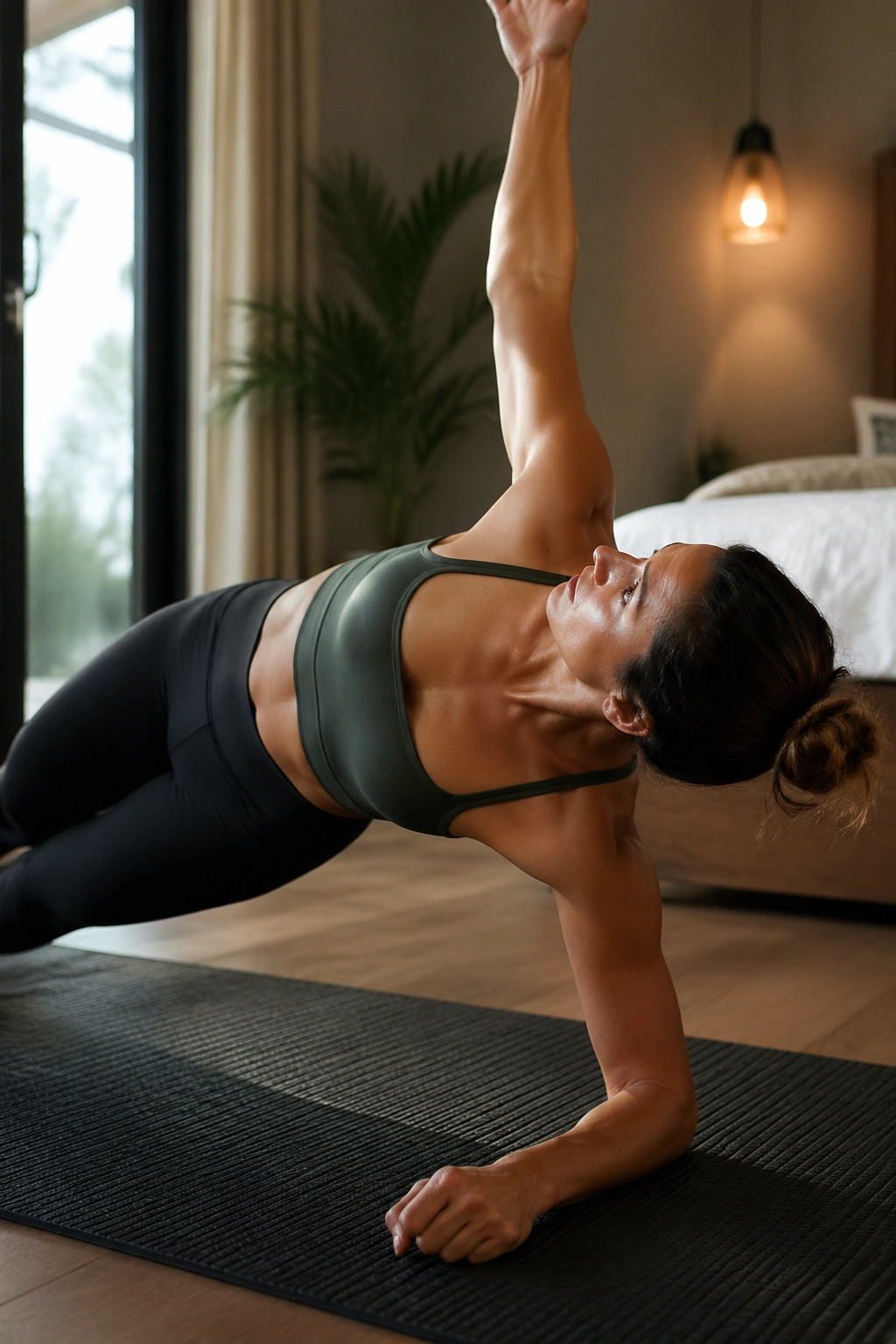
Side planks can turn into shoulder strain if you stack yourself badly. Set the base first, then add motion.
Come into a side plank on your forearm with knees bent for a beginner version or legs long for the full setup. Reach the top arm to the ceiling, then thread it under your rib cage as your torso rotates slightly toward the floor. Open back up. Do 8 to 12 reps per side, then hold the top position for 15 seconds. Complete 2 rounds.
- Main focus: Obliques, shoulder stability, glute medius
- Best setup: Elbow directly under shoulder, bottom waist lifted
- Common error: Sinking into the lower shoulder instead of pressing away
- Harder option: Add a top-leg lift on the final 4 reps
The move should feel like a corkscrew through the upper body while the hips stay lifted and steady. If you lose that lift, drop to the kneeling version and keep the quality.
11. Squat Pulse With Heel Lift Control Set
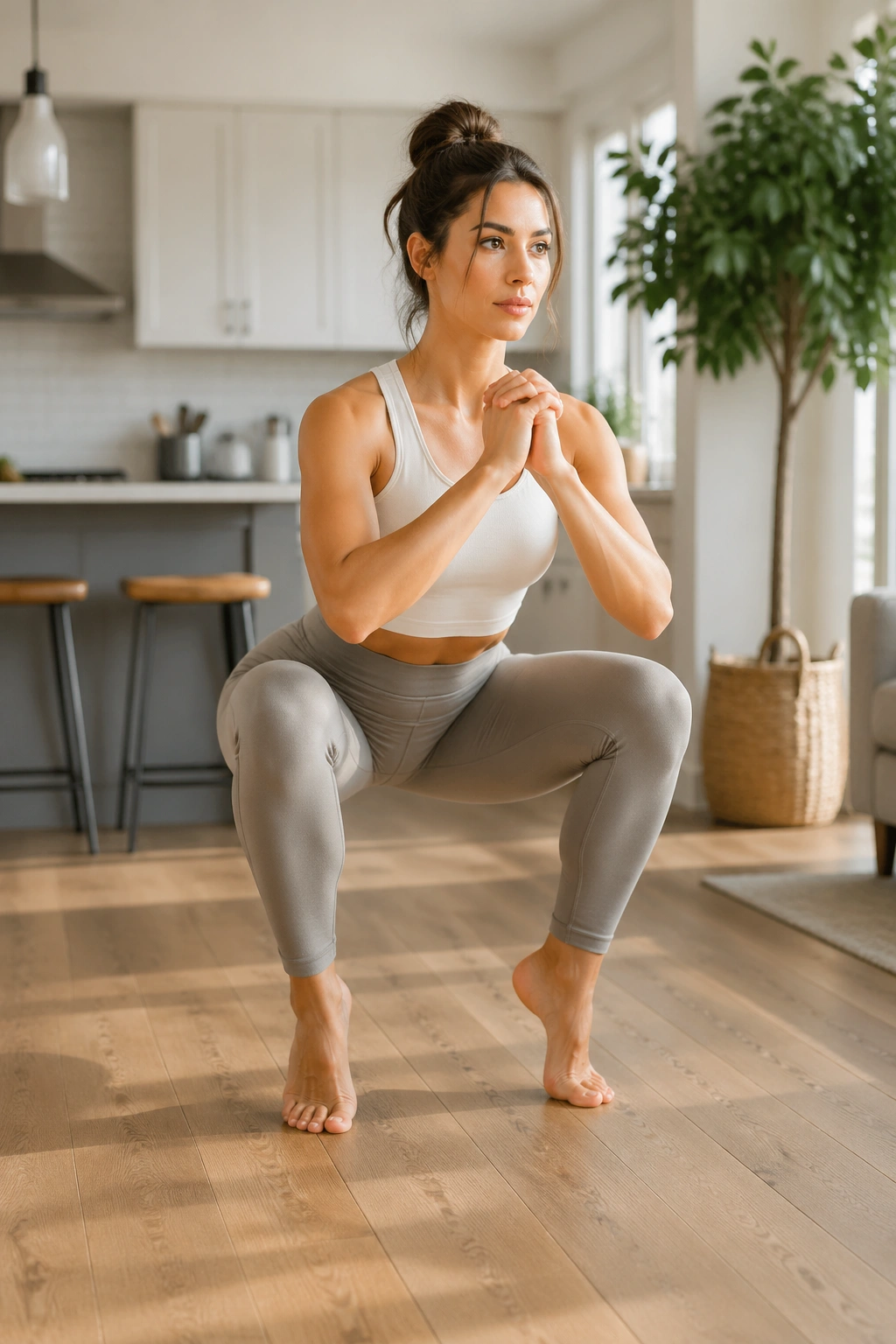
Lower-body Pilates doesn’t get enough credit. People hear “Pilates” and think abs; their legs learn otherwise five minutes later.
Stand with feet parallel, about hip-width apart. Sit into a narrow squat and hold. Pulse 15 small reps, rise halfway and lift both heels for 10 calf raises, then stay low and alternate one heel up at a time for 16 marches. Rest. Go again 3 times.
This workout block builds heat in the quads and calves, sure, but the better part is what it asks from your trunk. Your ribs cannot thrust forward. Your pelvis cannot tip into a big arch. Stay tall through the crown of the head while the legs do hard work underneath you.
The pulses should be small—about 2 to 3 inches. Once the range gets big, the tension moves around and the burn drops off. Tiny done well beats big done badly.
12. Bent-Knee Teaser Prep Sequence
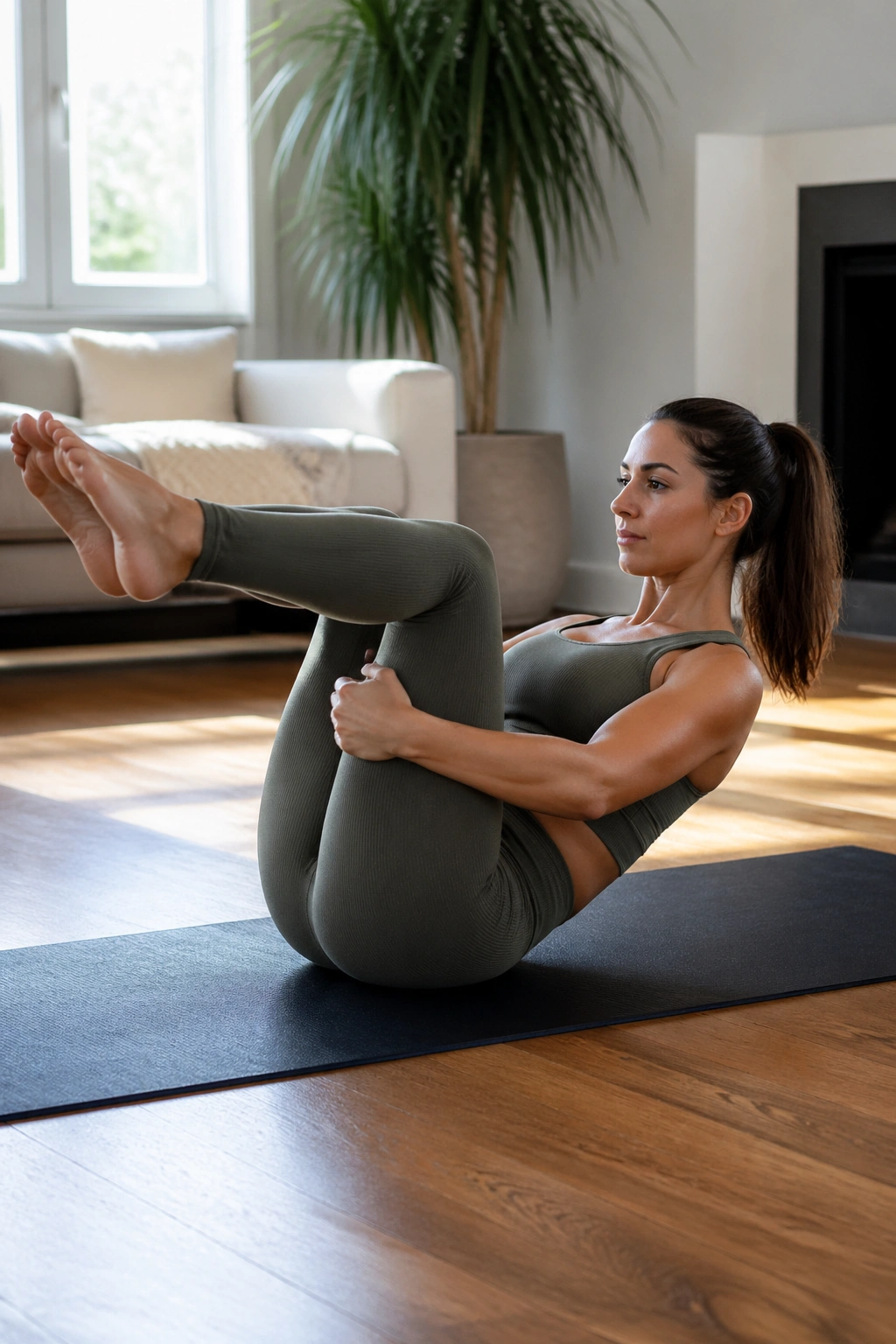
Unlike the full teaser, which can turn into a hip-flexor circus, the bent-knee version teaches shape and balance without the drama.
Sit with knees bent, feet on the floor, and hands behind the thighs. Roll halfway back into a C-curve, lift one shin to tabletop, then the other if you can keep the chest open. Hold for 10 seconds, lower one foot, then repeat 6 times. After the holds, add 8 toe taps while staying in the balanced position. Finish 2 or 3 rounds.
Who is this best for? People who want stronger abs without yanking on the neck. People who always feel teasers in the front of the hips. People who need more control before adding leg length.
A small cue helps: think of your lower abs pulling back as your breastbone stays broad. You’re not collapsing into a slump. You’re making a curved shape with support. There’s a difference—and your back can feel it.
13. Forearm Plank Leg Sweep Drill
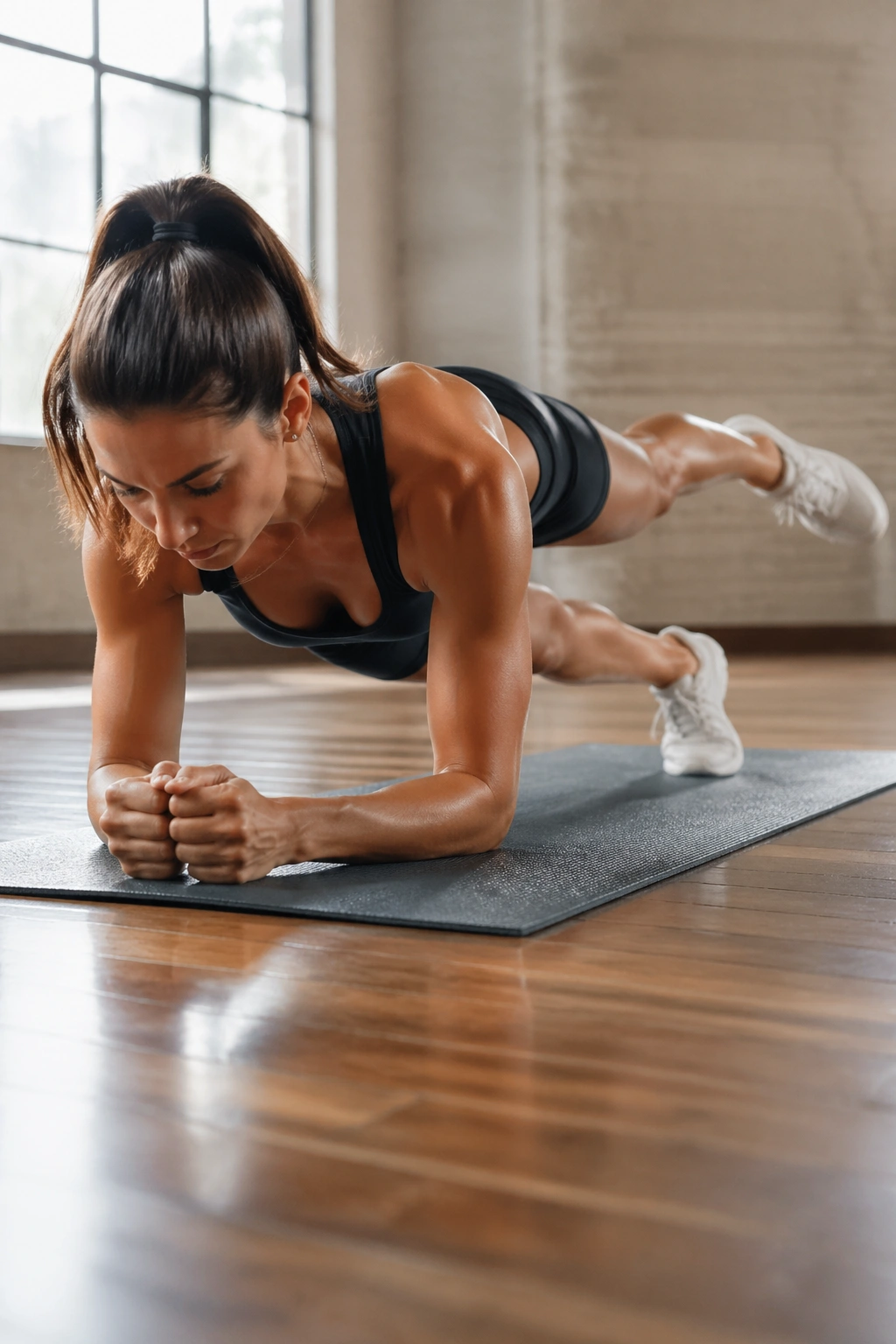
A forearm plank changes the shoulder angle and gives your ribs less room to cheat. Add leg sweeps, and the whole trunk has to lock in.
Hold a forearm plank for 20 seconds. Sweep the right leg out a few inches to the side and back to center 8 times, then switch legs. Rest for 30 seconds and repeat 3 rounds.
Where the work lands
You’ll get the abs, yes, but the sweeps wake up the glute medius, outer hip, and lower obliques. Those muscles matter if your pelvis drops during single-leg work or your knees cave during squats.
- Set-up cue: Elbows under shoulders, fists relaxed
- Range: Small—about the width of your mat logo, not half the room
- Watch for: Hips rocking side to side with each sweep
- Regression: Drop to knees and keep the same motion
Tip: Exhale as the leg moves away. That breath helps lock the trunk before the hip starts to work.
14. Mermaid to Oblique Crunch Flow
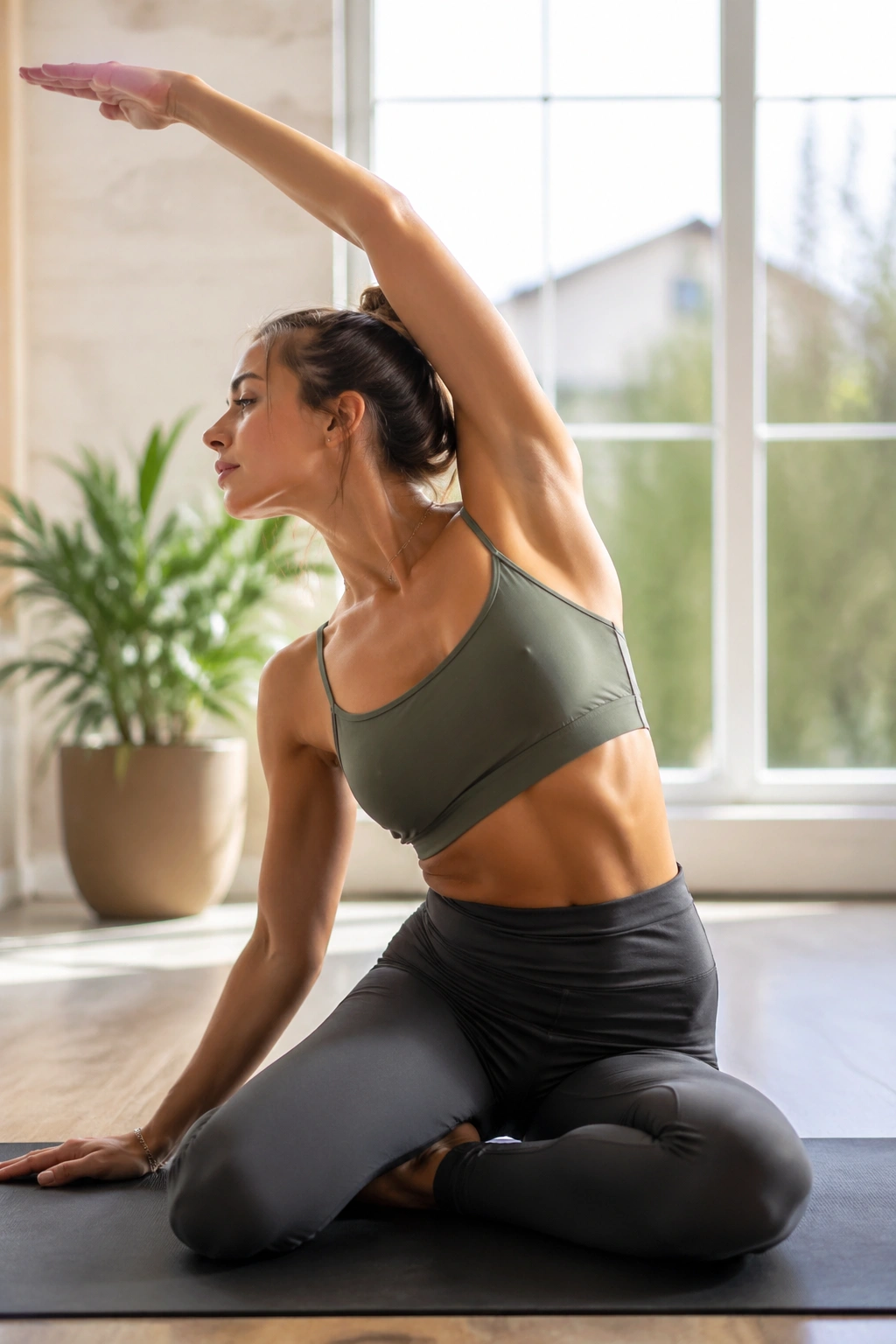
This one starts soft and ends sharp. I like that shift.
Sit in a mermaid position with both knees folded to one side. Reach the top arm overhead for 4 side bends, lengthening the whole side body. Then move into a kneeling side support or seated side crunch and perform 10 oblique contractions on that side. Switch positions and repeat on the other side. Do 2 rounds.
The side bends open the rib cage and wake up lateral flexion. The crunches make you own that range with muscle. Pairing mobility with strength is one of the smartest ways to build a body that moves well and still feels stable under load.
Watch the shoulder on the supporting side. If it creeps toward the ear, pause and reset. Long neck. Wide collarbones. A better setup saves you from doing crooked reps that only teach crooked patterns.
15. Reverse Tabletop Triceps and Hamstring Combo
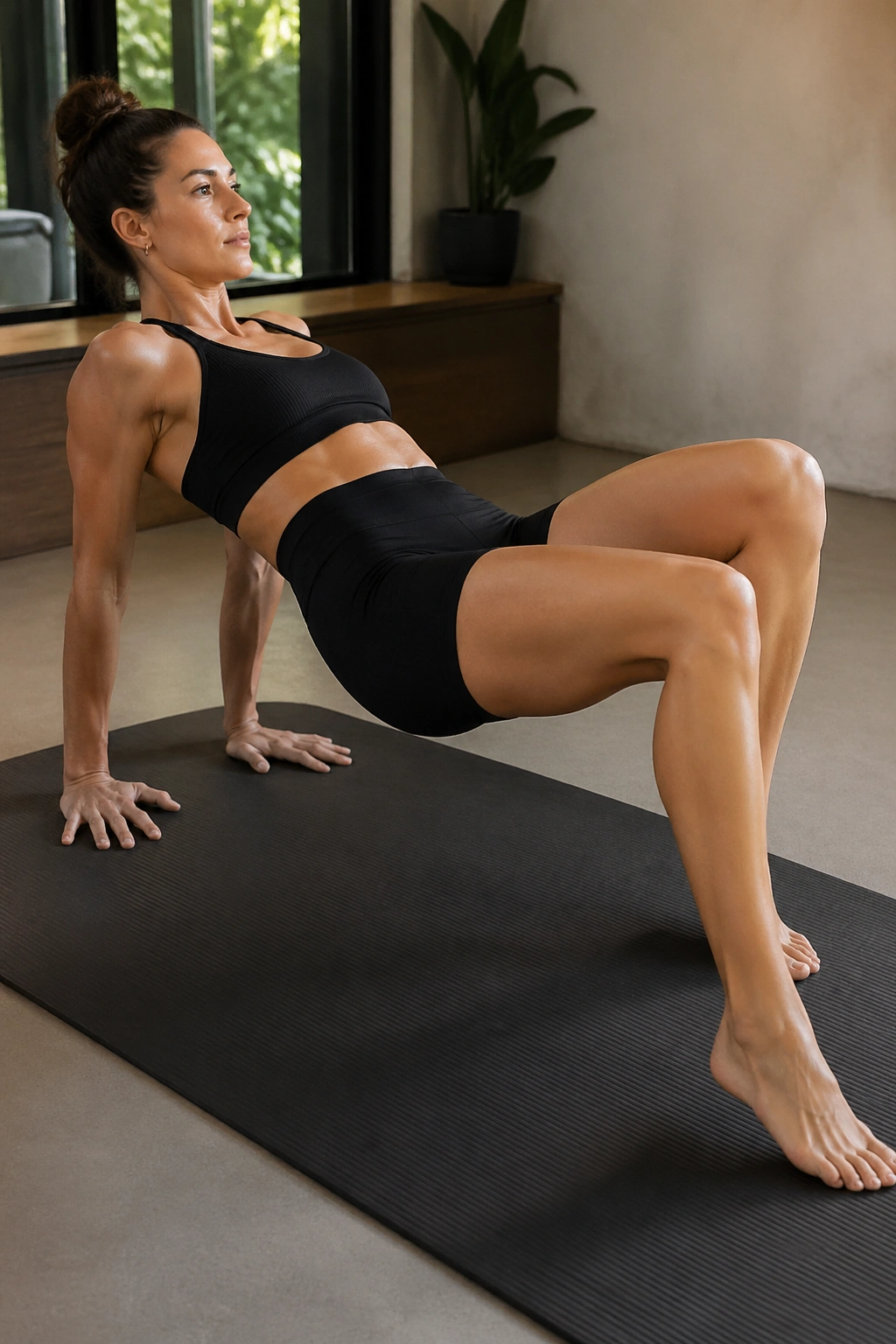
Flip your position and the whole session changes flavor.
Sit with knees bent, feet flat, and hands behind you with fingers pointing toward the feet or slightly out if your wrists need room. Lift into reverse tabletop, hold for 15 seconds, then bend and straighten the elbows for 10 triceps dips without dropping the hips. Stay lifted and alternate 10 heel taps by extending one leg at a time. Lower, breathe, repeat 3 rounds.
Why this block earns a place
Most mat Pilates hits the front body hard. Reverse tabletop asks the posterior chain to show up—glutes, hamstrings, upper back—while the triceps and shoulders take a share. It’s a solid antidote to too much rounded posture.
Keep it joint-friendly
Do not sink into the shoulders at the bottom of the dip. Bend only as far as the chest can stay open. If wrists feel pinched, hold the tabletop and skip the dips for the day. That is not quitting. That is smart programming.
16. Bird Dog Knee-Tuck Balance Series
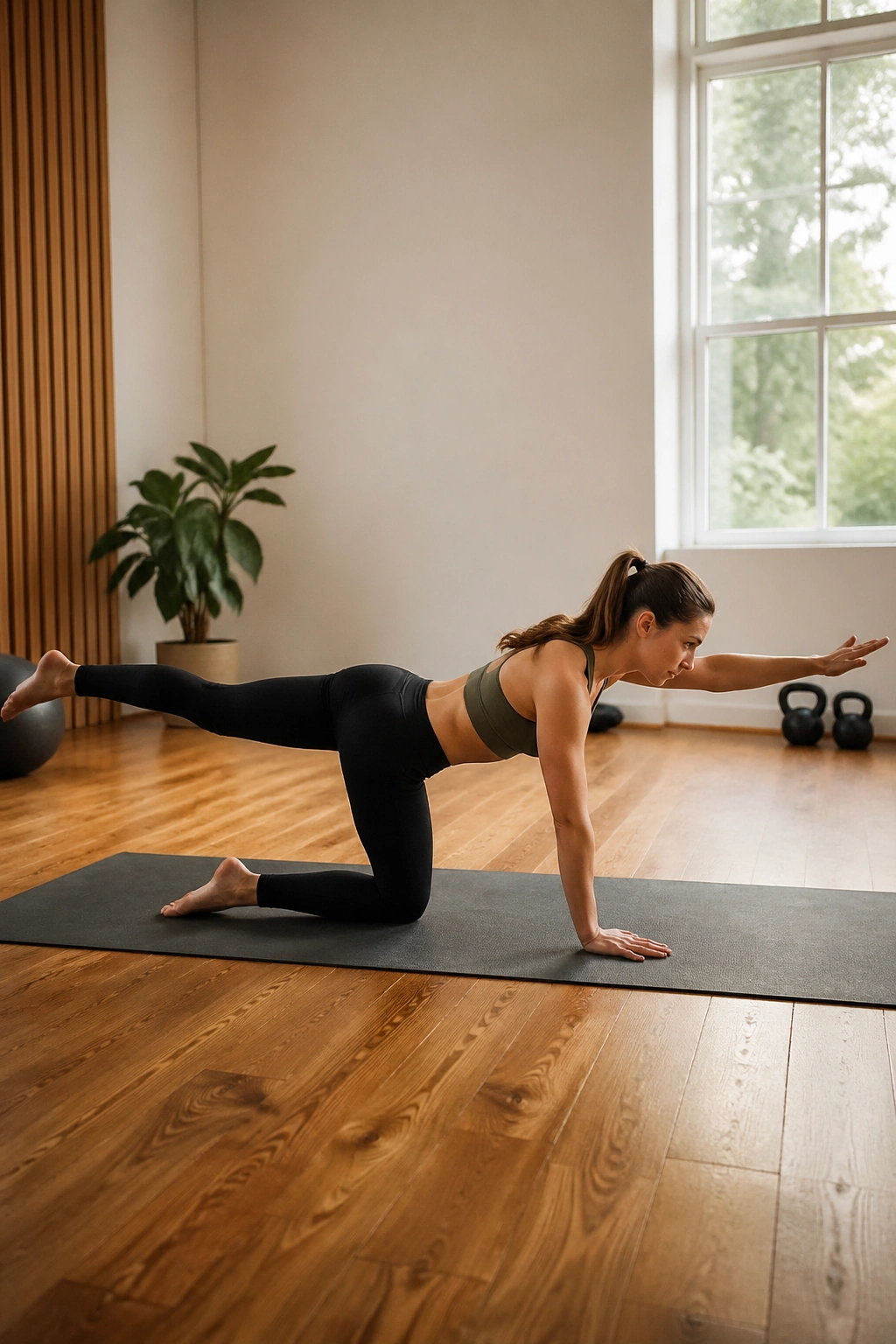
Balance gets exposed fast when one arm and the opposite leg leave the floor.
Set up on all fours. Reach your right arm forward and left leg back for 8 bird dogs, then add a knee-to-elbow tuck under the body for 8 more. Switch sides. Finish with a 20-second hold per side on the final rep. Do 2 rounds.
- Main focus: Glutes, lower abs, shoulder stability, cross-body coordination
- Best cue: Imagine a glass of water balanced on your lower back
- Common miss: Opening the hip of the lifted leg
- Make it harder: Hover the supporting knees 1 inch off the floor before each reach
A lot of people rush this one and miss the point. Reach long first. The farther your fingertips and heel stretch away from each other, the more the trunk has to organize the motion in the middle.
17. Pilates Lunge With Torso Rotation
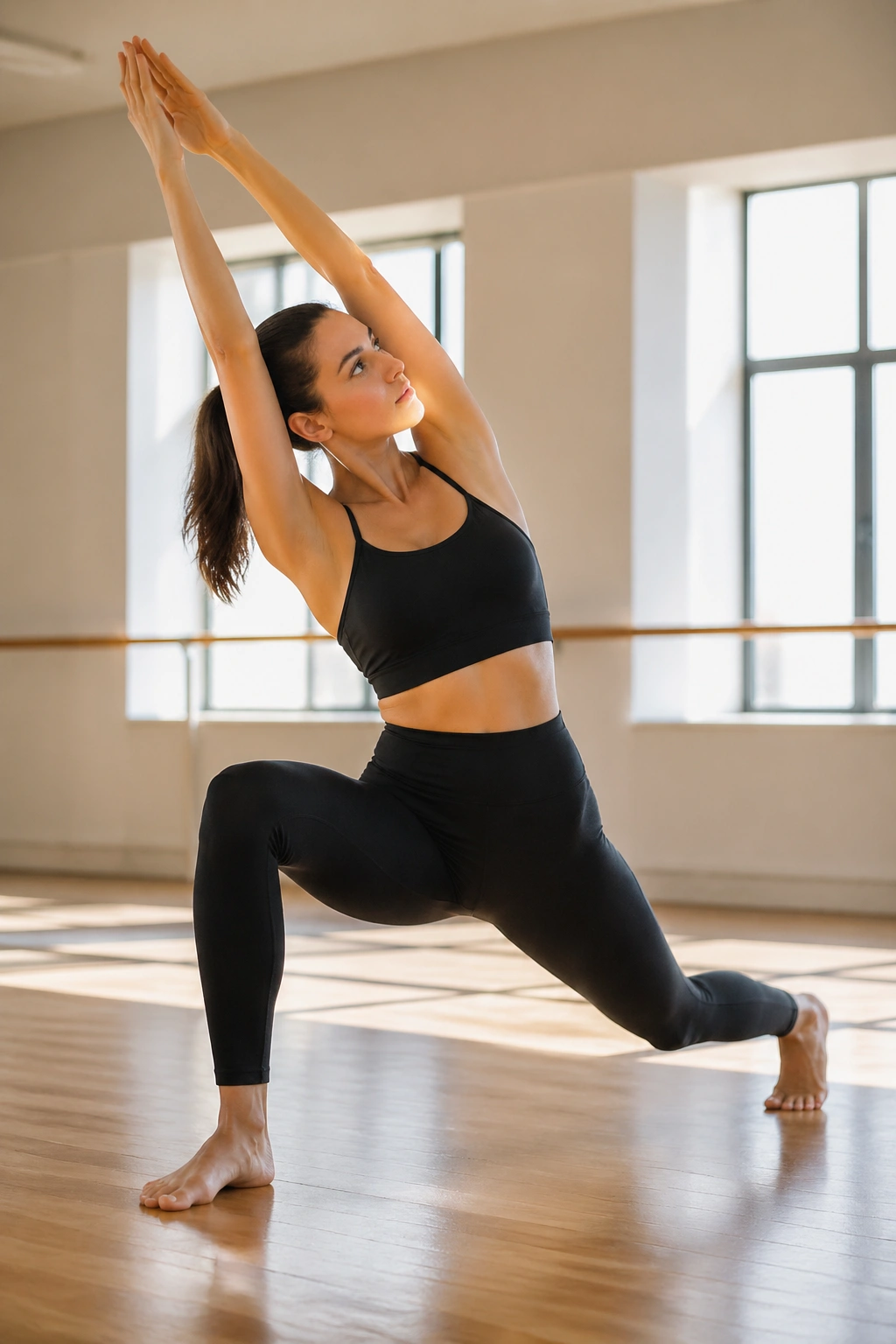
Lunge patterns tell on you. Weak glutes, stiff ankles, shaky balance—they all show up.
Step one foot back into a split stance and lower into a small lunge. Hold the lunge while rotating the torso over the front thigh 10 times, keeping the pelvis facing forward. Add 10 overhead reaches with both arms, then switch sides. Complete 2 or 3 rounds.
This is one of those Pilates workouts that feels athletic without losing the method’s control-first feel. The legs work is obvious. Less obvious is the demand on the obliques and upper back to rotate the rib cage without wobbling through the hips.
Use a short range at first. Your back knee does not need to scrape the floor. If the front heel pops up, shorten the stance by a few inches. A stable lunge gives you more from the twist and less from the knee joint.
18. Scissors and Crisscross Ab Ladder
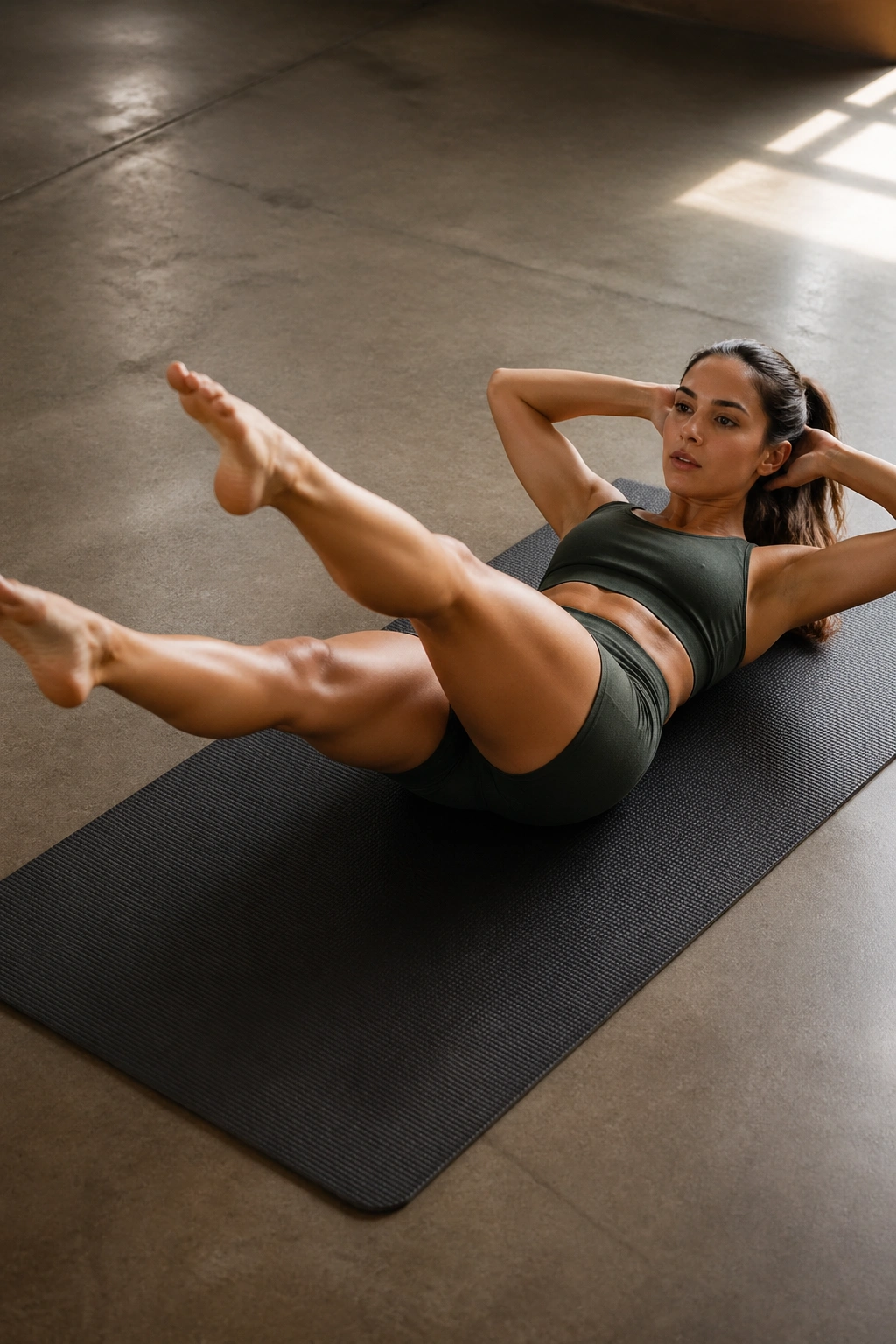
Traditional mat ab work still has teeth when you do it slowly enough.
Lie on your back and lift into chest flexion. Start with 10 scissors per side, keeping one leg long while the other draws in. Move straight into 12 crisscross reps total, rotating the rib cage rather than yanking the elbow across. Finish with a 15-second chest-lift hold. Rest, then repeat 3 rounds.
Unlike quick bicycle-style reps that turn into momentum, this ladder asks for precision. The legs should pass each other like they’re moving through water. The twist should come from the ribs, not the neck. You’ll feel the lower abs trying to pin the pelvis while the obliques steer the turn.
If the head gets heavy, place one hand behind the skull and do fewer reps. Better to stop at eight good turns than grind through twelve crooked ones.
19. Wall Roll-Down and Arm Reach Reset
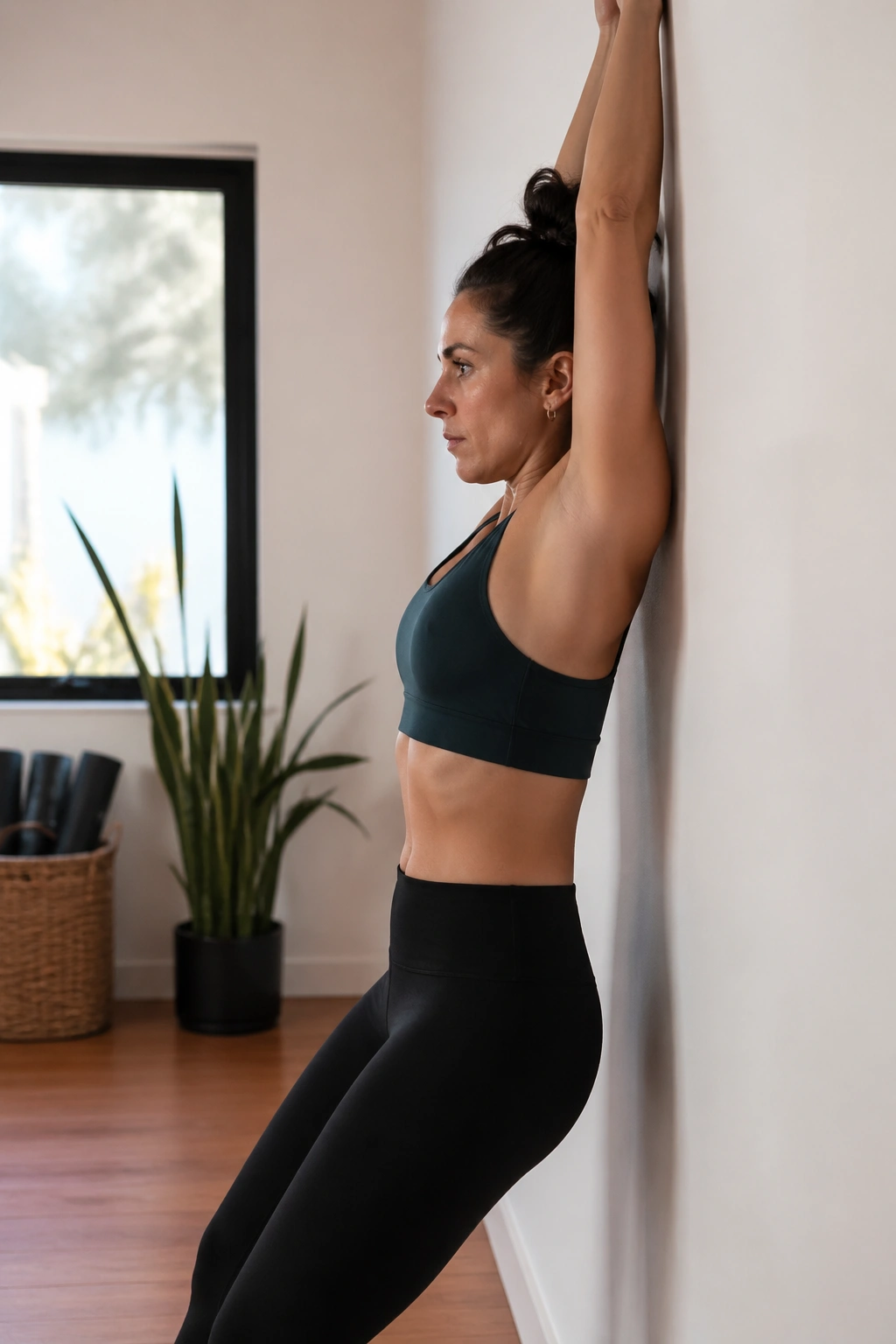
Wall work looks easy until you try to peel your spine down one bone at a time.
Stand with your back against a wall, heels about 4 inches forward, knees soft. Tuck the chin gently and roll down off the wall, trying to keep the movement smooth through the upper and mid back. Roll back up. Do 6 reps. Then stay tall and add 10 overhead arm reaches, keeping the ribs heavy against the wall. Repeat the pair 2 rounds.
Why it belongs in a burner list
Not every full body burn needs to leave you gasping. This one teaches alignment, and alignment makes the tougher blocks work better. If your ribs flare or your head juts forward in harder sequences, this reset can clean things up in three minutes.
- Main focus: Spinal articulation, postural muscles, rib control
- Watch for: Knees locking or hips sliding way off the wall
- Best time to use it: Early in the session or between harder plank sets
Tip: Think of your shirt buttons rolling off the wall one by one.
20. Swimming and Leg Beats Back-Body Burner
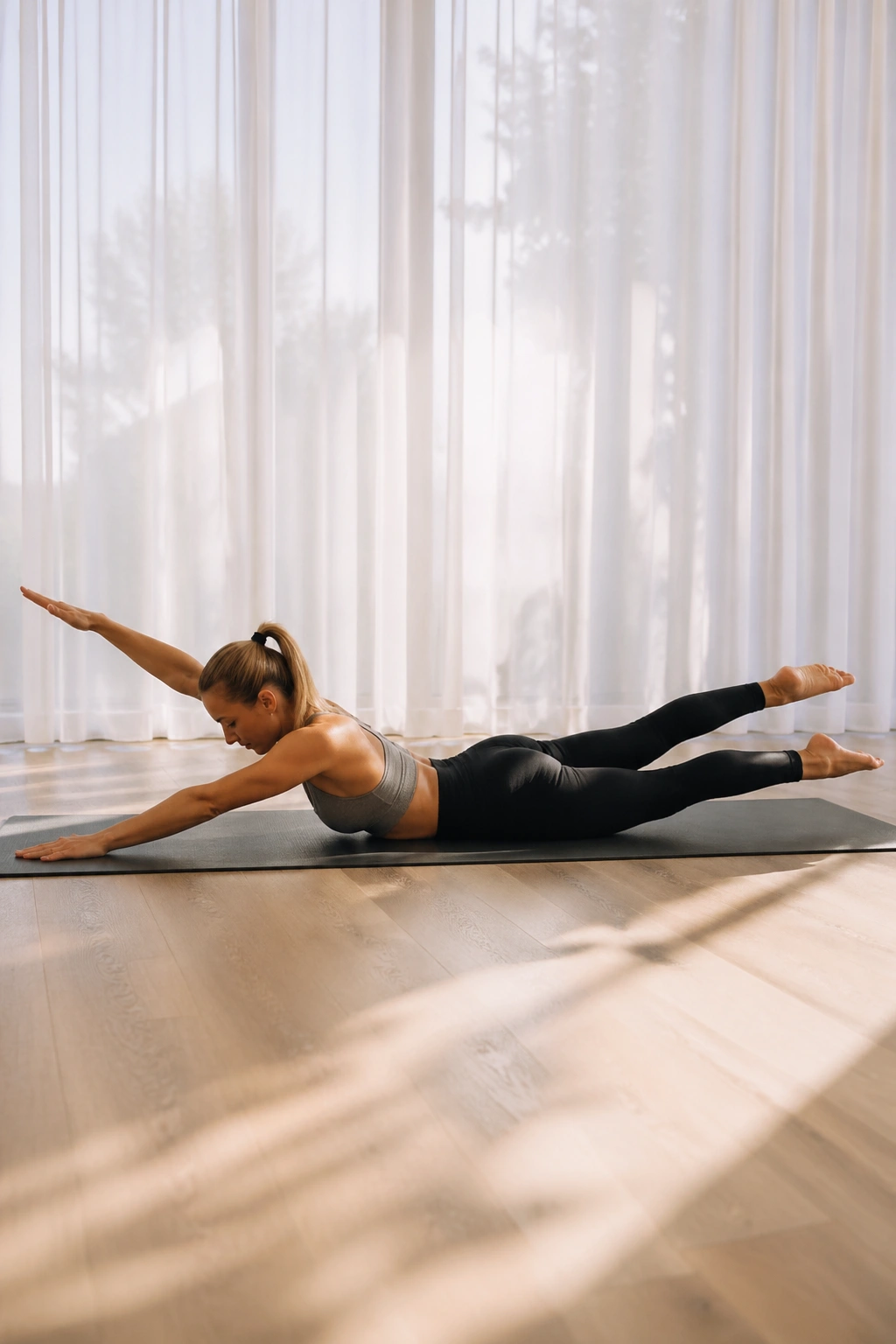
Prone back-body drills have a blunt honesty to them. If your glutes and upper back are weak, you know within seconds.
Lie face down with arms long overhead. Lift the opposite arm and leg for 20 alternating swimming reps, keeping the neck long and gaze down. Rest briefly, then lift both legs a few inches and perform 20 small leg beats. Lower, breathe, repeat 3 rounds.
This block trains extension endurance, which matters if you slump after an hour at a desk or your low back takes over during bridges and squats. The movement should feel long and narrow, not high and dramatic. Height is not the goal. Control is.
A trick that helps: press the pubic bone lightly into the mat before you lift. That gives the lower back support and lets the glutes join the job. Skip that setup and the lumbar spine tends to do too much.
21. Kneeling Side Kick Glute Series
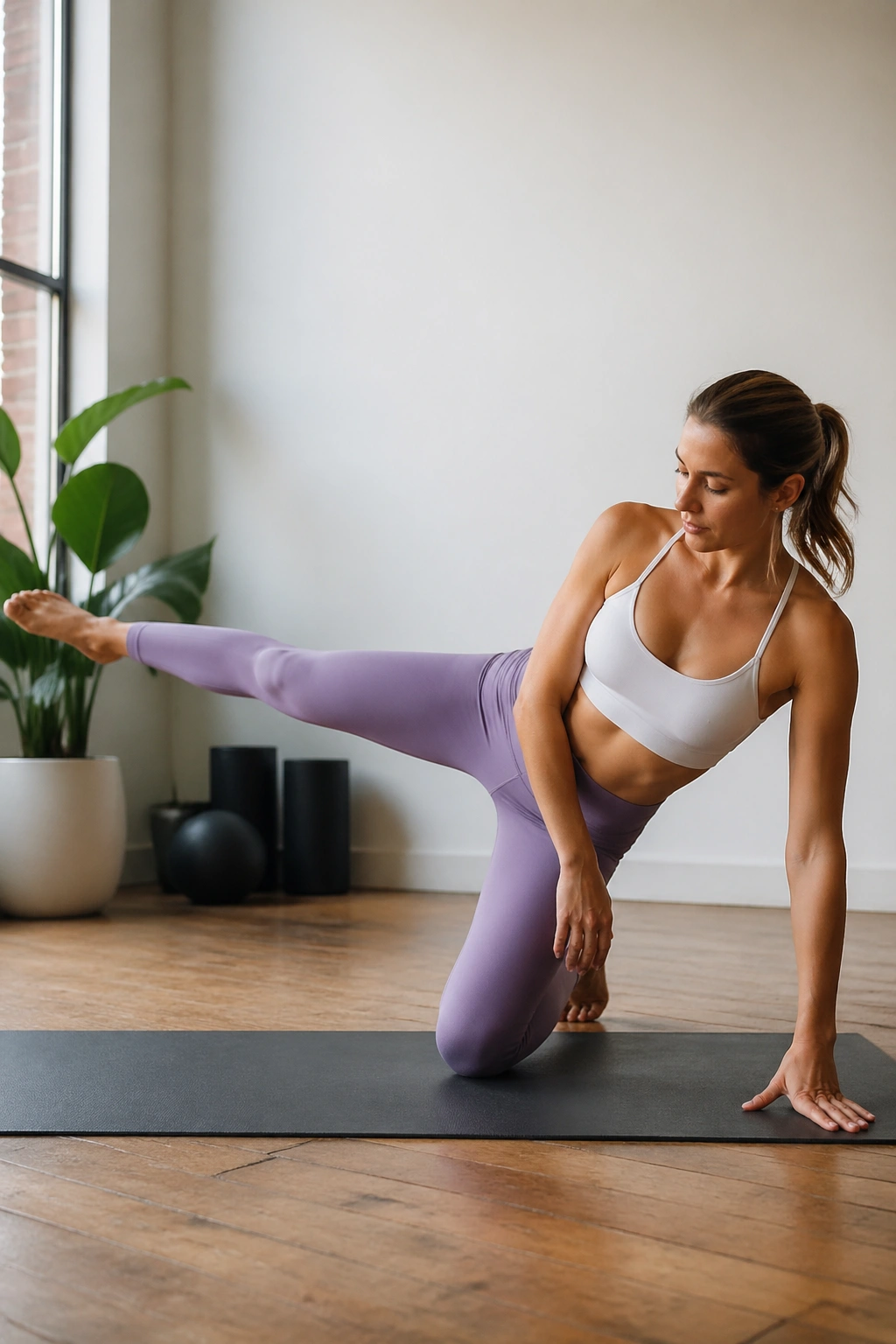
Kneeling side work looks harmless. Then your standing hip starts shaking and the side glute catches fire.
Come to a tall kneeling position, then place one hand down under the shoulder and extend the opposite leg out to the side at hip height. Perform 12 side kicks forward and back, 10 small circles each direction, and a 15-second hold. Switch sides. Do 2 rounds.
Why this one stands out
The moving leg trains the outer hip. The kneeling side has to stabilize the pelvis and torso. You get a two-for-one effect: mobility and strength, motion and anti-motion. That’s classic Pilates when it’s done well.
Clean it up
Keep the moving leg no higher than hip level. Once it rises above that, the trunk tips and the low back starts to help. A shorter swing with a quiet torso gives a stronger burn than a giant kick that turns into a wobble.
22. Single-Leg Bridge and Hamstring Curl Flow
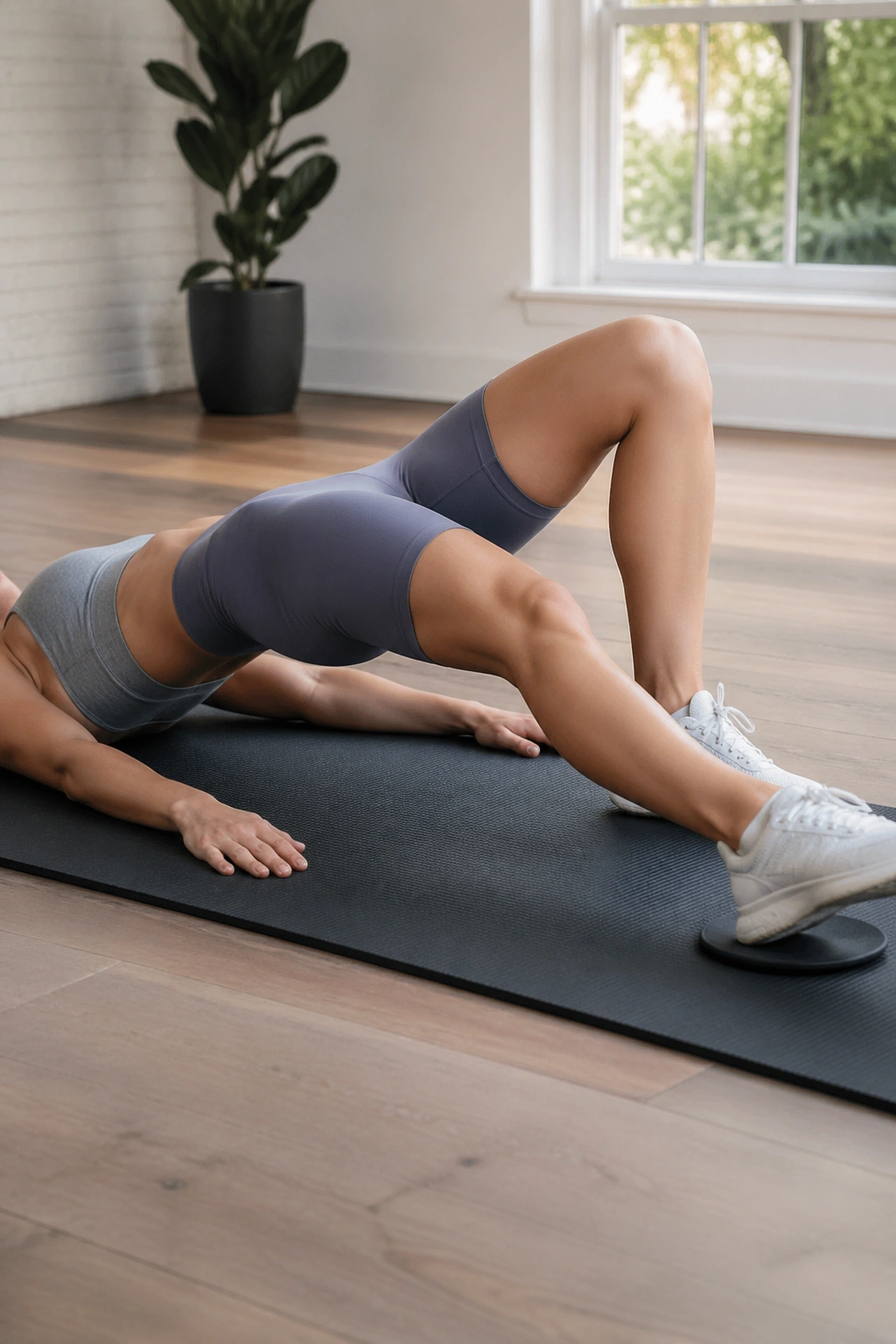
Grab two towels or sliders if you’ve got them. This one is a leg killer.
Start in a bridge with both heels on the sliders. Lift one leg to tabletop and hold the hips level while the grounded heel slides out and in for 8 hamstring curls. Set that foot down, switch sides, and repeat. Finish with 12 two-leg curls. Rest for 40 seconds. Complete 2 or 3 rounds.
- Main focus: Hamstrings, glutes, pelvic stability
- Range: Slide only as far as you can keep the hips lifted
- Common error: Letting the hips drop as the leg extends
- Regression: Do all curls with both feet down
This is one of the fastest ways to find out whether your hamstrings are strong or merely hopeful. Expect shaking. Expect a little negotiation with yourself around rep six. Keep the ribs down and the chin soft, and the back of the legs will do what they’re supposed to do.
23. Pilates Push-Up Walkout Sequence
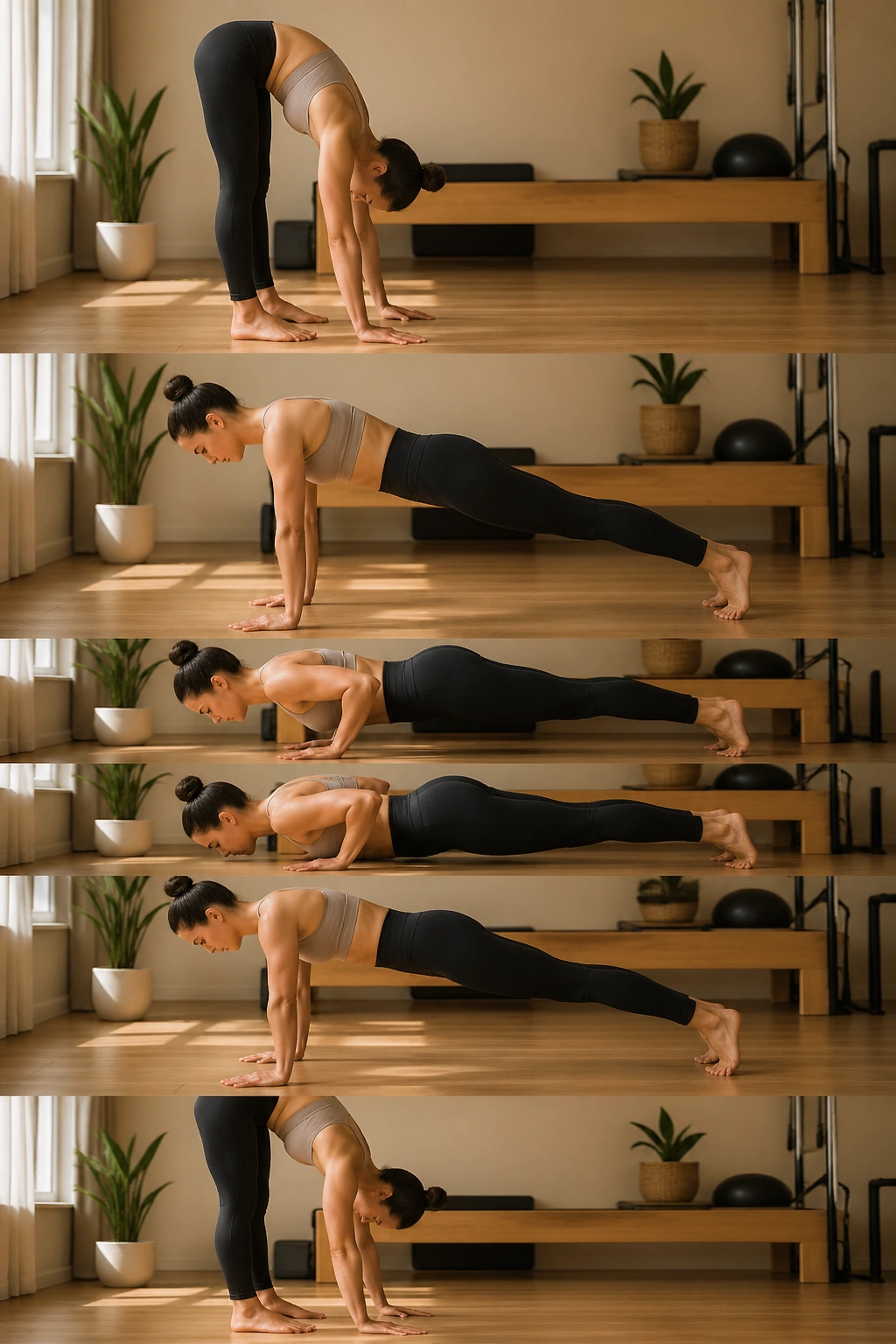
Pilates push-ups punish shortcuts. That’s part of their charm.
Stand tall, roll down, walk the hands to a plank, perform 3 narrow push-ups, hold plank for 10 seconds, then walk back and roll up slowly. Do 5 to 6 rounds. If full push-ups are too much, drop the knees for the press and return to plank for the hold.
This sequence ties together spinal articulation, shoulder strength, core control, and a little grit. The narrow arm position shifts work into the triceps and asks the shoulder blades to stay stable against the rib cage. Let the elbows flare wide and the move changes completely.
Slow down the roll-down and roll-up. People tend to sprint through those parts to get back to the “hard” section, but that’s where the Pilates value sits. Control on the way in. Control on the way out.
24. Saw and Hollow Hold Rotation Set
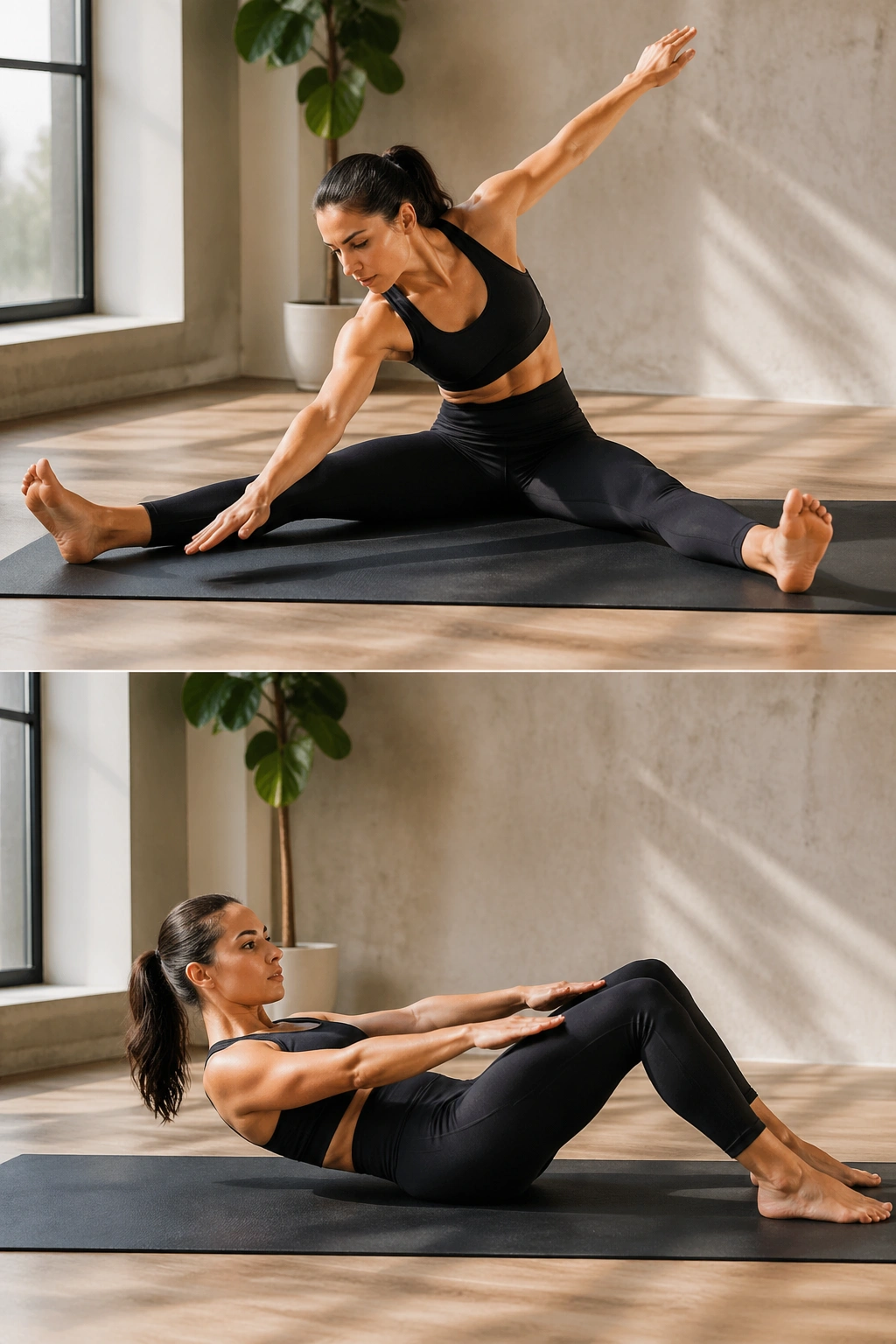
Rotation done well can make your whole trunk feel switched on from sternum to pelvis.
Sit tall with legs wider than hips. Perform the Saw for 6 reps per side, reaching the opposite hand toward the little toe while the back arm lifts. Then lower onto your back and hold a hollow body position for 20 seconds, knees bent if needed. Rest and repeat 3 rounds.
Unlike loose twisting stretches that let the hips wander, the Saw asks the pelvis to stay grounded while the spine rotates and flexes. The hollow hold then locks the front body on after the movement work. It’s a smart pairing if you want rotation strength, not rotation for show.
If your hamstrings are tight, sit on a folded blanket. That small lift can keep the spine taller and the twist cleaner. Tiny setup changes matter more than people think.
25. Full-Body Mat Finisher Circuit
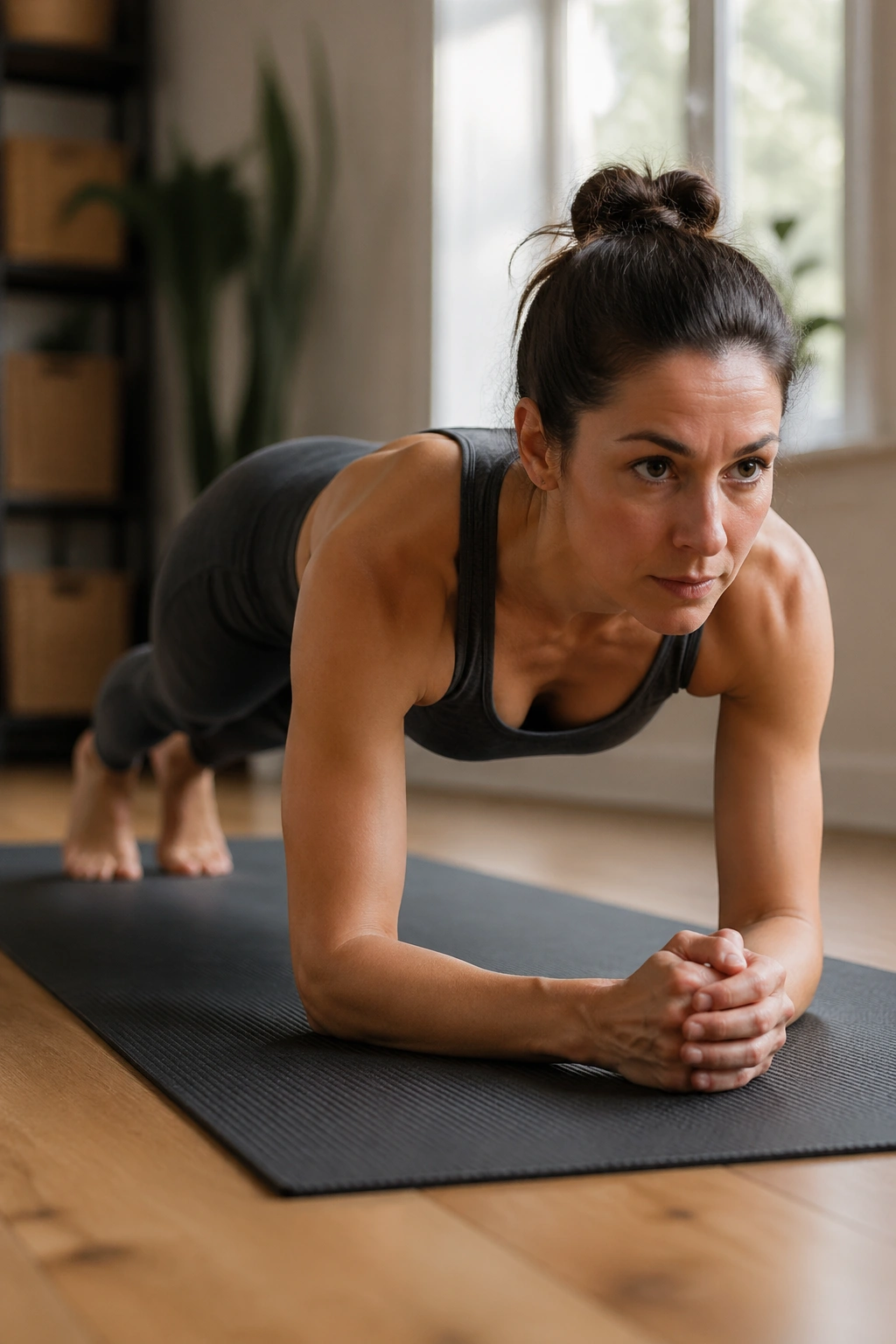
Some days you want one block that closes the session and leaves no doubt you trained head to toe. This is that block.
Perform 30 seconds each of the following with 15 seconds to change positions: forearm plank, bridge hold with pulses, side plank right, side plank left, swimming, teaser prep hold. Rest 60 seconds, then repeat the whole circuit 2 times.
Why this finisher works
You move from front body to back body, from bilateral work to unilateral work, from static control to small pulses. Nothing stays comfortable long enough for one area to coast. The abs work, the glutes work, the shoulders work, and your breathing becomes part of the challenge.
Best way to use it
Add this after two or three of the earlier blocks, not before. If your form breaks during the second round, cut each station to 20 seconds and keep the shapes clean. A full body burn should come from tension and control, not panic pacing.
Final Thoughts
If I had to build one reliable full-body Pilates session from this list, I’d pick a front-body block, a side-body block, a posterior-chain block, and one finisher. Something like Dead Bug to Double-Leg Lower, Side Plank Thread-the-Needle, Swimming and Leg Beats, then the Full-Body Mat Finisher Circuit. That mix covers a lot without wasting time.
The biggest mistake I see with Pilates workouts is chasing harder moves before earning cleaner positions. Teasers, planks, pikes, side kicks—they all work better when your ribs stay down, your pelvis stays steady, and your breath does not disappear the second things get tough.
Pick four of these, give each one honest reps, and your body will tell you which patterns need more attention. That’s where the progress starts.
