



A strong body does not come from moving fast. It comes from moving cleanly, with enough control that the right muscles have to show up and the lazy ones cannot steal the work.
That is why Pilates flow routines hit differently. A good one makes the deep abs wake up, the hips settle, the shoulders stop shrugging up toward the ears, and the whole trunk feel more organized from the inside out. It looks calm from a distance. Up close, it can be relentless.
People often think Pilates is soft because the movements are small. Then they hold a tabletop leg, keep their ribs down through a slow roll-up, or hover in a plank for twenty seconds and realize there is nothing soft about it. The burn lands in the lower belly, the outer hips, the back of the shoulders, and sometimes the tiny muscles around the ankle that never get enough attention.
These 20 Pilates flow routines are built for that kind of strength. Some are short and sharp. Some move like a mini class. A few are almost sneaky in how much they ask of your core and glutes. Keep the breath steady, keep the neck long, and if a movement makes you grip, shorten the range before you force it.
1. The Pilates Breath-and-Brace Wake-Up Flow
Start here if your body feels a little scattered. The point is not to sweat. The point is to line things up so the rest of the work lands where it should.
Begin standing or lying on your back with one hand on the lower ribs and one on the belly. Take five slow breaths and aim the inhale into the back and sides of the rib cage. Then move into six pelvic curls, lifting one vertebra at a time until the hips feel heavy at the top, and lower with the same patience. After that, do eight tabletop toe taps, keeping the pelvis quiet. Finish with a 20-second forearm plank and three long breaths in child’s pose.
That may sound simple. It is not easy when done well.
The magic is in the exhale. Let it thin out the waist a little before you move the limbs. If the low back arches on the toe taps, raise the legs higher. If the shoulders bunch up in plank, widen the collarbones and take the knees down. This flow is about turning on the right lights, not proving anything.
2. Hundred-to-Dead-Bug Core Flow
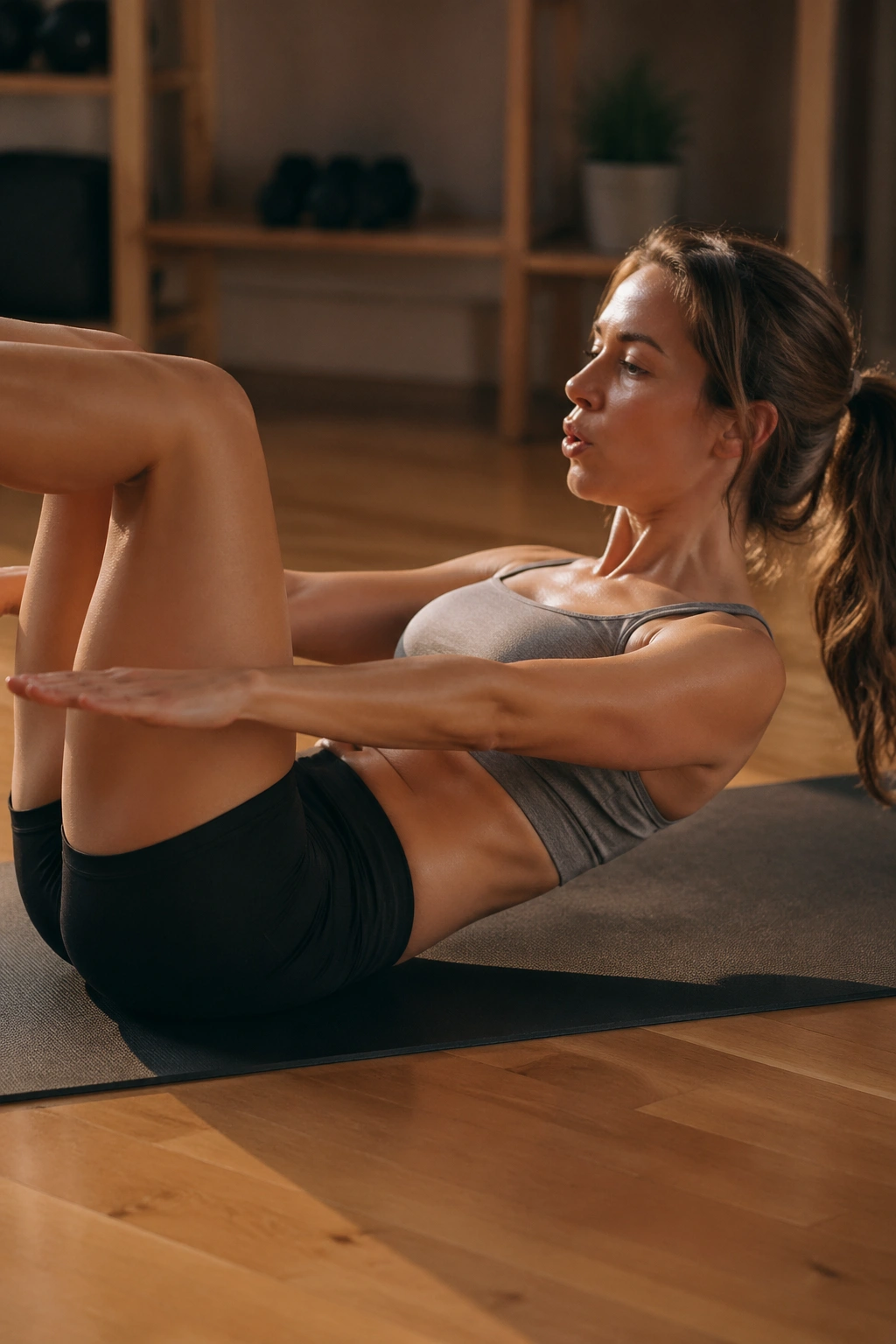
This one wakes up the front line fast. If you want a Pilates flow routine that makes the abs talk without wrecking the neck, this is the cleanest place to start.
What the flow looks like
- 30 to 60 seconds of the Pilates Hundred, with knees bent if needed
- 6 dead-bug reaches per side
- 8 toe taps per side
- 20 seconds of hollow-body hold or a bent-knee version
- 5 slow breathing cycles to finish
The Hundred is the loud part. The dead bug is the smarter part. Together, they train the trunk to stay still while the arms and legs move, which is where real core strength starts to show up. Keep the lower ribs heavy and the lumbar spine anchored, but not smashed into the mat. There is a difference.
My blunt tip: if your neck gets cranky, put your head down and keep going. A cleaner version done well beats a fancy version that turns into jaw-clenching.
3. The Roll-Up and Teaser Ladder
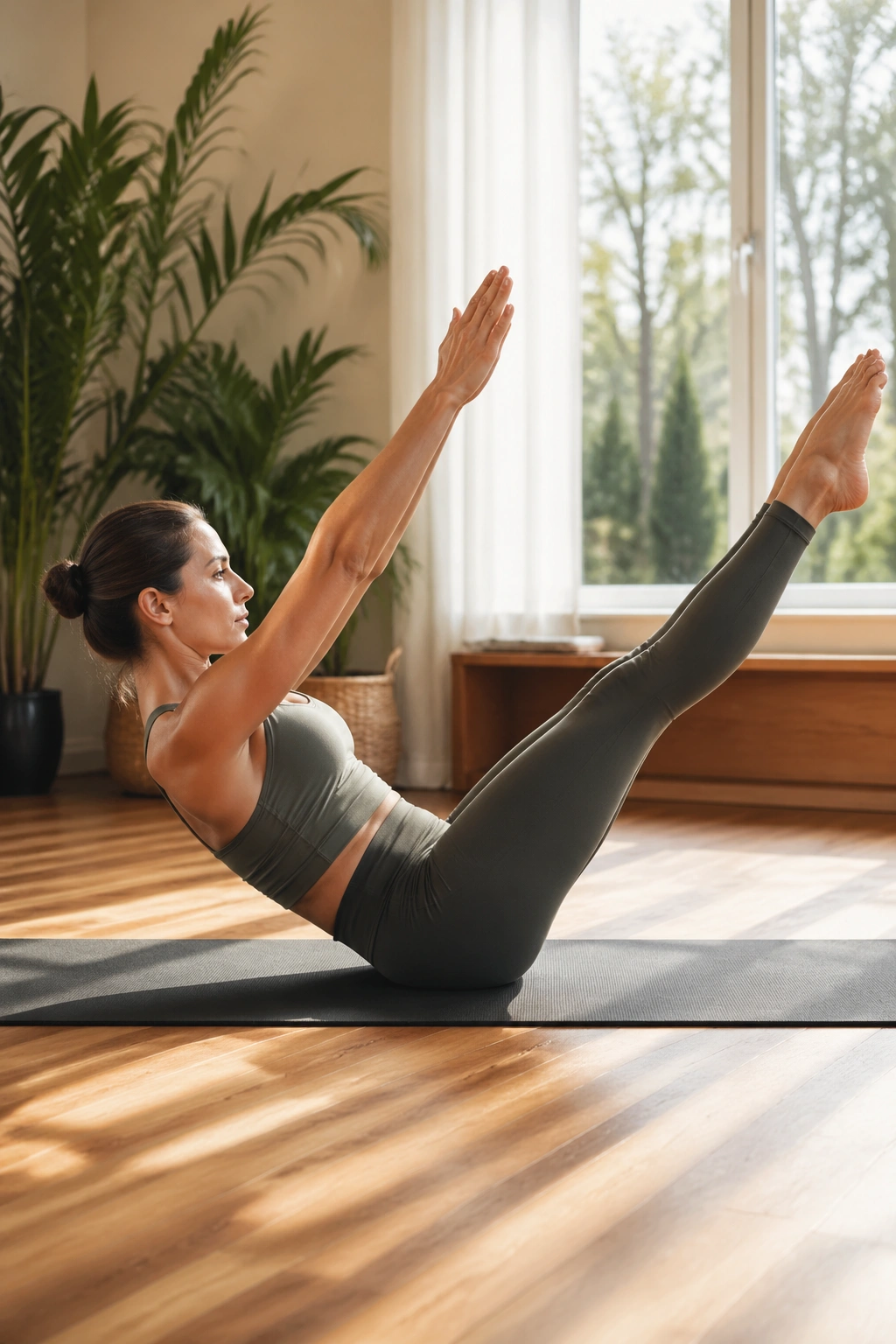
Why do some people feel Pilates in their abs and others feel it in their hip flexors? Usually because the spine is either articulating cleanly or doing all the work in one stiff block.
How to run it
Start with three slow roll-ups. Exhale as you peel up, inhale at the top, and roll back down one bone at a time. Then do two half teasers, holding the V-shape for two breaths if your lower back stays calm. Finish with one full teaser prep or a tucked teaser hold for five seconds. Repeat the ladder twice.
The whole thing is a lesson in control. The abs have to shorten, the front of the hips must not grab too hard, and the neck needs to stay long enough that you could balance a coin on your throat. That sounds fussy. It matters.
What to watch for
- If your feet launch off the mat, bend the knees.
- If the chin juts forward, lower the chest less.
- If the low back pinches, stay with roll-backs only for a while.
This flow builds that hard-to-fake kind of trunk strength.
4. The Bridge, March, and Hamstring Flow
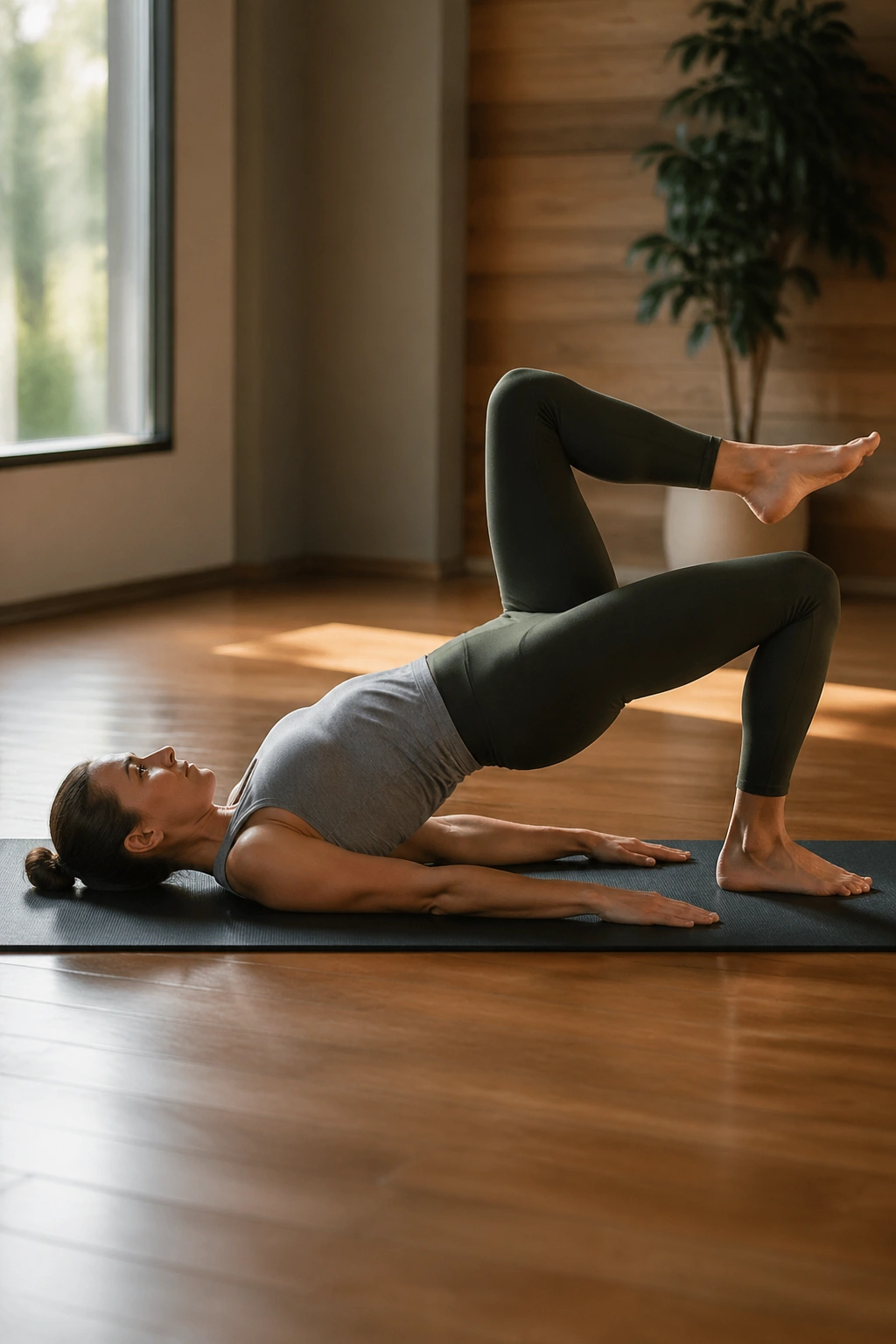
The first time a bridge stops feeling like a simple glute squeeze is usually the first time you add a slow march. The pelvis wants to wobble. The abs have to catch it.
Start with eight pelvic curls or shoulder bridges, lifting the hips only as high as you can keep the ribs quiet. At the top, hold for a breath, then march one knee up at a time for six total marches per side. Add eight heel slides or hamstring curls if you want a little more fire. If you have a towel or sliders under the feet, even better.
A bridge goes wrong when the low back does the work. That shape looks high, but it is usually fake. Keep the weight in the heels, press through the big toe mound, and let the glutes finish the lift. If the hamstrings cramp, move the heels a few inches farther away and lower the bridge height. That usually solves it.
This is one of those routines that quietly improves walking, running, and standing from a chair. Not glamorous. Very useful.
5. The Side-Lying Glute Burner
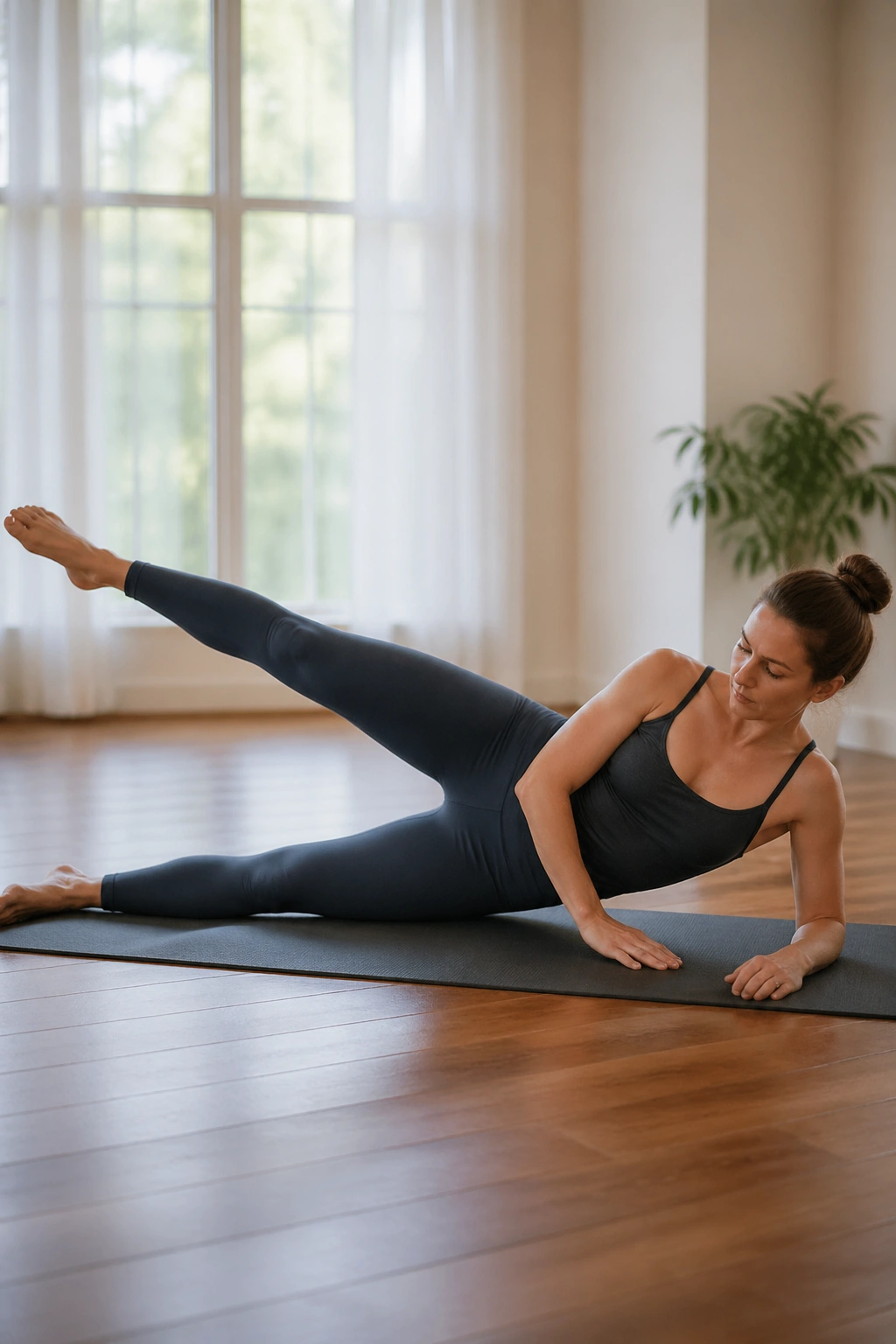
Side-lying Pilates is underrated because it looks easy on the floor. Then the outer hips start shaking and the waist has to stay lifted without any help from momentum.
Why it works on the hips
Lie on one side with the head supported and the legs stacked. Keep the top hand on the floor in front of the chest or rest it behind the head for a slightly tougher version. Do 10 leg lifts, 10 small circles, 8 clam-shells, and 6 slow front-back kicks on each side. Finish with a 15-second side plank hold if your shoulder feels steady.
The key is pelvis control. The top hip should not roll backward when the leg lifts, and the waist should stay long instead of collapsing into the mat. Flex the foot if you want more outer-hip work, or point the toes lightly during the kicks if you want the front of the hip to join in.
What to feel
- Side glute, not low back
- Waistline, not neck tension
- A steady rib cage
- Clean leg paths, not big flailing arcs
Small range, done well, wins here. Every time.
6. The Pilates Plank to Pike Shoulder Stability Flow
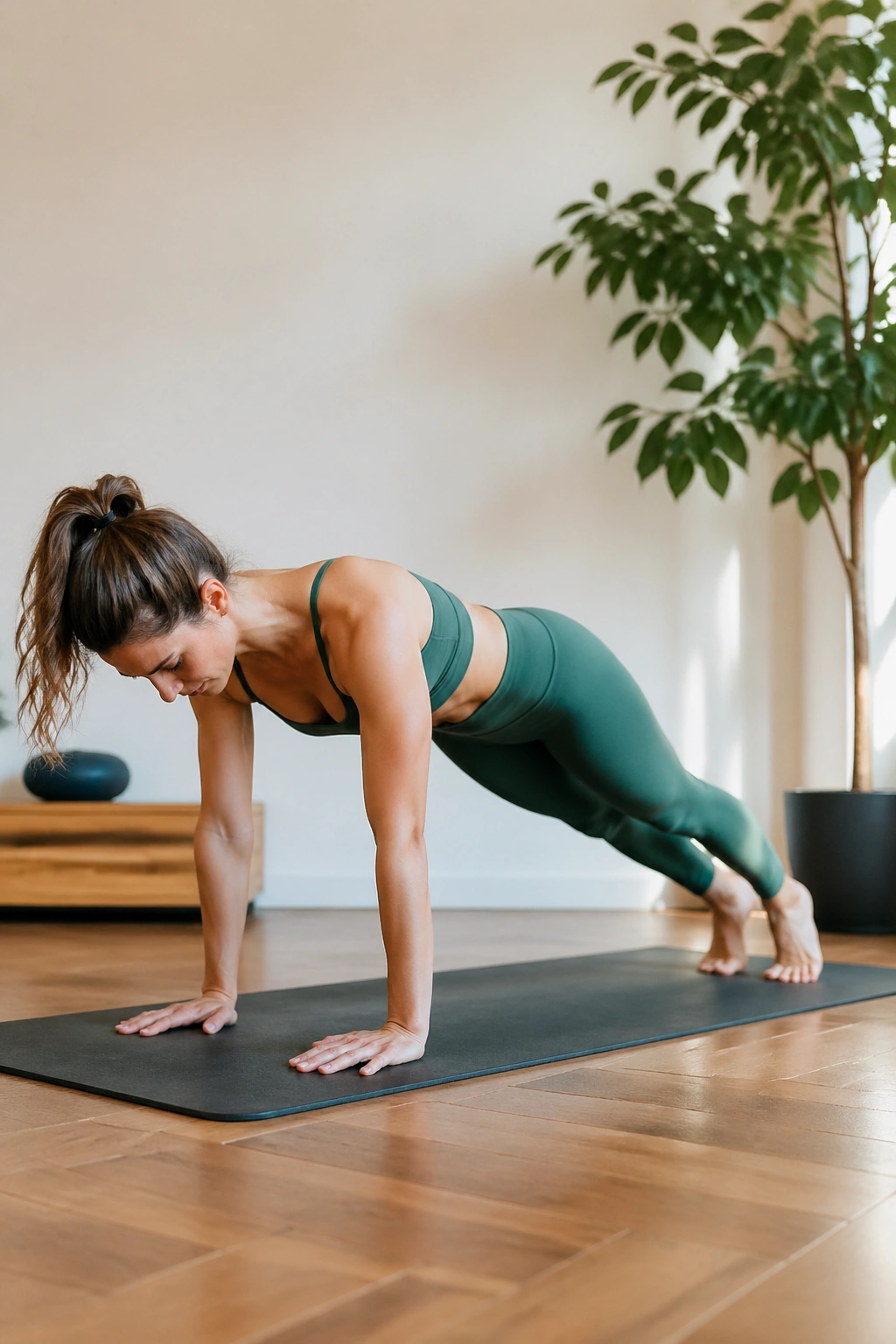
Unlike endless push-ups, this flow asks the shoulders to stay organized while the trunk stays quiet. That is a very different job, and a better one if your goal is usable strength.
Start in a high plank with hands under the shoulders. Hold for three breaths. Walk the feet in and lift the hips into a small pike, keeping the arms long. Return to plank. Add four shoulder taps per side, then four slow knee tucks. Do two to three rounds.
The work should live in the upper back, the deep abs, and the sides of the waist. If the shoulder blades pinch together, push the floor away harder. If the wrists complain, take the plank on forearms or elevate the hands on a sturdy bench. There is no prize for suffering through a bad setup.
This flow is excellent for people who want strong shoulders without turning every session into a pressing contest. It teaches the body to stabilize under load, which pays off in almost everything else.
7. The Swimming Back-Body Flow
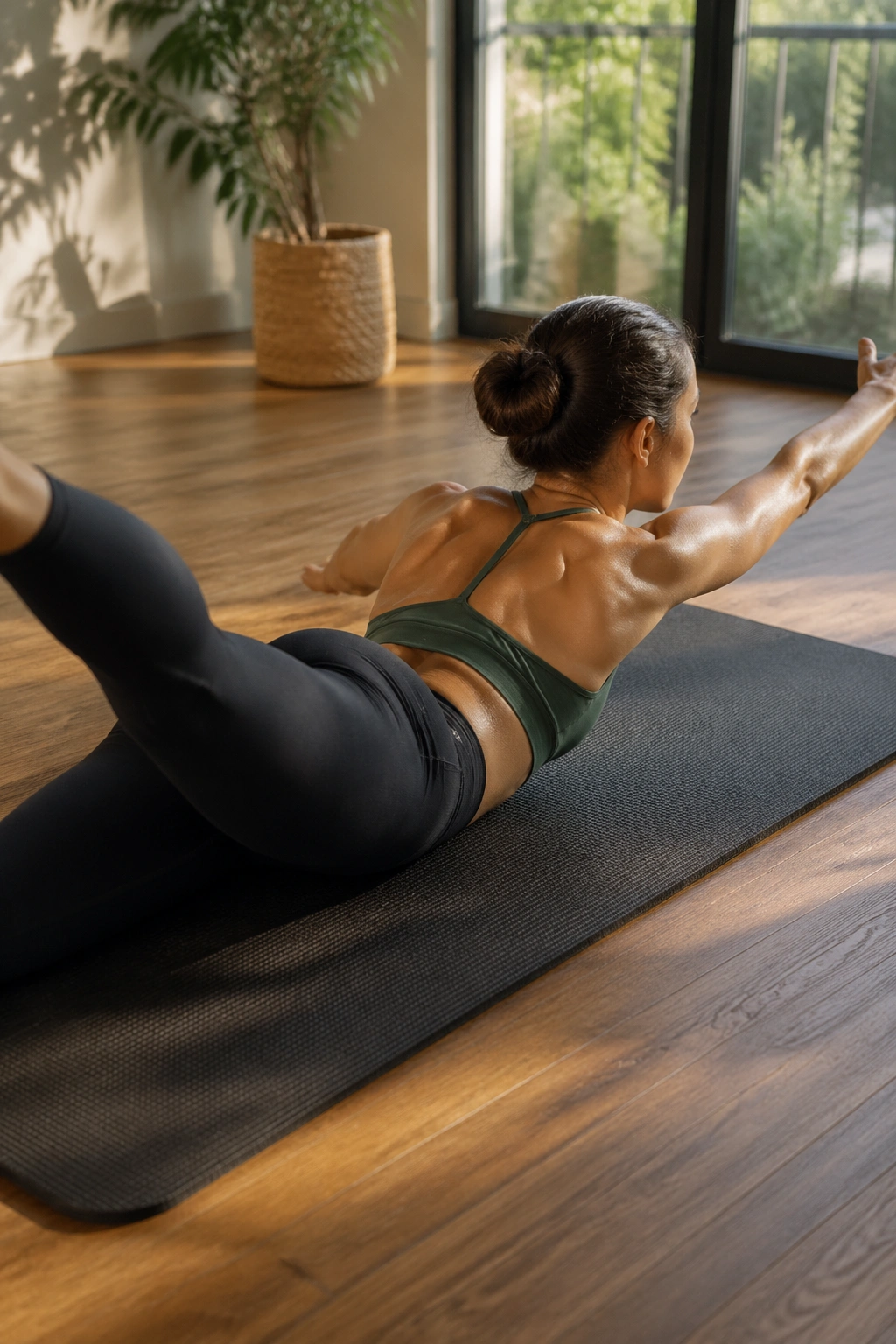
Why does the back-body work matter so much? Because a strong body is not only made of abs. It also needs glutes, spinal extensors, and shoulders that know how to lift without shrugging.
How to run it
Lie face down with the forehead hovering just above the mat. Reach the arms long and the legs long. Lift opposite arm and leg for 6 alternating reps per side, then move into 20 to 30 seconds of steady swimming. Rest for one breath, then repeat once more. If your lower back stays happy, finish with a short breaststroke-arm lift and hold.
The goal is a smooth, even rhythm. Keep the gaze down and the back of the neck long. The movement should come from the upper back and glutes, not from yanking the limbs off the floor. A tiny lift done with control is more useful than a dramatic lift that turns into a cramp.
A lot of people discover here that their back is weaker than they thought. That is useful information, not a failure. Weak spots have to be shown before they can be trained.
8. The Spine-Twist Mobility Flow
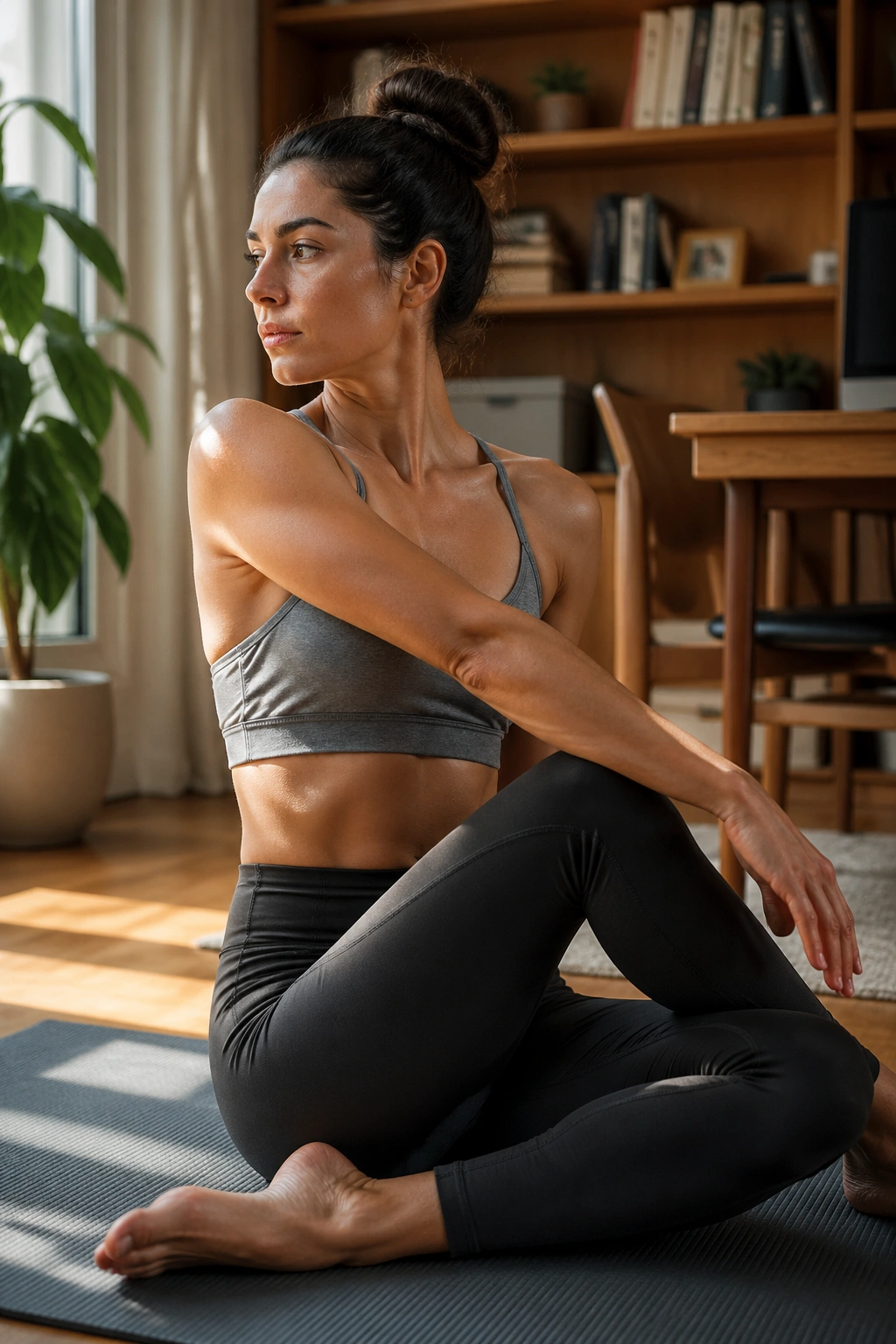
A desk body needs rotation. So does a body that lifts, carries groceries, throws a ball, or reaches into the back seat of a car. The trunk is meant to turn.
Sit tall with the legs crossed or extended. Do eight slow seated spine twists, keeping the hips grounded. Then add four saws per side, reaching the opposite hand toward the outside of the foot while the ribs keep spiraling. After that, move into a kneeling rotation or thread-the-needle on the mat for four breaths each side.
The twist should happen through the rib cage first. If the pelvis spins with every rep, the lumbar spine tends to grab. Keep the sit bones heavy and let the upper back do the more dramatic work. That is where most people are stiff anyway.
I like this flow after longer sessions because it makes everything feel less jammed. It is not flashy. It is the kind of routine that keeps the body feeling useful instead of welded together.
9. The Kneeling Knees-Off Core Flow
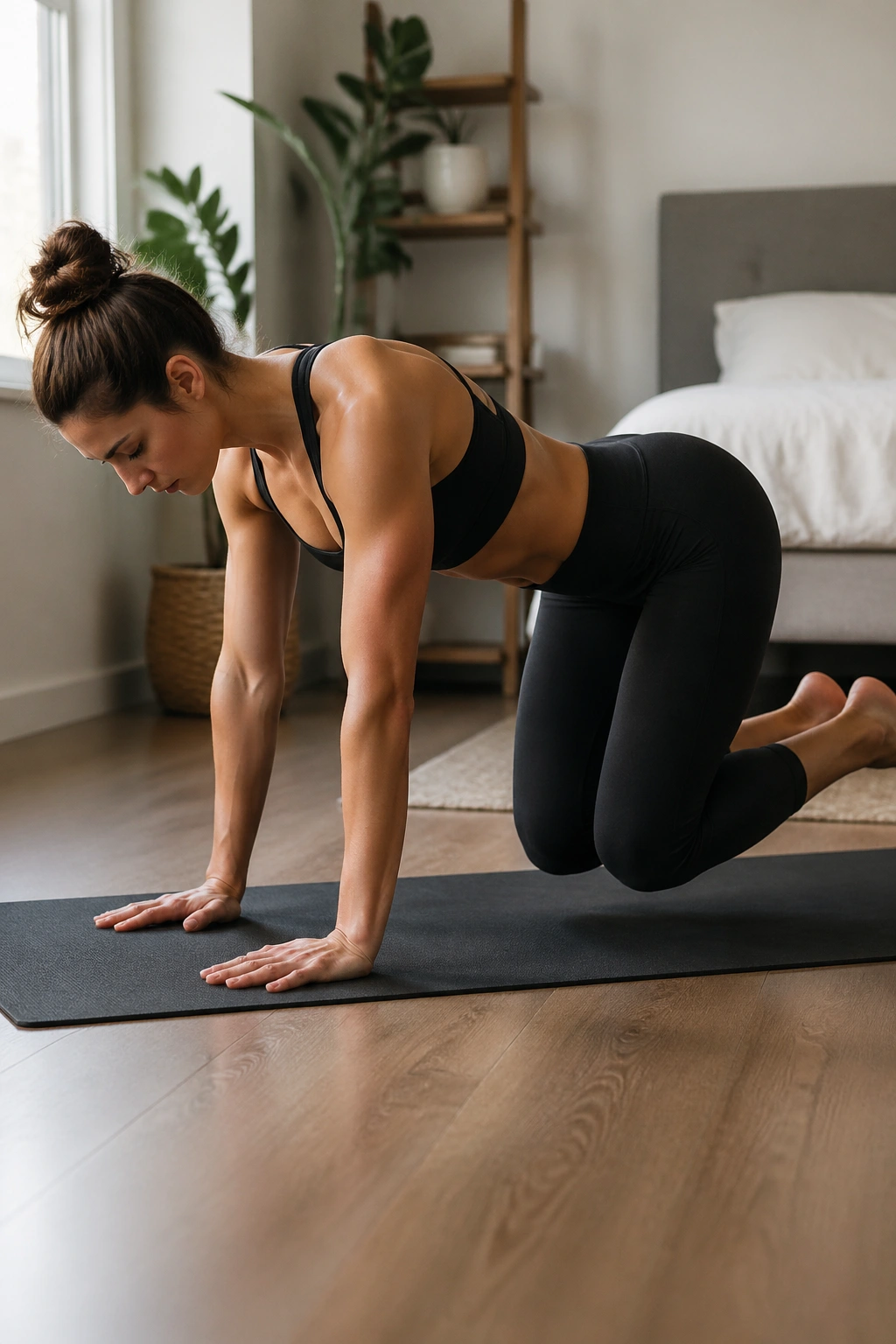
If you want deep core work without a thousand crunches, this is a sharp choice. It builds the kind of strength that shows up when you have to hold your own body still.
Start on hands and knees, wrists under shoulders and knees under hips. Hover both knees one inch off the mat for 10 seconds. Set them down, then do 6 bird-dog reaches per side. Add 8 small knee hovers where the knees barely leave the floor. If you want a bigger challenge, hold a short forearm plank and tap one knee down and up slowly.
A few things matter here
- Keep the shoulders broad.
- Keep the neck in line with the spine.
- Lift the knees only as high as you can control.
- Exhale as the limbs move away.
If the wrists get noisy, switch to forearms or put a folded towel under the heels of the hands. This is a quiet, intense routine. You should feel the abs, the deep stabilizers around the hip, and a little bit of humility.
10. The Standing Balance and Reach Flow
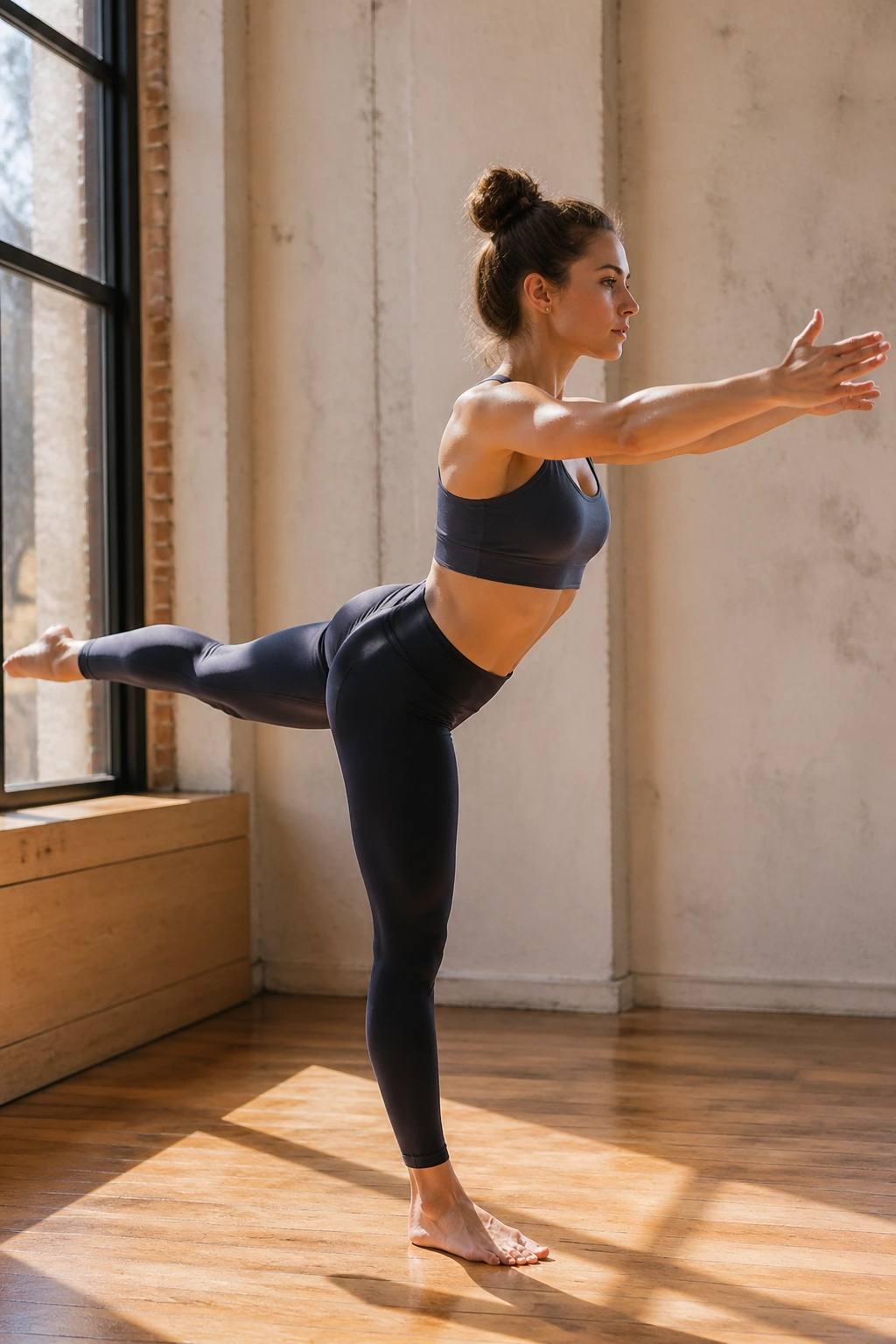
Standing Pilates is where weak links get exposed fast. An ankle that wobbles, a hip that dumps sideways, a foot that collapses inward — all of it shows up here.
Stand tall and shift onto one leg. Reach the free leg back into a small arabesque, then return. Add six slow calf raises, six knee drives, and six side reaches per side. Move through two rounds with a pause between each balance so you are not just catching yourself from a stumble.
Keep the standing foot active. The big toe mound, little toe mound, and heel should all stay grounded. That tripod matters more than people think. If your torso wants to lean, use a hand lightly on a wall for the first round and then take the support away.
This flow is not glamorous, but it is honest. A body that can stand well usually moves better everywhere else.
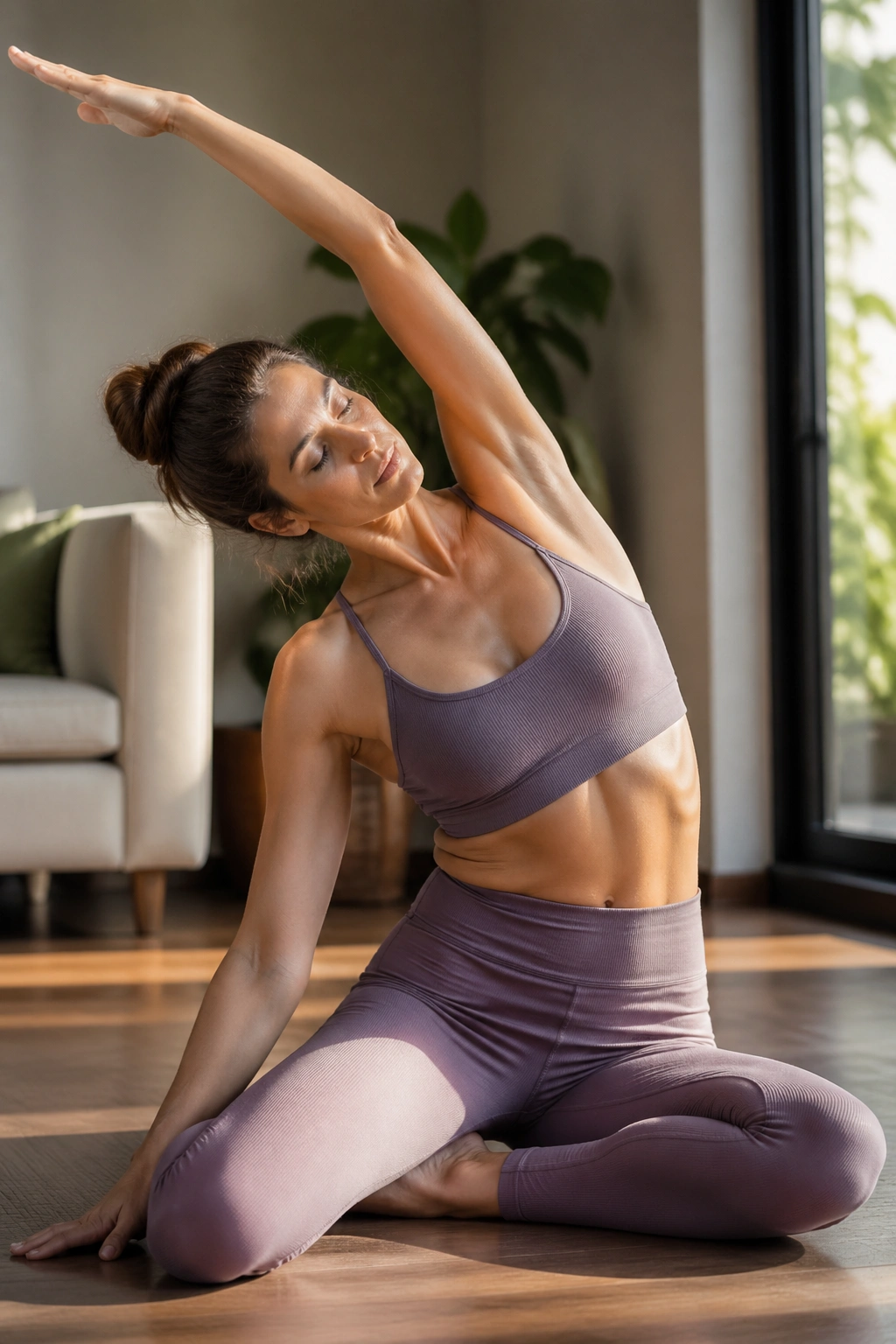
11. The Mermaid and Side Bend Flow
Lengthen first
Sit in a mermaid position or cross-legged seat and start with four calm side reaches to one side. Keep both sit bones heavy and let the ribs expand on the open side as you inhale.
Bend without collapsing
Lift the arm overhead, arc it over, and hold for two breaths. Come back through center, then repeat with a little more reach through the fingertips. The goal is not to dump into the waist. It is to create length along the side body and then control the bend back.
Return with control
Add two slow side bends on each side, then finish with a seated twist or a side plank prep if you want to keep the line going. The mermaid opens the lats, obliques, and rib cage in a way that makes the rest of the work feel less cramped.
This is one of my favorites after heavier plank or bridge work. It does not erase the effort. It makes room for it.
12. The Single-Leg Stretch Endurance Flow
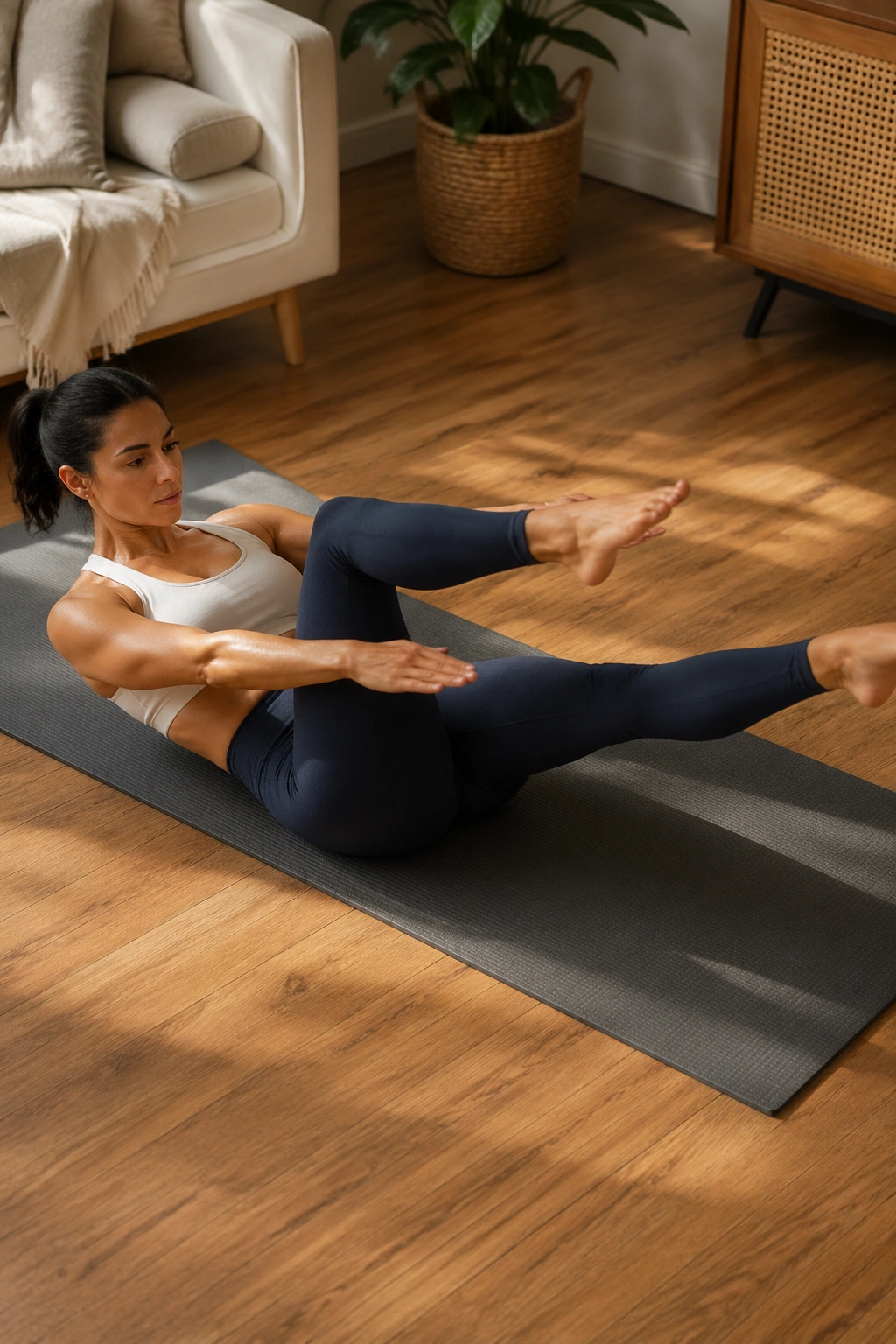
Unlike fast bicycle crunches, the single-leg stretch teaches the abs to manage leg weight one side at a time. That difference matters. Fast reps often turn into neck strain and hip flexor grab. Slower reps tell the trunk to keep its shape.
Lie on your back, curl the head and shoulders up if the neck feels fine, and bring one knee in while the other leg extends long. Switch for 8 to 10 total reps per side. Keep the legs low enough to challenge the core but high enough that the low back does not peel off the mat. A two-count switch works nicely.
The best cue here is simple: ribs down, pelvis steady, breath smooth. If the neck gets tired, lower the head and continue with the legs only. That is not cheating. That is smart training. The abs are still doing their job.
This flow pairs well with dead bugs and the Hundred because the three of them teach the trunk to stay organized under different kinds of load.
13. The Double-Leg Stretch Power Flow
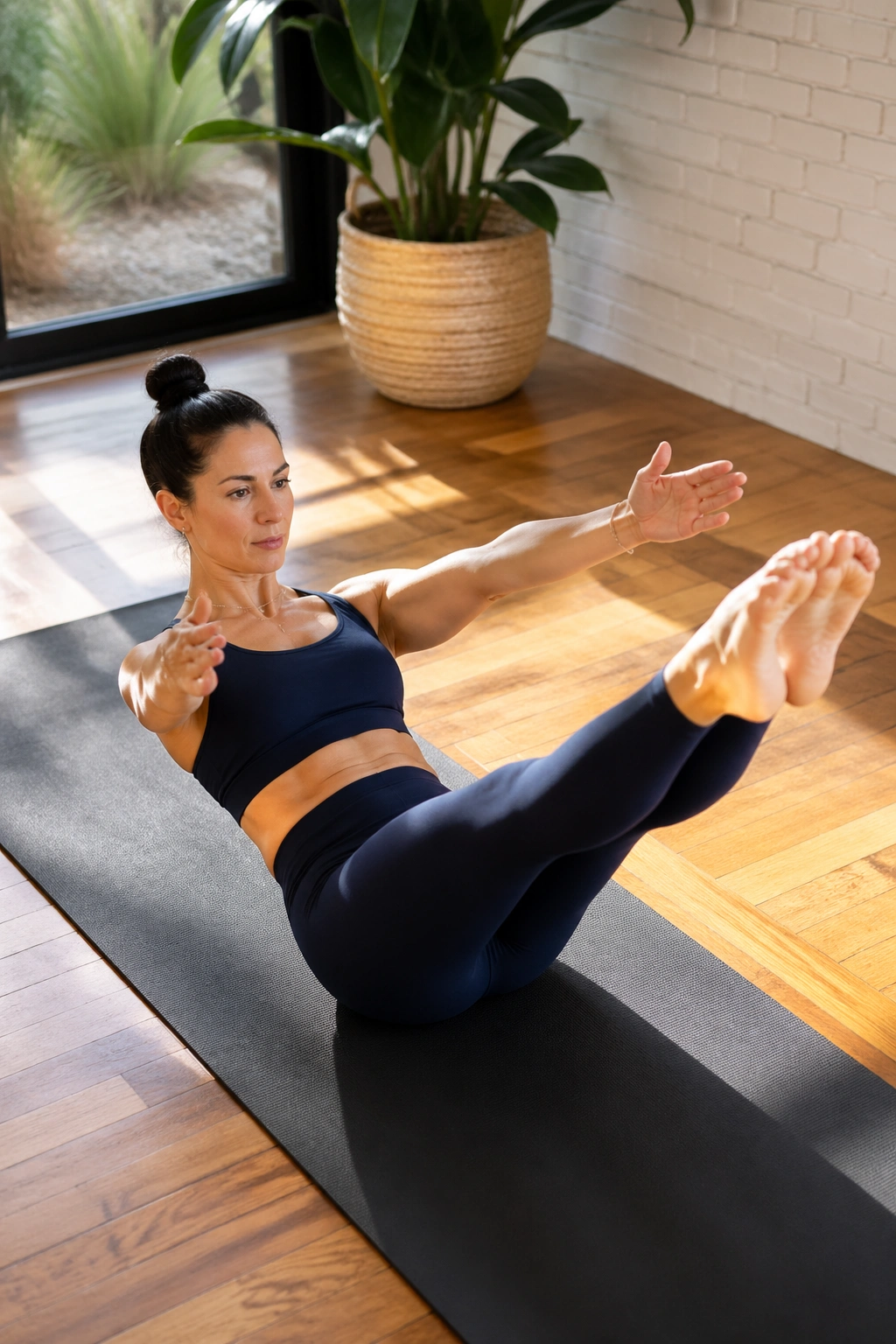
Can one small movement train both coordination and core strength? Yes — if the timing is clean and the legs do not take over.
How to get the most from it
Start in tabletop, then exhale to reach the arms and legs away from center. Circle the arms wide and draw the knees back in. Do 6 to 8 slow reps. If you want more challenge, lower the legs a little farther on the reach, but only as long as the lower back stays calm and heavy on the mat.
The mistake here is speed. People rush the extension and lose the shape. Better to move like the room is slightly crowded. Controlled, precise, a little stubborn. That tiny pause at full reach is what makes the trunk work.
If the neck tightens, put the head down and keep the same leg pattern. The exercise still works. You are training control, not performing a trick.
14. The Slow Mountain Climber Pilates Flow
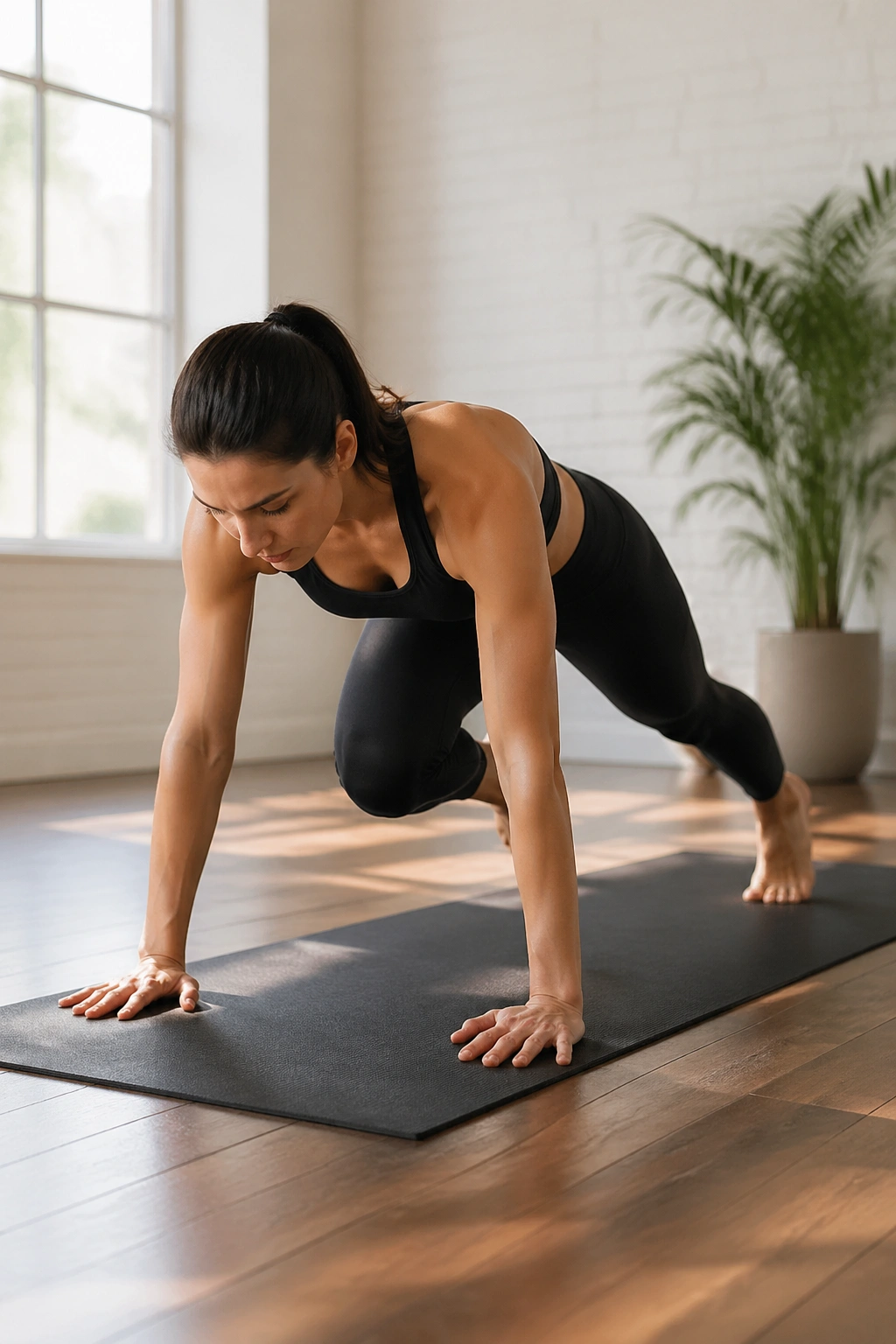
A lot of mountain climbers look like running in place on the floor. This is not that. The Pilates version is slower, meaner, and much better for the trunk.
Start in a high plank. Drive one knee toward the chest over three full counts, return it, then switch sides. Add a cross-body drive to the opposite elbow for 6 reps per side, followed by a 15- to 20-second static hover. Repeat for two to three rounds.
The slower tempo changes everything. The shoulders have to stay stacked, the pelvis has to resist rocking, and the waist has to keep pulling in. If the hips bounce, shorten the lever or bring the hands to a bench. That keeps the work honest.
I like this flow because it exposes fatigue fast. When the core starts to fade, the whole movement gets messy. That is useful feedback, not something to hide.
15. The Inner-Thigh Ring Flow
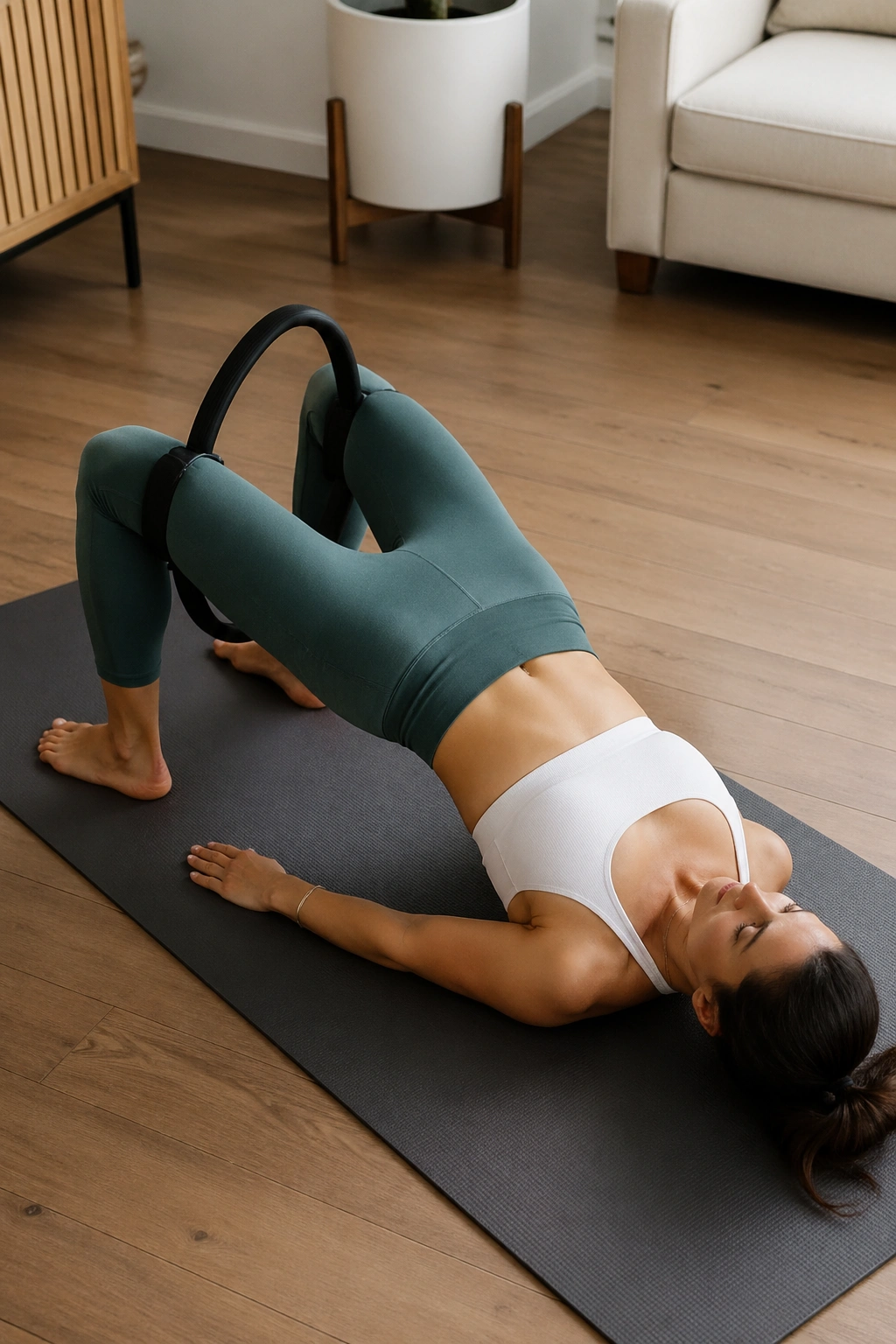
A small ball, pillow, or Pilates ring can make this flow light up in a very specific way. The inner thighs matter more than most people admit; they help stabilize the pelvis and support the deep core.
Press the ball between the knees and do 8 bridge lifts with a soft squeeze. Then move the ball to the ankles and do 6 tabletop leg extensions while keeping light pressure. Follow that with 10 frog pumps, then finish with 6 side-lying squeezes per side if you want a little extra work.
A few rules keep this clean
- Squeeze only enough to keep contact.
- Keep breathing through the whole set.
- Let the glutes help, but do not clench them hard.
- If the neck or jaw tightens, you are probably overdoing it.
A towel roll can work if you do not have a ring. The point is not the tool. The point is giving the adductors a job they can actually finish.
16. The Reverse Plank and Chest-Opener Flow
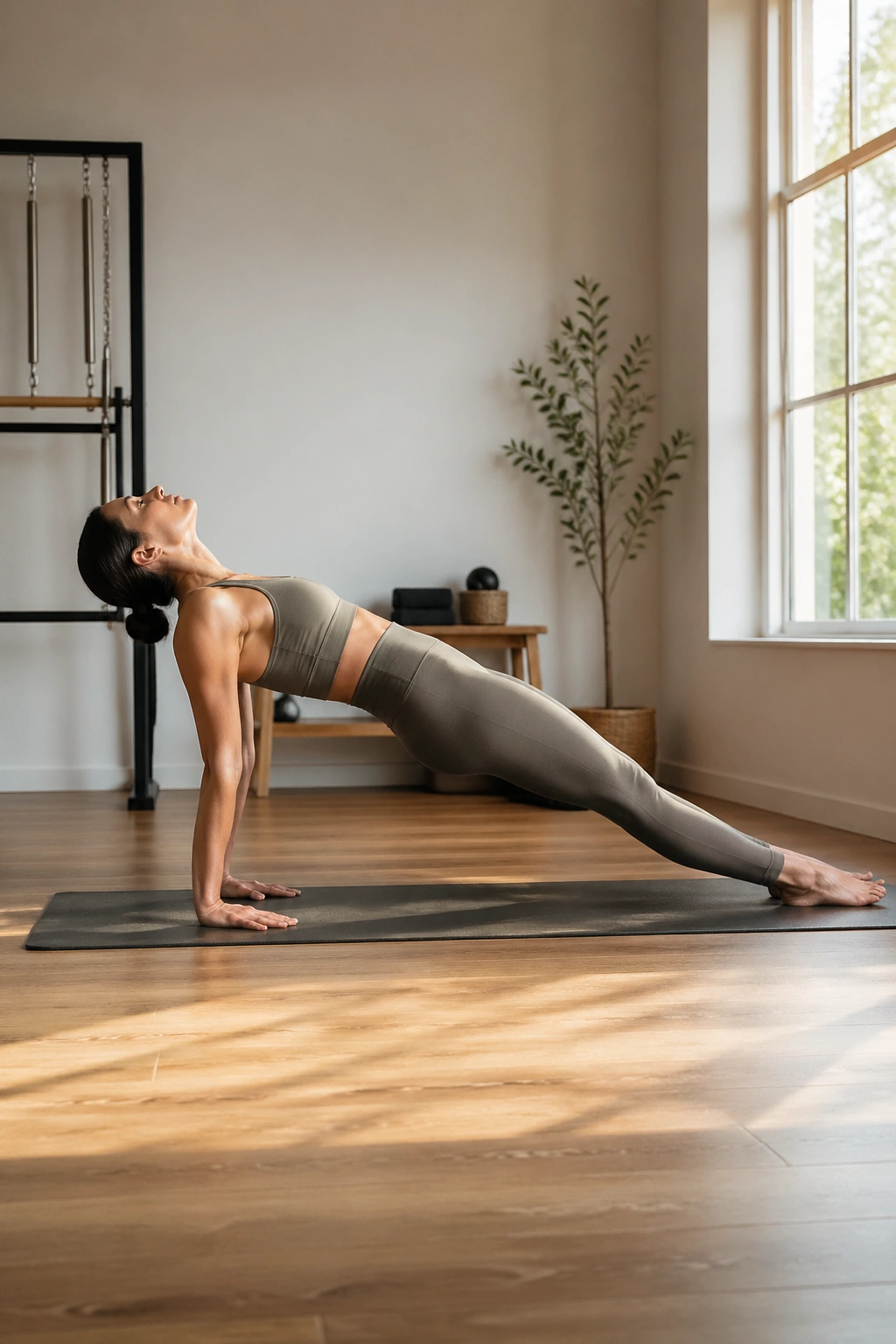
A strong body needs the back of the body to pull its weight. Reverse plank and chest-opening work are where that shows up.
Sit with the hands behind you, fingers forward or slightly out, and lift into a reverse tabletop. Hold for three breaths. If the wrists and shoulders feel okay, extend one leg at a time for 4 slow lifts per side. Drop down, then move into a kneeling chest opener with the arms reaching behind the body or a wide arm sweep across the chest.
The front of the body gets a lot of attention in most workouts. This flow pays the bill on the other side. It helps undo the rounded shoulder shape that creeps in from phones, desks, and too much forward-facing work. The chest opens, the triceps work, and the glutes help hold the pelvis up.
If the hamstrings complain, bend the knees. If the wrists are angry, use blocks or keep the fingers turned out. Simple changes keep the routine useful instead of annoying.
17. The Lower-Back Reset Flow
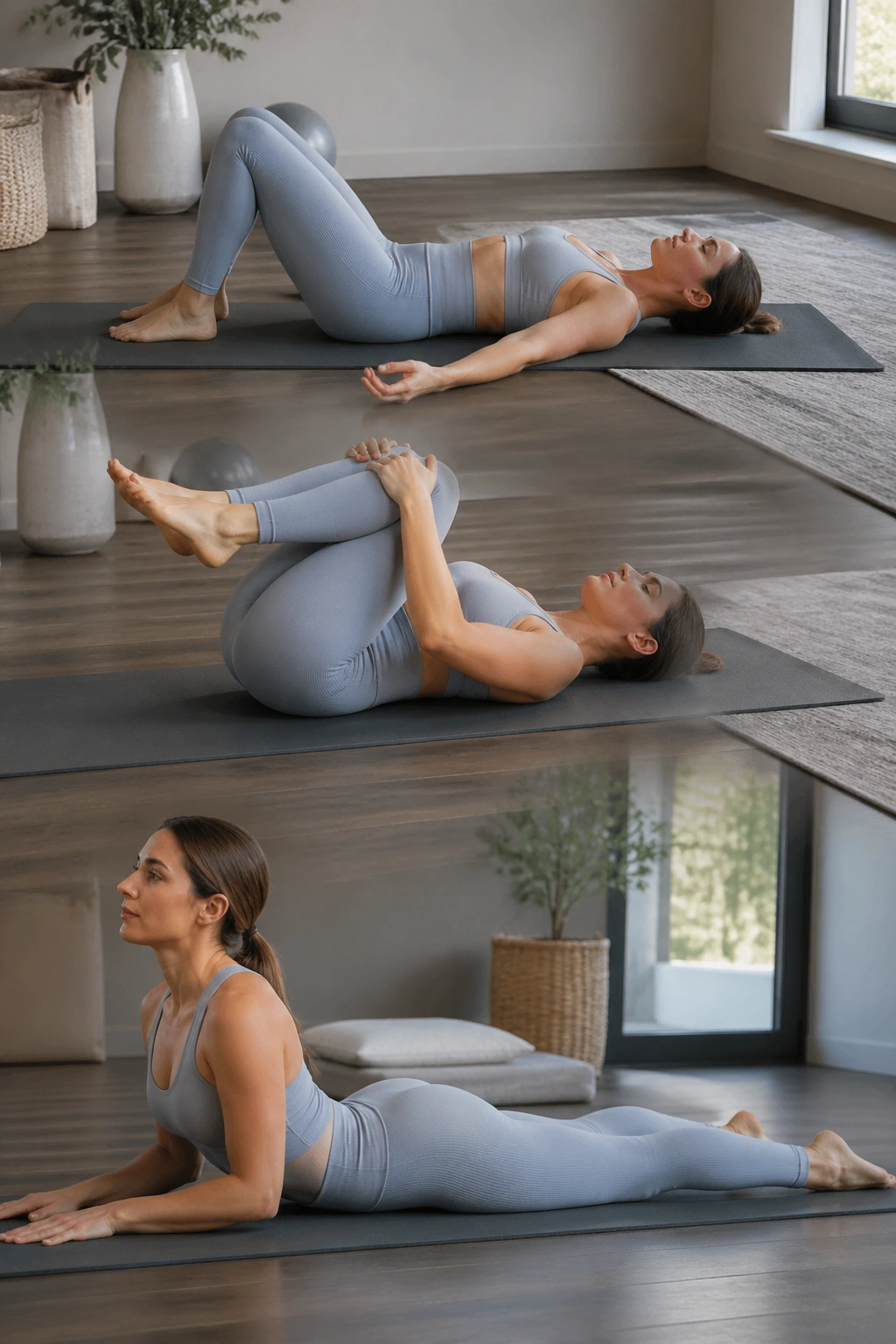
Can a strong body still need a reset? Absolutely. In fact, the stronger the body gets, the more useful it is to keep the spine and hips moving without force.
Lie on your back and do a pelvic clock, tipping the pelvis gently at 12, 6, 3, and 9 o’clock for about a minute. Then rock the knees side to side 6 times. Add a sphinx hold or a gentle cobra for 3 breaths, followed by child’s pose and a hip flexor stretch on each side. Keep the breathing slow enough that the ribs widen on the inhale.
This is not a lazy session. It is maintenance. The back often feels better when the hips stop gripping and the ribs stop flaring. If the lower back feels pinchy in back extension, reduce the range and move more through the upper chest.
I use this kind of flow after harder core or plank days because it keeps the next session from feeling like a fight. That matters more than people think.
18. The Full Pilates Mat Flow
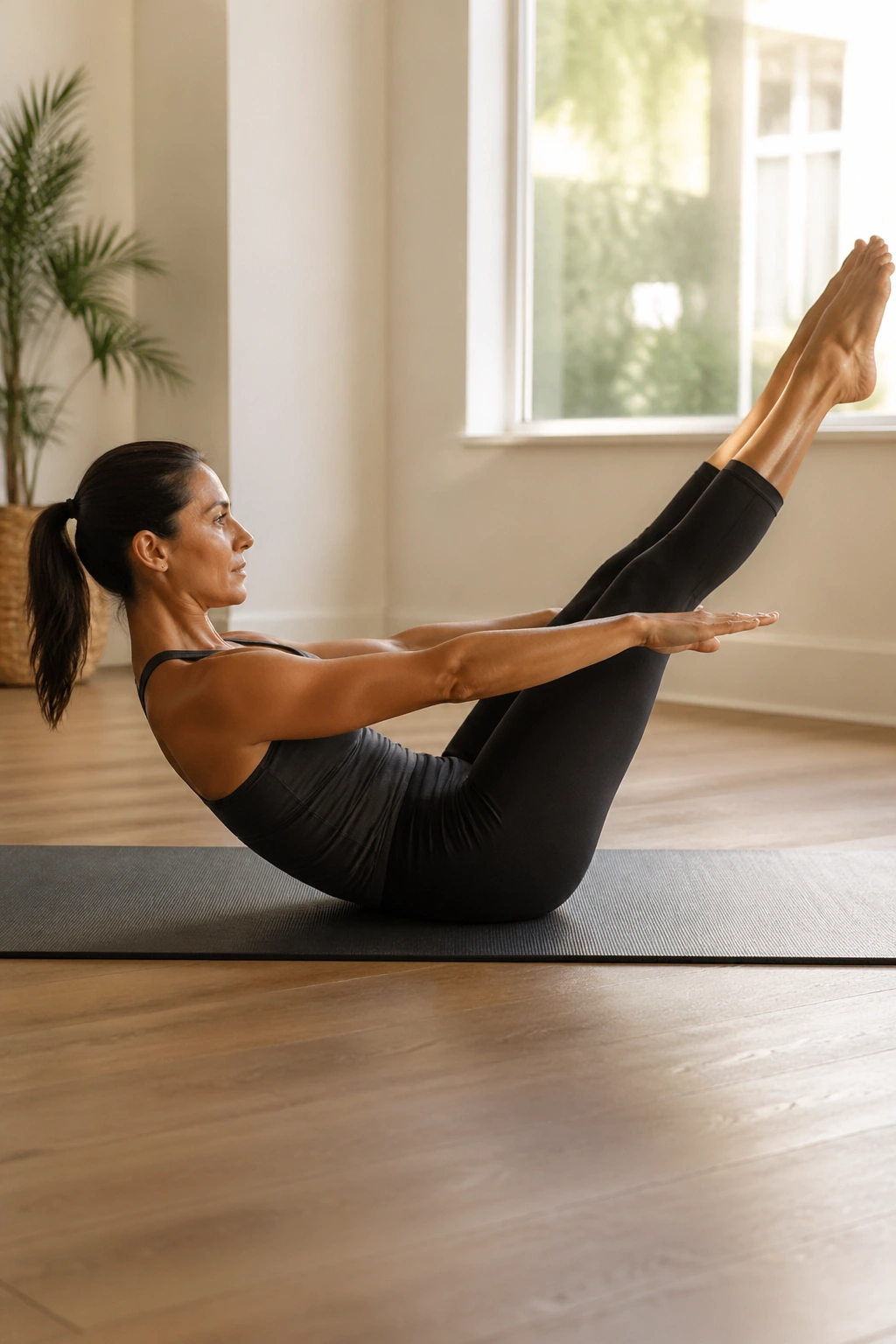
A full mat flow should feel like a conversation between the breath, the spine, and the hips. No one part gets to hog the microphone.
Start with five breaths and a pelvic curl. Move into eight Hundred pumps, six roll-ups, eight single-leg stretches per side, six double-leg stretches, and one short teaser prep. Then add a bridge series with marching, a side-lying glute block, and a brief swimming set on the stomach. Finish with a forearm plank hold and a seated mermaid reach.
How to pace it
Use smooth transitions and keep each station short. Most people do better with 30 to 45 seconds per movement than with endless reps. The body stays more honest that way. Once form starts to sag, move on.
A simple order that works
- Breath and curl
- Core flexion
- Bridge strength
- Side-body work
- Back-body extension
- Plank finish
- Side bend release
This is the kind of Pilates flow routine that feels like a whole class without requiring a huge chunk of time. If you are steady with it, you will feel it in the trunk, the hips, and the upper back — a good sign that the session was balanced instead of random.
19. The Band-Added Fire-Up Flow
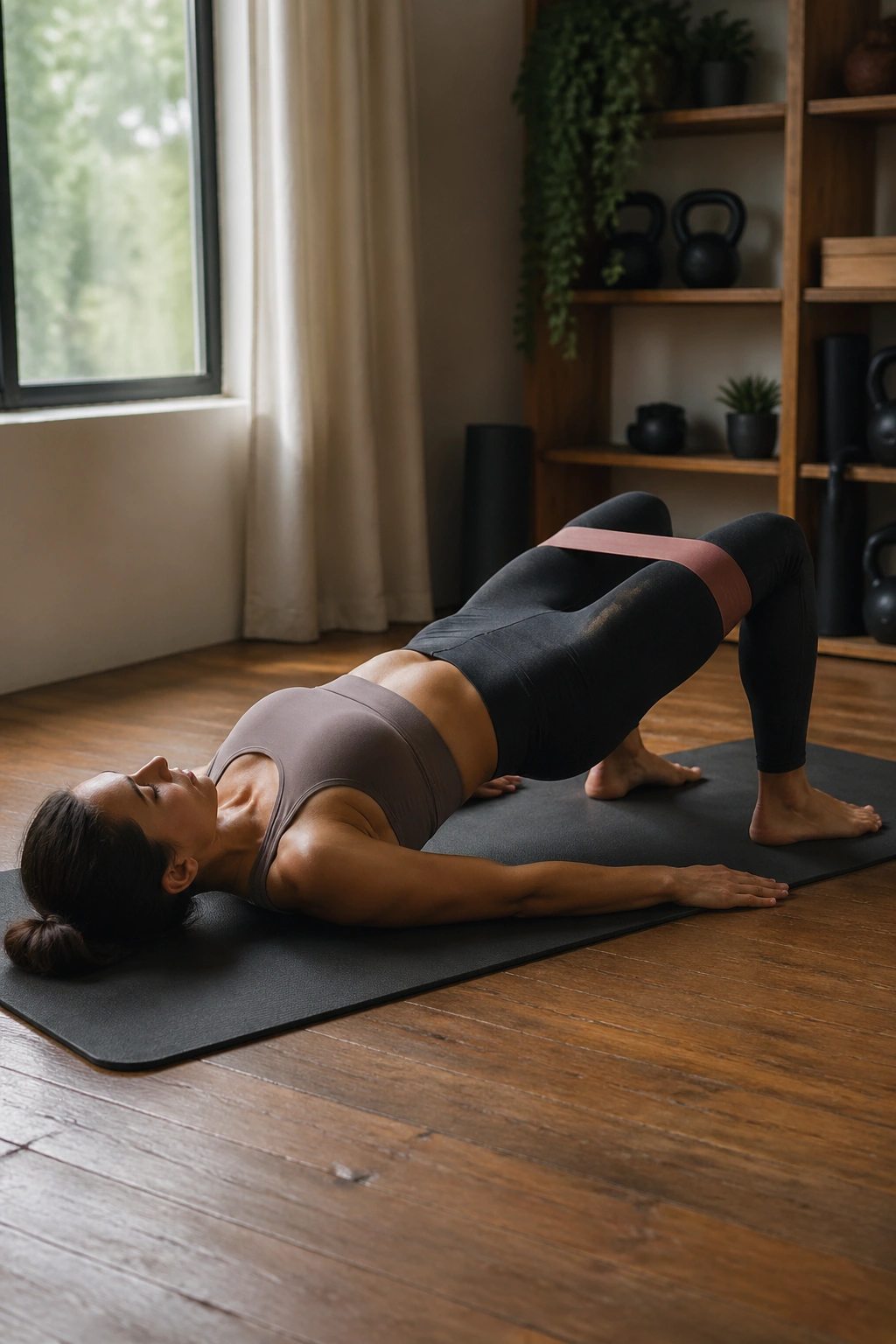
A mini resistance band changes the texture of a routine fast. The trick is not to use it everywhere. Put it where the body needs a little extra honesty.
Loop the band above the knees for bridge lifts, side steps, and clamshells. Try 8 bridge presses, 10 side steps each way, 8 clams per side, and 6 kneeling kickbacks per side. If you want a tougher finish, add a forearm plank with slow knee opens for 20 seconds.
The band should create tension, not chaos. If the knees cave inward or the hips twist to cheat the range, the band is too heavy or the movement is too fast. Move slower and keep the feet grounded. Sometimes a lighter band gives better work because the mechanics stay clean.
This version is especially good when the glutes tend to switch off and the hips do too much talking. Used well, the band wakes them up. Used badly, it turns into flailing.
20. The Strong-Finish Pilates Flow
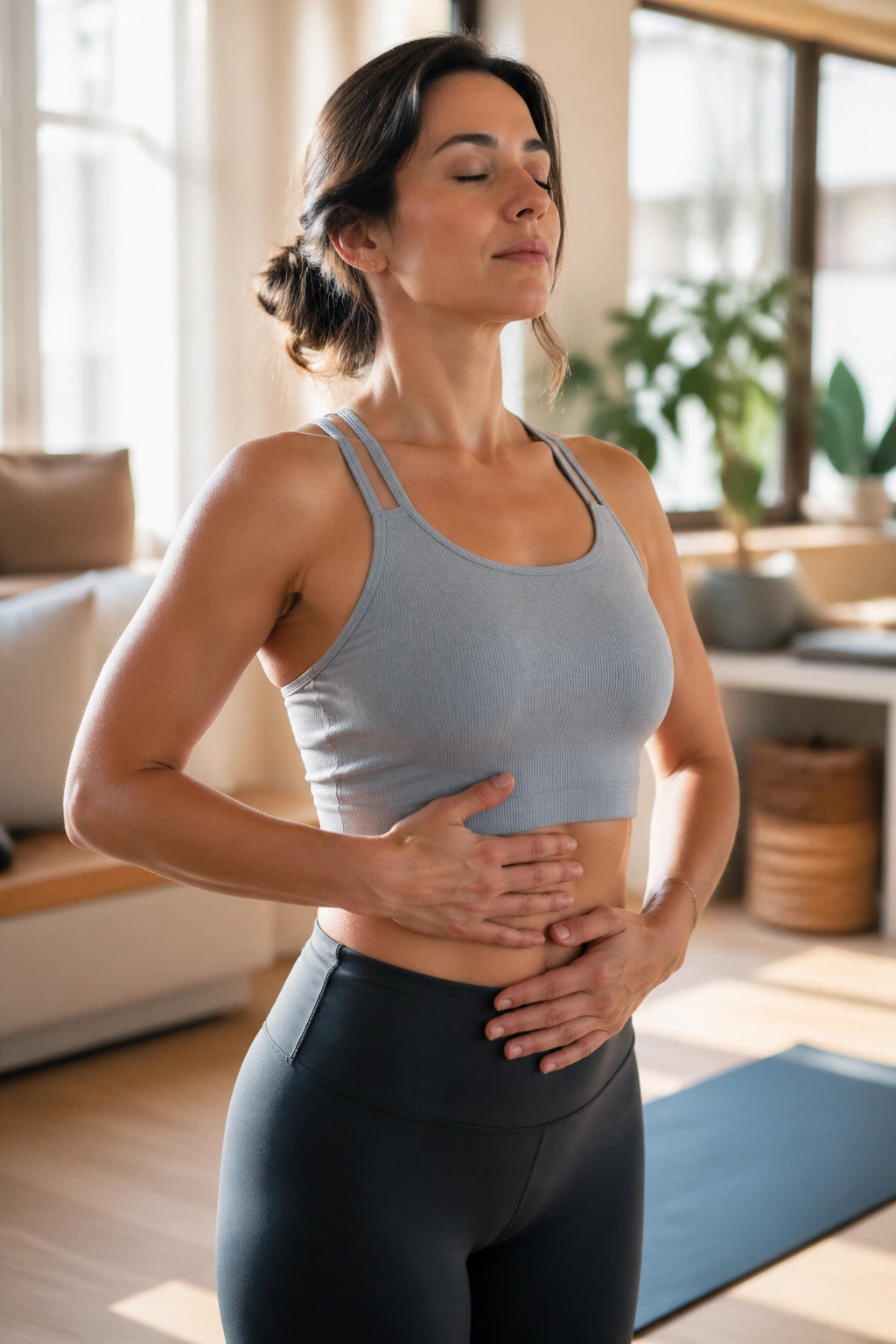
A good finish leaves you tired in the right places. The abs should feel awake, the glutes should feel useful, and the neck should not feel like it did a shift in a factory.
Start with a standing roll-down, then move into a 20-second plank, a 15-second side plank on each side, and a short swimming set on the mat. Add 6 bridge lifts and 4 teaser tucks or half-teasers if the back feels organized. Finish with a tall standing reach and three slow breaths.
The order matters because it puts the body through flexion, support, extension, and lateral work before you stop. That mix is part of why Pilates flow routines build such a useful kind of strength. You are not training one angle of the body and ignoring the rest. You are asking the system to stay coordinated.
Pick two or three of these flows and repeat them through the week. Keep one core-focused, one back-body-focused, and one standing balance routine in rotation, and let the breath stay smooth enough that you could have a sentence left at the end. That is the kind of strength that lasts.
