



Big glute burn, tiny motion.
That’s the odd little charm of Pilates booty workouts: you can be lying on a mat, moving your leg no more than 6 inches, and your hips start shaking like you sprinted up three flights of stairs. If you’ve ever finished a set of side-lying leg lifts and had to pause because your outer glutes were on fire, you already know what I mean.
Home Pilates works for the backside because it strips away momentum. No heavy barbell. No bouncing through reps. No hiding behind speed. When your pelvis stays still, your ribs stay down, and the lift comes from the hip instead of the lower back, the glutes have to do their job — and they cannot fake it for long.
That detail matters more than people think. A lot of at-home butt routines turn into quad work, hip flexor work, or plain old lower-back crankiness because the setup is off by an inch or two. Heel position, toe angle, breath, the width between your knees — those small choices change the whole feel of the move.
The good news is that you do not need much space, and you do not need fancy gear. You need a mat, a little patience, and a willingness to slow down enough that the right muscles take over.
Why Pilates Booty Workouts Feel So Different From Squats
Pilates glute training rewards control more than brute force. That’s the first thing to understand if you want these moves to work at home.
Traditional lower-body training often chases load: heavier dumbbells, deeper squats, more plates, more output. Pilates comes at the glutes from another angle. It leans on time under tension, long levers, unilateral work, isometric holds, and precise joint position. A 20-second bridge hold with a steady exhale can light up your glute max in a way fast, loose reps never will.
There’s also a muscle-balance piece here. Your glutes are not one big slab doing one job. The glute max drives hip extension, the glute medius helps with side-leg work and pelvic stability, and the smaller deep hip rotators help control the femur when your leg turns in or out. Pilates tends to hit those support muscles hard, especially during side-lying and all-fours patterns.
That is why these sessions can feel sneaky. You do not always finish drenched in sweat. You often finish with a deep, local fatigue right where the muscle sits, plus a strange sense that your hips are more organized when you stand up.
Set Up a Small Space for Pilates Booty Workouts
How much room do you need? Less than the length of a yoga mat and a little side clearance so you can extend one leg without kicking a chair.
A hard floor with a mat is usually better than a soft bed or plush carpet. Soft surfaces swallow pressure and make it harder to feel where your pelvis is. If your knees complain on all-fours work, fold a towel once or twice and slide it under them. Problem solved.
A few things help more than people expect:
- A yoga mat or exercise mat for traction and comfort
- A folded towel under knees, elbows, or head
- A wall for standing kickbacks and balance work
- Socks or bare feet, depending on whether you want more slide or more grip
- A sturdy chair or countertop if balance feels shaky during standing moves
Skip clutter. You do not want to be half-focused on your form and half-worried about knocking over a lamp.
One more thing: use a mirror only if it helps. Some people line up better with visual feedback. Others start chasing what looks high instead of what feels clean. If the mirror makes you fling the leg higher and arch your back, turn away from it.
Form Cues That Put the Work in Your Glutes, Not Your Lower Back
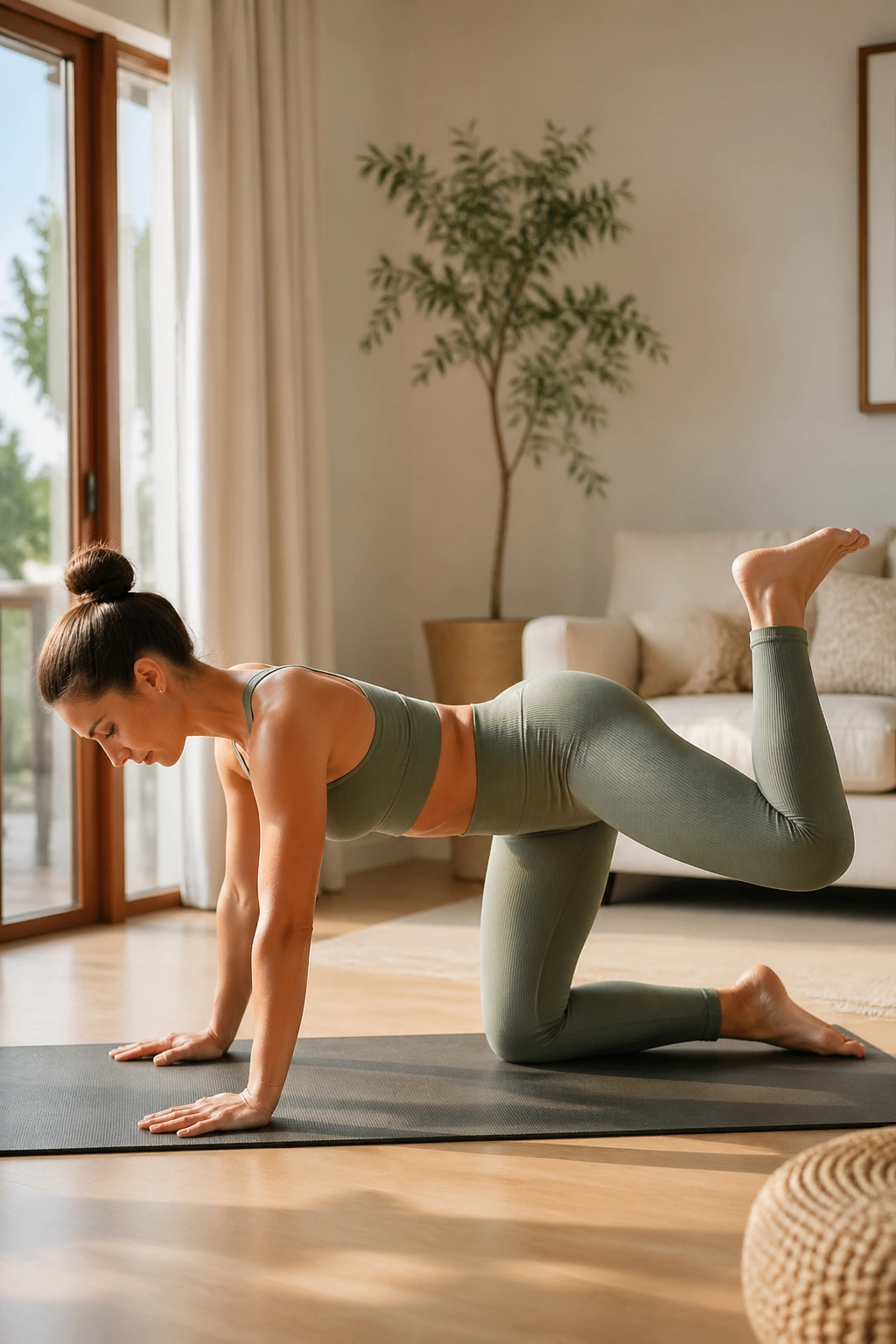
A few cues change everything.
Keep the pelvis quiet
When the pelvis rocks, tips, or rolls open, the movement gets bigger but the glute gets less work. Think of your pelvis as a bowl filled to the rim. During bridges, side lifts, hydrants, and kickbacks, try not to spill the bowl.
Lift from the hip, not the waist
In side-lying work, people often hike the whole side body upward instead of moving from the hip joint. Keep length through the waist. Even better, leave a small gap under your bottom waist and resist collapsing into the floor.
Shorter range often works better
If a donkey kick goes high enough that your lower back pinches, you have already gone too far. Same with side leg lifts that yank up toward your ear. A clean 6-inch lift beats a messy 12-inch swing every time.
Exhale on the hard part
Breath is not decoration in Pilates. Use the exhale when you lift, press, pulse, or hold. That exhale helps brace the trunk so the glutes can work off a stable base.
Burn is fine. Joint pain is not.
Muscle fatigue in the butt, outer hip, or hamstrings is part of the deal. Sharp pain in the knee, groin, or spine is your cue to stop, reset, and change the move.
1. Basic Glute Bridge Press
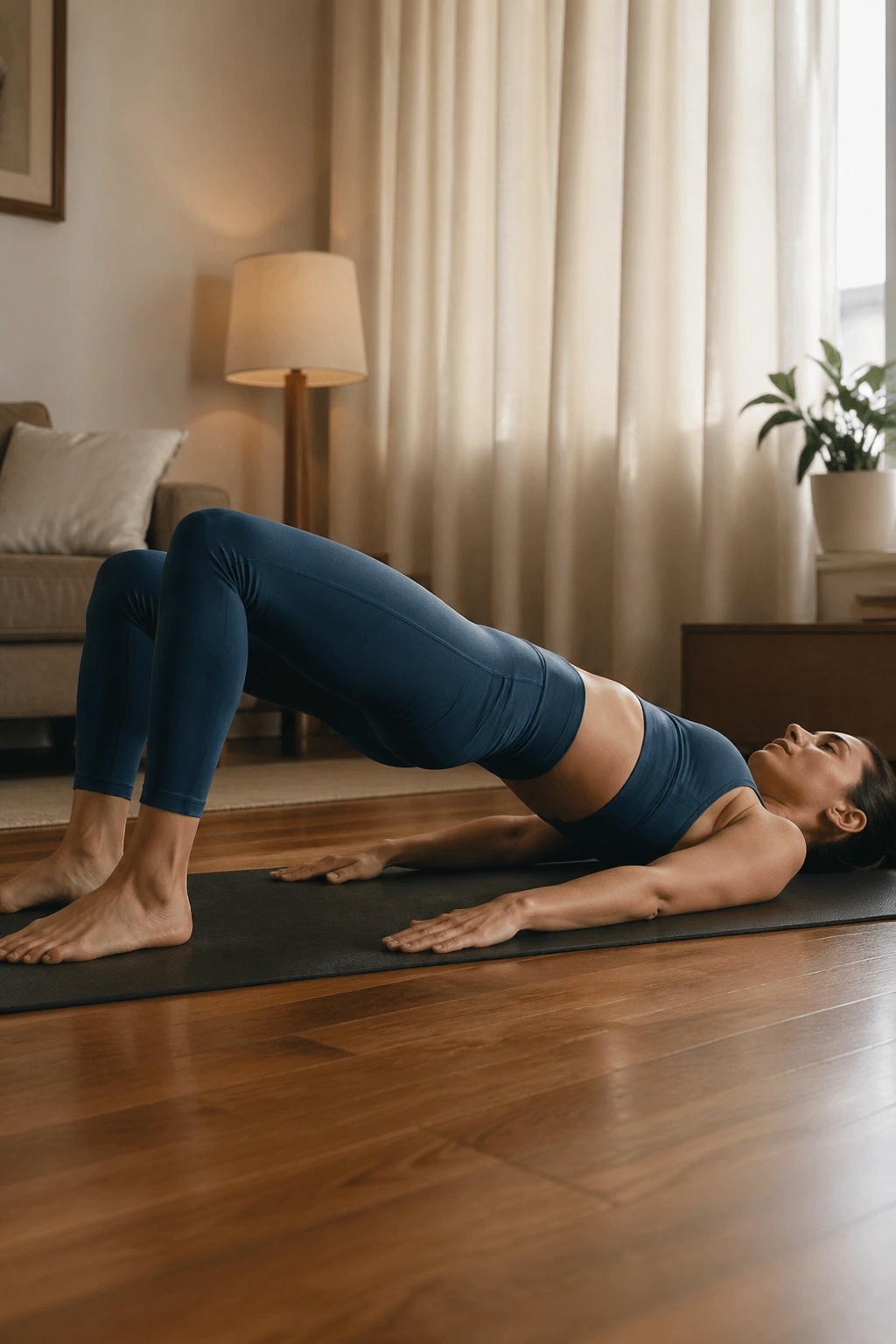
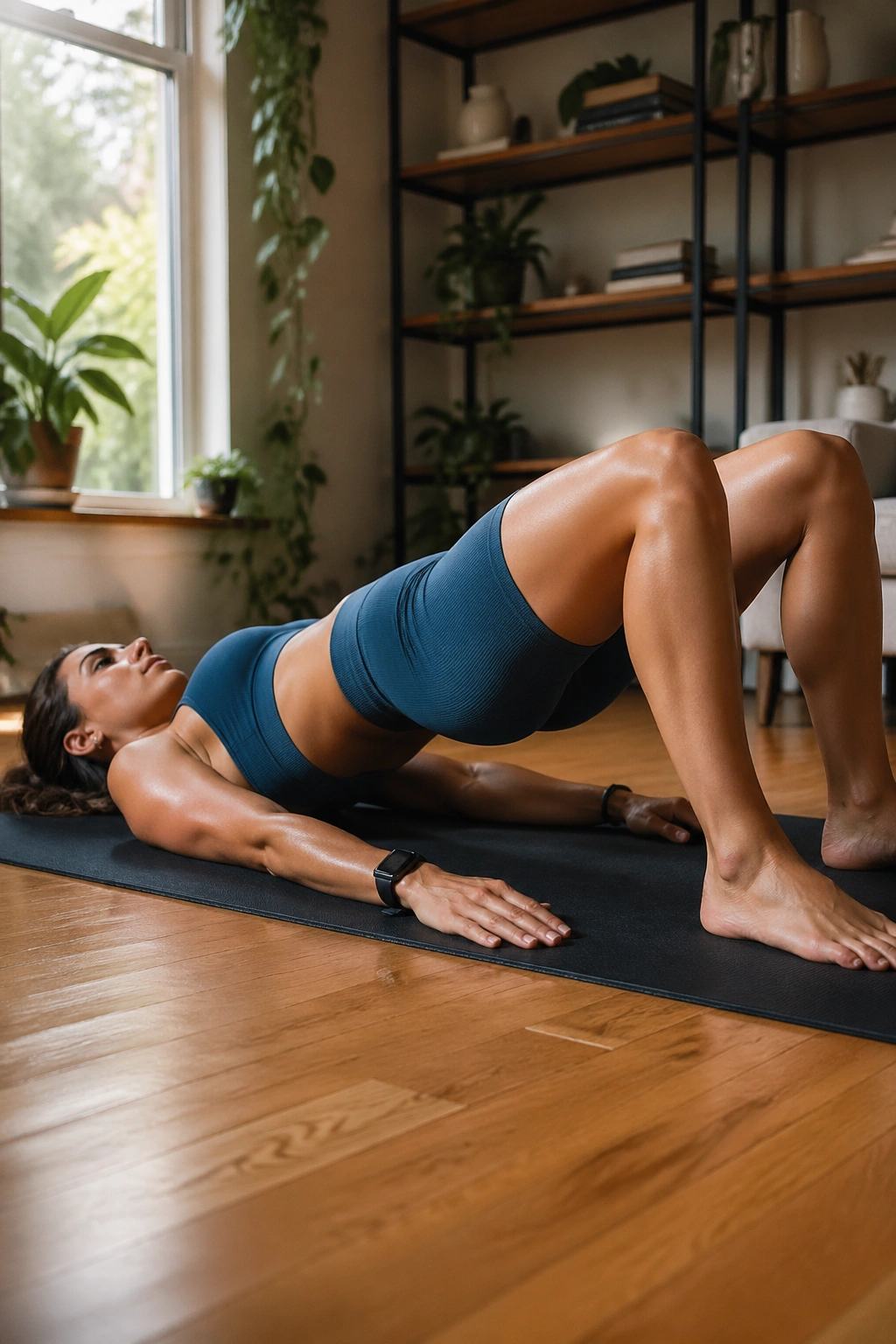
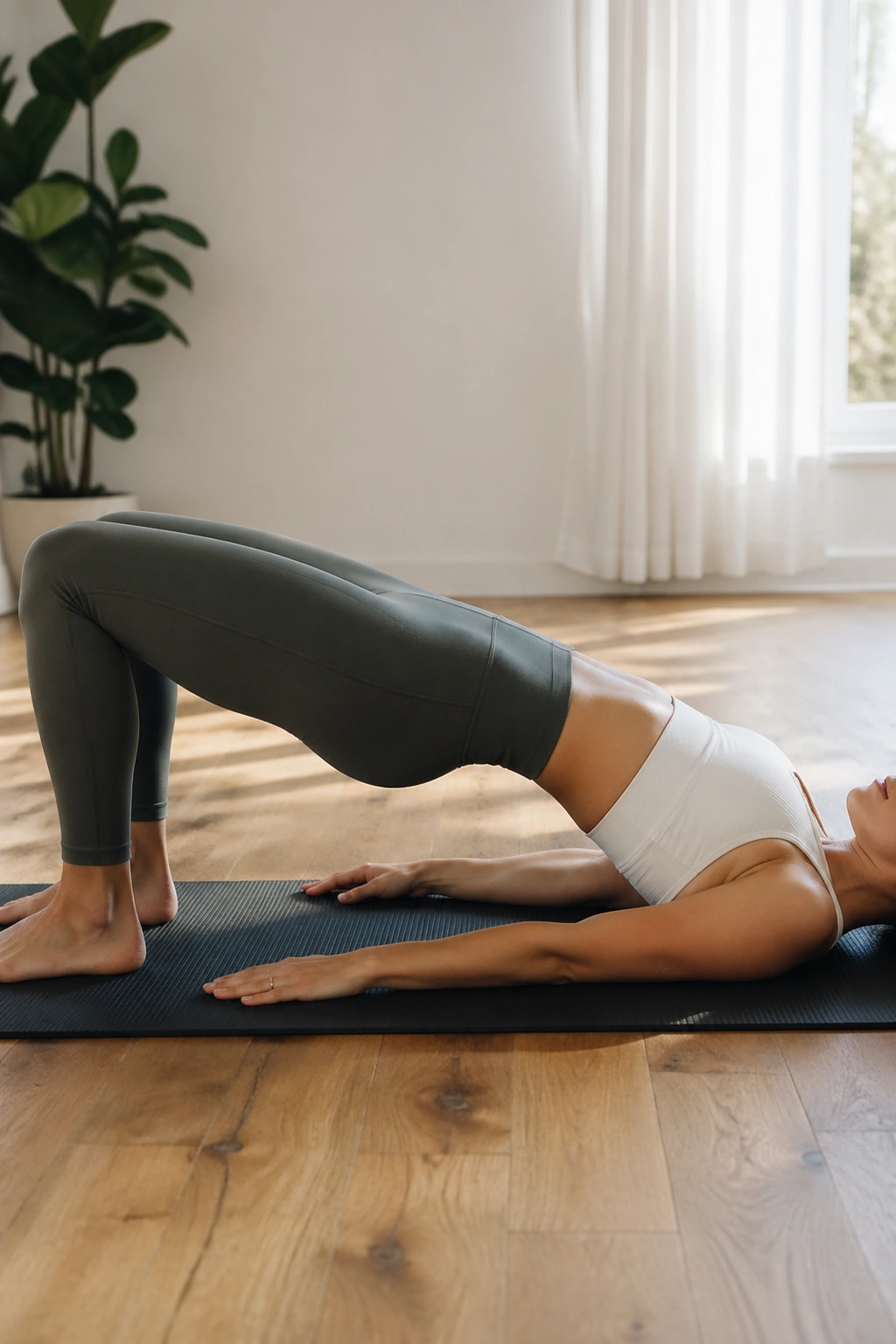
Start with the move that earns its keep in almost every home routine. Lie on your back with your knees bent, feet flat, and heels about 8 to 12 inches from your seat. Exhale, press through your heels, and lift your hips until your body forms a long diagonal line from shoulders to knees.
Pause at the top for one breath. Lower one vertebra at a time instead of dropping.
Why this one works
The basic glute bridge teaches hip extension without asking your knees, ankles, or balance to do much. That makes it a smart first stop if you sit a lot, feel your quads take over, or want a low-impact Pilates glute exercise that still has some bite.
Quick setup checks
- Feet stay hip-width apart, not glued together
- Knees track straight ahead
- Weight stays heavy in the heels and mid-foot
- Ribs do not pop upward at the top
Aim for 12 to 15 slow reps, with a two-second lift and a two-second lower.
Best cue: At the top, think “knees reaching away” instead of “hips as high as possible.”
2. Bridge Pulse and Hold Ladder
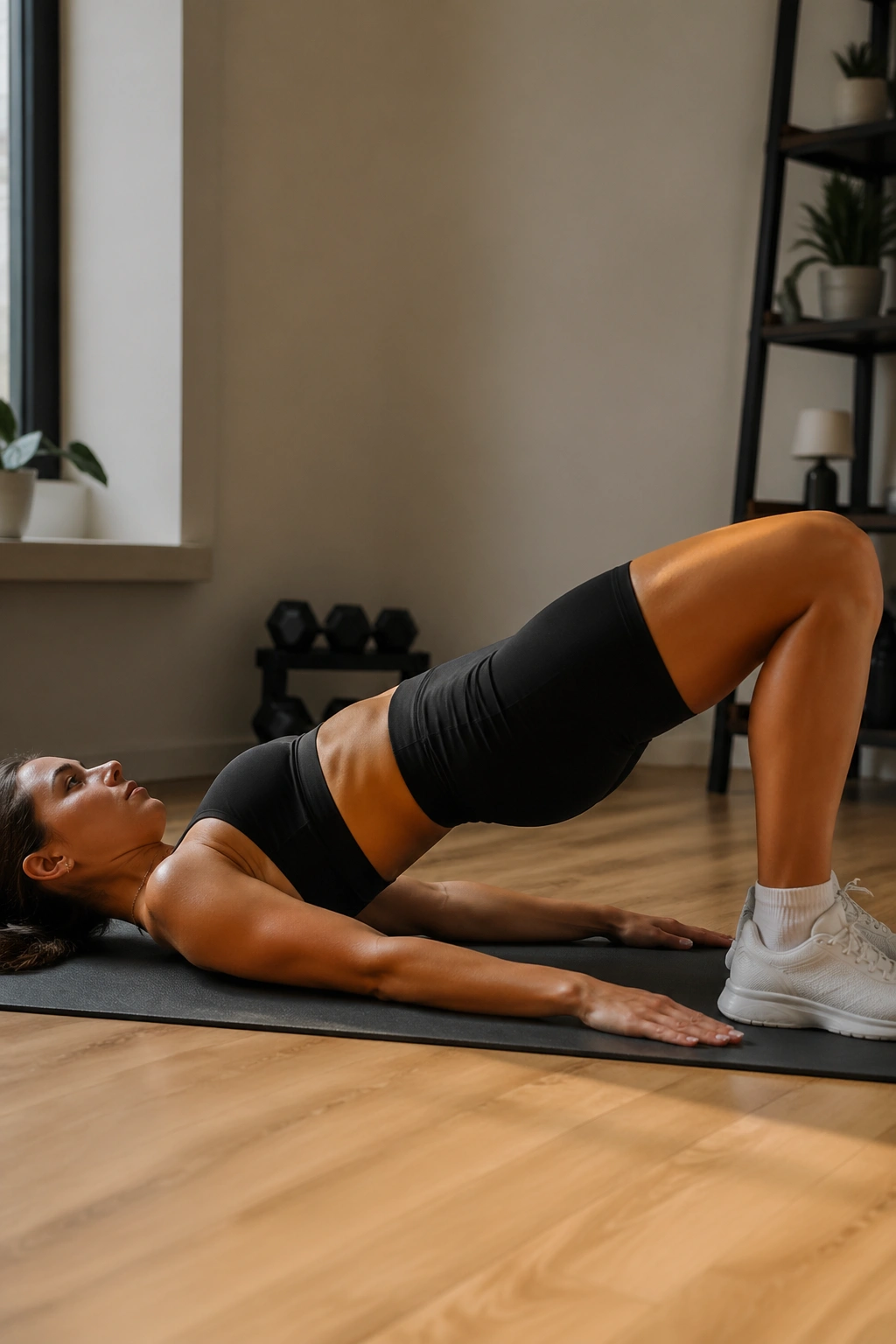
Small top-range pulses can humble you fast. That is the whole point of this one.
Set up in your regular bridge. Lift and hold. From the top position, lower your hips only 2 or 3 inches, then pulse back up. Do 10 pulses, hold the top for 20 seconds, then lower halfway and climb back up for 8 pulses. Finish with another 15-second hold.
You are chasing sustained tension here, not height. If your hamstrings cramp, walk your feet a touch farther away or think about dragging your heels toward your shoulders without actually moving them. That cue wakes up the backside in a hurry.
The burn tends to show up right where the glutes meet the hamstrings. Stay with it. One or two rounds is enough for most people, especially if you are stacking this inside a longer home Pilates booty session.
3. Bridge March
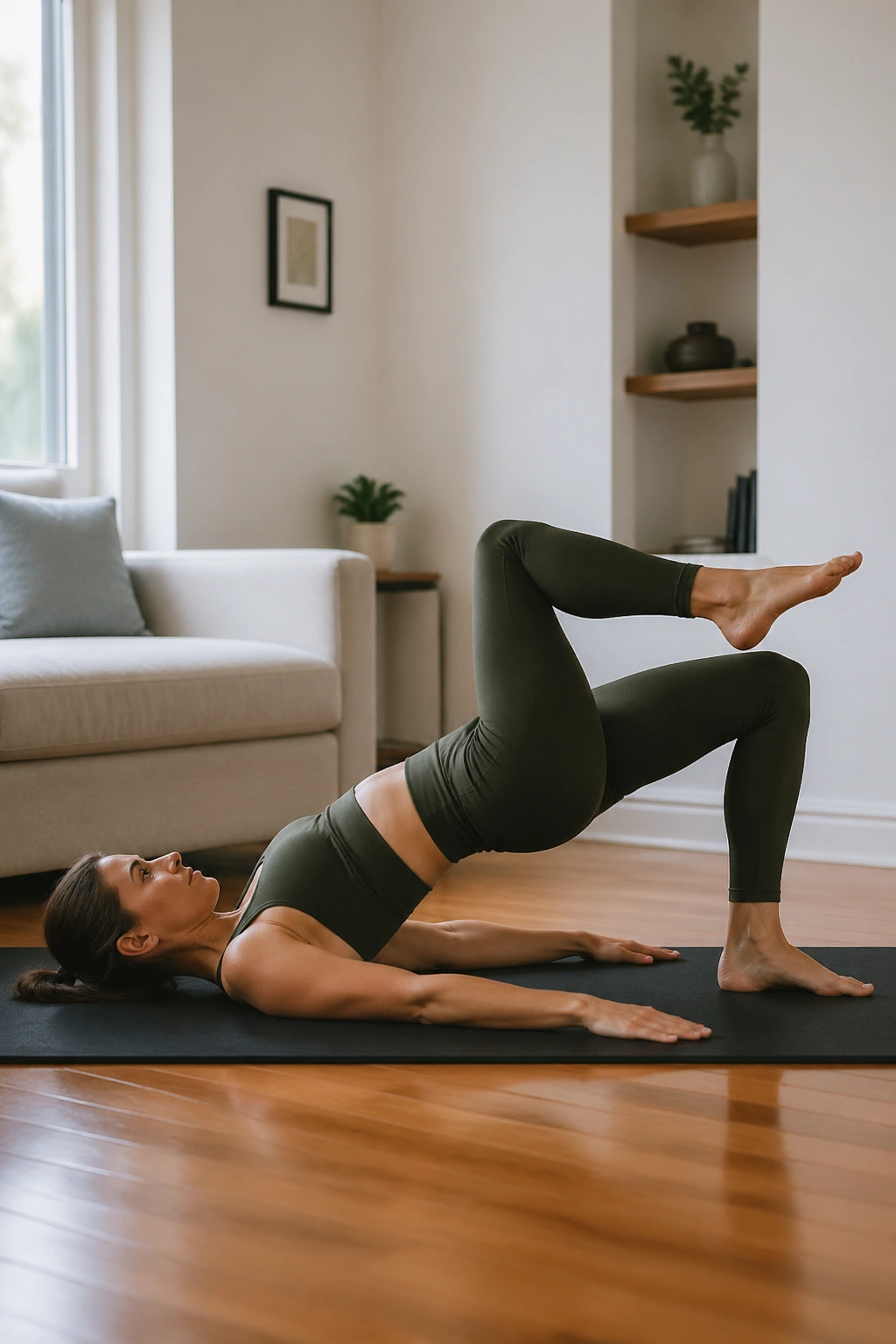
Why add a march to a bridge? Because the moment one foot leaves the floor, your pelvis has to prove it can stay level.
Lift into a bridge and hold. Without letting one hip dip or twist, float your right foot an inch or two off the floor, set it back down, then lift the left. Keep the knees bent at about the same angle the whole time. Think quiet hips, moving leg.
This lights up the glute medius and deep hip stabilizers, not only the big glute max. It also teaches the trunk to resist rotation, which matters more than people realize during walking, climbing stairs, and single-leg work.
How to keep the hips from wobbling
Exhale before each foot lifts. Press down through the standing heel. If the bridge collapses the second a foot comes up, lower your hips a little and make the move smaller.
Try 6 to 10 marches per side. Slow is the whole game.
4. Single-Leg Bridge
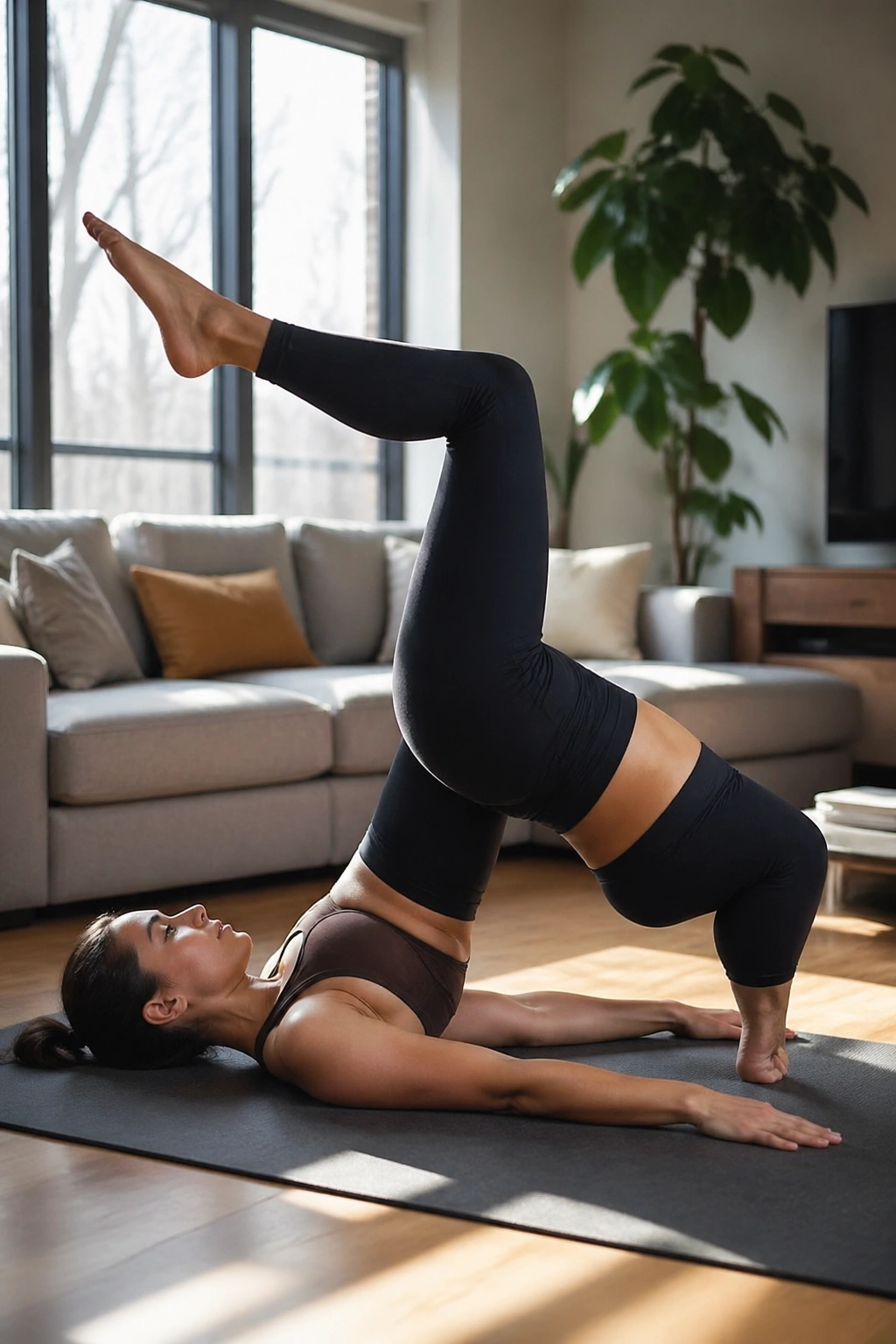
If double-leg bridges no longer ask much from you, take one foot off the floor and things change fast.
Lie on your back, bend both knees, then lift one foot so that knee stays over the hip. Press through the grounded heel and raise the hips without letting the working knee drift in or out. Lower with control. Each rep should feel like one side of the butt is doing the heavy lifting while the core keeps the torso from twisting.
A clean single-leg bridge has two common checkpoints: the thighs stay roughly parallel, and the pelvis stays square. When people lose the shape, the lifted-leg hip usually hikes or the lower back over-arches.
Use fewer reps than you think you need. 6 to 8 per side is enough when each rep includes a full stop at the top and a controlled descent.
A folded towel under the grounded foot can help if you slip. Barefoot tends to feel steadier here than slick socks.
5. Frog Pump Bridge
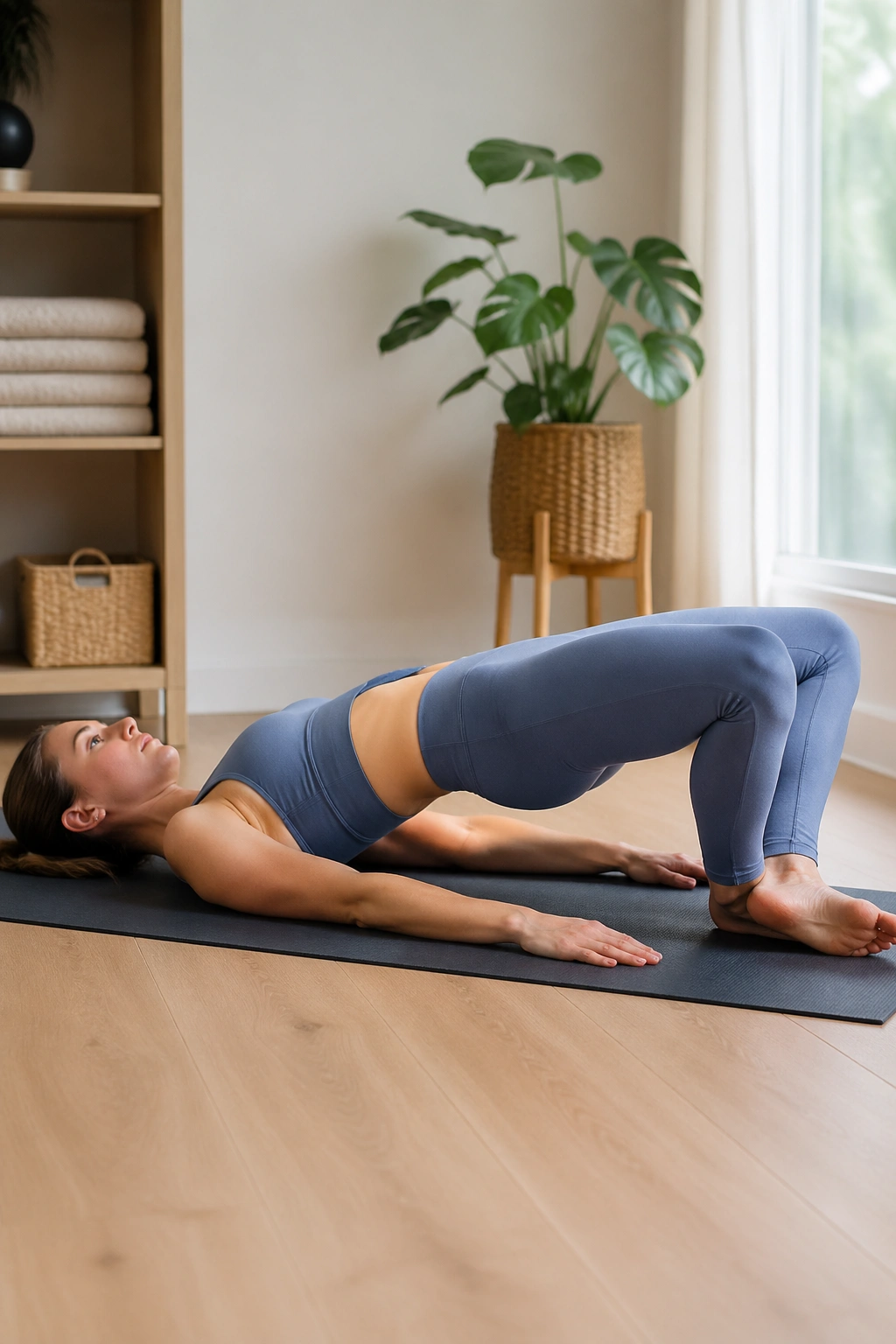
This move looks odd. It works.
Bring the soles of your feet together, let your knees open wide, and slide your heels in toward your body. From there, lift your hips into a bridge and pulse in short, controlled reps near the top. The shape changes the line of pull and tends to put the spotlight right on the glute max, especially the upper fibers.
You do not need a giant range. In fact, the best frog pumps are often tiny. Lift, squeeze, pulse, breathe. If your groin feels pinchy, bring the heels slightly farther away and narrow the knee angle a little. The setup does not have to look dramatic to be useful.
This is one of those moves that piles on fatigue fast, so it works well near the end of a workout. Try 20 pulses, 10 full reps, then a 15-second top hold. That little sequence is plenty.
And yes, your hips may shake. That’s normal.
6. Articulating Shoulder Bridge with Heel Raise
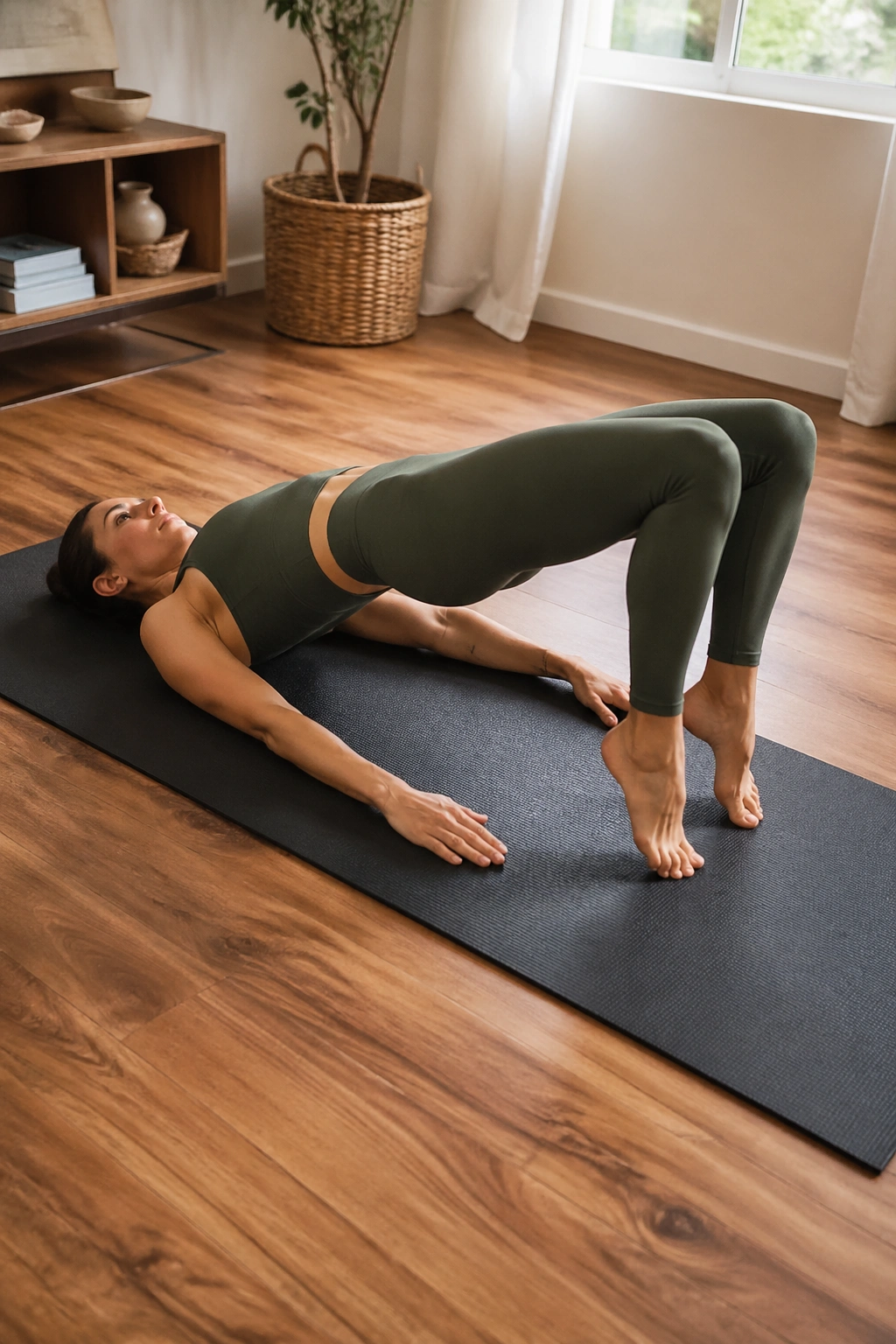
Unlike a plain bridge, this version asks your spine to move segment by segment on the way up and down. That extra control changes the feel of the whole rep.
Start on your back with your feet flat. Tilt the pelvis gently, then roll the spine off the mat one piece at a time until you are in a bridge. At the top, rise onto the balls of your feet for a heel raise, lower the heels, then roll back down slowly.
What makes it different
The articulation forces you to earn the lift through sequencing, not a fast hip pop. Adding the heel raise shifts your balance slightly and makes the backside work to keep the line steady.
Who gets the most from it
This is a smart pick if you like Pilates mat work, want more control through the posterior chain, or feel stiff through the front of the hips after long stretches of sitting.
Go for 8 controlled reps. Count at least four beats on the way down. The lowering phase is where the move starts to sting.
7. Side-Lying Straight-Leg Lift
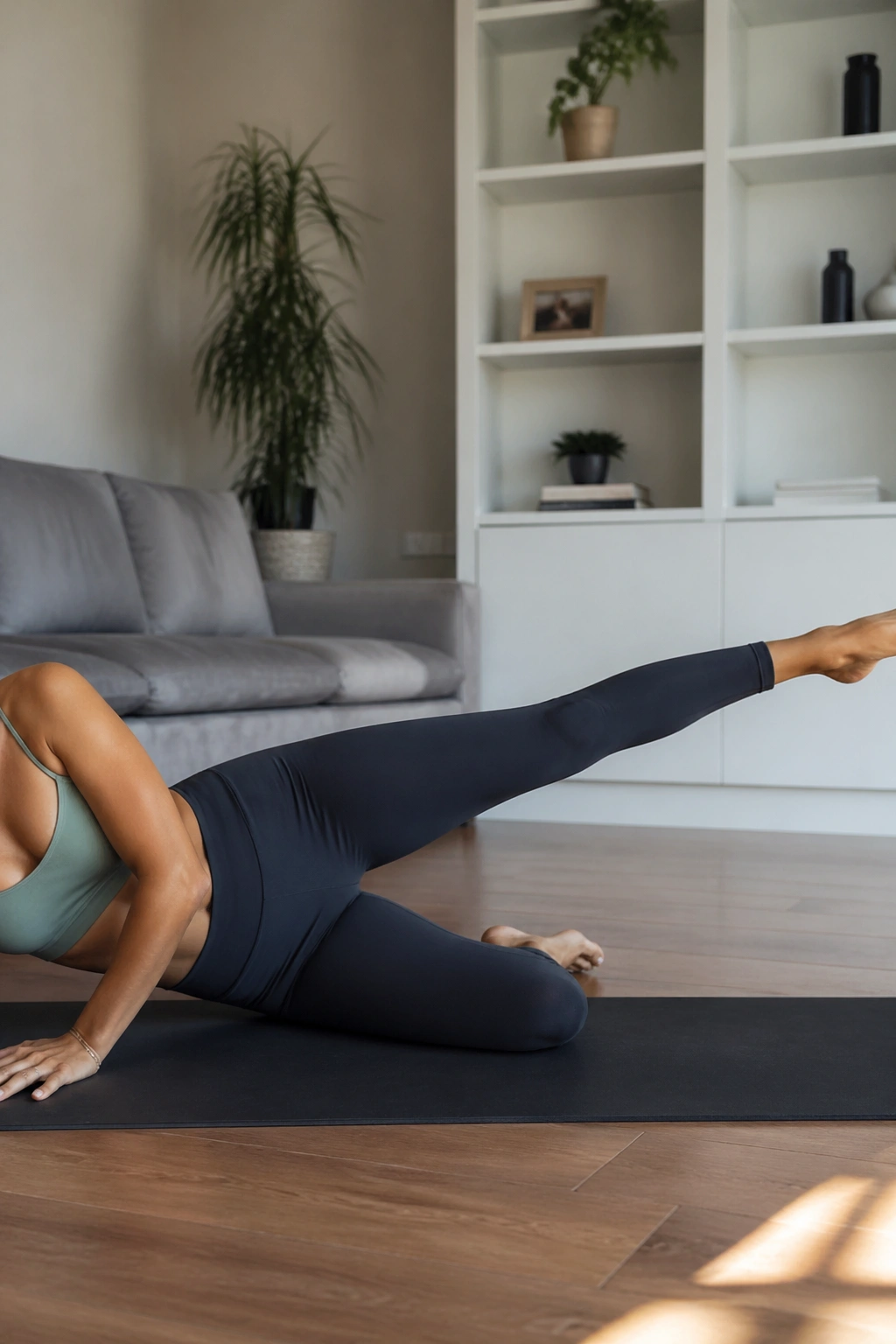
Tiny range. Huge side-glute demand.
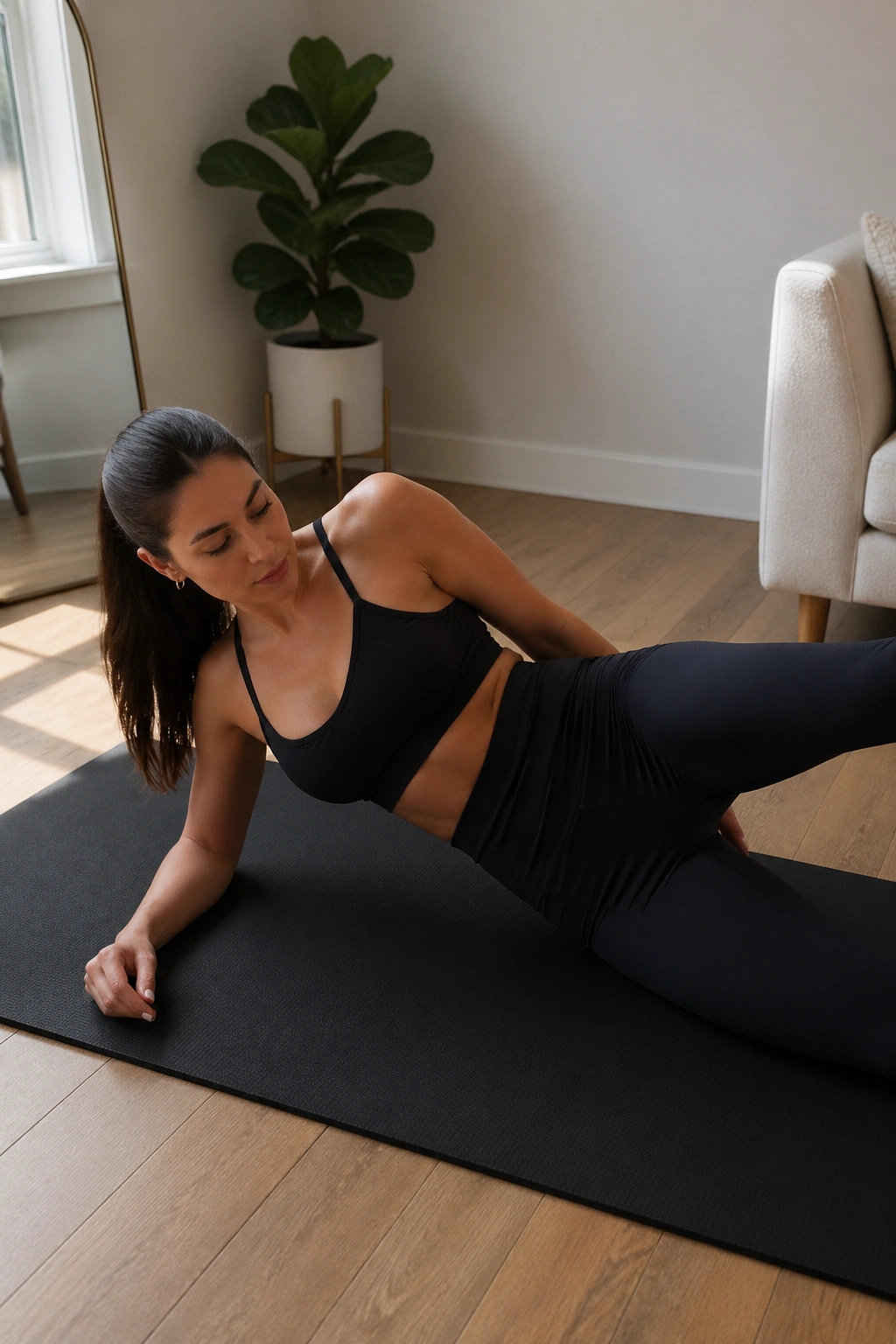
Lie on one side with your bottom leg bent for support and your top leg long. Stack your hips one over the other, lift the waist slightly off the mat, point the top toes forward or turn them down a hair, and raise the leg to hip height. Lower without resting it fully.
That slight inward turn matters. It keeps the work out of the front of the hip and pushes more of it into the glute medius, the muscle that helps stabilize the pelvis when you stand on one leg. If you swing the leg up high, you lose that clean line and start borrowing from the waist.
A good working set
- 12 slow lifts
- 10 top pulses
- 10-second hold at hip height
Expect a hot, deep burn on the outer hip. If you feel only the front pocket area of the hip, shorten the range and turn the toes down a little more.
8. Side-Lying Rainbow Arc
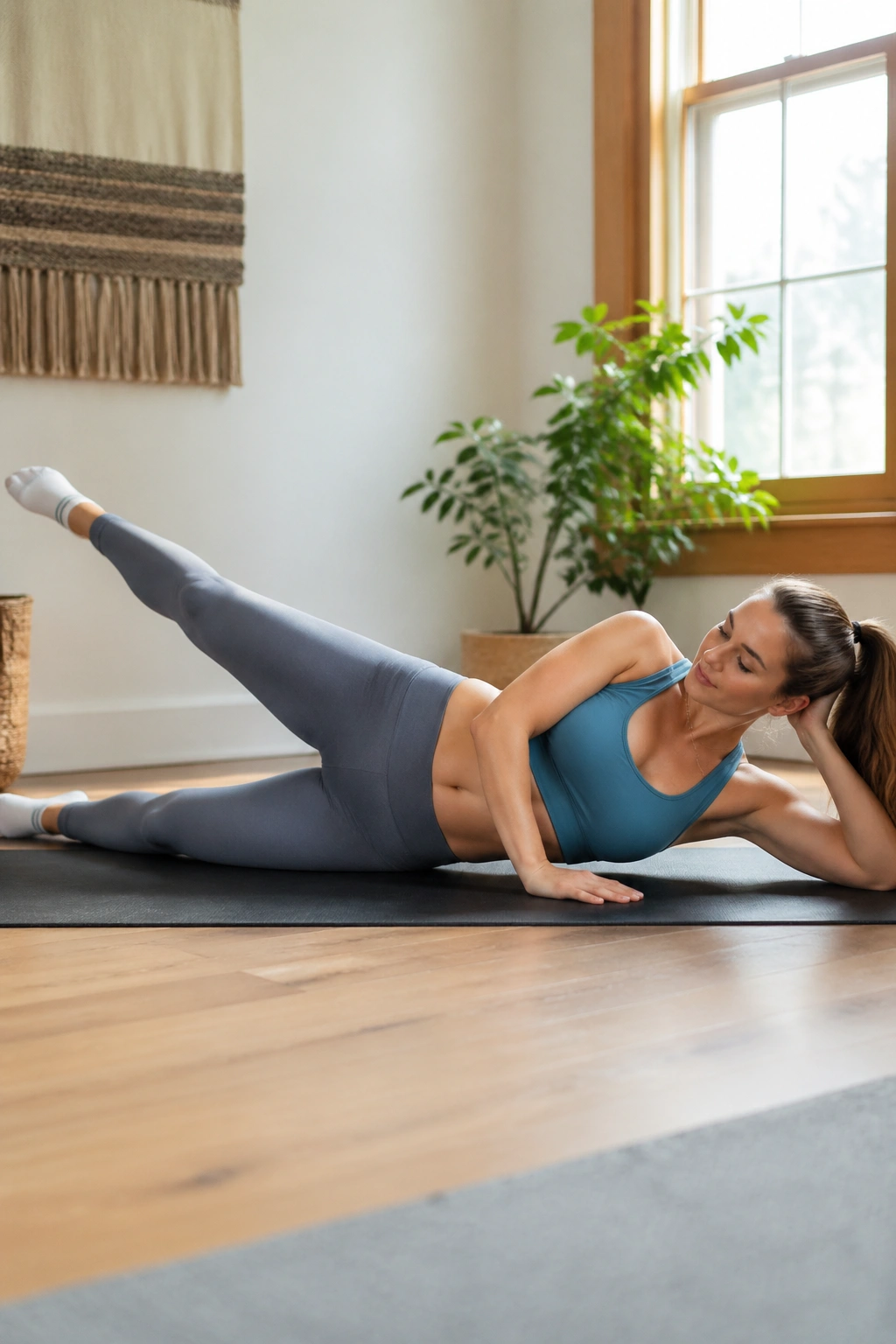
Want the outer glute without standing up? This one does the job.
Set up on your side with the top leg long and slightly lifted. Sweep that leg in a controlled arc from a spot a little in front of your body to a spot a little behind it, like you are drawing a shallow rainbow with your toes. The leg stays off the floor the whole time.
The trap here is making the arc huge. Do not. A modest sweep keeps the pelvis stacked and the work where you want it. When the leg travels too far back, the lower back joins in. When it swings too far forward, the hip flexors take over.
How to use it
Use 8 to 10 arcs each direction. Move slowly enough that you can pause at the front and back without rolling open. This one fits well after straight-leg lifts, when the side glutes are already awake and ready to complain.
9. Clamshell with Pilates Turnout
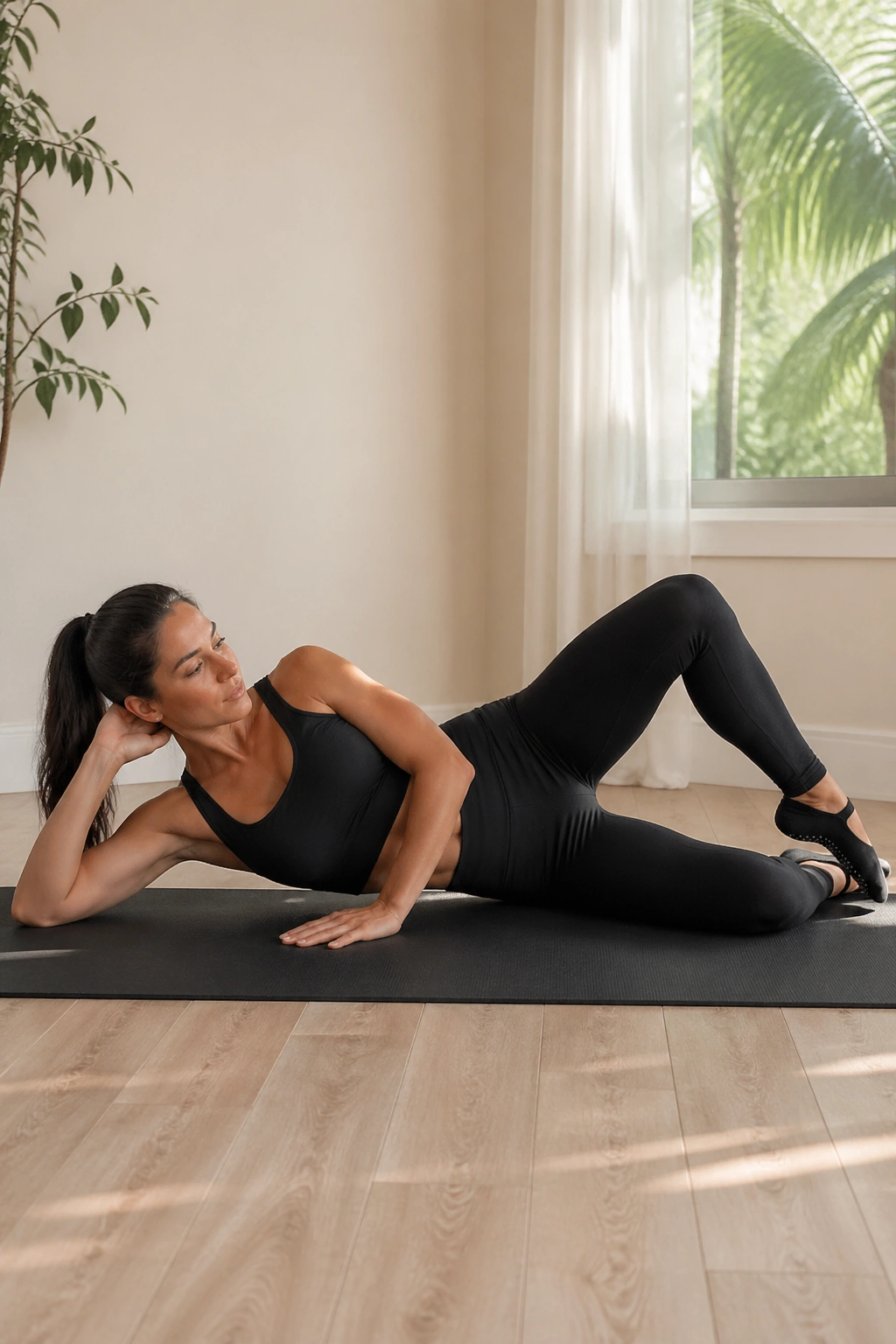
Most clamshells miss the target because people roll backward and call it hip work.
Lie on your side with knees bent about 90 degrees and heels in line with your seat. Keep the heels together. Without letting your top hip roll open, lift the top knee, pause, then lower. A slight turnout is fine; a full body twist is not. Think of the femur rotating in the socket while the pelvis stays heavy.
This drill trains the deep glutes and external rotators, which support knee tracking and hip control. It is not flashy, and that is part of the appeal. When done well, it gives you a concentrated ache in a small patch of muscle near the upper outer butt.
Try 15 reps, then hold the top for 10 seconds on the last one. If you want more, keep the knee lifted and tap the feet apart and back together for another 8 to 10 reps.
10. Side-Lying Hot Potato Taps
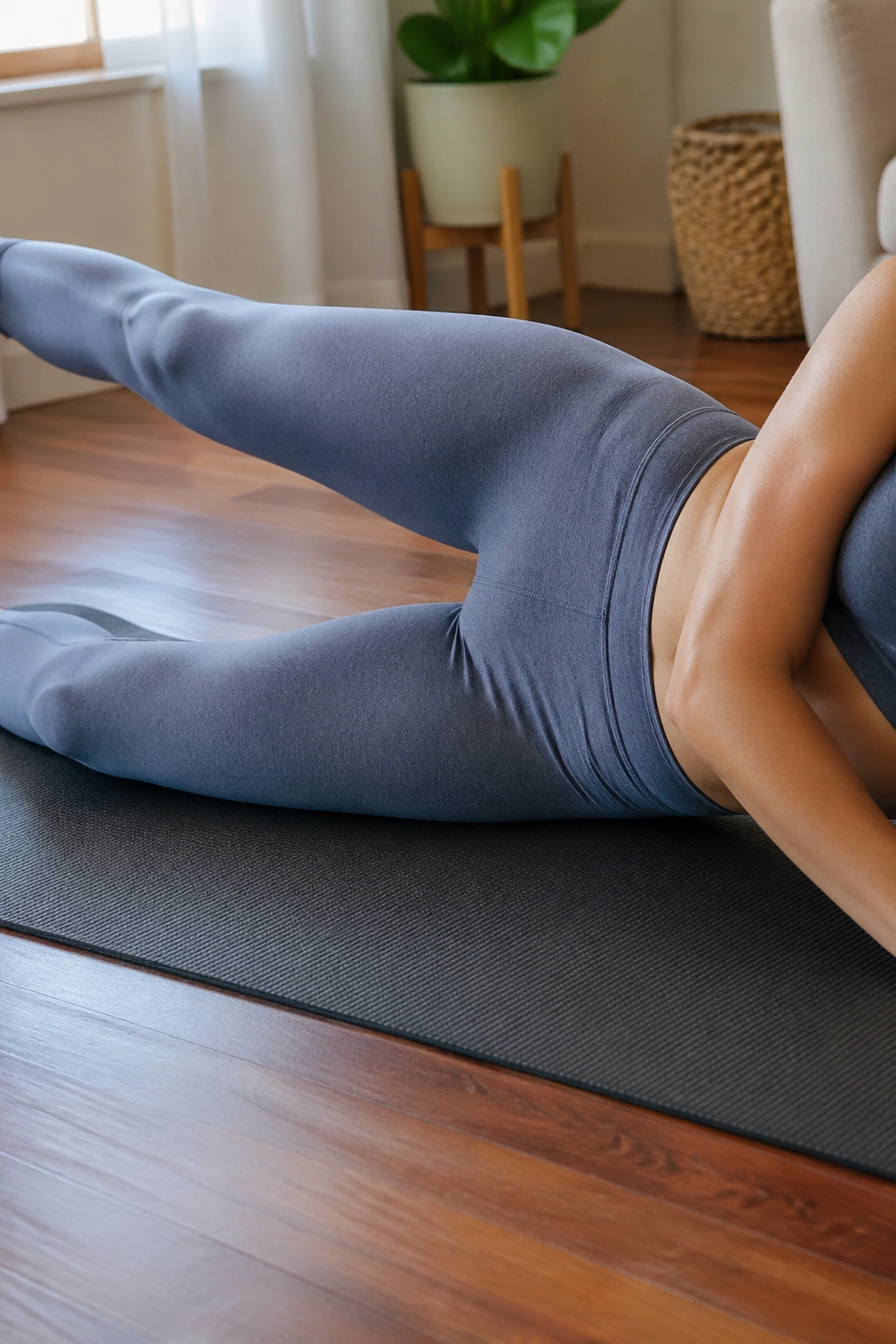
This one looks a little silly until the taps start adding up.
Lie on your side with the top leg lifted. Tap that foot lightly in front of your body twice, then behind your body twice — front-front, back-back — while keeping the leg hovering. The taps are short and quick, but the torso stays quiet.
You get a mix of front-and-back hip control here, plus a steady isometric demand through the side glute because the leg never fully rests. That constant hold is what makes the set bite.
A good place to start is 20 to 30 seconds per side. If the hip flexor starts barking, lower the leg a little and make the front taps smaller. The back taps are usually where people swing too far. Keep them modest. You are training control, not trying to kick the wall behind you.
11. Quadruped Donkey Kick
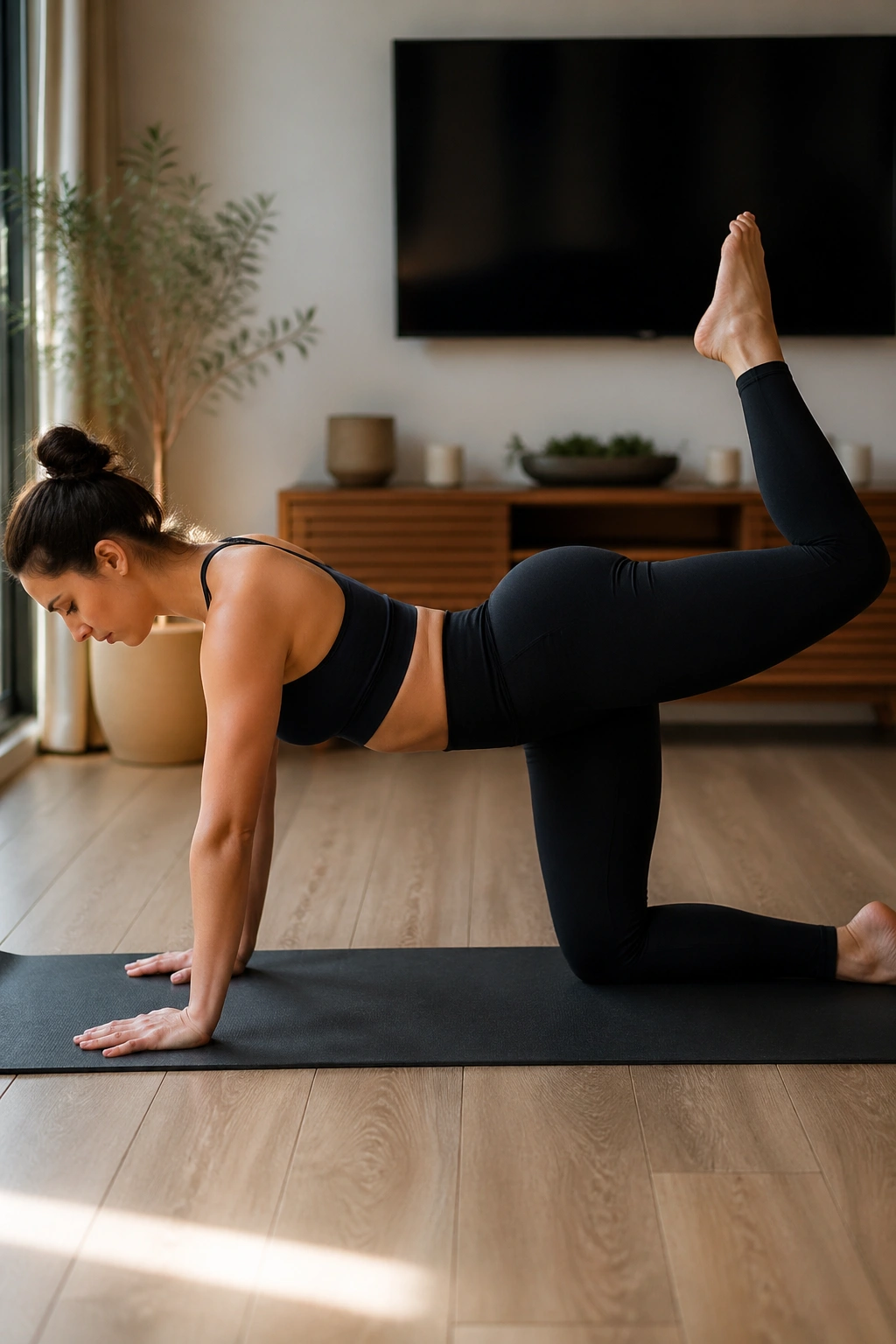
All fours. One bent knee. Sole of the foot pressing toward the ceiling. You have seen it before, but the details decide whether it becomes a glute move or a backbend.
Set your hands under your shoulders and knees under your hips. Brace the trunk with an exhale. Keeping the knee bent at about 90 degrees, press one foot upward until the thigh reaches line with the torso — or a touch below if your back wants to arch. Lower without dropping the knee all the way down.
What to watch for
- Do not let the ribs sag toward the floor
- Keep the hip bones facing down
- Press through the whole foot as if the ceiling were resisting you
- Stop before the low back pinches
Use 12 controlled reps per side. On the final rep, hold for 8 seconds and pulse the foot upward by an inch.
12. Fire Hydrant with Pause
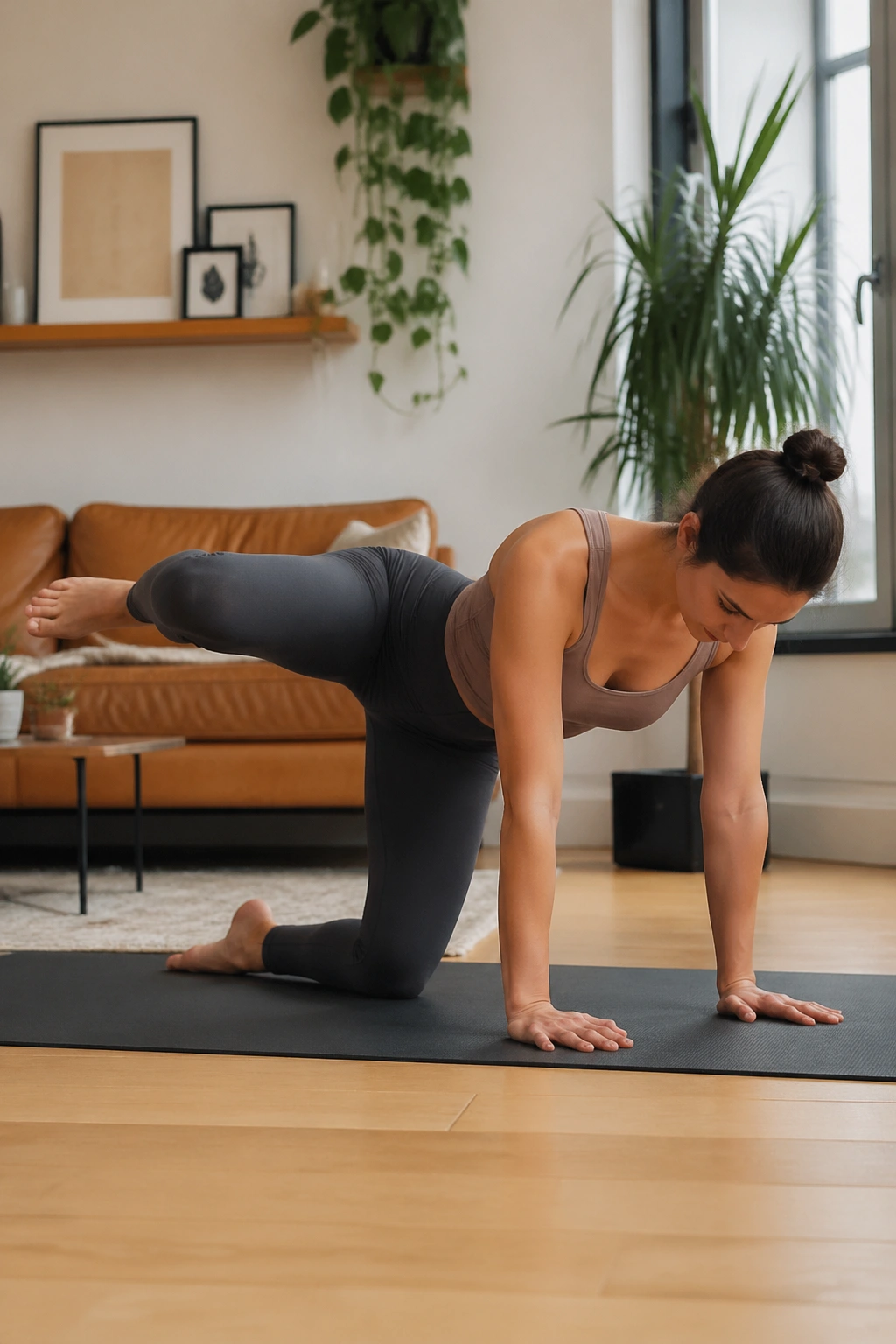
Do not chase height.
The strongest fire hydrants often look smaller than people expect. From all fours, keep one knee bent and lift it out to the side without shifting all your weight into the opposite hand. Pause for two full seconds at the top, then lower slowly.
The pause is the whole point. It stops you from flinging the leg upward and forces the glute medius to own the position. You will also feel the standing-side shoulder and obliques working to keep you from tipping. That is not a mistake. It is part of the exercise.
Aim for 10 to 12 reps per side. If balance gets messy, place your hands a little wider. If the neck tightens, look at the mat a foot in front of your hands instead of craning forward.
13. Bent-Knee Lift to Straight-Leg Extension
This is where booty work turns into concentration training.
Start on all fours. Lift one bent knee behind you into a donkey-kick position. From there, extend the leg long without changing the height of the thigh, bend it back in, then lower. One rep has three jobs: lift, lengthen, return.
That middle phase — the straight-leg reach — asks the glute to keep working while the lever gets longer. Your trunk will want to shift, your ribs will want to flare, and the standing hip will try to rotate. Fight all of it.
Think about pushing the heel back through thick air. Not high. Back. That direction cue keeps the work in the backside instead of the spine.
Use 8 to 10 reps each side. Fewer, cleaner reps beat a sloppy set of twenty here.
14. Kneeling Leg Circles
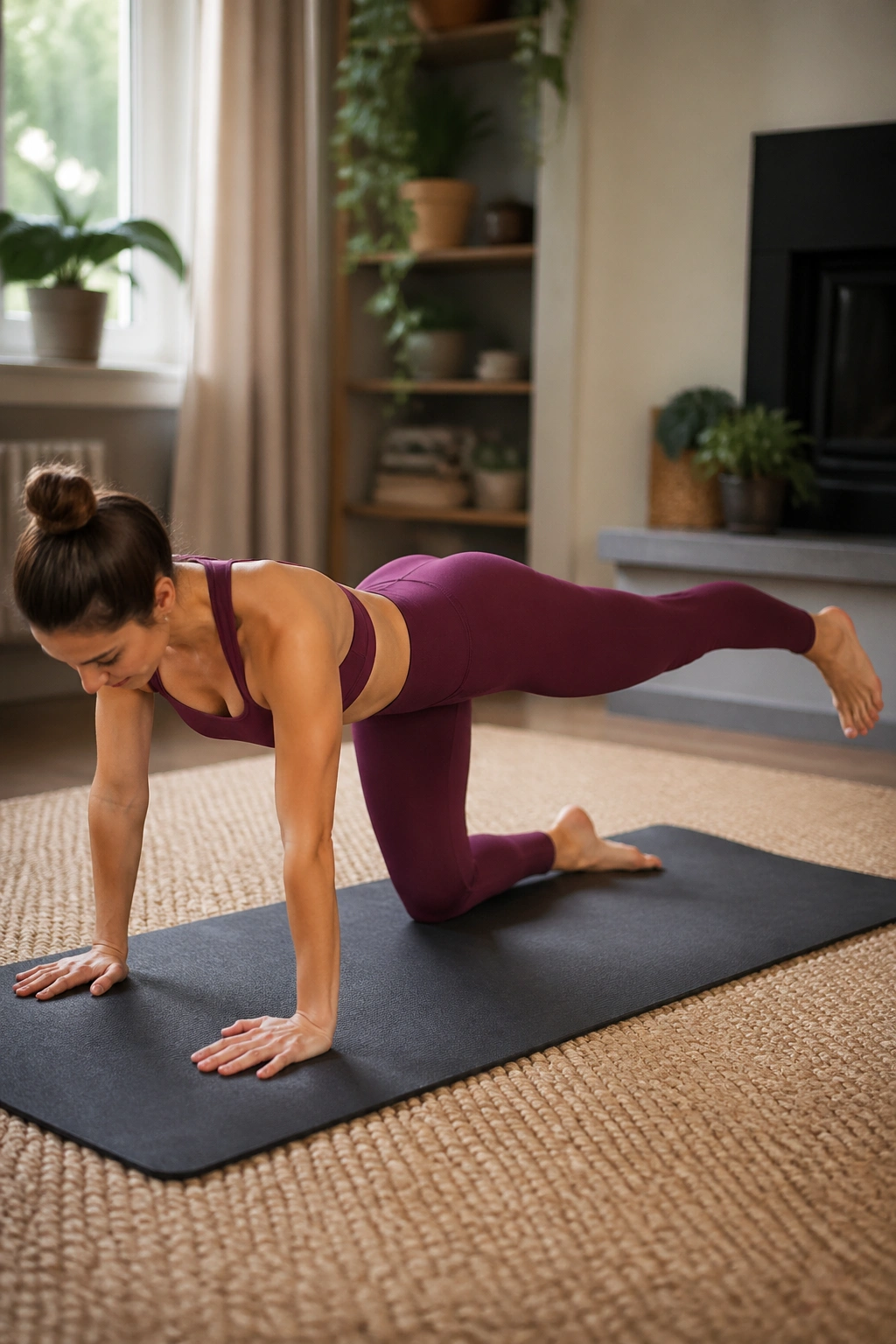
Ten slow circles can feel longer than thirty loose kickbacks.
Set up in quadruped or on forearms if your wrists need a break. Extend one leg straight back at hip height, toes pointing down. From there, draw small circles — about the size of a coffee mug — without letting the pelvis rock side to side.
Circle one way for 6 to 8 reps, pause, then reverse. The reverse direction almost always feels stranger. That is normal. It also tends to expose which hip has less control.
Use this cue
Imagine your thigh bone rotating inside a bowl of still water. The circle happens from the hip joint, not from a swing in the lower back.
If your range gets bigger as fatigue hits, shrink it on purpose. Smaller circles with steady hips land harder than big ones with wobble.
15. Bird Dog with Back-Leg Press
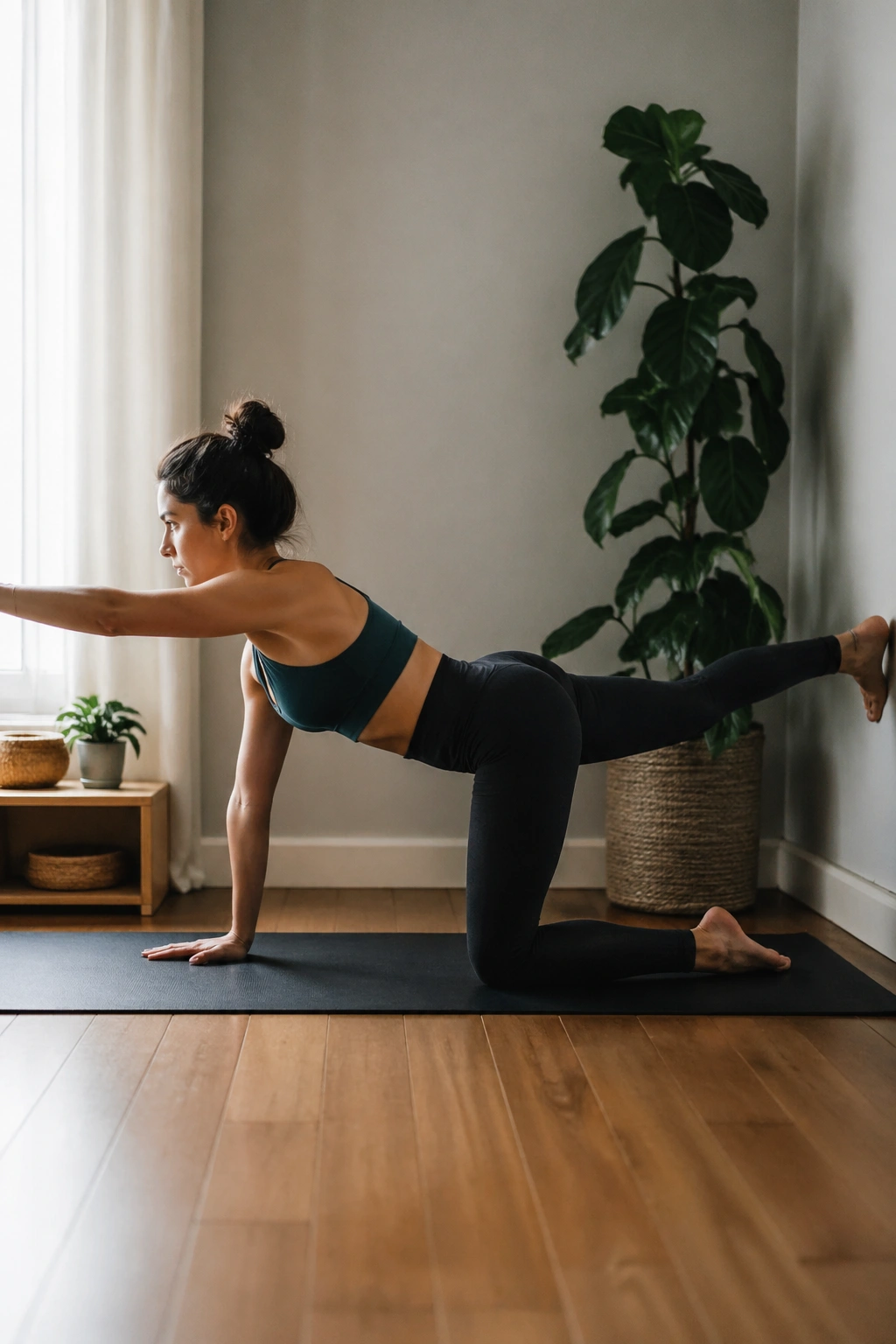
Why borrow a core move for glutes? Because stable hips make stronger glutes look a lot more honest.
From all fours, extend one leg back and the opposite arm forward into a bird dog. Hold that long line, then pulse the back heel toward the wall behind you without lifting the leg higher. The standing knee and supporting hand press firmly into the mat while the torso stays quiet.
This variation shifts the focus away from balance tricks and toward posterior chain reach. The glute of the lifted leg works concentrically with each press, while the standing-side glute and trunk work isometrically to stop rotation.
A clean set looks like this
- Reach long through fingers and heel
- Pulse the heel back 8 times
- Lower and switch sides
- Complete 4 to 6 rounds per side
If you feel more shoulder than hip, lower the arm and keep both hands on the floor. The leg press still does the job.
16. Prone Heel Beats
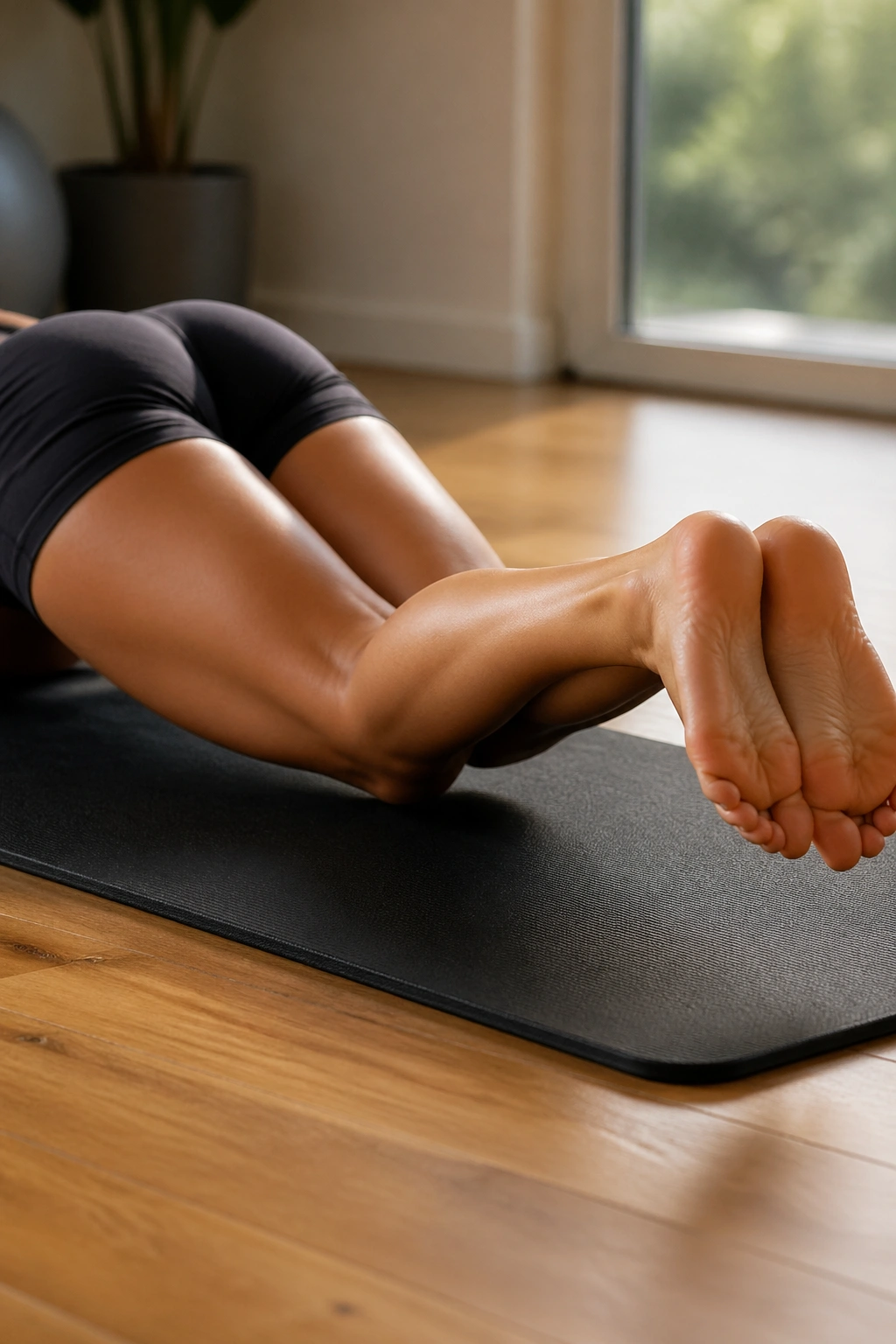
Face down, forehead resting on your hands, legs long behind you.
Zip the inner thighs together, turn the legs out slightly from the hips, lift both thighs a little off the mat, and tap the heels together in short beats. The knees stay long and the movement stays crisp. Think click-click-click from the heels while the butt stays firm.
This old-school Pilates move targets the backside in a different way than bridges and quadruped work. The glutes stay on the whole time to keep the thighs lifted, while the heel beats add rhythm and endurance. You will feel it through the lower glutes and upper hamstrings if the position is right.
Keep the lift modest. A low hover is enough. If you crank the chest up or jam the neck, you have gone too big. Start with 20 beats, rest, then try 30 to 40 on the next round.
17. Swimming with Glute Focus
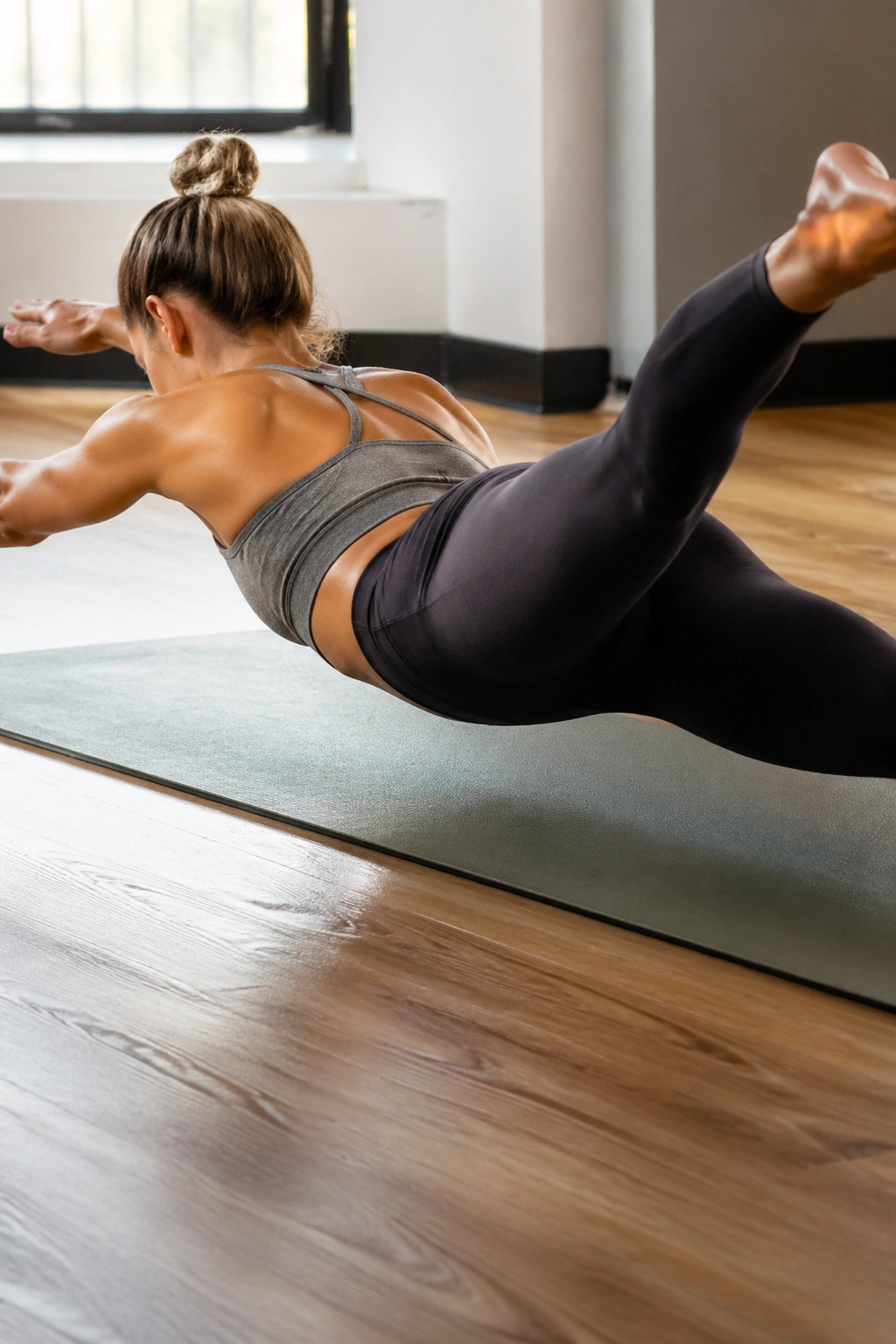
Classic Pilates swimming can turn into a fast flail if you are not careful. Slow it down and it becomes a strong glute exercise.
Lie prone with arms overhead. Lift the opposite arm and leg, pause for a beat, lower, then switch. The back leg should reach long first and lift second. That sequence matters. Reach lengthens the hip. Lift uses the glute.
You do not need the hand and foot flying high off the mat. A lower hover with clean opposition gives you more posterior chain work and less neck tension. Think of making the body longer from fingertips to toes while the pelvis stays heavy.
Try 8 to 10 slow reps per side. If you want a little more heat, hold the final rep on each side for 3 breaths before changing.
18. Standing Wall-Supported Arabesque Lift
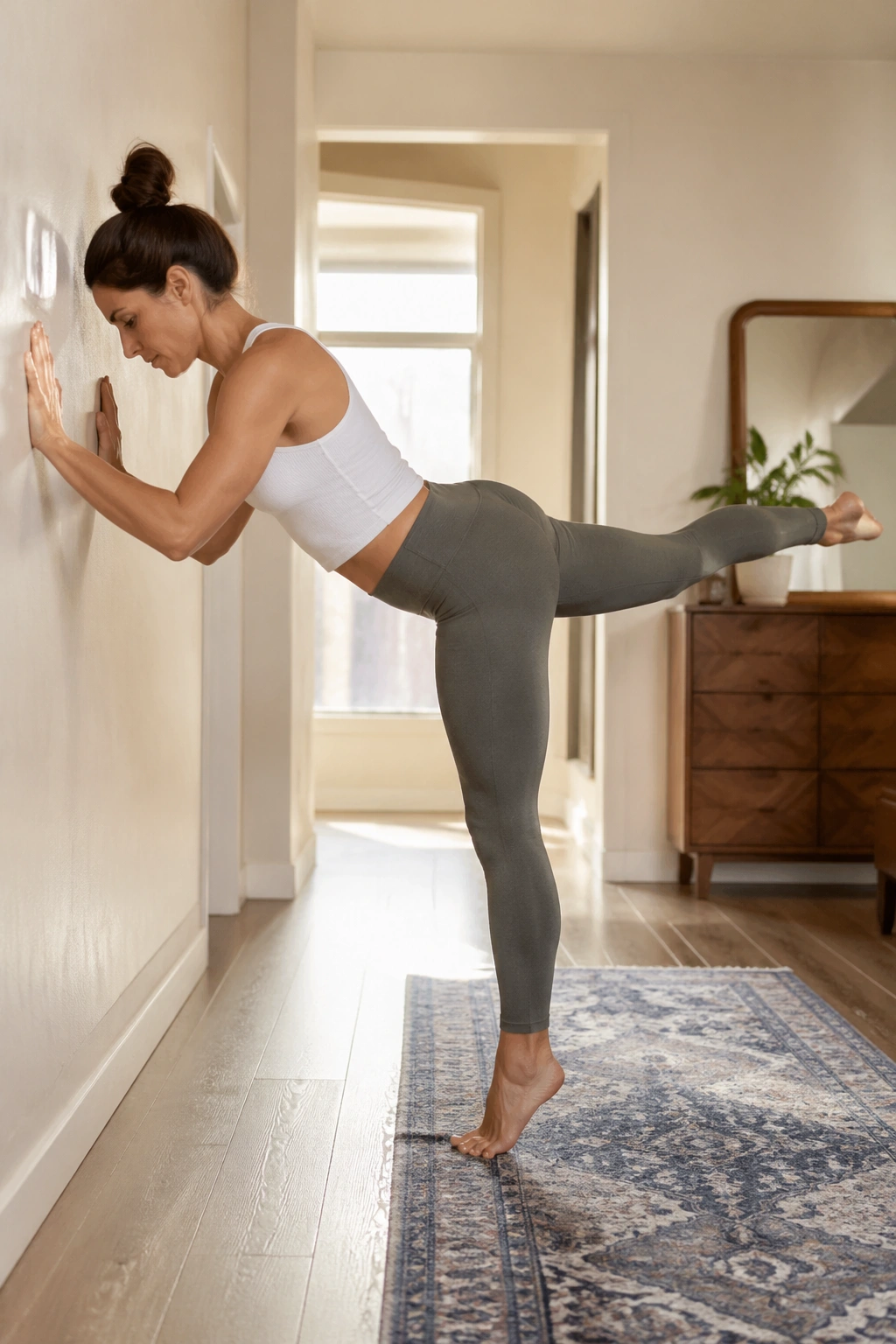
Need a break from wrists and floor work? Stand up and use the wall.
Face the wall and place your hands on it at chest height. Walk your feet back a little and hinge forward from the hips so your torso is on a slight diagonal. Shift weight into one leg, then extend the other leg behind you and lift it 6 to 8 inches without turning the toes out.
Why this one earns a spot
Standing work asks the glutes to function in a position closer to everyday movement. The standing leg stabilizes the pelvis while the moving leg trains hip extension. You get two jobs done at once.
Try this sequence
- 12 lifts with the back leg straight
- 10 small pulses at the top
- 15-second hold
- Switch sides
Keep a soft bend in the standing knee. If the lower back starts to pinch, lower the leg and hinge your torso a little more.
19. Side-Plank Top-Leg Lift
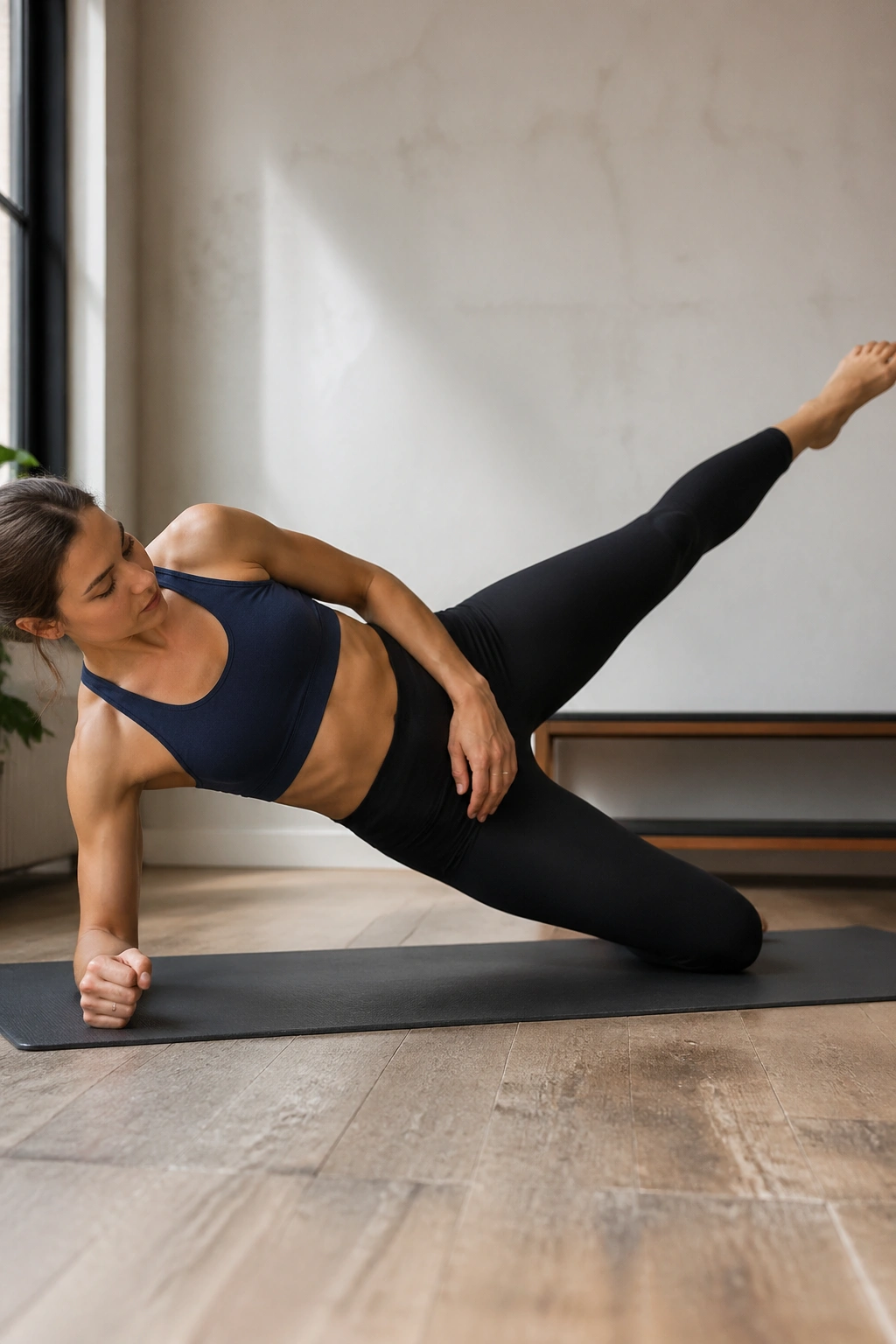
Brutal. In a useful way.
Set up in a modified side plank on one forearm with the bottom knee bent and the top leg straight. Lift the hips, then raise and lower the top leg in a short range. Your waist, outer hip, and shoulder all have to cooperate to keep the body from collapsing.
This is one of the best bodyweight moves for tying the side glutes and obliques together. That matters because the pelvis does not move through life in isolation. When those areas learn to share the work, walking and single-leg moves feel steadier.
Keep the top toes facing forward. If the foot turns toward the ceiling, the hip rolls open and the target changes. Go for 6 to 10 lifts per side, then hold the final lift for 5 seconds.
Short sets are enough here. This one gets loud fast.
20. Kneeling Side Kick Series
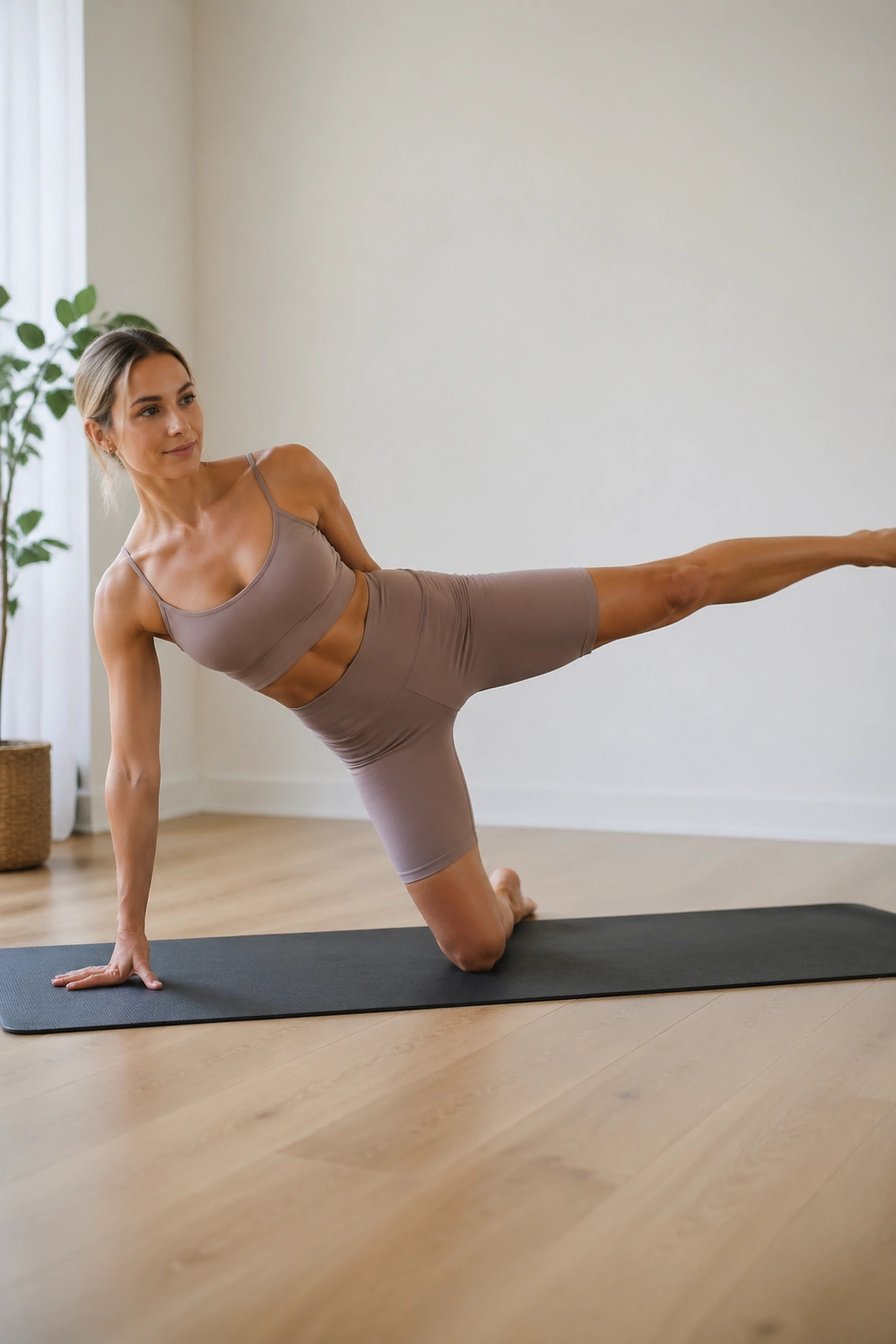
If you want one move that feels like a mini home Pilates booty workout all by itself, this is the closer.
Kneel on one knee and place the same-side hand on the floor or on a yoga block. Extend the opposite leg straight out to the side at hip height. From that setup, do a small series: 8 side lifts, 8 front kicks, and 8 back reaches without dropping the leg.
You will feel the outer glute of the lifted leg, the side waist of the supporting side, and the kneeling glute working to keep the pelvis stacked. That three-way demand is why this move feels bigger than it looks.
Form details that matter
- Keep the chest broad instead of curling toward the floor
- Lift from the side hip, not from a shrug in the shoulder
- Back reaches stay controlled; do not fling the leg behind you
- If balance feels shaky, place your supporting hand on a chair seat
This is not a beginner’s first stop, but it is a strong finisher once you have some control. One round per side is enough to leave a mark.
Build a Home Pilates Booty Workout From These Moves
You do not need all 20 moves in one session. Please do not do that to yourself on day one.
Pick 4 to 6 exercises and group them by position so the workout flows without a lot of up-and-down transitions. A simple structure works well: one bridge, one side-lying move, one all-fours move, one prone or standing move, then a finisher.
A quick 12-minute burner
- Basic Glute Bridge Press — 15 reps
- Side-Lying Straight-Leg Lift — 12 reps + 10 pulses each side
- Fire Hydrant with Pause — 10 reps each side
- Prone Heel Beats — 30 beats
- Repeat for 2 rounds
A 20-minute strength-and-control session
- Single-Leg Bridge — 8 reps each side
- Side-Lying Rainbow Arc — 10 each direction
- Bent-Knee Lift to Straight-Leg Extension — 8 reps each side
- Standing Wall-Supported Arabesque Lift — 12 reps each side
- Side-Plank Top-Leg Lift — 8 reps each side
Rest 20 to 30 seconds between moves and 45 seconds between rounds. Two rounds will do the job.
A low-impact glute endurance flow
- Frog Pump Bridge — 20 pulses + 10 reps
- Clamshell with Pilates Turnout — 15 reps each side
- Bird Dog with Back-Leg Press — 5 rounds each side
- Swimming with Glute Focus — 8 reps each side
- Kneeling Side Kick Series — 1 round each side
Use these 2 to 4 times per week, depending on how much lower-body training you are already doing. If your goal is stronger, fuller glutes, progress by slowing the tempo, adding holds, increasing total rounds, or wearing light ankle weights after the bodyweight versions feel solid. Form first. Load later.
Final Thoughts
The thing that makes home Pilates glute work effective is not flashy choreography. It is position. A stable pelvis, a clean line of reach, a shorter range than your ego wants, and enough patience to let the burn build where it should.
Pick a handful of these Pilates booty workouts and repeat them long enough to learn them well. That part gets skipped all the time. People chase novelty when what the glutes often need is cleaner reps and one extra breath in the hard part of the hold.
When the movement looks small, your hips stay steady, and the muscle fatigue lands in the back and side of the butt instead of the lower back, you are on the right track.
