



Pilates strength exercises for women work best when they feel precise, not frantic. A slow, well-controlled series can do more for your core, hips, and posture than a rushed workout that leaves you breathless but not much stronger.
That surprises a lot of people the first time they take Pilates seriously. The small moves look gentle from across the room, then your lower abs start trembling, your glutes wake up, and your shoulders discover muscles they’ve been ignoring for years. That is the whole point.
Women often come to Pilates for different reasons than men do, and the common themes are easy to spot: better core support, stronger hips, less crankiness in the low back, steadier balance, and upper-body work that doesn’t beat the joints up. Pelvic floor awareness matters too, especially if you’ve had a baby, sit all day, or feel like your midsection never quite switches on the way you want it to. None of that requires fancy equipment. Most of it comes from smart programming and honest form.
The trick is choosing exercises that build real tension, not pretty movement. A good Pilates strength session feels clean, controlled, and a little humbling. That is a good sign.
1. The Hundred With Bent Knees
The Hundred is the classic opener for a reason: it teaches core endurance before your body gets tired and sloppy. With bent knees, it becomes friendlier on the low back while still asking your abdominals to hold steady through breath and arm work.
Why It Matters
Lie on your back with your knees in tabletop or with your feet on the floor if you need more support. Lift your head and shoulders just enough to feel the front of your ribs knit down, then pump your arms in small, fast reaches for five counts in and five counts out. The goal is not speed. The goal is that deep, stubborn kind of control that stays with you when the workout gets harder.
If you feel your neck taking over, lower your head and keep the arms moving. That is not “cheating.” That is smart Pilates.
Quick cues:
- Keep the chin slightly tucked.
- Breathe wide into the ribs.
- Stop before your lower back arches.
- Lower the legs if the core starts popping open.
One clean round is worth more than three messy ones. Always.
2. Roll-Up for Spinal Strength and Control
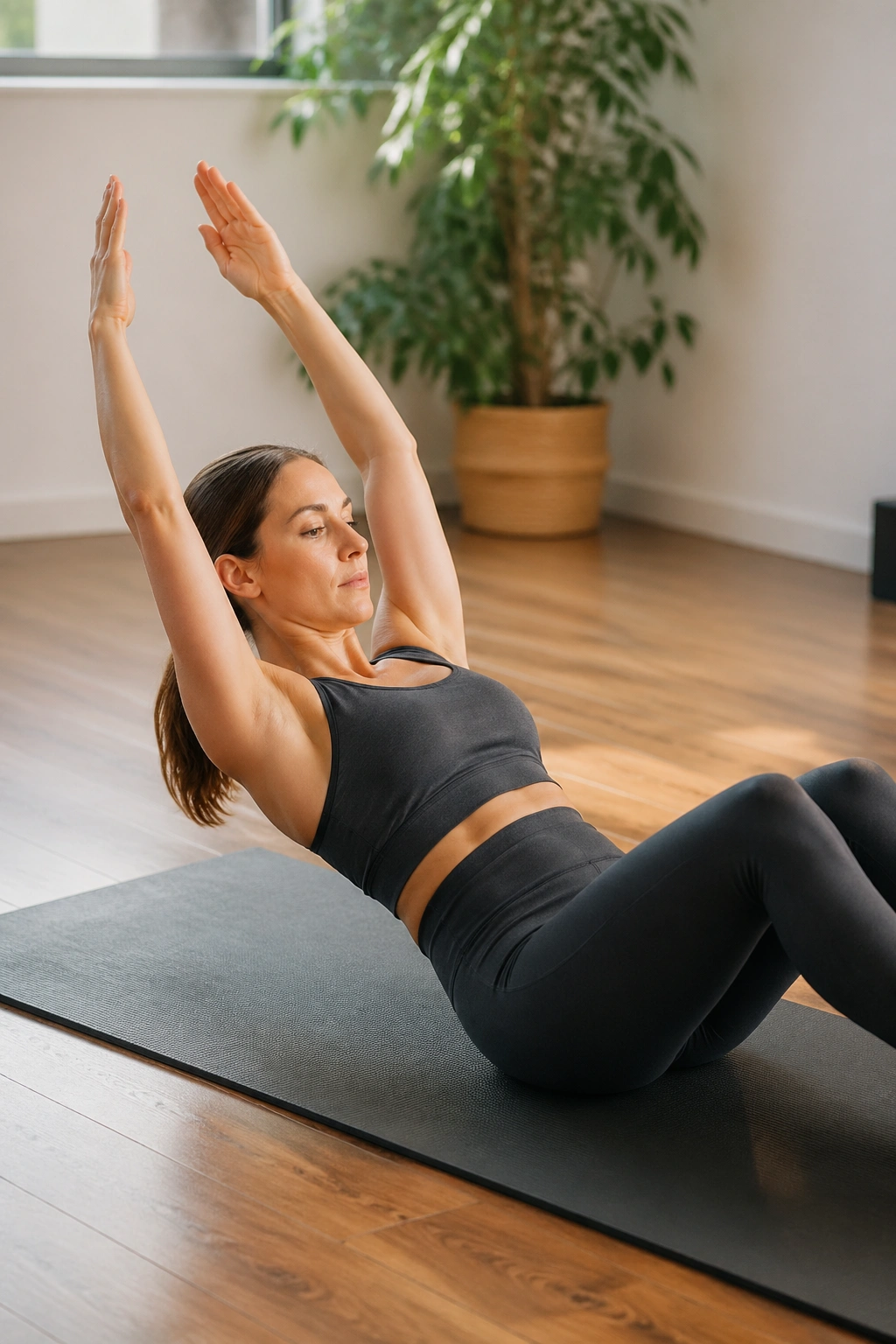
Can you lift through the spine without yanking on your hip flexors? The Roll-Up answers that question fast. It looks simple, then halfway down you realize how much strength it takes to control each vertebra and keep the ribs from flaring.
How to Use It
Start lying long with your arms overhead, then exhale and peel up one bone at a time until you reach forward over your legs. On the way down, do the reverse: low back first, then middle back, then shoulders, then head. If you have tight hamstrings, bend your knees a little. That is a fine fix and usually the one people need most.
The Roll-Up is especially useful for women who spend long stretches sitting, because it trains the body to resist collapsing through the middle. That matters more than most people admit. A strong trunk is not about looking flat. It’s about having a torso that can hold shape under load, whether you are carrying groceries or holding a side plank.
3. Single-Leg Stretch That Keeps the Waistline Awake
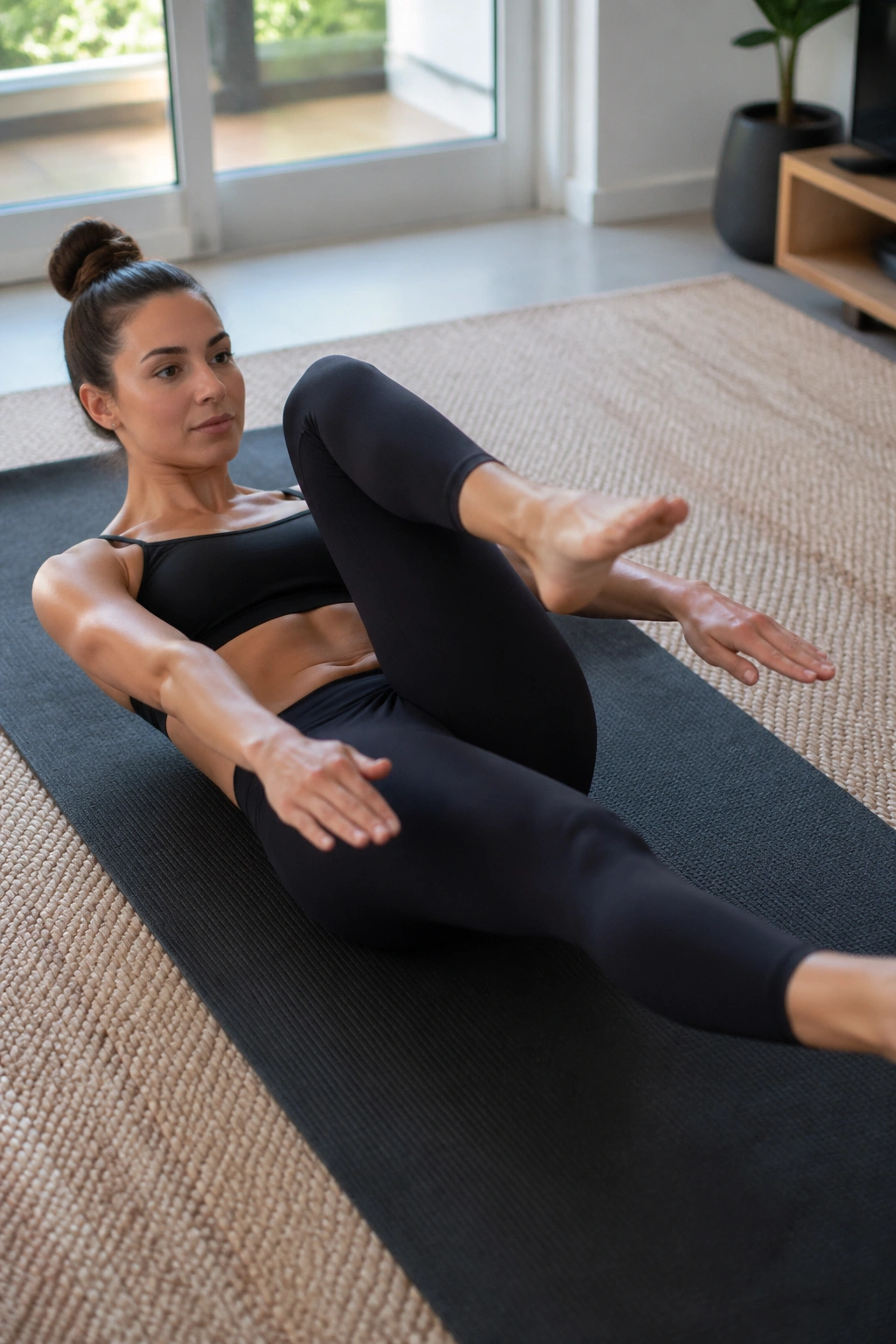
One leg at a time changes everything. The Single-Leg Stretch looks like a core drill, and it is, but the deeper win is the way it forces the pelvis to stay quiet while the legs move. That’s the real work.
Lie on your back, draw one knee in, and extend the other leg out long at a comfortable angle. Switch legs on a steady breath, keeping the shoulders lifted and the belly gently scooped inward. If your neck gets tense, lower your head for a few reps and come back up when you can keep the jaw loose.
What Makes It Strong
The exercise teaches you not to chase movement with your whole body. Your leg moves; your trunk stays organized. That is a skill that carries over into everything from running to carrying a child on one hip to stepping up stairs without the pelvis wobbling all over the place. It’s a little thing. It isn’t small.
4. Double-Leg Stretch for Deep Abdominal Endurance
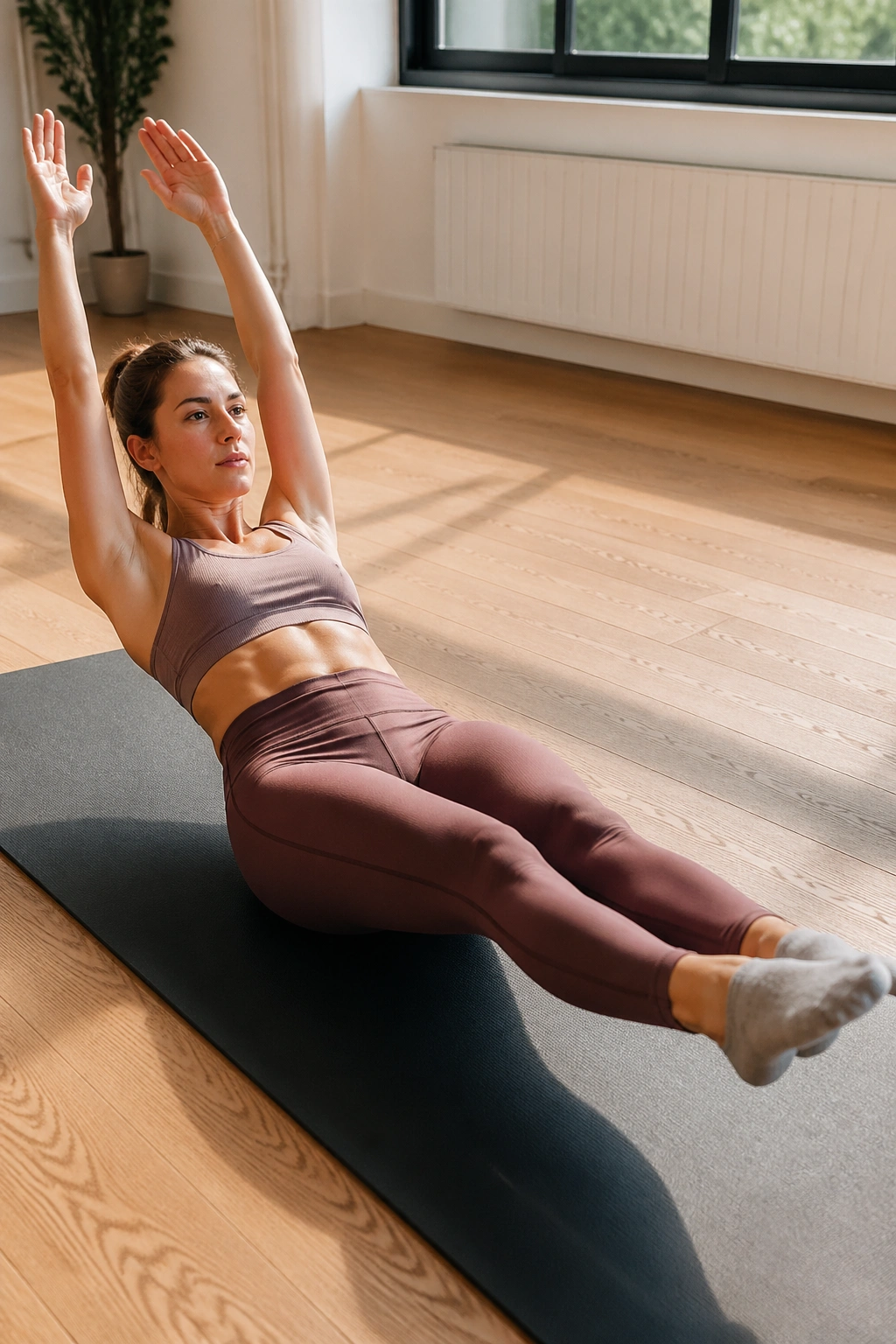
A lot of people think the Double-Leg Stretch is about the legs. It isn’t. It is about whether your middle can stay anchored when both limbs reach away at the same time.
Reach your arms overhead and your legs out on the exhale, then circle back to center with control. Keep the movement smaller than you think you need. If the low back starts peeling off the mat, shorten the lever and bring the legs a little higher. That adjustment usually saves the whole set.
How to Scale It
- Keep one knee bent if your back wants more support.
- Lift the head only if the neck stays calm.
- Make the reach slower, not bigger.
- Pause for half a breath in the extended position if you want more challenge.
There’s a lovely honesty to this exercise. If your control is there, you’ll know it. If it isn’t, the movement tells on you right away.
5. Criss-Cross for Obliques and Rotational Strength
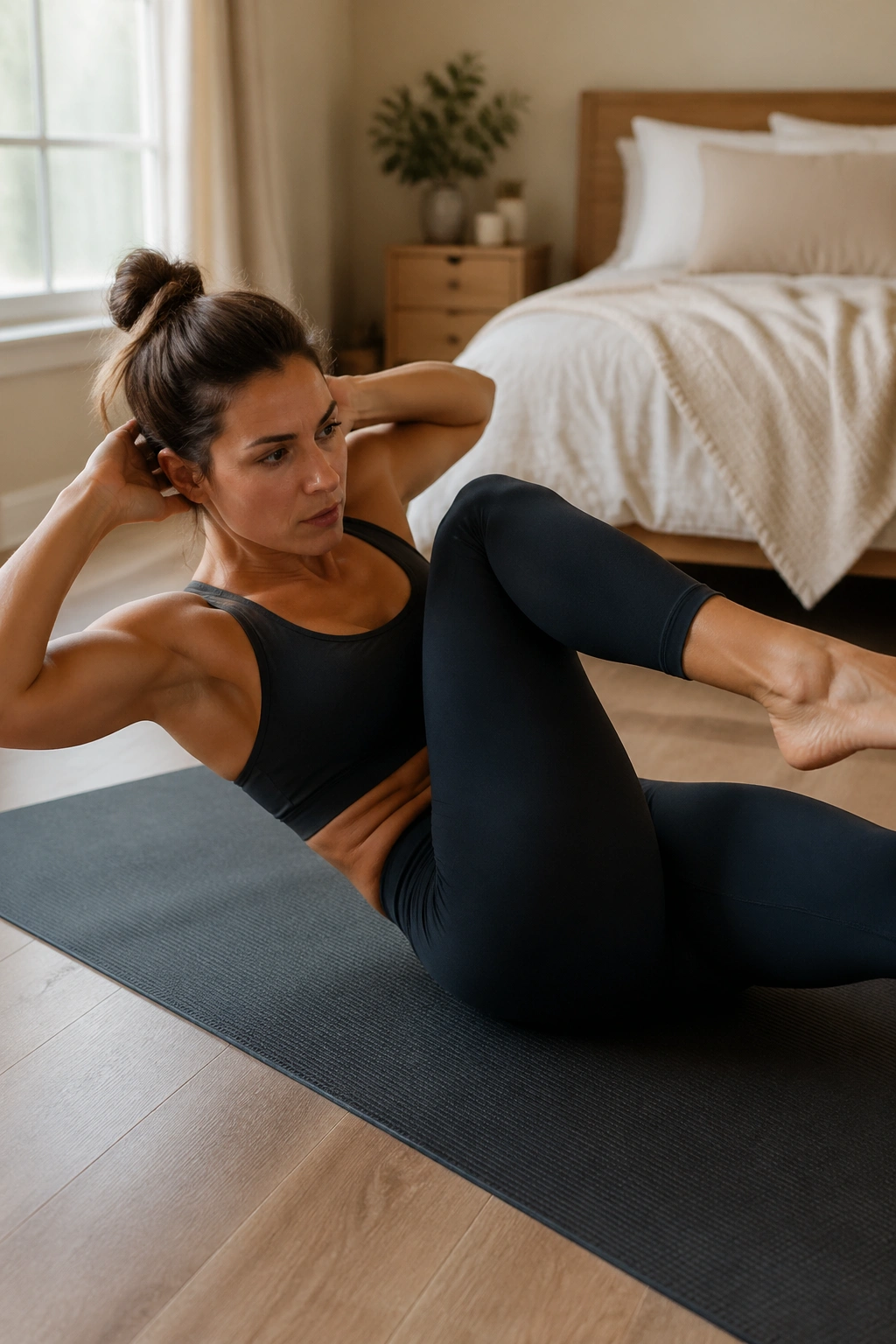
Don’t race through this one. The Criss-Cross gets sloppy when people turn it into a bicycle race, and then the obliques stop working and the hips start swinging.
Bring one elbow toward the opposite knee while the other leg extends long, then switch sides with the same measured pace. Keep the rib cage from flaring and let the twist come from the torso, not from throwing the elbows around. The movement should feel sharp but contained, almost like you are threading your body through a narrow space.
The payoff is rotational strength with control, which matters more than people think. Women often carry loads asymmetrically—bags, kids, laptops, purses, all of it. Training the torso to rotate without collapsing is practical work. It keeps the waist strong and the spine happier.
6. Shoulder Bridge for Glute Strength and Hip Lift
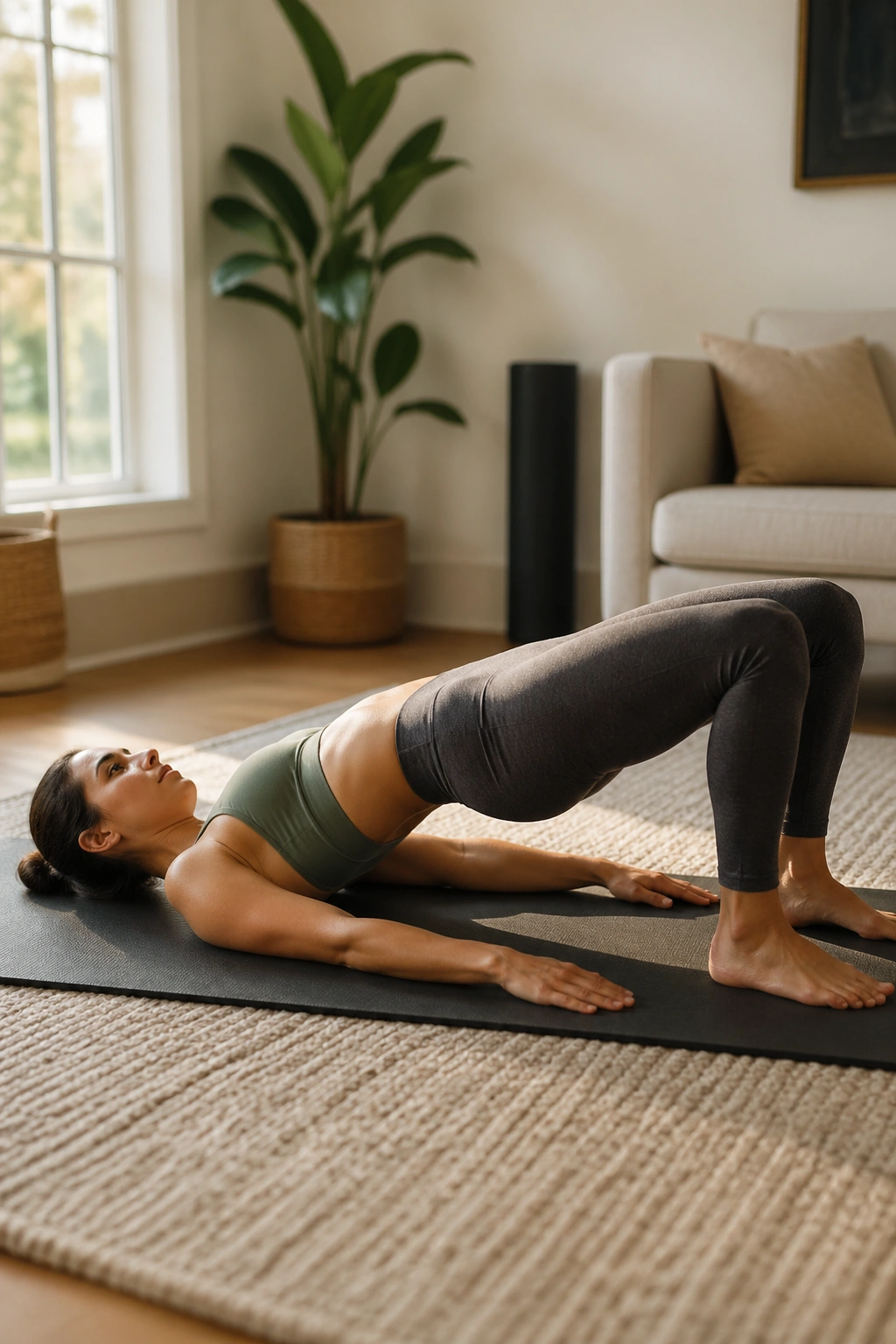
The Shoulder Bridge is the exercise I recommend when someone says, “My glutes don’t seem to do much.” They usually do more than they think, but not always in the right pattern. This move helps wake them up.
Press through the feet, curl the pelvis up, and lift the hips until the body forms a long line from shoulders to knees. Hold for a breath or two, then roll down with control. The key is feeling the back of the thighs and glutes, not cramming the lower back into the work. If your ribs pop up, lower a little and reset.
Why It Works
It gives you hip extension without a lot of impact. That is useful if jumping feels rough on your joints or if you spend hours sitting and your hips have gone a bit dormant. A strong bridge also makes walking, climbing, and standing up from the floor feel cleaner. Small move. Big carryover.
7. Single-Leg Bridge for Uneven Hips and Balance
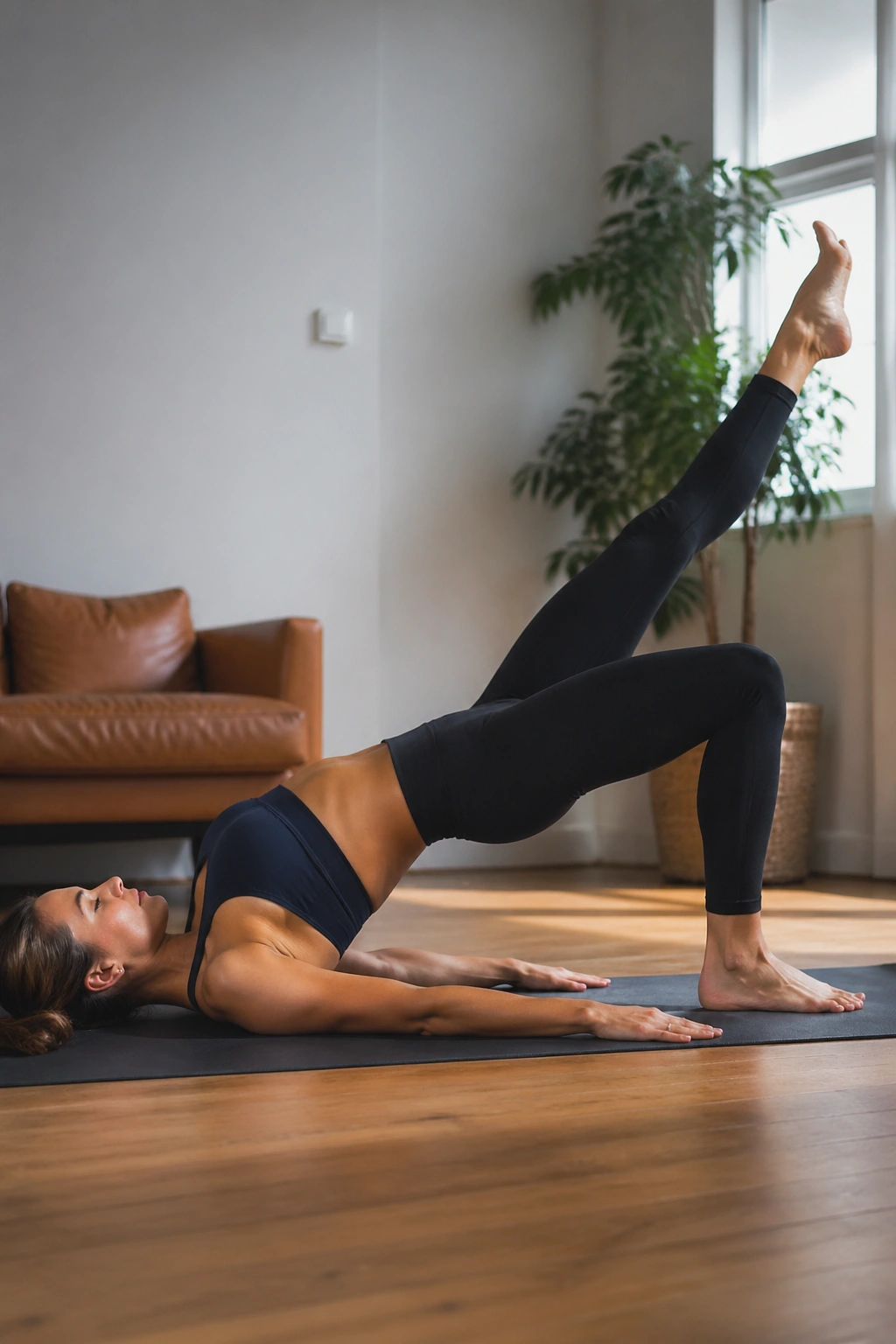
One side always has a story to tell. The Single-Leg Bridge lets you hear it. It exposes side-to-side differences fast, which is exactly why it earns a place in a Pilates strength routine for women.
Set up in bridge position, extend one leg, and keep the lifted hips level as you press through the standing foot. That standing side should work hard. If the pelvis drops or twists, lower the hips a little and shorten the range. Nobody gets points for a bigger lift if the alignment falls apart.
What to Feel For
- Pressure through the heel and big toe.
- Glutes working before the hamstrings cramp.
- A quiet rib cage.
- Level hips, even when one leg is out.
If one side feels shakier, that’s useful information, not a problem. The fix is usually slower reps and a smaller lift, not brute force.
8. Side-Lying Clam for Outer Hip Stability
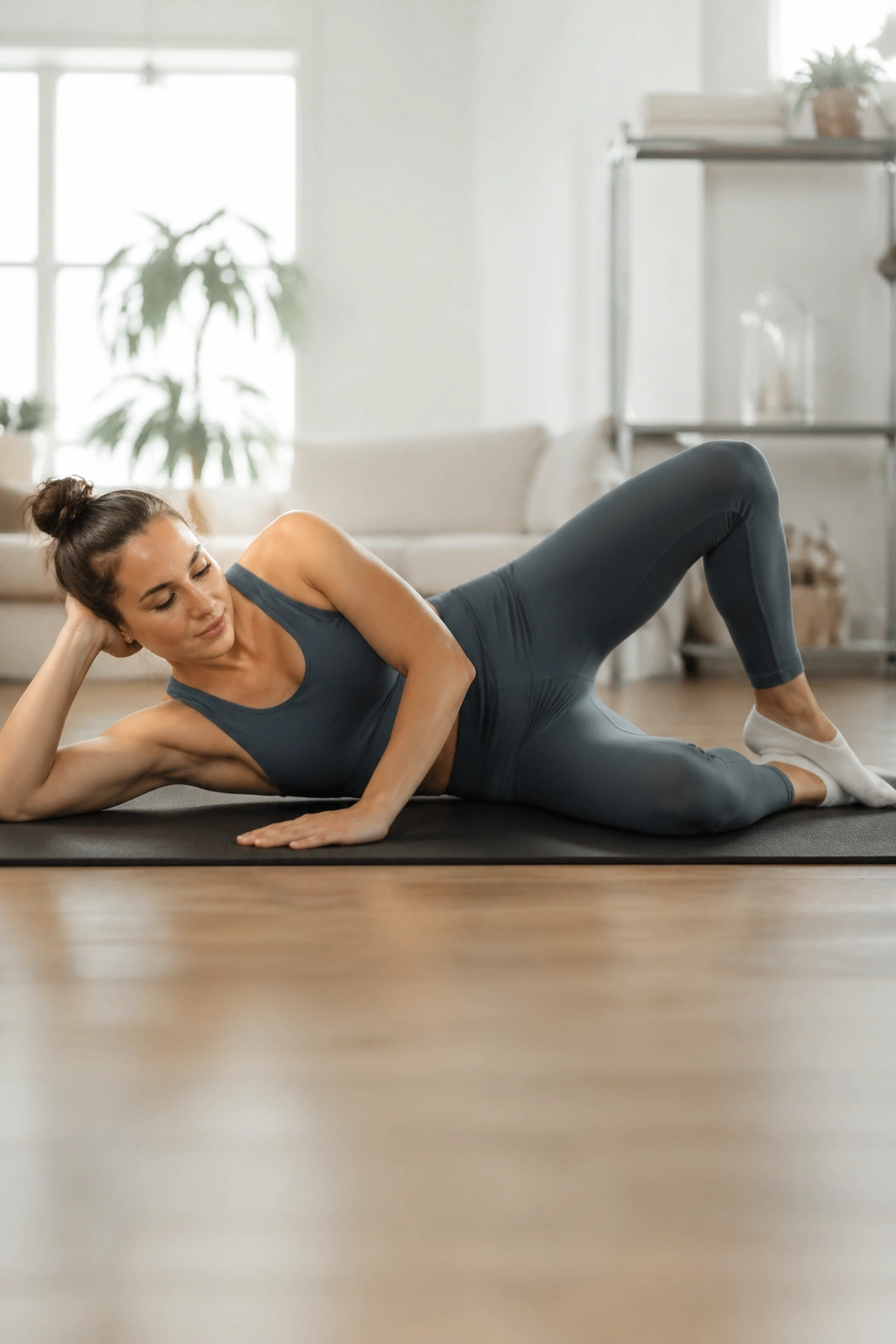
Your hips should feel this one within three or four reps if you’re doing it right. The Clam is small, but it goes straight after the glute medius, the muscle that helps keep the pelvis steady when you walk, squat, or stand on one leg.
Lie on your side with knees bent, heels together, and lift the top knee without rolling the pelvis backward. That last part matters. People cheat here all the time by opening the whole body and pretending the hip did the work. It didn’t.
Why It Belongs Here
Strong outer hips help with balance and knee tracking. They also make single-leg work in Pilates much cleaner. If your hips feel unstable in bridges, lunges, or standing leg lifts, this is one of the first places I’d look. Keep the motion small, the waist long, and the breath steady. Burn is fine. Spinning out of alignment is not.
9. Side-Lying Leg Lift for Long-Leg Strength
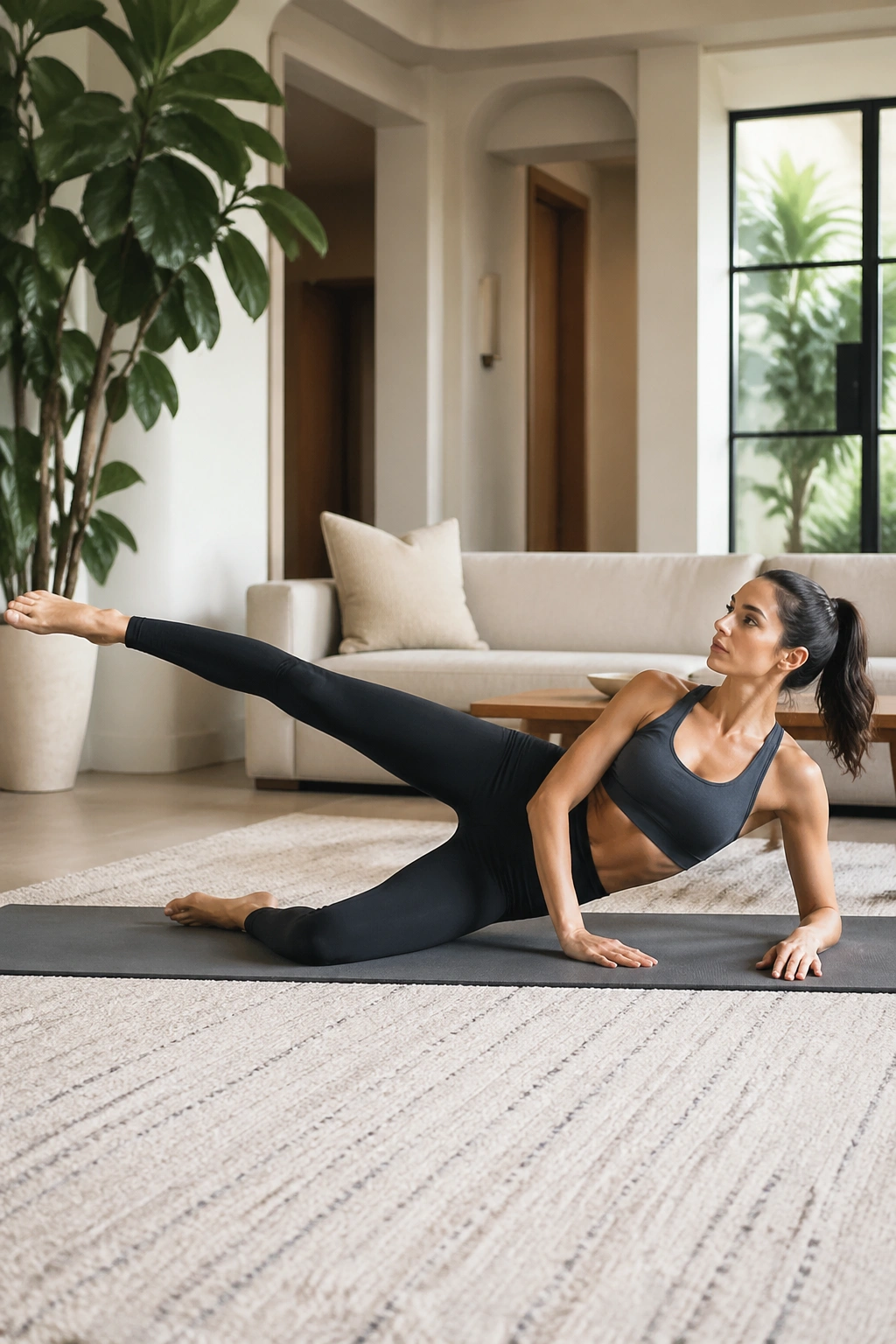
A straight leg changes the game. The Side-Lying Leg Lift asks the outer hip to work through a longer lever, and that usually means you’ll feel the muscle sooner and the cheating less often.
Stack your body on one side, keep the waist lifted off the mat if possible, and raise the top leg only as high as you can without tipping the pelvis backward. Lower it slowly. Really slowly. That lowering phase is where a lot of the strength lives.
What to Watch For
The foot wants to turn out. The hip wants to roll back. The torso wants to collapse. None of that helps. Aim for a leg that stays in line with the body and a side waist that feels long. If you want more challenge, add a tiny pause at the top. If your low back feels twitchy, reduce the range. Simple fix.
10. Side Kick Series for Hip Power and Control
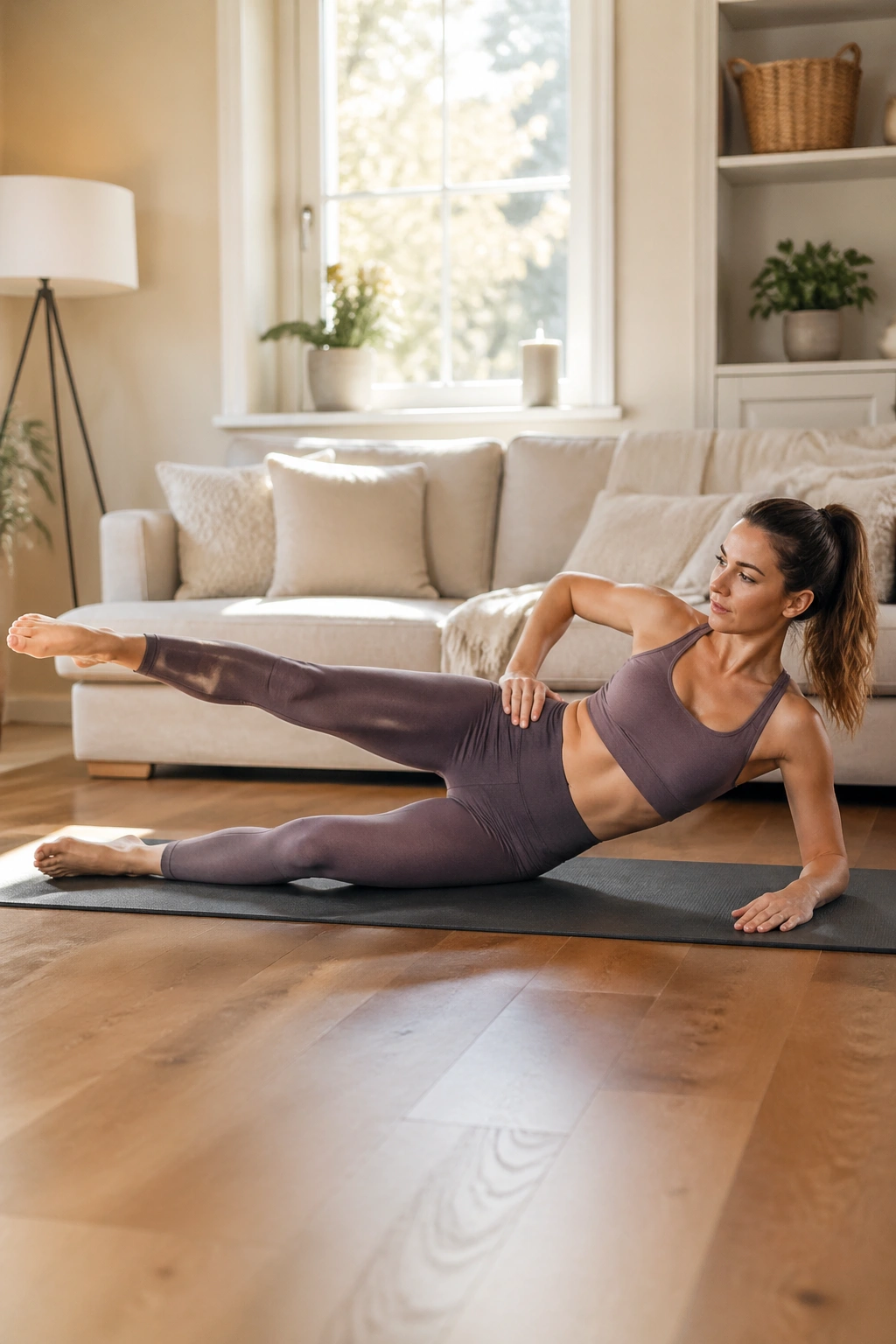
Side Kick Series is where things start to feel athletic. It trains the hip to move while the trunk stays calm, and that combination is gold for anyone who wants strength without pounding the joints.
You’ll usually work the top leg forward and back, then maybe circle it or lift and lower it with precision. The pelvis stays stacked. The body stays long. The leg moves like it belongs to a machine that only gives you one smooth setting.
How to Get More From It
- Keep the waist lifted away from the mat.
- Move the leg a little less, not a little more.
- Exhale on the hardest part of the reach.
- Stop if the low back starts to pinch.
This is one of those exercises that looks graceful even when it’s hard. That’s Pilates in a nutshell, really: clean shape, serious work.
11. Swimming for Backline Strength
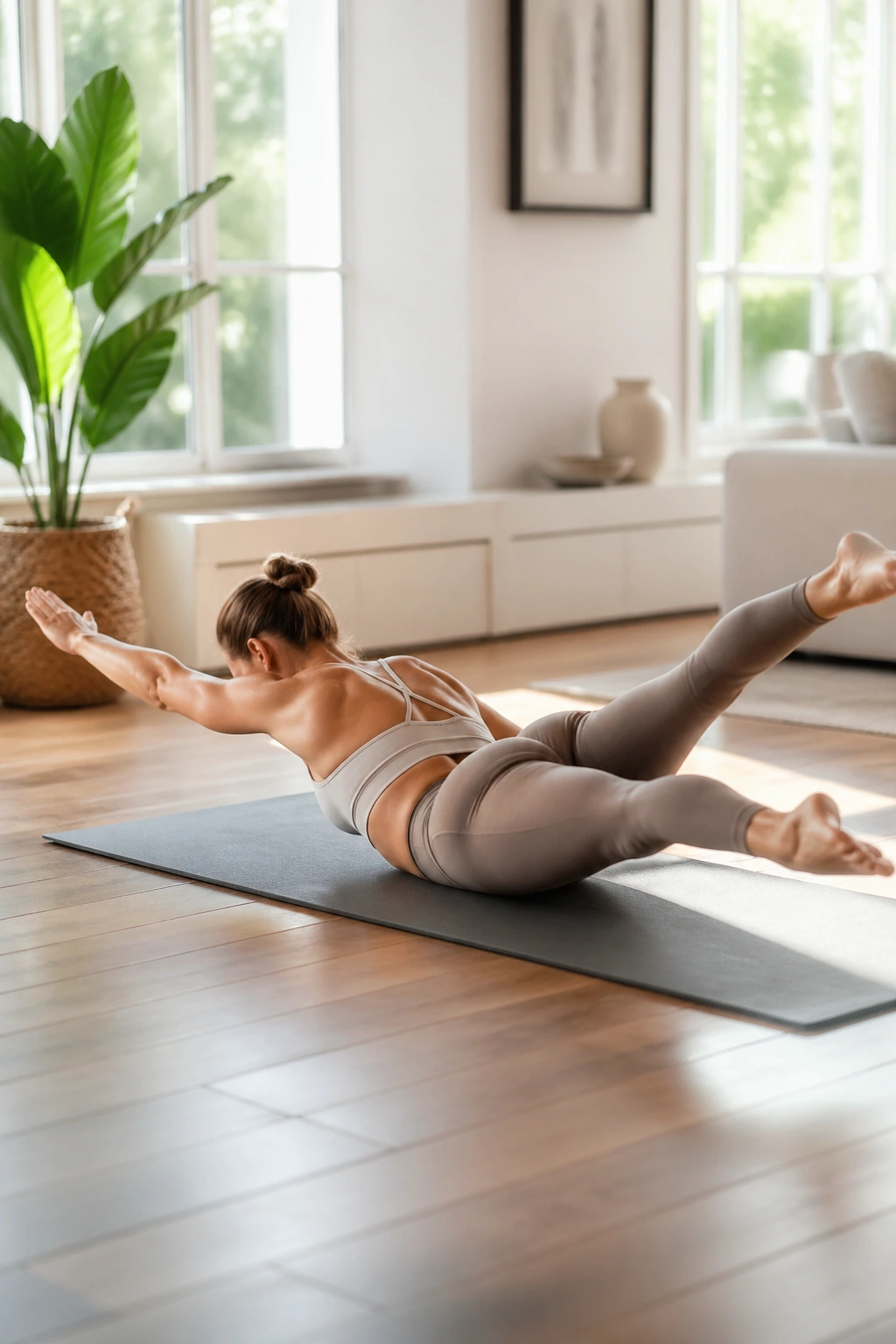
If you sit a lot, your back line is probably underfed. Swimming helps fix that. It wakes up the glutes, hamstrings, upper back, and the muscles between the shoulder blades in one long, honest sequence.
Lie face down, reach opposite arm and leg away from each other, and flutter them in a small, quick rhythm. The movement should feel long rather than wild. Keep the neck in line with the spine. If you keep lifting the chin, the back of the neck gets cranky fast.
This one is especially nice for women who want stronger posture without loading the front of the body over and over. It feels opening, but it’s not passive. Your backside has to hold you up.
12. Swan Prep for Back Extension Strength
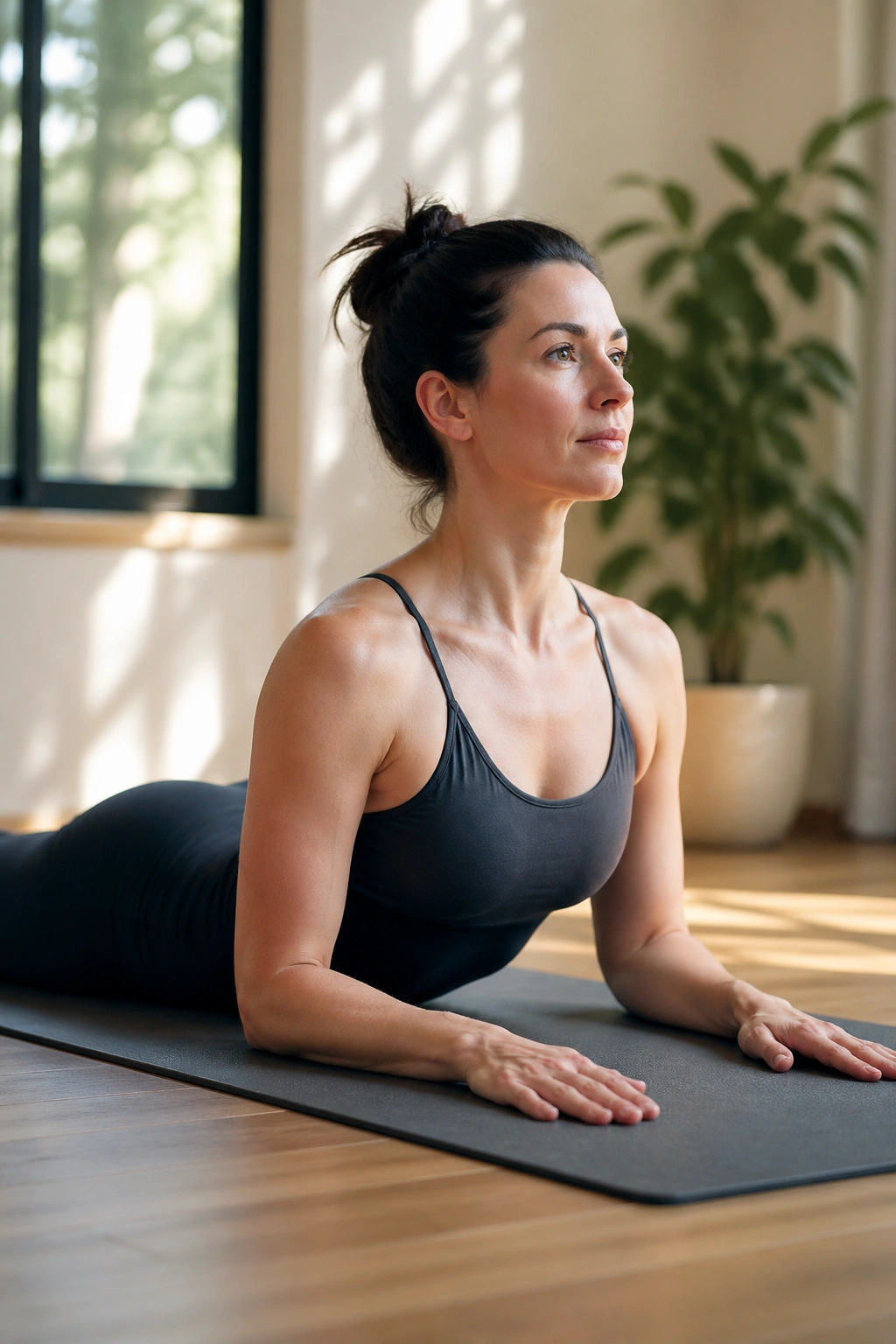
A little lift goes a long way here. Swan Prep is the kind of exercise that teaches the spine to extend without jamming into the lower back, and that’s a skill people rarely train well enough.
Press the forearms or hands into the mat, lengthen the chest forward, and lift the upper body just a few inches. Keep the abs drawing in and up so the low back doesn’t take over. If the shoulders climb toward the ears, reset. You want the neck long and the collarbones broad.
Why It’s Worth Doing
Back extension work often gets ignored until posture starts to sag or the front body gets tight. This move helps balance all the flexion-heavy Pilates work and can make the torso feel more upright in daily life. It also teaches a cleaner hinge through the upper spine, which pays off in standing work and overhead reaching.
13. Bird Dog for Cross-Body Strength
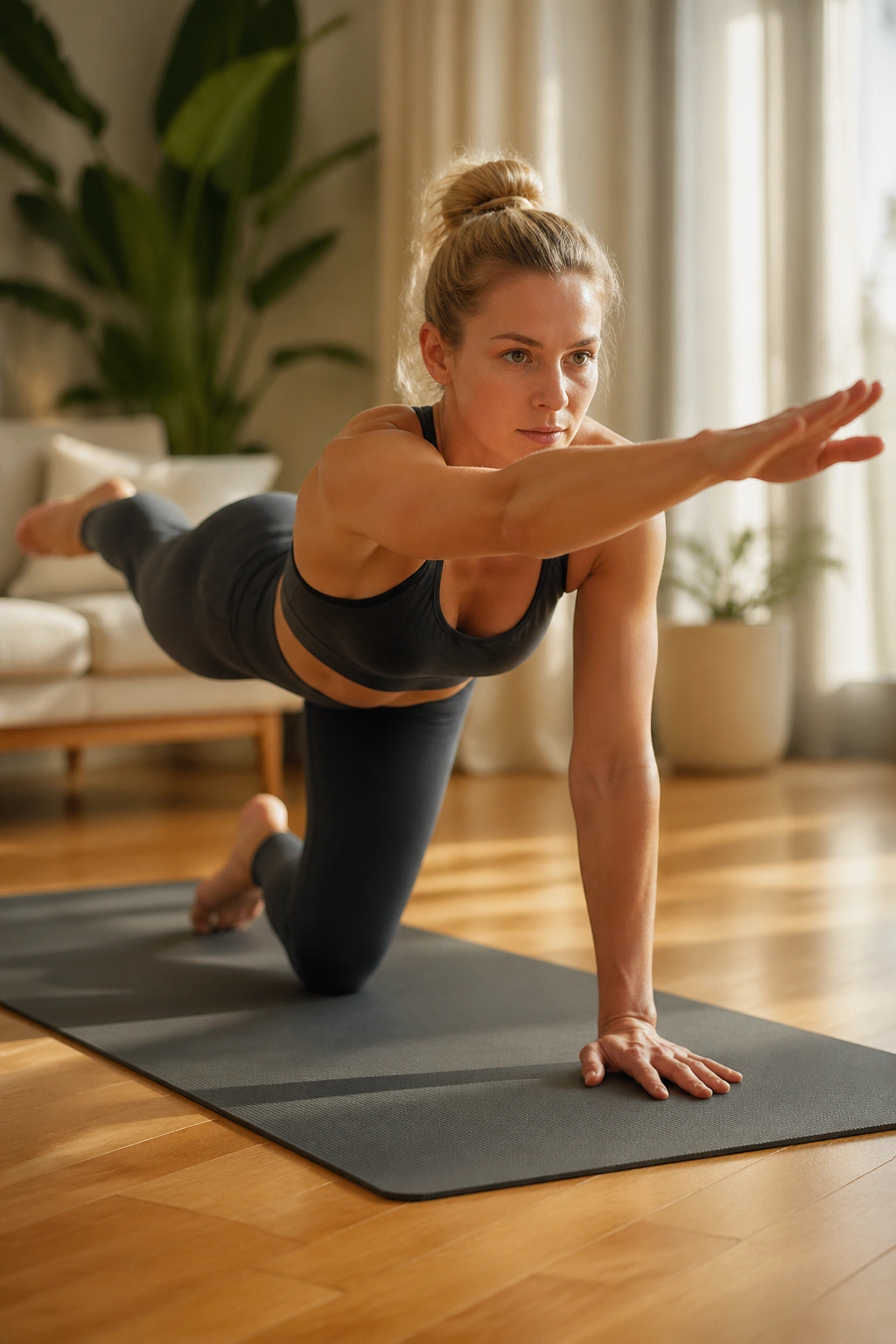
Bird Dog is one of the most useful Pilates strength exercises for women who want a strong core without a lot of drama. It builds the same cross-body control you need for walking, carrying, and keeping your pelvis level when one arm or leg moves.
Start on hands and knees, extend the opposite arm and leg, and keep the hips square to the floor. Don’t swing the leg higher just to feel productive. A lower reach with better balance is better work. Hold for a breath, then switch sides slowly.
What Makes It Different
It asks for trunk control in a position that is not very forgiving. If your ribs flare or your low back arches, the exercise gets easier but the effect gets worse. Keep the reach long, the belly gently braced, and the neck in line with the spine. It’s basic, sure. Basic is often where the good stuff lives.
14. Forearm Plank for Full-Body Tension
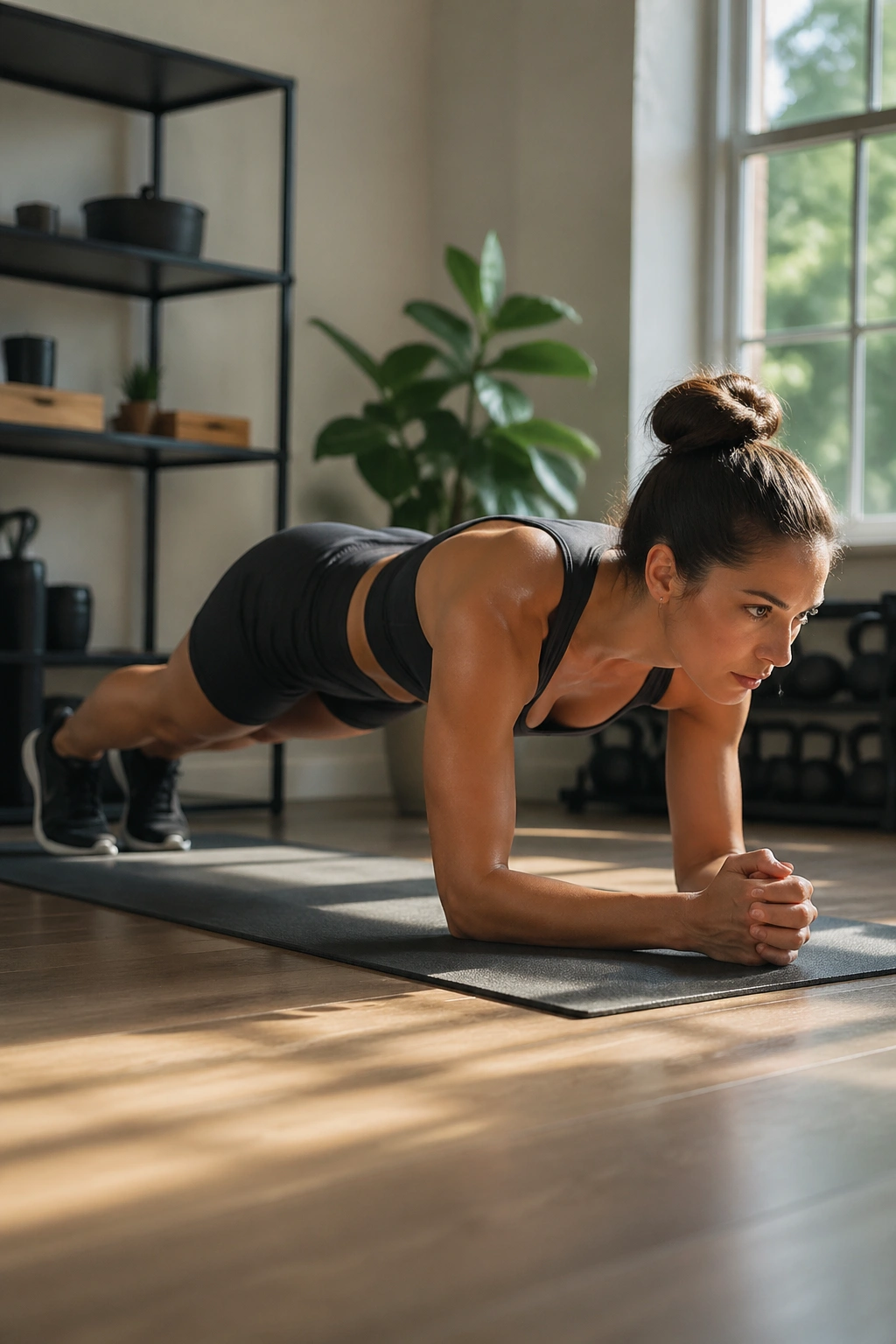
Can you hold a line without collapsing into your shoulders? The Forearm Plank tells you fast. It is one of the clearest tests of Pilates-style strength because everything has to work at once: core, shoulders, glutes, legs, and breath.
Set the elbows under the shoulders, extend the legs long, and press the floor away. The body should feel like one firm plank, not a hammock. If your lower back dips, lift the hips a little and shorten the hold. A 20-second plank with good form beats a 60-second collapse every time.
Common Fixes
- Spread the fingers or press the forearms down harder.
- Squeeze the thighs lightly.
- Keep the ribs from flaring.
- Breathe through the nose if possible.
This is a serious exercise. No need to make it theatrical.
15. Side Plank for Waist, Shoulder, and Hip Strength
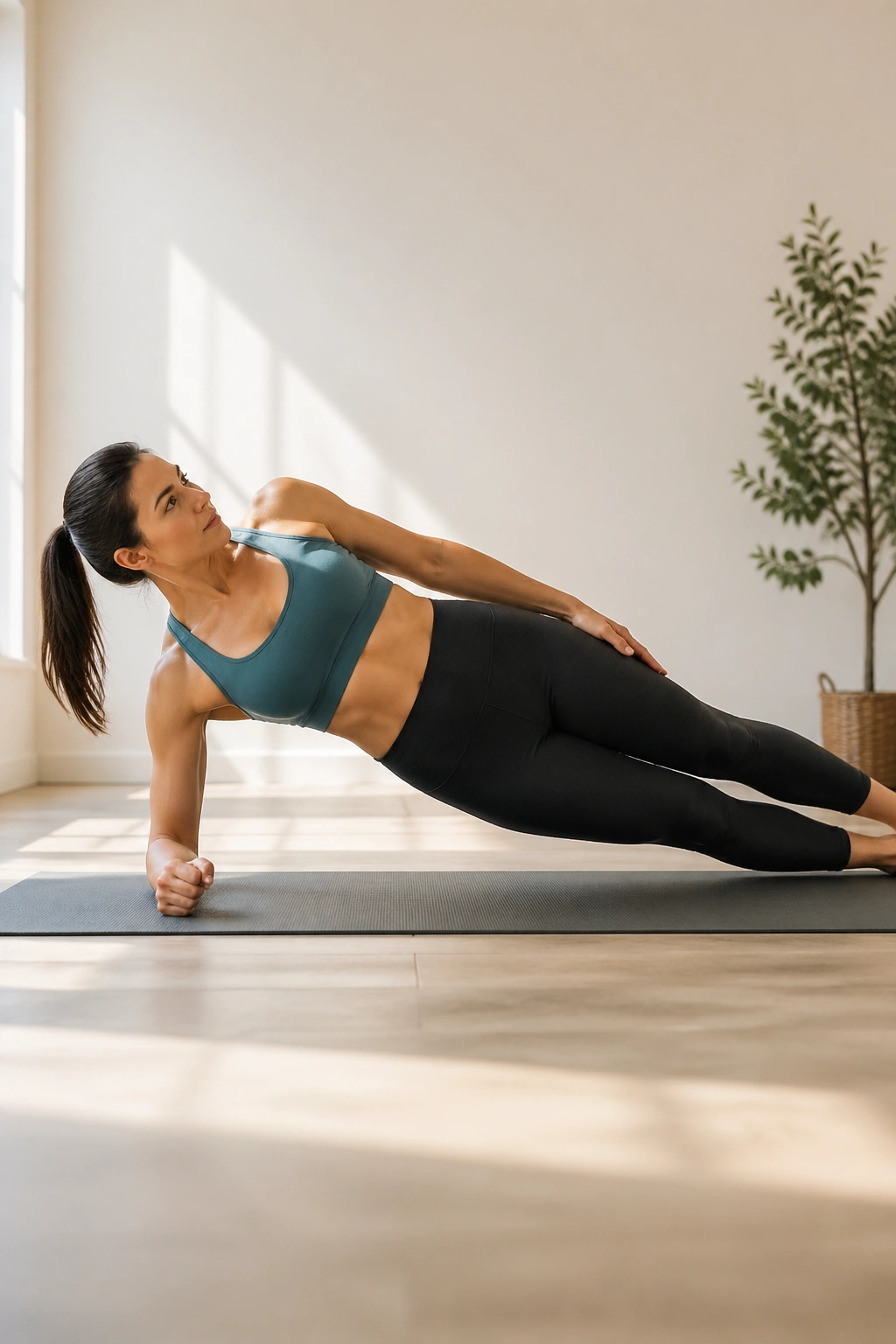
Side Plank is one of those moves that looks calm until you try to hold it. Then the side waist starts to shake and the shoulder has opinions. Good. That’s the point.
You can do it from the knees or with straight legs. Either way, keep the body in one line and lift through the side body rather than dumping into the shoulder joint. If the neck feels crowded, look down instead of up. A steadier head usually means a steadier torso.
The beauty of this exercise is how much it gives back for such a small setup. It challenges lateral stability, oblique strength, and shoulder control at the same time. That combination is useful in daily life, especially when you carry something on one side and your body wants to lean.
16. Teaser Prep for Controlled Abdominal Power
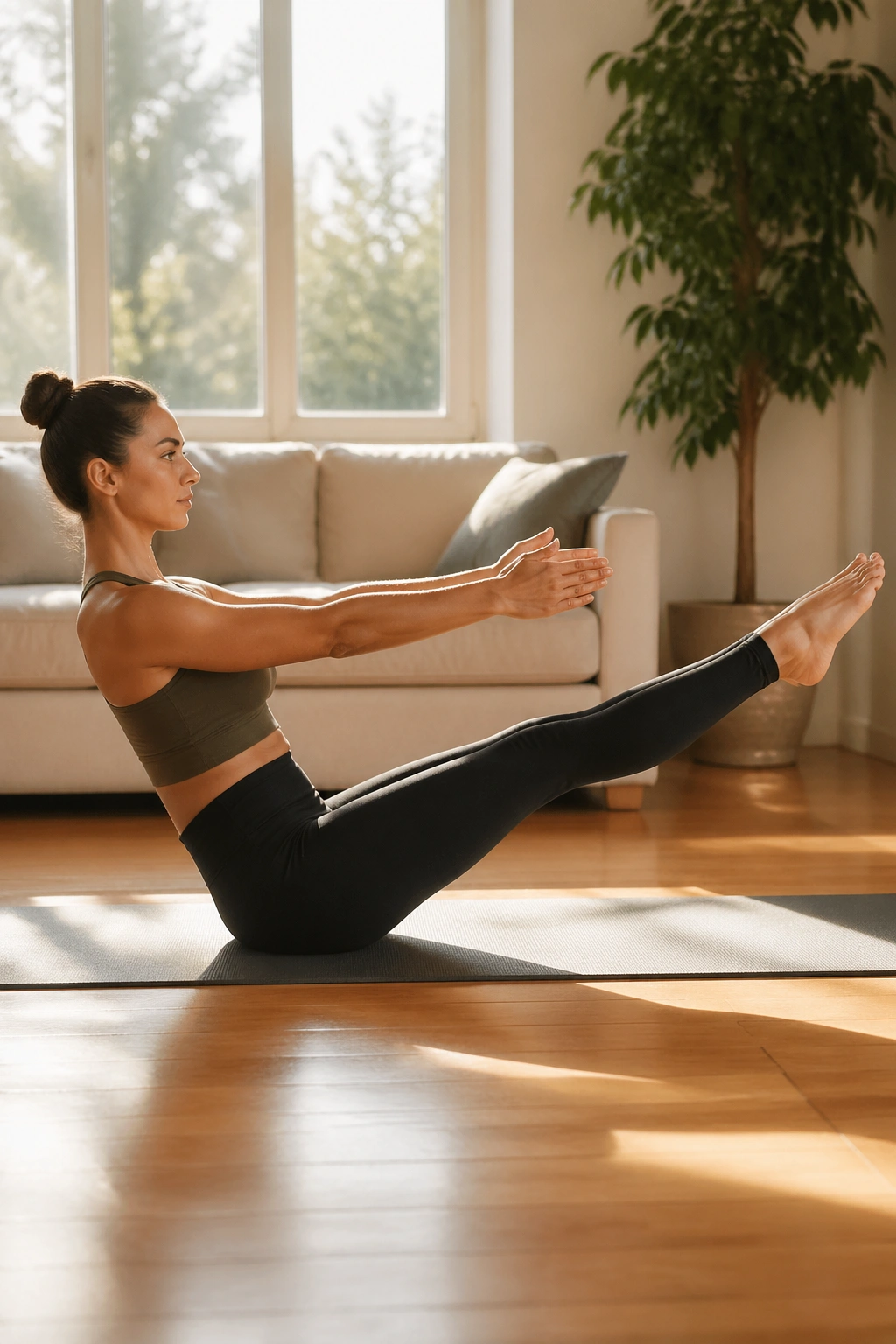
A full Teaser can feel like a smug exercise if you rush it. Teaser Prep is kinder and more useful for most people. It still asks for serious abdominal strength, but it lets you build the shape in pieces.
Start curled up or seated, extend the legs one level at a time, and keep the chest lifted without hunching the shoulders. Think long spine, strong center, slow reach. If the hamstrings are tight, bend the knees. That keeps the work where it belongs instead of turning the whole thing into a tug-of-war.
How to Build It
First hold the balance. Then lengthen the legs a little more. Then control the lowering. That progression is what makes the exercise stronger, not just prettier. If you can keep the torso steady while the legs move away from you, your core is doing real work.
17. Leg Circles for Hip Mobility With a Strong Center
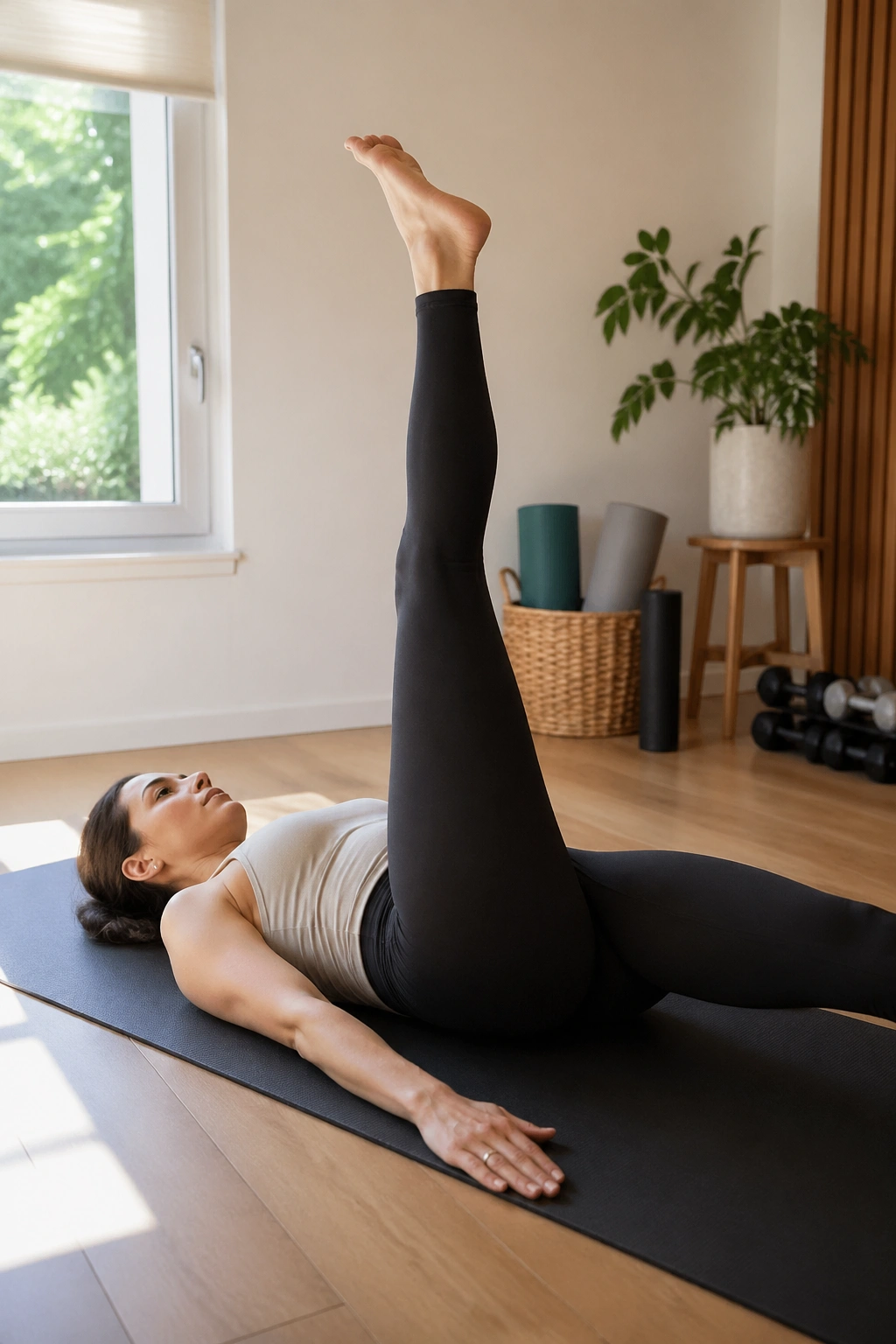
A circle is only as good as the stillness around it. Leg Circles train the hip to move while the pelvis stays anchored, and that makes them sneaky strength work, not just flexibility work.
Lie on your back, extend one leg up, and draw small, controlled circles in the air. Keep the opposite hip heavy and the ribs quiet. If the circle gets too big, the pelvis will start to rock and the whole point disappears. Small circles are often the smarter choice, especially at first.
The movement helps with hip joint control, hamstring length, and lower-abdominal support. It also teaches patience. Not glamorous. Very useful.
18. Corkscrew for Lower Abdominal Control
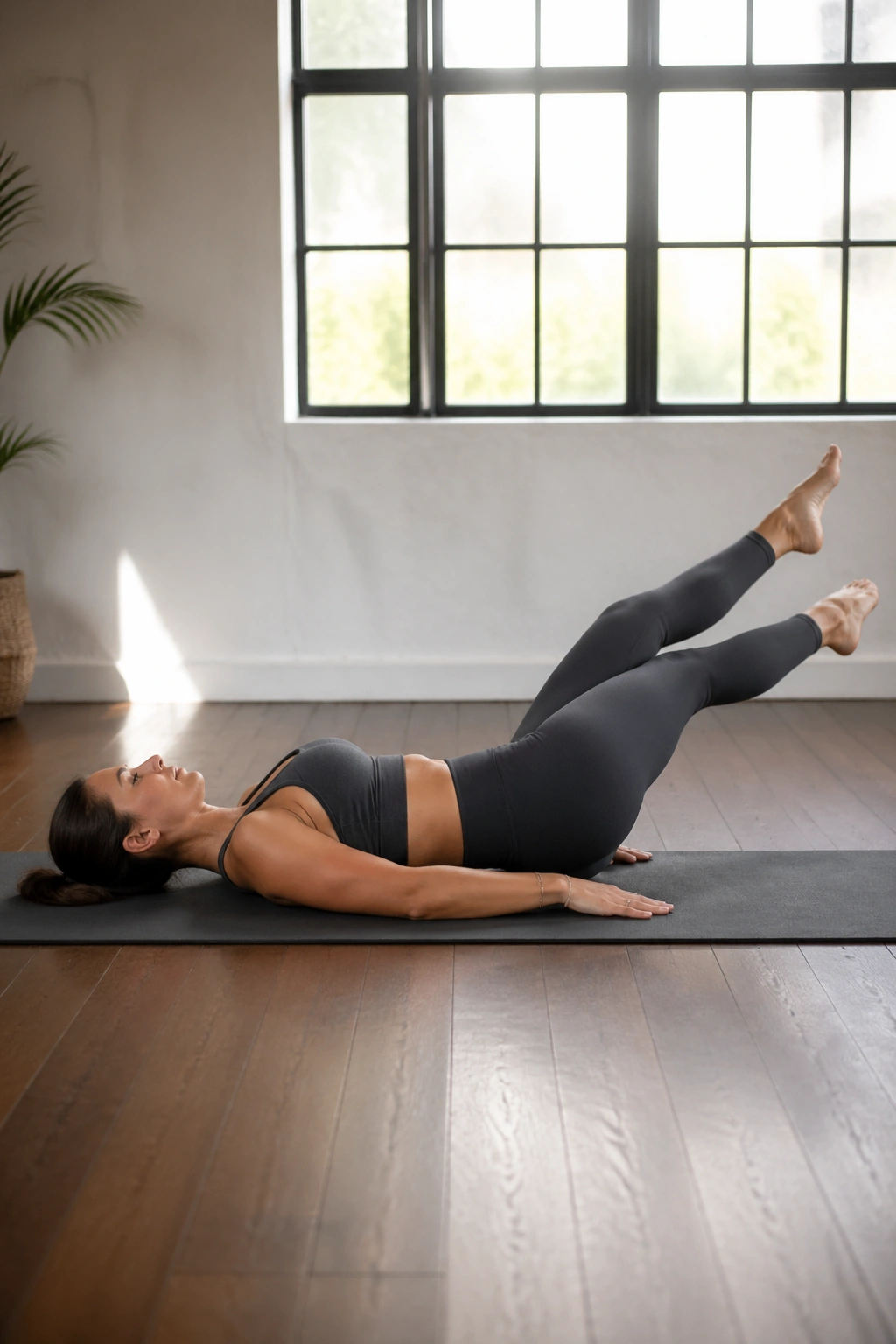
Corkscrew is a little odd, and I like that about it. The exercise asks the legs to trace a circle while the trunk resists twisting all over the mat. That tension between motion and stillness is where the strength lives.
Lift the legs and draw them in a slow circle, keeping the shoulders grounded and the belly deep. If the back starts arching, make the circle smaller. If the movement feels too loose, pause at the top before you lower. The point is control, not circus tricks.
Who Should Keep It Small
If your lower back is sensitive or your hip flexors take over easily, stay modest with this one. A controlled quarter-circle is still a useful rep. You do not need a dramatic range to get a strong response from the abs and inner thighs.
19. Open Leg Rocker for Core Balance and Hamstring Strength
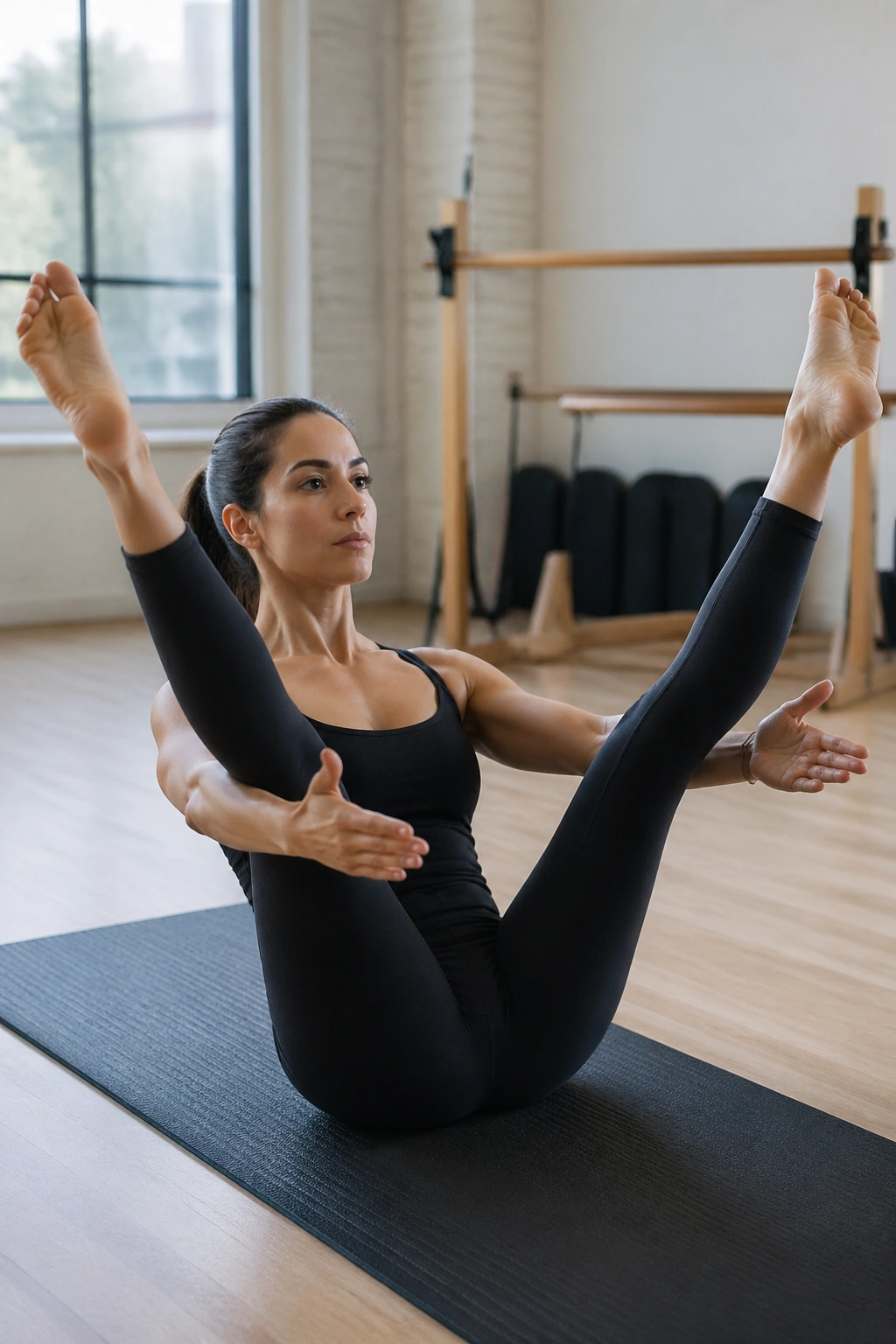
Open Leg Rocker looks playful, but it demands a surprising amount of control. You balance on your sit bones, hold the legs open, and roll without letting the shape fall apart. That is not easy, and that’s why it earns a spot here.
Start with bent knees if straight legs are too much. Keep the chest lifted and the shoulders relaxed as you rock back and return to balance. If you flop onto the low back, the setup is too ambitious. Reduce the range. Use the breath to steady the motion.
This exercise builds abdominal control, spinal articulation, and hamstring length in one go. It also teaches balance in a way that feels very Pilates—slightly odd, very specific, and more useful than it first appears.
20. Jackknife Prep for Posterior Chain Strength
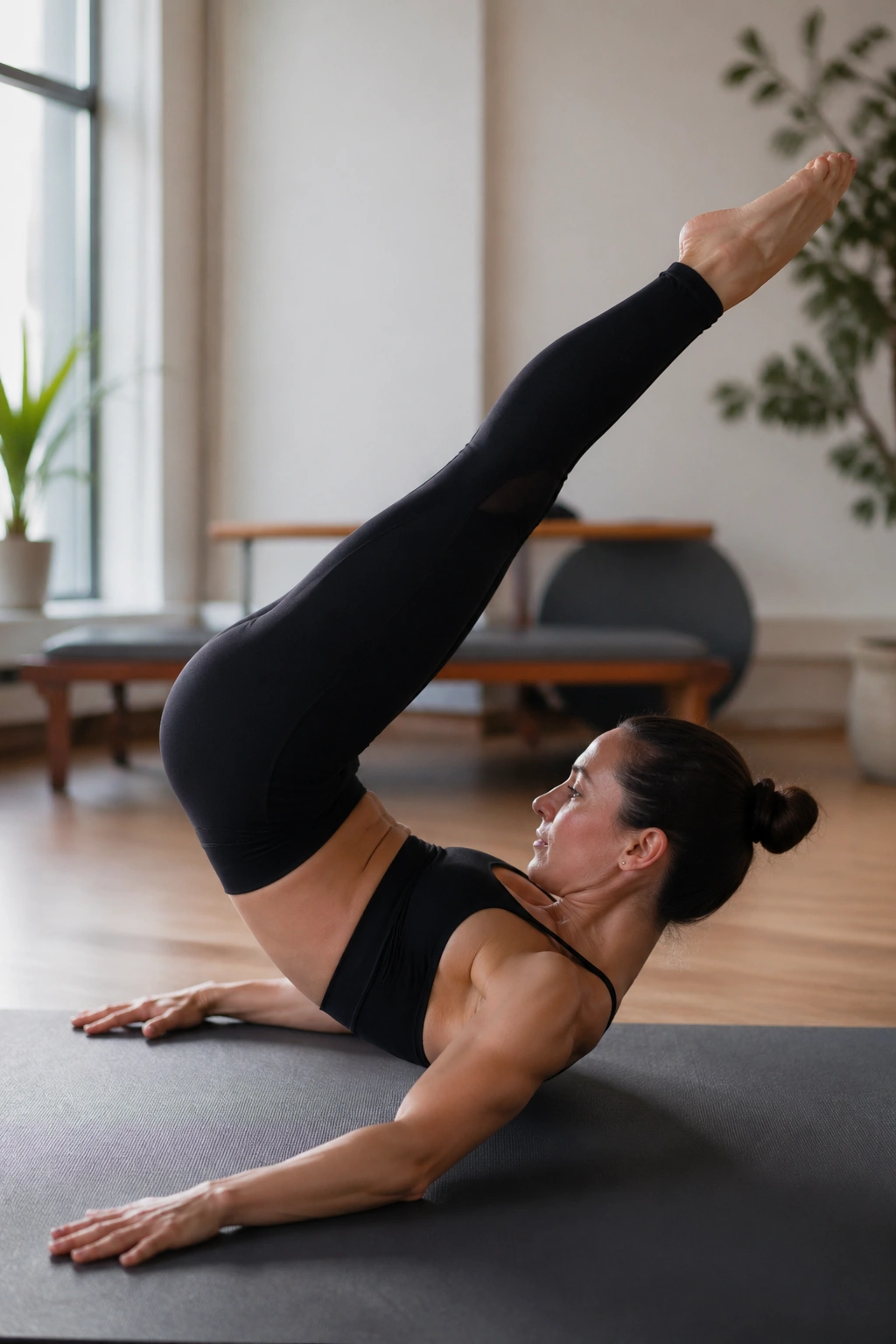
Jackknife Prep is a strong choice when you want more challenge than a bridge but less drama than a full inversion. It asks the hips, abs, and back line to coordinate while the legs move over the torso.
Begin with the hips lifted, then carefully roll the legs overhead just partway, returning with control. If your neck is sensitive, stop far earlier and keep the range tiny. The point is not to jam the spine into a shape it hates. The point is to build strength through organized effort.
What to Feel
You should feel the abdominal wall working hard, the glutes helping, and the shoulders staying grounded. If any one area hijacks the motion, the exercise gets messy. Keep it slow. The slow pace is what makes it strong.
21. Pilates Push-Up for Upper-Body Strength
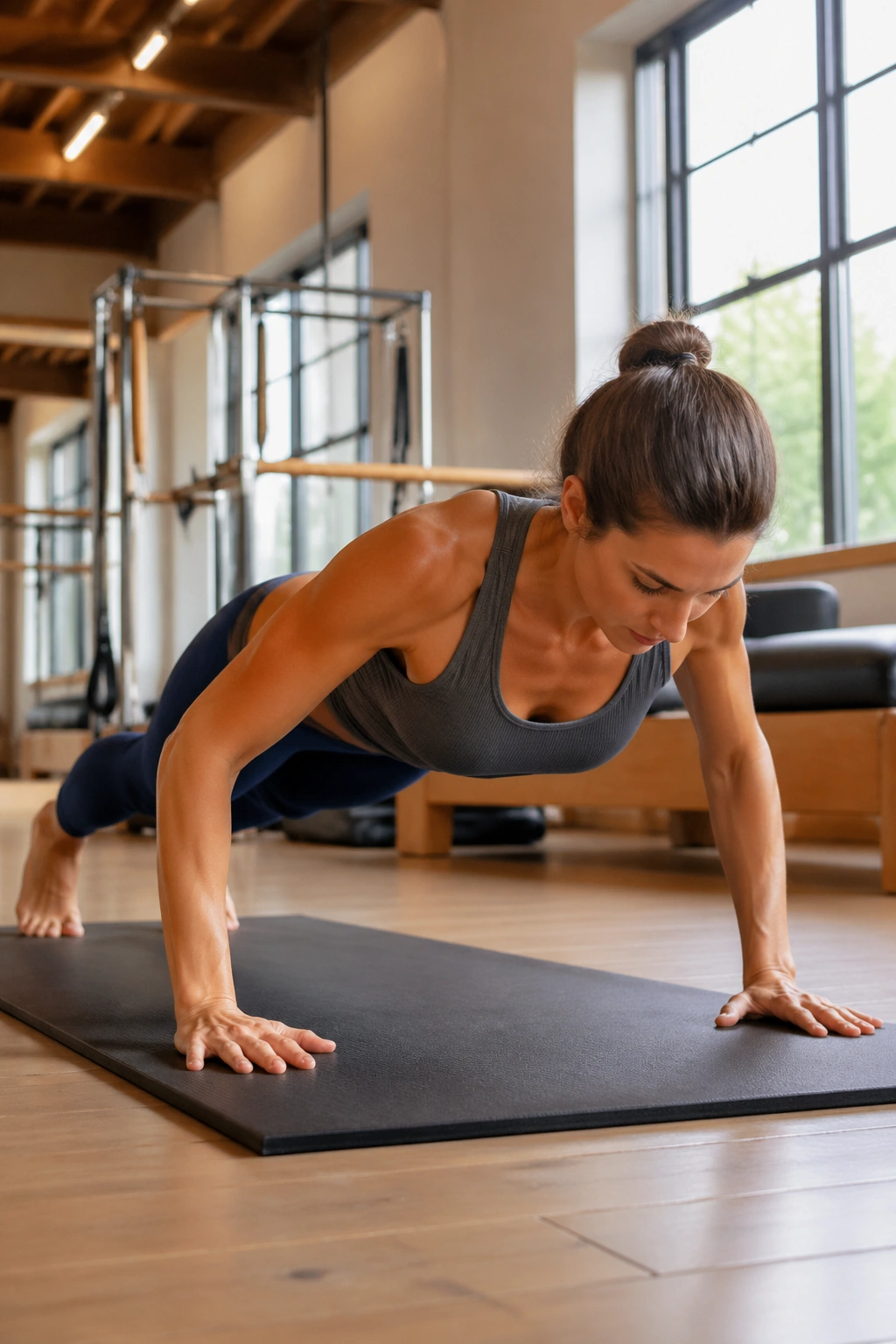
Why is the Pilates Push-Up so much better than a rushed floor push-up? Because it asks for shape first, then force. You have to stack the shoulders, hold the ribs in, and move with control before you get to the actual press.
Stand, roll down, walk out to plank, lower with clean elbows, press back up, and walk the hands back to standing. If your wrists dislike it, do the plank on an incline. If your shoulders are tired, cut the range short and keep the chest open. Clean reps matter more than depth.
This is one of the best ways to build upper-body strength without losing the Pilates feel. It teaches the arms to work inside a long line, which helps posture and makes everyday pushing tasks less annoying.
22. Chest Expansion With a Resistance Band
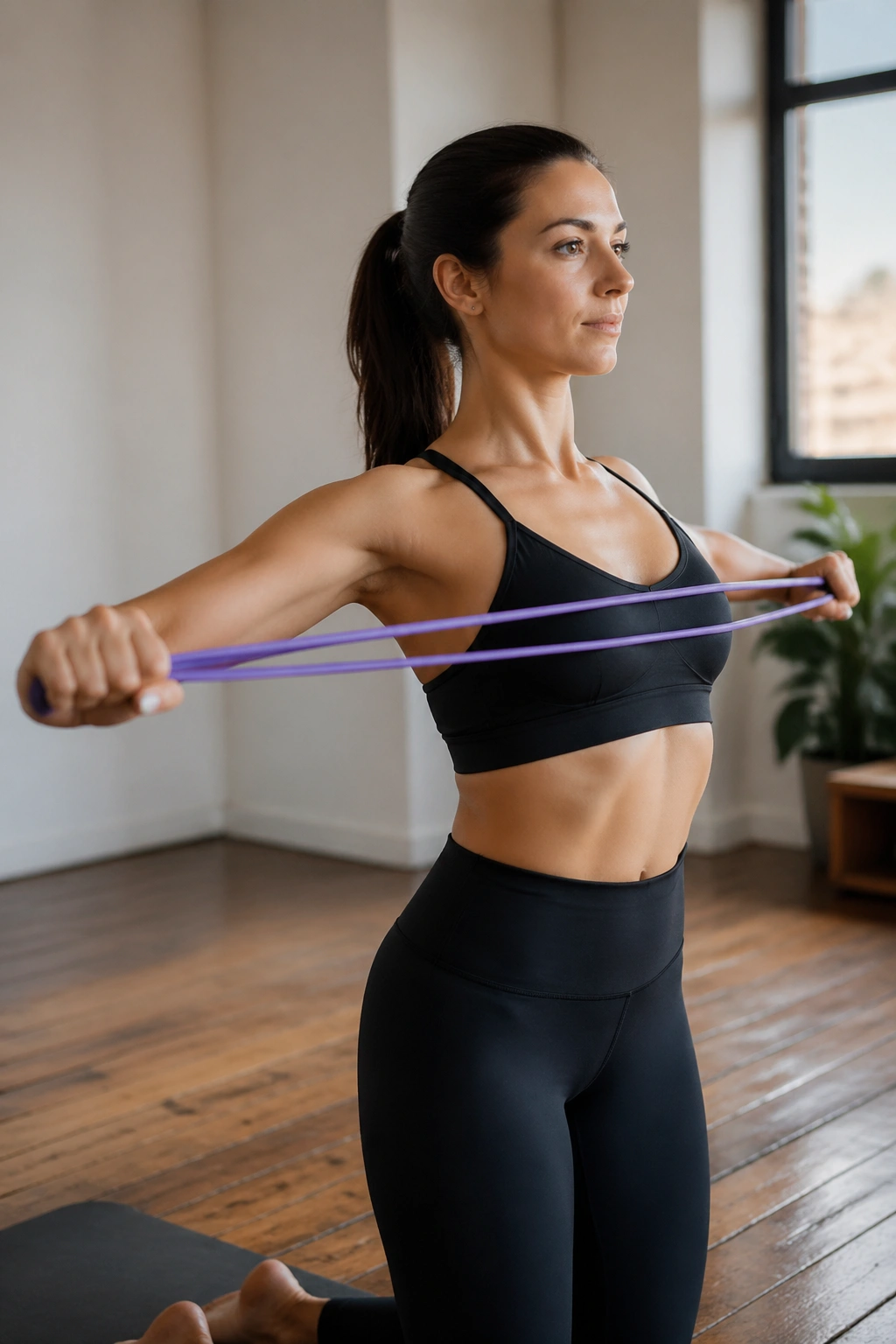
A tiny band can expose a lot. Chest Expansion trains the upper back, lats, and the muscles that keep the shoulders from living near the ears all day.
Kneel or stand tall, hold the band, and pull the arms slightly back while keeping the chest open and the ribs settled. Then return with the same control. Do not fling the arms around. The tension should stay even and deliberate. If the neck tightens, soften the grip and lower the shoulders.
Why Women Should Care
A lot of women need more pulling than pressing in their weekly strength work. Chest Expansion helps balance all the reaching, typing, lifting, and carrying that life hands out. It also makes posture feel less collapsed by the end of the day. Simple exercise. Huge payoff.
23. Triceps Press With Light Weights or a Band
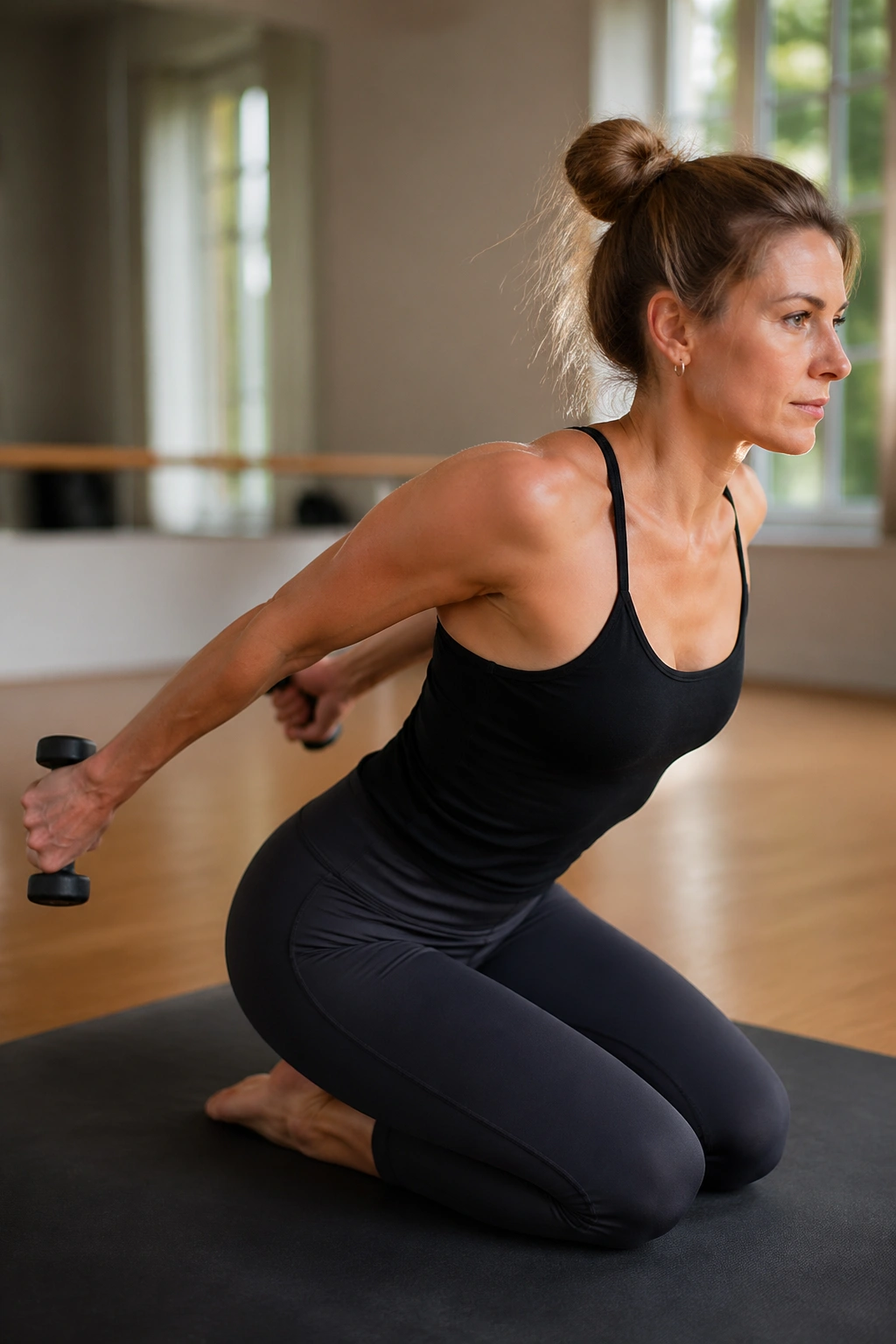
The back of the arms tends to get ignored until sleeveless weather rolls around or a shoulder movement feels weak. The Triceps Press fixes that without needing heavy loads.
Use light dumbbells or a resistance band, keep the elbows narrow, and press the hands back until the arms fully extend. The shoulders stay down. The ribs stay knitted in. If you arch the back to finish the rep, the weight is too heavy or the range is too big.
A lot of Pilates strength training lives in this zone: light load, exact shape, slow burn. That’s not because it’s easy. It’s because that style teaches the right muscles to show up. The burn in the triceps is nice. The steadier shoulder line is better.
24. Mermaid Side Bend for Lateral Line Strength
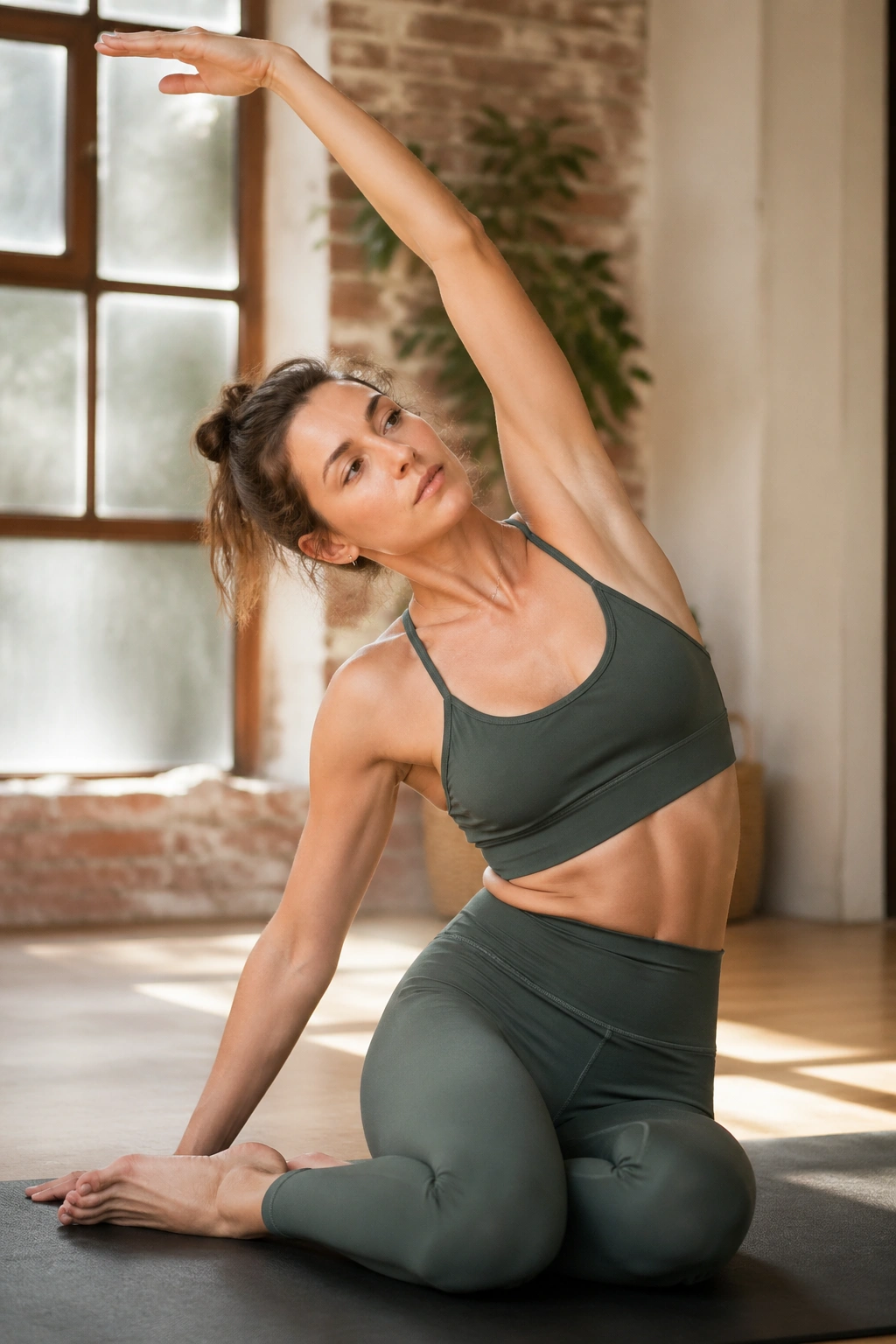
Mermaid is a stretch with teeth. It opens the side body, then asks the waist to stay active while you move through a long side bend. That makes it more than a cooldown.
Sit with the legs folded to one side, reach one arm overhead, and arc the torso laterally without collapsing into the hip. Keep both sit bones heavy if you can. If your shoulder rides up, reduce the reach and focus on length through the rib cage instead. The movement should feel smooth, not crunched.
This one is especially nice after planks and side work because it gives the body a chance to breathe while still keeping the obliques honest. I like it as a reset between harder sets. It is one of the few moves that can calm the nervous system and still count as strength work.
25. Standing Leg Press With Upright Posture
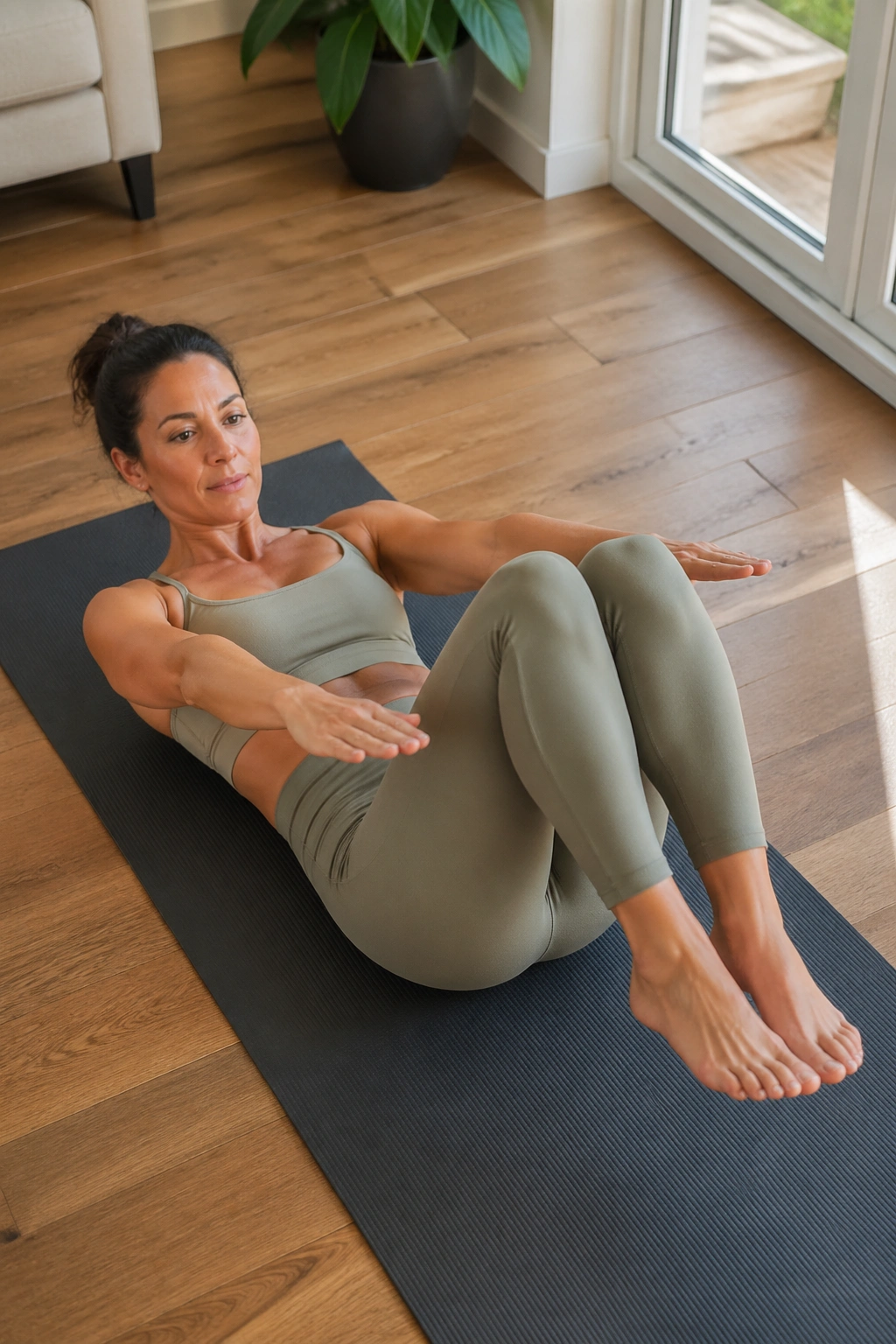
Standing work changes the game because it brings Pilates strength back into the real world. The Standing Leg Press asks you to hold your posture, press one leg back or out with control, and keep the trunk from wobbling around.
Use a wall, chair, or barre for light support. Stand tall, shift weight to one leg, and press the other leg with slow resistance. Keep the standing hip stable and the ribs stacked over the pelvis. If you lean into the support, lighten your grip. If your standing knee caves in, shorten the range and slow the tempo.
This is the kind of exercise I like to finish on because it reminds the body that strength is not just something you do on the mat. It shows up when you stand, balance, reach, and move through a room with a little more control than you had before. That matters.
