



A Pilates workout can leave your legs shaking long before you feel winded, and that’s part of the point. For a lean toned body, Pilates works a little differently from the burn-and-collapse style most people expect. The muscles stay under tension, the joints stay organized, and the body has to do the job cleanly instead of muscling through with momentum.
What people usually mean by “toned” is a body that looks firm, lifted, and put together. Pilates gets there through core control, posture, glute strength, shoulder stability, and slow muscular endurance. That’s why a good session can make your waist feel tighter, your legs feel longer, and your upper back stop slumping by the end of the day. It’s not magic. It’s alignment and repetition.
The funny thing is that the most effective Pilates work often looks almost too simple from the outside. One slow roll-up, one side kick, one bridge with a tiny hold at the top — and suddenly the muscles are doing far more than they did in a rushed workout with twice the sweat. The detail matters. Breath matters. Tempo matters. Even the angle of your toes matters more than most people want to admit.
These 20 Pilates workouts lean into that idea. Some are mat-only. Some use a mini band, light weights, or a reformer if you have one. All of them aim at the same thing: stronger shape, better posture, and the kind of controlled strength that shows up in clothes and in the way you move.
1. The Hundred Breath Ladder
The Hundred is famous for a reason. It wakes up the whole trunk fast, and it does it without asking your body to fling itself around. That makes it a smart opening move for any Pilates workout for a lean toned body.
Why it works
The pumping arms are only part of the story. Your abdominals have to hold the ribs down while your legs stay steady, and your breath has to keep moving even when the core starts to complain. That combination is what makes the exercise feel so sharp by the end of the first minute.
How to use it
- Lie on your back with knees in tabletop, or keep feet on the floor if your neck is fussy.
- Lift the head and shoulders only as far as you can keep the neck long.
- Pump the arms by your sides for 5 counts in, 5 counts out.
- Repeat for 10 rounds if you are building stamina, or 5 rounds if you are starting out.
Keep your lower back heavy. If the ribs flare or the neck starts to grip, drop the head for a moment and reset. That tiny reset is better than cheating through the whole set. The Hundred should feel like crisp work, not a frantic fight.
2. Roll-Up to Roll-Down Flow
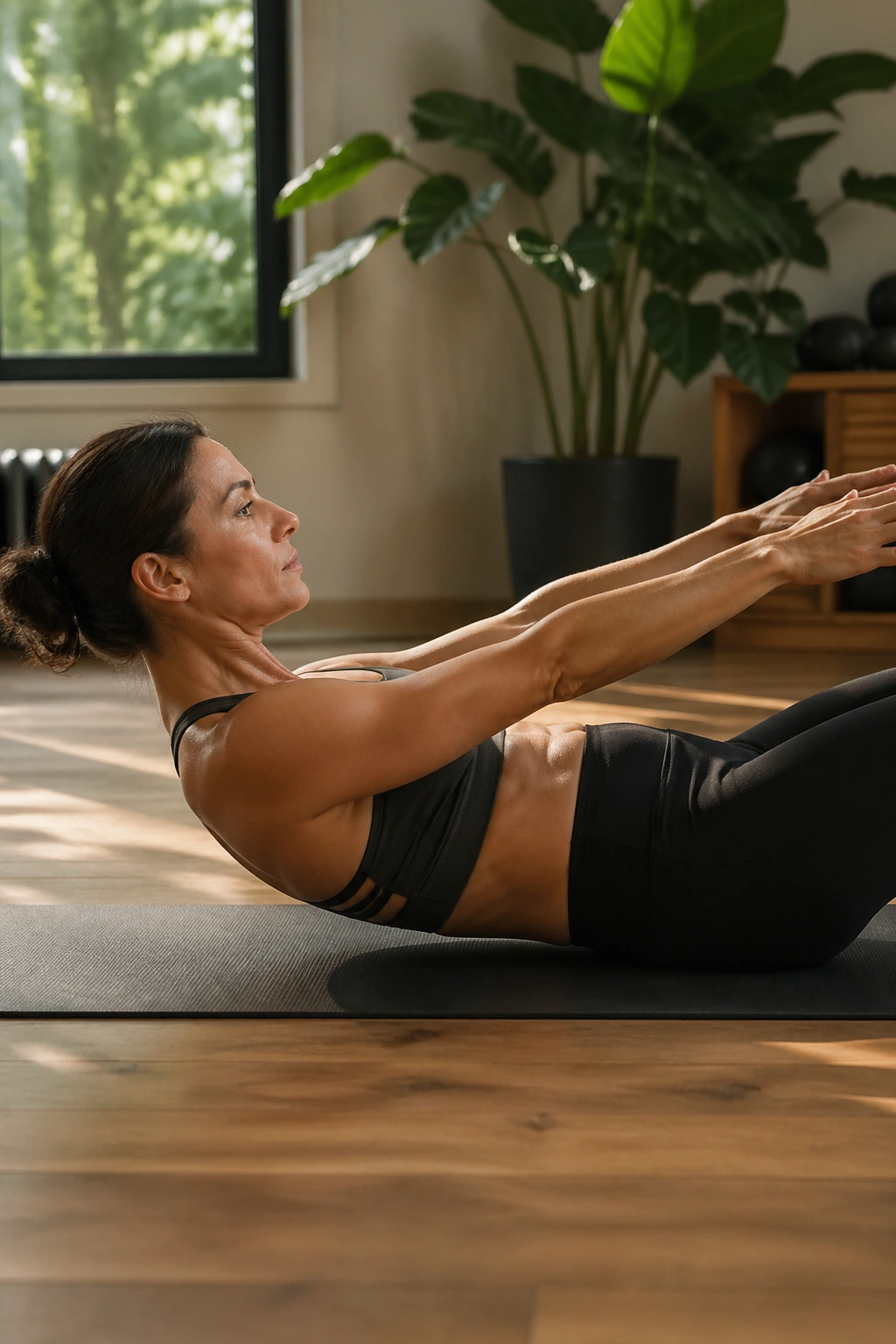
Why do people avoid the roll-up? Because it tells the truth. There is nowhere to hide here. Either the abdominals, hip flexors, and spinal control are doing their job, or the body starts yanking itself upward in pieces.
The nice thing is that the roll-up gives you a long, elegant line when it is done well. You feel each vertebra peel off the mat, then stack back down one by one, which is one of the cleanest ways to build a more upright, toned look through the torso.
Try 5 to 8 slow reps. If straight legs feel brutal, bend the knees a little or anchor the feet under a sofa. On the way up, exhale and imagine the ribs knitting inward. On the way down, resist the floor like you are lowering onto a row of beads.
This one is not about speed. It is about control under load. Slow is the feature, not the flaw.
3. Single-Leg Stretch Core Set
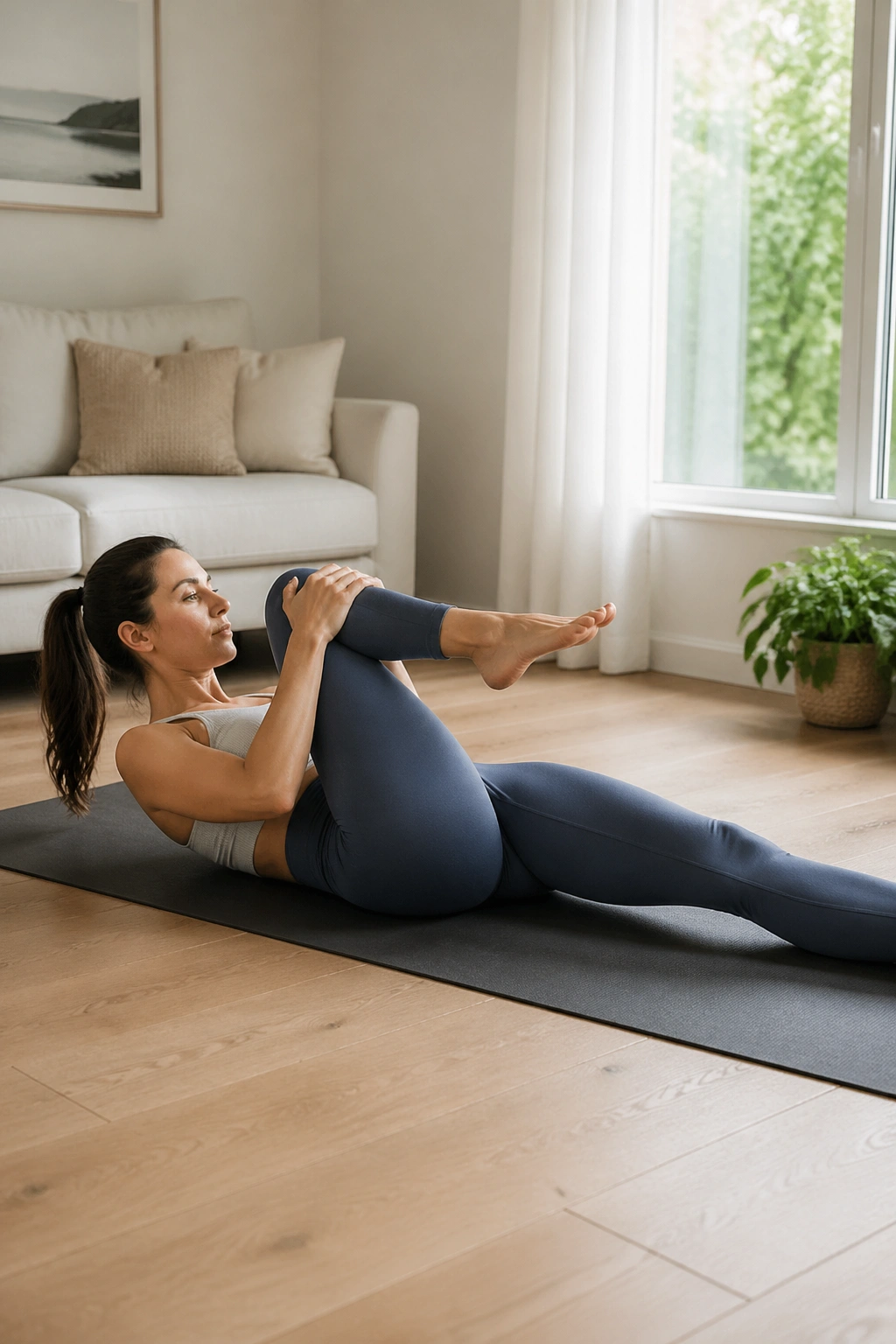
If your neck gets tired before your abs do, this is where a lot of Pilates programs go wrong. The single-leg stretch should make the lower belly work hard while the pelvis stays calm and the neck stays out of the drama.
What makes it different
Unlike endless crunches, this move asks you to stabilize while one leg changes position. That small switch keeps the deep core awake, and the hips have to stop wobbling. It sounds simple. It is not simple when you do it properly.
A clean way to do it
- Lie on your back and draw one knee in.
- Extend the other leg long without letting the lower back pop off the mat.
- Switch sides on each exhale.
- Aim for 8 to 12 switches per side.
Keep your hands light on the shin, not a death grip. The moment you start pulling hard on the leg, the exercise turns into a neck-and-shoulder contest. Leave the shoulders quiet. The abs can handle the work if you stop helping them too much.
4. Double-Leg Stretch and Scissor Series
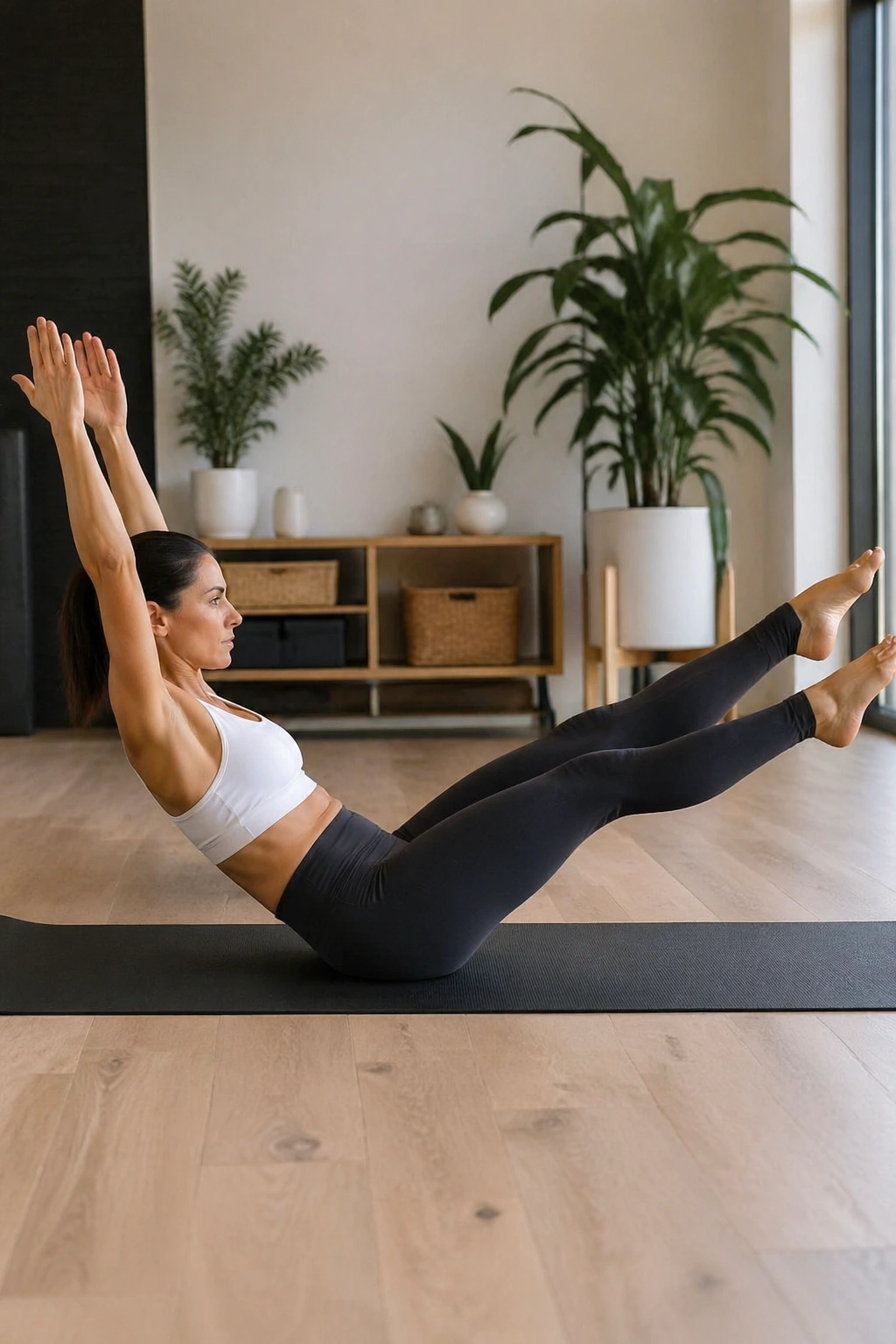
This is the one that makes people laugh a little halfway through, and then stop laughing when the third rep hits. The challenge is not the legs reaching away. It is keeping the spine steady while the levers get longer and longer.
The double-leg stretch gives you that long, lean feeling through the center line. The scissor variation adds a little stretch to the hamstrings and a lot of honesty to the pelvis. If one side of your body is stronger or tighter, you will feel it fast.
A good sequence is 6 double-leg stretches, then 6 scissor switches on each side. Keep the reaching leg low only if your lower back stays anchored. If the back arches, raise the legs a little and keep the work where it belongs.
Quick cues
- Exhale as the arms and legs extend.
- Keep the ribs heavy.
- Do not throw the head back.
- Make each return feel deliberate.
The burn shows up late. That is normal. The control is the point.
5. Crisscross Oblique Burner
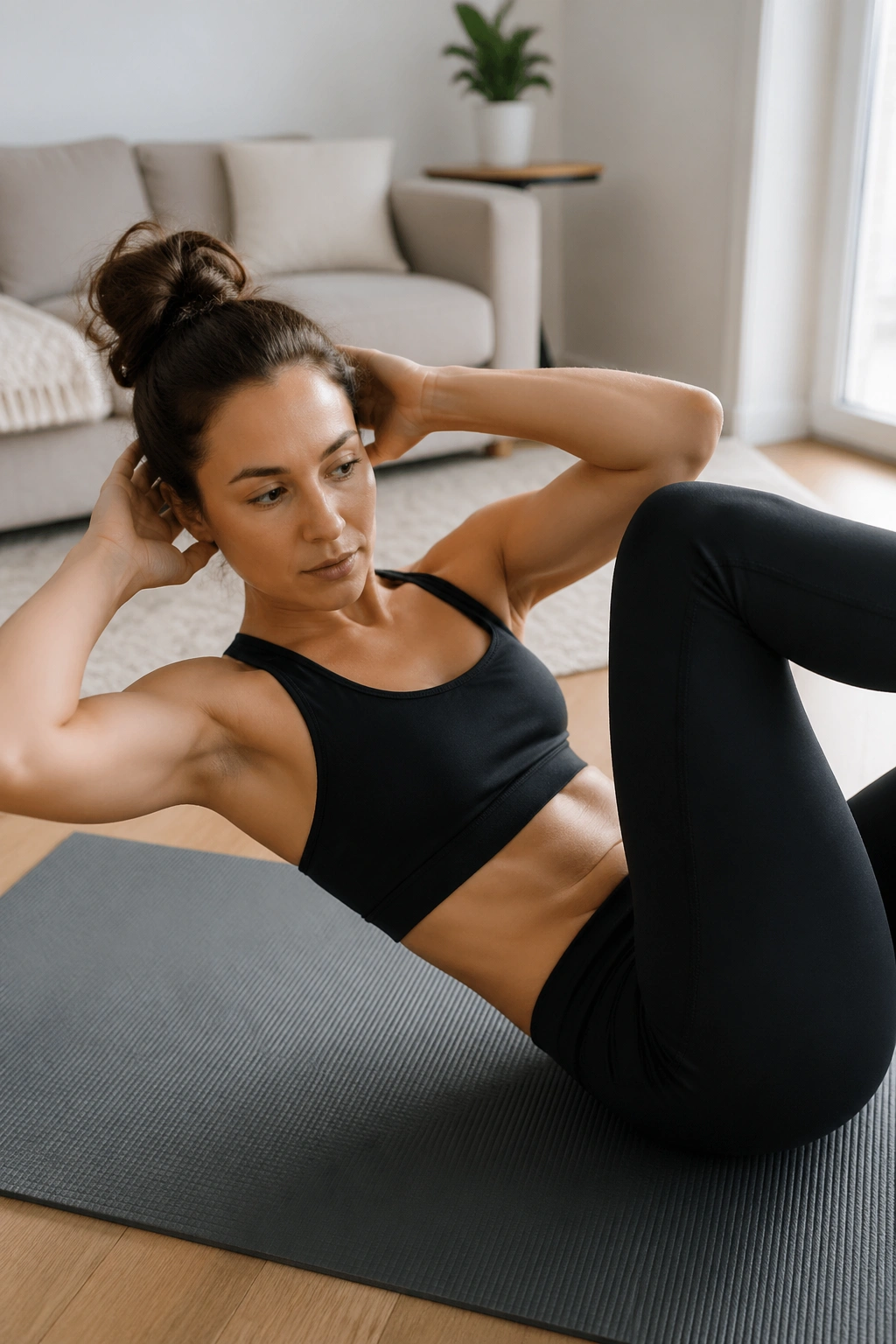
The crisscross is one of those exercises that can look messy in bad hands and gorgeous in good ones. The difference is usually pace. Fast crisscrossing turns into neck pulling. Slow crisscrossing turns into a sharp oblique workout that shapes the waist without the sloppy twist.
The move works best when you think of rotating the rib cage, not yanking the elbow across to the knee. That little shift changes everything. The torso stays long, the pelvis stays quiet, and the obliques have to do the real twisting.
Try 8 to 10 controlled switches per side. Exhale each time the shoulder blade lifts and the opposite leg extends. If the hip flexors start shouting, bring the knees a little closer and shorten the lever.
A lot of people chase ab work that only burns in the front. That is a mistake. The side body matters too, and crisscross brings that into the conversation fast.
6. Shoulder Bridge March and Lift
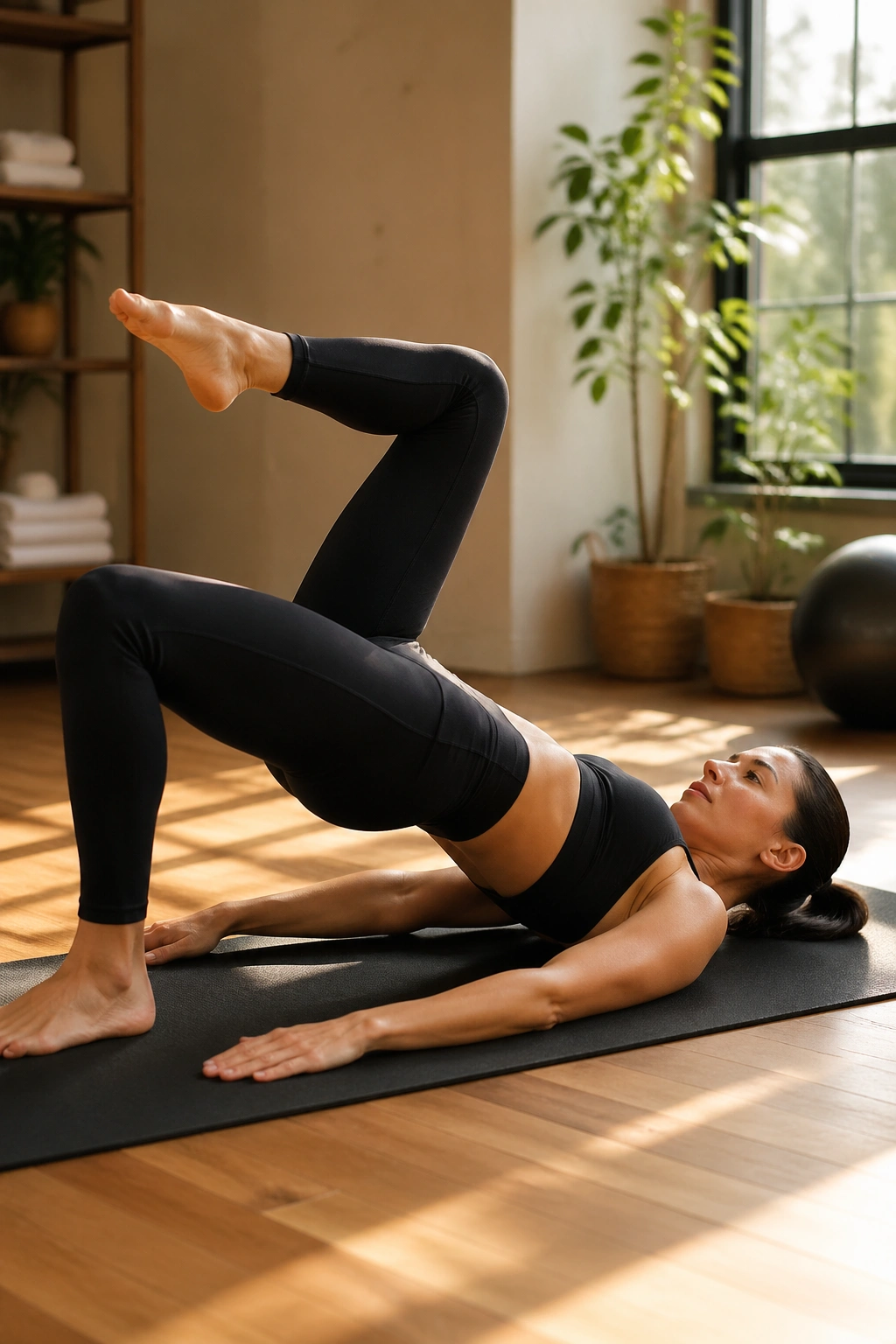
A basic bridge is nice. A bridge with marching is better because it forces the glutes to stay honest. The moment one foot leaves the floor, the pelvis wants to tilt, rotate, or sag a little. That is where the work gets interesting.
The muscles along the back of the body — glutes, hamstrings, lower back, even the upper back — all have to stay awake. The result is not just stronger hips. It is the kind of lifted line that makes standing and walking feel more stable.
Start with 8 bridge marches per side, then hold the bridge for 10 to 20 seconds at the top. Keep the ribs soft and the chin slightly tucked. If the hamstrings cramp, move the feet a little farther away from the seat.
What to watch for
- Hips stay level when one foot lifts.
- Knees point forward, not out.
- The top of the bridge feels like a firm shelf, not a wobble.
This one is a favorite of mine because it feels like back-side training without pounding the joints. Clean, quiet, effective.
7. Side-Lying Inner Thigh Pulse Set
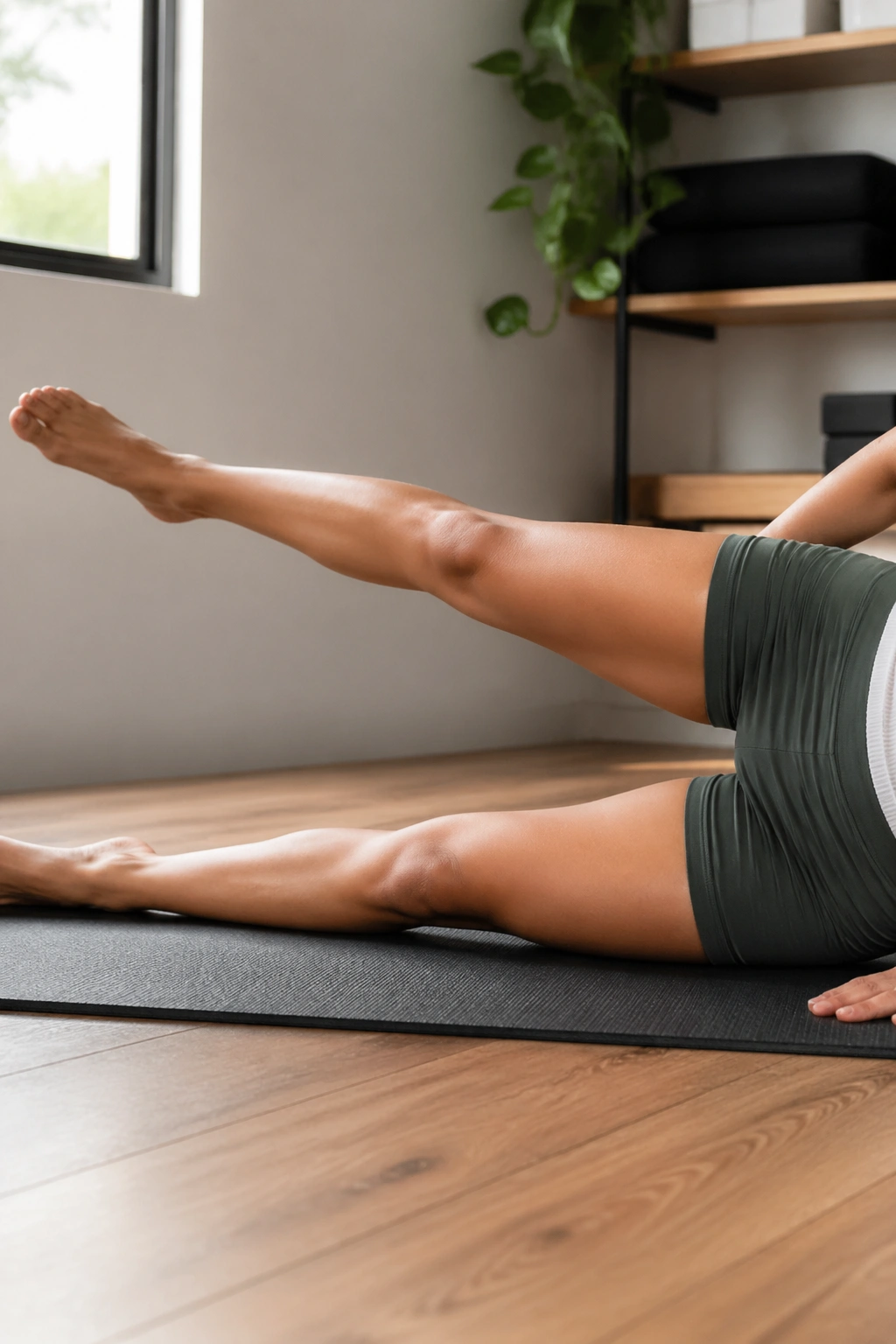
The inner thigh series is boring for about thirty seconds, and then it gets mean in the best possible way. Side-lying work looks tiny, but the adductors, glutes, and deep hip stabilizers have to coordinate under a very awkward angle.
Why it works
A lot of people train the outer hip and forget the inside line of the legs. That leaves the pelvis a little loose and the knees a little sloppy. Side-lying inner thigh lifts help tighten that up, which matters more than most people think when they want the lower body to look tidy and strong.
Lie on your side, bottom leg straight, top leg crossed over for support if needed. Lift the bottom leg 12 to 15 times, then add 10 small pulses at the top. Keep the toes pointing forward or slightly down so the hip does not roll open.
How to make it count
- Press the waistline away from the floor.
- Move slowly enough to avoid swinging.
- Keep the neck long and the shoulder relaxed.
- Stop the set when the lower back starts twisting.
The smaller the motion, the less room the body has to cheat. That is usually where the good stuff happens.
8. Side Kick Series for Long Legs
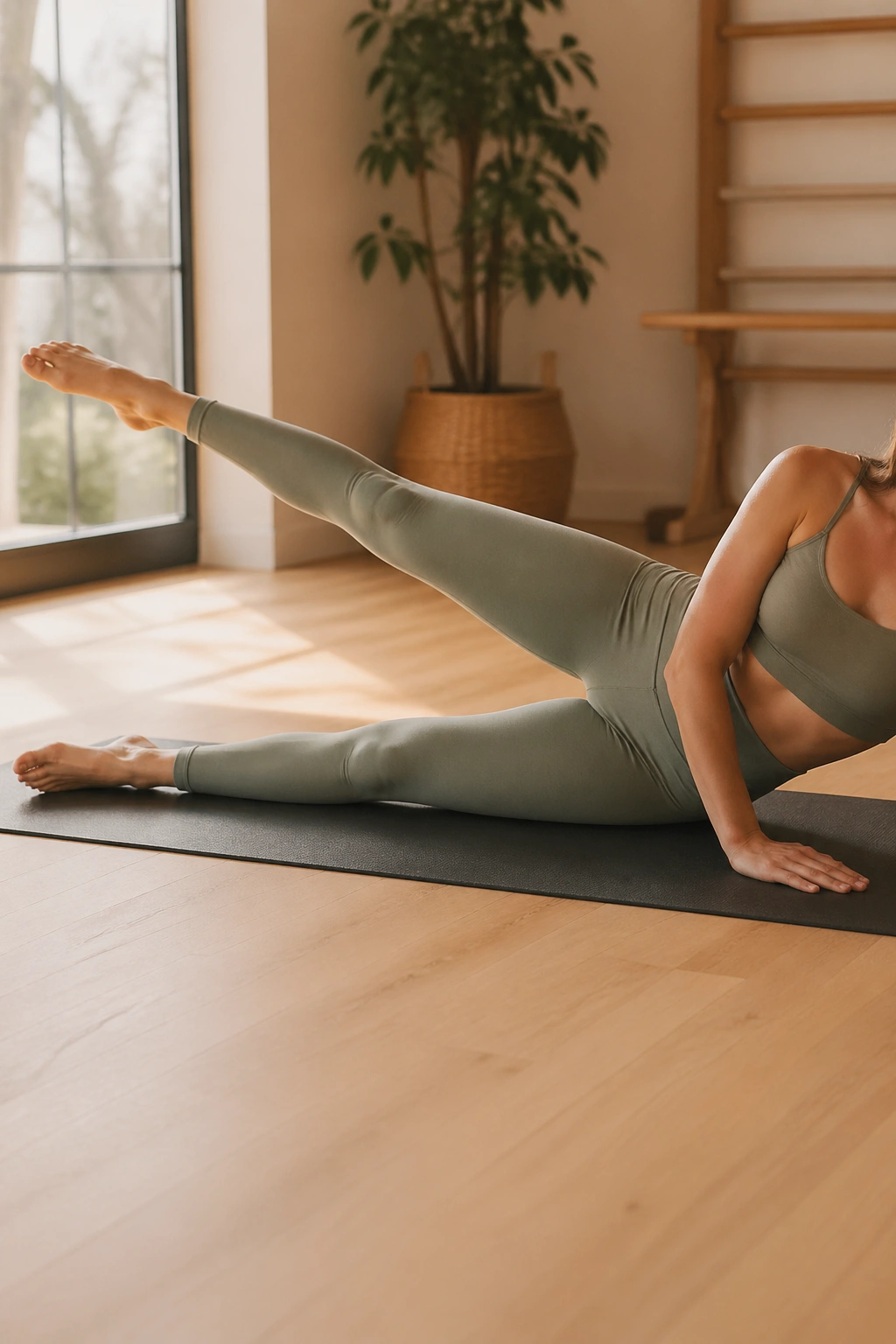
The first thing you notice in side kicks is how fast the standing hip in the air starts begging for mercy. The second thing you notice is that the leg does not need to go very high to work hard. High kicks are not the goal here. Control is.
A clean side kick series makes the outer hip, inner thigh, and waistline all share the load. It also teaches the pelvis to stay stacked while the leg moves through front-and-back swings or tiny circles. That is the kind of control that changes how the body carries itself.
Do 8 forward-back kicks and then 8 circles each direction. Keep the top shoulder quiet and the foot flexed on the forward reach. If your lower back starts arching, shorten the range by half.
The best side kick work looks almost too small to matter. Then the supporting hip starts shaking. That is the real rep.
9. Clam Shell and Fire Hydrant Combo
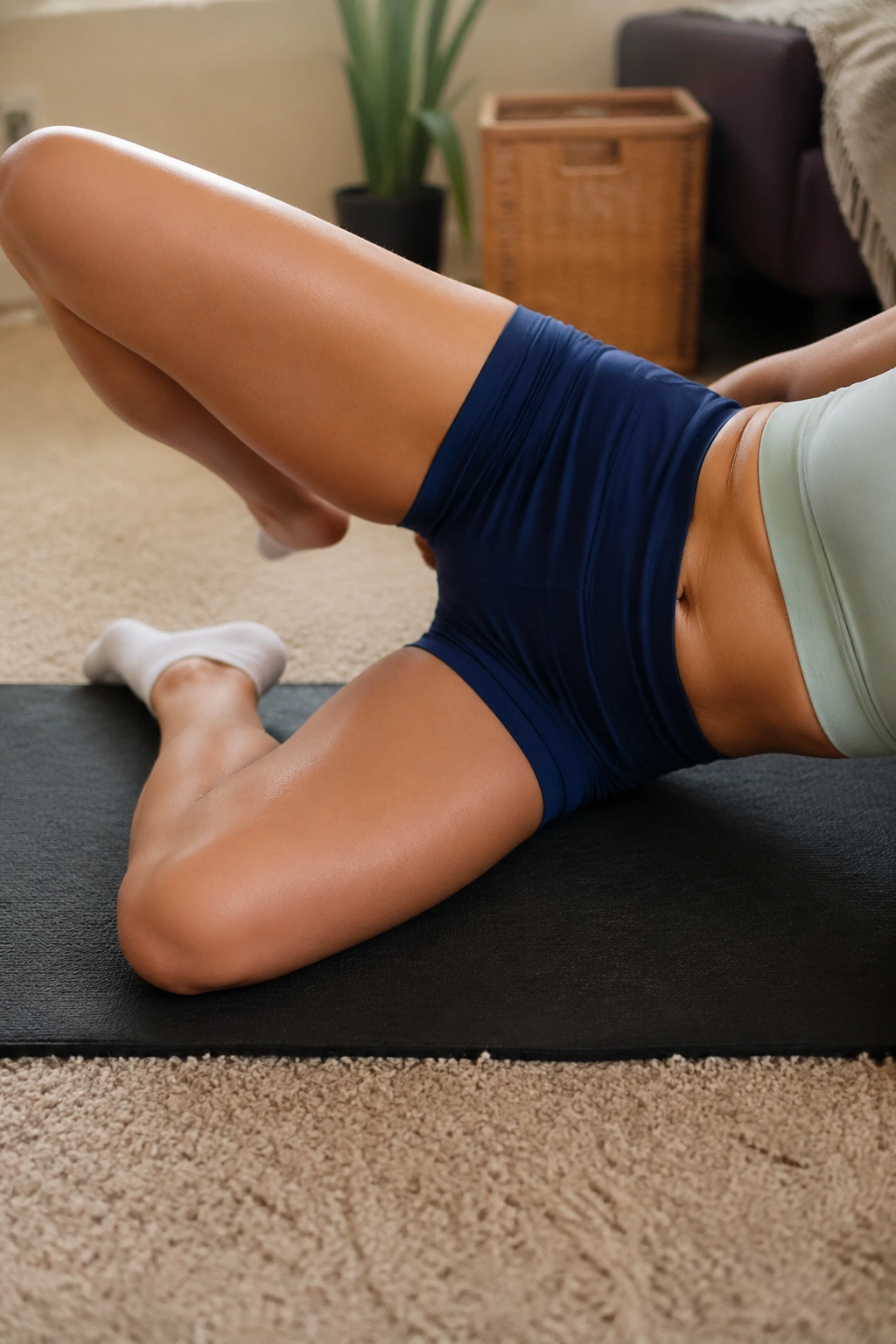
Glute work is not all about squats. I know that sounds contrarian, but it matters. The small muscles on the side of the hip — especially the glute medius — are huge for shape, balance, and keeping the knees from collapsing inward during standing work.
Clams and fire hydrants hit that area in a way that feels very Pilates: precise, controlled, and a little annoying if you try to rush it. Add a mini band above the knees if you want more resistance, or keep it bodyweight if your hips are tight.
A simple combo is 12 clams per side, then 10 fire hydrants per side. Keep the pelvis square and the torso still. If the lower back twists, you have gone too far or too fast.
Best use
- Warm-up before standing leg work.
- Finish a lower-body session.
- Pair with bridges for a short glute circuit.
The payoff is subtle at first. Then your balance improves, and the outer thighs stop feeling like dead weight.
10. Swan Prep and Swimming Back-Line Flow
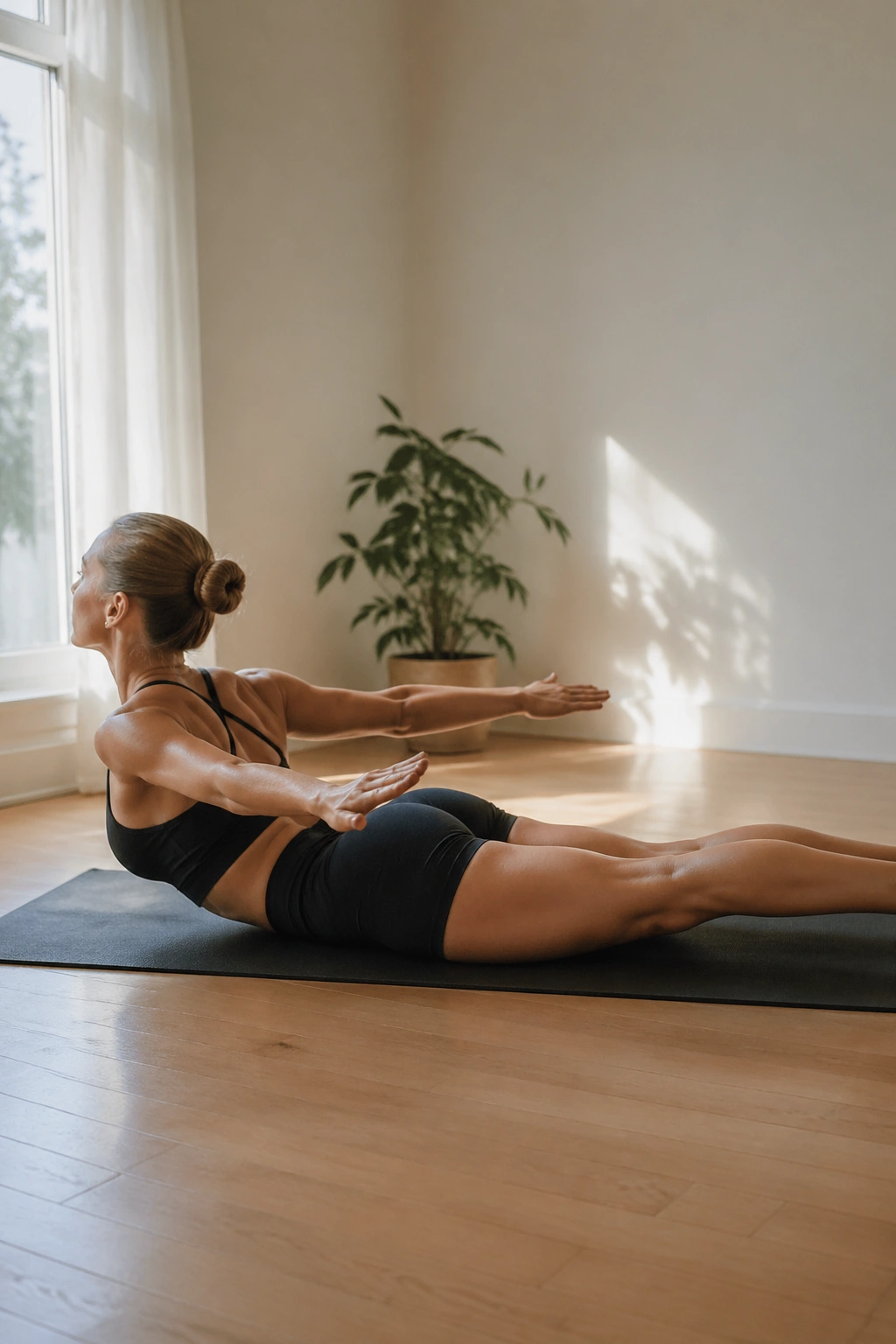
The back side of the body deserves more attention than it gets. People spend plenty of time trying to flatten the stomach, then wonder why they still look folded forward. Swan prep and swimming change that by asking the spinal extensors, glutes, and upper back to work together.
A short swan prep lifts the chest without cranking the neck. Swimming keeps the limbs active while the torso stays long. Put together, they create a back-line burn that feels athletic in a very quiet way.
Try 6 swan prep lifts, then hold a gentle swim for 20 to 30 seconds. Keep the pubic bone grounded and the gaze slightly forward, not straight up at the ceiling. If your lower back pinches, reduce the lift immediately.
This is one of the best Pilates workouts for anyone who sits too much. The posture change is hard to miss after a while. Your upper back starts to feel like it remembers its job.
11. Plank to Pike Pilates Flow
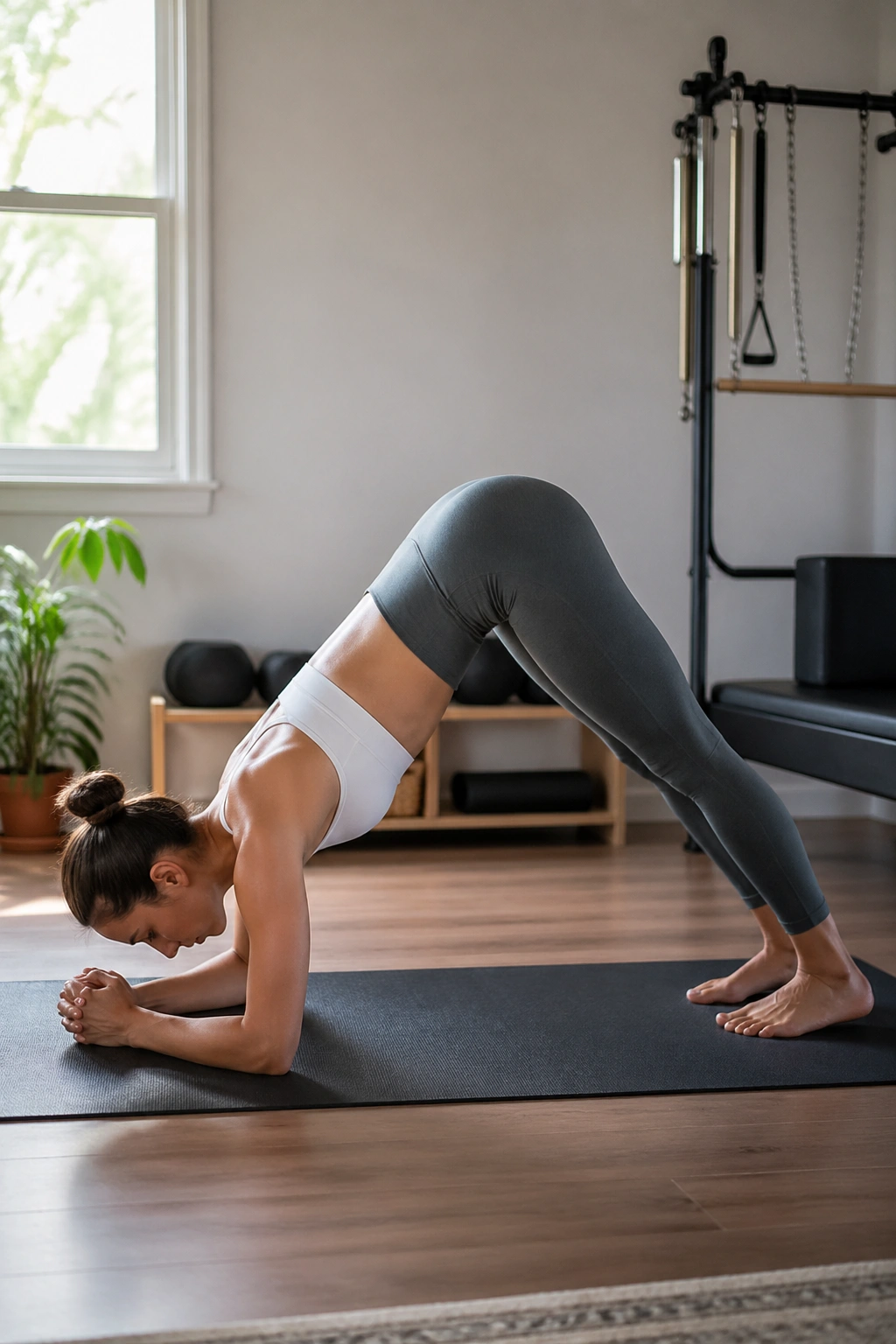
Can a plank still count as Pilates? Absolutely, if the tempo is controlled and the center stays honest. The plank-to-pike flow turns a static hold into a full-body challenge, and the core has to work harder because the hips are moving against gravity.
Unlike a rushed fitness plank, this version asks for shape first. The shoulders stay stacked, the ribs stay pulled in, and the pike comes from the abs and hip flexors rather than a desperate hop backward. That difference shows up fast in the way the body feels.
Use 5 to 8 pike reps from forearms or hands, whichever keeps the wrists happy. If the hamstrings are tight, bend the knees a little on the way up. If the shoulders sag, shorten the set.
Who this suits
- People who want more upper-body tone.
- Anyone who gets bored by floor-only core work.
- Reformer users who want a mat substitute.
The body learns a ton from holding shape under pressure. This drill teaches exactly that.
12. Pilates Push-Up and Tricep Reach
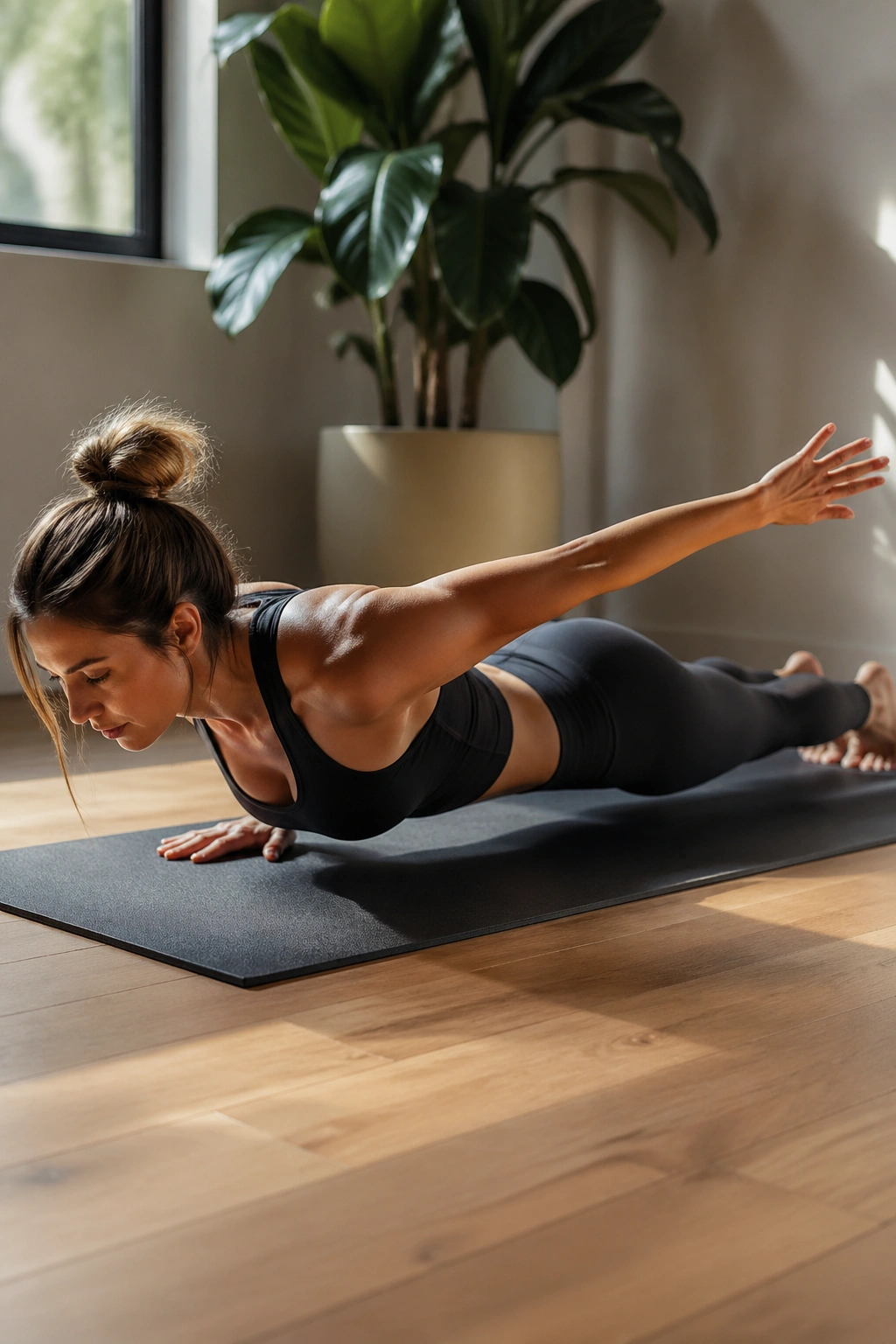
Two-pound weights can humble people faster than they expect. So can a proper Pilates push-up, which is nice in a grim sort of way. The point is not to drop for speed or chase fatigue with sloppy reps. The point is to build arms that look strong because they can hold position.
A classic Pilates push-up often starts standing, rolls down, walks out to plank, lowers with control, and returns. Add a tricep reach or elbow bend if you want more arm work. Keep the elbows tracking back, not flaring out like wings.
Do 3 to 6 slow reps if you are new, or 6 to 10 if you already move well through the shoulders. When the wrists complain, do the plank from forearms or elevate the hands on a sturdy bench.
One clean rep beats three messy ones. That rule saves a lot of shoulders.
13. Teaser Progression Ladder
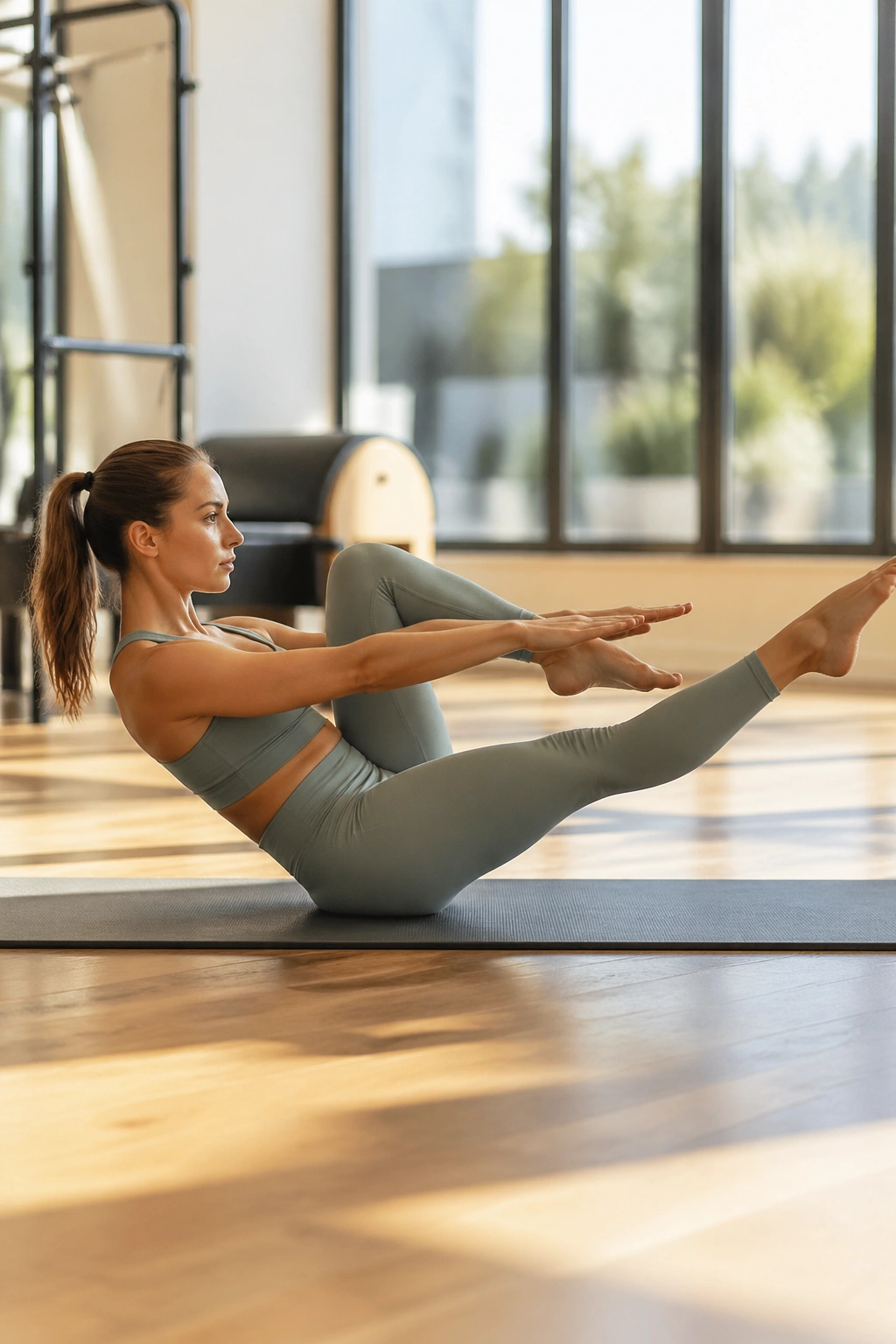
Why is teaser still the exercise people talk about with a mix of pride and dread? Because it asks for everything at once: core strength, hip flexor control, balance, and patience. Nobody can fake teaser for long.
What makes teaser hard
The legs and torso are trying to hold a hollow shape while gravity keeps tugging you open. If the abs are weak, the body folds. If the hip flexors dominate, the lower back grips. If the arms are lazy, the whole thing feels floppy.
How to build it
- Start with one knee bent and one leg long.
- Roll halfway up and hold for 3 to 5 breaths.
- Reach one arm at a time if full teaser is too much.
- Lower with control, not a drop.
A good teaser progression feels like a balance between strength and coordination. That is why it earns its place in a lean-toned Pilates rotation. The torso has to look long even while it works hard, and that long line is part of the visual change.
14. Kneeling Arm Series with Light Weights
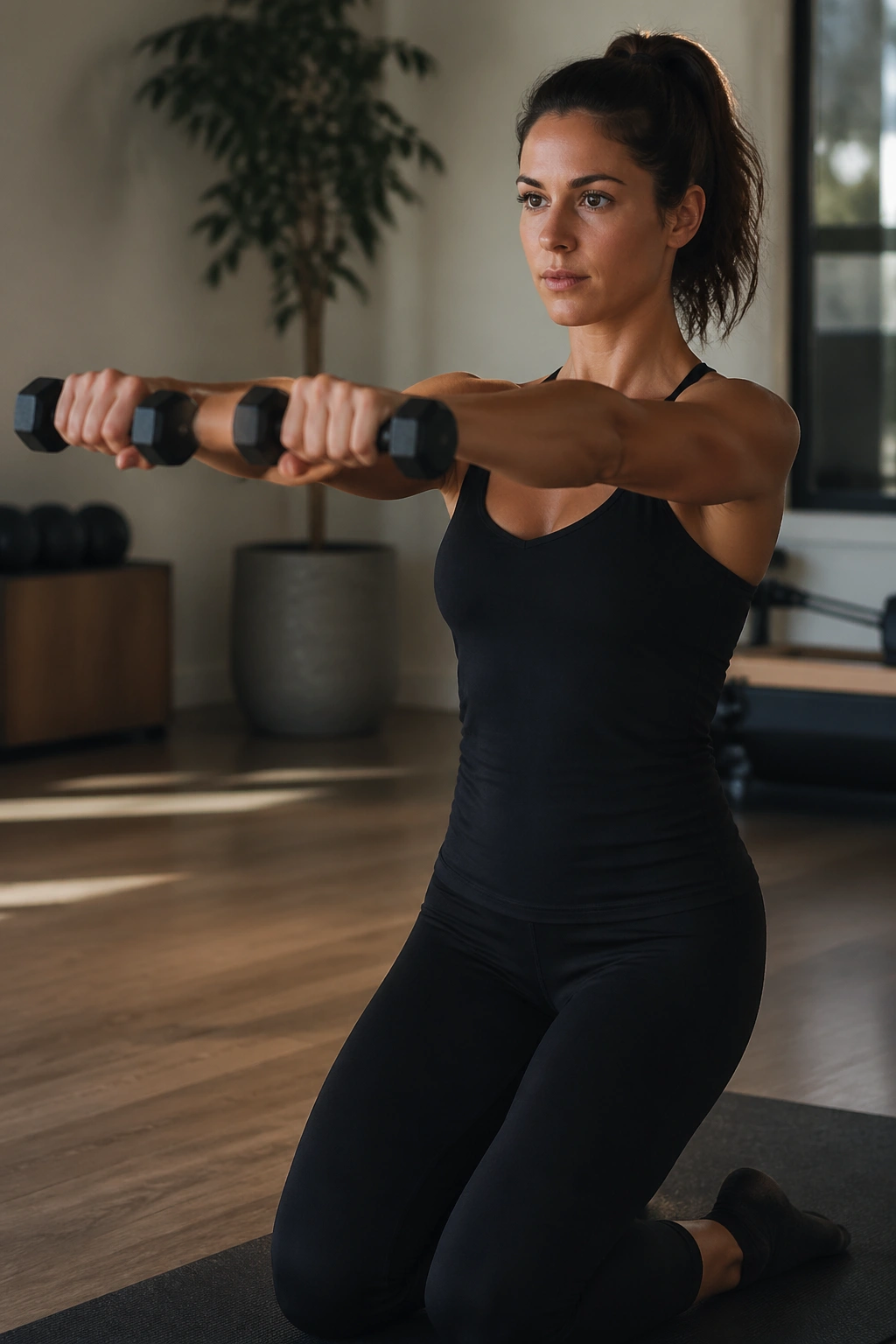
A kneeling arm series is sneaky. The weights are tiny, the range is small, and the shoulders start to feel cooked anyway. That is exactly why it belongs in a Pilates plan for shaping the upper body without bulky, rushed lifting patterns.
Keep the weights around 1 to 3 pounds if you want to protect the neck and avoid swinging. Do front raises, lateral lifts, and tricep extensions from a tall kneel or seated position with the ribs stacked over the pelvis. The knees ground the lower body so the arms can work without the rest of the body stealing the show.
This one is especially good after core work because the posture demand stays high. The body wants to slump when the delts fatigue. Don’t let it.
A few clean cues
- Lift to shoulder height, not higher.
- Pause for one count at the top.
- Lower slowly for 3 counts.
- Keep the chin level and the neck long.
The burn is small and relentless. That is Pilates in a nutshell.
15. Standing Leg Series for Balance and Shape
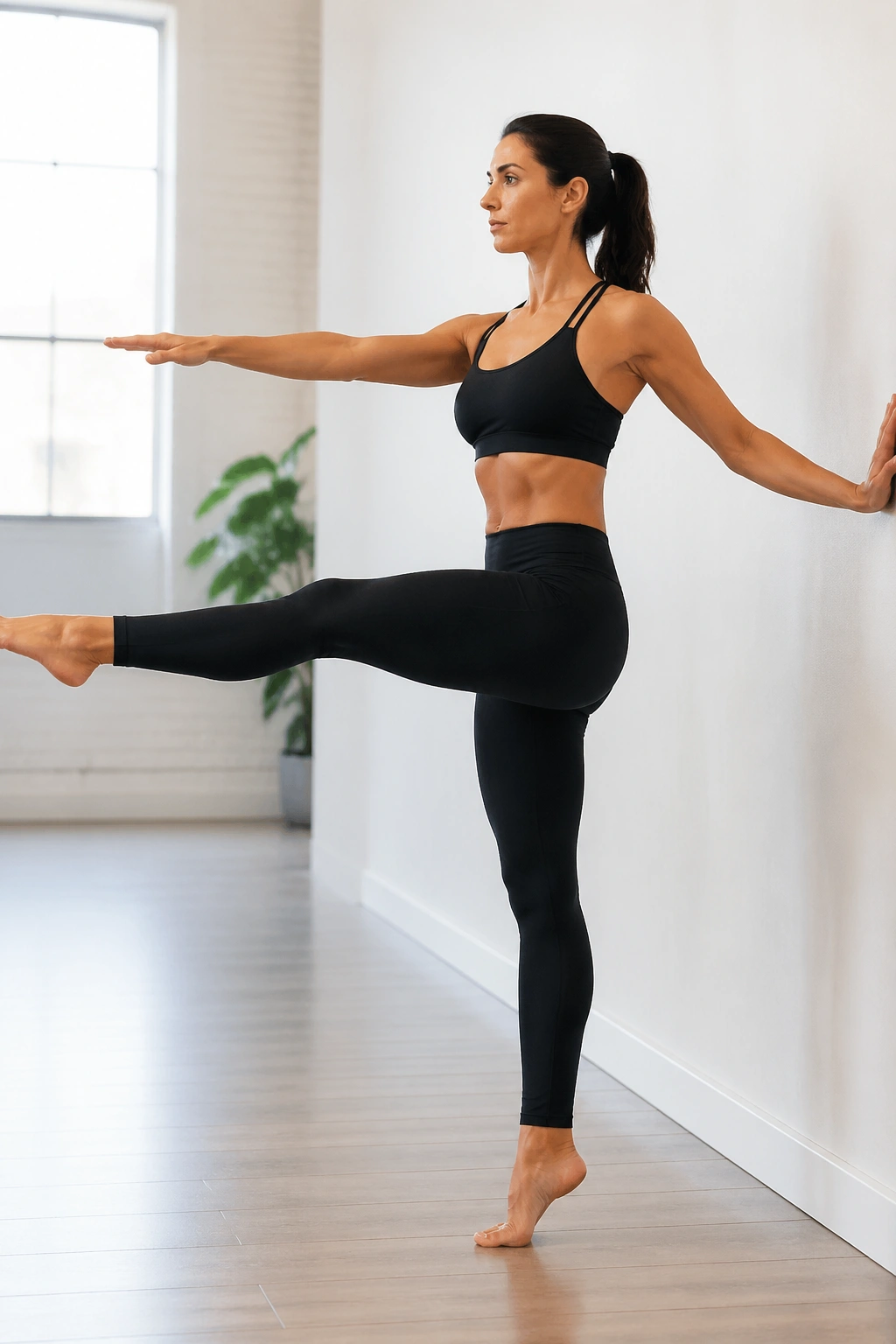
Mat work is useful, but standing work changes the game because it puts balance into the mix. The muscles have to organize the whole body, not just the segment lying on the floor, and that creates a more useful kind of strength for everyday life.
Standing leg lifts, rear extensions, heel raises, and small pulses are all fair game here. Try 8 to 12 reps per side for each pattern. Keep one hand on a wall or chair if you need it. Removing the wobble is not cheating. It is smart.
Compared with floor leg series, standing work usually hits the glutes and outer thighs in a way that feels more functional. The pelvis has to stay level while the torso remains tall. That is hard. It is also what gives the lower body a more controlled look.
If you only have time for one lower-body Pilates workout, this type deserves a spot. It trains shape and balance at the same time, which is a nice deal.
16. Standing Side Bend and Mermaid Flow
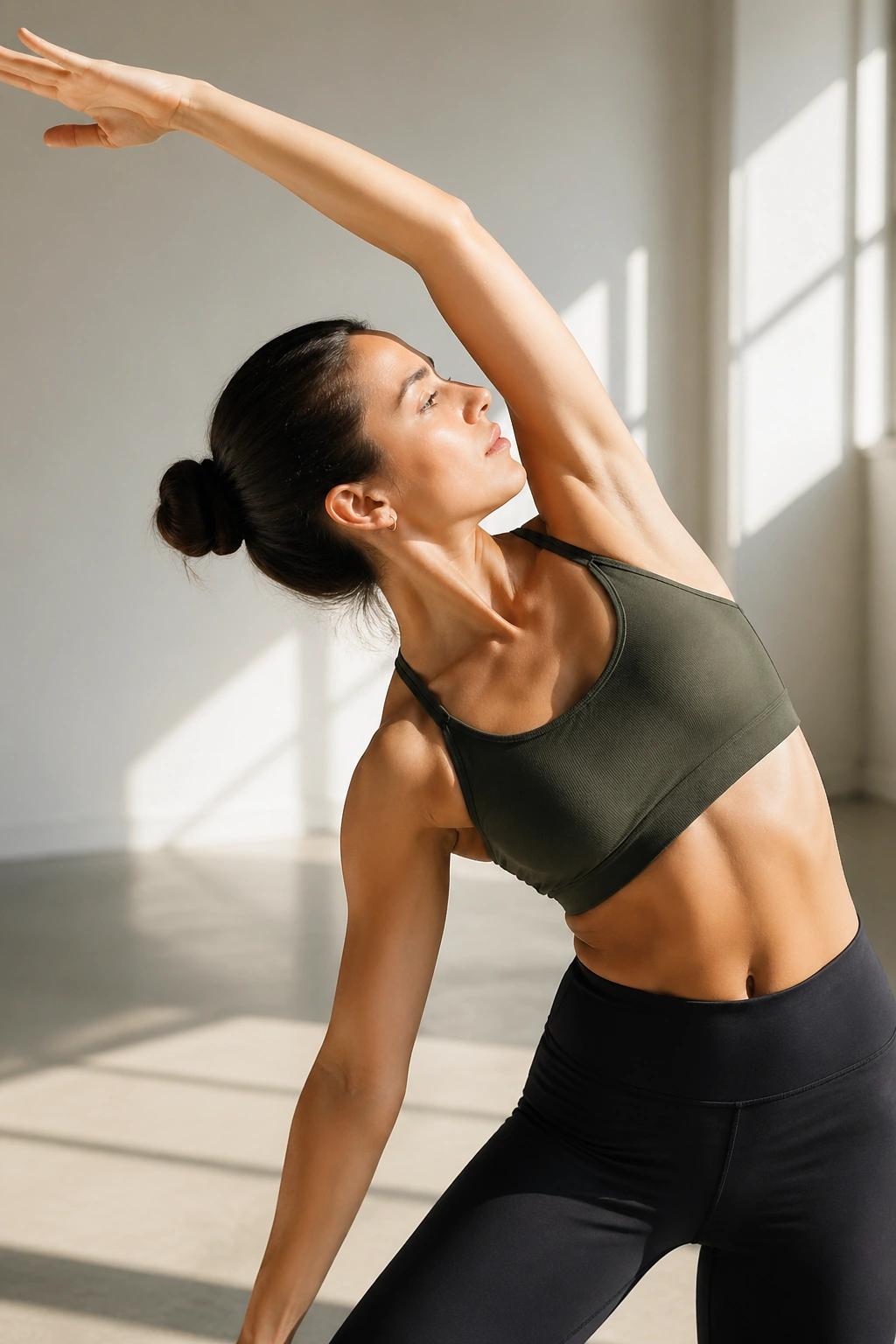
The side body gets ignored until a shirt pulls across the waist a certain way and you suddenly notice everything is folding forward. Standing side bends and mermaid-style reaches fix that by opening the ribs, stretching the lats, and waking up the obliques without beating the waist into submission.
The feeling should be long, not collapsed. Reach one arm overhead, side bend away from the grounded hip, then return with control. Add a soft torso rotation if you want a little more mobility. Keep the neck free and the shoulders away from the ears.
A clean sequence is 4 to 6 side bends per side, followed by 3 slow mermaid rolls. Breathe into the open side of the ribs on the way up. On the way down, keep the standing foot rooted like you are pressing into the mat through the heel and big toe.
This is the sort of work that makes the body look less compressed. Not dramatic. Just cleaner.
17. Forearm Plank Shoulder Tap Circuit
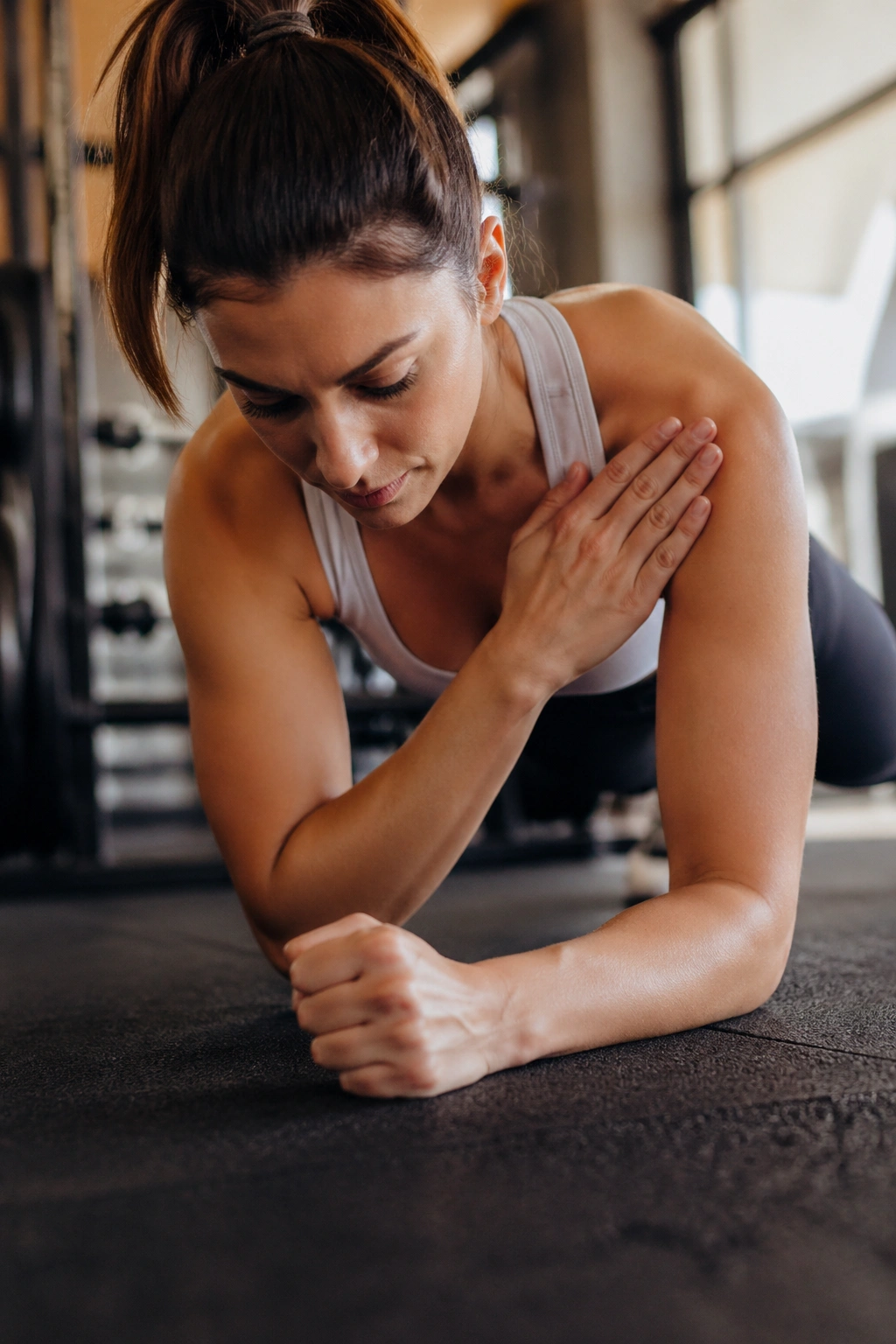
Can you get a core workout from tapping one shoulder? Absolutely, if the hips do not wobble like a loose shopping cart. The forearm plank shoulder tap is an anti-rotation drill, which means the body has to resist twisting while one arm leaves the floor.
That is a very Pilates problem. The center holds, the shoulders stabilize, and the trunk learns how to stay tidy under pressure. If the hips shift side to side, shorten the lever by widening the feet or dropping the knees.
How to keep the body steady
- Start in forearm plank with feet a little wider than hips.
- Tap one shoulder, then the other.
- Move for 20 taps total or 30 seconds.
- Keep the gaze between the hands so the neck stays relaxed.
This one is easier to respect than to love. Still, it earns its place because the waist, shoulders, and lower abs all have to cooperate. That sort of coordination shows up in a leaner, more controlled look over time.
18. Mini Band Glute Medius Set
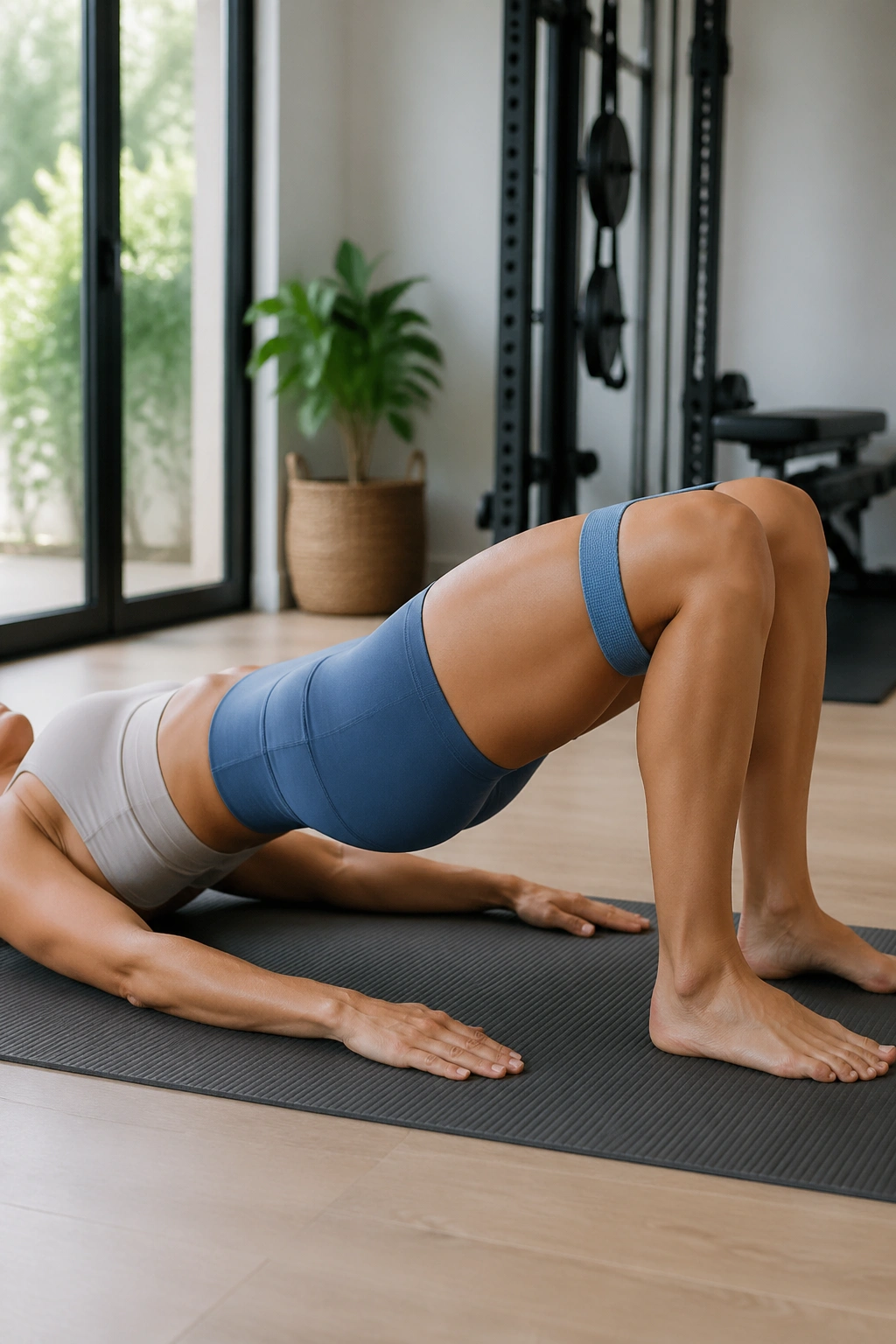
A mini band can turn a polite workout into a serious one in less than a minute. Put it above the knees or around the ankles, and the outer hips start working hard to keep the legs from drifting inward. The glute medius gets the spotlight, and the whole lower body usually looks more stable for it.
Do 12 to 15 bridge presses, then 10 standing side steps each way, and finish with 10 clam presses if you want a short circuit. The feet stay grounded, the knees track in line with the second toes, and the band stays under constant tension.
A lot of people think glute training has to look big to matter. It doesn’t. Tiny band work can change how your pelvis sits, how your knees track, and how polished your lower-body alignment looks when you walk.
Best way to use it
- As a warm-up before squats or lunges.
- At the end of a leg day.
- On recovery days when you want movement without impact.
The band should feel annoying within the first set. If it doesn’t, step up the resistance.
19. Reformer Footwork and Long Box Option
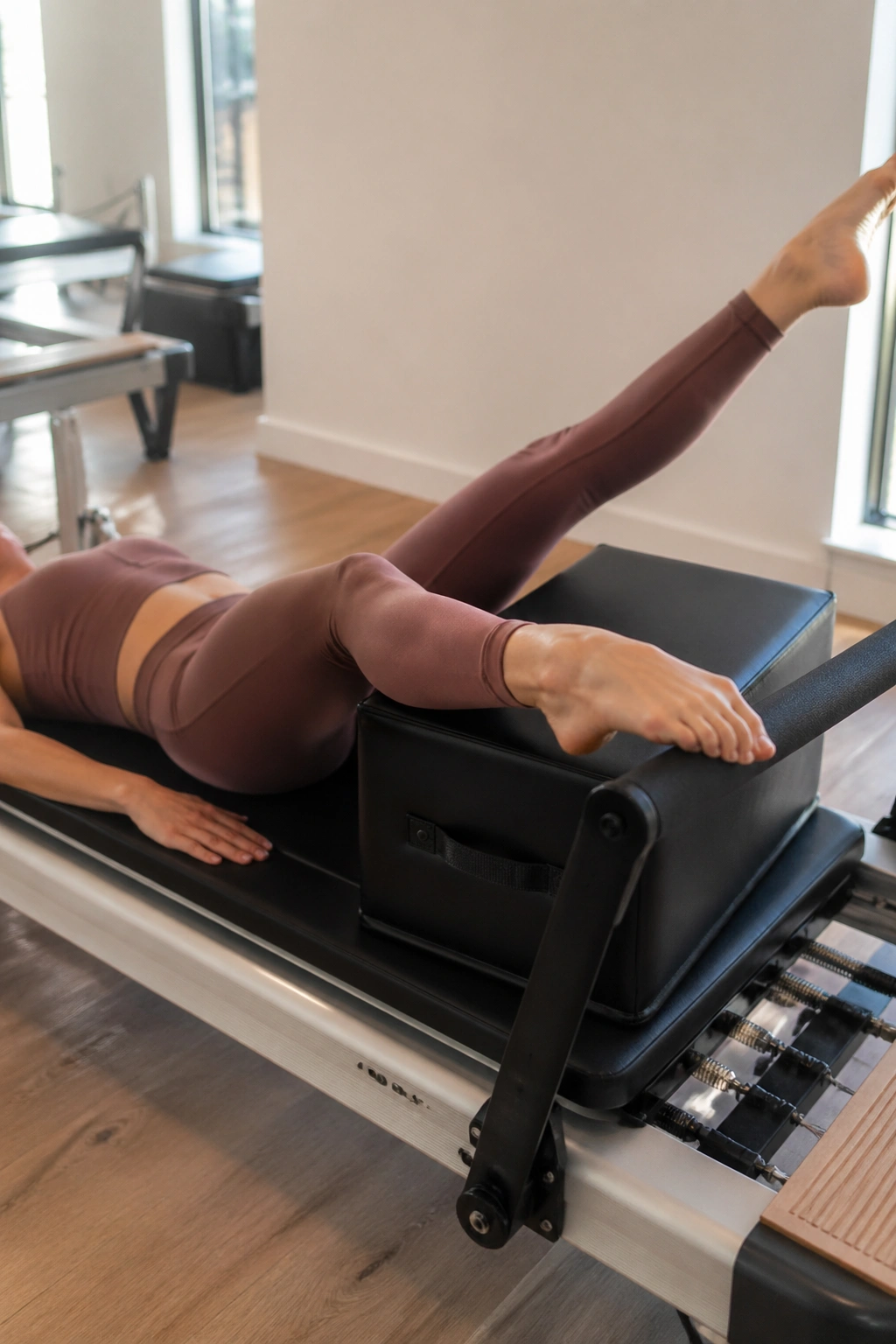
If you have access to a reformer, footwork deserves a place near the top of the list. It looks simple, but it gives you precise resistance through the legs while the pelvis stays stable on the carriage. That makes it one of the cleanest ways to train the thighs and glutes with a long, controlled line.
The classic foot positions — heels, arches, balls of the feet, and a wide Pilates V — all load the legs a little differently. Use 8 to 12 presses in each position, then pause and feel whether one side is working harder than the other. It usually is.
A long box adds another angle. Lying prone over the box for pulling straps or swimming-style arm work hits the upper back and glutes at the same time, which gives you a more balanced look from shoulder to heel. If you do not have a reformer, a mat with resistance bands can cover some of the same territory, but it will not feel quite the same. The machine gives you feedback. You cannot fake that feedback.
If you like precise work and hate guessing, this is one of the strongest Pilates workouts on the list.
20. The Slow Full-Body Finisher
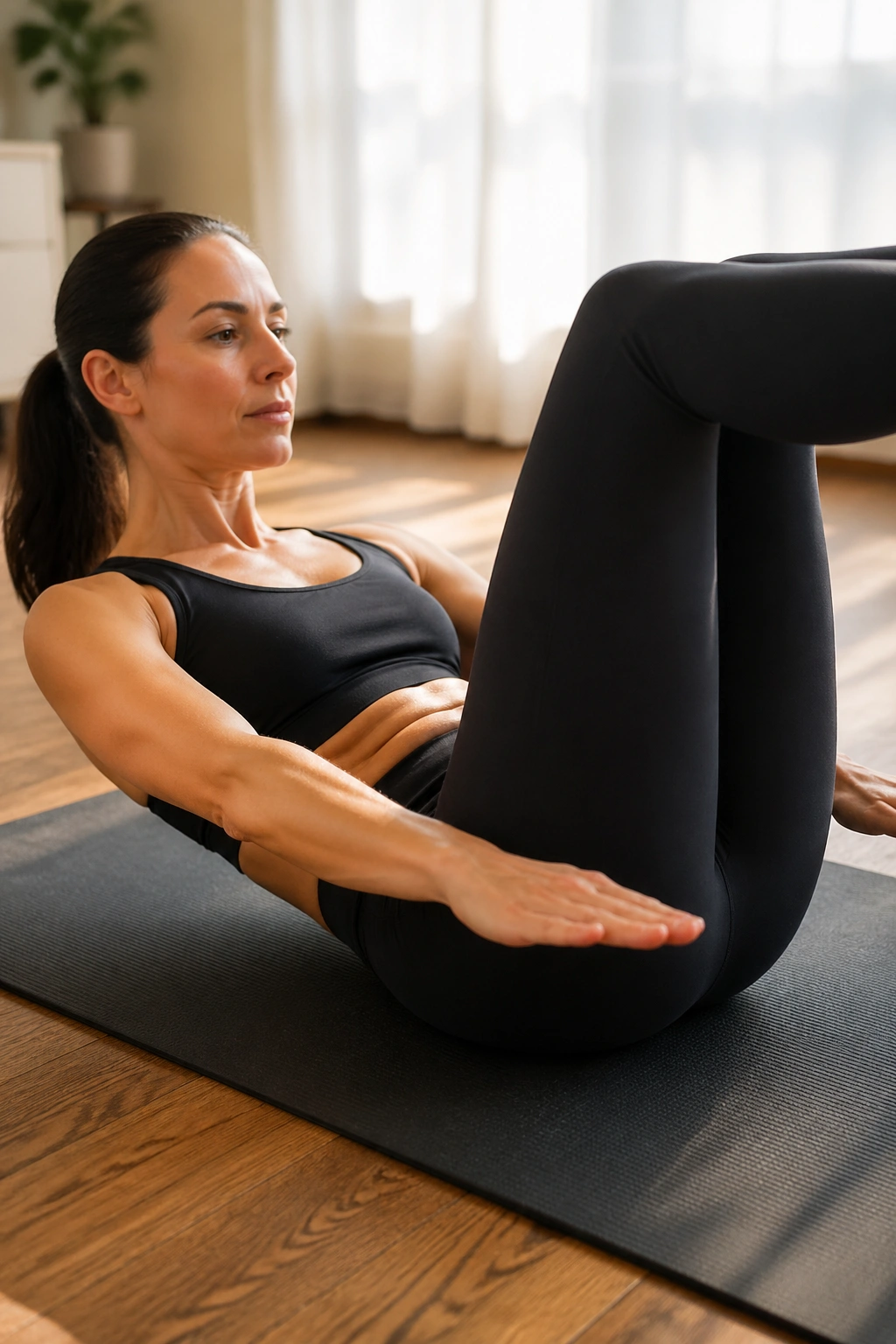
A good finisher should leave you feeling longer, not wrecked. That is the feeling I look for at the end of a Pilates session, and this sequence gets there without much fuss: roll down, bridge, side plank, mermaid, then a long breath in child’s pose or a seated fold.
The pace matters more than the moves themselves. Move through one roll-down, 6 bridges, 20 to 30 seconds per side plank, then 3 mermaid reaches per side. Keep everything smooth enough that the breath never fully disappears. If it does, you are working too hard for the point of the set.
This is the workout I would save for days when the body feels a little flat and needs shape without punishment. It is also a smart closer after one of the tougher core or glute sessions above. The spine gets length, the hips get reset, and the shoulders stop carrying their usual nonsense.
Hold the last breath a second longer than feels necessary. Then stand up slowly. That tall, settled feeling is the whole reason Pilates keeps its place in real training plans, and it is the part people tend to notice first once they stick with it.
