



A stiff back does not usually want a heroic stretch. It wants small, clean movement — the kind that warms the spine without yanking it.
Pilates stretches for stiff backs work best when you treat the back as part of a chain, not a single problem area. Hips, ribs, shoulders, and breath all matter, and a lot of the “back tightness” people feel is really the body bracing after too much sitting, too much standing in one place, or too many hours spent folded over a screen.
There’s a catch, though. If the stiffness comes with sharp pain, numbness, tingling, or pain that shoots down the leg, stretching is not the place to get brave. That needs a different level of attention.
The best work here feels almost underwhelming at first. A good Pilates sequence should leave your back feeling more open, your ribs easier to breathe into, and your hips less bossy — and that starts with the first gentle tilt on the mat.
1. Pelvic Tilts to Unstick the Lowest Part of the Spine
If your back feels welded in place, I would start here. Pelvic tilts are the simplest Pilates move for a stiff low back, and that is exactly why they matter. They do not ask for a big range. They ask for attention.
Lie on your back with your knees bent and your feet flat. On the exhale, tip your pelvis so the lower back gently meets the mat; on the inhale, return to a neutral curve. That tiny rock teaches the lumbar spine to move without panic. I like this one because it feels almost too small while you’re doing it, then you stand up and notice your back stopped gripping quite so hard.
What it should feel like
- The movement comes from the pelvis, not the shoulders.
- Your belly firms lightly, not hard.
- The ribs stay soft and quiet.
- Your neck stays loose enough that you could still breathe through it, if that makes sense.
Do 8 to 10 slow reps. If the motion feels pinchy, cut the range in half. Do not press the low back flat with force; that turns a friendly mobility drill into a stiff little shove.
2. Cat-Cow to Smooth Out a Stiff Back
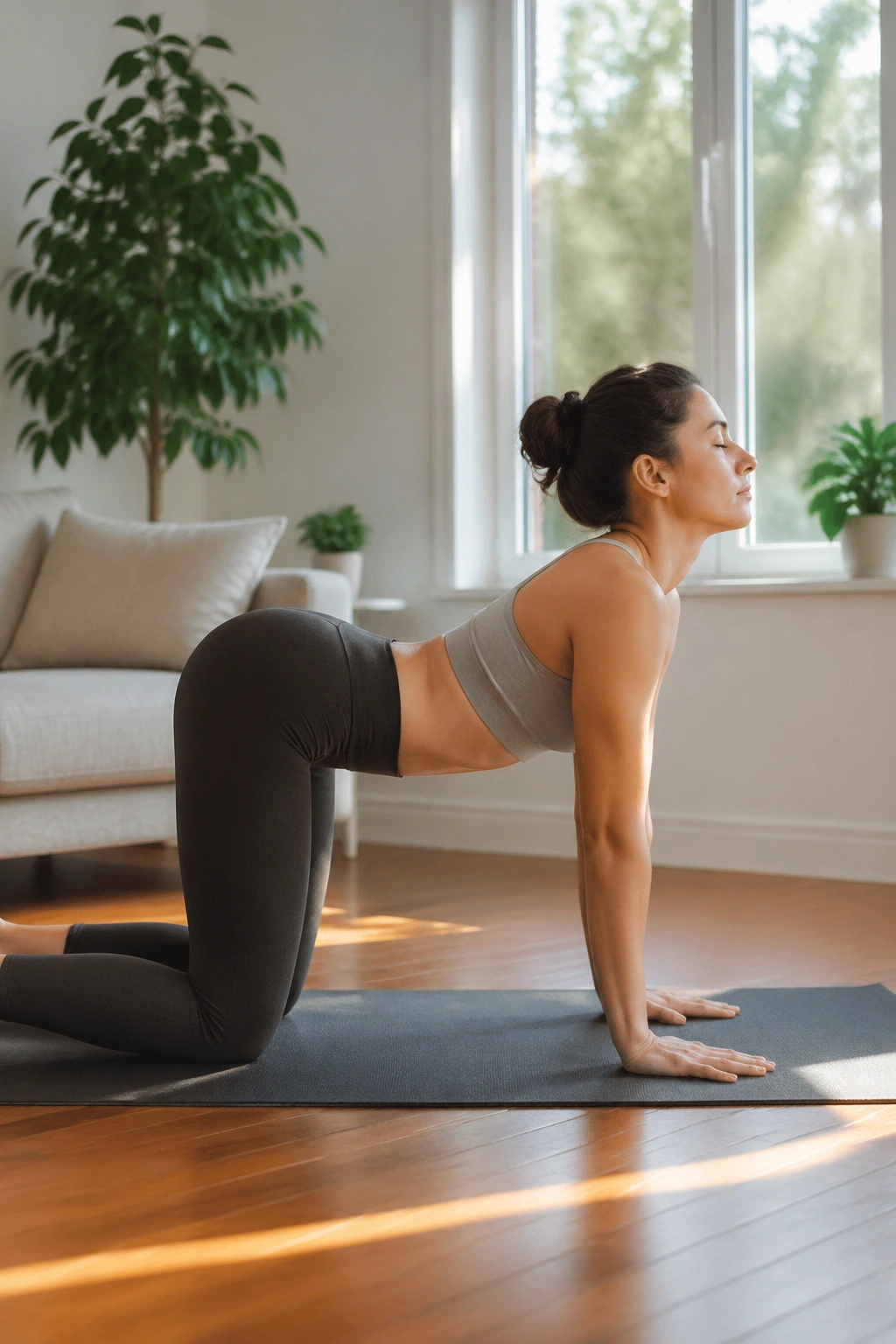
Why does Cat-Cow show up in so many Pilates back warm-ups? Because the spine likes rhythm. It likes the sense that one curve can melt into the next without a fight.
Come onto hands and knees with your wrists under your shoulders and knees under your hips. Exhale and round the back, tucking the tail and letting the head follow. Inhale and lengthen, letting the chest move forward a little as the tail tips back. The motion can be tiny. It should be tiny at first.
Keep the motion small at first
- Put a folded towel under your knees if the floor feels hard.
- If your wrists complain, lower to forearms.
- Let the breath lead the shape instead of forcing the shape first.
The mistake people make is chasing the deepest arch. That usually just jams the low back and turns the neck into a passenger. A cleaner version feels like a wave rolling through the whole torso. A little wave beats a forced bend.
3. Child’s Pose with Side Reach for the Ribs and Lats
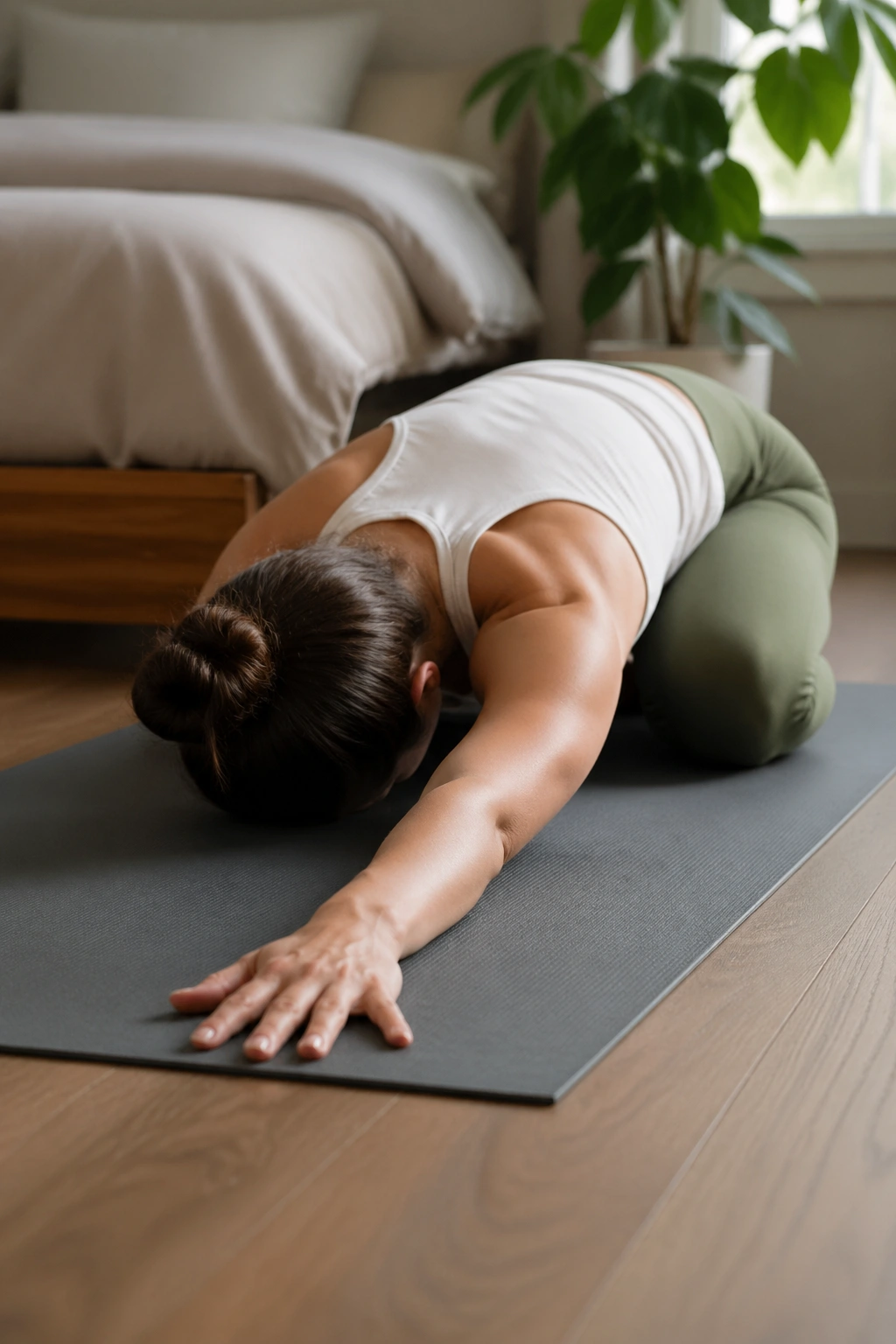
After a long day at a desk, one side of your back can feel shorter than the other. Child’s Pose with a side reach is the move I reach for when the side ribs, lats, and outer waist feel stubborn and dry.
Sink your hips back toward your heels, or as close as they comfortably go. Walk both hands a few inches to the right and breathe into the left side of the rib cage. Stay there for 3 to 5 breaths, then switch sides. The stretch often shows up more in the side body than the back itself, which is a good clue that the stiffness was never just “the back” to begin with.
- Knees wide if your belly or hips want more room.
- Knees closer together if the low back likes more support.
- Forehead on a block, cushion, or folded hands if the neck gets cranky.
- Stay higher on the shins if the full fold feels too deep.
Do not force the hips to the heels. If they stop halfway, fine. The reach matters more than the depth.
4. Single Knee to Chest for a Back That Feels Packed Tight
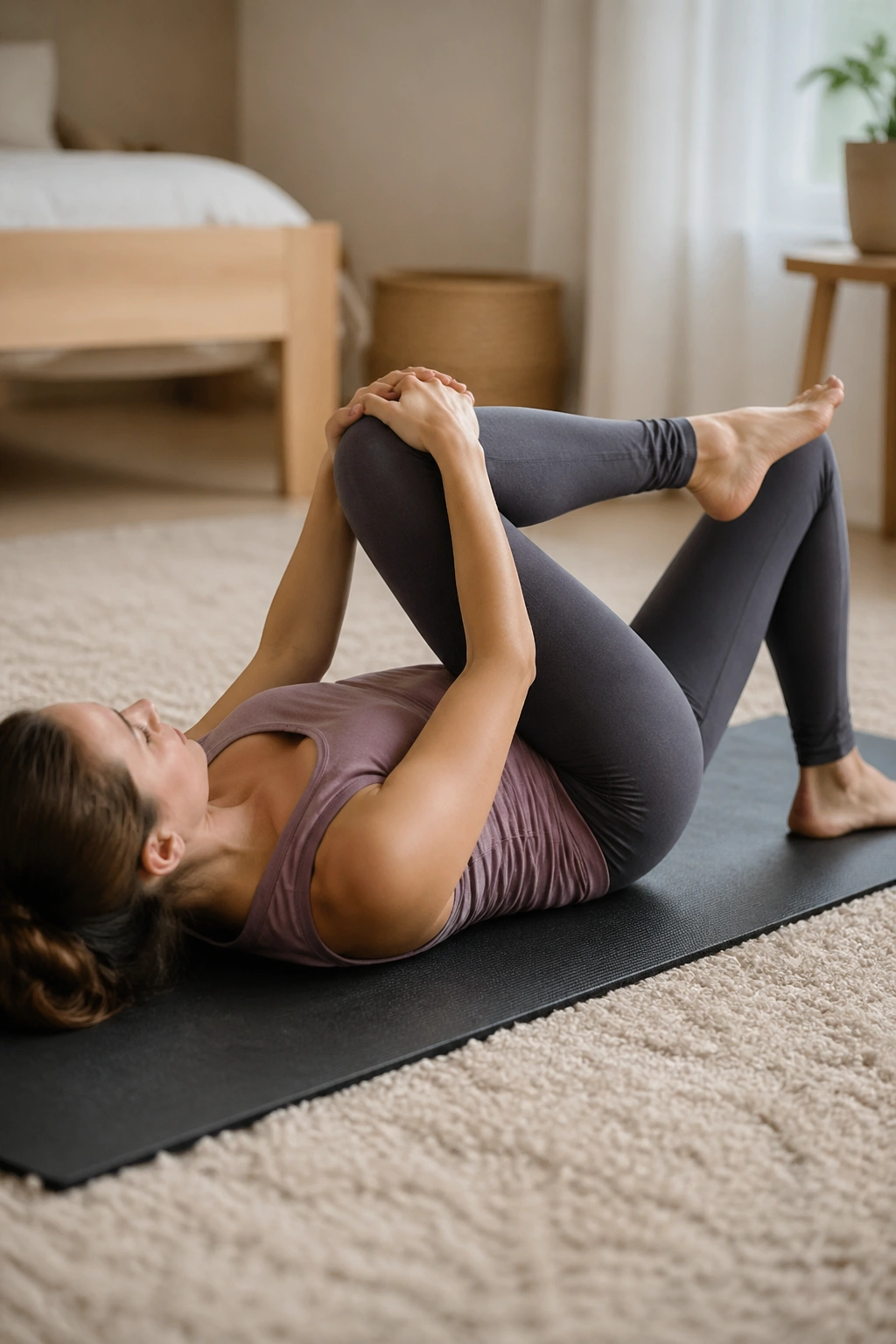
The smallest stretches often do the most useful work. Single Knee to Chest looks almost boring, but for a stiff back, boring can be a compliment.
Lie on your back with one knee bent and the other foot flat or extended long. Draw one thigh toward your chest and hold behind the thigh or over the shin, not on the knee joint. Keep the opposite side of the pelvis heavy on the mat. That last detail matters. If the pelvis rolls around, the low back loses the chance to soften in a calm way.
Hold for 20 to 30 seconds, then switch sides. If one side feels better than the other, do a second round there. I also like this stretch after walking or gentle core work, because it creates a clean sense of decompression without asking the body to do much.
Do not yank the leg closer. A stronger pull is not a better stretch. If the hamstrings tug, leave the other knee bent so the low back gets a little more room.
5. Spine Stretch Forward for a Long, Decompressed Back
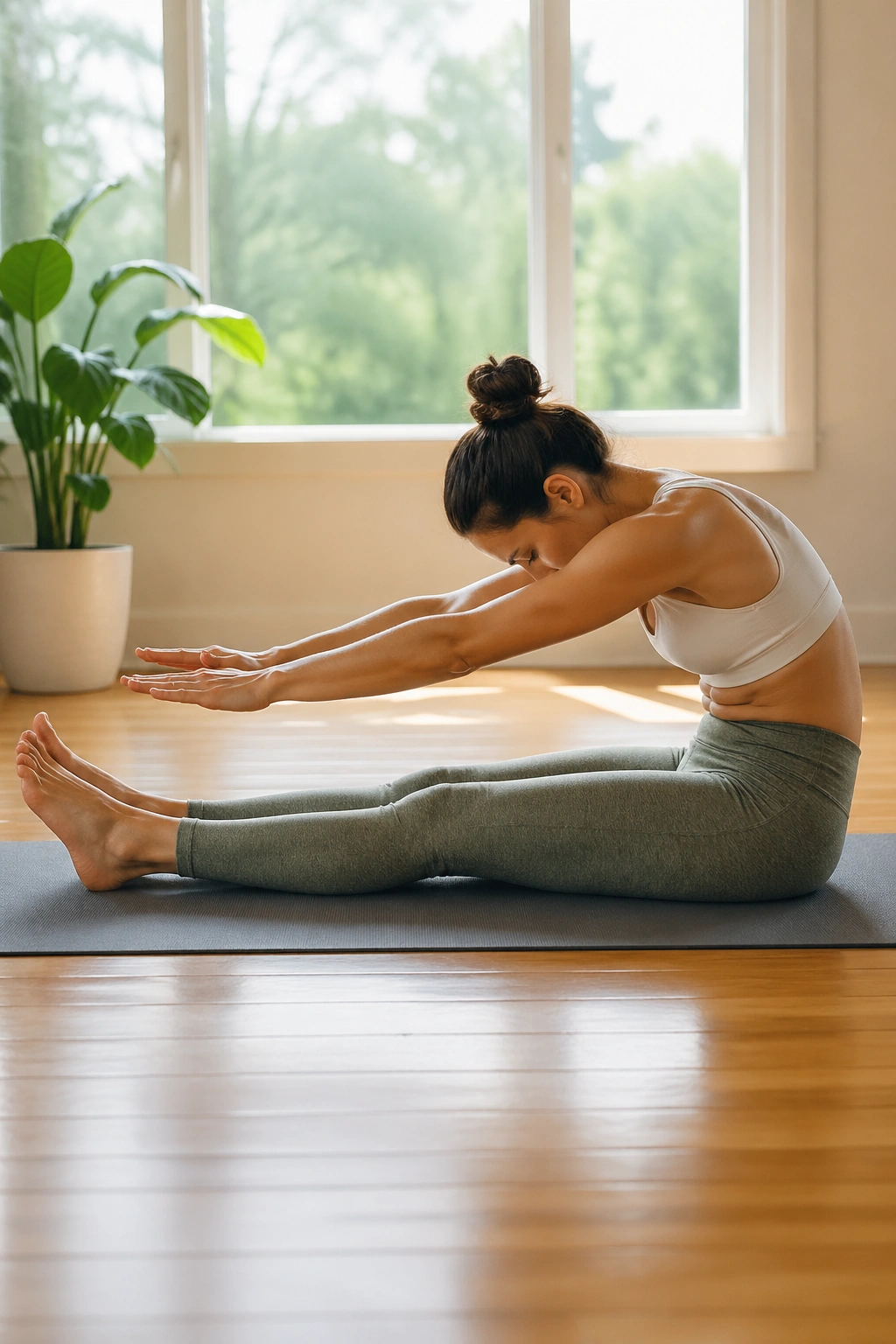
Some back stretches are too lazy about the pelvis. Spine Stretch Forward is not one of them. It asks you to stay tall long enough to notice where the stiffness starts, then peel forward with control.
Sit on the mat with your legs extended in front of you, feet flexed, and your hips lifted on a folded towel if your pelvis keeps tipping backward. Inhale to grow tall through the crown of the head. Exhale to curl forward from the top of the spine, as if you were folding a long string of beads one at a time. Then stack back up on the inhale.
Setup that saves your lower back
- Sit on a folded towel if your tailbone keeps tucking under.
- Bend the knees a little if the hamstrings are grabbing hard.
- Keep the shoulders wide and the neck long.
- Reach forward from the ribs, not just the hands.
Common mistake
- Collapsing the chest instead of lengthening it.
- Reaching the nose first and forgetting the rest of the spine.
- Rushing through the return.
I like this one because it teaches the back to lengthen under control. If the shape gets ugly, reduce the range and slow the breath. That usually fixes more than people expect.
6. Mermaid Stretch to Open the Side Body
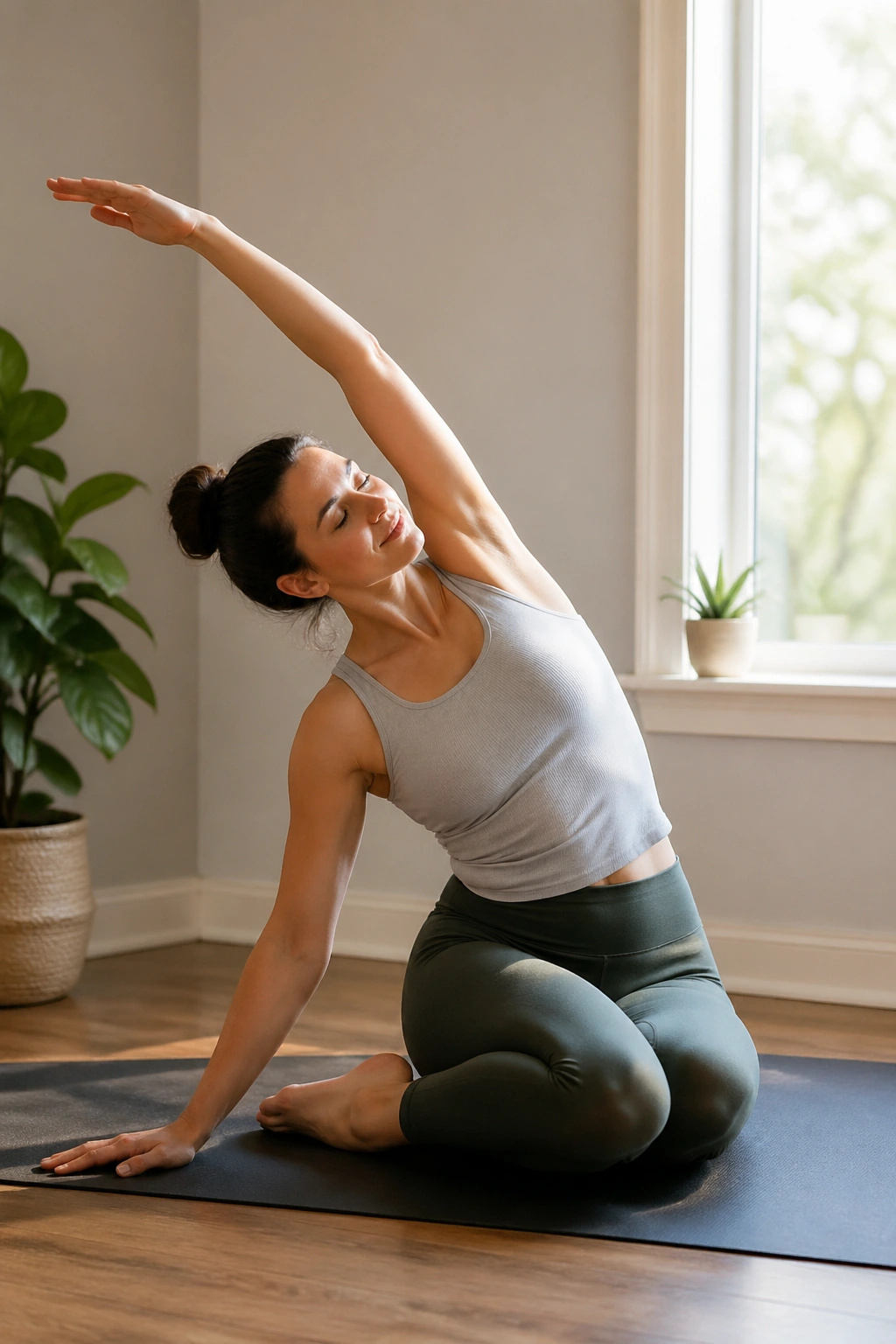
A good Mermaid Stretch feels like your ribs have more room to breathe. That is the whole point. The side body gets ignored constantly, and stiff backs often pay the price.
Sit with both legs folded to one side, or in a side-sit that feels comfortable on your hips. Plant the hand closest to the floor, then reach the other arm overhead in a long arc. Before you bend, grow up. That little lengthening moment keeps the stretch from collapsing into the shoulder. Breathe into the lifted side of the rib cage and let the body tilt only as far as it can stay smooth.
If your hips hate the position, sit on a pillow or a folded mat. If the shoulder feels pinched, keep the top arm a little in front of the ear instead of directly beside it. The line should feel open, not jammed.
Mermaid is especially nice after Spine Stretch Forward because it gives the back a different direction to travel. Forward is one thing. Side-bending is another. Your spine likes both.
7. Saw for Rotation Through the Mid-Back
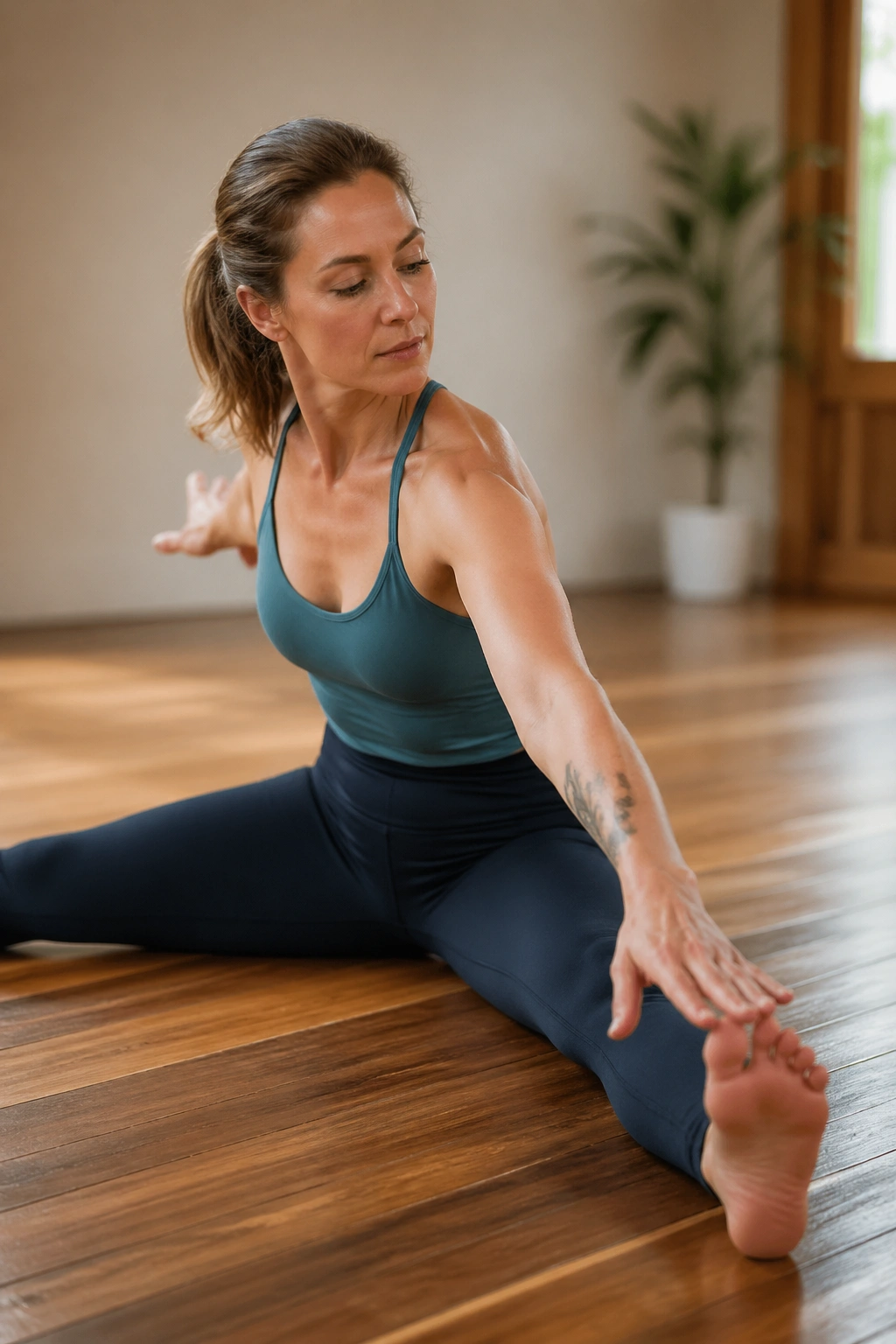
One twist, one reach, one side of the spine that finally wakes up. Saw is a Pilates classic because it mixes rotation with a long reach, and that combination can be gold for a stiff back that has gone dull from sitting.
Sit tall with your legs open in a V, as wide as you can keep without rounding the low back. Stretch both arms out at shoulder height. Rotate the rib cage to one side, then reach the opposite hand toward the outside of the little toe. The back hand reaches behind you, not because the fingers matter, but because the line of the spine matters.
How to use it
- Bend the knees if the hamstrings pull the pelvis backward.
- Keep both sitting bones heavy.
- Rotate from the ribs, not from the knees.
- Reach only as far as you can keep the chest open.
Saw feels better when it is slow. Fast Saw is usually just a scramble with a twist at the end. If the lower back complains, shorten the reach and keep the twist in the upper half of the torso. That is still useful.
8. Thread the Needle for a Softer Upper Back
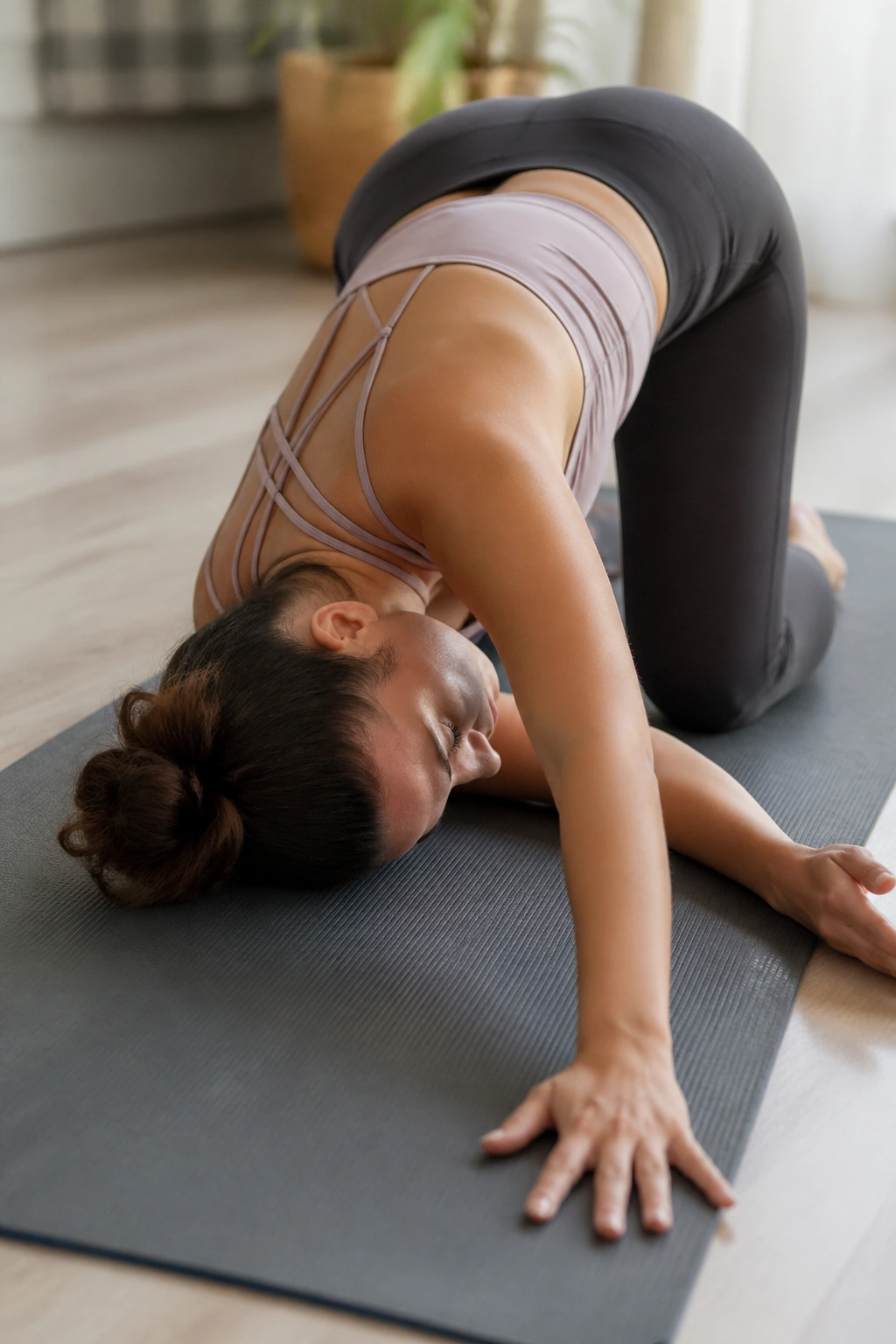
Need a twist that feels kinder on the low back? Thread the Needle is the one I like when the shoulders and upper spine feel locked together.
Start on all fours. Slide one arm under the other and let the shoulder and side of the head lower toward the mat. Keep the hips as steady as you can. The point is not to fold yourself in half. The point is to let the upper back rotate while the pelvis stays mostly still. That separation is what many stiff backs are missing.
Keep the twist high
- Press lightly into the supporting hand to avoid collapsing.
- Stop the twist before the low back starts to take over.
- Use a pillow or folded blanket under the shoulder if the floor feels too far away.
Take 3 slow breaths on each side. The breath often reveals more than the position does. If one side feels sticky, stay there for one extra breath instead of muscling through. A quiet twist is usually the better twist.
9. Figure-Four Stretch to Unload the Hips and Low Back
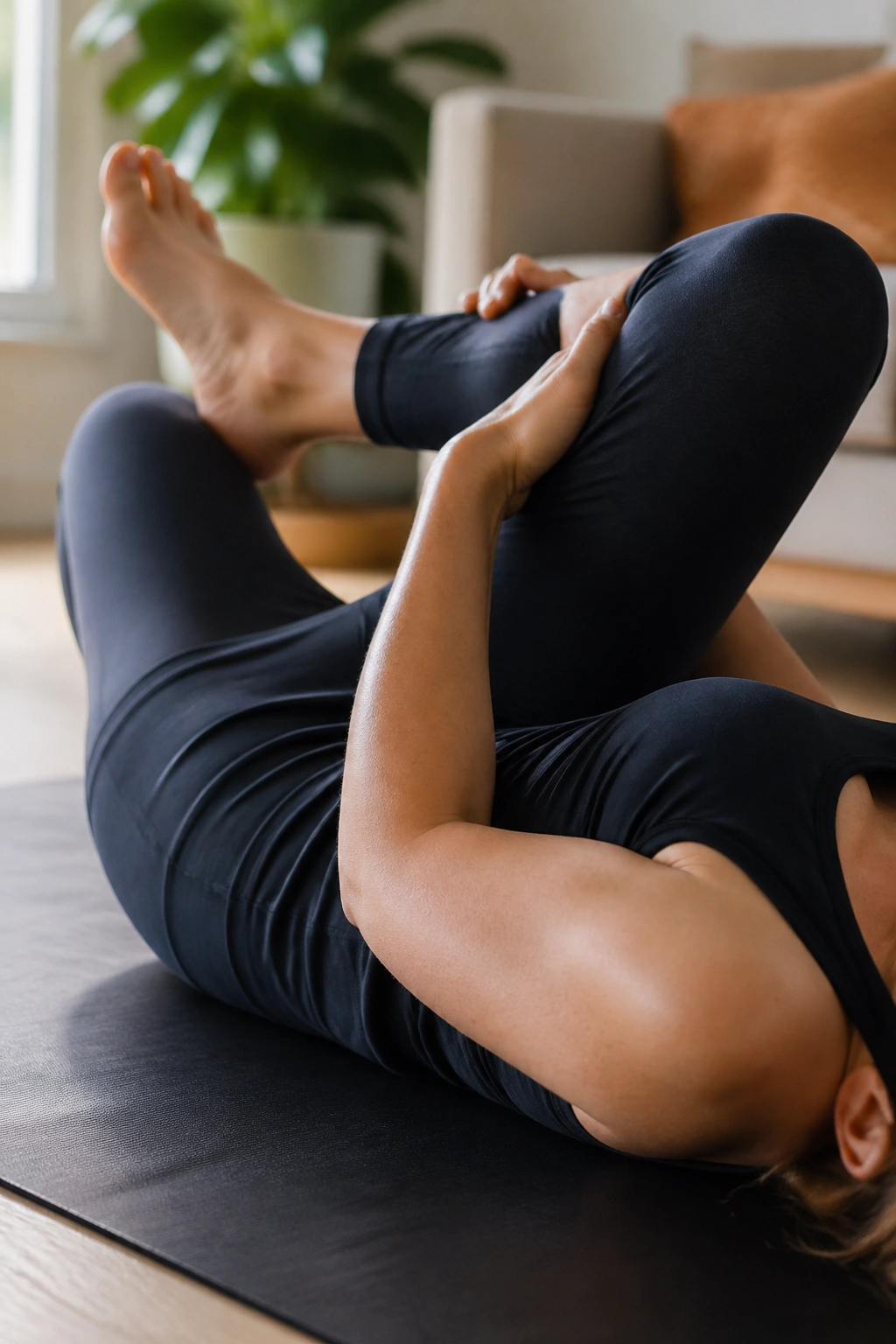
A lot of “back stiffness” starts in the hips, and this is where I look first. The Figure-Four Stretch opens the glutes and outer hip, which can ease the drag those tight tissues put on the low back.
Lie on your back with both knees bent. Cross one ankle over the opposite thigh so the legs make a loose number four. Stay here if that is enough. If you want more, draw the legs toward your chest while keeping the hips level. You should feel a stretch in the outer hip, not a stabbing pull in the knee.
- Flex the crossed foot to protect the knee.
- Keep the tailbone heavy.
- Stop when the glute opens, before the knee gets cranky.
- Use a wall or chair if lying on the floor is too much.
I like to hold this for 20 to 30 seconds per side and repeat once. It is calm, unglamorous, and effective. If the back feels tighter after a hard workout, this one often makes more sense than another spinal twist.
10. Open Book for Gentle Thoracic Rotation
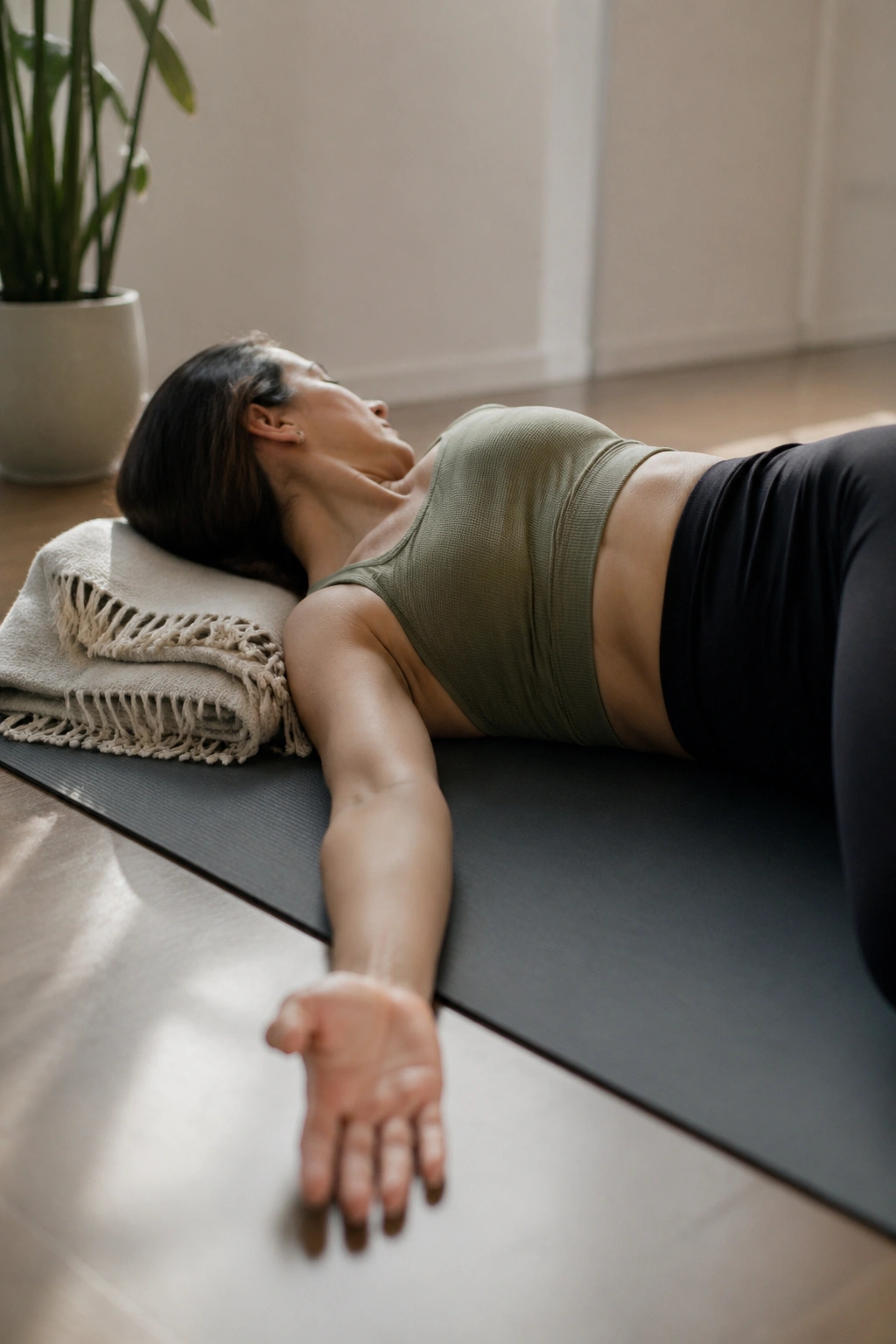
Unlike a hard seated twist, Open Book lets the pelvis stay quiet. That matters. The upper back, or thoracic spine, is made to rotate more than the low back, and this move gives it a chance to do that job.
Lie on your side with knees bent and stacked, or place a pillow between the knees if that feels better. Stretch both arms straight in front of you, then open the top arm in a wide arc behind you until the chest turns open. Let the eyes follow the hand if the neck likes that. Breathe into the ribs and let the movement happen slowly enough that you can feel each part of the torso respond.
This is one of those stretches that looks gentle and feels surprisingly rich when you do it correctly. A short exhale often lets the top shoulder settle closer to the floor, but there is no prize for flattening it all the way down. The goal is a cleaner rotation, not a louder one.
Five slow reps per side is plenty. If the low back starts to join the party, shorten the arc.
11. Swan Prep to Wake Up a Rounded Spine
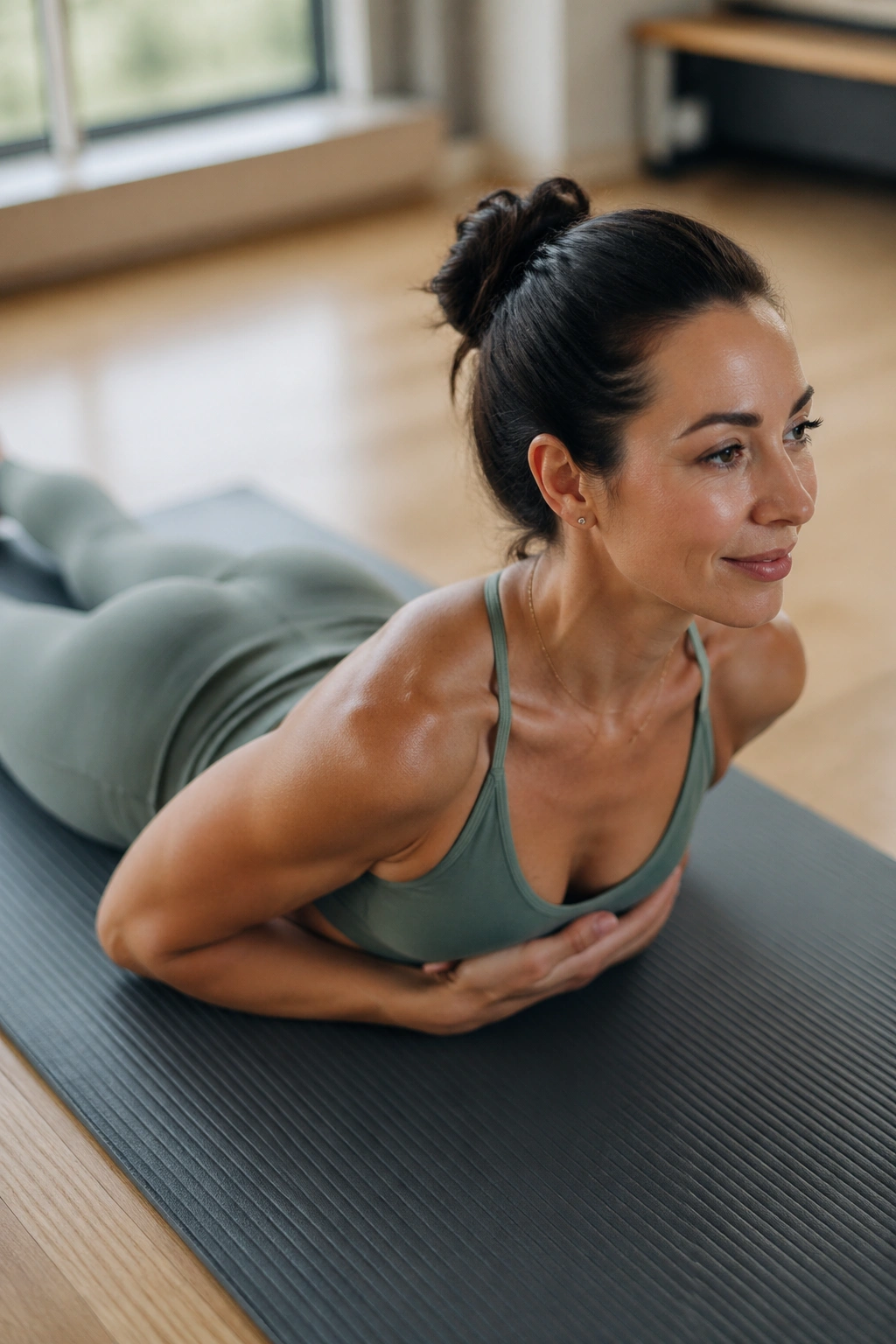
You know Swan Prep is right when your chest feels longer, not jammed. That is the feeling to chase. It is a small extension drill, and it can be a relief for a stiff back that lives in flexion all day.
Lie face down with your hands under your shoulders or beside your ribs. Press the pubic bone softly into the mat, draw the shoulder blades slightly down, and lengthen the crown of the head forward as the chest lifts a little. Think of the spine lengthening before it arches. The lift can be tiny. Tiny is fine.
When to stop
- Stop if the low back pinches.
- Stop if the shoulders shrug toward the ears.
- Stop if the belly stops supporting the lift.
- Stop before the range turns into a hinge.
This one is useful because it reminds the back that extension exists. Not every stiff back wants more flexion work. Some backs need the opposite. A small Swan Prep often feels better than a deep backbend because it spreads the work instead of dumping it into one spot.
12. Bridge with Articulated Roll-Up for a More Mobile Spine
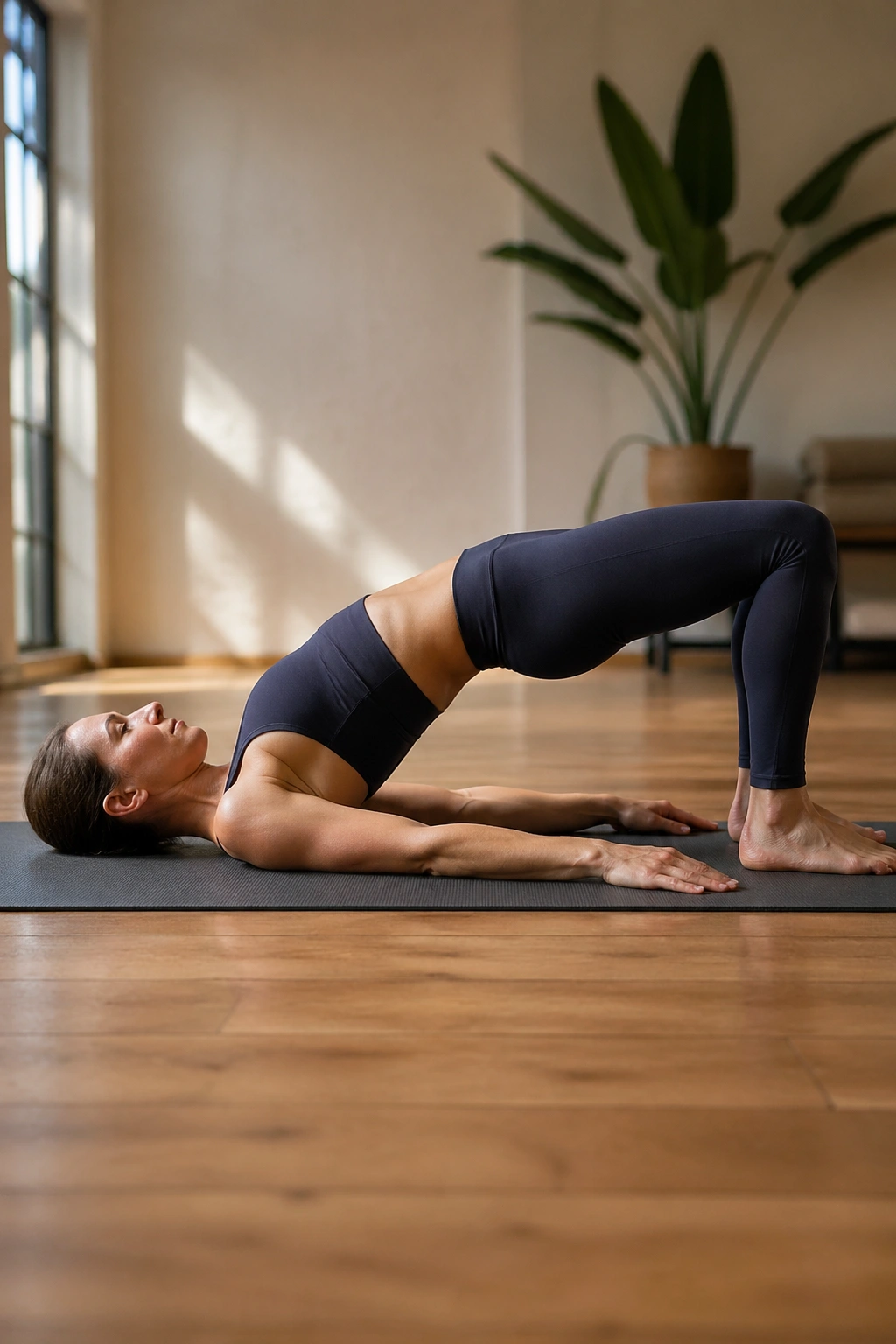
Bridge is not just for glutes. Done slowly, it is one of the better Pilates stretches for stiff backs because it moves the spine segment by segment and opens the front of the hips at the same time.
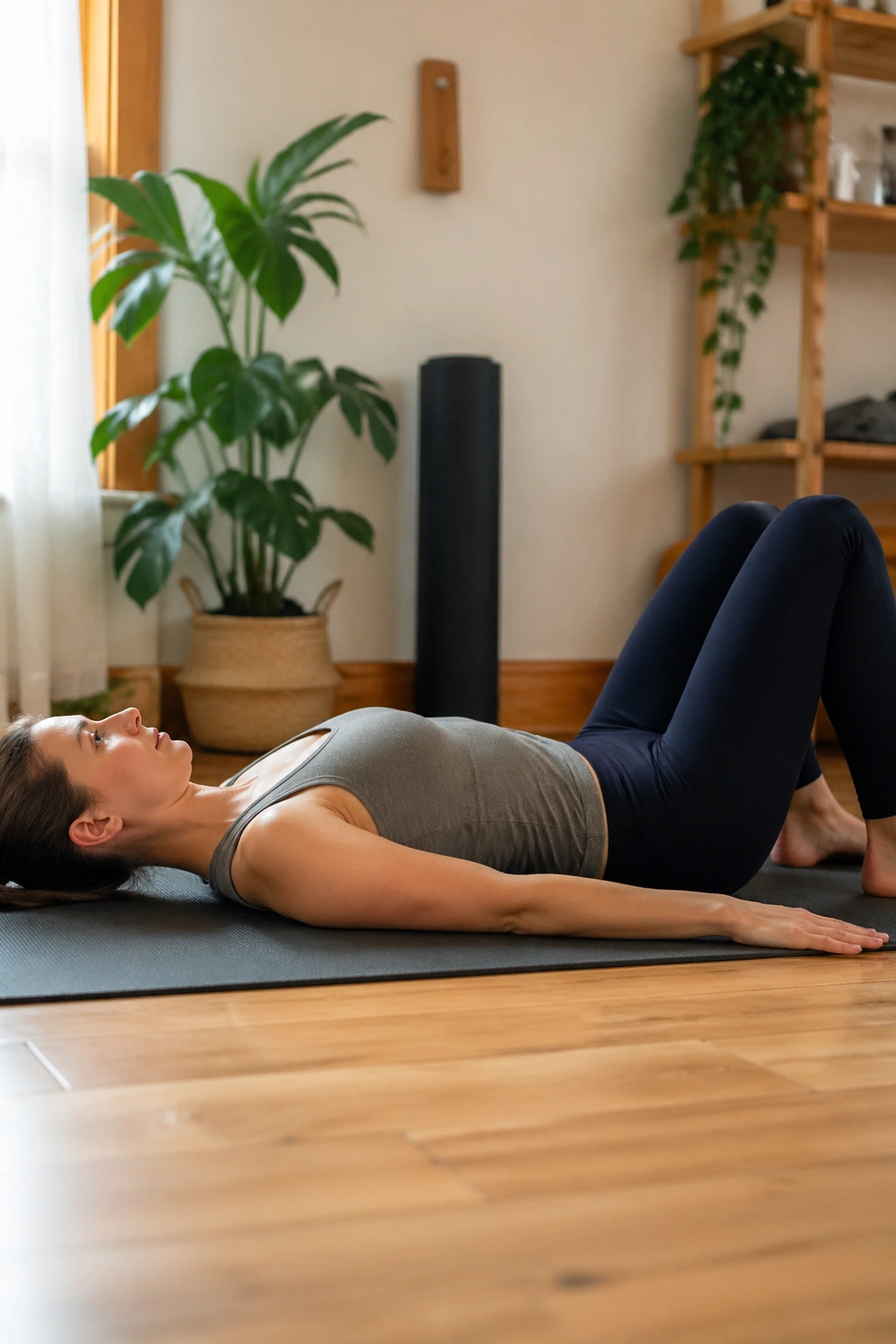
Lie on your back with your feet flat, hip-width apart. Exhale and tuck the pelvis slightly, then peel the spine off the mat until you reach a comfortable bridge. Pause for a breath. Roll back down one vertebra at a time, starting from the upper back and finishing with the tail. That slow descent matters just as much as the lift.
A few cues that make it cleaner
- Press through the heels and the ball of the big toe.
- Keep the knees pointing roughly over the second toes.
- Let the ribs stay soft instead of flaring up.
- Stop lifting before the low back feels compressed.
I like 5 slow reps, not 15 rushed ones. If the hamstrings cramp, bring the feet a little closer to the hips and lower the bridge height. The best bridge leaves the spine feeling longer on the way down.
13. Kneeling Hip Flexor Stretch That Takes Pressure Off the Low Back
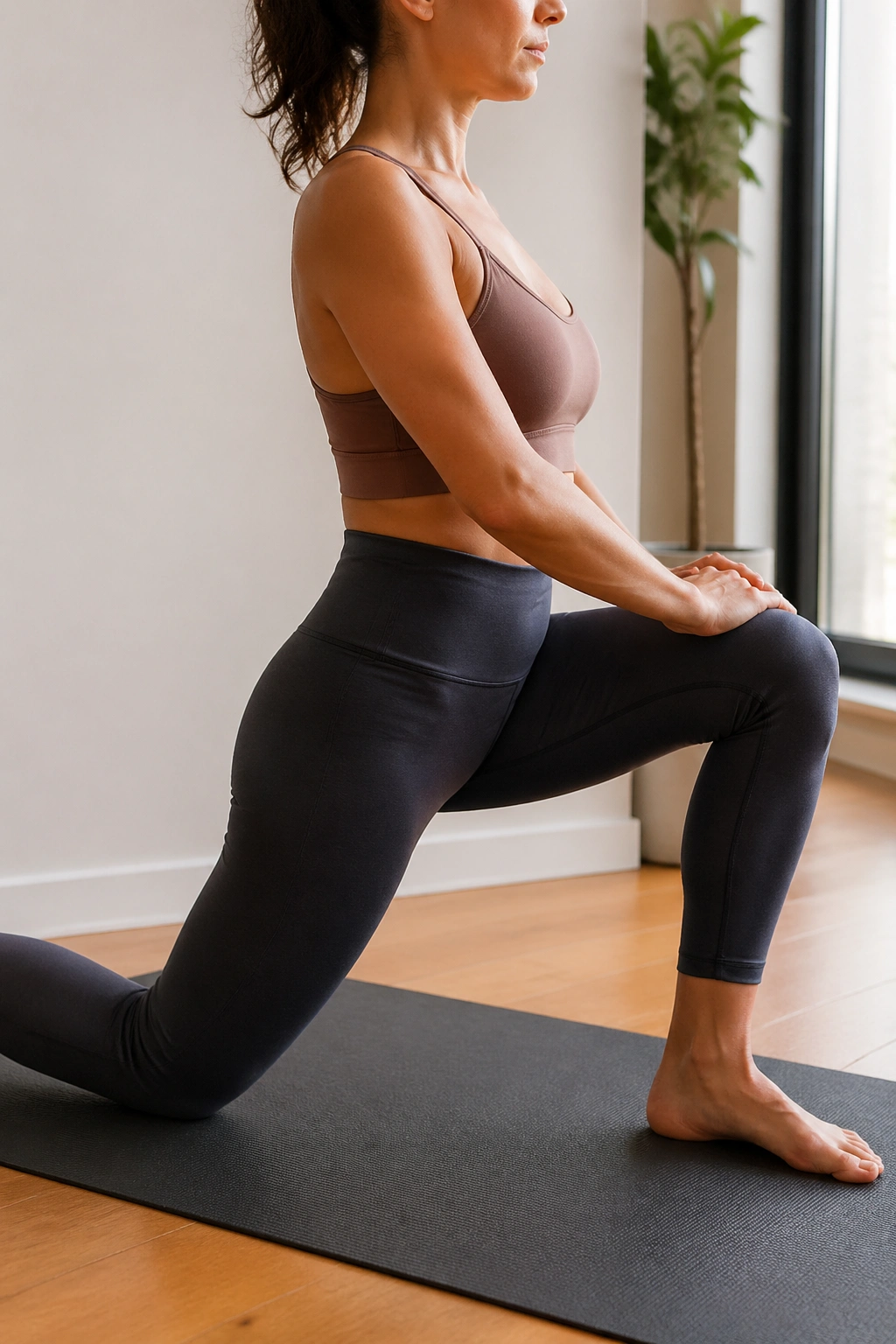
If your pelvis tips forward all day, your back will complain. That’s one of the most common reasons a stiff low back keeps coming back, and the kneeling hip flexor stretch attacks that problem directly.
Start in a half-kneeling position with one knee down and the other foot in front, like the bottom half of a lunge. Gently tuck the tailbone, squeeze the glute of the kneeling-side leg, and shift forward only an inch or two. You should feel the front of the hip lengthening. If you do not tuck the pelvis first, the low back tends to arch and steal the stretch.
What not to do
- Do not arch the low back to chase more depth.
- Do not let the front knee cave inward.
- Do not dump all your weight into the front hip.
- Do not rush the switch; 30 to 45 seconds is enough.
This stretch gets ignored because it looks plain. Too plain, maybe. But tight hip flexors can drag the pelvis forward like a belt pulled too tight, and the back ends up doing overtime. If you only pick one stretch from this list after a day of sitting, make it this one.
14. Standing Roll Down for Full-Back Release
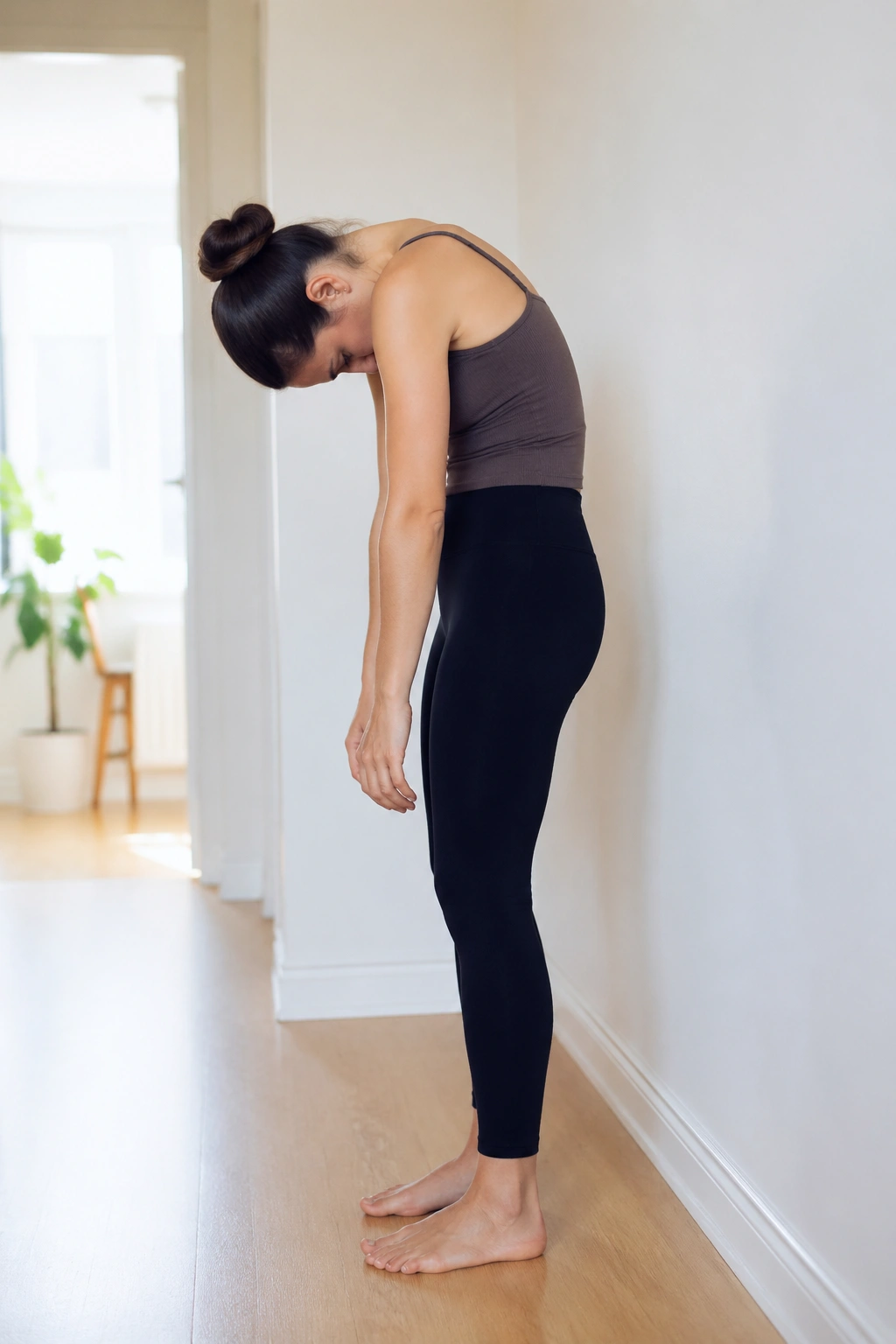
You can do this next to a wall, beside your desk, or after a walk. Standing Roll Down is a nice way to decompress the whole back without getting down on the floor, and sometimes that matters more than people admit.
Stand with feet hip-width apart and soften the knees. Nod the chin, then let the head, shoulders, ribs, and pelvis fold forward one piece at a time. Hang there for a breath or two. Then stack back up slowly, tail to low back to ribs to shoulders to head. If the hamstrings grab, bend the knees more. If the stretch feels dizzy or too intense, stop at a half roll-down and come back up.
A clean roll-down has three beats
- Nod and fold.
- Hang and breathe.
- Stack back up.
I love this one because it shows you whether the spine can organize itself without strain. That feedback is useful. If you feel yanking behind the knees, the answer is more knee bend, not more force.
15. Seated Spine Twist for Controlled Rotation
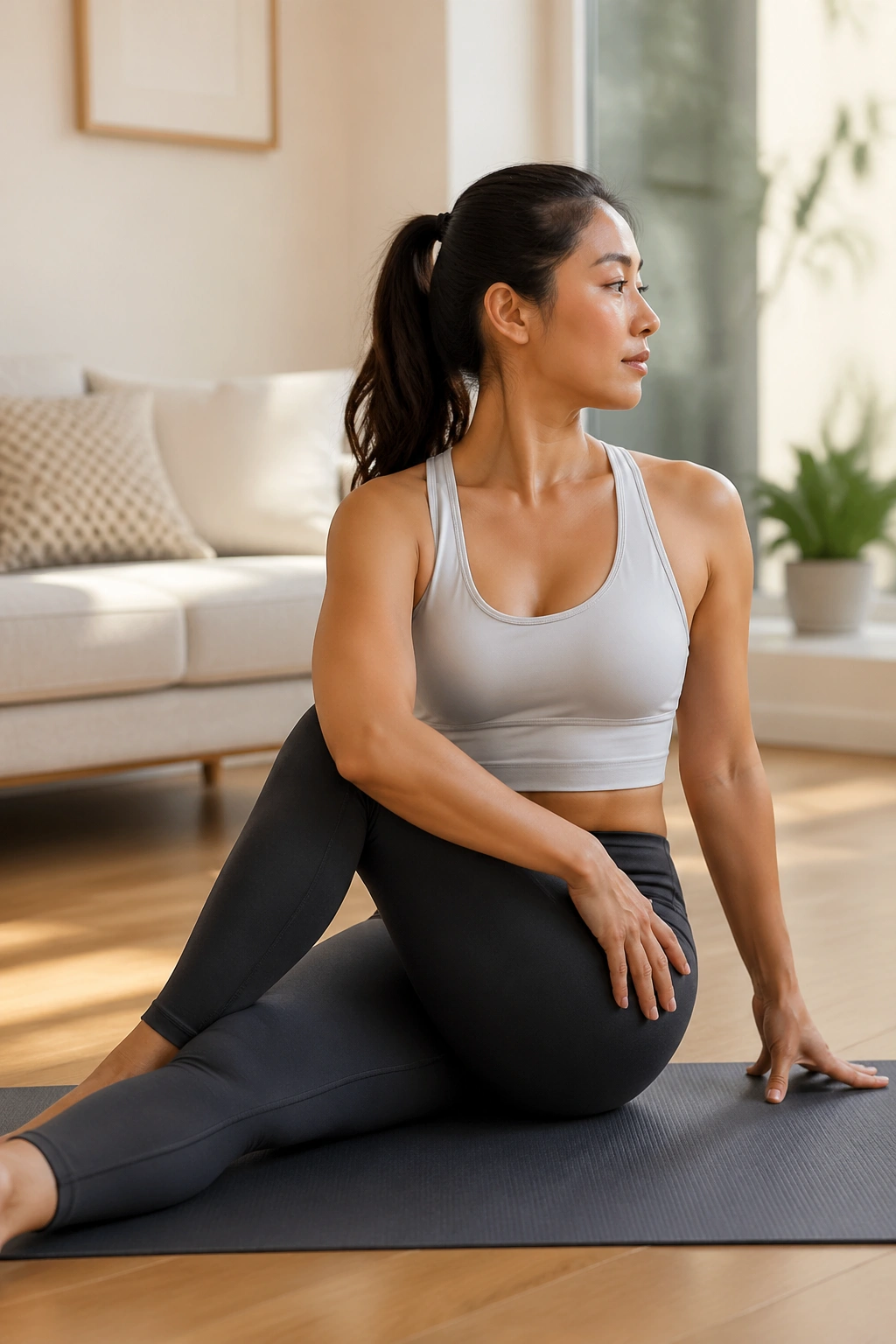
This is the twist I use when I want control, not drama. Seated Spine Twist gives the rib cage a chance to rotate while the pelvis stays grounded, which is exactly the kind of clean movement a stiff back usually appreciates.
Sit tall with your legs extended, crossed, or slightly bent if the hamstrings are being difficult. Inhale to grow upward, then exhale to rotate the torso to one side. Keep both sitting bones heavy. The movement comes from the waist and ribs, not from shrugging the shoulders or swinging the arms around. Rotate only as far as you can still breathe into both sides of the chest.
If one side feels blocked, do not shove through it. Sit on a folded towel, shorten the range, and keep the crown of the head reaching up. Those tiny adjustments usually matter more than people think. A twist should feel like the spine is opening, not like it is being cranked.
Four to six slow rotations per side is enough. Stop at the point where the shoulders still feel stacked over the hips and the breath stays smooth.
Final Thoughts
A stiff back usually calms down with smaller, more precise movement than people expect. The body tends to respond better to clean spinal motion, steady breathing, and a little patience than to big, flashy stretching.
I also think the best Pilates routine for a cranky back is the one that keeps returning to the same few shapes: a gentle flexion move, a twist, a side bend, a hip opener, and one extension drill. That mix covers more ground than people realize.
Five or ten quiet minutes can beat a long, aggressive session. Pick the few stretches that feel most honest in your body, keep them slow, and let the spine settle into them instead of trying to win against it.
