



Pilates abs are quieter than crunches. They show up as a steadier pelvis, a flatter brace around the waist, and that tight, held-together feeling you get when your midsection learns to do its job instead of just burning for the sake of burning.
That’s why mat Pilates exercises for toned abs work so well when they’re done with control. The big muscles get attention, yes, but the real payoff comes from the deep support system underneath them — the transverse abdominis, the obliques, the diaphragm, the pelvic floor, all of it working as one unit. And if you’ve ever done a Pilates set that made your whole center shake even though the movement looked tiny from the outside, you already know the point.
One more thing, because it matters: visible abs are not only about exercise. Training builds the shape and the strength. What shows through is also affected by overall body fat, sleep, stress, and what you eat across the week. Pilates can absolutely help you look tighter through the middle, but it does that by improving how you hold yourself, breathe, and move. That’s the part a lot of people miss.
Start with the classic work. It’s classic for a reason.
1. The Hundred for Toned Abs
The Hundred is the Pilates move that looks polite and turns rude fast. Your arms pump, your legs hover, your ribs stay knitted, and your breath has to stay organized while the rest of you starts to complain.
That combination is gold for the deep core. The Hundred trains abdominal endurance, not just a quick squeeze, so it teaches your midsection to keep supporting you after the first few seconds of effort. If you keep your lower back heavy and your neck long, you’ll feel the work right under the ribs and down across the lower belly.
What to watch for
- Keep the knees in tabletop if straight legs make your back arch.
- Pump the arms from the shoulders, not the elbows.
- Exhale for 5 arm pumps, inhale for 5 arm pumps.
- Stop if your neck starts to grip. A folded towel under the head helps.
Best cue: press your lower ribs down as if you’re zipping up a snug jacket.
2. Roll-Up
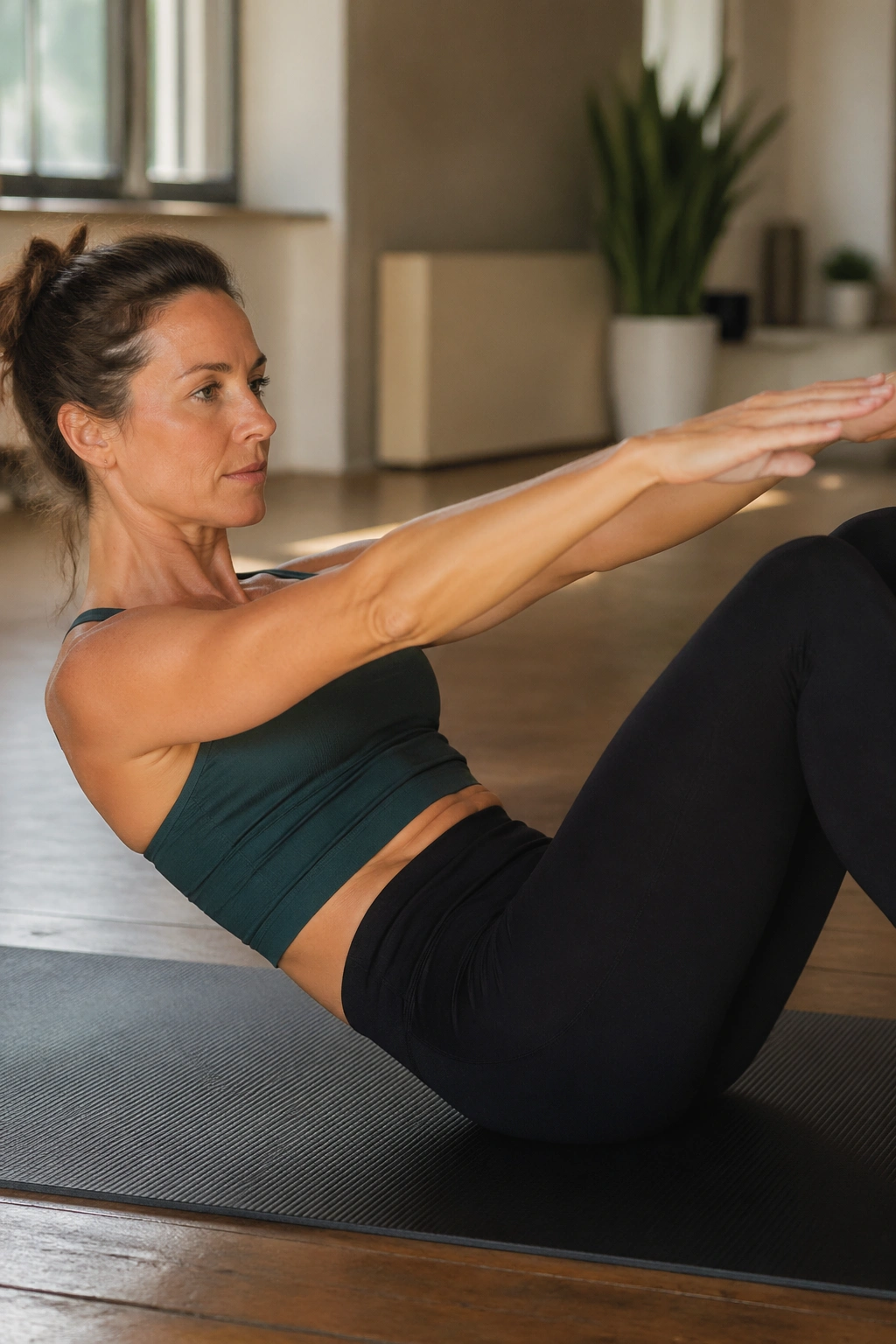
A slow roll-up tells the truth. There’s nowhere to hide, which is exactly why it belongs early in a Pilates abs sequence.
The movement asks your spine to peel up one bone at a time instead of yanking your torso off the mat. That slow articulation makes the rectus abdominis work through a full range, and the descent is even more useful than the lift because it trains control on the way down. Control on the way down builds the kind of abs that hold posture together.
Why it works
Your abs are doing two jobs here: curling the ribs toward the pelvis and then resisting gravity as you lower. That eccentric work is where a lot of people feel the deep burn. If your feet want to pop off the mat or your hip flexors take over, reduce the range and keep the knees bent.
How to keep it clean
Place your feet hip-width apart. Reach the arms forward, then exhale as you peel up, not all at once, but in a long, slow sequence. If the lower back complains, stop halfway and come back down with the same control.
3. Single Leg Stretch
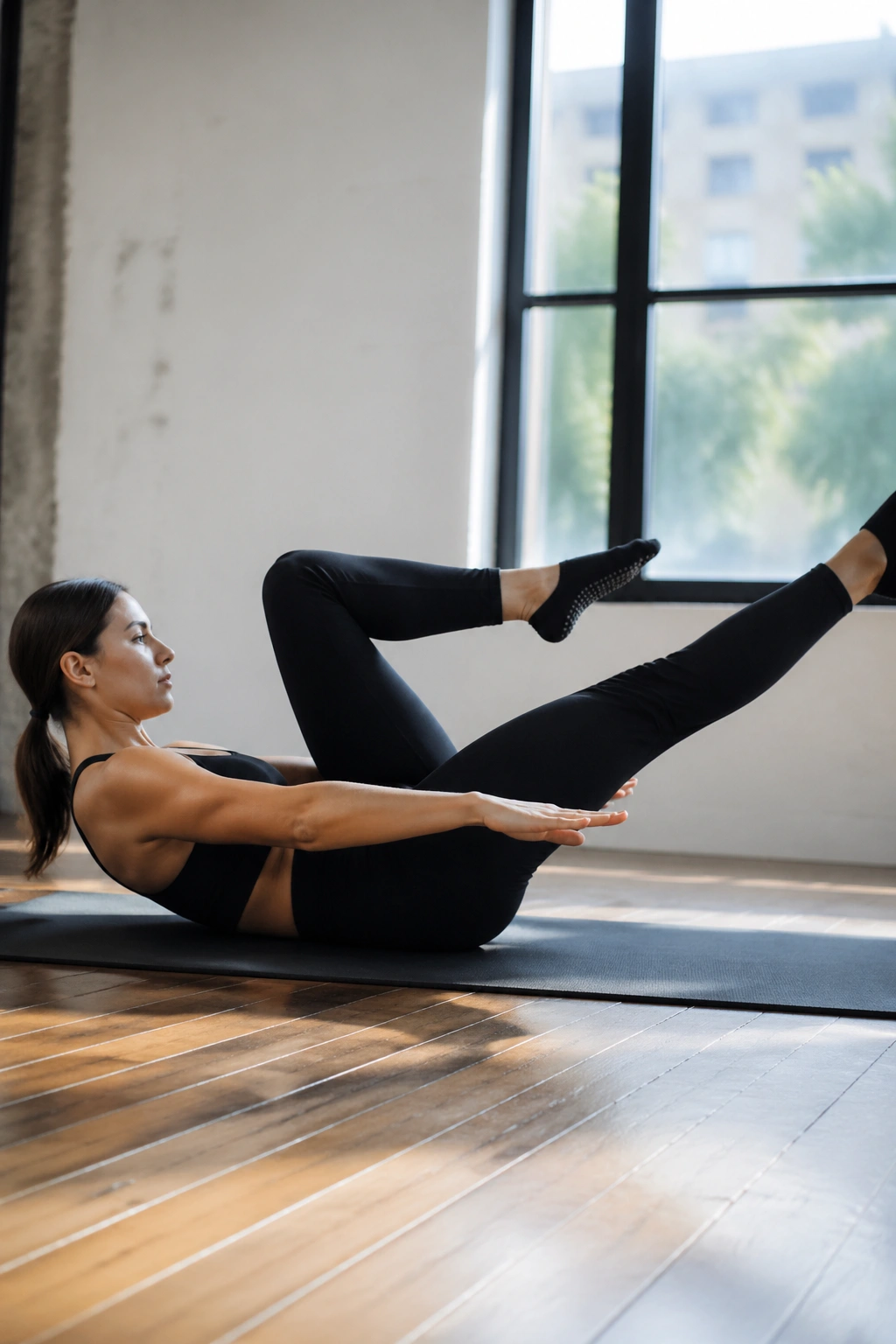
Why does this one hit faster than it looks? Because the movement keeps asking your abs to stabilize while one leg keeps leaving the room.
Single leg stretch is a classic anti-extension drill. One knee comes in, the other leg reaches away, and your trunk has to stay quiet through the switch. That quiet part matters. If your lower back starts to arch or your ribs flare, the work slides out of the abs and into your hips.
A clean version feels almost too small at first. That’s normal.
Quick checkpoints
- Keep the lifted knee close enough that your low back stays heavy.
- Reach the straight leg long, but not so low that your pelvis tilts.
- Hold the head and shoulders up only if your neck can stay relaxed.
- Switch on the exhale for more abdominal engagement.
A nice version of this move leaves your center warm and your hip flexors tired in a useful way. A sloppy version just makes your neck mad.
4. Double Leg Stretch
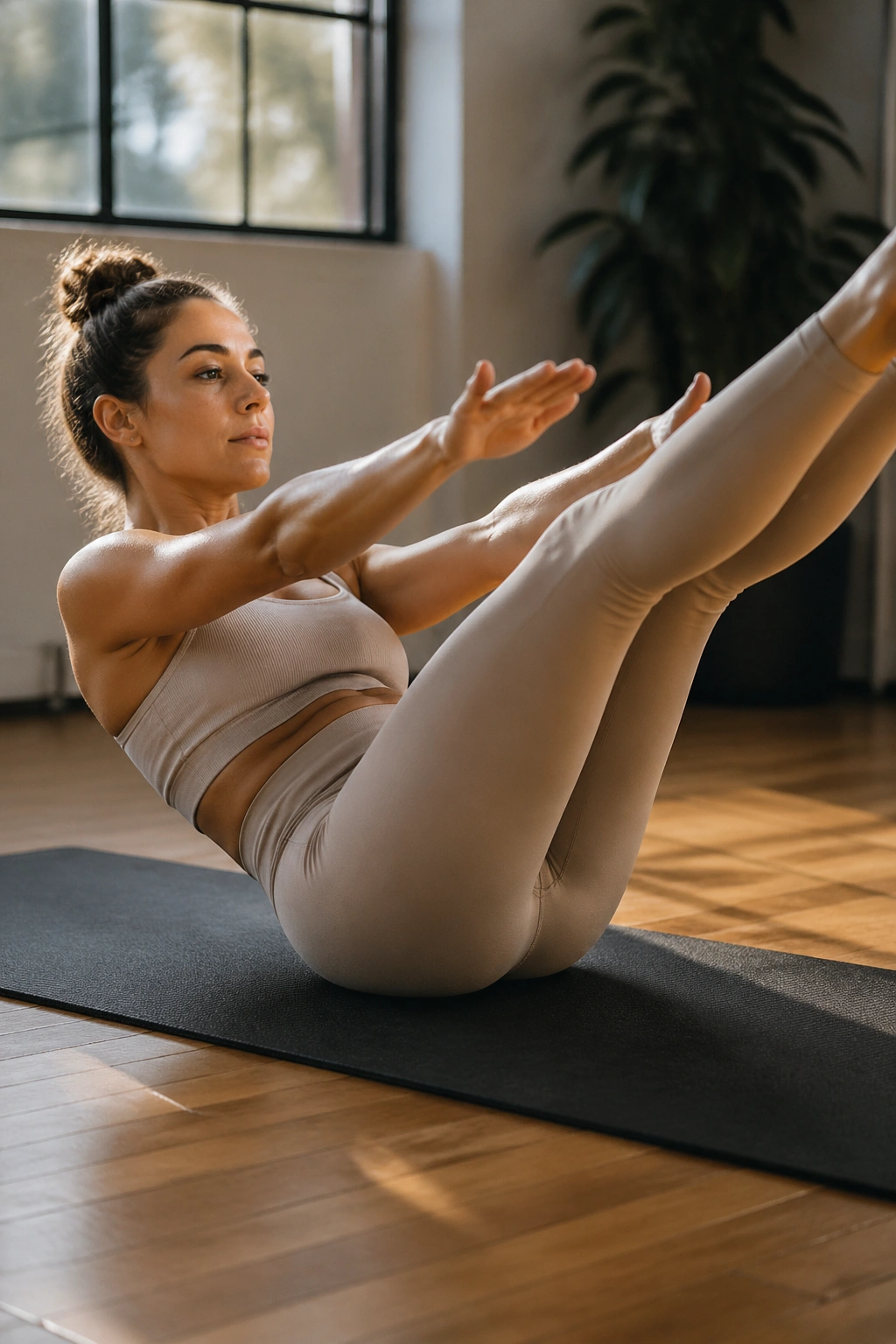
The double leg stretch is where Pilates stops pretending to be easy. Both arms and both legs reach away at the same time, and your torso has to stay organized while everything else lengthens.
That reach creates a long lever, which is exactly why the abs light up. The goal is not a huge fling through the limbs. The goal is a strong, steady scoop through the center while the arms and legs move as if the waist were cinched tight. If your lower back pops up, the range is too big.
Small is fine here. Small is often better.
One clean repetition looks almost spare: inhale as you open into a stretched shape, exhale as you circle the arms and draw the knees back in. Keep the shoulders down and the ribs closed. If the legs go lower than you can control, raise them. If the head gets heavy, rest it for a rep or two and keep the core work going.
5. Single Straight Leg Stretch
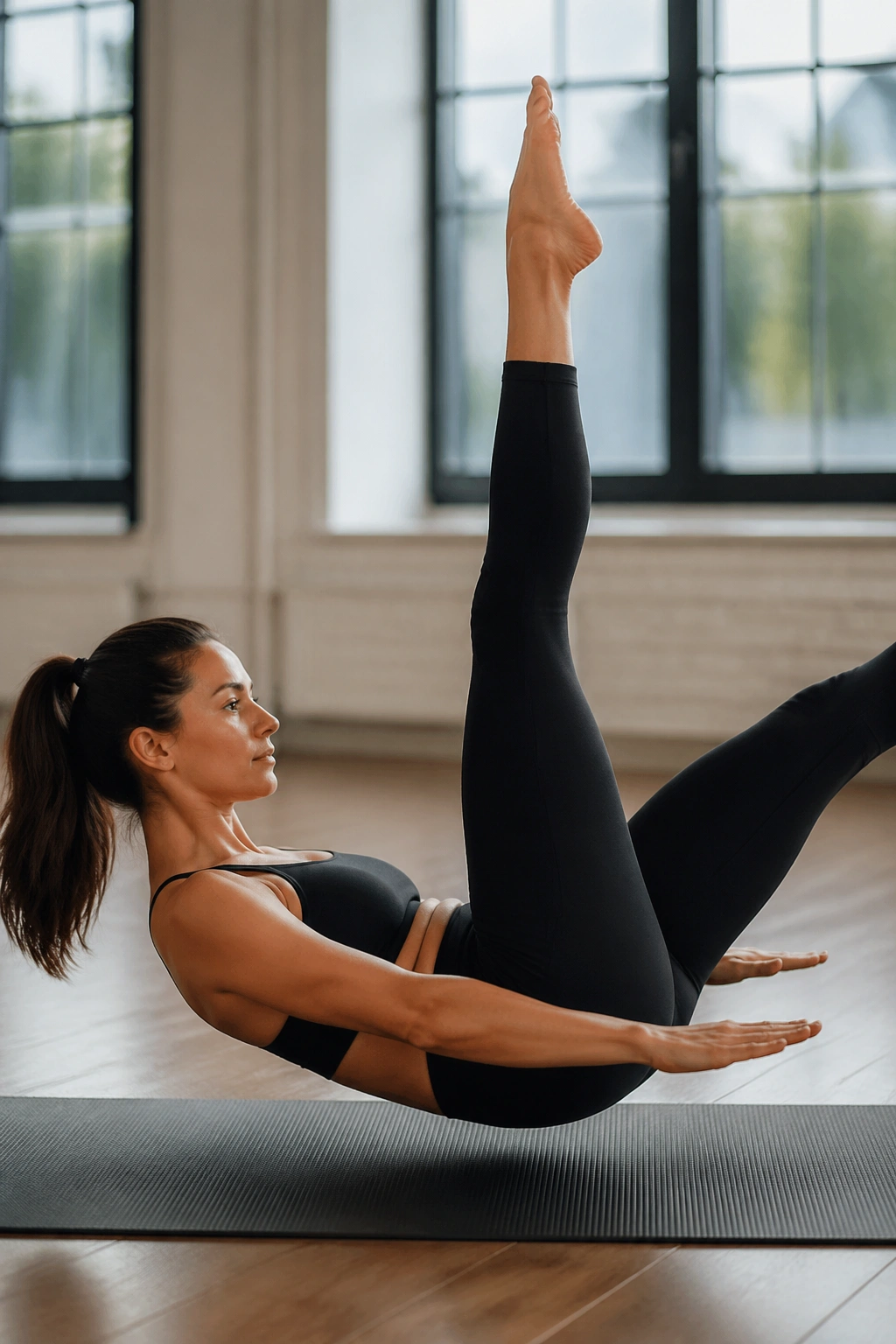
If you’ve ever watched your lower back start to peel off the mat during a leg-swap exercise, this is the move that tells you whether your abs are actually in charge.
Single straight leg stretch asks for more length than the bent-knee version. One leg reaches straight up, the other hovers low, and the pelvis has to stay calm while the hips try to wander. That makes it a favorite for people who want toned abs and better hamstring control at the same time.
Why it feels different
The long lever of the straight leg makes the lower belly work harder to keep the pelvis from tipping. You also get a sharper hamstring stretch, which can be a gift or a curse depending on how tight the back of your legs are that day. If the straight leg won’t stay vertical without tugging on your lower back, bend it slightly and keep the line cleaner.
How to use it well
Use a slow, even rhythm. Reach one leg toward you, pulse twice if you like, then switch without jerking. Keep the chest lifted only enough to avoid neck strain. More height is not the point. More control is.
6. Criss-Cross
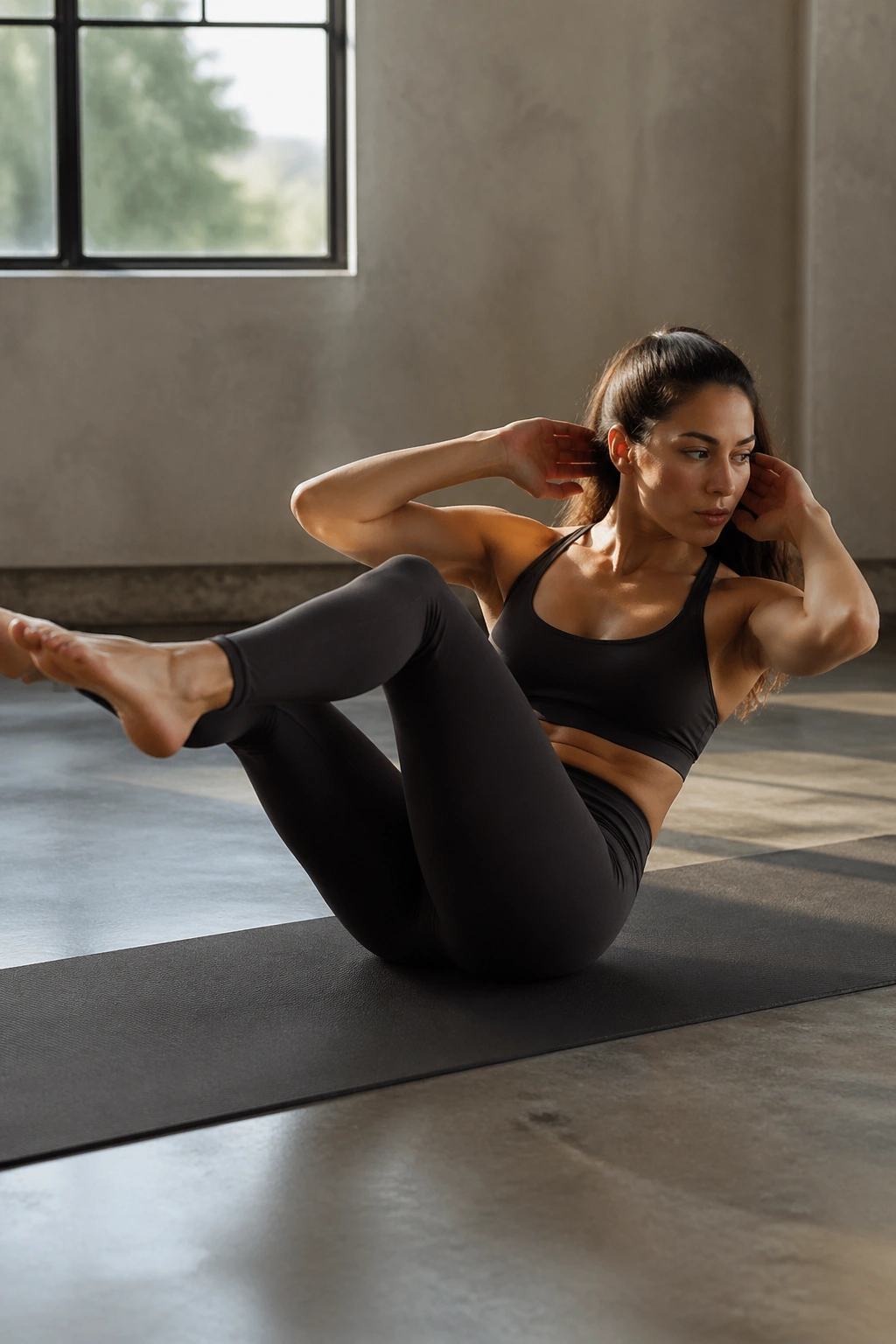
Criss-cross is the one people often rush, and that’s a shame. Done well, it is one of the best mat Pilates exercises for toned abs because it makes the obliques work hard without letting momentum steal the credit.
The twist should come from the rib cage, not from yanking the elbow toward the knee. Your chest rotates, your waist shortens on one side, and the opposite leg stays long and steady. If you fling the elbows or tug on the neck, you miss the whole point and probably feel it in the shoulders instead.
What makes it work
- Keep the pelvis stable while the rib cage rotates.
- Think “shoulder to opposite knee,” not “elbow to knee.”
- Move slowly enough that each side feels equally loaded.
- Keep the legs a little higher if your lower back wants to arch.
One clean set of criss-crosses can leave your obliques buzzing more than twenty fast twists ever will. That’s not a coincidence. It’s the control.
7. Double Leg Lower Lift
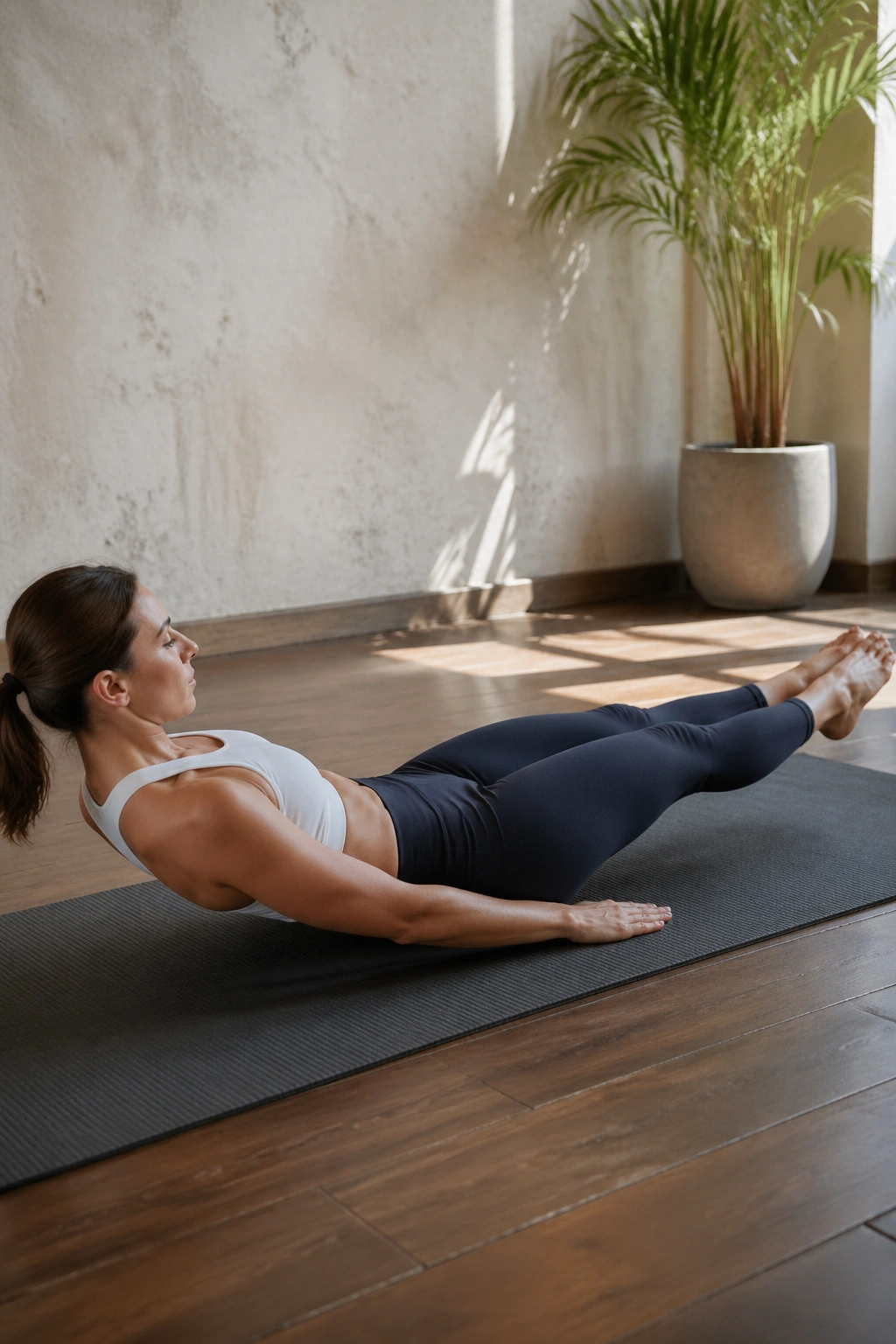
This one looks simple from across the room. On the mat, it can get ugly fast.
Double leg lower lift is all about resisting the urge to let the lower back arch as the legs drop and rise. The abs have to hold the pelvis steady while both legs move together, which is a brutally honest test of core strength. If the back starts lifting, the range is too deep — and that’s not a moral failure, just a sign to cut it down.
A one-sentence rule helps here: lower only as far as you can keep your spine quiet.
The move works best with legs closer to tabletop or a little higher, especially if you’re building strength. Lower them an inch or two, pause, and bring them back up without letting the ribs flare. That pause matters. It turns the exercise from a swing into a hold, and that hold is where the abs earn their keep.
8. Roll Over
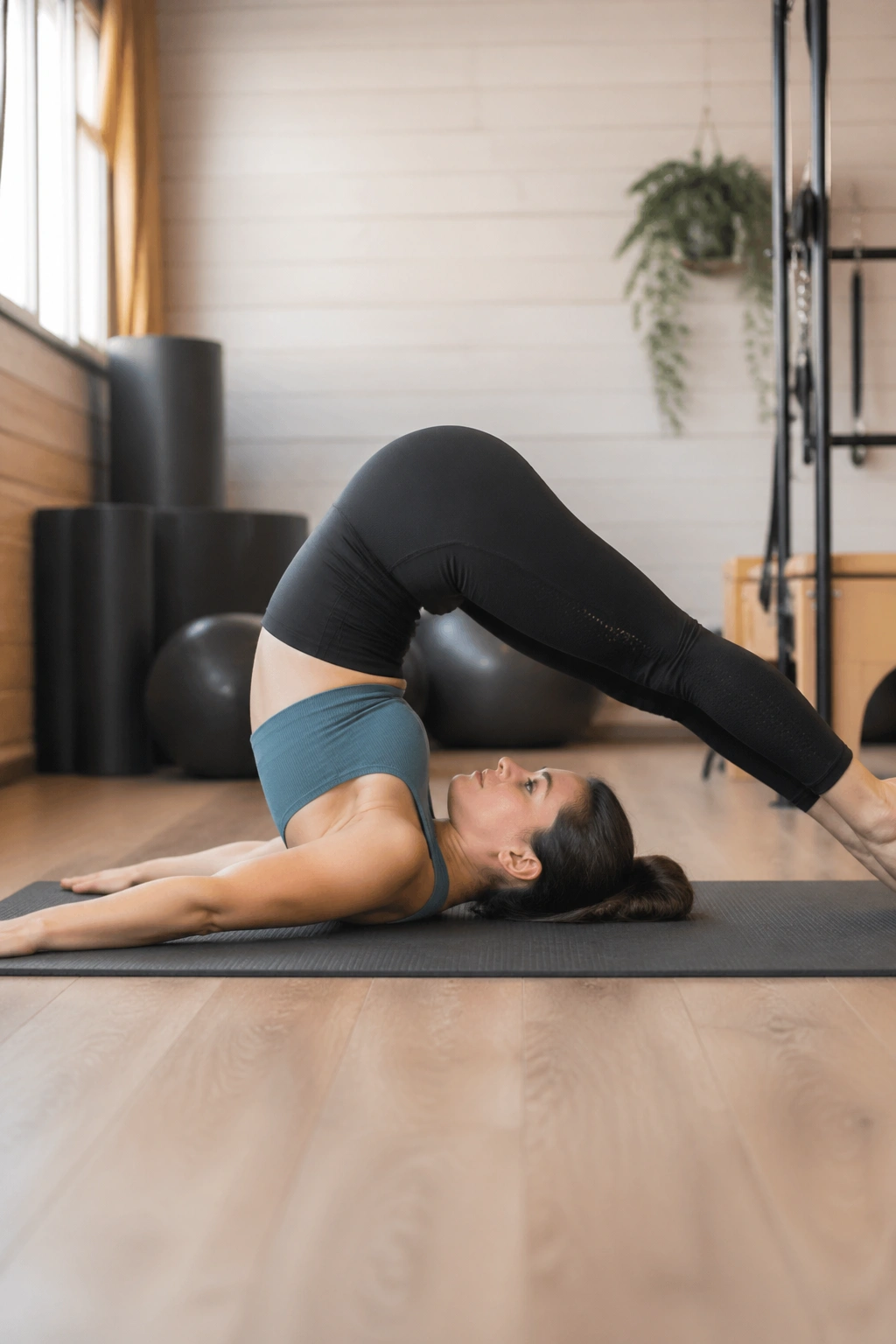
Roll over is not a beginner’s party trick. It’s a serious Pilates exercise with a lot going on, and if you rush it, your neck and lower back will complain.
The action asks the abs to lift the pelvis and guide the legs overhead with control. That means the core has to stay engaged while the spine moves through flexion and the hamstrings lengthen. When it’s clean, the motion feels smooth and almost slow. When it’s not, it feels like a leg toss with a dramatic finish.
Do not force this one if your neck is touchy or if overhead weight bothers your back. Bend the knees, keep the range small, or skip it. There’s no prize for cranking through a move that your body clearly hates.
If you can do it safely, roll over gives you a deep abdominal hit and a strong sense of spinal articulation. It also teaches patience. That counts for a lot.
9. Corkscrew
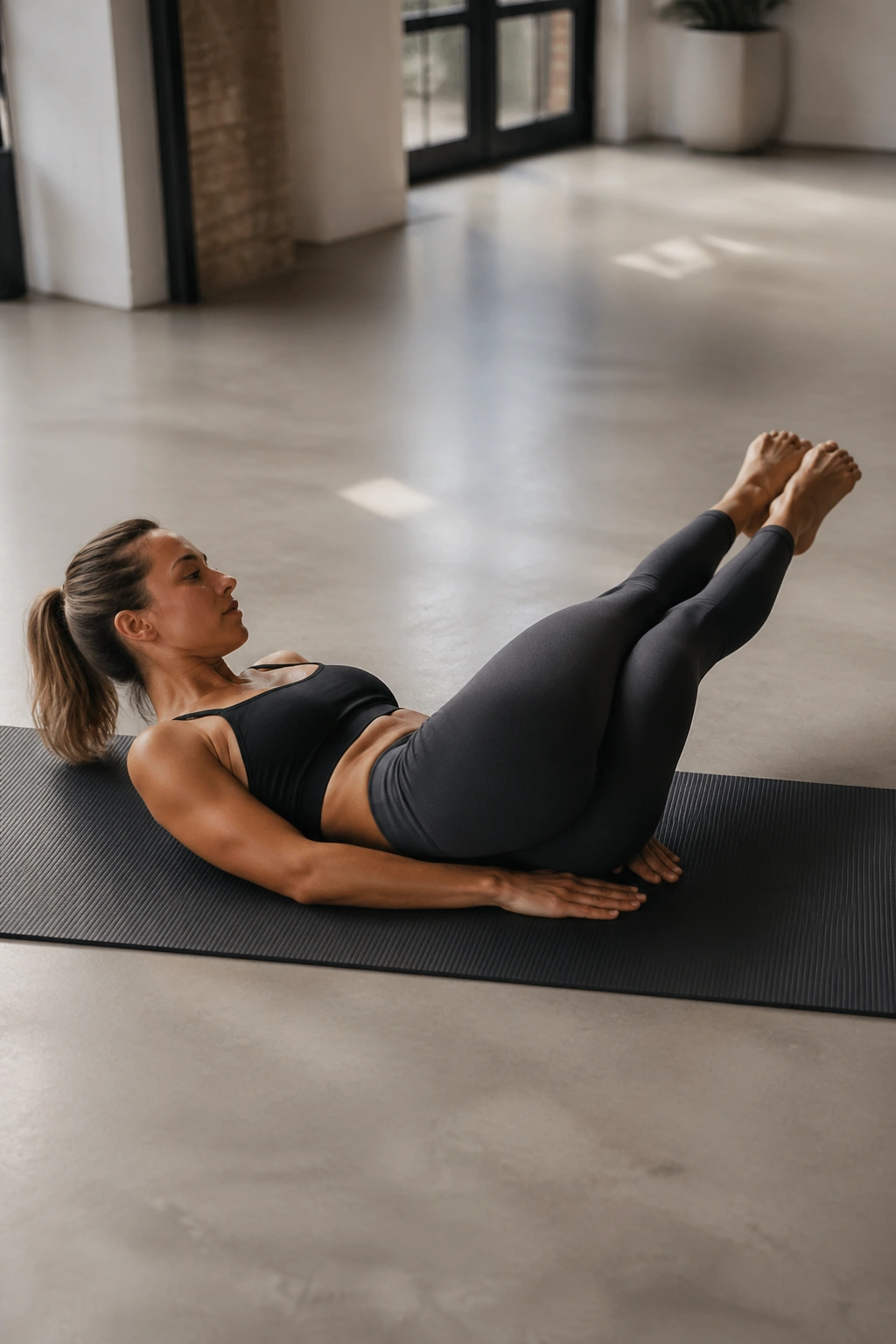
Corkscrew is one of those exercises that exposes every lazy habit you have in rotation. If the pelvis wanders, you feel it. If the ribs pop, you feel it. If the legs do all the work, the abs never really join the party.
The movement circles the legs in a controlled arc while the trunk stays as steady as possible. That sounds simple. It isn’t. The lower abdomen has to resist the shifting load, and the obliques have to help keep the pelvis from wobbling side to side. Small circles are better than pretty circles.
What to watch for
- Keep the shoulders heavy and the neck long.
- Make the circle small enough that the lower back stays calm.
- Move slower than you think you need to.
- If the hips pop up, reset and shorten the range.
Corkscrew is a good reminder that ab work does not have to look like a crunch to be effective. Sometimes it looks like a controlled leg path and a lot of stillness up top.
10. Spine Stretch Forward
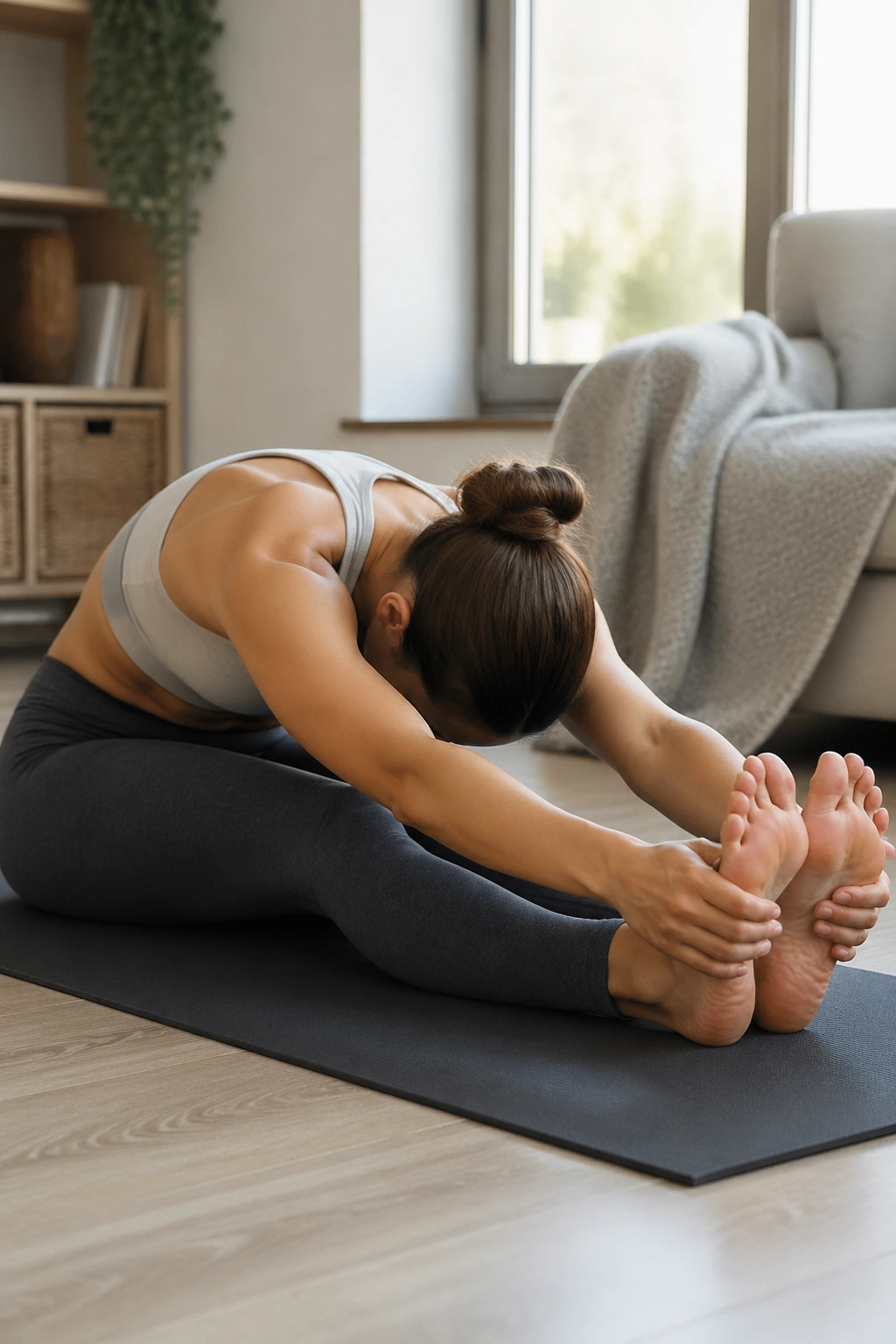
Here’s a move that surprises people: a forward fold can train the abs. Not by crunching, but by asking the trunk to stay organized while the spine rounds forward with length.
Sit tall with the legs extended and flex the feet. As you exhale, think of the ribs sliding back and the crown of the head reaching forward, not of collapsing into your hips. The abs guide the movement and keep the pelvis from dumping backward too soon. That’s the useful part. The goal is length, not slumping.
This exercise is especially nice when your lower back feels stiff from too much sitting. It gives the spine a clean forward shape while asking the midsection to stay awake. Keep the shoulders soft. Keep the chin gently tucked. If you’re yanking yourself down, you’ve gone too far.
11. Saw
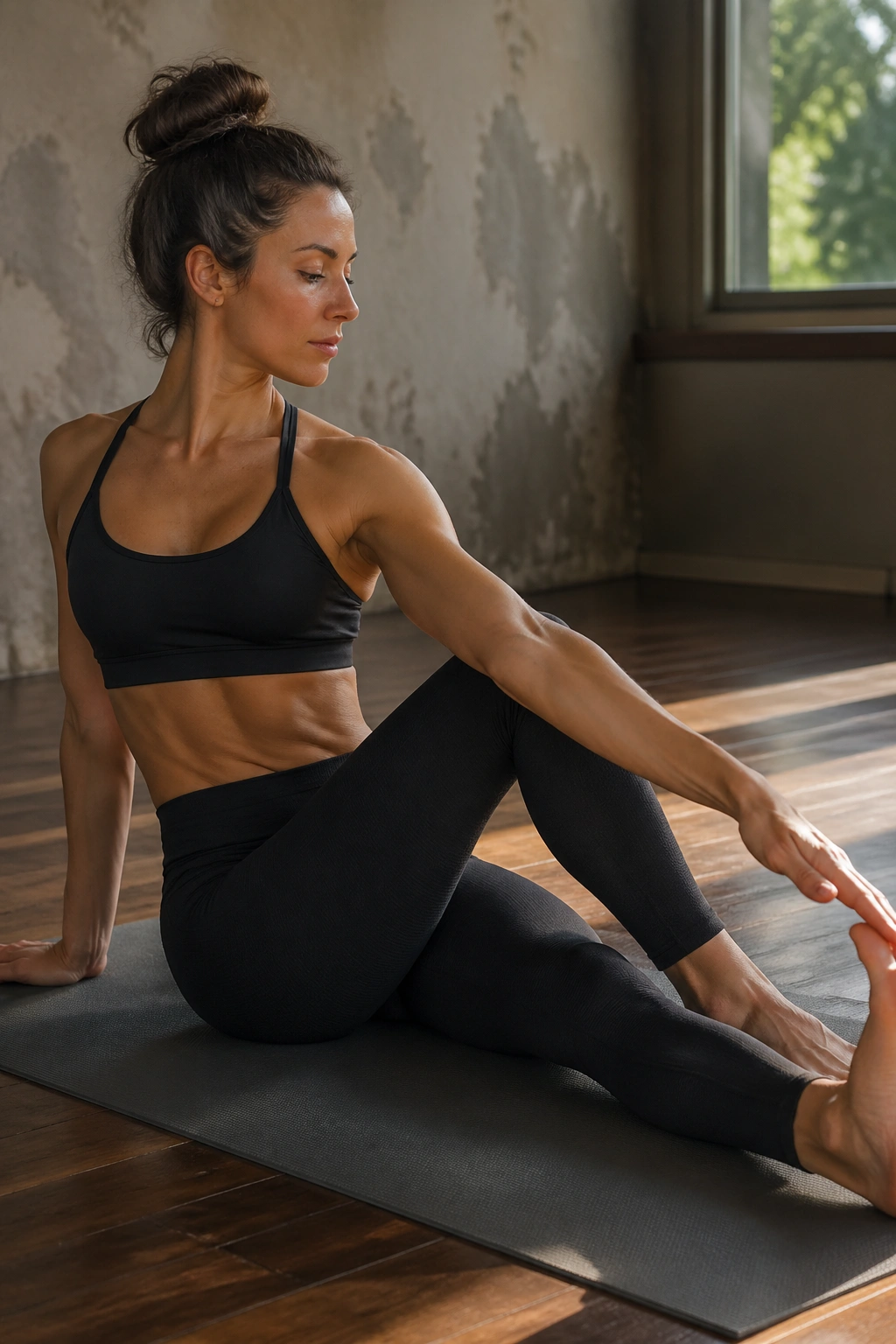
Saw twists the torso, stretches the hamstrings, and tells you very quickly whether your waist can move without the hips taking over. That combination makes it a smart choice for ab work, not just a hamstring stretch with style.
Unlike a big, loose twist, saw asks for length first. You sit tall, rotate the ribs, then reach the opposite hand toward the outside of the foot as if you’re trying to slice across the room. The abs keep the spine lifted during the turn and then help you untwist without collapsing.
How to keep the hips quiet
- Keep both sit bones grounded.
- Rotate from the ribs, not the knees.
- Reach forward past the little toe rather than dropping the chest.
- Exhale into the twist so the waist can narrow.
Saw is one of my favorites because it feels useful instead of flashy. You get rotation, stretch, and core control in one move. Hard to beat that.
12. Teaser
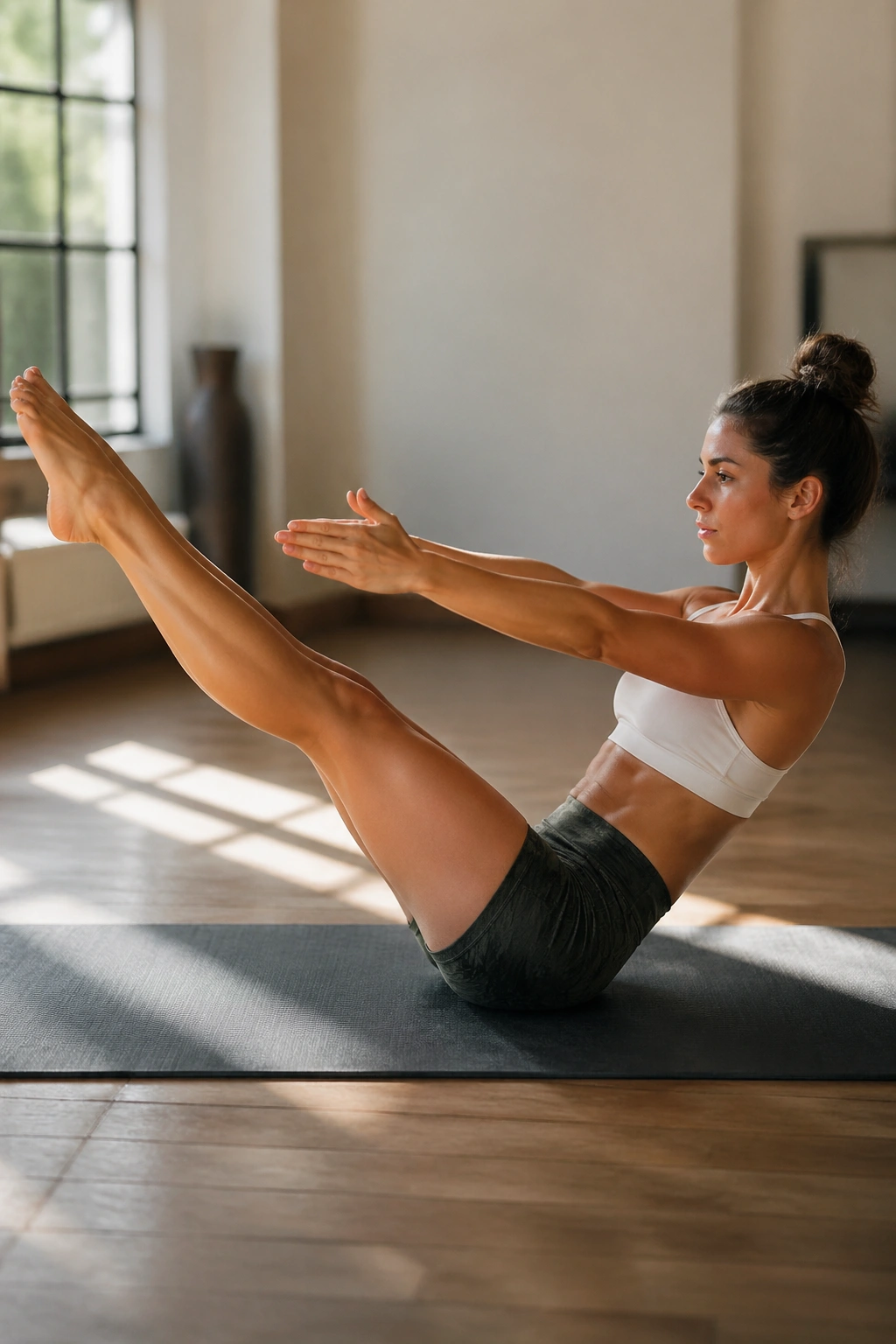
Teaser has a reputation for a reason. It’s demanding, it’s elegant in the ugly way hard exercises are elegant, and it will show you exactly where your abs stop doing the job.
The body folds into a balanced V-shape while the legs and torso hover with almost no backup from momentum. The deep core has to lift, hold, and keep the spine from dumping backward. If the shoulders shrug or the legs swing, the line breaks. If the abs stay in charge, the whole thing looks calm even though it feels anything but.
How to build up to it
- Start with one knee bent and one leg extended.
- Practice holding the V-sit with the hands behind the thighs.
- Lift one leg at a time before trying both together.
- Keep the chin slightly tucked so the neck does not seize up.
Teaser is advanced enough that a bent-knee version still counts. That’s not a watered-down version. It’s smart training.
13. Open Leg Rocker
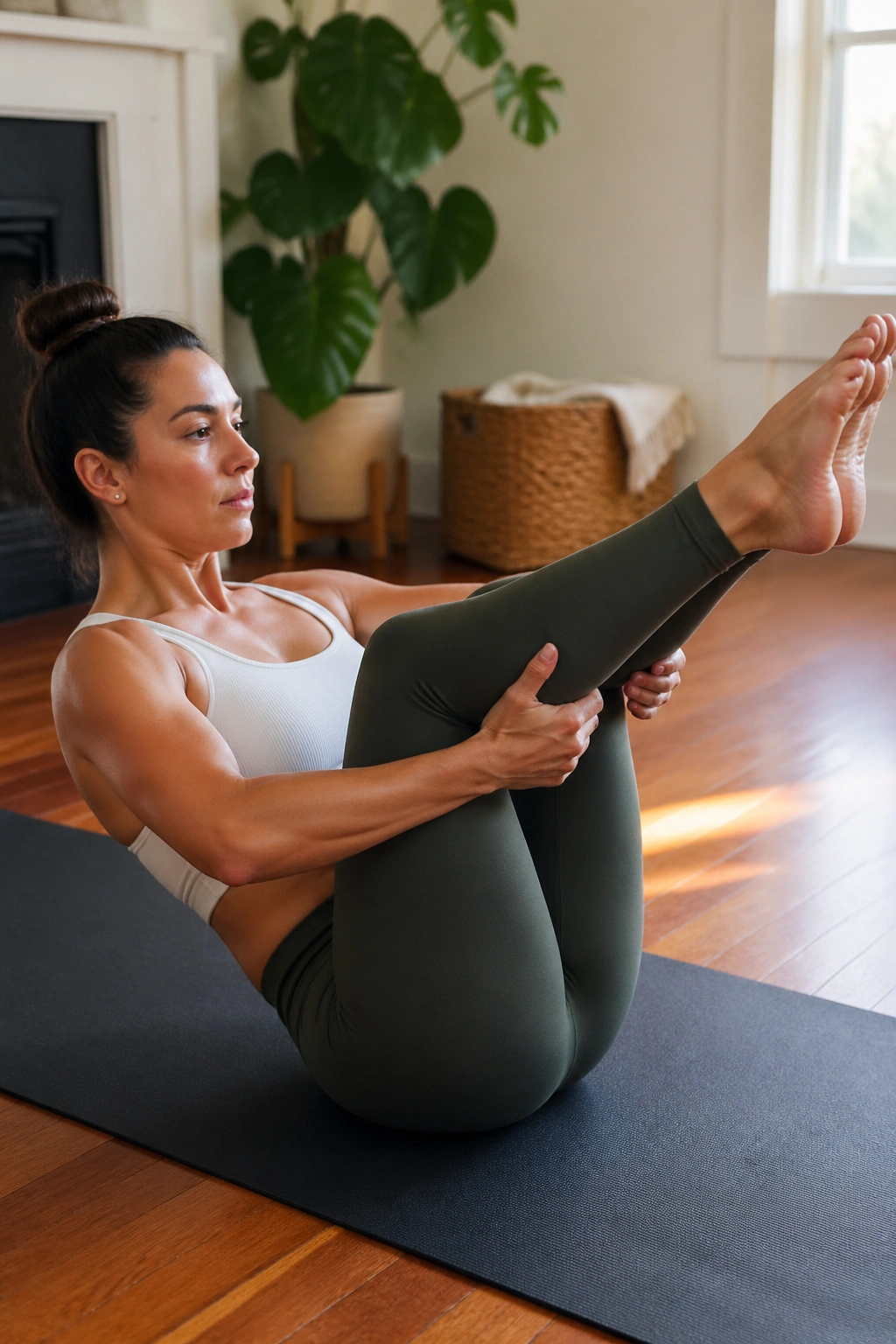
Open leg rocker has a playful name and a serious demand: stay rounded, stay balanced, and don’t let the legs turn the exercise into a swing.
You hold the backs of the thighs or calves, rock back over the shoulder blades, then return to balance on the sit bones. The abs have to control the roll both directions, which means they are working through coordination, not just tension. The move feels a little like finding your center on a moving stool. One second of carelessness and you tip.
The trick is to keep the chest open while the spine stays in a clean C-curve. If the legs are too straight or the grip too tight, the neck and hips take over. Bend the knees as much as needed. A neat, small rocker is better than a sloppy big one.
14. Side Kick Series
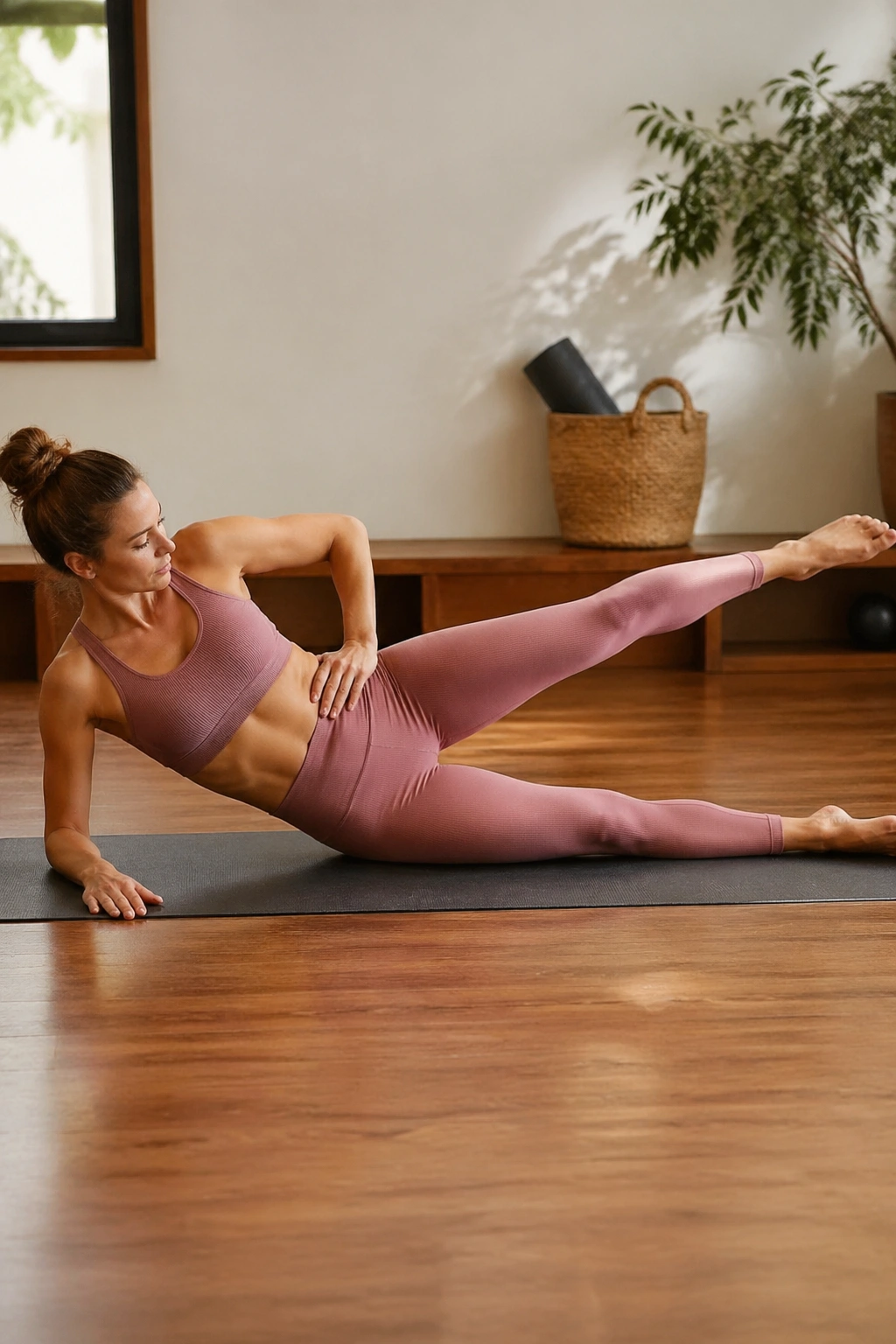
Side kick series deserves more love than it gets. People think of it as a hip or glute exercise, and it is that, but it also keeps the obliques busy because the trunk has to hold the body still while the legs slice forward, back, and around.
The small-motion rule
The smaller the kicks, the more honest the work. Big swings tend to come from momentum and the hip flexors. Small, precise ranges force the waist to stabilize and the pelvis to stay stacked. That is where the abs chip in.
A good side kick sequence usually includes front-back swings, small circles, and a few controlled lifts. Keep the bottom waist lifted off the mat if you can, and don’t roll the torso backward just to make the leg go higher. If the top hip is dumping forward, reset.
Use a long exhale on the forward kick and a quiet inhale on the return. The breathing keeps the ribs from flaring and helps the side body stay connected. Clean work here pays off in a tighter-looking waistline and better pelvic control.
15. Side Plank
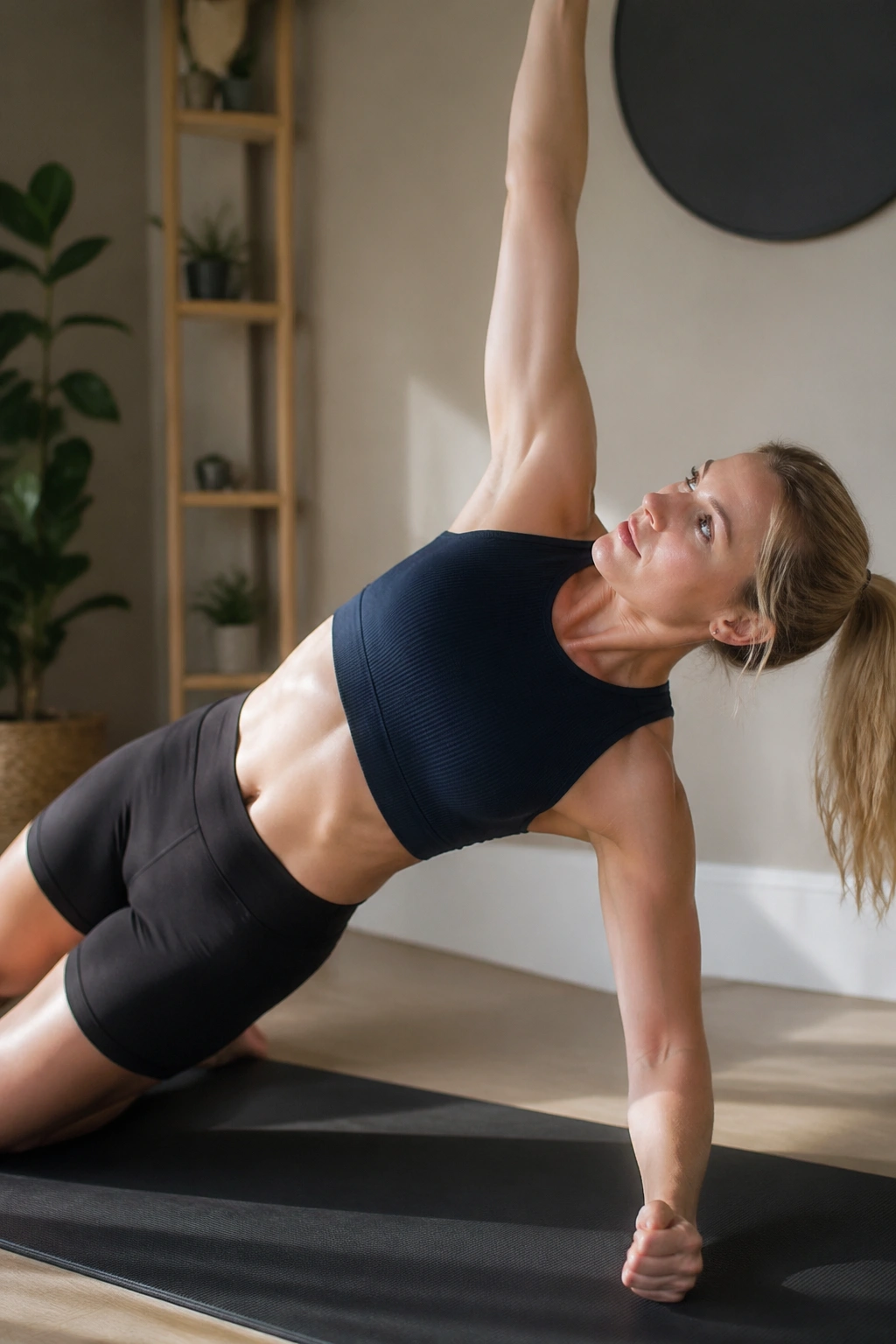
Does side plank count as Pilates? Absolutely. On a mat, with clean alignment and deliberate breathing, it fits the method perfectly.
The side plank lights up the obliques, the deep waist muscles, and the shoulder stabilizers all at once. It also wakes up the glute medius, which helps keep the pelvis from sagging. If you want a midsection that feels strong from the side, this one earns its place. A good side plank should feel steady, not frantic.
You can keep the bottom knee down and still get solid work. In fact, that version is often better for people who want to learn how to keep the rib cage stacked over the pelvis without wobbling. Lift the top arm if balance allows, or keep the hand on the floor until the line feels honest.
One clean hold beats three shaky ones. Every time.
16. Leg Pull Front
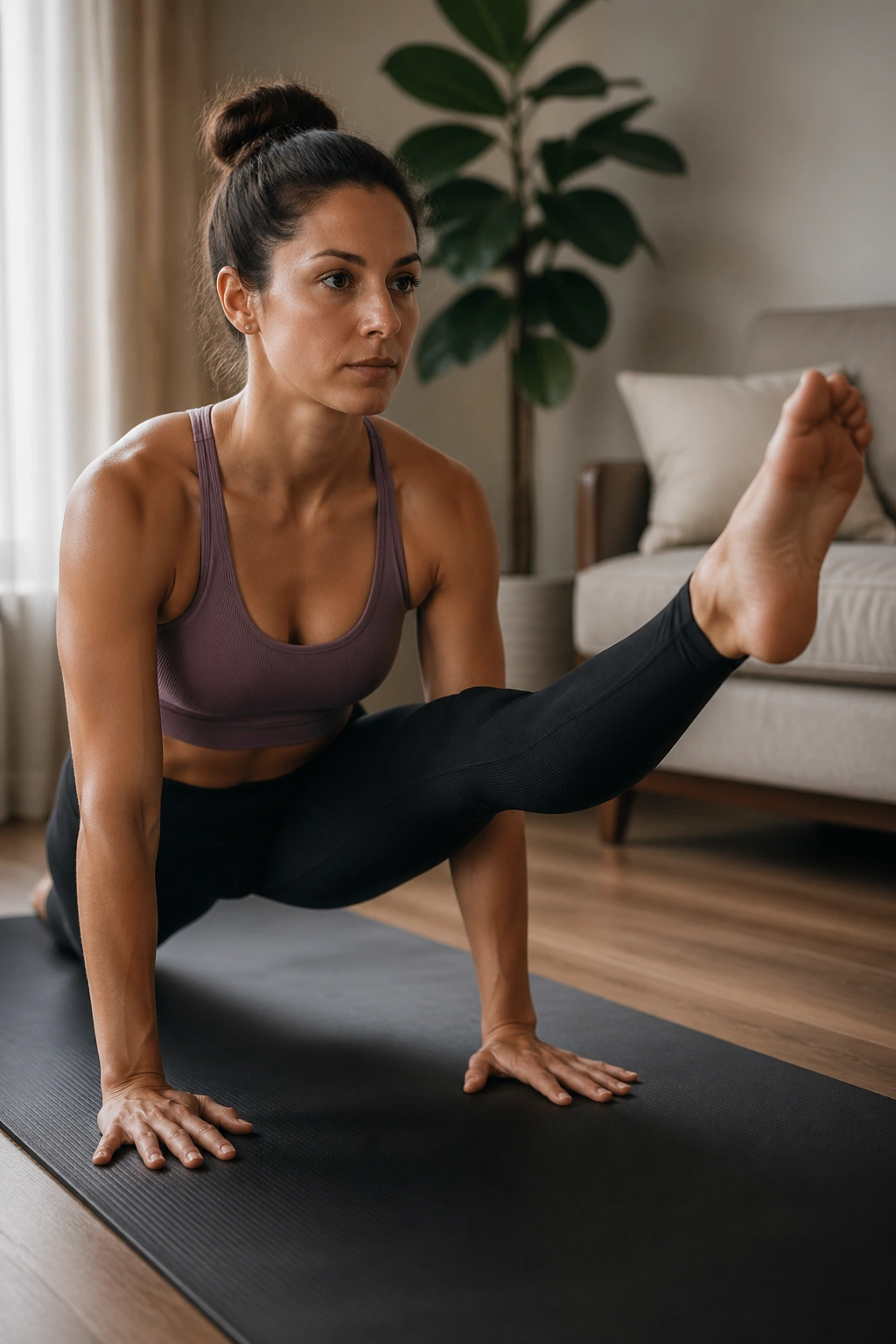
Leg pull front is basically plank with extra attitude. You stabilize through the shoulders and abs, then lift one leg and keep the whole body from twisting like a wet towel.
That anti-rotation work makes it excellent for the core. The abs have to brace while the glutes and shoulders support the line. If the pelvis swings open or the lower back sinks, you lose the good work and create a mess through the lumbar spine. Keep the leg lift small. An inch is enough.
Useful cues
- Stack the shoulders over the wrists.
- Press the floor away so the upper back stays broad.
- Lift one leg without arching the low back.
- Breathe out during the lift to keep the center tight.
This exercise is a little mean in the best way. It rewards clean plank strength and punishes sloppy habits almost instantly.
17. Swimming
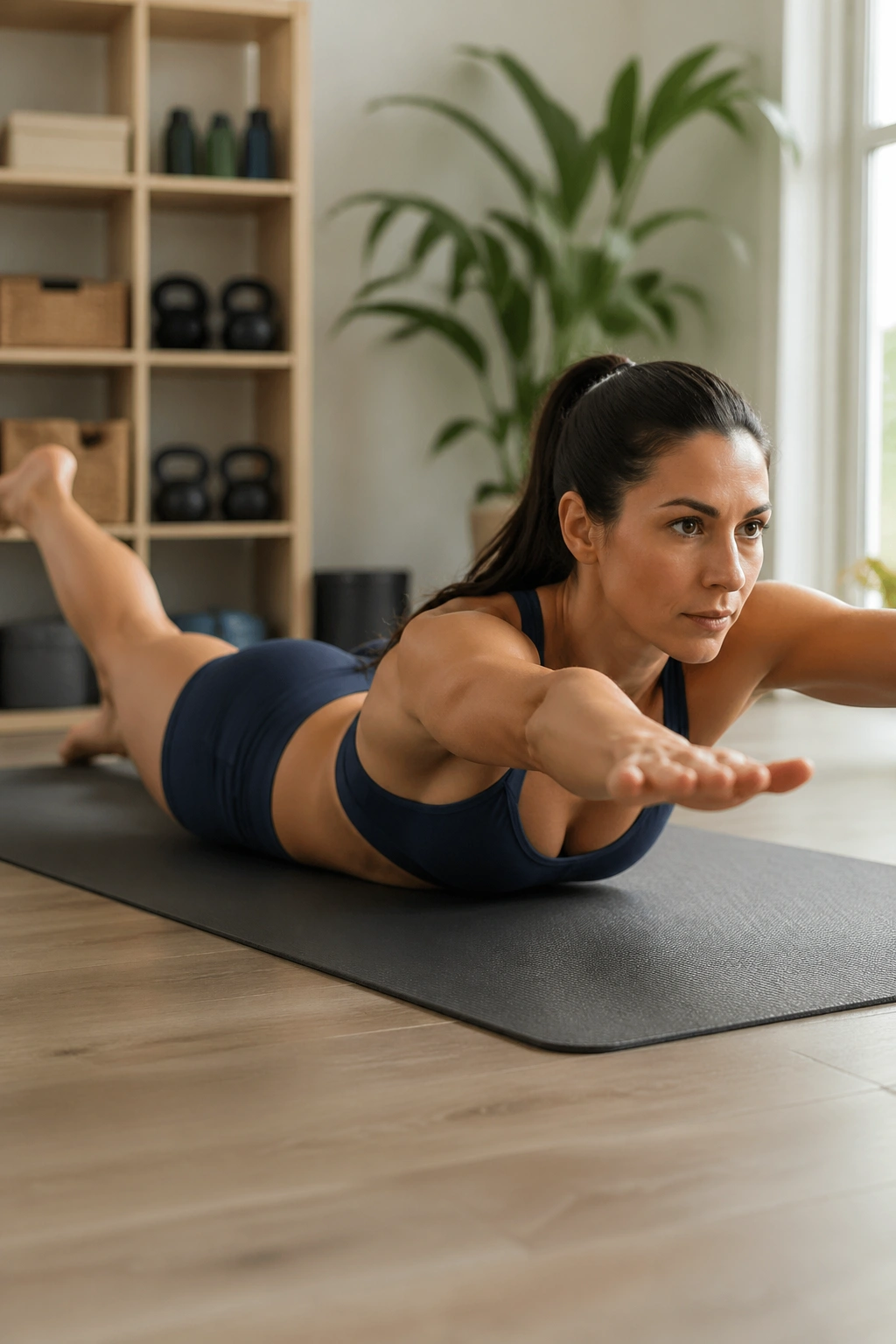
Swimming is the move people forget when they think about abs, which is strange, because the core has to work hard to keep the lower back from swaying.
You lie on your stomach and lift opposite arm and leg pairs in a quick, controlled rhythm. The back body works, yes, but the abs stay on so the spine doesn’t collapse into the mat. That makes it a useful balance piece in a Pilates abs sequence. Too much flexion without extension leaves the torso one-sided. Swimming helps fix that.
Keep the kicks small and the neck long. If you crane your head up to look forward, the back of the neck gets cranky fast. Hover the limbs just enough to feel the work, and keep the belly gently lifted away from the mat. The motion should feel brisk, not wild.
18. Tabletop Toe Taps for Toned Abs
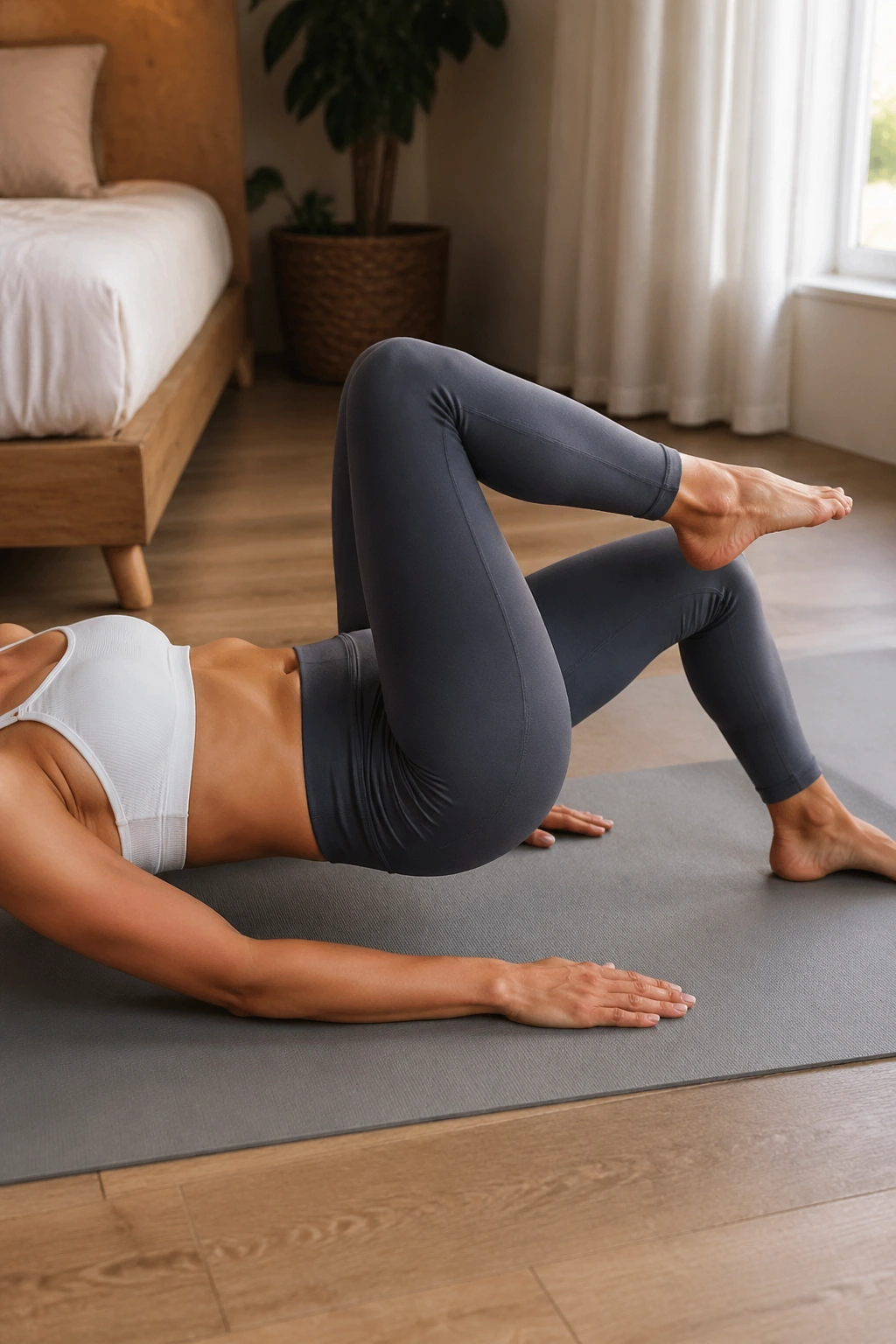
Toe taps are the move you can do on a tired day and still get honest core work from. They look mild. Then the pelvis starts to wander, and the abs have to step in and take over.
With both legs in tabletop, lower one toe toward the mat and bring it back, then switch sides. The challenge is not the leg movement by itself. It’s keeping the ribs down and the low back stable while the legs move independently. That anti-extension work is the whole reason this belongs in a list of mat Pilates exercises for toned abs.
How to make it count
- Keep the knees stacked over the hips at the start.
- Lower the toe only as far as you can hold the pelvis still.
- Exhale on the tap and inhale on the lift.
- If your back arches, raise the legs higher.
Toe taps are also a clean way to end a session because they let you check whether your center is still organized when fatigue sets in. That matters more than people think.
Final Thoughts
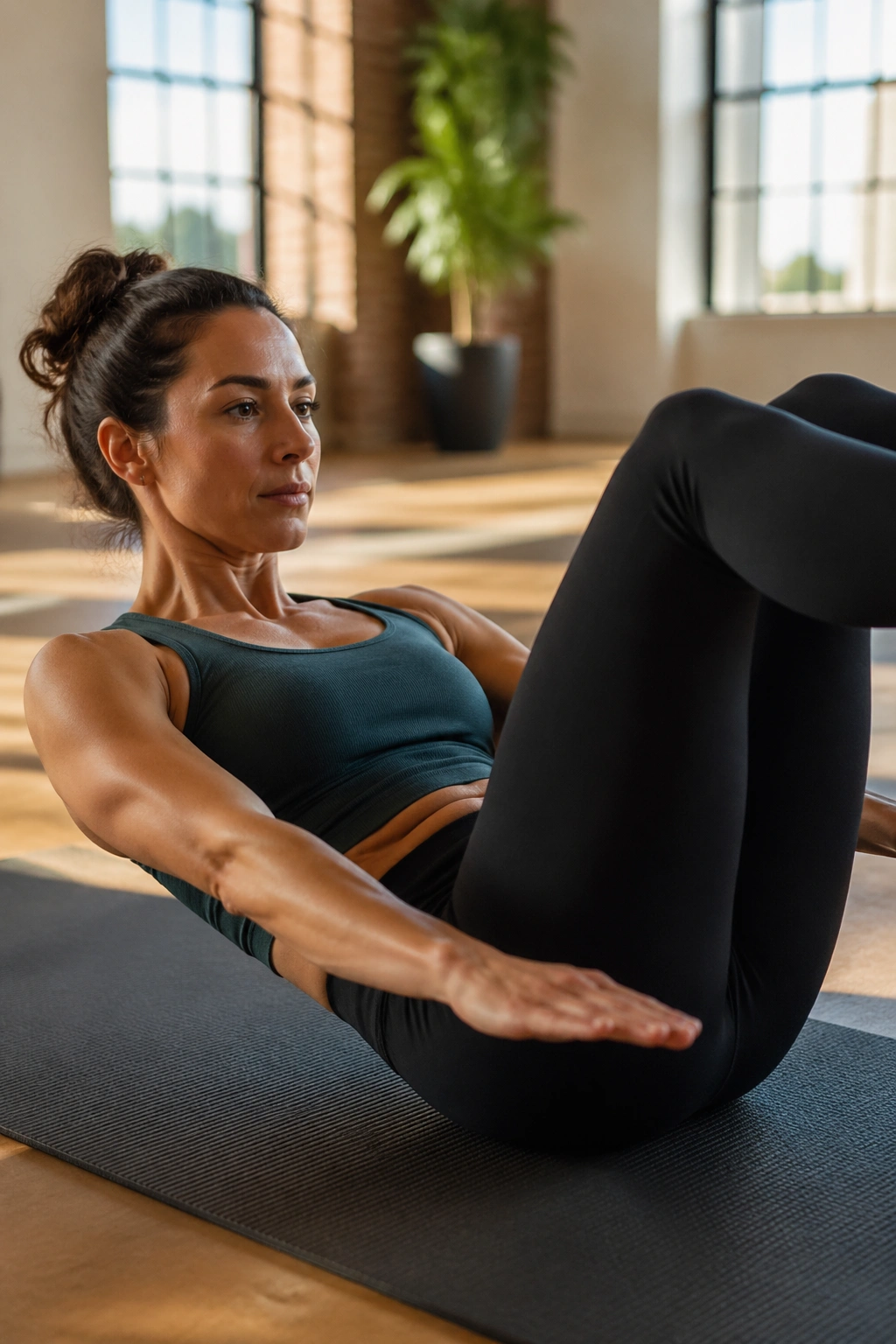
The best Pilates abs work is usually the quiet kind. It does not need a huge range or a noisy burn to matter. What it needs is control, clean breathing, and enough patience to keep the pelvis steady when the limbs want to go off-script.
If you want the fastest path to visible change, pair these moves with smart progression. Start with the exercises that let you keep the lower back settled, then earn the bigger shapes — teaser, roll over, corkscrew, side plank — only when your form holds up under fatigue. That’s the part that changes how your center feels when you stand up, sit down, reach for a bag, or carry groceries across the kitchen.
One practical tip before you roll out your mat again: film your last two reps from the side. The camera will show you the truth about rib flare, neck tension, and pelvic tilt faster than a mirror ever will. And that, honestly, is where real progress starts.
