



Small movements can be brutal.
Barre Pilates workouts for toned legs have that sneaky quality. A tiny pulse at knee height can light up your thighs faster than a set of sloppy squats, and the reason is simple: you stay under tension instead of bouncing in and out of the work. That steady burn is what makes these routines feel so different from random leg exercises thrown together at the end of a workout.
What people call “toned” is really a mix of muscle endurance, better alignment, and enough strength to hold your legs in place without wobbling all over the room. Barre brings the burn. Pilates brings control. Put them together and you get long, demanding sets that make your inner thighs, glutes, hamstrings, calves, and even the little stabilizers around your hips do real work.
And yes, some of these movements look tiny. That’s the point. Tiny does not mean easy. It usually means you’ve found the exact angle that forces your muscles to stay honest.
1. Second-Position Pulse Ladder at the Barre
Wide pliés are the classic reason people fall in love with barre Pilates workouts for toned legs. Stand with your feet turned out, heels grounded, and knees tracking over the middle toes. Drop into a second-position plié, then pulse an inch up and down for 20 counts, hold low for 10, and finish with 10 tiny heel lifts.
What You Should Feel
Your inner thighs should start talking within the first minute. If your knees cave inward, the work shifts out of the legs and into bad habits, so keep the pelvis steady and the ribs stacked.
- Stay tall through the crown of the head.
- Press evenly through the big toe, little toe, and heel.
- Keep the pulses tiny. Two inches is too much.
- Finish with 20 seconds of stillness in the lowest spot you can control.
One sharp cue: if your arches collapse, come up a few inches and reset.
2. Standing Arabesque Lifts at the Barre
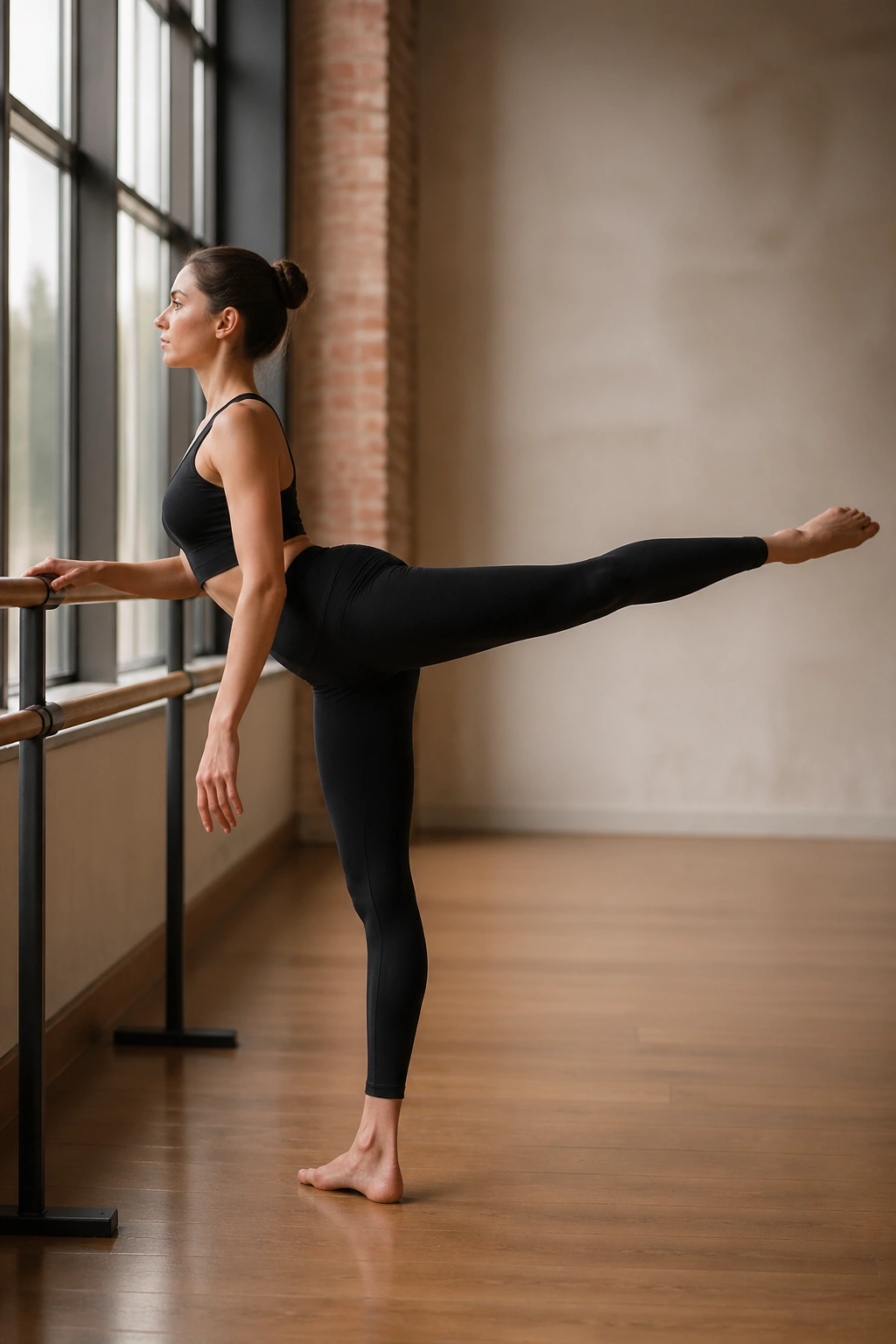
This one looks graceful until it isn’t. Stand facing the barre with one hand resting lightly on it, tip your torso forward a few degrees, and send one leg straight behind you with the toes pointed. Lift and lower the leg in a small range for 15 reps, then hold it at hip height and pulse for another 10.
The back of the standing leg and the glute on the lifted side have to share the load here. That matters. A lot of people swing the leg so high that the lower back starts doing the job, and that’s not the same thing at all.
Try a slow tempo first. Three seconds up. Two seconds down. Then add a 10-second isometric hold. It’s simple, and it gets mean fast.
3. Side-Lying Inner-Thigh Lifts on the Mat
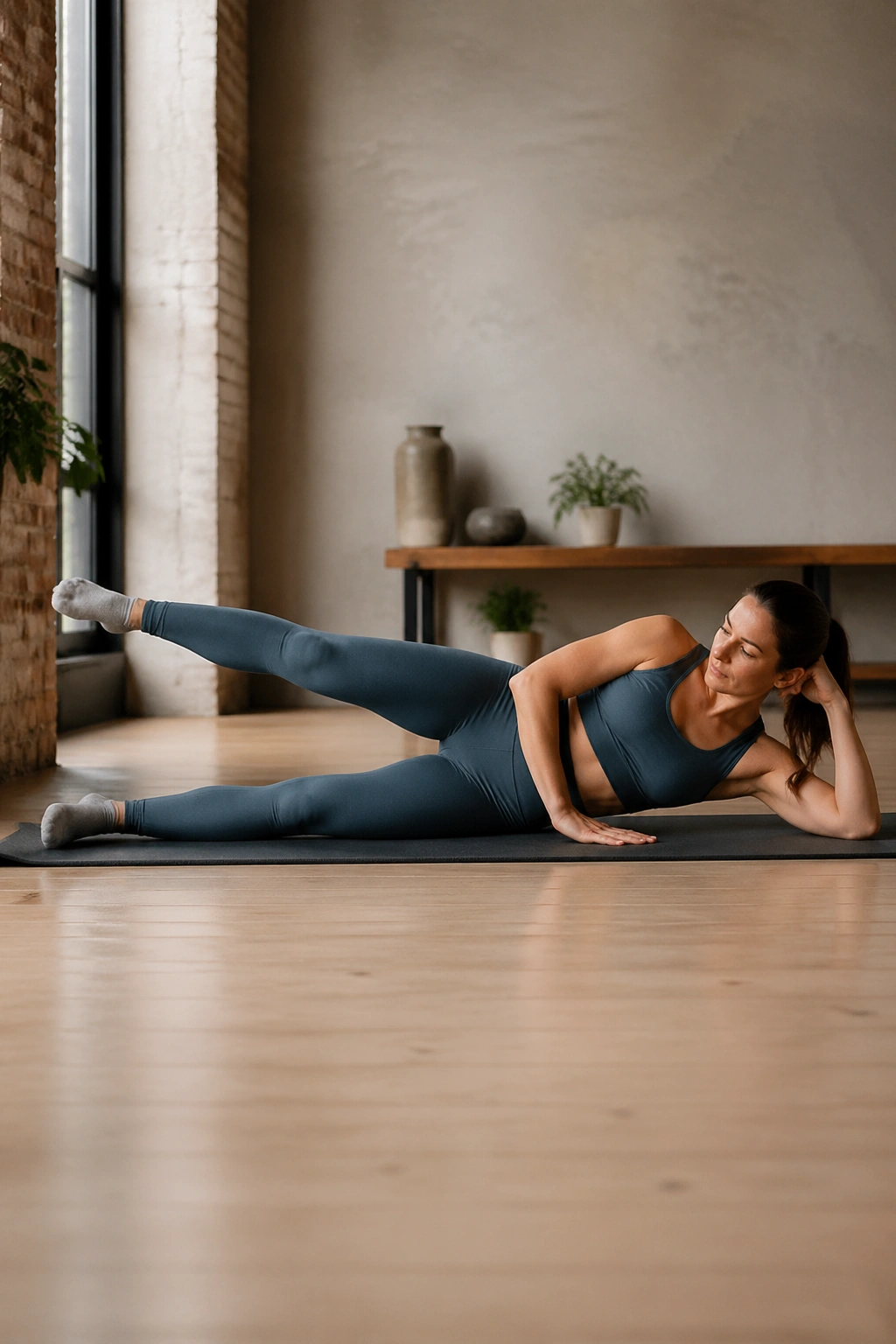
Do you want the inner thighs to work without any fluff? Lie on your side with the bottom leg straight, top leg bent and set in front of you for balance. Lift the bottom leg eight to 10 inches, lower with control, and repeat for 20 reps. Then add 20 tiny pulses at the top.
How to Get the Most From It
The temptation is to swing the leg. Don’t. Keep the foot flexed, the hips stacked, and the waist long so the movement stays on the inside line of the thigh.
A small range is enough.
- Keep your toes facing forward, not upward.
- Press the top hand into the floor for balance.
- Pause for one second at the top of each lift.
- Add a 30-second hold on the final rep if you want more burn.
If your hip flexor grabs, bend the top leg slightly and reset your stack.
4. Heels-In Bridge Holds with Marches
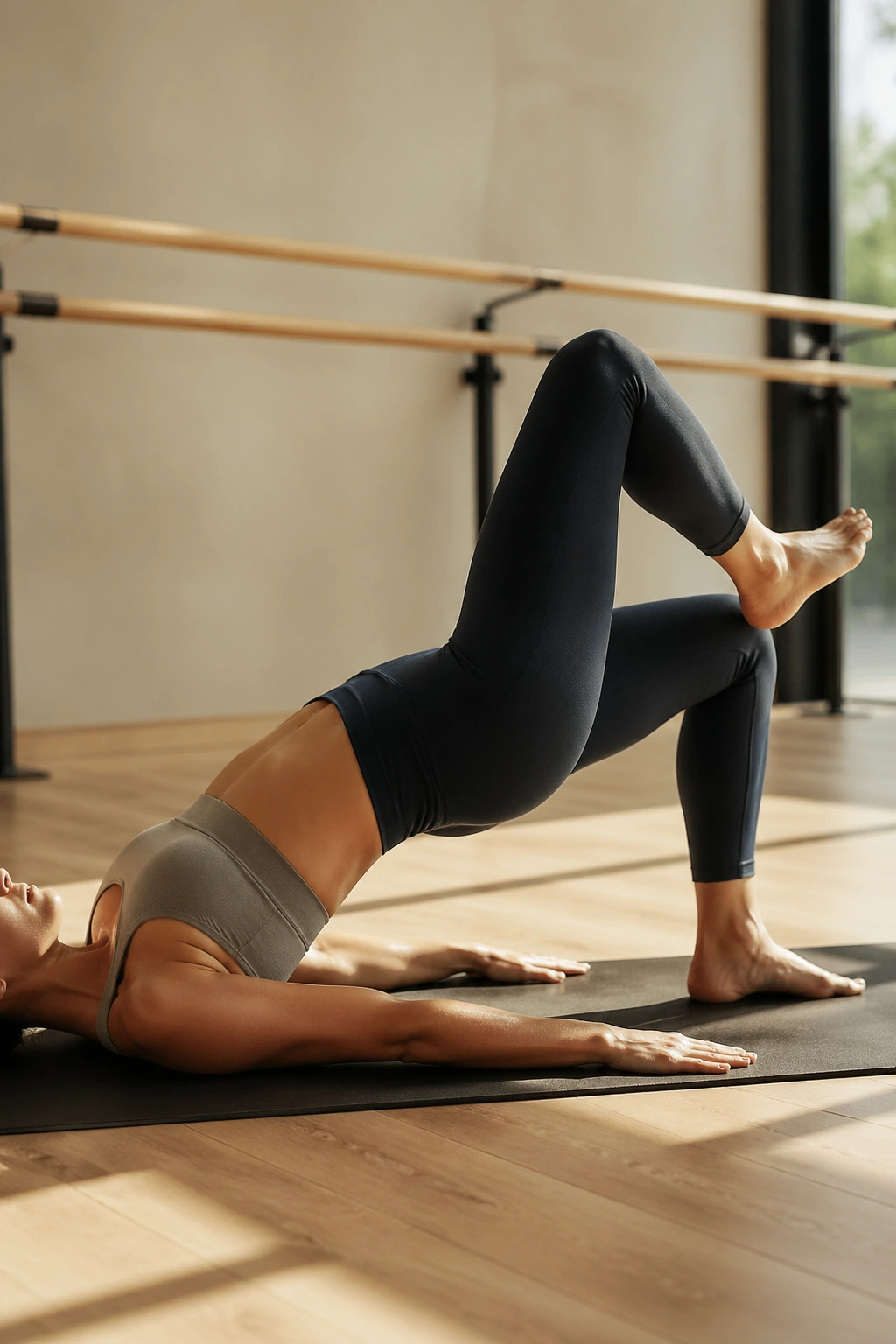
A Pilates bridge sounds almost too basic until the burn shows up. Lie on your back with your feet hip-width apart, heels close to your seat, and lift into a bridge until your knees, hips, and shoulders make a clean line. Hold for 30 seconds, then march one foot a few inches off the floor at a time for 10 controlled reps per side.
This one is sneaky because the glutes have to stay on while the pelvis refuses to tilt and dump backward. If you’ve ever felt bridges mostly in your hamstrings, bring your heels a little farther away from your seat and squeeze the glutes before you lift.
Keep the ribs heavy. Keep the neck soft. The shape should feel steady, not dramatic.
5. Curtsy Lunge Pulse Series
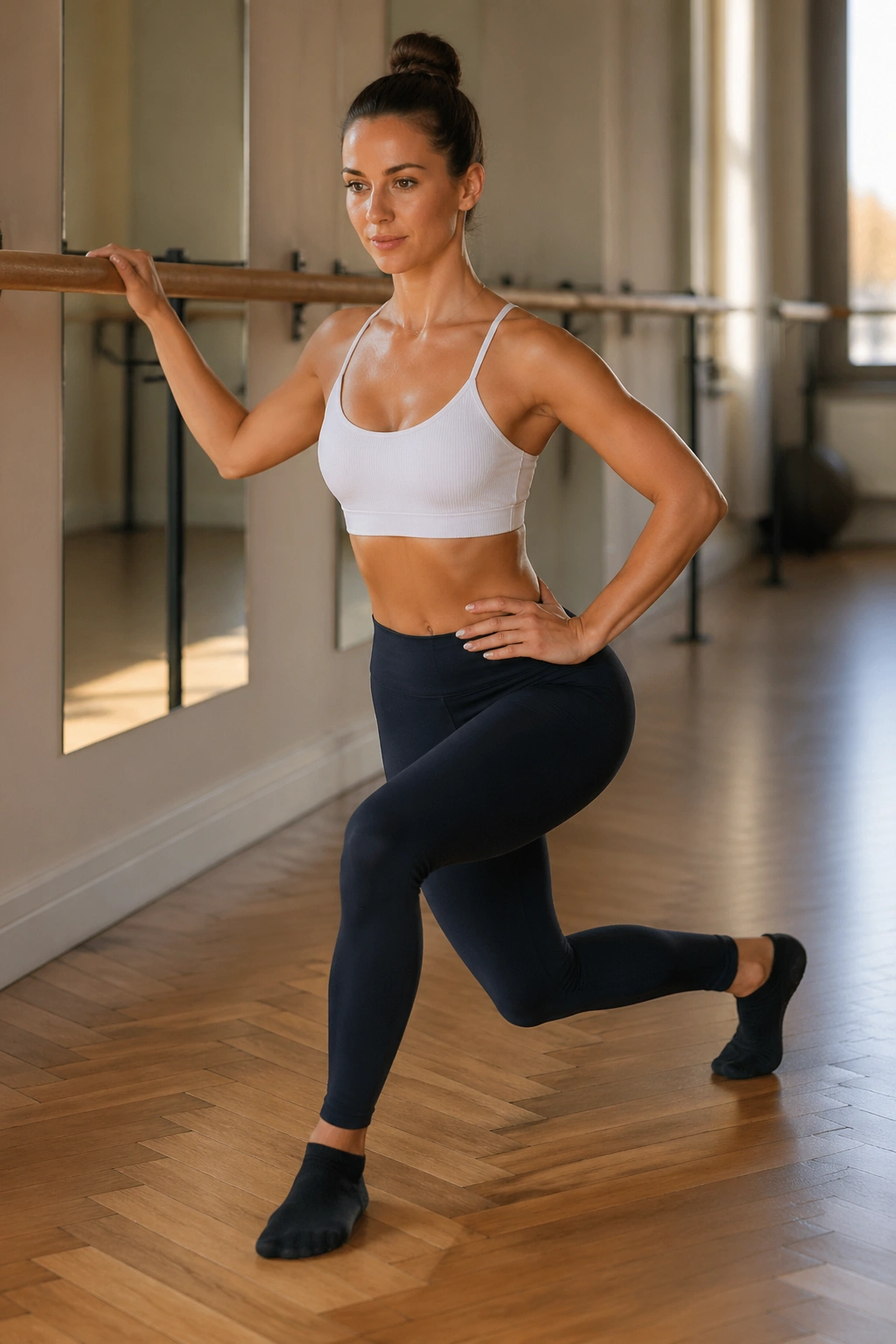
Curtsy lunges can be a mess if you rush them. They can also be one of the best ways to wake up the side glutes and the outer thigh. Step one leg back and across behind the other, sink into a narrow lunge, then pulse for 12 counts before switching sides.
The cross-behind line changes the angle of the work. That’s why this move lands differently than a straight reverse lunge. The standing leg has to stabilize while the crossed leg helps load the glute medius, which is the muscle that keeps your hips from wobbling when you walk, climb stairs, or stand on one foot.
Slow your descent. Pause for half a second at the bottom. A rushed curtsy is mostly momentum.
6. Mini-Band Clamshell Ladder
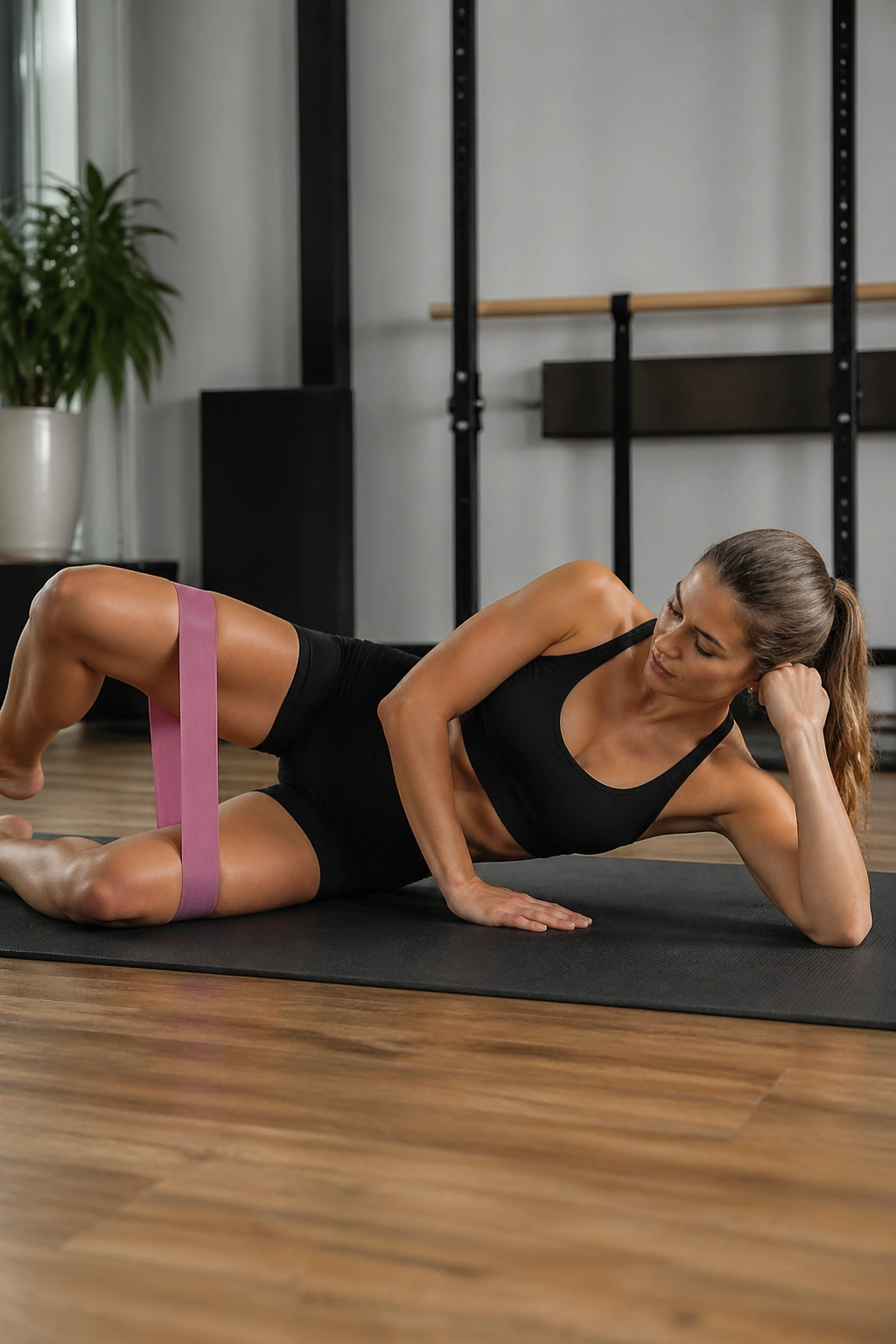
A mini-band turns the humble clamshell into a real side-leg workout. Lie on your side with knees bent, feet together, and the band just above the knees. Open the top knee 15 times, hold the top for 10 seconds, then do 10 tiny pulses before lowering slowly.
Unlike a lot of big leg moves, this one doesn’t need speed to be effective. It works because the outer hip has to resist the band the whole time. If the pelvis rolls back, the glute shuts off and the lower back takes over. Keep your top hip stacked and the movement small.
A heavier band is not always better. If you can’t open the knees without twisting, the band is too much.
7. Calf Raise Burnout at the Barre
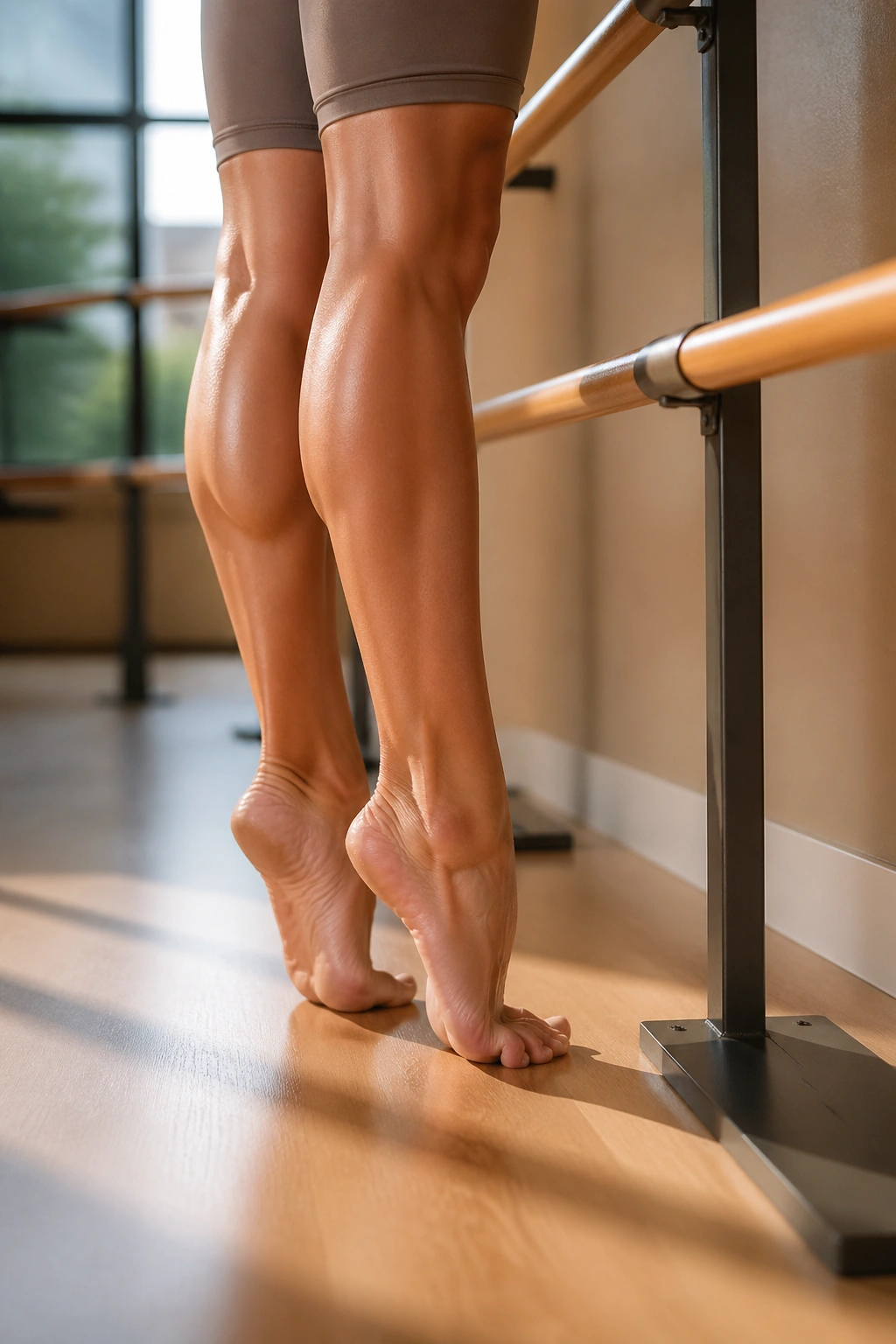
Calves get ignored until they start shaking. Stand with both hands lightly on the barre, feet parallel and hip-width apart, then rise onto the balls of the feet for 20 reps. After that, hold the top position for 20 seconds and finish with 10 slow single-leg calf raises per side.
What Makes This One Different
Most people rush calf work. That wastes the exercise. The calves respond well to long holds and slow lowering because the muscle has to control both the rise and the return.
- Press straight up, not forward.
- Keep the ankles from rolling out.
- Lower for a count of three.
- Finish with the knees softly bent to hit the calves from a different angle.
If your toes cramp, spread them wide and reduce the hold time for one round.
8. Pilates Ball Bridge Squeeze
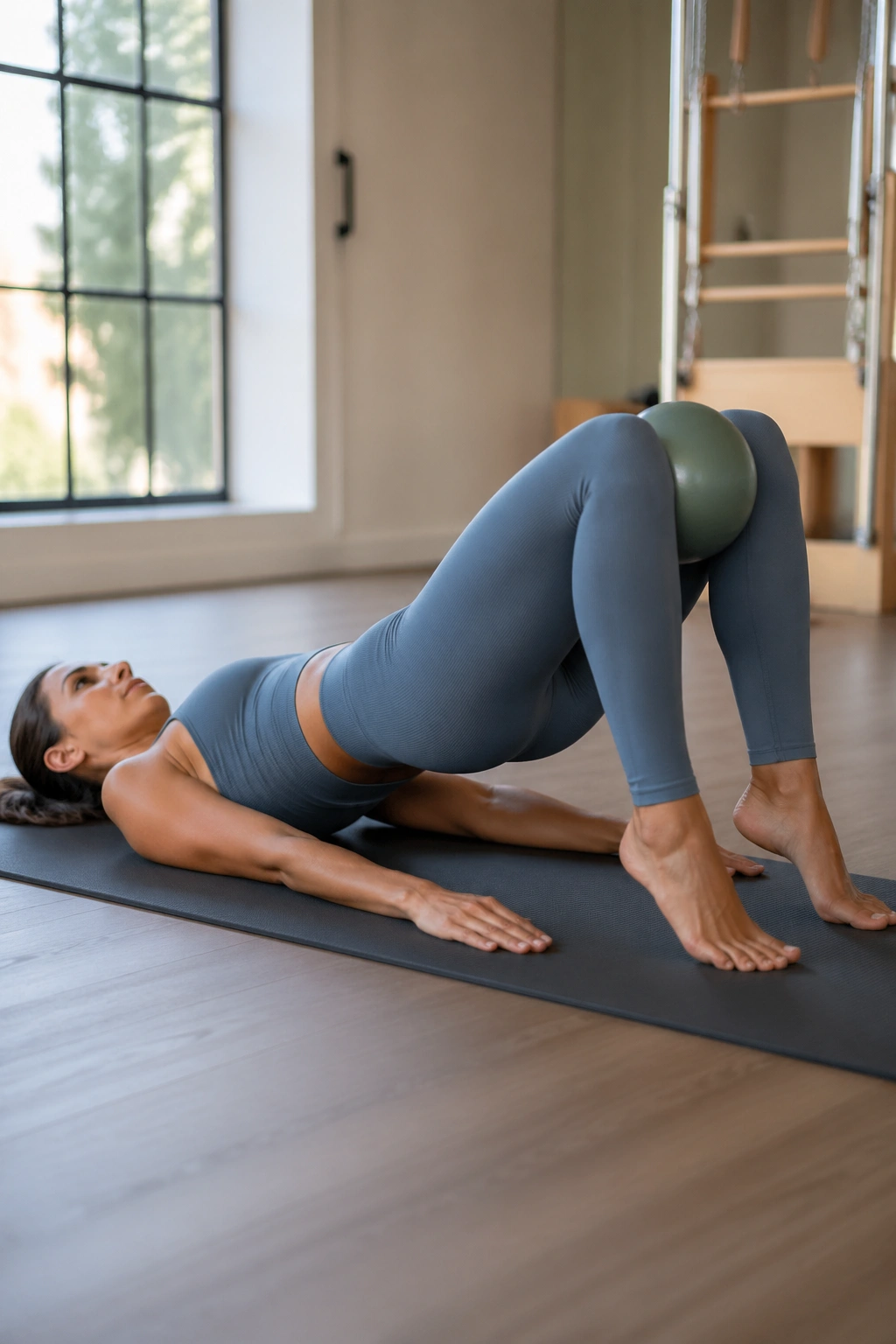
A small ball or firm pillow between the knees can turn a bridge into an inner-thigh and glute combo. Lie on your back, place the ball between your knees, and lift into a bridge while squeezing the ball gently for 8 to 10 reps. Then hold the bridge and add 15 pulses, keeping the squeeze light but constant.
The trick is not to crush the ball. Light pressure is enough to fire the adductors, and that steady engagement often helps the pelvis stay more centered. It also keeps the knees from flaring open, which is useful if your lower body likes to wander.
This is a good one for people who want quiet, controlled work instead of a high-energy burn. Quiet can be rough.
9. Fire Hydrant to Kickback Flow
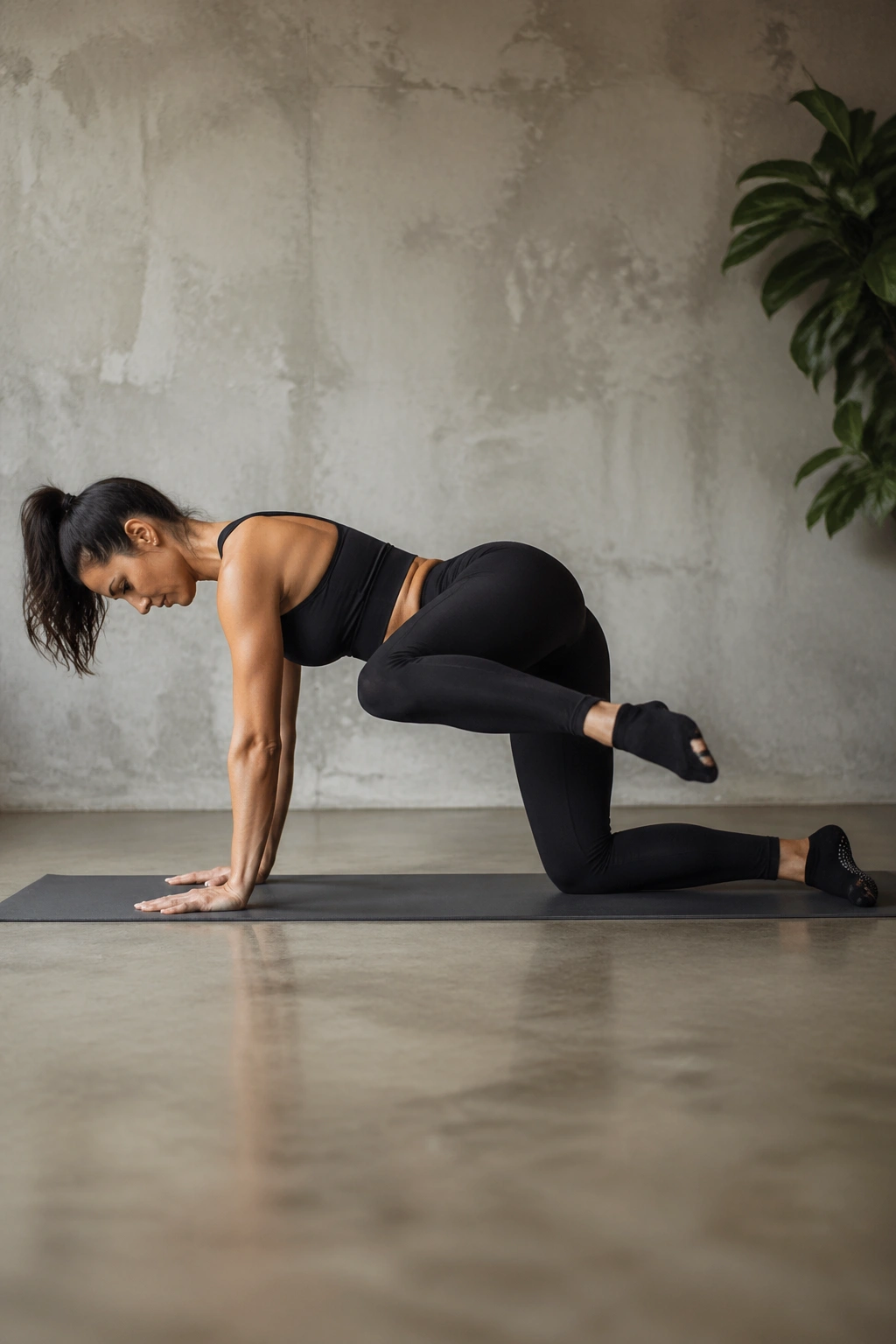
Start on all fours with wrists under shoulders and knees under hips. Lift one knee out to the side for 12 fire hydrant reps, then straighten the same leg back into a short kickback for 12 reps. Do one round slowly, then a second round with a 10-second hold at the top of each position.
Why It Works
The side lift hits the outer hip. The kickback hits the glute max. Together, they train the leg to move without letting the pelvis rock all over the mat.
- Keep the working knee bent during hydrants.
- Stop the side lift before the hip opens.
- On kickbacks, keep the lower back long.
- Move like you’re balancing a glass of water on your tailbone.
That last cue sounds odd, but it keeps people honest.
10. Wall Sit with Heel Raises
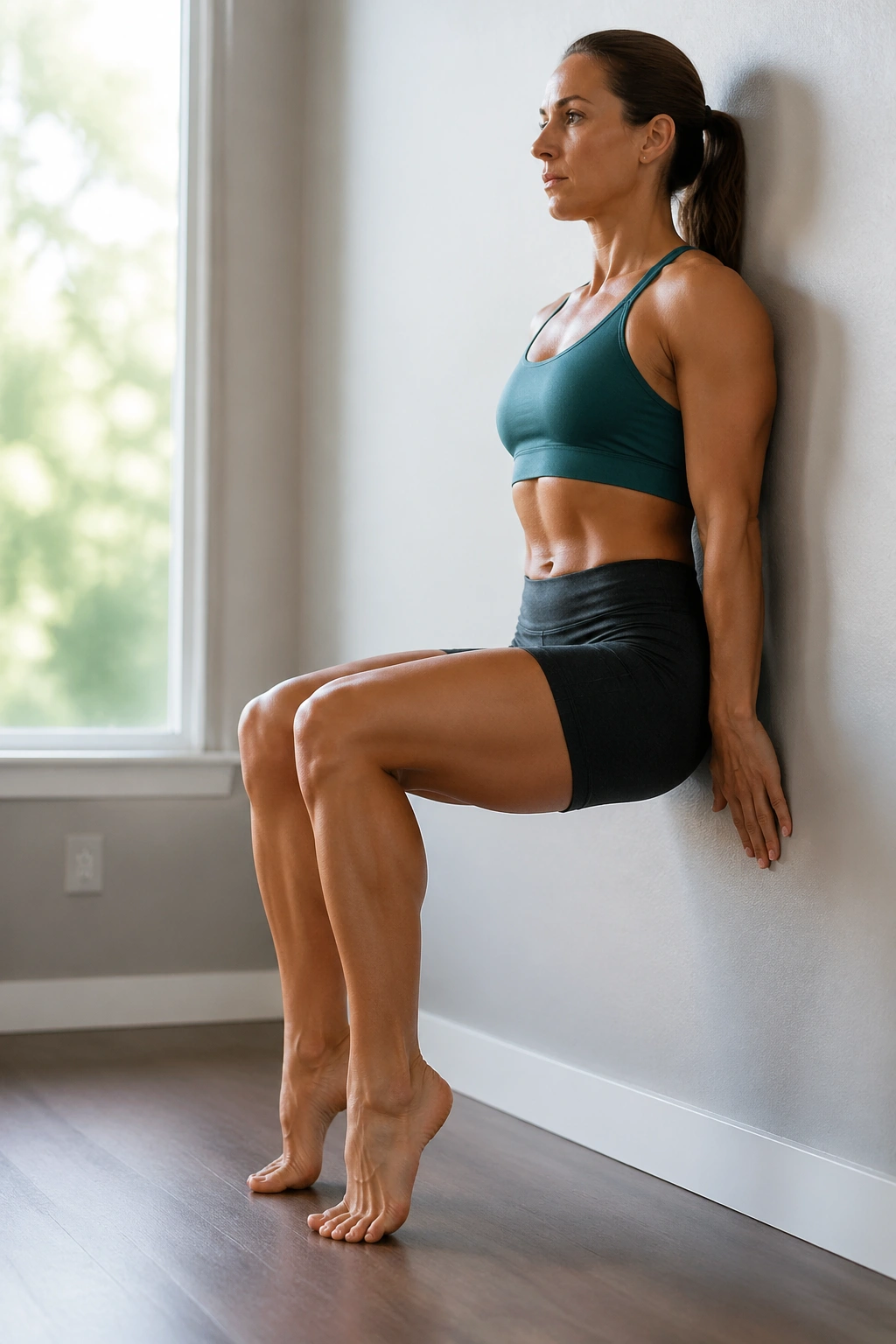
Wall sits are old-school for a reason. Slide down the wall until your knees stack over your ankles at about a 90-degree angle, hold the position, and add heel raises for 15 reps. Then stay low and hold for another 20 to 30 seconds.
This burns the thighs in a way that feels almost too simple. The quads stay loaded the whole time, and the heel raises pull the calves into the party without letting the legs rest. If your knees dislike deep angles, raise your seat a few inches and keep the shin angle a little more open.
A wall sit done well should feel steady and exact. No bouncing. No slouching.
11. Side Plank Leg Lifts
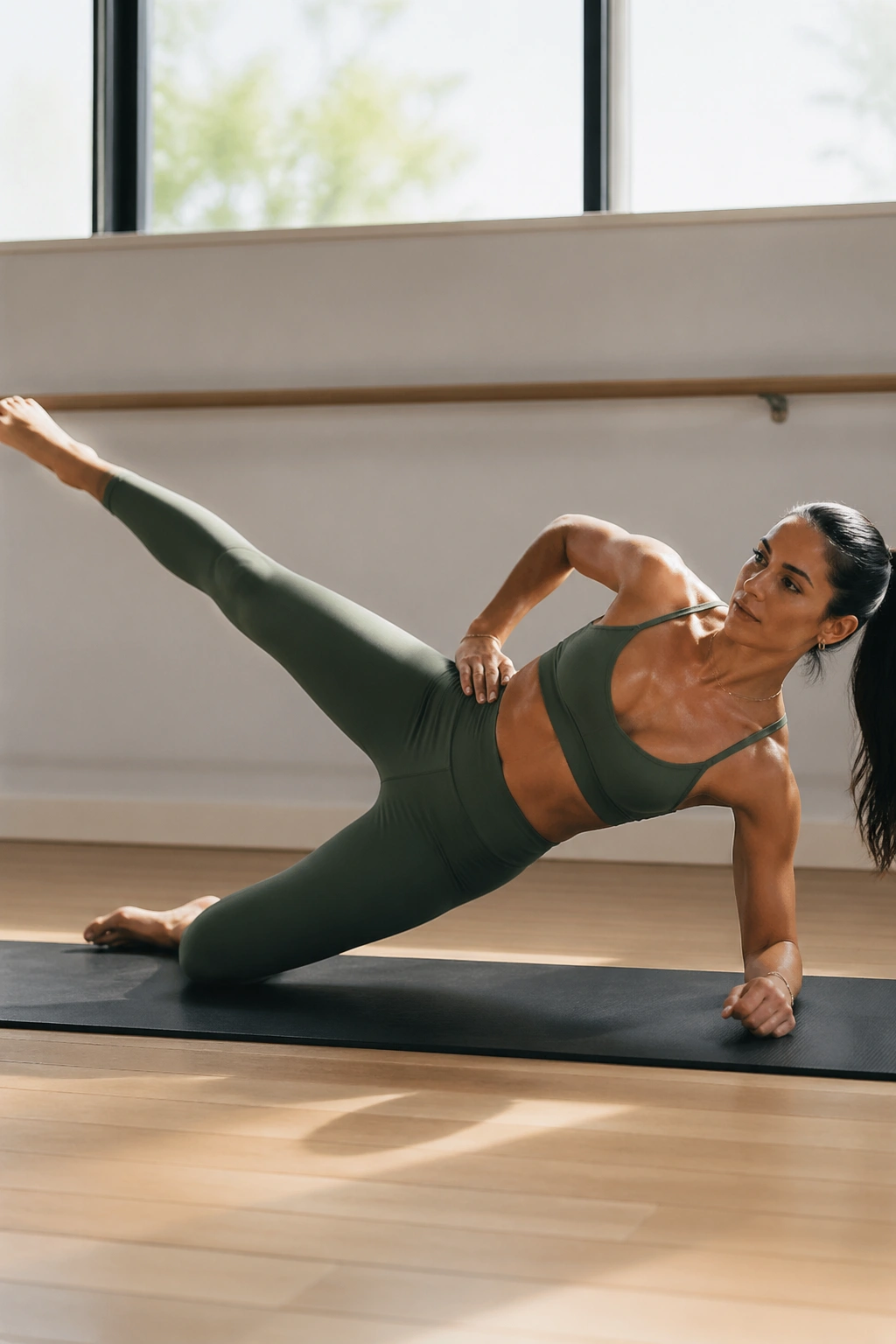
Side planks are not just for the core. Stack your shoulder over your elbow, extend the legs, and lift the top leg 10 to 15 times while keeping the hips forward. If a full side plank feels too intense, drop the bottom knee and keep the top leg lifting from that position.
The outer thigh works hard here, but so do the obliques and deep hip stabilizers. That matters because leg definition looks better when the pelvis is stable enough to support it. Wobbly hips can make even strong legs look tired.
Hold the top leg for a 5-second count on the final rep. That little pause changes everything.
12. Standing Side Kick Series
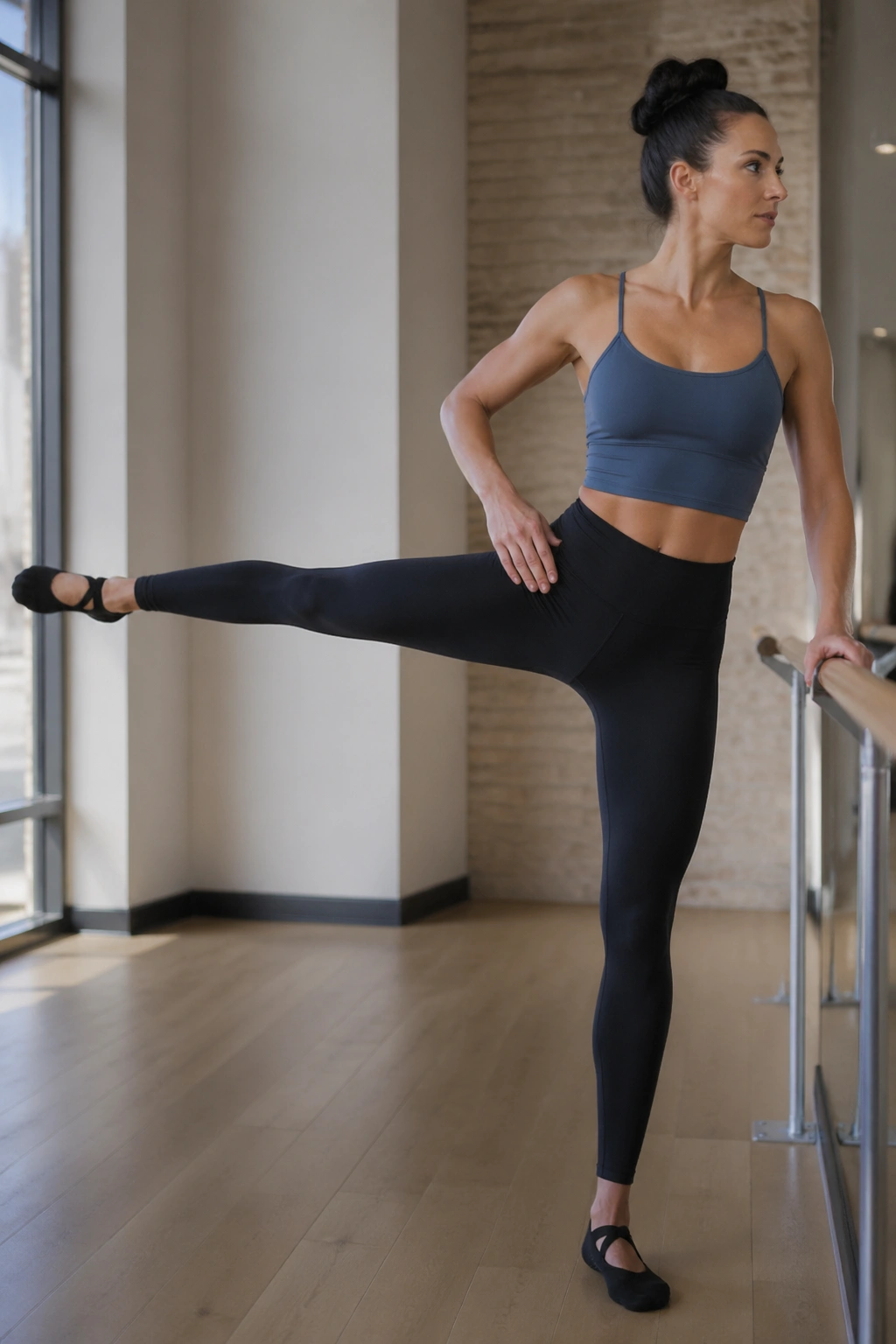
Face the barre, hold on with one hand, and kick one leg to the side in a controlled line. Keep the hip from hiking up, point the toes only if the rest of the leg stays quiet, and do 12 front kicks, 12 side kicks, and 12 back kicks before switching legs.
This is one of my favorites because it teaches your leg to move through space without your torso helping too much. The outer hip, inner thigh, and lower abs all have to cooperate. If the body swings, you lose the point.
A clean side kick is small, controlled, and repeatable. If it looks like a leg swing, reduce the height by half.
13. Four-Point Donkey Kick Pulses
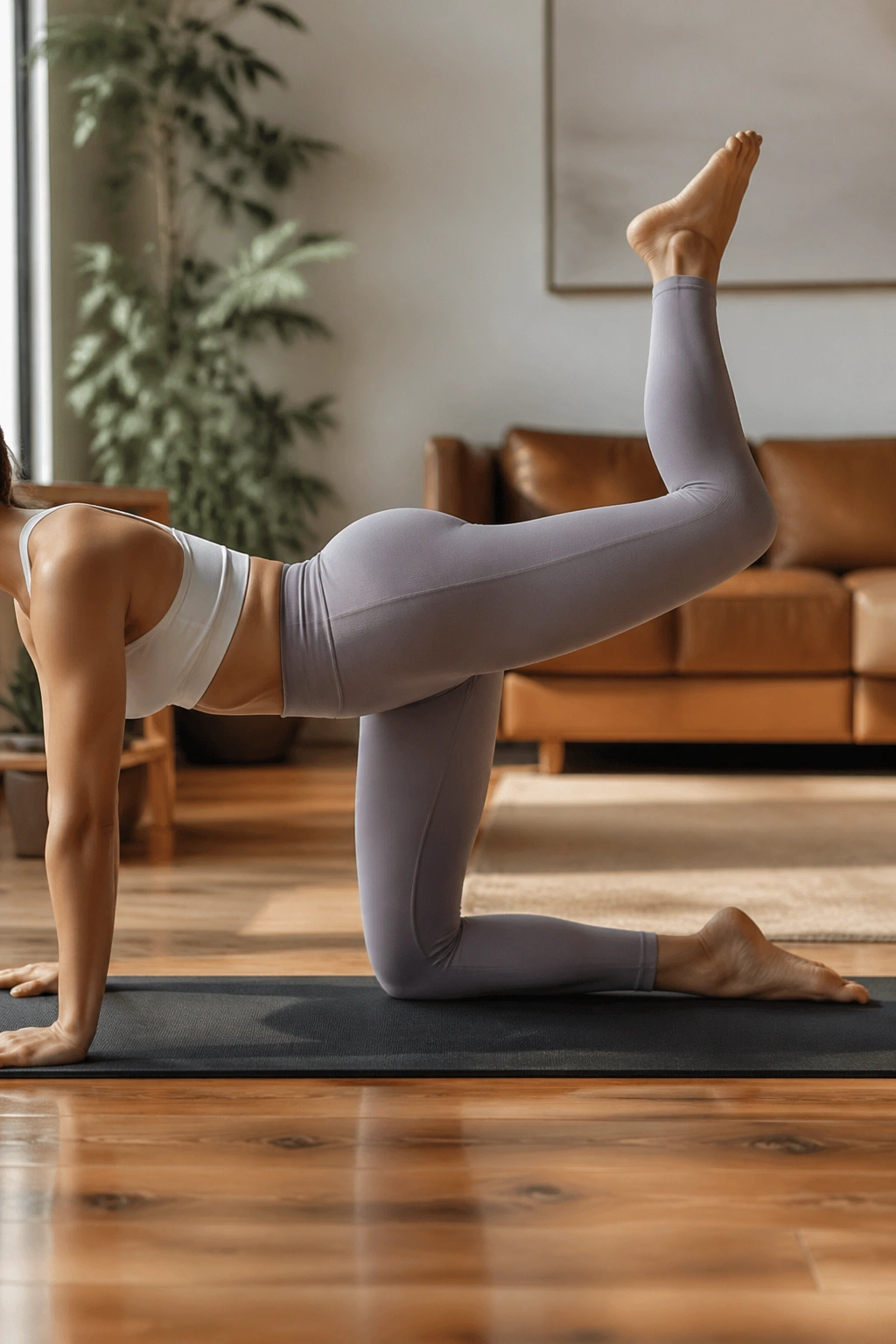
On hands and knees, lift one bent leg behind you until the thigh is in line with the torso, then pulse the heel toward the ceiling for 20 counts. Lower halfway, lift again, and finish with a 10-second hold. Do the same on the other side.
What to Watch For
The temptation is to arch the lower back. That turns a glute exercise into a lumbar extension drill, which is a bad trade. Keep the ribs tucked gently and the abdomen braced like you’re buttoning a tight jacket.
A few details help a lot:
- Flex the foot to keep the heel active.
- Stop the lift when the hips start to open.
- Press through the whole palm.
- Exhale on the lift, not the lower.
Short breath. Short movement. Big burn.
14. Split-Stance Plié and Reach
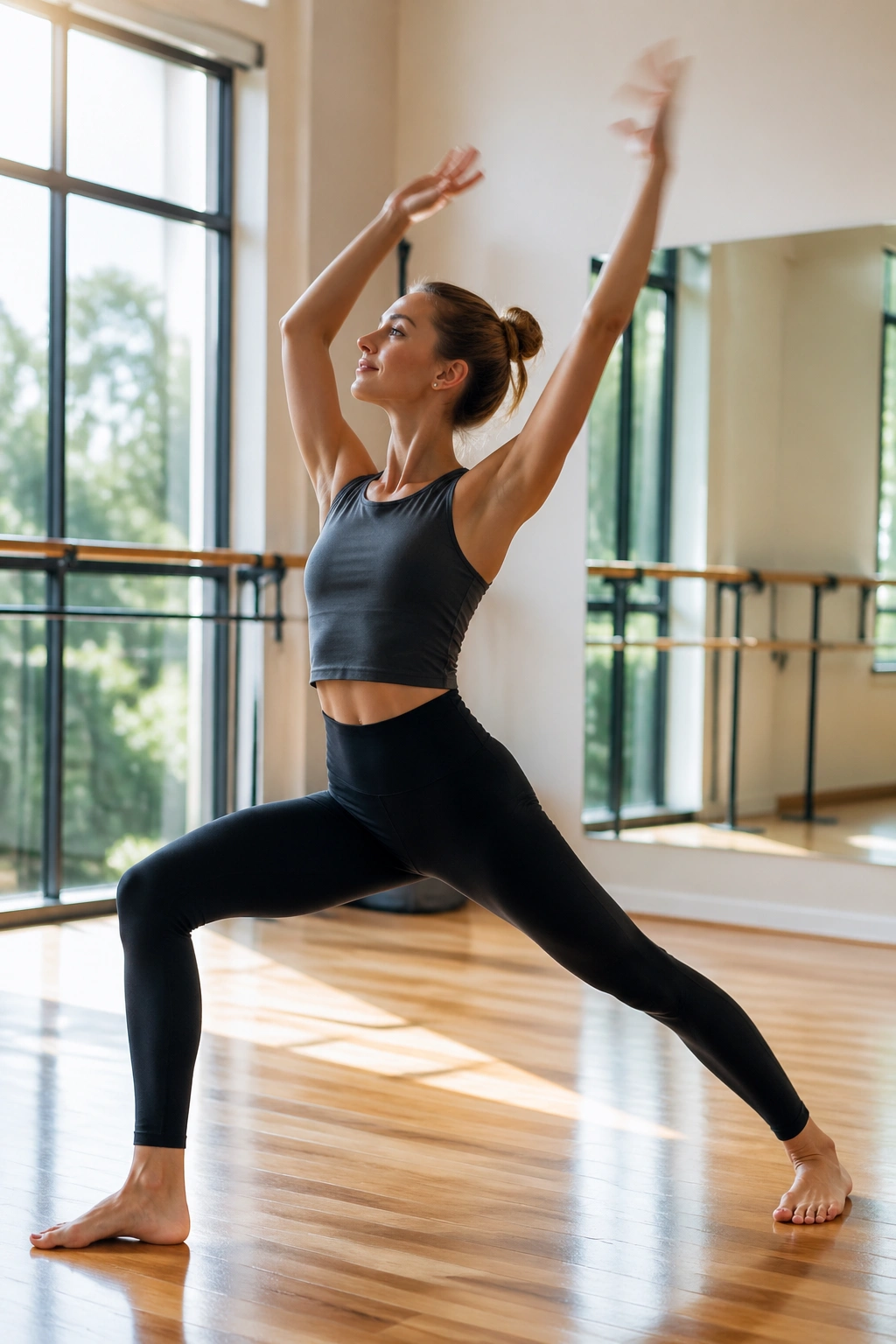
Put one foot forward and one foot back, both turned out slightly, and lower into a split-stance plié. Reach one arm overhead or out to the side as you pulse low for 12 counts, then switch the arm and repeat. It looks a little dance-y, and honestly, that’s part of the charm.
This move loads the front thigh while the back leg helps stabilize the hip line. The staggered stance also makes it easier to keep the torso upright, which can be kinder on the knees than a full wide plié. If you want more challenge, lift the back heel for the final eight reps.
You should feel the front thigh working hard, but not screaming in protest. If it is, shorten the stance and stay higher.
15. Chair-Supported Single-Leg Press
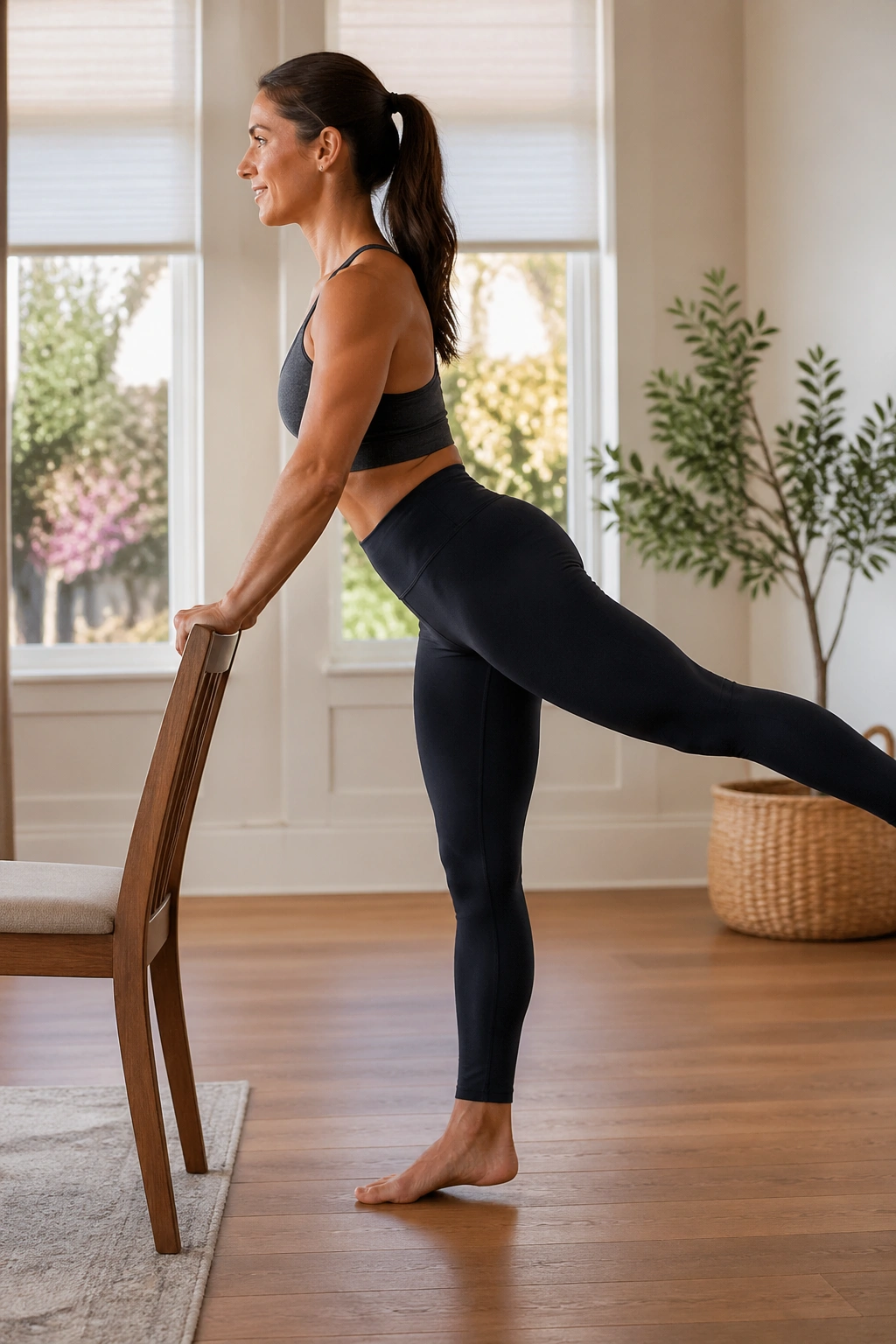
A sturdy chair or countertop can be enough for this one. Stand tall, lightly hold the support, and press one leg straight back in a slow, controlled line while the standing leg stays soft but strong. Do 15 reps, then hold the leg back for 10 seconds and add 10 pulses.
Unlike bigger athletic kicks, this version keeps the work tucked into the glute and hamstring without inviting momentum. The standing foot matters too. Keep the tripod of the foot grounded so the ankle does not wobble.
If you want a cleaner challenge, move the working leg only as far back as you can without arching the spine. Shorter range. Better control.
16. Sumo Squat with Heel Hover
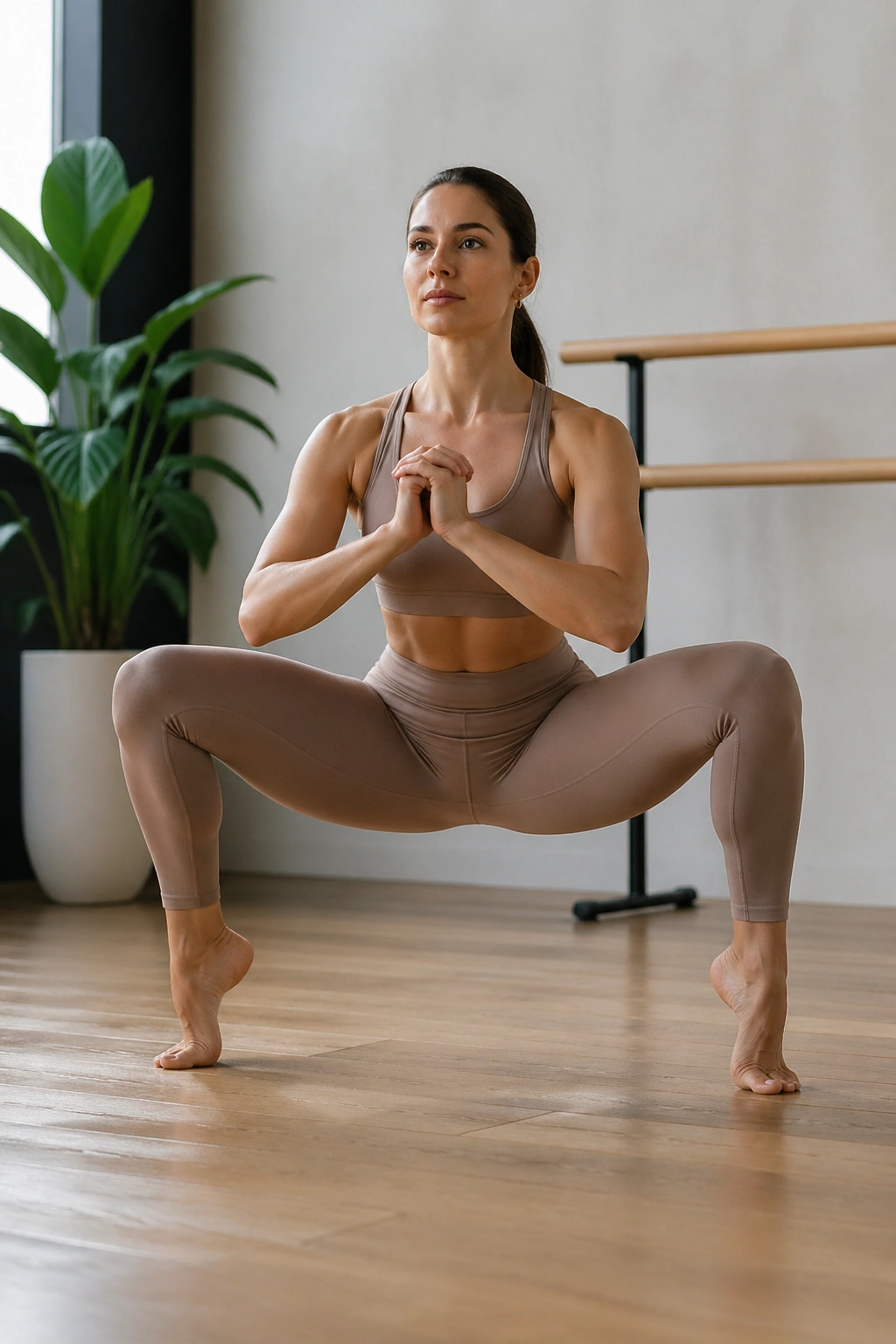
Drop into a wide squat with toes turned out, then lift both heels an inch off the floor and hold for 8 counts. Lower the heels, rise, and repeat for 10 to 12 rounds. After that, stay low and do 20 tiny pulses.
The heel hover changes the game because it forces the calves and inner thighs to keep stabilizing while the quads stay loaded. It also brings a little ankle work into a pattern that many people otherwise do only from the knees up.
Do not rush this one. If the heels lift too high, you’ll wobble and lose the line. One inch is enough.
17. Reverse Lunge with Knee Lift
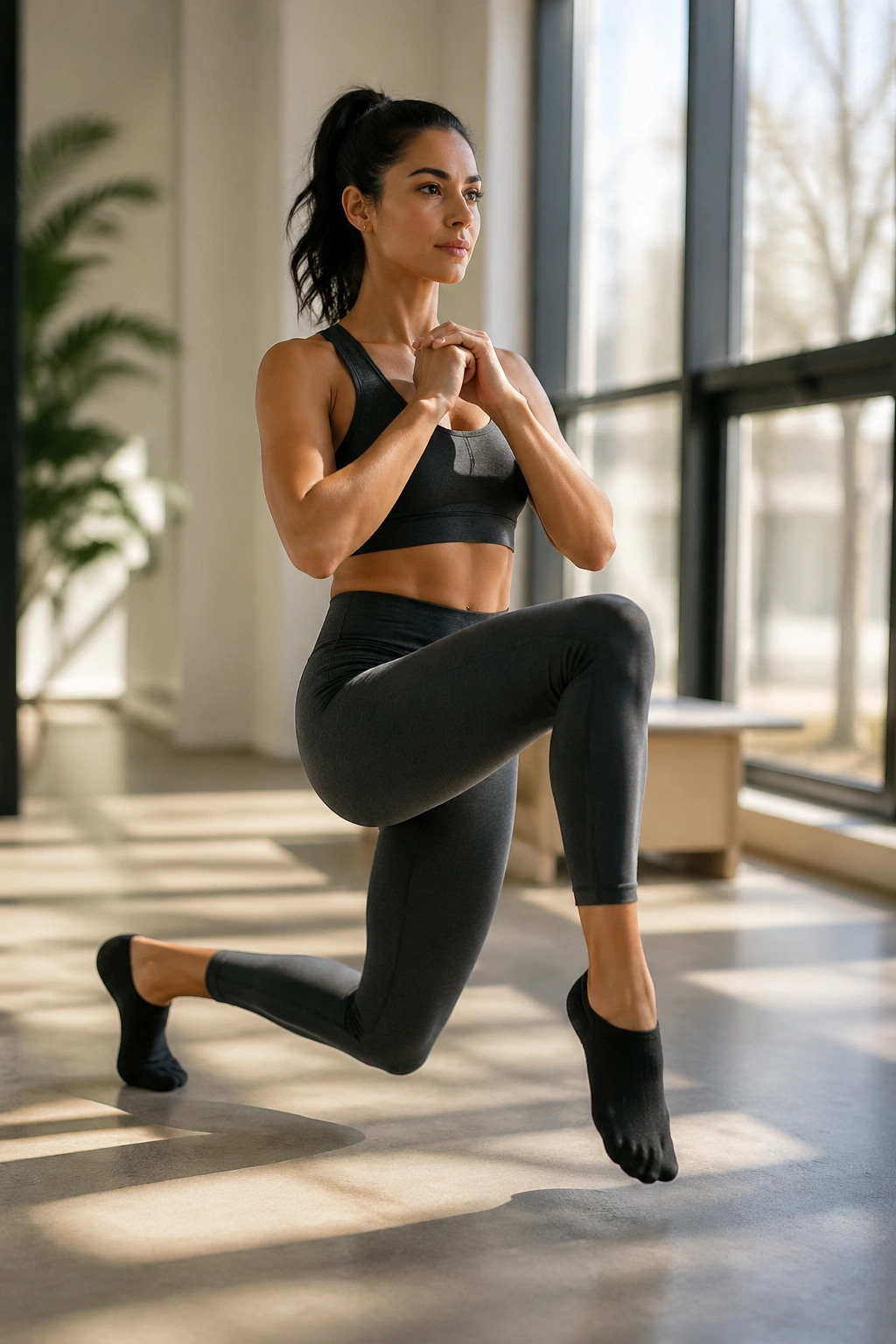
Step one leg back into a reverse lunge, come up through the front heel, and drive the back knee forward into a knee lift. Repeat for 12 reps, then hold the knee lift for 5 seconds on the last rep before switching sides.
This is a nice bridge between barre control and a more athletic pattern. The reverse step is kinder than a forward lunge, and the knee lift asks the standing leg to own the balance. The glute on the front leg has to stabilize, while the hip flexor on the lifted side gets a moment of active work.
If balance is shaky, keep one fingertip on the barre or wall. That is not cheating. That is smart.
18. Inner-Thigh Squeeze Bridge March
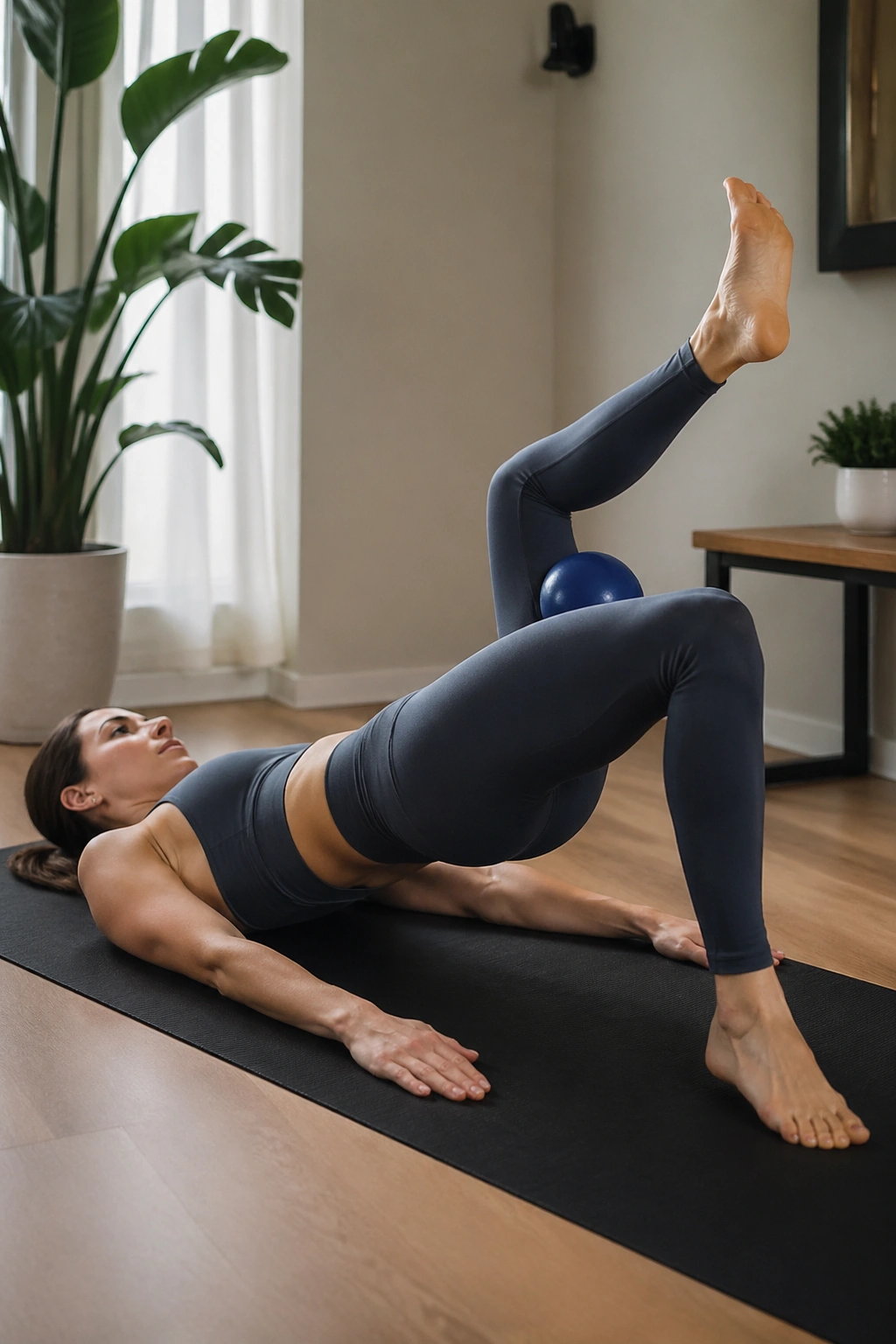
Place a small Pilates ball, yoga block, or folded towel between your knees. Lift into a bridge, squeeze the prop lightly, and march one foot up at a time for 10 reps per side. Keep the pelvis level the whole time.
This workout catches a lot of people off guard because it asks the inner thighs to stay on while the bridge tries to wobble them off the job. That combination is gold for leg definition, and it also trains a cleaner pelvic position. If one hip drops every time you march, lower the bridge height a little.
Try a slow exhale on each march. The core often steadies better when the breath stays organized.
19. Standing Banded Abduction Pulses
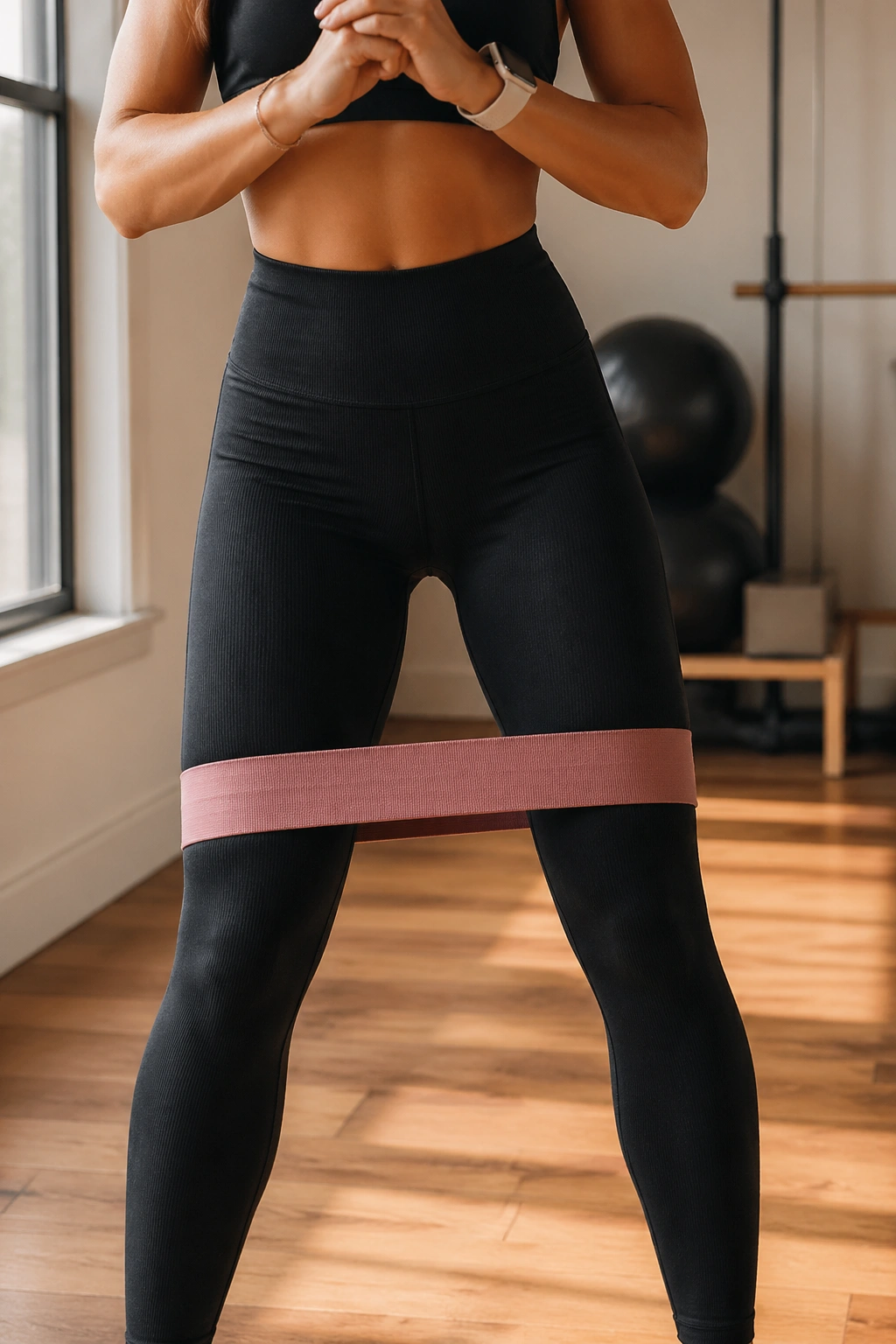
Loop a mini-band above the knees or around the ankles, stand with feet parallel, and step out into a tiny squat. From there, press the knees gently outward against the band for 20 pulses, hold for 10 seconds, and repeat for 2 to 3 rounds.
Why People Keep Coming Back to It
The outer hips get a huge amount of work from this pattern because the band forces the legs to fight inward collapse. That’s a real issue in everyday movement, by the way. Knees that cave in during squats or stairs usually mean the hip stabilizers need more attention.
A few good habits make the exercise better:
- Keep the toes pointing straight ahead.
- Stay in a half-squat, not a deep sit.
- Press the knees out only an inch or two.
- Keep the chest lifted and the ribs quiet.
If the band snaps your legs around, go lighter.
20. Kneeling Leg Sweep Combo
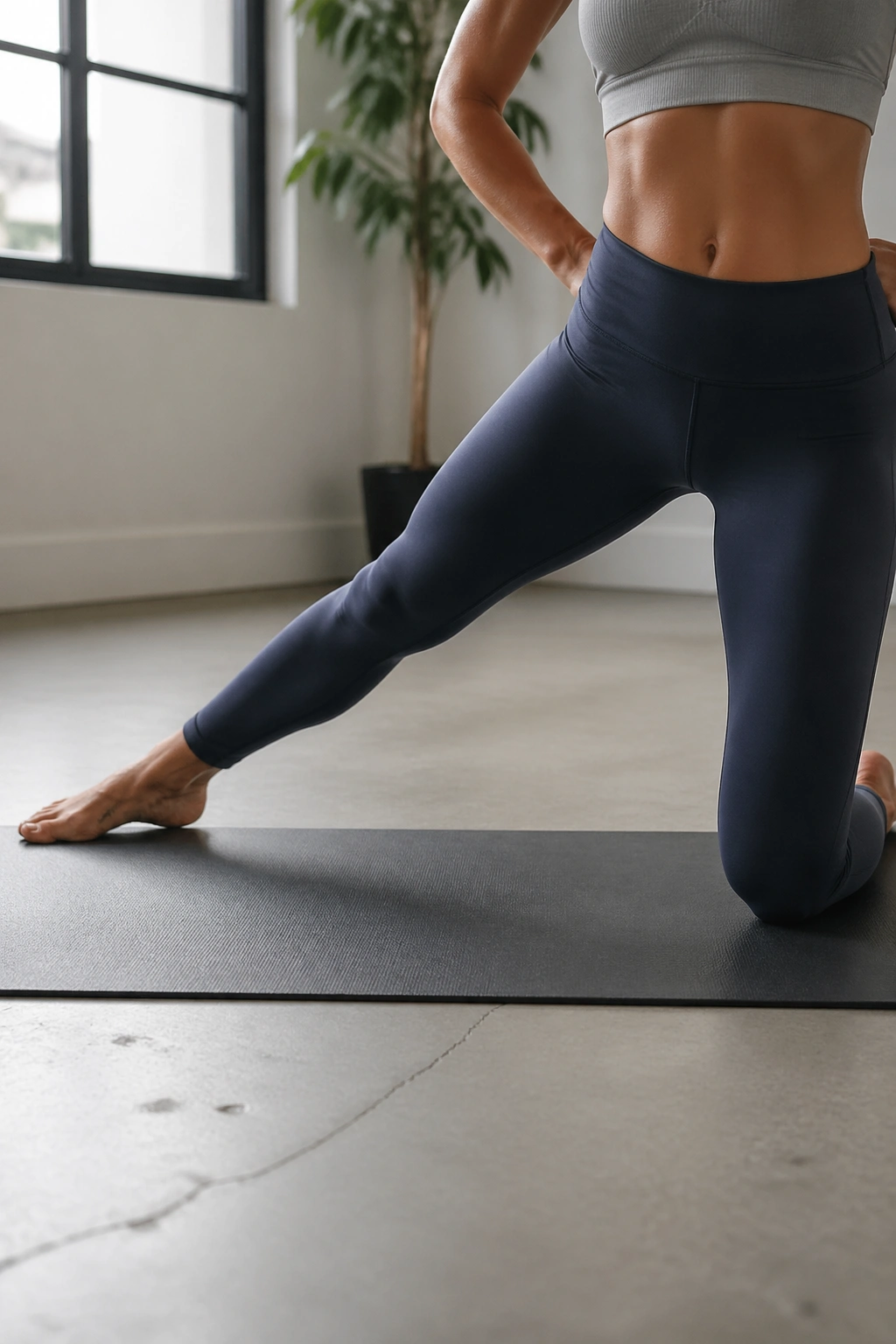
Start in a tall kneel with one leg extended to the side. Sweep that leg forward and back in a controlled arc for 10 reps, then hold it out to the side for 10 seconds before switching legs.
This move looks small, but the side body and the hip on the standing side both have to work hard to keep you upright. It’s a nice change from straight-up-and-down leg work because it trains the leg to move in a more natural arc. The sweep also asks the hip flexors and adductors to cooperate instead of fighting each other.
Keep your torso stacked. If you lean hard away from the moving leg, the challenge drops fast.
21. Skater Hinge Reach
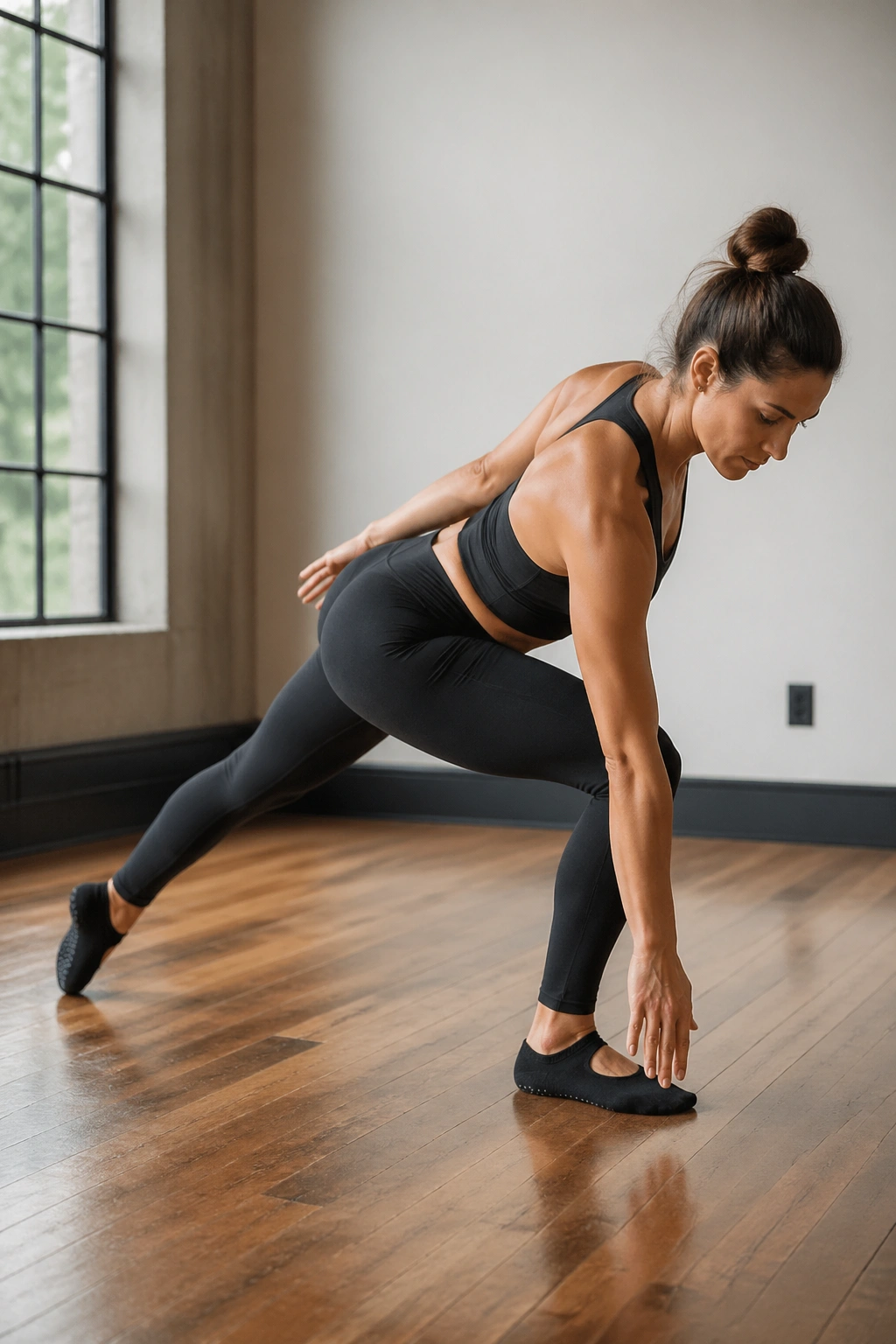
Stand with your feet slightly wider than hips, shift weight into one leg, and hinge at the hip while reaching the opposite leg diagonally behind you. Return to center and repeat for 12 reps per side. Add a 5-second pause at the bottom if you want to make the standing leg complain.
This is one of the better lower-body moves for people who like a bit more athletic shape without jumping. The standing leg does the heavy lifting, the reaching leg stays long, and the hinge teaches the glutes to fire in a way that feels useful, not decorative.
Keep the spine long and the shoulders soft. If you fold at the waist, you’ll feel it in the wrong place.
22. Single-Leg Deadlift with Toe Taps
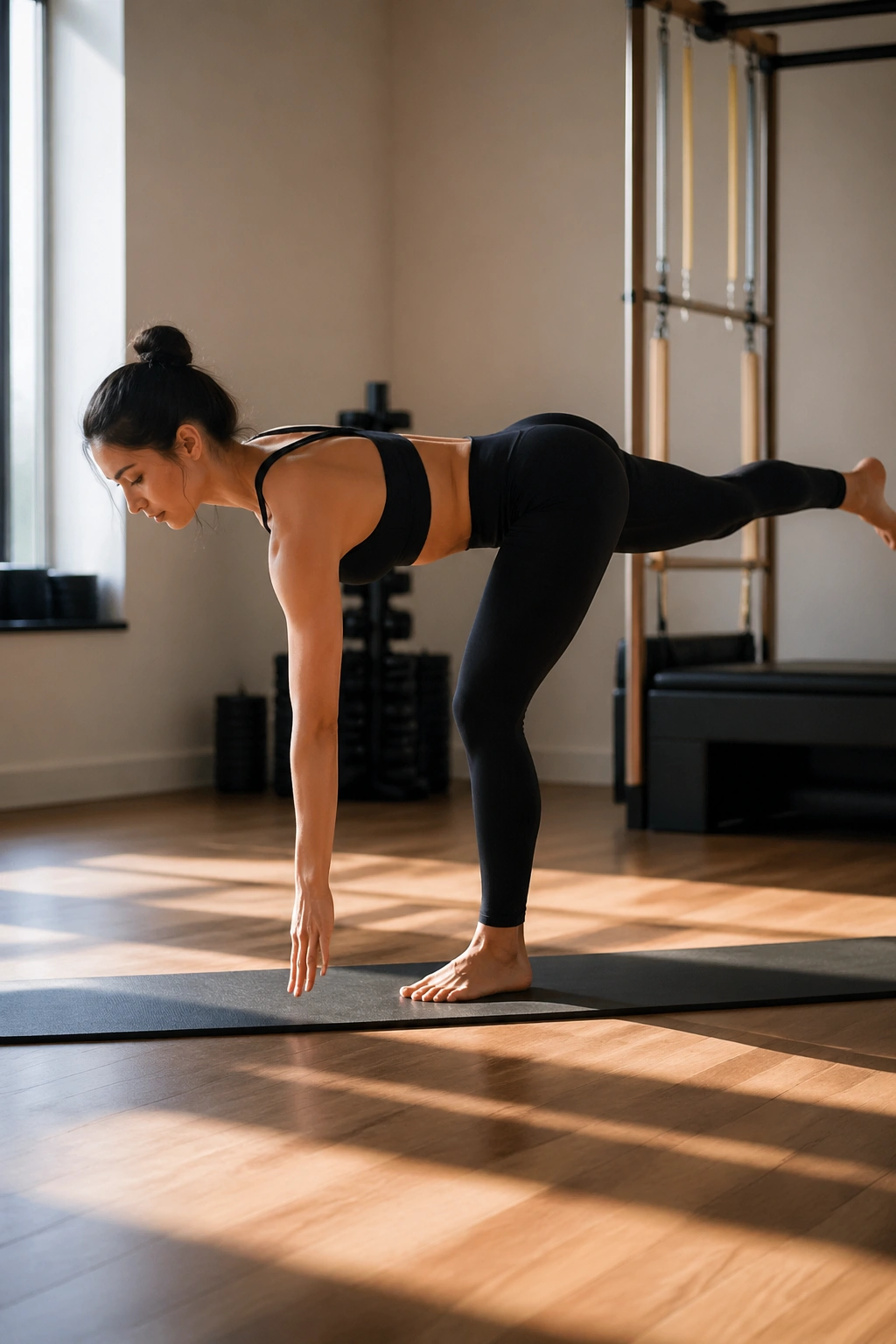
Balance on one leg, tip forward from the hip, and let the free leg float behind you as a counterweight. Tap the floor lightly with your fingertips or hover them an inch above the mat, then return to standing. Do 8 to 10 reps per side.
The hamstring on the standing leg does a lot of work here, but the standing foot and ankle are just as important. If the arch collapses, the whole chain gets sloppy. Keep the standing knee soft, not locked, and send the hips back as though you’re closing a car door with your seat.
This is one of those exercises that looks calmer than it feels. Good. That means it’s working.
23. Pilates Swimming for the Back of the Legs
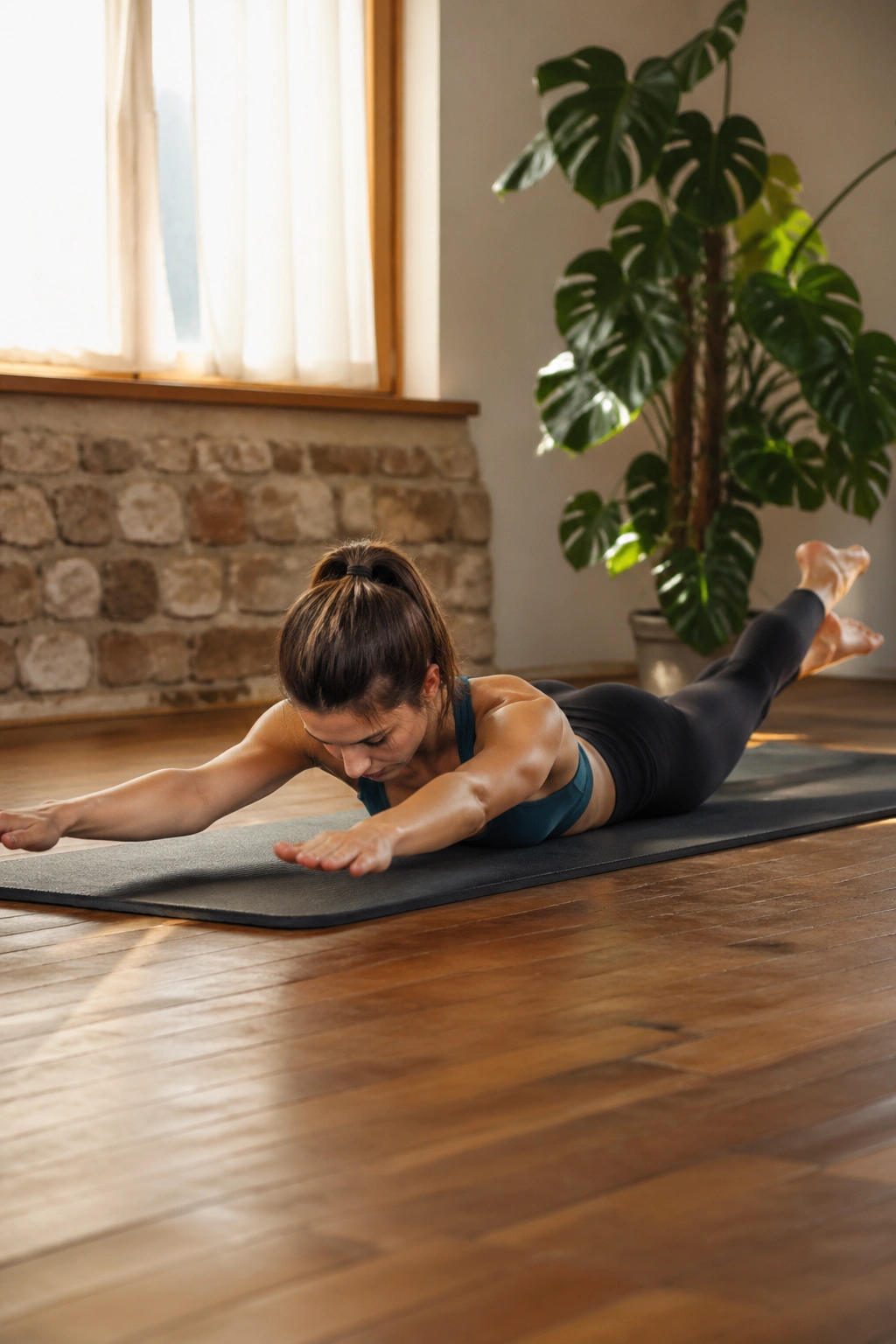
Lie face down, extend your arms forward, and lift opposite arm and leg a few inches off the floor in a fluttering swimming motion for 30 seconds. Rest briefly, then do another 30-second round.
The backside of the leg gets overlooked in a lot of “toning” routines, which is a shame because hamstrings and glutes shape the lower body as much as the front. Swimming wakes them up without pounding the joints, and it also asks the low back to stay long instead of compressed.
Keep the lifts tiny. If the legs go sky-high, the lower back usually steals the work. One inch is plenty.
24. Split-Stance Calf and Glute Combo
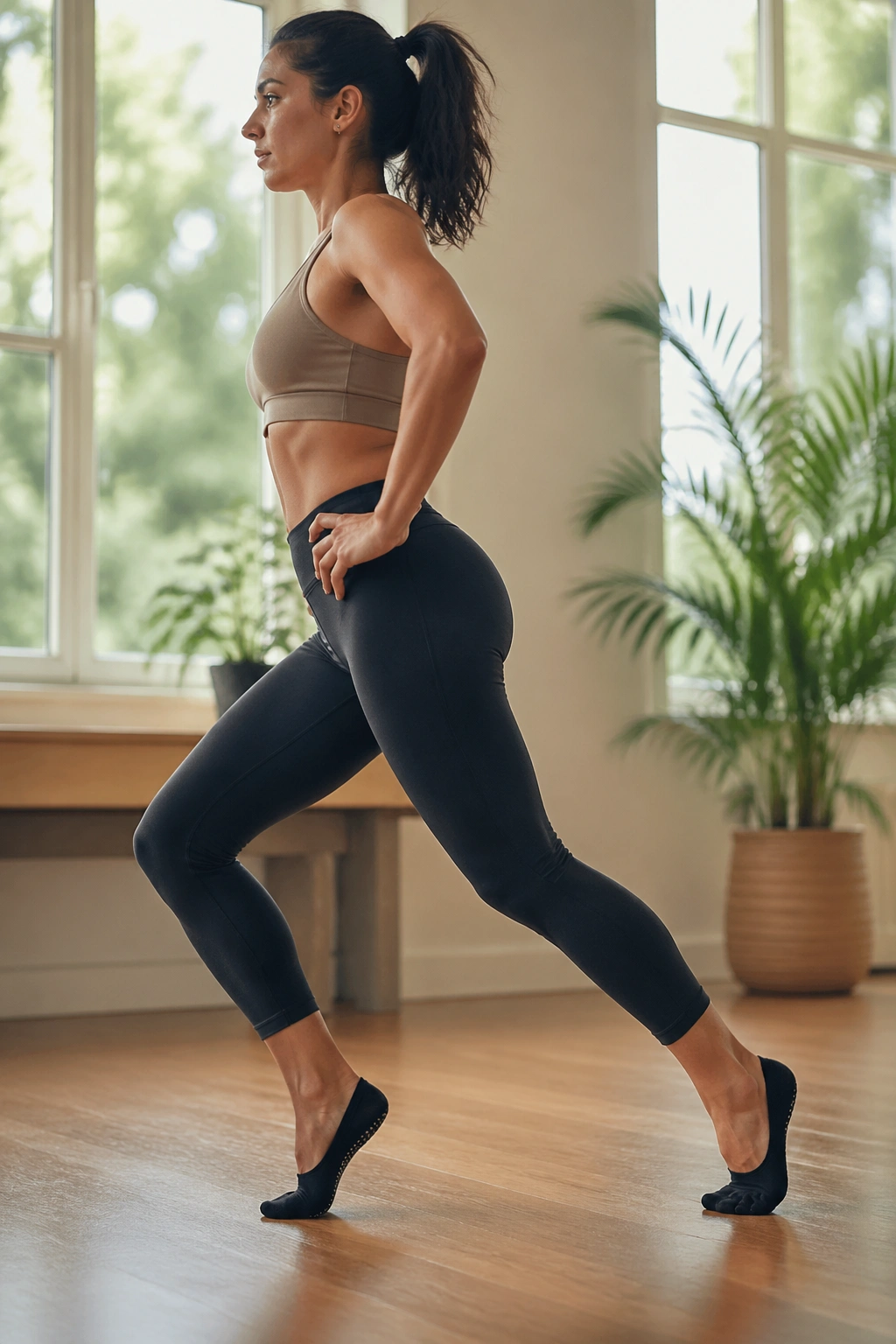
Set one foot forward and one back, both legs slightly bent, then rise onto the balls of both feet and lower with control for 15 reps. After that, keep the back heel lifted and pulse the front knee forward an inch for 10 counts.
This combo is excellent when you want a workout that feels more complete than a simple calf raise. The calves stay active, the front thigh takes load, and the back glute has to stabilize the split stance. It’s a tidy little chain reaction.
If the front knee complains, shorten the stance and reduce the depth. You want work, not noise from the joint.
25. Finish Strong Ladder
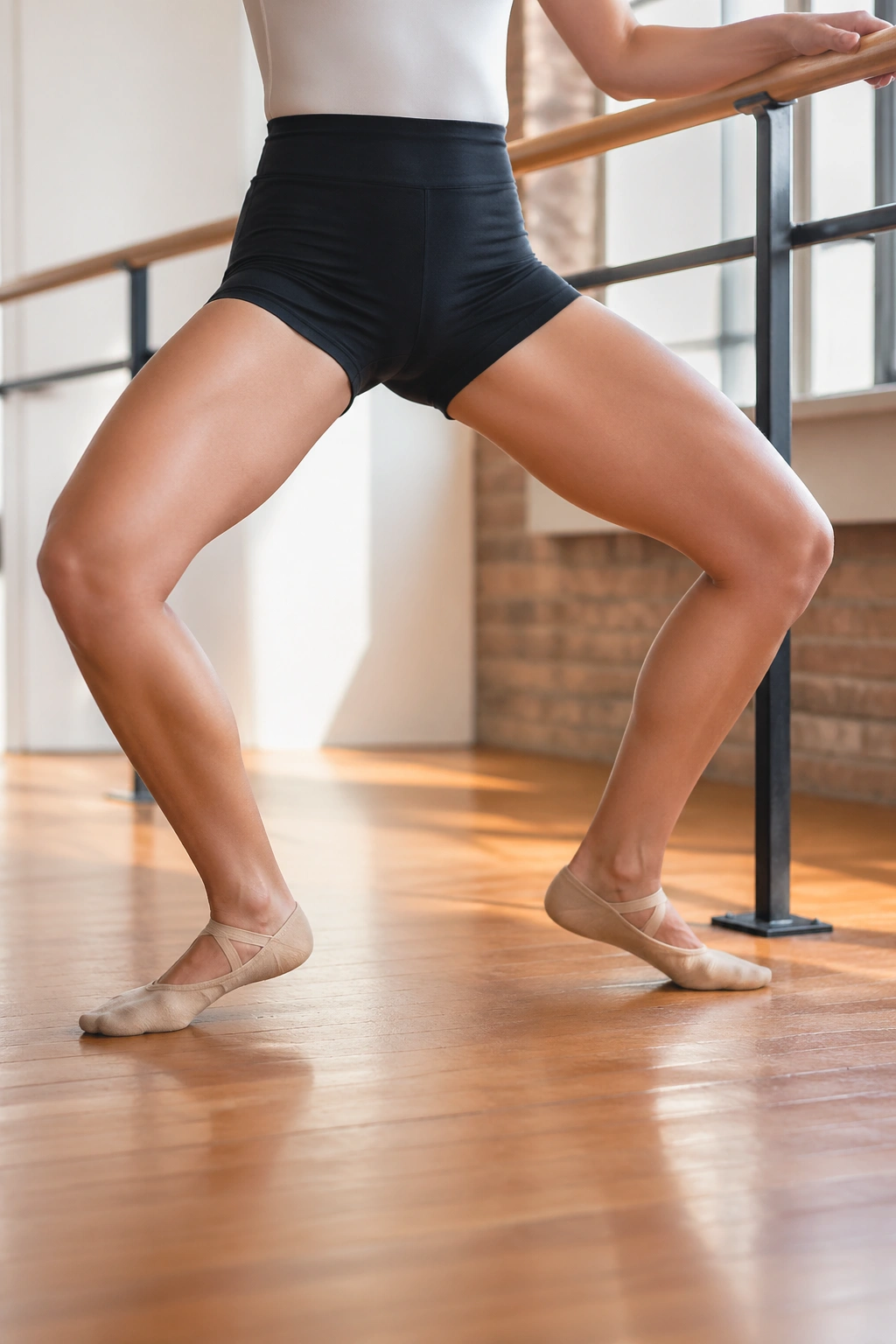
End with a short ladder that ties the whole lower body together: 20 second-position pulses, 15 bridge reps, 12 side-lying inner-thigh lifts per side, 10 curtsy lunges per side, and 20 calf raises. Rest 20 seconds between rounds and repeat twice.
This is the kind of finisher that feels complete because it doesn’t rely on one angle. The thighs get hit from the front, side, and back, and the calves have to finish the job when fatigue starts making the form sloppy. That last part matters. The legs do not need to look fresh here. They need to stay organized when they’re tired.
Keep the tempo steady, breathe through the burn, and stop the round if your knees start collapsing inward. Strong legs come from decent form under pressure, not from grinding into messiness for the sake of it.
