



Twenty-minute Pilates routines can do more than people expect. Give the session a clear job—wake up the deep abs, loosen the hips, stack the ribs over the pelvis—and the clock stops feeling mean. It starts feeling useful.
The mistake is treating Pilates like a random pile of leg lifts. The method works best when each move has a purpose: breathing to settle the trunk, articulation to unstick the spine, side work to wake up the glute medius, planks to teach the shoulders not to shrug. Those details matter more than sweat.
Some of these routines are gentle enough for a stiff morning. Some bite a little. A few use a mini-band or a small ball, because a good mat session should fit in a living room, not only in a studio with polished floors and expensive gear. Start with the one that matches the way your body feels this minute.
1. Breath and Pelvic Curl Reset
If your lower back feels cranky and your ribs keep popping open, start here. This is the routine I reach for when I want the body to stop arguing with itself and start working as one unit.
A clean 20-minute shape
- 2 minutes of side-rib breathing with knees bent
- 4 minutes of pelvic tilts and imprint-to-neutral rolls
- 6 minutes of pelvic curls and bridge holds
- 4 minutes of dead bug toe taps
- 4 minutes of child’s pose, cat-cow, and a slow spinal unwind
Tiny cue: keep the exhale long enough to feel your waistband gently draw inward.
This is not flashy. Good. Flashy Pilates is usually sloppy Pilates. The curl of the spine in a bridge teaches articulation, and the breathing keeps your neck from doing the abs’ job. If you only have one mat session in the day, this one is a strong place to spend it.
2. Hundred-to-Toe-Tap Circuit
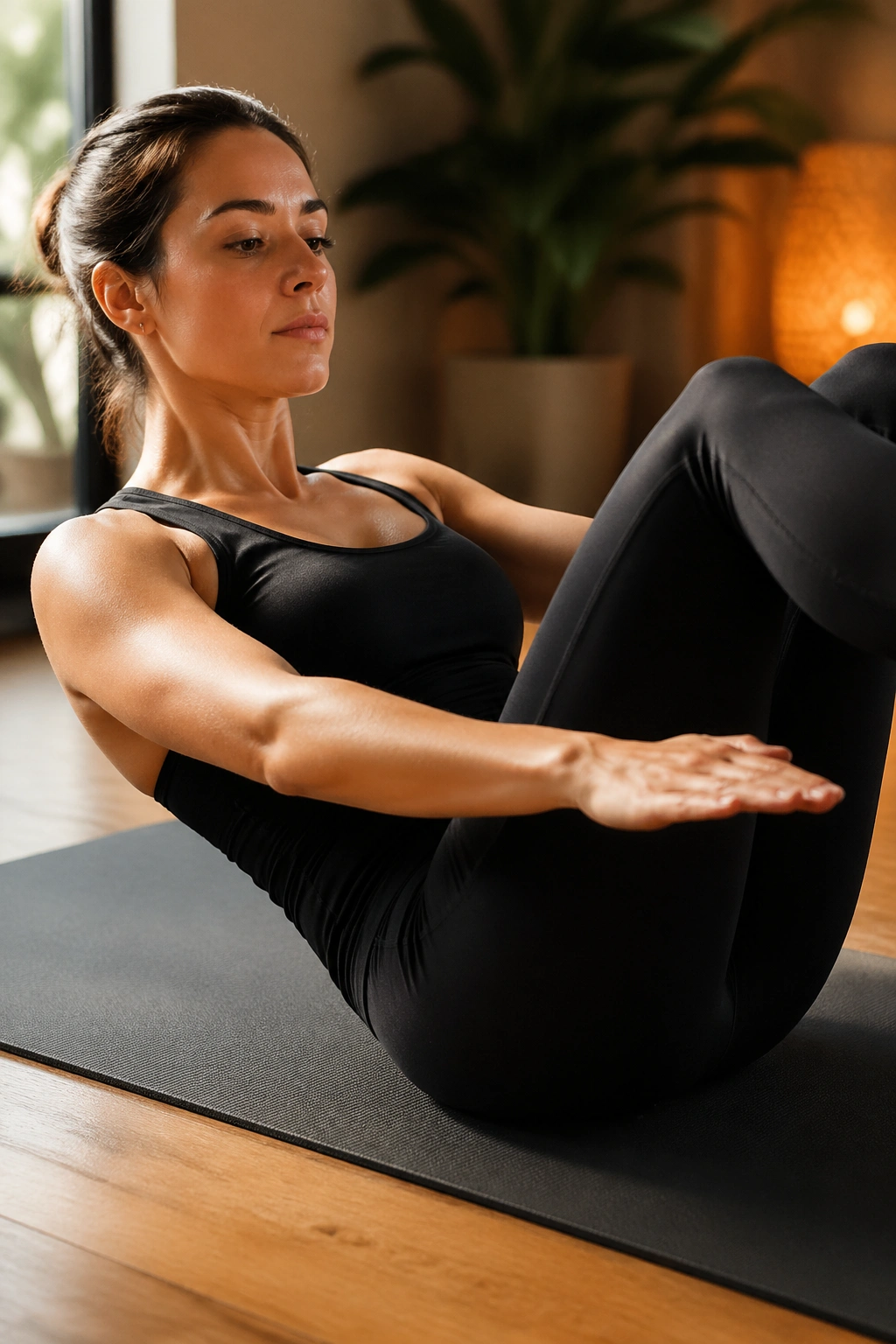
A clean hundred plus toe taps can light up the whole trunk without any jumping. It feels controlled, but it still leaves you warm.
Start with the classic Pilates Hundred in a modified shape: knees bent, head down if your neck prefers that, arms pumping by your sides for 5 breaths in and 5 breaths out. Then slide into toe taps, keeping the pelvis steady while one foot lowers at a time. That shift from breath-driven endurance to anti-rotation work is where the routine earns its keep.
After that, I like a short burst of single-leg stretch and double-leg stretch. Not rushed. Just crisp. The long exhale matters more than speed, and if your lower back starts to arch, shorten the lever and bend the knees more.
3. Roll-Up and Roll-Down Flow
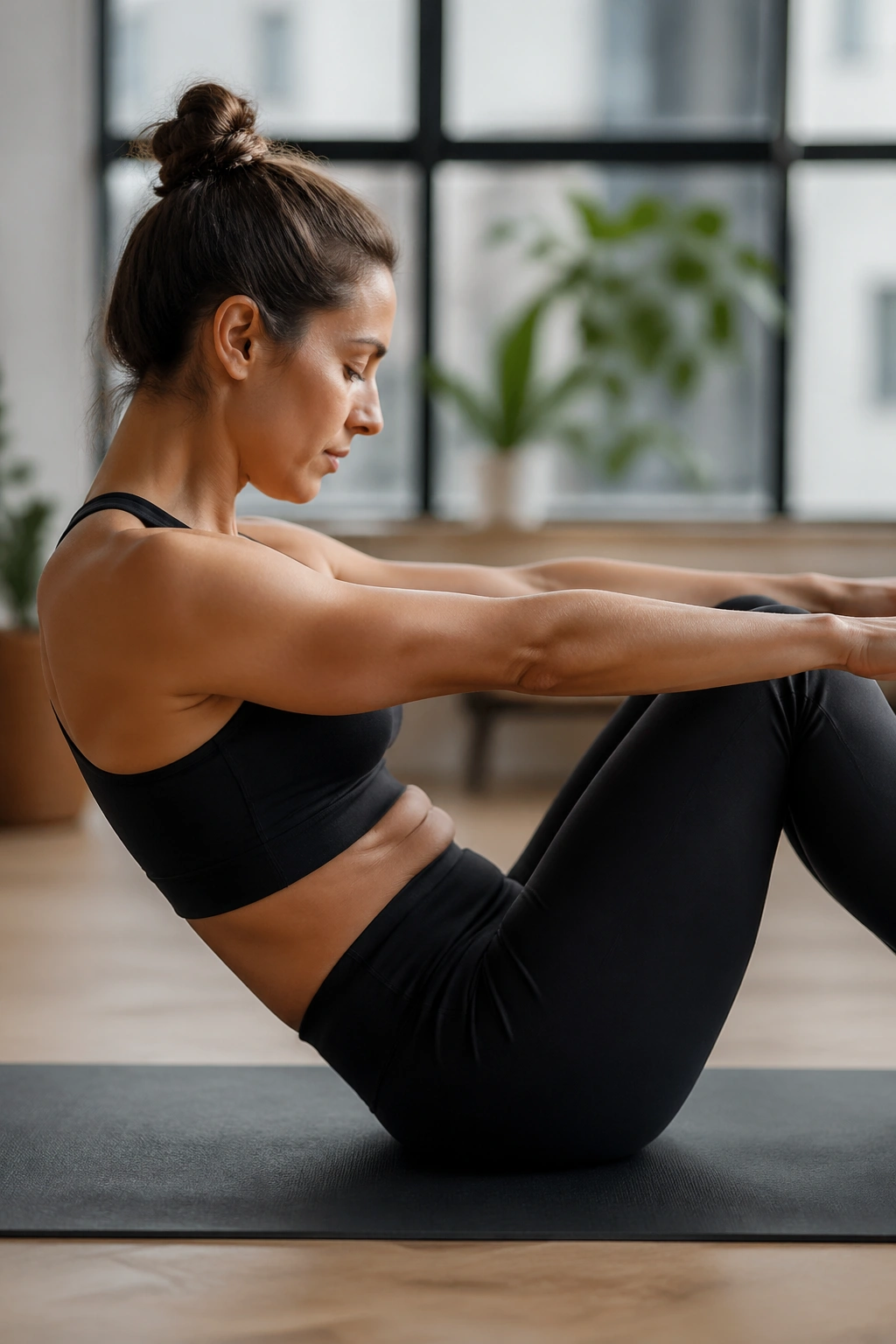
Can one slow spine exercise carry a whole session? If your back feels stiff and your hamstrings pull at every forward fold, yes.
The roll-up is Pilates’ quiet truth-teller. You find out fast whether you can stack the spine without yanking on the neck or throwing the shoulders forward. Use a bent-knee start if needed, roll up only as high as you can keep the ribs soft, then peel back down one vertebra at a time. That slow descent is half the work.
How to keep it smooth
- Sit tall on a folded towel if the hips tuck hard
- Keep the chin slightly nodding, not jammed toward the chest
- Pause for one breath at the top
- Stop before the low back starts to grab
Add spine stretch forward, saw, and a final standing roll-down. The whole thing feels like a reset for the middle of the body, which is more useful than it sounds.
4. Side-Lying Leg Series
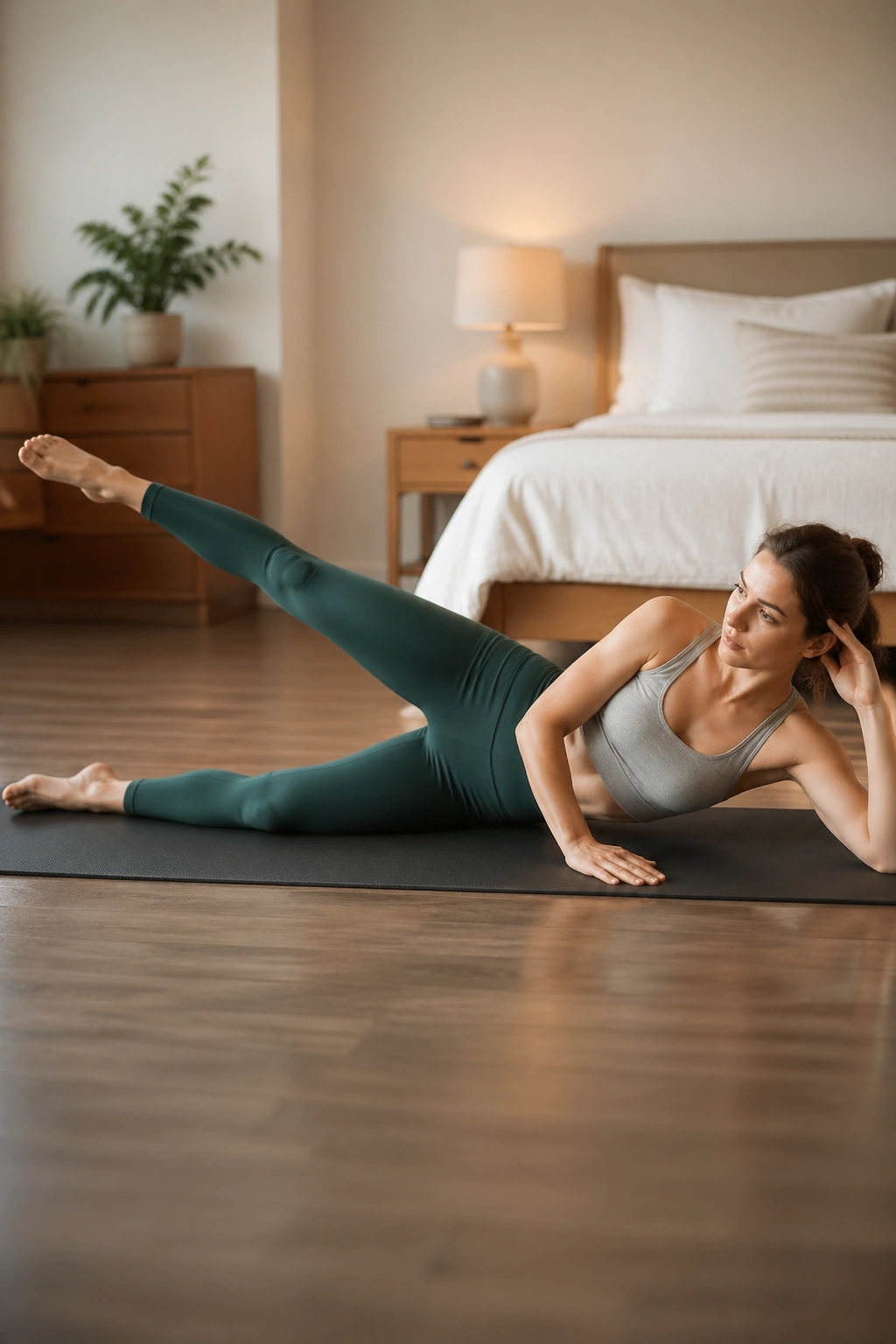
Side-lying work looks tiny until it doesn’t. Then the glute medius starts complaining, the outer hip wakes up, and you remember why so many Pilates teachers keep returning to this corner of the mat.
Lie on one side with the waist lifted slightly off the floor so you are not collapsing into the hip. From there, run through front kicks, back kicks, small circles, a lift-lower pattern, and a final hold with the top leg hovering. Keep the working foot flexed for a few reps, then point it for a few. That little change shifts the load in a useful way.
A 20-minute version can move quickly: 45 seconds per drill, 15 seconds to switch, then repeat on the other side. If your neck tires first, fix your pillow height before you blame your core. That is one of those boring details that changes everything.
5. Single-Leg Stretch Reset
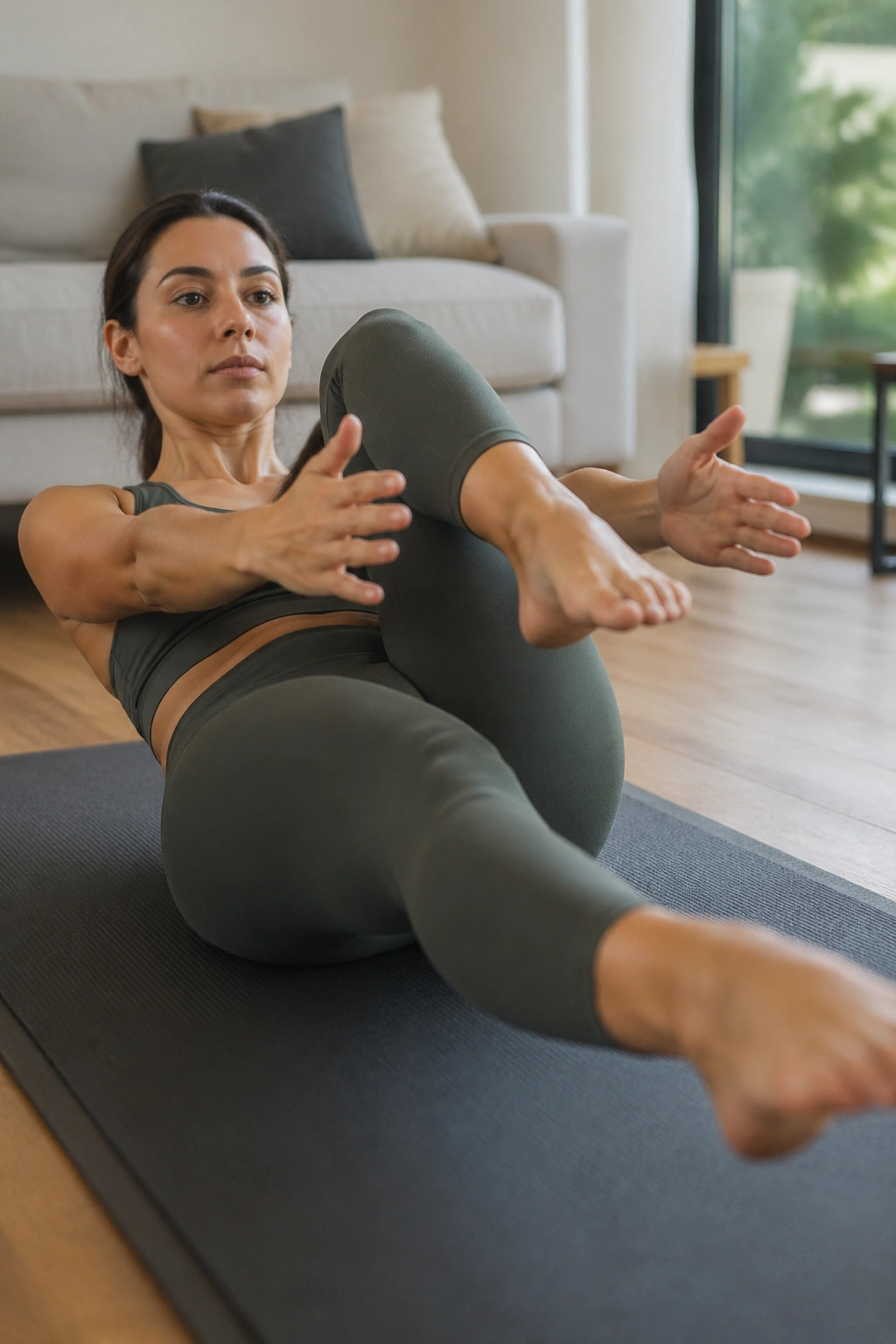
Single-leg stretch is one of those exercises that looks simple and feels more honest than expected. The abs have to organize, the legs have to alternate cleanly, and the pelvis has to stop wobbling around like it is late for something.
I like this routine when I want coordination more than brute force. Start with one knee in, the other leg extending long, then switch on the exhale. Keep the elbows soft and the shoulders broad. If the head lift is too much, rest it down and work the legs first. There is no prize for making your neck tense.
From there, move into double-leg stretch, then scissors, then a short hollow-body hold with the arms overhead. Small range, clean breath, quiet ribs. That combination keeps the work where it belongs and keeps your hip flexors from stealing the show.
6. Forearm Plank and Knee Hover Block
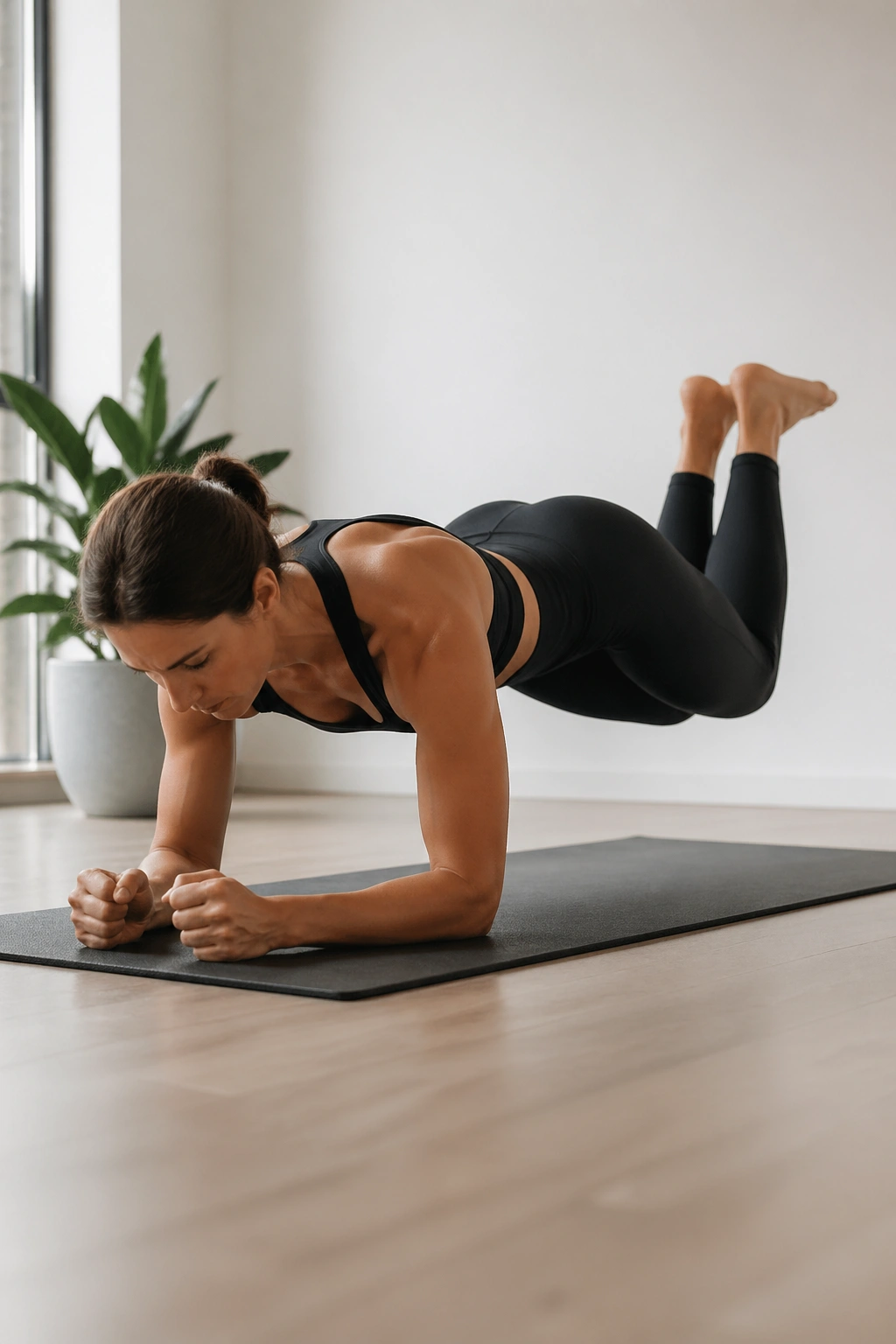
Unlike a long plank held until your face turns strange, this block uses short, tidy bursts. I prefer that. It teaches the front line of the body to organize without making the shoulders and low back overcompensate.
Set a timer for 20 seconds on, 10 seconds off, and cycle through forearm plank, knee hover in tabletop, and side plank on the knees. If you want more heat, add shoulder taps from a solid high plank, but only if the pelvis stays still. Once the hips start swinging, the set is over.
A routine like this is best when you want strength without fuss. It fits between meetings. It also fits on days when you are tired but not ready to do nothing. Keep the neck long and the upper back broad. That one cue saves a lot of mess.
7. Mermaid and Side Bend Sequence
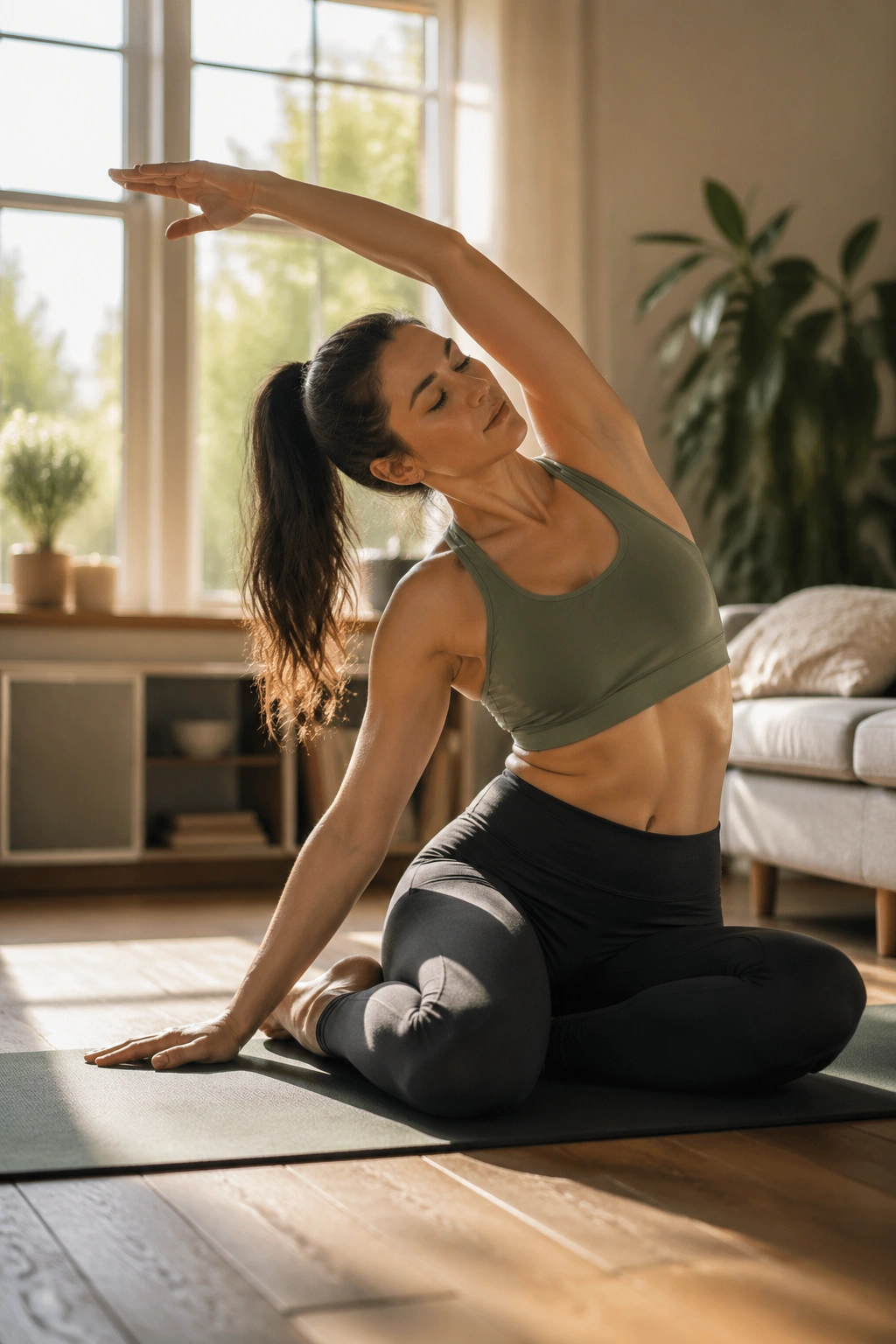
The first breath in mermaid usually feels better than expected. The side body opens, the ribs stop feeling jammed, and you remember that lateral flexion is part of a healthy spine, not some extra flourish.
What you should feel
- The lower ribs expanding into the top hand
- The hip on the floor staying heavy
- The neck staying long instead of crunching
- The outer waist doing some work, not just the shoulder
Move from seated mermaid to kneeling side bend and then to a standing side reach if you have space. Keep the movement slow enough that you can feel which side is shortening and which one is lengthening. That matters. If you rush, it turns into a vague stretch and you lose the point.
I like this routine after a long stretch of sitting. It has a gentle, almost sneaky way of making the torso feel less boxed in.
8. Inner-Thigh Ball Squeeze Routine
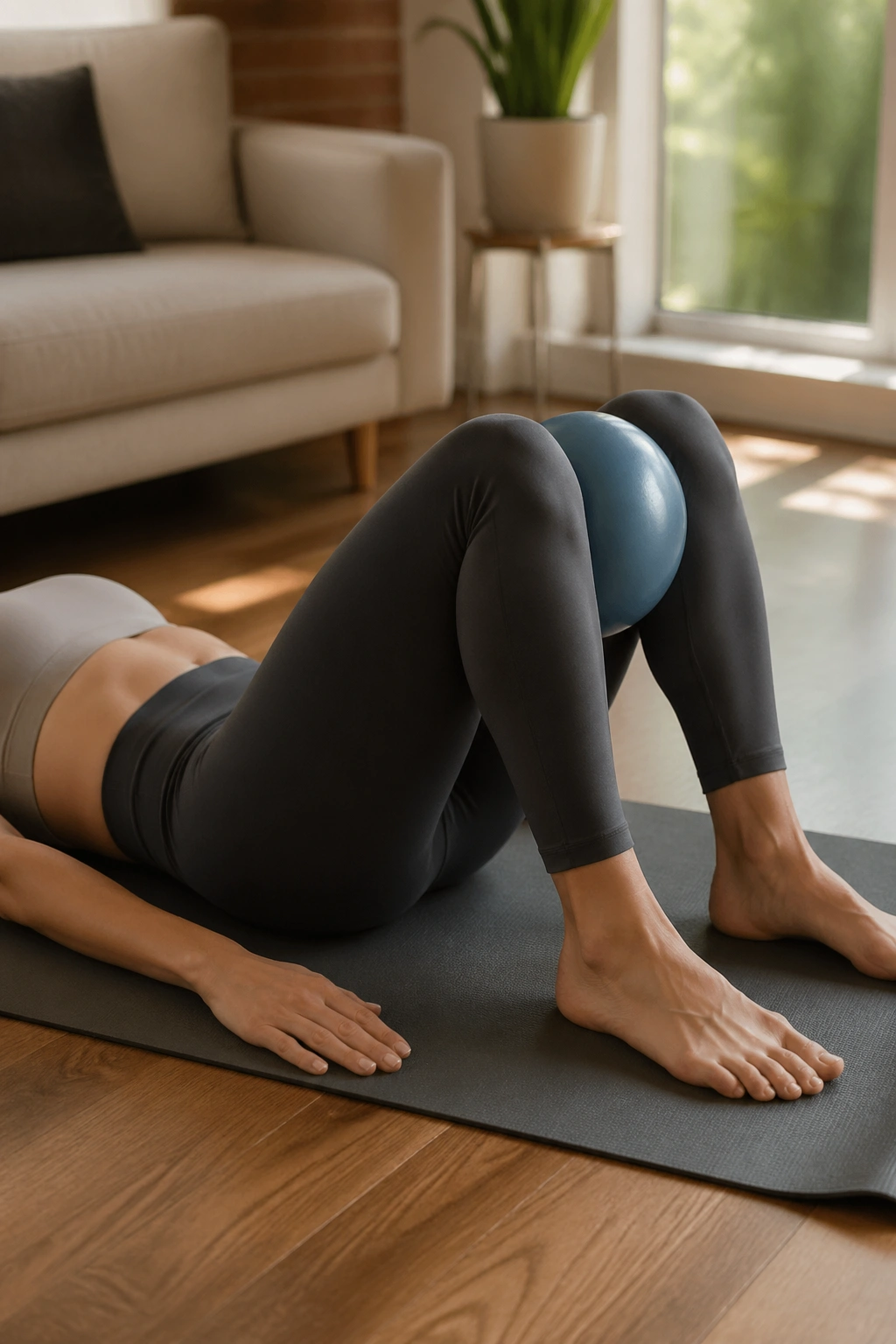
A soft ball between the knees can make a mat session feel surprisingly serious. The inner thighs turn on fast, and the deep belly has to help stabilize instead of letting the hips drift.
Use a small Pilates ball or even a firm cushion, not a hard medicine ball. Start with supine squeezes, then move into bridge lifts, tabletop holds, and bent-knee leg slides while keeping just enough pressure on the ball to feel the adductors wake up. Finish with a few pulses in a low bridge. The range stays small. The burn does not.
This routine works well if your knees tend to wobble inward or if you want more support through the center line. Do not mash the ball with maximum force. A steady 20 to 30 percent squeeze is plenty, and it keeps the work neat instead of sloppy.
9. Swan, Dart, and Swimming Back-Body Session
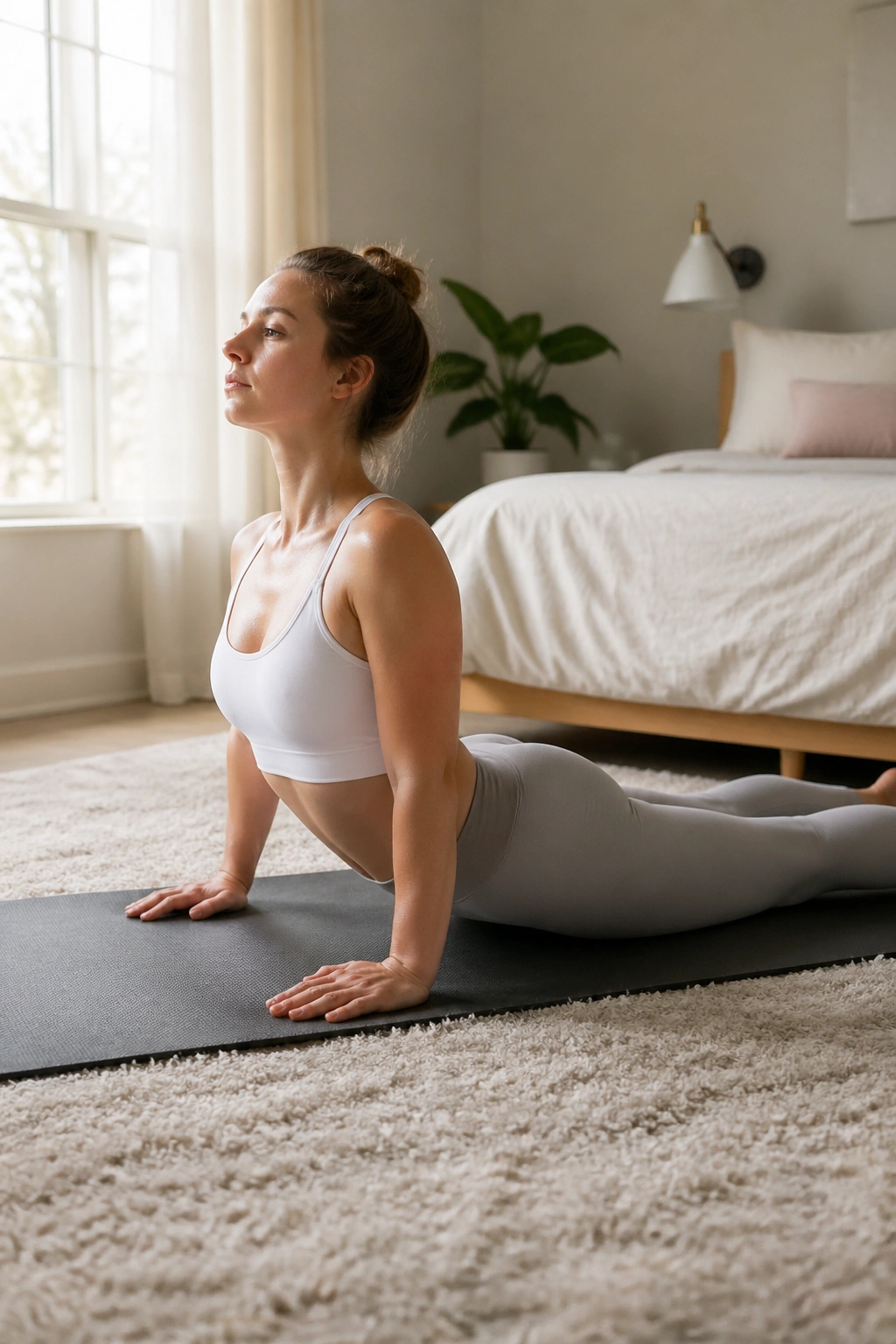
Why do so many people feel better after back extension work? Because a lot of daily life folds us forward. Phones, desks, steering wheels. The front line shortens, and the back line forgets how to hold us.
Start with dart, where the chest lifts just a little and the shoulder blades slide down. Then move into a small swan, keeping the pubic bone heavy and the neck long. Add swimming in short bursts—4 to 6 breaths at a time, not a frantic flutter. The goal is not height. The goal is length.
Keep it honest
- Lift from the upper back, not the low back
- Look down to protect the neck
- Stop if the ribs flare hard
- Let the glutes assist, not dominate
This one feels best when done with patience. Rushing back extension is a fast way to annoy the lumbar spine.
10. Standing Alignment and Roll-Down Reset
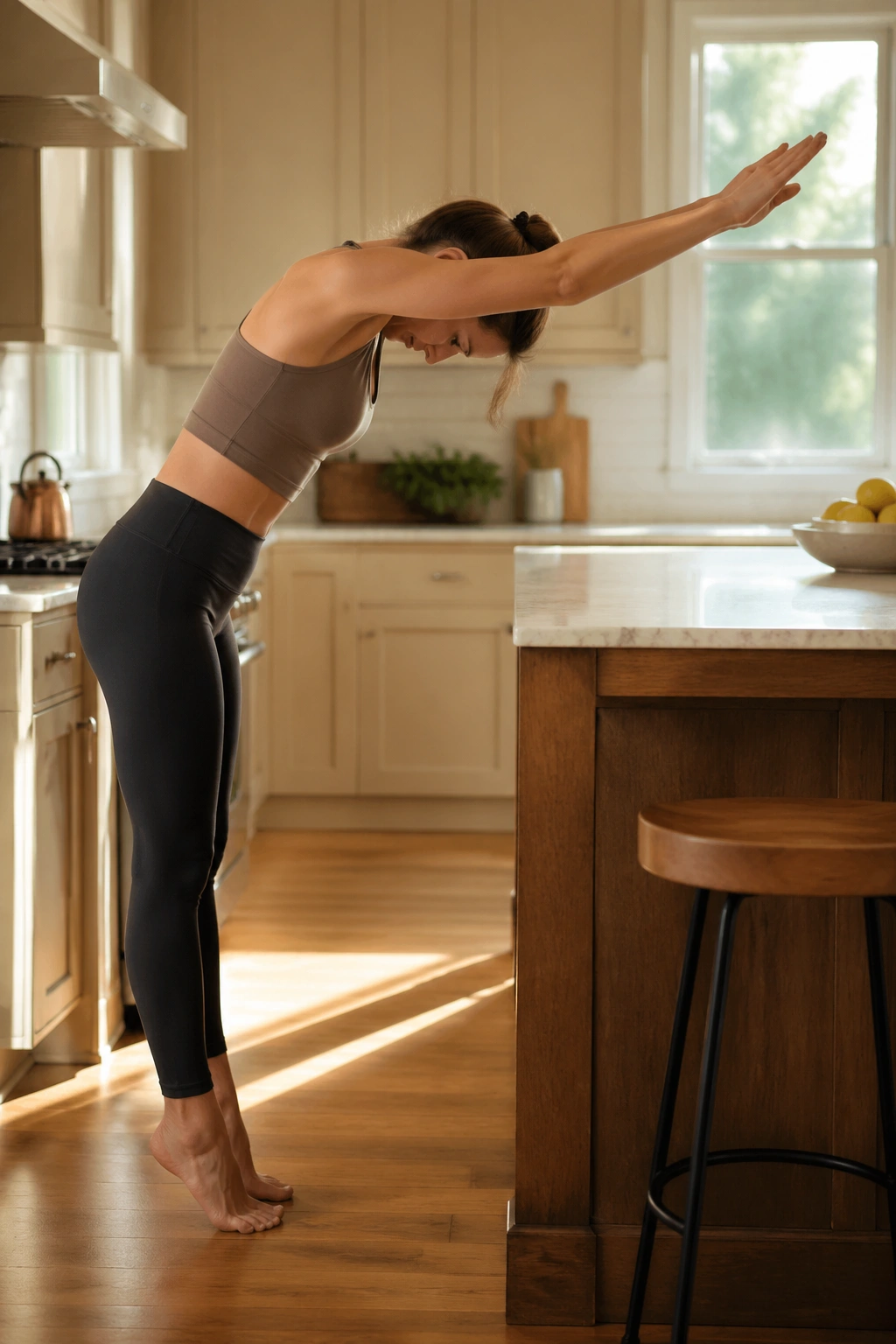
Picture yourself standing at the counter, shoulders creeping toward your ears, one hip dumped out to the side. That is exactly the moment this routine helps.
You do not need to stay on the floor for every Pilates session. Start standing with a roll-down, then add calf raises, a slow squat-to-stand, arm arcs overhead, and side reaches that keep the ribs stacked. A few people skip standing work because it feels less “Pilates” than mat exercises. I think that is a mistake.
Use this sequence when you want posture practice that shows up in real life. The feet matter here. Press evenly through big toe, little toe, and heel so the knees do not collapse inward when you squat or rise.
11. Teaser Prep and Balance Work
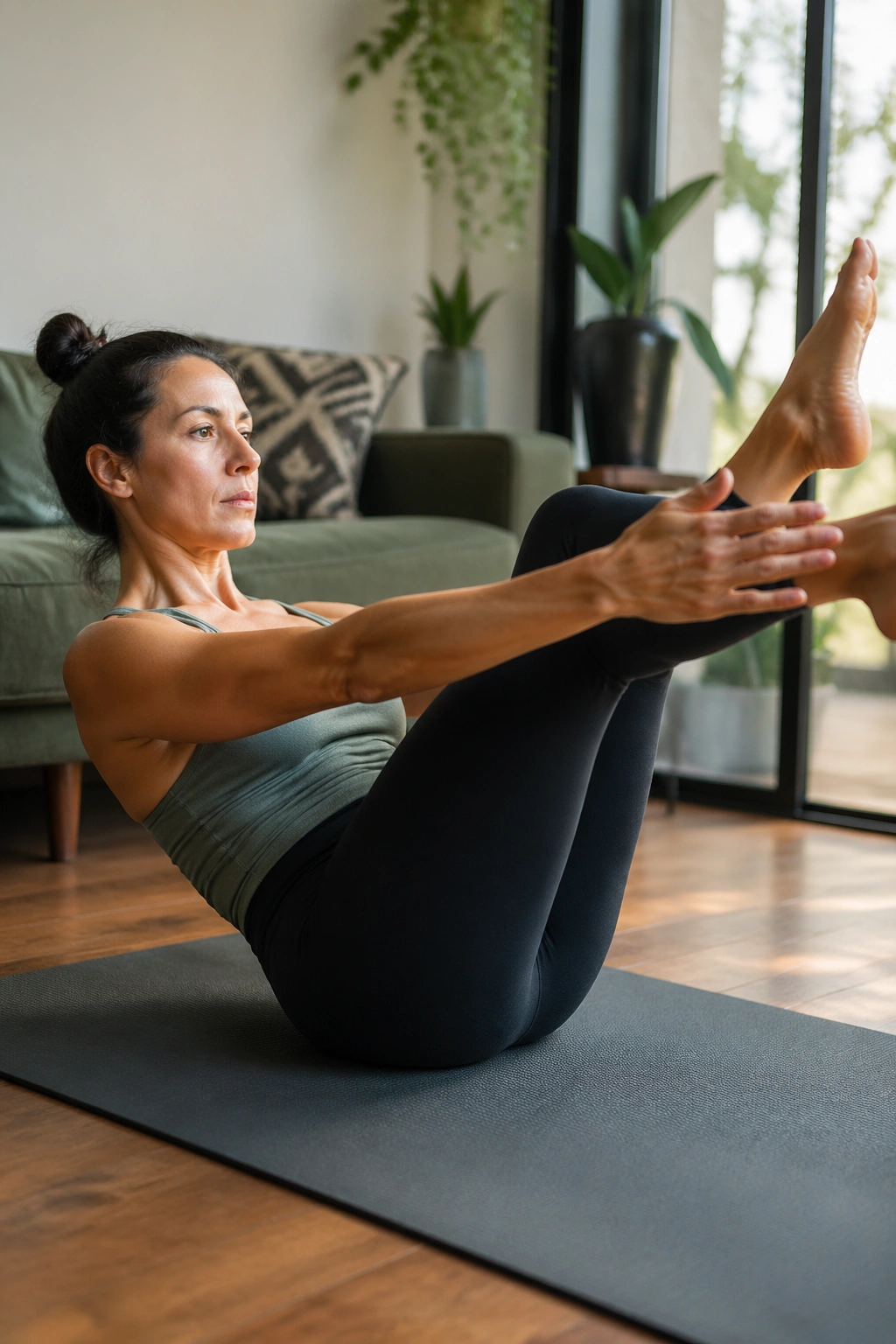
Do you need the full teaser to get value from teaser prep? Not at all. In fact, the prep often teaches more because it strips away the panic that makes people hurl their legs up and lose their trunk.
Begin with tabletop holds, then one-leg teaser prep, then a single straight leg hover while the arms reach forward. If the balance feels shaky, bend the knees and keep the chest slightly lifted. That is still real work. A controlled hollow shape asks a lot from the lower abs and the hip flexors, and the nervous system notices the challenge even when the range is small.
I like a short standing balance drill at the end—single-leg reach, eyes forward, then a slow switch. Small wins count. They stack up fast in Pilates.
12. Oblique Twist Mat Series
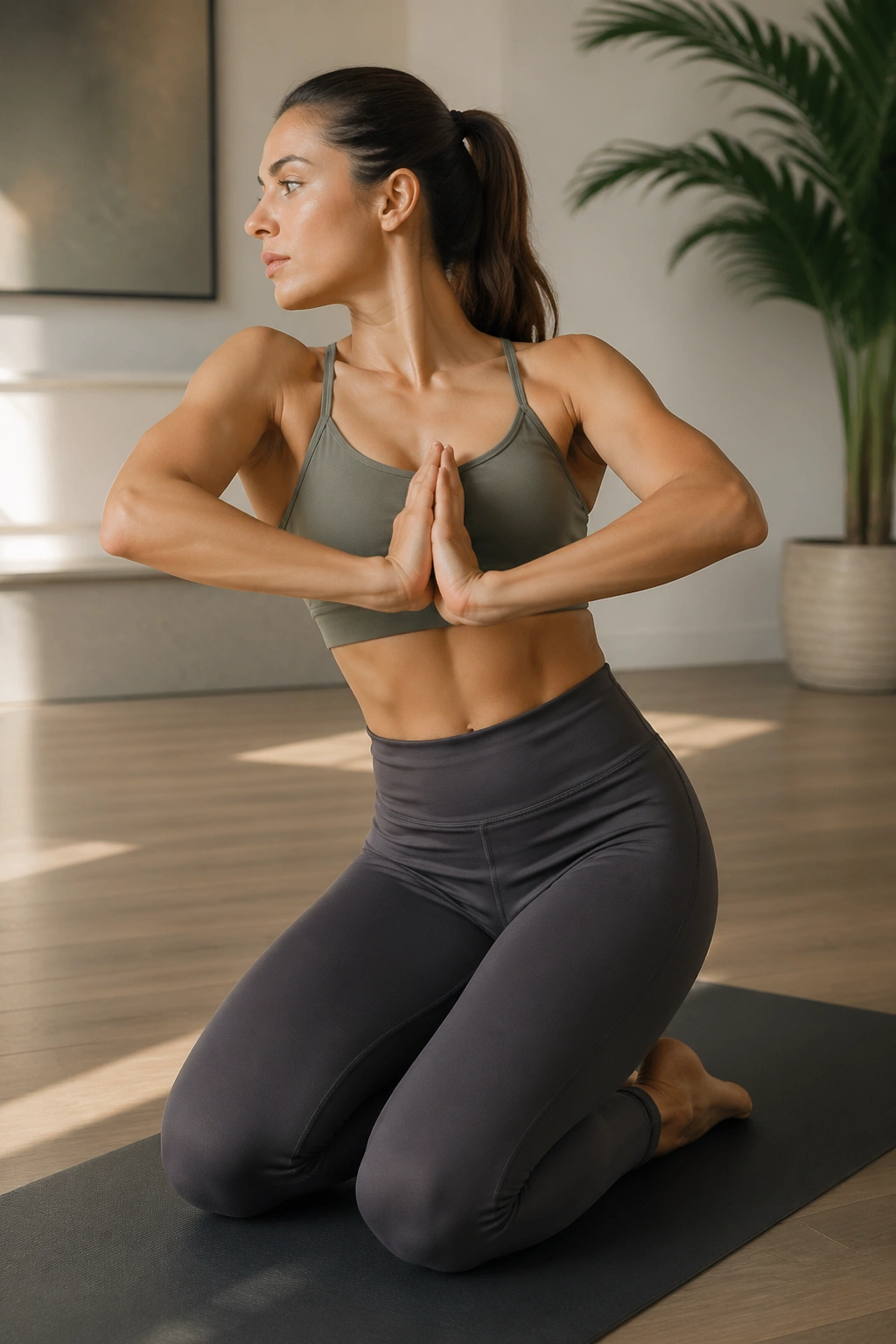
Unlike crunches that just fold the body in half, this routine asks the ribs to rotate without yanking the neck around. That makes the obliques do their job while the hips stay calmer.
Mix criss-cross, saw, seated spine twist, and a kneeling rotation with one arm reaching across the body. Keep the pelvis quiet while the ribs turn, and stop the range before the low back starts to pinch. That’s the line. Twist from the rib cage, not from a forced tug at the lumbar spine.
This is a good one on days when your waist feels flat and your trunk needs some wake-up work. I especially like it before or after a long walk, because the torso tends to feel more alive when it has actually rotated through space.
13. Hip Circle Mobility Flow
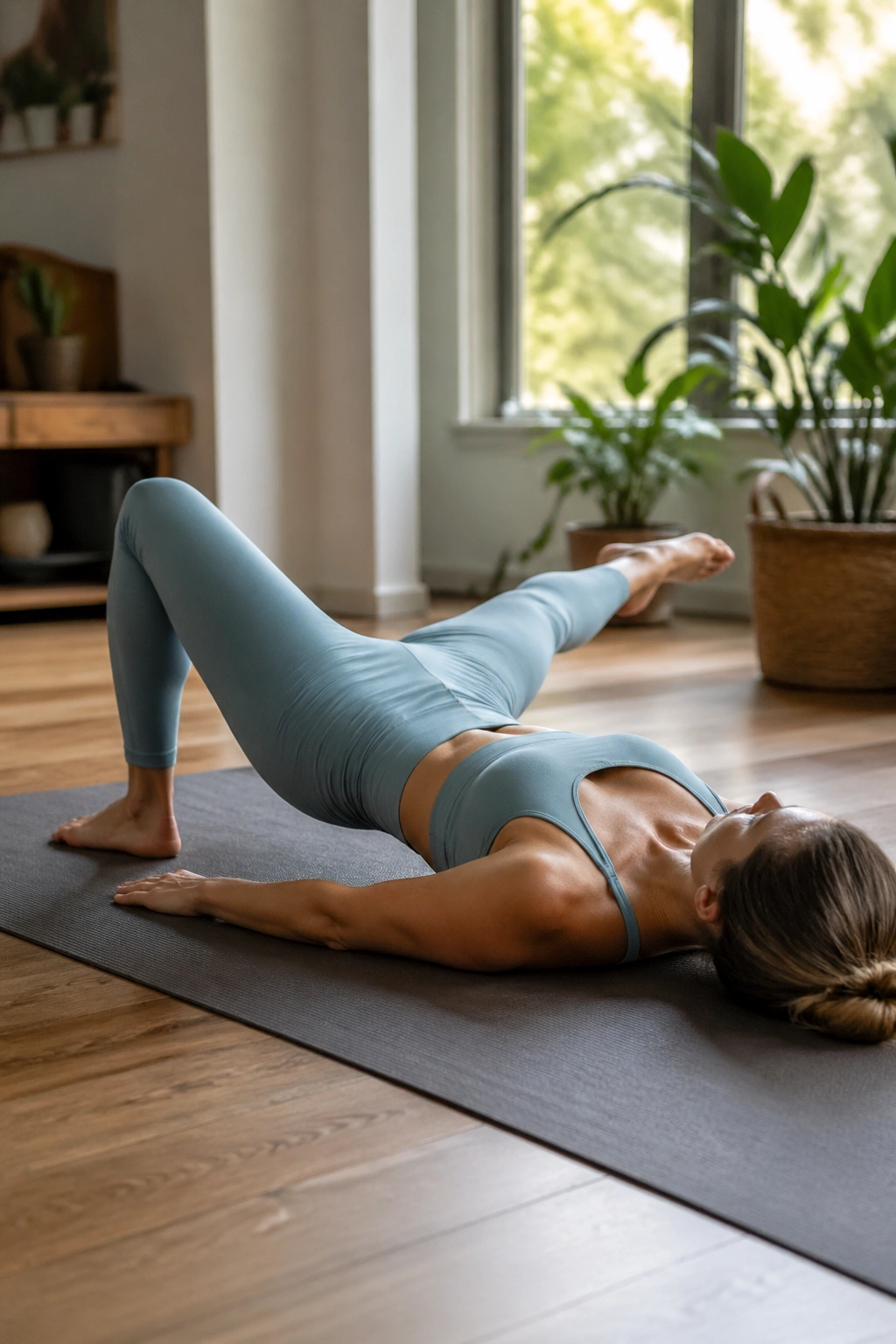
A hip that glides in circles usually feels less cranky than one forced into straight-line stretches. That is why this routine works so well when the joints feel sticky but not injured.
Move it in three planes
- Supine leg circles with a small range
- Fire hydrants from hands and knees
- 90/90 hip switches with a tall spine
- Side-lying circles that stay controlled
Keep the circles small at first. Bigger is not better if your pelvis is tipping all over the place. What you want is a smooth femur moving inside the socket while the trunk stays quiet. If the hip pinches at the front, shrink the range and bend the knee a little more.
This sequence is simple, but it changes how the whole lower body feels when you stand up afterward. And yes, that includes the walk to the kitchen.
14. Lower-Back Friendly Core Routine
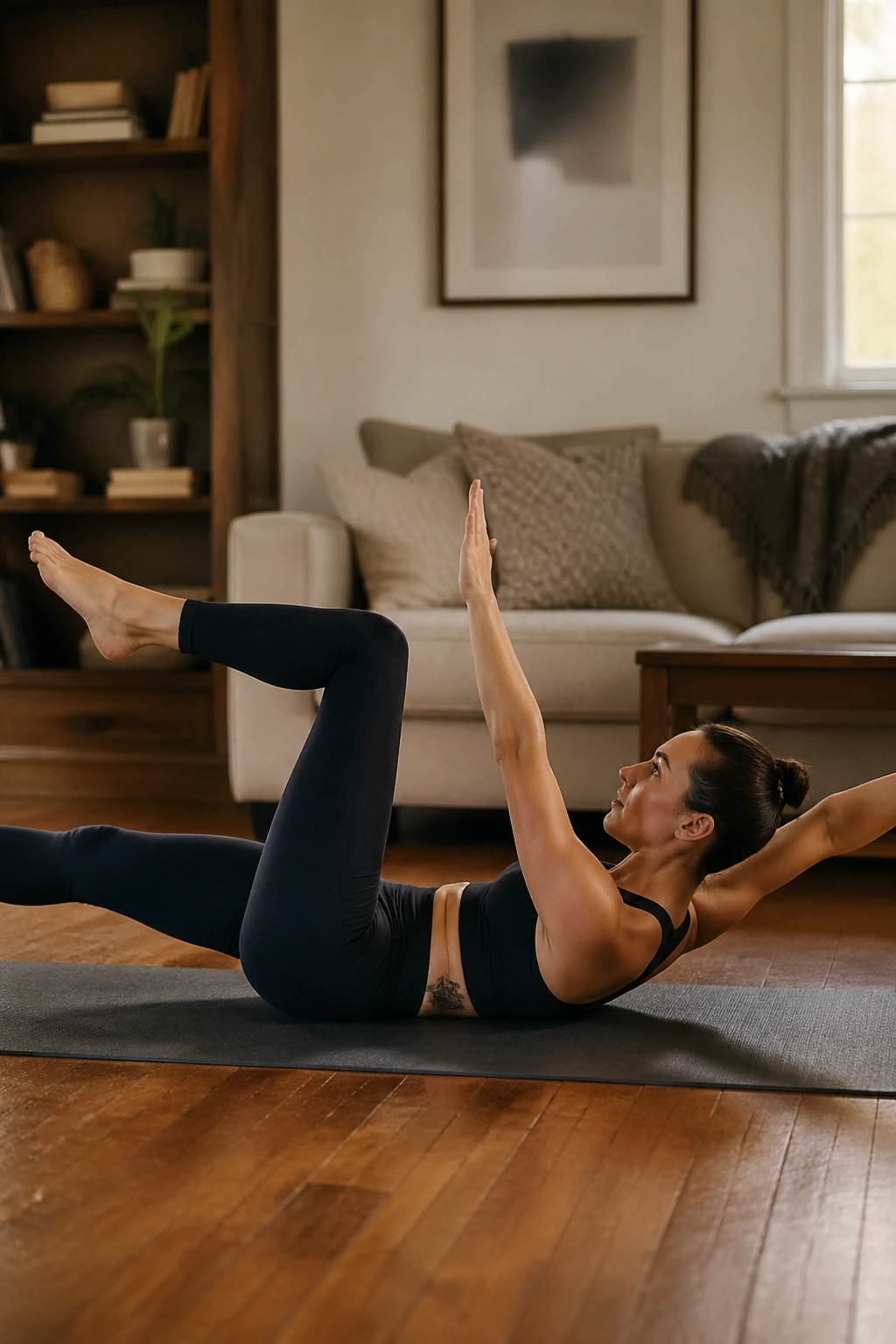
A strong core does not have to mean a sore back. That sentence should be printed on half the Pilates mats in the world.
When the low back is touchy, I like dead bugs, heel slides, marching bridges, and tabletop breathing with one hand on the lower ribs. The point is to teach the trunk to stabilize without smashing the spine flat into the floor. A little natural curve is fine. A lot of bracing is not.
Try 30 to 40 seconds of work per drill, then 10 seconds to reset. If your lower back starts to arch or pinch, shorten the lever by bending the knees more. Do not force range just because the exercise name sounds simple. The simple-looking ones are often the ones that expose sloppy control fastest.
15. Hamstring Length and Spine Articulation Flow
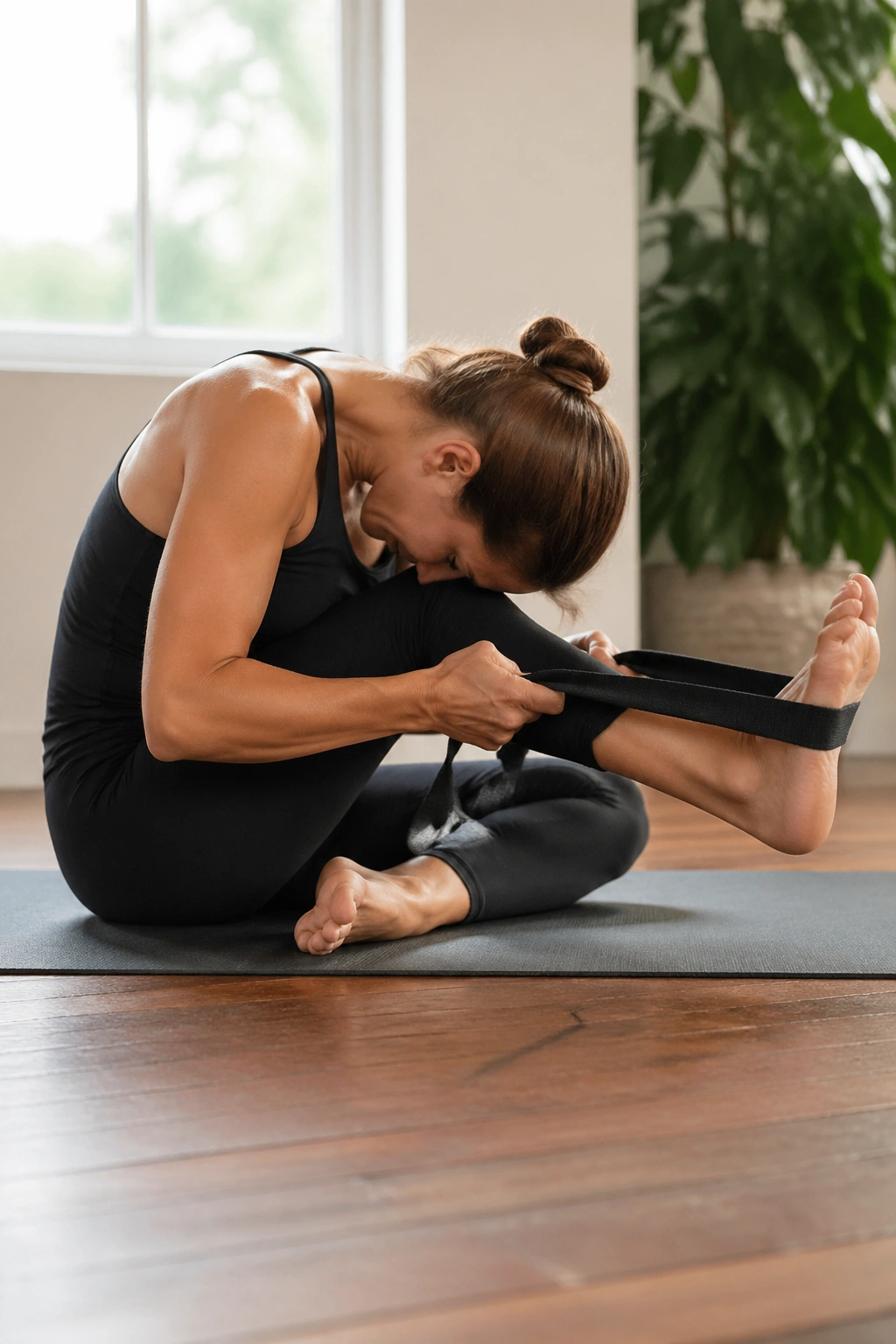
Why do hamstrings feel tighter when you stretch them hard? Because they often hate being yanked. A calmer approach works better.
Use bent-knee forward folds, single-leg reaches with a strap or towel, and bridge walkouts to create length without pulling the pelvis out of place. Then roll up and down through the spine so the nervous system gets a slow, clear signal that it can release. That change feels less dramatic in the moment and more useful an hour later.
Don’t yank the stretch
- Keep the knees soft if the pelvis rounds hard
- Hold the strap gently, not with a death grip
- Exhale while folding, then inhale to lengthen
- Stop before the back starts to round and strain
This is one of those routines that rewards patience. If you force it, the body fights back. If you coax it, the back of the legs usually gives a little more.
16. Small-Range Pulses Glute Burner
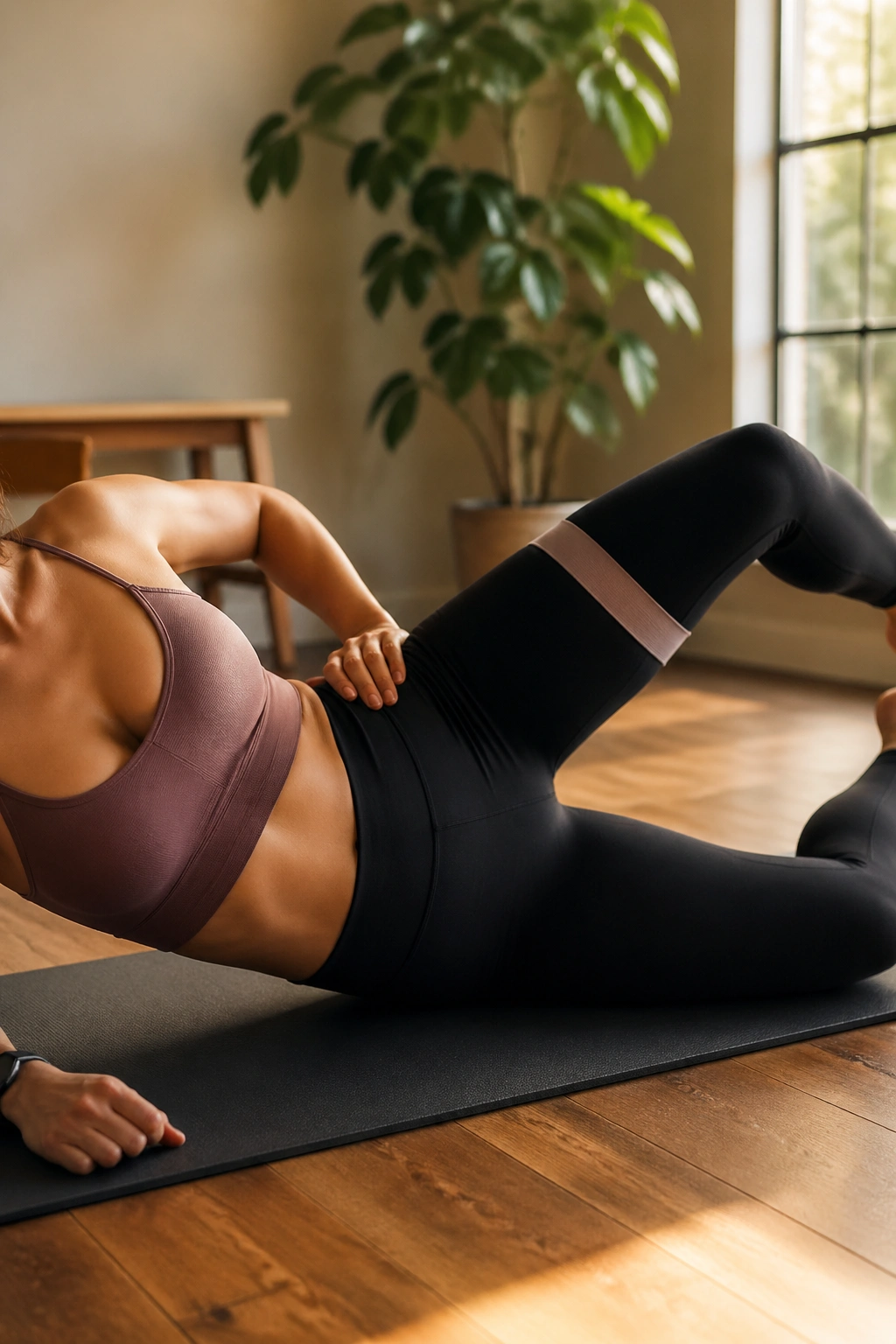
Tiny pulses can be rude. In a good way.
Set up in bridge, side-lying abduction, or quadruped kickbacks and keep the range so small it almost looks boring from across the room. Then repeat long enough that the glutes start doing their job instead of letting the hamstrings or low back take over. That is the whole trick. Small range, steady control, real burn.
A 20-minute version can move through bridge pulses, clam pulses, frog lifts, and standing hip abduction with a hand on a wall for balance. I like this style on days when I want a focused lower-body session without a giant footprint on the floor. If you feel it in the lower back, reset the pelvis and reduce the height. The burn should live in the glutes, not in your spine.
17. Pilates for Runners
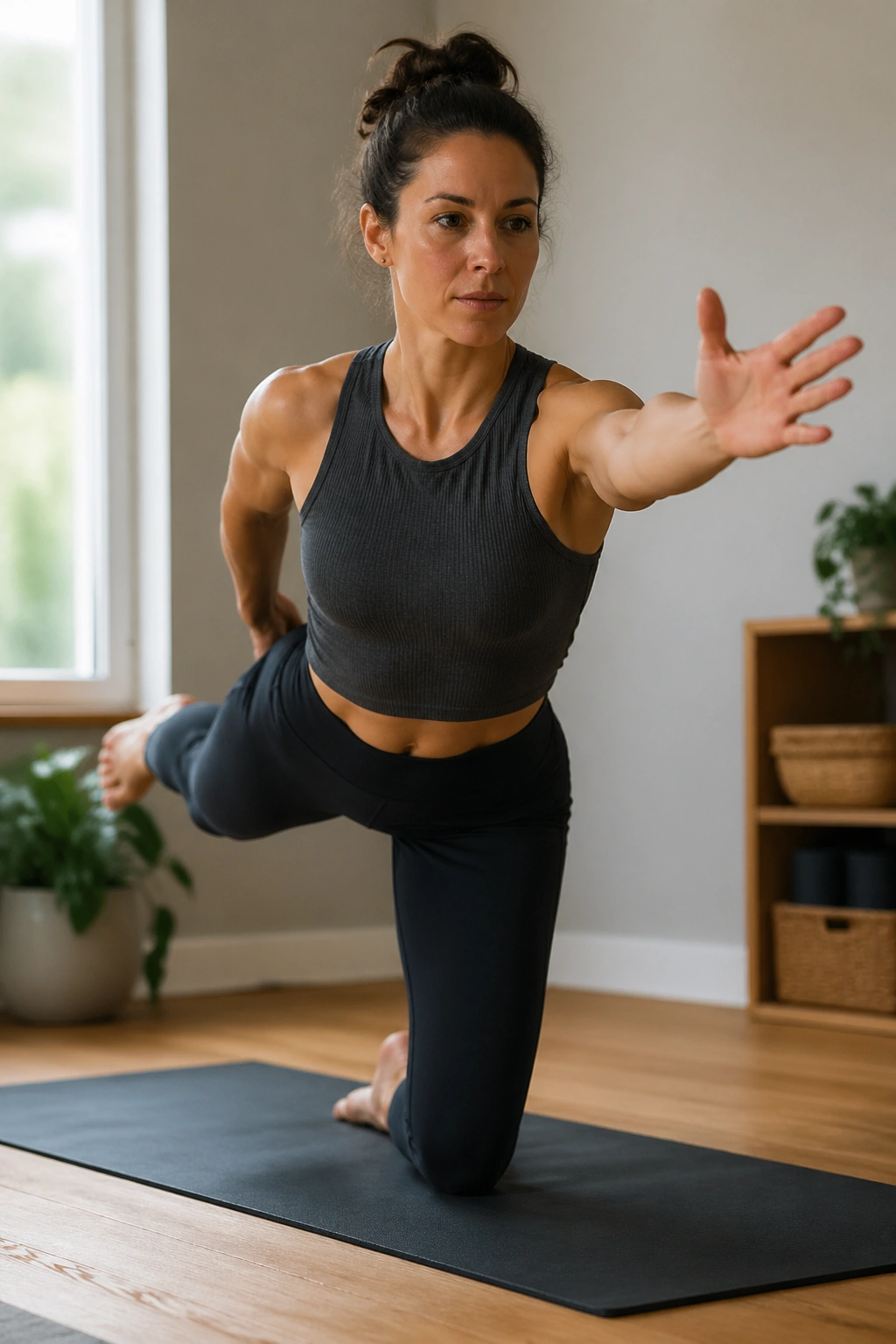
Runners usually need three things from Pilates: single-leg stability, hip control, and better trunk rotation. Most people notice the hips first, but the upper back matters too. If the thoracic spine is rigid, the arms and pelvis work harder than they should.
A 20-minute Pilates routine for runners can look like bridge march, side kicks, single-leg balance with an arm reach, calf raises, and a short side plank. That mix hits the places that keep a stride from getting noisy. It also teaches the body to stay level on one leg, which is where running really lives.
I like this session on easy recovery days or before a short run. It is not meant to exhaust you. It is meant to make the mechanics cleaner. Think quiet strength, not a fight.
18. Beginner Towel-Assisted Routine
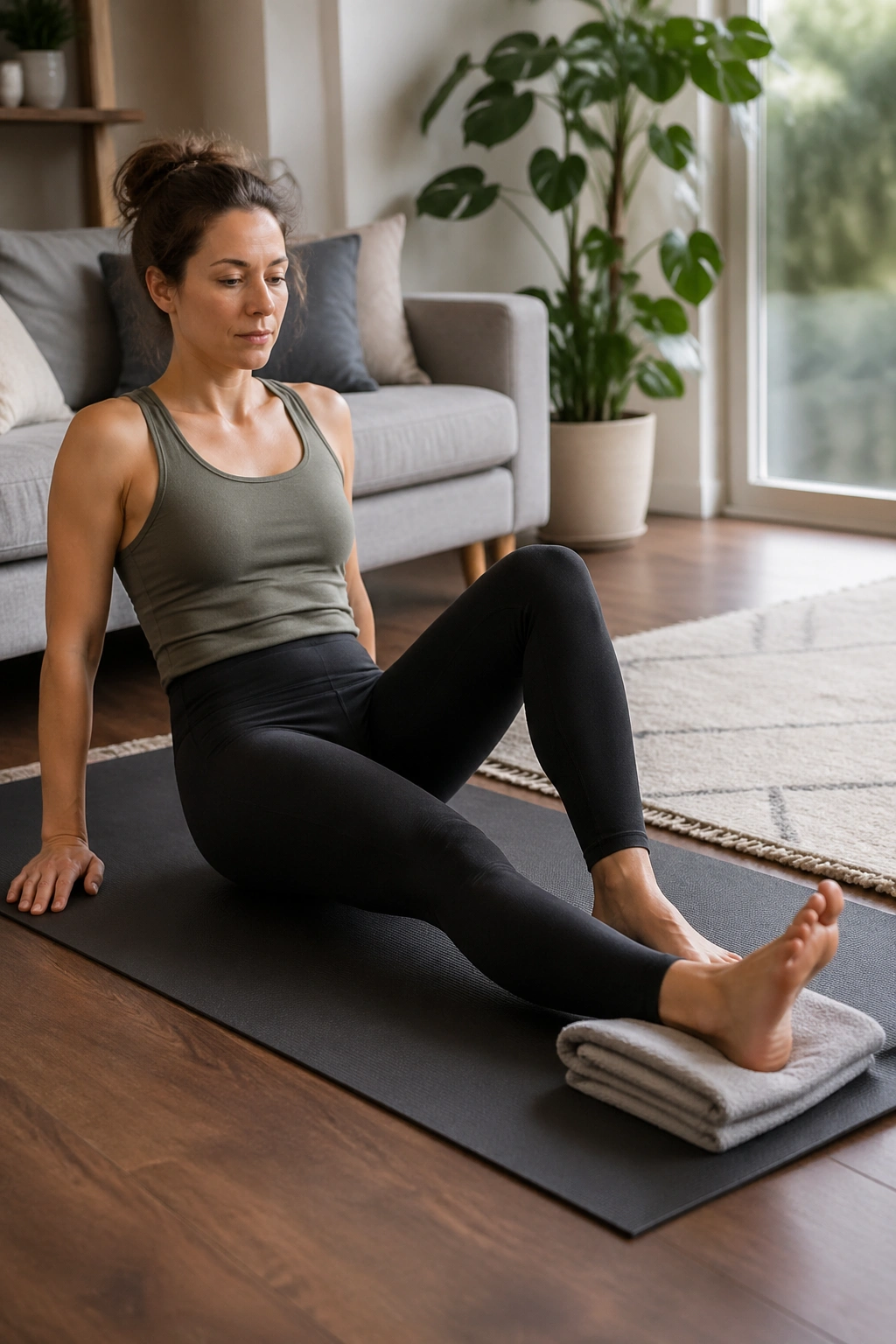
A towel is a better prop than people give it credit for. It can support tight hamstrings, add resistance to arm work, and give beginners something to hold so the movement feels less slippery.
Lie down with the towel behind one foot for assisted leg extensions, use it between the knees for gentle squeezes, or fold it under the hips if your floor is hard and your back dislikes it. On a smooth floor, a folded towel can even act like a slider for hamstring curls. Cheap. Practical. No drama.
This routine is especially useful if you do not have Pilates props at home yet. Fold the towel thick enough that your joints feel cushioned, but not so thick that the floor work gets unstable. That balance makes the whole session friendlier.
19. Low-Impact Cardio-Paced Mat Routine
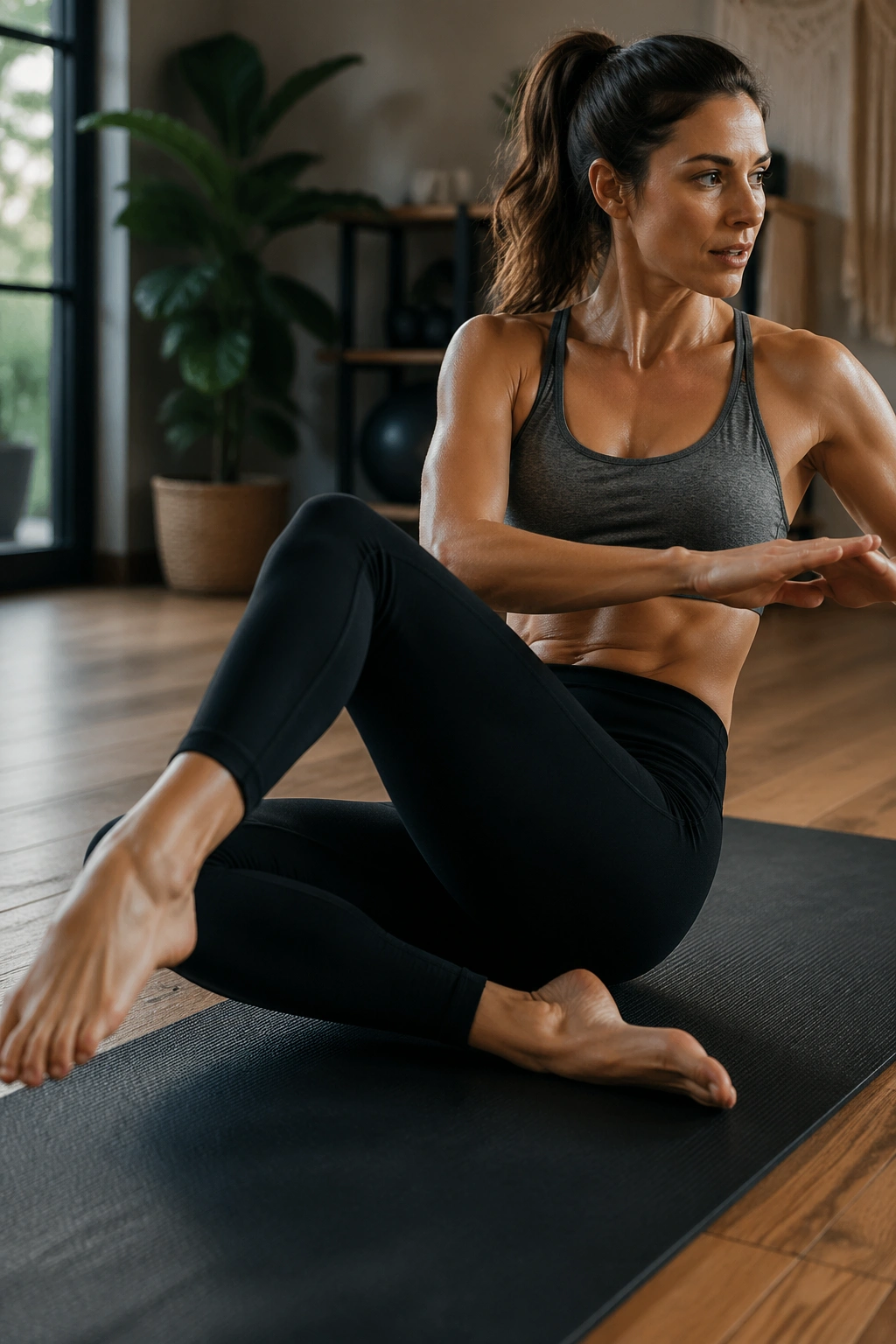
A Pilates session can raise your heart rate without turning into a bounce-fest. The trick is faster transitions, not bigger impact.
Run this in 40-second work blocks with 20 seconds to switch: standing roll-down to squat, plank step-backs, side-to-side reaches, slow mountain climbers, and a controlled squat pulse with arm sweeps. The movement stays low to the ground and the feet stay quiet, but the whole body still has to keep up. It feels brisk. It does not feel chaotic.
How to keep the pace up
- Keep each move familiar
- Move immediately when the timer changes
- Shorten the range before form breaks
- Breathe out on the hardest part of each rep
This is a good option when you want more heat than a mobility day but less pounding than a jumpy circuit. And yes, it still counts as Pilates if the trunk is doing the real work.
20. Recovery-Day Mobilizer
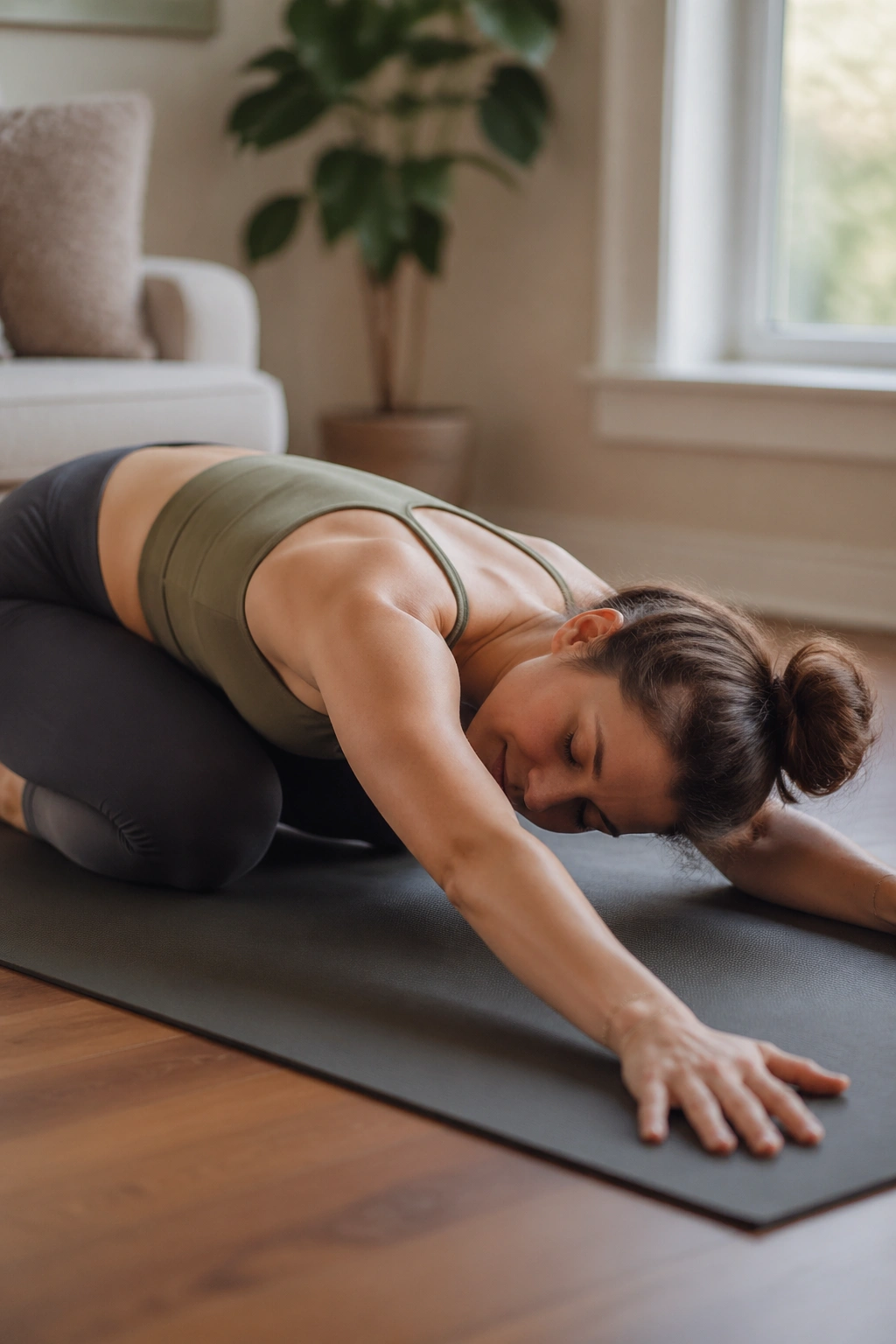
Recovery does not mean lying still and hoping for the best. Sometimes it means moving in ways that make the joints feel less jammed by the end of the session.
Use cat-cow, open books, thread-the-needle, pelvic clock, and a few long child’s pose breaths. Add a gentle bridge if your back likes that, then finish with slow neck turns and arm reaches. Nothing here should feel sharp. The whole point is to reduce friction, not create more of it.
This routine is useful after long sitting, after a hard day on your feet, or after any workout that left the body feeling a little foggy. Keep it soft. Keep it honest. A recovery day can still be a Pilates day.
21. Shoulder Opener and Scapular Control
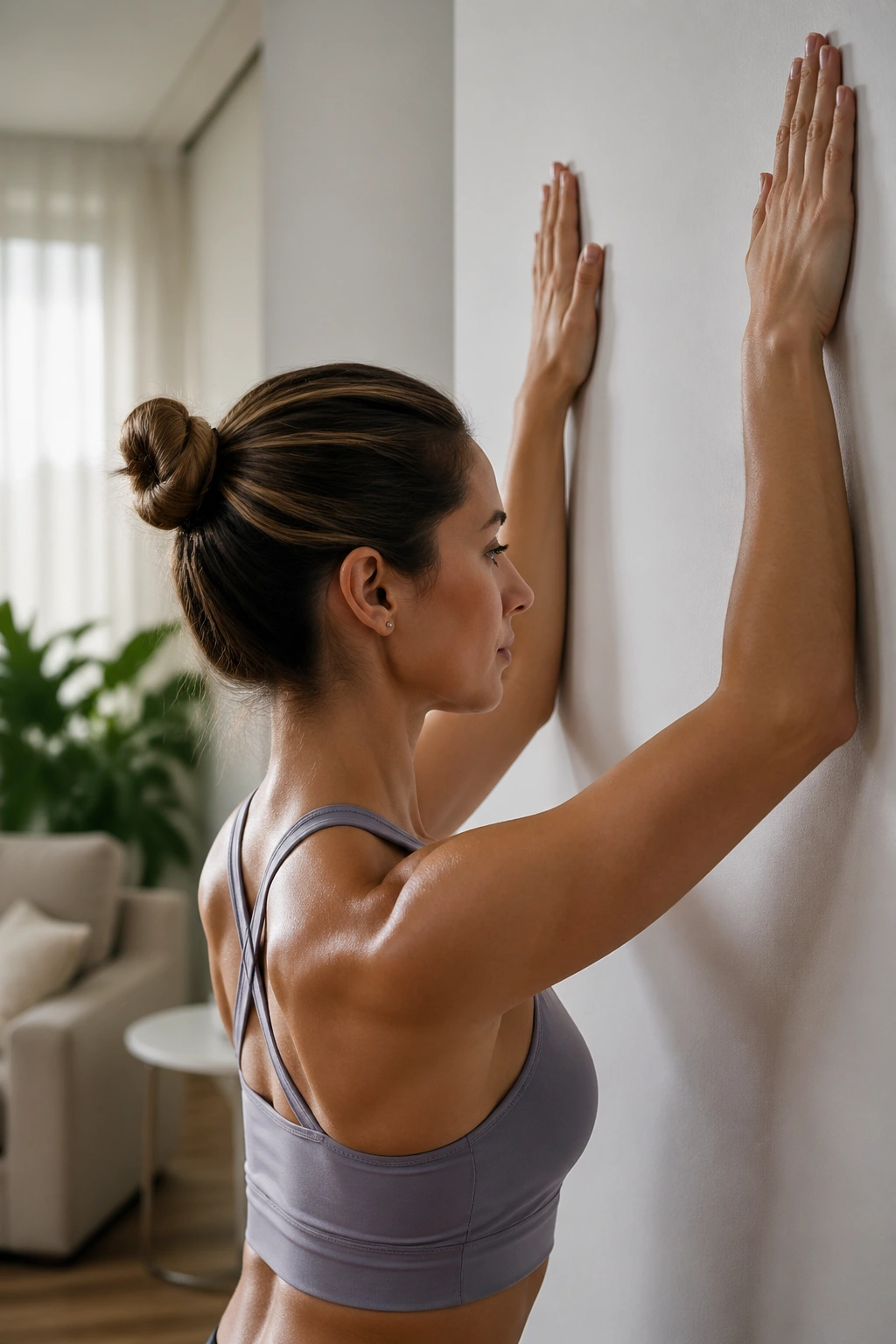
Why do shoulders creep up the neck after a day of typing? Because the scapulae stop gliding the way they should. Pilates can fix a lot of that if you give the upper back its own job.
Work through wall slides, prone T raises, scapular push-ups, thread-the-needle, and chest-opening arm reaches. The key is the shoulder blades moving smoothly on the rib cage instead of pinching together or winging out. That is the cue people miss. The arms are not the whole story.
What good shoulder work feels like
- The neck stays long
- The ribs do not flare hard
- The upper back works without gripping
- The breath stays steady while the arms move
This routine feels almost too gentle at first, then the shoulders start to loosen and the difference shows up fast in how the head sits over the chest.
22. Advanced Core Stability Sequence
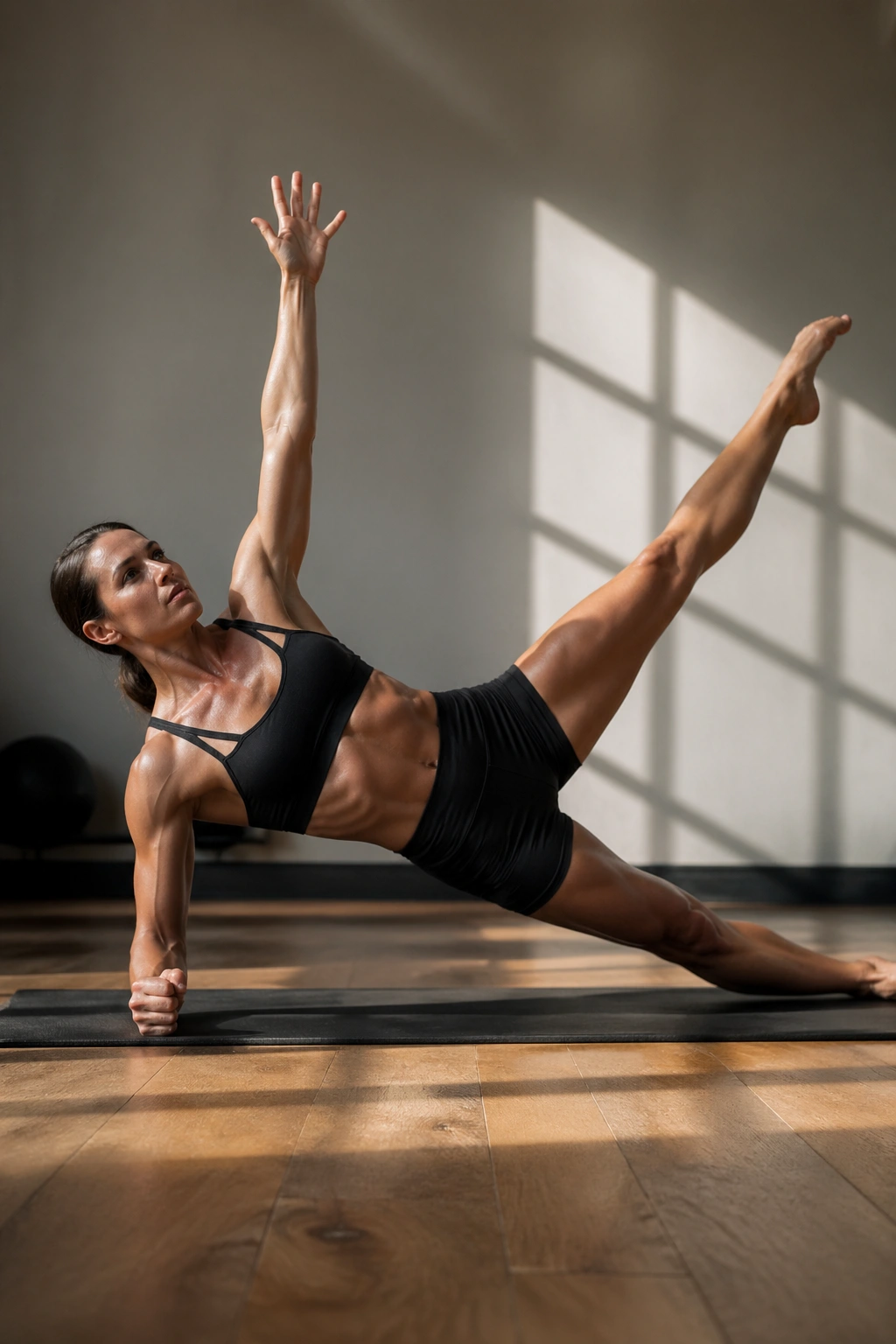
This is the routine that exposes lazy form fast. If the ribs flare, the neck stiffens, or the hips start swaying, the whole thing tells on you within minutes.
Move from teaser prep to side plank with a leg lift, then into double-leg lowers, bird dog holds, and a short boomerang prep if you know it. Keep the range smaller than your ego wants. That is not a joke. Big Pilates shapes are nice to look at, but they only count if the trunk stays in charge.
I like this sequence for days when I want a hard, focused mat block without any equipment. It is demanding in a quiet way. Short holds beat sloppy reps. If you can keep the shape clean for 15 seconds, that is better than hanging on for 45 with the pelvis wobbling all over the place.
23. Mini-Band Lower Body Burn
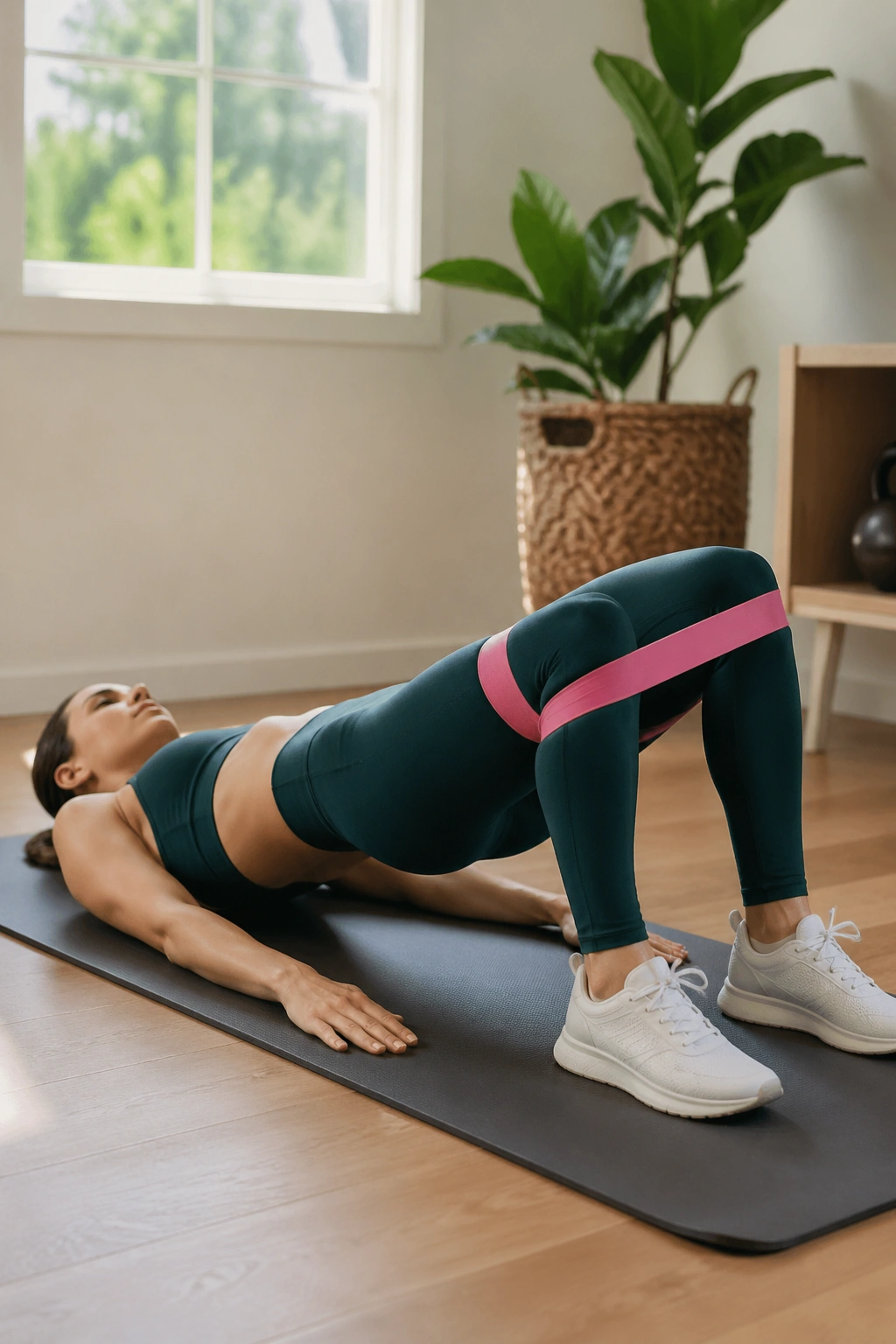
A mini-band around the thighs or ankles changes a routine fast. The outer hips wake up, the glutes have to keep the knees from collapsing, and the legs stop borrowing so much from the lower back.
Use it for clams, bridge abduction, lateral walks, standing squat pulses, and kickbacks. Keep the feet parallel when that makes sense, and watch the knees track over the second toes. If the band starts rolling, pause and reset it. That tiny annoyance is worth fixing.
This is a strong choice if you want a lower-body workout that feels Pilates-adjacent without turning into a heavy strength session. Do not arch the low back to get a bigger leg lift. A smaller, cleaner lift will do more for you.
24. Full-Body Coordination Flow
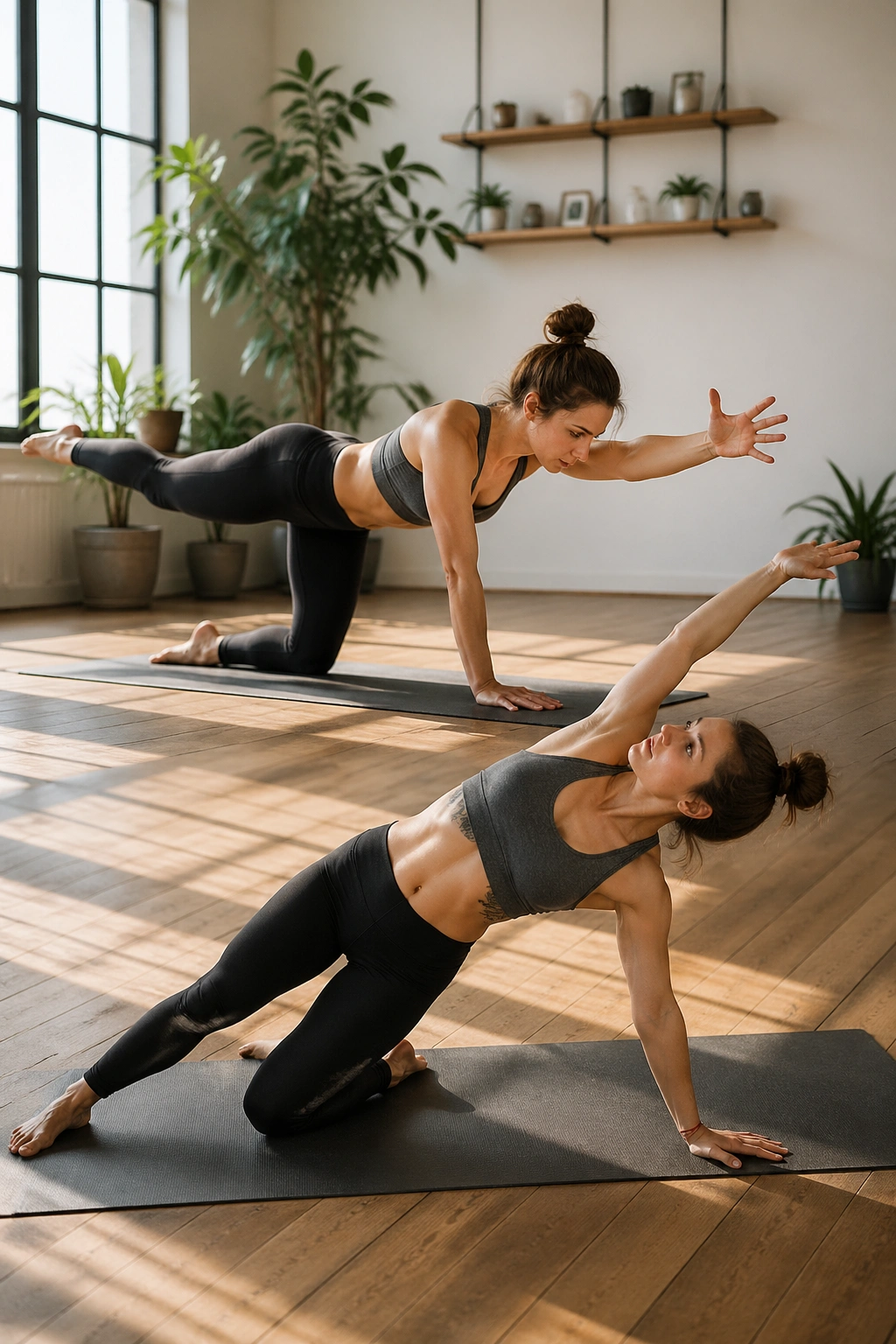
Unlike workouts that split the body into little islands, this one asks the arms, trunk, and legs to talk to each other. That makes it feel a little more alive and a lot more useful.
Link bird dog reaches, kneeling side planks with arm sweeps, lunge-to-rotation transitions, and standing balance work that forces the opposite arm and leg to stay organized. The rhythm matters here. One side reaches while the other side stabilizes. Then they switch. That cross-body connection is a big part of why Pilates feels so good when it is done well.
You can run this as a smooth flow or as timed stations. Either way, the whole body has to pay attention. The less the torso wobbles, the better the session lands.
25. The No-Matter-How-Busy Reset
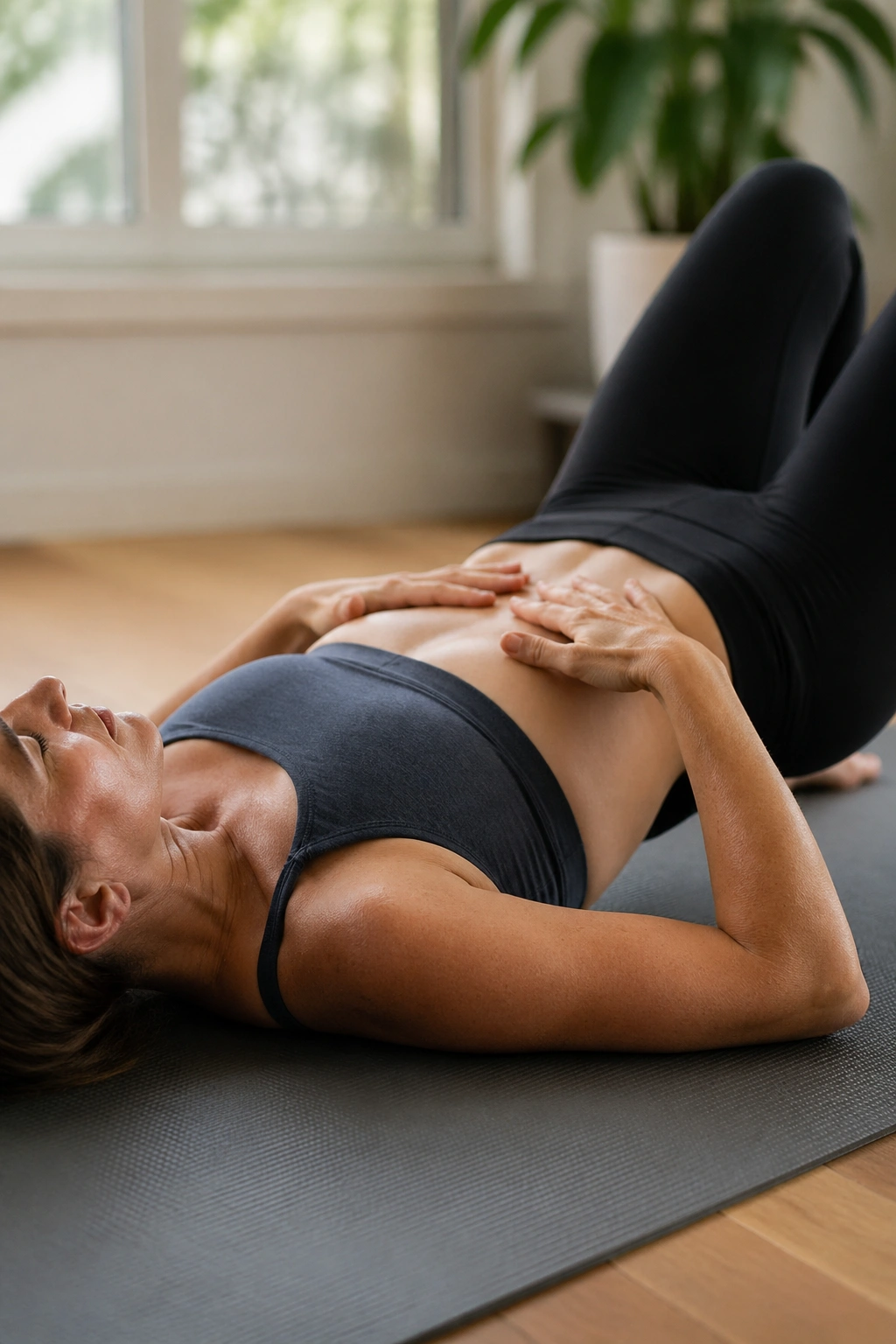
If the day is packed and your brain feels like it has too many tabs open, this is the routine to save. It is the one I would keep if I had to choose only one 20-minute Pilates session for the whole week.
Five four-minute chunks
- 4 minutes of breathing and pelvic tilts
- 4 minutes of bridges and hamstring reach
- 4 minutes of dead bugs or toe taps
- 4 minutes of side-lying work
- 4 minutes of standing roll-downs, arm arcs, and slow balance holds
That structure is plain on purpose. No chasing perfection. No fancy transitions. Just enough variety to wake up the whole body without needing a gear bag or an empty studio.
The best Pilates routine is the one you can repeat on ordinary days, not only on the days when everything feels aligned and spacious. Some sessions will feel smooth. Some will feel stiff for the first five minutes and then settle. Either way, twenty minutes is enough to change how you carry yourself through the rest of the day.
