



Tower Pilates has a way of telling the truth. The springs don’t let you fake strength, and the bar doesn’t care how flexible you used to be five years ago. For women over 40, that can be a relief. It’s clean feedback. Your shoulders either stay down, or they creep up. Your ribs either stack, or they flare. Your hips either move with control, or they start bargaining for shortcuts.
That’s why tower work has such staying power. It gives you resistance without the pounding, support without making everything passive, and enough variety to keep the body interested. A good tower session can wake up the deep abdominals, smooth out the upper back, challenge balance, and build the kind of strength that shows up in real life — getting out of a chair, carrying groceries, reaching overhead, standing tall without feeling braced.
The best part is that it does not ask you to choose between mobility and strength. You can get both in the same session. Some moves are slow and small. Some are more athletic. A few feel almost meditative if you get them right. And if you’ve ever noticed that your body prefers precision over punishment, tower Pilates usually feels like coming home.
Start with the standing roll-down. It’s honest, simple, and a little rude in the best possible way.
1. Standing Roll-Down with the Push-Through Bar
Start here if your back feels stiff and your neck carries way too much of the day.
Why It Belongs in the Warm-Up
The standing roll-down with the push-through bar is one of those tower Pilates moves that looks easy until you actually slow it down. Then you realize how much your spine wants to move as a unit, and how much it would rather not. That’s useful information. For women over 40, especially, the move gives you a quick read on hamstring tightness, rib control, and whether your upper back is helping or just hanging around.
Keep the bar light in your hands. Exhale, nod the head, and let the spine curl forward one section at a time. If the backs of the legs complain, bend the knees a little. That is not cheating. That is sane.
What to Focus On
- Press the bar down only enough to feel connection, not strain.
- Let the crown of the head hang heavy as you fold.
- Keep your weight over the middle of the feet, not the toes.
- Roll back up slowly, stacking the spine from the tailbone to the head.
Big tip: if your low back grabs, make the fold smaller and breathe longer on the way down. Smaller often works better than deeper.
A good roll-down should feel like a controlled release, not a collapse. You finish taller than you started. That’s the whole point.
2. Chest Expansion with Arm Springs
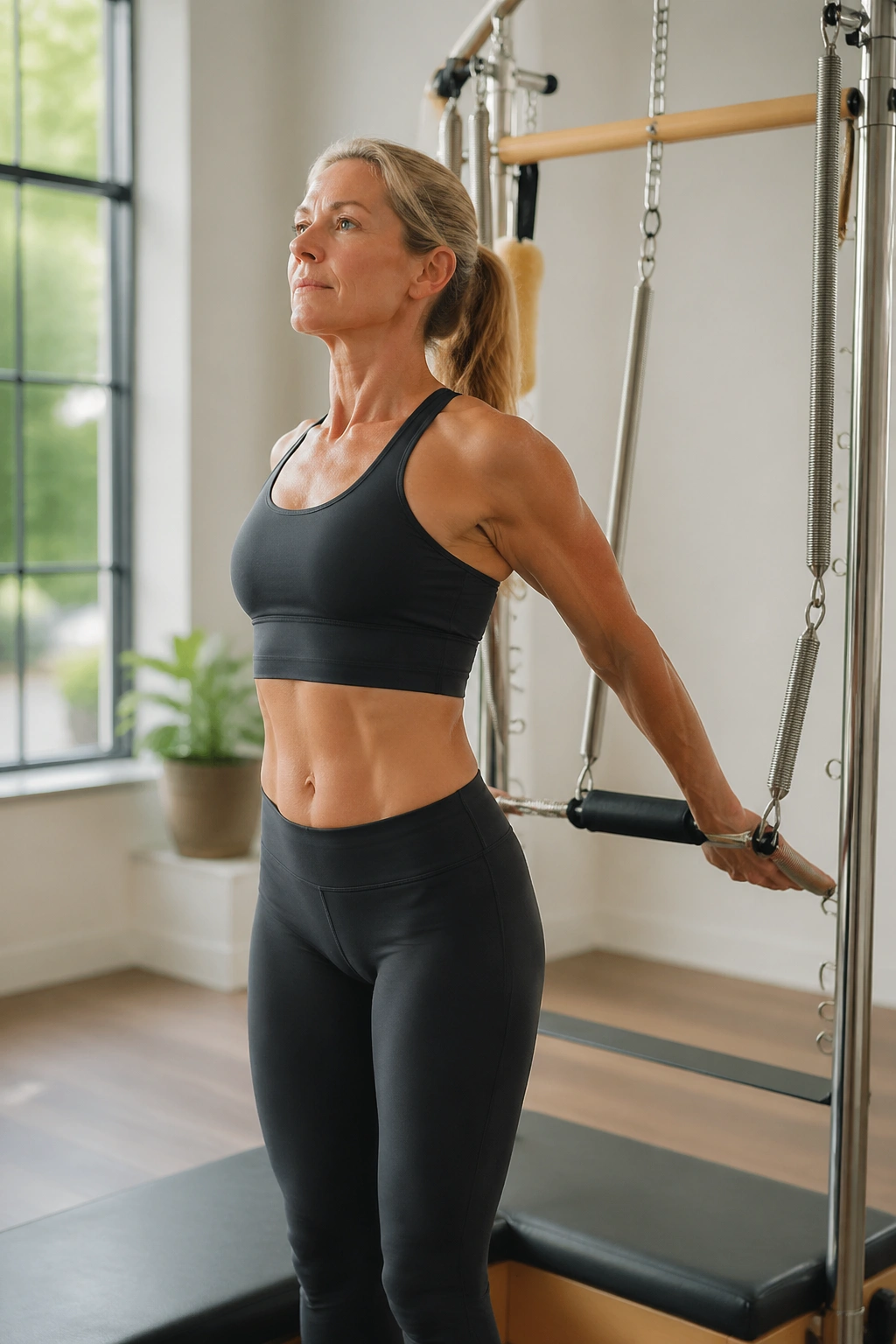
If your posture has gone a little cave-dweller, chest expansion is one of the fastest ways to remind your body what upright feels like.
The arm springs ask your back to do the work, which is exactly where a lot of women over 40 need more support. The move targets the muscles between the shoulder blades, the back of the shoulders, and the deep postural muscles that keep the rib cage from tipping forward. It also gives the front of the chest a chance to open without forcing a big stretch.
Stand tall, soften the knees, and take the arms slightly behind the body with the palms facing back. Inhale to prepare. Exhale and press the arms backward until the shoulders stay quiet and the neck stays long. The motion is small. That’s fine. Small is often cleaner, and cleaner is what you want here.
Then bring the arms back with control. Don’t let the springs yank you forward. If the rib cage flares or the chin pokes, lighten the resistance or reduce the range. The goal is a smooth line from the top of the head to the heels, not a dramatic chest pump that lands in the low back.
For everyday posture, this one pays off fast. Your shirts fit better when you stand differently. More importantly, breathing usually feels less cramped.
3. Supine Arm Presses with Arm Springs
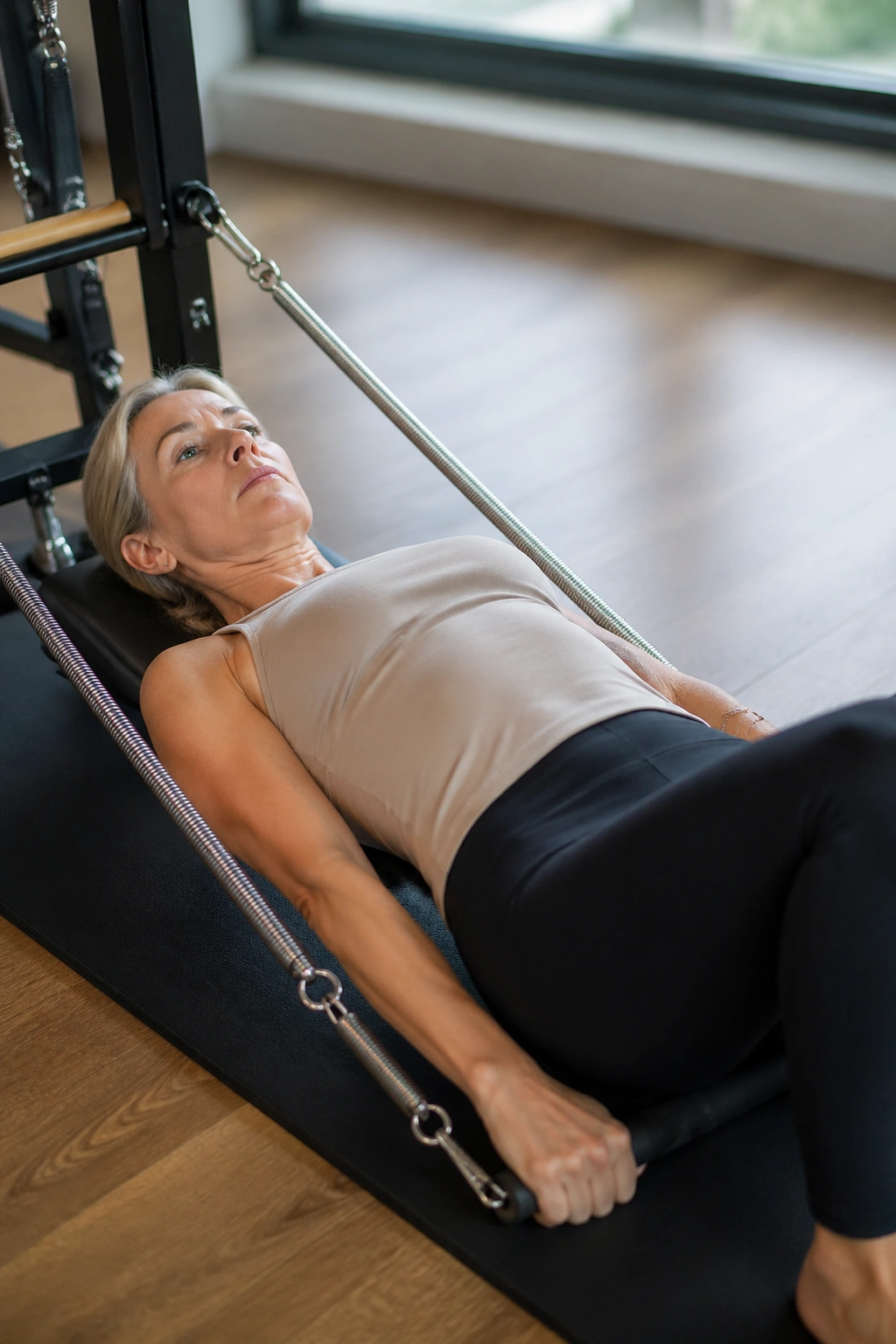
Why do so many women feel their core switch off the second they lie down? Because the body gets lazy when the floor does half the stabilizing for it.
That is exactly why supine arm presses with the arm springs matter. You’re on your back, knees bent, ribs heavy, and the arms move against spring tension while the trunk stays steady. It sounds modest. It isn’t. If the ribs pop up, the pelvis tips, or the shoulders creep toward the ears, the springs will tell on you immediately.
How to Feel the Ribs Settle
Take a breath before you move. Exhale and knit the front ribs inward without flattening the back hard into the mat. Press the arms down toward the hips, stop before the shoulders tense, then return with control. The lower belly should feel engaged, but not clenched.
A useful cue is to imagine your breastbone melting into the mat while your collarbones stay wide. That keeps the movement from turning into a neck exercise. It also helps women who tend to grip through the upper abs or hold their breath when work gets precise.
Use this move when your core feels blurry. It brings the focus back to alignment, breath, and quiet strength. Three things. Very little drama.
4. Frog with Leg Springs
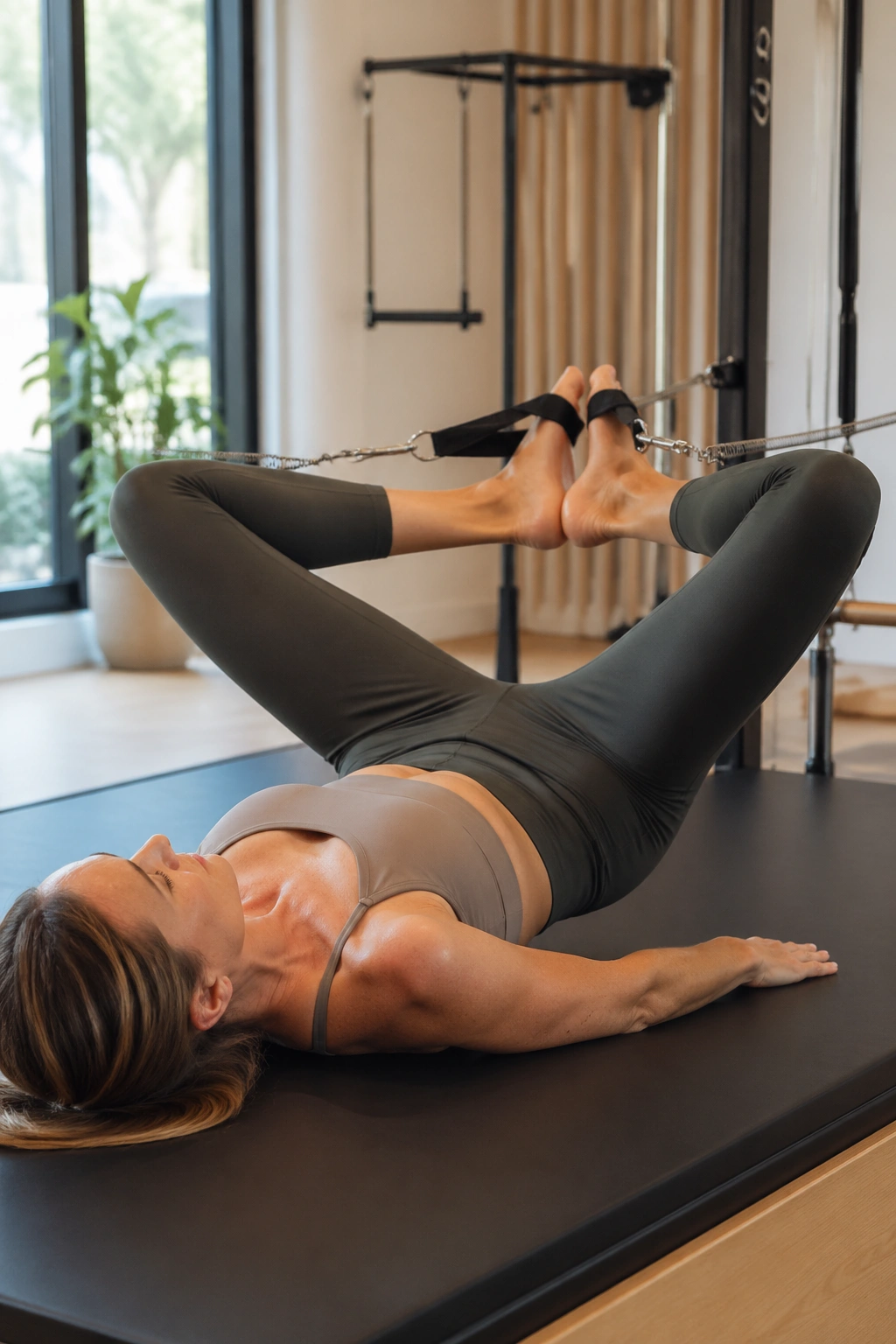
Picture this: tight hips, a cranky lower back, and a strong desire to work the legs without smashing the knees.
Frog with leg springs is the answer I reach for when someone wants lower-body work that feels clean rather than punishing. The springs give you resistance on the way out and the way back in, which means the inner thighs, hamstrings, and deep hip muscles all have to stay awake. It’s also one of the nicer ways to reconnect with pelvic stability if sitting for long stretches has made everything feel glued together.
Lie on your back with the legs in the straps, heels together, toes slightly apart. Bend and straighten the knees with a smooth rhythm, keeping the pelvis still. If the hips pinch, bring the heels a little closer to the seat. If the low back arches, shorten the range. That’s the whole game.
- Keep the movement small at first.
- Press out through the heels, not the knees.
- Watch that the thighs don’t splay apart.
- Exhale as you extend, inhale as you return.
The frog is good on days when you want to feel worked without feeling flattened. And that matters.
5. Leg Circles with Leg Springs
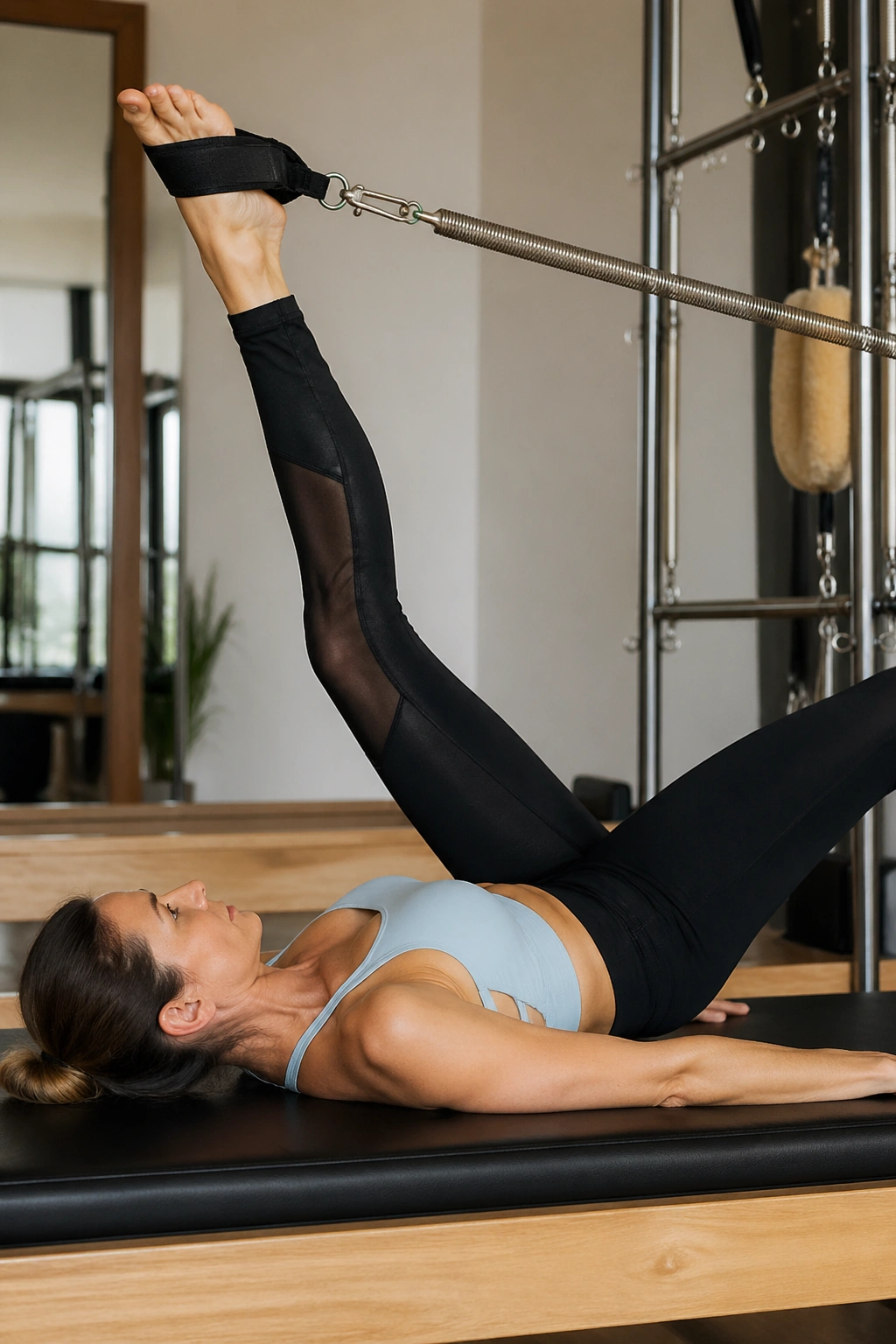
Leg circles look innocent. They are not.
The tower version makes you own the circle instead of tossing your leg around and calling it mobility. That’s the real value here. The springs load the hip, the pelvis has to stay quiet, and the core learns to resist rotation while the leg moves through space. For women over 40, that combination is gold because it builds control around a joint that often gets stiff, weak, or both.
Keep the circle small enough that the low back doesn’t twist off the mat. Small circles can feel almost boring at first. Good. Boring is where the work is. If the circle grows so large that the pelvis rocks or the hamstrings start to grab, back off by half and keep the shape cleaner.
The leg should move from the hip socket, not from the knee or ankle. That sounds obvious. It isn’t obvious when the spring starts pulling.
A few slow circles one way, then the other, usually tells you plenty. If one side is messier, spend an extra round there. Your body will rat you out fast on this one.
6. Side-Lying Single-Leg Lifts with Leg Springs
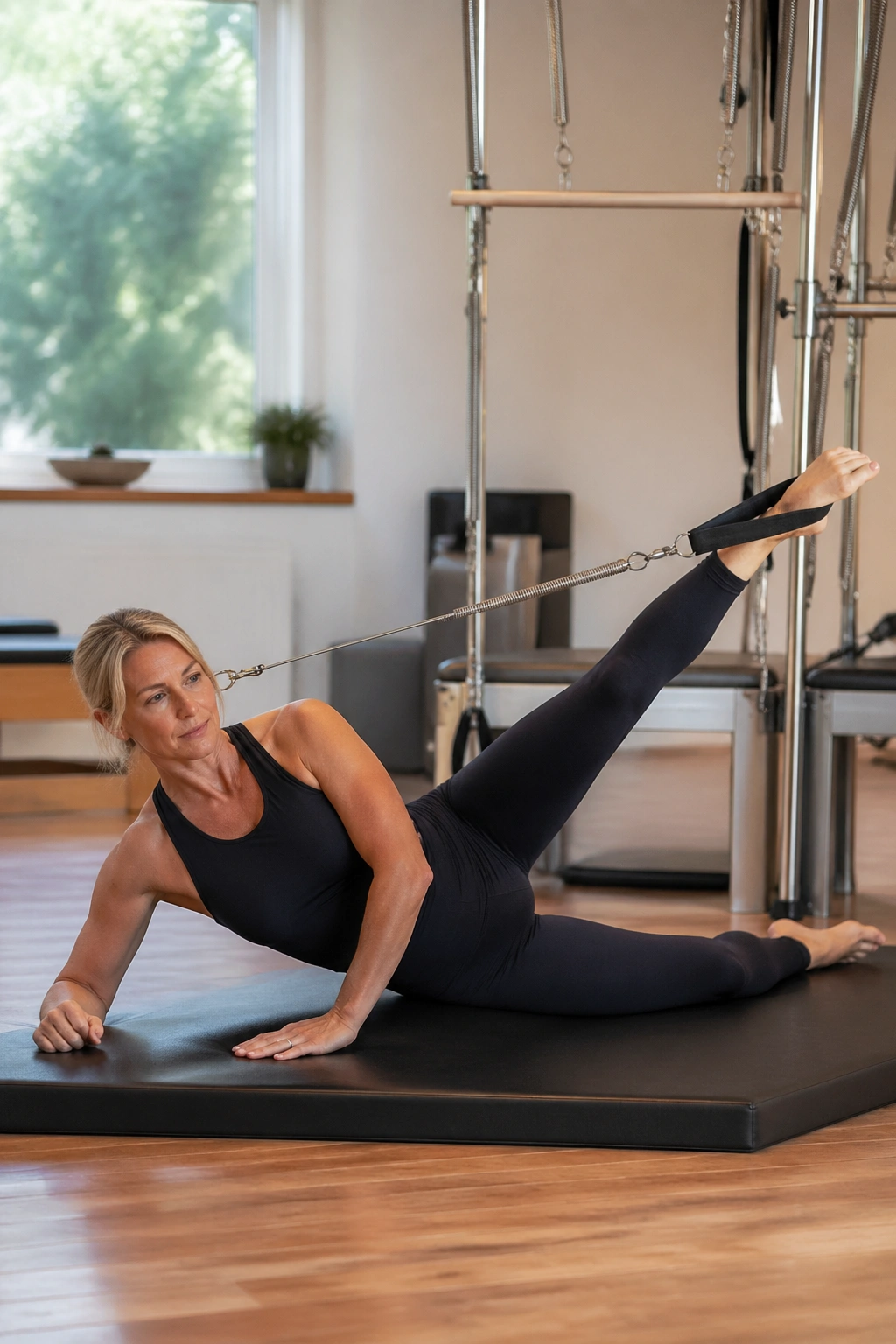
Unlike floor side-kicks, the tower version gives you a little more feedback and a lot less room to drift.
That’s why side-lying single-leg lifts are so useful for lateral hip strength. The spring keeps the leg honest, and the body has to resist tipping backward or rolling forward. The target is the outer hip, especially the glute medius, which matters more than people think for balance, walking, and stair work. If one hip collapses when you stand on one leg, this is the kind of work that needs to happen.
Lie on your side with the bottom body long and the top leg in the strap. Keep the waist lifted slightly away from the mat so you don’t sink into the shoulder. Lift and lower the leg in a controlled path, and stop before the low back starts helping.
For women over 40, I like this better than endless high-rep standing leg lifts. It’s cleaner. There’s less cheating, less neck tension, and more honest strength. If your outer hip cramps, reduce the range and pause at the top for one breath. That usually settles things.
7. Bridge with Feet in the Straps
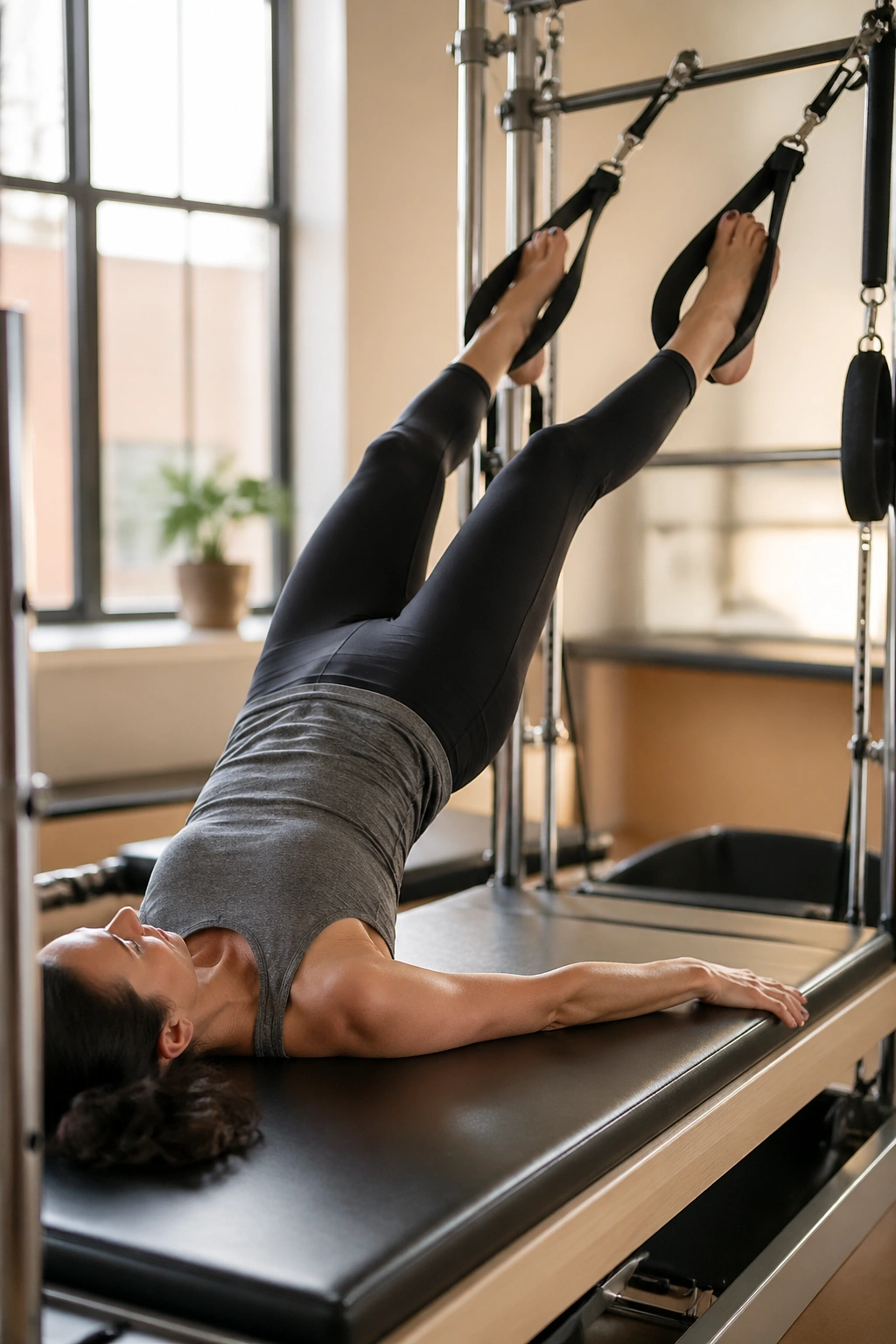
Bridge work on the tower can be a beautiful thing when it’s done with discipline.
What to Watch For
The point is not to fling the hips high and hope for the best. The point is to stack the spine, load the glutes, and teach the back of the body to share the work. The springs add a little instability, which is exactly why the move feels so effective. Your feet want to wander. Your knees may drift. Your pelvis will try to finish the job before the core is ready. Stay with it.
Keep the feet parallel, press through the heels, and peel the spine off the mat one bone at a time. Pause at the top long enough to feel the glutes, not the low back. Then lower slowly until the tailbone touches down first. If the hamstrings cramp, bring the feet a touch farther away or ease the spring tension.
- Lift from the glutes, not the ribs.
- Keep the knees in line with the hips.
- Exhale as you roll up.
- Lower with the same patience.
Bridge work matters after 40 because it builds posterior chain strength without the impact of jumping or heavy loading. It’s not flashy. It works.
8. Mermaid with the Push-Through Bar
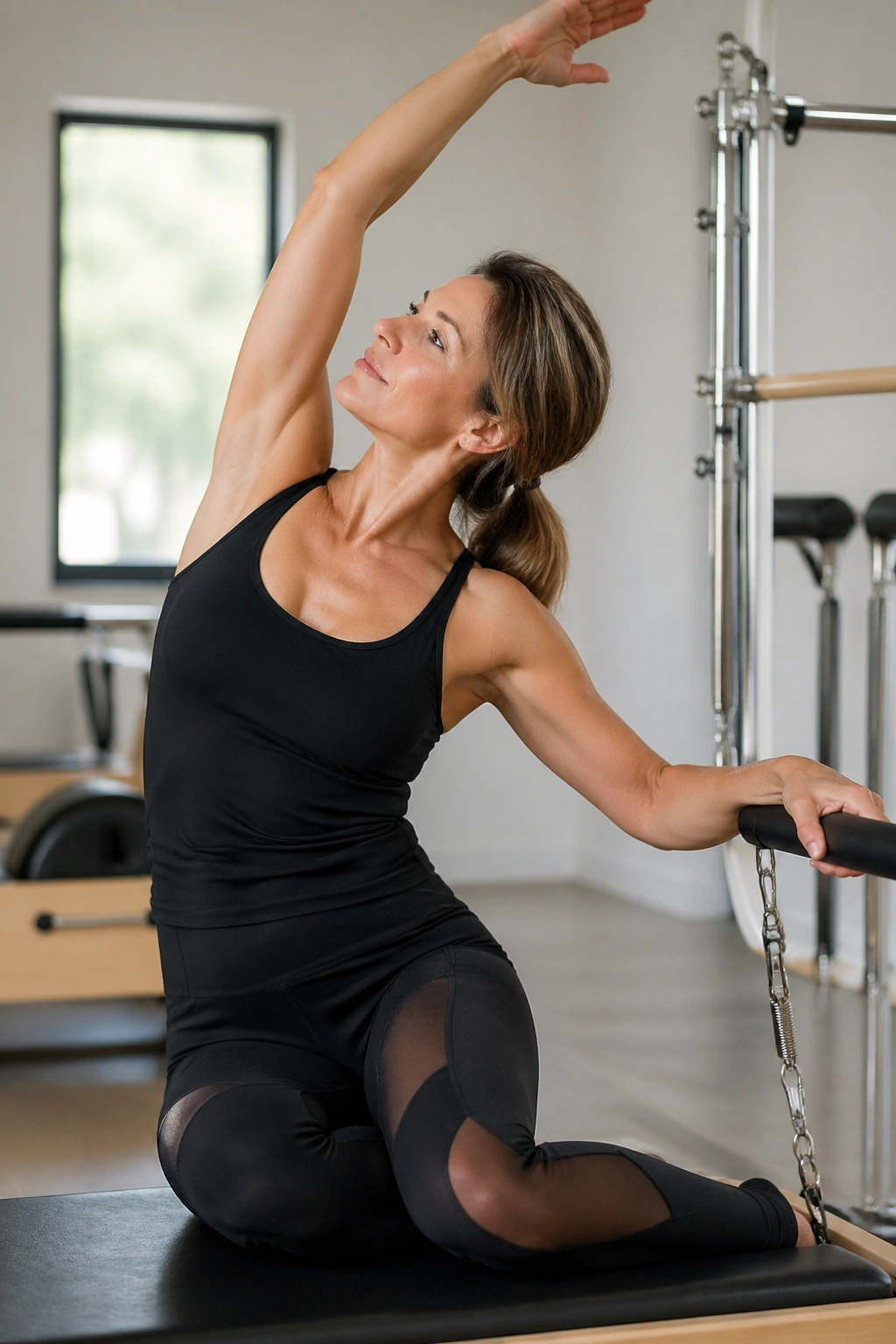
Mermaid earns its place because it opens the side body without making the low back do all the talking.
That alone is worth a lot. A lot of people live with one side of the waist feeling shorter, tighter, or simply more stubborn than the other. Mermaid lets you side-bend, rotate, and breathe into that space while using the push-through bar for support. The bar gives you something real to lengthen against, so the stretch stays active instead of floppy.
Sit tall, one hand on the bar, and let the other arm reach overhead as you side-bend away from the spring. Keep the sitting bones heavy. If the shoulder hunches or the rib cage spins forward, reduce the depth and make the line longer rather than bigger. Bigger is not the goal.
The nicest thing about mermaid is that it rewards patience. The breath gets deeper. The waist softens. The spine feels less guarded. And if one side feels like a brick wall, well, that side probably needs the work more than the other one does.
9. Kneeling Row with Arm Springs
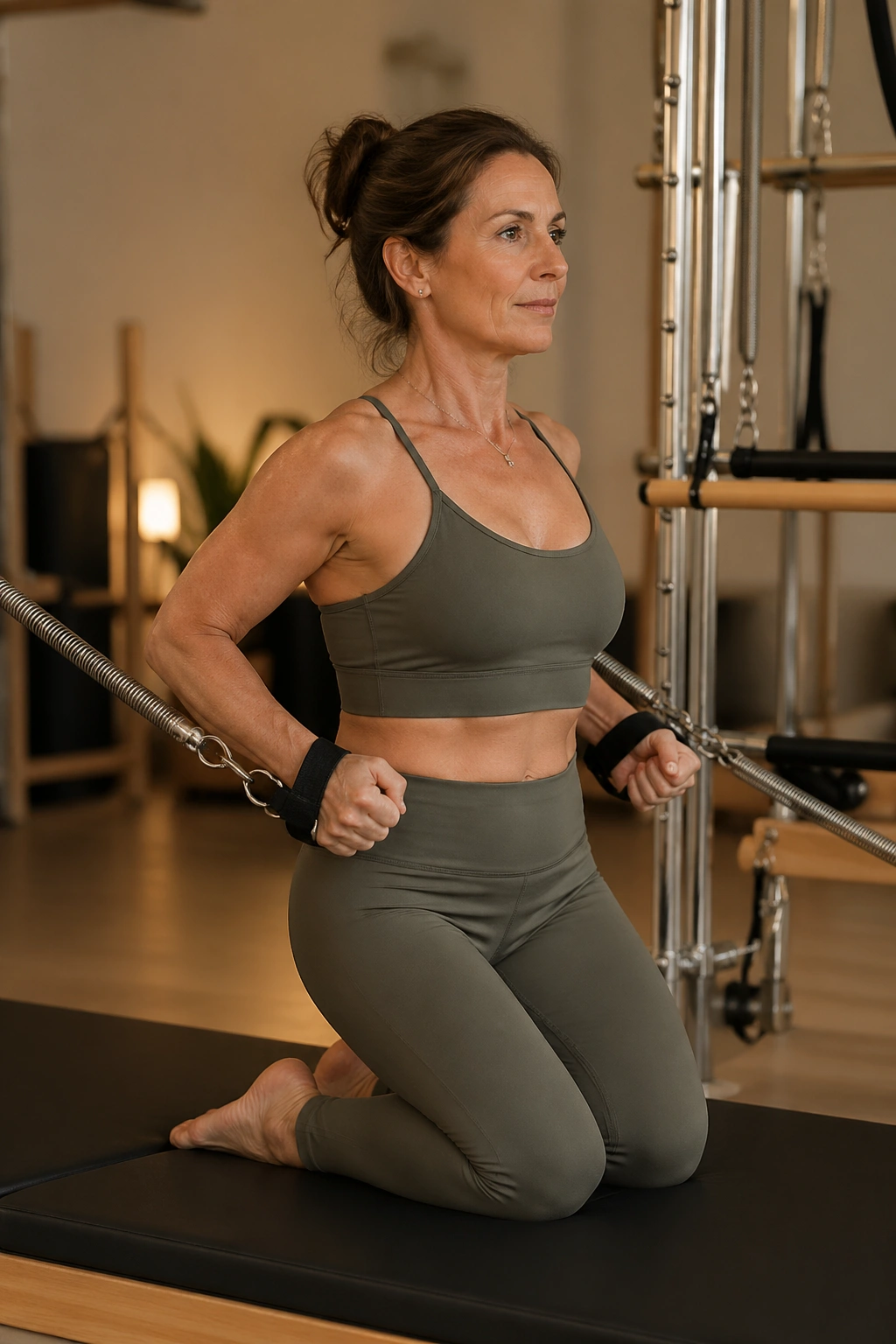
Why does kneeling work feel harder than standing work sometimes? Because it takes your legs out of the equation and leaves your trunk with nowhere to hide.
That’s the beauty of a kneeling row with arm springs. You kneel on a padded mat, keep the hips stacked over the knees, and pull the arms back without letting the ribs pop or the shoulders shrug. The move trains the upper back, lats, and deep core at the same time. It also makes poor posture very obvious. No hiding.
A Few Cues That Matter
- Keep the belt line level.
- Pull the elbows back close to the ribs.
- Pause for half a second at the finish.
- Return slowly so the springs don’t yank you forward.
If the knees dislike the floor, double the padding or move to a half-kneeling position. There’s no prize for suffering in a stable position. The real win is staying tall while the arms work. For women over 40, that kind of integrated upper-body strength is useful in a boring, daily-life way — carrying, reaching, lifting, and not feeling folded in half at the end of the day.
10. Swan Prep with the Push-Through Bar
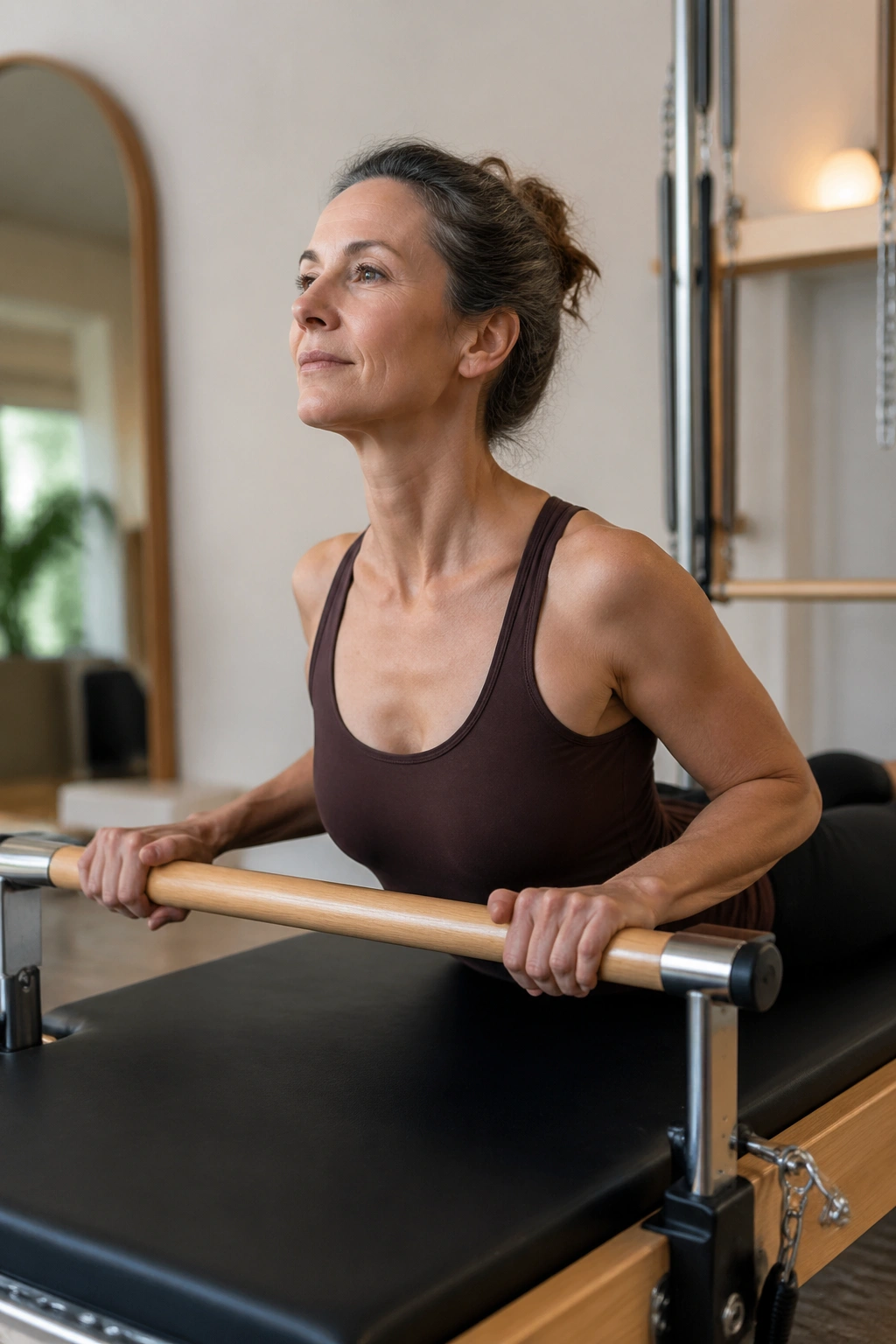
Swan prep looks dramatic from across the room. Done well, it is quiet and controlled.
The push-through bar gives you a way to lengthen the front of the body while the back line turns on. That’s a nice combination if you sit a lot, round your shoulders, or feel like your upper back has forgotten how to extend. The trick is not to turn the move into a giant backbend. A small lift with clean support beats a high arch every time.
Lie prone, hold the bar lightly, and begin by lengthening the spine forward as the chest lifts. Keep the pubic bone grounded. If the low back pinches, stop higher and focus on reaching long through the crown of the head. The shoulders should stay down even when the chest rises.
- Think length before height.
- Keep the neck long.
- Let the glutes assist without clenching hard.
- Lower slowly and keep breathing.
This is one of the best tower Pilates exercises for opening the chest and strengthening the spinal extensors without a jerky feel. It also gives women over 40 a cleaner way to train extension, which can be neglected for years.
11. Hamstring Stretch in Leg Springs
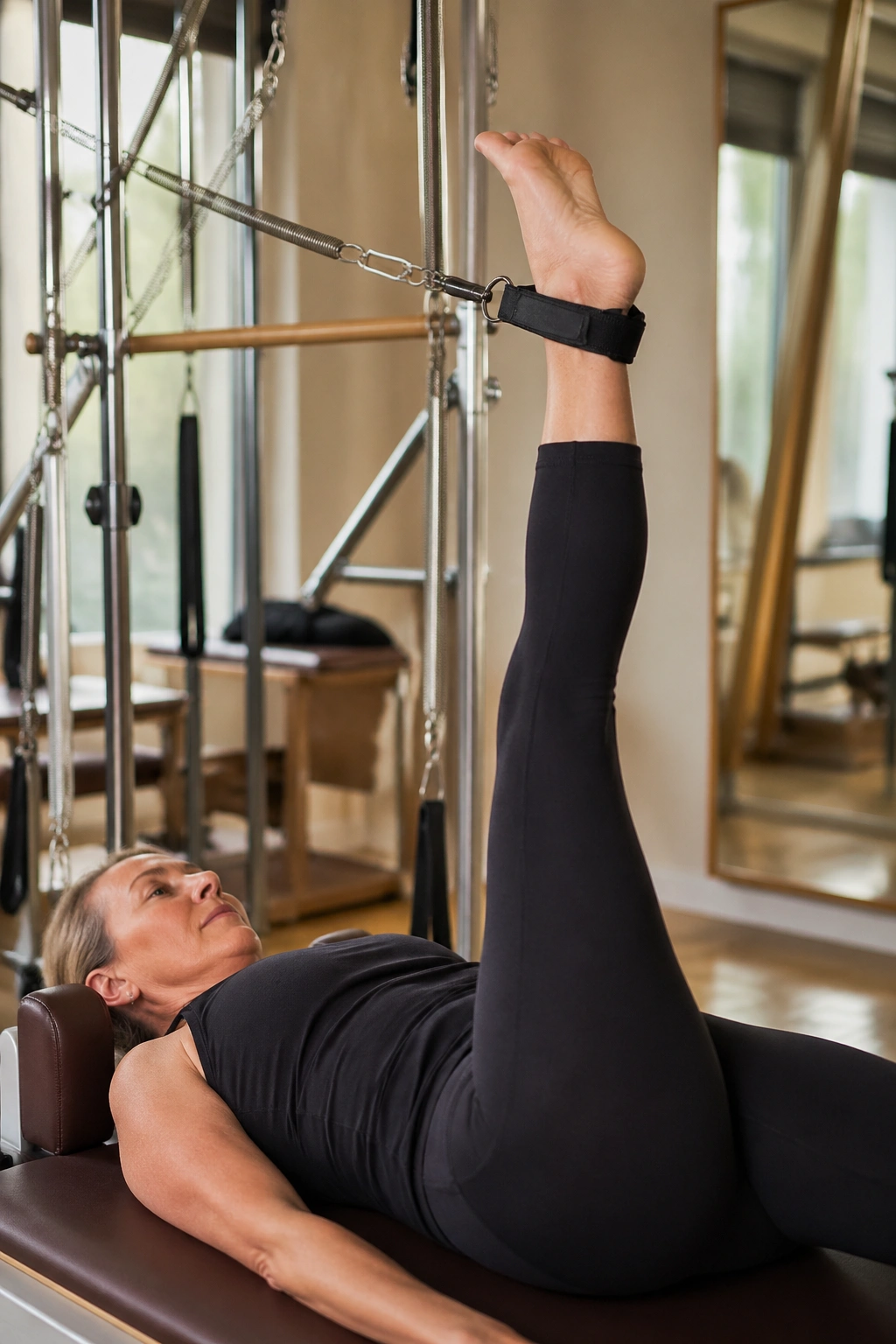
Tight hamstrings are sneaky. They don’t always feel like a stretch problem; sometimes they feel like a low-back problem, or a grumpy pelvis, or a general sense that standing upright takes more effort than it should.
The hamstring stretch in leg springs helps because the leg is supported while it lengthens. That support matters. You’re not yanking a strap and trying to win a flexibility contest. You’re letting the back of the thigh open gradually while the pelvis stays more stable than it would on the floor. The result is often a cleaner stretch and less strain through the spine.
Keep one leg in the strap, extend it upward only as far as the back of the thigh can soften. Flex and point the foot if that helps, but don’t bounce. Bouncing is cheap. It usually annoys the tissue and gives you nothing in return.
If the leg shakes, breathe out. If the hip lifts, lower the leg a little. And if the stretch feels sharper behind the knee than along the muscle belly, ease up. That sensation usually means you’ve gone too far for the day.
I like this move after stronger leg work because it lets the body settle. It isn’t glamorous. It helps.
12. Spine Stretch Forward with the Roll-Down Bar
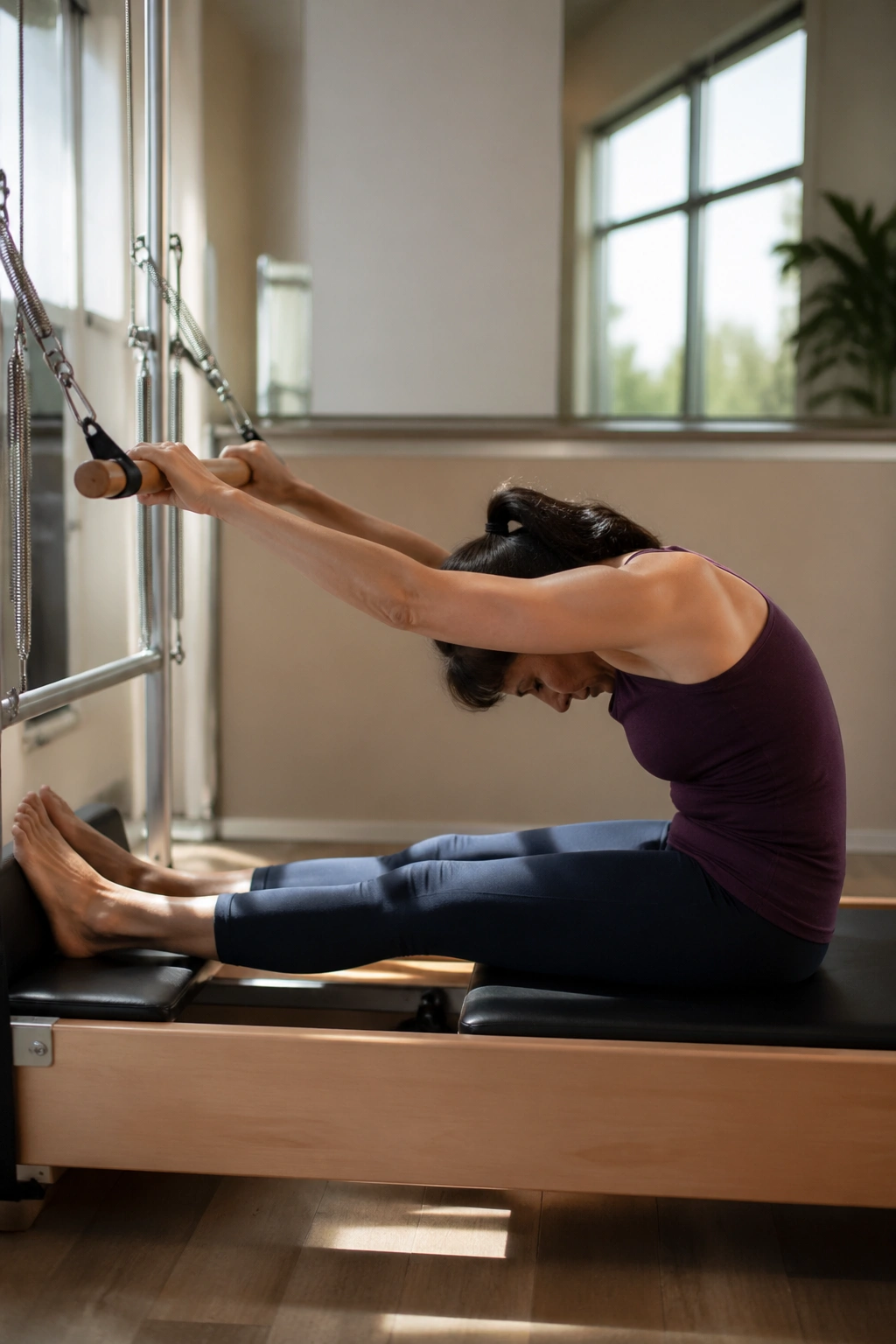
Unlike a floor stretch, the roll-down bar gives your hands a place to reach, which makes the whole movement feel more organized.
That matters because a lot of people fold forward by dumping into the shoulders and lower back at the same time. The bar changes that pattern. You can press lightly into it, round the spine in a controlled way, and use the breath to widen the back ribs. The stretch reaches the back body, but the support keeps it from becoming a sloppy hang.
Sit tall with the legs long or slightly bent, depending on your hamstrings. Inhale to grow upward. Exhale and reach the bar forward as the spine rounds, one section at a time. The head should drop last. If the shoulders creep toward the ears, widen the collarbones and reduce the reach.
This is a smart option for women over 40 who want to restore spinal flexion without forcing it. If you have an especially tender back, keep the arc small and slow. The goal is not depth. The goal is shape.
13. Teaser Prep with the Roll-Down Bar
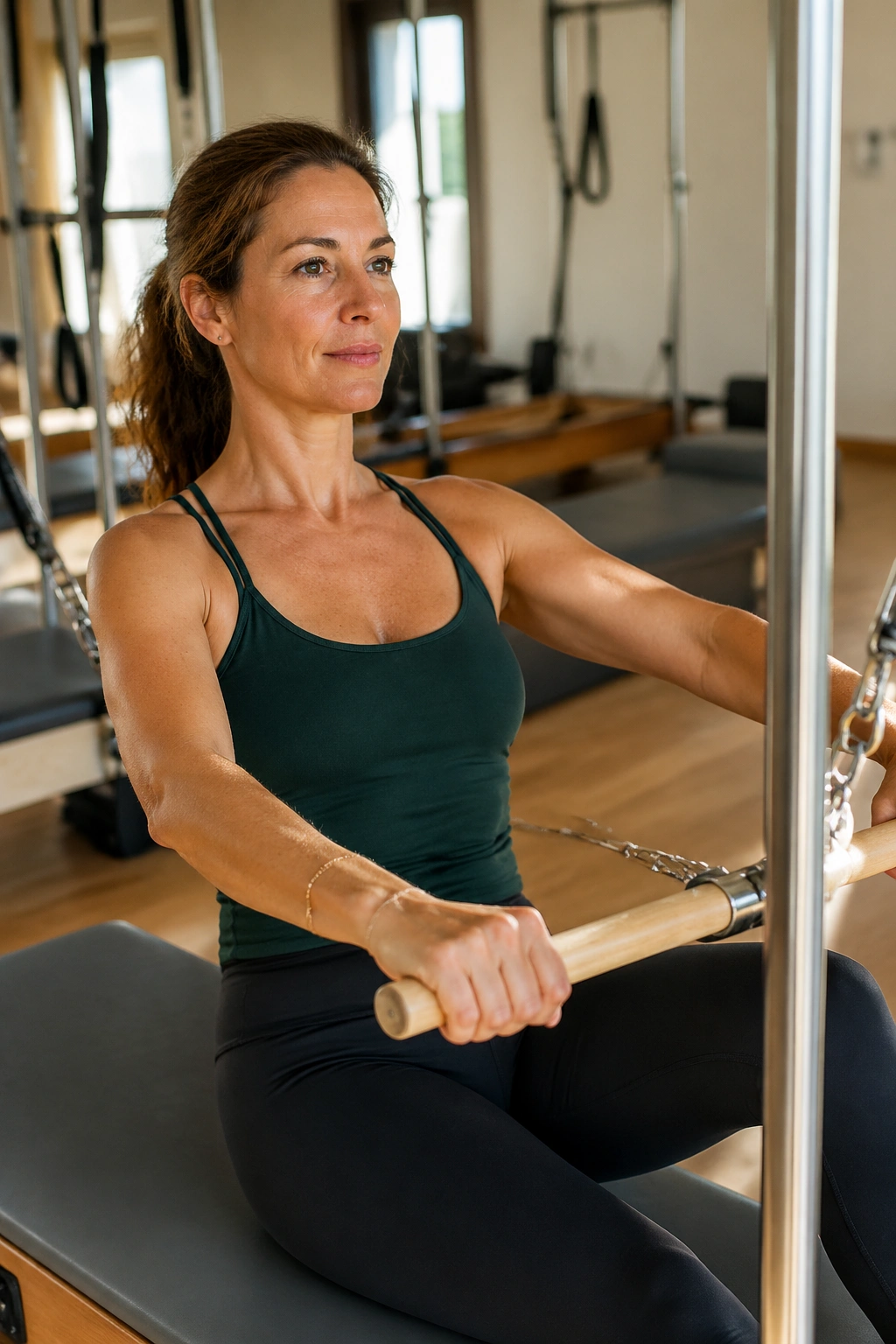
Teaser prep gets a bad reputation because people picture the full move and panic before they start.
That’s unnecessary. The prep is where the good work lives. With the roll-down bar, you can build the abdominal curl, hip control, and hamstring support without yanking the neck or flailing the legs. It gives you enough assistance to learn the pattern and enough resistance to make the pattern honest.
How to Keep It Clean
- Start with one leg bent if needed.
- Keep the shoulders relaxed as the arms guide the bar.
- Curl only as high as you can hold the ribs down.
- Lower with control instead of dropping.
A teaser prep should feel like a conversation between the abs and the hip flexors, not a tug-of-war. If your neck is doing the heavy lifting, the legs are too low or the curl is too big. Bring the shape in. You’ll usually get more quality and less strain.
For women over 40, this move is a reminder that core strength is not about speed or crunch volume. It’s about coordination. Slow, exact, and a little stubborn. That’s the sweet spot.
14. Monkey Stretch on the Tower
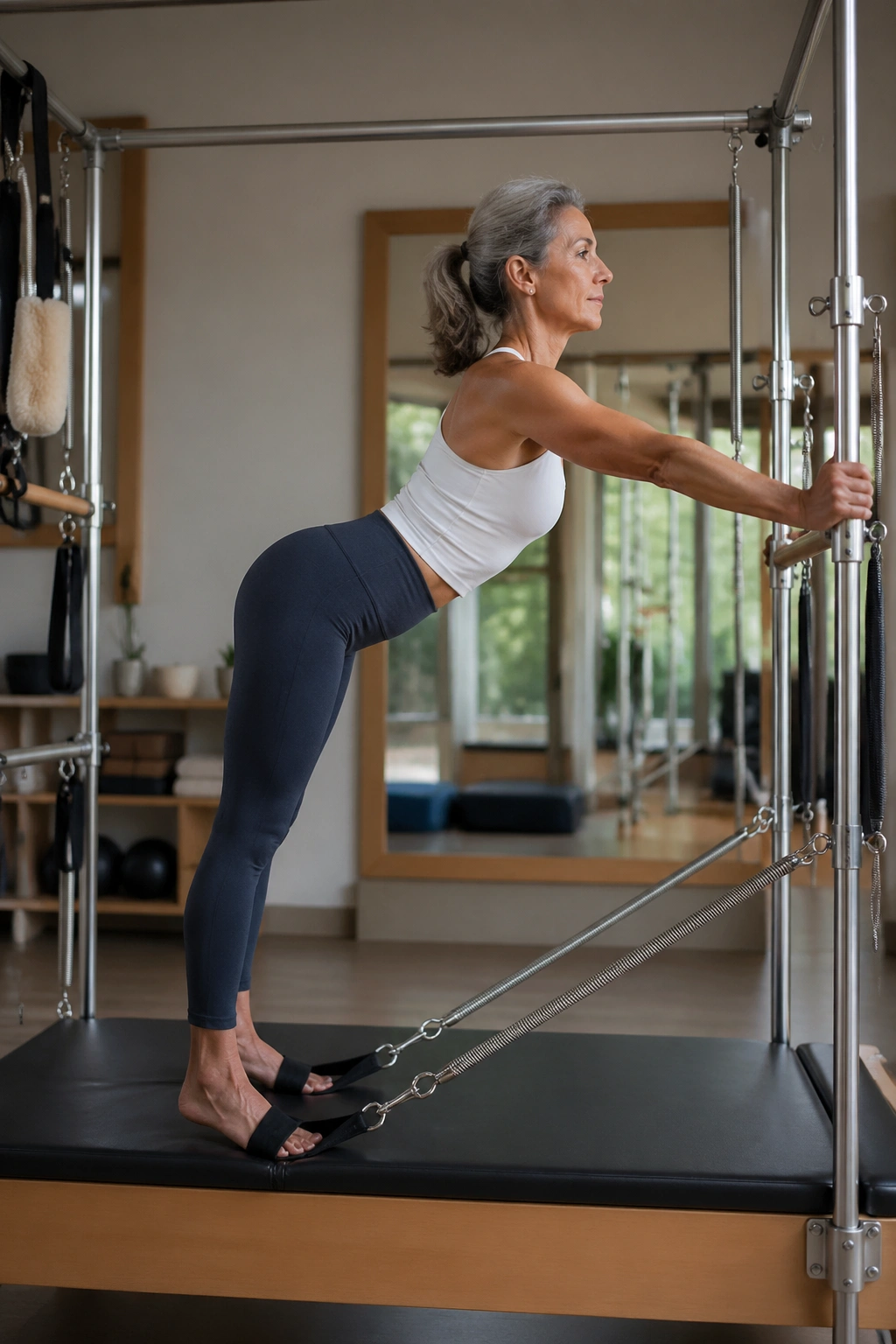
Monkey looks dramatic from the outside, but the version you want is slow, quiet, and controlled.
The stretch folds the body at the hips while the springs support the legs, which is why it can feel so good after a day of sitting or after a session that asked a lot of the hips and hamstrings. You get a long line through the back of the legs, a bit of spinal length, and a useful dose of balance work if you come in and out with care. That balance piece matters more than people admit.
Hold the bar or the frame lightly, keep the knees soft if the hamstrings are tight, and let the heels press toward the support only as far as you can maintain the spine. If the low back rounds hard or the knees lock, back up a notch. No heroics.
The best monkey stretch feels like traction, not strain. You should walk away feeling longer and calmer, not yanked apart. If your balance is shaky, keep one hand anchored and make the movement smaller. Tiny adjustments make this move far safer and, frankly, more useful.
15. Standing Balance Press with Arm Springs
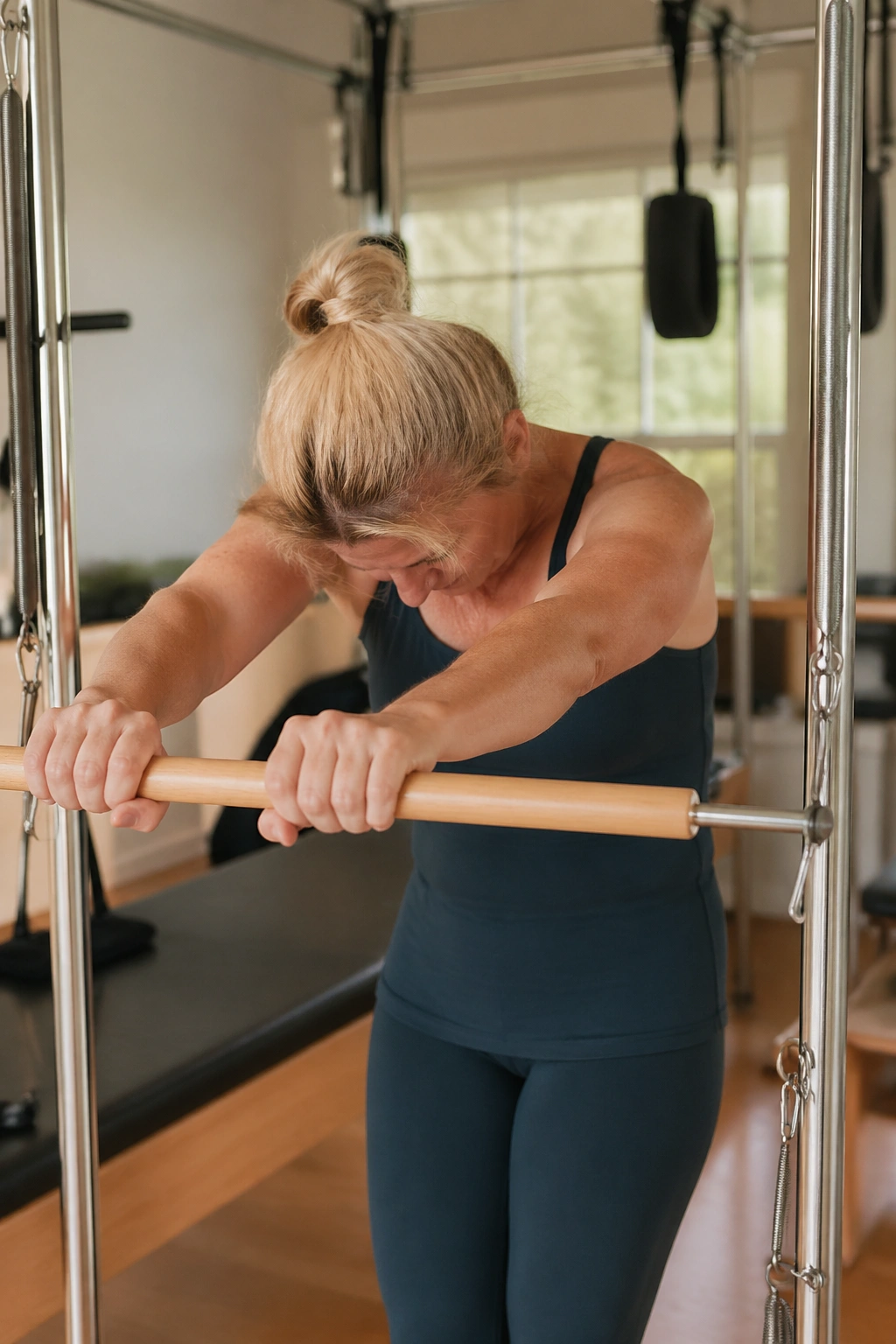
What makes this one worth doing? It forces the whole chain to work together.
You stand on one leg or with a narrow stance, hold the arm springs, and press while the body tries to stay upright. The challenge is not the press by itself. It’s the press plus the ankle, hip, ribs, and shoulder all negotiating at the same time. That is exactly the sort of training that carries over into daily life, where no one gives you a mat or a perfect setup first.
Why It Matters
A standing spring move tells you a lot fast. If the heel shifts, the core is late. If the shoulder hikes, the arm is trying to do too much. If the pelvis wobbles, the standing leg needs more work. Good. That feedback is the point. You can clean it up one piece at a time.
Keep the press short and deliberate. Three to six slow reps on each side is enough to start. If you can stay tall and calm, you can make the stance narrower. If not, widen it back out and own the basics first. That kind of honesty pays off, especially for women over 40 who want strength that feels steady instead of flashy.
If I had to choose one tower sequence to finish on, it would be this kind of standing work. It leaves you organized, not drained.
