



You walk into a Pilates studio expecting a relaxing hour of gentle stretching, and ten minutes in, you are gasping for air. It is a common misconception that Pilates is strictly about slow, controlled movements meant only for mobility or injury rehab. While those are certainly valid applications of the method, classical Pilates, when performed with intention and the right tempo, offers a cardiovascular challenge that rivals any high-impact workout.
The difference lies in the integration of breath and rhythm. By keeping the rest periods nonexistent and linking exercises into seamless, flowing sequences, you can maintain a heart rate that sits firmly in the fat-burning zone. We are not just holding poses here; we are moving with precision and speed, creating metabolic demand through sustained muscular tension and continuous motion.
If you are looking for a way to burn calories without the joint-pounding impact of long-distance running or heavy box jumping, this is where you start. The following sequences are designed to keep you moving, keep your core engaged, and keep your heart rate up from the first repetition to the very last.
1. The Power Hundred Sequence
The classic Hundred is usually the warmup, but when you turn it into a cardio-focused sequence, it becomes a fiery start to your routine. Most people hold their legs at a static 45-degree angle and pump their arms, but for a true cardio burn, we are going to move the legs dynamically. Start by pumping your arms vigorously, as if you are trying to push through thick water.
Why This Spikes Your Heart Rate
Instead of a static leg hold, perform “flutters” with your legs—rapid, tiny vertical beats—while you pump your arms. The coordination required to sync the arm pumps with the rapid leg flutters forces your nervous system to work overtime. You are effectively multitasking your muscles, which demands more oxygen and forces your heart to pump harder to deliver it.
- Perform 100 pumps of the arms.
- Sync your breath: inhale for 5 pumps, exhale for 5 pumps.
- Keep your head and shoulder blades curled up throughout.
Pro Tip: If your neck starts to scream, keep your legs higher toward the ceiling; the lower they go, the harder your abs have to work to keep your lower back glued to the floor.
2. Dynamic Jumpboard Simulation
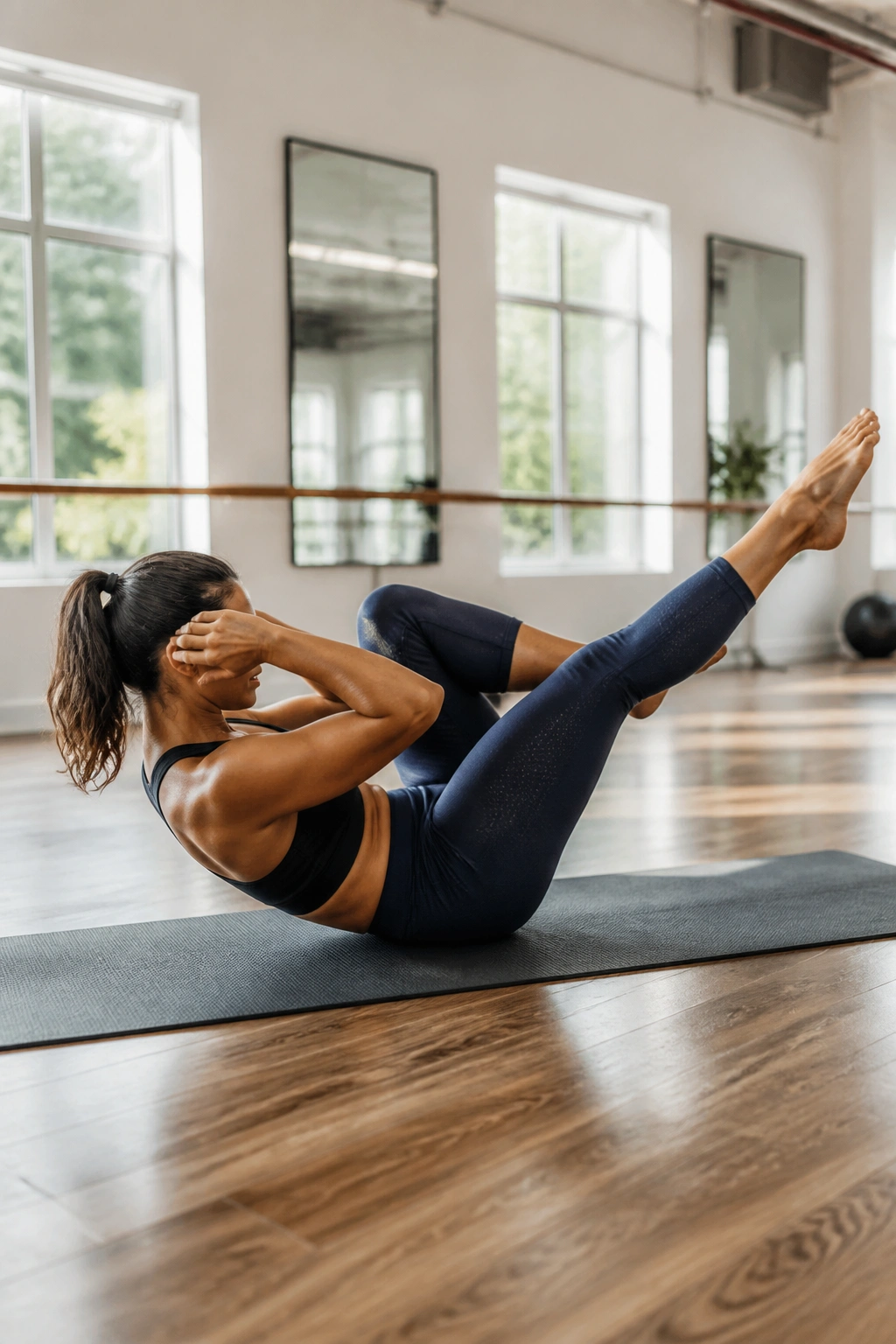
If you do not have access to a reformer, you can simulate the intensity of the jumpboard on the floor. Lie on your back, knees pulled into your chest, and your head and shoulders curled up. From here, extend your legs out to a 45-degree angle, then snap them back in with explosive power. This isn’t a slow extension; it is a rapid-fire movement, like you are rebounding off a wall.
Creating Resistance Without Equipment
The key to making this cardiovascular is the speed and the “snap” of the legs. Think of your legs as springs. You are firing them out and pulling them back in using your deep abdominals, not just your hip flexors. Do 45 seconds of rapid extensions, followed immediately by 15 seconds of “bouncing” your knees in toward your chest to keep the heart rate elevated.
- Maintain the curl: keep your abs scooped deep.
- Snap the legs: do not float them; make them move with intention.
- Repeat the 45/15 interval four times.
3. Pilates Burpees with Roll-Down
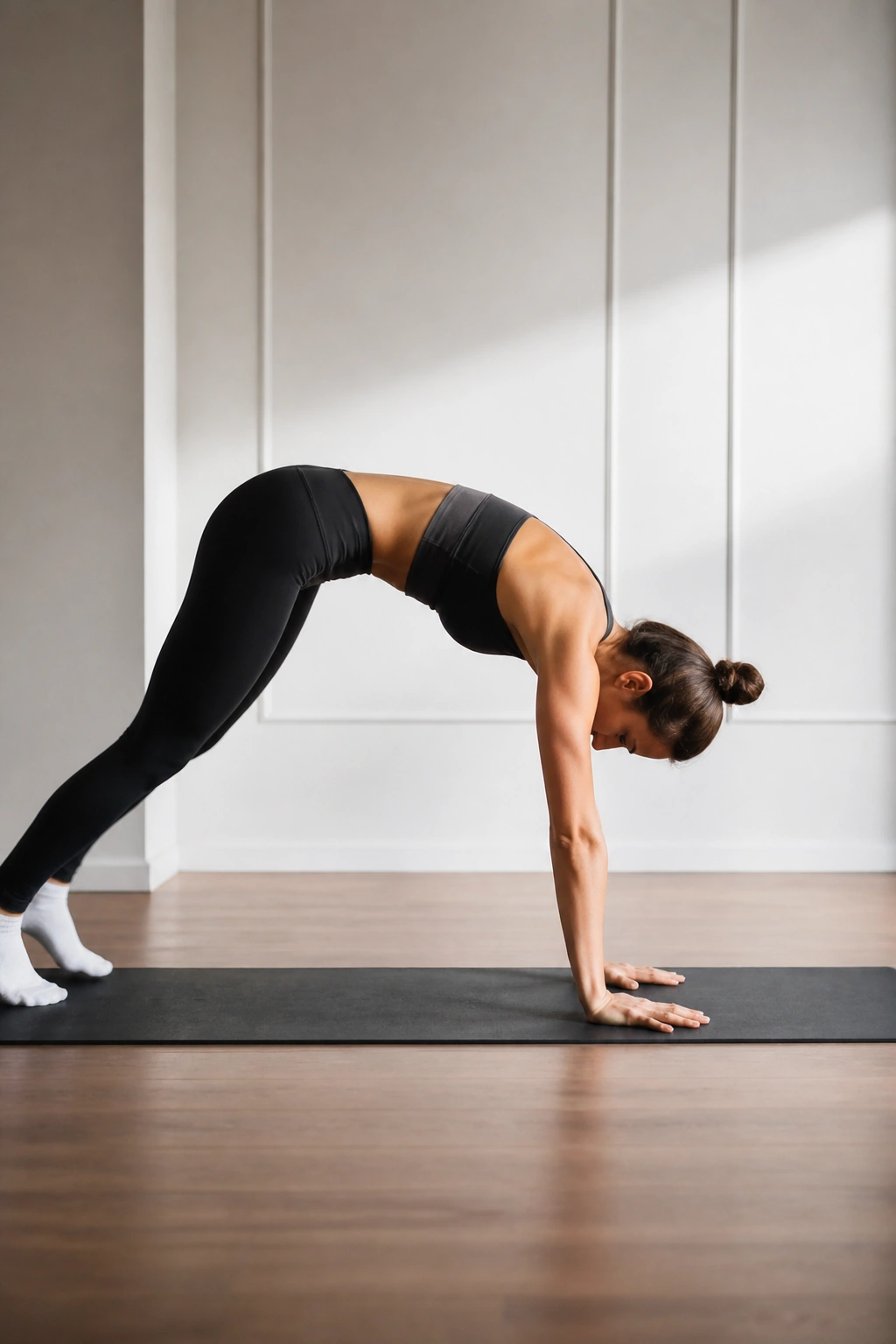
A traditional burpee is all about plyometric power, but the Pilates version adds a spinal articulation element that changes the game. Start standing at the back of your mat. Roll down through your spine, reaching for the floor, and walk your hands out into a plank. Once in the plank, perform three rapid mountain climbers. Walk your hands back to your feet and stand up, but add a calf raise at the top instead of a jump.
The Cardio Factor
By integrating the spinal roll-down, you are engaging your entire posterior chain and core in a way a standard burpee skips. The mountain climbers in the middle of the sequence are where the heart rate jumps. Because you are maintaining the plank, your shoulders and triceps stay under tension the entire time, leading to that full-body fatigue that signifies a high-intensity workout.
- Keep the plank stable: do not let your hips sag.
- Speed up the mountain climbers: keep them snappy.
- Roll up one vertebra at a time to keep the flow moving.
4. Modified Plank Jacks with Oblique Twists
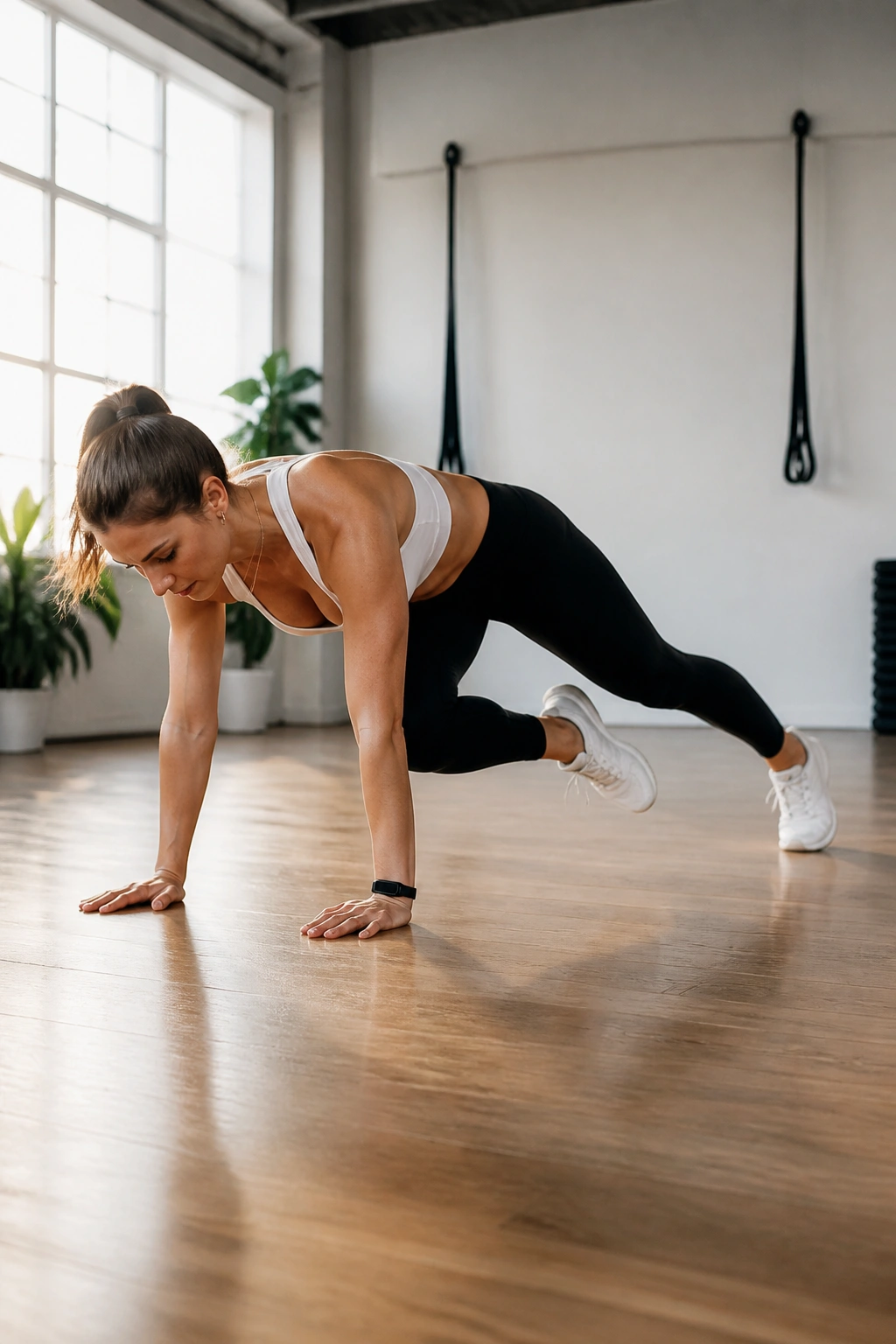
Plank jacks are excellent, but they can be hard on the lower back if your core isn’t braced correctly. We are taking the standard plank jack—feet jumping out and in while in a plank position—and adding an oblique component. As your feet jump out, draw your right knee toward your right elbow, then jump back to center. Alternate sides with every single hop.
Managing the Intensity
This movement is deceptively difficult. You are balancing on your hands (or forearms) while simultaneously performing a jumping motion and an oblique crunch. Your heart rate will climb because you are stabilizing your entire torso against the constant movement of your limbs.
- Focus on the landing: land softly on your toes.
- Brace the core: if your hips wobble, slow down.
- Aim for 60 seconds of continuous movement.
5. Scissor Kicks with Rapid Pulse
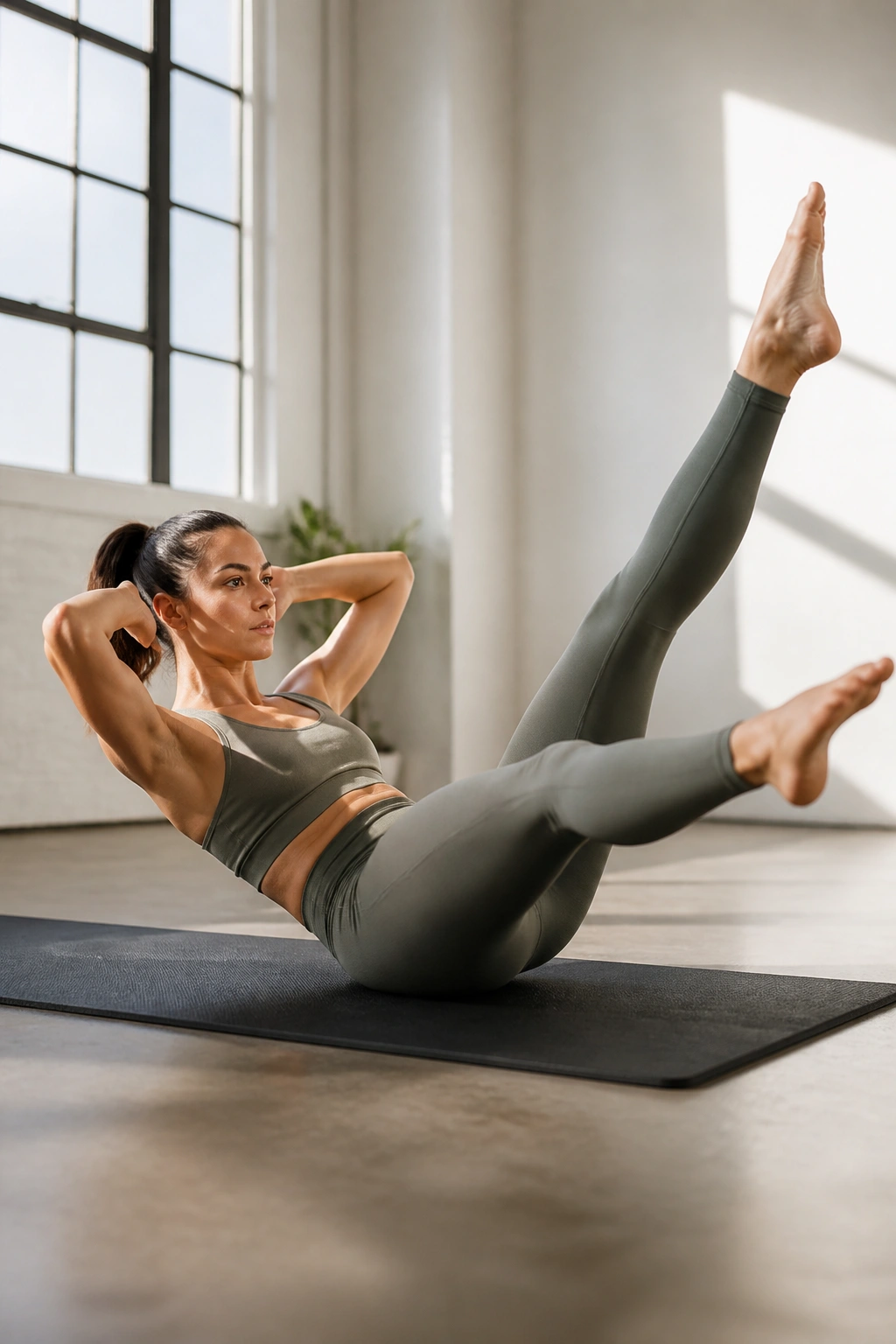
Scissor kicks are usually performed slowly, but we are shifting the tempo. Start with your legs extended toward the ceiling. Lower your right leg to a hover while pulling your left leg toward you, grabbing your calf or thigh. Here is the change: instead of a single, slow switch, perform two quick, staccato pulls on each leg, then switch.
Why This Works
The double-pulse technique forces you to contract your abdominal muscles more deeply on each pull. By increasing the frequency of the switch, you transition this from a flexibility move to a cardio challenge. The constant switching of the legs against gravity requires a significant amount of energy, especially when you maintain a high, curled-up chest position.
- Keep the legs straight: don’t let the knees soften.
- Breath: match your breath to the pulses.
- Avoid the “dead air” between switches; keep it flowing.
6. Swimming at High Velocity
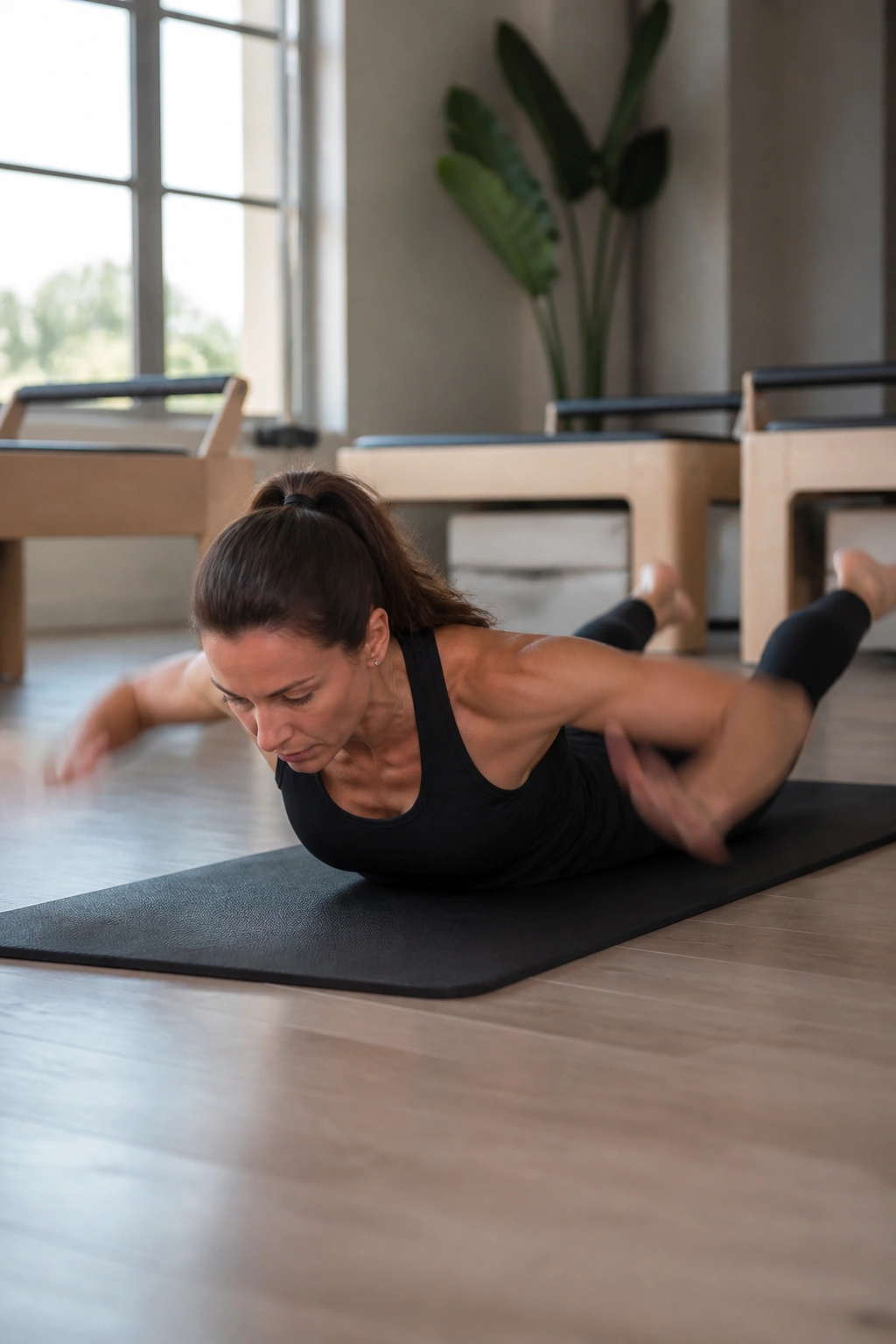
Swimming is typically done on the stomach, alternating arm and leg lifts. To make it a cardio workout, you need to increase the frequency of the movement. Forget the slow, measured four-count. Think of this as a sprint. Keep your arms and legs small, tight, and moving as fast as you possibly can.
The Science of Small Movements
Small, rapid movements fatigue the muscles locally while forcing the heart to work faster to supply blood to the extremities. You are essentially doing a “mini-sprint” with your body. Keep your gaze down at the mat to protect your neck, and focus on lifting your chest high enough that your ribcage feels like it is peeling off the floor.
- Fast-twitch muscle fibers: this is what you are targeting here.
- Stay low: don’t arch the lower back; focus on lifting the chest.
- 30 seconds of all-out effort is usually enough to leave you breathless.
7. Side-Lying Leg Series Sprint
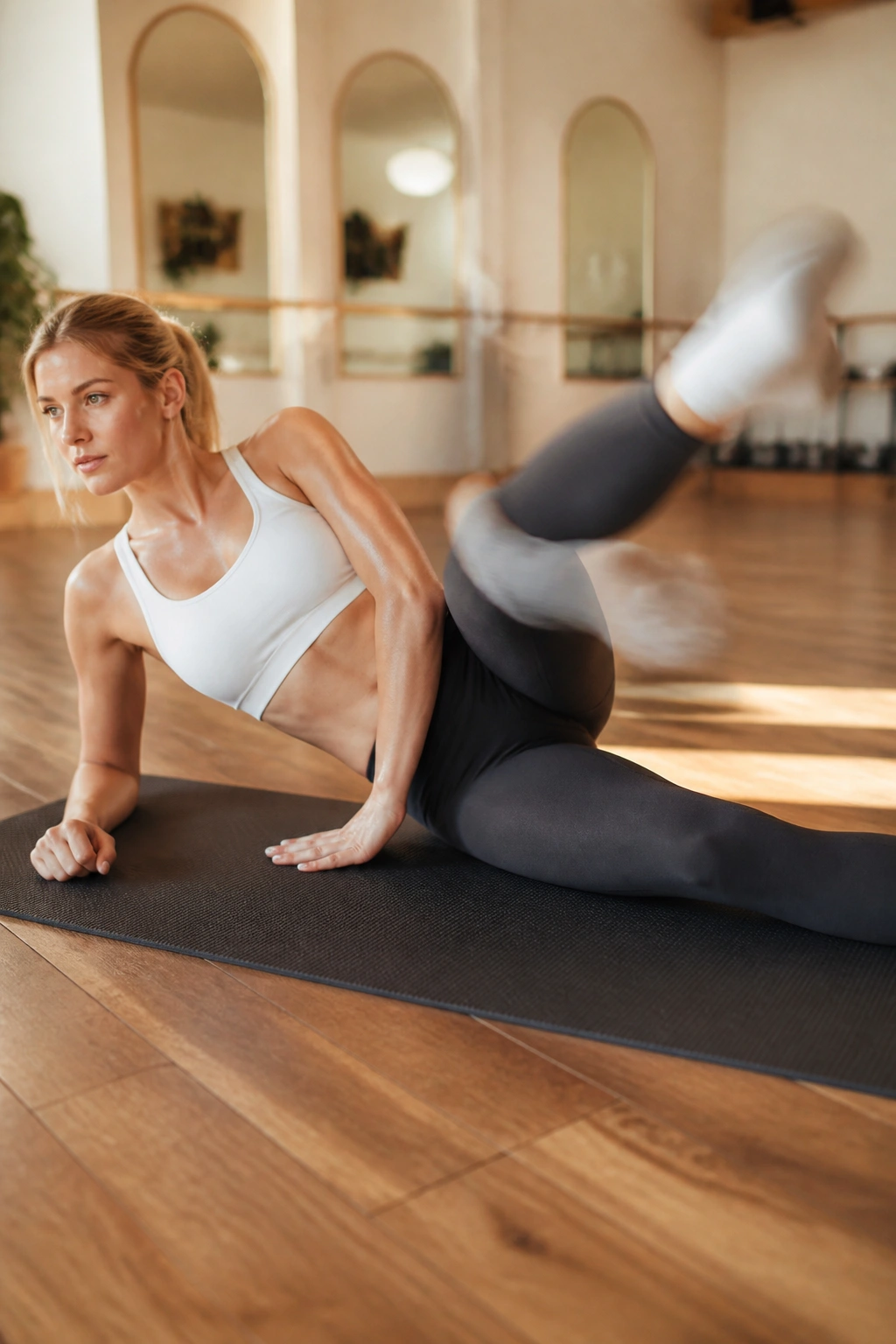
Usually, the side-lying leg series is about glute sculpting. To turn it into cardio, we are removing the rest between reps. Lie on your side, supporting your head with your hand. Lift the top leg and perform 20 rapid small circles forward, followed immediately by 20 rapid circles backward. Switch to 20 rapid “bicycle” motions where you bring the knee into the chest and extend.
Avoiding the Burnout
The goal here is to keep the leg moving without putting it down for the entire sequence. By the time you reach the 40th rep, your hip will be burning, and your heart rate will be high because your body is scrambling to process the lactic acid build-up. It is a brilliant way to tone the outer hip and glutes while keeping the metabolic engine running.
- Keep the torso still: use your bottom hand to anchor your chest.
- Don’t let the leg drop: fight gravity on every single rep.
- Transition instantly between the circle and the bicycle.
8. Teaser to Pike Flow
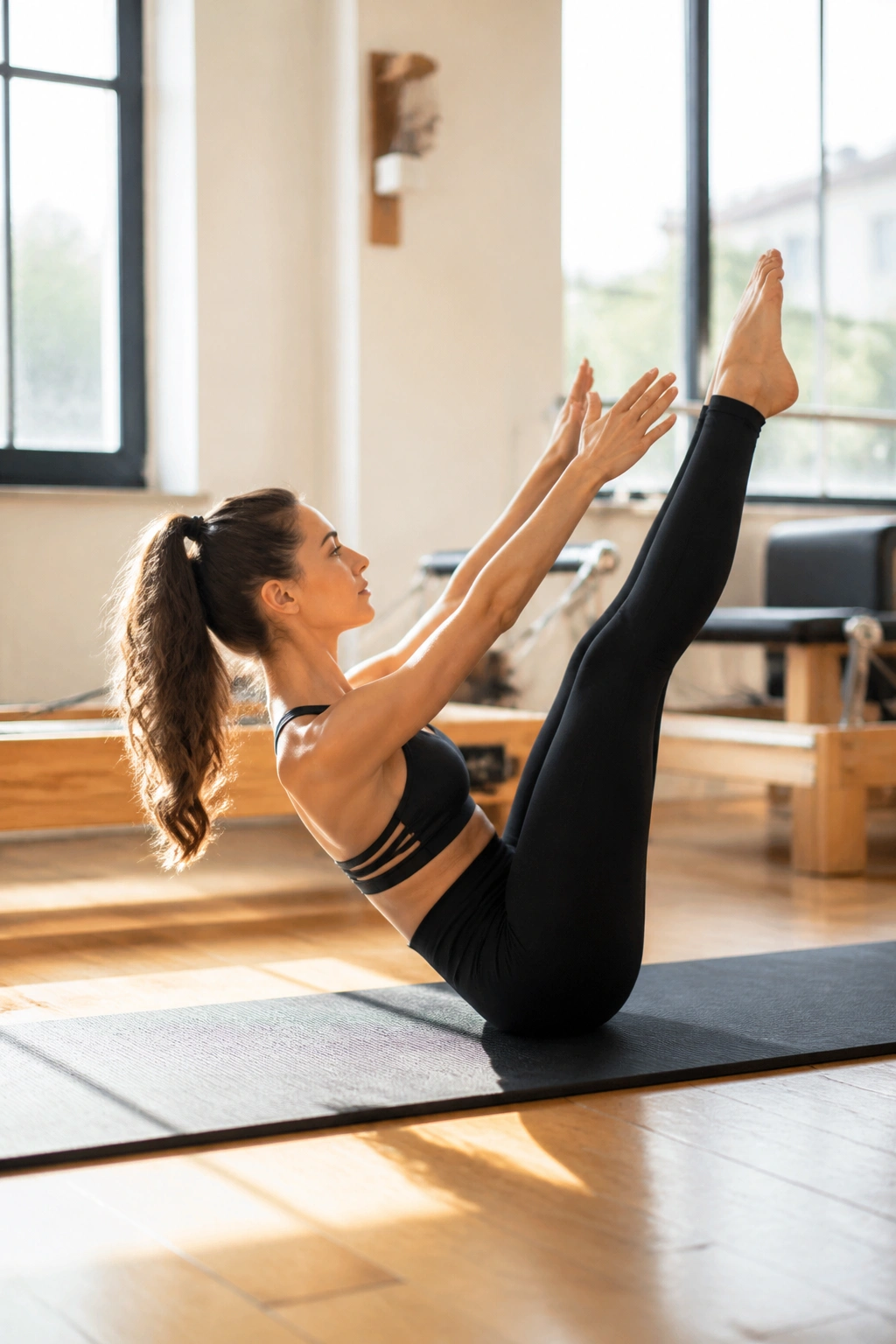
The Teaser is notoriously difficult. By turning it into a flow, it becomes a major calorie burner. Start lying on your back. In one fluid motion, lift your head, arms, and legs to meet in a V-shape. Instead of holding, immediately lower back down, but as you do, flip over onto your stomach, press into a plank, and pike your hips up to the ceiling before returning to your back.
Managing the Momentum
This is a full-body transition that involves a significant amount of movement. You are going from supine (on your back) to prone (on your stomach), which requires coordination and a lot of muscle recruitment. Every time you stand up from a floor position or flip your orientation, your heart rate spikes.
- Focus on the transition: keep the movement fluid.
- Control the descent: don’t flop onto your back or stomach.
- This is a complex move; start slow to build the pattern, then add speed.
9. Pilates Push-Up Variations
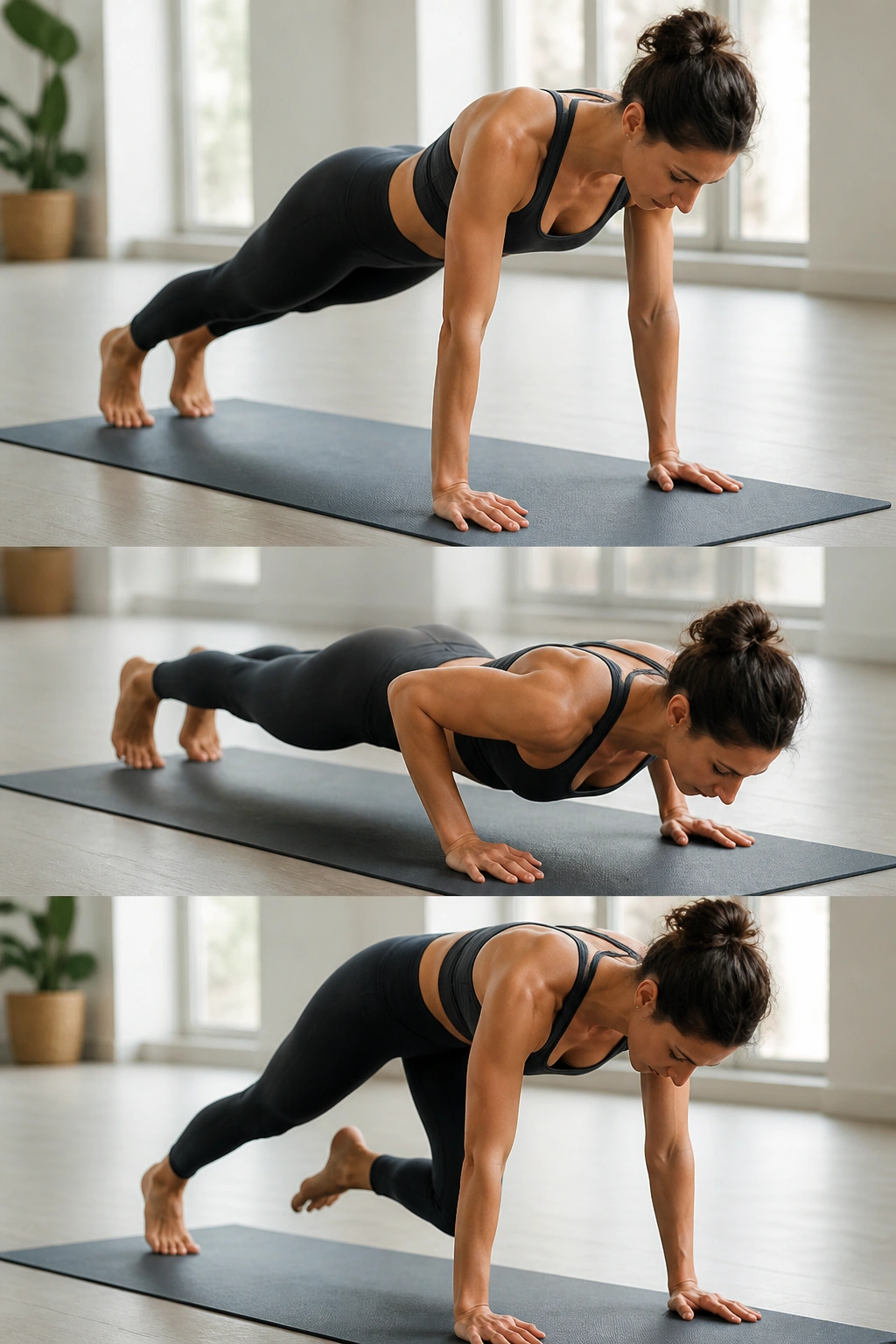
The Pilates push-up is unique because it starts with a roll-down and involves a specific tricep-focused push-up. To make this cardio, we are increasing the frequency. Roll down, walk into a plank, do two push-ups, then do a quick mountain climber (one each leg), walk back, and roll up. Repeat this cycle without pausing.
The Tricep Engagement
Because you are keeping your elbows tucked tight into your ribs during the push-up, you are engaging your triceps and lats heavily. The cardio element comes from the constant walking of the hands and the transition between standing and the plank. It creates a “pump” effect that keeps the blood moving rapidly from your upper body to your lower body and back again.
- Keep the elbows tucked: this saves your shoulders.
- Core stability: the plank must be solid as a rock.
- Don’t rush the roll-up: use it to catch your breath briefly.
10. Single Leg Stretch with Cardio Twist
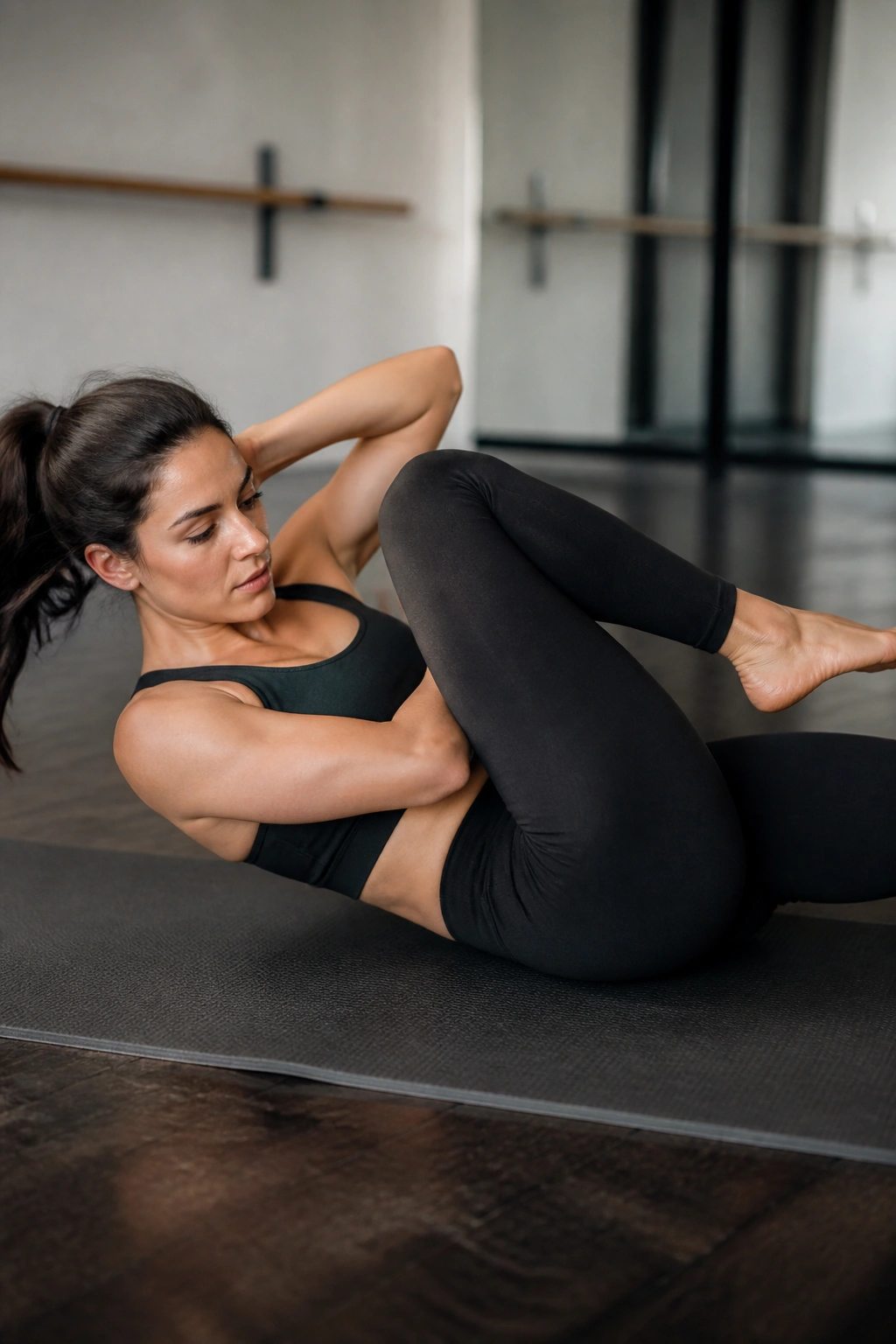
We mentioned scissors earlier, but the Single Leg Stretch is different. One knee is in, the other leg is extended out long. You are pulling the knee to the chest. To turn this into a cardio move, add a rotation. As you pull the right knee in, rotate your torso toward the right, crossing your left elbow to the right knee. Switch and cross the right elbow to the left knee.
The Power of Rotation
The addition of the twist engages the obliques intensely. By moving back and forth quickly, you create a rhythmic, lunging motion with your upper body. It feels almost like running while lying on your back. Keep your chest high—the higher you stay, the less your hip flexors take over, and the more your abs do the work.
- Exhale on the twist: use the breath to deepen the rotation.
- Don’t pull on your neck: use your abs to lift the shoulders.
- Aim for a steady “left, right, left, right” rhythm.
11. Plank-to-Pike Jumpers
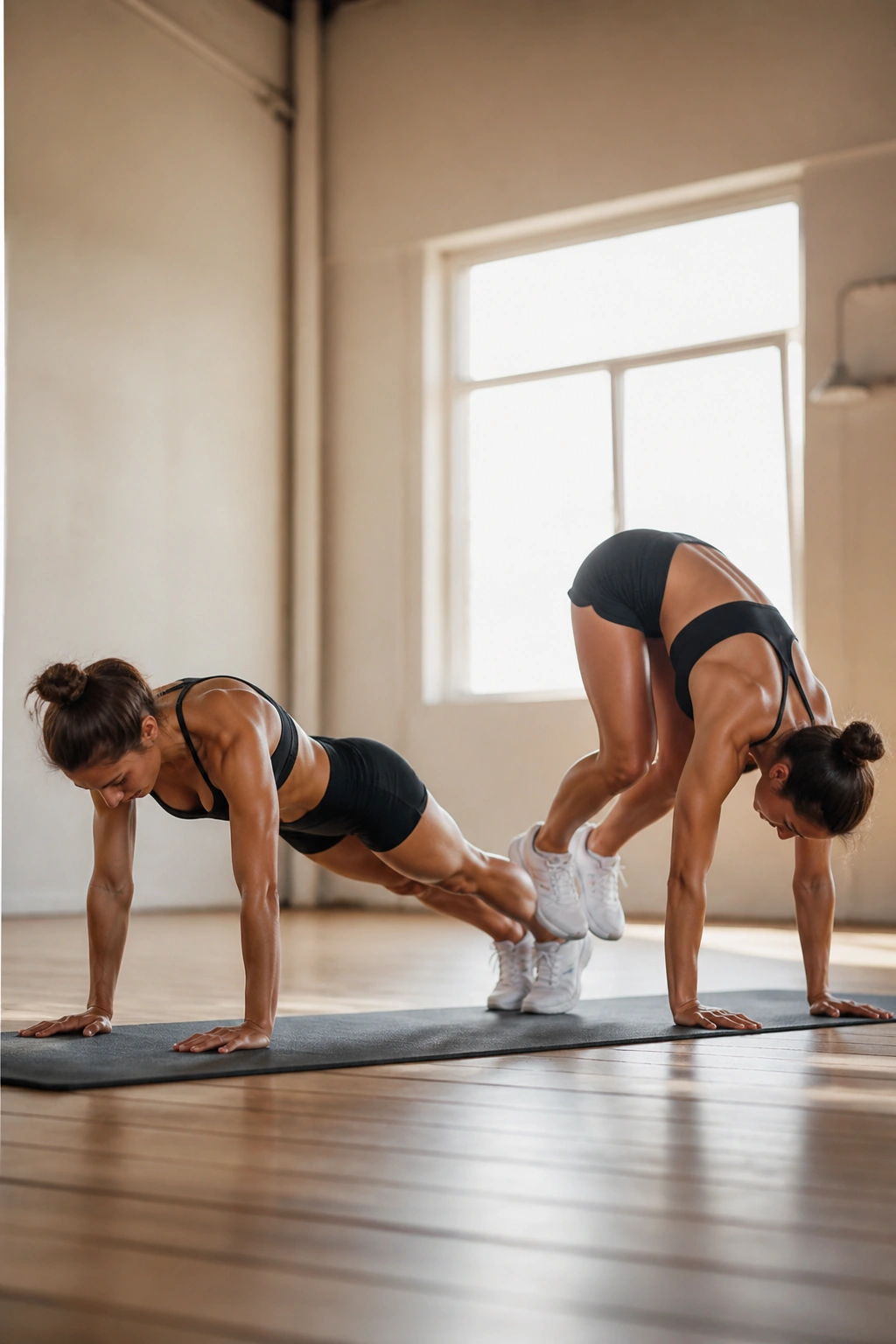
Start in a solid plank position. Instead of slowly piking your hips up to the ceiling, jump your feet toward your hands, but stop midway, then jump them back to plank. It is a modified burpee without the standing part. Keep your hips low in the plank and push them high in the pike.
Explosive Power
The explosive nature of the jump is what makes this a cardio move. You are using your lower abs to pull your legs in rapidly. Your core is working overtime to stop the momentum of the jump and reverse it. It is a fantastic full-body move that targets the shoulders, arms, and abs simultaneously.
- Land softly: absorb the shock in your abs, not your knees.
- Keep the gaze between your hands.
- Maintain a brisk pace: aim for one jump per second.
12. The Criss-Cross Sprint
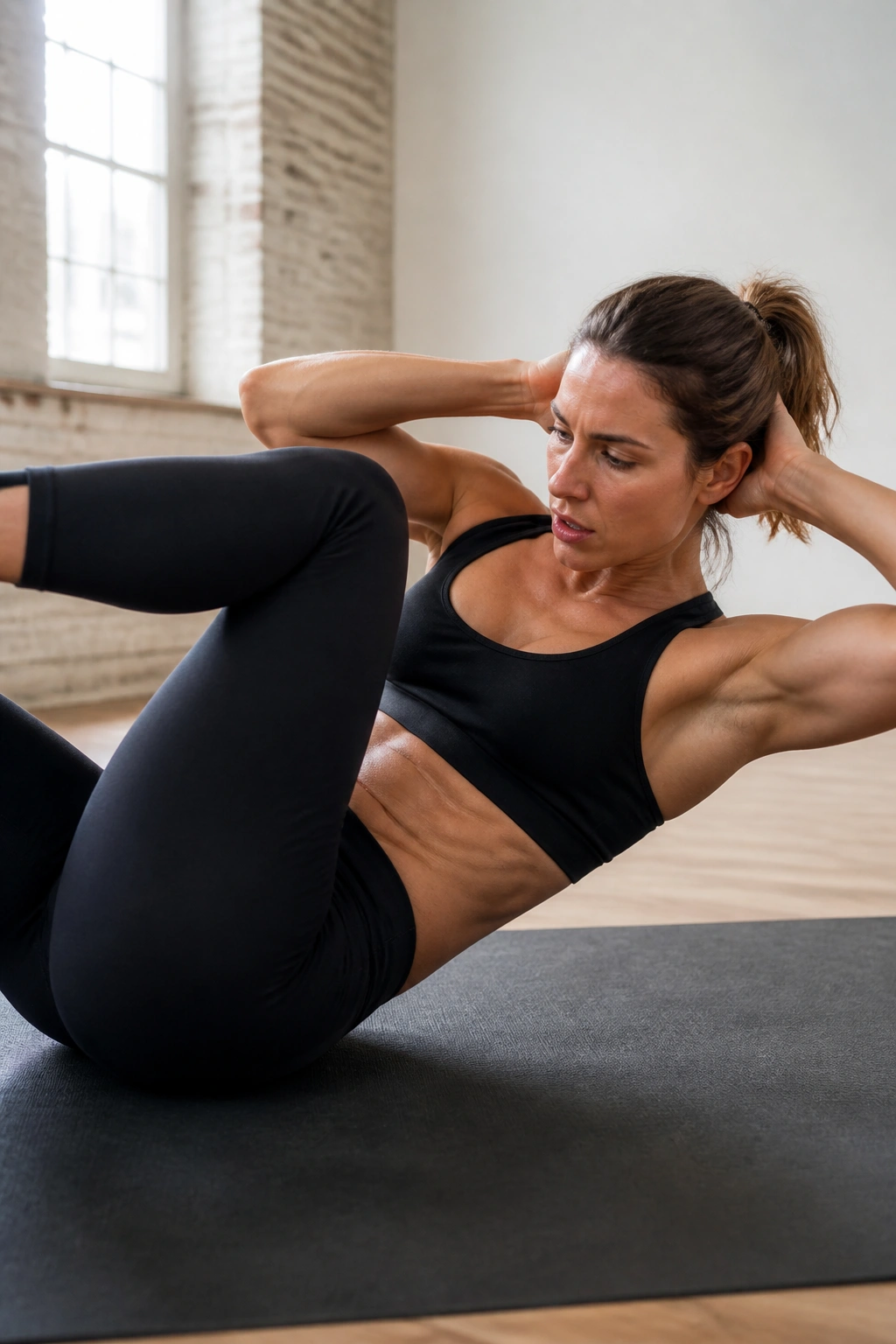
The classic Criss-Cross is slow and deliberate. We are picking up the tempo. Place your hands behind your head and lift your chest. Bring your left elbow to your right knee, then switch. Instead of pausing in the middle, go straight from one side to the other. Imagine you are riding a bicycle, but you are focusing on the torso rotation rather than just the legs.
Maximizing Oblique Engagement
You should feel this in the sides of your waist almost immediately. Because you aren’t pausing, you lose the “safety” of the stillness, which forces your core to work much harder to stabilize your body. Your heart rate rises because your muscles are constantly contracting and releasing at a rapid pace.
- Keep the chest lifted: don’t let it sag during the switch.
- Don’t rock side to side; twist the torso.
- Keep the legs long and extended.
13. Double Leg Stretch (Fast Tempo)
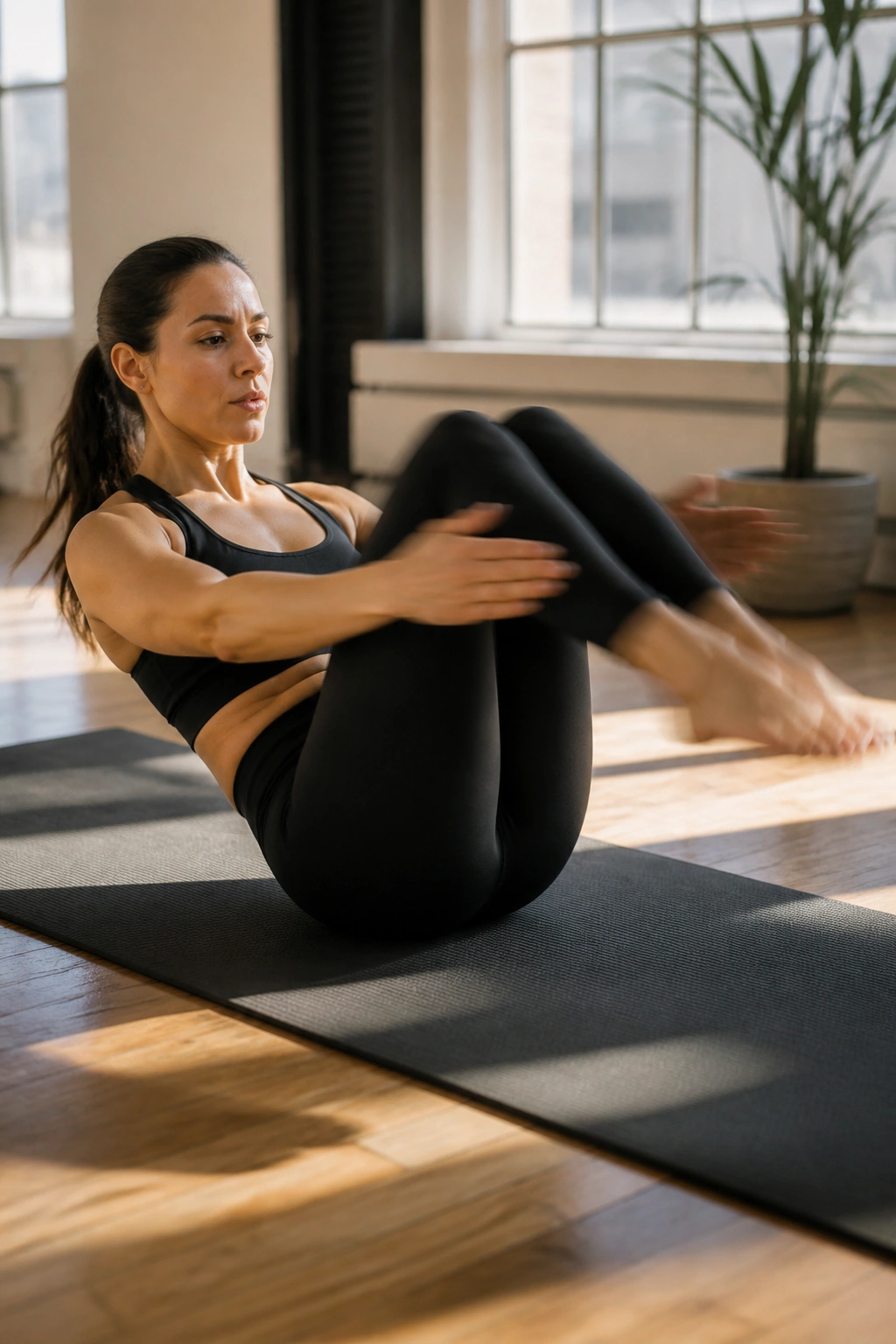
In the Double Leg Stretch, you pull your knees in, then reach your arms and legs away from each other. To make it cardio, speed up the extension and retraction. Think of it as an “in-out” movement that happens as quickly as possible. Don’t linger in the extended position.
The Full-Body Snap
The speed creates a challenge for your core stability. You have to snap your limbs out and snap them back in without losing your form. This constant movement against gravity ensures that your heart rate remains elevated. It requires a lot of energy to stop and start your limbs so rapidly, which is precisely why it works for fat loss.
- Inhale as you extend; exhale as you pull in.
- Keep the back anchored: no arching on the extension.
- Focus on the “pull” back to center.
14. Donkey Kick Jumps
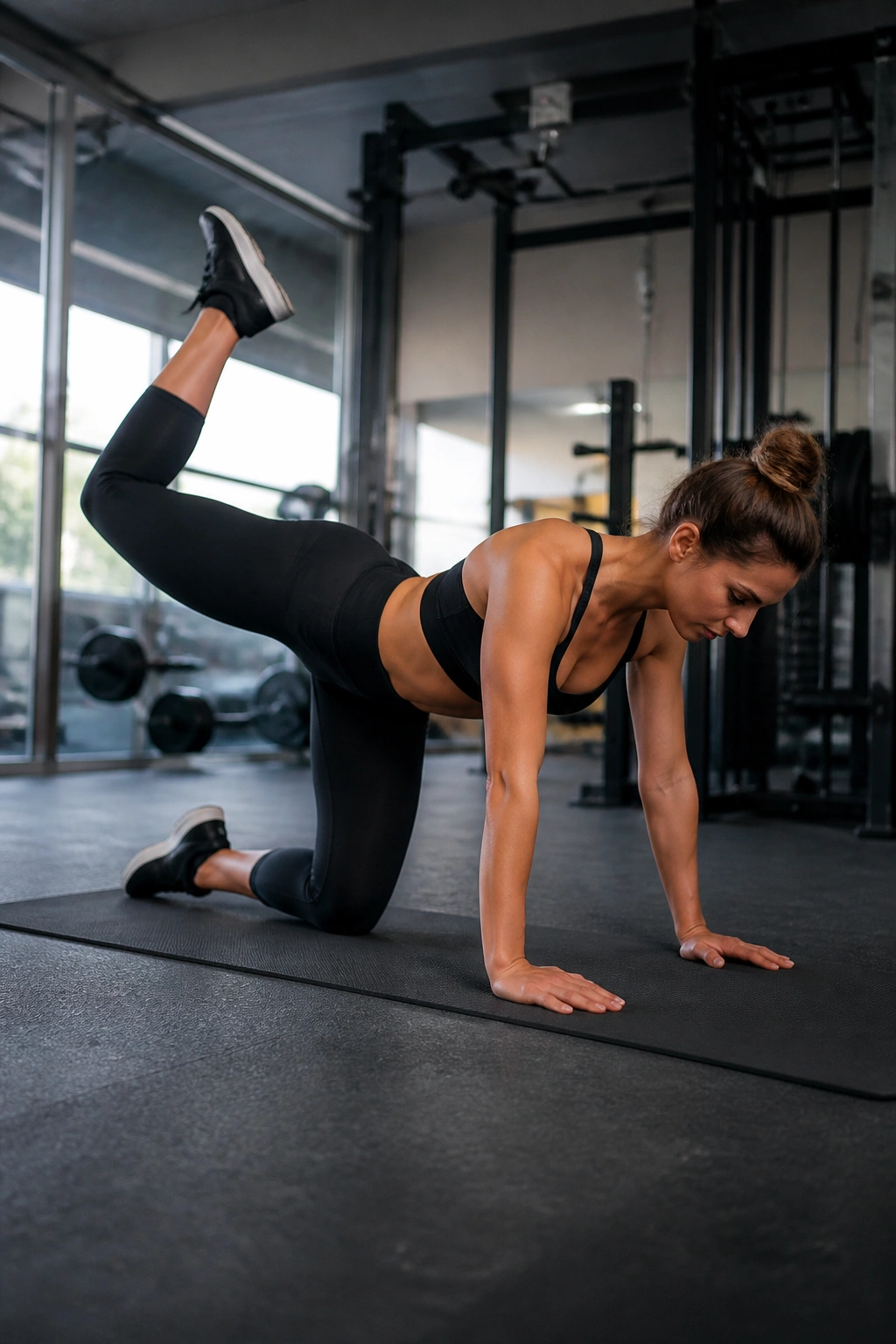
Get on your hands and knees. Lift your right leg, bent at a 90-degree angle, and “kick” the ceiling. To make this cardio, we are turning it into a pulse jump. Pulse the leg up toward the ceiling for 10 counts, then tuck the knee in and perform a small hop on the supporting knee (or just a quick tuck). Then switch legs.
Glute and Core Integration
This move is intense because it demands hip stability while the leg is moving dynamically. You are isolating the glute but forcing the core to stabilize the spine against the rapid kicking motion. The hopping motion adds the cardiovascular element, making it a high-energy, full-body burn.
- Squeeze the glute: focus on the muscle, not just the movement.
- Keep the back neutral: don’t let the lower back sway.
- Switch legs frequently to keep the heart rate up.
15. Leg Pull Front Tap
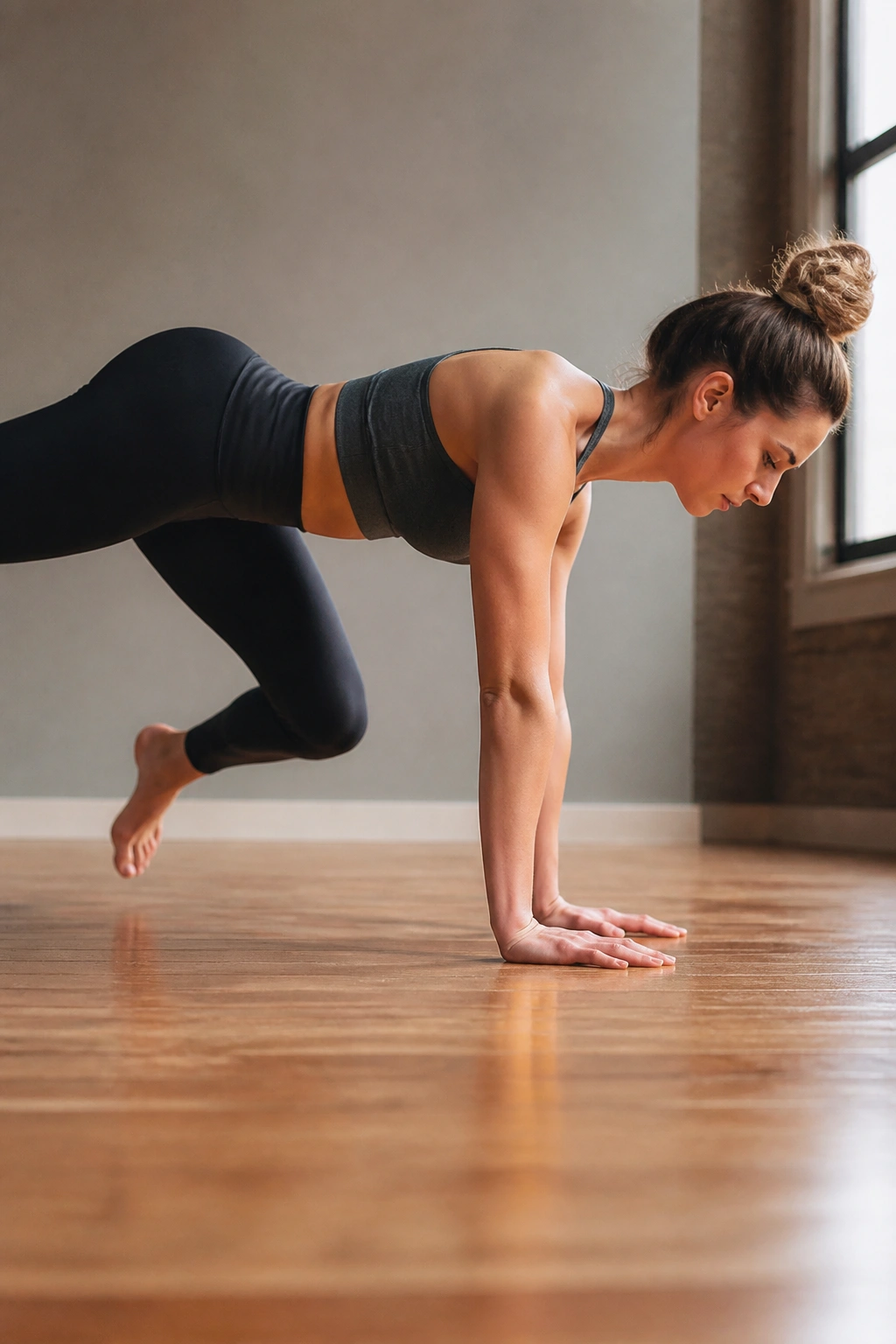
Start in a high plank position. Lift your right leg just a few inches off the floor. Keep it straight and “tap” the floor with your toe while maintaining the plank, then switch. To add the cardio, do a rapid set of taps—tap right, tap left, tap right, tap left—without putting the foot down for a count of four.
Stability Under Pressure
This is an endurance move for the shoulders and a stability test for the core. Because you are essentially balancing on three points, your body has to work rapidly to adjust its center of gravity. This constant micro-adjustment keeps your heart rate elevated.
- Keep the hips square to the floor.
- Don’t let the leg swing wide; keep it straight back.
- Breath: steady and controlled.
16. Hip Twist with Dynamic Rotation
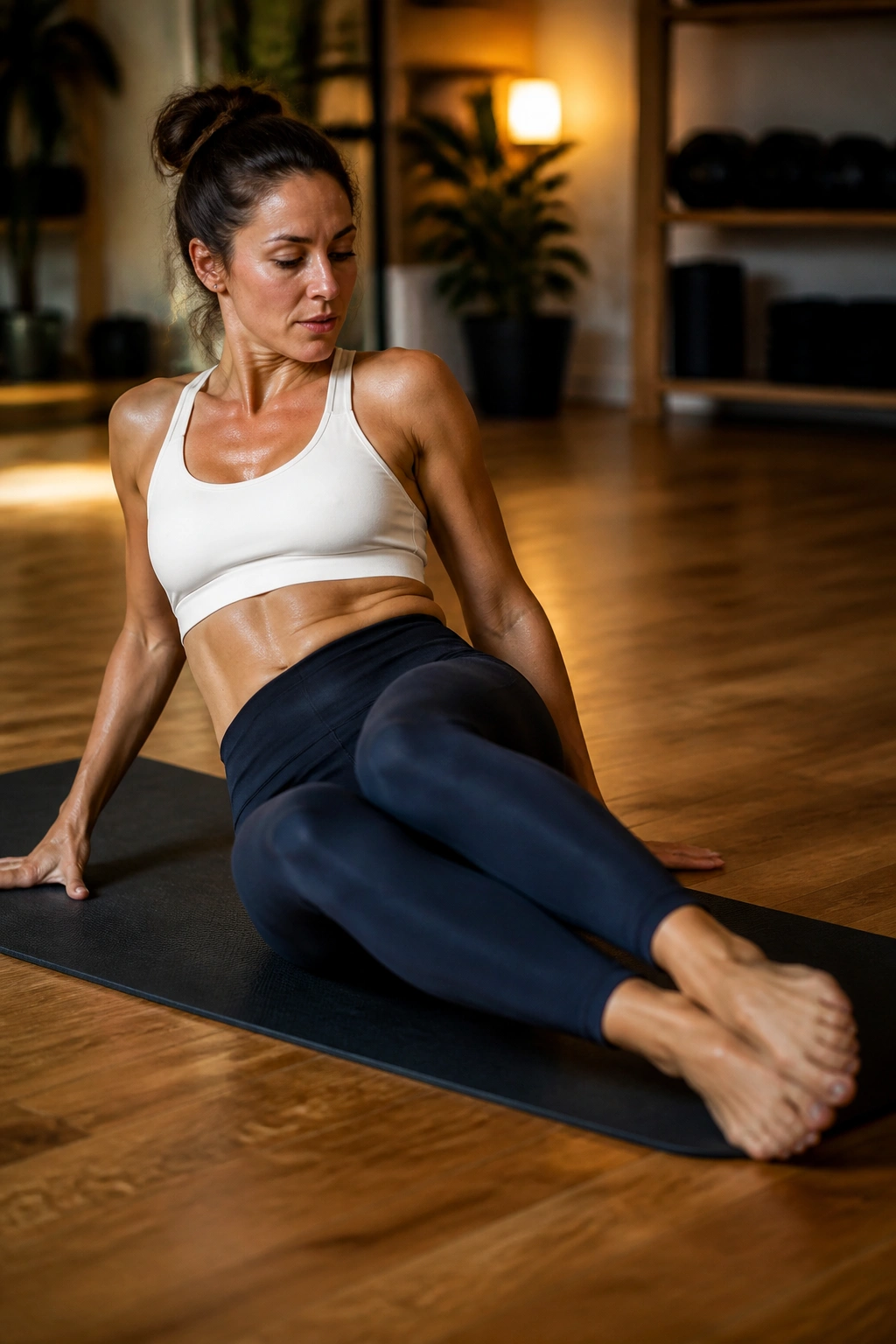
Sit on the floor, leaning back on your forearms (or hands for more difficulty). Keep your legs together and extended at a 45-degree angle. Draw a circle with your legs—down, around, and up. To make it cardio, perform the circle rapidly. Do five circles to the right, then immediately five to the left.
The Core Burn
The speed is what makes this a cardio movement. You are essentially using your lower abdominals to swing your legs in a controlled arc. The faster you move, the more momentum you generate, and the harder your abs must work to “catch” the legs and reverse the direction. It is a fantastic deep-core toner.
- Keep the shoulders down: don’t hunch.
- The legs should stay glued together.
- Control the speed: don’t let momentum take over completely.
17. The Saw (Dynamic Variation)
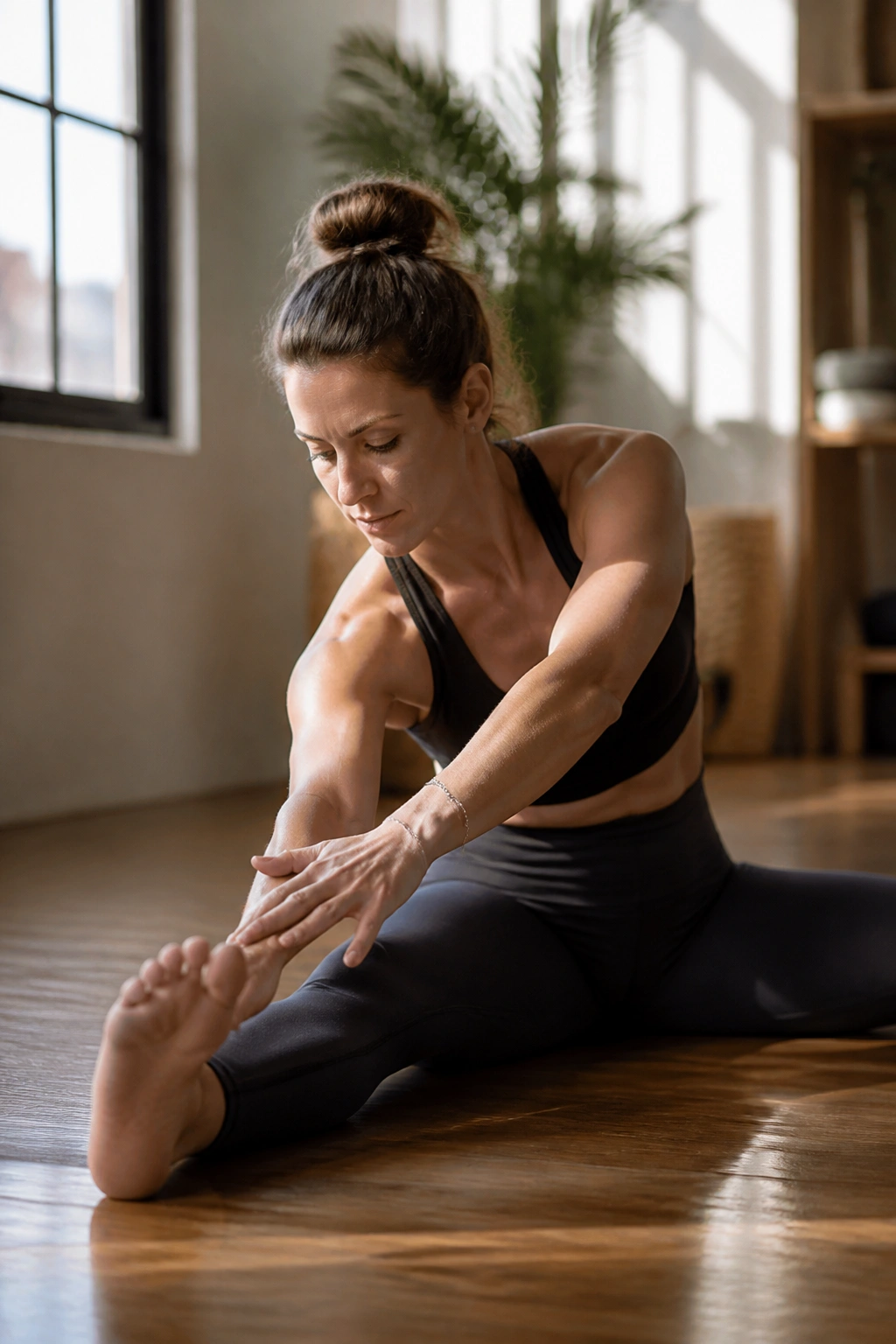
The Saw is usually a hamstring stretch. We are changing it into a rotational cardio move. Sit tall, legs wide. Reach your right hand to your left foot, but add a pulse—three quick pulses toward the foot—then quickly rotate to the other side. Do not hang out in the stretch; keep the movement continuous and rhythmic.
Improving Mobility and Heart Rate
By removing the static hold, you turn a flexibility exercise into a dynamic trunk rotation. This warms up the spine and gets the blood flowing. The constant switching from side to side keeps your heart rate up, making it a great transition move between harder exercises.
- Exhale on the pulses.
- Keep the sit bones grounded.
- Reach long through the fingertips.
18. Seal with a Jump-Up
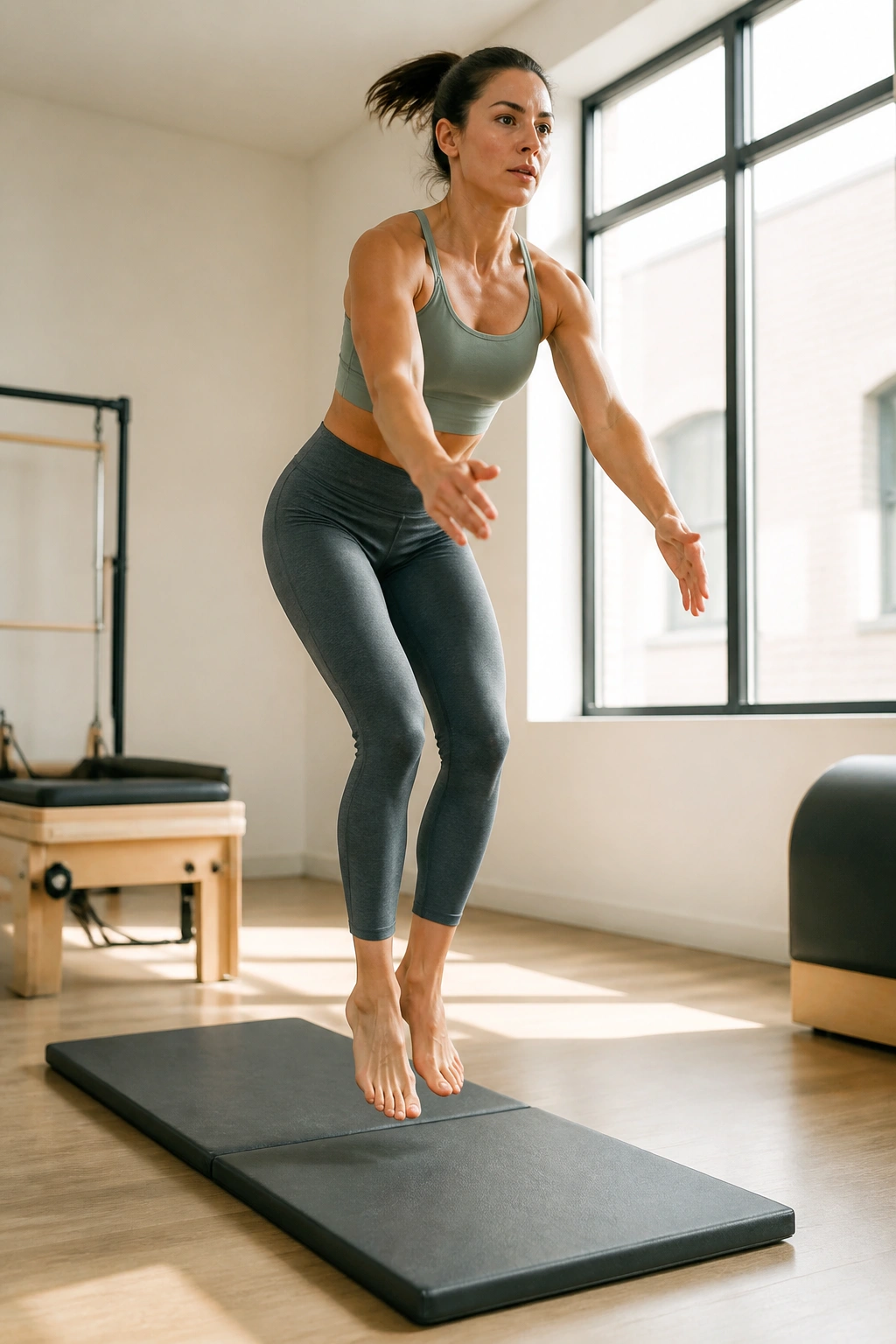
The Seal is a classic Pilates exercise where you clap your feet together like a seal while balancing. To make it cardio, roll back, clap your feet, roll forward, and instead of just balancing, jump your feet onto the floor and stand up in a single, explosive movement. Return to the floor and repeat.
The Transition Challenge
This is essentially a “get-up” variation. Moving from lying on your back to standing is one of the most effective ways to spike your heart rate. Your body has to move a significant amount of weight against gravity. By including the Seal clap, you add an extra layer of coordination.
- Use your abs, not your neck, to roll up.
- Stand up powerfully.
- Be careful with the floor surface; ensure you have a mat.
19. Kneeling Side Kick with Pulse
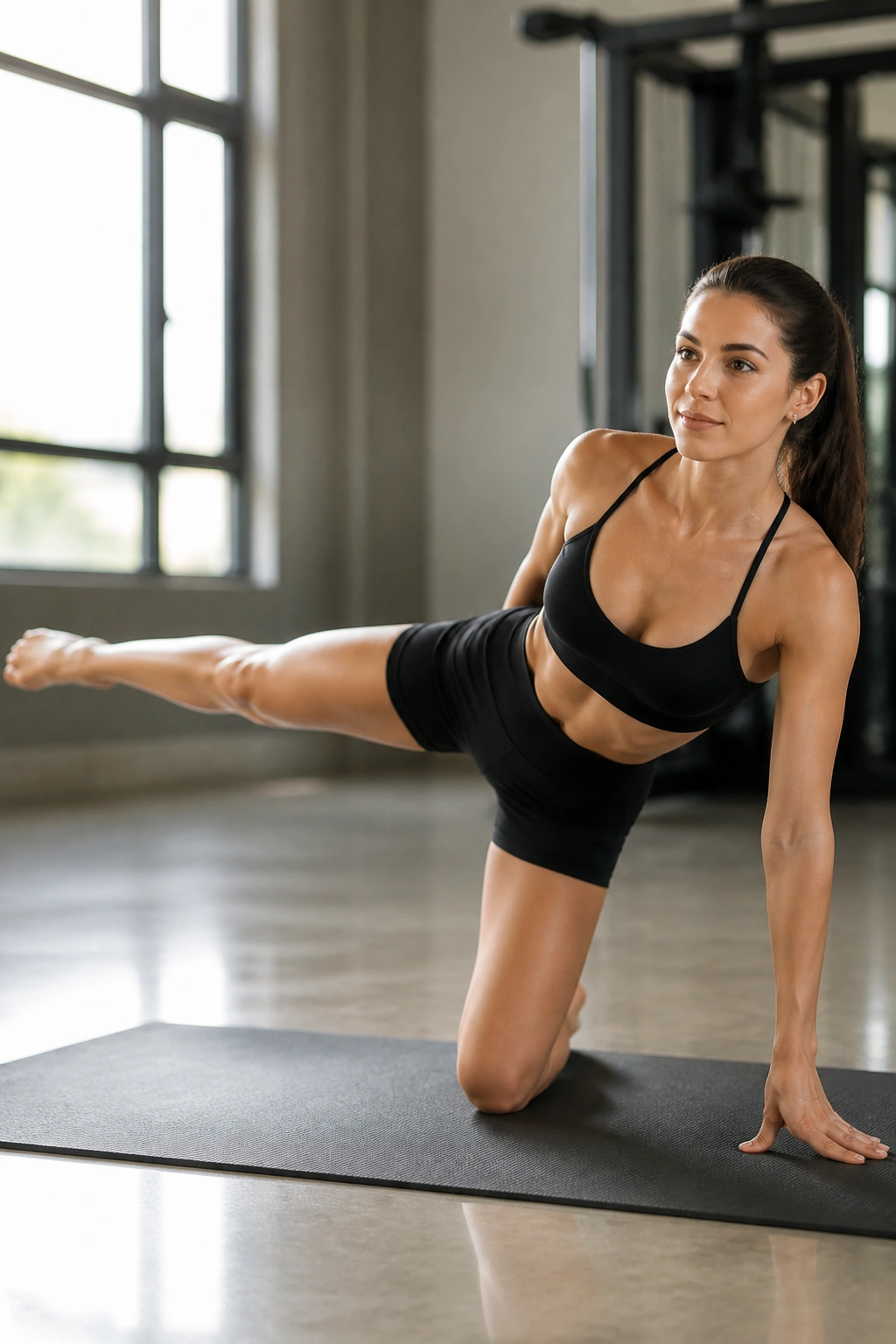
Kneel on the floor. Extend one leg out to the side. Place the hand on the same side on the floor. Now, lift the extended leg and perform rapid, small pulses—up and down—for 30 seconds. Then, switch the leg orientation and pulse the other side.
Why This Spikes the Pulse
This is deceptively hard. You are challenging your balance and isolating the outer glute. Because you are balancing on one hand and one knee, your stabilizing muscles (the obliques and the deep core) are firing constantly to keep you upright. The sheer effort to keep the leg elevated creates metabolic heat.
- Keep the chest open: don’t collapse into the supporting shoulder.
- Reach through the toes: make the leg feel long.
- Focus on the glute, not the lower back.
20. The Plank-Bridge Hybrid
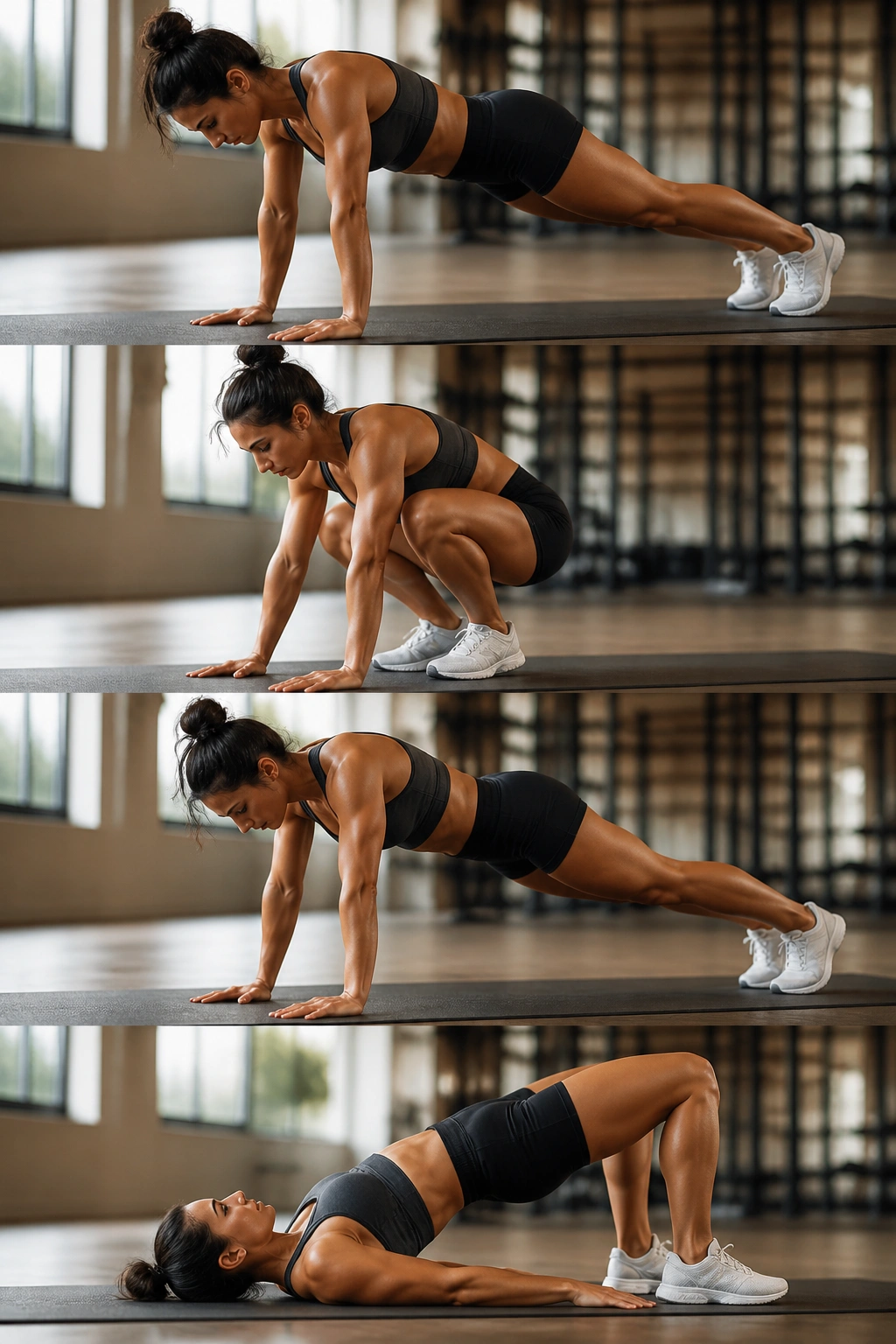
This is a finisher. Start in a plank. Jump your feet into a squat position (staying low), then jump them back to plank. Immediately drop to your knees (or stay on feet), and perform a rapid hip-bridge pulse, lifting and lowering your hips while keeping your hands in a prayer position or on the floor.
Ending Strong
This hybrid combines upper body, core, and glute work. It forces your heart to work hard because you are constantly changing the verticality of your body. The transition between the plank jump and the bridge ensures that no muscle group gets a chance to rest until the very end.
- Move fast between the transitions.
- Keep the core braced during the bridge.
- This is high intensity; focus on form as much as speed.
Final Thoughts
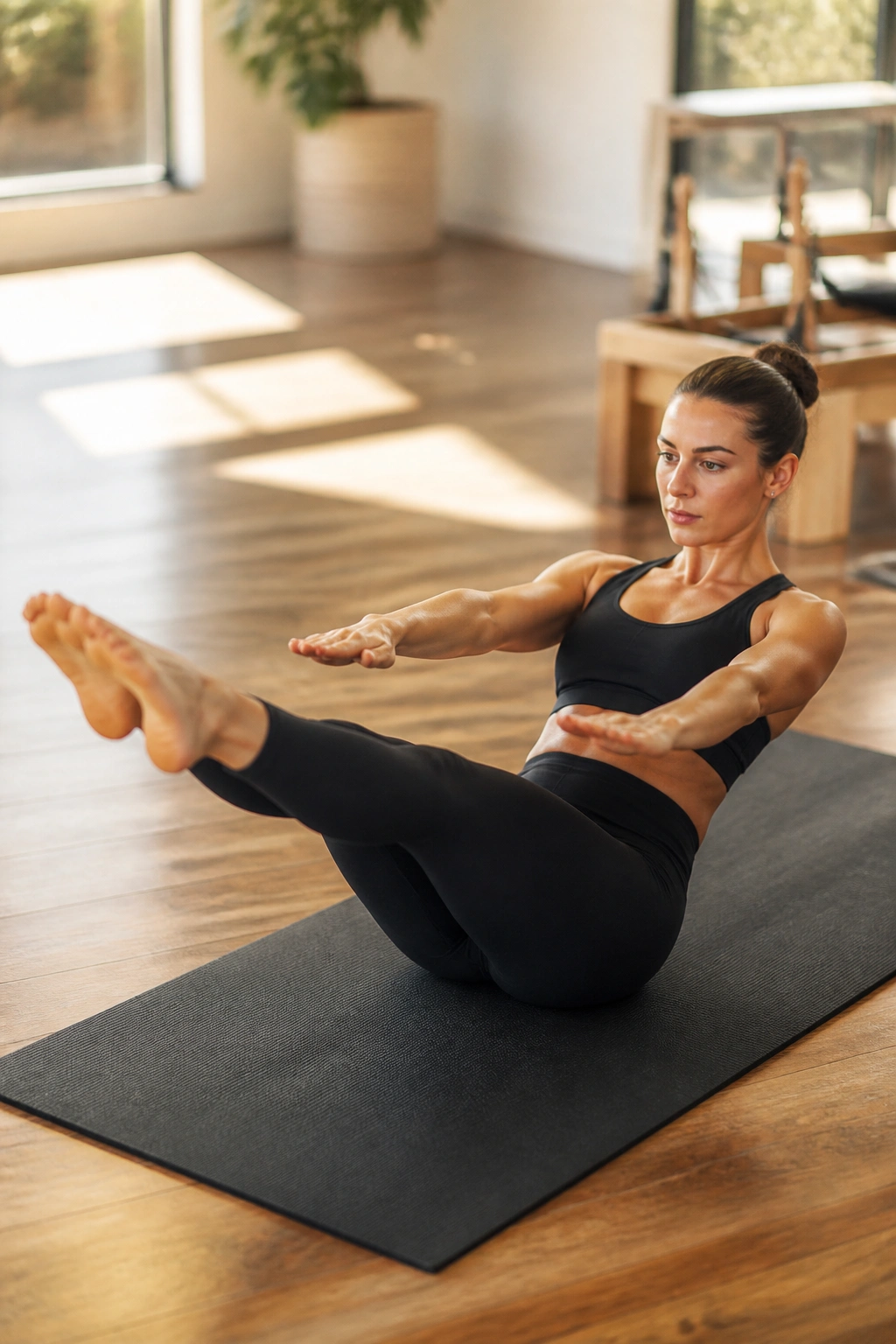
Cardio Pilates is not about how heavy the weights are or how fast you can run on a treadmill; it is about how much control you can maintain while increasing your tempo. The beauty of these sequences is that they teach you to move your body with both power and precision. You do not need to choose between a “toning” workout and a “cardio” workout. When you apply the principles of Pilates—the breath, the center, the precision—to faster, continuous movements, you get both.
Do not worry if the coordination feels strange at first. These movements require your brain to engage as much as your muscles. As you practice them, the patterns will become second nature, and you will be able to push the intensity higher. Remember, the goal is always quality over quantity. If you find your form breaking down because you are moving too fast, pull back. A perfectly executed, slightly slower repetition will always yield better results than a sloppy, rushed one. Keep the core engaged, keep the breath flowing, and let the movement do the work.
