



Pilates leg workouts can look almost too quiet to matter. Then your inner thighs start trembling on rep six and the room gets very honest, very fast. That’s the charm of it.
If your goal is lean legs, the useful word is lean, not tiny. We’re talking about legs that hold shape, move cleanly, and stop collapsing at the knees when you climb stairs or stand on one foot to pull on jeans.
Pilates does not spot-reduce anything, and any routine that promises that is selling a story. What Pilates does well is build control in the glutes, adductors, hamstrings, calves, and the smaller muscles around the hips, which changes how the lower body works and looks.
Some of the best moves need nothing more than a mat and a little patience. A few use a mini ball, band, sliders, or a reformer. The one thing they all share is slow, clean work with no cheating through the low back. Start with the first move and you’ll feel exactly why that matters.
1. Inner-Thigh Ball Squeeze
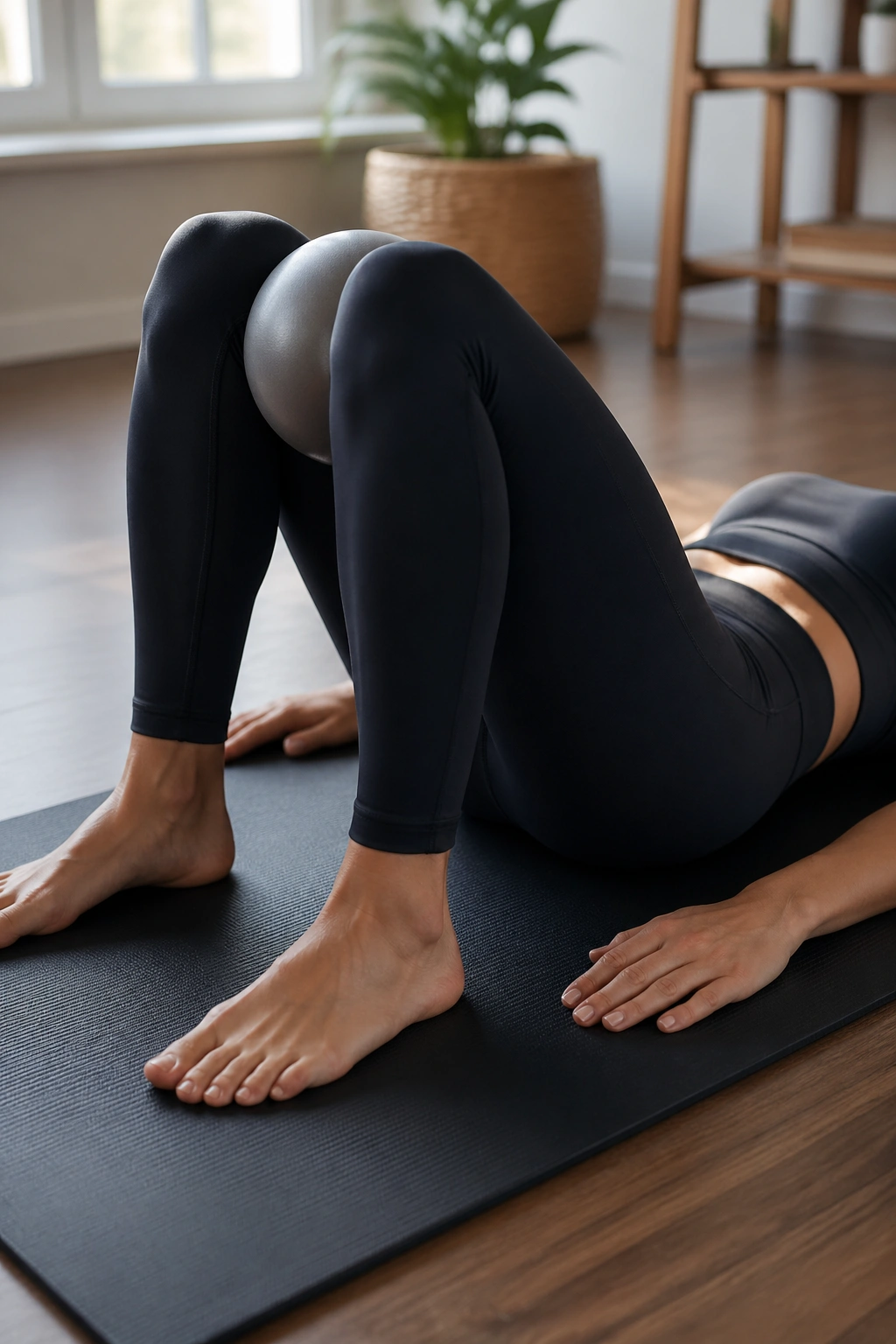
This is the move people underestimate, which is exactly why it works so well. A soft Pilates ball or folded towel between the knees makes the adductors do real work, and that’s a big deal if you want legs that feel tight and controlled rather than loose and sleepy.
Why It Belongs in a Leg Routine
The squeeze looks small, but the muscle effort is not. Pressing in and releasing with control teaches the inner thighs to stay awake while the pelvis stays steady, and that helps with balance in just about every standing Pilates move.
A good set is 12 to 15 presses with a two-second squeeze and a two-second release. Do not jam the knees together hard; the force should come from the inner thighs, not from smashing the joints.
- Place the ball between your knees, not above them.
- Keep both feet flat and hip-width apart.
- Exhale on the squeeze, inhale on the release.
- Stop if your lower back arches off the mat.
Tiny tip: If the ball feels too soft, fold a thick towel instead. You want resistance, not a prop that collapses under you.
2. Side-Lying Leg Lifts
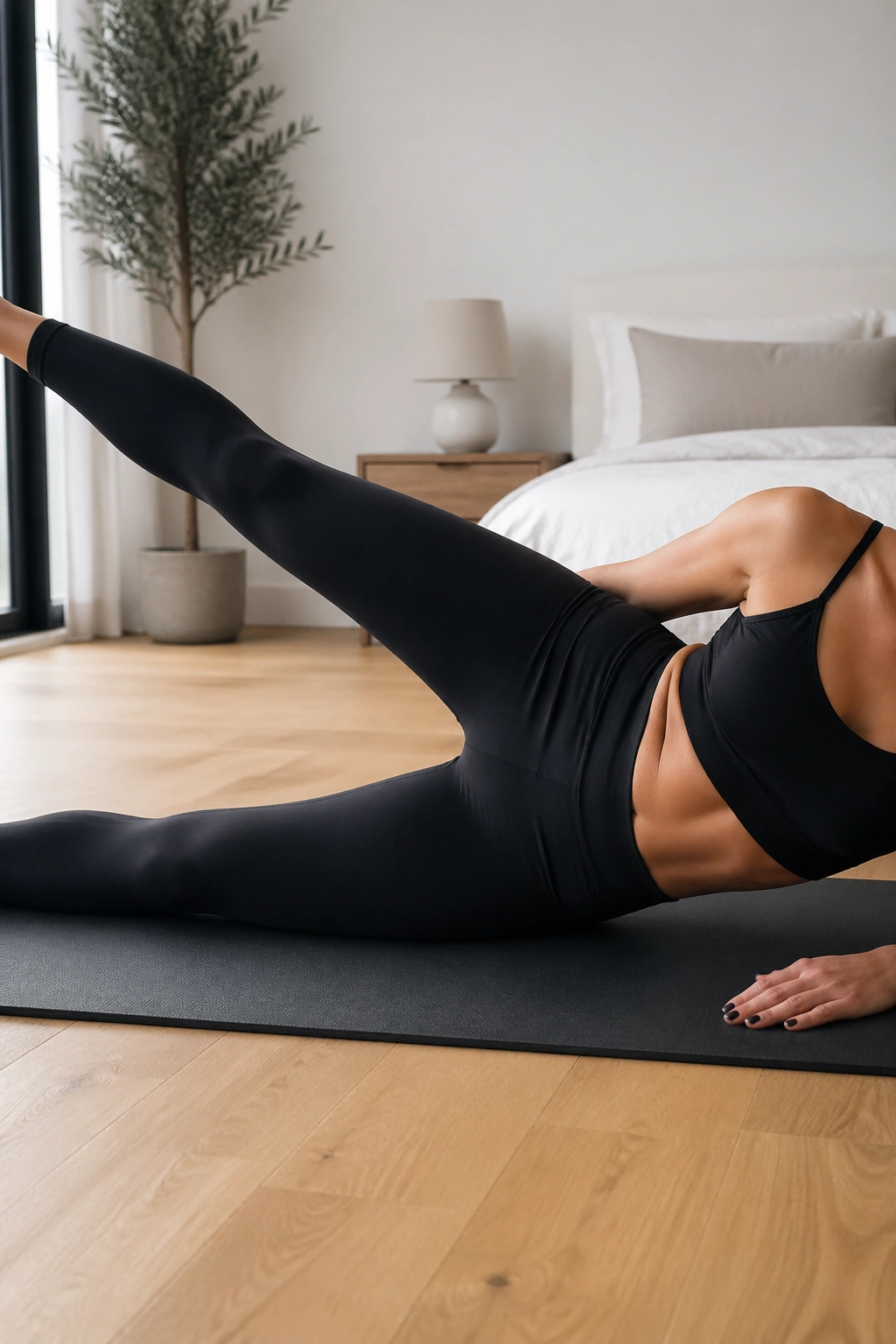
These are a classic for a reason. Side-lying leg lifts hit the outer hip, especially the glute medius, which helps give the leg a cleaner line from hip to ankle and keeps the pelvis from wobbling when you walk or squat.
The trick is not height. It’s control. Lift only as high as you can keep the waist long and the hips stacked; once the top hip rolls backward, the move turns into a cheat, and the outer hip stops doing the job.
Try 10 to 12 slow reps per side, with a three-second lower on each one. The lowering phase matters as much as the lift. That’s where the muscle actually has to resist.
A small pause at the top makes this even better. One count up. One count hold. One slow return. That’s enough to turn an easy-looking side leg series into a real burner.
3. Clamshells
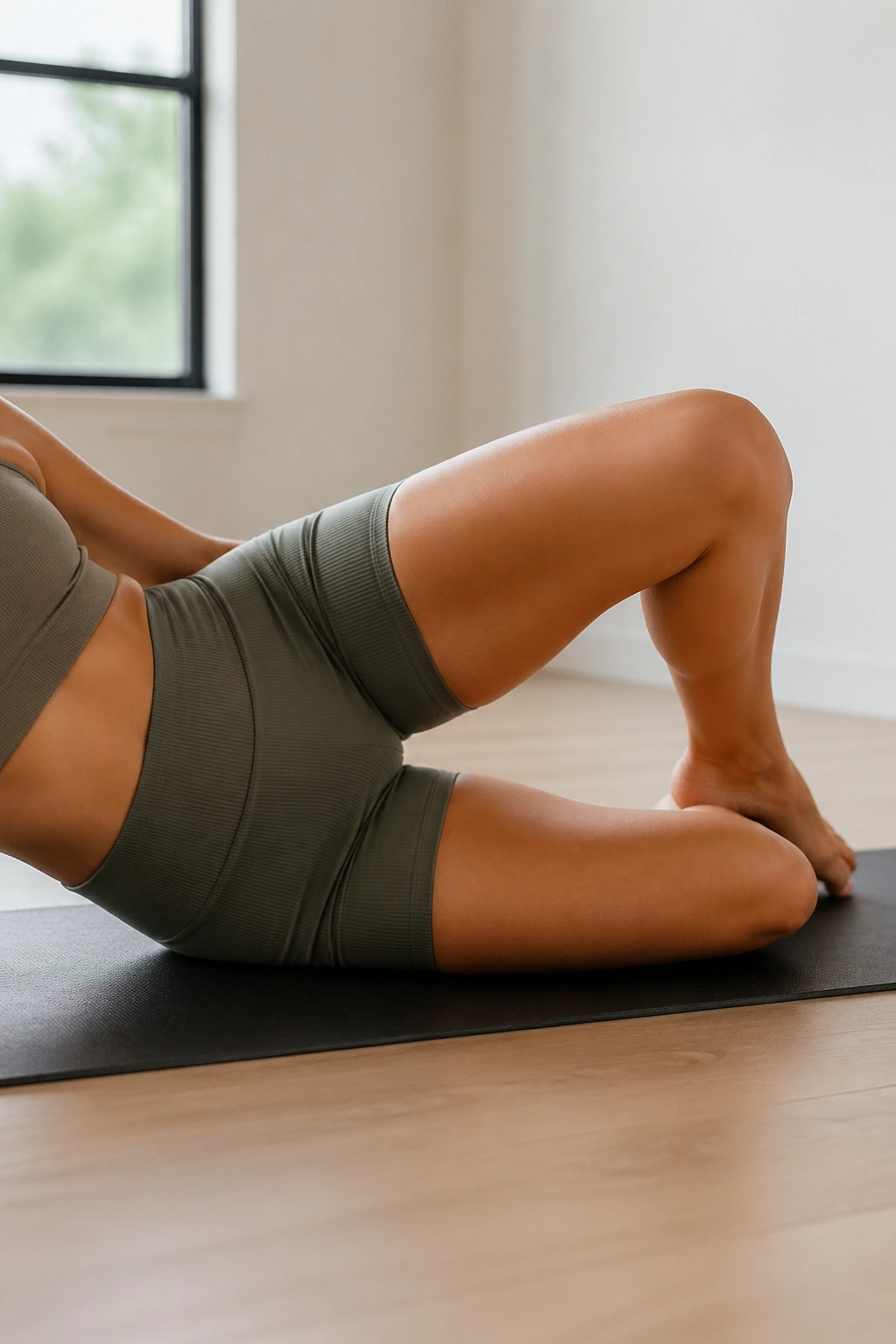
Clamshells are tiny, and that’s the point. You lie on your side with knees bent, heels together, and open the top knee like a shell without rolling the pelvis backward. The deep hip rotators and outer glutes light up fast.
What Makes Them So Useful
People often turn clamshells into a hip-flopping mess. Don’t. The movement should stay compact, with the pelvis stacked and the waist lifted off the mat. If the top hip keeps drifting open, the exercise loses most of its value.
Do 12 to 20 reps per side, or keep the top knee opening and closing for 30 seconds. Small range, big payoff. That’s the whole story here.
For extra challenge, add a light loop band above the knees. Keep the feet touching and press into the band only enough to feel tension, not enough to wrench the hips.
4. Leg Circles
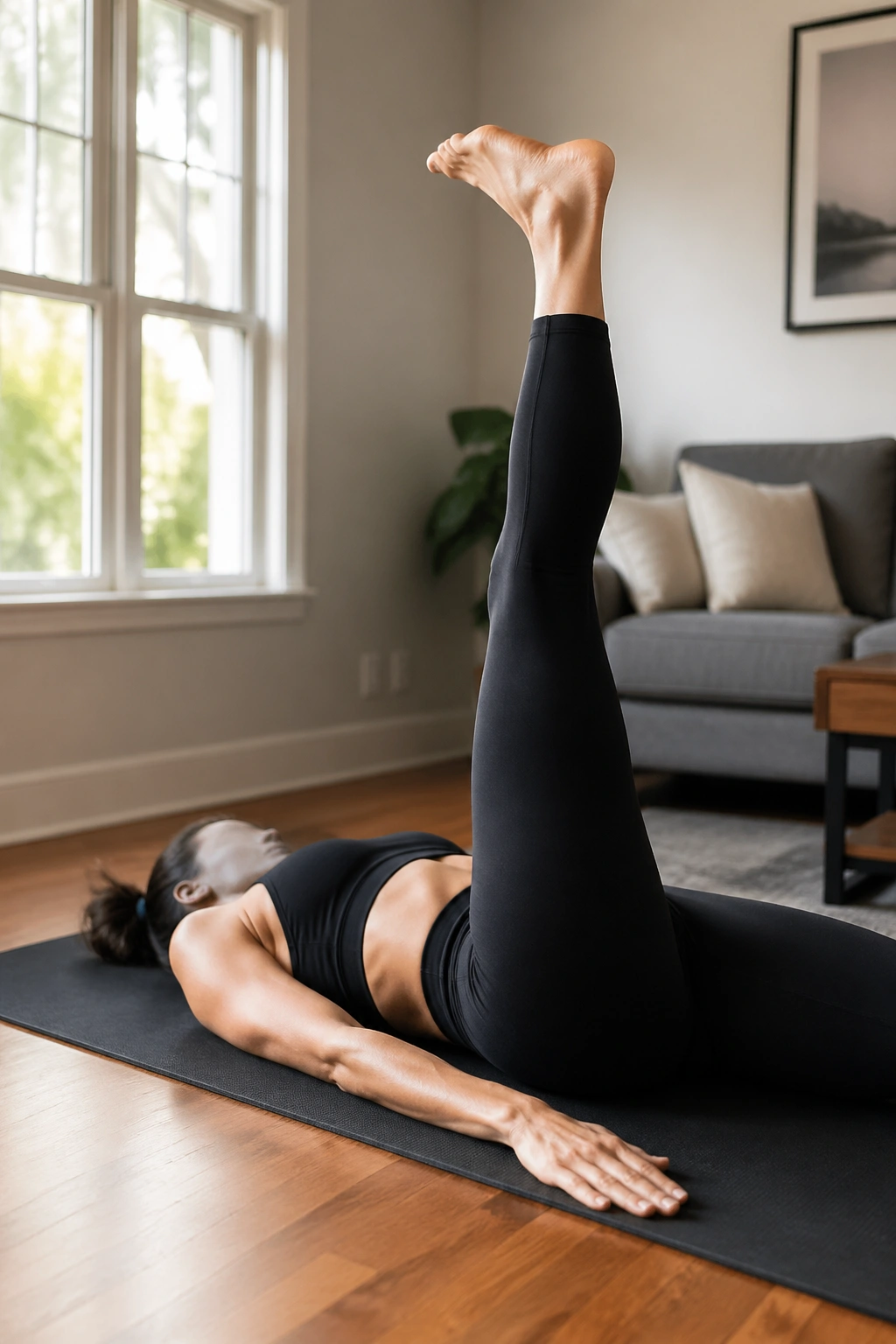
Leg circles look graceful until the supporting hip starts complaining. That’s when you know the core and hip stabilizers are having to do more than just pose.
Lie on your back, one leg reaching to the ceiling, and trace small circles without letting the pelvis rock. The circle should be controlled enough that the low back stays quiet and the standing leg stays long.
How to Keep the Circles Clean
- Make the circle smaller than you think you need.
- Keep both sides of the waist heavy on the mat.
- Move slowly enough to feel the leg’s path.
- Reverse directions before fatigue turns the circle into a wobble.
Eight circles each way is enough for most people. If your hip flexors seize up or your back arches, the circle is too big. Tiny circles are not a downgrade. They’re the real version.
5. Glute Bridge With Heels Press
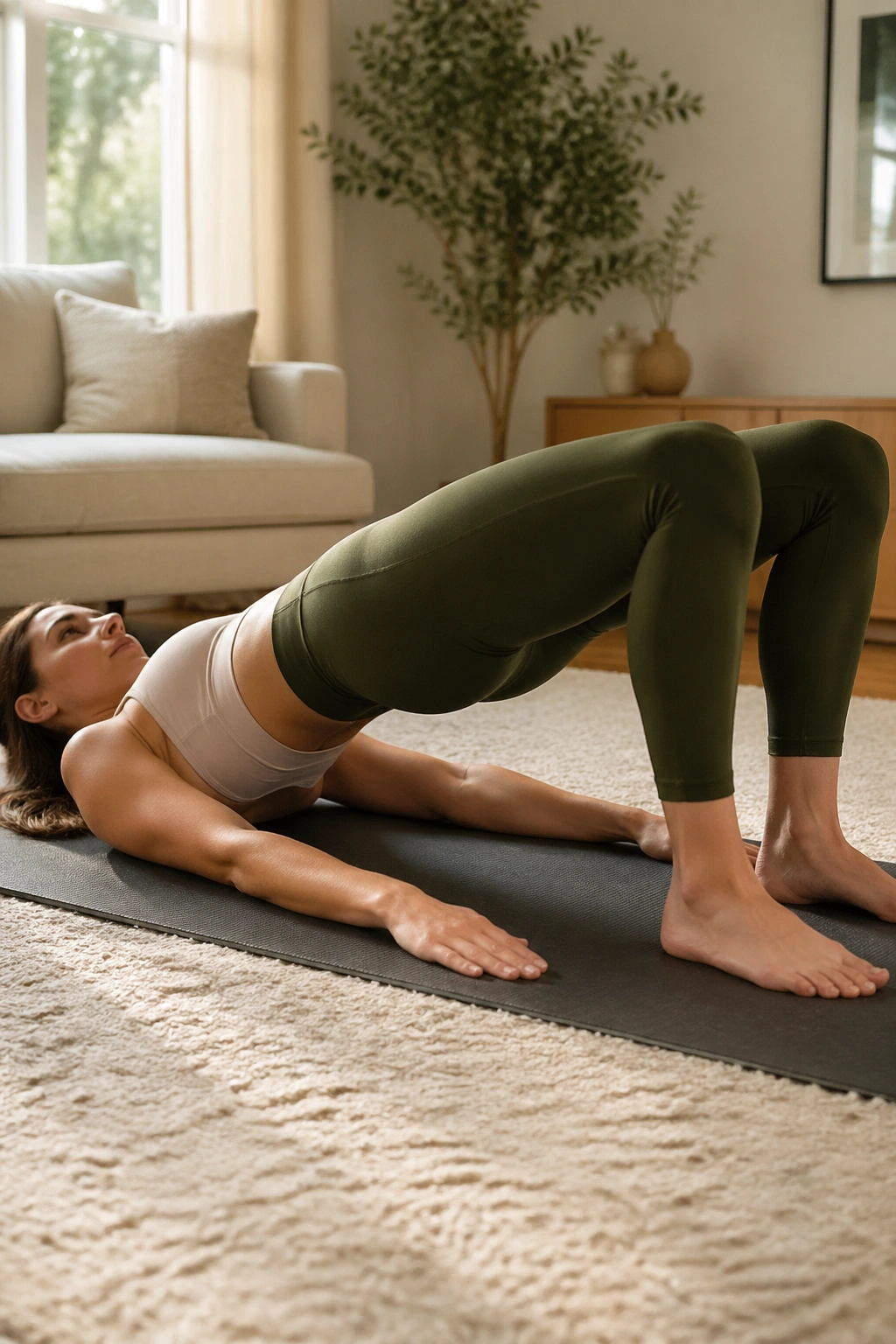
A bridge is not just a butt move. Pressing the heels into the mat and lifting the hips wakes up the hamstrings too, and that matters if you want a back-of-leg shape that feels strong when you walk uphill or climb stairs.
Keep the feet parallel and the knees pointing straight ahead. Lift the hips until the body makes a long line from shoulders to knees, then lower with control instead of dropping.
Slow bridges usually work better than fast ones. Ten to 15 reps with a one-second hold at the top is plenty. If your low back feels pinched, lower the lift. That usually means the ribs have flared or the feet are too far away.
This move also pairs well with a mini ball between the knees. That adds inner-thigh work without changing the setup much.
6. Single-Leg Glute Bridge
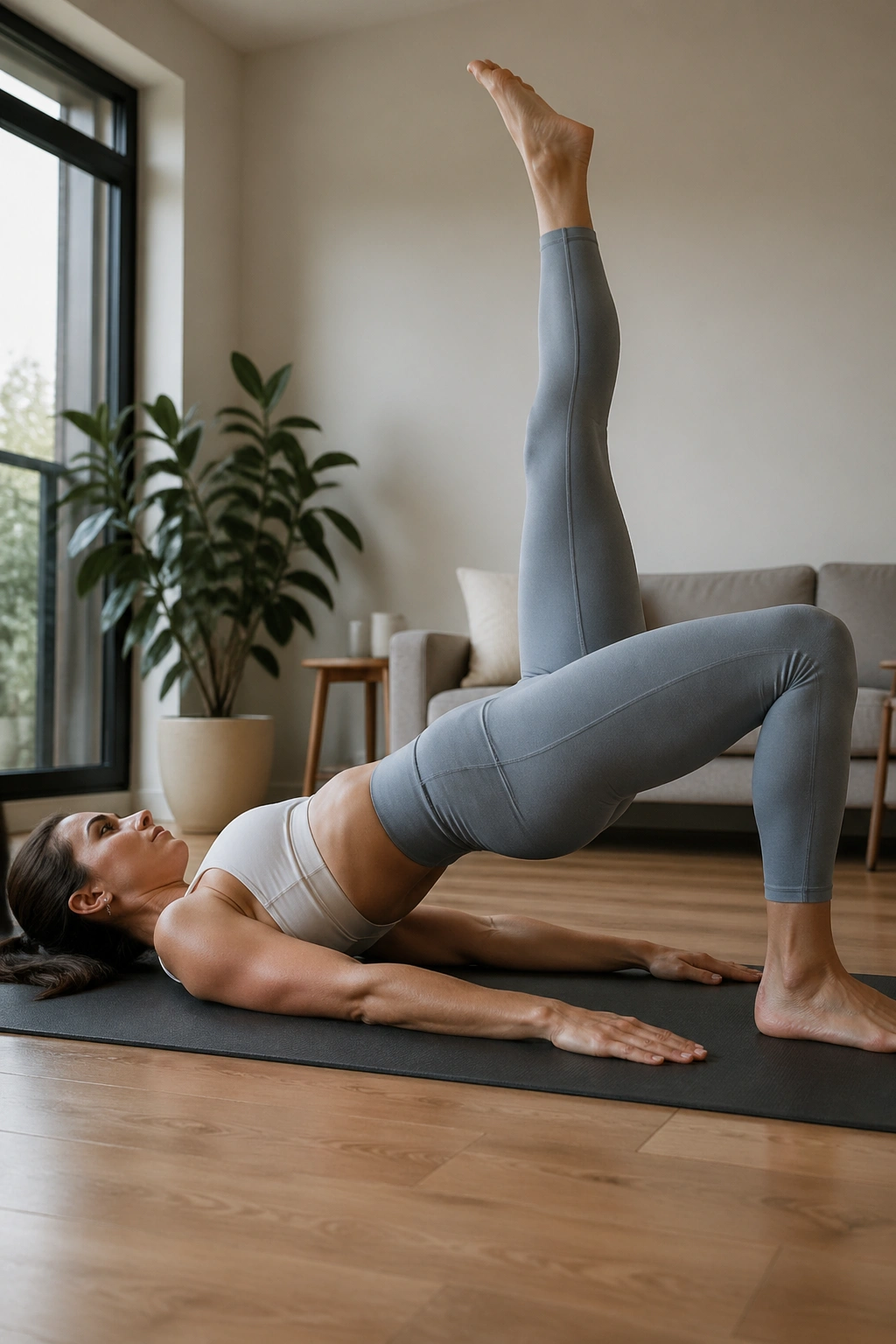
Once the two-legged bridge feels easy, this is the version that gets honest. One foot stays planted while the other leg reaches long, and suddenly the pelvis has to stay level without much help.
The mistake most people make is lifting too high. You do not need a dramatic arch to feel this in the glute and hamstring. A smaller lift with steady hips is far better than throwing the spine upward and calling it work.
Keep the lifted hip from twisting open. That is the whole game. If one side of the pelvis drops or tilts, the support leg is losing the battle.
Six to ten reps per side is a smart starting point. Add a three-second hold at the top if you want more challenge without more chaos.
7. Frog Pumps
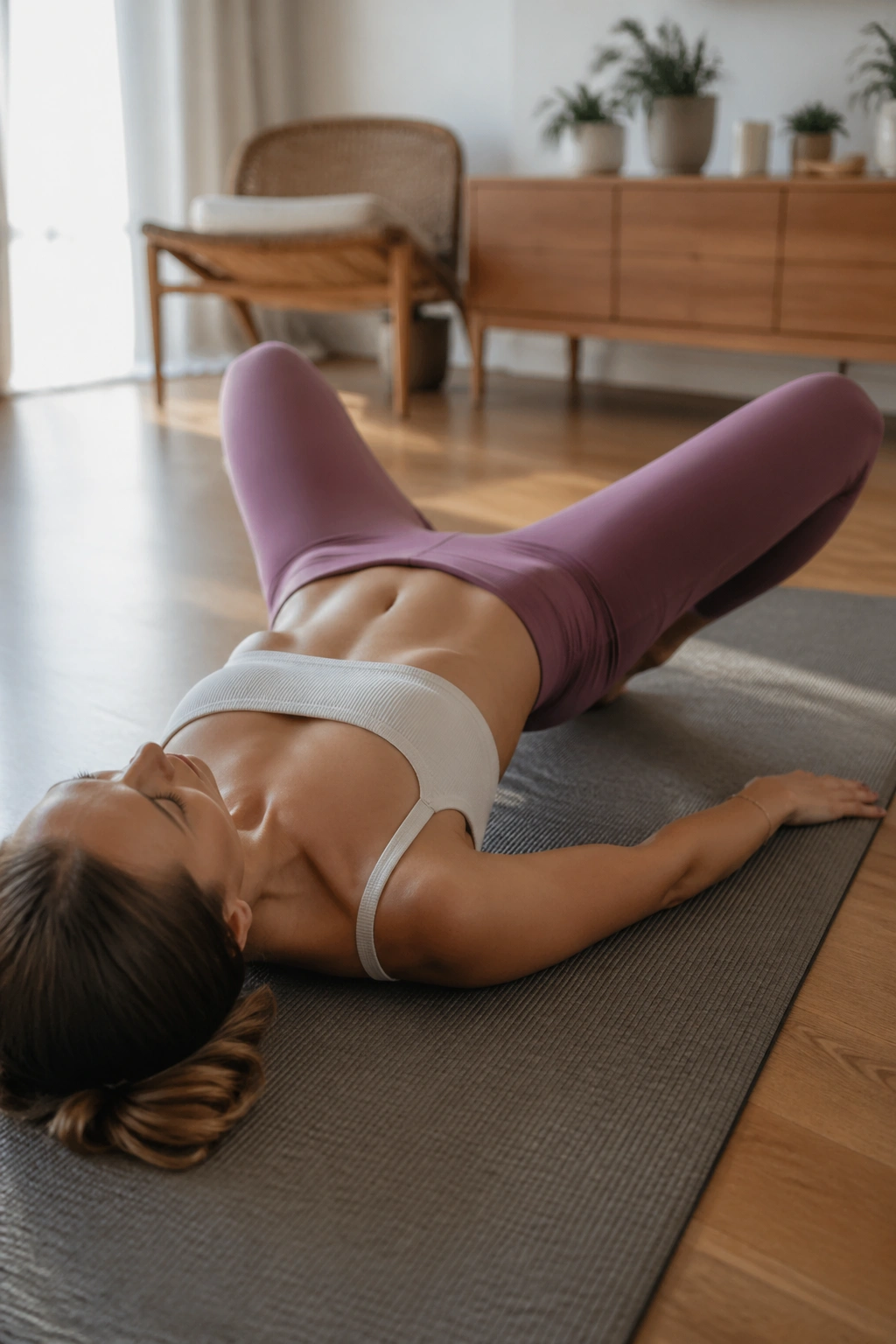
Frog pumps are ugly in the best possible way. Soles of the feet touch, knees open out, and the hips pulse upward in a short range that makes the glutes and inner thighs talk back fast.
The move feels most useful when the bottom ribs stay soft and the pelvis doesn’t tilt wildly. Think of a small lift, a brief squeeze, and a clean return. Nothing flashy.
Twenty to 30 pulses is a normal set. You can also hold the top for 10 seconds and then pulse for another 10. The short range is not cheating. It’s the design.
If your hamstrings cramp, move your feet a little farther away from your hips and check that you’re pressing through the heels, not jamming the arches together.
8. Side Kick Front-and-Back
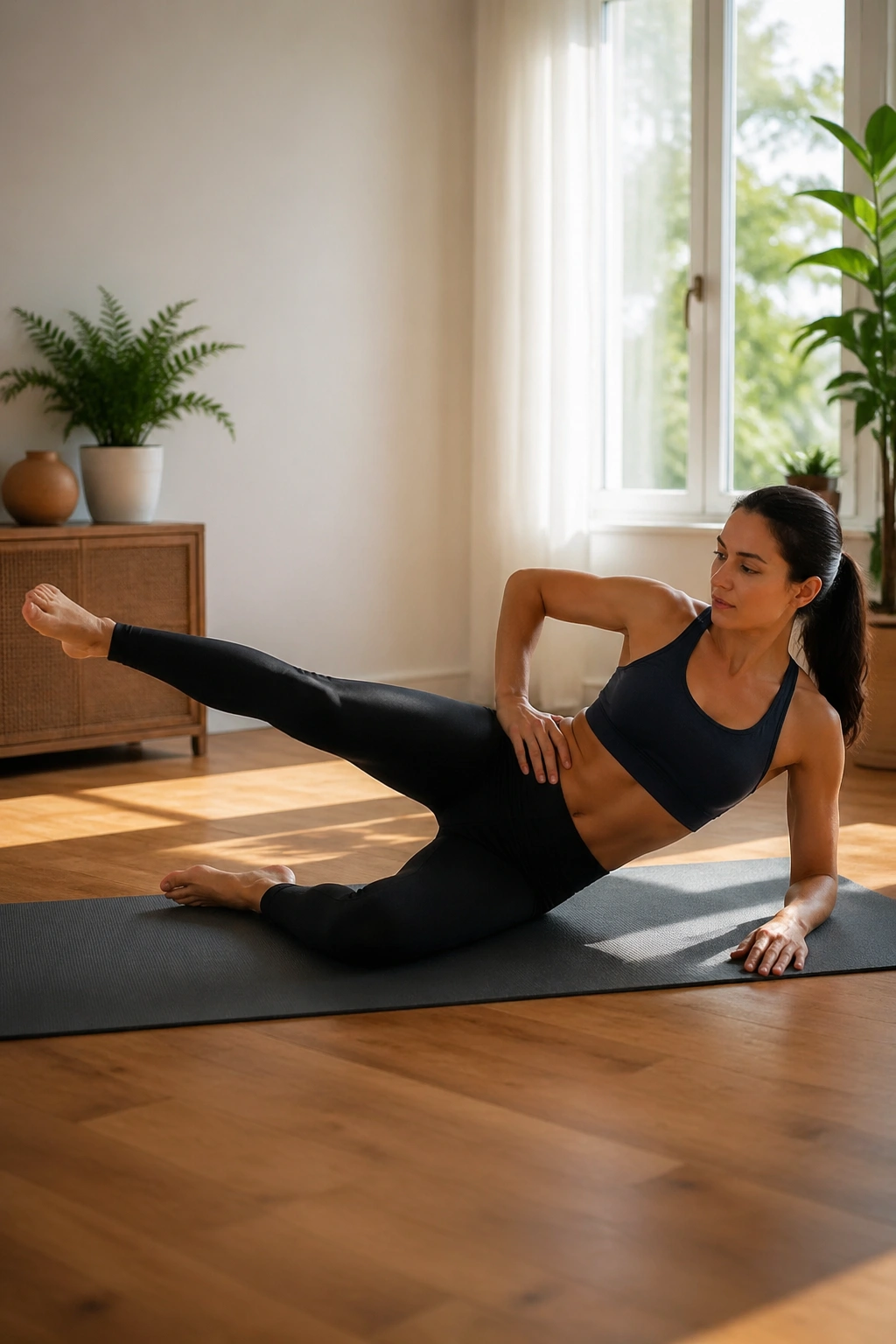
This is a side-lying move that asks the leg to travel forward and back while the trunk stays calm. It sounds easy. It isn’t, once the pelvis is no longer allowed to chase the leg around.
Use This Setup
- Lie on your side with the bottom leg bent for support.
- Stack the hips and keep the waist long.
- Swing the top leg only as far as the pelvis stays still.
- Keep the foot flexed or softly pointed, depending on what you feel better in your hip.
The forward kick asks for control in the front of the hip. The backward sweep wakes up the glute and hamstring. Do 8 to 10 each direction, then switch sides.
Do not fling the leg. A slower path gives you more work and usually less hip pinch.
9. Side Kick Up-and-Down
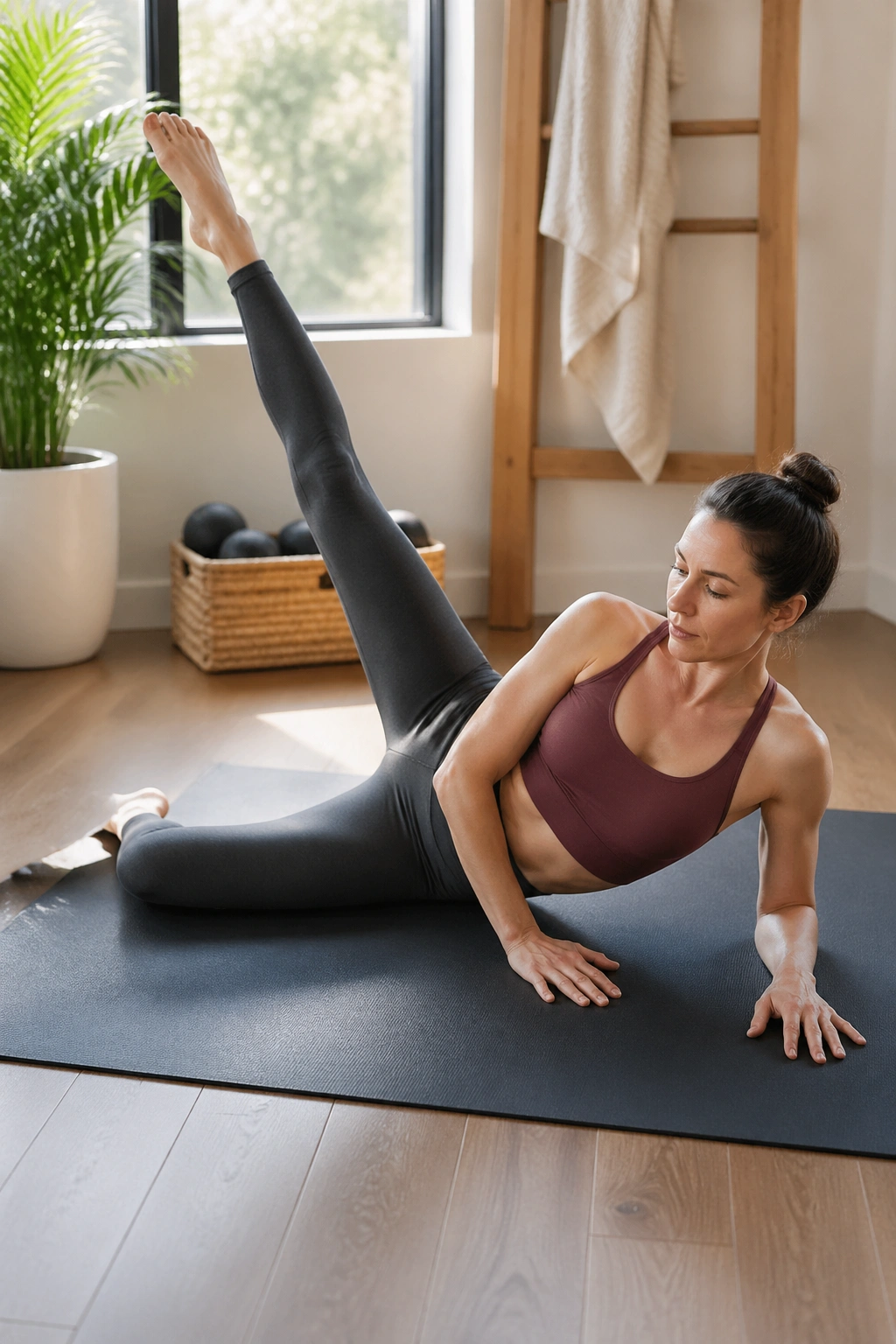
If front-and-back kicks feel like a full conversation, this version is a clipped reply. The leg lifts toward the ceiling and lowers with control, staying long and stable so the outer hip has to do the stabilizing.
This is one of those Pilates leg workouts that seems simple until the top hip starts burning. Then you remember why people keep coming back to it.
Keep the toes slightly turned down if you want more outer-hip work. Keep them more neutral if your hip feels tight. A range of 10 to 12 controlled lifts is enough, and the lowering should be slow enough that you feel resistance all the way down.
A tiny pause at the top helps. Not a hop. Just a breath.
10. Kneeling Fire Hydrant
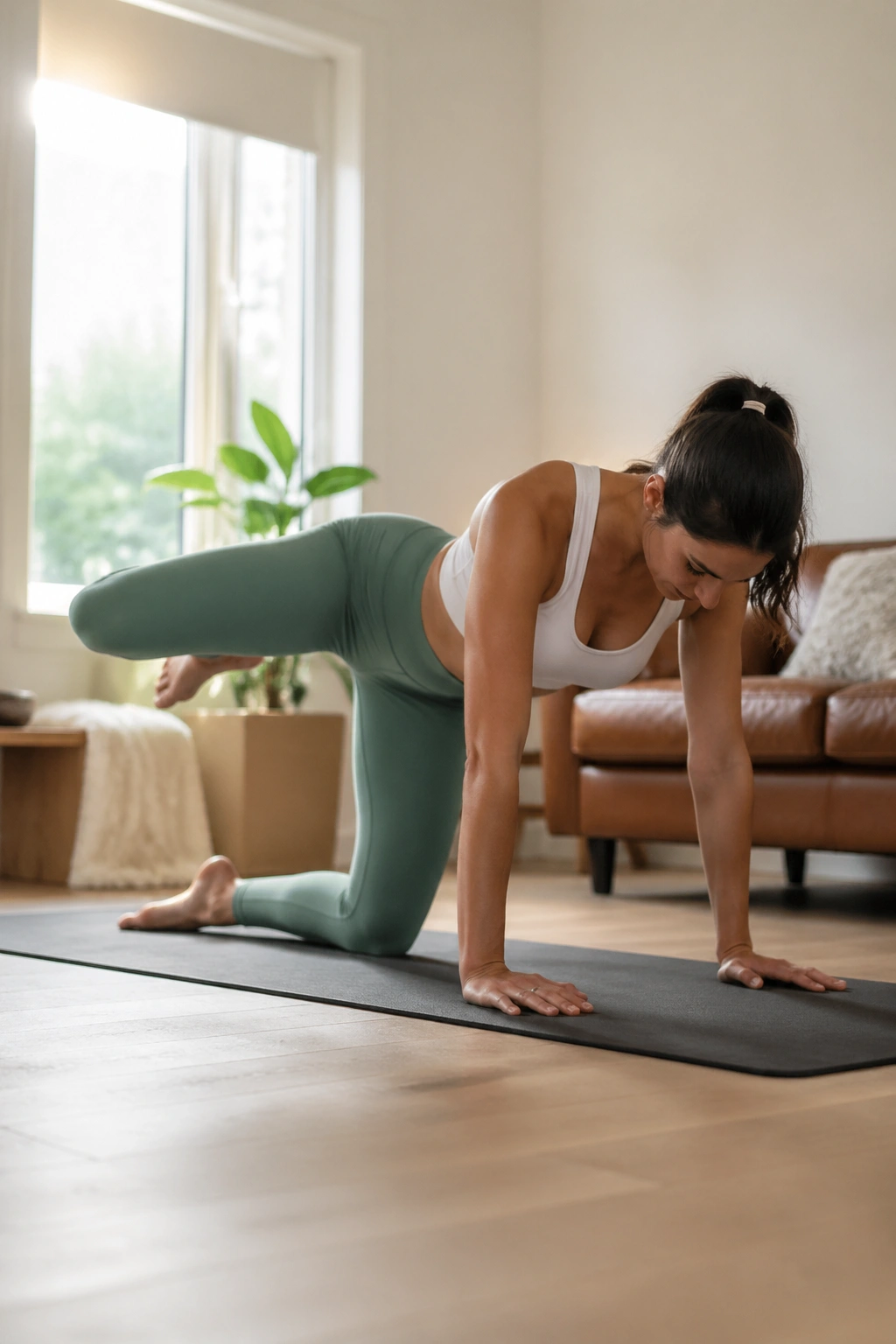
Why does a move on hands and knees make the side of the hip light up so fast? Because the pelvis has nowhere to hide. Once the leg opens out to the side, the glute medius has to work without momentum.
Stay square through the shoulders and ribs. Lift the bent knee only until the pelvis starts to feel tempted to shift. That is the stop point.
What to Watch For
- Keep the hands directly under the shoulders.
- Brace the belly lightly so the low back does not sag.
- Lift in a controlled arc, not a swing.
- Lower with the same care you used on the way up.
Ten to 15 reps per side is enough for a solid set. If your wrists bother you, come down onto forearms or place your hands on a bench.
11. Donkey Kick Pulses
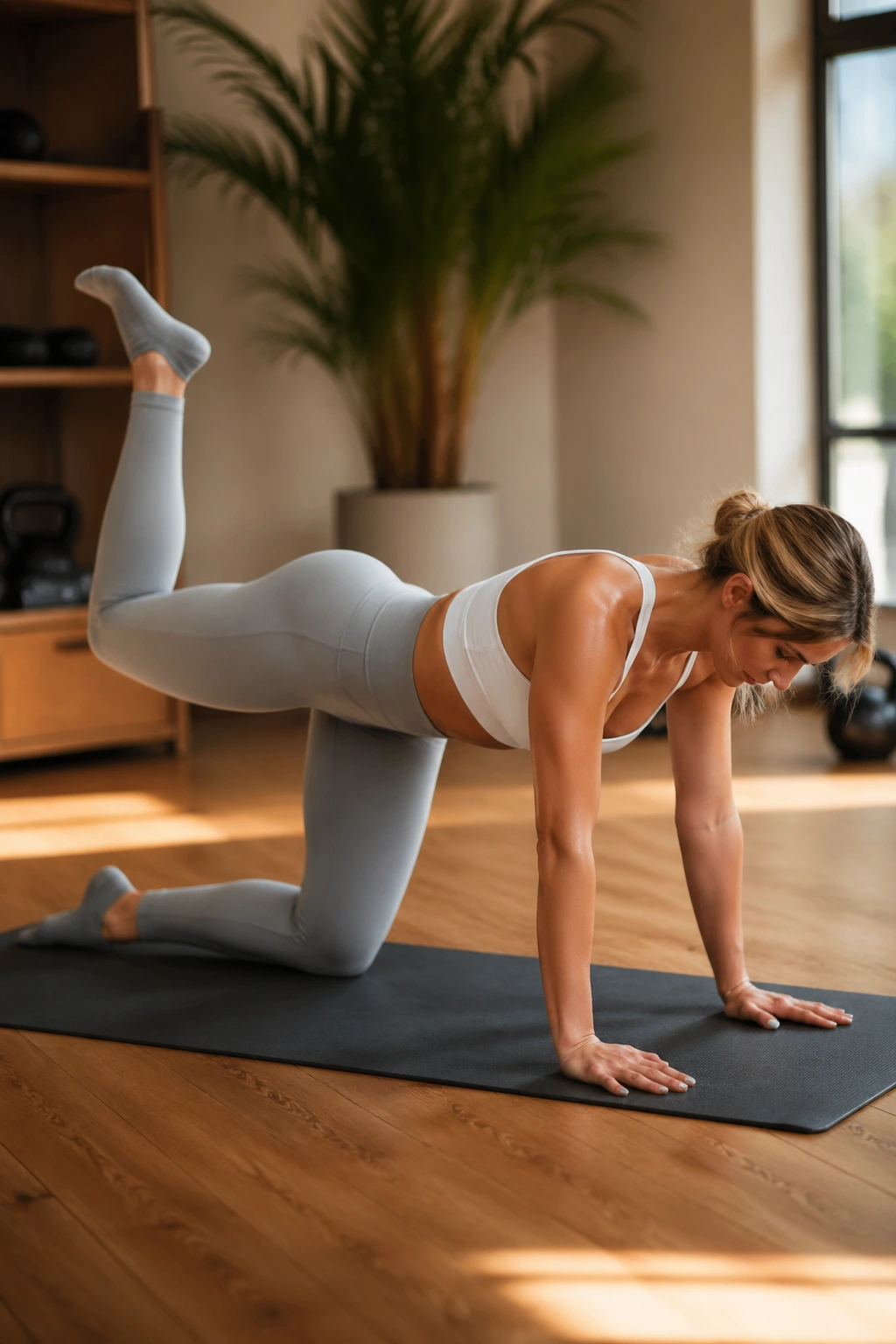
Donkey kicks are what I reach for when someone wants a glute exercise that doesn’t need fancy setup and still hits hard. On all fours, keep one knee bent and pulse the heel toward the ceiling in a short, steady range.
The magic is in the stillness of the torso. If the ribs flare and the low back arches, the glute stops owning the work and the spine starts taking over.
Burn is normal. Pinching is not. If you feel the front of the hip gripping, shrink the range and slow the tempo. Eighty percent of the benefit comes from the control, not from making the kick bigger.
A set of 15 to 20 pulses per side is enough to make this one count.
12. Standing Side Leg Lifts
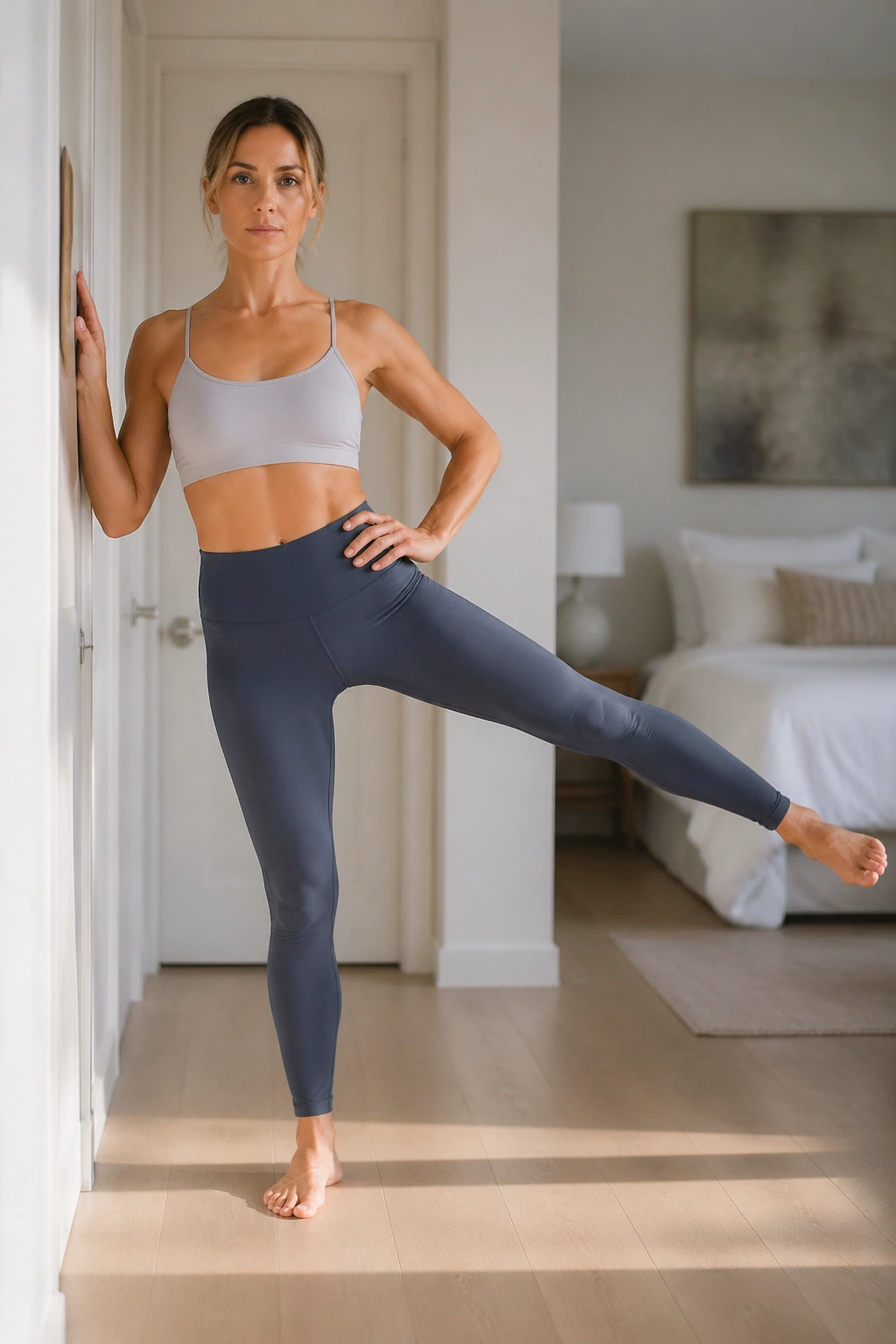
Standing work changes the game because your balance has to show up too. A side leg lift done next to a wall or chair trains the outer hip while asking the standing leg and ankle to stay quiet and steady.
This is one of the better Pilates leg workouts for lean legs if you care about posture as much as muscle tone. The body looks different when it stands with less sway and more control.
Keep the lifted leg long, the toes facing forward, and the pelvis level. Don’t lean your torso to fake the height. If you need to tip sideways to get the leg higher, the leg is too high.
Try 12 reps per side, then finish with 10 small pulses at the top. Those last pulses usually tell the truth.
13. Plié Squat Pulses
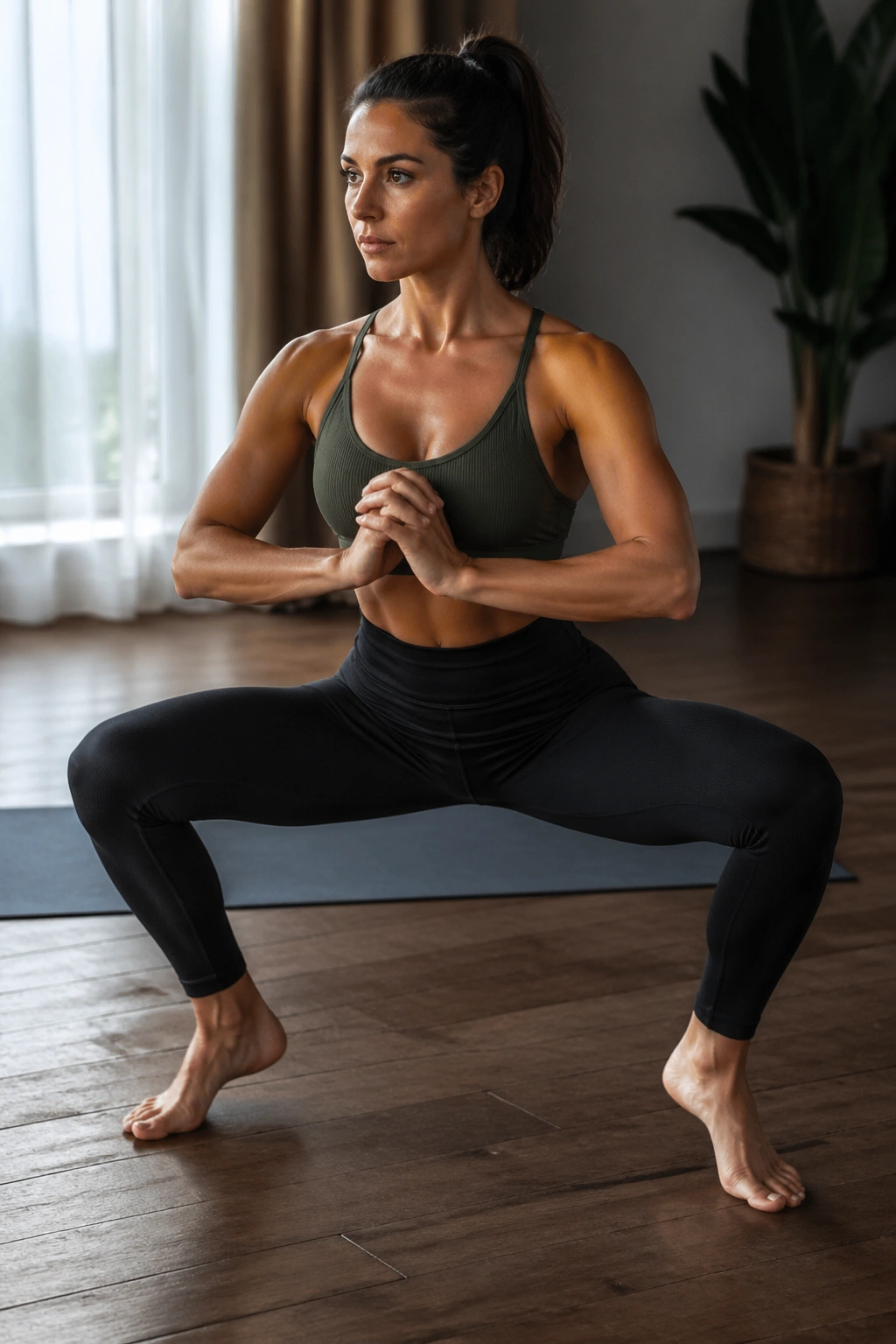
A plié squat pulse is basically a controlled thigh-and-calf conversation. The feet turn out a bit, the knees track over the toes, and the body drops into a small squat before pulsing in the bottom range.
What I like about this move is how direct it feels. You know exactly where the work is. Inner thighs, glutes, calves, and the muscles around the knees all have to stay organized while the body keeps a low center of gravity.
Use a shallow range. Seriously. The goal is not depth for depth’s sake. The goal is a clean pulse with the heels planted and the pelvis tucked only enough to keep the ribs from flaring.
Twelve to 20 pulses can be enough. If you want more challenge, hold a Pilates ring between the palms and press gently while you squat.
14. Reverse Lunge With Calf Raise
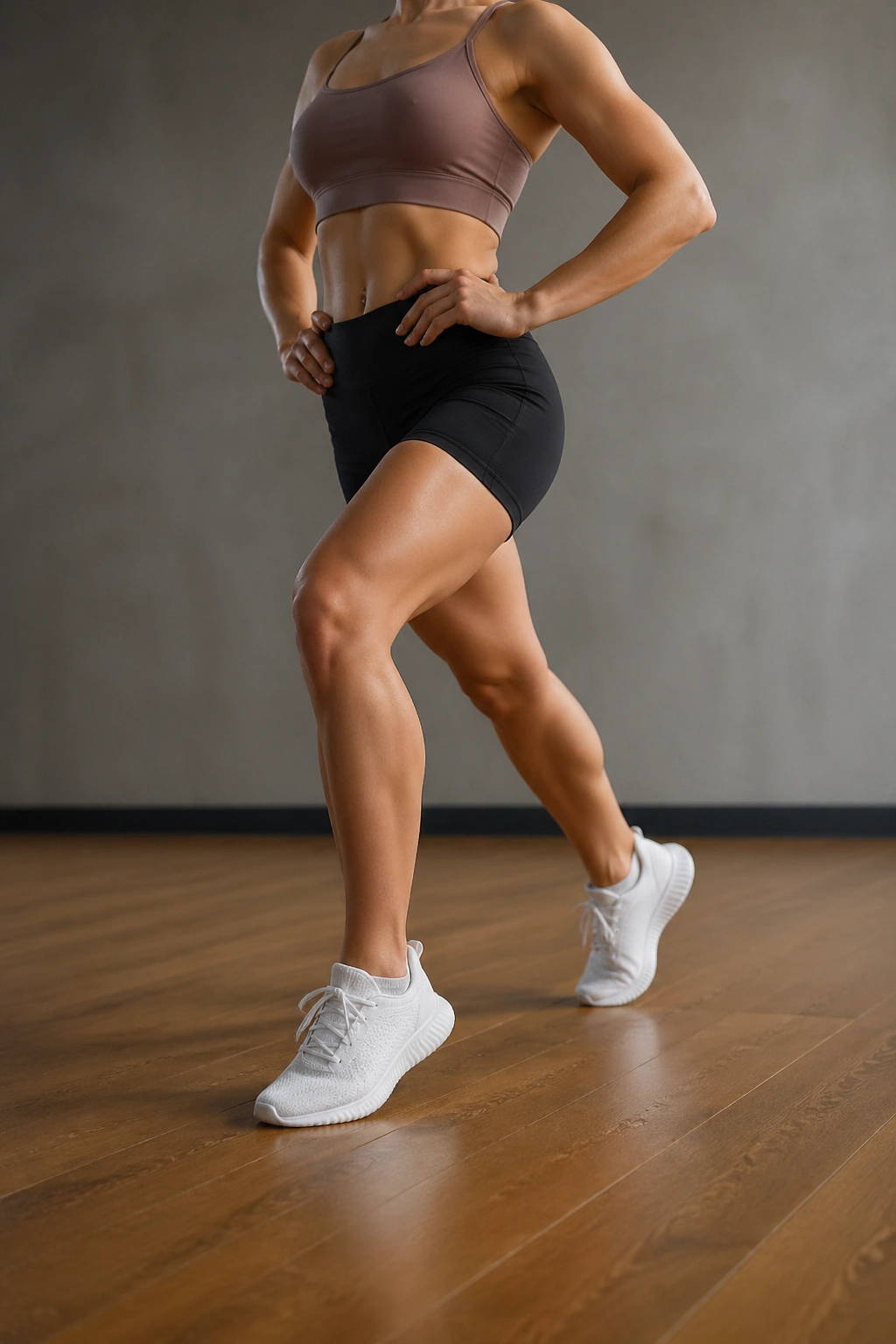
A reverse lunge already makes the front leg work, but adding a calf raise at the top gives the lower leg its own moment. That makes this move more complete than it looks at first glance.
Step back softly, drop into a controlled lunge, then return to standing and lift onto the ball of the front foot. The calf raise should feel deliberate, not rushed.
One clean rep beats three sloppy ones here. Keep the front knee tracking over the second toe and avoid bouncing out of the lunge. If the knee caves inward, shorten the step.
Six to eight reps per side is enough if you move with care. Add a pause at the top of the calf raise and you’ll feel the lower leg wake up fast.
15. Wall Sit With Ball Squeeze
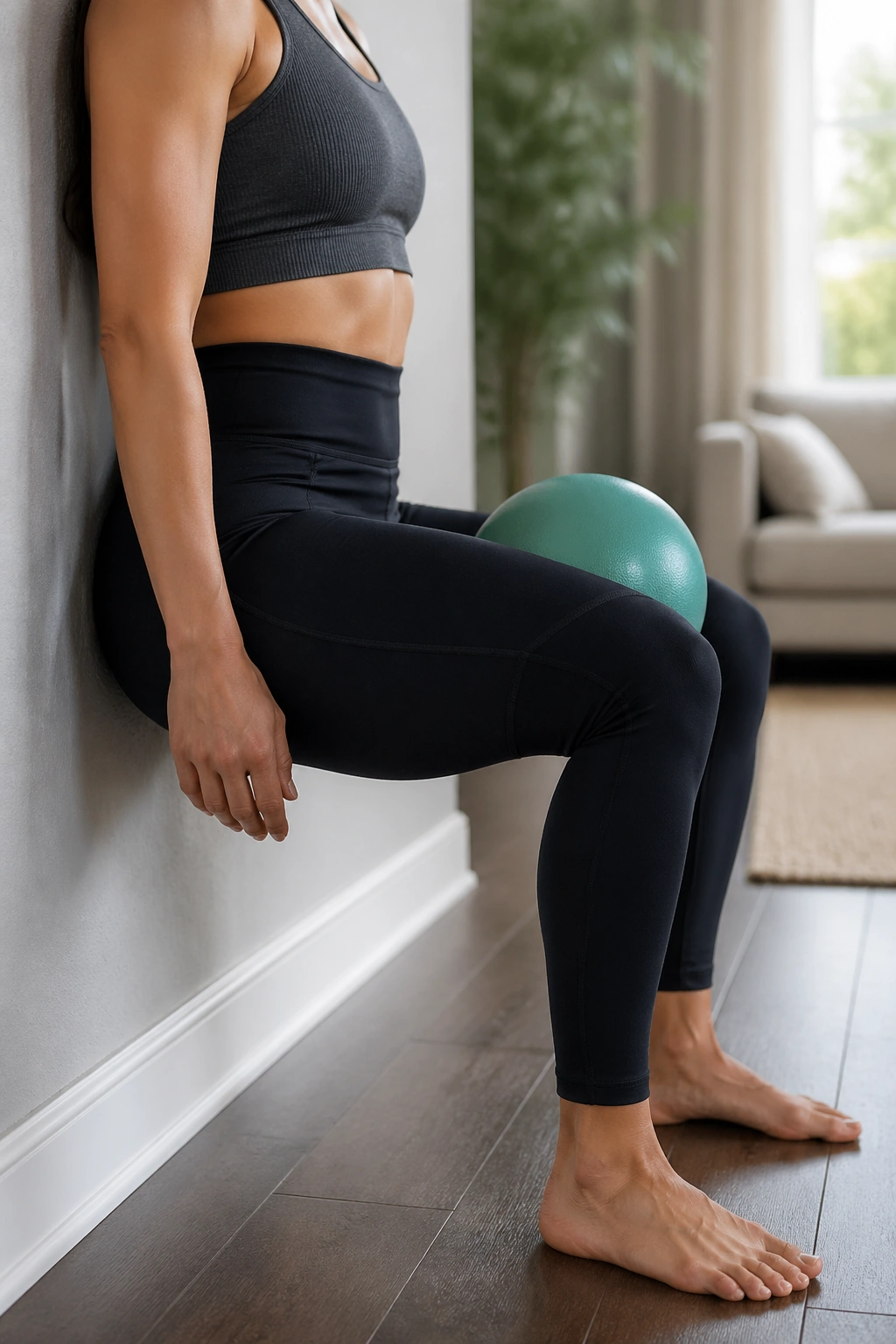
Put a soft ball between the knees and sit into the wall like you mean it. The thighs heat up fast, and the squeeze adds inner-thigh work that most wall sits leave out.
This move has a strange honesty to it. You can’t fake the burn, and you can’t hide the quiver in the quads after a few breaths. Keep the shins vertical, the spine long, and the shoulders relaxed.
A 20- to 45-second hold is a solid place to start. If that feels easy, add gentle ball squeezes every few seconds instead of cranking the pressure nonstop.
Burn in the front of the thighs is normal. Sharp pain behind the knees is not. Move your feet a few inches farther away if the knees feel jammed.
16. Sliding Hamstring Curls
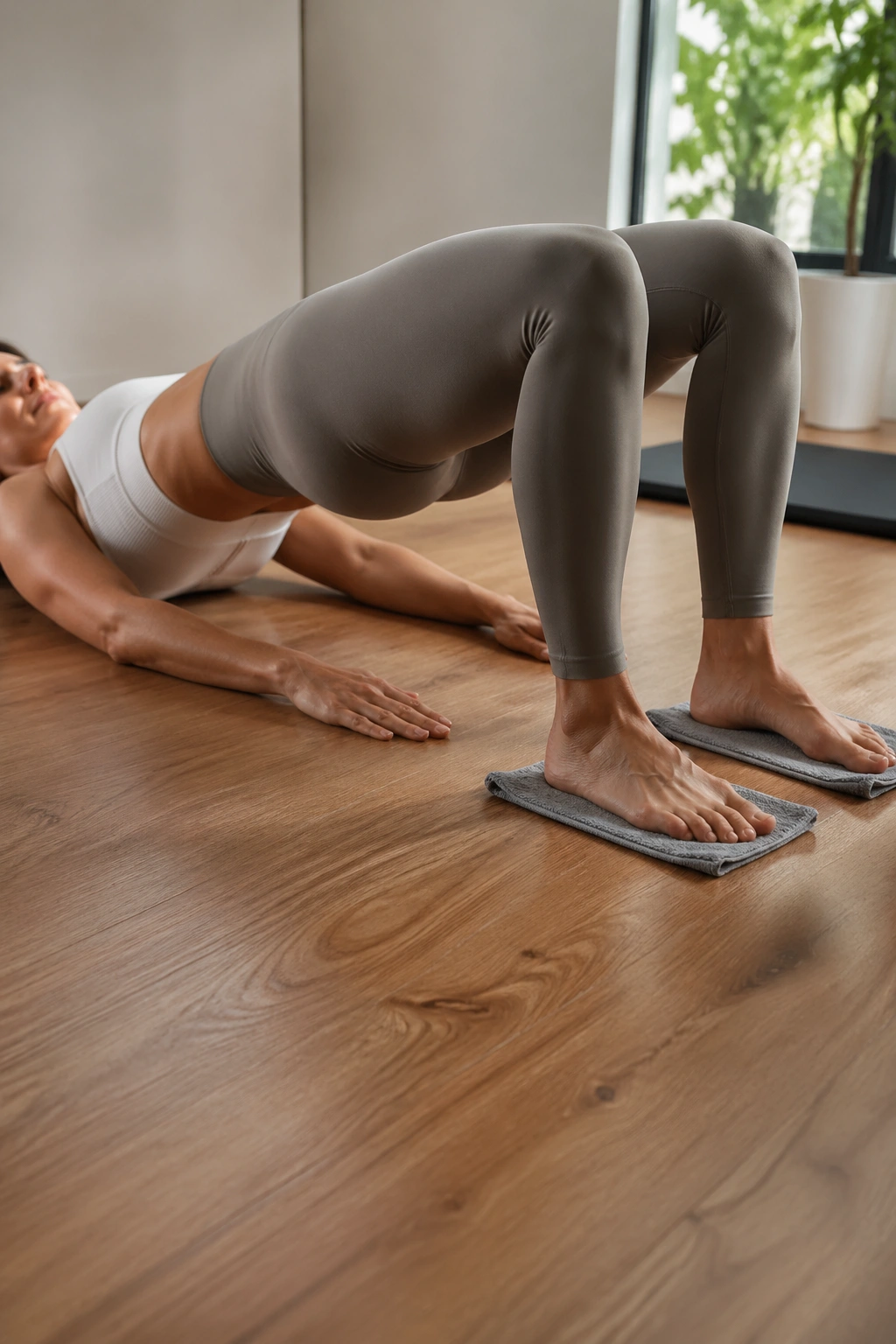
Can a move on socks or sliders really count as Pilates? Absolutely. Sliding hamstring curls blend core control with back-of-leg strength, and the sliding part forces the hamstrings to work through both lengthening and bending.
Lie on your back, feet on towels or sliders, hips lifted, and slowly pull the heels toward you. Then slide them back out without letting the pelvis drop. That return phase is where people usually lose the plot.
Keep the Hips High
- Start with a smaller range if the hamstrings cramp.
- Press through the heels the entire time.
- Keep the ribs down so the back doesn’t overwork.
- Stop the set if the hips sag hard to the mat.
Eight to 12 reps is a lot when the form is clean. That’s enough.
17. Quadruped Straight-Leg Lift
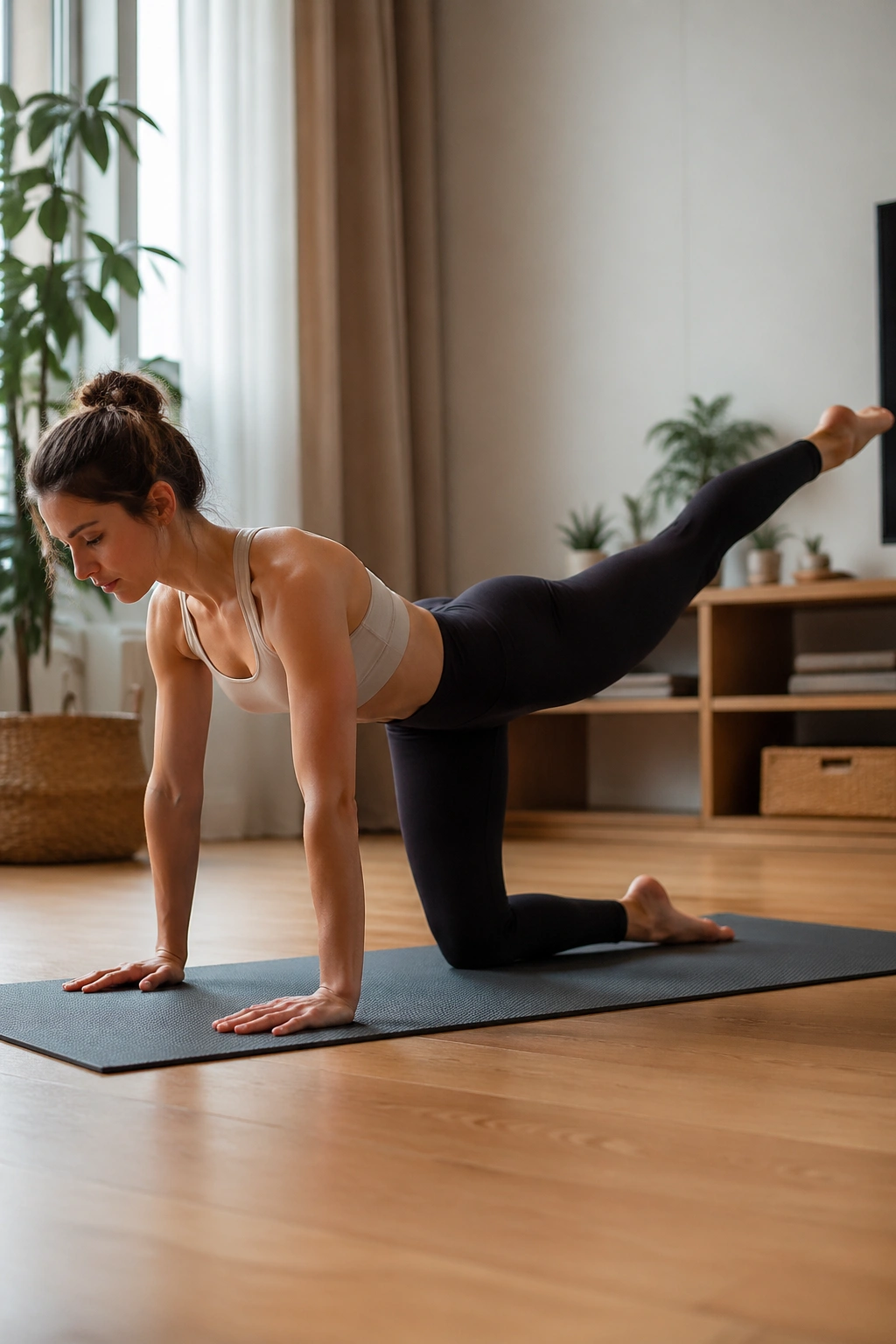
This looks like a cousin of the donkey kick, but the straight leg changes the load. With the knee extended, the hamstrings and glutes have to share the work in a longer lever, which makes the move feel more precise and less springy.
Keep the toes pointed or softly flexed, depending on what feels better in your lower back. The leg should rise only until the pelvis wants to rotate. That’s your ceiling.
A straight-leg lift is useful when the bent-knee version starts feeling too familiar. It asks for more control and less momentum, and that’s usually where the shape-changing work lives.
Try 8 to 10 slow reps per side. If you can hold the top for two full breaths without twisting, you’re doing it well.
18. Bird Dog Toe Taps
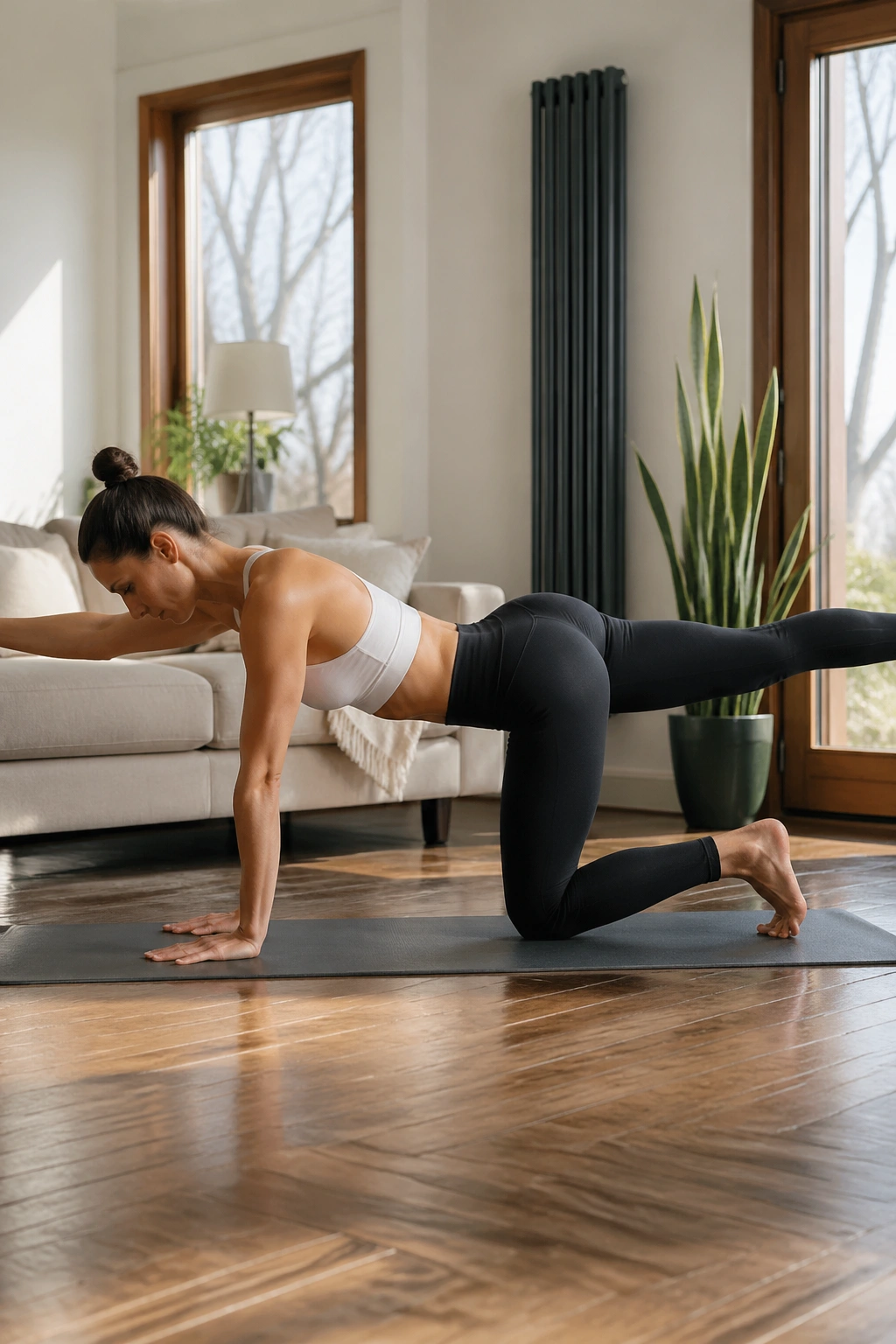
Bird dog toe taps are the quiet sibling in this group. One leg extends back, then taps the floor lightly before lifting again, while the opposite arm reaches forward and the trunk stays steady.
What makes this so good is the anti-rotation work. Your pelvis wants to roll. Your ribs want to flare. The move teaches both to stay put while the leg moves cleanly.
Keep the motion small and the breath steady. Speed ruins this exercise fast. If you can tap the toe without shifting your weight around, you’re getting the point.
Six to eight taps per side is enough for a thoughtful set. If that feels easy, hold the leg out for three breaths before the taps begin.
19. Side Plank Leg Lift
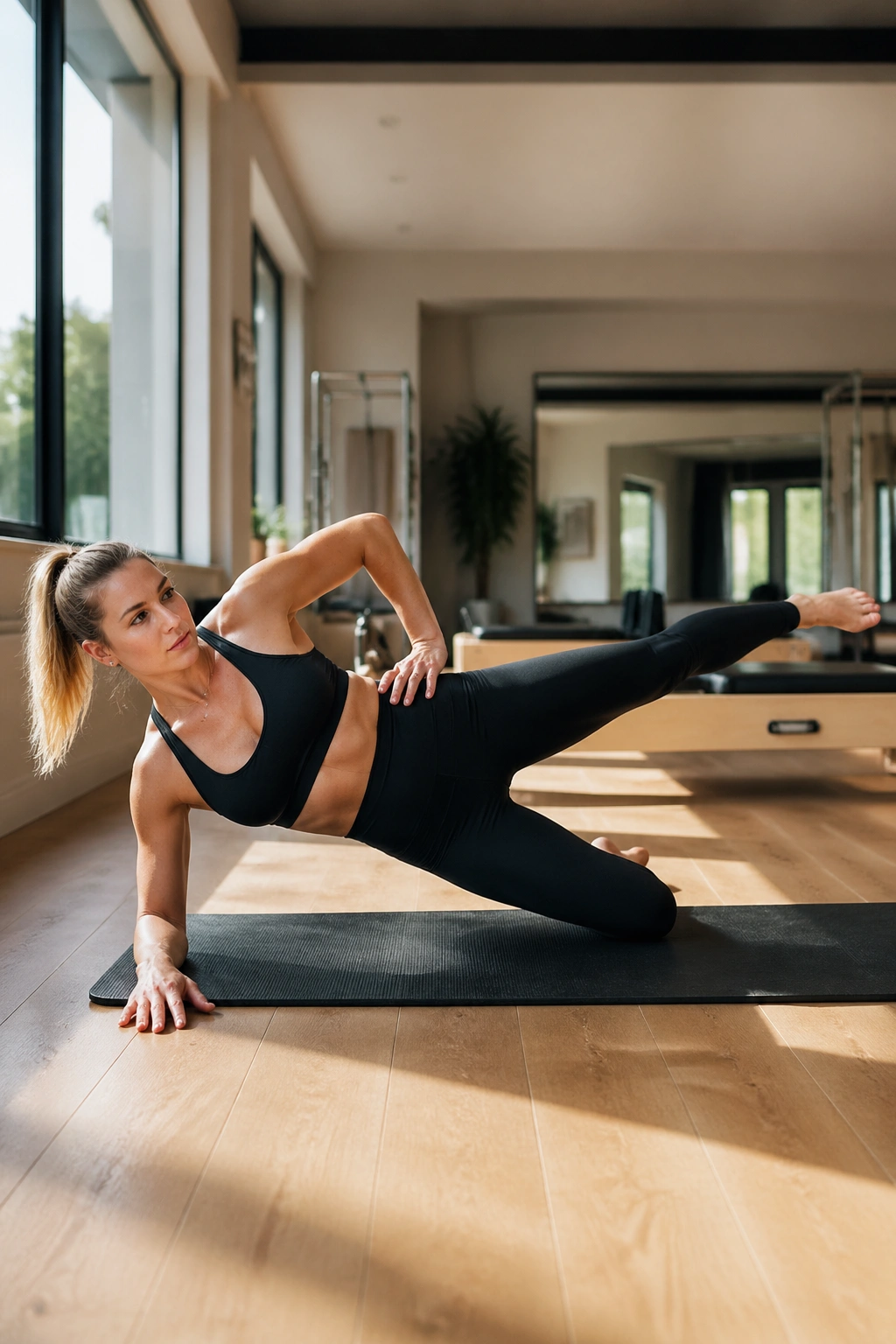
Side plank leg lifts are rude, in the best way. They combine outer-hip work with side-body strength, so the body has to stay long while one leg lifts away from the other.
This is where people learn that “lean legs” also means stable hips. The standing side of the body has to keep the pelvis from collapsing, and the lifted leg has to move without tossing the torso around.
Make It Manageable
- Drop the bottom knee to the mat for a modified version.
- Keep the top leg slightly behind the body line.
- Lift only as high as you can without twisting.
- Use your bottom hand for support if your shoulder feels shaky.
Even 5 to 8 clean lifts can be enough. Quality matters more here than volume.
20. Reformer Footwork Presses
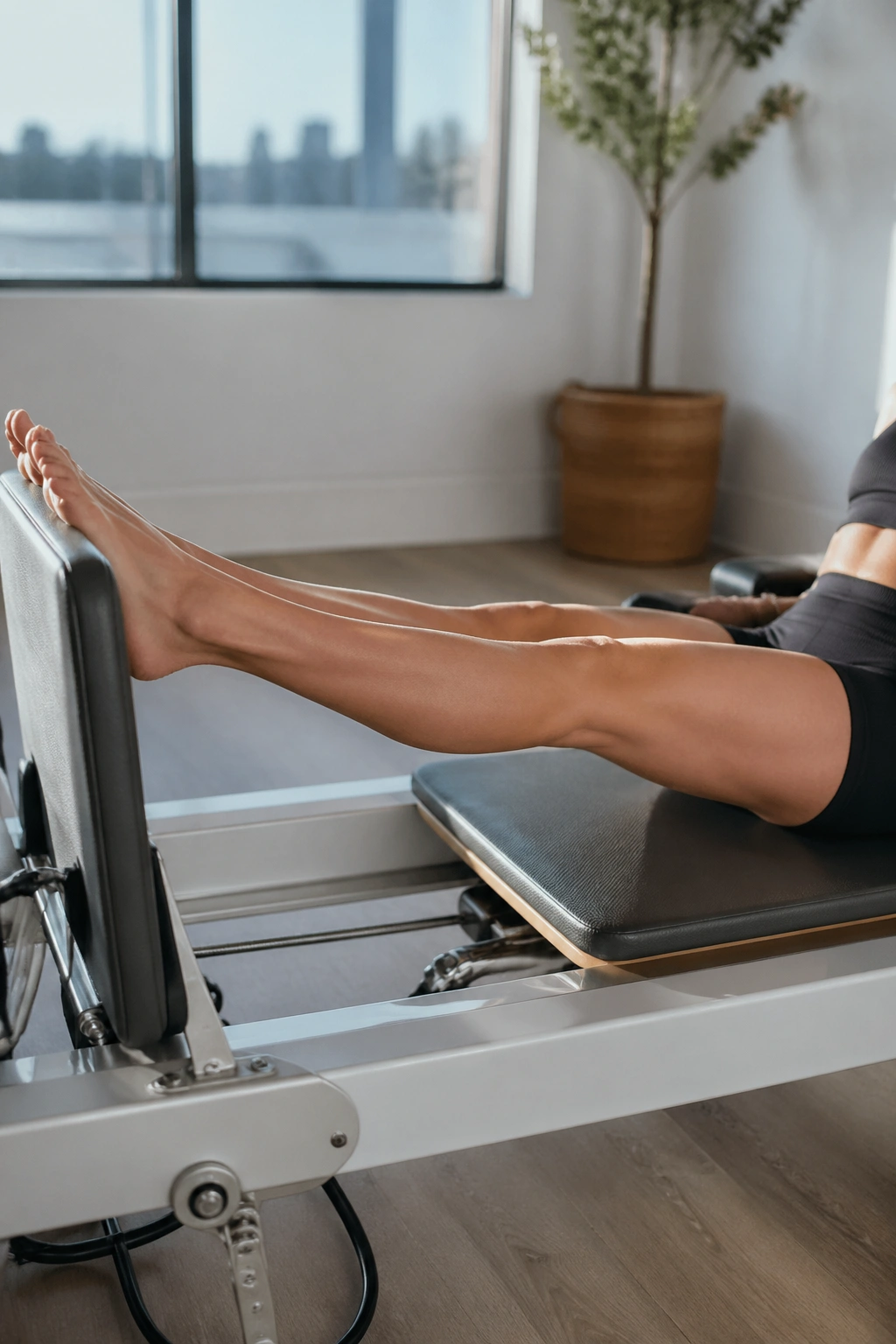
If you have access to a reformer, footwork presses are one of the simplest ways to load the legs without pounding the joints. Parallel heels, parallel toes, and Pilates V each shift the emphasis a little, which makes the exercise more useful than it first appears.
The carriage should move smoothly. No bouncing. No slamming the springs. A slow press and an equally slow return keep the thighs and glutes honest while the feet stay connected to the footbar.
Three Foot Positions Worth Using
- Heels parallel: good for hamstrings and glutes.
- Toes parallel: useful for quads and ankle control.
- Pilates V: adds more inner-thigh and turnout work, if the hips stay open.
Ten to 12 controlled presses is enough for a set. If your knees wobble inward, lower the resistance and clean up the path first.
21. Reformer Heels-Lift Footwork
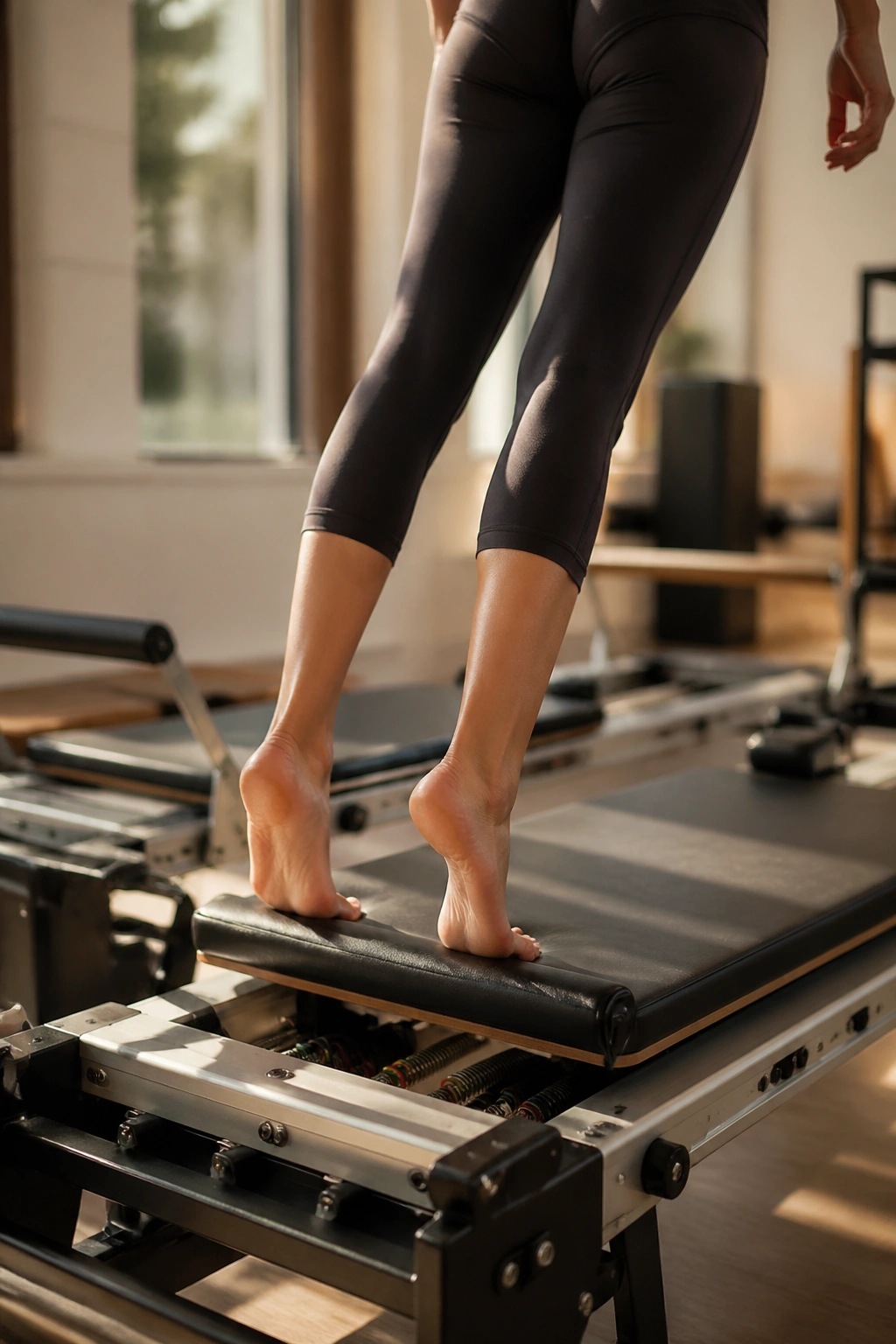
This version looks almost like the one above, but the heels hover slightly as you press, and that small change wakes up the calves and arches. The lower leg has to stay active, which is one reason this drill shows up so often in Pilates studios.
The lift should be tiny. You are not standing on tiptoe in a dramatic way. You’re staying light in the heels while keeping the ankles stable and the knees tracking well.
If the arches collapse, the spring tension is probably too heavy or the foot placement is too narrow. Small adjustments matter here. A few centimeters can change the whole feel of the exercise.
Eight to 10 presses are plenty. The calves will tell you when you’ve done enough.
22. Resistance Band Lateral Walks
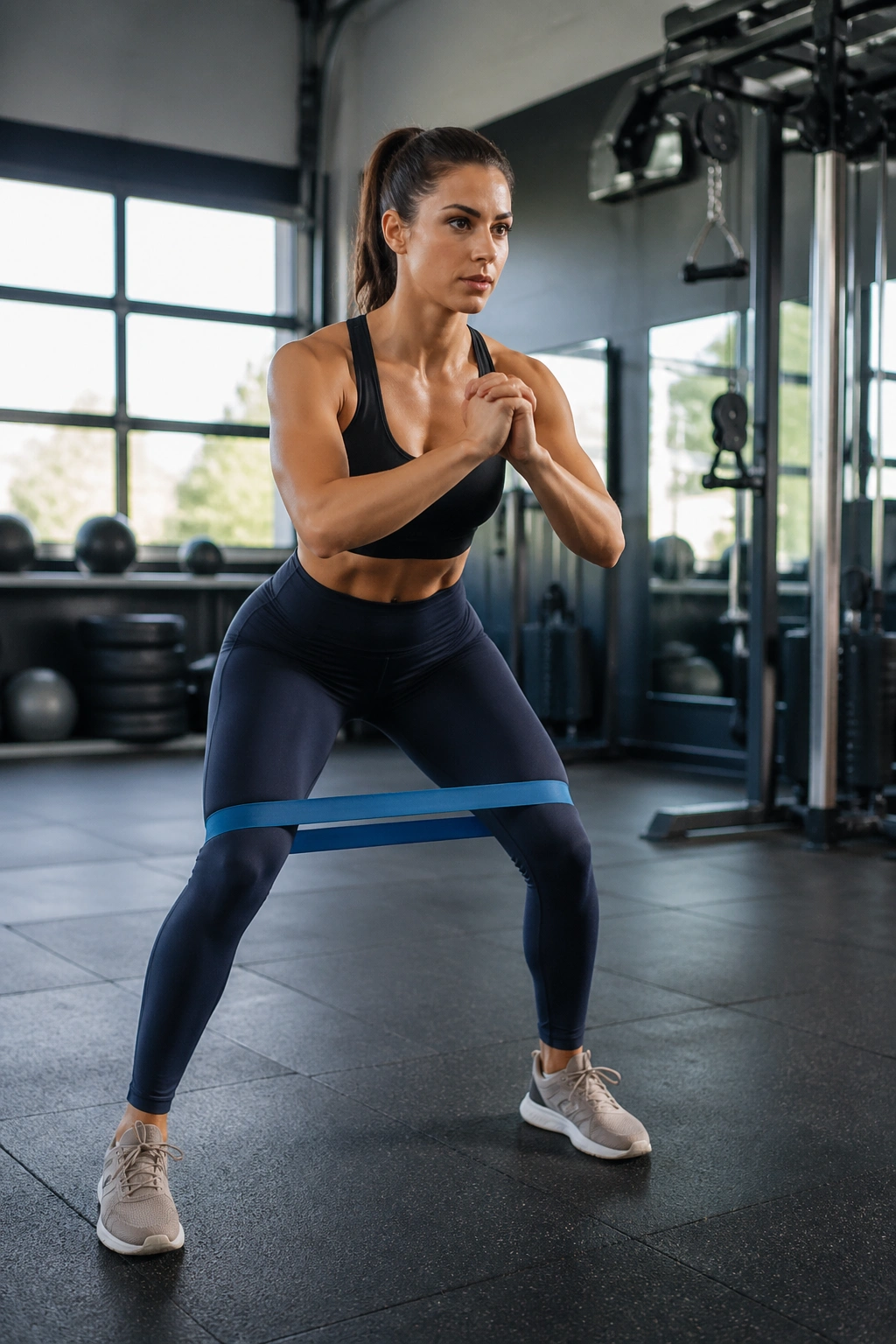
Unlike big side steps that turn into a shuffle, banded lateral walks work best when the steps stay short and deliberate. A loop band above the knees or around the ankles forces the outer hips to fight for space.
This move pairs nicely with Pilates because it rewards alignment. Stay low in a soft squat, keep the feet parallel, and avoid snapping the back foot in too close. The band should stay under tension the whole time.
Ten steps to the right, ten to the left, then repeat. If your knees cave inward, the band is too light or your stance is too narrow.
A common mistake is leaning the torso to make the walk easier. Don’t. The torso should stay stacked over the hips.
23. Curtsy Lunge With Reach
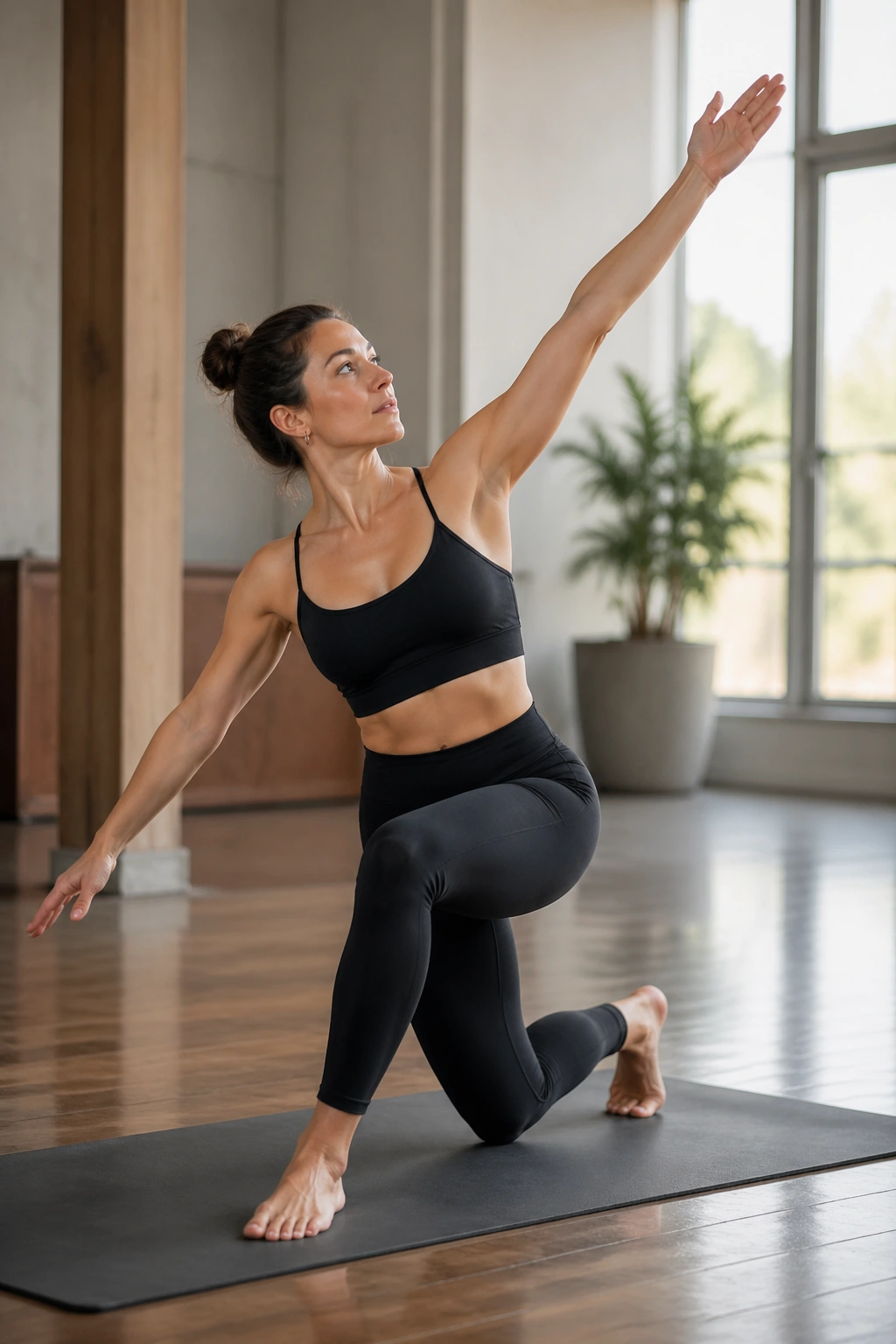
A curtsy lunge looks elegant, but the work is sneaky. Crossing one leg behind the other asks the glute med, quads, and inner thighs to coordinate while the torso stays upright and controlled.
The reach adds a little more challenge by making the upper body stay balanced as the lower body shifts. Use a small reach, not a wild twist. If the knee feels cranky, shorten the cross-behind step and keep more weight in the front heel.
This is one of those exercises where range matters less than line. Clean alignment beats a deep drop every time.
Try 8 reps per side. If you want more heat, hold the bottom for one beat before returning to standing.
24. Heel-Raise Calf Series
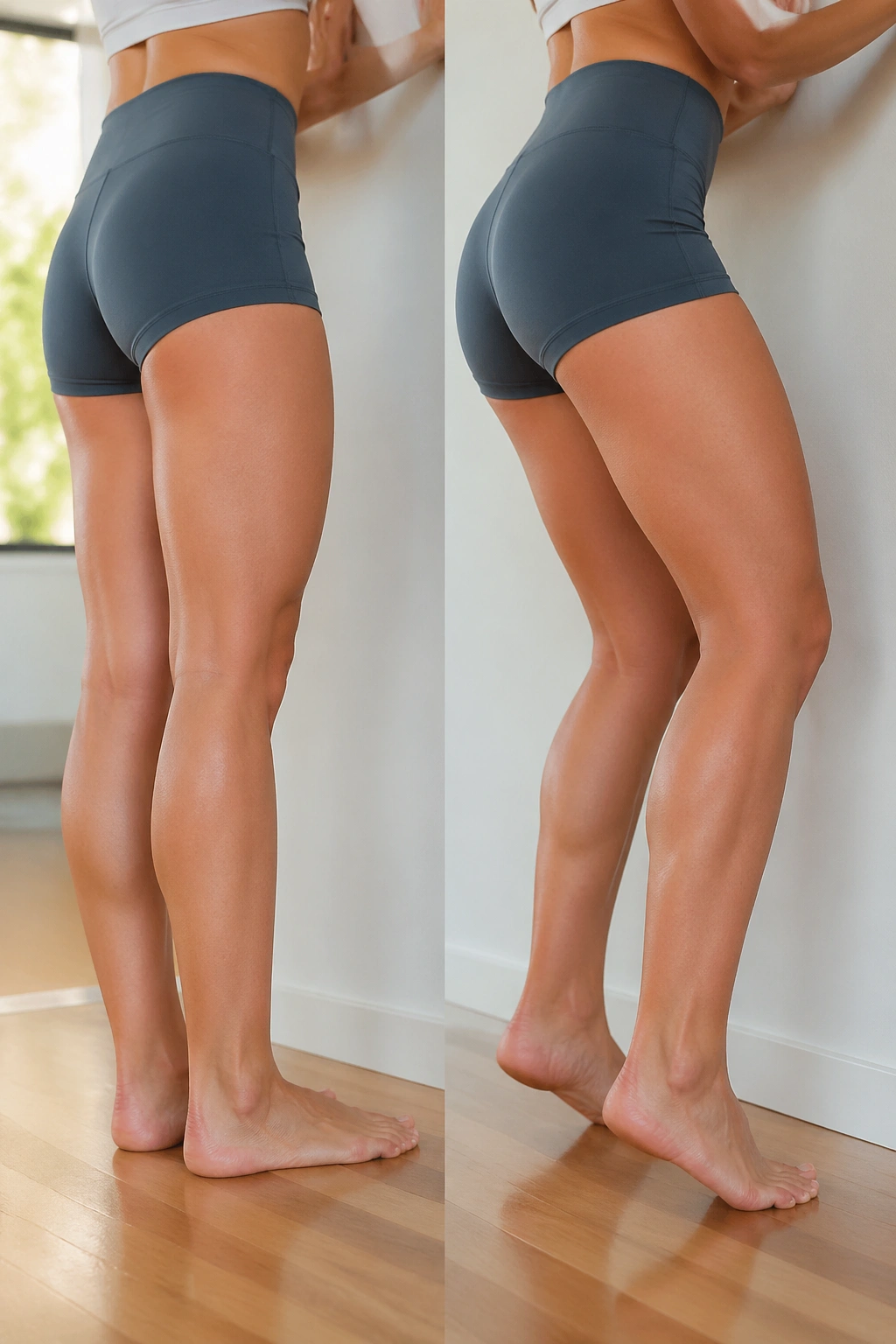
Calves get ignored far too often, and then people wonder why their lower legs feel weak or flat. A heel-raise series fixes that fast by training both the straight-knee and bent-knee versions of the calf raise.
Stand tall, hold a wall or chair lightly, and lift both heels off the floor for 12 to 20 reps. Then repeat with a tiny bend in the knees to shift more work into the soleus, the deeper calf muscle that often gets skipped.
Two Simple Ways to Do It
- Two-leg raises: best for rhythm and higher reps.
- Single-leg raises: best when the two-leg version starts feeling too easy.
Pause at the top for one count. Lower slowly. That slow lower is where a lot of the work hides.
25. A 10-Minute Lower-Body Pilates Flow
A short flow is often more useful than a long, random list of exercises. Pick four to six of the moves above and keep the pace steady enough that form never falls apart.
Sample Order
- 45 seconds inner-thigh ball squeeze
- 45 seconds side-lying leg lifts on the right
- 45 seconds side-lying leg lifts on the left
- 45 seconds bridge with heels press
- 45 seconds clamshells on each side
- 45 seconds standing side leg lifts on each side
- 45 seconds wall sit with ball squeeze
- 45 seconds heel-raise calf series
Rest for 20 to 30 seconds between moves if you need it. Two rounds is enough for a real lower-body session, especially if you keep the reps slow and the transitions tidy.
This kind of flow works because it alternates positions. Lying, kneeling, standing. Inner thigh, outer hip, glute, calf. The body never gets too comfortable, and that is usually where the good work starts.
Lean legs are built with consistency, not with drama. Pick a handful of these Pilates leg workouts, repeat them often, and keep the range clean enough that your hips stay in charge. That’s the part most people skip.
