



Most upper-body workouts ask you to grind through push-ups and call it a day. Pilates upper body workouts at home take a slower road, and that slower road can light up your shoulders, upper back, triceps, and posture in a way people usually underestimate.
A mat, a wall, and maybe a pair of 1- to 3-pound weights are enough. That’s the nice part. The tricky part is that Pilates cares about what your shoulder blades are doing, not just how many reps you survive, so sloppy form shows up fast.
Shrugging is cheating. It also annoys a lot of shoulders.
Keep the ribs quiet, reach through the fingertips, and let the breath do some of the work; a slow exhale usually keeps the neck calmer and the core more honest. Start with the wall. It gives instant feedback, and your first few reps tell you more than a mirror ever will.
1. Wall Angels Against the Door Frame
The wall tells the truth.
Stand with your heels a few inches from the baseboard, your back lightly touching the wall, and your arms in a cactus shape. Slide the arms upward until they’re nearly overhead, then bring them back down with control. If your lower back pops off the wall or your shoulders creep upward, that’s your cue to shorten the range. Tiny range. Big work.
Why It Works
Wall angels wake up the muscles that keep your shoulders from rounding forward all day. They also teach your ribs to stay quiet while your arms move, which is the part people usually skip. Do 6 to 8 slow reps or spend 45 seconds moving like you mean it.
- Keep your feet about 6 inches away from the wall.
- Press the back of your head gently into the wall.
- Move slow enough that you can feel each inch of the slide.
- Stop if your neck starts doing the work for your shoulders.
Best cue: think “slide, don’t shove.” That one word changes the whole drill.
2. Pilates Push-Up Plus
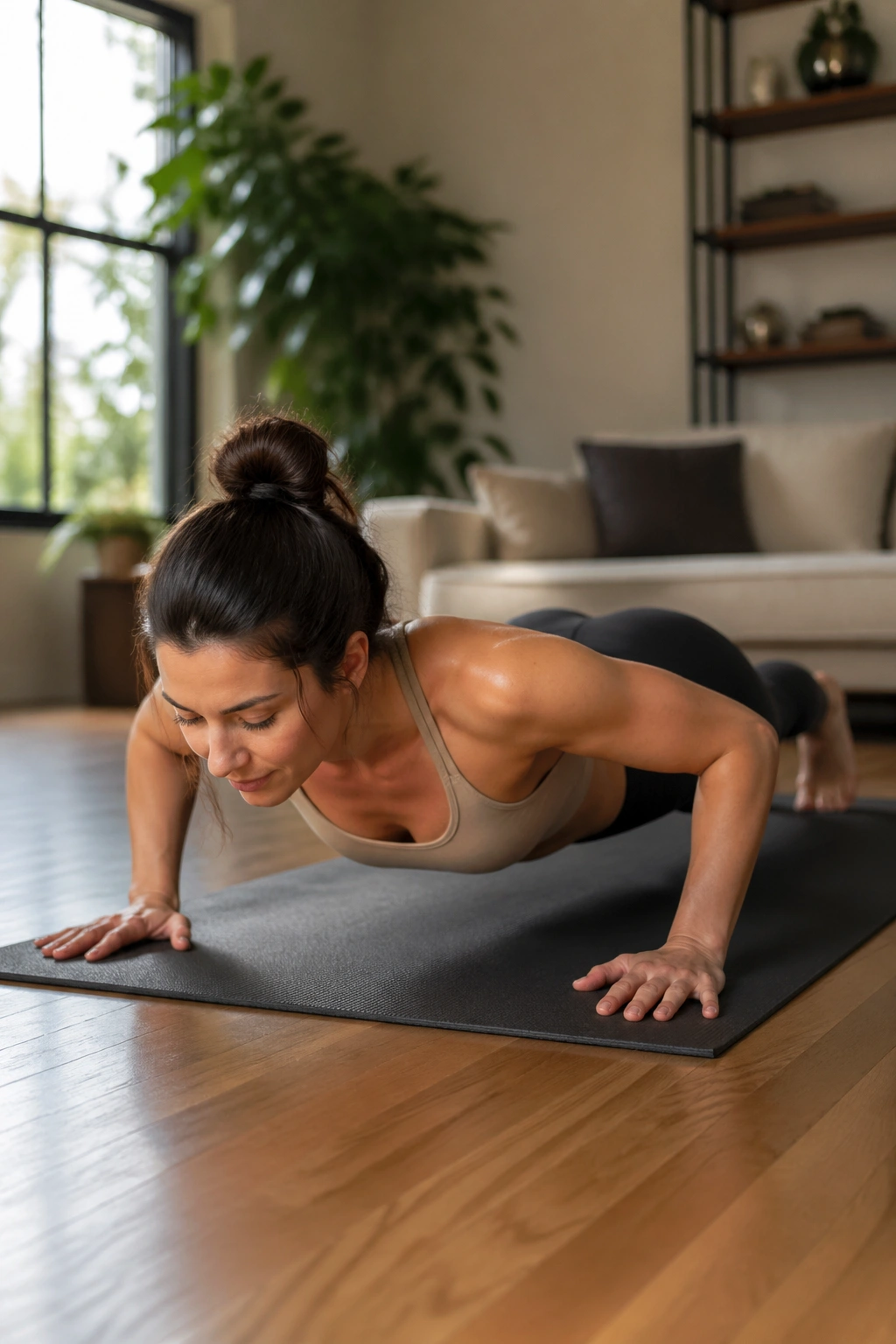
A push-up plus looks small and still taxes the whole front of the shoulder. The “plus” is the extra reach at the top, when you push the floor away and let the shoulder blades glide apart. That little finish is where the serratus anterior wakes up, and it matters more than people expect.
Start on a wall, a counter, or the floor if you’re ready. Lower with control, then press back up and add a final reach through the upper back without letting the ribs flare. The body should feel long, not dumped into the lower back. Four to six clean reps are better than ten sloppy ones.
I like this one because it has a clear finish. You know when you’ve done it right. The chest works, the triceps work, and the front of the shoulders feel organized instead of jammed.
If your wrists get cranky, use an incline. If the neck tightens, cut the depth in half and keep the chin softly tucked.
3. Seated Arm Boxing
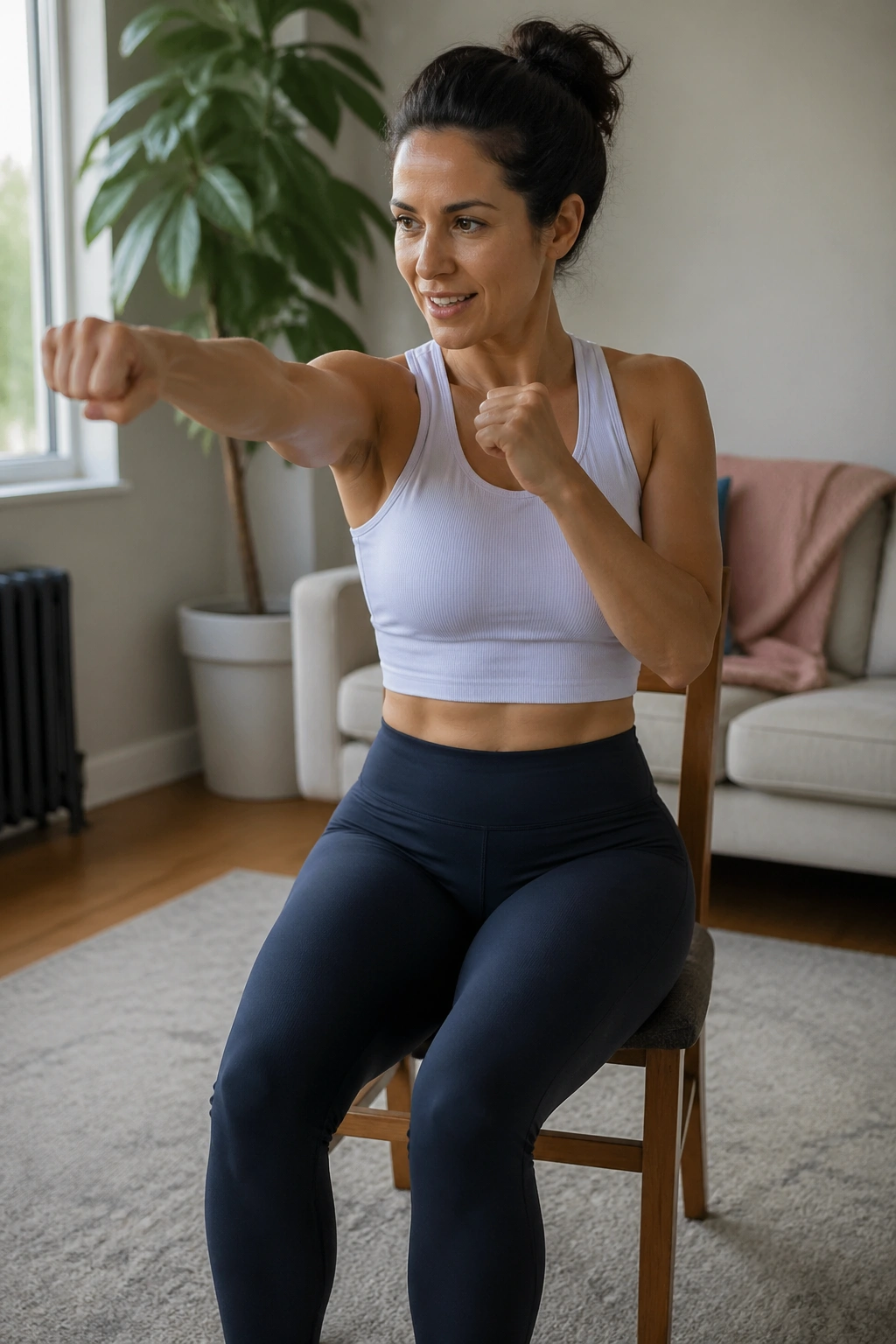
Can seated arm work burn? Absolutely—if you keep the arms honest and the ribs quiet. Sit tall on a chair or the floor, hold 1- to 2-pound weights if you want more load, and punch the arms forward, across, and slightly up in short, crisp bursts. The movement is fast enough to raise the heart rate, but not so wild that it turns into flailing.
How to Use It
Use 30-second rounds with 15 seconds of rest, or do 3 sets of 20 punches per side. Keep the shoulders low and the fists relaxed. The moment your torso starts twisting wildly, slow down and make the reach smaller.
This one is sneaky. It looks almost too simple. Then the front of the shoulders start warming, the upper arms feel full, and the breath gets a little louder than you planned.
A nice bonus: it’s easy to slot into a short home session when you only have a few minutes and don’t want to get on the floor.
4. Wall Scapular Push-Ups
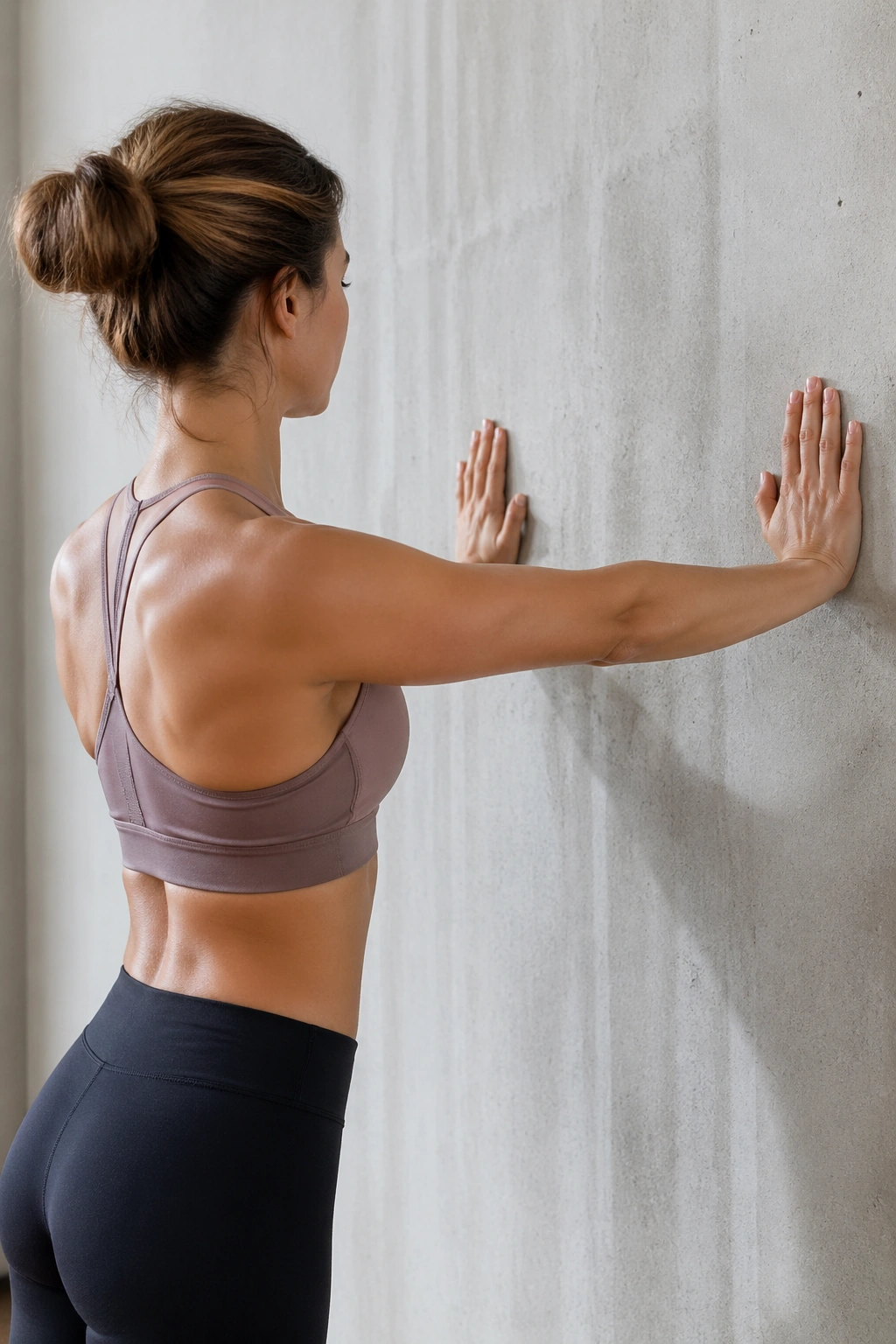
If your shoulders creep toward your ears every time you hold your arms up, wall scapular push-ups will expose it fast. Stand facing a wall with your hands planted at chest height, elbows straight, and your body angled forward just enough to feel supported. Then let your chest sink a few inches toward the wall before pressing the floor away and rounding the upper back slightly.
That’s not a big motion. It shouldn’t be. The goal is to teach the shoulder blades to glide forward and back without the elbows bending.
- Keep the neck long.
- Move only the shoulder blades.
- Don’t let the low back sag.
- Use 8 to 12 reps in slow, even rhythm.
Watch this: if the hands turn into claw marks on the wall, you’re gripping too hard. Soft palms work better.
5. Prone T, Y, and W Lifts
Lie face down and the floor suddenly feels less friendly.
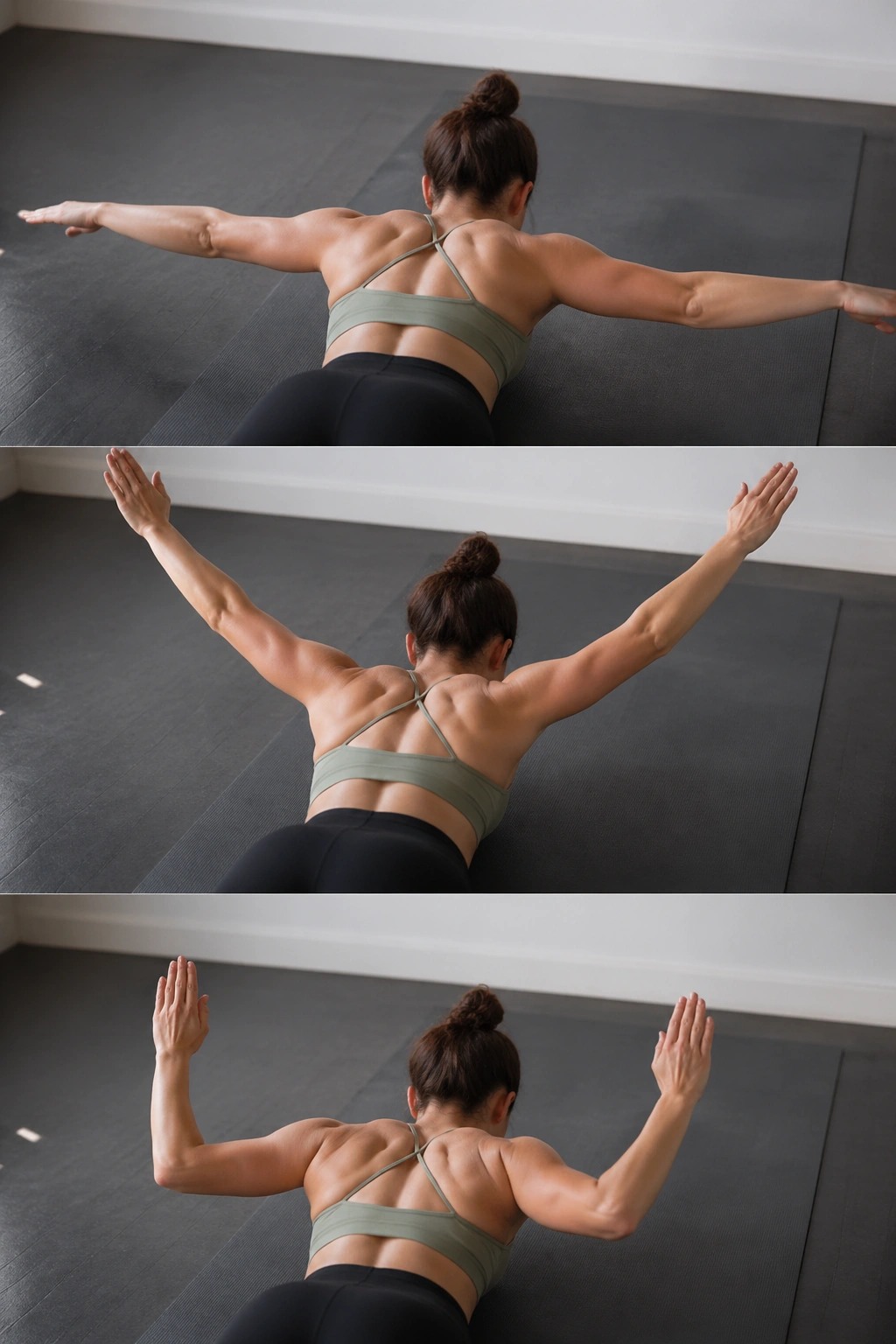
That’s good. Prone T, Y, and W lifts ask the muscles between the shoulder blades to do real work, and they do it without needing any equipment. Reach your arms into a T shape, lift them a few inches, lower, then move into a Y and finally a W. Keep the forehead resting on the mat or on a folded towel so the neck doesn’t crank upward.
The key is patience. These lifts are tiny, and they get ugly fast when people try to heave the arms into the air. You want the back of the shoulders to work, not the lower spine. Use 5 reps in each position and pause for a breath at the top.
I love this series after long desk days because it makes the upper back feel awake again. Not pumped. Awake.
If the thumbs point up a little in the Y shape, that’s fine. It often helps the shoulders stay open and the neck stay quieter.
6. High Plank Shoulder Taps
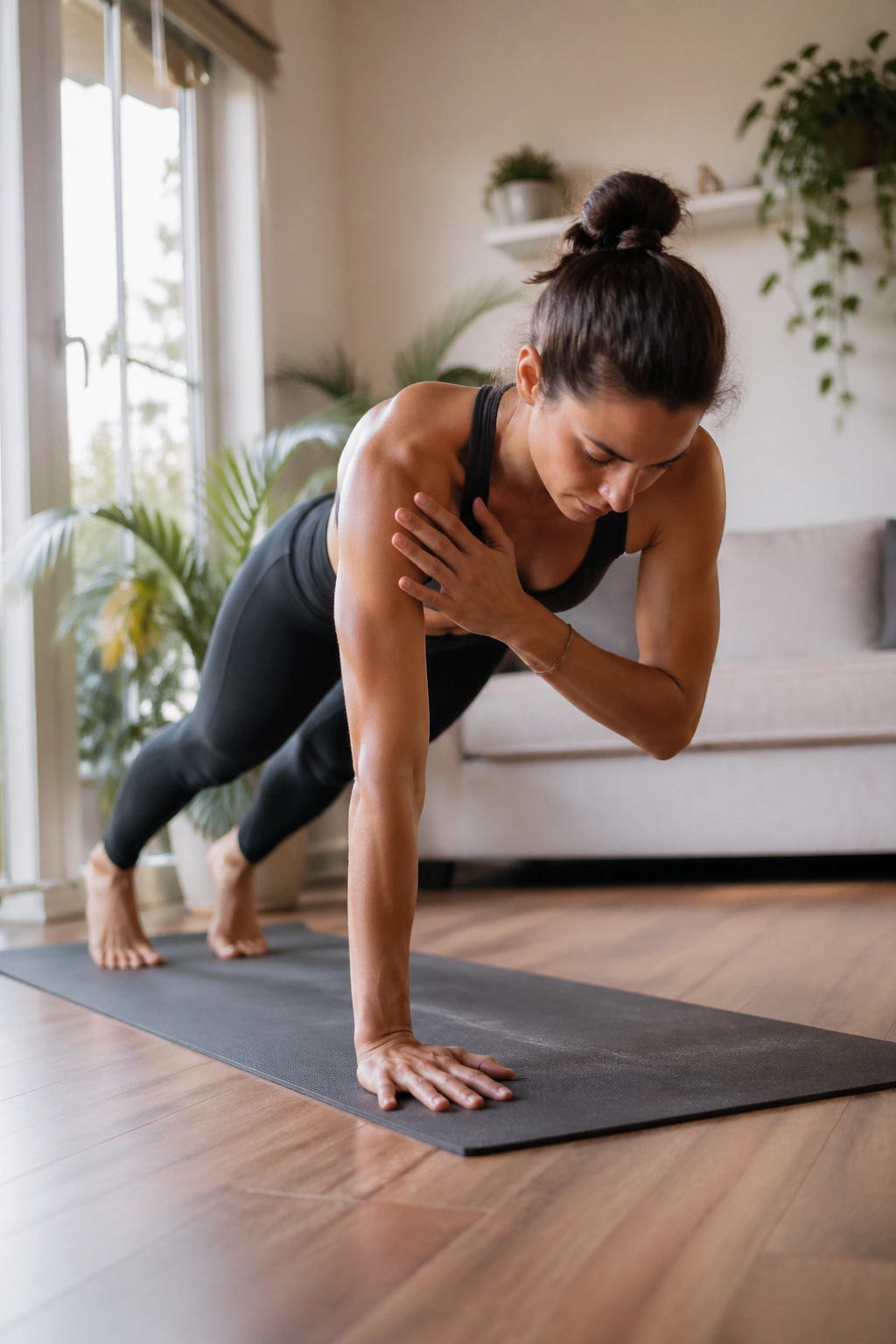
Unlike a regular plank, this version asks for balance before speed. Start in a high plank with your hands under your shoulders and your feet set a bit wider than hip-width. Tap one shoulder with the opposite hand, set it down, then switch sides while keeping the hips as still as you can.
That stillness is the whole point. If the pelvis rocks all over the place, the shoulders don’t get the clean training signal they should. A wide stance helps. So does slowing down.
This is best for people who already have some wrist tolerance and want a workout that blends shoulder stability with trunk control. Do 10 taps per side or work for 20 to 30 seconds.
A small warning: if your form falls apart fast, drop to an incline on a bench or couch. Less drama. Better reps.
7. Mermaid Side Reach With Arm Sweep
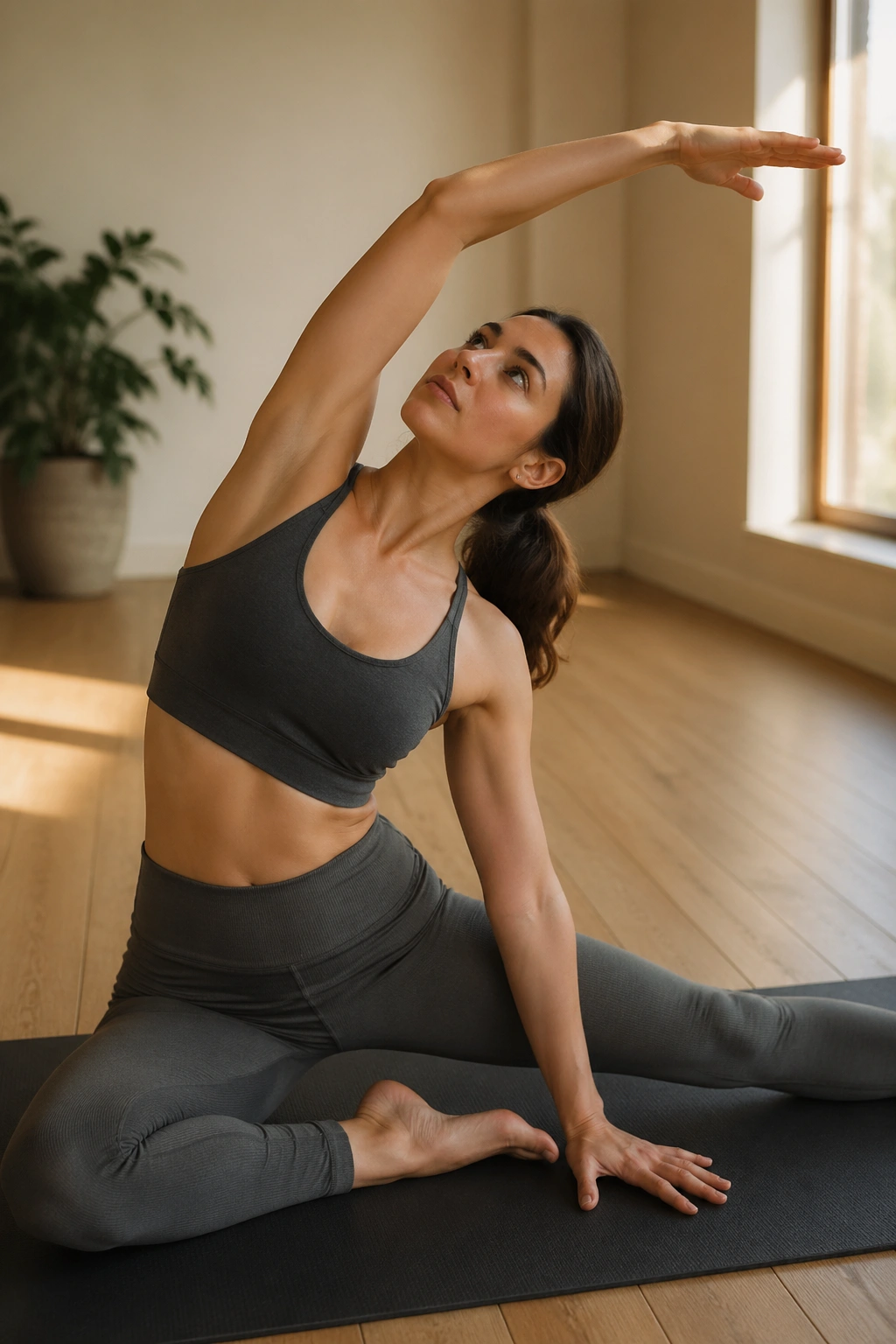
A tight side body can make every overhead reach feel shorter than it should. Sit with one leg folded in and the other bent or extended to the side, then sweep one arm out and over while the other hand anchors you down. The reach should feel like a long line from the fingertips to the hip, not a collapse into the lower back.
What It Trains
Mermaid reaches open the lats, the side ribs, and the shoulder line in one clean motion. They also teach the torso to stay tall while the arm travels, which is a very Pilates thing to care about. Use 3 slow reaches per side, and let each one match a full breath.
How to Feel It
- Sit on a folded towel if the hips feel stiff.
- Keep the bottom shoulder away from the ear.
- Reach only as far as you can keep the spine long.
- Let the exhale make the stretch easier.
This one feels graceful, but it isn’t soft. There’s a deep pull in the side body when you do it well.
8. Swimming Prep on the Mat
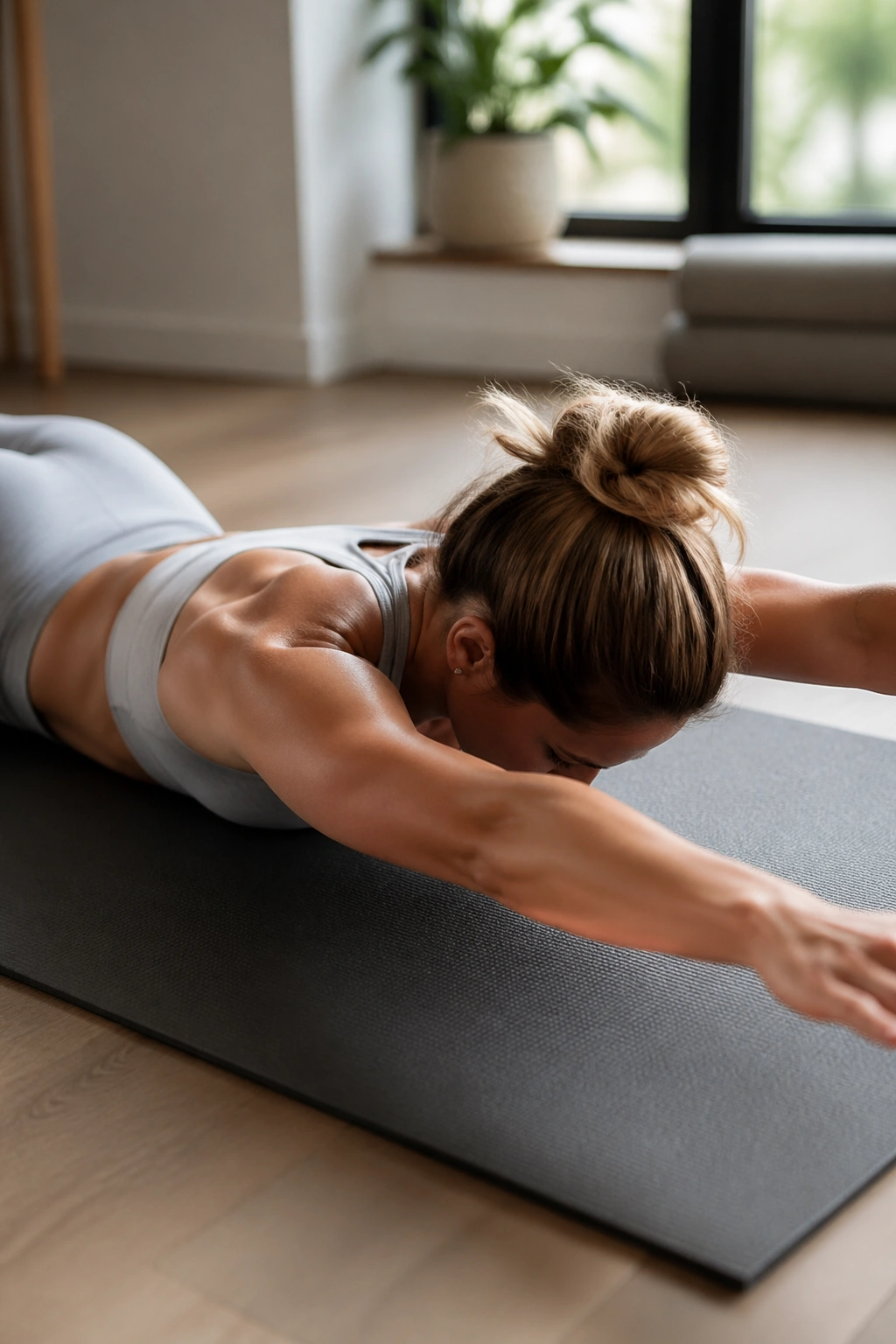
Swimming prep is one of the best ways to wake up the back of the shoulders without wrecking the neck. Lie face down, reach both arms long, and lift them a few inches off the mat. Then alternate tiny arm lifts or flutter the arms in a controlled pattern while the chest stays steady and the ribs stay heavy.
That’s the part people get wrong. They throw the chest up and call it a back exercise. Don’t. Keep the lift small and let the upper back do the work. Two sets of 20 to 30 seconds is enough if the form stays clean.
If you want more challenge, float the chest just slightly and keep the gaze down so the back of the neck stays long. If you feel it in the low back before the shoulders, lower the chest and shrink the range.
This is one of those moves that looks almost calm and still leaves the upper back humming.
9. The Hundred With Arm Beats
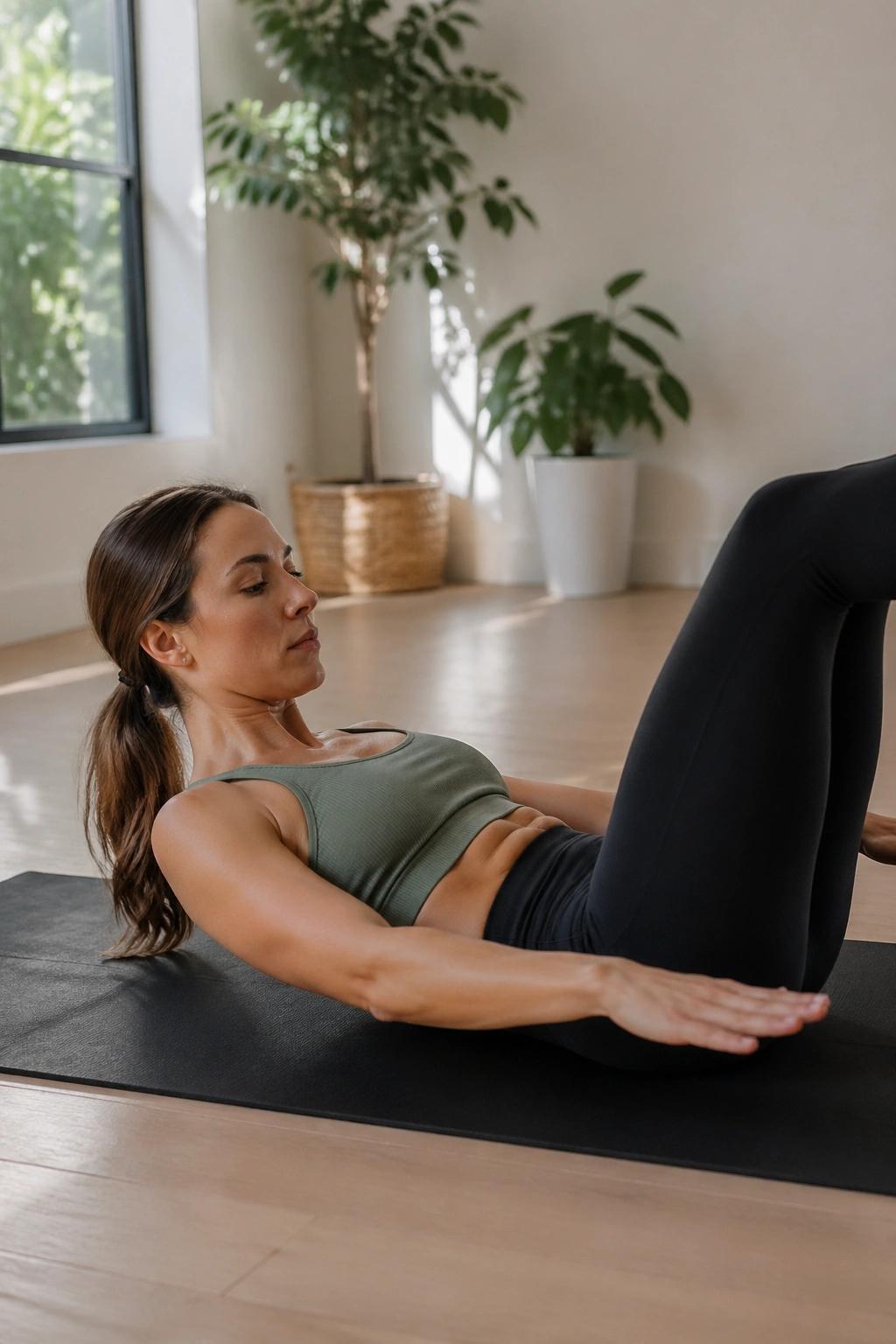
Can arm beats count as upper-body work? They can when the breath stays steady and the lower ribs don’t pop.
Set up on your back with your knees bent or legs in tabletop, then lift the head and shoulders only if your neck likes that position. Pump the arms low and sharp beside the hips, keeping the wrists long and the shoulders broad. The rhythm matters: 5 counts in, 5 counts out is the classic pattern, and it keeps the whole thing from turning sloppy.
How to Pace It
Start with 3 rounds of 20 arm beats if full 100s feel like too much. If your neck complains, put the head down and keep the arms moving. The exercise still works. It just shifts the load.
This move is less about brute force than about keeping the body organized under effort. That’s why it shows up in so many Pilates sessions. The arms burn, yes, but the real lesson is keeping the chest wide and the shoulders calm while the breath gets busy.
10. Resistance Band Pull-Aparts
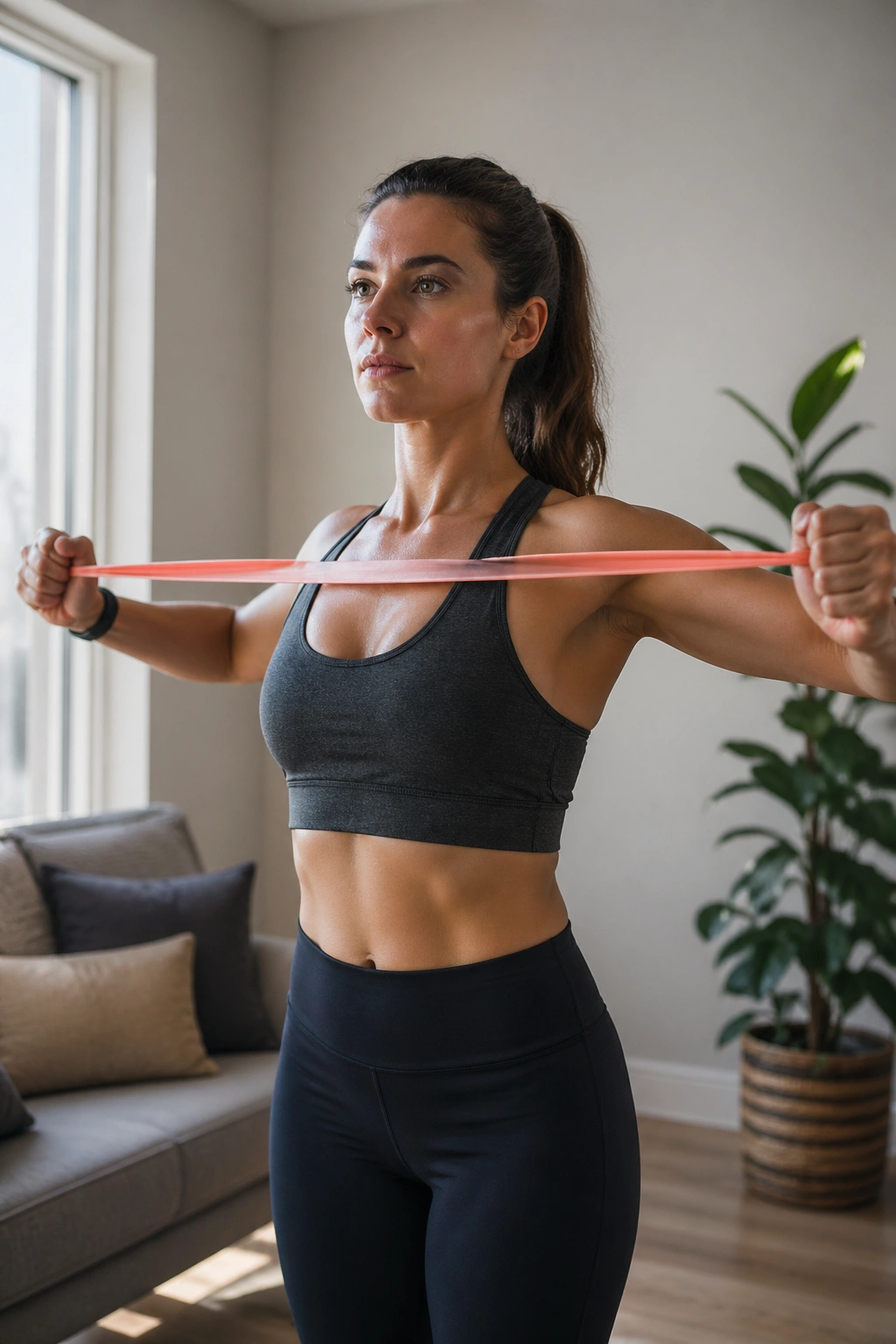
The band should feel like a tug, not a yank. Hold it at chest height, arms straight but not locked, and pull the band apart until it brushes the outside line of your shoulders. Pause for a beat. Then return with control, not a snap.
What I like here is the honesty of the resistance. If you go too fast, the band tells on you. If you let the shoulders hike, it gets sloppy. If you keep the ribs tucked and the neck long, the upper back lights up in a clean, satisfying way.
Use a light band first. A band that’s too stiff turns the whole drill into a grimace contest, and that’s not the point. 12 to 15 reps is a smart range.
This one fits easily into a home workout because you can do it standing in a small patch of floor. No setup drama. No floor sweat.
11. Kneeling Triceps Kickbacks
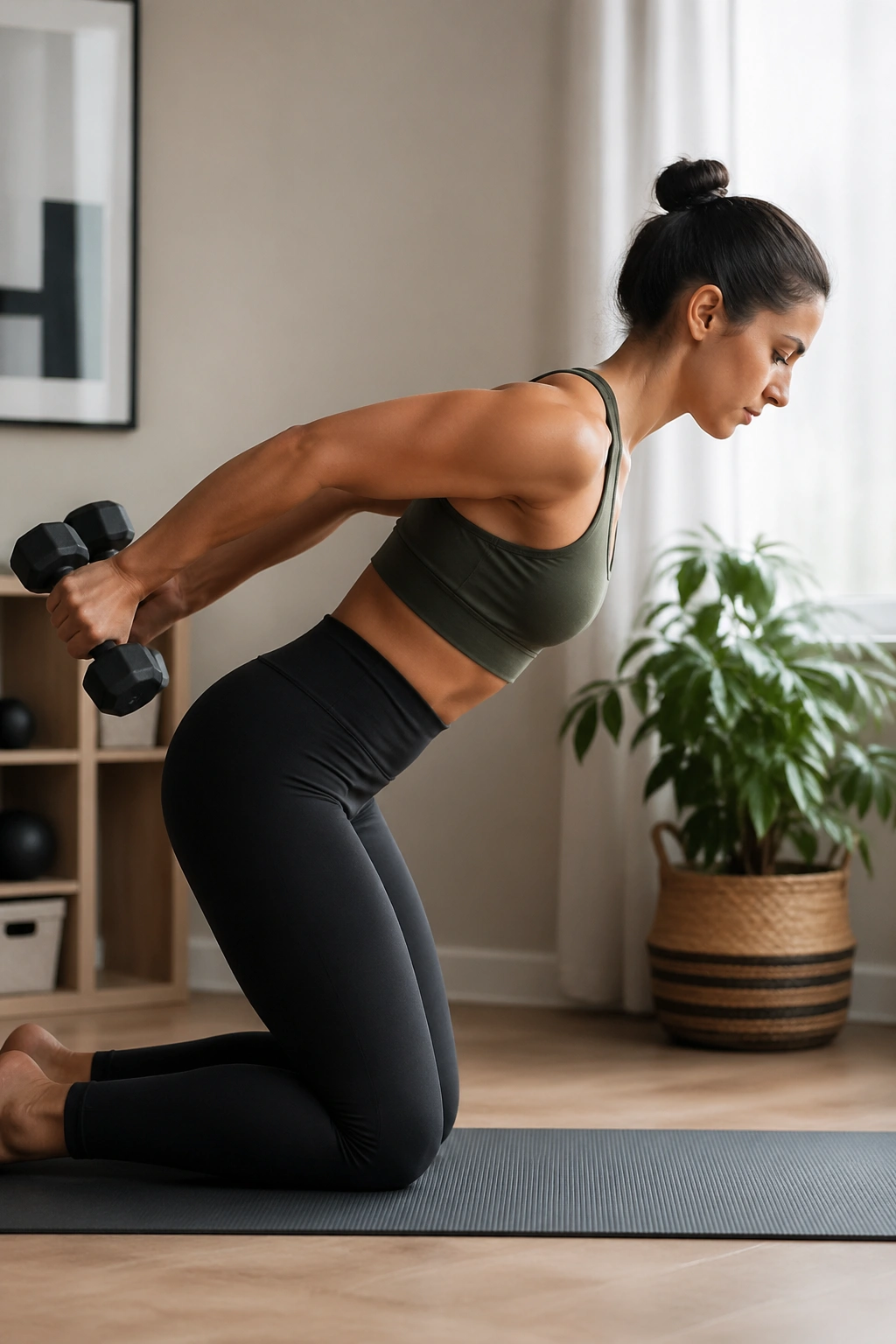
Picture the last five inches of a desk-day slump. Shoulders rounded, elbows drifting forward, upper arms doing nothing useful. Kneeling triceps kickbacks fix that mood fast.
Hinge slightly at the hips while kneeling, keep the upper arms close to the sides, and press the forearms back until the elbows straighten. The movement is short, and it should stay short. If the torso swings, the weights are too heavy or the stance is too loose.
- Use 1- to 5-pound dumbbells.
- Keep the elbows glued near the ribs.
- Press back for 10 to 12 reps.
- Pause at the back for 1 second.
This is one of those exercises that feels boring for about eight seconds and then suddenly catches fire. That’s usually the right sign.
If the wrists are fussy, hold the weights with a neutral grip and keep the neck soft. No need to make it harder than it needs to be.
12. Reverse Plank Shoulder Opener
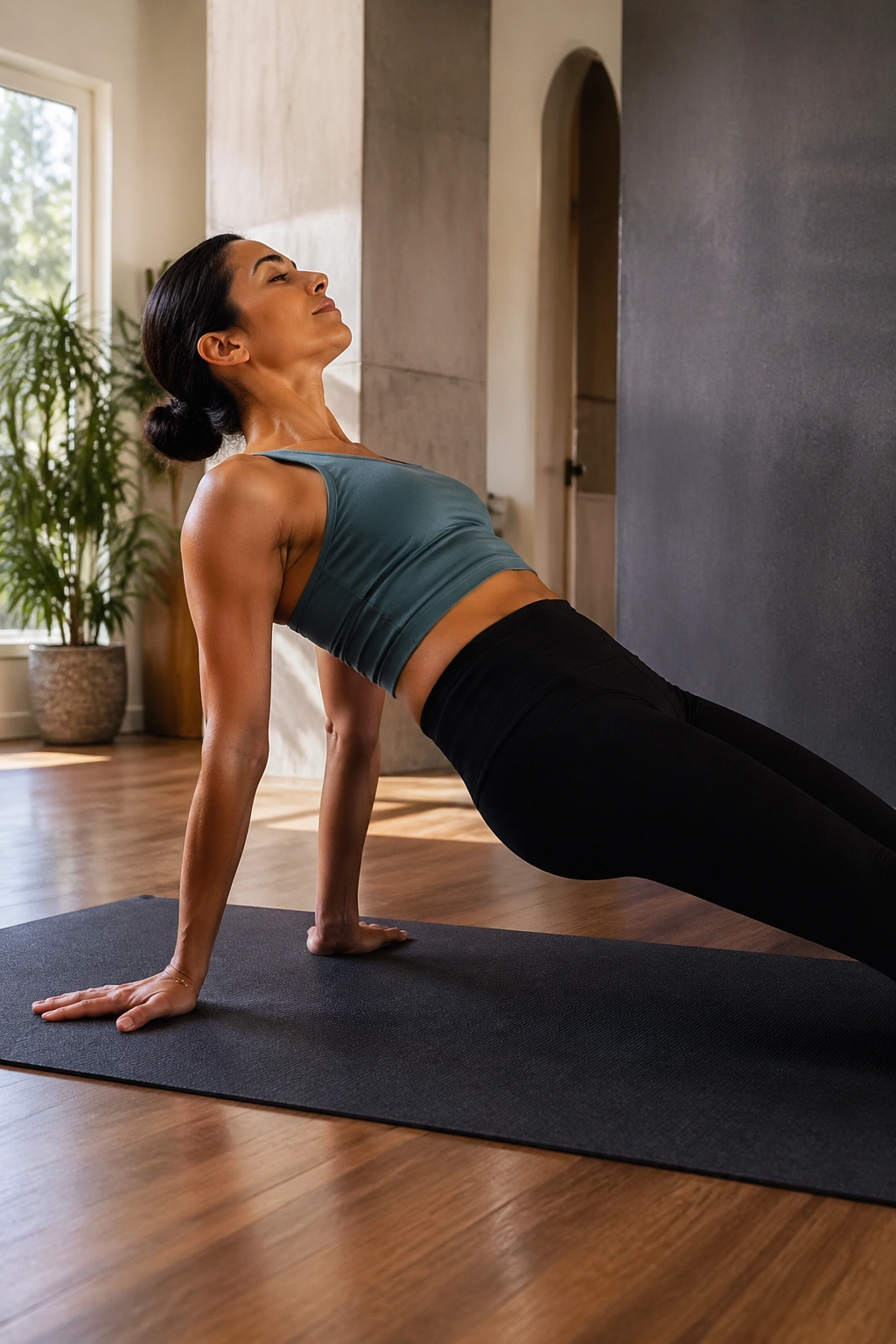
A front plank gets more attention, but a reverse plank can change how your chest and shoulders sit after a long day. Sit with your legs long, place your hands behind your hips, and lift the hips until the body forms a long diagonal line. The chest opens, the shoulders broaden, and the backs of the arms have to support the shape.
This is best for people who spend too much time curled forward. It asks the front body to stretch while the back body does the holding. That combination feels oddly satisfying when it’s done well.
Keep the neck relaxed and the chin slightly tucked. If the shoulders feel pinchy, lower the hips and work from the floor with a smaller lift. 15 to 20 seconds is enough to start.
The catch? Wrists can complain here, so turn the fingers slightly out or use blocks if you have them. Small adjustment. Big difference.
13. Saw With Long Arm Reach
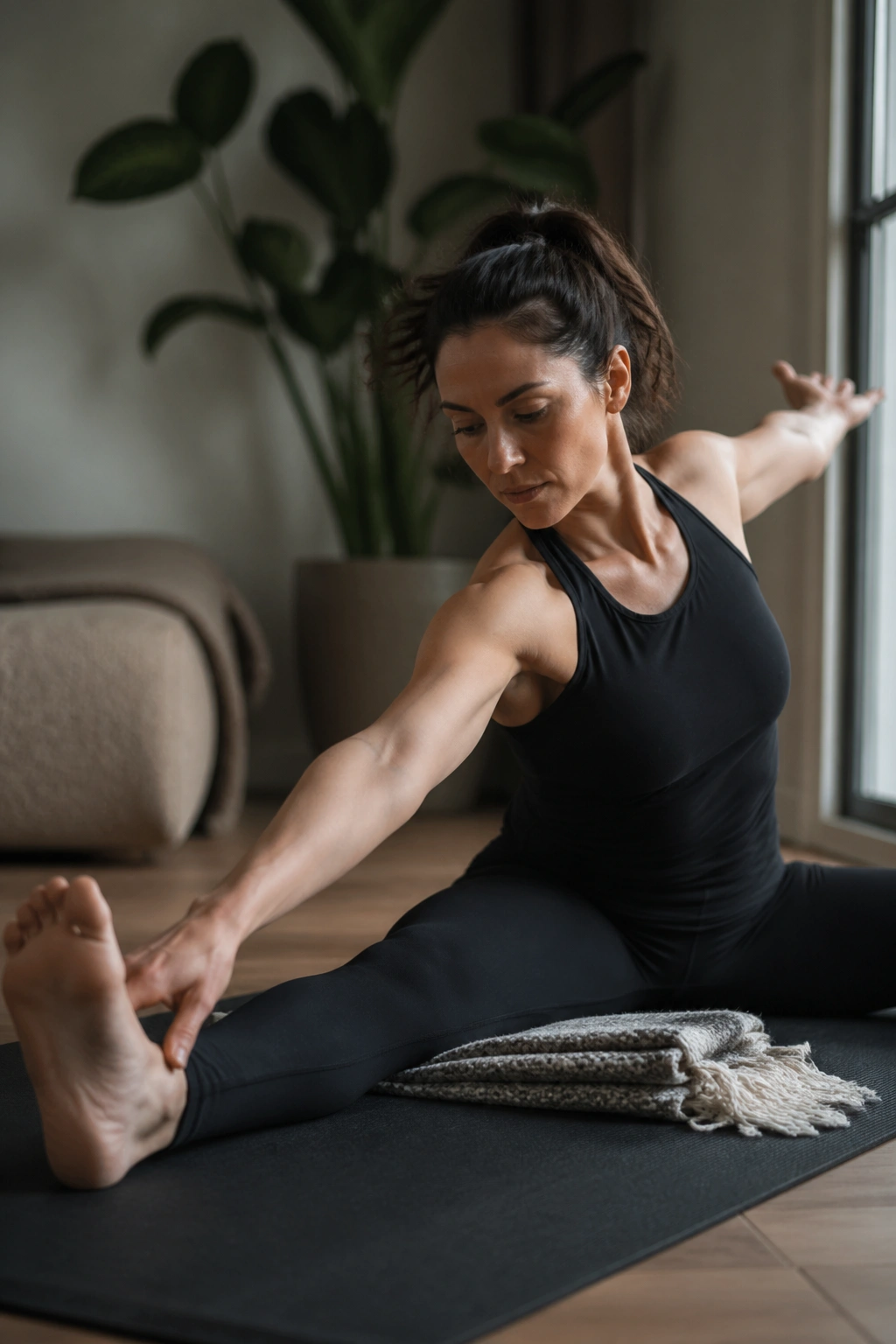
The saw is part stretch, part strength drill, and part reminder to keep the shoulders from hitching up. Sit tall with the legs open in a comfortable V shape, arms stretched wide, then twist toward one side and reach the opposite hand toward the outside of the foot. The back arm reaches behind you like it wants to keep the spine long.
Setup
Sit on a folded blanket if your hips are tight. That helps the pelvis tip forward a little, which makes the spine easier to lift.
The Reach
Exhale as you rotate and fold. Don’t collapse. Keep the chest open enough that the movement feels like a long spiral, not a dive.
What to Watch For
- Don’t yank the shoulder forward.
- Keep both sit bones heavy.
- Reach farther with the ribs than with the arm.
Three slow reps per side is plenty. This one is quieter than a plank, but it asks a lot from the upper body because the shoulders have to stay active while the torso rotates.
14. Standing Shoulder Circles and Holds
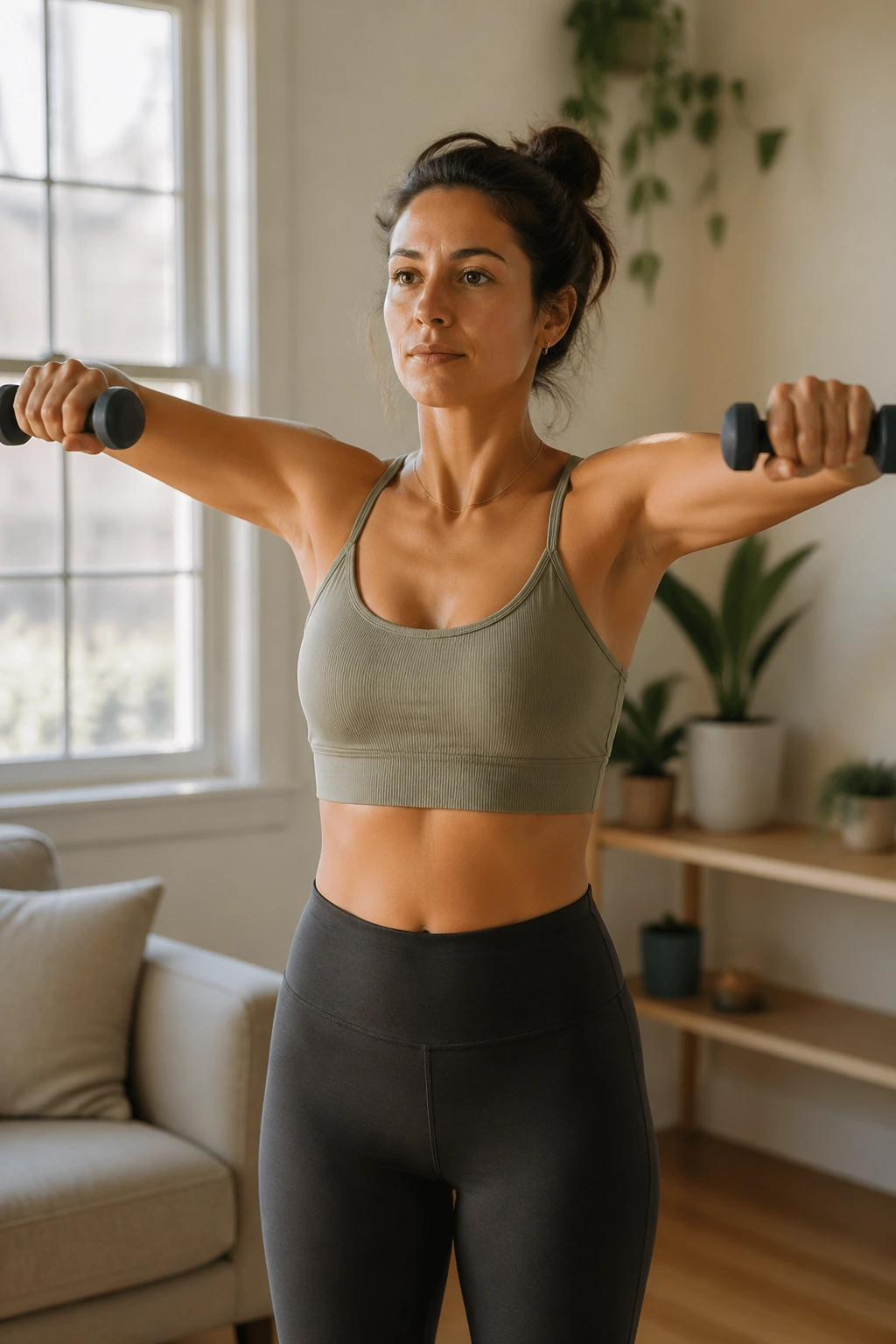
Tiny circles beat sloppy big ones here.
Hold a pair of very light weights, or go empty-handed if the shoulders are already fatigued. Lift the arms to shoulder height and draw controlled circles about the size of a dinner plate. Then pause halfway through the circle and hold for a count of two before continuing. That pause strips out momentum, which is where most of the real work lives.
The muscles around the shoulder joint have to stay awake the whole time. If the trap muscles start taking over, lower the arms and cut the circle size in half. 20 seconds of circles followed by 10 seconds of hold is a clean place to start.
This is a good option when you want upper-body work without getting on the floor. It also teaches patience, which sounds dull until you feel the burn a minute in.
15. Cat-Cow With Arm Slides
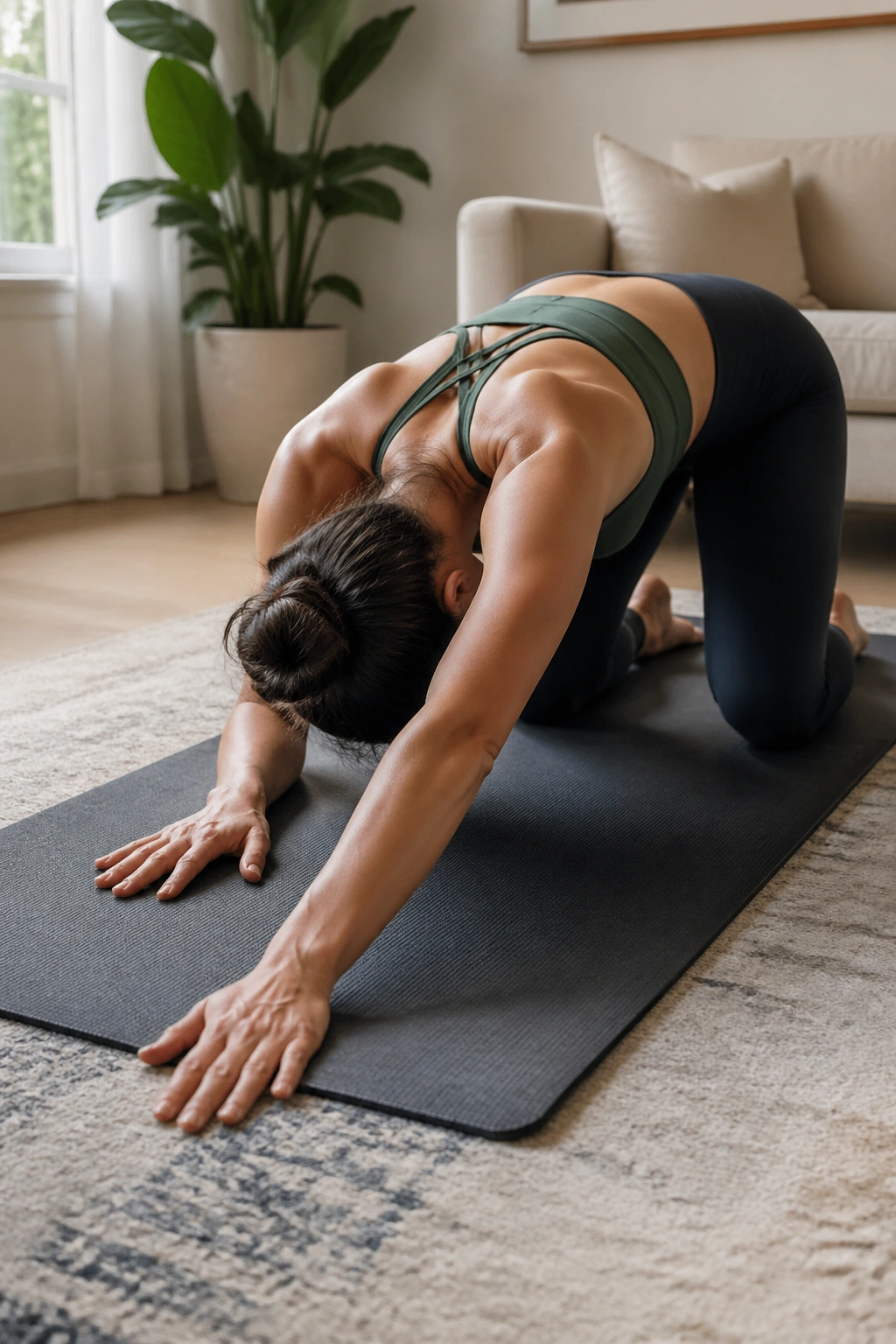
Why does a warm-up that looks gentle still feel hard in the shoulders? Because the shoulder blades have to move with the spine instead of freezing up like little bricks.
Get on all fours and slide one hand forward along the floor as you round the upper back, then draw it back as you arch gently through cat-cow. If the floor is too slick, place a towel under the hand and let it glide. The arm slide adds a clean reach that the classic version doesn’t always have.
The goal is smoothness. The head follows the spine, the ribs stay soft, and the shoulders don’t jam up near the ears. Use 5 rounds per side and keep the movement slow enough that the breath can stay steady.
If you’ve got a cranky shoulder, keep the range tiny and make the slide feel more like a reach than a stretch. That usually works better than forcing a bigger arc.
16. Side-Lying Thread-the-Needle Reach
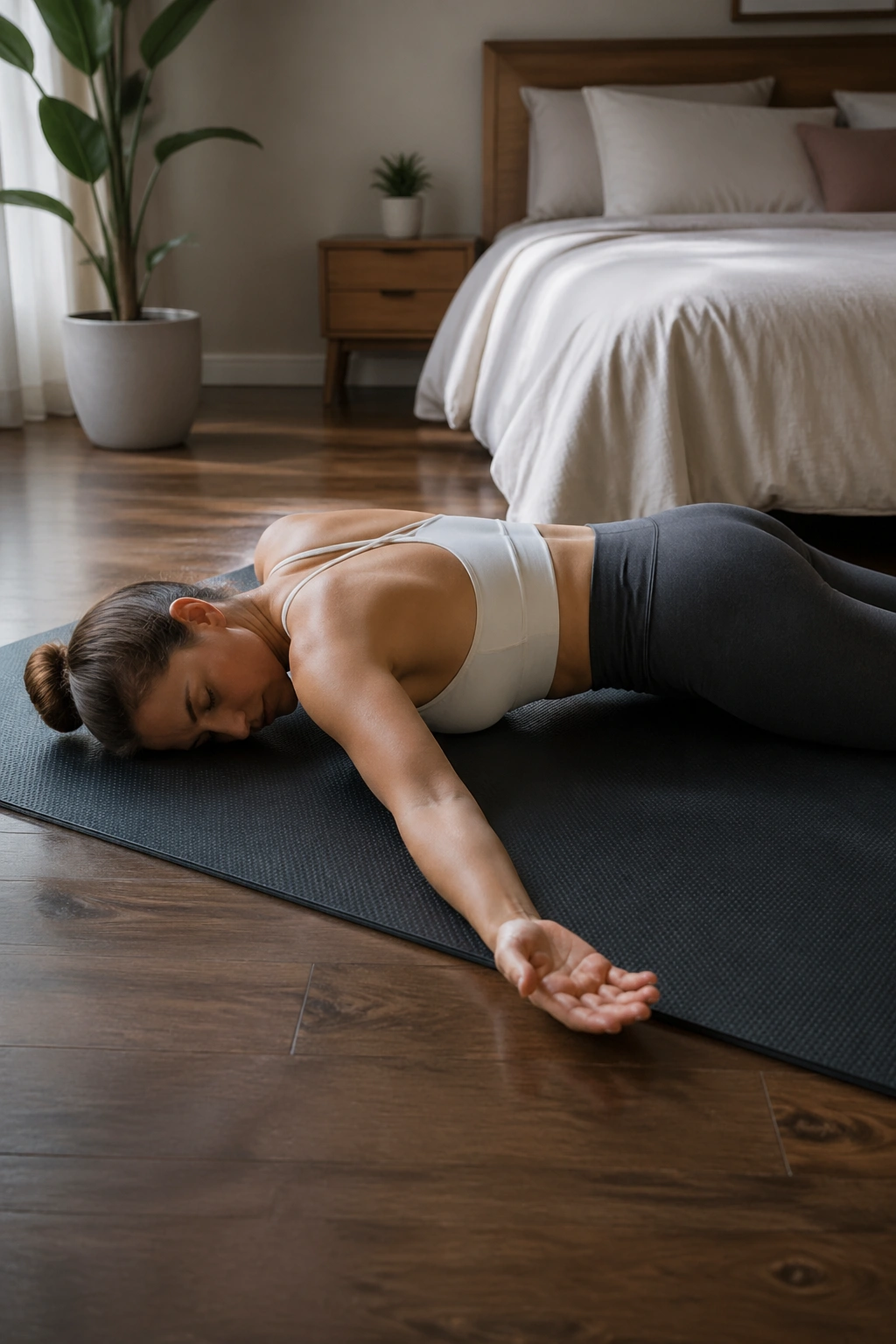
Lie on your side and the usual shoulder tension starts to show itself in a new way. Reach the top arm forward, then thread it under your body in a gentle twist before opening it back up toward the ceiling. The movement is small, but the upper back gets a surprising amount of attention because the shoulder blade has to rotate and the ribcage has to follow.
Keep your knees bent if that helps the lower back stay quiet. If the shoulder feels sticky, slow the reach and spend a beat in each end position. The little pause is where the mobility shows up.
This is one of my favorite recovery-style Pilates moves for home days because it feels useful without being flashy. The upper body opens, the chest breathes a little deeper, and the side of the neck stops yelling for a minute.
Do 3 to 5 reps per side and don’t chase a huge twist. The better version is the one you can control.
17. Incline Dolphin Presses on a Sofa
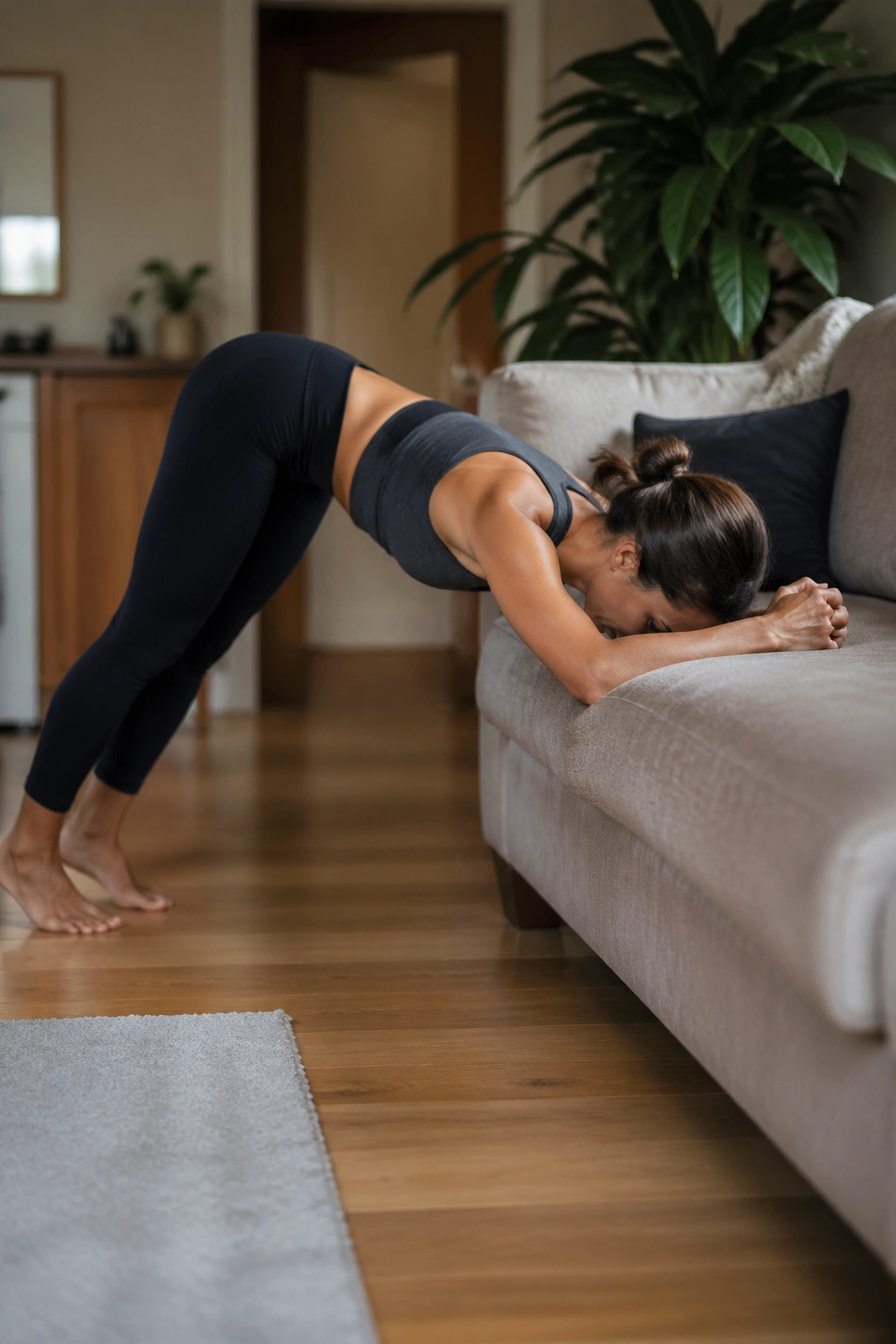
If floor pikes are too much on your wrists, a couch gives you a kinder angle without making the work easy. Place your forearms or hands on the sofa edge, walk the feet back, and press the chest back toward the thighs as the shoulders work to support the body.
- Keep the head between the upper arms.
- Press for 8 to 10 reps.
- Move with a slow inhale down and a firm exhale back.
- Stop before the lower back starts sagging.
The beauty of this drill is the angle. It takes pressure off the wrists and still asks the shoulders, triceps, and upper back to hold real weight. If you want more challenge, walk the feet a little farther back. If the neck gets crowded, bring the feet in.
This one feels a bit like a strength version of an inverted stretch. That’s a good thing.
18. Bear Plank Shoulder Taps
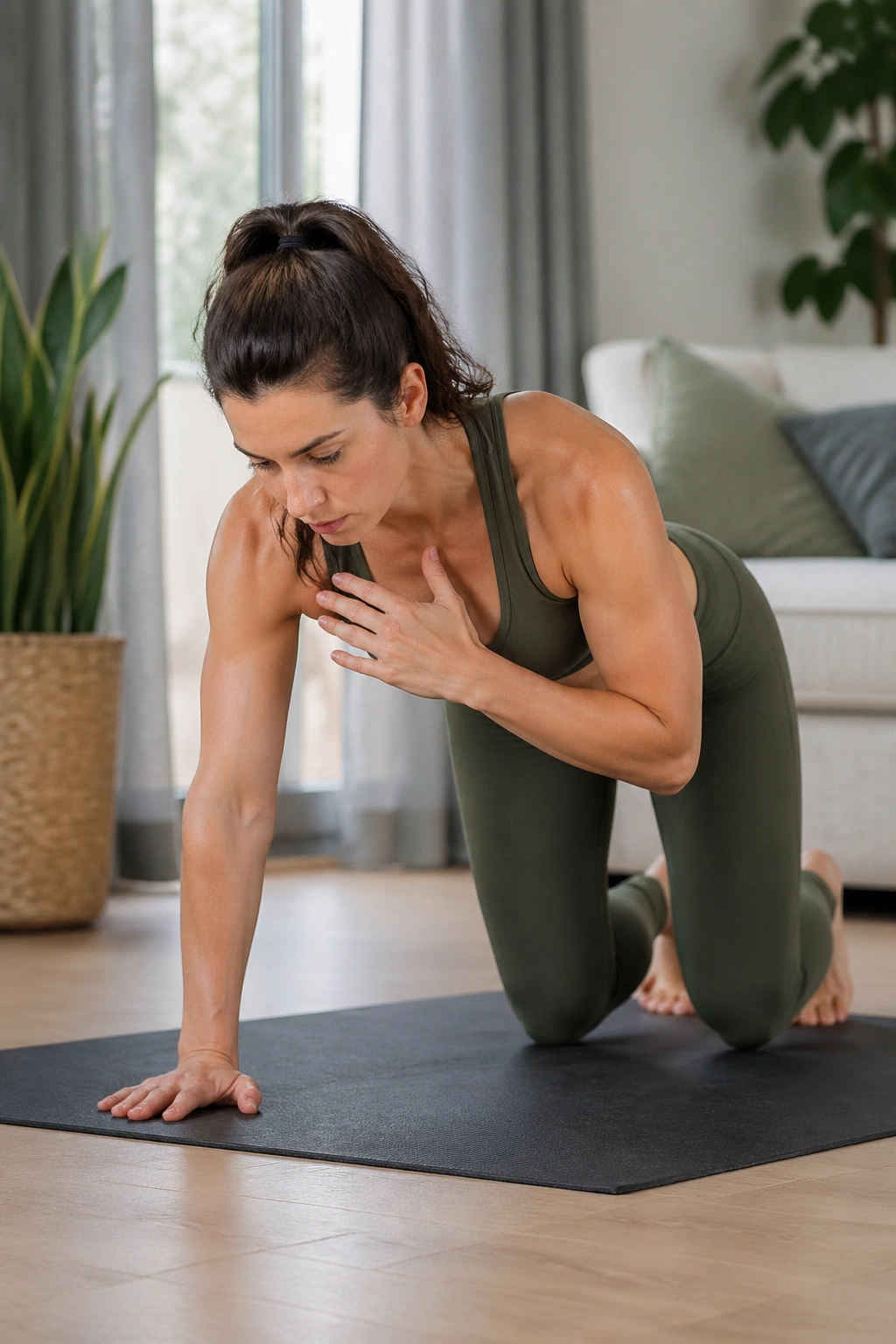
Bear position feels like a hidden test. Knees hover a few inches off the floor, hands are under the shoulders, and the spine stays level while you tap one shoulder with the opposite hand. The feet stay tucked, the hips stay low, and the whole front of the body has to resist twisting.
Unlike a standard plank, bear taps ask for more compact control. That short lever makes the exercise feel sneaky-hard in the shoulders and upper arms. It’s also easier on some lower backs because the range stays tight.
This is a smart choice if you want a challenge that feels athletic but still fits Pilates principles. Think 8 taps per side to start. If the body sways like a boat, widen the knees or keep both hands down and practice the hover first.
No rush. The hover is the workout.
19. Wall Lift-Offs and Arm Circles
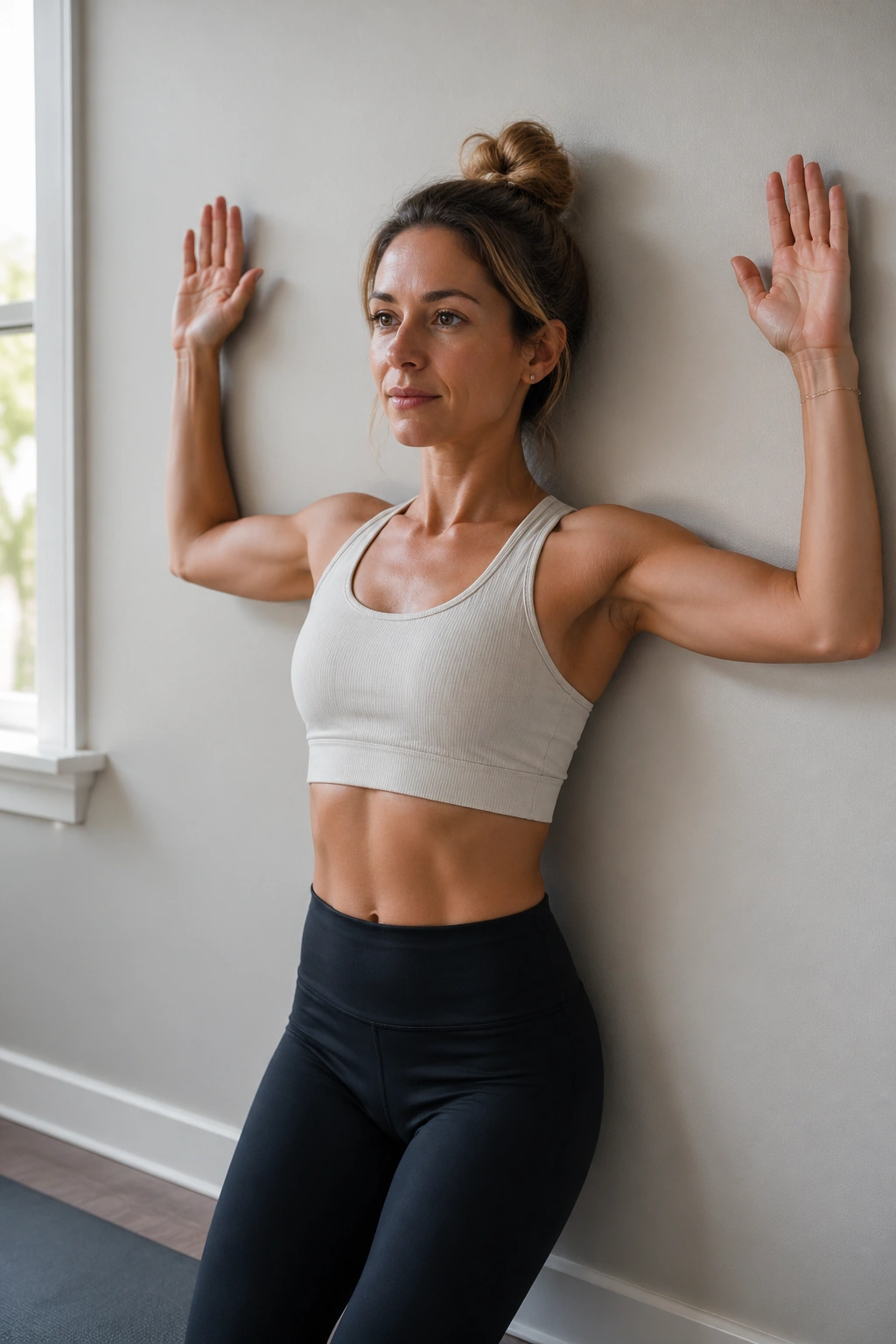
Wall angels are the warm-up version; lift-offs are the part where the room goes quiet.
Stand with your back against the wall, arms in the goalpost position, then peel the hands or forearms an inch away from the wall without losing the ribcage. Hold for a beat. Lower with control. After a few lift-offs, add small arm circles while keeping the shoulders low and the spine tall.
Lift-Off Cues
The lift should be tiny. If the low back arches hard to help, the movement is too big. Keep the chin soft and the gaze level.
Circle Size
Make the circles about the size of a grapefruit. Huge circles turn into swinging, and swinging misses the point.
Best Dose
Try 4 lift-offs, then 6 small circles forward and 6 backward. Repeat once.
This is a clean finish for a home session because it leaves the shoulders warm without overcooking them. The wall gives a hard line to work against, which is exactly why it’s useful.
20. Pilates Hug-a-Tree Finisher
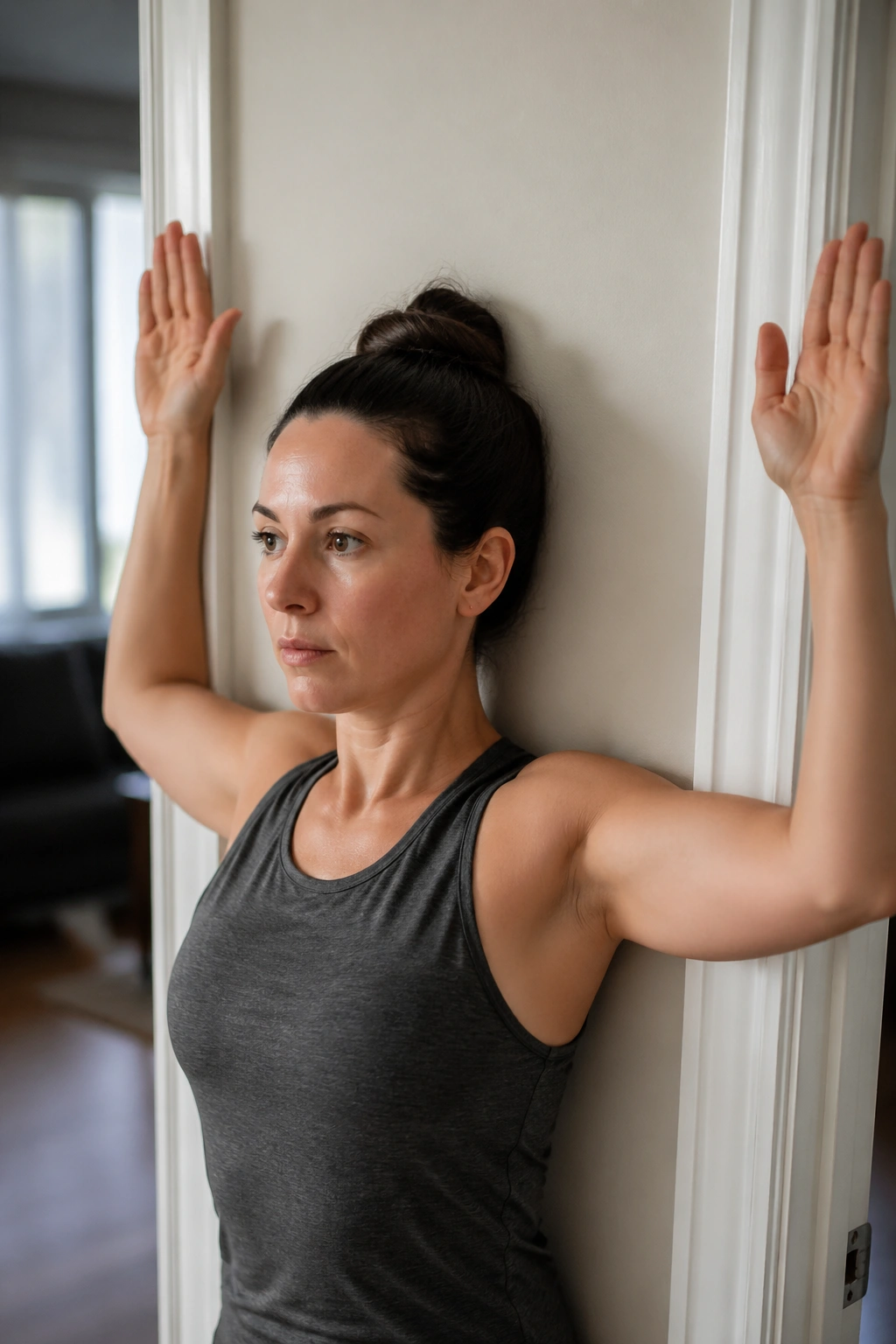
A short arm finisher is enough when the positions are precise. Hold light weights or no weight at all, round the arms in front of the chest as if you’re hugging a tree, then open them wide to shoulder height and bring them back together with control. Keep the elbows soft and the ribs steady.
Run it as a small circuit: 30 seconds hug-a-tree, 30 seconds overhead press, 30 seconds low-V hold, then rest for 30 seconds. Repeat for 2 rounds if the shoulders still have some gas left. The movements are simple, but the posture demands are not. If the neck tightens, drop the weights immediately and keep the range smaller.
This is a good place to stop a session because it leaves the upper body feeling awake rather than flattened. The chest opens, the arms get work, and the shoulders finish in a cleaner line than they started.
Use it on days when you want a home workout that feels precise, not punishing. That’s the whole appeal.
