



Inner thighs get ignored until you try a slow side-lying lift and your leg starts shaking halfway up. That shake is honest work. Pilates inner thigh exercises at home tend to look almost too simple on paper, then turn out to be the kind of slow, exact movement that exposes every bit of cheating in your body.
The adductors — the muscles along the inside of your thighs — do more than squeeze your legs together. They help steady your pelvis, support balance, and keep your lower body from wobbling when you walk, climb stairs, or change direction. That’s why a good inner-thigh routine doesn’t just chase a burn. It builds control. The burn comes along for the ride.
A lot of people make the same mistake with these moves: they swing the leg too high, turn the toes out like a dance recital, or rush through the reps. None of that helps much. The better approach is slower than you think, smaller than you want, and precise enough that you can feel the work start deep in the groin crease and travel down the inner line of the leg.
You do not need a reformer or a fancy studio setup. A mat, a wall, a chair, and a pillow can go a long way. Start on the floor, stay honest about your range, and pay attention to the side of the hip and the low back while you work. Those places tend to tell the truth before your brain catches up.
1. Side-Lying Bottom Leg Lift
This is the move I’d start with if you want a clean adductor burn without a bunch of setup. Lie on your right side with your right leg long on the mat and your left knee bent so the left foot rests in front of your body for support. Your bottom leg stays straight, then lifts only 3 to 6 inches off the floor. That tiny range is the whole point.
How to feel it in the inner thigh
Keep your hips stacked and your waist long. If your top hip rolls backward, the exercise turns sloppy fast.
Pull the belly in gently, point the bottom toes forward, and lift with control for 8 to 12 reps on each side. The inner thigh should feel awake, not the lower back.
- Keep the bottom leg straight but not locked.
- Lift on an exhale; lower on an inhale.
- Stop the lift before the hip starts hiking up.
- Use your bottom oblique to keep your trunk steady.
One good rep looks small. That’s normal.
2. Side-Lying Bottom-Leg Pulses
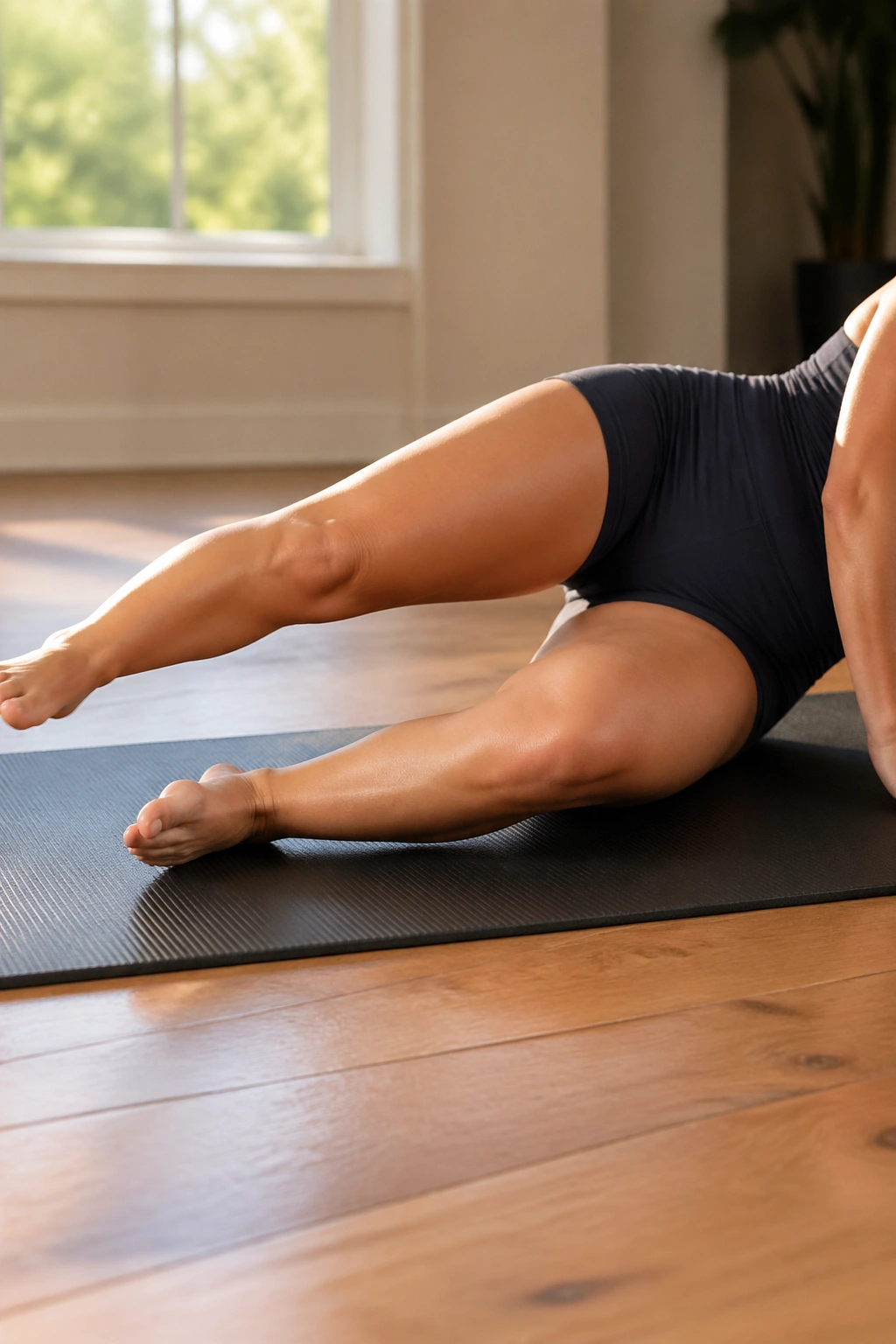
A pulse sounds easy until you do 20 of them in a row. In this version, you set up exactly like the previous move, but the bottom leg barely moves — more of a short beat than a lift. Think of it as pressing the leg an inch or two off the mat, then lowering only halfway back down.
The small range keeps tension on the adductors instead of giving them a break at the bottom. I like 15 to 20 pulses, rest for 10 seconds, then do a second round. If your toes point to the ceiling or your torso twists, the leg is probably helping itself too much. Turn the toes forward, keep the ribs quiet, and let the inside of the thigh do the boring work.
This one is sneaky. Very sneaky.
3. Side-Lying Bottom-Leg Hold
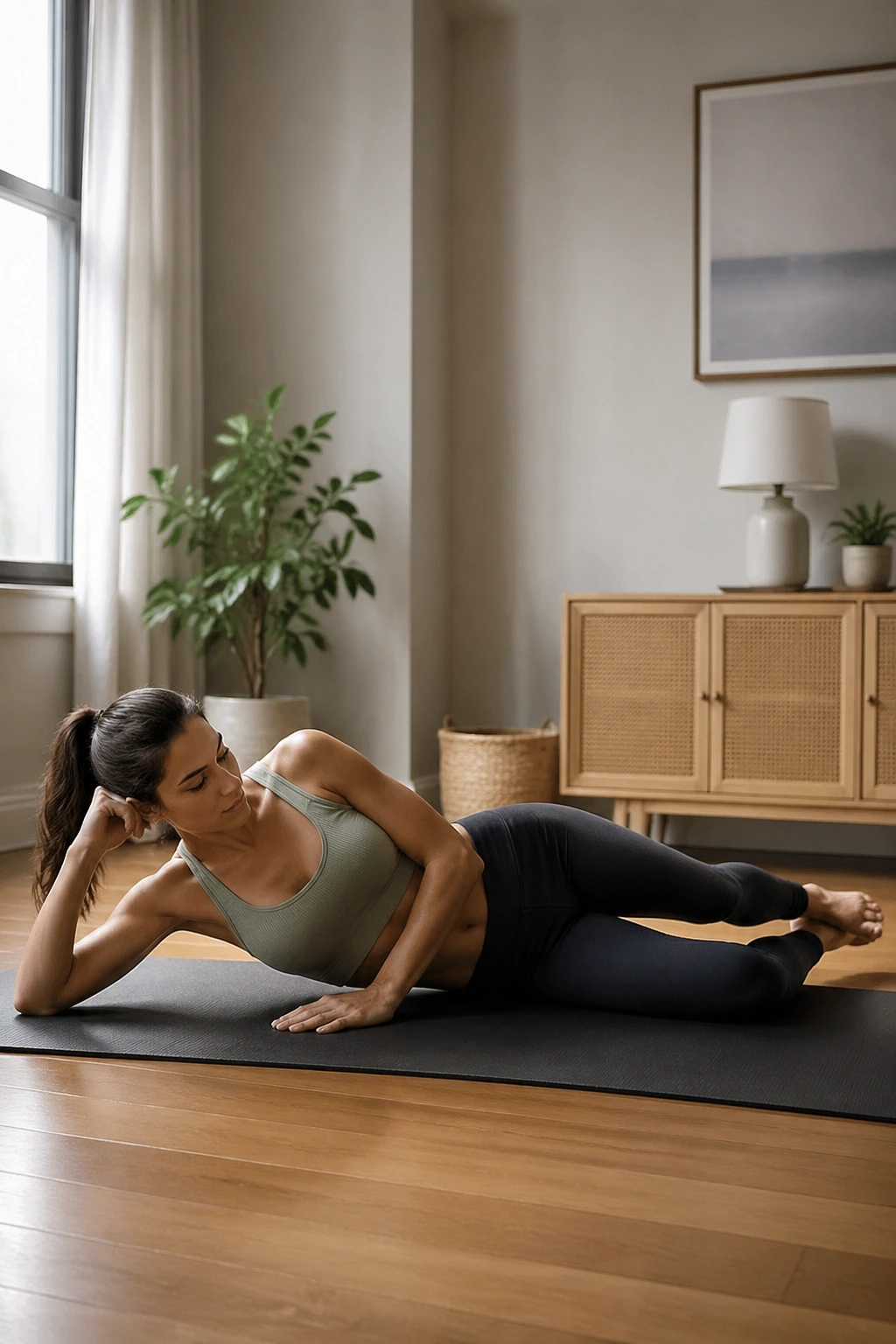
Why bother holding the leg up when a lift already burns? Because the hold changes the game. A five-breath isometric hold teaches the inner thigh to keep working without bouncing, and that kind of steady tension matters more than people think.
Lift the bottom leg a few inches off the floor, then pause. Keep the ankle active and the pelvis still. If the top hip starts drifting back, reset. I usually tell people to hold for 5 slow breaths, then lower with control and repeat 4 to 6 times. The leg may shake. Fine. Shaking is not failure; it means the muscle is being asked to stay on instead of cruising through the movement.
Breathing cue
Inhale through the nose, exhale through the mouth, and try not to clamp your jaw. That helps more than it sounds like it should.
4. Pillow Squeeze on the Floor
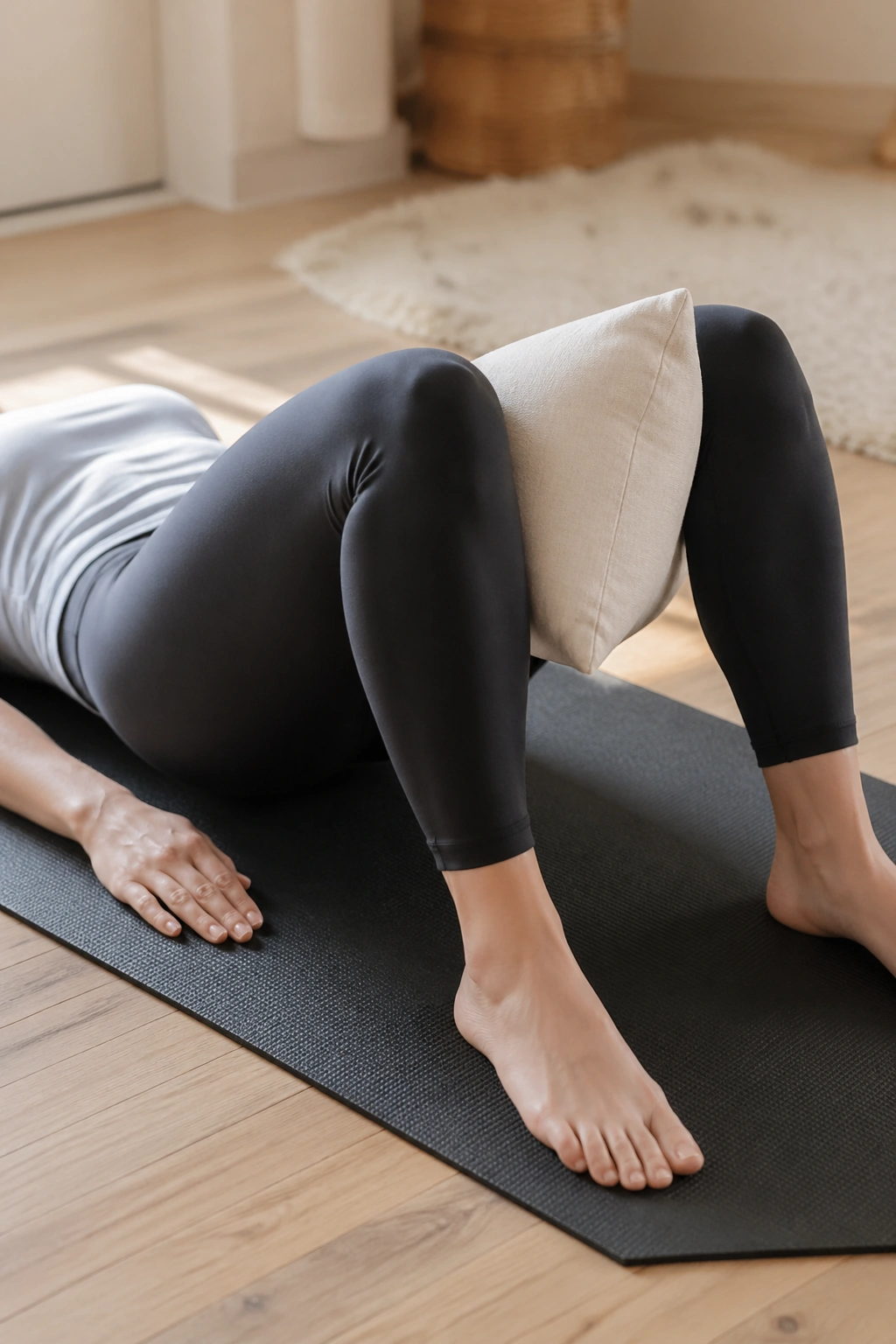
A pillow between the knees looks mild. It is not mild. It’s one of the cleanest home exercises for waking up the adductors because there’s nowhere to hide — either you are squeezing, or you are not.
Lie on your back with your knees bent and feet flat, hip-width apart. Place a firm pillow, folded towel, or yoga block between the knees and squeeze at about 30 to 40 percent effort for 5 seconds. Release slowly. Do 8 to 10 rounds. If you go full power, your glutes, jaw, and neck may jump in and take over. Keep the squeeze controlled and even.
The best version feels like the inner thighs are narrowing the space between the legs, not crushing the prop into dust. That difference matters. It keeps the work where you want it and makes the exercise useful instead of dramatic.
5. Pillow-Squeeze Bridge
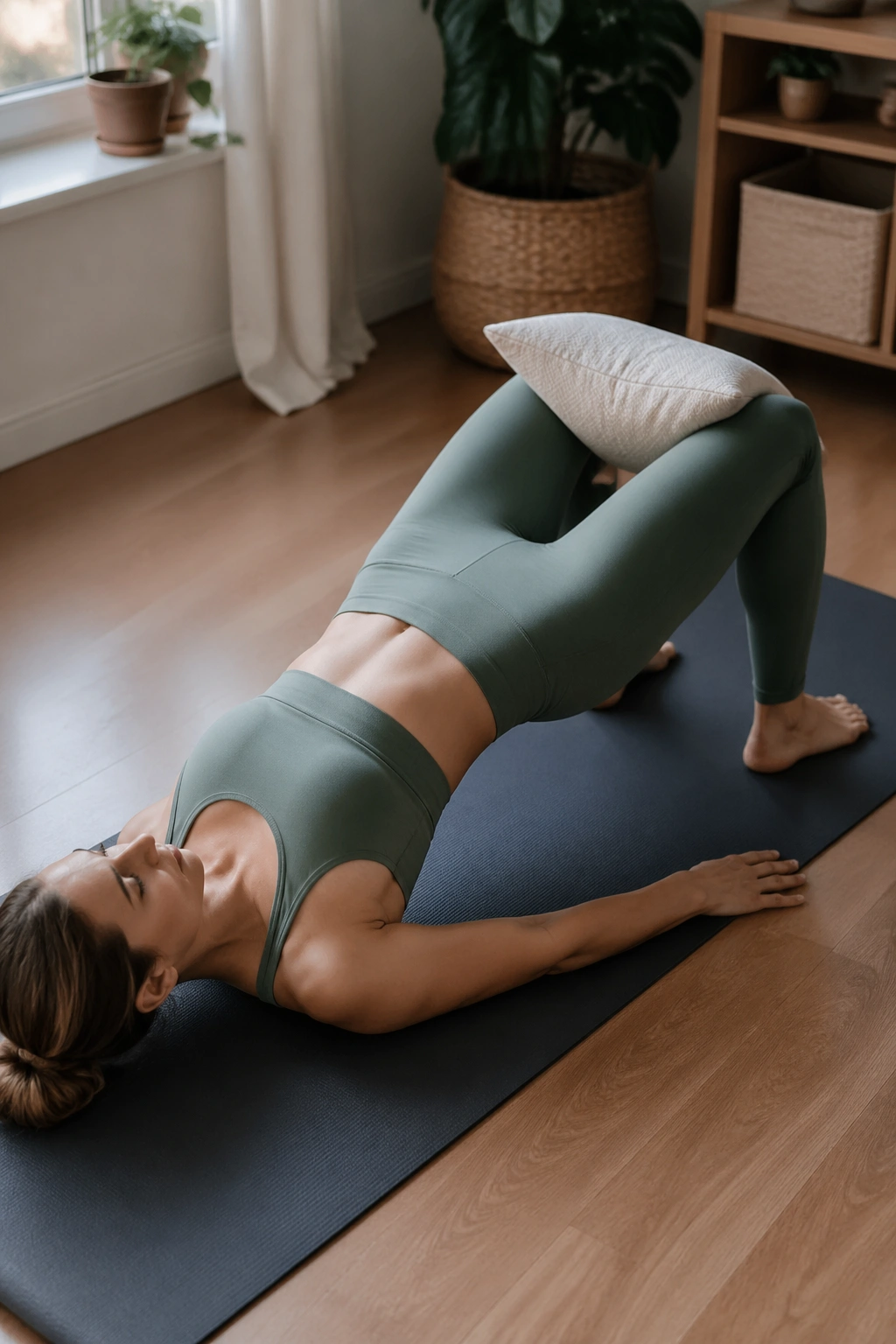
Same prop, harder job. Once the pillow squeeze feels clean on its own, slide it into a bridge. Lie on your back, knees bent, feet flat, and keep the pillow between the thighs just above the knees. Squeeze lightly as you curl the pelvis and lift the hips.
Raise only until the body forms a long line from shoulders to knees. No higher. Higher is often worse here because the ribs flare and the low back takes over. Hold at the top for 2 to 3 breaths, then lower one vertebra at a time. Five to eight reps is plenty if you’re doing it well.
What to watch for
- Knees should stay aligned with the hips, not spill outward.
- Weight stays through the whole foot, especially the heels and big toes.
- The squeeze should feel steady, not frantic.
- If hamstrings cramp, move the feet a little closer to your seat.
6. Frog Presses
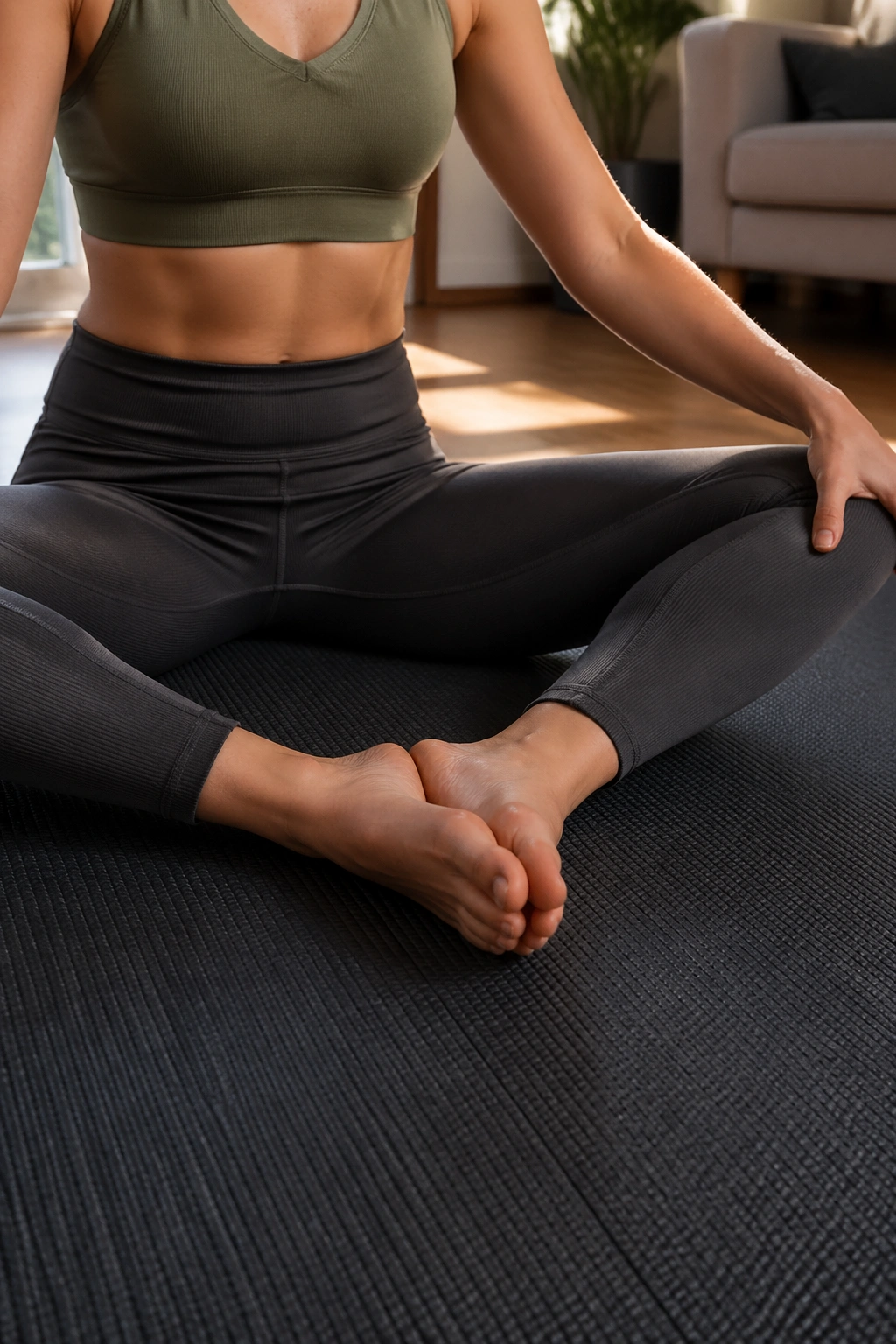
Frog presses are one of those Pilates moves that look almost playful until your inner thighs light up. Start on your back with the soles of your feet together, knees open in a diamond shape, and heels pulled in close to the hips. From there, press the legs out on a diagonal, then return to the start with control.
The legs never fling wide. They open just enough to keep the tension alive. I like 10 slow reps with a 2-second press and a 2-second return. Keep the tailbone heavy and the ribs soft. If your lower back arches when the legs extend, shorten the range right away.
This move works because the adductors have to control both the opening and the return. That return is where a lot of people feel the deepest work.
7. Frog Pulses
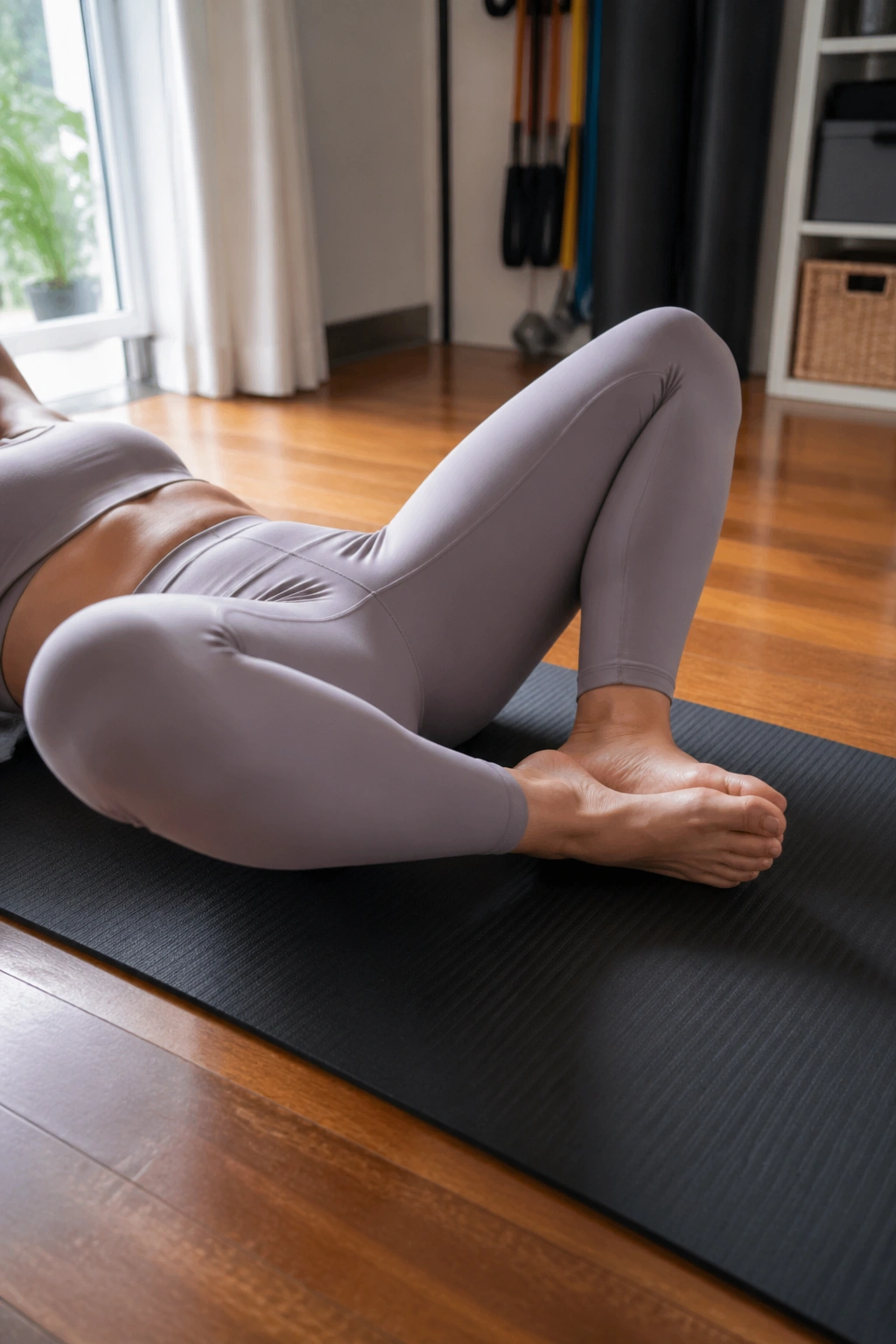
Take the same frog shape and shrink the range. Tiny pulses, same setup, more fatigue. The knees open and close a few inches while the soles of the feet stay connected. You’re not chasing motion here. You’re chasing tension.
Give yourself 20 pulses, then stop and notice whether your inner thighs or your hip flexors are doing the job. If the front of the hips grab hard, the knees are probably coming too close to the chest. Slide the heels a little farther away from the body and try again.
A small correction that helps
Do not point the knees straight out to the sides like butterfly stretches from gym class. Keep the legs active and the feet alive. The shape can be open without becoming loose.
8. Dead Bug With a Small Ball
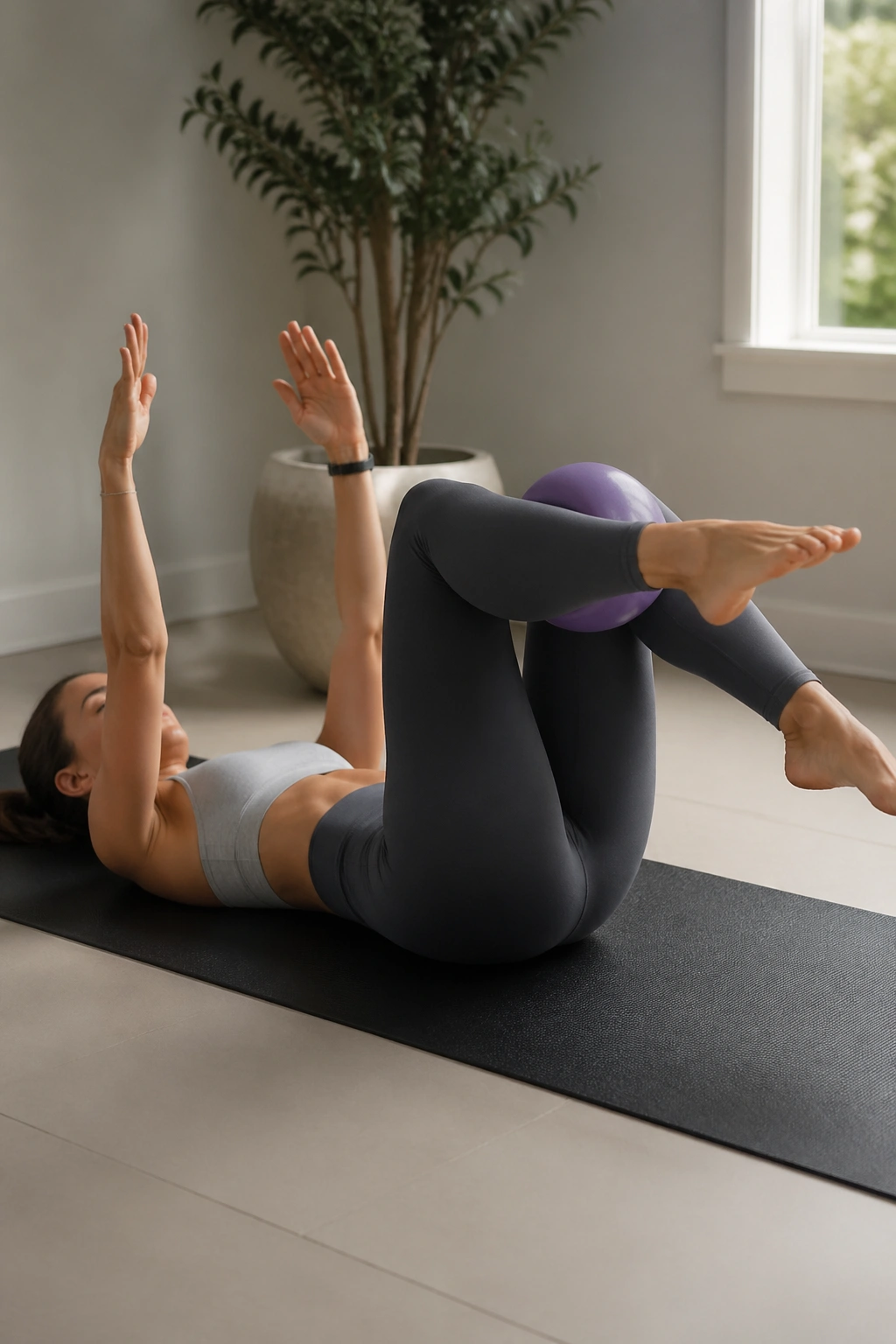
This one is a two-for-one: core stability and inner thigh engagement. Lie on your back with a small ball, pillow, or folded towel between the knees. Lift both legs into tabletop, then lower one heel toward the floor while the opposite knee stays steady. Switch sides slowly.
The key is light pressure. You want enough squeeze to keep the adductors on, not so much that your hips tense up and your breath disappears. Try 6 to 8 reps per side. If your low back starts arching, bring the knees a little higher and reduce the leg reach.
Why it works
The adductors help keep the pelvis quiet while the legs move independently. That means the inner thighs and deep core have to cooperate.
That cooperation matters more than a big range. Small, clean reps beat big wobbly ones every time.
9. Seated Ring Squeeze
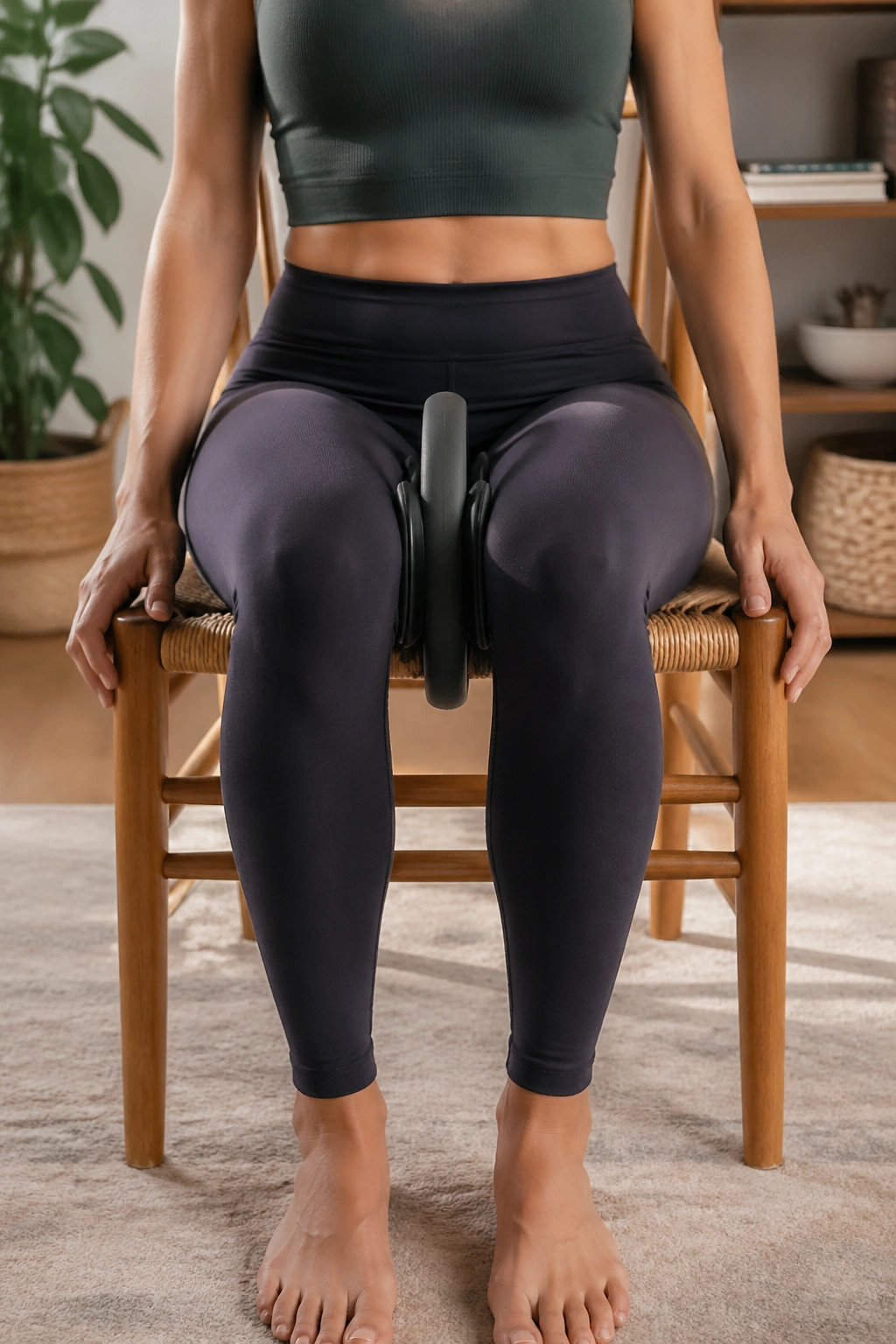
If you want something you can do in a chair between tasks, this is the one. Sit tall on a sturdy chair with your feet flat and your knees hip-width apart. Place a Pilates ring, firm pillow, or rolled blanket between the inner thighs just above the knees and squeeze.
Hold for 5 to 10 seconds, then ease off slowly. Repeat 8 times. Keep your pelvis neutral and your ribs stacked over your hips. Don’t lean back and call it a workout. That’s just a nap with a prop.
This seated version is useful because it teaches the inner thighs to switch on without help from the glutes or the abs doing all the showy work. It’s also nice for people who don’t love lying on the floor. Nothing wrong with that.
10. Wide-Second Position Heel Lifts
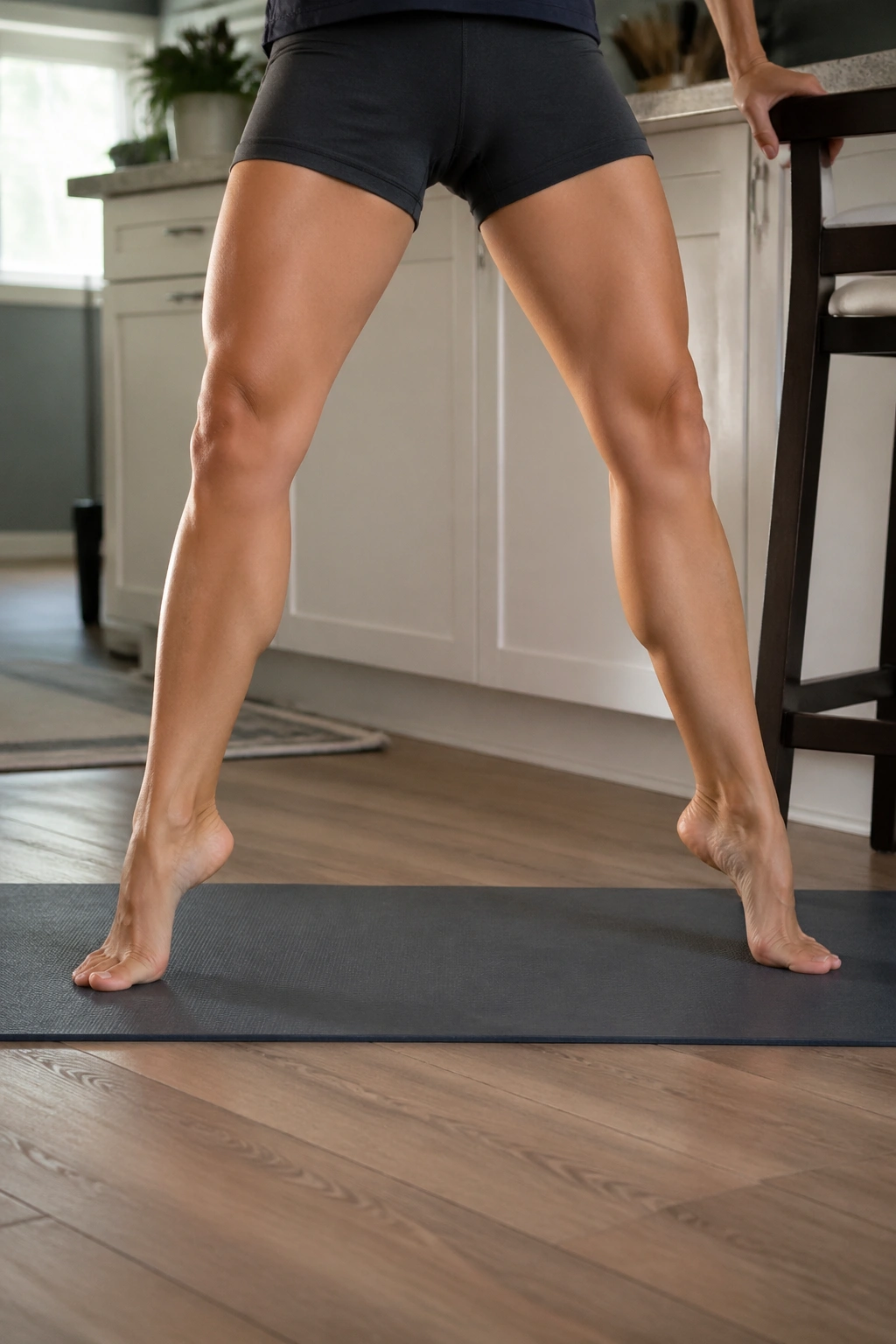
Stand with your feet a little wider than your hips and turn the toes out only about 15 to 20 degrees. Bend into a small second-position plié, then lift the heels an inch or two off the floor and lower them back down. The knees stay tracking over the middle toes, not caving in.
The inner thighs help hold the legs in place while the calves and feet work. That makes this move a little broader than a pure adductor isolation exercise, but the support is still there, and it matters. Start with 8 to 12 heel lifts.
A chair or countertop beside you makes this much easier to learn. Keep the chest lifted and the tailbone reaching down. If the thighs burn, good. If the knees ache, come out of the turnout and narrow the stance a touch.
11. Side-Lunge Reach and Return
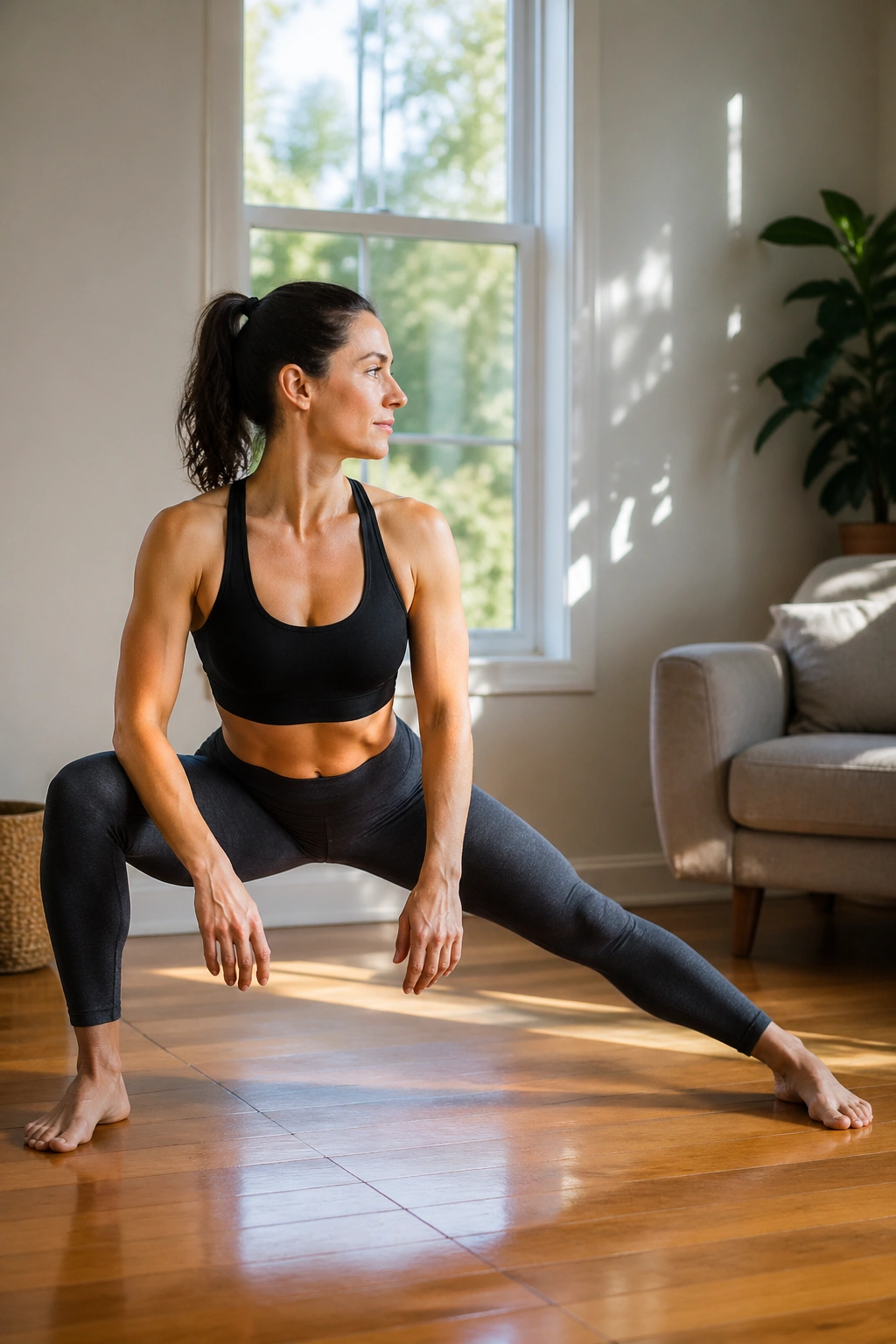
A side lunge can be a mess if you rush it. Done slowly, it becomes one of the better standing inner-thigh moves you can do at home. Step to the right, bend the right knee a little, and keep the left leg straighter. Then push the floor away and return to center with control.
The inner thigh of the straight leg gets a long stretch on the lunge and has to help gather you back in. That return phase is where the adductor work lives. Use 6 to 8 reps per side, and keep the step modest. A huge side lunge often turns into a hip dump.
What to watch for
- The bent knee should track over the second toe.
- The straight leg stays active, not floppy.
- Torso stays tall instead of collapsing over the bent thigh.
It’s a good standing option when the floor starts to feel stale.
12. Curtsy Squat to Knee Drive
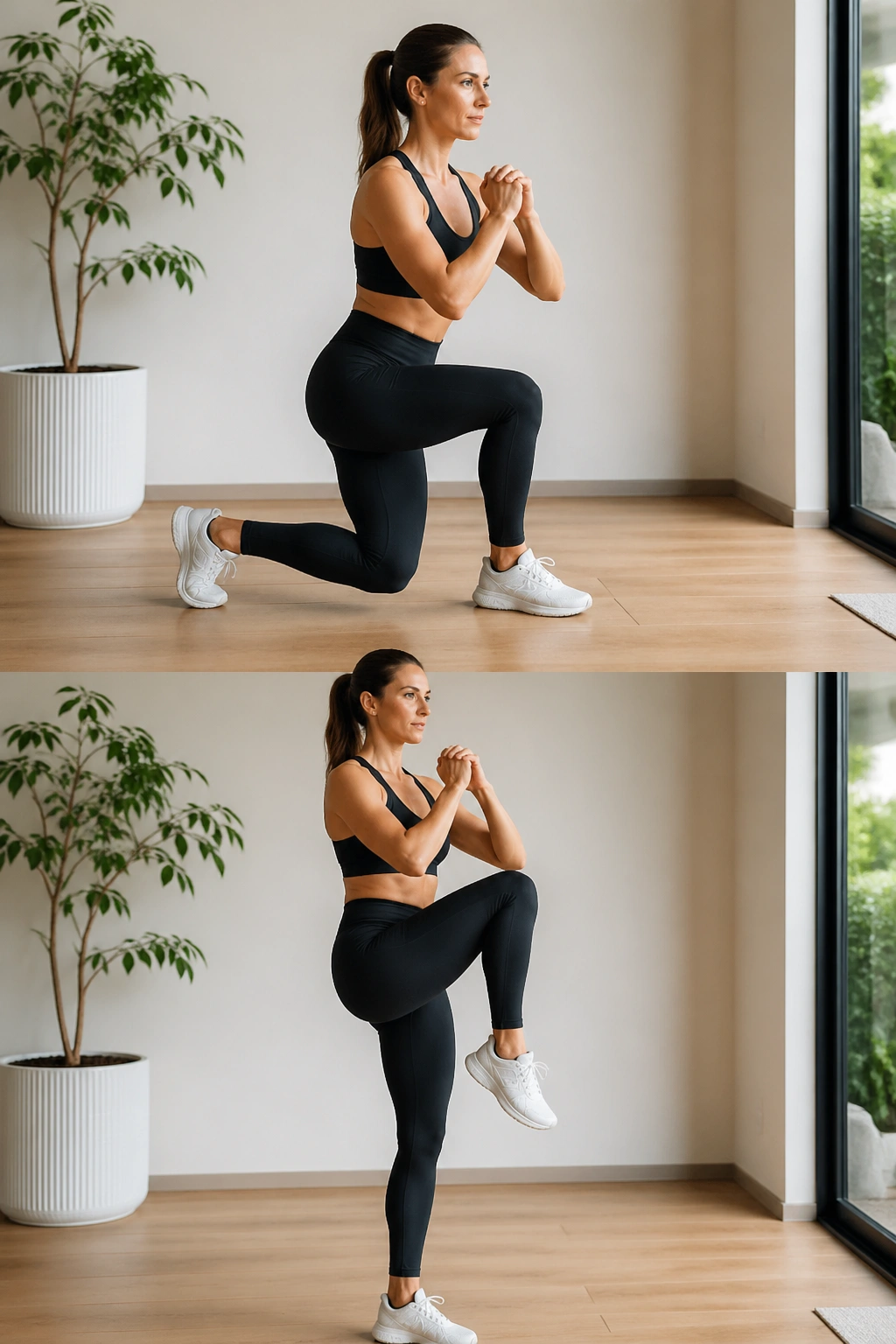
This one has a little more attitude. Cross one leg behind the other into a shallow curtsy squat, then drive the back knee up toward chest height as you stand. The standing leg, especially its inner thigh, works hard to keep you centered.
Take your time with the crossing step. A small curtsy is enough. If the knee feels cranky, shorten the depth and keep the motion smooth. Try 6 to 10 reps per side. The lift at the top should feel balanced, not like a hop.
The beauty of this move is the control on the way up. That standing leg has to resist collapse while the hips stay square. If you wobble, slow down. The wobble is feedback, not a reason to quit.
13. Half-Kneeling Squeeze and Lift
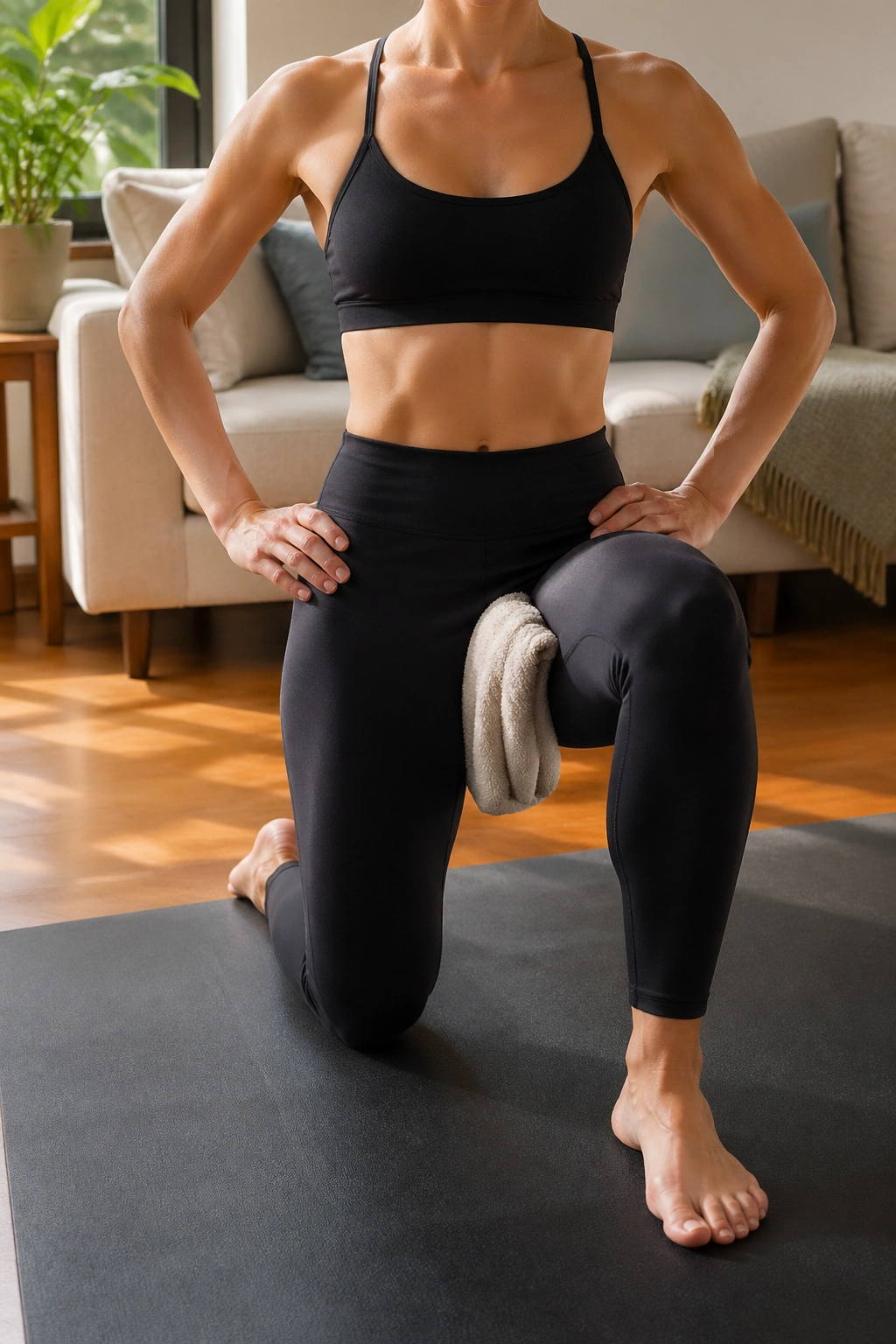
Can kneeling work the inner thighs? Yes, and in a way that surprises people. Start in a half-kneeling position with your right knee down and left foot forward. Place a small pillow or folded towel between the knees, squeeze it lightly, and hold your torso upright while you press the hips forward only an inch.
The squeeze keeps the adductors on while the half-kneeling stance asks the pelvis to stay honest. Hold for 4 to 5 breaths, then release and switch sides. If you feel the low back compressing, reduce the forward shift and keep the ribs stacked.
Use this when you want less floor work
It’s a nice middle ground between pure mat exercises and standing work. You get support from the floor, but you still need to stabilize through the hips and inner thighs.
14. Wall Inner-Thigh Press
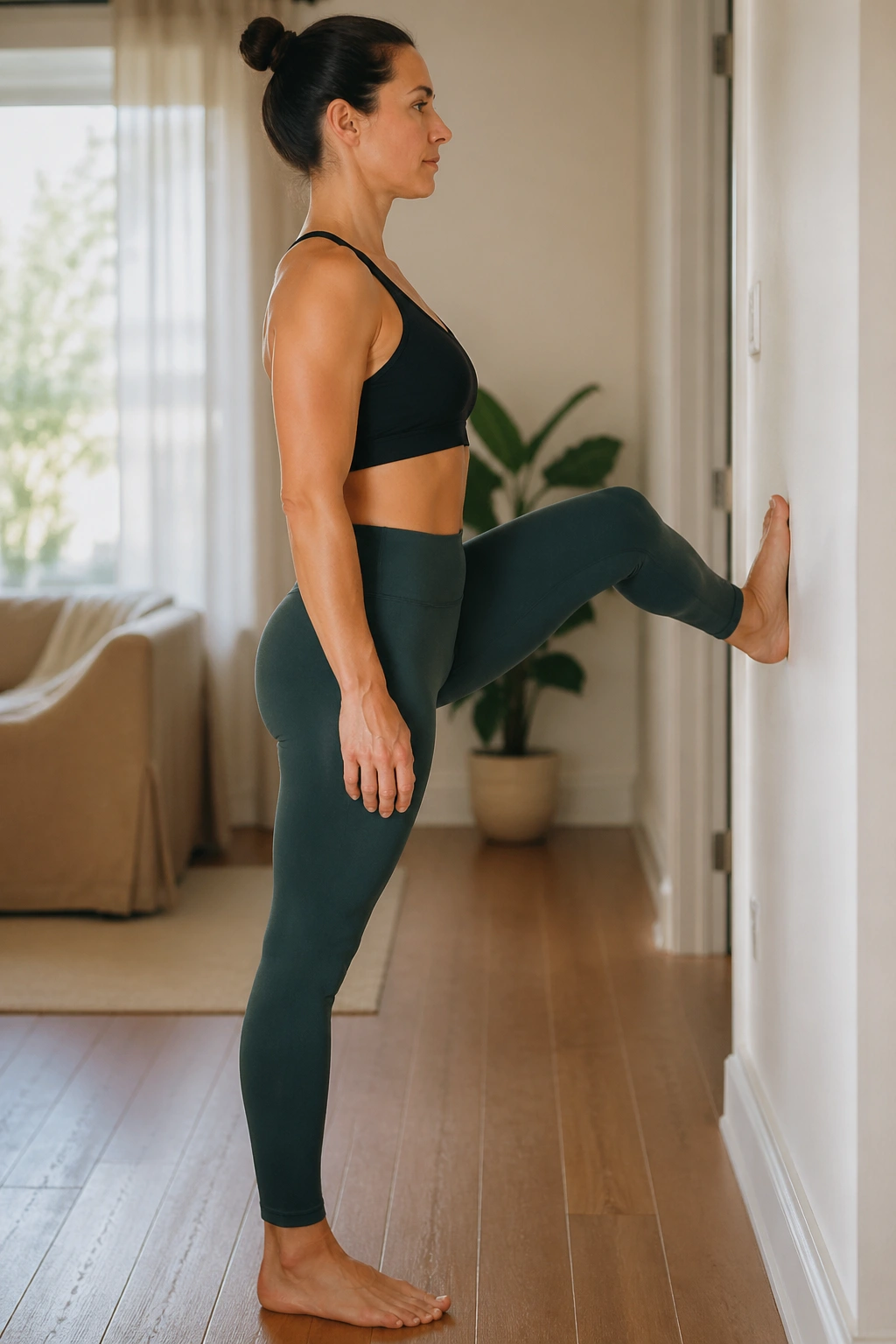
A wall makes a fine piece of equipment if you know how to use it. Stand side-on with one inner thigh or knee pressing lightly into the wall and the opposite leg supporting you on the floor. Press into the wall for 10 to 15 seconds, then relax and repeat.
That isometric work can feel boring for the first ten seconds. Then it gets serious. Keep the standing hip level and avoid leaning your torso away from the wall. The idea is steady pressure, not a shove. Three to five holds on each side is enough.
This move is especially useful if you want a low-noise option for the knees. No jumping. No sliding. Just clean pressure and a quiet burn.
15. Diamond Bridge
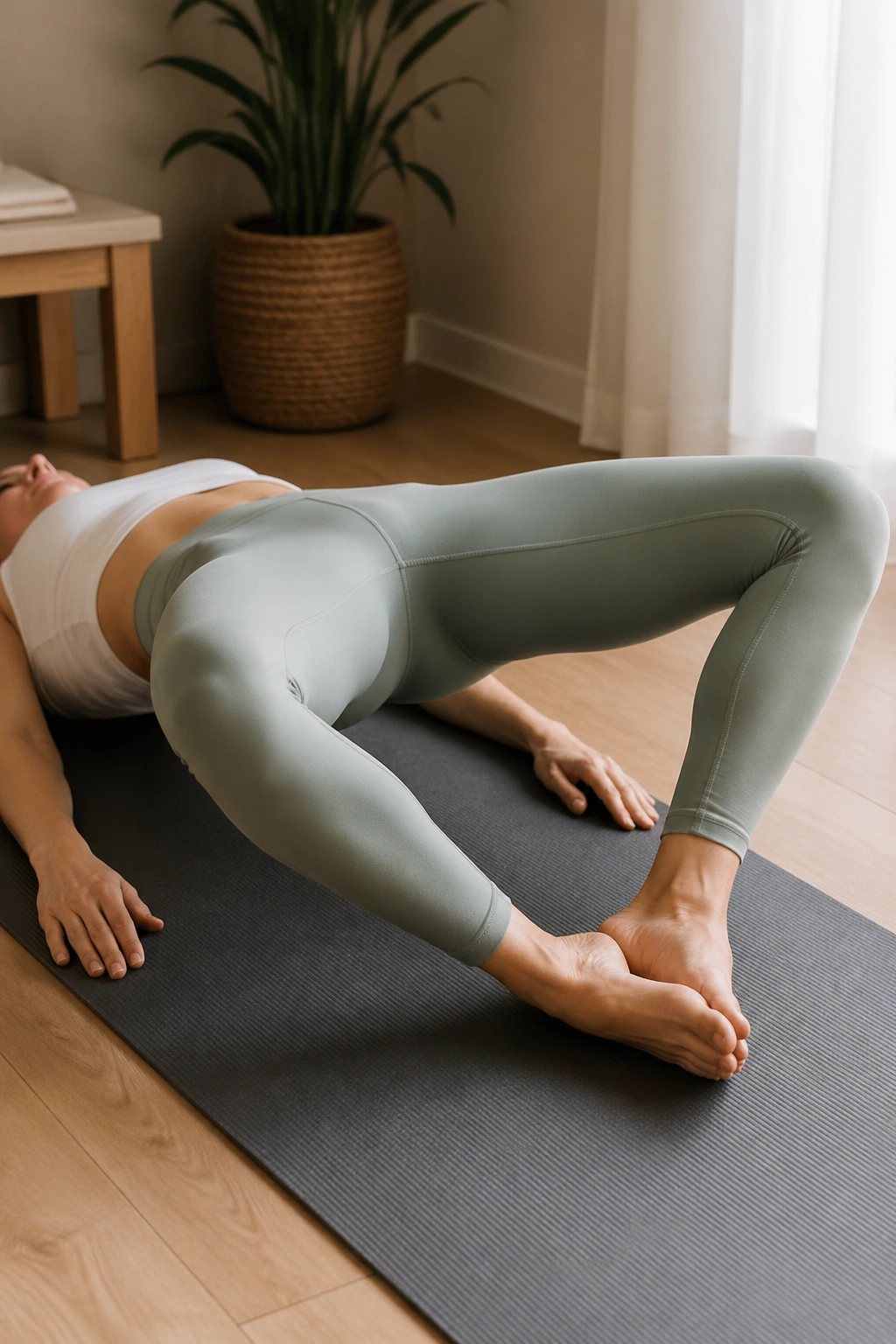
A diamond bridge takes the frog shape and gives it a more stable base. Lie on your back with the soles of the feet together and the knees open wide. Keep the feet close enough that the inner thighs still have to work, then curl the pelvis and lift into a bridge.
Because the feet stay connected, the adductors have to stay awake during the lift. Hold for 2 seconds at the top, then lower slowly. Six to eight reps is enough if you keep the shape honest. The knees should open comfortably, not drop so far that the hips feel strained.
The small detail that matters
Let the inner edges of the feet stay connected the whole time. If the soles peel apart, the exercise loses some of its purpose and starts feeling like a different bridge variation.
16. Bridge March With Squeeze
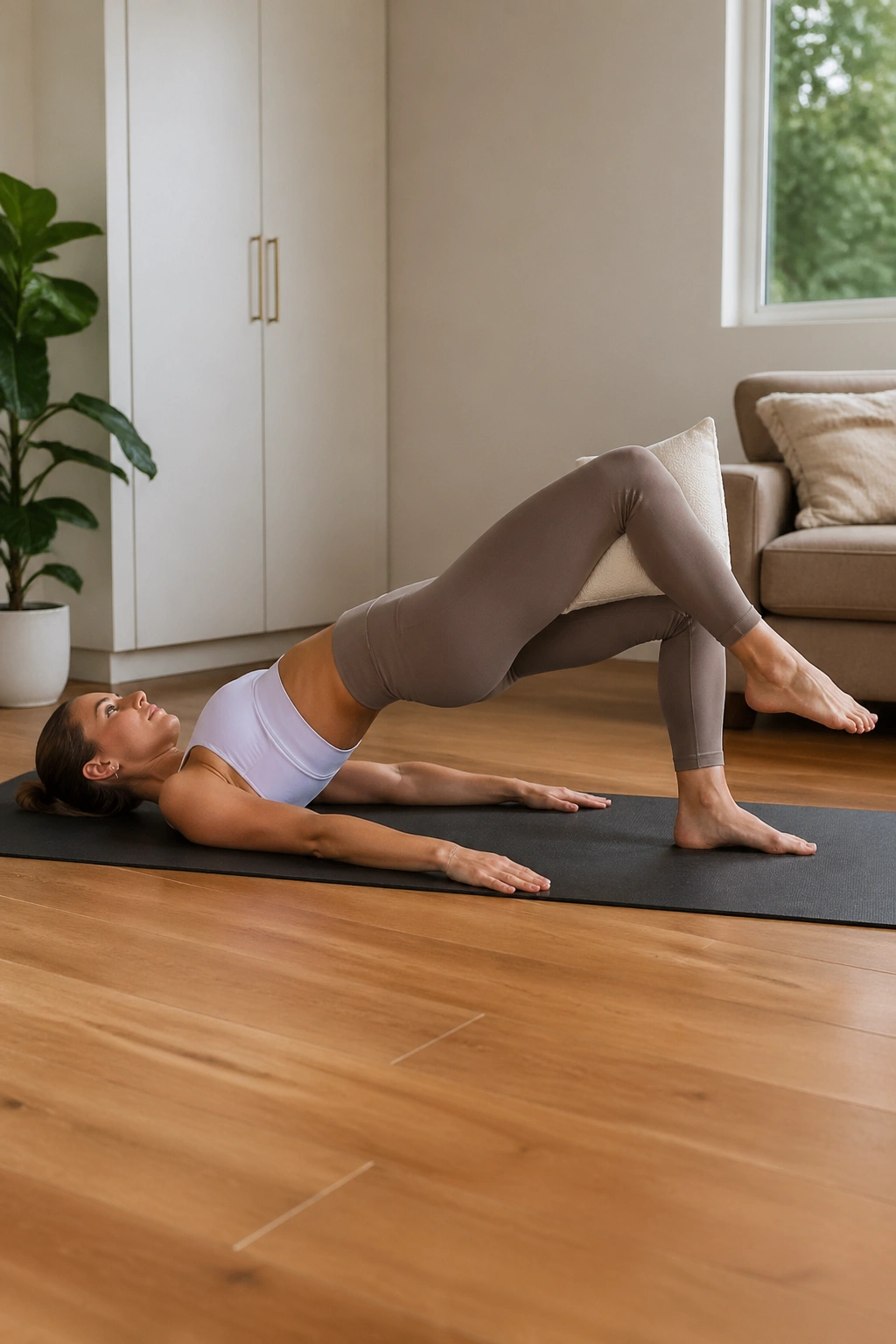
This one is tougher than it looks. Set up in a bridge with a pillow or small ball between the knees, then lift one foot an inch or two off the floor, set it down, and switch sides. The hips want to tilt. That is the test.
Keep the pelvis as level as you can and make the march small. A 1-inch lift is enough. Do 6 marches per side. If the low back complains or the hips tip side to side, drop back to a regular squeeze bridge for a while.
The inner thighs help hold the knees in toward center while the core stops the pelvis from swaying. That combination is gold for home Pilates work. Simple move. Harder than it looks.
17. Straight-Leg Lower With Ball Between Ankles
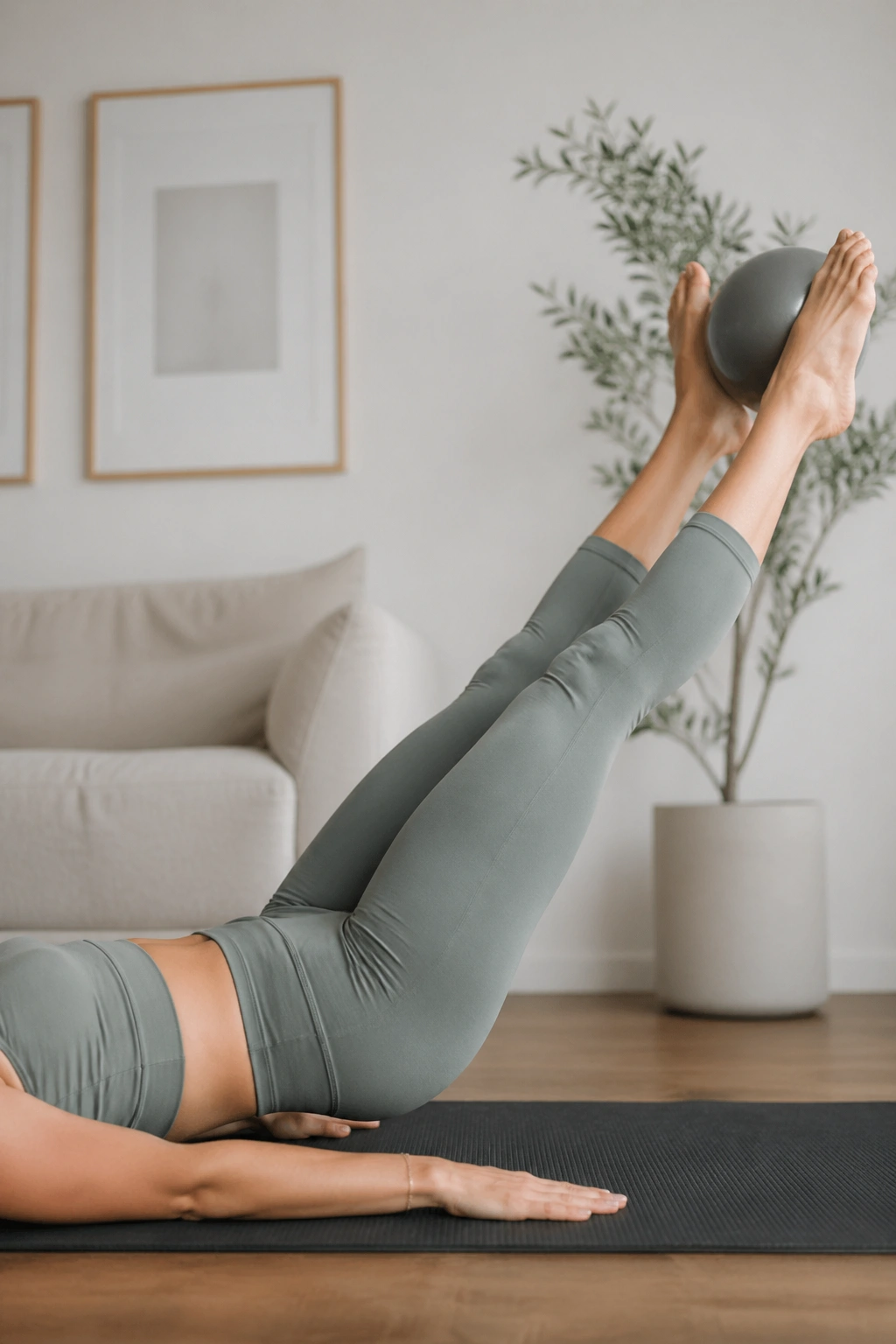
Lie on your back and bring both legs up toward the ceiling. Place a small ball, yoga block, or folded sock roll between the ankles and press lightly enough to keep it steady. Then lower both legs together toward the floor only as far as you can keep the low back from arching.
The inner thighs engage to hold the object in place while the abs manage the lowering. Aim for 6 to 8 slow lowers. If your back lifts off the mat, bend the knees a little or stop the lower higher. No drama needed.
Why this is sneaky
It looks like a core drill. It is a core drill.
It also asks the adductors to stay switched on the entire time, which makes the legs feel heavier by the third rep. That’s useful information.
18. Tabletop Heel Slides With Pressure
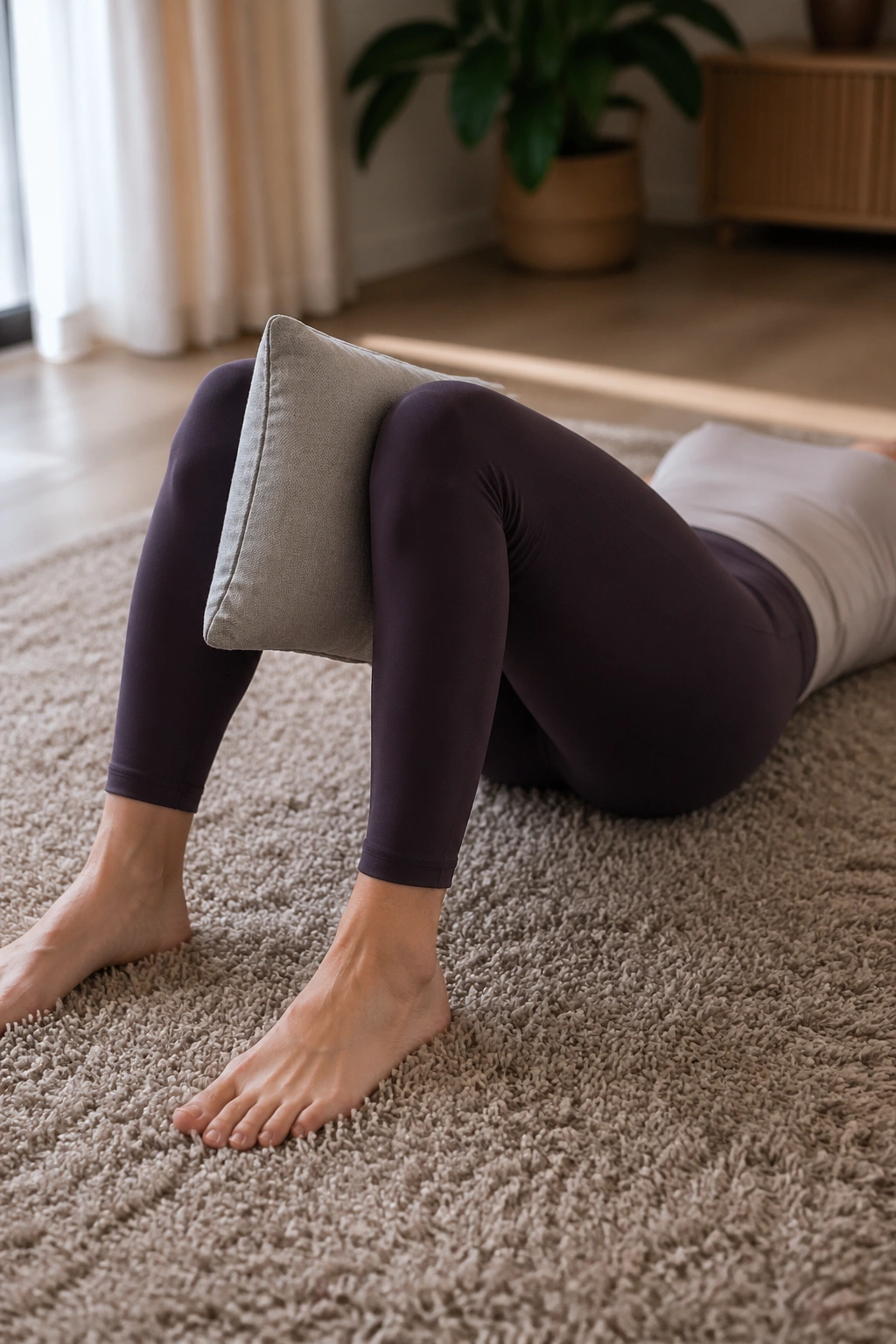
This is a friendly option when you want inner thigh work without a lot of strain. Lie on your back with your knees bent, feet flat, and a pillow between the knees. Gently press the knees in, then slide one heel away from the body until the leg is almost straight. Bring it back. Switch sides.
The pressure between the knees keeps the adductors awake while the sliding leg works through a controlled range. Use 8 reps per side and keep the ribs from flaring. If the lower back starts to arch, shorten the slide by a few inches.
This one often feels better than a leg-lift for people whose hip flexors take over fast. The floor gives you feedback right away.
19. Standing Cross-Behind Leg Lift
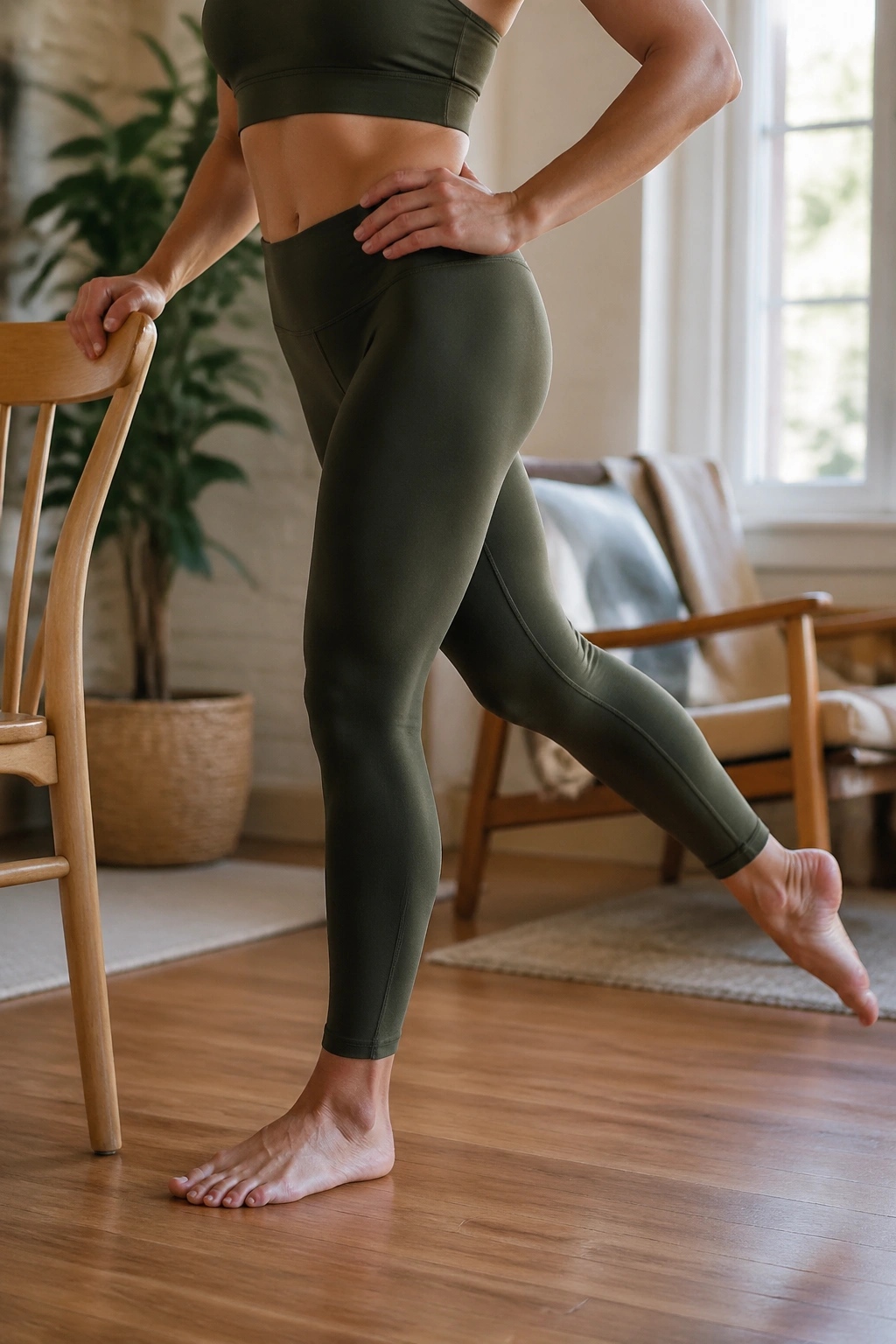
Stand tall with one hand on the back of a chair and shift your weight onto your left leg. Cross your right leg behind the standing leg, then lift the crossing leg a few inches off the floor and lower it slowly. Keep the hips facing forward.
The inner thigh of the standing leg works to stabilize you, while the moving leg has to stay controlled instead of swinging. I like 8 to 10 lifts per side. If balance is shaky, keep the toes of the lifted leg on the floor and just slide the foot behind the standing leg instead of lifting right away.
This is one of those exercises that feels very Pilates without needing much equipment. Small, neat, and a little unforgiving.
20. Second-Position Plié Pulses
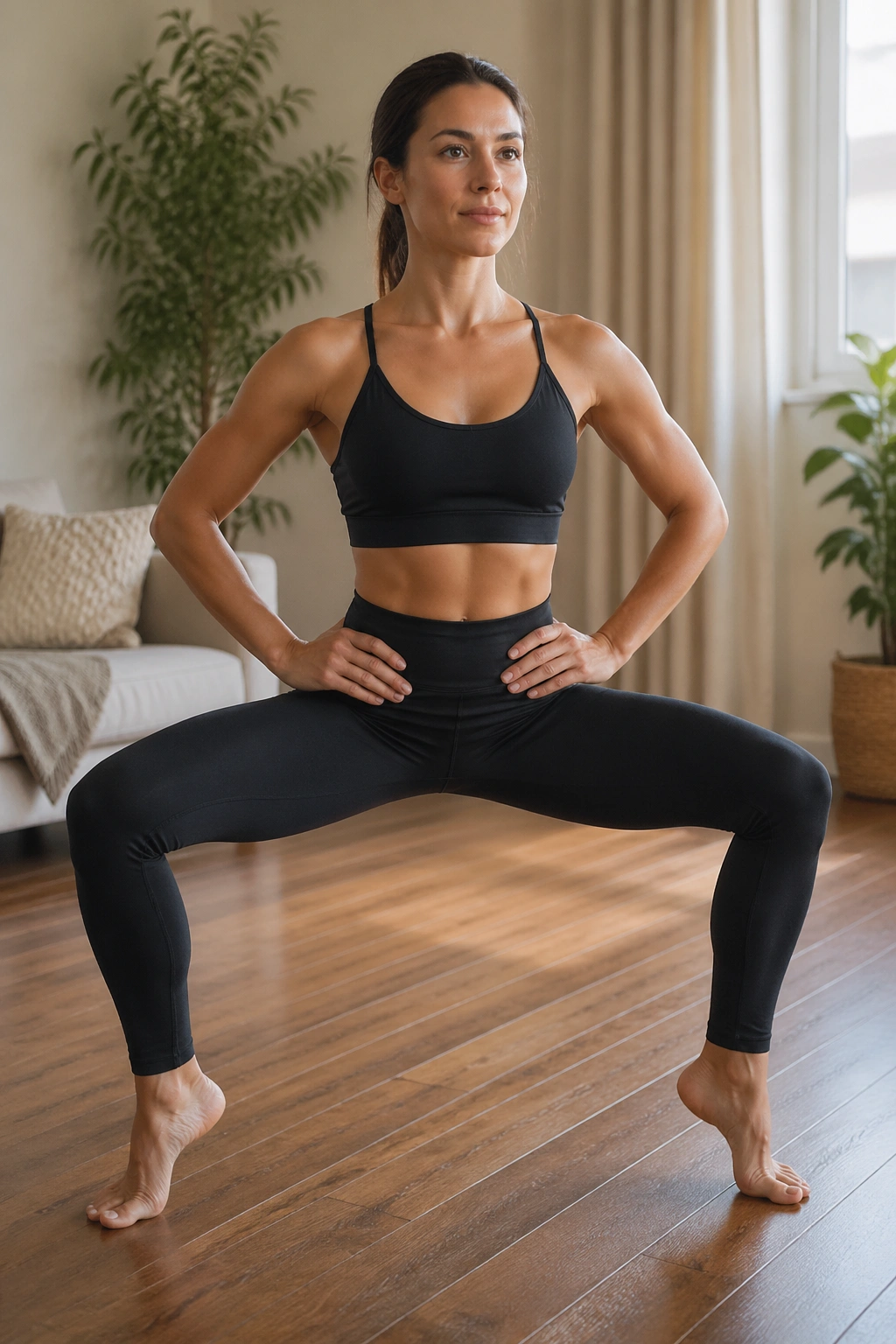
Finish with something that looks simple from across the room and feels very different once you’re in it. Stand in second position — feet wide, toes turned out a little — and lower into a shallow plié. From the bottom, pulse up and down an inch or two for 15 to 20 reps.
The inner thighs have to keep the legs from drifting apart while the glutes and calves help with the pulse. Keep the chest lifted and the heels grounded if they can stay down. If your knees cave inward, reduce the turnout and make the stance a bit narrower.
No one needs a deep squat here. The small pulse, done well, is enough. And it’s usually enough to tell you exactly how much strength you’ve got on that day.
Final Thoughts
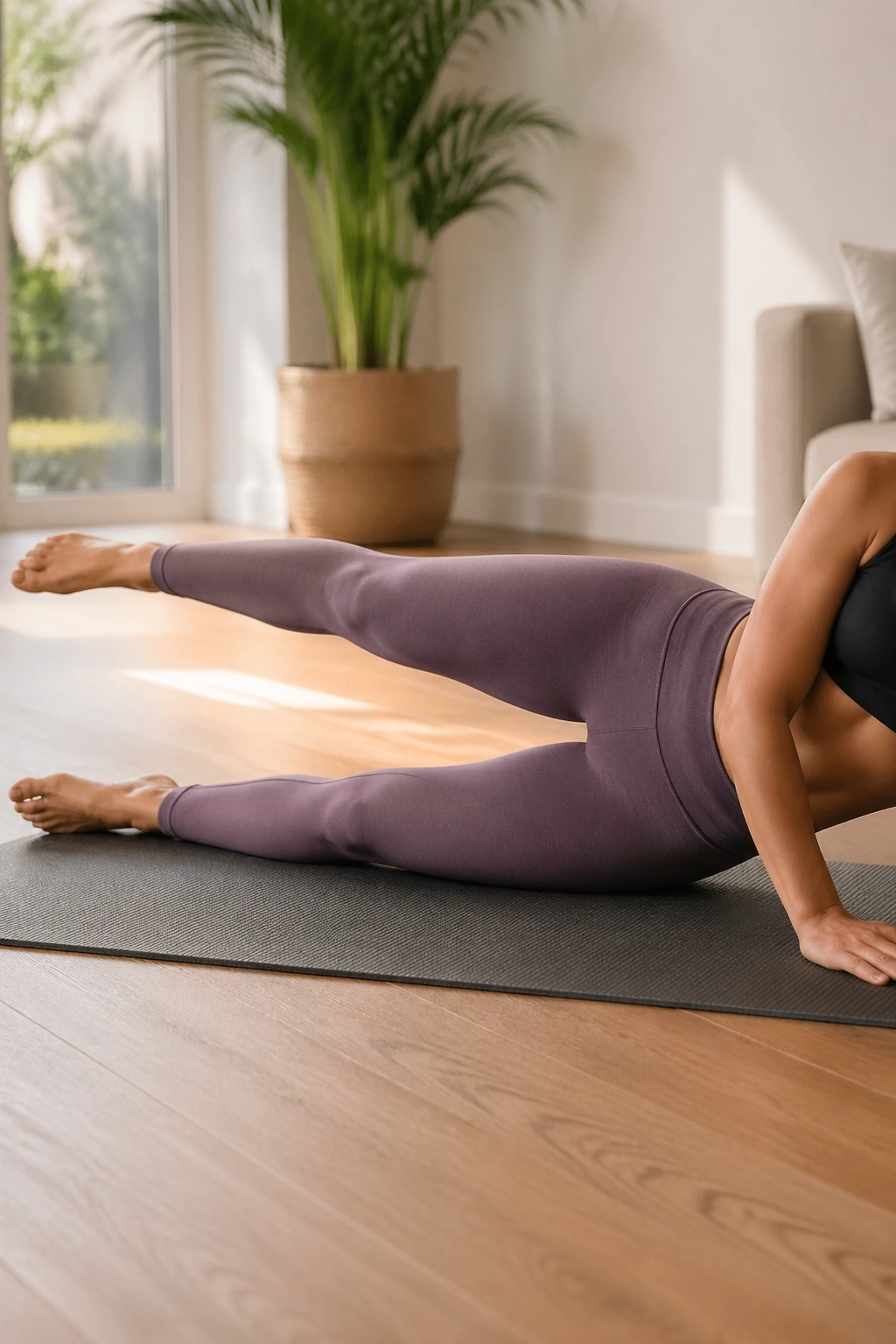
Inner thigh work gets better when you stop treating it like a race. Small range. Slow control. Honest alignment. Those three things matter more than fancy props or a long list of reps.
The best Pilates inner thigh exercises at home are the ones you can repeat without losing your shape. A pillow squeeze, a side-lying lift, a clean bridge — those are the pieces that build control from the ground up. If a move starts to feel like a hip flexor contest or a lower-back arch fest, shorten it and keep going.
There’s no prize for making the movement bigger than it needs to be. There is, though, a lot to gain from making it cleaner. Keep the mat nearby, keep the effort small at first, and let the inner thighs do their quiet work.
