



A rounder backside is not built by chasing random leg lifts until your hips burn. It comes from teaching the glutes to do two jobs well: extend the hip and keep the pelvis from wobbling when one leg leaves the floor.
That is where Pilates shines. The method strips out momentum, keeps the movement clean, and forces the muscle to do the work instead of the low back, the hamstrings, or a little bit of everything at once. If you have ever felt bridges in your hamstrings or donkey kicks in your lower back, you already know how picky the glutes can be.
The nice part is that you do not need a pile of equipment to train them well. A mat, a wall, maybe a mini-band, and a little patience can go a long way. The best results usually come from precise reps, slow lowering, and a setup that keeps the ribs stacked over the pelvis instead of flaring open like a tired shrug.
1. Pilates Glute Bridge
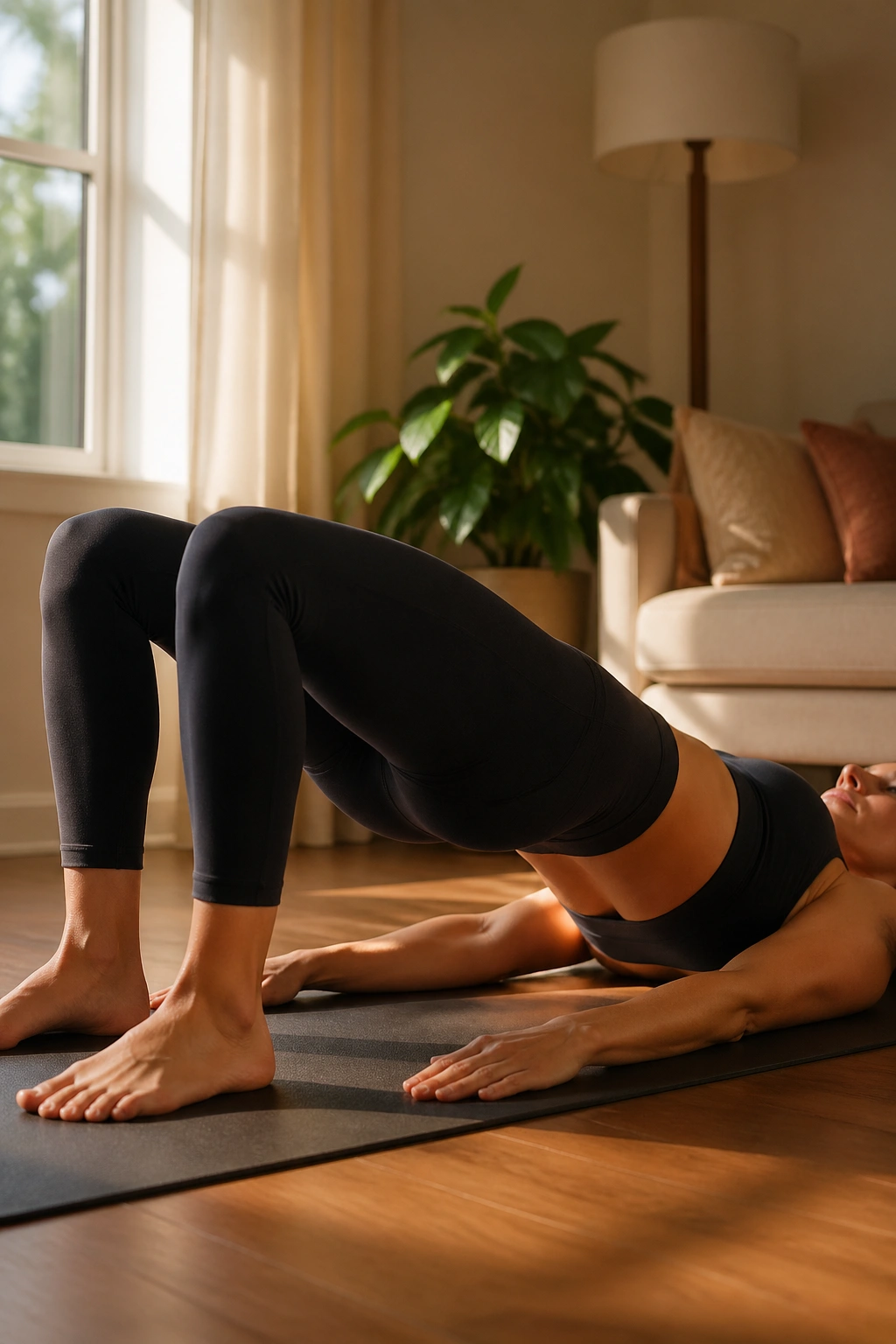
The Pilates glute bridge is the one I’d start with almost every time. It looks simple, which is exactly why so many people rush it and miss the point. Lie on your back with your feet hip-width apart, heels close enough that your fingertips can graze them, then lift your hips by pressing through the heels and tightening the back of the legs only after the glutes start to kick in.
Keep the rib cage heavy and think about lengthening your tailbone toward your knees before you lift. That tiny prep keeps the low back from taking over.
A clean set is usually 12 to 15 reps with a 2-second squeeze at the top. If you feel hamstring cramps, walk your feet a little farther away. If your ribs pop up, lower less and control more.
One good bridge is worth ten sloppy ones.
2. Single-Leg Bridge
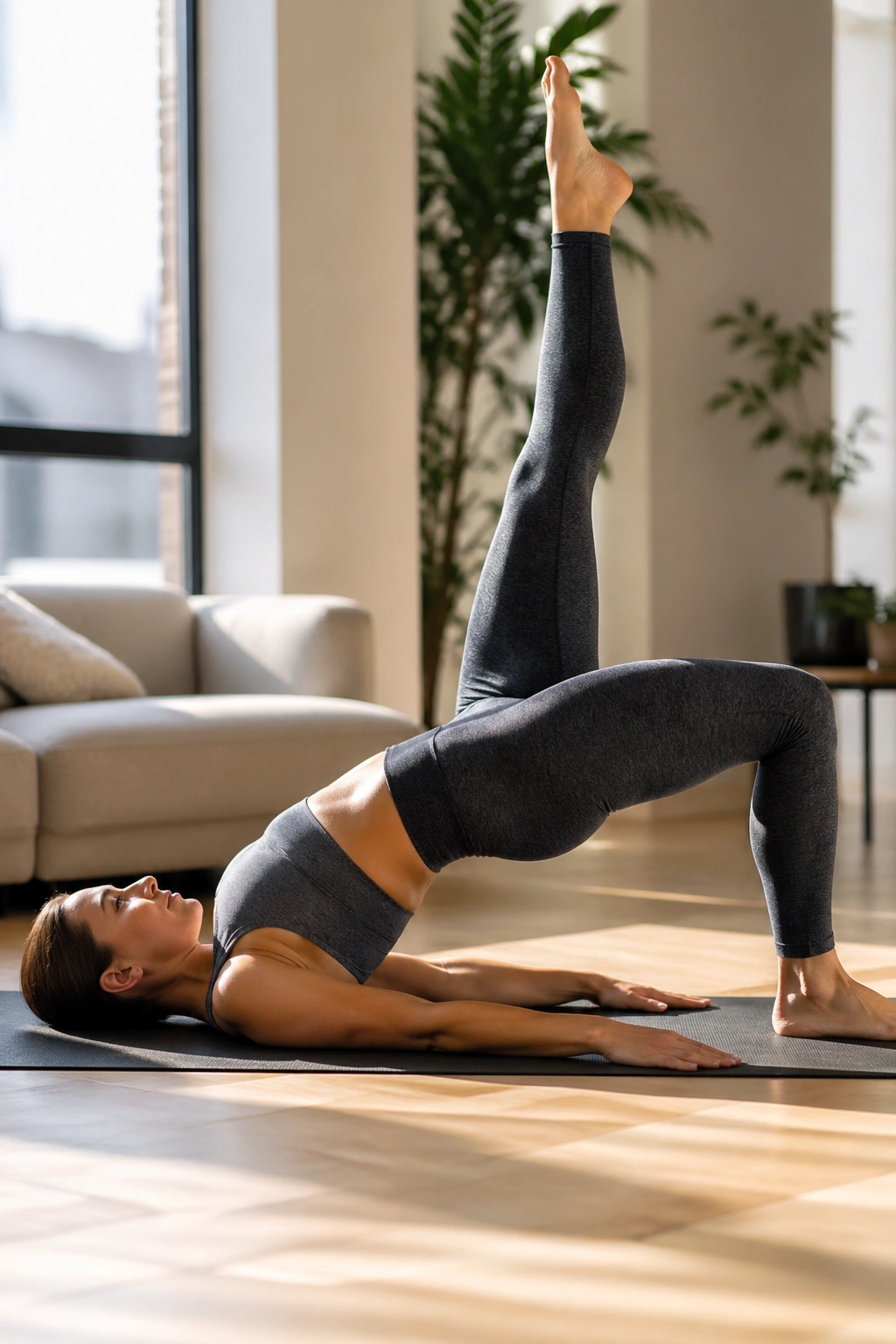
Take the bridge, remove one foot, and the whole exercise gets honest fast. Single-leg bridge work is one of the best Pilates glute exercises for building a shape that looks lifted from behind, because it forces each side to earn its turn instead of letting the stronger leg do the heavy lifting.
How to keep the pelvis from tipping
Set up in bridge position, then extend one leg long so both knees stay close to level. Lift and lower the hips slowly, keeping the two hip bones pointed straight up at the ceiling.
A good target is 6 to 10 reps per side, with a brief pause at the top. If your hips drift to one side, shrink the range before you make the movement bigger.
- Press through the planted heel, not the toes.
- Keep the floating thigh in line with the other knee.
- Lower under control; do not drop.
3. Bridge March
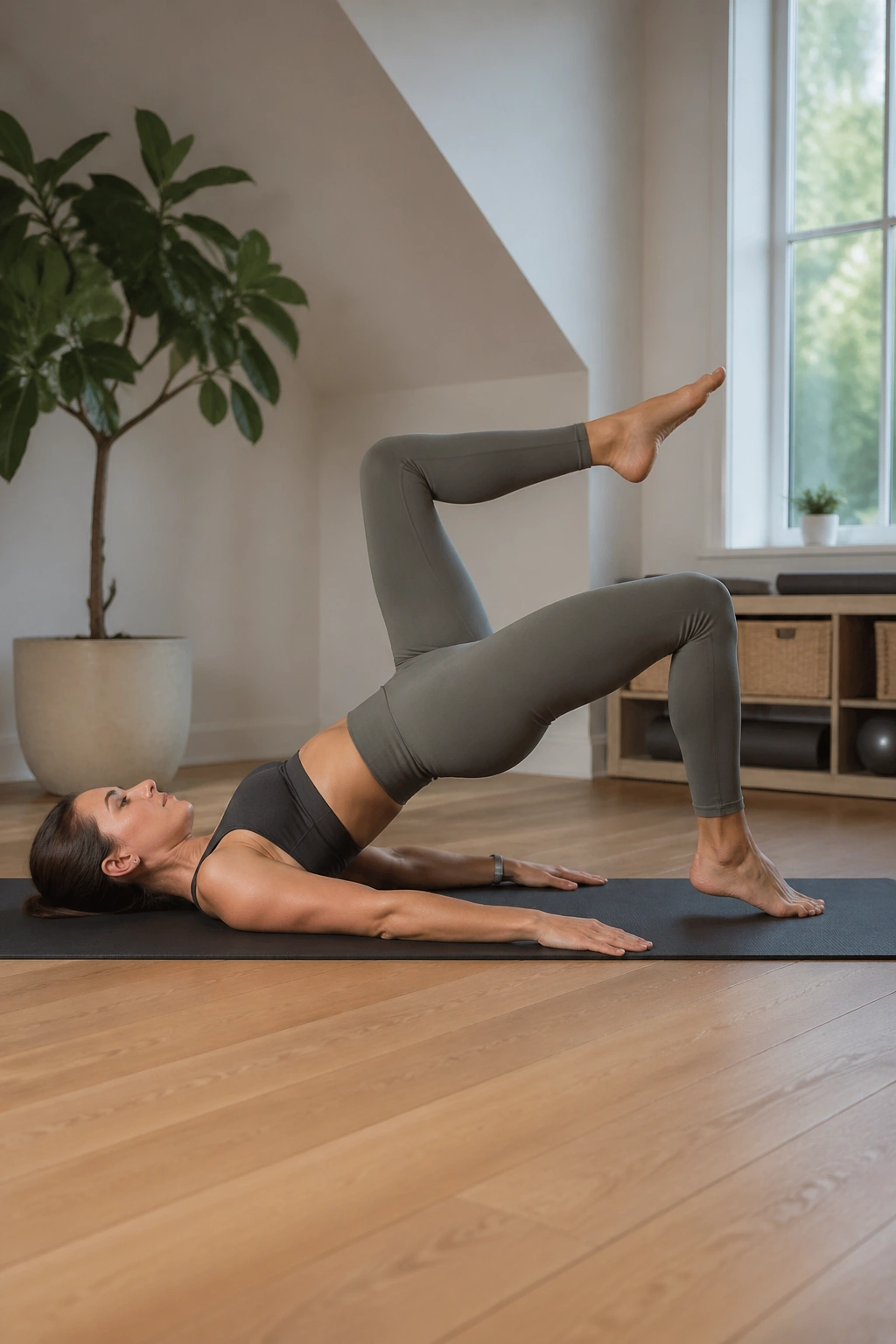
Bridge march is where the exercise stops being a simple strength move and starts acting like a balance test. You hold the bridge, then lift one knee a few inches at a time without letting the hips rock side to side. That anti-rotation challenge is sneaky, and it lights up the glute medius in a way a basic bridge cannot.
It’s a nice reminder that strong glutes are not just about bulk. They also keep your pelvis stable when you walk, climb stairs, or stand on one leg in a hurry.
Try 8 to 12 total marches. Move slowly enough that the lifted leg feels almost suspended. If the bridge height drops every time you march, hold the top position for a few breaths first, then try again.
4. Frog Pumps
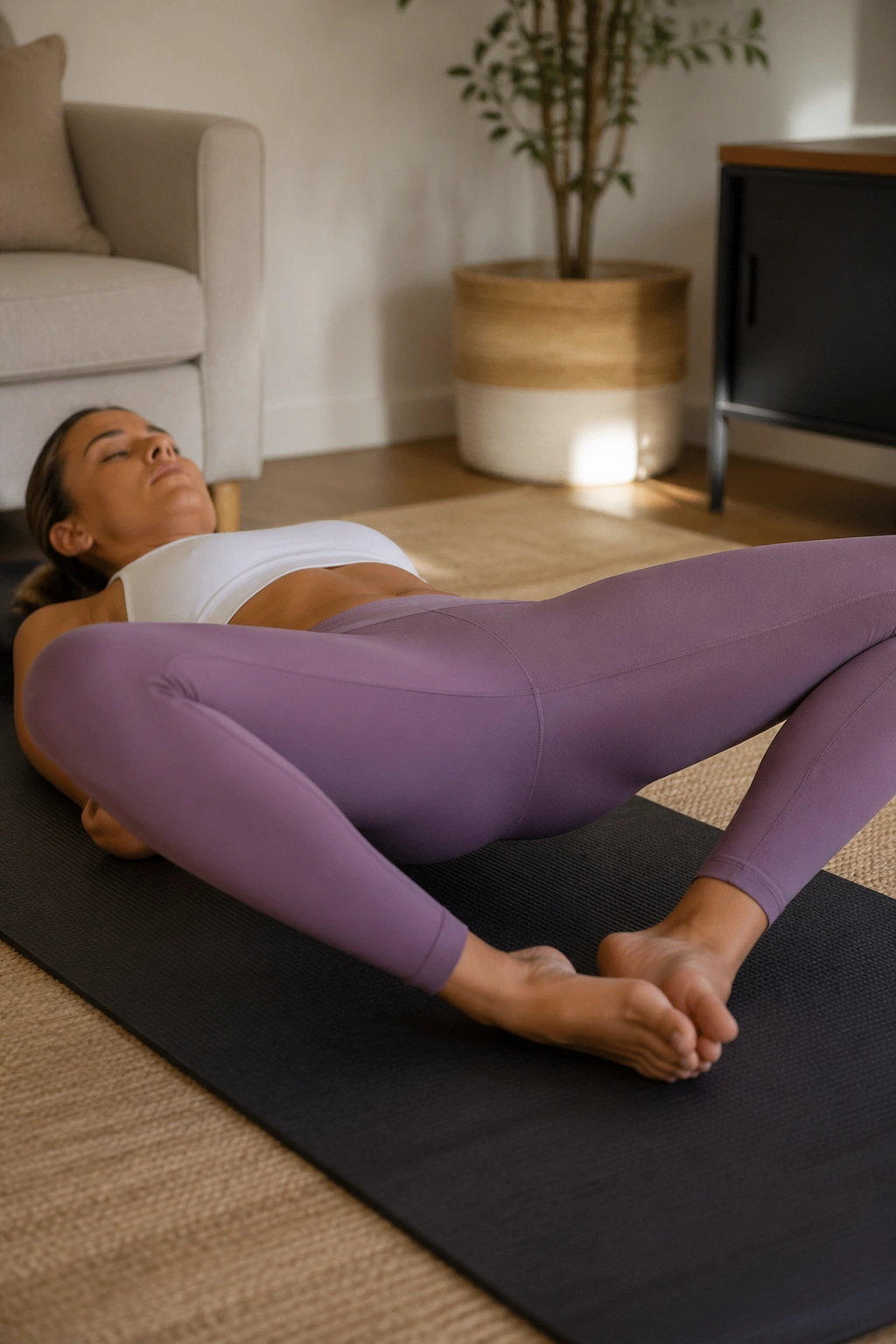
Frog pumps look almost playful until your glutes start shaking. Lie on your back, bring the soles of your feet together, let your knees open wide, and keep your heels pulled in close to your hips. Then pulse the hips up in a short range, squeezing hard at the top.
The magic here is the position. The turned-out legs and compact setup make the glutes do more of the work and make it harder to hide behind the hamstrings. Tiny range. Huge burn.
Use 20 to 30 pulses for a set, and keep the movement crisp rather than sloppy. If the lower back starts arching, stop lifting so high. The top of the rep does not need to be dramatic; it needs to be controlled.
5. Donkey Kicks
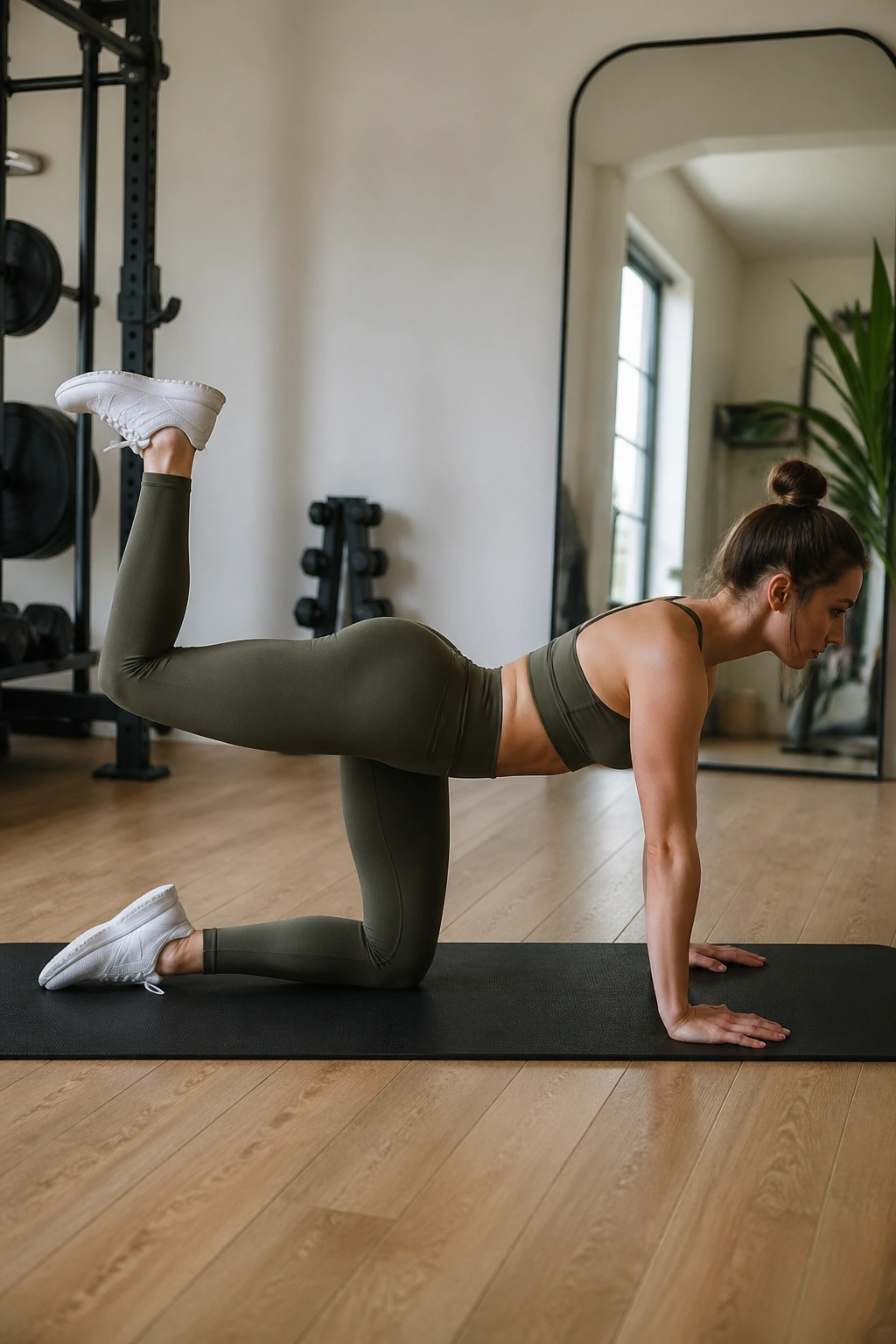
Donkey kicks are a classic for a reason. They load the glute max without asking for a lot of equipment, and they make you pay attention to spinal control, which is the whole point of Pilates anyway.
What to watch for
Set up on hands and knees, hands under shoulders and knees under hips. Keep the working knee bent about 90 degrees, then press the heel toward the ceiling while the torso stays quiet.
A decent set is 12 to 15 reps per side, with a 1- to 2-second squeeze at the top. If the back arches hard or the ribs flare, the leg is going too high.
- Think “heel up,” not “foot up.”
- Keep the neck long.
- Stop before the low back starts helping.
6. Fire Hydrants
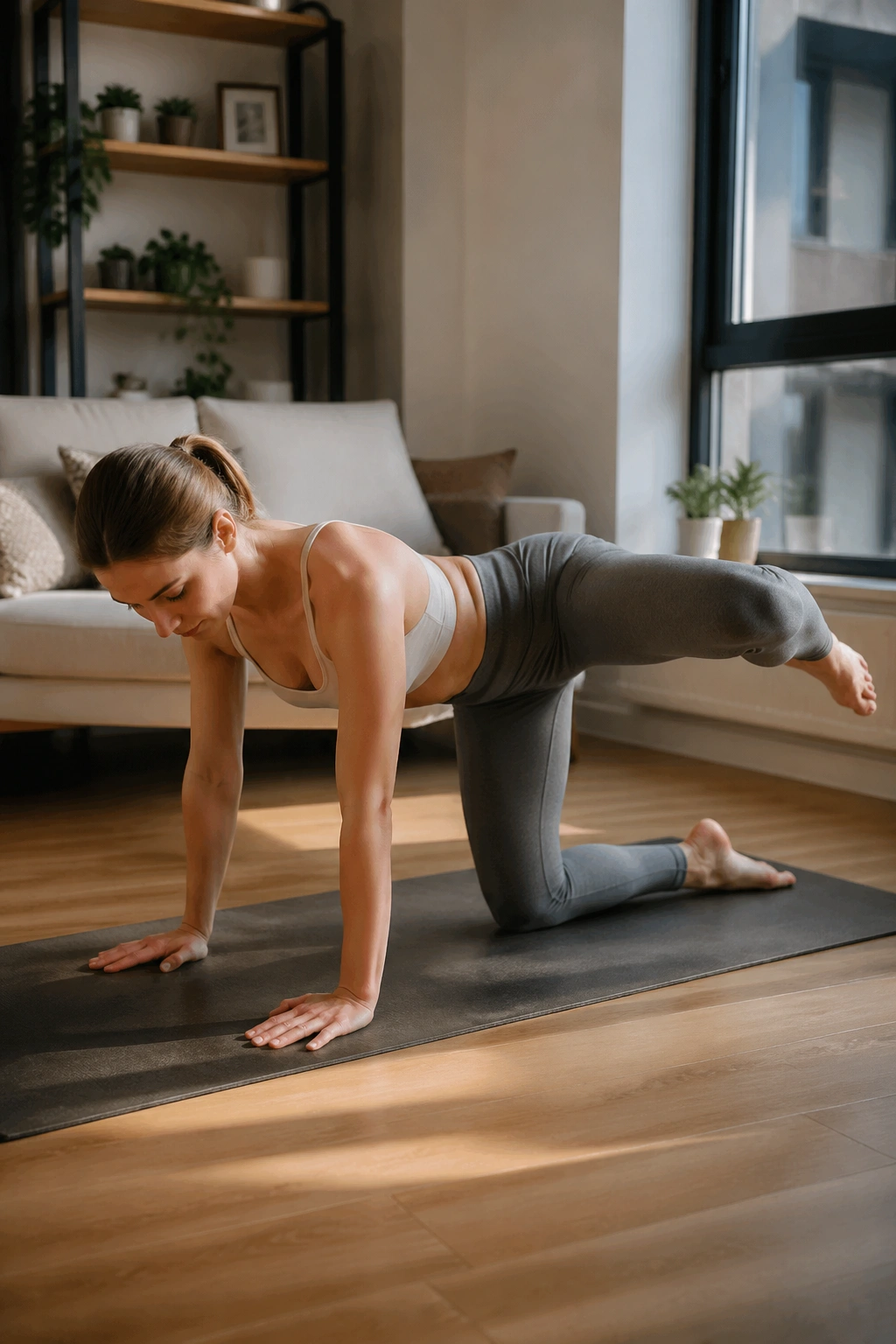
Fire hydrants hit the side glutes, which matters more than most people think. The glute medius gives the backside a rounder look from the side and helps keep the pelvis from collapsing when you walk, lunge, or stand on one leg. That’s the muscle people usually neglect.
From all fours, lift one knee out to the side without shifting your weight into the opposite shoulder. The motion should feel like it comes from the hip socket, not the lower back.
Use 10 to 15 reps per side. Keep the lift smooth and small enough that your torso stays level. If you want more work, add a light mini-band above the knees, but only if you can still control the movement.
7. Quadruped Leg Circles
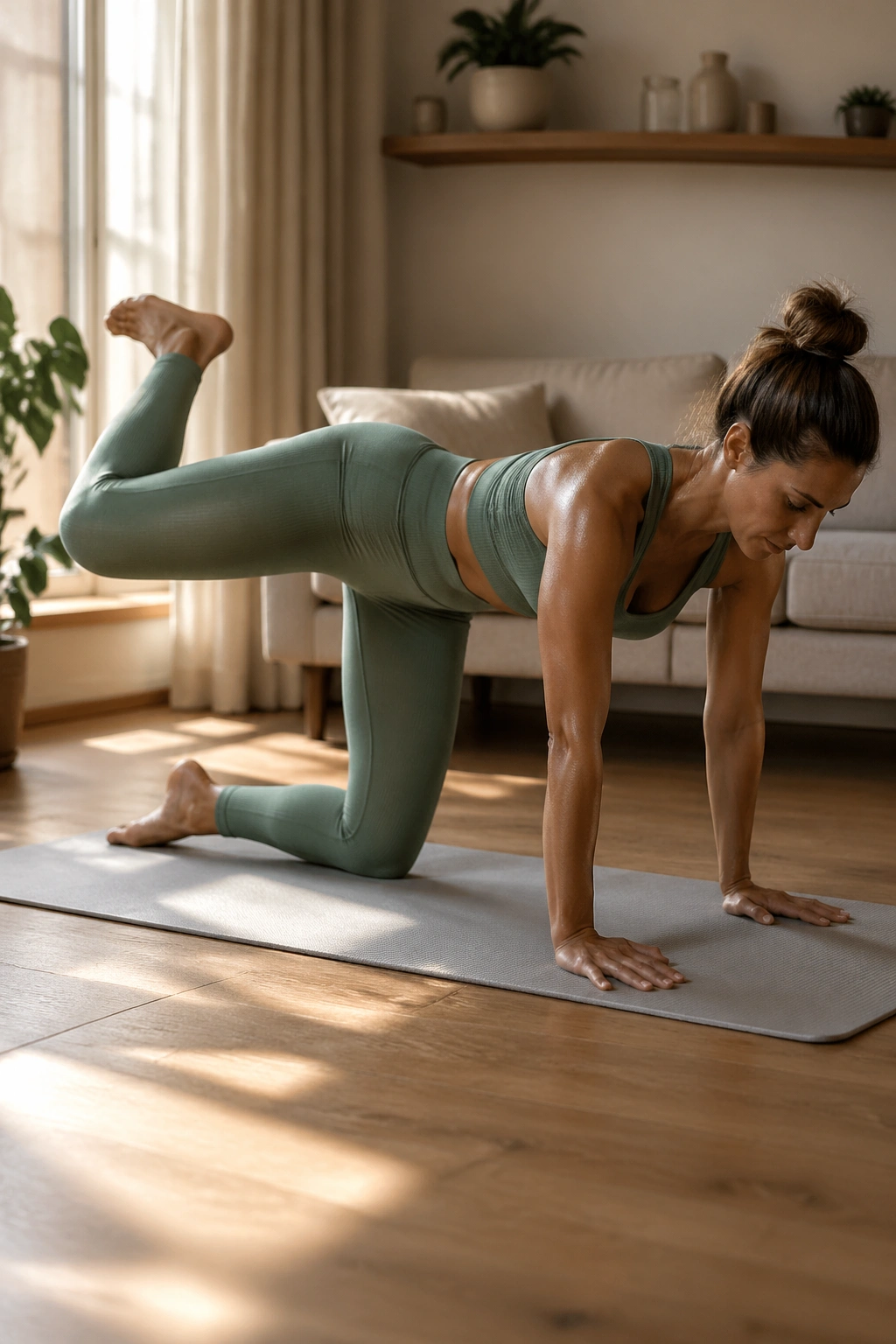
Quadruped leg circles are one of those moves that look almost too gentle to matter. They do matter. A lot. The small circle asks the glute to control the leg through a changing line of force, which is a fancy way of saying your hip has to stay awake the whole time.
Why the circle should stay small
Start on hands and knees, then lift one bent leg slightly off the floor and draw a small circle with the knee. Keep the movement tidy; a dinner-plate circle is already too big for most people.
Aim for 8 circles one way and 8 the other. If your back wobbles or your hips shift, make the circle smaller and slower. The point is not range. The point is control.
A good circle feels like a slow burn deep in the outer hip.
8. Straight-Leg Kickback on All Fours
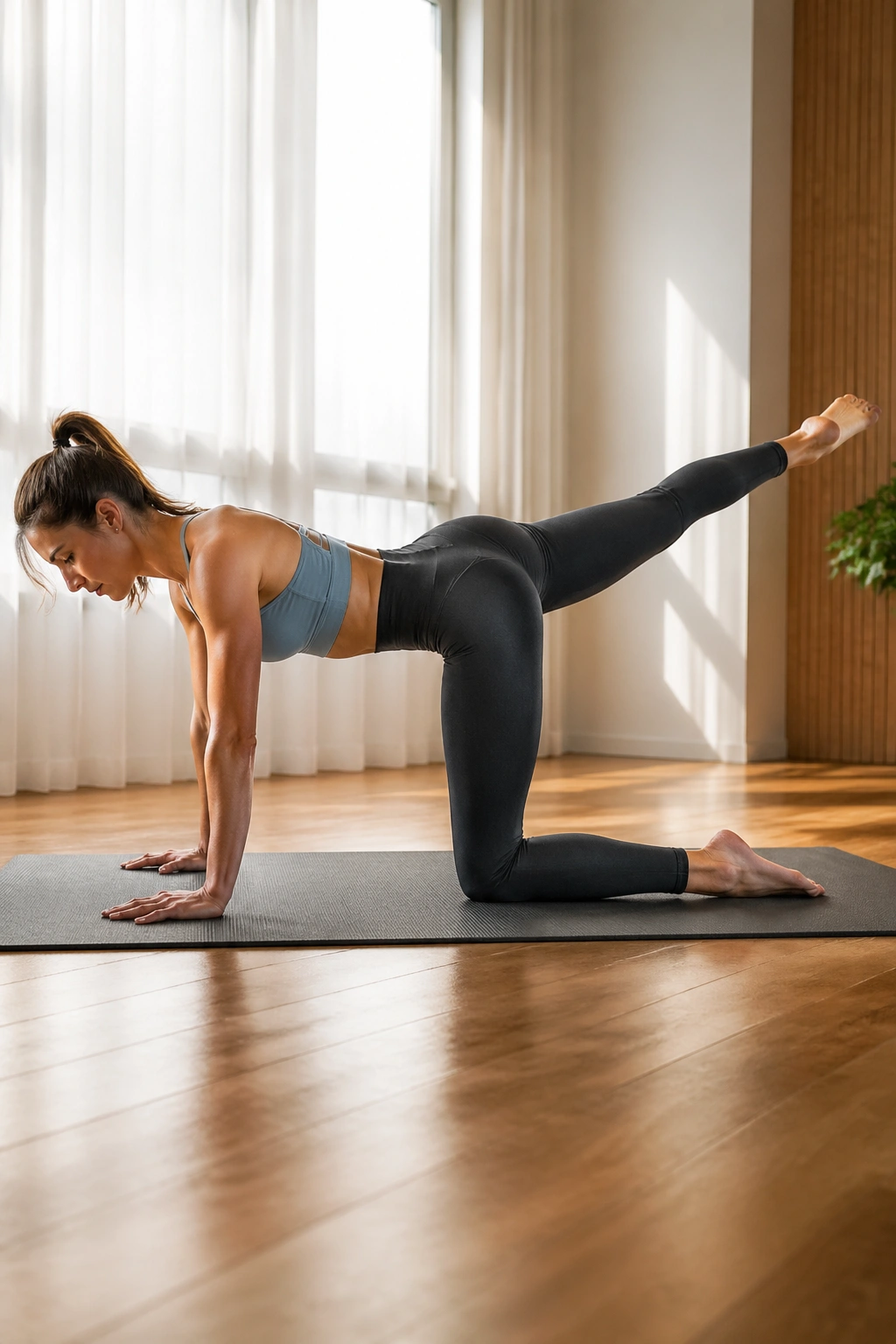
A straight-leg kickback changes the game because it asks the glute to work through more leverage. Extend the leg long behind you, point or flex the foot depending on what feels cleaner, and pulse the heel a few inches up without dumping weight into the spine.
This version tends to feel a little more intense than a bent-knee donkey kick. That is not an accident. The longer leg line makes the muscle hold on longer, and the lower back has less room to sneak in if your form gets loose.
Try 10 to 12 reps per side. If you feel it in the hamstring more than the glute, soften the knee a touch and shorten the lift. A lot of people try to go higher here. Usually that just means the back is cheating.
9. Clamshells
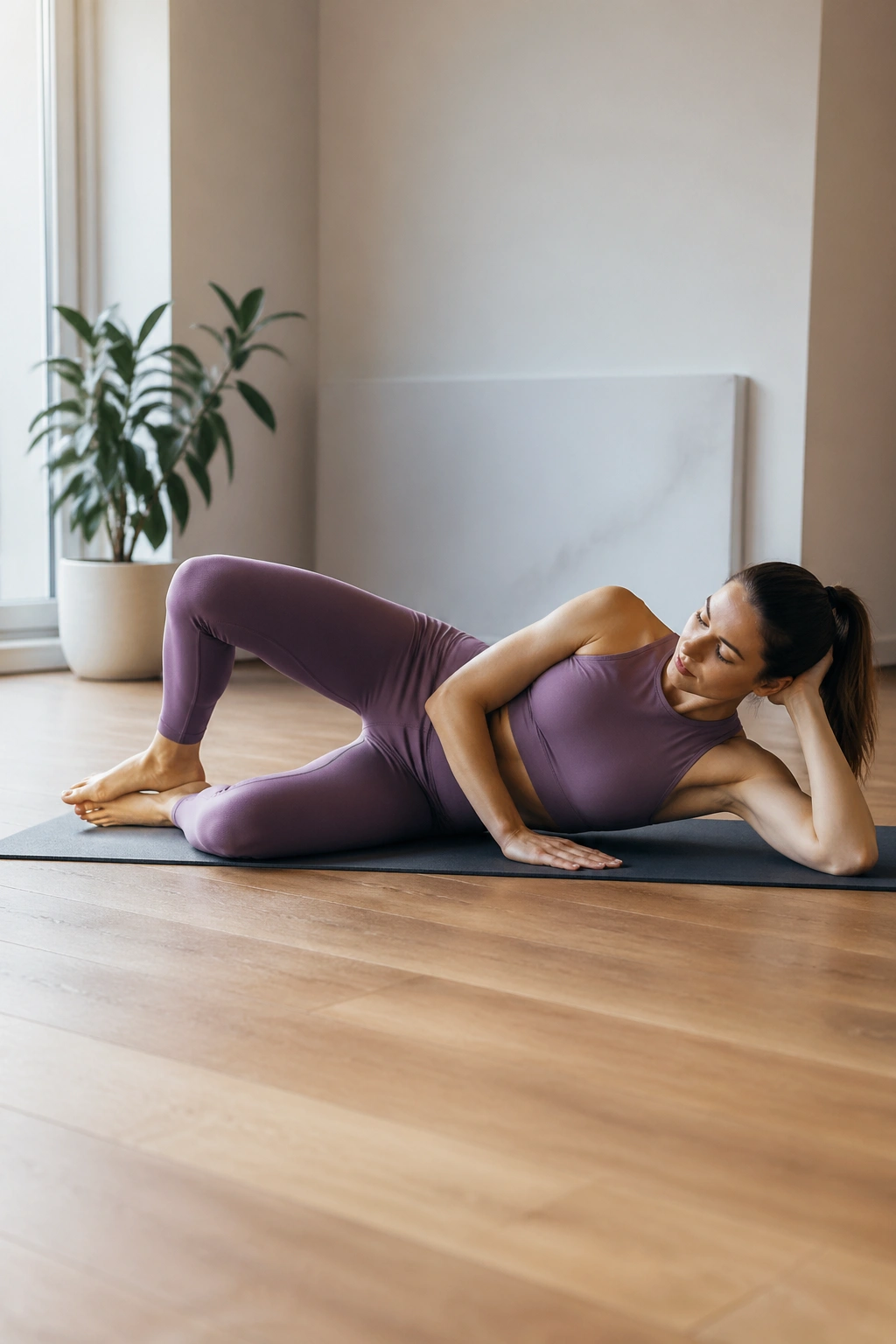
Clamshells are small, but they are not soft. Lie on your side with knees bent, hips stacked, and heels lined up behind you. Open the top knee like a shell opening at the hinge, while the feet stay together.
This move is a glute medius staple. It helps build the outer hip area that gives the glutes more shape from the back and the side, especially when you pair it with bridge work.
Use 15 to 20 reps per side. A mini-band above the knees makes it harder, but only use it if your pelvis can stay steady. If you roll backward to lift higher, the band is too ambitious for the day.
10. Side-Lying Leg Lifts
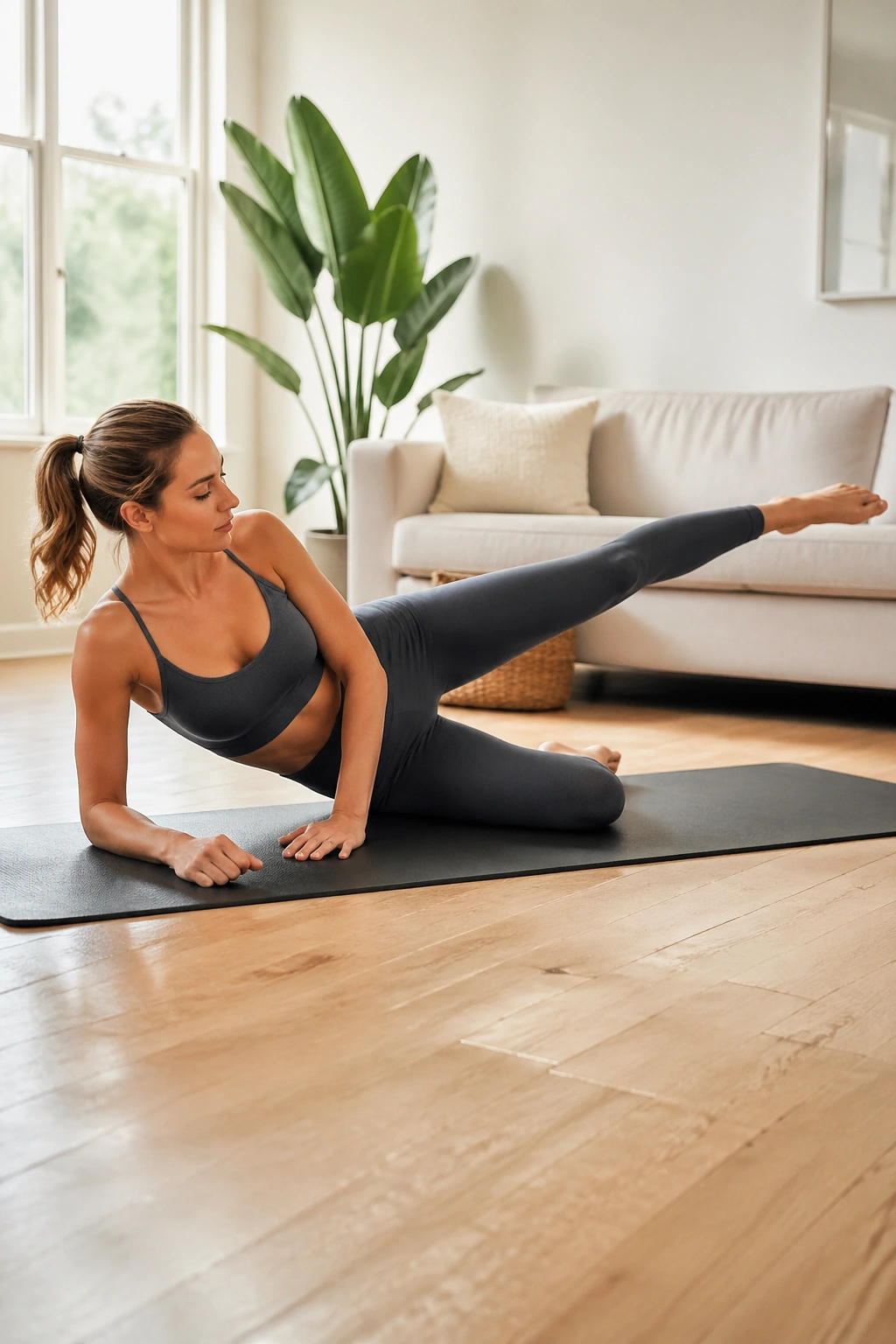
Side-lying leg lifts are one of the cleanest ways to target the upper outer glute. They also expose weakness fast. Lie on your side, bottom knee bent for support if needed, and lift the top leg with the toe turned slightly down so the hip, not the front of the thigh, does the work.
The temptation is to swing the leg high. Don’t. A modest lift with a slow lower usually burns more and teaches the right muscles to turn on.
Try 12 to 20 controlled lifts. If you feel the front of the hip pinching, lower the leg a little and keep the waist long. The top of the movement should feel firm, not jerky.
11. Side Kick Front and Back
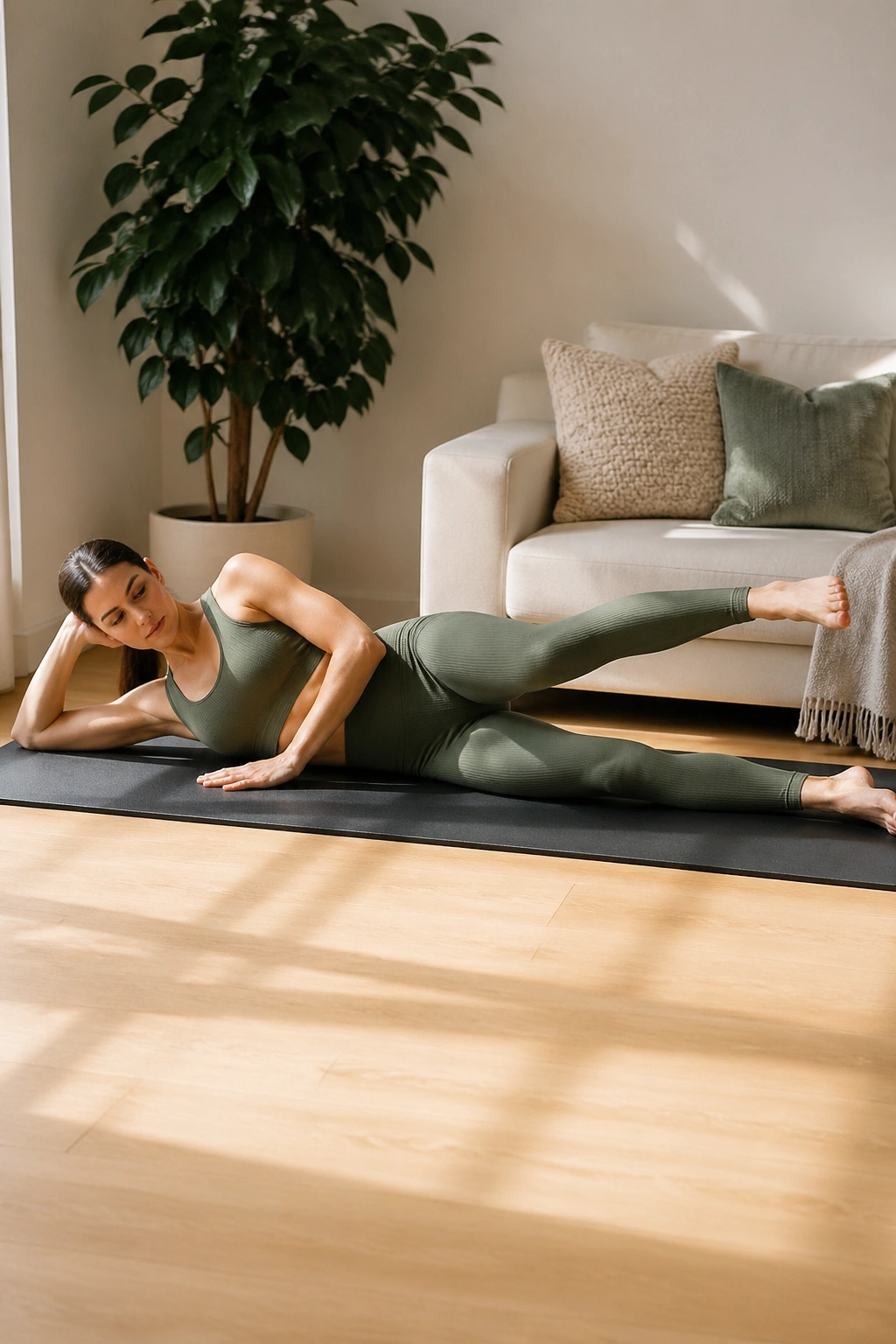
Side kick front and back gives you a clean hip extension pattern, which is Pilates language for “move the leg without losing the trunk.” Lie on your side, prop your head comfortably, and swing the top leg a short distance forward, then back.
The back sweep is where many people feel the glute wake up. The front reach tests control. Put them together and the hip starts working in a more useful way than a plain lift.
Use 8 to 12 front-and-back sweeps on each side. Keep the pelvis stacked. If you feel yourself rolling open every time the leg goes back, shorten the range and slow the tempo until the torso stays quiet.
12. Side Kick Circles
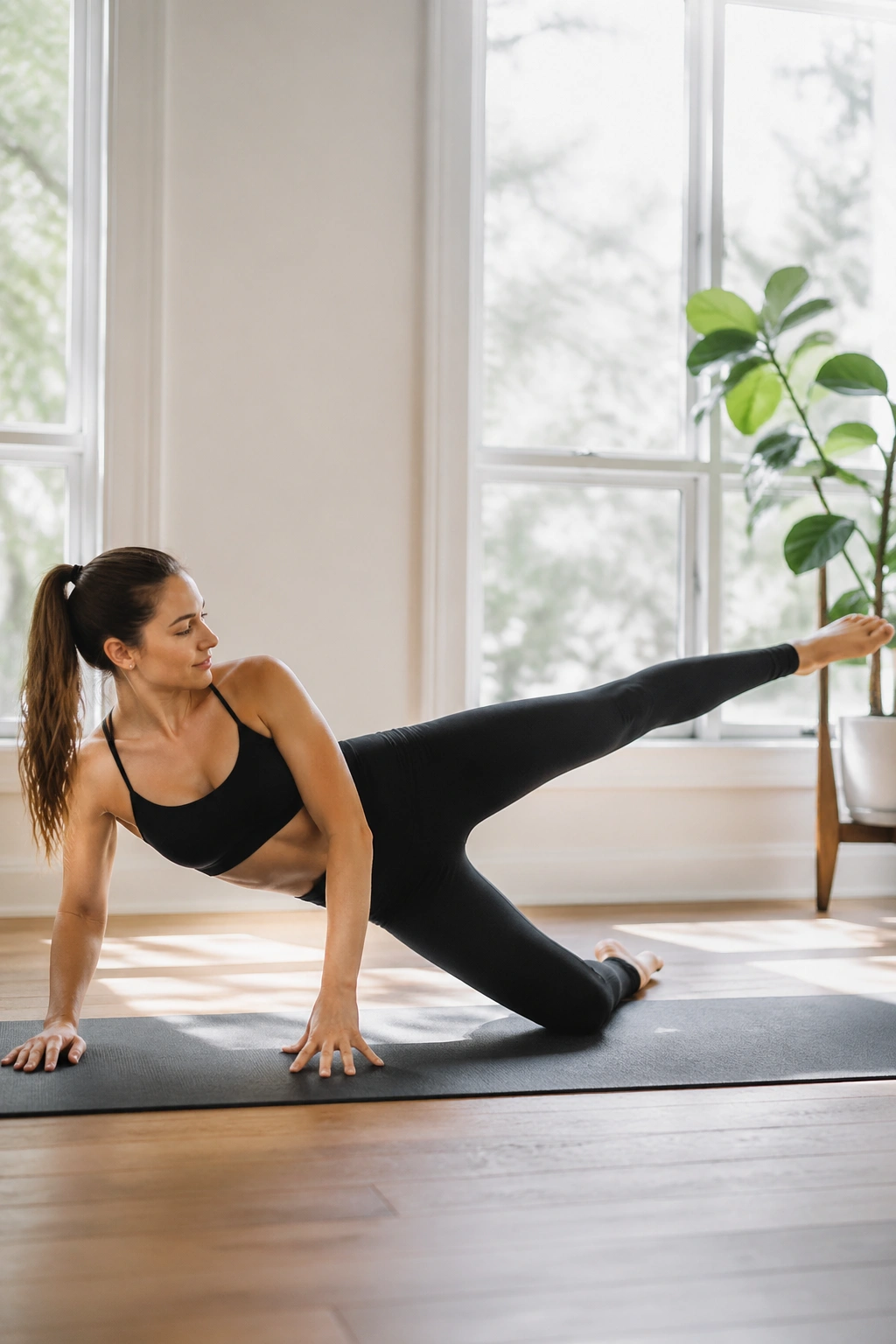
Side kick circles ask for patience, and that is why they work. The leg traces a small circle in the air while the torso stays stacked and still. No swinging. No leaning into the mat. Just a controlled hip moving through space.
How to keep the circle honest
The circle should feel smooth enough that you could pause mid-way without wobbling. If the hip starts hiking or the lower back tries to help, your circle is too large.
Use 6 to 8 circles in each direction. Breathe out on the hardest part of the circle and keep the top waist lifted. The glute medius usually shows up here after a few rounds, and once it does, the side of the hip starts talking back.
This one is quiet. Then it bites.
13. Side Plank Top-Leg Lift
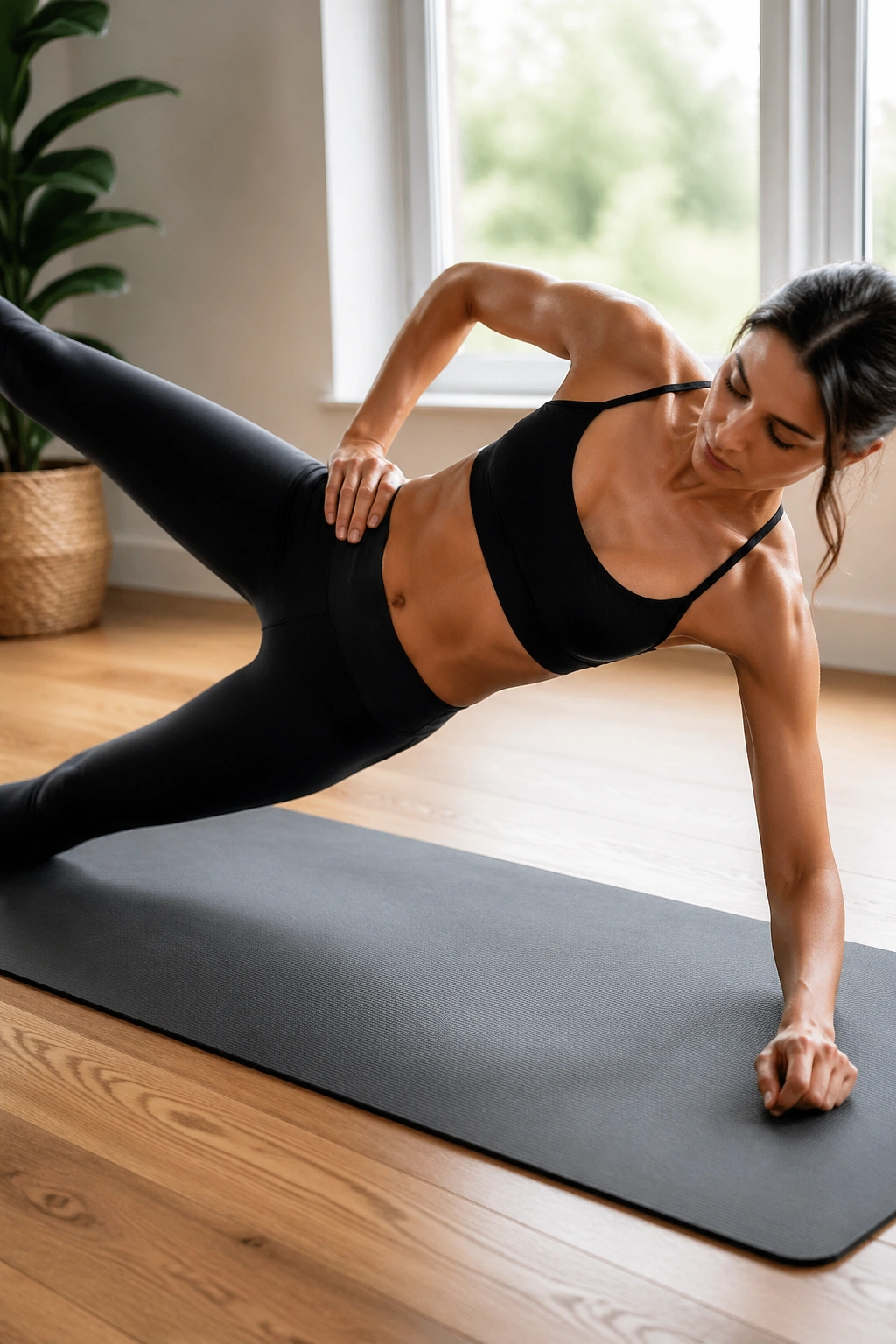
A side plank with the top leg lifting is a sharper move, but it pays off fast. You train the glute medius while the obliques and shoulder keep the body from collapsing. That crossover matters because the glutes do not work alone in real life.
If full side plank feels like too much, drop the bottom knee. If that still feels wobbly, keep the top leg lift tiny and focus on staying long through the waist.
A solid starting point is 6 to 10 leg lifts per side or a 15- to 20-second hold. The lift should be smooth, not kicked. You want the side of the hip to work hard without the shoulders turning into a mess.
14. Standing Kickbacks
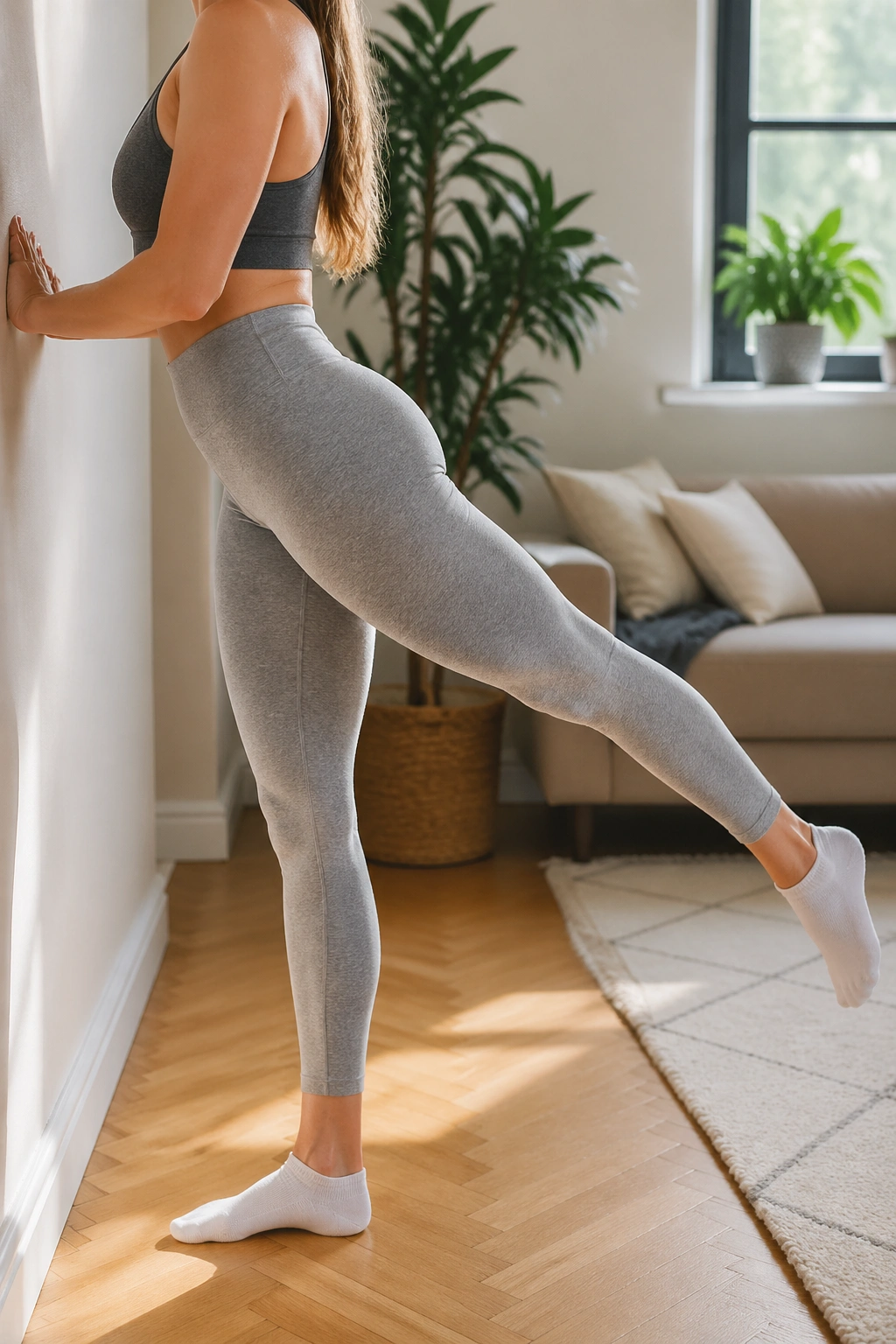
Standing kickbacks are underrated because they look like nothing. Stand tall, hold a wall or chair for balance, and reach one leg straight back with a small squeeze at the top. The trunk should stay quiet, and the standing leg should stay soft, not locked.
This version is helpful if you want to feel the glute in a more upright, everyday pattern. It maps well to walking and stair climbing, which is part of why I like it as a bridge between mat work and more dynamic training.
Use 12 to 15 reps per side. A slight forward hinge from the hips can help, but keep the chest long. If you swing the leg, slow down. The glute likes precision more than speed.
15. Curtsy Lunge Pulses
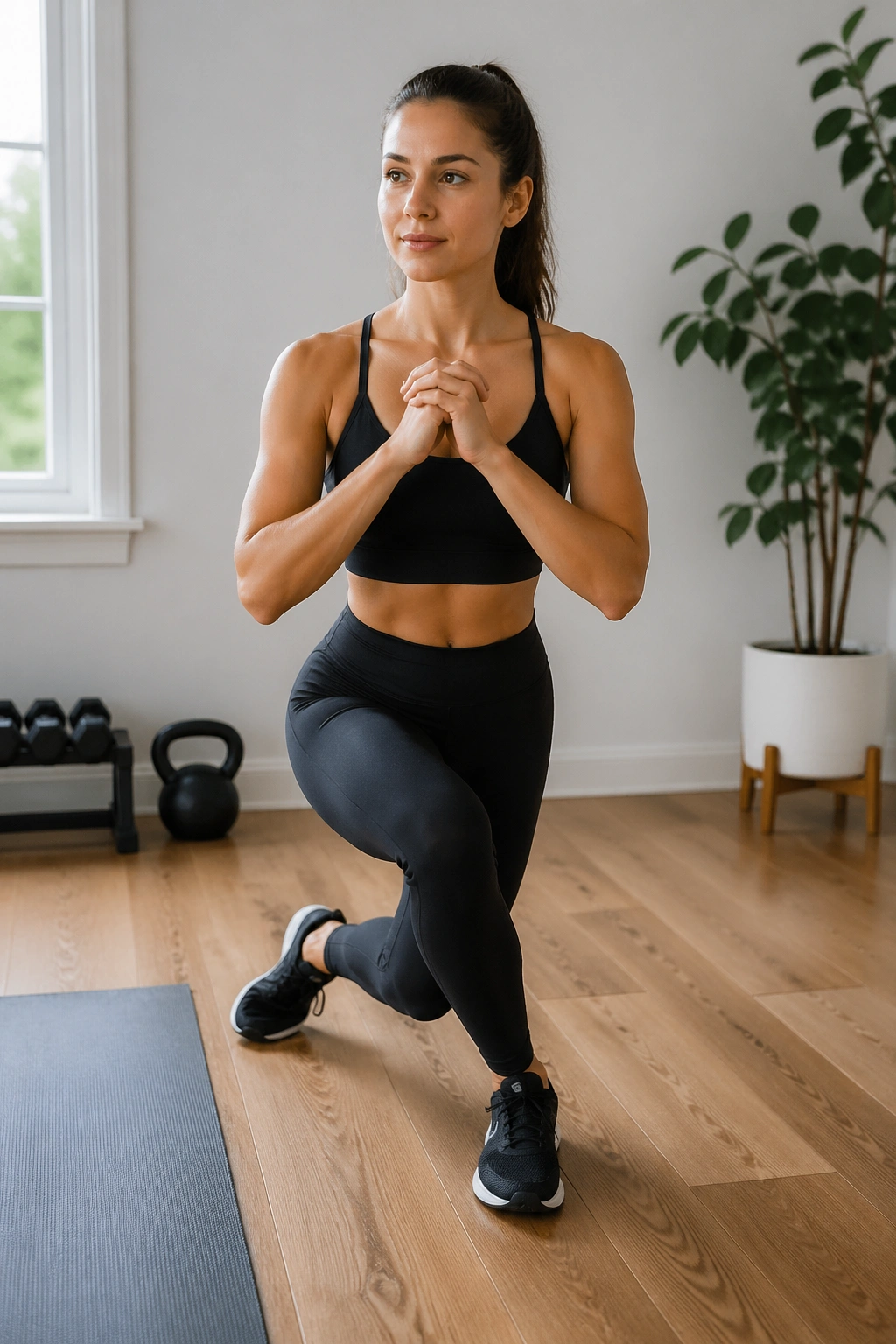
Curtsy lunges can be gold for the outer glute, but they need to be done with care. Step one leg back and across behind the other, then pulse in a shallow range while keeping the front knee tracking over the middle toes.
The diagonal line lights up the glute medius and the upper glute max. It also forces hip control, which is why the move can feel awkward before it feels effective.
Try 8 to 12 pulses per side. If the knees complain, make the step smaller and stay higher. You do not need a deep sink to get a useful contraction. A short, controlled pulse is usually cleaner anyway.
16. Reverse Lunge to Knee Drive
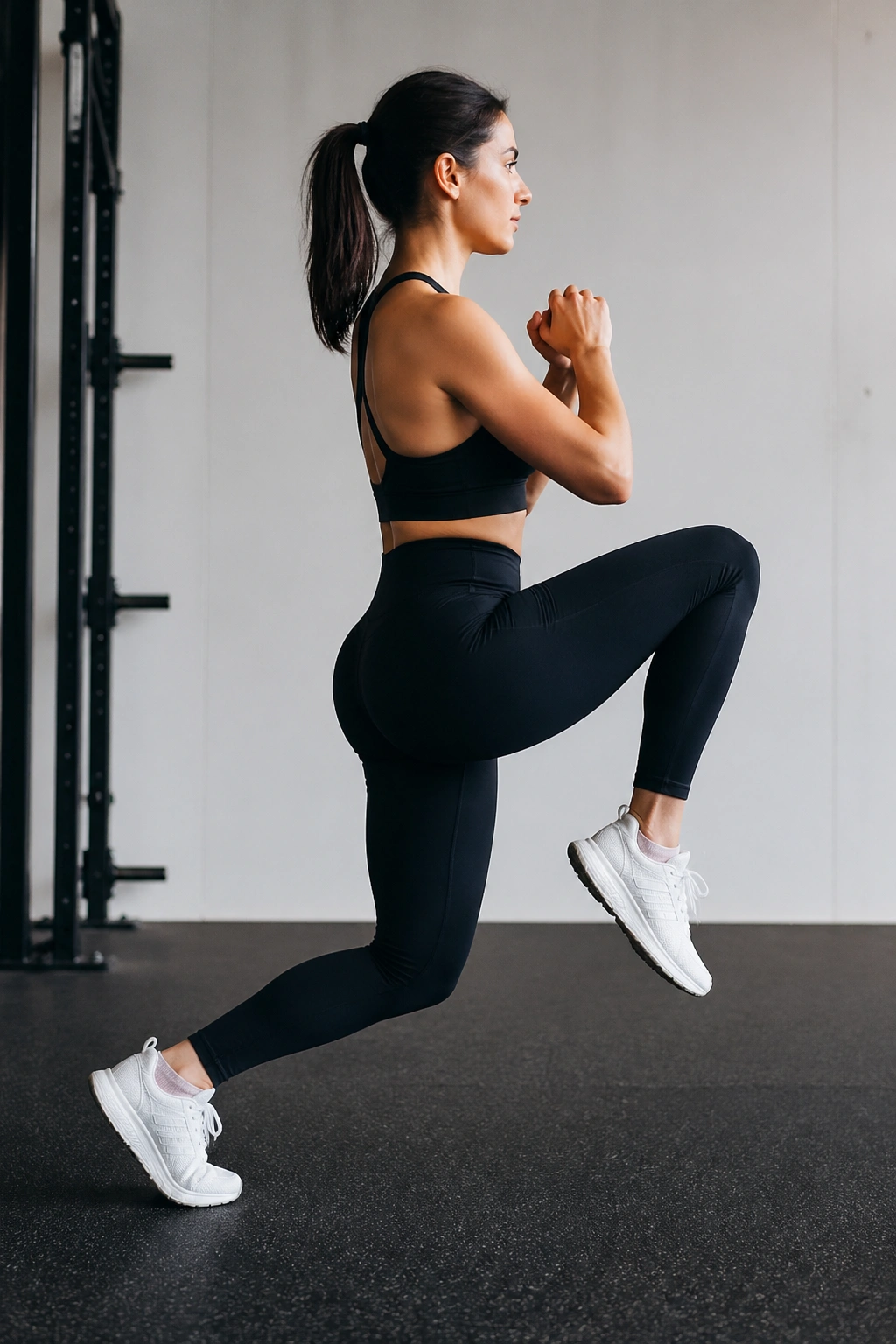
Reverse lunges have a smoother feel than curtsy lunges, and they are easier to load without losing control. Step back, lower under control, then drive the front heel into the floor and bring the back knee up toward the chest.
That knee drive is where the glute finishes the rep. It teaches the hip to extend and stabilize, which is a nice carryover for walking uphill, standing up from a chair, or climbing stairs without your legs feeling like wet rope.
A good dose is 8 to 12 reps per side. Keep the front shin fairly vertical and avoid pushing off the back foot too hard on the way up. The front leg should do most of the work.
17. Step-Ups
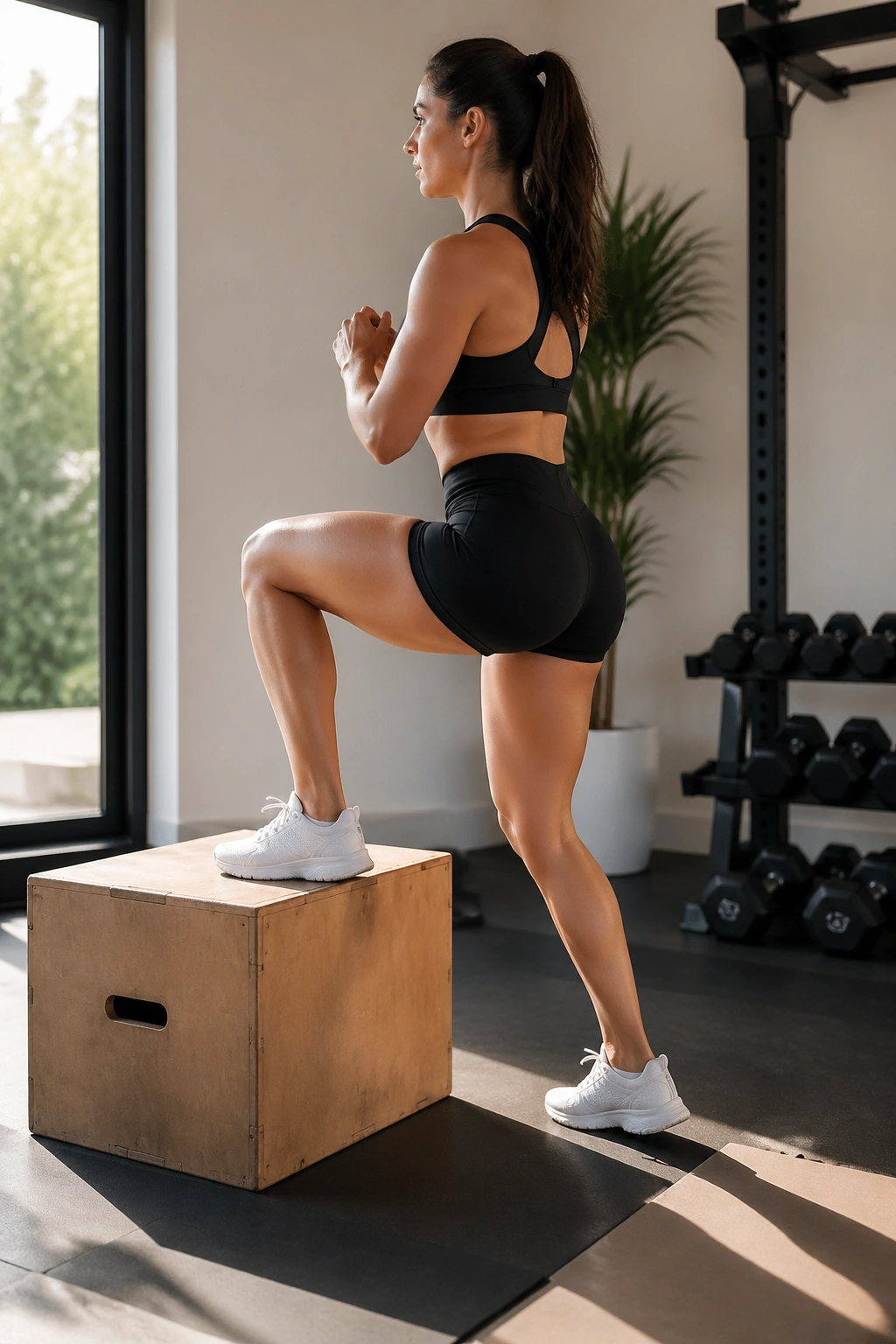
Step-ups are one of the most honest lower-body exercises you can do. If the box is too low, you outgrow it fast. If it’s too high, the movement turns clumsy. Find a step that lets your whole foot land flat and your hip stay in control.
How to make it glute-dominant
Lean slightly forward from the hips, press through the heel of the working leg, and stand tall at the top without bouncing off the trailing leg. Lower slowly enough that the glute has to control the descent too.
Use 8 to 12 reps per side. A knee-height step is too much for some people and perfect for others. The right height is the one that lets you stay smooth.
- Keep the chest proud but not arched.
- Drive through the middle of the foot.
- Control the way down.
18. Pilates Squat Pulses
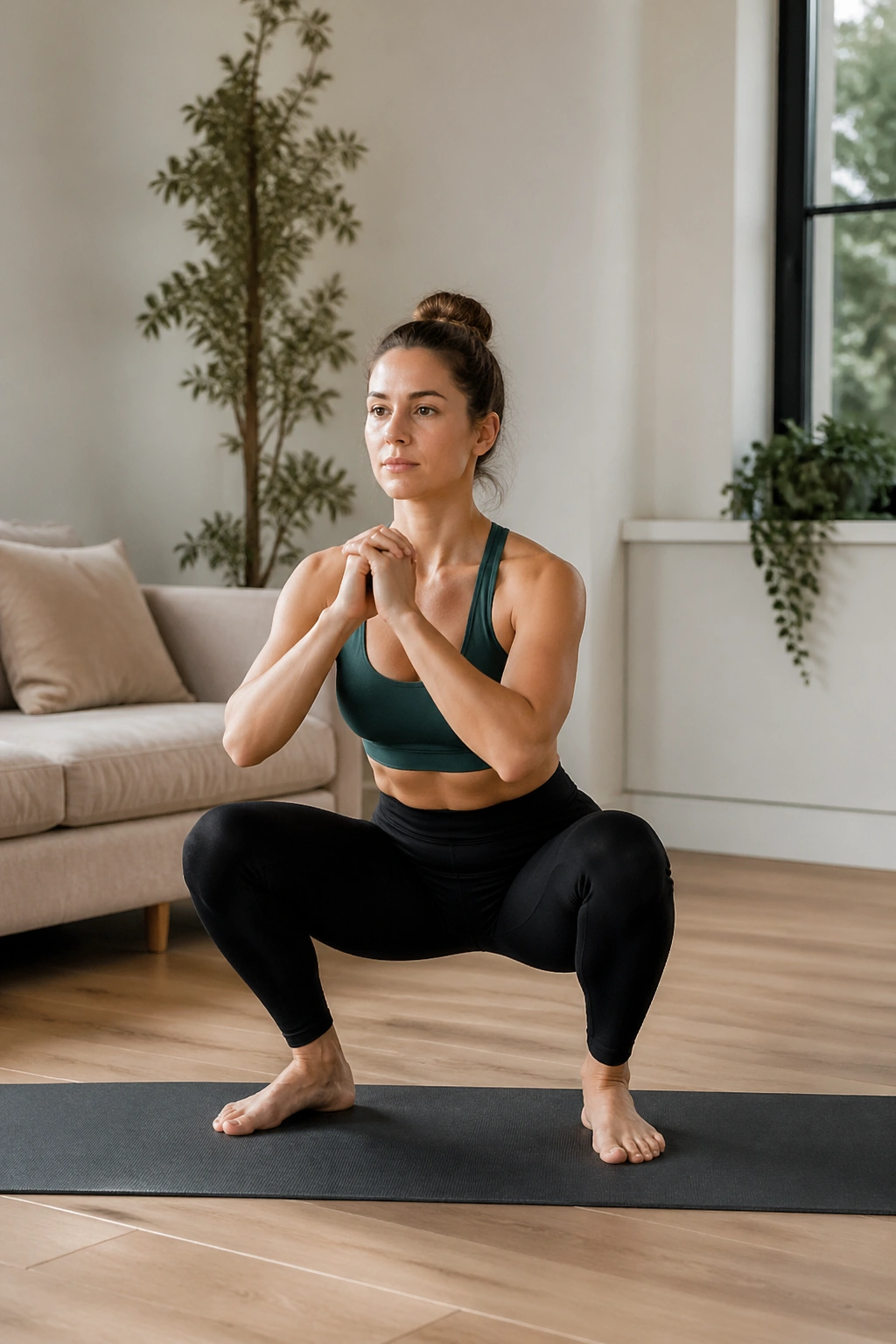
Pilates squat pulses are brutally simple. Sit into a squat, hold the position, and pulse a few inches up and down while keeping the weight in the heels and the knees tracking out over the toes.
The glutes stay under constant tension here, which is why the burn stacks up quickly. You also get a little quad work and core bracing, but the backside does a lot of the heavy lifting if you keep the torso stacked.
Aim for 15 to 20 pulses, then hold the bottom for 10 seconds if you want more challenge. Don’t sink so low that your pelvis tucks hard under you. That usually makes the move feel worse, not better.
19. Sumo Squat Heel Lift
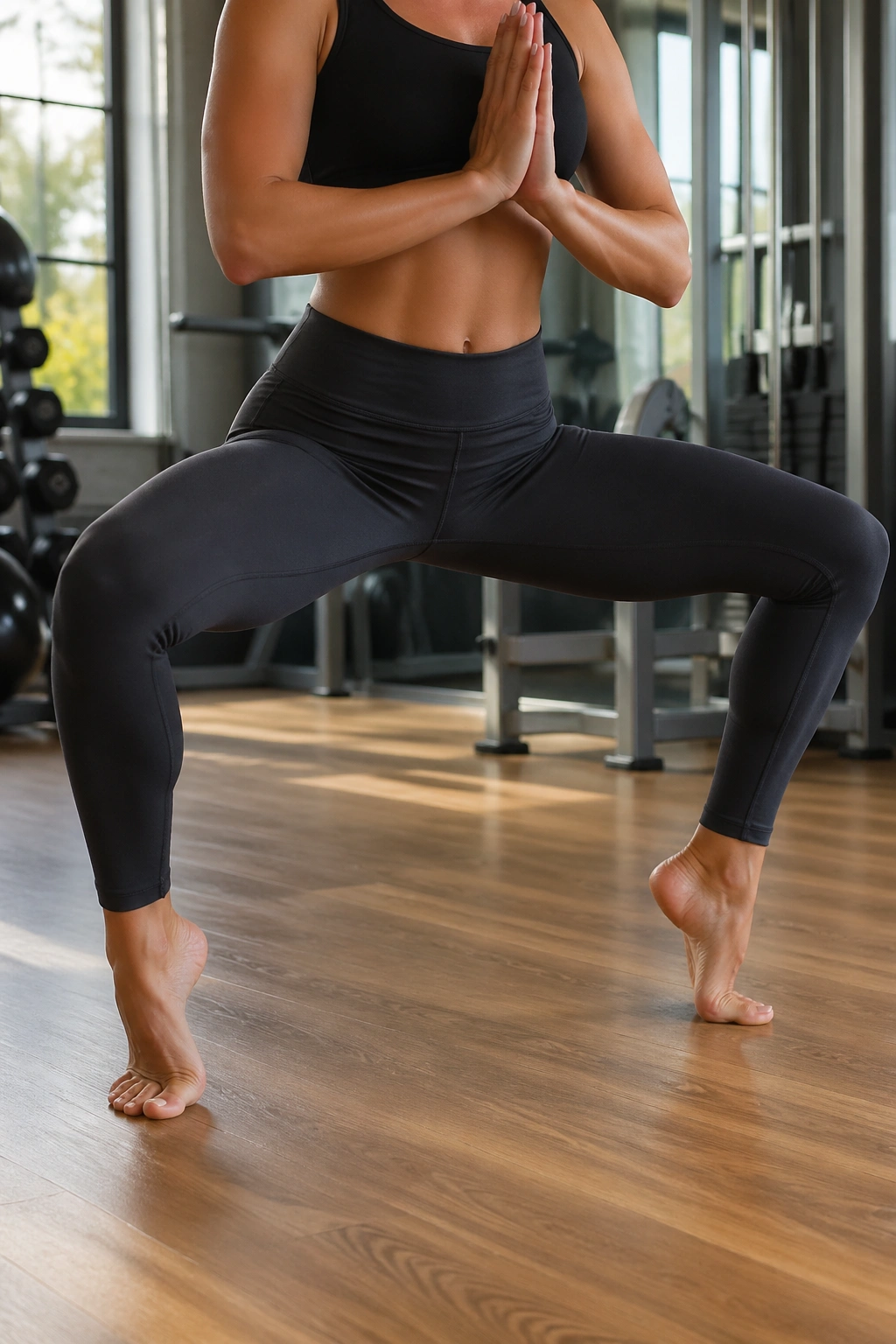
A sumo squat with heel lifts is a nice change of pace because it keeps the stance wide and the toes turned slightly out, which changes how the hips fire. Lower into the squat, then lift one heel at a time or both heels together in a tiny controlled pulse.
It is a little ugly in the best way. The wide stance asks for more hip control, and the heel lift keeps the legs from turning the movement into a rest break.
Use 10 to 15 heel lifts, or hold the squat for 20 to 30 seconds with tiny pulses. Keep the knees tracking the toes. If the arches collapse, shorten the stance or stop lifting the heels until the feet behave.
20. Wall Sit With Abduction
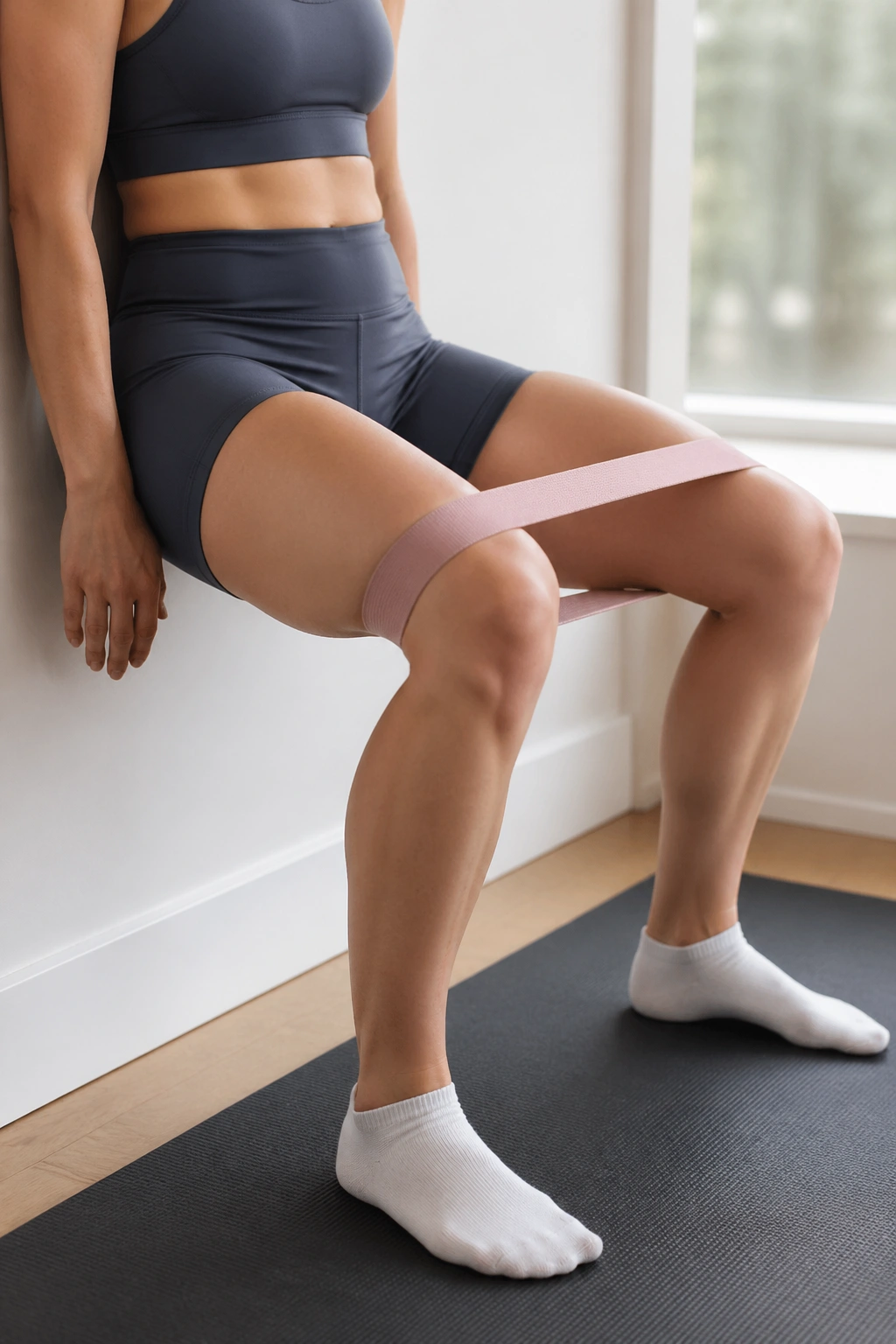
Wall sits are not glamorous. They also work. Add a mini-band above the knees and press the knees out a few inches while you hold the sit, and you get a glute medius challenge that is stubborn in a good way.
Setup that saves your knees
Place your back flat against the wall, feet about a foot in front of you, then slide down until the thighs are close to parallel with the floor. The lower you go, the harder it gets, but the position should still feel controlled.
Hold for 20 to 40 seconds, or add 10 to 15 band presses while staying in the sit. If the knees ache, come up higher. If the low back loses contact with the wall, reset the feet slightly farther out.
21. Bridge Walkouts
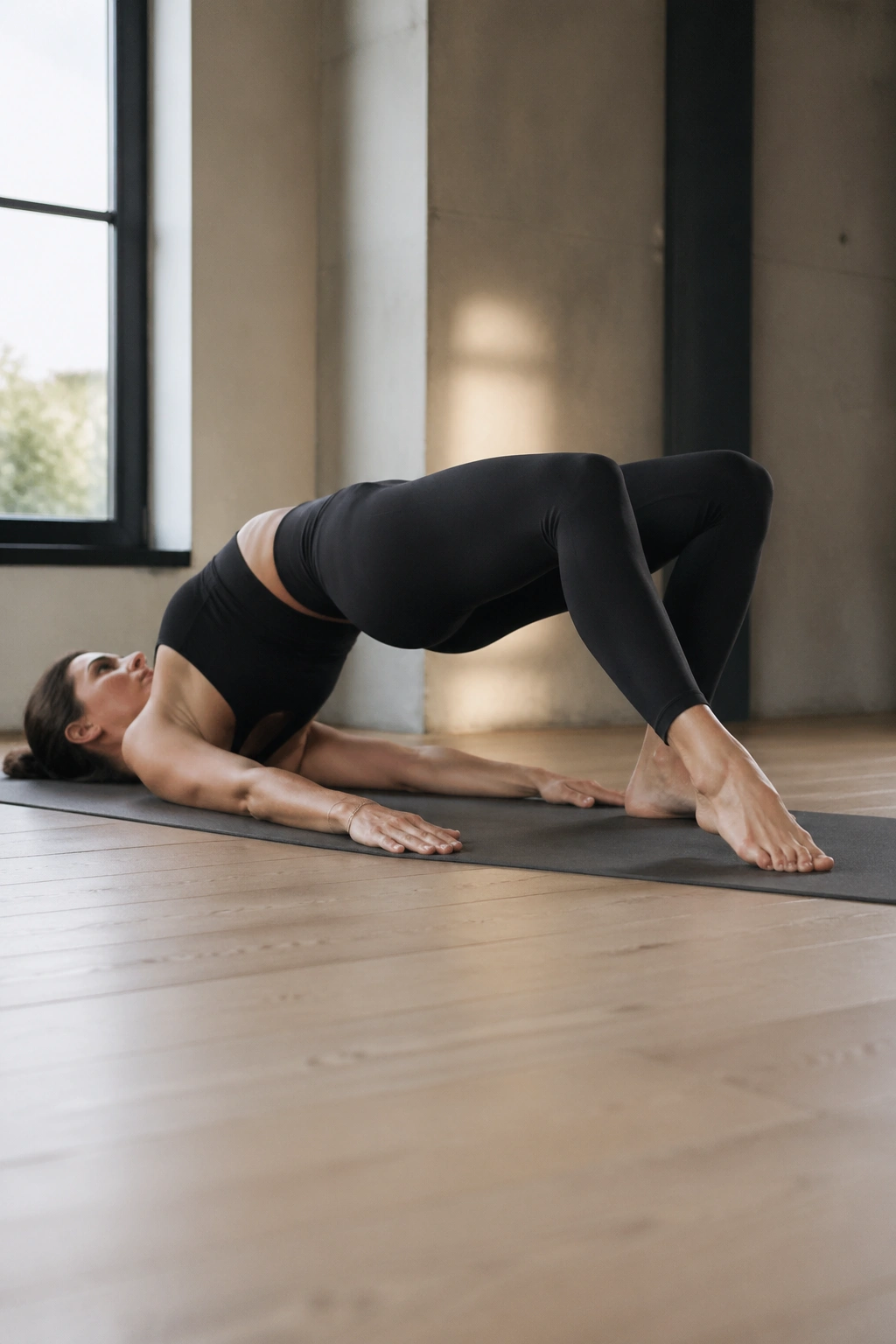
Bridge walkouts are for the days when regular bridges start feeling too familiar. Lift into a bridge, then slowly walk the heels away from the body one step at a time before walking them back in, all while keeping the hips lifted.
This move is brutal on the posterior chain, but the glutes still get a major share of the work because they have to hold the pelvis up as the lever gets longer. The hamstrings help, sure. That’s part of the deal.
Try 4 to 8 walkouts total. If the hips drop every time you extend the legs, shorten the walk and keep the bridge lower. Control beats range here.
22. Fire Hydrant to Kickback
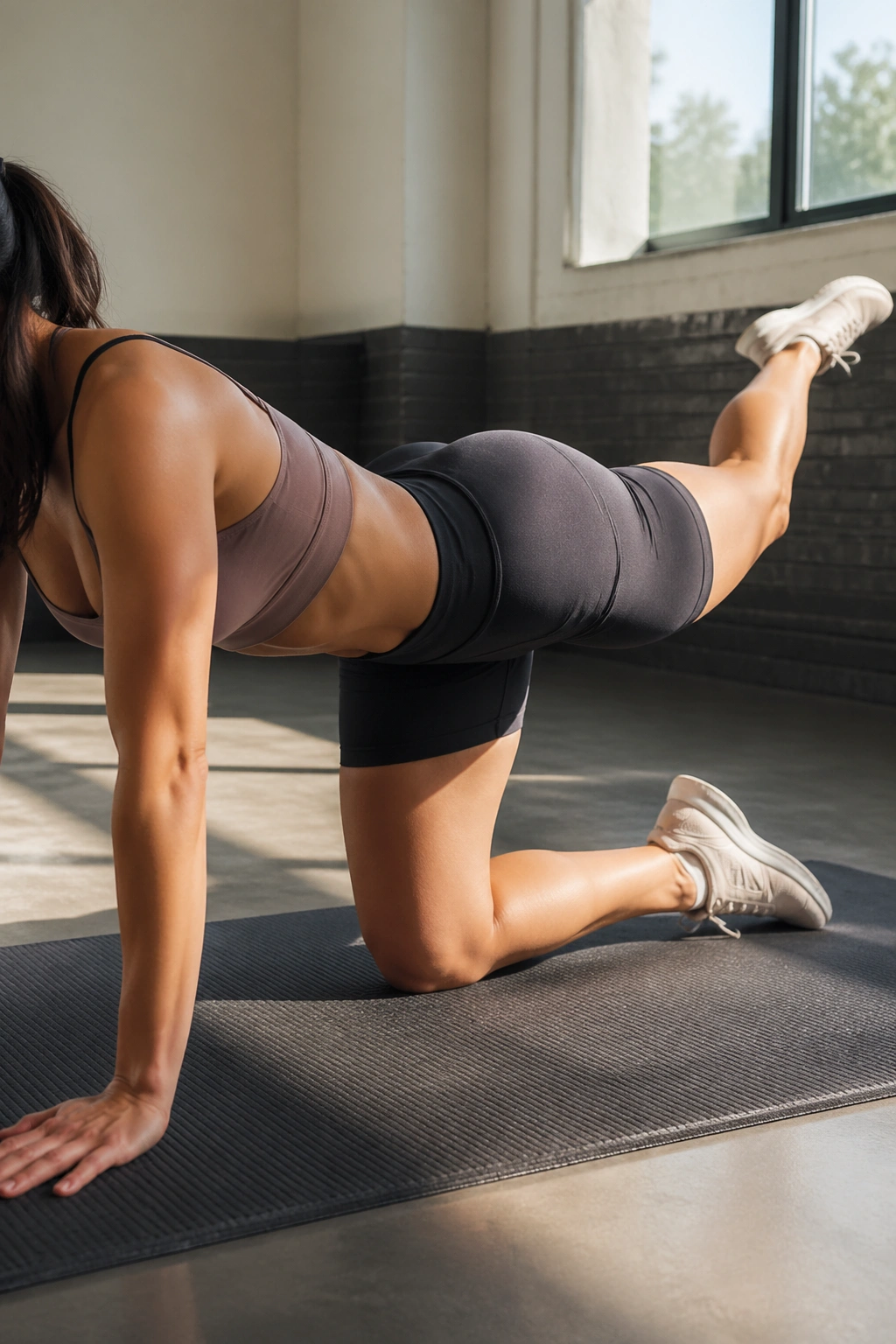
Fire hydrant to kickback combines two useful patterns in one line of motion: hip abduction and hip extension. From all fours, lift the knee out to the side, then sweep the leg back behind you without letting the torso swing.
The exercise hits the side glute and the bigger glute muscle in one go, which makes it a smart choice when you want more work in less time. It also teaches the hip to move without the spine chiming in.
Use 8 to 10 reps per side. Move slowly enough that the return path matters. If you yank the leg around, you’ll miss the point and probably the burn too.
23. Kneeling Side Leg Lift
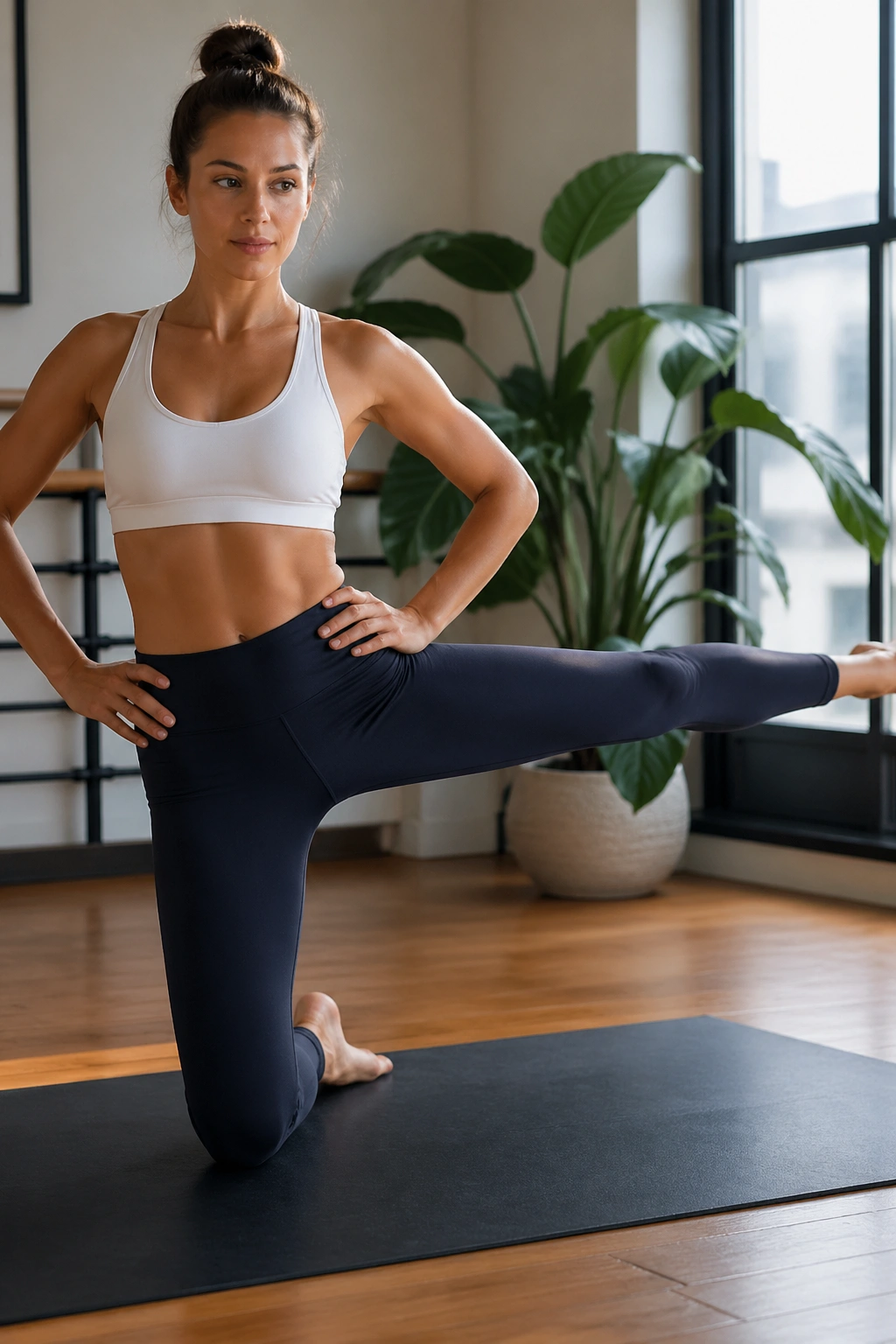
A kneeling side leg lift keeps the torso more upright than a side-lying move, and that changes the feel right away. Start in tall kneeling or half-kneeling, then lift the outer leg out to the side in a controlled arc.
This is a clean way to train the outer hip while the core stays engaged. It’s also a good option if side-lying work irritates your shoulder or if you just want a different angle on the same muscles.
Use 12 to 15 reps per side. Keep the standing knee soft and the ribs stacked over the pelvis. If you lean hard into the standing hip, the glute on that side never really gets the message.
24. Rainbow Kickbacks
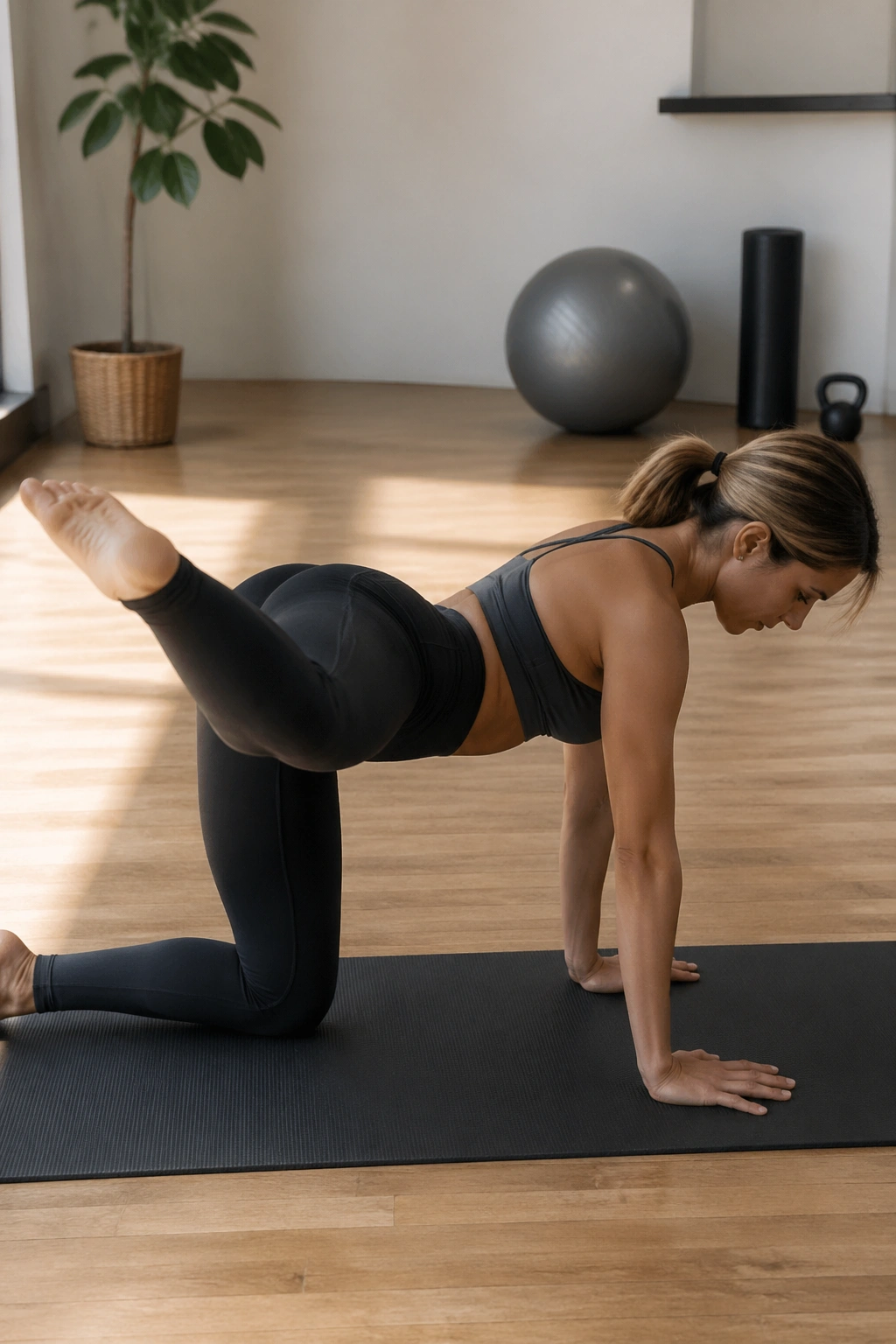
Rainbow kickbacks are sneaky because they combine side-to-side motion with a back extension finish. From hands and knees, extend one leg long behind you and trace a small arc from the outside of the body toward the midline, then back again like a tiny rainbow.
The glute medius and glute max both join in here, and the movement feels different from a straight kickback because the hip is controlling a curved path instead of a simple line. That curved path is what makes it feel more complete.
What makes it hard
Keep the arc small and the hips level. If the pelvis twists, the body is stealing from the exercise.
- Do 8 to 10 arcs per side.
- Keep the leg long and the foot active.
- Stop if the low back starts to pinch.
It should look smooth. It usually feels tougher than it looks.
25. Standing Arabesque Reach
Standing arabesque reach is the prettiest move on this list, and it’s not just for show. Stand tall, hinge slightly forward from the hips, reach one leg long behind you, and hold the shape while the standing glute keeps the pelvis steady.
This one asks for balance, posture, and hip extension all at once. It feels a bit like a dancer’s line, but the goal here is not performance. The goal is a long, controlled contraction that teaches the glute to support the body in upright space.
Try 8 to 12 reps per side, or hold the top position for 10 to 20 seconds if balance is the bigger challenge. Keep the standing knee soft and the lifted leg active. If you can feel the standing glute working without your lower back clenching, you’re doing it right.
Pick five or six of these moves and do them with care, not speed. A bridge, a side-lying exercise, one standing move, and one finisher can make a tidy glute session without turning your hips into mush.
And if you only remember one thing, remember this: the rounder look comes from consistent tension, clean alignment, and enough patience to let the muscle catch up. That part is boring. It also works.
