



There is a specific, quiet focus that settles over a room when you unroll a Pilates mat. It isn’t about the noise of a gym or the intensity of a heavy lifting session. Instead, it is about the internal dialogue between your brain and your muscles. When you commit to a daily practice, you aren’t just doing reps; you are retraining your body to move with precision, grace, and an efficiency that spills over into your walking, your sitting, and your ability to carry groceries or chase after a dog in the park.
Consistency is the secret sauce here. Doing these movements once a week creates a fleeting sensation of length, but performing them with regularity builds a foundation of structural integrity. You will notice it when you stand in line at the grocery store—your shoulders will naturally drop, your spine will feel supported rather than compressed, and your core will engage without you having to think about it.
It takes roughly twenty minutes to run through a thoughtful sequence. You do not need expensive machines or a studio membership to see the results. You need the floor, some room to stretch your arms out, and the willingness to pay attention to the smallest details of your alignment.
1. The Hundred
This is the classic, the opener, and the movement that warms up the entire system. It sounds simple enough: lie on your back, lift your head and shoulders, and pump your arms while breathing. But the magic happens in the endurance required to hold that position while your lungs are working on a specific, rhythmic pattern.
The Mechanics of the Breath
The breath is the heartbeat of this exercise. You inhale for five counts and exhale for five counts. It is a sharp, percussive breath that forces you to engage your deep abdominal muscles just to keep your torso stable against the exertion. Most people treat this as a gentle warm-up, but if you are doing it with the correct intensity, your abdominals should be burning by the time you reach forty.
Pro Tips for Success
- Neck Placement: If your neck feels strained, lower your legs to a higher angle. The weight of your legs should not pull on your lower back.
- Arm Action: Your arms should move from the shoulder joint, not the elbows. They should be firm, as if you are pressing down on water.
- The Gaze: Keep your eyes fixed on your navel. This keeps your neck long and prevents you from tucking your chin too tight into your chest.
2. The Roll-Up
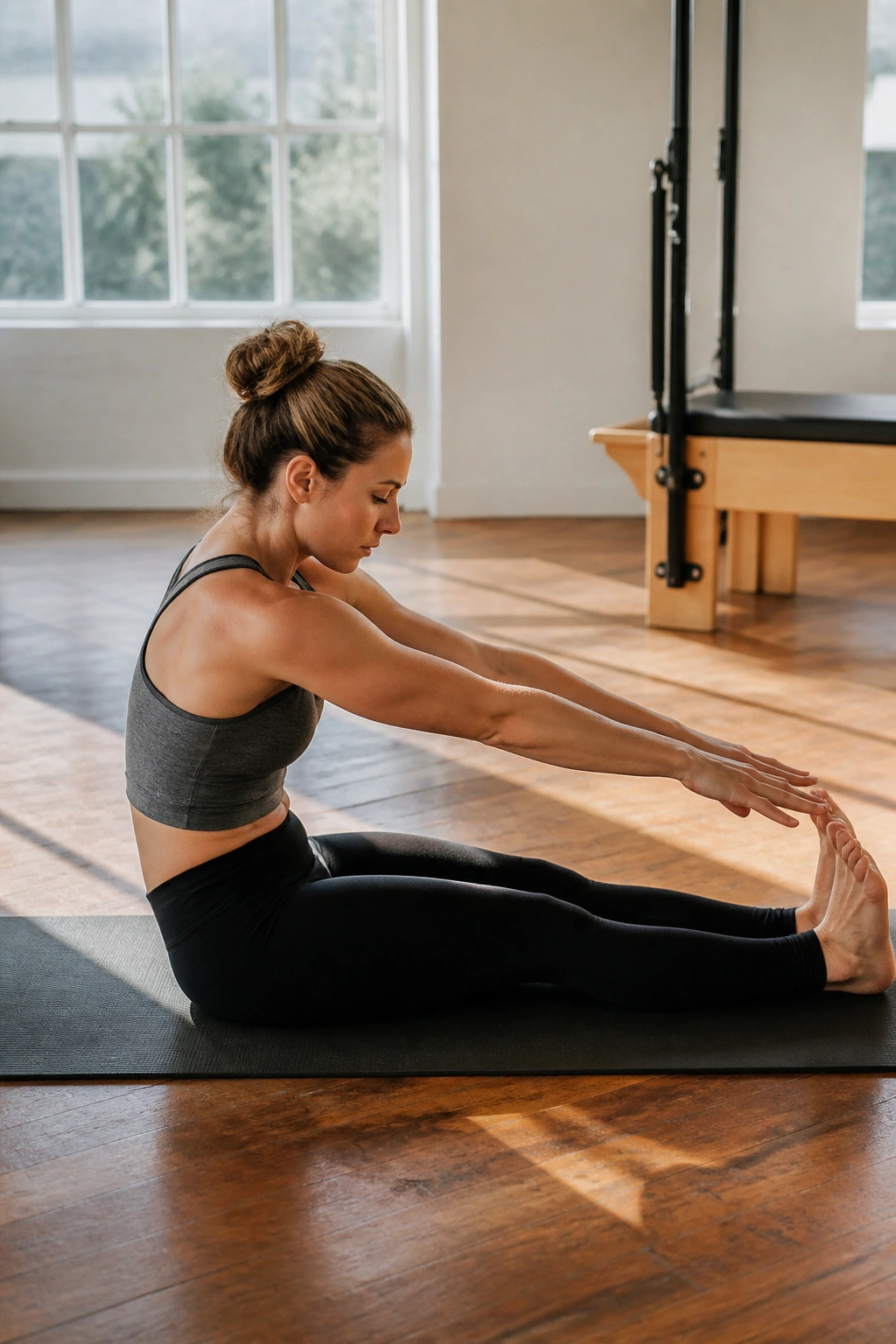
For many, this is the most humbling movement in the entire repertoire. It requires you to articulate your spine off the mat, vertebra by vertebra, without using momentum to “throw” yourself up. It tests your ability to initiate movement from the center of your body rather than using your hip flexors or legs to cheat.
Why does this matter for your daily life? Think about how often you sit up from a couch or a bed. Most of us use our backs or necks to jerk ourselves upright. The Roll-Up teaches you to curl, reach, and unroll, effectively massaging your spine and waking up your core muscles in a way that protects your lower back. If you cannot get up without using your legs, keep your feet under a couch or have someone hold them, but focus on the peeling sensation of the spine rather than just the destination.
3. Single Leg Circles
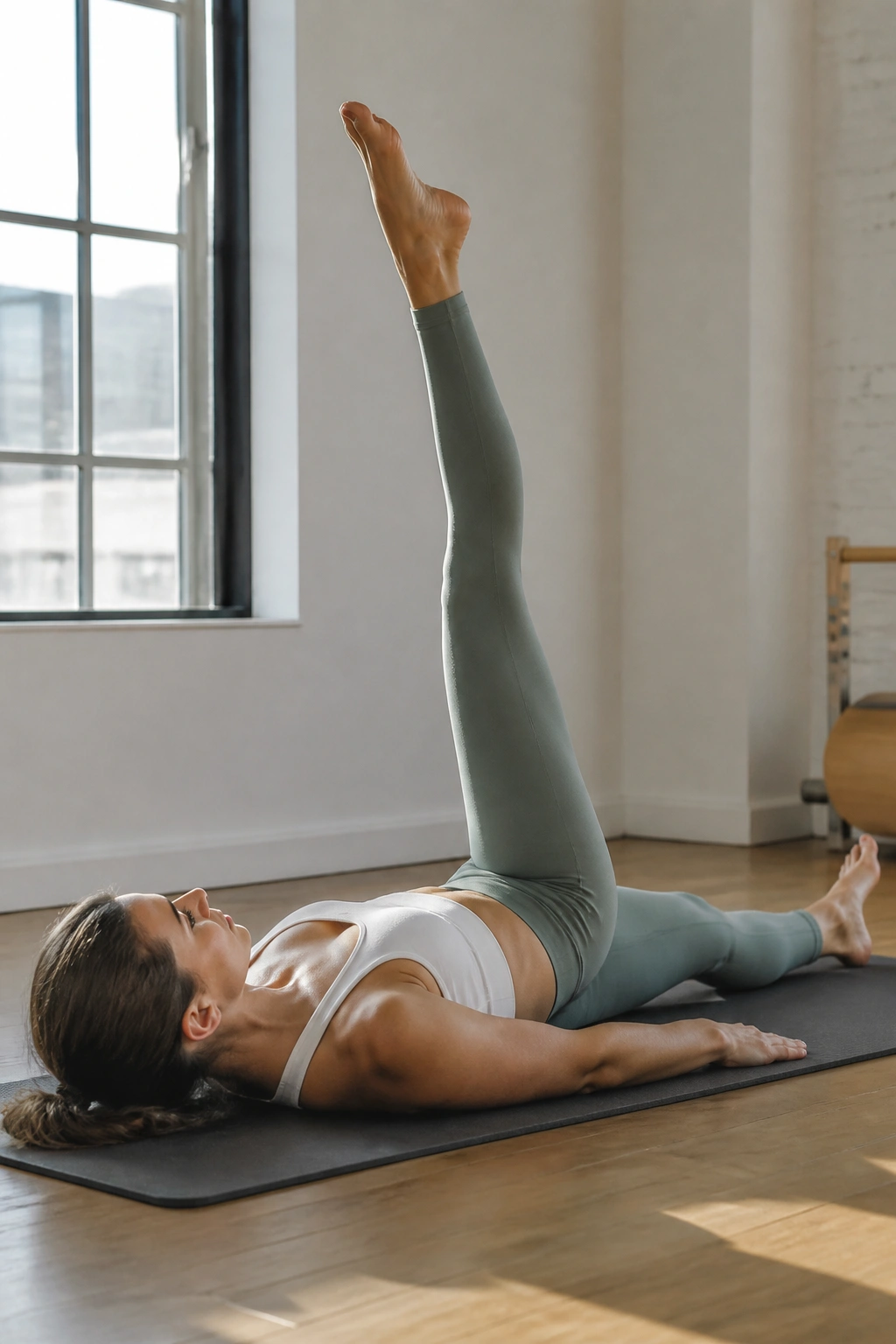
This movement is the ultimate test of hip stability. You lie flat on your back with one leg extended on the floor and the other reaching toward the ceiling. The goal is to draw a circle with your lifted leg without letting your hips wobble or shift. It looks deceptively simple, yet it creates a fire in the hip joint that few other exercises can replicate.
What to Watch For
The biggest mistake people make is trying to make the circle too wide. If you create a massive circle but your pelvis is rocking like a boat in a storm, you have missed the point. Your torso should be anchored to the floor as if it were pinned down. The circle only needs to be as big as you can control while keeping your pelvis perfectly still. As you get stronger, you can explore a slightly larger range of motion, but always prioritize the stillness of your center.
4. Rolling Like a Ball
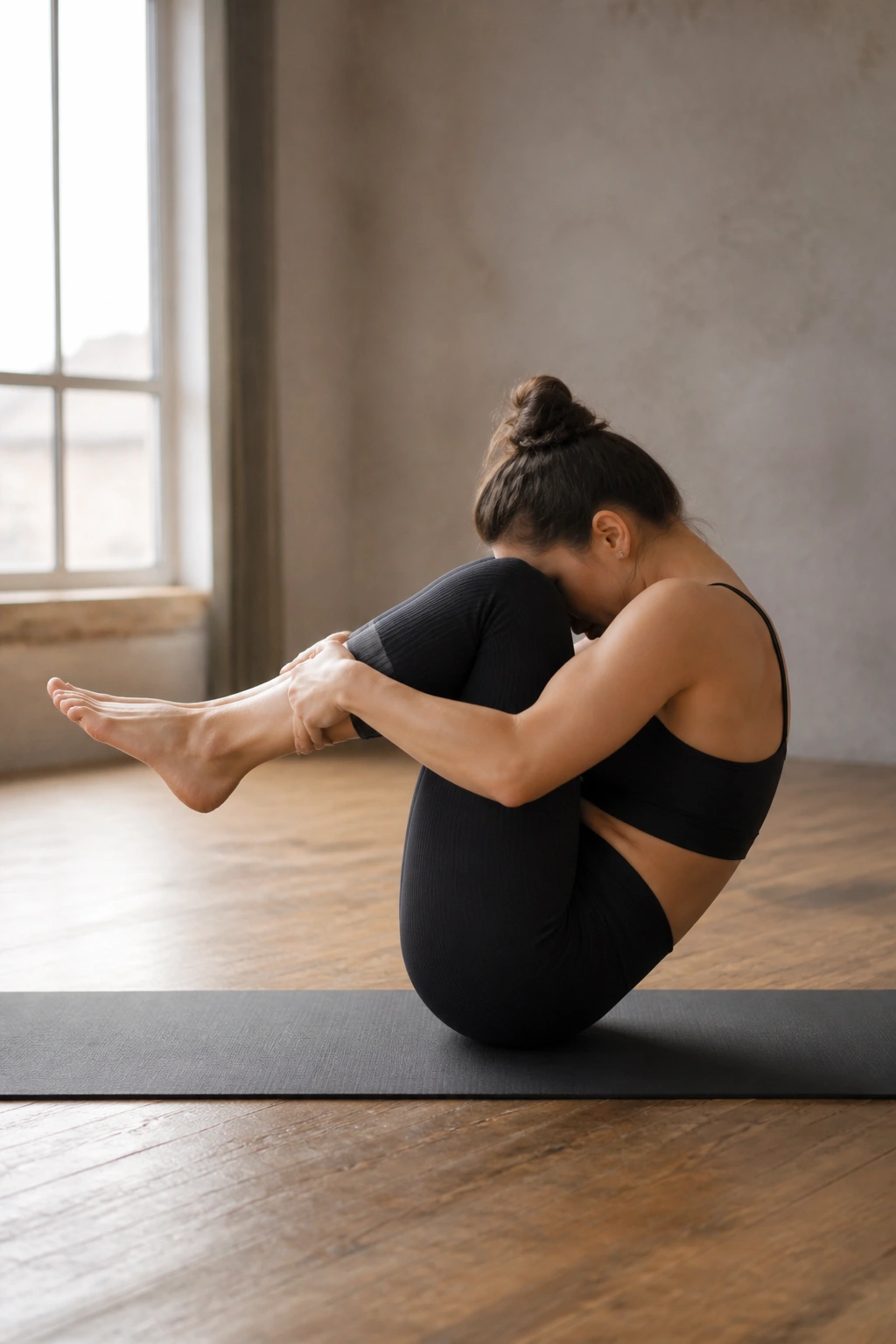
Sometimes, the best exercise is the one that reminds you of childhood play. This move involves curling into a tight ball and rolling back onto your shoulder blades, then finding the balance point to sit back up. It is more than just a fun roll; it is a profound way to massage the muscles along your spine and challenge your deep core stabilizers to catch you at the top.
The key here is not to use your feet to gain momentum. Your heels should stay glued to your glutes throughout the entire movement. You are essentially a wheel. If you kick your legs out or swing your arms, the balance is lost. When you come up to the top, hover your feet an inch off the floor. That moment of suspension—that split-second where you have to grip with your abs to stay upright—is where the real work happens.
5. Single Leg Stretch
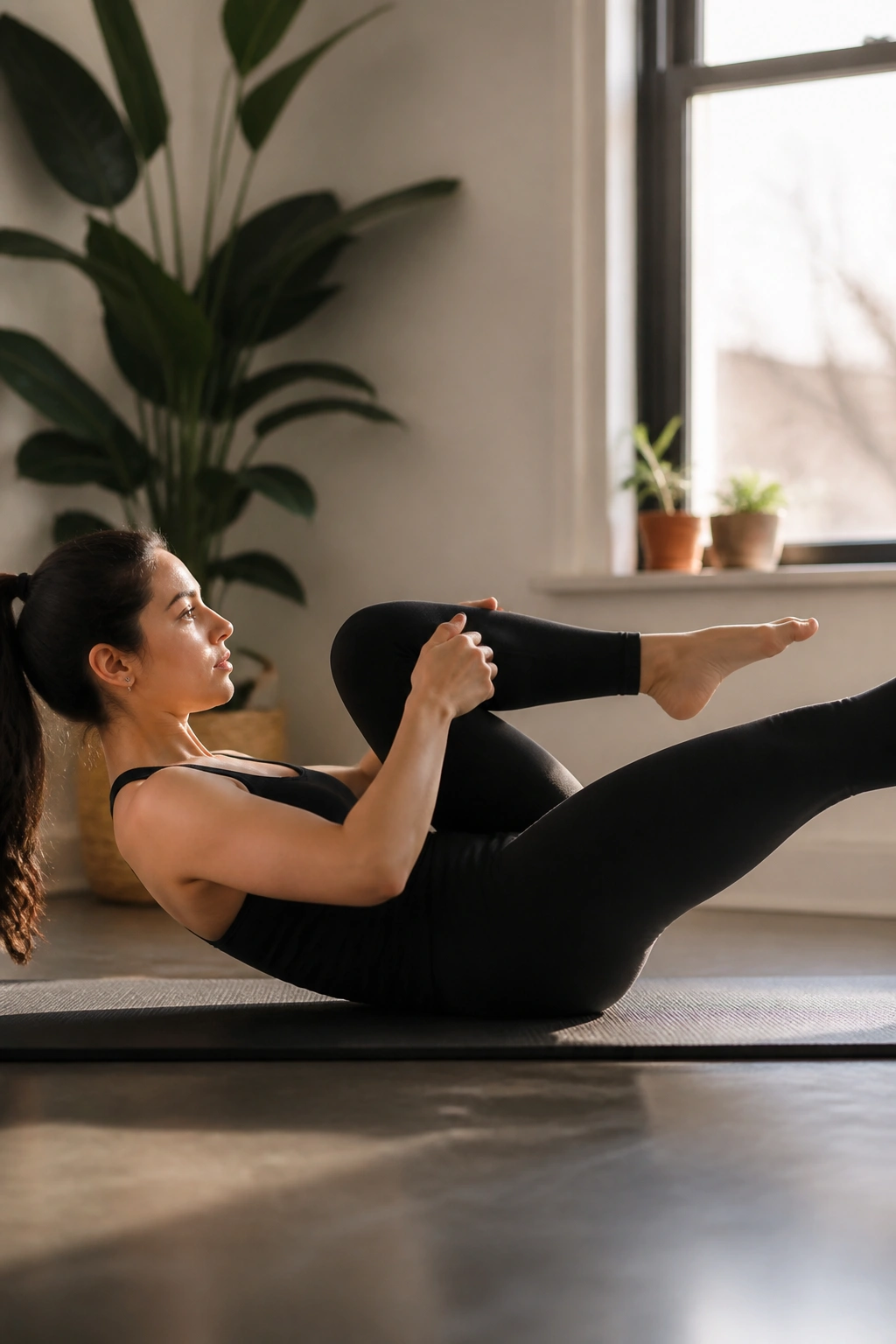
This exercise combines coordination with endurance. You are in a curled position, alternating pulling one knee toward your chest while extending the other leg straight out. The contrast between the flexion of one leg and the extension of the other forces your core to maintain its shape despite the changing levers of your limbs.
There is a specific rhythm to master: exhale as you pull the knee in, and inhale as you switch. Focus on the reaching leg. It should be long, energized, and hovering just a few inches off the floor. Many people drop their legs too low, causing their lower back to arch off the mat. Keep the leg high enough that your back stays imprinted firmly into the floor. If you feel your lower back arching, lift your legs toward the ceiling instead.
6. Double Leg Stretch
If the single leg stretch is about coordination, the double leg stretch is about finding your center amidst expansion. You curl into a ball, then simultaneously reach your arms and legs away from your body, creating a “big” shape, before circling the arms and returning to the curled start. It is an exercise in restraint—you have to reach out without letting your torso collapse.
Think of it as a tug-of-war. Your limbs are pulling away from your core, but your core is pulling in to support them. It is a fantastic movement for building true abdominal strength, not just the superficial “six-pack” muscles. If you find your shoulders hunching up toward your ears, focus on pressing your shoulder blades down your back before you even begin the extension.
7. Spine Stretch Forward
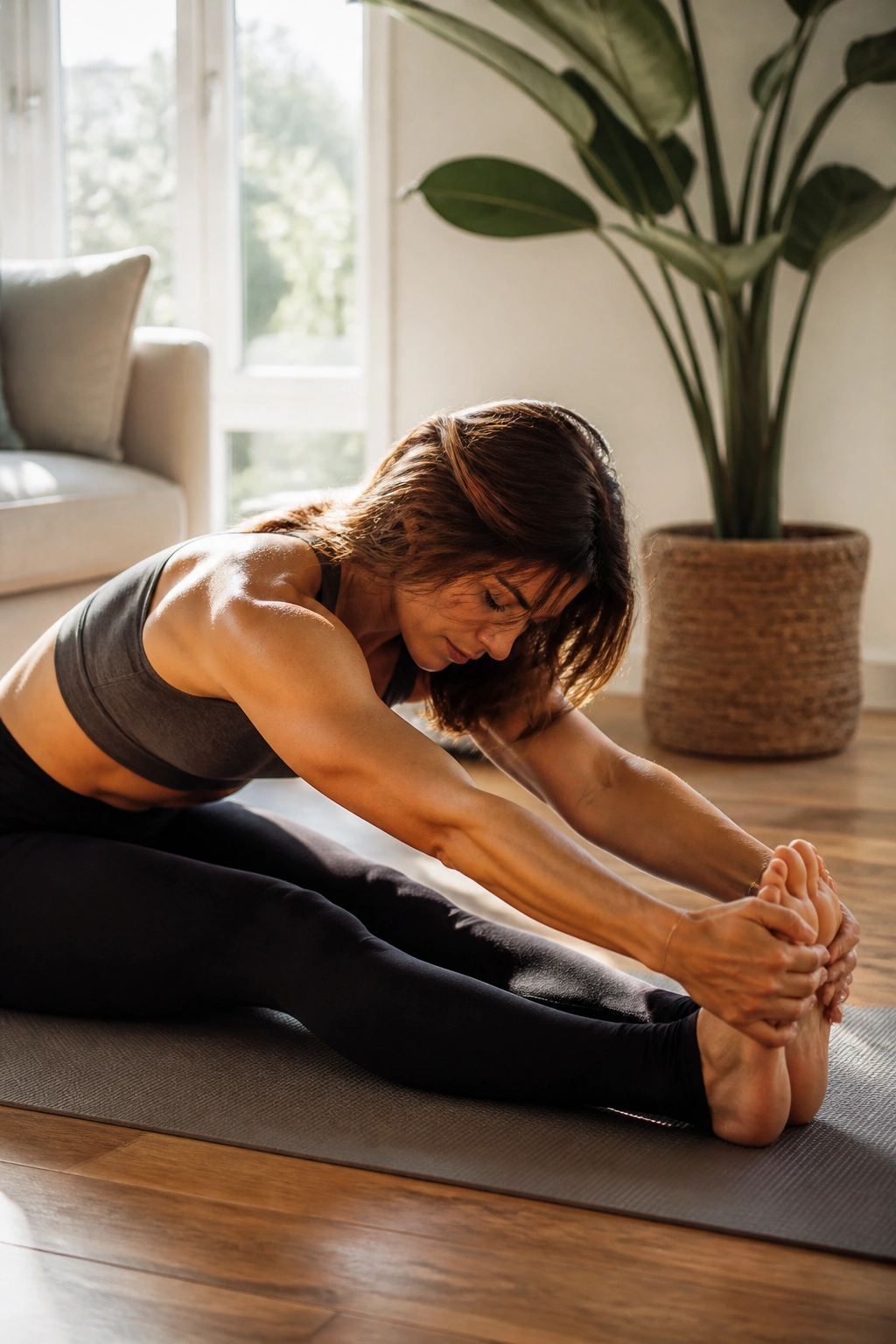
This is a deep, delicious stretch, but it is also a powerful core exercise. You sit tall with your legs extended and feet flexed, then articulate your spine forward as if you are peeling yourself off a wall. It is the antithesis of the crunches we see in most fitness classes. Instead of shortening your abdominals, you are lengthening them while moving through your spine.
You should feel a stretch not just in your hamstrings, but through every single vertebra of your back. Imagine your spine is a string of pearls. As you fold forward, you are lifting one pearl at a time. Reach for your toes, but keep your stomach pulling back toward your spine. It is that opposition—reaching forward with the hands while pulling back with the navel—that creates the space in your lower back.
8. Criss-Cross
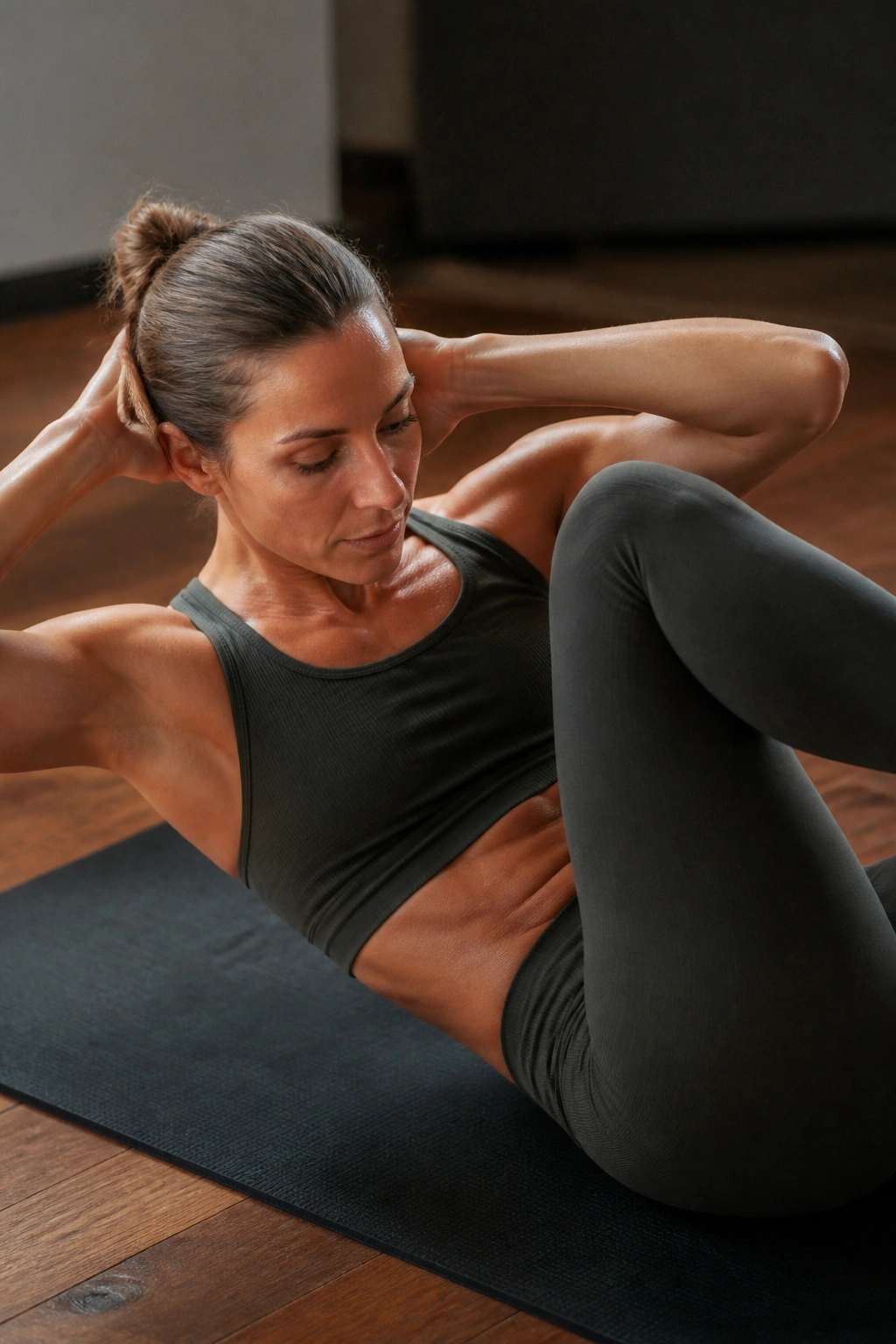
This is often cited as the most effective move for the obliques. You are in a curled position, hands behind your head, twisting your torso to bring your opposite elbow toward your bent knee. It is not just about twisting; it is about wringing out the torso like a wet towel.
Avoid the temptation to just swing your elbow across. The goal is to get your shoulder across. If you just move your elbow, you are cheating yourself out of the rotation that targets those side abdominal muscles. Keep your elbows wide, hold the rotation for a split second, and really focus on the deep squeeze. It is one of the more intense exercises, so don’t be surprised if your abs shake. That shaking is exactly what you are looking for—it means your muscles are recruiting fibers they don’t usually use.
9. Swan Prep
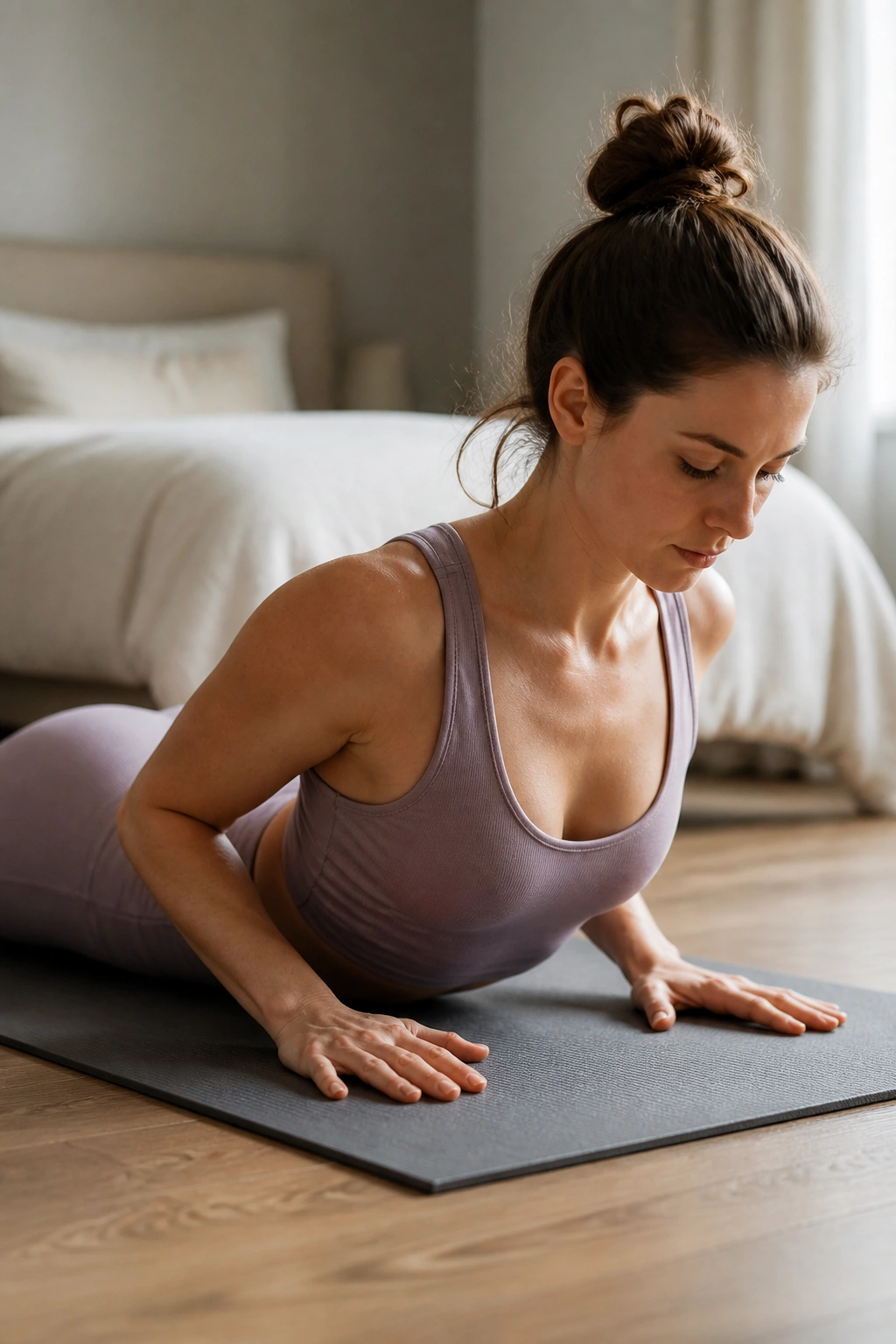
After so much curling and forward-flexing, we need to balance it out with some extension. The Swan Prep works the muscles along your back, which are often weak and neglected due to our desk-bound lives. You lie on your stomach, place your hands under your shoulders, and gently lift your chest using your back muscles, not your arms.
The beauty of this move is that it counteracts the “slouch” we all develop from staring at screens. It isn’t about how high you can lift; it is about the length you can achieve. Think of reaching your chest forward through your arms, rather than just pushing up. Keep your gaze low, looking at the mat, to avoid cranking your neck.
10. Shoulder Bridge
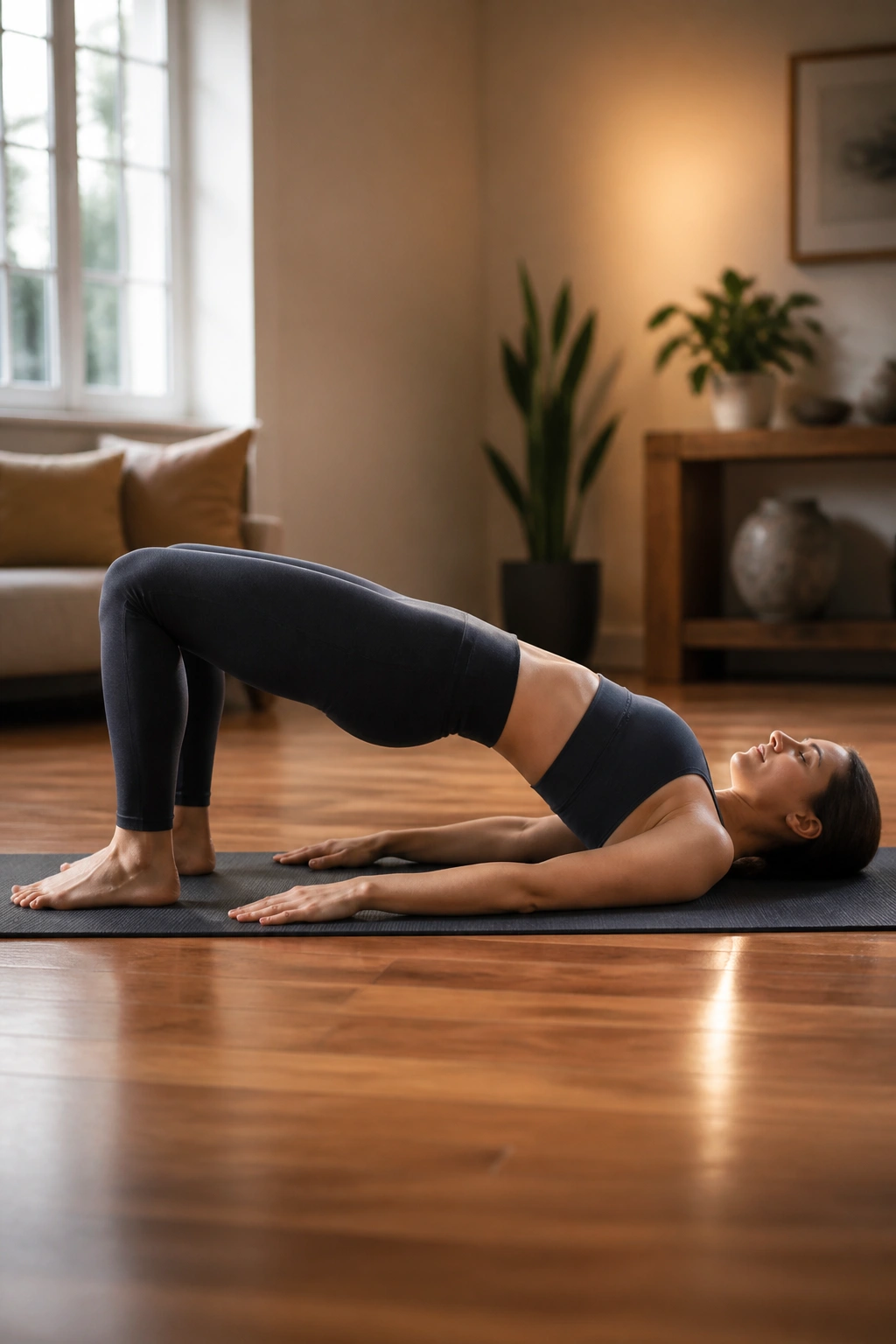
This movement targets the posterior chain—your glutes, hamstrings, and the deep stabilizers of the lower back. You lie on your back, knees bent, and peel your pelvis up until your body forms a long line from your knees to your shoulders. It is a fantastic way to open the front of the hips, which get incredibly tight from sitting.
To get the most out of it, focus on the descent. Don’t just drop your hips back down; articulate down one vertebra at a time, landing your tailbone last. This creates a rhythmic massage for the spine. If you want to level it up, try extending one leg into the air while your hips are lifted, keeping the pelvis level the entire time. It turns a simple glute exercise into a true test of core balance.
11. Swimming
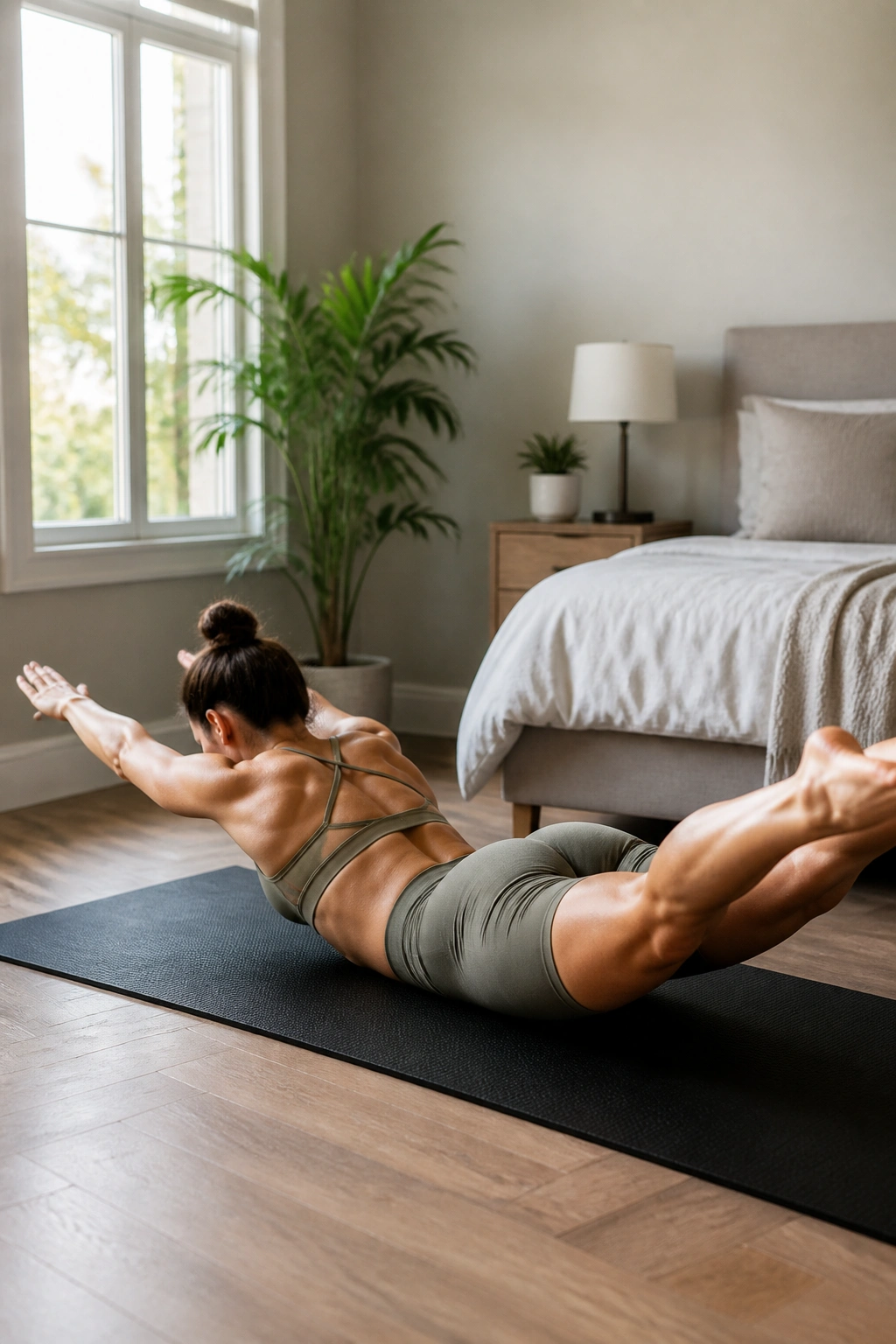
If you want to feel like a kid again, this is the move. You lie on your stomach, arms and legs extended, and “swim” by rapidly fluttering your limbs while keeping your torso steady. It is a major challenge for the muscles running along your spine, from your neck down to your glutes.
The trick is keeping the movement small and controlled. You are not flailing; you are vibrating. Your limbs should move from the hips and shoulders. If your stomach is pressing hard into the mat, try to lift it slightly, engaging your core even while facedown. It is an exhausting move, but it pays off with better posture and a stronger, more resilient back.
12. Side-Lying Leg Series
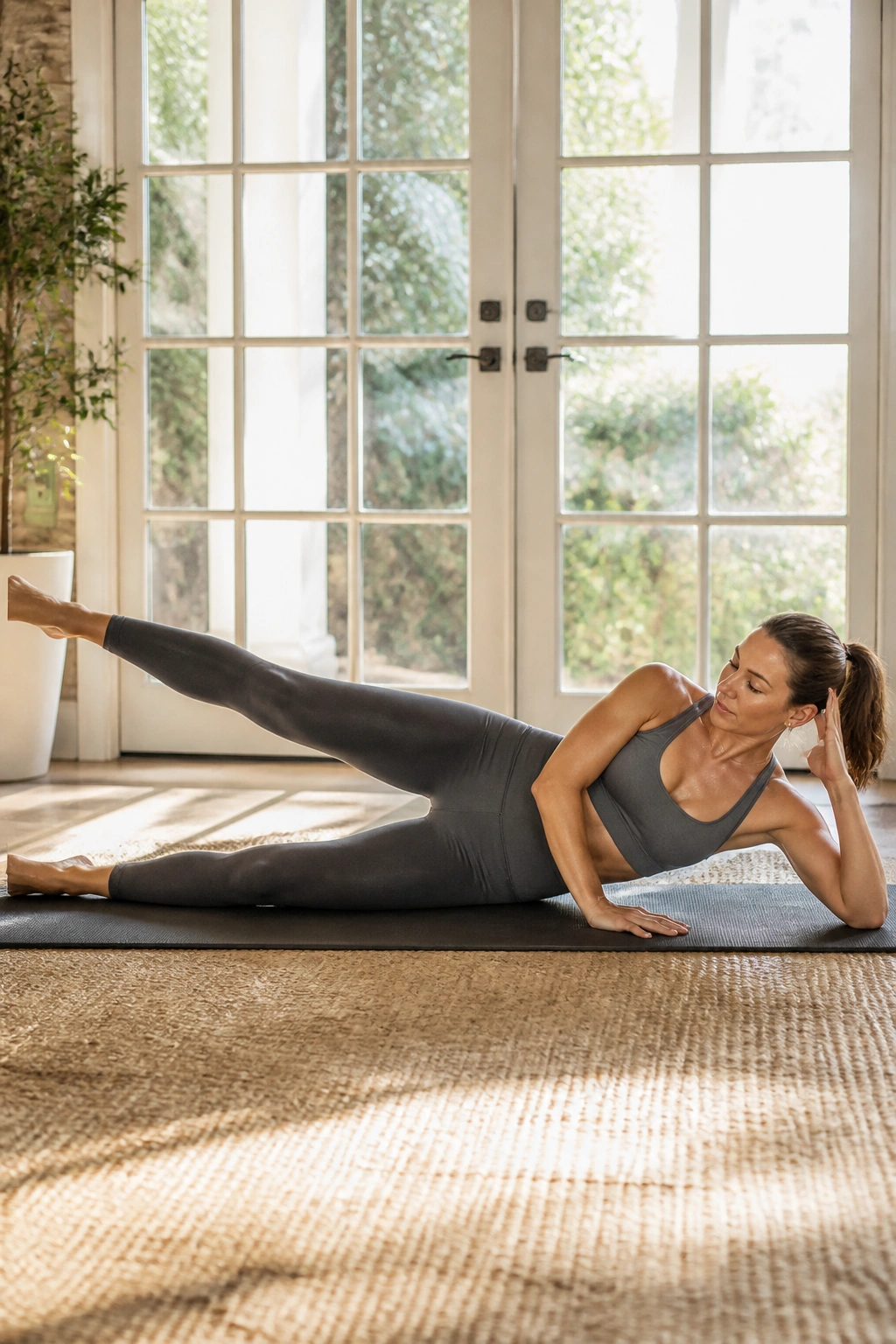
The hip stabilizers are often the missing piece of the puzzle for people who experience knee or lower back pain. This series, done lying on your side, involves various leg lifts and circles. It is quiet work—it won’t leave you gasping for air—but it will leave your outer hips burning in a way that feels incredibly effective.
What I love about this series is how it forces you to find your balance. Since you are on your side, your natural tendency is to rock forward or backward. You have to use your oblique muscles just to keep your torso stacked. Keep your bottom leg active and pushing into the floor. It is tempting to make this a “lazy” exercise, but if you keep your leg long and reach through the heel, you will activate the deep gluteus medius, a crucial muscle for hip health.
13. The Saw
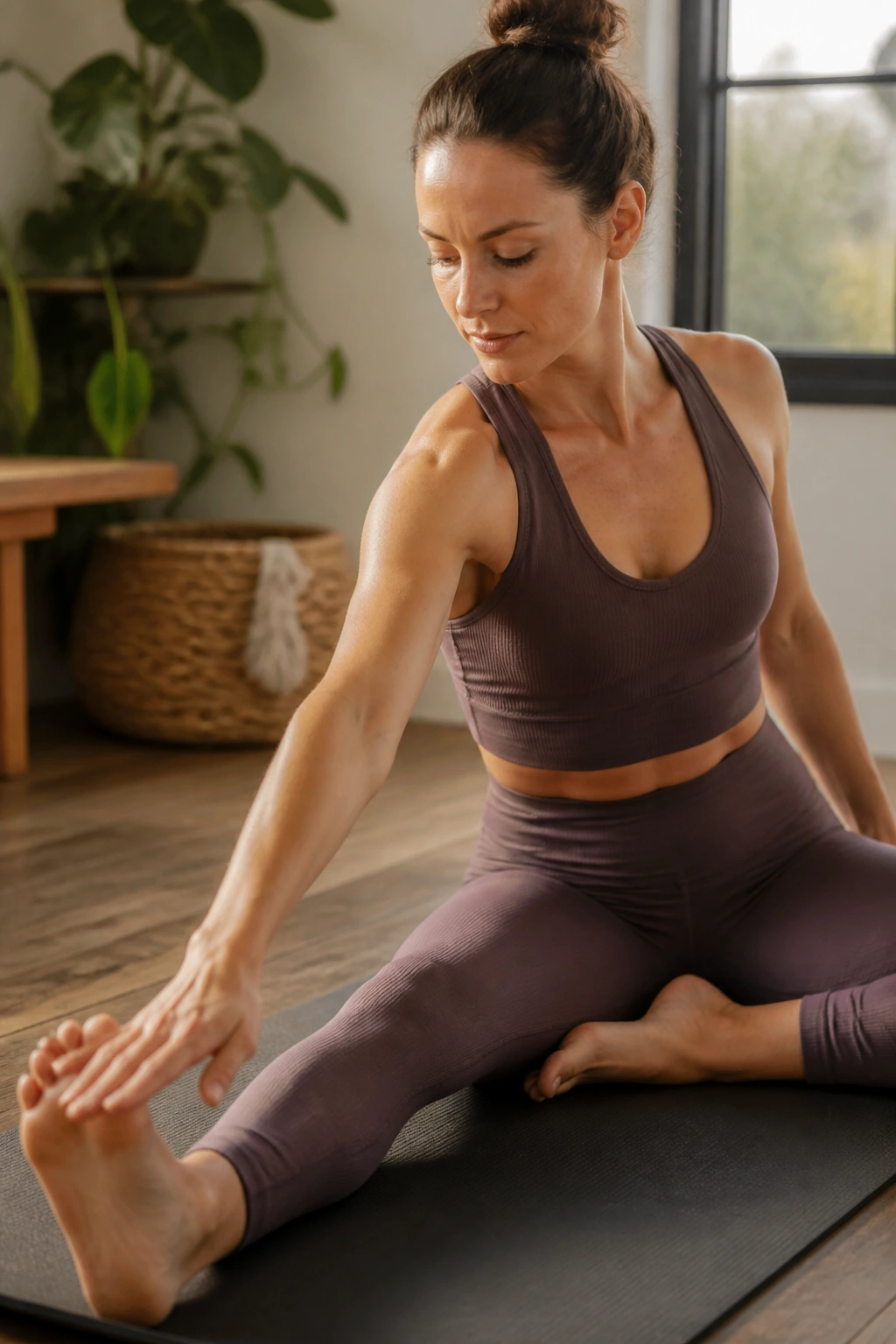
This movement is a fantastic combination of mobility and control. Sitting with your legs wide, you twist your torso and reach your opposite hand toward your opposite foot, “sawing” off the pinky toe. It sounds simplistic, but it requires massive core stability to twist while keeping both sit-bones glued to the floor.
Most people shift their hips when they twist, which defeats the purpose. Imagine your hips are cemented into the floor. You are rotating from the ribcage up. As you reach for your foot, pull your abdominal wall in and up. This is a stretch for the back and hamstrings, but it is also a rotation exercise that improves spinal health. Focus on the exhale as you reach—it helps you get that extra millimeter of rotation.
14. Plank to Pike
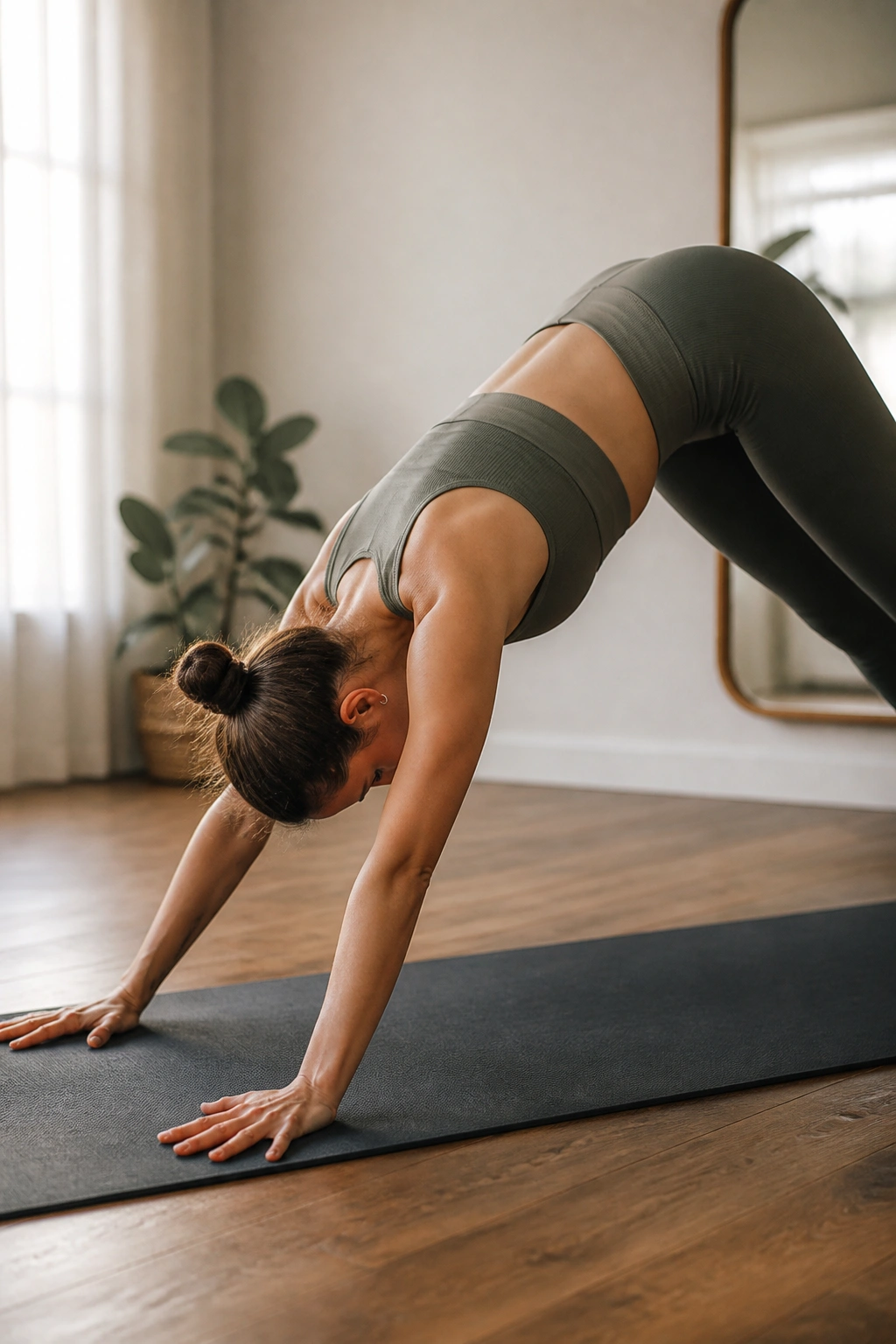
Planks are a staple for a reason, but adding movement turns a static pose into a dynamic challenge. Starting in a standard plank, you lift your hips high, essentially turning into an inverted “V,” and then return to the plank. It shifts the work from the front of the core to the shoulders and the deep abdominals.
The transition is where the work happens. Do not rush it. Use your abdominals to pull your hips up, not just your hip flexors. When you return to the plank, make sure you don’t sag in the lower back. Your body should feel like a solid, straight plank of wood at the bottom of the movement. If you feel any pain in your wrists, ensure you are pressing through your entire hand, especially the index finger and thumb, rather than just the heels of your hands.
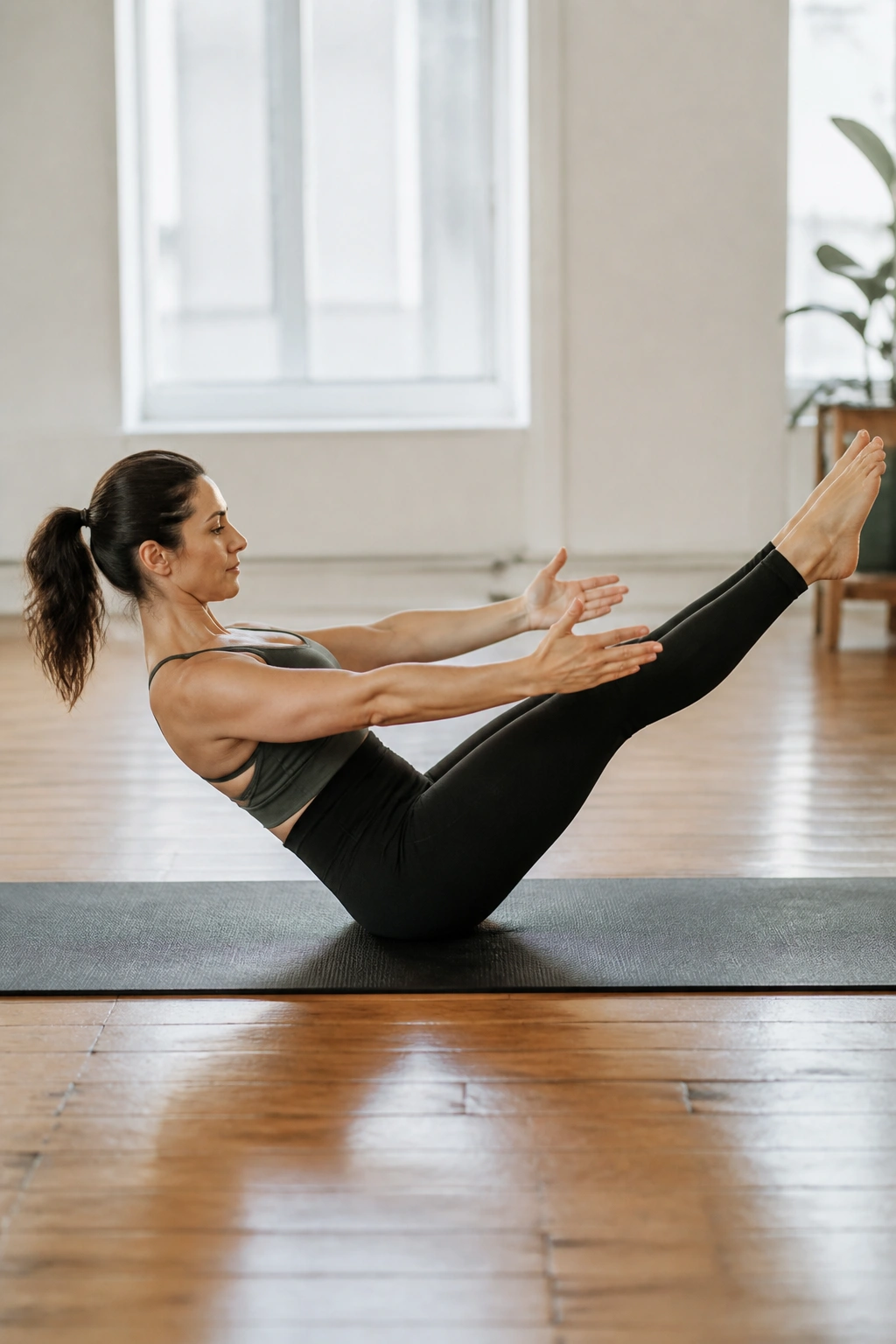
15. The Teaser
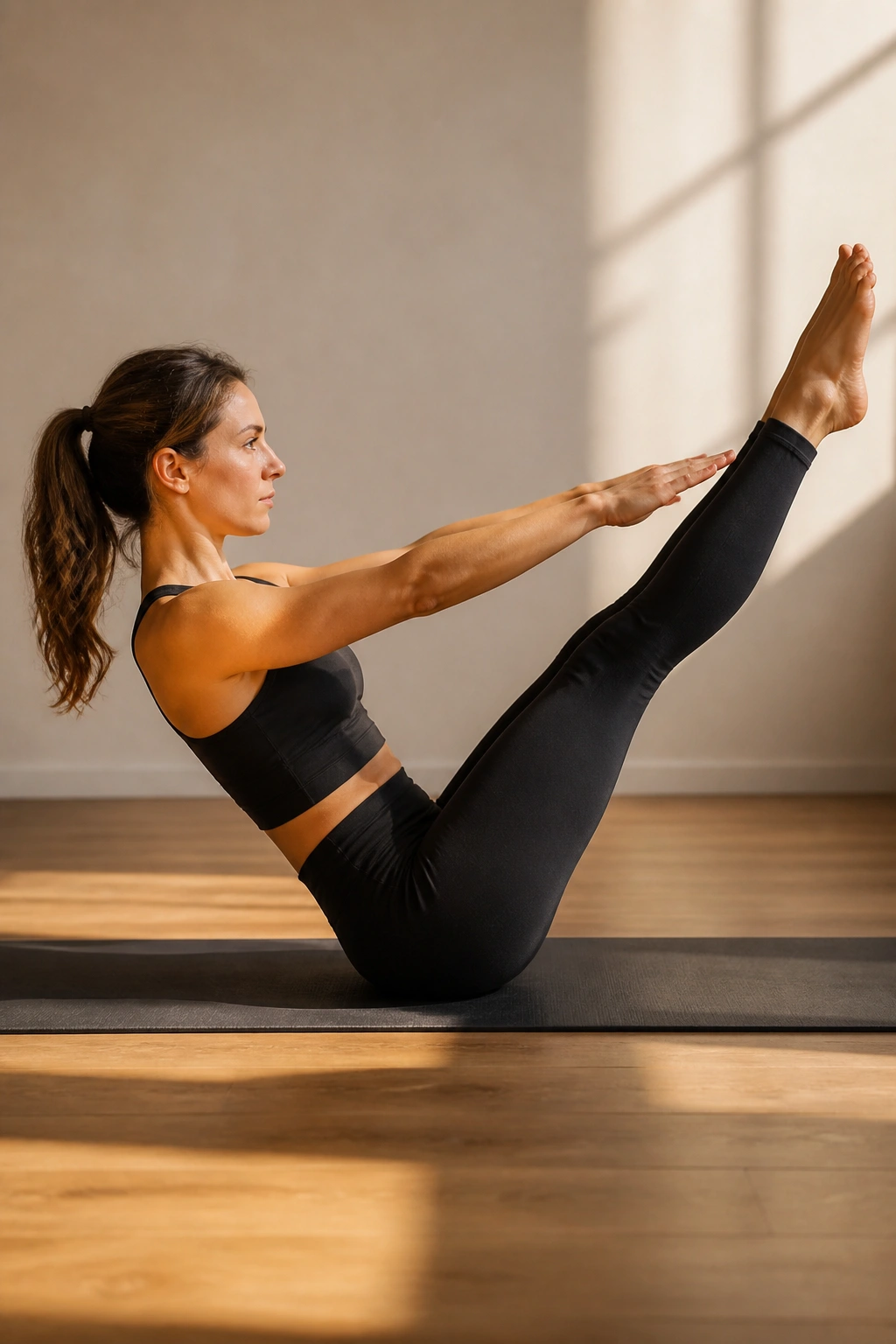
This is the “big one.” It is the move that everyone in a Pilates class aspires to. You start on your back, and in one fluid motion, you lift your legs and torso simultaneously into a “V” shape, balancing on your sit-bones. It is the ultimate test of control.
Do not be discouraged if you cannot do it perfectly on day one. It is a difficult move. Start by holding the position with your knees bent, just trying to find the balance point. Eventually, work toward straightening the legs. The secret is the coordination of the upper and lower body; they have to move at exactly the same speed. It is a move that demands your full attention, which is exactly why it is such a perfect way to end a practice.
The Power of Consistency
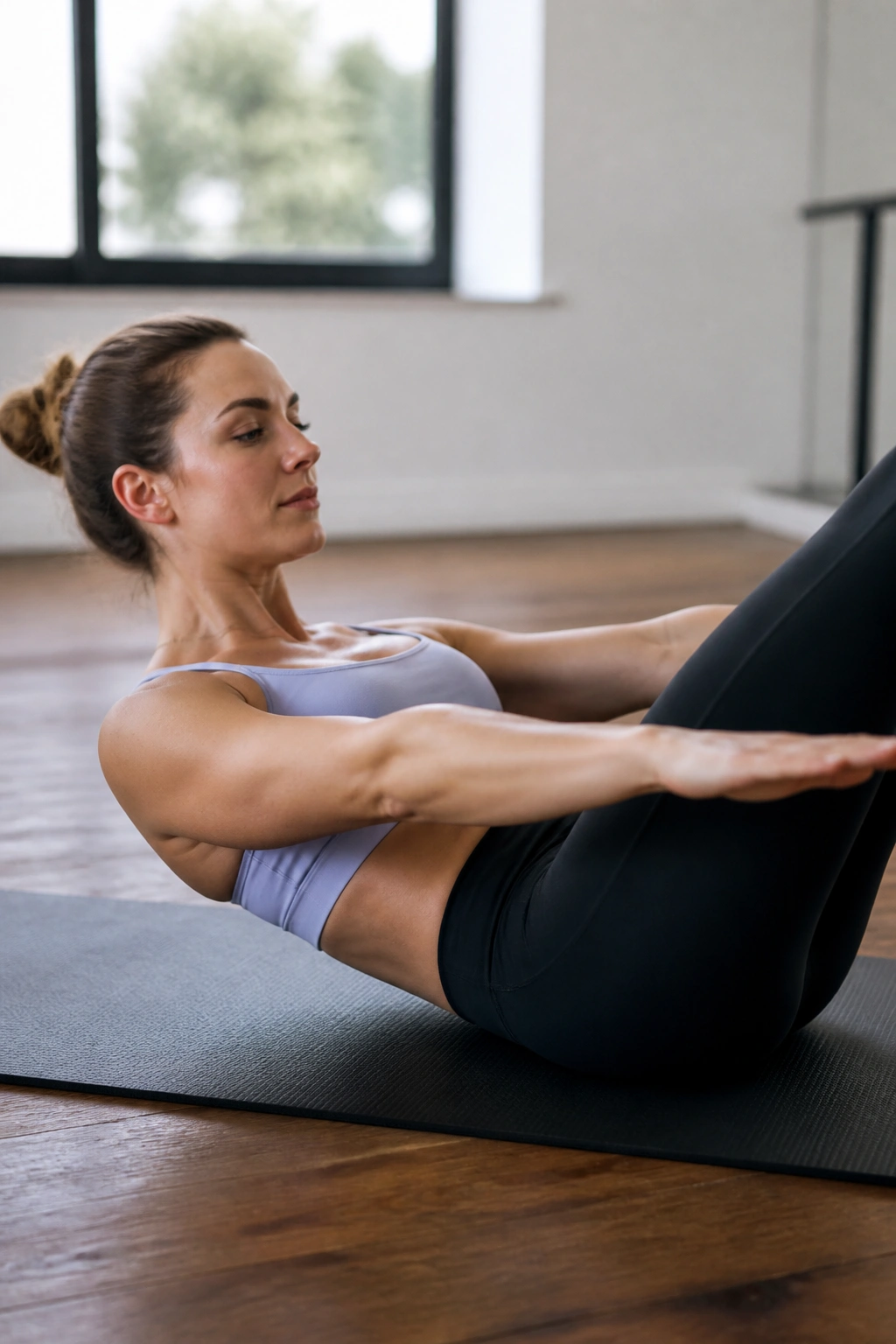
There is a rhythm to these movements that starts to imprint itself on your nervous system. You might feel clumsy the first time you attempt the Teaser or the Roll-Up, but that is simply your brain learning new pathways. The goal of incorporating these fifteen moves isn’t about achieving a certain “look” or hitting a PR. It is about claiming ownership over your own range of motion.
Think of this as an investment in your future self. Every time you engage your core on the mat, you are training your body to be more resilient when you are out in the world. You are teaching your muscles to fire in the right sequence, which is the most effective way to prevent the aches and pains that come from habitual patterns of movement.
Start small. If fifteen moves feel like too much for a morning routine, pick five and do them well. Quality will always outperform quantity in Pilates. You are looking for that specific feeling—the burn in the deep abs, the length in the spine, and the calm that comes from moving with total intention. Once you find that, you won’t want to skip a day. You will crave that quiet, focused time on the mat, because that is where you feel most like yourself.
