



A good lower-body Pilates session at home can leave your glutes shaking long after you roll up the mat.
That’s the part people underestimate. Pilates lower body workouts at home don’t usually look dramatic from the outside. No jumping. No heavy barbell. No noise. But if you slow the tempo down, keep the pelvis steady, and stop cheating with momentum, the burn shows up fast in the places that matter: glutes, outer hips, inner thighs, hamstrings, quads, and calves.
You also don’t need much space. A mat, a wall, a sturdy chair, and maybe a loop band are enough for most of these moves. If your knees get cranky, your hips feel tight, or your balance is shaky, that’s fine too. The point is to work with clean form and a controlled range, not to fling your legs around like you’re trying to win a speed contest.
Start with the bridge. Then keep going.
1. Glute Bridge Lifts
If you only do one mat exercise, make it this one. The glute bridge is one of those Pilates staples that looks almost too simple until you feel your hamstrings start helping, your glutes wake up, and your ribs try to flare if you lose control.
How to Keep the Bridge Honest
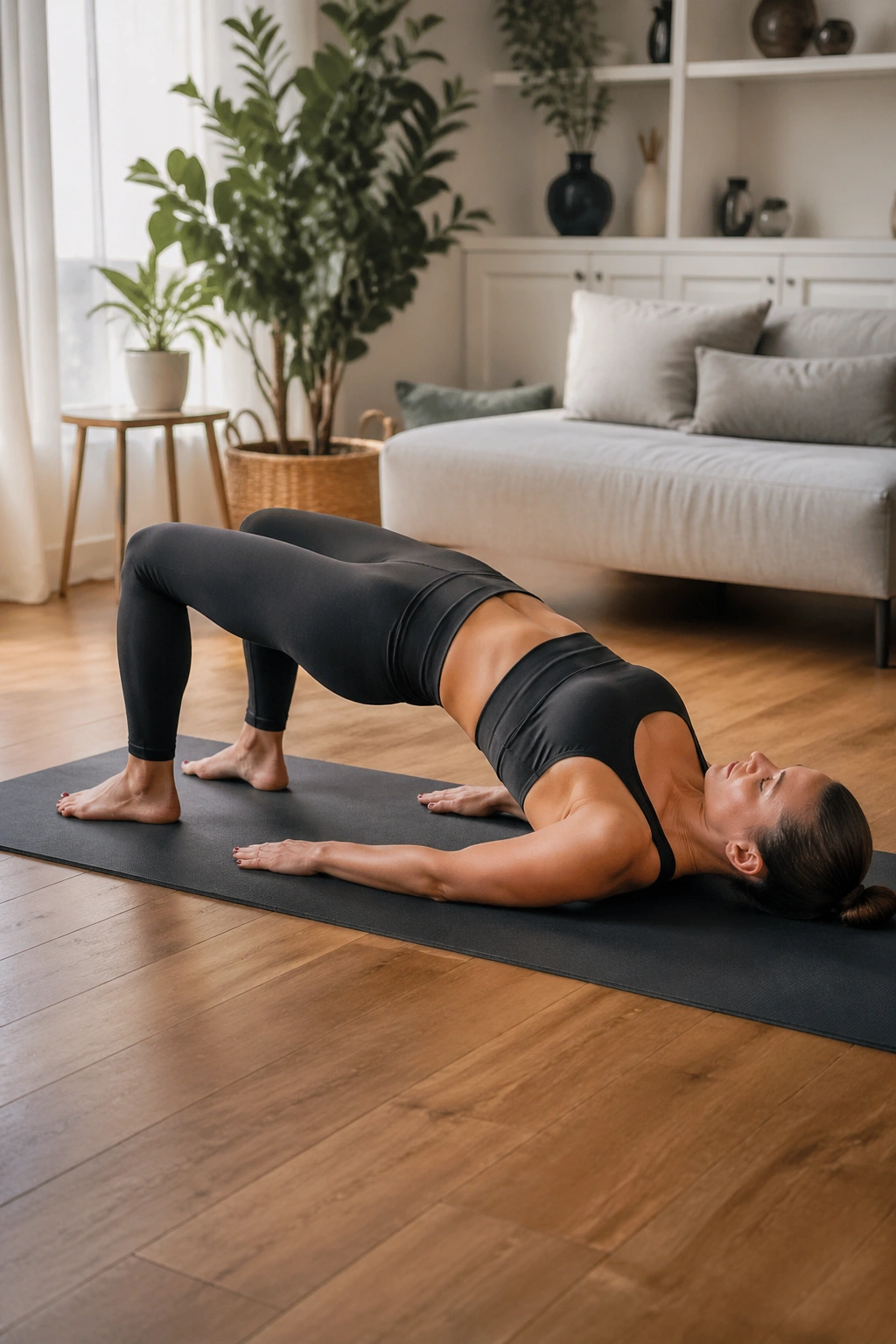
Lie on your back with your feet flat, knees bent, and heels about a hand’s length from your seat. Exhale, press through your heels, and peel your hips up until your body makes a long line from shoulders to knees. Pause for one second at the top. Then lower with control.
A useful cue: think about lengthening your knees forward rather than just lifting your hips higher. That keeps the work in the back of the legs instead of dumping it into the lower back. If your feet are too far away, you’ll feel the hamstrings cramp. Too close, and your knees take over.
- Do 10 to 15 slow reps
- Add a 10-second hold on the final rep
- Keep your chin slightly tucked
- Stop if your ribs pop open or your lower back arches
One good bridge beats twenty sloppy ones. If you want a harder version, place a loop band above the knees and press gently out against it the whole time.
2. Single-Leg Bridge Holds
A two-leg bridge warms things up. A single-leg bridge tells the truth.
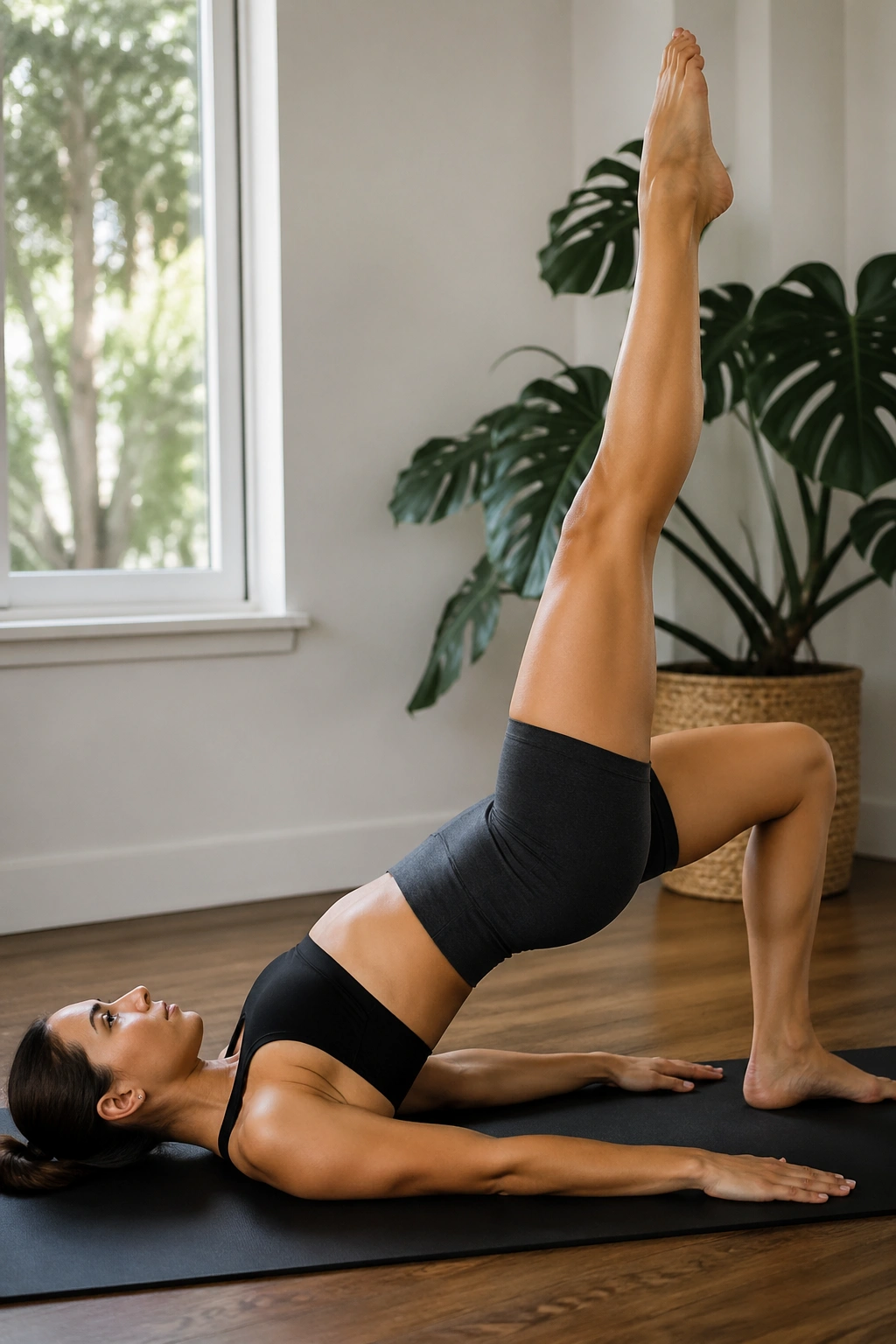
Lift one foot off the mat and extend that leg toward the ceiling or keep the knee bent over the hip if straightening feels too aggressive. From there, drive through the grounded heel and raise the hips without letting one side dip. Hold for 3 to 5 seconds, then lower slowly. Switch sides before your form gets wobbly.
The magic here is not in how high you go. It’s in how still you can stay. If one hip drops, shorten the range and keep the lifted side lower. If your lower back takes over, lower the hips a little and tighten your front ribs.
This move is especially useful if one glute likes to do all the work while the other side naps. That happens more often than people admit.
Try 6 to 8 reps per side first. If that feels clean, add a short pulse at the top before lowering. The burn is sneaky. No drama, just a slow climb.
3. Pilates Squat Pulses
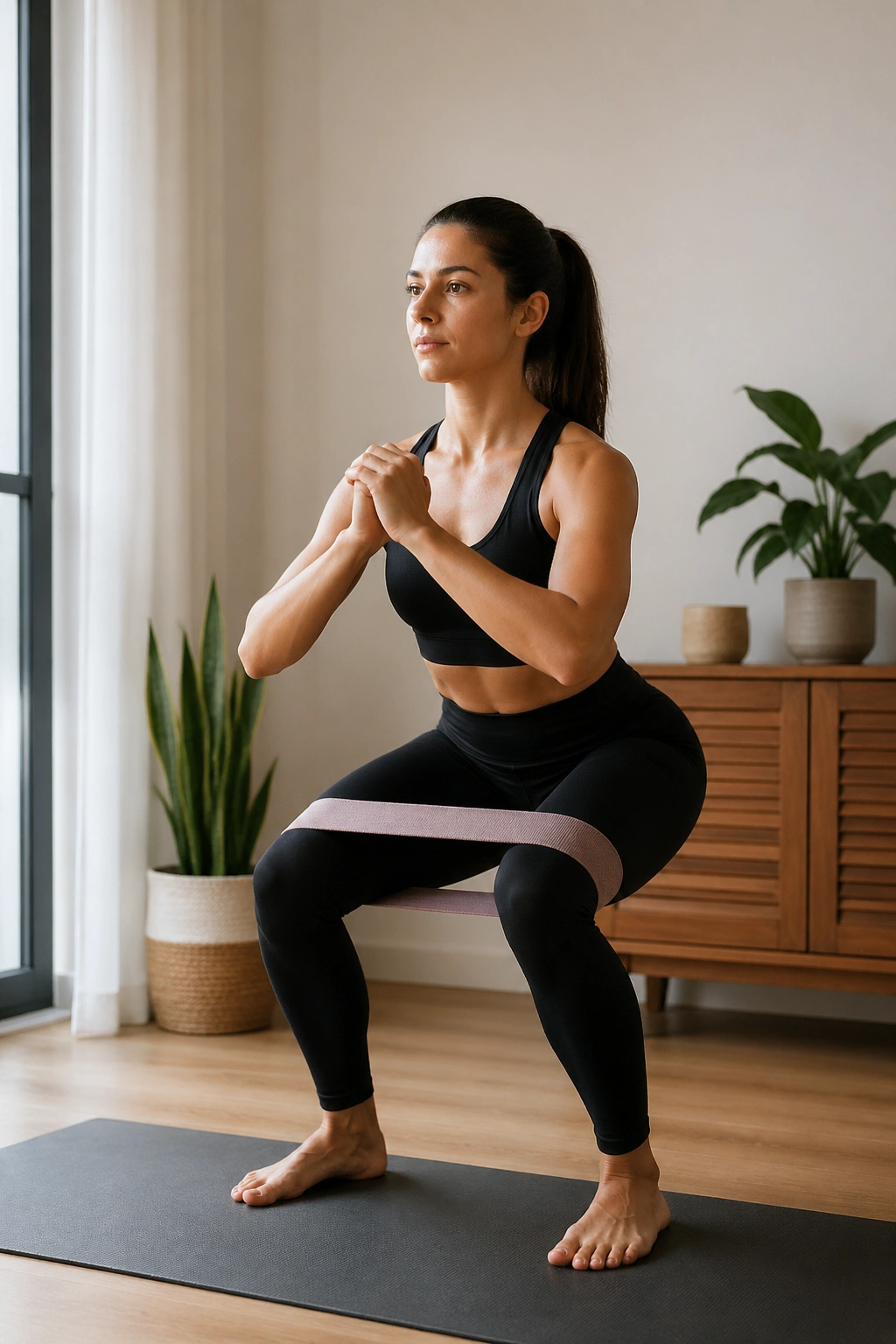
Why do tiny pulses work so well? Because they keep tension where it belongs instead of giving your legs a full rest between reps.
Stand with your feet about hip-width apart, toes turned out just a little, and sink into a shallow squat. Don’t chase depth. Keep your chest lifted, knees tracking over your second or third toes, and your weight centered through the whole foot. From the bottom of the squat, pulse up and down about 2 inches.
What Makes the Pulse Different
A full squat is useful. A pulse keeps the quads and glutes under pressure longer, which is why the move feels deceptively hard after 30 seconds. If your knees collapse inward, press them gently out. If your heels lift, shorten the depth and slow down.
Use a chair behind you if you like a target. Tap it lightly, then hover. That little hover is where the work starts.
- 20 to 30 pulses
- 2 rounds
- Optional loop band above the knees
- Keep your spine tall, not folded
You do not need a deep squat for this to count. A shallow, controlled squat with solid alignment is plenty.
4. Side-Lying Leg Raises
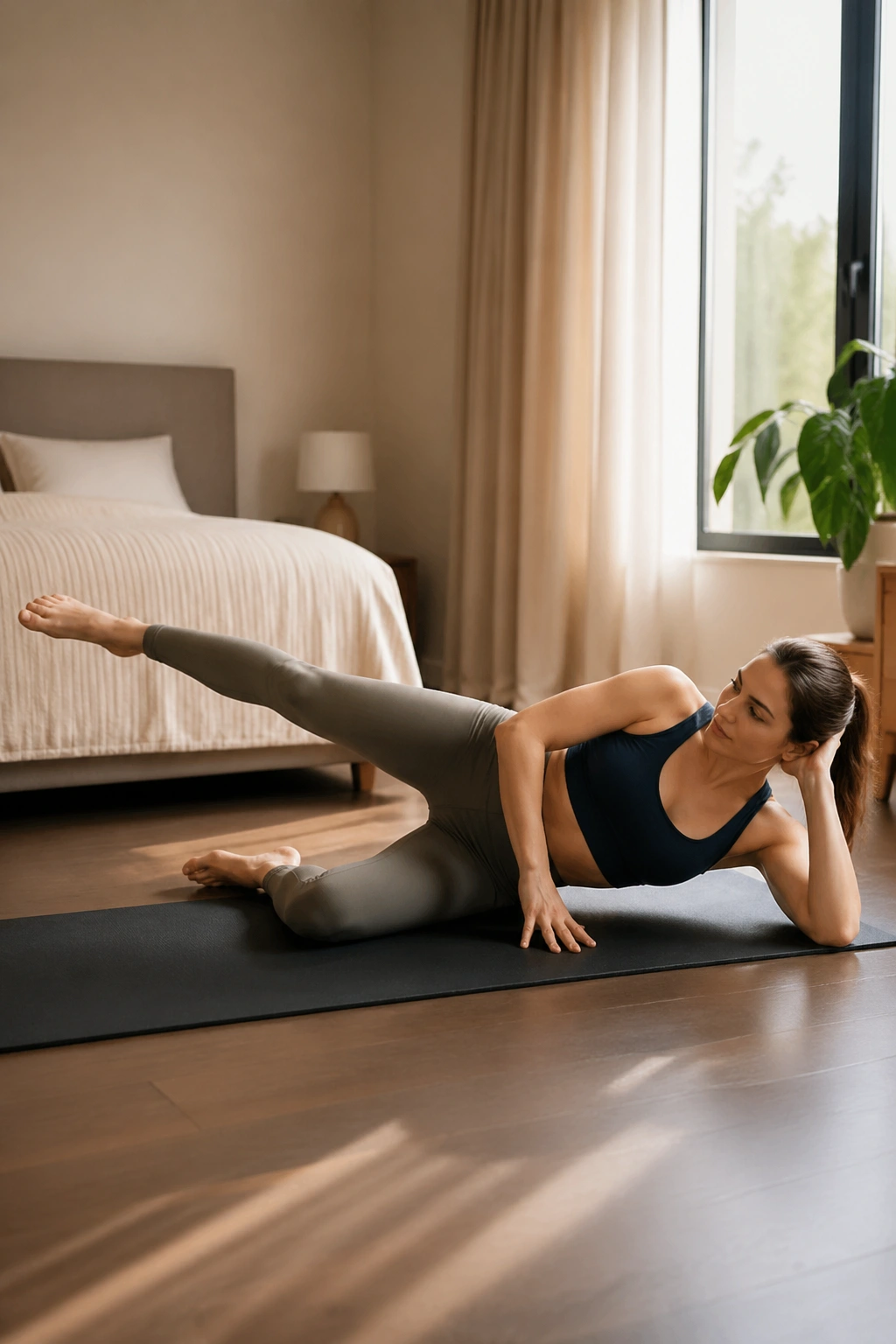
If your outer hips always feel sleepy, this is the move that starts the conversation.
Lie on one side with your bottom leg bent for support and your top leg long. Flex the top foot, keep the hips stacked, and lift that leg just 8 to 12 inches. Lower it slowly. No swinging. No rolling backward to cheat. The whole point is to keep the outside of the hip working while the waist stays quiet.
A lot of people lift the leg too high and turn the exercise into a lower-back movement. That usually means the range is bigger than it should be. Small is fine. Small is often better.
The cleanest version feels like the leg is gliding away from the hip socket, not yanked up from the knee. You’ll feel the outer glute and the side of the thigh burn first, then the area under the hip bone starts to talk back.
Do 12 to 15 controlled reps, then hold the final lift for 10 seconds. Switch sides. If you want more resistance, add an ankle weight later, but don’t rush it. Form gets sloppy fast when the load is too heavy.
5. Clamshells
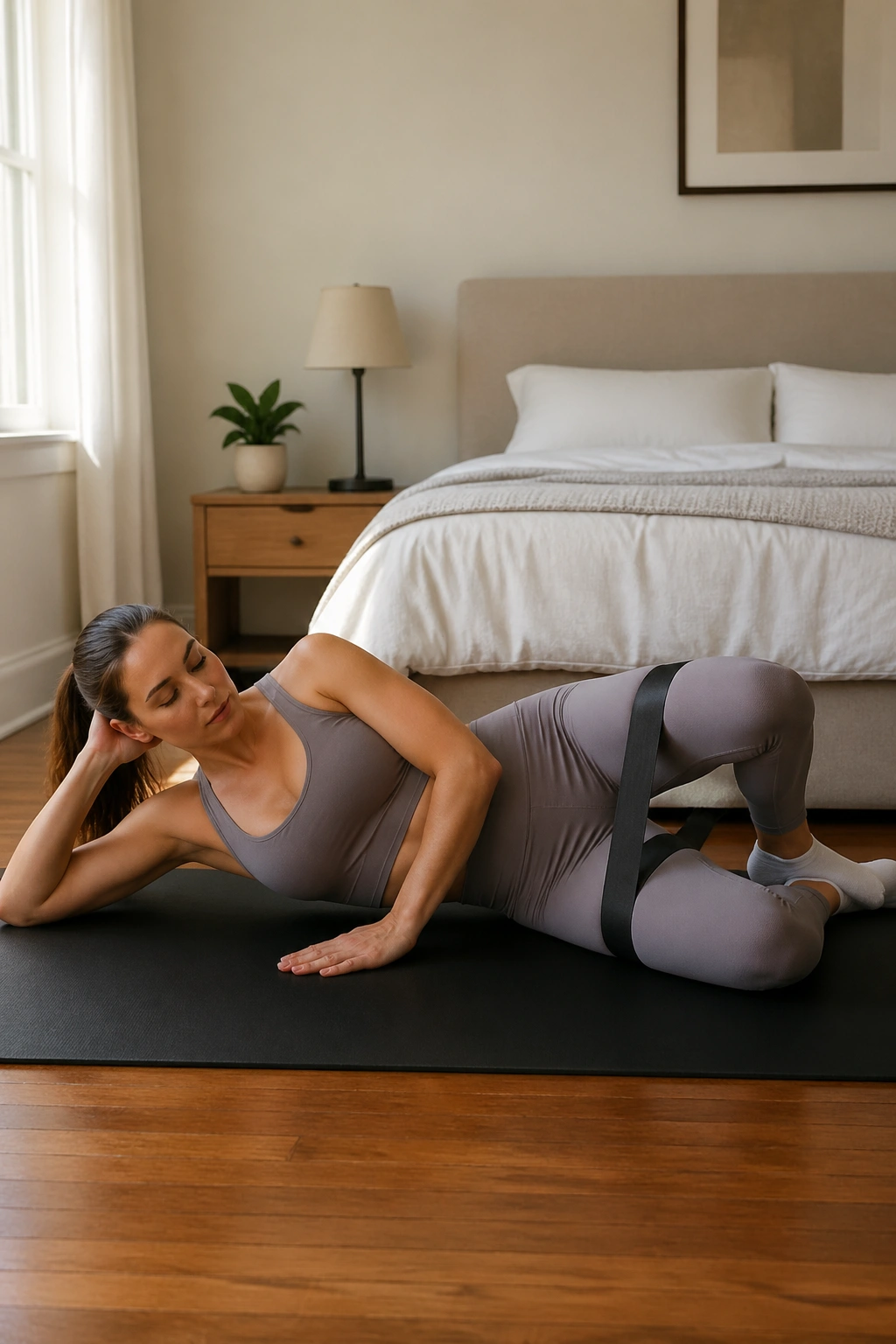
Clamshells are boring for about twelve seconds. Then they become a deep, useful ache in the side of the butt where a lot of people are weaker than they think.
Lie on your side with knees bent and heels together. Keep your hips stacked like you’re balancing a tray on your side seam. Open the top knee without letting the pelvis roll backward. The feet stay together the whole time. Close slowly.
That tiny external rotation works the glute medius and the smaller stabilizers around the hip. Those muscles matter more than people want to hear, because weak outer hips can make every lunge, squat, and step feel less stable.
Use a loop band above the knees if the bodyweight version gets too easy. Or slow the lowering phase down to a count of three. That usually fixes the problem without adding gear.
I like clamshells as a warm-up before standing work. They switch the hips on without exhausting you. Seven or eight clean reps are better than twenty fast ones with the torso wobbling all over the place.
6. Fire Hydrants
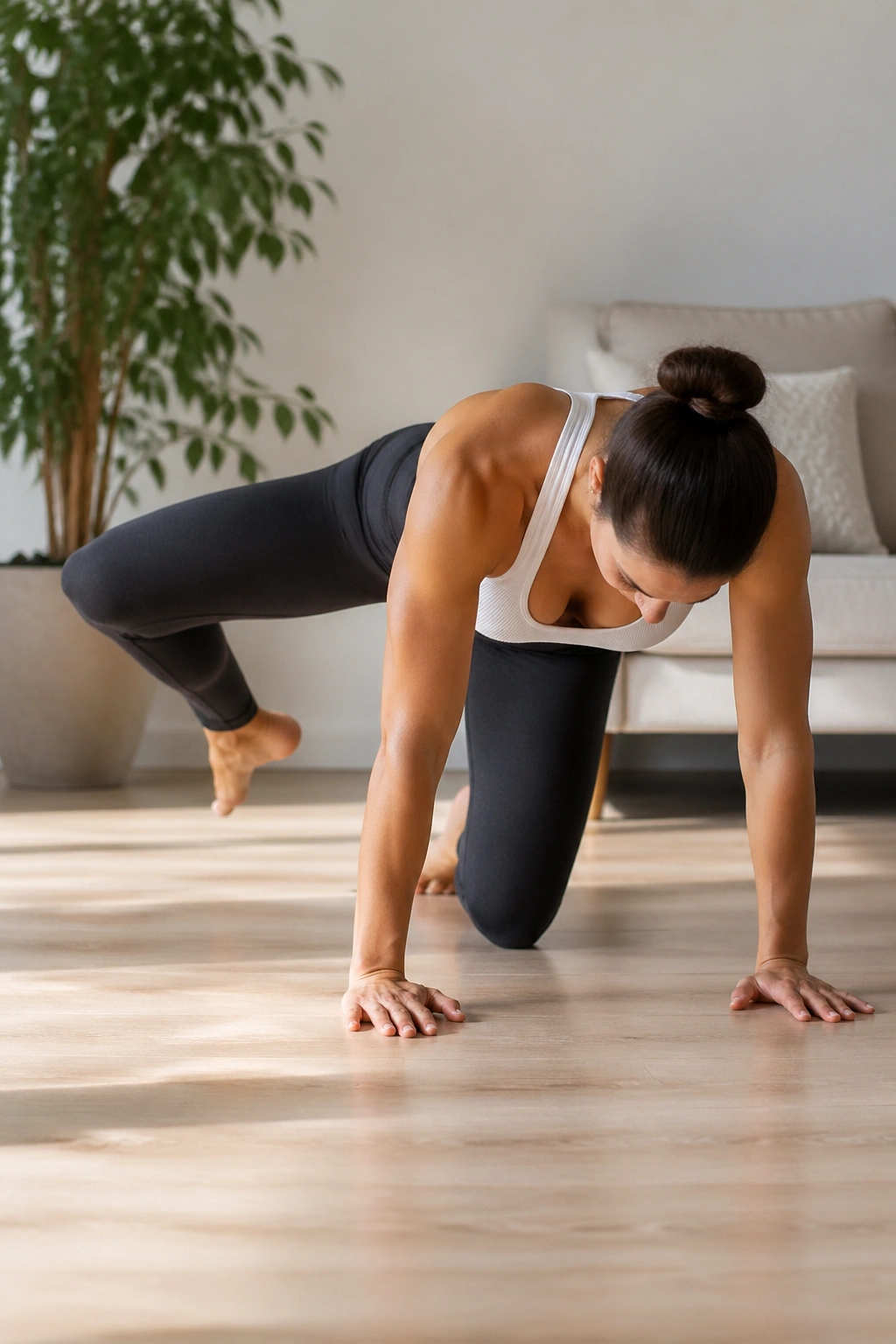
Fire hydrants and clamshells look similar from a distance. Up close, they hit the hips in different ways.
Get onto hands and knees with wrists under shoulders and knees under hips. Keep the core lightly braced, then lift one bent knee out to the side without shifting the torso or leaning into the standing arm. Lower with control. That sideways lift asks the outer glute to stabilize the pelvis while the lifted leg moves away from the body.
What Makes It Different From a Clamshell
The clamshell opens from a side-lying position. The fire hydrant challenges balance on all fours, which means your core has to help keep the hips square. That extra demand makes the move useful for people who feel unstable in single-leg work.
If your shoulders sink, spread the floor away with your hands. If your lower back arches, lower the height of the lift. And if your knee starts swinging, slow down. Fast hydrants turn into noise.
- 10 to 12 reps per side
- Pause 1 second at the top
- Add small circles if you want more hip control
- Keep the toes relaxed, not pointed hard
This is one of those moves that rewards patience. Not glamour. Patience.
7. Donkey Kicks
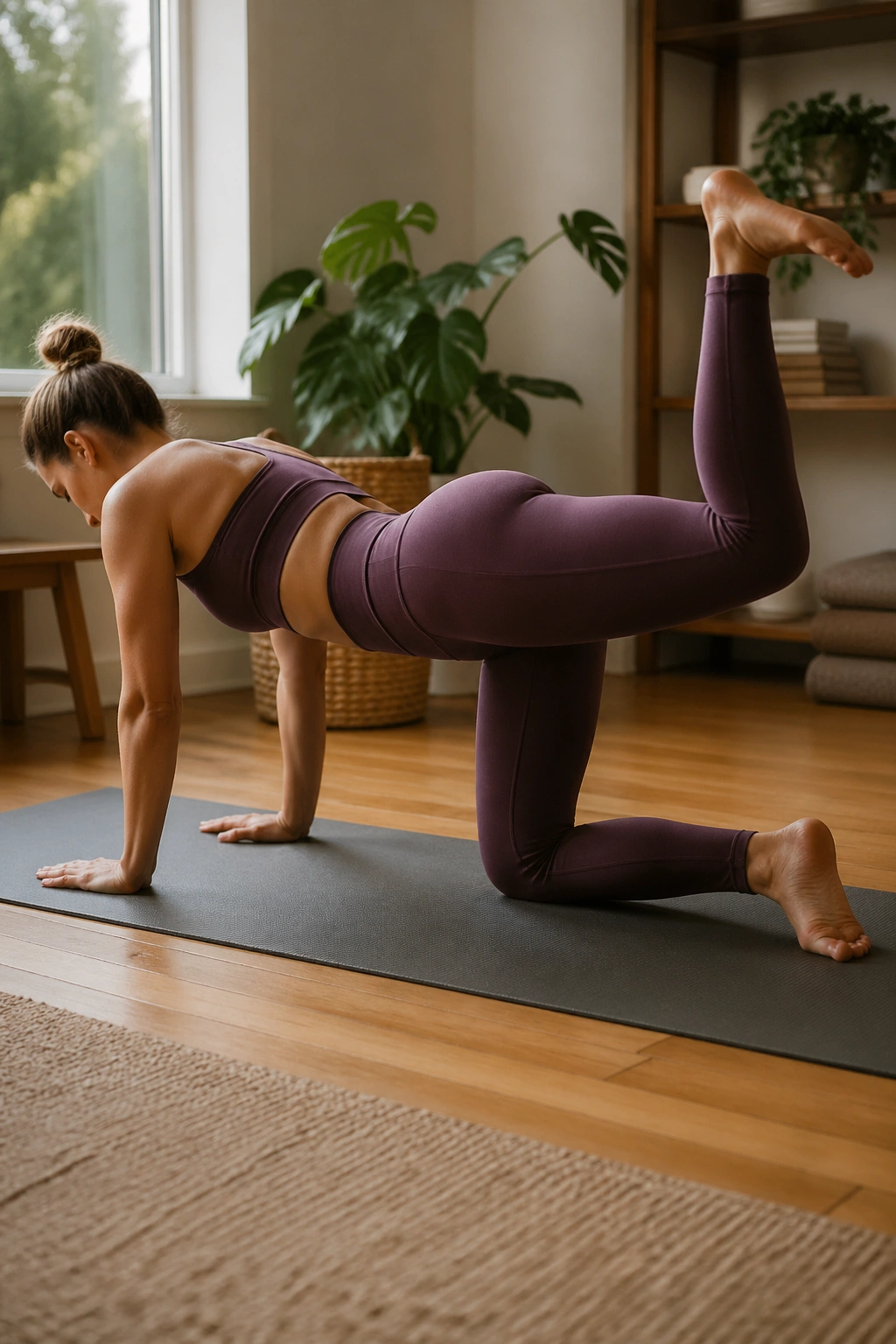
Donkey kicks are the kind of exercise that looks harmless until your glutes start trembling midway through the second set.
From hands and knees, keep one knee bent at 90 degrees and press the sole of the foot up toward the ceiling. The upper thigh lifts, the knee stays bent, and the pelvis stays as level as you can manage. Lower until the knee is hovering just above the mat, then lift again.
The biggest mistake is turning the move into a back arch. That’s a shortcut, and your lower back pays for it. Keep your belly firm and imagine your hip bones staying pointed at the mat. If you can’t do that while lifting high, lower the leg a little and keep the movement honest.
A small pulse at the top can make this brutal in the best way. One pulse. Maybe two. After that, your form starts to fray if you’re not careful.
Try 12 reps per side, slow enough that each rep takes about 3 seconds up and 3 seconds down. If you’re using ankle weights, keep them light. Heavy loads change the feel of the exercise fast, and not always for the better.
8. Inner Thigh Lifts
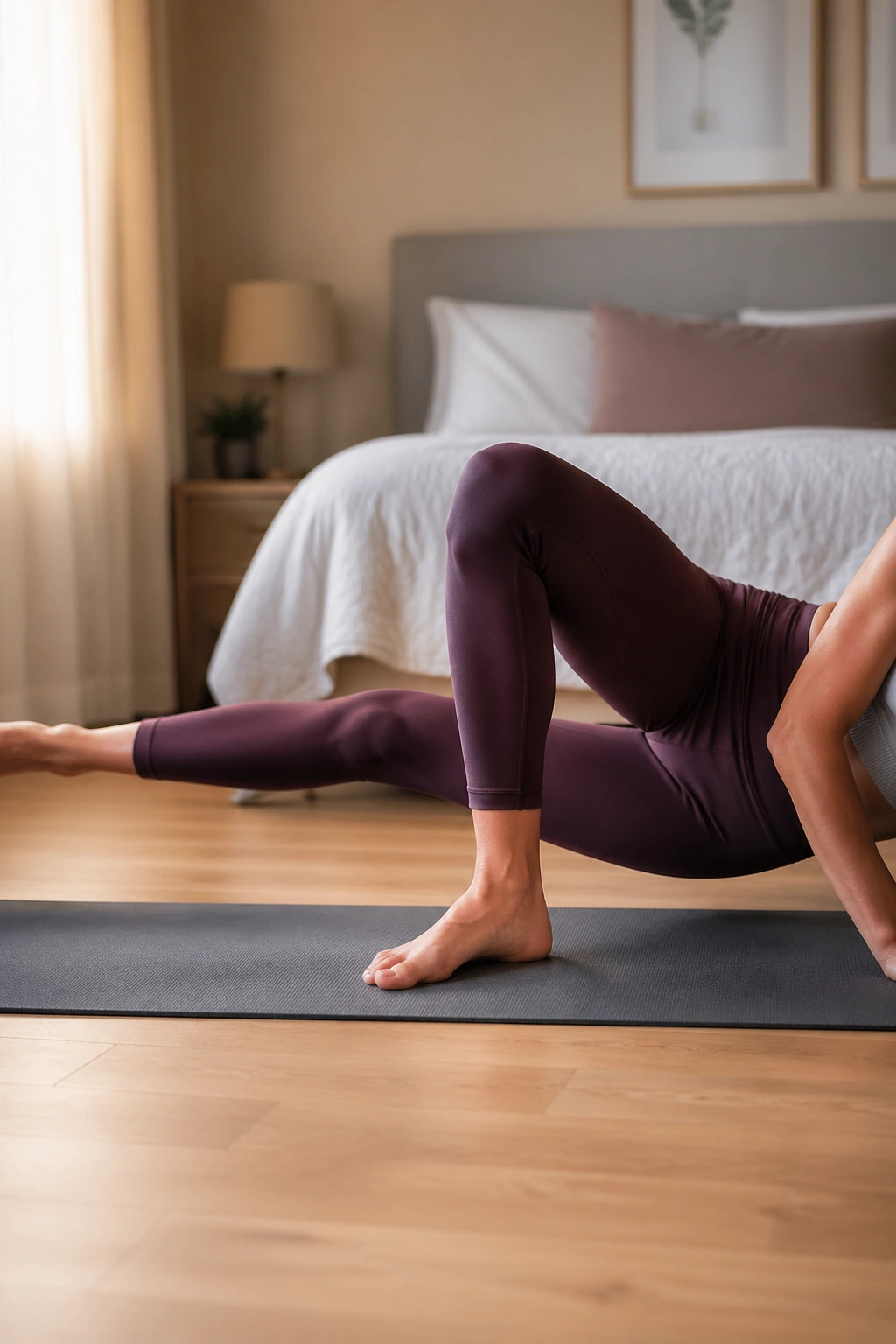
Inner thighs don’t get enough attention until they start shaking on purpose.
Lie on your side again, but this time keep the top leg bent and crossed in front of you, foot planted on the floor. The bottom leg stays long. Lift the bottom leg a few inches off the mat, then lower it slowly. That’s the clean, old-school Pilates version. If you want more challenge, place a small pillow or ball between the knees and press lightly into it between reps.
This move is smaller than most people expect. Good. It should be. The adductors, which run along the inside of the thigh, respond well to controlled tension and clean alignment. You don’t need a big swing to feel them.
A lot of people recruit the hip flexor here by lifting too high. Don’t. Keep the movement low and precise. If your pelvis rolls back, reset and start again. That little reset matters more than squeezing out extra reps.
Do 15 slow lifts per side. A final 15-second hold at the top can be awkward, and that’s exactly why it works.
9. Side Kick Series
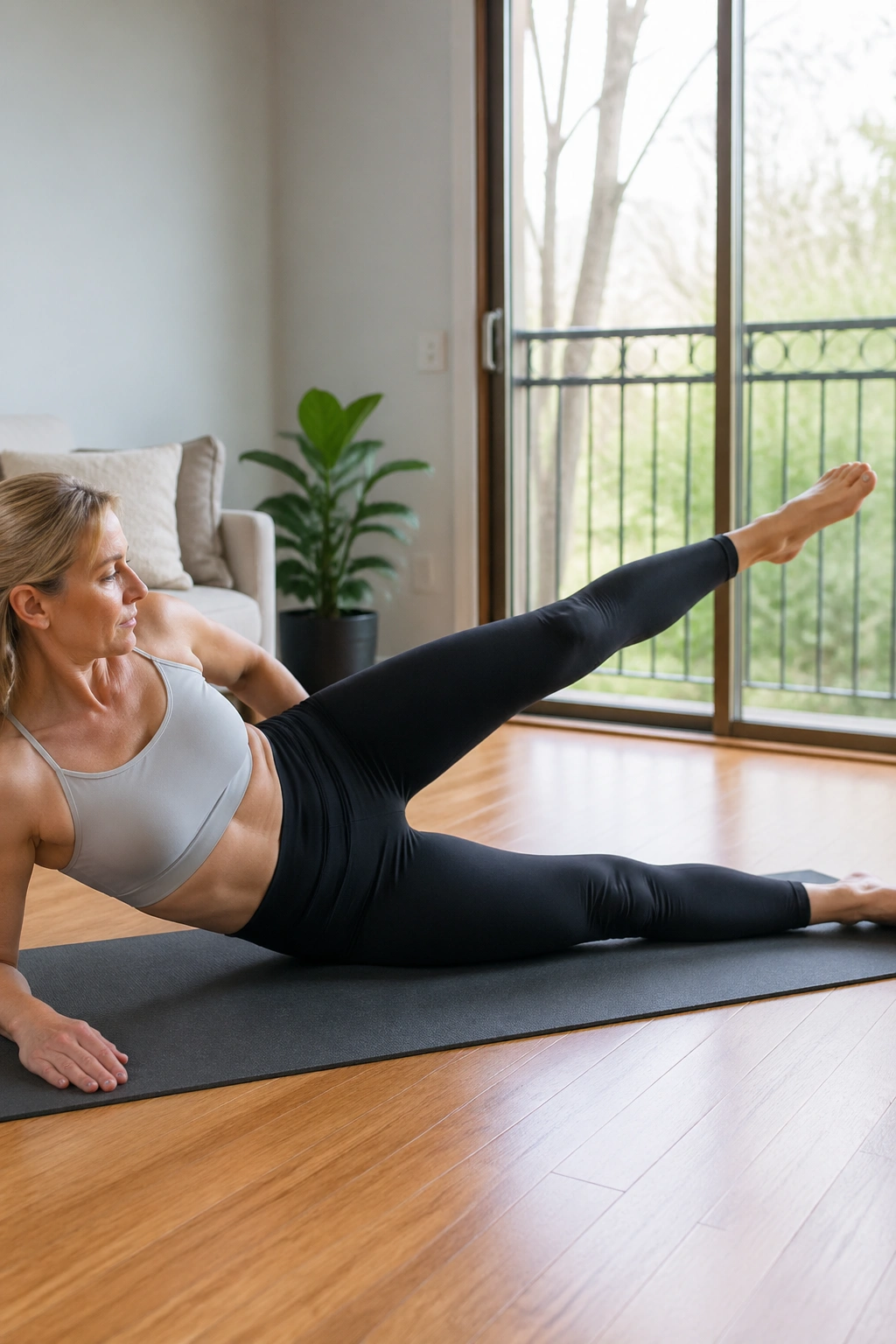
Do you want a move that feels graceful for about half a minute and then starts to bite? This is it.
The side kick series usually starts with you lying on one side, top leg lifted, and the hips stacked. From there, you sweep the top leg forward and back with control, then add small circles, a higher lift, or a tiny hold. The whole thing challenges hip stability, glute control, and core work at the same time.
How to Use It
Start with 6 to 8 front-and-back swings, keeping the torso still. The leg should move from the hip, not fling from the knee. Then do 6 circles in one direction and 6 the other way. If the waist pops off the mat, the range is too big.
The nice thing about this series is that it has layers. Beginners can keep it tiny. More advanced folks can add a longer lever or an ankle weight. Either way, the side waist and outer hip stay busy.
A clean side kick series feels smooth, not wild. If it looks like a windshield wiper, you’re doing too much.
10. Curtsy Lunge Pulses
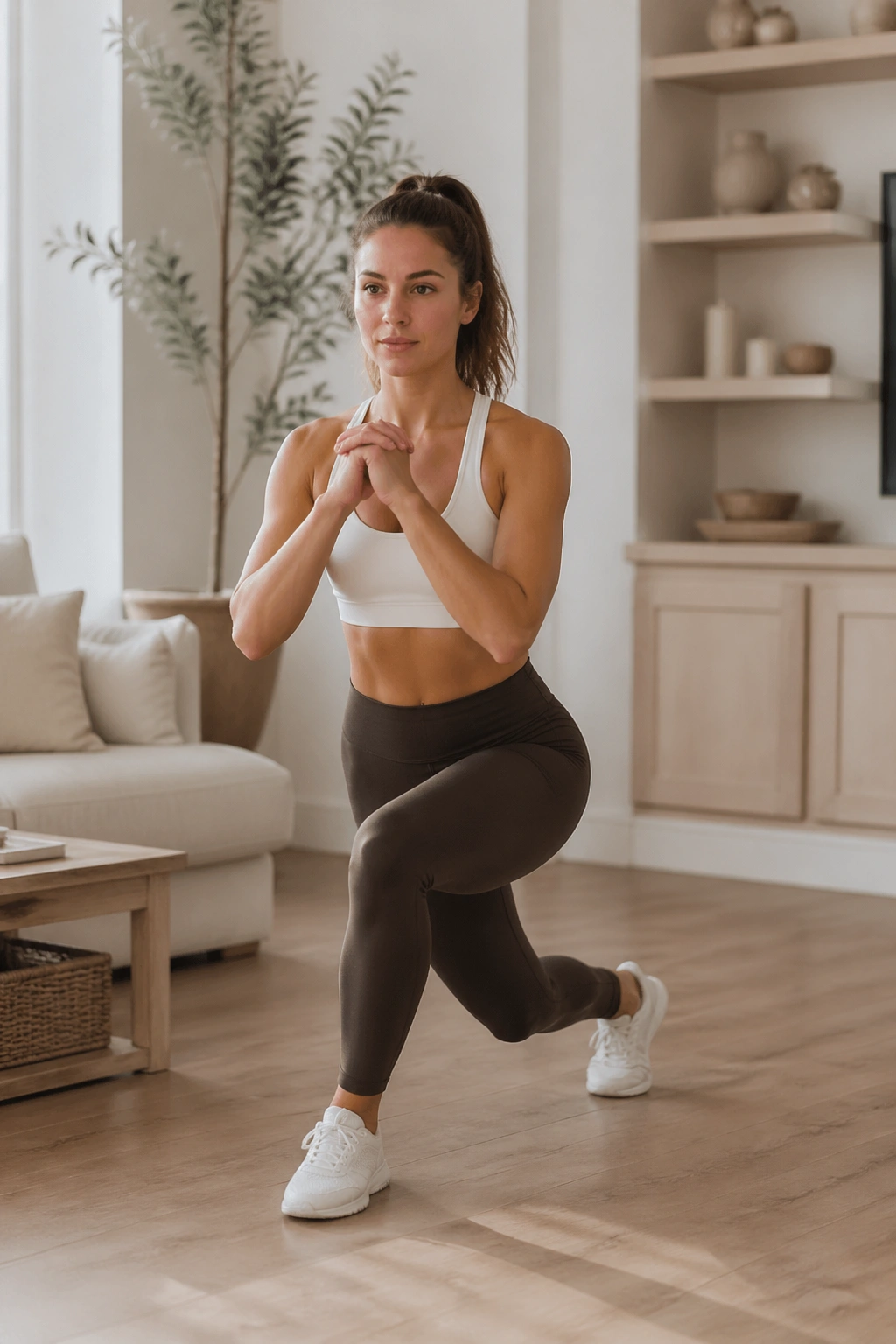
Curtsy lunges are a bit polarizing. I get that. Done badly, they feel awkward on the knees. Done well, they hit the glute medius and outer thigh in a way regular lunges sometimes miss.
Step one leg behind and across the other, lowering into a shallow lunge. Keep the front knee tracking over the toes and the chest upright. From the bottom, pulse a few inches up and down. Then switch sides.
The key is not crossing so far that the knee twists inward. That’s the mistake people make when they chase a deep range for no reason. Keep the step modest. Think of it as a controlled diagonal, not a dramatic curtsy.
This move works especially well as a standing lower-body burner after mat work. Your glutes are already awake. Your balance is already tested. The pulses just keep the tension rolling.
- 8 to 10 pulses per side
- 2 sets
- Use a chair lightly for balance if needed
- Keep the back heel lifted and the weight centered
If your knees dislike this one, skip it. There are plenty of other ways to train the same muscles.
11. Calf Raises
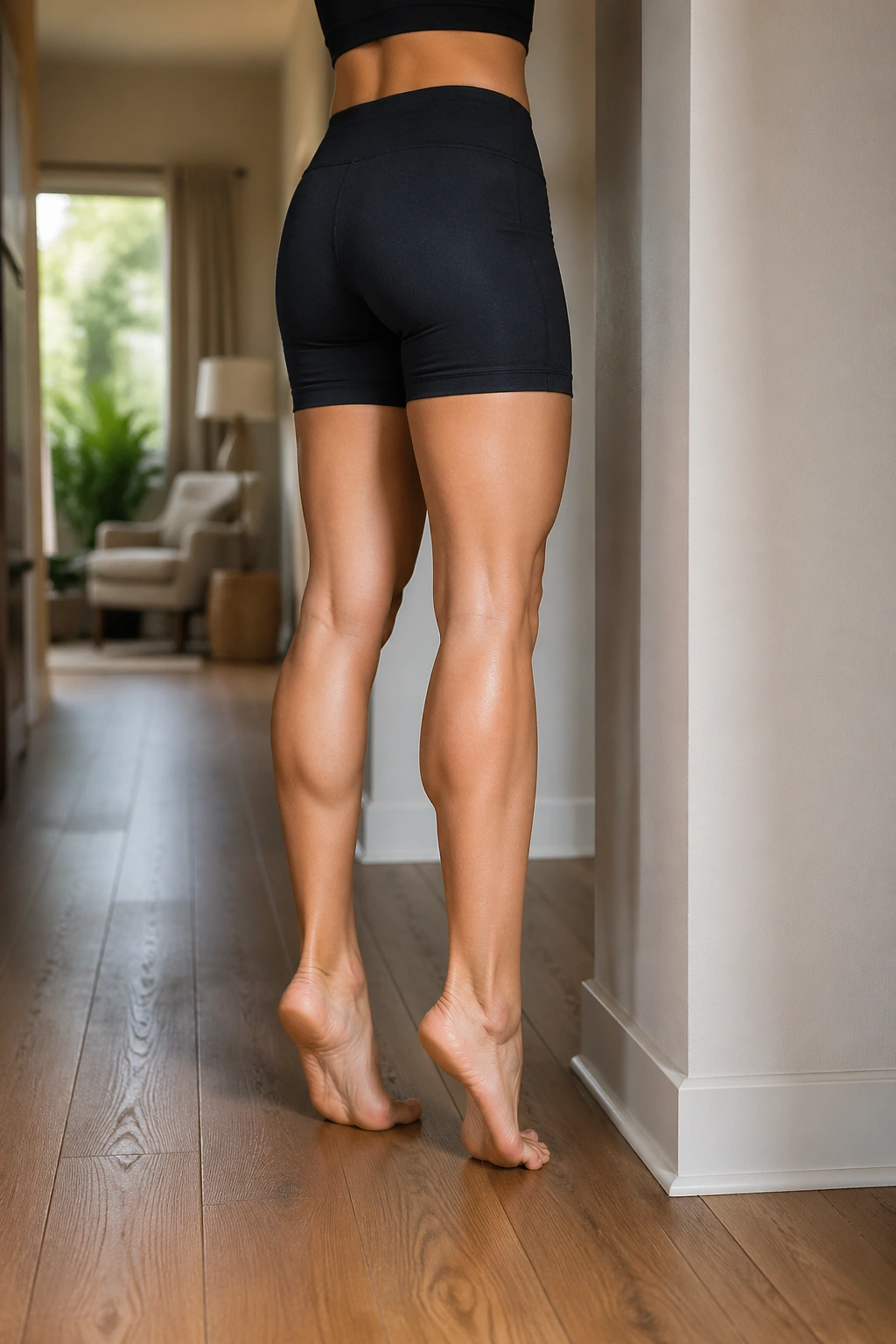
Calf raises are easy to ignore because they’re tiny. That’s a mistake.
Stand tall with feet hip-width apart, hold onto a wall if you need balance, and rise onto the balls of your feet. Pause at the top for one count, then lower slowly until your heels touch the floor. If you want more work, try a 3-second lowering phase. That eccentric lowering lights up the calves far more than rushing through reps.
The nice part about calf raises is that they fit anywhere. Kitchen counter. Hallway. Between other exercises. They also make a difference in ankle stability, which matters more than people think when you’re doing standing Pilates work.
Try them with feet parallel first. Then turn the toes out a little and see how the inner calf responds. You’ll feel a subtle shift, not a new exercise, but enough to keep the body paying attention.
A set of 15 to 20 clean reps is plenty. If the shoulders creep up toward your ears, reset. Tall posture matters here. Sloppy posture turns calf work into a shrug.
12. Wall Sit and Heel Lifts
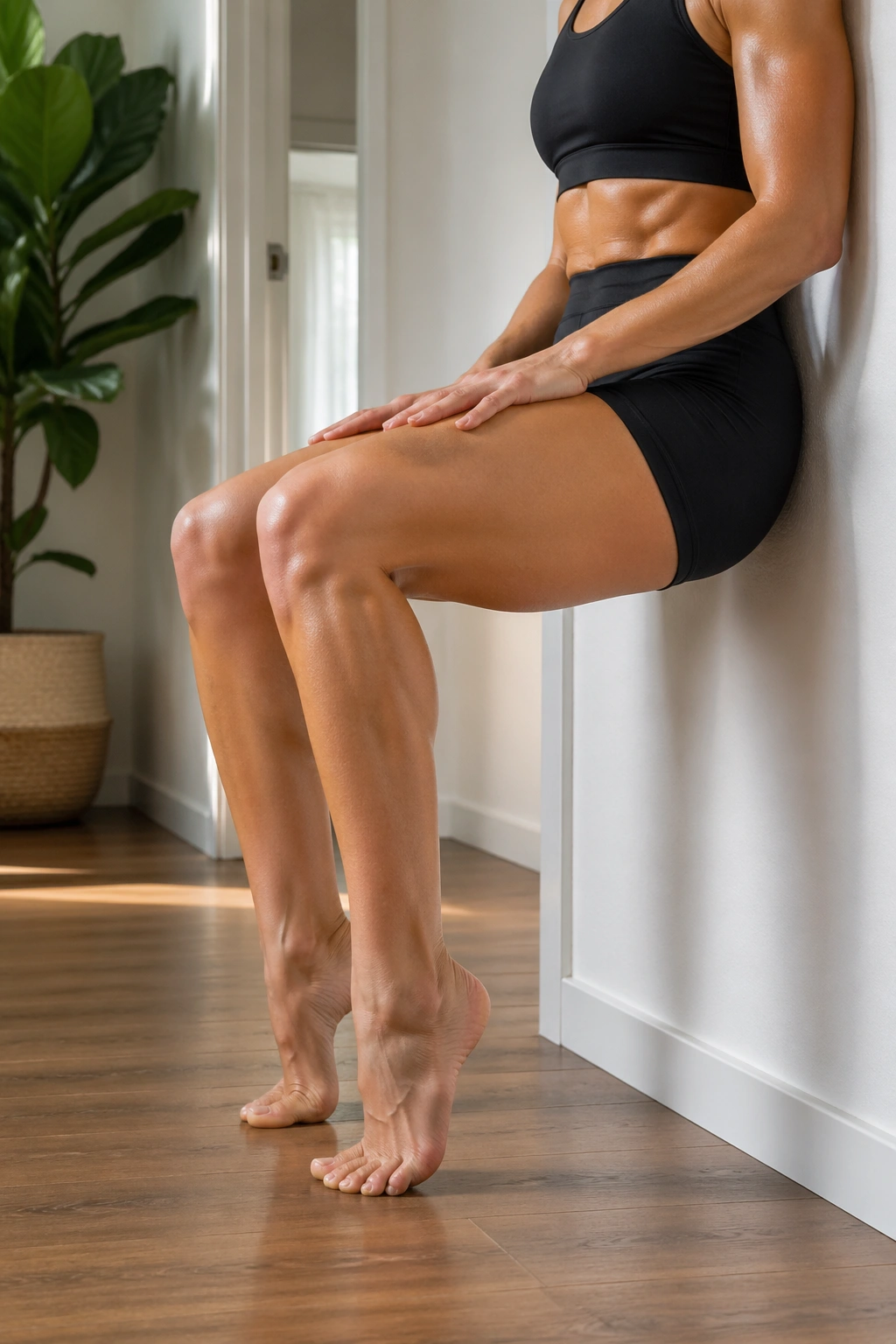
A wall takes balance out of the picture. That is the point.
Slide down a wall until your knees are bent roughly 90 degrees, or stop higher if your quads start shaking too early. Press your lower back gently into the wall, keep your feet flat, and then lift and lower the heels in tiny controlled reps. The quads hold the sit while the calves and ankles get a turn too.
Why the Wall Version Works So Well
Without the wall, you have to think about posture, balance, and knee position at the same time. The wall simplifies things. That means the legs can work harder without the rest of you stealing attention.
If your knees don’t like deep angles, stay in a shallower sit. A 45-degree bend can still be plenty. Don’t force a textbook squat depth just to look correct. Your thighs won’t care about the textbook.
This is a good finisher when you want something that burns but doesn’t involve a lot of moving parts. Hold for 20 to 30 seconds, then add 10 to 15 heel lifts. Rest. Repeat if you’re feeling bold.
13. Standing Leg Circles
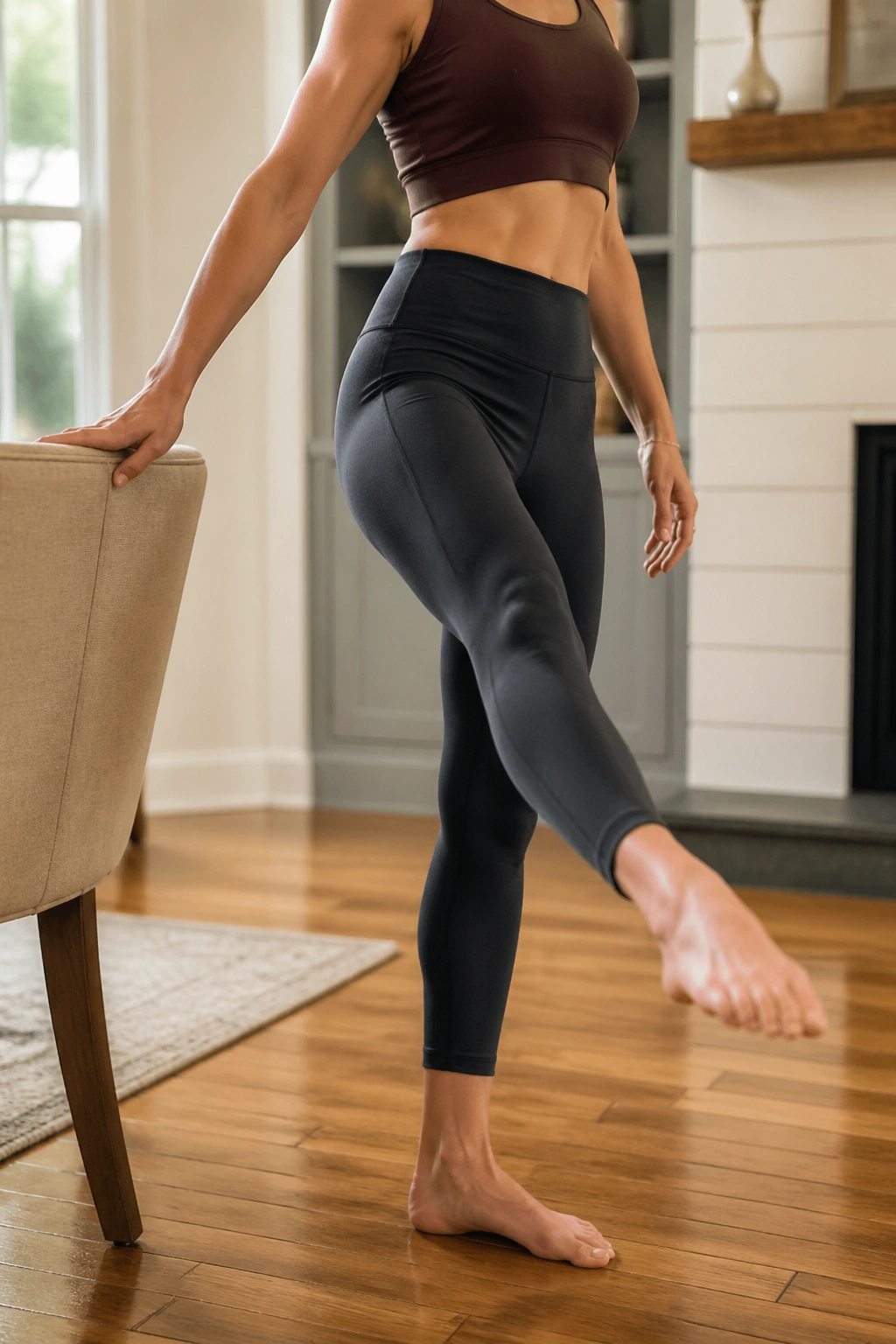
Standing leg circles look neat. They are not easy.
Hold onto the back of a chair or a wall. Shift your weight onto one leg, then extend the other leg slightly forward. Make tiny circles from the hip, keeping the torso steady and the standing knee soft but not bent into a squat. The circle should stay small enough that your pelvis doesn’t tilt all over the room.
What It Trains
This move challenges balance, hip control, and the muscles that keep the standing leg stable while the free leg moves. It’s a clean way to work the lower body without dropping to the floor again, which is handy if you’re short on time or your knees need a break.
- 8 circles forward
- 8 circles backward
- Switch sides
- Keep the circle no bigger than a dinner plate
If the standing hip wobbles, slow down. If the lifted leg starts swinging from the knee, shorten the range. Standing leg circles should feel precise, even a little fussy. That fussiness is the whole deal.
14. Bridge Marches
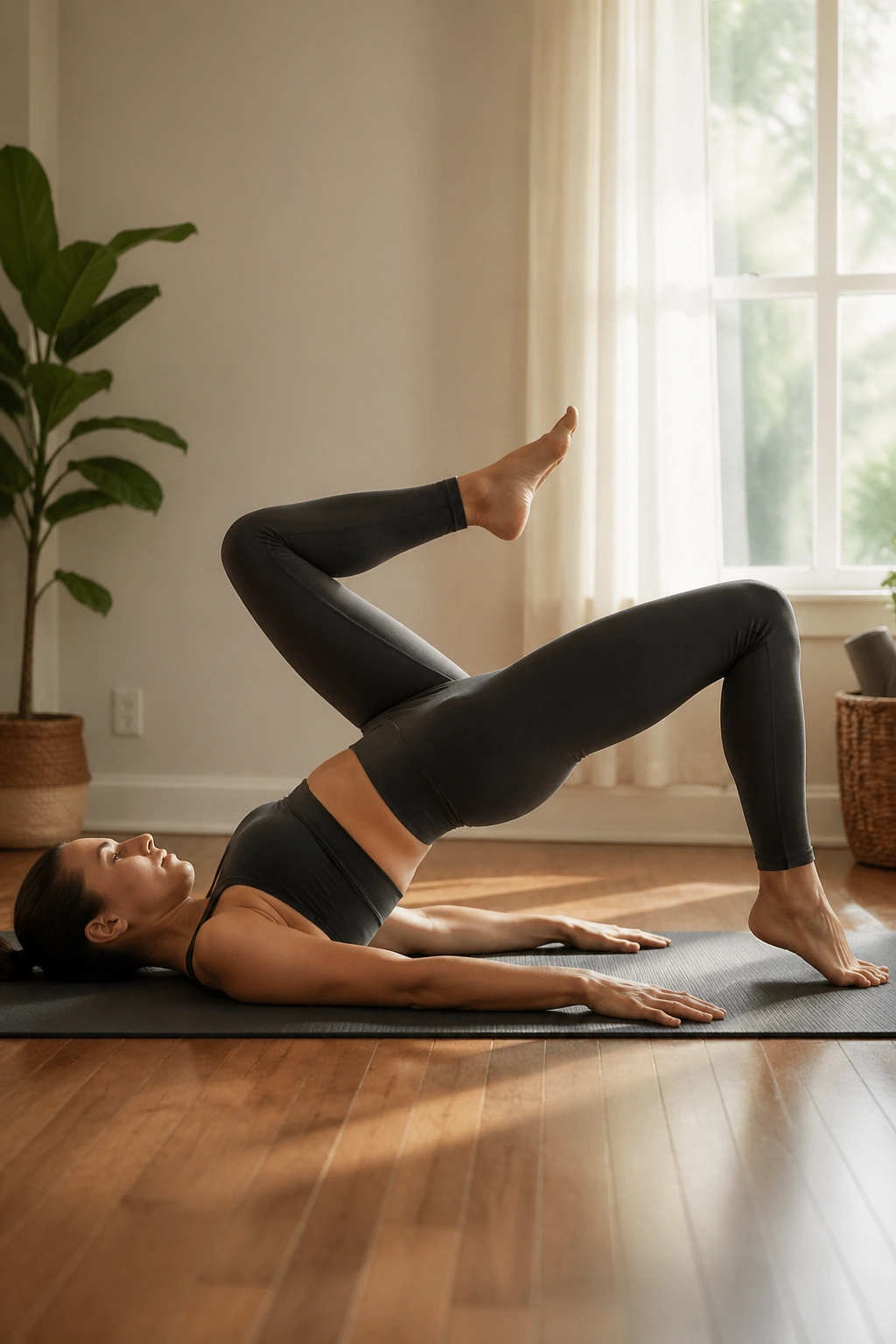
A bridge march is what happens when a regular bridge asks for more control and gets it.
Lift into a strong bridge, then raise one knee toward your chest a few inches without letting the hips drop. Set it down. Alternate sides. The challenge is not the lift itself. It’s the fact that your pelvis has to stay level while one foot leaves the floor.
This move is brilliant for people who want glutes and core in the same shot. You get hip extension from the bridge and anti-rotation work from the marching action. That combination is hard to fake, which is why the exercise is so useful.
If your hips rock side to side, lower the bridge height. That’s not a failure. It’s a better starting point. The cleanest version often looks smaller than the Instagram version, and that’s fine by me.
Try 6 to 8 marches per side. Keep the movement slow enough that you could pause in the middle if someone asked you a question.
15. Frog Pumps
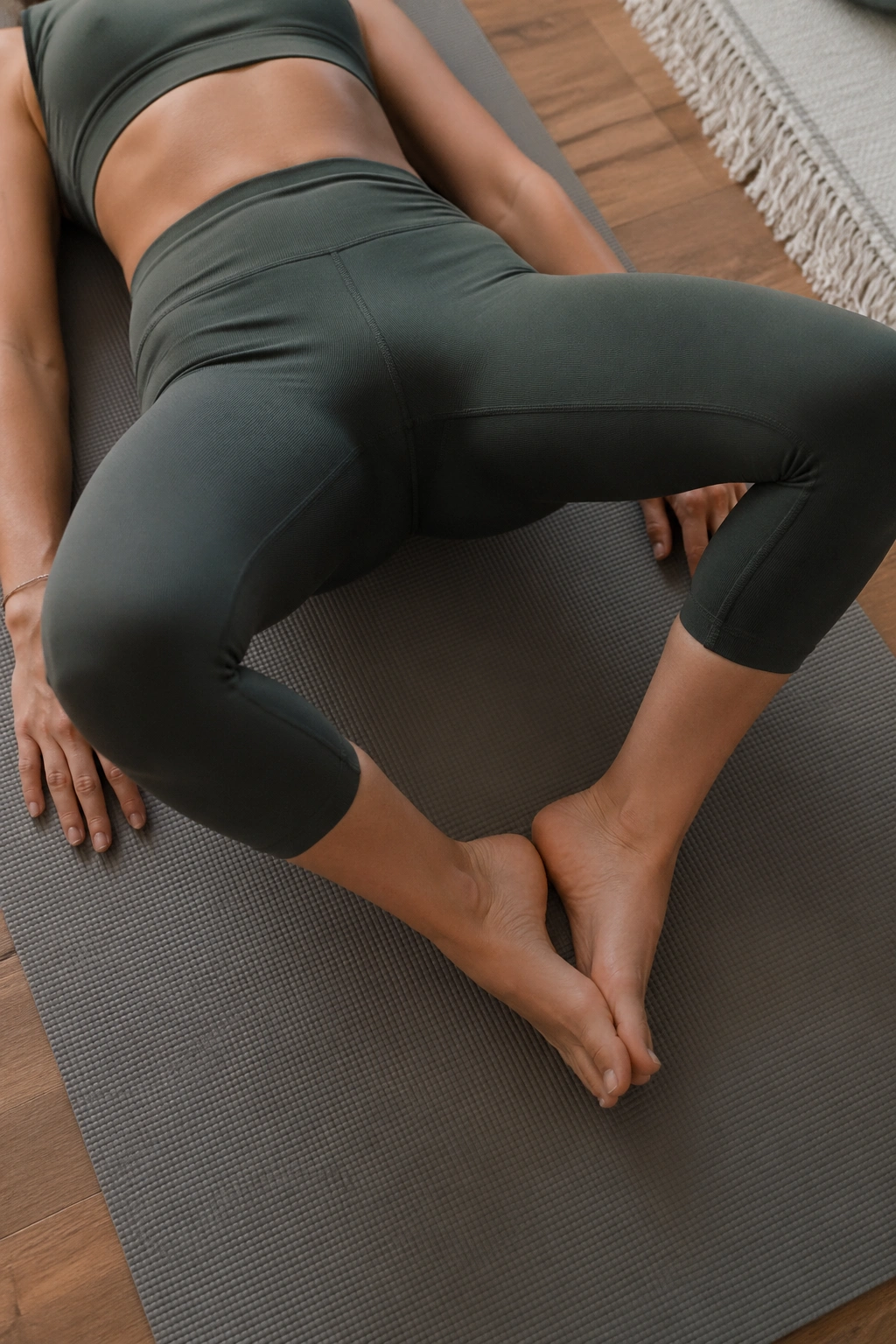
Frog pumps are weird. They also work.
Lie on your back, bring the soles of your feet together, and let your knees fall open like a diamond shape. Keep your feet close to your seat, then press the hips up in short, quick pumps. The range is small, and that’s exactly why the glutes light up so fast.
How to Get the Most From It
The position shortens the hamstrings a bit, which shifts some of the effort into the glutes. That’s why people feel frog pumps so sharply compared with regular bridges. The top of the movement should feel like a squeeze, not a backbend.
If your feet drift too far away, the move stops working the same way. Keep them tucked in. If your lower back complains, reduce the height and slow the tempo.
A loop band above the knees can add a little extra fire, but bodyweight is enough for most people. Start with 20 reps, rest briefly, then do another round. If you want a quick glute finisher after standing work, this is one of the easiest ways to do it.
16. Chair-Supported Arabesque Lifts
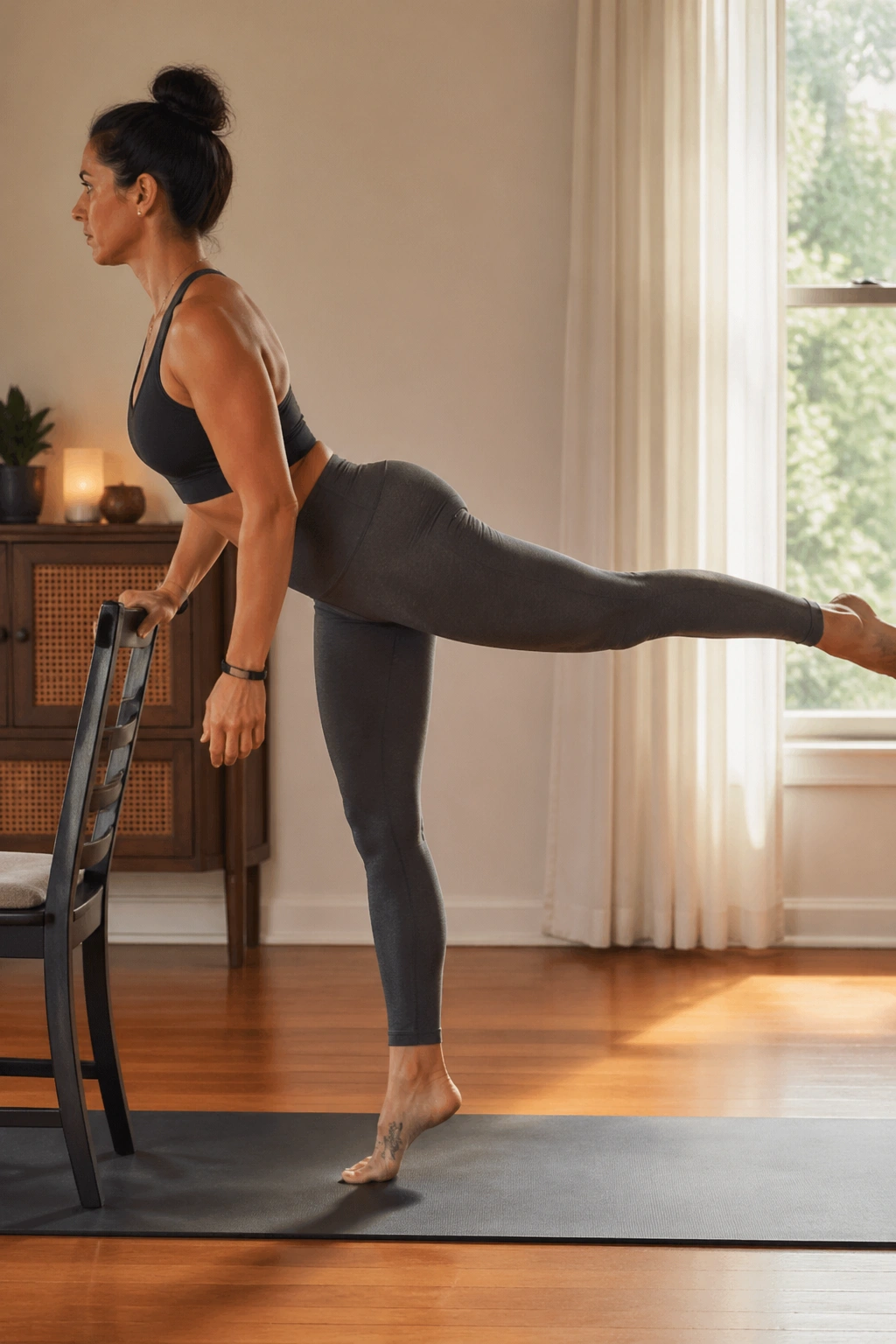
A chair-supported arabesque sounds fancy. It’s basically a standing leg lift with one hand on a chair, and it’s excellent.
Hold the chair lightly, hinge forward just a touch from the hips, and extend one leg straight behind you. Lift the leg a few inches, then lower without letting the torso swing. The body should stay quiet while the back leg does the work.
The challenge here is more about balance and hip extension than pure muscle burn. That makes it a smart lower-body Pilates exercise when you want to train the glutes without lying on the floor again. It’s also a nice bridge between mat work and standing work.
A common mistake is arching the lower back to fake a bigger lift. Keep the ribs closed and the tailbone long. If you lose control, lift lower. Smaller lifts with clean form beat a big sloppy sweep every time.
Do 10 controlled lifts per side. If you want more intensity, pause for two counts at the top. The standing glute will tell you immediately whether you earned it.
17. Skater Step-Backs
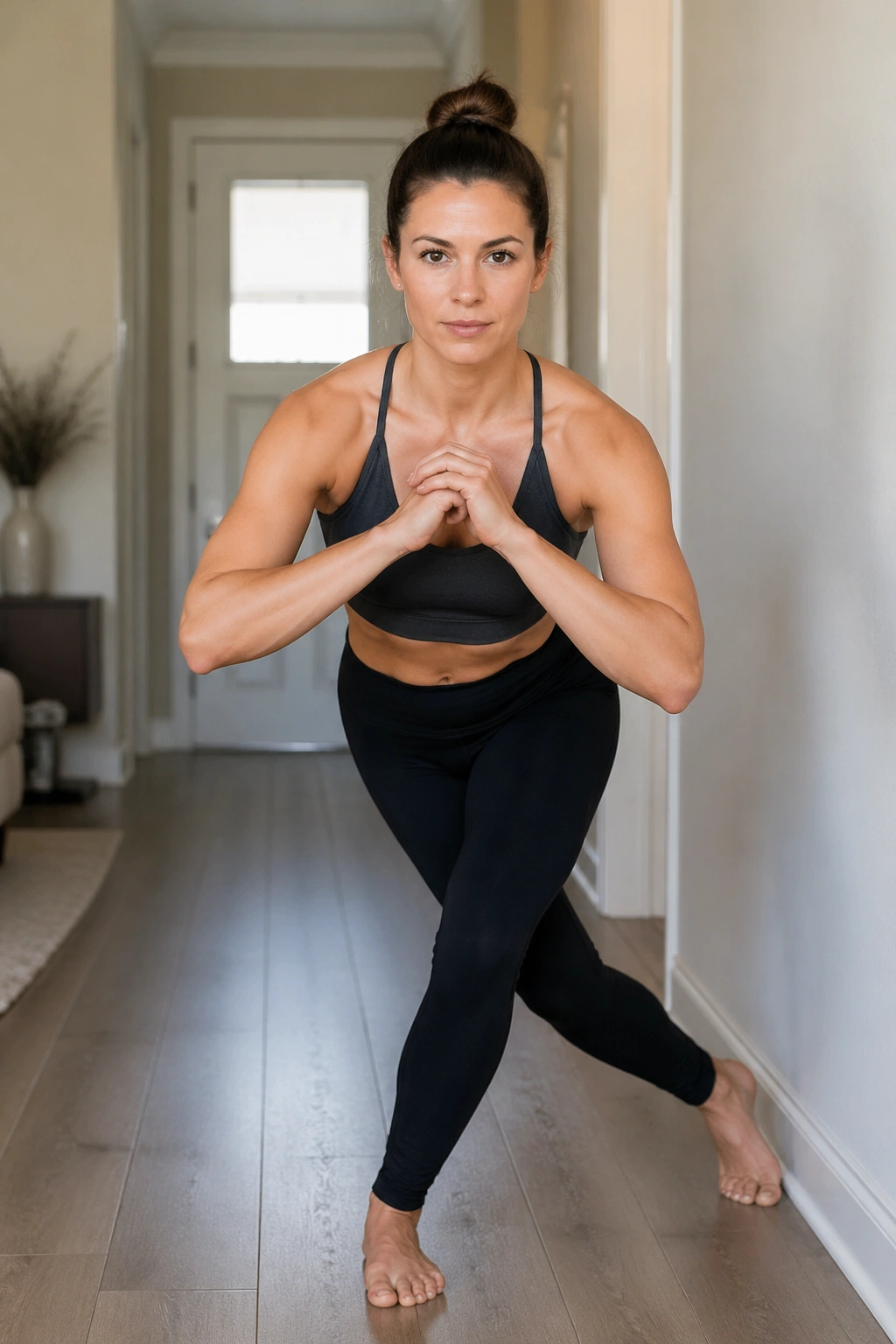
Skater step-backs bring in a little side-to-side energy without turning the workout into cardio chaos.
Stand tall, step one foot diagonally behind the other, and bend both knees slightly as you lower. Push back to center. Alternate sides in a smooth pattern. The legs work in a more lateral plane here, which is useful because everyday life rarely moves in perfectly straight lines.
This move hits the outer hips, glutes, and thighs while also challenging coordination. It feels athletic, but it doesn’t need to get bouncy. Keep the step quiet and controlled. If the foot slaps the floor, slow down.
I like this one near the end of a routine because it wakes up the whole lower half without needing any floor space. It also pairs well with balance work, since the crossing motion forces your hips to stay engaged.
- 8 to 10 steps per side
- Stay light through the feet
- Keep the chest lifted
- Use a wall nearby if your balance drifts
Simple. Useful. A little sneaky.
18. Plié Squat with Relevé
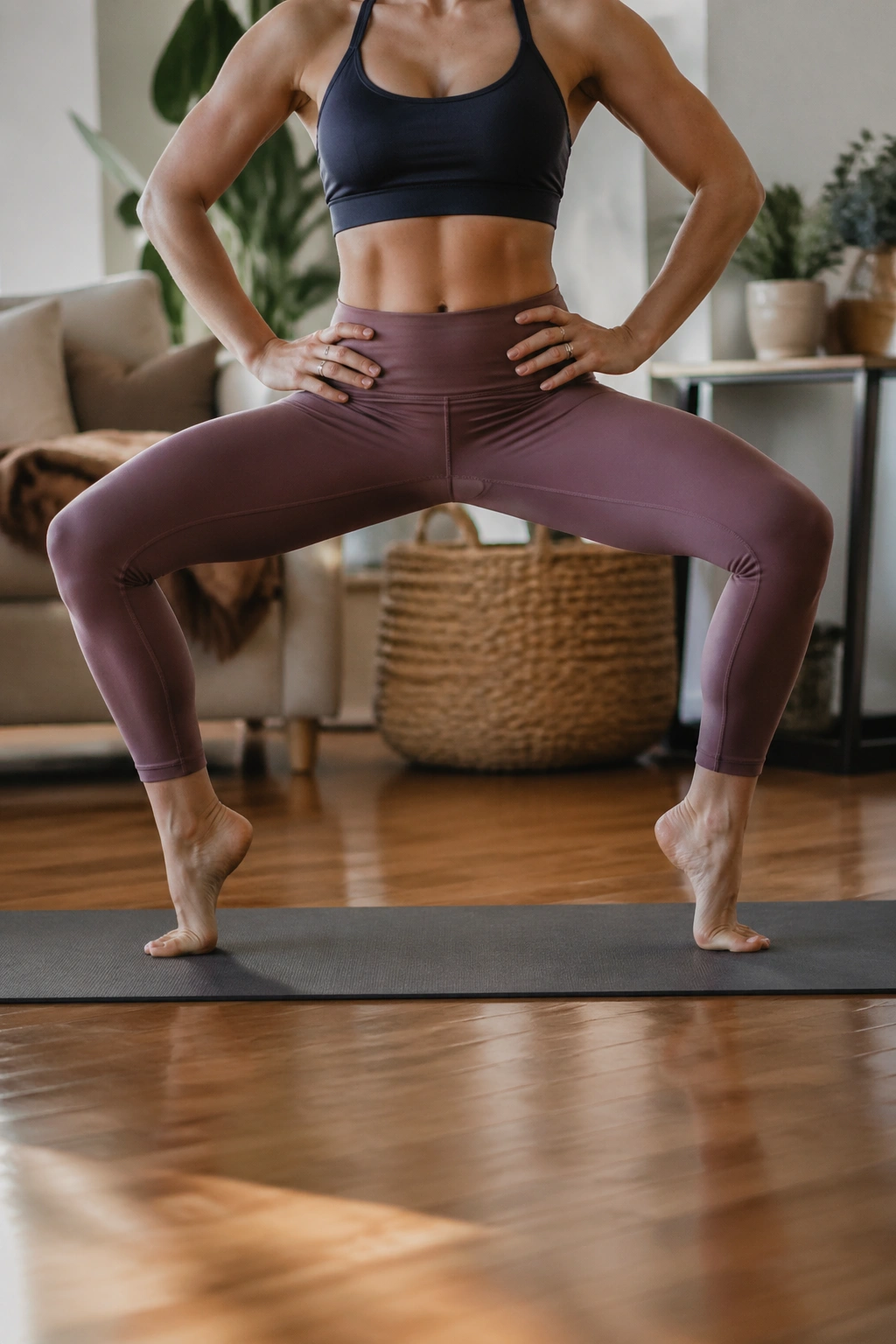
A plié squat with relevé combines two very different lower-body demands in one move.
Start in a wide stance with toes turned out, sink into a plié squat, then rise onto the balls of your feet at the top or hold the squat while lifting the heels. Either version works. The wide stance brings the inner thighs into the conversation, and the heel lift adds calf work and ankle control.
Why It Feels Different From a Regular Squat
A normal squat tends to be more straight-ahead. The plié angle opens the hips and shifts the load into the adductors, glutes, and lower legs. Add the relevé, and your calves have to stabilize the body while the thighs stay engaged.
If your knees cave inward, press gently out through the knees and keep the arches active. If your heels lift too soon in the squat, make the stance a bit narrower. Small changes fix a lot.
This is one of the prettier-looking moves in the group, but don’t let that fool you. Slow reps and a 2-second pause at the bottom make it hard fast. I’d rather see five clean plié relevés than fifteen rushed ones with the feet rolling around.
19. Side Plank Leg Lifts
Side plank leg lifts are the move people avoid until they realize how much the outer hip and waist can do together.
Set up in a side plank from the knees or the feet. Stack the shoulders, brace the center, and lift the top leg a few inches. Lower slowly. The lifted leg works, yes, but the standing side of the body works too, which is why this move feels so complete.
If the full side plank is too much, keep the bottom knee on the floor. That still gives you a strong hip challenge without making your shoulders and obliques angry. Control matters more than range here.
What to Watch For
- Don’t let the top shoulder drift forward
- Keep the hips from rolling backward
- Lift only as high as you can hold steady
- Bend the bottom knee for a simpler version
This is not a beginner’s first choice, but it belongs in a serious home lower-body Pilates routine. The glute medius and the side core both have to show up, and that’s a good thing. Clean form makes all the difference.
20. A Full Lower-Body Pilates Circuit
If you want the whole thing tied together, use these moves as a circuit instead of treating them like random exercises.
Pick one bridge, one side-lying move, one standing squat, one balance drill, and one finisher. That gives you a balanced lower-body session without turning the workout into a marathon. A simple home setup could look like this:
- Glute bridge lifts: 12 reps
- Side-lying leg raises: 12 reps per side
- Pilates squat pulses: 30 seconds
- Fire hydrants: 10 reps per side
- Plié squat with relevé: 12 reps
- Frog pumps: 20 reps
- Calf raises: 15 reps
- Bridge march: 8 reps per side
Rest for 30 to 45 seconds between moves, or longer if your form starts to unravel. The goal is clean effort, not a race to the end. On days when you’re short on time, trim the circuit to 4 moves and keep the tempo slow. On days when you want a bigger challenge, repeat the whole line twice.
This is where Pilates works so well at home. You can keep it quiet, compact, and brutally effective without needing a room full of gear. A mat and ten minutes can go a long way if you stop rushing the easy-looking stuff.
The nicest part? You can build from here. Add a loop band, add a second round, or make the holds longer. Keep the movements precise and the burn usually takes care of itself.
