



A flatter middle does not start with endless crunches.
It starts with control. With breath. With the kind of deep abdominal work that Pilates is famous for, even when the exercises look soft and almost too calm to matter. They do matter. The catch is that Pilates is not a magic way to melt fat from one spot, because nothing works that way. What it can do is strengthen the muscles under the waistline, improve posture, tighten up how you carry yourself, and make every other form of movement cleaner and more effective.
That’s why Pilates for belly fat loss is such a smart search, even if the phrase needs a little honesty around it. If your core is weak, your pelvis tips, your ribs flare, your lower back takes over, and your midsection looks and feels thicker than it needs to. When your deep abs, obliques, glutes, and posture muscles start doing their job, your stomach usually looks flatter even before body fat changes much.
The best Pilates work has a sneaky quality. It does not always look brutal from the outside. Then you get halfway through the Hundred, or hold a side plank a few seconds too long, and suddenly your whole middle is awake. That’s the sweet spot. Not punishment. Precision.
1. The Hundred
The Hundred is one of those classic Pilates exercises that looks tidy until your arms start pumping and your abs realize what they signed up for. It builds deep core endurance, trains your breath, and gets your torso working before the harder moves show up.
Why it works
The real job here is not the arm pumps. It’s keeping your ribs from popping open while your legs hover and your breath stays steady. That combo lights up the deep abdominal wall, which is exactly what you want when you care about belly fat loss and waist control.
Do 10 strong breath cycles, or 100 arm pumps if you like to count the old-school way. Bend your knees if your lower back tugs or your neck feels crowded.
- Lie on your back with knees in tabletop or feet on the floor for a gentler start.
- Lift your head and shoulders only if your neck can stay long.
- Pump the arms small and fast, about 3 to 5 inches.
- Exhale for five counts, inhale for five counts.
Tip: if your shoulders creep up, stop the arms lower and reset your breath.
2. Roll-Up
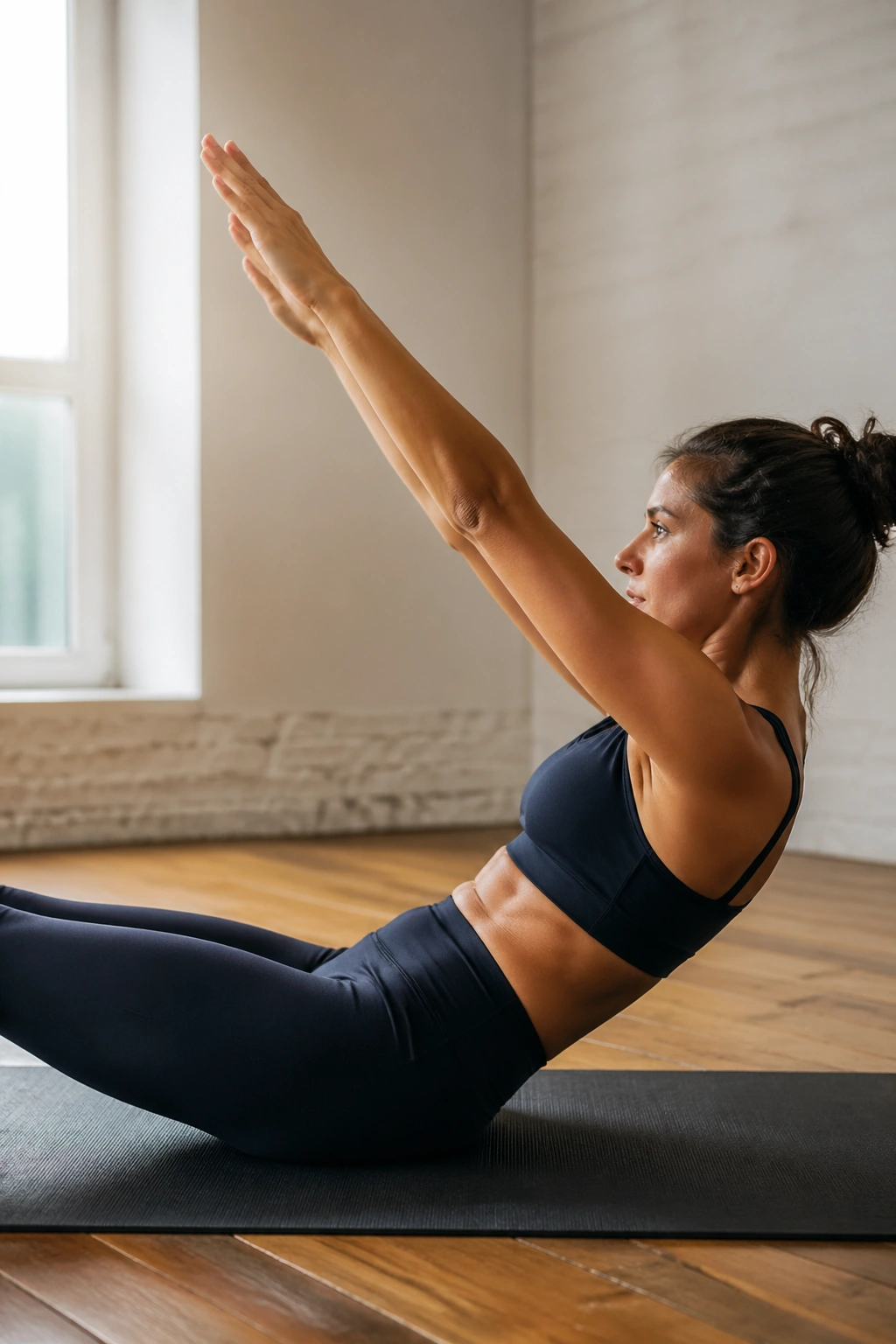
The roll-up is slow, and that is the point. It teaches your abdominals to curl the spine one segment at a time instead of yanking your body upward with momentum.
People often rush this one and end up using the hip flexors or swinging their arms like they’re trying to launch themselves off the mat. That misses the whole value. A good roll-up should feel like your ribs are folding toward your pelvis, then stacking back up with control.
Start with legs long and arms overhead. If the full range is too much, bend the knees slightly or slide your feet under a strap. You want smooth movement, not a wrestling match with gravity.
Slow is the whole point.
3. Single-Leg Stretch
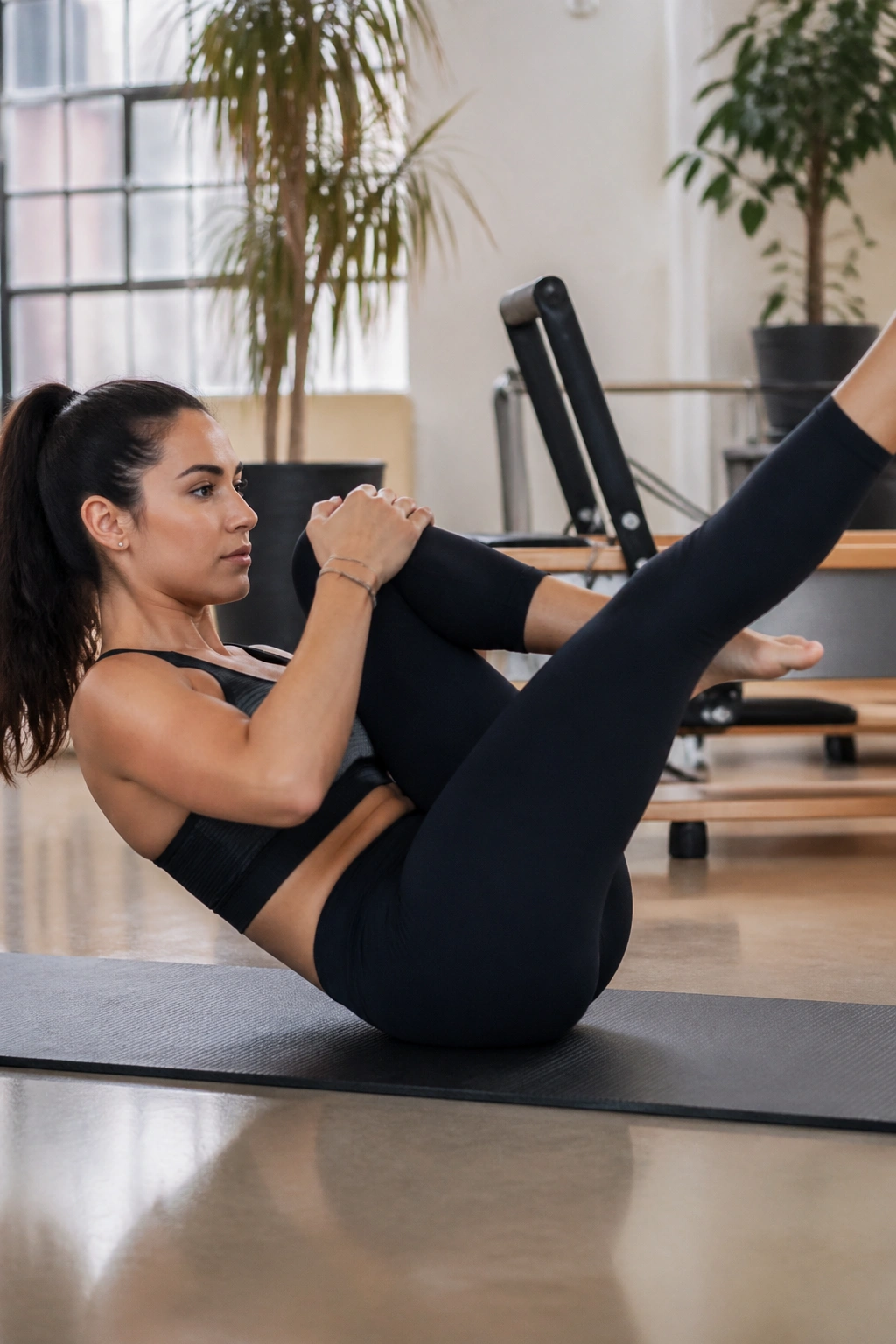
Why does this one show up in nearly every Pilates core sequence? Because it forces your lower abs to work while one leg moves and the other holds position. That’s a small thing, but it exposes weak control fast.
Keep one knee hugged in, the other leg long, and your lower back quiet. If you feel the neck doing the work, lower your head or rest it down for a few reps. The movement should stay crisp and even, not jerky.
How to make it count
- Switch legs with a steady rhythm, not speed.
- Keep the extended leg at about 45 degrees if your back arches.
- Pull the knee in from the center of the body, not by yanking with your hands.
- Do 8 to 10 switches per side.
Your stomach should feel like it is bracing, not bulging.
4. Double-Leg Stretch
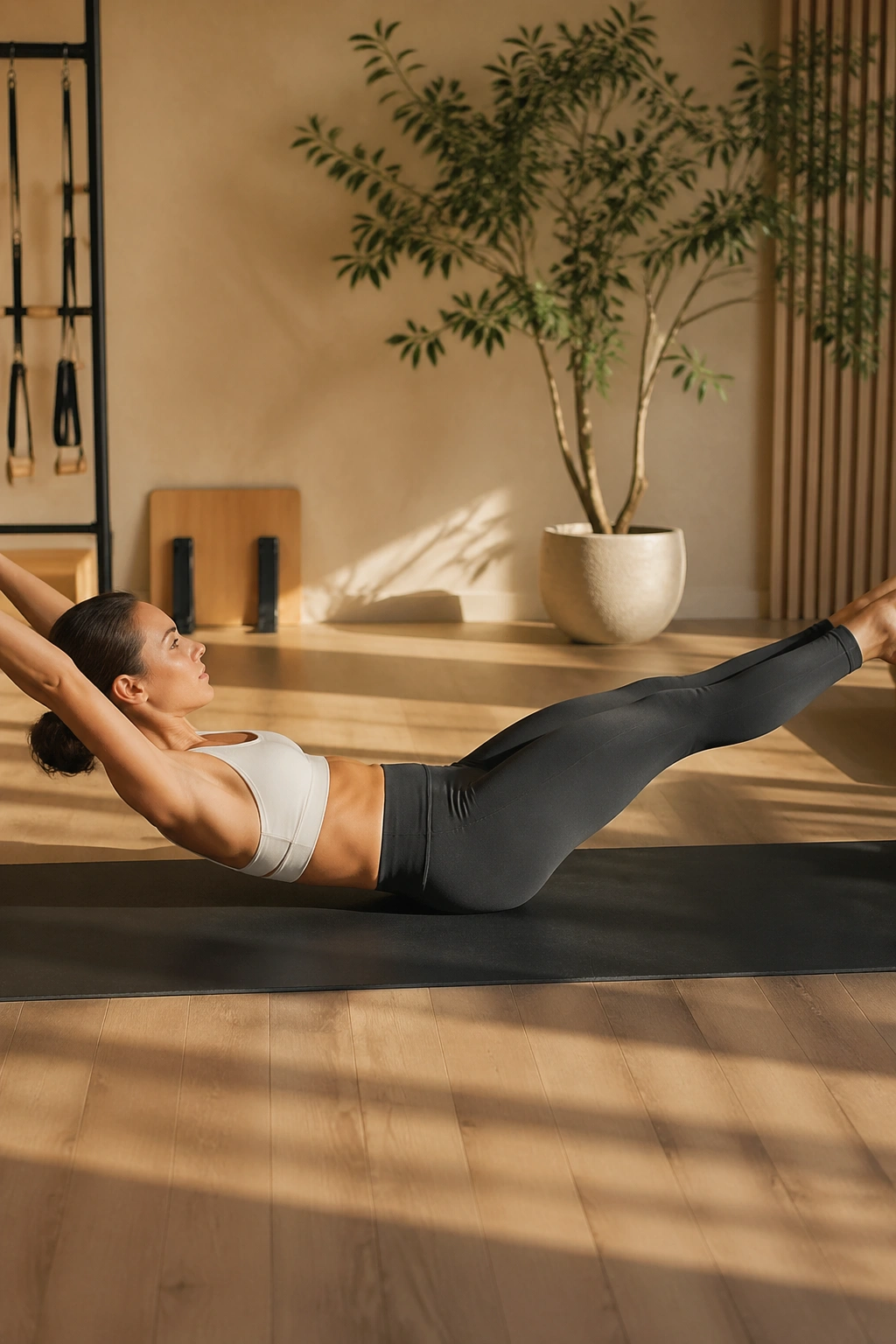
This one is trickier than it looks. Arms and legs extend at the same time, which means your core has to stay steady while your limbs reach away from each other.
If your lower back pops off the mat, shorten the range. That tiny correction saves the whole exercise. A smaller double-leg stretch done well beats a giant sloppy version every time.
Keep the ribs heavy, exhale as you extend, and bring the knees back in with control. The movement should look smooth and almost calm. Inside, it probably will not feel calm at all.
- Extend the arms overhead and the legs out only as far as the torso can stay stable.
- Keep the head down if the neck gets tired.
- Move with 6 to 8 controlled reps.
- Stop before the low back starts to arch.
5. Criss-Cross
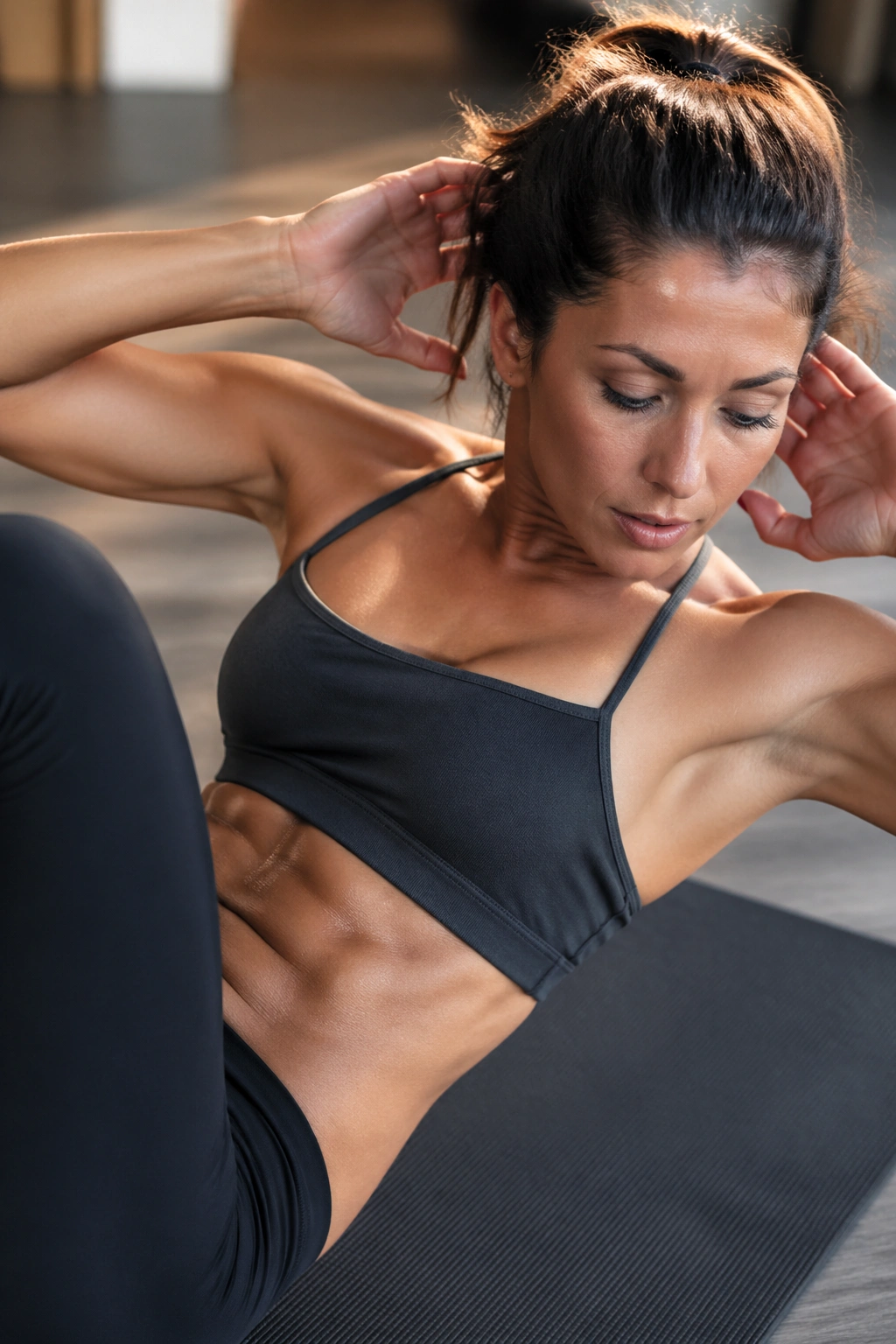
Criss-cross is where the obliques finally get a proper say. It is a rotation move, but the twist should come from the torso, not from flinging the elbows around.
The biggest mistake is turning it into a fast bicycle crunch. That turns the exercise into noise. Slow it down and aim your shoulder toward the opposite knee with a controlled twist through the ribs.
What to watch for
- Keep the elbows wide.
- Rotate the chest, not just the head.
- Let one leg extend while the opposite shoulder rotates in.
- Use 8 to 12 switches per side.
Do not pull on your neck. If your neck is working harder than your waist, the movement is too big or too fast.
6. Plank
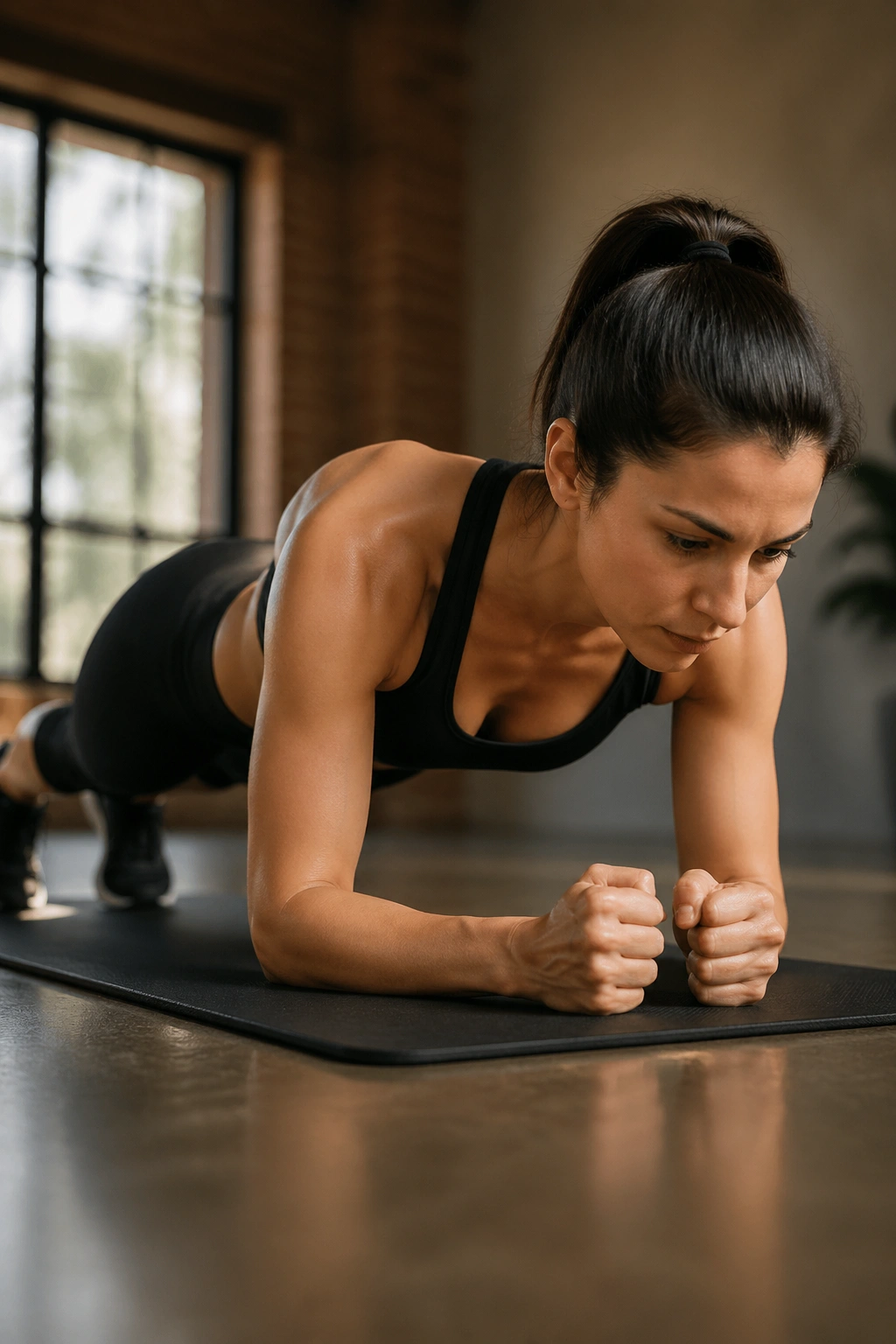
Not every Pilates move looks like Pilates. The plank is a good example.
It strengthens your entire front line: abs, obliques, shoulders, glutes, and the muscles that keep your trunk from sagging. That matters for belly fat loss because a stronger plank usually means a stronger, tighter brace during everything else you do, from walking uphill to carrying groceries.
Hold 20 to 45 seconds and keep the line long. Hips level. Neck long. Ribs tucked just enough that you are not hanging in your lower back.
No wobbling. No shrugging. And no collapsing just because the timer says you’re done.
7. Side Plank
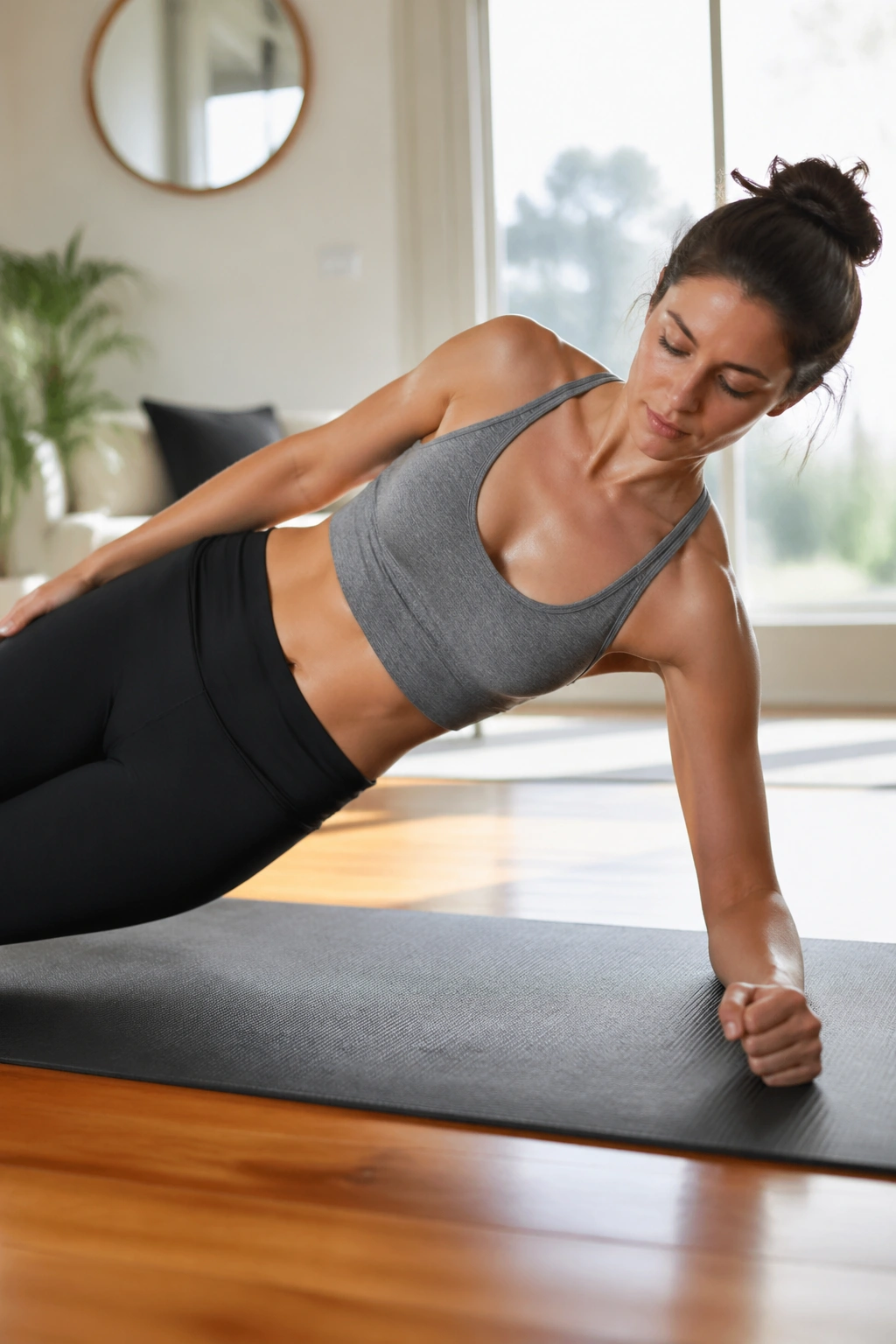
Side plank is one of the best ways to wake up the obliques without doing a hundred twisty crunches. It also teaches your body to resist bending, which is a fancy way of saying your waist gets stronger from the side instead of only from the front.
If the full version is too spicy, drop the bottom knee to the mat. That is not cheating. It is smart scaling. The line from shoulder to hip should still feel straight, and the top hip should not drift backward.
Easy version first
- Stack the feet or set the bottom knee down.
- Press through the supporting forearm or hand.
- Hold for 15 to 30 seconds per side.
- Keep the hips lifted high enough that the waist does not sag.
A side plank should feel steady, not shaky in your shoulders alone.
8. Teaser
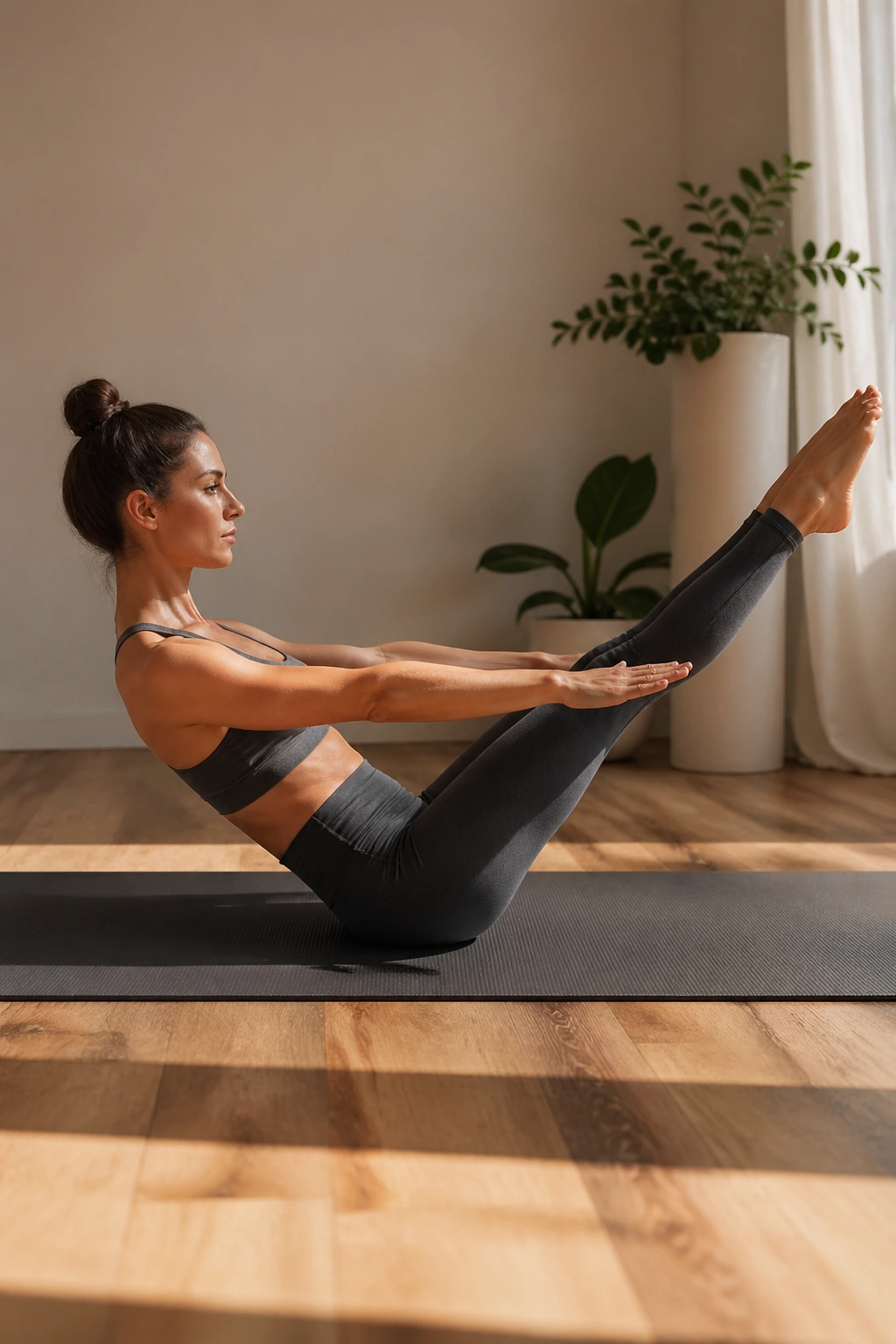
The teaser has a reputation for being dramatic, and honestly, it deserves it. It asks your abs to lift your torso and legs together with almost no help from momentum.
Start with the bent-knee version if the full shape feels impossible. The goal is not to prove anything. The goal is to keep the spine long while the body folds into a balanced V shape. That takes real control.
If you rush teaser, it turns ugly fast. If you slow down, it becomes one of the cleanest core builders in Pilates. Three to six solid reps are enough.
9. Leg Lowering
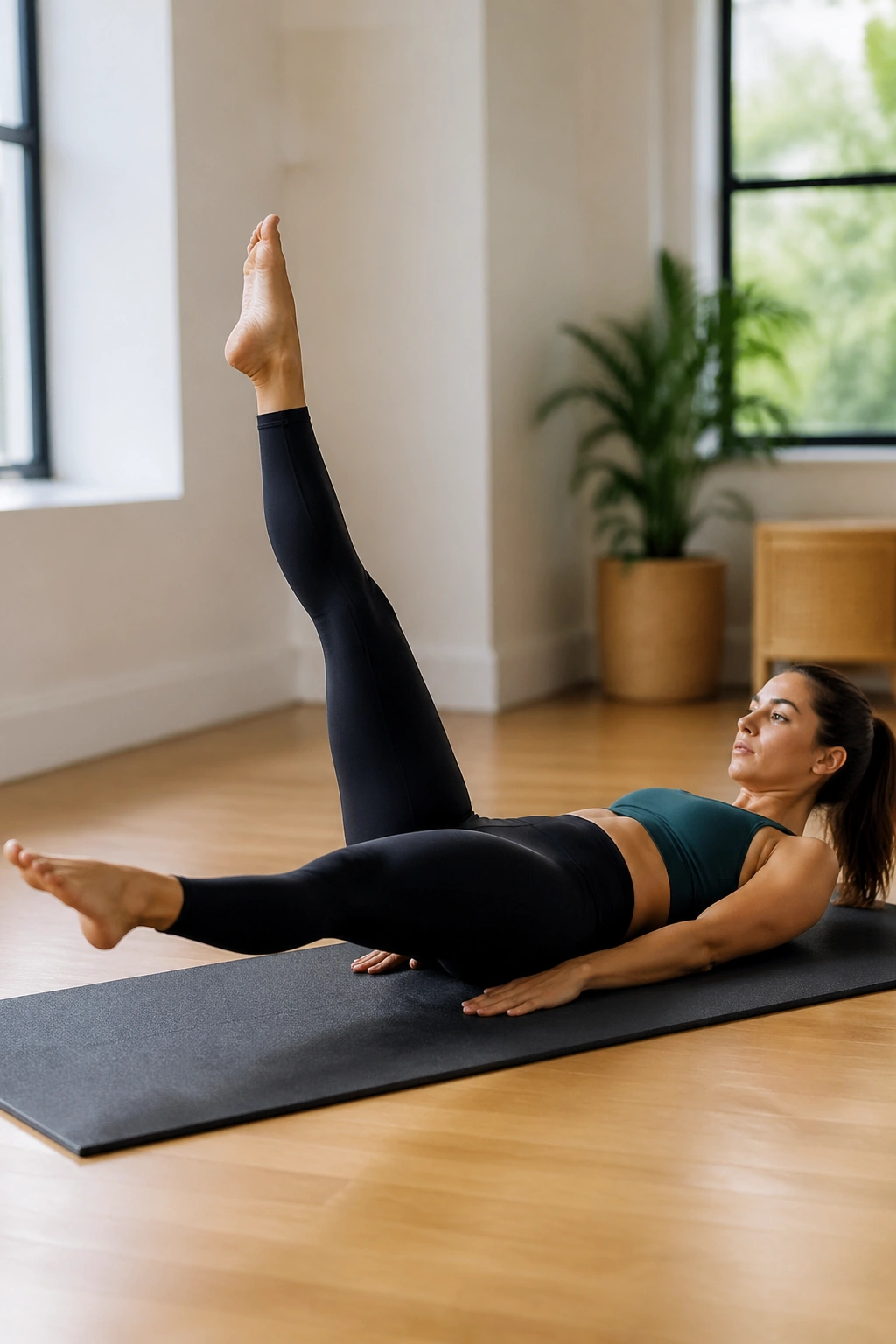
Leg lowering looks simple. That is the trap.
One leg lowers while the other stays still, and your pelvis has to resist the urge to tilt or arch. That makes the lower abdominals work in a way that feels honest. It is also one of the first moves people cheat on without realizing it.
Keep the movement small. Lower only as far as you can while the low back stays quiet and the belly wall stays engaged. If your hips start to rock, the leg is going too low.
Do 6 to 10 reps per side and move like you are trying not to spill a glass of water off your pelvis.
10. Scissors
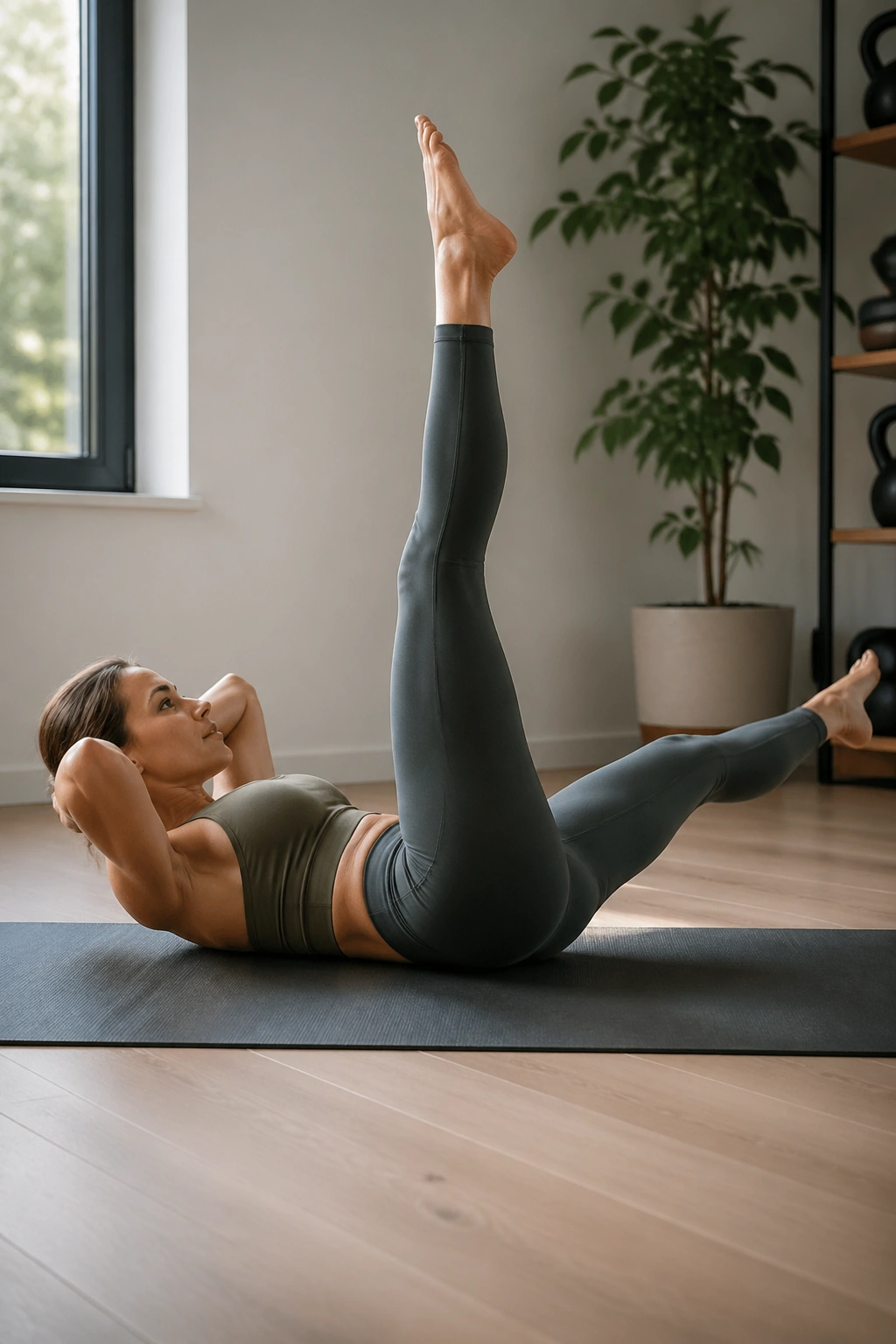
Scissors asks for length, not speed. One leg reaches toward the ceiling while the other lowers in a controlled switch, and the whole exercise depends on keeping your core steady enough that the pelvis does not start wandering.
A lot of people turn this into a hamstring stretch and forget the trunk. Don’t. The stretch is part of it, but the real work sits in the deep abs and the muscles that keep the pelvis from tipping.
Keep the elbows soft if you support your head, or rest the head down if your neck starts complaining. Switch legs slowly for 8 to 10 reps. The slower version feels cleaner and usually works better.
11. Bicycle
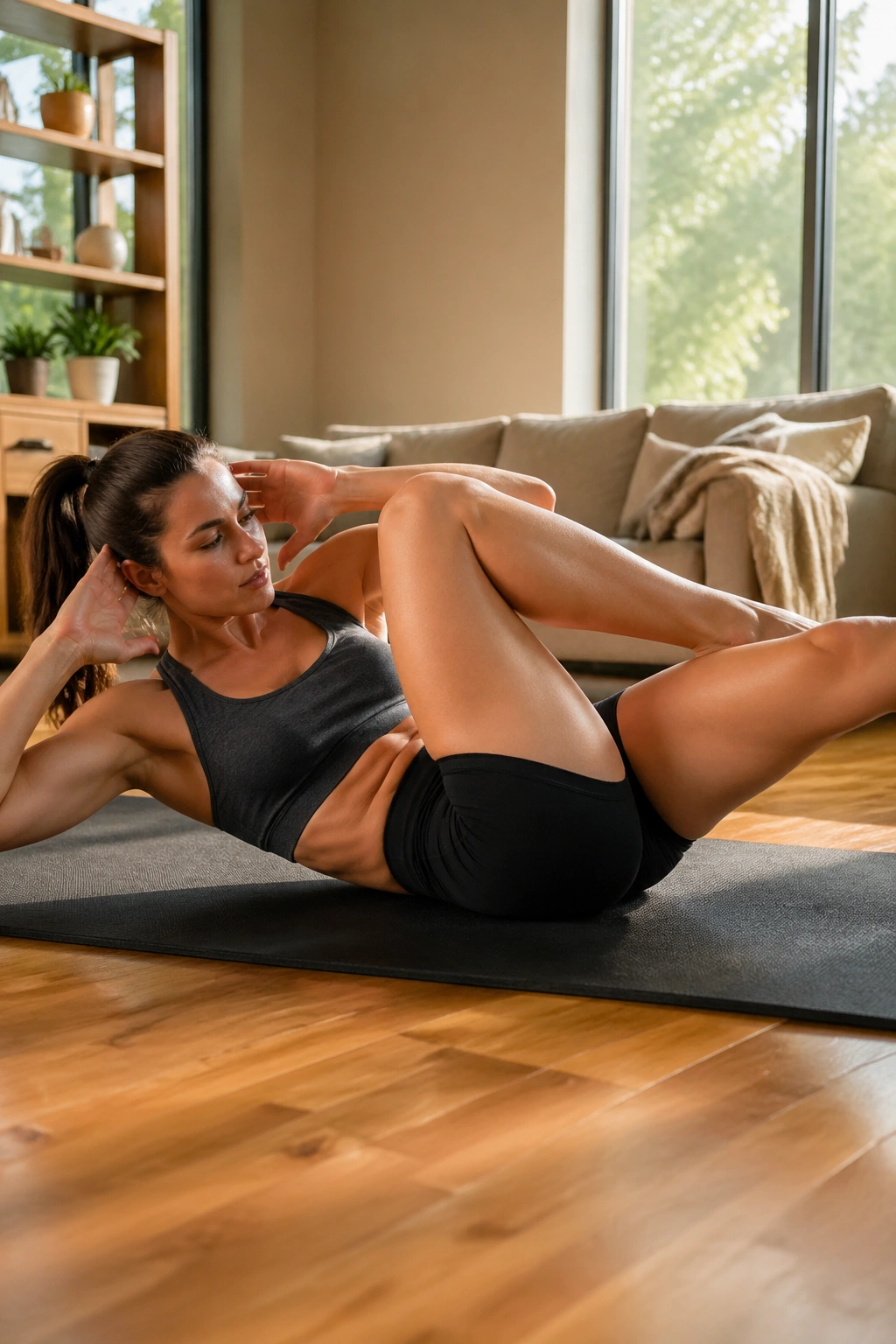
Bicycle is the move people tend to rush the most. Big mistake.
It should feel like a slow twist through the waist and ribs, not a frantic elbow chase. One knee comes in, the opposite leg reaches long, and the torso rotates with control. If the movement gets noisy, the core has probably checked out.
The best version feels a little like threading your body through a narrow frame. Your shoulders stay down, your elbows stay wide, and your hips stay as quiet as possible. That silence is the sign you’re doing it right.
Try 6 to 8 controlled switches per side. More speed usually means less work.
12. Roll Like a Ball
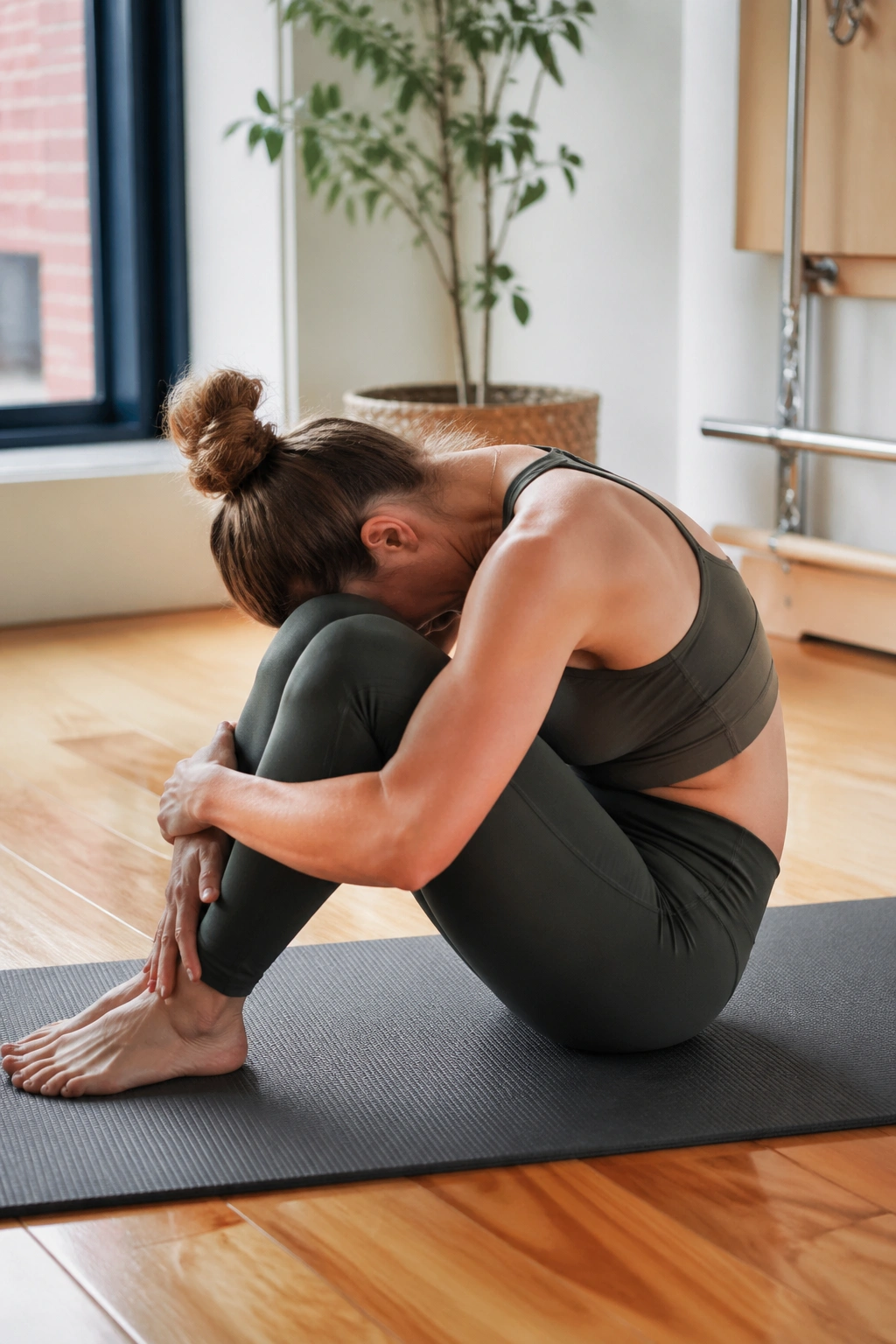
Roll like a ball is one of the few Pilates exercises that feels playful, and that is part of its charm. It massages the spine, challenges balance, and trains your abs to keep you compact while you move.
The catch is that it only works if you stay rounded and in control. If you throw yourself back and slam into the mat, the exercise turns into a mess. Tuck into a tight C-curve, rock back onto the shoulder blades, then return to balance without planting the feet.
Tiny details that matter
- Keep the chin slightly tucked.
- Hold the shins, not the knees.
- Rock from the belly, not from the shoulders.
- Stop if the neck or lower back feels cranky.
Six to eight smooth rolls are enough.
13. Swimming
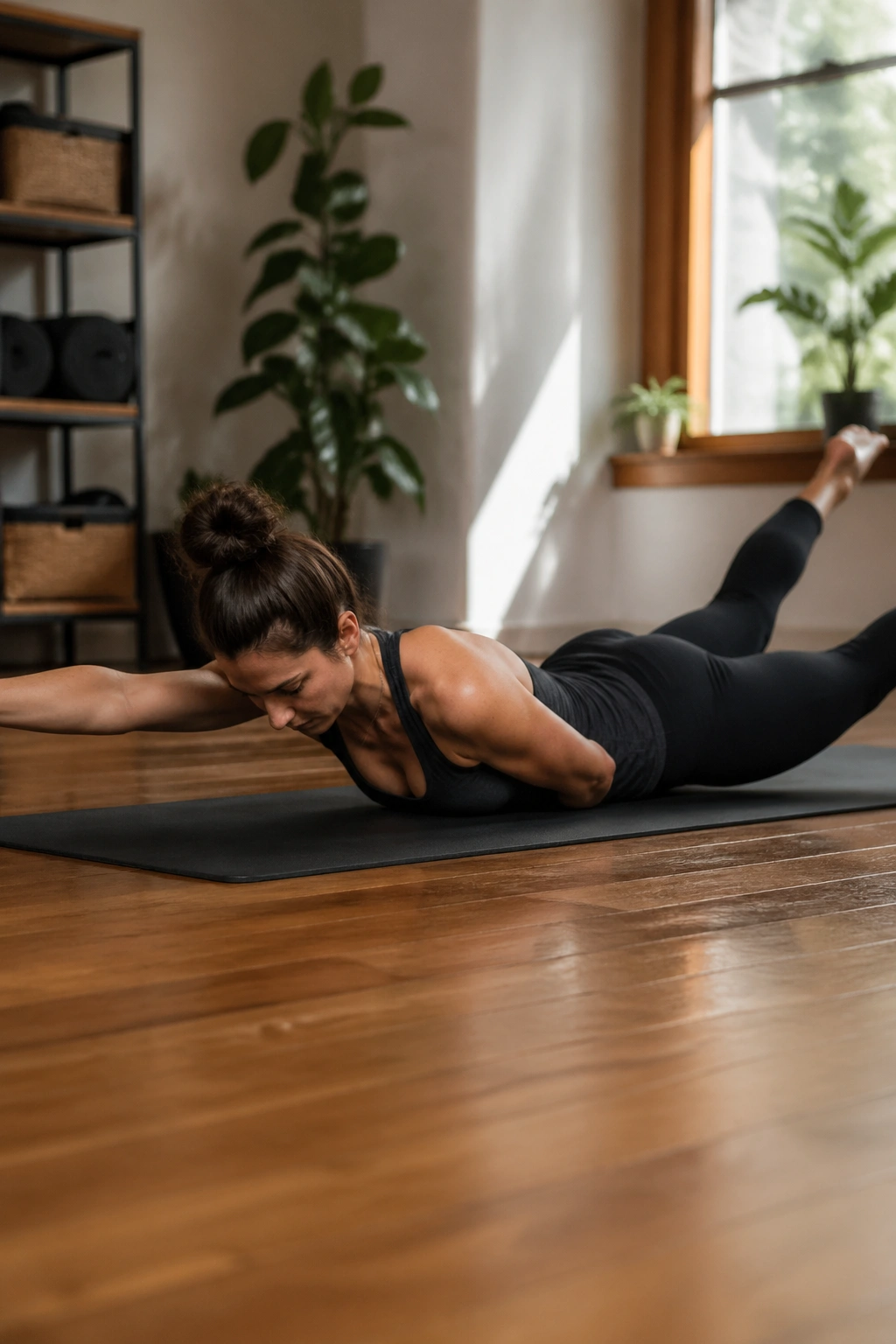
This one is sneaky. Swimming looks like a back-body exercise, and it is, but that back-body work matters a lot for a tighter midsection because posture is part of the picture.
Lie face down, lengthen opposite arm and leg, and lift them a few inches off the floor. The movement should feel long, not high. If you crank the limbs upward, the lower back takes over and the exercise gets sloppy.
How to keep it honest
- Keep the gaze down so the neck stays long.
- Kick and reach from the center of the body.
- Move for 20 to 30 seconds in a steady rhythm.
- Stop before the low back pinches.
A stronger backside helps the front of your body stop overworking. That matters more than most people think.
14. Side Kick Series
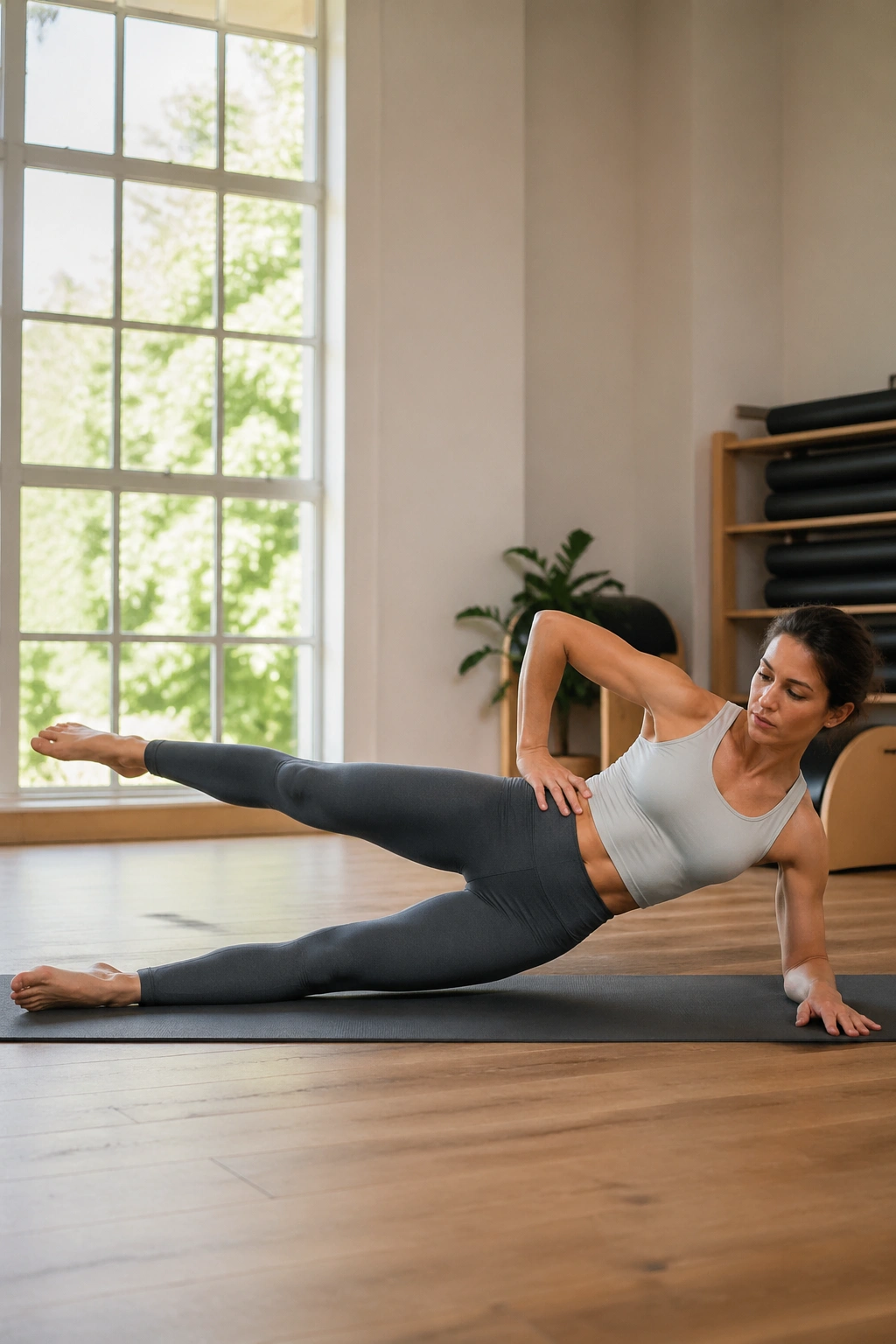
The side kick series is a whole set of small movements, and that’s why it works so well. It asks the waist to stay stable while the leg swings, lifts, and circles. The hips want to help. You do not want them to.
Lie on your side, stack the shoulders and hips, and keep the torso quiet while the top leg moves. Front-back kicks, small circles, and lift-lower patterns all belong here. Use a small range and a controlled tempo. This is not a dance kick.
Best cues
- Keep the bottom waist lifted off the mat.
- Point or flex the foot depending on the variation.
- Move the leg from the hip socket, not the lower back.
- Do 8 to 10 reps in each direction.
The waist should feel steady, not sleepy.
15. Double Leg Kick
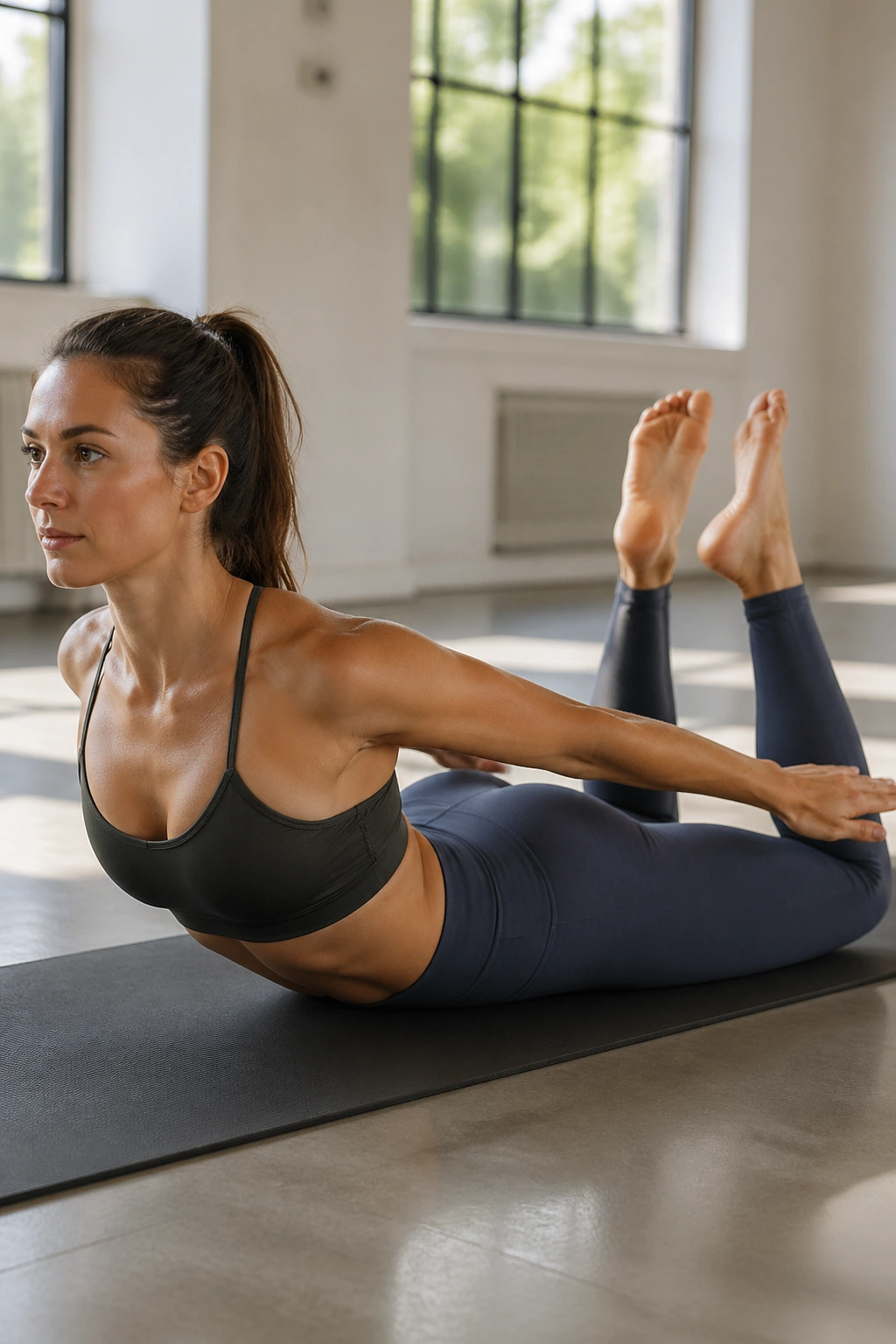
Double leg kick balances out all the abdominal flexion by waking up the back body. That matters. A body that only crunches gets cranky in a hurry.
Lie face down, turn the head to one side, kick both heels toward the seat twice, then lift the chest as the arms sweep back. The chest opening should feel broad, not forced. If your lower back pinches, make the lift smaller and think more about length than height.
This is a good move when your midsection has been working hard and your posture needs a reset. It supports a strong trunk from the back side, which is easy to ignore and hard to fake.
16. Spine Stretch Forward
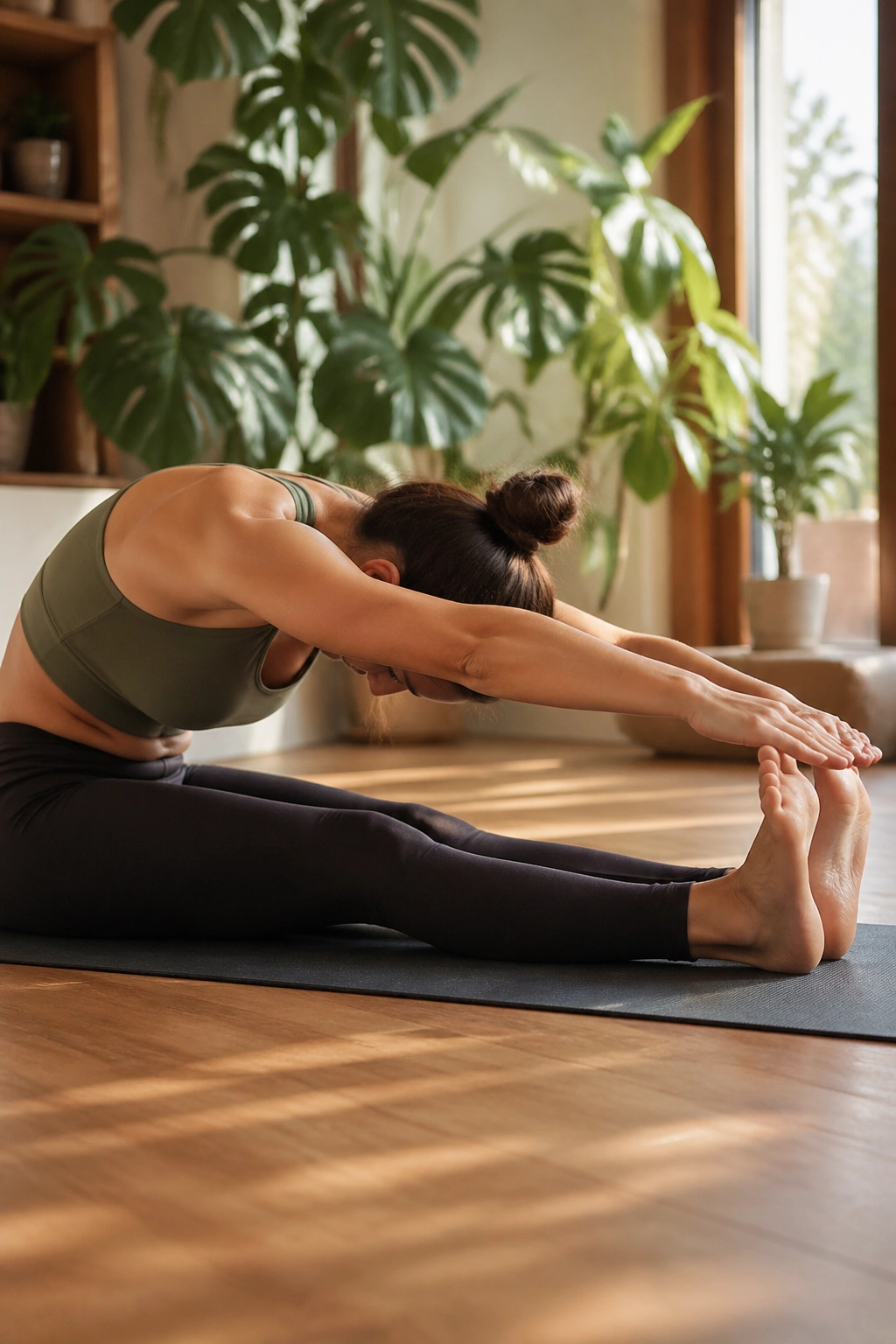
A flat-looking stomach is not only about abdominal strength. It is also about how your rib cage sits over your pelvis.
Spine stretch forward teaches you to lengthen the torso without collapsing into the belly. Sit tall, flex the feet, reach the arms forward, and exhale as the spine rounds away from the hips. The movement should feel like you are scooping space between each vertebra.
If you collapse your chest or fold from the neck, stop and reset. The reach comes from the spine, not from dropping the head. Five to eight controlled rounds are plenty.
Boring? Maybe. Useful? Absolutely.
17. Saw
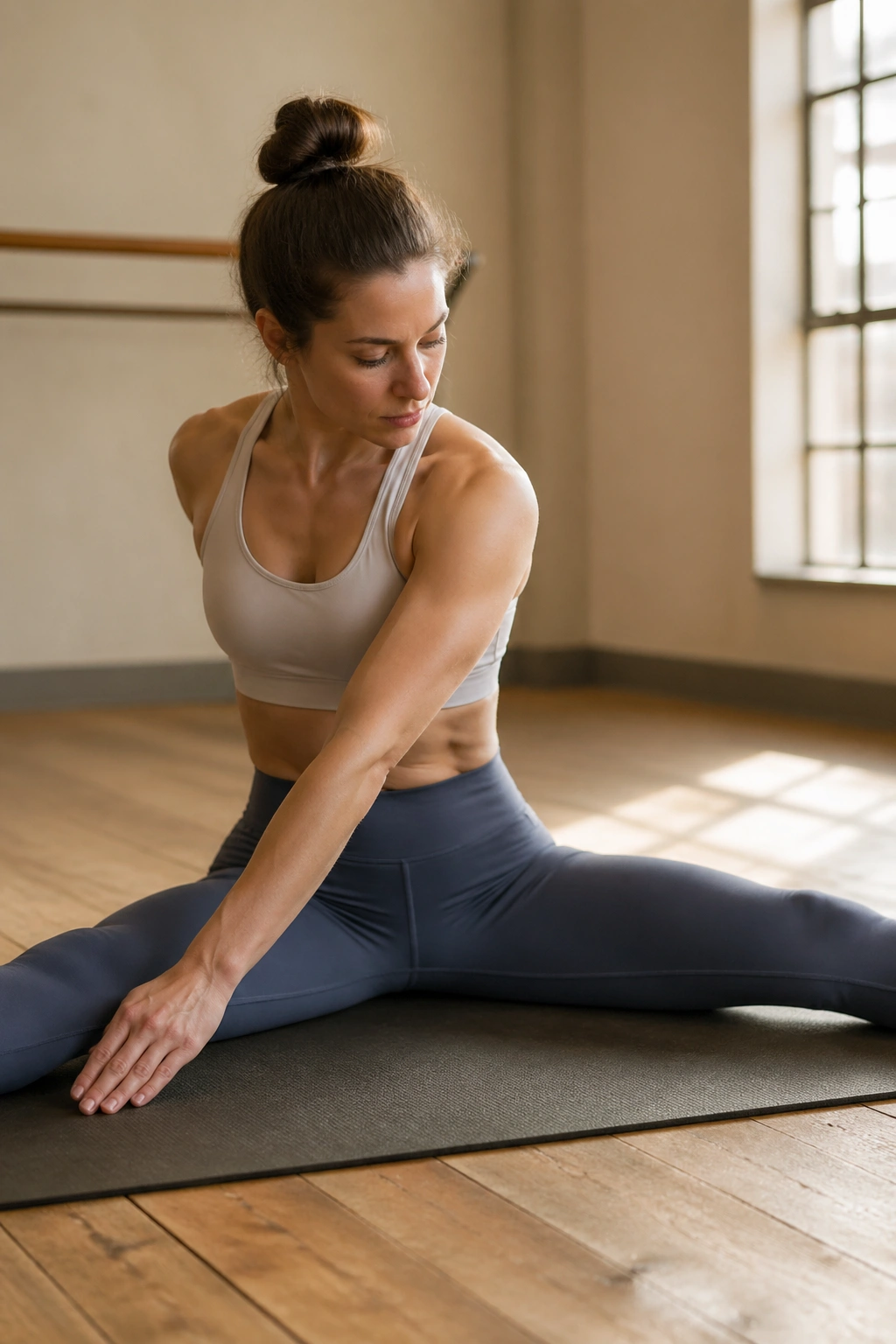
Saw mixes rotation with a forward reach, which makes it a nice side body and waist exercise. It also wakes up the hamstrings and encourages a cleaner seated posture, which matters more than people expect when they want a trimmer-looking middle.
Sit tall with the legs open, rotate the torso, and “saw” toward the little toe with the opposite hand. The reach should spiral from the waist, not jam into the shoulders. Keep the sit bones heavy and the spine long before you fold.
How to avoid cheating
- Rotate first, then reach.
- Keep both hips grounded.
- Use a small twist if your back is tight.
- Breathe out as you fold forward.
When done well, saw feels long and open, not forced.
18. Mermaid
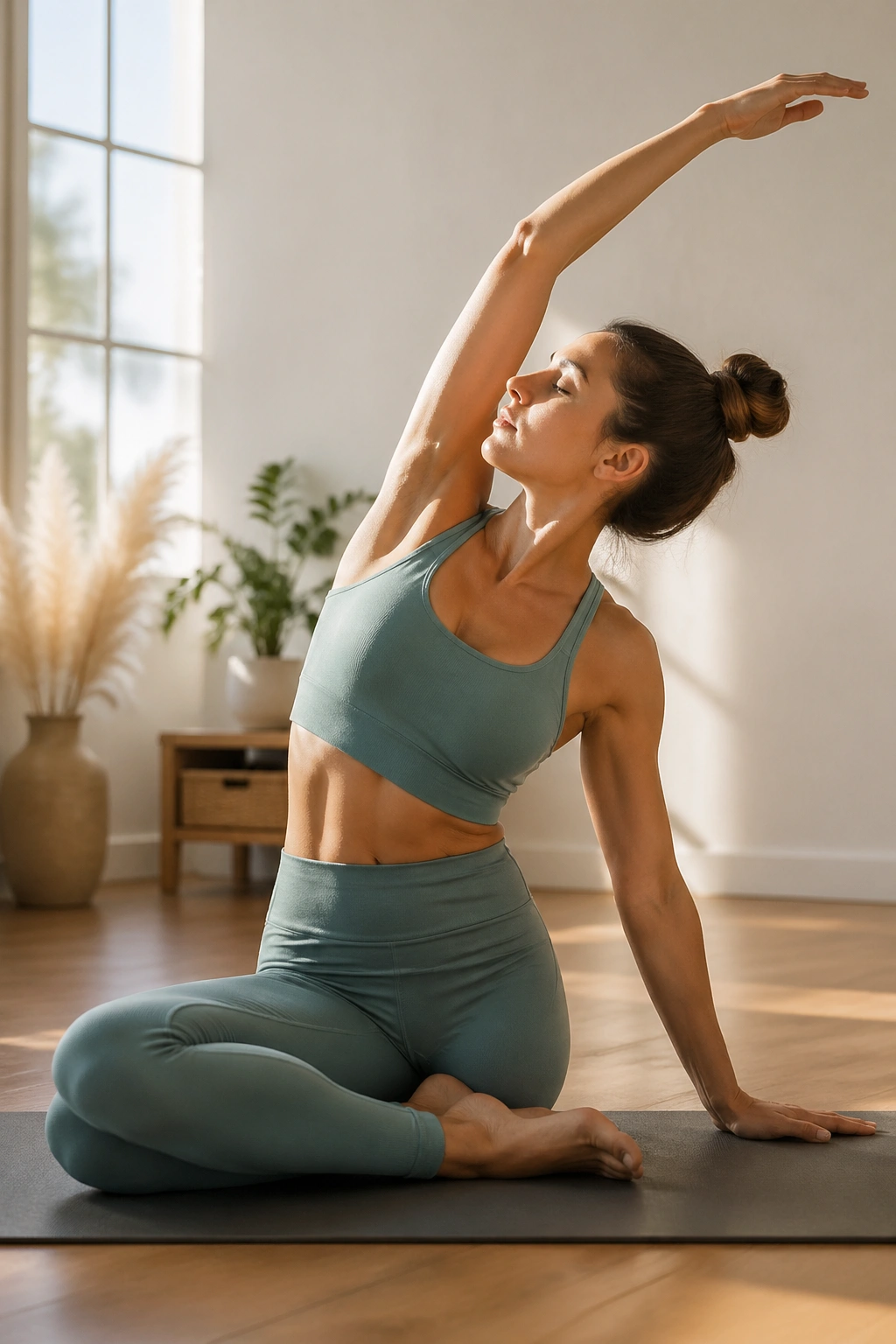
Mermaid is one of the gentler exercises on this list, and that matters. Recovery is part of progress. If every move is a fight, your body starts tightening instead of learning.
Sit to one side, stretch the opposite arm overhead, and side bend with a long breath through the ribs. The stretch across the waist should feel open and smooth, not sharp. This move is especially nice after planks, twists, and leg work because it lets the side body breathe again.
Take three to five breaths per side. Let the movement feel spacious. Not every good core exercise has to burn.
19. Kneeling Side Kick
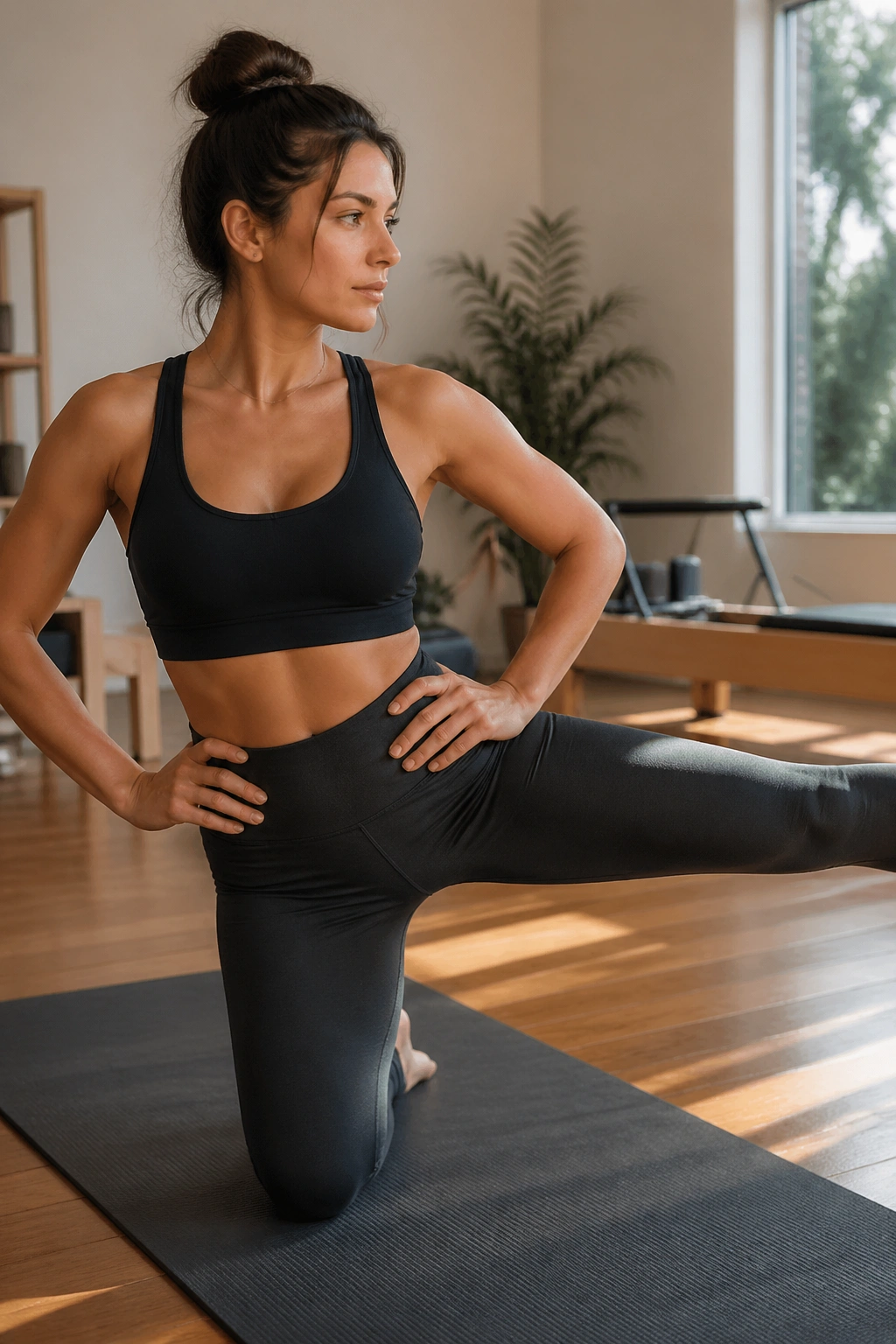
On your knees, the side kick gets more honest. You have less help from the floor, so the standing leg, glutes, and obliques have to stabilize the whole body while the working leg moves.
This version is excellent if you want a little more balance challenge without going straight into advanced floor work. Keep the hips square, the torso tall, and the kick controlled. If your upper body starts swaying, shorten the range.
A mini-band can make it harder, but it is not required. Eight to 12 kicks per side is enough to make your waist and outer hip pay attention.
20. Leg Pull Front
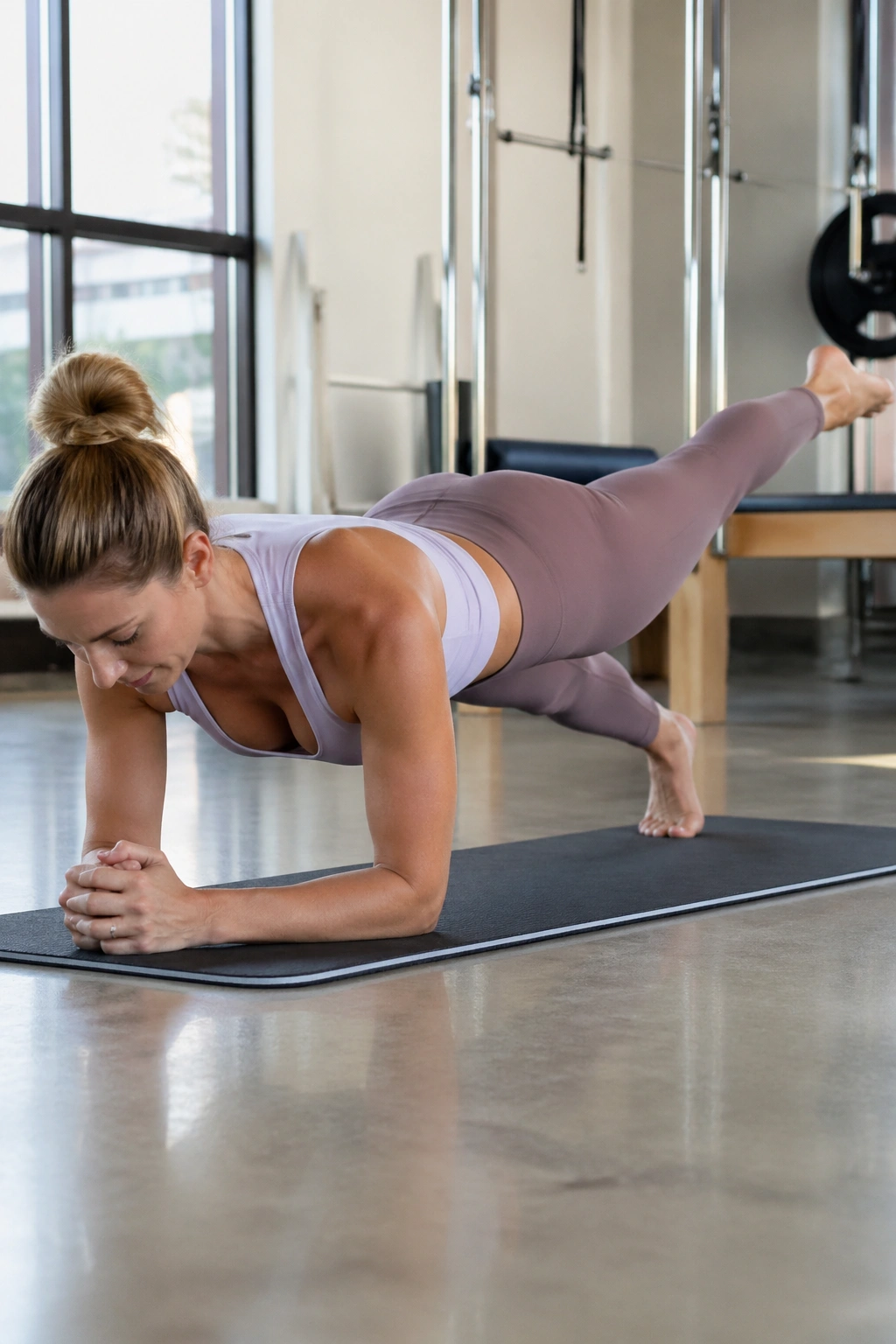
Leg pull front is plank’s meaner cousin. You hold a strong front support, then lift one leg without shifting the pelvis around like a loose shopping cart wheel.
That little leg lift demands more trunk control than it looks like it should. The shoulders stay broad, the abs stay braced, and the lifted leg reaches long rather than high. If your hips twist, the leg is doing too much.
Use it as a short hold or a few slow leg lifts on each side. It is especially useful if you want core work that also challenges the shoulders and glutes. No fancy equipment needed.
21. Leg Pull Back
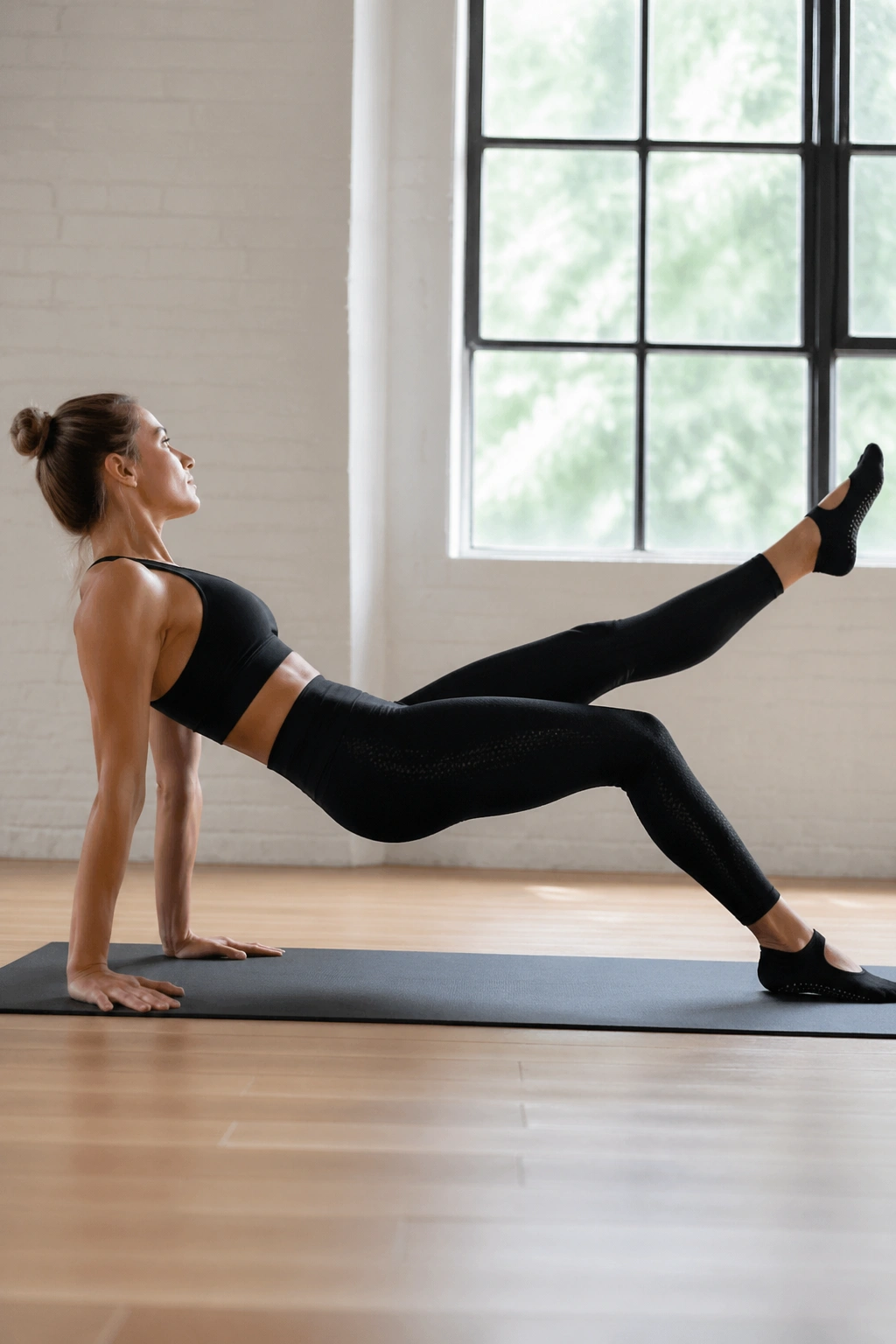
Turn the body over and you get the reverse problem: keep the chest open, the glutes awake, and the ribs from flaring. Leg pull back is a strong counterbalance to all the forward-facing core work.
Lift the hips into a reverse plank shape, then raise one leg if the base is stable. It is not a show-off move. It is a test of whether your backside can support the trunk without dumping into the lower back.
If the wrists complain, hold the basic reverse plank first. If the shoulders shrug, lower the hips a bit. The goal is a clean line, not a dramatic arch.
22. Corkscrew
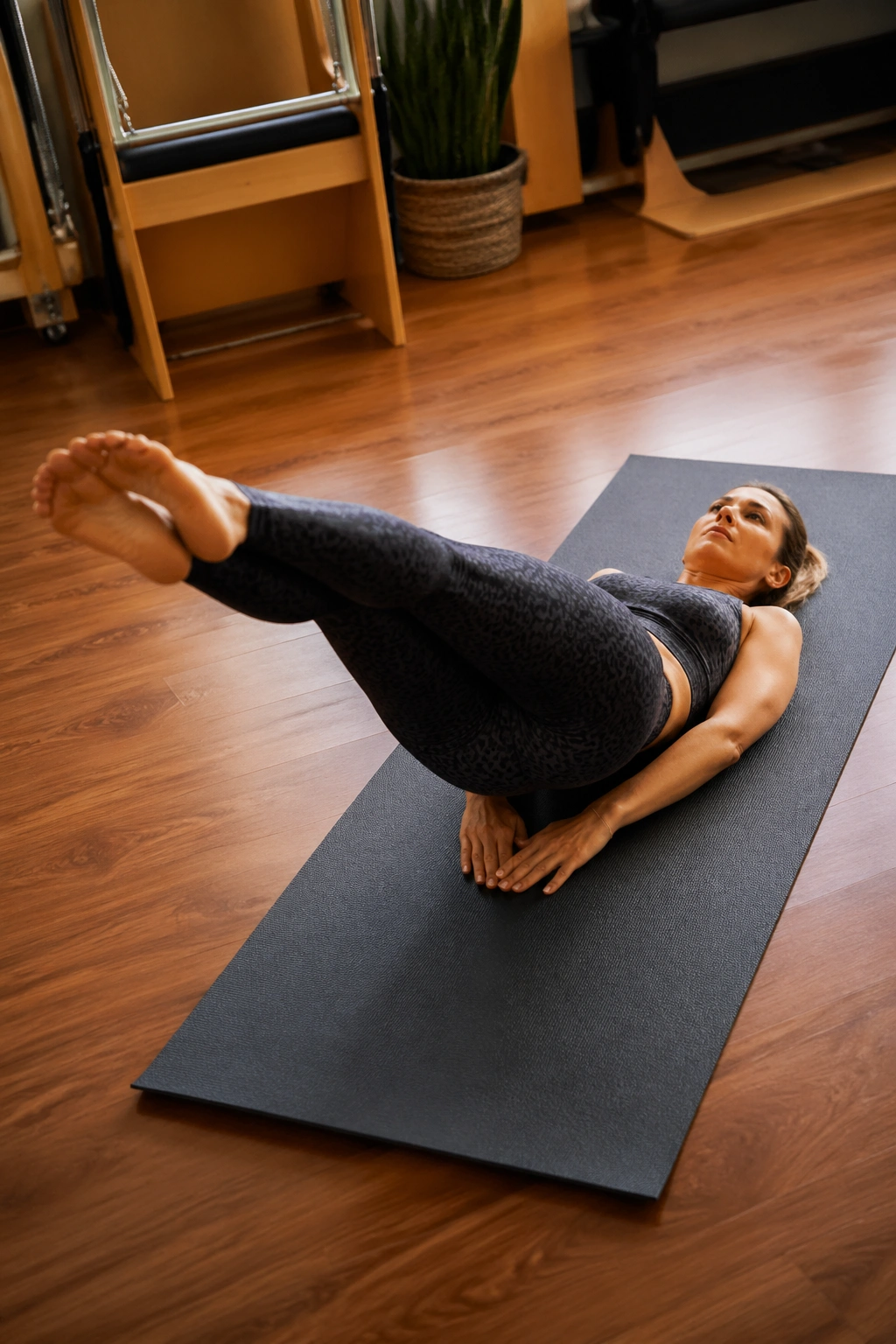
Corkscrew sounds fancy, and to be fair, it is. The exercise asks your pelvis to circle while your core keeps the motion measured and under control.
Start on your back with the legs lifted, then draw small circles with the hips. The range should stay tiny at first. If the circles get huge, the low back usually takes the hit. Tiny circles are harder than they look, and that is why they work.
What to keep in mind
- Anchor the shoulders.
- Keep the abs drawing inward.
- Move the legs as one unit.
- Stop if the lower back starts to pinch.
Do not chase a big shape. Chase control.
23. Hip Dip Plank
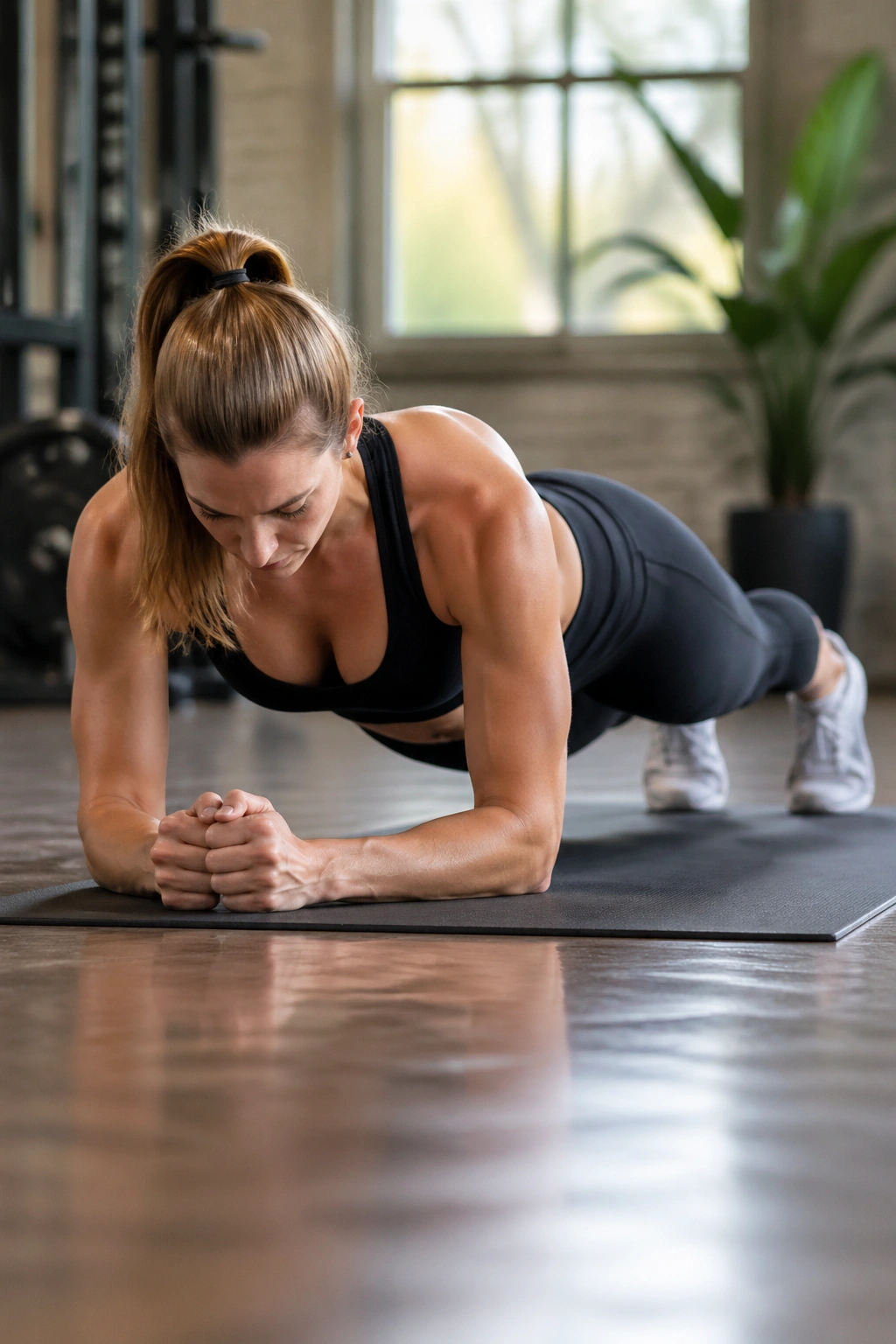
Hip dip plank adds a side-to-side load to a basic plank, which is why the obliques light up so fast. The move is simple: hold the plank and tip the hips a few inches from side to side.
The key is to keep the swing small. If the hips crash down or twist wildly, the core stops working and the shoulders start taking over. A controlled dip should feel like your waist is doing the steering.
Forearms often work better than straight arms here, especially if wrist extension bothers you. Six to 12 dips per side is a solid dose. More is not always better when the form gets messy.
24. Standing Oblique Knee Lift
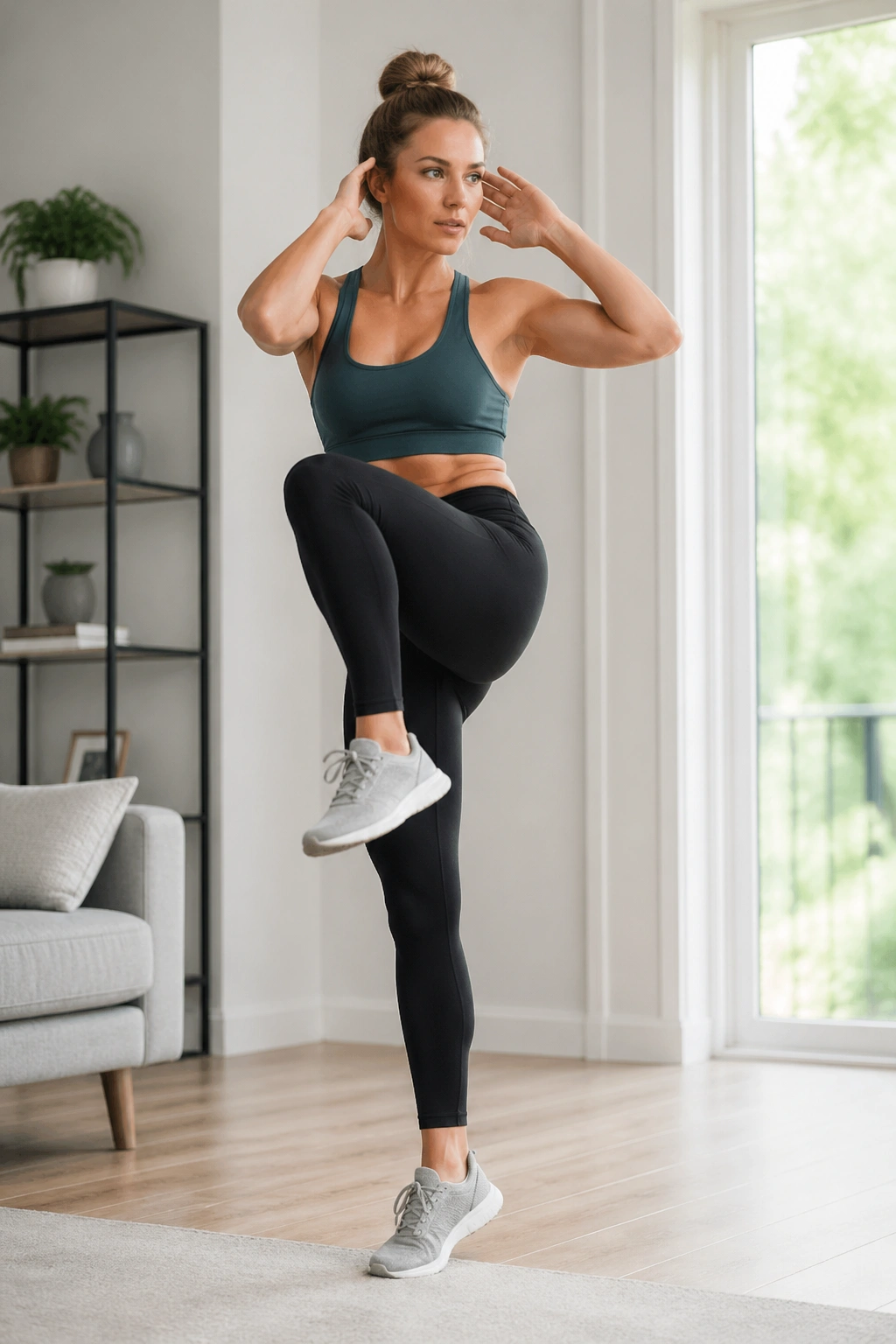
When your wrists are tired or your neck wants a break, standing core work is a relief. It also feels closer to real life, since you are upright and moving through space instead of lying on a mat.
Bring one knee up as the opposite elbow or hand reaches across, then stand tall again with control. Keep the torso from leaning back. The exhale should help the ribs settle and the waist tighten as the knee rises.
Good form cues
- Stay tall through the crown of the head.
- Lift the knee from the lower abs, not from a swing.
- Keep the standing foot planted.
- Do 8 to 12 reps per side.
This is a nice bridge between mat Pilates and everyday movement.
25. Standing Roll-Down
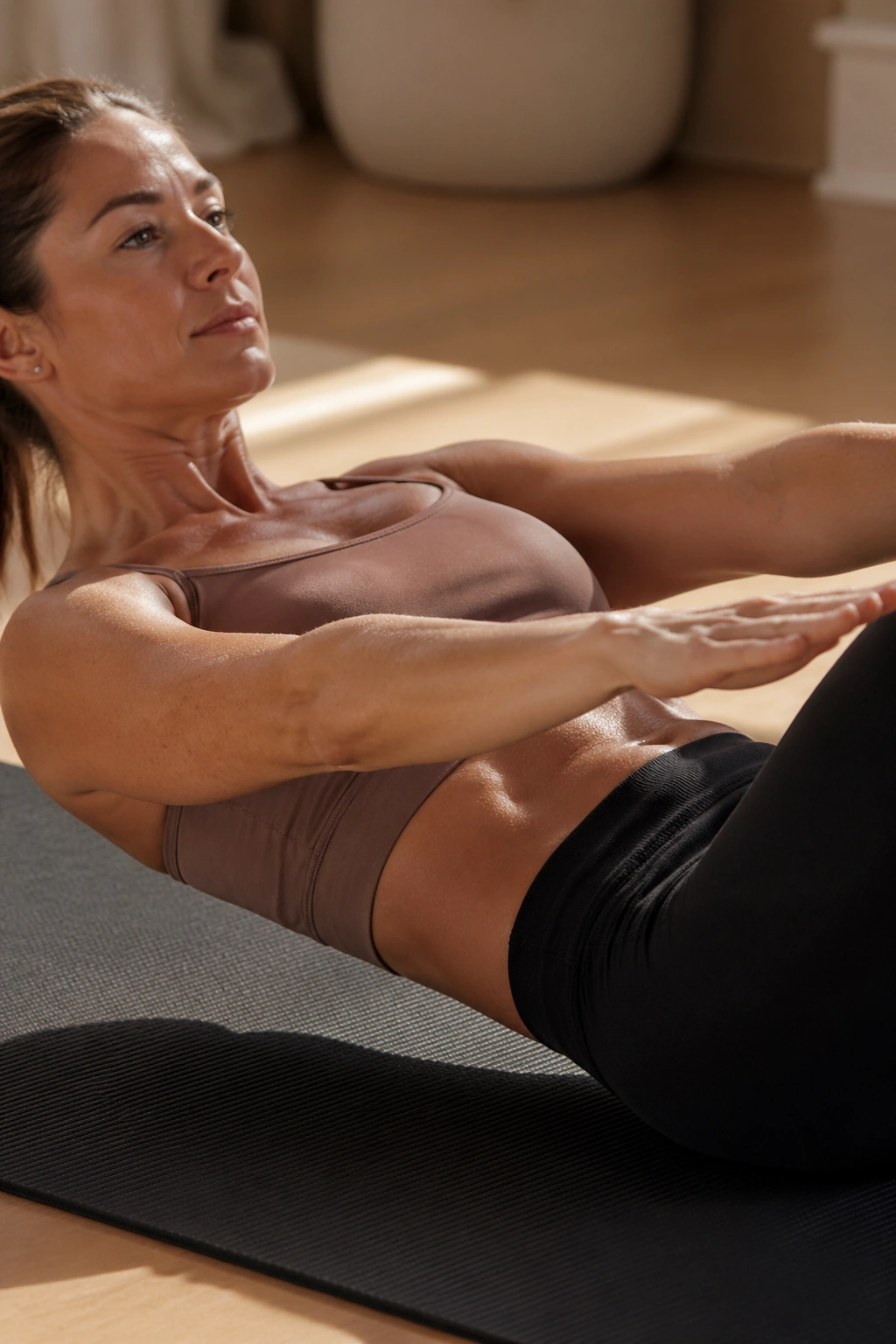
Standing roll-down is a quiet finish, and I like it for that reason. It reminds your body how to stack the spine, soften the shoulders, and move without clenching your stomach into a knot.
Stand tall, nod the chin, and roll down one vertebra at a time until the arms hang heavy. Then reverse the motion with the same patience. If the hamstrings are tight, bend the knees a little. If the head rushes, slow the descent.
Use this as a cool-down after the stronger core work above, or slip it in between exercises when your neck and shoulders need a reset. A simple sequence of the Hundred, single-leg stretch, side plank, swimming, and standing roll-down makes a tidy short workout, and it works best when you keep the pace controlled and the breathing steady.
Pilates for belly fat loss is most useful when you treat it as a system, not a trick. Pick 5 to 8 of these moves, move with intent, and give the body enough repetition to learn what clean core work feels like. That’s where the real change starts.
