



The ache in your muscles after a long day at a desk isn’t just fatigue; it is a signal that your body is craving movement. You might have found yourself caught between the stillness of a yoga mat and the rhythmic intensity of a ballet barre. Most people think they have to choose one or the other—either you pursue flexibility and breath, or you chase the burn and muscular endurance. That is a false choice. When you combine the anatomical precision of barre with the lengthening flow of yoga, you get something far more potent. This approach builds lean muscle while keeping your joints lubricated and your range of motion fluid. You do not need to be a professional dancer or a master yogi to see the benefits. You simply need a bit of floor space, a sturdy chair or countertop for balance, and the willingness to let your legs shake for a few minutes.
Real strength isn’t about lifting the heaviest weight in the gym. It is about how well you can move through space under control, how deep you can sink into a lunge without your knee wobbling, and how steadily you can hold a pose while your heart rate climbs. The following workouts bridge the gap between static holding and dynamic pulsing. They are designed to exhaust the slow-twitch muscle fibers that give you posture and stability, while simultaneously stretching out the connective tissues that keep you feeling stiff. If you have five minutes or fifty, you can pick one of these routines and find that balance. Prepare to work, prepare to sweat, and, more importantly, prepare to feel exactly how capable your body is when you give it the right cues.
1. Sun Salutation Plié Flow
Most people breeze through a Sun Salutation without actually engaging the muscles in their legs. This workout changes that by inserting a deep, second-position plié into the transition from downward dog to the front of the mat. Instead of simply stepping forward, you land in a wide-legged stance with toes turned out at a 45-degree angle.
How to Execute the Flow
Begin in Mountain Pose at the top of your mat. Inhale, reach your arms up, and exhale to fold forward. Step back into a plank, lower through your flow, and push back into Downward Dog. From here, take a long step forward with your right foot and immediately plant your left heel down, rotating your hips open to the side. Sink into a wide plié, keeping your knees tracking directly over your middle toes.
Key Points for Success
- Keep your torso upright; do not lean forward.
- Imagine your tailbone dropping straight down, not sticking out behind you.
- Pulse for five counts at the bottom of the movement before returning to your flow.
Pro tip: If your knees cave inward, focus on squeezing your glutes to rotate your thighs outward. This is the difference between a sloppy squat and a true barre-inspired movement that hits your inner thighs.
2. Warrior II Pulse Series
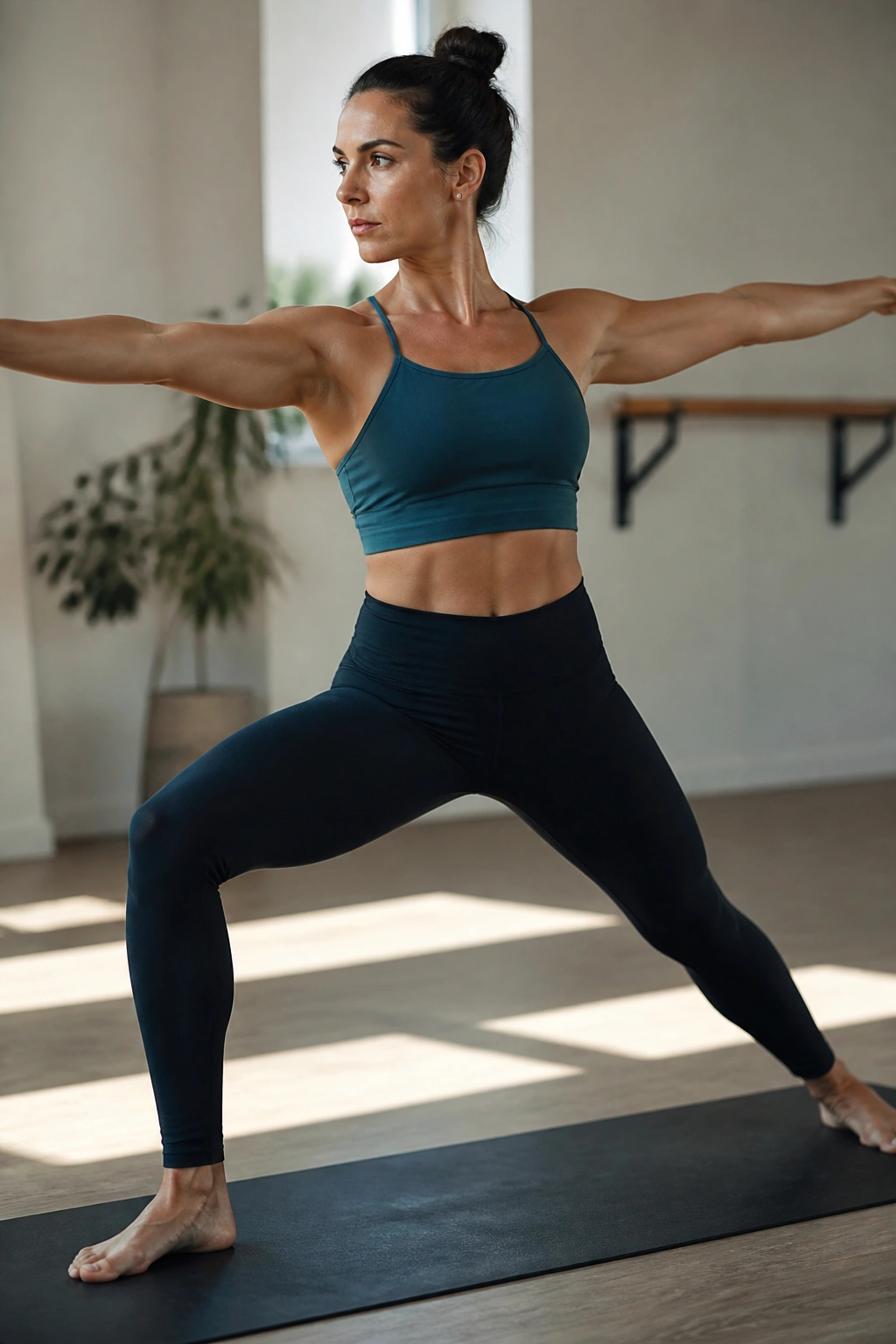
Warrior II is a staple of any yoga practice, but it often becomes a static, passive pose where you just wait for the timer to run out. In this workout, you stop waiting. You use the pose as a foundation for isometric loading, which is a fancy way of saying you keep the muscle under tension without moving the joint through its full range.
Start in your standard Warrior II stance. Ensure your front knee is bent to a 90-degree angle, with your knee stacked over your ankle. Extend your arms wide, palms facing the floor. Now, lower your hips just one inch deeper than your natural stopping point. Hold there for a breath. Pulse down an inch, then up an inch.
Repeat this pulsing motion twenty times. Your front quadricep will begin to burn. This is exactly what you want. Do not let your torso drift toward the front leg; keep your shoulders stacked directly over your hips. If your arms get tired, that is a bonus. It means you are engaging your entire kinetic chain. When you finish the pulses, do not stand up immediately. Hold the deep, static lunge for another thirty seconds to lock in the fatigue.
3. Chair Pose Leg Burn
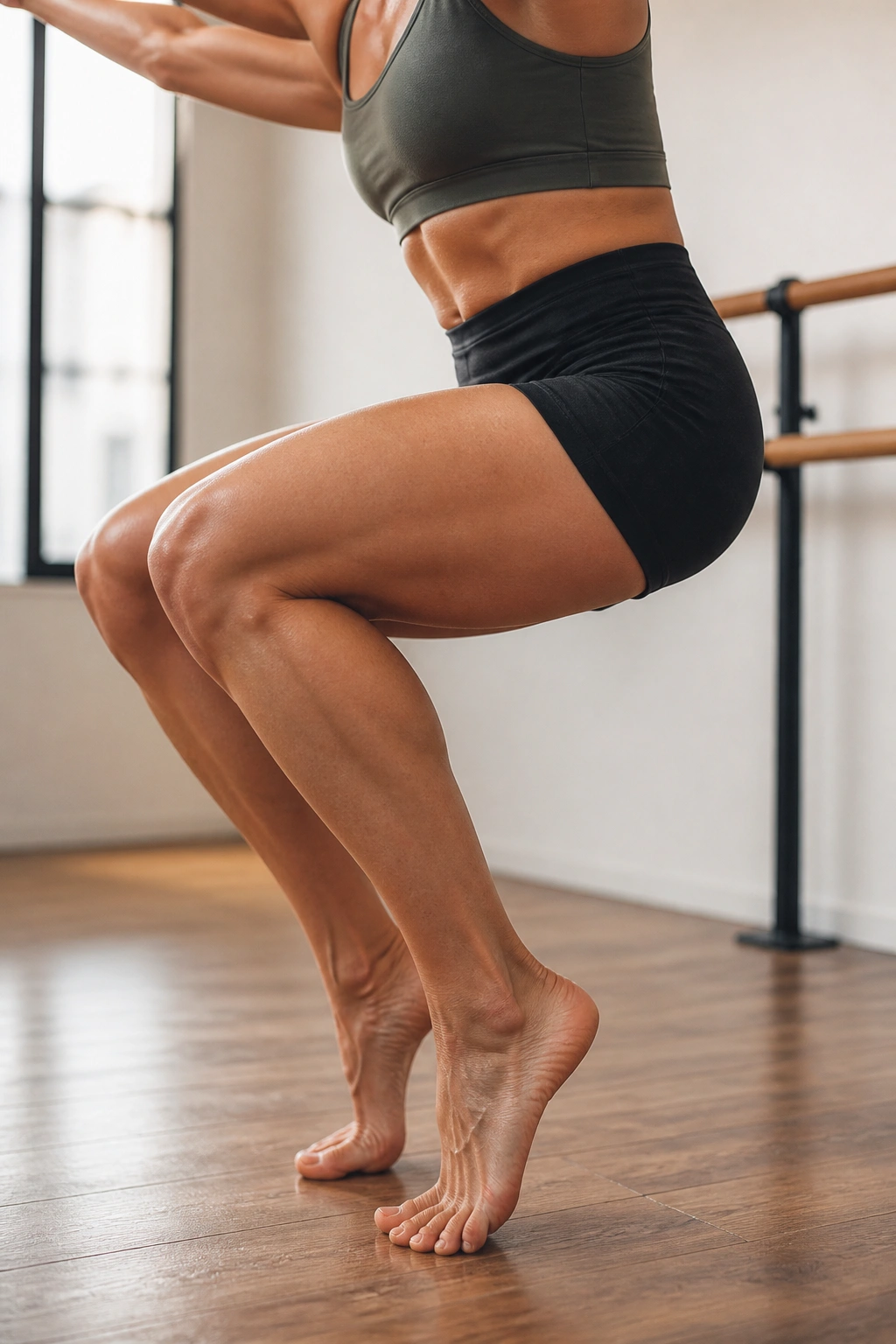
Chair pose, or Utkatasana, is often misunderstood as a “sit and wait” position. To make this a barre-strength builder, you need to introduce micro-movements. Most people distribute their weight poorly, putting too much stress on the lower back and not enough on the glutes.
The Mechanism
- Stand with feet hip-width apart and sink your hips low as if sitting in a chair.
- Shift your weight into your heels until you can wiggle your toes.
- Keep your chest lifted high.
- Lift both heels off the ground to balance on the balls of your feet.
Building the Burn
Once you are on your tiptoes with hips low, begin a tiny, rhythmic pulse. You aren’t bouncing; you are engaging the quads and calves to move your hips through a tiny range of motion. Do this for one full minute. If you need balance, keep your fingertips grazing a wall or the back of a chair. The goal is to keep the spine long and the core pulled tight to protect your lower back.
4. Reverse Warrior Side-Body Extension
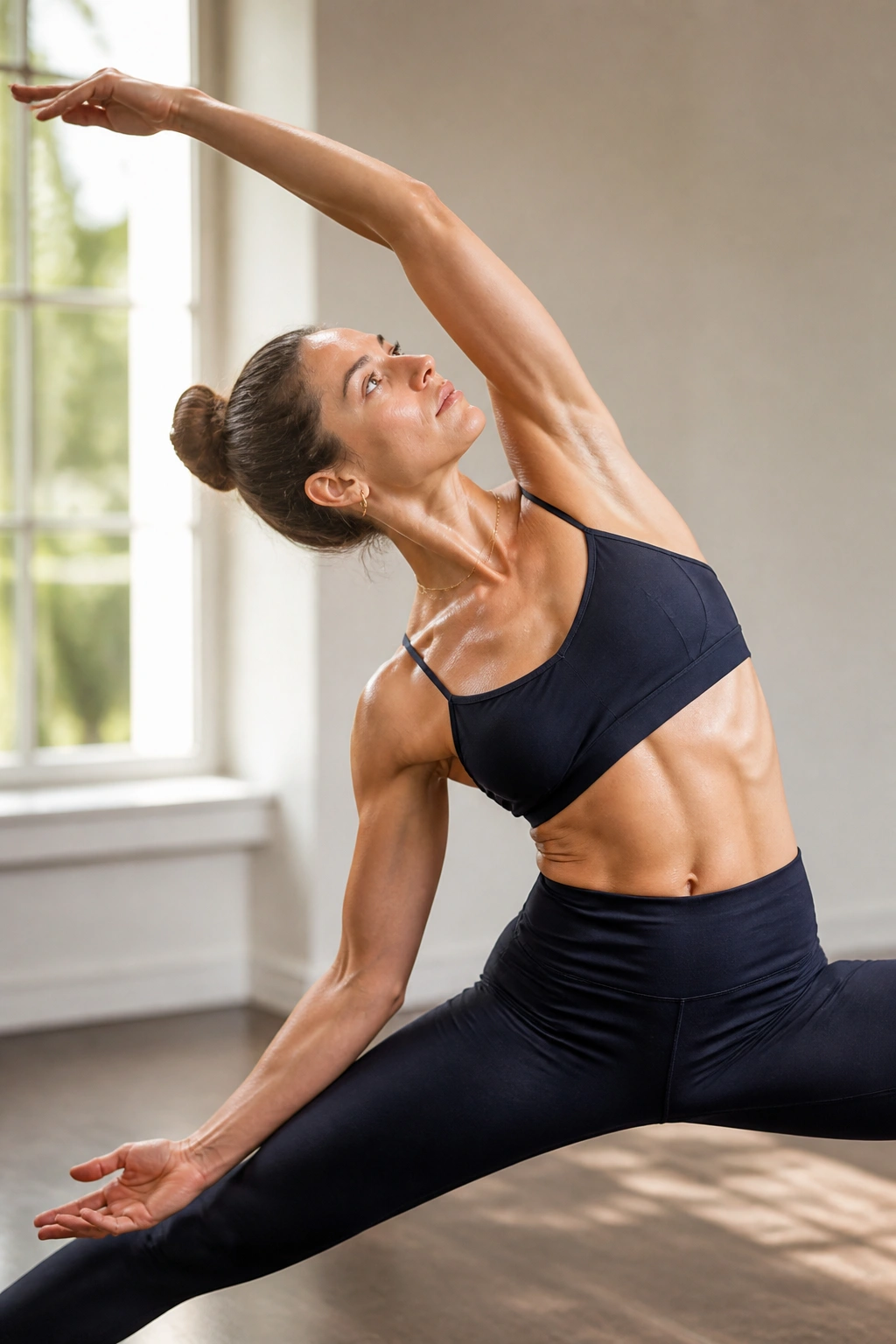
Reverse Warrior is traditionally a side stretch, but when we add a barre-inspired reach, it becomes a core-stabilizing strength move. Most people focus entirely on the stretch, neglecting the oblique strength required to hold the torso up against gravity.
To begin, come into your Warrior II stance. Reach your front arm up and back, arching into a side bend. Here is the trick: do not dump your weight into your back hand resting on your leg. Instead, keep your legs in the deep lunge and hover your back hand in the air. You are now forcing your obliques to maintain the side-bend position.
Hold this for five slow breaths. Then, reach your top hand further back as if you are trying to touch the wall behind you. You should feel a deep, burning contraction in the side of your torso that is closest to the ceiling. This is where the flow meets the strength. It is not just about lengthening the muscles; it is about strengthening them in an elongated state.
5. Tabletop Glute Kickback Sequence
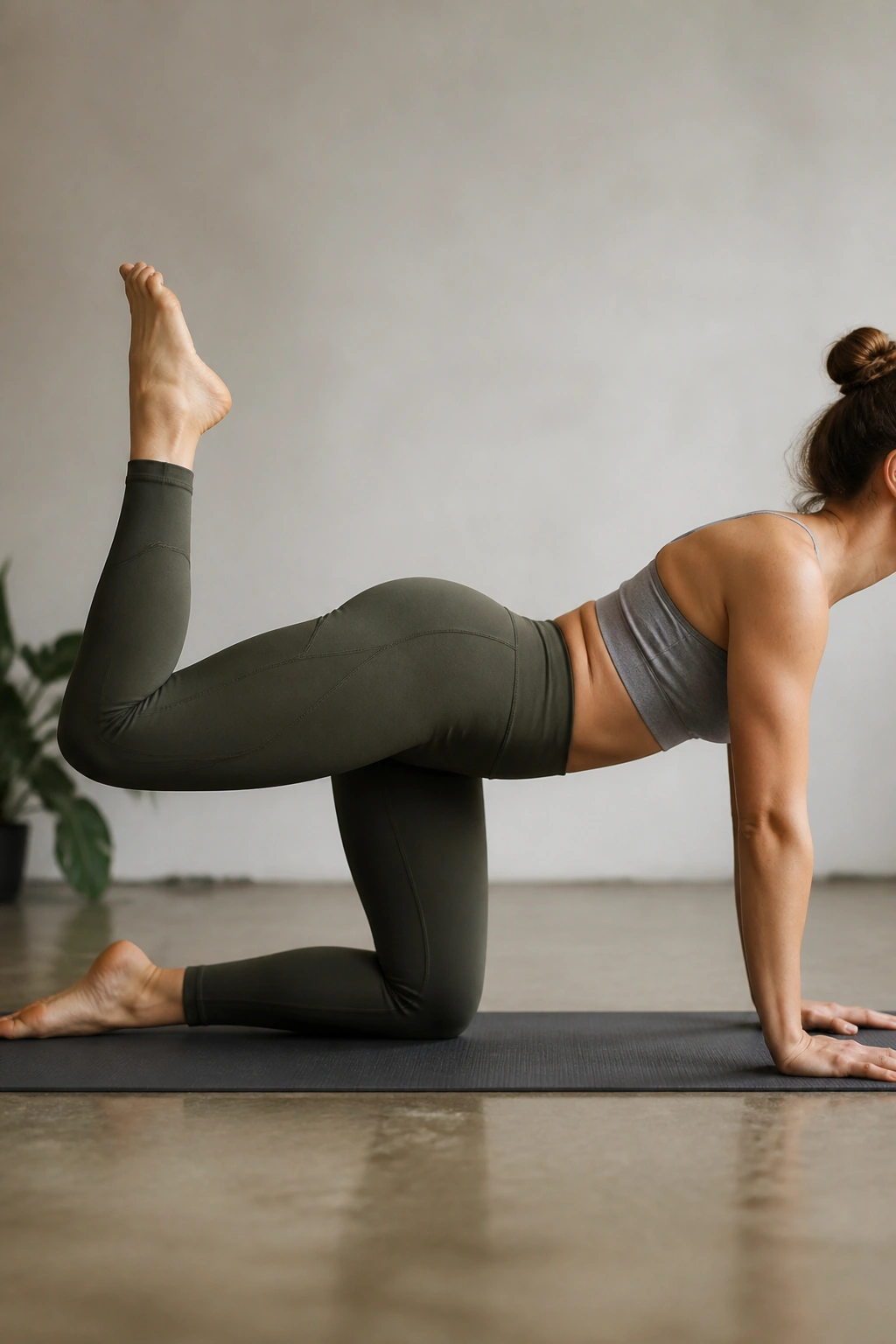
Yoga tabletop is a stable base, but barre adds the high-rep intensity. This specific sequence targets the gluteus medius, the muscle responsible for hip stability and that rounded shape everyone strives for.
The Setup
Come to your hands and knees. Keep your back perfectly flat—imagine a glass of water resting on your sacrum that you cannot spill. Bring your right leg up to hip height, knee bent at a 90-degree angle.
The Movement
- Pulse the right knee toward the ceiling, keeping the foot flexed.
- Perform 30 pulses, focusing on the squeeze at the top.
- Extend the leg straight back, toe pointed, and draw small circles in the air.
- Do 15 circles clockwise, then 15 counter-clockwise.
- Return to center and switch legs.
Note: The tendency is to arch the back as the leg goes higher. Resist this. Keep your navel pulled toward your spine to isolate the movement strictly to the glute and hip socket.
6. Wide-Legged Forward Fold Pulse
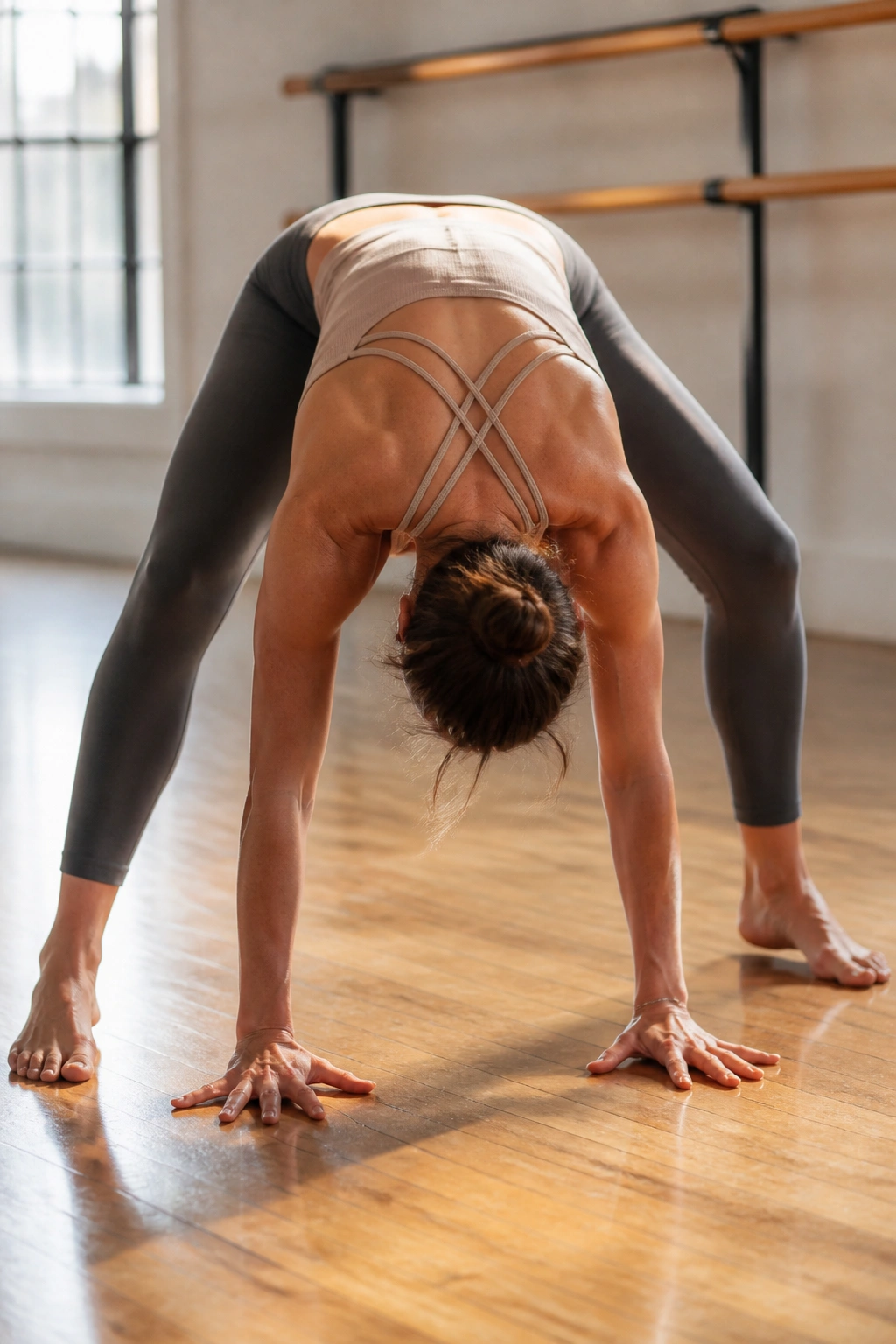
In yoga, the wide-legged forward fold is a resting pose. In this workout, it becomes an active stretch that builds strength in the hamstrings and inner thighs.
Take a very wide stance—wider than you think you need. Turn your toes slightly inward and fold forward. Place your hands on the floor or on blocks if they don’t reach. Now, instead of just hanging there, engage your quads by pulling your kneecaps upward.
Slowly begin to bend one knee, shifting your weight into that leg, then switch to the other side. This is like a side lunge, but with the added depth of a forward fold. You are dynamically stretching the inner thigh of the straight leg while firing the quadricep of the bent leg. Do this for two minutes. Keep your breathing steady. The goal is to move with intention, not speed. You want to feel the muscles lengthening and contracting simultaneously.
7. Downward Dog to Calf Raise Transition
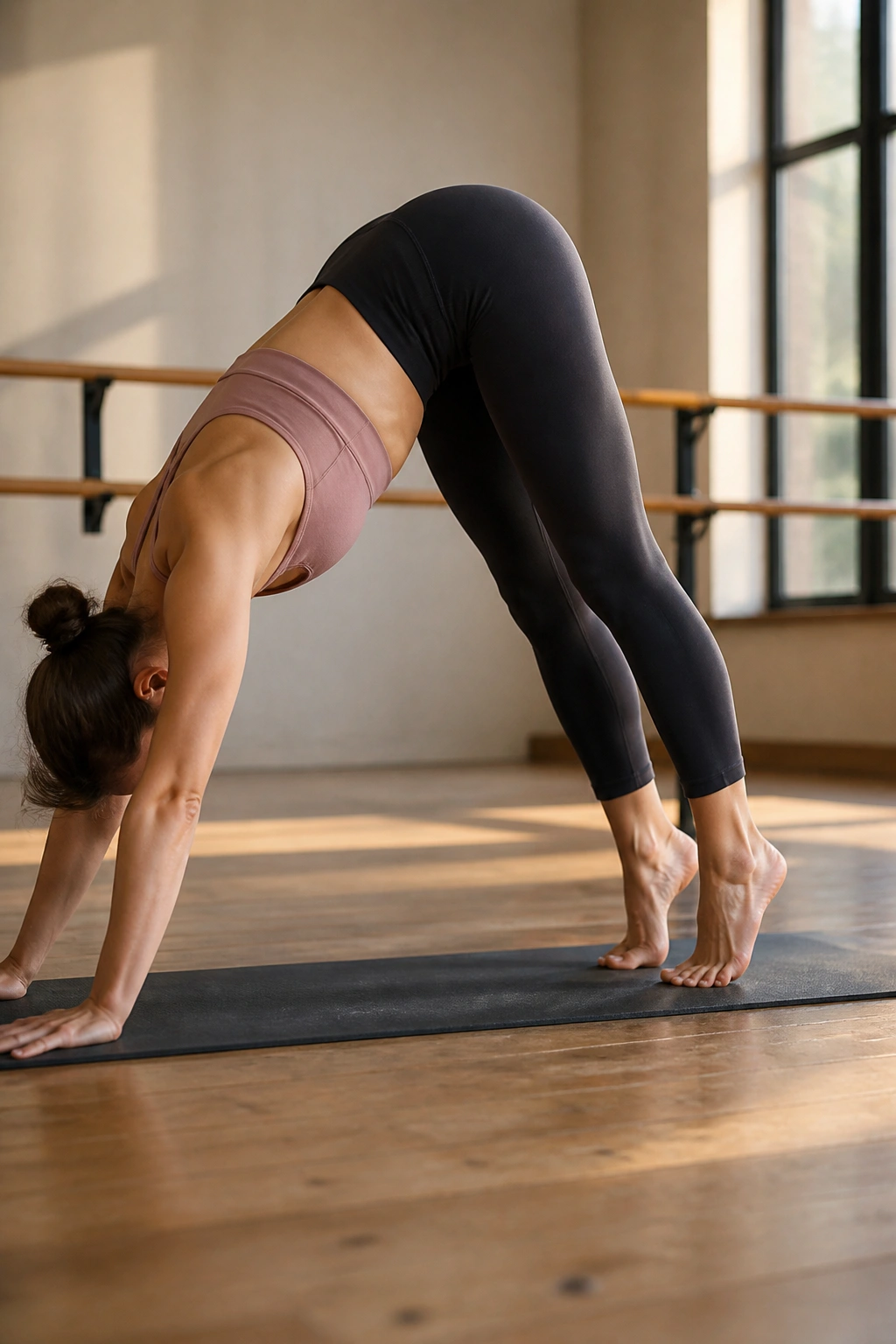
If you treat Downward Facing Dog as a static pose, you are missing an opportunity to sculpt your lower legs. This transition turns the pose into a functional barre exercise.
Start in a standard Downward Dog, pedaling out your heels to warm up the calves. Once you feel settled, plant both feet firmly. Lift both heels off the mat as high as you can, rising onto the balls of your feet. Squeeze your calves at the top. Lower the heels back down toward the mat, feeling the stretch in the Achilles tendon.
Repeat this 20 times. It sounds simple, but your calves will begin to fatigue quickly. This movement mirrors a “relevé” in ballet, which is the foundational movement for ankle strength. By doing it in Downward Dog, you are also working on your upper body stability and core engagement. If you want more of a challenge, try to keep the heels lifted the entire time you pulse your chest toward your thighs.
8. Crescent Lunge Balance Challenge
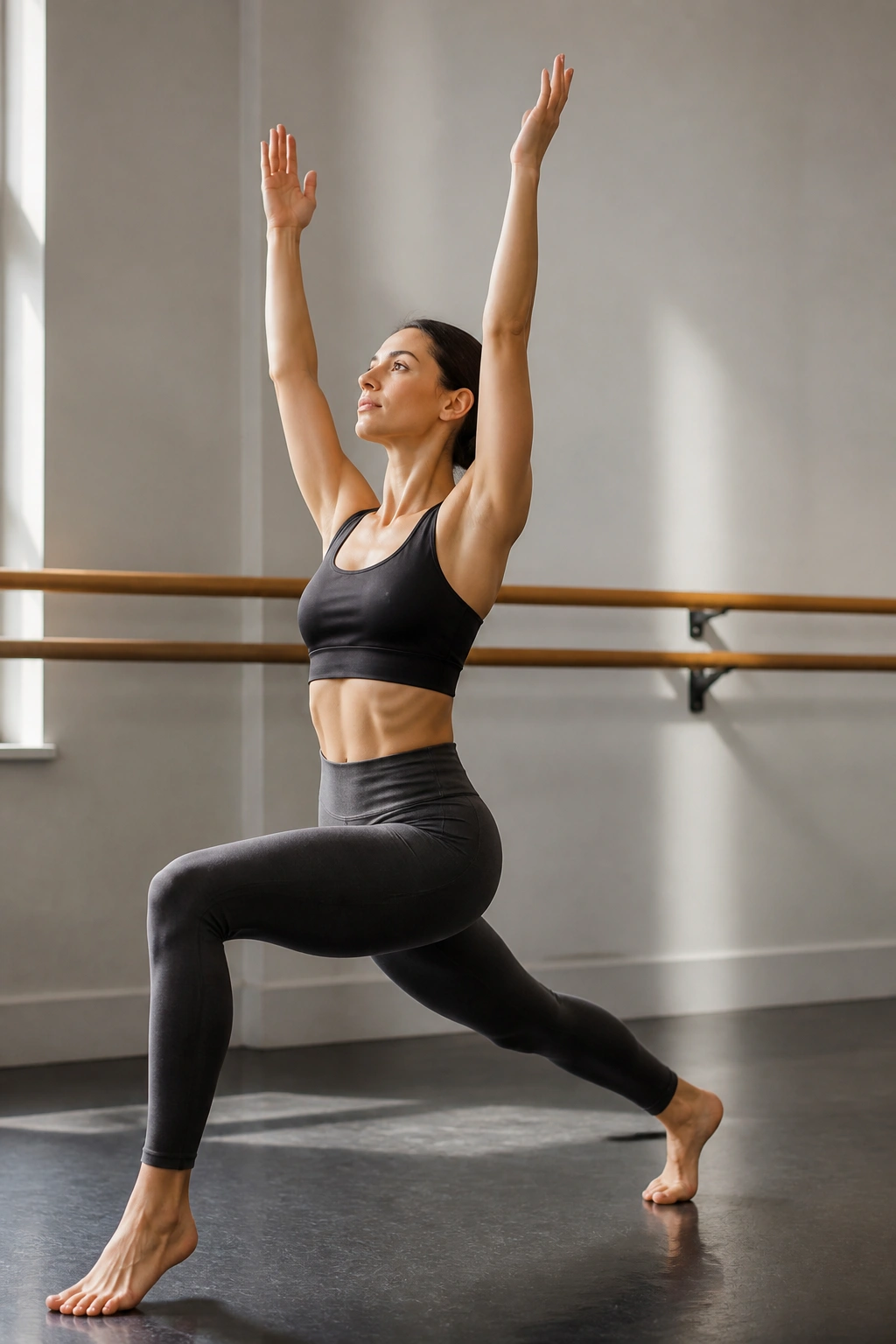
Crescent lunge is a high-lunge pose that demands balance. By adding a barre-style pulse, you turn it into an endurance challenge for your stabilizer muscles.
Come into your high lunge with your back heel lifted. Your front knee should be bent. Now, lower your back knee so it hovers just an inch above the floor. Keep it there. This is your starting point. From this low position, pulse up and down two inches.
Do this for 45 seconds on one side, then immediately switch to the other. You will feel the burn deep in your glutes and the front of your hip. The core must be rigid to keep you from toppling over. If you lose your balance, just reset and find your breath. It is better to have perfect form and hold for 10 seconds than to wobble through 45 seconds of poor alignment.
9. Boat Pose Ab Core Burn
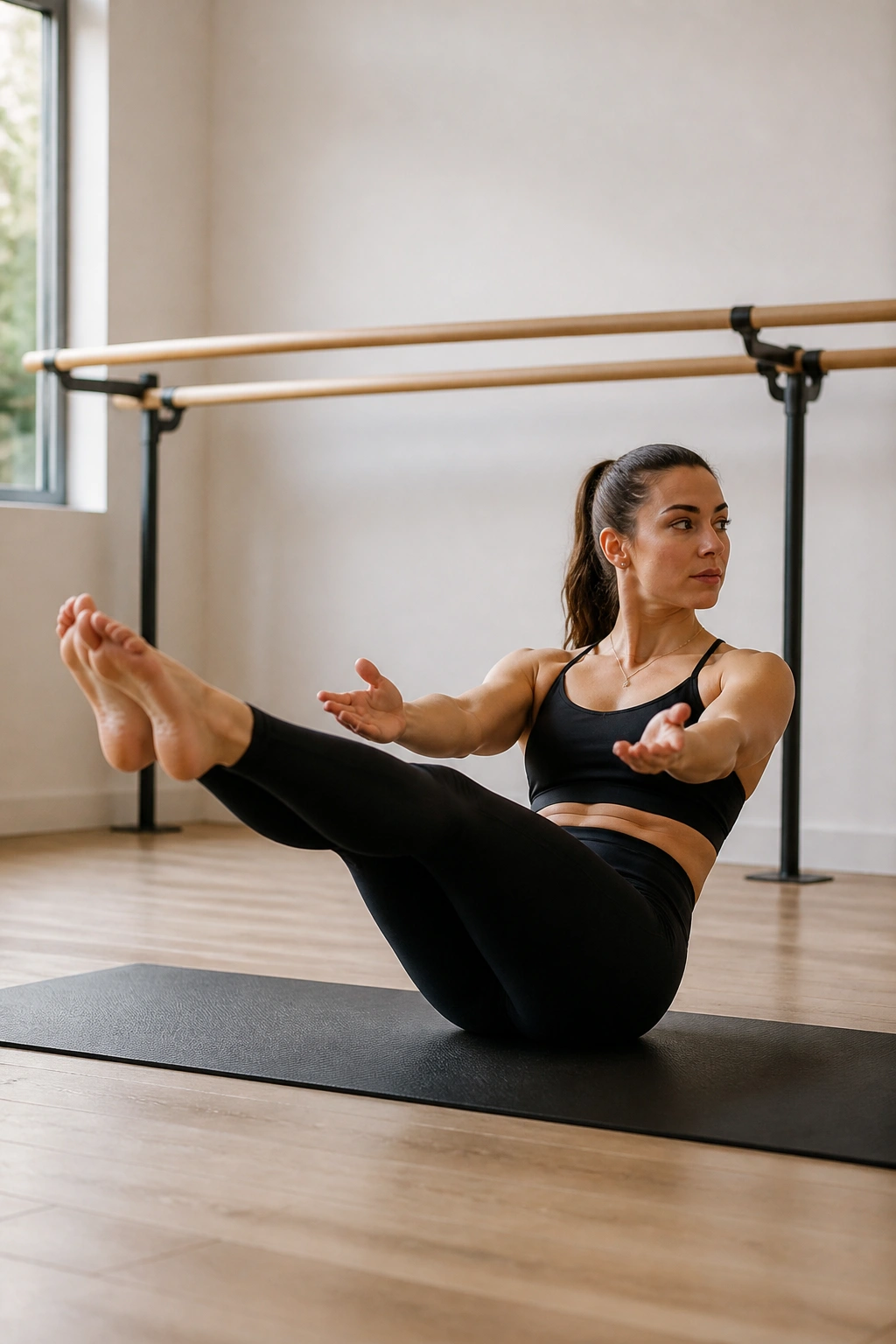
Boat pose (Navasana) is the ultimate test of core strength. The barre variation adds “paddles” to the movement, which engages your obliques and forces your lower abs to work harder to maintain the “V” shape.
Sit on your mat, lean back slightly, and lift your legs so your shins are parallel to the floor. Extend your arms forward. Now, imagine you are holding a barre in your hands. Twist your torso to the right, touching the floor beside your hip with your hands, then twist back to center. Twist to the left, touching the floor.
Keep your legs completely still while your torso does the work. If your legs start to drop, pull them back up. Do 20 twists total. This targets the deep internal obliques, which are often neglected in standard crunches. Your chest should remain open and lifted, not rounded over, throughout the entire duration.
10. Bridge Pose Hip Opener
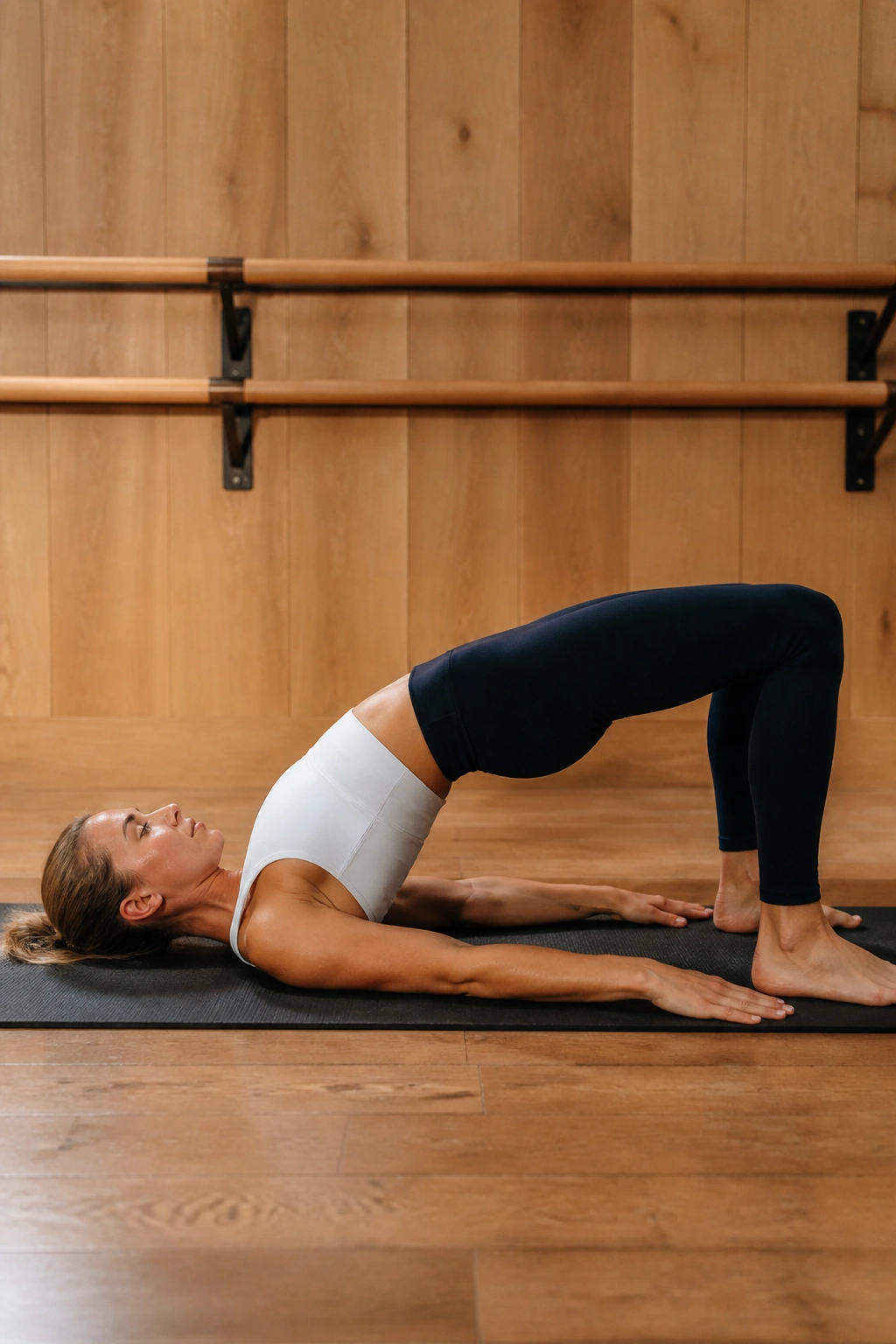
Bridge pose is a backbend in yoga, but in barre, we use it to isolate the glutes. This version is about “squeezing the peach.”
Lie on your back, knees bent, feet flat on the floor. Lift your hips toward the ceiling. Instead of resting at the top, pulse your hips up one inch, then down half an inch. You never fully touch the floor. Perform 30 of these micro-pulses.
Why This Matters
By keeping the hips hovering, you maintain constant tension in the glutes and hamstrings. This is far more effective for toning than a slow, full-range bridge. Once you finish the pulses, hold the bridge at the highest point for 10 seconds, squeezing your glutes as hard as possible, then lower down slowly.
11. Standing Split Balance and Reach
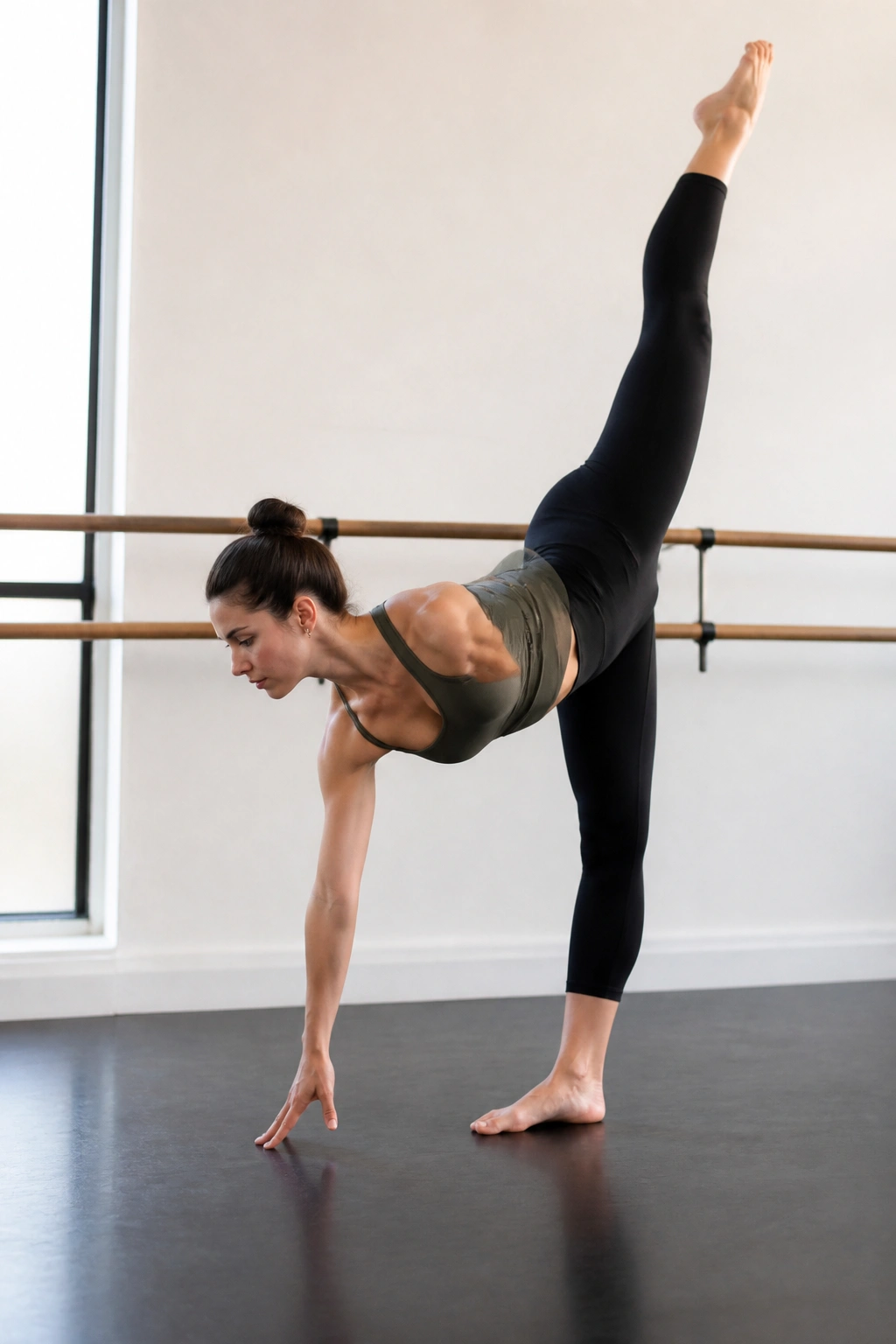
The standing split is an advanced yoga pose, but we can scale it for barre strength. It tests your balance and the strength of the standing leg, which is a key component of functional fitness.
Start in a forward fold. Shift your weight into your left foot. Slowly lift your right leg behind you. Instead of trying to get the leg as high as possible, focus on keeping your hips square to the floor. Bend your standing left knee slightly. Pulse the lifted right leg toward the ceiling.
The Barre Modification
Keep the lifted foot flexed. Pulse 20 times. Then, hold the leg still and reach your chest closer to your standing leg. You will feel a massive stretch in the hamstring of the standing leg and a deep burn in the glute of the lifted leg. Switch sides. This is a total-body engagement move.
12. Plank to Cobra Flow
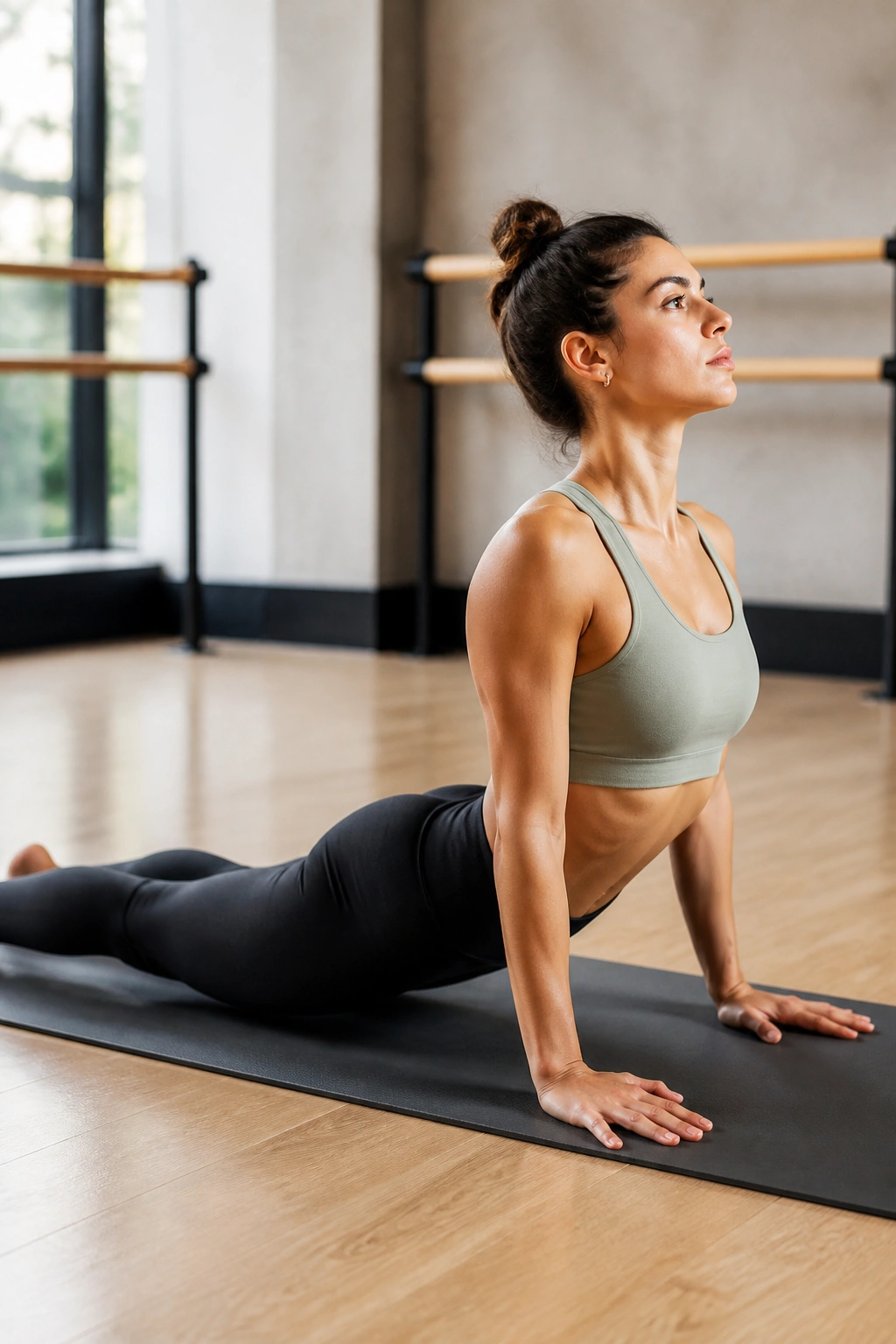
This is a dynamic flow that works the entire front chain. You begin in a high plank, drop to a low plank, then push forward into a modified cobra.
The Execution
Start in a high plank, palms under shoulders. Keep your elbows tucked in close to your ribs as you lower halfway down—this is your “chaturanga” position. From here, instead of pushing back up, pull your chest forward and upward into a cobra pose, keeping your hips hovering slightly off the floor.
Pull your navel in tight. The transition between the low plank and the cobra is where the core strength is built. Move back and forth between these two positions ten times, moving slowly. This mimics the controlled, fluid transitions of barre while incorporating the traditional yoga push-up.
13. Goddess Pose Squat Hold
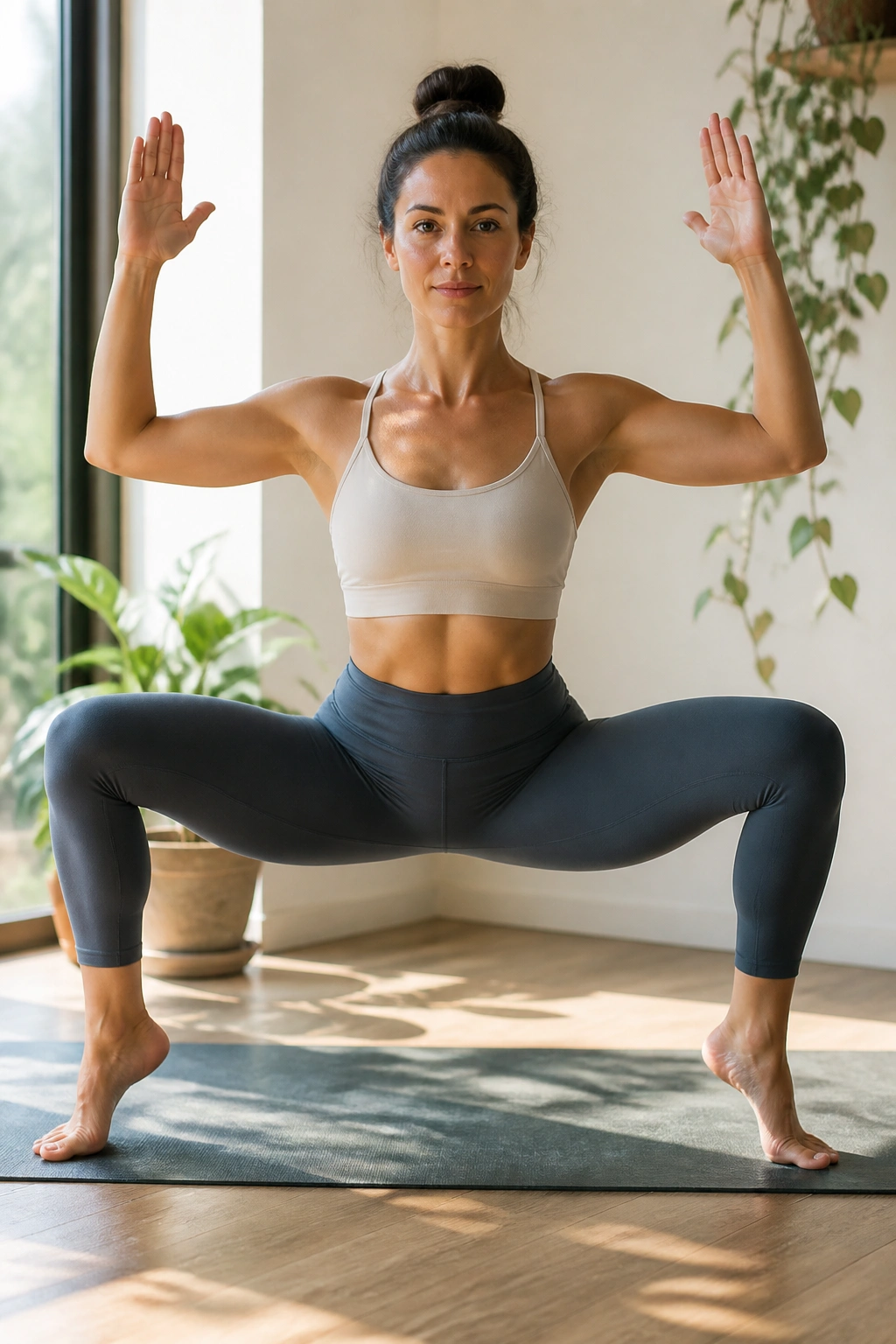
Goddess pose is essentially a wide-legged squat with toes turned out. It is the quintessential yoga-barre hybrid.
Stand in a wide stance, toes turned out. Sink into a squat until your thighs are parallel to the floor. Now, bring your arms into a “goalpost” position—elbows at 90 degrees, palms facing forward.
Hold this for two minutes. Yes, two full minutes. To keep it from being boring, alternate between three arm movements:
- Reach arms straight up to the sky.
- Bring them back to goalpost position, squeezing your shoulder blades together.
- Cross your forearms in front of your chest, then open wide.
Your legs will shake. That is the point. When you feel the urge to stand up, sink one inch deeper.
14. Eagle Pose Compression
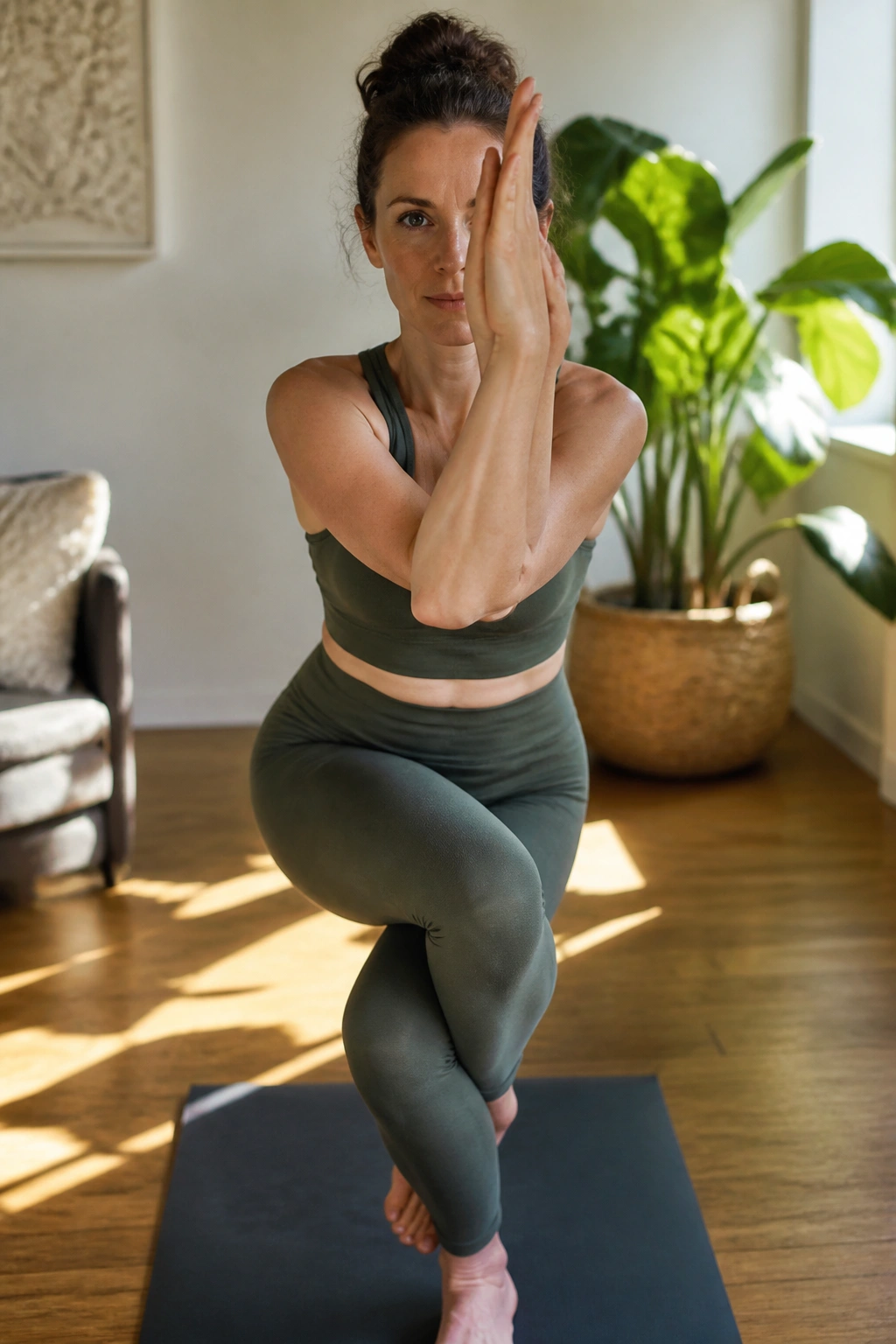
Eagle pose (Garudasana) is all about internal rotation and squeezing limbs together. It is an incredible way to work the adductors (inner thighs) and the shoulders.
How to Get Into It
Cross your right leg over your left. If you can, tuck your right foot behind your left calf. Cross your right arm under your left, bringing palms to touch.
Once you are in the bind, compress. Squeeze your inner thighs together as hard as you can. Squeeze your arms together. Sink your hips deeper, like a one-legged chair pose. Hold for 30 seconds. Switch sides. This pose forces you to engage the muscles surrounding the joints, which is exactly how you build “real” strength—strength that stabilizes and protects the body.
15. Triangle Pose Reach and Extend
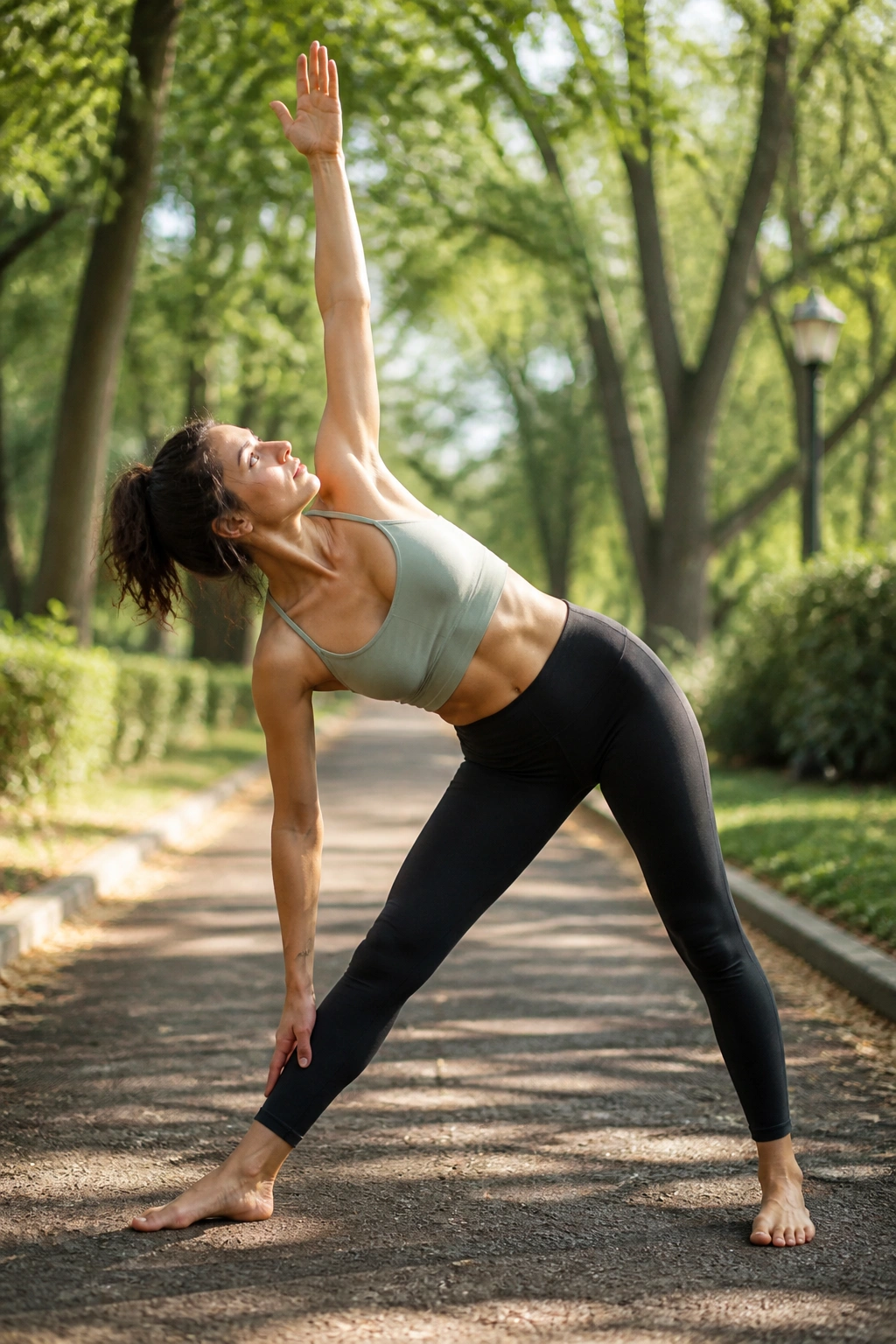
Triangle pose is often used for stretching, but it is also a powerful tool for building oblique strength.
Stand with feet wide. Turn your front foot out and reach your torso forward until you can’t reach any further, then drop your hand to your shin or a block. Extend your top arm toward the sky.
Here is the workout: hold the pose, but engage your core so actively that you could take your bottom hand off your leg without falling. It is a hover. Hold for 30 seconds. You will feel your side-body muscles firing to keep you upright. This is the difference between a floppy stretch and an active, strengthening pose.
16. Locust Pose Back Strength
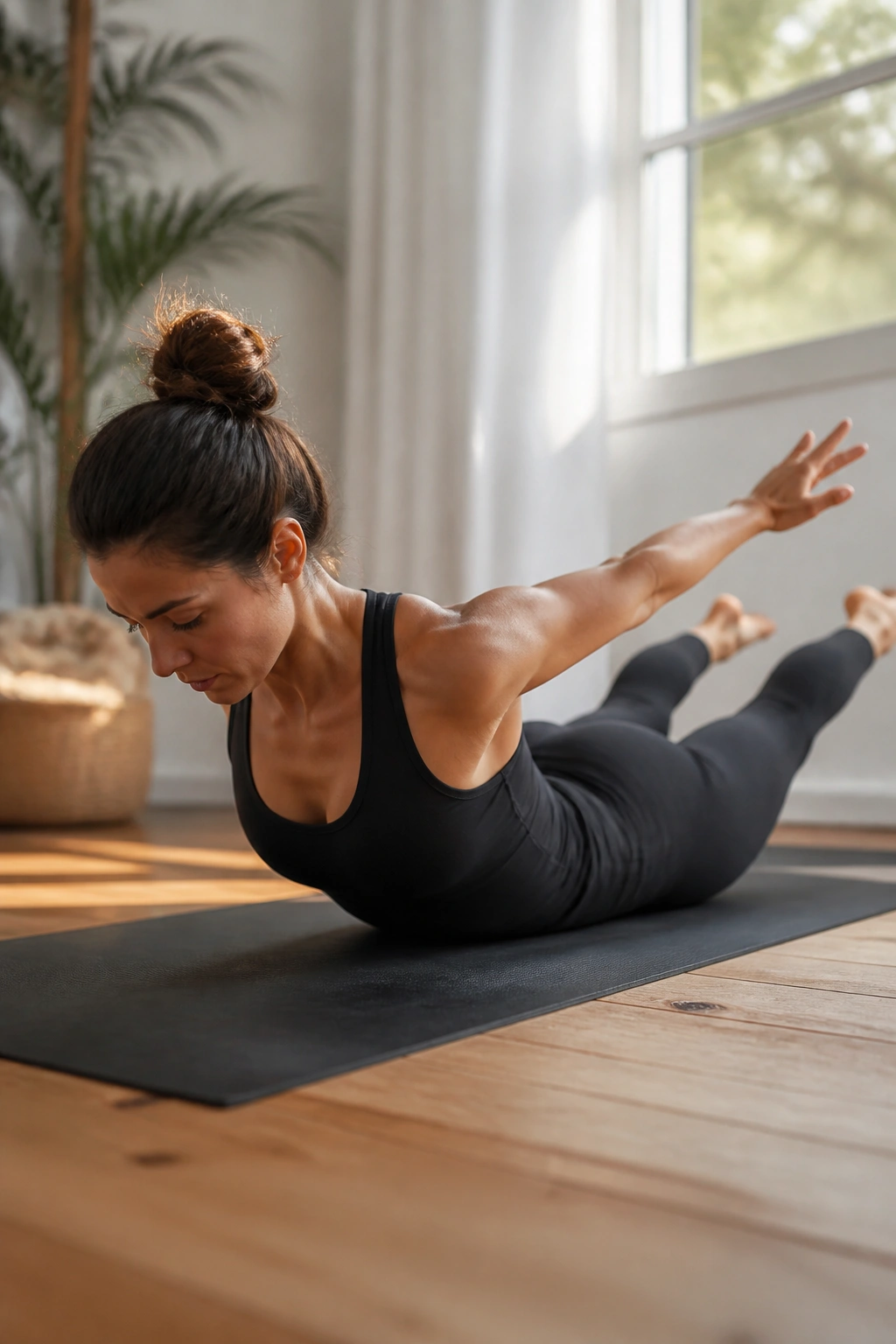
Locust pose (Salabhasana) is the ultimate builder of the posterior chain. It targets the muscles of the lower back, glutes, and shoulders.
Lie on your stomach. Reach your arms back alongside your body, palms facing down. Lift your chest, arms, and legs off the mat simultaneously. Keep your gaze toward the floor to protect your neck.
Now, perform “pulses” here. Lift your limbs an inch higher, then lower an inch. Do 20 of these. It is a tiny, strenuous movement. By the end, your entire back should feel warm and worked. This is the foundation for good posture and preventing back pain.
17. Tree Pose Ankle Stability
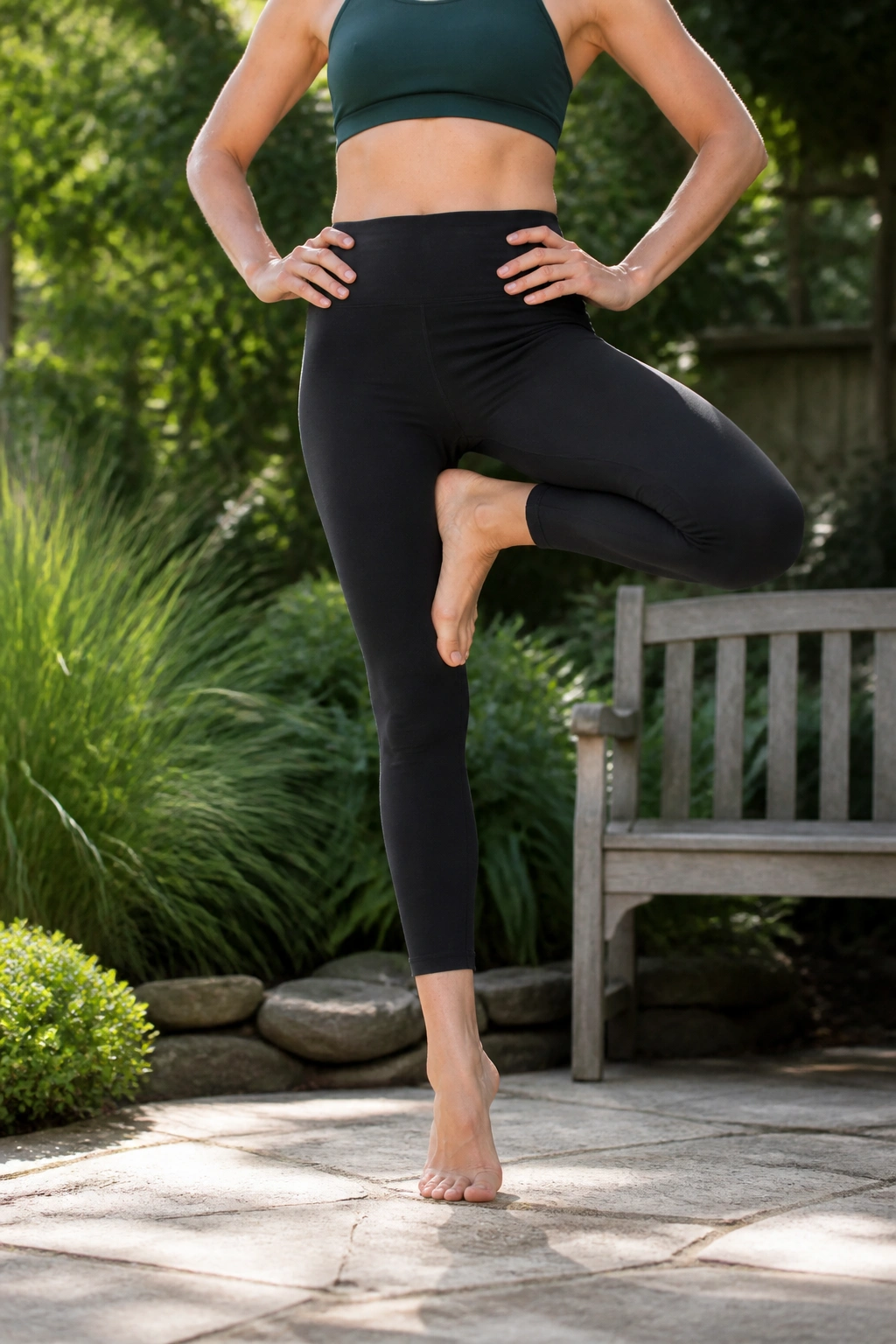
Tree pose is classic yoga for balance, but in a barre class, we make it “active” by creating movement in the standing leg.
Come into Tree pose, with your foot placed on your inner thigh or calf (never the knee). Bring your hands to your hips. Now, perform 15 tiny heel raises on the standing leg.
Rising up onto the ball of your foot and back down while balancing in Tree is incredibly difficult. It forces your ankle and calf to work in overdrive to keep you stable. If you fall, just smile and try again. That is part of the training.
18. Extended Side Angle Rotation
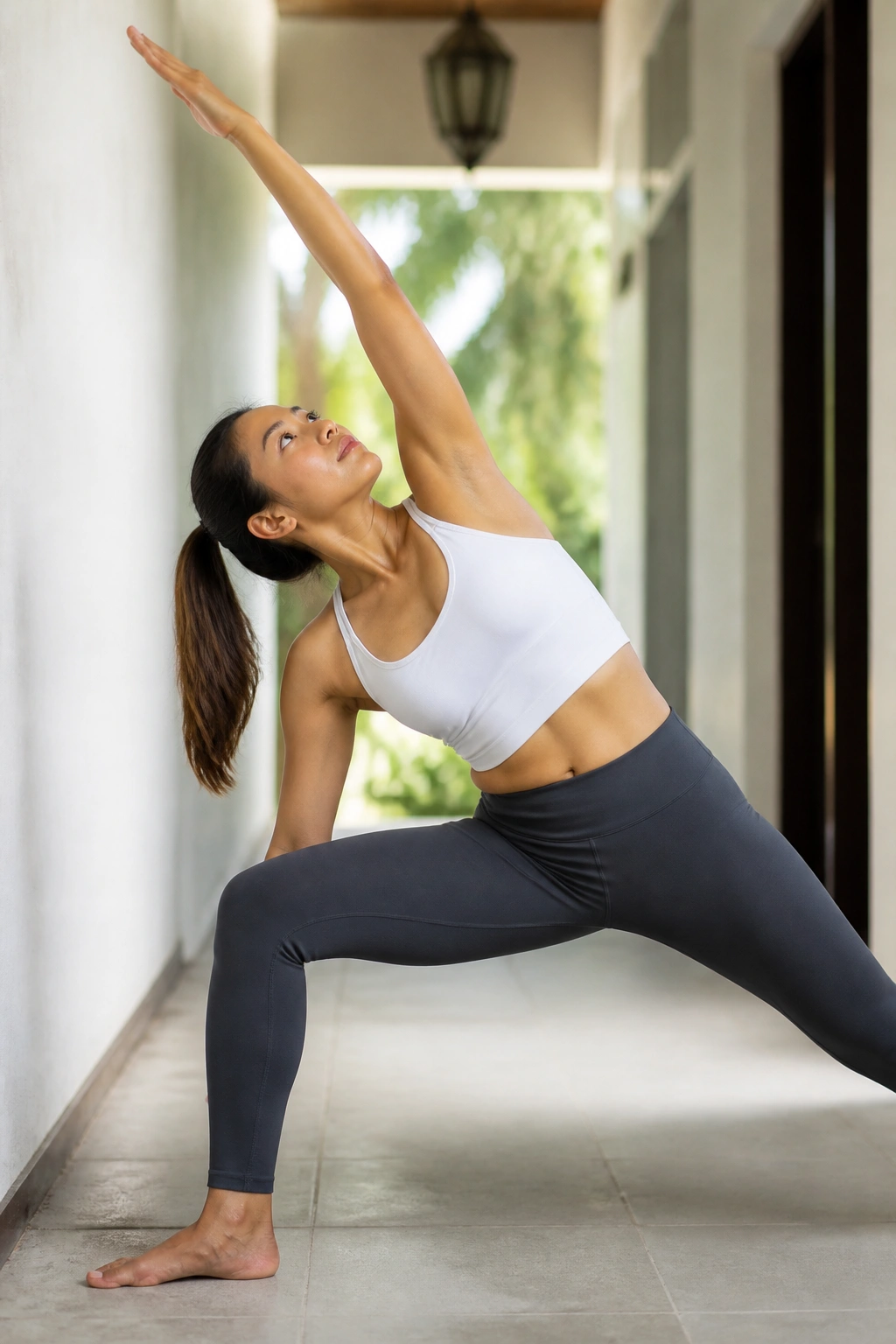
Extended Side Angle is a deep stretch, but adding a torso rotation engages the obliques and serratus anterior.
Come into the pose, with your front knee bent and your top arm extended overhead. Now, rotate your chest toward the ceiling as you exhale, then rotate it toward the floor as you inhale.
Move through this rotation 10 times. You aren’t just moving your arms; you are moving from your ribcage. This builds rotational strength, which is vital for daily activities like reaching, twisting, and lifting.
19. Crow Pose Foundation
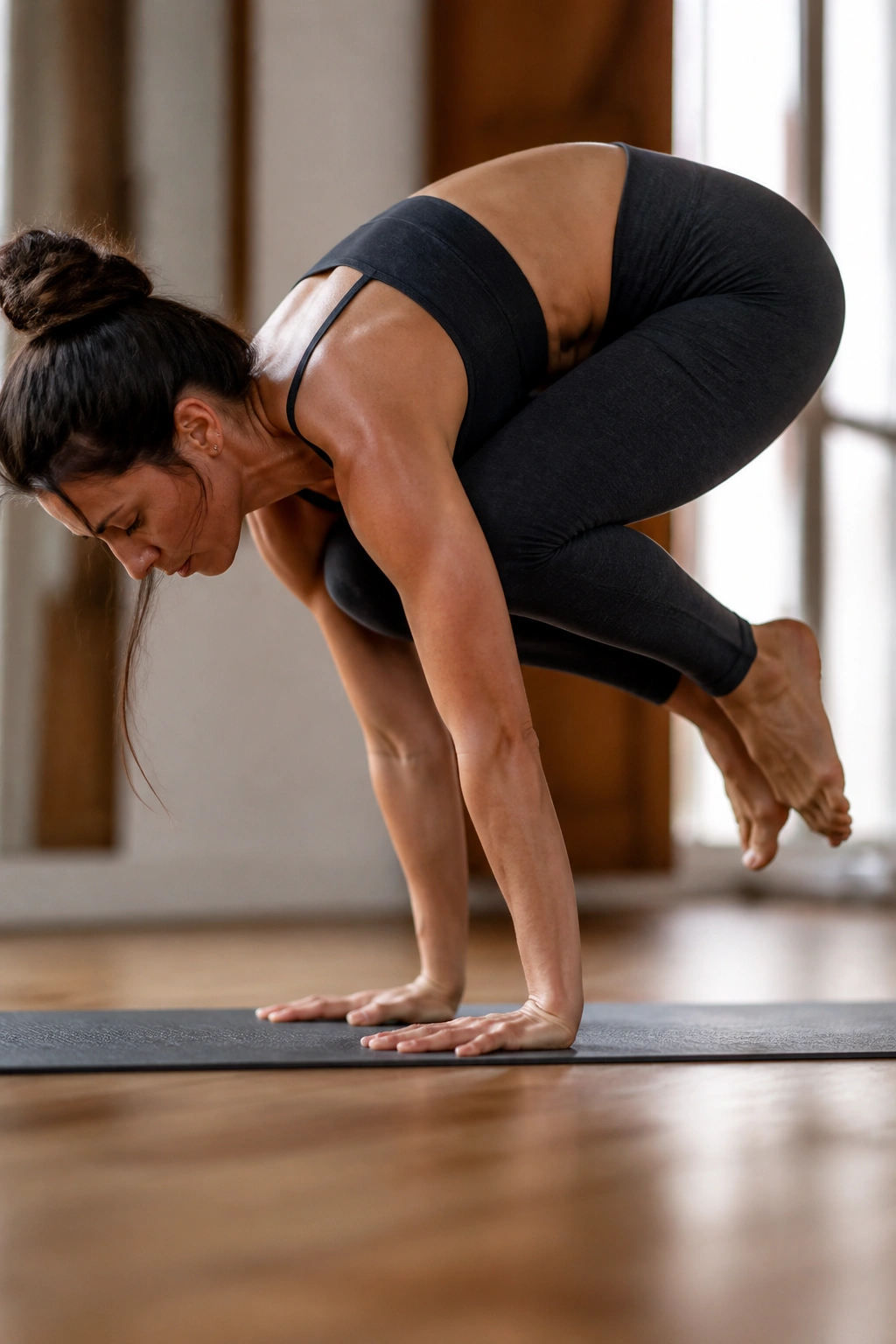
Crow pose (Bakasana) looks like a daunting arm balance, but you can build the necessary strength just by practicing the foundation.
Squat down, place your hands on the floor, and plant your knees into your upper arms. Lean your weight forward. You don’t have to lift your feet yet. Just rock forward until your toes get light.
Hold this “rocking” position for 30 seconds. Feel your core pulling in and your shoulders stabilizing. This is isometric strength training for your upper body and core. Over time, that forward lean will naturally lead to your feet lifting off the floor.
20. Savasana Muscle Release
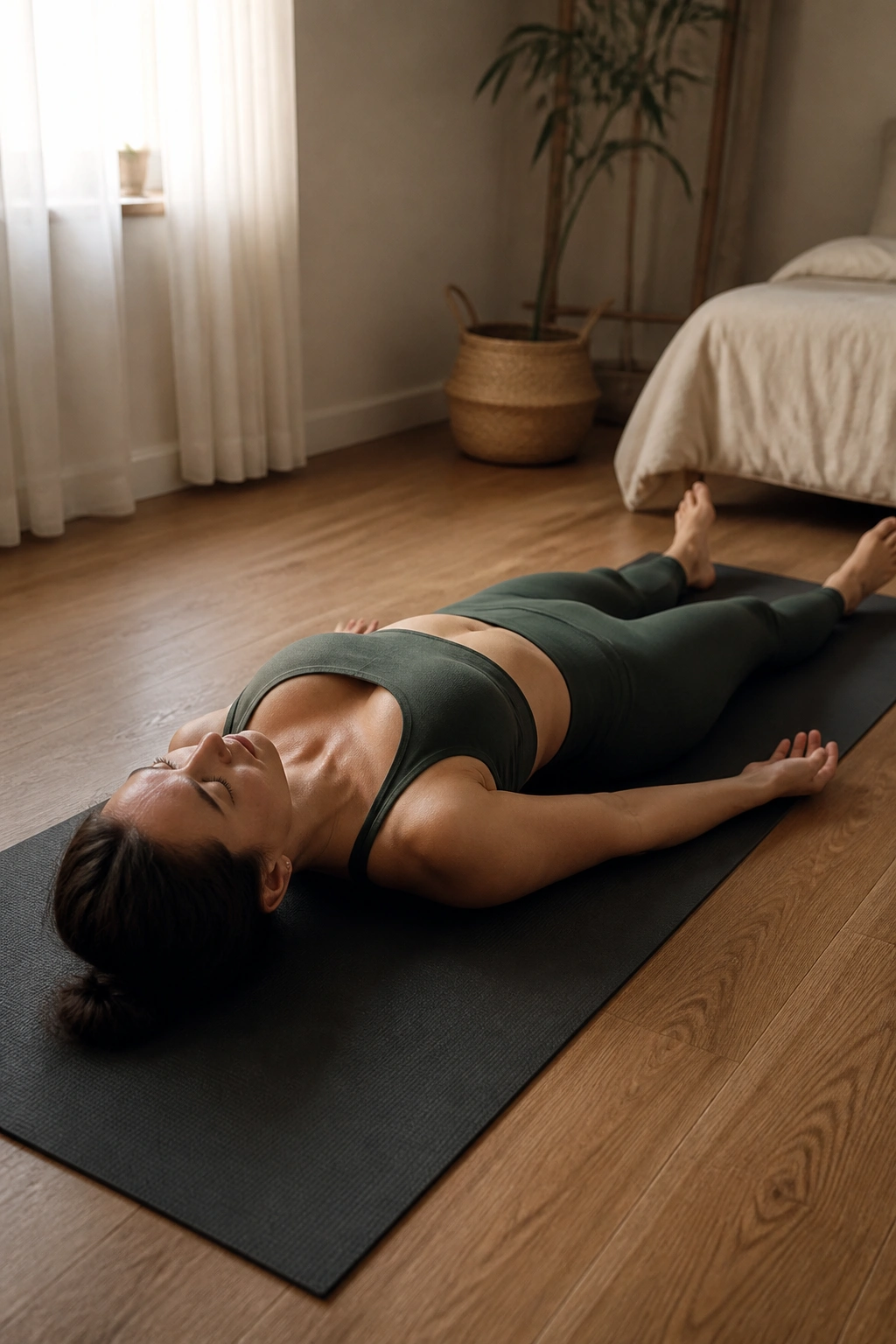
You have worked hard, and now it is time for the final piece of the puzzle: the release. Savasana, or Corpse Pose, is not a nap. It is a deliberate practice of letting go.
Lie flat on your back, arms by your sides, palms facing up. Close your eyes. Scan your body from your toes to your head, releasing any tension you are still holding. If you are still clenching your jaw or holding your shoulders up to your ears, let them drop.
Stay here for at least five minutes. Your muscles need this time to recover and integrate the work you just did. This is when your body repairs the micro-tears created during the workout and builds the strength you are looking for. Do not skip this. It is just as important as the squats and the planks.
The Bottom Line
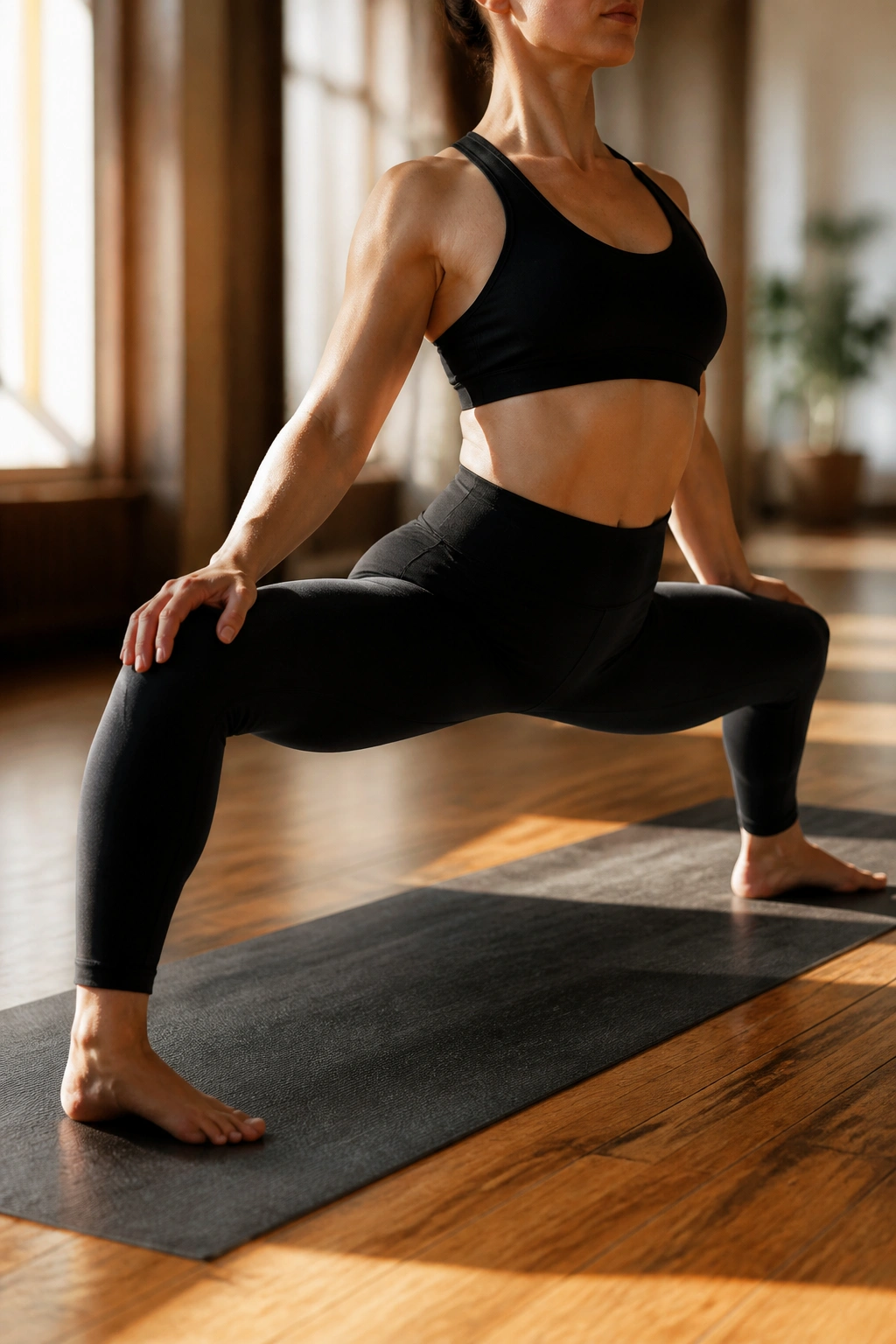
You do not need an hour-long class or a fancy gym membership to build real strength and flow. You have everything you need right where you are. Whether you choose to do just one of these movements as a quick pick-me-up or string several together into a twenty-minute sequence, you are investing in your own stability and grace.
Consistency is the secret ingredient that no instructor can give you. When you commit to showing up for yourself, even for just a few minutes, you start to see changes that go beyond the surface. Your balance improves, your movements become more intentional, and you begin to carry yourself with a different kind of confidence. Listen to your body, respect the burn, and always prioritize the quality of your form over the number of repetitions.
