



Pilates for fat burning works best when you stop treating it like a soft stretch session and start using it like a controlled circuit. The pace is steady, the rest is short, and the muscles do not get much of a breather. That is where the real work happens.
A good Pilates routine can raise your heart rate without pounding your joints. It also lights up the big muscle groups that matter most for body composition: glutes, thighs, back, shoulders, and deep core muscles that keep you from collapsing into lazy reps. You feel the burn faster than you expect. Sometimes in ten seconds. Sometimes on the second round, when your form is still clean but your abs start shaking anyway.
No single workout melts body fat by itself. That part has always been true. But Pilates can absolutely support fat loss when you pair it with consistent training, enough protein, sensible portions, decent sleep, and a daily step count that is not embarrassingly low. The routines that work best are the ones that keep moving, challenge stability, and force your body to do a little more than it wants.
These 22 Pilates routines are built with that in mind. Some are mat-based and beginner-friendly. Some feel closer to conditioning work. A few bring in a reformer, a band, a wall, or a pair of light weights. Mix them, shorten the rest, and keep the tempo honest.
1. The Hundred With Leg Lowering
The classic Hundred gets a lot more useful when you stop there and add a leg-lowering pattern. That is the part that turns a warm-up into a proper fat-burning Pilates circuit.
Start in tabletop, pump the arms for 10 strong breaths, then lower one leg at a time with control. Keep the ribs heavy and the lower back steady. If your neck starts doing the work, put your head down for a set and keep going.
How to make it count
Do 5 rounds of 10 breath pumps, then 8 slow leg lowers per side. Rest for 20 seconds and repeat the full sequence twice. The moving parts stay small, but the effort builds fast because your core never gets to switch off.
- Keep the exhale sharp and full.
- Lower the legs only as far as you can keep the pelvis still.
- Use bent knees if your back arches.
- Hold a light Pilates ring between the ankles if you want a harder version.
Best tip: if your shoulders creep up, reset them before the next round. That tiny correction matters more than people think.
2. Roll-Up to Standing Reach
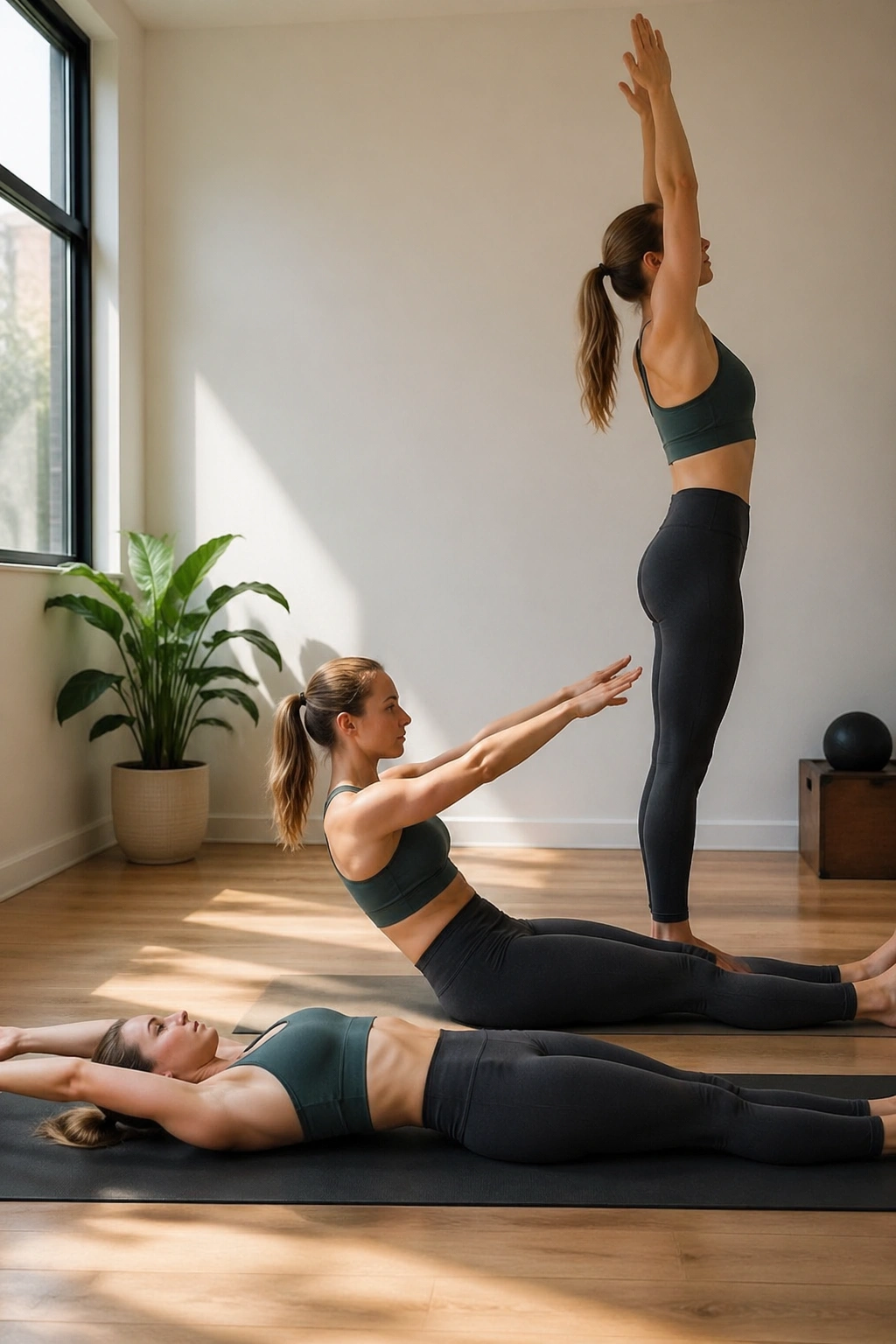
Roll-ups look gentle on paper. Then you try six clean reps in a row and realize your hip flexors, abs, and spinal control are all being asked to show up at once.
Lie long, roll up one vertebra at a time, then stand and reach overhead before folding back down. The standing reach adds a heart-rate bump that a floor-only roll-up does not give you. It also makes the routine feel more like a flow and less like a slow drill.
A good target is 6 to 8 repetitions, followed by 2 rounds with 30 seconds of rest. Keep the legs rooted and avoid yanking yourself up with momentum. If you kick or swing, you are stealing work from the core.
The nice thing about this one is the rhythm. It feels smooth when done well, and the smoothness is exactly what makes it hard. No crash. No flop. Just controlled effort from the floor to the feet and back again.
3. Single-Leg Stretch Sprint
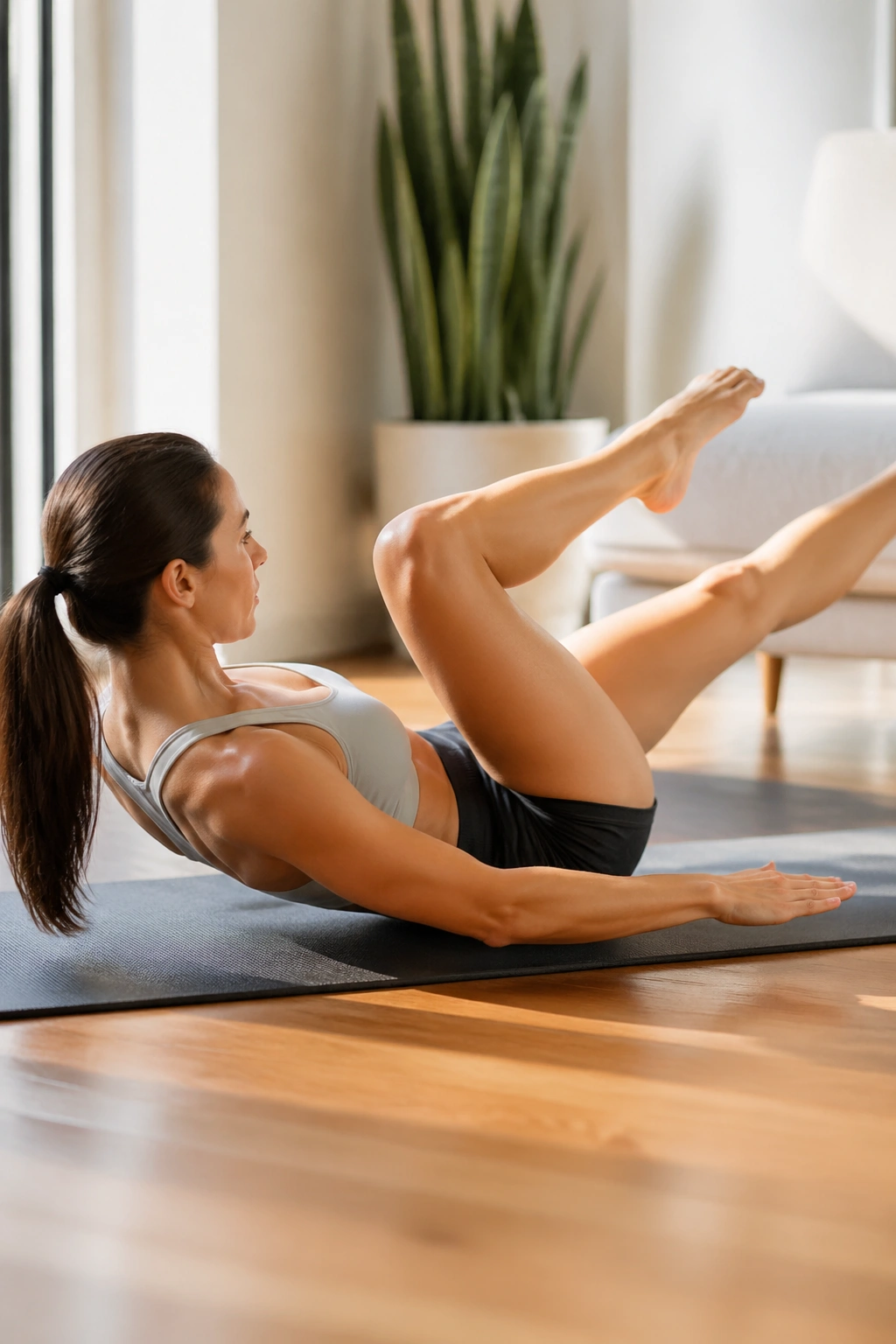
Why does such a small movement leave you breathing harder than expected? Because the single-leg stretch punishes sloppy control and rewards a fast but tidy pace.
Lie on your back, bring one knee in while the other leg extends long, then switch sides in a quick rhythm. Keep your chest lifted and your pelvis quiet. The minute you start rocking side to side, the move loses its bite.
How to use it
Do 30 seconds of quick switches, then rest 15 seconds. Repeat for 6 rounds. If you want more challenge, add a tiny pause every time the leg extends fully. That pause kills momentum and makes the lower abs work harder.
This is one of those routines that looks simple until round three. Then the front of your thighs starts to wake up, your lower abs start to complain, and the whole thing turns into a nice little sweat session.
4. Double-Leg Stretch Flow
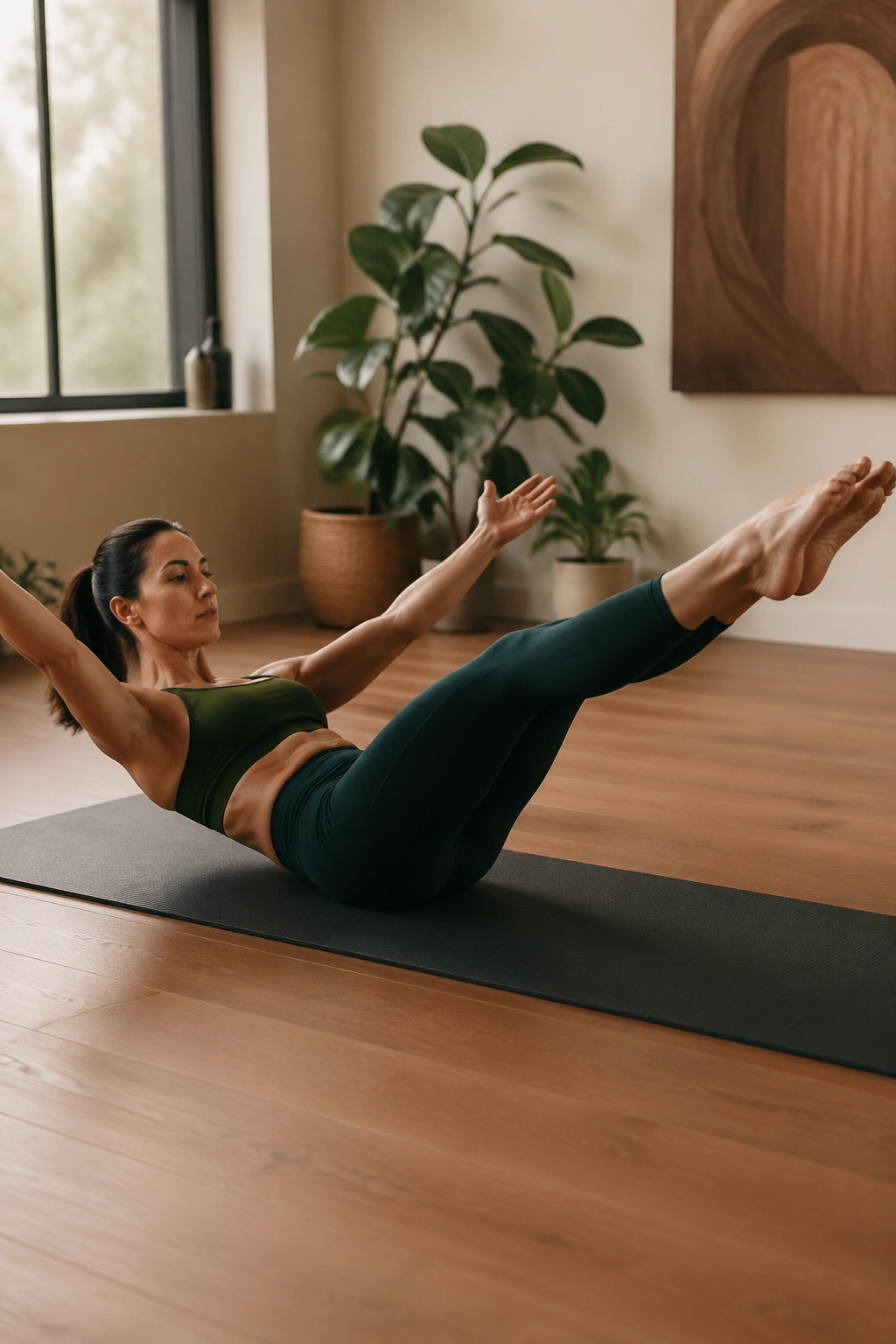
A double-leg stretch done slowly is already tough. Add a smooth arm sweep, a crisp exhale, and a tighter tempo, and you get a move that keeps the core under pressure for longer than it first appears.
Start with both knees hugged in, then reach the arms and legs away at the same time. Circle back in without dropping tension through the belly. The legs do not need to go low. They need to go controlled.
Try 8 to 10 reps for 3 rounds. If you feel your lower back lifting off the mat, shorten the leg reach and keep the tailbone heavy. That fix is boring, but it works.
- Reach long, not fast.
- Keep the shoulders relaxed.
- Exhale as the limbs extend.
- Stop the set the moment the spine starts to arch.
One honest note: this move gets much better when you resist the urge to rush it.
5. Criss-Cross Intervals
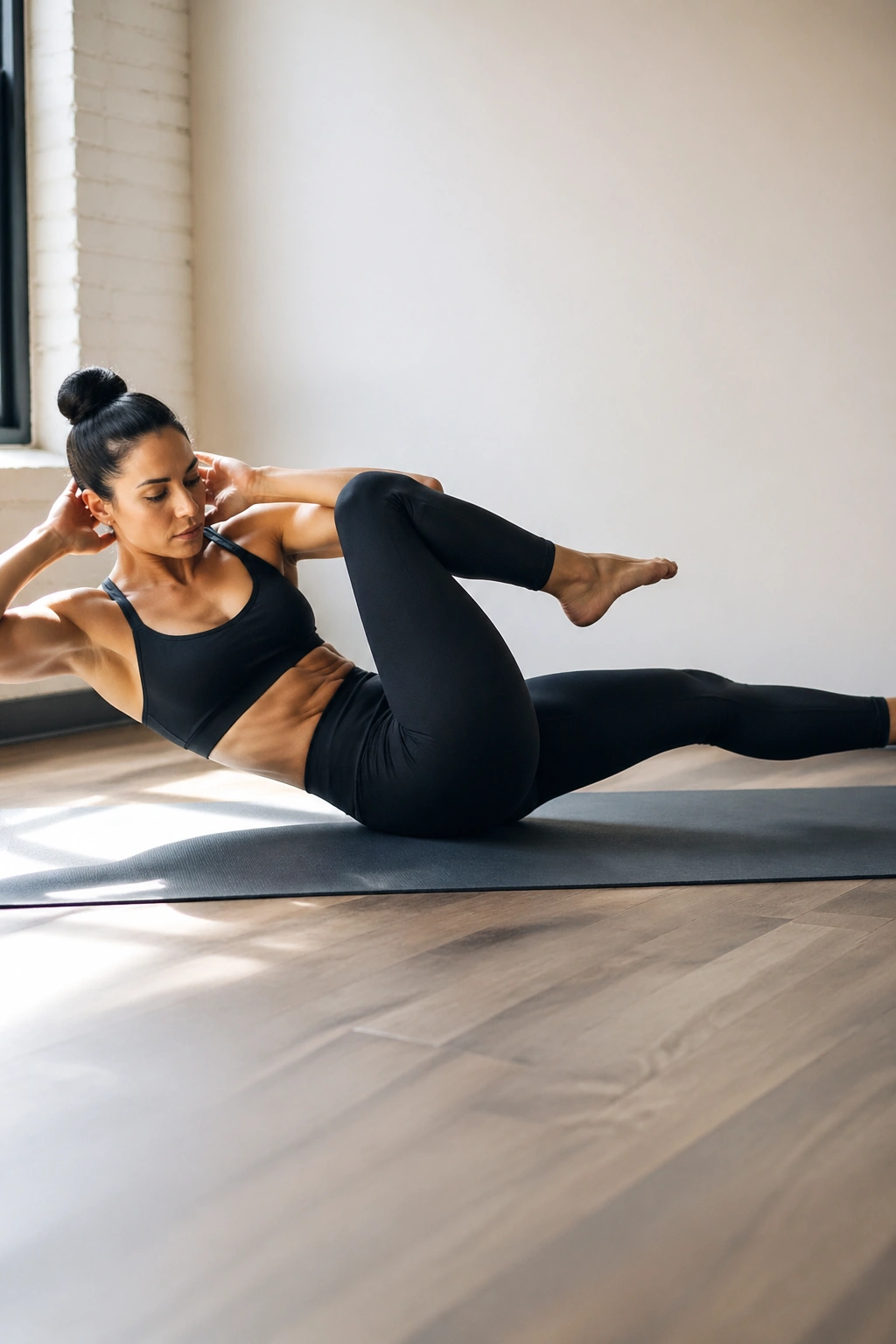
Unlike straight crunches, criss-cross asks for rotation, coordination, and a little patience from the obliques. That is why it earns a place in a fat-burning Pilates routine instead of sitting in the “ab burn” bucket.
Bring one elbow toward the opposite knee, then switch sides while the other leg extends long. The motion should feel clean, not jerky. If your hands are pulling on your head, the neck will take over and the abs will check out.
Do 12 to 16 total twists, rest for 20 seconds, and repeat 3 times. You can make it feel more like cardio by shortening the rest and keeping the switching tempo brisk. Or slow it down and hold each twist for a beat if control is the bigger goal that day.
The payoff is not just the burn in the side body. The drill also teaches you to keep your torso steady while the legs move, which matters in half the standing Pilates work people rush through later.
6. Plank to Pike Series
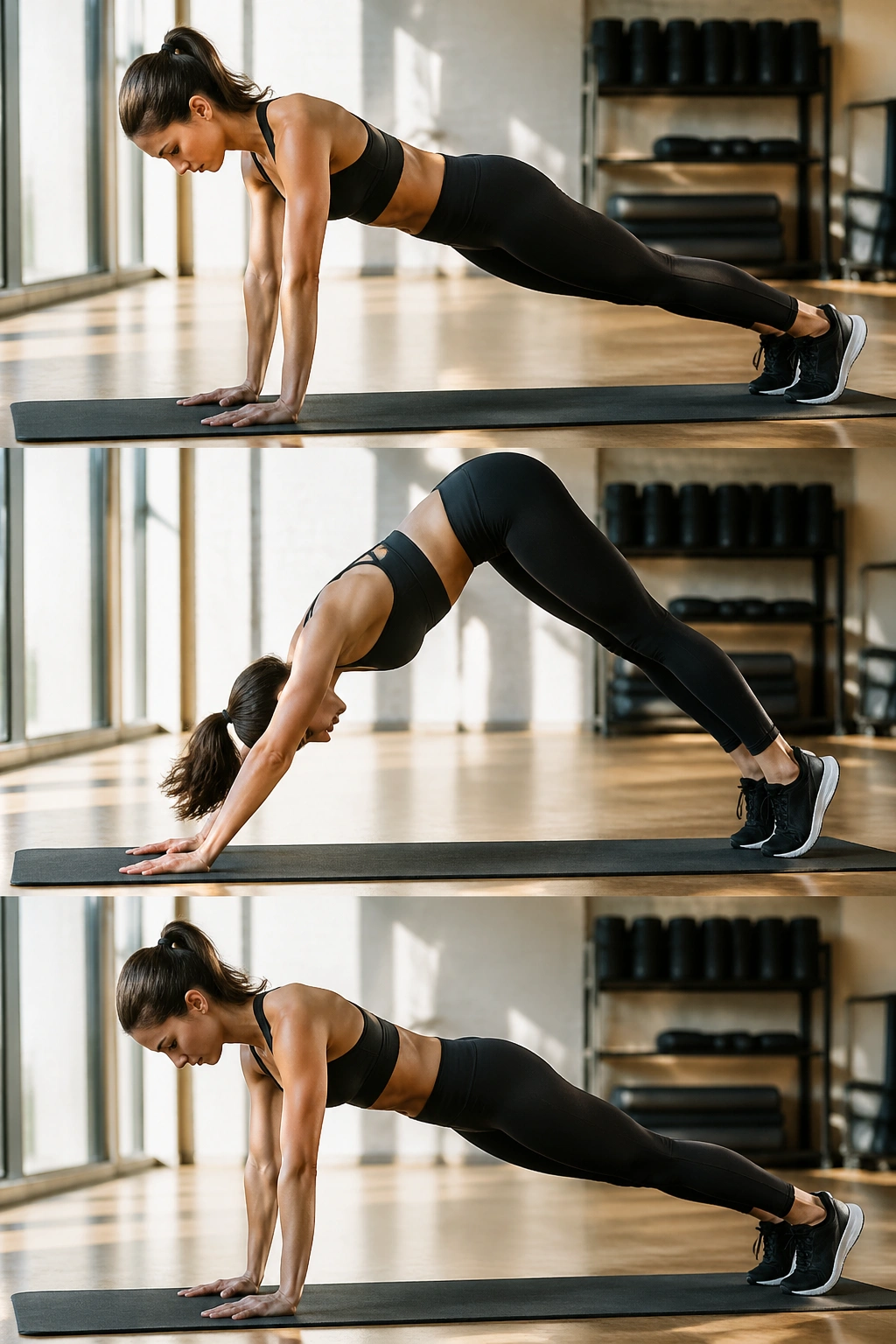
If you want Pilates that feels closer to conditioning work, start here. Plank to pike is where the arms, shoulders, core, and hips all have to cooperate, and they cannot fake it for long.
From a strong plank, lift the hips into a small pike, then return to plank with control. The movement should feel compact, not theatrical. Keep your heels pressing back and your hands rooted into the mat. If the shoulders drift behind the wrists, the whole thing gets sloppy fast.
Do 6 to 10 pike lifts, rest 20 to 30 seconds, then repeat for 3 rounds. Add a 10-second plank hold at the end of each set if you want a bit more heat. That tiny hold changes the tone of the whole routine.
This one is especially useful when you want a session that does not feel slow. The heart rate climbs, the trunk works hard, and the shoulders start talking back. Good. That means the routine is doing its job.
7. Side Plank Hip Lift Ladder
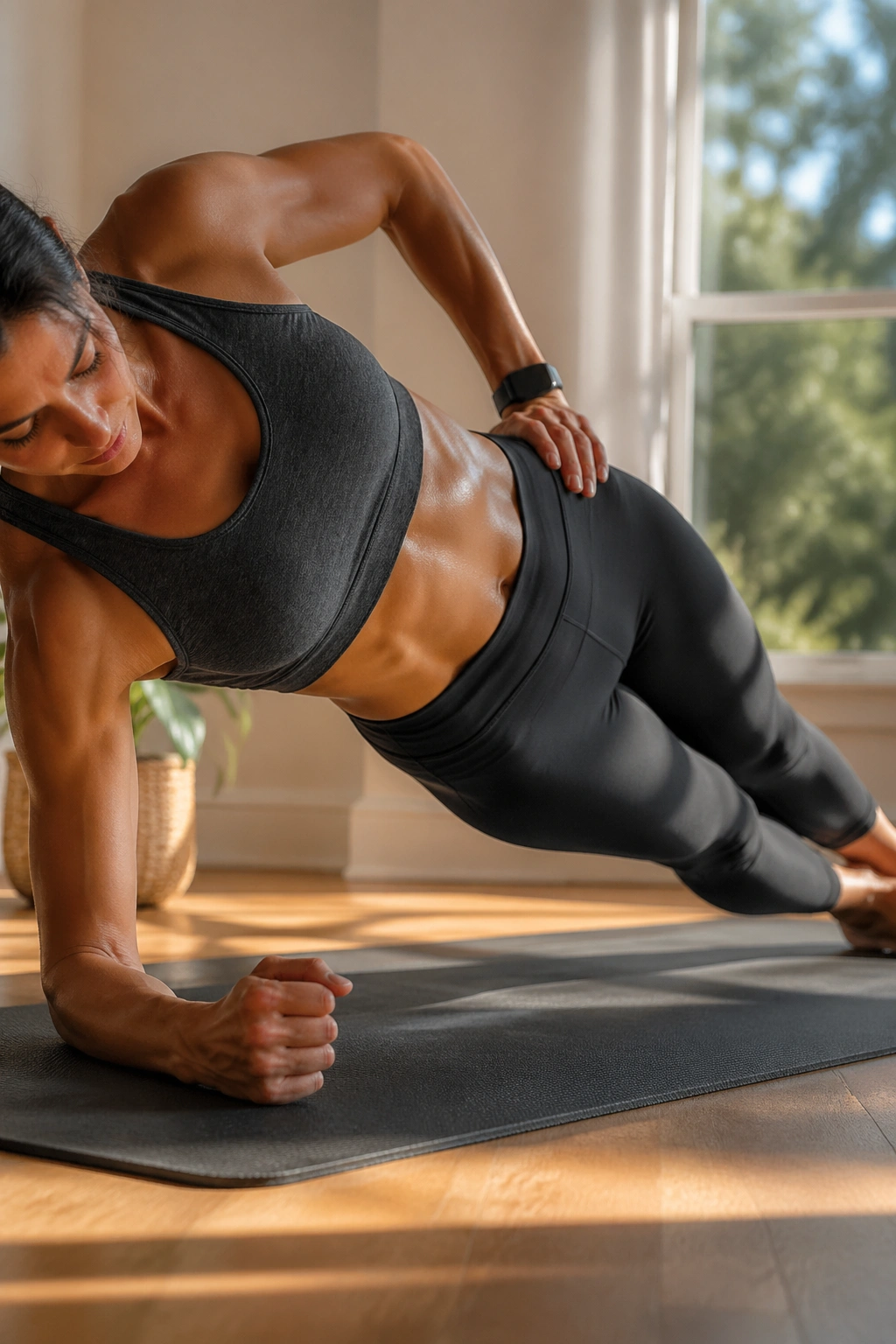
Side plank work is where people learn whether their obliques are awake or just hanging around. The hip-lift version is even better because it gives you a clear, measurable challenge.
Why this side body work matters
Keep your elbow under your shoulder, stack the feet, and lift the hips a few inches before lowering with control. The smaller the range, the more honest the rep. If the bottom shoulder collapses, cut the hold short and rebuild the line.
Do 6 lifts on the right, 6 on the left, then 8 and 8, then 10 and 10. That ladder format keeps the pace lively and gives the core a reason to stay on. Add a 10-second hold at the top if you want more shake.
- Keep the head in line with the spine.
- Press the floor away.
- Breathe through the side ribs.
- Use the bottom knee down first if full side plank is too much.
Tiny correction that helps a lot: do not chase height. Chase a clean line.
8. Glute Bridge March and Press
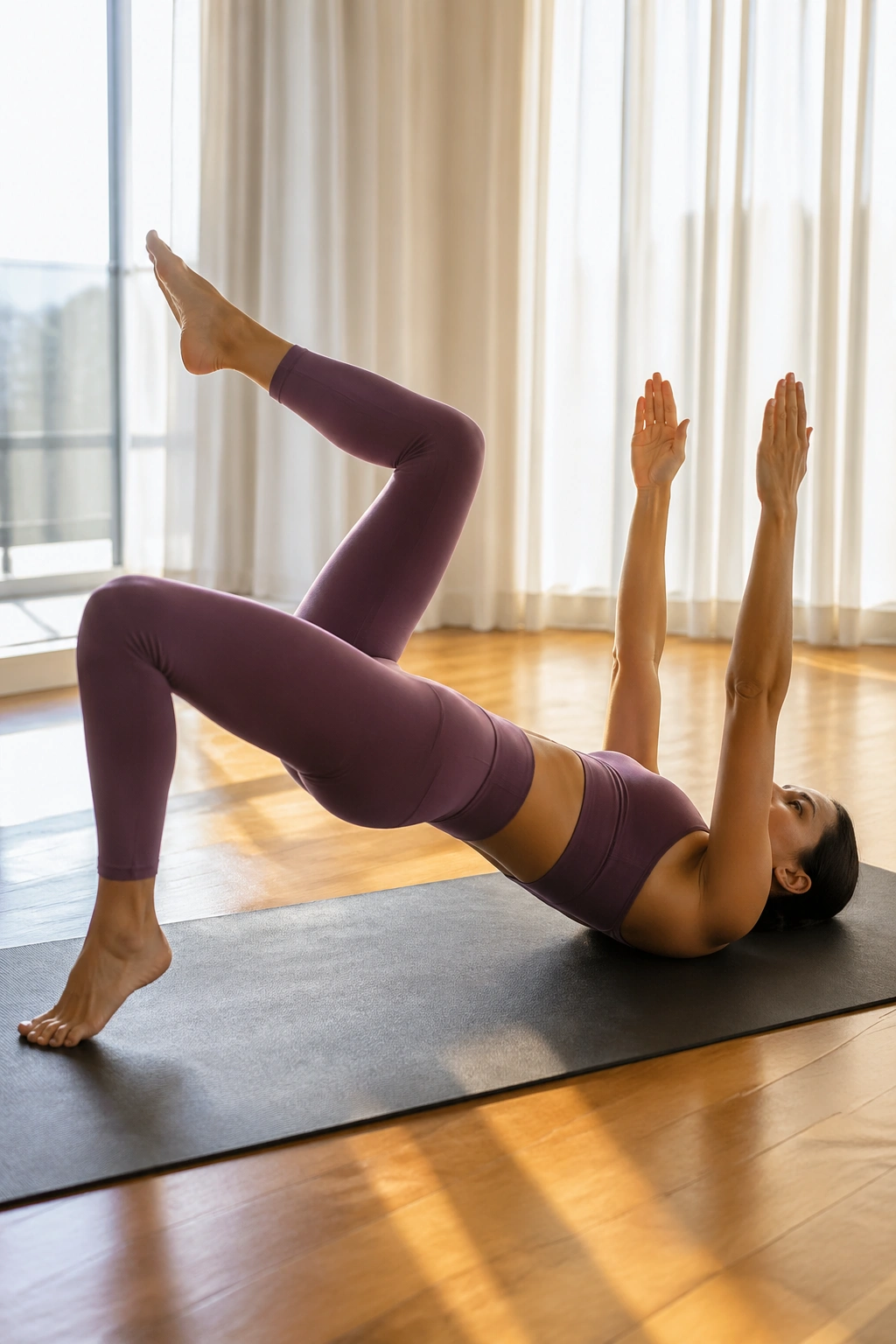
If you have ever wondered why glute bridges show up in so many Pilates routines, the answer is simple: they work. They wake up the backside, support the lower back, and keep the session from becoming all abs and shoulders.
Lift into a bridge, hold the hips level, then march one knee up at a time without letting the pelvis tilt. Add a small arm press with light weights or no weight at all if you want extra upper-body involvement. The steady hold makes the whole thing feel denser than a simple bridge set.
A solid format is 20 seconds of bridge hold, 10 marches total, then 10 bridge pulses. Repeat 3 rounds. If your hamstrings cramp, bring the feet a little closer to the seat and squeeze the glutes harder at the top.
This routine is sneaky. It does not look dramatic, but it can leave your legs buzzing. That is exactly the kind of low-impact fatigue that works well in a fat-burning plan.
9. Pilates Squat Pulse Circuit
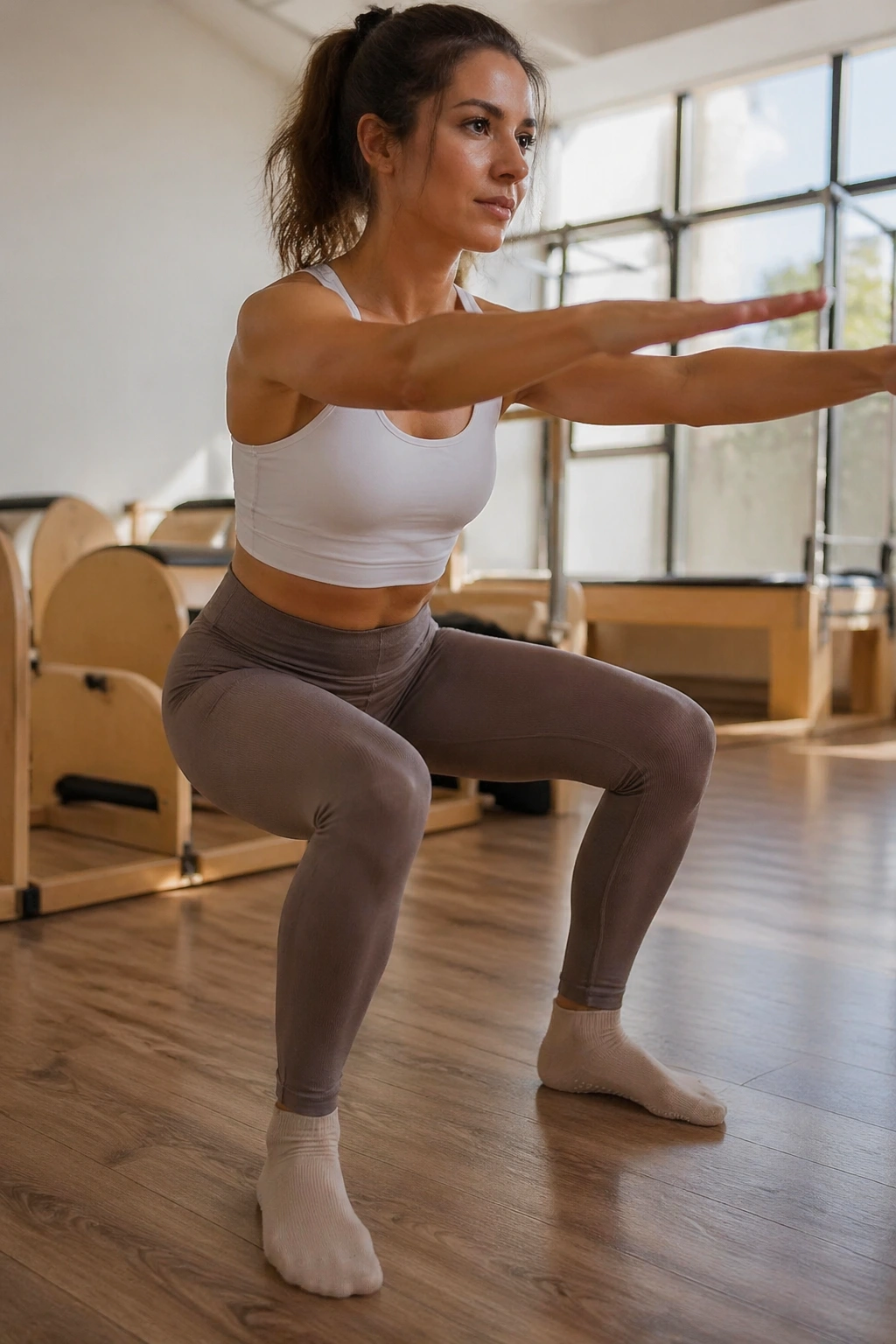
Can a squat belong in Pilates? Absolutely. Especially when you keep the alignment clean, the tempo tight, and the transitions short enough to keep your heart rate up.
Stand with feet slightly wider than hips, drop into a small squat, pulse twice, then rise to a calf lift. That little rise changes the whole feel of the move. Add an overhead reach if you want your shoulders involved too.
How to get the most from it
Do 10 squat pulses, 10 calf lifts, and 10 standing reaches. Rest 20 seconds, then repeat for 3 rounds. Keep the knees tracking over the middle toes and stop the descent before your pelvis tucks under.
This routine is useful because it bridges the gap between Pilates and bodyweight conditioning. It is not flashy. It just works hard, and work hard is the point.
10. Standing Side Kick and Reach
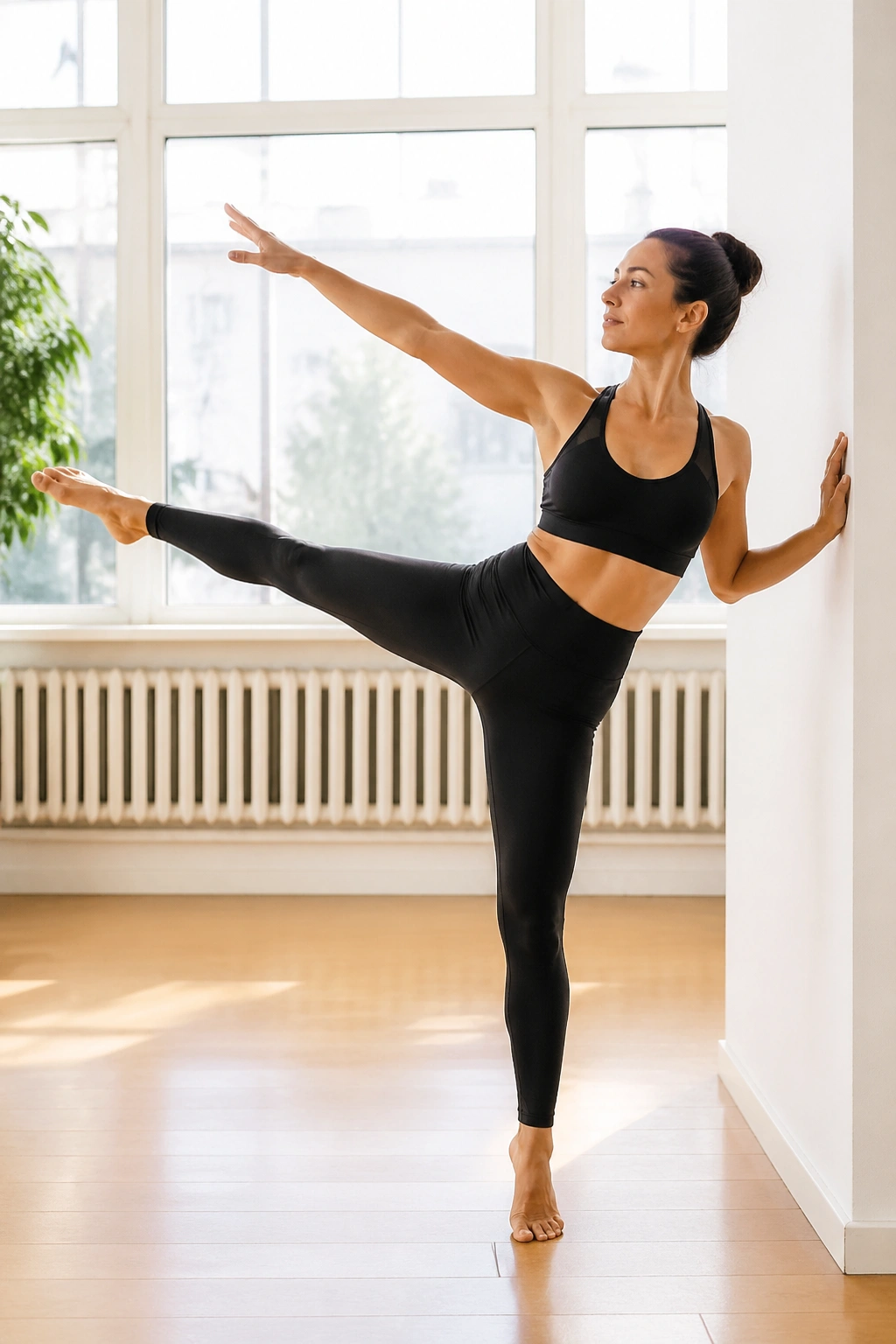
Unlike floor-only leg series, standing side kicks force your ankle, hip, and waist to stabilize at the same time. That extra balance demand is what makes the move feel more metabolic.
Hold onto a wall or chair with one hand, kick the free leg out to the side, then sweep it slightly behind you before bringing it home. The torso stays tall, the standing hip stays level, and the movement stays small enough to control. Big swings are useless here.
Try 8 kicks to the side, 8 to the back diagonal, then switch sides. Do 2 to 3 rounds. If you want a harder version, add a light ankle weight, but only if you can keep the pelvis from tilting.
The good part is how quickly the standing leg starts to fatigue. The better part is that the routine teaches clean single-leg control, which carries into almost everything else in Pilates.
11. Swimming to Superman Hold
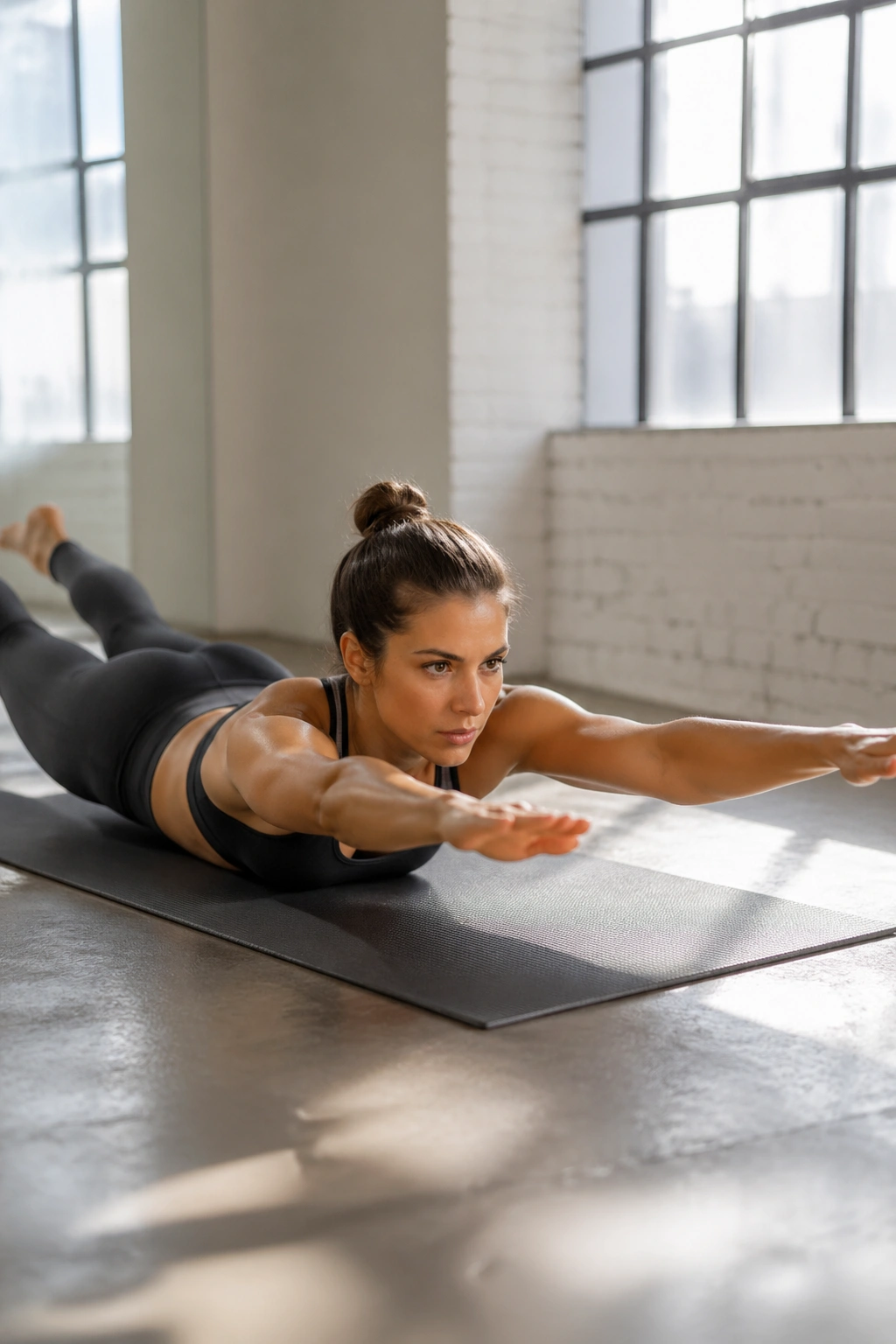
The burn here is sneaky. One minute you are fluttering arms and legs on the mat, and the next your upper back, glutes, and deep core are all working together like they have a grudge.
Lift the chest and legs slightly off the mat, alternate the arms and legs in a swimming pattern, then freeze in a small Superman hold for 10 seconds. That hold is where the challenge changes. Movement turns into isometric work, and the body has to stay honest.
Do 20 seconds of swimming, 10 seconds of hold, then rest 20 seconds. Repeat 5 rounds. Keep the neck long and your eyes down. If your lower back pinches, lift less.
This routine is not the one you rush through while thinking about the next thing on your list. It needs attention. When it gets attention, it delivers a very real back-body burn.
12. Reformer Footwork Ladder
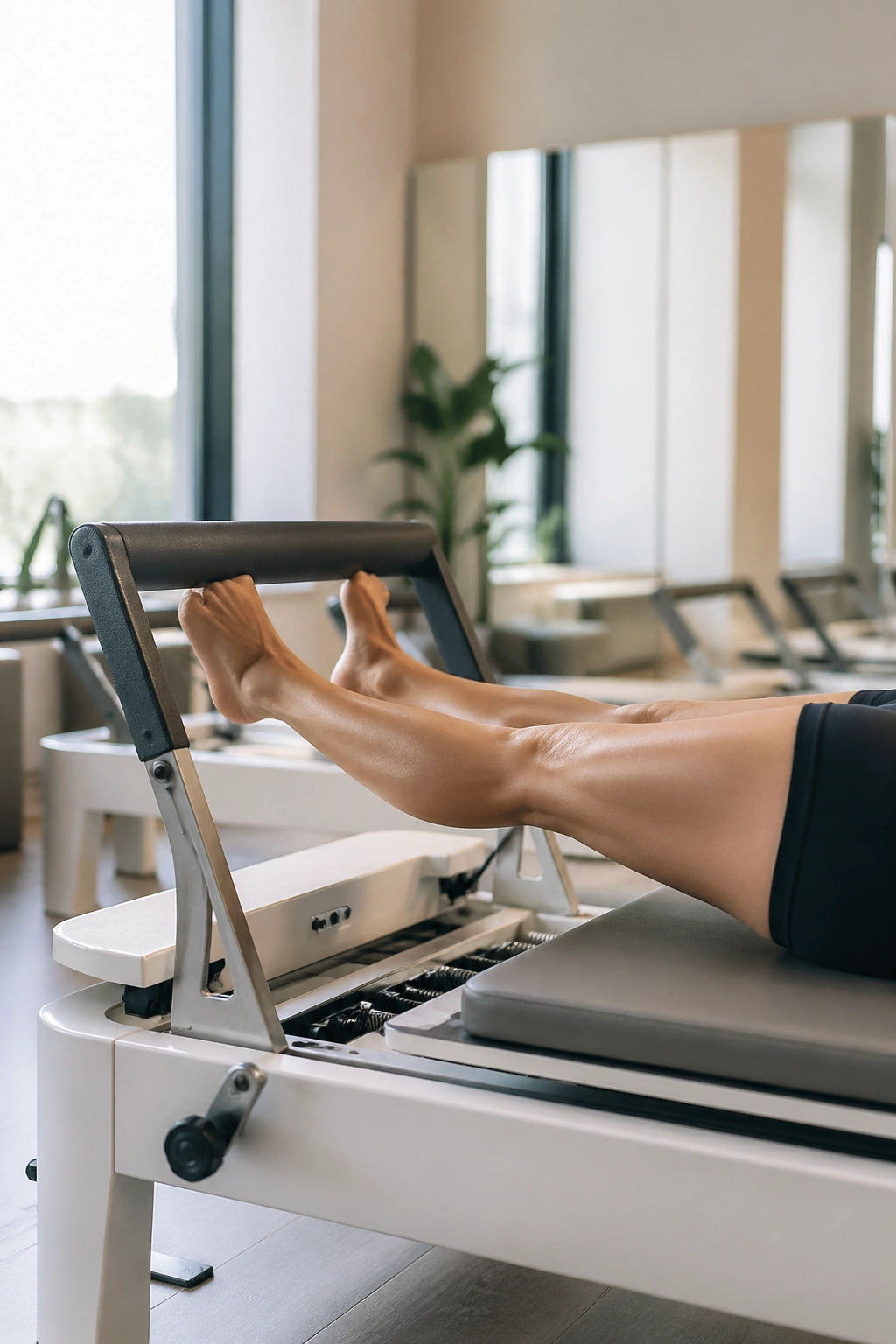
Reformer footwork looks polite until the springs start asking for steady control. Then the thighs begin to work, the glutes come online, and the whole thing turns into a serious lower-body interval.
Use a resistance level that lets you press out smoothly without slamming the carriage home. Work through 4 foot positions: parallel heels, parallel toes, wide toes turned out, and heels high on the bar. Do 8 to 10 reps in each position, then move on without lingering too long between sets.
A clean setup matters here. Keep the ribs down, the pelvis neutral, and the carriage moving like a quiet drawer instead of a banging door. If your knees wobble inward, reduce the resistance or slow the tempo.
This one is great because it loads the biggest muscles in the body with continuous tension. The heart rate rises, the legs flood with work, and the movement still stays low impact.
13. Long Stretch Series on the Reformer
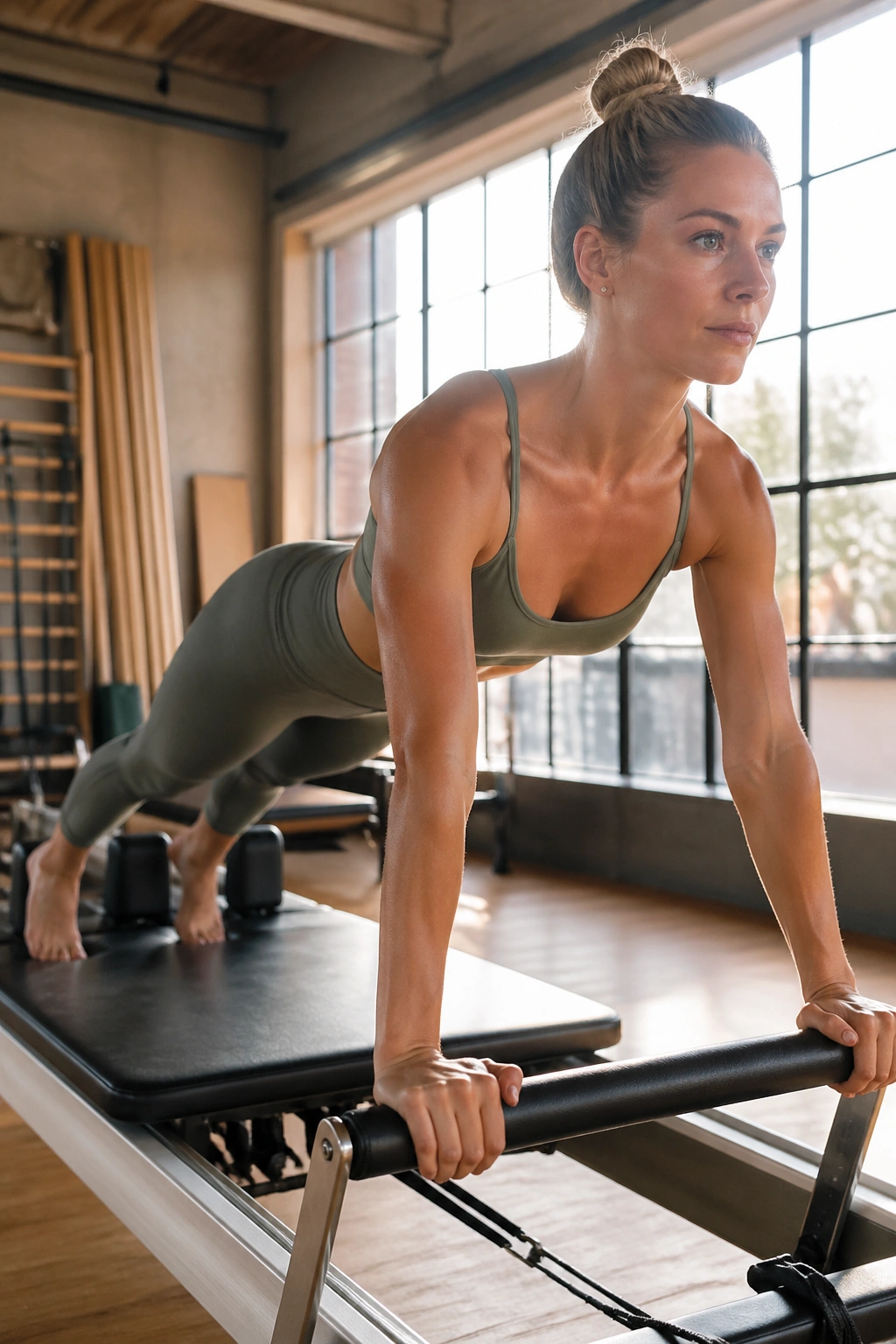
The long stretch series is where the reformer stops pretending to be easy. Plank, pike, and control work together, and your shoulders find out what they are made of.
The part that makes it hard
Start in a strong plank on the carriage, then move through long stretch, down stretch, and knee stretch with clean mechanics. Keep the platform moving under you, not against you. The goal is pressure without chaos.
Do 5 reps of each position, then rest for 30 seconds. Repeat for 2 to 3 rounds. The pace should be smooth enough to control but quick enough to keep the session from turning into a rest break with springs.
- Keep your gaze slightly forward.
- Press through the heels and the base of the fingers.
- Do not let the lower back sag.
- Stop before the shoulders start shrugging.
A lot of people think reformer Pilates is all graceful lines. Not this series. This one feels like strength work with a Pilates accent.
14. Kneeling Arm-Drive Cardio Burst
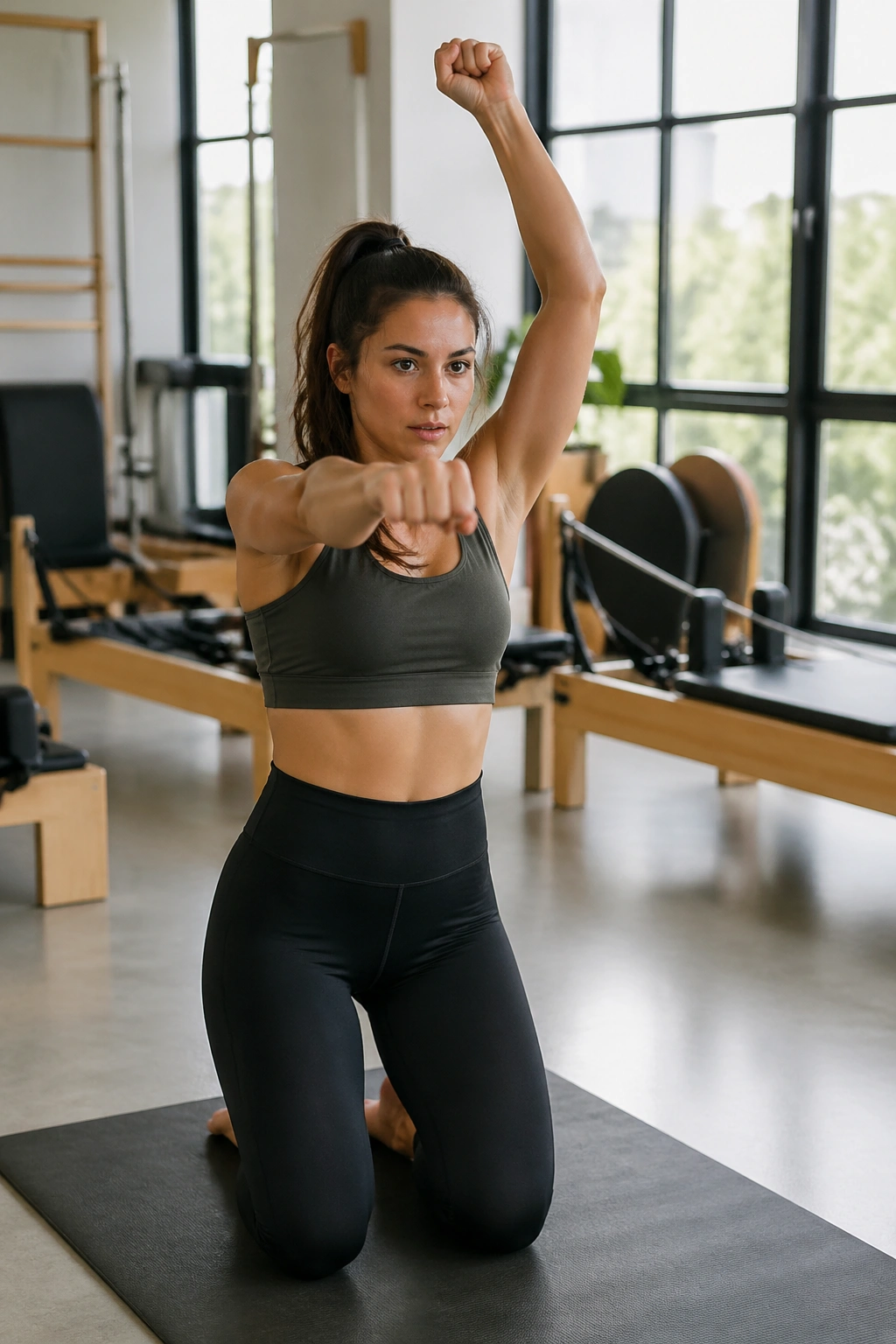
A kneeling sequence can be surprisingly brutal if the arms never stop moving and the core has to keep the torso upright the whole time.
Drop to both knees, hold a tall kneeling position, and punch the arms forward and overhead with light weights or no weights at all. Add small side reaches, then a chest-level row. The trunk has to resist the sway the whole time, which is where the challenge lives.
Use 30 seconds of arm drives, 20 seconds of a tall kneeling hold, and 30 seconds of rows. Run that circuit for 4 rounds. If your knees hate the floor, pad them well or skip this one entirely. No hero points for discomfort that serves no purpose.
The appeal is simple: the upper body starts burning, the core keeps the body from tipping, and the whole thing feels like a compact conditioning block.
15. Wall Sit With Pilates Arm Pump
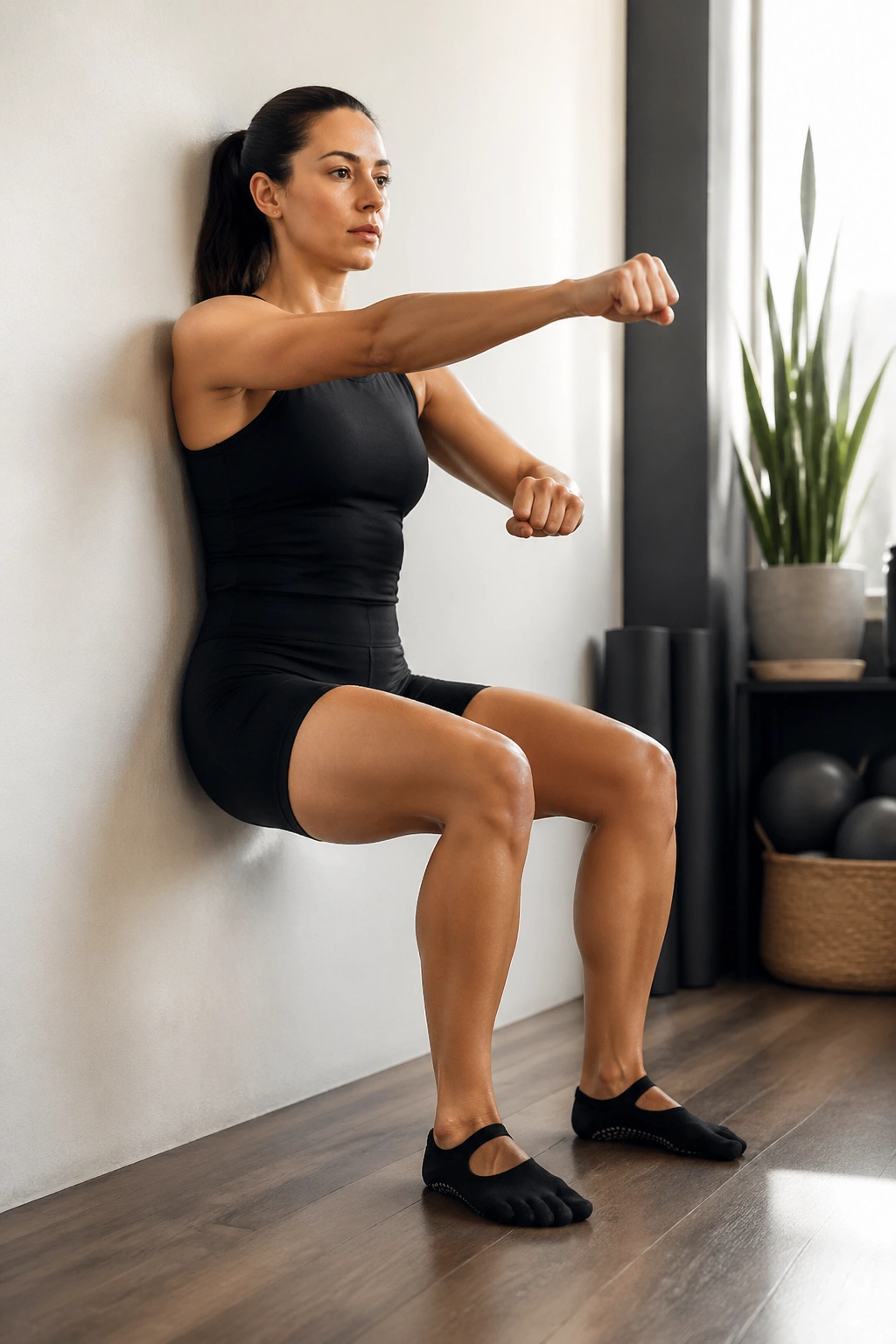
Can a wall sit be Pilates? If you keep the rib cage stacked, the pelvis neutral, and the arm pattern deliberate, yes. It fits the same control-first mindset.
Slide down the wall until your thighs are close to parallel with the floor, then hold a light arm position in front of the chest or overhead. Pump the arms in small, controlled ranges while the legs stay quiet. The thighs will complain before the arms do.
How to keep form clean
Hold for 30 to 45 seconds, then do 12 to 15 arm pumps. Rest 30 seconds and repeat for 3 rounds. Keep your lower back touching the wall and do not sink deeper just to make it harder. Lower is not always better.
This one is useful on days when you want a big muscle burn without a lot of choreography. It is plain, direct, and a little rude to the quads. That is fine.
16. Boat Pose and Scissor Kicks
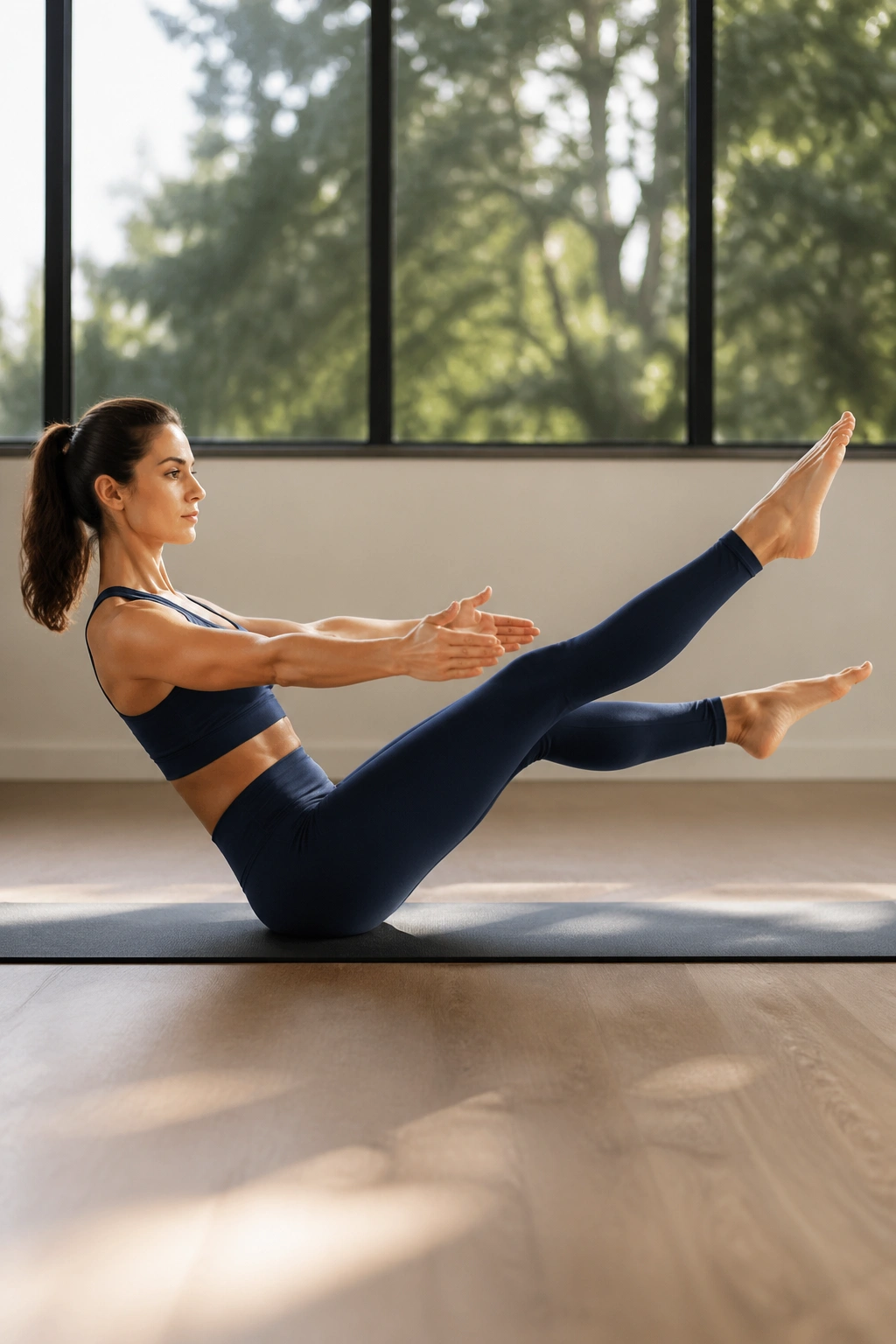
Boat pose by itself can feel like a hold. Add scissor kicks and it becomes a fast, focused core routine with a much sharper edge.
Sit tall, lean back slightly, and lift the feet into a controlled V shape. From there, alternate small scissor kicks while keeping the chest open and the spine long. The closer you get to the floor, the harder it gets, but there is no prize for collapsing.
Do 20 seconds of boat hold, 10 scissor kicks, then a 10-second rest. Repeat 4 to 5 times. If your lower back rounds, keep the knees bent and shorten the lever. That is the smart version.
Unlike endless crunches, this move trains the abs to stabilize while the legs move. That makes it useful for both visible core fatigue and the kind of control that carries into standing work.
17. Side-Lying Leg Burn Ladder
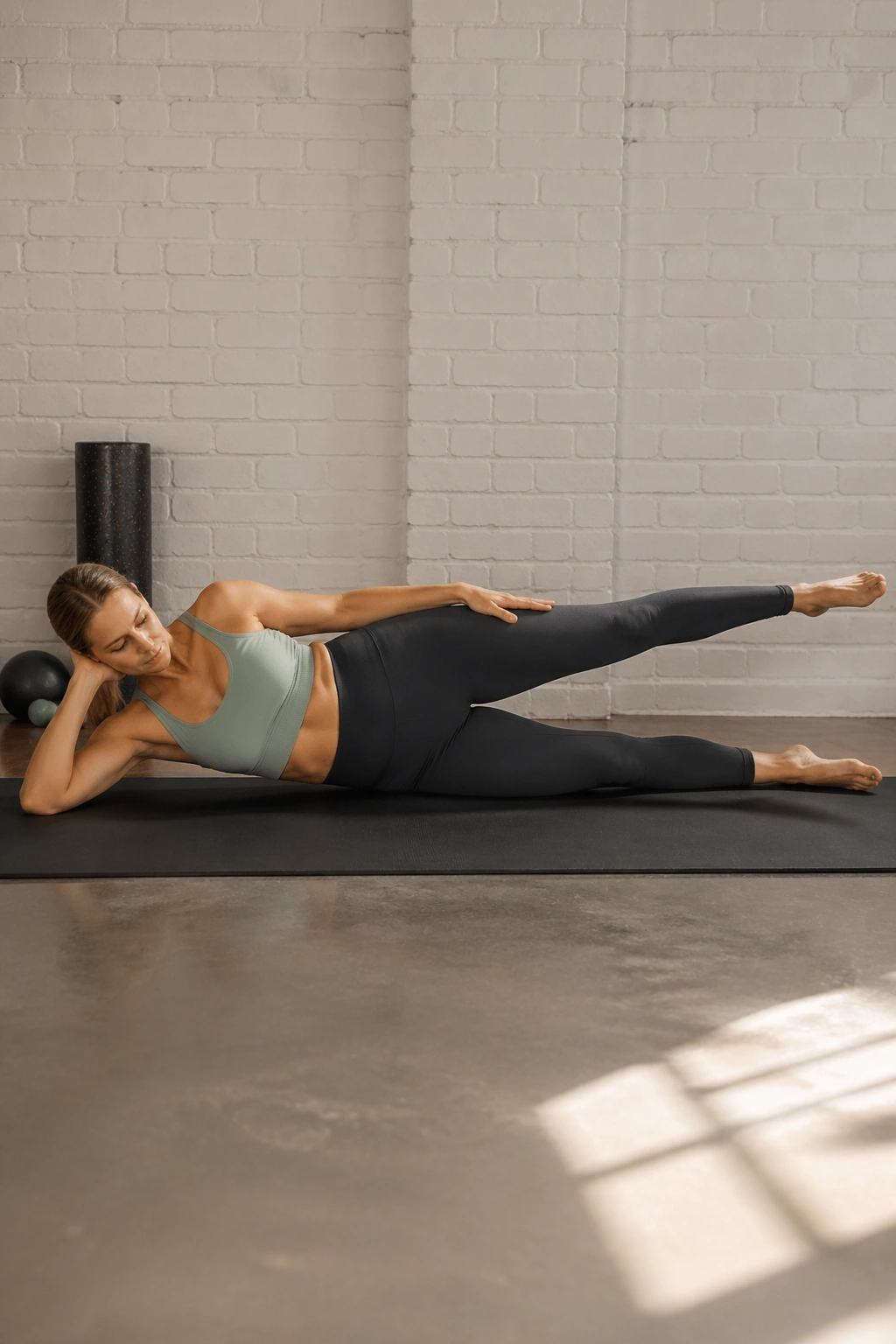
This is one of the least glamorous routines on the list, and it works. Side-lying leg series ask almost nothing from your joints and a lot from your glutes, outer thighs, and hip stabilizers.
Lie on your side, stack the hips, and lift the top leg in three zones: small lifts, medium lifts, then tiny pulses at the top. Follow that with leg circles and a bent-knee kickback. The position stays simple. The burn does not.
A good ladder is 10 small lifts, 10 medium lifts, 10 pulses, then 8 circles each direction. Do that on each side for 2 rounds. Keep the waist long and resist the urge to roll backward.
This routine does not feel exciting while you are doing it. Then you stand up and realize your hips are talking back every time you take a step. That is the kind of low-level fatigue that makes a Pilates workout feel useful.
18. Bird Dog to Knee Drive
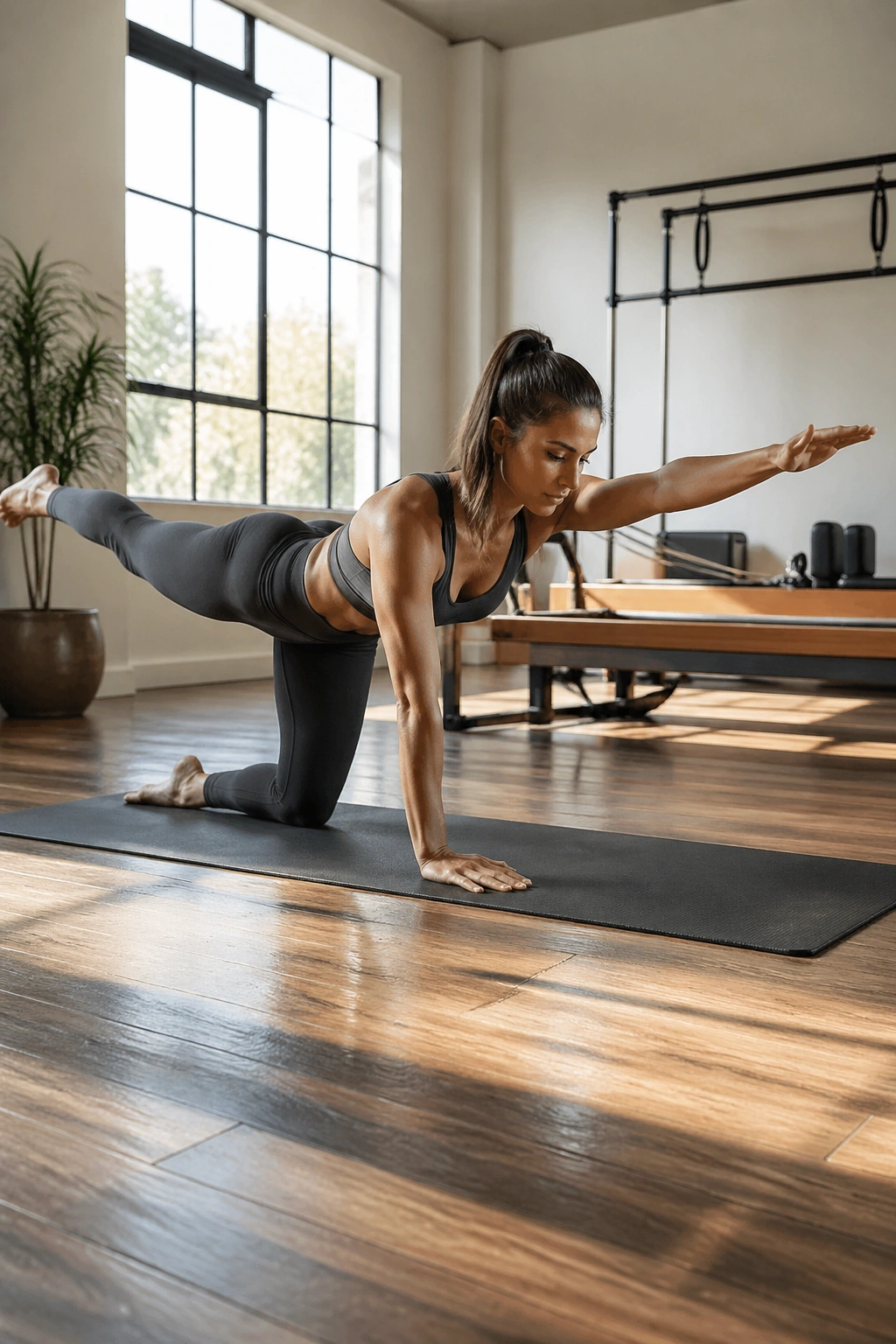
Bird dog is usually treated like a stability drill. Add a knee drive, and the whole thing starts to feel much more athletic.
From hands and knees, extend opposite arm and leg, hold for a beat, then drive the knee toward the elbow under the body. The spine stays quiet while the limbs move. That cross-body pattern gets the core involved without pounding the joints.
Do 8 reps per side, then hold each extended position for 5 seconds on the last round. Repeat for 3 sets. If your wrists get cranky, do it on fists or forearms. If your lower back arches, shorten the reach and slow down.
The nice thing about this move is that it works for a wide range of bodies. Beginners can keep it slow. Stronger movers can turn it into a brisk, sweaty sequence without losing the Pilates feel.
19. Lunge and Rotation Flow
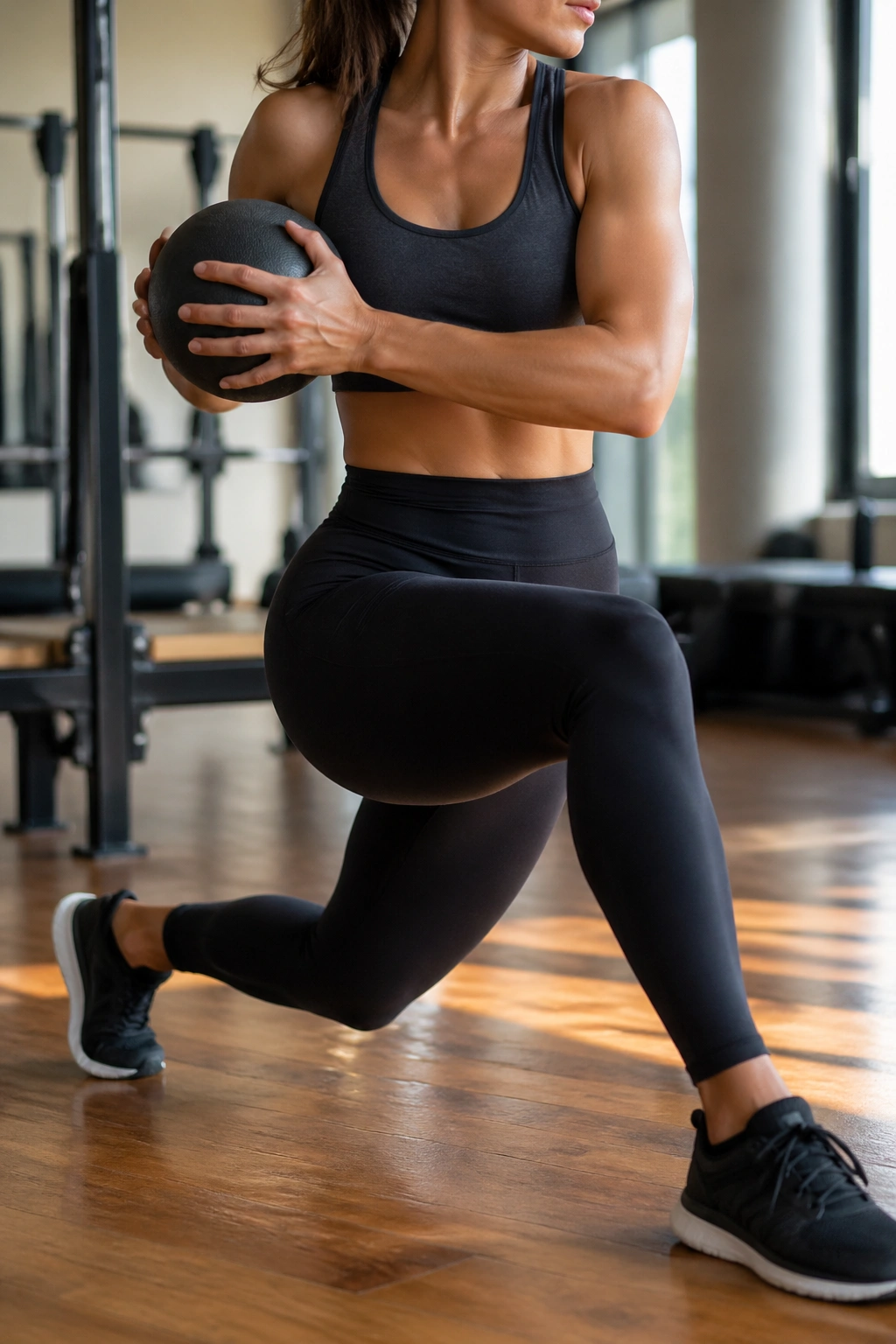
A lunge with rotation is where Pilates starts borrowing from functional training in a good way. One leg loads, the torso twists, and the body has to stay aligned while everything moves at once.
Step into a split stance, bend both knees into a shallow lunge, then rotate the torso toward the front leg. Keep the front knee steady and the back heel light. A small medicine ball or even clasped hands can add resistance without making the move messy.
Why the twist matters
Do 6 lunges and rotations per side, then repeat for 2 to 3 rounds. Move slowly enough to keep the back hip open and the ribs from flaring out. If the twist pulls you off balance, cut the range in half.
This is a good routine when you want a more dynamic session. It wakes up the legs, asks the core to brace, and gives the upper body a job instead of letting it coast.
20. Standing Skater Slide Pilates
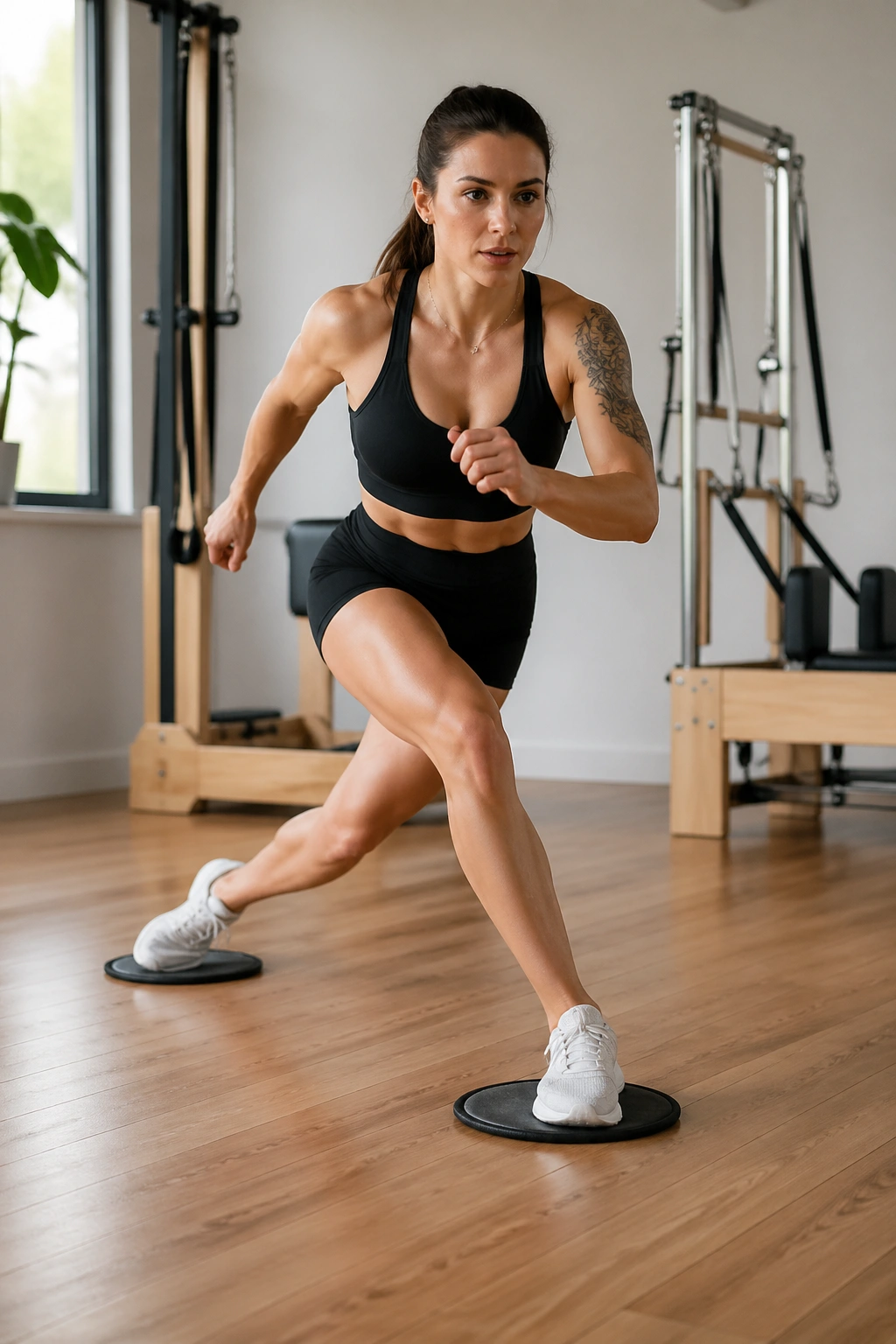
A side-to-side skater slide feels almost too simple until you string together a few rounds and your inner thighs start to burn. That is the good part.
Use sliders, socks on a smooth floor, or just a wide step-out pattern. Shift your weight from one leg to the other, reaching the free leg behind you in a small curtsy line while the torso stays slightly forward. The motion should stay low and controlled, not bouncy.
Do 40 seconds of sliding work, then rest for 20 seconds. Repeat 5 rounds. If you want more challenge, add a small arm sweep overhead on the standing side. The arms make the heart rate climb faster than people expect.
This routine is handy because it brings a little lateral movement into a Pilates plan that might otherwise stay too straight-line and predictable. Bodies like variety. They also like not being bored.
21. Full-Body Band Circuit
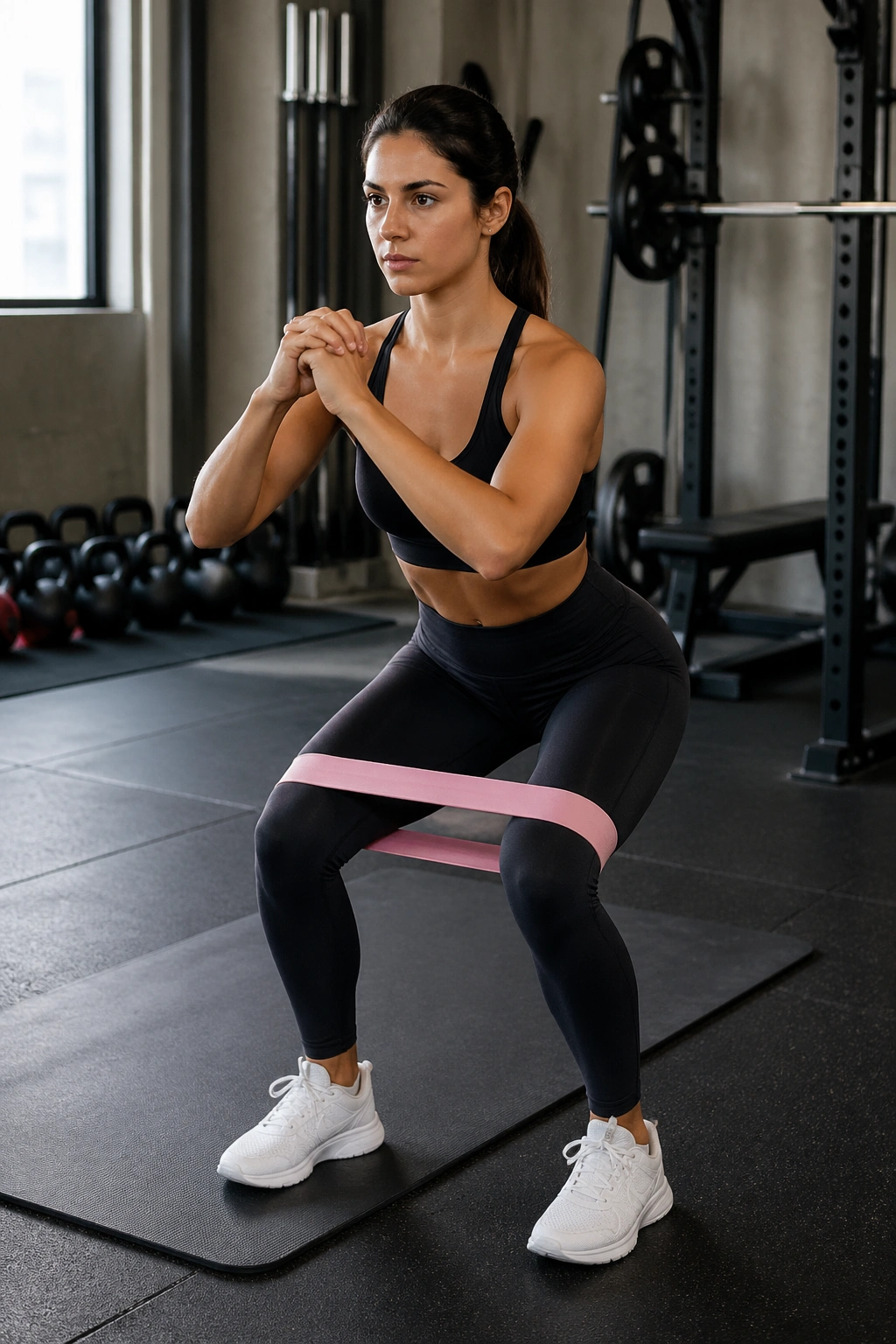
A band circuit gives you a lot of work in a small space. The band adds resistance, keeps the muscles under tension, and makes even simple moves feel denser than they look.
Loop a mini band above the knees and keep a long resistance band nearby for rows or presses. Start with a squat and overhead press, move into a standing row with a knee lift, then finish with a side step and reach. The band should stay tight, not limp.
Set it up in one loop
Pick 3 moves and do 30 seconds each with 15 seconds between exercises. Run the circuit for 4 rounds. If the band snaps around or rides up badly, choose a lighter one or slow the pace. Friction is part of the game, but chaos is not.
The circuit works because it never lets one muscle group relax for long. Legs, back, shoulders, and core keep trading the load, and that constant switch helps the workout feel much more like a fat-burning session than a single isolated drill.
22. The 10-Minute Fat-Burning Finisher
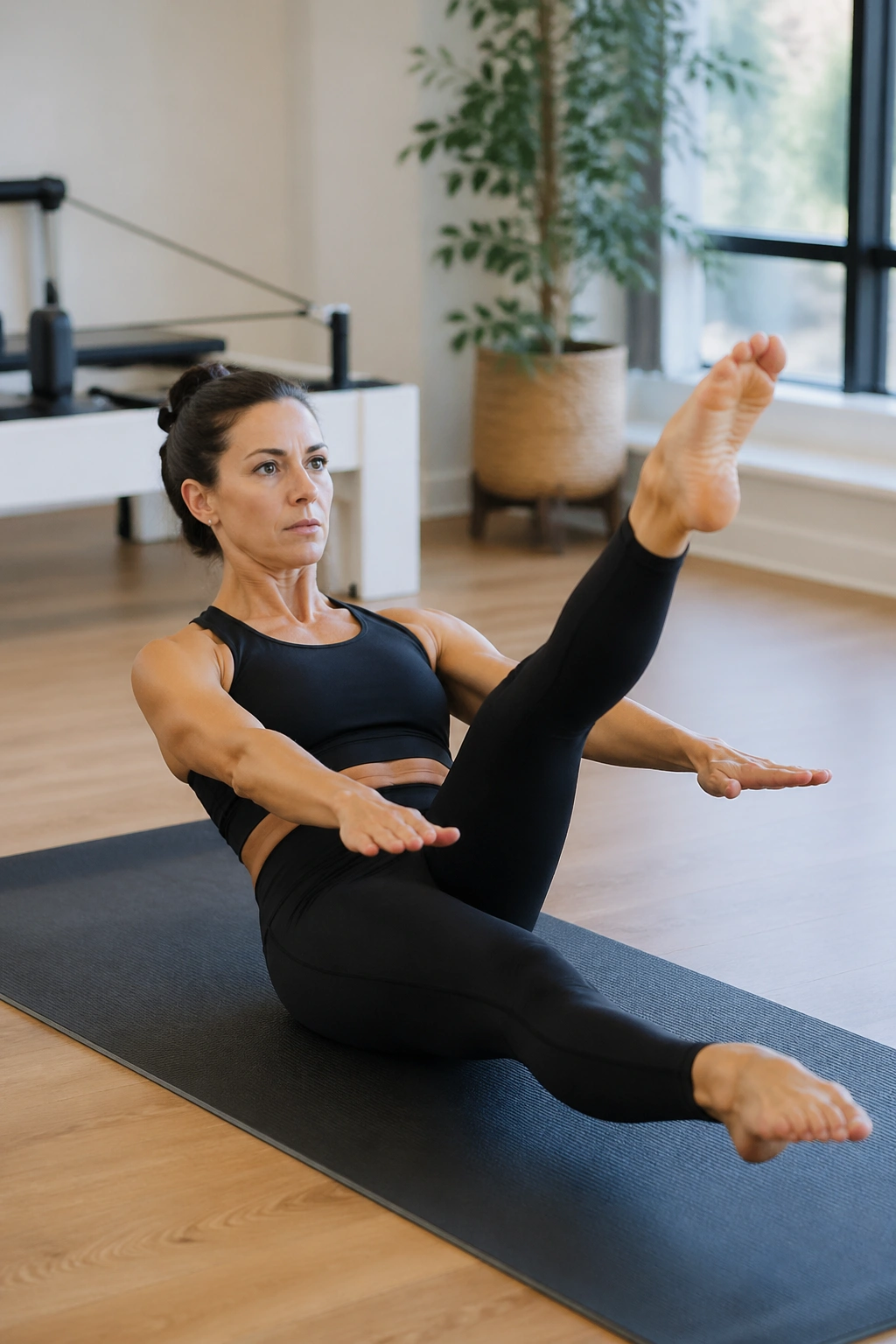
Short on time? This is the one I would keep. A tight finisher built from familiar Pilates patterns can create a lot of heat without demanding a full hour.
Run 30 seconds each of the Hundred, plank shoulder taps, squat pulses, side plank hip lifts, and glute bridge marches. Rest for 15 seconds between moves, then repeat the whole circuit once more. Keep the transitions quick and the form clean. If the pace gets sloppy, slow down before you pile on more rounds.
The finisher works best when your bigger training session already happened earlier in the week, but it also stands on its own on busy days. No fancy setup. No long equipment list. Just a sequence that keeps the body moving and the muscles under tension long enough to matter.
Use this one when you want the session to end with purpose instead of drifting away. A few clean rounds beat ten messy ones every time.
Keep the movements tight, the rests honest, and the core active on the way out and the way back. That is where the extra burn lives.
