



Seven minutes is enough to change how your body feels. A tight lower back can loosen, your deep abs can wake up, and your shoulders can stop creeping toward your ears — which is why quick Pilates workouts keep earning a place in real life, not only in polished studio schedules.
The big win is not magic. It is repeatability. A focused 8-minute mat block done four or five times a week will beat the one long class you keep postponing, and public-health exercise guidance has long treated shorter movement bouts as useful pieces of a full day rather than dead space.
Pilates also scales down well. The method was built around control, breath, position, and tension, not around marathon length. If your ribs pop up during toe taps or your neck grabs during the Hundred, you learn fast that another 30 sloppy minutes will not help. Better six clean minutes than twenty messy ones.
Some days you need a glute burner. Some days you need spinal mobility, or a quiet hotel-room routine, or a standing sequence you can do between meetings. Pick the session that matches the body you brought with you.
Why Quick Pilates Workouts Still Count
Short Pilates sessions work because focus beats sprawl. When you only have 6 to 10 minutes, you stop trying to do everything at once and give one job your full attention: deep core control, posture, hip mobility, shoulder stability, glute strength, whatever your body is asking for.
That matters more than people admit. Trials on Pilates have repeatedly found gains in core endurance, mobility, and body awareness when practice is done with consistency. The keyword there is consistency. An 8-minute session you repeat three times a week has more value than a 50-minute class you swear you will get to “soon.”
There is a limit, though. A short mat workout will not replace heavier strength training if your goal is building maximal leg strength, and it will not cover every piece of conditioning on its own. Different tool, different job.
Still, quick Pilates workouts do three things unusually well: they sharpen technique, they keep you moving on crowded days, and they make it easier to avoid the all-or-nothing trap. That is a strong return for a single-digit time investment.
The Small-Space Setup That Makes 10-Minute Pilates Easier
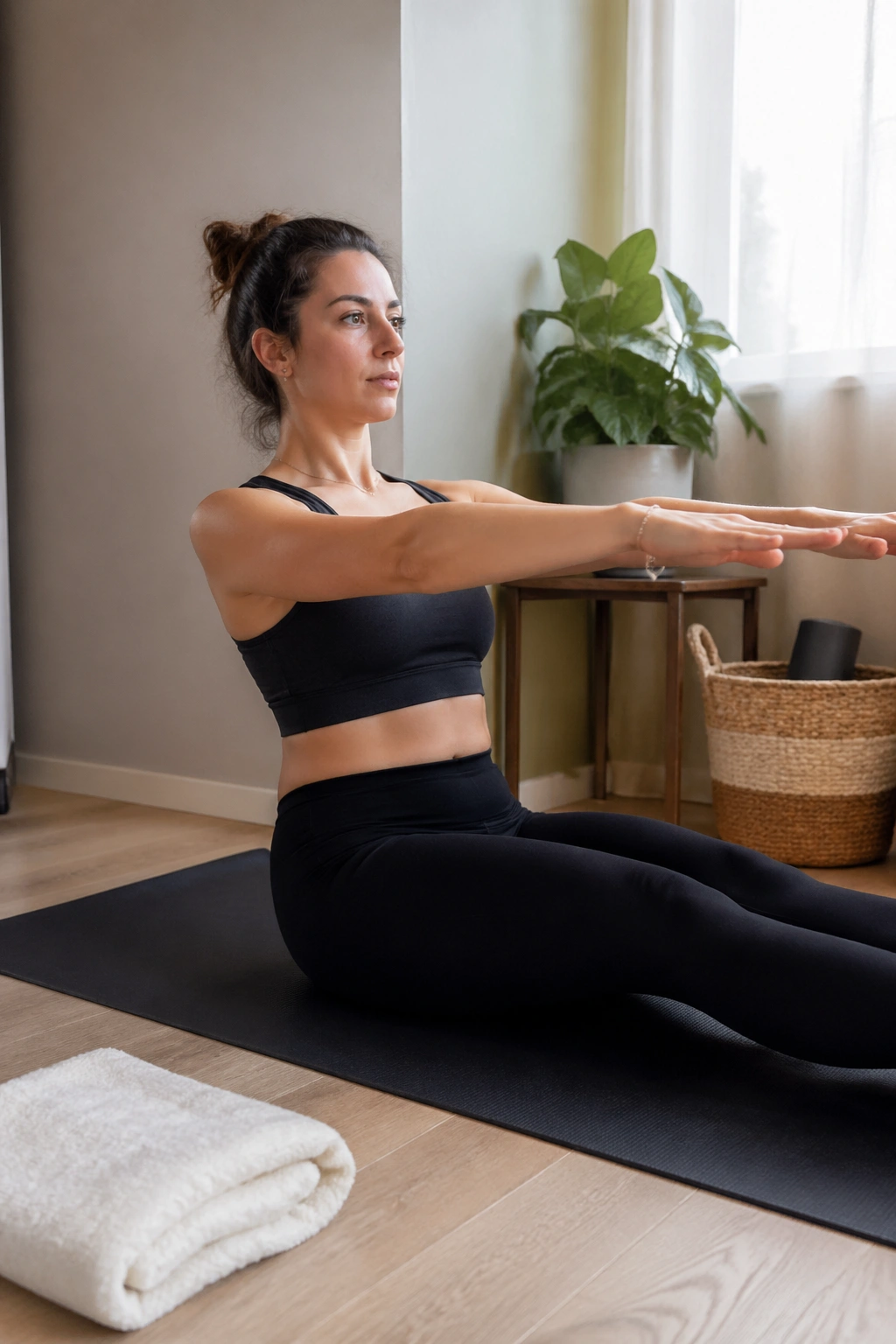
A mat, a wall, and a timer handle most of this list.
You do not need a studio reformer, mirror wall, or a shelf full of props. What helps is having one small setup that removes friction so you can start in under 30 seconds.
A simple home kit
- A mat or folded towel for traction on hard floors and a bit of cushioning for your spine.
- A pillow or yoga block for inner-thigh squeezes, bridge work, or head support.
- A wall for posture drills, standing balance, and leg work without wobbling all over the room.
- A light resistance band for pull-aparts, presses, and reformer-inspired moves.
- Two light dumbbells, 2 to 3 pounds each, if you want upper-back and arm work without turning the session into shoulder strain.
- A phone timer set to 30-second, 40-second, or 60-second intervals.
Shoes usually get in the way here. Bare feet or grippy socks make it easier to feel tripod foot pressure — heel, big toe mound, little toe mound — which matters more than people expect in standing Pilates.
Hotel room? Two bath towels on carpet will do. I have done that more than once, and it works better than skipping the session.
The Breath and Alignment Cues That Keep Fast Pilates Effective
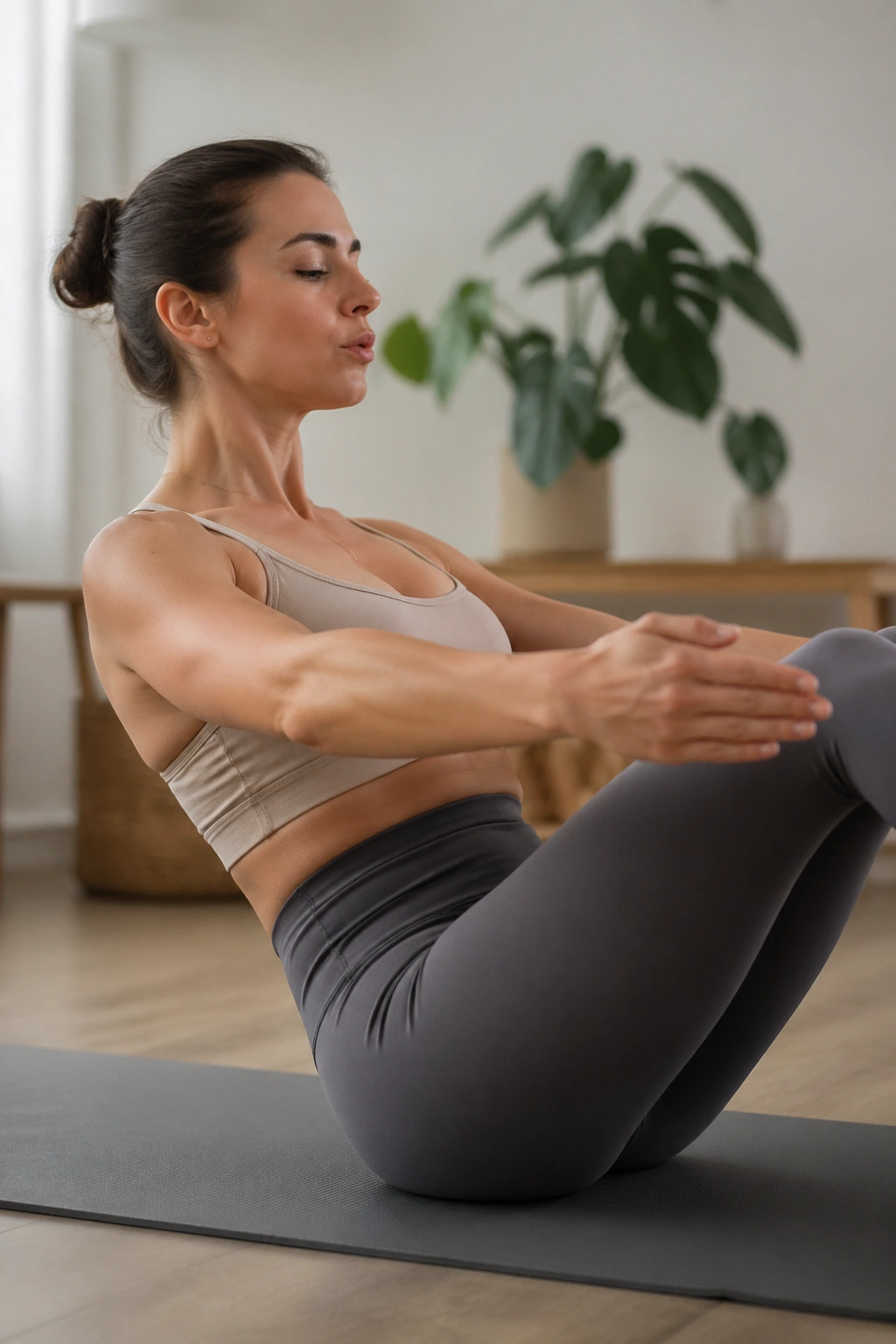
More speed is not the answer.
Exhale on the work
Use your exhale on the hard part of each move: lifting into bridge, tapping a leg away from tabletop, pressing the band apart, peeling the spine off the mat. That exhale helps the deep abdominals and pelvic floor organize the trunk. You should feel your waist narrow a touch, not your ribs flare upward.
Make the range smaller before you make it harder
If toe taps pull your lower back off the mat, the fix is not to “push through.” Bend the knees more. Move one leg at a time. Tap higher. Smaller range with clean control beats bigger range with a loose midsection every single time.
Watch the three common leaks
Neck tension, rib popping, and top-hip rocking show up in rushed sessions again and again.
If your neck starts doing the work, place your head down or support it with a folded towel. If your ribs lift, soften them and shorten the lever. If your top hip rocks backward in side-lying leg work, stack the hips and aim long through the leg rather than high into the air.
Sharp pain, numbness, or dizziness are not Pilates problems to “fix” with grit. Stop.
1. Wake-Up Spinal Roll and Hundred Flow
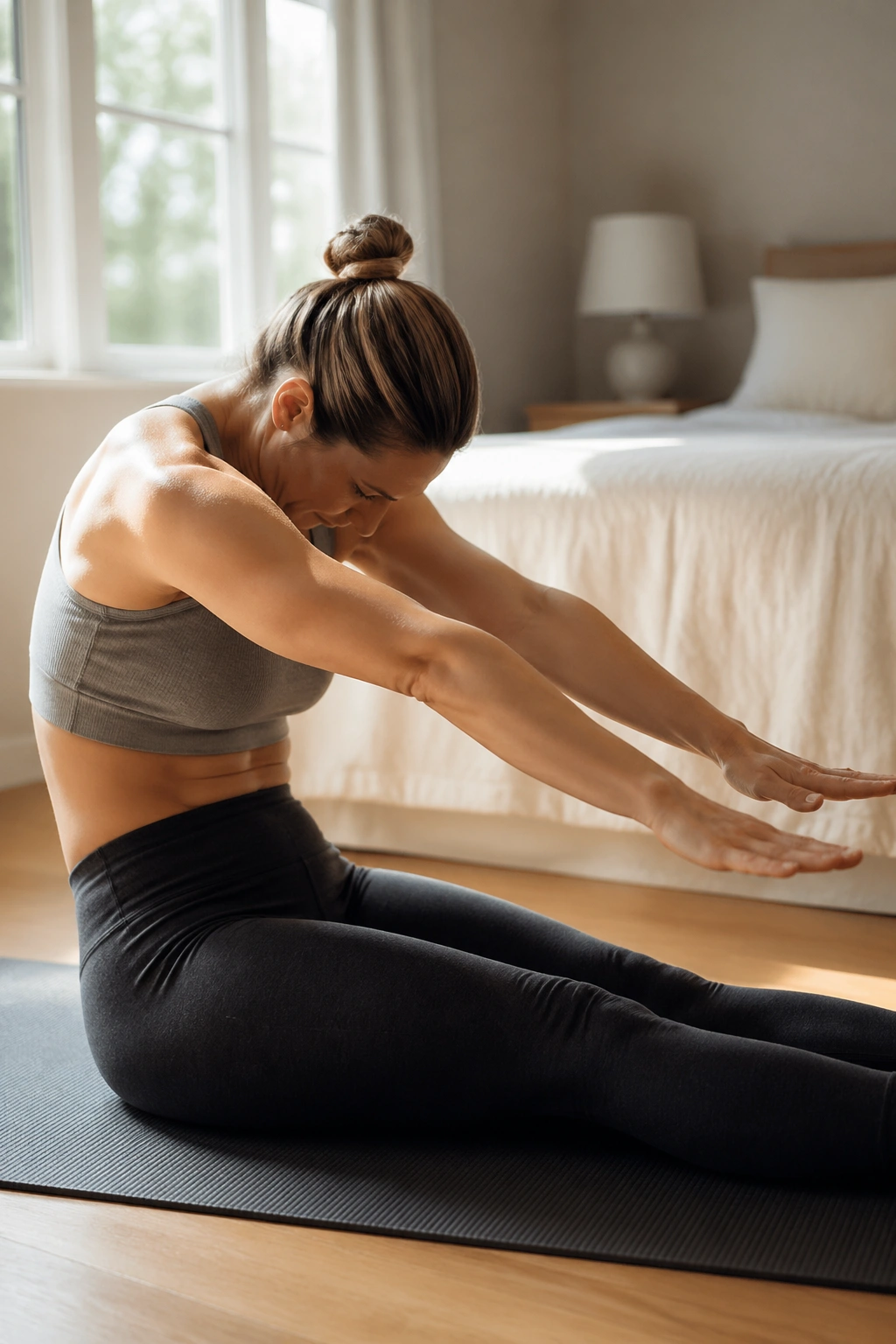
Morning stiffness has a pattern: sleepy abs, tight calves, and a spine that feels like it spent the night folded into a box. This 8-minute flow is one of my favorite ways to start the day because it wakes up the trunk without asking for circus-level flexibility before coffee.
Use the first minute to stand tall and breathe into the sides and back of your ribs. Then roll down one vertebra at a time, bend the knees enough to let the spine hang, and slowly stack back up. After 3 to 4 roll-downs, move to the mat.
8-minute sequence
- 1 minute: Standing roll-downs with soft knees, pausing for one full breath at the bottom.
- 1 minute: Half roll-backs seated on the mat, hands behind thighs, stopping when your abs switch on.
- 90 seconds: The Hundred with bent knees in tabletop or feet down if your neck complains.
- 90 seconds: Single-leg stretch, slow enough to keep the pelvis still.
- 90 seconds: Double toe taps or heel taps from tabletop.
- 2 minutes: Spine stretch forward and a gentle seated twist, alternating breath with each rep.
Pro tip: If the Hundred turns into a neck workout, keep your head on the mat and pump the arms from the shoulders. You still get the breath pattern and deep core connection without the strain.
2. Desk-Break Hip Opener Sequence
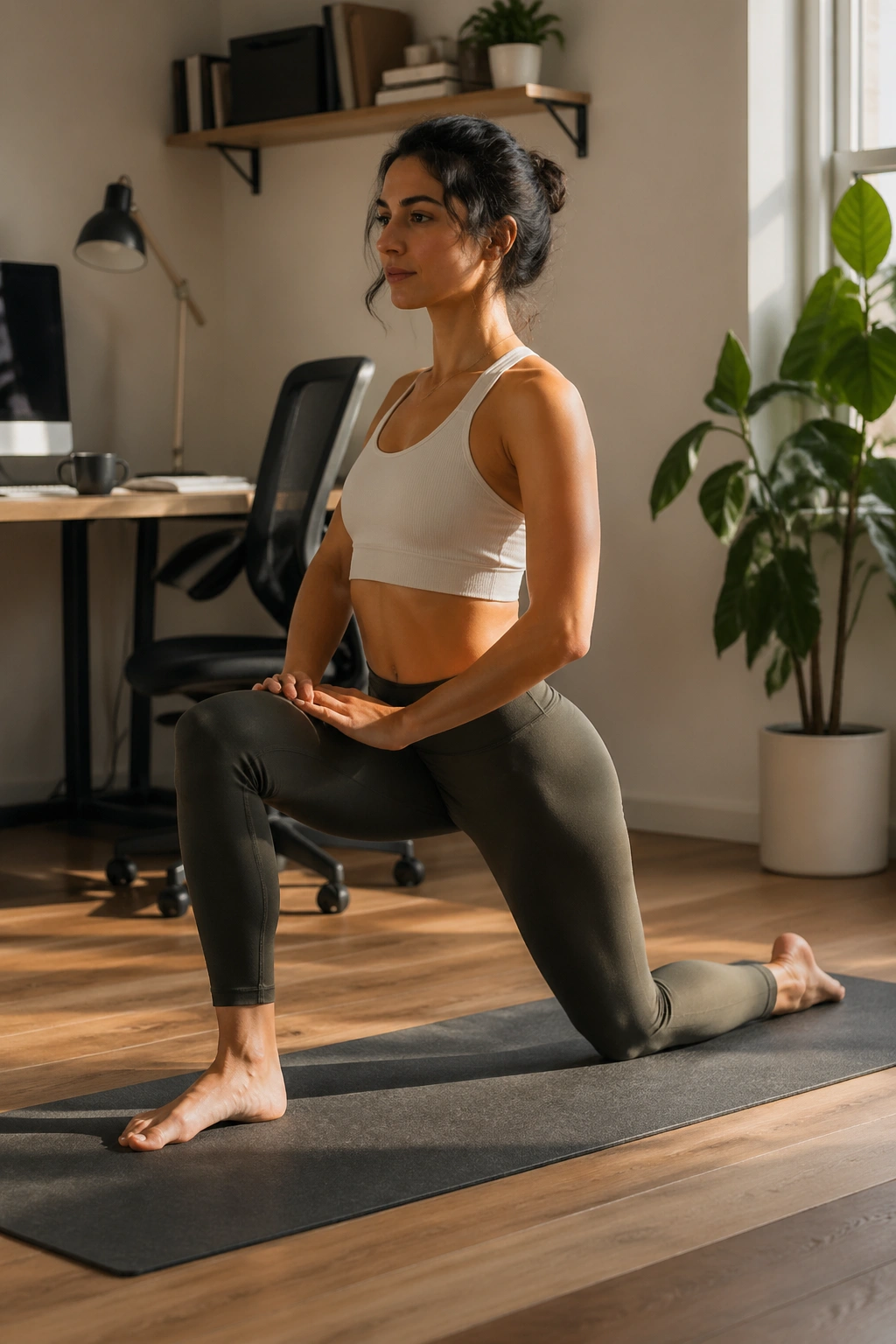
Sitting all morning can make your hips feel older than the rest of you. Long static holds are not my first pick here. A moving sequence usually frees up the front of the hips faster and leaves you less groggy when you head back to work.
Start with 60 seconds of standing roll-downs and mini squats, not deep ones — think chair height, not gym PR. Drop to a half-kneeling lunge with the right foot forward for 75 seconds, then switch sides. Tuck the tail slightly, squeeze the glute of the kneeling leg, and reach the same-side arm overhead for the final 20 seconds. That glute squeeze is the piece people skip, and it is the piece that changes the stretch from vague to useful.
From there, spend 90 seconds in quadruped rock-backs, sending the hips toward the heels while keeping a long spine. Finish with a 45-second mermaid stretch on each side and 30 seconds of figure-four sitting or lying on your back per side.
You should stand up feeling more upright, not floppy. If the front of the kneeling hip pinches, put a folded towel under the back knee and shorten the stance by 3 to 4 inches.
3. Standing Wall Posture Reset
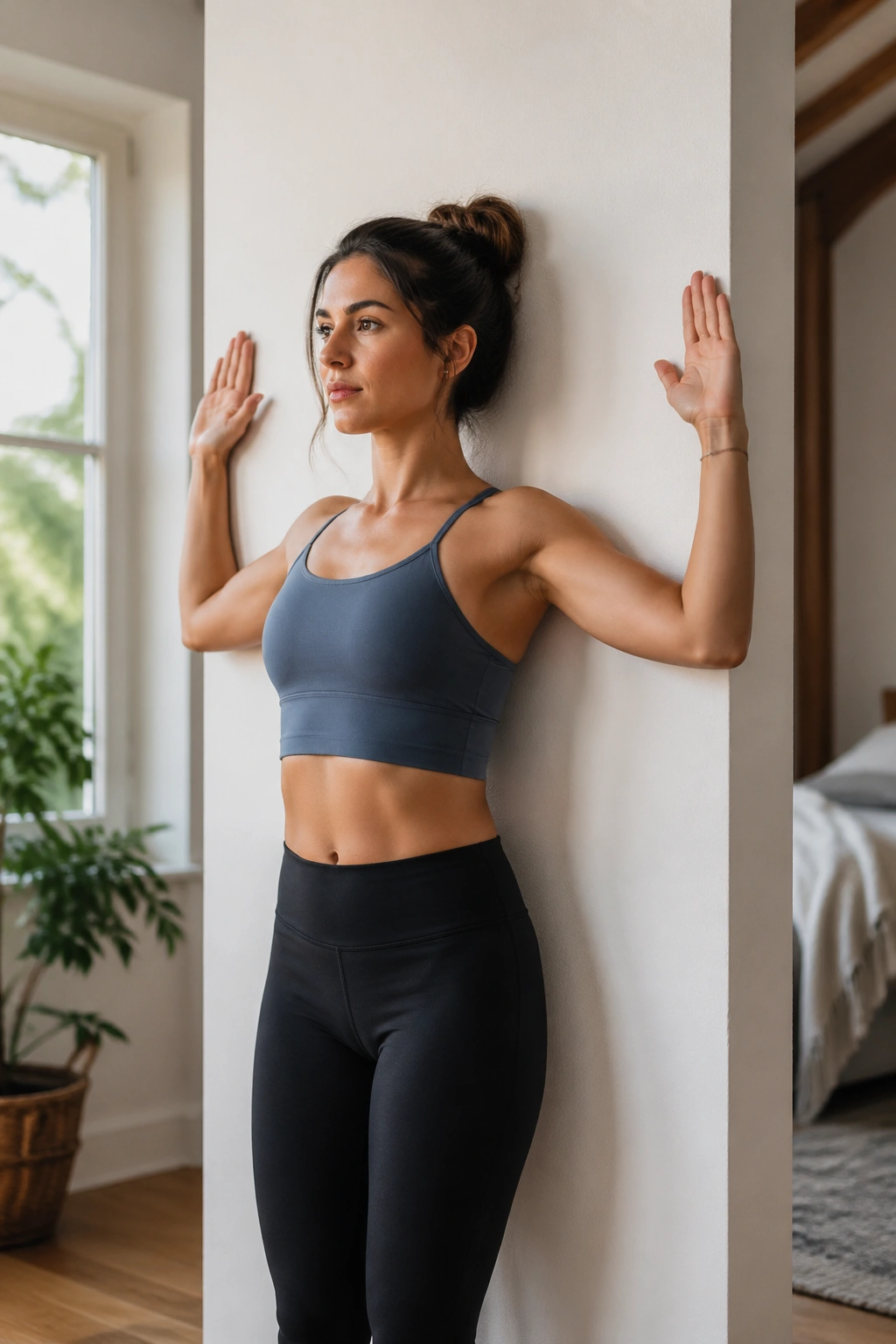
Got a wall and six spare minutes? That is enough for a posture tune-up that can undo a chunk of laptop slump without dropping to the floor.
A wall gives you honest feedback. It shows whether your ribs are jutting, whether your head is drifting forward, and whether your shoulder blades can glide without your lower back jumping in to help.
Run it like this
- Stand with heels 2 to 3 inches from the wall and rest your pelvis, rib cage, and back of head lightly against it for 45 seconds. Do not force your lower back flat.
- Slide the arms into a goalpost shape and perform slow wall slides for 60 seconds, stopping before the ribs pop.
- Lift onto your toes and lower with control for 45 seconds, keeping the crown of the head tall.
- Hold a wall sit at a shallow angle for 45 seconds while reaching the arms forward and back without shrugging.
- Do standing chest expansion for 60 seconds: arms long by your sides, palms facing back, tiny pulse backward from the upper back.
- Finish with 45 seconds of wall roll-downs, peeling away one segment at a time.
When this one works, you feel taller right away. If your chin lifts at the wall, place a folded hand towel behind the head rather than jamming the skull back.
4. Supine Deep Core Imprint Circuit
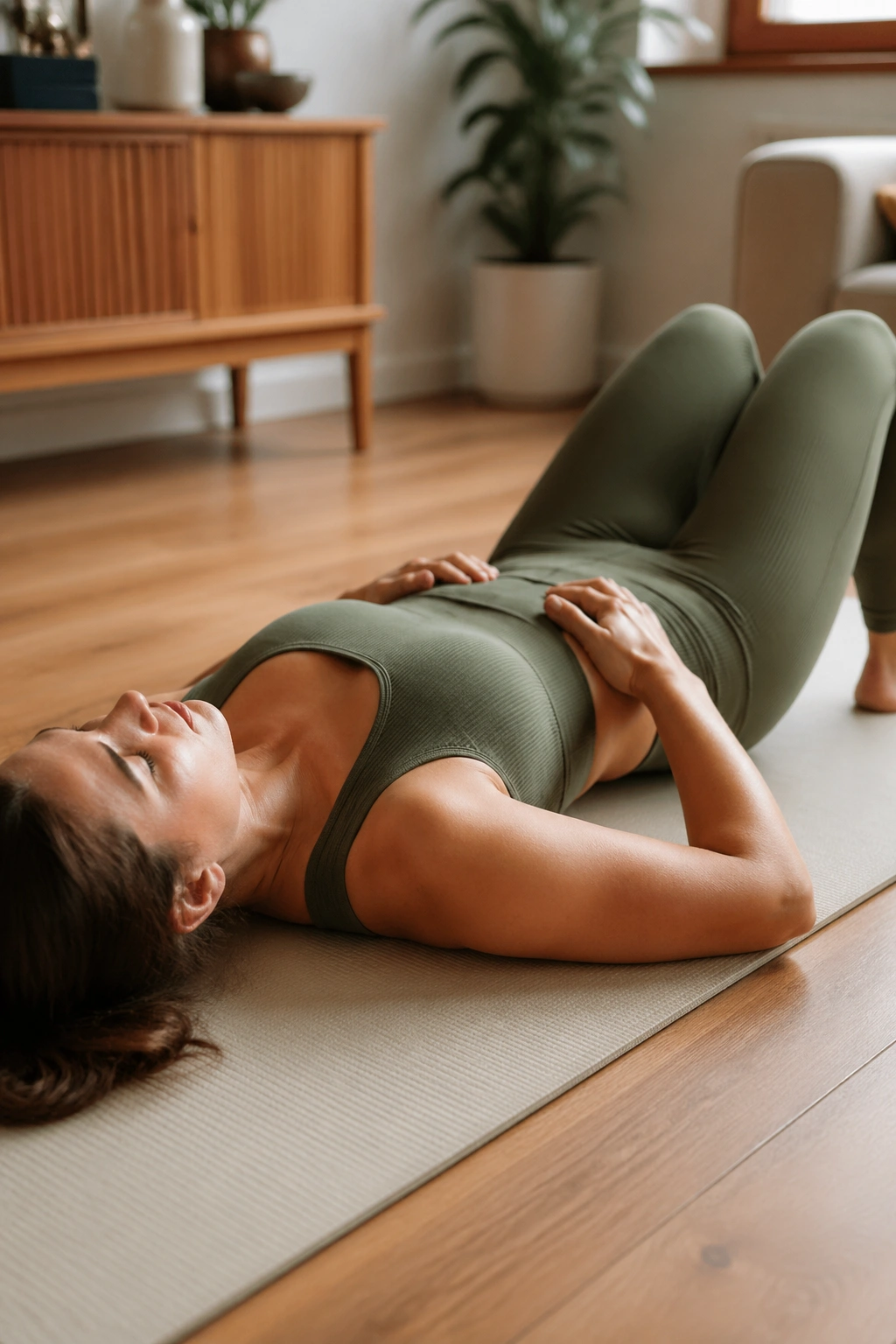
After a long drive or a day spent planted in a chair, this is the circuit I reach for when I want my abs to turn on without turning the session into a hip-flexor fight. It is all on your back, which makes it easier to notice whether your ribs and pelvis are staying connected.
Place your feet on the floor, knees bent, hands on the sides of your lower ribs. Breathe in wide. Exhale and feel the front ribs soften. That is your starting point.
Use this 8-minute sequence
- 1 minute: Imprint breathing with feet down, matching a slow exhale to the feeling of the low abs drawing inward.
- 1 minute: Heel slides, one leg at a time, keeping the pelvis quiet.
- 90 seconds: Toe taps from tabletop.
- 90 seconds: Dead bug with opposite arm and leg reaching away.
- 1 minute: Single-leg lowers on the right, knee slightly bent if needed.
- 1 minute: Single-leg lowers on the left.
- 90 seconds: Tabletop march hold, alternating tiny lifts without losing contact through the rib cage.
A lower back that arches off the mat is not a badge of effort. It is feedback. Shorten the leg reach, bend the knees more, and keep going with better form.
5. Glute Bridge and Side-Leg Burner
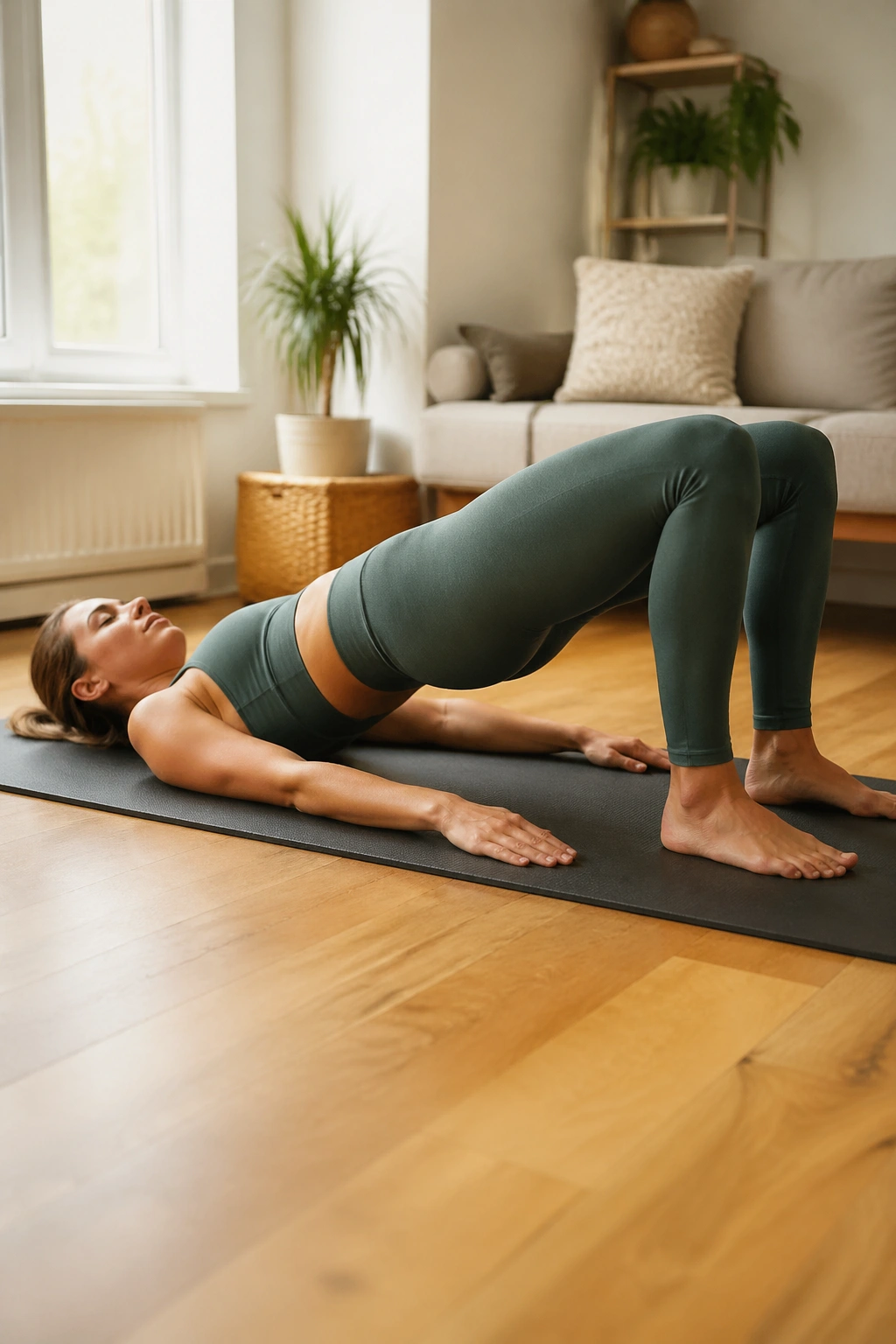
Your glutes should feel warm by minute three.
This 9-minute lower-body session looks mild on paper, then it sneaks up on you. Bridge work trains hip extension without loading the spine much, and the side-lying series lights up glute medius — the side-seat muscle that helps with pelvic stability when you walk, run, climb stairs, or stand on one leg to put on pants without toppling over.
Spend the first 4 minutes on your back. Do 10 slow bridges with a two-second squeeze at the top, 10 bridge pulses in the lifted position, then 10 marching bridges alternating right and left. Run that mini-cycle twice. Keep your knees reaching forward, not flaring wide, and stop the bridge at the point where your ribs still feel heavy rather than thrusting upward.
Roll onto one side for 2 minutes, then switch. Lift the top leg to hip height, lower with control, add 10 small circles each direction, then finish with clam reps if your hips tolerate bent-knee work better than straight-leg lifts. A hand on the top hip helps — if that hip rocks backward, you have gone too far.
This one pairs well with walking days, and it is a strong choice if squats bother your knees.
6. Mermaid Side-Waist Flow
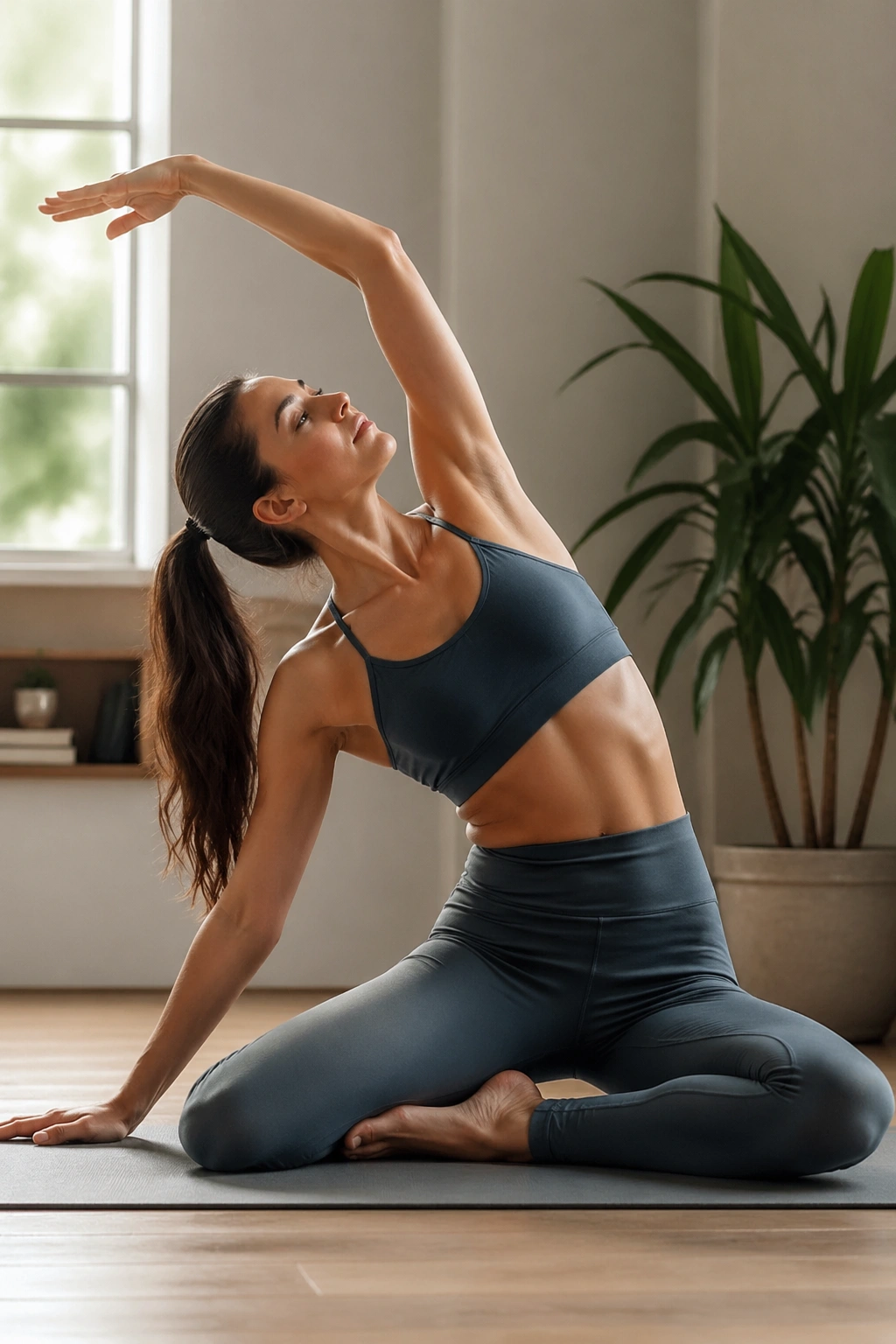
Unlike crunch-heavy ab routines, this 7-minute sequence trains the side body, the ribs, and the obliques in a way that makes your torso feel longer rather than compressed. That is a big deal if your day includes a car seat, desk chair, or any sport where you spend time hunched forward.
Open in a mermaid sit with one shin folded in front and the other bent to the side. If that position annoys your hips, sit on a cushion or straighten both legs. Reach one arm overhead and side-bend for 45 seconds, then add a gentle rotation toward the floor for another 15. Switch sides.
From there, lie on your side and do 60 seconds of side-lying oblique curls per side — small lifts, ribs knitting down, bottom waist drawing up from the mat. Finish with 45 seconds per side of side kicks front and back, not high, not wild, with the torso held steady.
Who gets the most from this? Runners, rowers, cyclists, and anyone whose rib cage feels stiff during breathing. The cue I come back to is length first, lift second. Reach long through the crown of the head before you ask for height.
7. Cat-Cow to Swan Back Relief Session
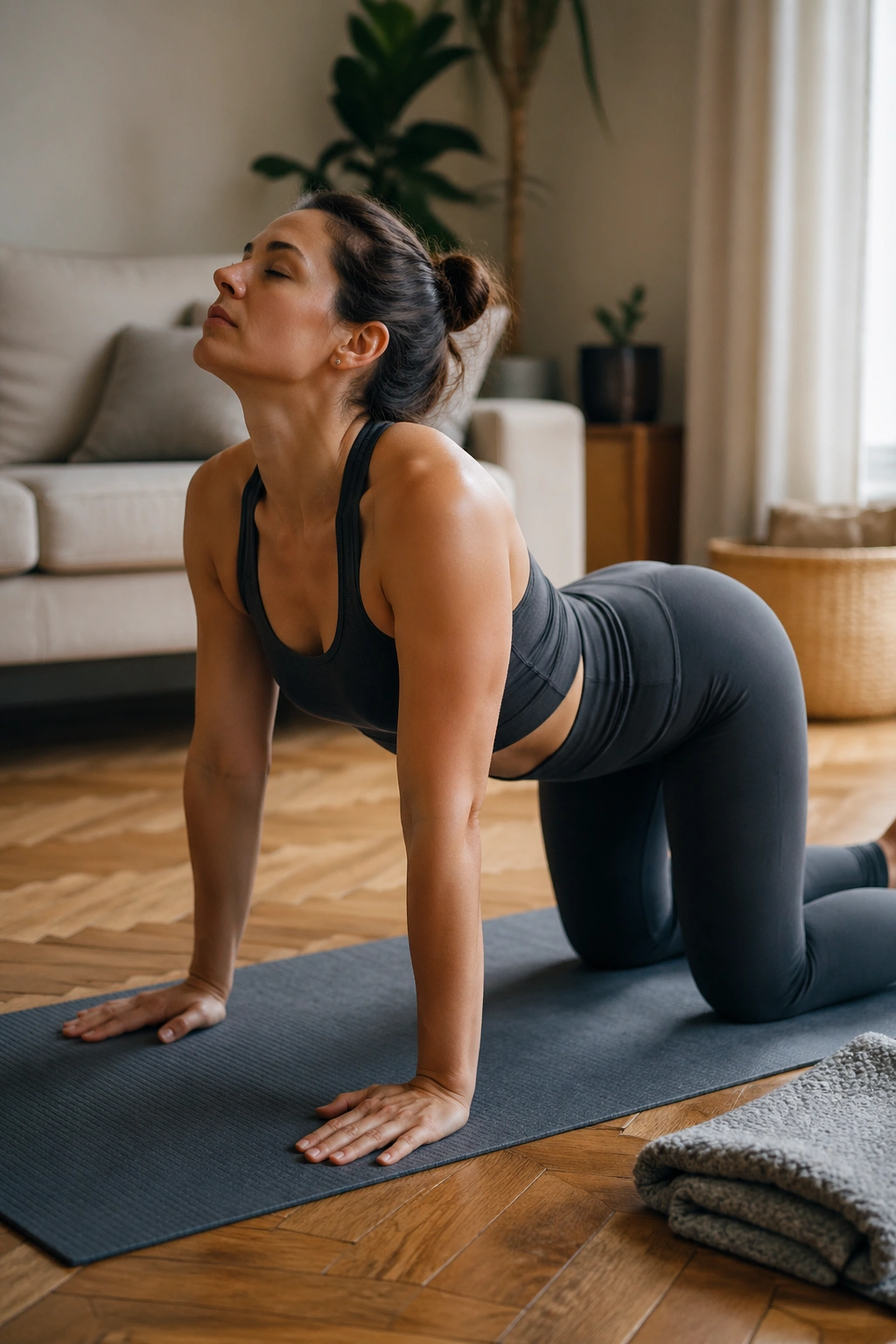
When your back feels sticky rather than injured — the kind of stiffness that shows up after travel, gardening, or an afternoon of hunching over a screen — a short flexion-to-extension session can help more than lying flat and hoping time sorts it out.
Use a folded towel under the knees if the floor feels mean. Start in quadruped and move through 60 seconds of cat-cow, slow enough to feel each piece of the spine. Follow with 45 seconds of thread-the-needle on each side, reaching the arm under the body and letting the upper back rotate.
Seven-minute release
- 1 minute: Cat-cow with breath, exhaling into the rounded shape and inhaling into gentle extension.
- 90 seconds: Thread-the-needle, 45 seconds each side.
- 1 minute: Rock-backs toward the heels with a long spine.
- 90 seconds: Sphinx hold, shoulders down and chest broad.
- 1 minute: Baby swan lifts from the floor, lifting only a few inches.
- 1 minute: Child’s pose breathing or prone rest if flexion feels worse than extension.
Watch for pinchiness. If swan bothers the low back, make the lift smaller and think chest forward, not chin up. The movement should feel lengthening, not jammed.
8. Pillow-Squeeze Inner-Thigh Routine
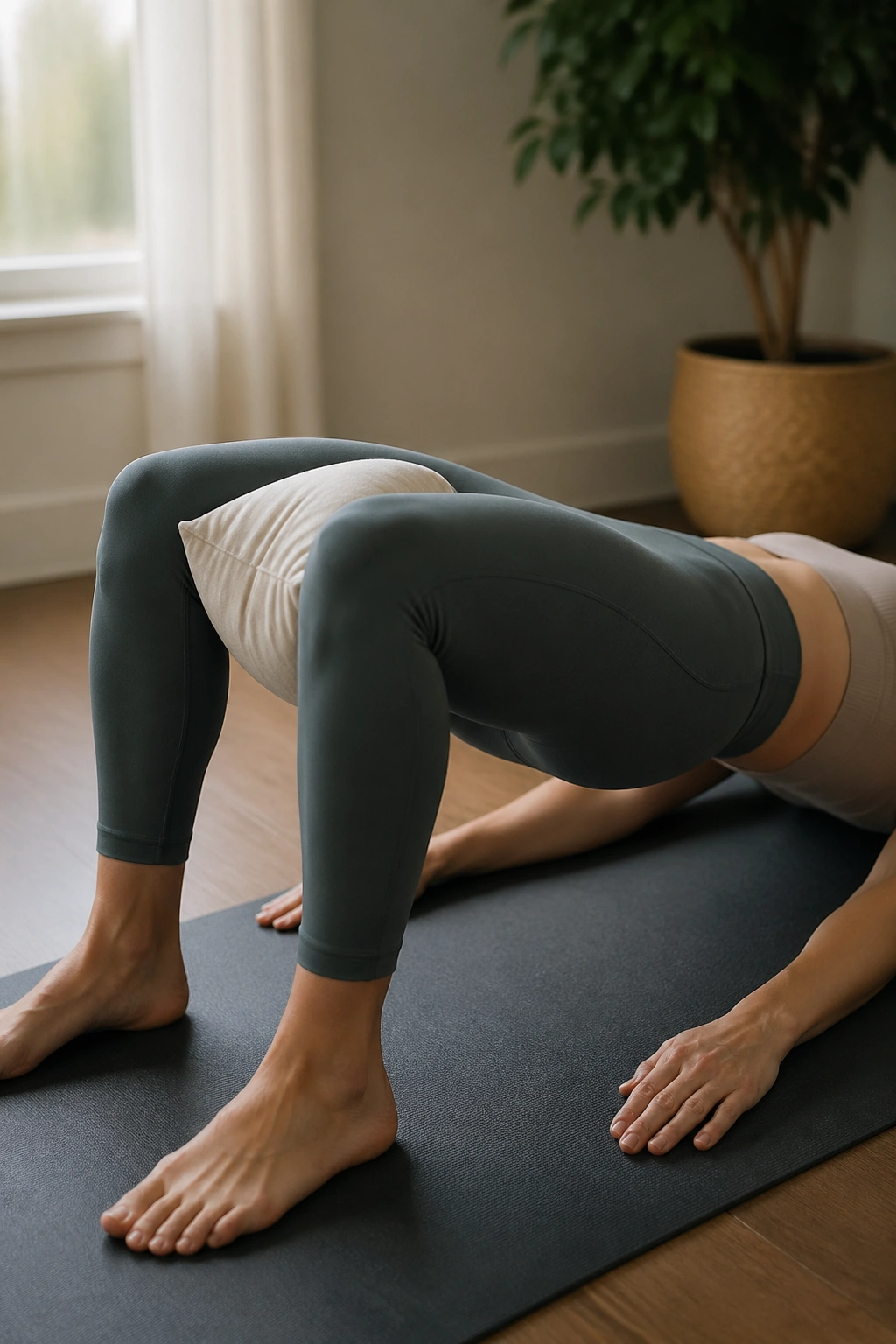
A cheap pillow can turn a plain Pilates session into a sharp inner-thigh and pelvic-control workout. I like this one because it teaches connection through the adductors without needing a magic circle, and it gives people who feel their quads in everything a different line of effort to work with.
Place a pillow or yoga block between the knees and start with 10 slow bridges, squeezing on the way up and keeping that squeeze as you lower. Stay lifted for 20 seconds and pulse the knees inward by an inch, no more. Drop down, bring the legs to tabletop one at a time, and do 10 toe taps while gently hugging the pillow. If tabletop feels sloppy, keep both feet on the floor and squeeze there instead.
Next, extend the legs to a high diagonal and perform tiny heel presses together for 45 seconds, then bend and repeat once. Finish seated with 60 seconds of spine stretch forward while keeping the prop between the knees. That seated piece sounds small. It is not. It helps you hold the midline while the spine moves.
If the hip flexors grip, lift the head less or rest it down. The goal is midline control, not a dramatic leg shape.
9. No-Equipment Standing Balance Workout
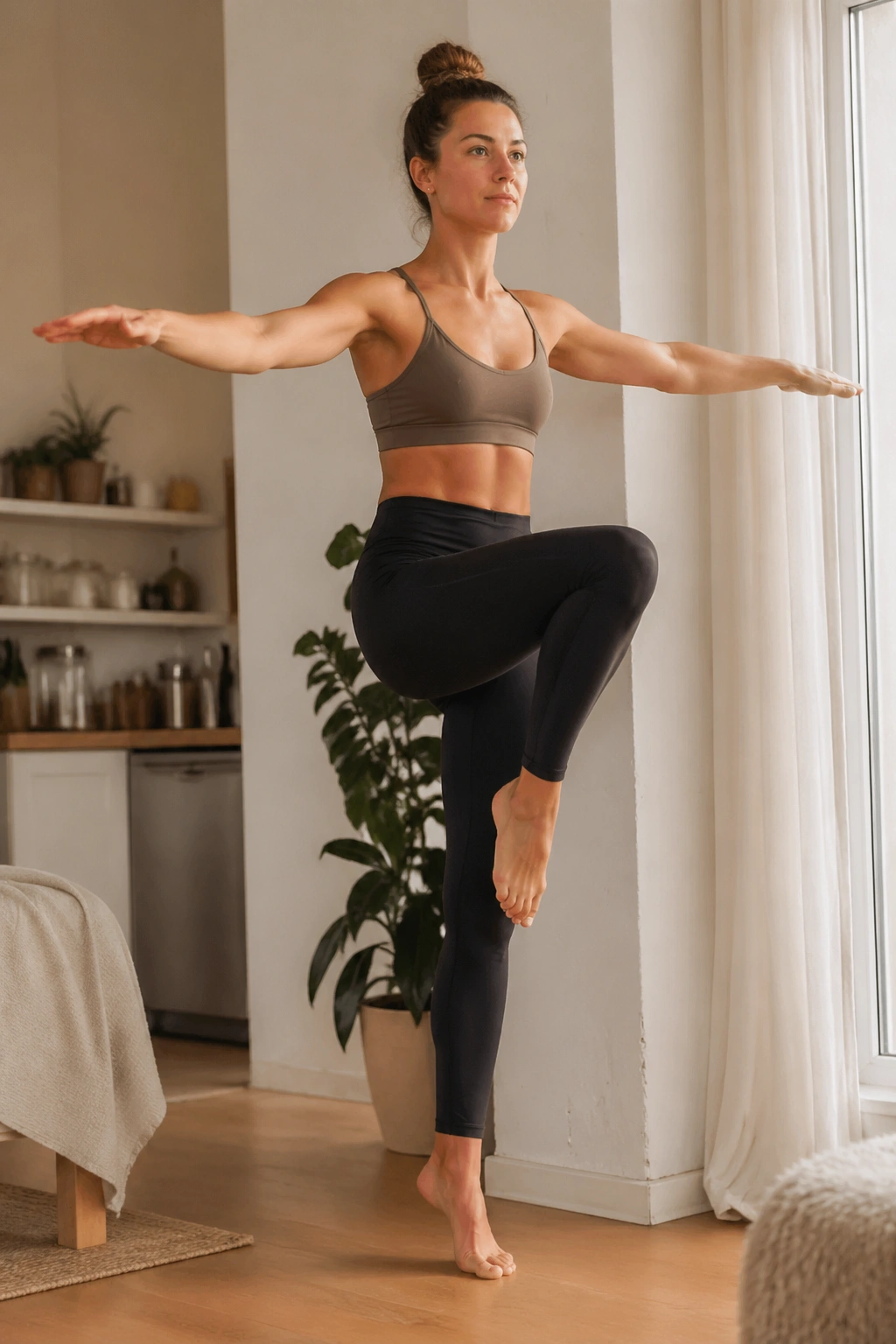
Need a Pilates fix without touching the floor? This 6-minute standing series fits beside a desk, next to a kitchen counter, or in that narrow strip of bedroom floor between the bed and the dresser.
Balance work in Pilates is sneaky. It trains the feet, ankles, hips, and trunk all at once, and it also shows you where you leak tension. A wobble is not failure. A wobble is information.
How to run it
Stand tall and shift weight into the left foot for 45 seconds of slow knee lifts on the right. Hold the last lift and extend the leg forward for 15 seconds. Switch sides. Then do 45 seconds per side of side leg lifts, leading with the heel and keeping the torso upright. Add 30 seconds per side of airplane hinges: tiny forward tilt from the hips while the back leg reaches long behind you. Finish with 60 seconds of slow calf raises in parallel and 30 seconds in a small turned-out stance.
Use one fingertip on a wall if needed. I would rather see clean pelvis control with light support than a dramatic free-standing version where the ribs flare and the standing knee caves inward.
10. Plank-to-Pike Power Session
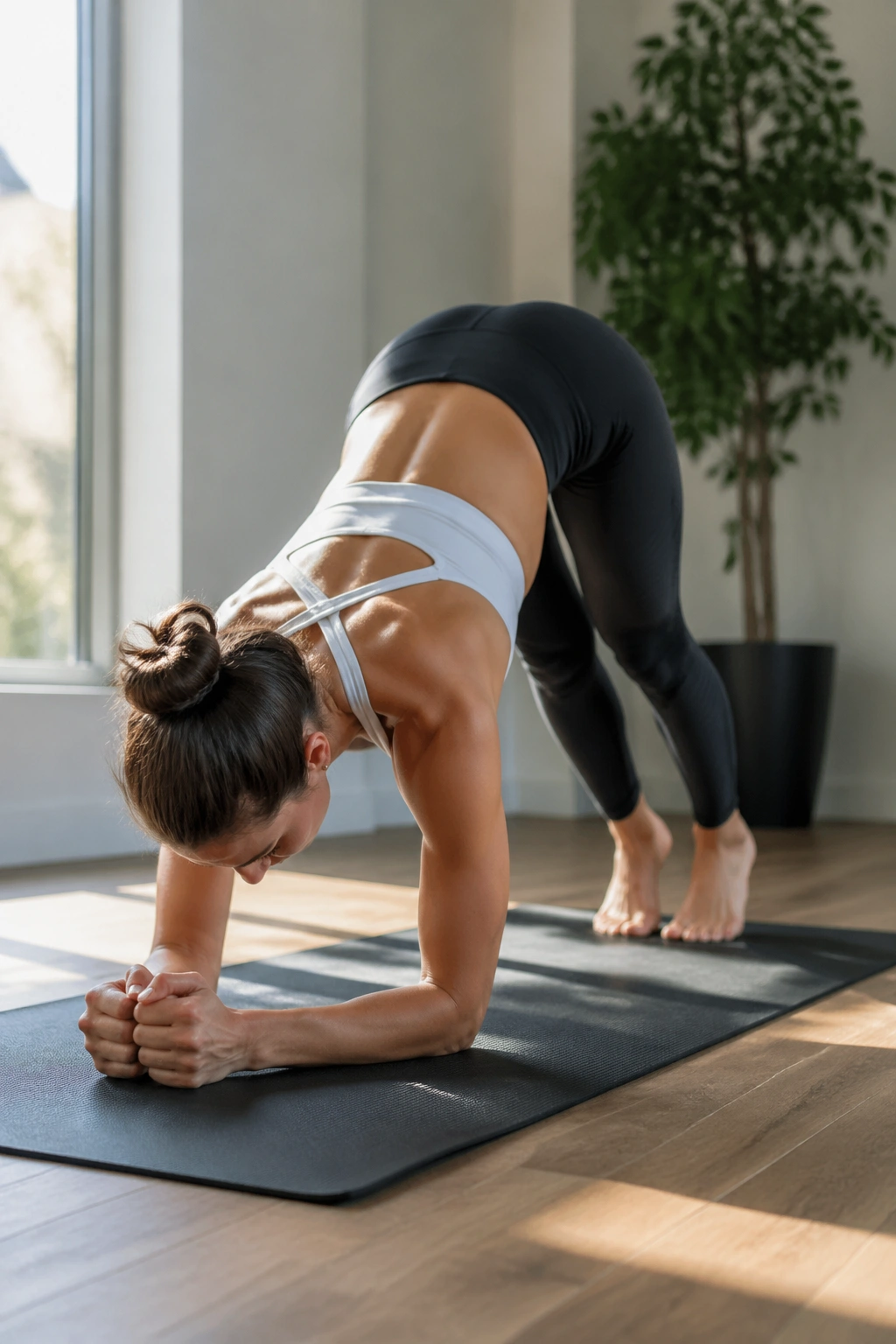
This is the sharpest workout on the list. Not the hardest for everyone, maybe, but the one most likely to expose weak links fast.
Picture a long plank first — wrists under shoulders, heels driving back, front ribs lifted away from the floor. From there, you pike the hips up only as high as you can keep your shoulders broad and your neck quiet. On socks or sliders, the challenge climbs fast.
Use these blocks
- 40 seconds: Forearm plank with steady breath.
- 20 seconds: Rest.
- 40 seconds: Pike from plank, feet walking in if sliders are not available.
- 20 seconds: Rest.
- 40 seconds: Knee tucks from plank, slow and controlled.
- 20 seconds: Rest.
- 40 seconds: Side plank on the right, knees down or legs straight.
- 20 seconds: Rest.
- 40 seconds: Side plank on the left.
- 20 seconds: Rest.
- 40 seconds: Prone swimming or dart hold to open the back body.
- 20 seconds: Rest, then repeat once.
Your shoulders should feel worked, your abs lit up, and your lower back left out of it. If the hips sag in plank, raise the hands onto a bench, sofa, or wall and keep the shape clean.
11. Seated Core and Hamstring Lengthener
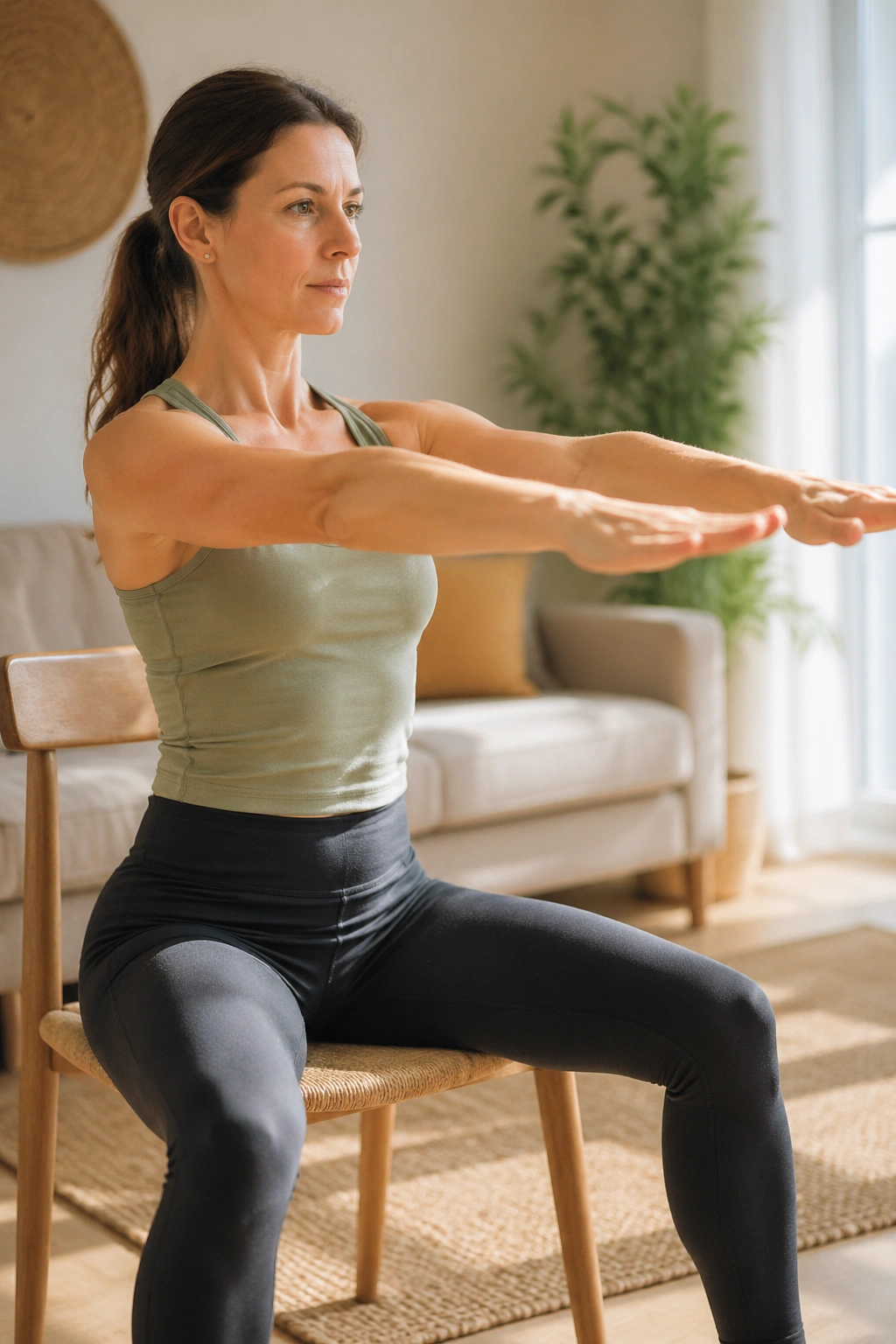
Some days the floor feels too far away, or your wrists are asking for a break, or you are in jeans on a train and trying to do something without drawing attention. Seated Pilates earns its keep on those days.
Open with 90 seconds of spine stretch forward: legs wider than hips, knees bent enough that the pelvis can stay upright, arms reaching forward as the abdominals pull back. Then sit tall and do 60 seconds of Saw, rotating from the rib cage and reaching the opposite hand toward the little toe without collapsing onto the thigh. The hamstrings get a say here, though the spine is the main event.
Lean back into a half roll-back hold for 30 seconds, return upright, then repeat twice. Finish with seated knee lifts, 45 seconds per side, hands lightly behind the thighs if needed, and 60 seconds of ankle-point-and-flex with a tall spine.
This is not a throwaway “easy” option. If you stay honest about sitting bones, breath, and rib position, the abs work hard. People who slump through it miss the whole point.
12. Wall-Assisted Leg and Seat Sequence
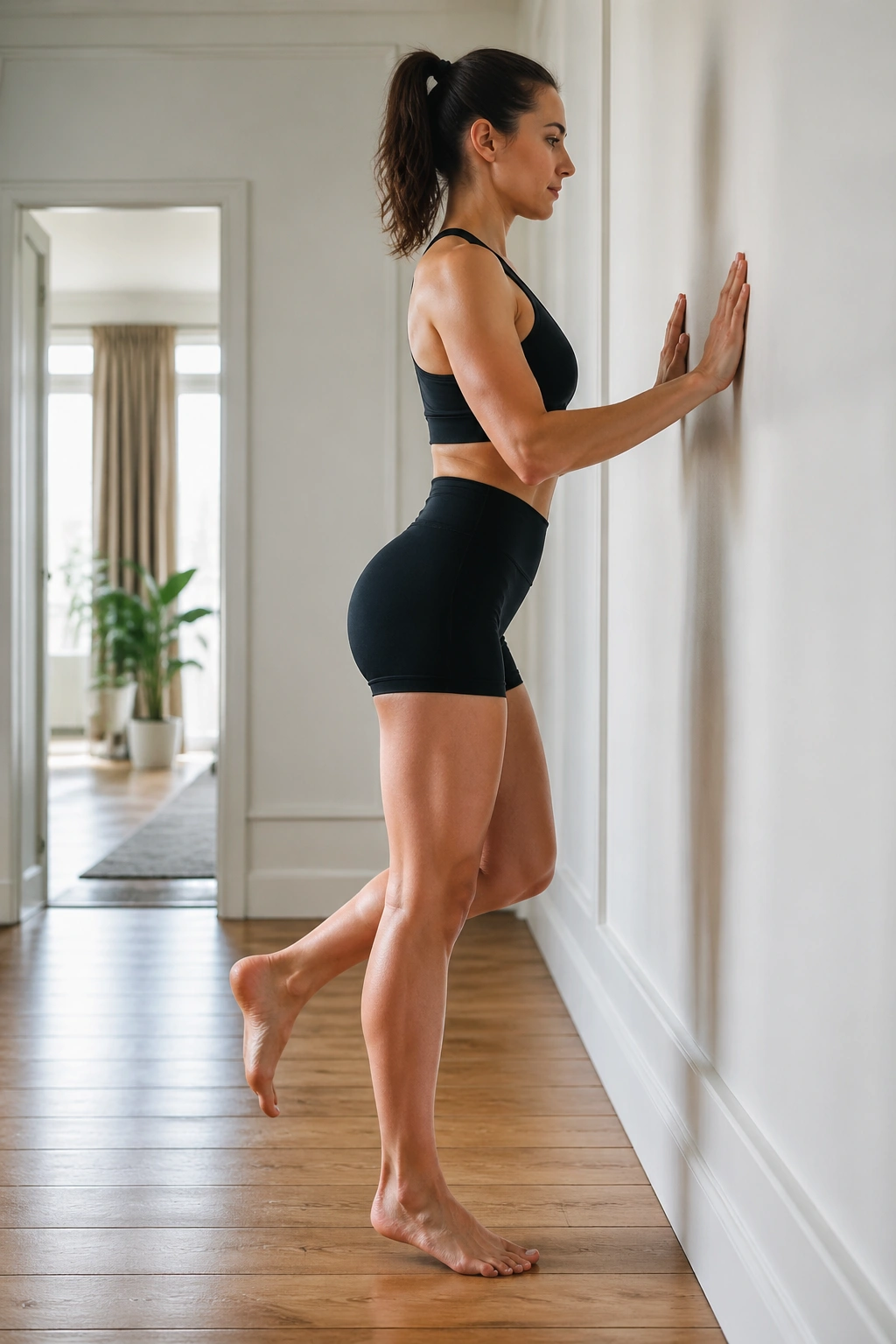
Unlike floor-based glute work, this standing session lets you train the legs and seat while also cleaning up posture. It is a strong pick for anyone who likes ballet-barre style work but wants a more Pilates-style focus on trunk control.
Face the wall first and place both hands on it at chest height. Do 60 seconds of parallel calf raises, then 60 seconds of shallow wall-supported squats with a two-second pause at the bottom. Turn sideways, hold the wall with one hand, and spend 45 seconds lifting the outside leg to the side, 15 seconds holding it, then 30 seconds of tiny pulses. Switch sides.
Next, hinge slightly forward with a flat back and reach one leg long behind you for 45 seconds of rear-leg lifts per side. Think length, not height. When people kick high, the low back grabs and the glutes vanish from the conversation. End with a 30-second wall sit and 30 seconds of standing turnout pulses.
Who is this best for? Anyone who wants lower-body work without getting down to the mat, plus anyone who needs a hand-supported option while building balance.
13. Knee-Friendly Floor Core Reset
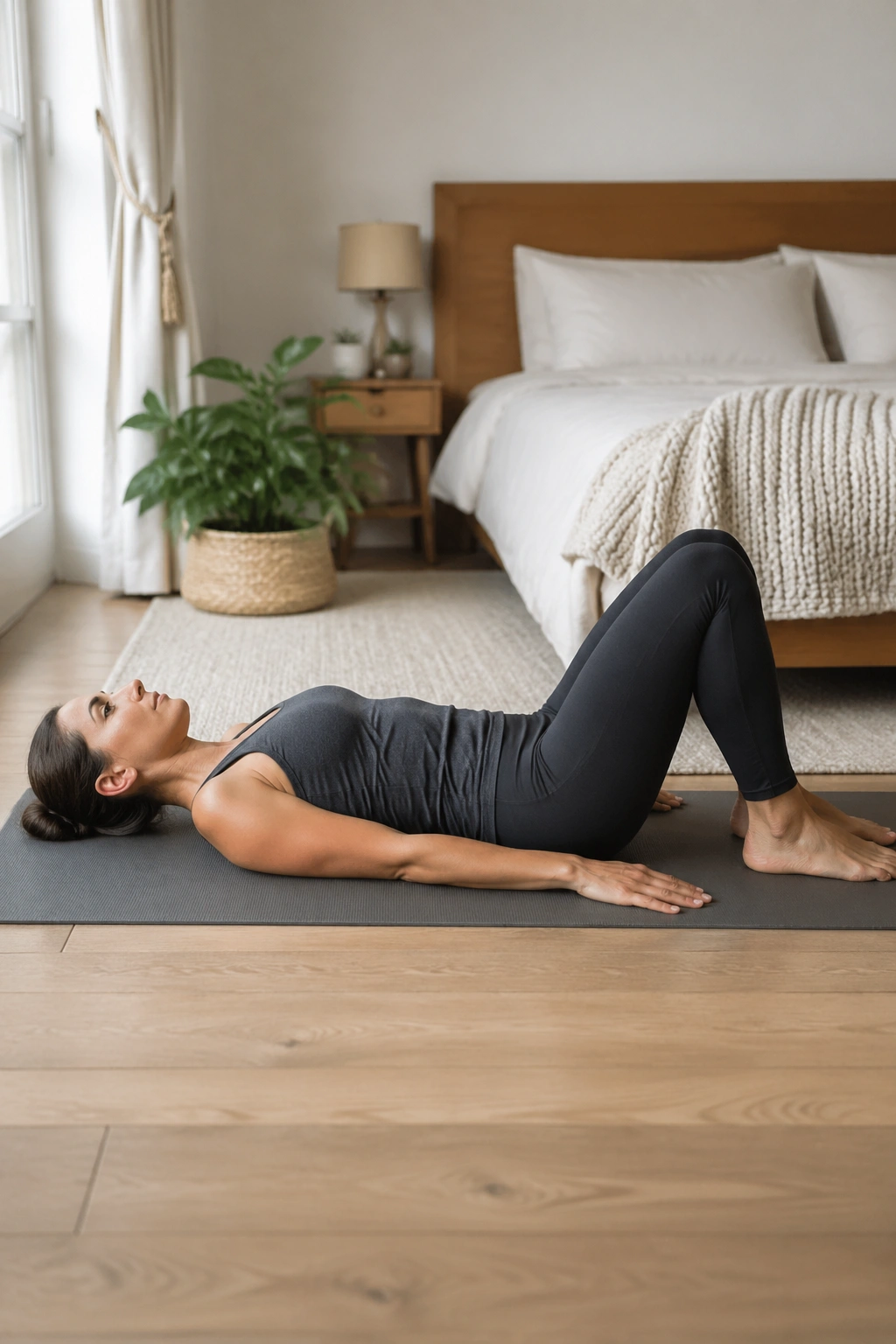
If kneeling hurts, wrists hate plank work, or you are easing back into Pilates after a break, this 8-minute floor session is a smart place to land. Everything happens in supine or side-lying positions, and the moves stay close to the floor.
Lie on your back with knees bent and feet down. Spend the first 60 seconds doing bent-knee fallouts, letting one knee open a few inches while the pelvis stays level. Move to 90 seconds of heel slides, then 90 seconds of marching one leg to tabletop and back down, alternating sides.
Low-impact sequence
- 1 minute: Bent-knee fallouts, alternating sides.
- 90 seconds: Heel slides with a slow exhale on the reach.
- 90 seconds: March to tabletop, one leg at a time.
- 1 minute: Glute bridge with a three-second hold at the top.
- 1 minute: Side-lying clam on the right.
- 1 minute: Side-lying clam on the left.
- 1 minute: Supine windshield-wiper knees in a small range.
Do not chase height or speed here. The win is a quiet pelvis, a soft neck, and clean breathing. For beginners, that is plenty.
14. Cardio-Pilates Burst Without Jumping
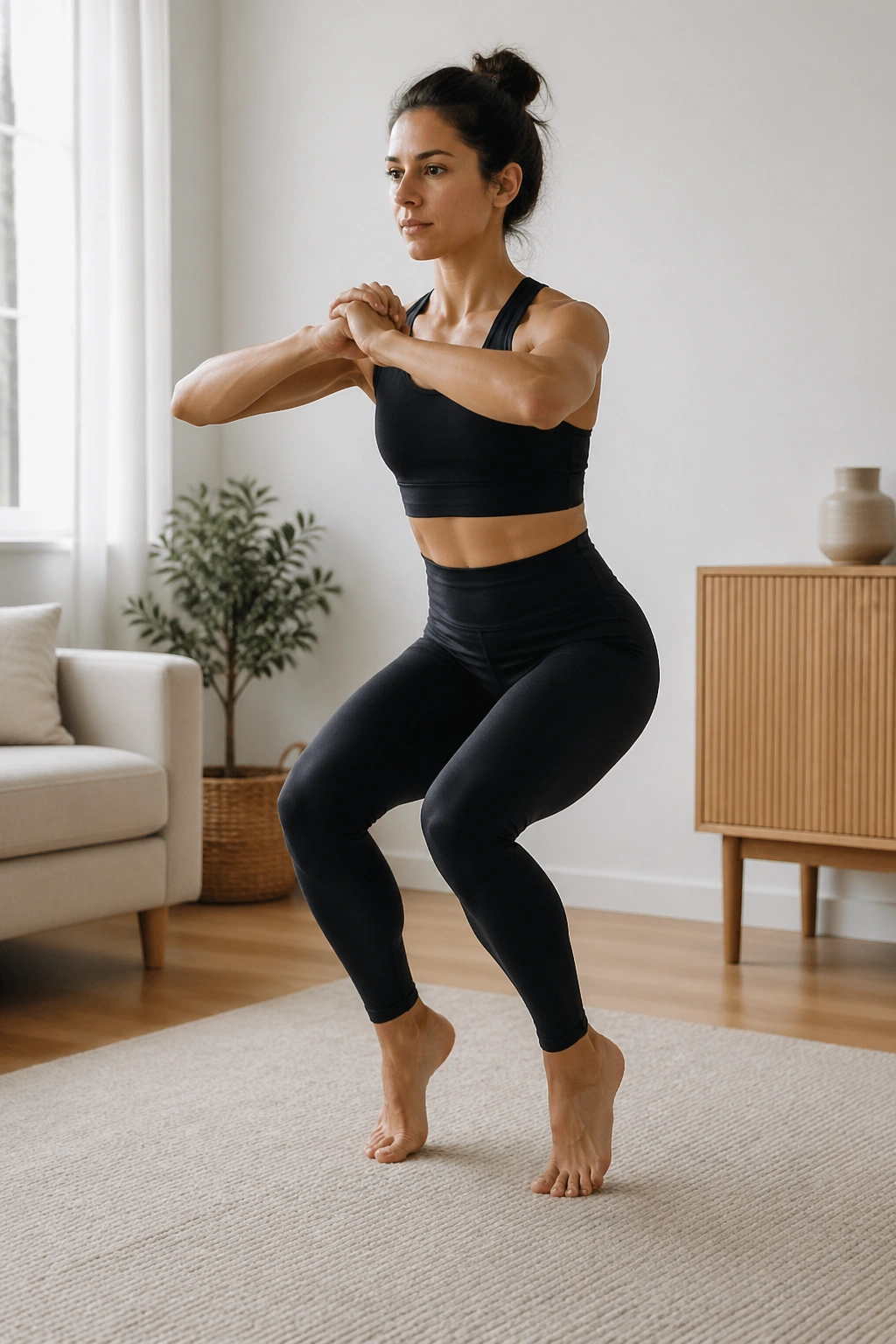
You can push your heart rate up in Pilates without bouncing around the room. This 9-minute sequence leans on standing patterns, quick transitions, and full-body tension rather than impact. Good news if your neighbors live below you, your knees dislike jumping, or you want a sweatier finish after a walk.
Run 45 seconds of work and 15 seconds to change positions. Start with squat to heel raise, arms reaching overhead as you stand. Move into alternating reverse lunge with a knee drive, then standing cross-body knee pulls, twisting through the rib cage rather than yanking the elbow. Drop to a high incline plank at the sofa or countertop for shoulder taps, then back up for fast but controlled Pilates punches with light hand weights or empty fists.
Repeat those five blocks once, then finish with 60 seconds of standing roll-down to squat to stand. Your breath will be up. That is the point. The Pilates part comes from how you hold the trunk and place the joints, not from pretending cardio has to look delicate.
If your form frays by the 30-second mark, cut each work interval to 30 seconds and keep the rest at 15.
15. Traveler’s Quick Pilates Workout for Hotel Rooms
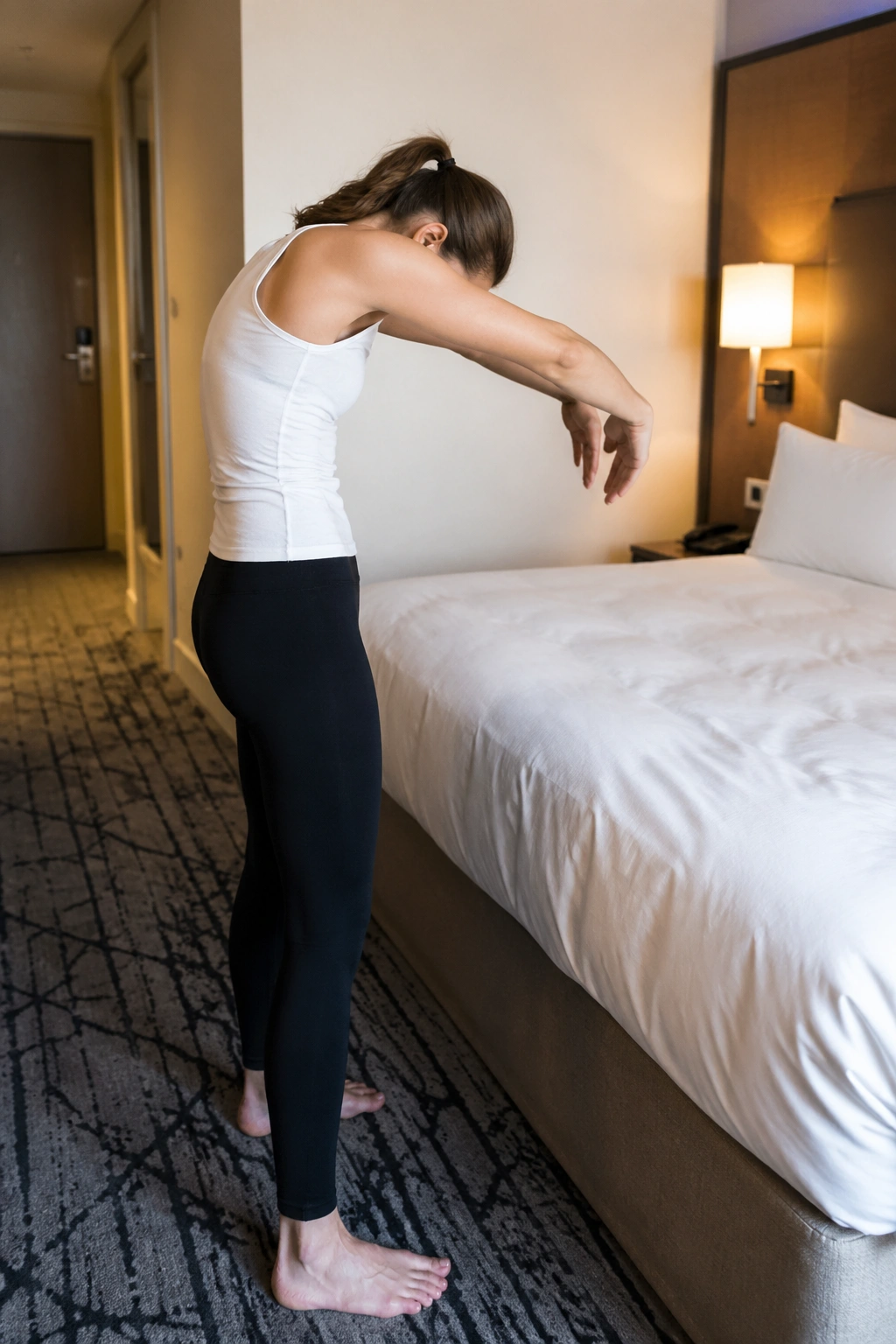
No mat? No problem. Hotel carpet is rarely inspiring, but you can still get a useful quick Pilates workout done in 8 minutes without jumping, thudding, or needing extra space.
Start standing beside the bed and do 60 seconds of roll-downs with bent knees. Sit on the edge of the mattress for 60 seconds of half roll-backs, using the bed as a gentle support if it is soft. Move to the floor or stay on the bed for 90 seconds of marching tabletop or feet-down toe taps.
Quiet hotel sequence
- 60 seconds: Standing roll-downs.
- 60 seconds: Seated half roll-backs on the bed edge.
- 90 seconds: Marching tabletop or toe taps.
- 60 seconds: Glute bridge on the floor or bed.
- 45 seconds per side: Side-lying leg lifts.
- 60 seconds: Prone dart hold or chest lift, depending on space.
- 60 seconds: Seated spine twist and forward fold.
Use a bath towel under your head or hips if the carpet is rough. My one hard rule with hotel workouts: choose clean, quiet movement over ambitious movement. Nobody needs to hear your fitness plan through the wall.
16. Light-Dumbbell Arms and Upper-Back Set
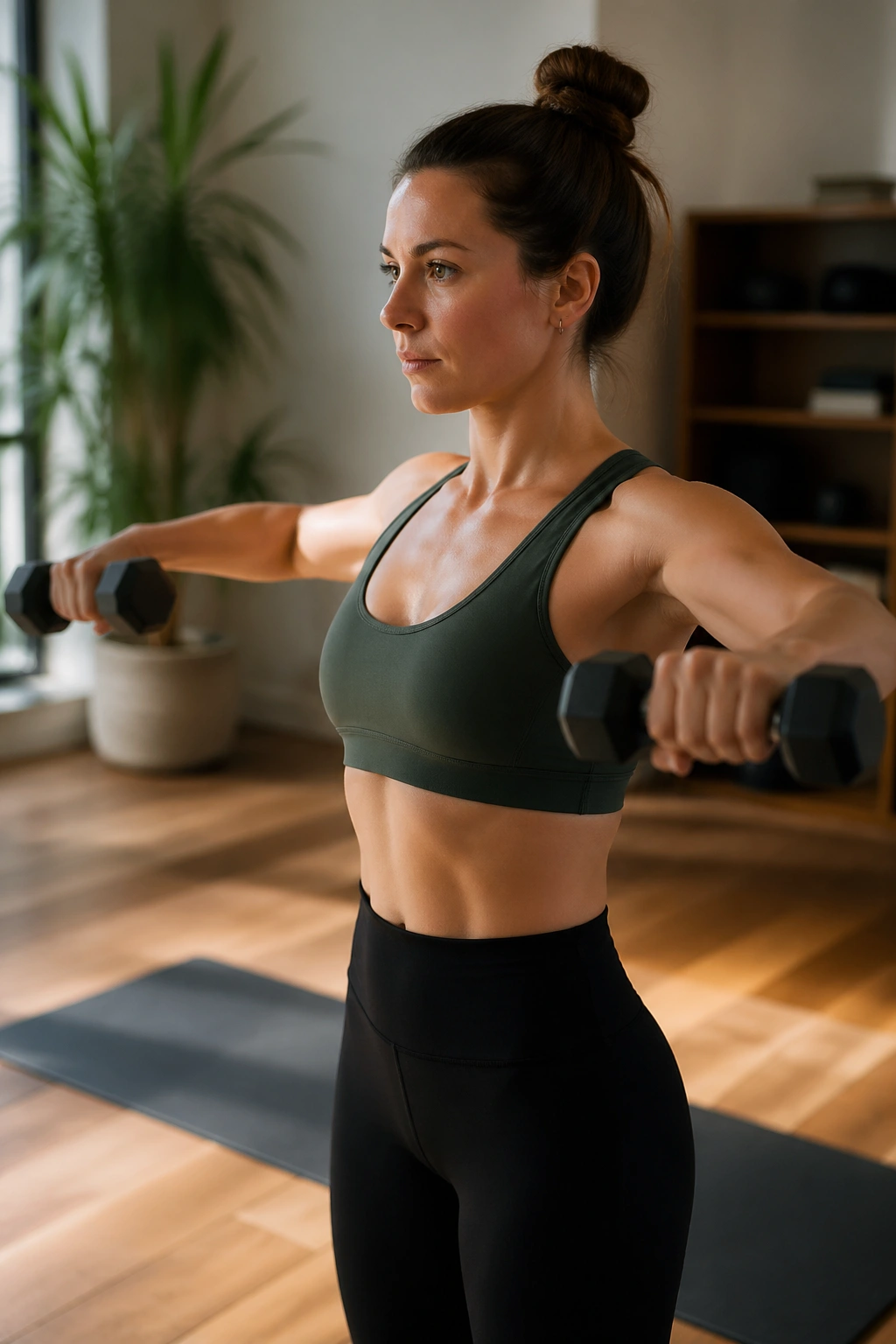
Two 2-pound weights can humble a person fast when the arm path is clean and the ribs stay down. That is why this upper-body Pilates set works so well. It is not about swinging heavier bells. It is about making the shoulders and upper back do their share while the trunk stays organized.
Start tall or seated. Perform 45 seconds each of front reach, lateral raise to shoulder height, and “hug a tree” arm circles — elbows soft, hands rounding forward as though holding a beach ball. Rest 15 seconds, then do 45 seconds of triceps kickbacks in a hip hinge, 45 seconds of chest expansion with the palms facing back, and 45 seconds of alternating overhead press only if your shoulders move cleanly overhead.
Quick cues
- Keep the weights light: 2 to 3 pounds is enough.
- Stop the lift at shoulder height if the neck starts helping.
- Bend the knees slightly in standing work so the low back does not brace like a board.
- Move on a 2-count lift and 2-count lower for better control.
The burn creeps in. Good. Your shoulder blades should feel awake, not scrunched.
17. Resistance Band Pull and Press Flow
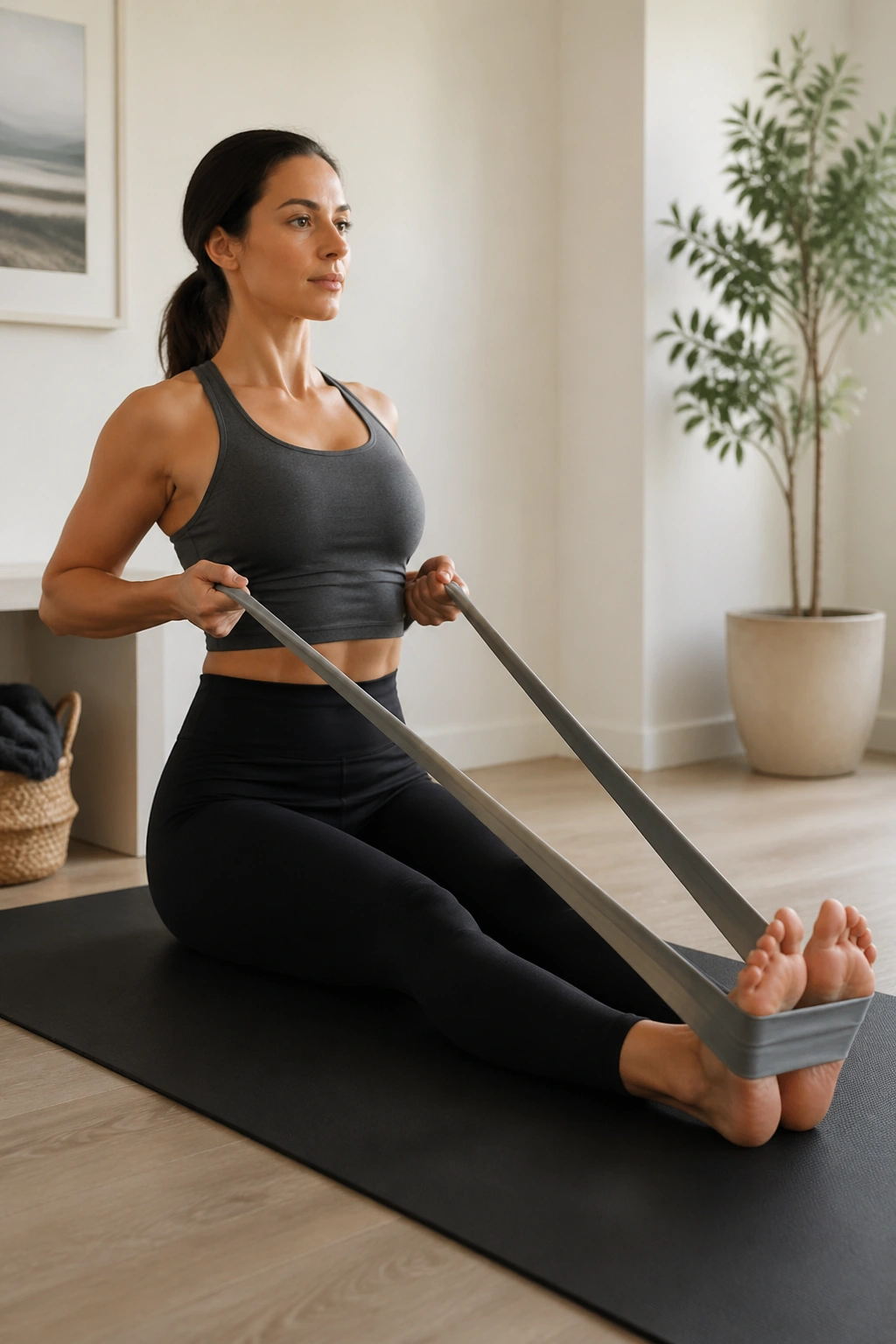
Bands add tension in a way that bodyweight Pilates cannot, and they do it without chewing up much space. A long resistance band turns a short session into a full-body pull-and-press workout that feels a bit closer to apparatus training, especially through the upper back and arms.
Sit tall with the band looped around the feet and row for 60 seconds, elbows grazing the ribs. Then hold the handles, lean into a half roll-back, and add 45 seconds of alternating rows without letting the spine collapse. Stand up and perform 60 seconds of chest press, band anchored behind the back, followed by 60 seconds of overhead pull-aparts or face-pull style openings if your shoulders prefer that angle.
Lie on your back with the band over the feet and finish with 90 seconds of leg presses in tabletop or a high diagonal, pressing out and returning with control. That leg press sounds easy until your abs have to stop the band from yanking the pelvis around.
If the band snaps you back, the resistance is too high. Use a lighter band or choke up less on the handles. Smooth tension wins here.
18. Evening Decompression Stretch and Core Reset
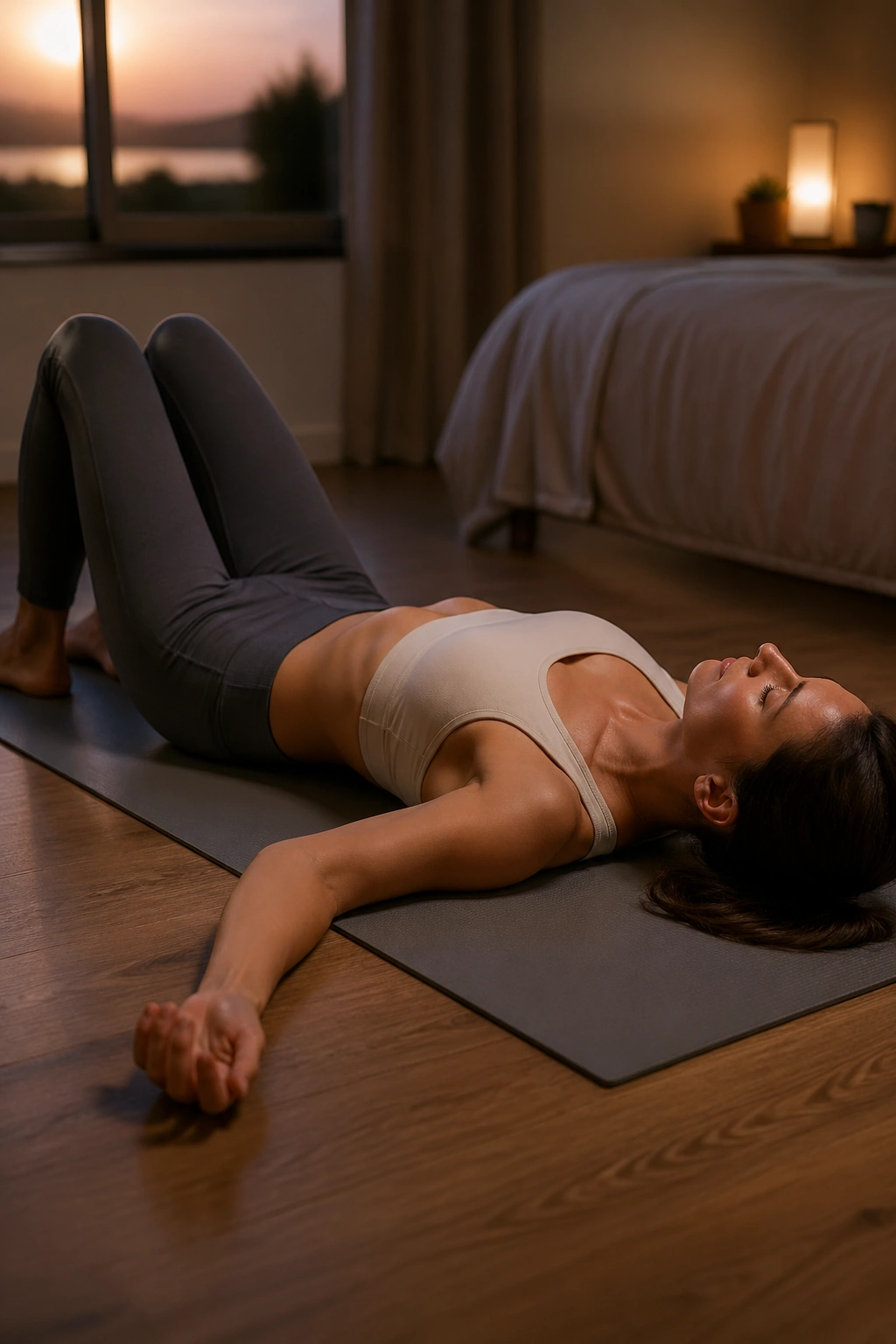
The best evening Pilates sessions do not try to prove anything. They unwind the spine, settle the breath, and give the deep core a bit of work so you finish feeling held together rather than flattened by the day.
Dim the lights if you want. I am not usually sentimental about workout mood, but this one does benefit from less visual noise.
Eight minutes to unwind
- 1 minute: Crocodile breathing or side-rib breathing on your back.
- 1 minute: Pelvic clocks, tracing small points around the pelvis.
- 90 seconds: Supine windshield-wiper knees in a gentle range.
- 90 seconds: Bridge lifts with a slow 3-count lower.
- 1 minute: Figure-four stretch on the right.
- 1 minute: Figure-four stretch on the left.
- 1 minute: Spine twist lying down or seated.
- 1 minute: Child’s pose or legs up on a chair.
Go slower than you think you need to. Evening sessions improve when you stop chasing burn and let the breath set the pace. If your mind is racing, count a 4-second inhale and 6-second exhale through the first two blocks.
19. Reformer-Inspired Mat Flow
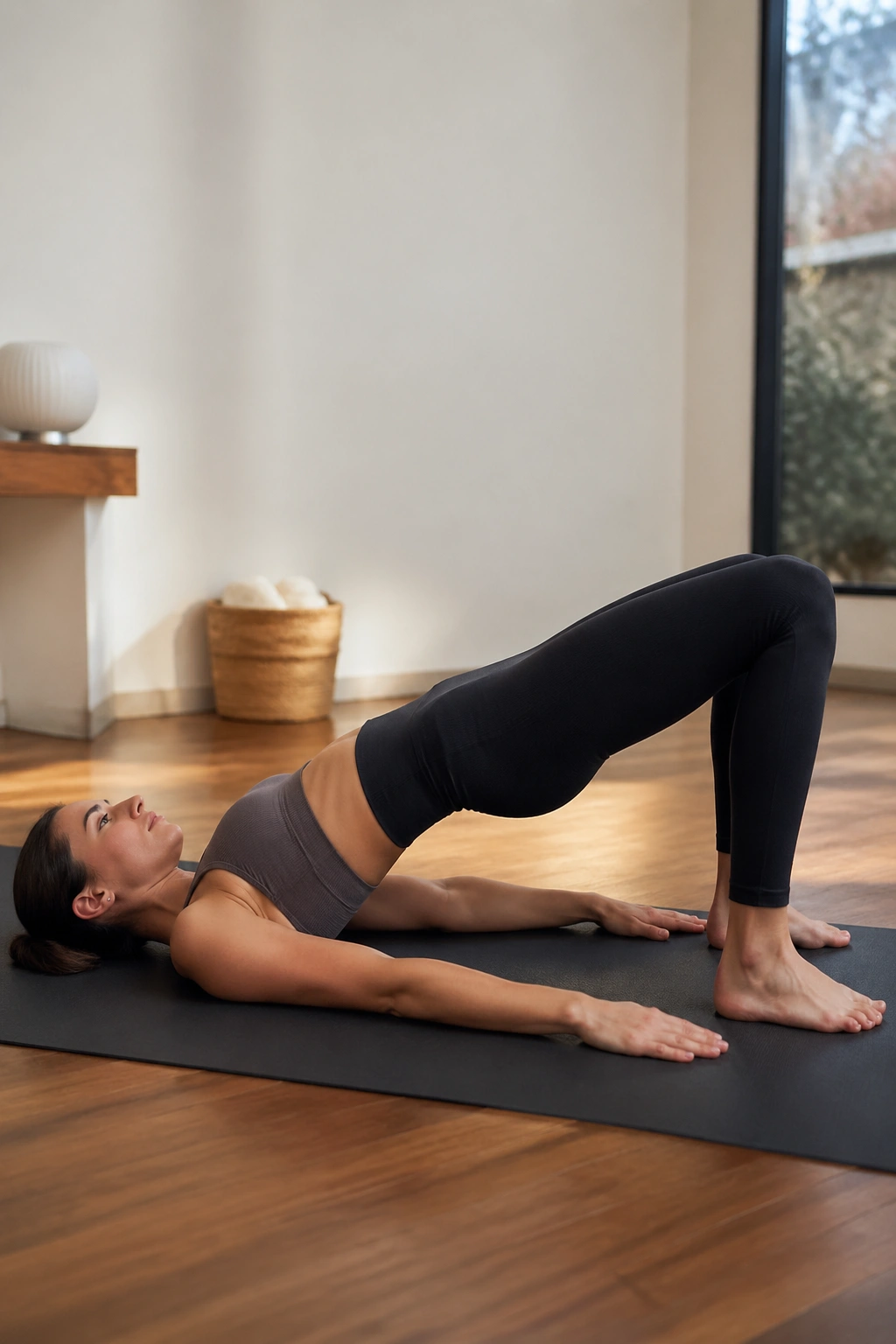
You do not need a reformer to borrow a reformer feel. No, the mat version is not identical — the carriage and springs change the experience — but you can mimic the rhythm, leg patterns, and long-line control surprisingly well with smart exercise choices.
Lie on your back and start with Pilates footwork: feet hip-width, knees bent, press the heels into the floor and lift into a low bridge for 60 seconds of small presses up and down. Keep the torso quiet. Move into 60 seconds of tabletop frog, opening the knees slightly and extending the legs to a high diagonal before bending back in. Add 60 seconds of leg circles, 30 each direction, then 90 seconds of rolling like a ball prep or half rollback if your spine prefers less rolling.
Finish prone with 60 seconds of pulling straps-inspired arm sweeps — arms long by the sides, chest lightly lifted, shoulder blades sliding down the back — then 60 seconds of swimming prep. The session has that unmistakable Pilates quality of length under tension.
Skip the rolling section if you feel neck pressure or if your lower back stiffens after repeated spinal flexion. There is no prize for forcing the reformer fantasy.
20. Eight-Minute Full-Body Pilates Countdown
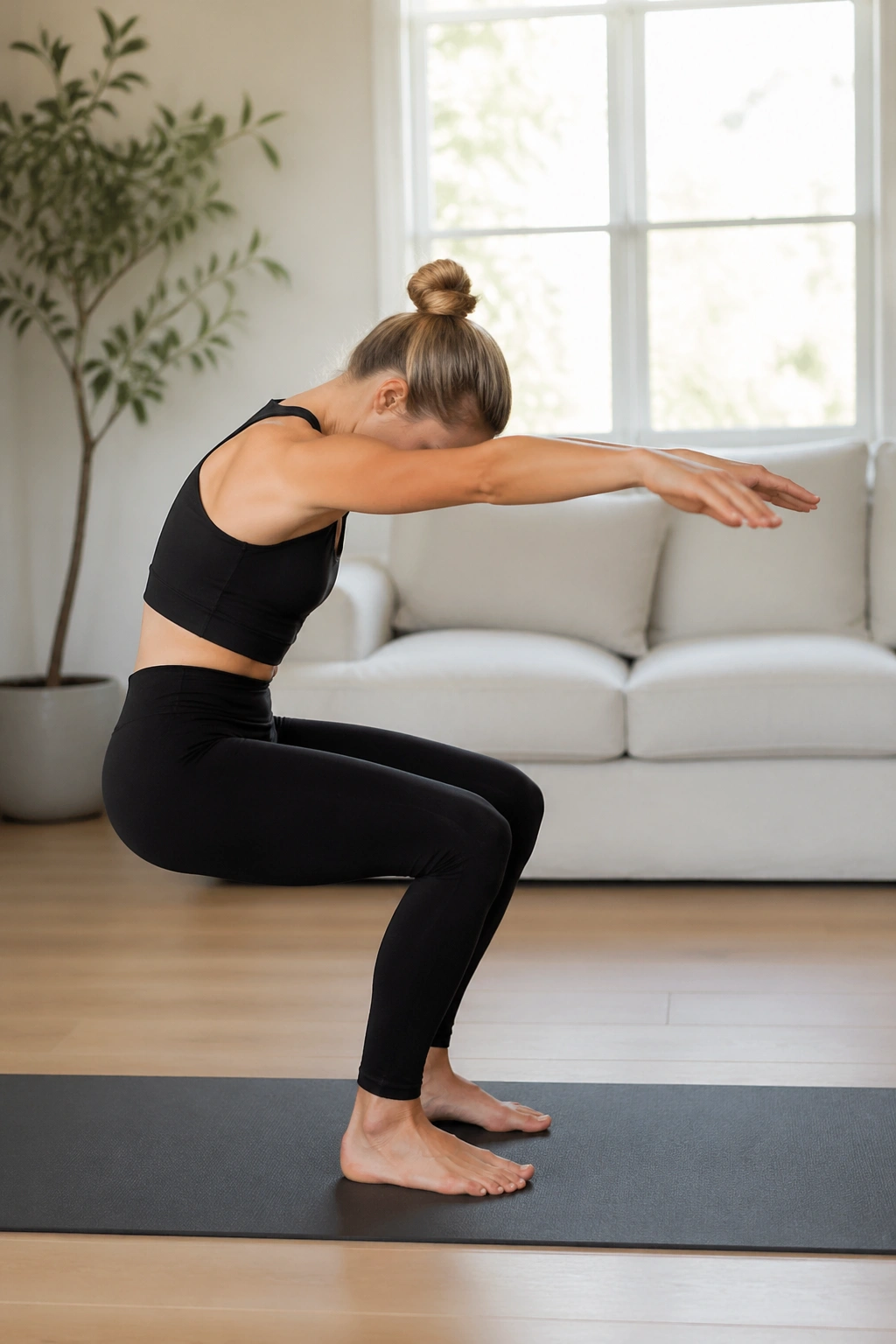
Need one workout that covers almost everything? Use this countdown. It is clean, fast, and easy to remember: eight moves, one minute each.
Minute 1 is standing roll-down to squat to stand. Minute 2 is forearm plank or incline plank. Minute 3 is bridge. Minute 4 is single-leg stretch. Minute 5 is side-lying leg lift on the right. Minute 6 is side-lying leg lift on the left. Minute 7 is prone dart or swimming prep. Minute 8 is spine stretch forward plus a seated twist.
That sequence works because it alternates demands. You get flexion, extension, front-body work, back-body work, standing, lying down, and side-body support without camping out in one position too long. If a minute feels long, split it into 40 seconds work and 20 seconds reset. If a move feels weak, do not swap it out right away. Weak spots are often the reason to keep it in.
This is the session I would hand to someone who wants one under-10-minute Pilates routine to repeat three times a week. It is balanced, honest, and hard to outgrow because the quality can keep climbing.
How to Build a Week of Quick Pilates Workouts
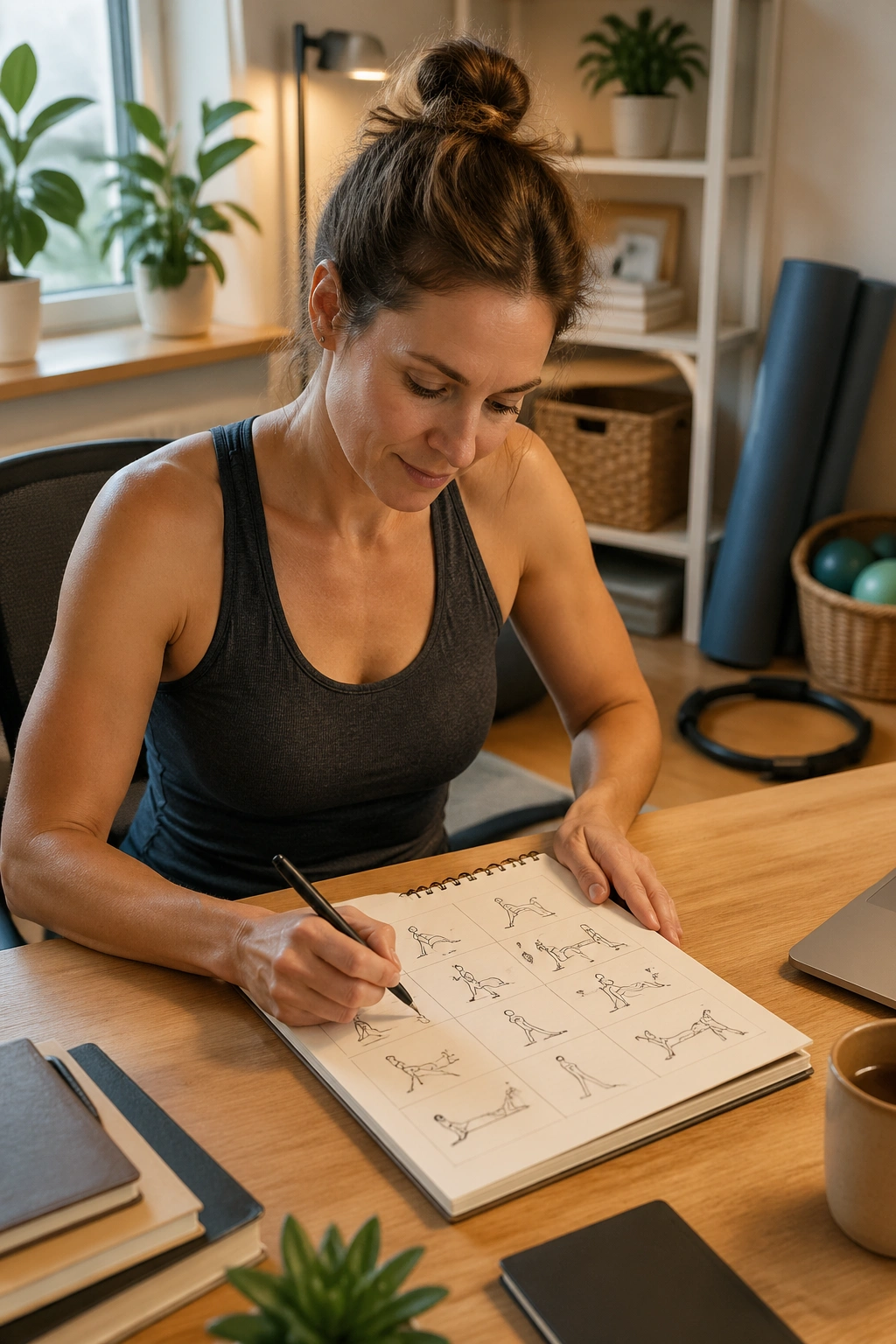
One good way to use these is to rotate by need, not by mood alone. A simple week might look like this:
- Day 1: 1. Wake-Up Spinal Roll and Hundred Flow
- Day 2: 5. Glute Bridge and Side-Leg Burner
- Day 3: 18. Evening Decompression Stretch and Core Reset
- Day 4: 3. Standing Wall Posture Reset
- Day 5: 10. Plank-to-Pike Power Session
- Day 6: 16. Light-Dumbbell Arms and Upper-Back Set
- Day 7: 20. Eight-Minute Full-Body Pilates Countdown
You can also stack two quick Pilates workouts when the first one is mobility-focused and the second one is strength-focused. Pair 7 with 4. Or 18 with 5. That gives you 14 to 17 minutes of work that still feels tidy rather than bloated.
One caution. Do not pile up three tough core sessions back-to-back and call it balance. Pilates works best when the spine gets variety: flexion, extension, rotation, lateral work, plus lower-body and upper-back support.
Final Thoughts
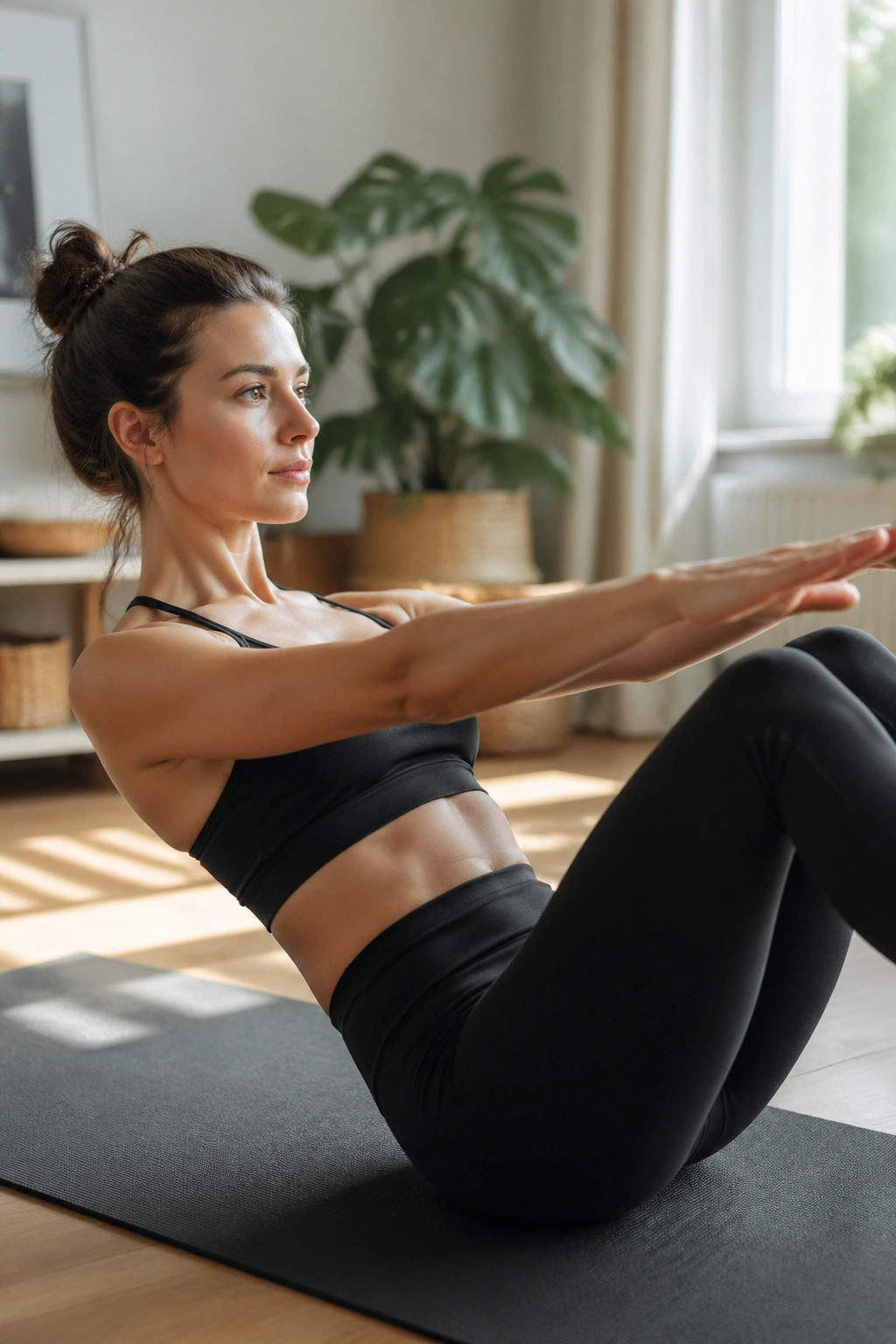
Short sessions reward honesty. If you have 6 minutes, do 6 minutes with clean breath, steady ribs, and a range you can control. That counts.
The best workout on this list is not the hardest one. It is the one you will actually repeat, the one that meets your body where it is on a given day, and the one that leaves you moving better when you stand up off the mat.
Start small, stay precise, and let the quality do the heavy lifting.
