



Most people think ab training starts with crunches. Pilates core workouts start somewhere less flashy: your breath, the position of your ribs, and the quiet feeling of your lower abs pulling inward before your legs even move. Get that right, and strong abs stop being a matter of grinding out reps and start looking more like control.
That control matters more than most people realize. Your abs are not there only to make a front-facing six-pack. In Pilates, the job is bigger: support the spine, steady the pelvis, help you rotate well, and keep your hips from doing work your trunk should be handling. When your neck grabs, your hip flexors cramp, or your low back arches off the mat, that’s usually the body telling you the setup needs work.
Small details change everything here. Exhale as the effort rises. Keep the back ribs heavy when you’re on the mat. Think of the front of the hip staying soft while the waist narrows. I can usually tell within two reps when someone has lost the connection—legs drift lower, the chin juts forward, and the belly starts pushing up instead of drawing down.
Pick five to seven of these moves for one session, and keep the advanced pieces for the back half after you’re warm. Done with care, this list can carry a full core routine on its own.
1. The Hundred for Deep Pilates Core Activation
If I had to hand someone one Pilates move and ask them to build a stronger center with it, The Hundred would be near the top. It teaches breath rhythm, trunk endurance, and that classic Pilates feeling of the abs wrapping inward while the arms and legs stay alive.
Lie on your back, bring the legs to tabletop, curl the head and shoulders up, and reach your arms long by your sides. Pump the arms in a brisk 4- to 6-inch range while inhaling for 5 counts and exhaling for 5 counts until you reach 100 pumps. If tabletop feels shaky, keep the feet on the mat. If your neck feels loaded, rest the head down and keep the arm pumps.
Setup that changes the whole move
What matters most is where the effort lands. You want the deep front wall of the abdomen working, not a hard grip in the quads or a pinchy low back. Keep the back ribs anchored, the chin slightly nodded, and the legs only as low as you can hold without the belly popping upward.
- Start with 50 pumps if 100 wrecks your form.
- Keep the legs together or hip-width apart if your low back feels tugged.
- Aim your gaze toward your thighs, not the ceiling.
- Let the exhale narrow the waist each time.
A smaller, cleaner Hundred beats a dramatic one every single time.
2. Half Roll Back for Pelvic Control
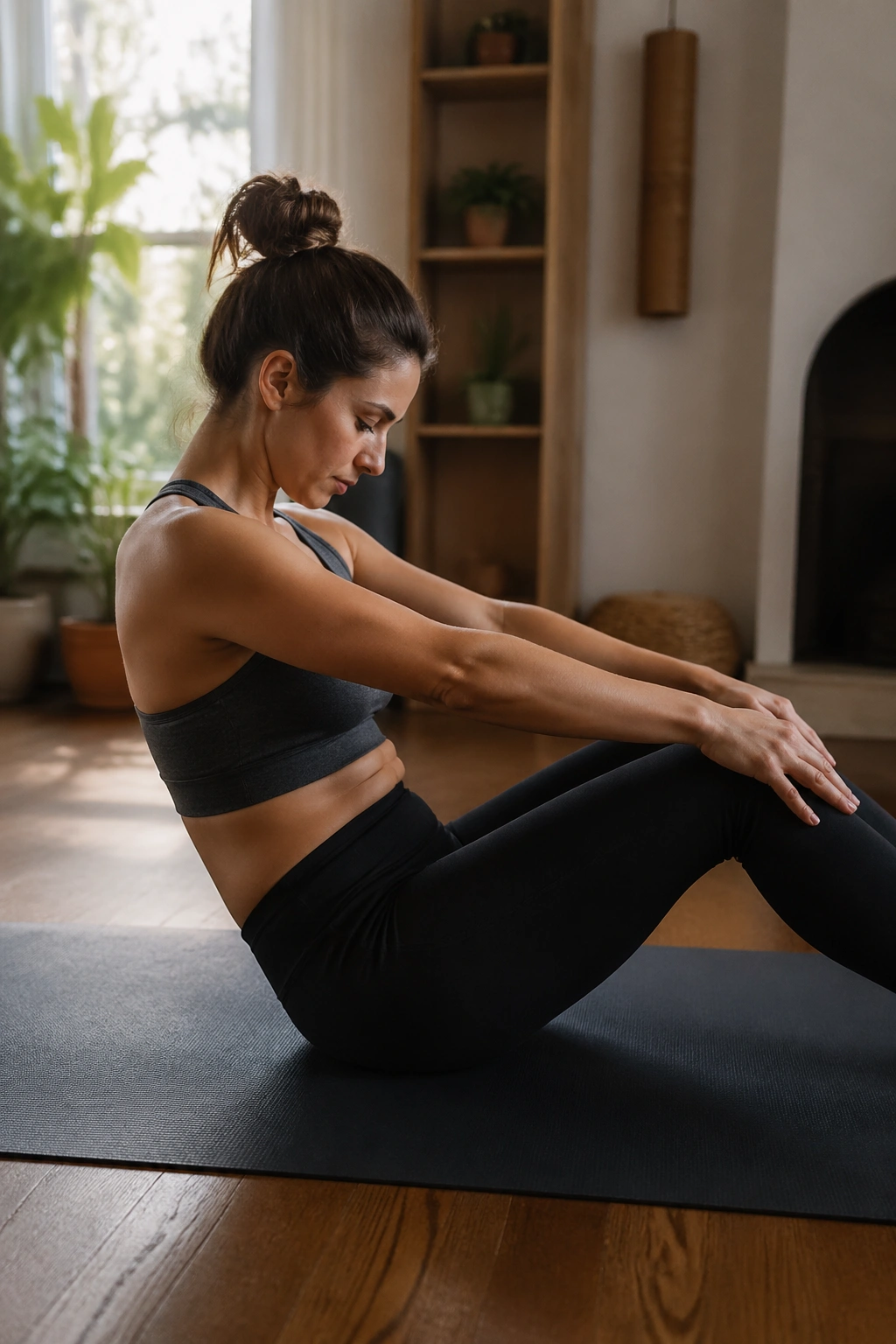
Can’t get through a roll-up without flinging yourself off the mat? Half Roll Back is the fix I reach for first.
Sit with your knees bent and feet flat, hands behind the thighs. Tip the pelvis under and roll back until your arms straighten and your low back forms a deep C-curve, then exhale to return to sitting. That’s one rep. Start with 6 to 8 slow reps, and pause halfway back for one breath if you want the abs to wake up fast.
This move looks mild. It is not. The reason it works is that it teaches you to move the spine one segment at a time instead of dropping backward as one stiff block. Your lower abs and deep waist muscles have to control the descent, and your hip flexors do far less than they do in fast sit-up style work.
Watch the shoulders. They tend to creep toward the ears when people get nervous in the hard part. Keep the collarbones wide and let the pelvis lead.
Bent knees are not a beginner cheat here—they’re a smart way to stop tight hamstrings from stealing the exercise.
3. Tabletop Knee Folds for Quiet Hip Flexors
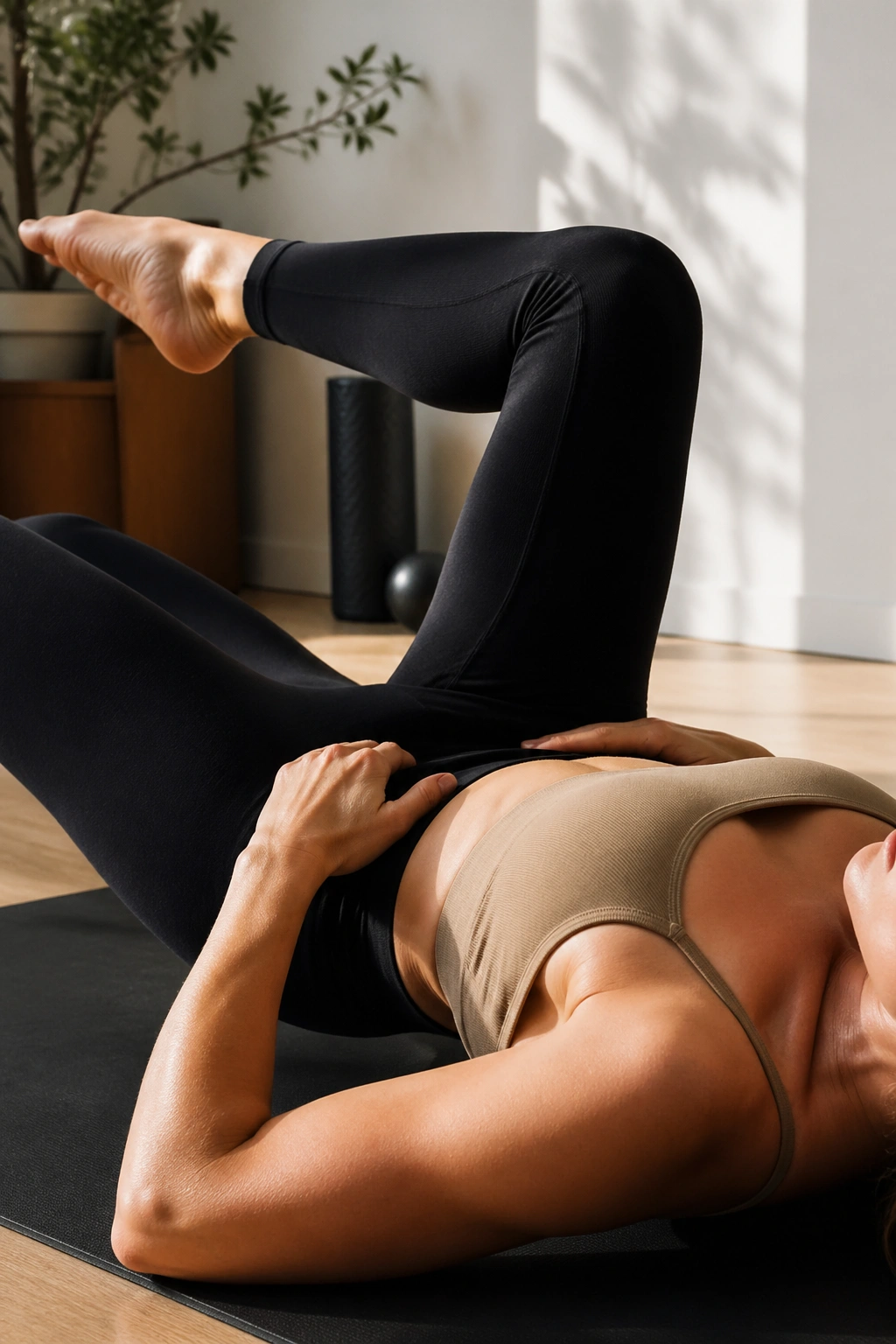
If your low back lifts the second one foot leaves the floor, start here.
Lie on your back with knees bent and feet down. Exhale, float one leg to tabletop without rocking the pelvis, inhale lower it, then switch sides. Go for 8 controlled lifts per leg. The trick is making the movement look almost boring. No swaying. No rib flare. No push through the standing foot.
This drill teaches what a steady trunk feels like while the femur moves in the hip socket. That sounds technical, but you feel it in plain terms: less gripping at the front of the hips, more work below the navel. It’s one of the cleanest entry points for people who think they have “weak abs” when they mostly have a coordination problem.
What to look for
A hand on the front of each hip bone helps. If one side hikes or twists as the leg lifts, shorten the range and slow the exhale.
Another cue I like: imagine your pelvis is a bowl full of water. Lift the leg without spilling it.
4. Toe Taps to Train Abs While the Legs Move
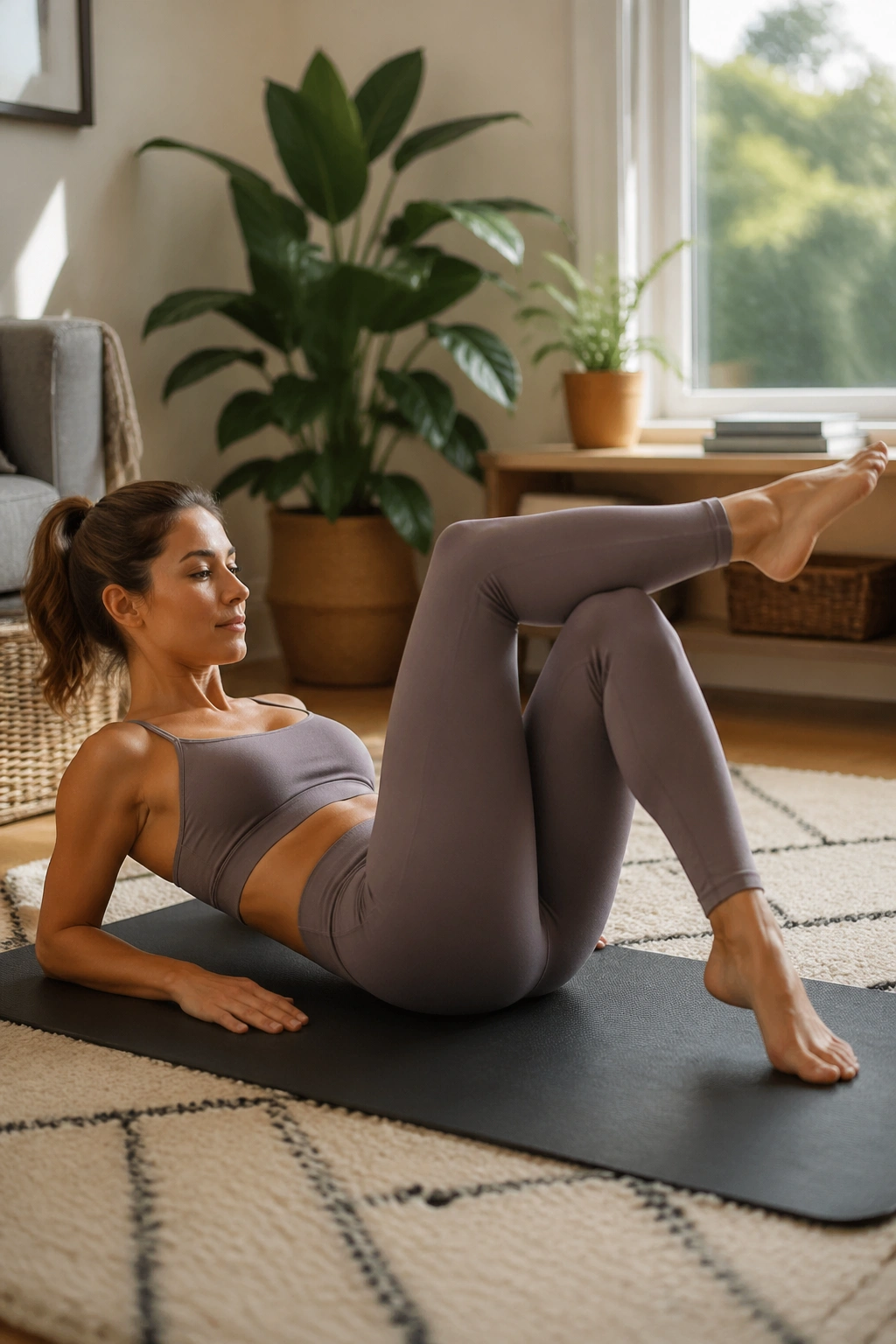
Toe taps expose sloppy core control fast.
Start on your back with both legs in tabletop, knees stacked over hips and shins parallel to the floor. Curl the head and shoulders up if you want more challenge, or keep them down if you’re building the pattern. Lower one toe to lightly tap the floor, exhale back to tabletop, then switch. Try 6 to 10 taps each side.
The reason toe taps belong on any list of Pilates ab exercises is simple: they teach you to keep the trunk stable while the lever changes. As one thigh moves away, your body wants to arch. Your job is to resist that urge without flattening yourself into a rigid board.
Common cheat pattern
Most people lower the whole leg from the knee instead of moving from the hip. That turns the tap into a quad exercise with a side of back strain. Keep the knee bent at about 90 degrees, move slowly, and stop an inch or two above the floor if the ribs start to jump.
A clean exhale on the way back up often fixes more than another ten reps would.
5. Single Leg Stretch for Coordinated Deep-Core Work
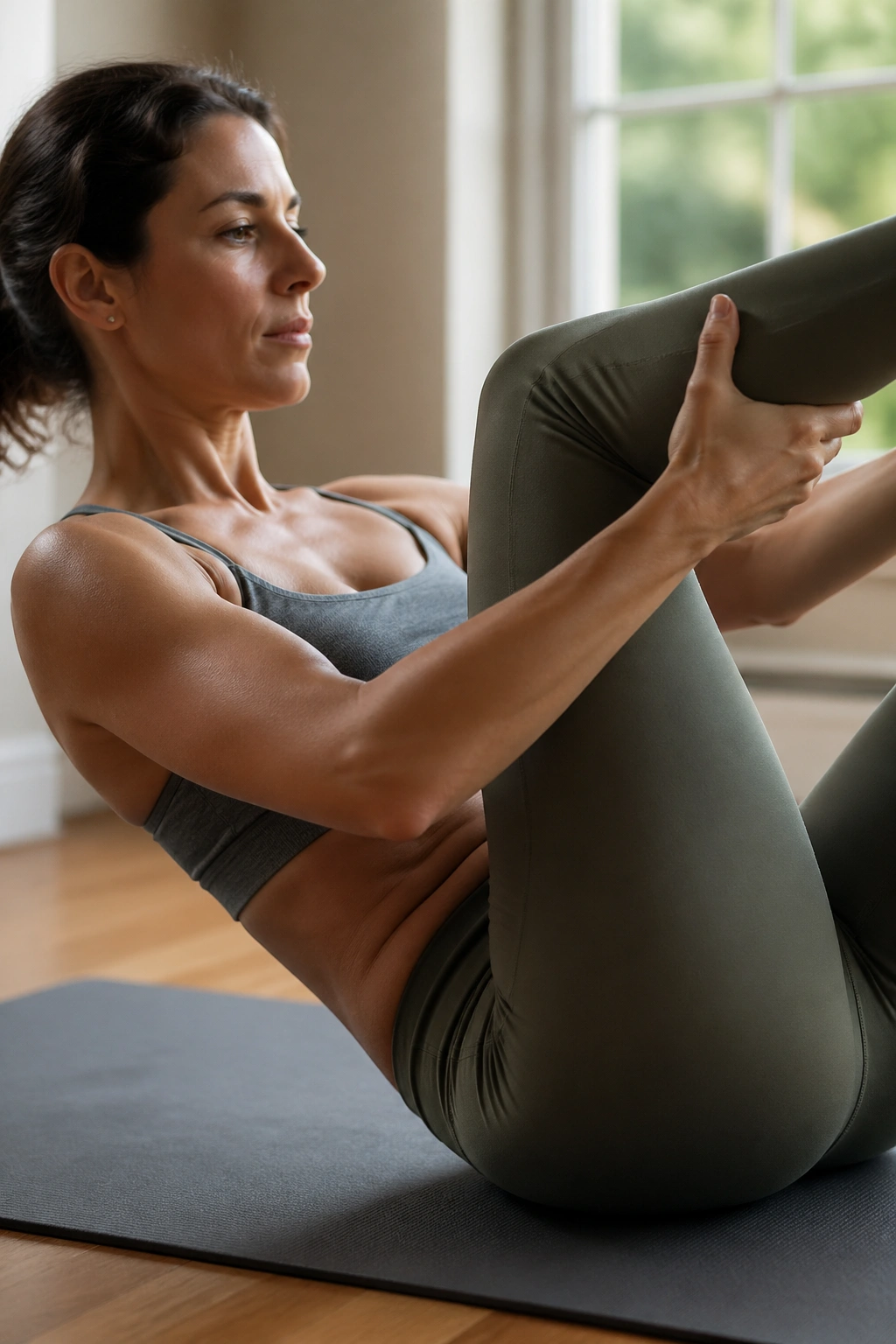
The first few reps of Single Leg Stretch can fool you. It feels smooth, almost light, and then the center of your body realizes it has to hold the curl while the legs keep switching.
Lie on your back, lift into an abdominal curl, bring one knee in and extend the other leg long at about a 45-degree angle. Place one hand on the inside of the bent knee and the other on the outside ankle or shin, then switch legs with control. Do 8 to 12 switches per side.
What makes this one such a staple is the blend of stability and rhythm. You’re not only pulling one leg in; you’re holding the trunk still while alternating limbs, which lights up the lower abs and asks the obliques to keep the pelvis from twisting.
A small note that saves a lot of neck pain: curl from the breastbone, not by jamming the chin into the chest. Your eyes should angle toward the thighs.
If the low back lifts, raise the extended leg higher. No shame in that. The body does not care how dramatic the line looks.
6. Double Leg Stretch for Long-Lever Ab Strength
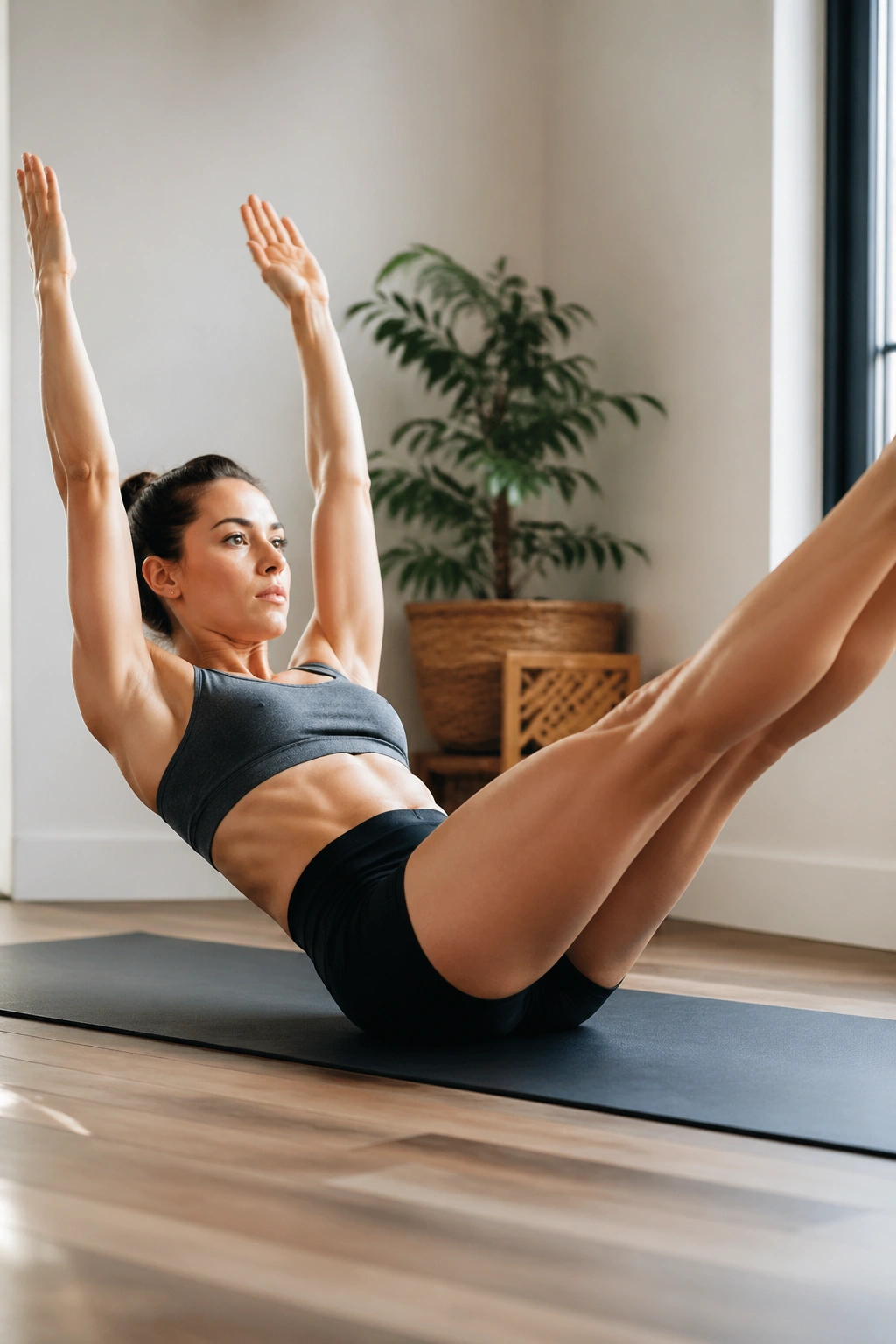
Double Leg Stretch is where neat Pilates form tends to disappear. People reach the arms too far, drop the legs too low, and turn a sharp core exercise into a wild flail.
Start in an abdominal curl with both knees hugged in. Exhale, reach the arms overhead as the legs extend out on a diagonal. Circle the arms around and pull the knees back in. Begin with 6 slow reps. Six good ones are plenty.
The hard part is the long lever. When both arms and both legs leave center at once, your abs have to stop the rib cage from popping and the low back from peeling off the mat. That’s why this move feels so different from Single Leg Stretch. The load is spread farther from the trunk, and you notice any weak link right away.
Keep the legs higher than you think you need at first. Better to work in a small diagonal and feel the deep abs switch on than force the legs down and dump into the spine.
And don’t rush the circle of the arms. That return matters. It teaches you how to pull from the center, not from momentum.
7. Criss-Cross for Obliques Without Neck Tugging
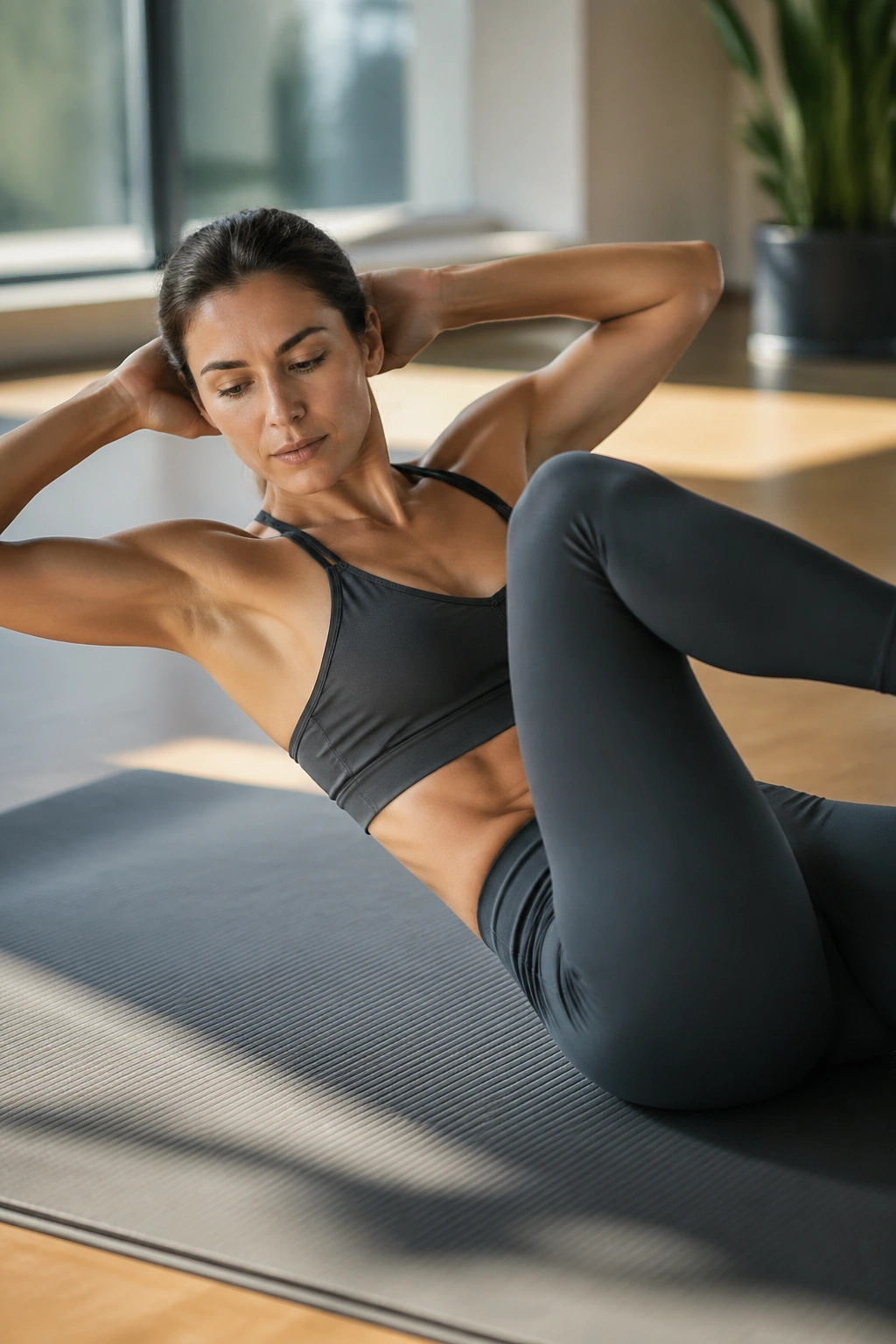
Forget the rushed bicycle crunch from gym class. Pilates Criss-Cross is slower, cleaner, and far more demanding when you do it right.
Lift into an abdominal curl with both hands lightly behind the head, elbows wide. Bring one knee in, extend the other leg long, and rotate the rib cage toward the bent knee. Then switch. Aim for 6 to 10 controlled rotations per side.
Make the twist come from the ribs
The elbow is not the star here. Your goal is not to jam elbow to knee. The goal is to rotate the trunk so the bottom ribs turn toward the opposite thigh. When the ribs drive the motion, the obliques do their job and the neck stays calmer.
One cue I use all the time: think of the opposite shoulder blade peeling off the mat, not the elbow flying across space.
If your hip flexors take over, shorten the leg reach. If your neck grabs, keep one foot down and work the rotation first. A smaller Criss-Cross that stays in the waist is worth more than a huge one that lives in the shoulders.
8. Single Straight-Leg Stretch for Lower-Ab Control
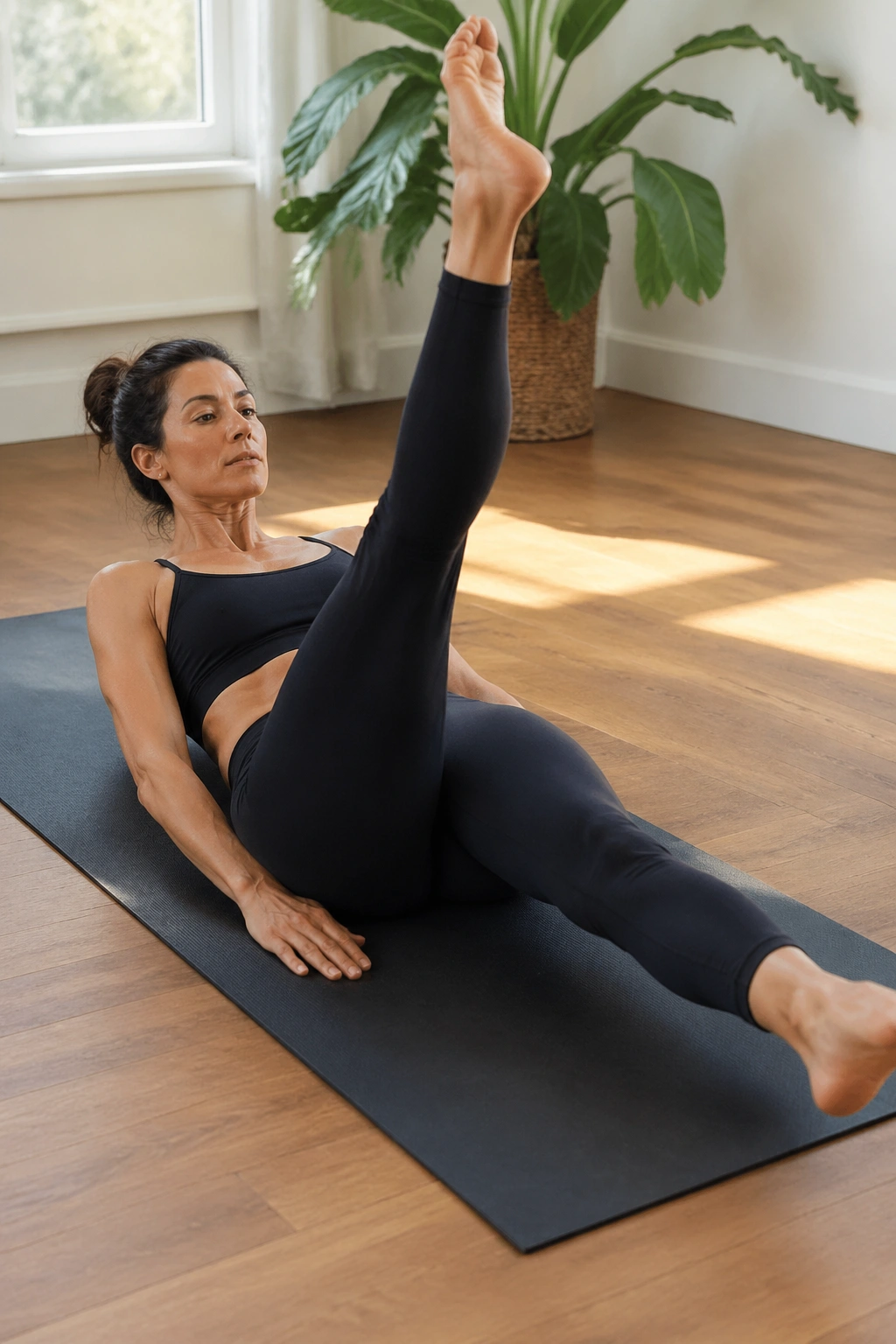
Your hamstrings will have opinions about this one.
Lie in a curl with one leg reaching straight up and the other extending long above the mat. Hold the raised leg lightly at the calf or behind the thigh—avoid yanking on the knee—and pulse the leg toward you twice before switching. Do 6 to 8 sets per side.
This move asks a lot from the lower abs because the reaching leg is long, not bent. That extra length makes the trunk work harder to stay steady. You also get a mild dynamic hamstring stretch on the lifted side, which is useful if tight backs of the legs block your roll-ups and teasers.
- Keep the pelvis heavy on the mat.
- Reach the low leg from the inner thigh, not from a pointed foot alone.
- Stay high enough with the low leg that your back doesn’t arch.
- Let the pulses stay small and springy, not jerky.
The cleaner version looks almost calm. Inside, it is busy.
9. Double Straight-Leg Lower and Lift for Heavy-Leg Loading
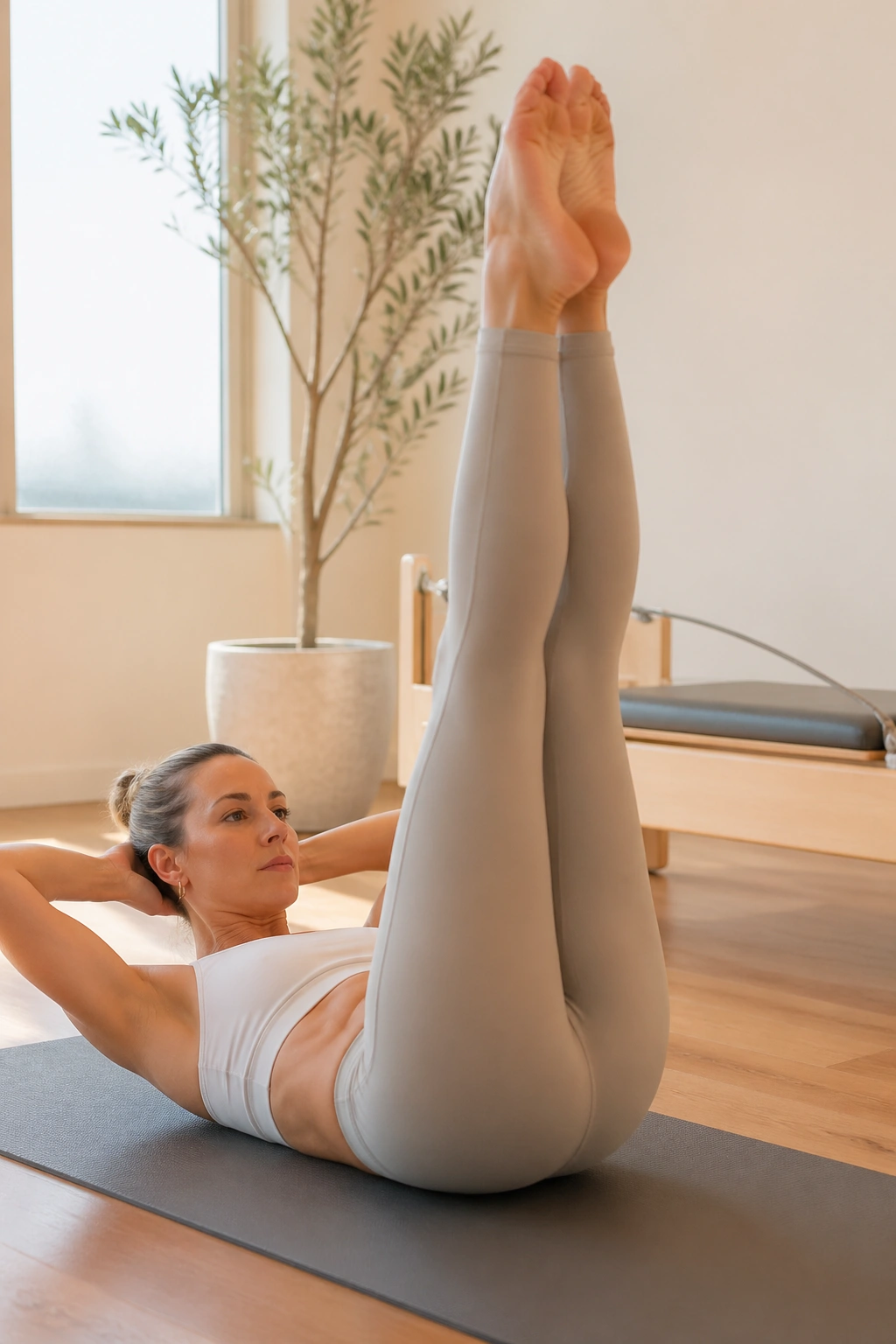
Heavy legs change the whole conversation.
With both legs extended to the ceiling, curl the head and shoulders up and place the hands lightly behind the head or arms long by your sides. Lower both legs together a few inches, then exhale and lift them back up. Start with 5 to 8 reps and keep the range modest.
This is one of the bluntest Pilates core moves for the lower abs because both legs act like a long weight hanging off the pelvis. The farther they go, the harder your trunk has to work. That is also why people mess it up fast. They chase range, the back arches, and the abs vanish.
How low should you go?
Only as low as you can keep the front ribs knitted and the sacrum heavy. That might mean lowering 8 inches. Fine. There is plenty of work there.
A slight posterior tilt can help if neutral spine turns into arching. If your neck gets tired before your abs do, place your head down and focus on the lower-body piece.
Ugly reps do nothing for you here.
10. Roll-Up for Full-Length Pilates Ab Control
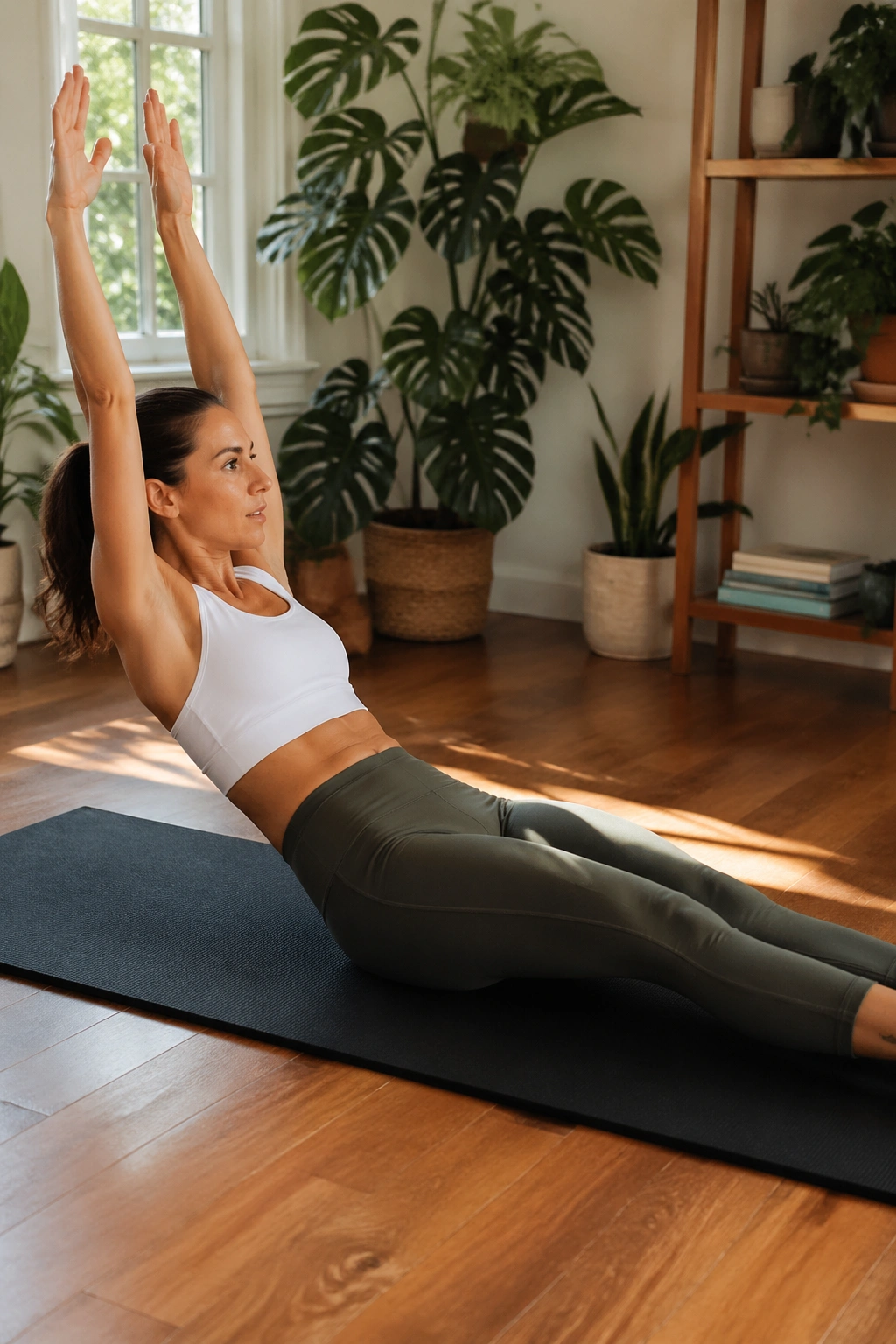
Can you move from lying flat to sitting tall without kicking, jerking, or grabbing momentum? The Roll-Up will answer that quickly.
Lie on your back with legs long and together, arms reaching overhead only as far as the ribs stay down. Nod the chin, float the arms up, and peel the spine off the mat one section at a time until you reach over the legs. Then reverse the path and lower with patience. Work with 4 to 6 reps.
A strong Roll-Up is not a big sit-up. It’s a lesson in segmental spinal movement. Each part of the spine flexes in sequence, and the abs control both directions. The lowering phase is often harder than the lift, which is why it belongs in any smart abs routine.
Tight hamstrings can make this look impossible. Bend the knees a little, anchor the feet under a strap, or start from a raised surface like a folded blanket under the hips. Those changes are not shortcuts. They remove the roadblock so the trunk can learn the job.
The best cue I know is “melt down through wet sand.” If you drop in one chunk, you missed the point.
11. Dead Bug Heel Slides with Imprint
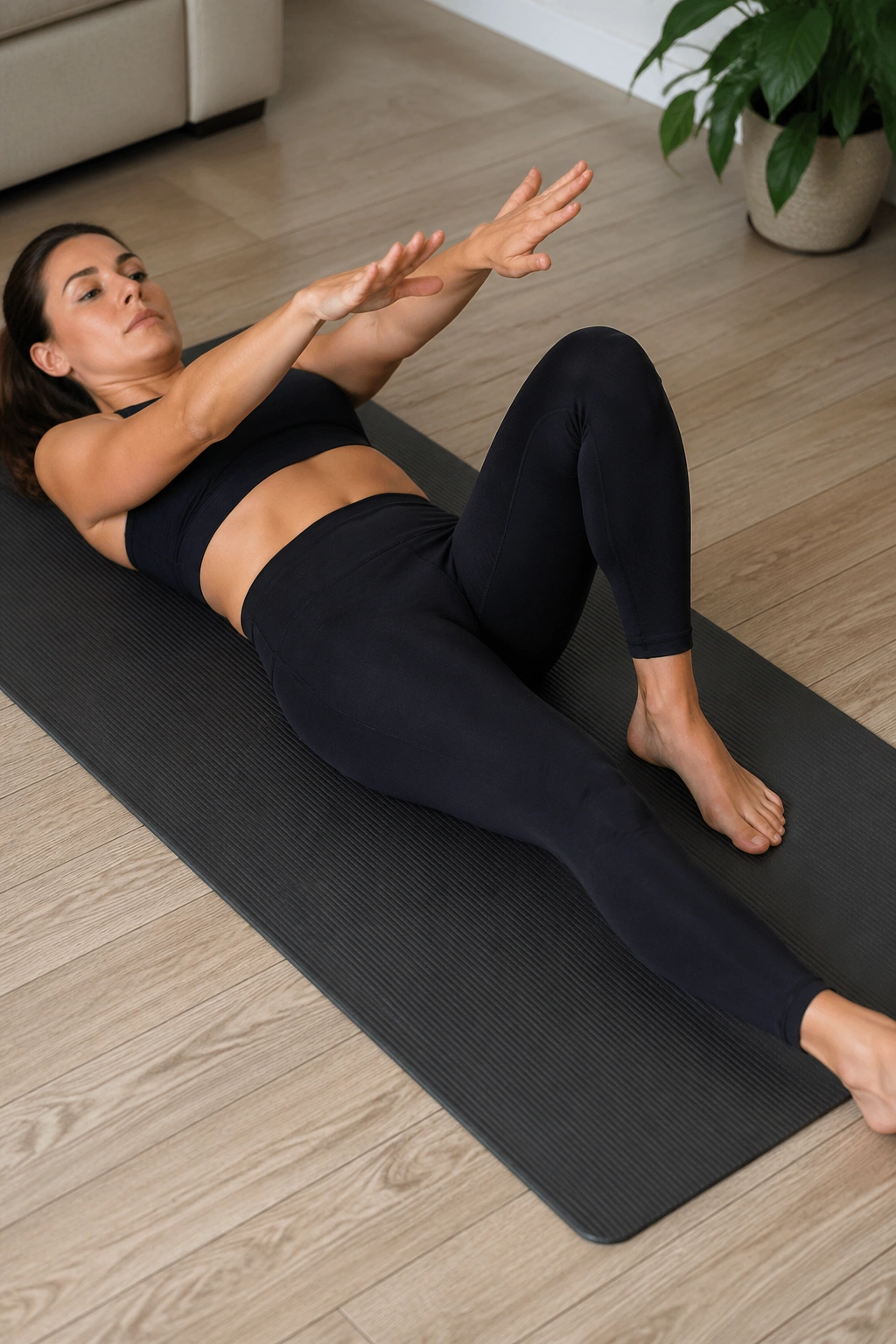
When classic mat work lights up your neck before your abs, come back to this.
Lie on your back with knees bent and feet down. Gently imprint the low back by exhaling and narrowing the waist toward the mat—not by smashing the pelvis flat. Lift one knee to tabletop, then the other. Slide one heel forward until the leg is long or nearly long, pull it back in, and switch. Add opposite arm reach if you want more load. Do 6 slides per side.
This one earns its spot because it teaches deep abdominal pressure management. Your trunk has to hold steady while one leg lengthens away, and that maps well to walking, stair climbing, and any move where one limb leaves the ground.
Why it transfers so well
The exercise is slow enough that you can feel mistakes as they happen. Ribs pop? You know it. Belly domes upward? You know that too. A lot of flashy ab work hides bad mechanics under speed. Dead bug heel slides refuse to do that.
If you only have ten minutes and your back has been grumpy, this is a strong place to start.
12. Shoulder Bridge March for Glutes and Abs Working Together
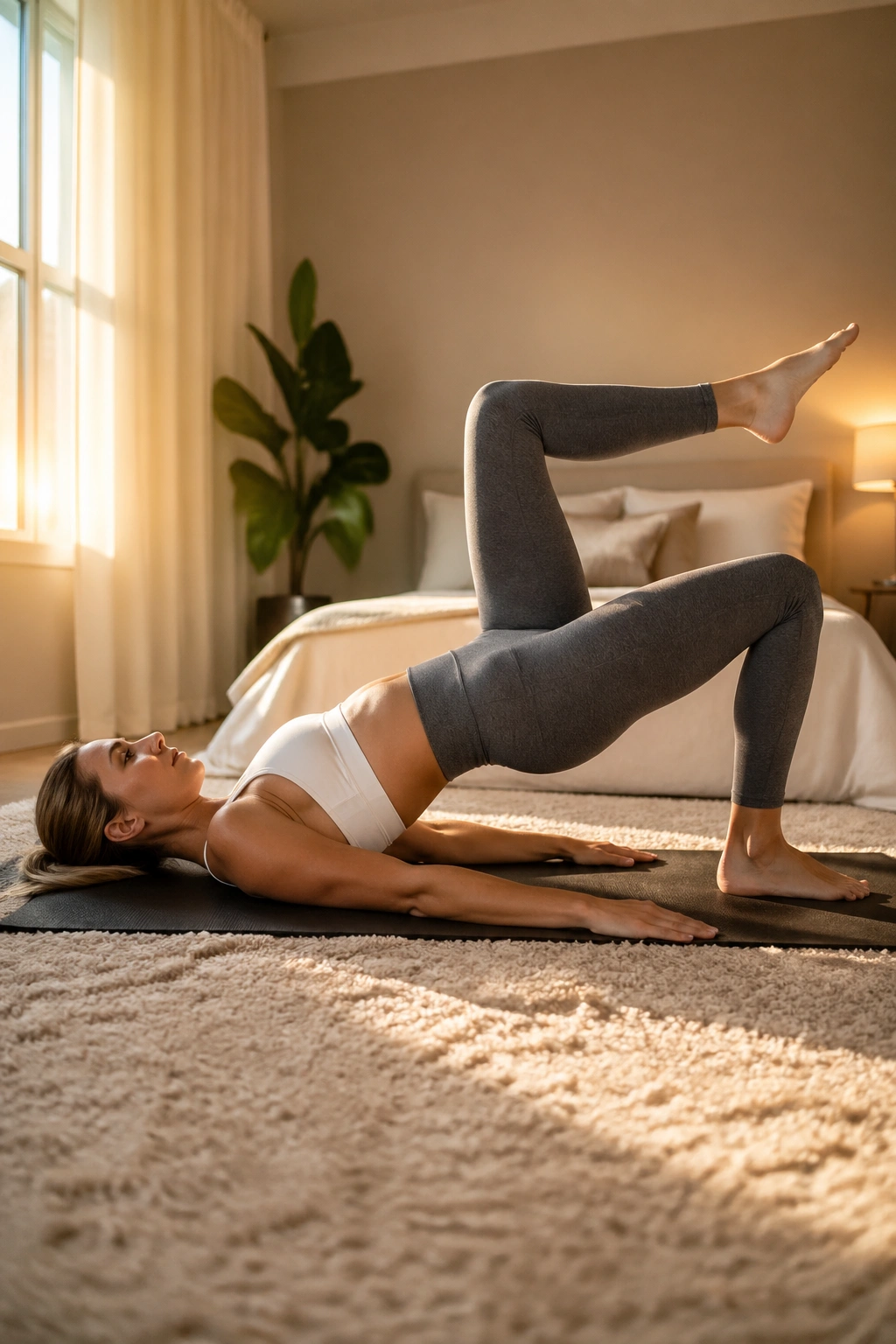
Strong abs without solid glute support often turns into a low-back problem. Shoulder Bridge March fixes part of that by making the trunk brace while the pelvis stays level and one leg moves.
Lie on your back with knees bent and feet hip-width apart. Press into the feet, lift into a bridge, and hold. Without twisting or dropping one side of the pelvis, float one knee to tabletop, set it down, then lift the other. Go for 5 to 8 marches per side.
You’ll feel the back of the hips, yes. You should also feel the lower abs and obliques stabilizing the whole structure. That anti-rotation demand is the gold here.
- Keep the breastbone soft rather than flaring upward.
- Press evenly through both feet before each march.
- Make the lifted thigh move; do not let the pelvis hitch to get it there.
- Lower the hips if hamstrings start cramping hard.
This is one of those exercises that looks easier from across the room than it feels in your body.
13. Forearm Plank with Knee Slides for Front-Body Endurance
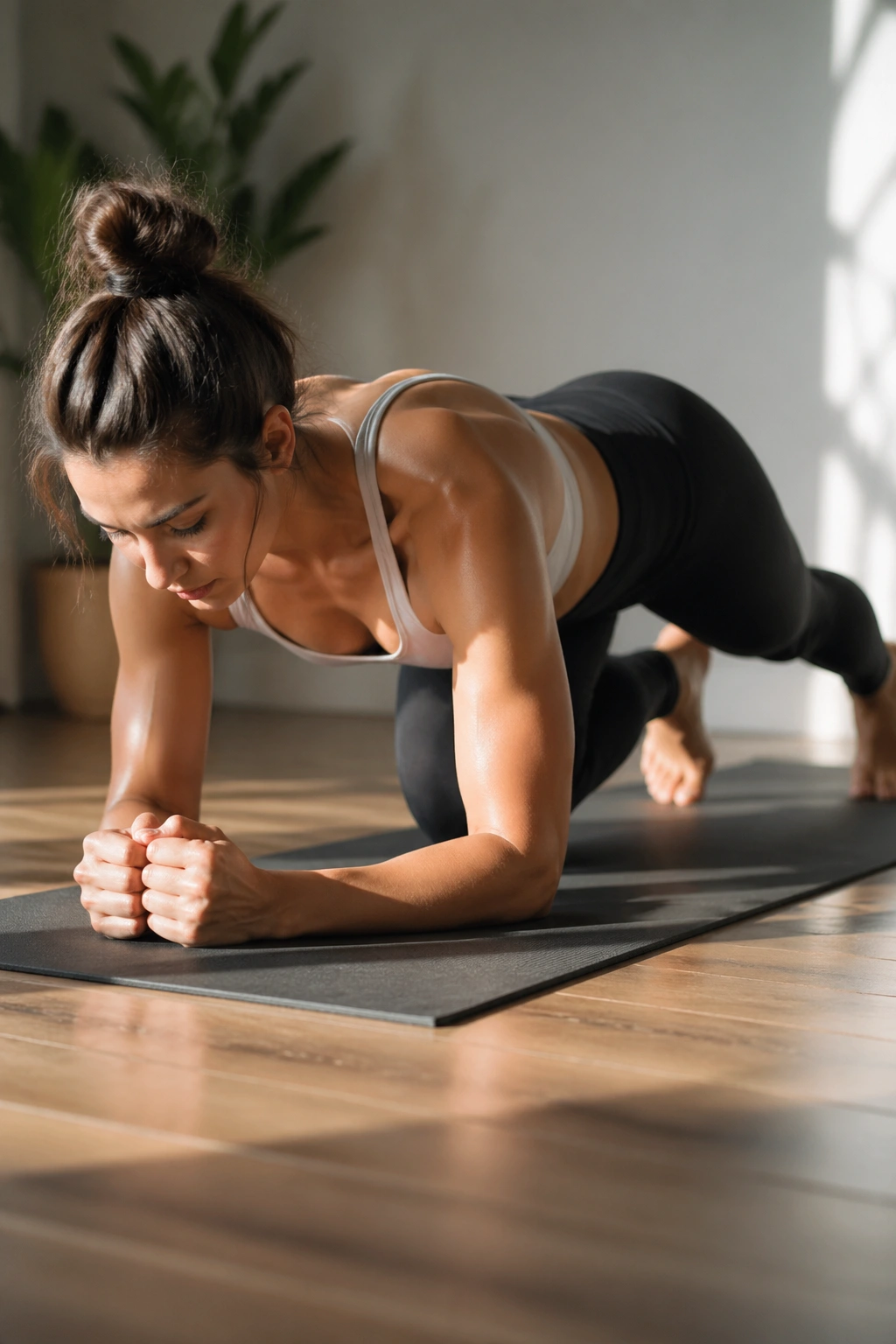
Planks get messy fast.
Set up on the forearms with elbows under shoulders, legs long, and a straight line from heels through crown of the head. From there, slide one knee a few inches forward under the hip, place it back, then switch sides. No bouncing. No mountain-climber speed. Aim for 20 to 30 seconds or 5 slow slides per side.
The reason I like this version over a plain hold is that the moving leg forces the trunk to adapt without losing shape. Your rectus abdominis, transverse abdominis, and obliques all have to organize around a changing base.
Keep the shoulder blades broad. If they pinch together, the upper body starts carrying the move. A slight posterior tilt can help stop the low back from sagging, though you do not want to tuck so much that the glutes clench like crazy and the breath disappears.
Short sets work best. Once the hips start hanging, stop.
14. Leg Pull Front for a Long Pilates Plank
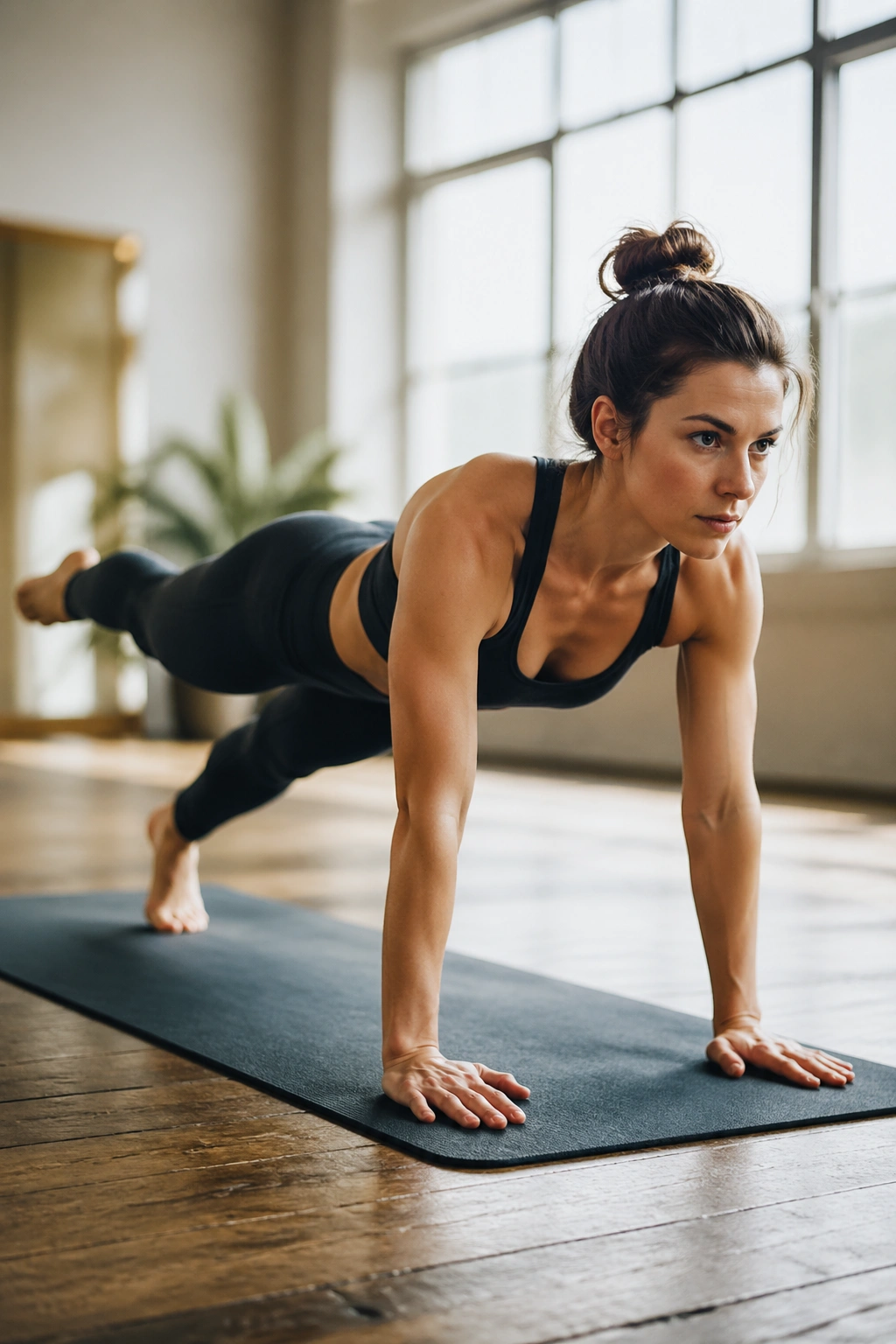
Unlike a standard gym plank that often turns into a static grind, Leg Pull Front asks for length, lift, and control through the whole front body.
Start in a strong high plank with shoulders stacked over wrists and heels pressing back. Lift one leg a few inches without hiking the hip, set it down, then switch. Do 4 to 6 lifts per leg. Keep the head in line with the spine and the gaze a foot or two ahead of the hands.
This move punishes sloppy rib position. The second the ribs sag toward the floor, the low back complains and the core work leaks away. Think of the sternum drawing gently back between the arms as the lifted leg reaches longer, not higher.
One form fix that helps
Press the floor away. That cue widens the upper back and gives the trunk a more stable base, which makes the abdominal wall engage with less strain in the wrists.
A shorter hold with clean leg lifts beats a long plank where nothing is organized anymore.
15. Side Plank with Reach-Through for Oblique Rotation
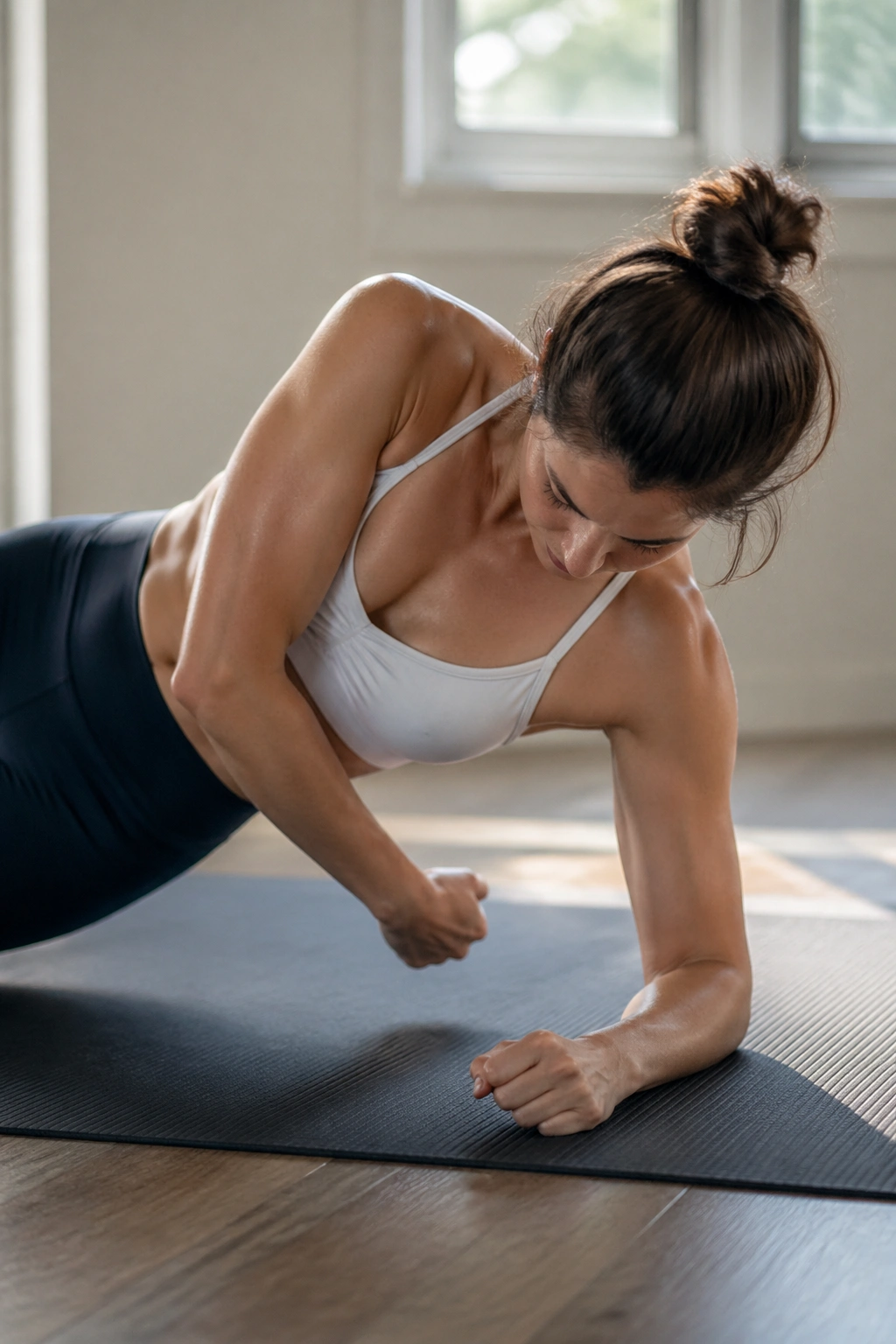
Want the side waist to work hard without doing endless side crunches? This one gets there faster.
Set up in a side plank on the forearm. You can stack the feet for a full version or bend the bottom knee for support. Reach the top arm to the ceiling, then rotate and thread it under your rib cage as the torso turns slightly toward the floor. Open back up. Try 6 controlled reach-throughs per side.
The beauty of the move is the combination of lateral support and rotation. Your bottom-side obliques and shoulder stabilizers hold you up while the top side helps guide the twist. It is demanding, and it tells the truth right away if your side plank line is off.
Do not sink into the supporting shoulder. Press the forearm firmly down and lift the underside waist away from the mat. If you lose that lifted feeling, scale it down to the bent-knee version and rebuild from there.
This is not a race. The slower reps hit harder.
16. Side Kick Kneeling for Anti-Rotation Control
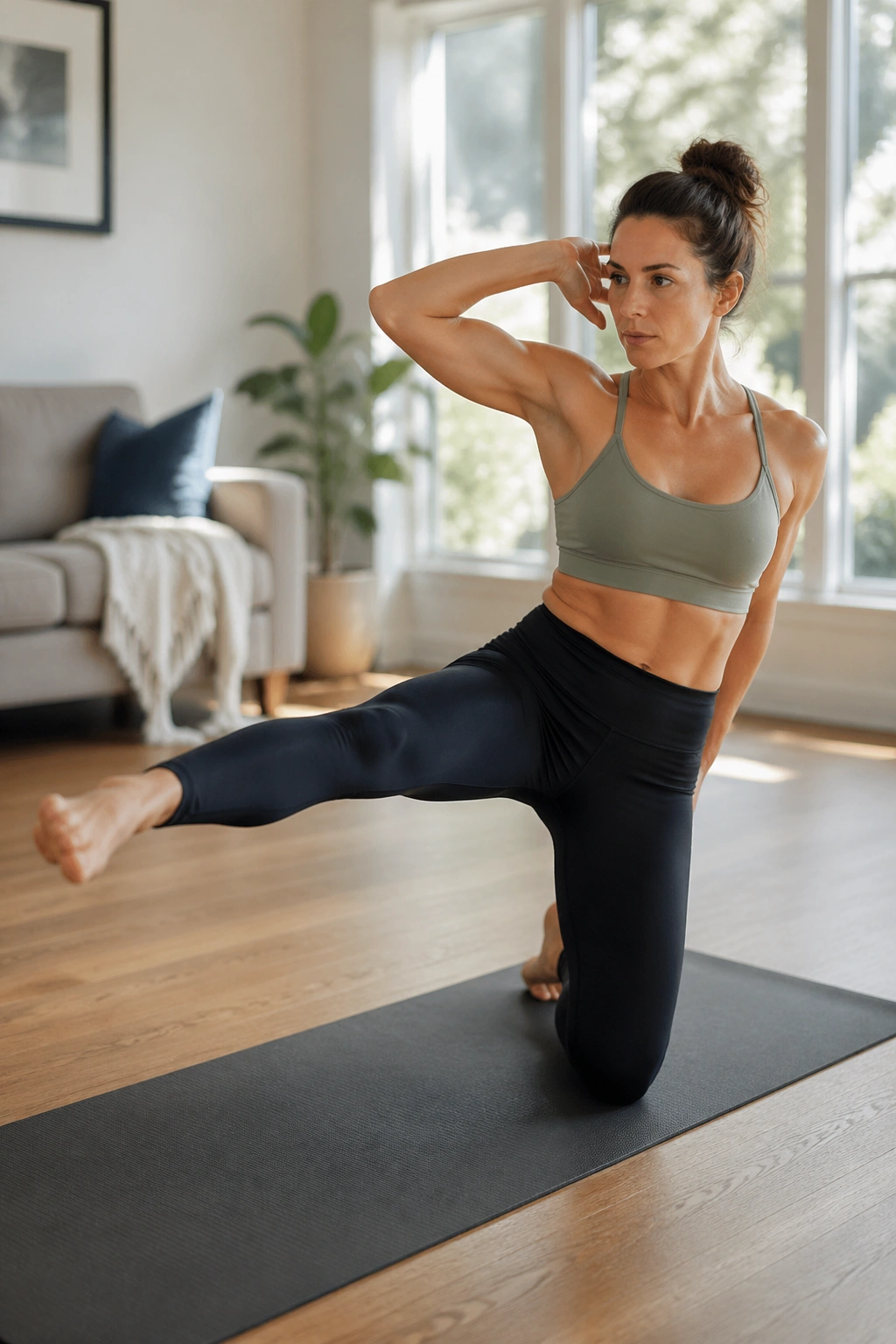
It looks like a leg exercise. Your core will disagree.
Come to one knee and one hand, with the other leg extended straight out to the side at hip height and the free hand behind your head or on your hip. Kick the top leg forward, then sweep it back without letting the trunk tip or twist. Do 8 to 10 kicks per side.
Side Kick Kneeling is one of the best Pilates moves for teaching the torso to resist motion. The leg swings, the pelvis wants to wobble, and your obliques have to shut that down. You also get useful work through the glute medius, which helps with pelvic control during walking and single-leg balance.
How to stop the wobble
Make the kick smaller. That’s the first fix. Bigger is not better here.
Next, press the supporting hand into the floor and imagine your waist lifting away from it. If the ribs collapse toward the mat, the exercise drifts out of the core and into a messy hip swing.
This one humbles people in the best way.
17. Saw for Rotational Flexion and Waist Strength
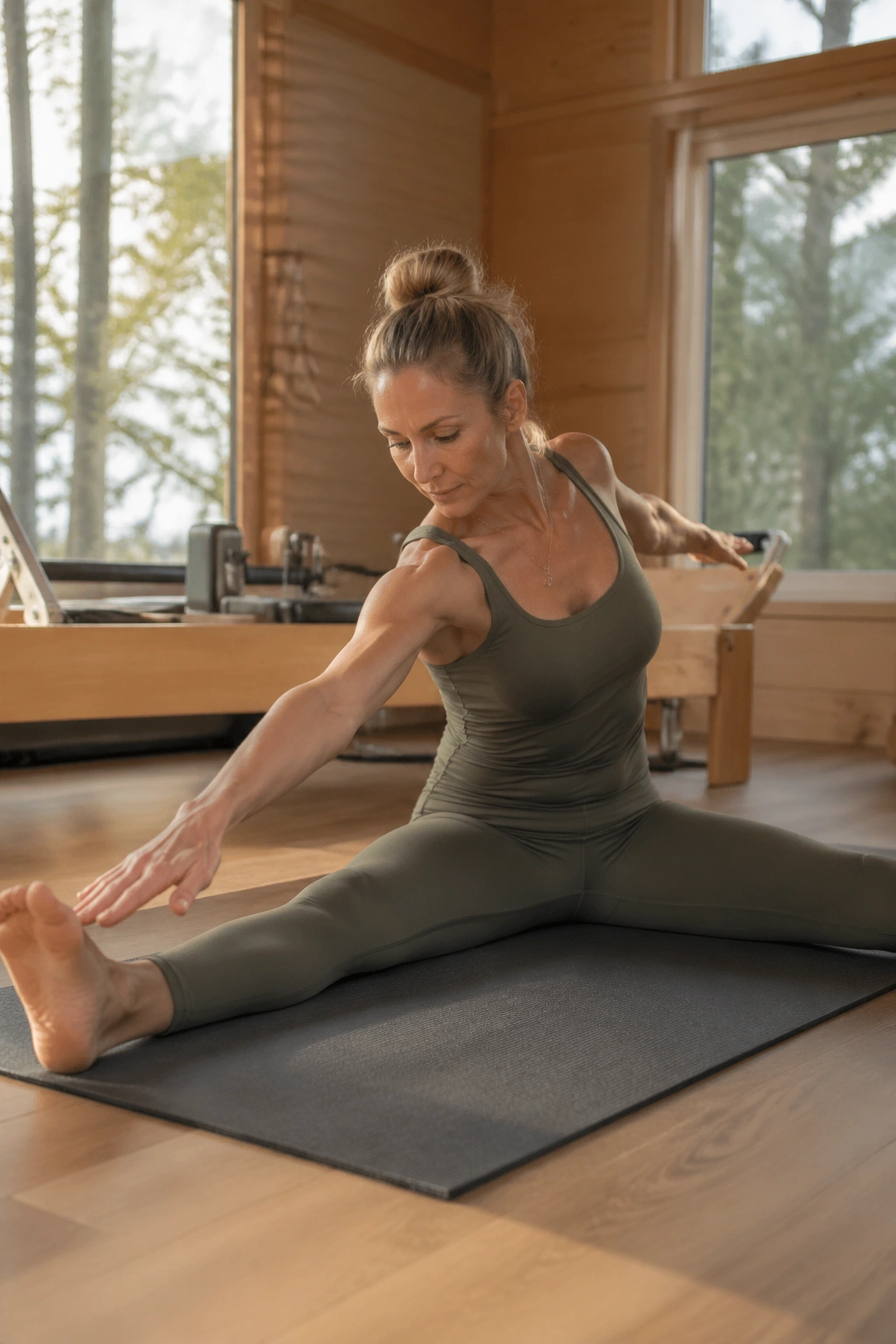
Saw gets treated like a stretch too often. Done well, it is a sharp oblique exercise with a hamstring bonus.
Sit tall with the legs wider than the mat and arms out to the sides. Rotate the torso, then reach the front hand toward the little toe of the opposite foot while the back arm reaches behind you. Pulse the reach gently, stack back up, and switch sides. Do 4 to 6 reps each way.
The key is keeping the pelvis grounded while the rib cage turns and flexes. That asks for control through the waist, not only flexibility in the legs. If you slump before you rotate, you lose the clean line of the movement and the abs stop doing their share.
- Sit on a folded blanket if tight hamstrings pull your spine backward.
- Keep both sit bones heavy.
- Reach from the ribs and waist, not by collapsing the chest.
- Use the exhale to deepen the twist and reach.
It is one of the rare moves that leaves you feeling stronger and looser at the same time.
18. Swimming for Back-Body Core Support
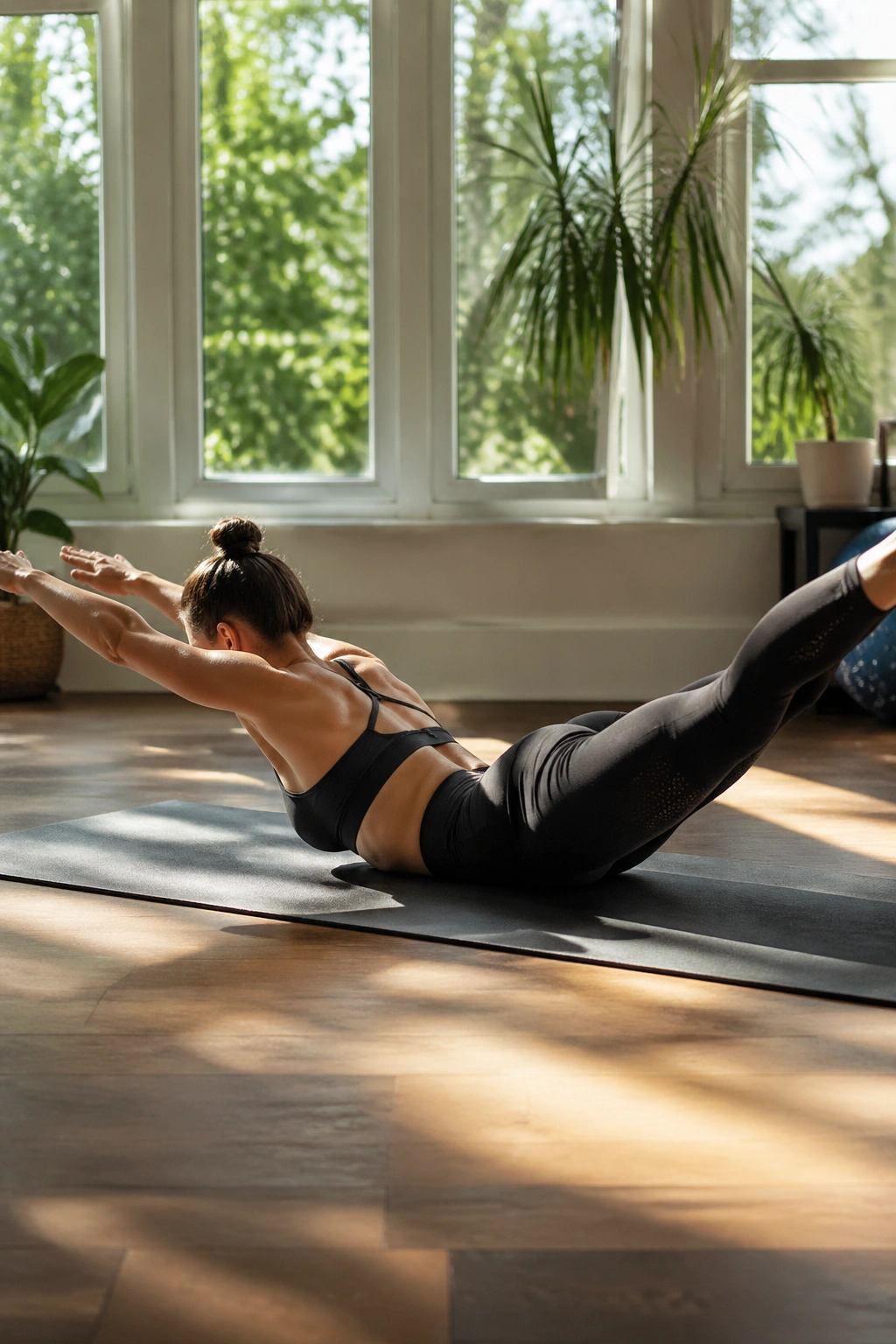
Face-down core work hits differently.
Lie on your stomach with arms long overhead and legs extended. Lift the arms, chest, and legs into a small back extension while drawing the belly up away from the mat. Then alternate opposite arm and leg lifts in a fluttering motion for 20 to 30 beats or 5 full breath cycles.
People chase abs and forget that the back side of the trunk matters just as much. Swimming trains spinal extensors, glutes, shoulder support, and the deep abdominal lift that protects the lower back while you’re prone. In Pilates terms, this is part of the powerhouse too.
The chest does not need to rise high. A low hover with length through the crown and toes is better than a huge lift that crunches the neck. Think long before high.
If your back feels pinched, separate the legs slightly wider and lower the height of the lift. You should feel work, heat, and effort—not compression.
19. Teaser Prep for Finding the C-Curve Under Load
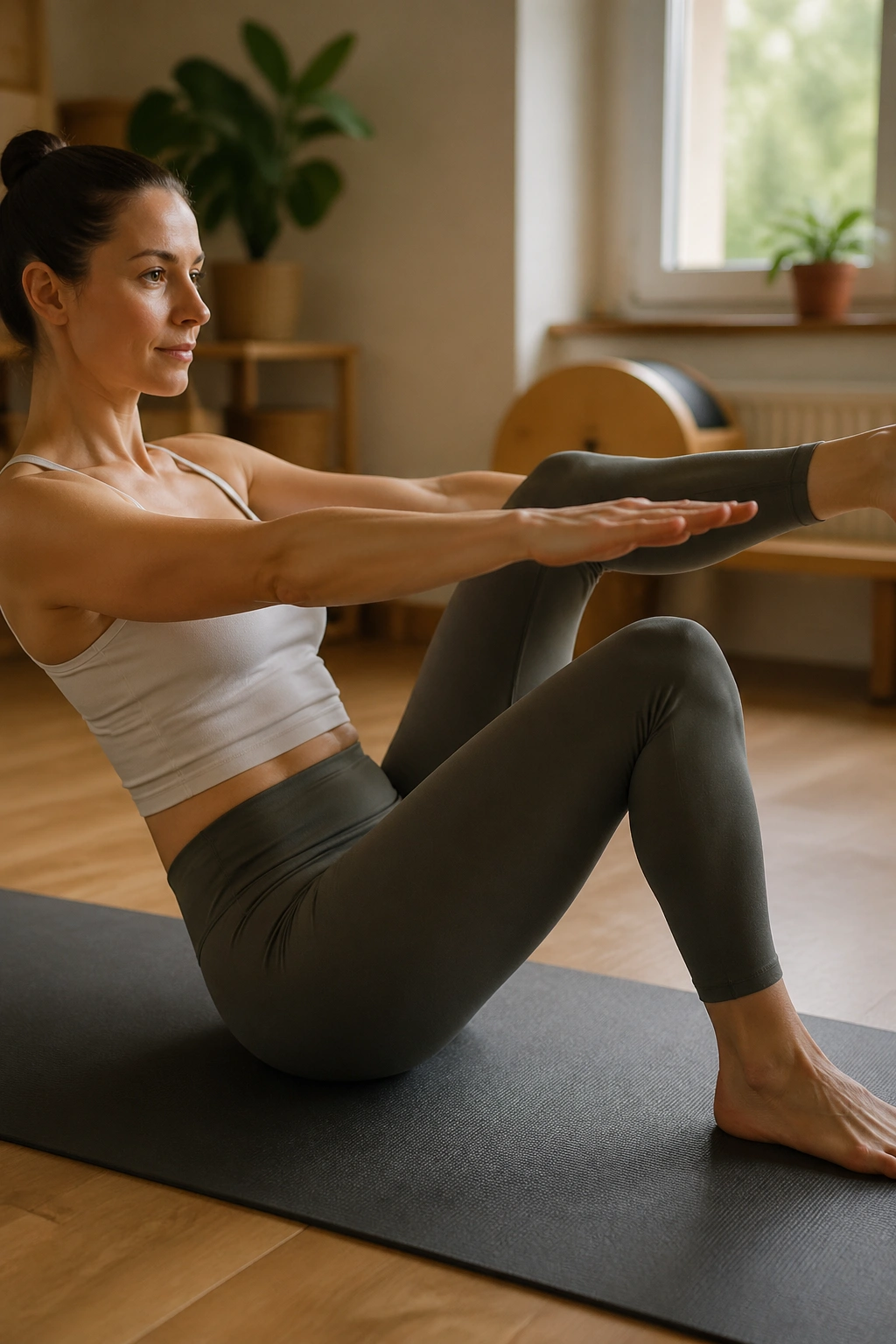
Teaser prep is where ego needs to sit down and be quiet. You do not muscle your way through this one. You organize it.
Start seated with knees bent and feet on the mat. Roll back to the sacrum so the lower abs switch on and the spine rounds into a controlled C-curve. Lift one shin to tabletop, then the other if you can keep the shape. Reach the arms forward and hold for 3 to 5 breaths, or roll down and up within that shape for 5 reps.
This version builds the hardest part of teaser without demanding a full straight-leg V position. You learn how to balance behind the sit bones, how to pull the navel inward without collapsing the chest, and how to keep the thighs from taking over.
A version worth starting with
Hold behind the thighs at first. There is no medal for letting go too early.
Once the shape stays steady, try hovering one toe off the mat, then both, then extending one leg. Each step adds load without throwing you into a form disaster.
The shaking that shows up here is honest work.
20. Full Teaser for Classic Pilates Ab Strength
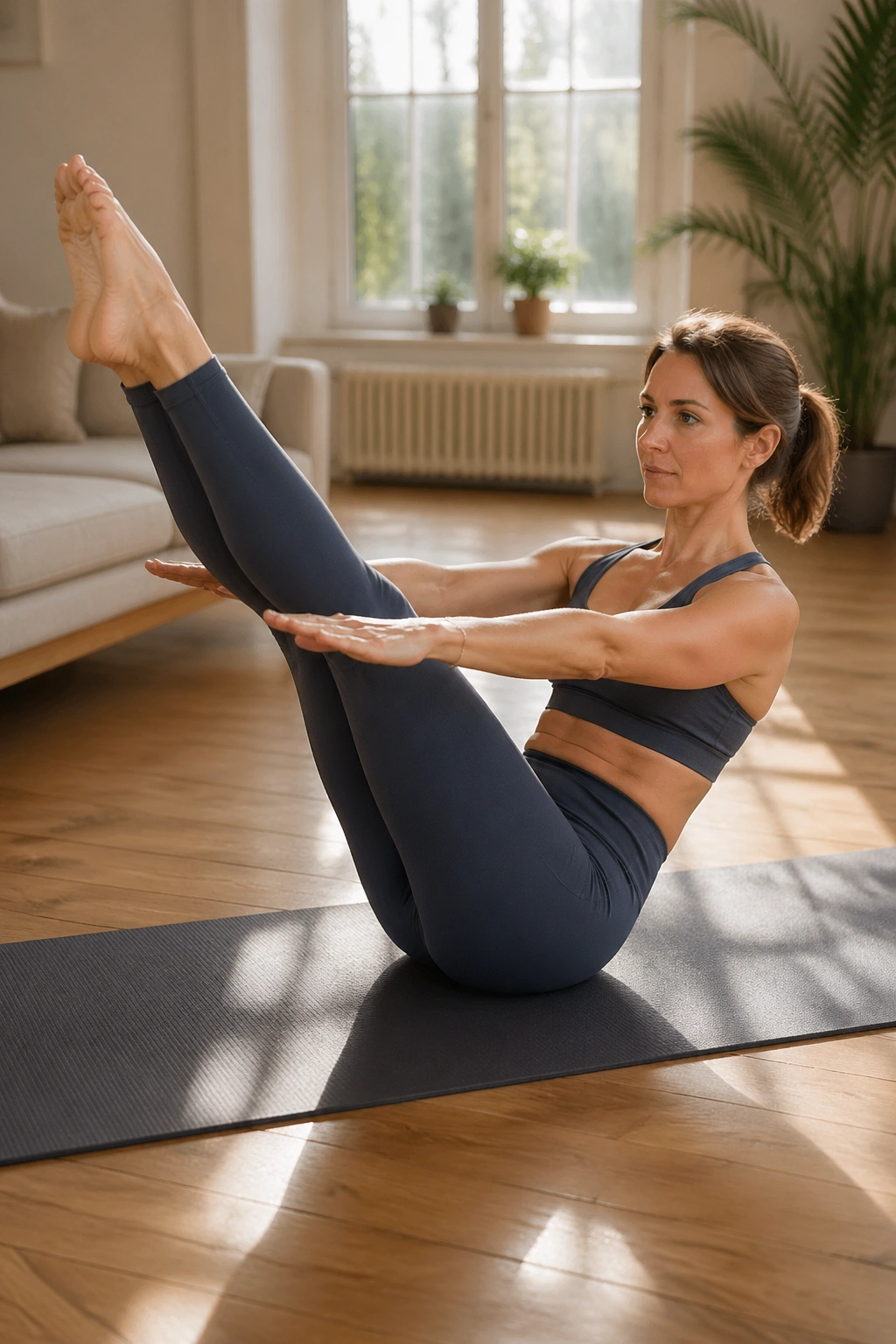
Nothing hides in a good teaser.
From lying on your back or from a seated balance, lift both legs and the torso into a V shape with arms reaching parallel to the legs. Hold, lower with control, and repeat for 3 to 5 reps. You can also stay up for 2 to 3 breaths per rep if the balance feels more useful than the rolling action.
Teaser is classic Pilates for a reason. It blends lower-ab strength, spinal control, hip flexor balance, and fierce concentration into one move that tells the truth about your center. When it clicks, the feeling is unmistakable: the waist cinches inward, the legs feel light, and the spine lifts instead of collapsing.
When it doesn’t click, people yank with the neck, grip at the quads, and throw themselves into position. If that sounds familiar, go back to teaser prep and earn the shape in stages. There is no shortcut worth taking here.
Three clean teasers are enough to make the point.
21. Corkscrew for Advanced Pilates Core Rotation
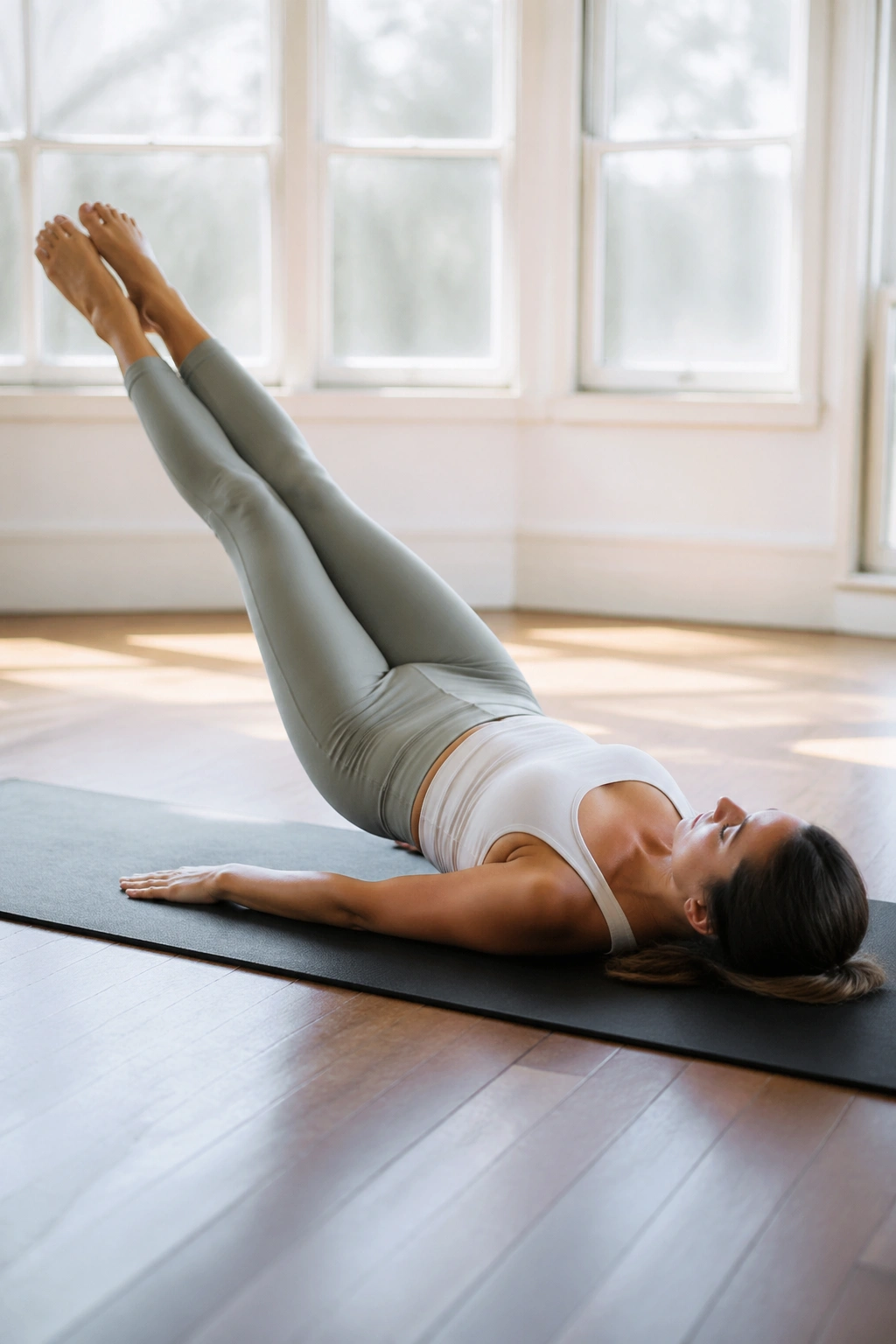
Eight-inch circles are plenty.
Lie on your back with legs together and extended to the ceiling. Press the arms into the mat, keep the shoulders heavy, and circle the legs to one side, down, around, and back to center. Reverse direction after 4 to 6 circles. Start small. Always.
Corkscrew asks the lower abs and obliques to manage the weight of both legs while rotation sneaks in. On paper that sounds tidy. In your body, it feels demanding because the pelvis wants to lift, the ribs want to flare, and the circle wants to turn into a giant scribble.
- Keep the circles no wider than your mat at first.
- Stop the legs before the low back peels up.
- Exhale through the hardest part of the arc.
- If both legs are too heavy, practice with bent knees.
A small corkscrew done with control hits the waist harder than a giant one thrown around for show.
22. Roll-Over for Deep Lower-Ab Lift
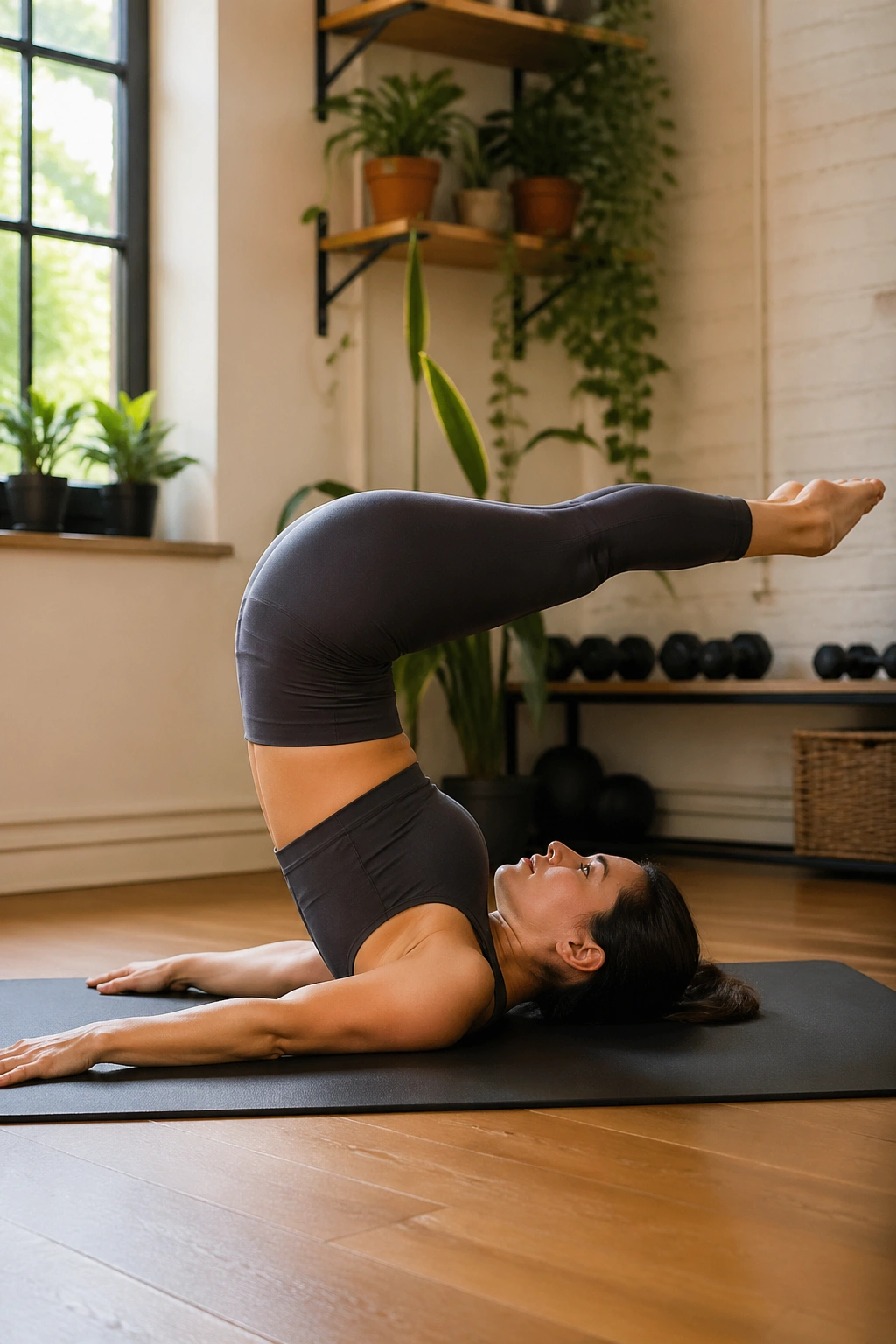
Do not force Roll-Over.
Lie on your back with legs together and arms long by your sides. Lift the legs to 90 degrees, continue the motion by drawing the hips up and over until the toes reach toward the floor behind you, then articulate the spine down one segment at a time. Start with 3 to 5 reps, and stop if the neck feels compressed.
This is one of the strongest lower-ab lifts in mat Pilates because the pelvis has to curl off the floor under control. It also demands spinal articulation, shoulder stability, and patience. A rushed Roll-Over is useless. A controlled one is potent.
Who should skip it for now
If you have neck pain, a disc flare-up, osteoporosis, or you cannot get your hips overhead without throwing your weight into the cervical spine, leave this move alone until a skilled teacher clears it.
You can build toward it with reverse curls, teaser prep, and small hip lifts. No hurry. Roll-Over is a privilege move, not a requirement.
23. Open-Leg Rocker Prep for Balance and Ab Timing
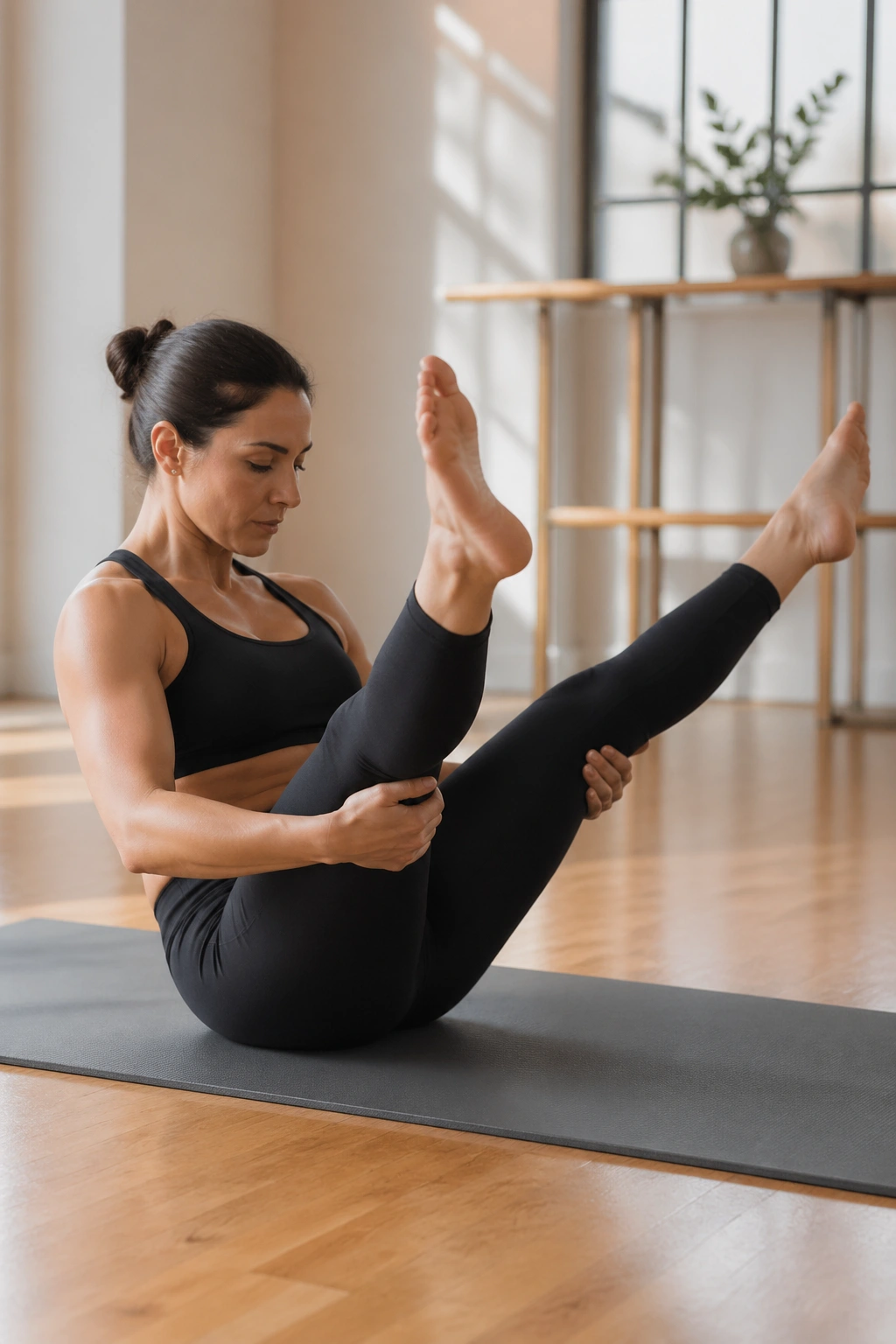
Most people try to yank this one into place, and the exercise pushes back right away.
Sit behind the sit bones with knees bent and hands holding the backs of the thighs or shins. Lift the feet so you balance in a rounded shape. From there, extend one leg or both if you can keep the curve, then rock back to the shoulder blades and return to balance without letting the feet slam down. Do 4 to 6 rocks.
Open-Leg Rocker Prep trains timing as much as strength. Your abs have to stay engaged through the backward roll, the return, and the moment of balance at the top. Lose the center for a split second and the whole thing falls apart.
The shape matters more than the roll. Stay rounded through the low back, keep the gaze toward the navel, and use a small rock at first. A giant swing turns it into circus work, and Pilates does not need more circus work.
When the pause at the top feels steady, you know your core is doing what it should.
24. Jackknife for Advanced Lift and Control
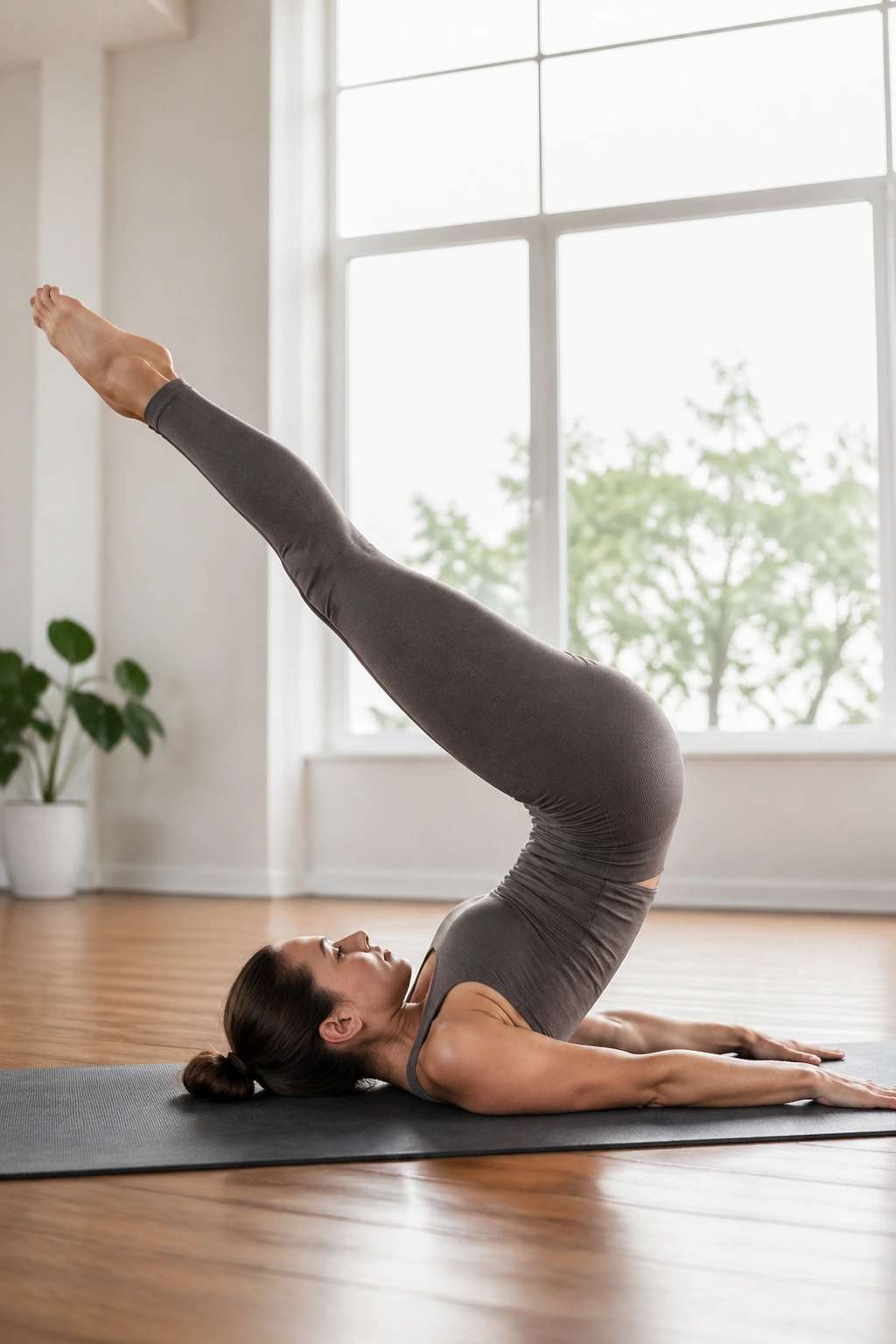
Small movement. Big demand.
Start on your back with legs together and arms long. Lift the legs to 90 degrees, roll the hips overhead, then send the legs upward on a diagonal so the body stacks more vertically for a brief moment. Lower the spine down with control and return the legs to the start. Perform 3 to 4 reps.
Jackknife is one of the toughest Pilates core workouts on the mat because it combines the lower-ab lift of Roll-Over with a stronger upward reach. The abs work concentrically to lift and eccentrically to lower. That lowering phase is where the quality lives.
- Keep weight on the shoulders, not the neck.
- Press the arms firmly into the mat for support.
- Think “up and long,” not “kick overhead.”
- Stop before the descent turns into a drop.
If you cannot lower one vertebra at a time, you are not ready for more reps—you are ready for an easier exercise.
25. Side Bend for Lateral Core Power
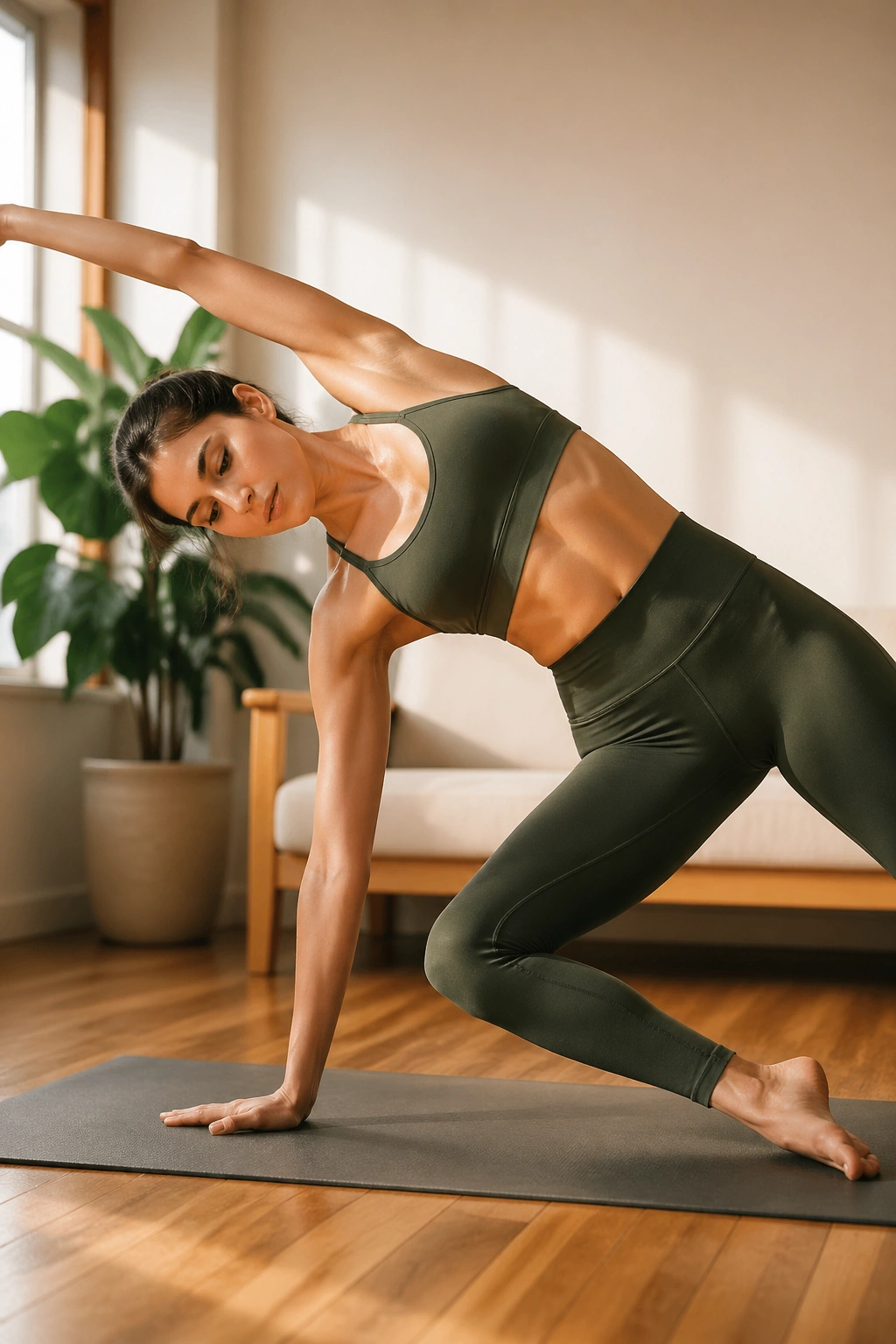
The first good Side Bend feels like your entire waist wakes up at once.
Set up on one hand and the side of one foot, with the top foot placed in front for support if needed. Reach the free arm overhead and lift the hips into a long side arc. Lower with control, or add a thread-under variation if your shoulder and spine feel good. Aim for 5 to 8 lifts per side.
This move trains the lateral chain—the obliques, quadratus lumborum, serratus, and glute medius—in a way straight-on ab work cannot. You’re not curling or twisting much. You’re lifting the body sideways against gravity, which is a different kind of challenge and a useful one.
A lot can go wrong here. The supporting shoulder may collapse, the bottom waist may sag, or the neck may harden. Fix those before you chase height. Press the floor away, keep the chest open, and think of the pelvis floating up from the underside of the waist.
If your goal is strong abs that hold up outside the studio, do not skip lateral work.
Final Notes
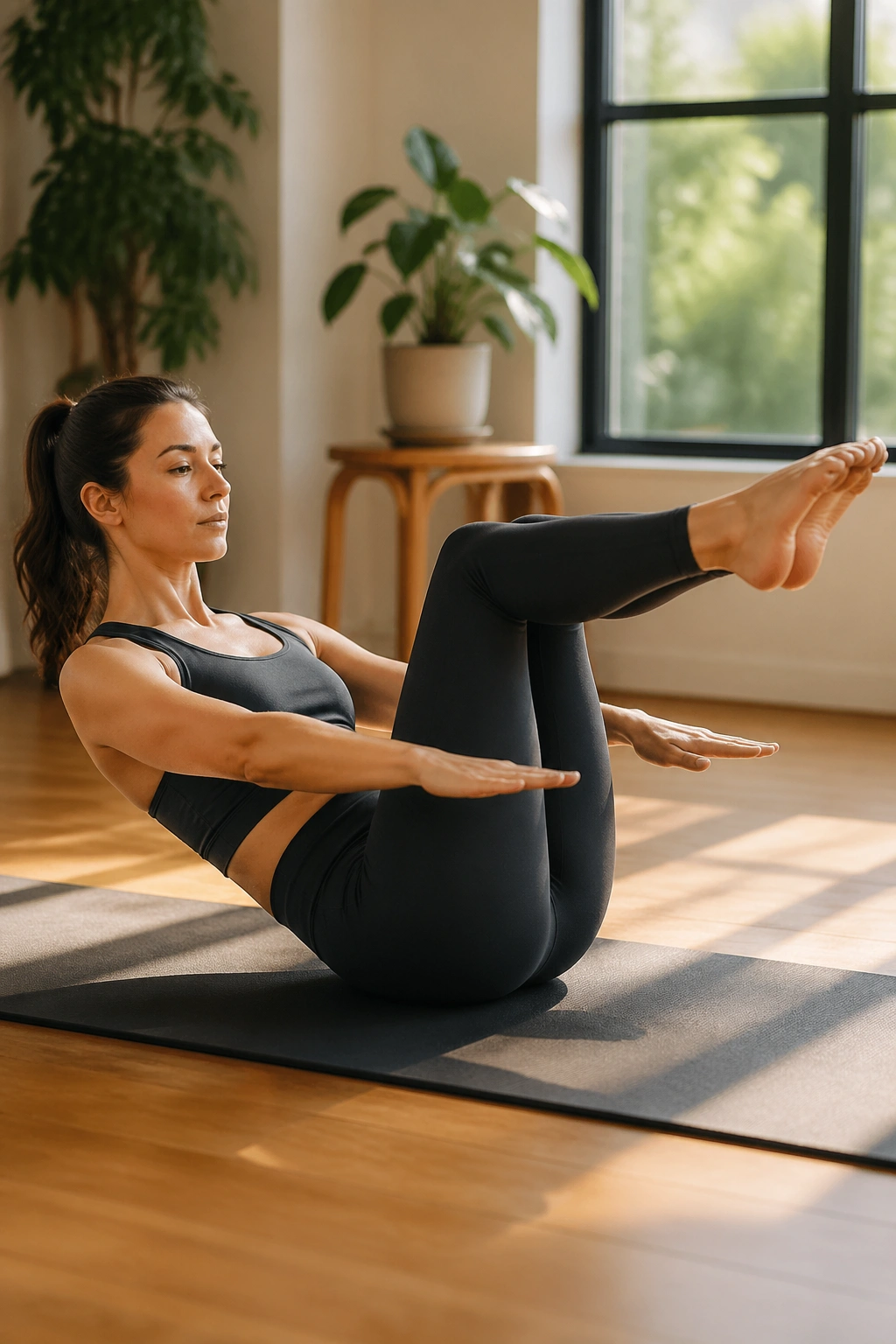
The smartest way to use these Pilates core workouts is not to cram all 25 into one heroic session. Pick a small stack that covers different jobs: one flexion move like Half Roll Back, one leg-lowering drill like Toe Taps or Double Straight-Leg Lower and Lift, one rotation piece like Criss-Cross or Saw, one plank pattern, and one back-body exercise like Swimming.
Quality decides whether these exercises build strong abs or feed old compensation patterns. If your neck starts shouting, your ribs pop, or your hip flexors dominate, shrink the range and slow the tempo. The hard part of Pilates is often not adding more. It’s doing less, better.
Stay patient with the advanced pieces. Teaser, Roll-Over, Corkscrew, and Jackknife are worth earning, and they feel better when the groundwork is there. When the breath stays steady and the trunk stops leaking tension into the wrong places, your abs start working the way they were meant to.
