



The hardest part of a Pilates practice isn’t the physical effort required to hold a plank or execute a perfect hundred; it is the friction of getting onto the mat. We often assume that to get the real, measurable benefits of the practice, we need an hour, a dedicated studio space, and an instructor barking corrections. That is a myth that keeps far too many people from reaping the rewards of a consistent core-strengthening routine.
You do not need a reformer or a studio membership to see changes in your posture, core control, or overall mobility. What you need is a library of routines that fit the reality of your day—whether that day includes a grueling morning schedule, a midday slump, or a restless evening when your back feels like it has been fused into a rigid rod of tension.
These eighteen routines are designed to meet you exactly where you are. Some are geared toward specific physiological goals, while others are simply time-savers. The key here is specificity. Generic “get fit” routines are easily ignored; targeted sessions for specific body needs—like releasing hip tension or waking up a sluggish lower back—are actionable. When you know why you are getting on the floor, you are significantly more likely to actually do it.
1. The Bedtime Decompression Routine
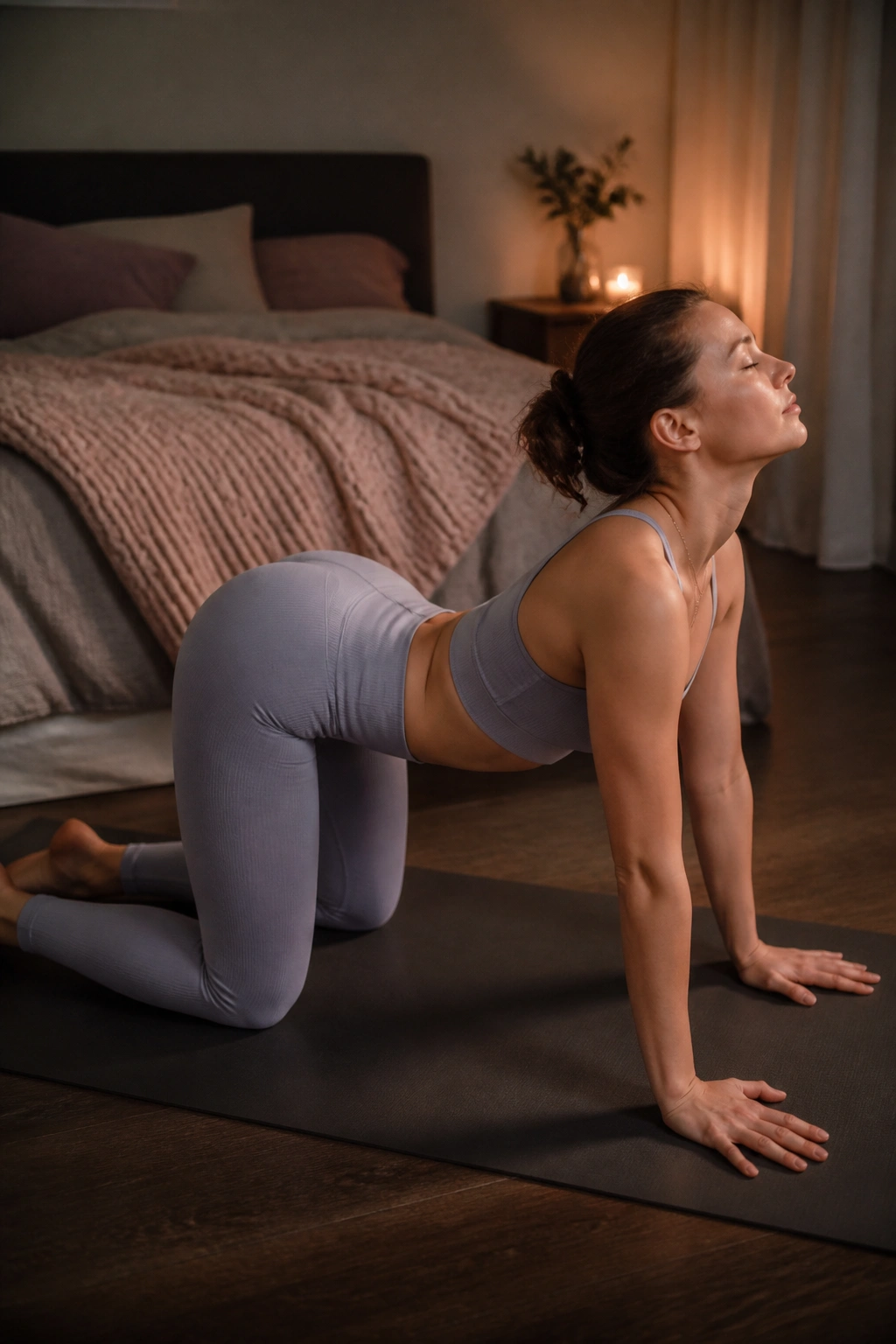
This sequence is less about muscle fatigue and entirely about recalibrating your nervous system before sleep. It focuses on gentle spinal articulation and releasing the tension that builds up throughout the day in the hips and neck. You want to move slowly here. Your goal is to move your spine through its full range of motion while your heart rate stays low and steady.
How to Execute This Flow
Begin with simple cat-cow stretches, but really emphasize the breath. Inhale to look forward, letting your belly drop slightly, then exhale and tuck the chin, pushing the floor away to round the upper back. Follow this with “thread the needle” on each side to rotate the thoracic spine, which often gets locked up from prolonged sitting or screen time. Finish with a child’s pose, but walk your hands out as far as they will go to stretch the lats.
The Golden Rule: If you feel your heart rate creeping up, you are moving too fast. This is the time to slow your tempo down to match your breathing.
2. The Morning Energy Wake-up
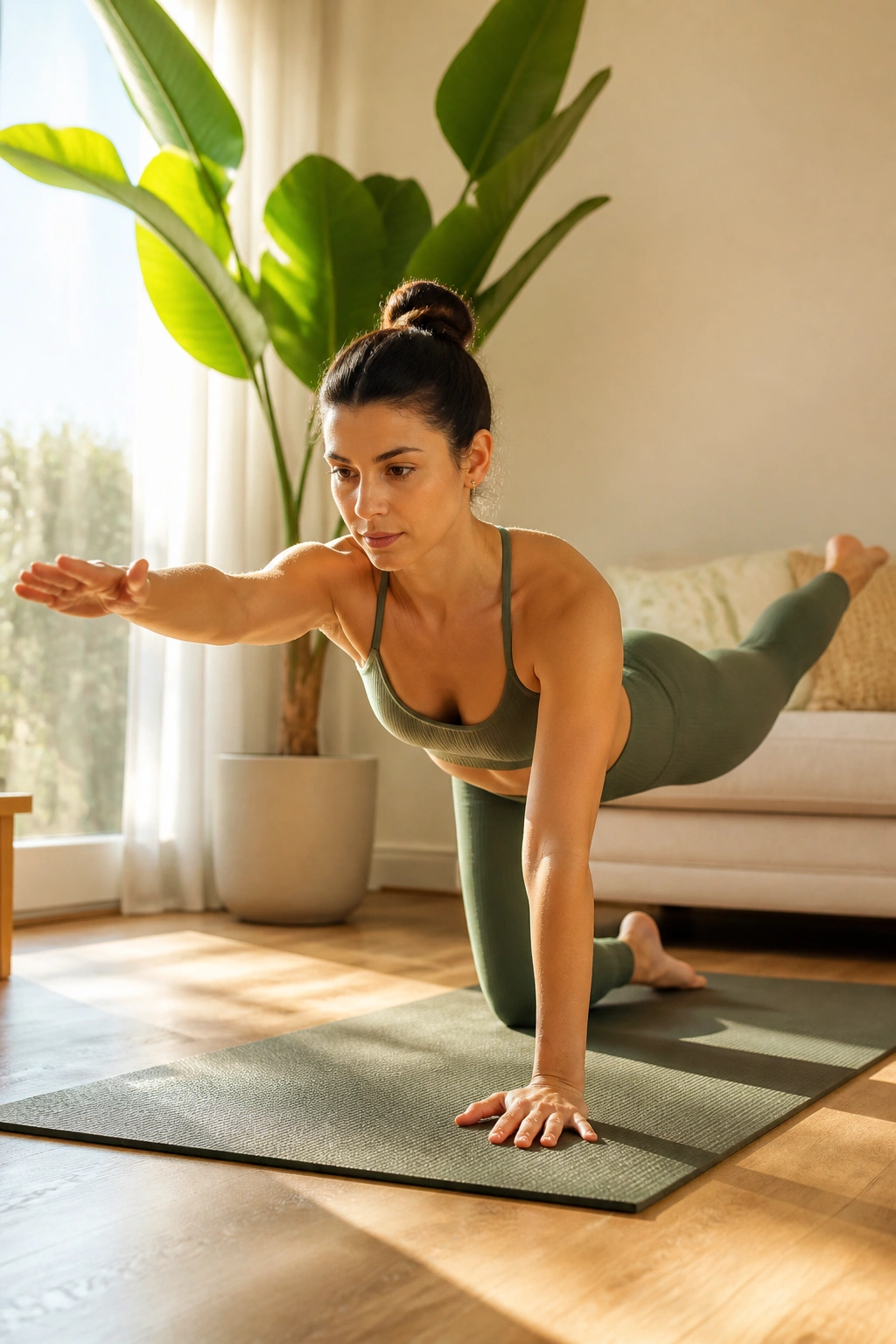
You probably wake up feeling stiff. It’s normal. This routine is designed to bridge the gap between being horizontal and upright without relying on caffeine. We focus on blood flow and large muscle group activation. Think of this as turning the engine over in your car; you aren’t driving to the race track, you’re just making sure everything is ready to run.
Why This Works
The focus here is on the “powerhouse”—the deep abdominal muscles. By firing up the core first thing, you automatically engage your center of gravity, which helps improve your posture for the rest of the day.
- Do 10 gentle roll-ups, focusing on segmenting the spine off the mat one vertebrae at a time.
- Perform 20 bicycle crunches, but keep them slow; it’s about control, not speed.
- Finish with 10 bird-dog repetitions per side to wake up the glutes and stabilizers.
3. The 10-Minute Desk-Worker Fix
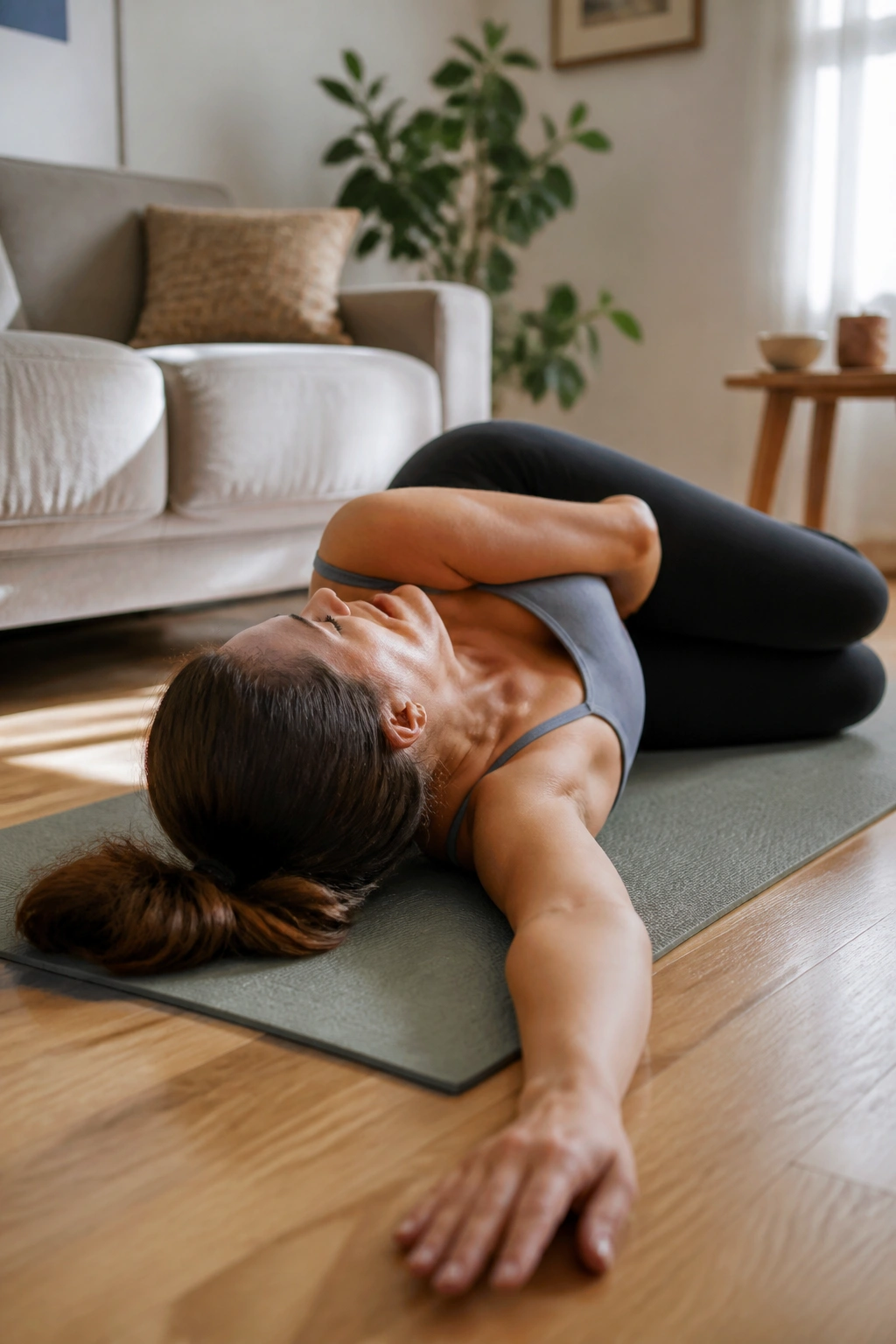
If you sit for work, your chest muscles are likely tight, your shoulders are rounded forward, and your glutes are essentially “sleeping.” This routine targets the exact opposing muscles. It isn’t a full-body burn, but it provides immediate relief. You can do this in your living room in your work clothes; no transition to gym gear is strictly necessary.
The Problem Areas to Target
You want to focus on “the opening.” Your chest, your hip flexors, and your anterior deltoids are the culprits here. Spend 3 minutes on thoracic rotation exercises—lying on your side and opening your top arm across your body—to reverse the “hunch” posture. Then, spend 4 minutes on bridge variations to wake up those glutes. Use the final 3 minutes for simple neck rolls and shoulder blade retractions.
4. The Core-Centric Stability Session
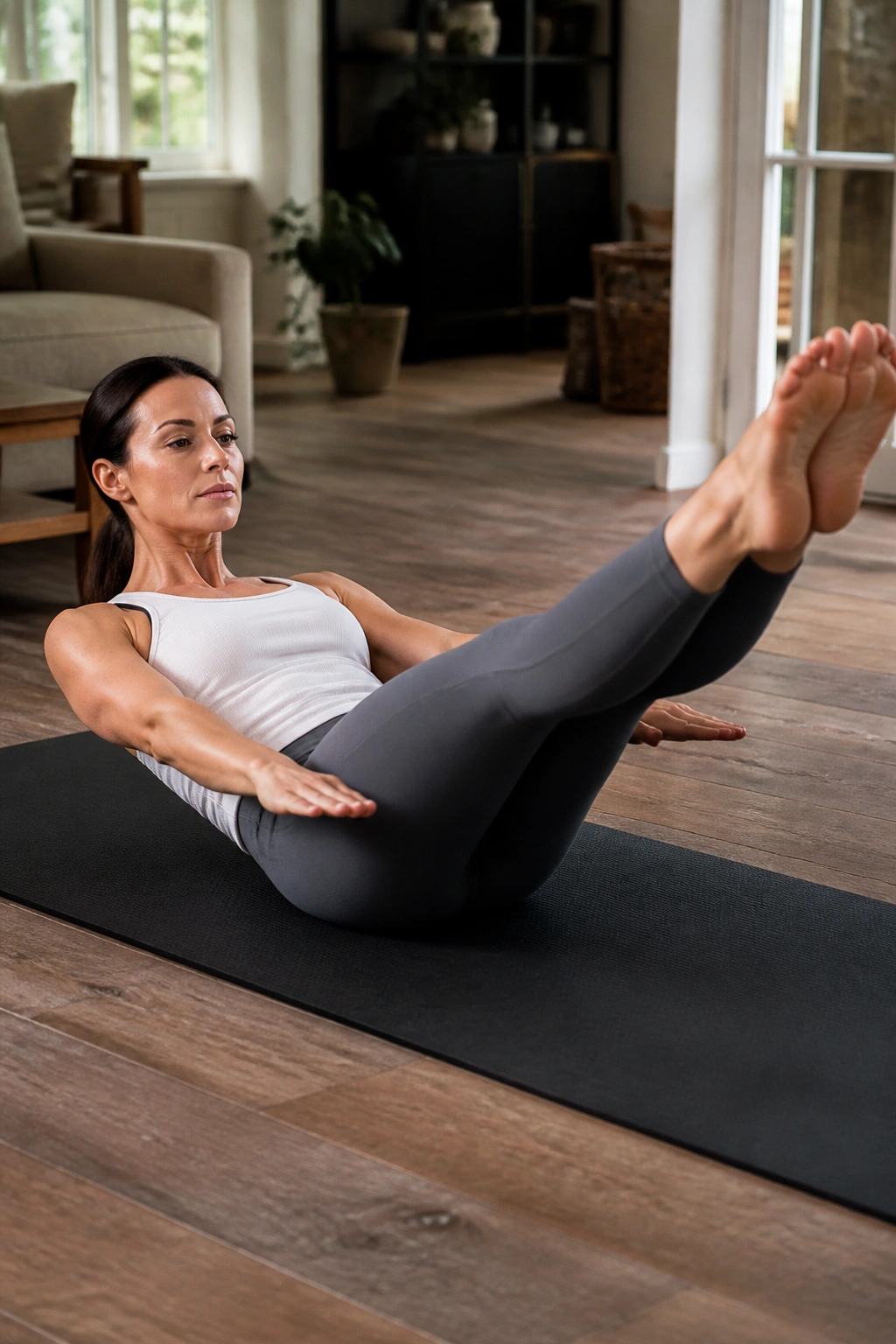
Stability is not just about having “six-pack” muscles; it is about the transverse abdominis, that deep corset-like muscle that supports your entire spine. When this muscle is strong, back pain often fades into the background. This routine is the classic foundational workout that reminds you how to hold your body together.
Key Movements
You will need to be meticulous with your form here. Focus heavily on “The Hundred.” If your neck starts to hurt, drop your head to the mat, but keep your core engaged. Follow this with single-leg stretches, ensuring your lower back remains pressed into the floor throughout the entire movement. Do not let your pelvis rock back and forth. If you feel your back arch, that is your signal to modify the angle of your legs.
5. The “No Equipment” Full Body Burn
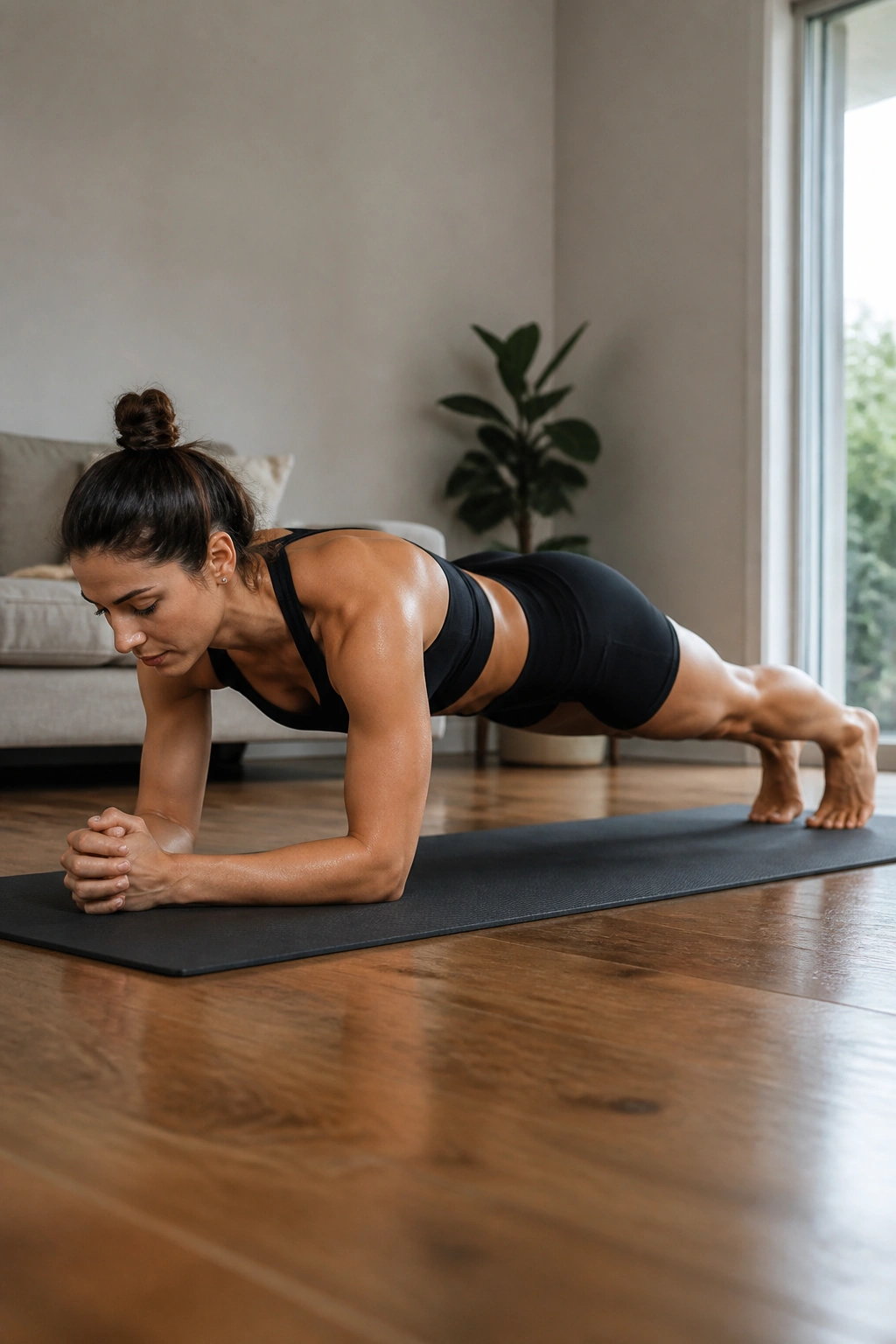
There is a misconception that Pilates requires resistance bands, Pilates rings, or stability balls. The reality is that your own body weight is the most honest resistance tool you have. This routine uses leverage and gravity to fatigue your muscles. Because you aren’t relying on props, you have to be extra vigilant about your form—there is no band to help you pull a limb back into place.
Structuring the Intensity
- Warm-up: 2 minutes of standard mat breathing.
- Mid-section: Plank series (forearm plank, side plank, full push-up position).
- Lower body: Side-lying leg lifts (the “clamshell” series is gold here).
- Cool down: A deep hamstring stretch.
Don’t rush the transitions. The movement between the exercises is just as important as the exercises themselves.
6. The Spine-Lengthening Flow
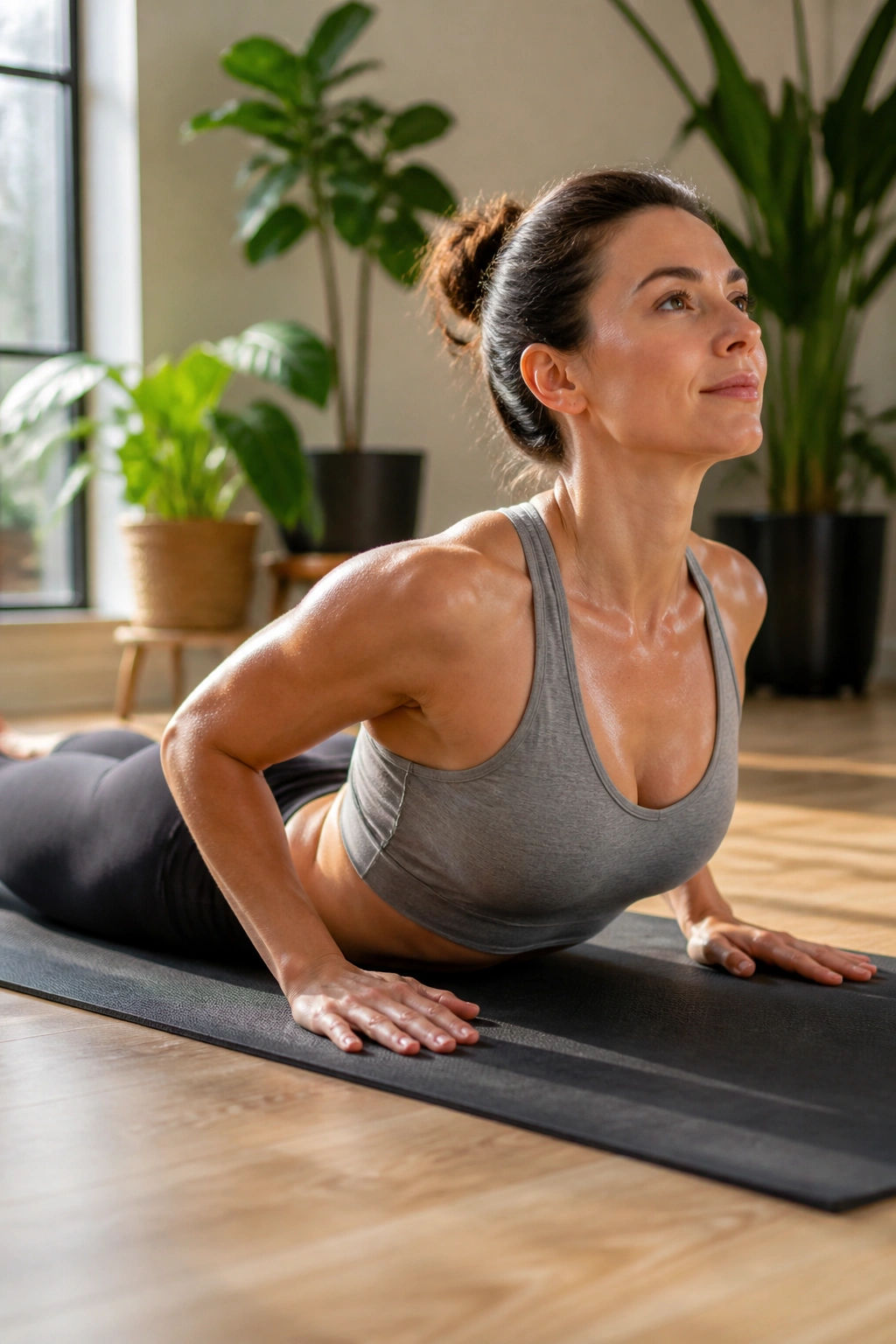
Most of us spend our lives compressed—sitting in cars, hunched over phones, slumping in chairs. This routine is about reversing that. It is all about space. Imagine trying to create physical distance between every single vertebrae in your column. It feels counterintuitive at first, but it is the secret to feeling taller and less burdened by tension.
Essential Movements for Length
Start with “Swan Prep.” Lying on your stomach, hands under your shoulders, gently lift your chest while looking forward, engaging your back muscles rather than just pushing with your arms. Move into “Swimming,” fluttering your arms and legs while prone. Keep your gaze down to protect your neck. The key sensation is reaching—always reach your fingers and toes in opposite directions as if someone is pulling you apart.
7. The Low-Impact Leg Toning Series
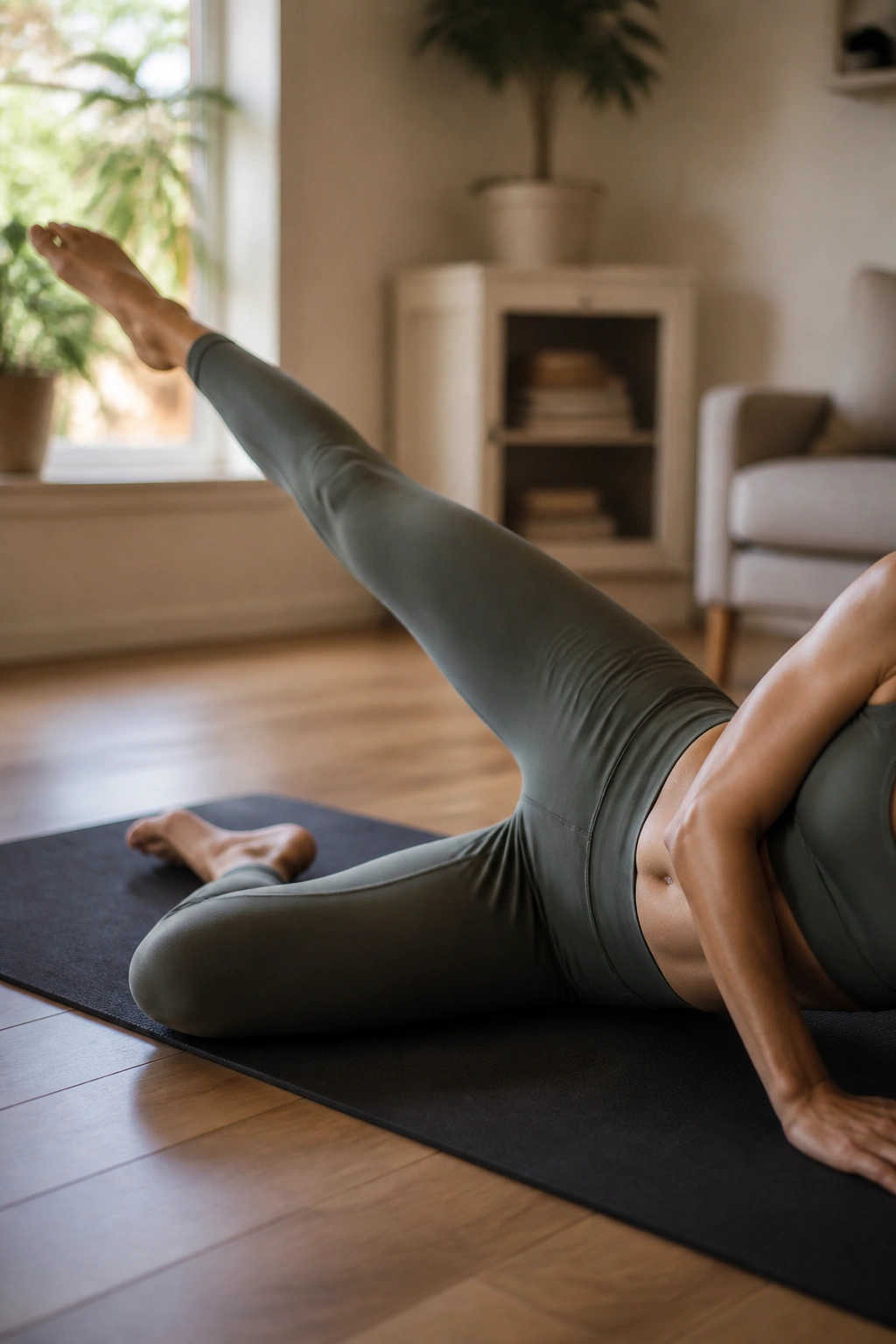
Sometimes you want to feel the burn in your quads and glutes without the pounding impact of running or jumping. This is where mat Pilates shines. By removing the element of gravity pushing you down (by lying on your side), you can isolate the muscles in your legs and hips with surgical precision.
The Strategy
Focus on high-repetition sets of small, controlled movements. When doing side-lying leg circles, the size of the circle matters less than the stability of your pelvis. If your hips are wobbling all over the place, the movement is ineffective. Imagine you are trapped between two sheets of glass; you can only move your leg forward and backward, never forward and out.
8. The Upper Body Strength Routine
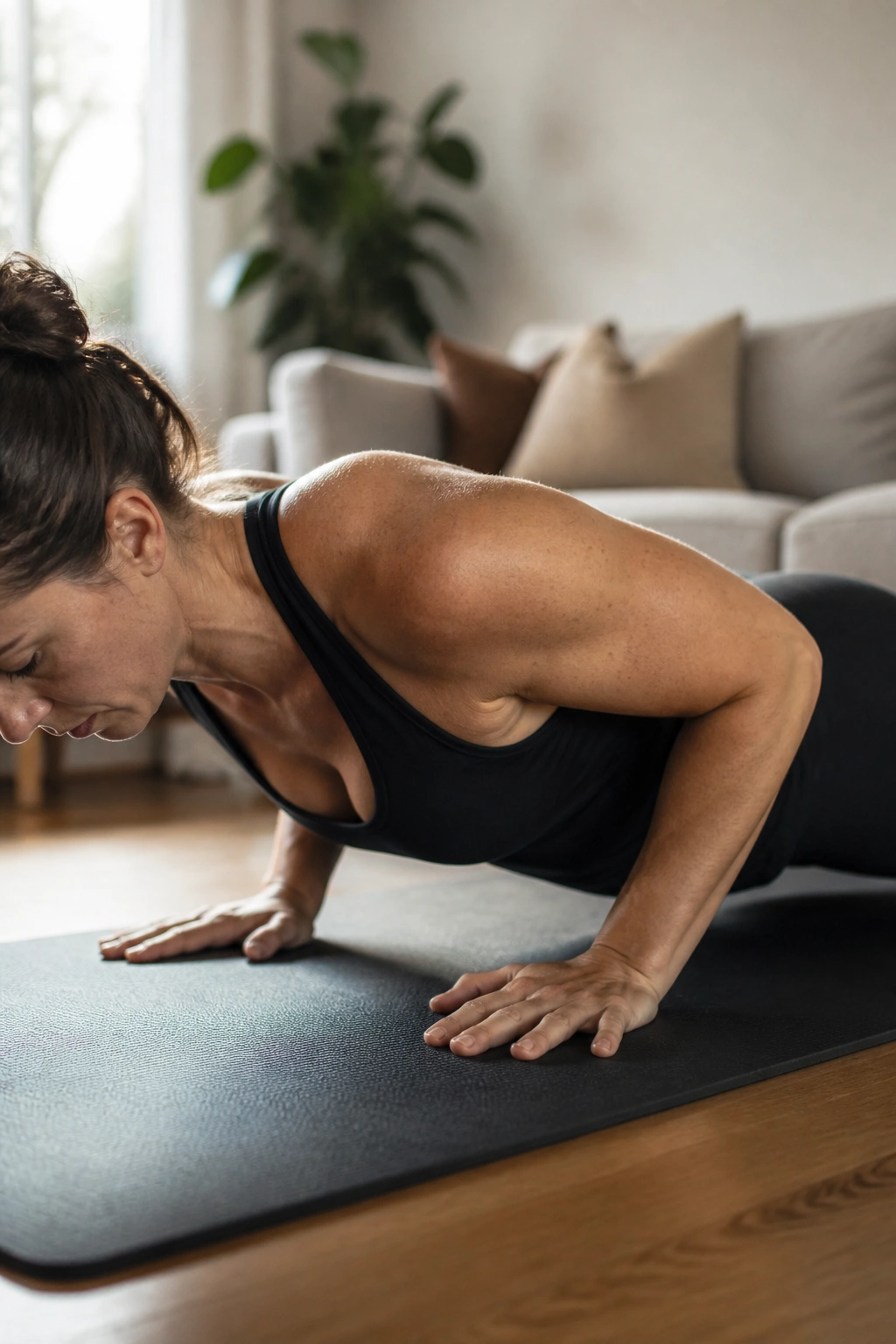
Pilates is often unfairly dismissed as a “core-only” modality. If you do it correctly, it builds deceptive strength in the arms, back, and shoulders. This routine focuses on the muscles that support your arm structure. It is excellent for those who want defined arms without the bulk of heavy lifting.
How to Target the Arms
Incorporate “Push-up” variations—but keep the elbows tucked in close to your ribs, which targets the triceps rather than the chest. Add “Arm Circles” while holding a plank position or a tabletop bridge. The lack of heavy weight means you compensate with time under tension. Hold your arms out for extended periods, pulsing them in tiny, controlled ranges of motion. You will be surprised at how heavy air can feel.
9. The Balance and Coordination Challenge
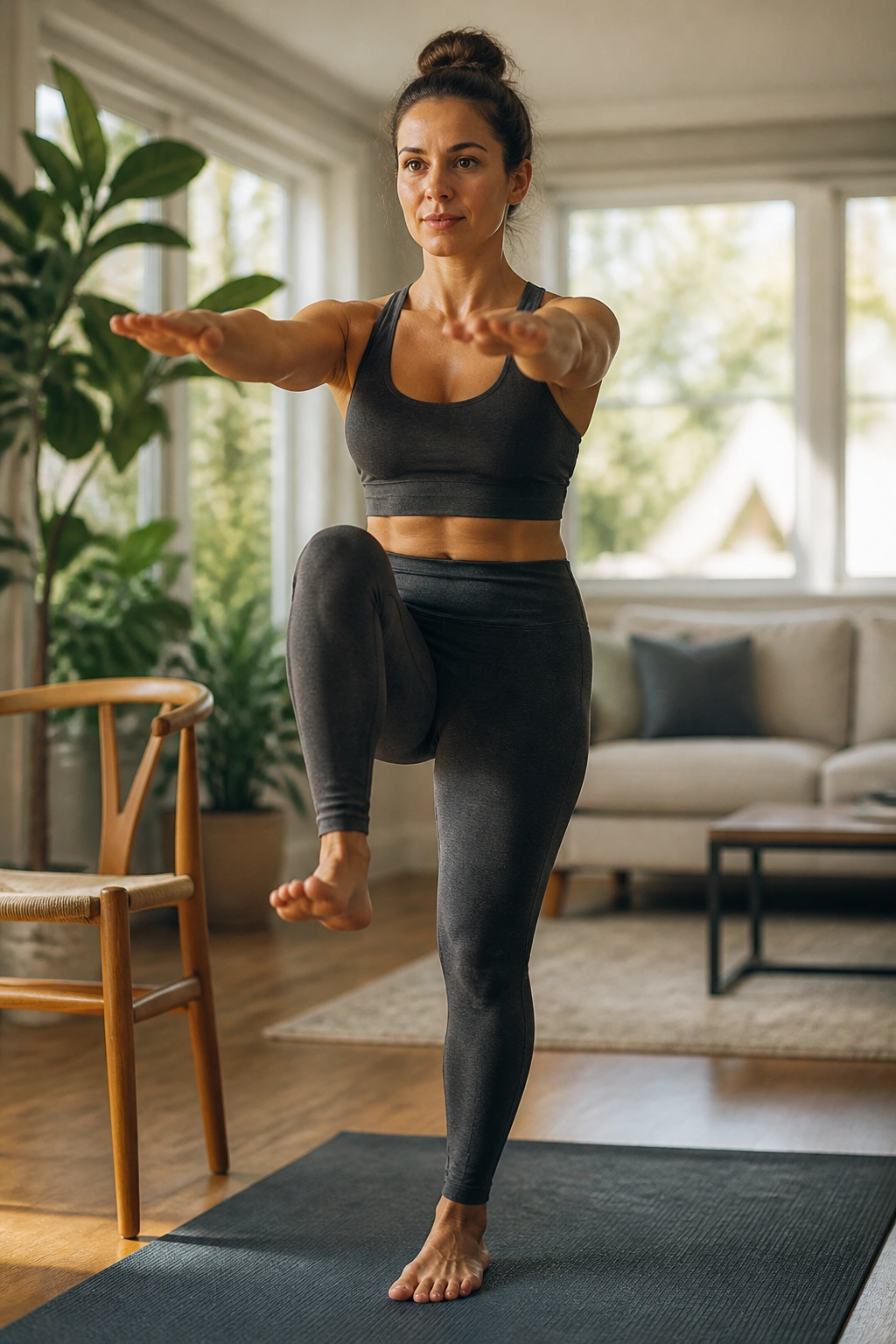
If you find yourself tripping over your own feet or lacking stability in daily life, this is the routine for you. It focuses on proprioception—the body’s ability to know where it is in space. We do this by introducing instability into standard movements, forcing your smaller, stabilizing muscles to fire.
Making it Challenging
The goal is to work on single-leg movements. Try standing on one leg while performing arm reaches. Move into a single-leg bridge. If you lose your balance, that is a good thing; it means your stabilizers are working hard to catch you. It is perfectly fine to have a chair nearby for safety, but try to use only a fingertip for balance if you need it.
10. The Glute-Focused Strength Session
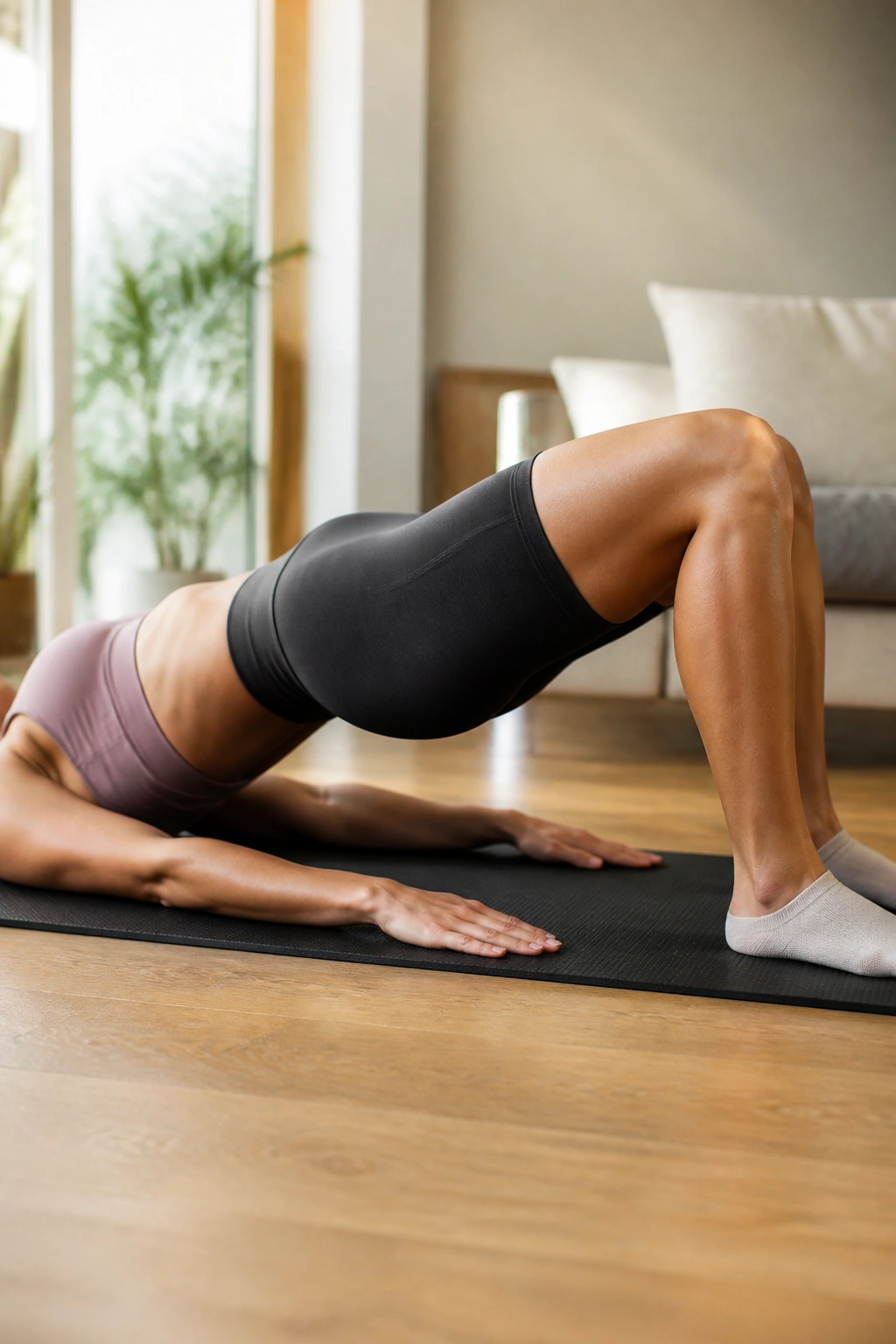
Glute strength is the cornerstone of lower back health. This routine ignores the abs for the most part and centers entirely on the posterior chain. You want to feel this in the meat of your glutes, not in your lower back. If you feel it in your back, you are likely overextending your spine during bridge movements.
The Technique
Focus on “pelvic tilts” before you do a single bridge. A bridge should be a straight line from your knees to your shoulders. If your ribs are flaring out, you are overcompensating with your spine. Keep those ribs knitted down. Do donkey kicks, but imagine you are pushing your heel against a heavy door that you are trying to kick open.
11. The Post-Workout Mobility Flow
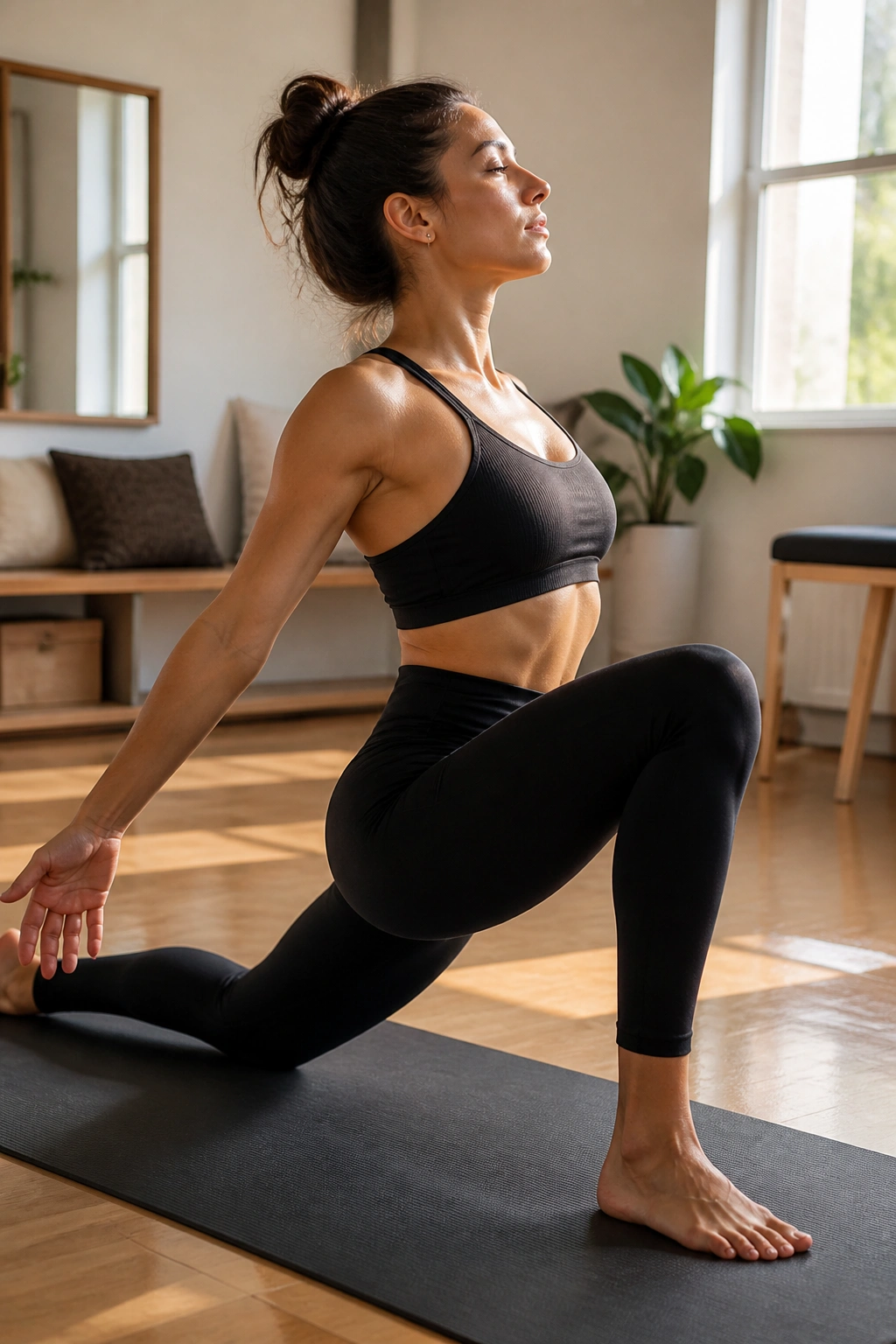
After a run, a heavy lift, or a long day of hiking, your muscles are often in a shortened, contracted state. This routine is for recovery. It isn’t intended to build strength; it is intended to restore range of motion and hydrate the fascia. Keep the intensity very low.
Why You Need This
Focus on deep, held stretches—not just static stretching, but “dynamic stretching.” Move into a lunge, open the hip flexor, then move out of it. Repeat. This constant motion keeps the muscles pliable and encourages blood flow to the areas you just worked, which helps clear out metabolic waste and speeds up recovery.
12. The “Hotel Room” Minimalist Routine
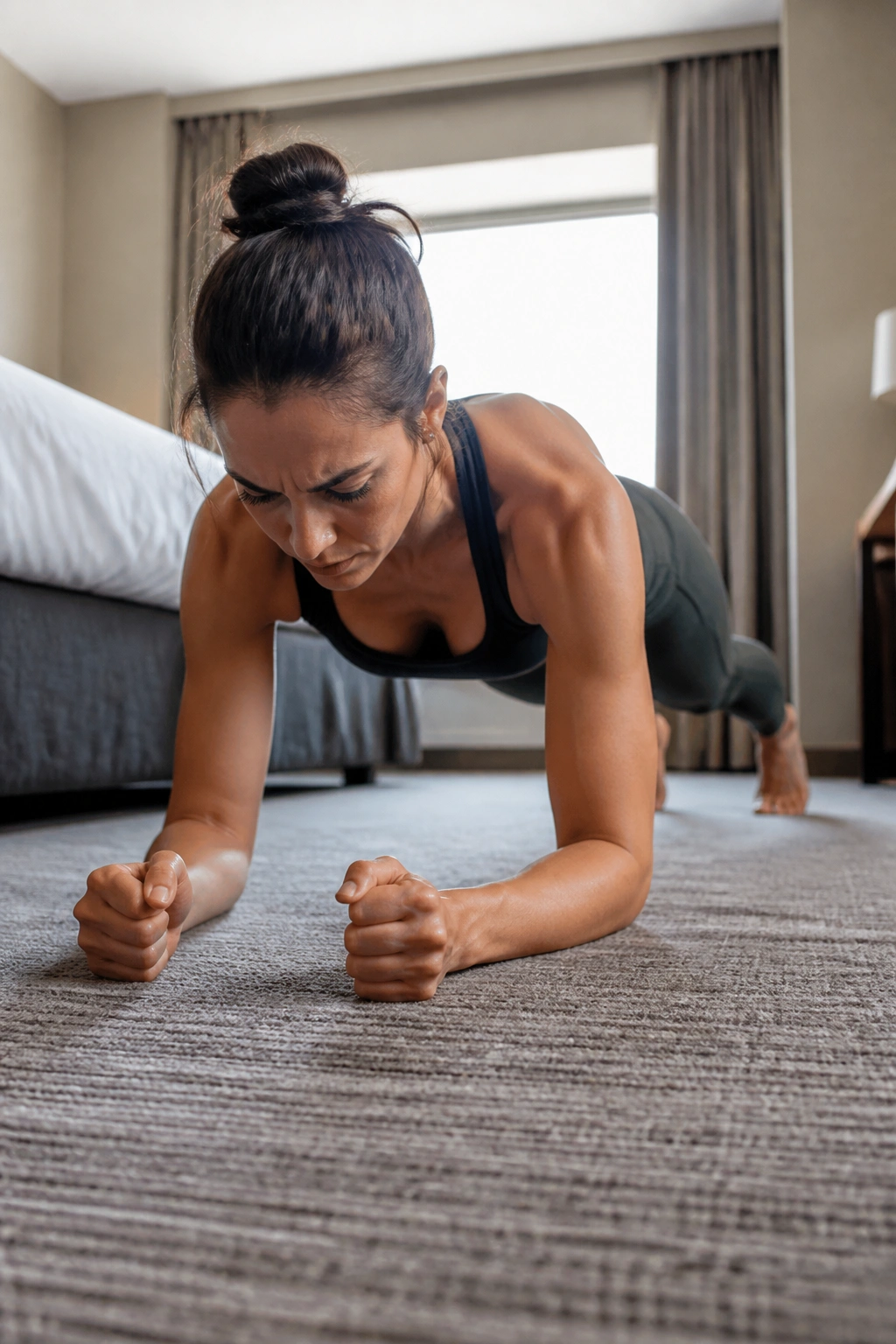
You are in a strange room with a carpet that you aren’t sure was cleaned recently. Space is tight. You have no equipment. This is the routine designed for travelers or anyone with very little floor space. You need maybe six square feet of space—essentially the length of your body plus a little width.
Keeping it Simple
Focus on moves that require no momentum. Planks, side planks, leg lifts, and wall sits (if you have wall space). You don’t need to roll around the floor. Do 30 seconds of each move, cycle through four times. It keeps the heart rate up and satisfies that need to move without needing a full-sized studio mat.
13. The Breathing and Centering Session
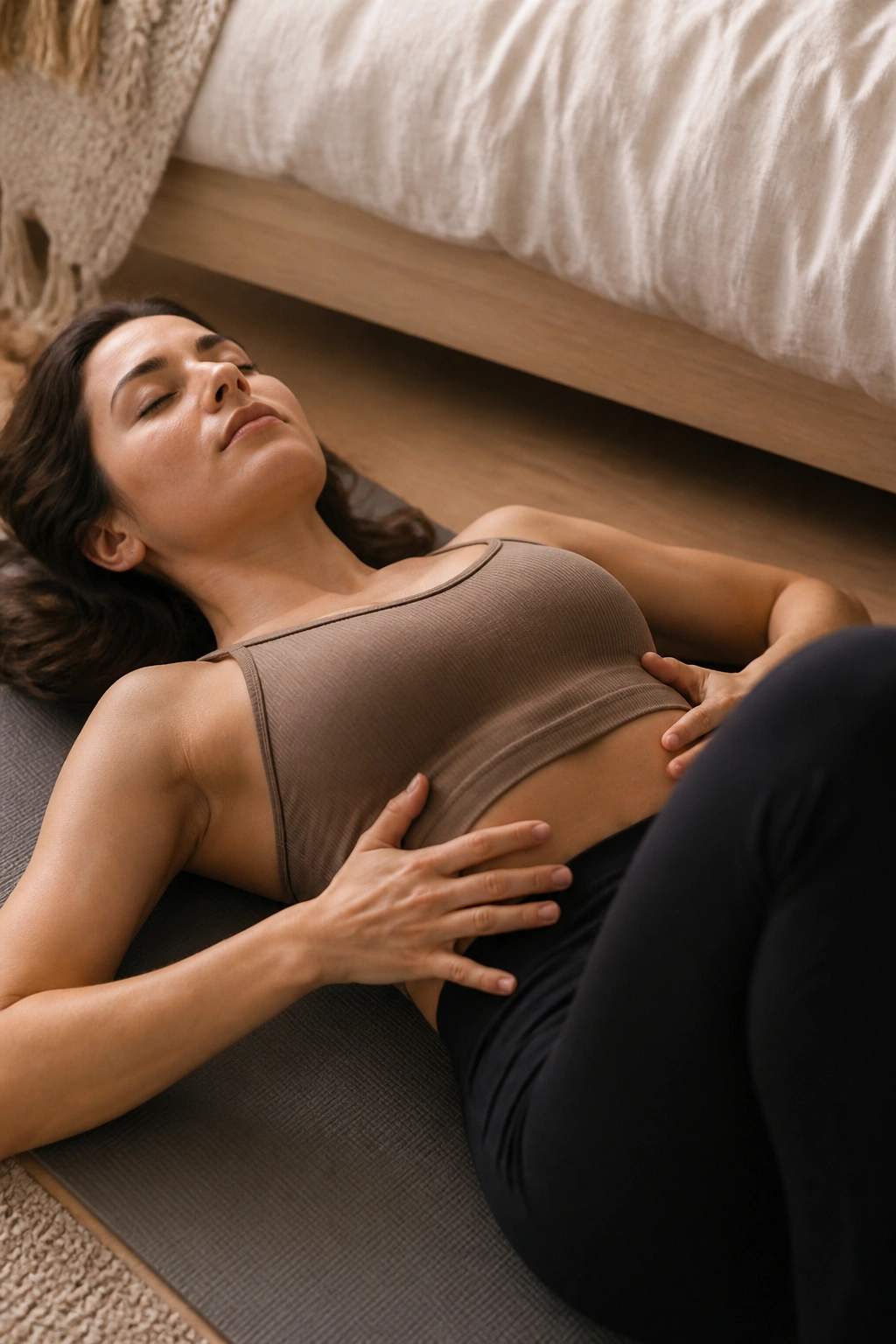
Sometimes the most effective Pilates routine involves almost zero movement. Pilates is a breathing practice. If you aren’t coordinating your breath with your movement, you are just doing gymnastics. This routine is purely for mastering the lateral, or “ribcage,” breathing technique.
How to Practice
Lie on your back with knees bent. Place your hands on your lower ribs. Inhale through your nose and feel your ribs expand into your hands—not your belly. Exhale and feel your ribs knit together and draw down toward your hips. This is the “powerhouse” engagement. Do this for 10 minutes. If you master this, every other Pilates routine you do will become significantly more effective.
14. Advanced Flow for Stamina
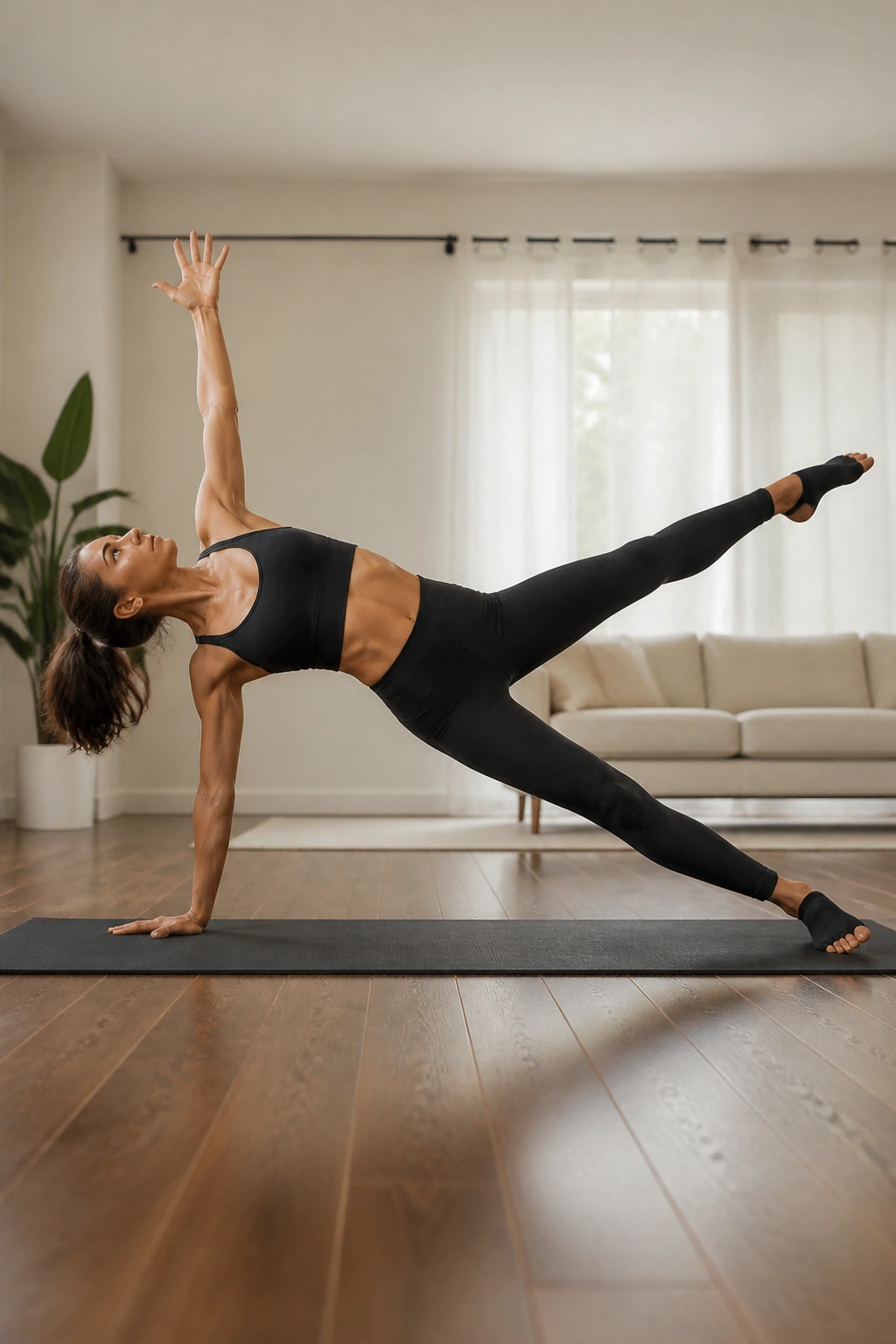
You’ve been doing this for a while, and the basic mat exercises feel a bit too easy. It is time to increase the tempo. This routine is about linking the moves together with zero downtime. It requires a high level of core endurance because you are moving from one strenuous exercise to the next without the “reset” that usually comes with a break.
Pushing the Pace
Try the “transition” method. Don’t stop between the hundred and the roll-up. Move seamlessly. If you find your form breaking down—if your back arches or your neck strains—slow it down immediately. Advanced Pilates isn’t about being fast; it’s about being able to maintain perfect, slow-motion form at a higher heart rate.
15. Gentle Mobility for Stiff Mornings
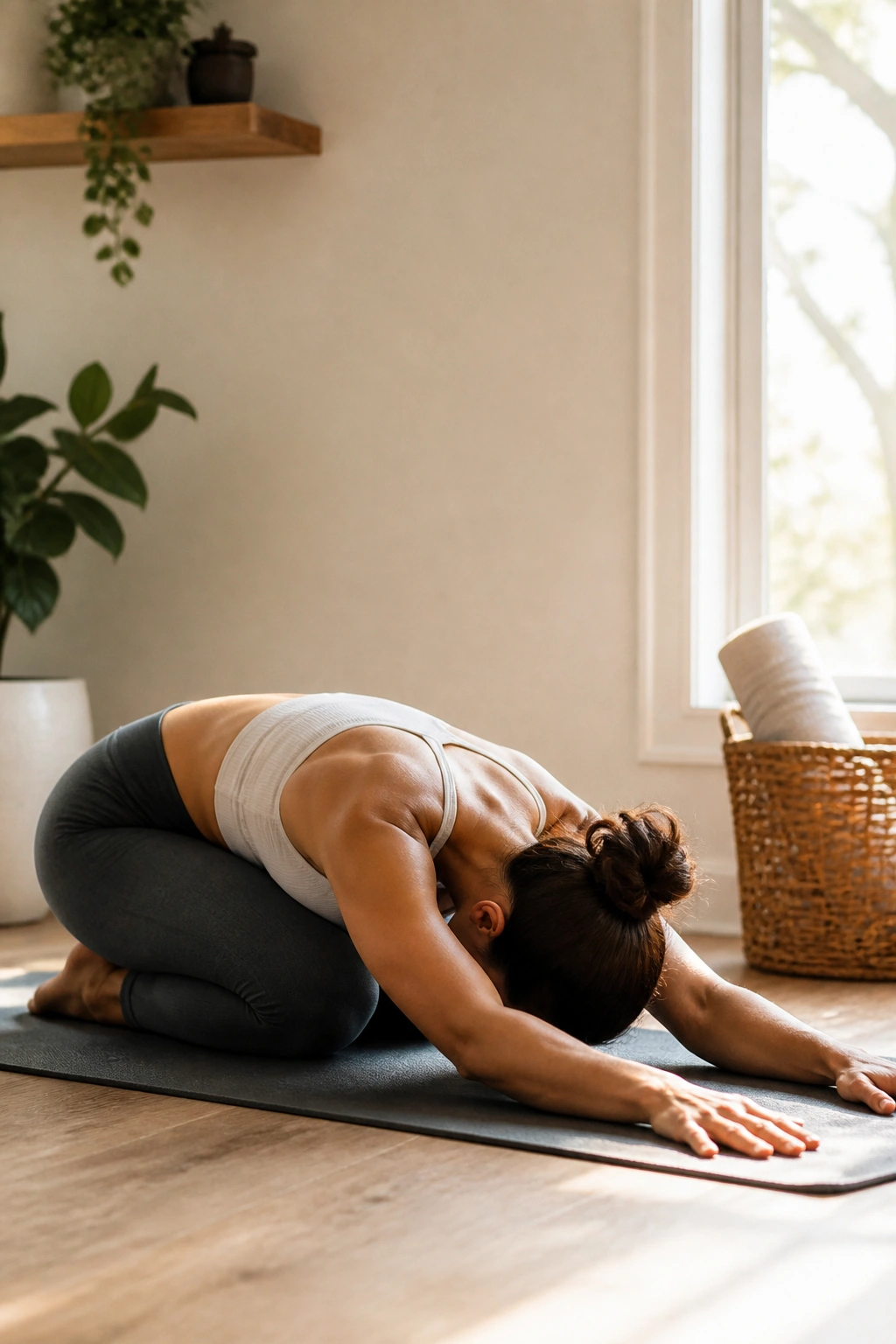
There are days when your body just says “no.” Maybe you slept wrong, or you’re just feeling aged and creaky. This is the routine for those days. It is not about “working out.” It is about lubrication. You want to gently articulate the joints and coax the muscles into waking up without aggressive demand.
The Approach
Keep everything on the floor. Start in a fetal position, slowly uncurling. Move to all fours for gentle, slow spinal circles—not just cat-cow, but shifting your weight in a circle over your wrists and knees. It’s very low-intensity. If you find a tight spot, hang out there for a few breaths. There is no quota to hit here.
16. The Arm Sculpt Series
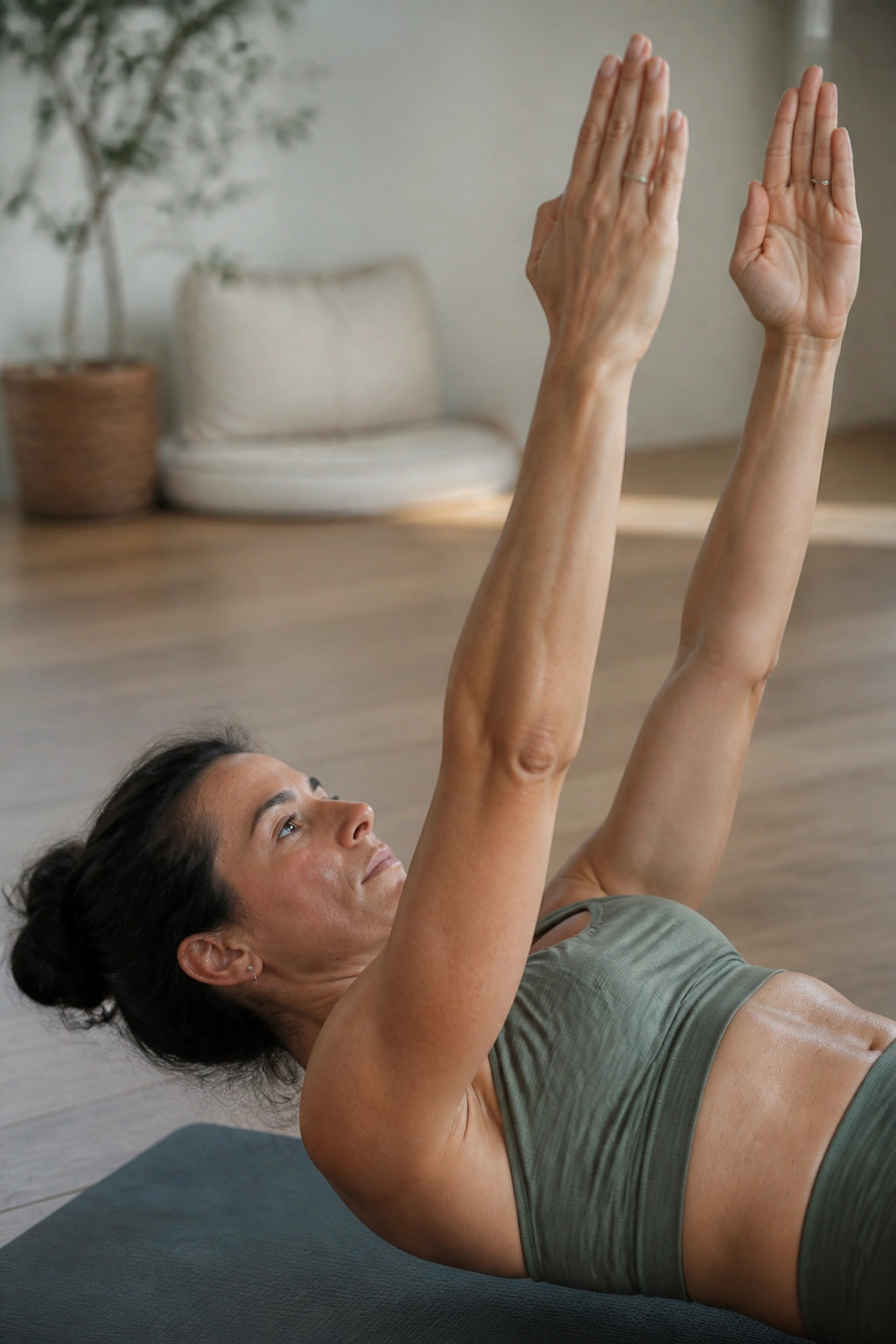
While “sculpting” is a bit of a marketing term, you can increase muscle endurance in the arms through high-volume, low-weight Pilates work. This routine uses no weights, just the resistance of gravity and your own deliberate tension. The goal is to reach a point of fatigue where you can barely hold your arms up.
The Secret Sauce
It is all about the pulse. After you perform a full range of motion exercise (like tricep dips or arm circles), hold the final position and pulse for 30 seconds. Do not let your arms drop. Keep them engaged the entire time. The tension is what creates the endurance. If you find yourself holding your breath, stop and check in with your core.
17. The “Weekend Warrior” Long-Form Session
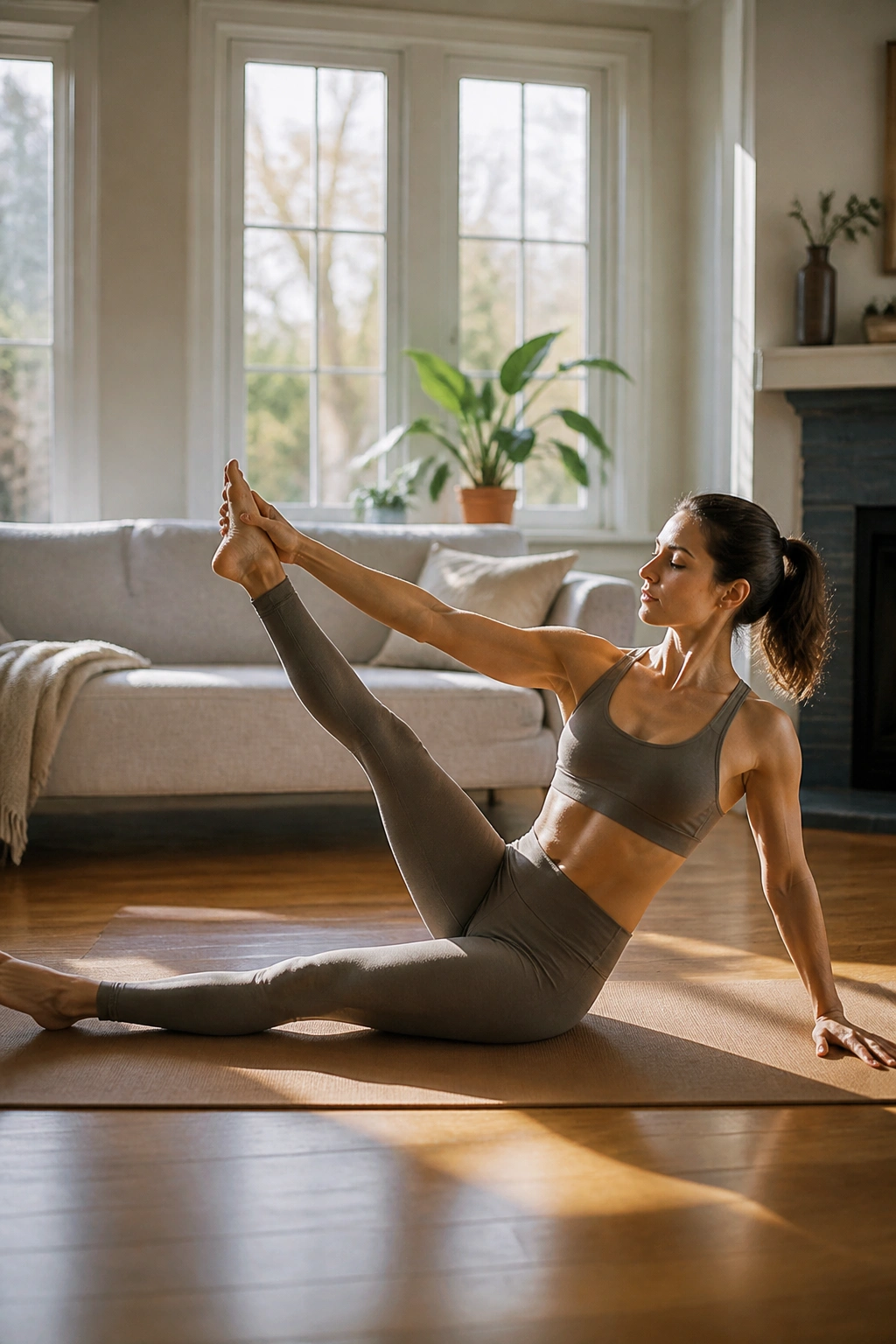
You have time. Maybe it’s a Saturday morning and you want a full 45 minutes of work. This is the routine where you hit every muscle group, every range of motion, and really sink into the practice. We start with breath, move through the core, transition into the legs and glutes, hit the upper body, and finish with a long, luxurious cool down.
Why Longer Matters
When you have 45 minutes, you can take the time to really refine your form. You can pause to adjust your pelvic tilt. You can experiment with different angles of your legs. This is the routine where you actually learn how to do Pilates, rather than just “getting through” the workout. Use this time to investigate your own body—notice which side is stronger, which side is tighter, and where you habitually hold tension.
18. The Posture Correction Reset
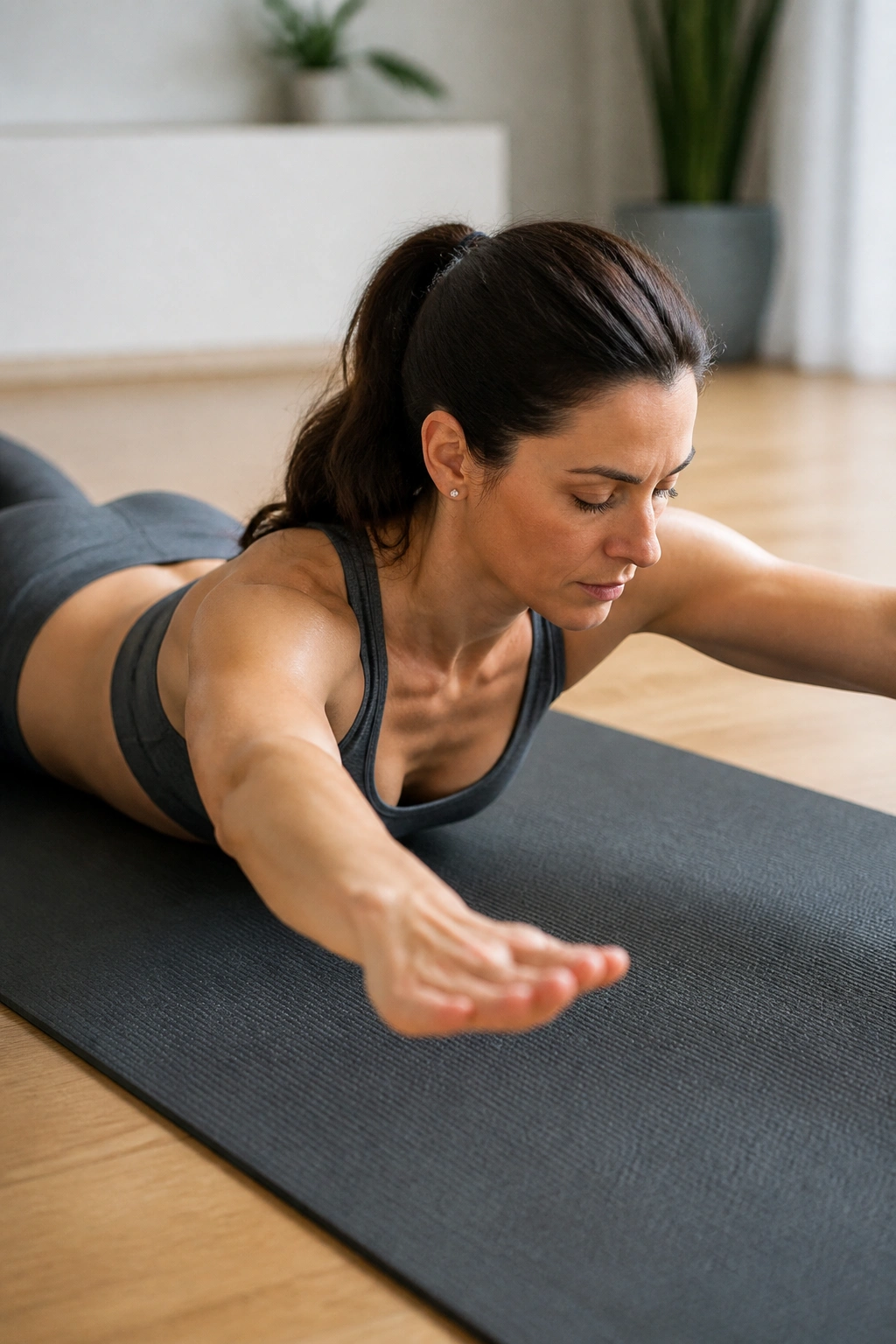
We spend so much of our lives looking down. Phone, computer, steering wheel, book. This routine is the antidote to the “forward head” and “rounded shoulder” syndrome. It focuses almost entirely on posterior chain strength—the muscles running down the back of your body—which are the only things capable of pulling your shoulders back into alignment.
Essential Focus
Reverse planks are your best friend here. If they are too hard, start with a “tabletop” bridge. Focus heavily on the “y-raise” and “t-raise” while lying on your stomach, lifting your chest and arms off the floor. Keep your chin tucked. You want your neck to be long and straight, not craned up. Do these slowly. Fast movements won’t build the postural endurance you need.
Final Thoughts
The beauty of these routines is not in the intensity of any single one, but in the consistency of the collection. You do not need to choose just one and stick to it forever. Your body changes from day to day, and your movement practice should reflect that. Some days, you need the “Bedtime Decompression.” Other days, you need the “Advanced Stamina” challenge.
Listen to what your body is asking for before you unroll your mat. If you are tired, pick something gentle. If you are restless, pick something faster. The goal is to build a habit that feels like a relief rather than a chore. When you stop treating exercise as a punishment and start treating it as a way to inhabit your body more comfortably, the consistency will take care of itself. Keep the movements small, keep the breathing deep, and keep showing up. That is the only real secret to the whole thing.
