



A Pilates ball looks harmless until you try to keep your ribs quiet while it shifts under your hands or knees. Tiny tool. Big audit.
The small soft ball—usually about 9 to 10 inches when inflated—gives instant feedback that a mat alone never quite provides. Squeeze it and your inner thighs wake up. Place it under your lower back and you can feel the difference between a clean pelvic tilt and a sloppy arch. Hold it at arm’s length and suddenly your shoulders, ribs, and deep abdominals all want to chip in.
That’s why Pilates ball work earns such a loyal following. It makes control visible. It turns a basic core exercise into a conversation between the trunk, the hips, and the breath, and it does it without needing much space or fancy equipment. Some of these moves feel gentle. Some will light up your midsection fast. A few will look easy right up until the second set.
Use a soft ball that gives a little when you press it. Keep the exhale long, the ribs heavy, and the neck loose. When the body starts to cheat—and it will—the ball makes the cheating obvious. That’s the whole point.
1. Dead Bug Ball Press for Deep Core Control
Dead bug is one of those exercises people rush through when they should slow down. Put a Pilates ball between your palms and knees, and the movement becomes much less forgiving. The job is simple: keep light pressure on the ball while you lower one leg and the opposite arm, then switch sides without letting your back peel off the mat.
Why It Works
The ball gives your deep core something to organize around. If your ribs flare or your pelvis tips too far, the pressure changes right away. You feel it immediately.
Start with your hips and knees stacked at 90 degrees, arms straight over your chest. Exhale as you lower the opposite arm and leg. Go only as far as you can keep the low back quiet. If the back arches, shorten the range.
2. Bridge with the Ball Between Your Knees
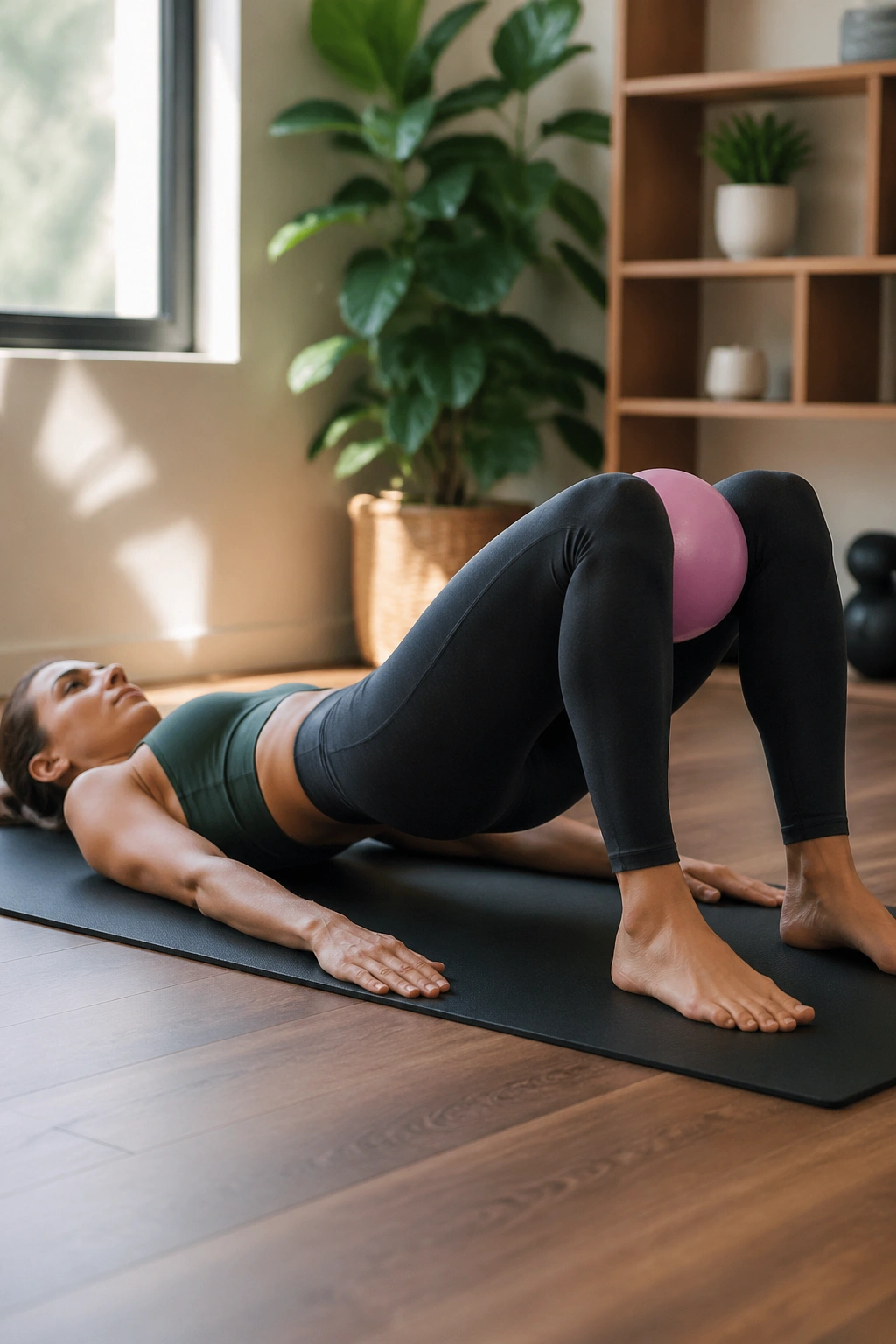
A bridge can look easy from the outside. It is not. Place the ball between your knees, squeeze gently, and roll your hips up one vertebra at a time until your body forms a clean line from shoulders to knees. The squeeze helps you keep the inner thighs active so the glutes do not take over in a sloppy way.
Then hold for two slow breaths. Feel the ribs stay down. Feel the pelvis stay level. If one hip hikes higher than the other, lower and try again. That little mismatch matters more than people think.
Lower back discomfort usually means you’re pushing height instead of control. Don’t chase the ceiling. A smaller bridge with steady pressure on the ball will do more for your core than a giant lift with a bent lower back.
3. Hundred Prep with a Ball Squeeze
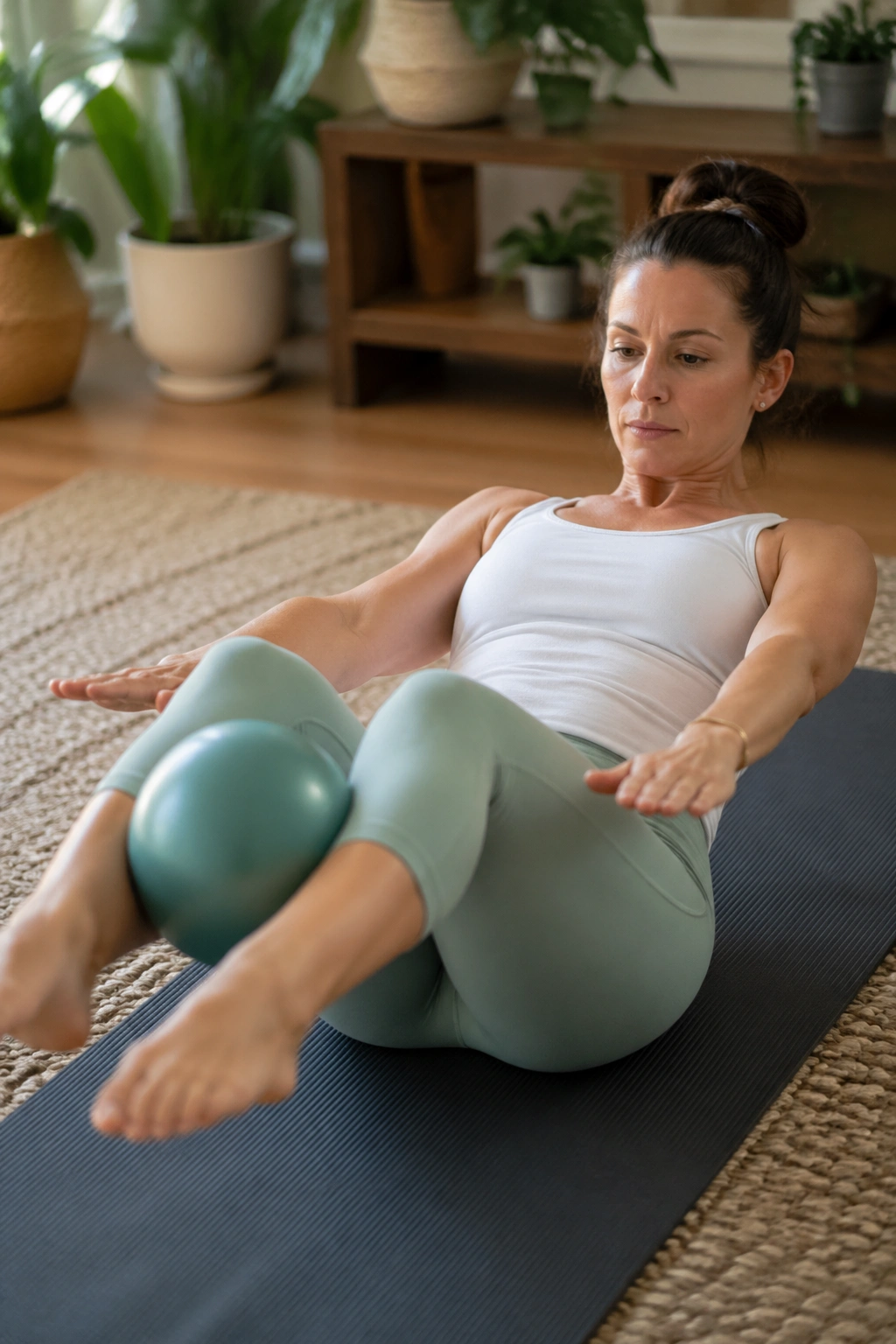
Why does the hundred feel different with a ball? Because the squeeze gives your midsection a job before the arm pumps even start. Hold the ball lightly between your ankles or knees, curl your head and shoulders up if your neck tolerates it, and pump the arms with the breath while keeping the lower body steady.
What to Watch For
- Keep the chin slightly tucked, not jammed into the chest.
- Press the ball at about 30 percent effort, not a death grip.
- Exhale for five counts, inhale for five counts.
- Stop if your low back pops off the mat.
A lot of people make the hundred a neck exercise. Don’t. The ball should help you feel the lower abs and inner thighs sharing the load. If the neck starts yelling, keep the head down and just work the breath.
4. Toe Taps with the Ball Held Over Your Chest
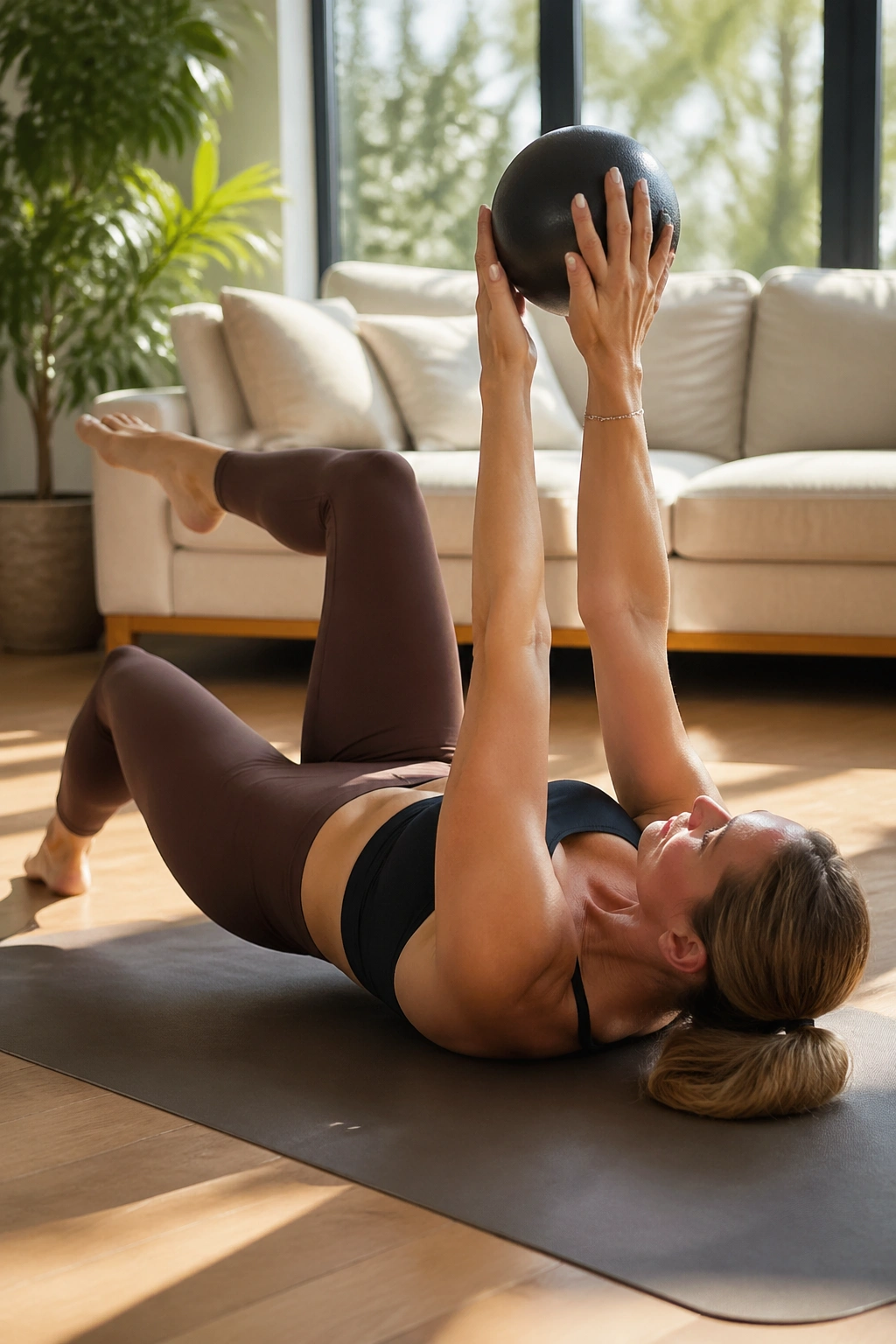
Picture this: your legs are in tabletop, your arms are reaching straight up, and the Pilates ball sits between your hands as if you’re carrying a very small, very bossy cloud. One leg lowers to tap the floor, then comes back to tabletop. Then the other.
The overhead hold is the tricky part. It pulls the ribs open if you let it, which is exactly why it’s useful. Keep the ball pressed lightly between the palms and think about melting the front ribs down as each heel taps. No rush. Quick taps usually mean the hips are doing whatever they want.
This one is gold for people who want lower-abdominal work without a lot of strain. Keep the movement small. If the low back arches on the floor, raise the knees a little higher and cut the range in half.
5. Half Roll-Backs with a Ball Reach
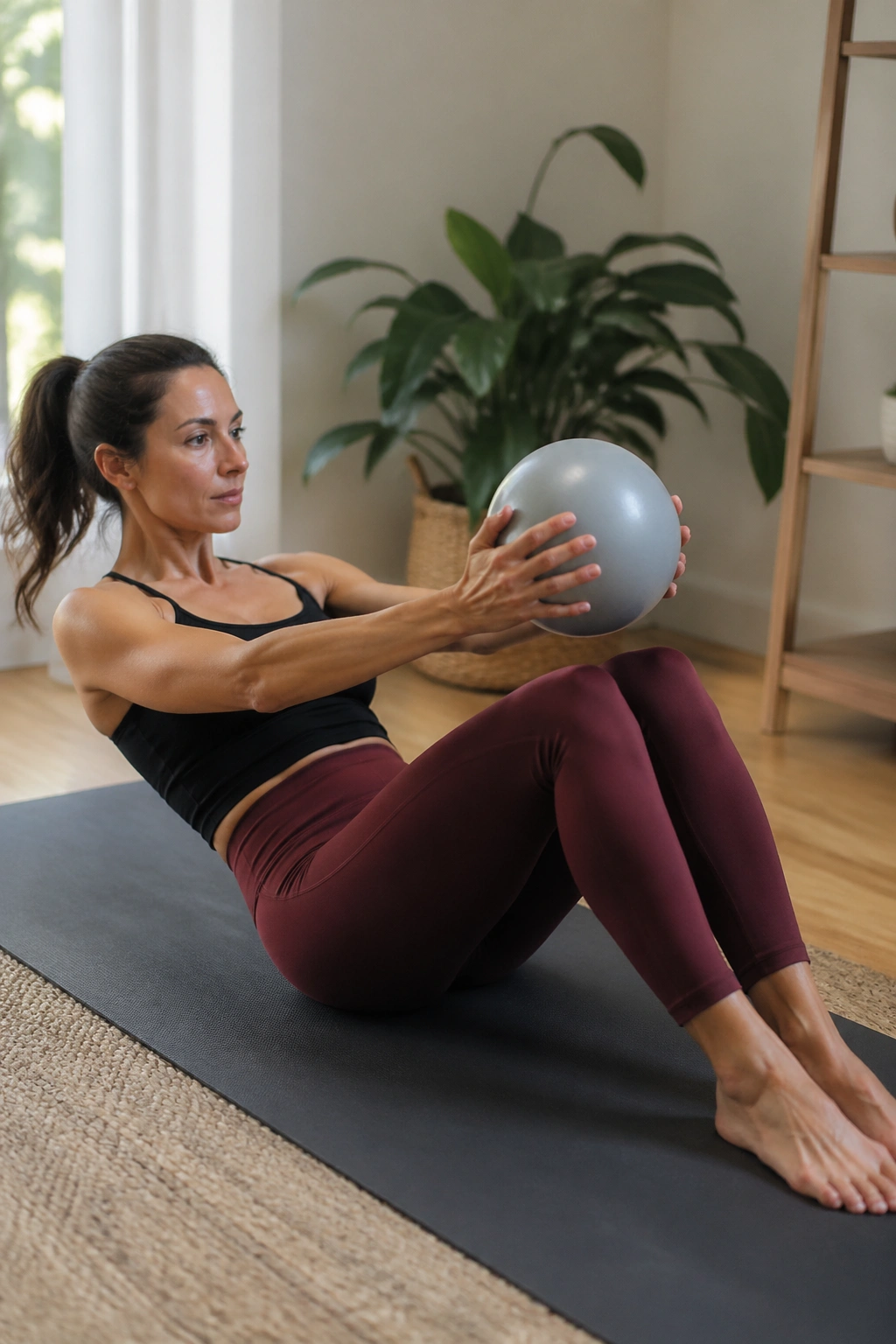
Half roll-backs are where core strength starts looking like spine control. Sit tall with the knees bent, hold the ball in front of the chest, and roll back only until you feel the abs catch the movement. Then return to upright without yanking with the hips.
A clean half roll-back should feel like the rib cage is knitting closer to the pelvis on the way down. The ball adds a bit of reach, which makes the front body work harder. Keep the shoulders soft. If the neck tightens, the ball may be too far away, or you may be leaning back too aggressively.
A Small Fix That Helps
Move the ball closer to your chest on the way down. That tiny adjustment often keeps the shoulders calmer and the abs more honest. Simple. Annoyingly effective.
6. Seated Spine Twist with a Ball in Front of You
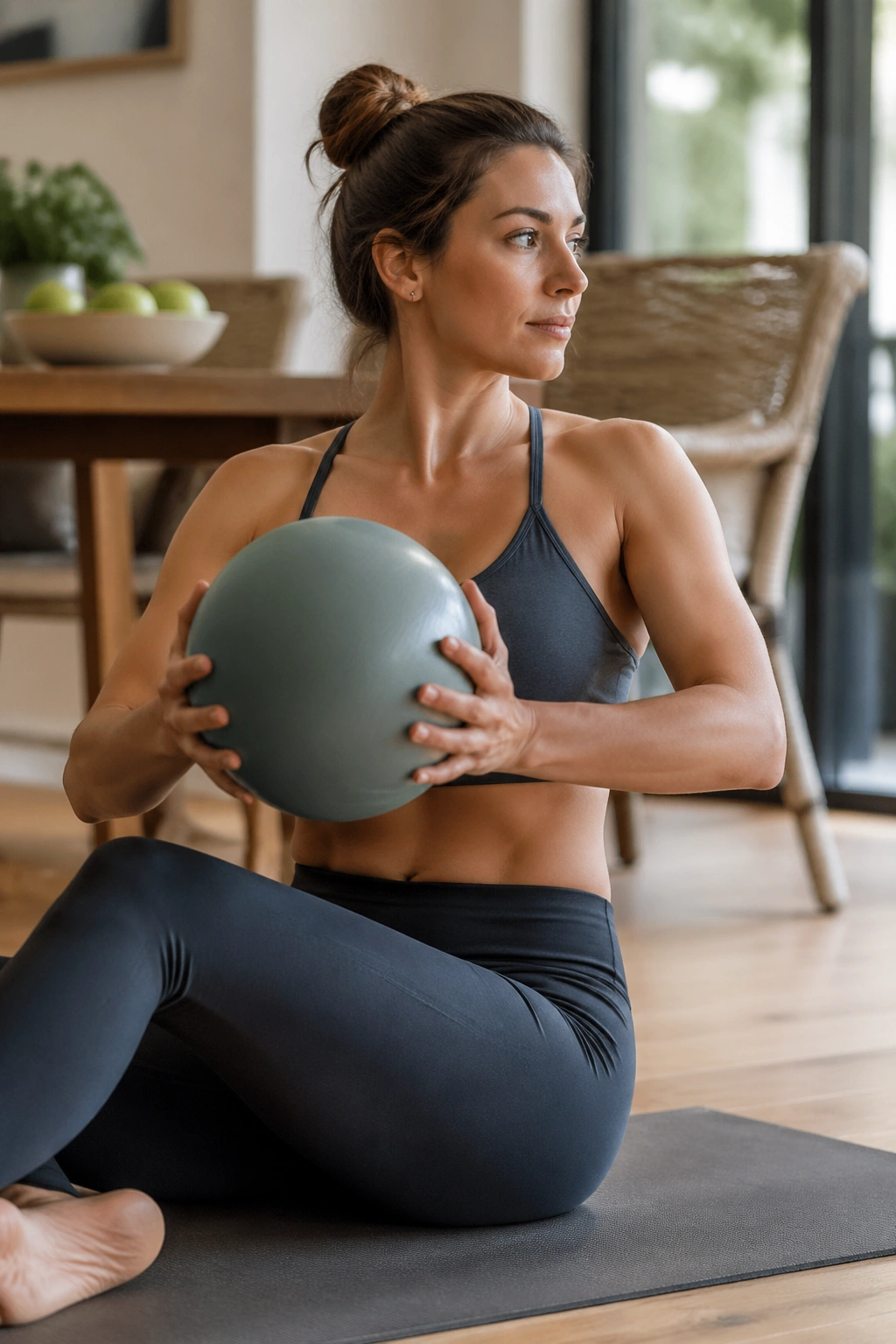
Twists should move from the ribs, not the arms. Sit tall, hold the ball at chest height, and rotate the torso slowly to one side while the pelvis stays rooted. Come back to center, then turn the other way.
If the knees bounce around, the movement is too loose. If the shoulders lead the twist, the spine is not doing its share. You want the ball to act like a quiet anchor, not a swinging weight. A small pause at center helps a lot. So does a long exhale into the twist.
This is one of those exercises that looks mild but exposes bad habits fast. People who live in their upper traps feel it right away. People who use their obliques well tend to glide through it with less drama, which is the whole point.
7. Side-Lying Oblique Crunch with the Ball Under Your Waist
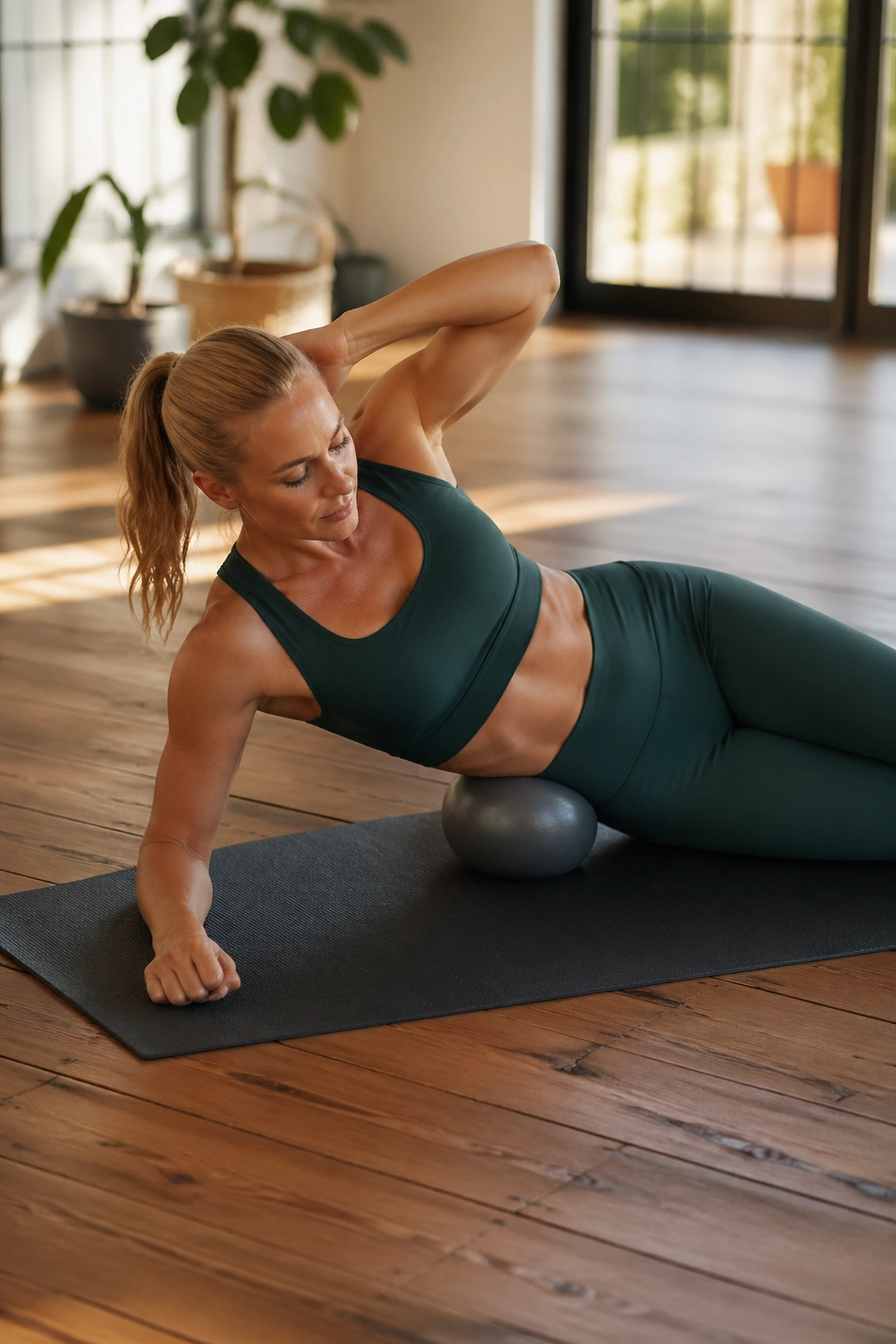
Side-lying work gets sneaky. Put the ball under your waist or just above the hip bone, lie on your side, and lift the torso slightly away from the floor. That tiny lift challenges the obliques to stabilize while the body tries to fold or sink.
How to Use It
- Stack the hips and shoulders.
- Keep the bottom waist lifted off the ball instead of collapsing into it.
- Exhale as you crunch upward.
- Pause for one beat at the top.
The ball gives feedback on whether you’re truly lifting through the side body or just shrugging the shoulder. If the neck takes over, support the head with the lower arm and make the lift smaller. This one should feel local. Sharp. Side-specific.
8. Plank with Hands on the Ball
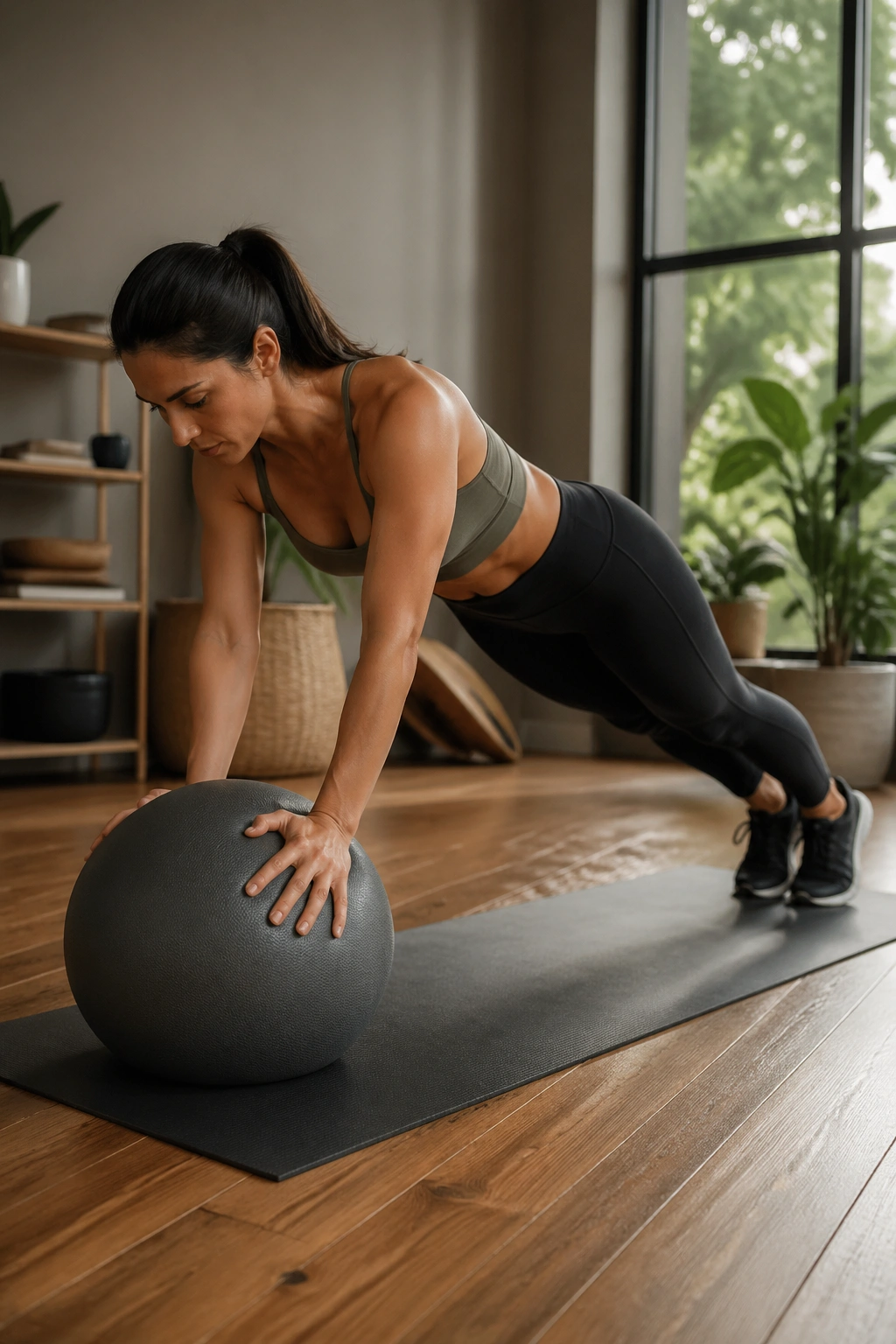
A ball under the hands changes plank fast. The chest, shoulders, and abs all have to work a little harder to keep the body from wobbling side to side. Start on your knees if needed, hands on the ball, then walk the feet back until you can hold a long line from head to heels.
Hands on a ball. That’s the whole trap.
Keep the gaze a little ahead of the fingertips so the neck stays long. Press the floor away, draw the lower belly up, and don’t let the ball drift. If the lower back dips, raise the hips a touch and reset. The best plank is not the deepest one. It’s the one you can hold without becoming a pretzel.
9. Bird Dog with the Ball Under Your Belly
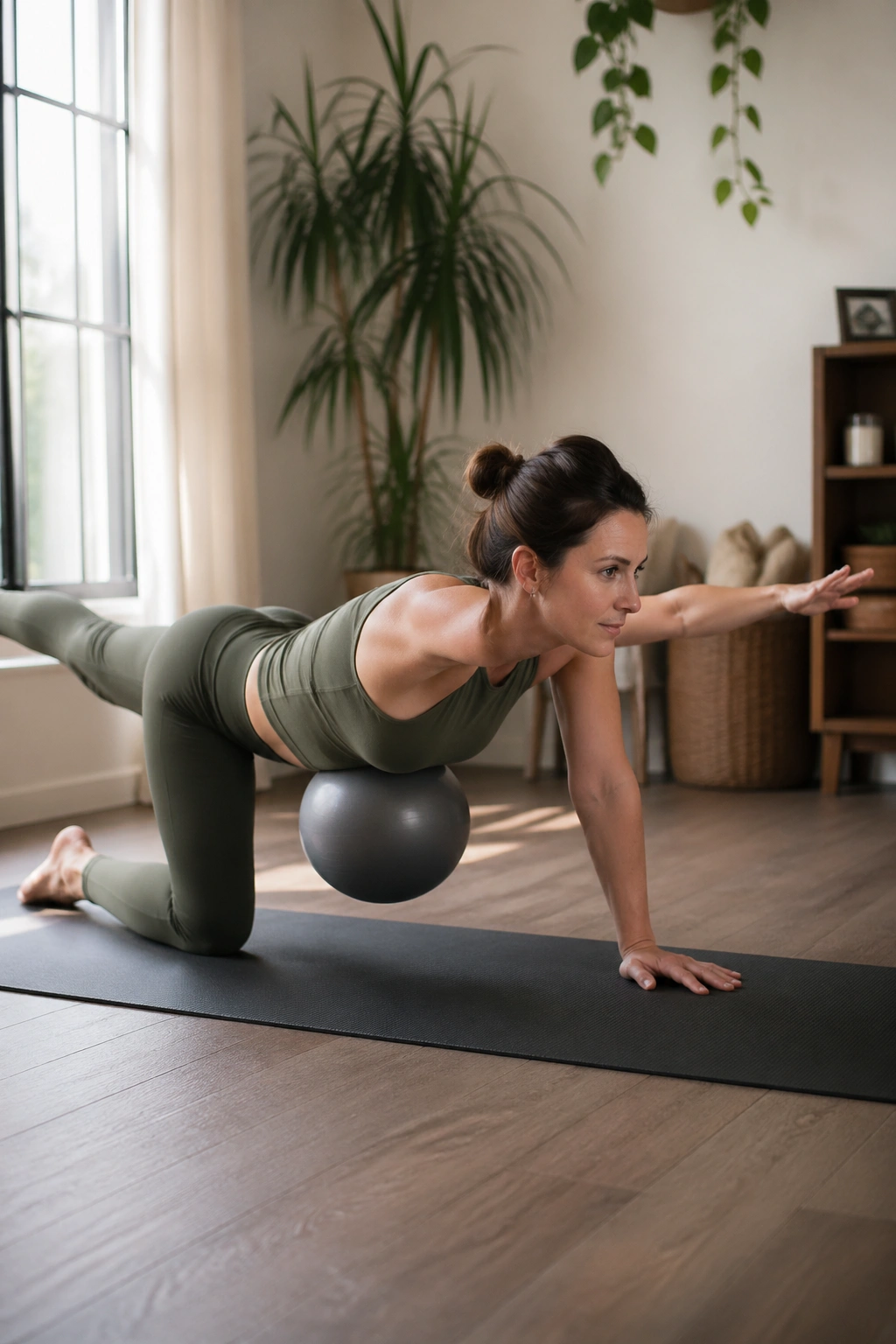
A bird dog with the ball under your lower abdomen is one of the cleanest ways to test pelvic control. Kneel on all fours, place the ball under the soft part of the belly, and extend one arm and the opposite leg without squashing the ball.
The ball gives you a target. If the pelvis dumps forward, the ball shifts. If the ribs flare, the whole shape gets messy. Reach long through the fingertips and heel, then return with the same control you used to extend. No swinging.
This move tends to humble people in a good way. It feels smaller than a lot of ab work, but the deep stabilizers are doing a surprising amount of quiet labor. Keep the motion slow enough that you can feel the ball, not just see it.
10. Single-Leg Glute Bridge with the Ball Between Your Thighs
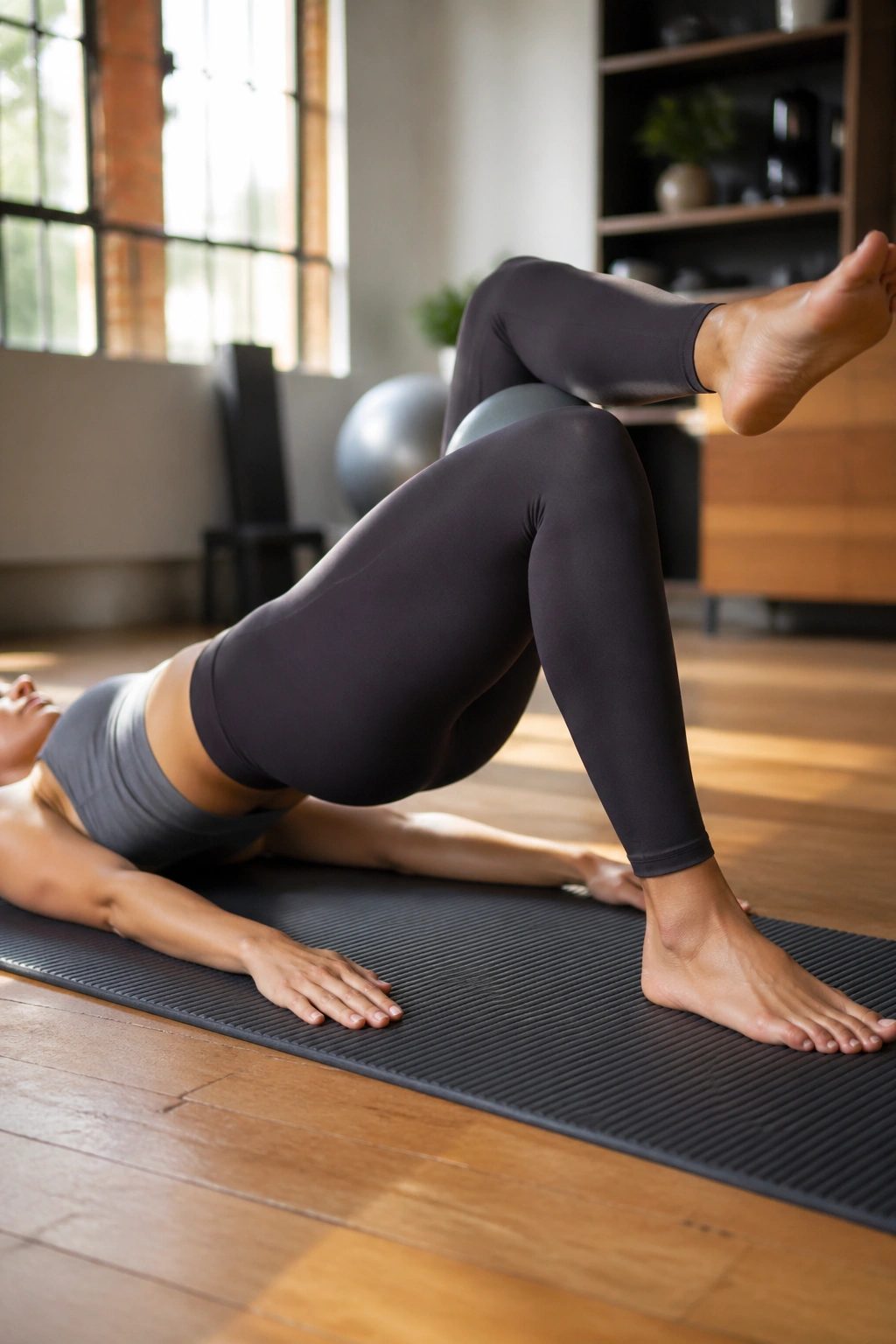
Single-leg bridge is already a strong test. Add a ball between the thighs and the whole line from inner thighs to glutes has to work together instead of in separate pieces. Start with both knees bent, squeeze the ball, lift one foot off the mat, and raise the hips without letting them twist.
The biggest mistake is rushing the lift. Don’t. A slow lift teaches the pelvis to stay level while one leg does more of the work. Hold for one breath at the top, then lower with control. If the hamstring cramps, the heel may be too close to the body. Shift it out an inch or two.
This is a favorite of mine because it feels neat when it’s right. The body gets organized. The squeeze, the lift, the breathing—they all line up.
11. Wall Squats with the Ball at Your Lower Back
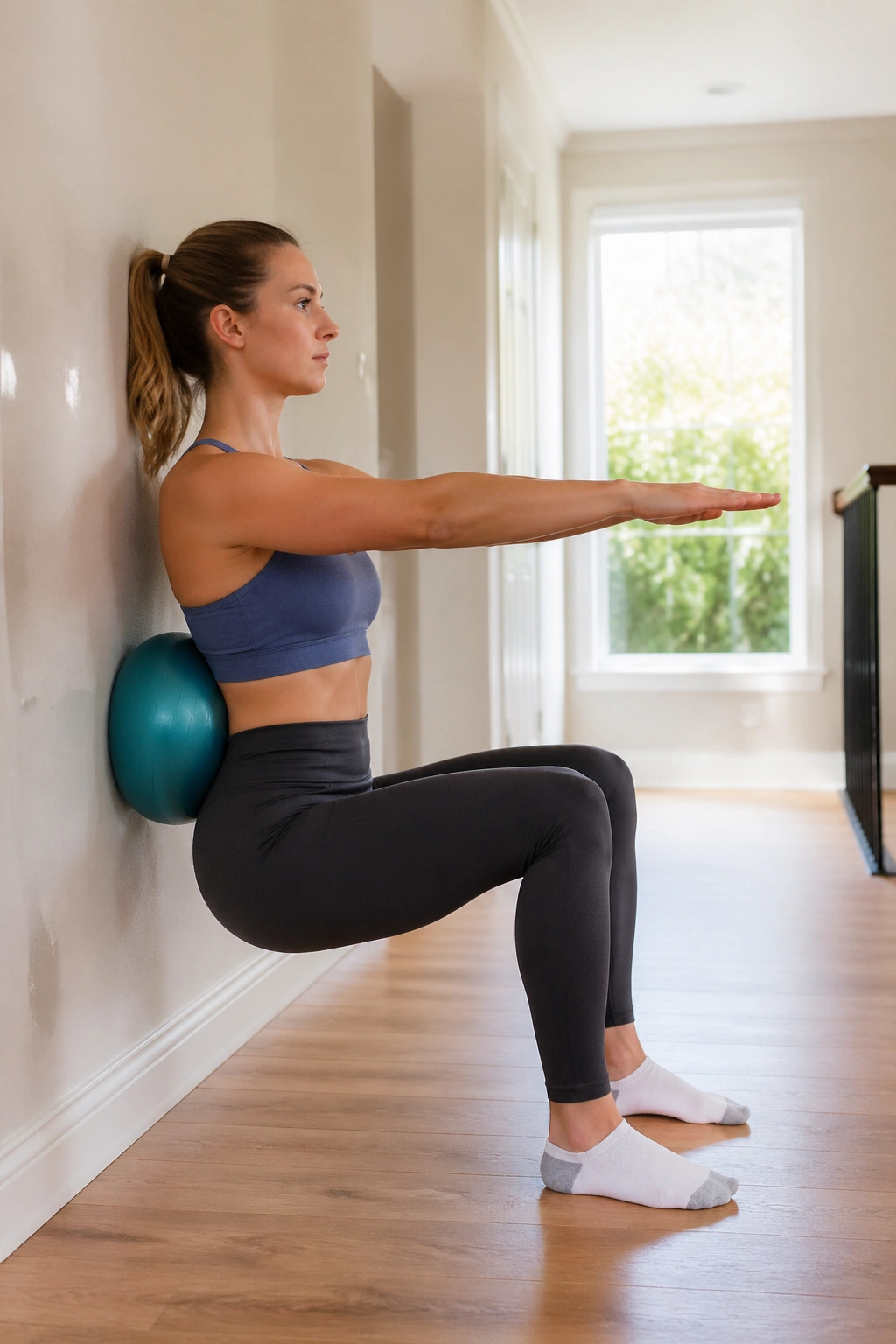
Wall squats with a ball behind the lower back make cheating hard, which is exactly why they belong here. Stand with the ball between your low back and the wall, feet a little forward, and squat until the thighs are about parallel to the floor. Keep the ribs stacked over the hips.
The ball should slide with you, not spin around like it’s escaping. That contact helps keep the spine honest while the legs work. Press gently into the wall on the way up and down. If the knees cave inward, push them out over the middle toes.
What Makes This Useful
It trains core stability in a standing position, which is where most people actually need it. Carrying groceries. Picking up a bag. Reaching into a car. Those everyday patterns matter.
12. Roll-Ups with the Ball Between Your Thighs
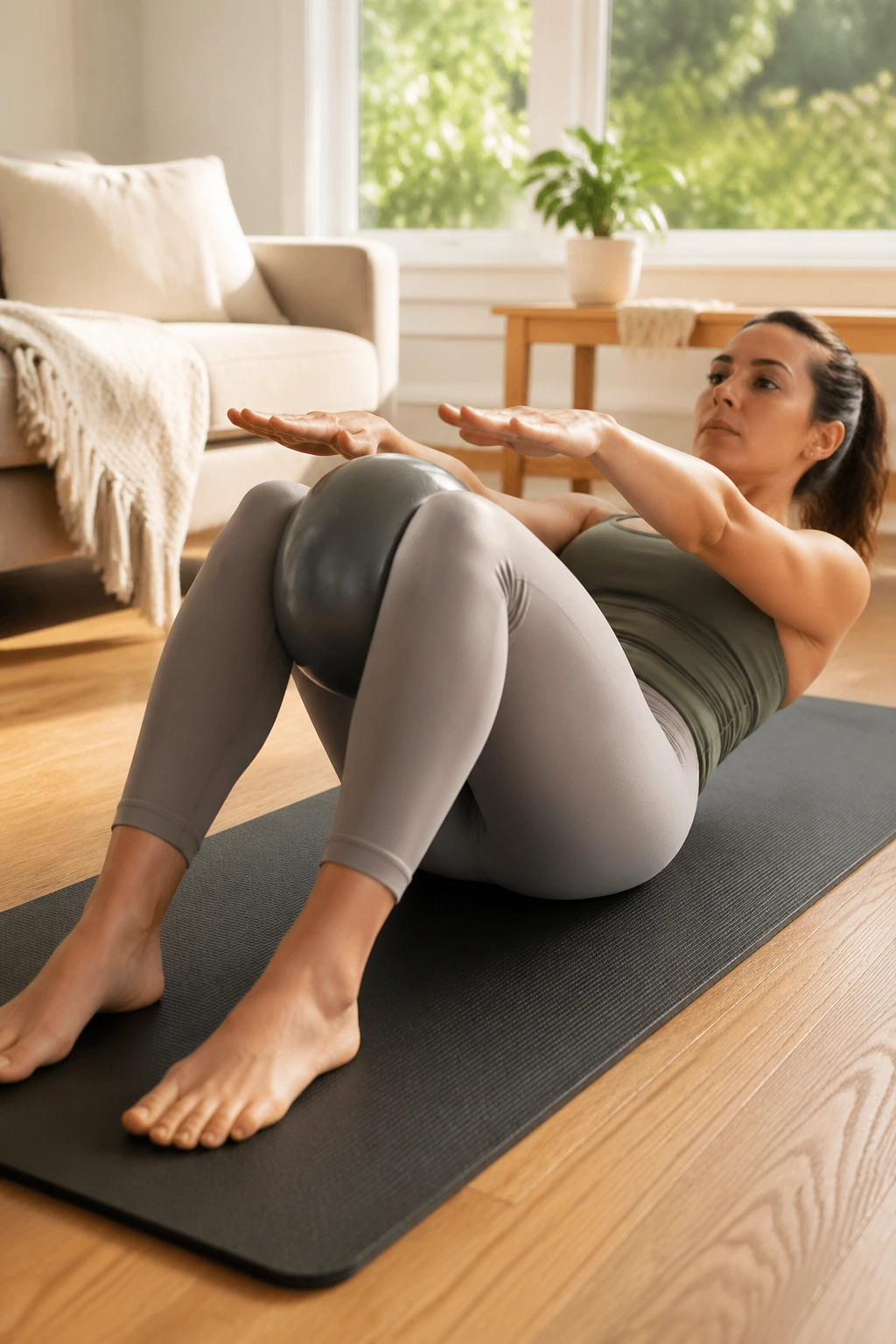
Roll-ups can get messy fast. Put a ball between your thighs, squeeze it lightly, and use that inner-thigh connection to help the pelvis stay steady as you roll up and down through the spine. The ball won’t do the work for you, but it will keep your legs from drifting all over the place.
Start lying flat with arms overhead. Exhale, nod the chin, and peel up one segment at a time. If the feet fly off the floor or the hip flexors start screaming, bend the knees a little. Better control beats a prettier shape every time.
This version is especially good for people whose roll-ups turn into jerky sit-ups. The ball reminds the body to move through sequence, not momentum. Slow is the win here.
13. Kneeling Plank with One Hand on the Ball
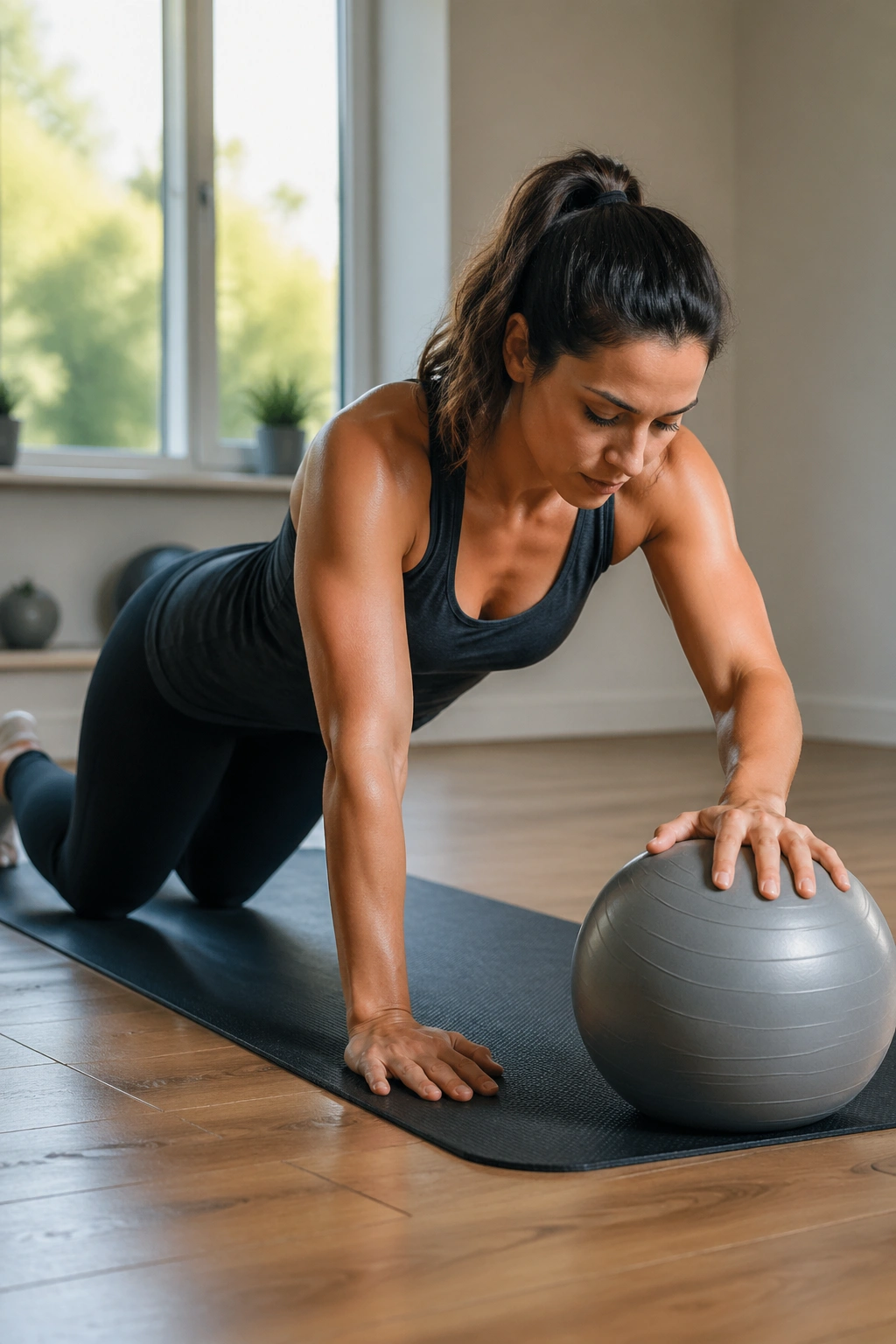
One hand on the ball, one hand on the mat. That uneven setup turns a plank into an anti-rotation drill almost instantly. Start on your knees, place one palm on the ball, and hold a long line from the crown of the head through the tailbone.
How to Get the Most From It
- Keep the shoulders level.
- Press the floor away through both arms.
- Shift only a little weight into the ball at first.
- Breathe without letting the low back sag.
The body wants to twist toward the stable side. Resist that. If the shoulder feels shaky, widen the knees. If the wrists complain, make fists or use a folded mat under the hands. There’s no prize for suffering through sloppy form.
14. Side Plank with the Ball Under Your Bottom Hand
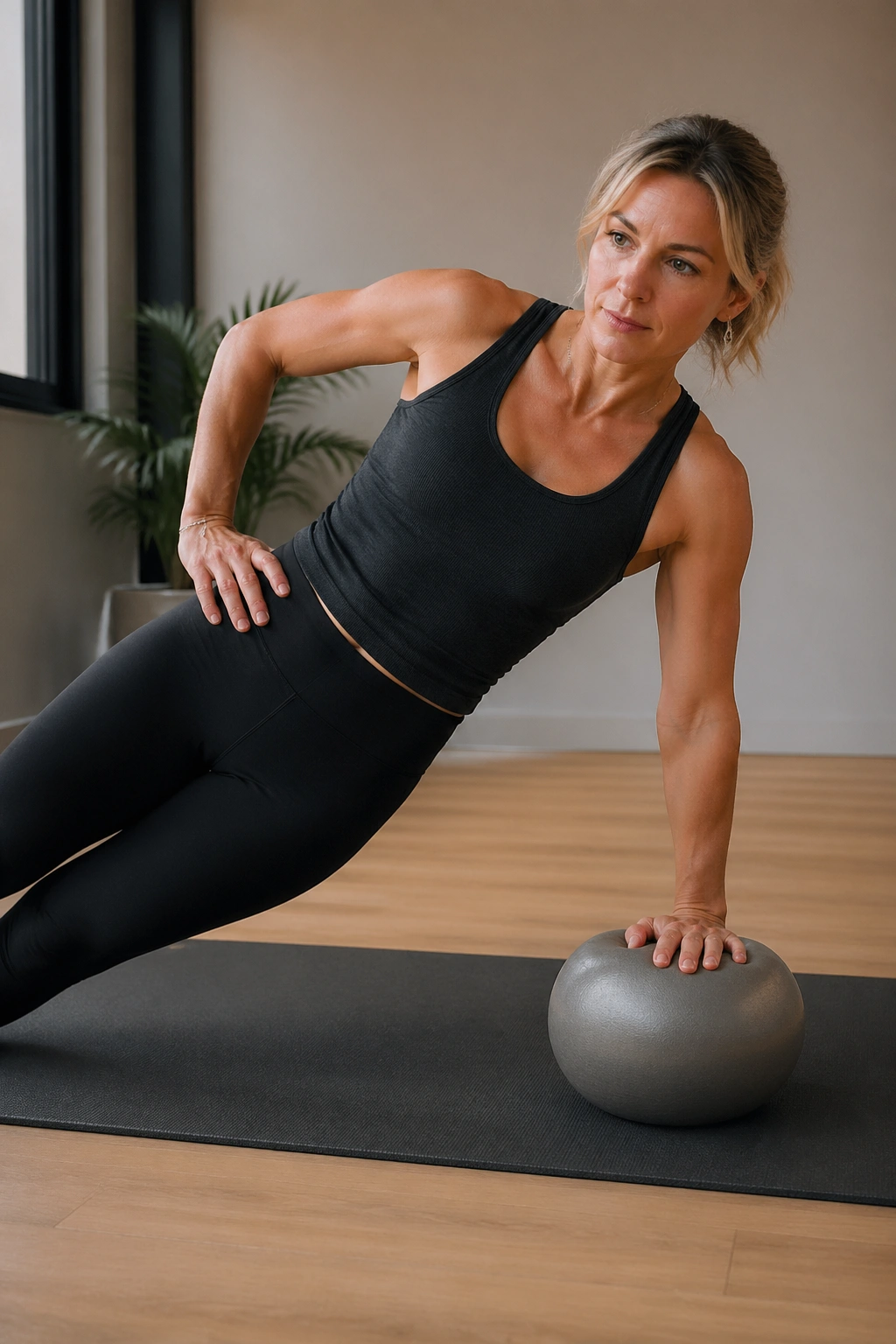
Side planks hate lazy shoulders. Put the bottom hand on the ball, stack the feet or drop the lower knee, and lift into a side plank with the torso long and the hips high. The ball adds just enough instability to make the obliques and shoulder stabilizers pay attention.
Keep the body in one clean plane. If the hips swing back, re-square them. If the neck tightens, lengthen the back of the skull away from the shoulders. One breath at a time is enough.
This version is usually easier to feel than a floor side plank, which sounds backward until you try it. The ball can create a cleaner line because it forces more focus, not more effort for its own sake.
15. Supine Marches with the Ball Pressed Overhead
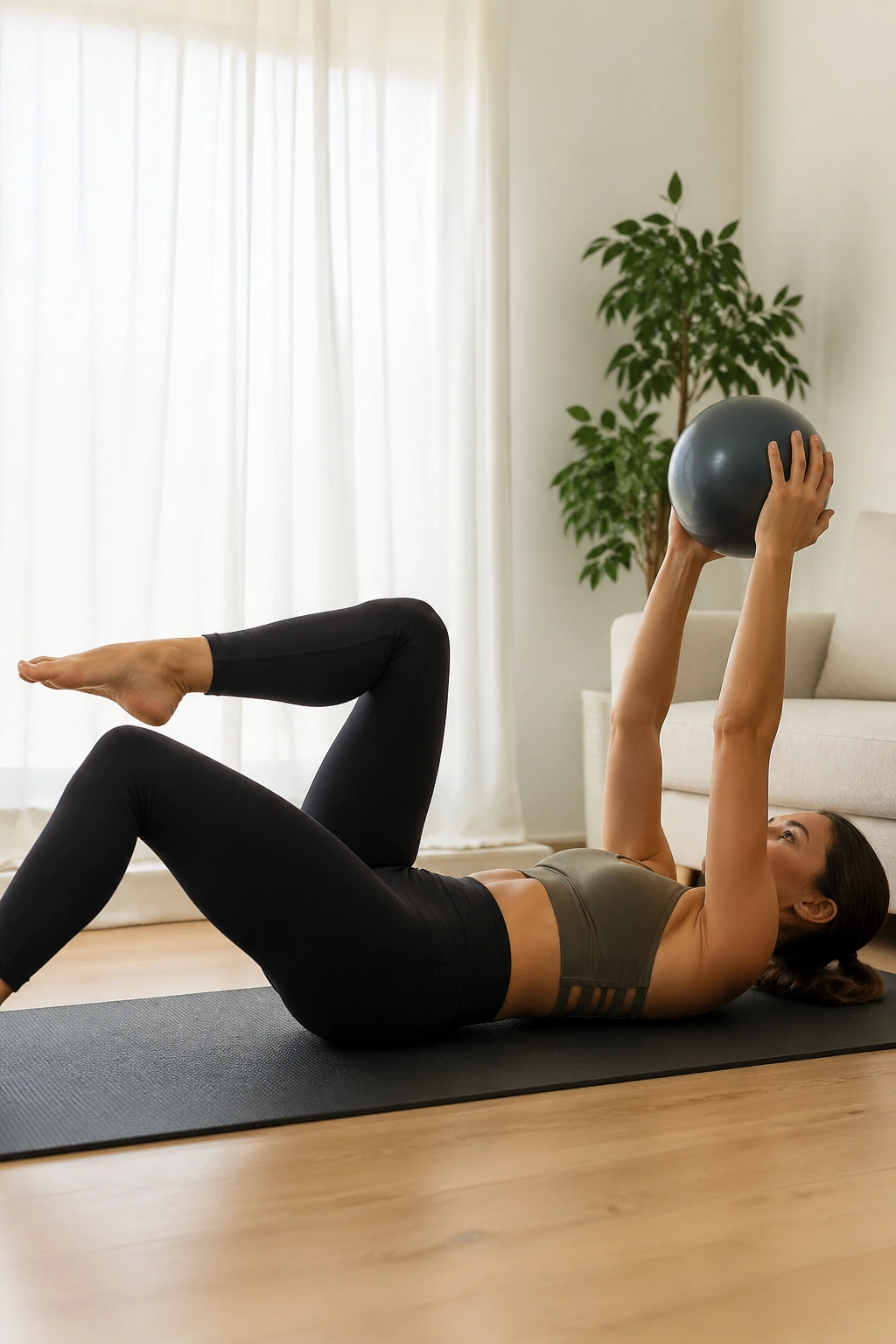
Holding the ball overhead while marching one knee at a time is a sneaky anti-extension challenge. Lie on your back, arms long over the chest, ball between your hands, and keep the ribs pinned down while one knee lifts to tabletop and then lowers.
The overhead reach makes the front body want to arch. That’s the test. Keep the lower back heavy and let the exhale guide each march. If both shoulders start creeping toward the ears, lower the arms a little and continue.
This is the kind of exercise that looks boring until the third or fourth rep. Then the abs start working in a deeper way, and the movement feels more precise than dramatic. I like that. No fluff.
16. Hollow Hold with the Ball Squeezed at Chest Level
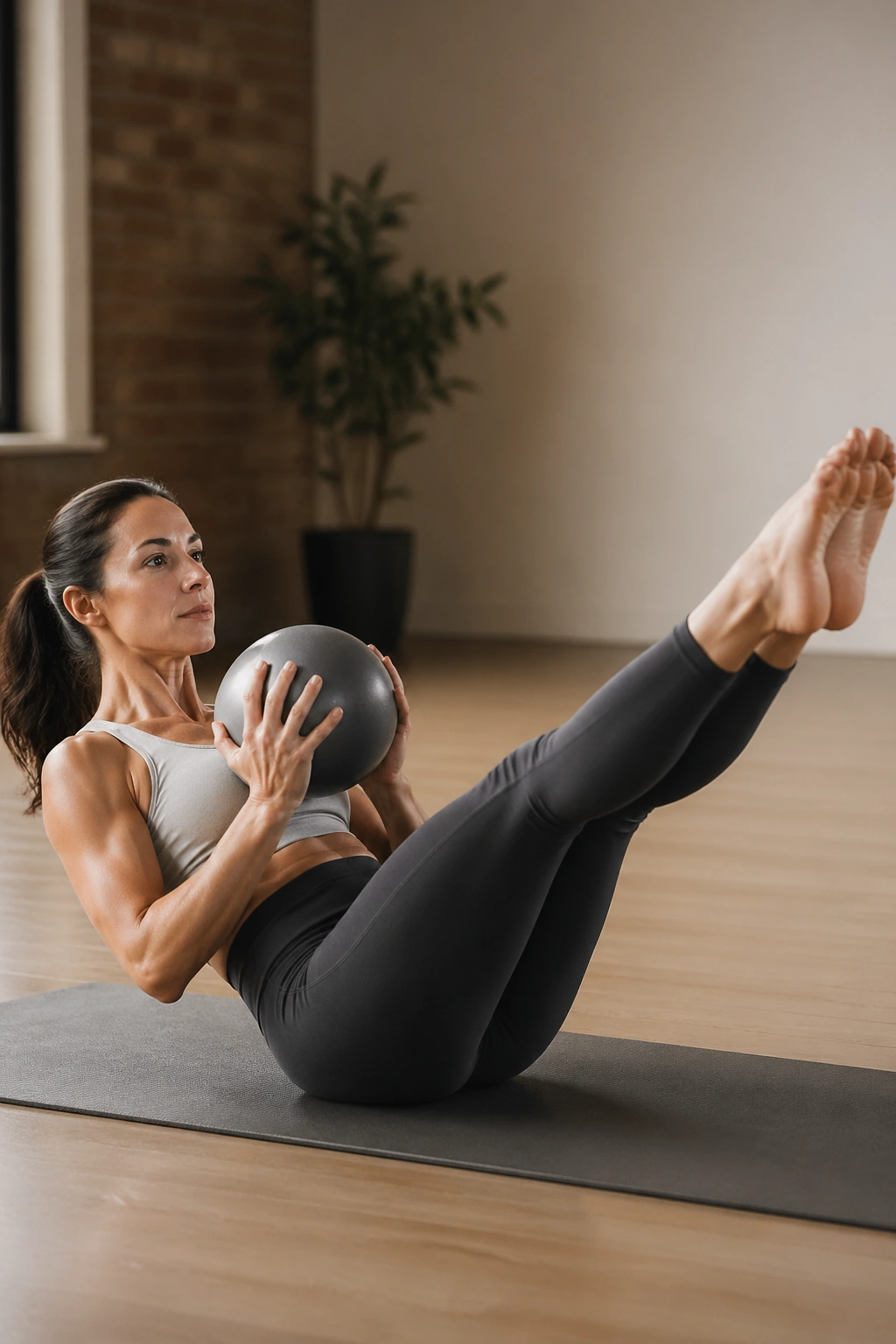
Hollow holds are miserable in the right way. Press the ball lightly at chest height, curl the shoulders off the mat, lift the legs into a low tabletop or straight-leg hover, and keep the lower back from ballooning up.
A Simple Rule
If the neck starts taking over, stop lifting the chest higher. Lower it. The ball squeeze should help organize the front of the body, not make the shoulders clamp shut.
A smaller version is often smarter: knees bent, shins parallel to the floor, ball held steady at the sternum. That still trains the deep core and lets you stay in control long enough to get real work done. Wild effort is not the goal. Clean tension is.
17. Reverse Crunch with the Ball Between Your Ankles
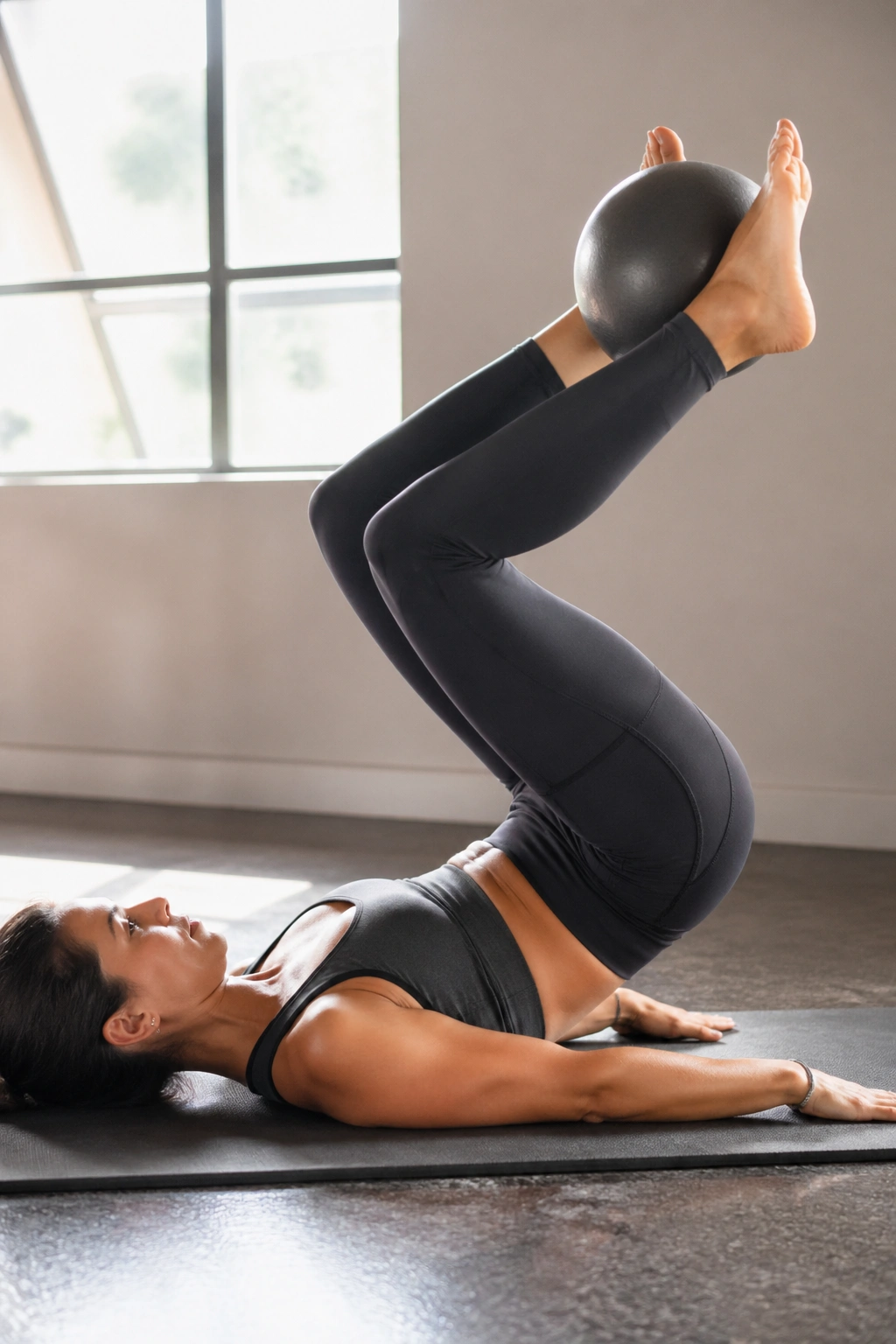
Reverse crunches get messy when the legs swing. A ball between the ankles slows that down and gives the lower body something exact to hold. Lie on your back, bring the knees in, and curl the tailbone off the floor with a small, controlled lift.
The key is the lower spine. Not the momentum. Not the feet flinging toward the ceiling. Squeeze the ball, exhale, and lift the pelvis only a few inches before lowering with care. If the neck strains, keep the head down and watch the knees instead of tucking the chin too hard.
This move hits the lower abs in a way that feels direct and clear. There’s no mystery here. If you swing, it stops working. If you control it, it wakes everything up.
18. Pilates Curl with the Ball Under Your Sacrum
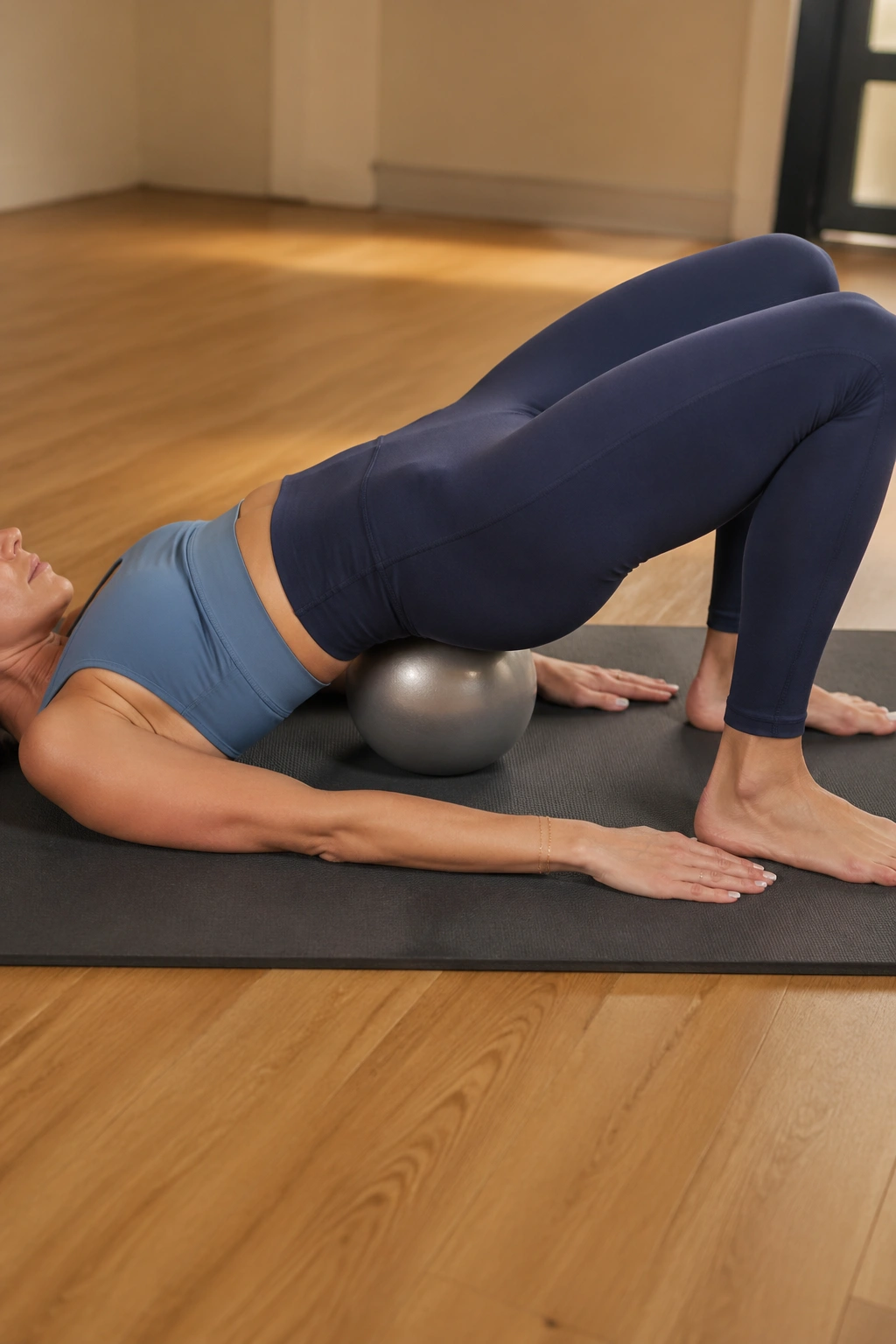
Put the ball under the sacrum and the pelvis starts talking. Lie back so the ball sits just above the tailbone, knees bent, feet grounded, and make tiny pelvic curls upward and downward. The range is small. That’s normal.
The soft support under the pelvis changes how the lower abs and hip flexors fire. You can feel the spine moving one segment at a time, and you can also feel when you shove the motion instead of control it. Keep the ribs down and the jaw loose. No grimacing.
This one is good on days when you want core work that feels joint-friendly. It’s less about burn and more about precision. That said, a few slow pulses can light up the abs enough to make you sit up straighter for the rest of the day.
19. Standing Wood Chop with the Ball in Both Hands
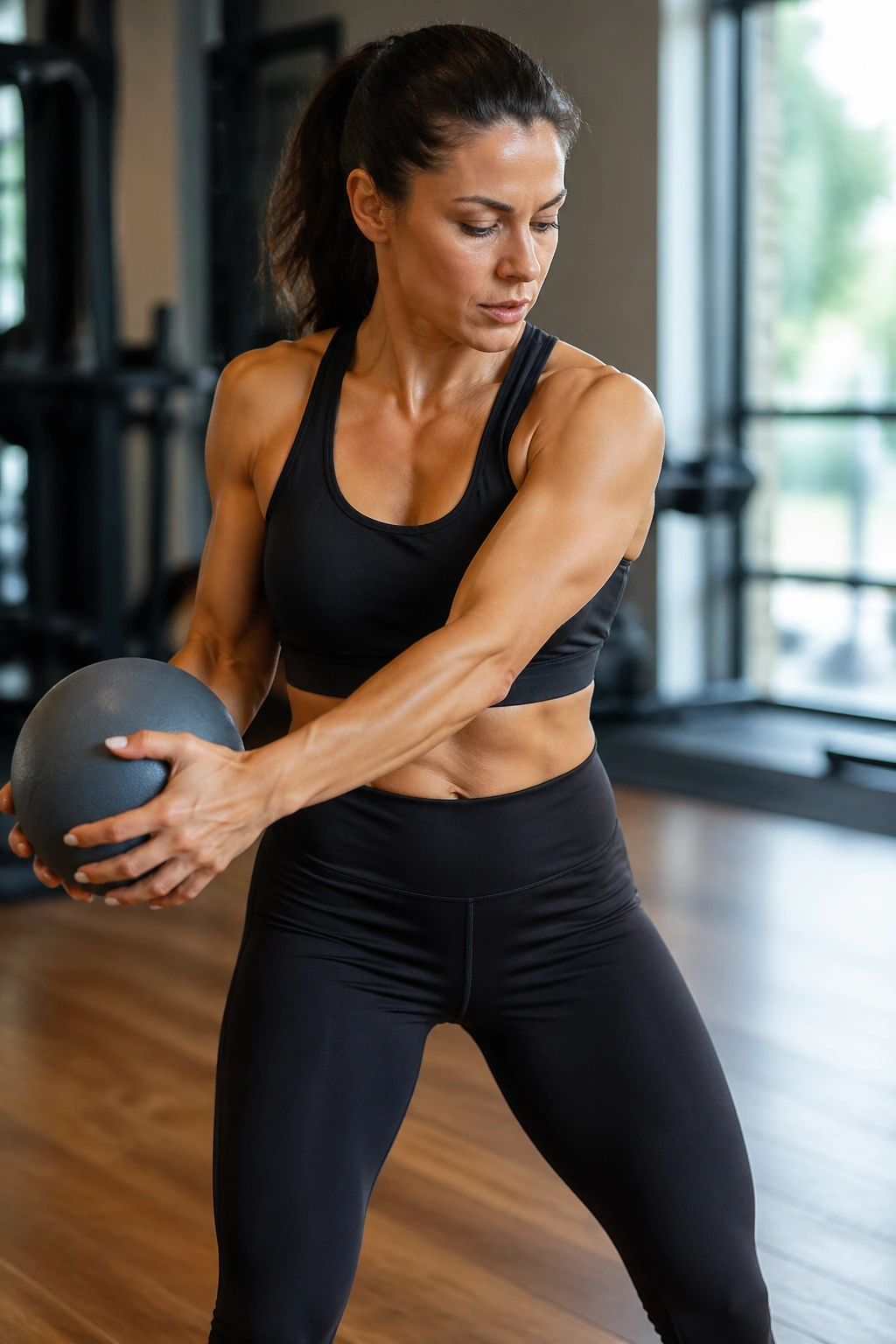
Rotation needs brakes. Hold the ball with both hands and move it from one shoulder to the opposite hip in a diagonal chop, keeping the pelvis steady and the ribs from flinging open. Stand tall, feet hip-width apart, and let the torso rotate only as far as you can control it.
Why It Helps
- Teaches the obliques to guide rotation.
- Trains the hips and trunk to stay connected.
- Builds control for reaching, lifting, and turning.
The temptation is to throw the ball through space. Don’t. Keep it smooth, almost restrained. The slower chop usually works the abs harder anyway, and it looks cleaner. If the low back feels cranky, shorten the range and keep the elbows soft.
20. Kneeling Side Bend with the Ball Reaching Overhead
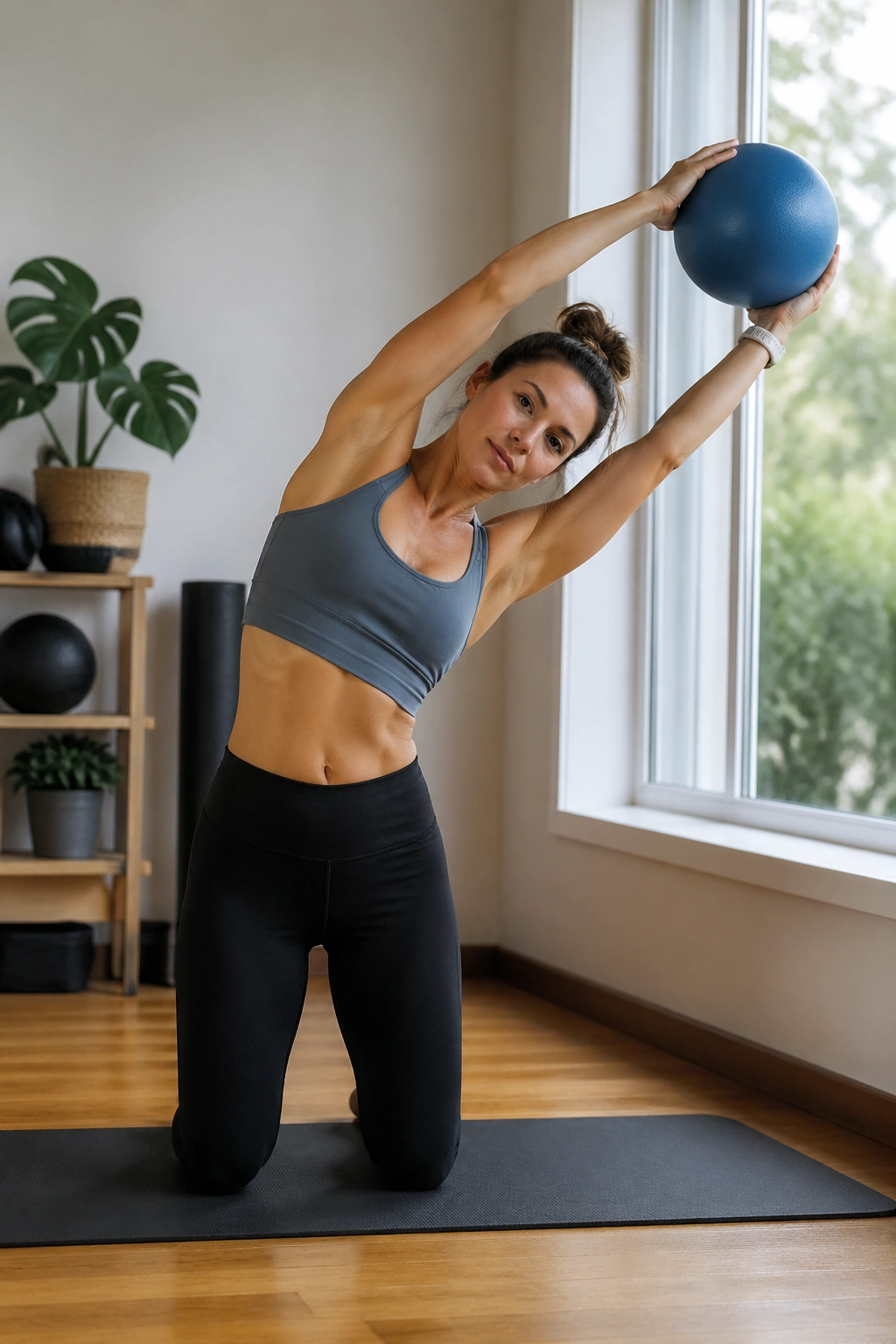
Tall kneeling is humbling. Add an overhead ball reach and the body has to stop leaning backward, which is where a lot of people cheat. Kneel with the hips stacked over the knees, hold the ball overhead, and side bend a few inches to one side before returning to center.
The movement should stay long, not collapsed. Think about lengthening one side waist while the other side contracts. The ball makes it harder to coast through the rep because the arms pull attention upward while the ribs want to sway.
This is one of the cleaner oblique exercises in the bunch. It’s also a good reminder that core strength is not only about flexing forward. Side control matters. A lot.
21. V-Sit Ball Pass
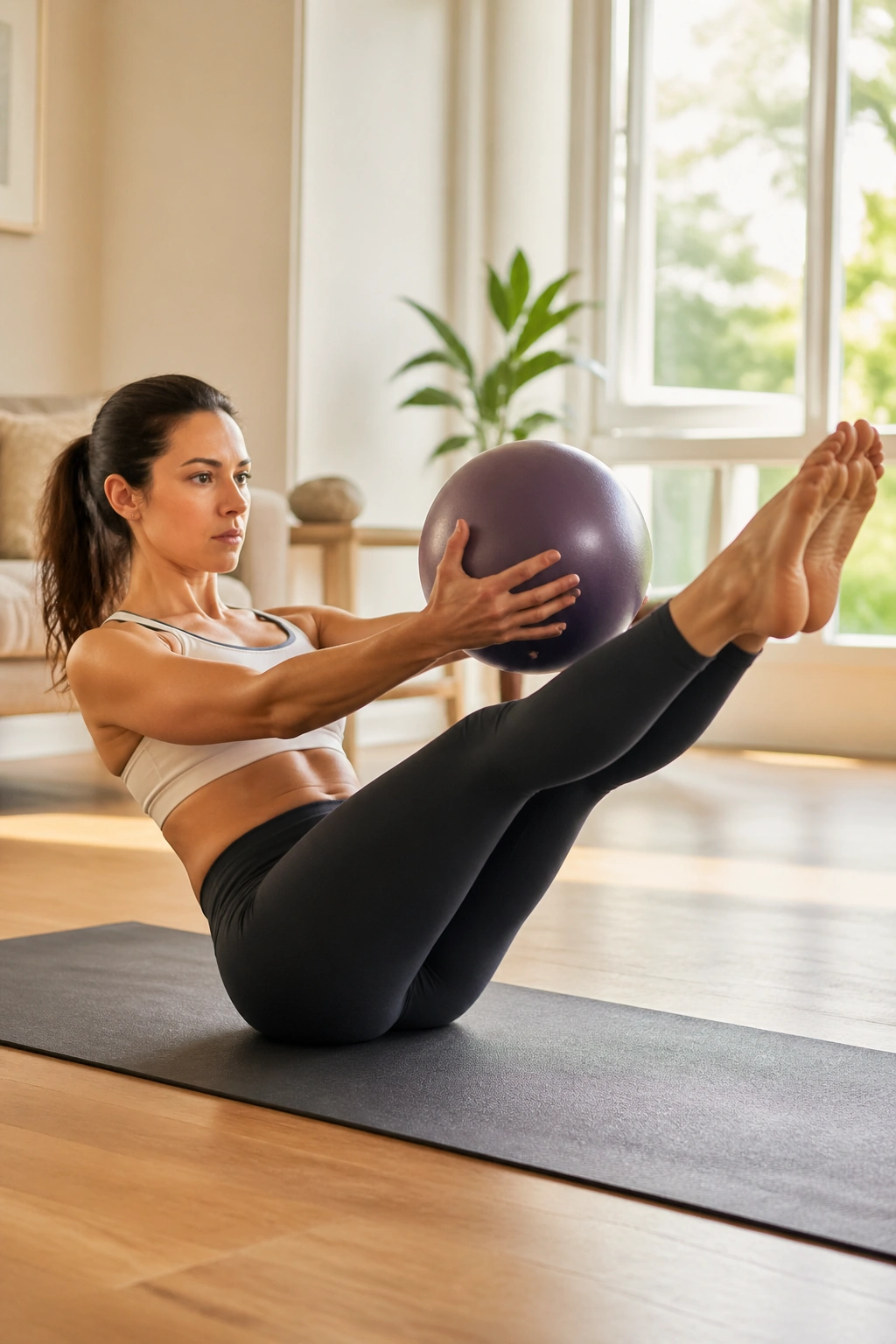
A V-sit ball pass is exactly as awkward as it sounds at first. Sit back into a V shape with the chest lifted, hold the ball, and pass it from the hands toward the shins or ankles while the torso stays steady. Then return to the starting position without crashing the feet down.
That transfer forces the midsection to keep the body from folding. The fewer the wobbles, the better the rep. If the hamstrings are tight, bend the knees a little. If the low back rounds too much, sit taller and make the V smaller.
This exercise tends to expose who is using momentum. Fast passing looks flashy. Slow passing builds control. I know which one I’d rather train.
22. Scissor Kicks with the Ball Pressed Between Your Hands
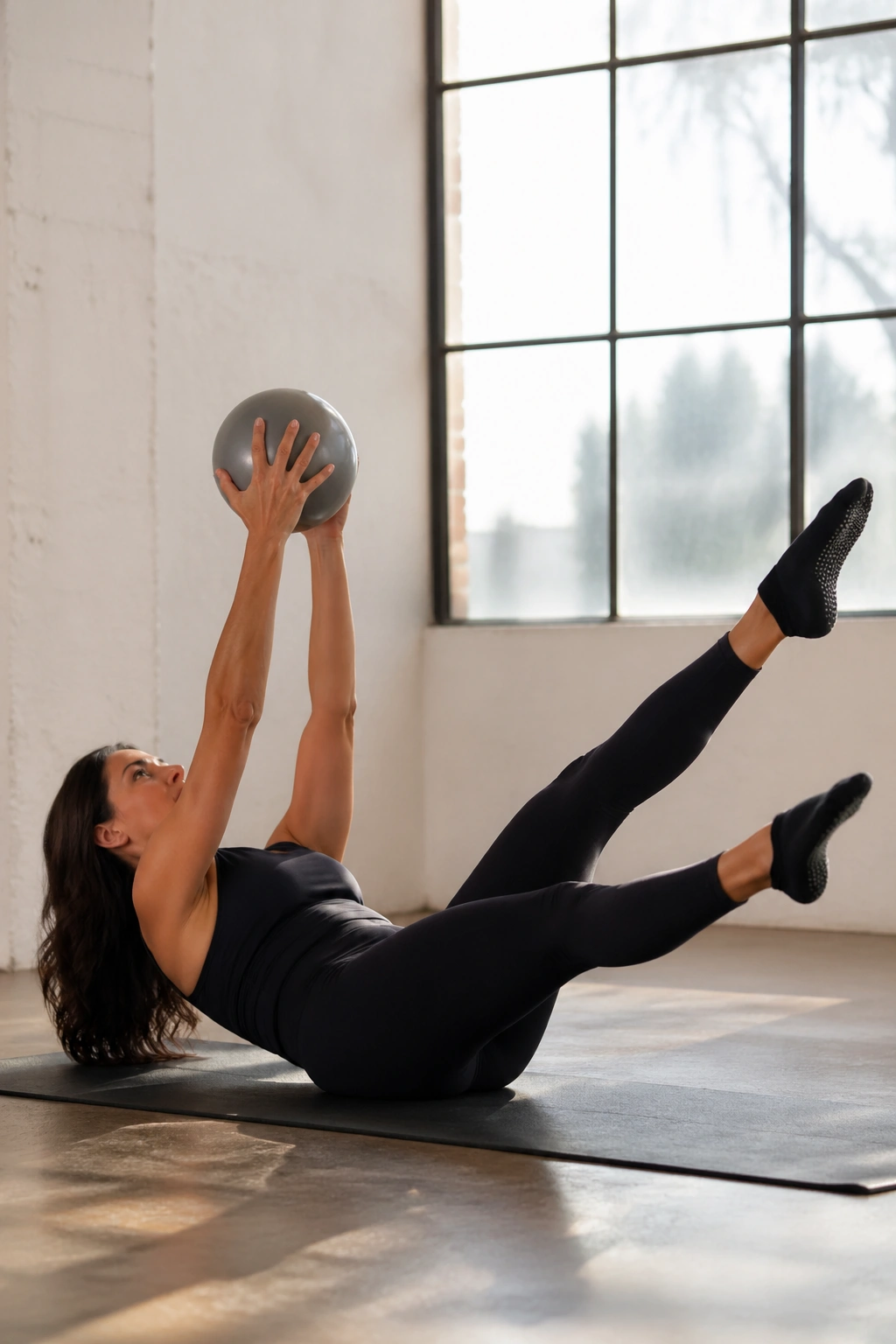
Scissor kicks get cleaner when the upper body has a job. Press the ball between your hands over the chest, lift the legs into a controlled scissor position, and alternate without letting the pelvis rock. The hand squeeze gives the upper body a focus point so the neck and ribs don’t take over.
Keep the legs lower only as far as the back stays calm. If the range gets too big, the lower abs check out. That happens fast. A small scissor with steady breathing beats a dramatic leg drop every time.
Quick Cue
Keep the ball steady. If it bounces, your torso is bouncing too.
23. Dead Stop Mountain Climbers with Hands on the Ball
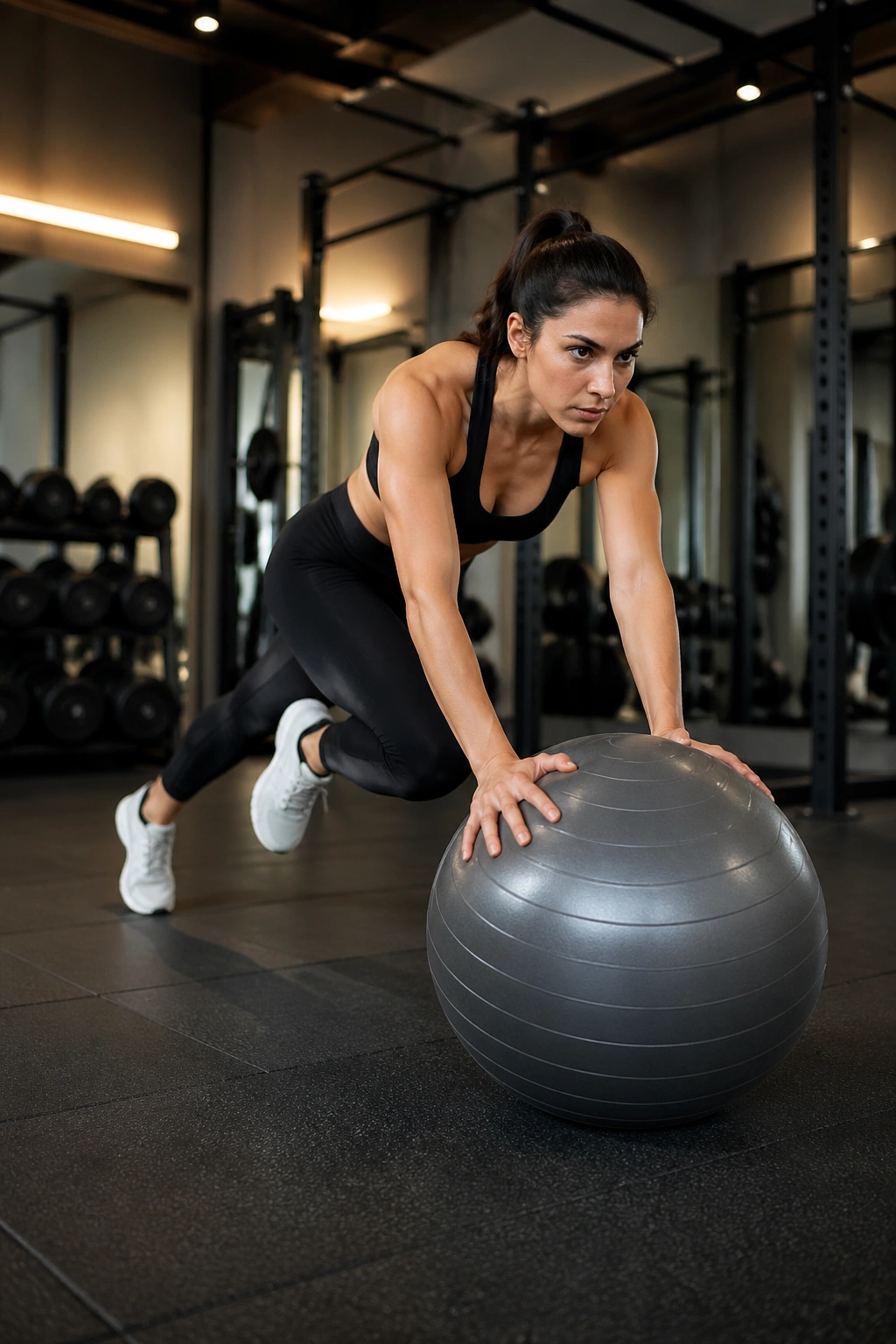
Mountain climbers usually get loud. Faster. Sweaty. A little chaotic. Put the hands on the ball and do them with a pause at the top of each knee drive, and the whole exercise changes shape. Each knee comes in, stops, returns. No skittering.
The pause matters because it kills momentum. That means the abs have to work on purpose instead of just surviving speed. Keep the shoulders broad, the ball centered, and the hips level. If the lower back sags, widen the feet or slow down more.
This version is sneaky. It doesn’t look like much from across the room, but the trunk has to keep reorganizing itself every rep. That’s good work.
24. Seated C-Curve Holds with the Ball at the Chest
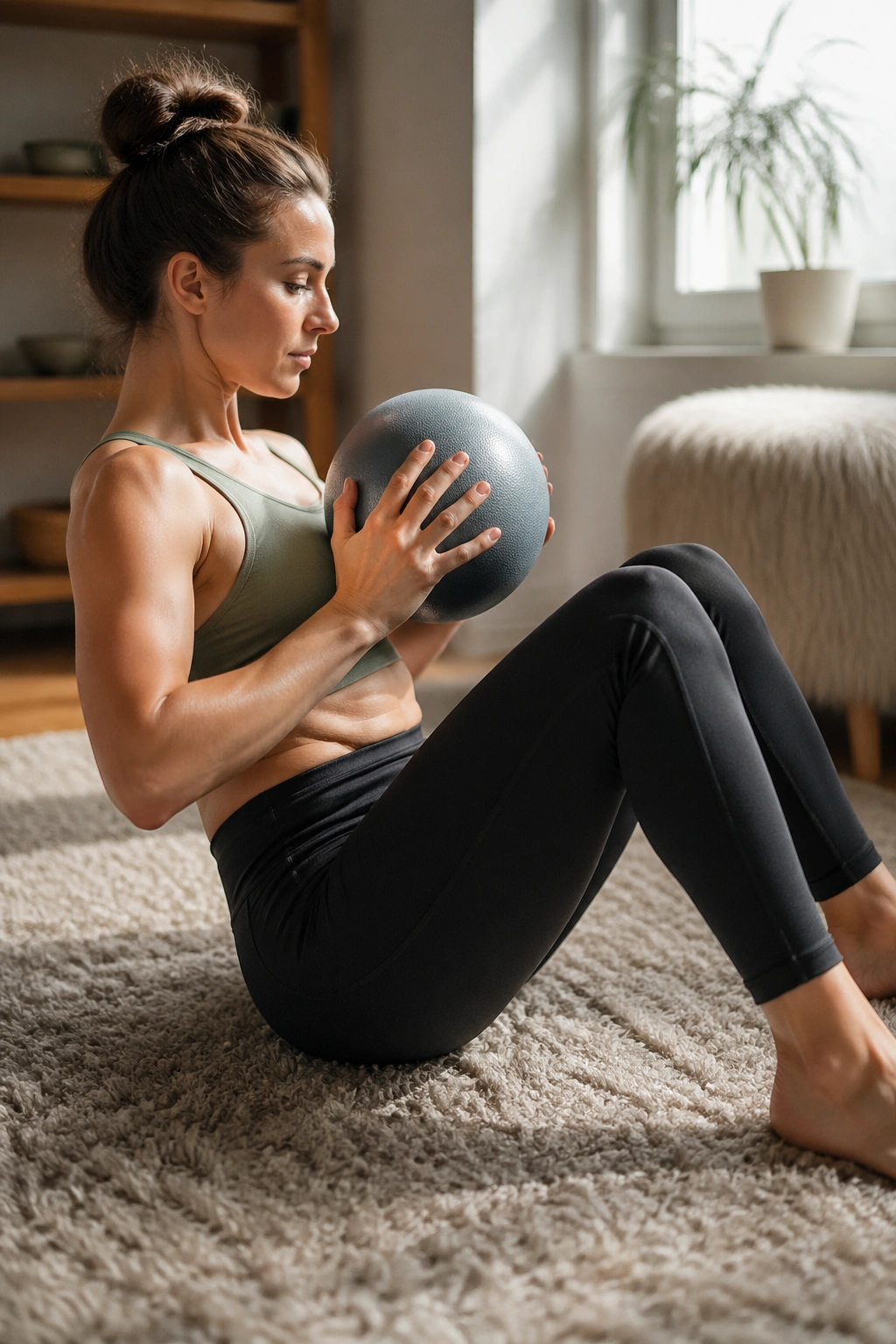
The C-curve is old-school for a reason. Sit with the knees bent, scoop the tailbone under, round the spine into a deep curve, and hold the ball at the chest while you hover the feet or keep them grounded for support. The point is not to collapse. It’s to hold shape.
A strong C-curve should feel like the front of the body is knitting together while the back stays long. The ball gives the arms a place to stay still, which helps the torso stay honest. If the neck starts to load up, lift the chest a little and breathe into the sides of the ribs.
This is a quiet burner. Not flashy. Very useful. It trains the kind of trunk strength that shows up when you sit, carry, and rotate without slumping.
25. Tall-Kneeling Overhead Reach with the Ball Pressed Forward
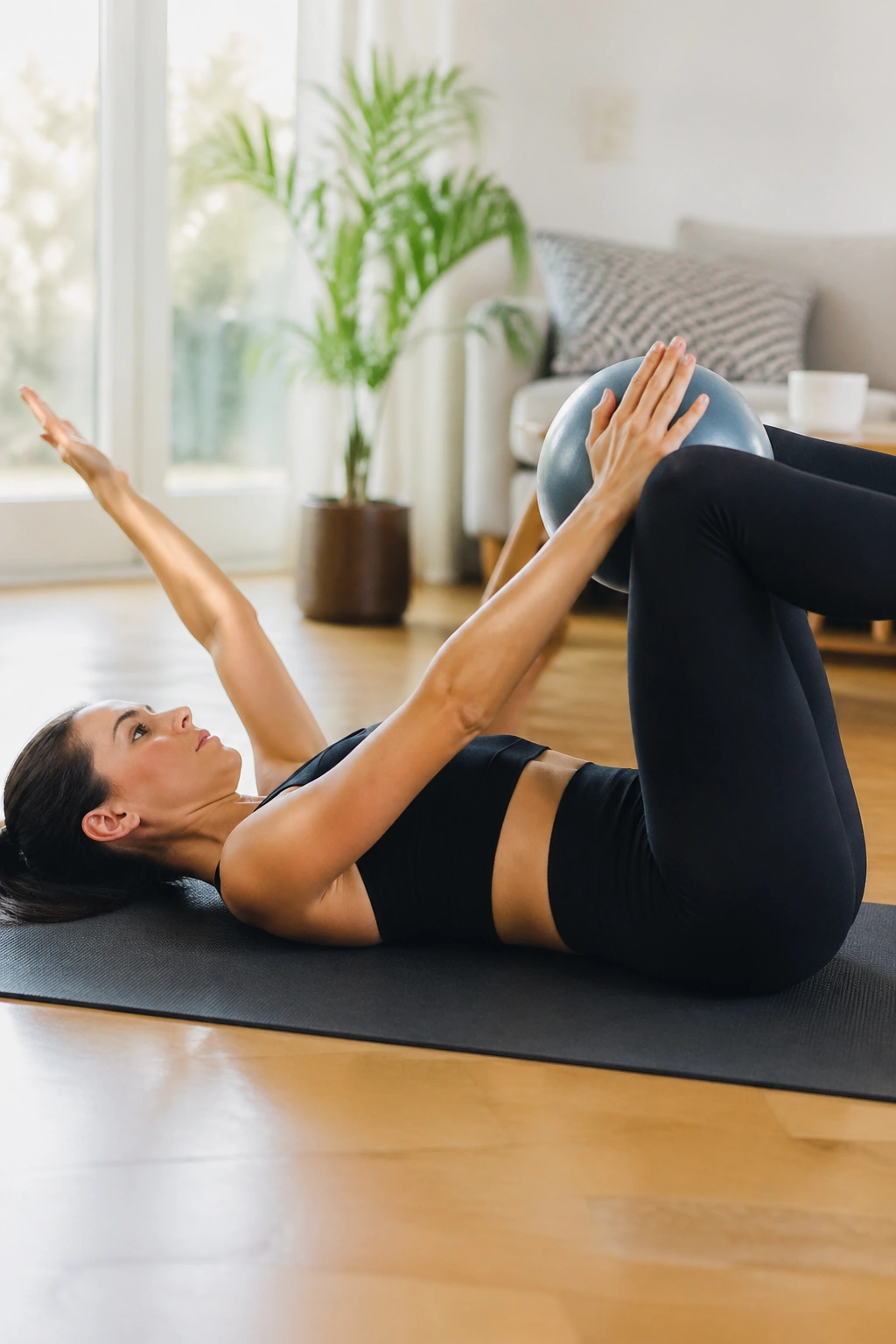
Finish with quiet work, not chaos. In tall kneeling, press the ball forward at shoulder height or slightly overhead, keep the ribs stacked over the pelvis, and reach the arms away without arching the lower back. A small forward press is enough to make the core wake up again after all the floor work.
The magic here is the hold. Stay tall. Breathe into the sides of the ribs. Resist the urge to flare, lean, or shrug. If the knees feel tender, place a folded mat under them. If the low back wants to sway, lower the ball to chest height and keep going.
This is one of the cleanest ways to finish a Pilates ball session because it asks for control without noise. No jumping. No flinging. Just the kind of steady, stacked strength that makes everything else feel easier to carry.
