



Hot Pilates is sneaky. The room feels almost polite at first, then your thighs start to burn on the second set of pulses and your core gets that sharp, wrapped-tightly-around-the-ribs feeling that tells you this is not going to be a casual class.
Sweat matters less than people think. What makes hot Pilates moves for weight loss worth your time is the mix of resistance, tempo, balance work, and the simple fact that you cannot coast through them for long when the room is warm and your breathing has to stay under control.
A class like this rewards clean movement more than frantic movement. That is the part a lot of people miss. If your knees cave on every squat, if your lower back takes over in every floor move, or if your shoulders creep up around your ears, the workout feels harder without giving you much back.
Pick the moves that load the big muscles, challenge your trunk, and let you keep good form even when the heat starts to nibble at your patience. That is where the useful work happens.
1. Squat Pulses with Overhead Reach
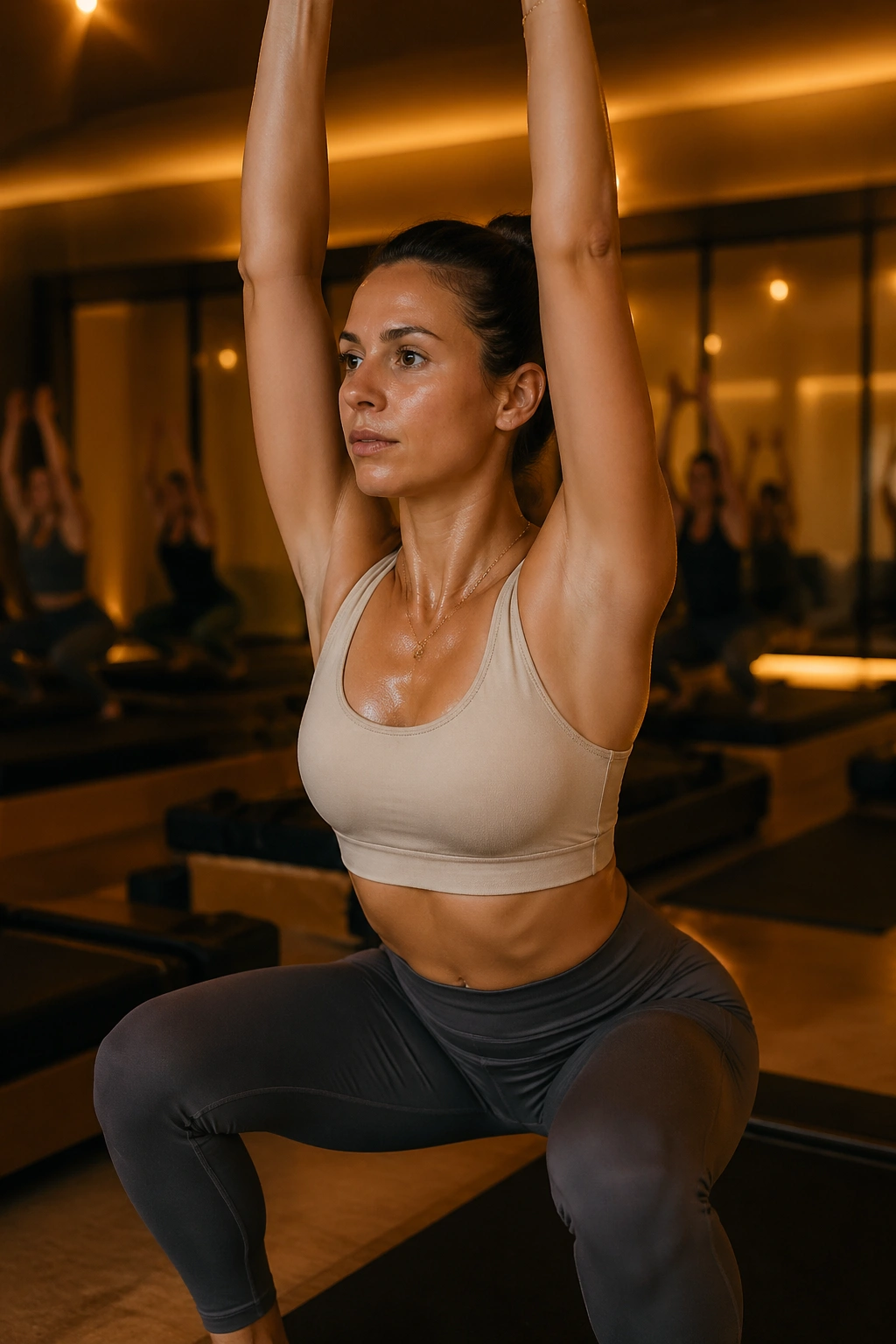
Squat pulses are the first move I’d put on any hot Pilates circuit. They hit the glutes, quads, and inner thighs fast, and the overhead reach keeps your upper body from turning the whole thing into a sleepy lower-body burn.
Why It Works So Hard
Stay in the bottom third of the squat instead of dropping all the way down and standing all the way up. That constant tension is what makes the move feel so expensive after 20 to 30 seconds, especially in a heated room where your legs already feel a little less fresh than they do on a cool floor.
If you want this to help with weight loss, don’t rush through it. Slow pulses for 30 to 45 seconds will usually do more for your heart rate than a handful of sloppy deep squats, because the muscles stay under load the whole time.
- Keep your feet about hip-width apart.
- Sit back as if you’re aiming for a chair behind you.
- Pulse only 2 to 3 inches.
- Reach both arms overhead without arching your low back.
Best cue: press the floor apart with your feet and keep your chest lifted.
2. Pilates Hundred
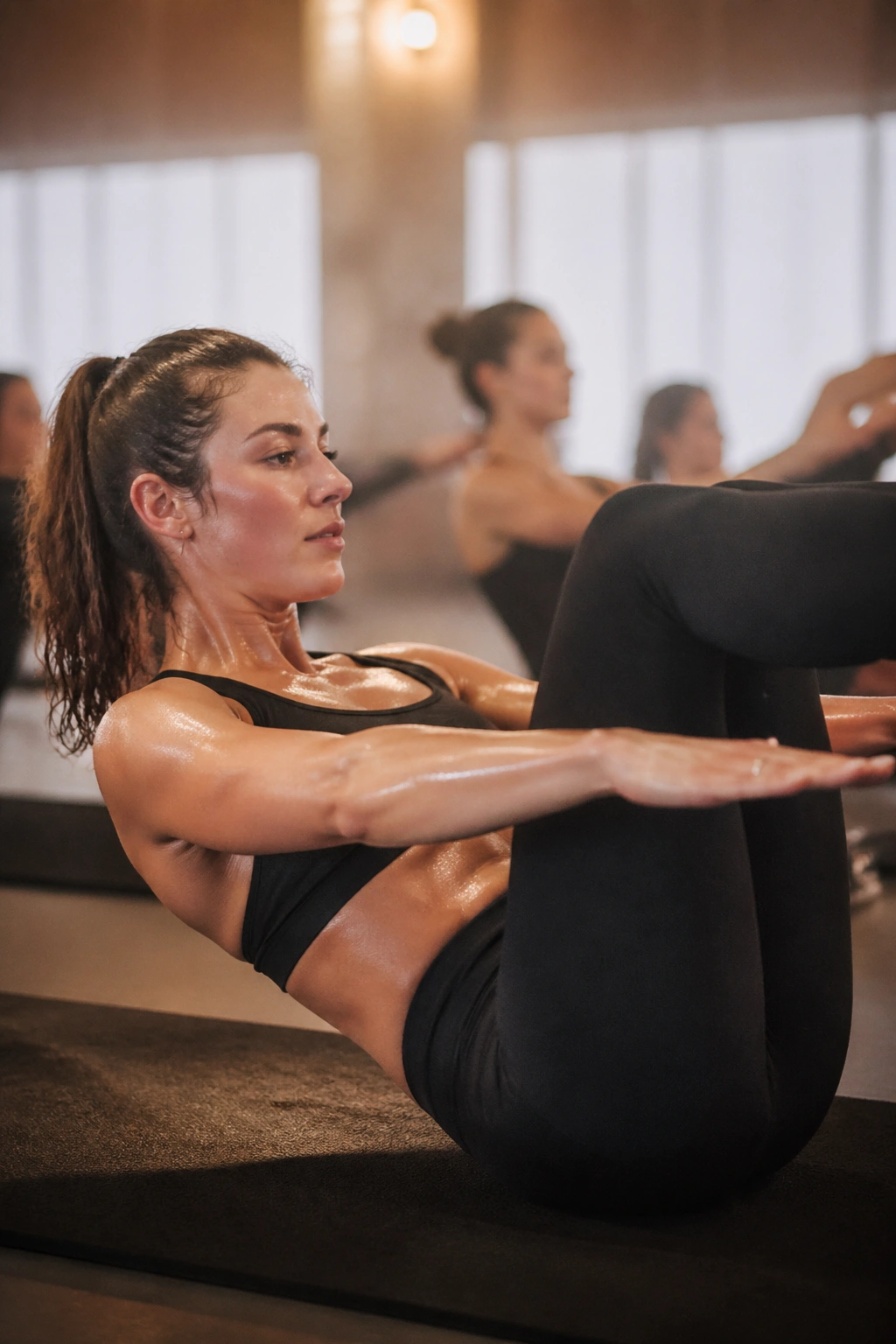
Why does such a small-looking move leave your core buzzing? Because the hundred keeps your upper body active, your breath organized, and your abs under steady tension for a full minute or more if you do it properly.
The classic version has your legs in tabletop or extended long at a low angle, head and shoulders lifted, and arms pumping in small, quick motions. In a hot studio, that combination feels sharper than it sounds. The heat makes your breathing work a little harder, and that forces you to stay honest about your pace.
The mistake I see all the time is going too low with the legs before the core is ready. Don’t. Start with bent knees if you need to, and make the breaths count: five pumps on the inhale, five on the exhale, repeated for 10 cycles.
How to Use It
If your neck starts to complain, set the head down for one round and come back up later. That is not cheating. That is smart pacing.
A cleaner hundred done with control will help more than a dramatic one that turns into neck strain and flailing arms.
3. Forearm Plank Shoulder Taps
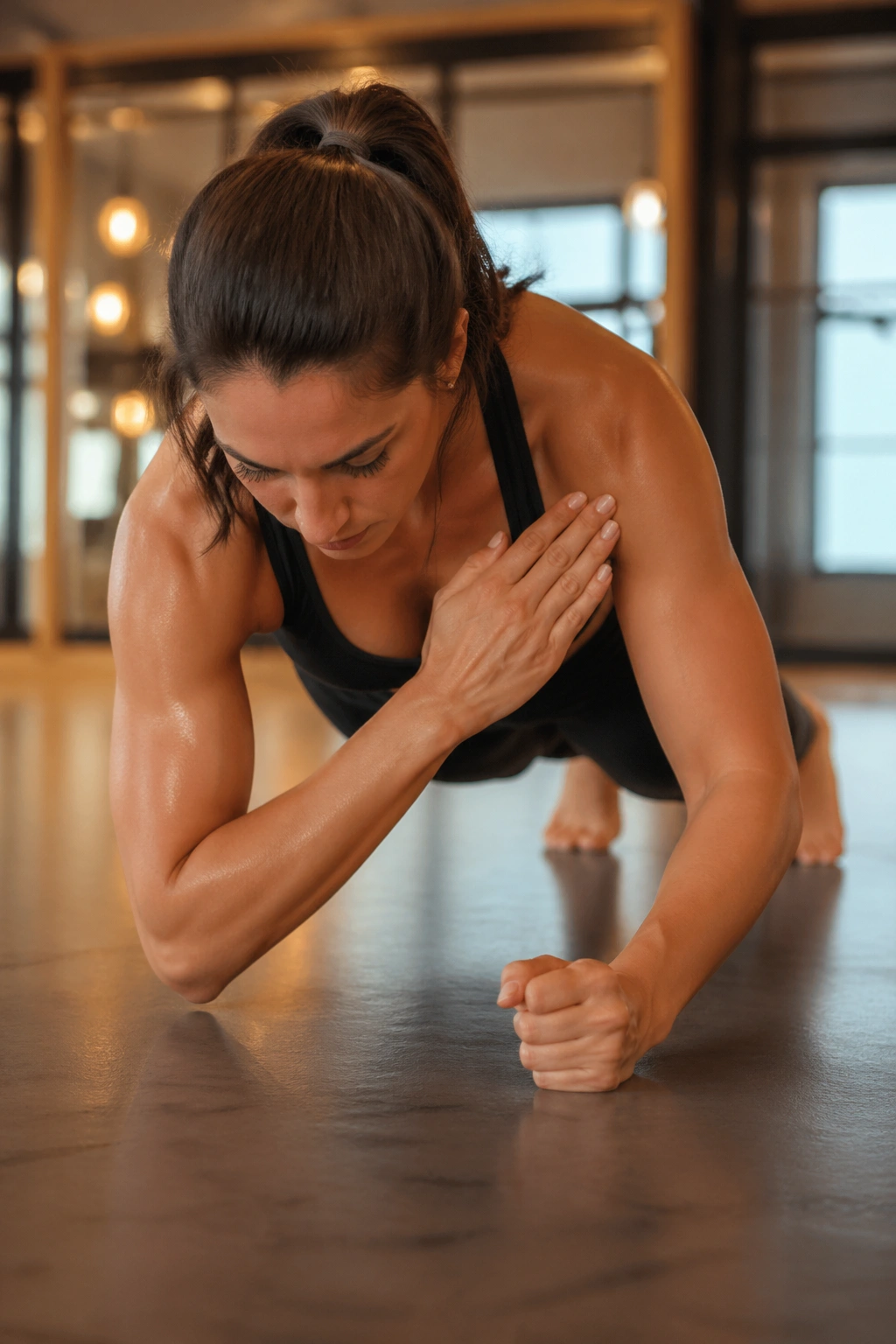
Picture this: you are halfway through class, the mat feels warmer under your elbows, and every shoulder tap starts to feel like a small negotiation with gravity. That is exactly why this move belongs in a hot Pilates sequence.
Shoulder taps train the core to resist rotation while the shoulders hold you up. That matters for weight loss more than people expect, because the move asks a lot from several big muscle groups at once instead of letting one area do all the work.
Keep your feet a little wider than you think you need. Narrow feet make the wobble worse, and wobble is fine only if it stays controlled. Tap one shoulder, pause, reset the ribs, tap the other side.
- Hips stay level.
- Elbows stack under shoulders.
- The tap is light, not a slam.
- Stop the set when your lower back starts to sag.
The clean version is the one that works. Everything else is noise.
4. Reverse Lunge to Knee Drive
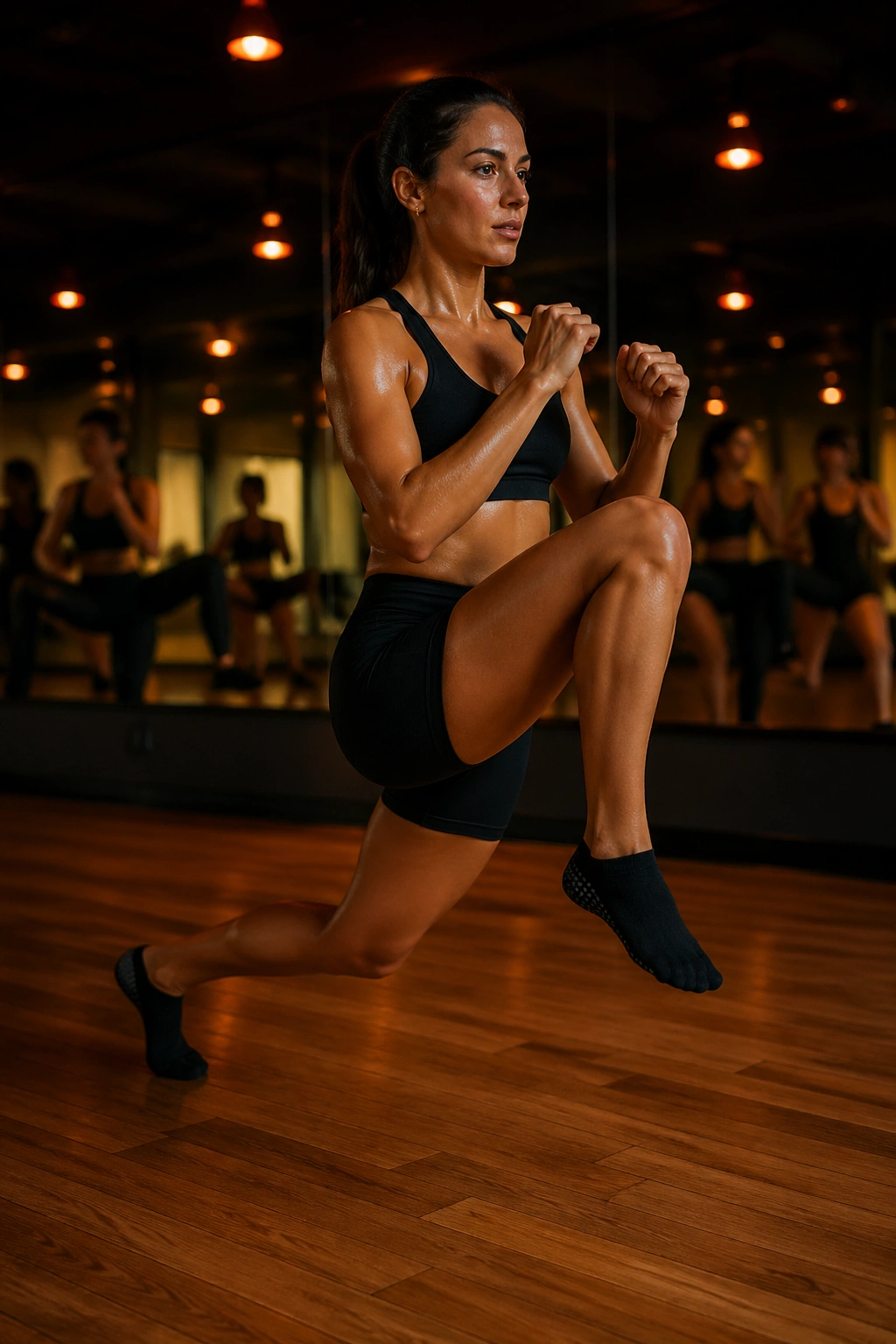
Reverse lunges look calm. They are not. The backward step tends to be kinder to the knees than a forward lunge, but once you add a driving knee lift at the top, the move starts acting like a lower-body burner and a balance drill at the same time.
Unlike jump lunges, this version keeps one foot on the floor, which makes it easier to repeat with control in a heated room. That matters. When your balance gets sloppy, your hips twist, your chest leans forward, and the whole exercise stops serving your glutes the way it should.
This is a smart choice for people who want a weight-loss-friendly Pilates move without constant impact. You can work hard for 8 to 12 reps per side and still keep your joints happy.
The recommendation is simple: step back far enough that the front knee can stay over the ankle, then drive up through the front heel as the opposite knee lifts. If the knee drive makes you lose balance, skip the lift for a set or two and keep the reverse lunge clean.
5. Glute Bridge March
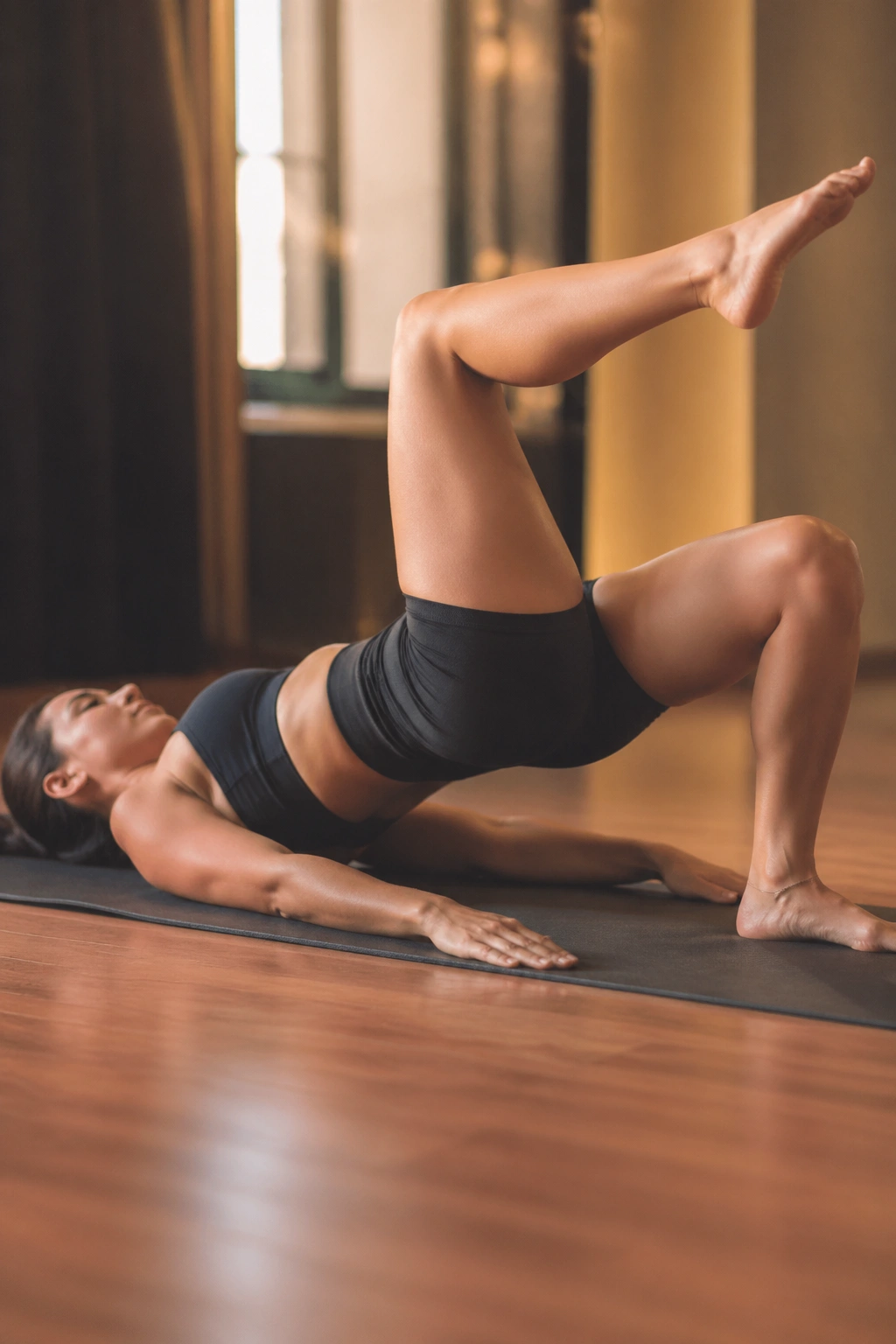
Your shoulders are on the mat, your feet are planted, and the back of your legs starts talking almost immediately. Glute bridge marches have that effect. They look gentle at a glance, then the hamstrings light up and your pelvis realizes it has work to do.
The march turns a regular bridge into a stability drill. One leg stays down while the other lifts a few inches, and your hips have to stay level the whole time. That anti-wobble demand is a big part of why the move earns a place in hot Pilates classes aimed at weight loss.
The trick is to keep the ribs from flaring. A lot of people lift the hips high and then lose the connection in the middle of the body, which shifts the work into the low back. Don’t do that. Lift only until your hips are in line with your knees and shoulders, then march slowly.
What to Watch For
If the hamstrings cramp, bring your feet a little closer to your seat. If the low back arches, lower the hips an inch and tuck the pelvis slightly.
Small corrections. Big difference.
6. Side Plank Hip Lifts
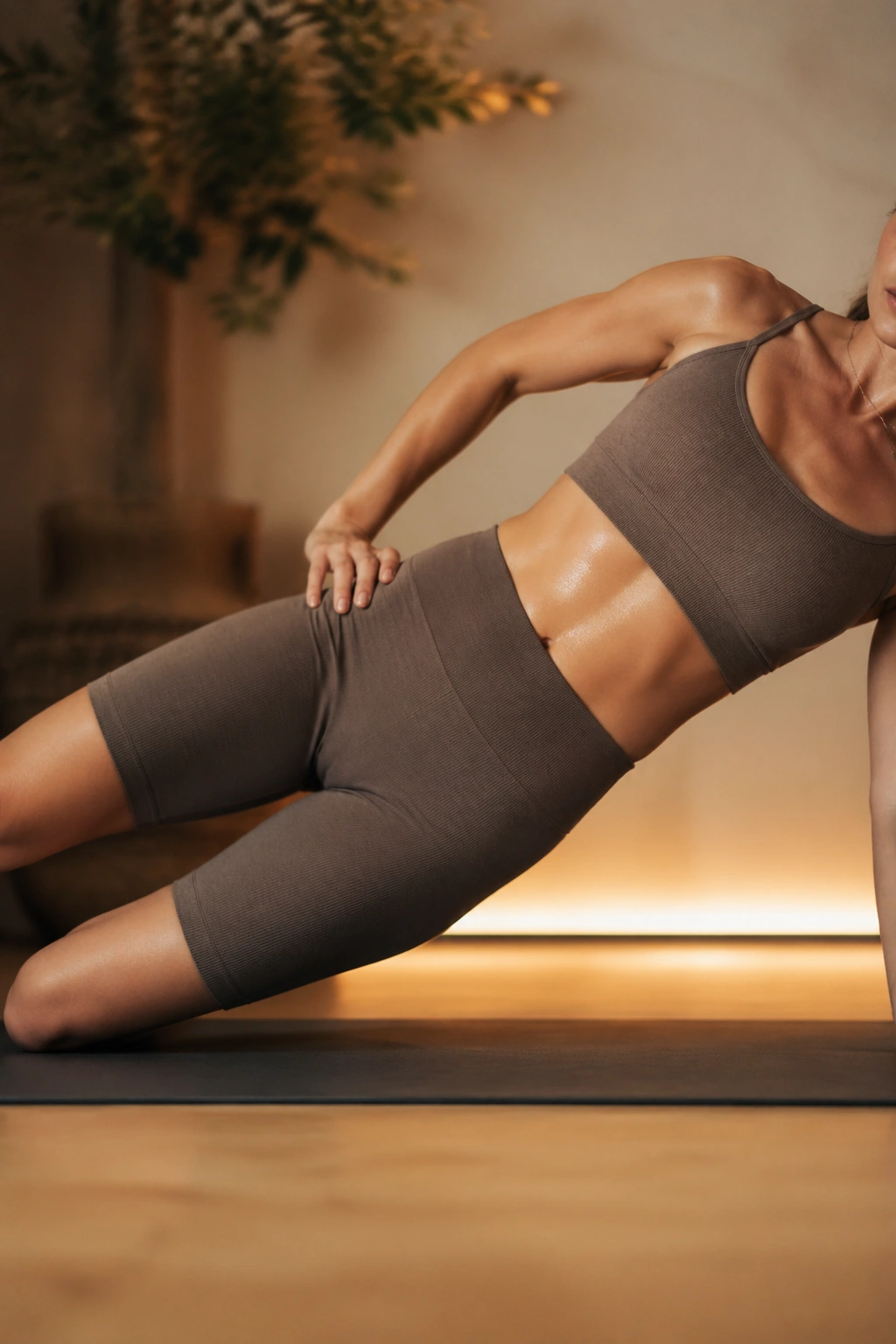
I’ve never met anyone who said side plank hip lifts felt easy the first time. That is part of the charm, honestly. The move asks for shoulder stability, oblique strength, and outer-glute work all at once, which is a lot for one side of the body to manage.
Use the bottom knee down if you need to. There is no prize for making the hardest version look graceful when your torso is folding in half. In hot Pilates, the goal is a crisp lift and lower, about 8 to 10 reps per side, with the waist staying long instead of collapsing into the floor.
- Keep the supporting shoulder away from your ear.
- Lift through the bottom waist.
- Pause one beat at the top.
- Move slowly enough that you can breathe.
The side plank family is excellent for shaping the waistline feel people like from Pilates, but the real win is that it trains your body to hold itself together under load. That matters in every other move too.
7. Mountain Climbers with Pilates Cues
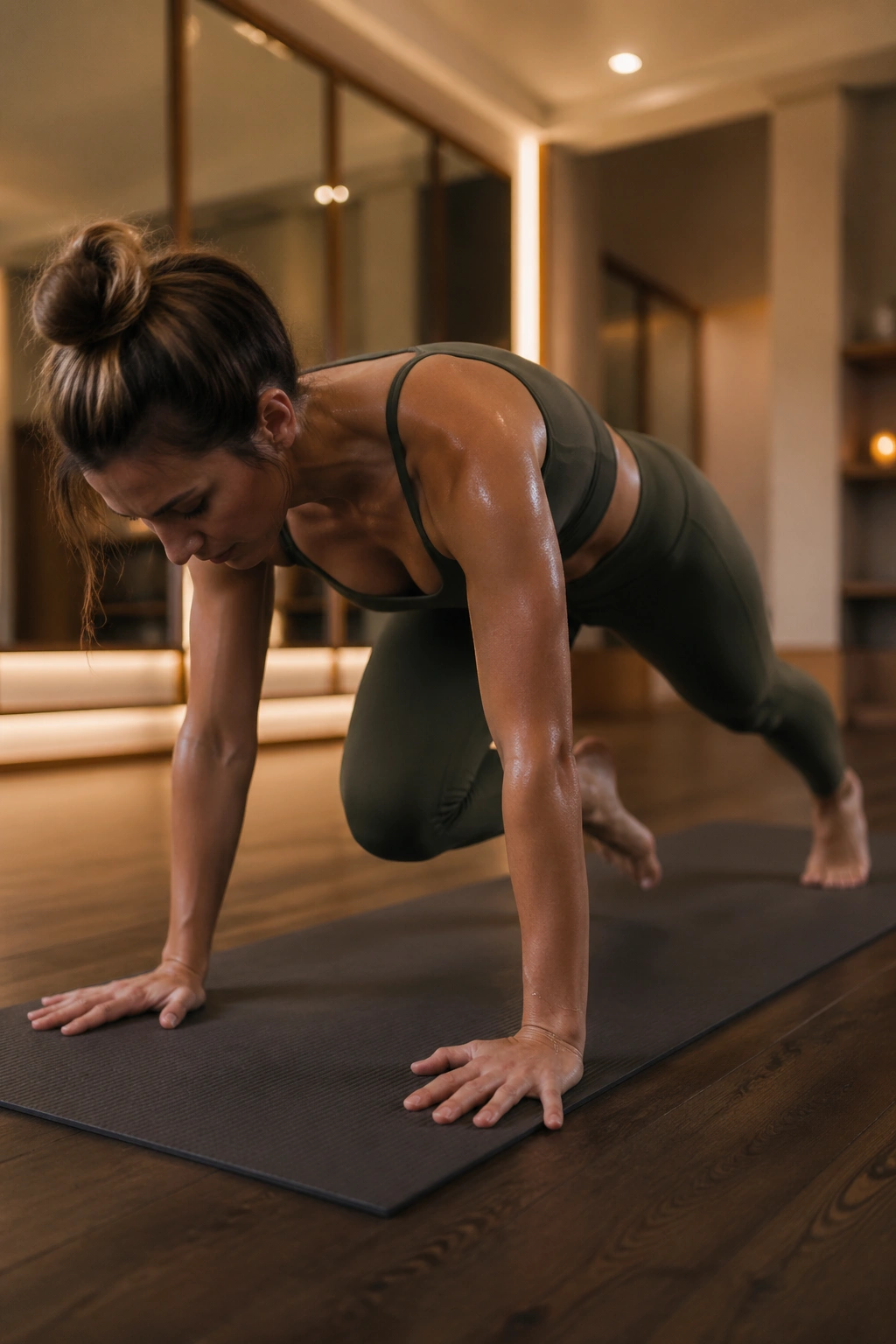
Mountain climbers only help if you stop treating them like a race. Fast feet with a sagging middle do very little except make a mess of your wrists and shoulders. Slow, clean climbers, on the other hand, hit the core hard and send your heart rate up in a hurry.
The Pilates version is more deliberate. Drive one knee toward the chest, keep the hips low but not dropped, and switch with control. If the room is hot, your breathing will get noisy sooner than you want, which is exactly the signal to clean up the shape rather than speed up.
A towel under the heels of your hands can help if the mat gets slippery. So can a wider hand placement, especially if your shoulders get tired before your abs do. Aim for 20 to 40 total drives, or 30 seconds of work, then reset.
This move is one of my favorites for circuits because it gives you the calorie-burn feel people chase without turning the class into chaos.
8. Teaser Holds and Pulses
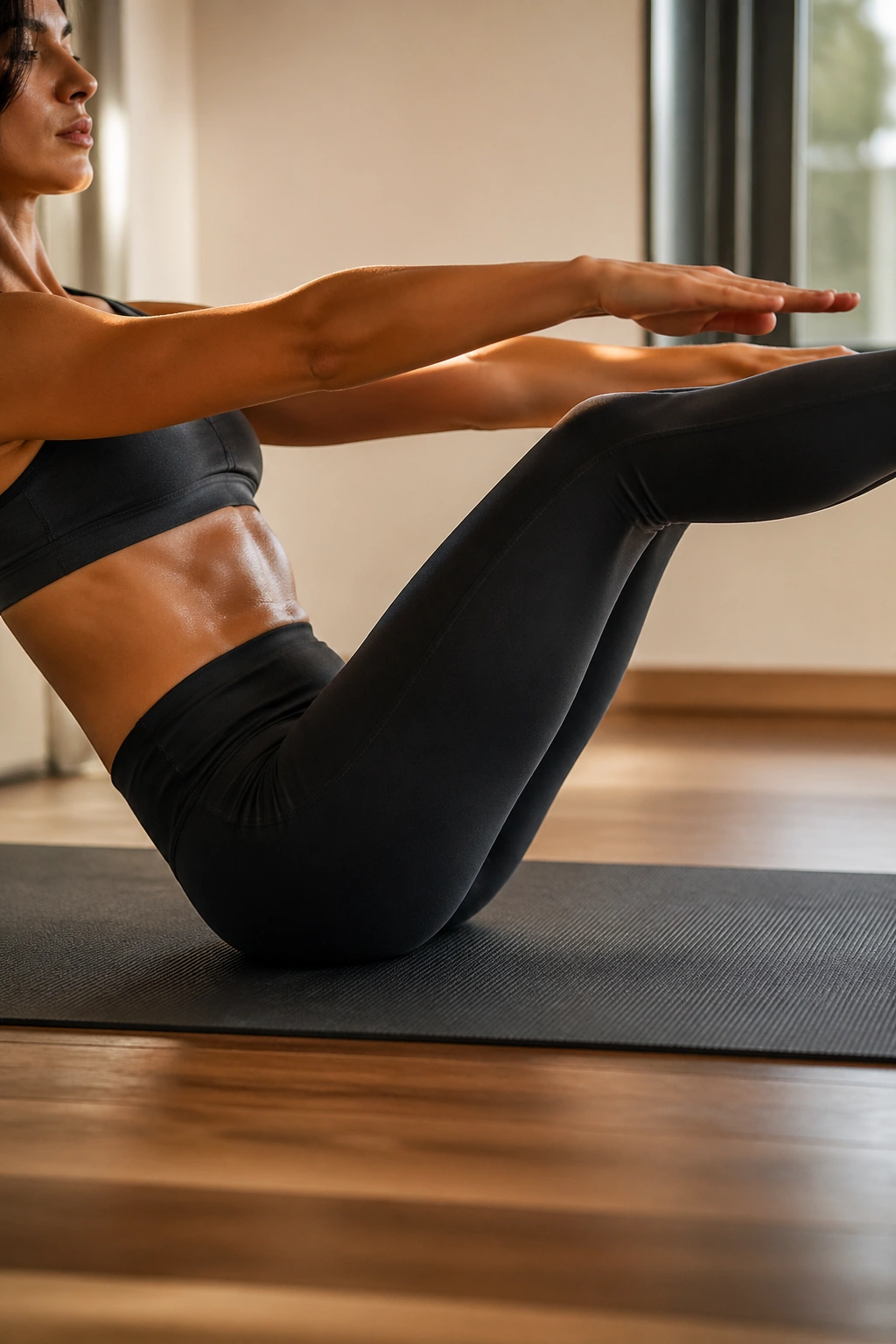
Can one core move ask this much of your abs, hip flexors, and breath? Yes. Teasers are that demanding, and in a heated room they feel even more honest because there is nowhere to hide once the legs leave the floor.
The full teaser is advanced. Start with bent knees if needed, or hold a halfway position with the shins parallel to the floor. The whole point is to keep the spine long while the torso balances on the sit bones, not to fling yourself into a shape that looks good for one second and then collapses.
How to Scale It
A useful version is a 10-second hold followed by 3 tiny pulses. That is enough to create a real burn without wrecking your form. If your hip flexors take over, lower the legs, reset the ribs, and try again with less range.
The teaser is not a high-rep move, but it earns its place because it demands such a large amount of control. That kind of tension is tiring in a way that counts.
9. Standing Oblique Cross-Crunch
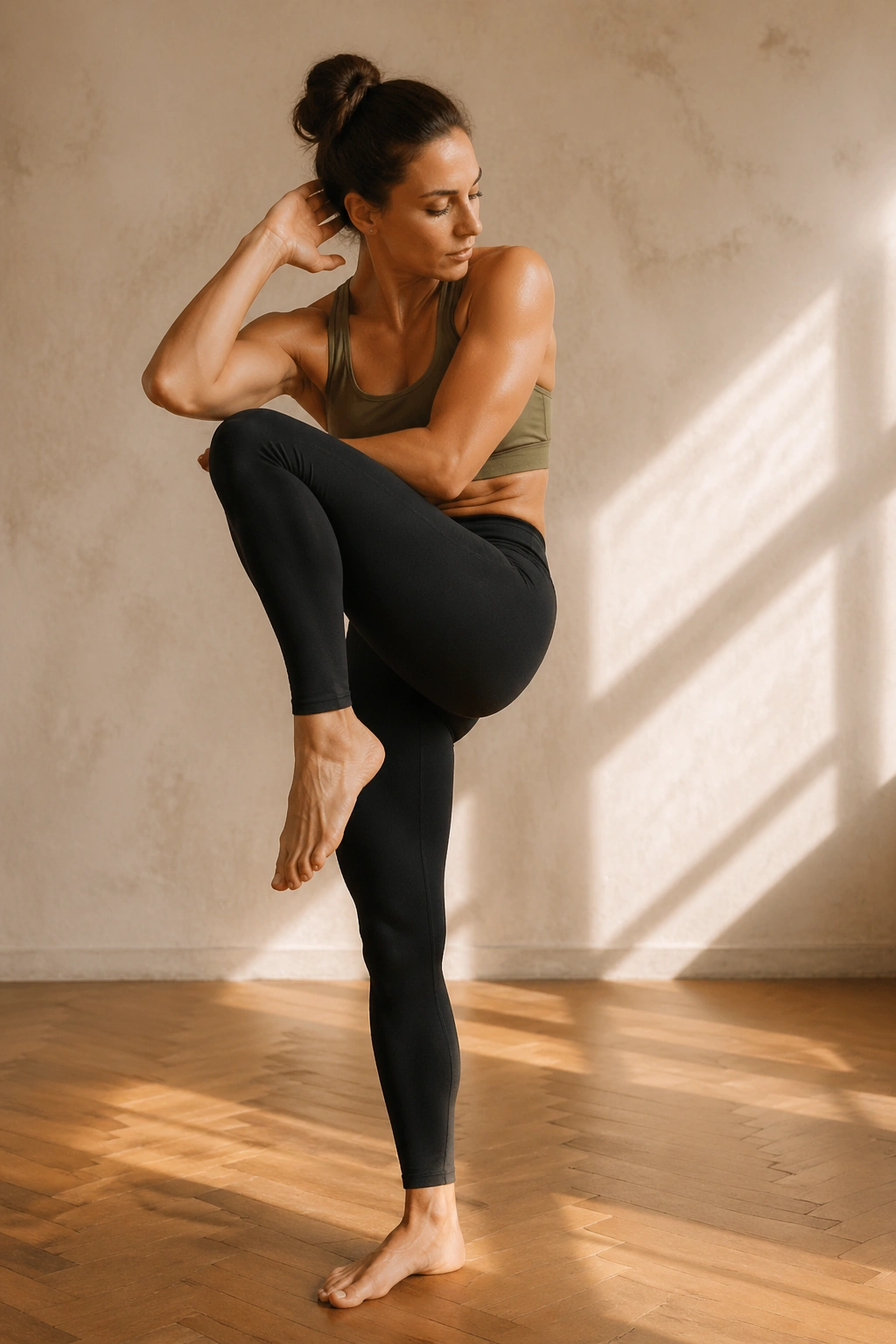
Stand up near the mirror and cross your elbow toward the opposite knee. It looks simple, and that is precisely why people underestimate it. Once you keep the torso tall and the lift controlled, the sides of the waist start working in a way floor crunches often miss.
Unlike traditional crunches, this standing version adds balance and a little cardio without asking your neck to do the job. That makes it useful in hot Pilates when you want to keep moving but your body could use a break from lying down.
This move is best for people who want core work that feels more athletic. Think 12 to 16 reps per side, done with a steady exhale as the knee comes up and the rib cage stays stacked over the hips.
If you yank the elbow or lean way back, the move gets lazy fast. Keep the lift modest and clean. That small change makes it far more useful.
10. Frog Pumps
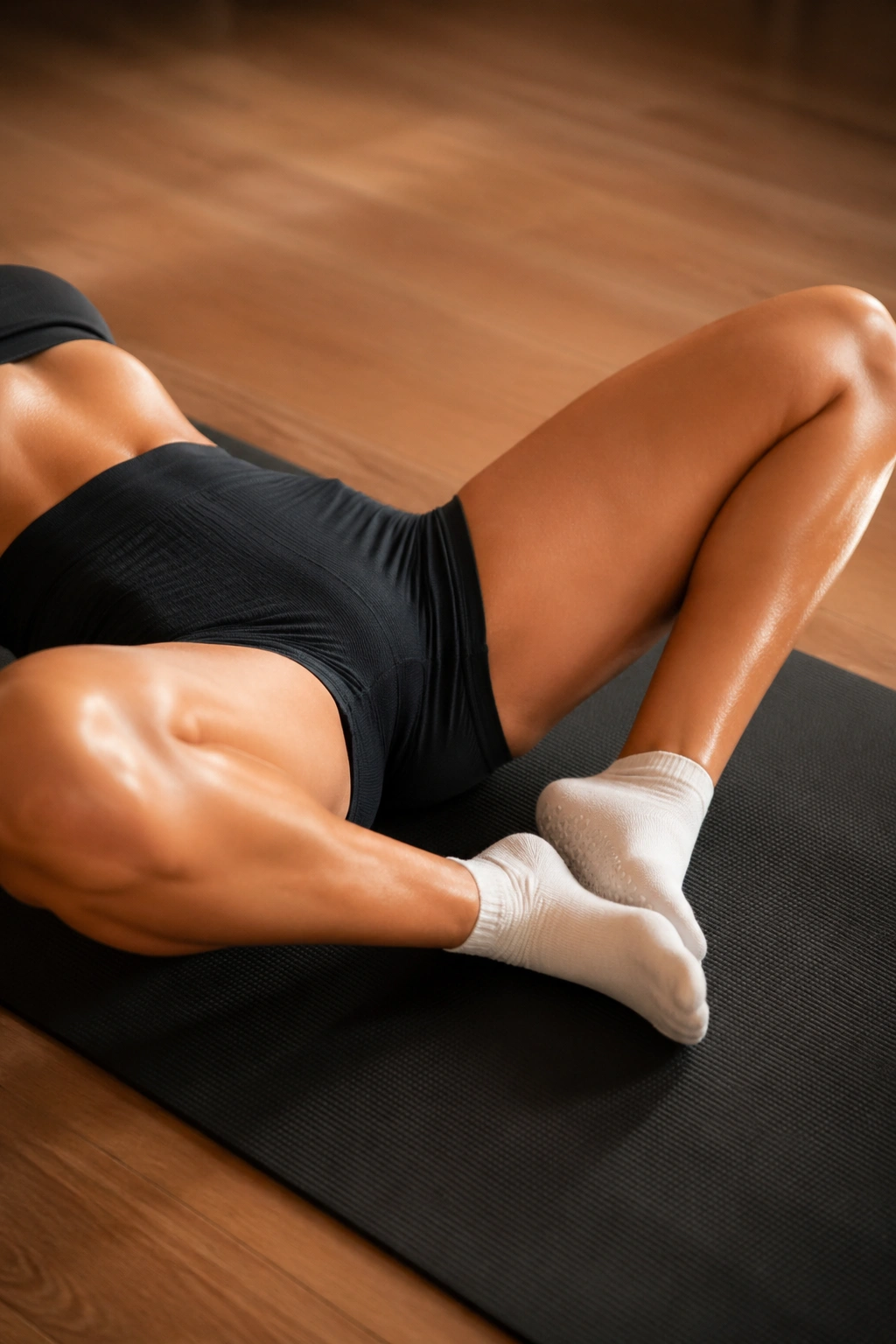
Frog pumps look almost too small to matter. That’s the trick. The knees open wide, the soles of the feet stay together, and the hips lift in a short range that keeps the glutes working while the low back stays out of the picture.
Because the range is short, you can usually do more reps here than in a standard bridge. That is useful in a heated class, where high-rep glute work can push your heart rate up without adding jumping or pounding. Try 20 to 30 pumps, then hold the top for 5 seconds if you want an extra sting.
Form Notes
- Keep the heels pressed together.
- Tuck the pelvis slightly before lifting.
- Stop if the lower back starts taking over.
- Move in a smooth rhythm, not a bounce.
Frog pumps are one of those moves people shrug at until the outer glutes and hamstrings start speaking up. Then the opinion changes quickly.
11. Swimming
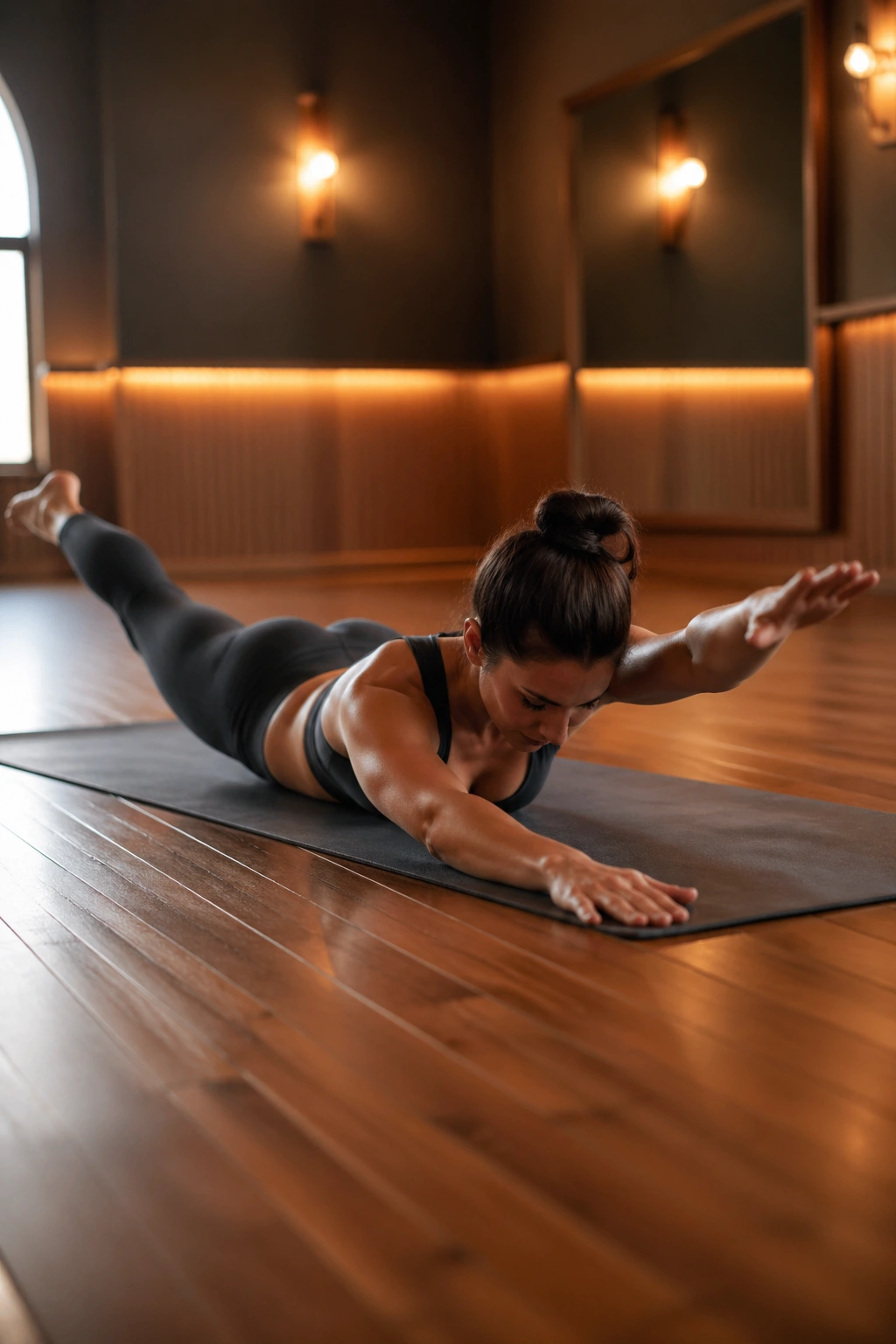
Face down, one leg lifting at a time, arms reaching long. Swimming is the kind of move that makes your back work hard without needing heavy equipment or dramatic movement, and it is one of the better choices when you want to build stamina in the posterior chain.
The neck matters here. Keep it long and neutral, eyes down, with the lift coming from the upper back and glutes instead of from a frantic kick. A small controlled flutter for 20 to 30 seconds is enough to wake everything up, and the heat will make the effort feel deeper faster than you expect.
What to Watch For
If your low back pinches, lift smaller. If your shoulders creep toward your ears, lower the arms and make the reach longer instead of higher.
Swimming earns its keep because it balances out all the front-body work in Pilates. After a few rounds, your spine feels more supported, not just tired.
12. Roll-Up to Reach
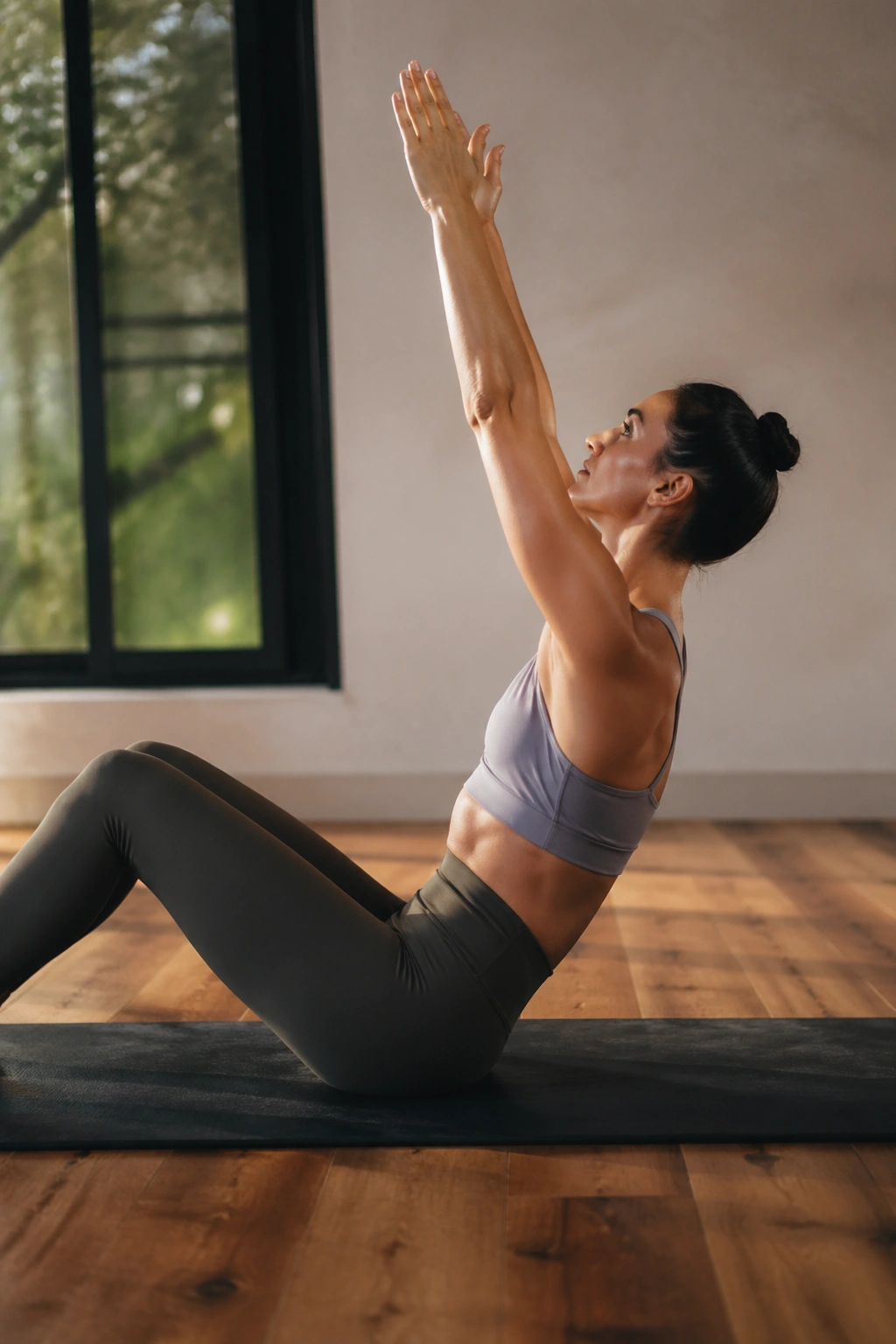
Roll-ups are the move people skip until their midsection gets tired of crunches. Then they remember how useful full spinal control can be. The move asks you to roll one vertebra at a time off the mat, then reach tall at the top instead of snapping up like a spring.
That slow articulation is not glamorous. It is good work, though. In a hot Pilates class, roll-ups give you a chance to keep the core active while the breath stays organized, and that is useful when the pace starts climbing elsewhere in the sequence.
I like this move as a reset between harder sets. One or two clean reps can bring your posture back online after planks, lunges, and bridge work. If your hamstrings tug, bend the knees slightly and shorten the range. Better to move well than to chase the full shape too early.
This is the kind of exercise that makes the rest of the class feel more controlled, which matters more than people think.
13. Curtsy Lunge with Pulse
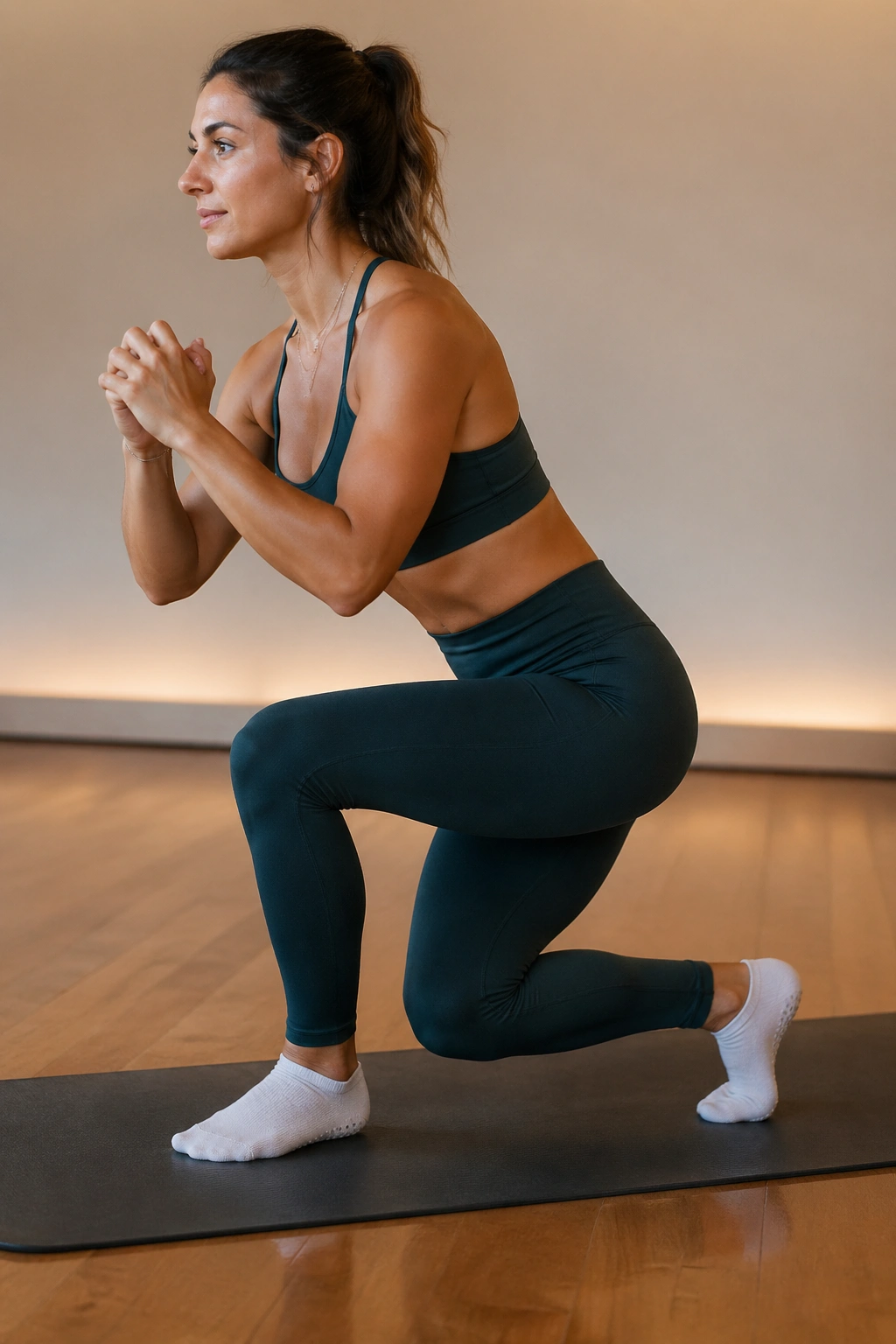
Curtsy lunges wake up the outer glute fast. The crossed-back angle shifts the work to muscles that do not always get enough attention in straight-forward squats and lunges, and the little pulse at the bottom makes the burn show up sooner.
The setup is simple. Step one leg back and across, lower into the lunge, then pulse 2 or 3 inches without letting the front knee collapse inward. That crossed pattern asks the hips to stabilize in a different plane, which is useful in hot Pilates because the room already makes balance a little trickier.
- Keep most of your weight in the front heel.
- Stay tall through the chest.
- Pulse only after you find a solid base.
- Cut the range if the knee feels cranky.
This is one of the better lower-body choices for a circuit because it gives you a lot of work without needing much space or gear. A mat, some room, and decent form. That’s enough.
14. Dead Bug Toe Taps
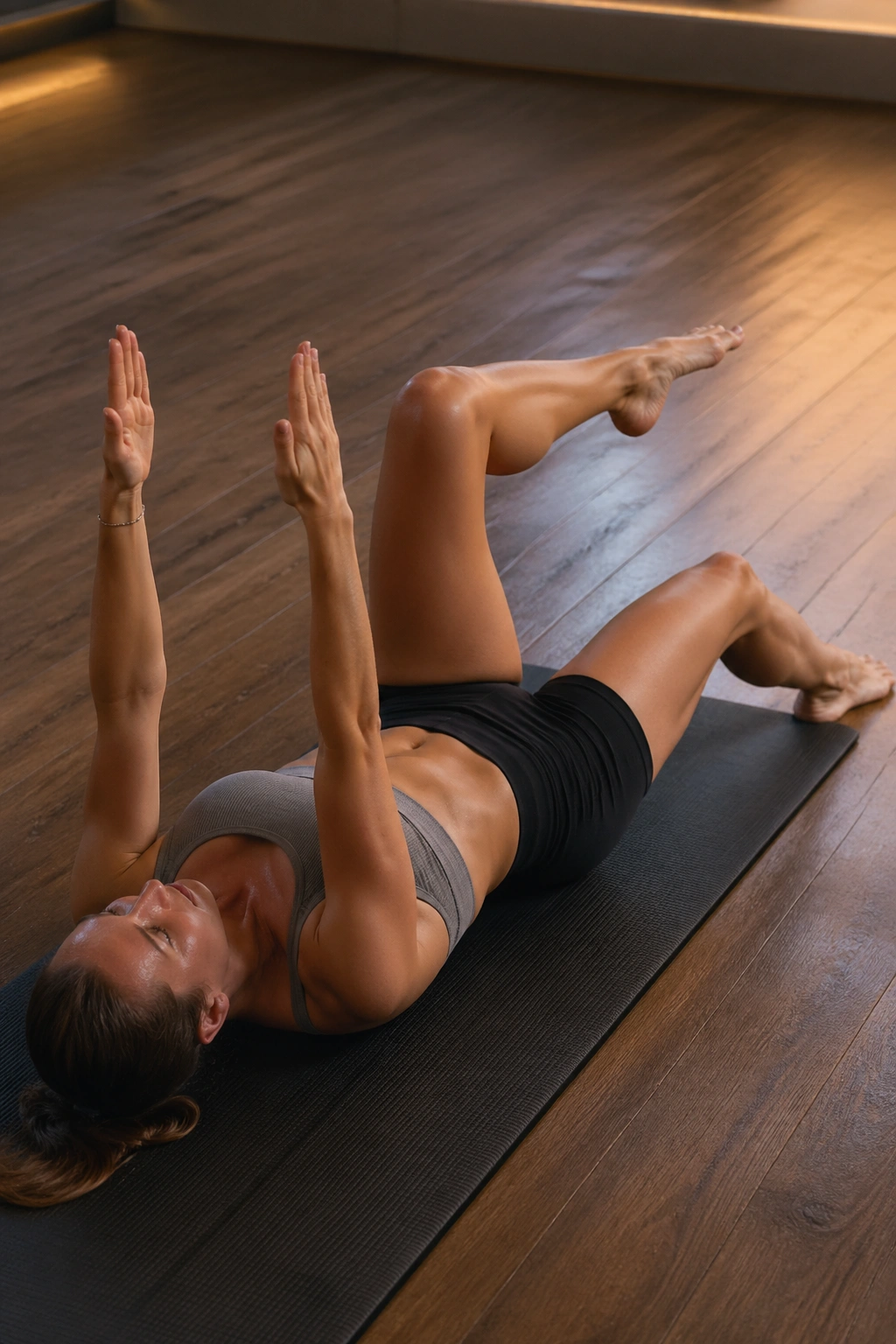
What happens when your lower back keeps arching during dead bugs? Usually the core has checked out and the hip flexors are doing whatever they want. Toe taps fix that fast because they make the spine stay honest while the legs move away from the body.
The move is small, and that is a strength. Lie on your back, bring the legs to tabletop, and lower one toe at a time to tap the floor while the ribs stay heavy. The slower you go, the harder it gets, especially when the room is warm and your trunk has to work a little more to stay steady.
How to Keep the Back Heavy
Press the low back gently into the mat before every rep. If that connection disappears, shorten the range. If the neck tightens, lower the head and keep the arms by your sides for a round.
Dead bug toe taps are not flashy, but they are one of the cleanest ways to build the kind of core control that makes the rest of hot Pilates feel smoother. That alone is worth a place in the lineup.
15. Plank Jacks with a Still Torso
Plank jacks are a better finisher than people give them credit for. If you keep the ribs locked down and the hips steady, the move becomes a fast little combination of core stability and cardio that suits the end of a hot Pilates class perfectly.
The simplest version is to hold a strong high plank and hop the feet out and in like a jumping jack. If impact bothers you, step one foot out at a time and keep the same rhythm. Either version gets the legs working while the trunk fights to stay quiet.
A few clean rounds are enough. Try 20 to 30 seconds, rest for 15, then repeat once or twice if your form is still sharp. If your shoulders start wobbling or the low back dips, stop there. That is the line.
Use this one as the last push when you want the class to end with a bit of speed, not a collapse. Strong plank, light feet, steady breath. That combination does more than a frantic sprint ever will.
