



Leg day often gets a bad reputation. Many people associate training the lower body with heavy, clanging iron plates in a crowded gym, or worse, the dread of feeling like you cannot walk the next morning. But you do not need a rack full of barbells or a dedicated weight room to build strength, shape your muscles, and increase your endurance. The floor of your living room is actually one of the most effective pieces of equipment you have. It offers stability, requires zero setup time, and forces you to focus on the one thing that truly matters: your mind-muscle connection.
When you strip away the cables and the machines, you are left with the raw mechanics of human movement. Squatting, lunging, hinging, and pushing—these are primal patterns. By mastering them at home, you develop a level of body control and stability that often eludes people who rely solely on machines to guide their limbs through a set range of motion. You are not just building muscle; you are teaching your nervous system how to fire correctly under load, even when that load is just your own body.
Consistency beats intensity every single time. It is better to have a solid twenty-minute session three times a week than a massive, grueling workout once a month that leaves you too sore to move for a week. As you work through these exercises, pay attention to the subtle shifts in your stance, the engagement of your core, and the way your muscles feel during the eccentric (lowering) portion of the movement. That is where the change happens. Forget the trends and the gimmicks; focus on these fundamental movements.
1. The Classic Bodyweight Squat
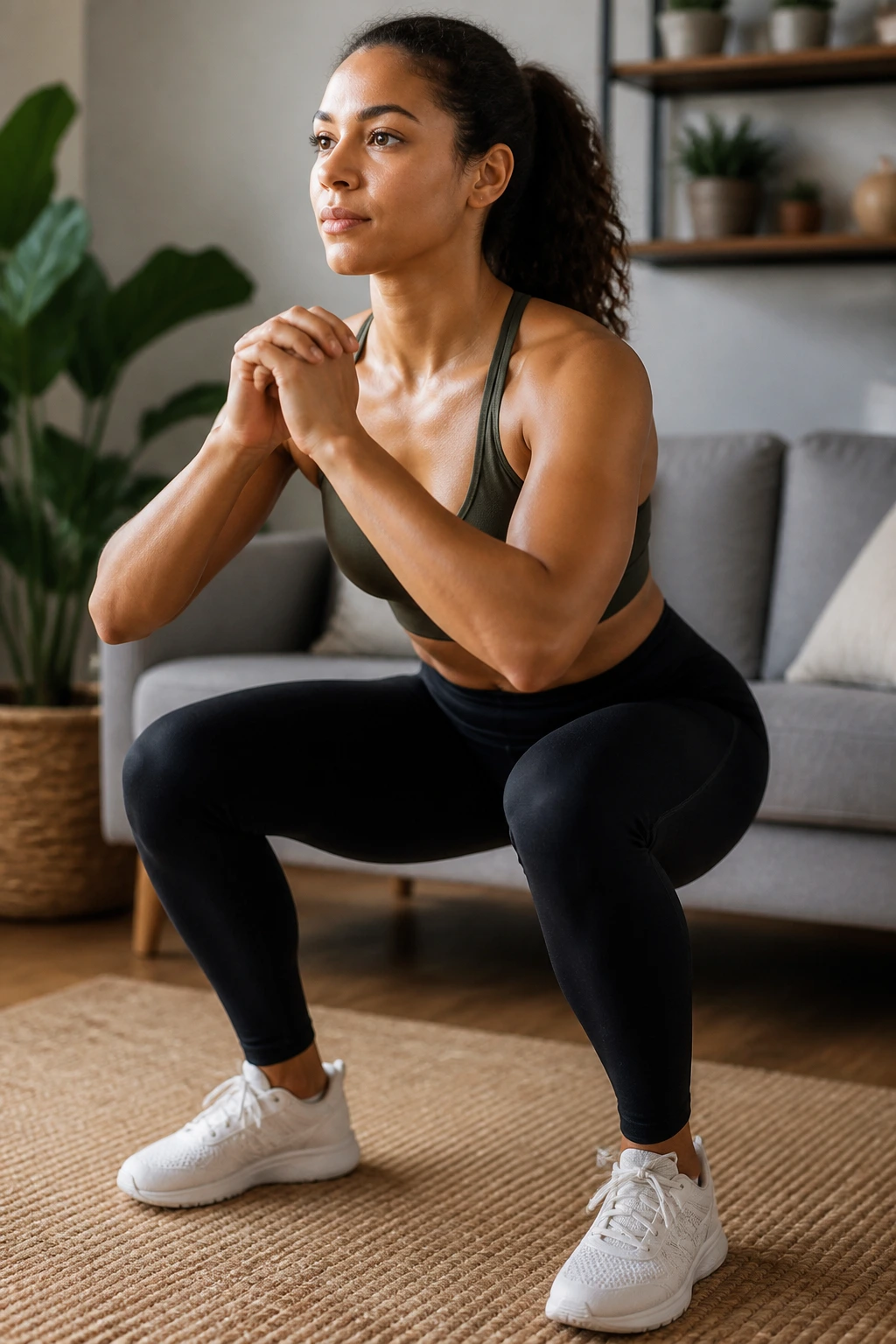
The squat is the king of lower body exercises for a reason. It recruits almost every muscle in your lower half, from your quadriceps down to your calves, while demanding serious core stability to keep your torso upright. If you cannot master a squat without weight, you have no business putting a bar on your back. This movement should be the baseline for your home training.
Why It’s Non-Negotiable
You want to target the quadriceps, the glutes, and the core simultaneously. The squat also teaches proper hip hinging and knee tracking, which are essential for preventing injury in your day-to-day life. When done correctly, it builds functional strength that carries over into everything from picking up groceries to hiking up a hill.
How to Execute Properly
- Stand with your feet slightly wider than shoulder-width apart, toes pointed slightly outward.
- Keep your chest up and your gaze forward—do not look at the floor.
- Lower your hips as if you are sitting back into an invisible chair, keeping your weight in your heels.
- Aim to get your hip crease below your knee if your mobility allows, or at least parallel to the floor.
- Drive through your heels to return to the standing position, squeezing your glutes at the top.
Pro tip: Imagine you are trying to spread the floor apart with your feet. This simple mental cue naturally turns on your glutes and helps keep your knees from caving inward.
2. Reverse Lunges
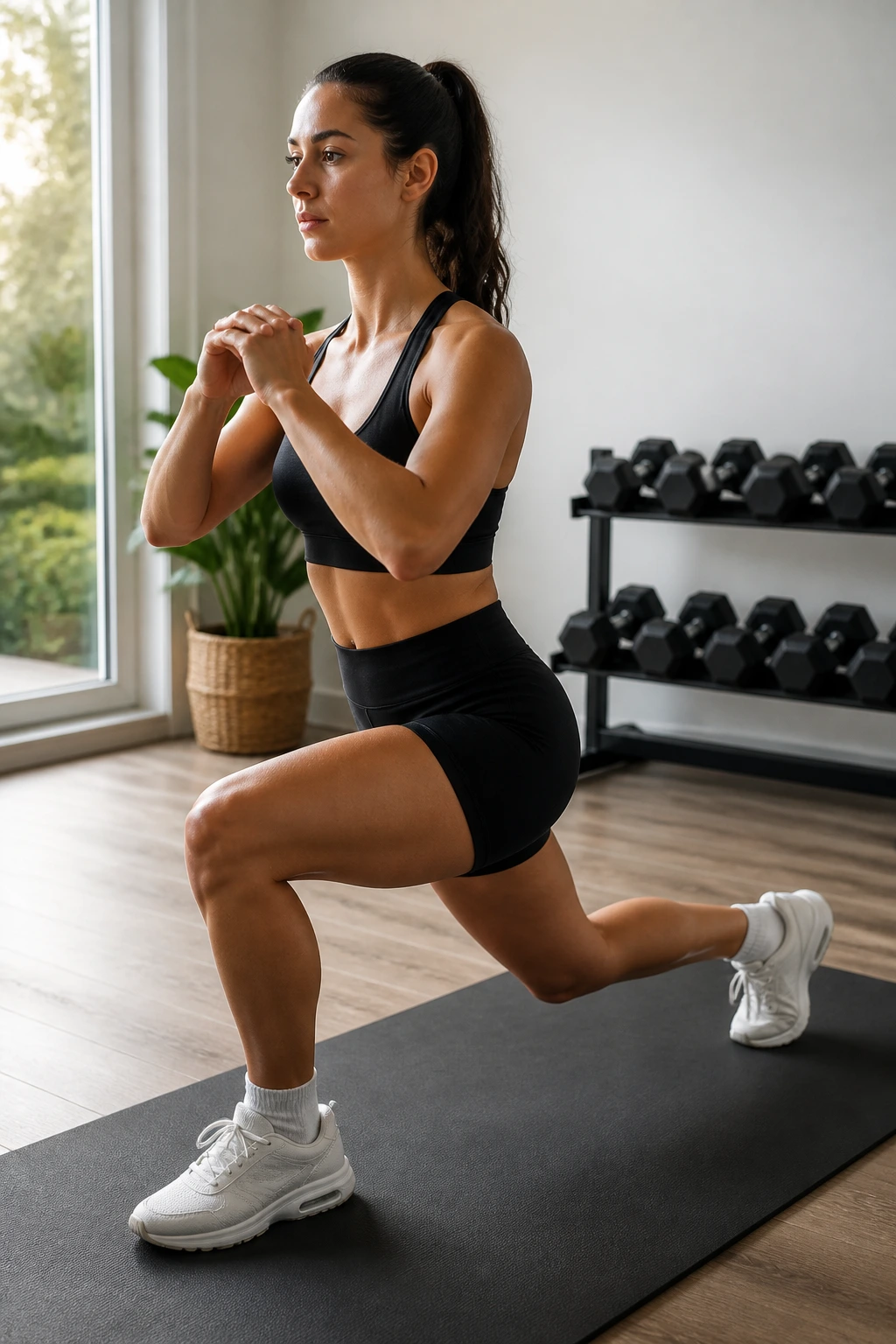
Forward lunges often put a significant amount of stress on the knee joint because the momentum of your body is moving forward as you decelerate. The reverse lunge, however, is much kinder to the knees. It encourages you to sit back into the glute of the front leg, making it a superior choice for building glute strength while minimizing joint discomfort.
This is an exercise that rewards stability over speed. When you step backward, your front leg becomes the anchor. You have to maintain balance throughout the entire range of motion, which recruits the smaller stabilizer muscles in your ankles and hips. It is surprisingly demanding on your core, too. You will find that as you get tired, your torso might want to wobble or tip forward. Resist that urge. Keep your spine neutral and your movements controlled.
3. Glute Bridges
If you spend a lot of time sitting, your glutes are likely “asleep.” They become inhibited and weak, leading the lower back to compensate for tasks that the glutes should be handling. The glute bridge is the single best way to wake them up. It is an isolation movement that takes your hamstrings and quads out of the equation so the glutes have to do the work.
The Mechanism of the Bridge
The movement focuses on hip extension. By driving through the heels and elevating the pelvis, you create a maximum contraction in the gluteal muscles. It is simple, effective, and requires no gear beyond the floor.
Troubleshooting Your Form
- Too much lower back: If you feel this in your lumbar spine, you are likely overextending. Focus on tucking your ribcage down and keeping your abs tight throughout the movement.
- Hamstring cramping: This usually happens when the glutes aren’t doing their job. Move your feet slightly closer to your butt to reduce the leverage of the hamstrings.
Pro tip: Pause for two full seconds at the top of the bridge and focus on contracting your glutes as hard as you can. That squeeze is the secret to building the muscle.
4. Bulgarian Split Squats
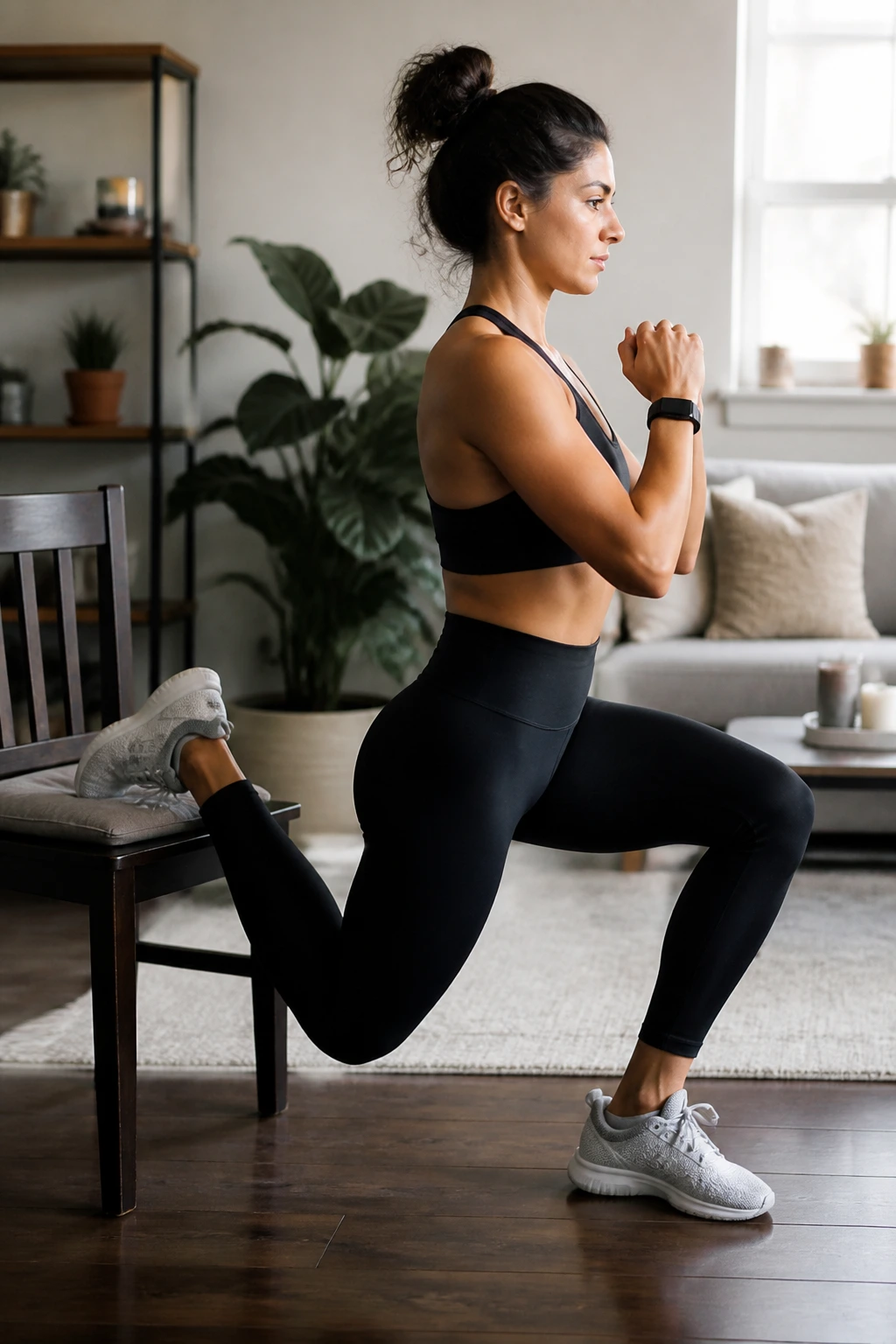
These are widely considered the most brutal exercise in the at-home arsenal, and for good reason. They are effectively a single-leg squat with your rear foot elevated, which shifts almost all of your body weight onto the front leg. This creates a massive training stimulus for the quads and glutes without needing heavy external weights.
You will need a chair, a sturdy couch, or a bed for this one. Elevating the rear foot increases the range of motion and challenges your balance. Because you are working one leg at a time, you can also address any muscle imbalances between your left and right sides. Do not be surprised if one leg is significantly shakier than the other—that is completely normal and exactly what this exercise is meant to expose and correct.
5. Curtsy Lunges
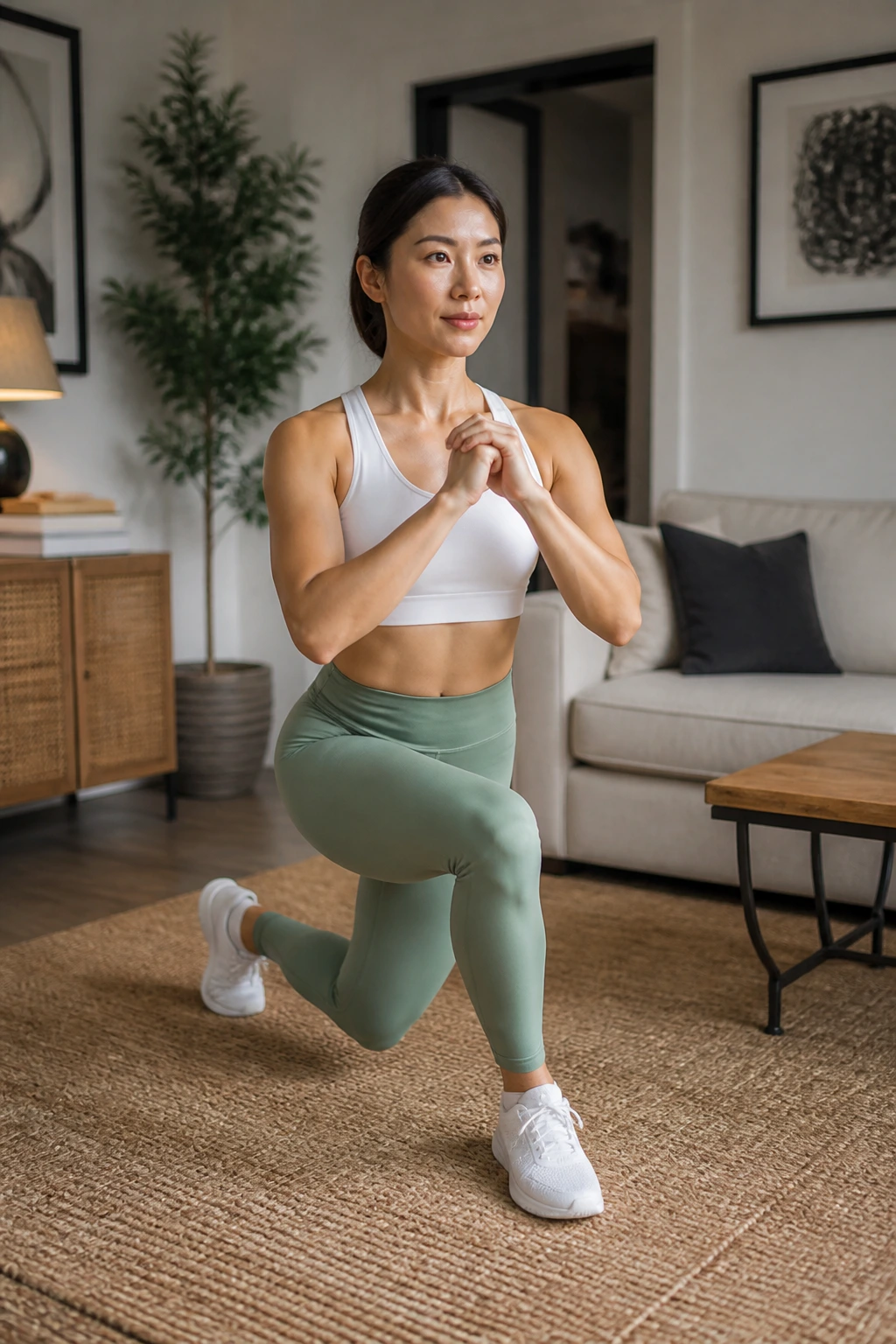
Unlike standard lunges, which move in the sagittal plane (straight forward and back), curtsy lunges move in the frontal plane. By stepping back and across behind your front leg, you shift the tension toward the outer glutes, specifically the gluteus medius. This is the muscle responsible for hip stability and the “shelf” look of the upper glute.
Why Your Hips Will Feel It
Most leg exercises ignore the gluteus medius. We spend all day walking forward and sitting, so our side-hip muscles get weak. The curtsy lunge forces these muscles to activate to stabilize the pelvis. You might feel a strange, burning sensation in the side of your hip—that is exactly what you want. It means those muscles are finally getting to work.
Execution Details
- Start standing with feet hip-width apart.
- Take a large step back and across with your right foot, placing it behind and to the left of your left heel.
- Bend both knees, lowering your hips until your front thigh is nearly parallel to the floor.
- Keep your torso upright. Do not lean forward.
- Push through the front left heel to return to the starting position.
6. Side-Lying Leg Lifts
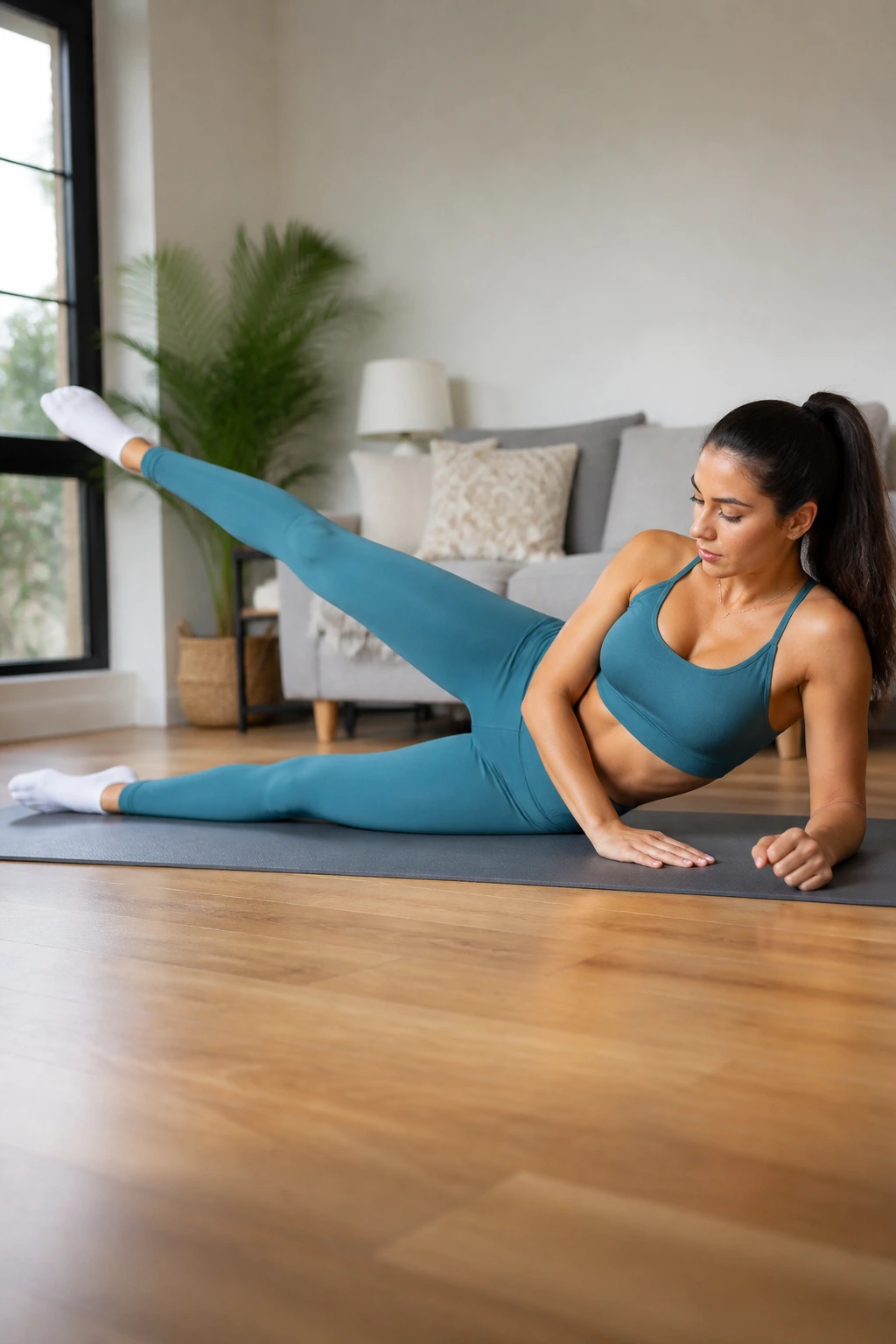
Sometimes, the best way to strengthen a muscle is to isolate it completely. Side-lying leg lifts are a classic physiotherapy move for a reason. They isolate the hip abductors—the muscles that move your leg away from your body—without any pressure on the spine or knee joints.
When you lie on your side, you remove gravity as a helper. You have to lift the weight of your own leg directly against gravity, which is a surprisingly tough task for the lateral glutes. Keep your leg straight, your toe pointed forward, and your hip stacked directly on top of the other. If you lean forward or backward, you cheat the movement and lose the activation. Move slowly. There is no benefit to swinging the leg up and down; keep it controlled.
7. Sumo Squats
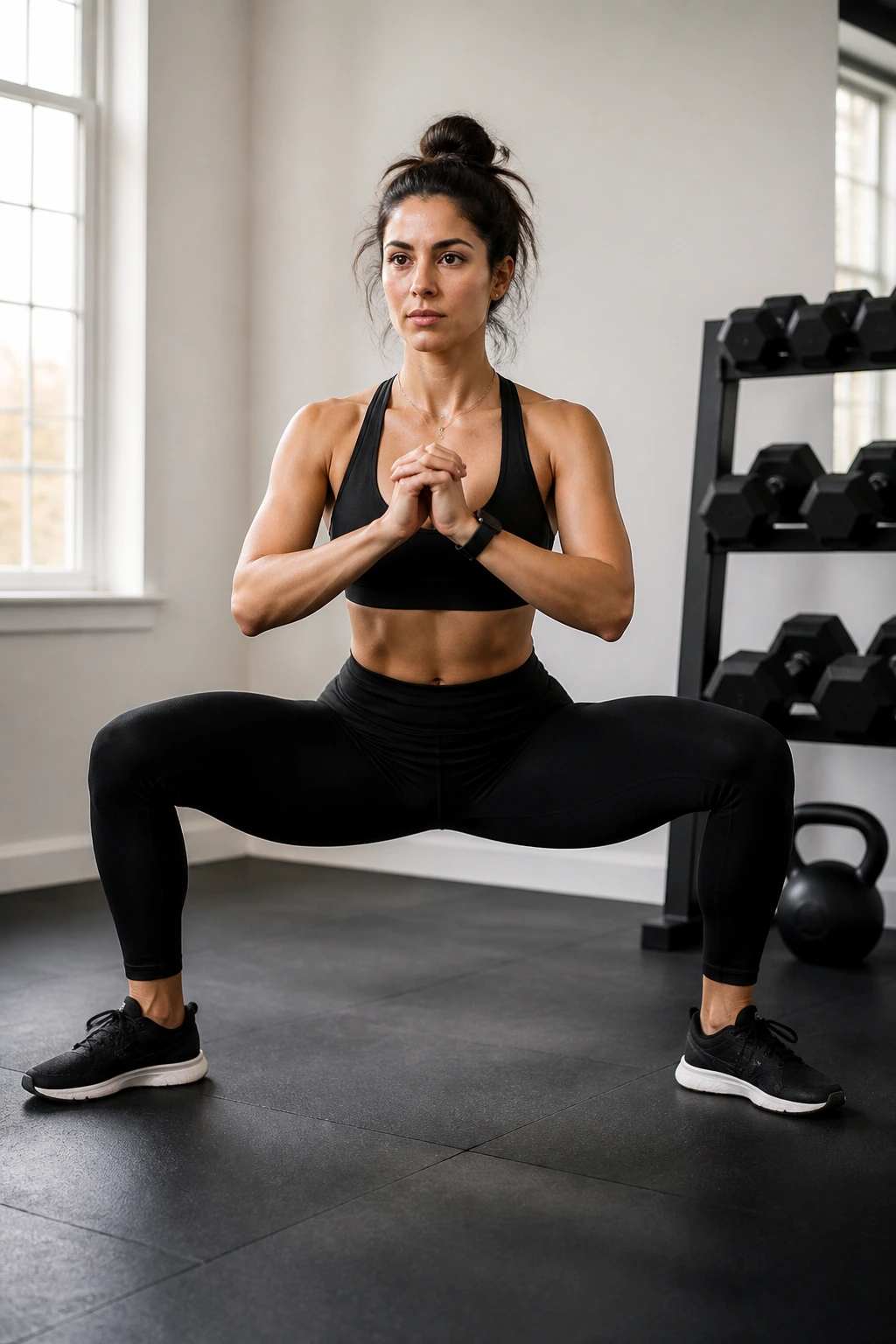
The wide stance of a sumo squat changes the leverage of the movement, shifting the focus from the quadriceps to the inner thighs (adductors) and the glutes. It is a fantastic variation for those who want to build a little more width in their lower body while still getting a solid glute workout.
How to Find Your Stance
- Step your feet out wider than shoulder-width.
- Point your toes outward at a 45-degree angle.
- As you squat, ensure your knees track directly over your toes. If your knees cave inward, your stance is too wide, or your glutes are not strong enough to keep them out.
Why This Variation Works
By opening up the hips, you allow for a deeper range of motion in the adductors. The added stretch at the bottom of the movement creates a greater stimulus for growth. Focus on keeping your torso upright. Because of the wide stance, you naturally want to lean forward, but keeping your shoulders back forces your legs to take the full load.
8. Fire Hydrants
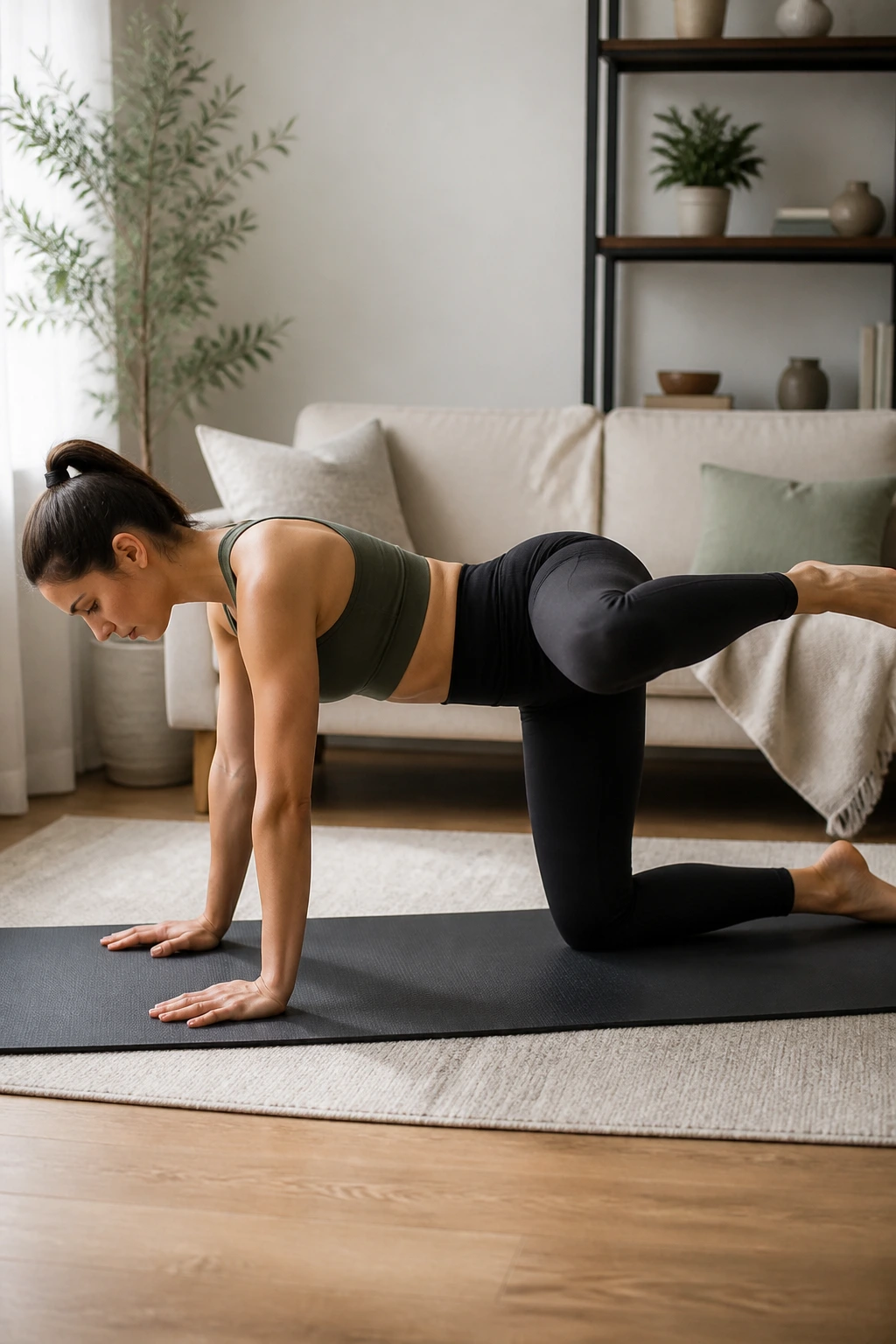
If you want to focus on the gluteus medius and minimus, the fire hydrant is your best friend. This is another floor-based movement that provides immediate feedback. Because you are on your hands and knees, you are removing the need for balance, allowing you to pour all your energy into the glute contraction.
Start in a quadruped position—hands under shoulders, knees under hips. Keep your back flat like a table. Lift one knee out to the side while keeping the knee bent at a 90-degree angle. Do not rotate your hips; your pelvis should stay square to the floor the entire time. If your back starts to arch or your torso twists to accommodate the lift, you are going too high. A smaller range of motion with perfect control is infinitely better than a big movement with bad form.
9. Step-Ups
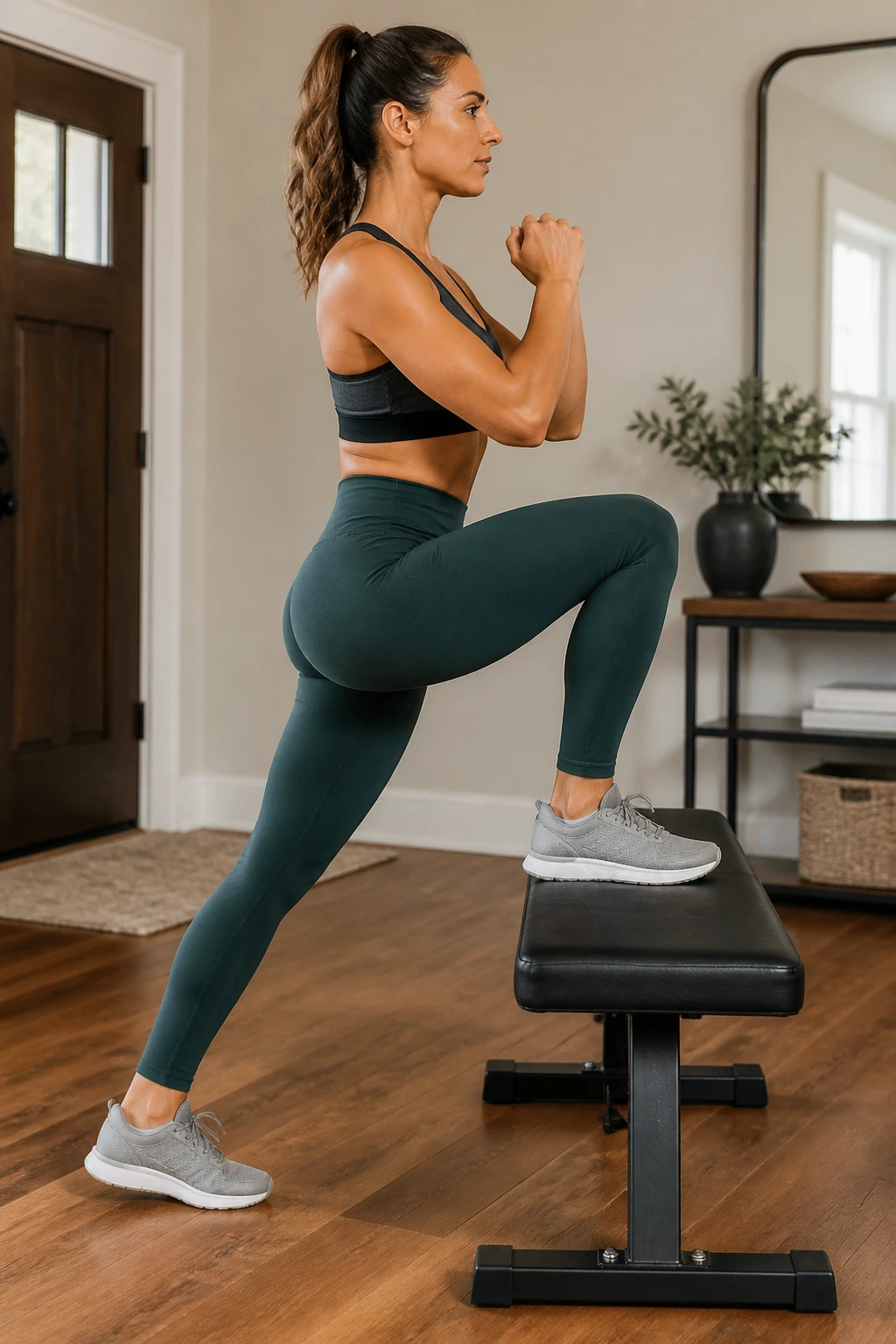
You need a sturdy surface for this—a chair, a sturdy ottoman, or a heavy coffee table. Step-ups are a functional powerhouse. They mimic the act of climbing stairs, a pattern you perform daily. By adding a controlled tempo, you turn a mundane movement into a strength-building exercise for the glutes and quads.
The Golden Rule of Step-Ups
Never use your back leg to push off the ground. The back foot is just a stabilizer. All of the force must come from the leg on the step. Imagine you are trying to push that step through the floor. Once you reach the top, stand tall, squeeze the glute of the working leg, and pause for a second before slowly lowering yourself back down. Do not drop down quickly; the lowering phase is just as important for muscle growth as the lifting phase.
10. Donkey Kicks
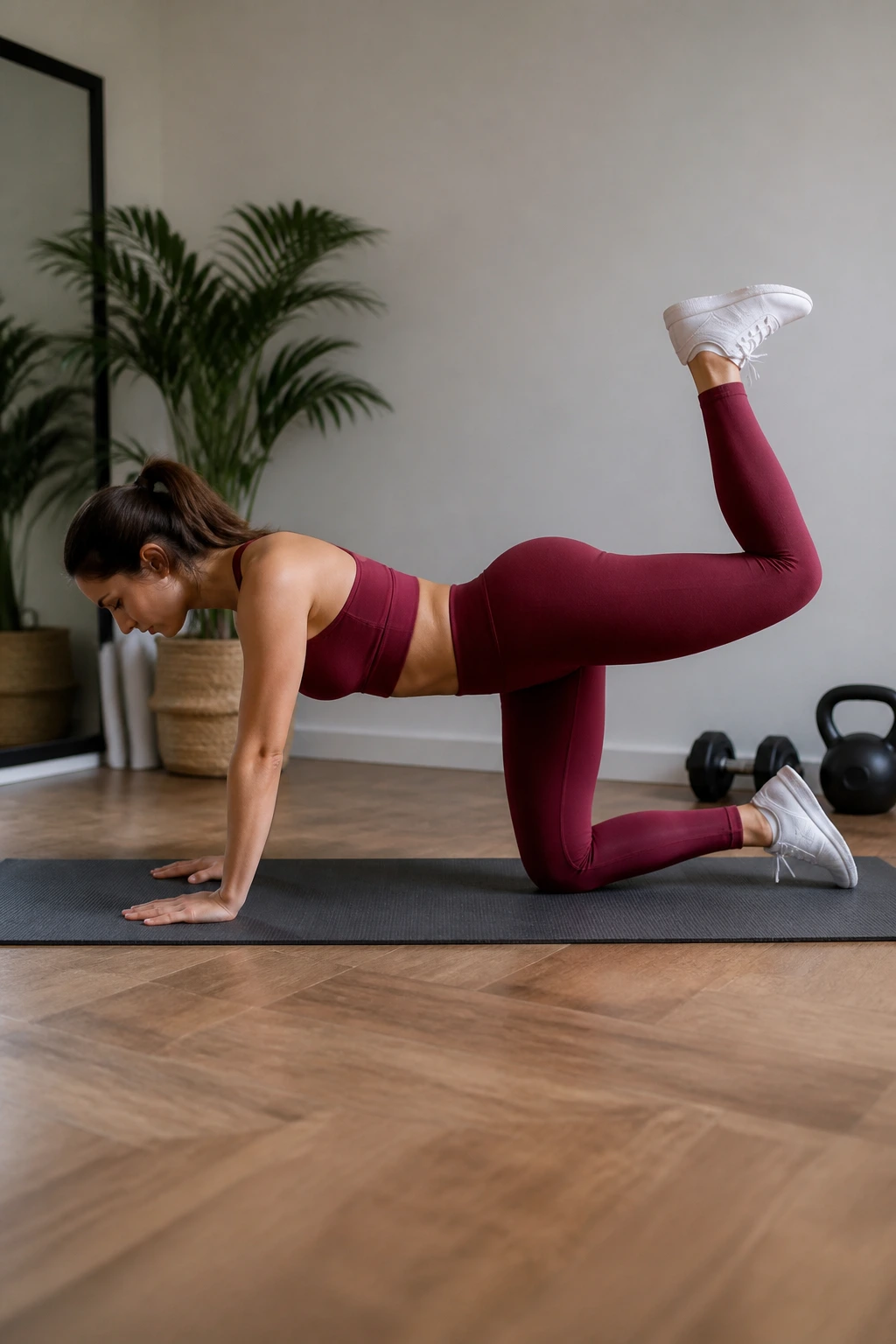
Donkey kicks are arguably the most effective glute isolation exercise you can do without a cable machine. By pushing your heel toward the ceiling, you bypass the hamstrings and force the glutes to do the heavy lifting. This movement is excellent for high-volume training because it does not fatigue your lungs or your core, letting you focus entirely on the glute squeeze.
Critical Form Notes
- Keep your back neutral. Do not let your lower back sway as you kick.
- Keep your knee bent at 90 degrees throughout.
- Drive your heel toward the ceiling, not your foot.
- Squeeze your glute at the very top of the movement.
You can perform these for high repetitions—aim for 20 to 30 per side. You will start to feel a deep burn in the upper glute area. That is the fatigue you are chasing.
11. Wall Sits
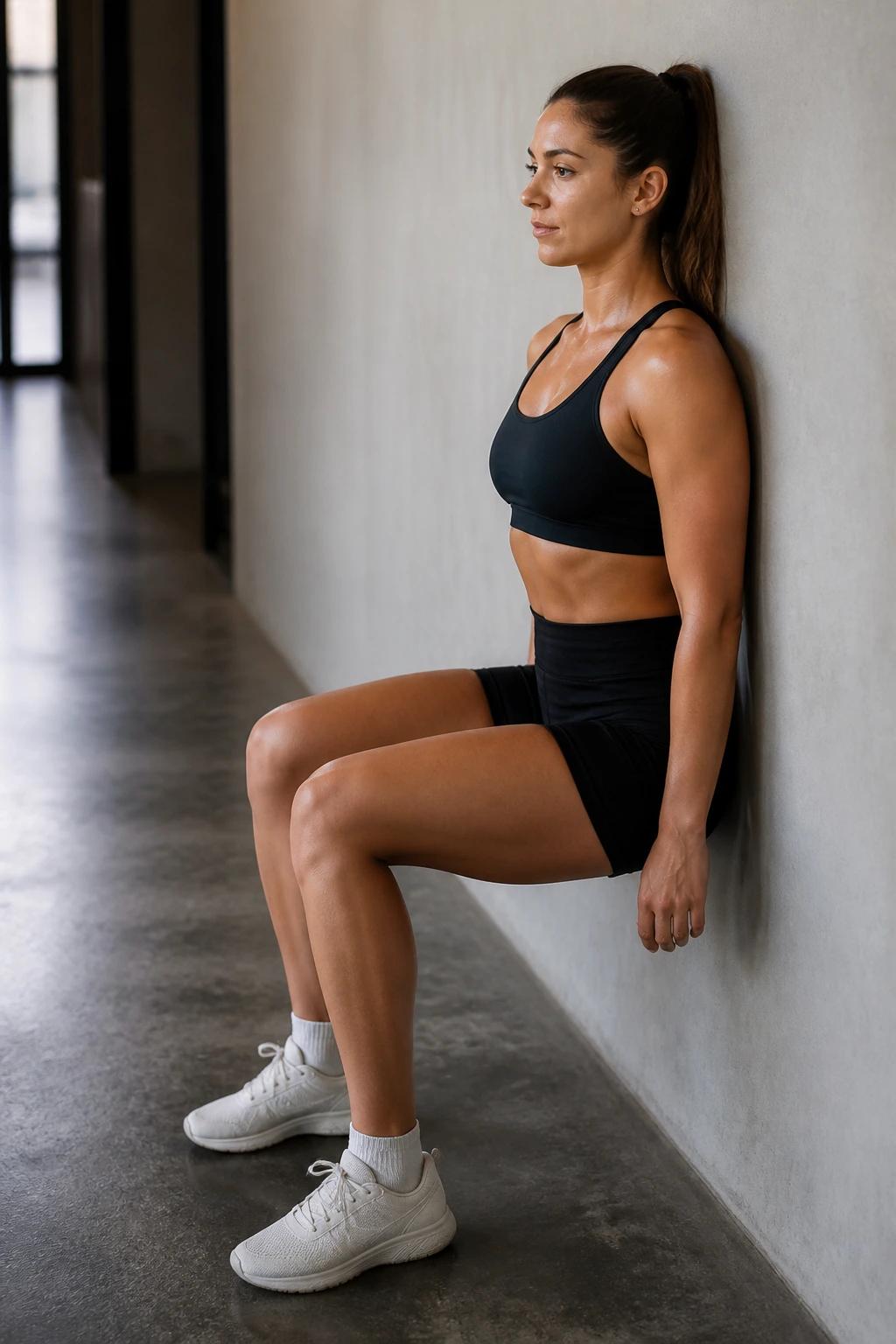
Wall sits are deceptive. They look easy because you are just standing against a wall. After thirty seconds, you realize that your quadriceps are screaming for mercy. This is an isometric exercise, meaning your muscles are working to maintain tension without changing length. It is one of the best ways to build muscular endurance in the quads.
How to Maximize the Burn
- Lean your back flat against the wall.
- Slide down until your thighs are parallel to the floor, or at least at a 90-degree angle at the knees.
- Keep your weight in your heels.
- Avoid pressing your hands against your knees; keep your arms at your sides or crossed over your chest to keep the focus entirely on your legs.
Hold for as long as you can maintain perfect form. If your form breaks—meaning your knees cave in or your back leaves the wall—stop. Rest for thirty seconds and try again.
12. Pistol Squats
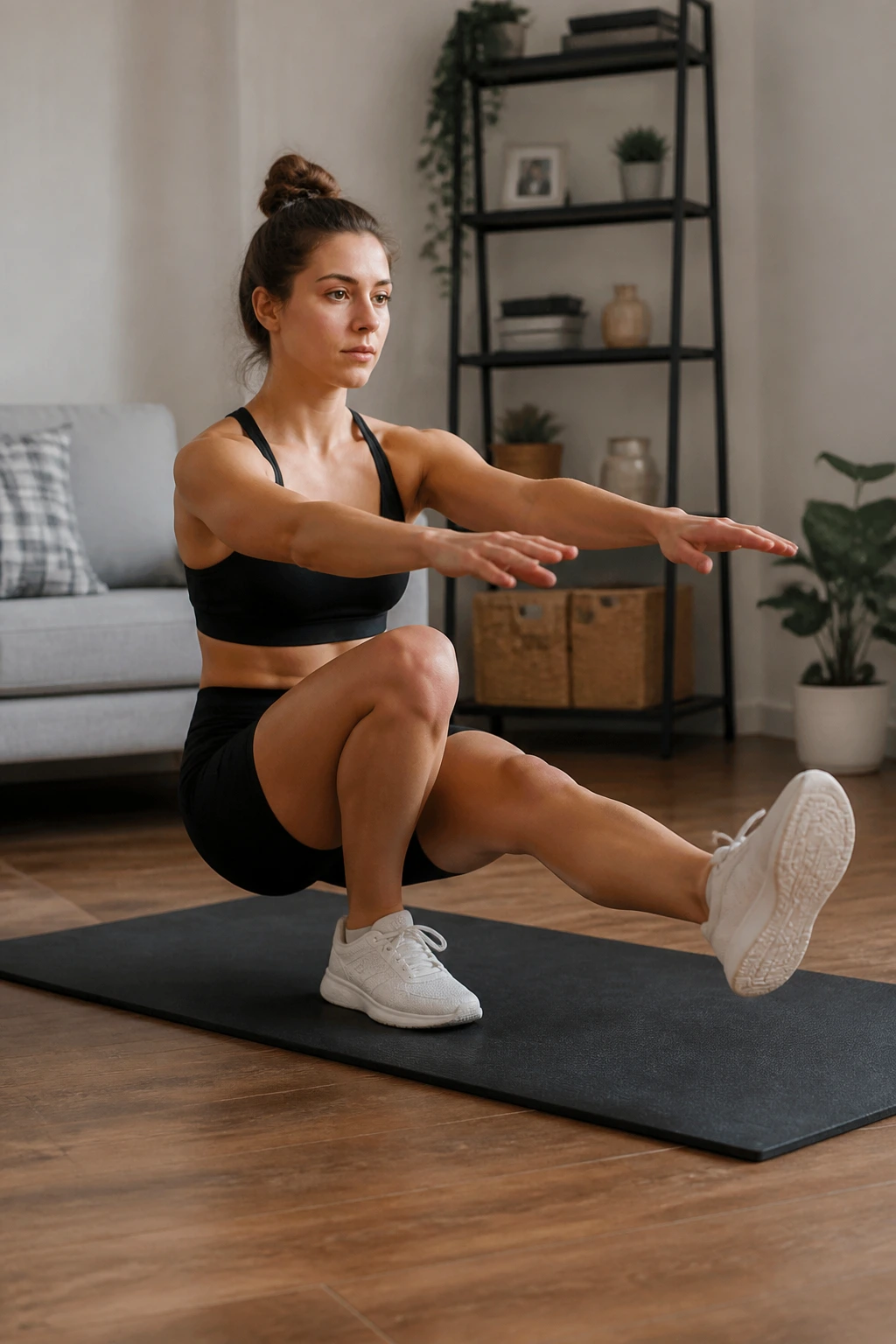
This is the ultimate test of lower body strength, balance, and mobility. A pistol squat is essentially a one-legged squat where your other leg is extended straight out in front of you. It requires a tremendous amount of ankle mobility and core strength. Most people cannot do a full pistol squat right away, and that is okay.
How to Scale Down
If you cannot do a full pistol, start by doing a “box pistol.” Sit down on a chair with one leg extended, stand up using only that leg, and sit back down. As you get stronger, find a lower surface to sit on. Eventually, you will be able to do it without the chair. This move forces you to be perfectly balanced, making it a masterclass in stability training.
13. Jump Squats
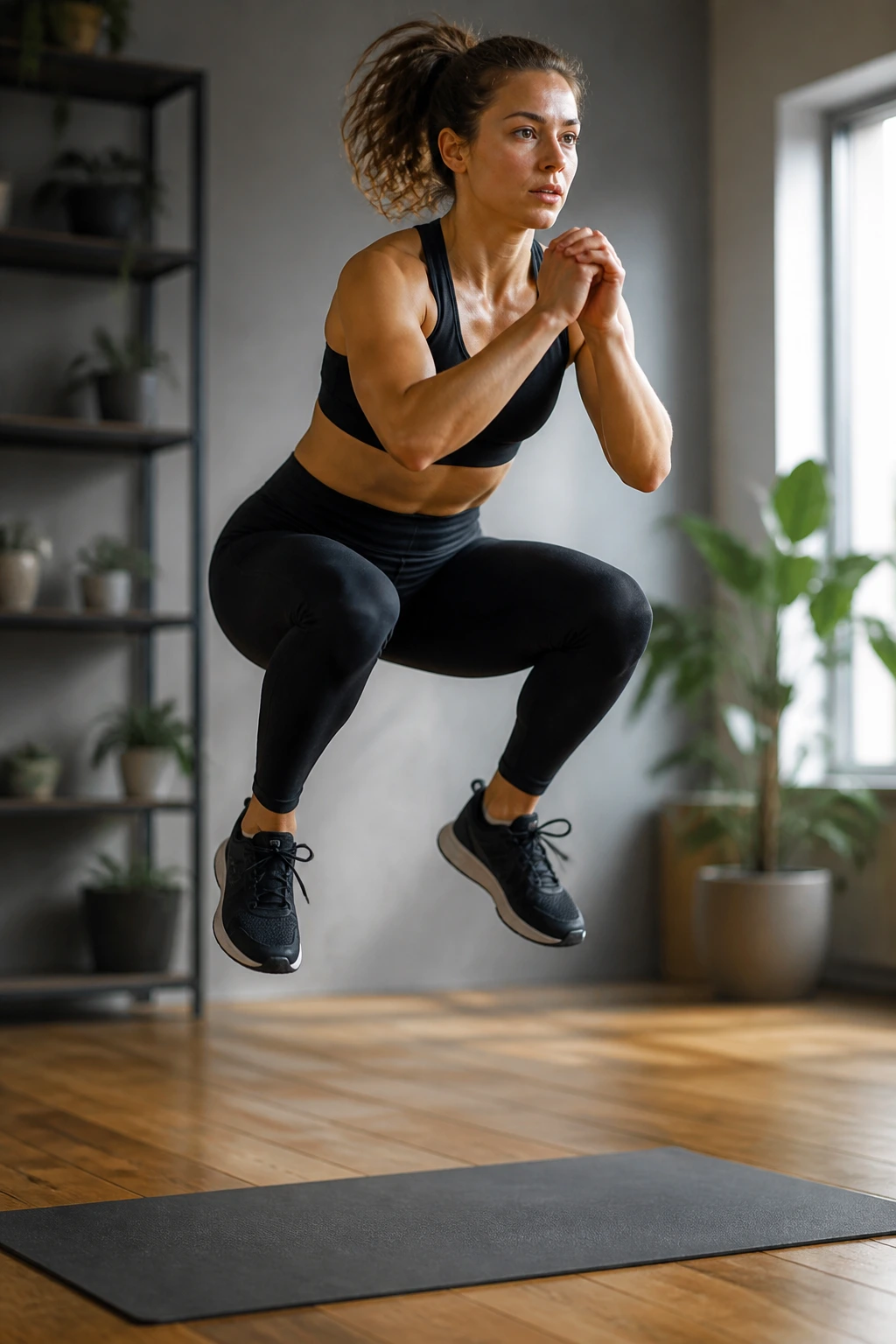
Plyometrics are essential for power, but they also skyrocket your heart rate, turning a leg workout into a calorie-burning session. Jump squats train the fast-twitch muscle fibers in your legs, which are responsible for explosive movement.
The focus here is not just on jumping high; it is on the landing. When you land, you must absorb the impact with your muscles, not your joints. Land softly on the balls of your feet, immediately transitioning into the next squat. It should be a fluid motion—down, explode, land, down. If you feel clunky or heavy upon landing, decrease the intensity of the jump. Your joints will thank you for the controlled movement.
14. Cossack Squats
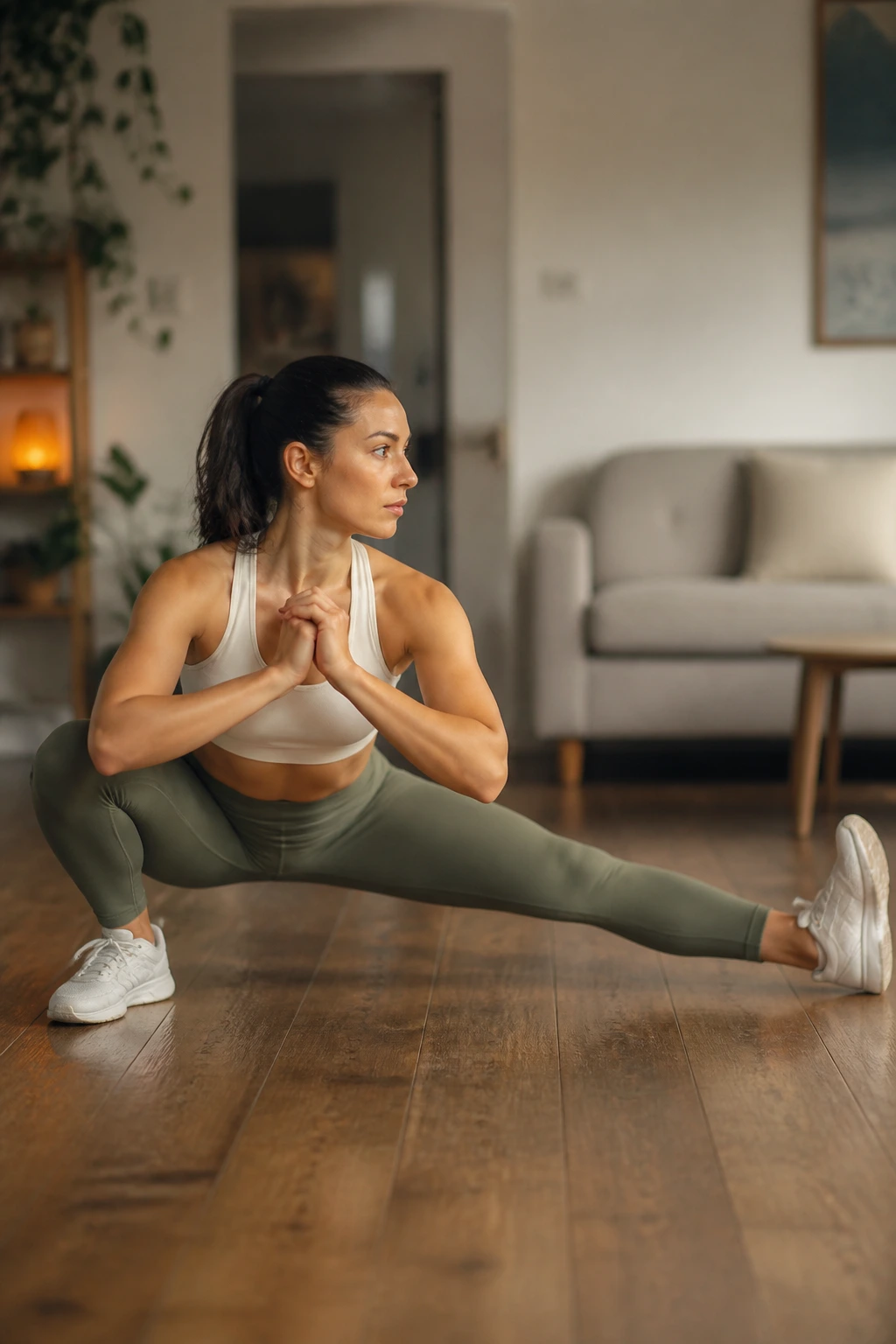
Cossack squats are a lateral lunge taken to the extreme. You stay low to the ground and shift your weight from one side to the other, keeping one leg extended straight and the other bent. This is a phenomenal exercise for hip mobility and adductor flexibility.
Why They Matter
We live in a world where we mostly move forward and backward. The Cossack squat forces you to move side-to-side, which strengthens the hips and knees in the frontal plane. This is often where injuries happen—when we move sideways unexpectedly. By training in this plane, you are “bulletproofing” your hips and knees against potential strains. Keep your chest up and try to keep your extended leg’s heel on the ground.
15. Single-Leg Deadlifts
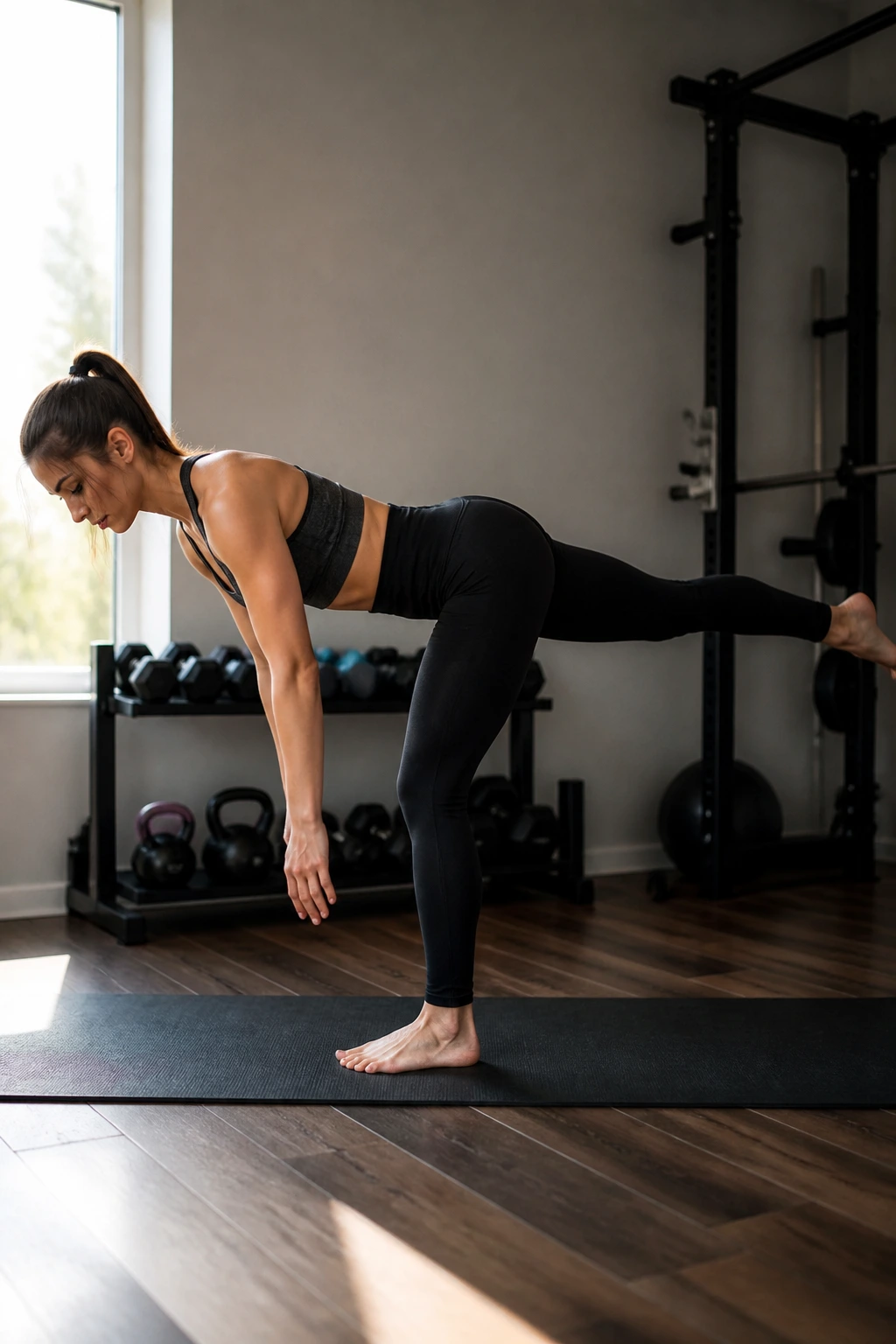
This is a hinge movement, not a squat. It focuses on the posterior chain: the glutes and the hamstrings. Standing on one leg and hinging forward requires significant balance and core engagement. It is arguably one of the best exercises for real-world functionality because it mimics the pattern of picking something up off the floor.
Finding Your Balance
You do not need weight for this to be effective. The weight of your own arms and your extended leg is enough to challenge your stability. As you hinge forward, keep your back straight and your hips square. Your non-working leg should extend straight back behind you, acting as a counterweight. You will feel a deep stretch in the hamstring of your standing leg. That stretch is the lengthening phase of the muscle, which is where a lot of the strength gains occur.
16. Glute Bridge Marches
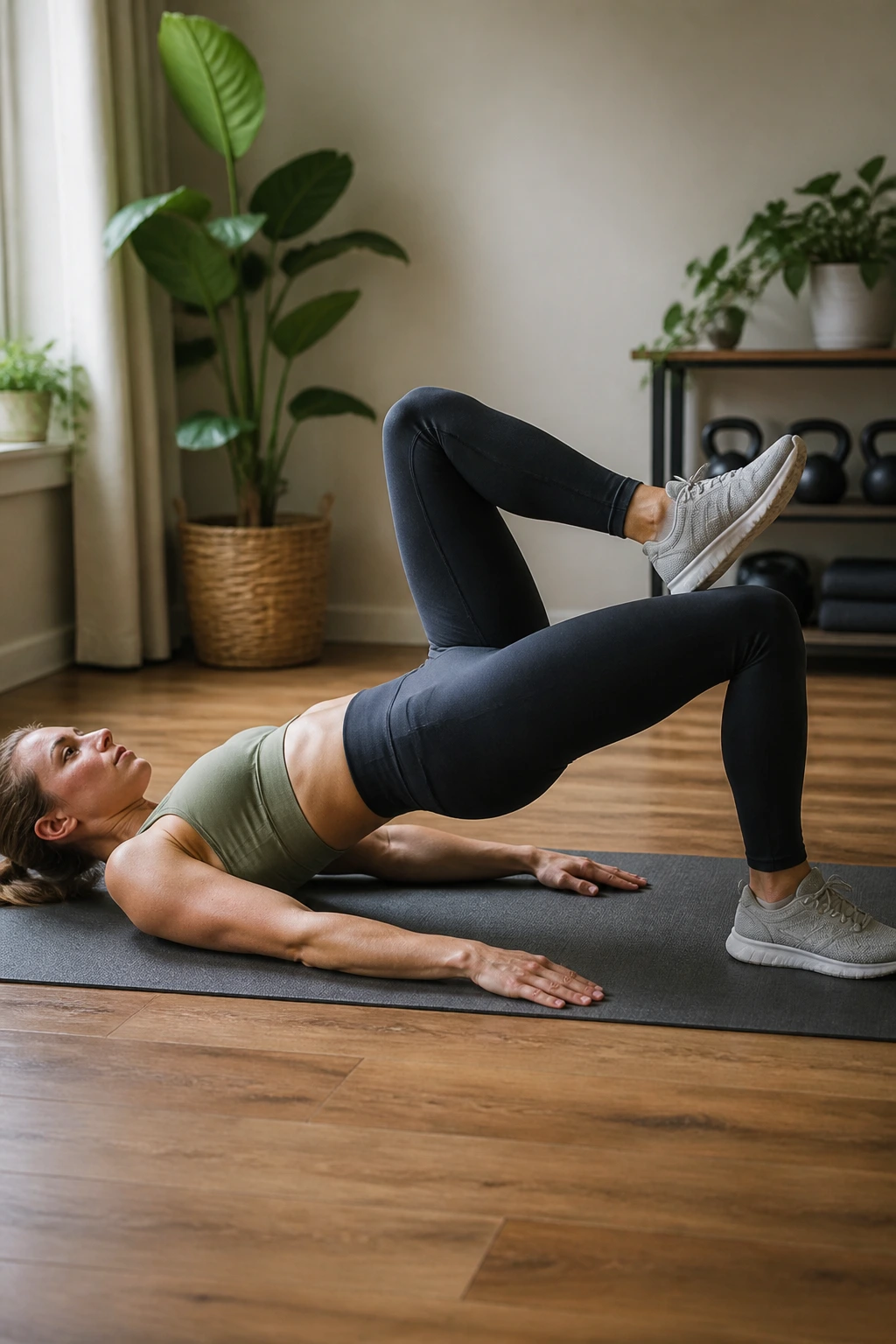
Take the standard glute bridge and make it harder. Once you are up in the bridge position, lift one foot slightly off the floor, bringing your knee toward your chest. Place it back down and lift the other. You are effectively “marching” while holding a bridge.
This movement is a hidden gem for core stability. As you lift one foot, your hips will desperately want to rotate or drop. Your job is to keep your pelvis rock-steady. The glute on the grounded leg has to work twice as hard to maintain that bridge while you shift your center of gravity. It is a fantastic way to bridge the gap between simple glute work and more complex, athletic movements.
17. Frog Pumps
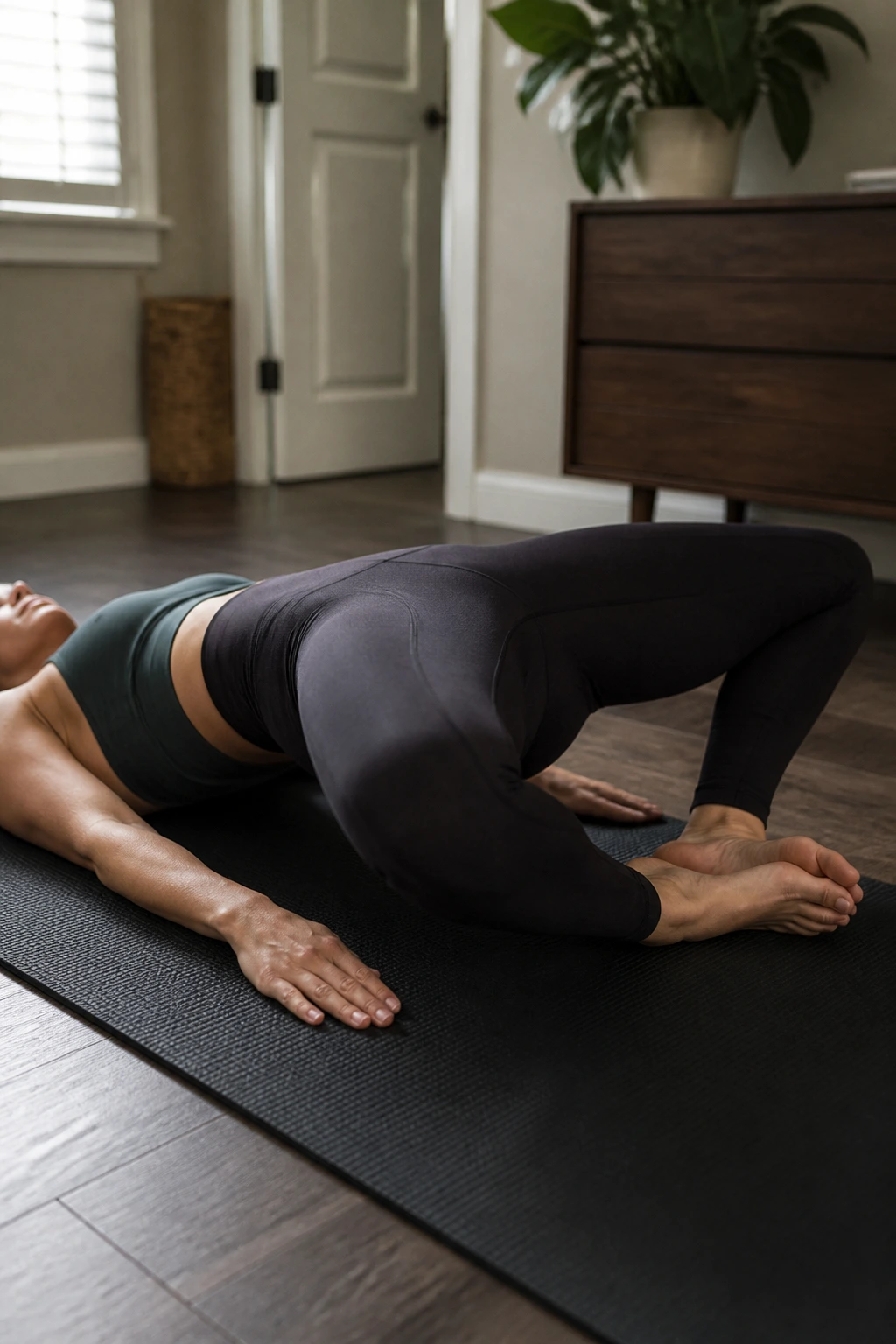
Frog pumps are a specific variation of the glute bridge that forces maximum glute activation. By placing your feet together and knees apart—like a frog—you change the leverage on the hip joint, making it almost impossible to use your hamstrings to help the glutes.
Execution Tips
- Lie on your back.
- Place the soles of your feet together, knees splayed outward.
- Drive your heels together and lift your hips.
- You will feel a massive contraction in the glutes immediately.
- Because your range of motion is naturally limited by your hips, focus on the quality of the squeeze at the top. Do not worry about getting your hips as high as a traditional bridge; just focus on that intense glute engagement.
18. Calf Raises
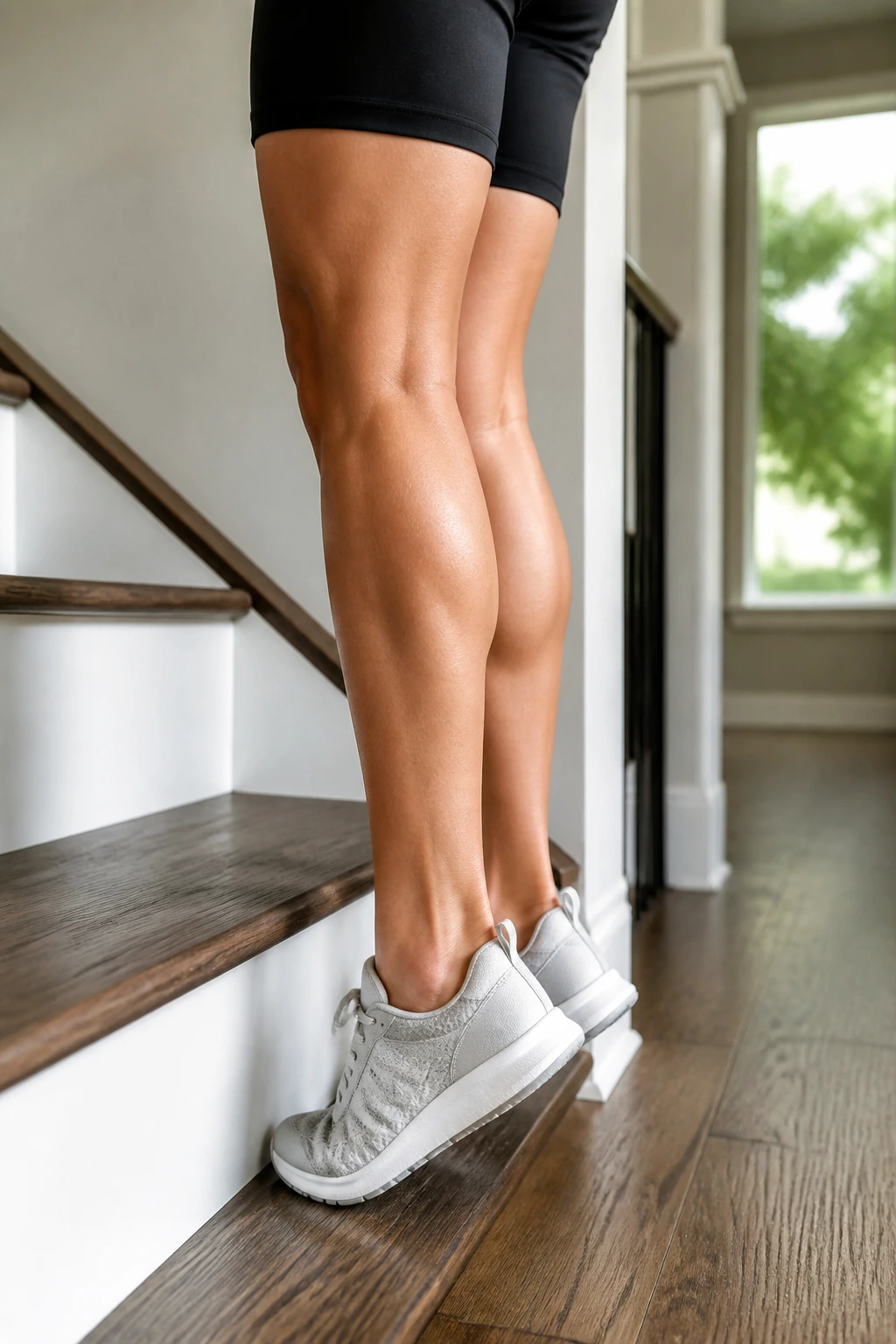
We often neglect the lower leg because it feels like a small muscle group, but the calves are crucial for ankle stability. Whether you are walking, running, or just standing, your calves are doing a ton of work. You can do these anywhere—on the edge of a stair or just standing flat on the floor.
The Secret to Growth
Most people rush calf raises, bouncing at the bottom and using momentum. That is a waste of time. To build the calves, you need time under tension. Perform the movement slowly: three seconds up, a one-second pause at the peak, and three seconds down. Get a full stretch at the bottom and a full contraction at the top. If you have a staircase, do these on the bottom step to allow your heel to dip below your toes for a greater stretch.
19. Lateral Lunges
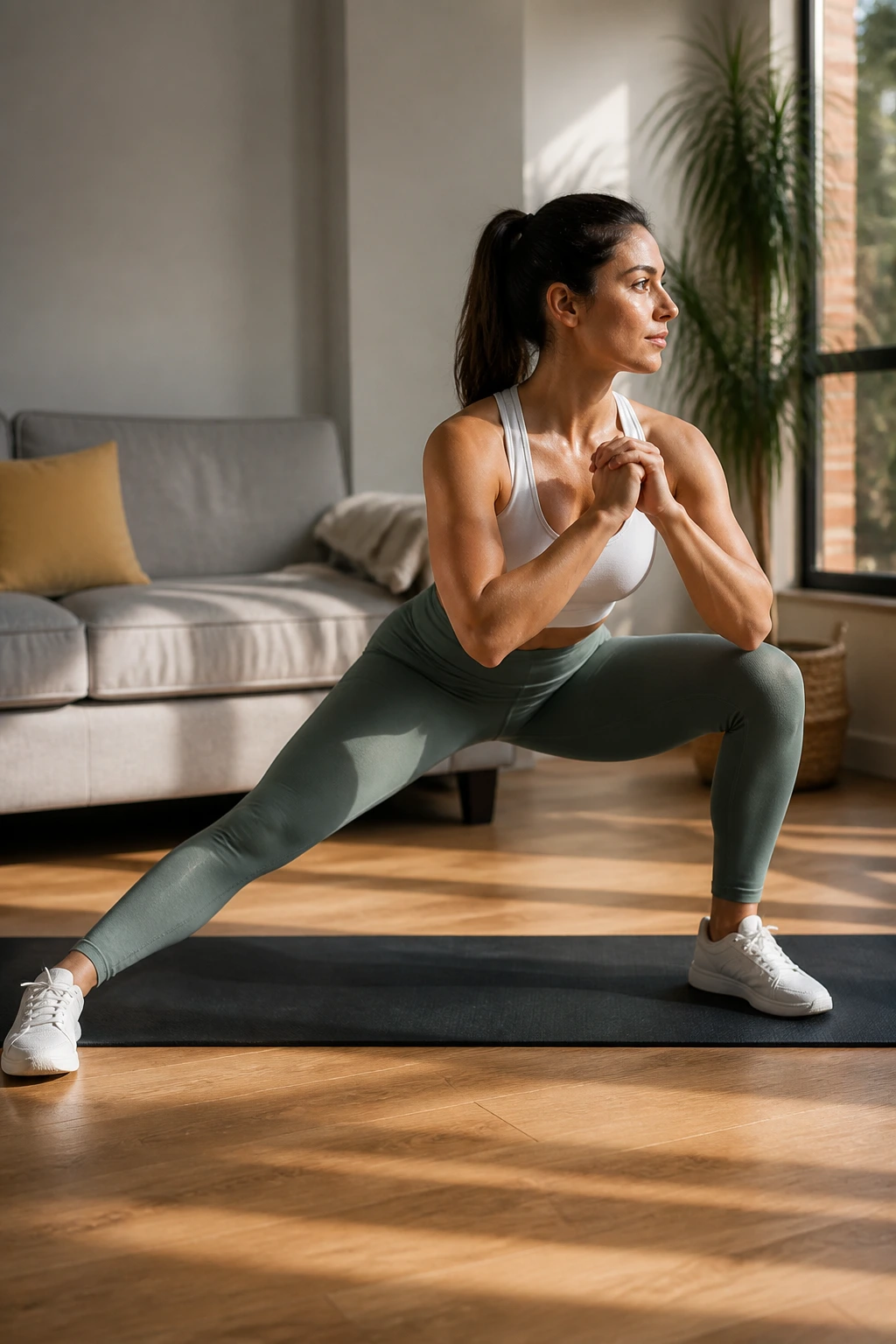
Lateral lunges are the antidote to the quad-dominant world we live in. By stepping to the side, you engage the gluteus medius and the adductors significantly more than you would in a forward lunge.
How to Lunge Correctly
- Step wide to the side.
- Keep your toes pointing forward, not out.
- Push your hips back as you bend your knee.
- Your straight leg should remain straight, foot flat on the floor.
- Push off the bent leg to return to center. This movement is excellent for hip health. It keeps the joint capsule mobile and ensures that the muscles around the hip remain balanced, which is vital for long-term knee health.
20. Glute Bridge Abductions
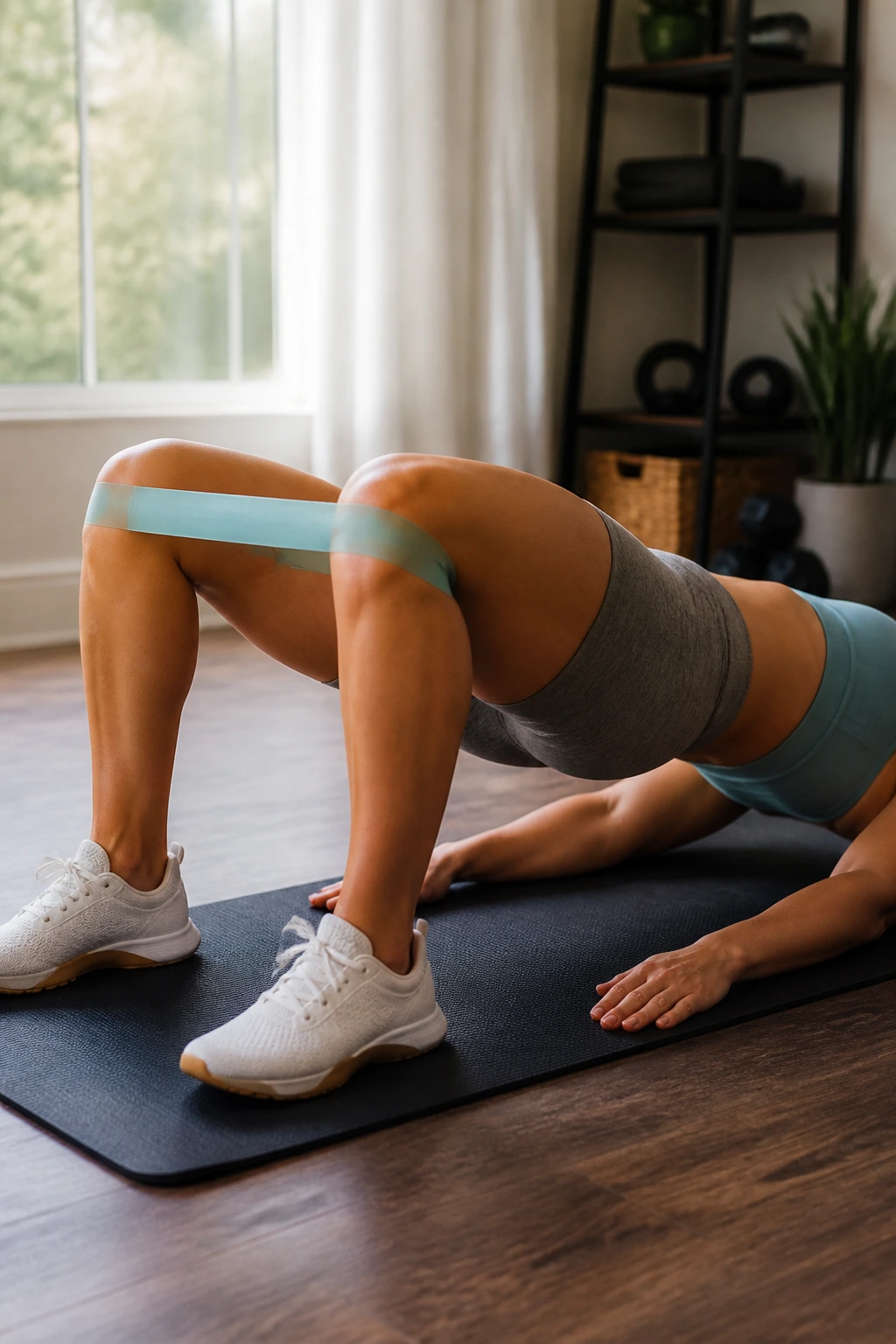
This is a two-in-one move. You start in a glute bridge, and while you hold that bridge position, you pulse your knees outward. This engages the glutes twice: once for the extension (the bridge) and once for the abduction (the knees moving out).
It is a high-burn exercise. You will feel this in the sides of your glutes very quickly. Because you are constantly under tension, it is an efficient way to fatigue the glutes without needing any equipment. Keep your hips at the same height throughout the entire set. If your hips start to sink as you pulse your knees, pull them back up and tighten your core.
21. Plie Squats
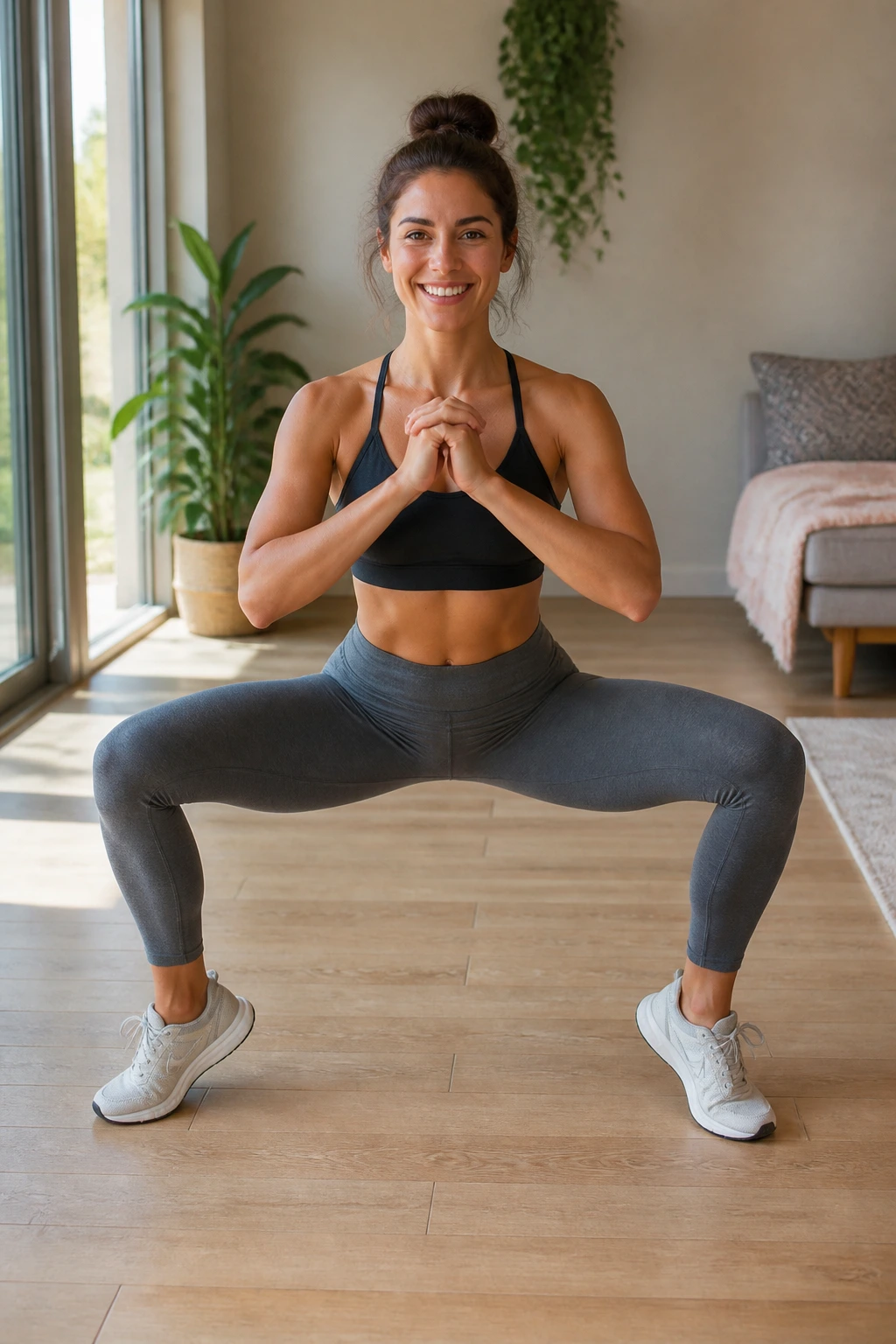
Similar to sumo squats, plie squats use a wide, toes-out stance, but the focus here is often on maintaining a slightly more upright torso and a more controlled, “graceful” lowering phase, inspired by ballet.
The benefit of the plie stance is the focus on the inner thighs and the deep glutes. It requires a lot of hip mobility. If your hips feel tight, this might be uncomfortable at first, but it is one of the best ways to open them up. Move slowly. The goal is to feel the muscles lengthening and contracting, not just to move up and down as fast as possible.
22. Single-Leg Glute Bridges
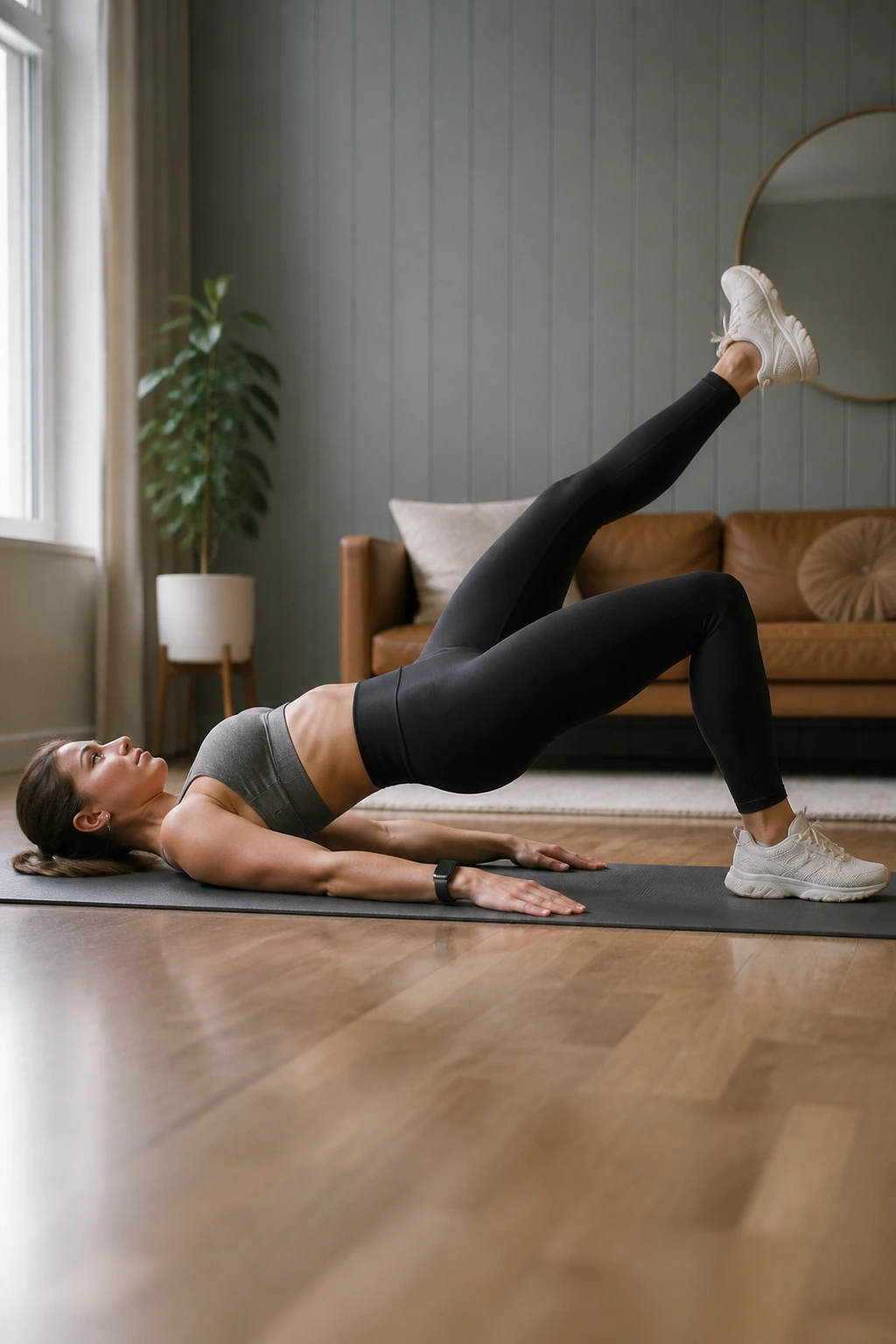
If the standard bridge is too easy, the single-leg version is the natural progression. By removing one point of contact, you double the load on the remaining glute.
Why You Need This
It exposes asymmetries. If you find you can do 15 reps on your right side but only 8 on your left, you have identified a significant muscle imbalance that could lead to injury down the line. Use this exercise to fix that. Start with your weaker leg first and match the number of reps with your stronger leg. Over time, that gap will close, and your overall stability will improve.
23. Box Squats
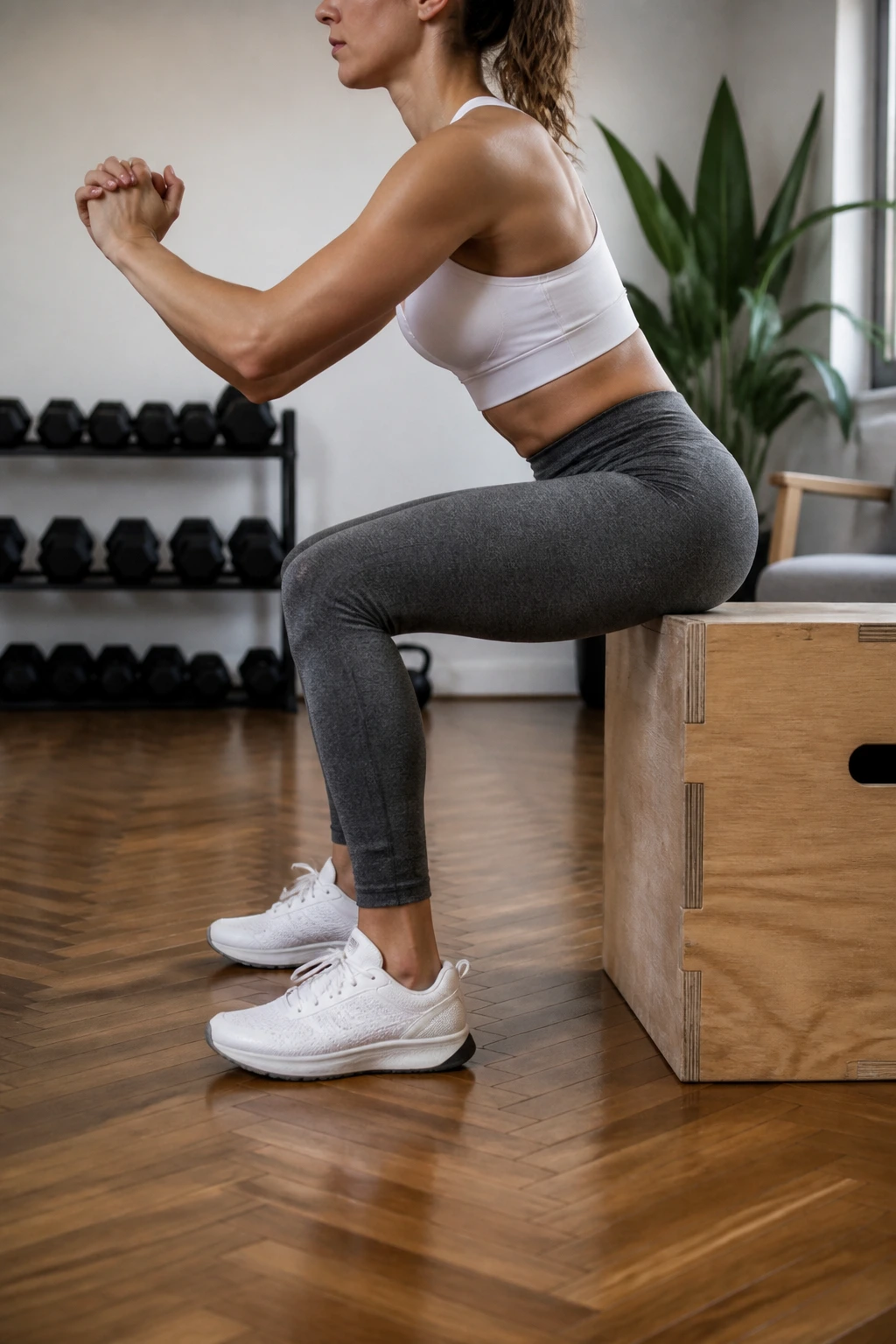
Box squats—or chair squats—are not just for beginners. They are a tool for learning how to sit back into your hips properly. By having a surface to “aim” for, you overcome the fear of falling backward and can sit deeper than you might otherwise.
The “Tap and Go” Technique
Do not sit down and rest. The moment your glutes touch the surface of the chair or box, fire them back up. This teaches you how to turn your glutes on from a dead stop at the bottom of the movement. It is a powerful way to build explosive strength out of the “hole” of the squat.
24. Skater Hops
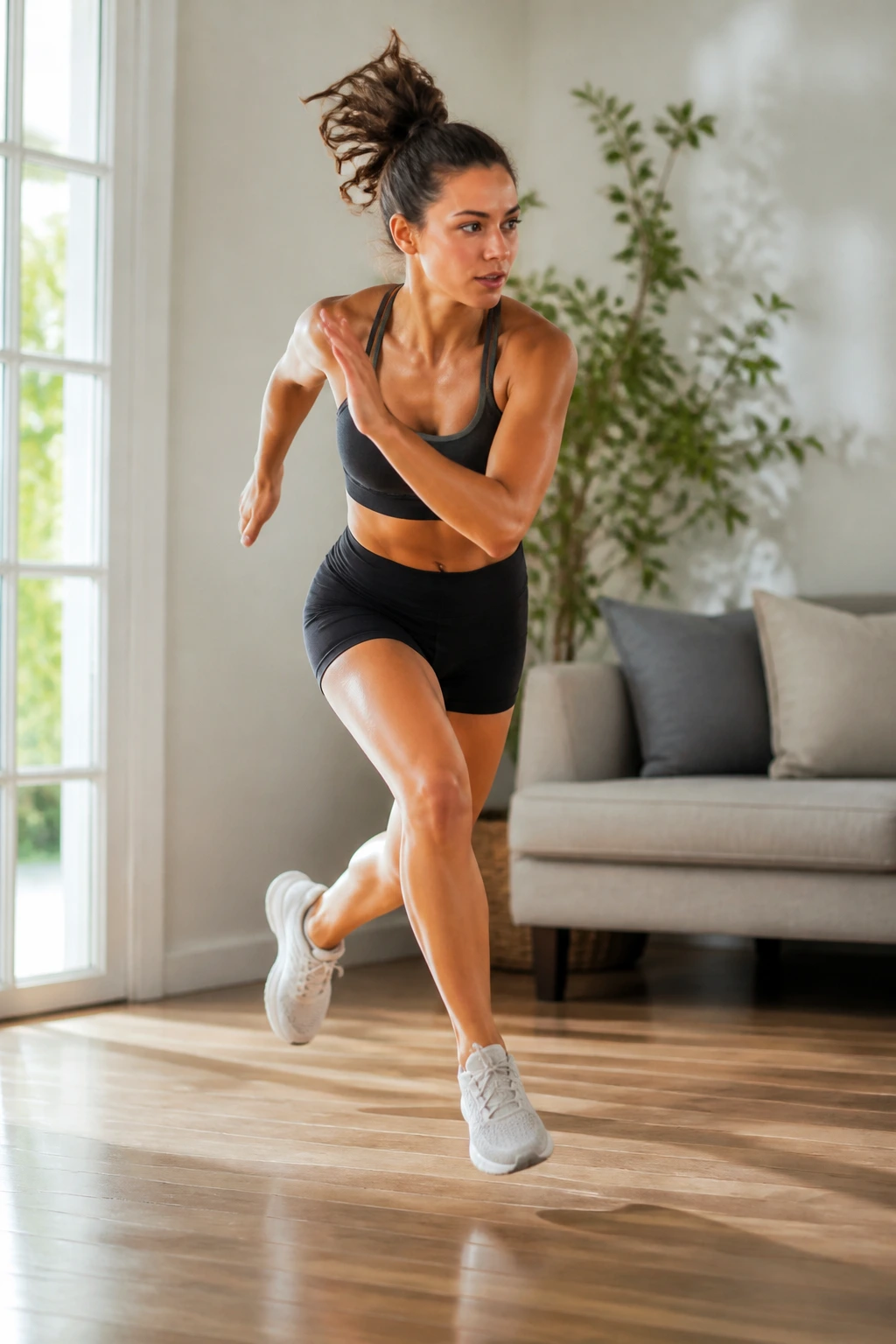
Skater hops are a cardio-intensive leg exercise that builds lateral power. You jump from side to side, landing on one foot and sweeping the other leg behind you. It mimics the motion of speed skaters.
The Focus
The focus is on distance and stability. Each jump should be controlled. You should land softly on one leg, hold the balance for a heartbeat, and then explode to the other side. This is an incredible move for agility and conditioning. It burns through calories and lights up your glutes and core simultaneously. Keep your chest up and focus on landing with a bent knee to absorb the force.
25. Hamstring Walkouts
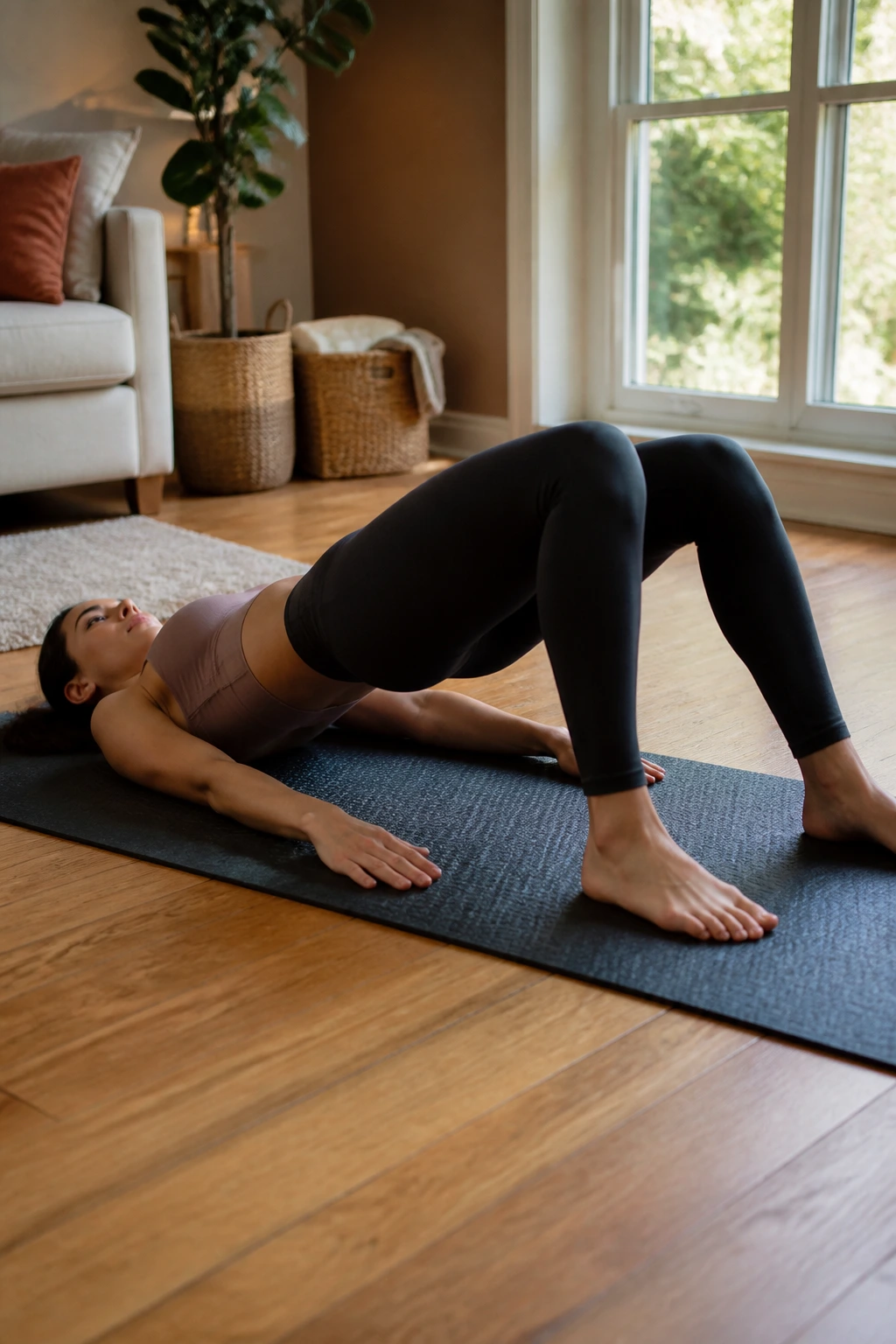
Hamstring walkouts are the ultimate no-equipment hamstring exercise. Lie on your back in a glute bridge position. Instead of lifting your hips, walk your feet out away from your body as far as you can while keeping your hips lifted. Then, walk them back in.
This exercise creates intense tension in the hamstrings. It is easy to accidentally let your hips sag, so keep your glutes squeezed tightly the entire time. You will feel your hamstrings quivering as you walk your feet out. That is exactly what you want. It is a slow, methodical burn that builds incredible durability in the back of your legs.
Final Thoughts
The key to at-home leg training is not about how many different movements you can perform, but how well you perform the ones you choose. You can build significant strength and definition by mastering the fundamentals and increasing your effort over time. Focus on the slow, controlled execution of every rep. Your muscles do not know if you are in a fancy fitness center or your living room; they only know tension, fatigue, and the recovery that follows.
Stop worrying about having a perfect gym setup. You have gravity, your own body weight, and the floor. That is more than enough. Pick three or four of these movements, perform them with focus, and challenge yourself to improve your form or your endurance with each passing week. The results will come, not from complex machinery, but from your dedication to the basics.
