



There is a specific feeling you only get after a truly brutal leg session. It is the sensation of your legs turning into heavy, uncooperative pillars, the kind of jelly-like fatigue that makes walking down a flight of stairs feel like an athletic event. This is the hallmark of a job well done. Whether you are aiming for raw power, muscle hypertrophy, or just the ability to hike a mountain without stopping every ten minutes, your lower body requires consistent, varied stimulus to force adaptation.
Building strong legs is rarely about just squatting heavy weights until you collapse, though that certainly has its place. It is about understanding the biomechanics of the hip hinge, the necessity of unilateral work, and the importance of hitting muscles from different angles. The most effective programs rely on a mix of heavy compounds that challenge your nervous system and isolation movements that target specific stubborn areas.
The following list represents the most effective tools in the gym for building lower body strength. These are not merely exercises; they are the fundamental building blocks of human movement. You will find that mastering the nuances of these patterns—the depth of a squat, the hinge of a deadlift, the balance of a lunge—changes the game entirely. Forget about chasing the newest, flashiest gadget. If you can get better at these twenty-two movements, you will have stronger, more resilient legs.
1. Back Squats
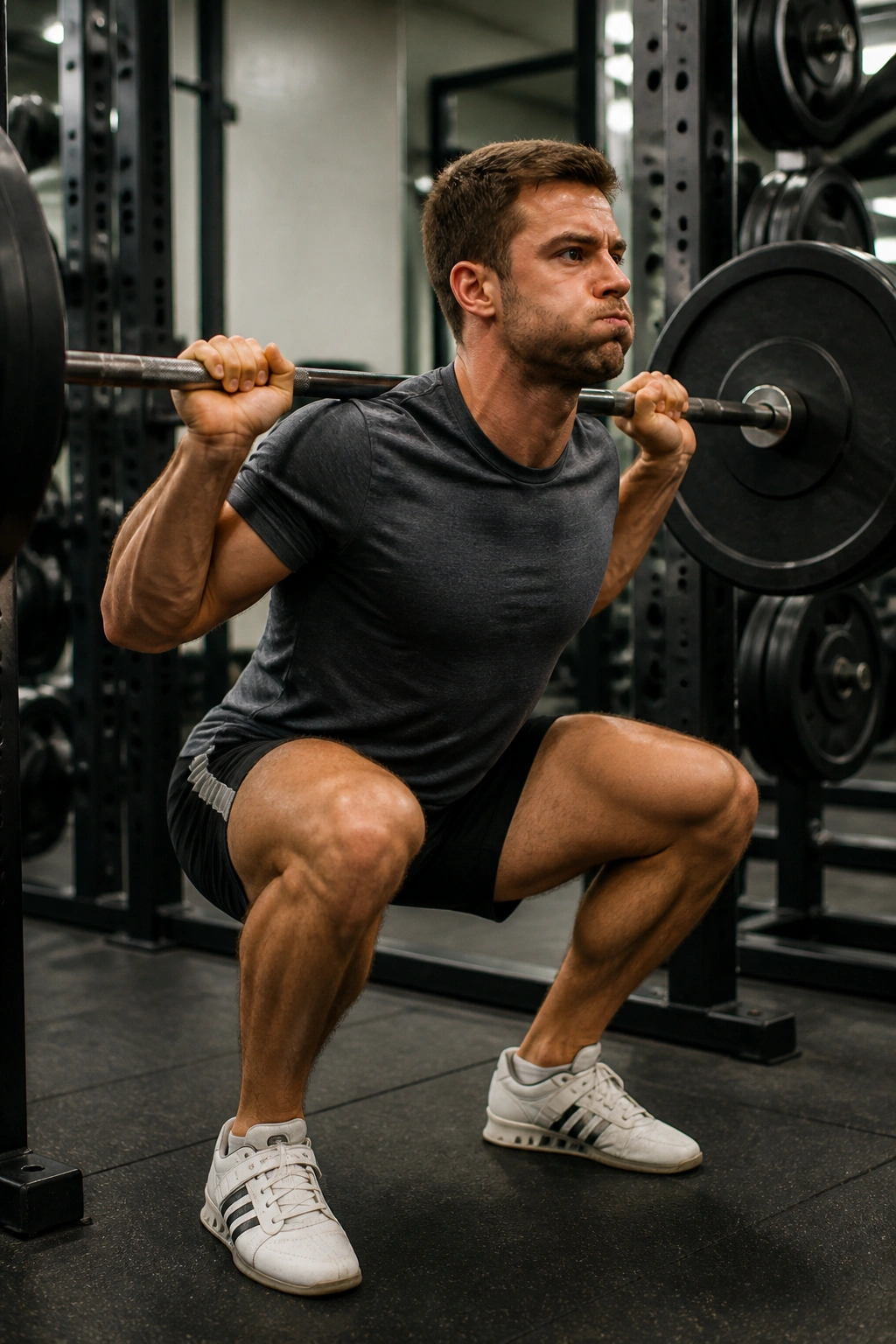
This is the king of all leg exercises for a reason. Placing a barbell across your upper back forces your entire body to stabilize, engaging your core, back, and legs in a way no machine can replicate. It requires serious technique, but the payout is full-body strength and significant quad and glute development.
The Mechanics of a Proper Squat
- Bar Placement: Keep the bar resting on your traps, not your neck.
- Stance: Set your feet about shoulder-width apart, with toes pointed slightly outward.
- The Descent: Initiate the movement by pushing your hips back as if sitting into a chair, not just bending your knees.
- Depth: Aim to get your thighs parallel to the floor, or deeper if your mobility allows.
Pro Tip: Think about “screwing” your feet into the floor. Imagine you are trying to twist the floor apart with your feet; this creates external rotation at the hips and keeps your knees from caving inward.
2. Front Squats
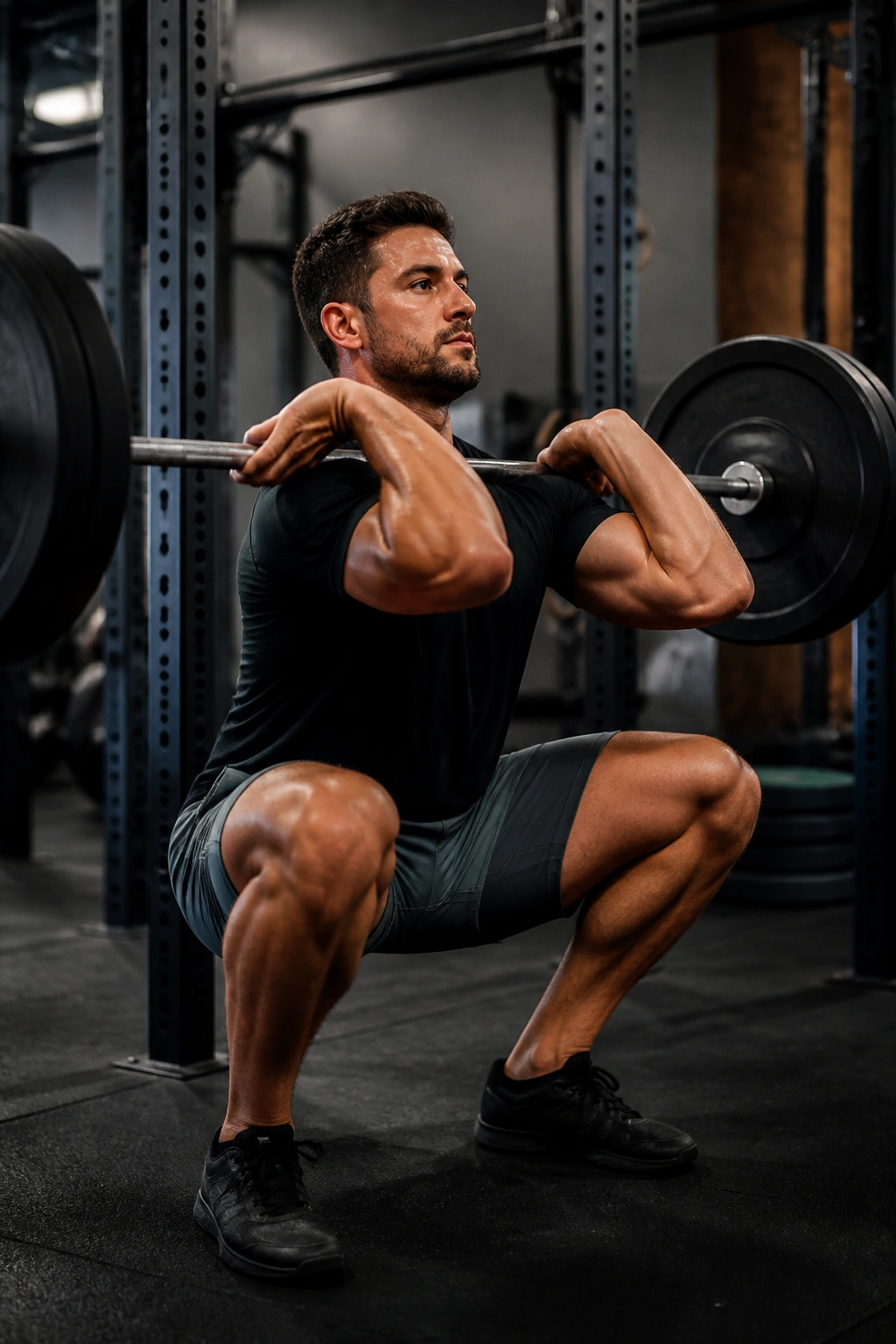
If you find that your back hurts during standard squats or you simply want to hammer your quads, this is your solution. By placing the barbell across the front of your shoulders, you shift your center of mass forward. This forces your torso to stay upright, which removes much of the pressure from your lower back and places the entire load on the front of your thighs.
You will need to be stricter with your form here. If you round your upper back, the bar will roll right off your shoulders. This exercise acts as a self-correcting mechanism for your posture. If you start to lean forward too much, you miss the rep. It is an honest lift.
Start with a lighter weight than you think you can handle. The wrist and shoulder mobility required to hold the bar in the “rack position” can be a limiting factor for beginners. Practice with an empty bar or even a pair of dumbbells held at shoulder height until you feel comfortable with the upright torso requirement.
3. Romanian Deadlifts
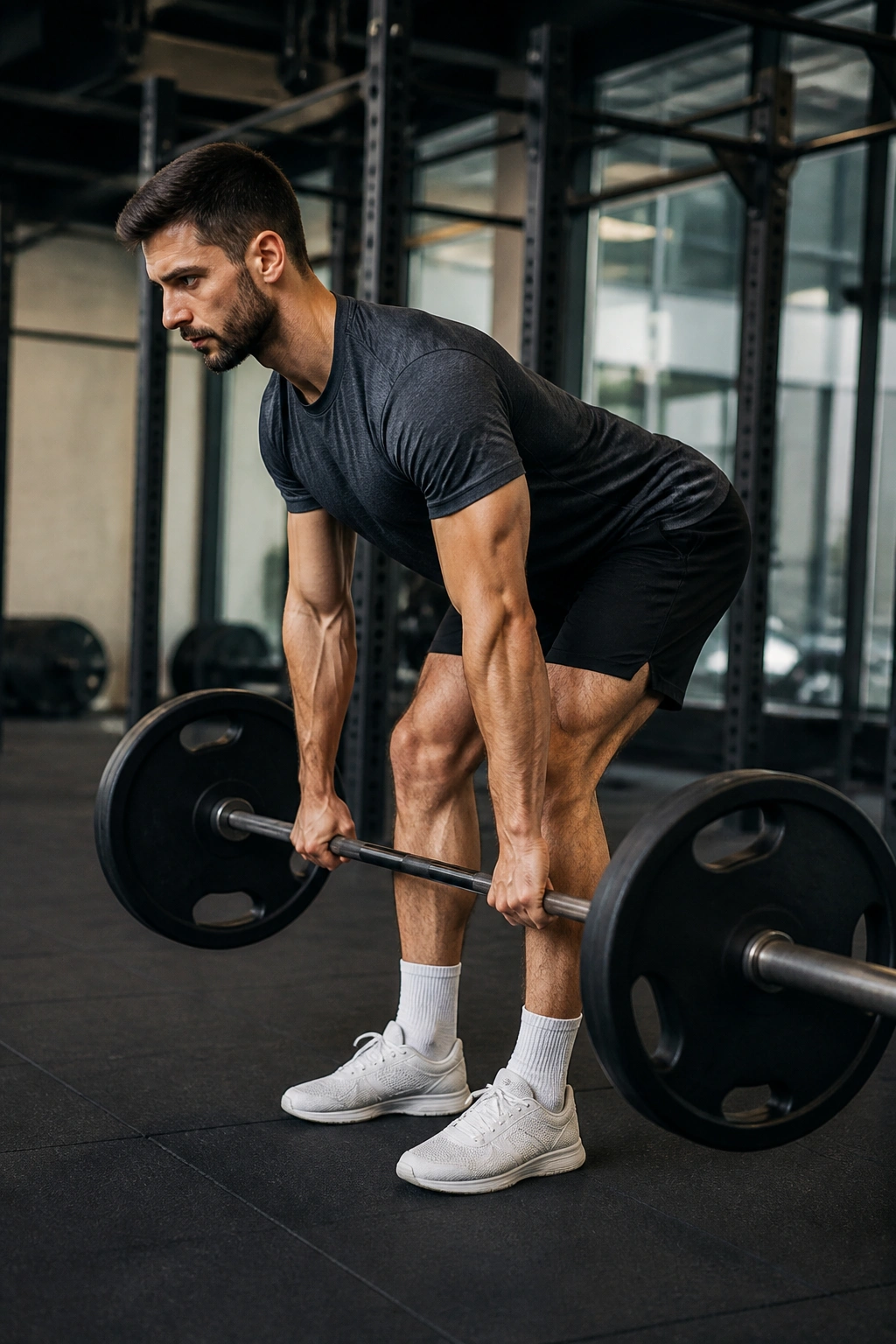
Most people focus entirely on the quads and forget the backside. The Romanian Deadlift (RDL) is perhaps the best exercise for strengthening the posterior chain—specifically the hamstrings and glutes. Unlike a conventional deadlift, you start from the top and lower the weight, focusing on a deep, controlled stretch.
Keep your legs mostly straight, with only a soft bend in the knees. The motion is entirely a hip hinge. Push your butt back as far as it can go while sliding the bar down your legs. You should feel a massive stretch in your hamstrings. Do not let the bar travel away from your body; keep it glued to your shins the entire time.
Do not worry about hitting the floor. You only need to lower the bar until you feel that tension in your hamstrings, which for most people is just below the kneecap. Going lower usually requires rounding the spine, which defeats the purpose. Focus on the squeeze at the top as you drive your hips forward to return to a standing position.
4. Bulgarian Split Squats
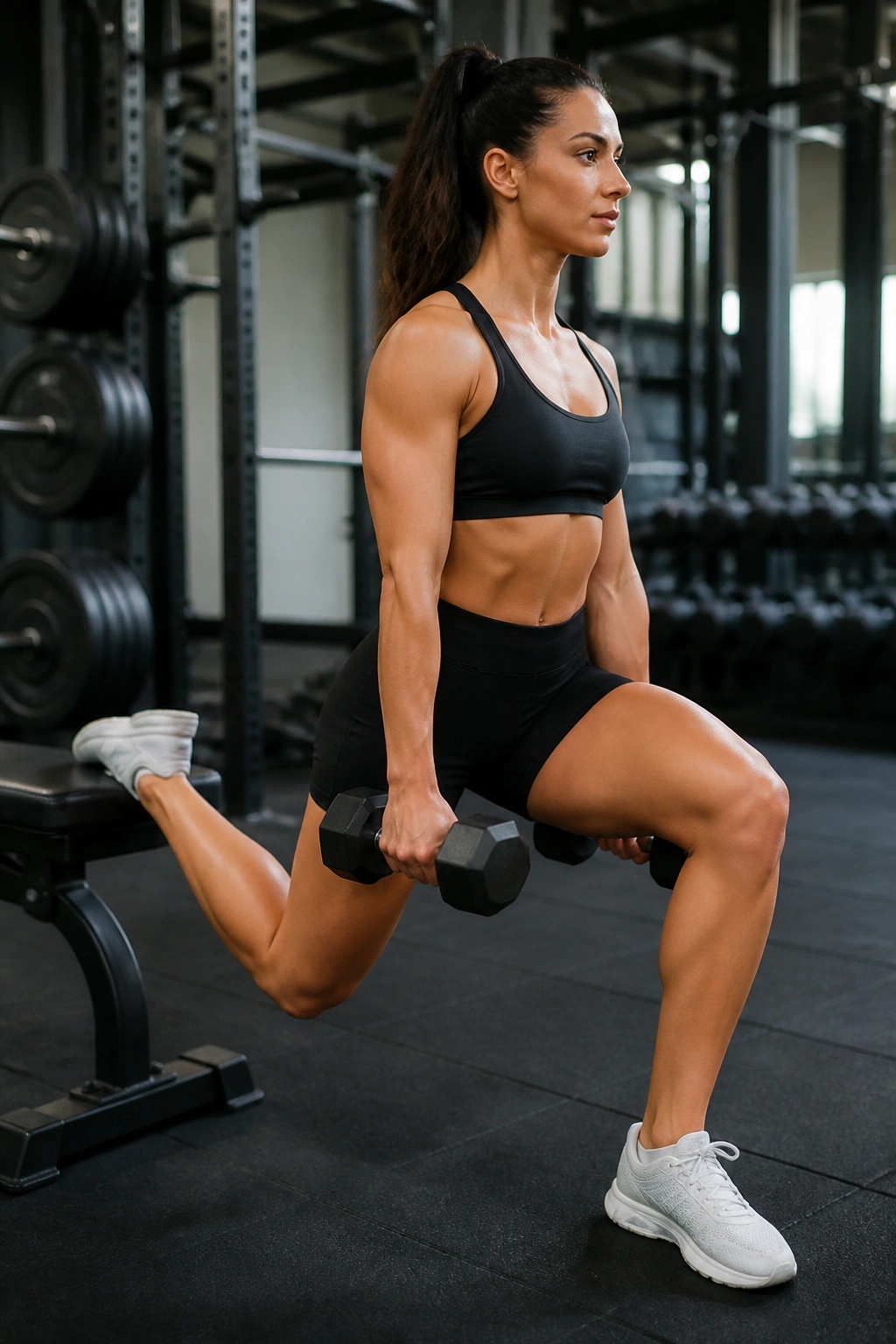
There is a reason this exercise is universally hated and yet universally recommended by trainers. It is difficult, balance-heavy, and unforgiving. By elevating your rear foot on a bench, you isolate one leg at a time. This forces your lead leg to do almost all the work while simultaneously challenging your hip stability.
Why This Is Essential
- Unilateral Power: It fixes strength imbalances between your left and right legs.
- Glute Engagement: The deep stretch helps build and tone the glutes significantly.
- Core Stability: Because you are balancing on one foot, your core has to work overtime to keep you upright.
Warning: Do not rush the movement. The temptation is to bounce out of the bottom to get the reps over with. Slow down. Control the descent for three seconds, pause at the bottom, and drive up with intent.
5. Walking Lunges
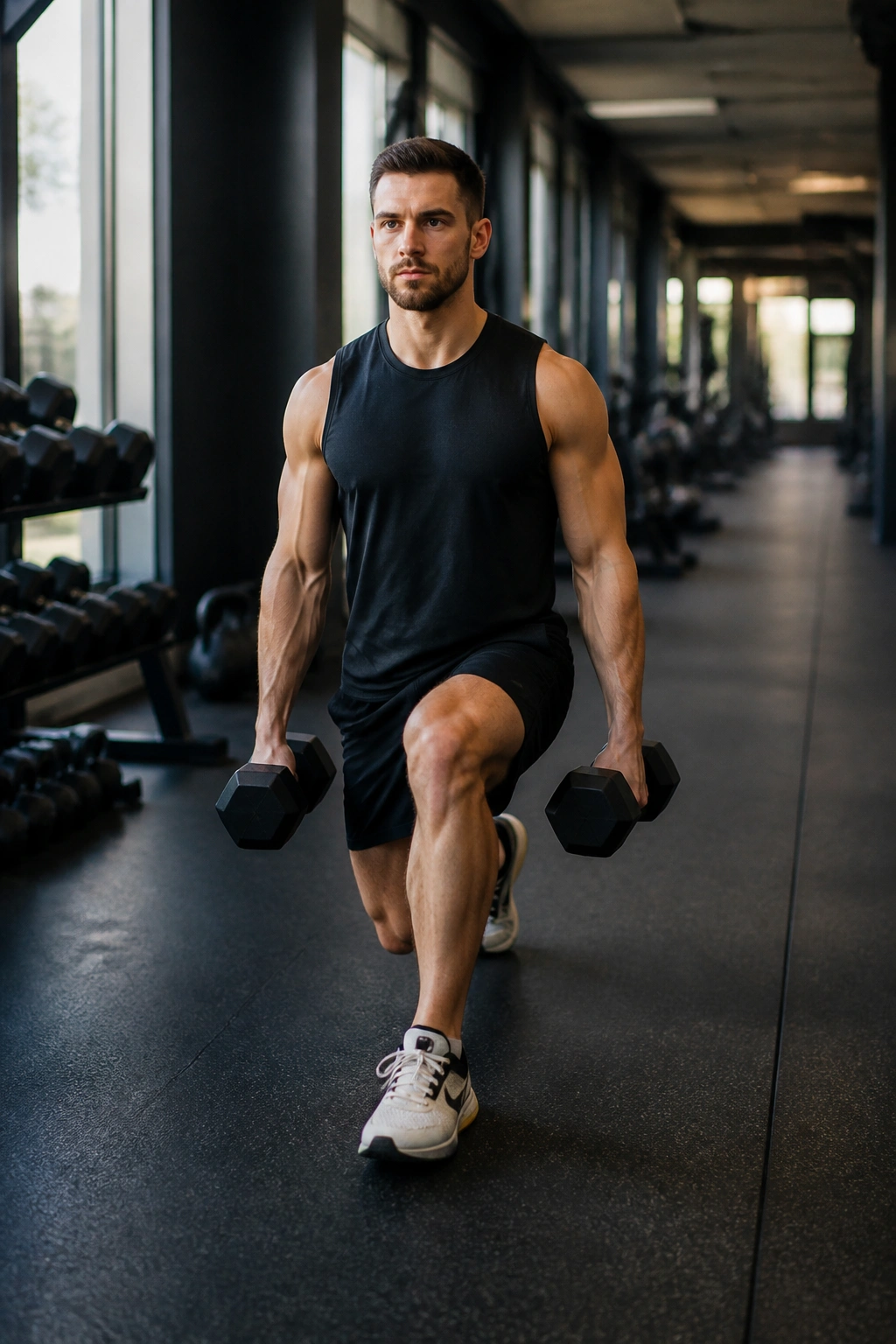
Walking lunges are the ultimate test of dynamic stability and endurance. They force you to handle your own body weight—plus added resistance—while transitioning from a split stance into a moving stride. This mimics real-world activities like hiking or navigating uneven terrain.
When you take that step forward, land softly on your heel. Your front knee should track directly over your second toe, not wobbling inward. If you find your knees caving in, drop the weight and focus on foot placement. It is better to do five perfect reps than twenty sloppy ones that irritate your joints.
You can perform these with dumbbells at your sides, a barbell on your back, or even holding a plate overhead for an extra shoulder and core challenge. Whatever variation you choose, stay upright. A common mistake is leaning too far forward, which turns the movement into a low-back exercise rather than a leg builder.
6. Leg Press
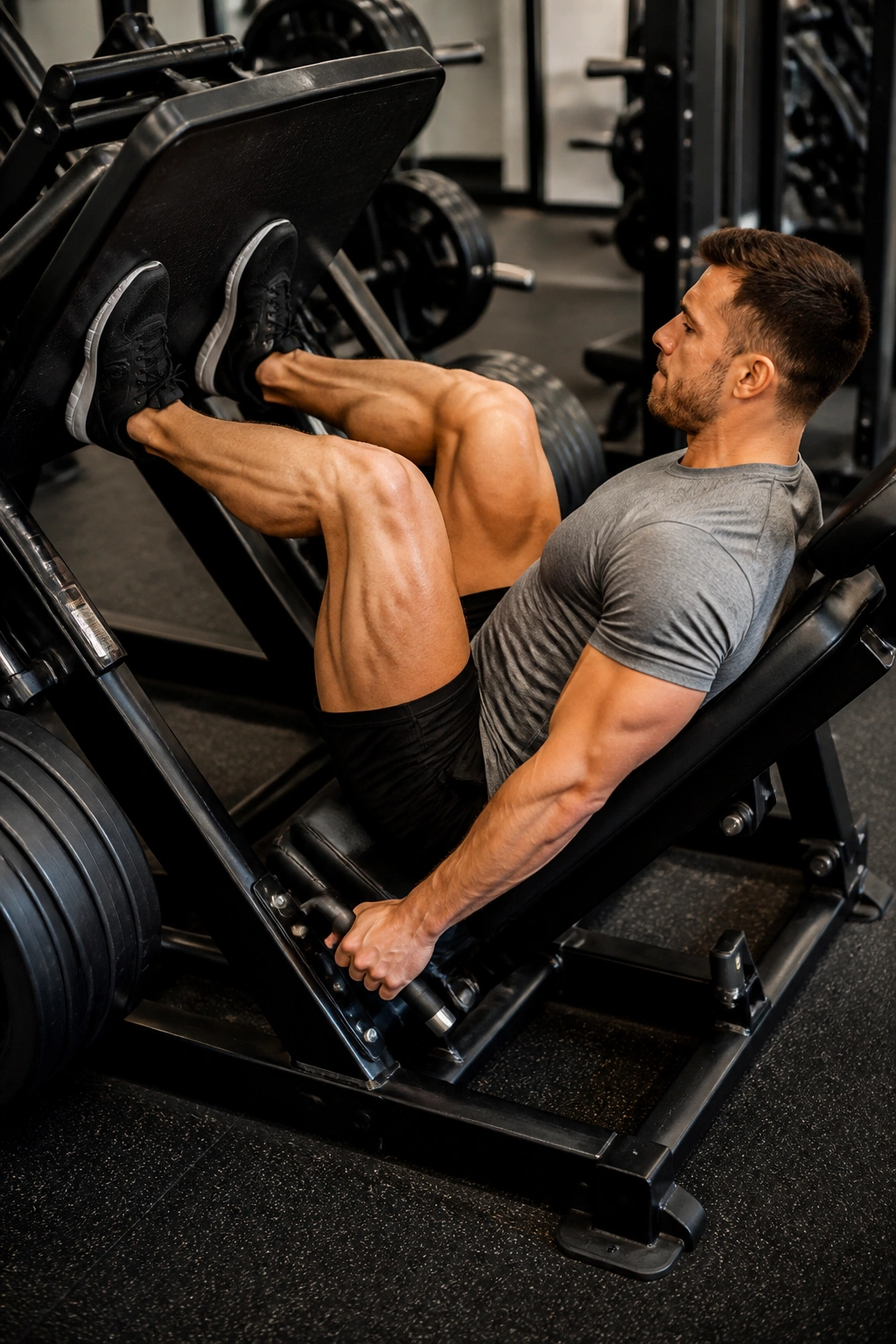
The leg press often gets a bad reputation in “hardcore” circles, but it is actually a fantastic tool for pure hypertrophy. Because your back is supported, you can push your legs to total failure without worrying about your core giving out or your balance wavering. It allows you to safely overload the quadriceps.
The angle of your feet matters significantly. A low foot placement on the platform will shift the emphasis to your quads, while a higher foot placement will target your hamstrings and glutes more effectively. Experiment with different widths and heights until you feel the tension exactly where you want it.
Do not lock your knees at the top of the rep. Keep a tiny bend in the joint to maintain tension on the muscle rather than shifting the load onto your skeleton. This simple adjustment makes a massive difference in how much work your quads actually perform versus your joints.
7. Goblet Squats
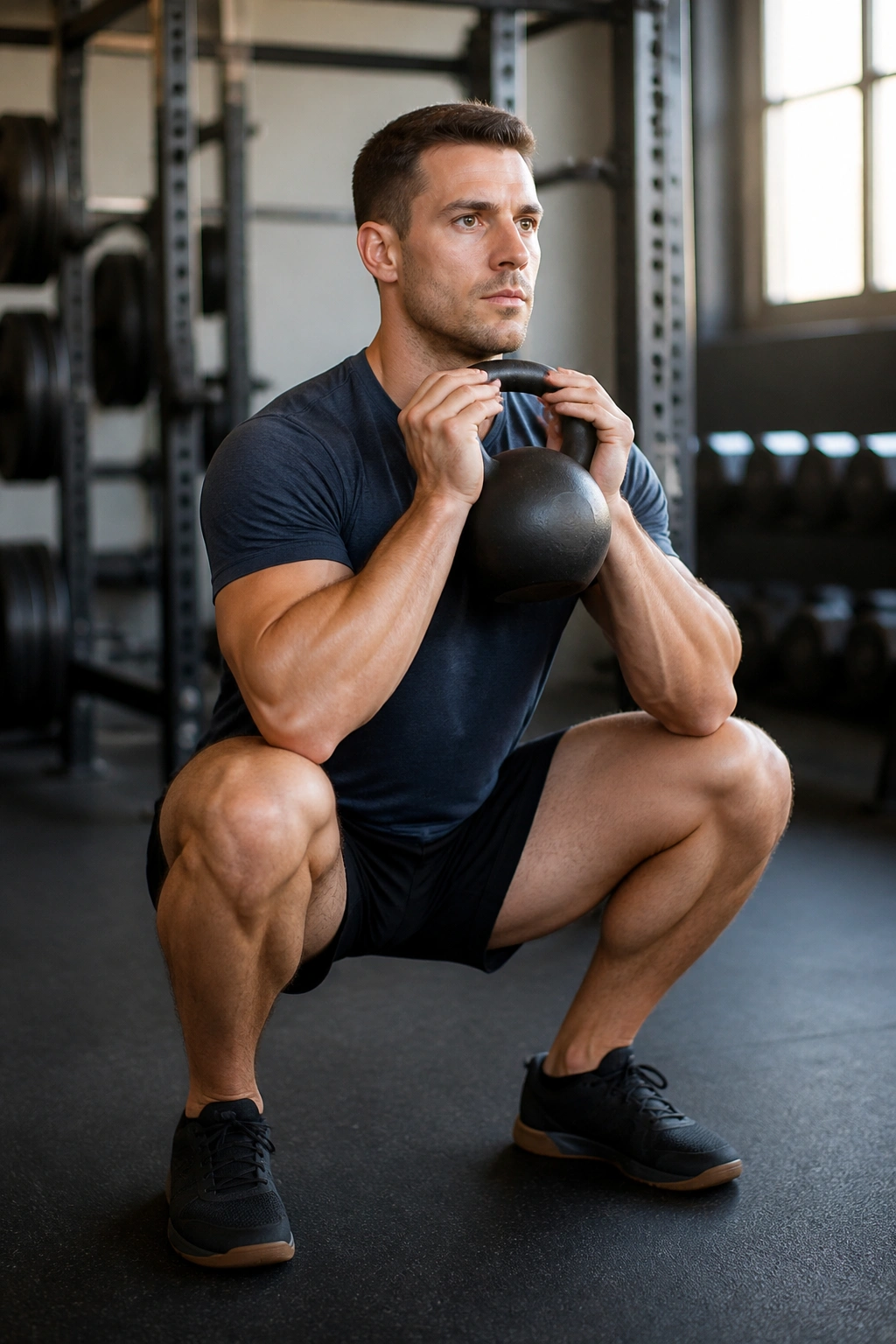
The goblet squat is the best teaching tool for beginners and a staple for experienced lifters alike. By holding a kettlebell or dumbbell against your chest, you create a counterbalance that helps you maintain an upright torso. This makes it much easier to hit full depth without falling backward.
This movement teaches you to open up your hips. As you descend, try to push your knees out with your elbows. This forces the hips into a deeper, more anatomically correct position for squatting. It is excellent for increasing range of motion.
It is also an incredible metabolic conditioning tool. Grab a heavy kettlebell, do ten reps, and you will feel your heart rate spike immediately. Because you have to hold the weight tight to your chest, your upper back muscles also get a solid isometric workout just to keep the weight from pulling you forward.
8. Sumo Deadlifts
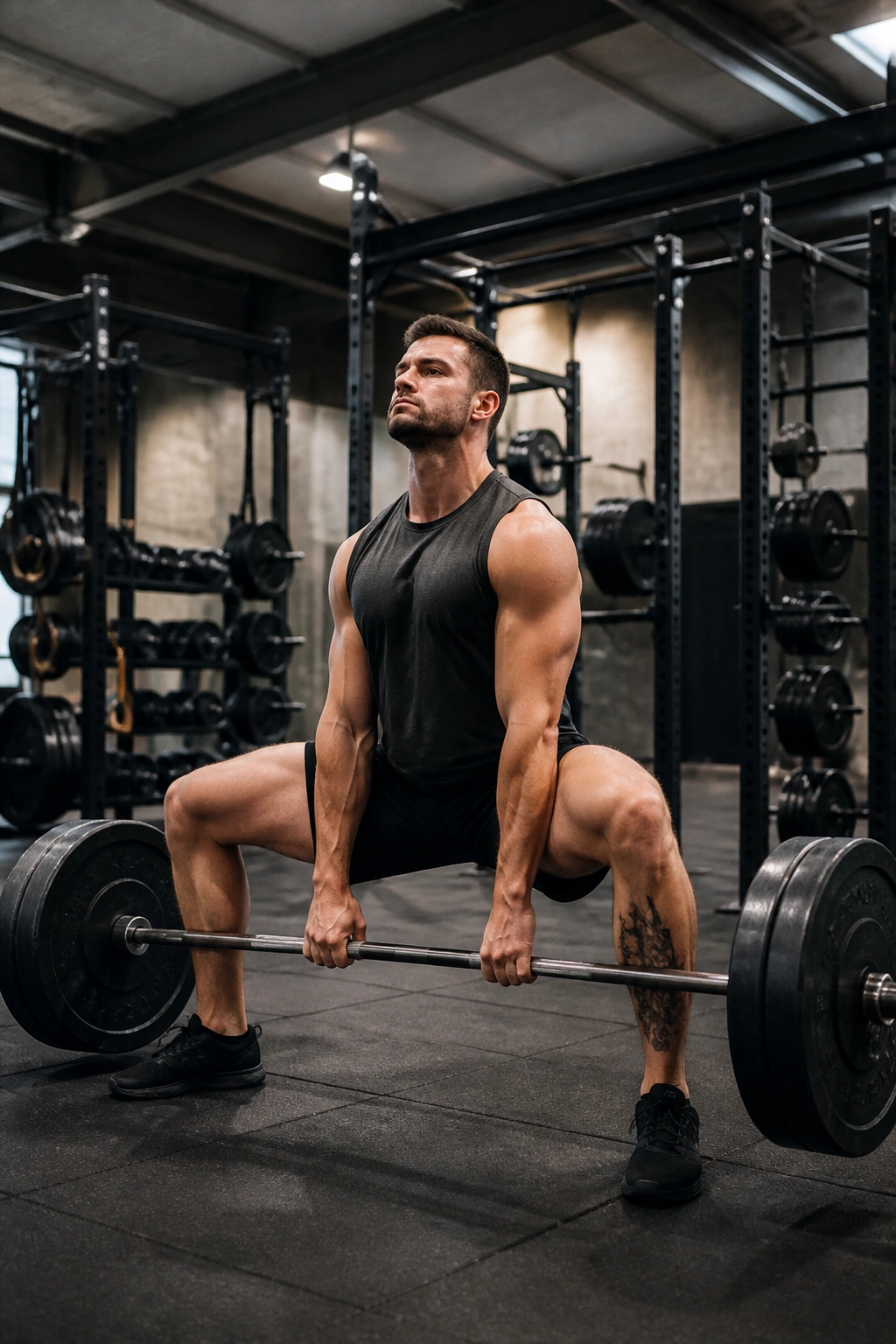
If you have shorter arms or simply want to emphasize the inner thighs (adductors) and glutes, the sumo deadlift is superior to the conventional stance. By taking a wide stance with your hands inside your knees, you change the leverage of the lift. This allows you to stay more upright, which can be easier on the lower back.
The setup is key. Your toes should be pointed out, and your knees must track in line with your toes. As you pull, focus on pushing the floor away with your feet rather than pulling with your arms. Your arms are just cables; your legs are the motor.
This lift is often misunderstood. Some people treat it like a squat, which is wrong. It is still a hip-hinge movement. Your hips should start higher than in a squat, and your torso should not be parallel to the floor. Find the sweet spot where you have maximum leverage to lock out the weight.
9. Step-Ups
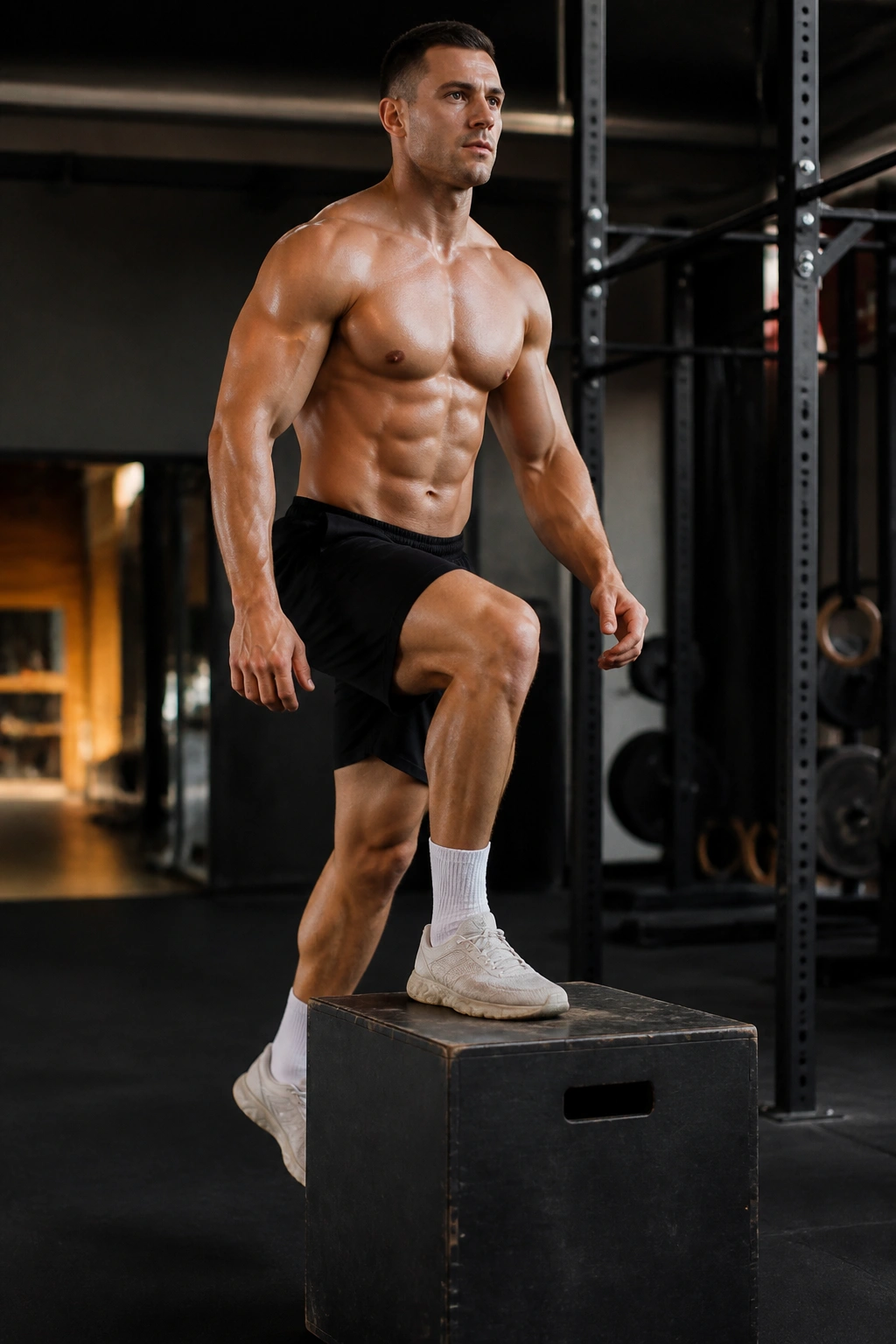
Step-ups are the most underutilized exercise in the gym. They are essentially a concentrated version of a lunge, focusing entirely on the concentric (lifting) portion of the movement. You cannot use momentum to cheat a step-up; you have to drive your body weight upward using only the strength of your lead leg.
Choose a box or bench height that puts your knee at roughly ninety degrees when your foot is planted. If the box is too high, you will end up using your lower back to hoist yourself up, which is exactly what we want to avoid. If it is too low, you lose the range of motion.
Drive through the mid-foot of the working leg. Do not push off the floor with your trailing foot. That trailing foot should only tap the box; all the work happens on the elevated leg. If you want to make it harder, add weight, but keep it balanced.
10. Hip Thrusts
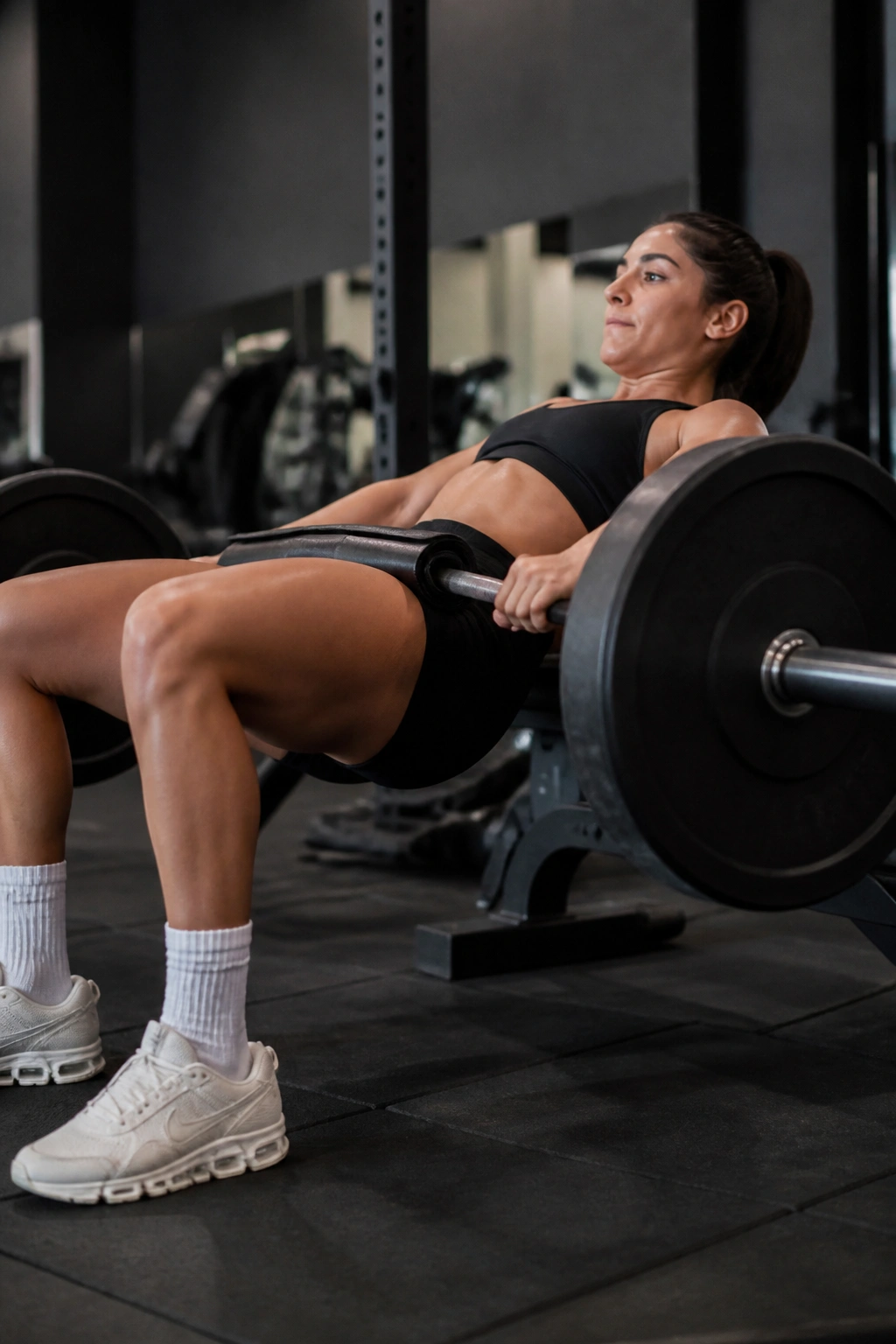
When it comes to glute development, the hip thrust is unmatched. While squats and deadlifts work the glutes, they do so while the glutes are in a lengthened position. Hip thrusts work the glutes in a shortened position—at the top of the movement—where the muscle is under peak tension.
Set your upper back against a bench, place a barbell across your hips (use a pad, trust me), and drive your hips toward the ceiling. At the top, squeeze your glutes as hard as you can for a full second. Your shins should be vertical at the top of the movement.
This is not a lower-back exercise. If you feel it in your lumbar spine, tuck your chin to your chest and focus on tilting your pelvis forward as you rise. Think of it as creating a straight line from your knees to your shoulders.
11. Leg Extensions
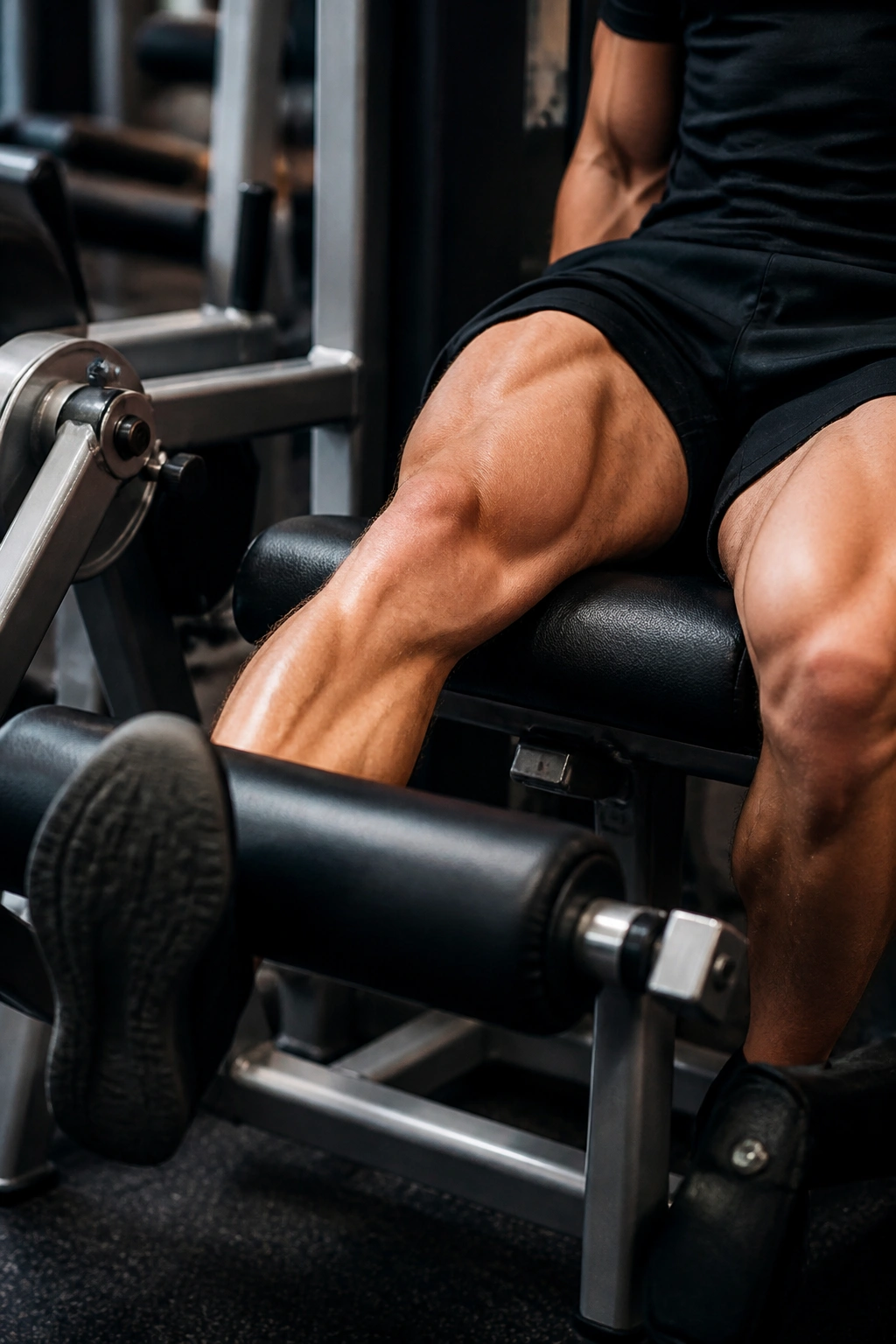
Isolation has its place, and the leg extension is the definitive way to isolate the quadriceps without involving the glutes, hamstrings, or back. It is great for finishing a workout when your compounds are done but your quads have a little juice left in the tank.
Adjust the machine so the pivot point aligns with your knee joint. If it is off, you will put unnecessary shearing force on your knees. Set the backrest so your seat is supported and you aren’t sliding around as you lift.
Control the weight. Do not swing. The temptation with isolation machines is to use momentum to throw the weight up. Instead, use a two-second count to raise the weight and a three-second count to lower it. The burn you get in your quads is exactly what you are looking for.
12. Leg Curls
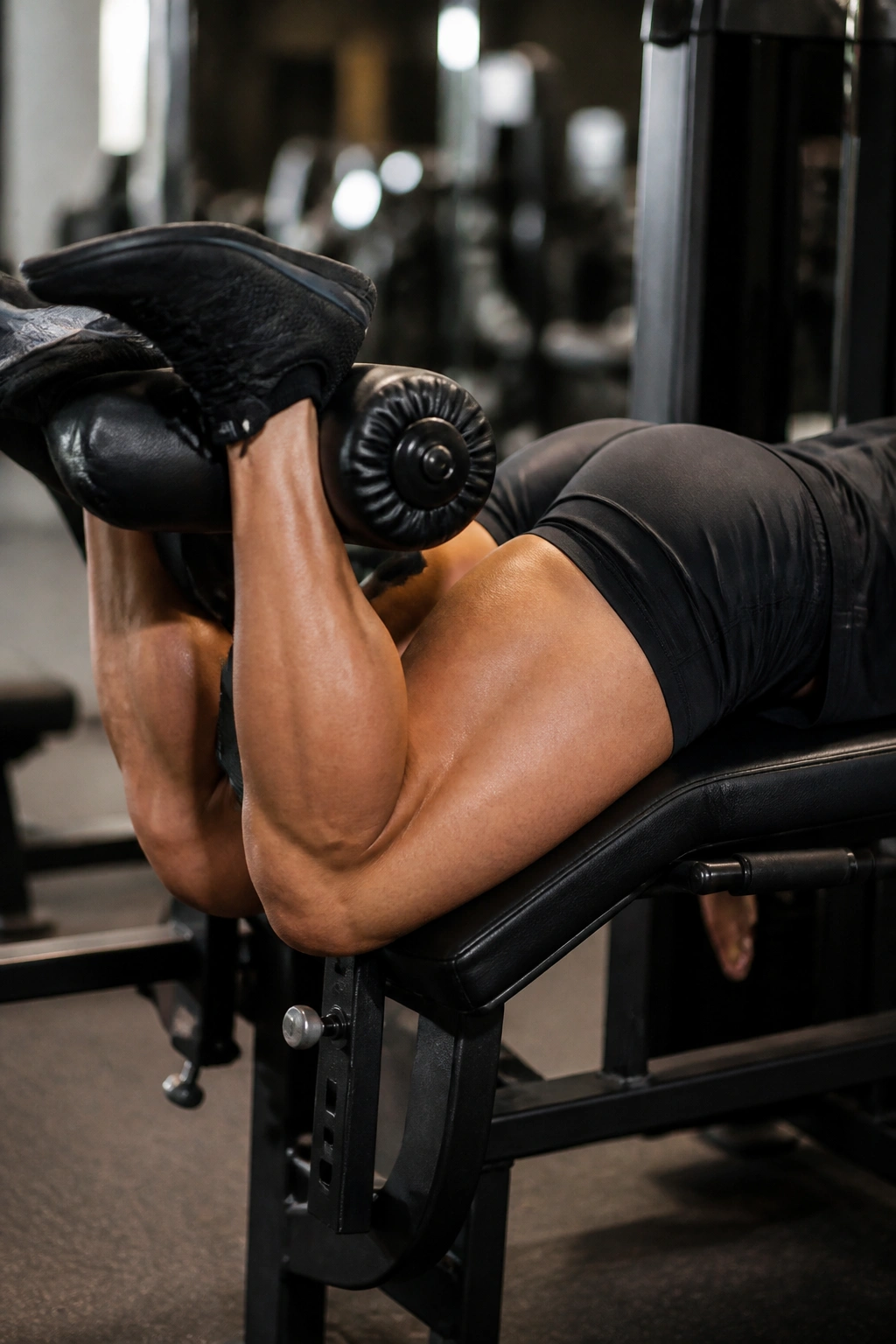
You need to balance out those quad extensions, and the lying or seated leg curl is the best way to hit the hamstrings in isolation. Hamstrings have two primary functions: hip extension (which you hit with RDLs) and knee flexion (which you hit with curls). You need both for total development.
Keep your hips glued to the seat or pad. Do not let your butt lift off when you curl the weight; that is a sign you are using your lower back or hip flexors to help move the load. Isolate the hamstrings.
If your gym has both, try the seated version. Research suggests that the seated leg curl puts the hamstrings in a stretched position, which can lead to better growth over time. If you only have the lying machine, just focus on a slow, controlled negative phase.
13. Kettlebell Swings
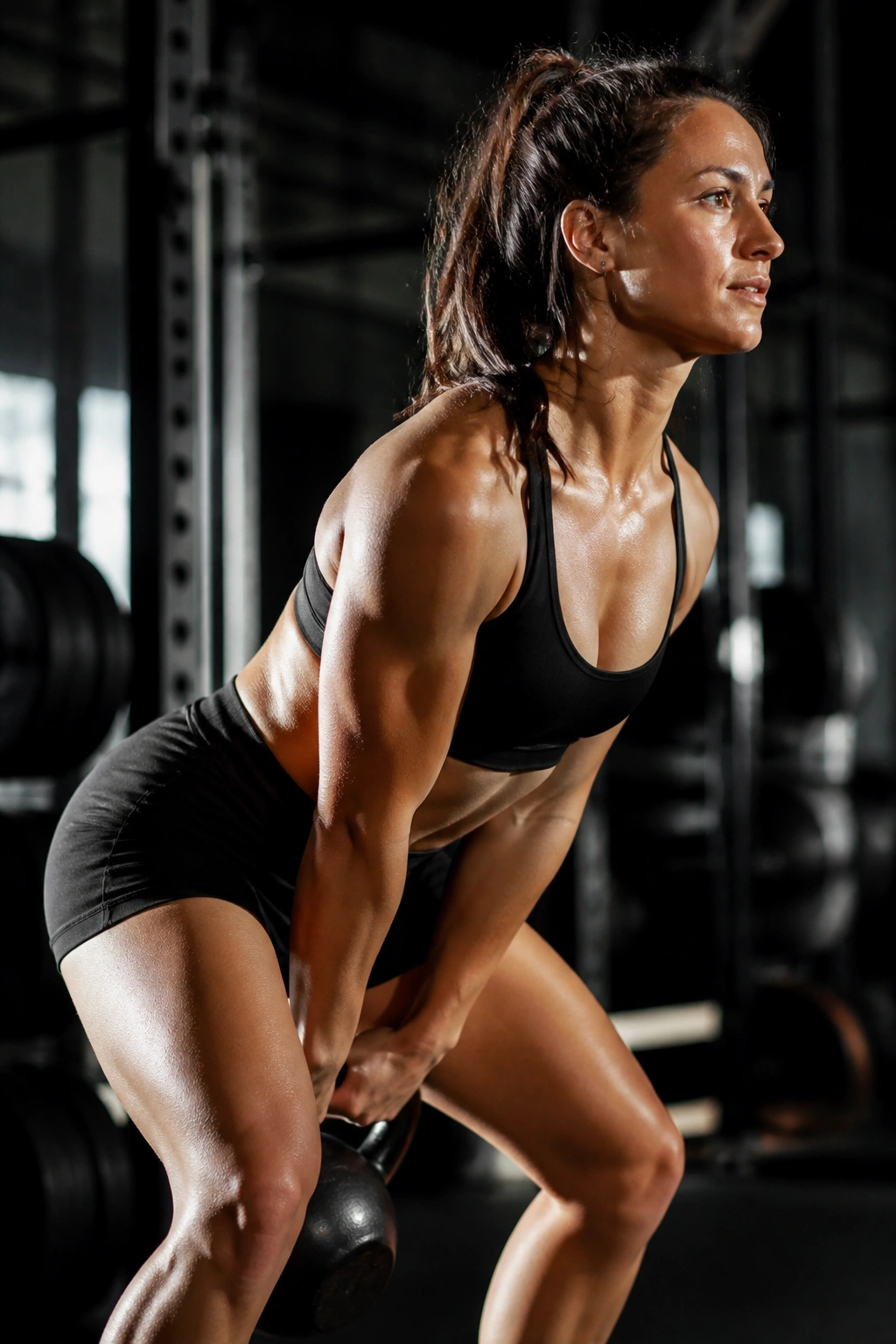
This is the ultimate posterior chain builder that also happens to be a fantastic cardiovascular exercise. The swing is a ballistic movement. It is not a squat; it is a violent, explosive hip hinge. You are teaching your body how to generate power from the hips, which carries over to almost every other athletic movement.
Hold the kettlebell and let it swing between your legs. Snap your hips forward aggressively to project the bell upward. Your arms are just pendulums; they do not lift the bell. If your shoulders are tired after a set of swings, you are doing them wrong.
Keep your spine neutral throughout the movement. The bell should not go higher than chest height. If you are swinging it over your head, you are likely using too much shoulder and not enough hip drive. It should be a rhythmic, powerful snap.
14. Box Jumps
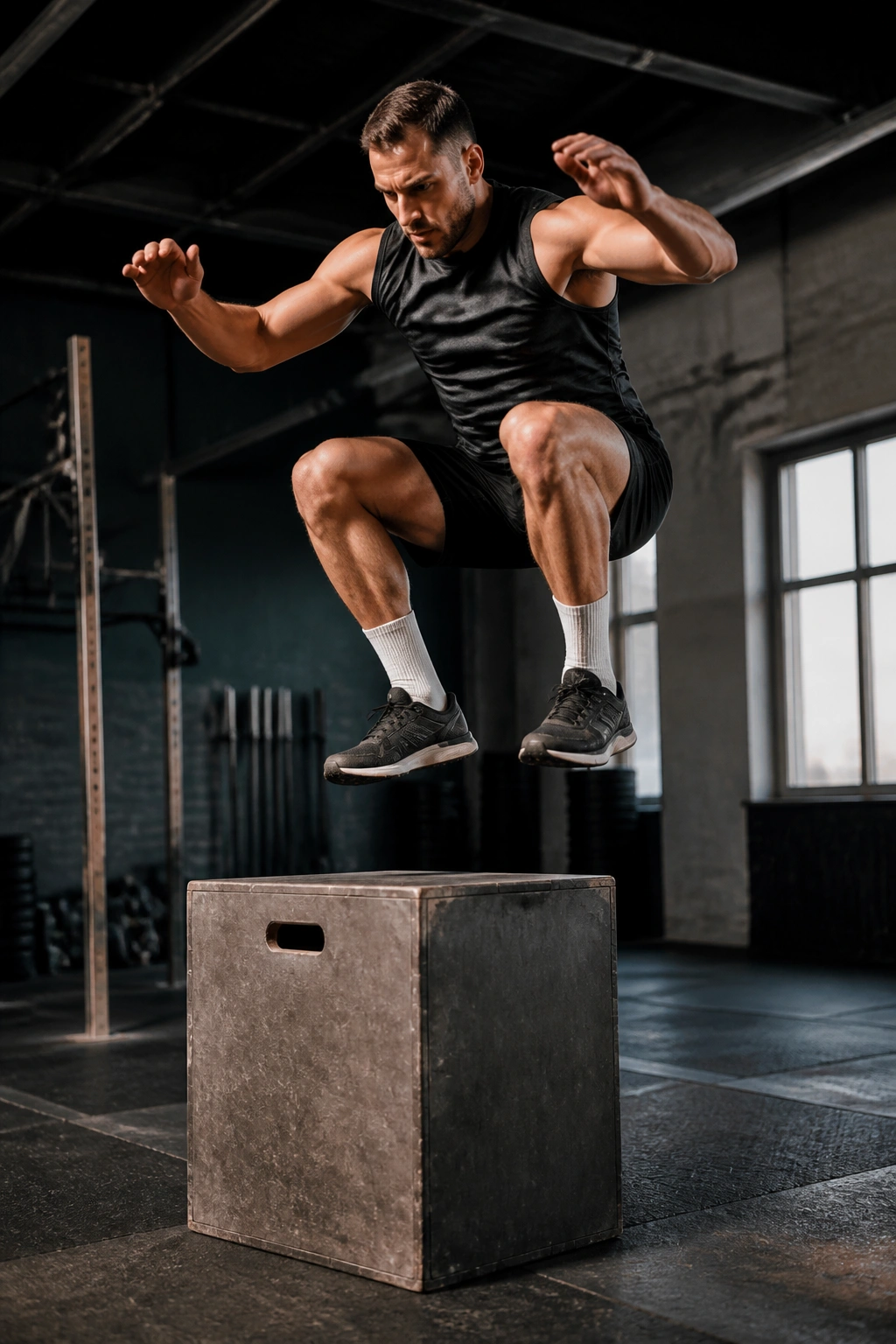
If you want to train your legs to be explosive, you have to move fast. Box jumps teach your central nervous system to recruit muscle fibers quickly. They are excellent for developing that “pop” in your stride or just keeping your athleticism sharp.
Focus on the landing. It should be quiet. If you land with a loud thud, you are absorbing the impact through your joints rather than your muscles. Aim to land softly in a partial squat position, then stand up fully on the box.
Do not ego-jump. A lower box that you can land on perfectly is infinitely better than a high box that forces you to tuck your knees to your chest just to clear the lip. It is a jump, not a gymnastics move.
15. Hack Squats
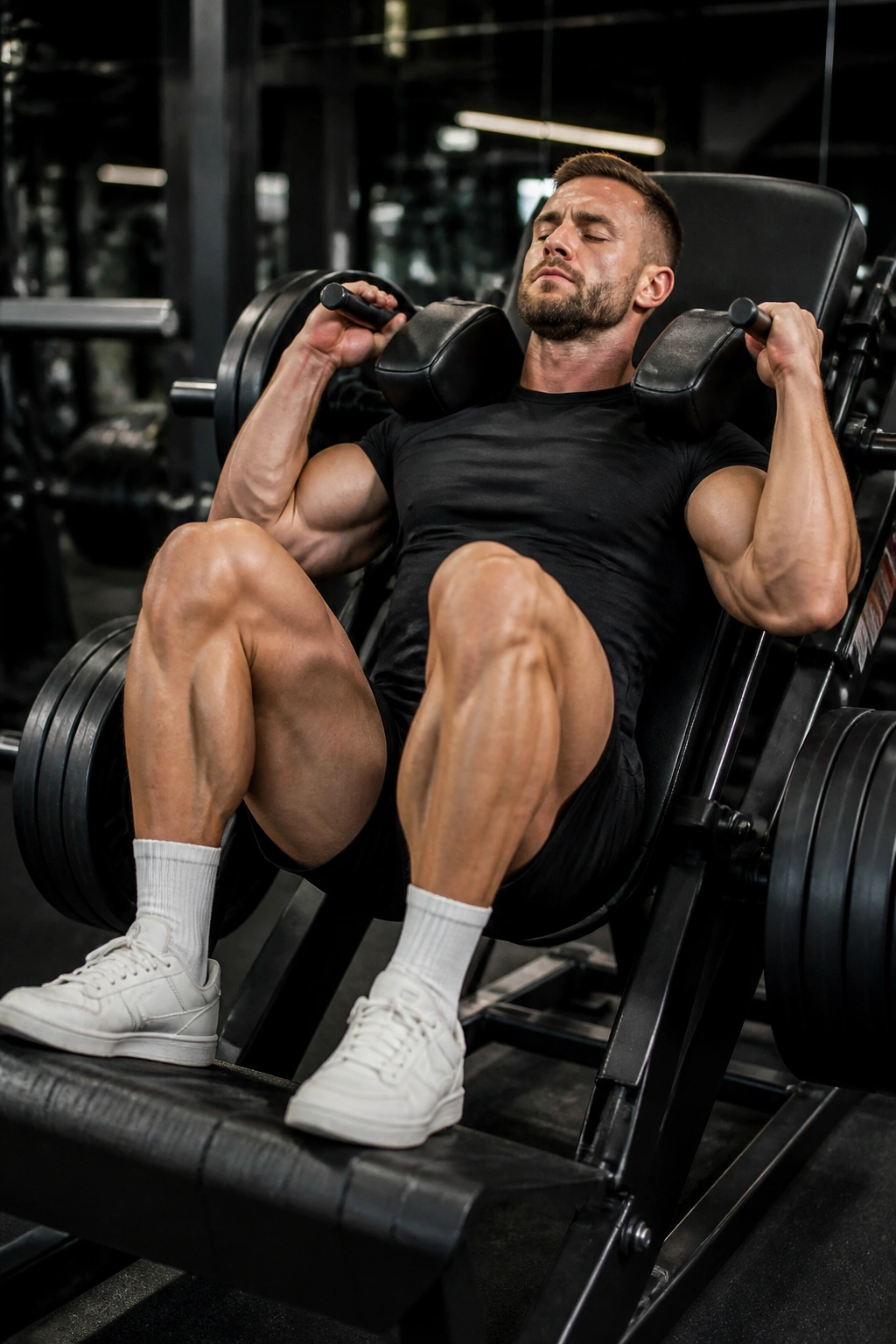
The hack squat machine is the “cheater’s” back squat. It locks your path of motion, keeping your back supported and removing the need to balance a heavy barbell. This allows you to load significantly more weight than you could on a free-weight squat, making it a favorite for adding mass to the legs.
Place your feet on the platform about shoulder-width apart. As you descend, focus on keeping your entire foot flat against the plate. If your heels start to lift, move your feet up higher on the platform.
Because your torso is supported, you can really sit into the bottom of the rep. Take advantage of this. Go deep, pause for a split second to remove the stretch reflex, and drive back up. This is a brutal movement if done with proper intensity.
16. Nordic Curls
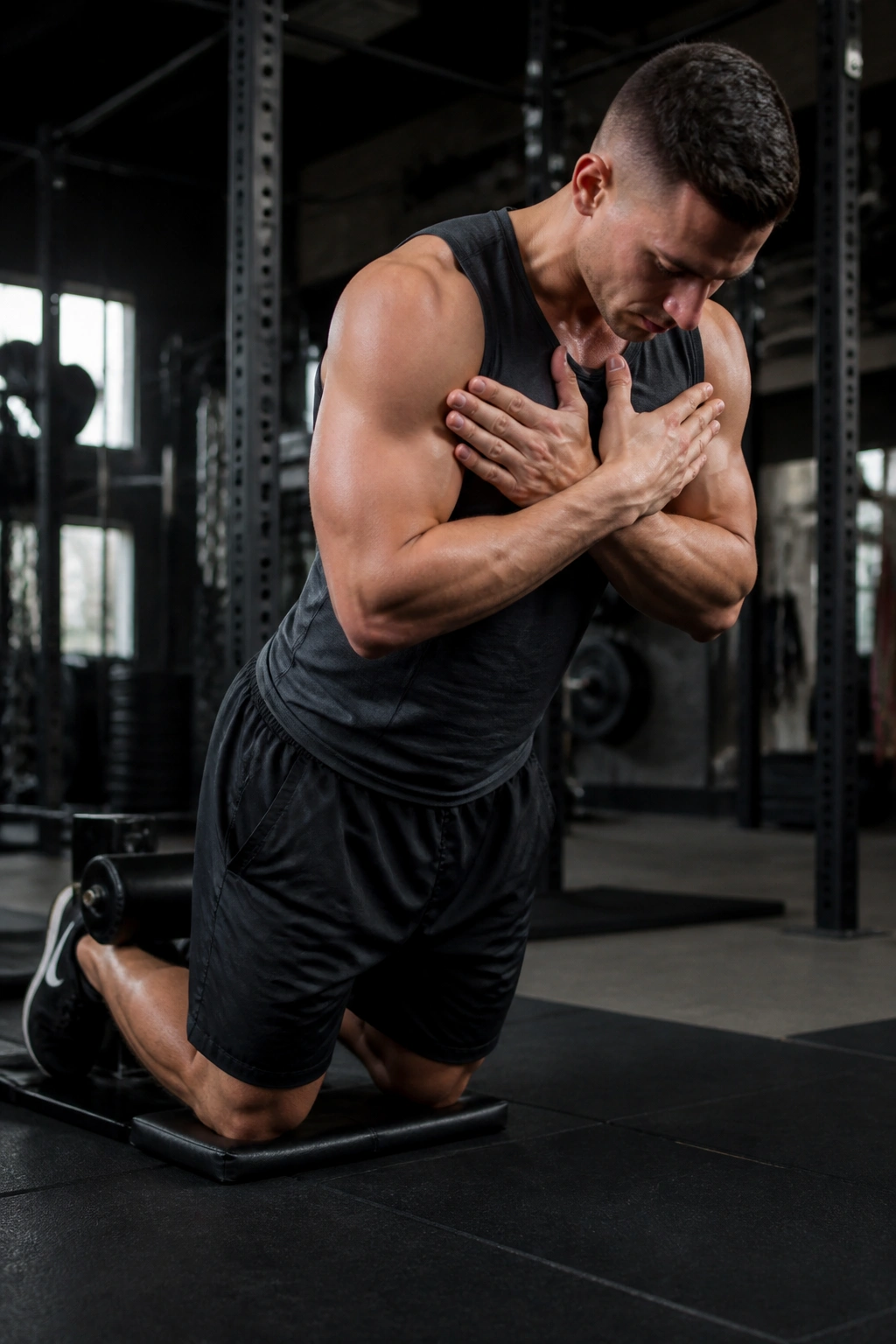
This is the gold standard for hamstring injury prevention and strength. It is an eccentric-focused exercise, meaning it emphasizes the lengthening phase of the muscle. You anchor your heels, kneel, and slowly lower your torso toward the ground, resisting gravity the entire way.
Most people cannot do this unassisted right away, and that is fine. Use your hands to push yourself back up after you lower as far as you can control. The goal is to maximize the time spent on the way down.
It is surprisingly hard. You will feel your hamstrings shaking. That is the muscle fiber being challenged in a way it rarely is during standard gym lifts. Keep your hips extended—do not let your butt sit back towards your heels—as you lower yourself.
17. Cossack Squats
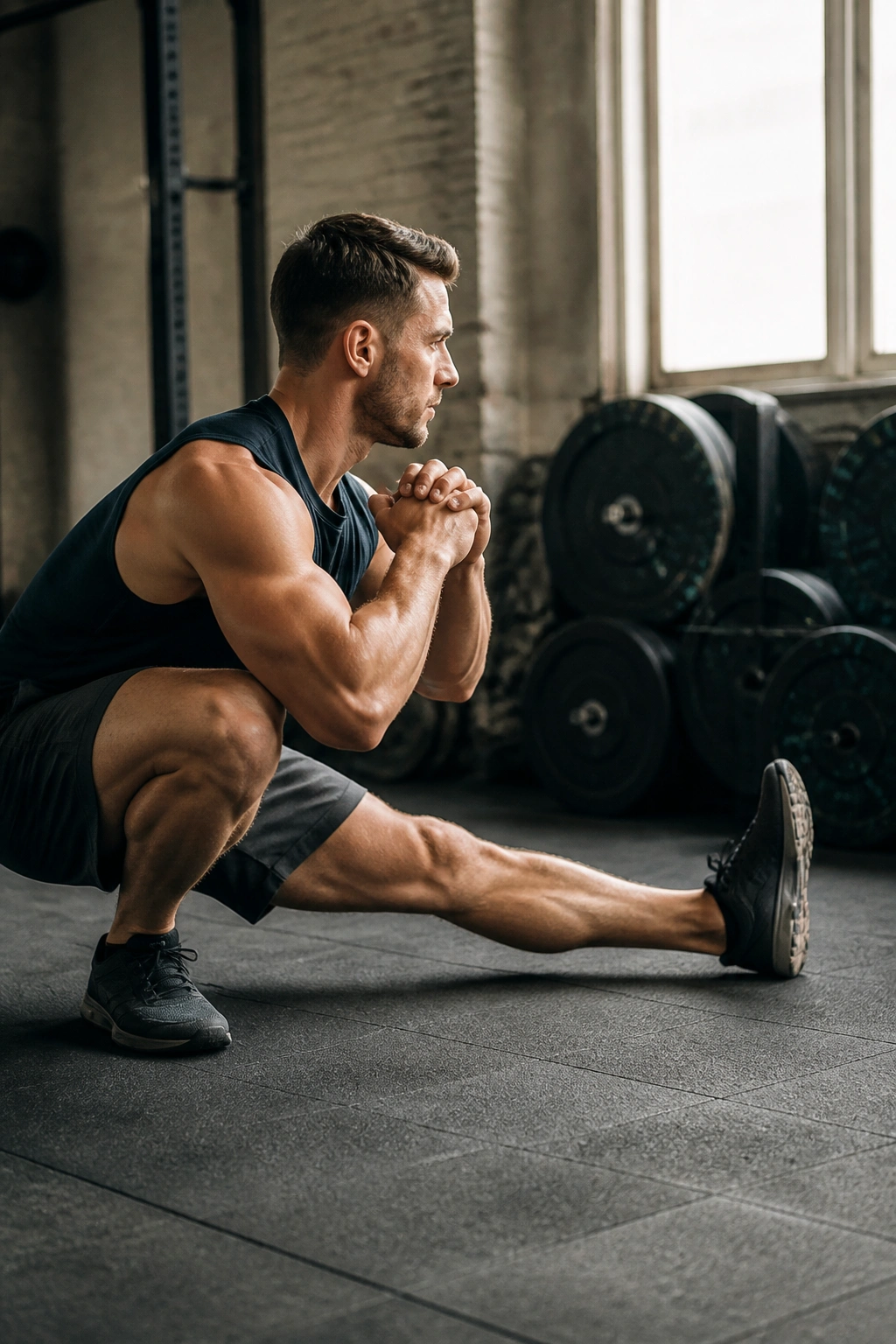
We spend a lot of time moving forward and backward in the gym, but we rarely move laterally. Cossack squats—essentially a deep side lunge—fix that. They challenge your mobility in the hips and ankles while building strength in the adductors (inner thighs) and glutes.
Start in a very wide stance. Shift your weight to one side, squatting down as deep as you can on that leg while keeping the other leg completely straight with the toe pointed toward the ceiling. Stand back up and repeat on the other side.
This is a deep stretch and a strength move combined. If you cannot get low, do not worry; keep the range of motion comfortable and strive to go an inch deeper each week. It is a fantastic way to open up tight hips.
18. Pistol Squats
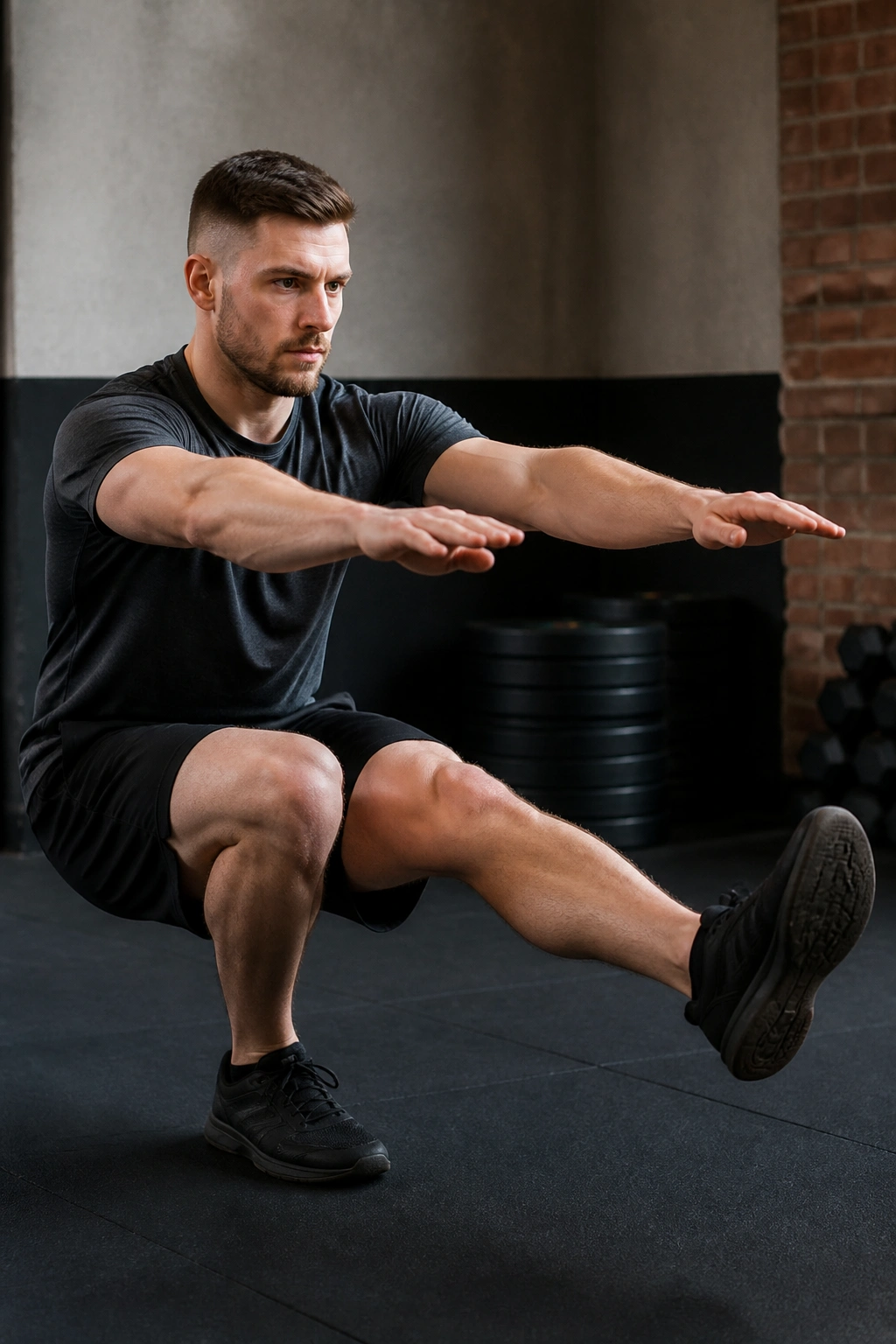
The pistol squat is the ultimate test of single-leg strength, balance, and mobility. It requires a high degree of ankle dorsiflexion, hip strength, and core control. If you can perform a clean pistol squat, you have a solid foundation of functional leg strength.
Stand on one leg, extend the other straight out in front of you, and squat down until your butt touches your heel. It is harder than it sounds. If you cannot do it yet, hold onto a doorframe or a vertical pole to assist your balance until you build the necessary strength.
This is not just about the quads. You have to stabilize the entire leg from the ankle up. It is a total-body effort to stay upright. Once you master these, you will rarely suffer from the strength imbalances that plague so many lifters.
19. Standing Calf Raises
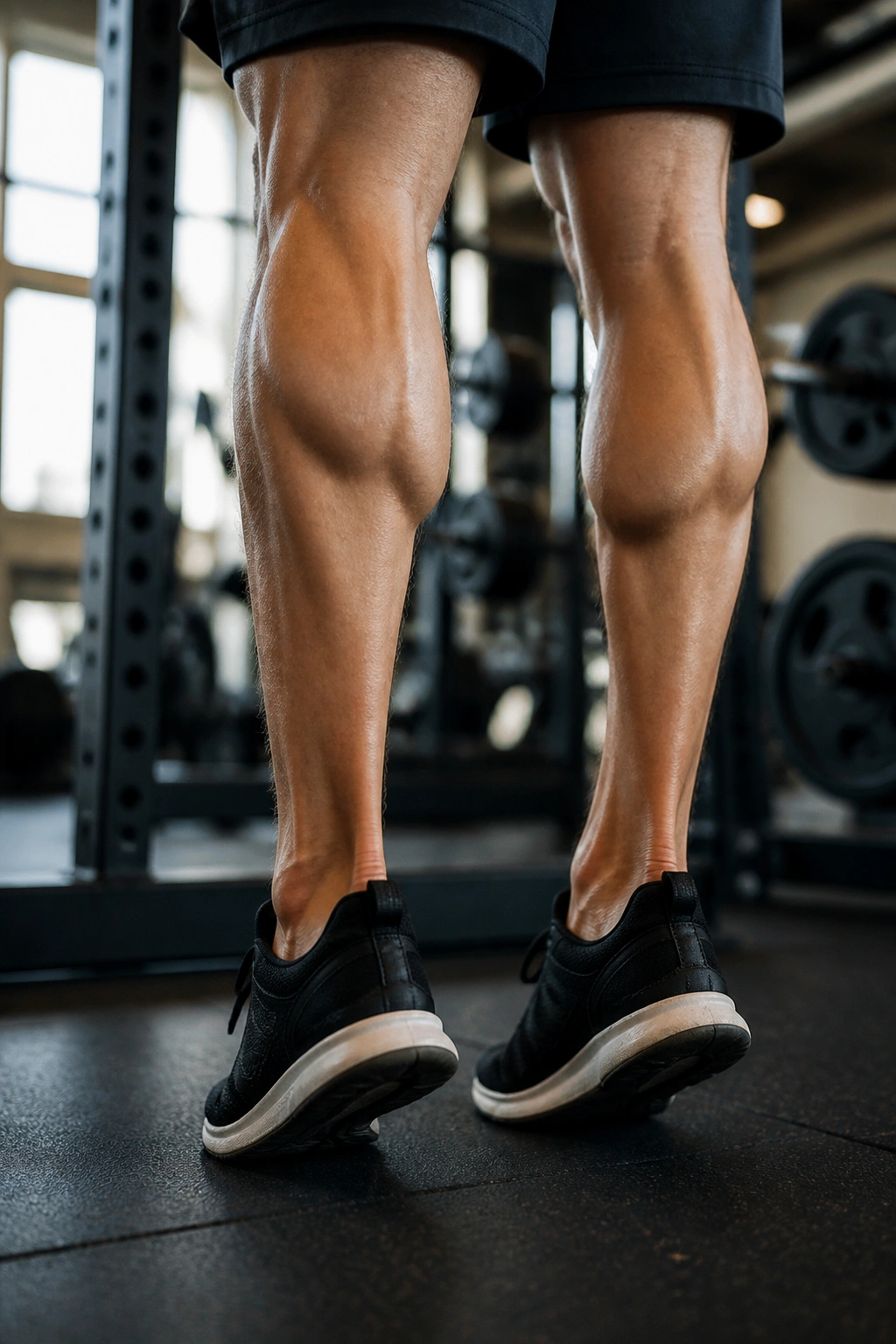
Calves are often neglected because they are slow to grow, but ignoring them is a mistake if you want complete lower-body development. The standing calf raise targets the gastrocnemius, the large, visible muscle of the calf, because the knee is kept straight.
Go through the full range of motion. Drop your heels as low as possible to get a deep stretch at the bottom, then explode up onto your toes for a full contraction at the top. Do not bounce.
A common mistake is using the momentum of your knees to help you lift. Keep your legs locked straight—not hyperextended, but straight—the entire time. If you use your knees, you are turning it into a different exercise.
20. Seated Calf Raises
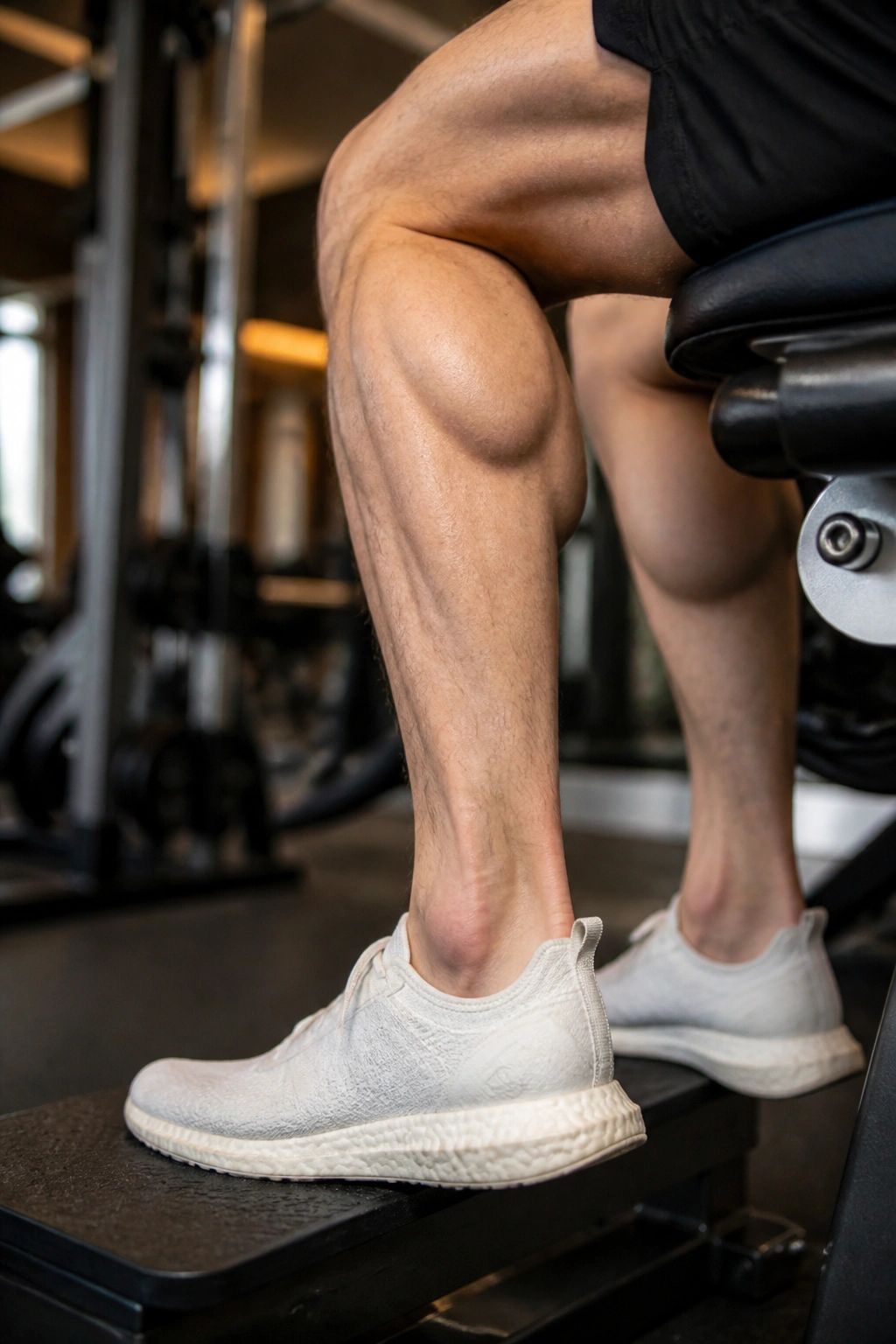
When your knees are bent, the gastrocnemius is shortened and cannot contribute much to the movement. This shifts the load to the soleus, the muscle lying underneath the gastrocnemius. You need to train the seated calf raise to fully develop the lower calf and ankle stability.
Because the soleus is a postural muscle composed mostly of slow-twitch fibers, it often responds better to higher rep ranges. Try sets of 15 to 20 reps. You need to create a significant amount of “time under tension” to force these muscles to adapt.
Focus on the squeeze. At the top of the rep, hold the contraction for two full seconds. It will burn, but that is the only way to get true growth in the lower leg.
21. Glute Ham Raises
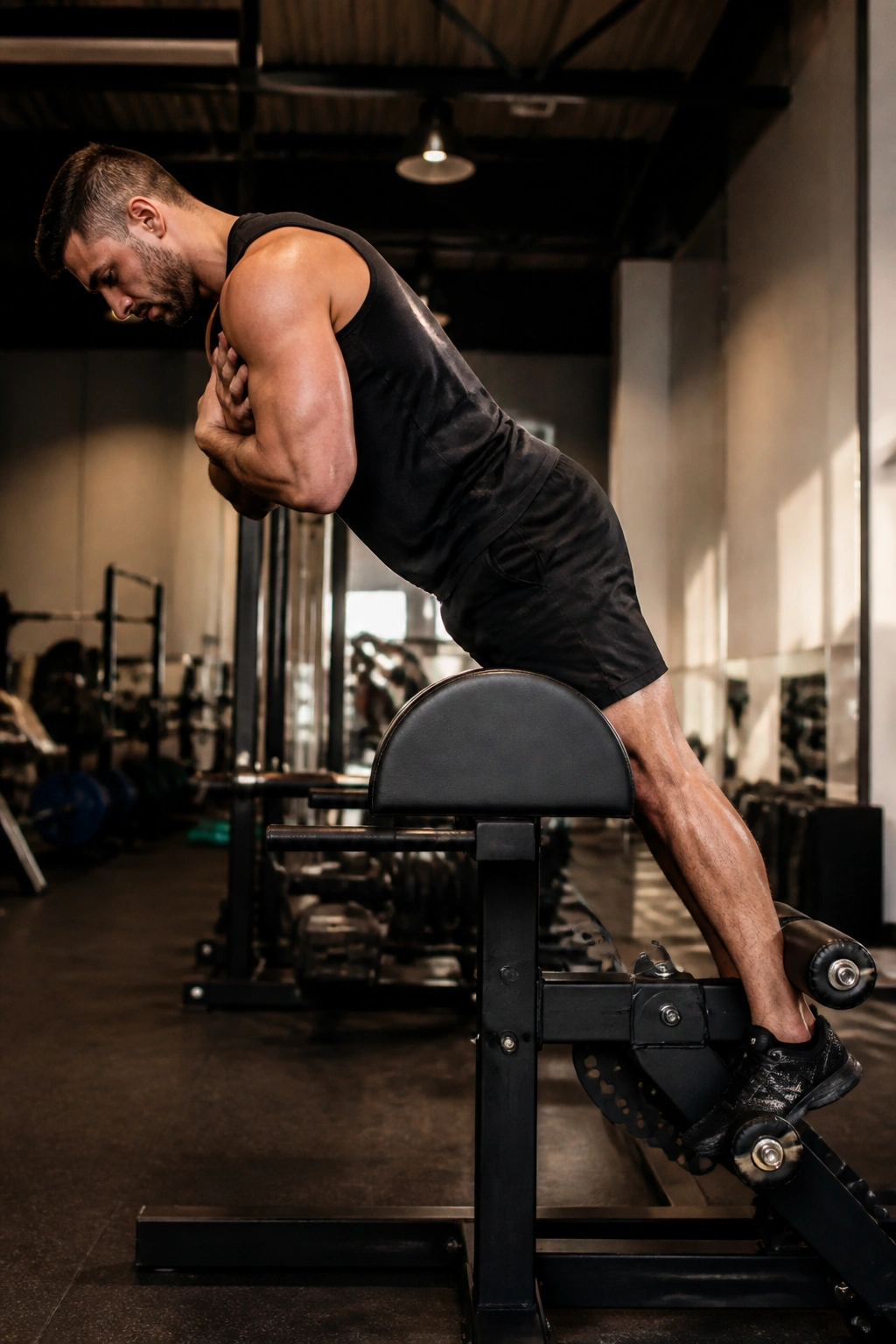
If you have access to a Glute Ham Developer (GHD) machine, use it. It is arguably the best machine in the gym for posterior chain development. It works both the hamstrings and the glutes simultaneously, and the movement pattern is more natural than a rigid leg curl.
Keep your back straight. As you lower your torso, push your feet into the foot plate to engage your hamstrings. When you pull yourself back up, you should feel a massive contraction in both your hamstrings and your glutes.
This is difficult. Do not be surprised if you can only do a few reps. Treat it like a heavy compound lift. It requires total body control and serious muscular endurance to get right.
22. Sled Pushes
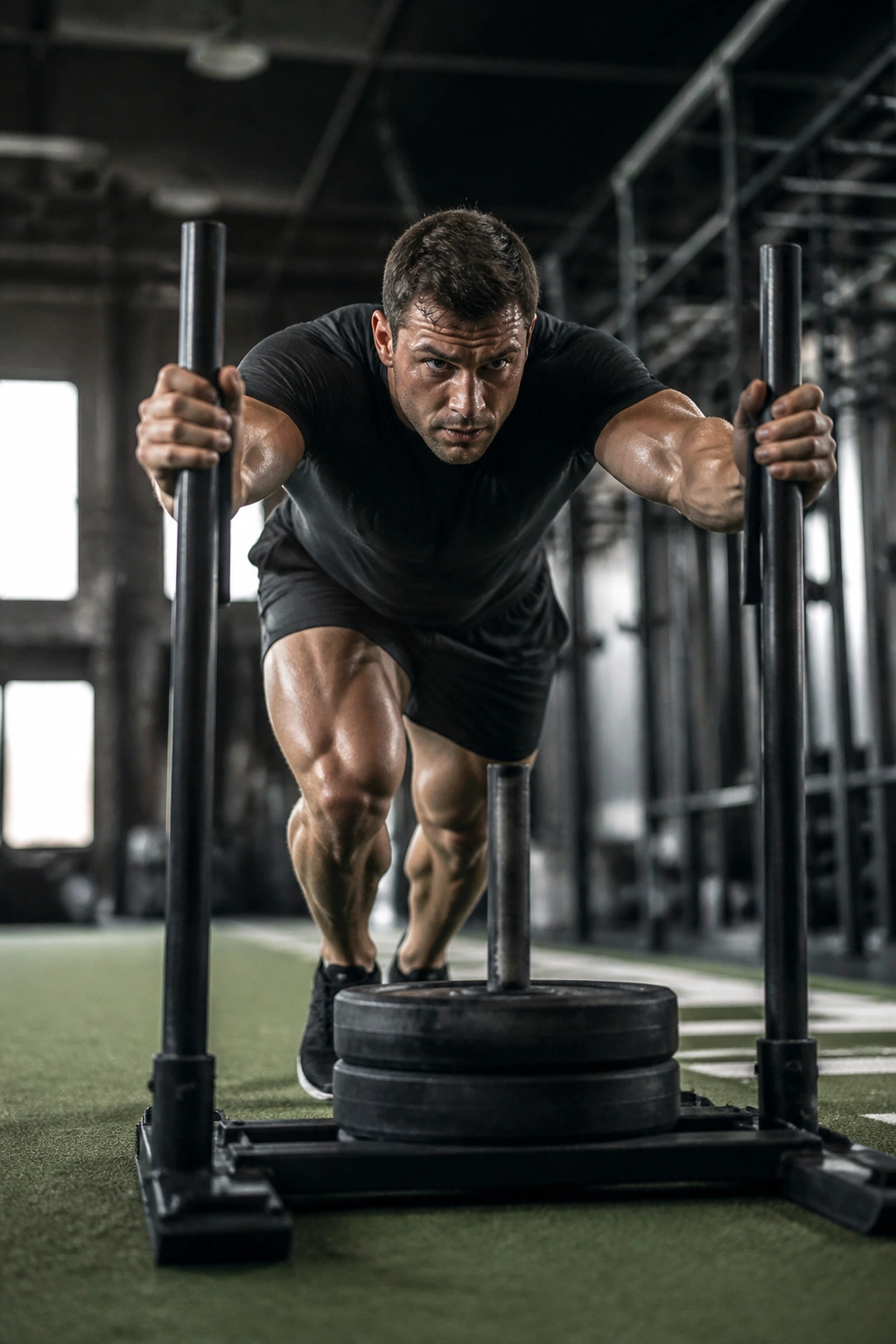
There is no better way to finish a leg workout than with a heavy sled push. It is purely concentric—meaning there is no eccentric (lowering) phase—which minimizes muscle soreness while maximizing metabolic stress. It is a brutal test of grit.
Keep your arms locked and your back flat. Drive through your mid-foot. Take short, powerful steps. If you try to take long strides, you will lose your balance and the sled will stall.
You can load it heavy for strength or light for conditioning. Either way, it forces your quads to work in a functional, athletic pattern. It is the perfect exercise to leave your legs absolutely spent after you have finished your heavy lifting.
Final Thoughts
Building strong legs does not require a secret formula or expensive equipment. It requires consistency, effort, and a focus on the fundamental movement patterns that humans are designed to perform: squatting, hinging, lunging, and pushing. Pick three or four of these exercises, train them hard, and watch your lower body strength transform.
Remember that recovery is just as important as the work itself. Your legs are large muscle groups that require time to repair and rebuild. Do not try to max out on every exercise, every single session. Balance your heavy compound lifts with the isolation work, and keep your form pristine. The results will come.
