



The stretch should feel like a cable pulling your hips backward, not like your spine is folding in half. When you get the straight leg deadlift right, the tension isolates the hamstrings and glutes with surgical precision. When you get it wrong, you end up with a sore lower back and a nagging sense that you missed the target entirely. Most people struggle with this movement because they treat it like a simple bend-over-and-touch-the-floor exercise. That approach misses the entire point of the hip hinge.
The straight leg deadlift is not about getting the weight to the floor. It is about how far back you can push your hips before your hamstrings hit their maximum stretch. Your knees stay soft but stationary, your back remains braced, and your hamstrings carry the load. If you feel this in your lumbar spine, you have lost the hinge. If you feel it deep in the belly of your hamstrings, you have found the sweet spot. The following variations offer different angles, loading patterns, and stability demands, ensuring you can keep the stimulus fresh without resorting to heavy ego-lifting that compromises your form.
1. Traditional Barbell Straight Leg Deadlift
This is the baseline for posterior chain development. You start with the barbell resting on the floor or on pins set just below knee height. The key here is the path of the bar. It must stay glued to your legs the entire time. If the bar drifts away from your shins, the lever arm gets longer, putting massive, unnecessary torque on your lower back.
The Mechanics of the Hinge
Focus on driving your hips backward as if you are trying to touch a wall behind you with your glutes. Your knees should stay unlocked—never locked out—but they do not bend further as you descend. Think of them as shock absorbers, not hinges. The barbell travels straight down, scraping against your thighs and shins.
Proper Execution
- Keep your lats engaged to pull the bar into your legs.
- Keep your chin tucked slightly to maintain a neutral spine from tailbone to neck.
- Descend until you feel a significant stretch in the hamstrings, usually mid-shin or just below the knees, then reverse the movement by driving your hips forward.
Pro tip: Imagine you are trying to squeeze a hundred-dollar bill between your glutes at the top of the movement. This forces a hard glute contraction and prevents you from hyperextending your lower back.
2. Dumbbell Straight Leg Deadlift
Dumbbells allow for a more natural arm path than a rigid barbell. Because the weights are independent, you have more freedom to adjust your grip width, which can feel less constricting on the shoulders. This variation is particularly useful for people with longer limbs who find the fixed width of a barbell uncomfortable.
Why This Variation Works
With dumbbells, you can rotate your wrists so your palms face your shins throughout the movement. This grip adjustment often helps with lat engagement. Because the dumbbells can travel slightly alongside your legs rather than directly in front of them, it can be easier to keep the center of mass closer to your base of support.
How to Maximize the Stretch
- Hold the dumbbells with a neutral grip (palms facing each other) to keep your shoulders pulled back.
- Focus on “breaking” at the hips immediately.
- Let the weights hang naturally, but do not let your shoulders round forward to get the weights lower.
- Your range of motion ends when your hamstrings stop lengthening, not when the dumbbells touch the floor.
If you struggle to feel your hamstrings during the barbell version, switch to dumbbells for a few weeks. The ability to pull your hands closer to your body often solves the issue of the weight drifting forward.
3. Kettlebell Romanian Deadlift
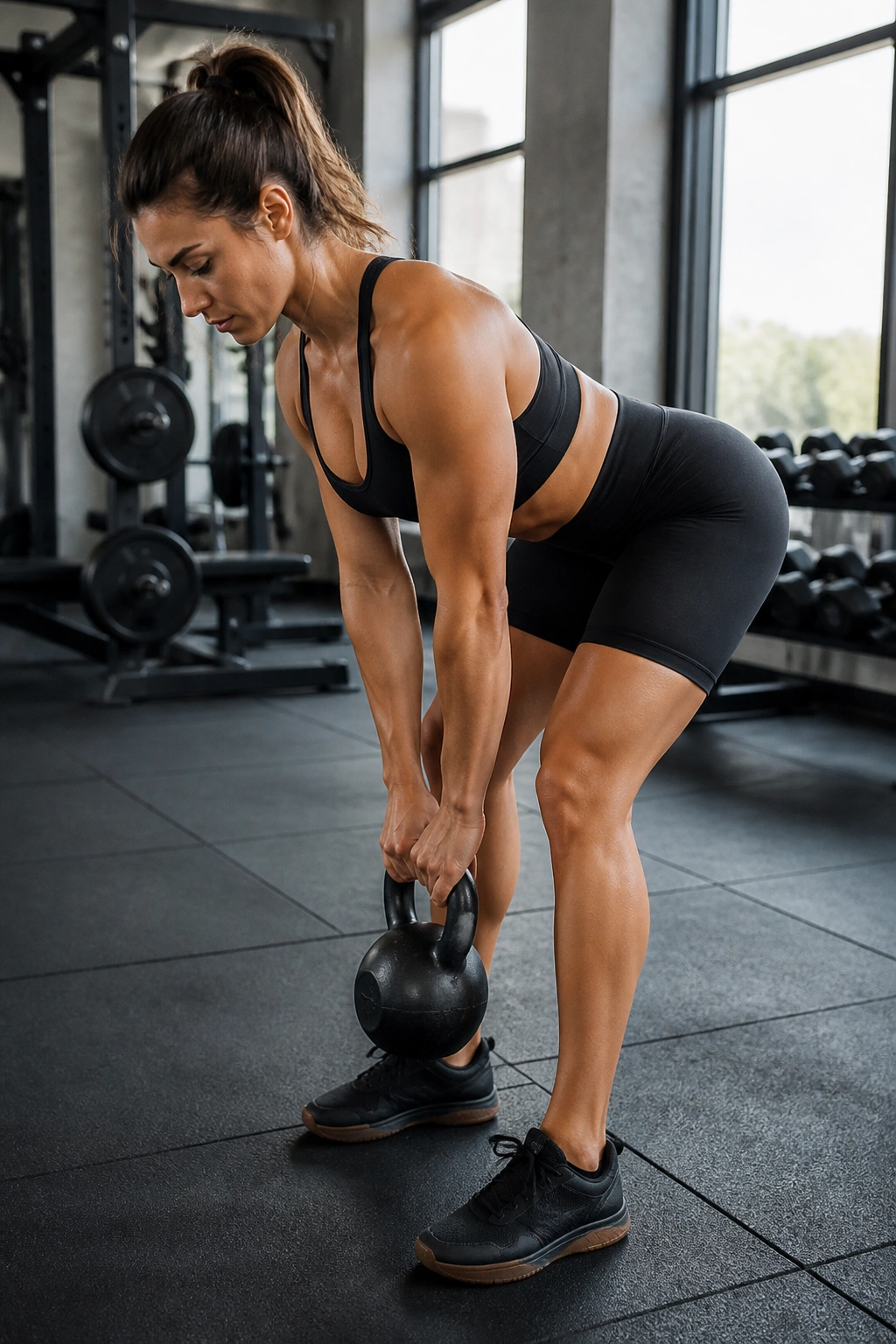
The kettlebell shifts the center of gravity slightly forward compared to a barbell, which changes the leverage against the hamstrings. Because you are holding a single weight (or two, if you are advanced) between your legs, you have to work harder to maintain a vertical bar path. It is a fantastic way to teach yourself the feeling of the hips pushing back.
The Center of Gravity Shift
Holding the kettlebell directly beneath your center of mass forces your posterior chain to stabilize the weight. If you let the kettlebell swing even an inch forward, your lower back will immediately signal that the weight is too heavy or the form is slipping. It provides instant biofeedback.
Technique Nuances
- Stand with your feet hip-width apart.
- Grasp the handle of the kettlebell firmly.
- Keep the bell tight against your body throughout the entire descent.
- As you ascend, think about “standing up” by pushing your feet through the floor, rather than pulling with your arms.
Warning: Do not try to round your shoulders to reach deeper. The depth comes from the hip hinge, not arm length. If you cannot reach the floor without rounding your back, stand on a small plate to shorten the distance.
4. Single-Leg Kettlebell Deadlift
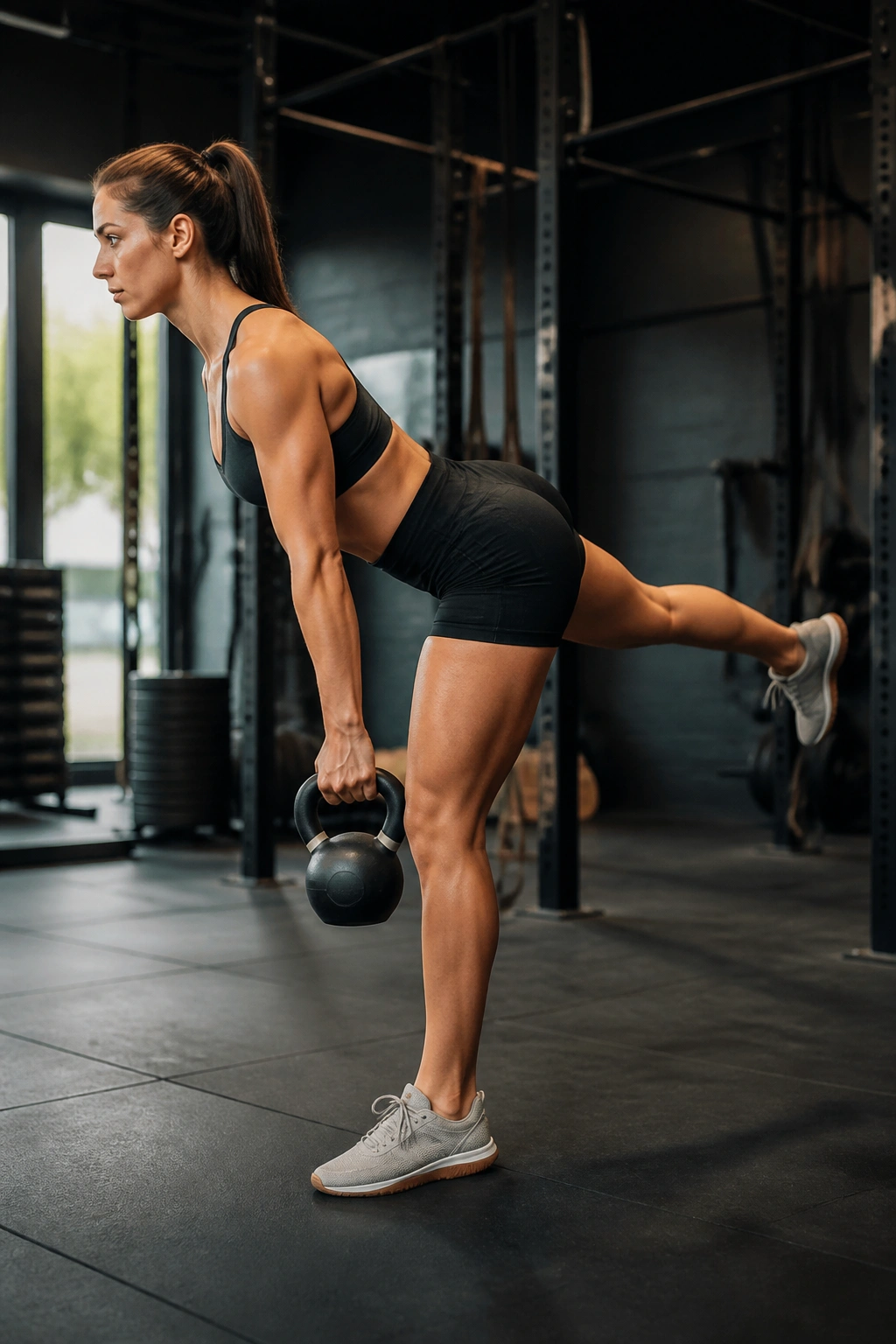
Balance is a skill, and this variation forces you to develop it. By isolating one leg, you remove the ability of the stronger leg to compensate for the weaker one. It is a humbling exercise that reveals muscle imbalances quickly. Your stabilizing muscles—the glute medius and the deep core—have to fire overtime to keep you upright.
Why It Builds Stability
Every time you perform a unilateral movement, you are training your body to handle forces in the real world. Most functional activities involve being on one leg for a fraction of a second. This move reinforces the connection between your foot, your glute, and your core.
How to Execute Safely
- Start with the kettlebell in the hand opposite the working leg.
- As you hinge, kick the non-working leg straight back, tracing a path in the air.
- Keep your hips square to the floor; do not let the hip of the floating leg rotate upward.
- If you wobble, use a wall or a rack for light support until your balance improves.
Think of yourself as a seesaw. Your head and your floating leg move as one unit, pivoting around your standing hip. If your head drops, the leg goes up. If the leg goes down, your torso must come up.
5. Band-Resisted Straight Leg Deadlift
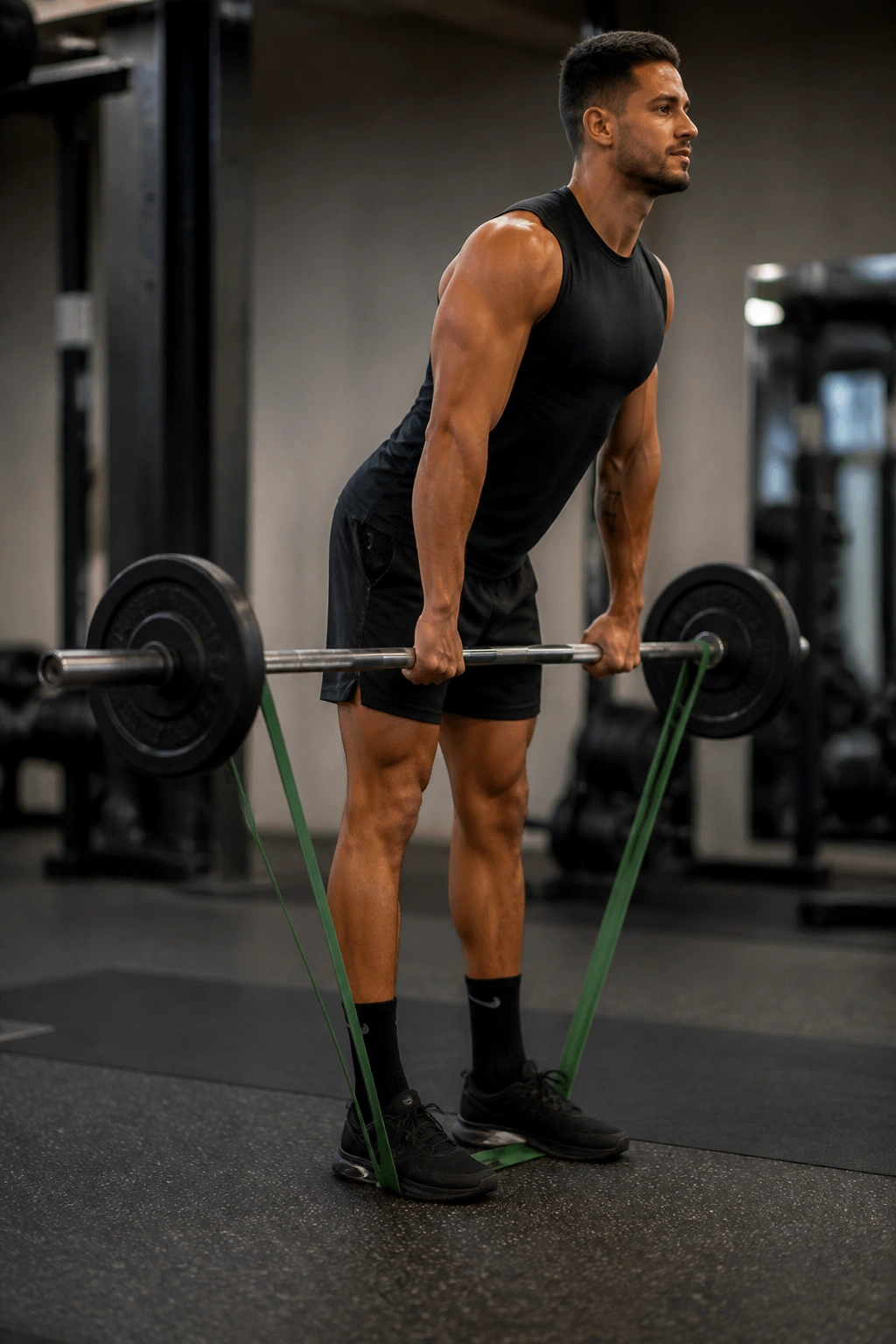
Accommodating resistance is one of the best tools for plateau busting. By attaching a resistance band to the barbell or holding it with dumbbells, you change the strength curve of the exercise. The movement becomes easier at the bottom (where you are weakest) and significantly harder at the top (where you are strongest).
Understanding the Tension
Gravity acts on the weight consistently, but a band acts on the weight based on how much it is stretched. At the bottom of the deadlift, the band is slack. As you stand up, the band stretches and creates massive tension. This forces you to accelerate through the finish of the movement, building explosive power in the glutes and hamstrings.
Setup Instructions
- Loop a resistance band around the barbell sleeves and anchor it to the floor (or a heavy dumbbell).
- If you are using free weights, step on the middle of a light band and hold the ends together with the weights.
- Perform your reps as normal, but focus on driving the hips into the band resistance at the top.
You will find that the “lockout” is much more difficult than a standard deadlift. This variation is brutal for muscle hypertrophy because it maintains high tension throughout the entire range of motion, rather than letting you rest at the top.
6. Deficit Straight Leg Deadlift
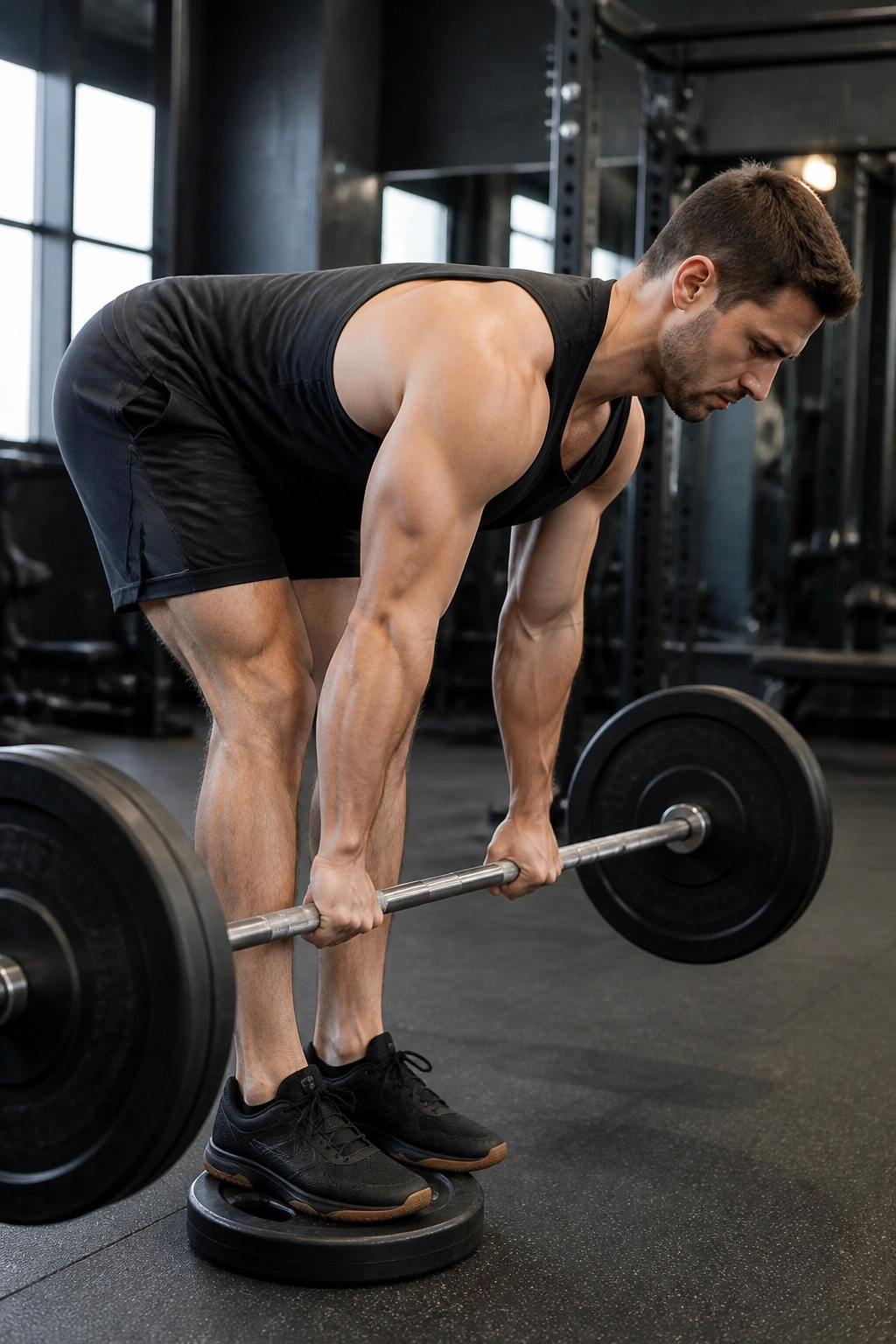
Adding a deficit increases the range of motion. By standing on a 2-to-4-inch plate or a low box, you force your hamstrings to stretch further than they would from the floor. This is not for everyone—only attempt this if you have the mobility to maintain a neutral spine at the increased depth.
When to Use This Variation
Only use this if you have mastered the standard deadlift and feel like you have hit a wall. The extra range of motion places the hamstrings in a position of maximum mechanical disadvantage, which creates a massive stimulus for growth. Do not go too heavy; the deficit makes the lift significantly harder.
Form Precautions
- Stand on a secure plate.
- Ensure your laces are clear of the edge to avoid tripping.
- Stop immediately if you feel your lower back start to round at the bottom.
- If your hamstrings feel like they are “grabbing” too hard, stick to the floor for a few more weeks of training.
This is a specific tool for a specific goal. Do not make this your “everyday” deadlift. Treat it as a specialty movement to improve your deep-stretch strength.
7. Pause-at-the-Bottom Straight Leg Deadlift
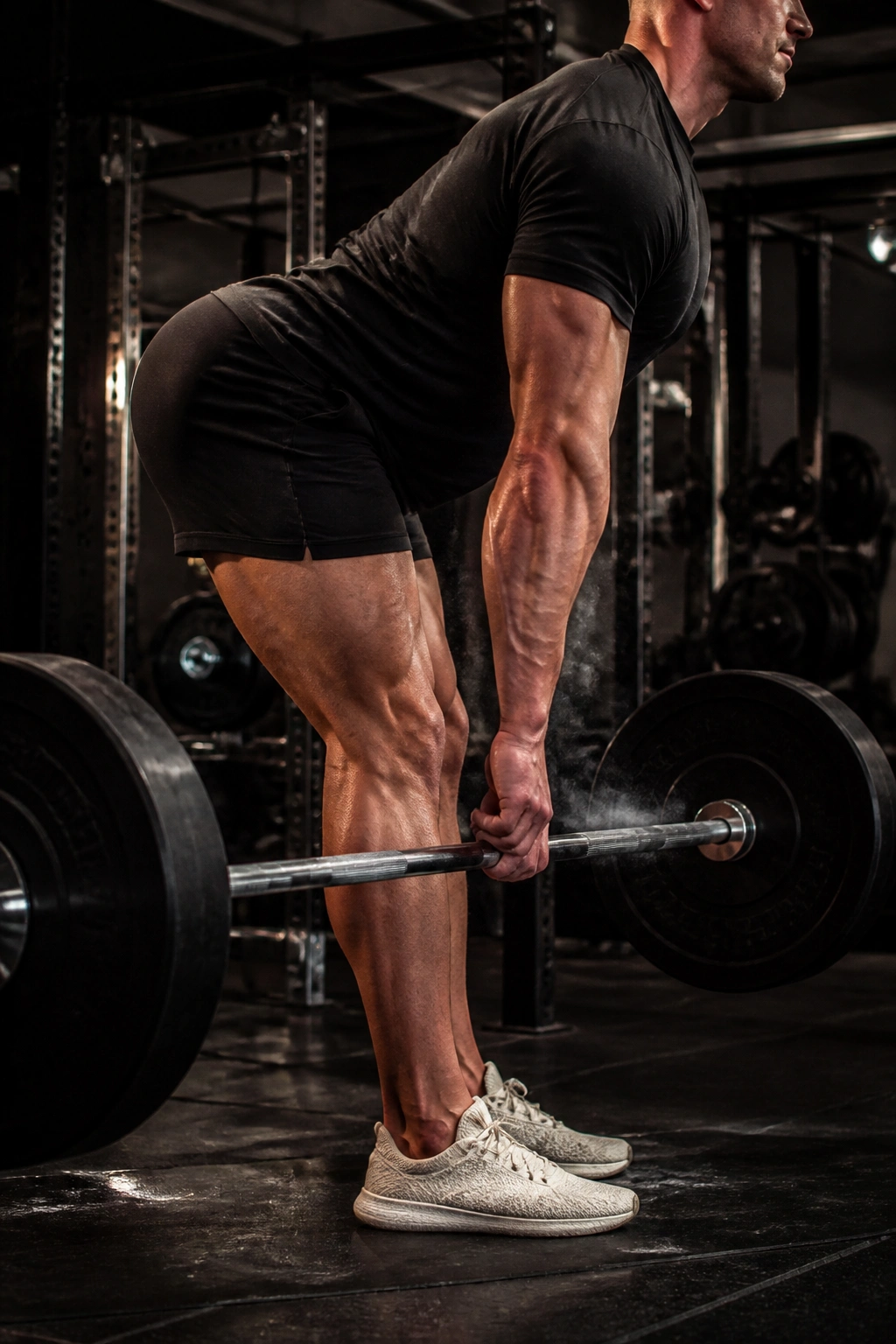
If you find yourself using momentum to bounce out of the bottom of your deadlifts, this is the fix. By stopping completely at the bottom for a “one-Mississippi” count, you eliminate all stored elastic energy. You are forced to start the lift from a dead stop, which requires pure muscular tension.
Why Momentum Is the Enemy
When you bounce, your tendons do most of the work, and your muscles get a free ride. By pausing, you force the hamstrings to generate the force necessary to start the movement. It is grueling, but it is the fastest way to build raw, controlled strength.
How to Implement
- Perform your hinge as usual.
- Once you reach the bottom of the stretch, hold the weight motionless for two full seconds.
- Ensure your core is braced—do not let the weight pull you down during the pause.
- Drive upward with intent.
You will likely need to drop the weight by 10 to 20 percent compared to your standard working sets. That is fine. The intensity of the pause makes up for the reduced load, and your hamstrings will feel the difference the next day.
8. Sumo-Stance Straight Leg Deadlift
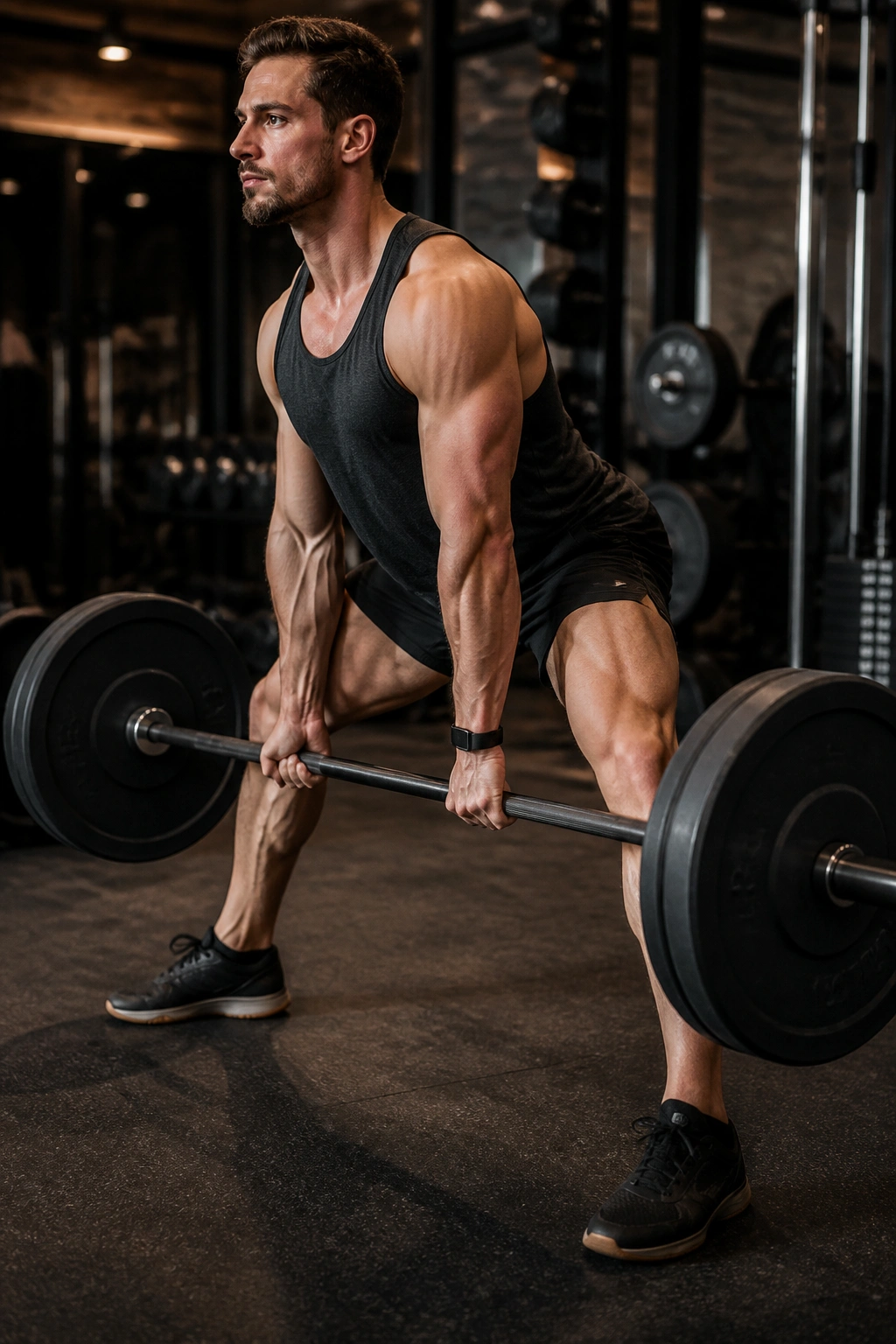
Most people think of sumo deadlifts as a way to engage the quads, but a sumo-stance straight leg deadlift shifts the focus to the inner hamstrings and the adductors. The wide stance changes the angle at the hip joint, providing a different recruitment pattern for the posterior chain.
Changing the Hip Angle
With your feet wider than shoulder-width, your hips sit in external rotation. This puts a unique stretch on the inner thigh muscles, which are often neglected in traditional deadlifting. It is an excellent variation for adding width and thickness to the inner hamstring tie-in.
Execution Details
- Widen your stance significantly, but keep your toes pointed mostly forward—not out to the sides like a squat.
- Grip the bar inside your knees.
- As you descend, focus on pushing your hips back just like the traditional version, but emphasize the feeling of the stretch inside your thighs.
- Keep your knees slightly wider than your ankles to ensure the tension stays on the posterior chain.
This variation can be tough on the groin if you go too wide, so start moderate. You are looking for a deep stretch, not a hamstring tear.
9. Single-Leg Dumbbell Romanian Deadlift
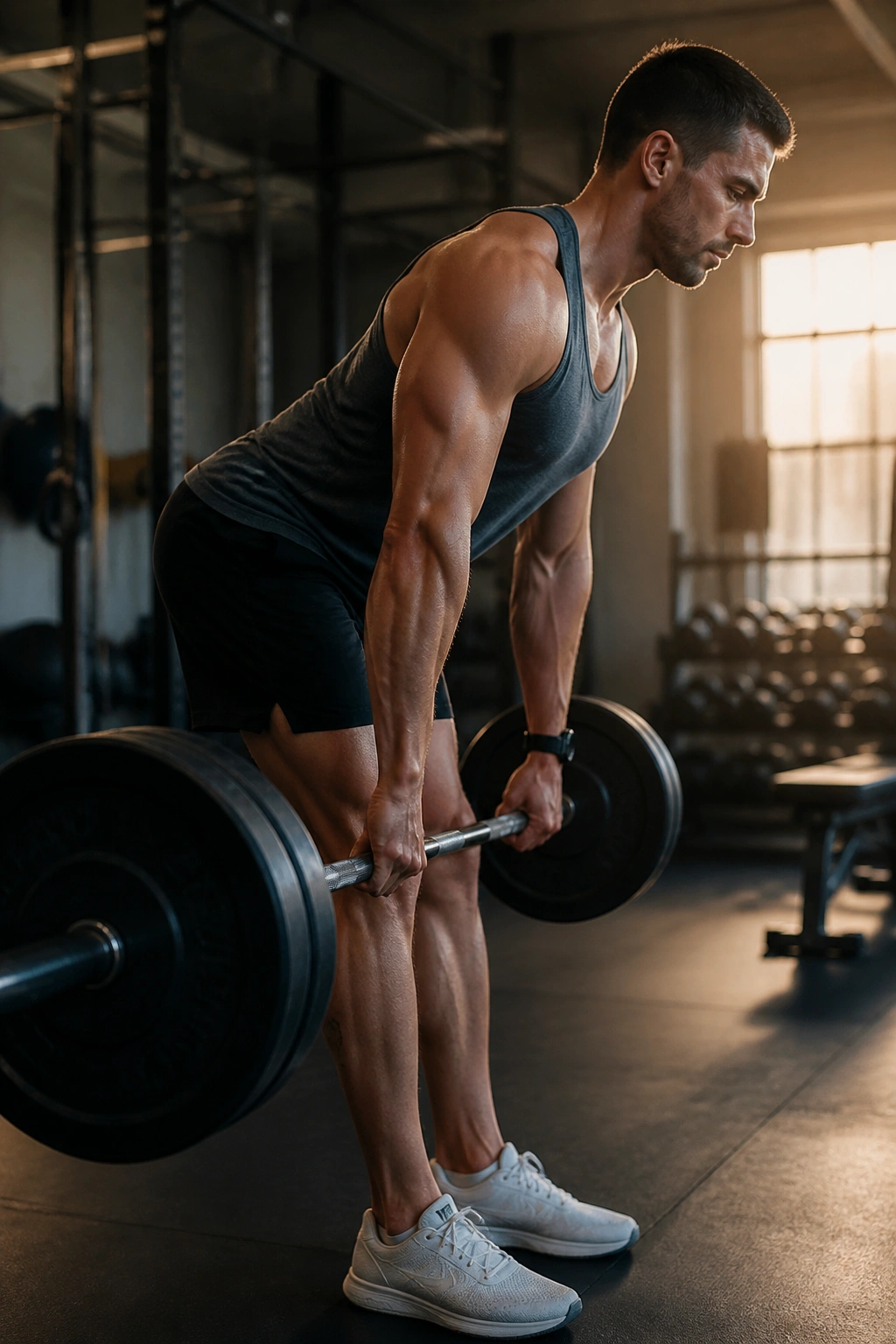
While the kettlebell version (mentioned earlier) is great for focus, the dumbbell version allows you to load each hand individually. This is better for people who find the single-kettlebell path difficult to balance. You can hold two dumbbells, one in each hand, which prevents the torso from twisting.
The Benefit of Symmetrical Loading
Holding a weight in each hand prevents the rotation that often happens when you hold one weight. It keeps your shoulders level and your lats engaged. It is technically “easier” to balance than the single-arm version, which allows you to use slightly heavier weights.
Mastering the Hinge
- Hold a dumbbell in each hand, palms facing your legs.
- Keep the dumbbells tight against your body, tracing your legs as you descend.
- Focus on the standing leg’s glute as the driver of the movement.
- Keep the gaze neutral—about three feet in front of you—to prevent neck strain.
Do not worry about how low the dumbbells go. If you can only reach knee height before your back starts to round, stop there. The hinge is more important than the depth.
10. Trap Bar Straight Leg Deadlift
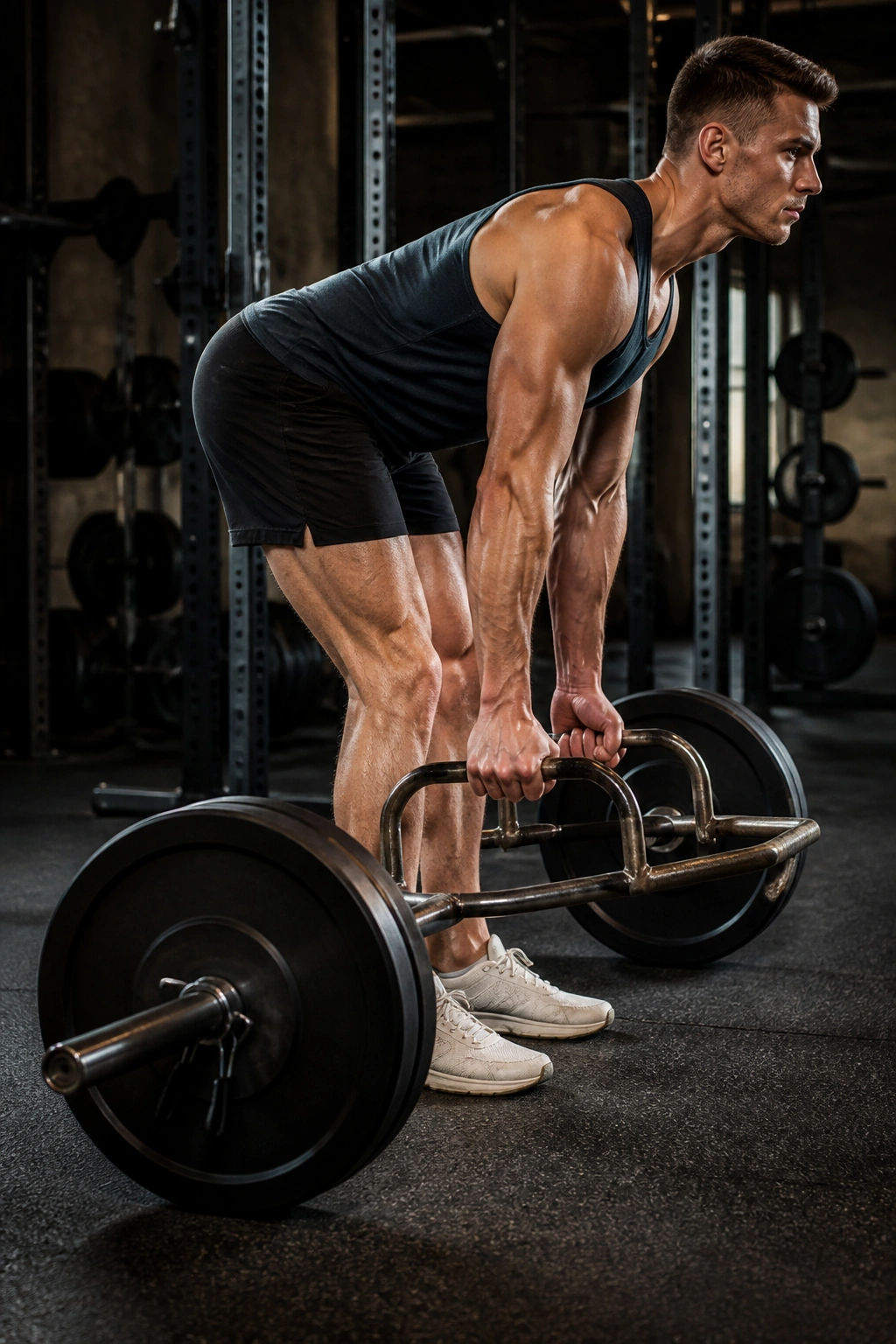
The trap bar (or hex bar) is arguably the safest way to perform a deadlift. Because you stand inside the bar, the weight is aligned with your center of gravity. This reduces the shear force on your lumbar spine significantly, making it the preferred choice for athletes or anyone with a history of back pain.
Why It’s a Game Changer for Back Health
Traditional barbells pull you forward; the trap bar pulls you straight down. This allows you to maintain a much more upright torso. You can load this variation heavier than almost any other because the risk of back injury is minimized.
Technique Nuances
- Step into the center of the trap bar.
- Push your hips back until you reach the handles.
- Keep your shins vertical.
- Drive up, focusing on the hamstrings and glutes, keeping the movement controlled.
If you are tall and struggle with long levers that make standard deadlifts feel awkward, the trap bar is your best friend. It accommodates different body types better than any other piece of gym equipment.
11. Cable Straight Leg Deadlift
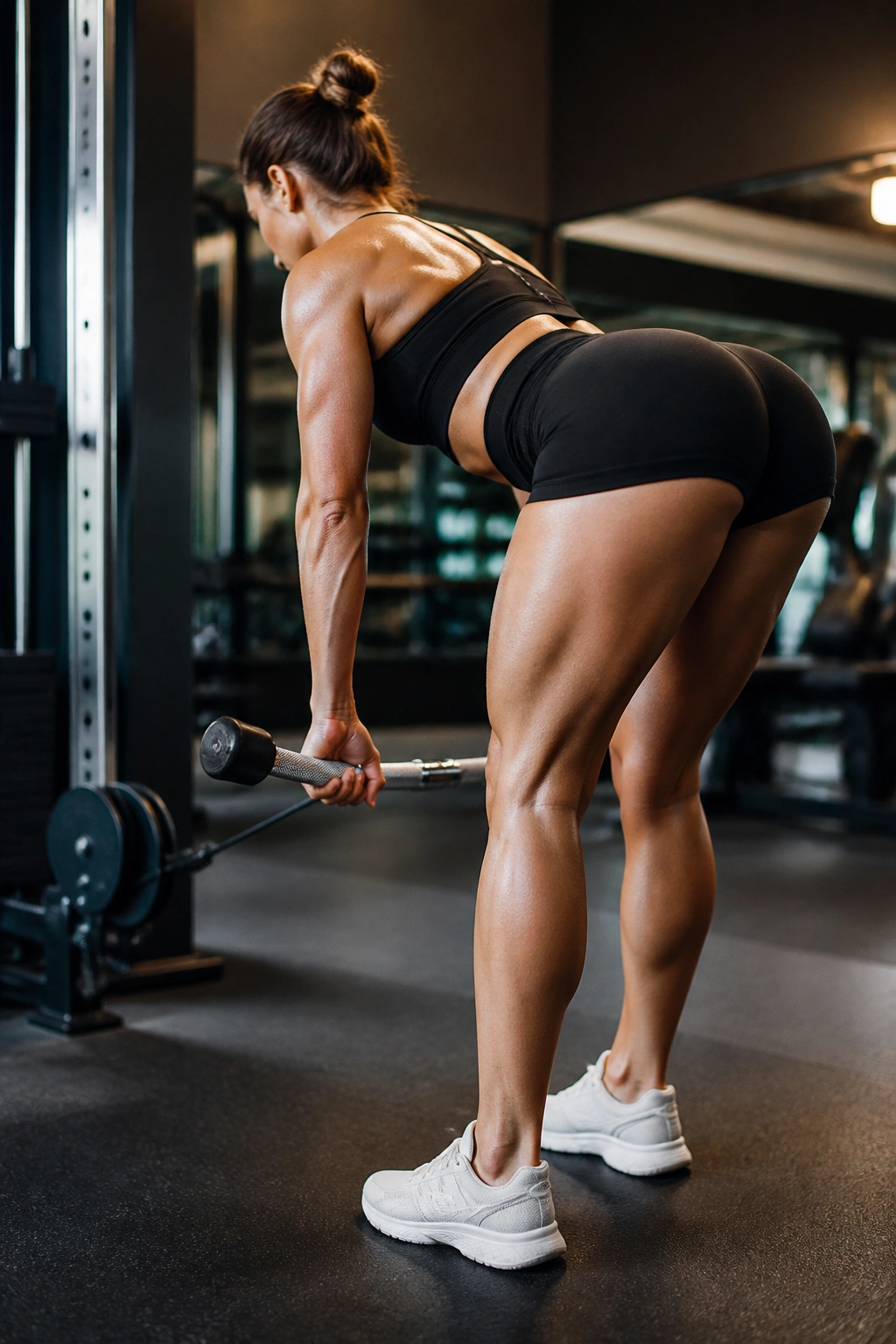
Cables provide constant tension, which is something free weights cannot do. With free weights, there are “dead spots” where gravity isn’t pulling on the target muscle as hard. With a cable, the resistance is constant from the bottom to the top.
The Constant Tension Principle
Because the cable is pulling at an angle, it keeps tension on the hamstrings even at the top of the movement. This constant load makes it an incredible finisher for high-volume work. You do not need heavy weight to get a deep, metabolic burn.
Setup and Form
- Attach a straight bar or a rope to the low pulley.
- Stand facing away from the machine, holding the attachment between your legs.
- Walk two steps forward to create tension.
- Hinge at the hips, letting the cable pull your glutes back.
- Stand tall, squeezing the glutes hard at the end.
This is a great tool for “feel.” You cannot use your ego here because the machine will simply pull you backward if you lose your balance. Focus on the squeeze.
12. Smith Machine Romanian Deadlift
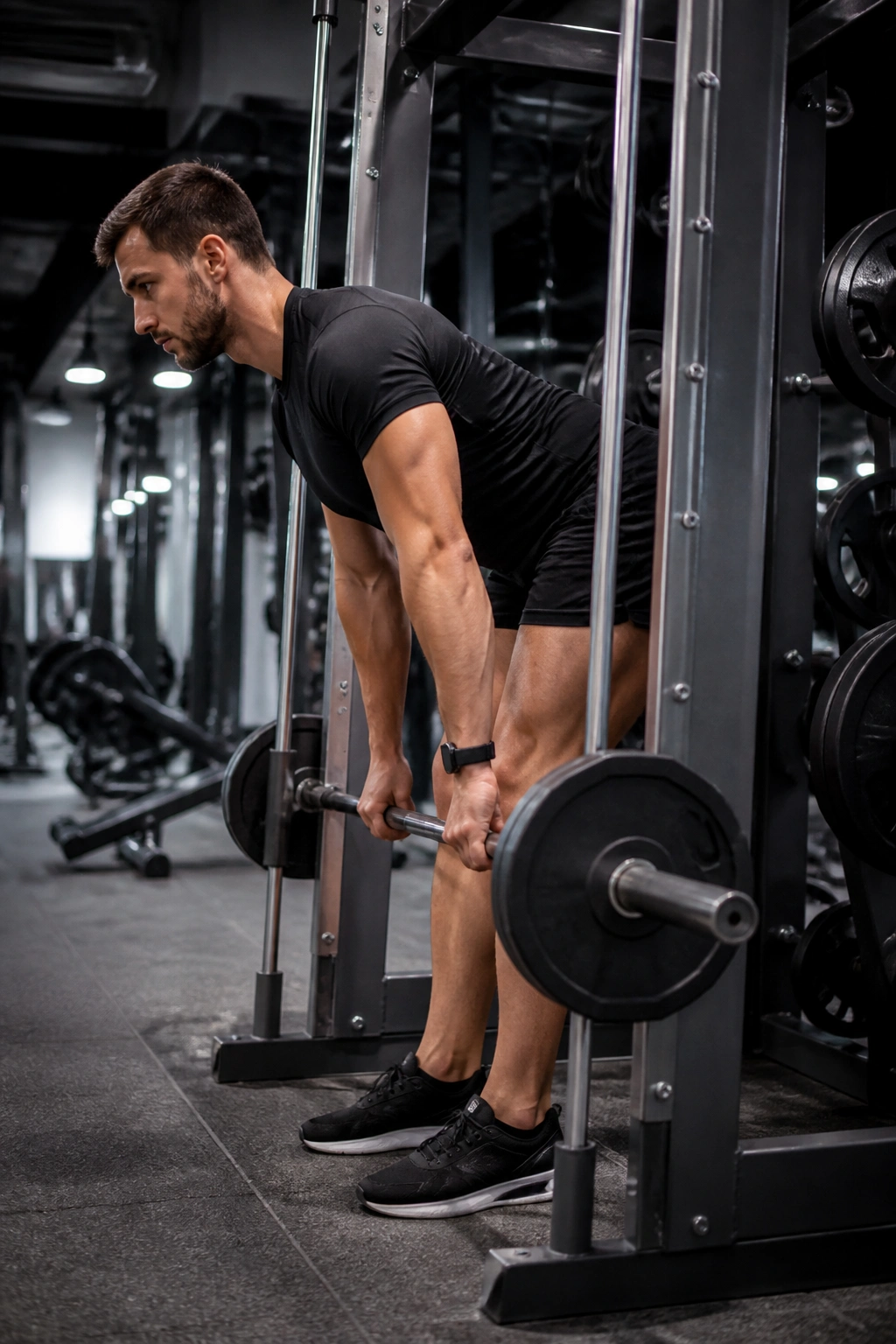
Many people dismiss the Smith Machine, but it is excellent for isolating the hamstrings. Because the bar is on a fixed path, you don’t have to worry about stabilizing the weight forward or backward. You can put 100% of your focus on the hip hinge.
Isolation Over Stability
The fixed bar path allows you to position your feet perfectly to target the hamstrings. You can push your hips back as far as possible without worrying about the bar drifting. It is essentially a “guarded” deadlift.
Finding the Right Foot Placement
- Step slightly in front of the bar.
- Hinge your hips back, ensuring the bar travels down your legs.
- Because the bar can’t move away, you can safely focus on the stretch.
- The movement feels robotic, but that is the point—it’s about hypertrophy, not functional stability.
Use this when your stabilizer muscles are fatigued from other exercises and you just want to fry your hamstrings without falling over.
13. Suitcase Straight Leg Deadlift
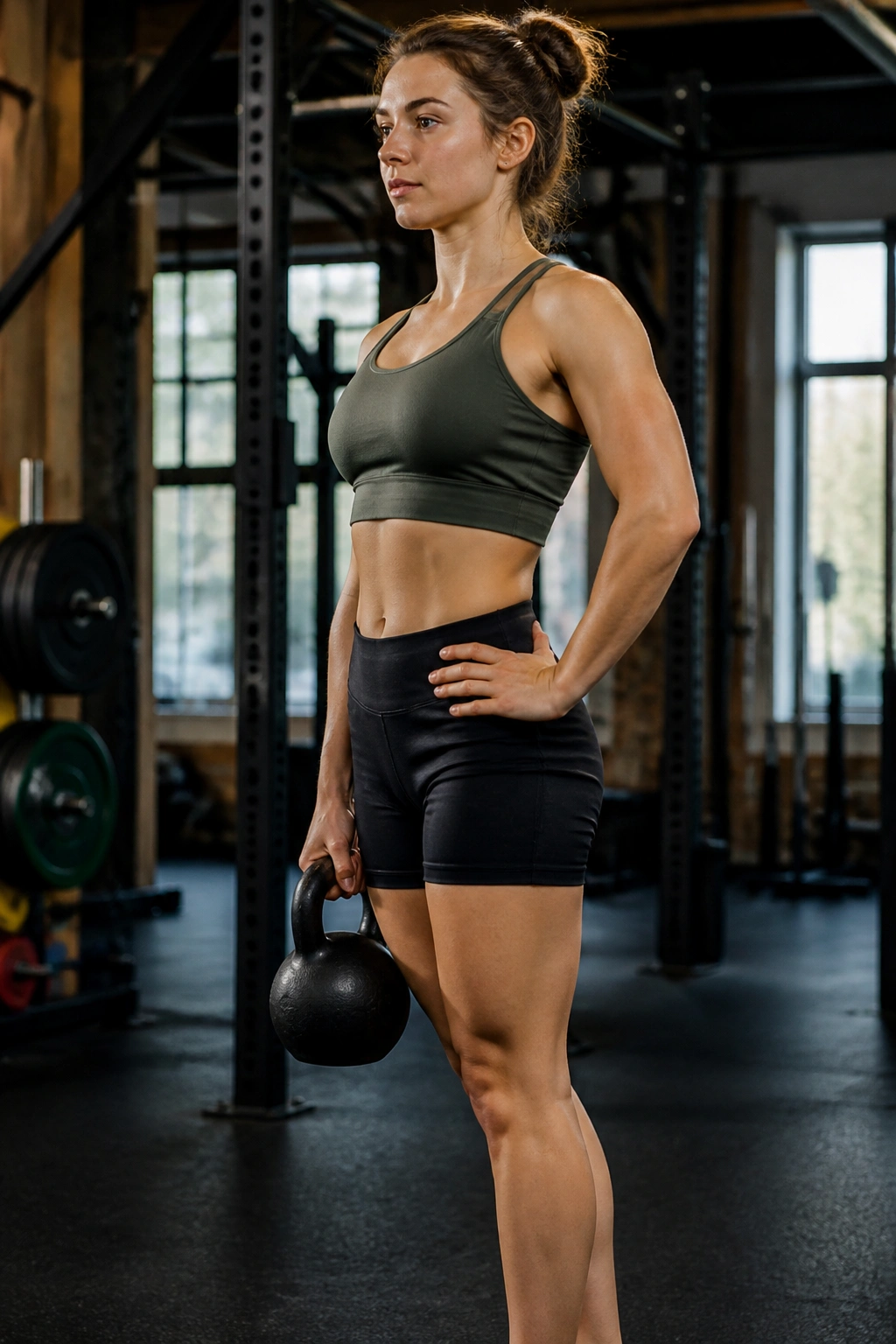
This is a classic “real world” strength movement. By holding a heavy dumbbell or kettlebell in only one hand (like a suitcase), you introduce a lateral anti-rotation component. Your core must fire intensely to stop your torso from tilting toward the weight.
Anti-Rotation Core Work
This variation hits your hamstrings, but it also creates a deep, intense workout for your obliques and deep stabilizers. You will find that the hamstring on the weighted side works differently than the hamstring on the empty side.
Critical Cues
- Hold the weight in one hand.
- Keep your torso perfectly straight—do not lean toward the weight.
- Perform the hinge as usual.
- Ensure your hips do not shift to the side as you descend.
This is a great movement for correcting side-to-side imbalances. If one side feels weaker or “disconnected,” this will force that side to catch up.
14. B-Stance Romanian Deadlift
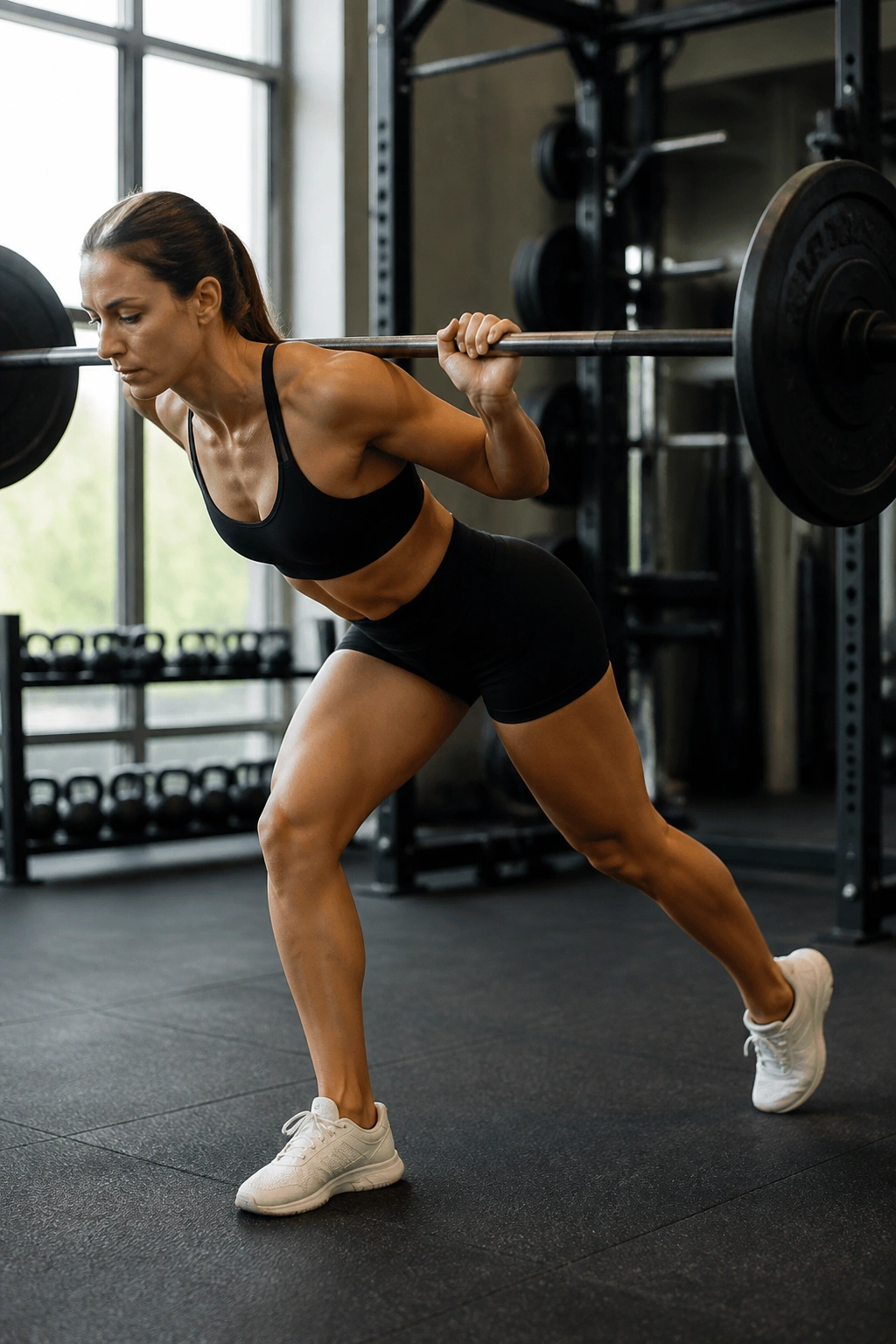
The B-Stance (often called the “kickstand” method) is a bridge between a bilateral (two-leg) and unilateral (one-leg) lift. You place one foot slightly behind the other, with the toe of the back foot resting on the ground for balance. This takes the balance requirement of a single-leg lift out of the equation while allowing you to focus on the working leg.
The Best of Both Worlds
You get the stability of two feet on the floor, but 80-90% of the load goes onto the front leg. It is the perfect way to get unilateral benefits without having to fight for balance the entire time.
How to Set It Up
- Stand with your feet hip-width apart.
- Slide one foot back about six inches, resting only the toe on the ground.
- Perform the hinge, keeping almost all your weight on the front heel.
- Feel the stretch primarily in the front leg’s hamstring.
This is a favorite among powerlifters and bodybuilders alike because it is safer than a full single-leg deadlift but more targeted than a standard two-leg deadlift.
15. Glute-Focused Straight Leg Deadlift (with toes elevated)
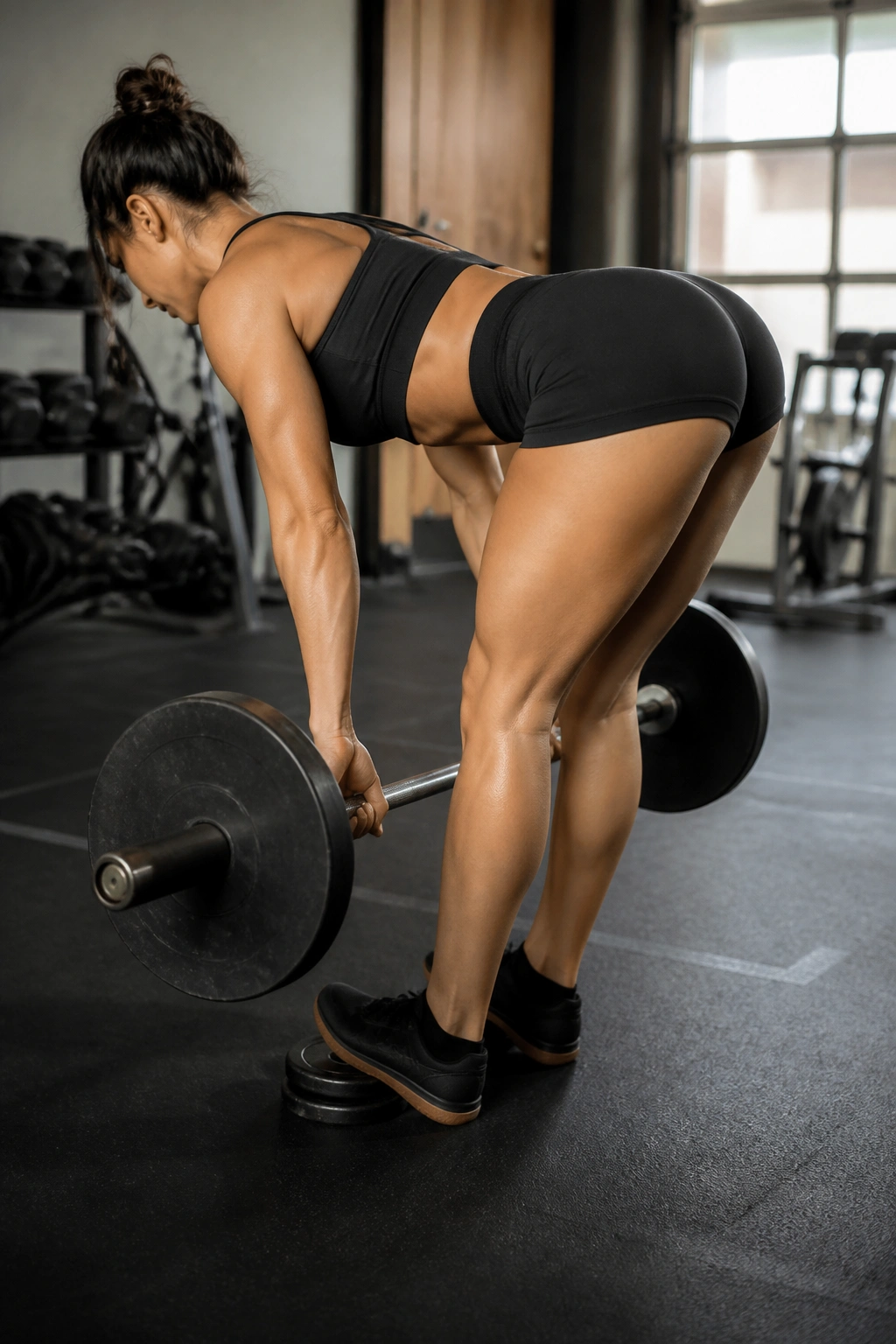
Elevating your toes on a small wedge or a pair of plates forces your center of gravity backward. This change in leverage increases the stretch on the glutes and the upper portion of the hamstrings. It is a subtle change, but you will feel it immediately.
Changing the Leverage
By lifting the toes, you create a slight dorsiflexion, which changes how the kinetic chain interacts with the floor. It forces your glutes to stay engaged throughout the hinge. This is an advanced tweak for those who want to prioritize posterior chain development.
How to Do It
- Place a wedge or two small 2.5-pound plates under the front of your feet.
- Perform a standard straight leg deadlift.
- Notice how much deeper the stretch feels in the glutes at the bottom of the movement.
- Maintain a neutral spine; the elevation does not change the need for a rigid back.
This is the final level of detail. Use this when you have mastered all the other variations and want to squeeze every ounce of performance out of your posterior chain training.
Final Thoughts
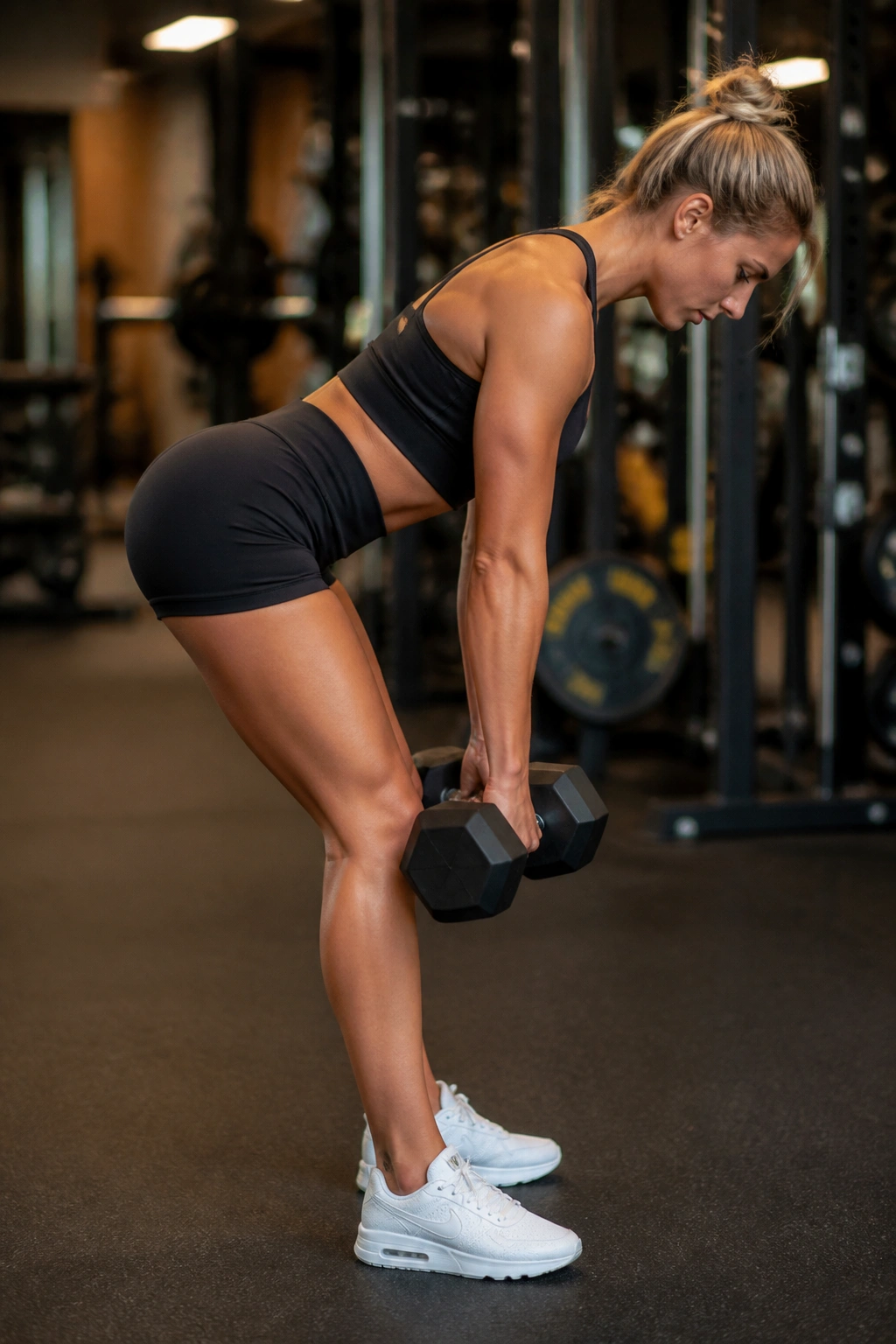
The straight leg deadlift is not complicated, but it is unforgiving. It requires a level of body awareness that many people simply don’t train. Whether you are using a barbell, a trap bar, or a single dumbbell, the rules remain the same: brace the core, hinge at the hips, and pull with the hamstrings.
Do not try to force a deep range of motion if your mobility isn’t there yet. It is far better to do a perfect rep with a small range of motion than a sloppy rep that risks your lower back. Stick to the variations that allow you to feel the muscle working. If a variation feels awkward or just doesn’t connect, move on. Your anatomy is unique, and the best exercise is the one that lets you challenge your hamstrings without causing pain where it doesn’t belong. Keep your form tight, your movements deliberate, and your focus on the stretch.
