



Most people spend a massive portion of their day sitting down. Whether you work at a desk, commute in a car, or spend evenings on the couch, the result is the same: the glutes become inactive, tight, or downright lazy. This phenomenon, often called “gluteal amnesia,” doesn’t just make your jeans fit differently—it places excessive stress on your lower back, knees, and hips. When the gluteus maximus isn’t firing correctly, your body compensates by using smaller muscles that were never designed to handle the heavy lifting of movement.
Reclaiming your glute strength requires more than just doing a few squats. You have to focus on hip extension. This biomechanical movement—the act of moving your thigh behind your torso—is the primary function of the glutes. If you aren’t training this specific movement pattern with intent and load, you are leaving your strongest muscles underdeveloped. Building a resilient posterior chain takes specific, targeted work that goes beyond standard leg day fare.
It is easy to get caught up in flashy gym movements, but the most effective glute training relies on mastering the mechanics of how the hip joint hinges. You want to feel the muscle contracting, shortening, and lengthening under tension. If you finish a workout and feel it more in your lower back than your glutes, something is wrong. Stop chasing reps and start chasing the burn in the right place. These eighteen exercises are designed to hit the glutes from every angle, ensuring you build power, stability, and shape without sacrificing your form.
1. Glute Bridge
This is the foundational movement for everyone, from absolute beginners to advanced athletes. You start on your back, knees bent, feet flat on the floor, and lift your hips toward the ceiling. It might look simple, but most people mess this up by arching their lower back instead of squeezing their glutes. If you feel your hamstrings cramping or your back taking the strain, you are doing it wrong.
How to Execute Properly
The key is to maintain a neutral spine. Imagine there is a string attached to your pubic bone pulling you straight up, not toward your head. Tuck your chin slightly to keep the neck neutral. Before you even lift, engage your core. As you bridge up, drive through your heels. Think about “shortening” the distance between your ribcage and your pelvis. At the top, hold for a solid two seconds and squeeze the glutes as hard as possible.
Pro tip: Place a small resistance band around your knees. Pushing outward against the band during the bridge recruits the glute medius, adding a lateral stability component to a vertical movement.
2. Single-Leg Glute Bridge
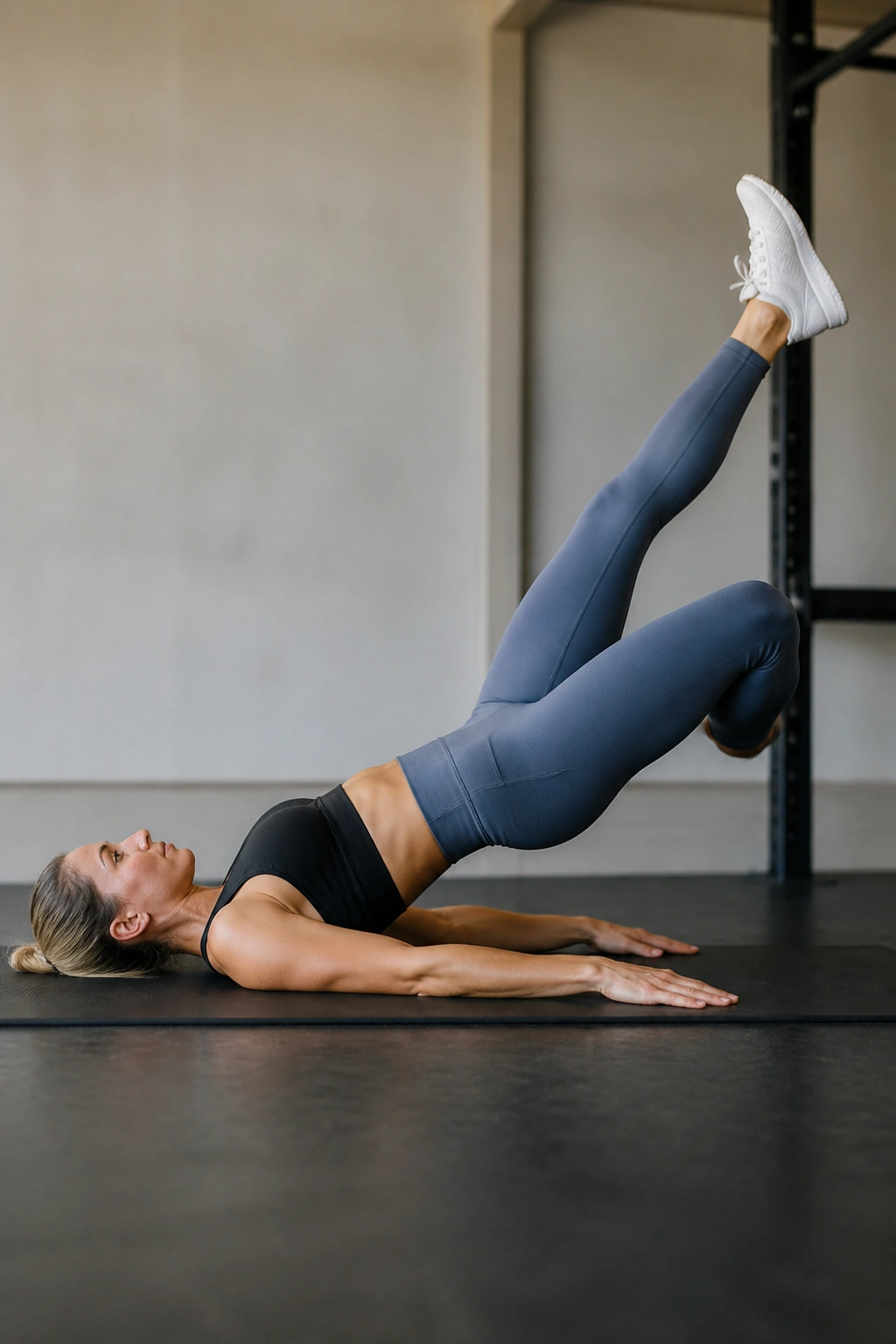
Once the standard bridge becomes easy, moving to a single-leg variation is necessary to challenge your stability. Training unilaterally reveals muscular imbalances that two-legged exercises hide. You will quickly find that one glute is significantly stronger or better at firing than the other. This variation forces your core to stabilize your pelvis, which prevents the hips from tilting side-to-side.
The Mechanism of Stability
When you lift one foot off the ground, the glute of the working leg has to work overtime to keep your pelvis level. This is where you develop that deep, functional strength. You should aim for a straight line from your shoulder to your knee at the peak of the lift. Keep your non-working leg tucked into your chest to avoid using momentum to swing your hips up. If your hips wobble, slow down. Controlled movement is the only way to build true strength in this position.
3. Barbell Hip Thrust
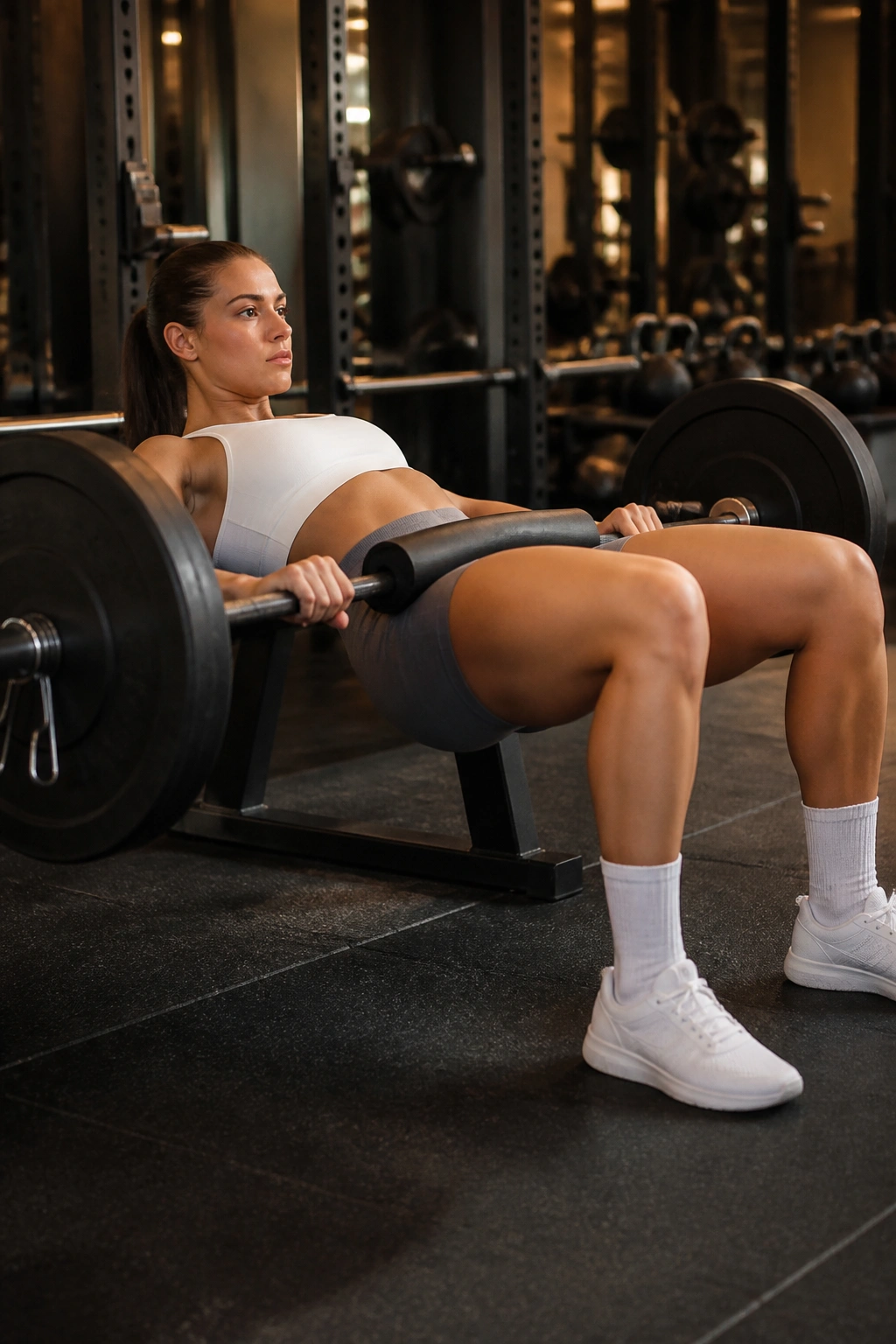
The barbell hip thrust is widely considered the king of glute exercises because it allows for immense loading. Unlike squats or deadlifts, this move places the tension directly on the glutes throughout the entire range of motion. Because you are using a barbell, you can progressively overload the movement, which is essential for muscle hypertrophy. Do not sacrifice the quality of the squeeze just to move heavy plates.
Setting Up the Rack
You need a bench or a sturdy platform behind you. Roll the barbell over your hips—use a thick pad so the metal doesn’t bruise your pelvic bone. Your shoulders should be anchored on the bench. When you thrust up, your shins should remain vertical at the top. If your feet are too far forward, you will feel it in your hamstrings. If they are too close, it hits your quads. Find that sweet spot where your glutes take all the load.
4. Dumbbell Hip Thrust
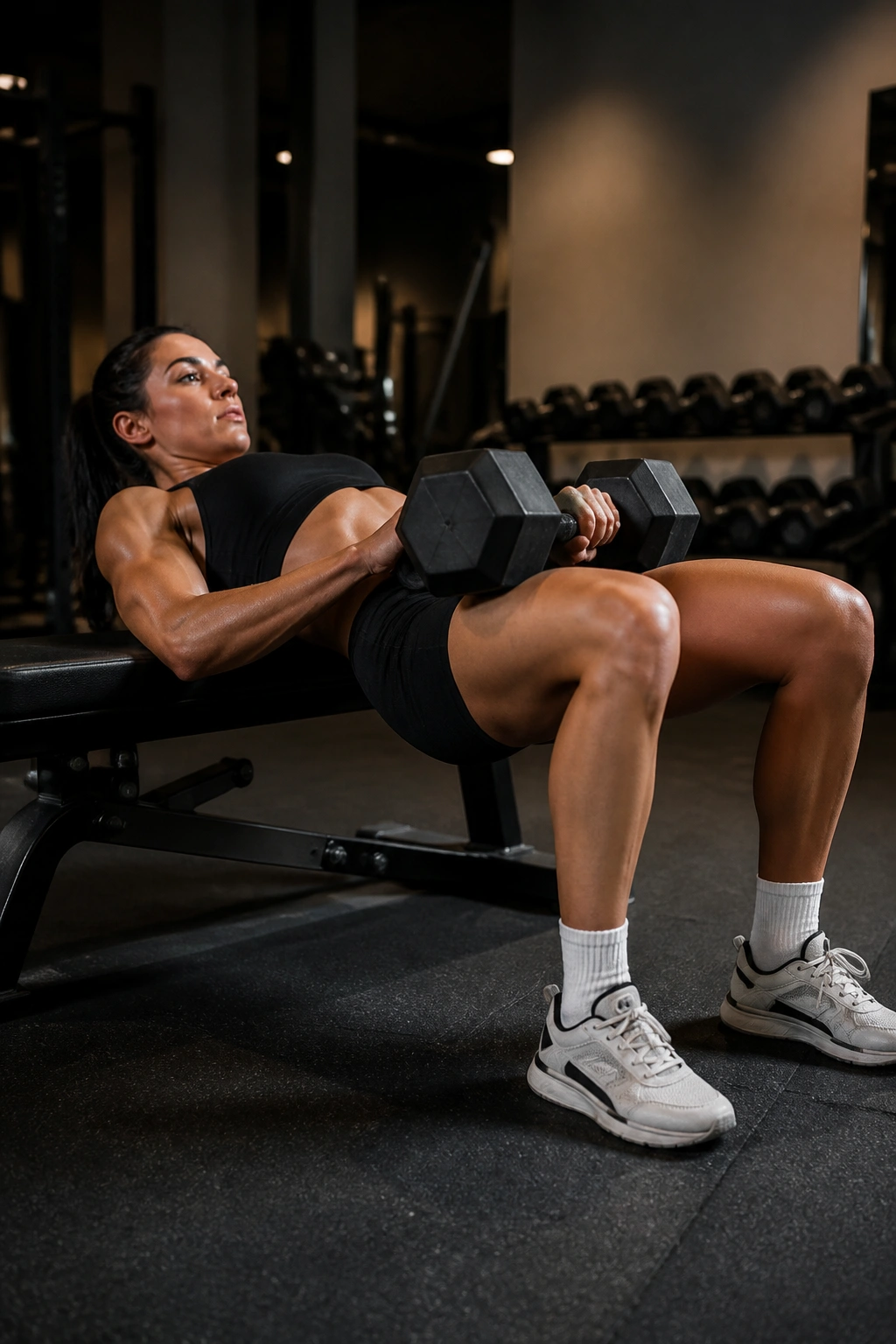
If you do not have access to a heavy barbell or a crowded gym setup, the dumbbell hip thrust is an excellent alternative. While you cannot load it as heavily as a barbell, you can manipulate the tempo to increase time under tension. Holding a heavy dumbbell on your hips provides a consistent vertical load that forces the glutes to work hard to reach full hip extension.
Tempo Manipulation
Since the weight is limited, use a three-second eccentric (lowering) phase. Lower the weight slowly, feeling the stretch in the glutes, then explode up into the extension. The pause at the top is non-negotiable. Hold that contraction for a full second. You will find that this creates a metabolic demand that matches or exceeds heavy barbell work, often leading to a better “mind-muscle connection” for those struggling to feel their glutes firing.
5. Cable Kickbacks
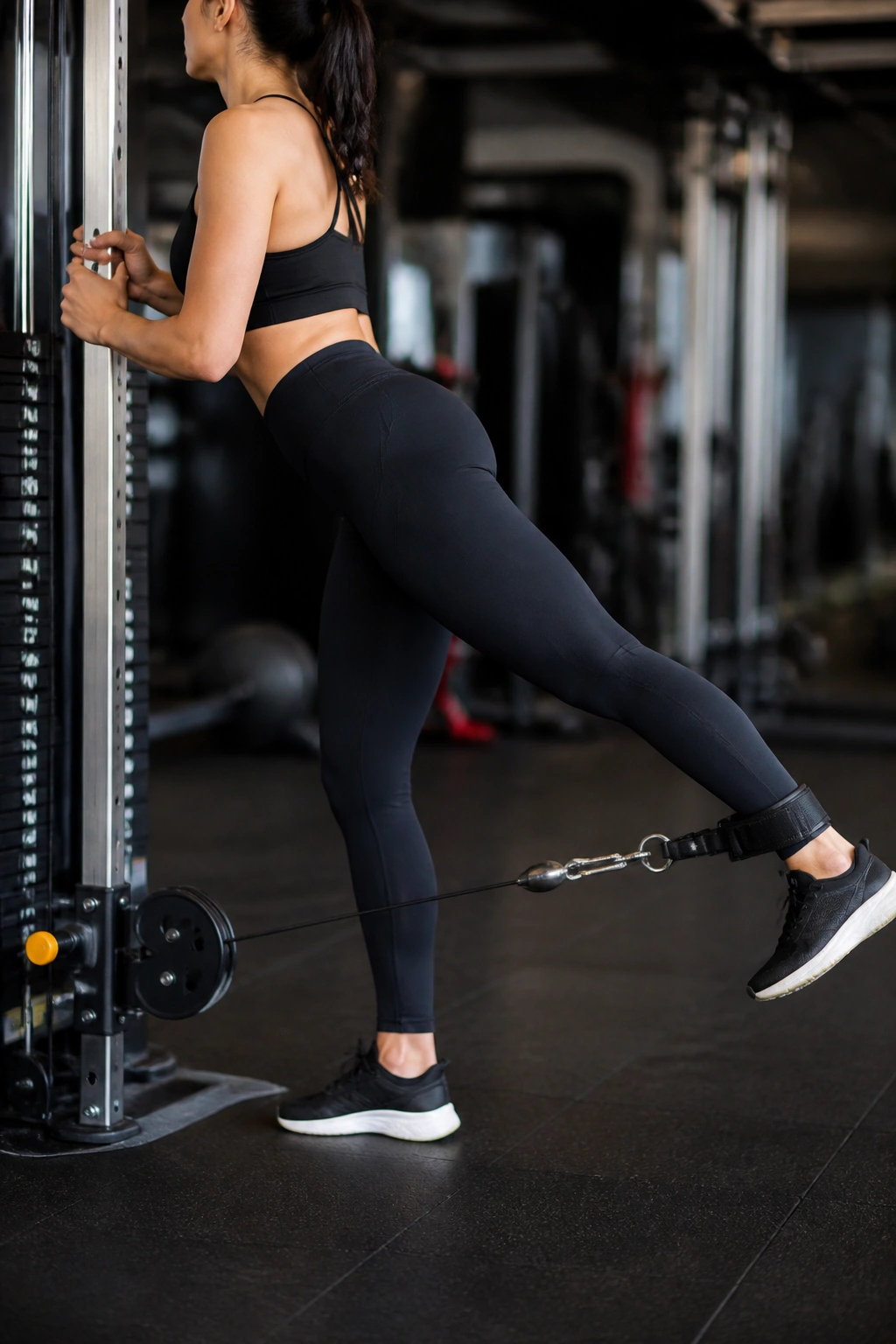
This movement isolates the glutes by removing the lower back from the equation. By using a cable machine, you maintain constant tension on the muscle throughout the full range of motion. Attach a cuff to your ankle, set the pulley to the lowest position, and move your leg backward in an arc. This is a finishing exercise—do not treat it like a heavy compound lift.
Perfecting the Arc
Stand facing the cable machine and hold onto the structure for balance. Do not lean your entire torso forward to compensate for the weight; keep your spine rigid. As you kick back, visualize pulling your heel toward the ceiling while simultaneously pushing it away from your body. You should feel a deep burn in the glute of the working leg. If you start arching your lower back to get the leg higher, the weight is too heavy or your range of motion is too big. Reduce the weight and focus on the squeeze.
6. Romanian Deadlift (RDL)
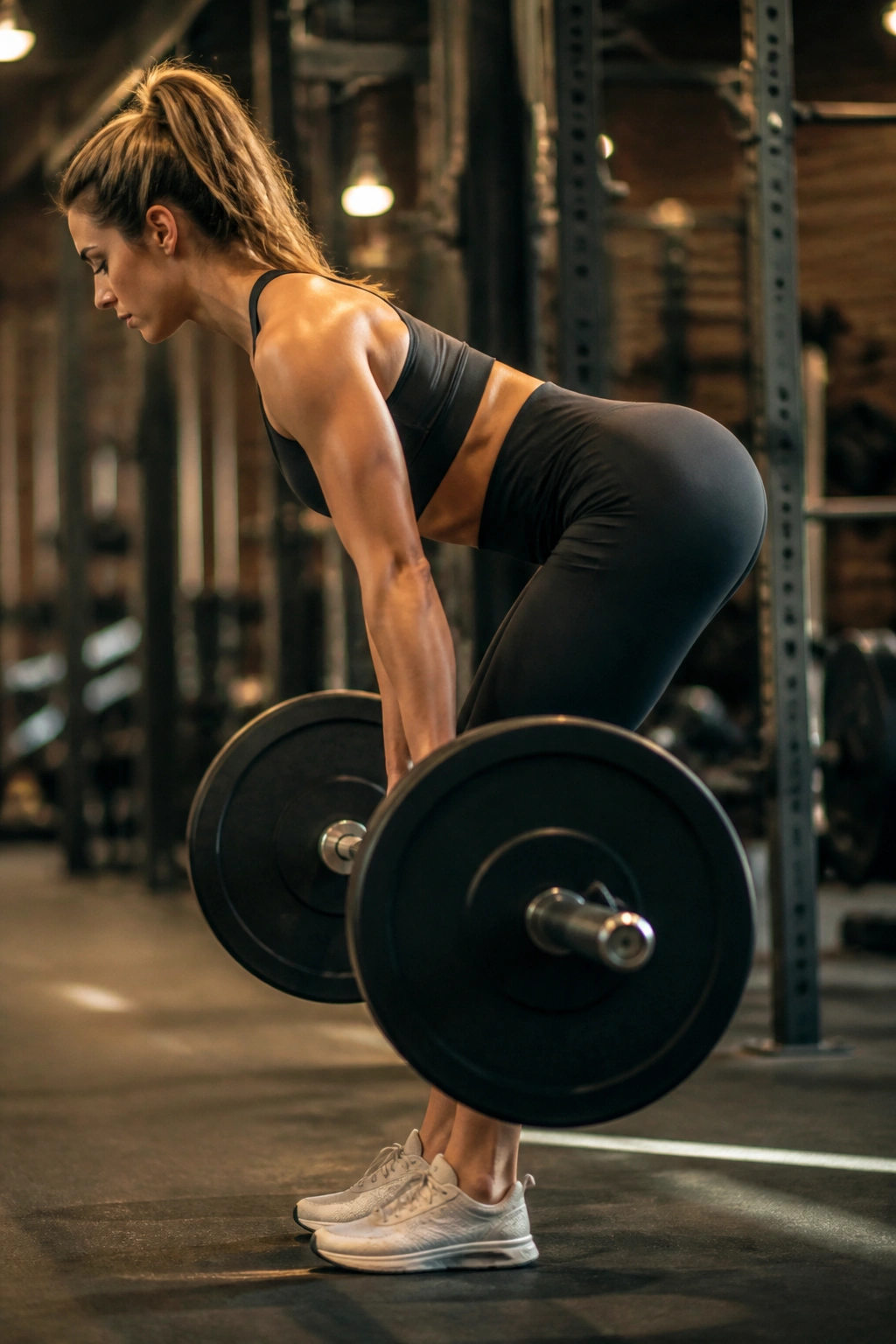
The RDL is all about the hinge. Unlike a standard deadlift where the bar starts on the floor, the RDL focuses on the eccentric (lowering) portion of the lift, placing a massive stretch on the hamstrings and glutes. This is the movement where most people struggle with form. The bar should stay glued to your legs the entire time. If it drifts away from your shins, you have lost leverage and increased the risk of back injury.
Mastering the Hinge
Think of this move as pushing your hips back to touch a wall behind you, rather than leaning forward. Your knees should have a soft bend, but they should not travel forward like they would in a squat. Keep your shins vertical. Lower the weight until you feel a stretch in your hamstrings—usually mid-shin—and then drive your hips forward to return to standing. Squeeze the glutes at the top, but do not hyperextend your lower back.
7. Kettlebell Swing
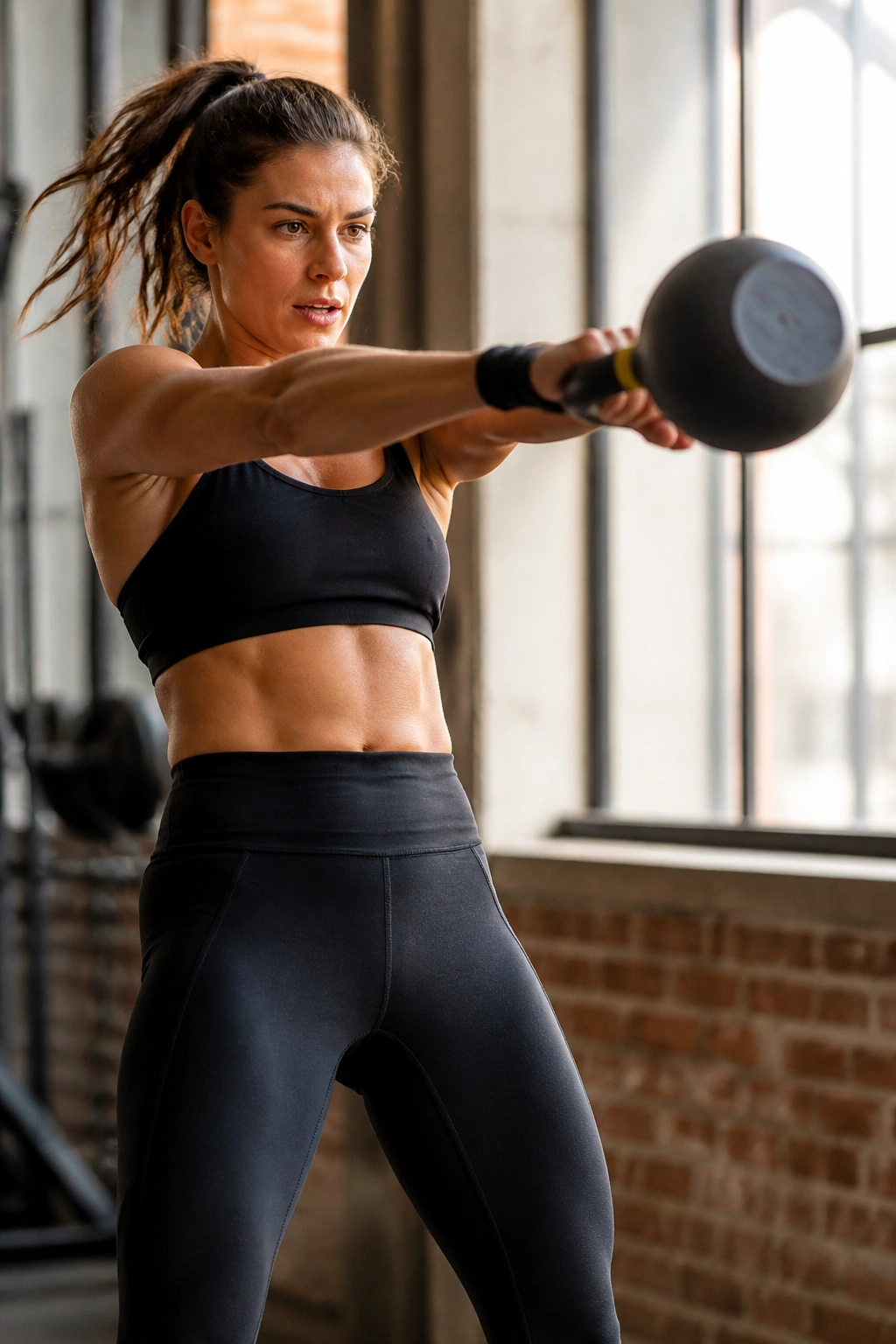
This is a ballistic, explosive movement. It is not a squat; it is a hip hinge. The momentum generated from your hips drives the bell up. Your glutes are the primary movers here, as they provide the explosive extension required to send the weight flying. If you use your arms to lift the bell, you are missing the point. The arms are just cables holding the weight.
The Power of Rhythm
Your rhythm should be snappy. Hinge back, let the bell float, then drive the hips forward with force. At the top of the swing, your glutes should be fully contracted and your knees locked. The bell shouldn’t go much higher than chest height. If you feel this in your lower back, your timing is off. Ensure your hinge happens late and fast on the way down, and your glute contraction happens early and hard on the way up.
8. Reverse Hyperextension
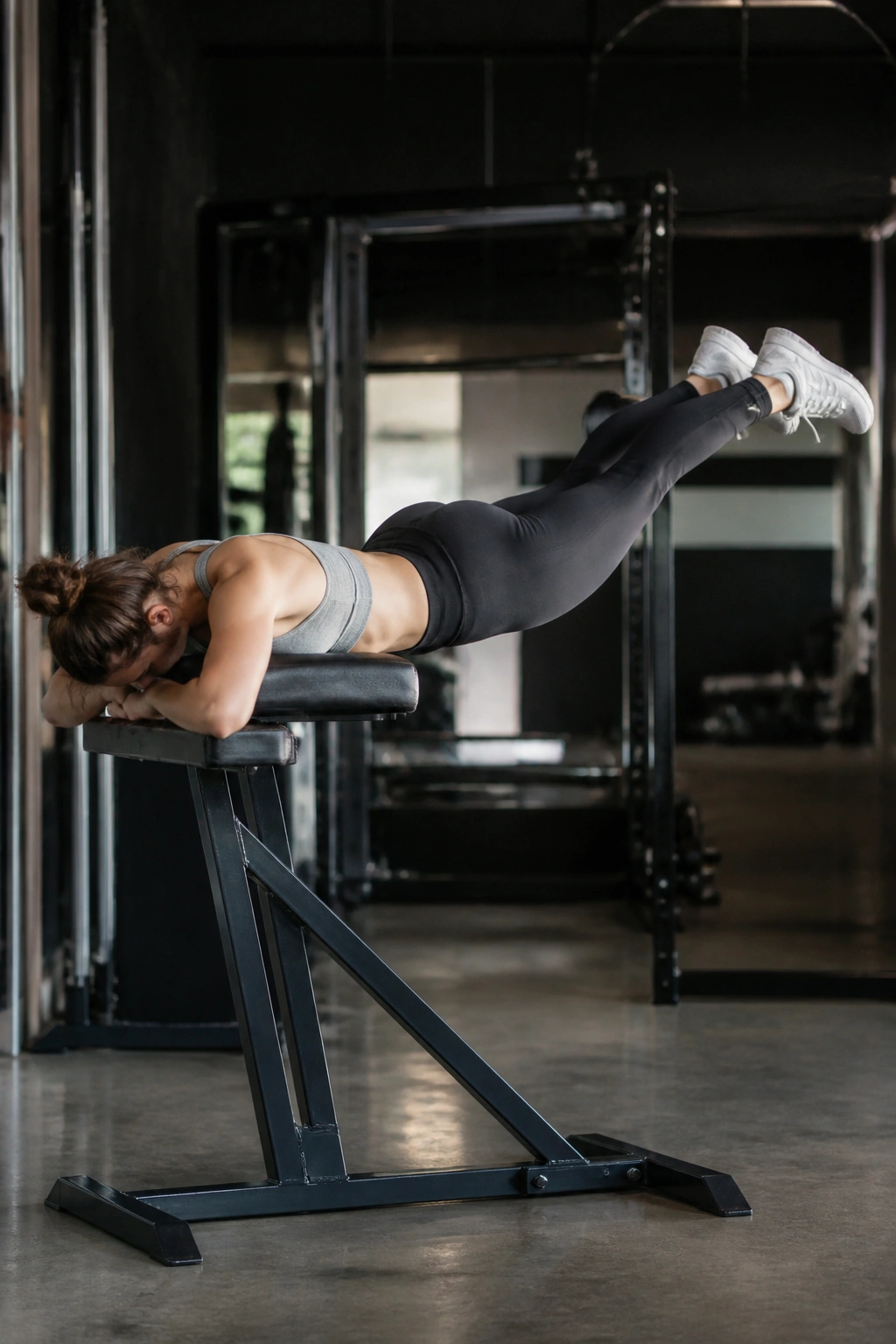
This is perhaps the best exercise for glute isolation while simultaneously decompressing the spine. In a reverse hyper, your torso is fixed, and your legs move. This shifts the focus entirely to the glutes and lower back, without the spinal loading of a traditional heavy lift. Many people feel relief in their back immediately after a set, making this a great addition to heavy lifting days.
Controlled Momentum
Do not swing your legs wildly. This is not about how high you can kick; it is about how hard you can squeeze. At the bottom, let your legs stretch out, feeling the glutes lengthen. As you lift, concentrate on initiating the movement with your glutes. If you have access to a machine, use it. If not, you can perform a variation by lying face down on a high bench and lifting your legs, though the mechanics differ slightly. Keep the movement slow and deliberate.
9. 45-Degree Hyperextension
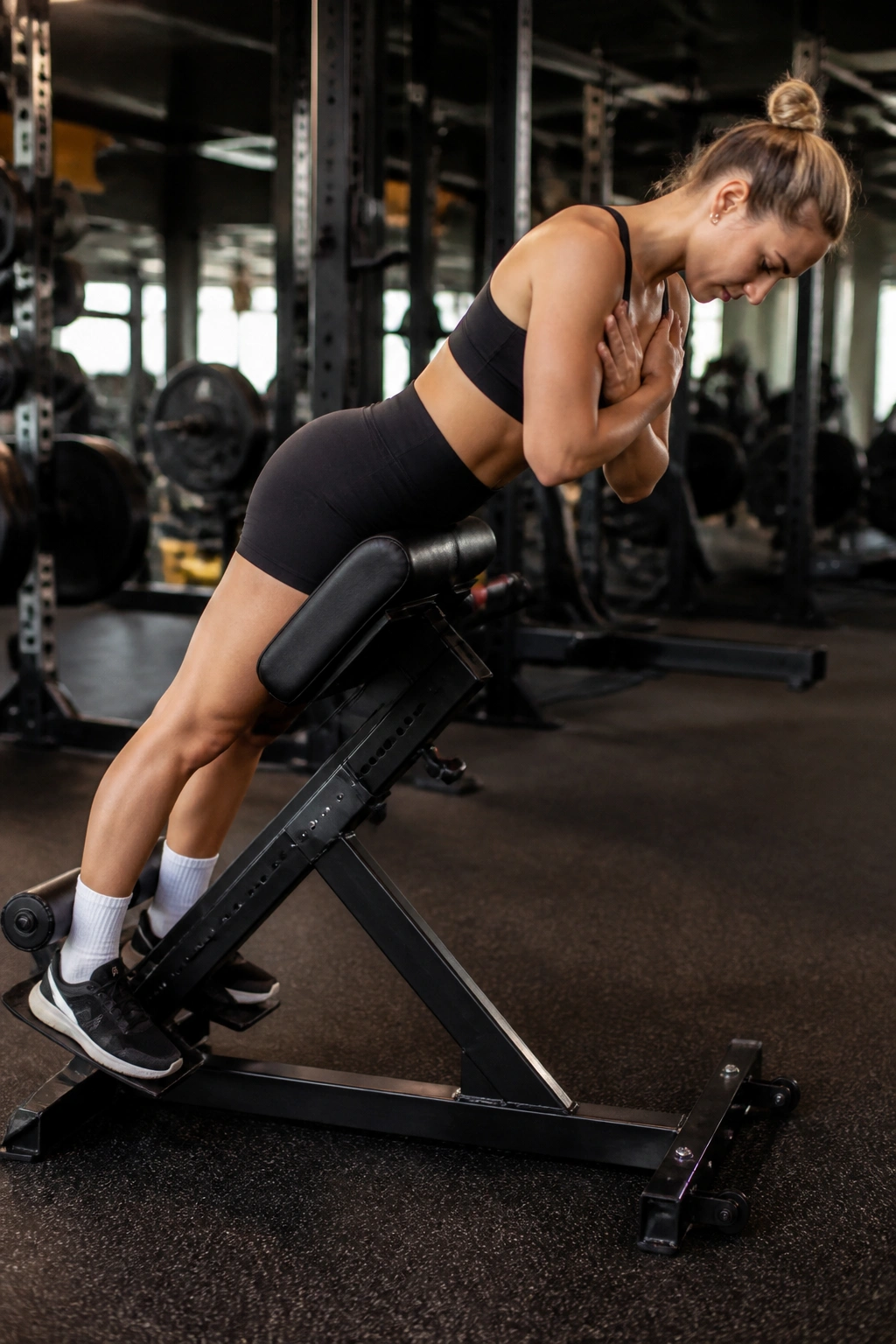
This machine is often misused. Most people use it for lower back training, curling their spine up and down. To hit your glutes, you need to change your setup. First, round your upper back slightly to “shut off” the erector spinae muscles. Then, point your toes outward at a 45-degree angle. This simple adjustment forces the glutes to take the lead in hip extension.
The Glute-Focus Hack
Once you are in position, think about pushing your hips into the pad rather than just lifting your torso. When you lower down, let your hips hinge fully. When you rise, squeeze your glutes at the top of the movement. You do not need to pull your back up high. The range of motion is smaller when you focus on glutes, but the intensity will be much higher. If you want to increase the challenge, hold a weight plate against your chest.
10. Standing Cable Hip Extension
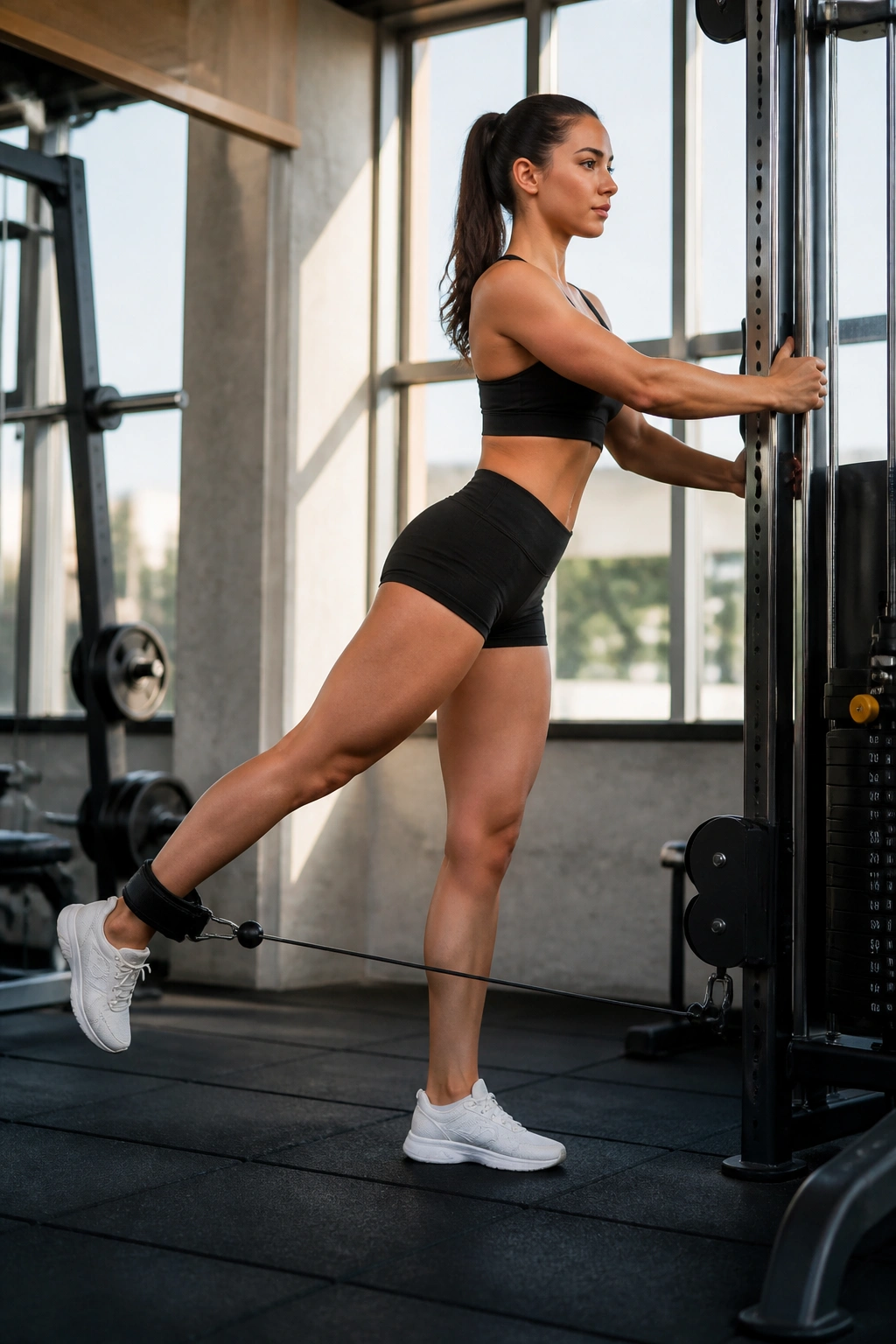
This exercise is similar to the cable kickback but changes the angle of pull. By standing slightly further away from the cable machine, you create a horizontal force vector that challenges the glute throughout the end range of extension. This is where the glute is shortest and most contracted. It is a fantastic movement for building that final “pop” at the end of a stride.
Staying Rigid
Your stability is paramount here. If you are wobbling, you aren’t training your glutes; you are training your balance. Hold the rack firmly. Keep your chest up and your core braced. The leg that is moving should remain relatively straight, with a tiny micro-bend in the knee. Focus on the feeling of your glute shortening. Do not worry about the weight; focus on the quality of the contraction. It should feel like a deep cramp if you are doing it with enough intensity.
11. Banded Pull-Through
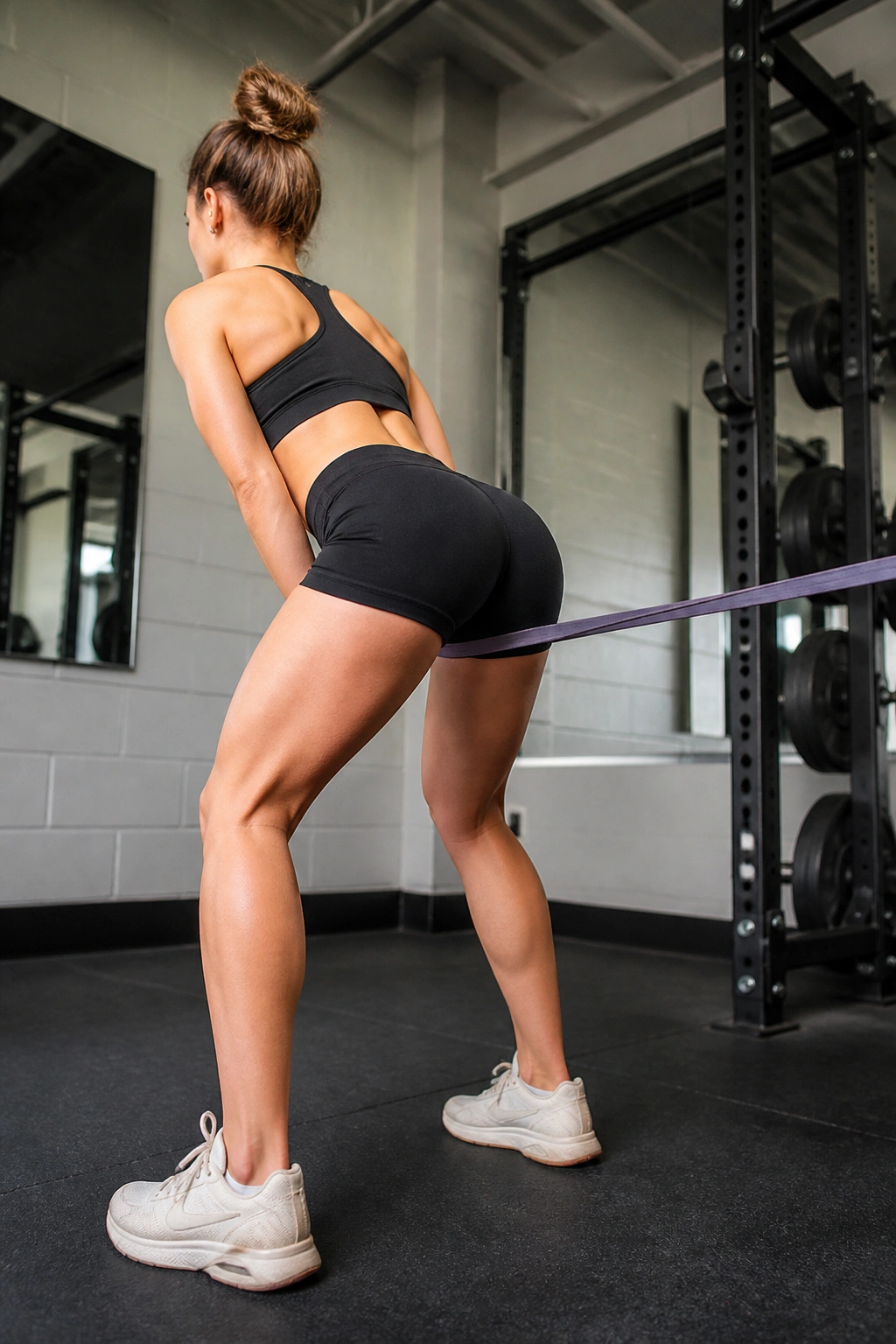
The pull-through is an underrated exercise that teaches the hip hinge pattern perfectly. You stand with your back to a cable machine or a heavy resistance band anchored at crotch height. You reach back between your legs, grab the handle or band, and then drive your hips forward into a standing position. It effectively forces your hips to do the work.
Developing the Hinge
This movement provides constant tension on the glutes, especially at the bottom of the hinge where the muscles are stretched. Because the weight is pulling you backward, you are forced to fight to stay upright, which engages your core and posterior chain. It is impossible to cheat this movement without falling over, which makes it a self-correcting exercise. Keep your weight on your heels and drive your hips forward with power.
12. Glute-Focused Back Extension
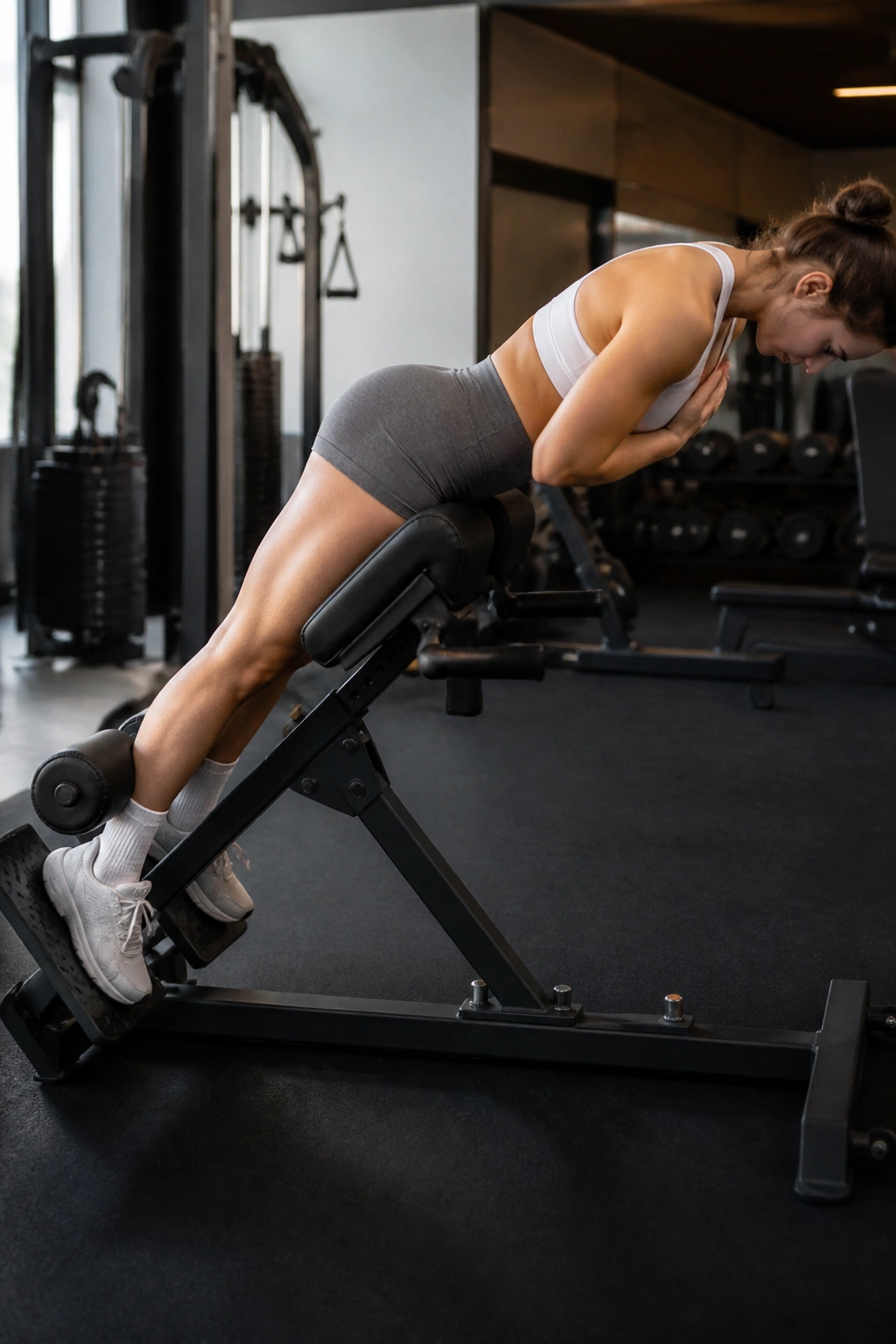
Similar to the 45-degree hyperextension, this is a modification of a classic lift. By focusing on keeping your spine neutral and your upper back rounded, you move the workload from the lower back to the glutes. This is a great exercise to superset with heavier compound lifts. It builds endurance and allows you to practice the mind-muscle connection needed to really engage your glutes before going into a heavy set of deadlifts.
Mind-Muscle Connection
Visualize your glutes doing the work. In many cases, lifters struggle to feel their glutes because their back takes over. To combat this, perform this exercise without weight until you can consistently feel the contraction in your glutes. Once you have that down, hold a light dumbbell or plate close to your chest. The focus remains on hip extension, not torso flexion.
13. Donkey Kick with Band or Cable
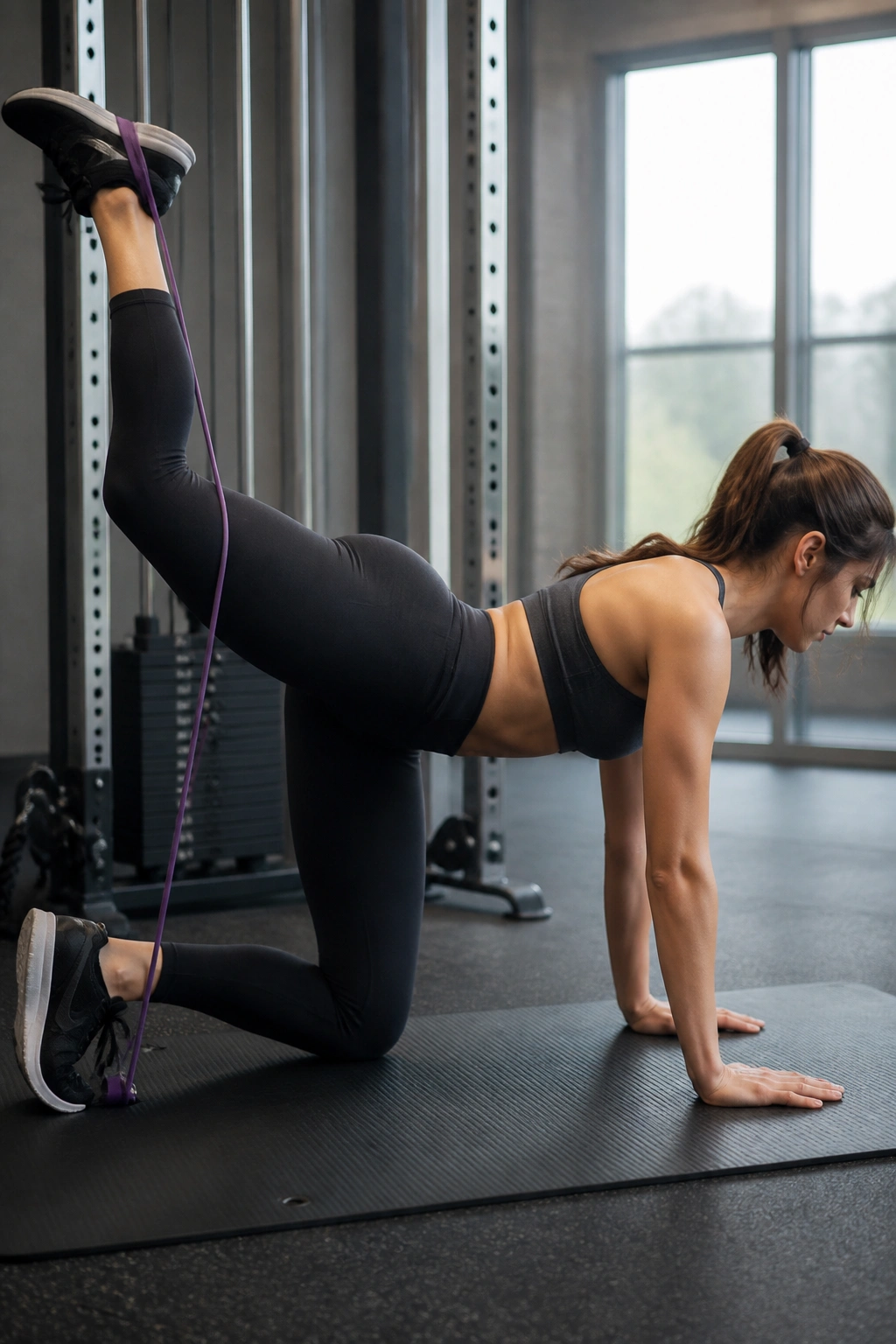
The donkey kick isolates the glutes in a position where the hips are flexed. This is vital because many other glute exercises (like the RDL or the hip thrust) happen with the hips relatively neutral. By performing a kickback from a quadruped (all-fours) position, you are working the glute through a different range of motion.
Managing the Range
The danger with this exercise is letting the lower back dip. Keep your core tight enough that your back stays flat like a table. If your back moves, you are effectively doing a spine exercise, not a glute exercise. Use a resistance band or a cable for load. Drive your heel toward the ceiling. Do not worry about speed. Slow down, pause at the top, and feel the muscle fibers working.
14. Bulgarian Split Squat (Forward Lean)
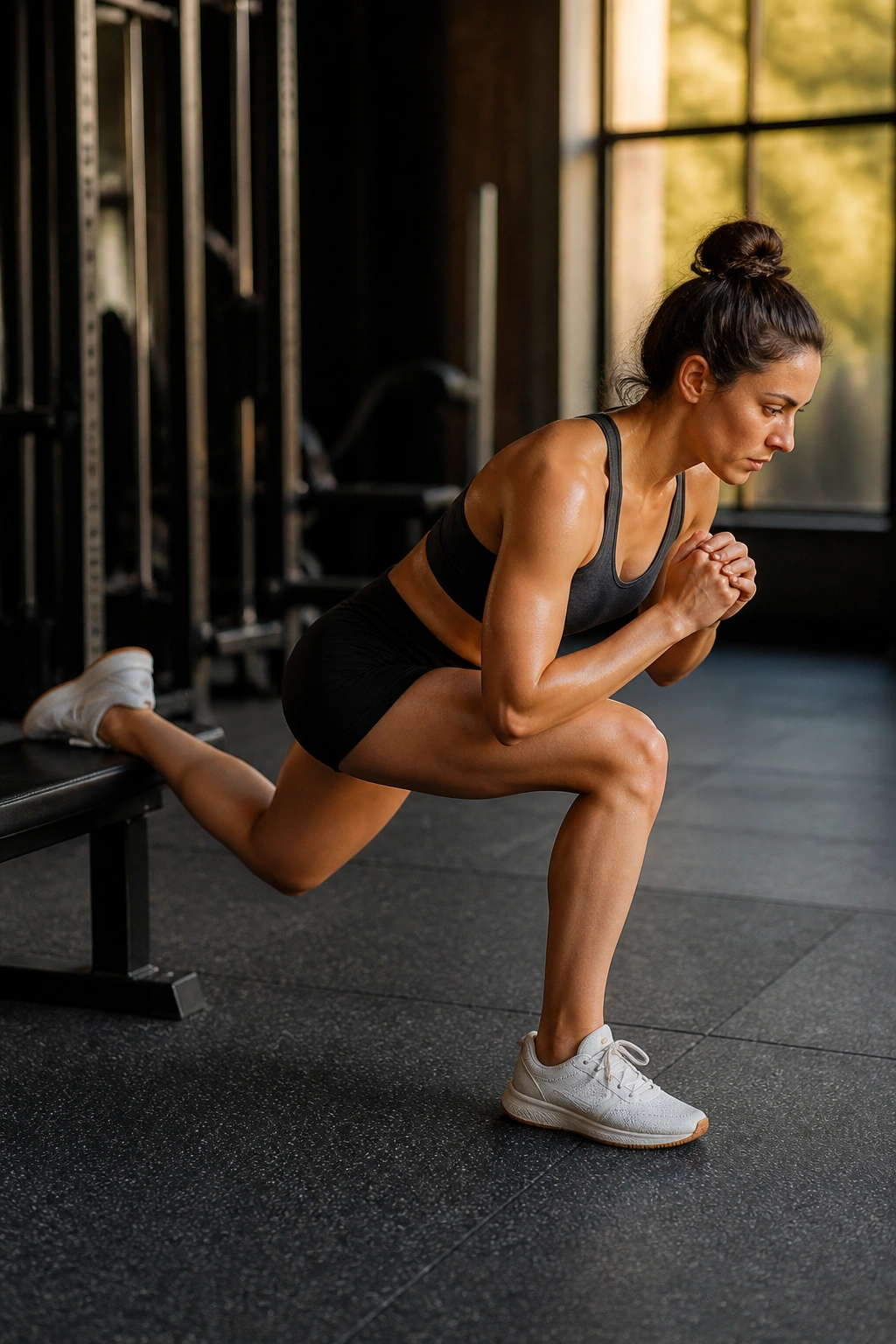
The standard Bulgarian split squat is often marketed as a quad killer, but you can change that. By taking a slightly longer stance and leaning your torso forward, you shift the center of gravity. This forward tilt increases the range of motion at the hip, which forces the glute of the front leg to do significantly more work compared to an upright squat.
Finding the Angle
Keep your front foot far enough forward that your knee doesn’t travel excessively over your toe. Lean your chest over your front knee as you descend. It should feel like your glute is being stretched significantly at the bottom. Push through the heel of your front foot to return to the starting position. This movement is brutal, but it is one of the most effective ways to build both strength and size in the glutes.
15. Glute-Focused Step-Up
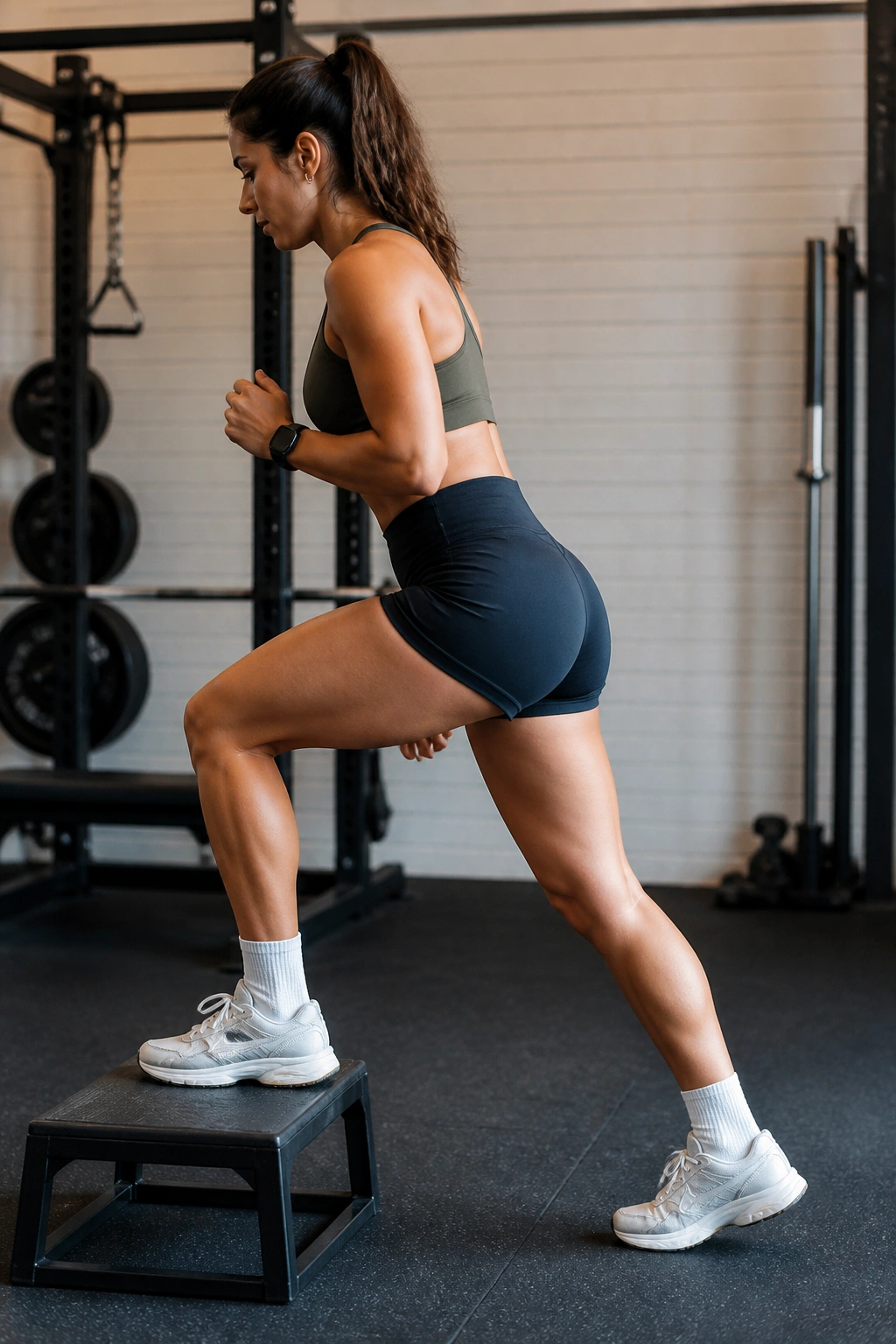
Step-ups are often performed with too much momentum, letting the back leg “push” you up. To make this a glute exercise, eliminate that push. Use a lower box—about knee height—and perform the movement slowly. Lean your torso slightly forward to increase the hip demand. The goal is to lift your body using only the glute of the leg on the box.
Controlling the Descent
The descent is just as important as the ascent. Do not just drop down to the floor. Lower yourself with control, taking two or three seconds to return to the ground. This eccentric control is where the muscle breakdown occurs, leading to growth. Keep your knee tracking over your toes. If your knee caves inward, you need to focus on your glute medius and reduce the weight until your form is perfect.
16. Single-Leg RDL
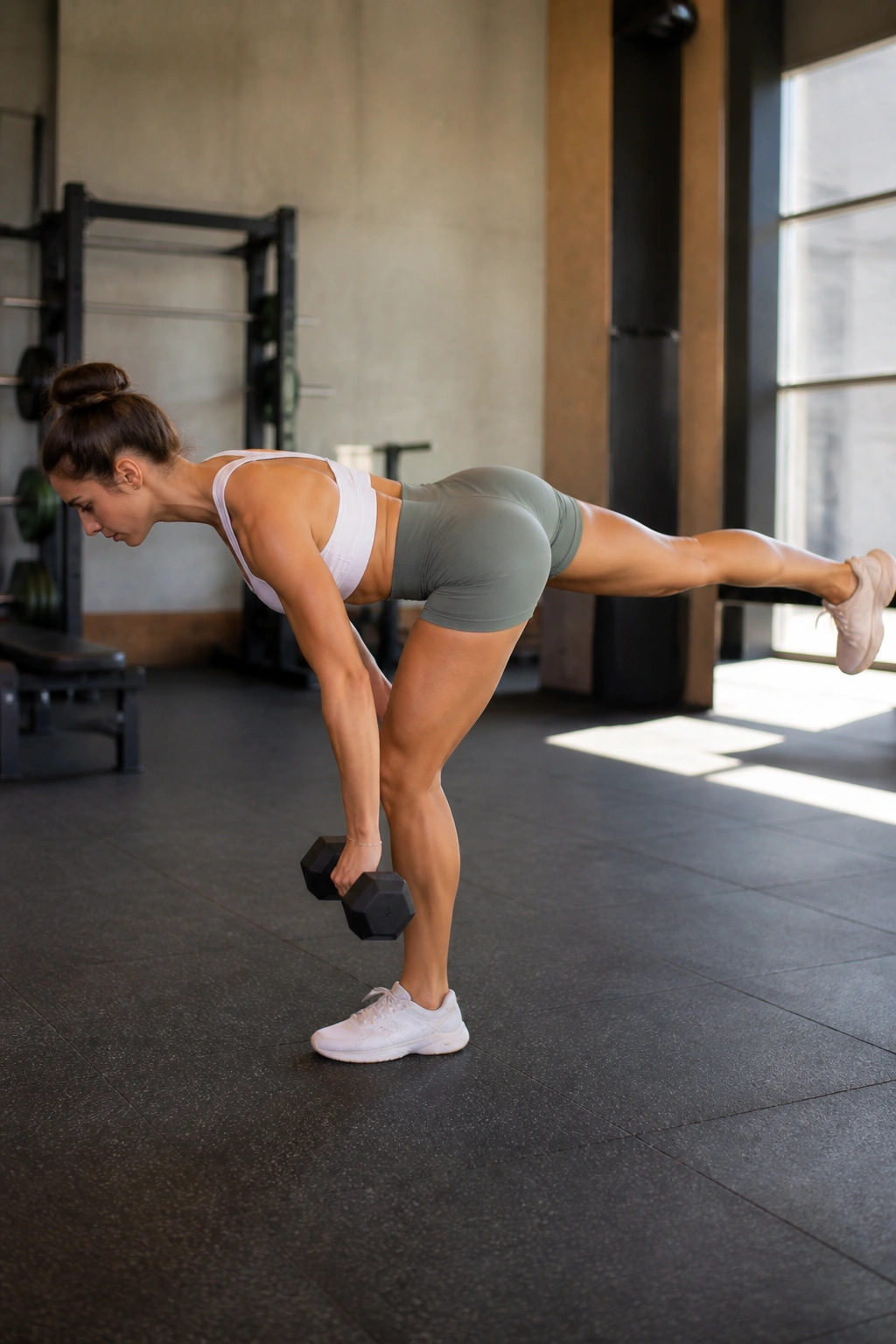
This is the ultimate test of balance and posterior chain strength. Holding a weight in the hand opposite to your working leg (contralateral loading) can help stabilize your pelvis and improve hip engagement. You are hinging on one leg, which requires the glute of the standing leg to act as a stabilizer and a mover simultaneously.
The Balancing Act
Do not try to go heavy immediately. The challenge here is stability. Your standing leg should have a soft bend, and your moving leg should swing back to create a straight line from your head to your heel. If you feel shaky, hold onto a wall for support until you master the pattern. The goal is to feel the glute of the standing leg stretch at the bottom and contract at the top. It is a slow, methodical movement.
17. Sumo Deadlift
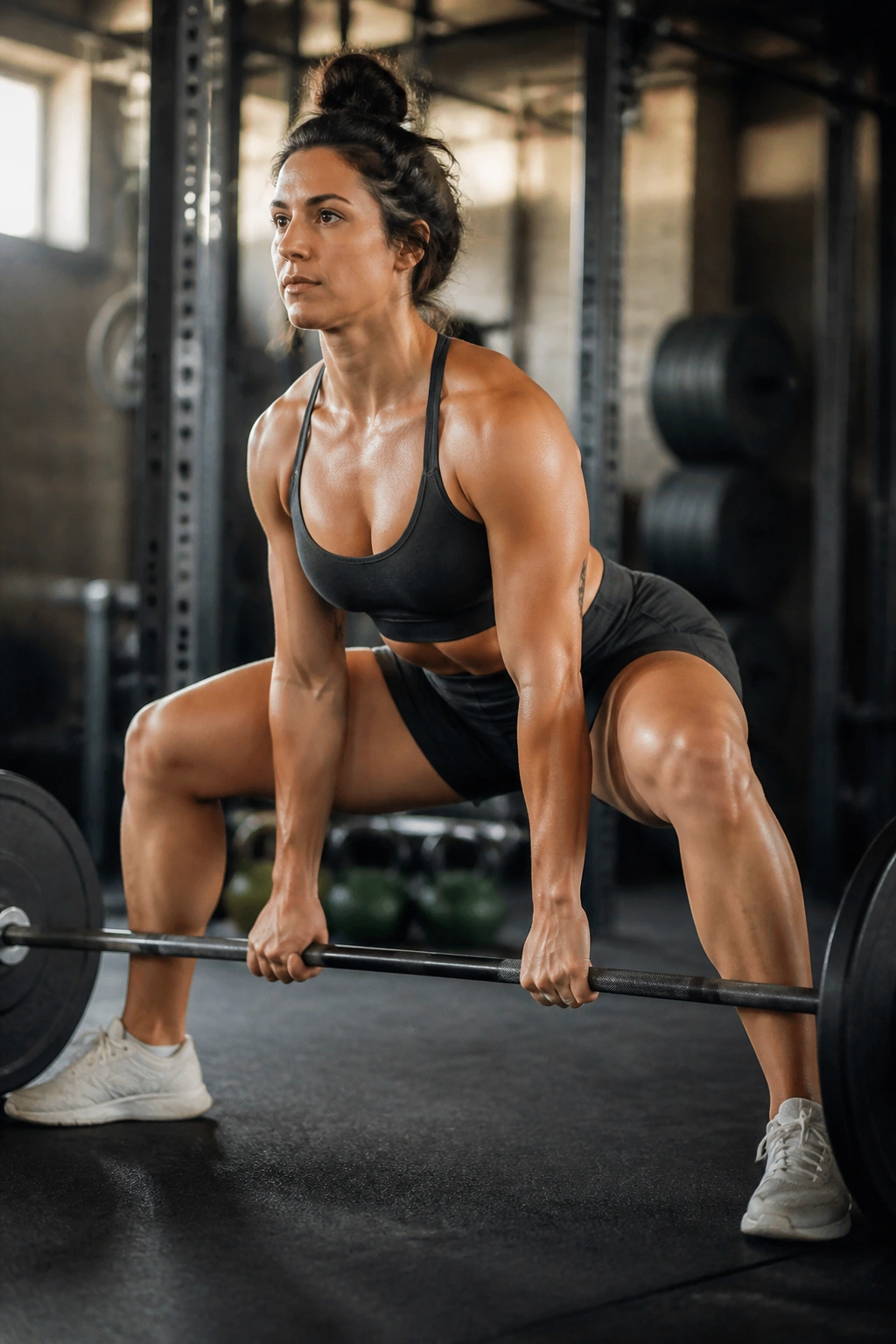
The wide stance of the sumo deadlift places more demand on the hips than a conventional deadlift. Because your feet are wide and your hips are lower, you rely more on your glutes and inner thighs (adductors) to drive the weight up. This is a powerhouse move for adding mass to the entire lower body.
Maintaining the Stance
Keep your feet wider than your shoulders and toes pointed out. Your arms should be inside your legs. As you lift, concentrate on “spreading the floor” with your feet. This cue helps to activate the lateral glutes, which will help stabilize the weight. Ensure your back remains flat throughout the entire pull. Do not let your hips rise before your chest. The drive comes from pushing the floor away with your feet, not pulling with your back.
18. Deficit Deadlift
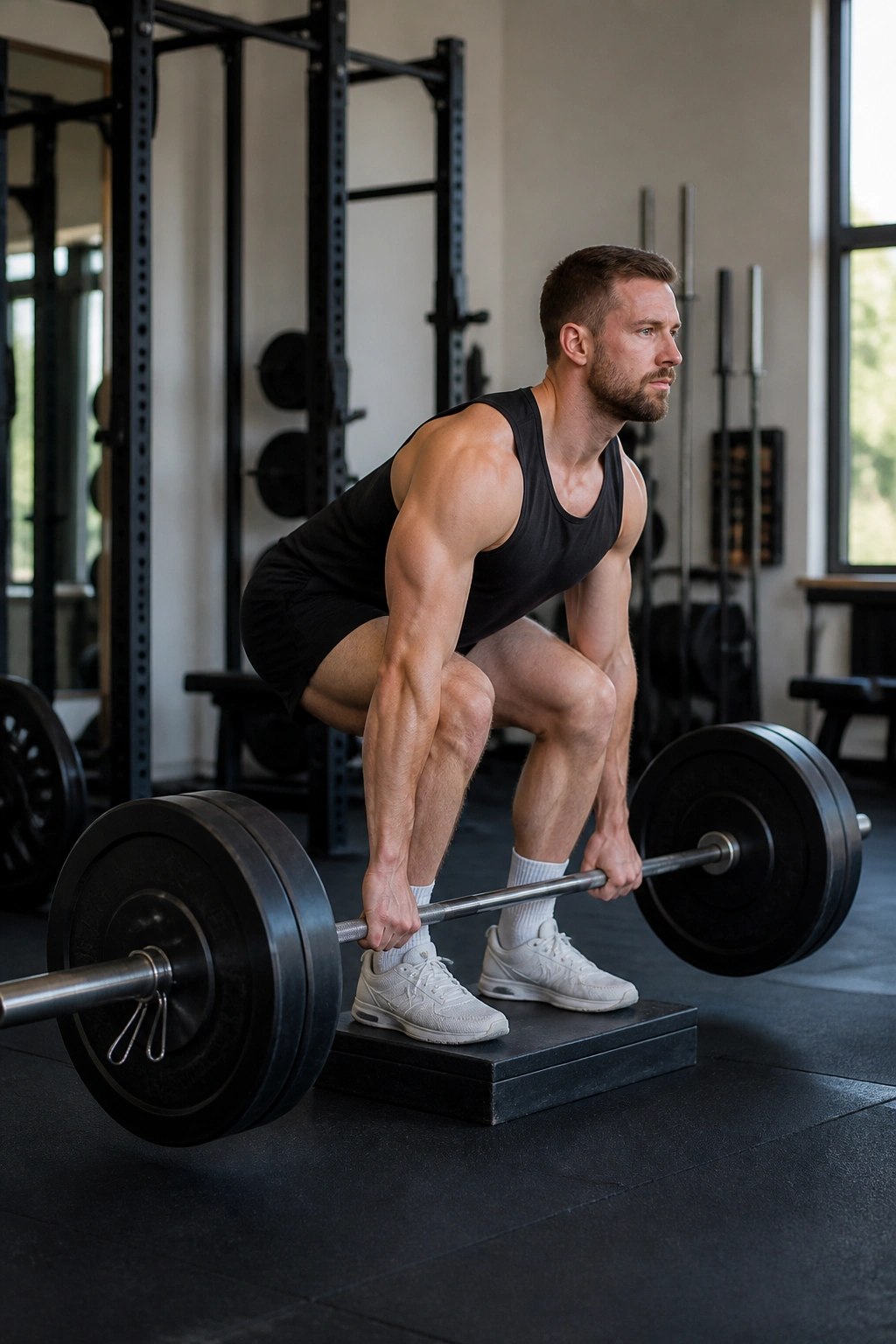
The deficit deadlift increases the range of motion of your standard deadlift. By standing on a small platform or plate (an inch or two high), you have to travel further to pick up the weight. This extra depth requires more hip flexion, which means your glutes are placed under a greater stretch. It is a fantastic way to break through plateaus in your pulling strength.
Depth and Control
Because you are deeper in the movement, your mobility becomes the limiting factor. If your back rounds, you have gone too deep for your current mobility level. Start small—even a single 45-pound plate is enough to create a deficit. You will find that the bottom position feels much more demanding on the glutes than a standard deadlift. Focus on staying tight, engaging your lats, and driving through the heels to initiate the ascent.
The Bottom Line
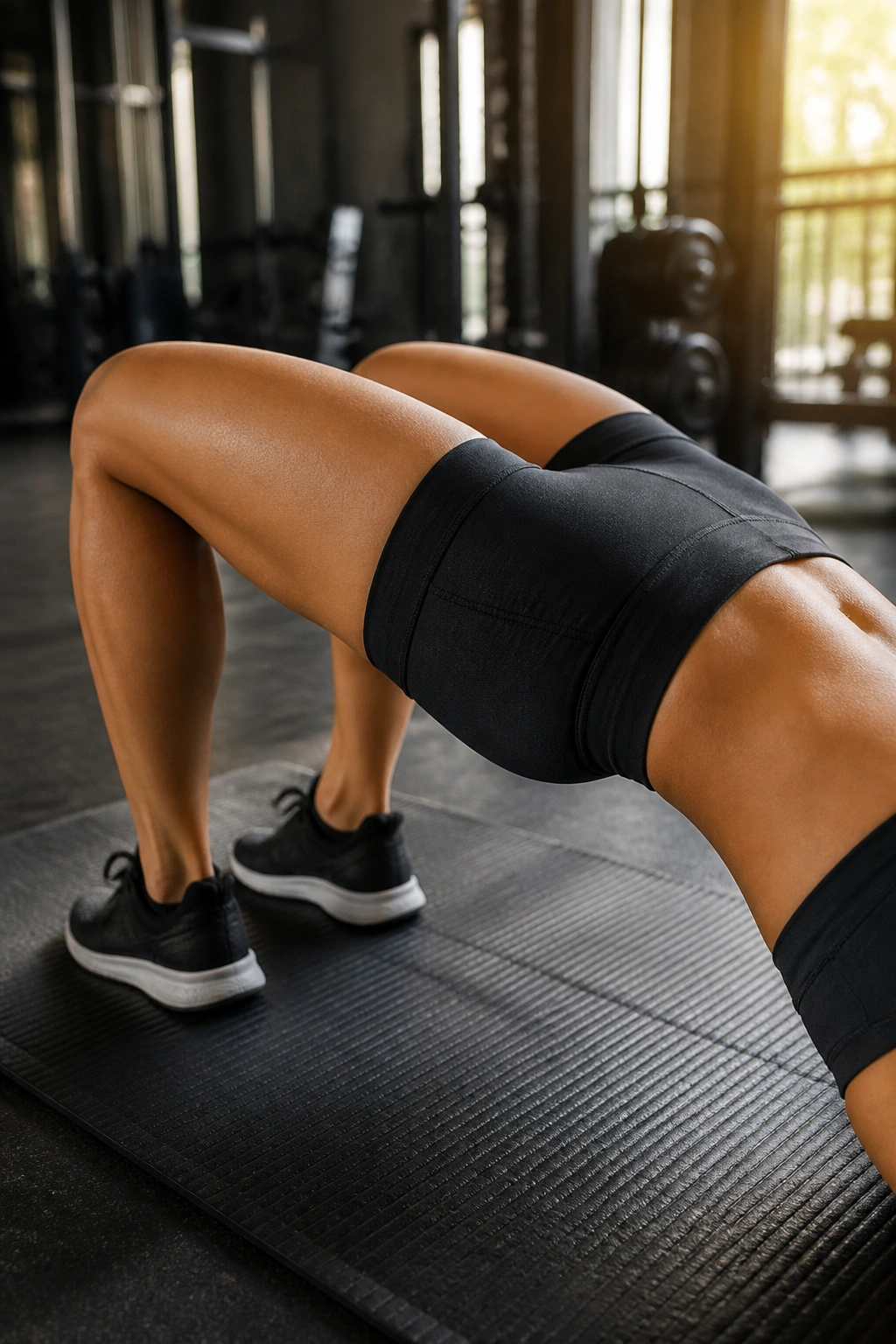
Building stronger glutes is rarely about finding the “magic” exercise that works overnight. It is about understanding that your glutes respond to progressive load, consistent tension, and proper biomechanics. You can do thousands of reps of bodyweight movements, but without load and deep hip extension, you will likely hit a wall in your progress.
Mix these exercises into your routine carefully. You do not need to do all eighteen in a single week. Pick two or three, master the form, and focus on pushing yourself within those movements. Pay attention to how your hips feel, and always prioritize the quality of the contraction over the amount of weight on the bar. Real strength is built in the details, not just the volume.
