



Let’s be honest: spot reduction is one of the most persistent myths in the entire fitness industry. You cannot tell your body exactly where to burn fat. Biology simply does not work that way. If you are specifically looking to lose fat in your thighs, you are actually looking to lose overall body fat while simultaneously building muscle in your lower body. That shift in body composition is what creates the “toned” look most people are chasing.
The real key is combining exercises that challenge your muscles with movements that keep your heart rate up. When you build lean muscle tissue in the quadriceps, hamstrings, and glutes, you change the way your legs appear under the skin. You are trading soft tissue for functional, active muscle. It takes patience, it takes repetition, and it requires you to push past that moment when your legs start to shake.
Forget the idea that you need a gym membership or a rack of heavy equipment to see change. Your own body weight provides enough resistance to challenge your muscles, especially when you manipulate tempo, range of motion, and rest intervals. The following exercises are designed to target the lower body from every angle.
1. Sumo Squats
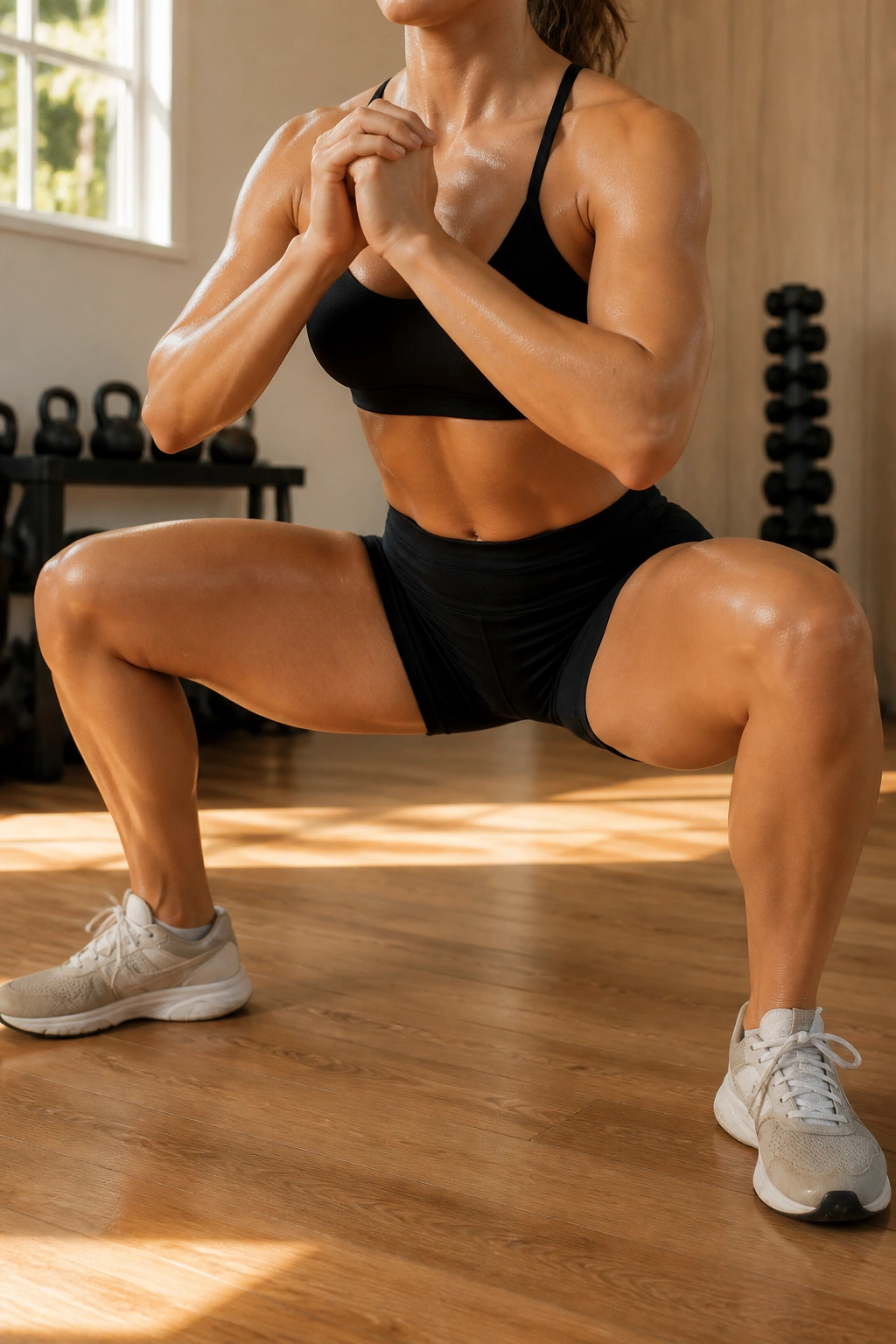
This variation is about more than just a wide stance. By pushing your feet out wider than shoulder-width and pointing your toes outward at about 45 degrees, you force your inner thigh muscles, the adductors, to do a significant amount of the work. It is a subtle shift, but it changes the entire feeling of the movement compared to a standard squat.
Why They Work
The wider angle places an immediate demand on the inside of the thigh. As you drop down, you are not just pushing through your heels; you are actively fighting the urge for your knees to collapse inward. That fight is where the strength is built. You have to consciously keep your knees tracking in line with your toes throughout the entire rep.
The Execution
- Stand with your feet wider than shoulder-width, toes turned out.
- Keep your chest upright and your core tight, avoiding the tendency to lean forward.
- Lower your hips as if sitting into a low chair, keeping your weight evenly distributed across your feet.
- Stop when your thighs are parallel to the floor, or as deep as your hip mobility allows.
- Drive back up through your heels, squeezing your glutes at the very top.
Pro tip: Slow down the descent. Take a full three seconds to lower yourself into the squat. The time under tension is what makes this move effective for muscle fatigue.
2. Side Lunges
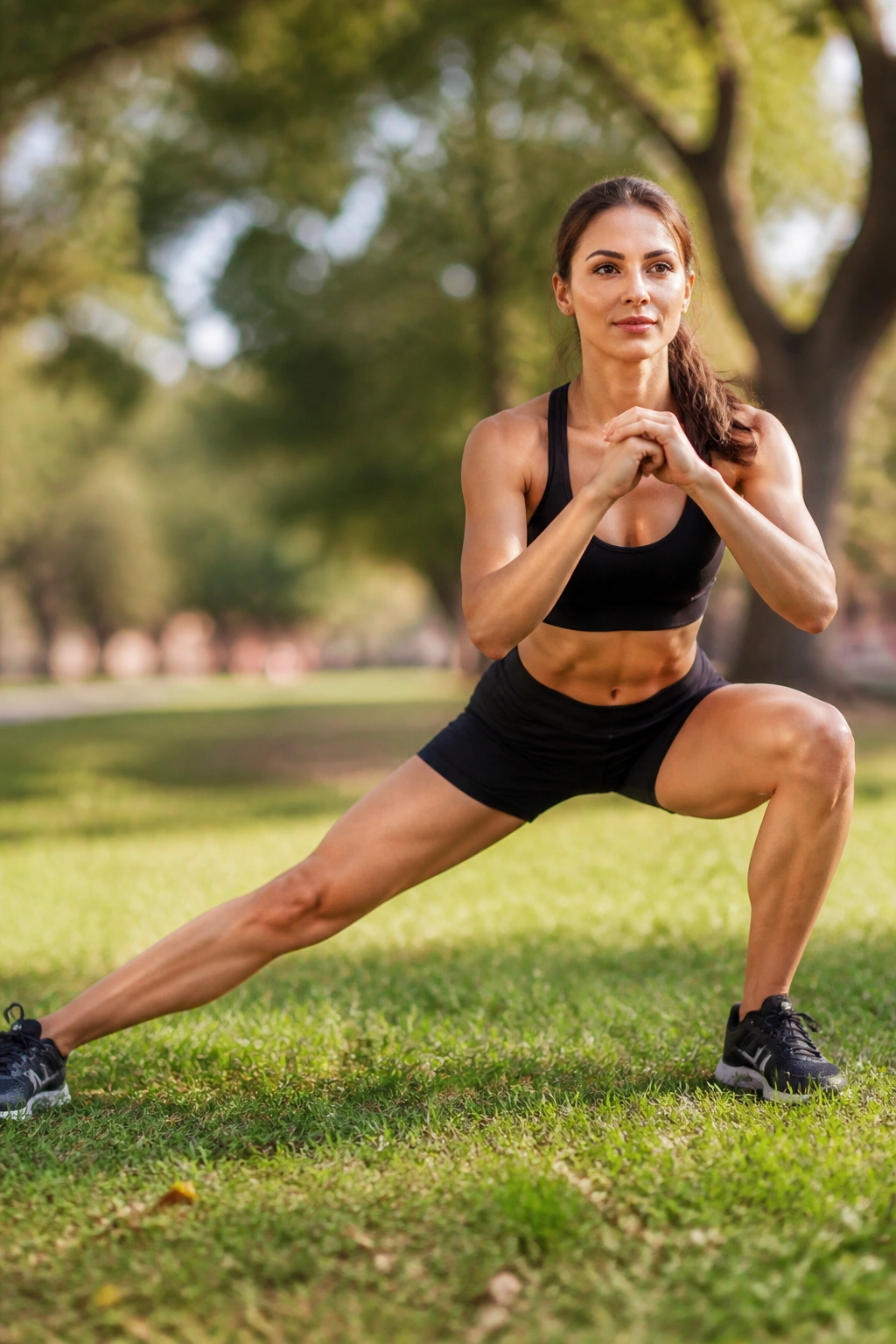
Most of us move through life in a straight line, walking or running forward. Side lunges force you to move in the lateral plane, which is an area most people completely neglect. Strengthening your legs in this plane helps with stability, balance, and hitting muscles that rarely get activated during standard walking.
Getting the Form Right
Step out wide to the side, keeping one leg straight and bending the other. You should feel a stretch in the inner thigh of the straight leg. It feels awkward at first, but once you find your balance, the burn is undeniable.
Important Cues
- Keep your straight leg flat on the floor; do not let the heel lift.
- Send your hips backward as you lunge, not just your knee forward.
- Keep your chest proud and your back straight.
If you find that your torso is dipping too far toward the floor, focus on keeping your shoulders back. You are lunging your hips, not bowing your chest. This move is excellent for fixing imbalances between your left and right sides.
3. Glute Bridges
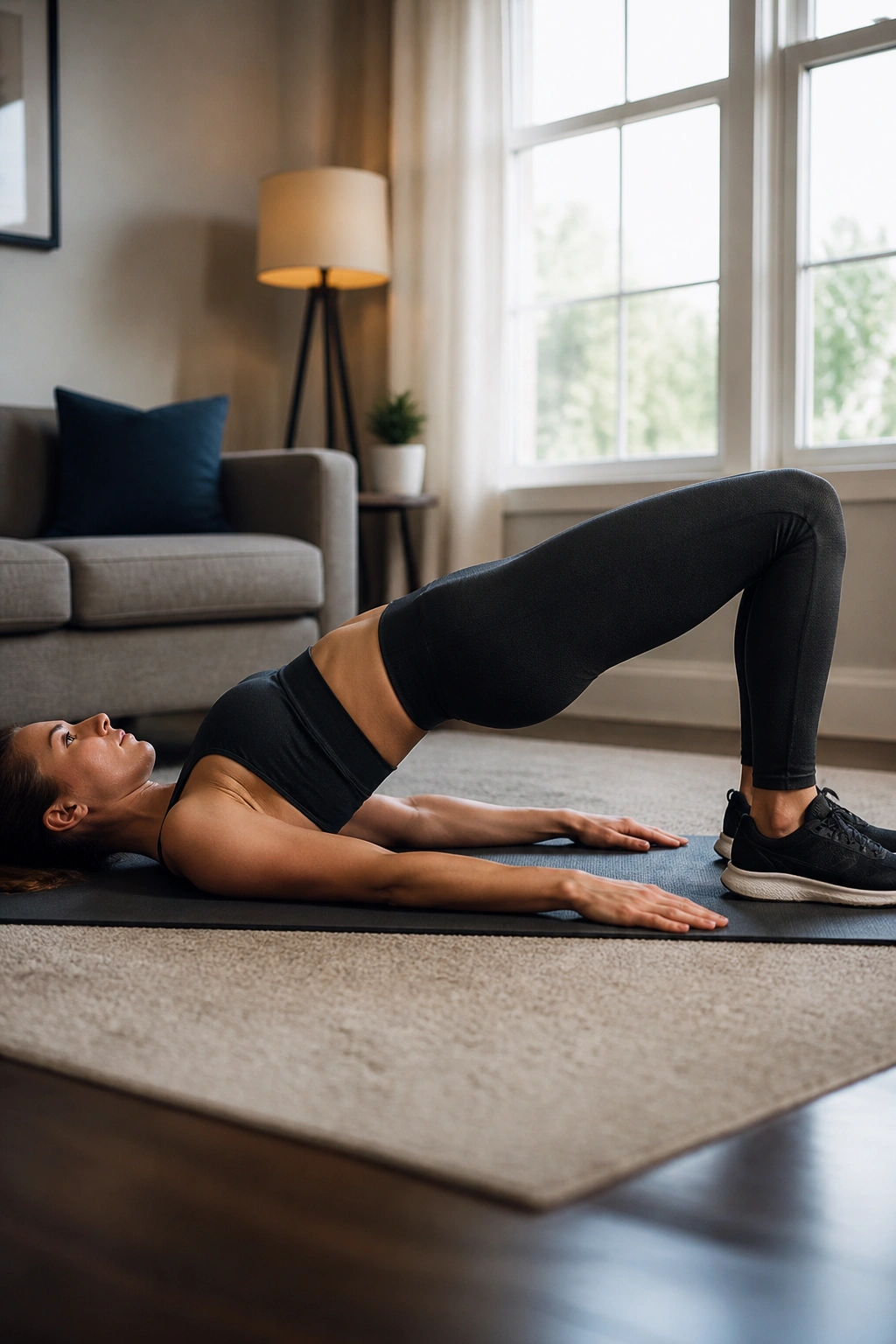
While this exercise has “glute” in the name, it is a primary driver for the entire posterior chain, including the hamstrings. Weak hamstrings and glutes often force the quads to take on too much load, which can sometimes create an uneven, bulky look that many people want to avoid. Balanced muscle development is the secret to a leaner appearance.
How to Perform Them
Lie flat on your back, knees bent, and feet flat on the floor, about a foot away from your glutes. Drive through your heels to lift your hips toward the ceiling. At the top of the movement, your body should form a straight line from your shoulders to your knees.
Common Mistakes
- Don’t arch your lower back. If you feel it in your back instead of your glutes, tilt your pelvis forward slightly.
- Don’t let your knees splay outward. Keep them hip-width apart throughout the movement.
- Don’t rush the descent. The eccentric, or lowering, phase is where the muscle fibers really work.
Try holding the bridge at the top for two seconds on every rep. That extra squeeze forces your muscles to work harder without adding a single pound of extra weight.
4. Inner Thigh Lifts
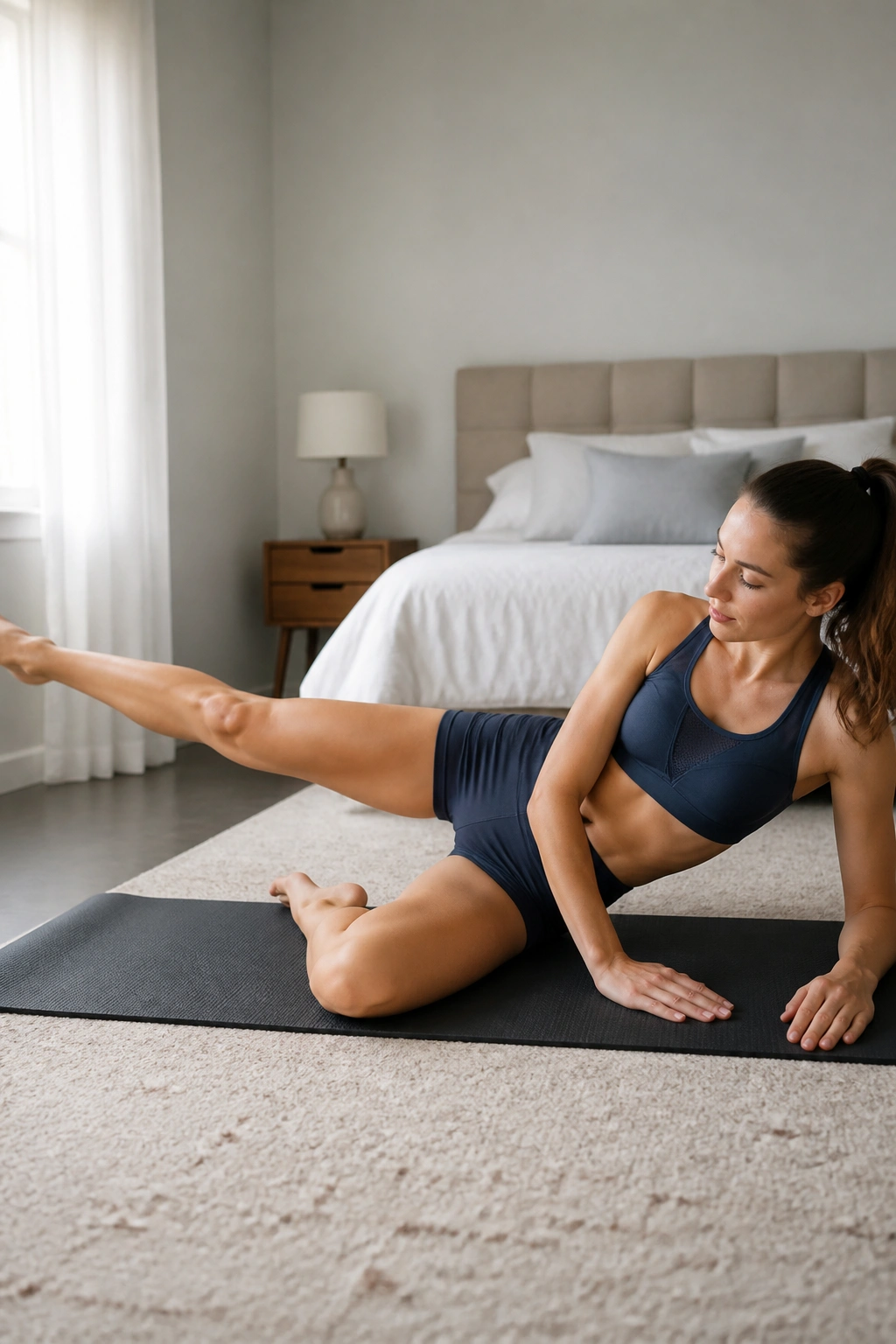
This is a classic Pilates-inspired movement that looks incredibly simple but will have your inner thighs screaming after ten repetitions. It is about isolation. Because you are lying on your side, you completely remove the need for balance, allowing you to focus entirely on lifting the leg.
The Setup
Lie on your side, using your bottom arm to support your head. Extend your bottom leg long. Cross your top leg over and place your foot flat on the floor in front of your bottom knee. Now, lift that bottom leg toward the ceiling using only your inner thigh muscles.
Why This Matters
You will notice your leg shake. That is the point. You are trying to lift the weight of your own leg using a relatively small muscle group. Do not use your back or your glutes. Keep your core tight and lift straight up. If your leg only lifts an inch or two off the floor, that is fine. Focus on the contraction, not the height.
5. Curtsy Lunges
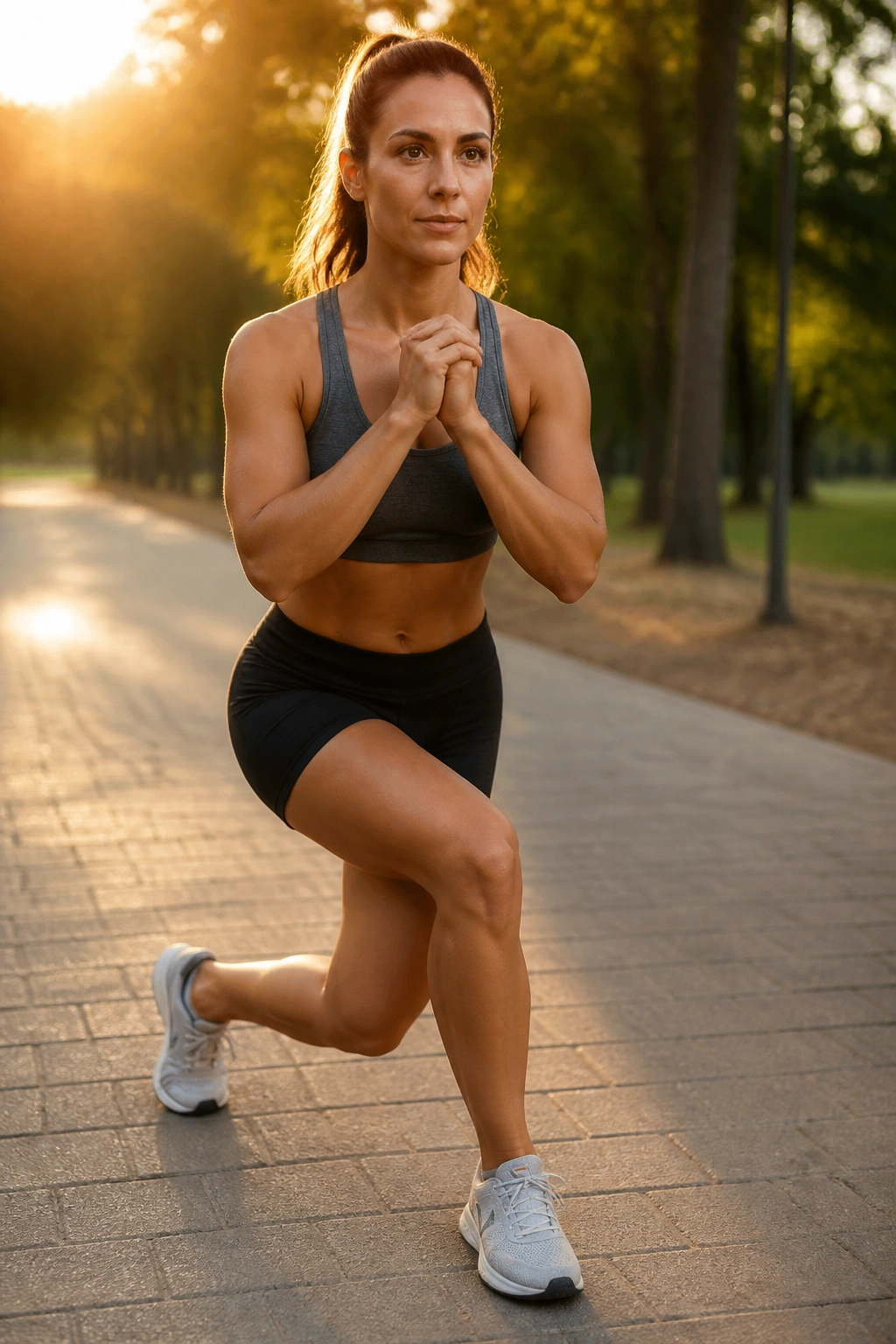
Curtsy lunges are one of the best ways to target the gluteus medius, which sits higher up on the hip. This muscle is responsible for pelvic stability, and working it helps give the upper thigh and hip area a more defined shape. Plus, the instability of the movement forces your core to engage constantly.
How to Do It
Stand with feet hip-width apart. Take a large step back and across with your right foot, as if you were performing a curtsy. Lower your hips until your front thigh is nearly parallel to the floor. Keep your front knee aligned with your front ankle.
The Key to Success
- Do not let your front knee cave in.
- The further back and across you step, the more you will feel the outer glute fire up.
- Keep your weight centered on the front leg; the back leg is just for balance.
You will feel unstable the first few times you try this. That is normal. Your stabilizer muscles are waking up to keep you upright.
6. Fire Hydrants
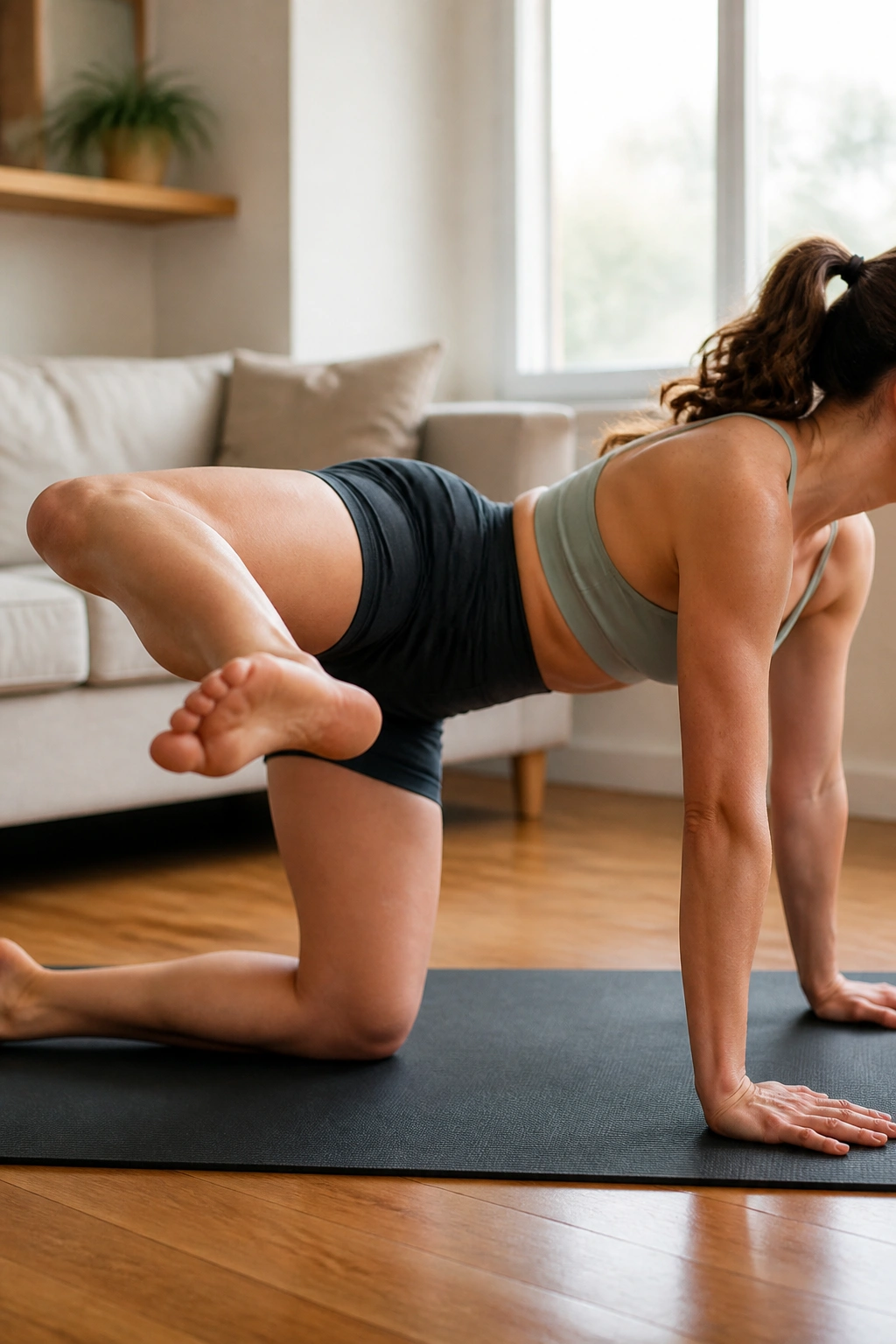
The name sounds funny, but the impact is serious. This exercise targets the glutes and the outer hips. By keeping your torso completely still while your leg moves, you isolate the muscles that often get lazy from sitting in chairs all day.
Execution
Get on your hands and knees in a tabletop position. Keep your back flat and your neck neutral. Without rotating your hips, lift your right leg out to the side, keeping your knee bent at a 90-degree angle. Lower it back down with control.
Avoiding the Cheat
Most people try to rotate their whole body to get their leg higher. Avoid that. If you rotate your hips, you lose the isolation. Keep your chest facing the floor the entire time. Imagine you are trying to balance a glass of water on your lower back. If you tilt, it spills.
7. Clamshells
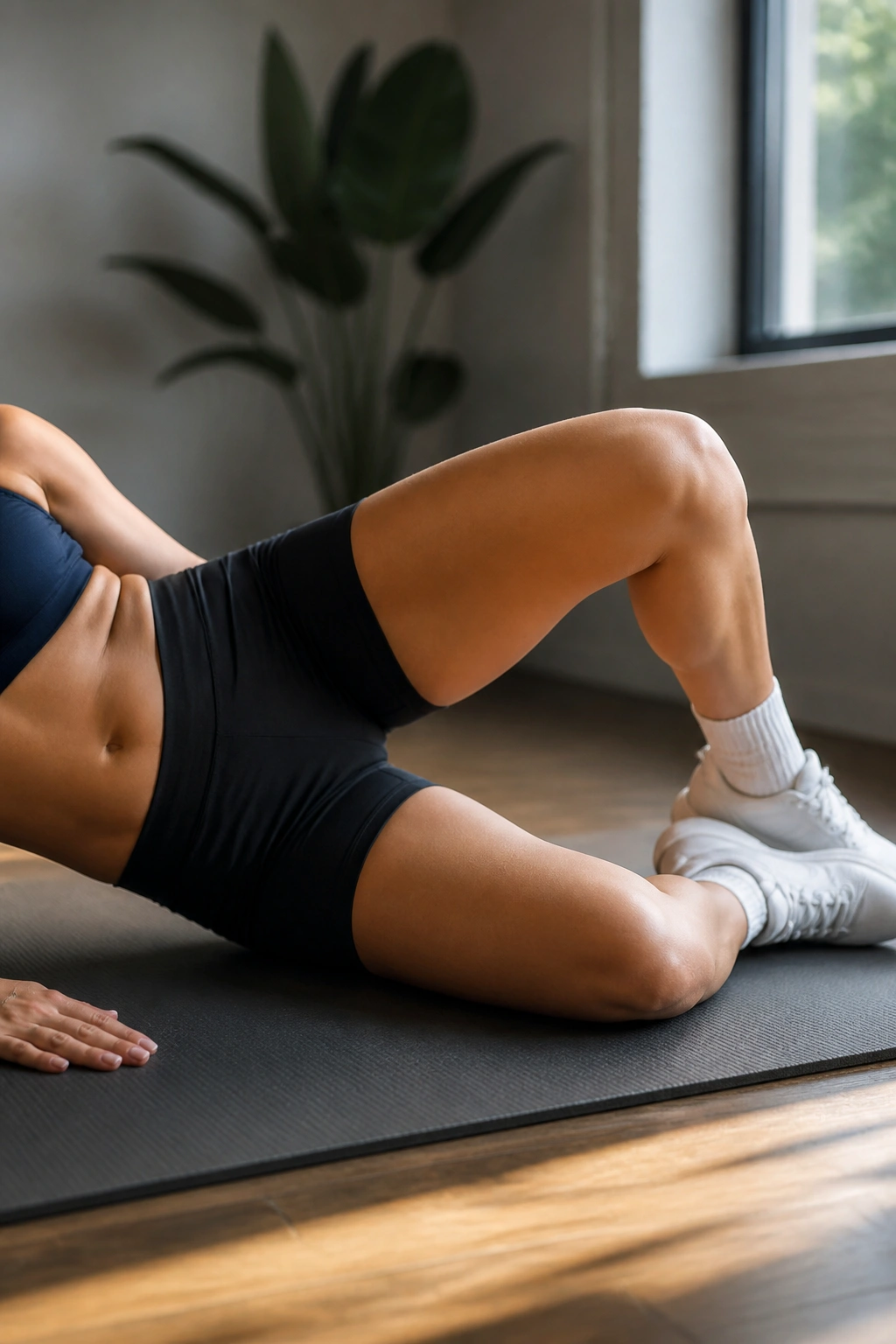
This is another exercise that relies on high-repetition, low-impact tension to fatigue the muscle. Lie on your side, legs stacked and knees bent at a 45-degree angle. Keep your feet touching, then open your top knee as wide as you can while keeping your hips stacked.
Why They Feel Harder Than They Look
The external rotation of the hip is a movement we rarely perform in daily life. Because the range of motion is small, people often speed through it. Slow it down. Open for two seconds, close for two seconds. You should feel the burn deep in the side of your hip within fifteen reps.
If you want to make this move harder without adding weight, pause at the top of the movement and pulse the knee up and down an inch for ten seconds before lowering it.
8. Step-Ups
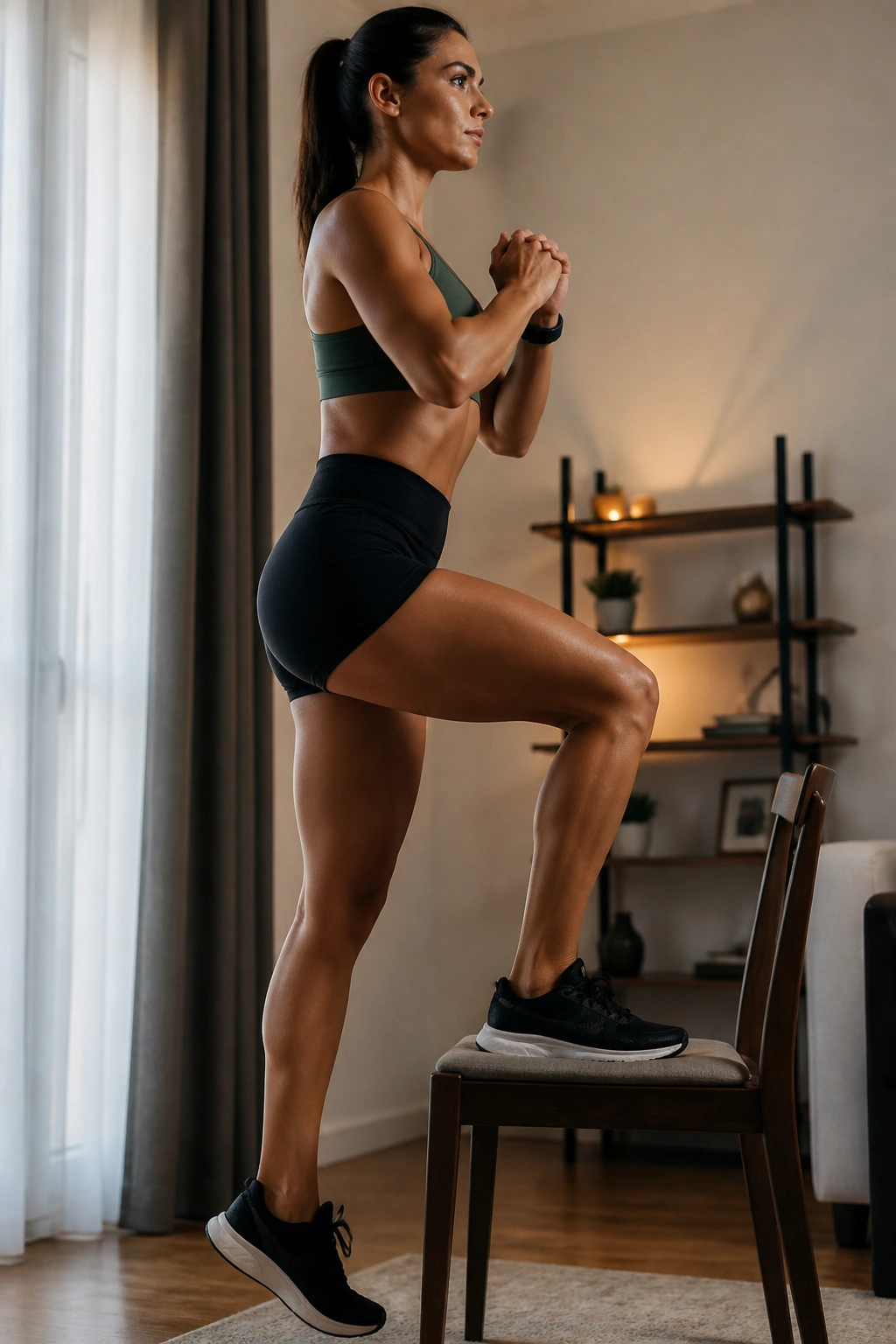
You do not need a gym box for this. A sturdy chair, a low bench, or even a sturdy step on your staircase will work. The key is to avoid using your back leg to push off. This move is pure, single-leg strength.
The Focus
Place one foot firmly on the surface. Drive your entire body weight up through that one heel. Once you reach the top, return to the floor with the same leg. Do all your repetitions on one side before switching.
Safety Note
Ensure your platform is not going to slide. If you are using a chair, push it against a wall. The fear of the chair sliding will prevent you from giving the exercise 100% of your effort. Once you have a secure setup, you can focus on driving through the heel and keeping your chest up.
9. Wall Sits
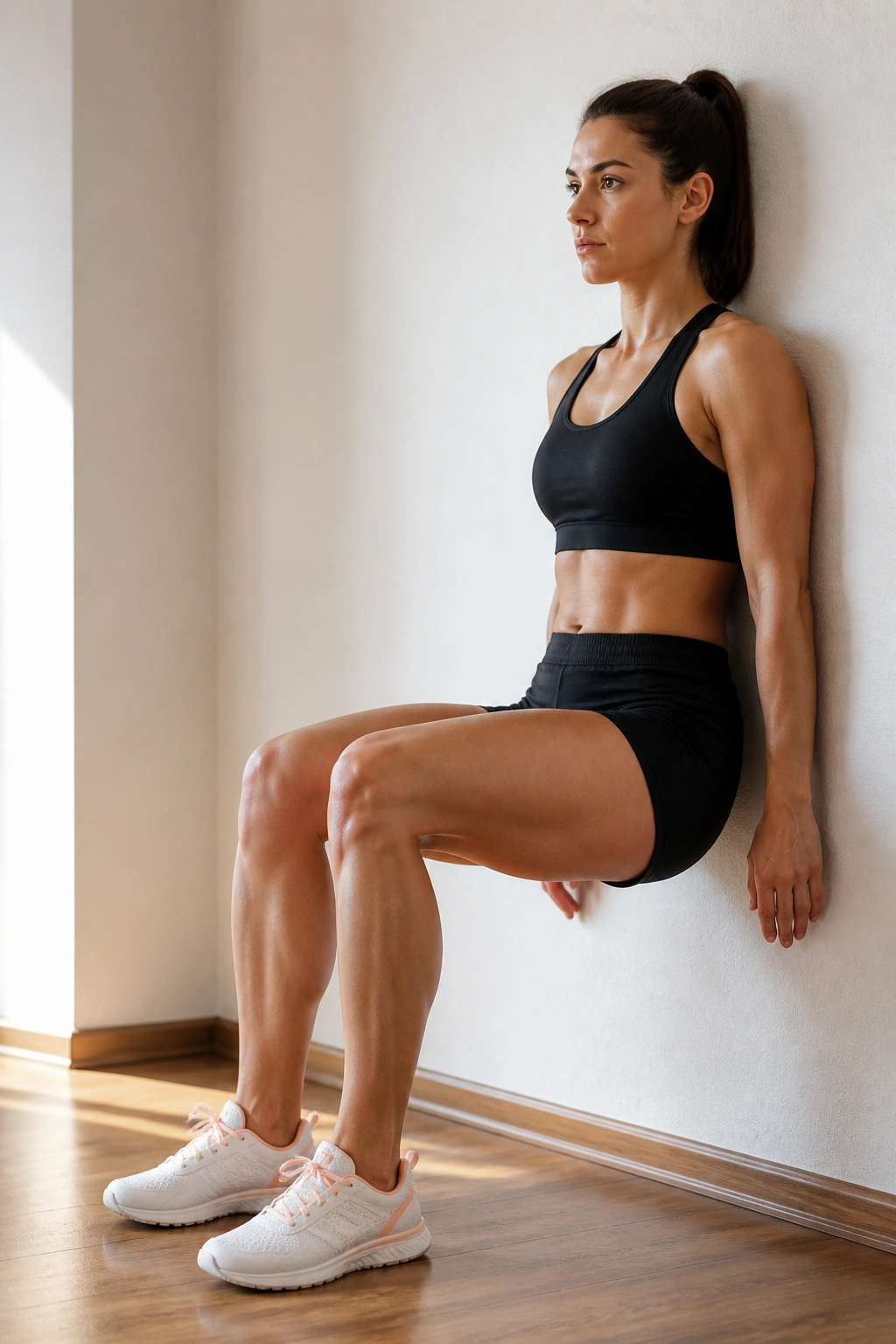
This is an isometric hold, meaning the muscle is under tension without changing length. It is deceptively simple and wildly effective for building endurance in the quads. You will notice your legs starting to tremble after about thirty seconds. That is the point where the real change begins.
The Setup
Lean your back flat against a wall. Walk your feet out and slide down until your knees are bent at a 90-degree angle. Your thighs should be parallel to the floor. Keep your feet flat.
Push Past the Trembling
Do not let your knees push past your toes. Engage your core. If you find your back pulling away from the wall, pull your belly button in toward your spine. Hold for as long as you can maintain perfect form. When your form breaks, the set is done.
10. Leg Circles
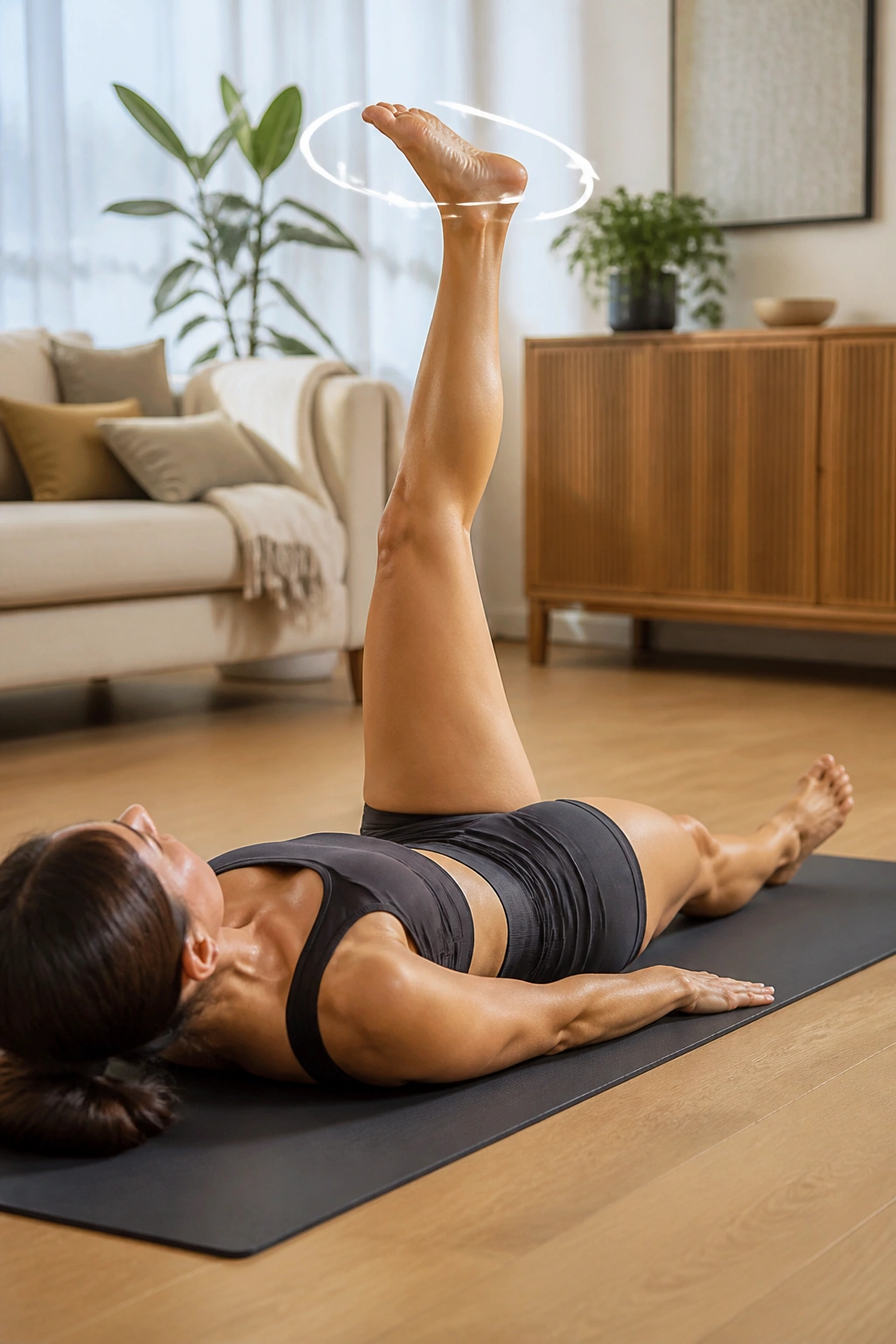
These are usually done lying on your back or your side. They target the hip flexors, quads, and core simultaneously. By drawing circles in the air, you are forcing the legs to maintain control through a full range of motion.
The Movement
Lie on your back, hands tucked under your glutes for support if your lower back feels strained. Lift one leg straight toward the ceiling. Draw small, controlled circles with your heel. Keep the rest of your body completely still.
Why This Works
The hip socket is a ball-and-socket joint, and circles keep it lubricated and strong. If you are lying on your side, circles target the glute medius and quads differently. Switch directions halfway through your set to ensure even fatigue.
11. Bulgarian Split Squats
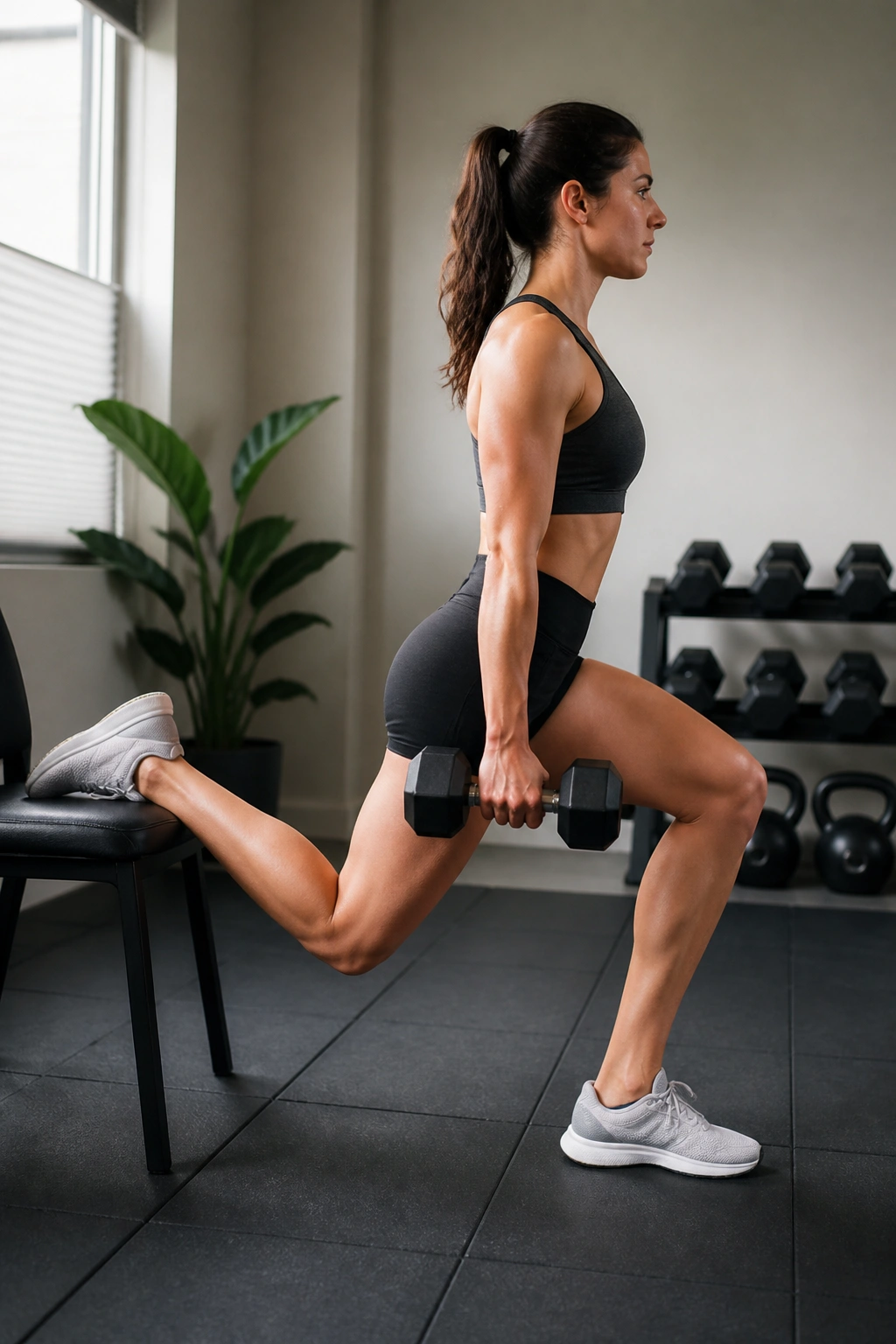
If there is one exercise on this list that will build muscle and strength faster than any other, this is it. It is also the one most people love to hate. It is a single-leg squat where the back leg is elevated on a surface.
How to Get Into Position
Stand a few feet in front of a chair or couch, facing away from it. Reach one foot back and place the top of your foot on the surface. Lower your back knee toward the floor while keeping your front knee aligned with your front ankle.
The Real Challenge
You are effectively squatting your entire body weight on one leg. If you lean forward, you hit the glutes harder. If you stay upright, you hit the quads harder. Both are great. Take your time with this move. It is a balance and strength builder combined.
12. Jumping Jacks
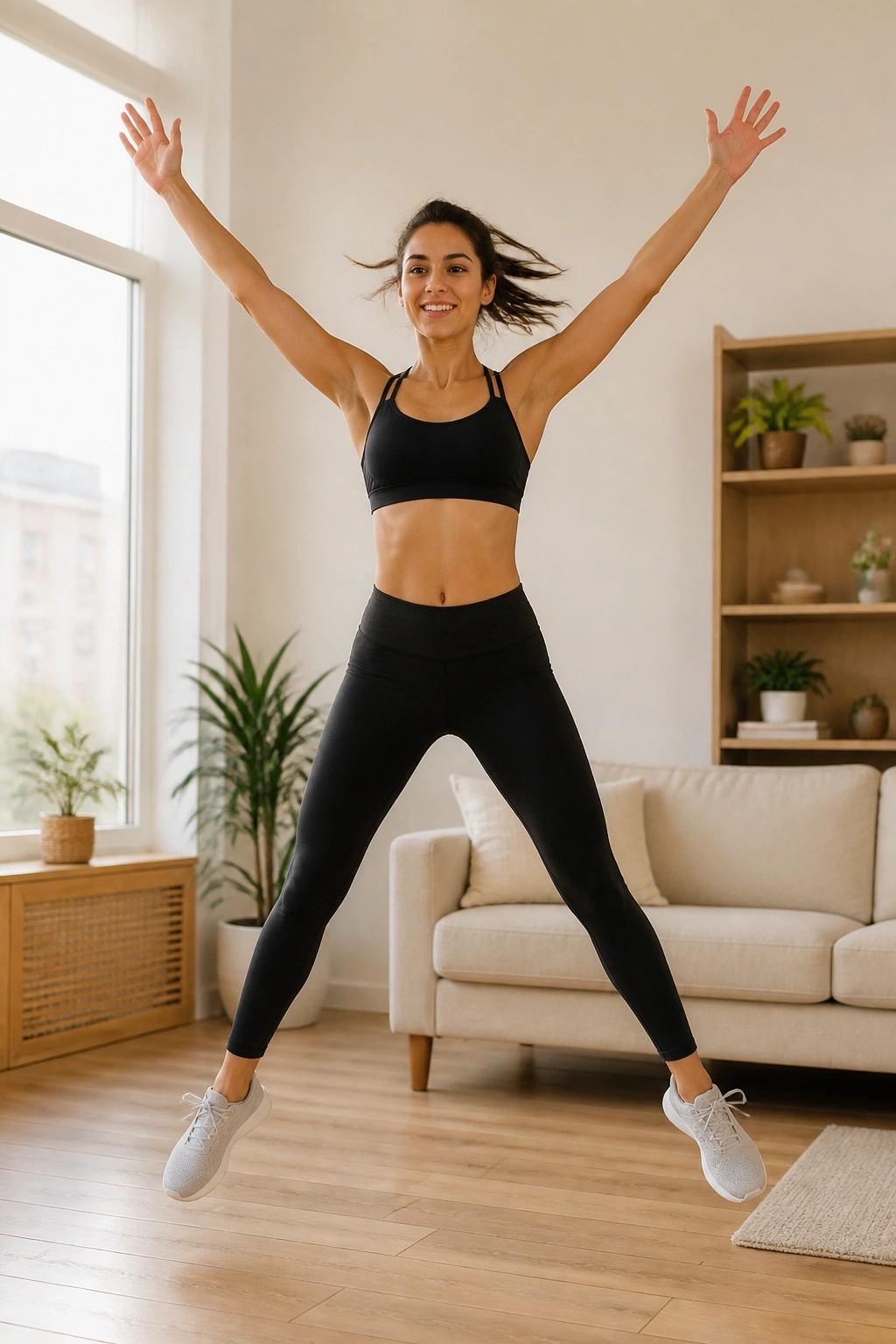
While the other exercises on this list are focused on strength, we need to integrate some higher-intensity movement to elevate your heart rate and promote fat burning. Jumping jacks are a full-body movement that keeps the legs constantly firing.
Staying Consistent
Keep your feet light. You want to land on the balls of your feet, not your heels. This reduces the impact on your knees. Keep your arms moving in a wide arc.
You can perform these for time rather than repetitions. Set a timer for sixty seconds and aim to keep a steady, continuous pace. If you need to modify, you can step side to side, but increase the speed to keep the heart rate up.
13. Pilates Scissor Kicks
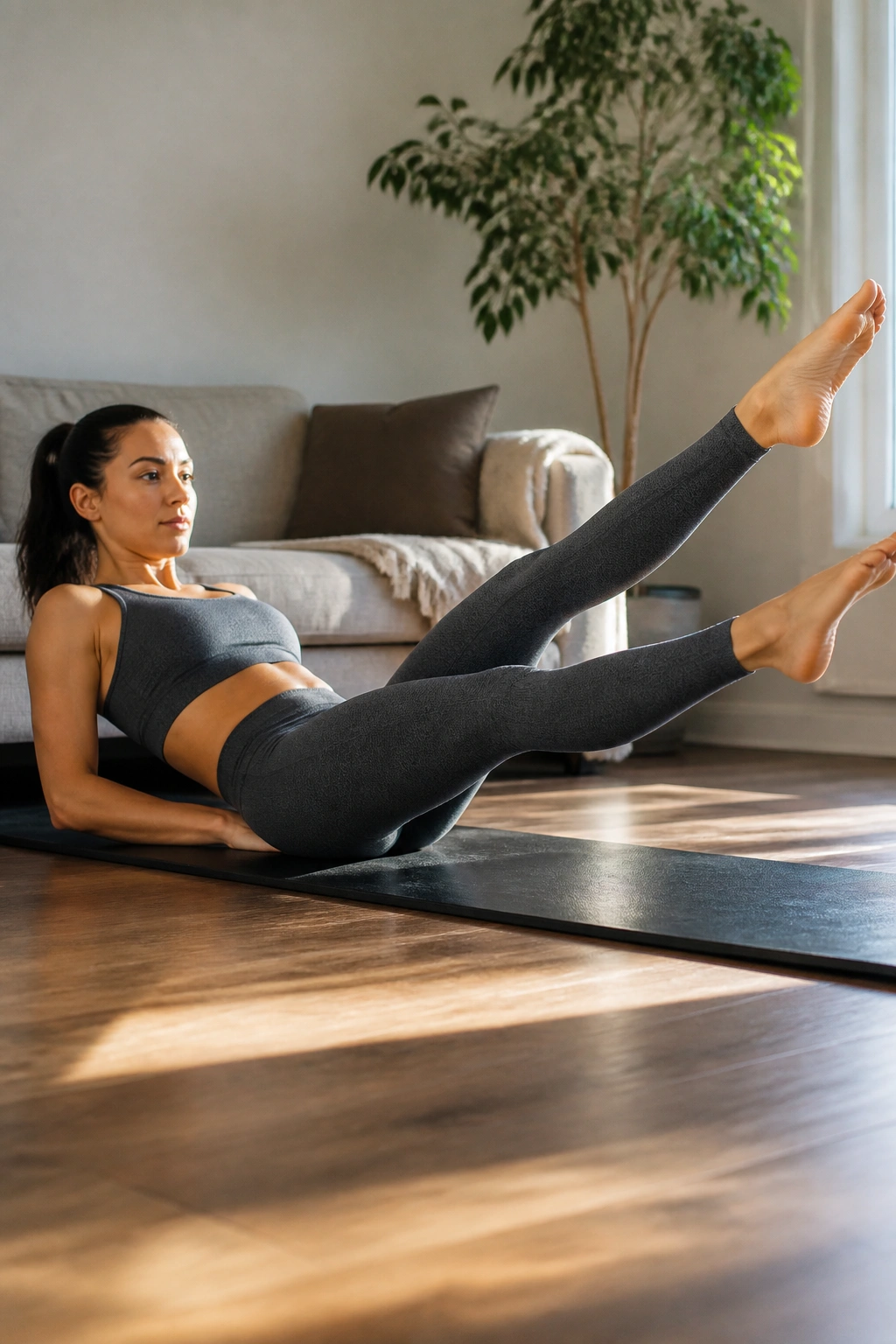
This is a deep core move that happens to put a massive amount of tension on the inner thighs. Lie on your back, hands under your glutes. Lift both legs to a 45-degree angle. Rapidly cross your legs over each other in a scissoring motion.
The Secret
Keep your lower back pressed into the floor. If your back arches, your abs are not strong enough to support the weight of your legs. If that happens, lift your legs higher toward the ceiling until you are strong enough to lower them. The lower your legs are to the floor, the harder the exercise becomes.
14. Plie Squats
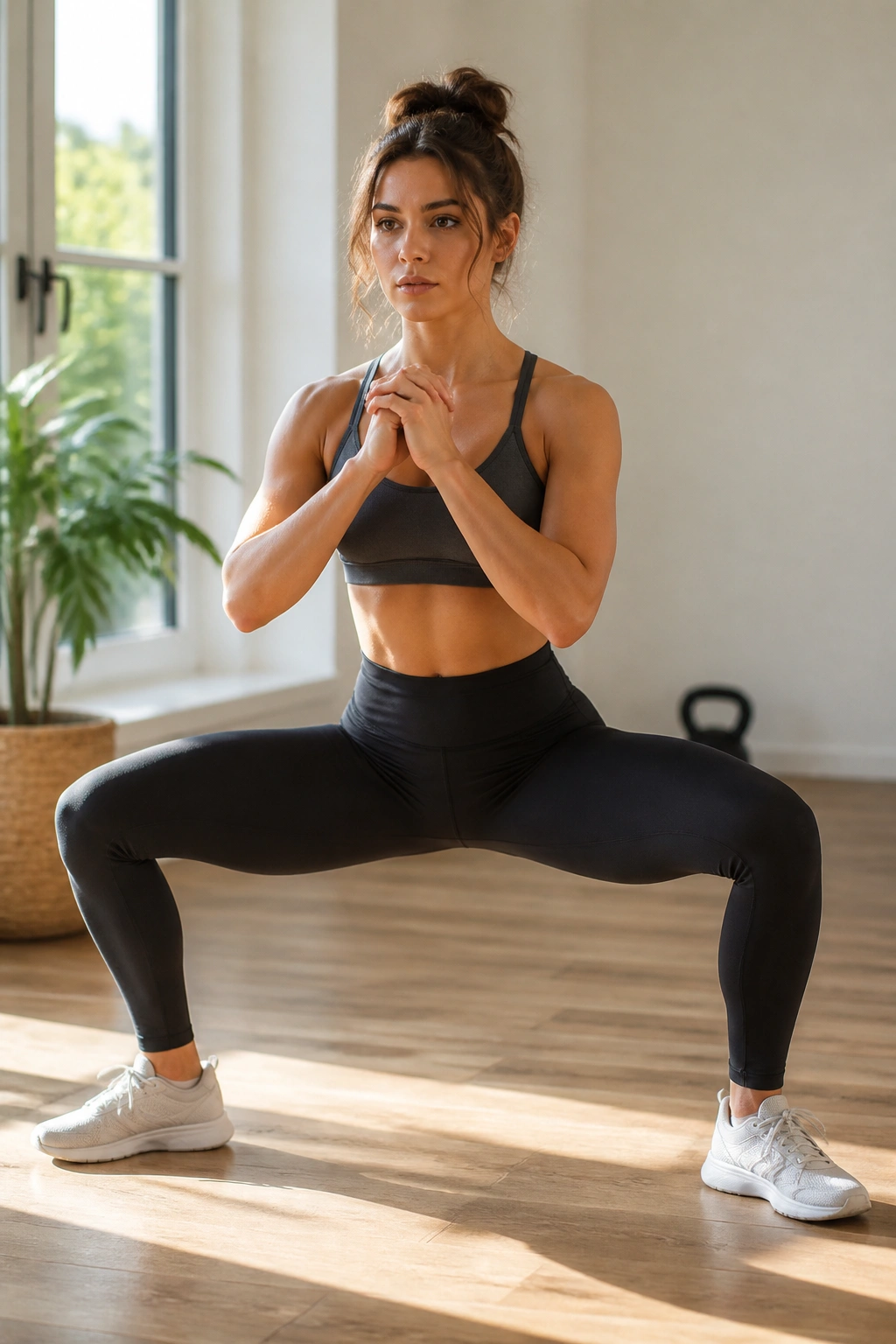
These are very similar to Sumo squats, but the focus is even more on the squeeze at the top. The “plie” comes from ballet, implying a graceful, controlled lowering and a deliberate rise.
Controlling the Movement
Lower yourself into a wide squat, feeling the stretch in your inner thighs. As you rise, do not just stand up. Actively squeeze your inner thighs together as if you are trying to hold a piece of paper between them. That internal squeeze is what makes the Plie squat different from a standard Sumo squat.
Tempo
Take it slow. Down in three seconds, hold for one, up in three. The grace is in the control. If you move too fast, you lose the tension.
15. High Knees
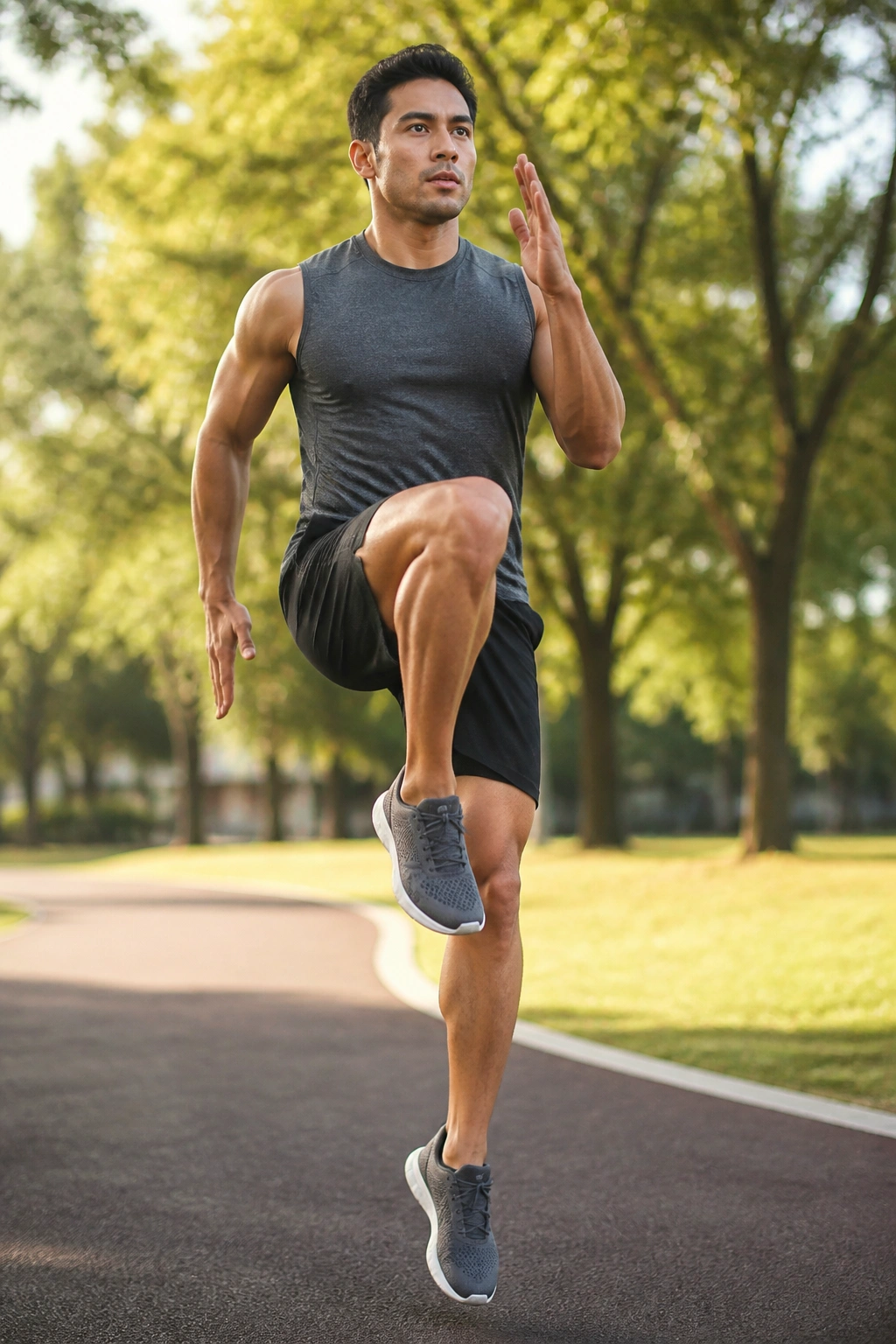
Finish your routine with high knees. This is explosive cardio. By lifting your knees to waist height, you are forcing your hip flexors and quads to contract rapidly against gravity.
Execution
Run in place, lifting your knees as high as possible with every step. Pump your arms to keep your balance. Keep your core tight.
Why These Work
This is about power. You are not jogging; you are trying to strike your hands with your knees every single time. It raises your heart rate immediately, which is exactly what you want at the end of a strength-focused lower body workout.
The Physiology of Leg Toning
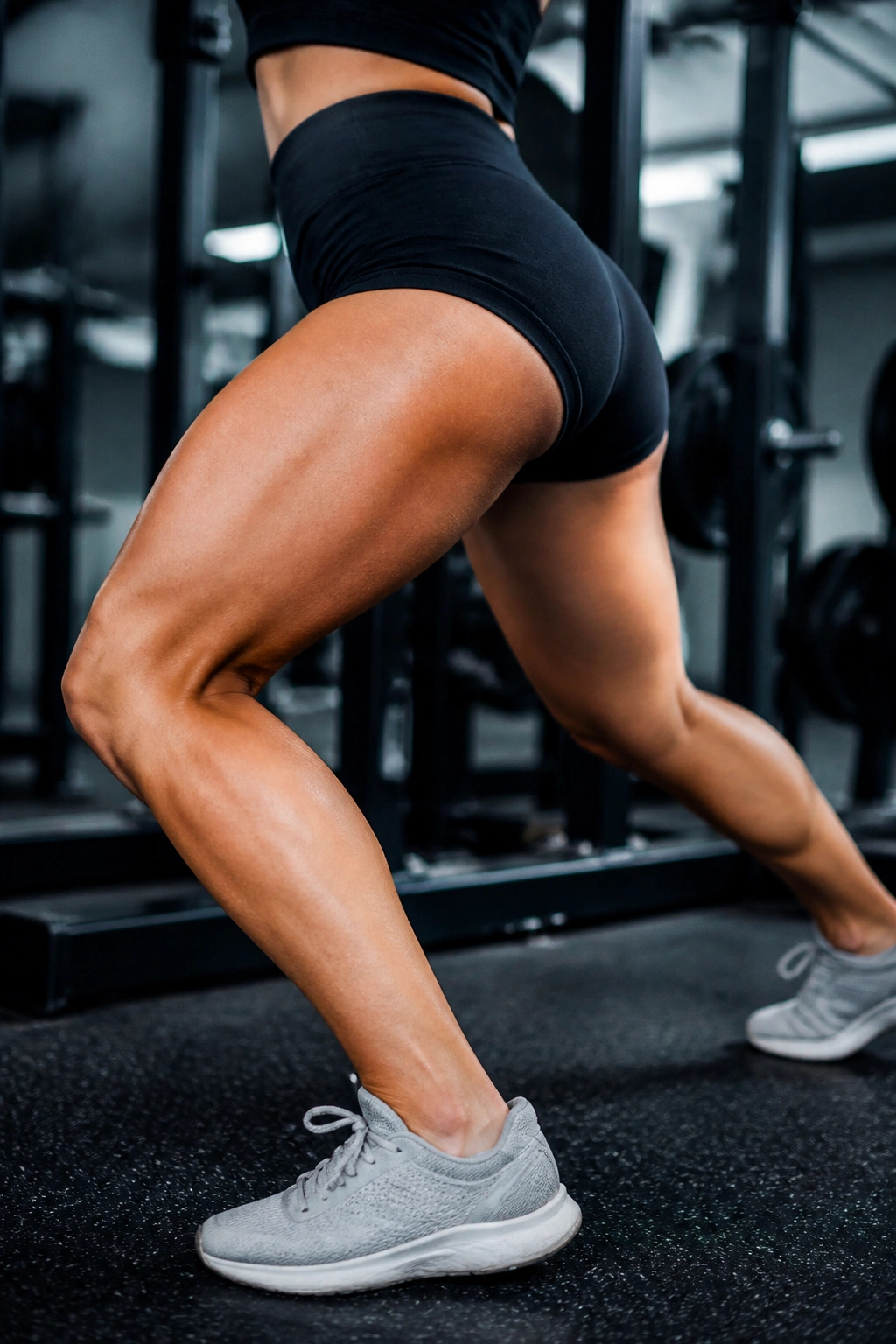
Understanding how muscle building works is essential if you want to change the appearance of your thighs. Muscle fibers respond to stress. When you perform these exercises, you are creating microscopic tears in the muscle tissue. Through nutrition and rest, the body repairs these tears, making the muscle stronger and, over time, more defined.
It is impossible to build muscle if you are not challenging yourself. If you perform twelve repetitions and feel like you could easily do twenty, you are not working hard enough. You must reach that point of fatigue where the last few repetitions are genuinely difficult to complete.
Consistency matters more than intensity for a single workout. You are much better off doing three moderate sessions per week than one “brutal” session that leaves you unable to walk for four days. The body adapts to the demands placed upon it. If you keep the demand consistent, the change will be consistent.
Avoiding Common Form Mistakes
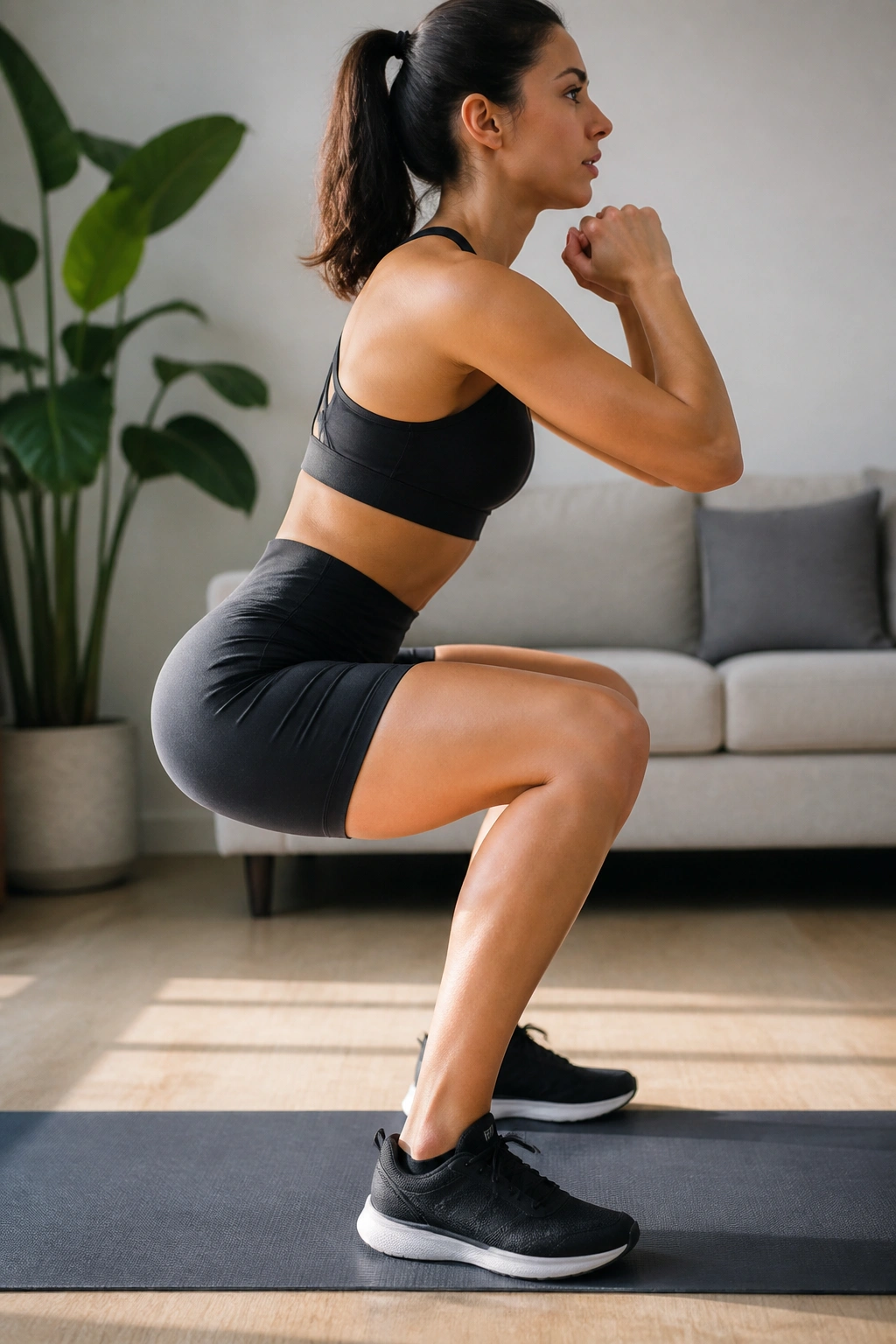
Even the most effective exercise becomes useless—or worse, dangerous—if your form is compromised. The most common error in lower body work is knee tracking. Your knees should always align with the direction of your toes. If your toes point out, your knees should point out. If your knees cave inward, you are placing unnecessary strain on your ligaments and missing the target muscles.
Another frequent issue is using momentum. When you swing your leg or use your back to lift your body weight, you remove the tension from the muscle you are trying to train. A slower, less “impressive” rep with perfect form is always better than a fast, sloppy rep that uses momentum to finish the set.
Listen to your body. There is a difference between the “burn” of muscle fatigue and the sharp, localized pain of an injury. If you feel pain in your joints—your knees, hips, or lower back—stop. Adjust your stance, check your alignment, or take a rest. Never push through joint pain in the hope that it will go away.
The Role of Consistency and Progressive Overload
If you want to see results, you have to keep moving. The concept of “progressive overload” is simple: as you get stronger, you must increase the challenge. Once the exercises above become easy, you can’t just keep doing the same thing forever and expect the same results.
How do you overload at home? It is easier than you think. You can increase the number of repetitions. You can decrease the rest time between sets—for example, moving from 60 seconds of rest to 30 seconds. You can increase the time under tension by slowing down your tempo.
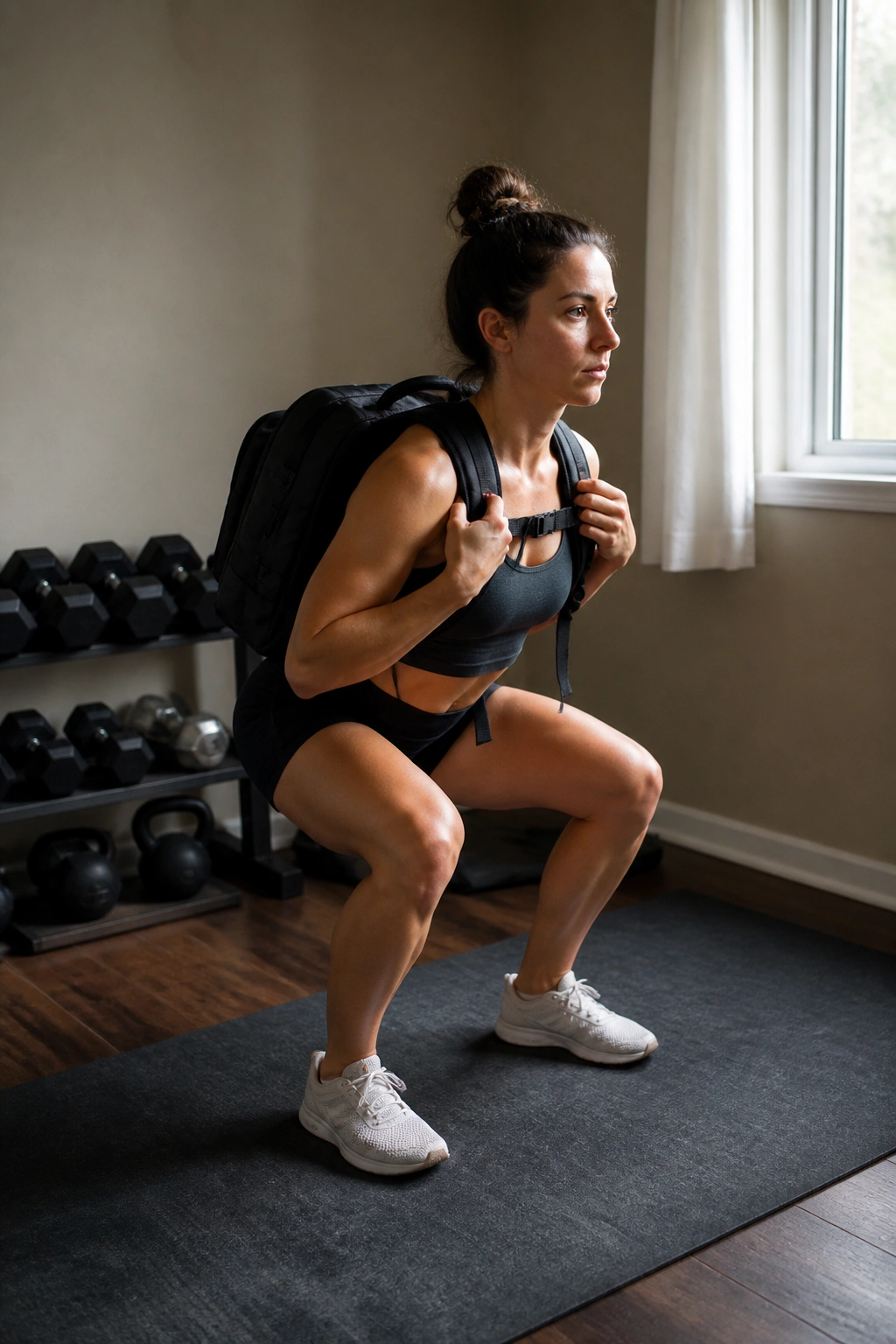
You can also use household items to add external resistance. A backpack filled with books can be worn during squats. A water jug can be held during lunges. These small, incremental changes are what keep the body adapting and changing. If the workout feels easy, it is time to add one of these variables.
Why Muscle Recovery Matters
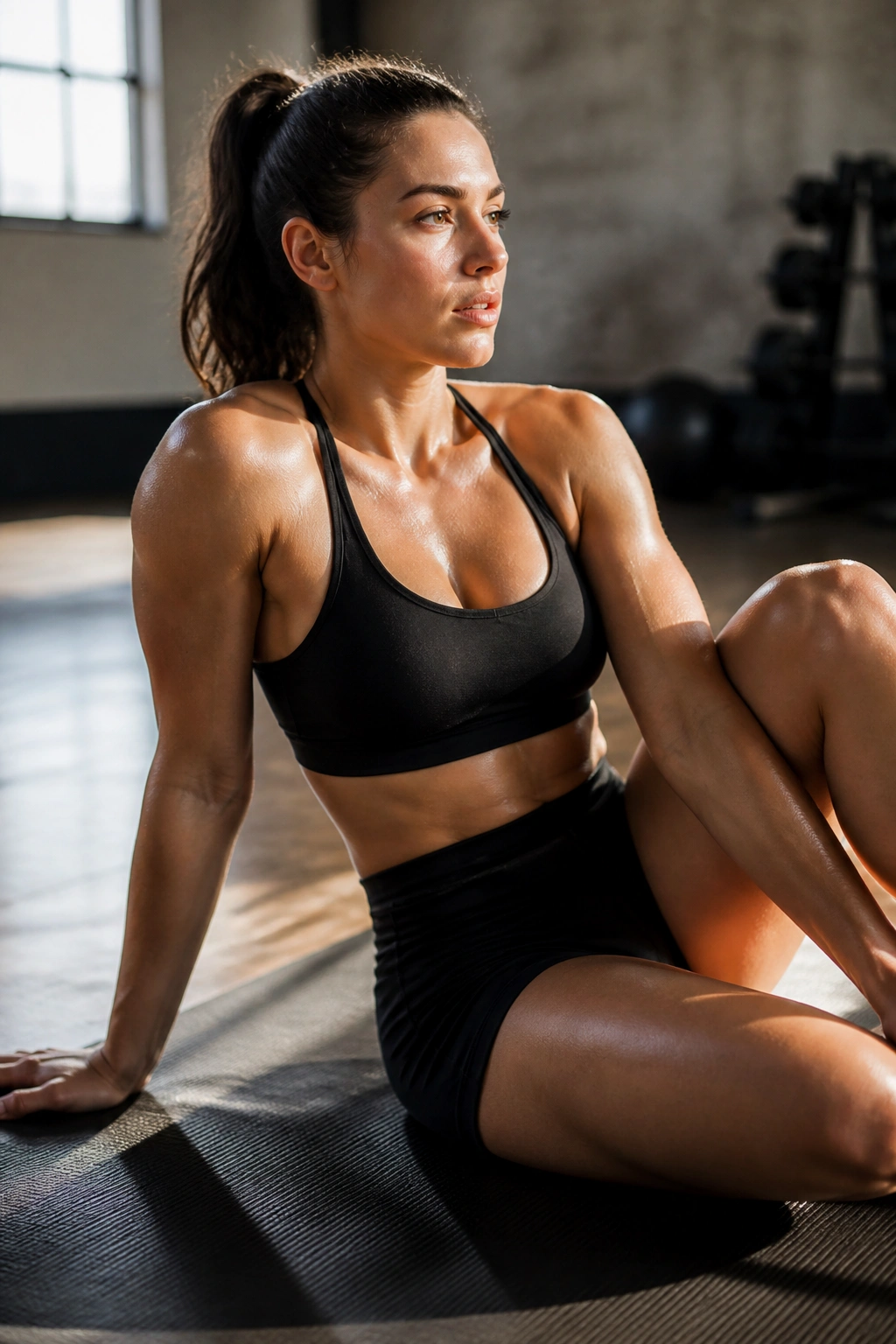
You do not get toned while you are working out. You get toned while you are recovering. The gym or the living room floor is where you break your muscles down; your kitchen and your bed are where you build them back up.
Protein is the building block of muscle. If you are training hard but not eating enough protein, your body will struggle to repair the tissue you are working on. You do not need to overcomplicate this, but ensure you are getting a quality source of protein—eggs, chicken, beans, tofu, Greek yogurt—in your meals throughout the day.
Sleep is equally important. Your body releases hormones, including growth hormone, while you sleep. These are crucial for repair and recovery. If you are consistently sleep-deprived, your body holds onto fat, fights muscle growth, and raises your cortisol levels—a stress hormone that can actually make it harder to lose weight, particularly in the midsection and legs.
Final Thoughts
Losing fat in your thighs is a slow process that requires a total lifestyle approach. There is no magic pill or single exercise that will change your body overnight. It comes down to being consistent with your workouts, eating in a way that supports your energy and recovery needs, and trusting the process.
Focus on how you feel rather than just what you see in the mirror. Are you stronger? Is your endurance improving? Can you get through these exercises with better form than you could a few weeks ago? Those are the real markers of progress.
Stay the course. The results you want are built in the quiet, repetitive moments of working out when no one is watching. Give it time, stay disciplined, and the change will eventually reflect your effort.
