



A tight neck before breakfast is rude. You roll out of bed, plant your feet on the floor, and the first thing your body tells you is that it would rather stay folded up like a lawn chair. That’s exactly where morning yoga routines for beginners earn their keep: they loosen the joints, bring some blood flow back to sleepy muscles, and give your head a minute to catch up with your body.
The trick is not to attack the mat like you’re training for a photo shoot. Good morning yoga is smaller than that. Slower, too. A few easy breaths, a gentle fold, a little spinal movement, and maybe one standing balance if you’re feeling awake enough. That’s plenty. You do not need to be flexible. You need to be willing to move without forcing anything.
I’ve always thought the best beginner morning flow feels a bit ordinary in the best way. Nothing flashy. Nothing punishing. Just enough shape change to make your back stop complaining and your shoulders sit where they belong. If you’ve ever stood up from bed and felt like your body had to be negotiated with, this kind of routine makes immediate sense.
Start small. Keep the breathing smooth. The first routine below is as simple as it sounds, and that’s the point.
1. Neck Release and Easy Breathing
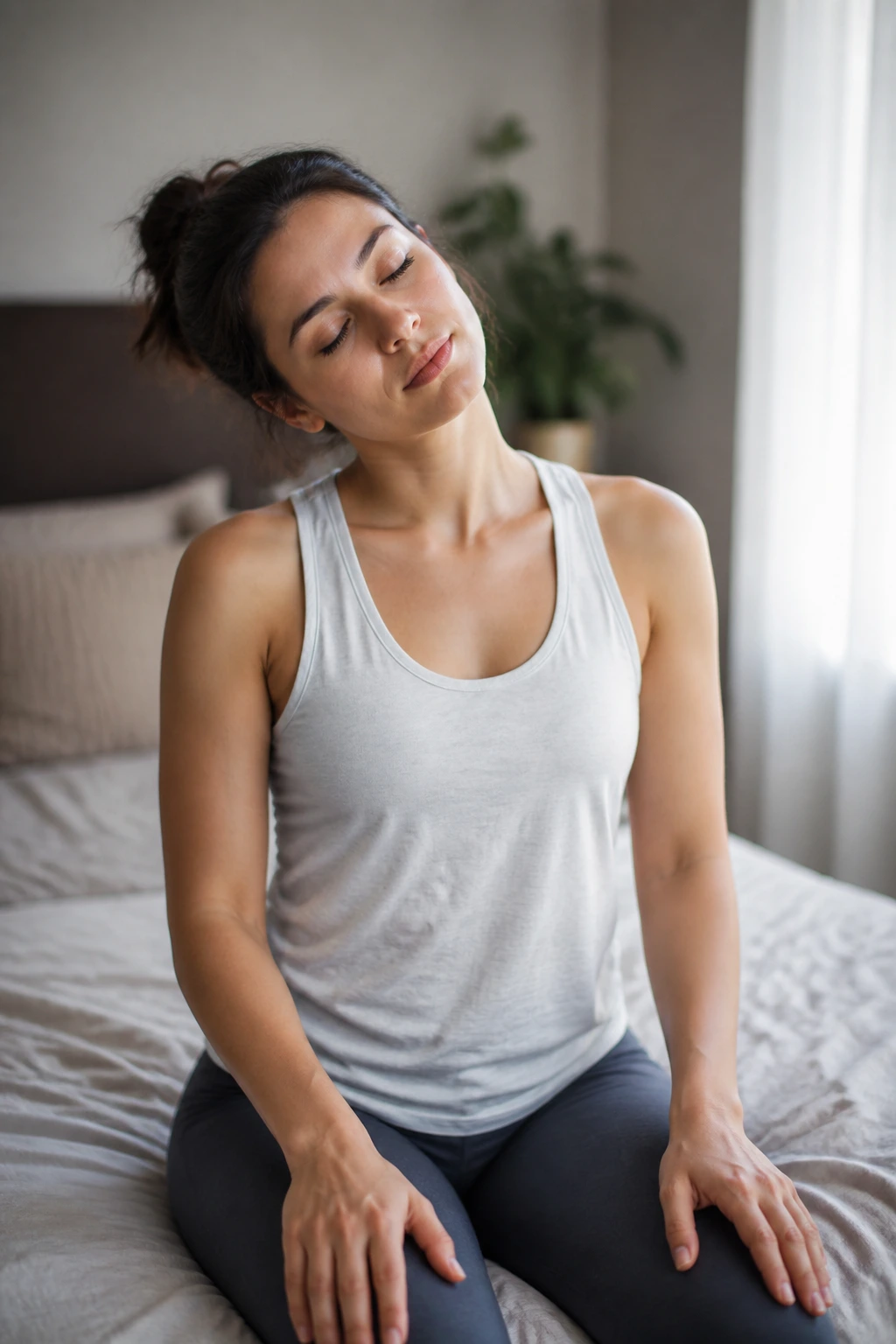
If your mornings start with a stiff jaw and hunched shoulders, this is the place to begin. Sixty seconds is enough to take the edge off, and that makes it one of the easiest morning yoga routines for beginners to stick with.
Sit on the edge of your bed or on a folded blanket. Let your hands rest on your thighs, drop your shoulders, and breathe in for a count of 4. Breathe out for a count of 6. Then tilt your head gently side to side, not all the way, just enough to feel the stretch along the neck. Small circles are fine, but slow is better than dramatic.
A good version of this routine feels almost boring while you do it. That’s a good sign.
- 5 slow breaths with your chin level
- 3 gentle ear-to-shoulder stretches per side
- 3 soft shoulder rolls backward
- 1 long exhale after every round
Tip: If your neck pinches, stop the circles and use side tilts only. No prizes for pushing deeper.
2. Cat-Cow on Hands and Knees
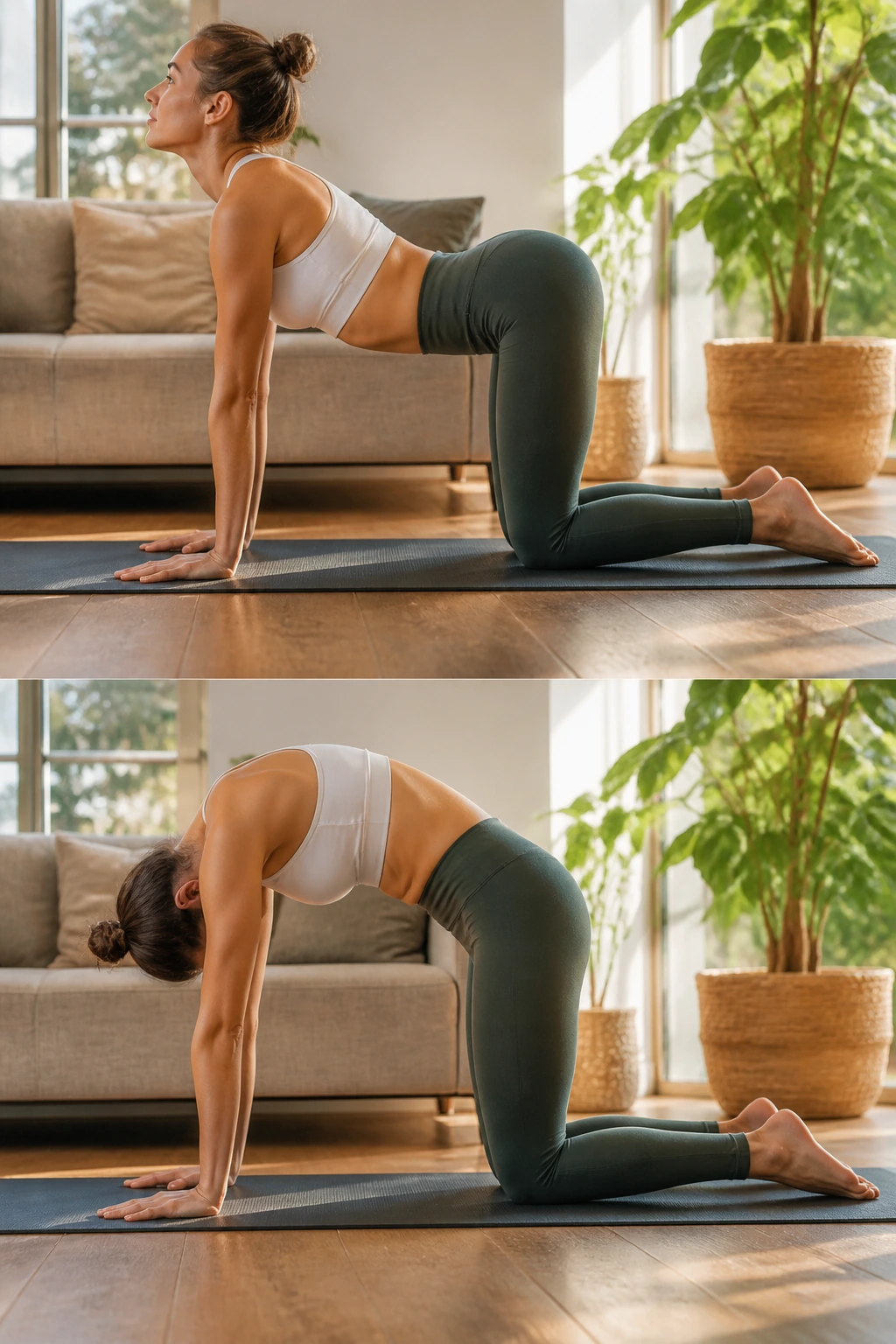
Why does Cat-Cow show up in so many beginner flows? Because it wakes up the spine without asking for balance, strength, or a large range of motion. It’s one of the cleanest ways to shake off sleep-stiffness in the lower back.
Come onto hands and knees with your wrists under your shoulders and your knees under your hips. On an inhale, drop your belly and lift your chest for Cow. On an exhale, round your spine and tuck your chin for Cat. Move with the breath for 6 to 8 rounds. Keep the motion smooth, not big.
If your wrists feel cranky in the morning, come down onto your forearms or place your hands on a folded towel. That tiny change can make the whole thing feel easier.
You do not need to chase a big arch in the back. The value is in the rhythm. Breath in. Spine opens. Breath out. Spine rounds. Simple.
3. Half Sun Salutation with Reach, Fold, and Rise
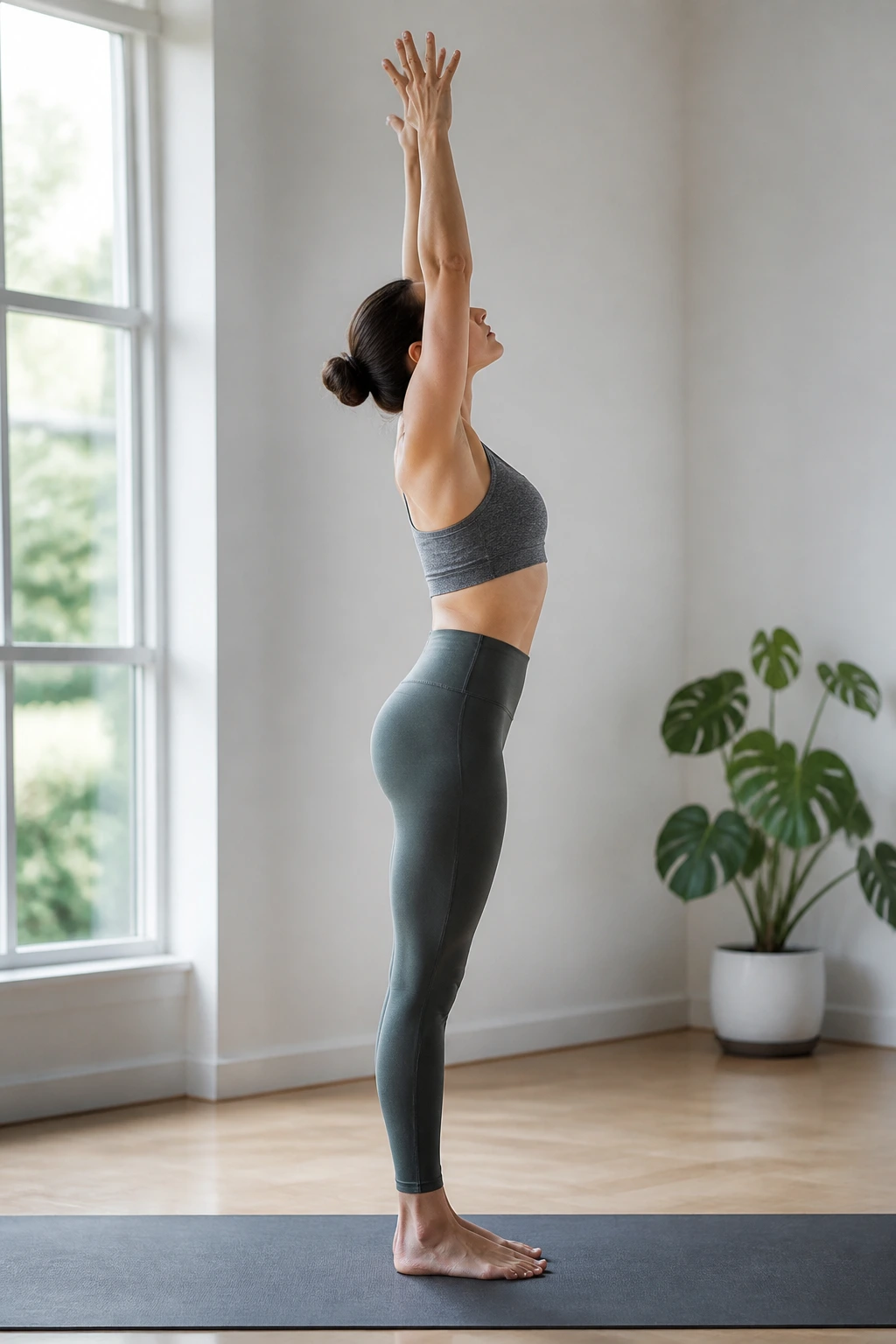
The first time you string a few standing shapes together, the whole routine starts to feel like an actual morning reset. Half Sun Salutation is perfect for that because it links breath, hamstrings, and shoulders in one neat sequence.
Stand tall, lift your arms overhead, and stretch up through your fingertips. Fold forward with soft knees. Lift halfway with a flat back and hands on shins or thighs. Fold again. Rise all the way up, then lower your arms. Do 4 rounds at a calm pace.
Why It Feels So Good
The up-and-down motion wakes the legs without a big burn. The halfway lift also teaches a useful beginner habit: length first, depth second. That matters more than people think.
Use this rhythm:
- Inhale to reach up
- Exhale to fold
- Inhale to halfway lift
- Exhale to fold again
- Inhale to stand
Small note: If your lower back rounds a lot in the half lift, bend your knees more. That’s not cheating. That’s smart.
4. Standing Forward Fold with Loose Knees
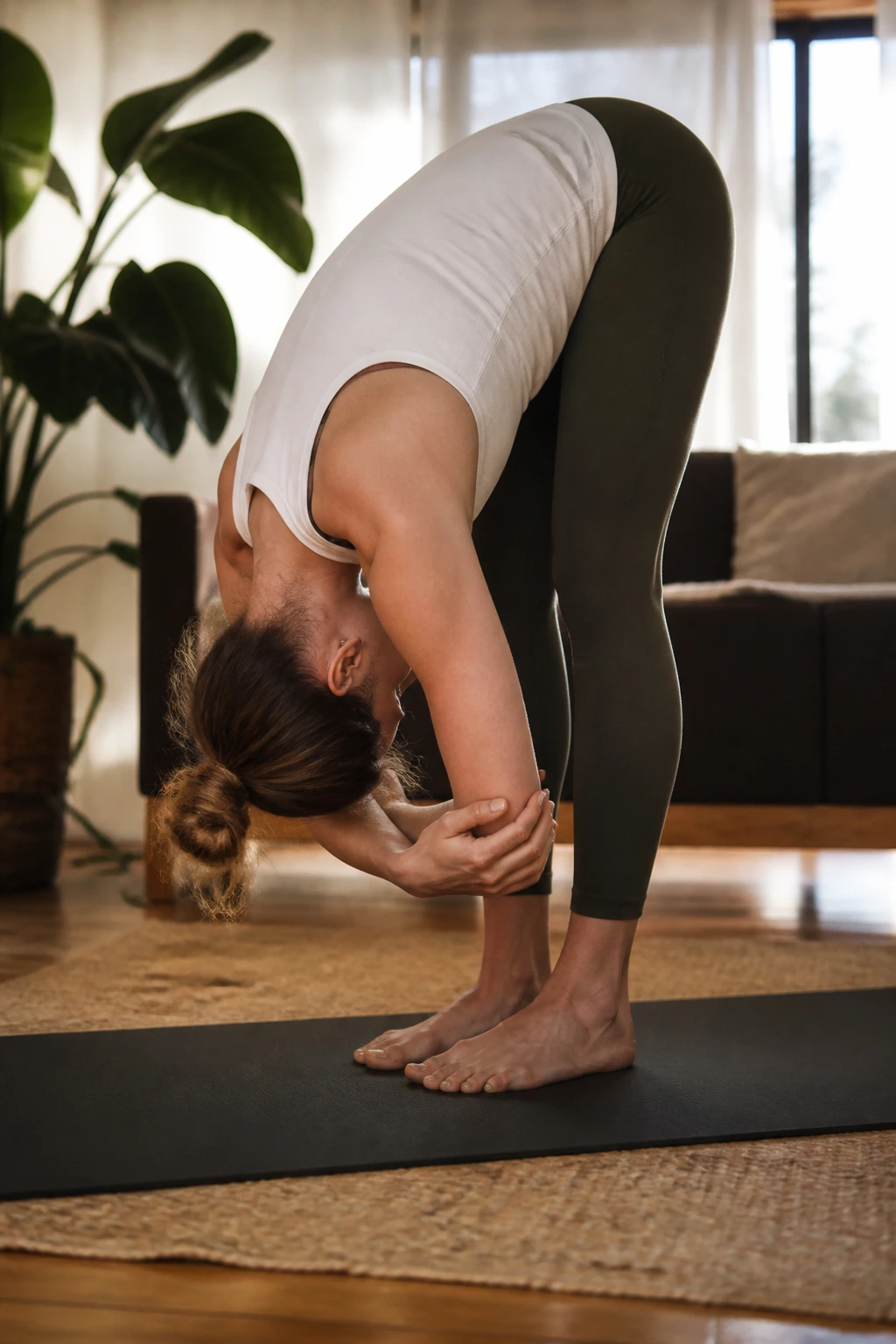
Some days, a proper fold is enough. Not a deep one. Just enough to let your head hang and your back stop carrying the morning on its own.
Stand with your feet hip-width apart. Bend your knees generously, hinge at the hips, and let your upper body drape toward the floor. Hold opposite elbows if that feels good. Stay for 5 to 8 breaths, swaying a little side to side if your back likes that.
This is one of those routines that feels different every time. Tight hamstrings? You’ll feel them. Stiff upper back? You’ll feel that too. But the real win is the release through the back of the neck and the long line along the spine.
Don’t force your legs straight. That’s the fastest way to make this pose annoying. Keep the knees soft and let the weight of the head do some of the work.
5. Downward Dog with Pedaling Feet
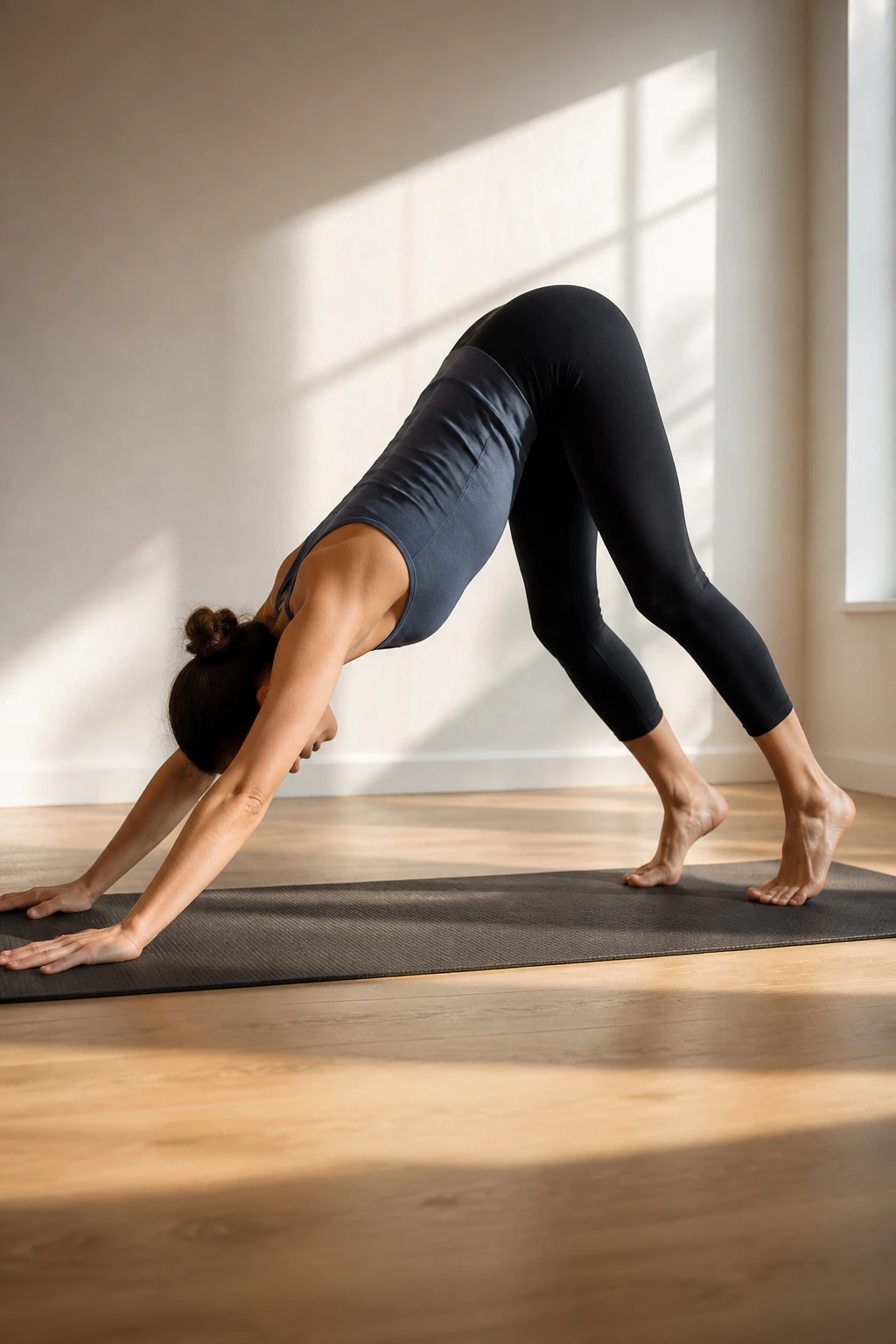
Downward Dog gets treated like a big yoga pose, but beginners do better when they think of it as a moving stretch for the whole back line. The pedaling feet version is friendlier than trying to hold a perfect shape.
From hands and knees, tuck your toes and lift your hips. Bend one knee, then the other, as if you’re walking out your calves. Keep your heels lifted if needed. Stay for 5 breaths, then shift your hips gently side to side.
The useful part is not the heel-to-floor goal. It’s the way the stretch moves from calf to hamstring without any jerky pulling. If your shoulders are tight, bend your knees more and shorten the pose.
A lot of people make this harder than it needs to be. Don’t. Keep your gaze between your feet, spread your fingers wide, and let the pose feel roomy.
6. Low Lunge with Overhead Reach
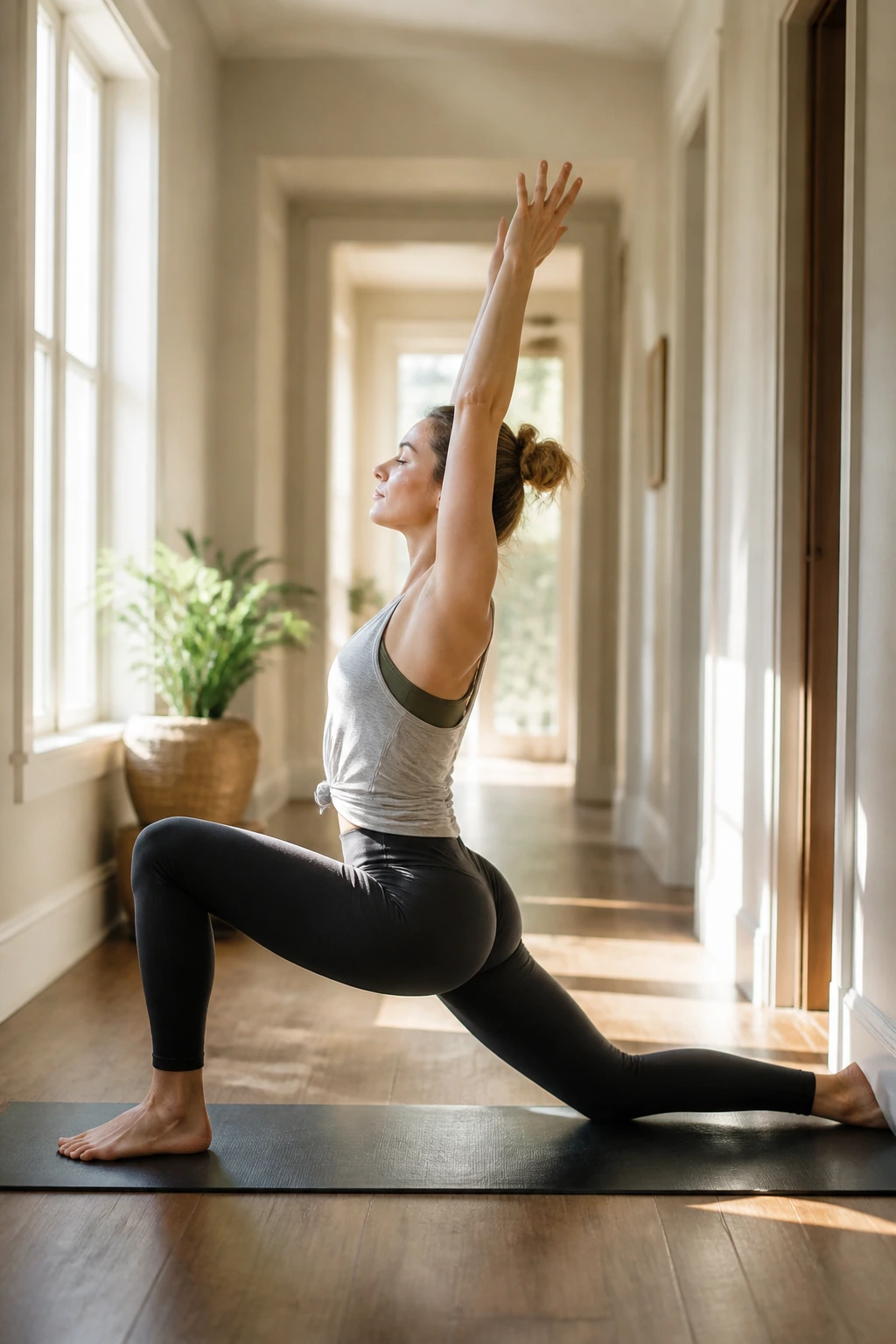
Want a routine that opens tight hip flexors fast without feeling aggressive? Low Lunge does that well. Morning hips tend to be stiff, and this is where they usually start arguing back.
Step your right foot forward between your hands, lower your left knee to the mat, and lift your chest. Bring your hands to your front thigh or reach both arms overhead. Hold for 4 to 5 breaths, then switch sides.
What to Watch For
Keep your front knee stacked roughly over the ankle. If it slides forward a little, fine. If it collapses inward, adjust.
- Back knee down on a folded blanket if the floor feels hard
- Hips square to the front
- Ribs soft, not flared
- Reach up only as high as your shoulders tolerate
Good beginner version: Keep both hands on the front thigh and breathe there. That’s enough to get the hip opening without wobbling all over the place.
7. Cobra Pose and Child’s Pose
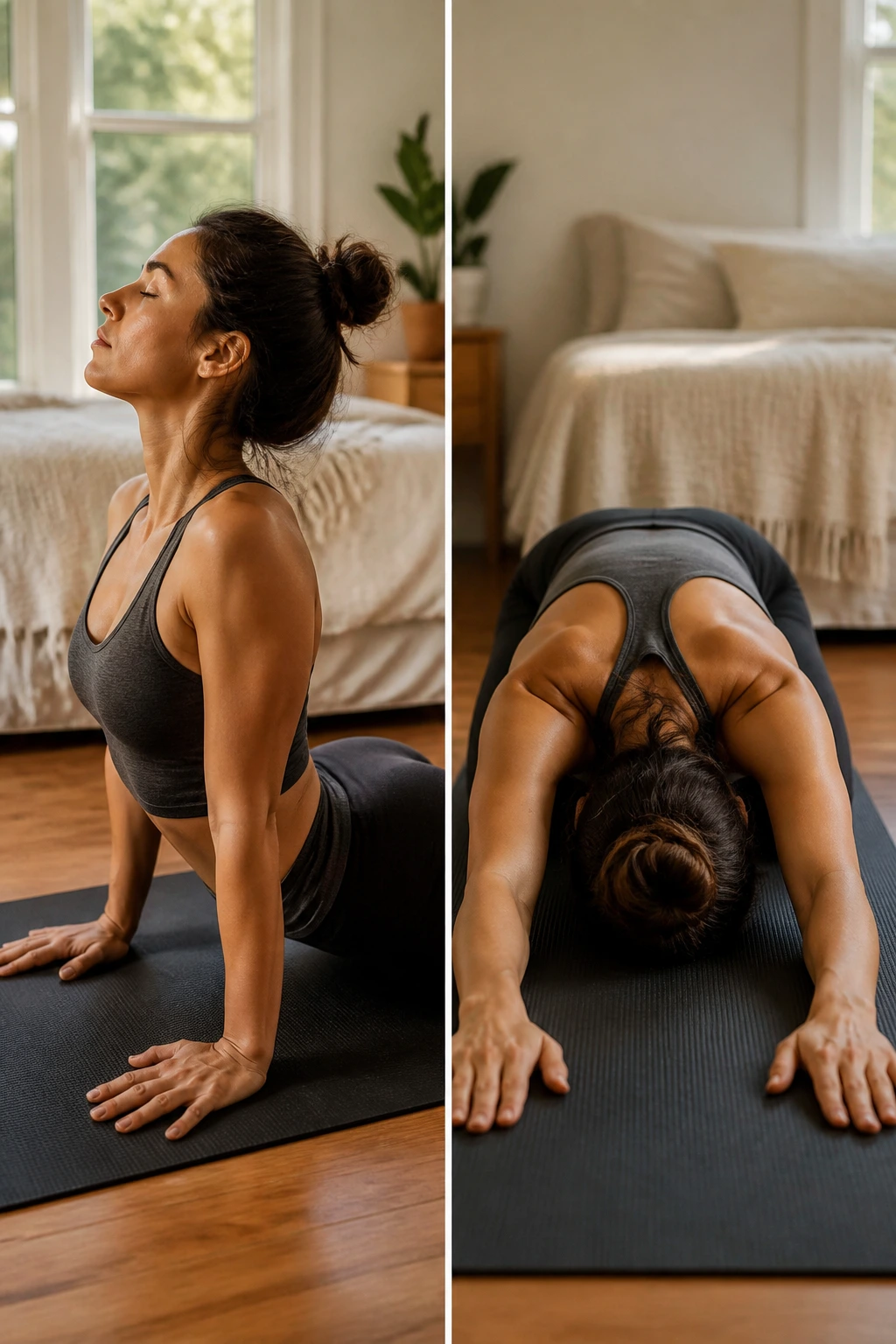
This pair works because it gives you two different kinds of relief: a gentle backbend and a soft forward rest. Cobra wakes the front of the body; Child’s Pose gives the back a break.
Lie on your stomach with your hands under your shoulders. On an inhale, press lightly into your hands and lift your chest a few inches. Elbows stay close. On the exhale, lower down and rest in Child’s Pose with your hips back toward your heels. Repeat 3 times.
The key is small Cobra. A lot of beginners lift too high and end up jamming the lower back. Keep the neck long and the shoulders away from the ears. Then melt back into Child’s Pose and let the hips settle.
That back-and-forth makes the routine feel balanced. Up. Down. Open. Rest. It’s one of the nicest ways to start the day if your spine likes a bit of movement before sitting.
8. Thread the Needle Shoulder Reset
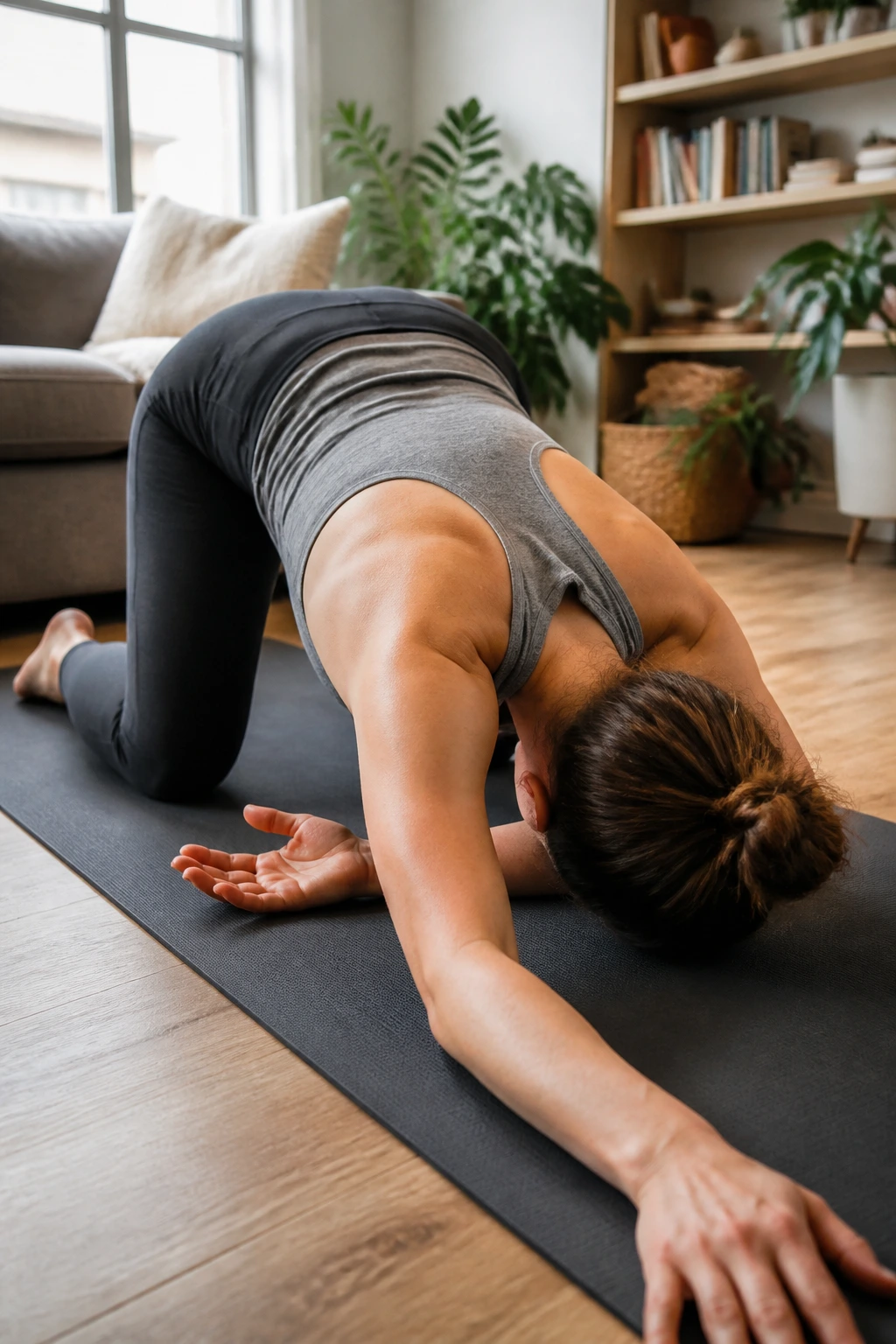
If your shoulders feel like they slept in a suitcase, Thread the Needle is a relief. It twists the upper back and opens the space between the shoulder blades in a way that standing stretches usually miss.
Start on hands and knees. Slide your right arm underneath your left arm, palm facing up, and lower your right shoulder and temple toward the mat. Stay for 4 to 6 breaths. Switch sides.
How It Should Feel
A warm stretch across the upper back. Maybe a little release in the neck. Not sharp. Not strained.
You can keep your top hand planted for support, or stretch it forward if that feels better. If your knees dislike kneeling first thing in the morning, place a folded towel under them.
This pose is especially good if you wake up with rounded shoulders from sleeping curled up. It does not fix posture in one shot — nothing does — but it gives the upper body a cleaner start.
9. Sphinx Pose for a Gentle Backbend
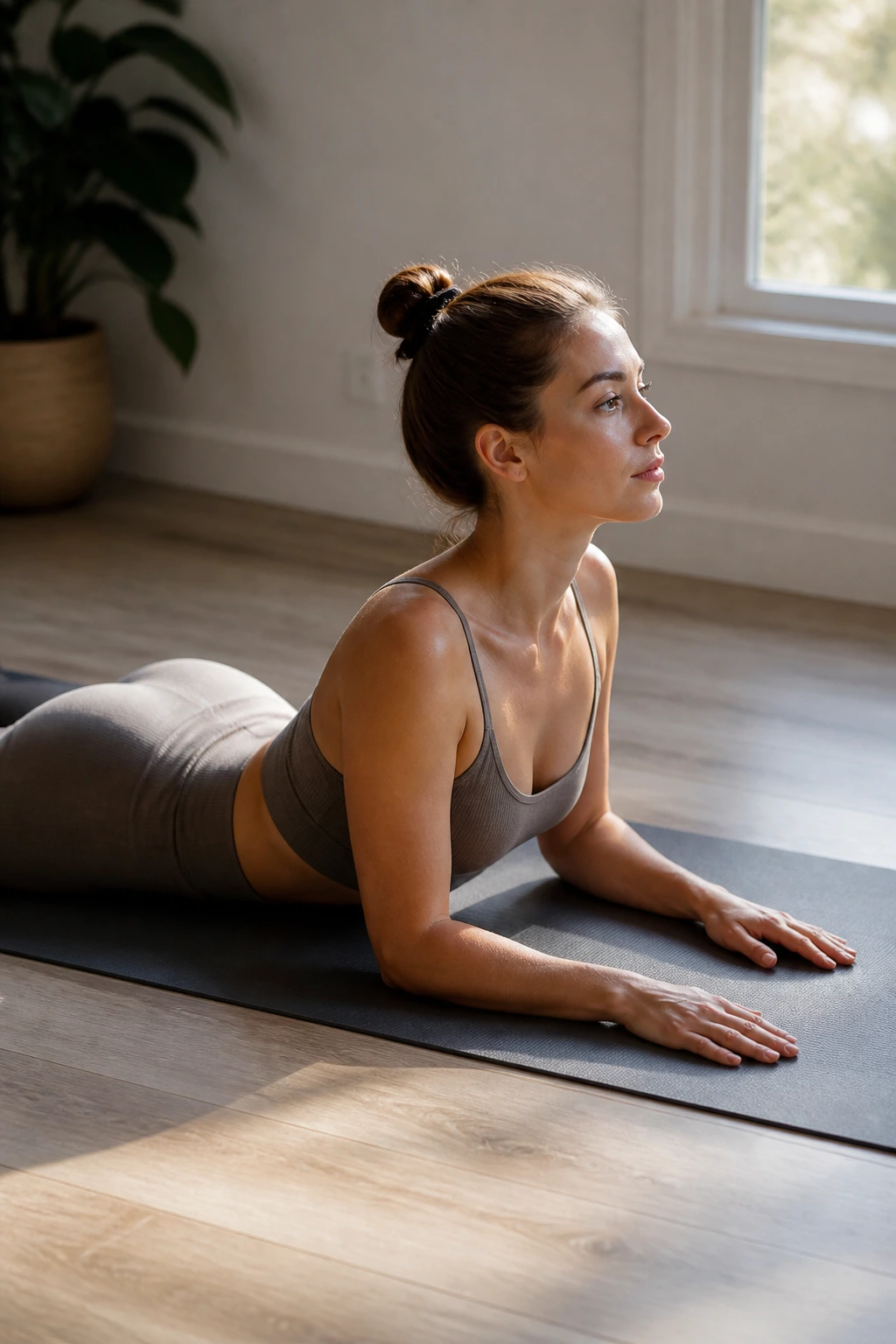
Sphinx is quieter than Cobra and, for a lot of beginners, nicer. You stay low to the floor, lift the chest just enough, and let the front of the hips and belly lengthen without any rush.
Lie on your stomach, then come onto your forearms with elbows under shoulders. Press the forearms down and lift the chest. Keep the tops of the feet heavy. Hold for 5 to 8 breaths.
This pose is the one I’d pick if your lower back feels stiff but sensitive. It opens the front body without asking for much strength. The sensation should feel broad and steady, not pinchy.
And if it gets too much, lower one forearm and rest the other. Small changes matter here.
10. Warrior I to Wake Up the Legs
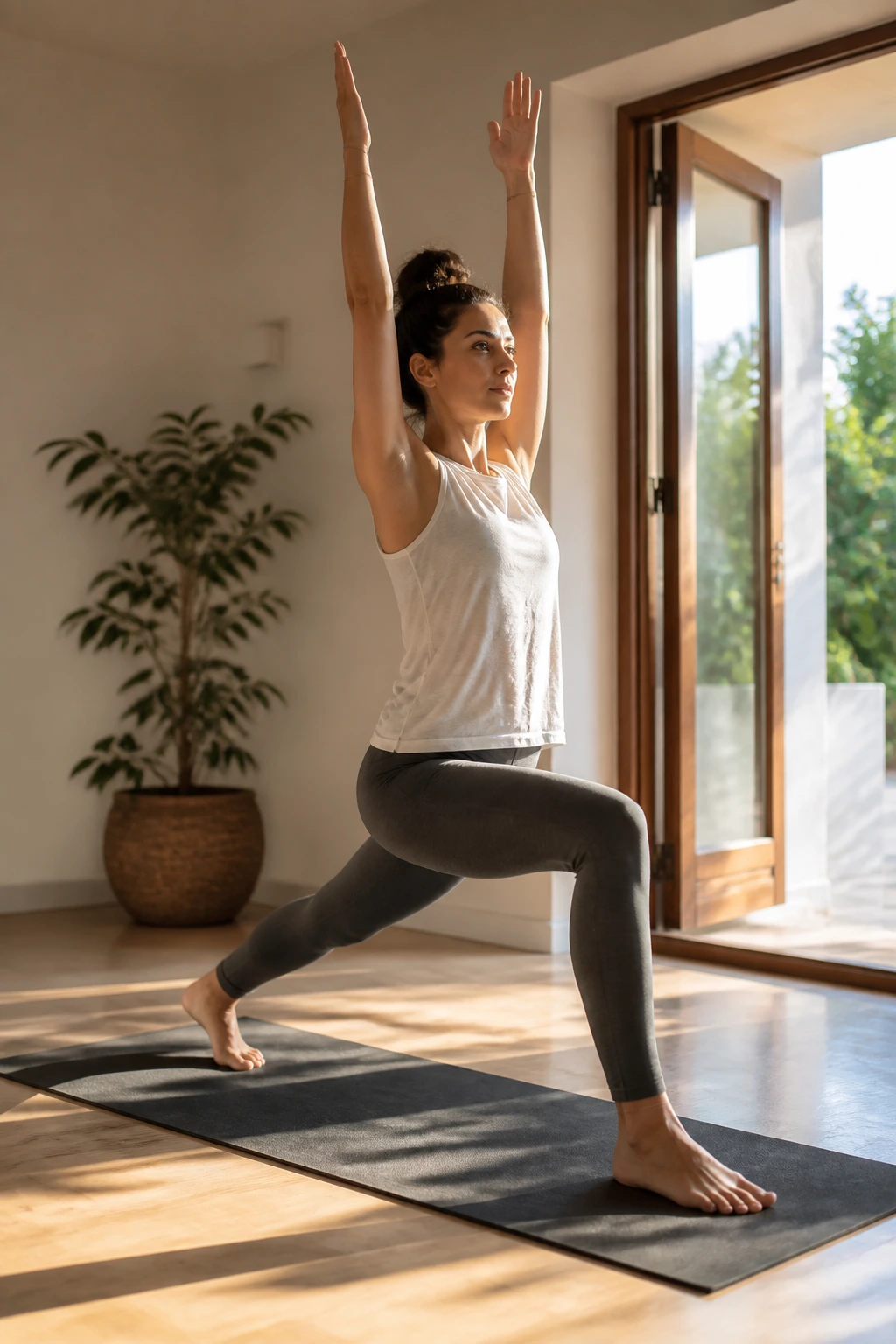
Warrior I is where a sleepy routine starts to feel like a workout. Not a hard one. Just enough to remind your legs that they’re part of the day.
Step one foot back, keep the back heel grounded or lifted, and bend the front knee. Square your hips as much as your body allows, then lift your arms overhead. Hold for 3 to 5 breaths on each side.
The first few mornings, your balance might be wobbly. Fine. That’s normal. Set your stance a little wider if needed. The shape gets easier when your feet are stable.
Warrior I works because it blends strength and stretch. You feel the front thigh turn on, the back calf lengthen, and the upper body lift at the same time. That combination is waking up, not showing off.
11. Warrior II with an Easy Gaze
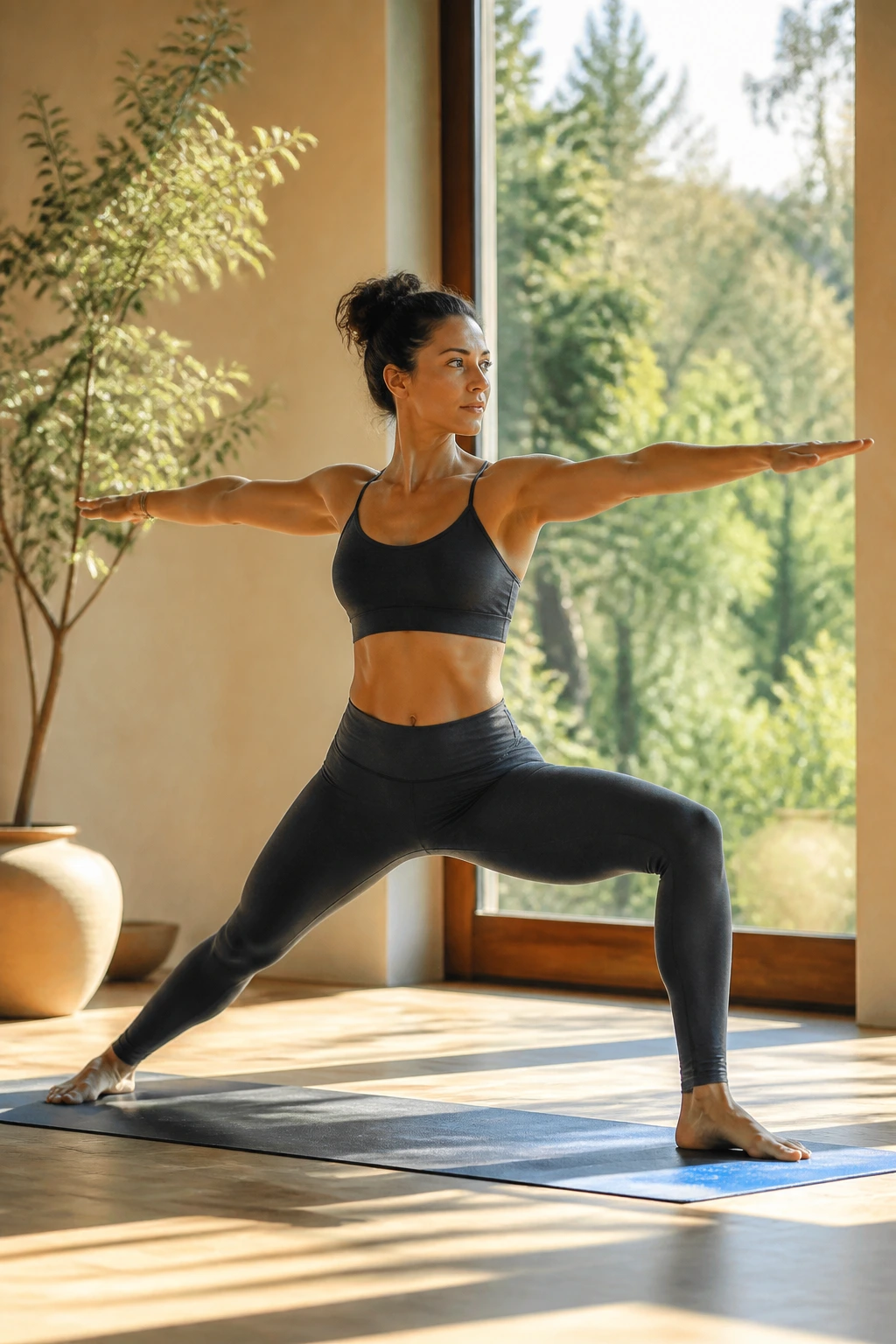
Warrior II is less fussy than Warrior I and often kinder for beginners. The body feels more open, the stance is wider, and the hips don’t have to do quite as much work to cooperate.
Step into a wide stance, turn the front foot forward, and bend that front knee. Stretch your arms out to the sides and look over the front hand. Stay for 4 breaths, then switch sides.
Why Beginners Like It
The posture feels grounded. You’re not balancing on one leg. You’re not folding. You’re standing there, breathing, and feeling the legs wake up.
- Front knee bent over the ankle
- Back foot turned slightly inward
- Shoulders stacked over hips
- Gaze soft over the front fingertips
If your shoulders tense up, drop them. If your front thigh starts shaking a little, that’s fine too. A little leg effort in the morning can make the rest of the day feel less rusty.
12. Chair Pose to Forward Fold
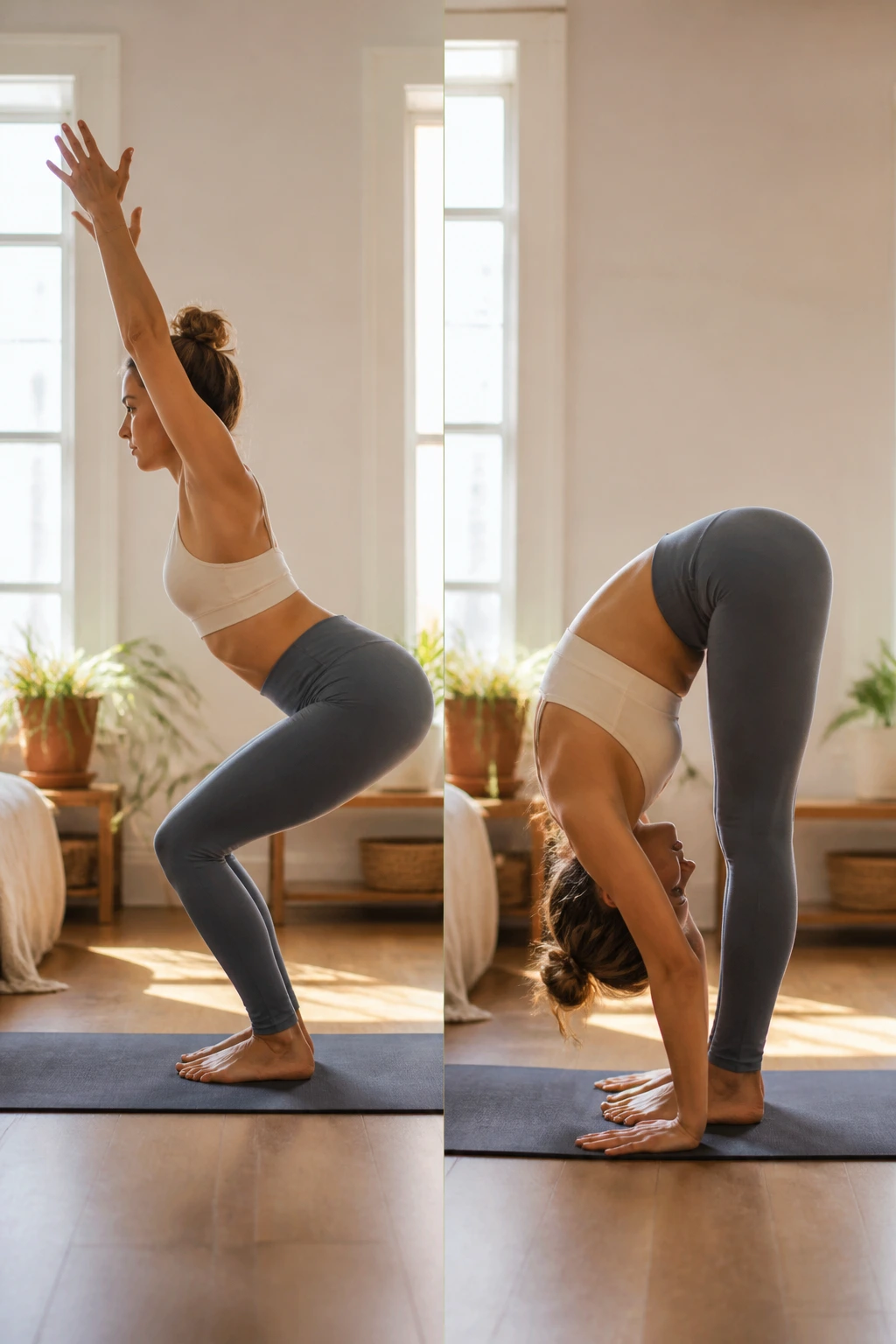
Why pair effort with release? Because mornings usually need both. Chair Pose lights up the legs, and the fold gives them something back.
Stand tall, bend your knees, and send your hips back as if you’re sitting into an invisible chair. Lift your arms if that feels okay. Hold for 3 breaths, then fold forward and let the head hang for 3 breaths. Repeat 3 rounds.
Chair Pose is not about dropping low. It’s about keeping the chest open while the thighs work. If your knees track over your toes and your weight stays in the heels, you’re doing fine.
The fold afterward should feel like a reward. Not a collapse. A release. That little contrast is what makes this one stick in the body.
13. Bridge Pose for Glutes and Back
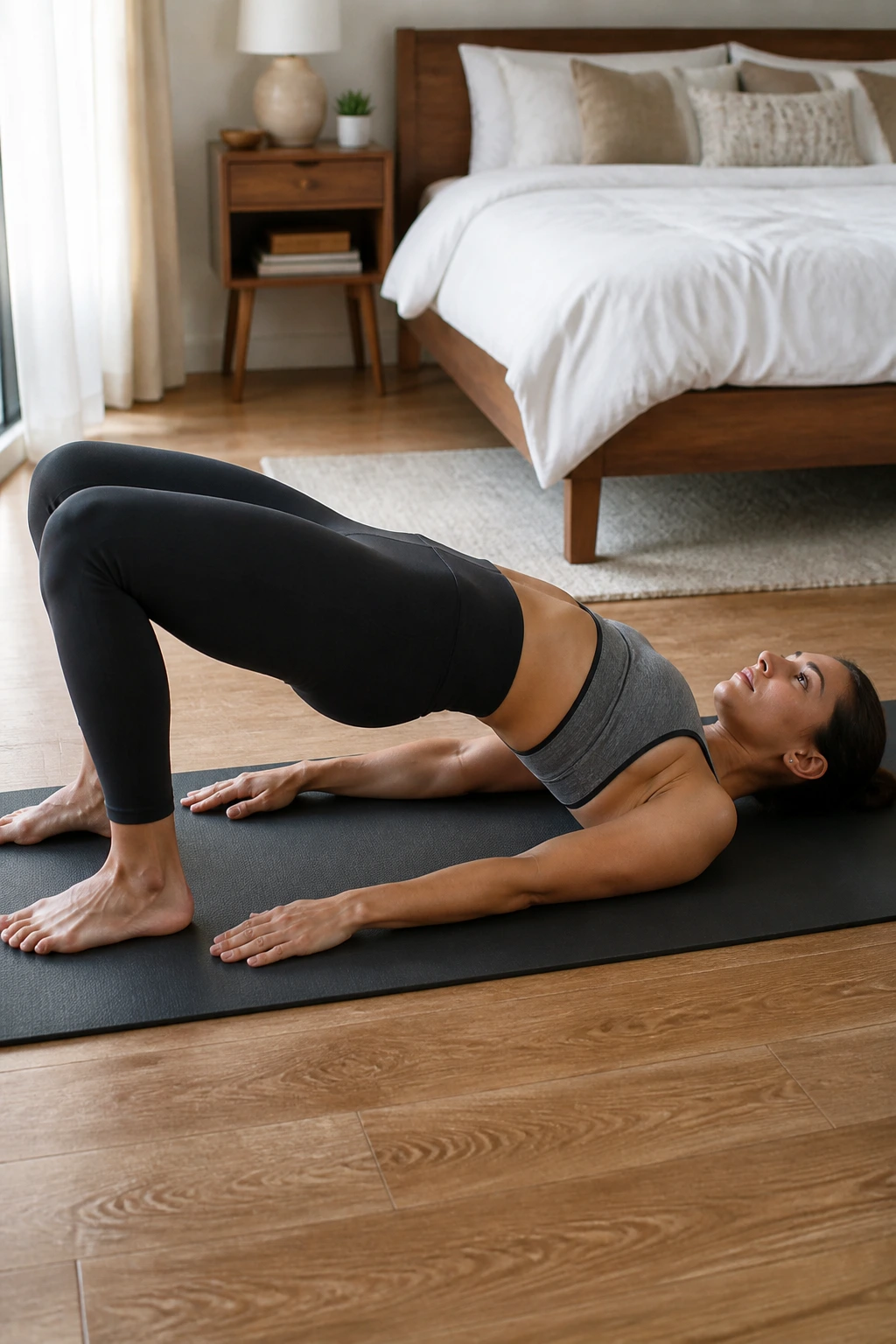
Bridge Pose is a sneaky good morning move. It wakes up the glutes, opens the front of the hips, and gives the lower back some support from underneath.
Lie on your back, bend your knees, and place your feet flat about hip-width apart. Press into your feet and lift your hips. Hold for 4 breaths, lower slowly, and repeat 3 times.
The Part People Rush Past
At the top, keep your ribs from flaring too much. You want the lift to come from the glutes and the back body, not from jamming the spine into a hard arch.
If your knees splay outward, bring them in a little. If the pose feels cramped, walk your feet a touch farther from your hips. Small shifts make a big difference.
Bridge is one of the better routines for anyone who sits a lot. It reminds the hips how to extend and gives the glutes a job before you spend the day glued to a chair.
14. Seated Twist with a Tall Spine
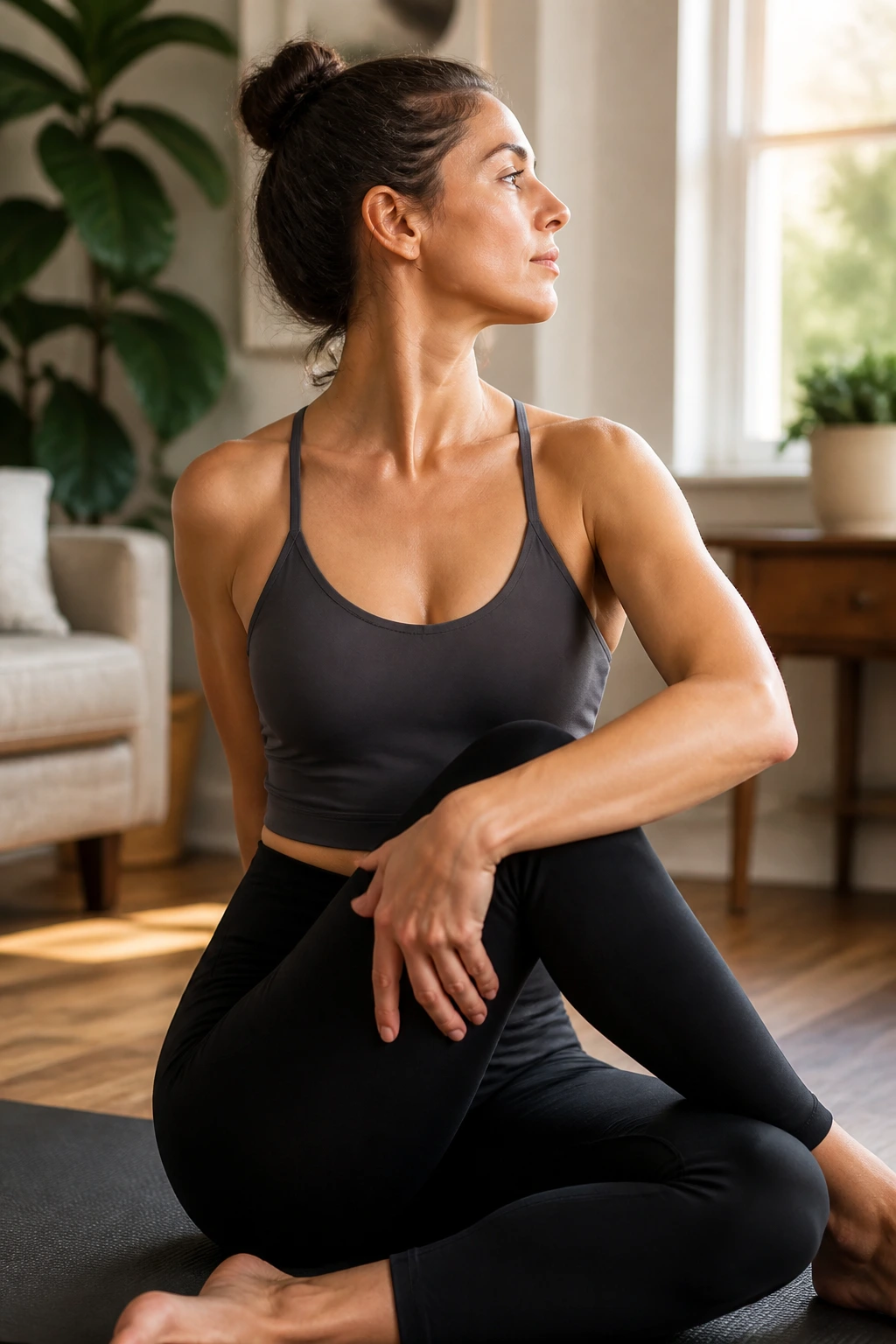
A morning twist should feel like wringing out a dish towel gently, not yanking it apart. Seated Twist is a clean, easy way to get movement through the middle of the back.
Sit with both legs extended or cross one leg over the other. Inhale to grow tall. Exhale to twist from the ribs, not just the shoulders. Hold for 3 to 5 breaths, then switch sides.
The point is to keep the spine long while you rotate. If you round forward, the twist turns sloppy. Sit on a cushion if your hips are tight; that little lift often makes the whole pose easier.
I like this one in the morning because it feels orderly. Left side. Right side. Back to center. Your torso gets moving, but the effort stays low.
15. Half Split for the Hamstrings
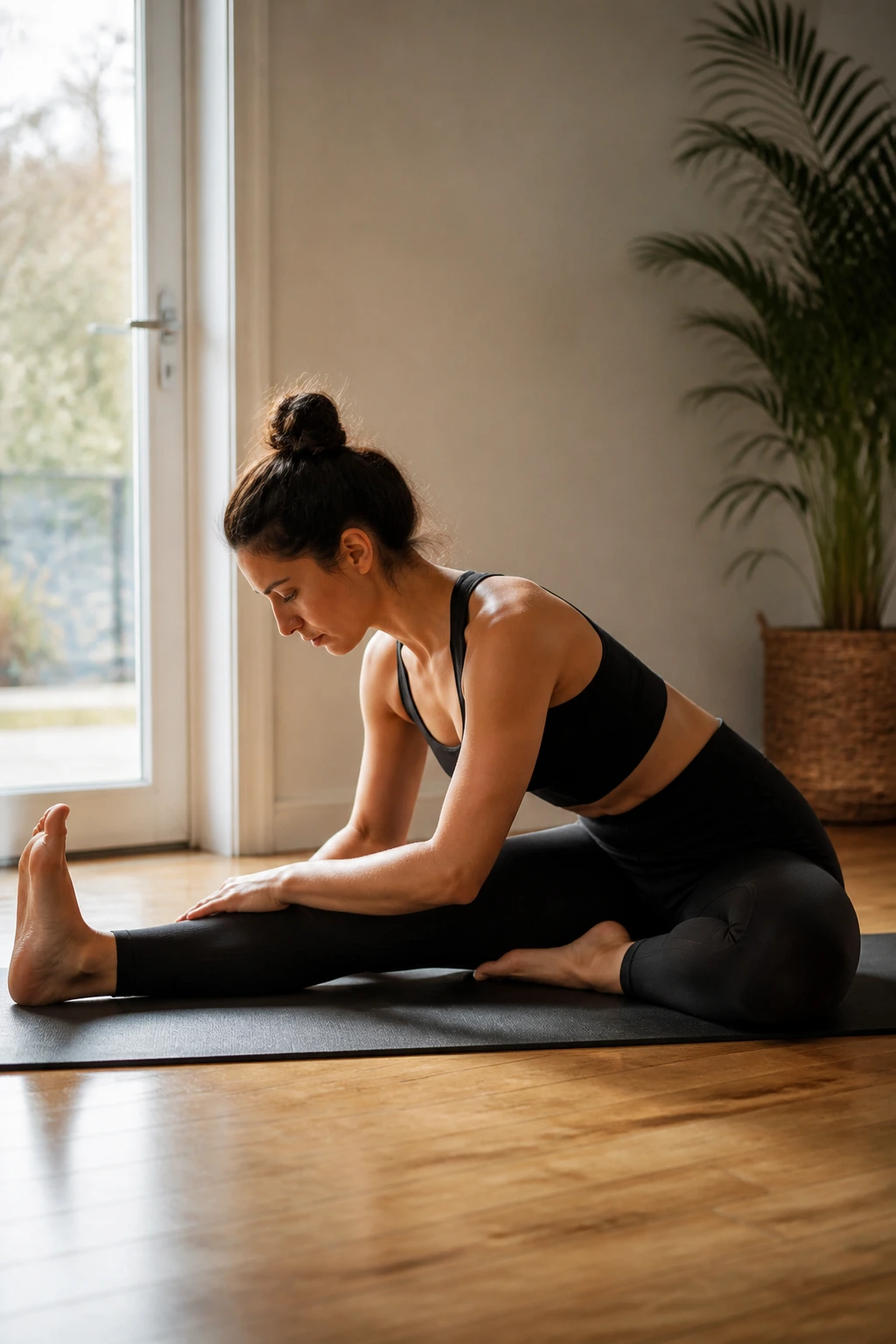
Half Split looks simple, and that’s part of its charm. One leg folded under you, the other leg straight, hips back a little. Done well, it gives the hamstrings a calm stretch without the drama of a full forward fold.
From Low Lunge, shift your hips back and straighten the front leg. Flex the front foot and fold gently over the thigh. Hold for 4 to 6 breaths, then switch sides.
What Makes It Useful
It teaches a beginner how to stretch the back of the leg without rounding the whole body into a tight ball. That’s a useful skill. Morning hamstrings can be stiff, and yanking on them is a fast path to annoyance.
If the floor is too far away, keep your hands on blocks or books. If your back starts rounding hard, come up a little. Depth is not the goal. A clear stretch is.
16. Lizard Lunge for the Hips
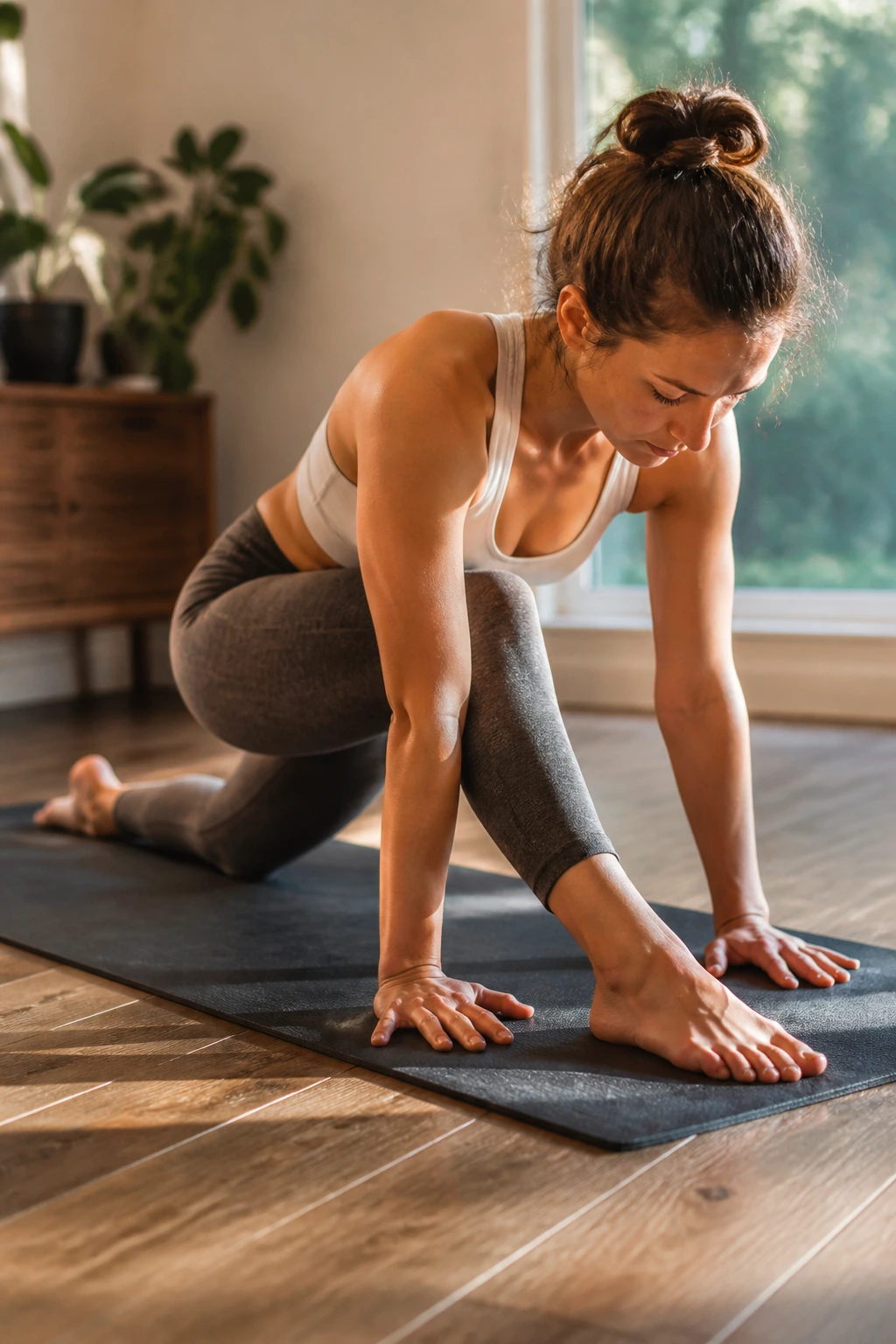
Lizard Lunge feels deeper than Low Lunge, but you can keep it beginner-friendly by staying on your hands and not dropping too far. The hips usually tell you what they want within a breath or two.
From a lunge position, place both hands inside the front foot and walk the front foot slightly wider. Keep the back knee down if needed. Stay for 3 to 5 breaths, then come out slowly.
This one opens the outer hip and groin area in a way that standing poses often skip. The stretch can feel intense, so soften your jaw and breathe out longer than you breathe in.
No need to sink to the floor. Seriously. A modest version done well is better than a dramatic version that makes you hold your breath.
17. Tree Pose for Balance and Focus
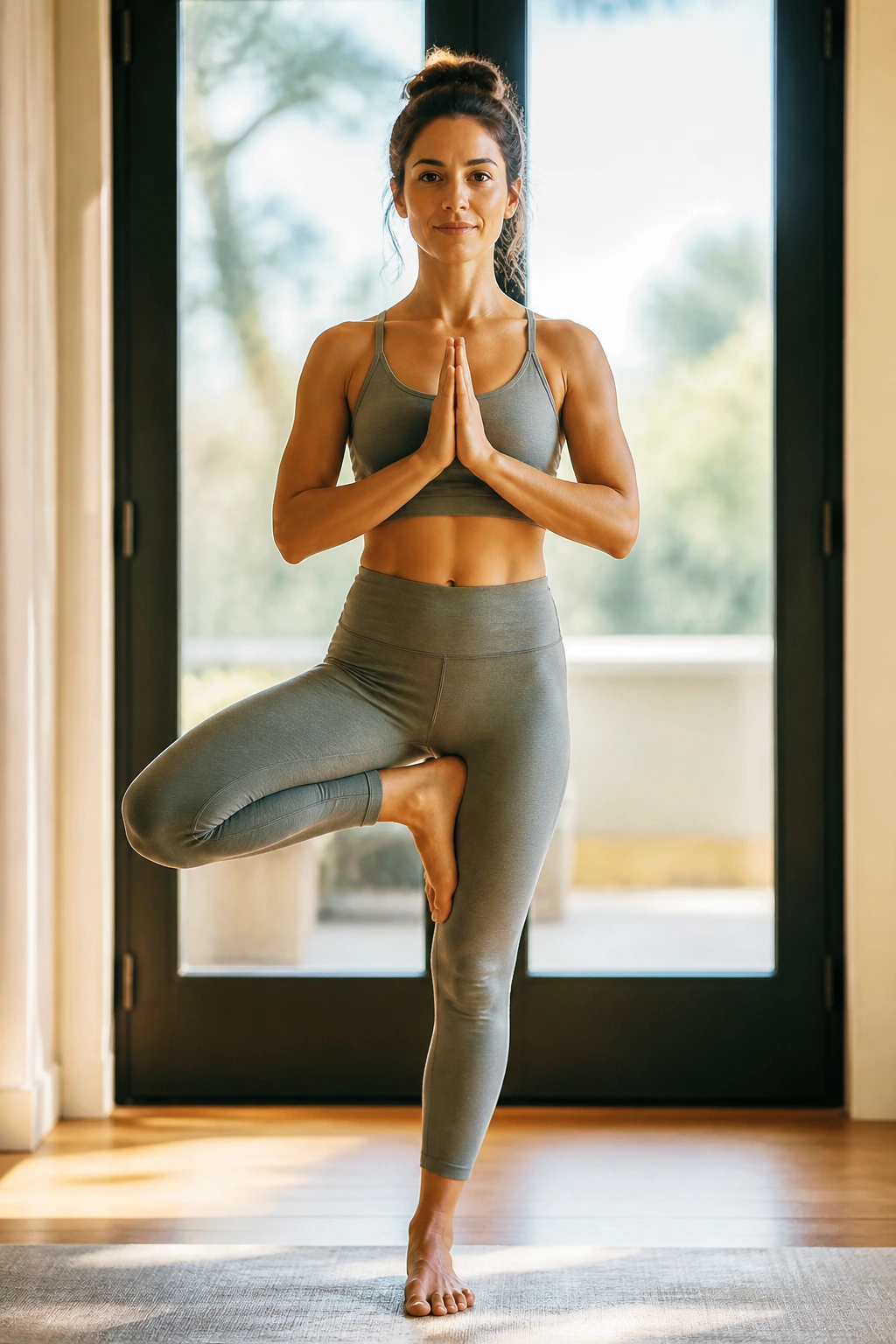
Tree Pose gives your morning a different kind of wake-up. Less stretch, more attention. That matters when your brain is still foggy and your body hasn’t decided what day it is.
Stand on one leg, place the other foot on your ankle, calf, or inner thigh, and bring your hands to your heart or overhead. Hold for 3 to 5 breaths, then switch sides.
How to Keep It Steady
Pick a fixed spot on the wall. That sounds tiny, but it helps a lot.
- Press the standing foot into the floor
- Keep the lifted knee pointing outward
- Don’t pin the foot against the knee joint
- Lower the foot to the ankle if balance gets messy
Tree is good because it teaches patience. You wobble a little, correct, breathe, and try again. That’s a fair model for the rest of the morning, honestly.
18. Puppy Pose for the Chest and Shoulders
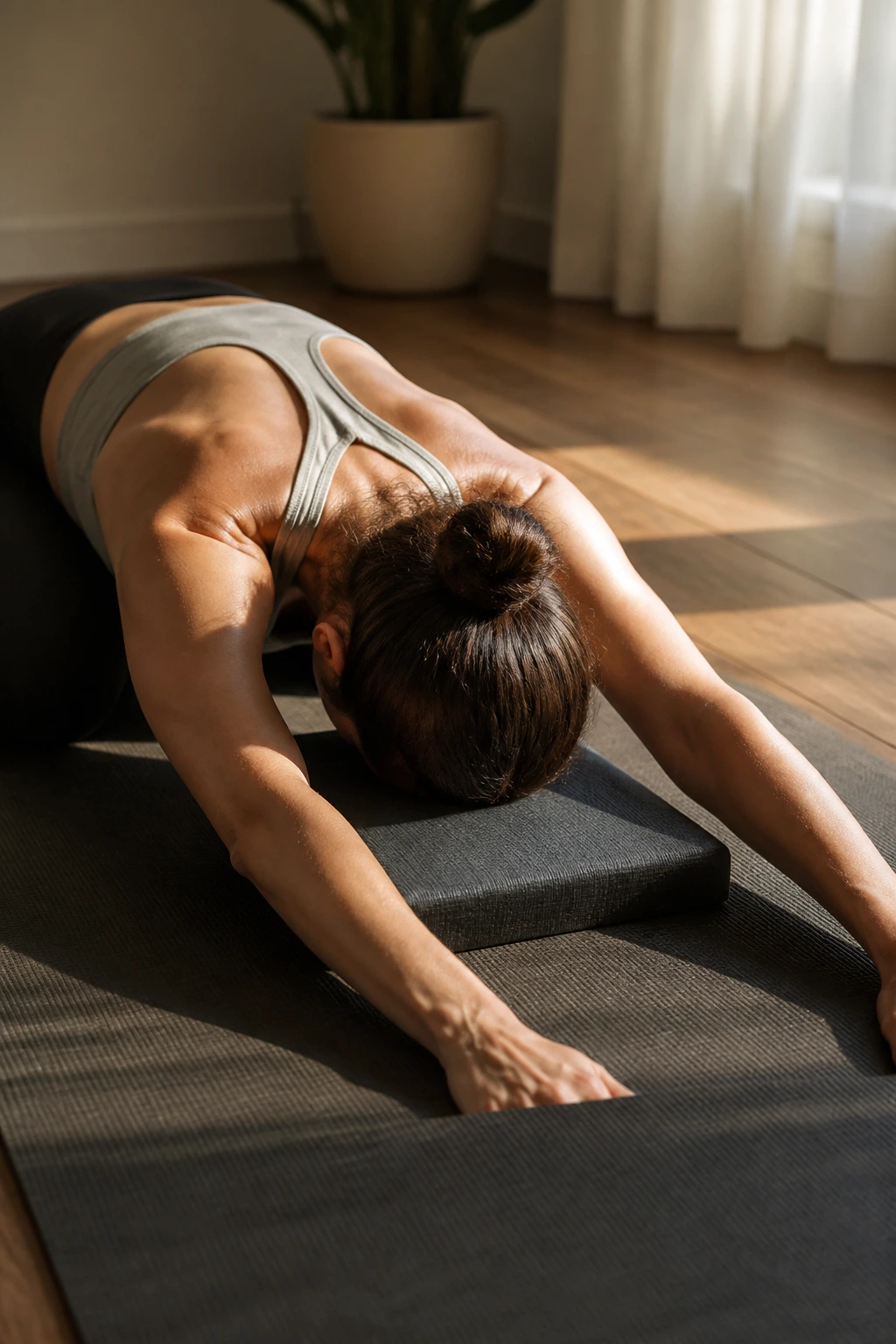
Puppy Pose is the one I’d choose when the upper back feels clenched before the day even starts. It opens the chest and shoulders without the weight of a full backbend.
Start on hands and knees, then walk your hands forward and keep your hips over your knees. Let your chest lower toward the mat while your arms stay long. Hold for 4 to 6 breaths.
What It Feels Like
A stretch across the armpits. A little length through the sides of the ribs. Sometimes a surprising release behind the shoulders.
If the floor is too low, rest your forehead on a block or stack your fists. That keeps the neck from hanging in a way that feels awkward.
Puppy Pose pairs well with any desk-heavy life. It opens the front of the body before you spend hours closing it again.
19. Wide-Leg Forward Fold
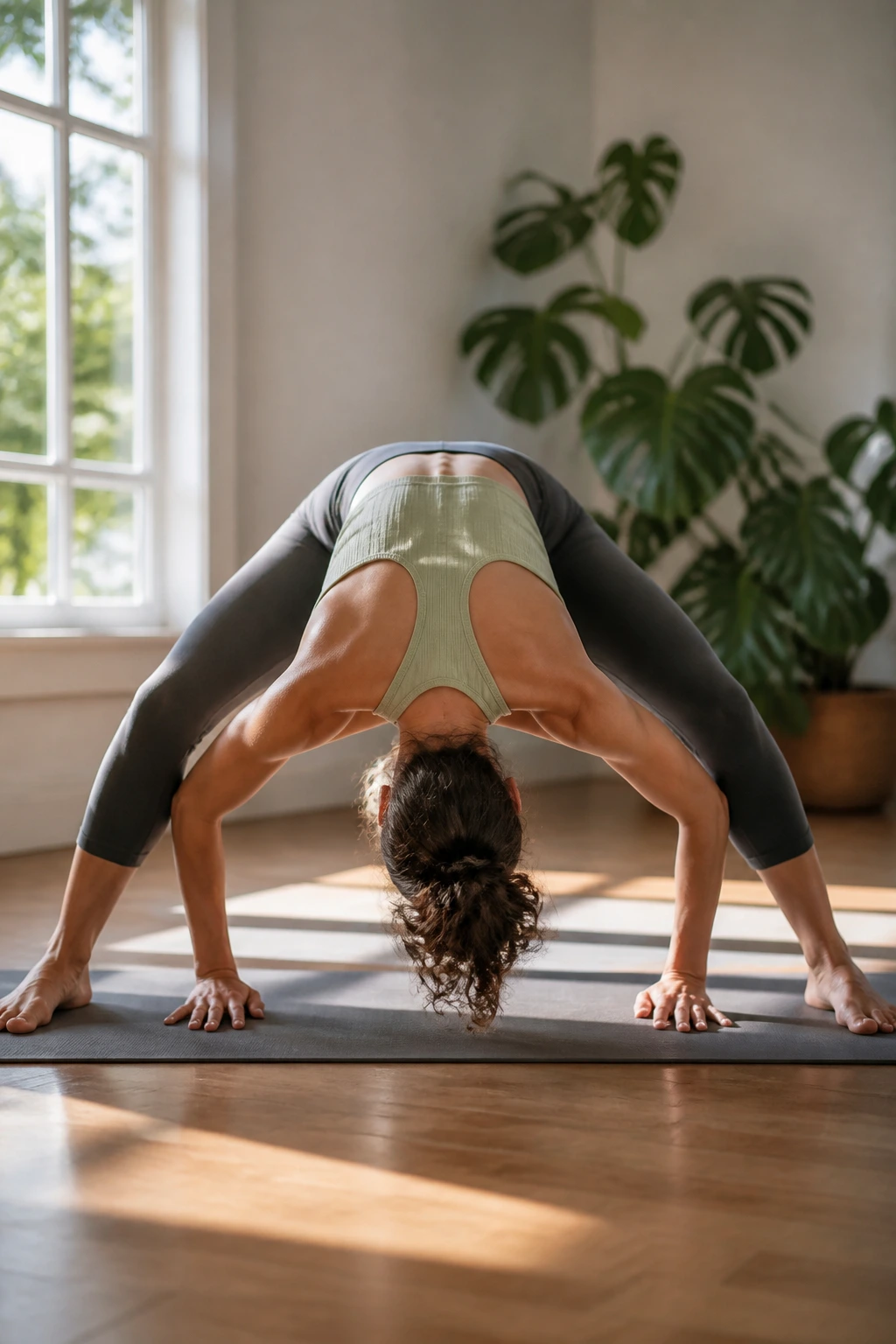
This is the standing fold people forget about, and that’s a shame. Wide-Leg Forward Fold gives the inner thighs, hamstrings, and back all a turn at relaxing.
Step your feet wide, turn the toes in slightly, and fold from the hips with a soft bend in the knees. Let your hands rest on the floor, blocks, or shins. Stay for 5 breaths.
The broad stance makes the stretch feel different from a regular forward fold. There’s more space, less compression. If your head doesn’t get near the floor, that’s fine. The position is still doing its job.
A lot of beginners like this because it feels stable. Your legs are on the floor. You are not balancing. You are simply hanging there and letting gravity help a little.
20. Figure Four on Your Back
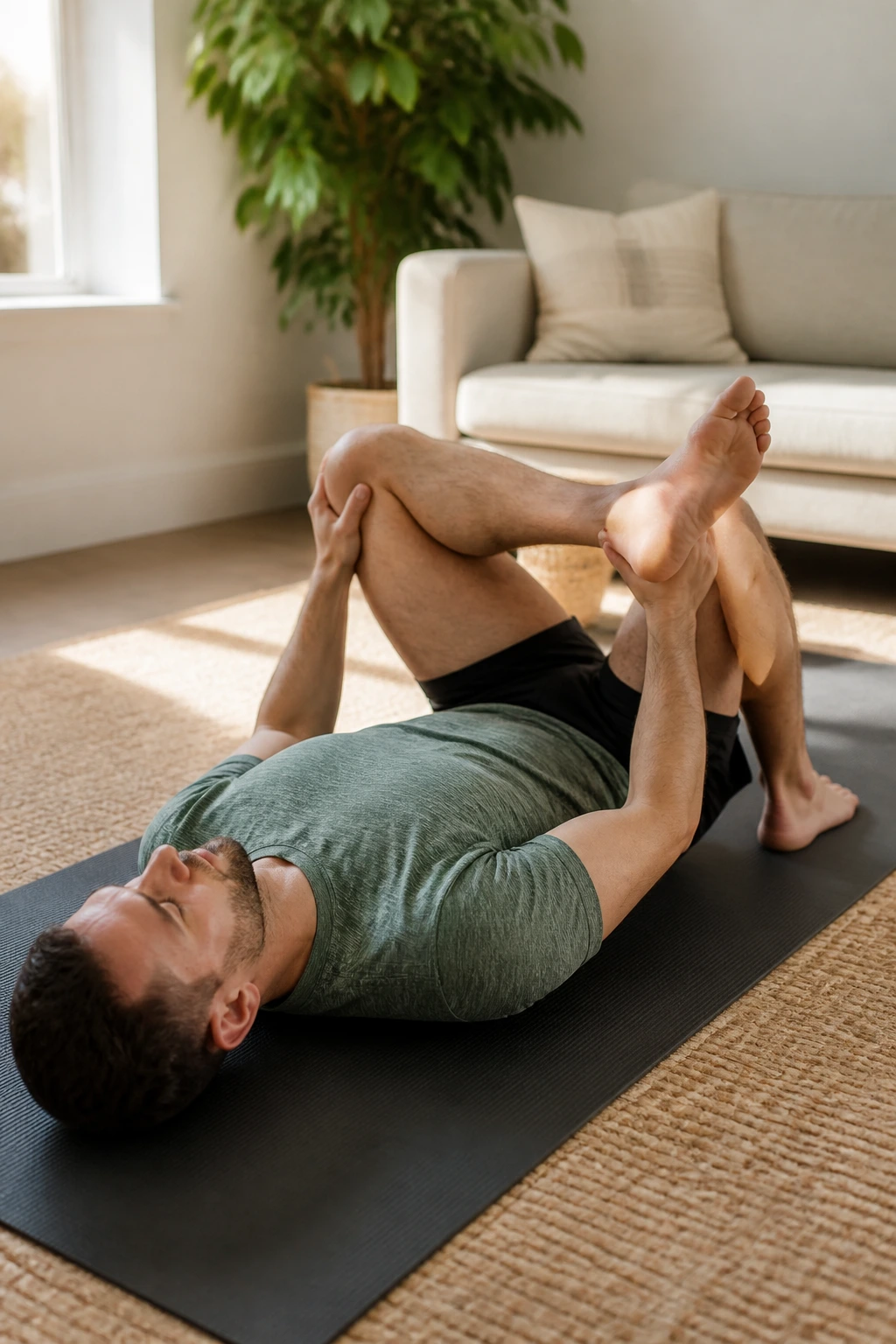
Not every morning needs standing work. Some mornings call for the floor, a calm breath, and a hip stretch that doesn’t ask for much effort. Figure Four does that well.
Lie on your back, cross your right ankle over your left thigh, and draw the left leg toward you. Hold behind the thigh or on the shin for 4 to 6 breaths, then switch sides.
A question comes up here a lot: should the stretch feel strong? Mild to medium is enough. If your knee complains, back off and keep the shape smaller.
This one is easy on the balance system, which makes it a good choice when you’re groggy. It opens the outer hip and gives the lower back a break at the same time.
21. Happy Baby for the Lower Back
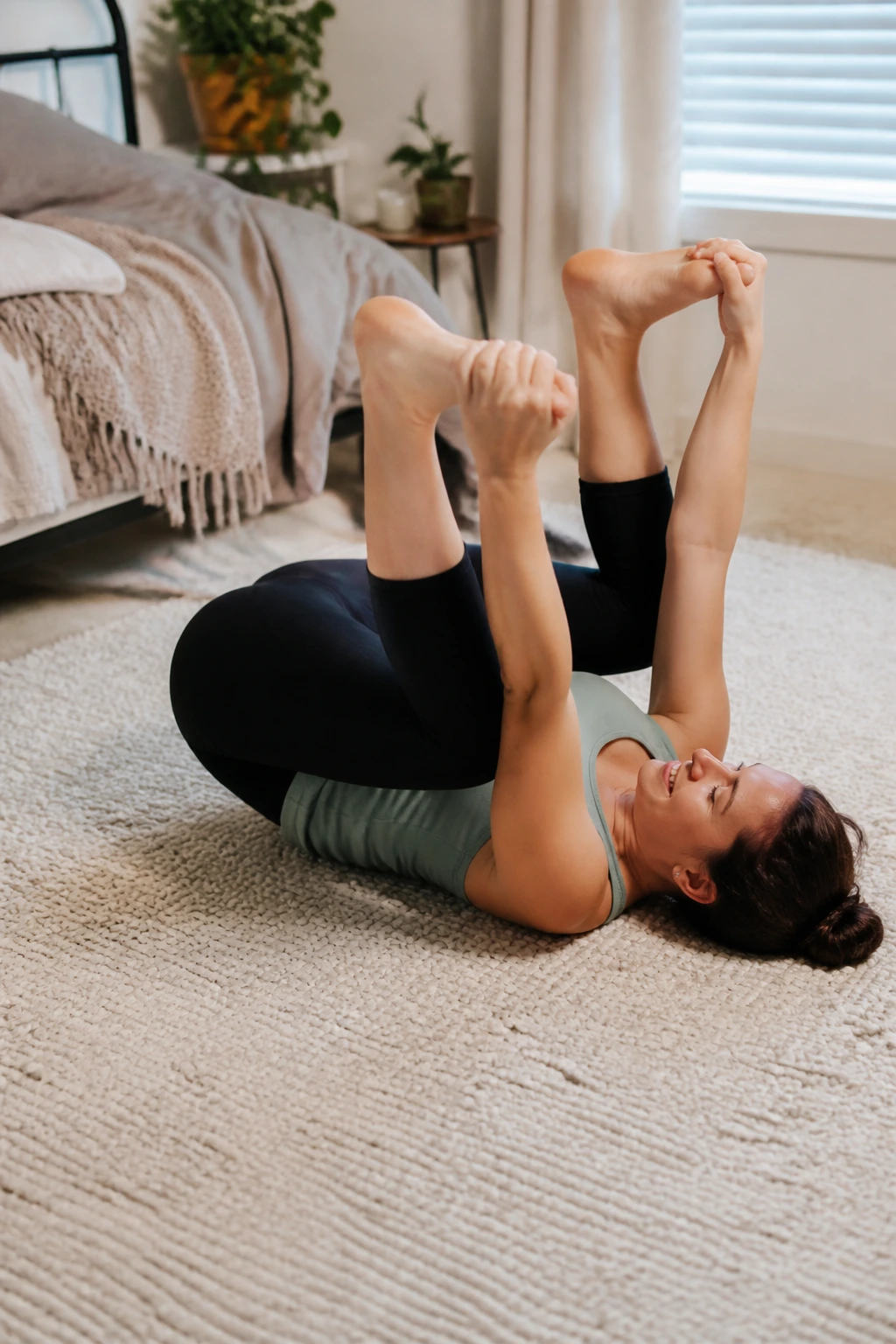
Happy Baby looks a little silly, and I mean that kindly. It’s also useful. The pose opens the hips, gently massages the lower back, and gives your body a loose, unfussy stretch.
Lie on your back, bend your knees, and hold the outer edges of your feet or shins. Let the knees drift toward the armpits while the tailbone stays heavy. Rock side to side if that feels good.
The sensation should feel playful, not strained. If reaching the feet is too much, hold behind the thighs instead. That works just fine.
Morning stiffness often hides in the pelvis and low back. Happy Baby gives both areas a chance to soften before sitting, driving, or working.
22. Legs-Up-the-Wall for a Calm Start
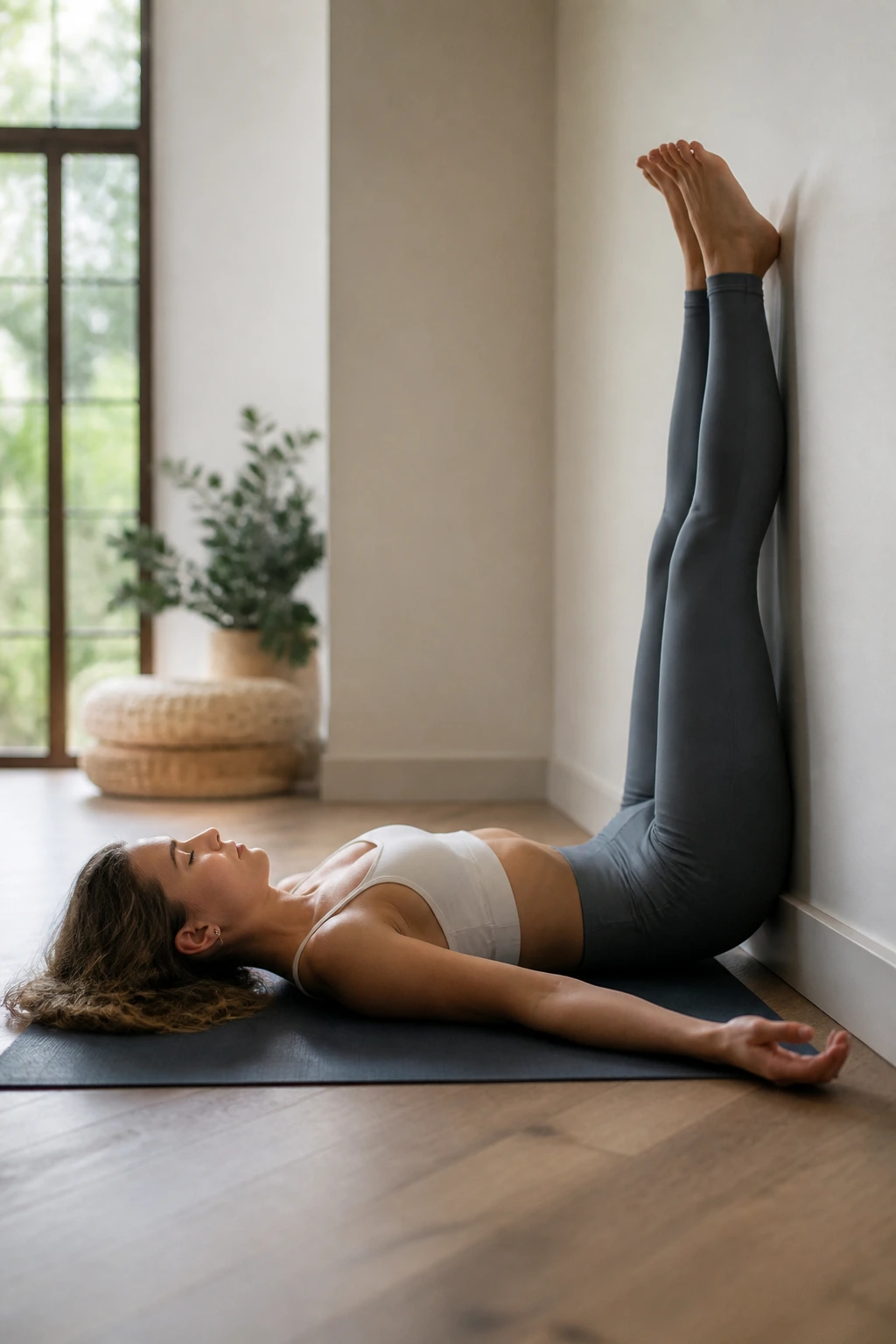
Some mornings need less wake-up and more settling. Legs-Up-the-Wall is the quietest routine on this list, and that’s exactly why it belongs here.
Sit next to a wall, swing your legs up, and lie back with your hips close to or a little away from the wall. Rest your arms by your sides and breathe for 1 to 3 minutes.
Why This One Feels Different
The legs get a break from standing and walking. The back gets a flat, supported position. The whole body slows down.
If your hamstrings feel tight, move your hips farther from the wall. If your lower back arches too much, scoot a little closer or place a folded blanket under your hips.
This isn’t flashy. It’s just useful. And on some mornings, useful is the better deal.
23. Bird Dog from Tabletop
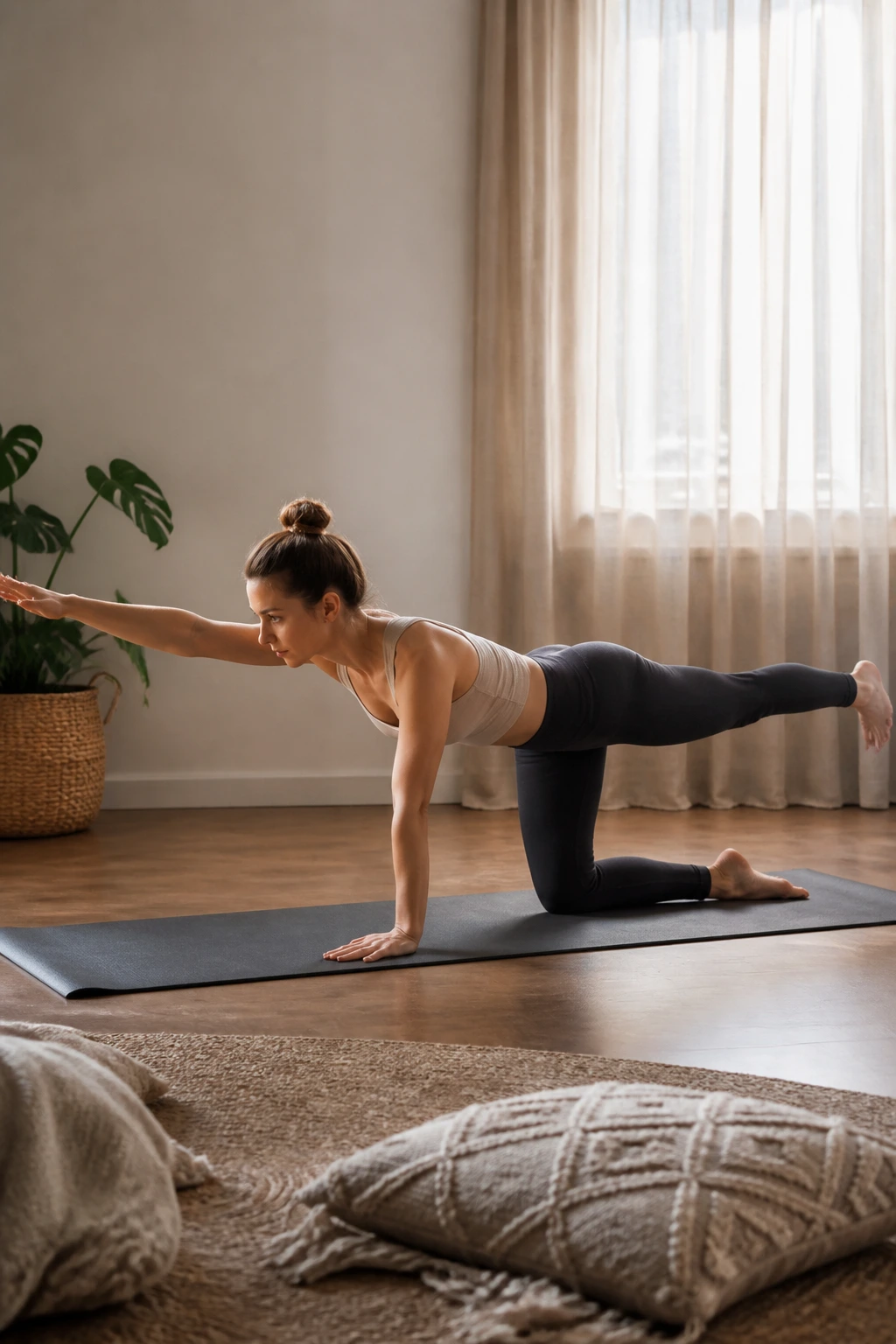
Bird Dog looks simple until you try to hold still. That’s what makes it good for beginners. It wakes up the core, the glutes, and the muscles around the spine without huge effort.
Come to hands and knees. Extend your right arm and left leg at the same time, keeping the hips square. Hold for 2 to 3 breaths, return to center, then switch sides. Do 3 rounds per side.
What to Feel For
A long line from fingertips to heel. A steady belly. No swaying in the lower back.
If balance is shaky, keep the toes of the lifted foot on the floor and just reach the arm first. Then add the leg later. That’s a clean way to build confidence without making the pose messy.
Bird Dog is one of those “small but serious” exercises. It makes the body feel organized, which is a nice way to begin the day.
24. Standing Knee Drive Flow
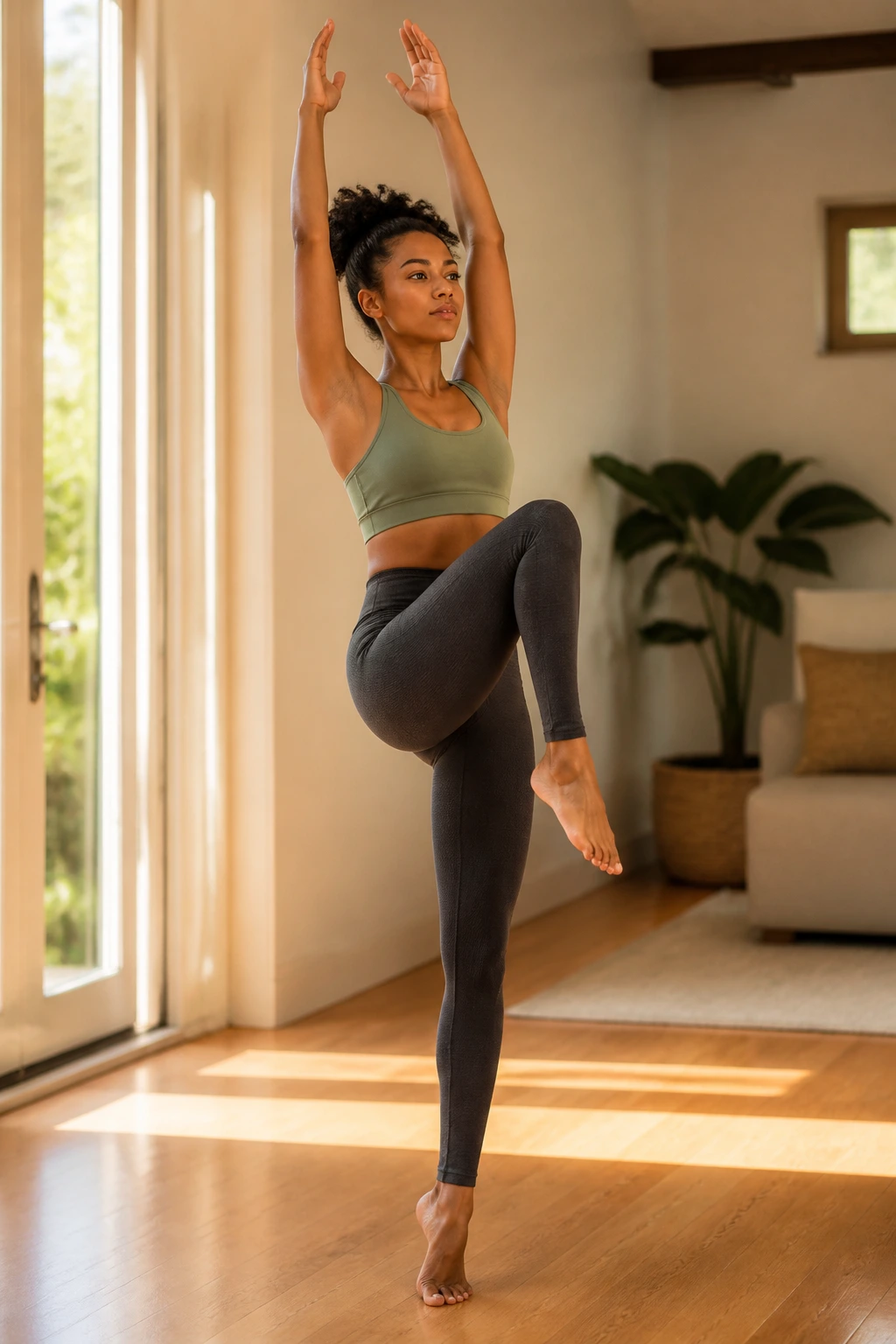
If you want a little more energy without going into full workout mode, this standing balance flow hits a nice middle ground. It warms the legs and core fast.
Stand tall, lift one knee toward your chest, then reach the foot back to the floor. Add an overhead reach as the knee lifts if you want more work. Repeat 5 times per side.
This routine is basically walking in slow motion with intention. It helps wake the hips, steadies the balance system, and gets your breath moving a little faster without tipping into strain.
Keep it small at first. A knee lift to hip height is plenty. If you swing the leg wildly, you lose the point and wake up your joints in a clumsy way.
25. Five-Minute Sunrise Flow
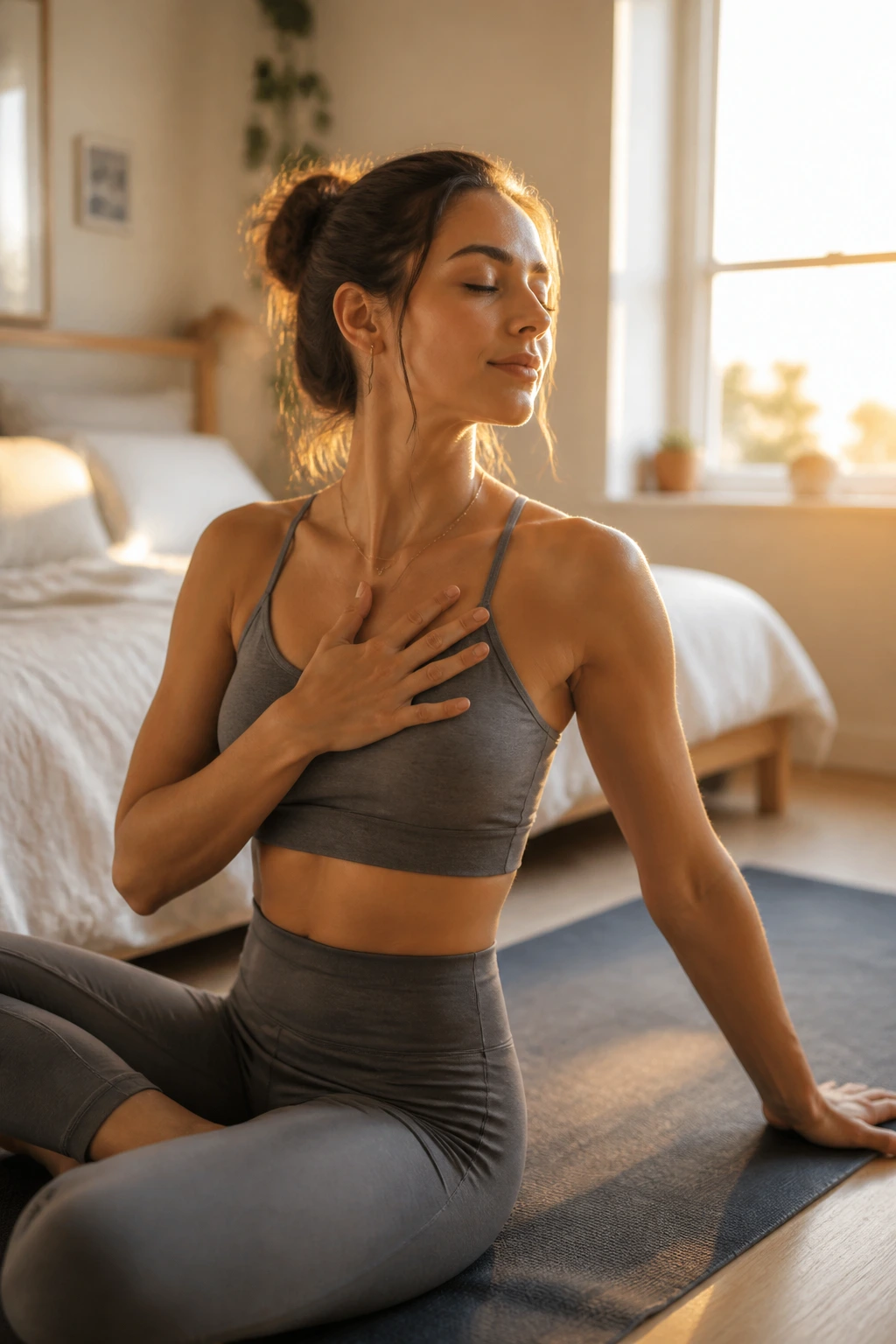
When you want one routine that ties the whole morning together, this is the one I’d keep nearby. It blends breathing, standing work, floor work, and a short finish so you don’t feel scattered.
Start with 3 breaths in easy seated posture. Move into Cat-Cow for 4 rounds. Stand for a Half Sun Salutation twice. Step into Low Lunge on each side for 3 breaths. Finish with a forward fold and a brief rest on your back.
Keep the pace unhurried. That matters more than the exact shapes. If your body likes one pose more than another, repeat it. That is not a mistake. It’s good judgment.
Here’s the simple order:
- 3 breaths seated
- 4 rounds of Cat-Cow
- 2 Half Sun Salutations
- 1 Low Lunge each side
- 1 Forward Fold
- 3 slow breaths lying down
This is the routine to use on mornings when you want the full-body feel of yoga without spending 45 minutes on the mat.
Final Thoughts
The best beginner morning routine is the one you’ll actually do when you’re half awake. That means it should feel clear, short enough to repeat, and gentle enough that you don’t dread it tomorrow.
A lot of people think they need a big sweat session to count. They don’t. A clean 5-minute stretch, a few spine movements, and one or two standing poses can change how the rest of the morning feels. Sometimes that’s all you need.
Pick two or three routines from this list and keep them on repeat for a week. The body likes familiarity more than novelty, especially before coffee.
