



Most people do not need a perfect routine to build better health and daily fitness. They need a handful of habits that still work when the alarm is rude, the weather is bad, and dinner got pushed back because life happened.
The trap is obvious. People buy a gym pass, plan an hour-long workout, clear out the pantry, and try to become a new person by Monday lunch. That usually lasts until the first sore morning, when the plan feels too large and too neat for real life. Small habits win because they fit inside an ordinary day.
A 10-minute walk after lunch, a 5-minute warm-up, 25 to 30 grams of protein at breakfast, and a real bedtime do more than most people expect. Not glamorous. Useful.
Useful beats dramatic.
1. Drink Water Before Coffee

Water before coffee is not a wellness ritual. It is a small reset after a night of breathing, sweating, and not drinking anything for hours. A tall glass first thing in the morning can wake up your mouth, take the edge off that dry-headed feeling, and make the rest of your day feel less sticky.
You do not need to chug a liter. About 250 to 500 milliliters is enough for most people to start with, and if you train early, work in heat, or wake up thirsty, a second glass makes sense. The point is to create a repeatable first move, not a contest.
Put the glass where your hand lands.
How to make it automatic
- Keep a filled glass or bottle near your bed or sink.
- Drink it before checking your phone.
- Use cold water if that helps you actually finish it.
- Add a squeeze of citrus if plain water feels dull, but skip sugary drink mixes.
Best tip: tie the habit to something you already do, like brushing your teeth or starting the kettle.
2. Walk Every Day, Even If It’s Only 10 Minutes

Do you need a full workout to count? No. Walking is the least dramatic habit on this list, and that is exactly why it works. It burns energy, loosens stiff hips, clears the head a little, and gives your body a chance to move without asking for a full change of clothes or a heroic mood.
A walk after meals is especially handy. Ten to 15 minutes after lunch or dinner can take the edge off that heavy, sleepy slump that shows up when you sit down too long. If you can stack two short walks into the day, even better.
Easy places to hide a walk
- Walk after eating, before you sit back down.
- Take a phone call on your feet.
- Park farther away on purpose.
- Walk while a podcast plays.
- Use part of your lunch break, even if it is only around the block.
A lot of people think fitness starts at the gym door. It does not. It starts with not staying planted in one chair all day.
3. Build a Real Strength Routine

Two dumbbells in the corner can do more for your body than a shelf full of gadgets. Strength work is one of the clearest habits for long-term health because it keeps muscles, bones, and joints doing their jobs instead of slowly getting lazy. It also makes everyday tasks easier, from hauling groceries to climbing stairs without huffing like you just sprinted for a bus.
The usual public-health baseline is 150 minutes of moderate activity each week plus muscle work on at least 2 days. That does not mean you need a bodybuilder split or a fancy program. Three full-body sessions can be enough if they are done with care.
A clean full-body template
- Squat pattern: goblet squat, bodyweight squat, or split squat.
- Push pattern: push-up, dumbbell press, or overhead press.
- Pull pattern: row, band pull-apart, or assisted pull-up.
- Hinge pattern: deadlift variation or hip bridge.
- Carry: suitcase carry or farmer carry for 20 to 40 steps.
Start with 2 to 3 sets of 6 to 12 reps, then add a little weight or one extra rep when the last set stops feeling like a fight. Form first, heroics later.
4. Stop Skipping Breakfast Protein

Breakfast does not need to be big. It needs protein. That is the part people miss when they grab a pastry, a sweet coffee, or a bowl of cereal that disappears in four bites and leaves them hungry again by 10 a.m.
A protein-heavy breakfast helps many people stay full longer and keeps snack attacks from showing up too early. Aim for roughly 20 to 30 grams if you eat breakfast, and build it from foods that do not take much effort. Eggs, Greek yogurt, cottage cheese, tofu, turkey, leftover chicken, and even beans all do the job.
Easy protein breakfasts that do not feel fussy
- 2 or 3 eggs with toast and fruit.
- Greek yogurt with oats, nuts, and berries.
- Cottage cheese with sliced tomato and pepper.
- Tofu scramble with onions and spinach.
- Leftover chicken wrapped in a tortilla with salsa.
If you hate eating early, fine. Just do not make the first meal a sugar bomb and act surprised when you crash.
5. Put Plants on the Plate First

A plate with color feels different at the table. It also tends to be more filling, more interesting, and better behaved than a meal made from beige food alone. Vegetables, beans, fruit, and leafy greens bring fiber, water, crunch, and volume that help a meal stretch farther without turning into a calorie mountain.
I like the simple rule of building around plants before anything else. That does not mean a life of rabbit food. It means the carrots, greens, peppers, tomatoes, lentils, or berries show up first, and the starch or protein fills in around them.
What a good plate can look like
- Half the plate: vegetables or salad.
- One quarter: protein.
- One quarter: starch like rice, potatoes, or whole grains.
- Add fruit after the meal if lunch was light.
- Use frozen vegetables when fresh ones are expensive or tired.
Roasted vegetables help here. So does a big chopped salad with something salty on top, like feta or chickpeas. Bland plant food is where good intentions go to die.
6. Lay Out Your Workout Clothes the Night Before
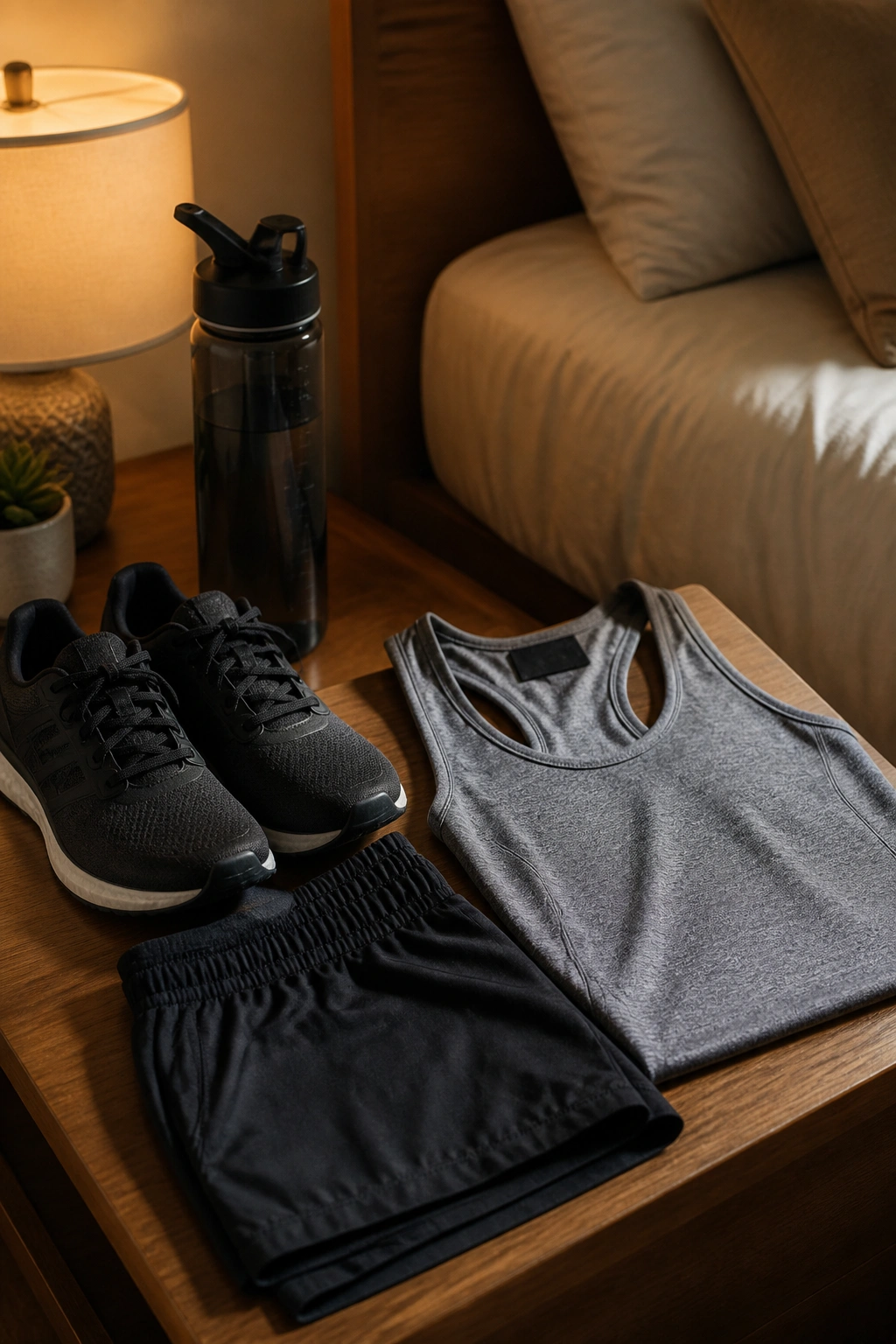
The difference between a workout and a good intention is often a pair of socks. Friction kills habits. If you have to hunt for shoes, wash a sports bra, charge a watch, and decide what to wear while half-awake, the odds get worse fast.
Set the clothes out before bed. Shoes by the door. Water bottle filled. Headphones charged. If you train at a gym, pack the bag and put it where you will trip over it. That sounds silly. It works.
Morning chaos is undefeated.
Make the setup easier than skipping
- Put shoes where you can see them.
- Keep one “always ready” workout outfit.
- Pack your bag after your last session, not before the next one.
- Leave your keys, headphones, and membership card in the same place.
- Keep a backup shirt and socks in the car or bag.
The goal is not inspiration. It is reducing the number of tiny decisions between you and movement.
7. Warm Up Like You Mean It

Cold muscles are rude about being rushed. A real warm-up is not a decorative shuffle before the “actual” workout. It raises temperature, loosens joints, and tells your body that hard work is coming soon.
Five to 10 minutes is enough for most people. You want to breathe a little harder, feel warmer, and move through a fuller range of motion than you did sitting on the couch. Save long static stretches for later if you like them; the warm-up should be active.
A warm-up that works
- 2 minutes of brisk walking, marching, or easy cycling.
- 10 arm circles each way.
- 10 bodyweight squats.
- 8 to 10 hip hinges or glute bridges.
- 10 leg swings per side.
- 5 light practice reps of your first lift.
Do not skip this before heavy lifting or fast running. The first set should feel like a step up, not a shock to the system.
8. Take Movement Breaks During Long Sitting
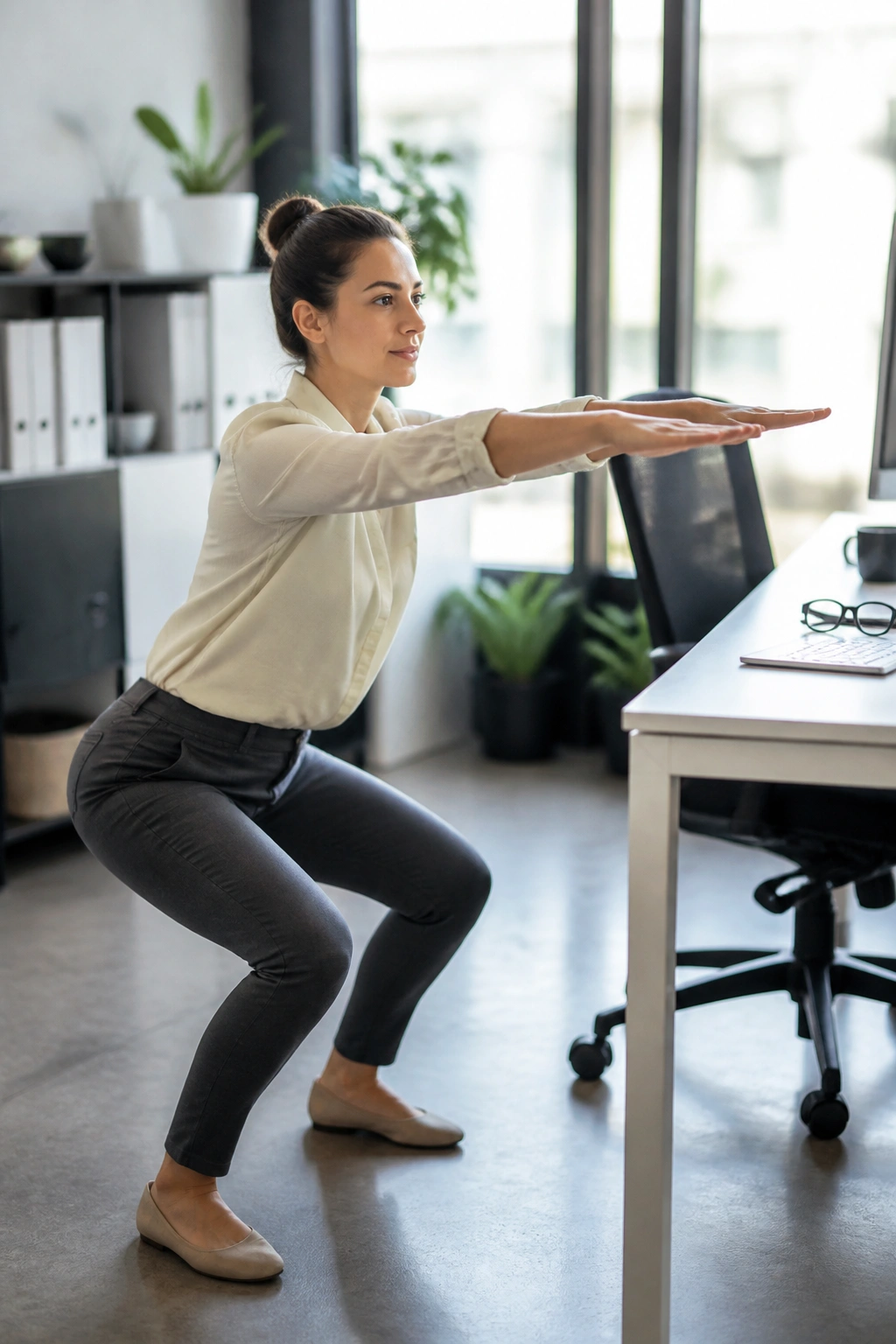
Sitting still all day is its own habit. So is standing up every 30 to 60 minutes. If your back gets tight, your hips feel stuck, or your energy drops hard after long stretches at a desk, the fix may be less about a bigger workout and more about interrupting the sitting.
You do not need a full routine. A minute or two is enough to change the feel of the afternoon. Stand. Walk to refill water. Do 10 air squats. Reach overhead. Calf raises work too, especially if you stay planted at a computer.
Easy break ideas
- Set a timer for every 45 minutes.
- Walk to the bathroom on purpose, even if you do not need to.
- Do 10 bodyweight squats next to your desk.
- Stretch your hip flexors for 20 seconds per side.
- Stand during one phone call each day.
Your back will notice. Your shoulders will notice too.
9. Keep Sleep on a Fixed Clock

Why does sleep show up in a fitness list? Because poor sleep changes everything that comes after it. Appetite gets sloppy. Recovery feels worse. Training feels heavier. Even basic patience can disappear.
A fixed sleep and wake time helps more than people like to admit. You do not need a perfect bedtime, but waking up at the same hour most days gives the body a rhythm it can trust. Seven to nine hours works for many adults, though the real test is whether you feel human without needing three emergency coffees.
Simple sleep rules that pay off
- Keep wake-up time close to the same every day.
- Dim bright lights about an hour before bed.
- Keep the room cool and dark.
- Stop screens if they make you scroll past the point of good sense.
- Keep late-night meals smaller if they sit heavily.
A midnight scroll is not rest. Neither is a room that feels like a sauna.
10. Train Your Core and Balance, Not Just Your Mirror Muscles
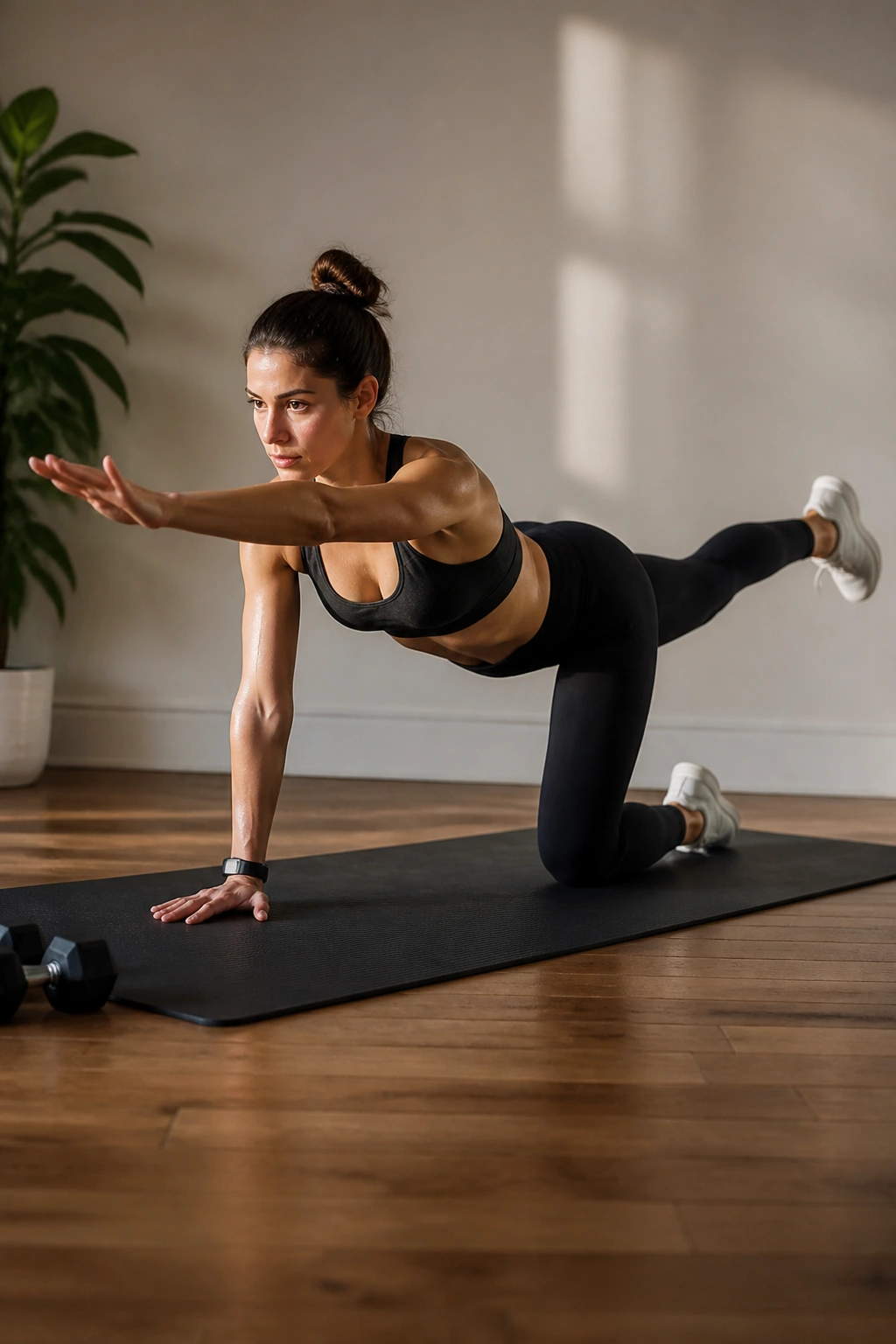
Abs are not the same thing as core strength. A strong core helps you brace, carry, twist, reach, and stay steady when the ground or load is awkward. Balance matters too. It shows up on stairs, on wet pavement, while putting on socks, and anywhere life gets mildly annoying.
You do not need fancy equipment. Dead bugs, side planks, bird dogs, and suitcase carries will do more for most people than endless crunches. Single-leg work is useful too, because one leg at a time exposes weak spots fast.
What to train
- Side plank for side stability.
- Dead bug for trunk control.
- Bird dog for coordination.
- Suitcase carry for real-world bracing.
- Single-leg balance for ankles and hips.
If you want a simple test, stand on one foot while brushing your teeth. Boring. Also useful.
11. Give Your Steps a Number

One number beats a vague promise. “I moved a lot” is a nice feeling. It is not a plan. Step counts work because they turn daily movement into something you can actually see, and that usually changes behavior faster than guessing.
Pick a floor and a stretch goal. If you average 3,500 steps now, do not leap straight to 10,000 and act shocked when you hate life by Thursday. Start with a number you can hit on an average day, then add 500 to 1,000 steps when that feels normal.
A simple two-number system
- Floor: the lowest step count you want to hit.
- Stretch: the number that feels good on a solid day.
- Track both for 2 weeks.
- Add a short walk after meals if you fall short.
- Use a phone, watch, or cheap pedometer. Any of them works.
A scribble beats a guess. Once you can see the pattern, the pattern becomes easier to change.
12. Calm Down on Purpose
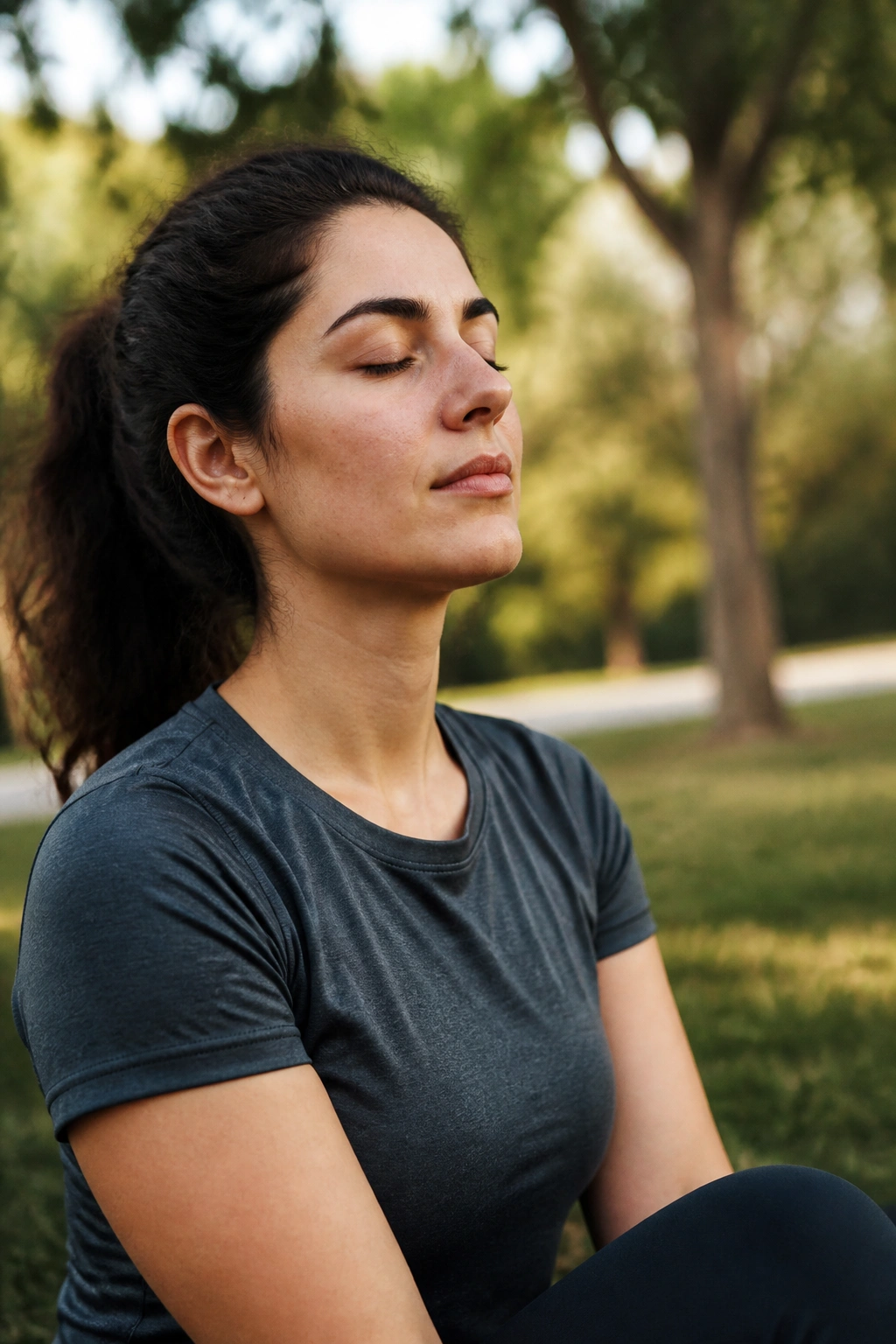
Can stress really change your fitness? Yes, and usually in boring ways that add up. Bad stress can nudge sleep sideways, make you snack when you are not hungry, and turn a simple workout plan into a thing you keep postponing.
Five quiet minutes can help more than another frantic to-do list. Try slow breathing, a short walk outside, sitting in the car before you go inside, or writing down the three things that are actually bothering you. You are not trying to become a monk. You are trying to stop stress from steering the whole day.
Quick ways to downshift
- Inhale for 4 counts, exhale for 6 counts.
- Walk without headphones for 10 minutes.
- Sit outside and watch something not blinking.
- Write one messy paragraph in a notebook.
- Keep one evening slot free of extra plans.
Five quiet minutes count. Sometimes they count a lot.
13. Keep Your Joints Happy With Mobility Work
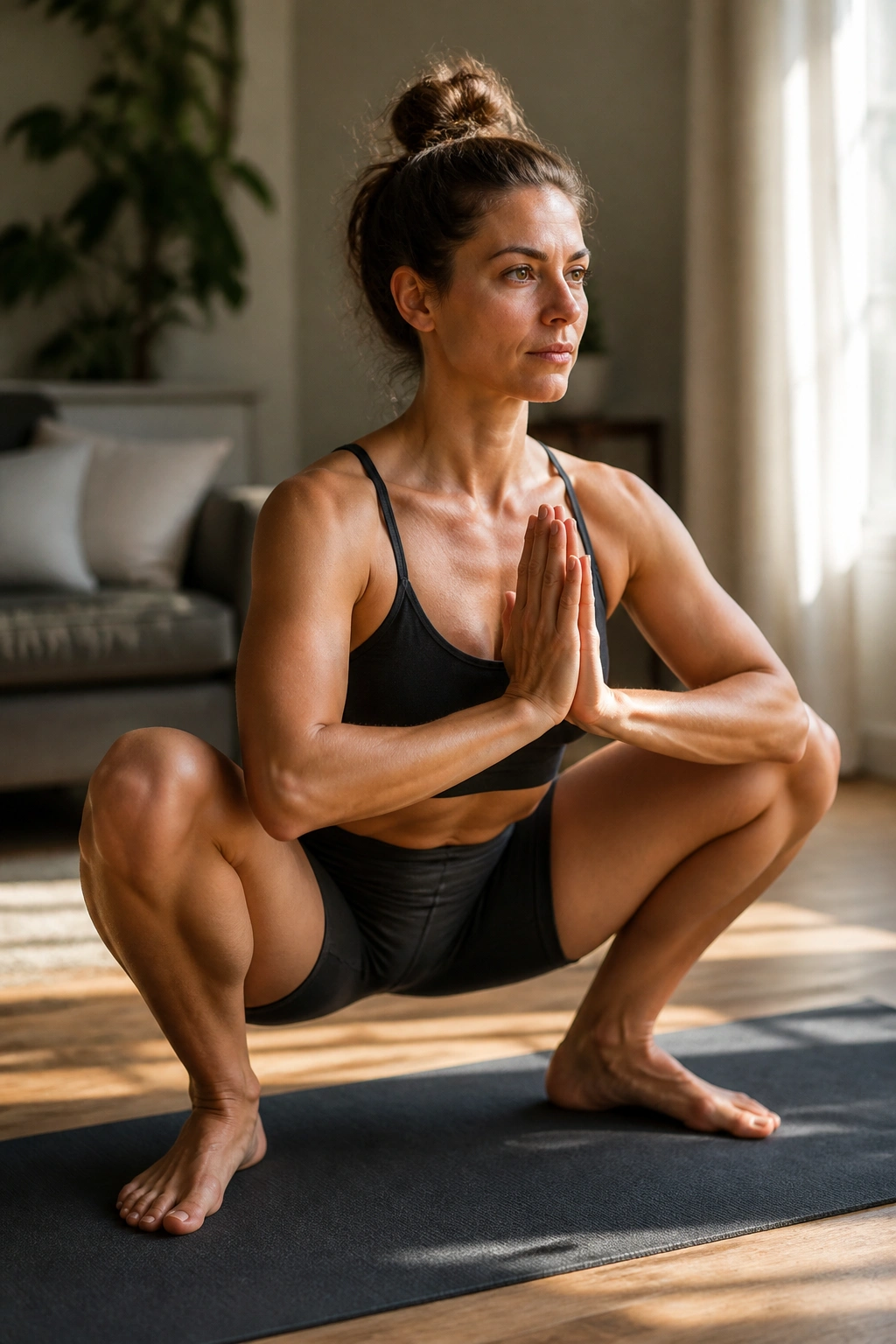
Your ankles know when you ignore them. So do your hips, shoulders, and upper back. Mobility work sounds dull until you try to squat, reach, rotate, or run with joints that feel like rusty hinges.
You do not need an hour of stretching. Five to 8 minutes done often is far more useful. Pick the spots that get cranky first: ankles if you run or squat, hips if you sit a lot, thoracic spine if your upper back feels locked, shoulders if you lift overhead.
A short mobility menu
- Ankle circles, 10 each way.
- Deep squat hold, 20 to 30 seconds.
- Hip flexor stretch, 20 seconds per side.
- Thread-the-needle for upper back rotation.
- Wall slides for shoulder motion.
Do these after a workout, after waking up, or during a work break. The point is to keep range of motion available, not to turn your living room into a yoga studio.
14. Be Honest About Alcohol and Liquid Calories

A drink that feels light can act heavy on your routine. Alcohol, sugary coffees, smoothies that are really desserts, and “healthy” drinks loaded with syrup can stack calories fast and make the next day feel rougher than expected.
This is not about moralizing food or drinks. It is about noticing what quietly messes with sleep, appetite, and training. If you drink, keep portions smaller, alternate with water, and avoid making late-night drinks part of your recovery plan. They are not recovery.
Simple rules that help
- Choose one drink instead of three.
- Alternate each alcoholic drink with a glass of water.
- Keep sweet drinks for occasions, not daily habit.
- Avoid drinking right before bed if sleep already feels fragile.
- Eat food with the drink so it does not hit empty.
The cleaner your drinks, the easier it is to see what is helping and what is stealing energy.
15. Treat Recovery Like Training

The day after a hard session is where a lot of people get lazy. They either do nothing and stiffen up, or they train hard again and wonder why they feel cooked by midweek. Recovery sits in the middle. It is active, not passive.
Think easy walk, decent protein, enough water, sleep, and light mobility if your body wants it. Soreness is not a badge. It is just a signal that you loaded tissues in a new way, or maybe loaded them too hard.
What recovery actually looks like
- 20 to 30 minutes of easy walking.
- Normal meals with enough protein.
- A little extra water if you sweat a lot.
- Light stretching or mobility if it feels good.
- An earlier bedtime after a brutal session.
Chasing soreness is a hobby, not a plan. Recovery lets the next workout land better.
16. Keep Most Workouts Easy and One Workout Hard

Not every session needs to feel like a test. In fact, most should not. The body improves when it gets a mix: enough easy work to build base fitness and enough hard work to force adaptation. If every workout leaves you wrecked, you usually do too much too often.
The “talk test” is handy here. Easy work lets you speak in full sentences. Hard work chops your words into short bursts. Both have a place. One builds endurance, the other nudges speed, power, or capacity.
How to balance the week
- Make most cardio sessions easy enough to talk through.
- Keep one session hard enough to feel like work.
- Lift with intent, but do not max out every time.
- Leave a little gas in the tank on normal days.
- Use hard days when you slept well and ate enough.
A week with one honest hard day beats a week with five half-chaotic ones. Your joints and your mood will probably agree.
17. Track One Thing, Not Twelve

Tracking everything is a fast way to stop tracking. One metric is enough to change the feel of a week. Steps, workouts completed, bedtime, protein servings, or even water intake can teach you more than a giant spreadsheet you never open.
Pick one thing for 2 weeks. Keep it visible. Write it on paper, stick it in a notes app, or mark it on a calendar. Once it is easy, add another. That is how habits stop being vague and start becoming data you can use.
What to track first
- Workouts completed each week.
- Daily steps.
- Hours of sleep.
- Protein servings.
- Glasses of water.
Track the thing you keep missing. If you already do it well, tracking it will not teach you much.
18. Review Your Week and Reset the Next One

Sunday night, or any quiet slot that repeats, is a useful place to stop and look around. Ten minutes is enough. Open the calendar, check the workouts you missed, look at the groceries you keep running out of, and decide what needs to be easier next week.
A reset does not need a fancy app or a color-coded board. Write down three workouts, buy the food that makes breakfast and lunches less annoying, and make sure your shoes and water bottle are ready before Monday starts chewing on your plans.
A fast weekly reset
- Look at the calendar and block workout time.
- Check whether you have protein, fruit, vegetables, and a simple carb in the house.
- Put workout clothes where you can see them.
- Pick one habit to tighten, not five.
- Leave one slot open for a messy day.
The best plan is the one you can repeat after a bad night of sleep. That is the part people forget. Fitness is not built by perfect weeks; it is built by the next decent one, then the one after that, with enough basics in place that you do not have to think so hard every single time.
