



Some mornings, your body feels as if it slept in a chair. The fastest way back to life is not always sweat or speed; a few energizing yoga poses can wake up your spine, open the front of the body, and pull your breath out of that flat, shallow place it likes to hide on tired days.
This kind of practice works best when you stop chasing a heroic workout. A long hold in mountain pose, a few rounds of cat-cow, one solid lunge, and a floor-based backbend can change the whole feel of the day without leaving you wrung out. The trick is to choose shapes that create lift, not shapes that ask your nervous system to work overtime.
If you’re dragging, keep the transitions simple and the breath steady. Move slowly enough to stay in control, but not so slowly that you feel stuck in molasses. Start with the easiest standing reset.
1. Mountain Pose with Overhead Reach
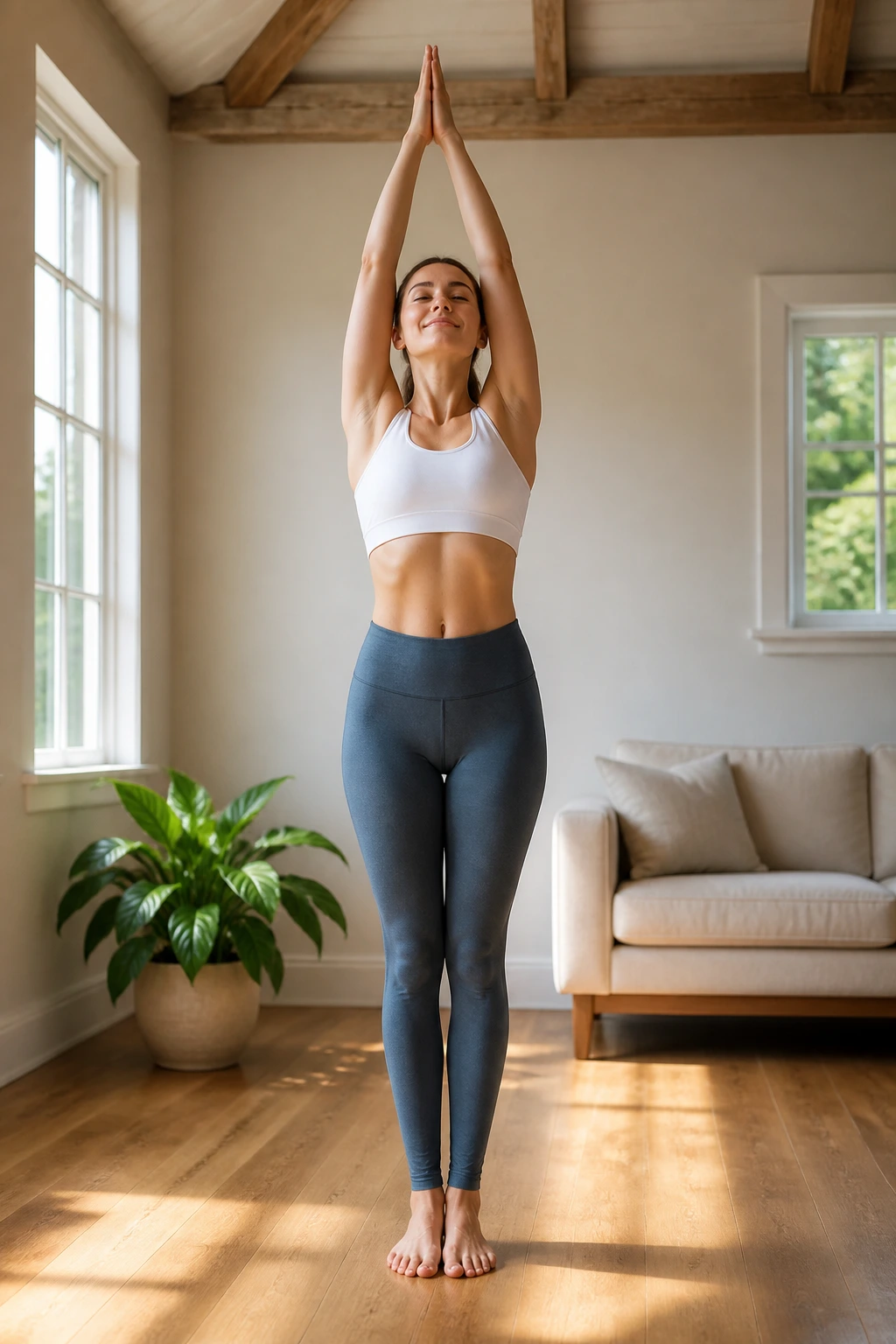
Mountain pose looks plain, but on a tired morning it can feel like a reset button. Stand with your feet grounded, toes spread, and the inner edges of your feet awake. Then reach your arms overhead and notice what changes when your ribs stay stacked over your pelvis instead of flaring forward.
The magic here is posture, not effort. Press down through the four corners of each foot, lightly engage the thighs, and lengthen through the sides of your waist before you lift your hands. If you like, bring your palms together or keep them shoulder-width apart so your neck stays relaxed.
A lot of people rush past this one. Don’t. Hold it for 4 to 5 slow breaths, then lower your arms and see whether you feel taller, more alert, and less folded in on yourself. That little bit of upward reach can be enough to start the day over.
2. Cat-Cow
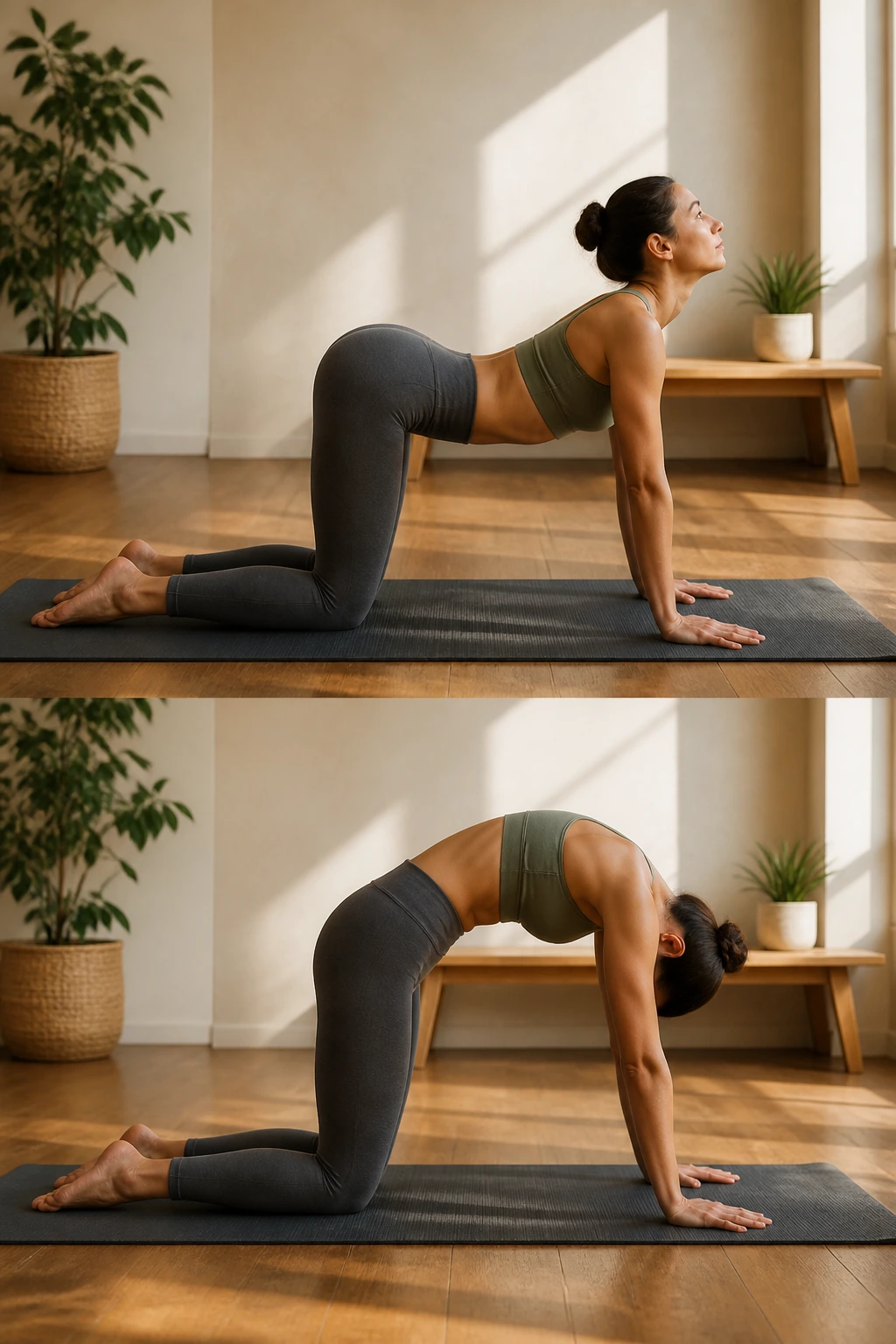
Why does a simple cat-cow sequence wake people up so fast? Because the spine loves movement, especially after sitting, sleeping, or hunching over a screen. The back arches, rounds, and breath starts to travel deeper into the ribs.
Get on hands and knees with wrists under shoulders and knees under hips. Inhale as you drop the belly and lift the chest; exhale as you round the spine and press the floor away. Keep the motion smooth and small if your back feels stiff. Big shapes are not the goal.
How to Move With Your Breath
- Inhale into cow and let the collarbones widen.
- Exhale into cat and pull the navel back without crunching your neck.
- Keep your gaze soft, not jammed upward.
- Move for 6 to 8 rounds, or a little longer if your back feels rusty.
One clean round can loosen the whole midline. Two or three rounds often make the shoulders stop complaining.
3. Downward-Facing Dog
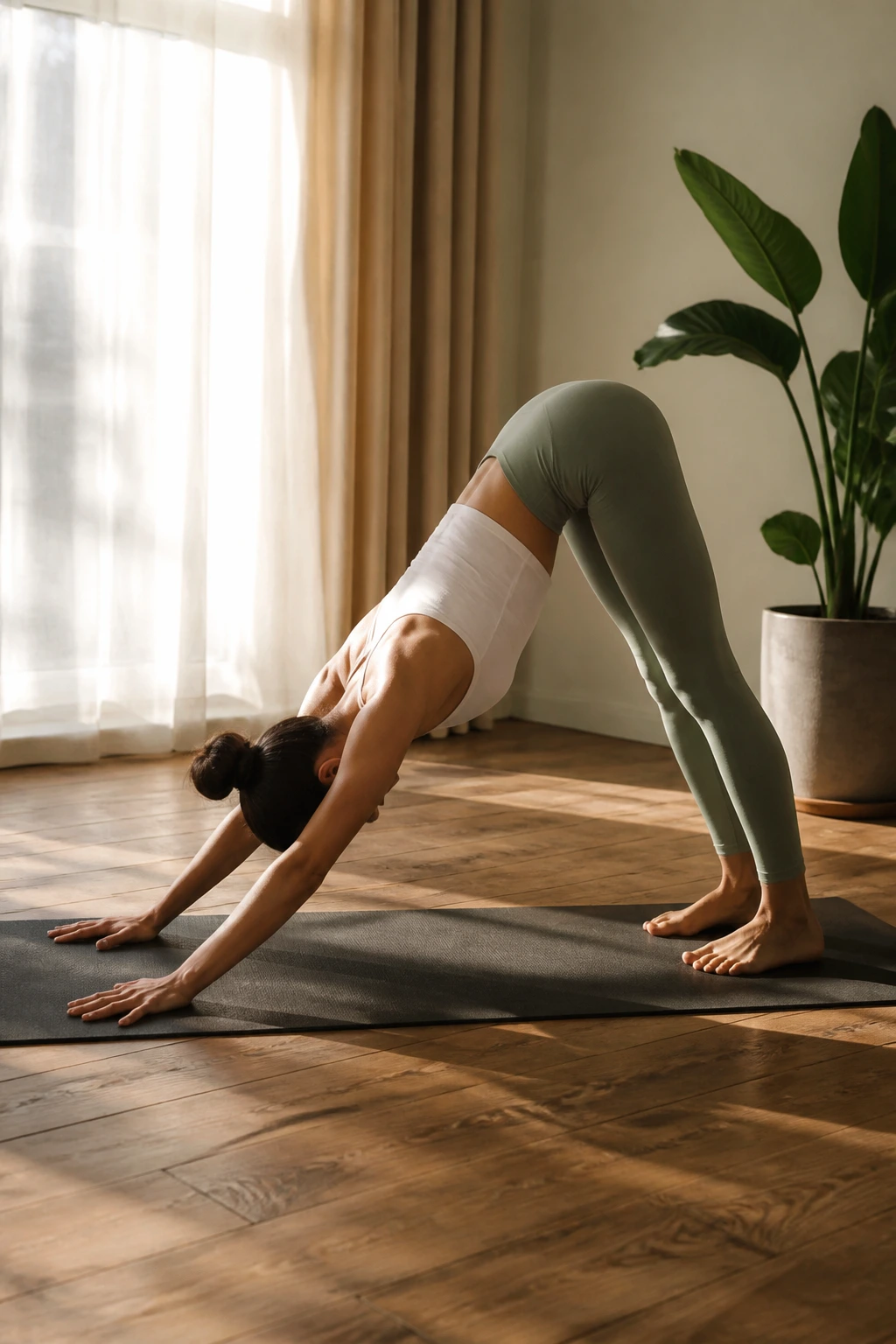
If your shoulders feel welded to your ears, downward dog gives them a place to go. It stretches the backs of the legs, loads the arms just enough to wake them up, and turns the whole body into a long, inverted shape that feels cleaner than it looks.
Bend your knees as much as you need to. Seriously. A tired body does not need straight legs and heroic heels; it needs a long spine and a breath that still moves. Push your hands into the mat, send your hips back, and pedal the feet slowly so one calf gets a turn and then the other.
Hold for 5 breaths, maybe more, and keep the chest from collapsing between the arms. If your wrists are cranky, elevate the hands on a sturdy bench or use the wall. It should feel long, not miserable.
4. Standing Forward Fold with Soft Knees
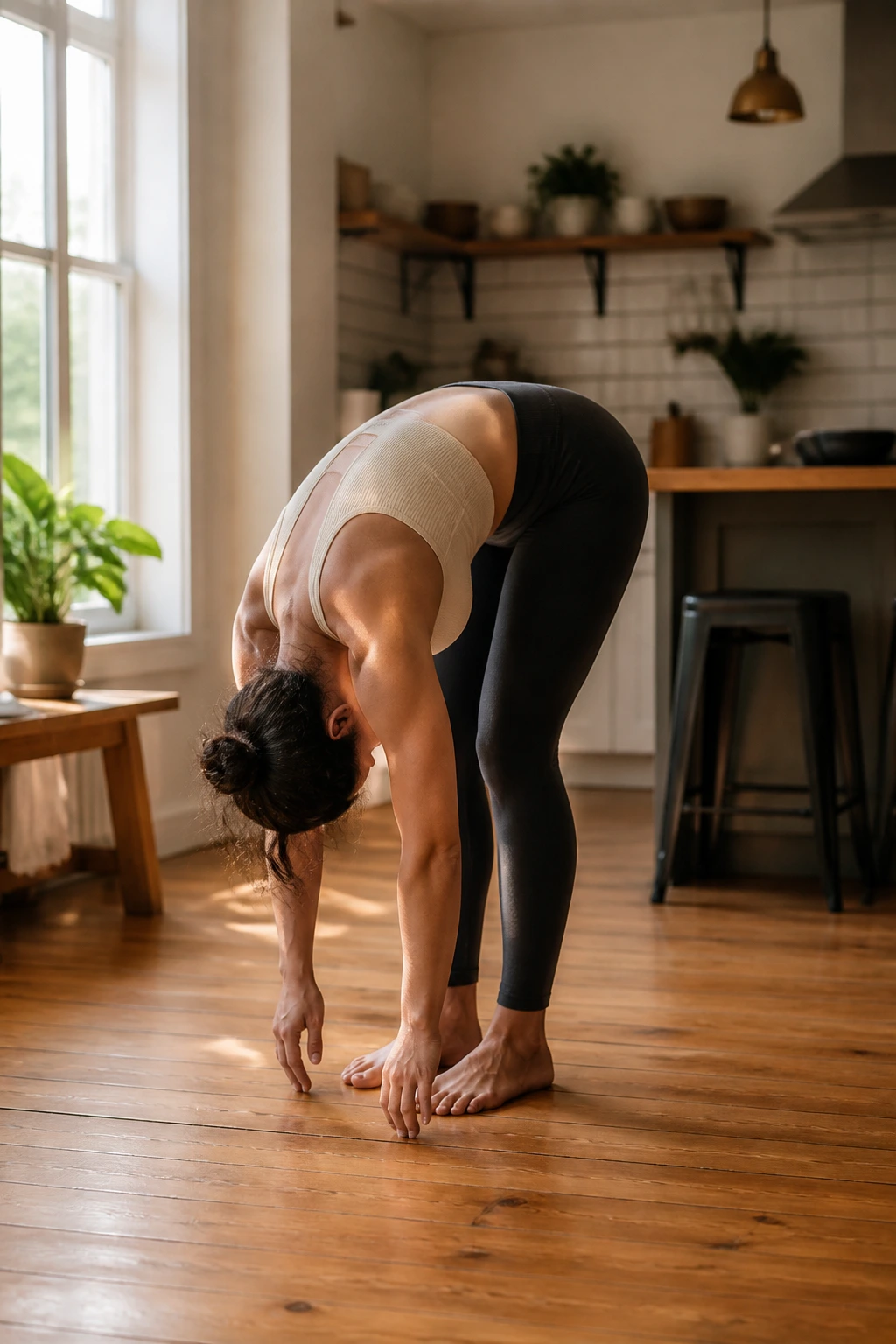
A forward fold is not lazy. It’s a fast way to unload the spine, quiet the jaw, and let the head drop somewhere lower than the shoulders for a minute. On a tired day, that alone can feel like a small mercy.
Stand with your feet hip-width apart, bend the knees generously, and hinge from the hips. Let your torso hang, then decide whether you want to clasp opposite elbows or just rest your fingertips on the floor or blocks. A tiny sway side to side helps more than trying to force a deeper stretch.
What to Watch For
- Keep the knees bent enough that the hamstrings don’t clamp shut.
- Let the weight spread through the whole foot.
- Soften the neck and jaw.
- Come up slowly so you don’t get lightheaded.
The fold works because it strips away effort without making you collapse. That’s a rare thing.
5. Low Lunge With Side Reach
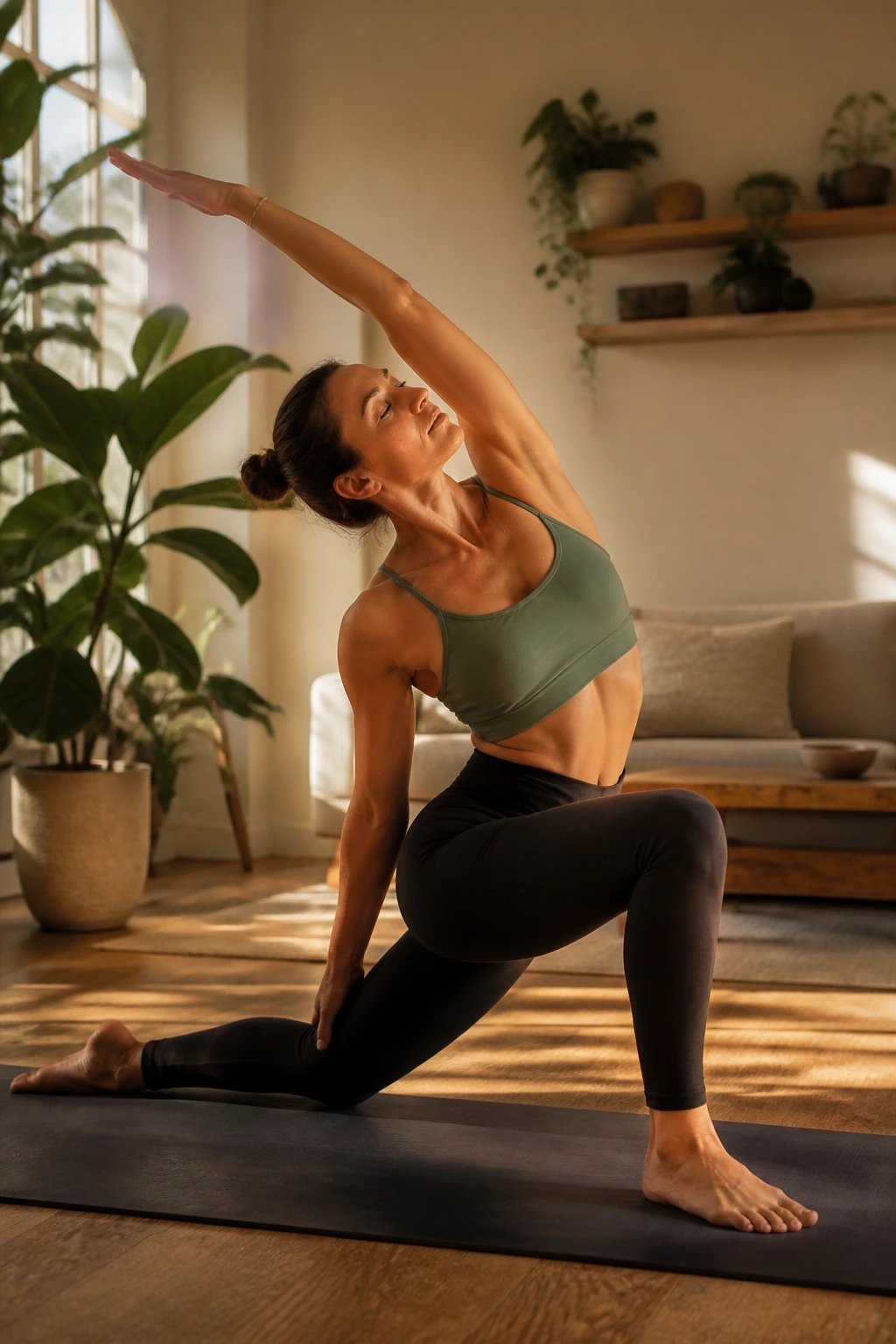
Step one foot forward and lower the back knee. That’s the whole setup, and it’s one of the best ways to wake up stiff hips without making the rest of the body grumpy. The front hip gets a stretch, the chest opens, and the arms have room to do something useful.
Stay upright first. If that feels fine, reach the arm on the same side as the back leg overhead and arc gently to the opposite side. The side body lengthens in a way that feels strangely energizing, especially if you’ve spent the day folded over a desk or steering wheel.
Make It Kinder on the Knees
- Pad the back knee with a folded blanket.
- Keep the front knee stacked over the ankle.
- Put both hands on blocks if the floor feels far away.
- Tuck the back toes under if you want a little more leg wake-up.
Hold 3 to 5 breaths on each side. You’re looking for open, not strained.
6. Crescent Lunge
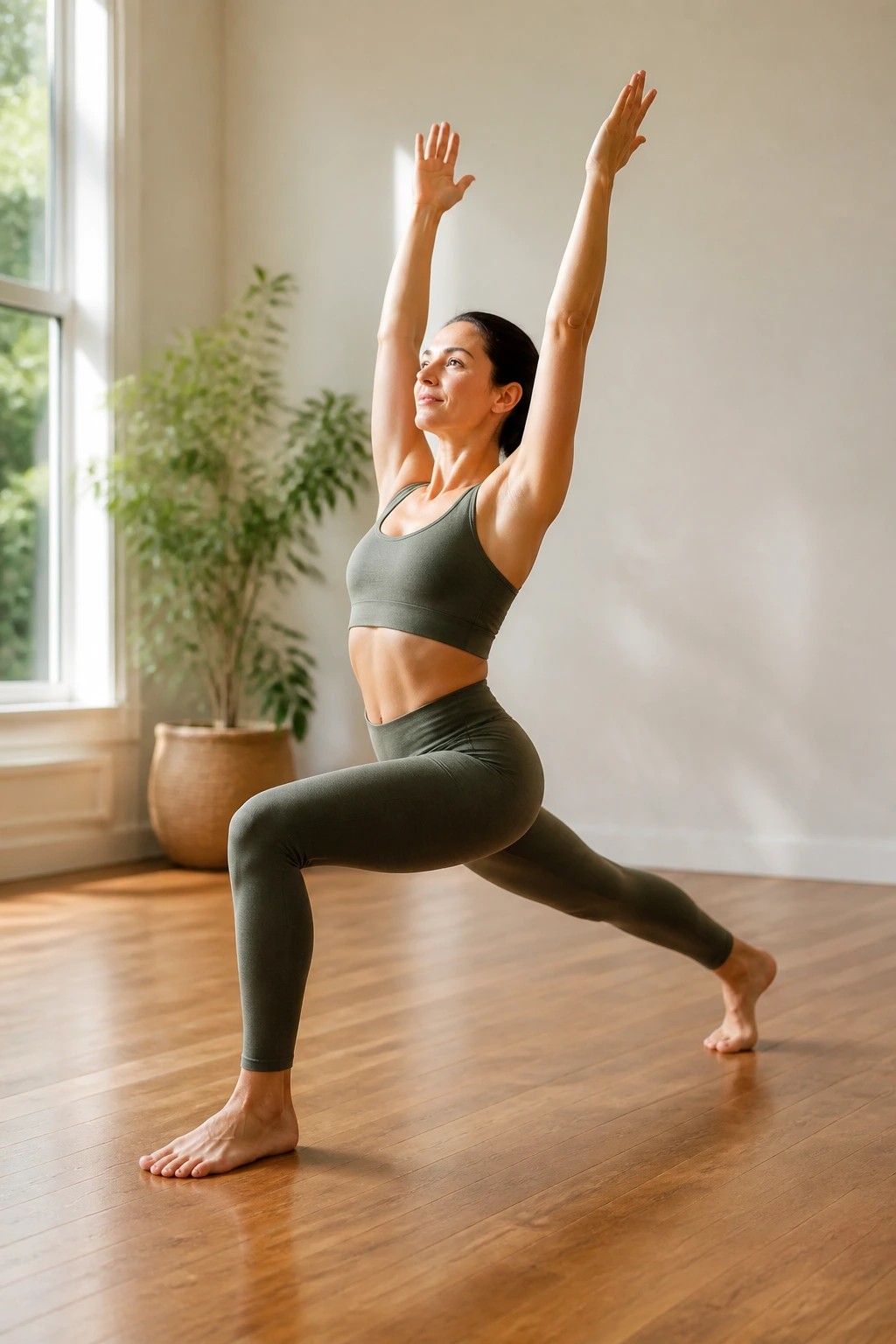
This one wakes the legs. It also wakes the mind, which is why I like it when a morning feels fuzzy and the body wants to stay in second gear.
From low lunge, lift the back knee and step the feet a little wider front to back so you have room to balance. Sweep the arms up, stack the torso over the hips, and feel the back heel reach toward the wall behind you. The pose gets lively fast, but it doesn’t need to turn into a wobble-fest.
Shorten your stance if you feel unstable. Keep the front knee tracking over the middle toes, not diving inward. A steady gaze helps more than people expect. Three breaths here can be enough to turn sluggish into alert.
7. Chair Pose
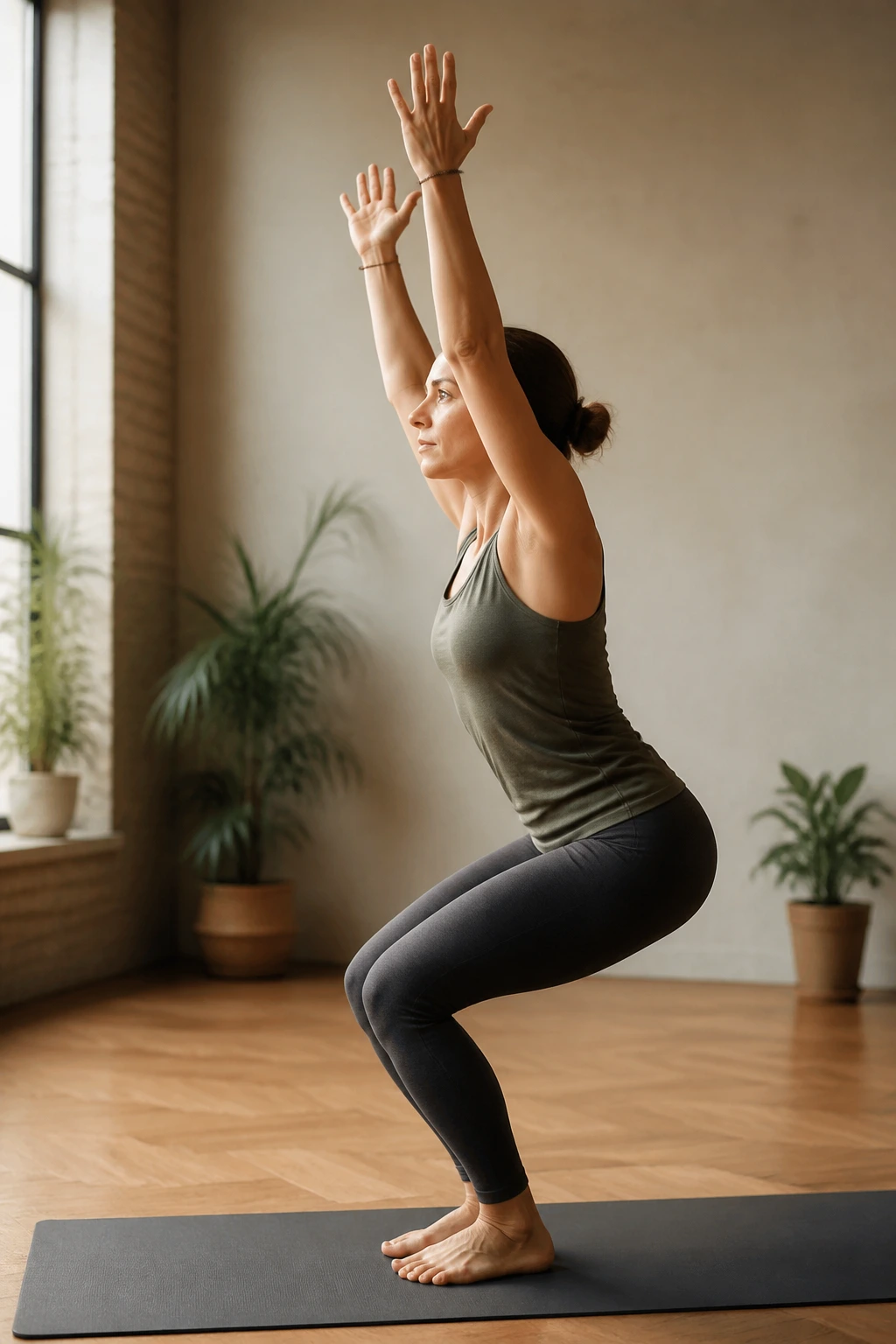
Your thighs notice chair pose before your mind does. That is partly the point. It asks for a little heat, a little focus, and enough effort to shake off the sleepy, collapsed feeling that sneaks into the body on low-energy days.
Sit your hips back as if you’re reaching for a chair that isn’t quite there. Keep the chest lifted, weight in the heels, and knees tracking forward rather than caving in. If your shoulders rise toward your ears, lower the arms or bring the hands to prayer at the chest.
A 20- to 30-second hold is enough for most tired bodies. Longer is fine if your form stays clean. The minute your lower back starts doing the work your legs should be doing, come out and reset. This pose should feel awake, not sloppy.
8. Warrior I
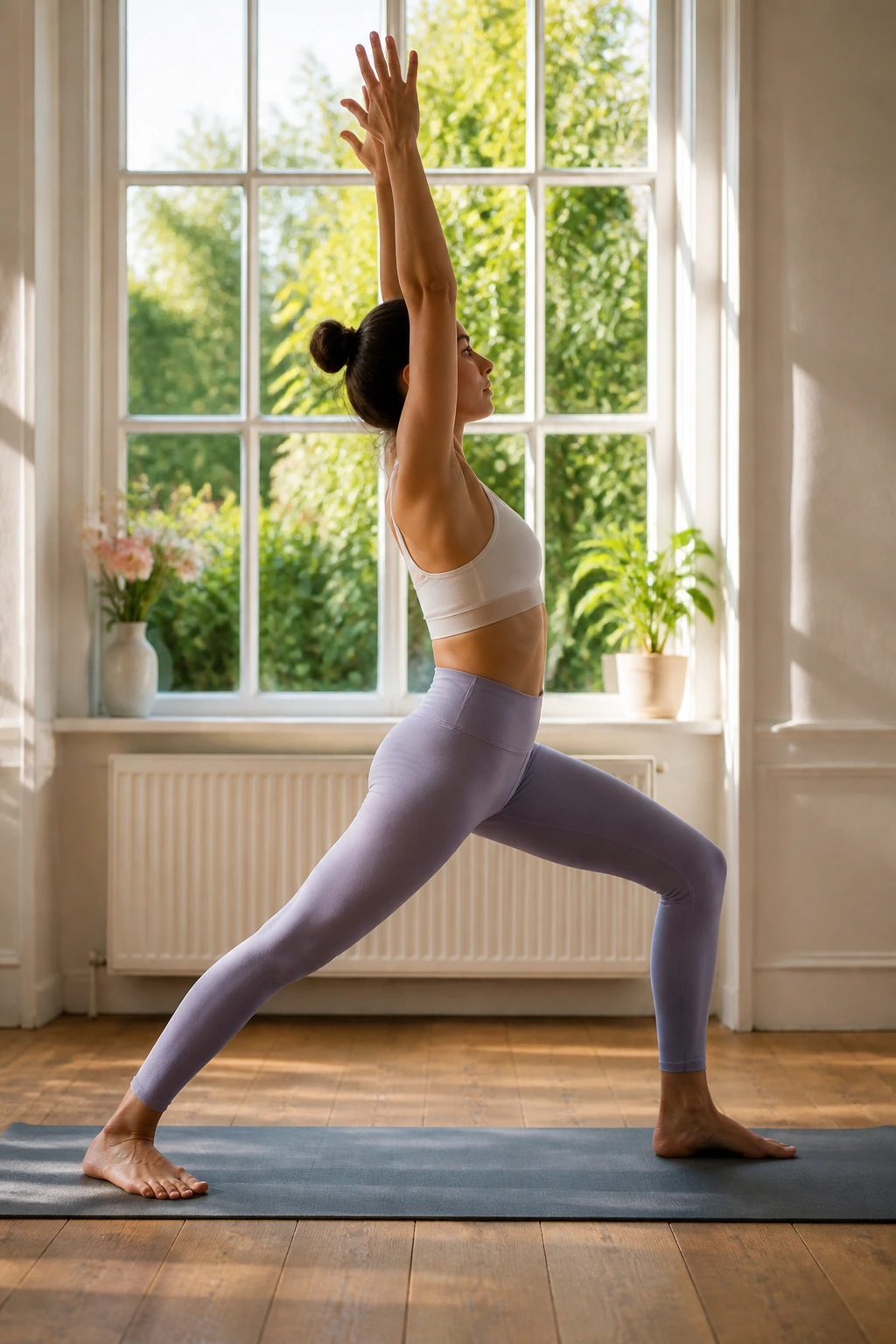
Three breaths in warrior I can change the mood of a slump. The stance is long, the legs are active, and the chest gets to lift in a way that feels purposeful instead of decorative.
Step one foot back, ground the back heel, and bend the front knee. Keep the hips mostly square to the front of the mat if that feels good in your body, then raise the arms and let the ribs stay contained. That containment matters. If the lower back arches hard, the pose stops feeling energizing and starts feeling noisy.
What Matters Most
- Front knee tracks over the center of the foot.
- Back foot anchors the pose.
- Pelvis stays heavy enough to support the spine.
- Arms reach up without squeezing the neck.
Warrior I works best when it feels tall and steady. Not rigid. Just organized.
9. Warrior II
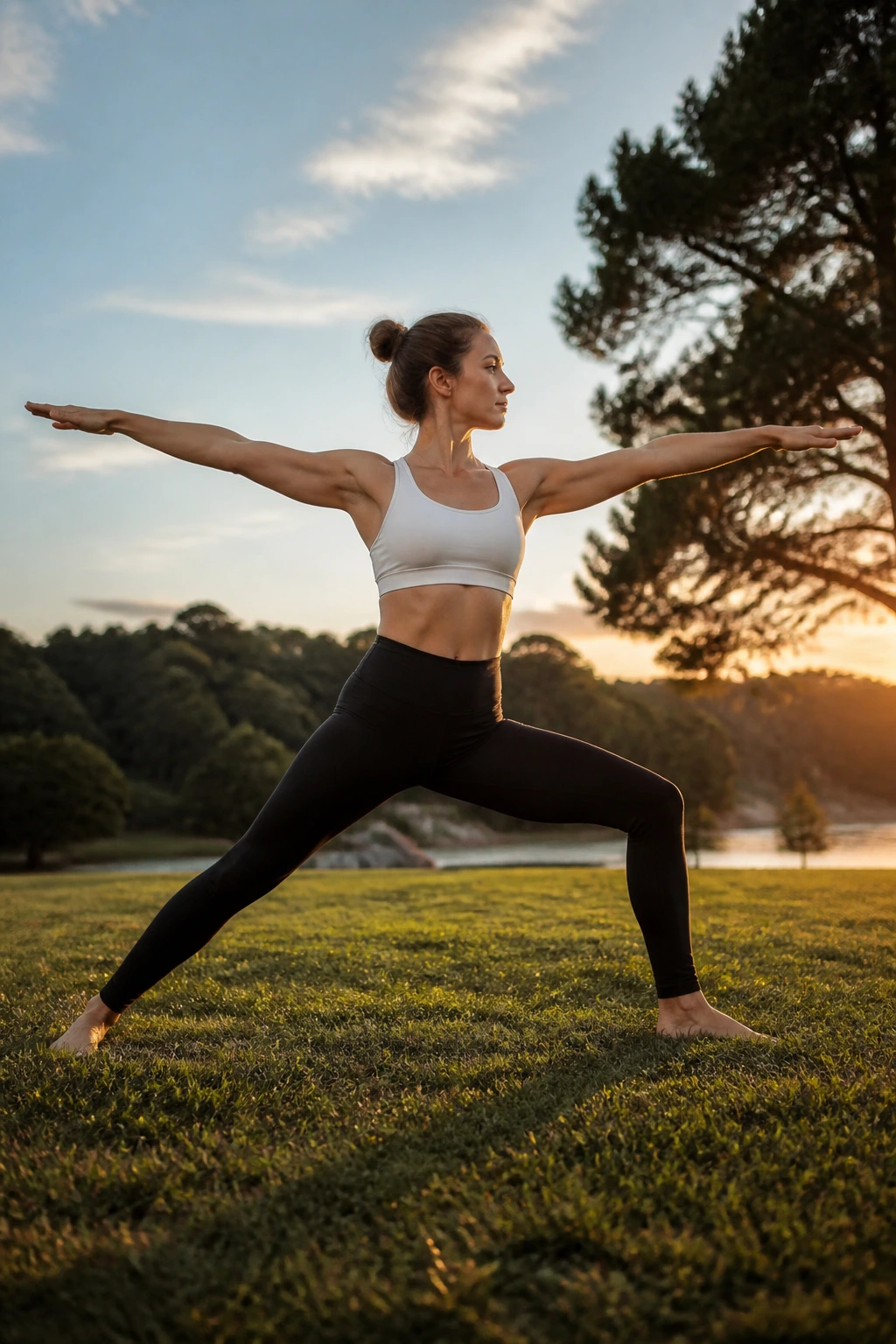
Warrior II looks calm, but it can feel strangely invigorating when you’re drained. The front leg is doing honest work, the back leg is alive, and the chest opens to the side instead of folding forward.
Turn the back foot out slightly, bend the front knee, and stretch the arms long in opposite directions. Let your gaze rest over the front hand without jamming the neck. The shape creates a broad, open line across the body, and that sense of width can feel better than speed on a tired day.
If your front thigh burns fast, that’s normal. If the front knee dives inward or the shoulders creep up, adjust. A cleaner line beats a deeper squat every time. This is a no-nonsense pose, and that’s part of why it works.
10. Triangle Pose
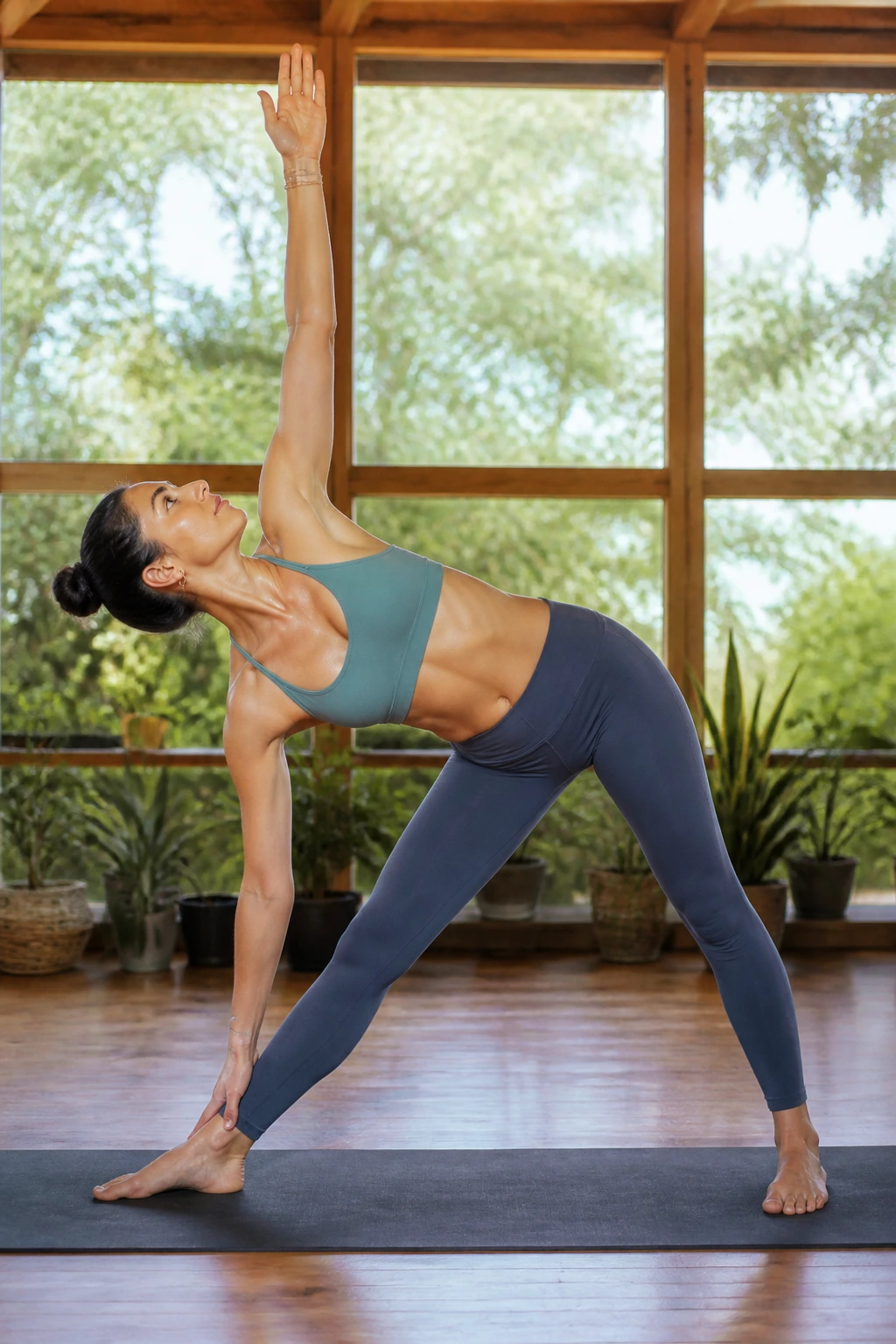
If your upper back feels glued shut, triangle gives it room. The side body lengthens, the hamstrings wake up, and the arms open into a shape that feels more alert than a simple stretch on the floor.
Set the feet wide, turn the front toes forward, and reach the torso long before you lower one hand to a shin, block, or the floor. Keep the chest open instead of dumping weight into the front hip. The goal is a long spine and a clear line through the crown of the head.
A Few Things That Help
- Use a block so you don’t collapse toward the floor.
- Keep a soft bend in the front knee.
- Rotate the top ribs open, but don’t wrench the low back.
- Breathe into the side ribs for 3 to 4 breaths.
Triangle has a way of making the body feel longer and cleaner. That’s a useful feeling when you’re running on fumes.
11. Standing Half Lift
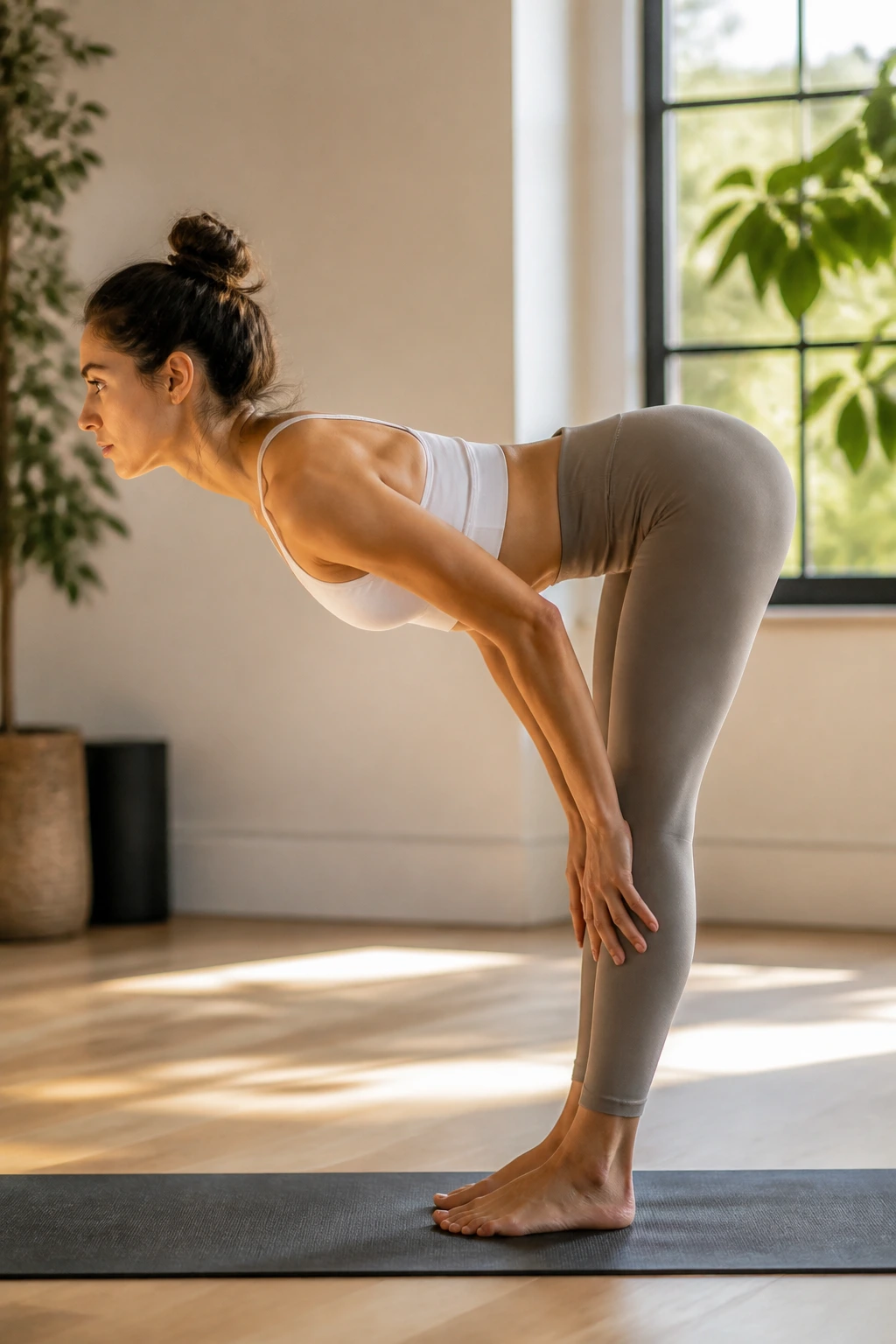
Need a quick flow instead of a long hold? Standing half lift is the move. It brings the spine into a flat, active shape without asking the legs to do anything fancy, and it’s one of the easiest ways to interrupt that heavy, sleepy droop.
From a forward fold, put your hands on your shins or blocks, inhale, and lengthen the chest forward until your back feels long. The crown reaches ahead, the tailbone presses back, and the hamstrings get a gentler message than they do in a full fold. That long spine is the whole point.
You can repeat it 3 times between folds if you want a little rhythm. It’s a tiny action, but it changes how the body feels in a hurry.
12. Cobra Pose
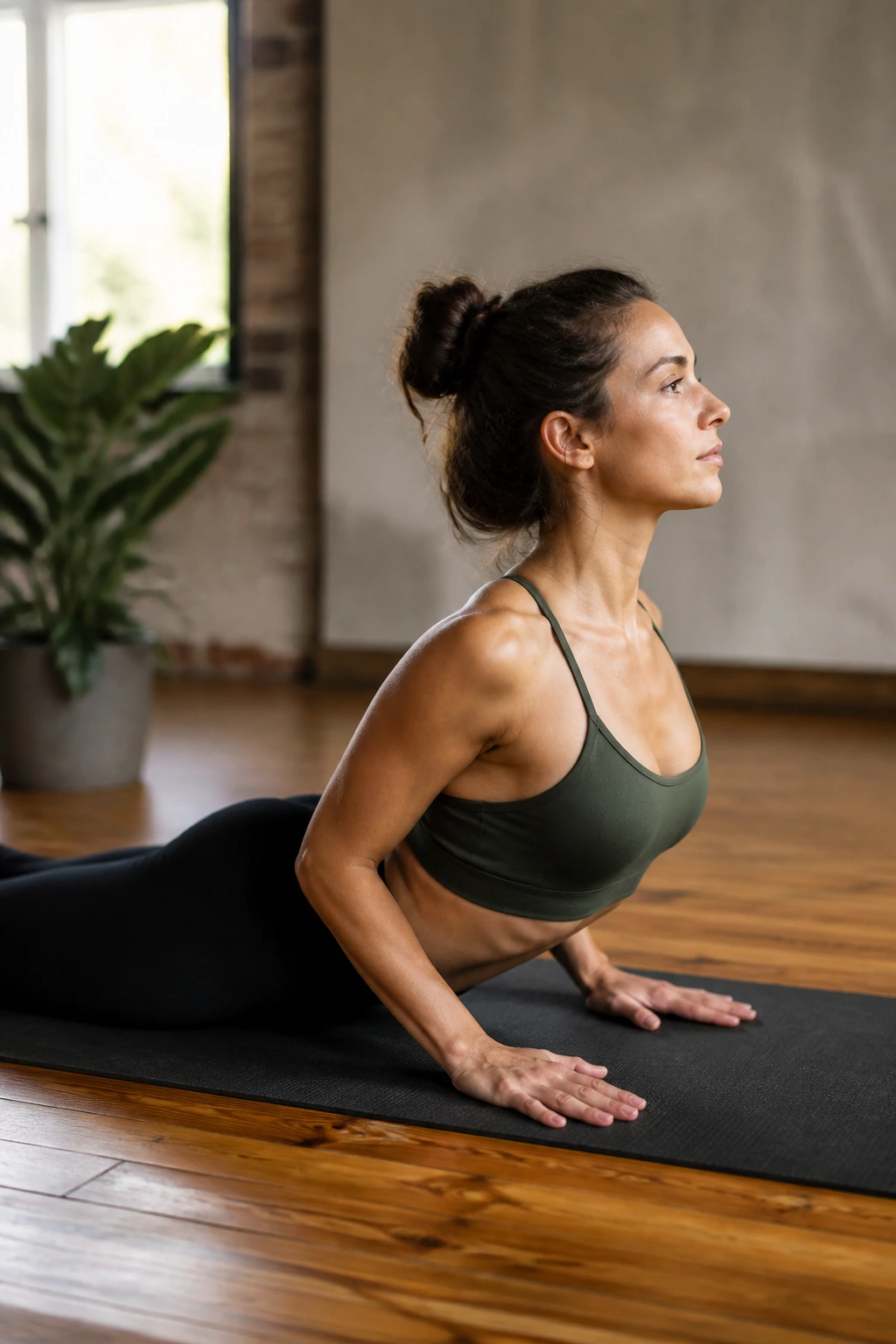
Cobra is the pose many people rush through, which is a shame. Done with care, it wakes the back body, lifts the chest, and gives the front of the torso a chance to open after hours of rounding forward.
Lie on your belly with your hands beside the ribs. Press the tops of the feet down, draw the shoulders back and down, and peel the chest up only as far as the low back stays comfortable. Keep the elbows bent and close. This is not about height. It’s about length and lift.
How High Should You Lift?
- Low cobra is enough on tired days.
- Keep the pubic bone heavy.
- Think “heart forward” more than “head up.”
- Stop before the lower back feels pinchy.
If your neck wants to crane, lower your gaze a little. The lift should feel open, not forced.
13. Sphinx Pose
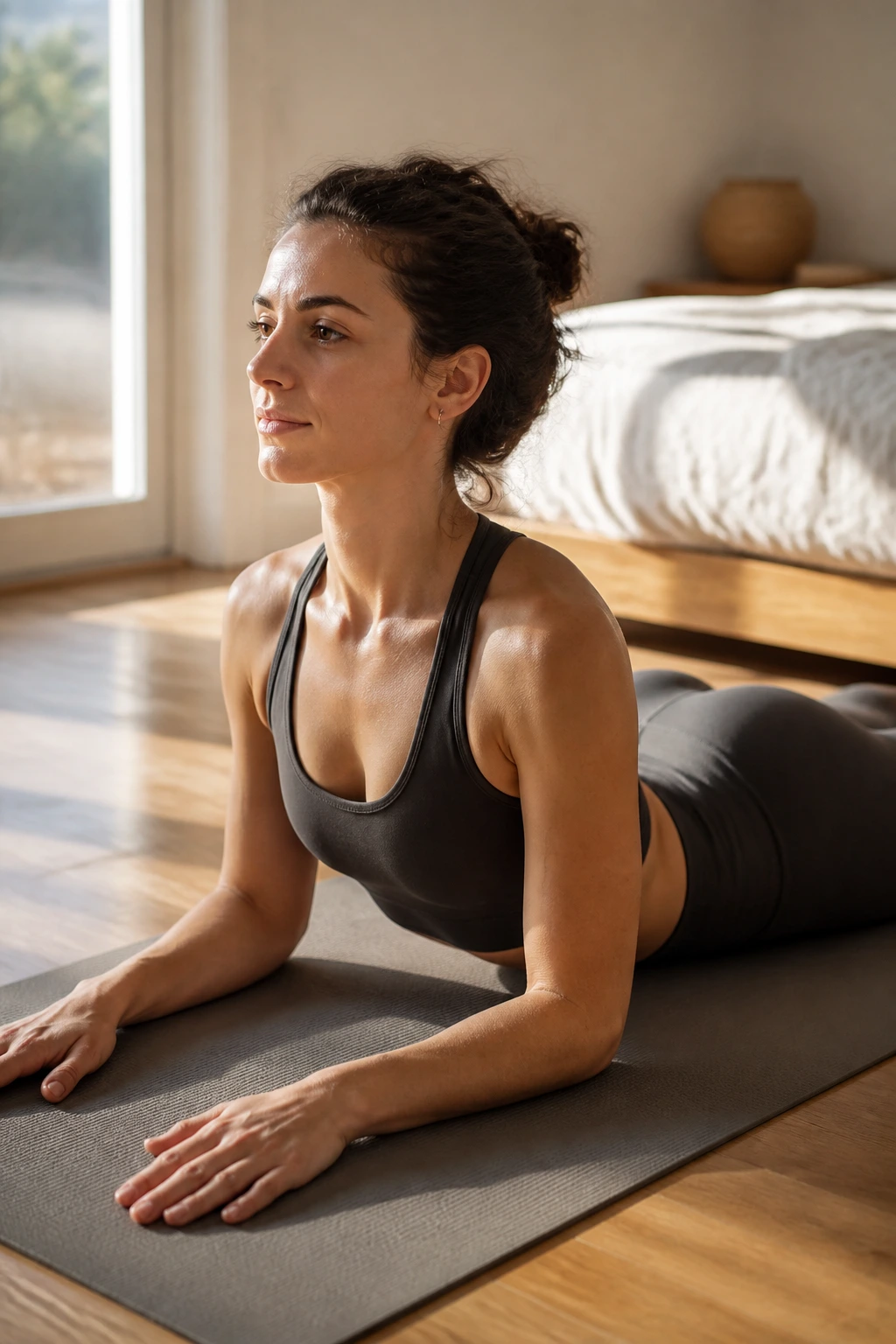
If cobra feels too sharp, sphinx gives the same idea with less effort. It’s one of the best gentle backbends for tired days because you get chest opening without having to hold the whole shape with your hands and lower back.
Lie on your belly and set your elbows under your shoulders. Press the forearms down, let the chest move forward, and keep the legs long behind you. You’re not trying to make a big shape here. You’re trying to lengthen the front body and wake the spine in a way that feels sustainable.
Stay for 5 to 8 breaths. If your low back feels compressed, slide the elbows farther forward or come out a little sooner. The pose should feel like you can stay there and think, not like a contest.
14. Locust Pose
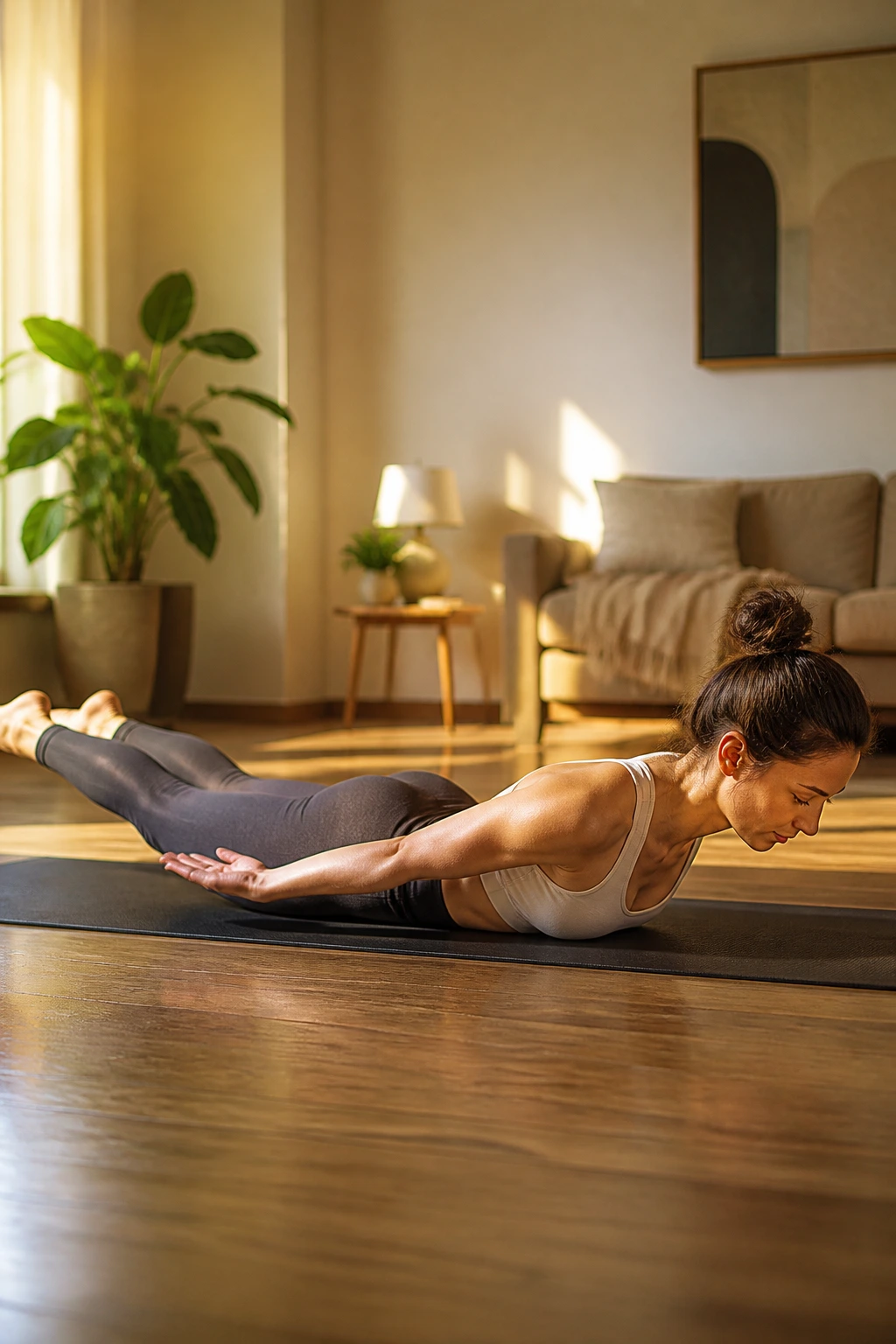
Glutes on. Spines long. That’s locust pose in two blunt phrases, and they cover most of what you need. It’s a clean back-body wake-up, especially when the whole torso has been turning inward for hours.
Lie on your belly, arms alongside the body or reaching back, and lift the chest, legs, or both a little off the floor. The lift is smaller than people expect. Good. A modest shape with clear muscle engagement does more here than a big, breathless heave.
Keep the neck long and the gaze down. If your lower back feels like it’s doing all the work, lower the lift and think about lengthening forward through the fingertips and back through the toes. Locust works because it asks for support from the whole back chain, not just one sore spot.
15. Bridge Pose
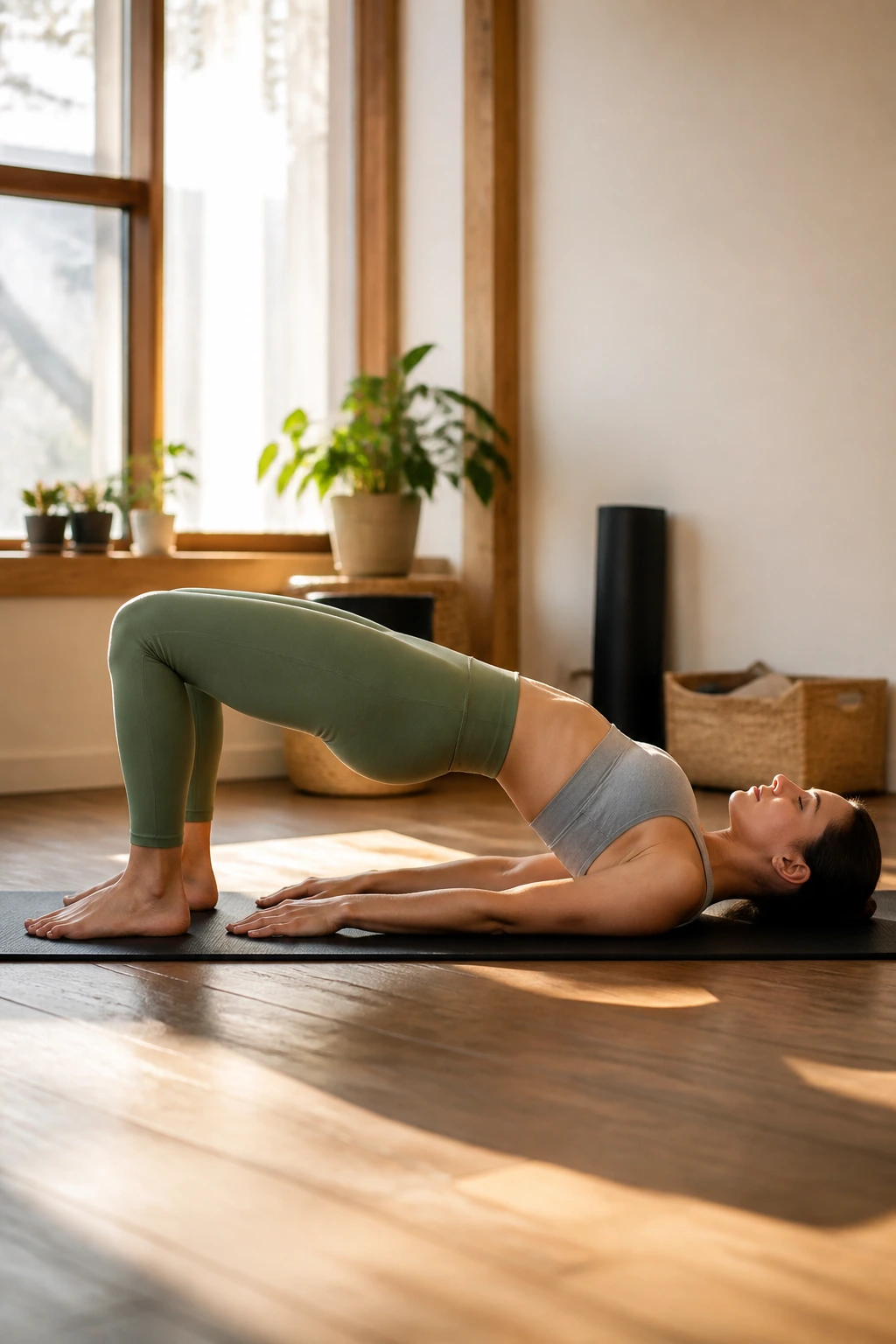
Bridge can feel like a small lift out of the day. Feet grounded, hips rising, chest opening — it’s one of those shapes that often feels better than it looks in photos.
Lie on your back with knees bent and feet hip-width apart. Press through the heels and lift the hips until the front of the body opens. Keep the knees from splaying too wide and avoid flaring the ribs up toward the ceiling. The lift should feel even, not lopsided.
What Not to Do
- Don’t turn the head while lifting.
- Don’t shove the hips as high as they’ll go.
- Don’t let the knees drift outward.
- Don’t squeeze the glutes so hard that the low back jams.
Hold for 3 to 5 breaths, lower with control, and notice the difference in your breath. Bridge is one of those poses that can give you energy by relieving effort.
16. Half Split
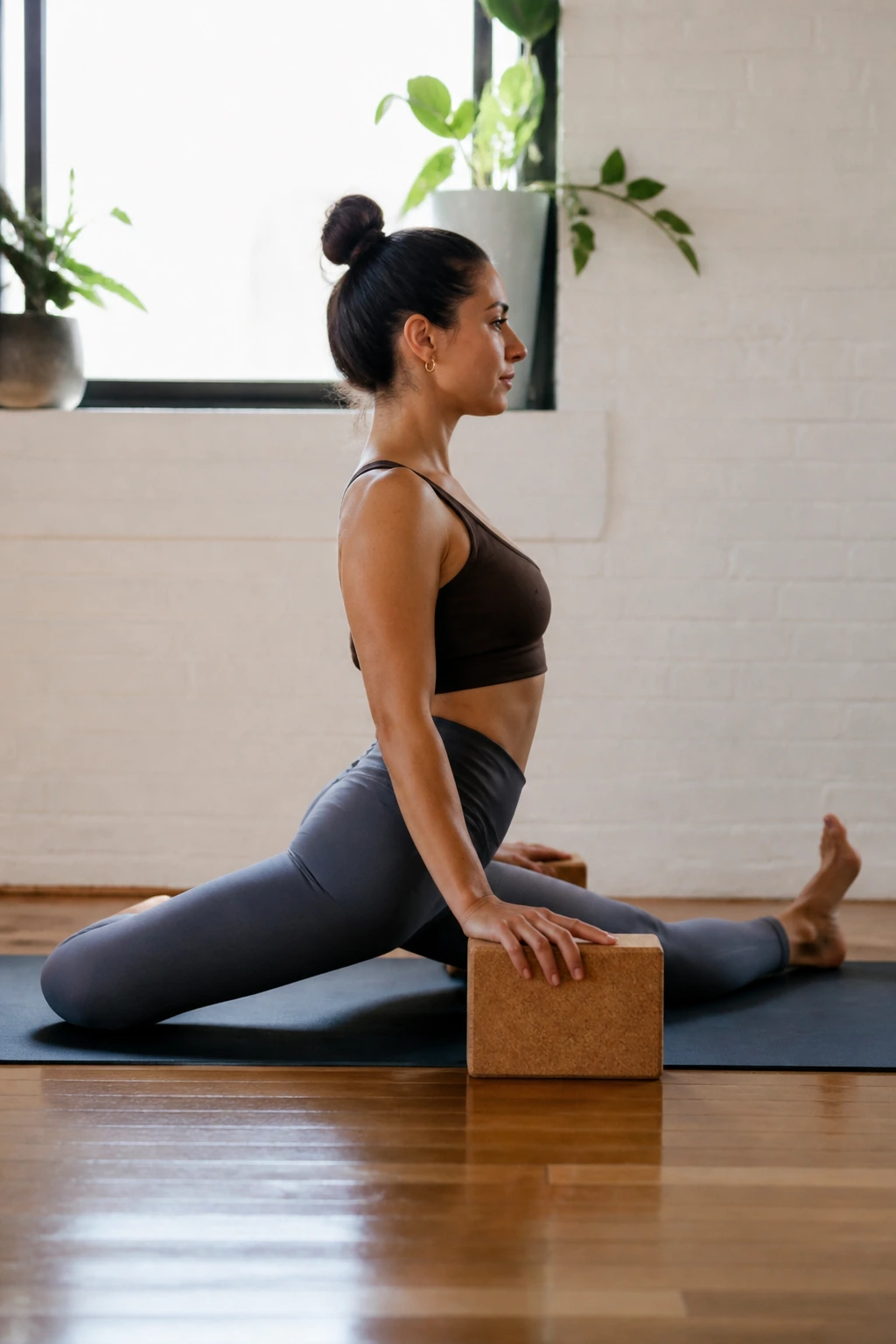
Ten seconds is enough to feel half split working. It’s the shape that reaches into the hamstrings after standing poses and gives the legs a more focused stretch without folding the whole body into a deep forward bend.
From a low lunge, shift your hips back over the rear knee and straighten the front leg as much as feels usable. Flex the front foot hard. That matters. A relaxed foot here turns the stretch into a sloppy pull, and that’s not the same thing. Keep the chest long and fold only as far as your back stays clean.
Useful Cues
- Put blocks under your hands if the floor is far away.
- Keep the front toes pulled back toward the shin.
- Soften the front knee a little if the hamstring grabs.
- Breathe into the back of the leg instead of forcing depth.
Half split is a good bridge between the active standing work and the calmer floor poses that follow.
17. Thread the Needle
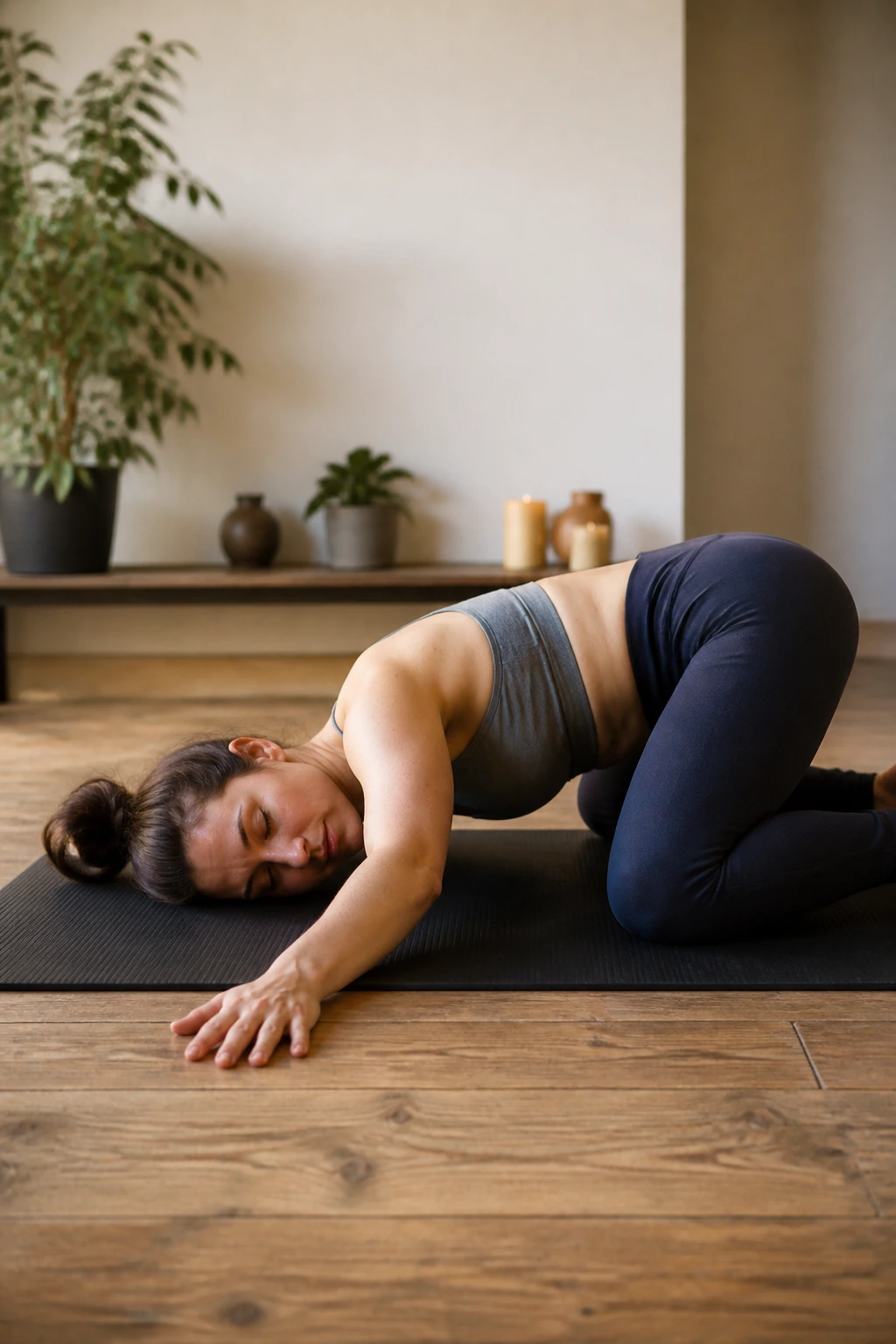
What if your tiredness feels like tension in the upper back? Thread the needle is the answer I reach for. It eases the shoulders, rotates the upper spine, and gives the neck a break from holding everything up.
Start on hands and knees. Slide one arm under the other and rest the shoulder and side of the head on the mat. Keep the hips stacked over the knees if you can, or let them drift back a touch if that feels better. The stretch should land between the shoulder blade and the ribs, not jam into the neck.
This pose is especially useful after laptop work or a long drive. Stay for 4 to 6 slow breaths on each side. If your knees don’t love pressure, put a folded blanket underneath them and keep the move small.
18. Happy Baby
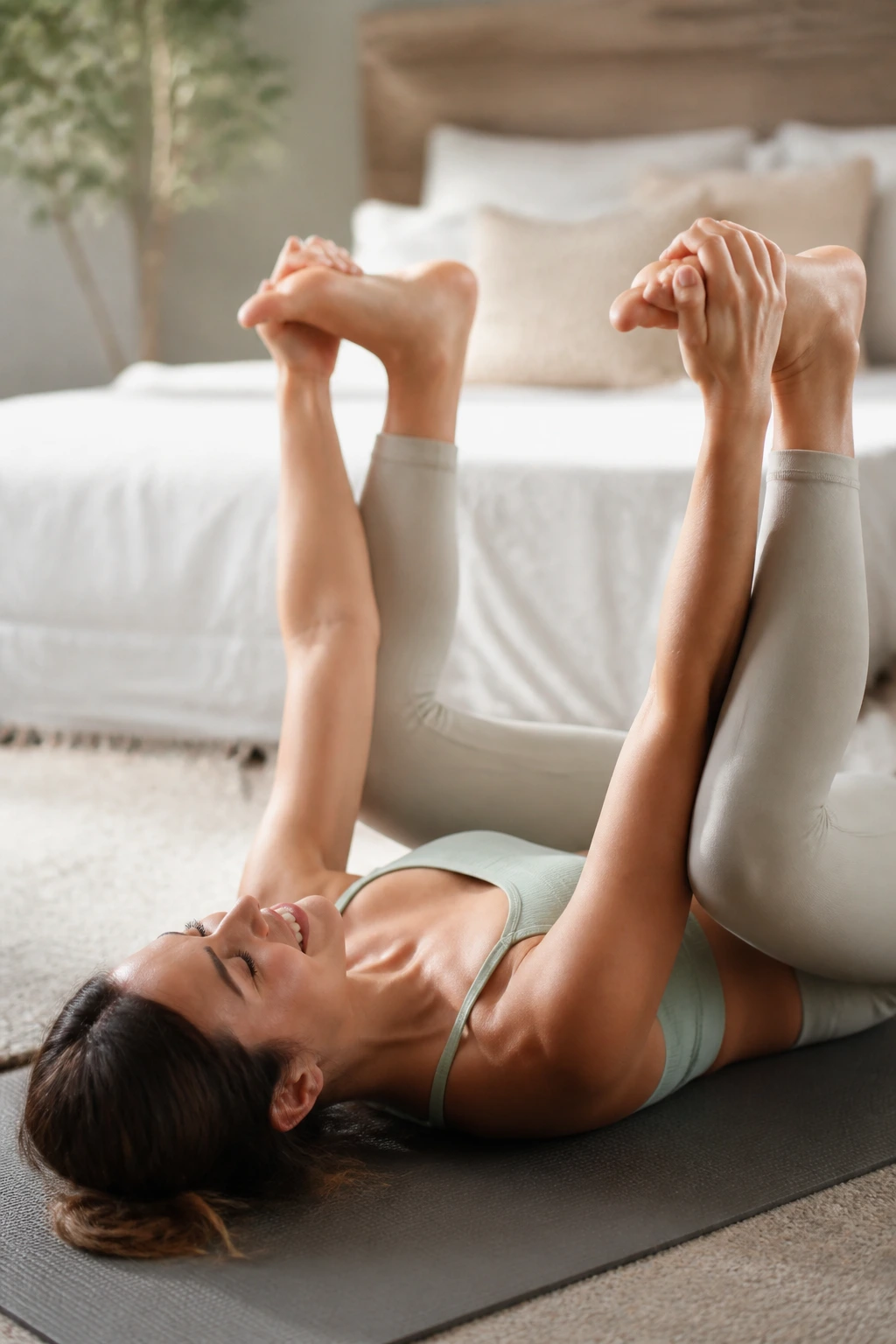
Happy baby looks playful, but it can be a serious reset. It opens the hips, loosens the low back, and gives you a chance to let the whole front body soften after all the standing work.
Lie on your back, bend the knees toward the chest, and hold the outer edges of the feet or the backs of the thighs if that’s easier. Let the knees travel toward the armpits, keep the tailbone heavy, and rock gently side to side if it feels good. Some people grip too hard here. Don’t. The stretch works better when it stays roomy.
Easy Ways to Make It Work
- Hold one leg at a time if the full shape feels crowded.
- Keep the head on the floor for more ease.
- Use a strap around the feet if your hamstrings are tight.
- Rock slowly instead of pulling harder.
It’s a friendly pose, but it still needs control. That’s the nice part.
19. Legs Up the Wall
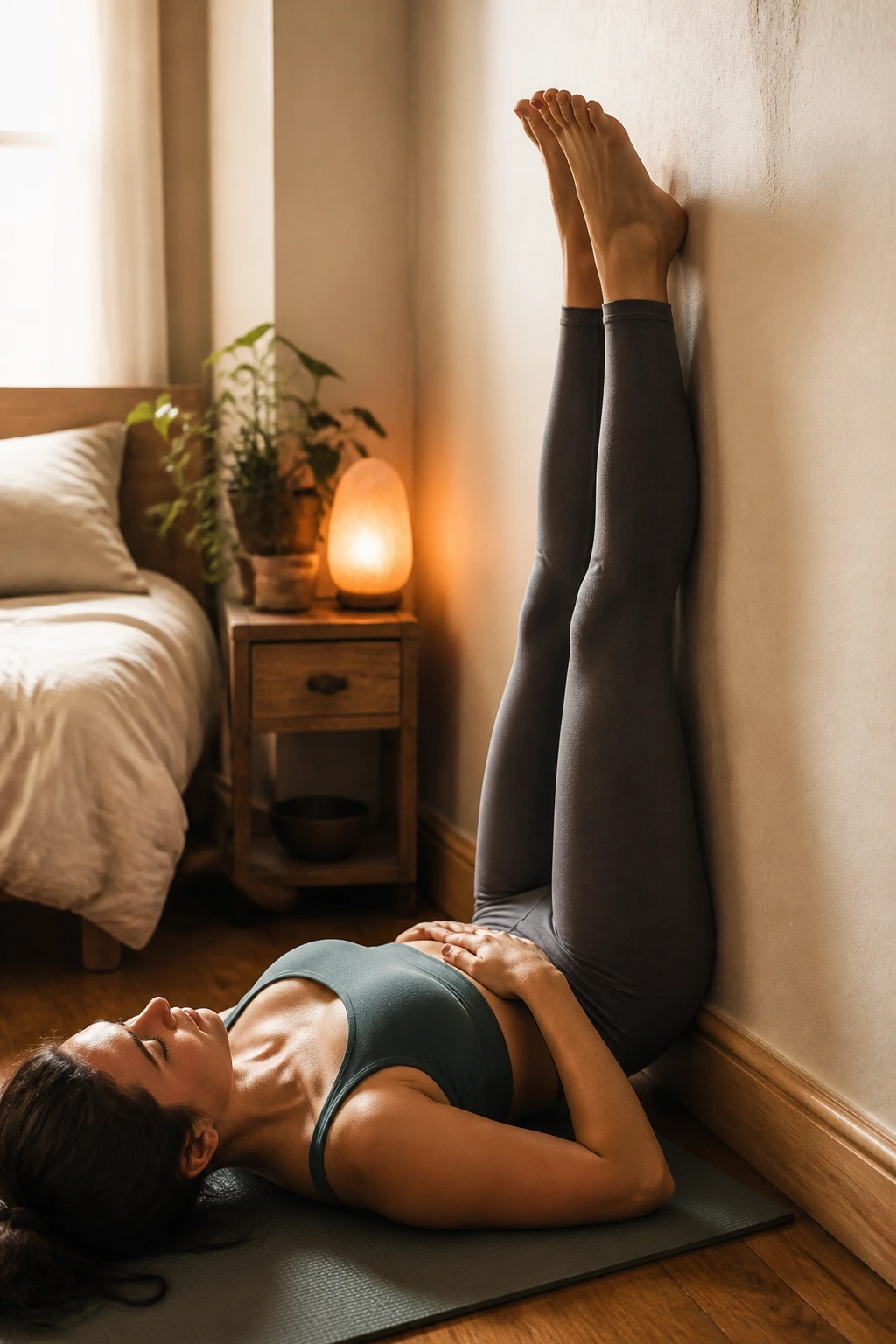
Put your legs up the wall and stop trying so hard. On a tired day, that can be the smartest yoga move in the whole stack. The body gets to drain out the standing effort, the breath settles, and the legs stop carrying the whole day.
Scoot your hips close to the wall, swing the legs up, and let the arms rest out to the sides or on your belly. If your hamstrings complain, move a little farther from the wall so the legs angle slightly instead of shooting straight up. Stay for 2 to 10 minutes, depending on what you have.
This is the pose that lets your nervous system catch up. If you’ve been moving fast all day, the stillness can feel louder than you expect at first. Give it a minute. Then let the exhale get longer.
20. Seated Forward Fold With Breath
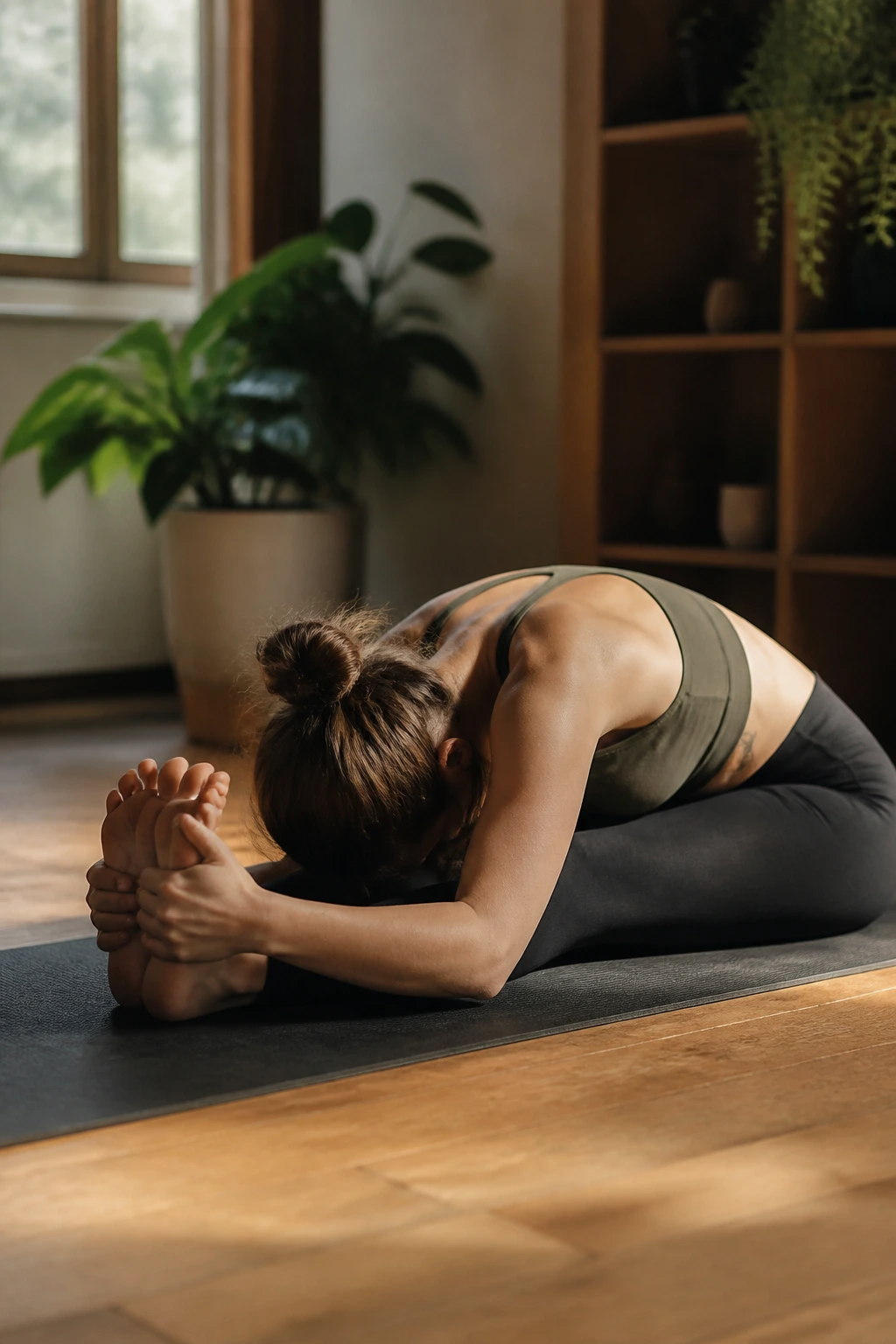
At the end of a long day, a seated forward fold can feel honest rather than flashy. You’re not trying to win a stretch contest. You’re giving the back body a long exhale and telling the legs to let go a little.
Sit with your legs extended, bend the knees if the hamstrings are tight, and hinge forward from the hips with a long spine. Reach for the shins, feet, or a strap. The important thing is the shape of the spine, not how far your hands go. Let each inhale lengthen the torso, and let each exhale soften the fold a little more.
If your back rounds deeply, that’s a sign to back off a notch and sit on a folded blanket. A good finish leaves you calmer and a little looser, not crumpled.
Final Thoughts
A tired day does not need a perfect practice. It needs a practice you’ll actually start. That’s a different thing, and it matters more than people admit.
If you only have a few minutes, build a tiny sequence from these: mountain pose, cat-cow, low lunge, cobra, and legs up the wall. That mix gives you posture, motion, a little strength, and a clean finish without chewing through your energy.
The best part is how ordinary most of these poses are. No circus tricks. No dramatic setup. Just enough movement to feel like yourself again.
