



If your core work only happens on the floor, you’re missing half the job. Standing is where balance, bracing, breathing, and hip control all collide, and that’s exactly why standing functional core exercises for women tend to carry over so well into real life.
A strong trunk is not just about visible abs. It helps you hold your ribs over your pelvis when you lift a grocery bag, walk up stairs, carry a kid on one hip, or turn quickly without feeling like your middle is folding in half. The movements that matter most are often the plain ones: resisting twist, keeping one side from collapsing, and staying steady while one leg or one arm does more work than the other.
That’s the part people miss. Core training is not a crunch contest. The deep stuff — your diaphragm, pelvic floor, transverse abdominis, obliques, and the smaller muscles around the spine — works best when the body is upright and the load is trying to pull you off center. That pressure system matters more than how hard you can flex your torso on the mat.
A good standing routine gives you anti-rotation work, side-to-side control, single-leg stability, and a little coordination, too. Some moves use a band. Some use one dumbbell. A few need nothing at all. Keep your ribs stacked, breathe out on effort, and start with the first move. The useful stuff shows up fast.
1. Standing March with Overhead Reach
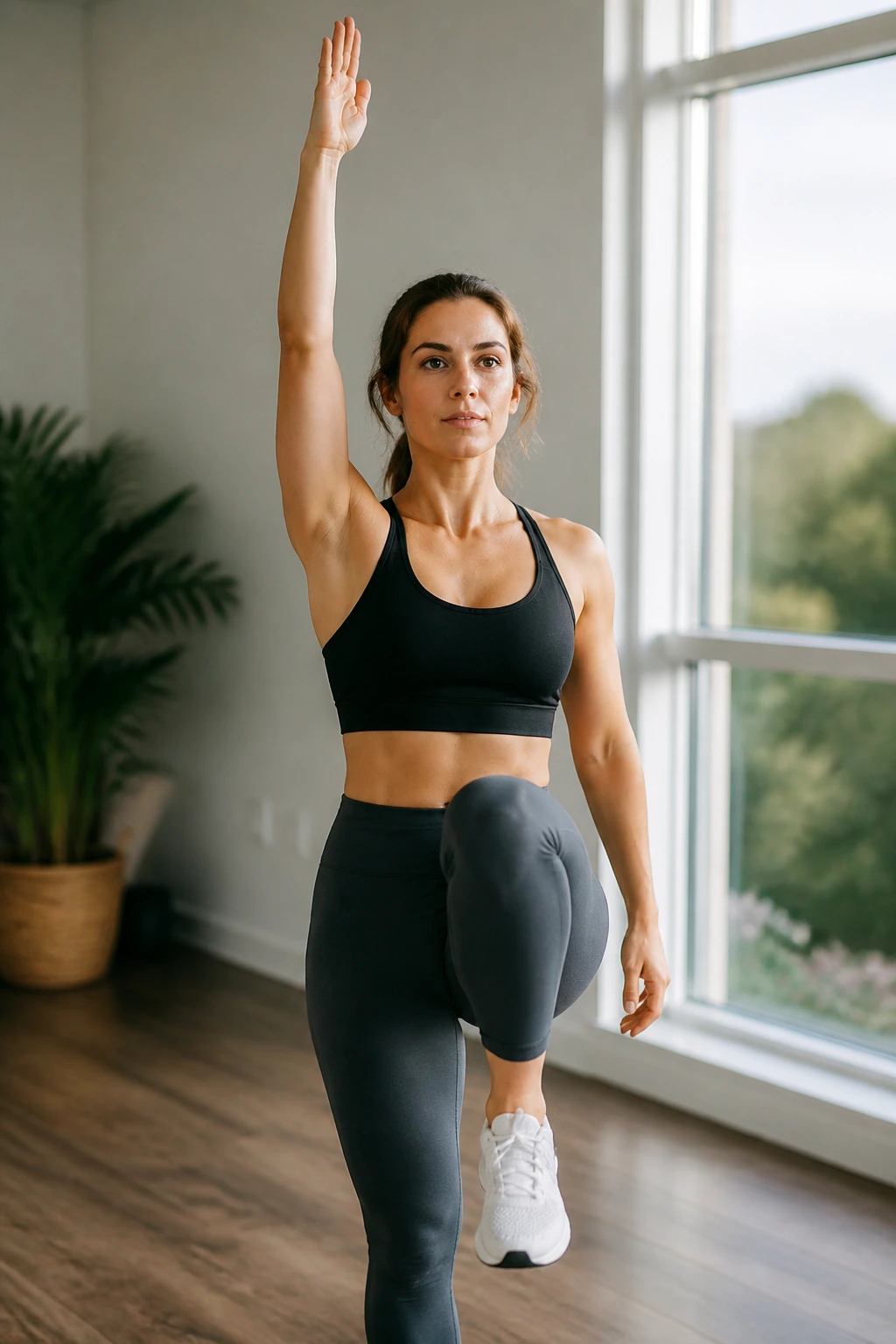
This is the easiest place to start, and that’s a compliment. The standing march with overhead reach teaches your trunk to stay tall while one knee rises and the opposite arm lengthens, which is the kind of coordination people use all day without thinking about it.
How to Do It
Stand with your feet hip-width apart and your arms by your sides. Reach one arm straight overhead while driving the opposite knee to about hip height, then switch sides in a slow, steady rhythm.
Keep your ribs down. If your lower back arches every time you lift your arm, you’ve gone too far with the reach.
- Aim for 2 to 3 sets of 8 to 12 marches per side.
- Exhale as the knee comes up.
- Keep the standing foot planted like a tripod.
- Don’t rush the switch. Sloppy speed defeats the point.
A tiny pause at the top makes this move much better. You’ll feel the front of the hip working, but the real work is the trunk stopping your torso from drifting side to side. If you can do this cleanly, the rest of the list gets easier to learn.
2. Pallof Press from a Standing Stance
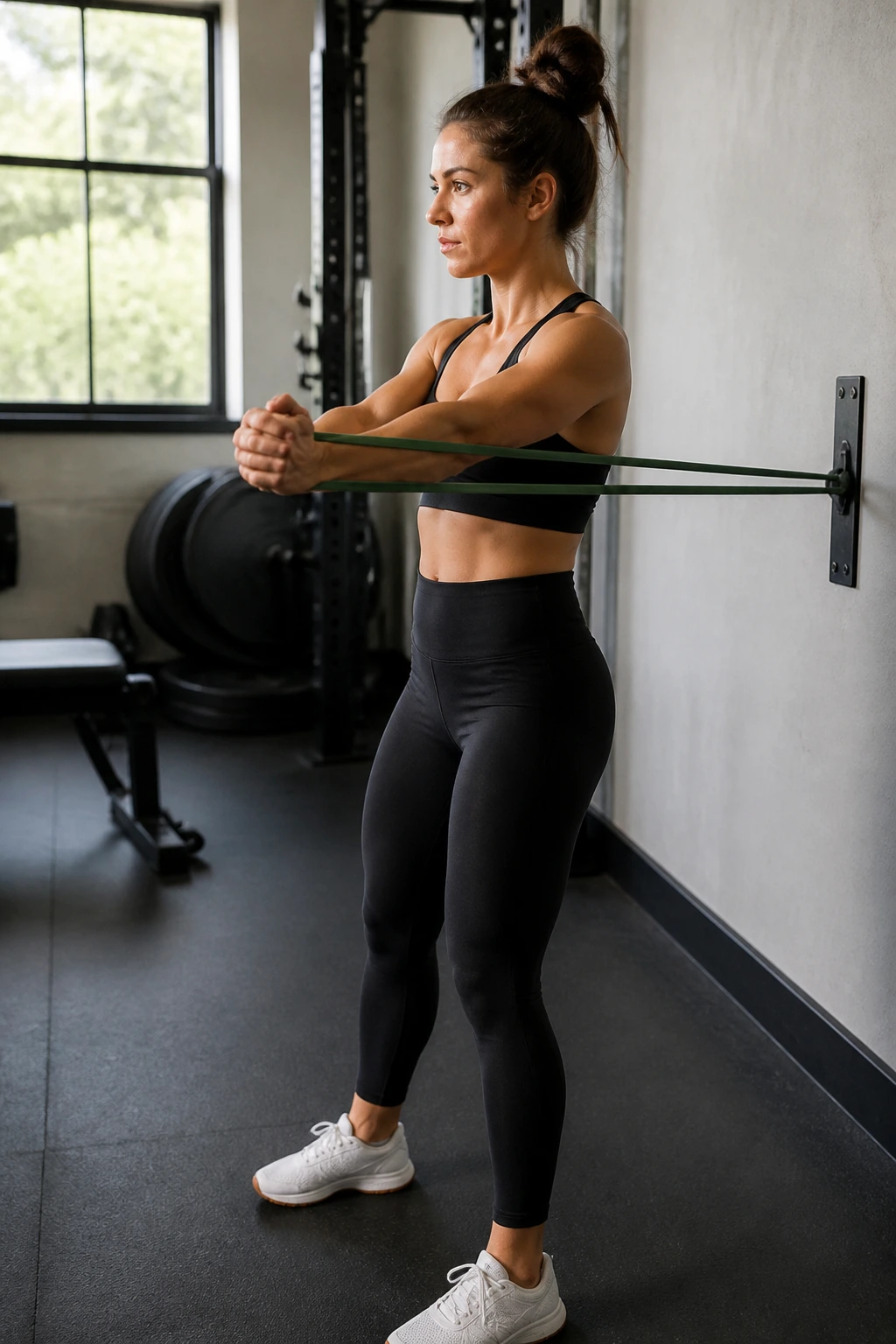
The Pallof press looks plain, and that’s the point. You stand sideways to a band or cable, press your hands straight out from your chest, and refuse to let the resistance twist you open.
That makes it one of the cleanest standing core exercises for women who want anti-rotation strength without a lot of noise or momentum. The movement trains your obliques and deep midline muscles to hold firm while the arms move, which is much closer to real life than cranking through fast twists.
Set the band at chest height, step out until there’s a little tension, and square your feet. Press and hold for a count of two or three before bringing the hands back in. If your torso spins, the load is too heavy or your stance is too narrow.
It’s a quiet exercise, but not a soft one. Start light. Stay stubborn.
3. Suitcase Carry March
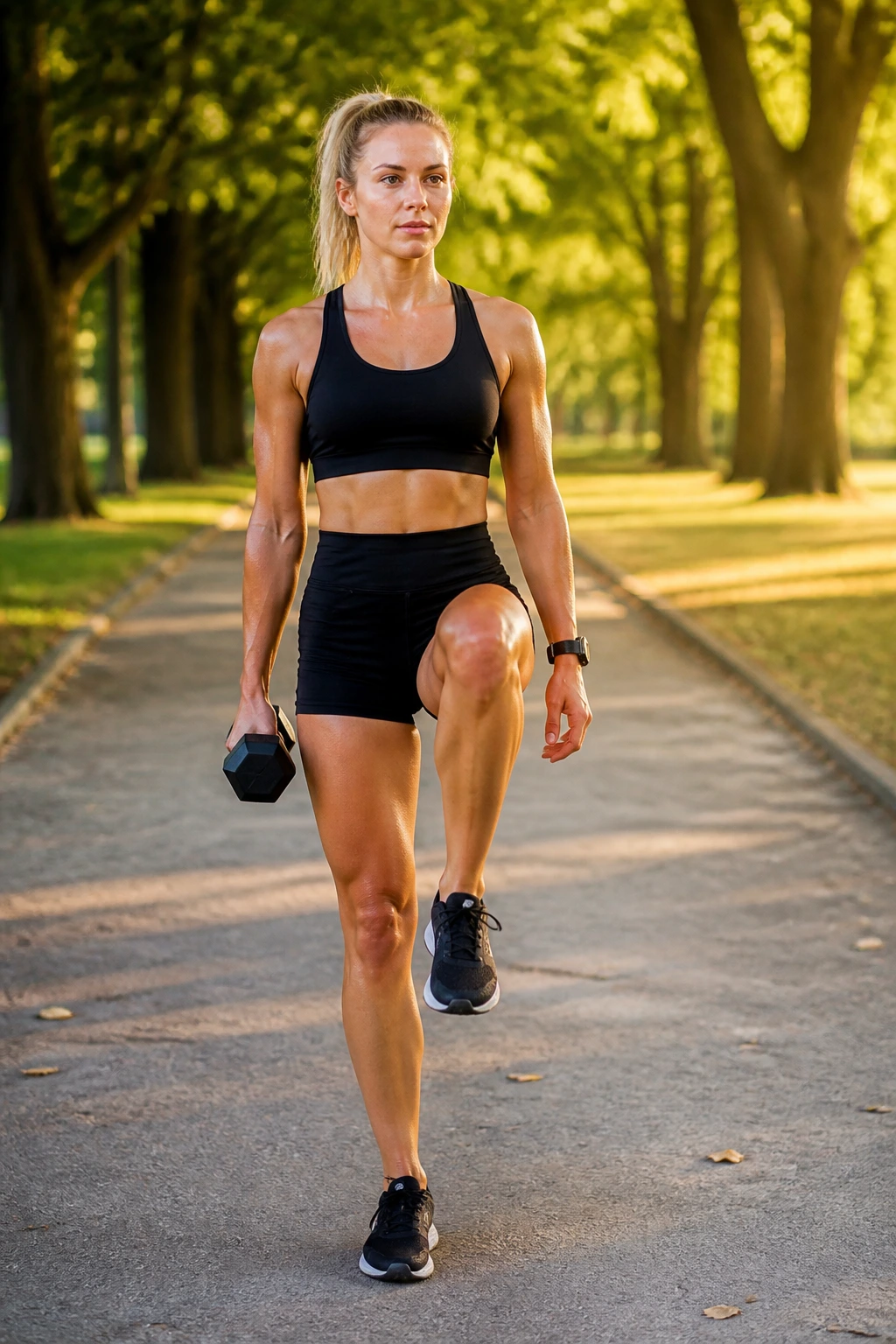
Why does one dumbbell in one hand feel so much harder than two? Because your body has to fight side bend the whole time, and that’s a job your obliques take personally.
The suitcase carry march is one of my favorite upright drills because it forces you to stay level while one side of the trunk works harder than the other. Hold a single dumbbell or kettlebell at your side, then march slowly without leaning toward or away from the weight.
How to Get the Most From It
- Use a load that makes you work, not wobble.
- Walk 20 to 40 steps before switching hands.
- Keep the shoulder on the weighted side from shrugging up.
- Move your feet under you, not out to the sides.
You should feel tall, not cramped. If the weight drags your body into a curve, shorten the set and clean up the posture first. This one is gold for balance, grip, and trunk stability all at once.
4. Standing Wood Chop
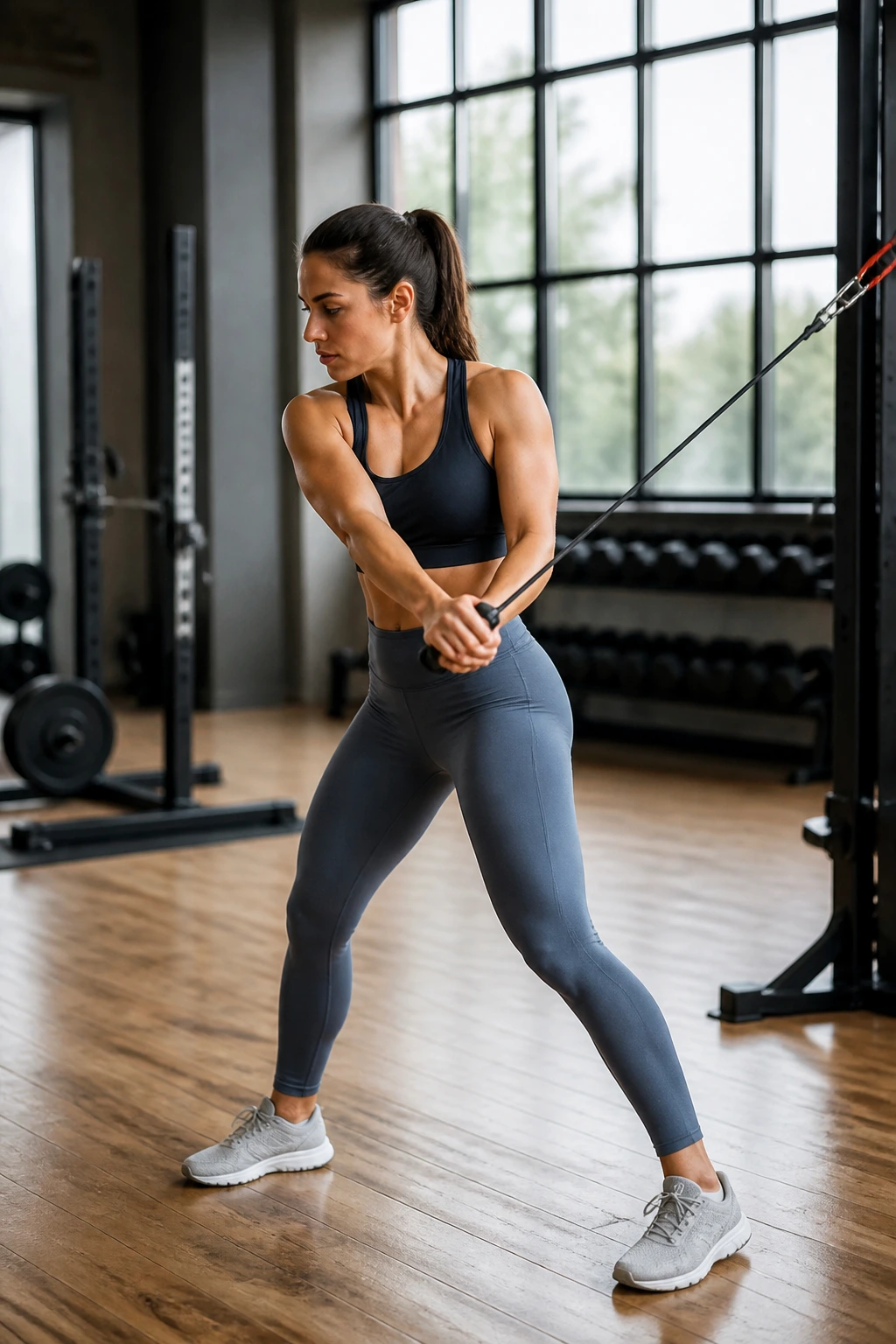
Picture reaching from a high shelf down toward the opposite hip. That diagonal path is the whole story here, and it’s why the standing wood chop shows up in so many good core programs.
Attach a band or cable high above shoulder level. Pull the handle across your body toward the opposite hip with control, letting the torso rotate a little while the hips stay mostly quiet. The point is not to yank the weight. The point is to organize power through the trunk.
What to Watch For
- Start with soft knees and a braced belly.
- Let the shoulders and rib cage turn together.
- Pivot the back foot if your hips feel stuck.
- Finish without letting the lower back take over.
A wood chop feels athletic when it’s done well. It also exposes messiness fast. If you’re jerking with the arms, lower the resistance and slow the return path. The eccentric part matters here.
5. Standing Side Bend with Dumbbell
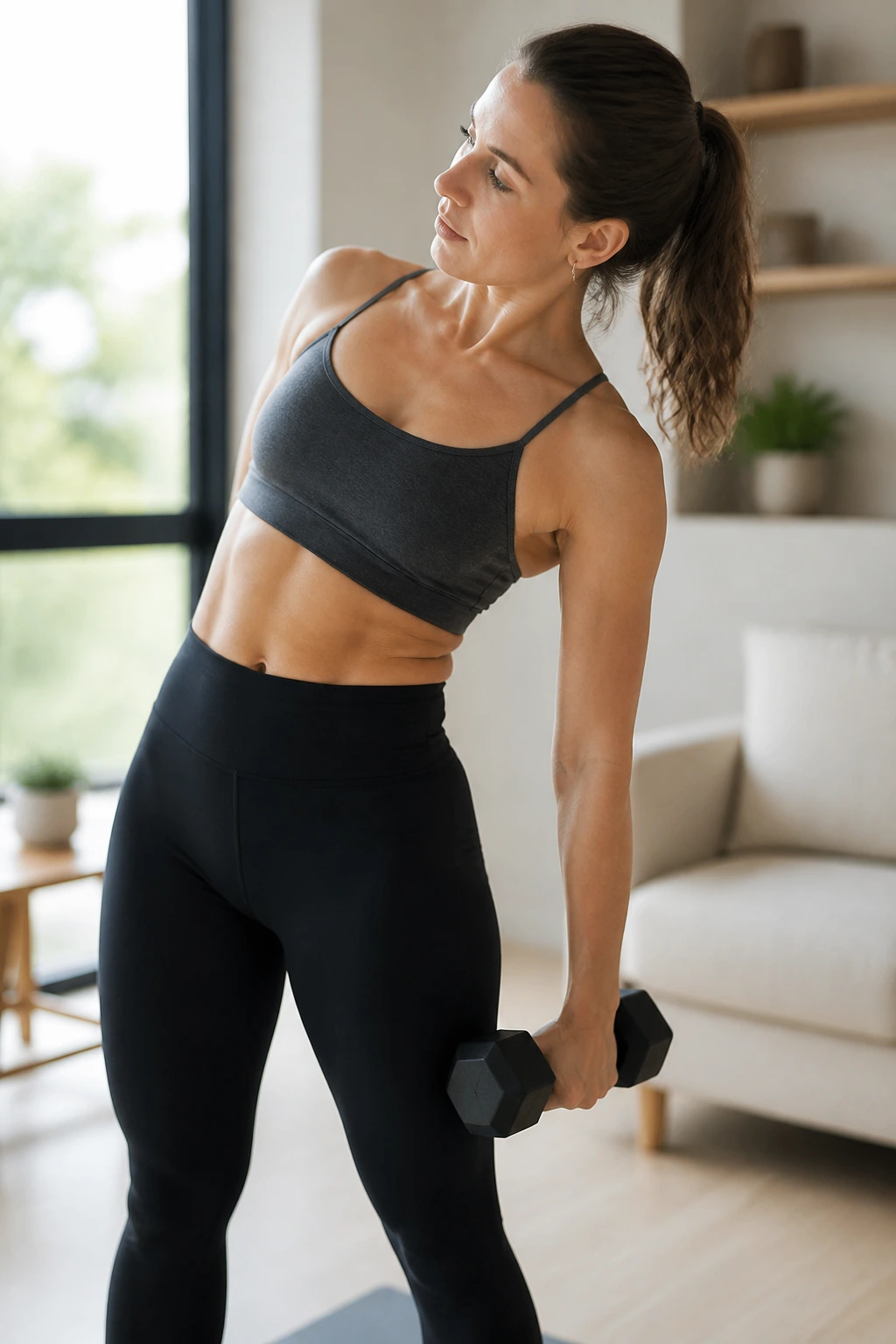
A side bend gets a bad reputation because people often load it too hard and move like they’re trying to bend a telephone pole. That’s not the move.
Used well, the standing side bend trains the obliques and the muscles along the side of the torso to control lateral flexion. Hold one dumbbell in one hand, let it slide down the outside of your leg in a small, clean range, then stand back up without tipping backward or forward.
What matters most is the size of the motion. Keep it modest. A heavy dumbbell and a sloppy lean are not the same thing as useful strength. You want to feel the side of the trunk working, not the lower back pinching.
If you’ve spent years doing only front-facing ab work, this move can feel oddly honest. One side gets loaded, the other side has to answer, and your body has to stay organized while that happens. Good. That’s the point.
6. Standing Hip Hinge and Reach
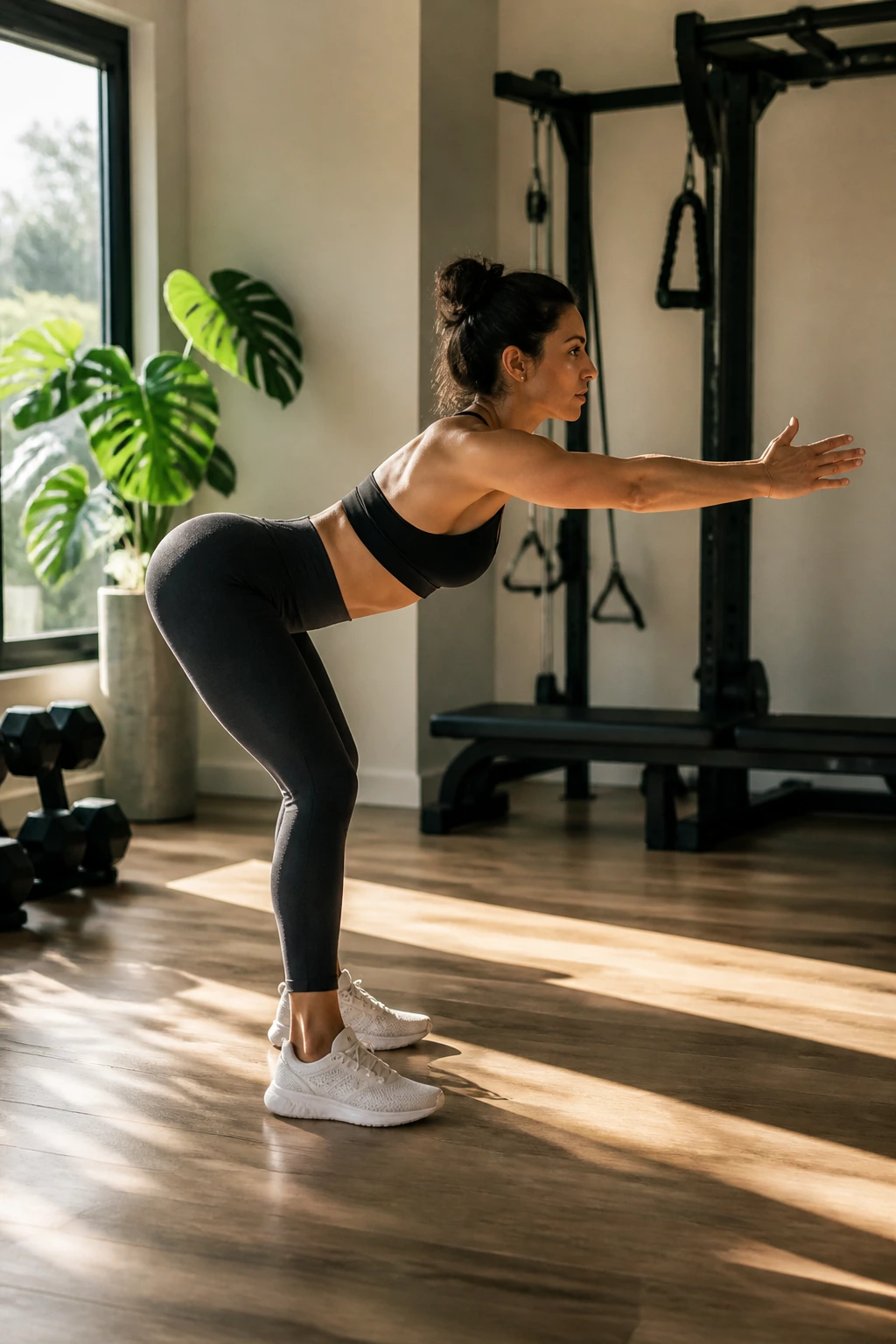
Unlike a crunch, this drill asks your core to stay quiet while your hips do the moving. That’s a skill worth having, because most real lifts — from picking up a child to loading a suitcase — start with a hinge, not a sit-up.
Stand tall, soften your knees, and send your hips back while reaching both arms forward. Your torso should tip as one piece, with the spine long and the weight in your heels. Come back to standing by driving the hips forward, not by yanking the chest up first.
Why It Works
The hinge teaches your trunk to hold shape while the pelvis moves. That’s a huge deal for lower-back comfort and for load transfer through the hips.
You can make it harder by holding a light dumbbell or kettlebell at your chest. Or you can keep it bodyweight and focus on the line from head to tailbone. Either way, if you feel it mostly in the low back, the hinge is too deep or too fast.
7. Standing Reverse Chop
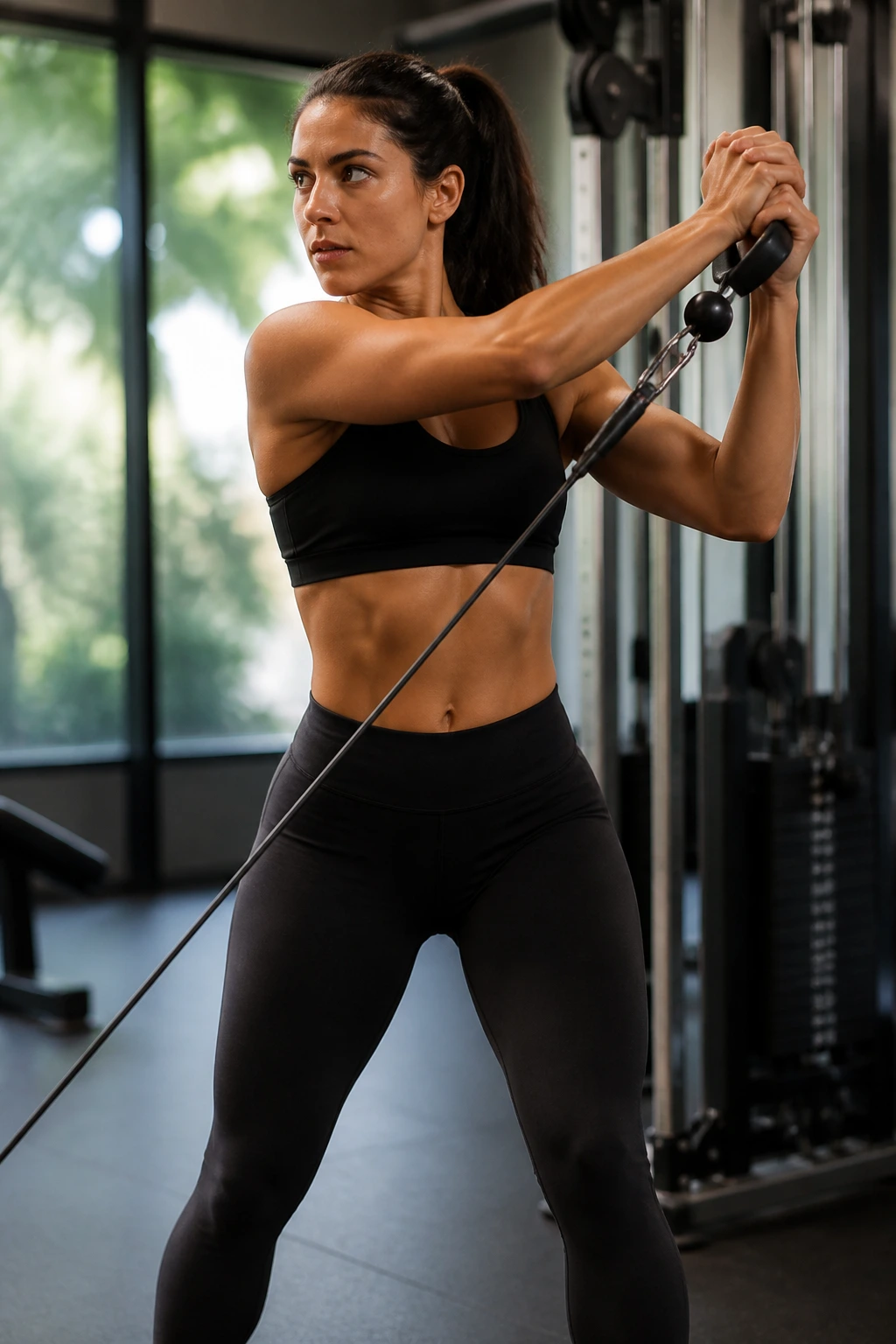
The reverse chop flips the diagonal pattern from low to high, and it feels different in the body right away. You start near the outside of one hip and finish across toward the opposite shoulder, using the trunk to guide the line instead of letting the arms do all the work.
A band or cable works well here. Set low, then pull up and across with control. The movement should feel smooth, almost like uncurling a twisted towel. If your ribs pop forward at the top, the load is too heavy.
Key Details
- Keep the feet grounded.
- Let the lower body stay quiet unless the range is very large.
- Move through the upper back, not just the shoulders.
- Use 2 to 3 sets of 8 to 10 reps per side.
This one is great when you want rotational work without chaos. It’s also a nice change from straight-up presses and carries, which can make the torso feel a little too predictable.
8. Standing Single-Leg Balance with Reach
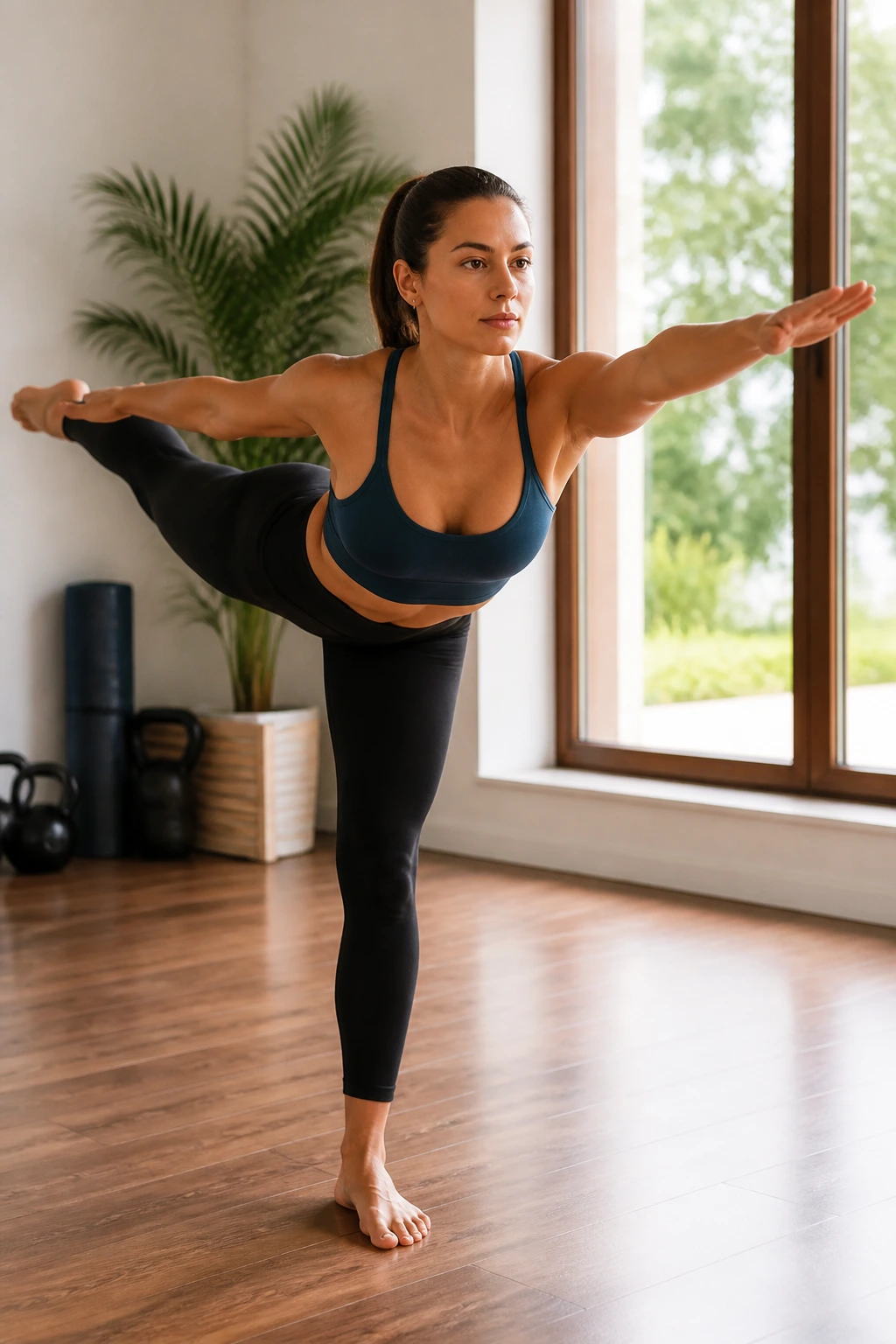
Balance is core training wearing a disguise. Stand on one leg, keep a soft knee, and reach the free leg and opposite arm in different directions without letting the pelvis dump to one side.
You can reach forward, out to the side, or diagonally. The farther the reach, the more your trunk has to keep the system honest. Don’t chase a huge range if your standing ankle is shaking like a leaf; a small clean reach is worth more than a big ugly one.
This move teaches the body to organize itself when one leg is carrying the load. That matters for stairs, lunges, step-ups, and plain old walking when you’re tired. It also tends to show you your side-to-side differences fast.
A good cue: imagine the standing hip is a stack, not a hinge point. Tall through the crown of the head. Quiet through the middle.
9. Standing Banded Row with Brace
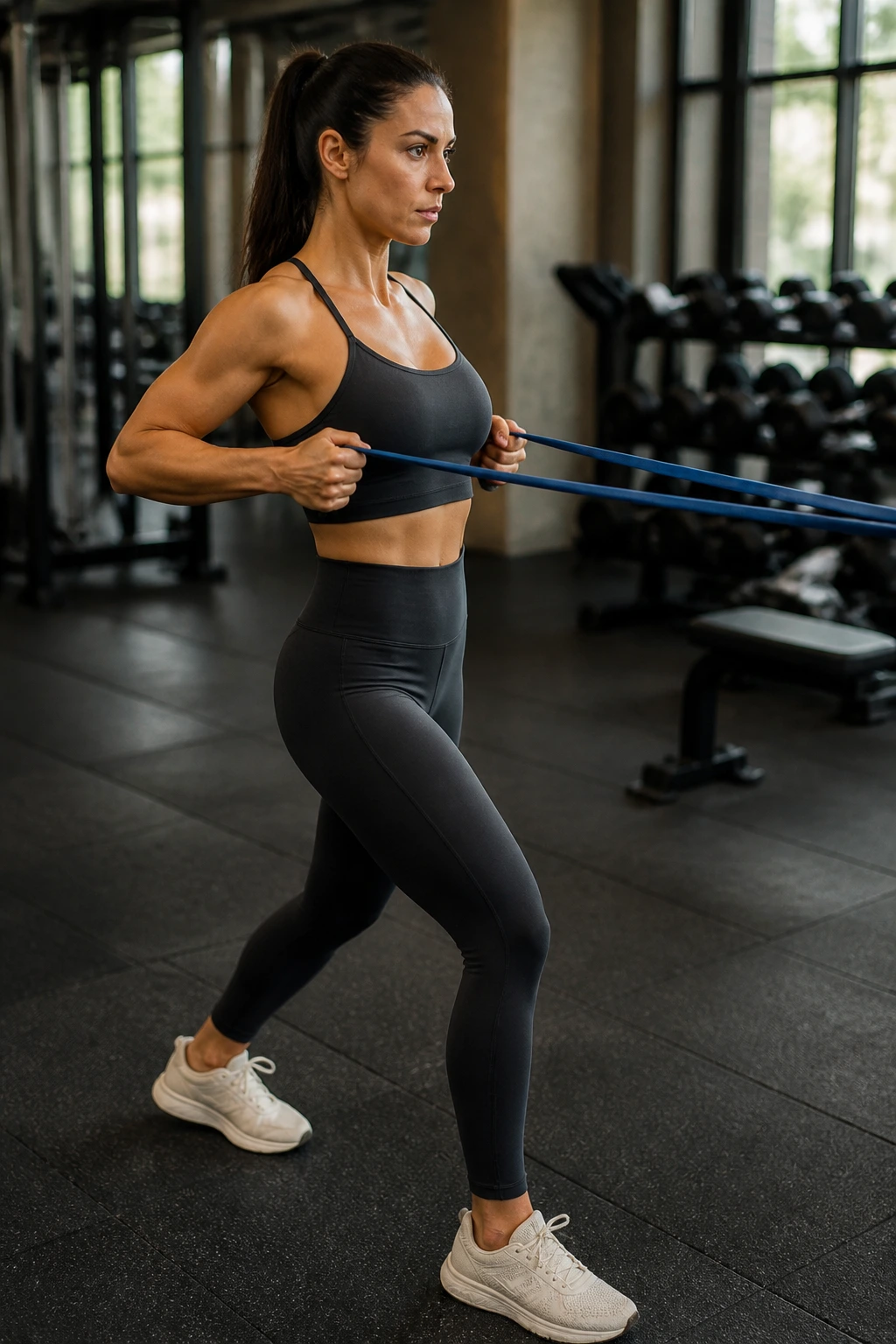
Can a row train your abs? Yes — if your torso refuses to wiggle.
Stand on a band or anchor it at chest height, take a staggered stance, and pull the handle toward your ribs while keeping the chest from swinging forward. The arms move. The ribs do not. That little distinction turns a back exercise into a core exercise with a bonus.
The brace matters more than the pull. Keep your neck long, shoulder blades sliding back and down, and belly lightly firm as you row. If you arch to finish each rep, the load is too heavy or you’re trying to cheat the last inch.
This is a smart choice for people who sit a lot because it gives the back muscles work without letting the trunk go limp. It also teaches you to create force through the upper body while the lower body stays stacked and steady.
10. Standing Overhead Carry
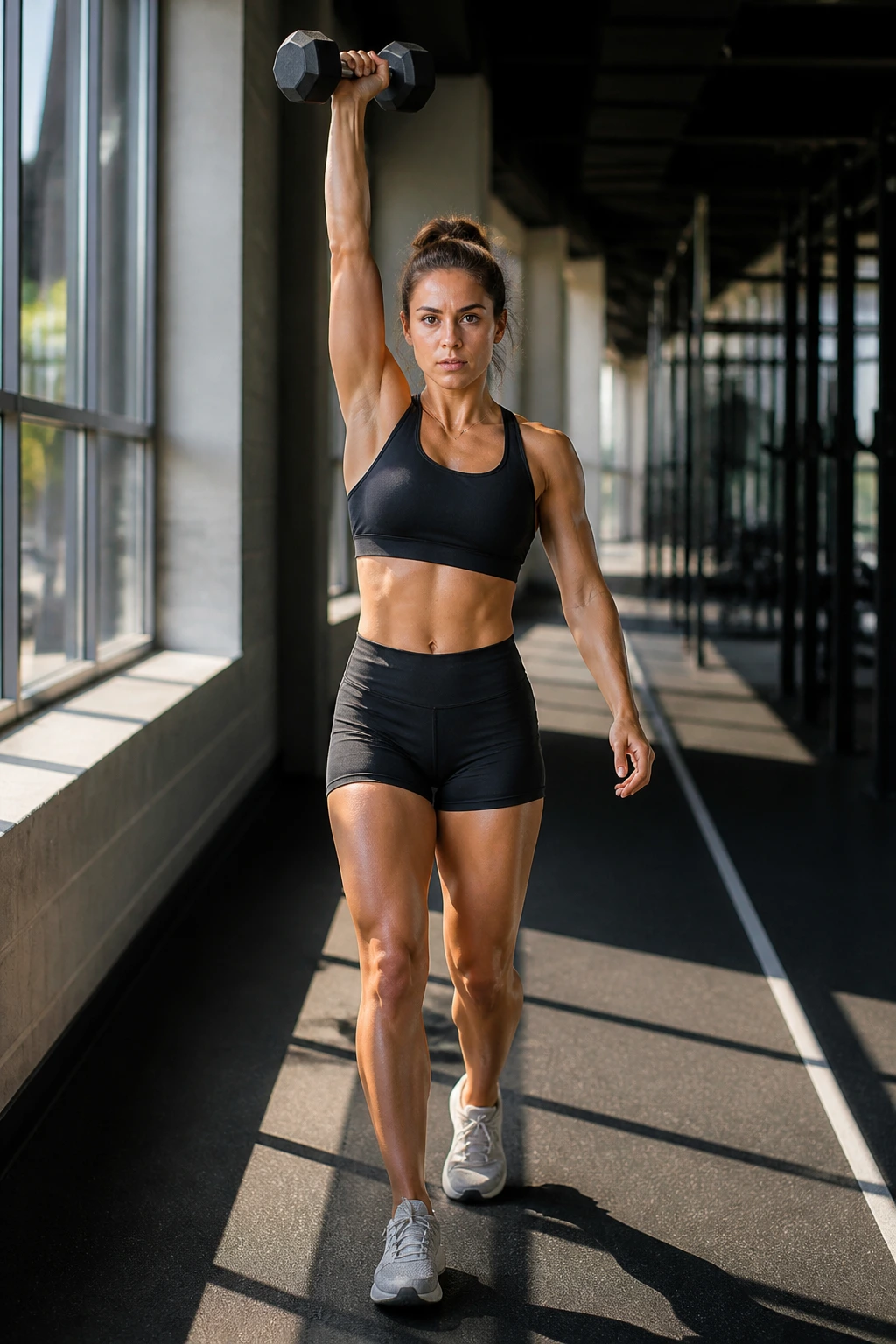
Carrying weight overhead looks simple from a distance. Up close, it asks for shoulder control, rib control, and a calm breath all at once.
Press a light dumbbell or kettlebell overhead, lock the arm with the biceps near the ear, and walk in a straight line. Keep the weight centered over the shoulder, not drifting forward. If your low back arches to “help,” the load is too heavy.
How to Keep It Clean
- Start with 10 to 20 steps per side.
- Keep your ribs from flaring.
- Take smooth, short breaths while you walk.
- Use a lighter load than you think at first.
This exercise is a sneaky test of the whole trunk. The shoulder has to stay stable, the pelvis has to stay quiet, and the body has to trust the overhead position long enough to move. That’s a useful skill, not a circus trick.
11. Standing Figure-8 Medicine Ball Pass
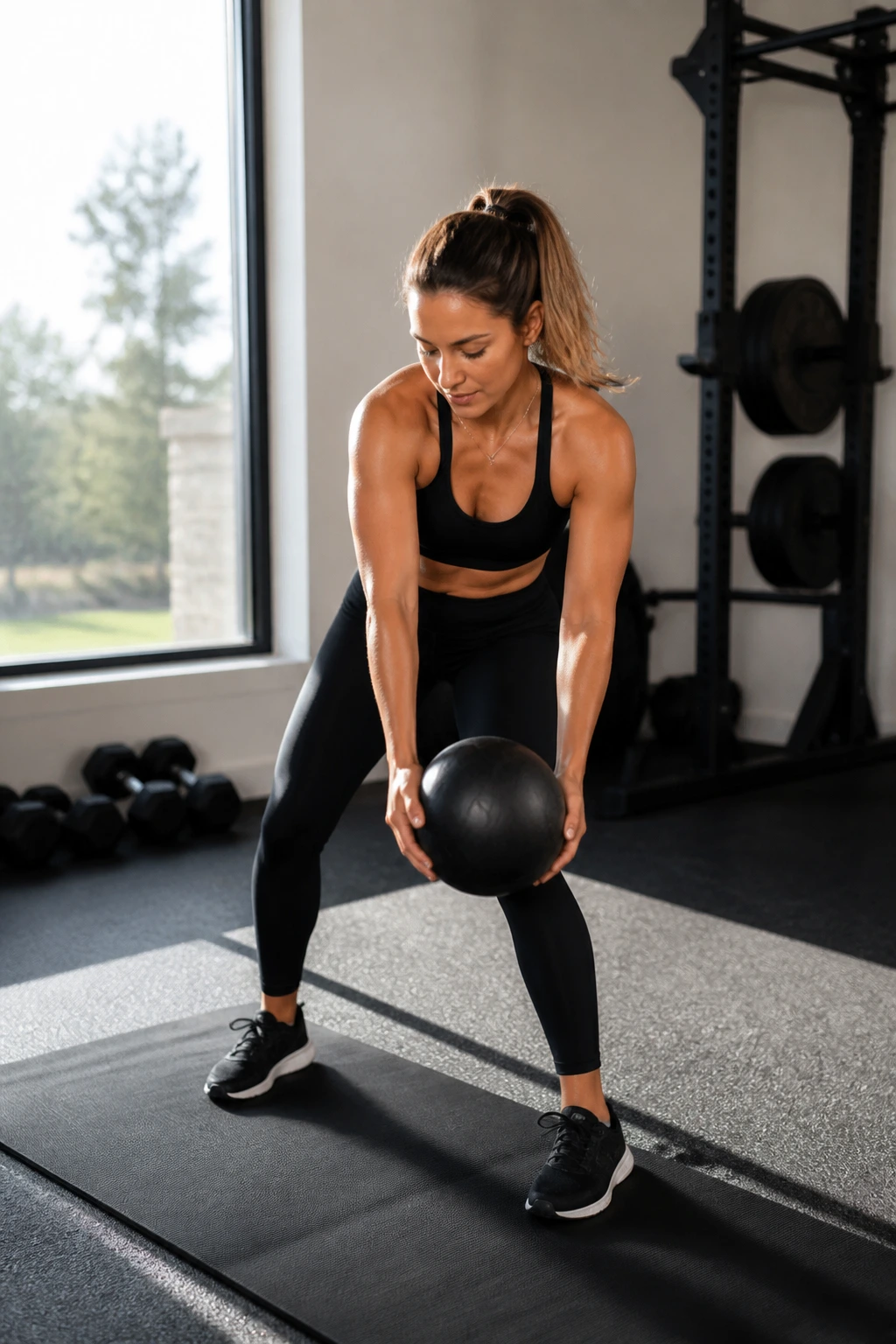
A figure-8 pass with a medicine ball looks playful until your torso has to keep up. Stand with a slight bend in the knees, then pass the ball around one leg and through the middle in a looping pattern, switching hands smoothly.
The magic is in the hips and trunk working together without letting the upper body get loose and lazy. The ball should travel in a controlled path, not fly around like you’re tossing laundry into a basket. Keep it light. A medicine ball that feels “cute” at first is often the right size here.
This drill gives you rotation, hand-eye coordination, and just enough rhythm to make it feel alive. It’s also a good choice when you want to wake up the core without going straight into heavy loading.
If your lower back starts to pinch, shorten the circle and slow the pace. That fix works better than forcing a bigger path.
12. Standing Lunge and Rotation
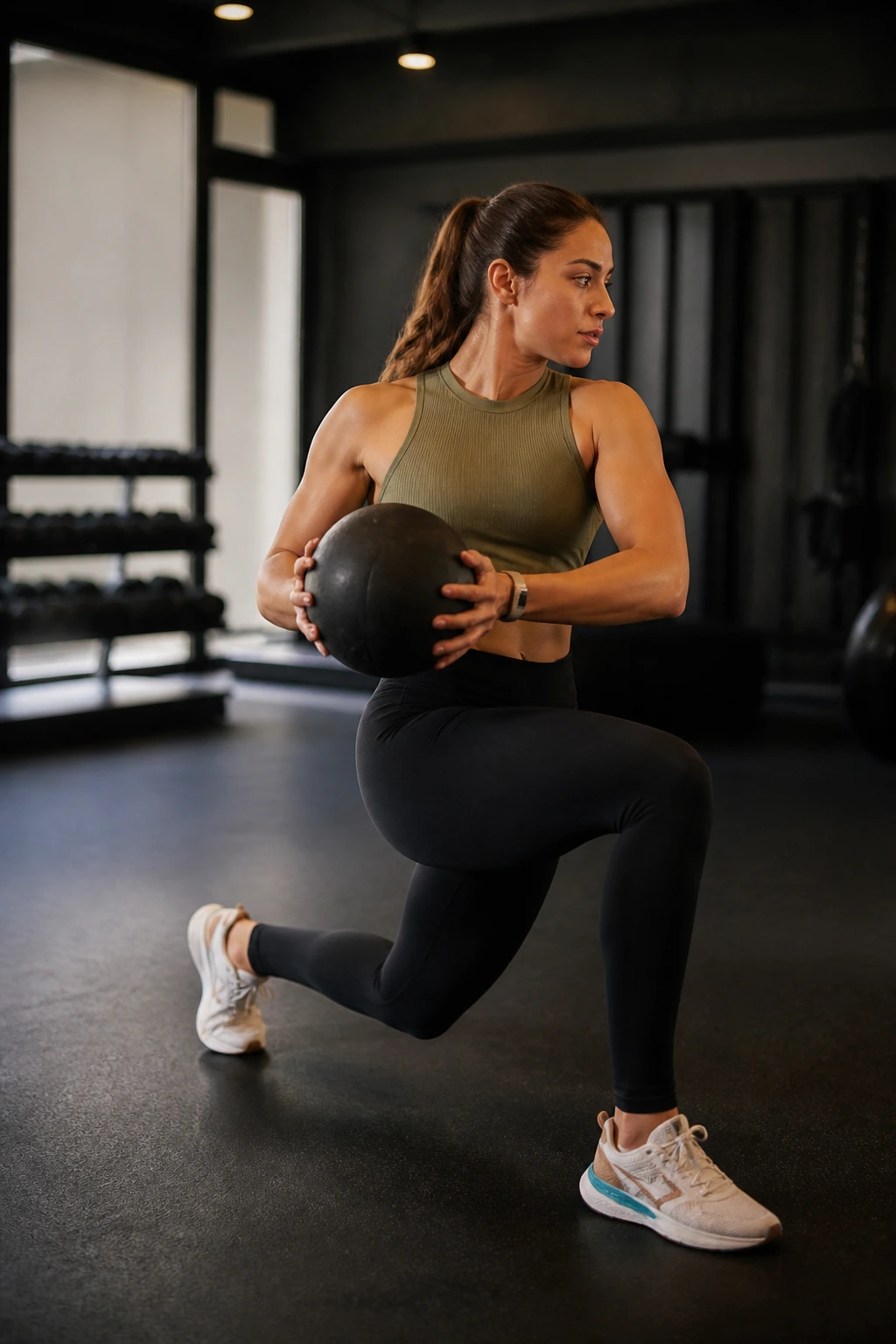
A plain lunge already asks a lot. Add rotation, and the trunk has to stay organized while the legs split the job between them.
Step back into a reverse lunge, then rotate the rib cage toward the front leg with a light medicine ball or even clasped hands. The twist should come from the upper body. The front knee should stay lined up over the middle toes. If the knee caves or the torso flops, take the rotation down a notch.
What Makes It Different
- The split stance creates instability.
- The rotation asks the obliques to control movement.
- The legs have to absorb load cleanly.
- The whole pattern resembles real stepping and turning.
This is one of those moves that looks straightforward and feels more demanding than expected. That’s a good sign. Work slowly enough that you can own every part of the rep, especially the return to standing.
13. Standing Deadlift to Row
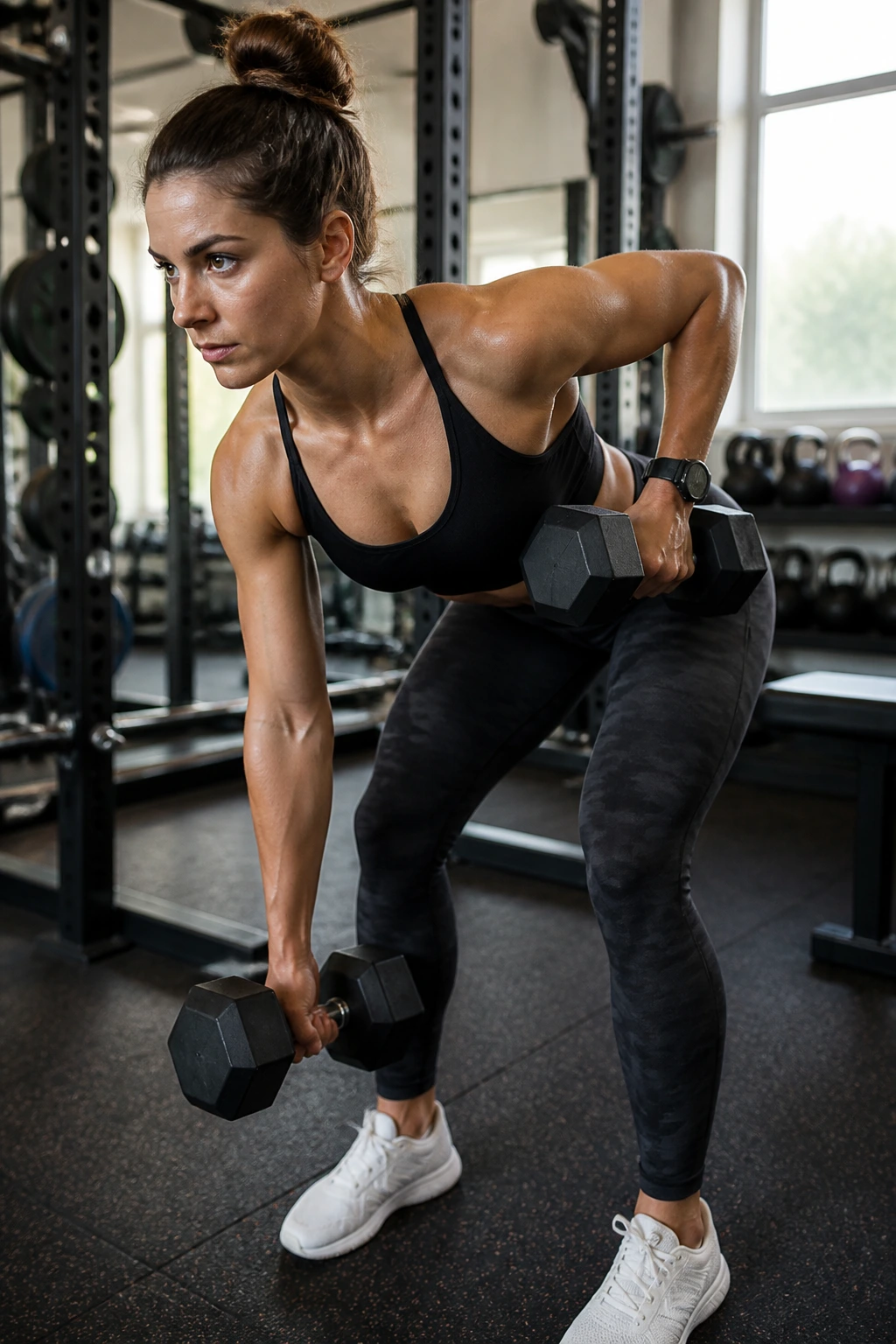
This one ties the hinge and the pull together, which is exactly why it earns a spot here. You fold at the hips, keep the back long, row the weight toward your ribs, then stand back up with control.
Use dumbbells, kettlebells, or a cable setup. The important part is keeping the trunk steady while the arms do two jobs. First the hips load. Then the back pulls. If you stand up too soon, the row turns into a shruggy mess.
Quick Setup
- Hinge until your torso is angled forward, not collapsed.
- Keep the neck in line with the spine.
- Row by driving the elbow back.
- Pause for a beat at the top.
This is a smart choice if you want core work that feels athletic and practical. It teaches the body to hold a position under load, and that skill shows up everywhere from lifting boxes to rowing workouts to carrying heavy bags without turning sideways.
14. Standing Punch-Outs with a Band
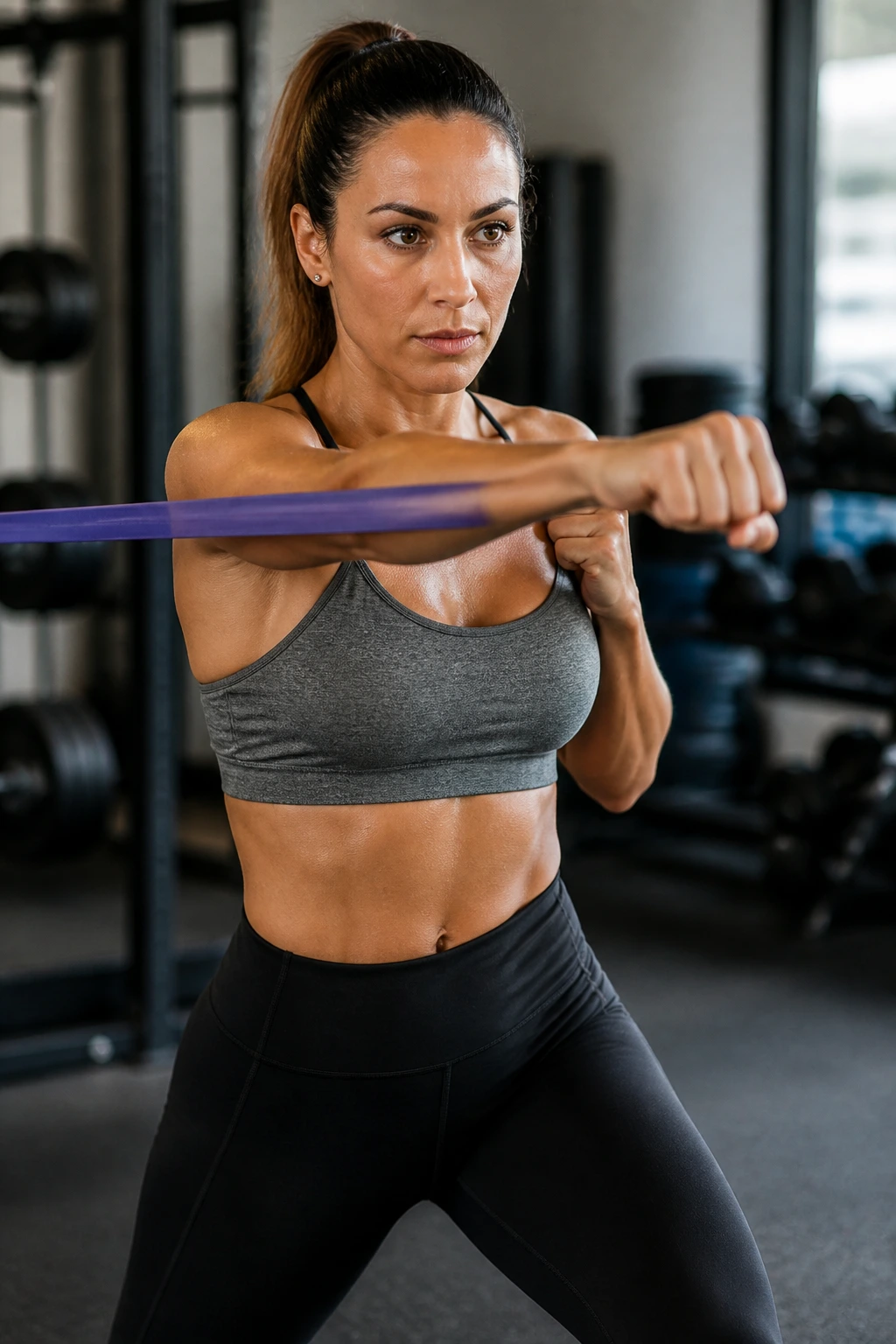
A few clean punch-outs can tell you more about core control than 50 sloppy crunches. That sounds dramatic, but the point is real: the trunk has to stop your body from twisting while the arm fires forward.
Anchor a band behind you at chest height, stand in a split stance, and punch one arm straight out, then bring it back with control. Switch sides or alternate hands. Keep the ribs stacked and the hips square. If your chest opens every time you punch, the band is too heavy.
What to Watch For
- Exhale as the fist goes forward.
- Keep the back heel grounded if you need more stability.
- Use a small range first.
- Stay tall through the crown of the head.
This move has a little snap to it, which makes it useful for power as well as control. It works nicely when you want something more dynamic than a static hold but less messy than high-speed twisting.
15. Standing Step-Out Pallof Hold
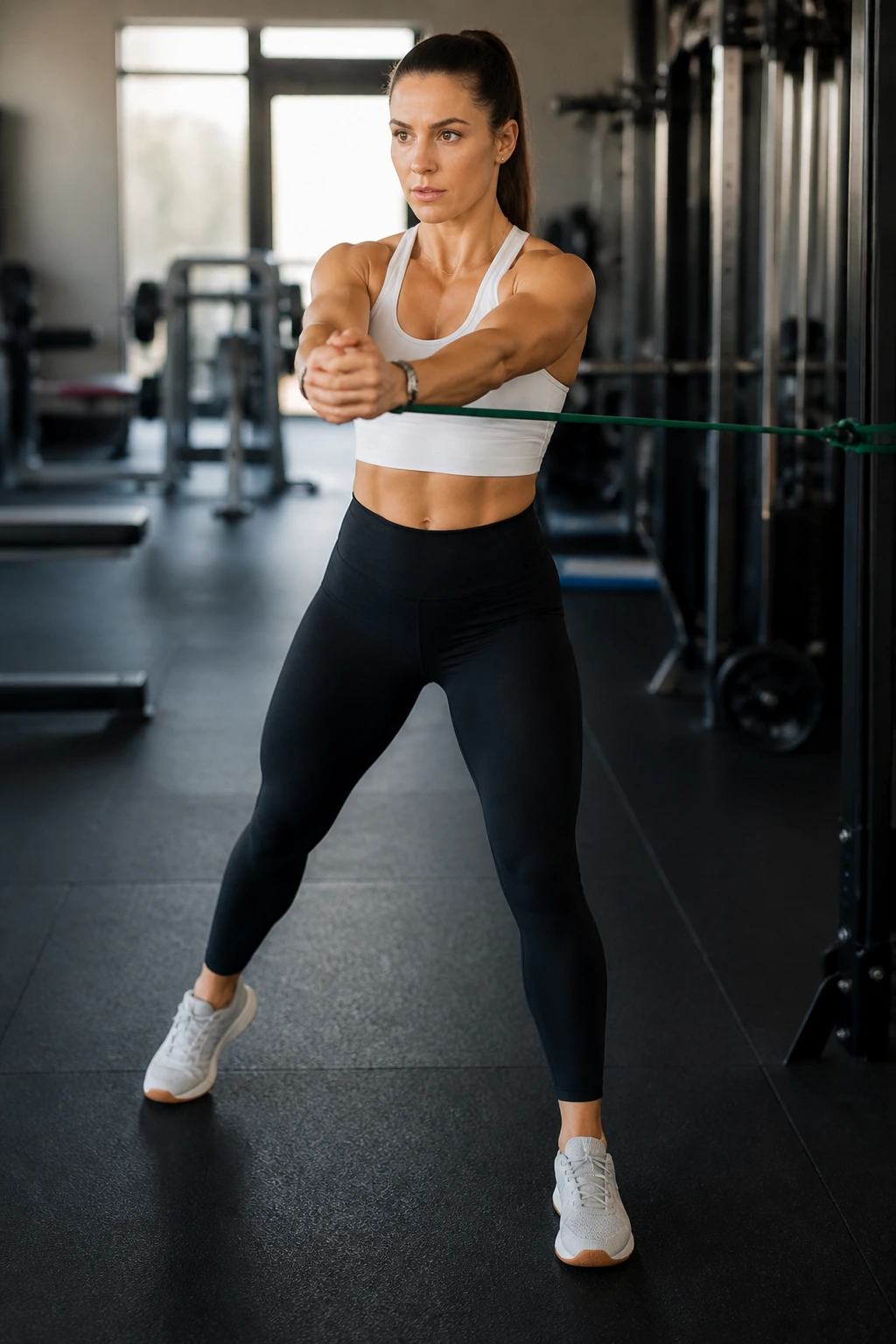
What happens when you move your feet but try not to move your trunk? The core gets to work in a cleaner, more stubborn way.
Set up a Pallof press the usual way, then press the hands out and step farther from the anchor for a split second before stepping back in. Hold the press steady the whole time. You’re teaching the body to keep its shape while the base changes underneath it.
How to Use It
- Take 4 to 6 controlled step-outs per side.
- Keep the hands at chest height.
- Don’t let the shoulders creep upward.
- Make the exhale long and slow.
This is a strong choice for people who need core work that feels a bit more athletic. It challenges balance, anti-rotation, and breath control all at once, which is a lot for one simple drill.
16. Standing Skater Reach
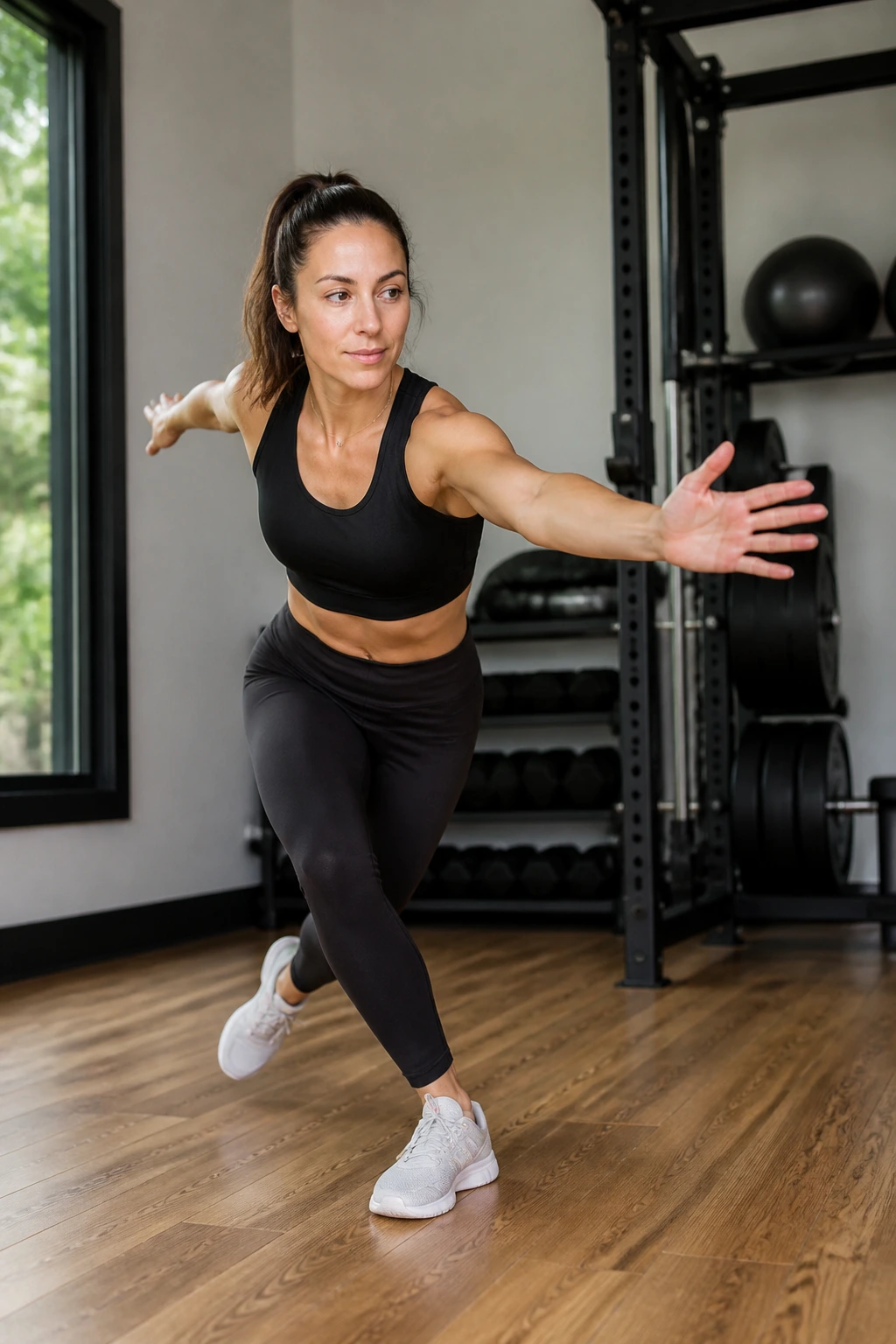
This one feels close to how you move when life gets a little quick and sloppy. You step or reach side to side, touching down lightly while the opposite arm reaches across the body.
The goal is not speed. The goal is control through a lateral pattern. Keep the chest from collapsing, the knee tracking cleanly, and the landing soft. If you’re reaching far, the trunk should still feel like it’s holding the whole thing together.
A skater reach is useful because it lives in the space between balance and power. It asks the hips to load and unload while the core keeps the middle from drifting. That’s real work, and it shows up in a way your body understands fast.
If the movement starts to feel noisy, shorten the distance and slow the rebound. Less flash. More control.
17. Standing Wall Press March
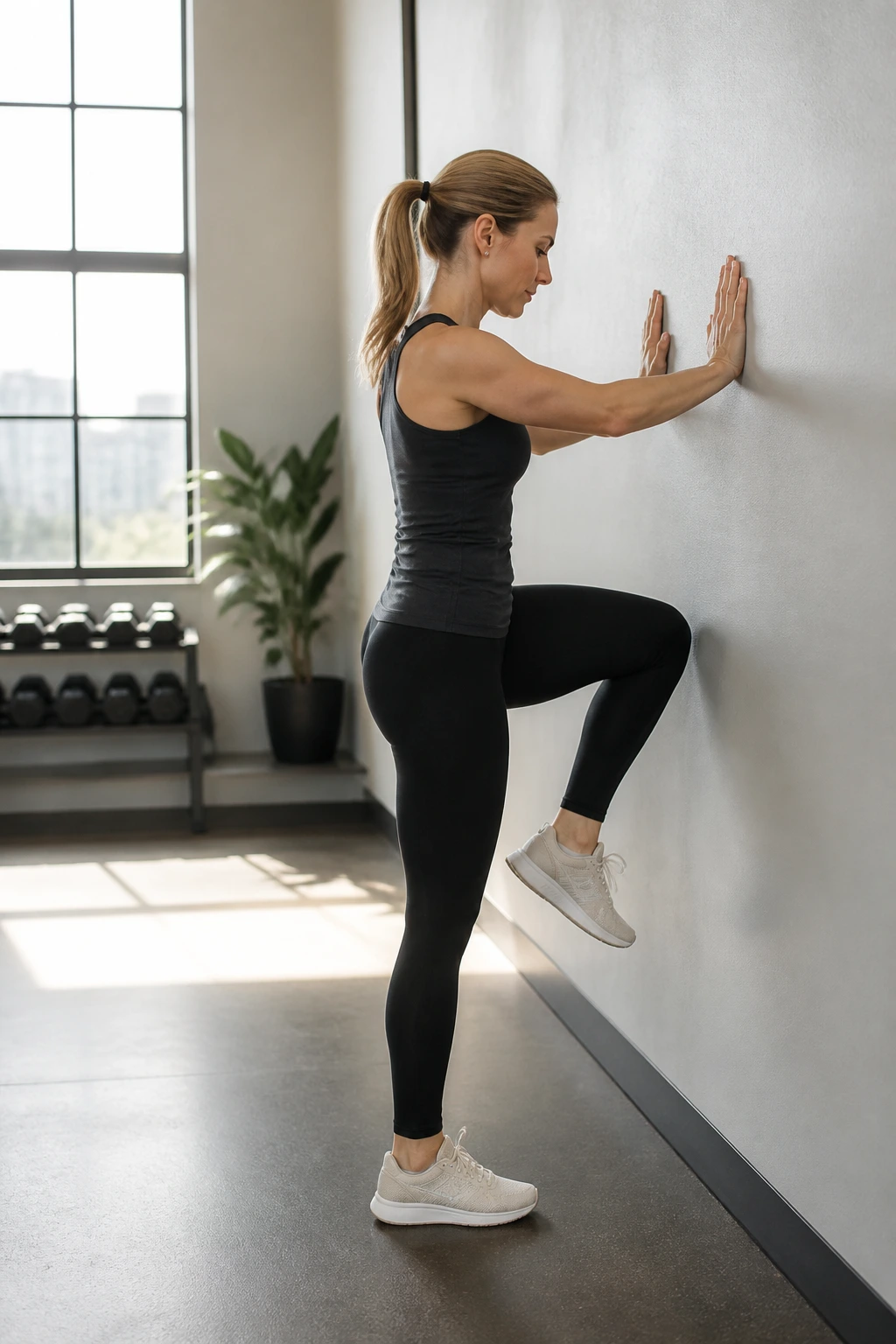
This one looks almost too easy. Press your forearms or one palm into a wall, then march in place while keeping the ribs and pelvis stacked.
The wall gives you feedback right away. If your body twists or your lower back arches, you’ll feel the pressure shift. That makes it a good teaching tool when you’re trying to feel the abs doing their job instead of guessing.
The best version is calm. One arm presses, the opposite knee lifts, then you switch sides without losing the connection through the midsection. It’s especially useful when you want a low-stress drill that still asks for good posture and clean breathing.
A lot of people rush past simple exercises like this. I wouldn’t. They’re often the ones that clean up the bigger lifts.
18. Standing Cross-Body Knee Drive
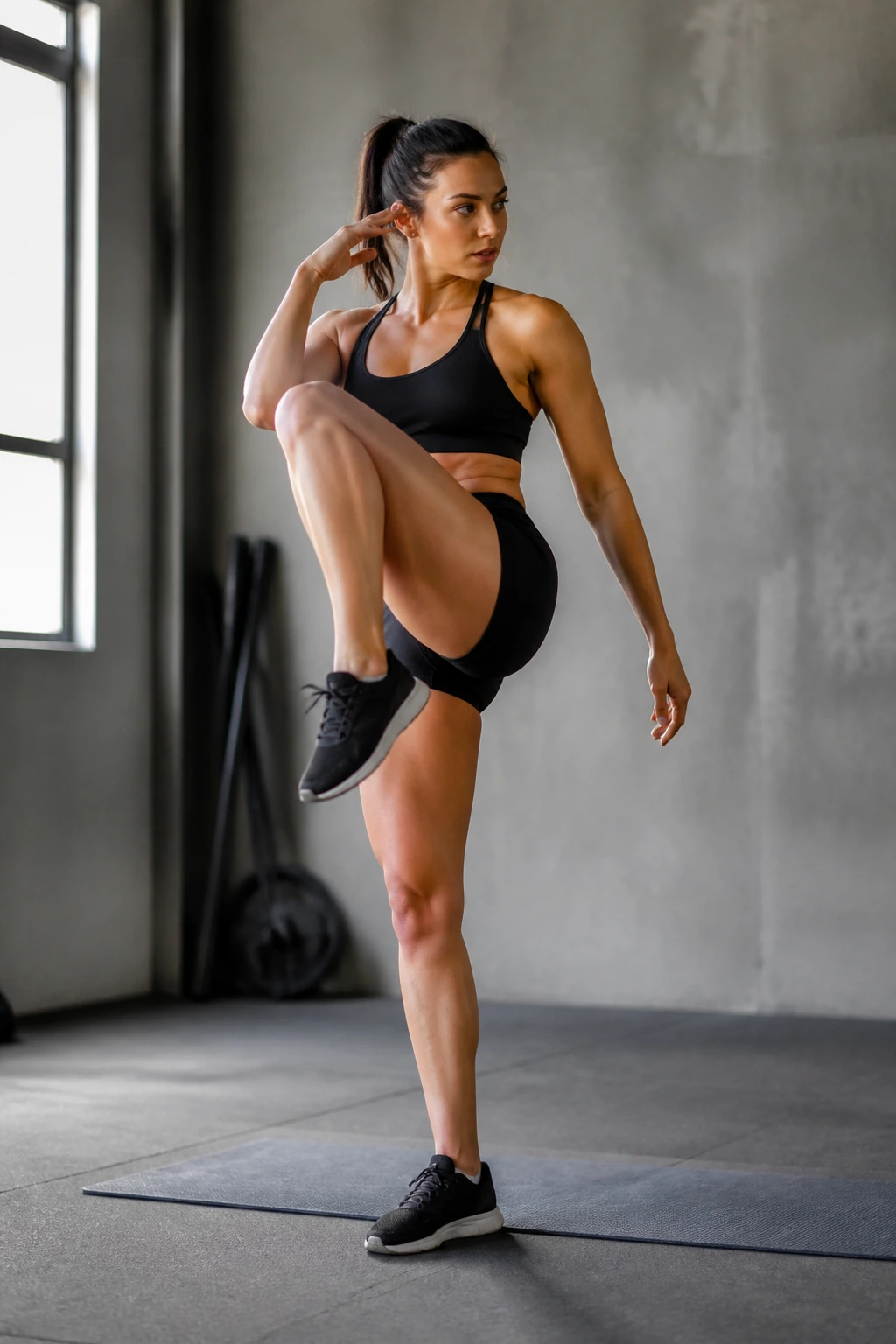
This is a more direct hit for the obliques and hip flexors. Drive one knee across the body toward the opposite elbow or hand, then return to tall standing without leaning back.
Unlike a straight march, the cross-body path asks the trunk to coordinate a diagonal line. That’s the part that matters. You’re not just lifting the leg; you’re connecting the rib cage, pelvis, and shoulder line so they move without getting tangled.
A slower pace works better than a fast one here. Two or three clean pauses per side teach more than a frantic set of rushed reps. If your balance is shaky, keep one hand on a wall for the first round and clean up the pattern before you go free-standing.
This is a good fit for runners, dancers, and anyone who wants better gait control without lying on the floor for half the workout.
19. Standing Single-Arm Farmer Carry
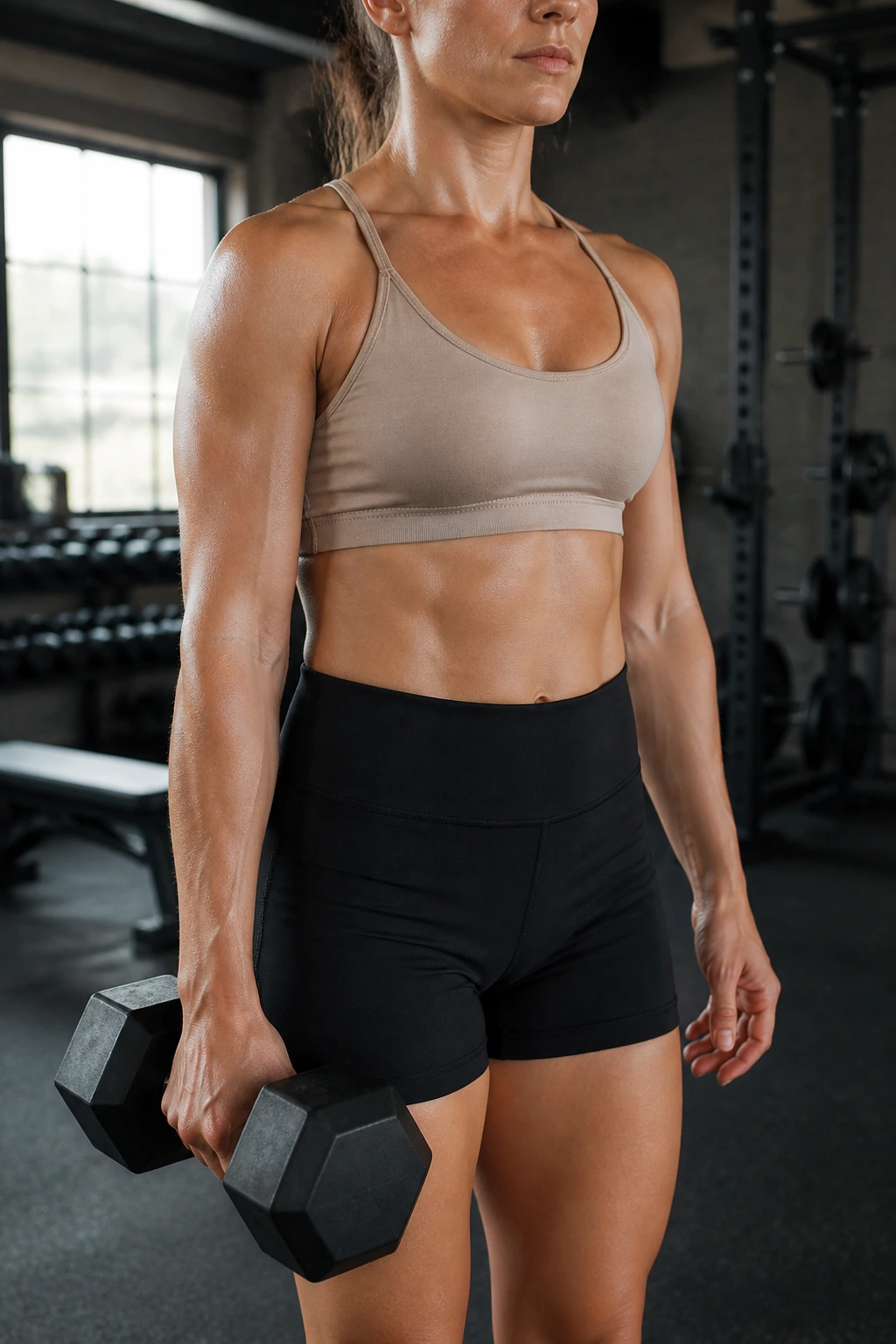
A single-arm farmer carry is cousin to the suitcase carry, but the feel is a little different. This version is less about marching and more about steady, grounded walking with a heavy load at one side.
Hold the dumbbell or kettlebell and walk with normal steps, not exaggerated ones. Keep the shoulder packed, the torso tall, and the free arm relaxed. The weight should challenge your side-to-side stability without making you tilt or rush.
What Makes It Worth Doing
- It builds grip and trunk strength together.
- It teaches calm walking under load.
- It exposes leaning fast.
- It scales well from light to heavy.
If you want a blunt test of total-body control, this is one. One heavy carry done well can tell you more than a long list of half-hearted ab moves. Stay honest with the posture and let the trunk do the work.
20. Standing Diagonal Reach and Reset
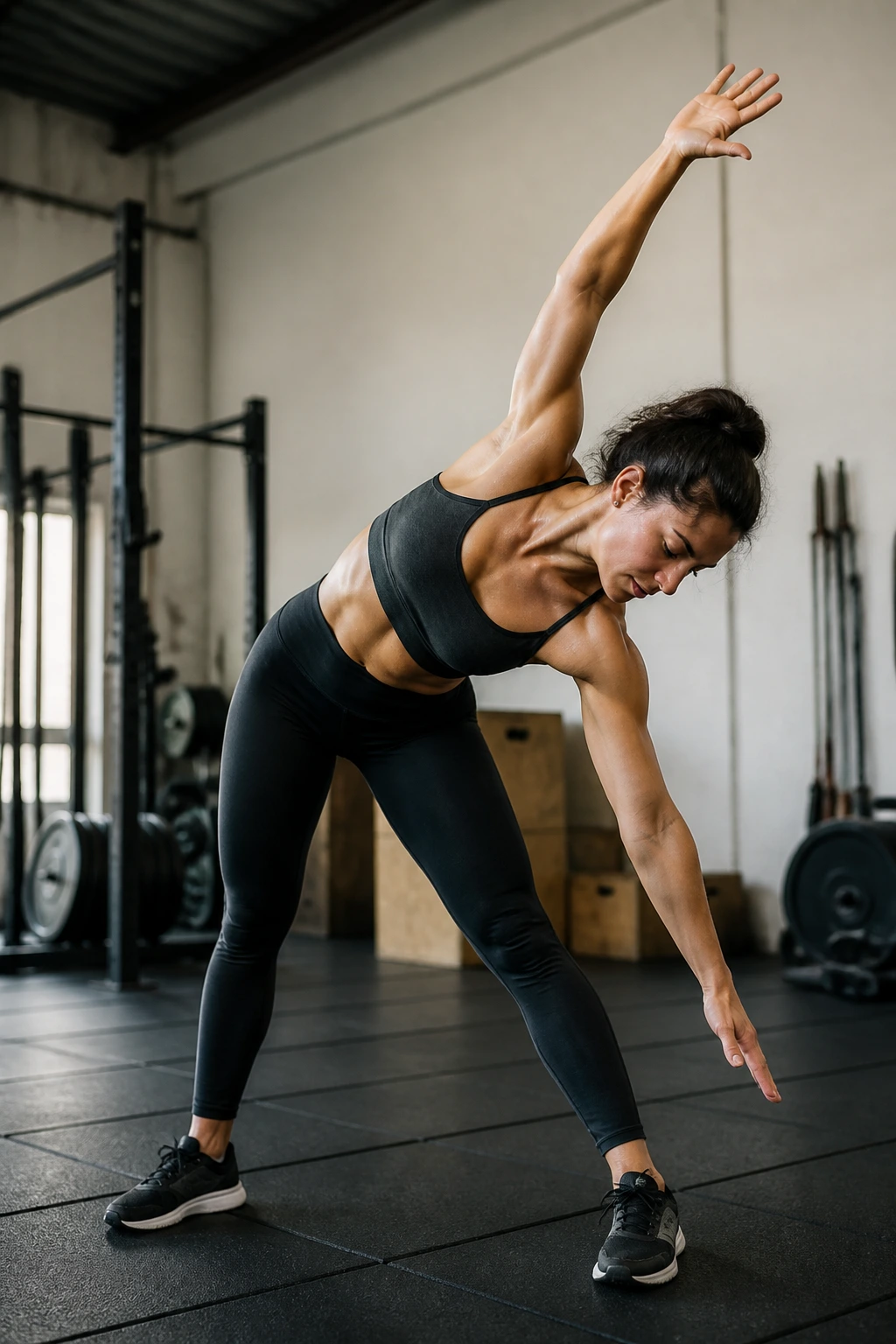
End with control, not chaos. The diagonal reach and reset trains the body to move out of center and come back to center cleanly, which is a skill that matters more than people think.
Stand tall, reach one arm down and across while the opposite arm lifts overhead, then return to neutral with a long exhale. Do the same on the other side. The motion should feel smooth and organized, almost like you’re lengthening the line from hand to foot.
This is a nice finish because it asks the trunk to control a reach, then settle. That reset phase matters. A lot of good movement is not about how far you go; it’s about how well you come back.
If you want to string the whole session together, pair this with a carry or a Pallof hold. If you want a cooler, calmer ending, keep the reps slow and breathe until your ribs feel like they’ve found their place again.
