



Desk posture doesn’t fall apart all at once. It slips, a few millimeters at a time — chin forward, ribs flaring, shoulders drifting in front of the chest, hips sitting a little too far under you by the end of the day. Pilates posture exercises for desk workers make sense because they attack that pattern from the inside out: breath, rib cage, spine, shoulders, pelvis, then the muscles that hold the whole thing together.
A lot of people try to fix office posture by “standing up straighter.” That usually turns into a stiff lower back and a clenched neck. Not much help. The better route is to restore movement where sitting has stolen it, then build enough control that your body doesn’t default back to its old shape the moment you open your laptop.
The nice thing about Pilates is that it doesn’t ask for huge, flashy effort. It asks for precision. A clean chest lift, a slow wall angel, a controlled bridge — those small movements can change how your spine stacks, how your shoulders sit, and how your ribs behave when you breathe. Small. Not easy. There’s a difference.
If you spend most of your day at a keyboard, the drills below give you a way to undo the usual desk pattern without turning exercise into another chore. Start with the first one and pay attention to what your spine does when it’s finally allowed to move again.
1. Wall Roll-Down
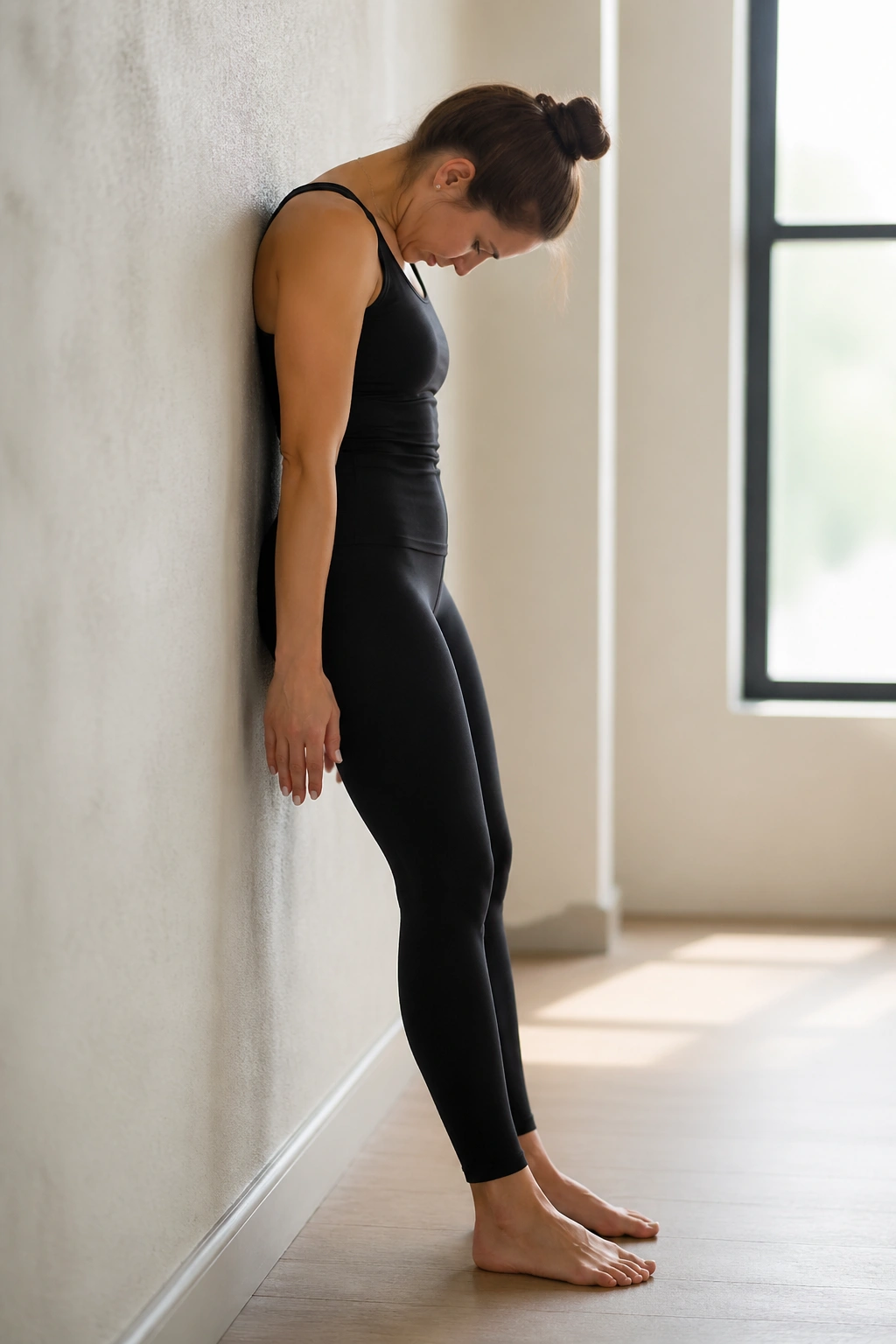
Stand with your back near a wall, heels about 6 to 8 inches away, and let your arms hang loose.
A wall roll-down is one of those Pilates posture exercises for desk workers that looks almost too simple to matter. It matters because it reminds your spine how to articulate one section at a time instead of hinging as one rigid block. If your upper back feels glued in place after a long meeting, this is the kind of slow reset that gets the joints talking again.
What to Feel
- The head drops first, not the chest.
- The ribs soften away from flare, especially on the exhale.
- The lower belly stays gently lifted as you fold.
- The return happens one vertebra at a time, not in one yank.
Do 5 slow roll-downs, breathing out as you melt forward and breathing in as you stack back up. If your hamstrings are tight, bend your knees a little. That is not cheating. It’s smart.
One useful cue: think “heavy head, soft ribs, long spine.” That order keeps the movement from turning into a neck pull.
2. Rib Cage Breathing
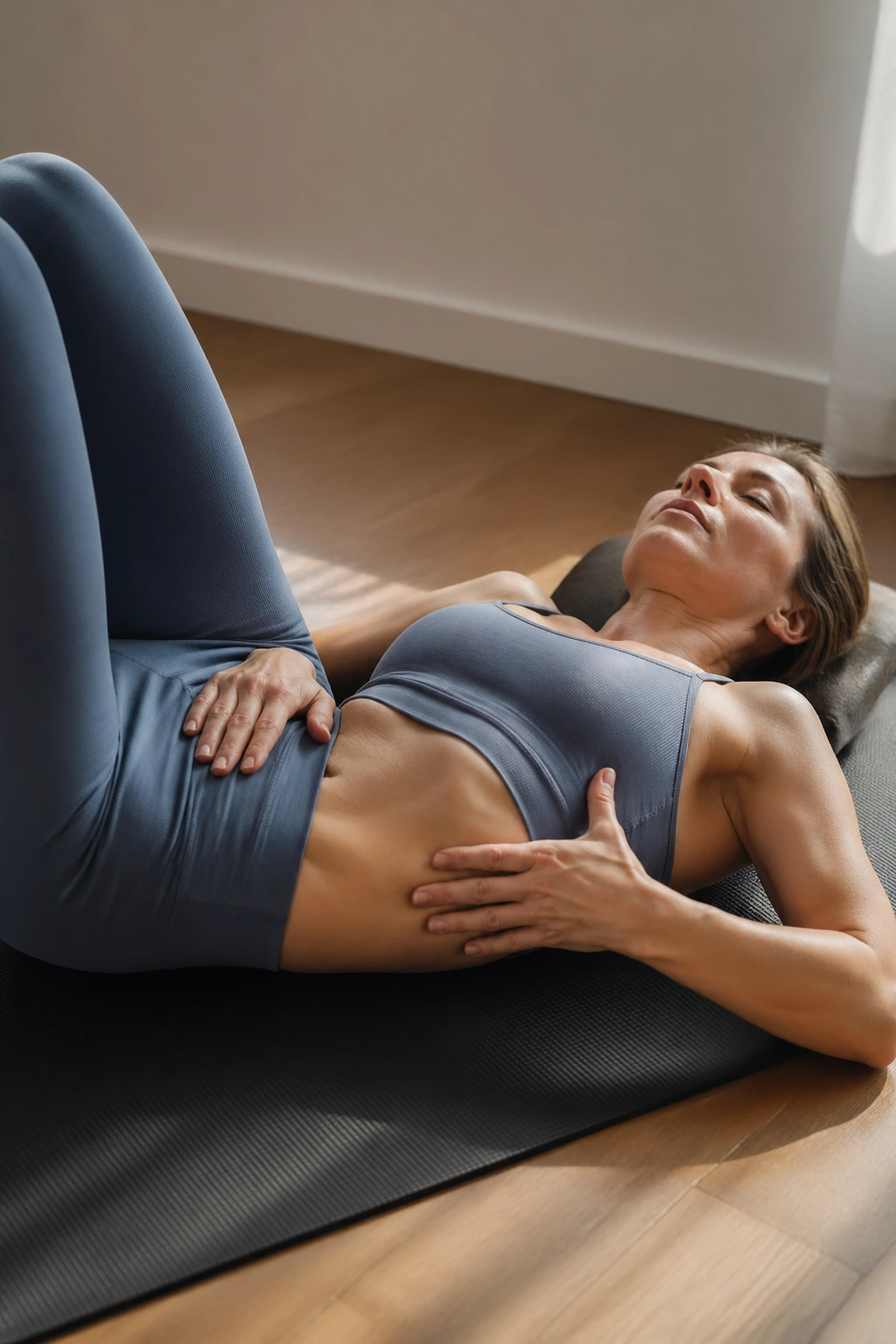
Why do so many posture routines skip breathing? Because it doesn’t look dramatic.
Bad idea. Breath is the first place desk posture gets messy. When you live in a shallow chest breath, the shoulders creep upward, the ribs stay stuck out, and the deep core never gets much of a say. Rib cage breathing gives your trunk a chance to organize itself before you ask it to do harder work.
Lie on your back with knees bent or sit tall in a chair with both feet flat. Place one hand on the side ribs and one hand on the lower belly. Inhale through your nose and feel the ribs widen into your hands. Exhale through the mouth and let the ribs narrow and sink, almost as if you’re zipping up a fitted jacket.
I like this drill as a desk reset because it works fast without making you sweaty or awkward. Do 5 to 8 breaths before a work block, after lunch, or right before the commute home. The goal is not big dramatic inhales. The goal is smoother rib movement and less neck tension.
3. Wall Angels
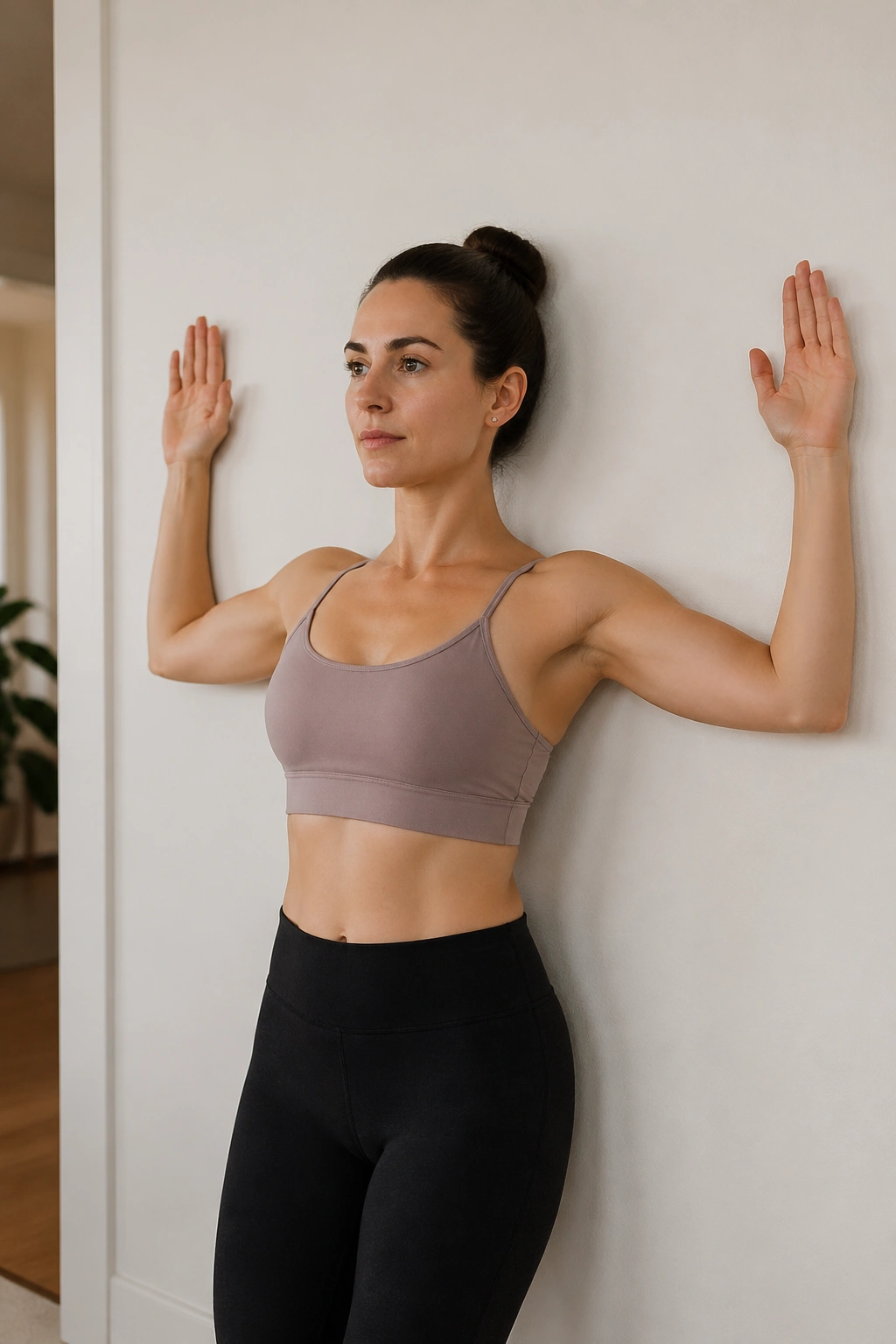
Can your wrists, elbows, and the back of your head stay near the wall at the same time?
If the answer is no, that tells you something useful about thoracic mobility and shoulder position. Wall angels are a quiet little test and a very practical fix. They ask the shoulder blades to glide upward and downward without letting the rib cage pop forward like a drawer that refuses to close.
How to Use It
- Stand with your back against a wall, feet a few inches forward.
- Keep your lower ribs heavy enough that your low back does not arch off the wall.
- Slide your arms up and down in a slow snow-angel shape.
- Stop the range before your shoulders shrug.
Do 6 controlled reps, pausing for a breath at the top and bottom. If your elbows or wrists cannot touch the wall, keep them a little away from it and work with that range. Better a smaller clean shape than a big sloppy one.
Tip: if the neck starts doing the work, slow down and soften the ribs first. The shoulders usually behave once the trunk stops bracing like a scared cat.
4. Chest Expansion with a Band
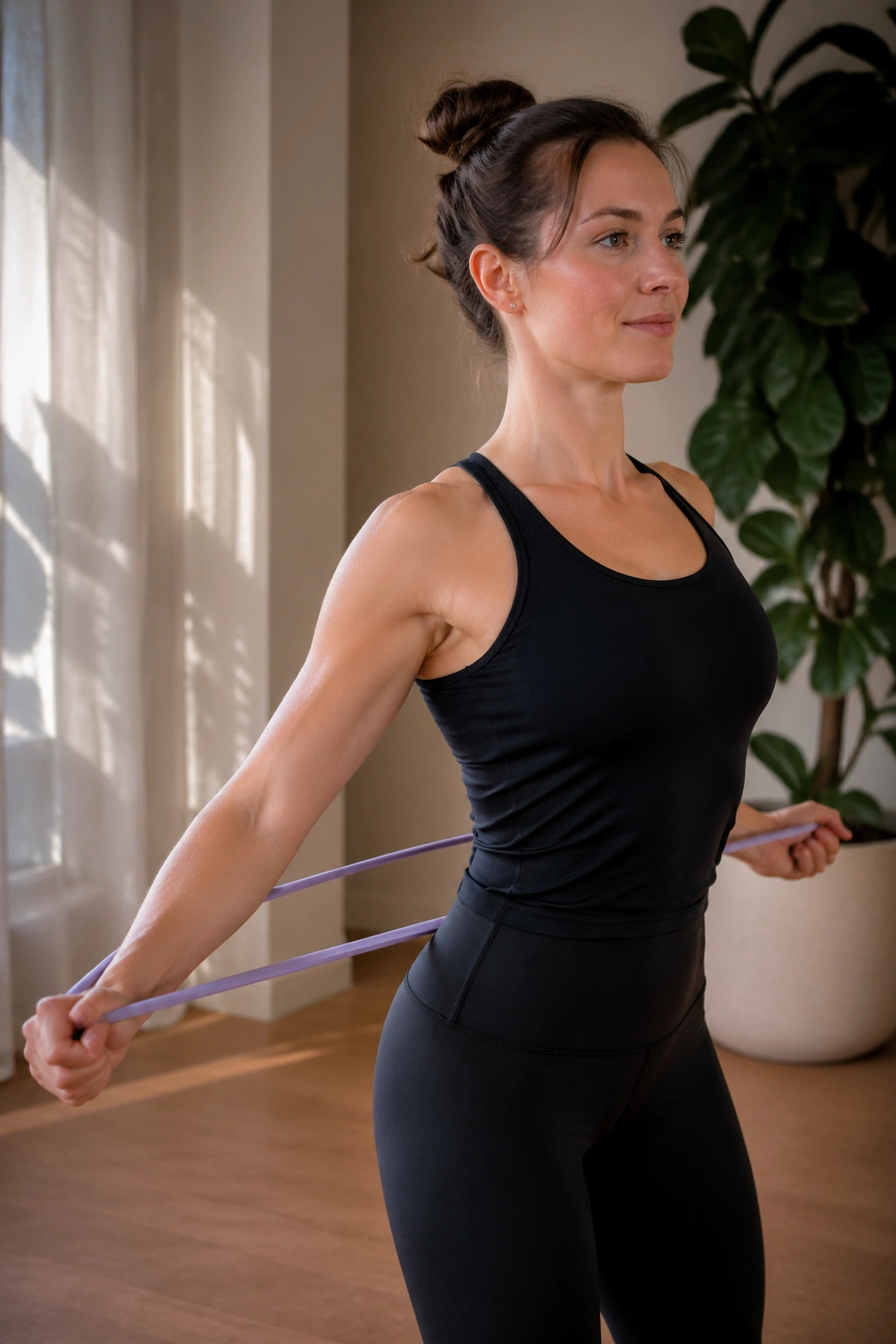
Most people pull their shoulders back too hard. That usually makes the neck tighter and the upper back flatter than it should be.
Chest expansion with a light resistance band teaches a cleaner version of shoulder retraction. You’re not cranking the shoulder blades together like a gym cue from another planet. You’re asking them to move down and back with control while the ribs stay quiet and the spine stays tall. That matters when you spend all day reaching for a mouse.
Hold a light band in both hands with the arms by your sides and the chest open. Inhale to prepare, then exhale as you pull the band straight back, keeping the elbows soft. Pause for a beat. Inhale to return with control.
A few things tell you the exercise is working: the collarbones feel wide, the neck stays long, and the lower ribs don’t shoot forward. If your shoulders hike up, make the band lighter or shorten the pull. The point is not strength for its own sake. The point is shoulder placement that doesn’t collapse the minute you sit down again.
5. Cat Stretch
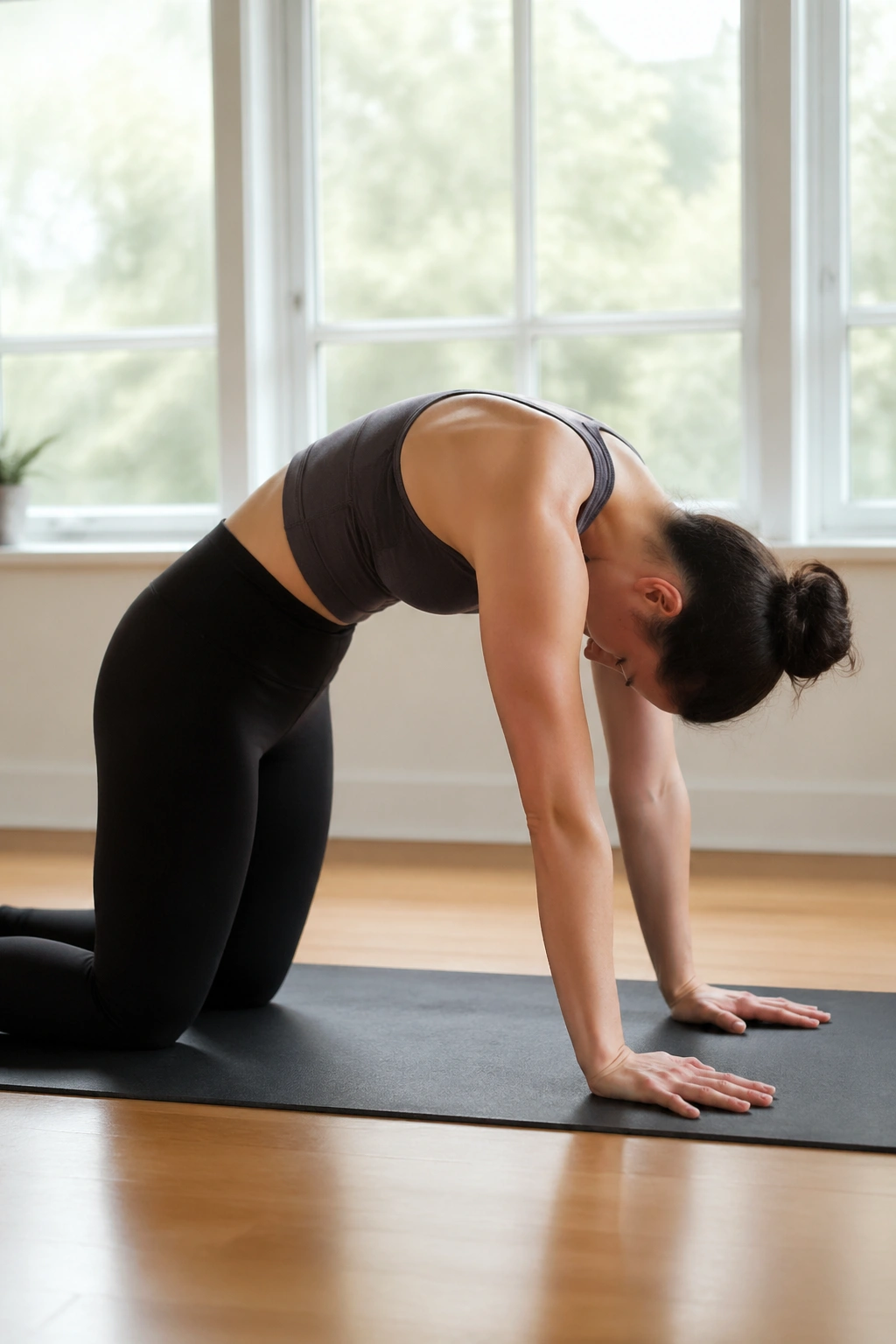
On the mat, cat stretch looks unremarkable. In the body, it does a lot.
This is the one I reach for when the middle back feels like a plank and the lower back has taken over every movement. Cat stretch teaches the whole spine to round and lengthen segment by segment. Desk workers need that more than they think, because sitting tends to freeze the thoracic spine while the hips and neck compensate.
Start on hands and knees with wrists under shoulders and knees under hips. Exhale and round your spine, pulling the floor away and letting the tailbone tuck under. Inhale and come back to a neutral tabletop without dumping into the low back. Keep the movement smooth. No jolting.
Do 6 to 8 cycles. If your wrists complain, place your hands on the edge of a sturdy desk and do the same motion standing at an incline. The shape changes, but the idea stays the same.
Do not rush this one.
6. Mermaid Stretch
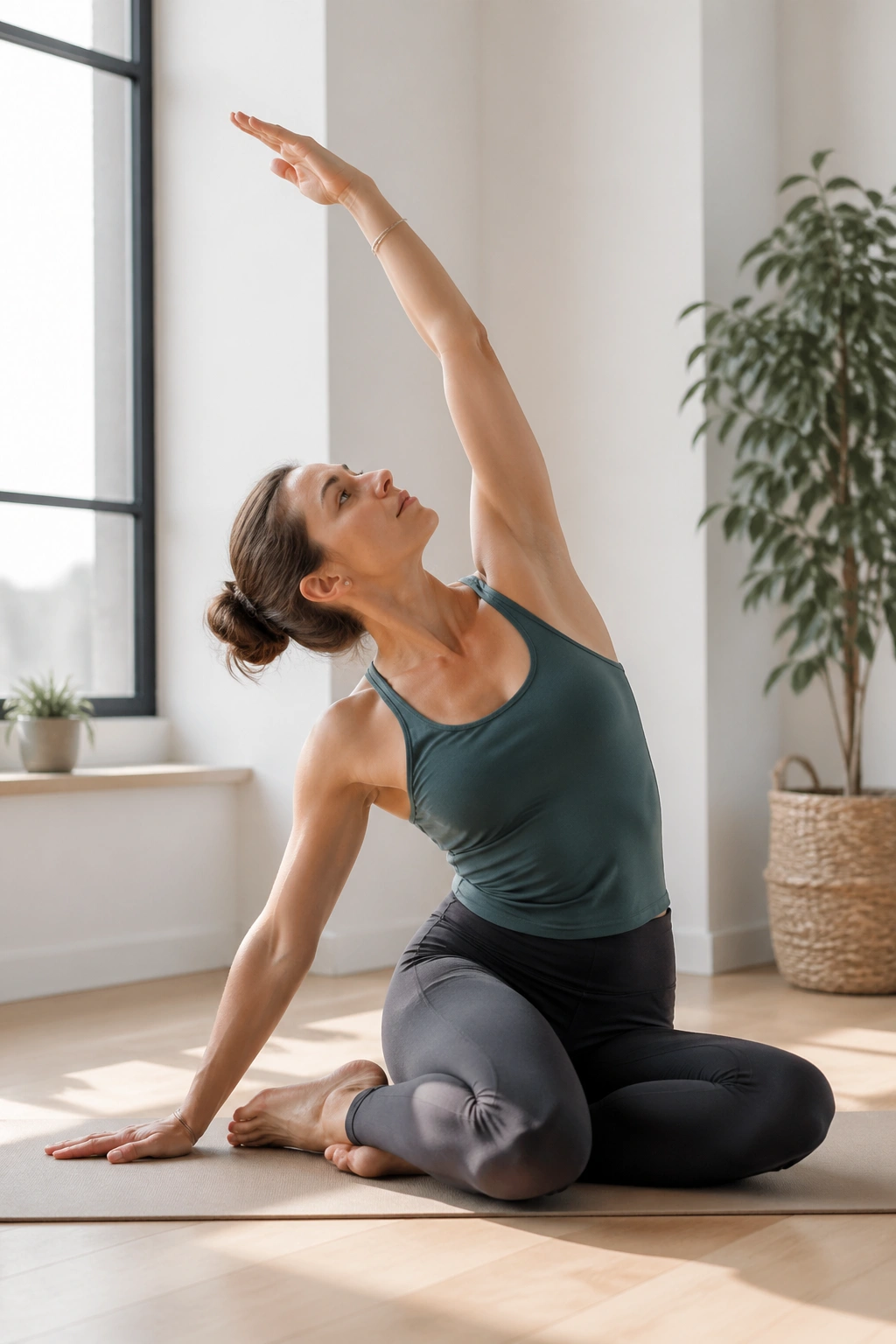
A mermaid stretch is not just a side bend with a prettier name.
Unlike a casual lean to one side, mermaid uses breath and spinal length to open the side body, the ribs, and the lats together. That makes it especially useful if one side of your torso feels shorter from always mousing, always cradling a phone, or always twisting the same direction toward a second monitor.
Sit with both legs folded to one side or in a comfortable cross-legged seat. One hand rests on the floor or mat, the other reaches overhead. Inhale to grow tall first. Exhale to arc over gently, keeping both sit bones as grounded as you can. Stay for 3 breaths, then come back up slowly and switch sides.
Mermaid works best when it feels long, not crunched. If you collapse into the lower ribs, shorten the reach and think more about length than depth. A folded towel under the hips can make the pelvis easier to stack.
Who should keep this one? Anyone whose side body feels tight by the end of a workday. Which is most people, honestly.
7. Chest Lift
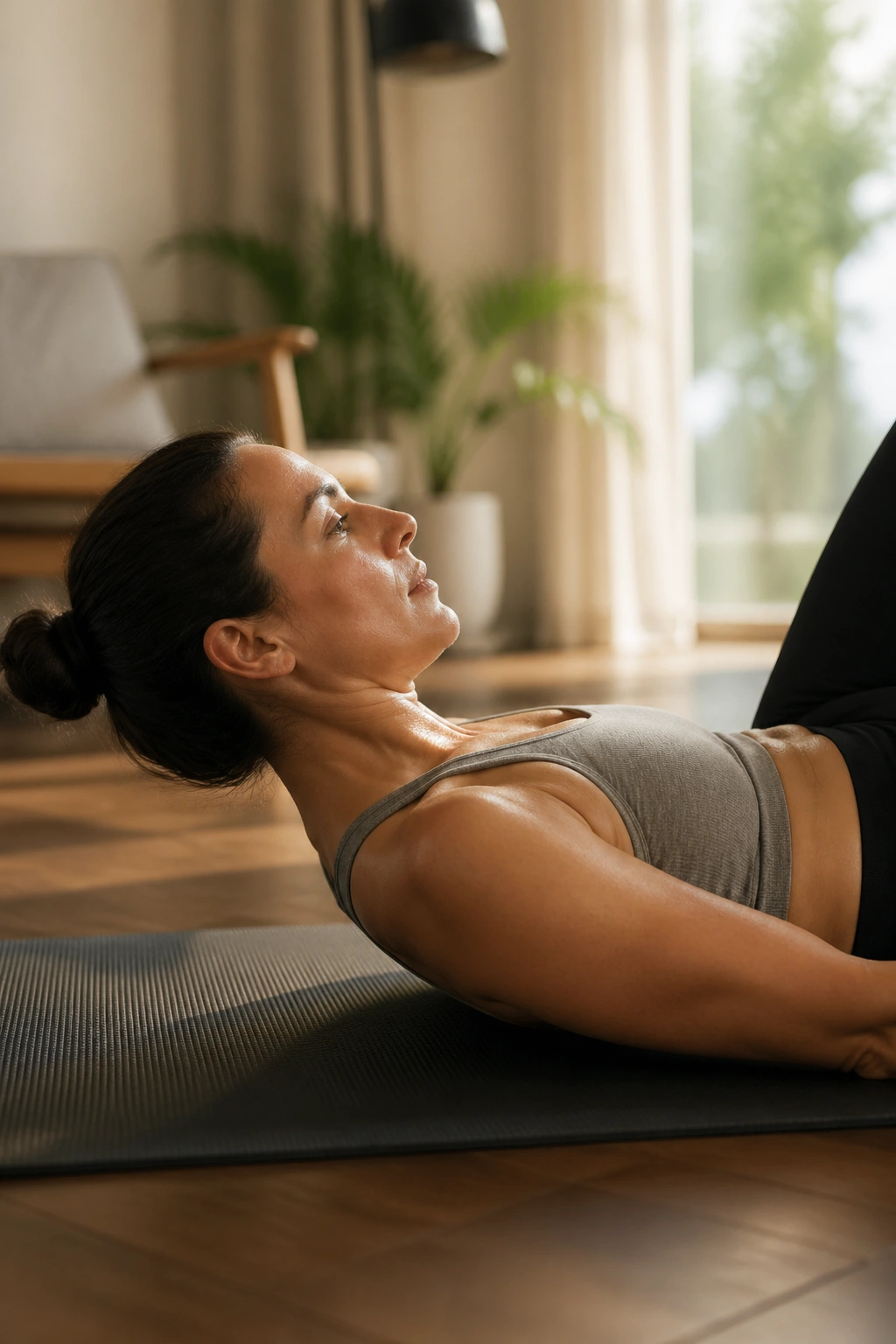
A chest lift is the Pilates version of “abs on, neck off.”
That sounds easy until you try it after eight hours at a laptop. Then the neck wants to grip, the shoulders want to jump forward, and the upper abs feel like they forgot their job. A clean chest lift trains the deep front body to support you without turning the whole torso into a crunch machine.
Lie on your back with knees bent and feet flat. Place your hands behind your thighs if you need neck support. Exhale and peel the head and shoulder blades a few inches off the floor, keeping the chin slightly nodding rather than jamming toward the chest. Inhale to hold. Exhale to lower with control.
Why It Helps Forward-Head Posture
- It strengthens the upper part of the abdominals without a big neck tug.
- It encourages the rib cage to stay knitted instead of flaring.
- It teaches the body to move from the trunk, not just the head and shoulders.
Do 6 to 8 reps. If your neck gets cranky, lower sooner and keep the eyes on the thighs instead of the ceiling. Small lift. Clean shape. That’s the whole deal.
8. The Hundred
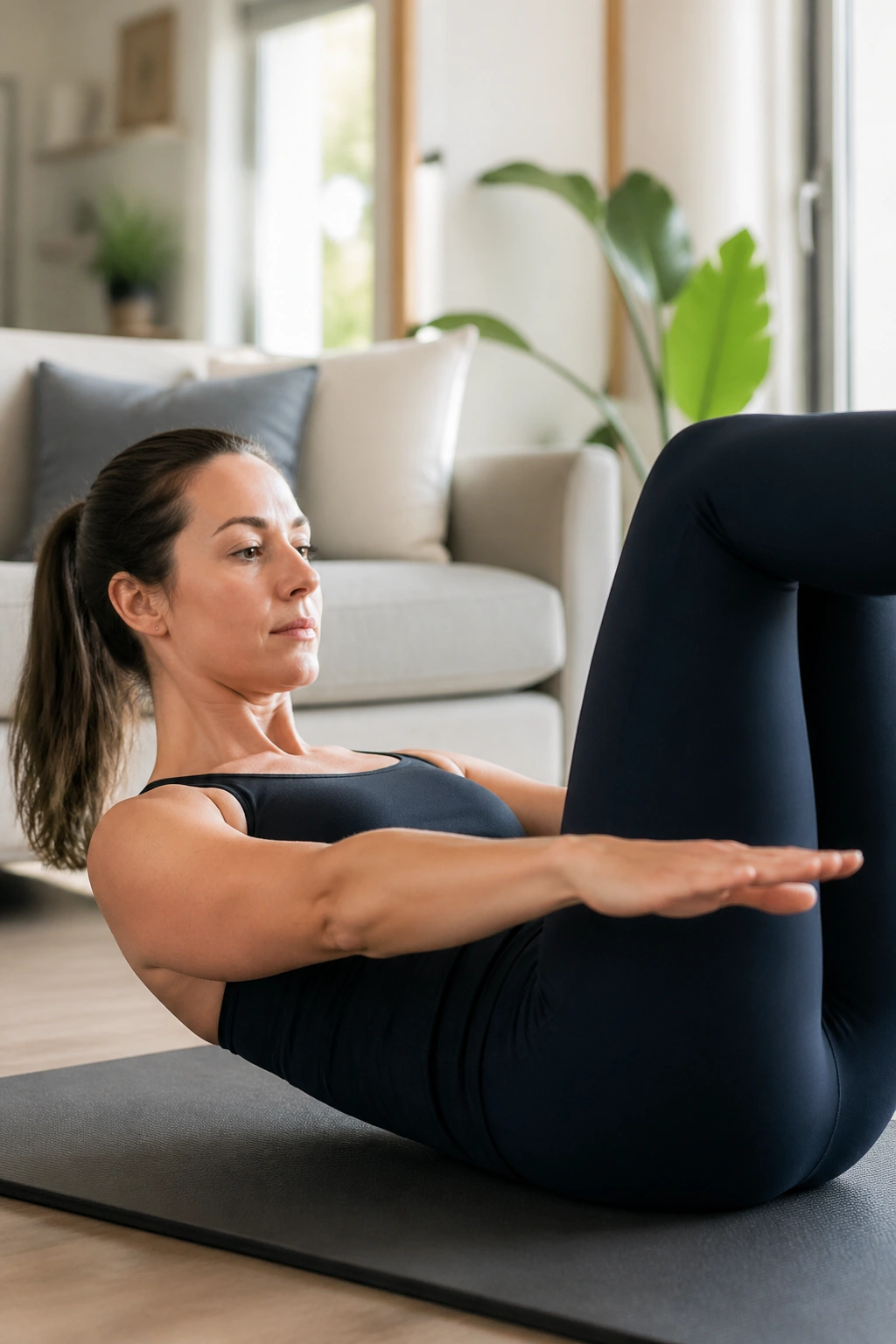
The Hundred gets treated like an ab burn contest, which is a little silly.
The better way to think about it is as trunk endurance under moving arms. That is a useful thing for desk workers, because the torso has to stay organized even when the shoulders are busy typing, lifting, reaching, and hovering over a keyboard all day. If your core gives up the second your arms move, posture starts collapsing from the middle.
Lie on your back and bring the legs into tabletop, or keep the feet down if tabletop feels too aggressive. Lift the head and shoulders only if the neck can stay relaxed. Pump the arms up and down in small motions while you breathe in for 5 counts and out for 5 counts. That gives you one set.
A beginner version can be 5 breath cycles. A stronger version can move toward the full 10 cycles, but only if the low back stays calm and the ribs do not flare. If you feel the neck or hip flexors taking over, lower the head and keep the arms moving.
This one is plain work. Good work.
9. Toe Taps
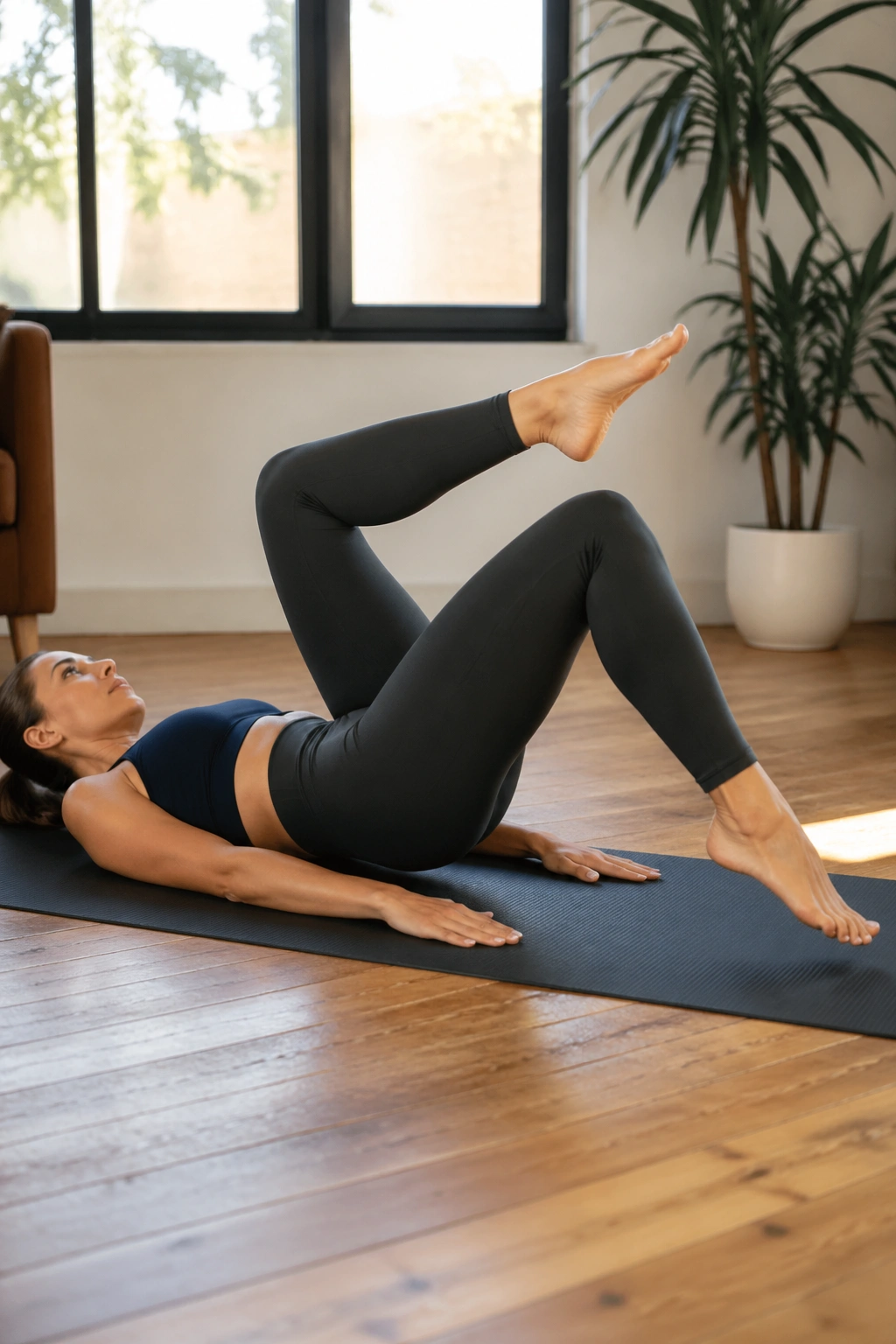
Why are toe taps such a good posture drill?
Because they teach the pelvis to stay quiet while the legs move. That sounds minor until you realize how often desk posture turns into a stiff low back and overworked hip flexors. Toe taps ask for control right in that messy middle zone.
Lie on your back with legs in tabletop and arms by your sides. Exhale as you lower one foot to tap the floor lightly, then inhale to bring it back up. Switch sides with no rush. Keep the lower back heavy enough that it does not arch off the mat each time the leg moves.
How to Get the Most From It
- Start with a very small range.
- Exhale on the way down to help the ribs stay down.
- Stop the rep the moment the low back starts to lift.
- Keep the neck soft and the jaw unclenched.
Do 8 taps per side. If that feels too easy, slow the lowering phase to 3 counts. If it feels too hard, place both feet on the floor and just practice one-leg floating. The point is not to prove anything. The point is to teach the spine to stay stable.
10. Single-Leg Stretch
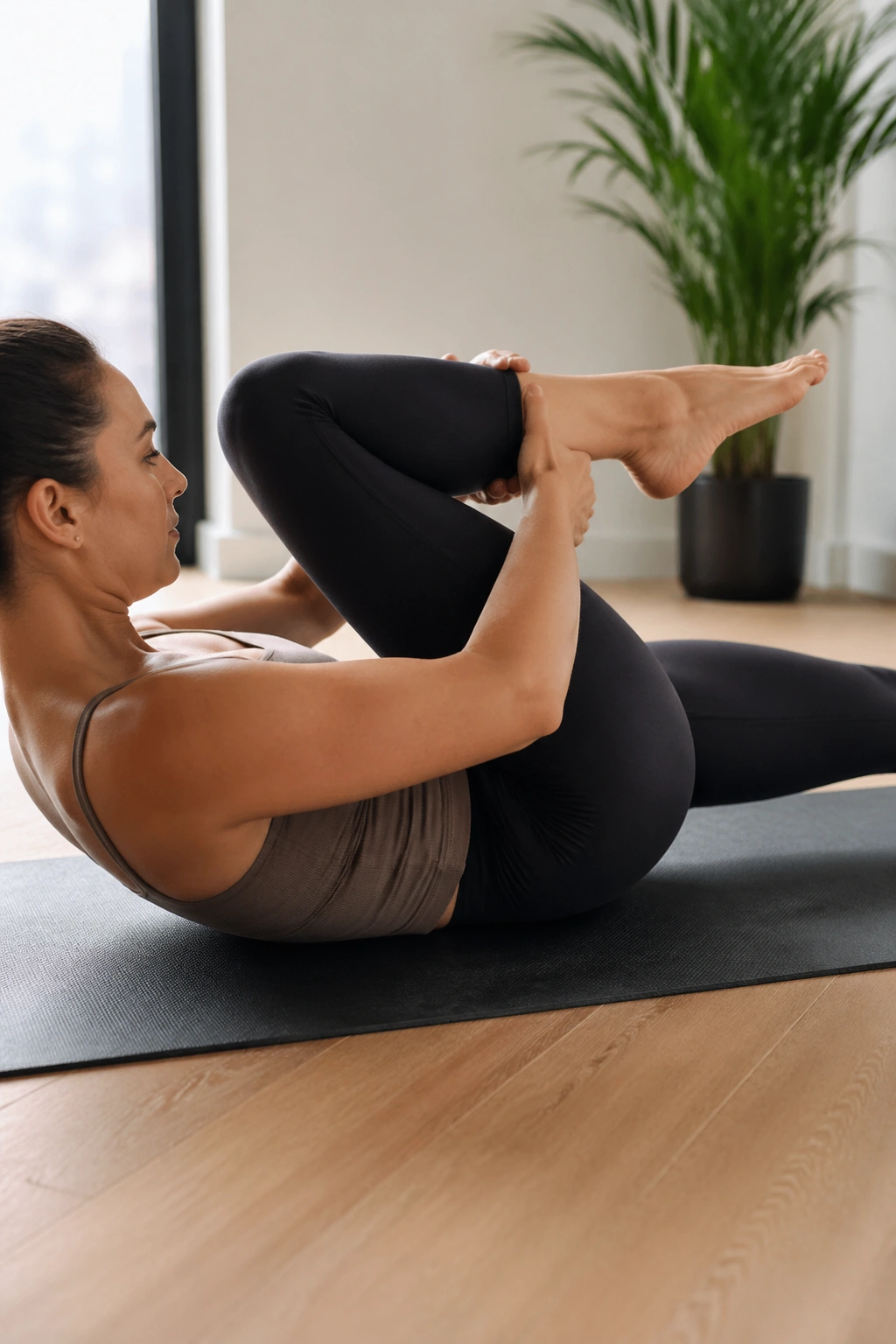
A desk chair can make both hips feel a little lazy and a little lopsided at the same time.
Single-leg stretch helps fix that by asking the torso to stay centered while the legs alternate. It’s a classic Pilates move for a reason. The abs work, sure, but the bigger win is coordination: one leg extends while the pelvis stays level and the chest stays quiet.
Start on your back, lift into a small chest curl, and draw one knee toward the chest while the other leg extends long without dropping too low. Switch legs with control, as if the air around your shins were thick. If the neck complains, lower the head and keep the movement in the legs.
A few signs you’re doing it right: the lower belly stays active, the low back doesn’t pop up and down, and the moving leg doesn’t swing like a door on a loose hinge. Use 6 to 8 changes per side. Less range is fine. Cleaner is better.
I prefer this one over endless crunches because it trains shape, not just fatigue.
11. Shoulder Bridge
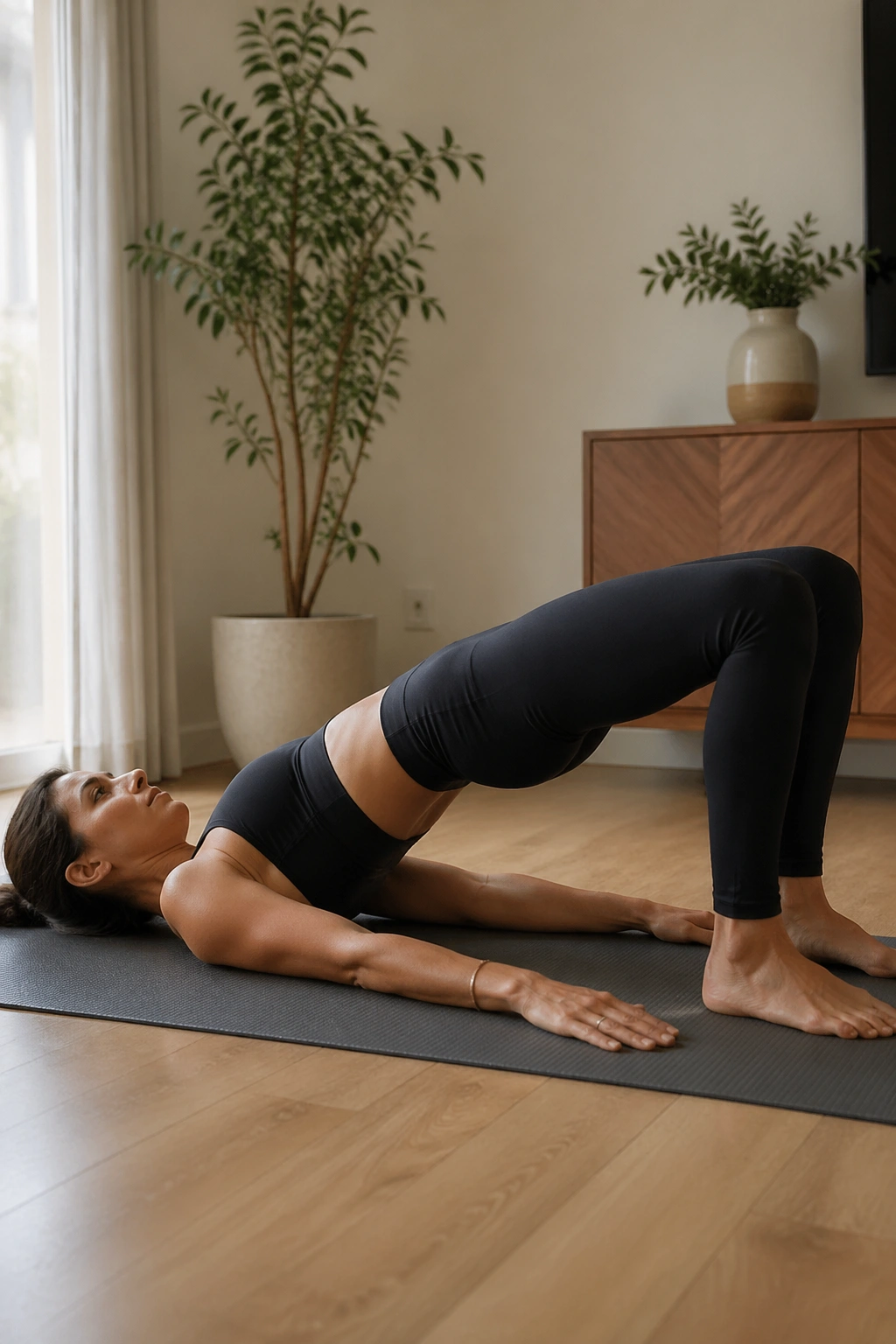
The shoulder bridge is one of those exercises that looks restful and then surprises your glutes.
That’s part of why it’s so useful for desk workers. Sitting turns the front of the hips into slack little passengers and makes the back line of the body forget how to do its share. A bridge wakes up the glutes, hamstrings, and spinal stabilizers without loading the shoulders or wrists at all.
Lie on your back with knees bent and feet hip-width apart. Exhale, tilt the pelvis slightly, and roll the spine up until the hips form a diagonal line from knees to shoulders. Inhale at the top. Exhale to roll down one vertebra at a time.
Glutes should feel active, but not crammed. If you feel the lower back taking over, lift less high and press through the heels a little more. If the hamstrings cramp, bring the heels closer to the seat and keep the lift smaller. One clean set of 8 reps can do more for posture than a sloppy set of 20.
Small bonus: bridges tend to feel better after a long sitting block because they give the front of the hips a break from being folded all day.
12. Swimming Prep
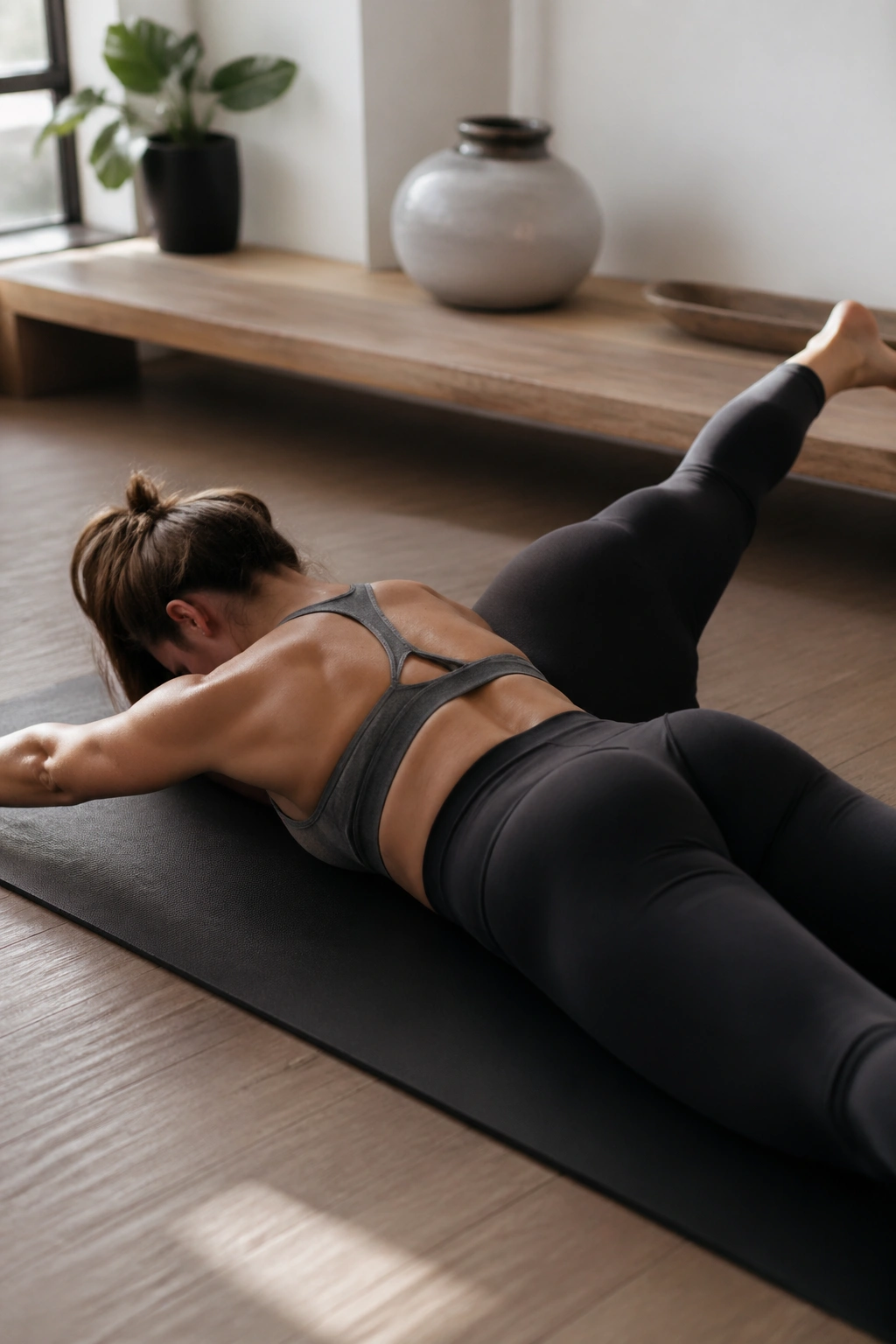
A lot of people try to fix a rounded upper back with more stretching. Sometimes that helps. Often it just asks a weak back to stay weak.
Swimming prep works from the opposite direction. Instead of hanging out in the joints, it wakes the spinal extensors, the glutes, and the muscles between the shoulder blades so the body can actually hold a more open shape. It’s a strong choice for anyone whose upper back collapses when they sit upright for more than 30 seconds.
Lie on your stomach with the forehead on the mat. Reach the arms long or keep them by your sides. Gently lift one arm and the opposite leg, then switch, keeping the neck long and the lower ribs anchored. The motion should feel long and hovering, not flung upward.
What Makes It Different
- It trains back-line endurance instead of passive flexibility.
- It asks the upper back to extend without jamming the lumbar spine.
- It gives the glutes a job, which desk life often steals from them.
Do 6 alternating lifts per side. If your low back feels pinchy, raise the arms and legs only an inch or two. Tiny lifts count. They count a lot.
13. Side Kick Series
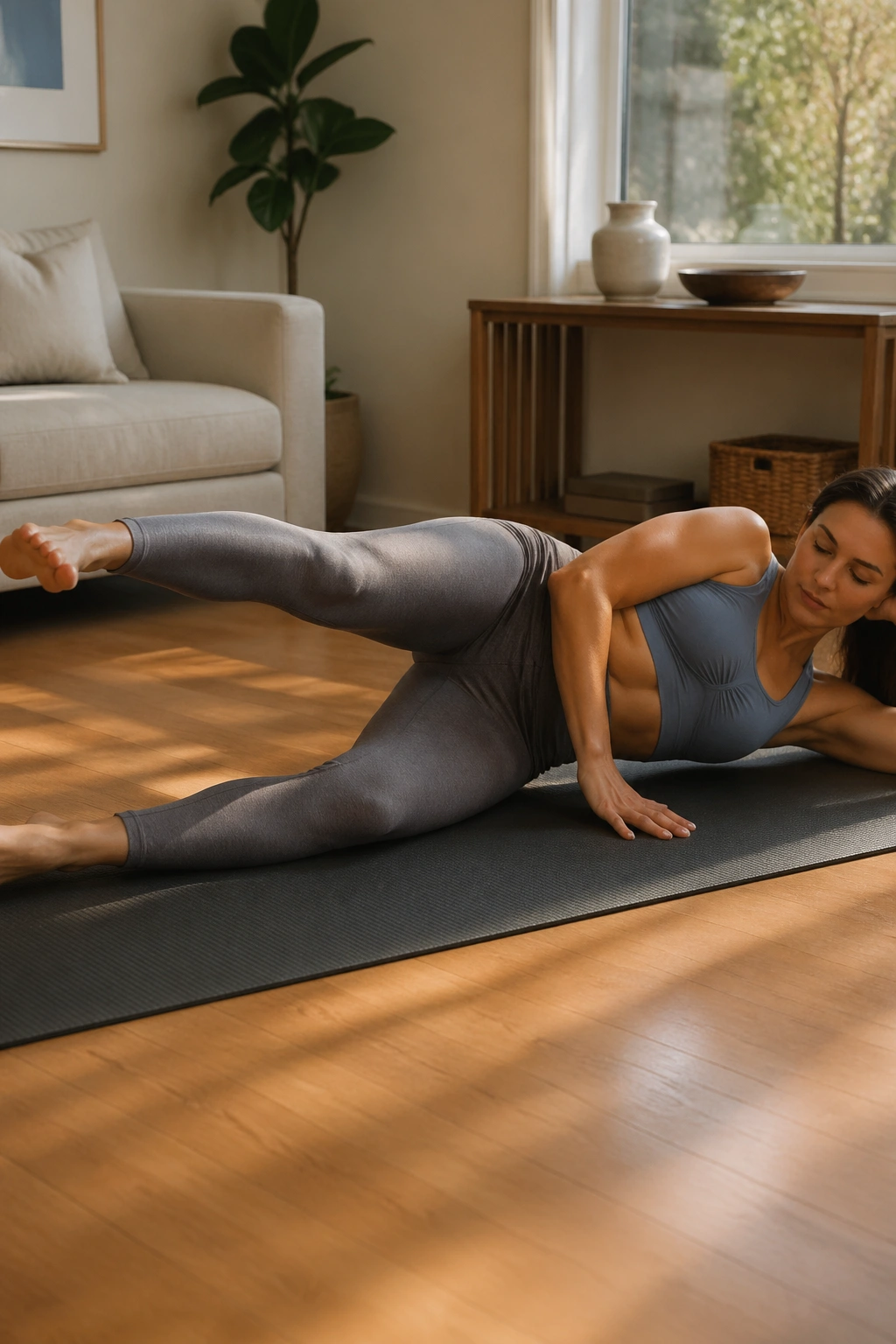
The side kick series is a sneaky posture exercise because it works the hips, and people forget how much hips affect posture.
When the outer hip is weak, the pelvis tends to drift and the lower back starts compensating. That’s how a person ends up sitting crooked without even noticing. Side kick work teaches the legs to move from the hip socket while the trunk stays steady.
Lie on one side with the head supported by the lower arm and the top hand in front of the chest. Bring both legs slightly forward of the body line, then kick the top leg forward and back with control. Keep the pelvis stacked and the waist lifted away from the floor. Do 6 to 8 kicks each direction.
What to Watch For
- Don’t let the top hip roll backward.
- Keep the torso long, not collapsed into the side.
- Make the kick small enough that the lower back stays quiet.
- Flex the foot if that helps you feel the line of the leg.
A tighter range is often better here. The roomier the kick, the easier it is to cheat.
14. Spine Twist Sitting Tall
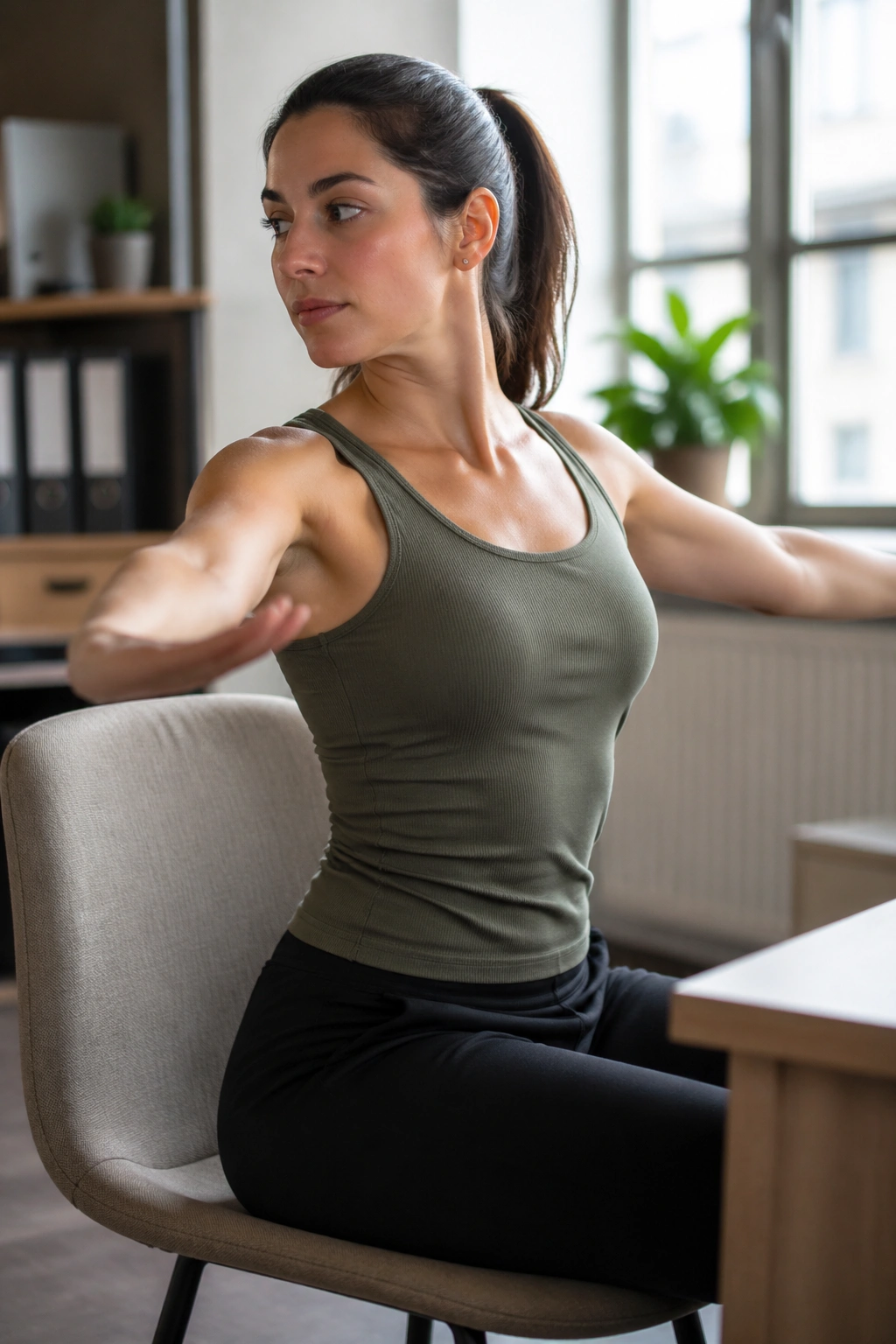
A stiff mid-back is often a twisting problem in disguise.
Spine twist is one of the cleanest Pilates posture exercises for desk workers because it trains rotation without leaning into the shoulders or collapsing into the hips. You can think of it as practice for sitting tall and turning from the rib cage instead of spinning everything at once.
Sit on the mat or a firm chair with both sit bones grounded. Reach the arms out to the sides, grow as tall as you can, and rotate the torso to one side on an exhale. Inhale to come back to center. Repeat on the other side.
The tricky part is keeping the pelvis still. If the knees or feet start scooting around to help, slow down and reduce the range. Four controlled twists to each side are enough to feel the benefit. The turn should feel smooth through the ribs, not yanked from the neck.
I like this one after long work blocks because it makes “upright” feel less like a pose and more like a position your body can keep.
15. The Saw
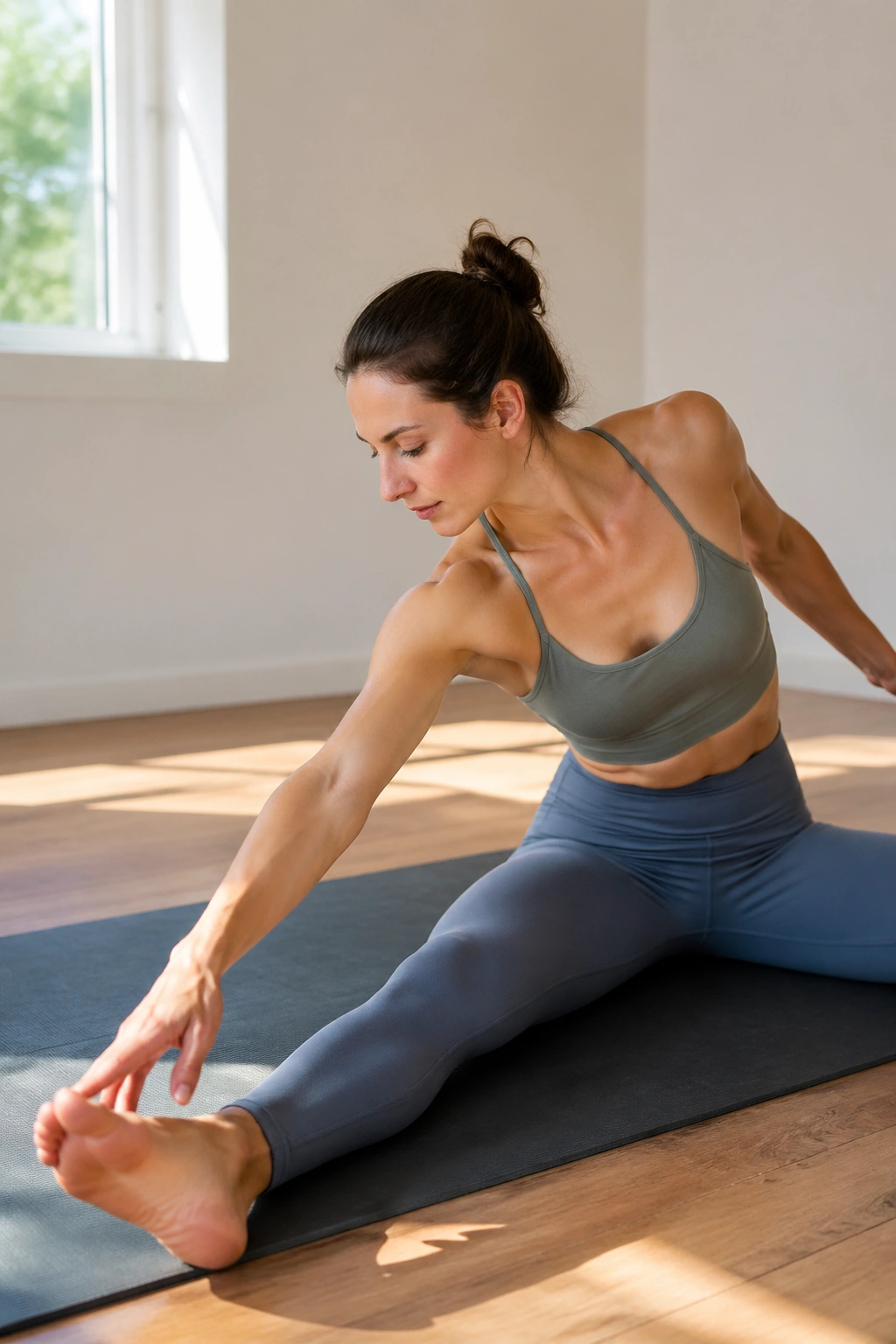
The saw is rotation with purpose.
Unlike a plain seated twist, the saw adds a forward reach that lengthens the side body and challenges the hamstrings at the same time. That combination is useful when your upper back feels closed and the back of the legs feel glued from too much sitting. It also brings a little more honesty to posture work, because you cannot fake length in the trunk and a clean hinge in the hips at the same time.
Sit tall with the legs open in a wide V or narrower if that suits your hips better. Rotate to one side, then reach the opposite hand toward the outside of the front foot in a long diagonal line. Come back to center with control and switch sides. Keep the hips heavy and the chest open as you fold.
How to Make It Feel Like Pilates
- Reach forward before you dive down.
- Keep both sit bones rooted.
- Exhale as you rotate and fold.
- Stop before the lower back rounds hard.
Three reaches per side is enough. If the hamstrings are tight, bend the knees a little and keep the spine long. The point is not to touch the foot. The point is to keep space in the torso while you move.
16. Forearm Plank with Scapular Pushes
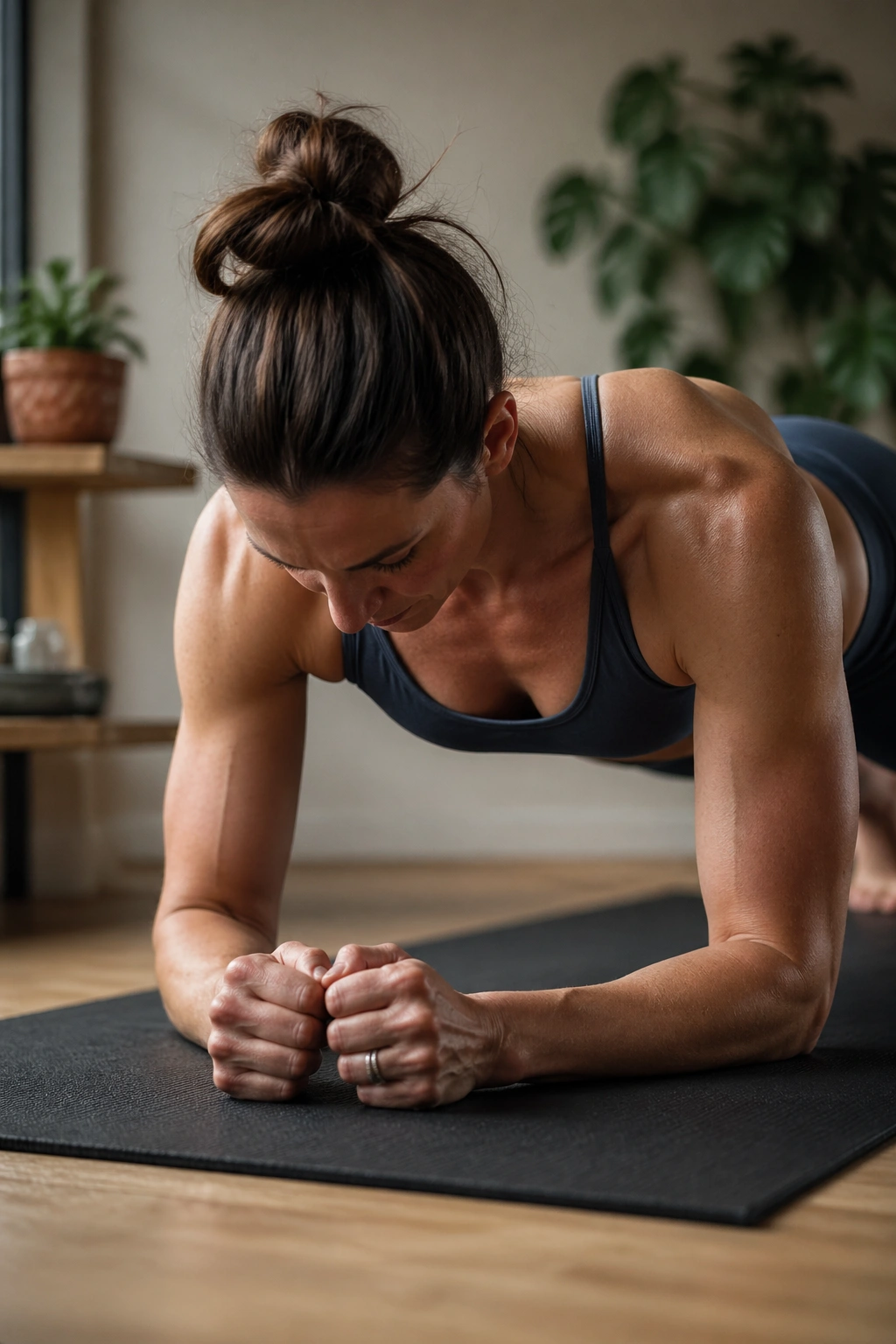
Most planks are held like a freeze frame. That misses half the lesson.
Forearm plank with scapular pushes trains the shoulder blades to glide, which is exactly what they should do all day but often don’t. Desk work tends to lock the upper body into a fixed shape, and this version of plank reminds the serratus anterior and the rest of the shoulder complex how to move with control.
Set up on forearms and knees or full toes, with elbows under shoulders. Keep the body long, then gently push the floor away so the upper back rounds a little between the shoulder blades. Return to a neutral plank without sagging. That small glide is the point.
- Keep the neck long and the gaze down.
- Move only the shoulder blades, not the whole trunk.
- Stop if the lower back starts to sag.
- Start on knees if full plank turns into a survival event.
Do 6 to 10 pushes. Tiny range, clean control. That’s enough to wake up the upper body without turning the exercise into a circus.
17. Swan Prep
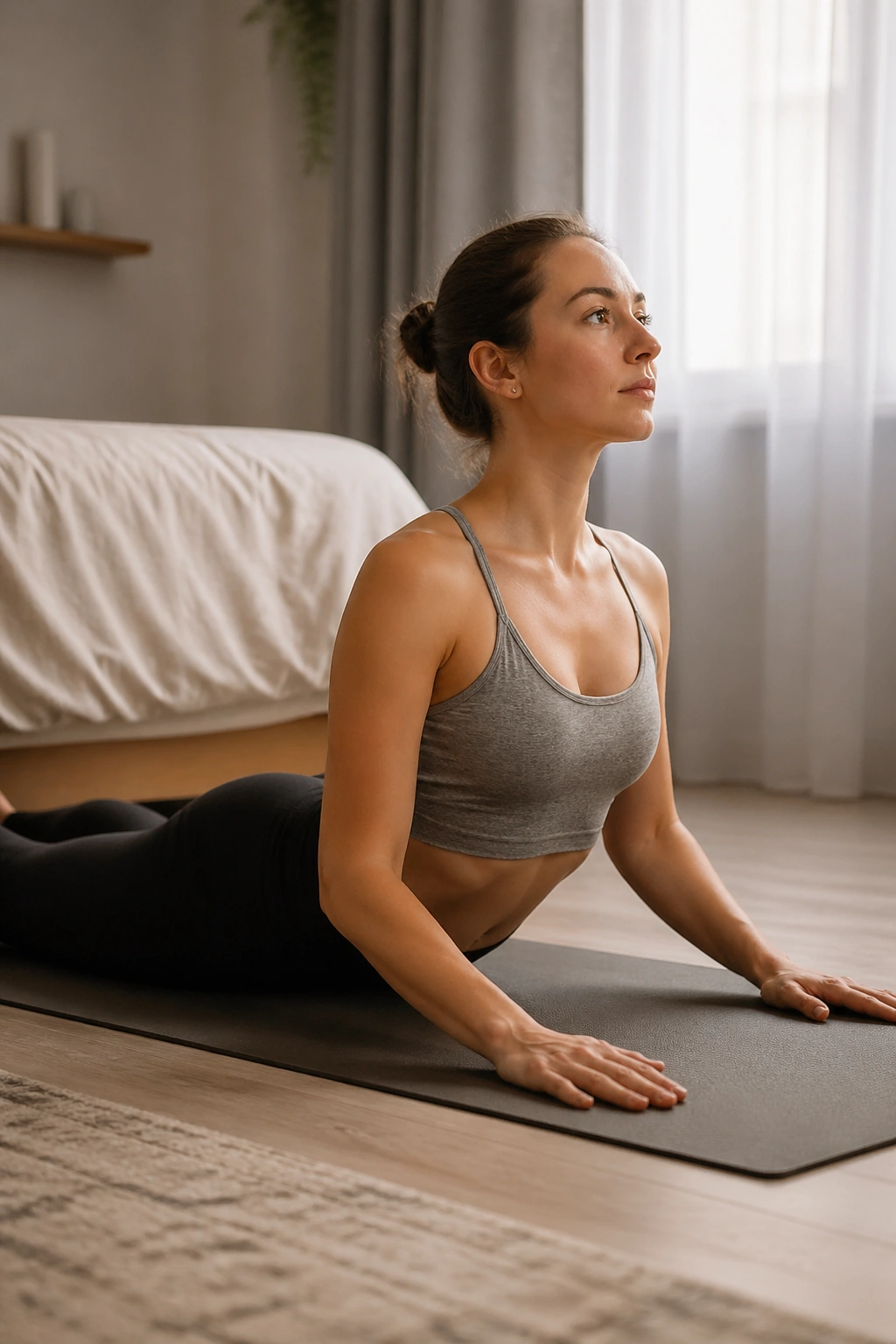
Swan prep is the antidote to the desk hunch, but it works best when you keep it modest.
A big backbend often feels dramatic and solves almost nothing. Swan prep is better because it asks for extension through the upper spine while the low back stays supported and the glutes stay involved. That makes it a proper posture exercise instead of a low-back squeeze.
Lie on your stomach with hands under the shoulders or slightly forward. Press lightly into the mat and lift the chest just a few inches, keeping the pubic bone grounded and the neck long. Lower with control. The movement should come from lengthening forward and up, not from crunching the lower back.
Small range is enough.
Do 5 to 6 slow reps, breathing into the side ribs on the way down and keeping the shoulders away from the ears. If your lumbar spine pinches, lower less and think more about length through the crown of the head. I’ve always liked this one late in the day because it directly reverses that rounded, computer-shaped posture without beating up the body.
18. Half-Kneeling Hip Flexor Reach
If desk sitting has one favorite trick, it’s tightening the front of the hips and dragging the pelvis out of position.
Half-kneeling hip flexor reach deals with that by opening the hip on the kneeling side while also asking the torso to lengthen. Unlike a standing quad stretch, which often misses the core and turns into a balance wobble, this position lets you stack the ribs over the pelvis and actually feel what “tall” means again.
Set one knee on a cushion or mat and plant the other foot in front, both knees about hip-width apart. Tuck the pelvis slightly, squeeze the back-side glute, and reach the same-side arm overhead with a gentle side bend or forward reach. Stay for 3 slow breaths, then switch sides.
Why It Belongs in a Desk Routine
- It opens the hip flexors that shorten during sitting.
- It gives the glutes a reminder to turn back on.
- It helps the rib cage stop drifting forward over the pelvis.
If you only have a couple of minutes, this is the one I’d keep. Pair it with rib cage breathing or a wall roll-down, and you’ve covered the front of the hips, the trunk, and the upper spine in one short pass. That’s a pretty smart use of time.
A desk body usually does not need punishment. It needs reminders. These exercises give you a cleaner way to sit, stand, and reach without turning your neck into the hero of every movement. Keep the ones that make your ribs settle, your shoulders soften, and your spine feel less like a stack of paperwork.
